
Dentelle is simply the French word for lace, and in a fitting room it behaves very differently depending on which lace you are actually holding. The delicate Chantilly lace family drapes almost like a second skin, while a corded guipure stands away from the body and holds its own shape. That difference decides more than the pattern does. It tells me which silhouettes the lace can carry, how warm the dress will feel by the evening, and how much jewelry it can take before the eye gets confused. The gowns below run from full ball skirts to a beach slip and a short reception dress, and for each one I’ve noted what I would check on the hanger and what I’d pair with it once it’s on.

Reading the Lace Itself at a Fitting
Before I look at the neckline or the skirt, I pick up the hem and look at the lace on its own. Three things tell me most of what I need to know, and you can check all of them in the shop without any training.
- Hold it to the light. Chantilly has a fine, almost hairnet ground with soft outlined flowers. Alençon looks similar but the motifs are edged with a raised cord, which gives more definition in photos. Guipure has no net ground at all; the motifs are joined by bars, so it is heavier and stands away from the body.
- Follow the motifs over the seams. On a well-made dress the pattern continues across the side seams and the zip, or appliqués are hand-placed to hide them. If a flower is chopped in half at the back seam, it will show in every aisle photo.
- Run a fingernail lightly along the edge. Scalloped edges should be finished, not raw. Loose cording or threads at a fitting will only get worse after a day of hugging and dancing.
Weight matters for comfort too. Corded and beaded lace over several layers can feel warm by late afternoon, so for a summer garden I’d lean toward a lighter Chantilly or a single layer of lace over a breathable lining, and keep the heavier guipure for cooler months.
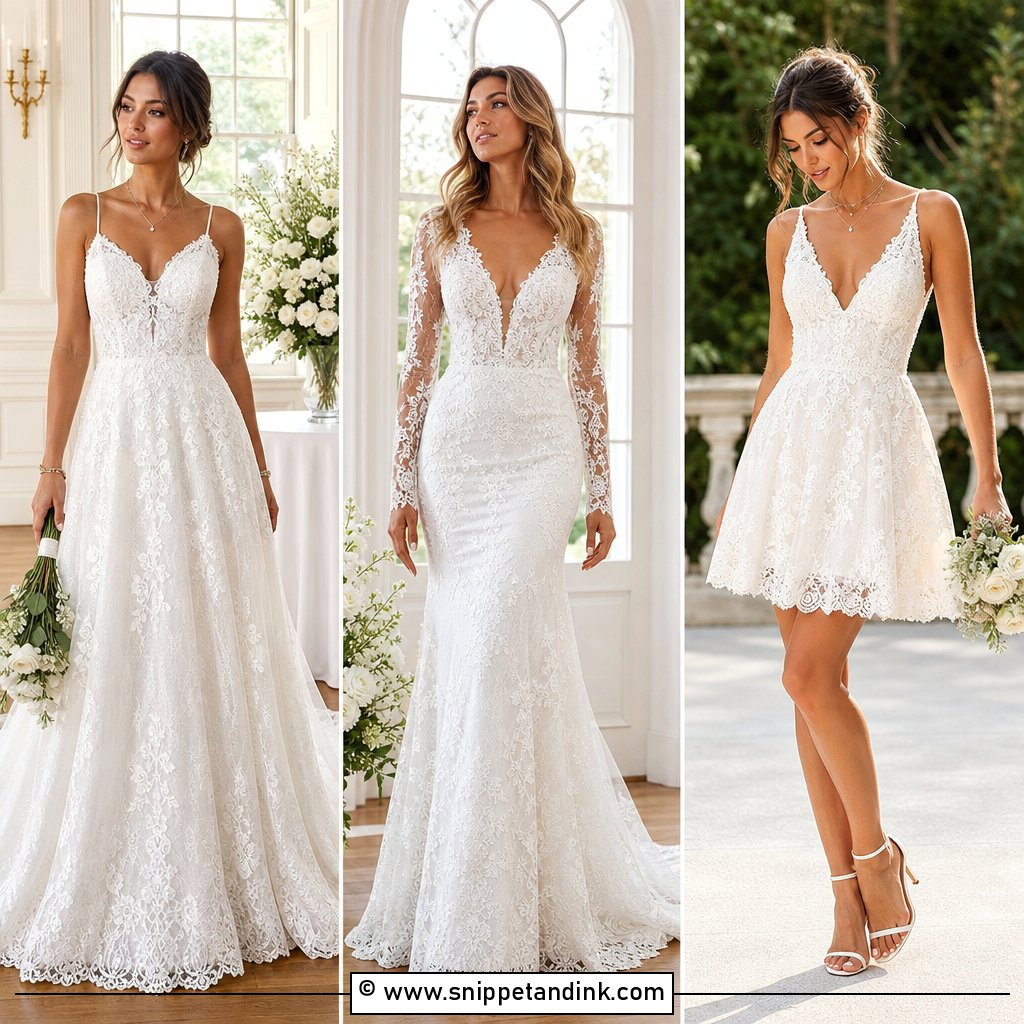
1. A-Line Dentelle Wedding Dress
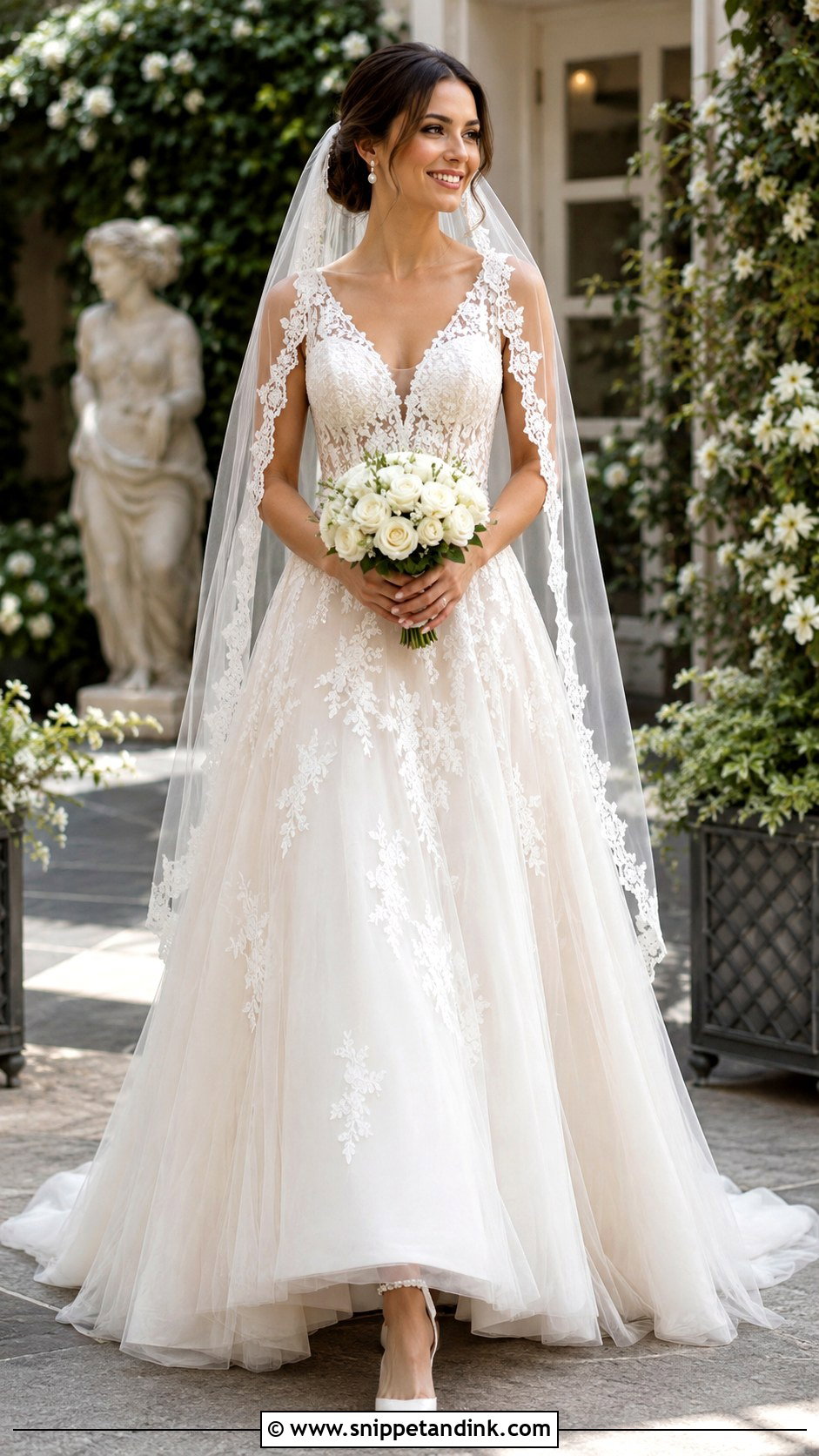
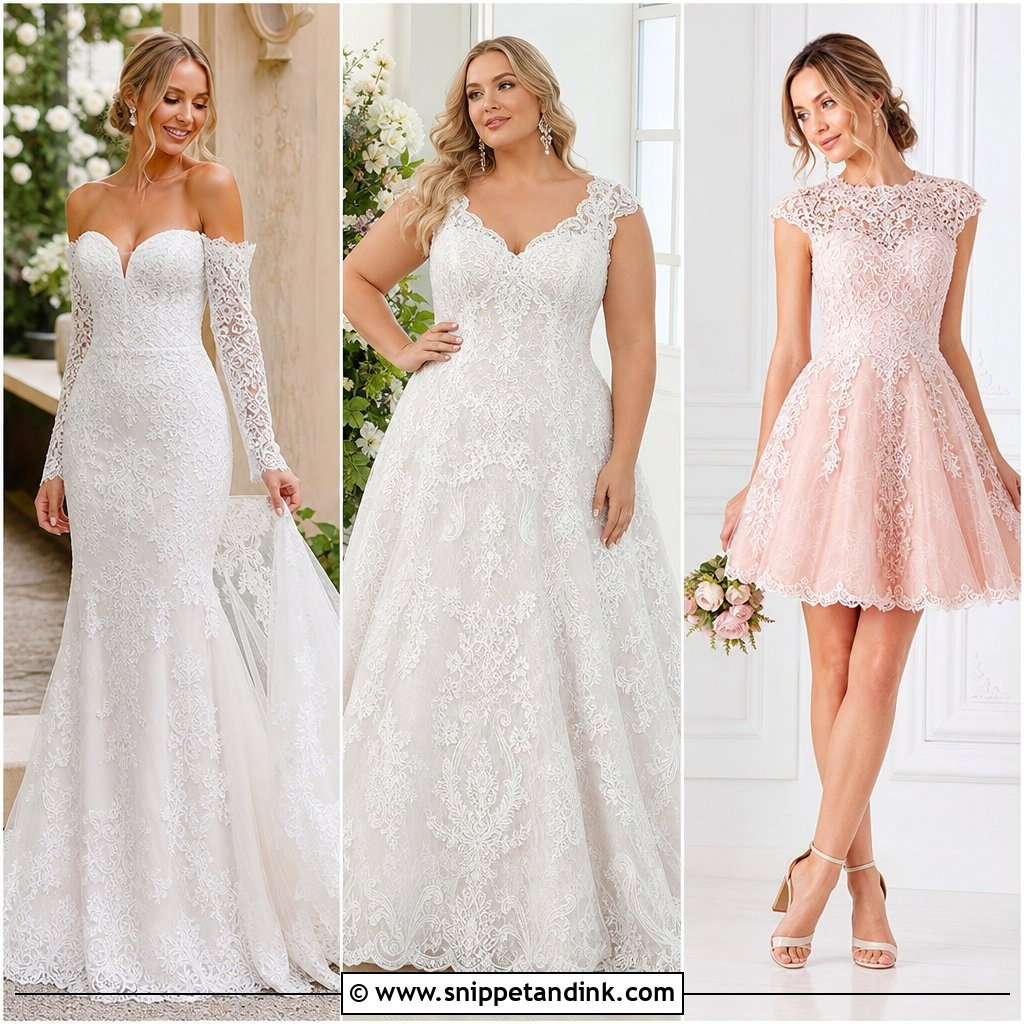
An A-line is the shape I reach for first when a bride isn’t sure what she wants, because it forgives a lot and lets the lace do the talking. The usual build is a fitted lace bodice releasing into tulle or chiffon, with floral appliqués trailing below the waist so the join between fabrics disappears. Look at that join closely at the fitting. If the appliqués stop in a hard horizontal line, the waist will read wider in photos. A V-neck lengthens the torso, and proper straps mean you aren’t hitching the bodice up between courses. Ivory pointed pumps, pearl drops and a fingertip veil with a narrow lace edge finish it, with a small bouquet of white roses so nothing fights the skirt.
2. Long Sleeve Dentelle Wedding Dress
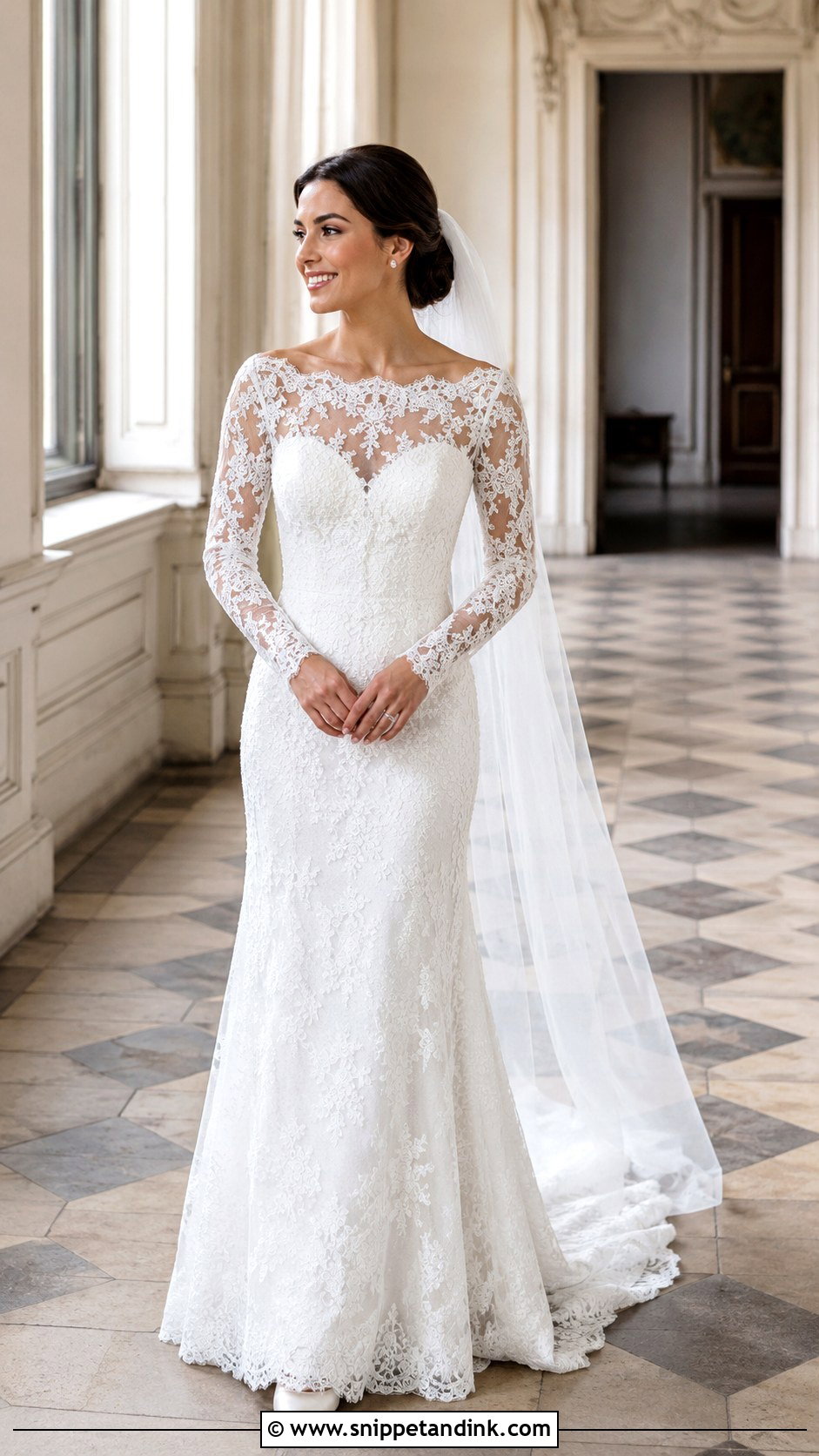
Lace sleeves give coverage without weight, and the skin showing through the pattern keeps them from feeling heavy. Pair them with an illusion neckline, a defined waist and a floor-length skirt. The thing I test with sleeves is the arm lift: ask the bride to hug someone and raise a glass. If the lace pulls at the underarm seam, the sleeve needs a gusset or a little more ease, because stretch lace will happily hold its shape standing still and then strain the moment you move. Scalloped cuffs or small covered buttons finish the wrist. Keep the rest quiet: a low chignon, small studs, closed satin heels and a plain cathedral veil. For an autumn or winter date, a structured ivory coat handles the outdoor portraits.
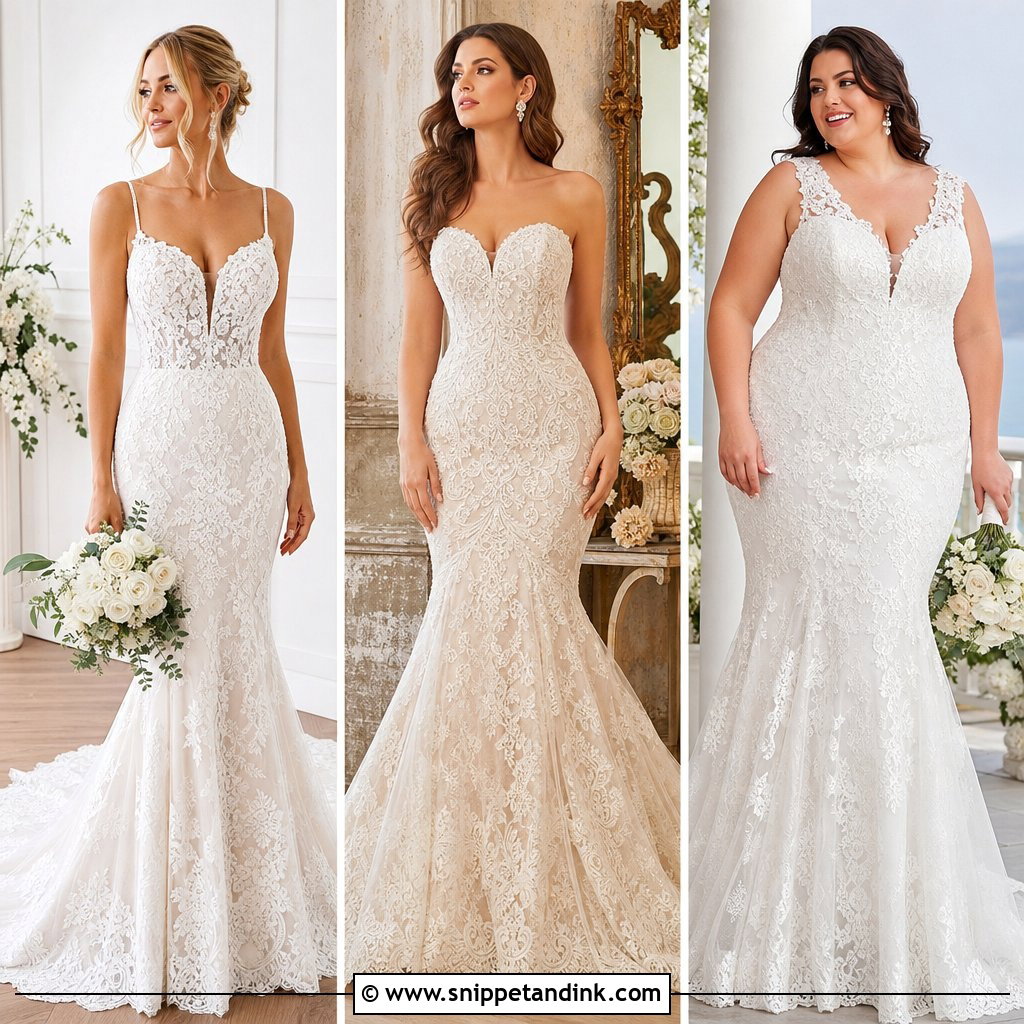
3. Mermaid Dentelle Wedding Dress
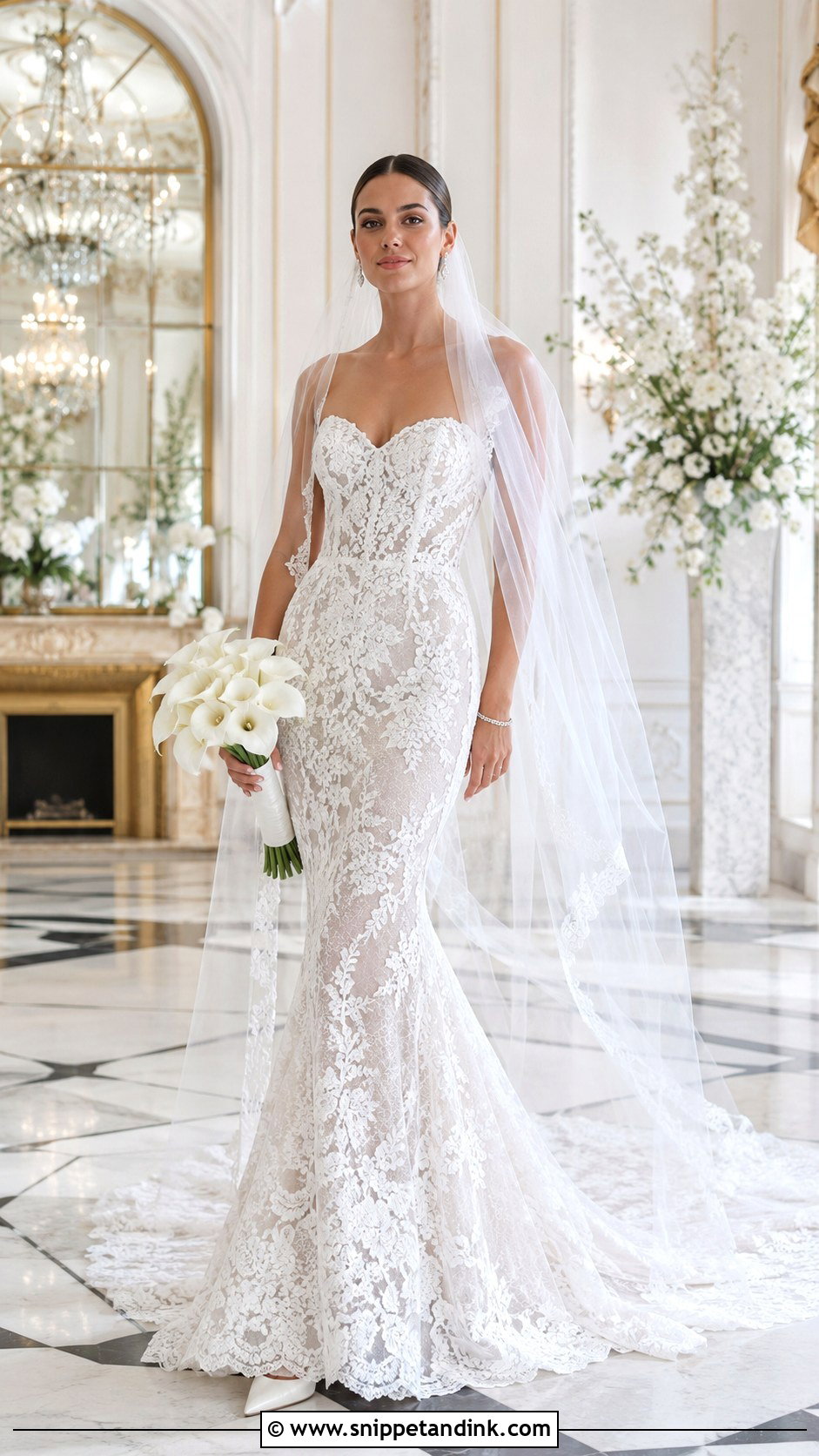
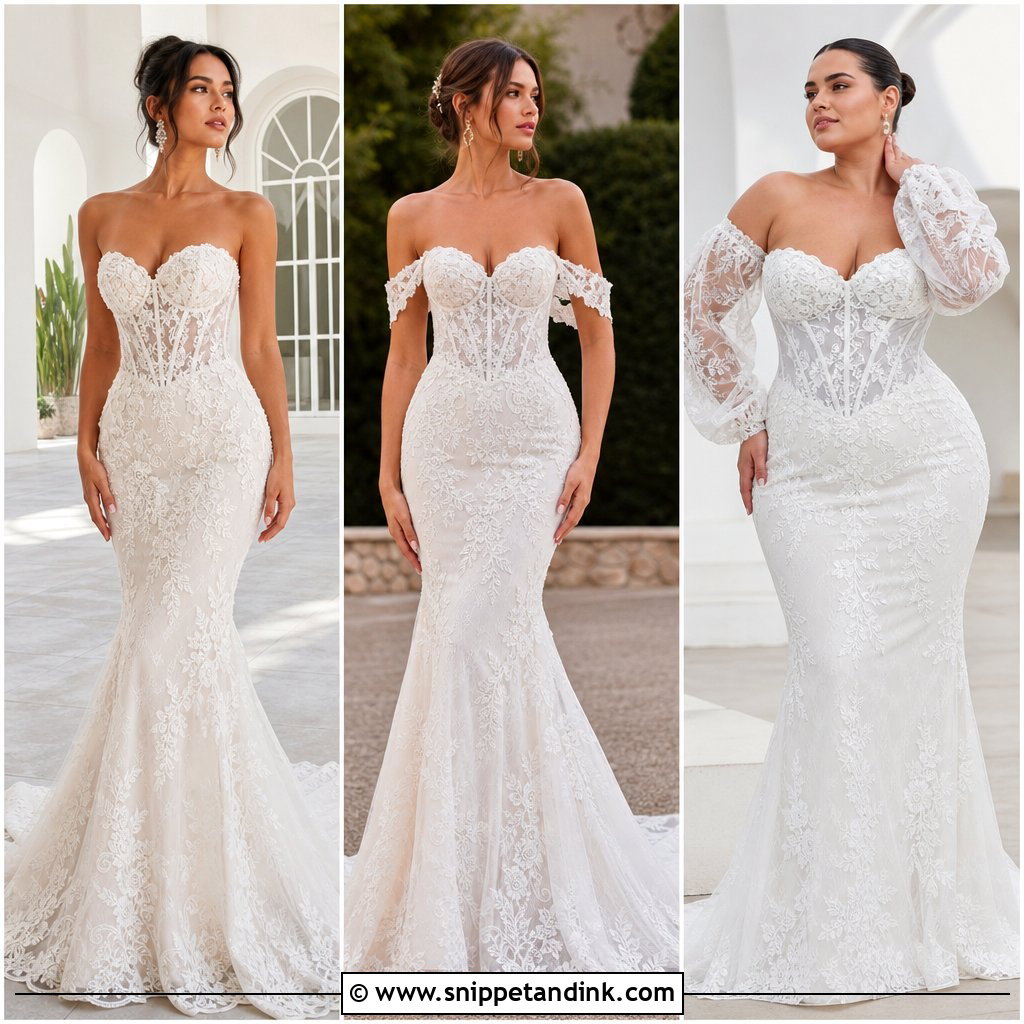
A mermaid shape holds tight through the bodice, waist and hips and only releases low on the leg, so the lace has nowhere to hide. Stretch lace over a firm internal foundation is what makes it bearable for a full day; rigid lace on a mermaid cut tends to ripple across the hips when you sit. I always have the bride sit, then climb a step, before we sign off on the hem flare. A sweetheart or gently curved strapless neckline balances the fit, and motifs running vertically help the line look long. Pointed heels, a slim tennis bracelet, drop earrings and a chapel veil set under a sleek bun finish it, with a tight bouquet of callas or roses. Save it for a ballroom or a formal indoor room where the train has space.
4. Ball Gown Dentelle Wedding Dress
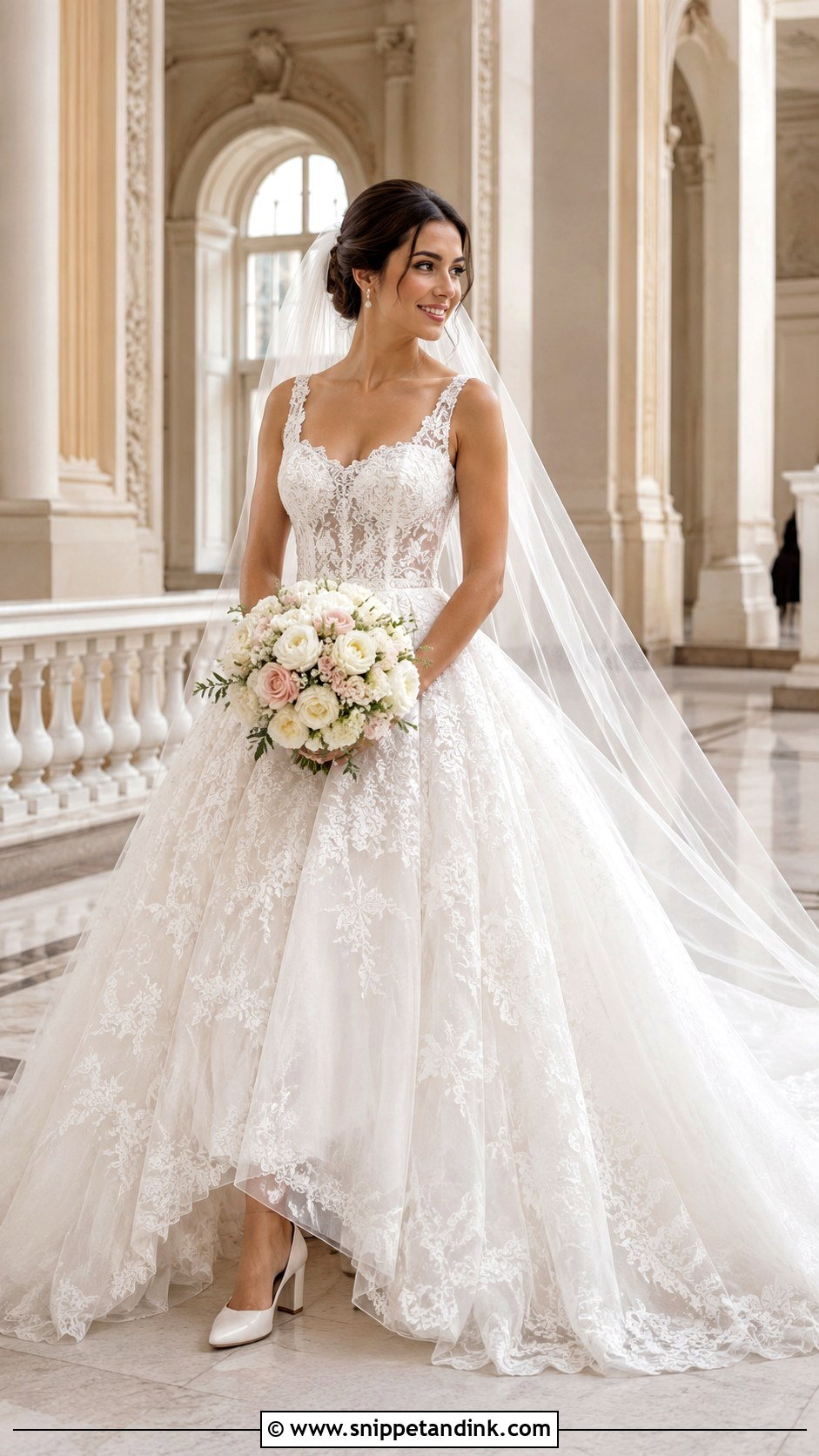
The ball gown is about scale, so the lace weight matters a great deal here. Heavy guipure gives the bodice definition that reads from the back of a church, while Chantilly makes the same shape feel lighter and more romantic. Check the corset before anything else. A full skirt with several tulle layers drags downward all day, and only real boning and a waist stay keep the bodice from slipping. A square or scoop neck frames the collarbone, and pearl earrings, satin block heels and a long raw-edge veil are enough. Wear the hair in a neat bun or soft half-up waves and carry a rounded white and blush bouquet.
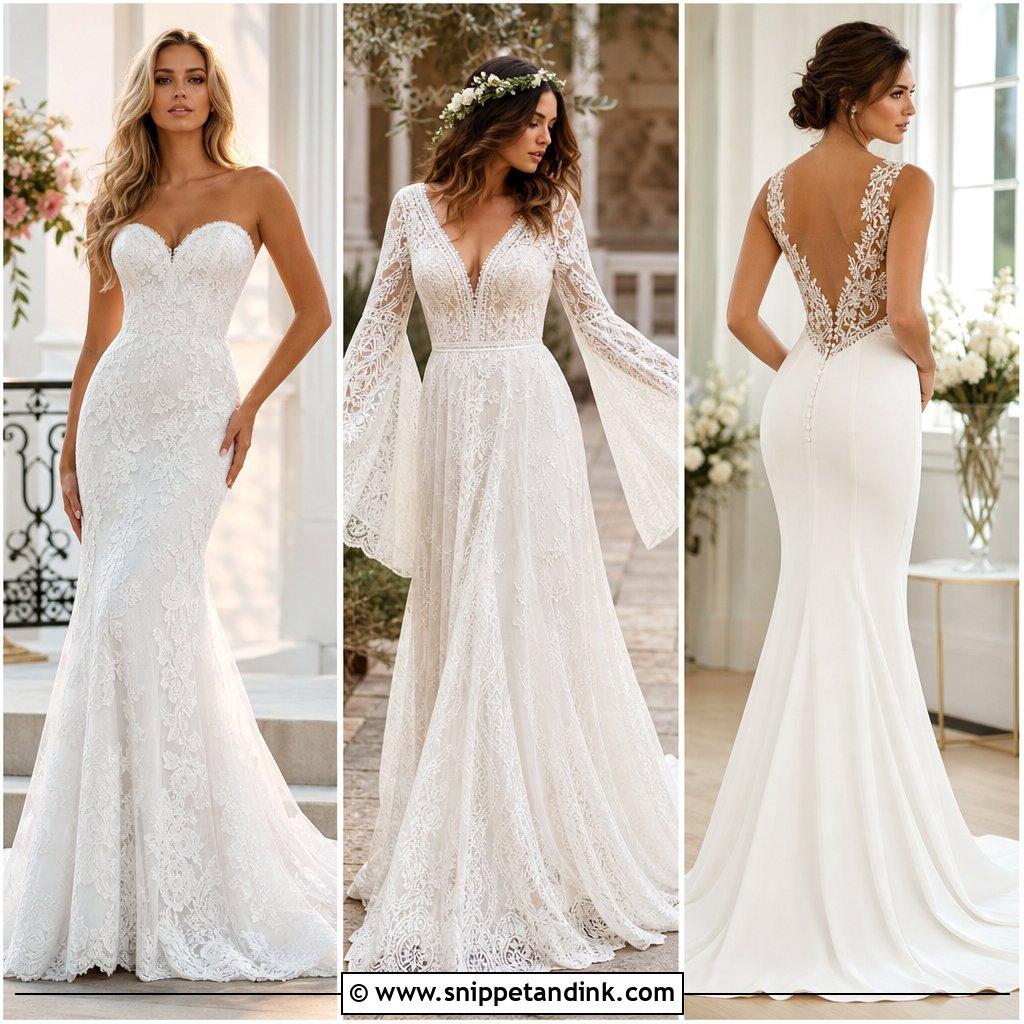
5. Strapless Dentelle Wedding Dress
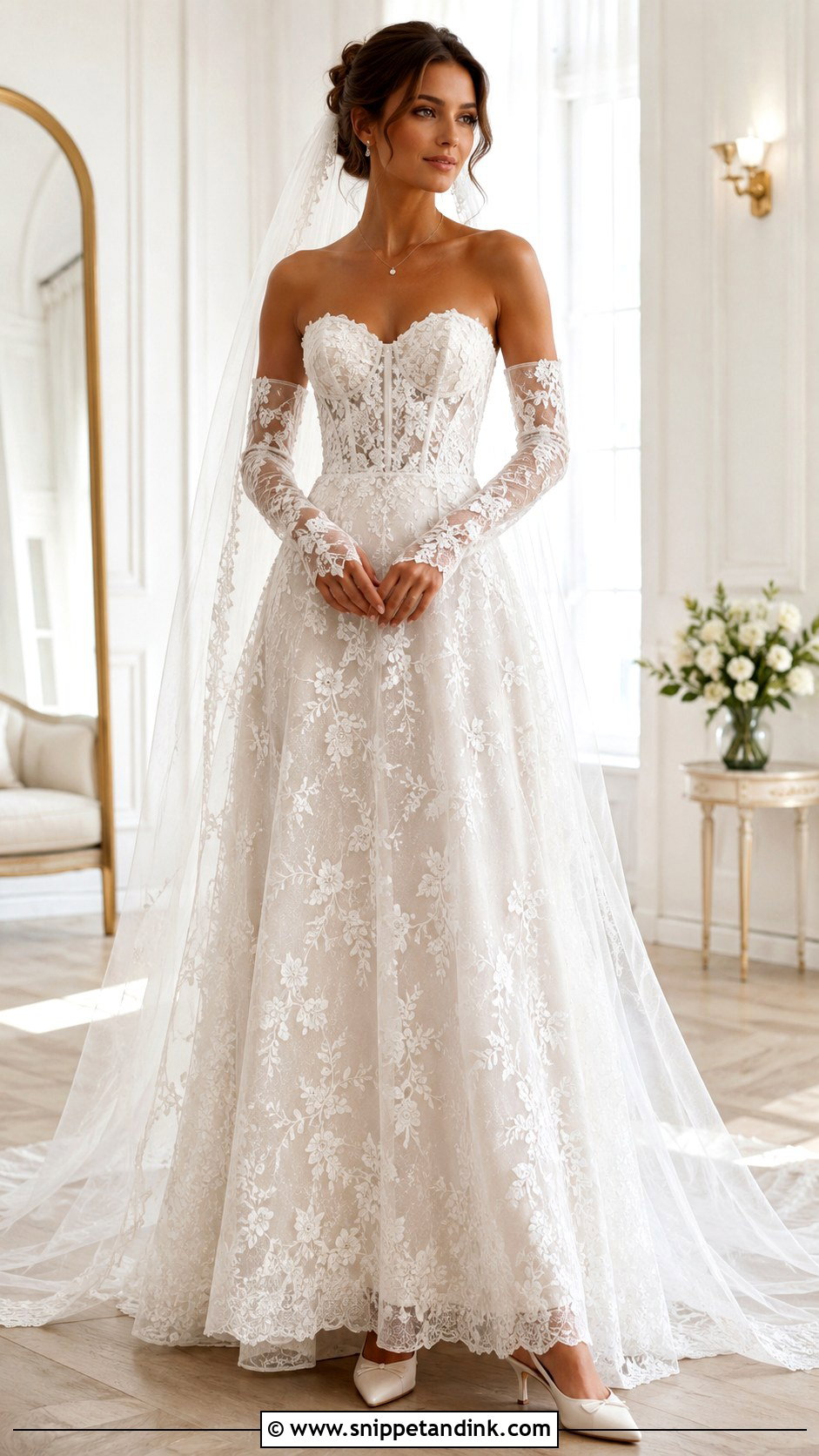
Strapless lace puts everything on the bodice, and the honest question is whether it will stay up. I want a corset foundation, silicone grip tape at the top edge, and a bride who can lift both arms without tugging. If she spends the first fitting hitching it, the bodice needs taking in before anything else. The skirt can be fitted, A-line or softly gathered depending on how formal the day is. Wear a fine pendant, small earrings and an updo that clears the shoulders, with ivory slingbacks for spring or summer. A sheer cathedral veil keeps the lace visible. Detachable lace sleeves are worth considering if the ceremony venue is a church that prefers covered shoulders.
6. High Neck Dentelle Wedding Dress
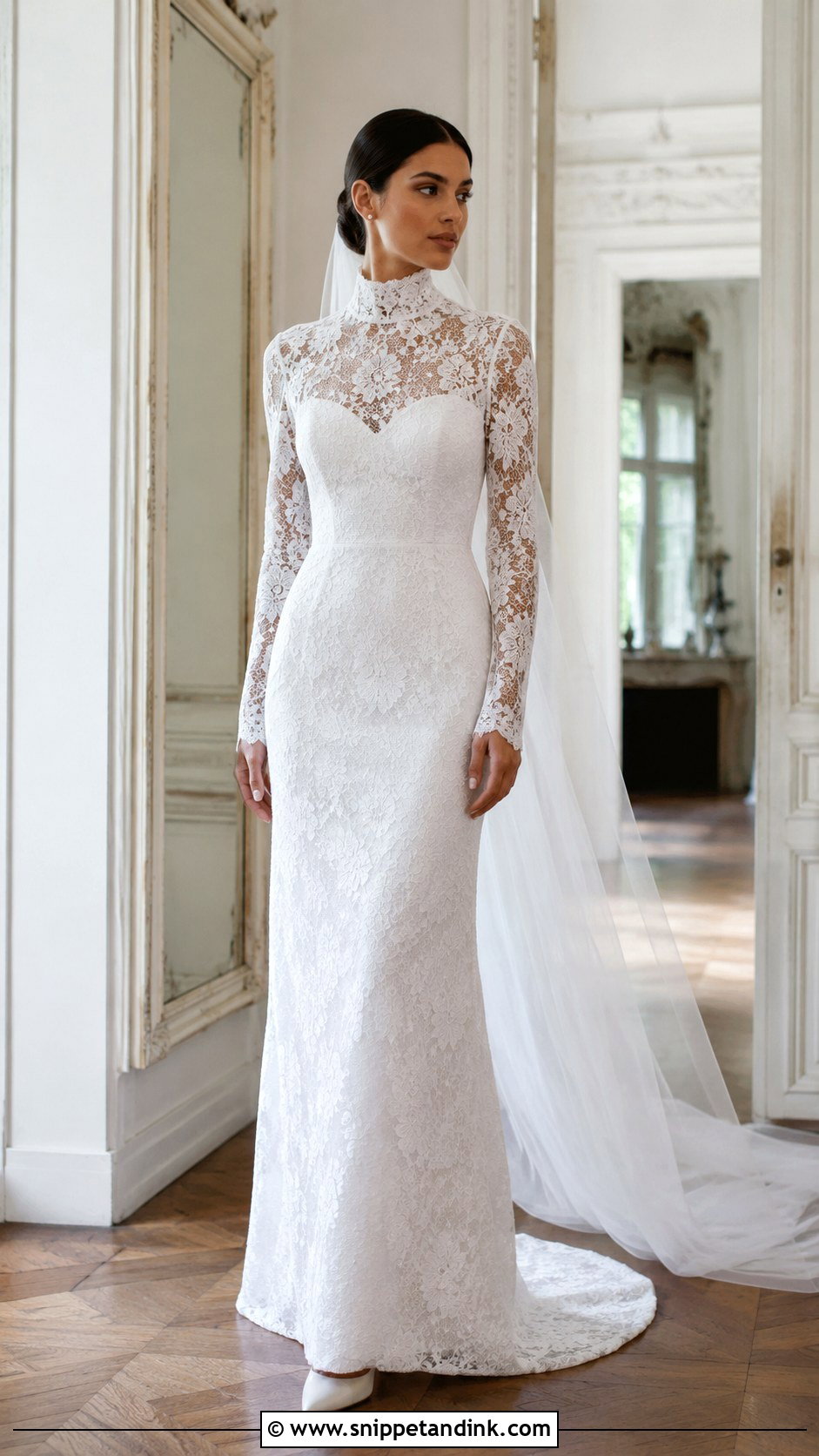
A high lace neck over a lined sweetheart bodice is my favourite way to get coverage without heaviness, since the solid lining stops at the bust and the lace above it stays sheer. Watch the neckband. It should sit flat and allow you to swallow and turn your head; a band cut too snug will roll by the evening. Long sleeves lean vintage, a sleeveless cut feels current. Pearl studs, a low bun and pointed satin pumps, and no necklace at all, since the lace is already doing that job. A long plain veil gives movement. It suits formal ceremonies and modest dress codes.
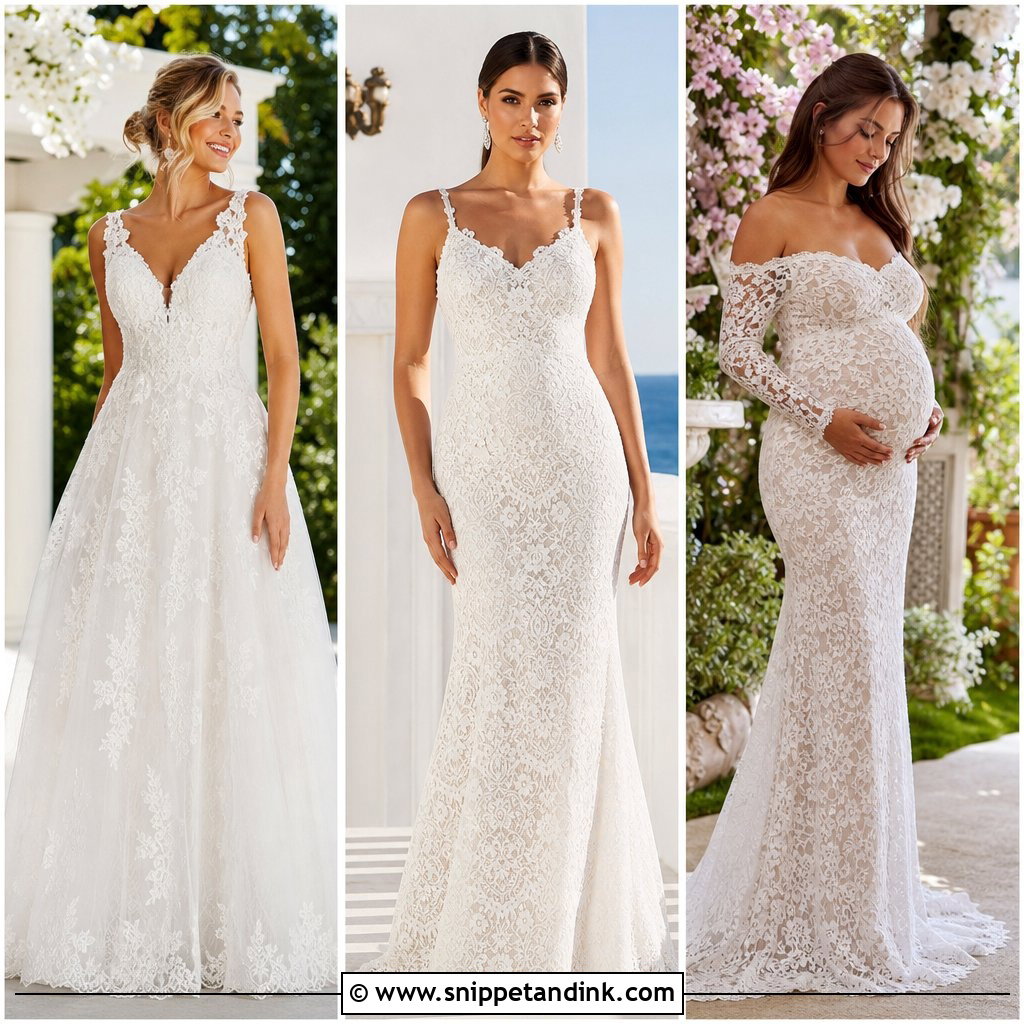
7. Off Shoulder Dentelle Wedding Dress
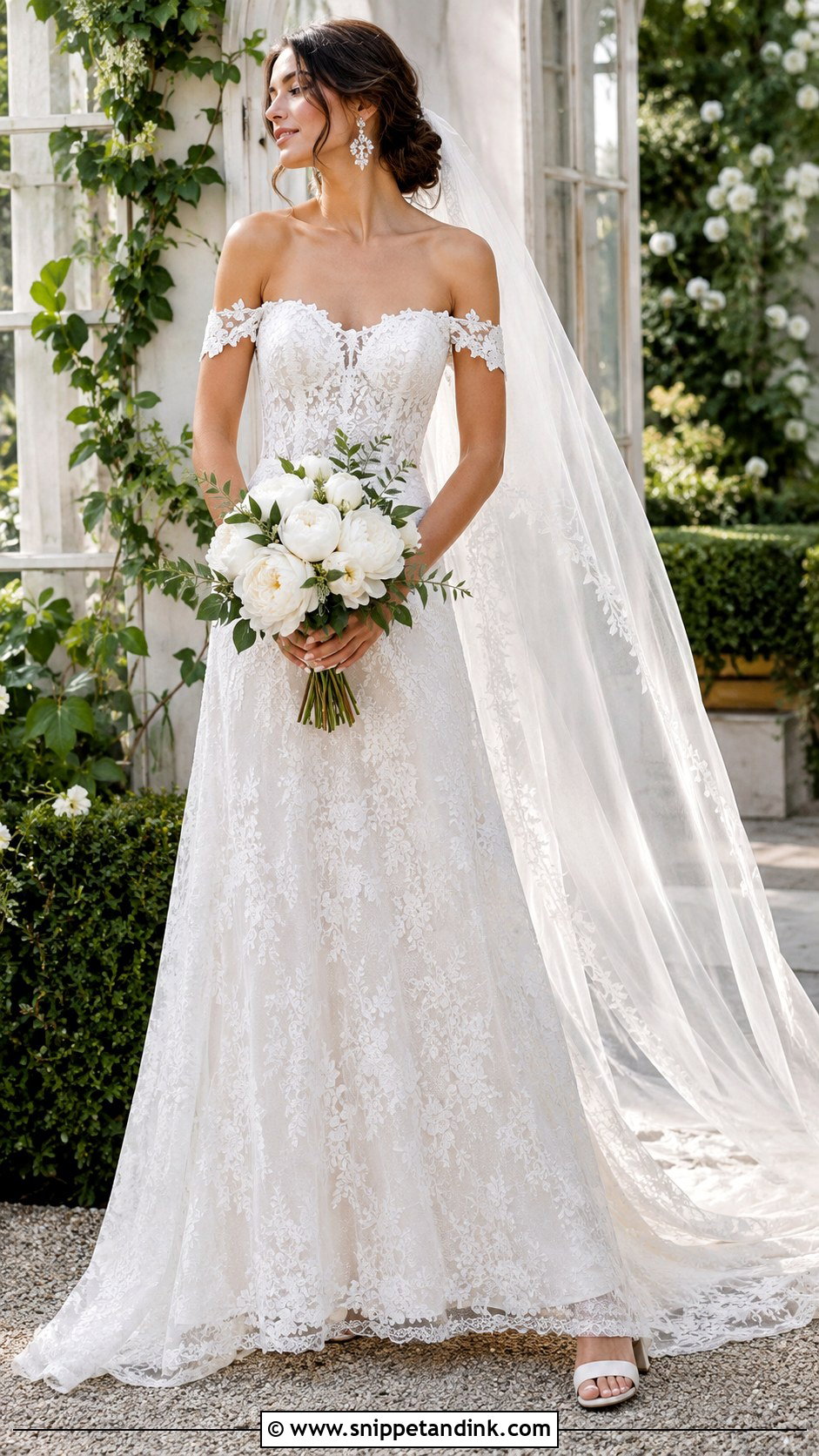
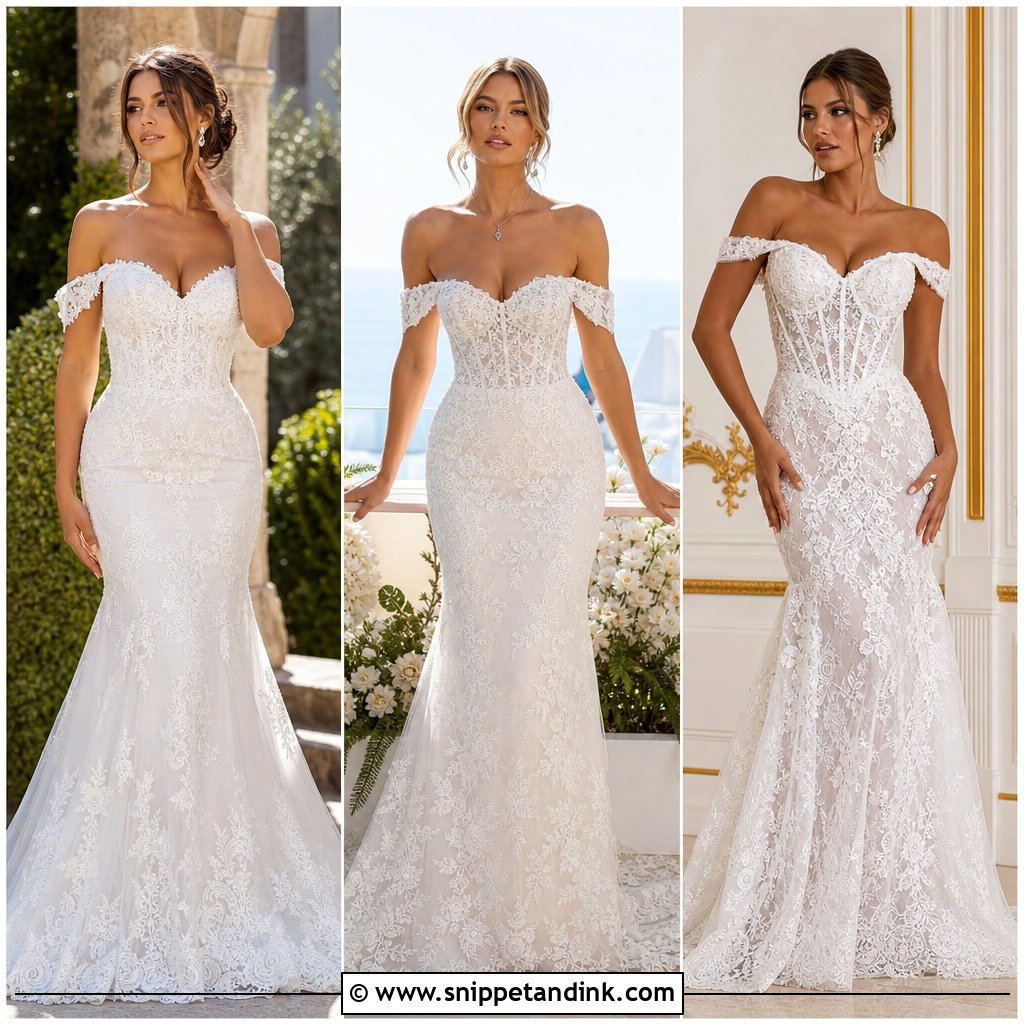
Off-the-shoulder bands are lovely on the collarbone and the most common source of fidgeting I see on a wedding day. The bands need either a slight stretch or a hidden elastic channel, and they should sit below the shoulder joint without restricting the arm when you hug. If the bands slide upward when you lift your arms, they’re too loose. A fitted bodice into an A-line skirt is the easy version; a slim fit-and-flare reads more formal. Add a short pearl necklace only if the neckline is plain, otherwise statement earrings. A loose low bun, ivory block heels, a sheer chapel veil and white peonies with greenery complete it.
8. Boho Dentelle Wedding Dress
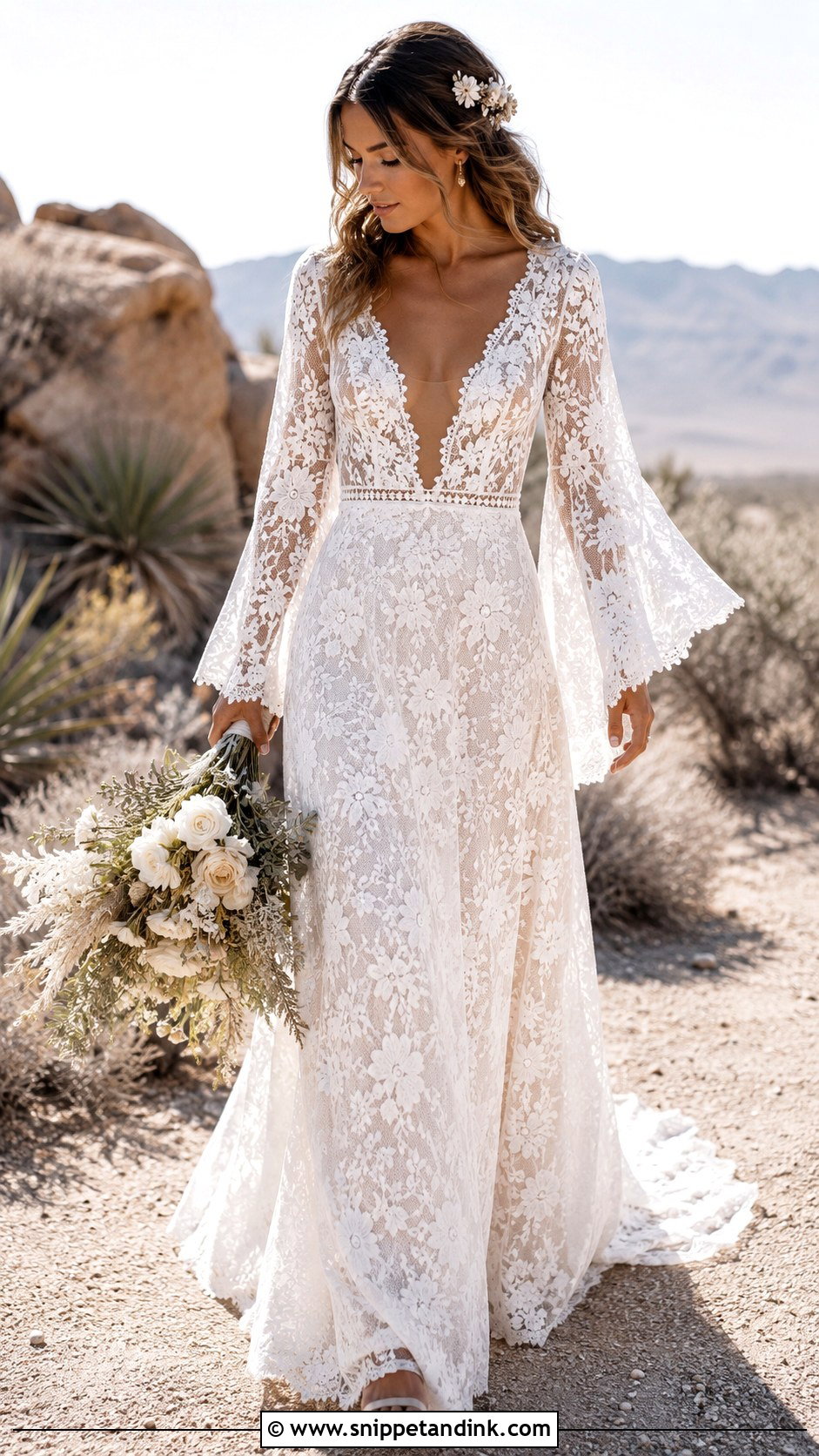
Boho lace should look relaxed but not undone, and the difference is almost always the lining. Choose soft crochet lace or open floral lace over a skin-matched ivory lining moves well; the same lace over a cheap, shiny lining looks costume. A defined waist, deep V and gently flared skirt give movement, and bell or flutter sleeves add character outdoors. Watch crochet near anything with prongs. Bracelets and bouquet wire catch open loops easily. Ivory leather sandals, small gold earrings, textured waves and a flower comb or lace-edged veil finish it, with grasses and white flowers in the bouquet. Woodland, desert and coastal settings all suit it.
9. Vintage Dentelle Wedding Dress
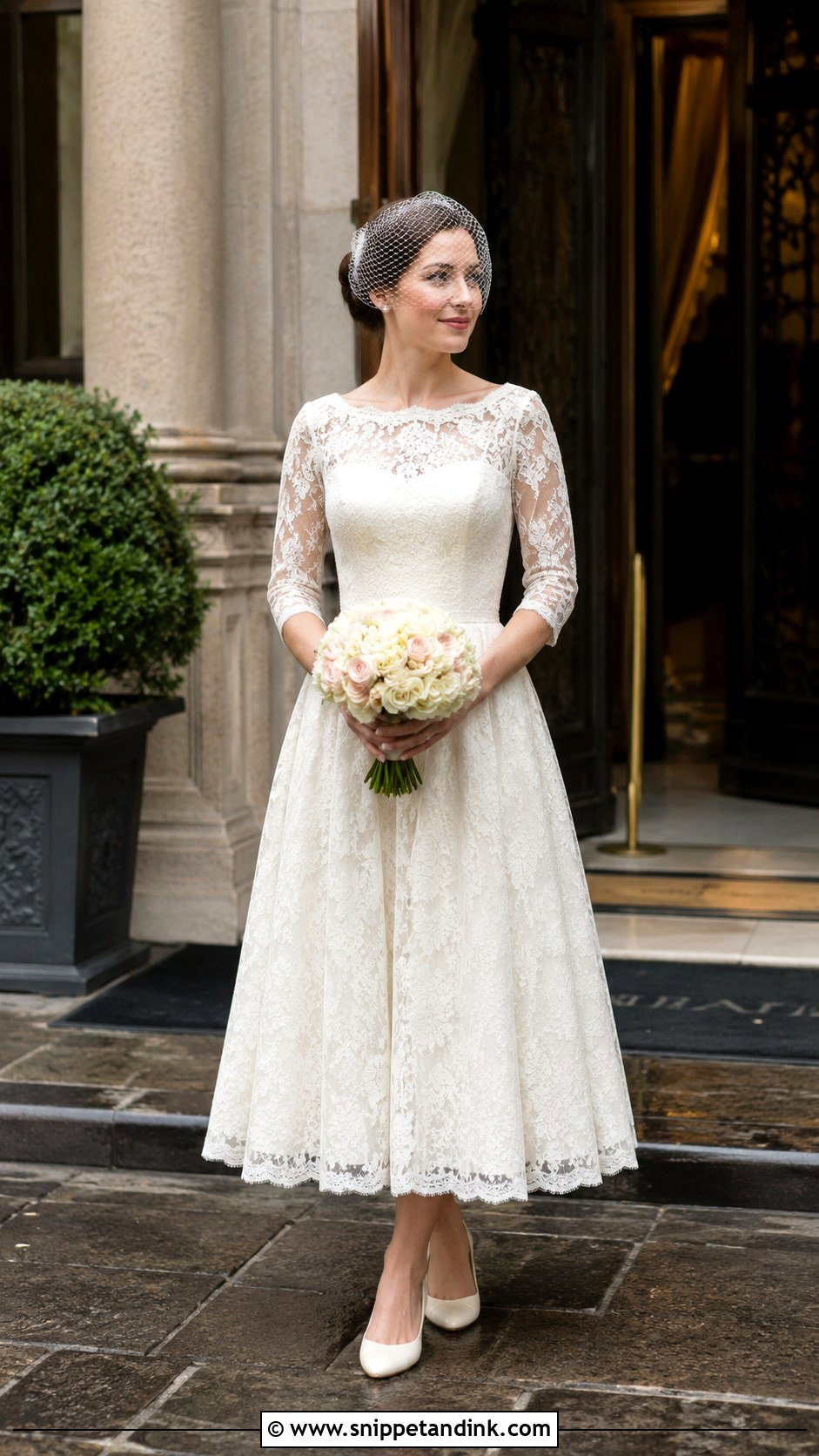
Vintage lace only becomes costume when every piece points backwards, so I like a modern fit underneath the nostalgia. A bateau neck, fitted waist and soft skirt, with three-quarter sleeves, covered buttons and scalloped edges, carries the mood. If the lace is genuinely old, check the underarms and hem for brittle threads before any alteration; aged lace can split when a seamstress takes in a seam. Low ivory pumps, pearl studs and a birdcage or fingertip veil go with it, and the hair can be soft waves, a polished bob or a low roll. Carry compact roses rather than a big loose arrangement. Historic hotels and afternoon city ceremonies suit it well.
10. Minimalist Dentelle Wedding Dress
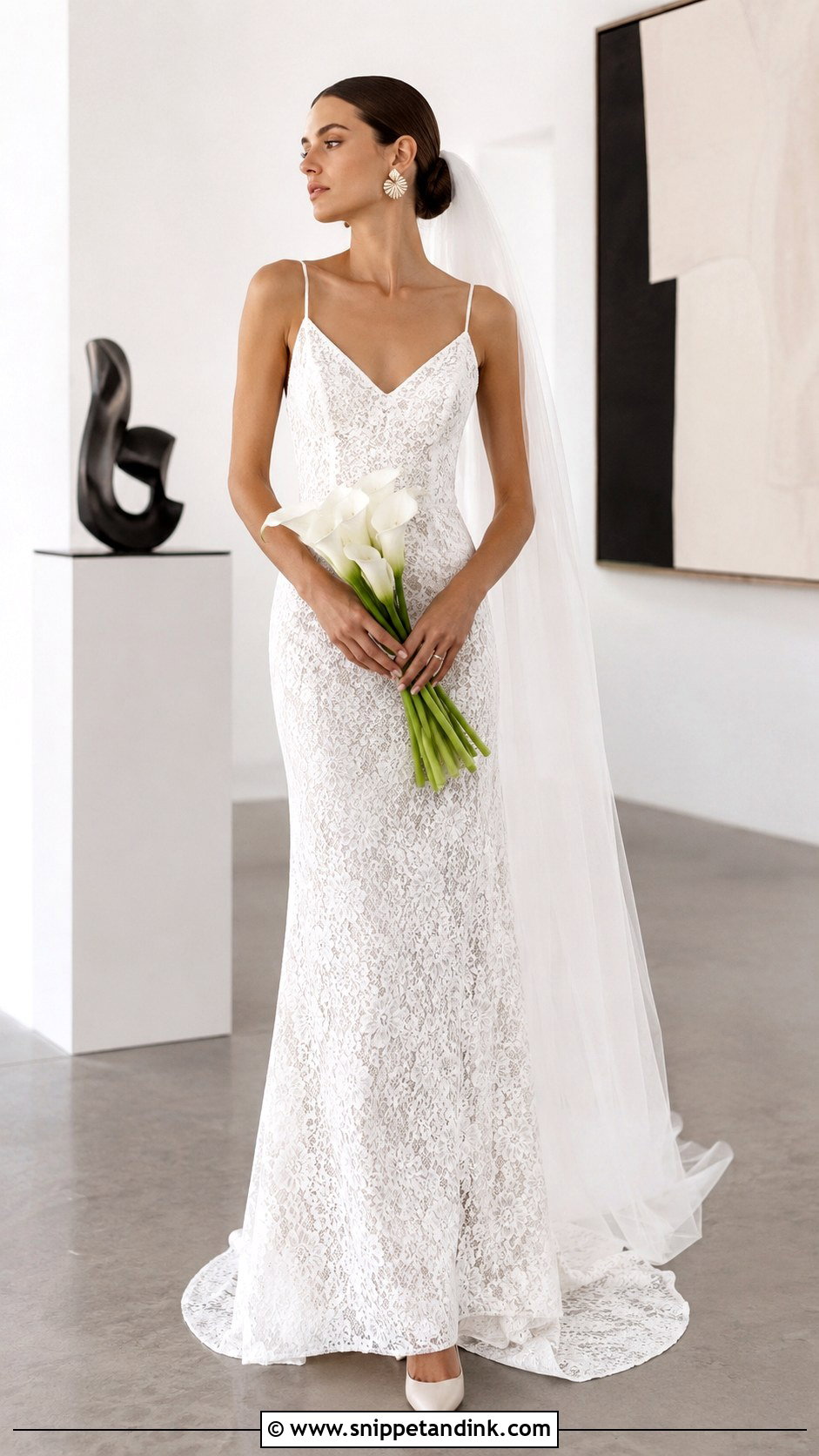
Lace reads minimal when there is one motif, one silhouette and almost nothing on top. A column or narrow A-line in a single consistent lace, without beading or layered appliqués, does it. Hold the dress at arm’s length on the hanger. If you can see three different textures from there, it isn’t minimal. A straight neckline, slim straps or a boat neck keep it modern. Sleek pumps, small sculptural earrings and a smooth low bun, then a plain tulle veil or no veil at all with a polished hair pin. White tulips or callas in one colour suit galleries, rooftops and contemporary hotels.
11. Lace Corset Dentelle Wedding Dress
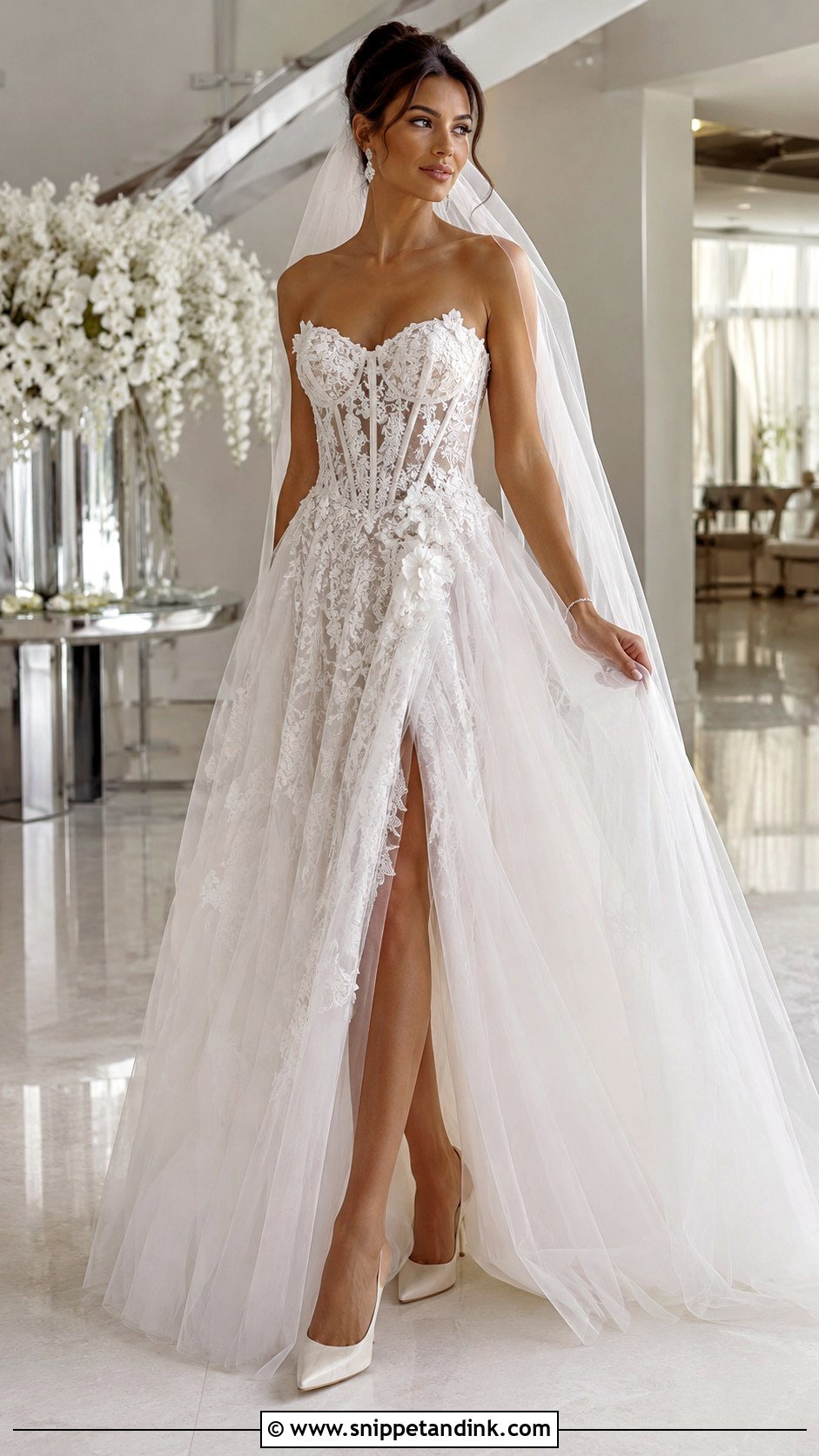
A visible corset brings structure and a little couture edge, but the boning channels have to be hidden well. Lace appliqués placed over the bones should follow them, not sit across them, or the lines show through in flash photos. Supportive cups and a softly curved neckline give a secure fit. I’d steer away from this if you dislike feeling held in; a corset that is comfortable at a fitting can feel tight after a meal. Balance it with a flowing A-line, layered tulle or a controlled fit-and-flare, plus drop earrings, a thin bracelet and pointed heels you can actually stand in. A long plain veil contrasts the texture, and a low bun or sleek ponytail keeps the lines clean.
12. Square Neck Dentelle Wedding Dress
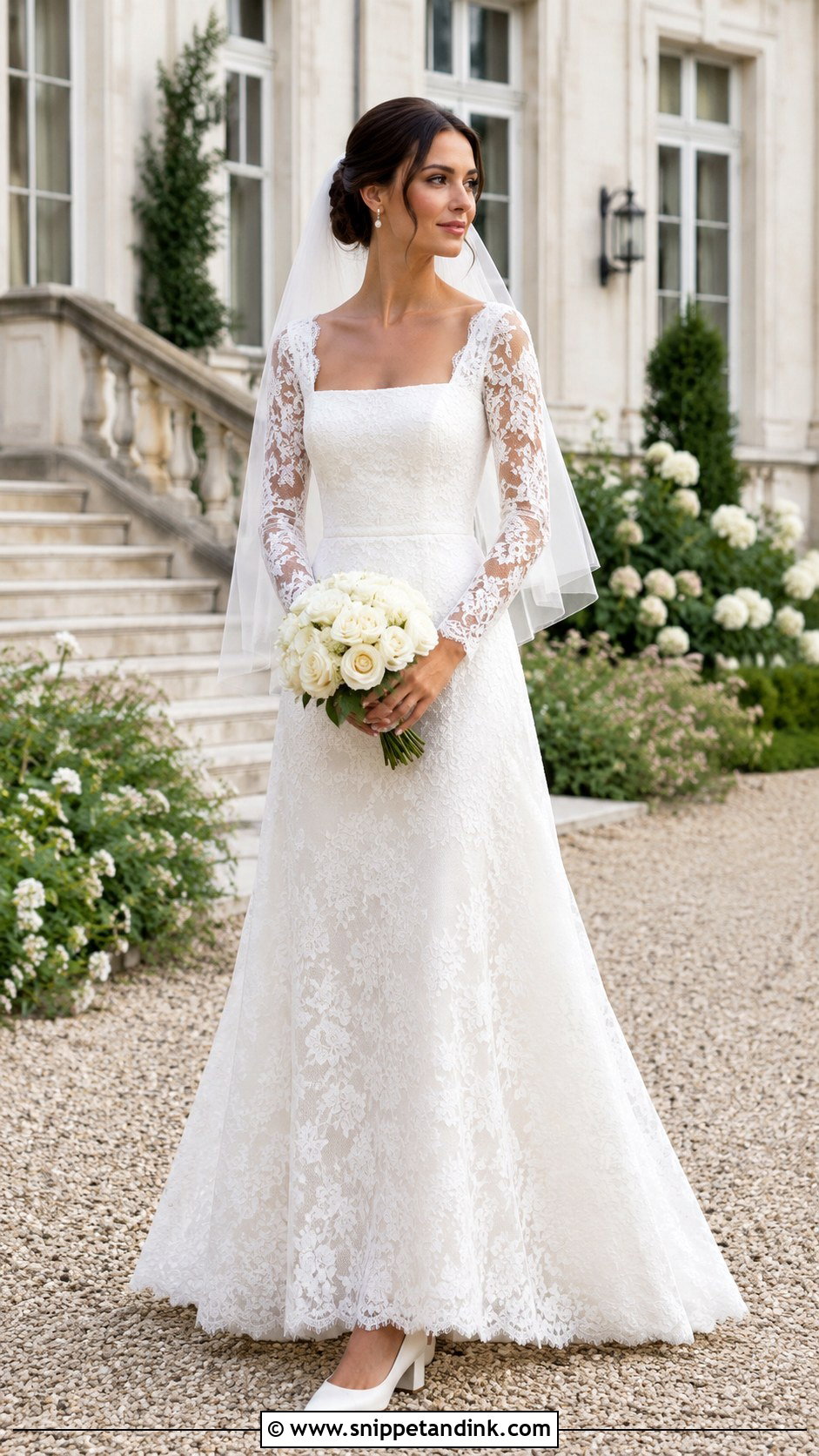
Straight lines against curved floral motifs: that contrast is the whole point of a square neck in lace. Wide straps, a fitted bodice and a softly flared skirt keep it secure. The corners of the square are where alterations go wrong, so ask the seamstress to check they sit level before she hems. Pearl drops, ivory block-heel pumps and a low chignon, with a medium veil set below the bun so the neckline stays open. Add sheer lace sleeves if you want coverage, joined so the motif continues into the bodice. A structured bouquet of white garden roses suits formal daytime weddings.
13. Backless Dentelle Wedding Dress
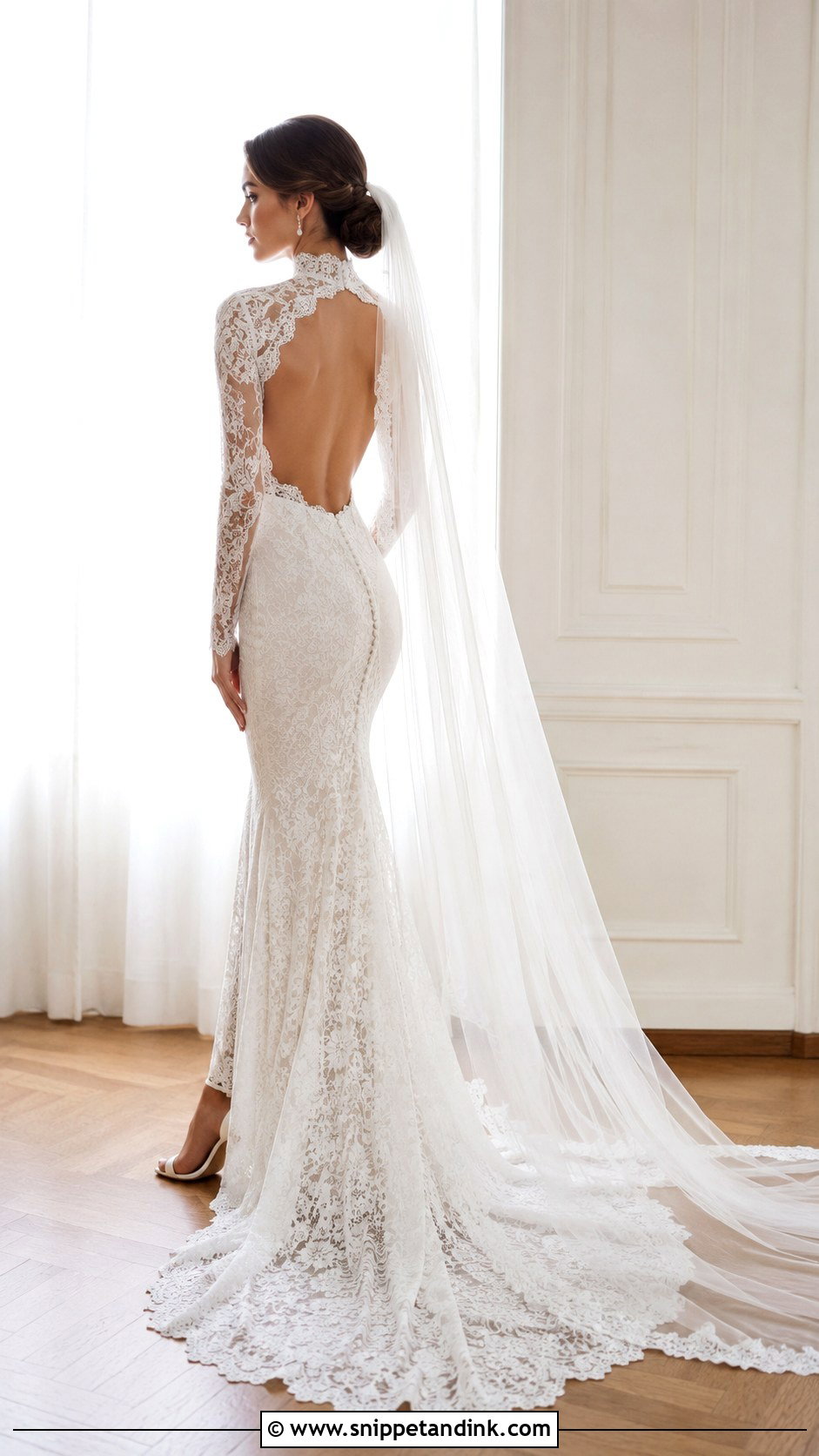
A backless dentelle wedding dress keeps the front quiet and saves the surprise for the aisle. Balance the open back with a high lace neck or long fitted sleeves. Covered buttons, scalloped edges or sheer panels frame the cutout, and a hidden bra or internal structure matters more here than anywhere else in this list. I look at where the back opening ends against the bride’s waist when she sits, not when she stands. Wear a low side bun, small earrings and no necklace, with ankle-strap heels and a light veil set below the hair so the back stays visible. A slim bouquet of orchids or callas echoes the long line.
14. Plus Size Dentelle Wedding Dress
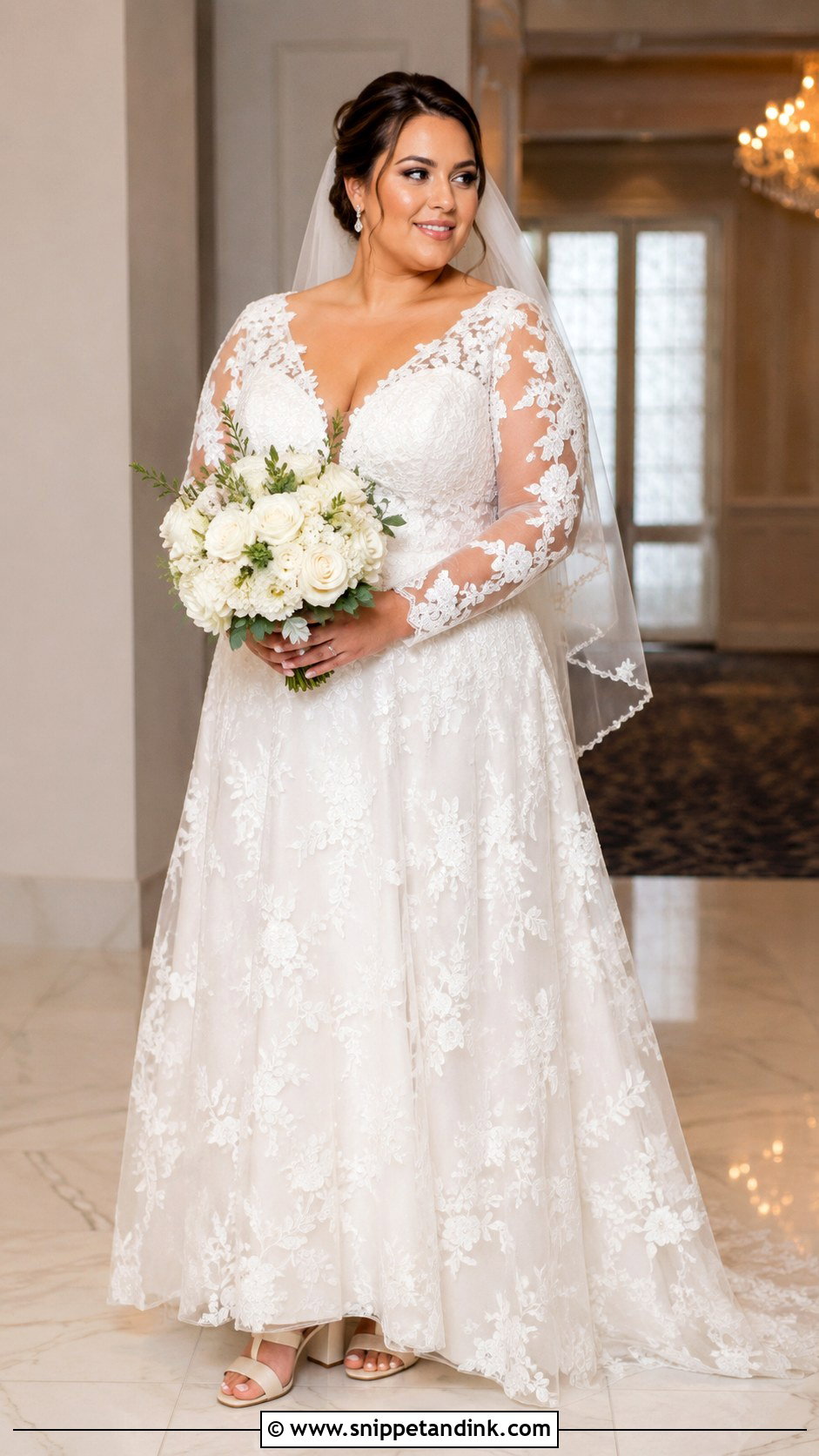
For a plus-size lace gown, support comes first and the lace second. An A-line or fit-and-flare with internal boning, real straps and a defined natural waist is the shape I usually start with. Medium-scale motifs photograph clearly; very small lace can blur into texture, and very large motifs can land oddly on curves. A V or square neckline frames the upper body, and lined or illusion sleeves give optional coverage. Stable block heels, drop earrings and a soft fingertip veil complete it. Alter for how the dress feels, not for the number on the label, and sit, walk and dance in it before the final fitting is signed off.
15. Short Dentelle Wedding Dress
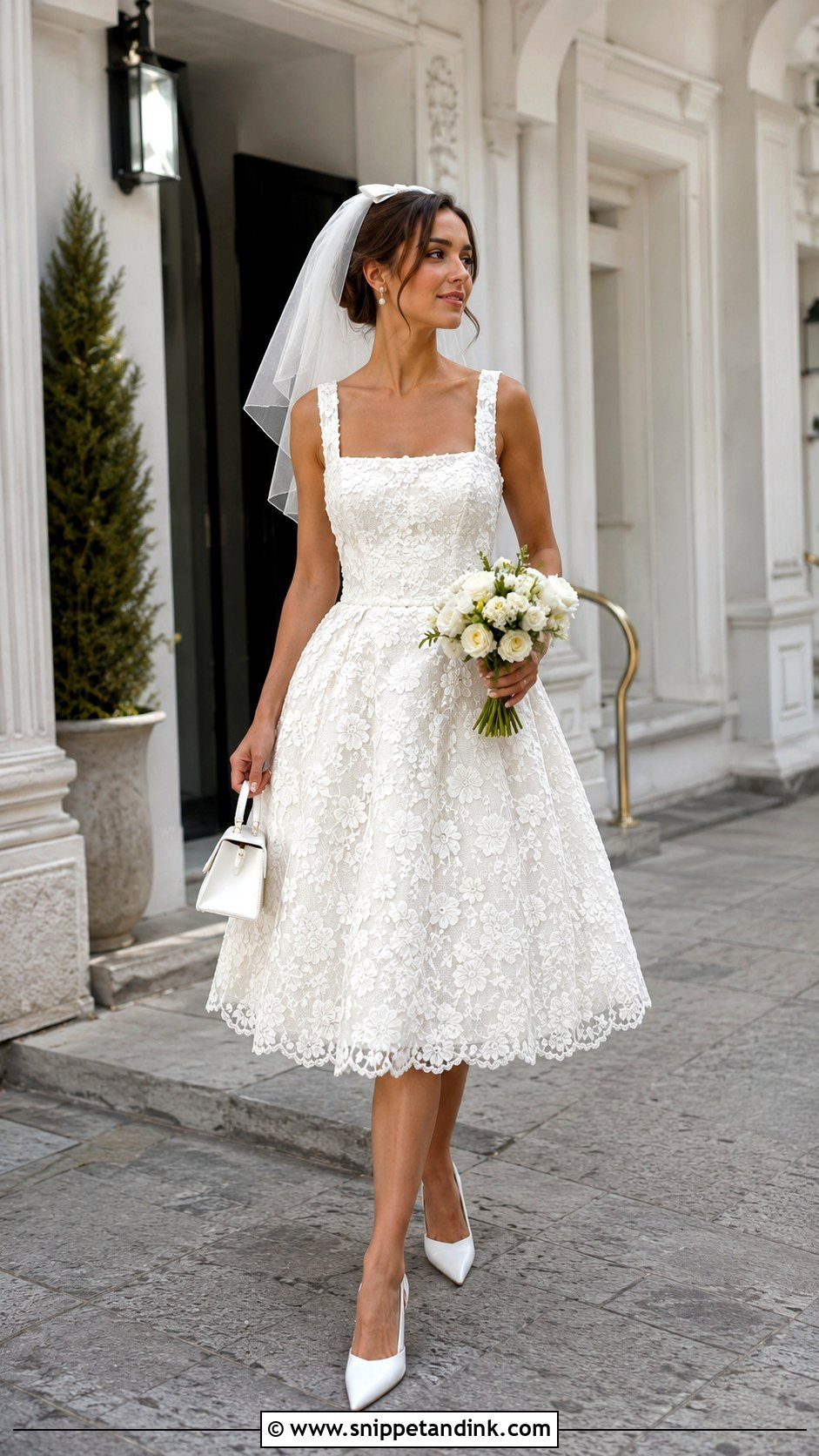
Short lace is wonderful for a civil ceremony or a reception change, but a mini has to hold its own shape. Lace without enough lining or structure collapses into a crumpled hem after an hour of sitting. A tailored mini or tea length works; long lace sleeves balance a shorter hem, and a sleeveless square neck looks fresh. Pick pointed pumps, slingbacks or embellished flats to suit the venue, plus pearl earrings, a small structured bag and a short veil or bow. Keep the bouquet compact. A clean lining and a fitted waist stop busy lace from looking bulky in close photos.
16. Beach Dentelle Wedding Dress
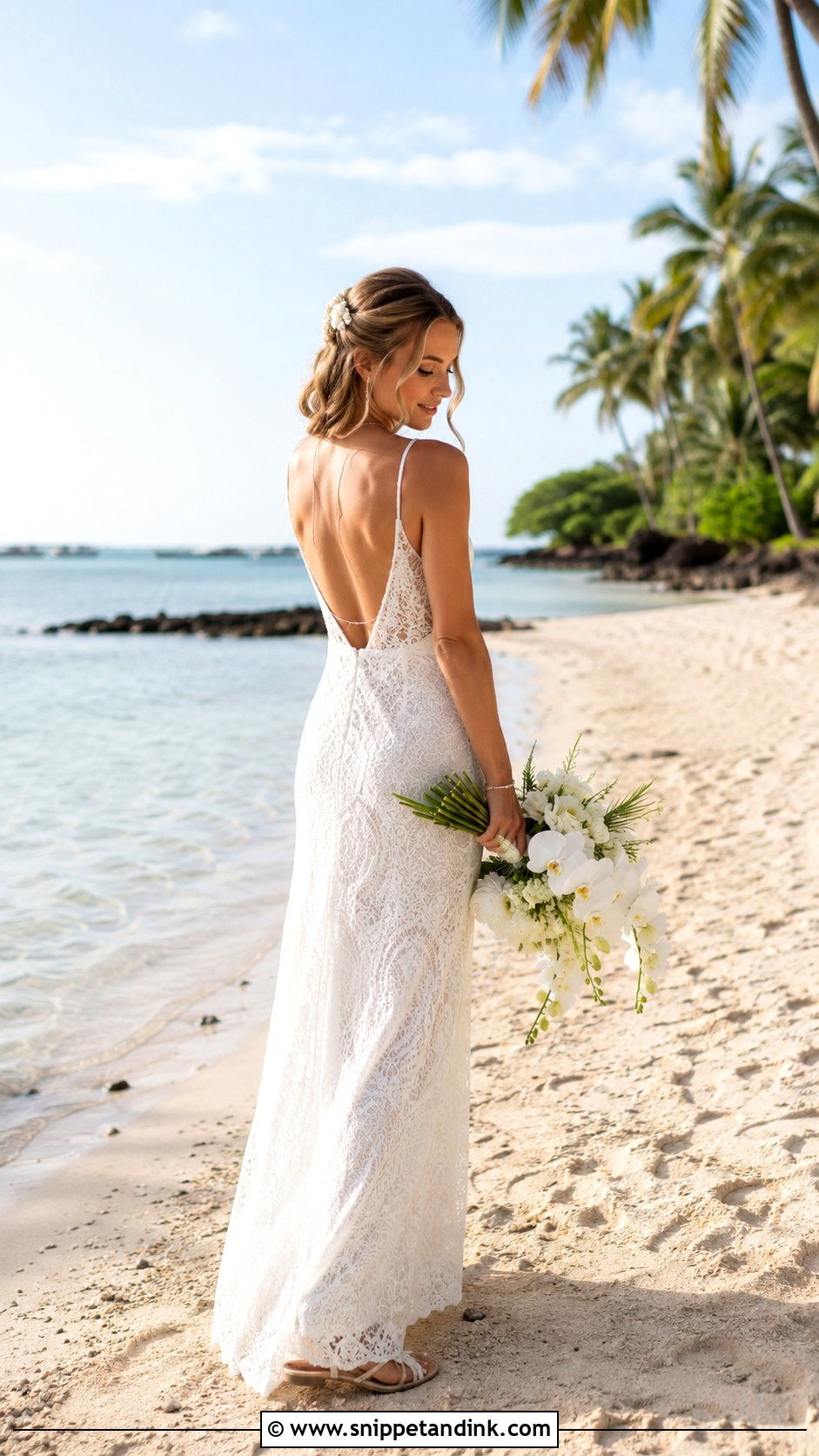
Light lace suits a beach bridal outfit because it gives texture without a heavy skirt. A slim A-line or relaxed sheath with a breathable lining and minimal layers keeps you cool. Skip the long train; sand gets into lace and is miserable to brush out of a scalloped hem. Thin straps, an open back or flutter sleeves help in heat. Flat ivory sandals, fine gold jewelry and pinned waves suit it, and wind is the real enemy here, so either anchor the veil firmly below the hair or swap it for a pearl comb. A loose bouquet of white tropical flowers finishes the outfit.
17. Floral Dentelle Wedding Dress
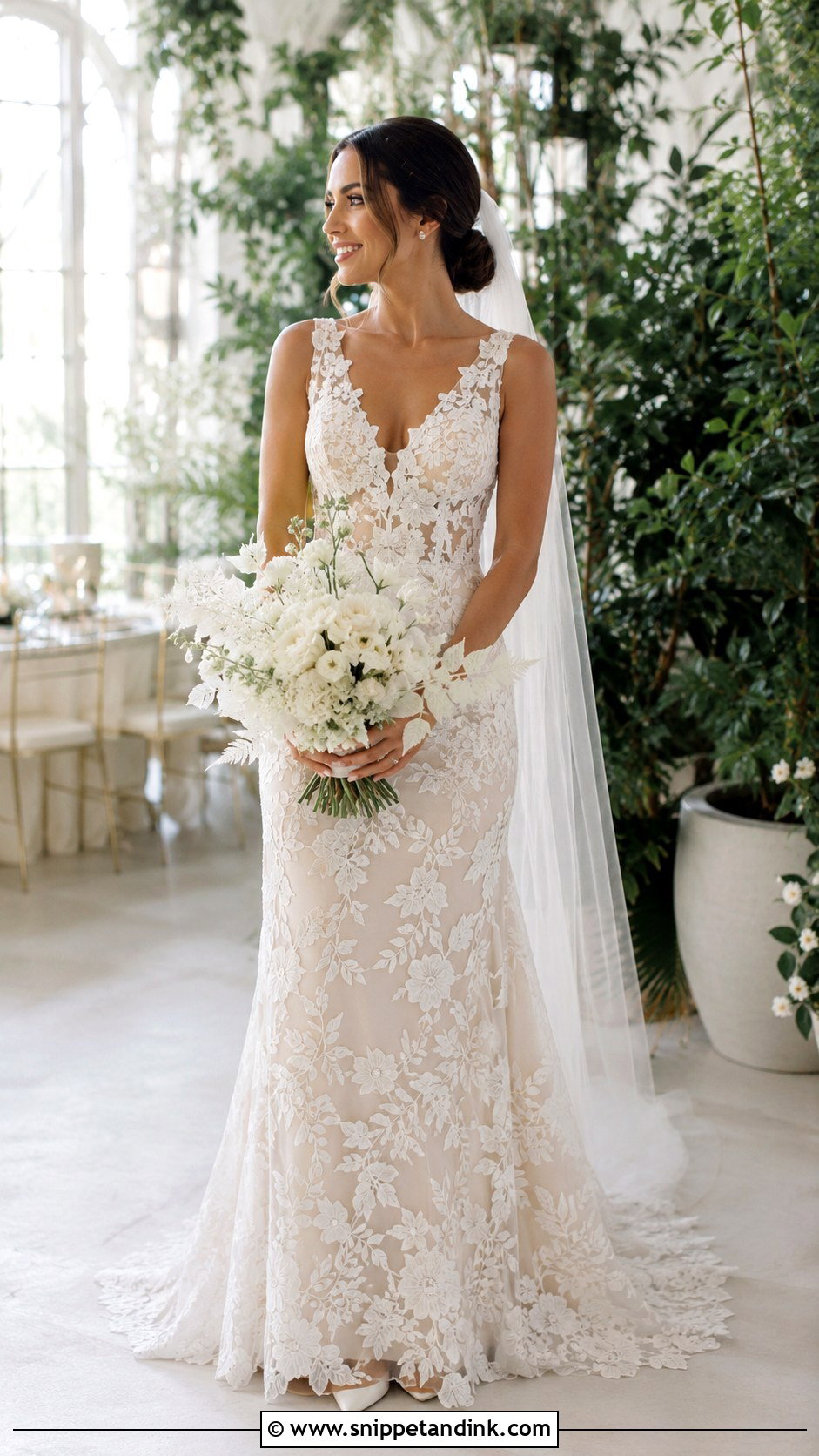
Oversized floral lace is the most fashion-led choice here, and the lining colour changes it completely. Ivory under ivory reads classic; a nude or blush underlay throws every petal into relief. With motifs this large, I check where the biggest flowers land on the body, because one centred over the bust or hip draws the eye there whether you want it or not. Keep the silhouette simple. Small studs, pointed ivory heels and a clean low bun, with a plain veil, since a second lace border would compete. A bouquet of one or two white varieties suits botanical venues and spring estates.
18. Detachable Sleeve Dentelle Wedding Dress
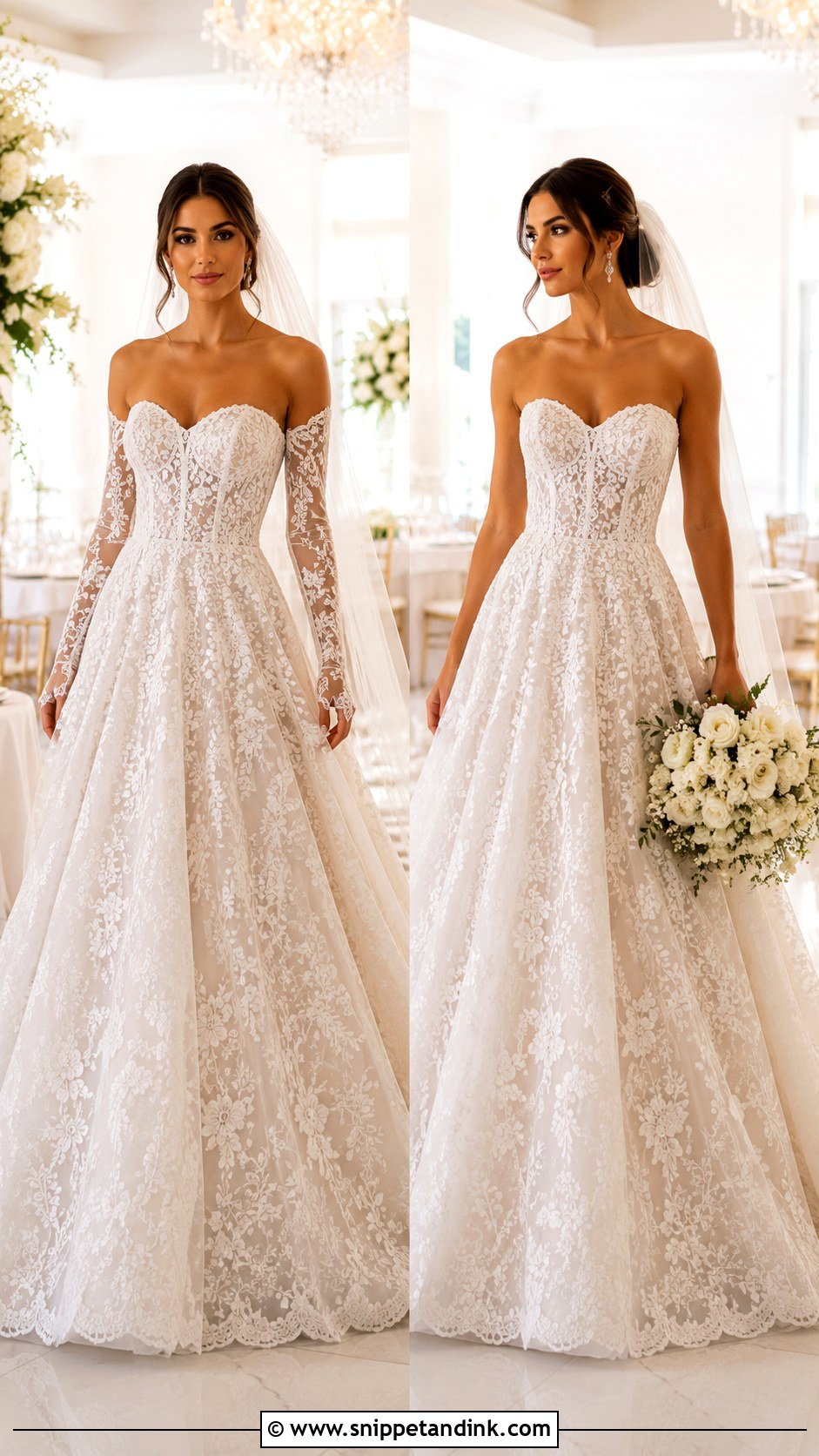
Detachable sleeves give you two dresses from one fitting schedule. Start with a strapless or sleeveless gown with a supportive bodice, then add long illusion sleeves for the ceremony in lace that genuinely matches the bodice; a near match looks worse than a contrast. They can attach at the neckline, under the arm or as a removable bolero. Practise taking them off at the final fitting, because snaps hidden under lace are fiddly and a bridesmaid will be doing it in a hurry. Crystal drops, satin heels and a long veil carry both looks, and a sleek comb freshens the hair once the veil comes out.
19. Colored Dentelle Wedding Dress
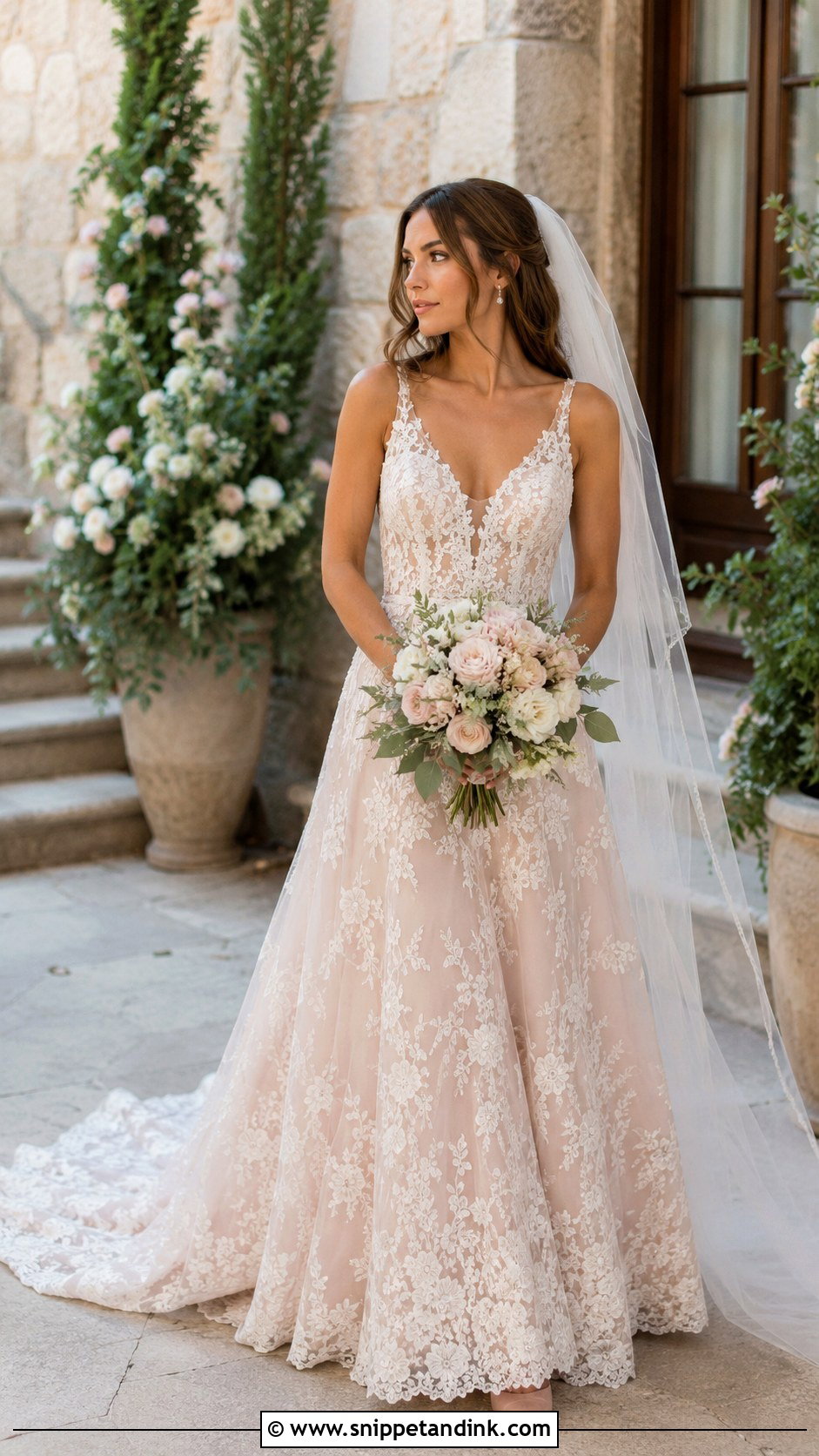
Coloured lining is the gentle way to step away from solid white. Ivory lace over pale blush, champagne, soft blue or nude keeps the dress bridal while giving the pattern depth. Look at it in daylight before deciding. Under warm indoor lighting, champagne can disappear and blush can turn peach. Choose an A-line or fitted shape without much extra embellishment so colour and texture stay balanced. Shoes can match the lining or stay classic ivory. Simple earrings, a sheer ivory veil and flowers that pick up the undertone tie it together for outdoor or artistic venues.

20. Cape Dentelle Wedding Dress
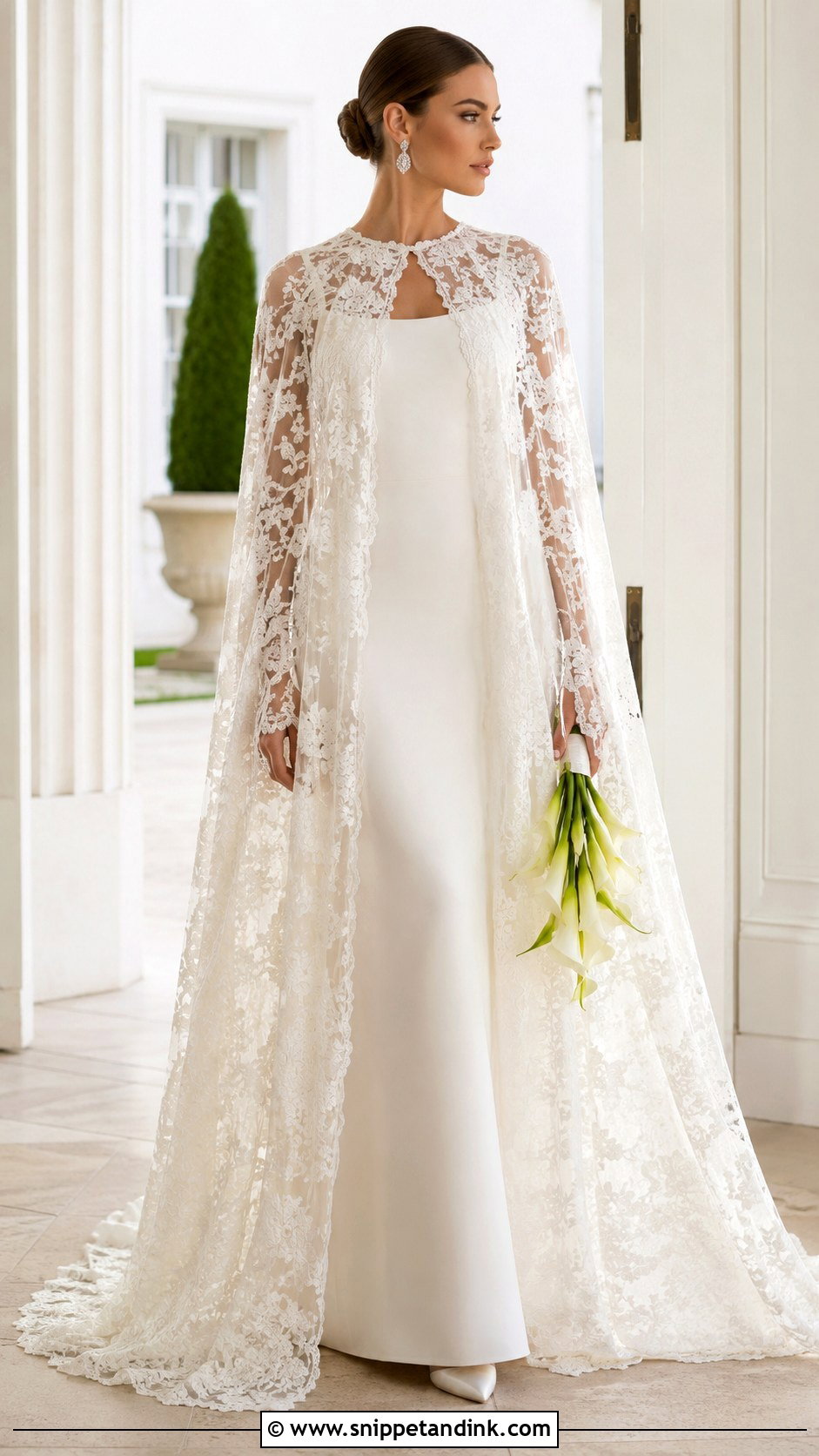
A lace cape gives the entrance and the coverage, and the dress underneath can stay simple: crepe, satin or a lightly detailed lace. Let the cape fall from shoulder to floor; a high-neck cape feels regal, an open front keeps the neckline visible. Capes catch on chair backs and car doors, so I always show the bride how to gather it over one arm before she sits. Sleek pointed pumps, small crystal earrings and a smooth bun suit it, and skip the veil, since the cape already gives length. Take it off for the reception and you’re in a lighter dress with no heavy train to manage.
Snags, Bustles and Steam: Lace on the Day
Lace is tougher than it looks, but it has one weakness: anything with a point or a prong. Most of the damage I repair after a wedding comes from accessories rather than the dance floor.
What catches open lace
- Claw-set rings and tennis bracelets: turn rings inward while dressing and fasten bracelets last.
- Earring backs and hair pins brushing the shoulder of an off-shoulder or illusion neckline.
- Velcro on a photographer’s bag, a groomsman’s cufflinks and wired bouquet stems.
Ask your seamstress to bustle a lace train with ribbon loops or hidden hooks placed into the solid areas of a motif, not into the net, which tears under the weight. Have her show a bridesmaid how it works at the last fitting, not on the morning.
Pressing and afterwards
Never put a hot iron straight onto lace. Steam it from the inside, holding the steamer a hand’s width away, and let the tulle drop out its own creases on a padded hanger the night before. After the wedding, have it cleaned by someone who handles bridal fabrics and store it flat or loosely folded in acid-free tissue in a breathable box. Plastic bags trap moisture, and lace yellows along the folds when it is left hanging by thin straps for years.
Lace That Still Feels Like You at Midnight
Whichever lace gown you settle on, judge it in motion. Sit in it, walk a staircase, raise your arms and look at the back in a mirror, because lace that looks right on the stand can pull, catch or wrinkle once you live in it for a day. Think about motif scale, how much structure sits underneath, how much coverage you want and how formal the venue is. Then add only the shoes, jewelry and veil that leave the lace readable. Good tailoring and a light hand with accessories will do more for the dress than any extra detail.
You'll Like These Ideas:







Leave a Reply