
A corset bodice gives a gown structure and an heirloom feel, but the line between romantic and costume is thinner than most brides expect. What keeps it on the right side is restraint in everything around the bodice. Bridal design right now leans on basque waists, exposed boning, lace sleeves, satin ball gowns, draped skirts and high necklines, borrowing from Victorian, Edwardian, Belle Époque, 1950s and Old Hollywood dress. I’ve grouped each idea below as a complete look, gown through to veil and shoes, with the fit and fabric points I’d check before you commit.

Three Things I Test the First Time You Step Into Boning
A corset that fits on the hanger tells you almost nothing. The real test is what happens when you move, so these are the checks I run at the first fitting, before anyone talks about lace or necklines.
Breathe, then sit
Take a full breath into your ribs, the way you would before laughing. If the top edge cuts in or the busk presses on your breastbone, it’s too tight at the ribcage. Then sit on a dining chair. Bones that are too long for your torso dig into your hip creases or push the top edge up toward your chin.
Lift your arms
Raise both hands as if you’re hugging someone taller than you. The bodice should stay put. If it rides up, the waist is too loose; if the top edge pinches the armpit, the side seams need easing.
Look at the boning lines
Spiral steel and flat steel bones lie smoothly against the body and spring back after you bend. Plastic boning is lighter and cheaper but can kink at the waist and leave a visible ridge after a long day. On an exposed-boning bodice I’d always ask what the channels hold, because a bent bone shows in every close photo.
1. Victorian Lace Corset Wedding Dress
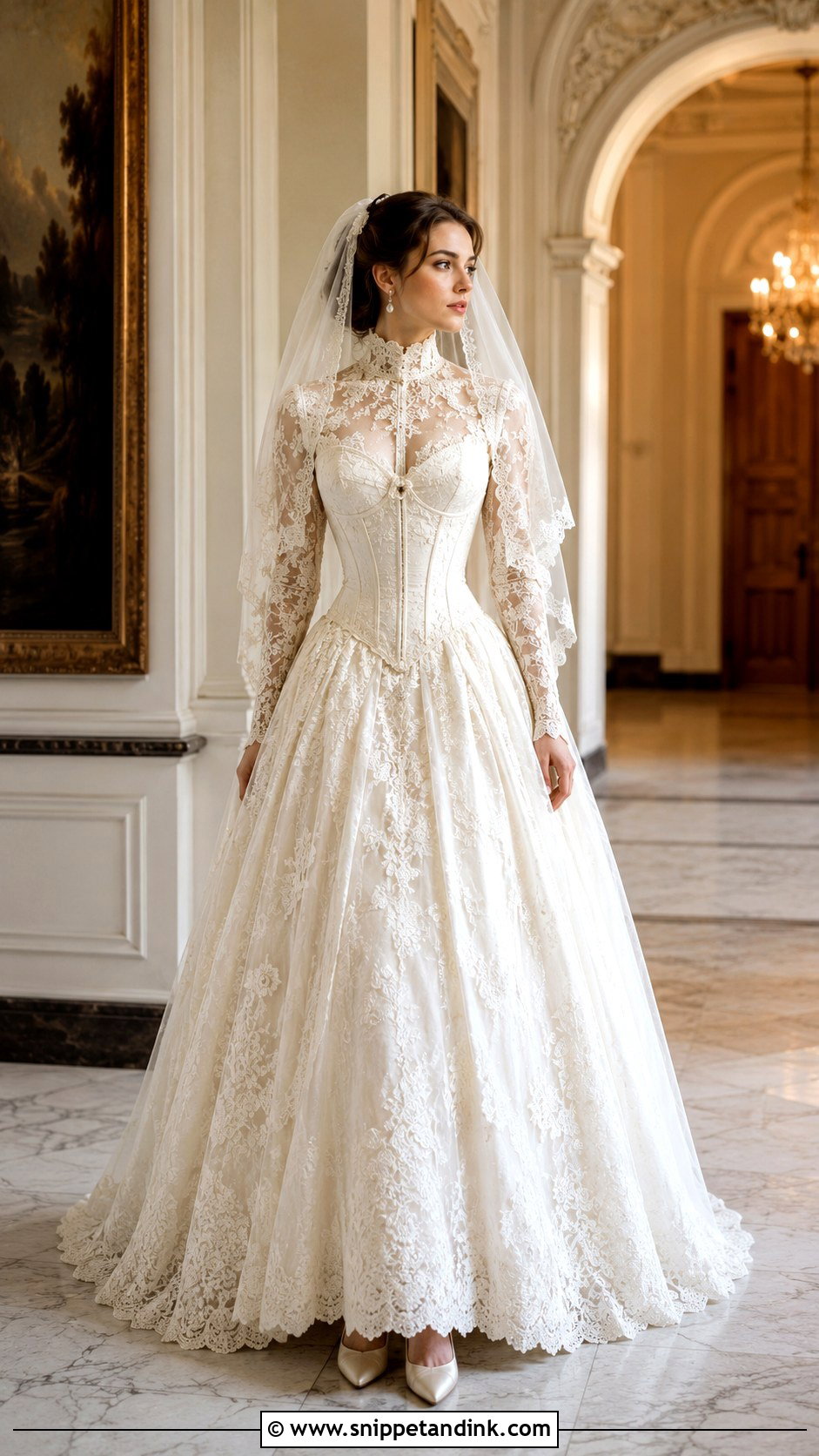
Victorian lace is the most covered look here: a fitted bodice with visible boning, a high neck and long lace sleeves over an A-line or full skirt, so the structure reads bridal rather than severe. Pearl drops, a soft updo, a fingertip veil, ivory satin pumps and a bouquet of cream roses with trailing ribbon finish it. The thing I watch on this one is the sleeve head. A tight lace sleeve set into a boned bodice can stop you lifting your arms to hug anyone, so raise them above shoulder height at the fitting. Historic houses, libraries and formal indoor ceremonies suit it best.
2. Edwardian Corset Wedding Dress
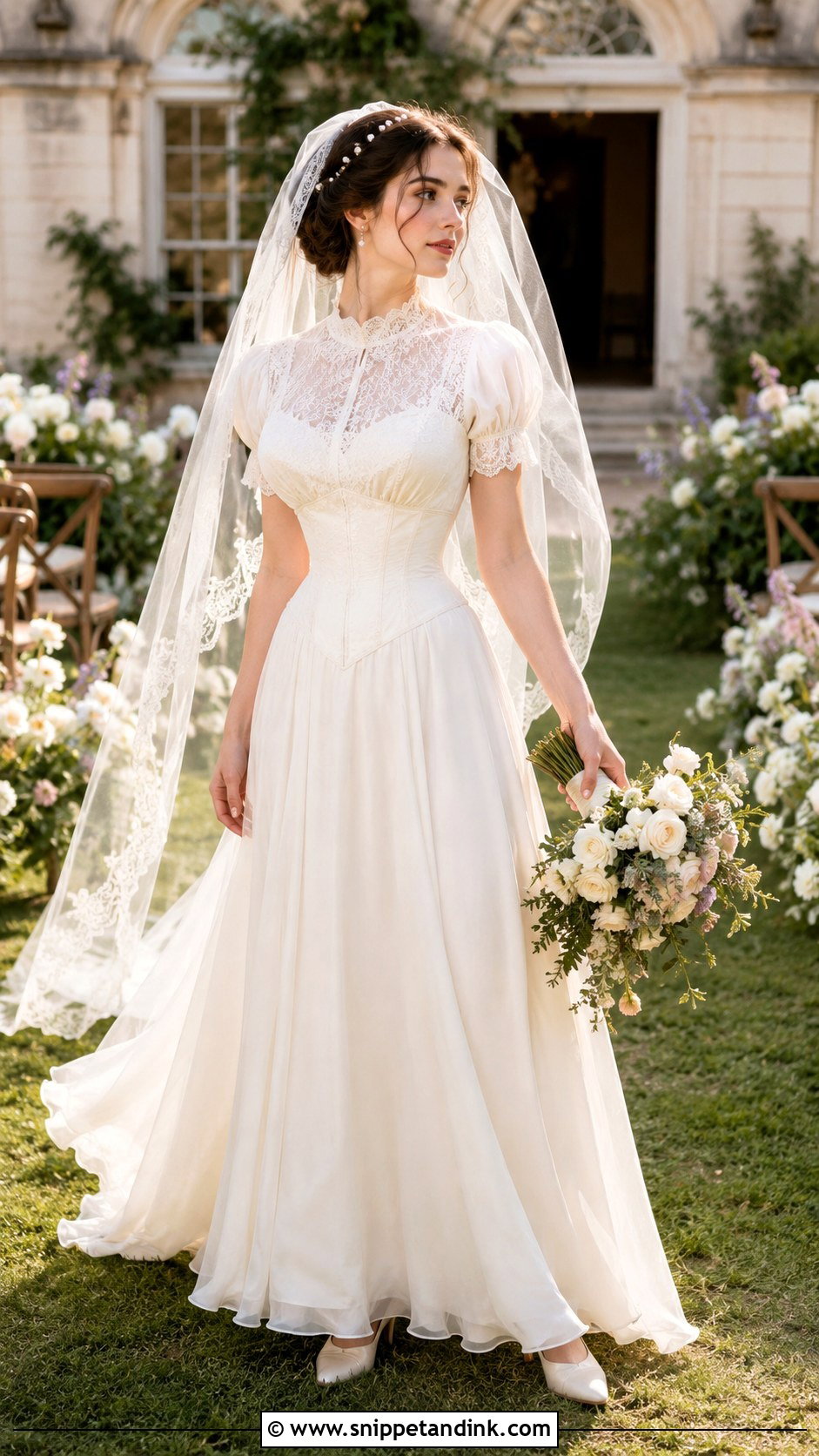
Edwardian dress was softer than Victorian, and the gown should be too. Look for a corset bodice with lace insets, tiny buttons, a modest neckline and a skirt that moves when you walk. Internal boning is the right call here; exposed panels pull it back toward the heavier era. A Juliet cap veil, pearl pins and low ivory heels complete the antique mood, and I’d keep makeup fresh with rosy cheeks and a natural lip. Spring gardens and estate ceremonies are its natural home.
3. Basque Waist Corset Wedding Dress
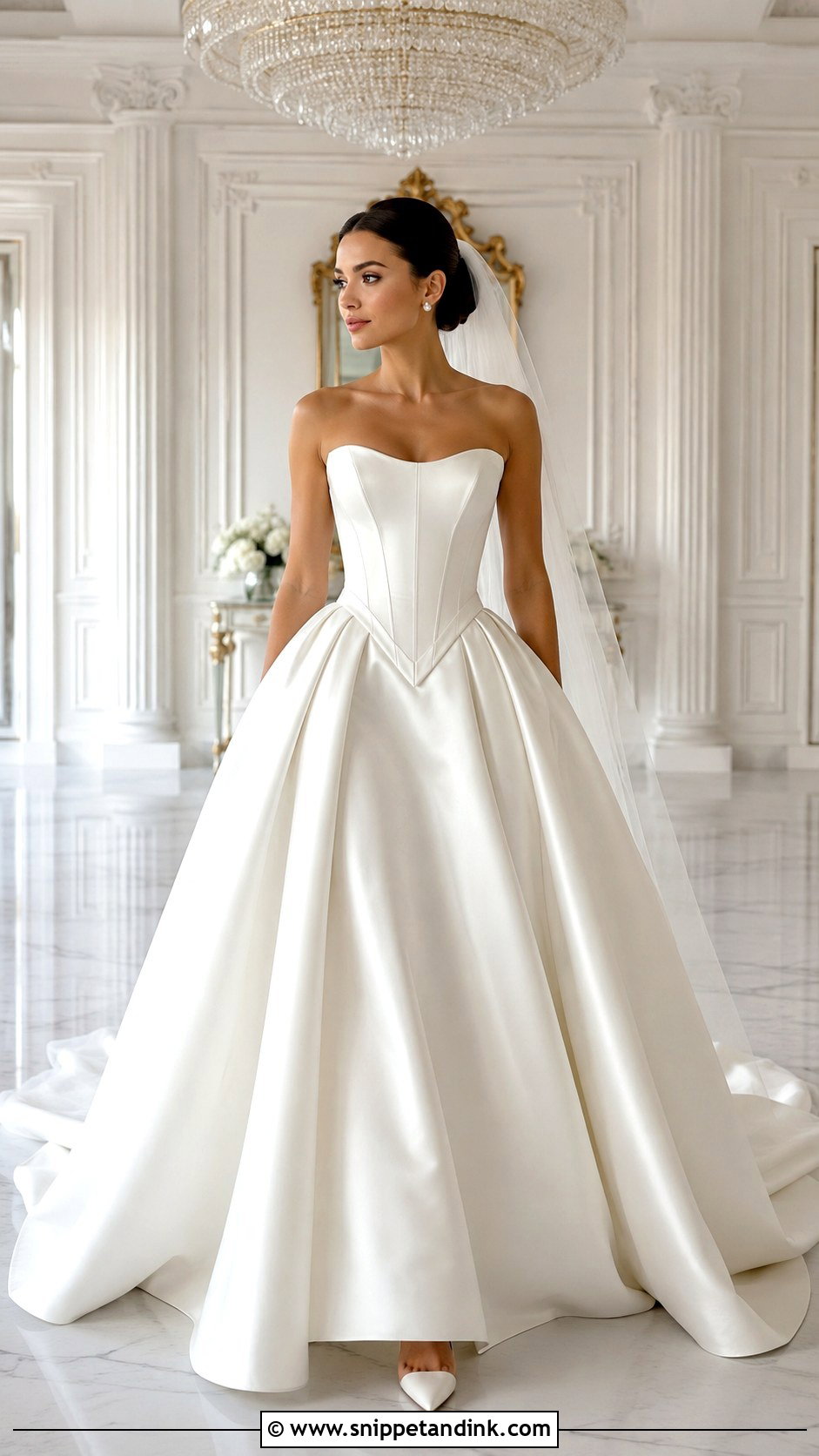
The basque waist dips into a V below the natural waist, and that point is what makes it look both period and current. It holds best in satin, mikado, taffeta or a stable lace, because a soft fabric lets the point curl up when you sit. Keep the veil plain, wear pearl studs and pointed heels, and let the waistline be the only focus. I find this bodice flattering on a wide range of figures since the longer front balances skirt volume. Get the point checked seated as well as standing; it should rest flat on the skirt, not dig in.
4. Satin Corset Ball Gown Wedding Dress
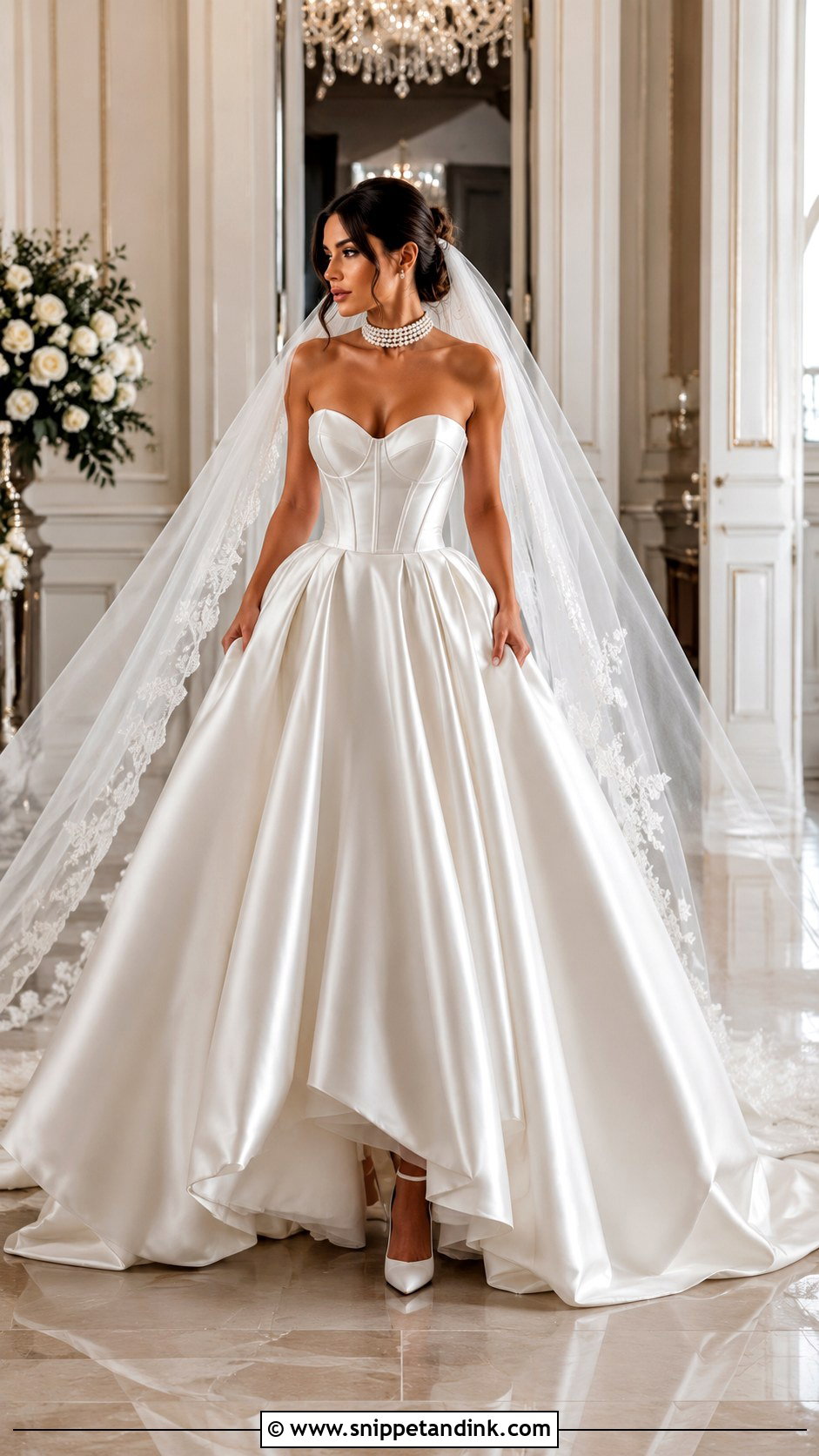
A satin ball gown with a corset bodice needs almost nothing added. Sweetheart, off-shoulder and straight-across necklines all work, so pick the one you won’t fidget with. A cathedral veil, a pearl choker and satin pumps make it formal enough for a ballroom or an evening hotel reception. Satin shows every crease, though. Sitting in a car for twenty minutes leaves lines across the lap, so I’d plan a quick steam between the ceremony and photos and keep the hair to a sleek bun or one set of soft waves.
5. Corset Wedding Dress With Puff Sleeves
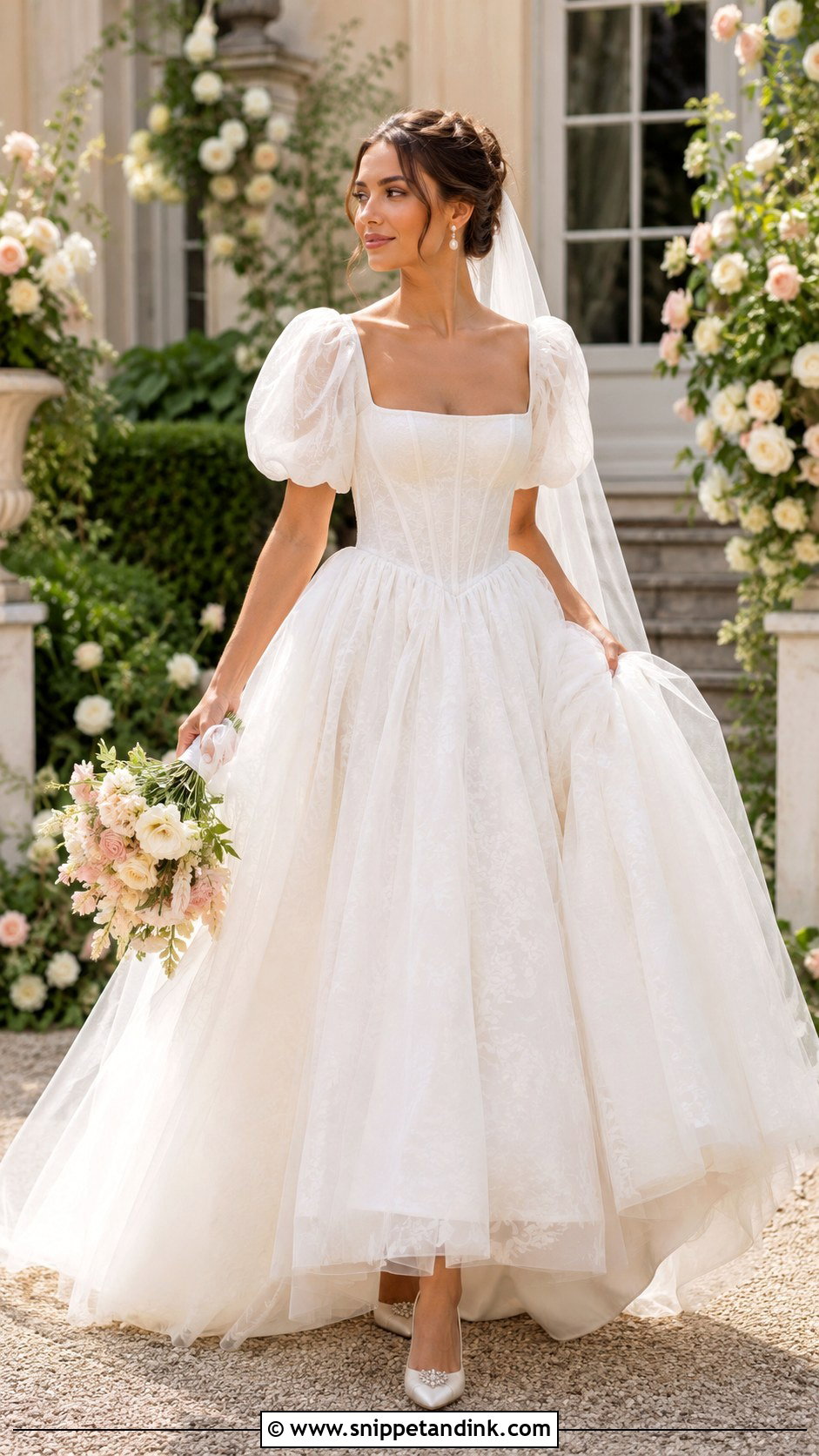
Puff sleeves are about balance. Large sleeves need a clean bodice and a plain skirt; soft, sheer ones leave room for lace, beading or floral embroidery. Square necklines, basque waists and tea-length or full skirts all sit well with them, finished by pearl earrings, a soft veil and ivory heels. Ask whether the sleeves can detach, which gives you a second look for the reception. Sheer organza puffs also need internal net to stay full, otherwise they wilt by the evening.
6. Corset Wedding Dress With Long Sleeves
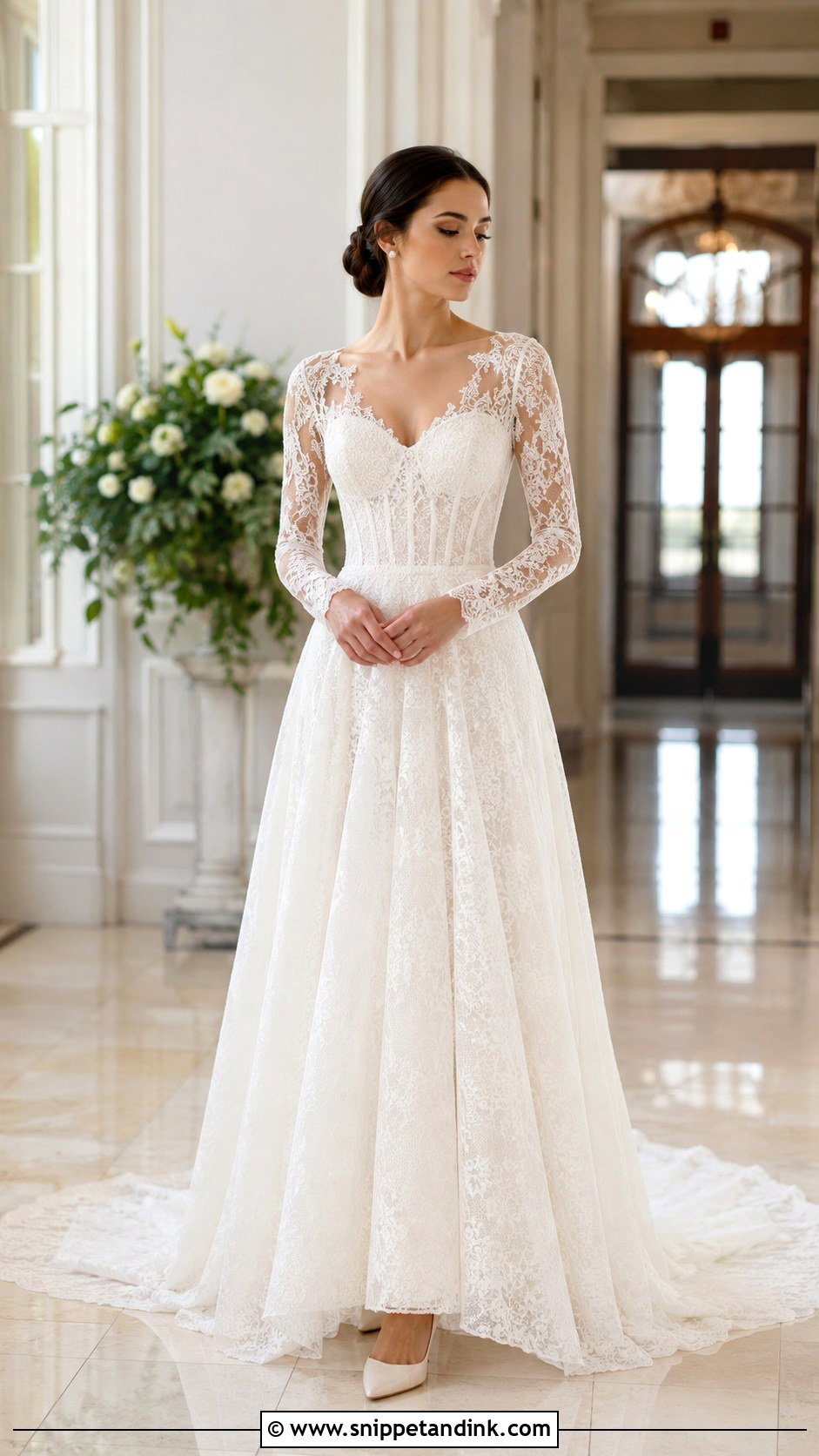
Long sleeves change the mood depending on fabric. Lace leans Victorian or Edwardian, satin or crepe looks cleaner, and the corset can hide under the fabric or show through as fine boning lines. A low bun, pearl studs and closed-toe heels keep it classic. Autumn, winter and formal indoor weddings suit it, though sheer sleeves are fine in warmer months. With a high neckline I’d skip the necklace entirely and put the detail into earrings or a hair comb.
7. Corset Wedding Dress With Off Shoulder Sleeves
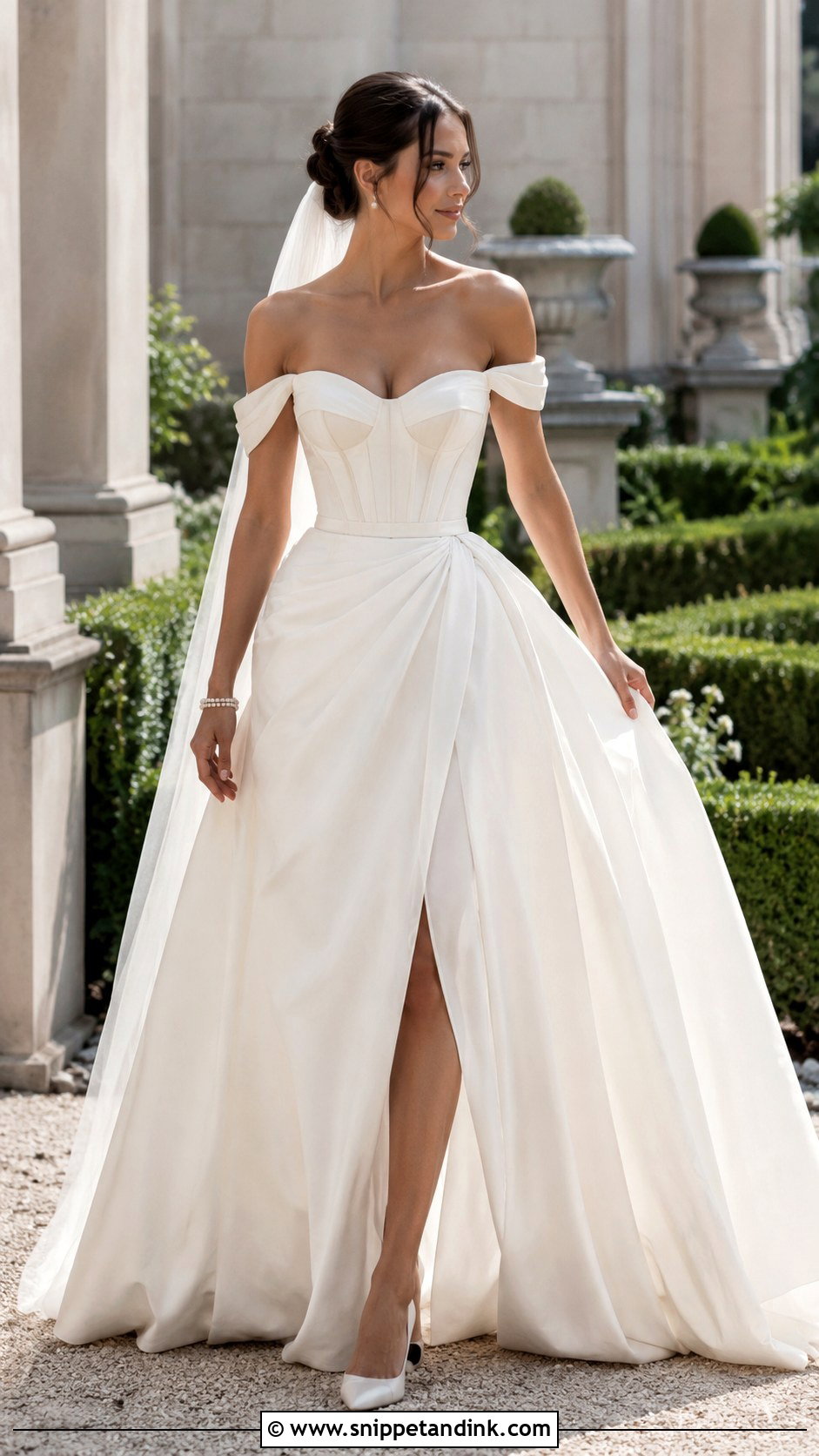
Off-shoulder sleeves echo old portrait gowns, yet clean fabric and little trim keep them modern. A fitted bodice with draped sleeves goes over a full skirt or a mermaid shape, with a simple veil, a pearl bracelet and ivory pumps. The fitting point that matters is the band across the upper arms. If it’s tight enough to stay up on its own, you won’t be able to raise your arms; if it’s loose, it creeps. A boned bodice should do the holding, with the sleeves just resting. Swept-back hair shows the shoulders best.
8. Corset Wedding Dress With Square Neckline
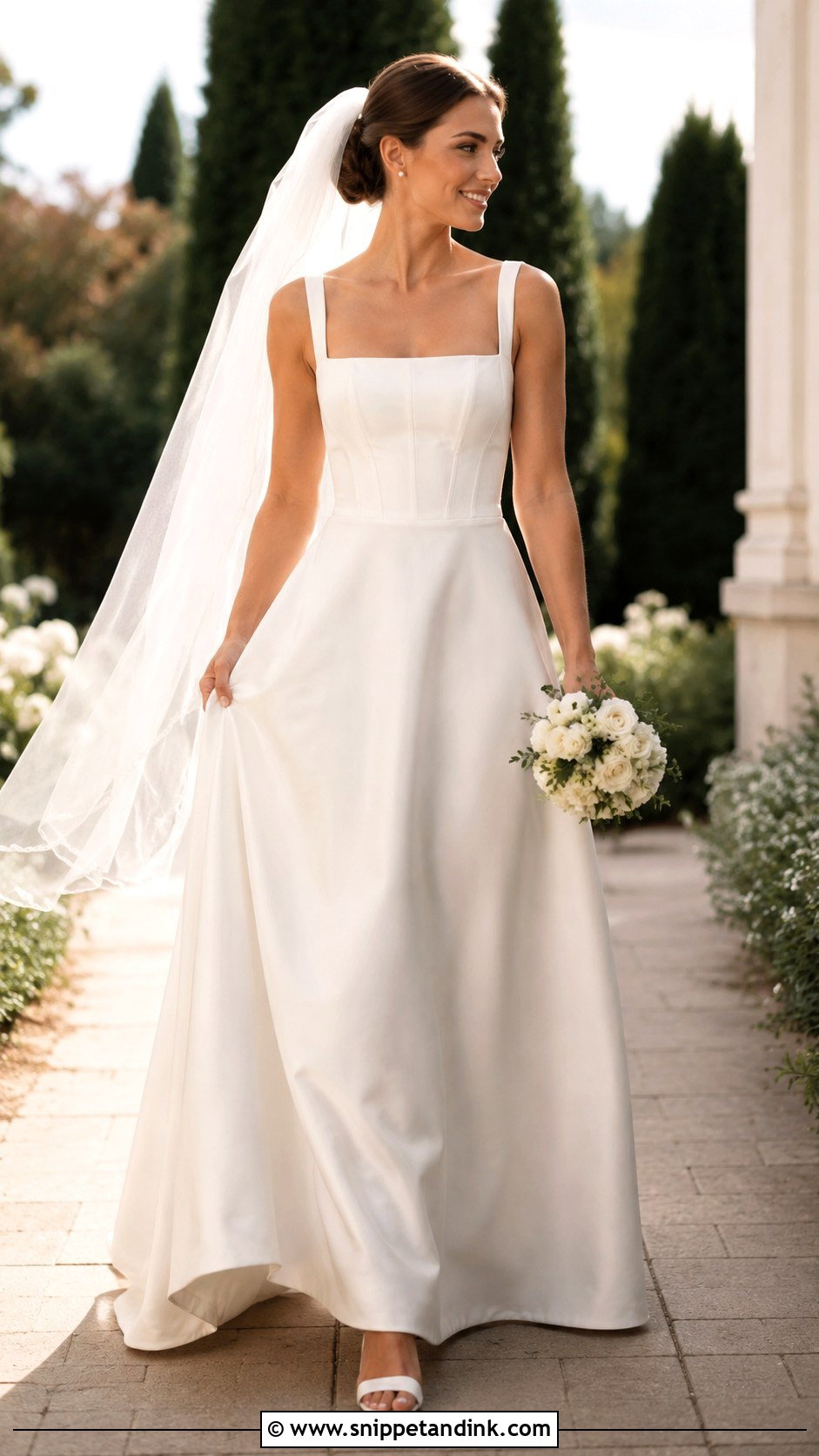
Square necklines frame the collarbones and sit comfortably over a corset, which is why I recommend them so often. Lace, satin, brocade and plain crepe all suit the shape, with a chapel veil, pearl studs and block heels or pumps. A fuller skirt and gathered sleeves give a Renaissance-inspired feeling; a smooth A-line and minimal accessories keep it modern. Lean forward at the fitting. If the corners of the neckline gape, the bodice needs taking in at the side seams, not the front.
9. Corset Wedding Dress With Sweetheart Neckline
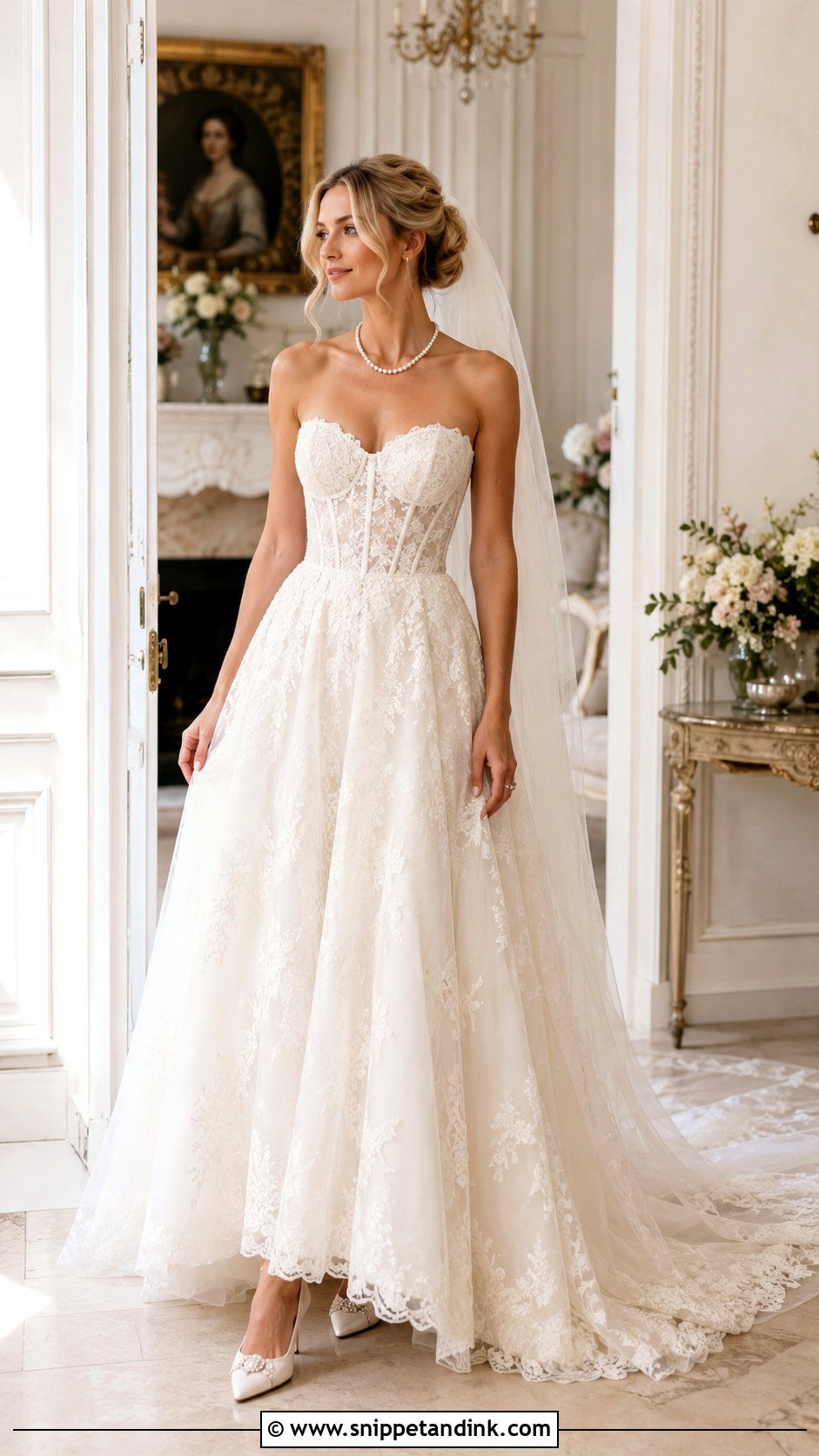
Sweetheart necklines soften a structured bodice, which is why they suit so many figures. For a vintage version, look at lace overlay, satin draping, tiny buttons or a basque waist; a full skirt reads ball gown, a fitted one reads Old Hollywood. Add a veil, a pearl necklace and heels. If you want cover for the ceremony, detachable lace sleeves or a sheer topper is easier than altering the bodice itself. One caution: a sweetheart with heavy boning can push the bust up more than you’d like, so try it on before deciding on padding.
10. Corset Wedding Dress With High Neck
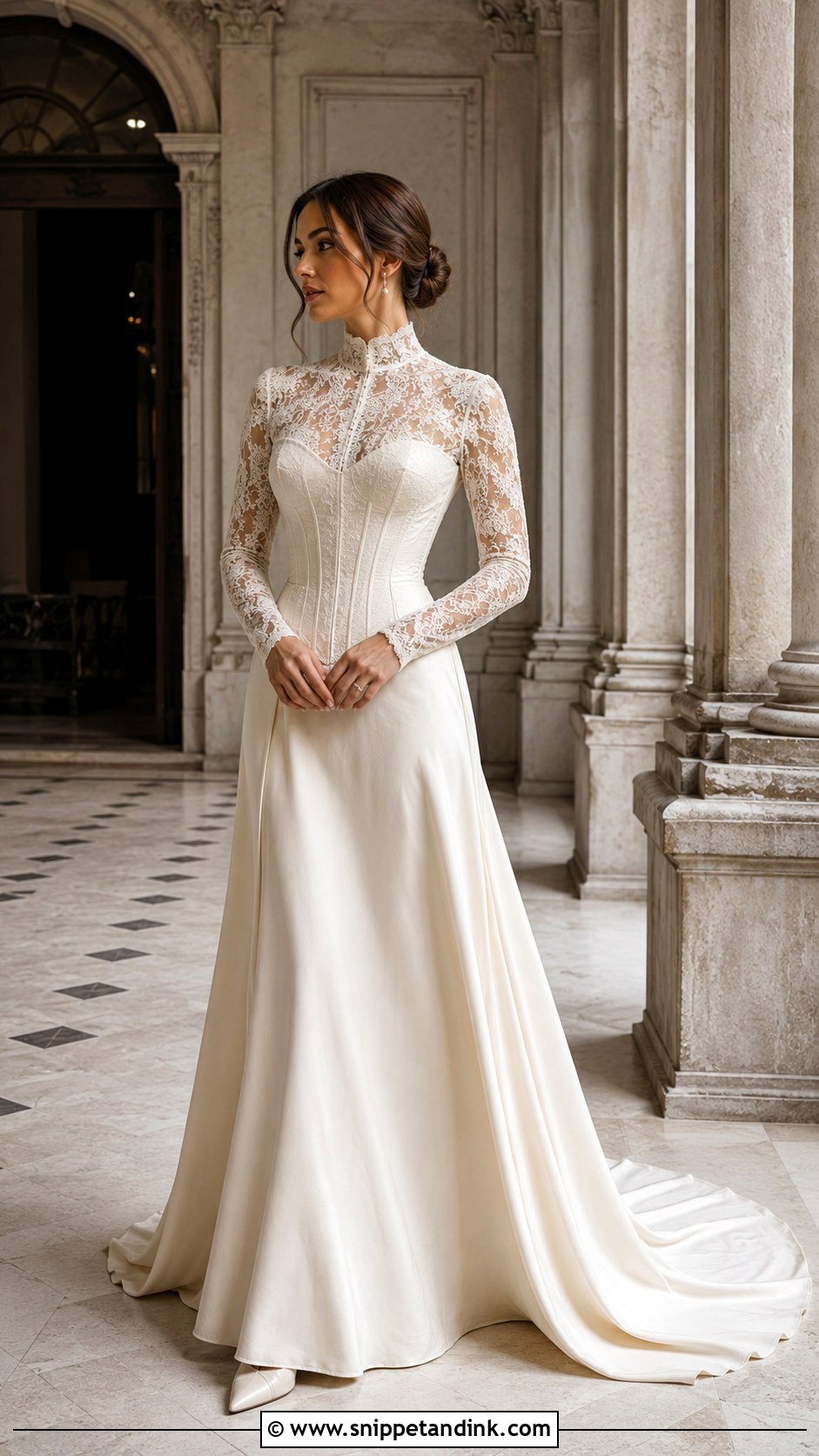
Lace is the natural fabric for a high neck, because it softens the cover and adds detail near the face. Choose a fitted corset underlay, long sleeves and a flowing skirt for a Victorian outline, with pearl earrings, a low bun and ivory shoes. A long veil adds softness and a short one keeps things restrained. The neck edge should clear your throat by a finger’s width when you swallow and turn your head. Too snug, and you’ll feel it all day, especially once you start talking to guests.
11. Corset Wedding Dress With Lace Overlay
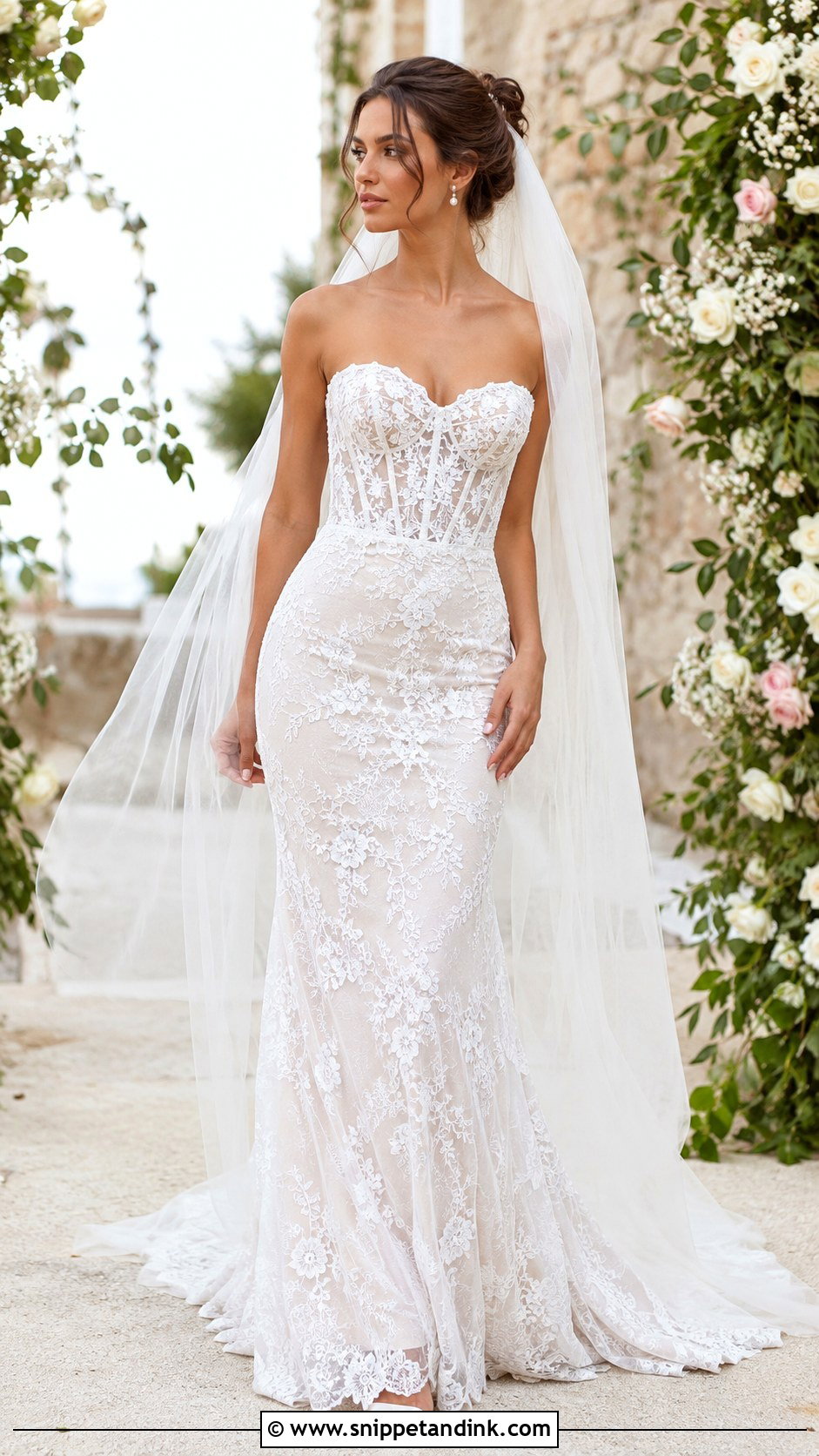
A lace overlay corset wedding dress gives texture without sparkle, with the corset shaping underneath and the lace softening the line. The lace type sets the mood: floral feels romantic, Chantilly delicate, heavier corded lace antique. Pearl earrings, a sheer veil and ivory heels are enough, and a detailed lace calls for a simple bouquet. I’d look closely at where the lace meets the boning. Good work has the lace cut around the motifs and hand-appliquéd at the seams, so the pattern doesn’t break awkwardly across the bodice.
12. Corset Wedding Dress With Tulle Skirt
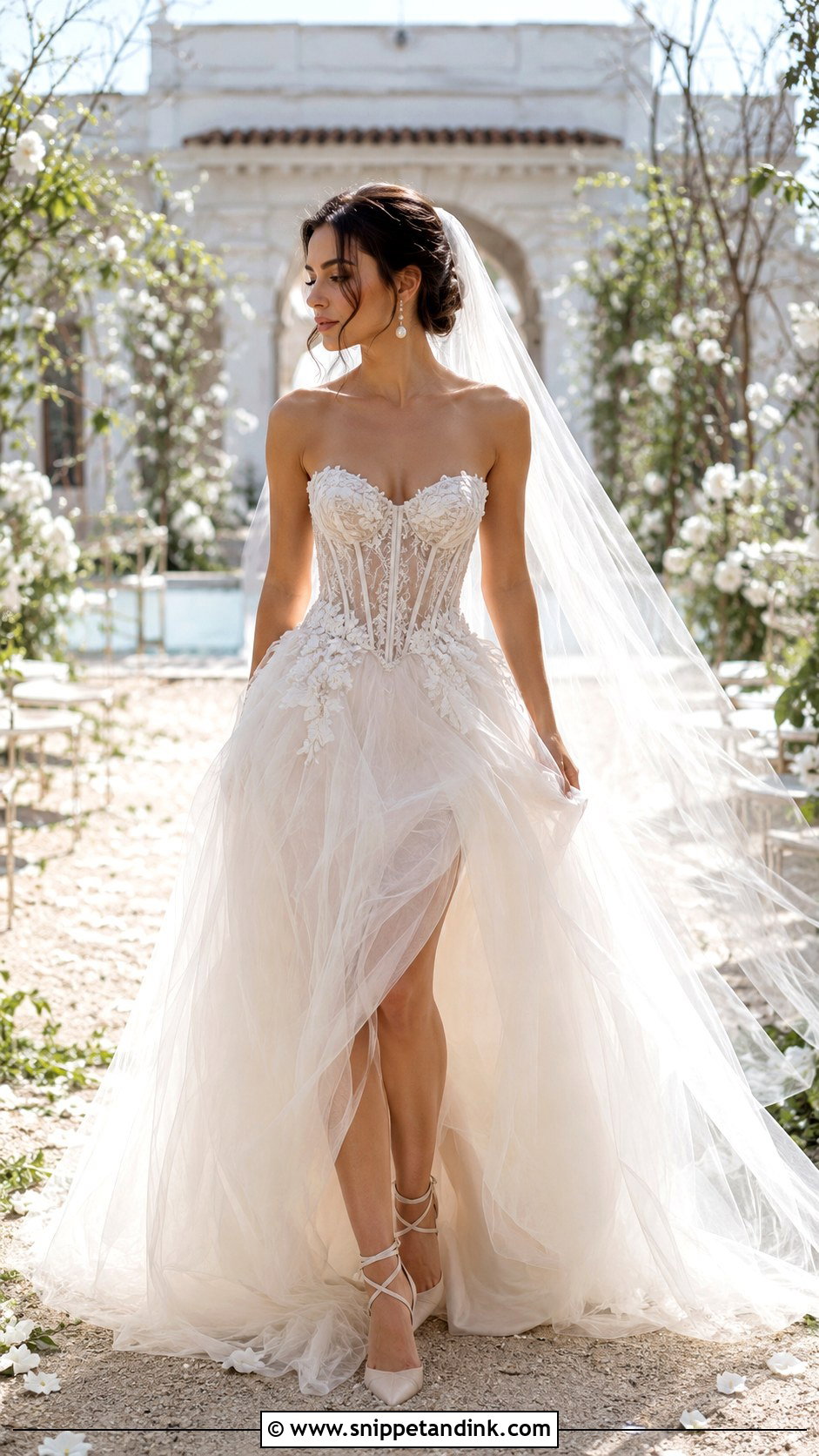
Tulle over a structured bodice gives a defined waist and a skirt that floats when you move. Lace appliqué, a basque waist or soft off-shoulder sleeves pull it toward vintage, finished with ballet-style heels, pearl earrings and a soft veil. On a petite frame I’d ask for fewer, lighter tulle layers so the skirt doesn’t swallow you. Tulle snags on rough stone and bramble, so for an outdoor ceremony on gravel or grass, plan a bustle or have someone carry the hem between locations.
13. Corset Wedding Dress With Drop Waist
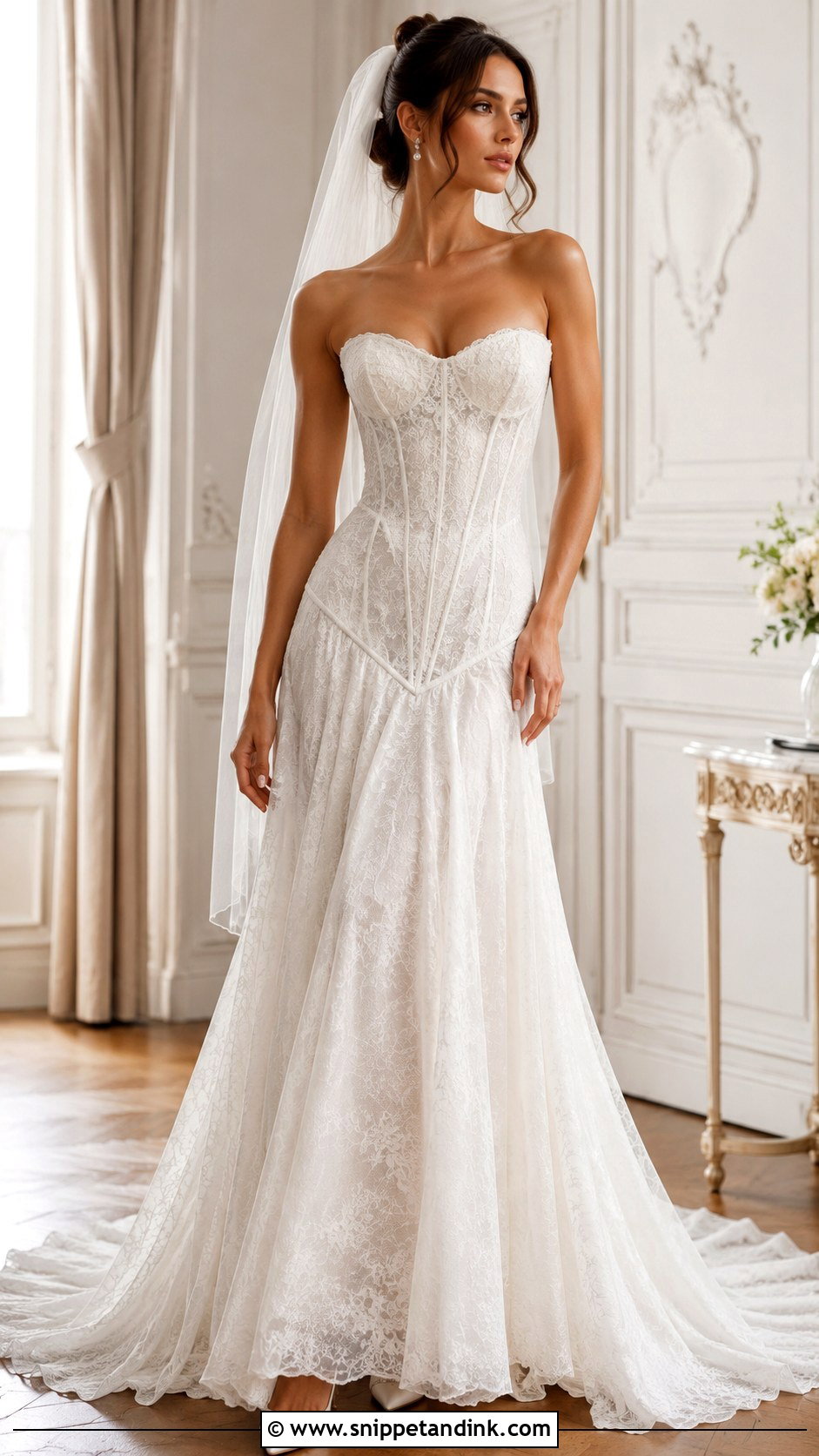
A drop waist runs the bodice long through the torso before the skirt begins, and it can lean 1920s, 1950s or modern depending on fabric. Lace keeps it romantic; satin or mikado makes it sculptural. A plain veil, pearl earrings and pointed heels keep the proportions clean. This is the shape where tailoring matters most. If the seam sits even slightly in the wrong place, the skirt looks like it’s slipping, so mark it standing tall in your actual wedding shoes.
14. Corset Mermaid Wedding Dress
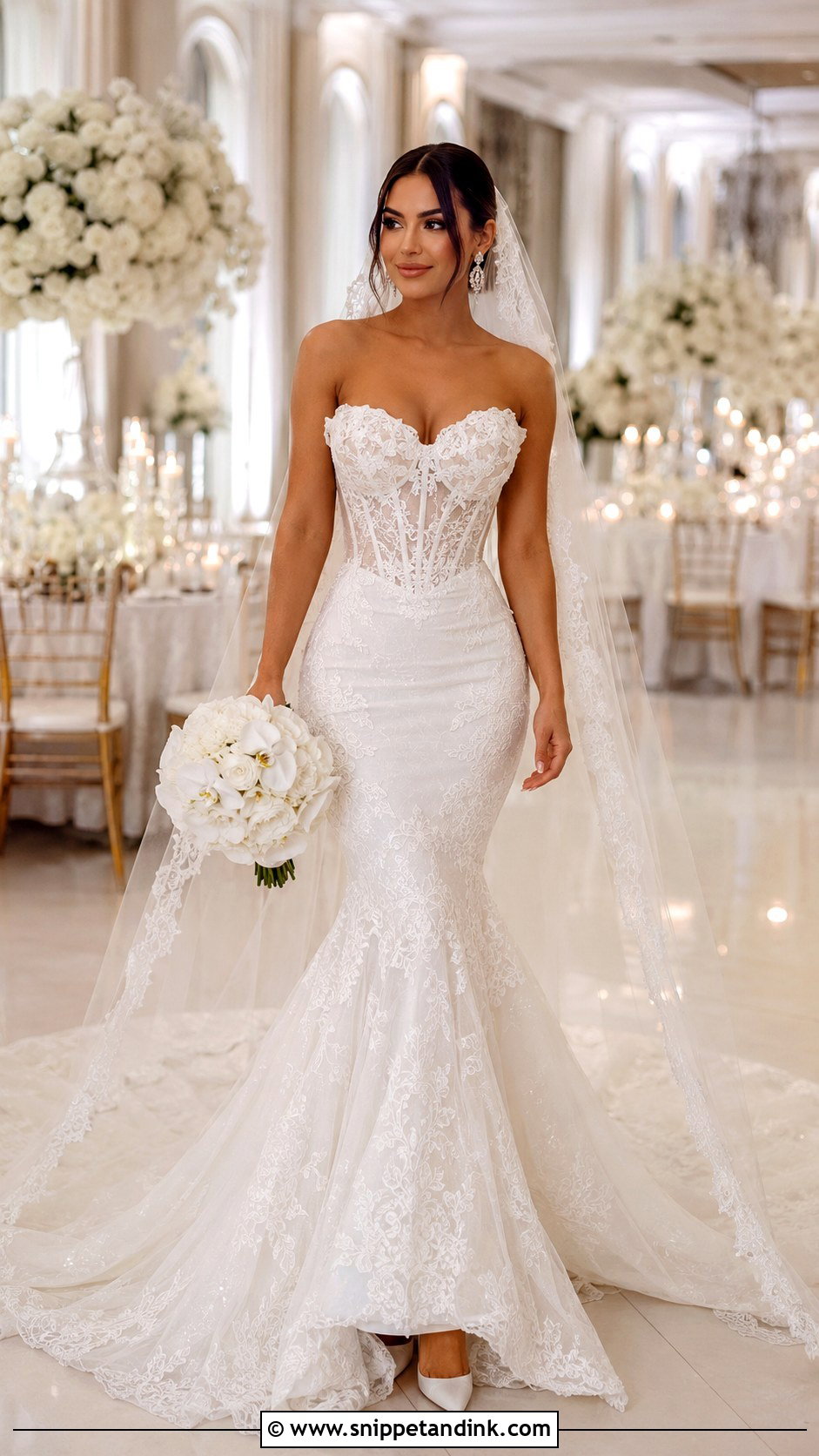
The mermaid is the most demanding shape on this list. The bodice defines the waist, the skirt follows the hips, and the flare starts near the knee. Lace, satin, beading or a soft sweetheart neckline give it vintage character, with a long veil, drop earrings and sleek heels. Sit, walk the length of a room and climb a step at every fitting. If the flare is set too high or too tight, you’ll shuffle, and a small train or a bustle makes the reception far easier.
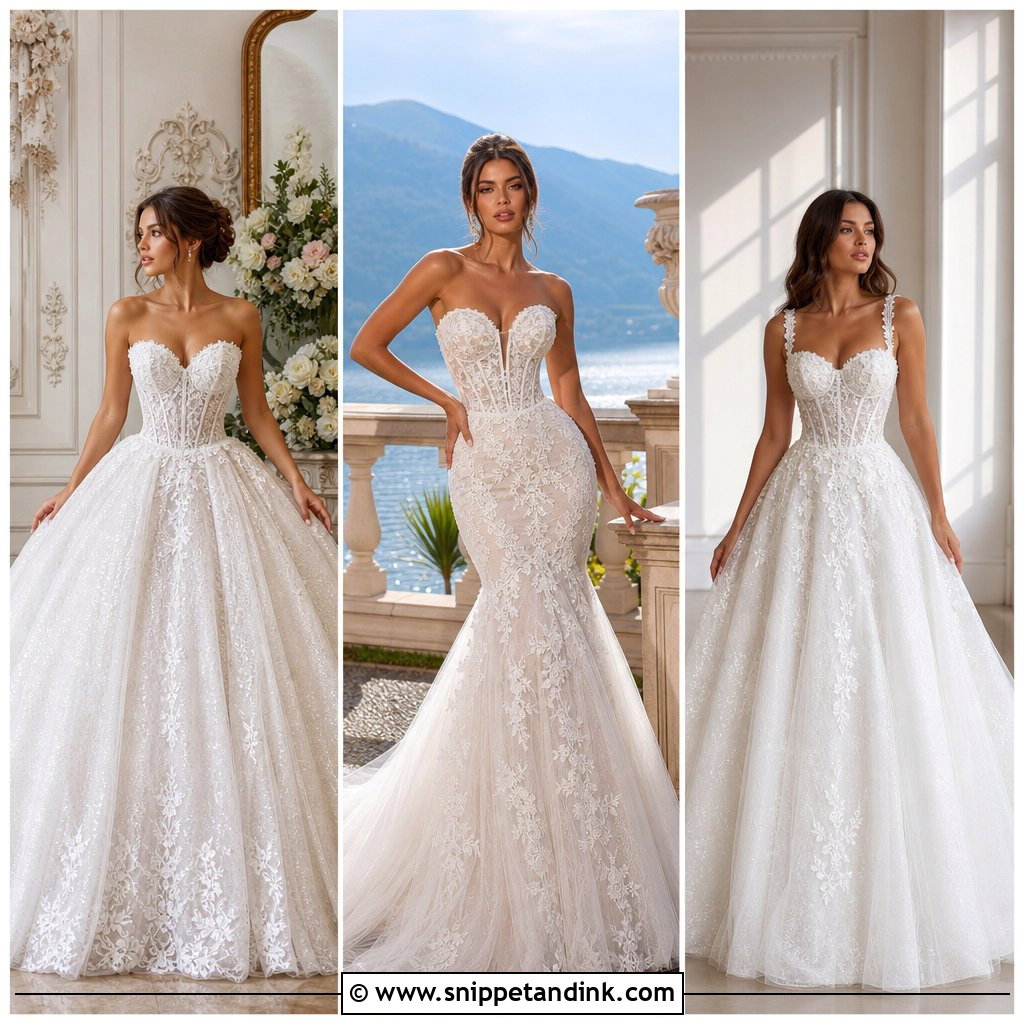
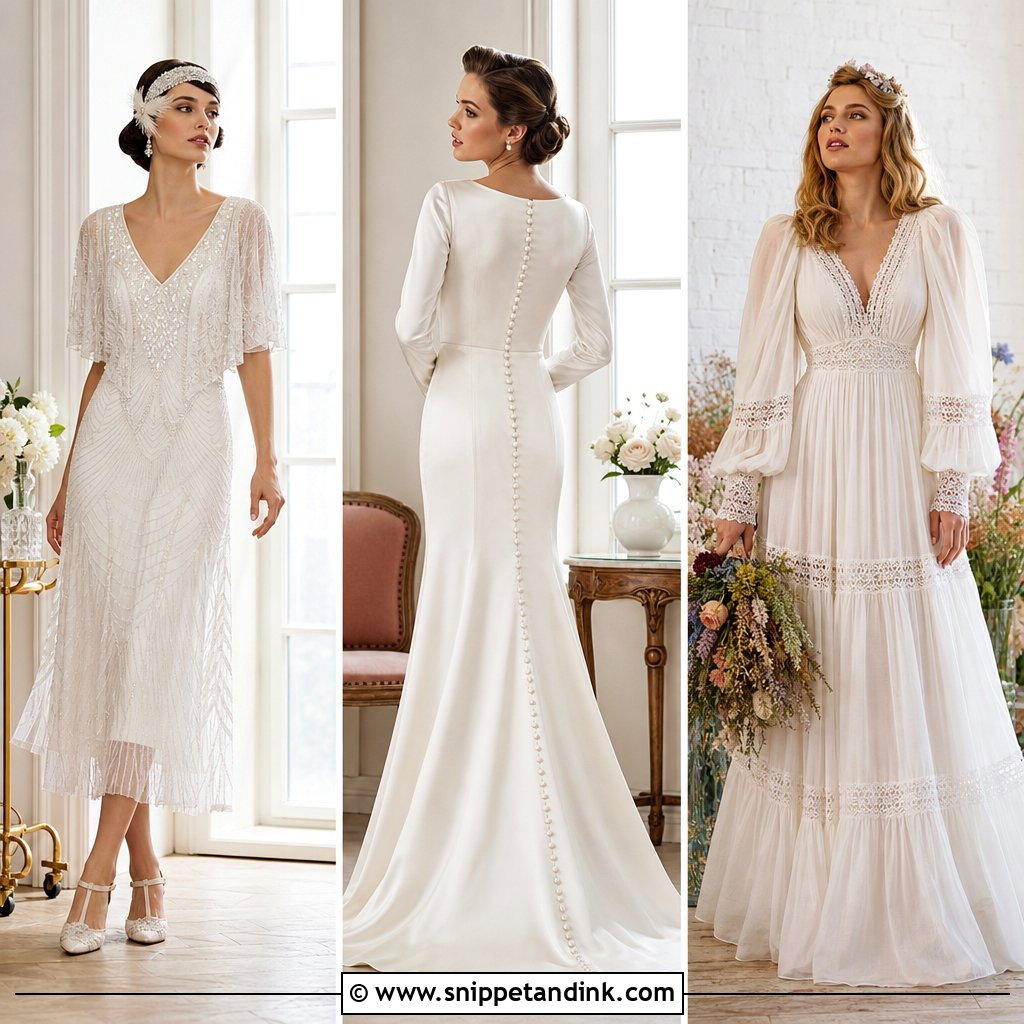
15. Corset A Line Wedding Dress
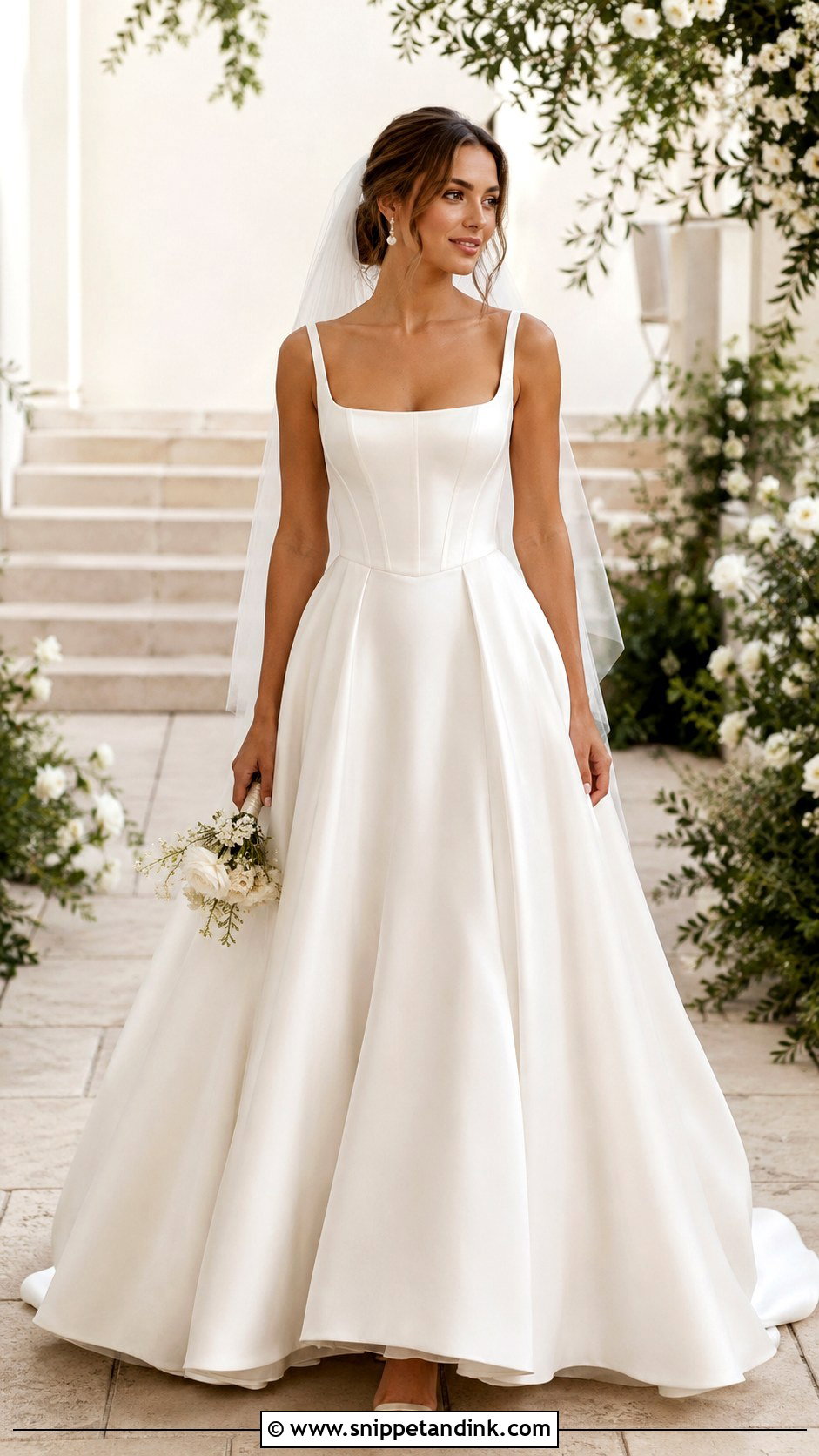
Corset and A-line is the most wearable combination I fit. The bodice shapes, the skirt falls away from the waist, and nothing grips your legs. It suits lace, satin, organza, tulle and crepe, and it doesn’t fight any venue from garden to ballroom. A veil, pearl earrings and comfortable ivory heels are enough. For a quieter vintage note, choose covered buttons, lace trim or a slight basque point rather than heavy decoration. If you’re unsure about corsetry at all, start here.
16. Corset Tea Length Wedding Dress
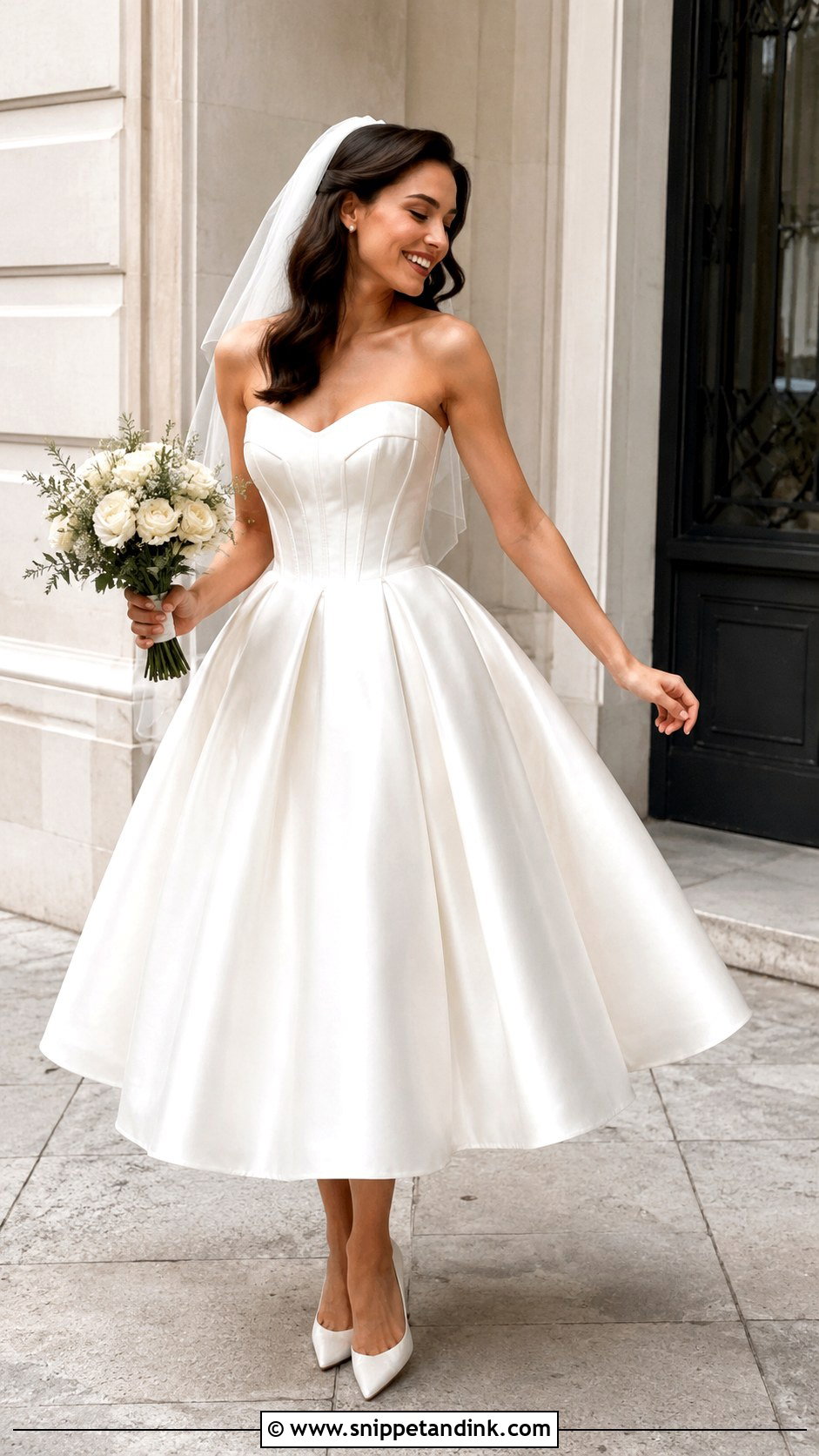
Tea length shows the shoes, so pick a pair you love. The bodice adds structure while the shorter skirt brings a 1950s mood in satin, lace or tulle, styled with pointed pumps, pearl earrings, a short veil and soft waves. Courthouses, garden parties, brunch receptions and small celebrations are where it feels right, and dancing is much easier. The hem placement is the whole look. Mid-calf, between knee and ankle, flatters most legs; an inch too high and it looks like an ordinary party dress.
17. Corset Wedding Dress With Bow Back
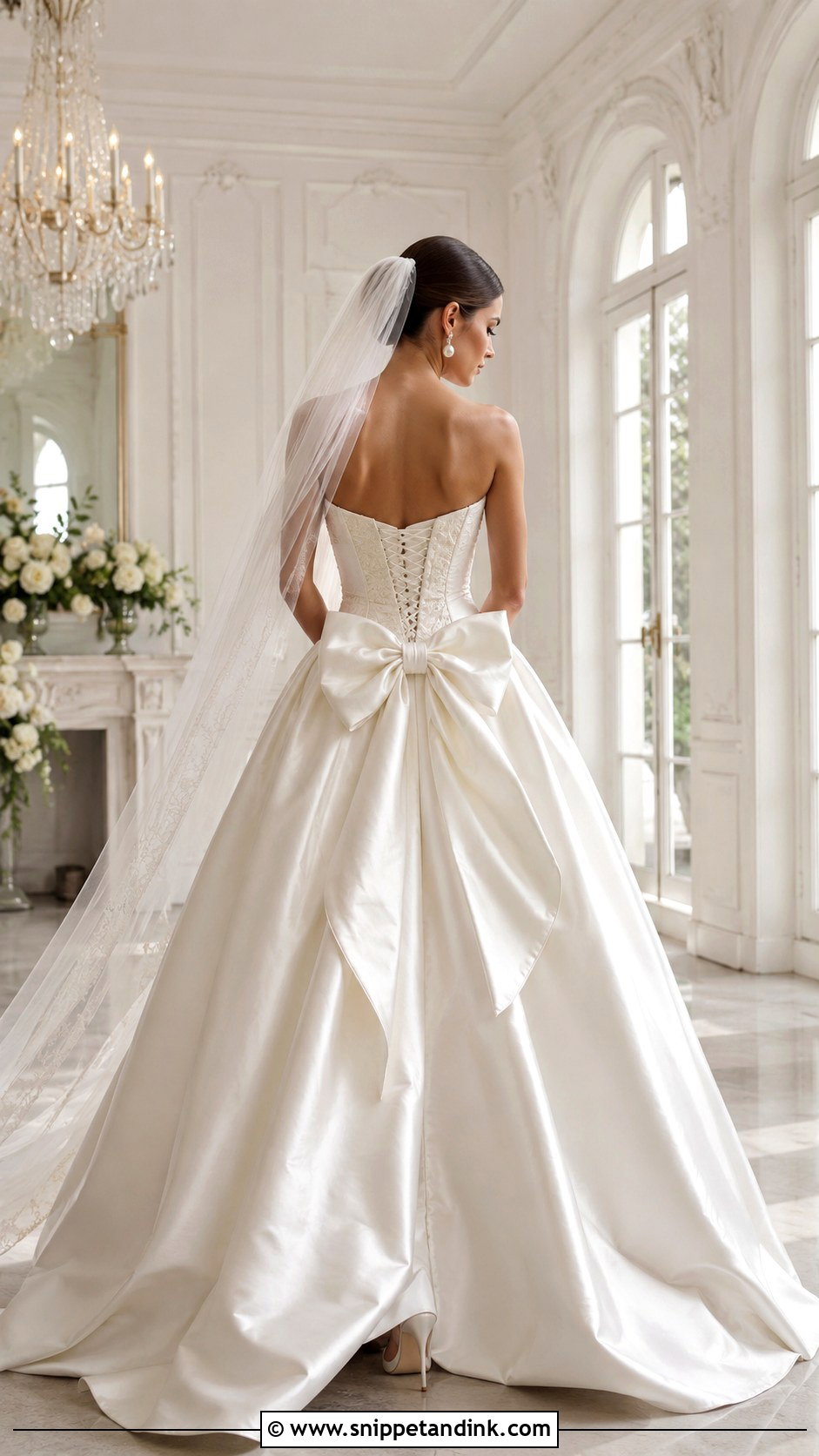
A back bow means the gown looks finished from behind, which matters because your guests watch your back through the whole ceremony. The front can stay plain and structured, with a satin bodice, a lace-up or button closure and an oversized bow at the waist. Pair it with a long veil, pearl earrings and classic heels. I always ask brides to sit against a chair back at the fitting. A large bow crushes flat after an hour of dinner unless it has an interfacing or a stiffened inner loop, and a detachable bow solves the reception problem entirely.
18. Corset Wedding Dress With Pearl Details
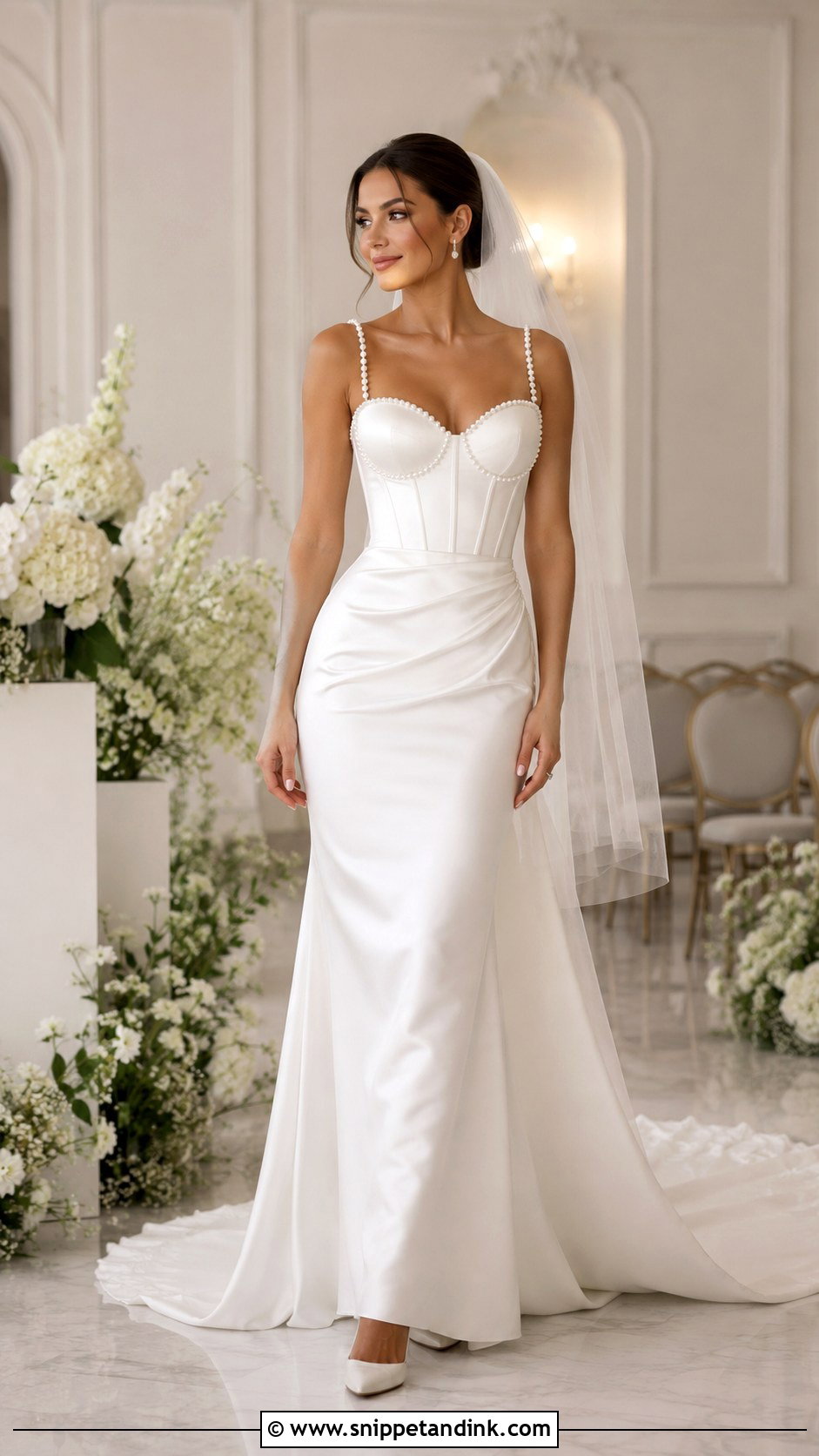
Pearls can go on the bodice, neckline, straps, sleeves, veil or buttons, and the trap is using them everywhere at once. Pick one place. A fitted bodice with pearl straps and a satin skirt is polished; a lace bodice with pearl buttons feels older. Pearl earrings, ivory heels and a simple bouquet are all you need. Before the wedding, I run a hand over every sewn pearl. A single loose thread lets them drop one at a time through the day, and a seamstress can secure them in an afternoon.
19. Corset Wedding Dress With Beaded Bodice
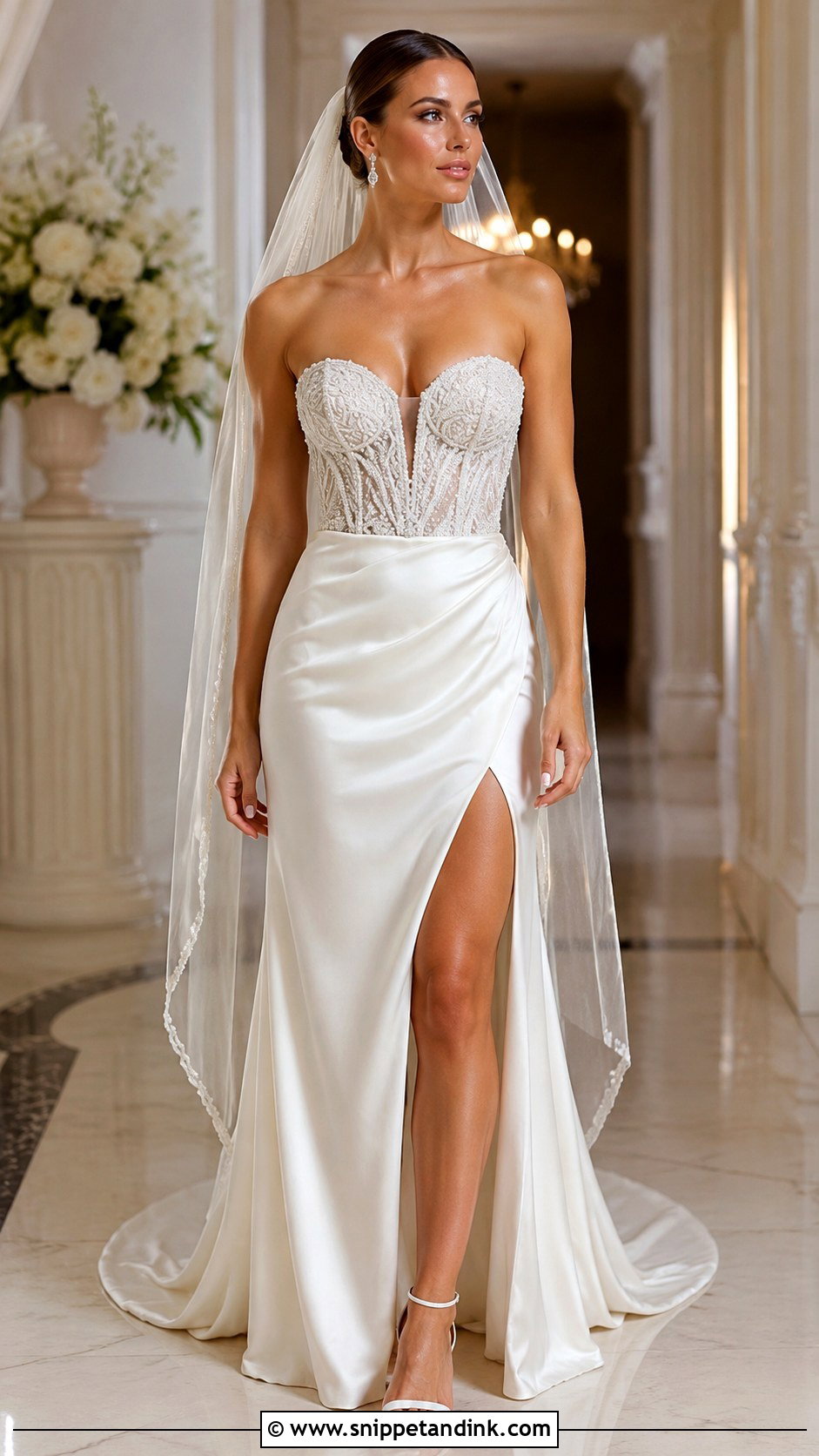
Beadwork over a corset brings an Old Hollywood shimmer, especially across the bodice and waist. A satin or crepe skirt balances it; tulle softens it. Drop earrings, a sheer veil and simple heels finish it, and with that much shine already on the bodice, I’d leave out heavy necklaces and big hairpieces. Check the inner arm seam. Beads sewn near the underarm scratch the inside of your arm all night, and a lining strip there makes a real difference. Evening weddings and grand venues suit this one.
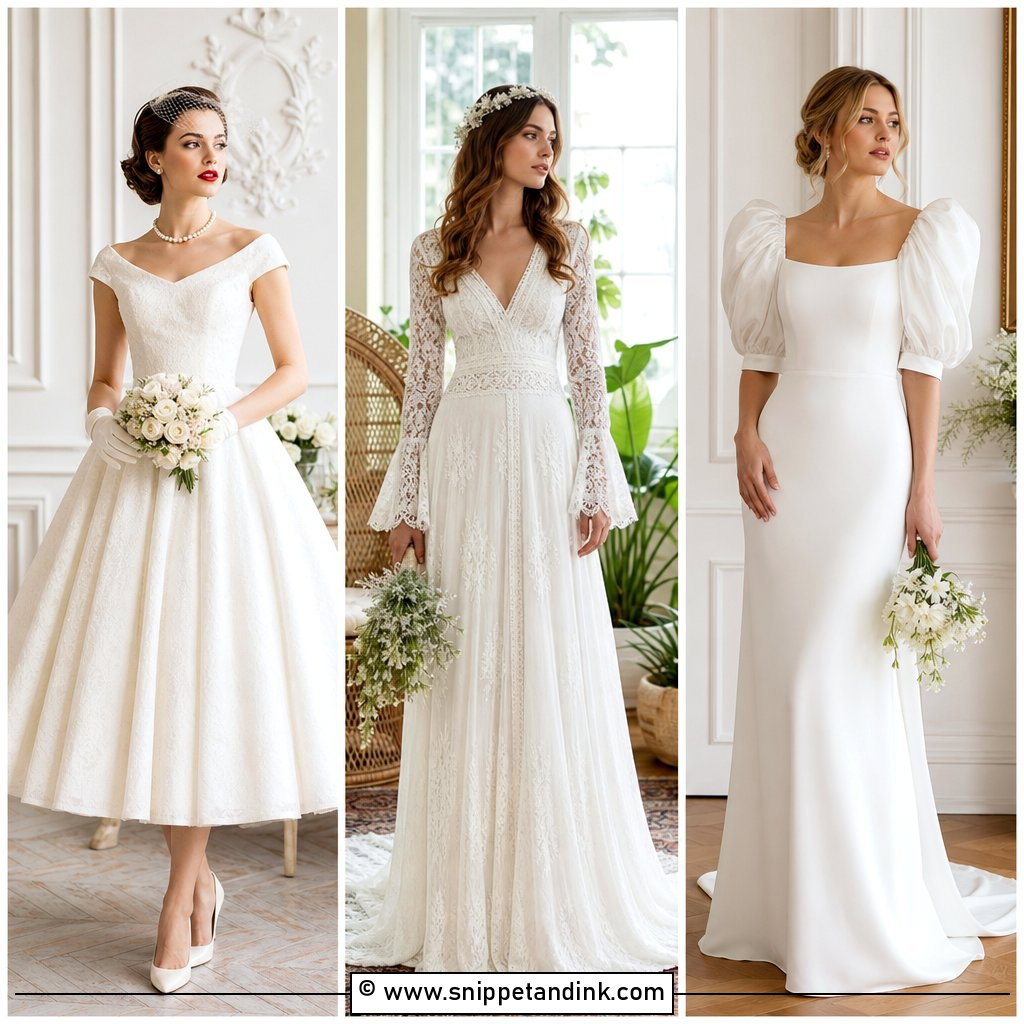
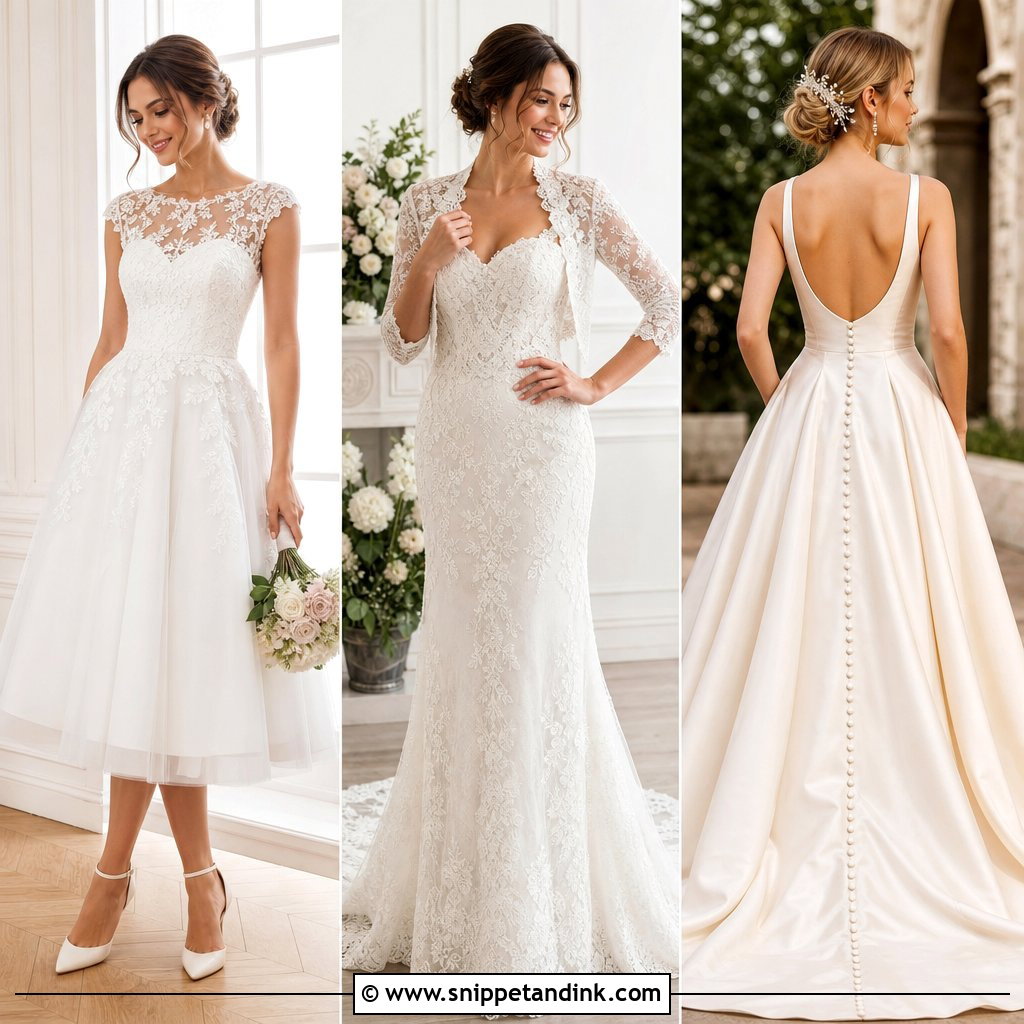
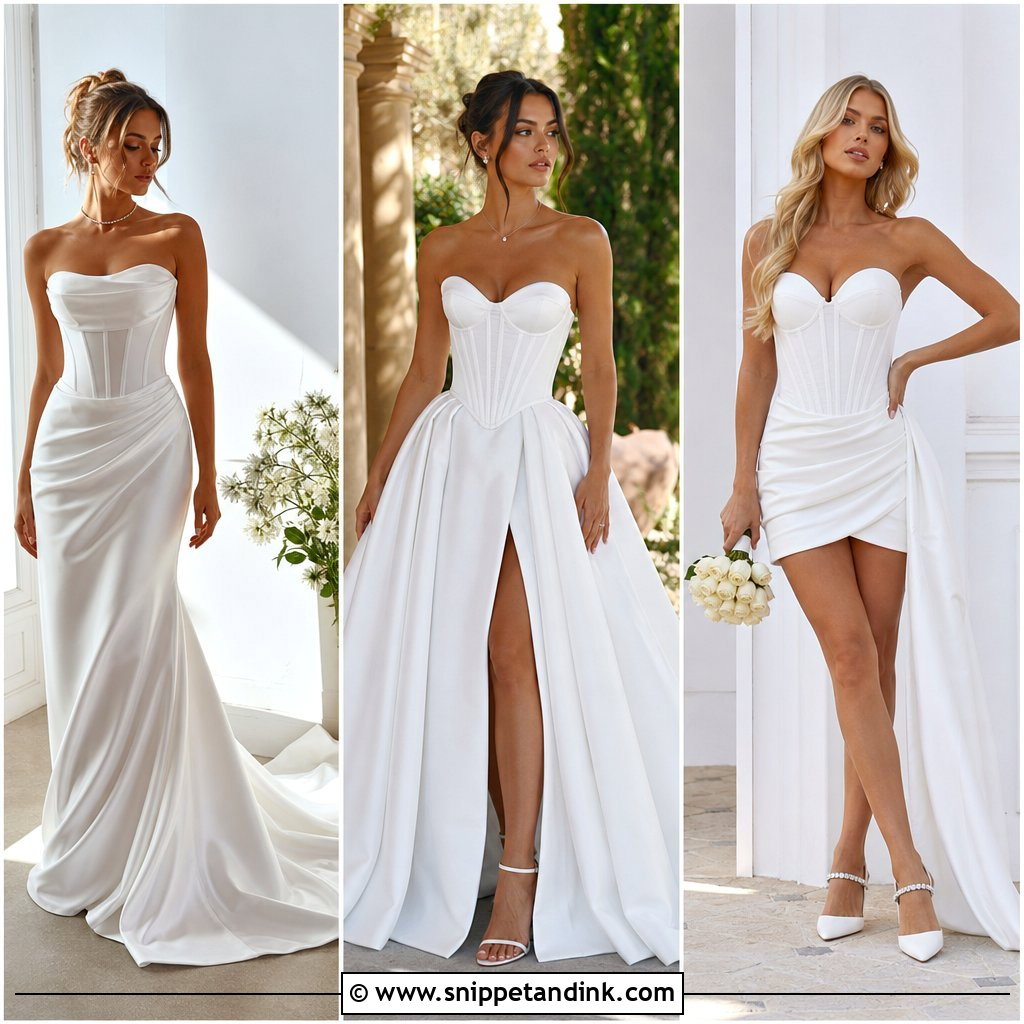
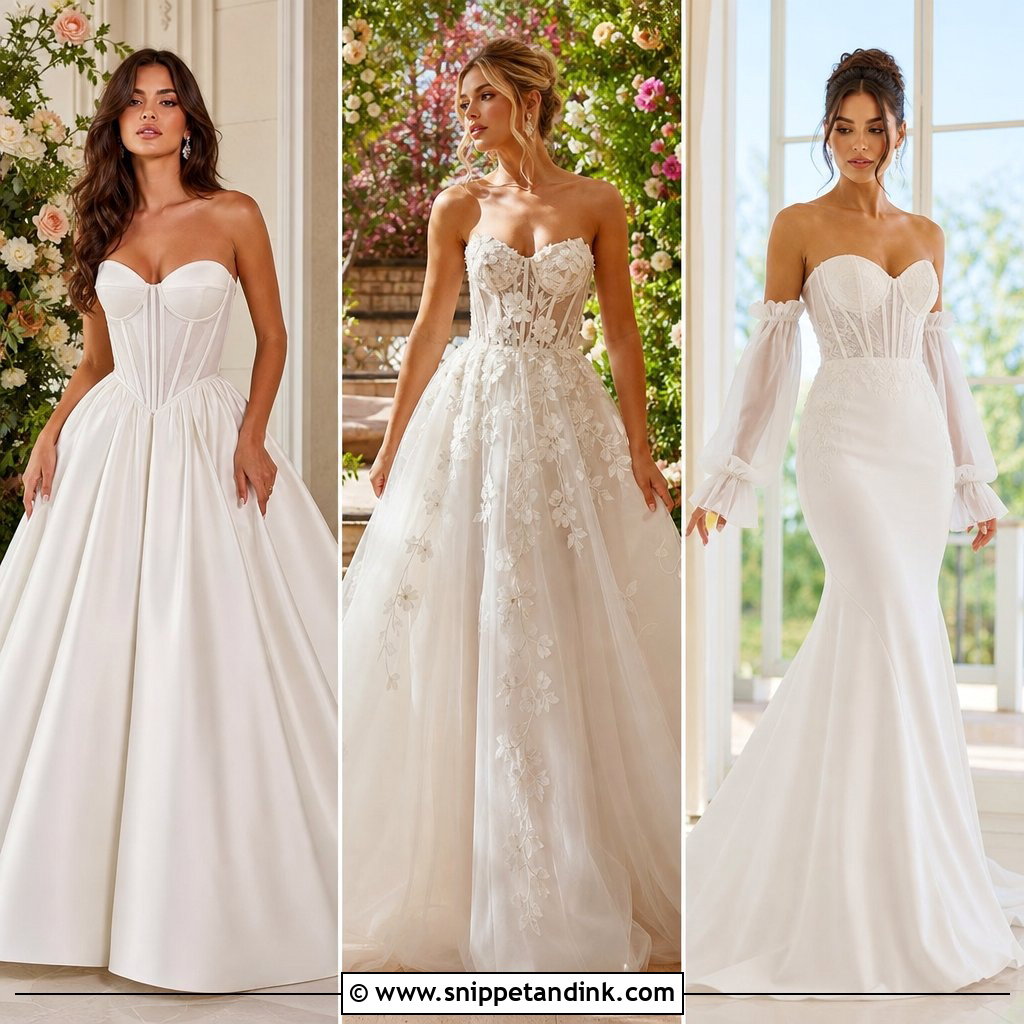
20. Corset Wedding Dress With Brocade Fabric
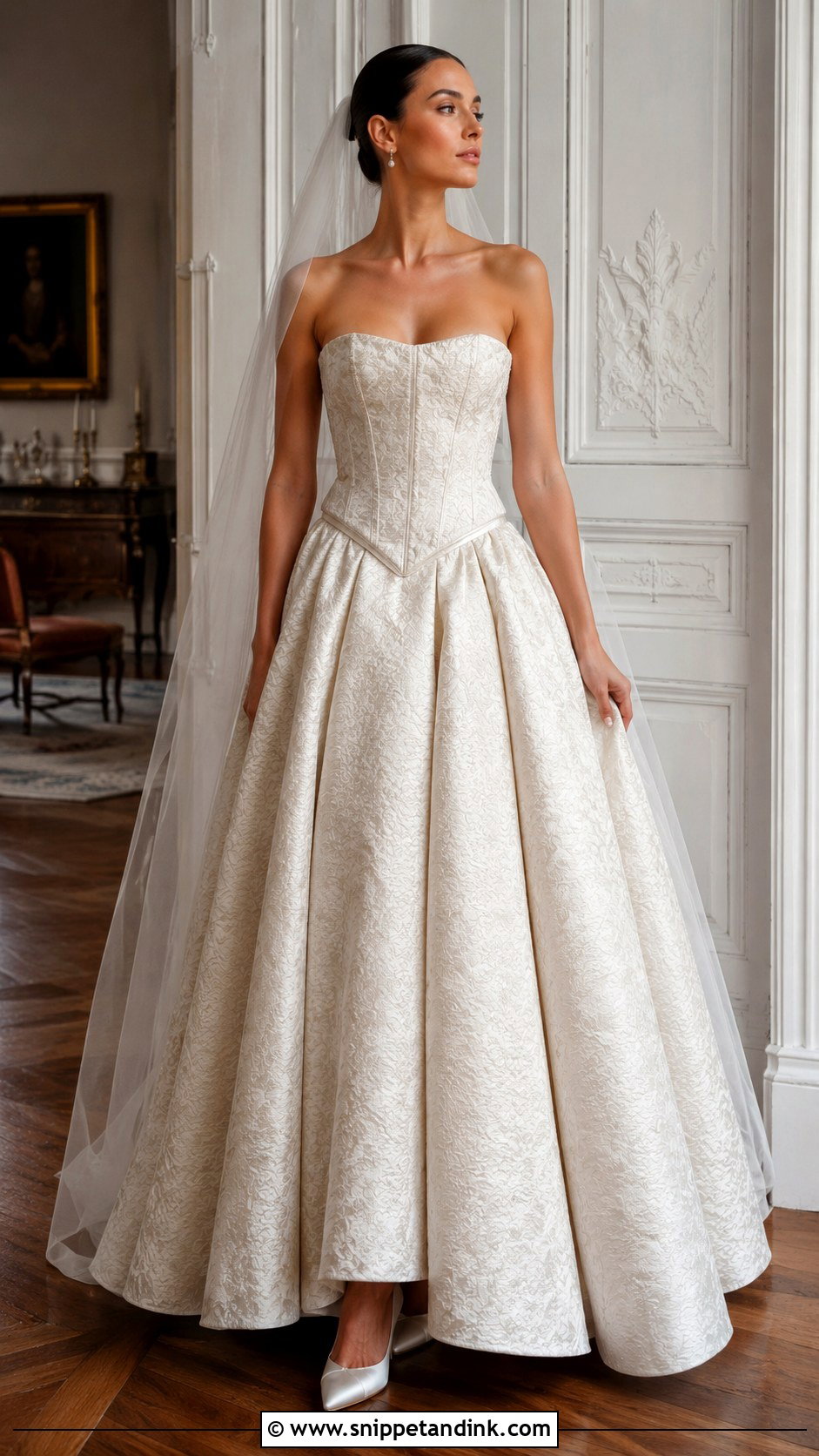
Brocade is woven, not embellished, so its pattern gives depth without sequins. An ivory brocade bodice with a basque waist and full skirt looks regal, styled with pearl earrings, a plain veil and satin pumps in a formal indoor venue, museum, estate or hotel ballroom. Keep the bouquet simple. In photographs the raised weave catches light at an angle, giving texture from every side. It’s a heavy cloth, though, and warm, so I’d steer you away from it for a summer marquee.
21. Corset Wedding Dress With Lace Up Back
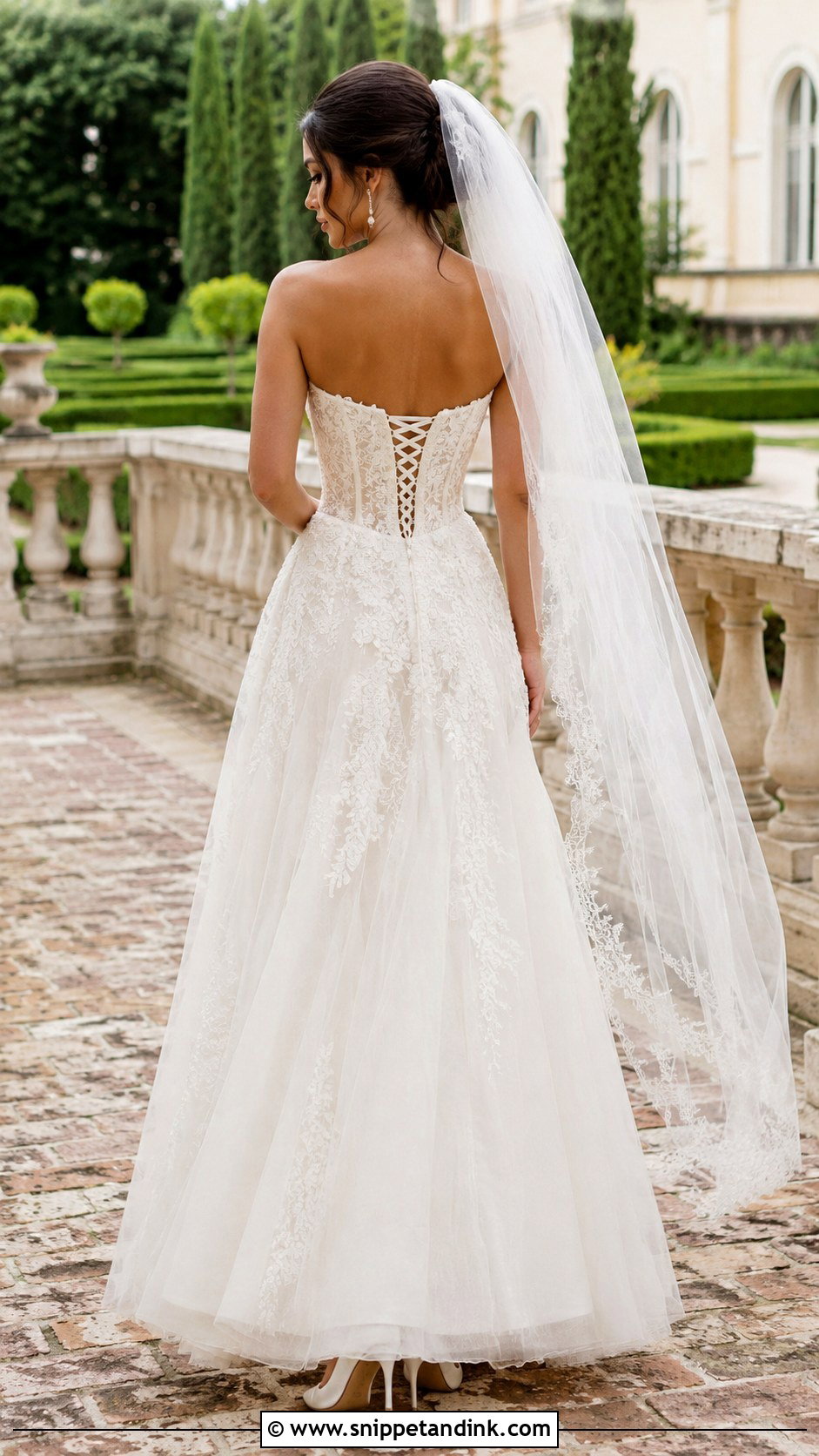
A lace-up back is both decoration and an adjustable fit, which is handy if your weight shifts in the months before the wedding. It goes with satin ball gowns, lace A-lines and tulle skirts, styled with a sheer veil that lets the lacing show, pearl earrings and ivory heels. Learn the lacing before the day. Someone in your party should practise at the last fitting, pulling the laces flat and even from the bottom up, and the modesty panel underneath should be steamed so it doesn’t wrinkle through the gaps.
22. Corset Wedding Dress With Sheer Sleeves
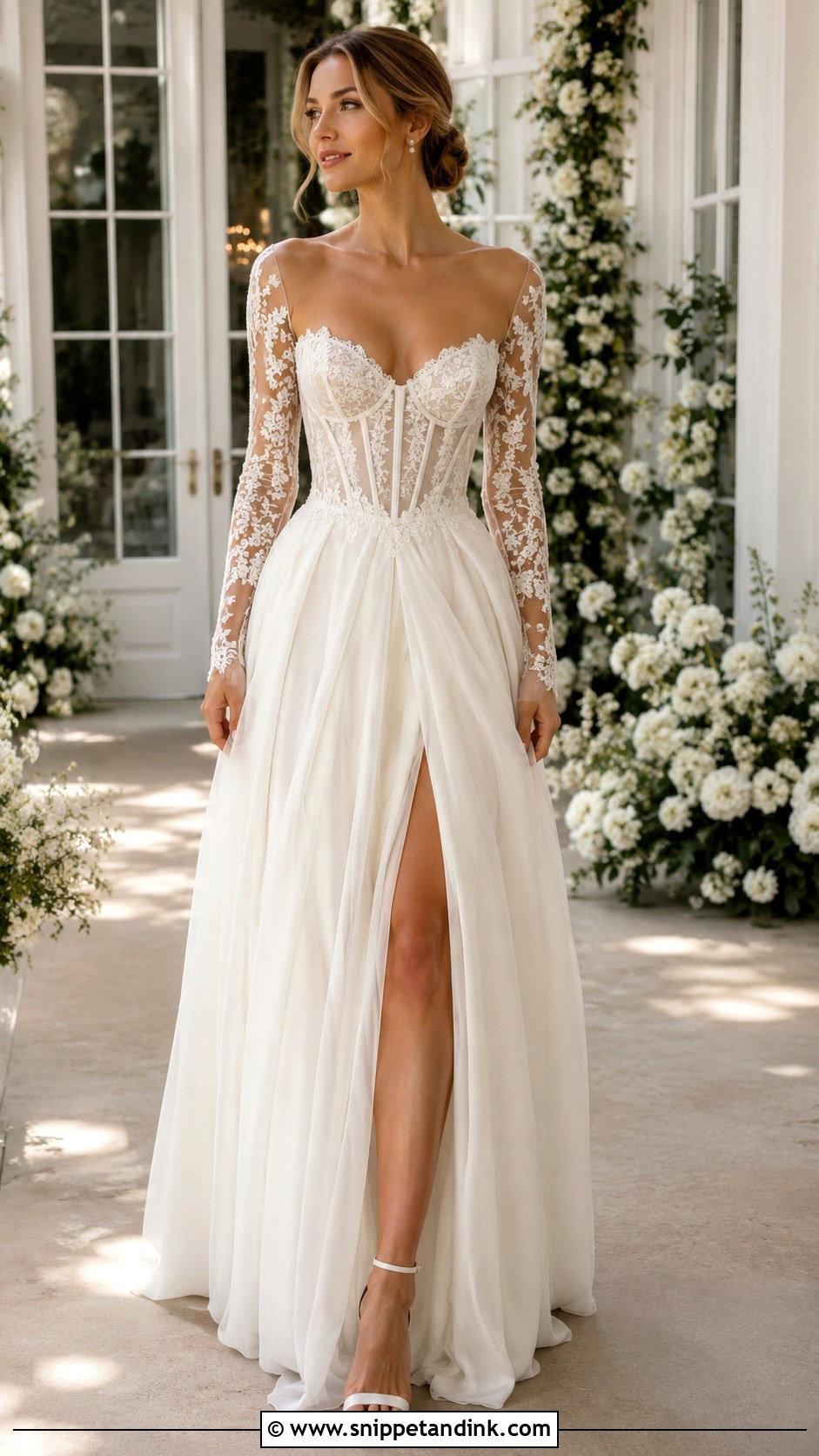
Sheer sleeves give coverage without weight. Plain tulle, lace, dotted mesh or light embroidery over a fitted bodice and soft skirt makes a delicate vintage outline for spring, autumn or indoor ceremonies, with pearl studs, a low bun and simple ivory heels. If the sleeves carry lace or beading, keep the veil plain. Fine tulle sleeves snag on bracelets and watch clasps, so I’d keep the wrists bare or wear a smooth bangle.
23. Corset Wedding Dress With Detachable Skirt
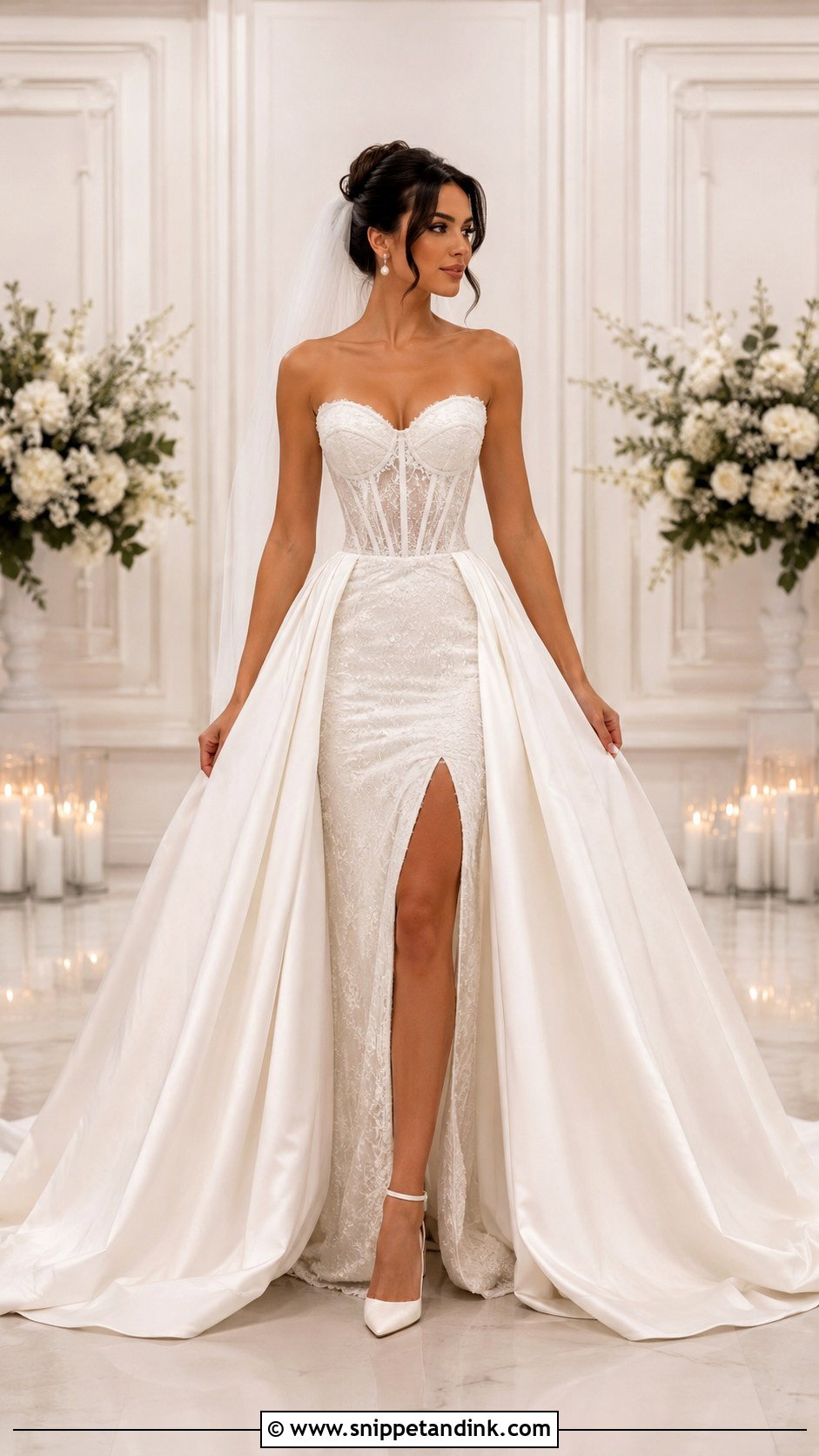
A detachable skirt gives you a full vintage ceremony look and a lighter reception outfit from one dress. Start with a structured corset gown, add a full overskirt for the ceremony, and remove it after photos to show the slimmer shape. Lace, satin and mikado suit it. Wear the veil and classic heels first, then switch to statement earrings or a shorter veil later. The changeover needs a practice run: the overskirt fastening should sit hidden under the bodice point, and whoever helps you must know which hooks come undone first.
24. Corset Wedding Dress With Mantilla Veil
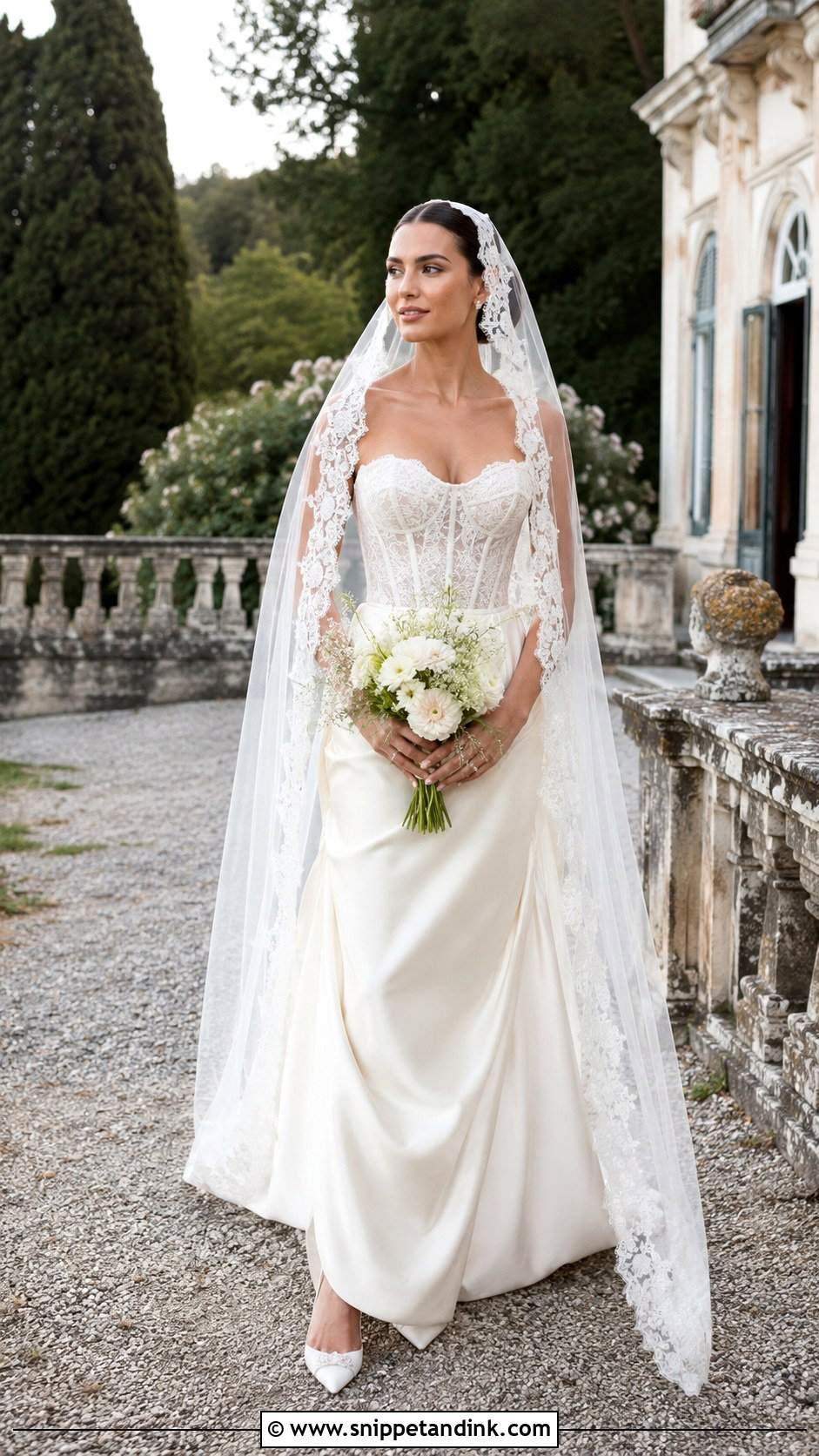
A mantilla’s lace edge frames the face, and it sits naturally with a structured bodice in lace, a satin basque waist or a long-sleeved vintage silhouette. Keep jewelry to pearl studs or small drops, with ivory heels and a soft bouquet. Lace on the veil should complement the gown, not compete with it. I bring the veil to the fitting and hold the two laces together in daylight, since two whites that look the same in a shop can read as ivory and grey in photographs.
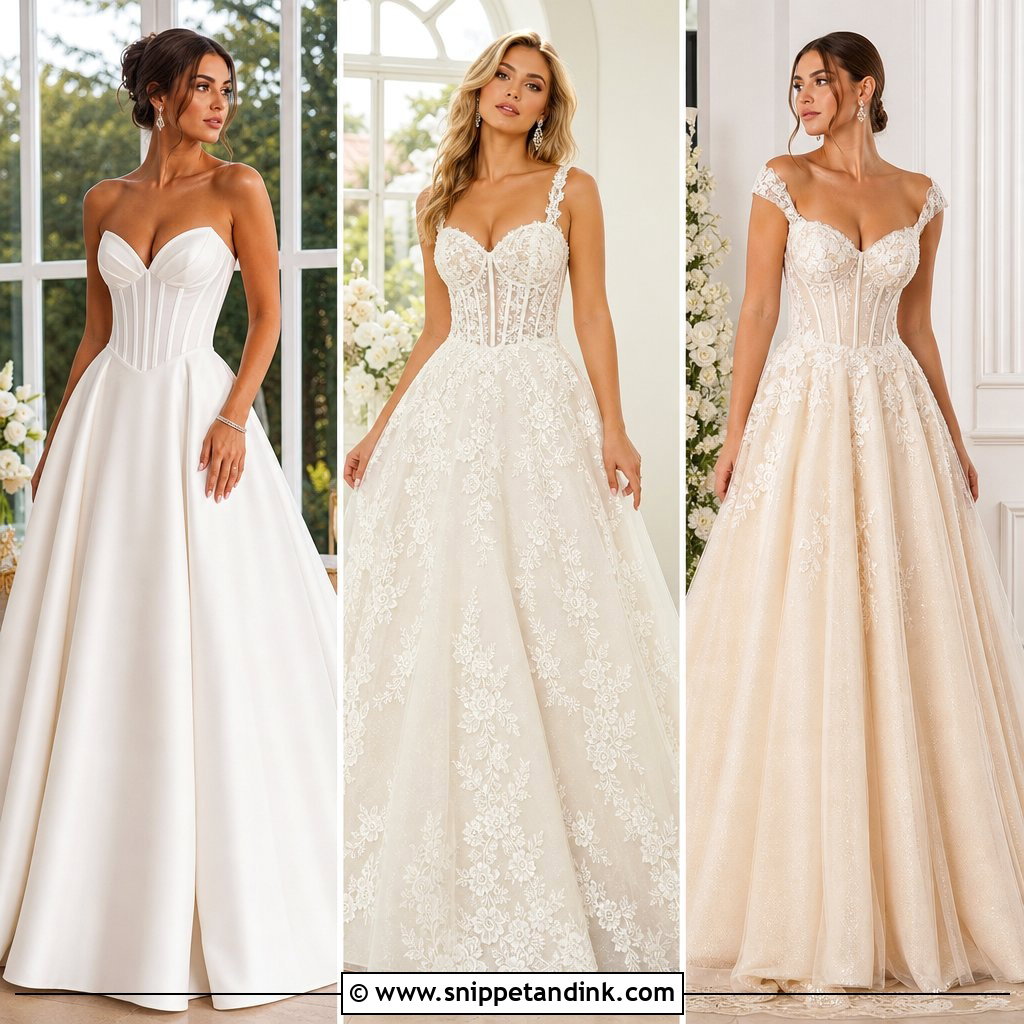



25. Old Hollywood Corset Wedding Dress
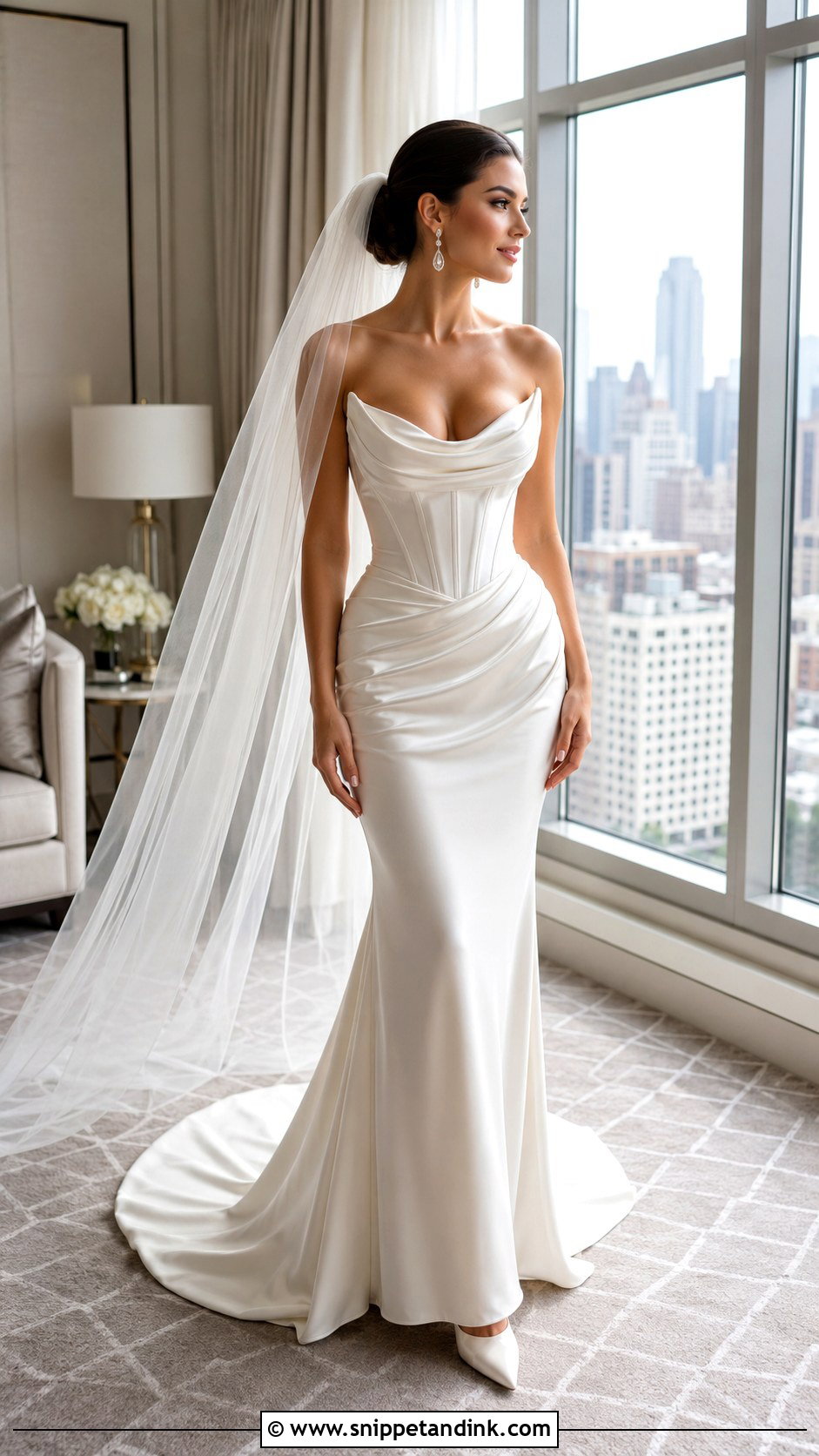
Old Hollywood is about shine and line rather than lace. A smooth satin or crepe gown with a structured bodice, draped neckline and softly flowing skirt, cut as a subtle mermaid or column, is the base. Waves, drop earrings, pointed heels and a long veil or clean bridal scarf complete it, and a bouquet of white flowers on long stems keeps it simple. Bias-cut satin is unforgiving over shapewear seams, so plan your underlayers at the first fitting. Hotel weddings, city venues and evening receptions suit it.
Lacing Up, Eating Lunch and Dancing in a Corset Bodice
Most of the discomfort brides associate with corsetry comes from how the gown is put on and worn, not from the gown itself. A little planning fixes nearly all of it.
- Choose one person to dress you and have them practise at the final fitting. I teach them to pull the laces from the bottom up in two or three passes rather than one hard tug.
- Lace snugly for the ceremony, then loosen by a finger’s width before the meal. Your body changes after you’ve eaten and sat for an hour, and a quick adjustment in the bathroom keeps you comfortable into the evening.
- Eat little and often. Several small plates sit better under a structured bodice than one large one, and fizzy drinks are the quickest way to feel pinched.
- Sit forward on the chair rather than slumping back. It keeps the top edge from pushing up and stops the waist point from creasing the skirt.
- Put a small kit in your bag with a spare lace, safety pins, a needle and ivory thread, and a moleskin patch for any bone that starts to rub.
If you’ve never worn a corset, wear something structured for a few hours before the wedding, even a fitted shapewear bodice around the house. Getting used to the feeling makes the real day far more relaxed.
A Corset Should Hold You Up, Never Hold You Back
A corset gown can read Victorian, Edwardian, regal, minimal or glamorous depending on neckline, fabric, sleeves and skirt. Start with how much structure you enjoy wearing, then weigh venue, season and how much you plan to move. Build the veil, shoes, jewelry, bouquet and hair around the bodice rather than alongside it. A well-fitted corset supports you and lets you breathe, eat and dance. If it doesn’t, the fit is wrong, not your body, so go back to your seamstress before the day.
You'll Like These Ideas:




Leave a Reply