
Most brides I dress do not fall for a silhouette first. They fall for a detail: a row of buttons, a pointed waist, a sleeve that floats. That is a useful instinct, because the small features are what make one A-line feel different from the next. Below are twenty of them, from lace and pearls to bows, capes and coloured embroidery, with notes on how each one behaves once you sit, dance and get hugged by a hundred people. Pointed Basque waists, corsetry, raised florals and drama at the back have all been showing up in new collections. Weight, alteration work and the view from behind matter more than any trend, though, so I flag those as we go.
How Many Details Can One Gown Carry?
In fittings I usually ask a bride to point at the one thing she would fight for. A dress with a corset, a bow, buttons, beading and illusion sleeves is not five times as special; the eye has nowhere to land, and in photographs it reads as texture rather than design.
A rule that rarely fails: one hero detail, one supporting detail, and everything else plain. If the hero is a dramatic back, keep the front simple and let the neckline be quiet. If it is a Basque waist, let the skirt and sleeves stay clean so the point is obvious. Accessories count too. A beaded neckline plus a statement necklace plus a cathedral veil with a crystal edge is three heroes competing.
Also think about where people will see you. Guests spend the ceremony looking at your back, so back details earn their place at a church or long aisle wedding. At a small dinner where you are seated most of the evening, the bodice, neckline and sleeves are what everyone sees across the table.
1. Lace Appliqué A-Line Wedding Dress
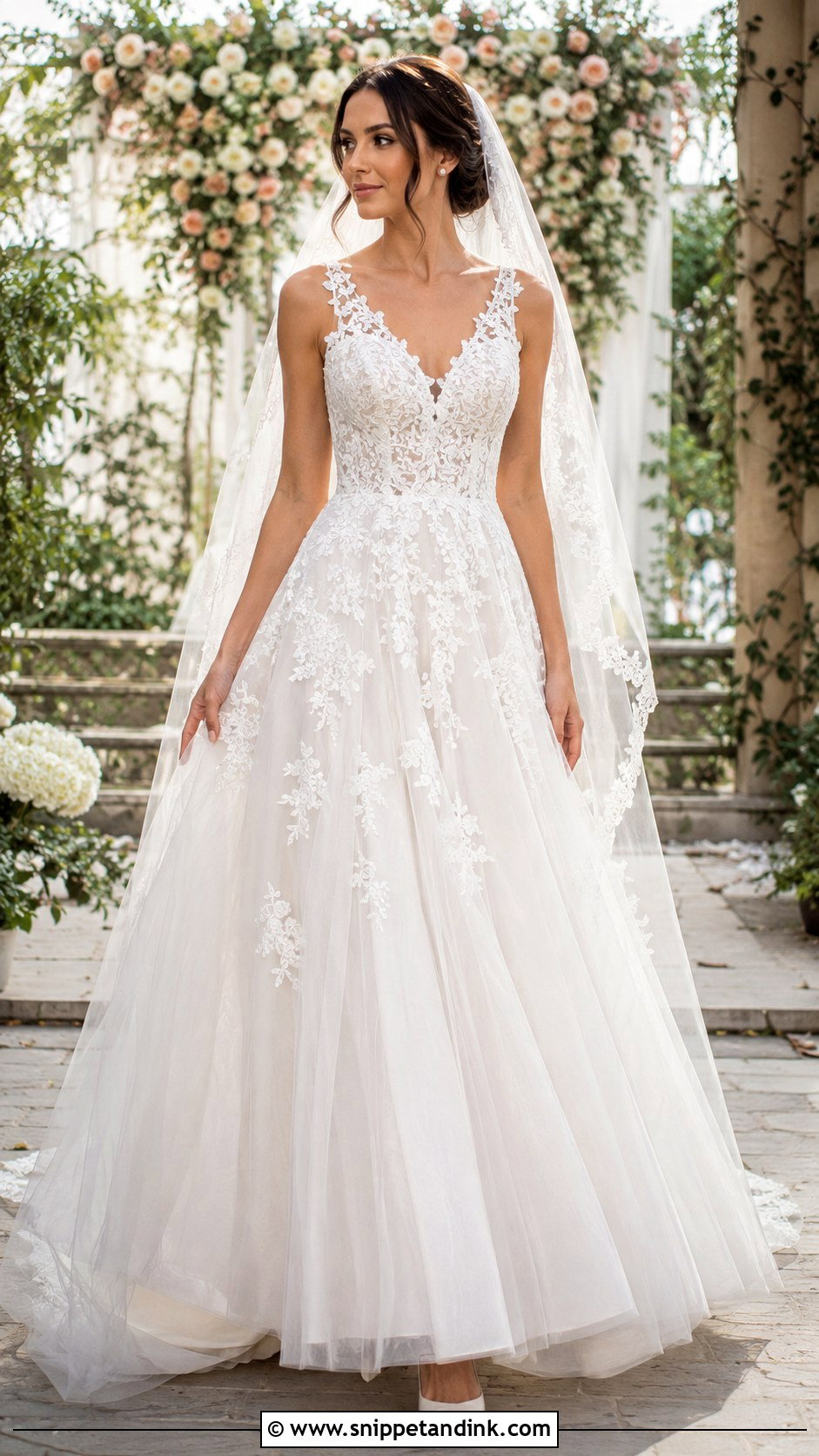
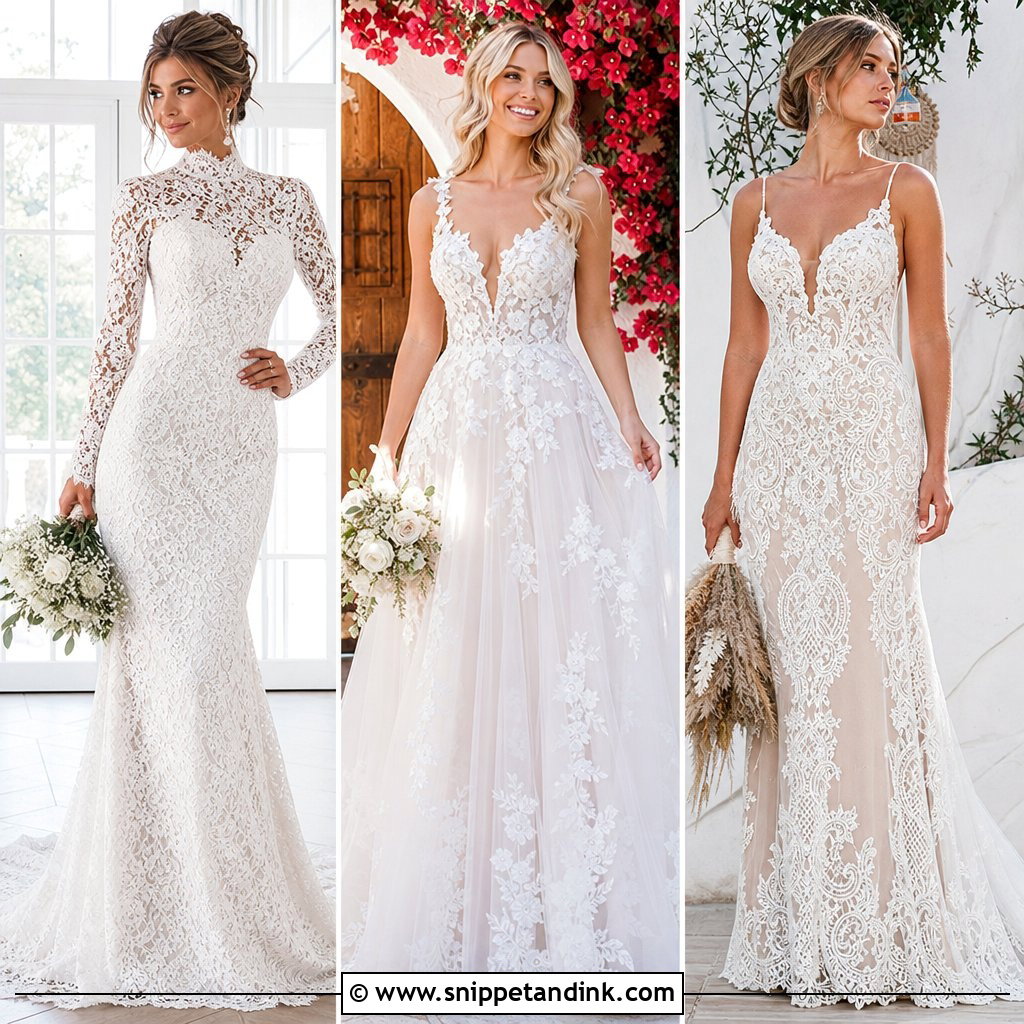
Appliqué lace on an A-line gives you texture without the weight of an all-over lace gown. I like the motifs packed around the bodice and thinning out as they go down the skirt; that density defines the waist and lets the tulle below move. Floral lace sits softly on tulle, while geometric lace looks sharper and more current. A fingertip veil with a narrow lace edge and pearl studs are all it needs. The quality check I always do is at the side seams. On a well-made dress the appliqués are cut and laid across the seam so the pattern continues; on a cheaper one the motifs stop dead at the stitching.
2. 3D Floral Ball Gown Wedding Dress
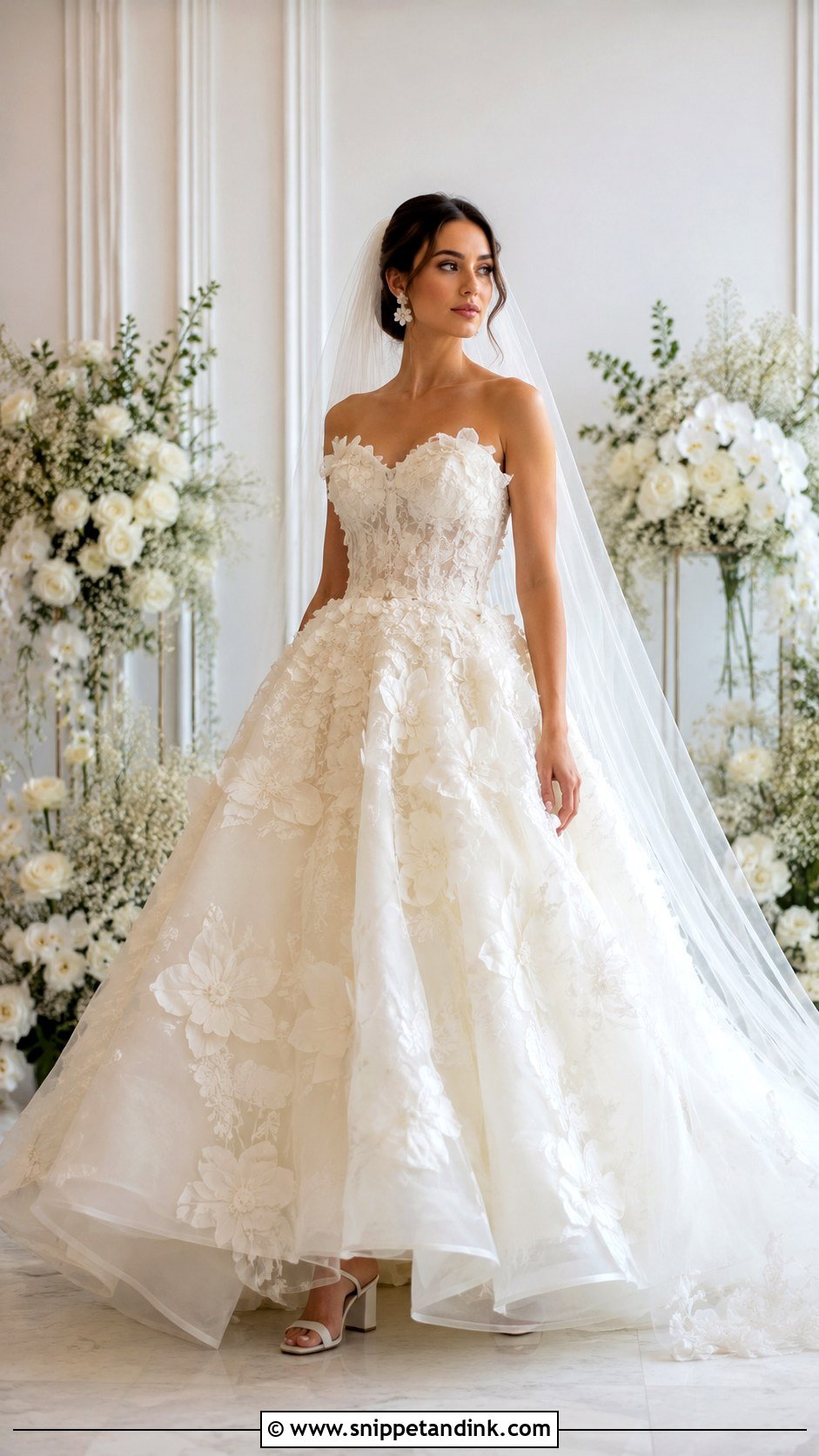
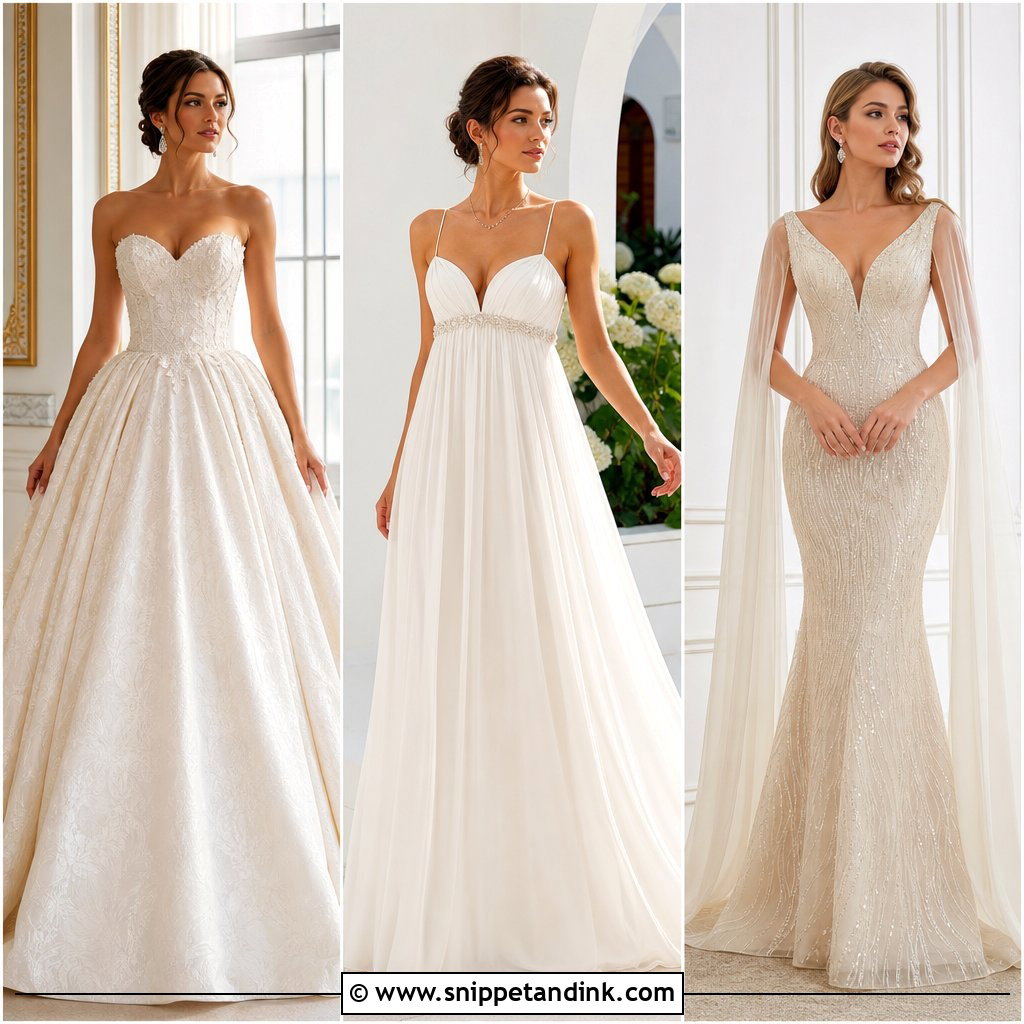
Raised fabric flowers make a traditional ball gown look handmade and new at once. They work best placed around the neckline, the waist and the top of the skirt, not covering every inch, so the shape of the gown still reads. A strapless bodice balances a layered organza or tulle skirt, and a bead at each flower centre adds just enough sparkle. Keep the bouquet small. Here is what nobody mentions in the boutique: raised petals near the underarm and waist can scratch or press after a few hours, so sit and walk in it for a good ten minutes during the appointment.
3. Pearl Beaded Wedding Dress
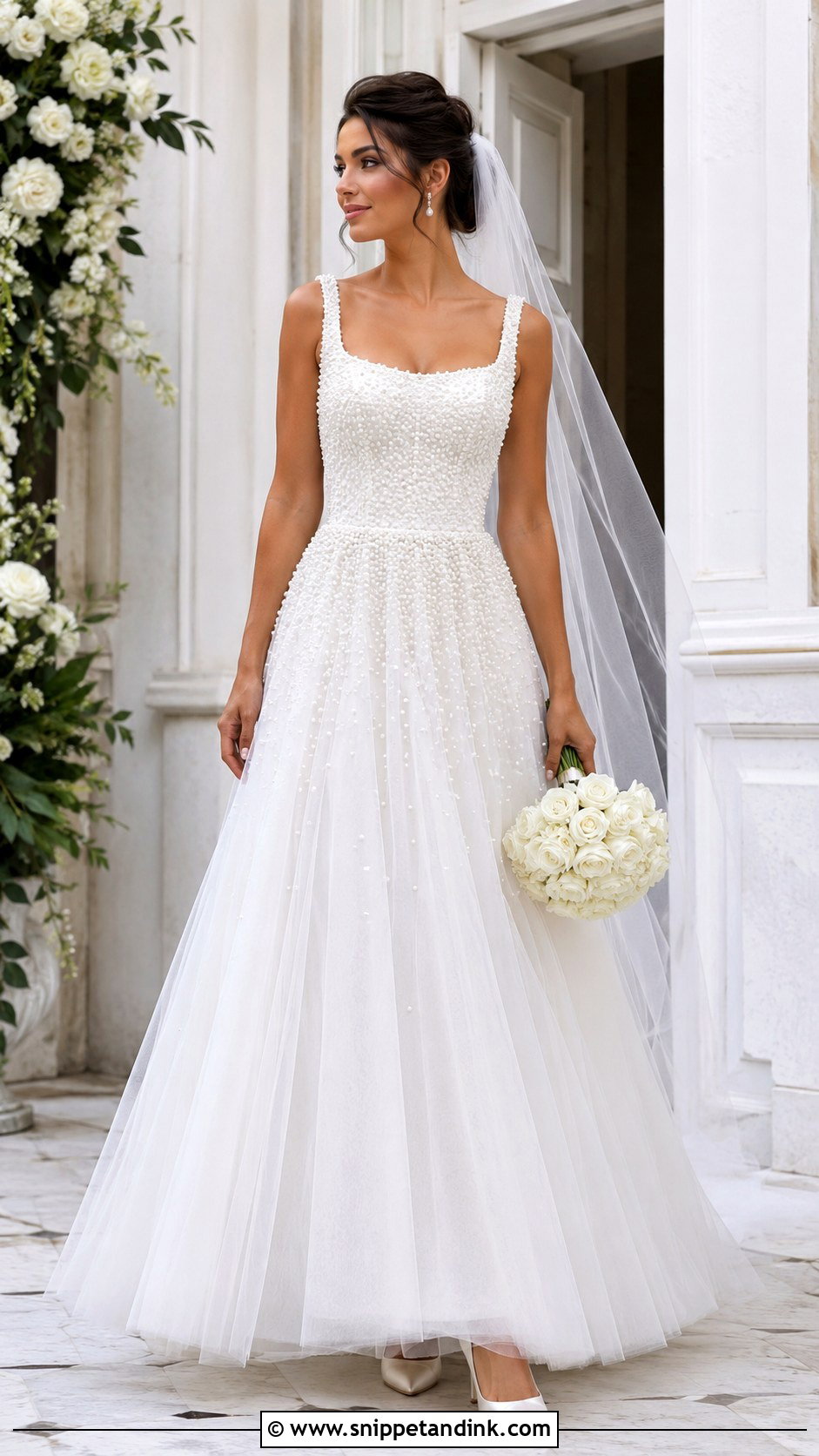
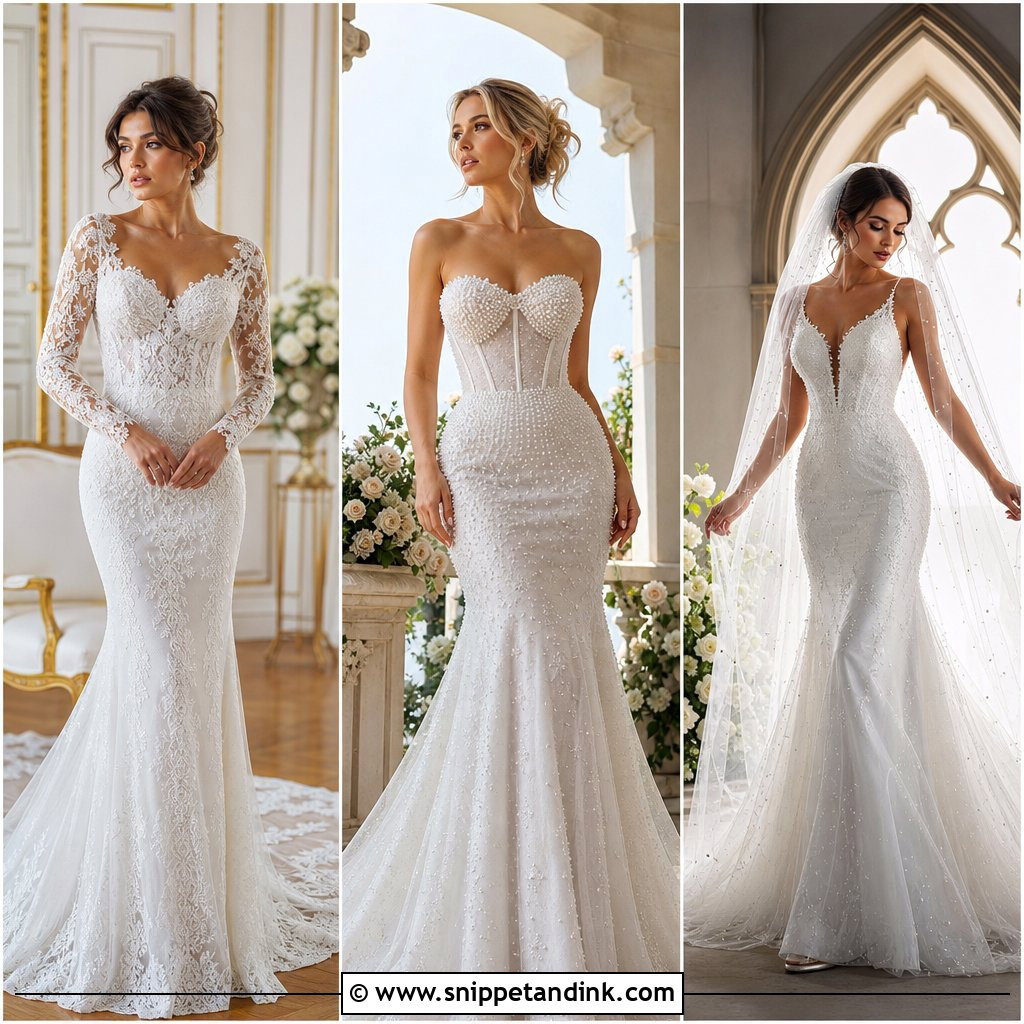
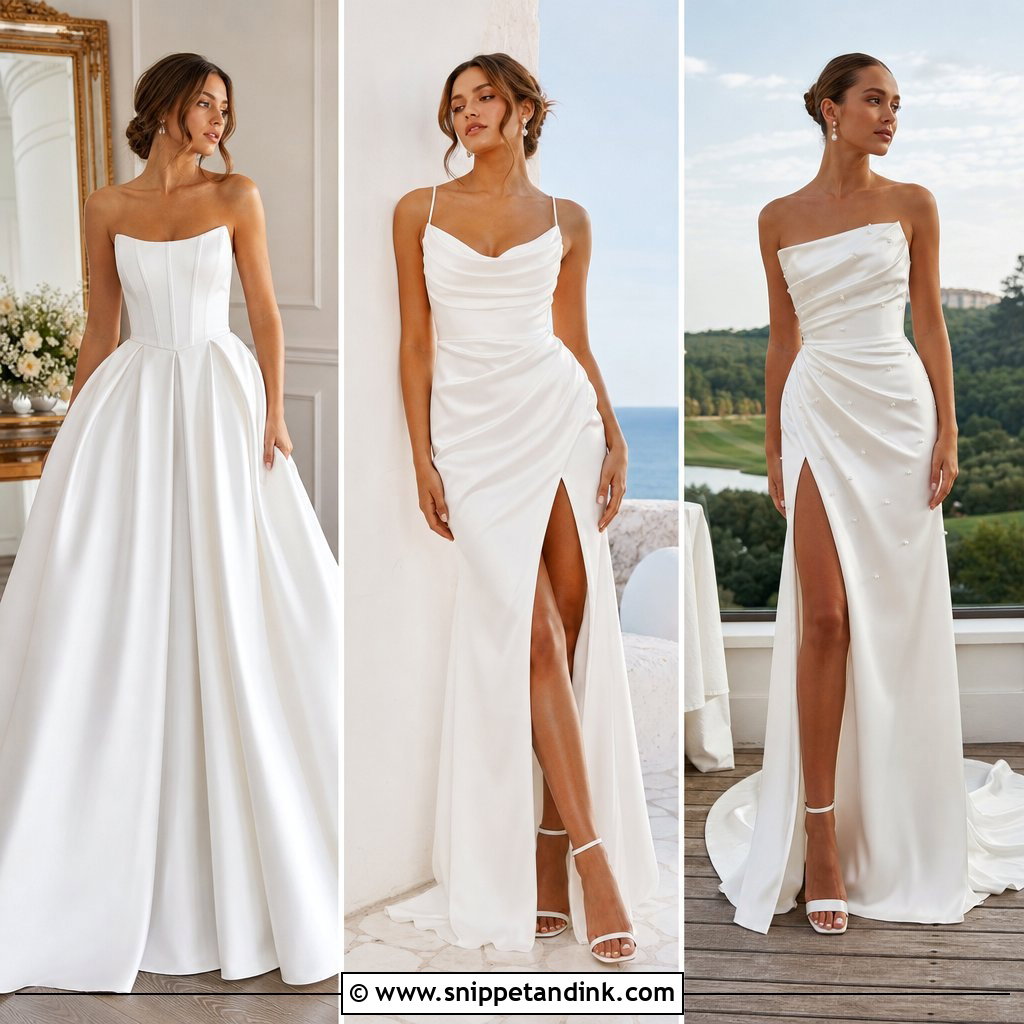
Pearls give a soft glow rather than the hard flash of crystals, which is why they suit daylight ceremonies so well. They can trace a neckline, trail over a corset or sit in small clusters on sheer sleeves. A sheath or gentle A-line keeps all that surface from looking busy. Pearl drops and a plain veil finish it; an ornate bouquet would be one texture too many. Ask the shop one question: are the pearls stitched individually or strung in lengths? If a strand is caught and the thread snaps, a whole line can run loose, while individually sewn pearls lose one at a time.
4. Crystal Beaded Wedding Dress
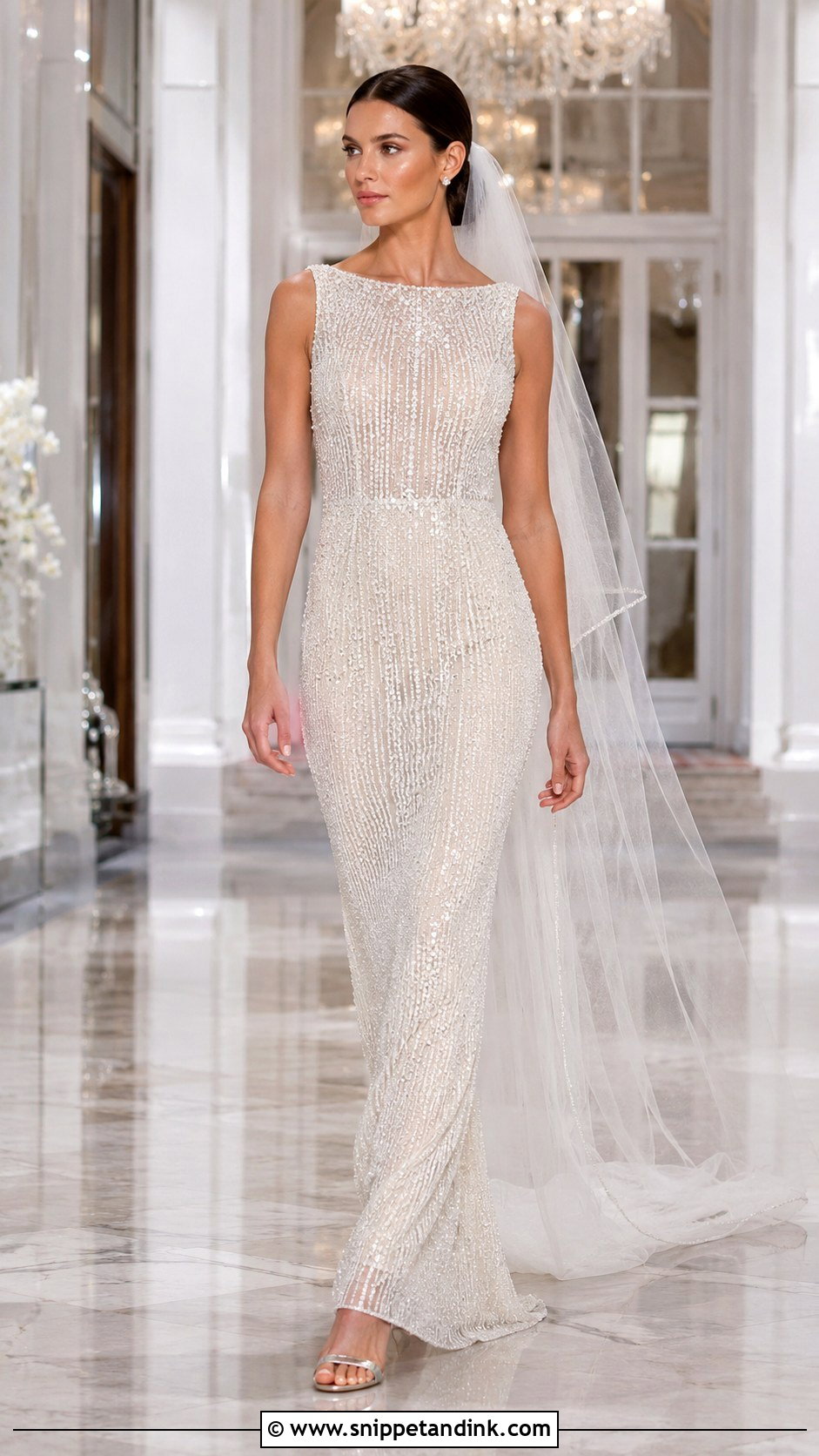
Crystal beading is the detail that performs best at night, catching candlelight and flash from every angle. Heavy beading at the bodice pulls the eye to the waist; vertical lines of crystals make you look taller. A column or a lightly flared skirt stops the sparkle from taking over, and a plain raw-edge veil lets it breathe. Skip a big necklace if the neckline is already beaded. The surprise for most brides is weight. A heavily beaded gown can feel far heavier than it looks on the hanger, so walk, sit and raise your arms in it, and make sure the straps and lining carry that load rather than your shoulders.
5. Corset Bodice Wedding Dress
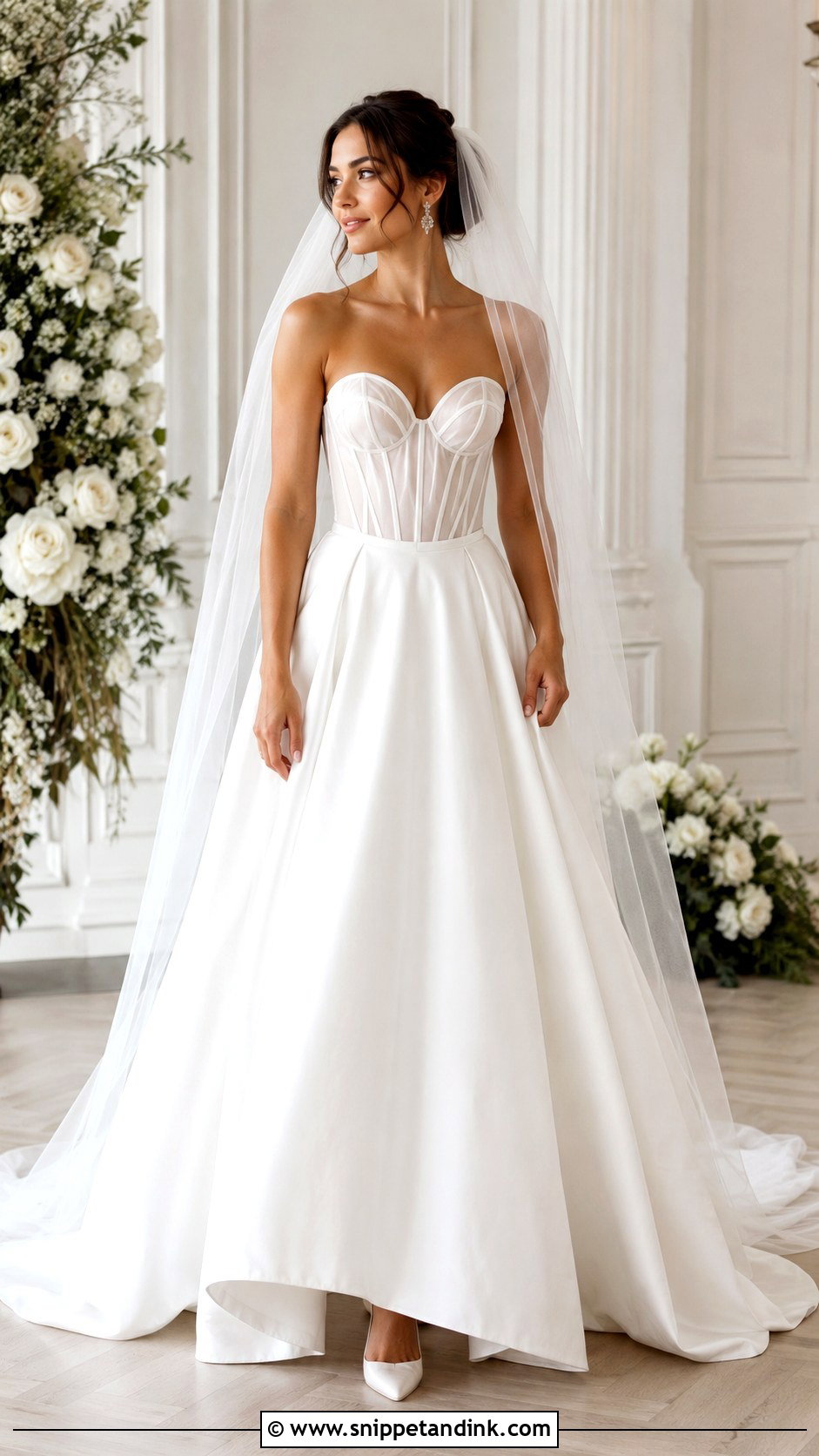
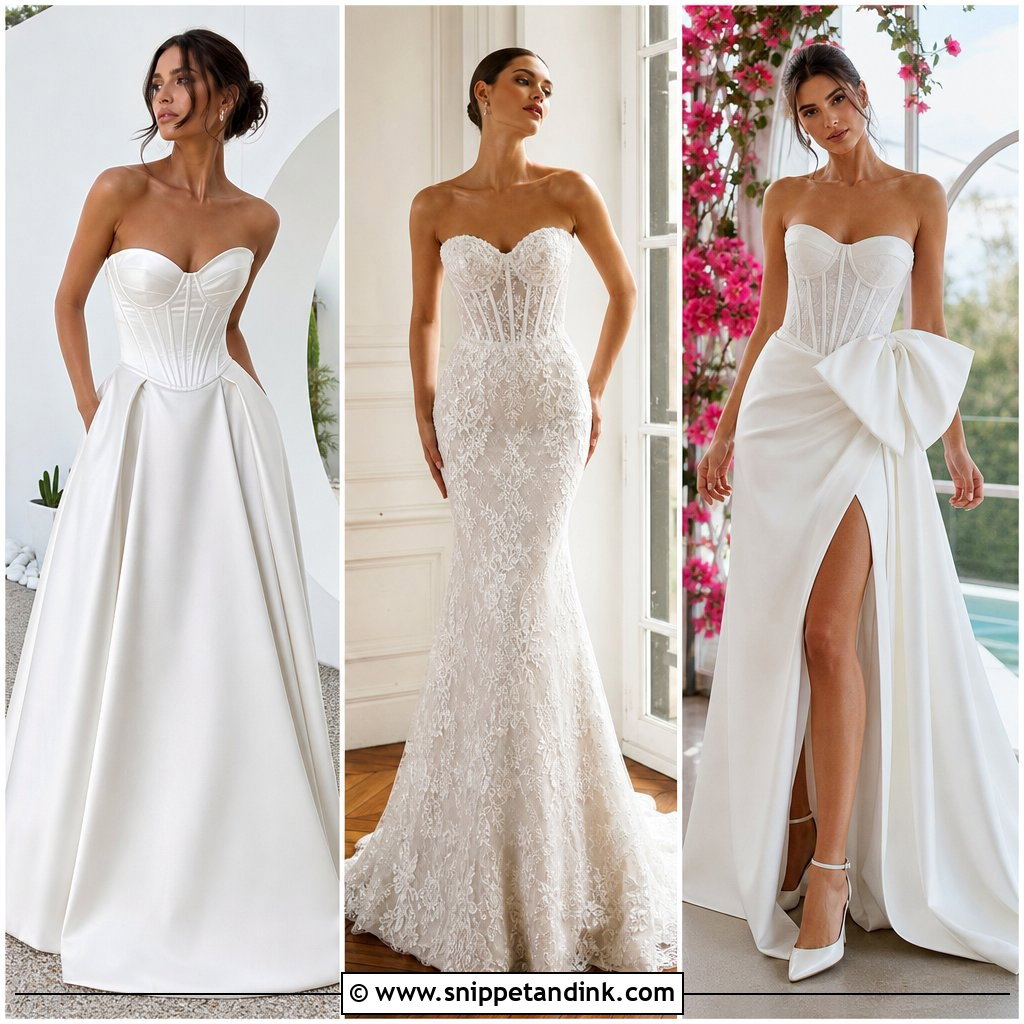
A corset bodice gives shape and support in one go. Exposed boning looks fashion-led; covered boning gives the same hold with a softer surface. Pair it with an A-line skirt for balance or a ball gown skirt for drama, and a sweetheart or gently curved neckline to soften the architectural construction. The fit is where it succeeds or fails. I ask the seamstress to check bust placement, waist seam and back closure together, not one at a time, because a bodice that is a centimetre too long digs into the hips when you sit and makes a good corset look uncomfortable.
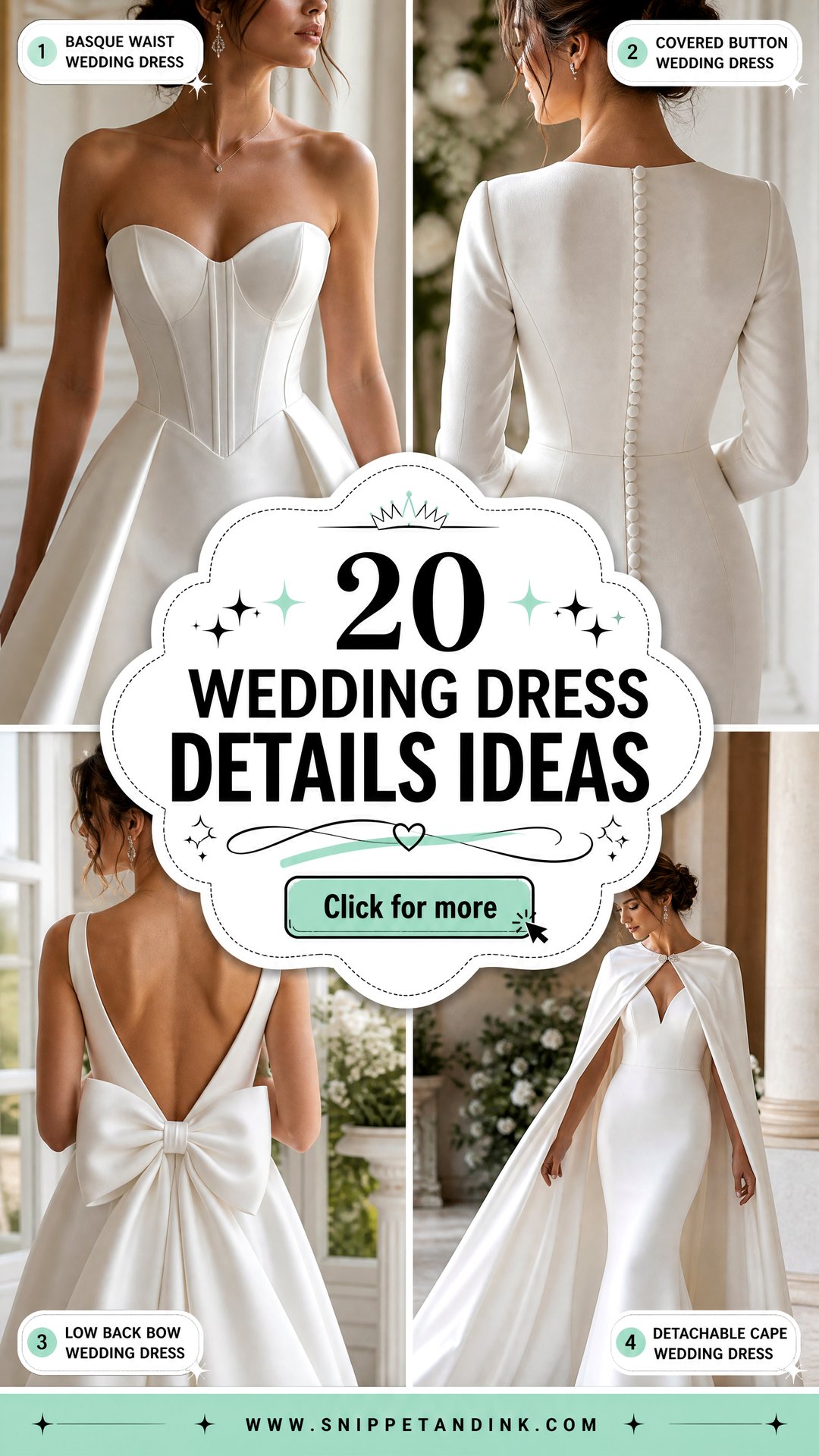
6. Basque Waist Wedding Dress
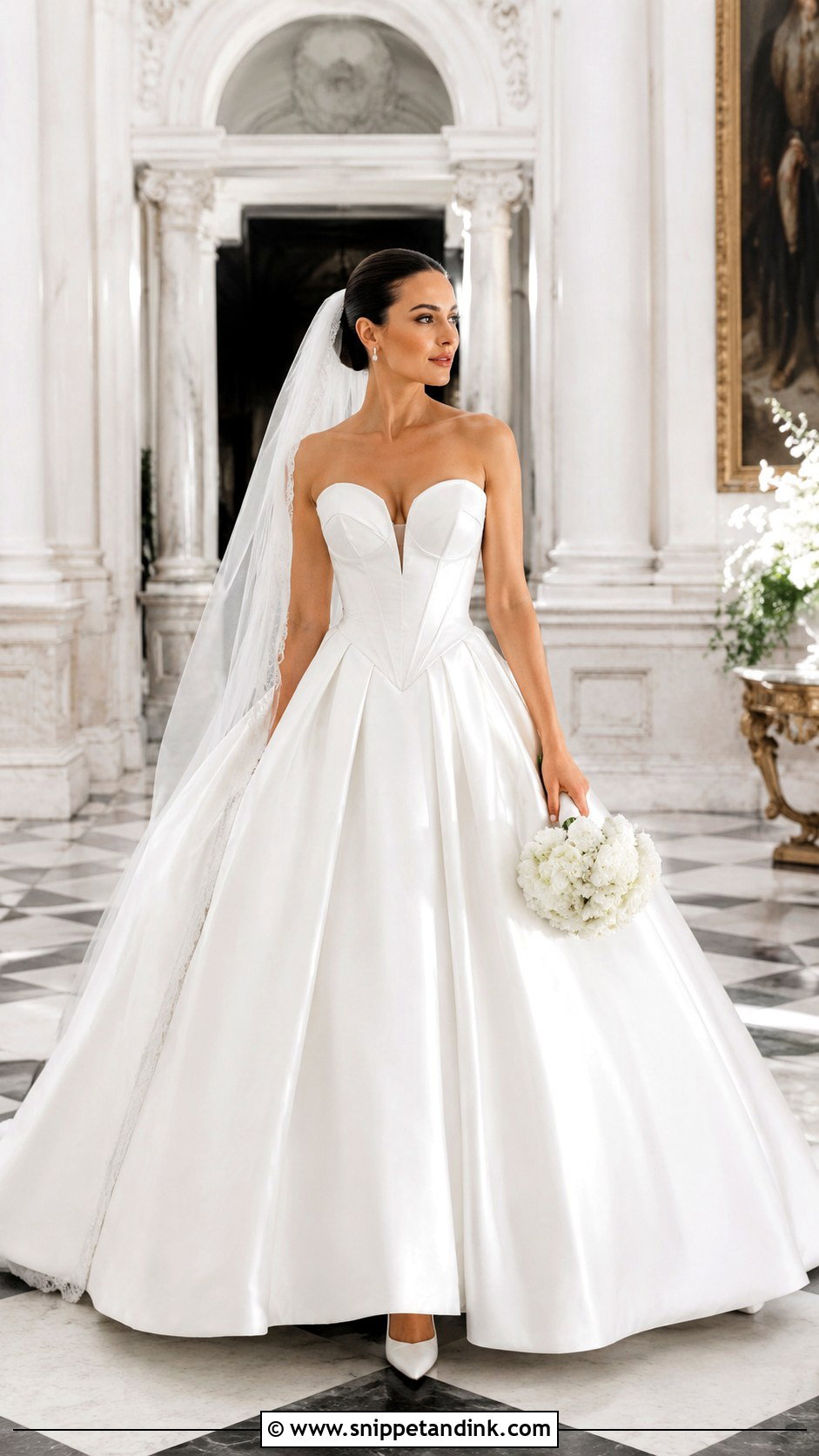
The point of a Basque waist draws a clean line from bodice into skirt, and it suits satin ball gowns, lace and corset designs best. A shallow U-shaped dip feels romantic; a deep V is more dramatic. The skirt should fall smoothly from below the point instead of being gathered right at it. Hold the bouquet a little lower so the waist shows in photos. Torso length decides whether this works for you. On a short torso, a deep point can fold up into the stomach when you sit, so do a seated test before you commit.
7. Oversized Bow Wedding Dress
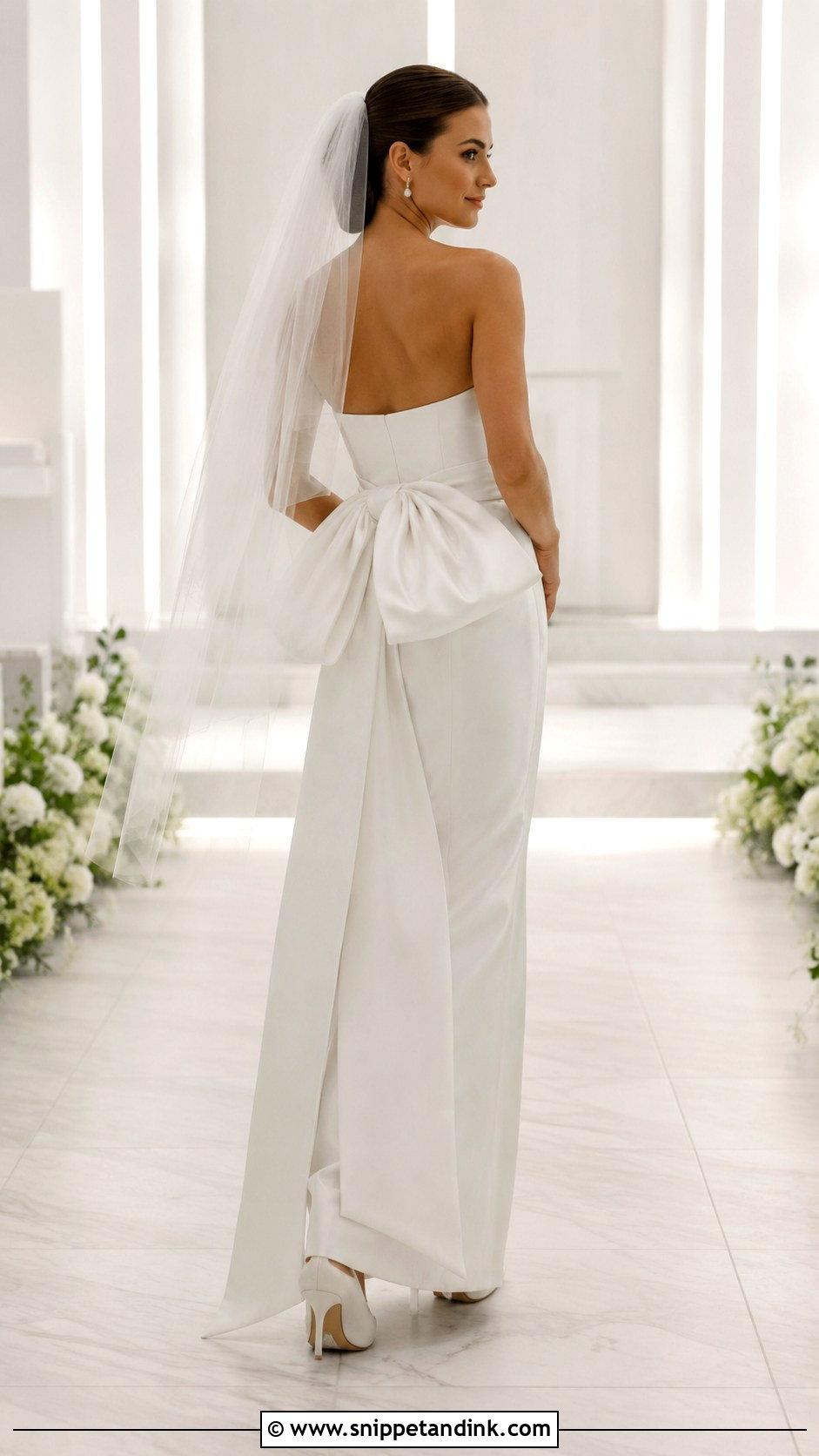
A big bow at the back gives a simple satin column or minimal ball gown something to say as you walk away. At the natural waist it defines your shape; set slightly lower, it lengthens the line. Mikado holds crisp loops all day, while organza is lighter and droops a little by evening. Wear hair up or swept to one side so the bow stays visible, and choose a veil you can take off after the ceremony. Long tails are the practical issue. They get stepped on during dancing, so ask for a hidden loop or bustle point that lifts them without flattening the bow.
8. Covered Button Wedding Dress
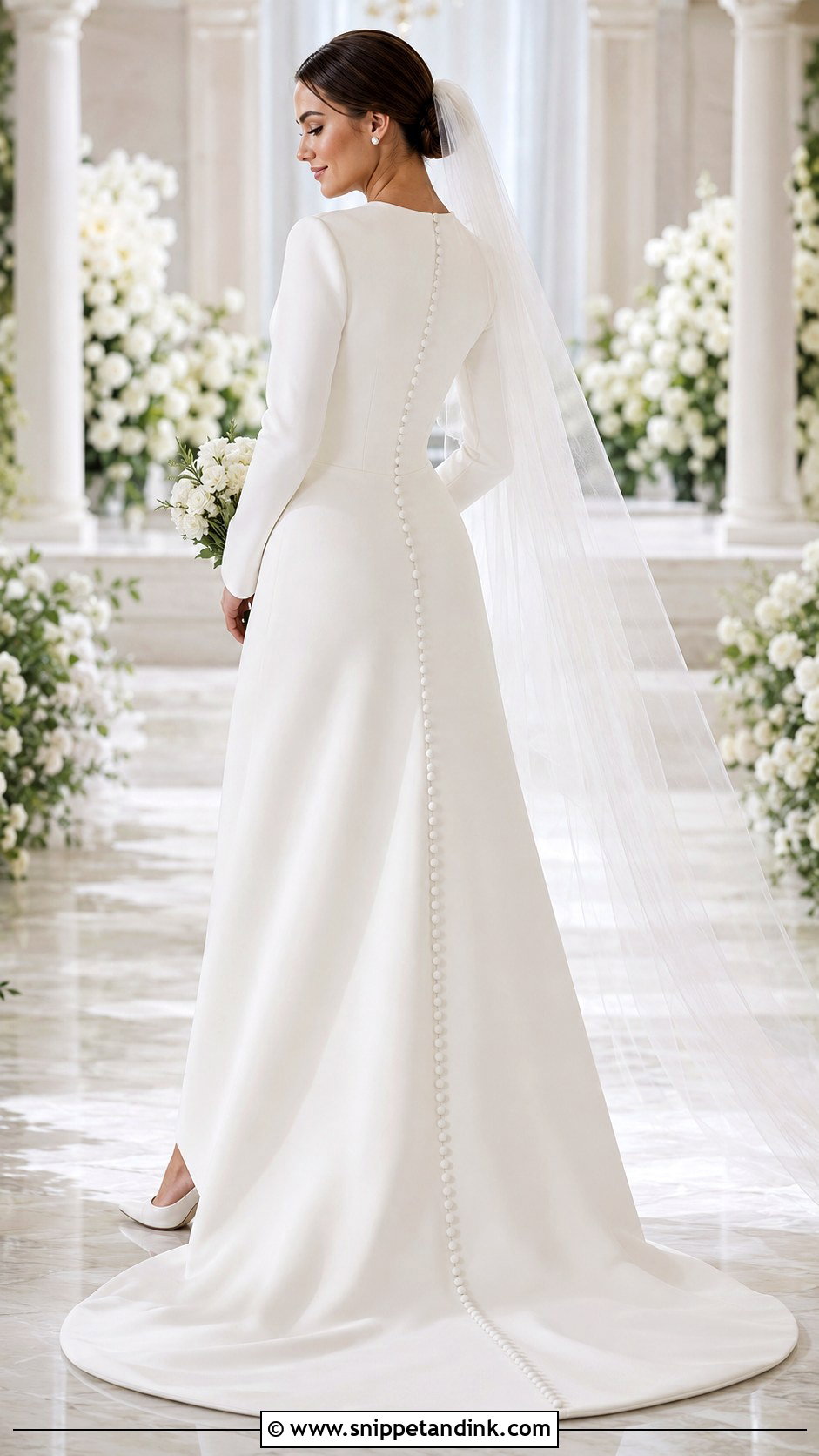
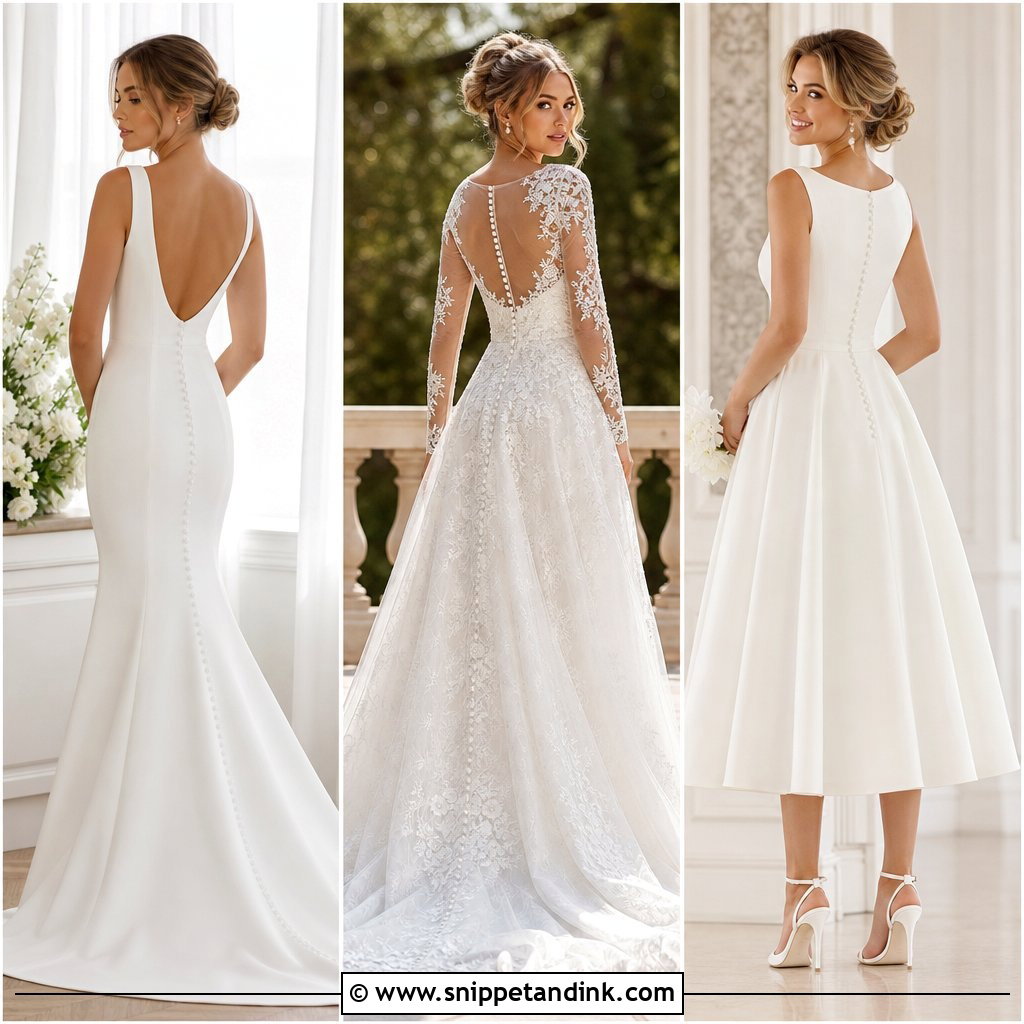
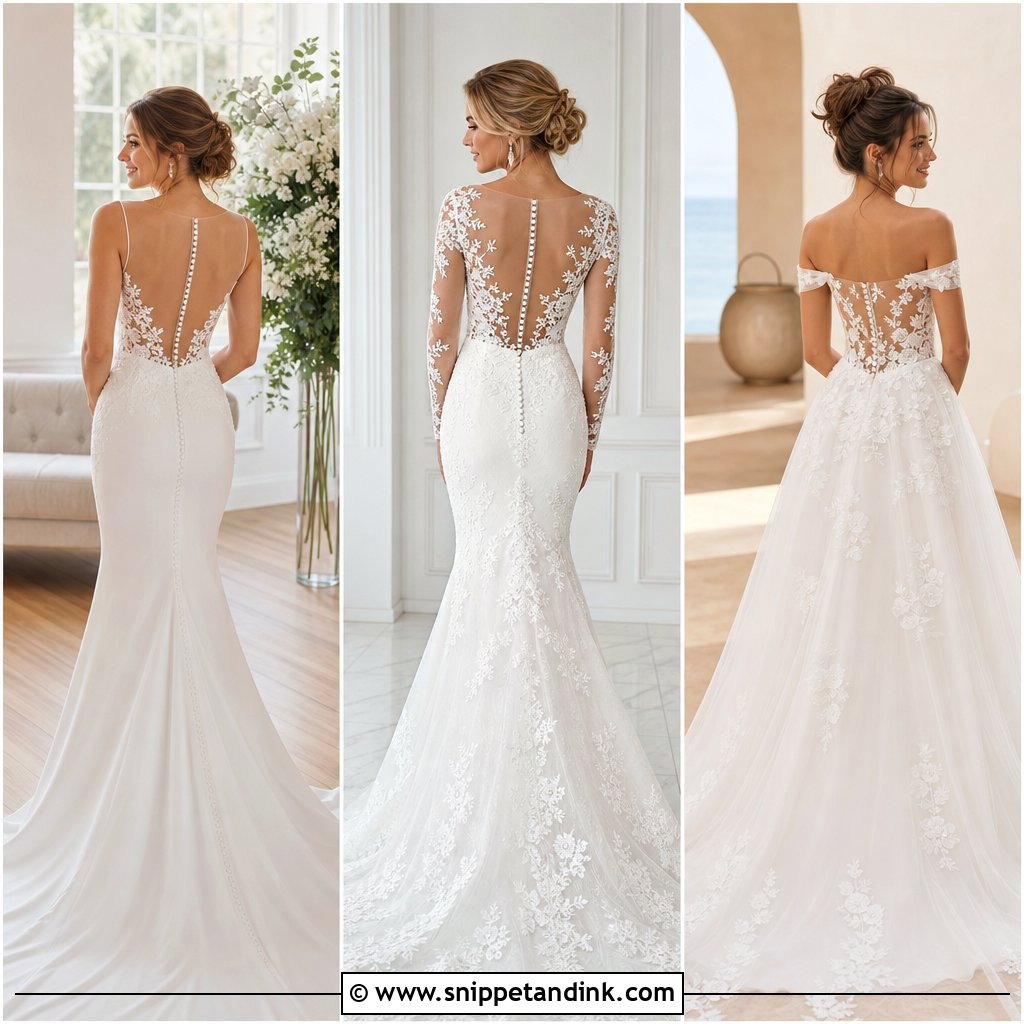
Covered buttons are the quiet detail that guests notice during the vows, when they are looking at your back for twenty minutes. They can stop at the waist, run over the hips or travel down the train. Satin-covered buttons blend into the dress; pearl ones give a gentle contrast on crepe or lace. A clean back on a sheath or A-line keeps the row easy to see. Many button rows hide a zip, which is a mercy on the morning; forty loops take a long time to fasten. At fittings, check the spacing and that each loop lies flat without pulling open over the closure.
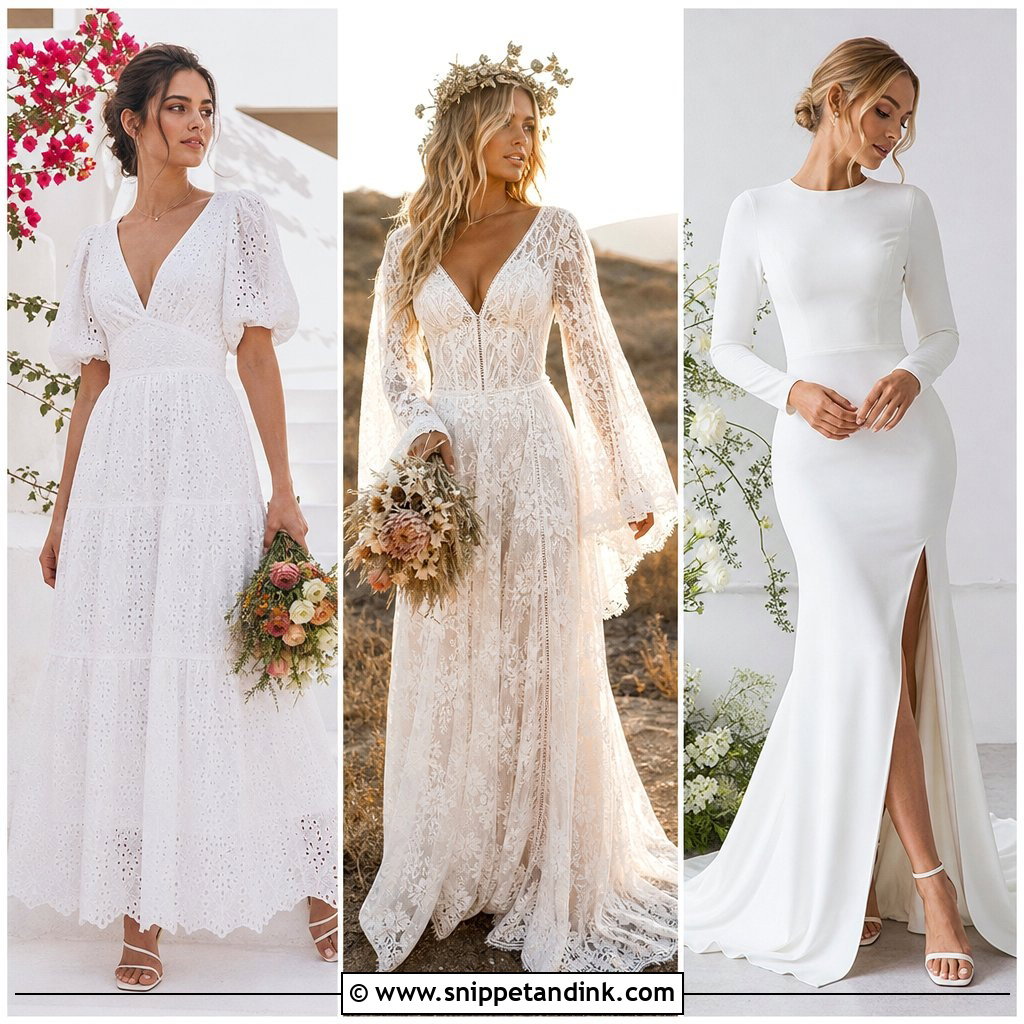
9. Illusion Lace Sleeve Wedding Dress
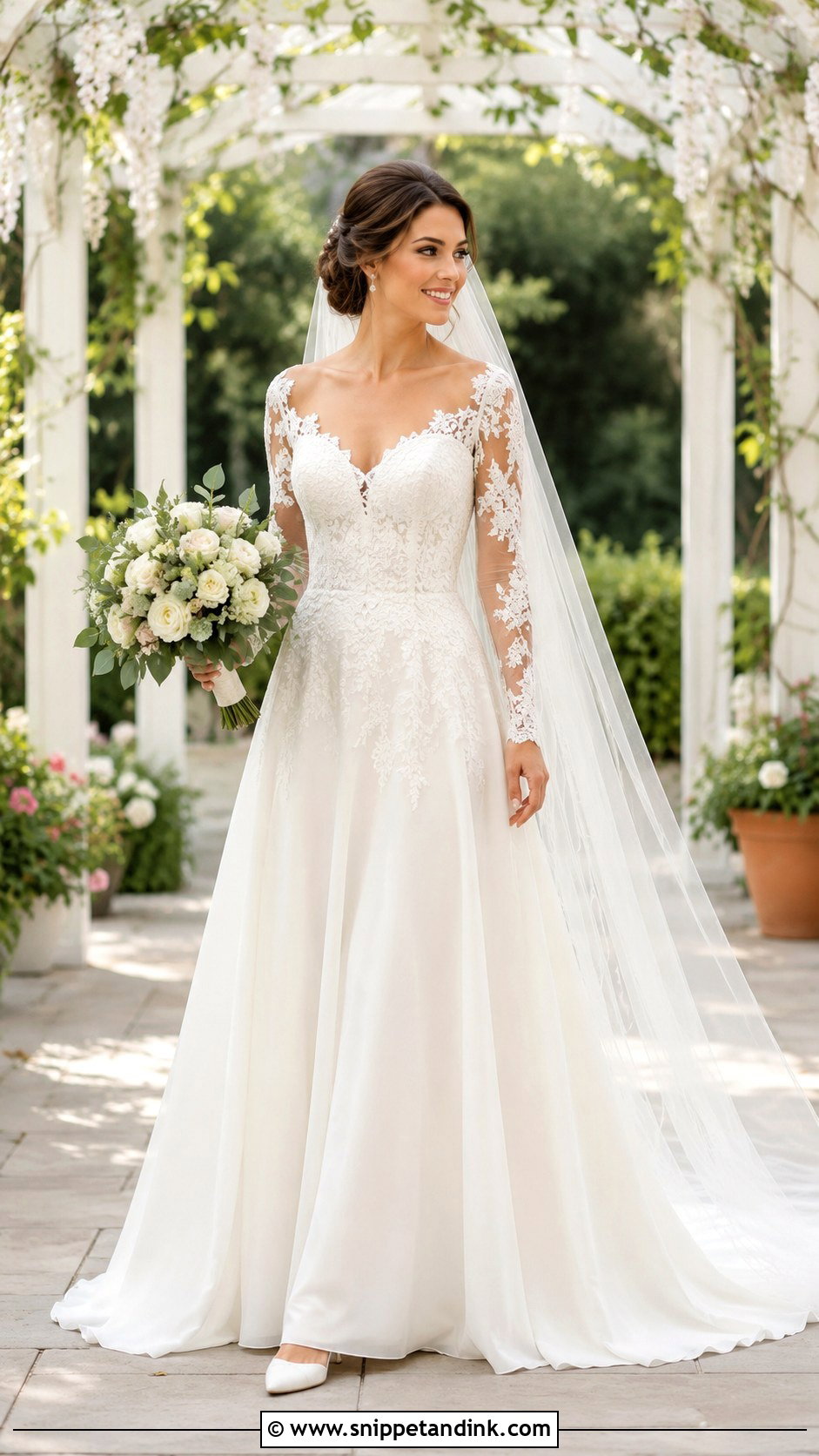
Illusion lace sleeves give coverage that still looks airy. The best versions use fine mesh close to your skin tone, so the lace motifs seem to float on the arm. They pair well with a crepe skirt, a soft A-line or a lace ball gown; keep the neckline fairly open so the top half does not feel buttoned up. The fit test I always do: bend your elbows and lift your arms as if hugging. Mesh that is too tight pulls across the shoulders, and mesh that is too loose wrinkles at the inner elbow. Lace motifs laid over the sleeve seams hide the join well.
10. Detachable Sleeve Wedding Dress
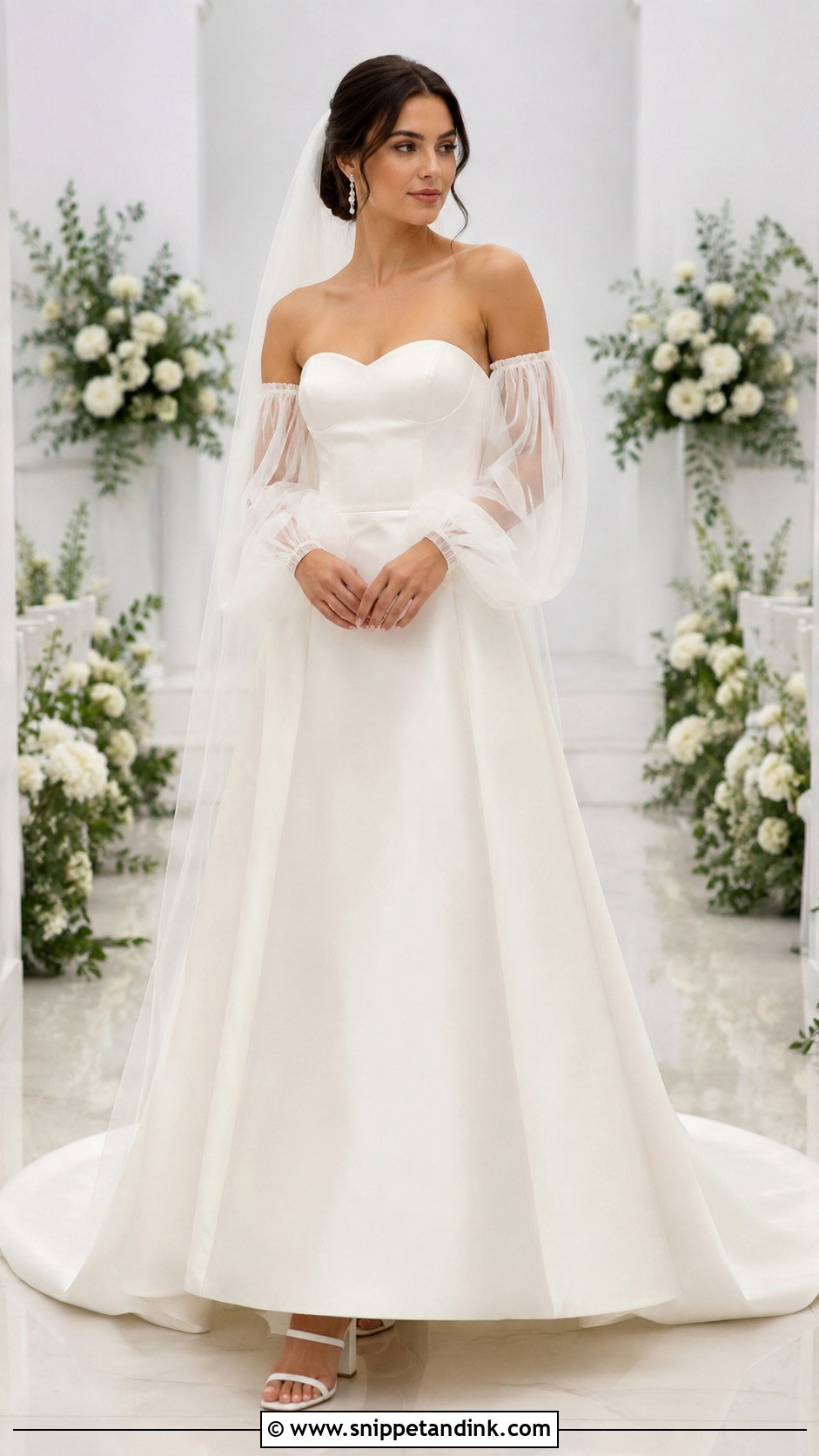
Detachable sleeves give you a covered look for the ceremony and a strapless gown for the party. Off-the-shoulder sleeves feel romantic, puff sleeves add volume, and fitted lace offers more coverage. The dress underneath has to be fully structured on its own, with enough boning to stay up once the sleeves are gone. Switch to bolder earrings and lower heels for the evening if you like. Look at the attachment points closely before you buy. Snaps or hooks near the underarm can scratch, and if they are too few the sleeve slides down your arm by the second hour.
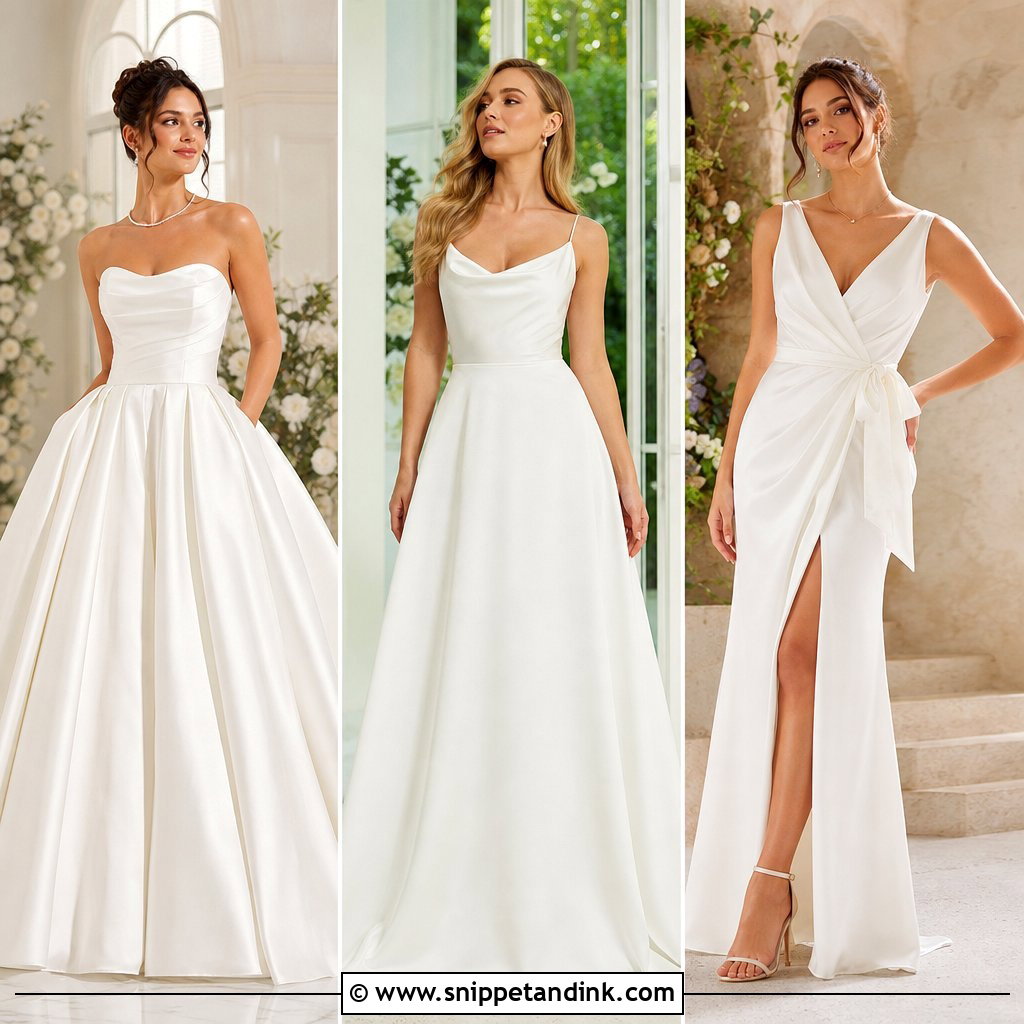
11. Square Neck Satin Wedding Dress
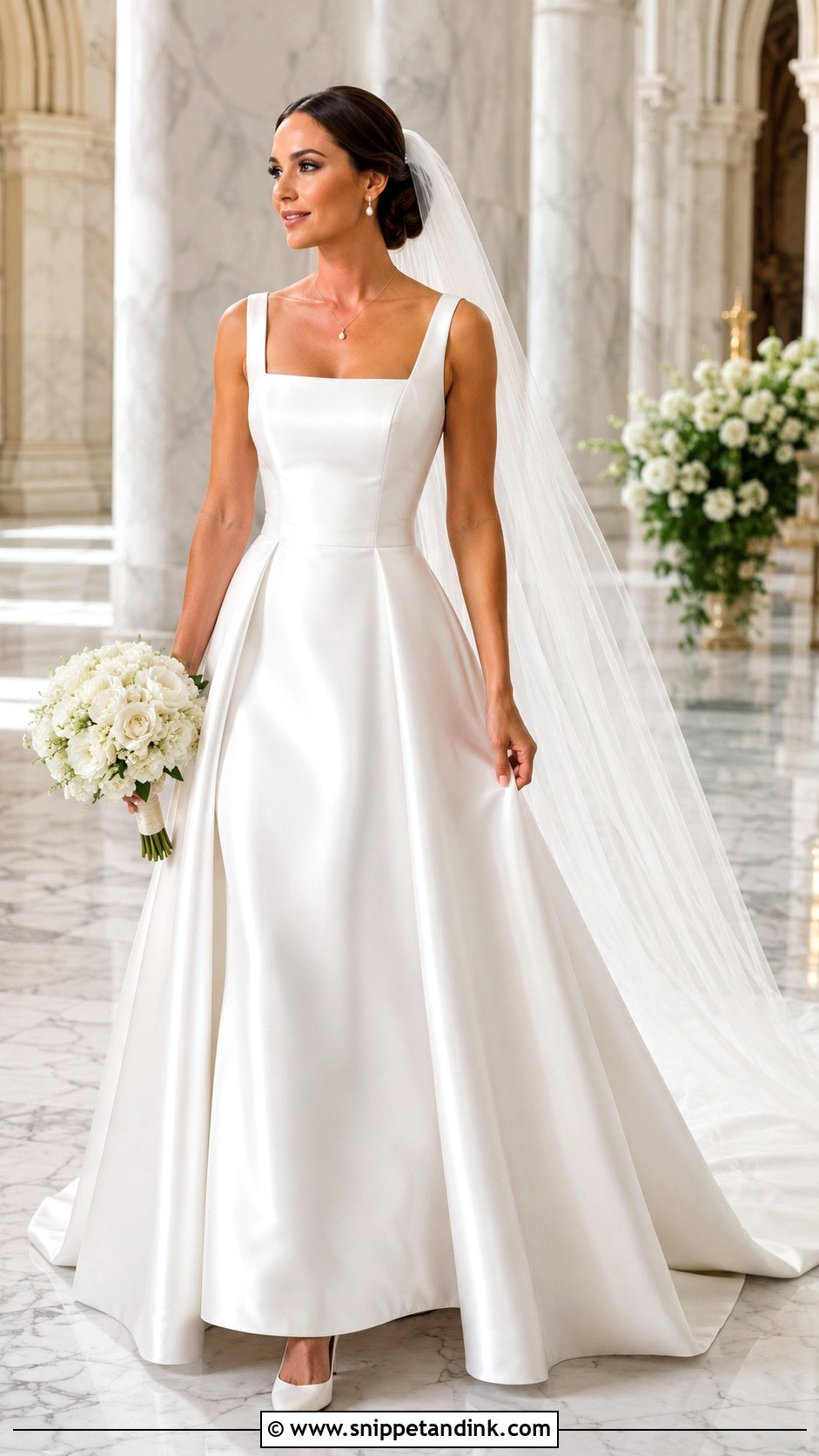
A square neckline frames the collarbone with straight lines, which gives a satin gown a crisp, slightly vintage look. Wide straps, long fitted sleeves or a sleeveless bodice all work with it. Smooth satin keeps it classic; jacquard adds pattern. A small pendant sits nicely inside the square. The thing I watch at fittings is the corners. They should lie flat and match each other, and the neckline must stay put when you lean forward to sign the register. A low square cut with little internal support tends to gape, so ask for a stay tape along the top edge.
12. Draped Sweetheart Wedding Dress
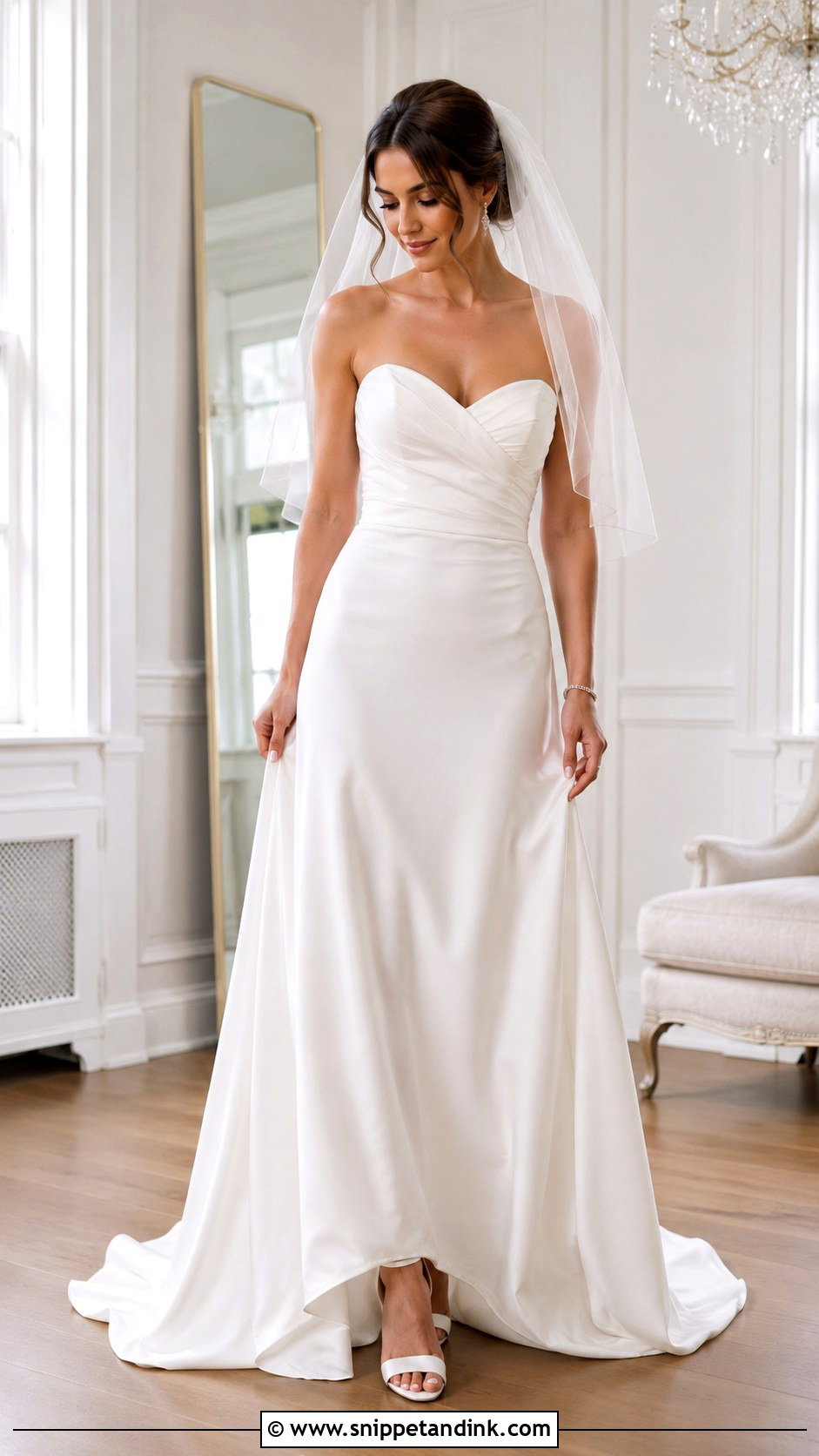
Draping across a sweetheart bodice softens a fitted dress and hides construction seams in the folds. Matte crepe gives a quiet finish, while silk satin catches light along each pleat. An A-line, fit-and-flare or chiffon skirt all suit it. Skip a large necklace; the curved neckline and folded fabric already fill that space. Good draping looks deliberate from the side as well as the front. At the final fitting, check that each fold is tacked in place underneath, because loose draping drifts and puckers toward the side seams by the end of the night.
13. High Neck Lace Wedding Dress
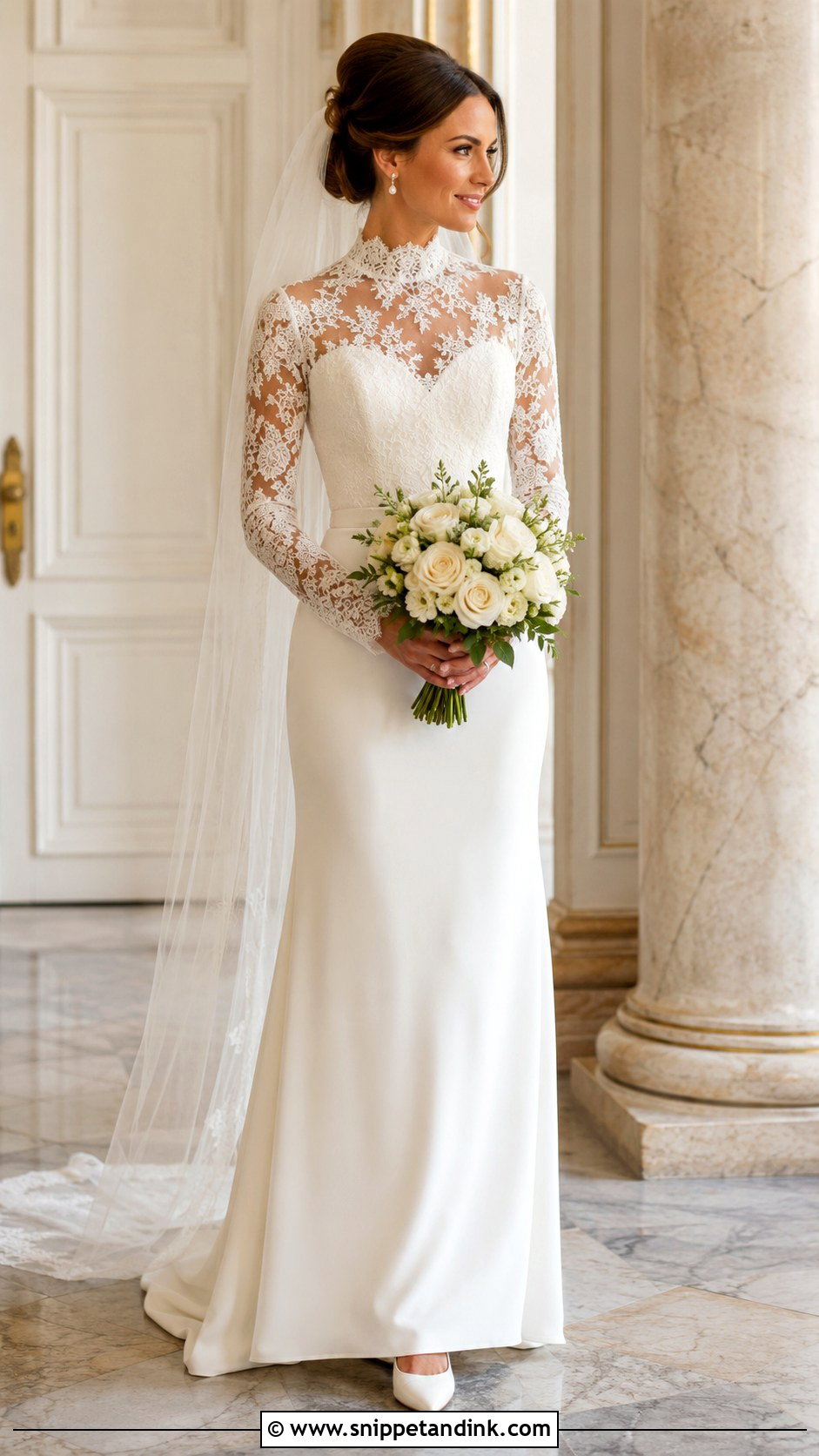
A high lace neck has a slightly vintage, buttoned-up character, and sheer lace across the collarbone keeps it from feeling heavy, especially with long sleeves. A crepe skirt gives contrast; a full tulle skirt leans romantic. Tuck the veil under an updo and skip the necklace, since the collar already frames your face. Comfort is the real test with this one. Turn your head fully both ways and look down as if at your bouquet. If the lace edge rubs, ask for a soft lining or a finished binding at the collar, which makes the difference between wearing it gladly and counting the hours.
14. Open Back Wedding Dress
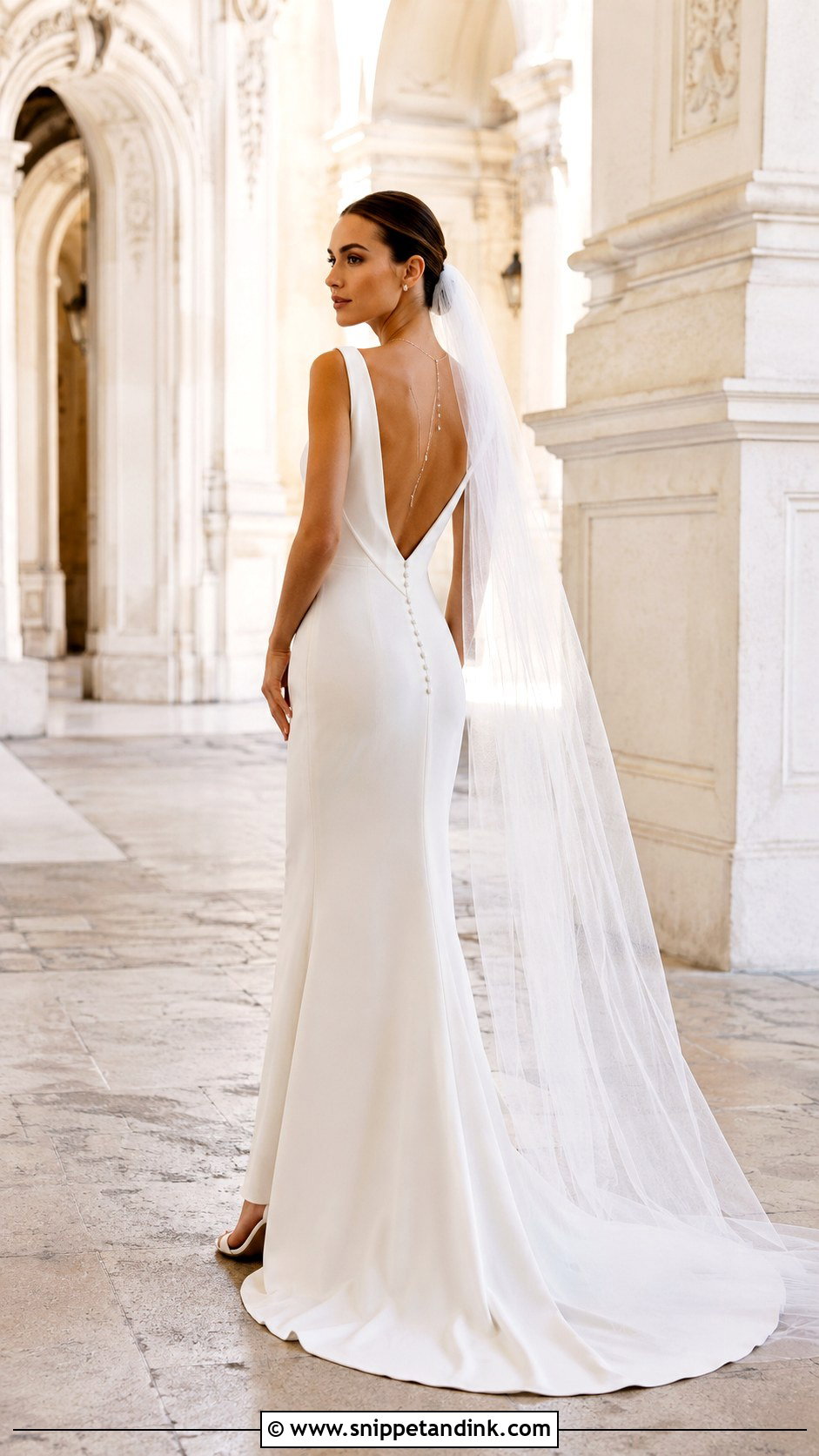
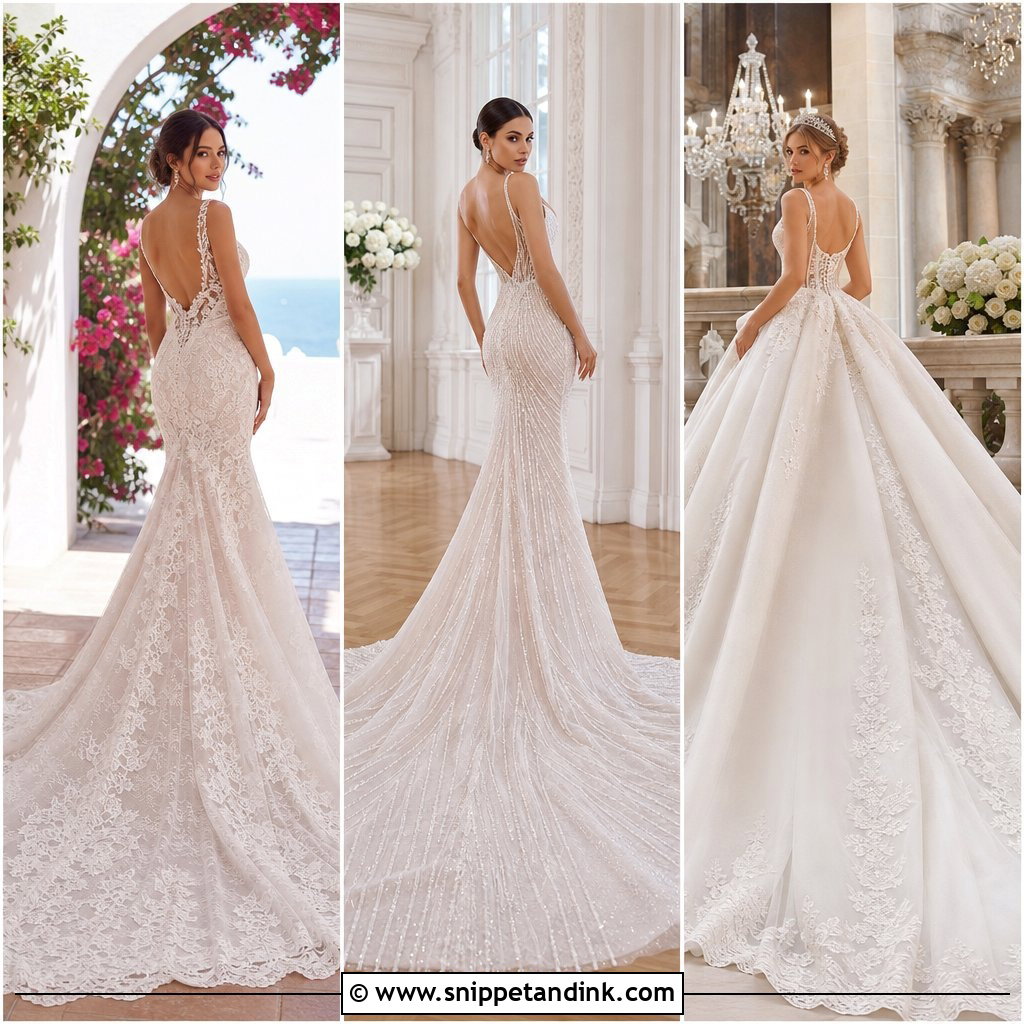
An open back puts the drama behind you and leaves the front simple. A deep V lengthens the torso, while a rounded or keyhole opening covers more. Crepe sheaths, lace fit-and-flares and satin A-lines all suit it. Lift your hair or sweep it to one side, and choose a sheer veil you can move aside for back photos. Support is the big question, because a normal bra is out. I ask about built-in cups, side boning, illusion mesh and where the shoulder straps sit, then have the bride hug someone and sit down to see whether the back stays flat.
15. Low Back Bow Wedding Dress
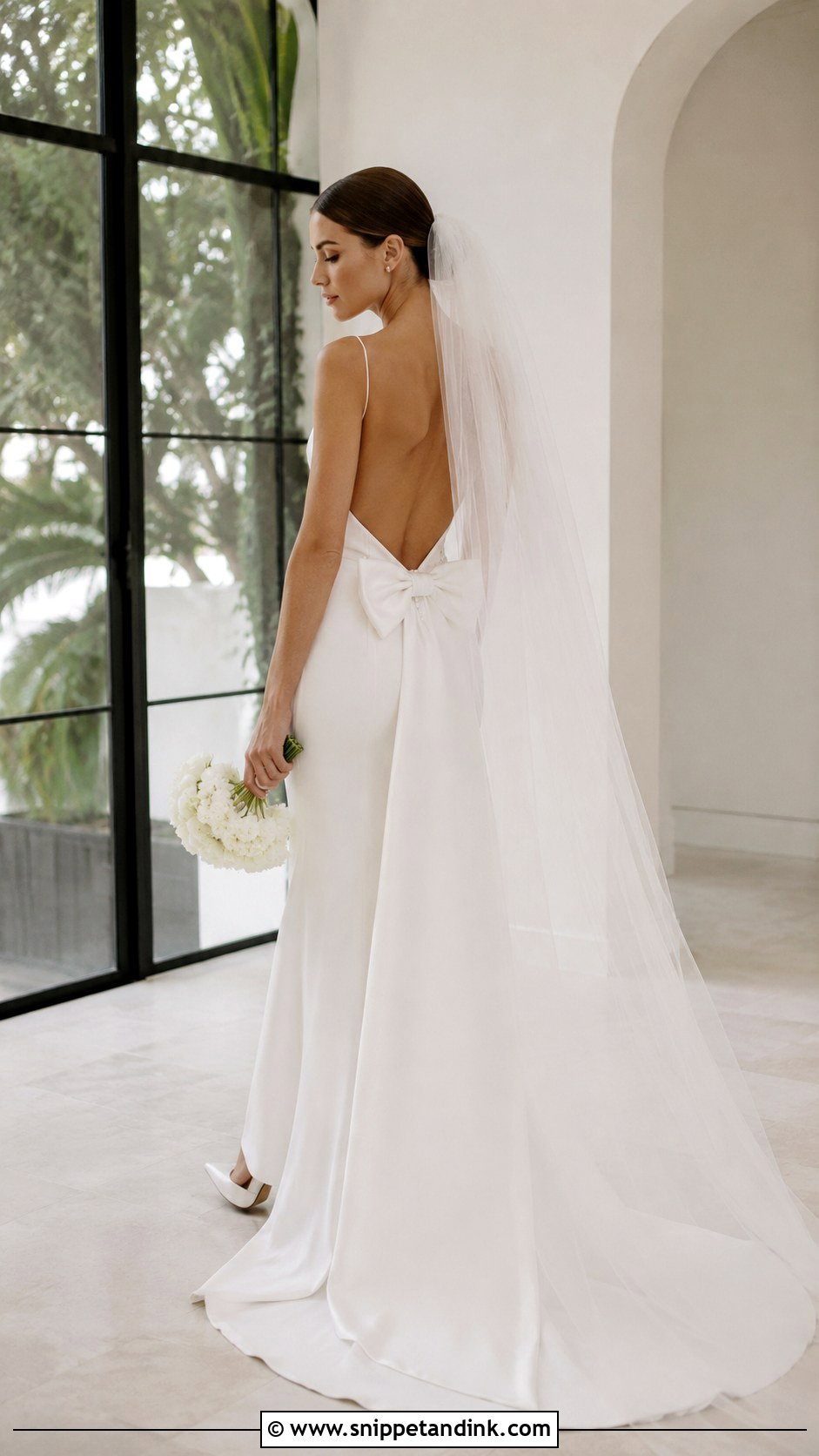
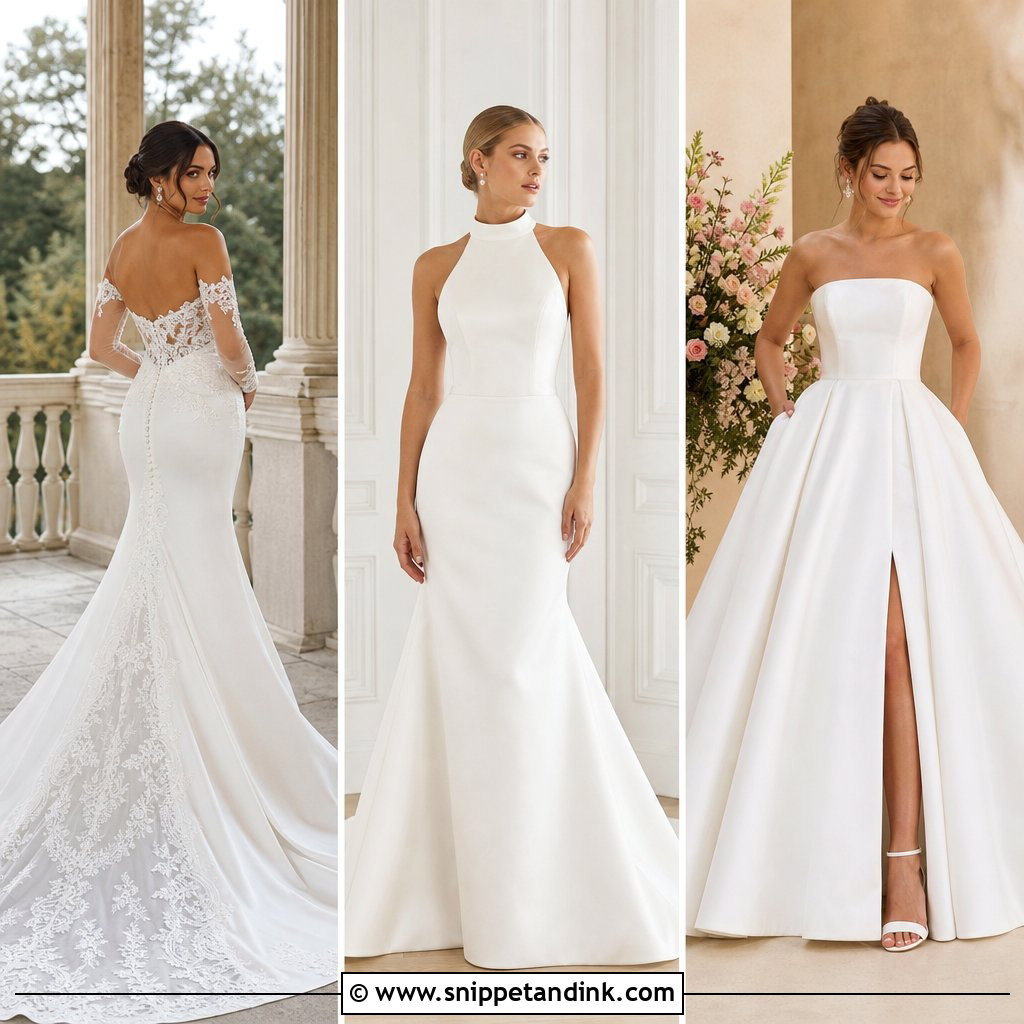
A small bow at the base of a low back frames the opening and marks the waist without shouting. Place it right at the top of the skirt. Satin bows hold a clean shape; chiffon or organza ones soften and move. A crepe gown, a plain A-line or a satin column all carry it well. Tuck a low veil under an updo and avoid long necklaces that tangle in the loops. Ask for the bow to be stiffened lightly with interfacing so the loops do not collapse when you lean back in a chair. A removable bow also gives you a plainer second look later.
16. Lace Chapel Train Wedding Dress
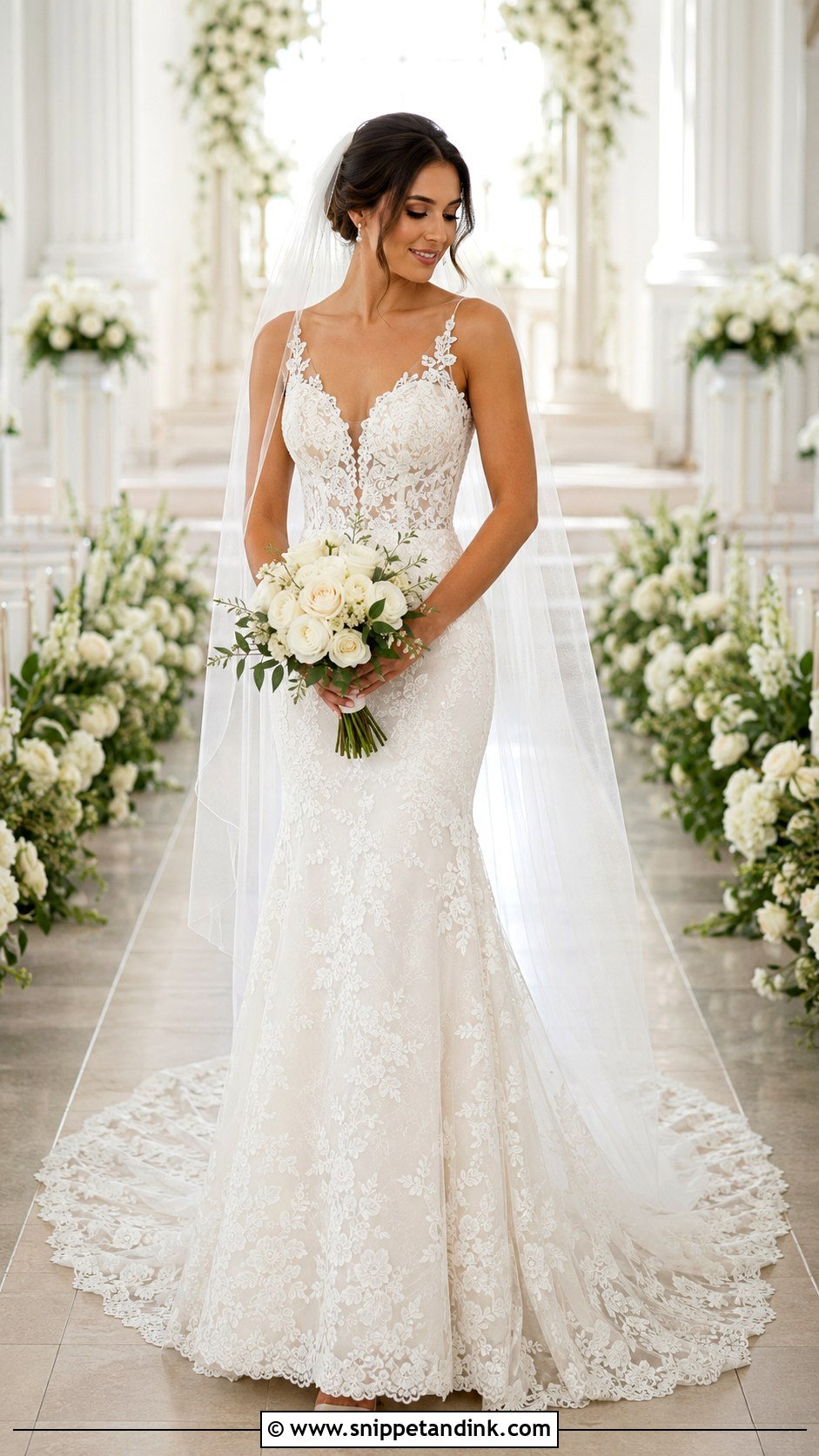
A lace chapel train gives you ceremony presence without the weight of a cathedral length. The lace can run all the way from the bodice or sit only along the train’s border. A fit-and-flare shows the pattern clearly; an A-line spreads it softly behind you. A plain fingertip veil and a structured bouquet keep the focus on the back. Ask before alterations how the border will look once the hem is shortened, since cutting can break the design. The bustle matters just as much: it should lift the train securely with the lace still sitting in order, and without leaving a lump at the back.
17. Scalloped Lace Hem Wedding Dress
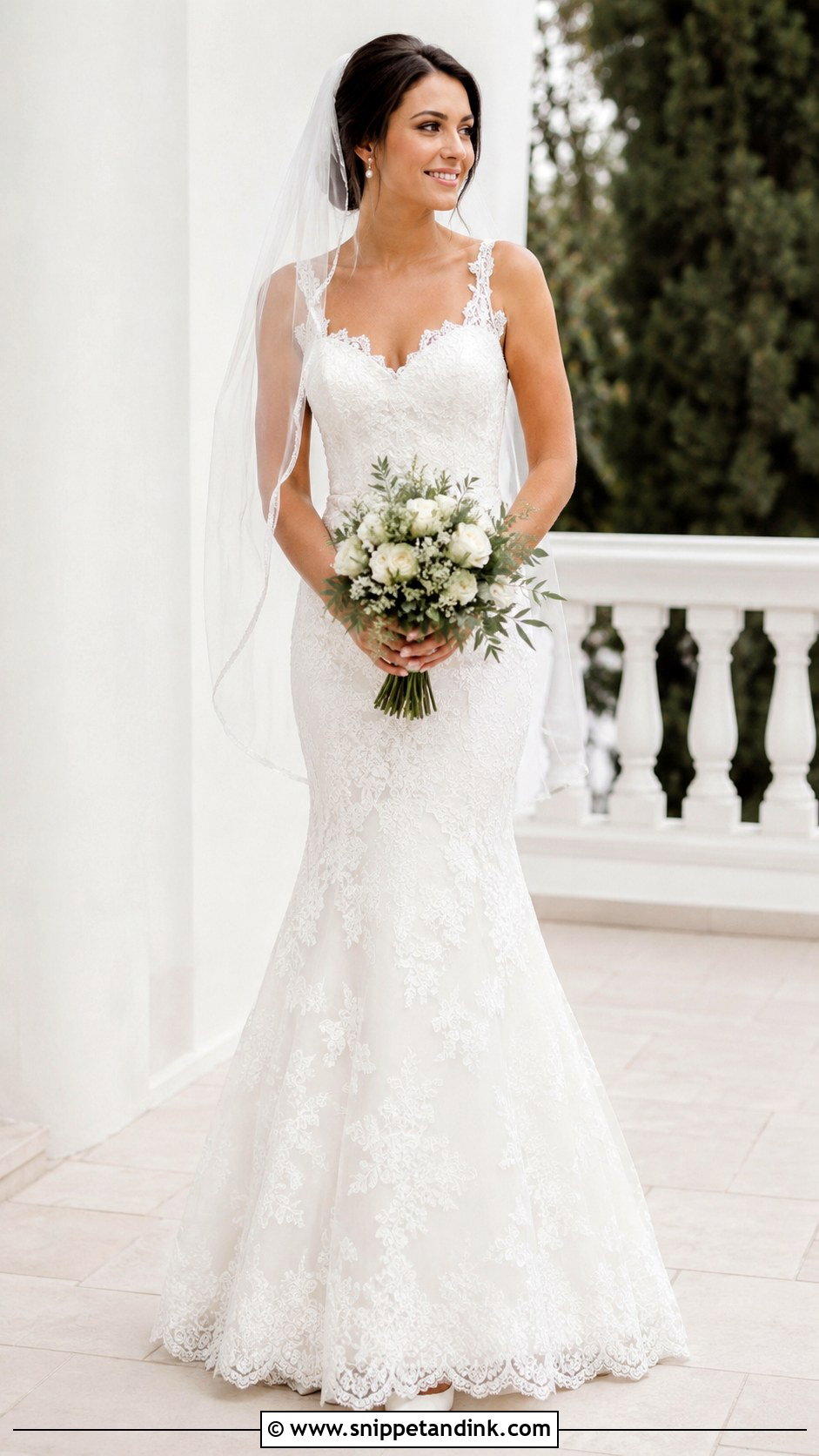
A scalloped lace hem gives the very bottom of the dress a finished, decorative edge, and it shows best on sheath, trumpet and soft A-line shapes where the hem is visible. Large floral scallops are romantic; fine eyelash lace is lighter. Hem the dress in the exact shoes you will wear. Here is the part brides rarely know: a scalloped border cannot simply be cut shorter. The seamstress has to unpick the lace, shorten the skirt and stitch the border back on, which takes more time and costs more than a plain hem, so raise it at the first fitting.
18. Pleated Slit Wedding Dress
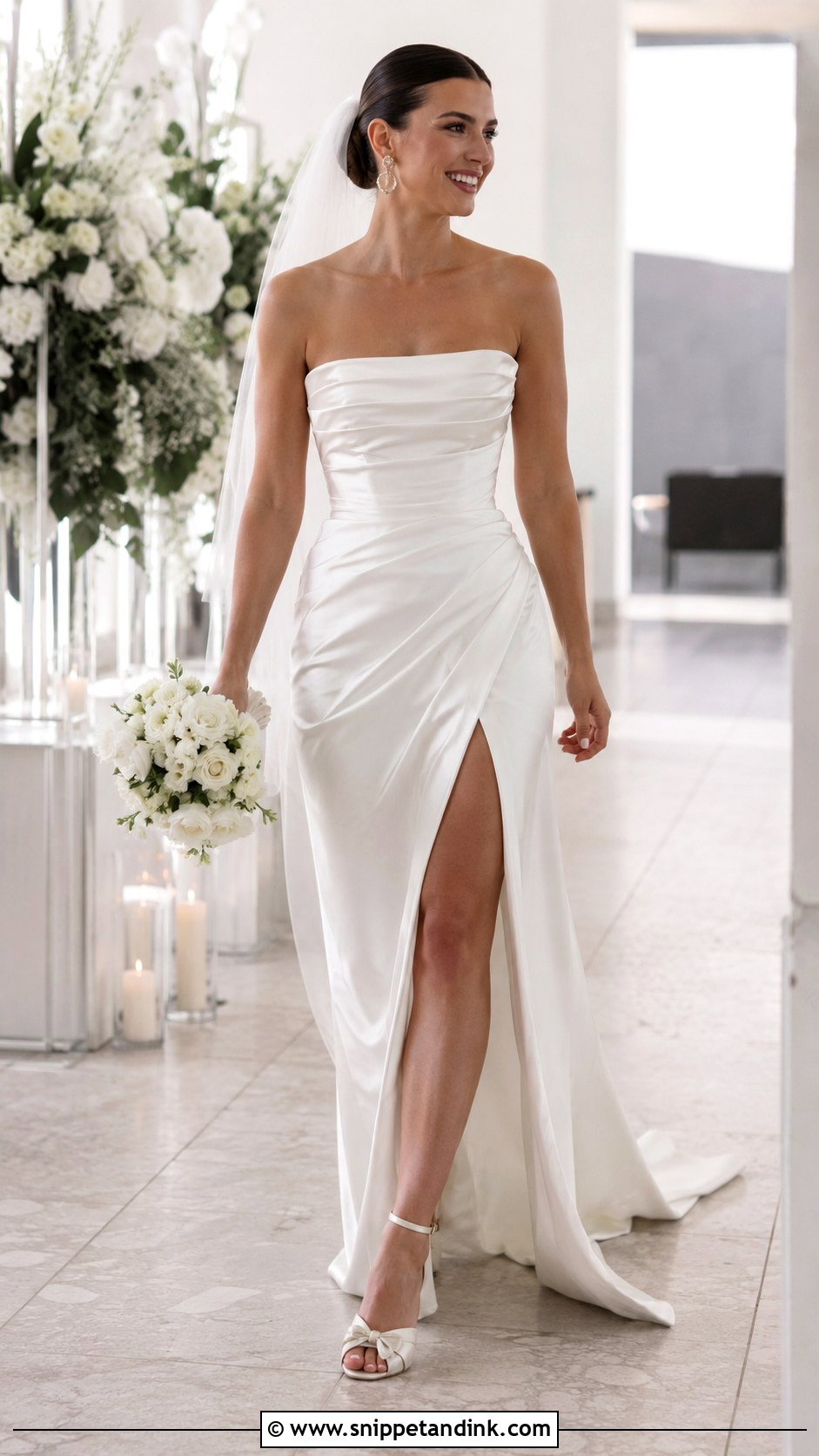
A pleated slit stays closed when you stand still and opens as you walk, which feels more controlled than a slit that is always open. Crisp satin or mikado holds sharp pleats; chiffon moves more freely. A draped bodice, a square neck or a clean strapless top all suit it. Hold your bouquet on the side away from the slit. Walk up and down stairs and sit in the dress before deciding on the height. If it feels too high, a lining panel set inside can give coverage, or the slit can be lowered during alterations.
19. Color Floral Embroidery Wedding Dress
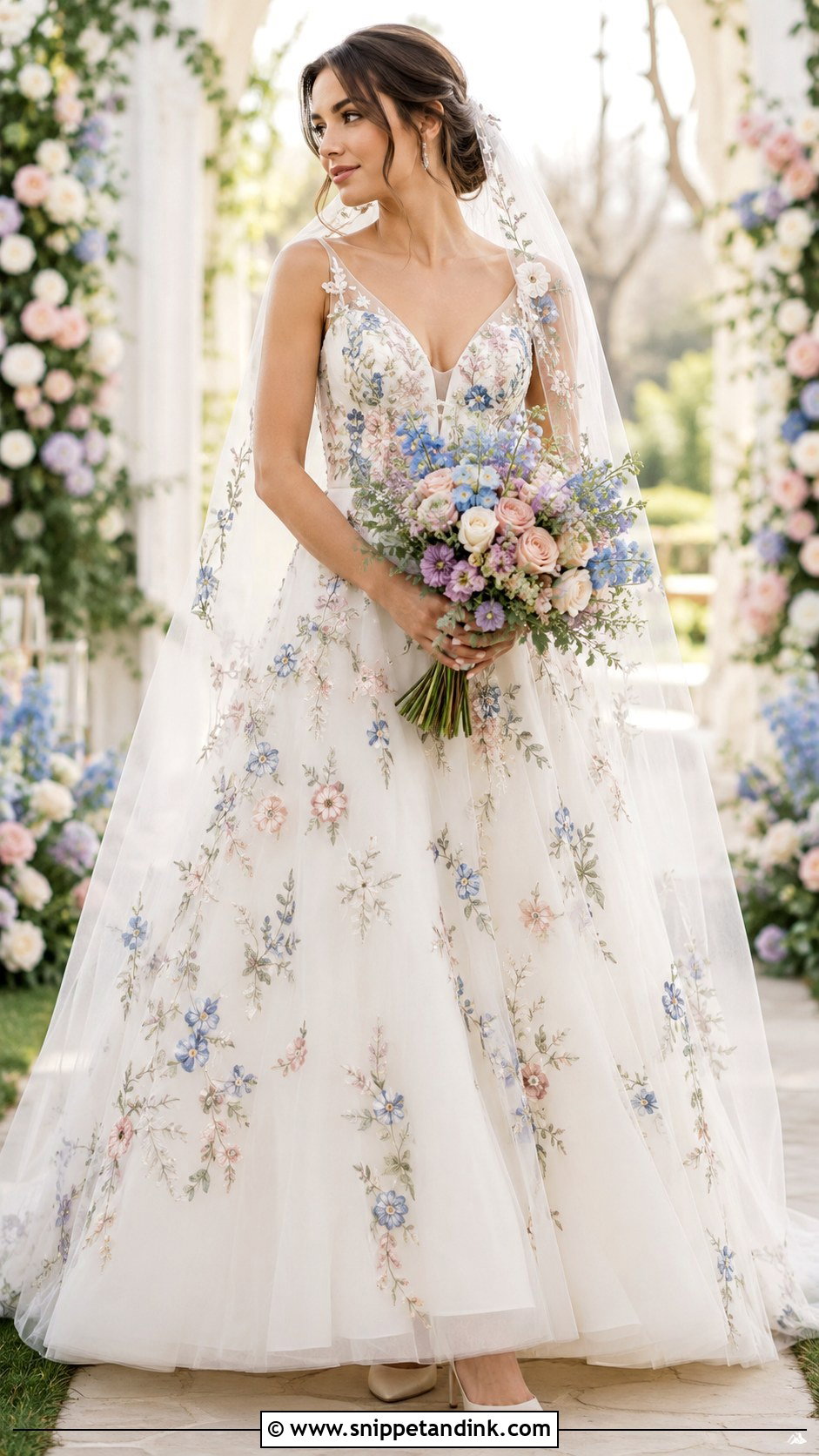
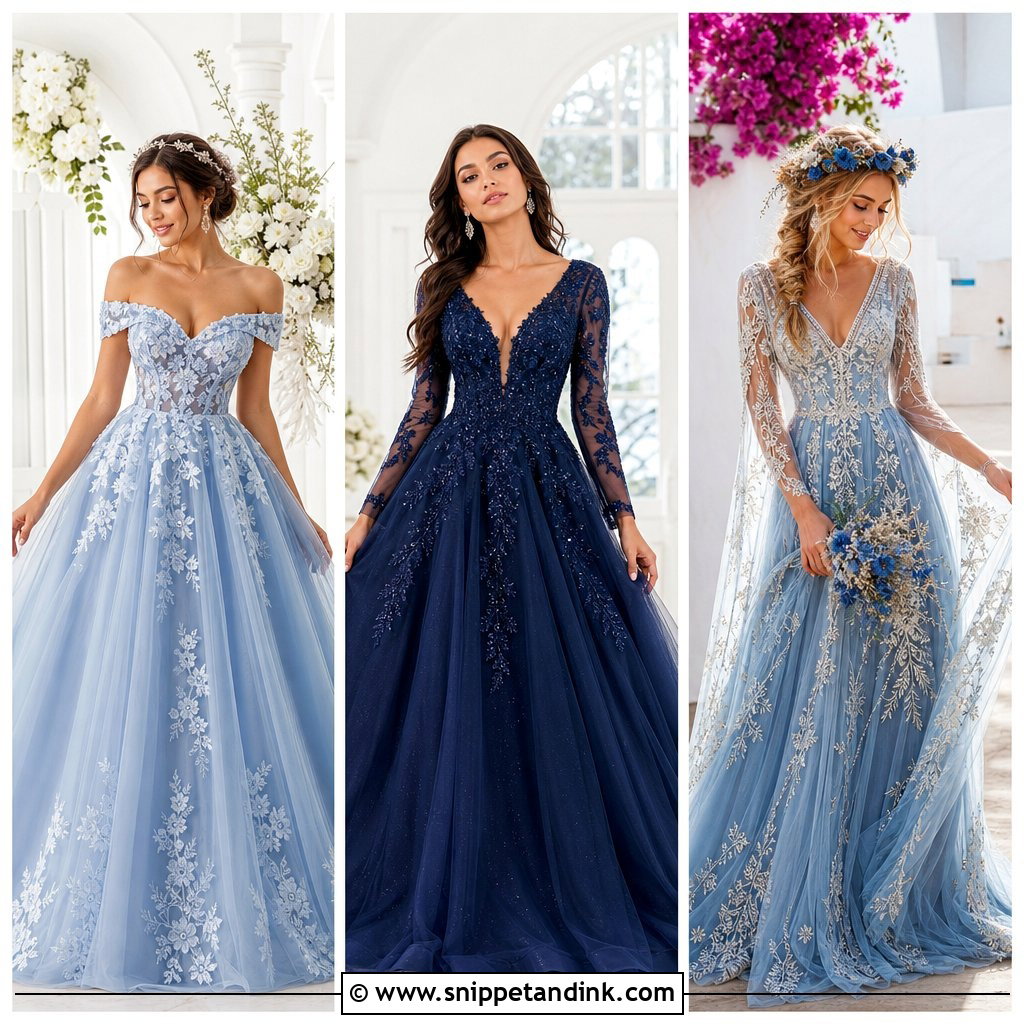
Colored floral embroidery lets you bring personality into a dress that is still clearly bridal. Soft blue, blush, lavender or green thread can run across the bodice, around the hem or in scattered motifs on tulle. A plain A-line leaves the embroidery room to show. Pick up just one or two of the thread colours in the bouquet; matching all of them looks overdone. Turn the bodice inside out at the shop and feel the back of the embroidery, since knotted thread can rub the skin raw by evening. Ask, too, how motifs near seams will be moved if you need taking in.
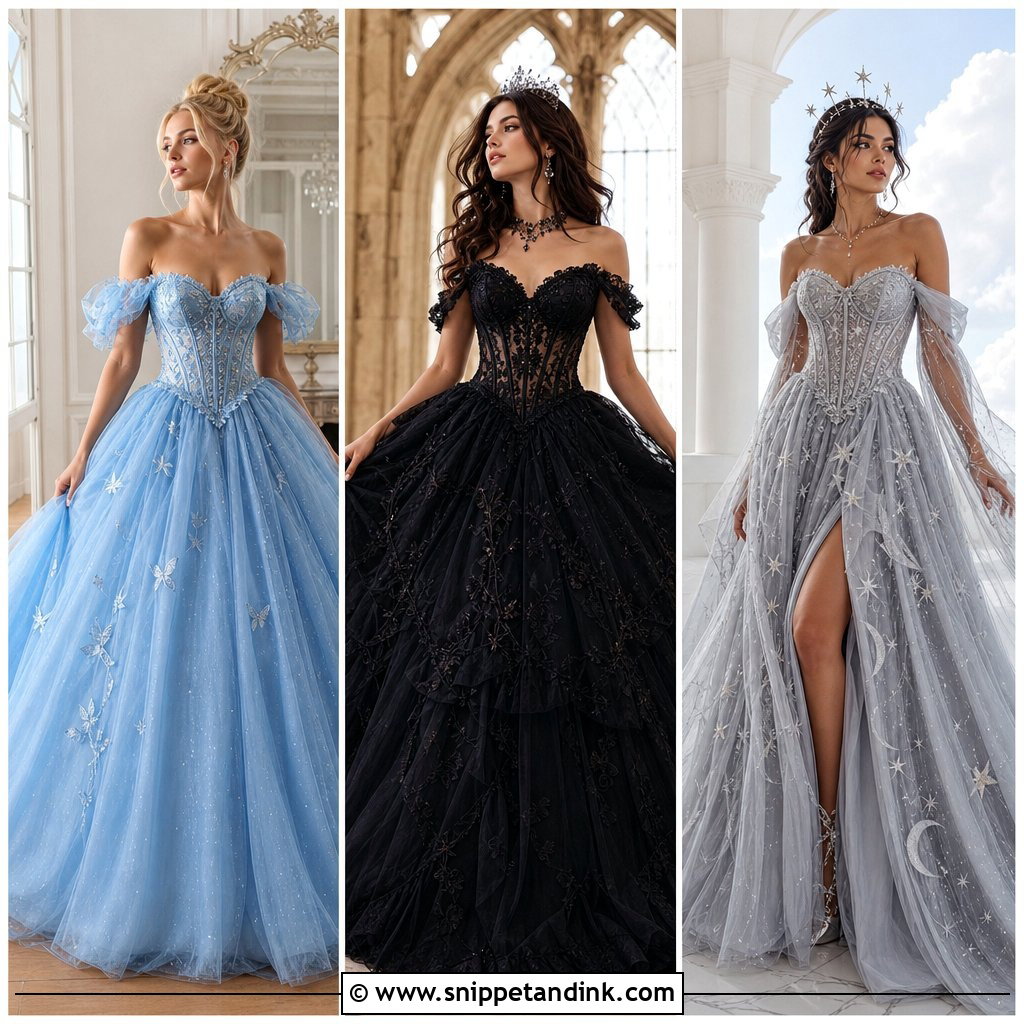
20. Detachable Cape Wedding Dress
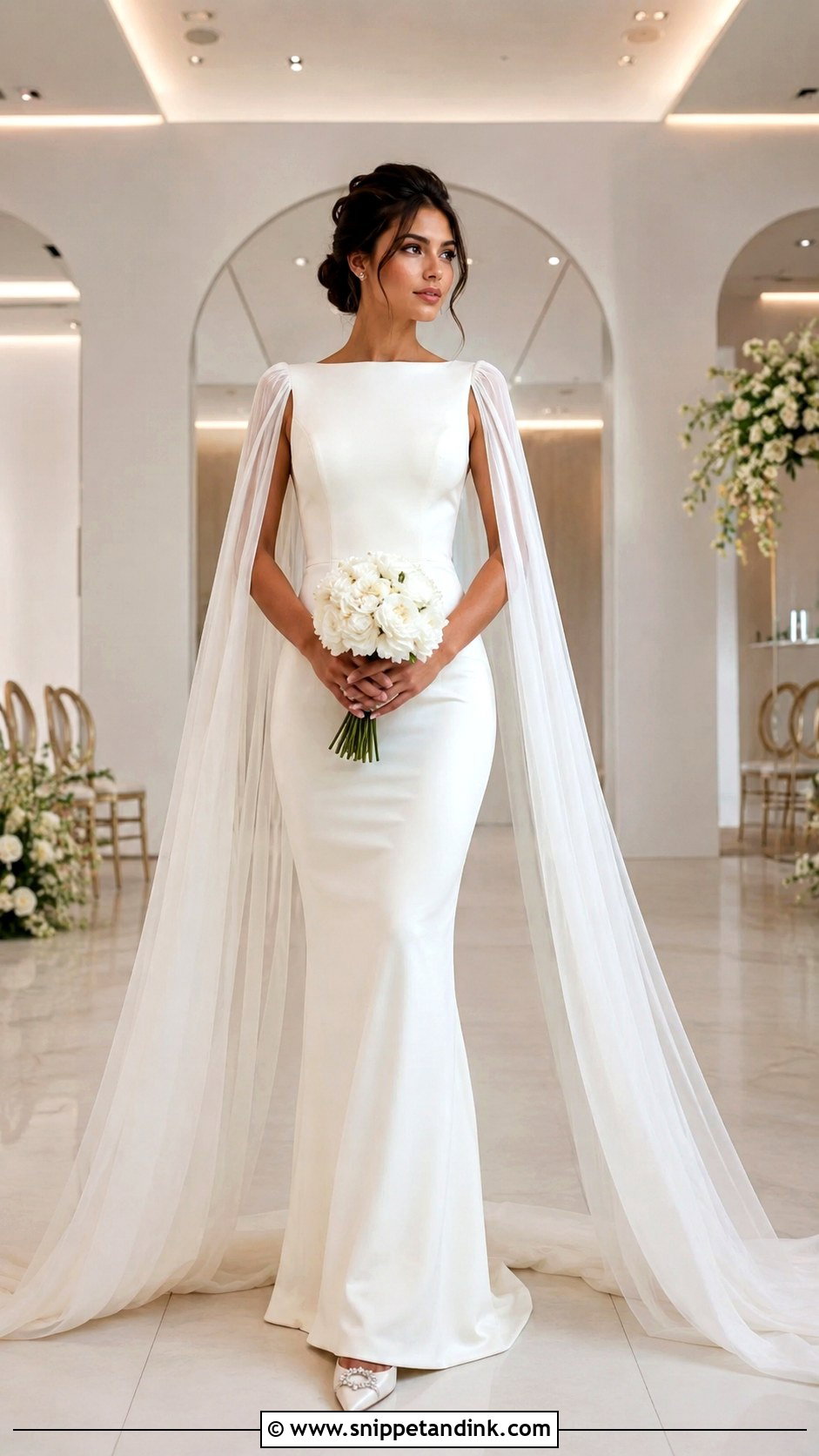
A detachable cape gives a dramatic ceremony look in place of a veil. Sheer tulle is light and floaty; crepe or satin looks cleaner and more structured. It attaches at the shoulders or neckline of a plain column, sheath or simple A-line, and a quiet base dress keeps the extra layer from overwhelming you. An updo and studs are enough. Take it off after the ceremony to dance freely. At the fitting, check that the cape stays centred when you turn, clears the floor if it should, and unhooks without dragging the neckline or leaving loops showing on the shoulders.
Which Details Make Alterations Slower and Dearer
Every detail on this list looks wonderful in a sample, but some of them turn simple alterations into careful handwork. Knowing which ones does not mean avoiding them; it means booking your first fitting early enough.
- Scalloped or bordered hems have to be unpicked and reapplied rather than cut, so a hem job becomes a lace job.
- Heavy beading at a seam must be removed by hand before the seam can be taken in, then sewn back on.
- Corset and Basque bodices often need boning channels moved when the waist changes, not just a seam adjusted.
- Long button rows may need loops respaced if the back is altered.
- Bustles under lace trains take extra pick-up points so the pattern sits flat when lifted.
Costs vary widely by area and by how much handwork is needed, so ask for a quote at the first fitting, not the last. For a heavily detailed gown, I like the first fitting to be roughly two to three months before the wedding, which leaves room for a second and third without any rush.
How These Details Read From Across a Room
Fine work can disappear at a distance. Thin eyelash lace, tiny seed pearls and tone-on-tone embroidery look exquisite up close but blur into plain fabric in a wide shot from the back of a venue. Raised flowers, bows, deep backs and strong necklines hold their shape in every photograph.
Light changes things too. Crystals come alive under flash and candlelight but can look flat in bright midday sun, while pearls and satin glow softly outdoors. If most of your photographs will be taken outside in daylight, stand by a window at the boutique and look at the detail in a phone photo taken from a few metres away. That picture tells you more than the mirror does.
Letting One Feature Lead the Whole Dress
The gowns people remember usually have one detail that leads and everything else supporting it. Use this list to compare texture, structure, movement and coverage, then shortlist the features that feel like you before you think about venue, season, shoes, veil and jewellery. At appointments, ask someone to photograph each dress from the front, the side and the back, and walk, sit and lift your arms before deciding. Bring the tricky details, the lace hems, beading, sleeves, bows, trains and pointed waists, to an experienced alterations specialist early, so they still look right and feel comfortable at midnight.
You'll Like These Ideas:


Leave a Reply