
Pakistani wedding dressing isn’t only about the bride. Sisters, cousins, friends and guests all need outfits for several events, and the same silhouettes, lehenga, gharara, pishwas, saree, jacket, turn up across every role, just with more or less weight. What’s changed lately is how wearable it’s become: embroidery placed at borders rather than everywhere, organza dupattas instead of heavy net, and softer pastels for daytime. Below are thirty designs for Barat, Nikah, Mehndi and Walima, with what I’d tell a bride or a guest before they commission or buy each one.
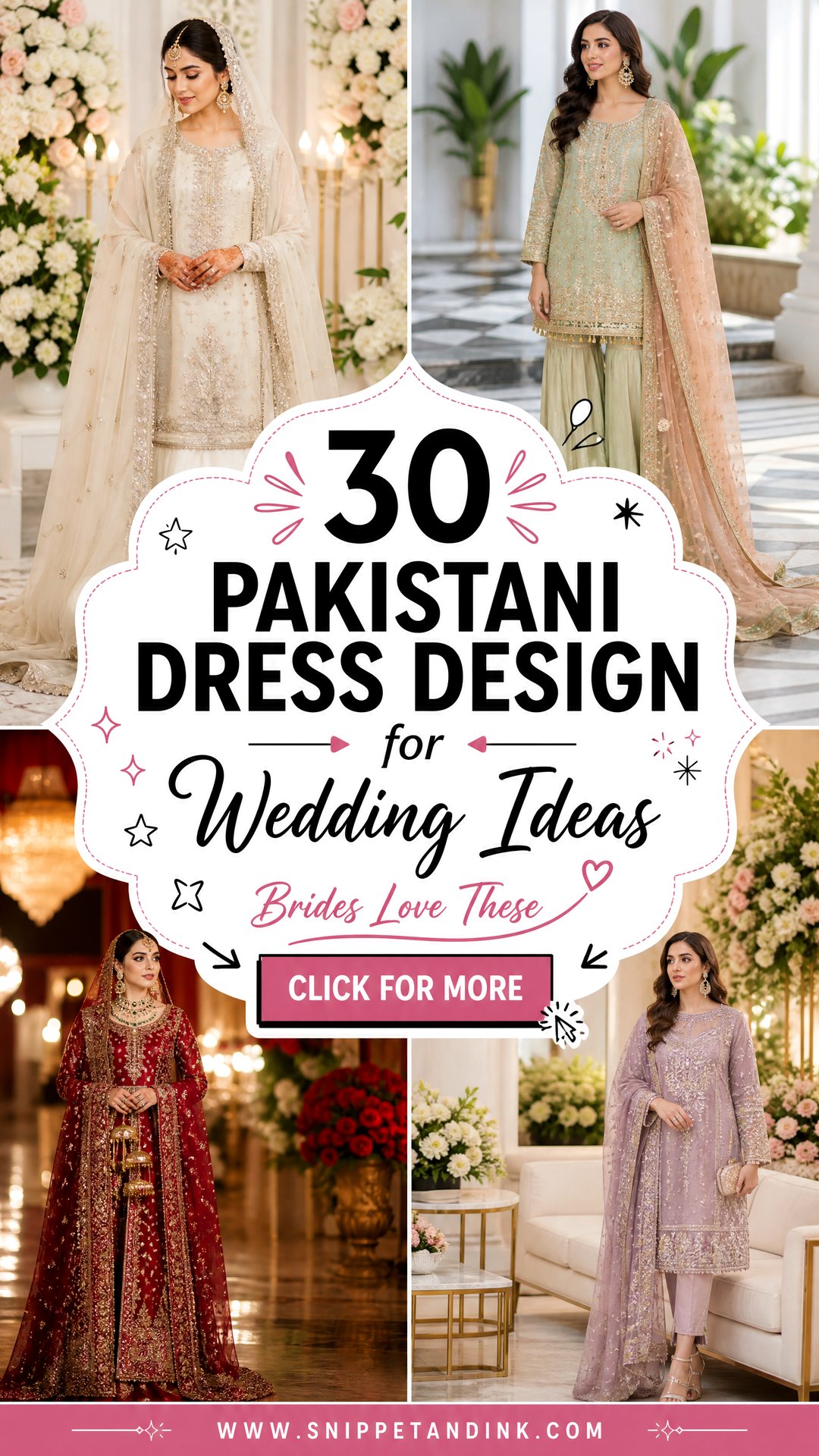
How Much Embroidery Suits the Bride’s Sister Versus a Guest
The same gharara or Anarkali can be right for a bride, a sister or a guest. What changes is the weight of the work and the color. When I dress a whole family, I set the levels before anyone shops, so nobody accidentally outshines the bride in photographs.
- Bride: the heaviest work of the day, all-over embroidery, the brightest bridal colors and the fullest dupatta.
- Sisters and close cousins: borders and sleeves worked, body lighter. Coordinated colors that sit near the bride in photos without matching her.
- Friends and family guests: border work or tone-on-tone embroidery, jewel tones or pastels, and no bridal red at the Barat.
- Everyone at the Mehndi: lighter fabrics and brighter colors, because this is the night for dancing.
For mothers and older relatives, comfort usually matters more than trend. A long shirt with straight trousers and a lighter dupatta lets them sit through hours of rasams without fuss, and it still looks formal when the work is concentrated at the neckline and sleeves.
If the family has planned a theme color for one event, ask whether it’s for everyone or just the bridal party before you buy fabric.
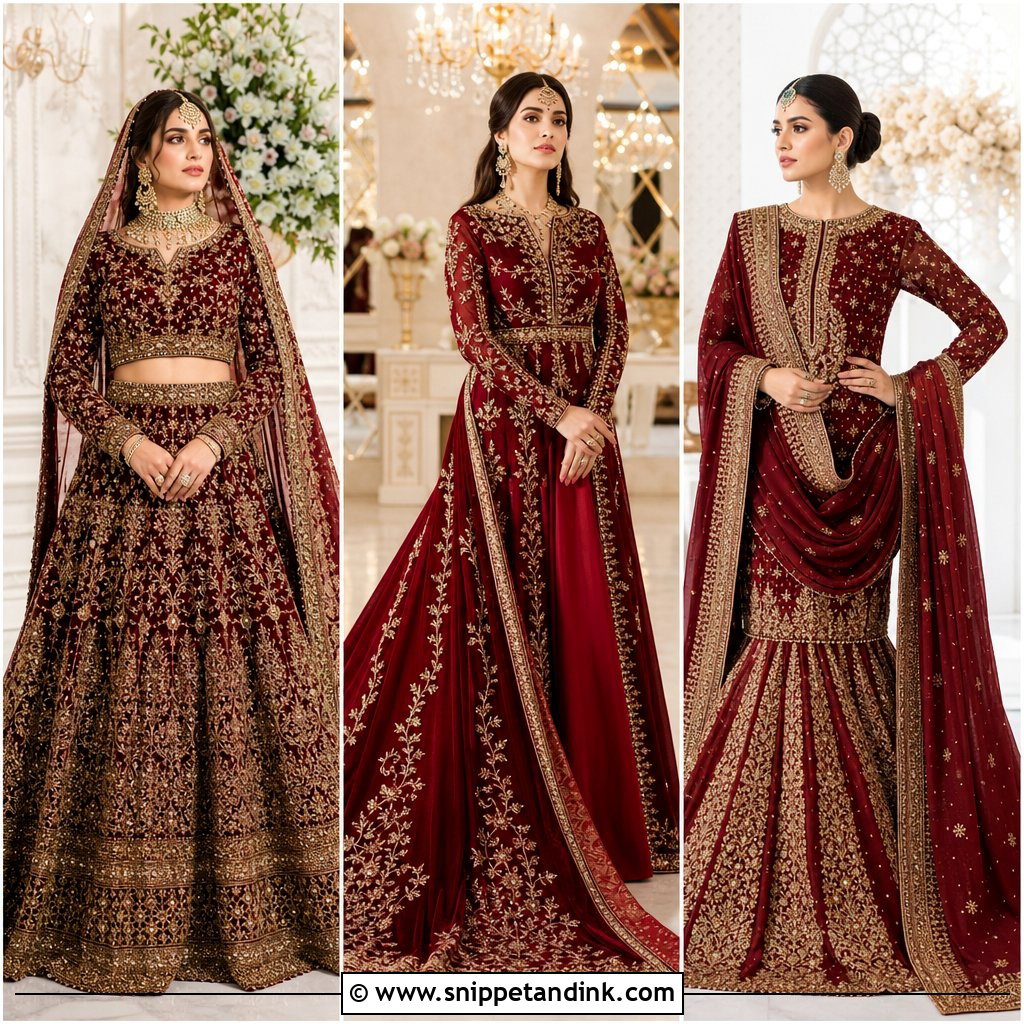
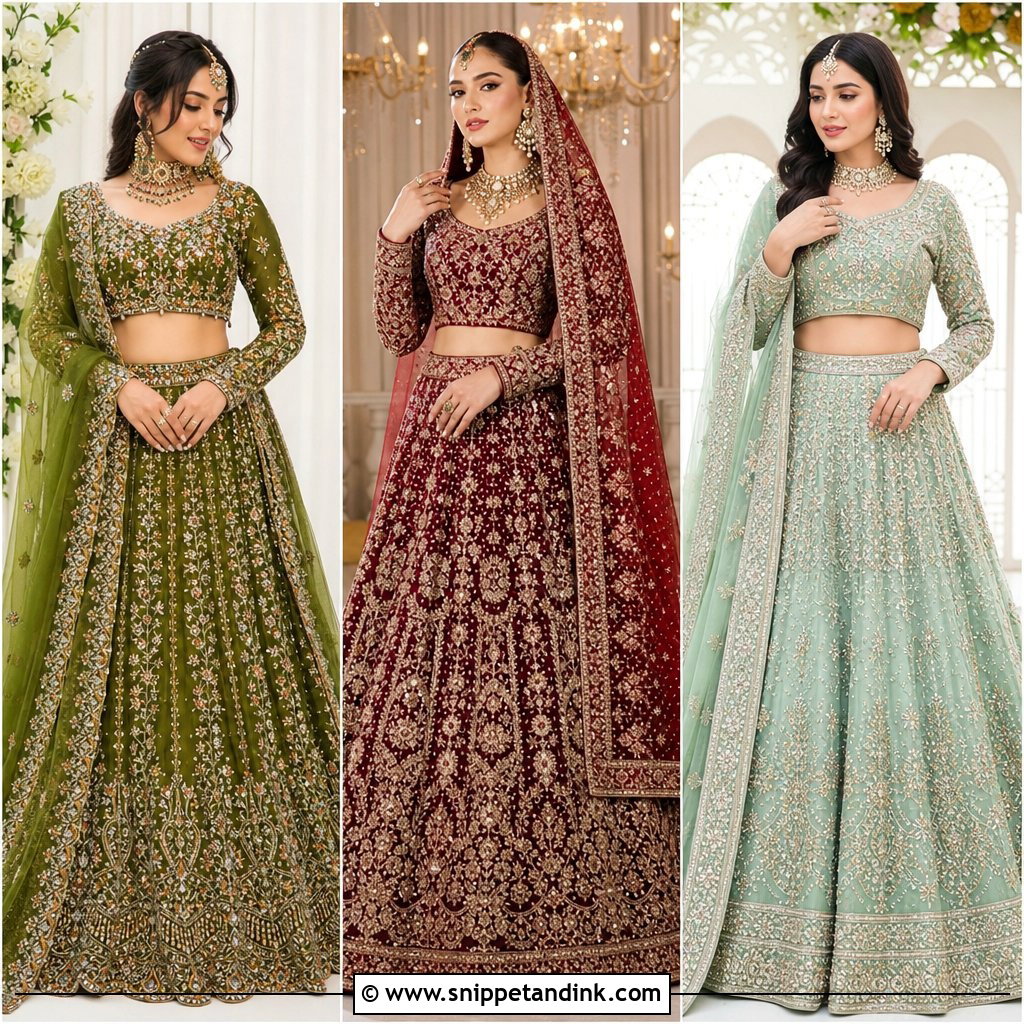
1. Red Pakistani Bridal Lehenga
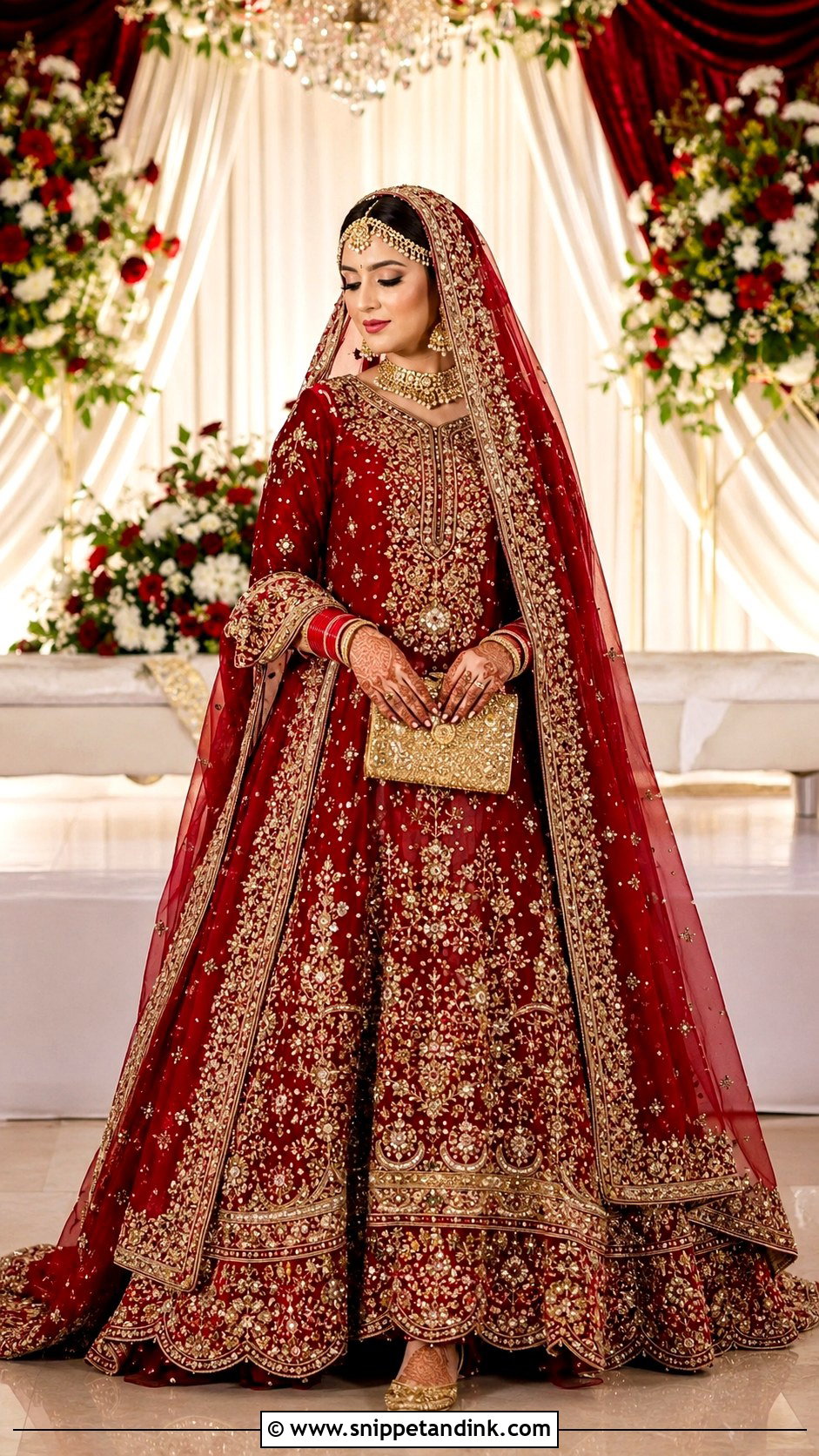
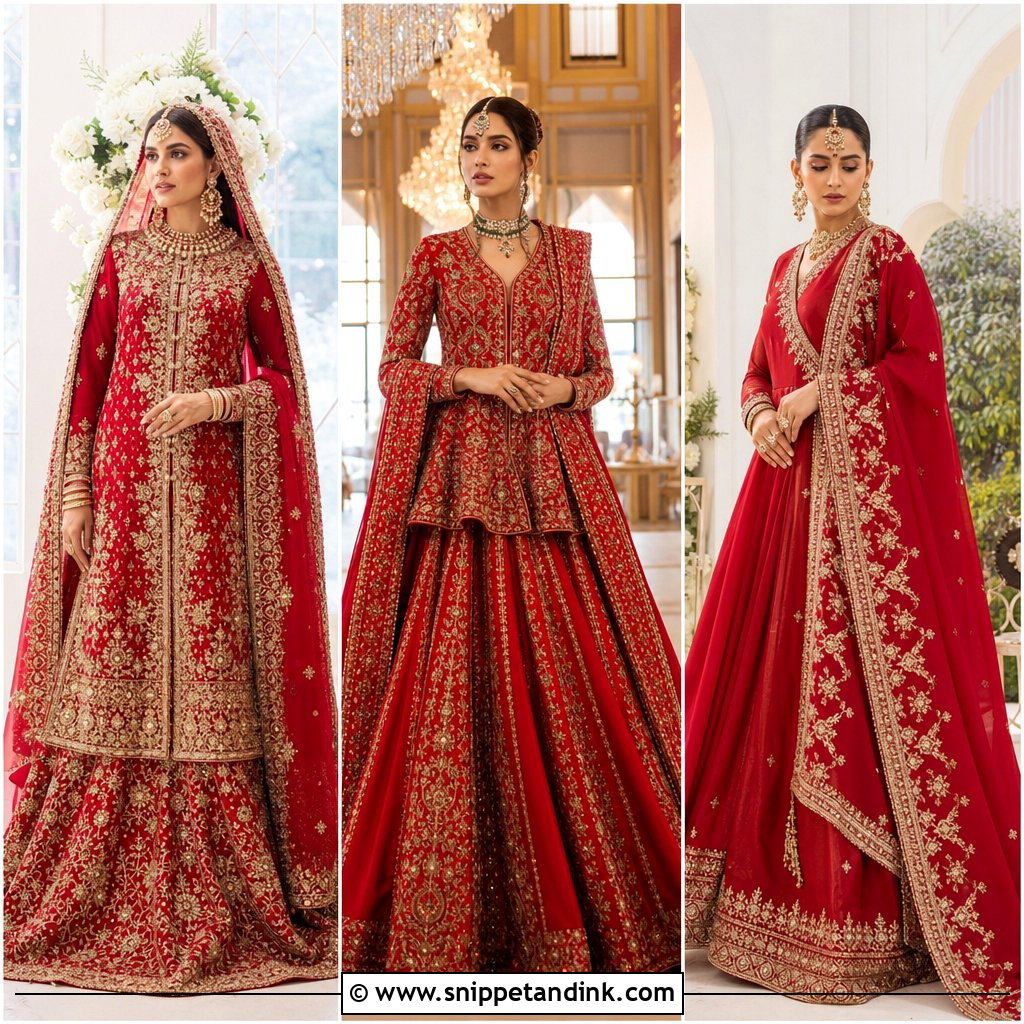
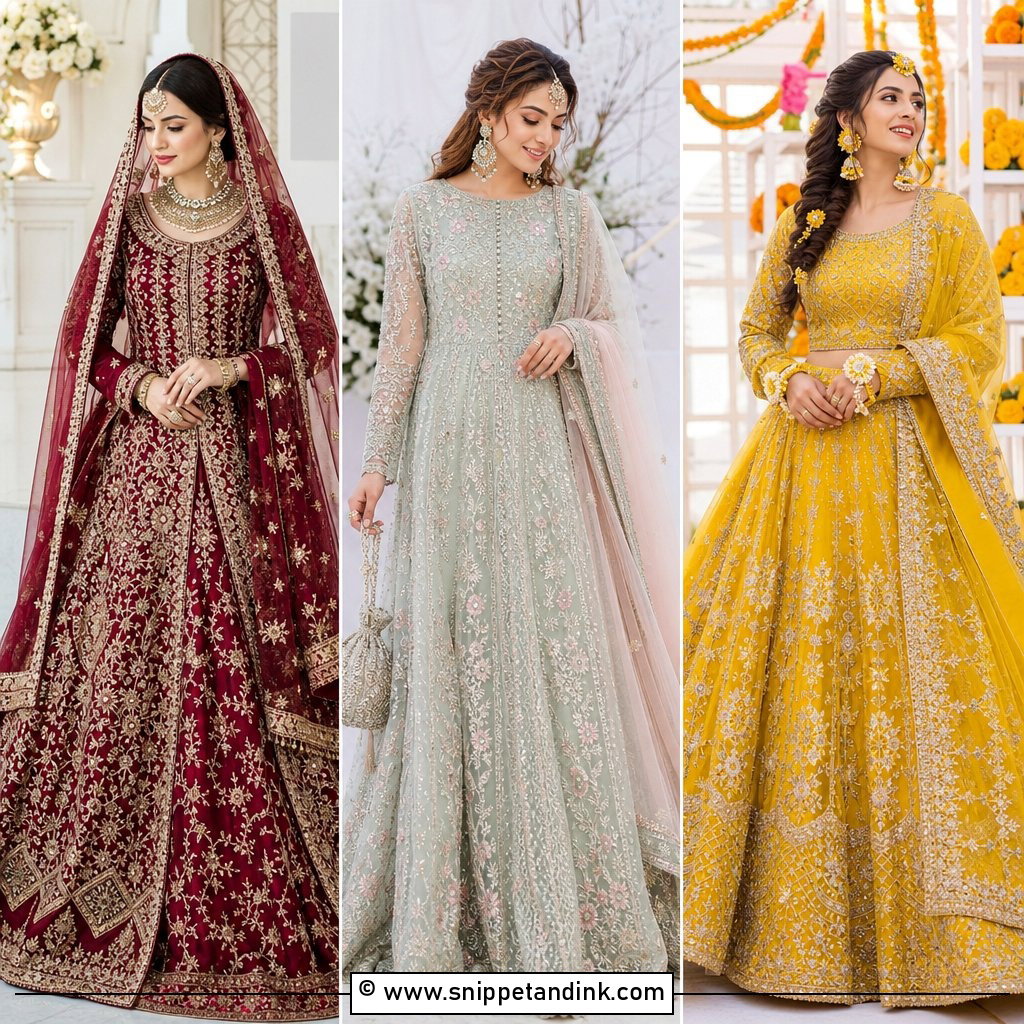
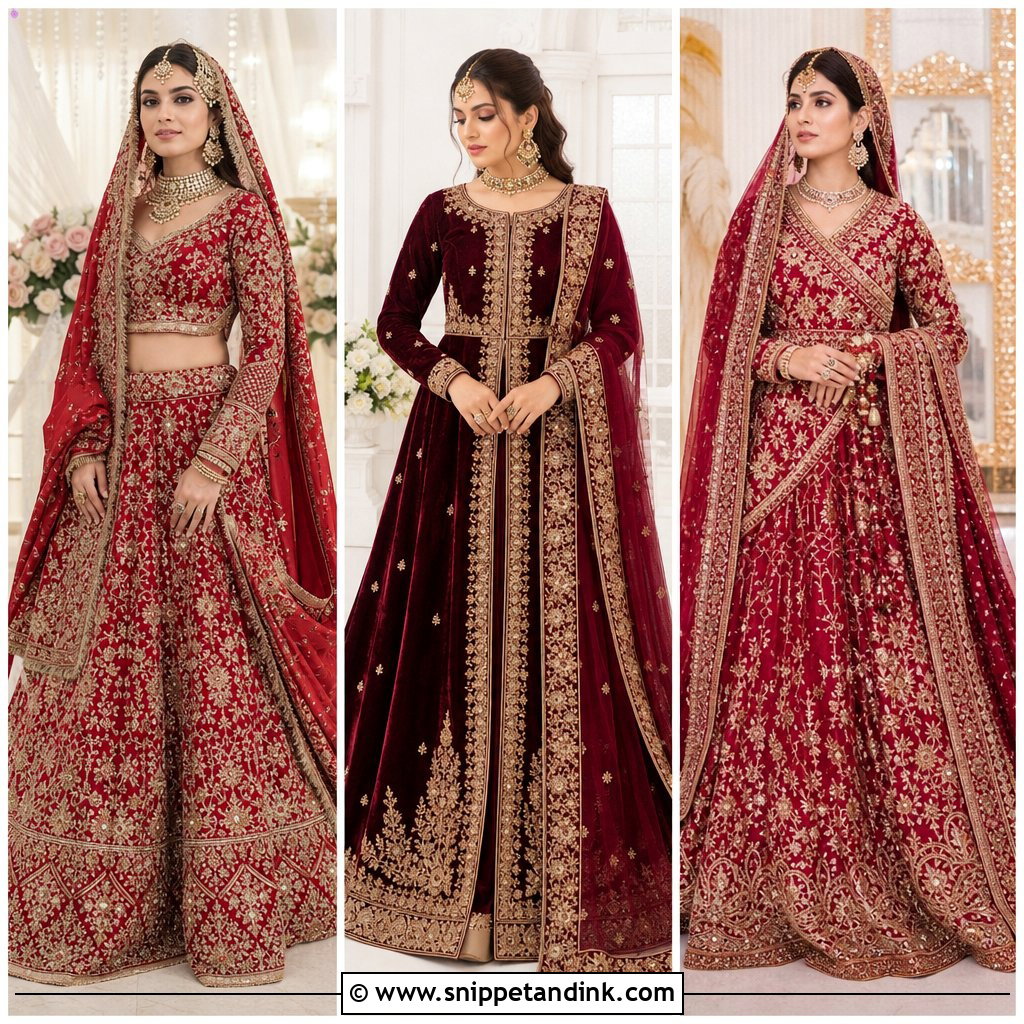
Crimson or deep red with gold zardozi, dabka, sequins and threadwork is the classic Barat ceremony lehenga, and for most families nothing else will do. A long embroidered shirt reads more modest; a structured choli reads younger and more modern. The dupatta border frames the face in every photo, so I’d look at the border before the skirt when comparing designs. Drape it over the head and one shoulder, then add a matha patti, jhumkas, bangles, khussa and a gold clutch.
2. Ivory Pakistani Nikah Dress
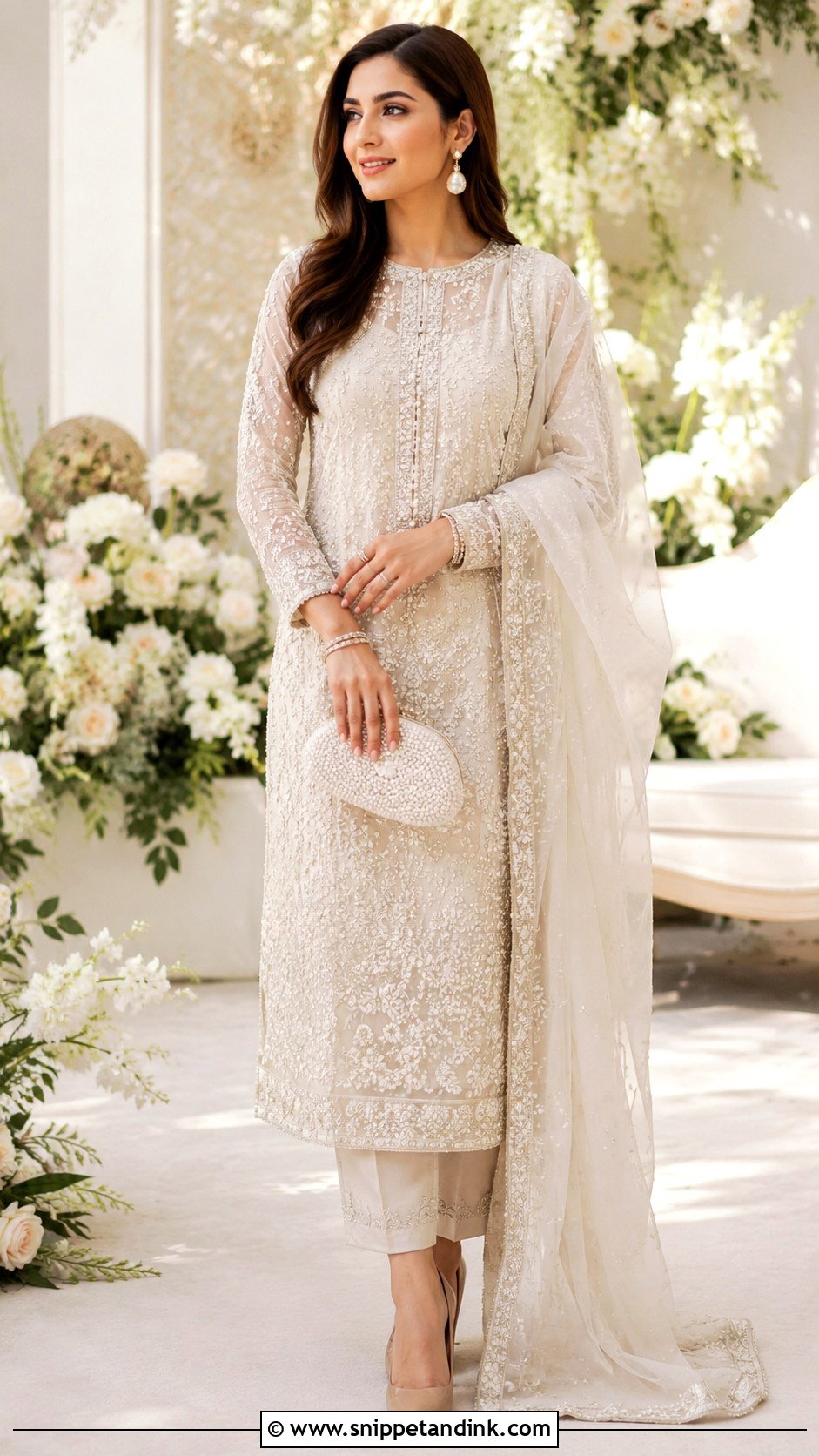
Ivory is quiet without being plain, and that suits the Nikah, which many families treat as the most sacred part of the wedding. A long kameez with silver, pearl or champagne embroidery works with straight trousers, a farshi sharara or a light lehenga. An organza or net dupatta with scalloped edges softens it for a daytime ceremony. Ivory can look grey under fluorescent hall lighting, so I’d hold the fabric under similar light before ordering. Pearls, soft bangles, nude heels and a small potli bag finish it, for a bride or a close relative.
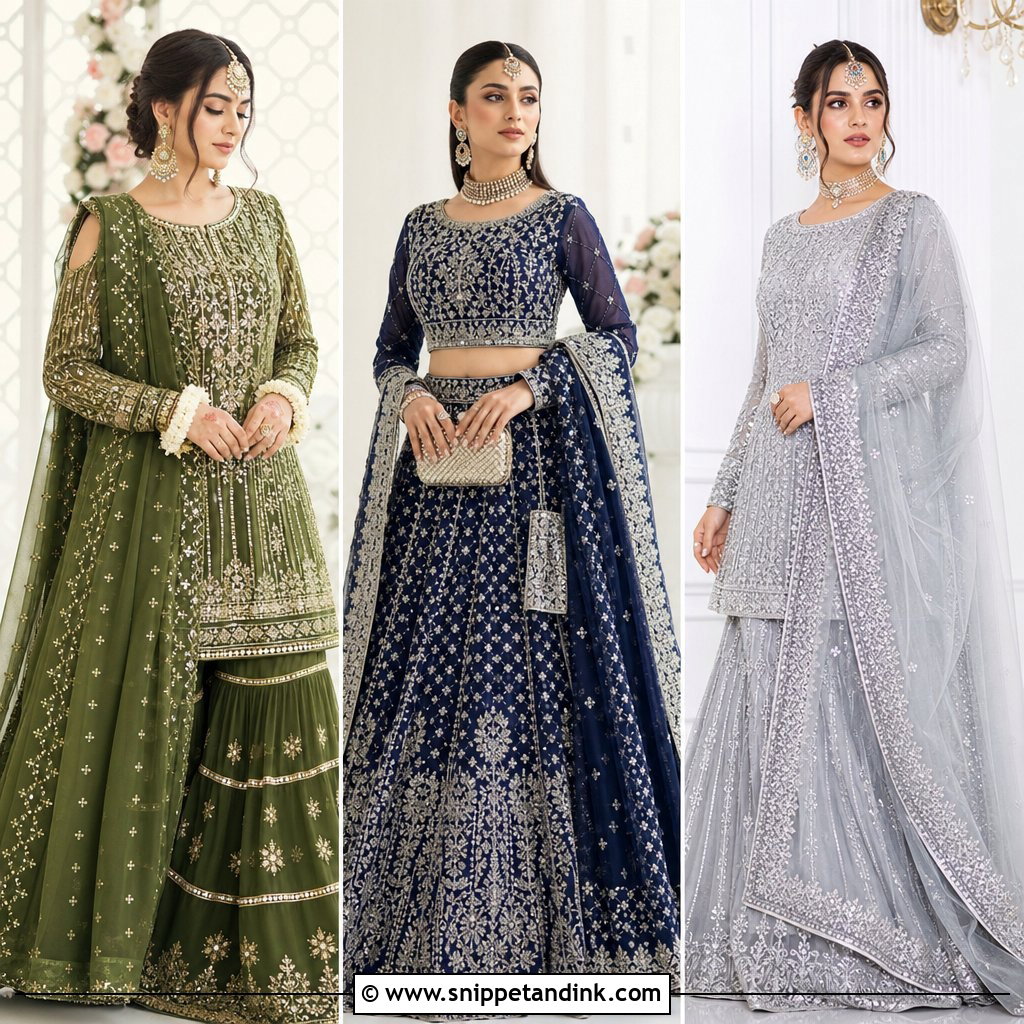
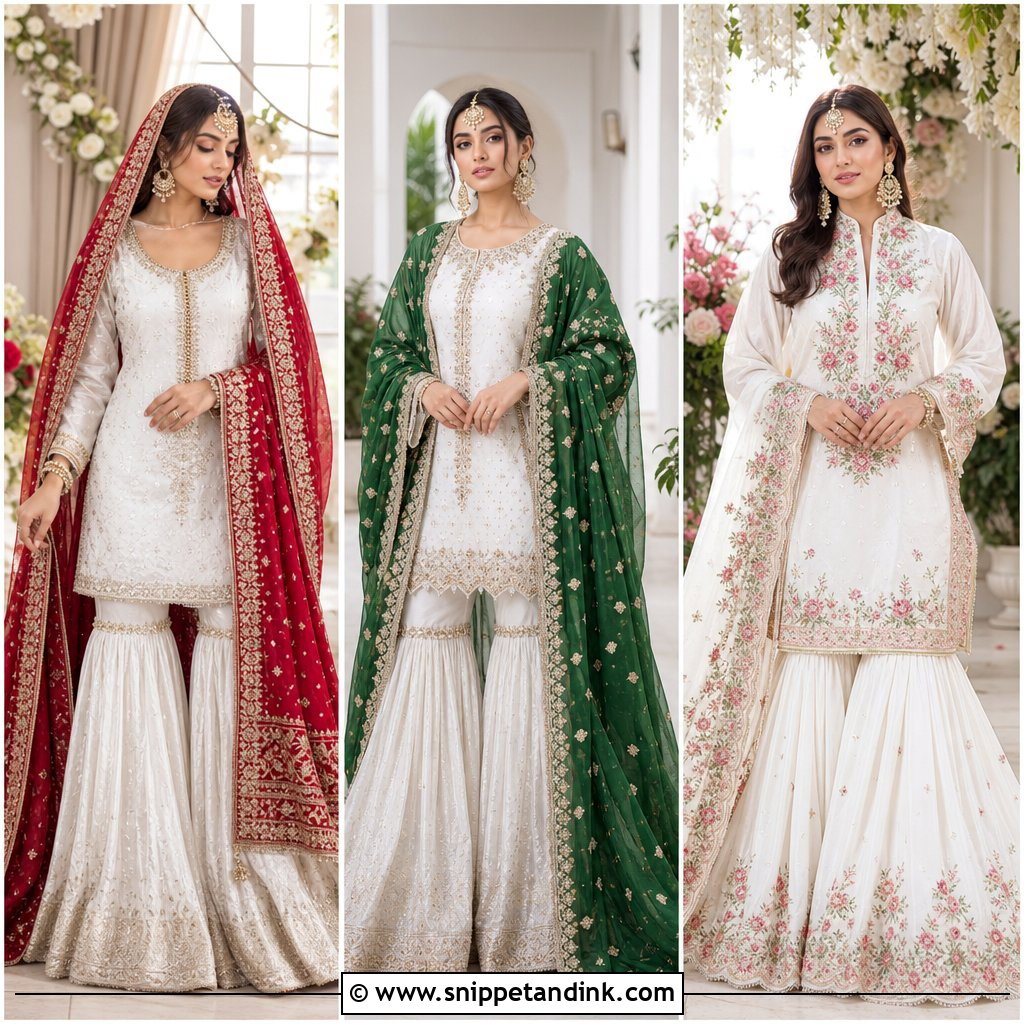
3. Pakistani Gharara Dress
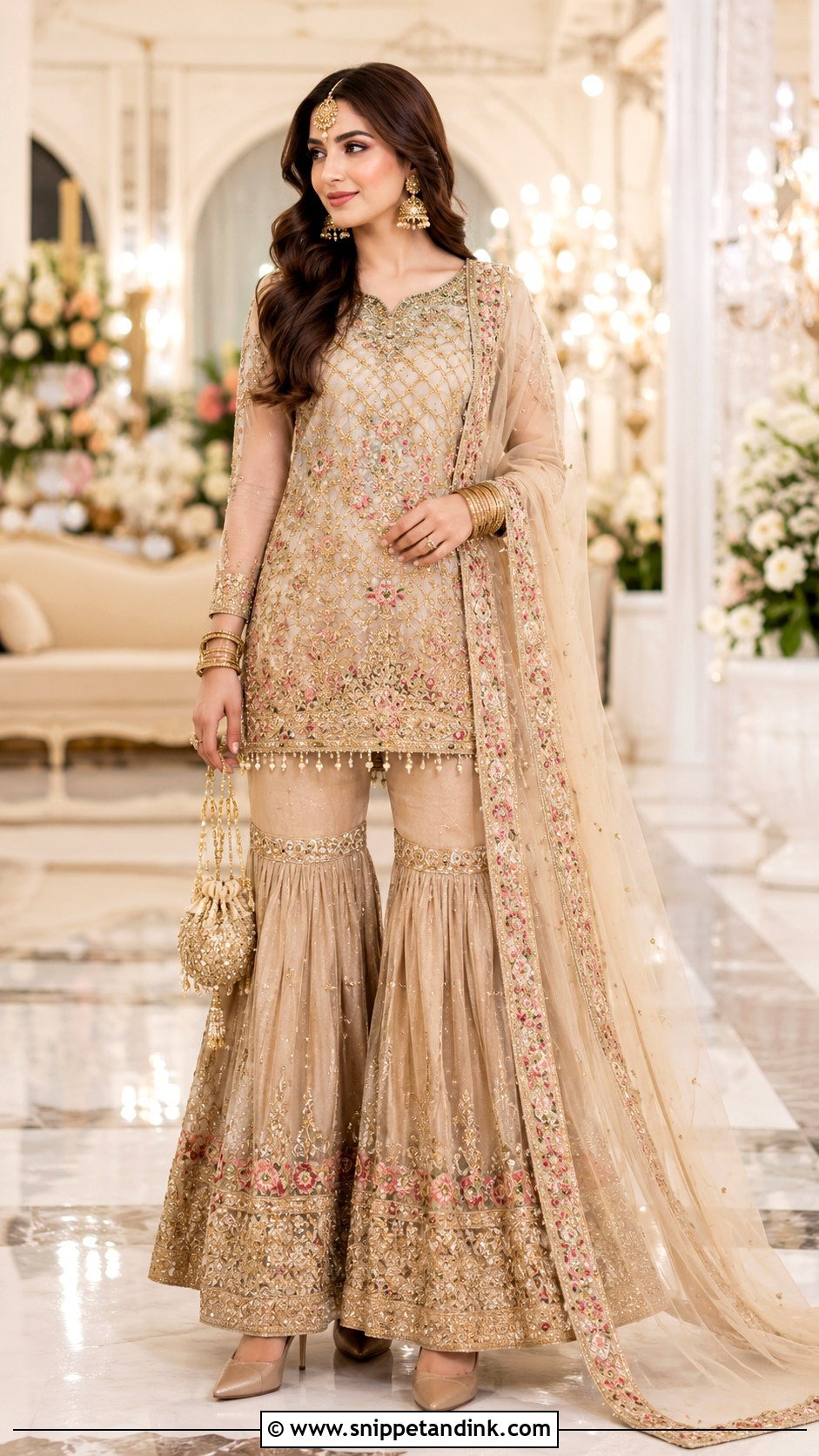
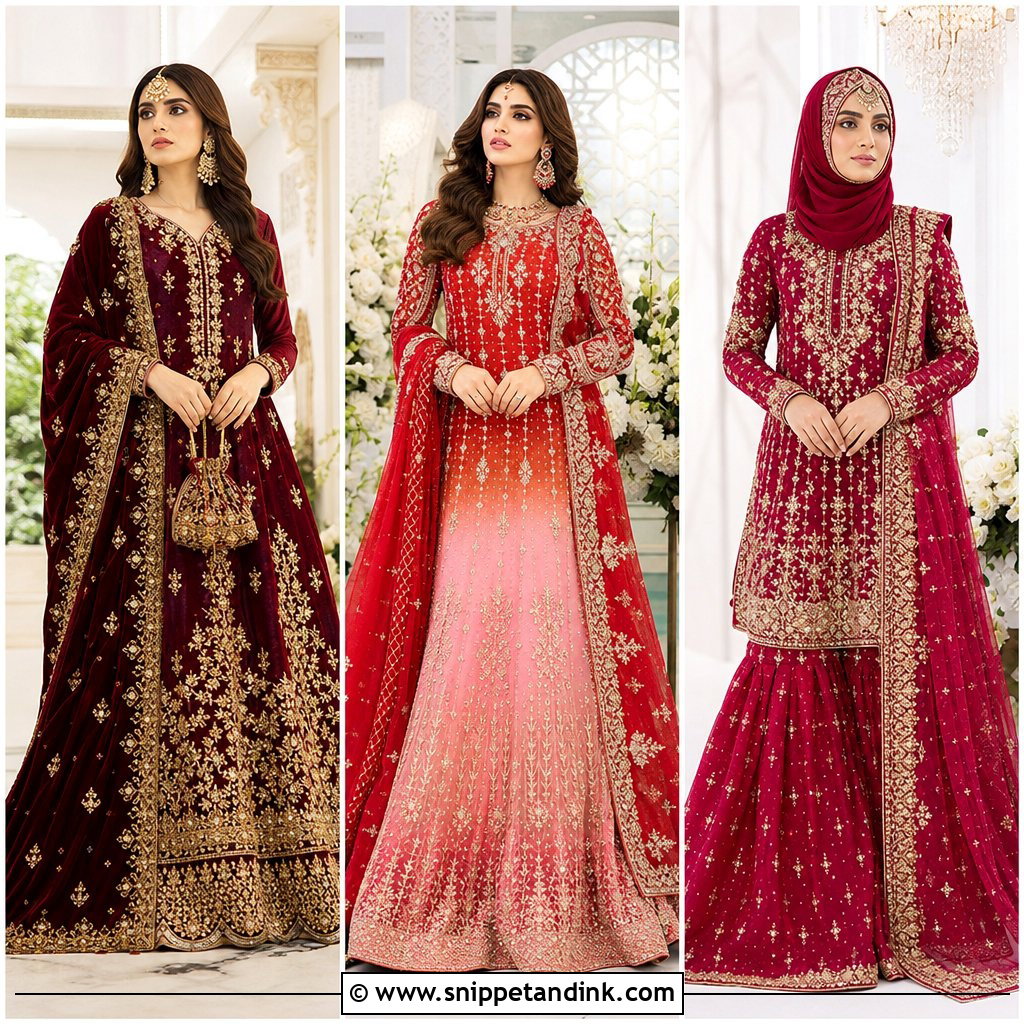
The gharara’s shape comes from the joint at the knee, usually hidden under a band of gota or embroidery, with the flare falling below it. That joint is what separates it from a sharara. Pair a short embroidered kurti with a heavily bordered gharara for balance. Jamawar, silk, tissue and organza look formal. I’d always walk in a gharara at the trial, since the knee band restricts stride more than people expect. Jhumkas, a passa and pointed heels suit Nikah, Mehndi and family events.
4. Pakistani Sharara Suit
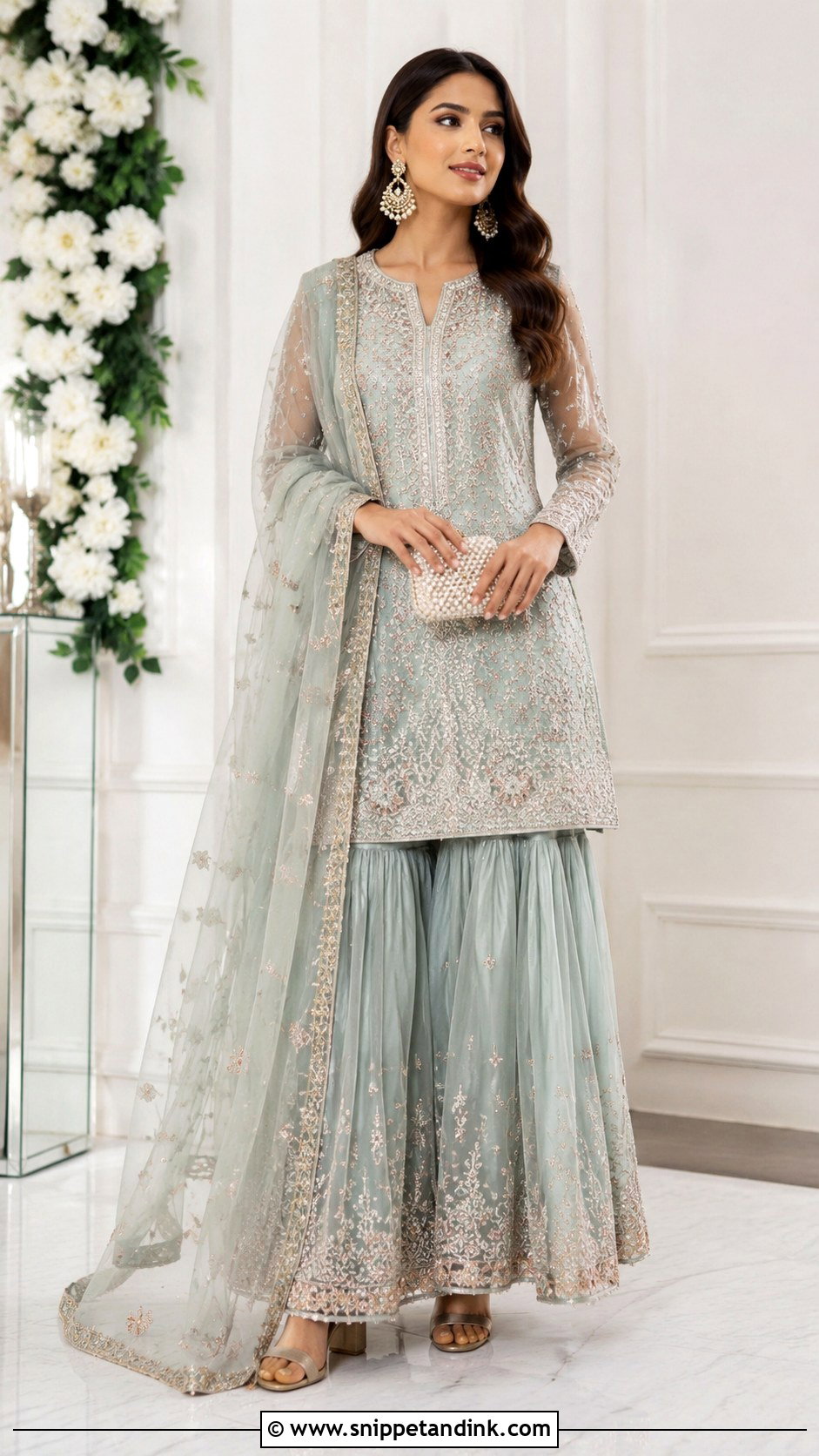
Shararas flare from the hip rather than the knee, which makes them easier to walk, sit and dance in. That’s why I suggest them to sisters and cousins who’ll be on their feet hosting all night. For a formal look, keep embroidery to the neckline, sleeves, hem and dupatta border rather than all over. Pastel pink, sage, mustard, teal and maroon all work depending on the event. Block heels, statement earrings and a beaded clutch suit it.
5. Pakistani Pishwas Dress
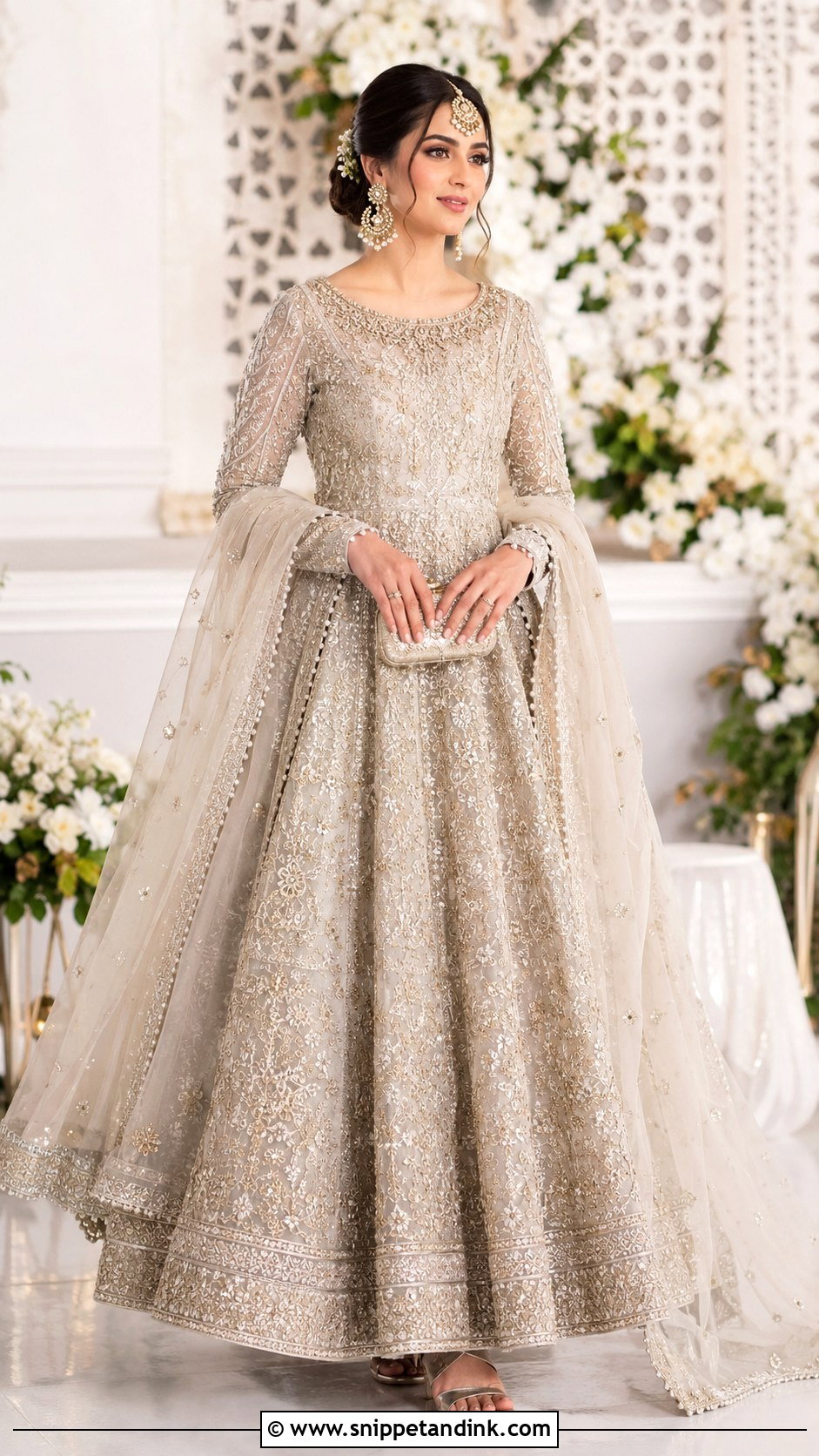
Chiffon, net, organza or silk with embroidered panels and a worked border give a pishwas its swing. The panel count matters: more kalis means more flare when you turn, which is what you see in candid photos. Churidar sleeves, a dupatta draped over both arms and heels for height under the flare finish it. Kundan earrings and a delicate tikka suit Nikah, Walima and daytime functions. Because the flare falls from the waist, it flatters most body types.
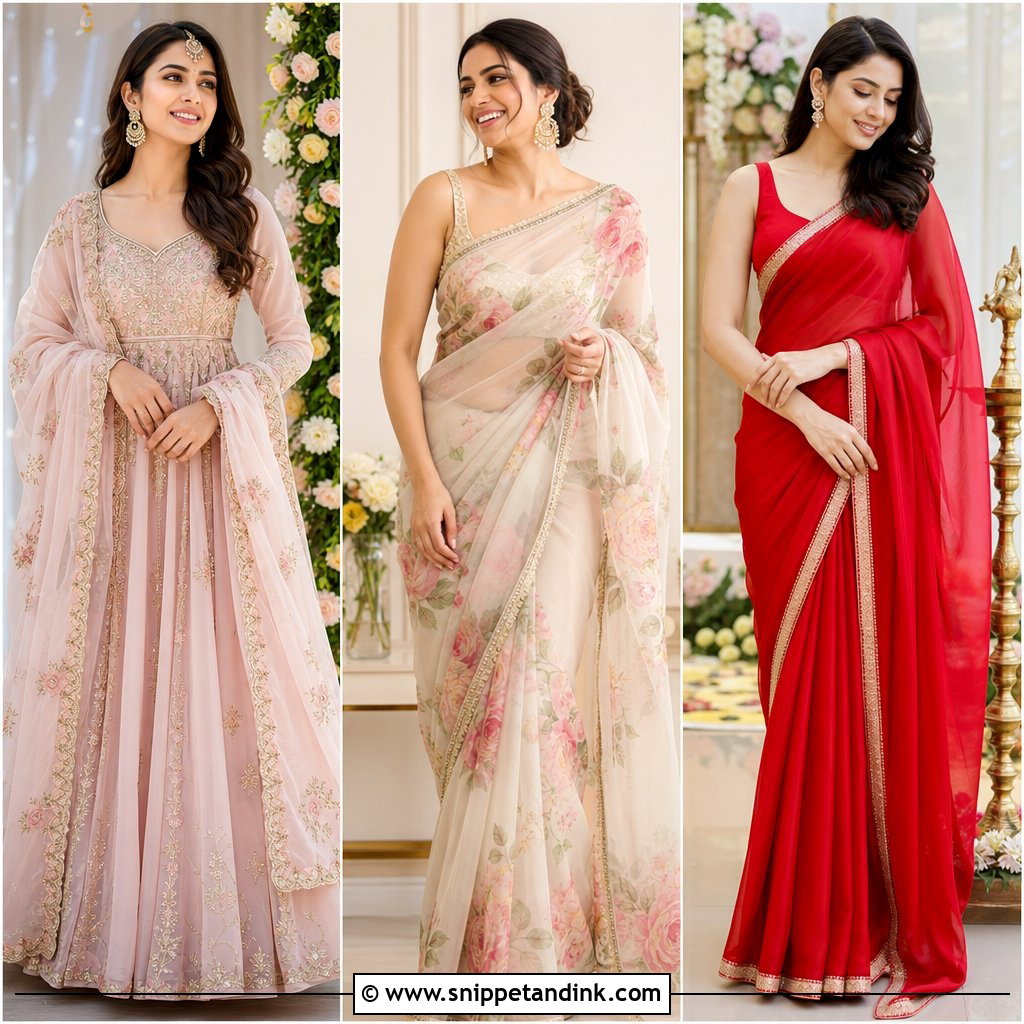
6. Pakistani Anarkali Dress
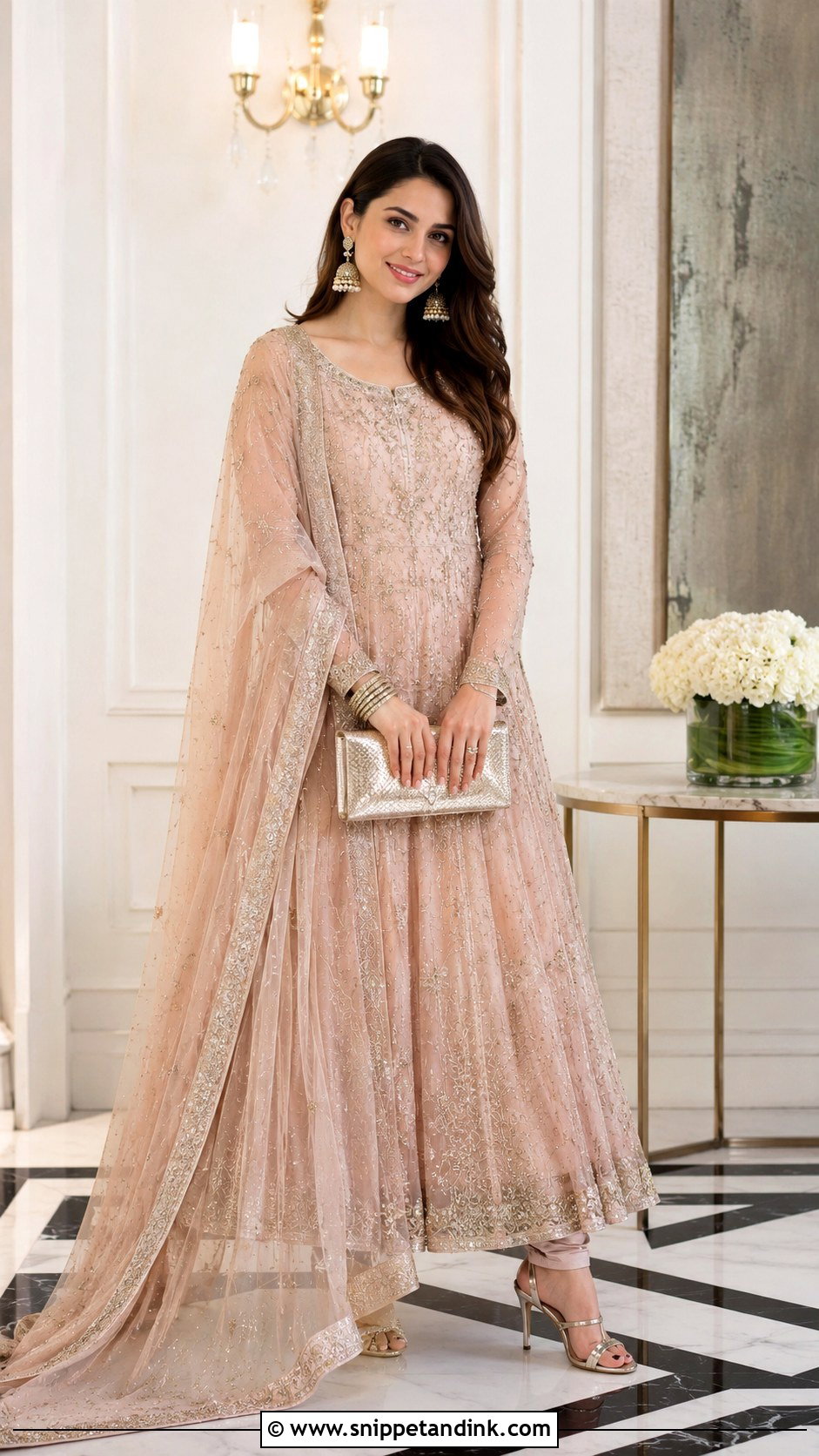
An Anarkali is the outfit I’d hand a relative who wants elegance without the weight of a lehenga. It’s one piece, flares from the bust, and works with churidar or slim trousers. Look for embroidered panels, a decorated neckline and a worked hem. A sheer dupatta with a border keeps it soft. Blush, mint, powder blue and champagne suit a Nikah or Walima; deeper colors suit evenings. Have the churidar cut long enough to bunch at the ankle, which is the traditional look and stops it riding up when you sit.
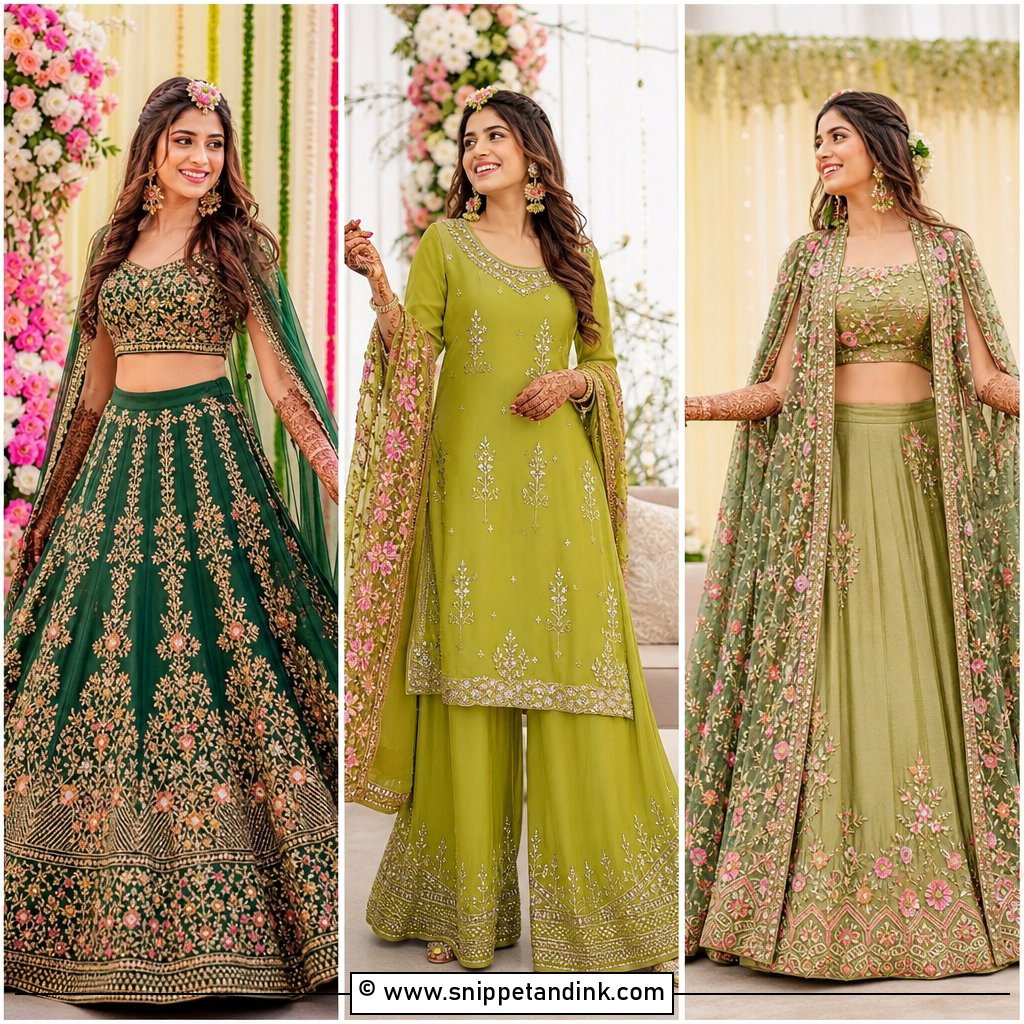
7. Pakistani Lehenga Choli
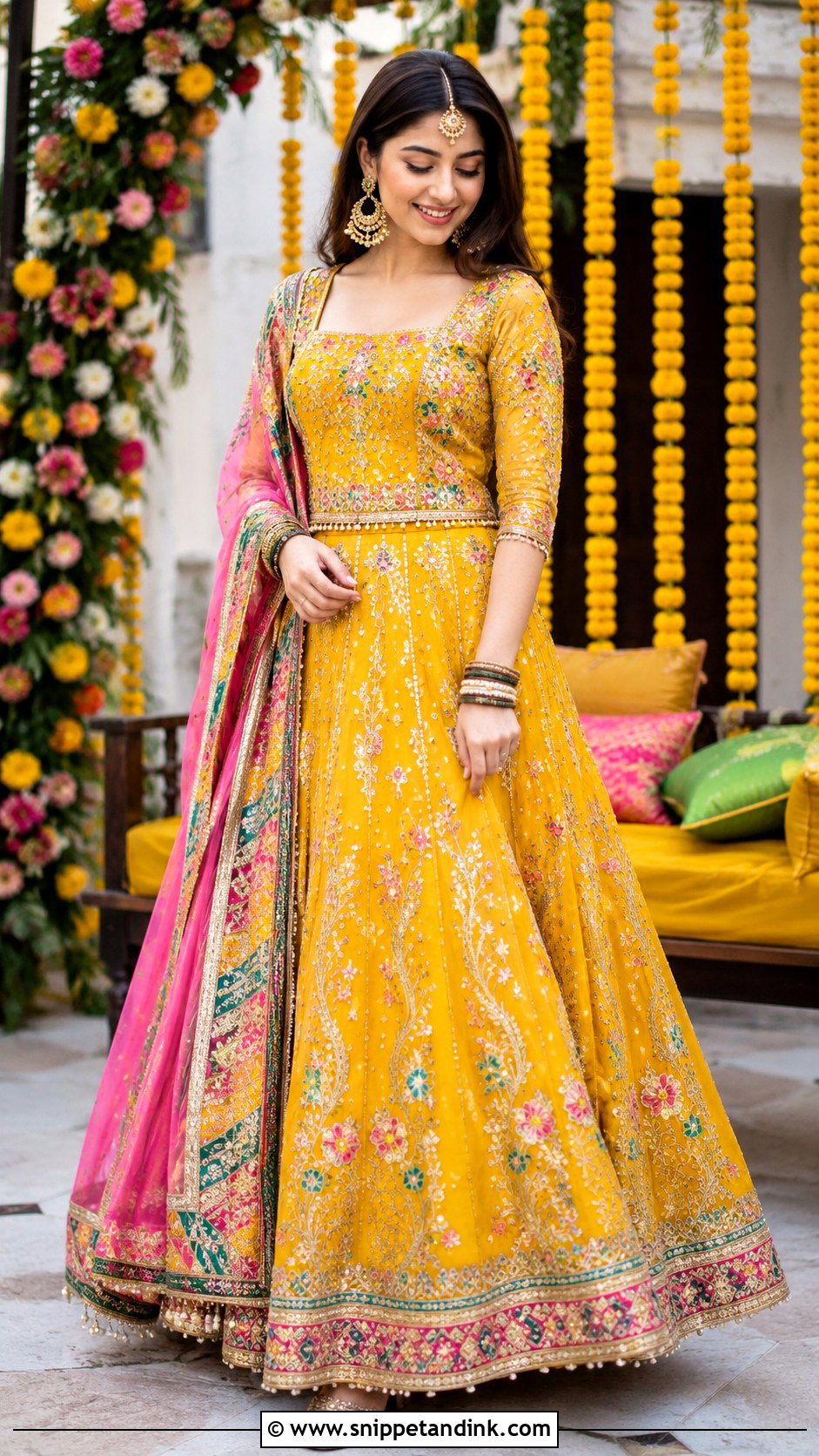
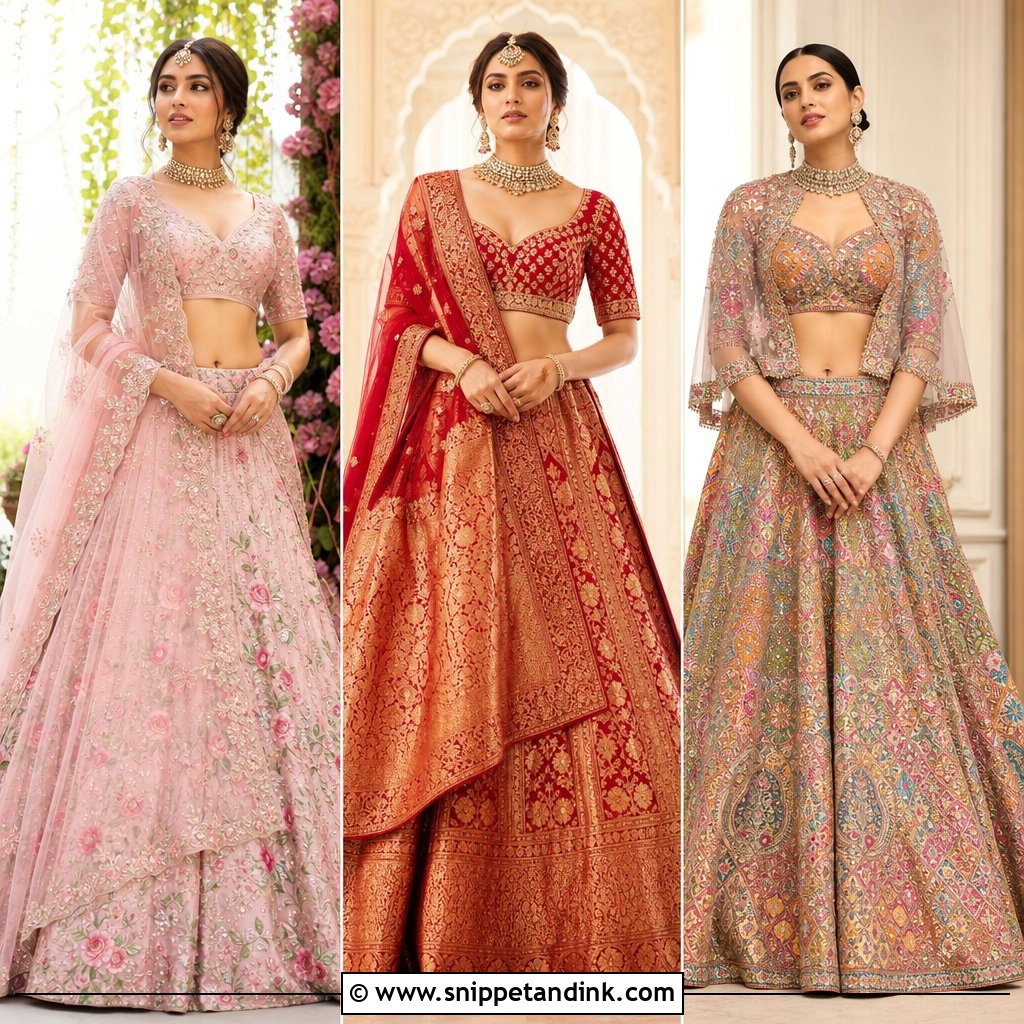
A Pakistani take on the lehenga choli usually means a longer choli, a peplum or an embroidered blouse with a modest neckline. The skirt can be flared, paneled or lightly layered. Yellow, green, orange and fuchsia suit Mehndi; red, maroon, gold and deep pink suit Barat. What makes it look finished is connection: the blouse, skirt and dupatta should share a border, embroidery motif or accent color. A tikka, bangles and embellished sandals complete it.
8. Pakistani Long Shirt With Lehenga
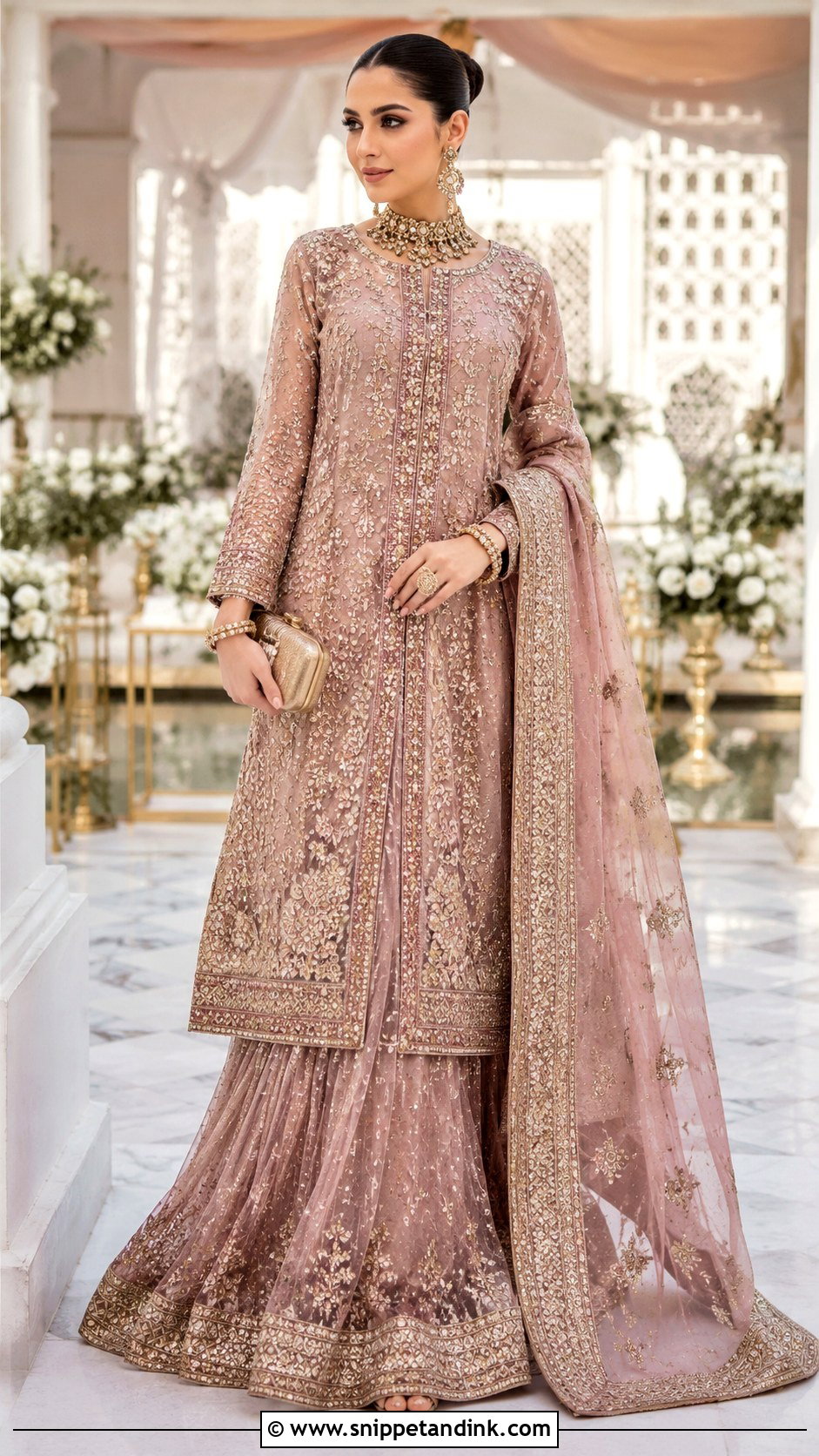
A long shirt over a lehenga is the most modest way to wear volume, and one of the most elegant. The shirt can be straight or slightly flared, with heavy work at the hem, sleeves and neck. A contrasting lehenga underneath adds interest: maroon over gold, ivory over champagne, emerald over antique gold. I’d check the shirt length against your height, because on a petite frame a very long shirt hides most of the lehenga. A wide-bordered dupatta, formal heels and kundan finish it.
9. Pakistani Short Shirt With Gharara
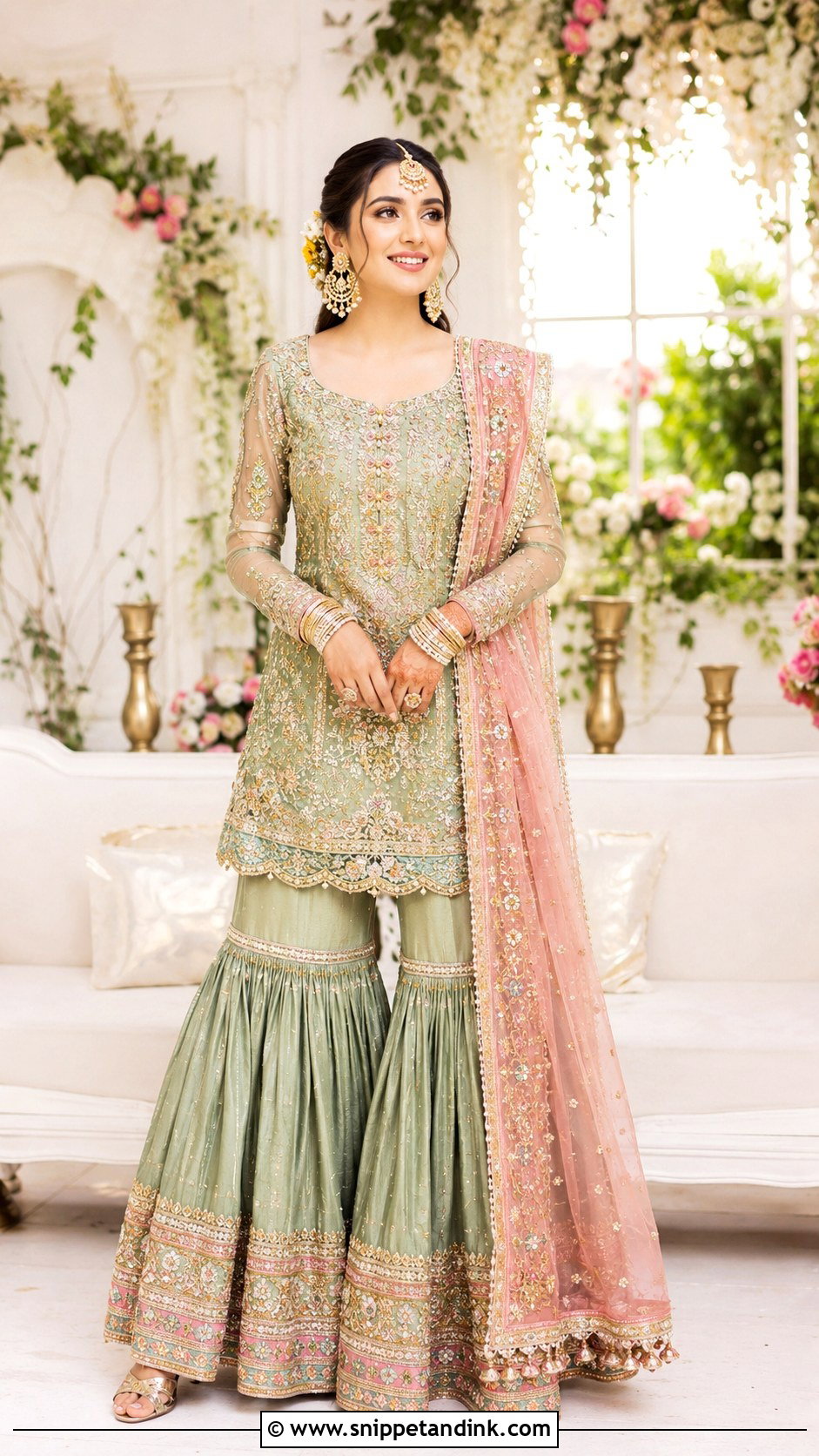
When the shirt stops at the hip, the gharara’s flare and border show fully, and the whole outfit looks more dramatic. Heavy embroidery, mirror work, gota or zardozi on the shirt suit the event’s mood: bright for Mehndi, softer ivory, peach, lilac or powder blue for Nikah and Walima. A dupatta on one shoulder or over the head, a passa, chandbalis and bangles finish it. Comfortable heels matter, since a gharara needs a steady walk.
10. Pakistani Peplum With Lehenga
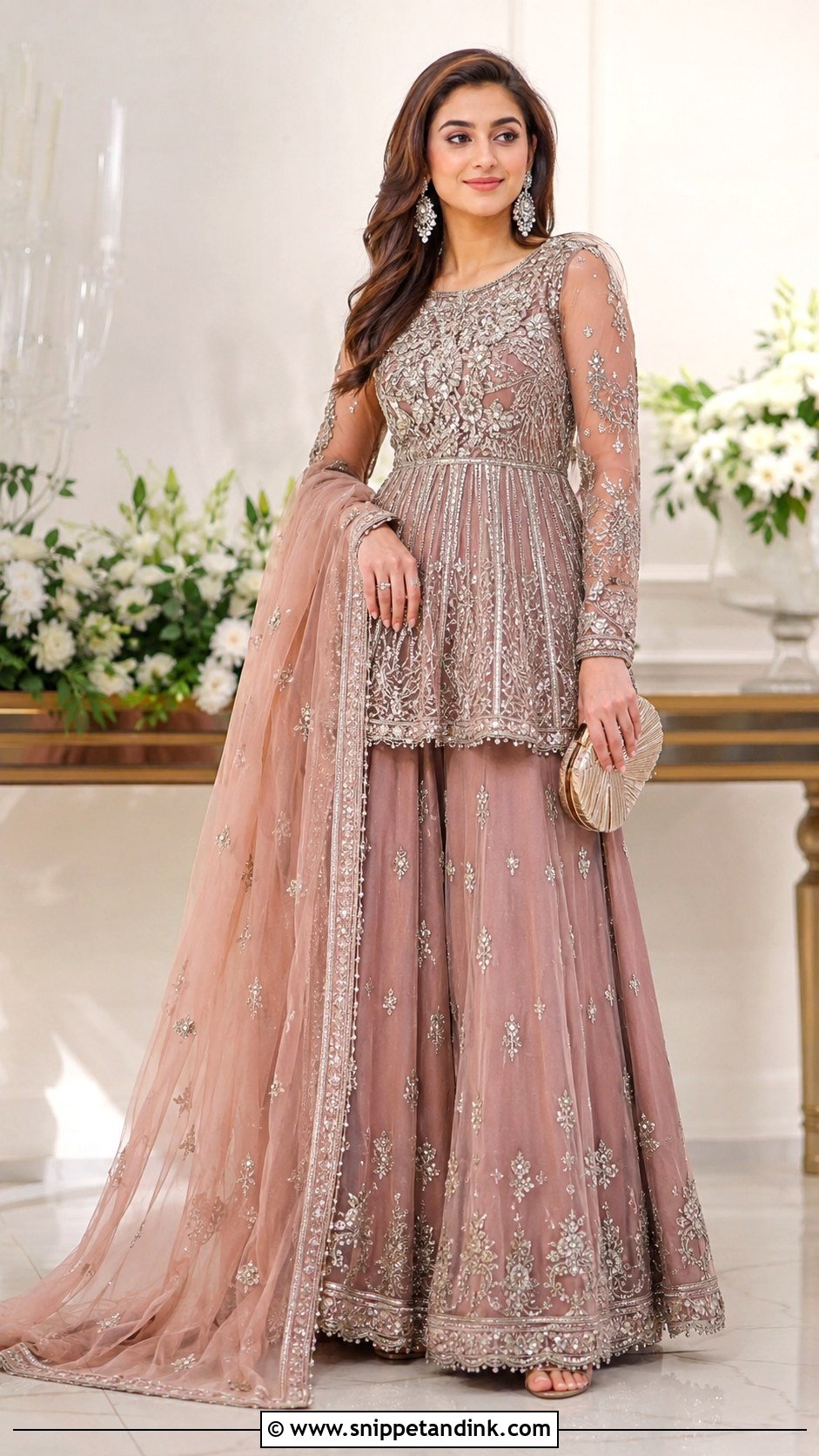
Peplums define the waist and add a little structure, which makes them a smart choice for sisters of the bride and guests who want something modern but covered. Put the embroidery on the peplum’s bodice and hem, then keep the lehenga plain or lightly worked. A net or organza dupatta makes it formal. Jewel tones and pastels both suit it. The flare should start at your natural waist; a peplum that begins lower widens the hips.
11. Pakistani Maxi Dress
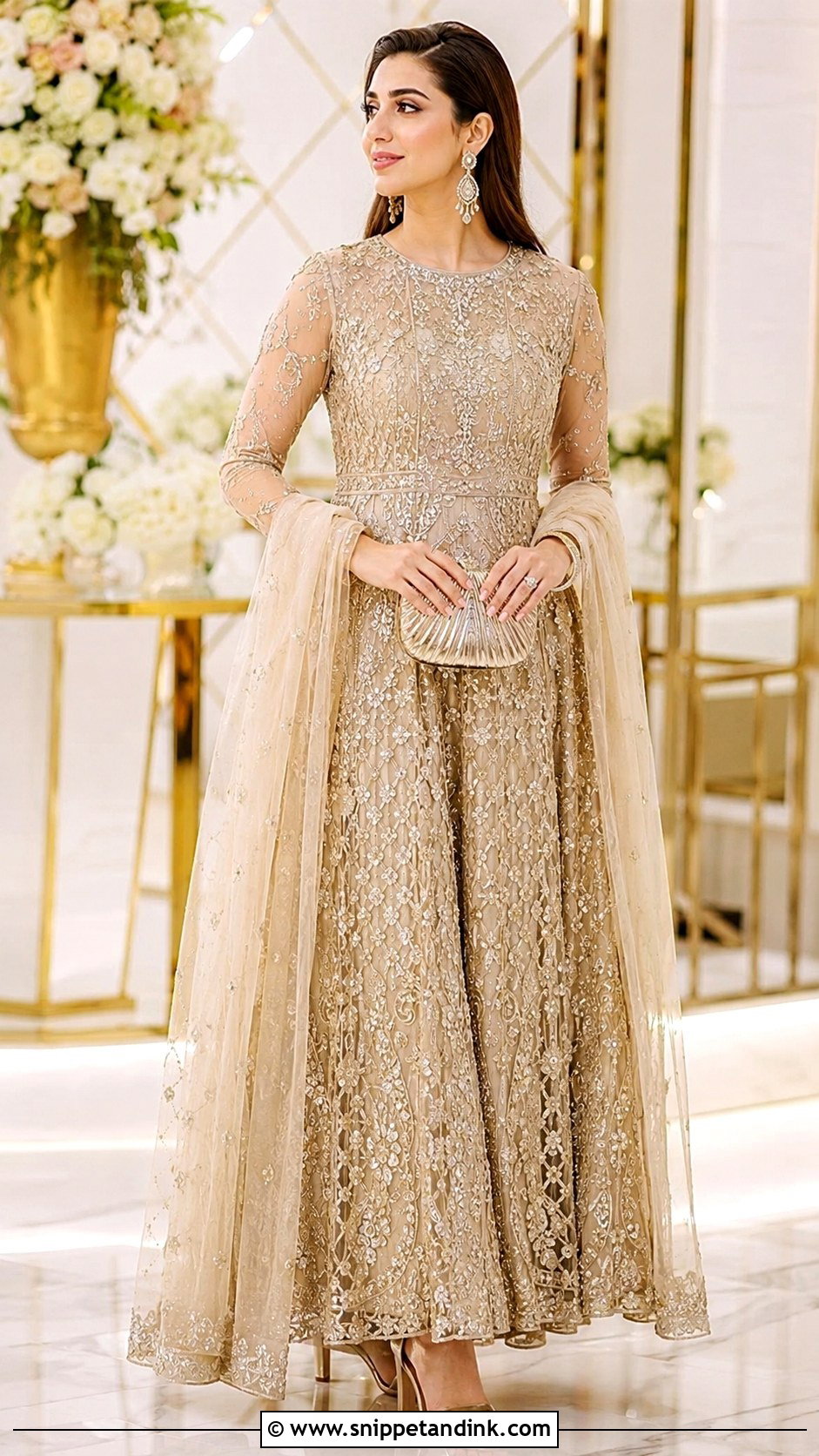
A maxi gives a gown’s length while keeping South Asian embroidery and a dupatta. For Walima, engagement or a formal reception, look for a fitted bodice, flared skirt and work across the neck, sleeves and hem. Silver, champagne, blush, lavender and ice blue feel graceful. A sheer dupatta, metallic heels and drop earrings finish it. It’s full coverage without layers, which makes it comfortable for long evenings.
12. Pakistani Saree For Wedding
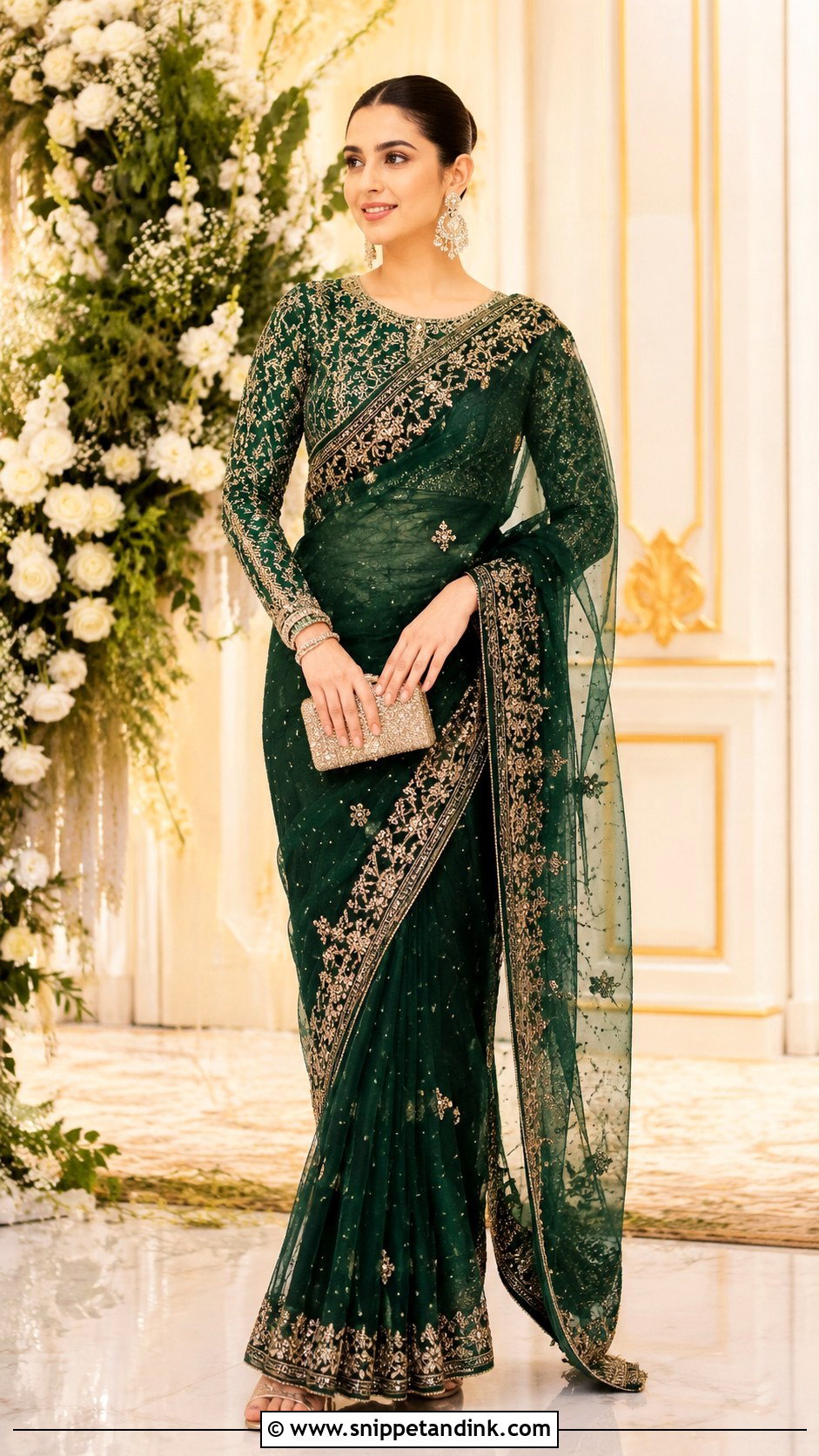
A saree with a longer, jacket or modestly cut embroidered blouse takes on a Pakistani formal feel. Chiffon, silk, organza or net with embroidery, sequins or a strong border all work. The drape is where sarees succeed or fail: pleats should sit flat and the pallu should fall cleanly over the shoulder. If you’re not used to wearing one, have a stitched or pre-pleated saree made, or book someone to drape it. Emerald, navy, gold, maroon and champagne look rich; pastels suit daytime.
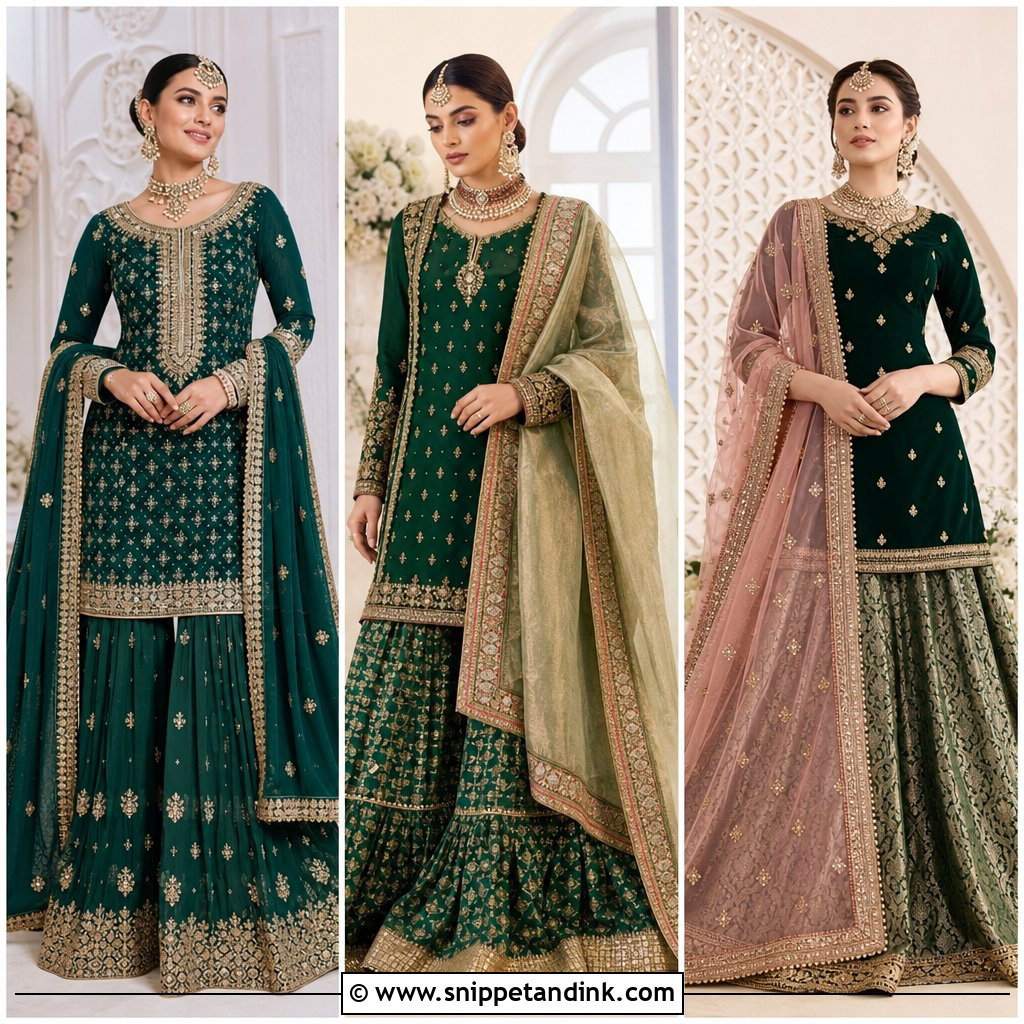
13. Pakistani Velvet Dress
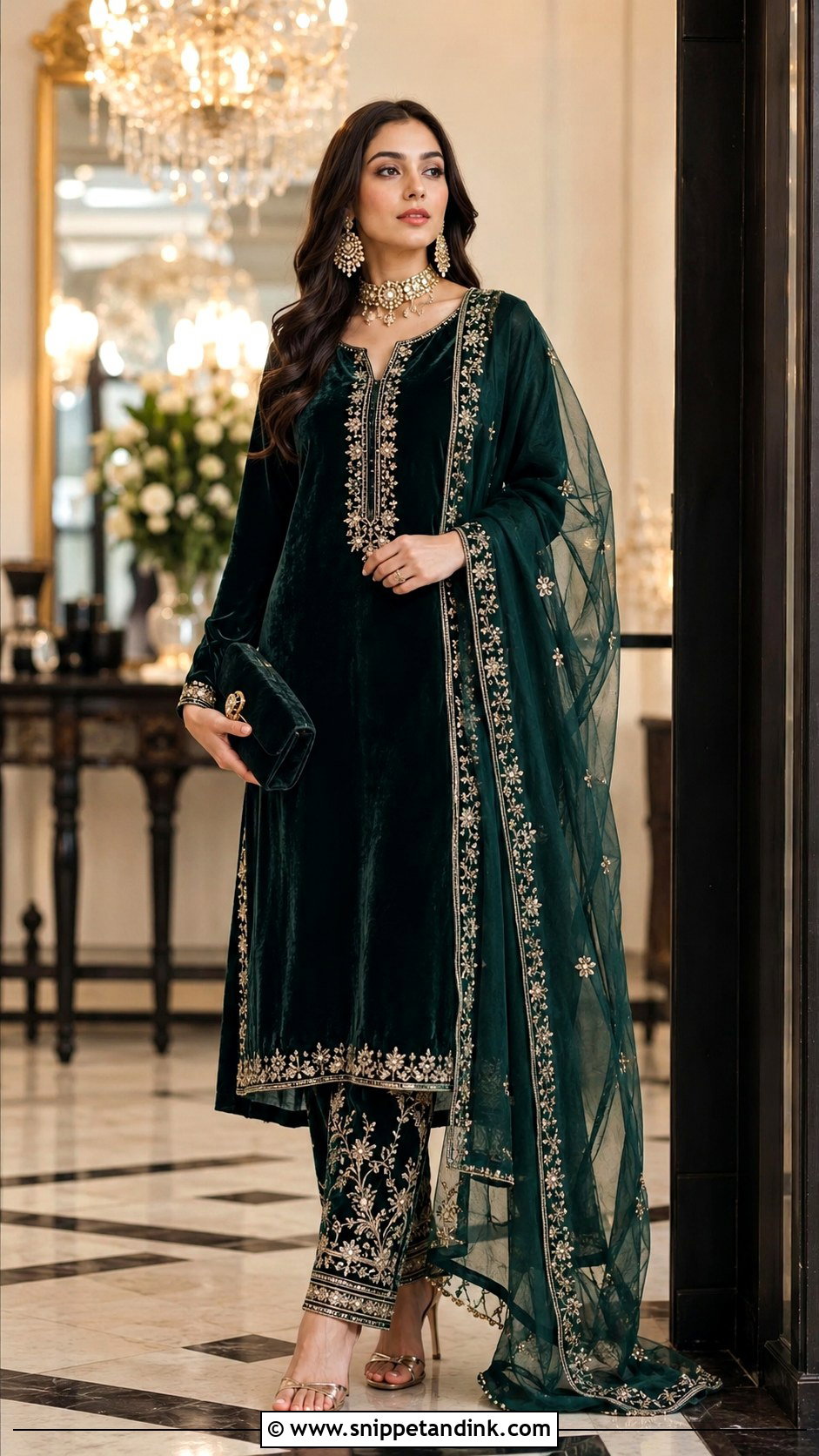
Velvet is the winter-season fabric, warm and formal under evening lighting. A velvet long shirt with embroidered trousers, or a velvet lehenga with a worked dupatta, gives a luxurious look without layers. Bottle green, maroon, navy, plum and deep teal show the pile best. Because velvet is already heavy, I’d keep embroidery to the neck, sleeves and hem. A sheer organza dupatta lightens it. Velvet crushes where it’s folded, so hang it, and steam from the inside.
14. Pakistani Organza Dress
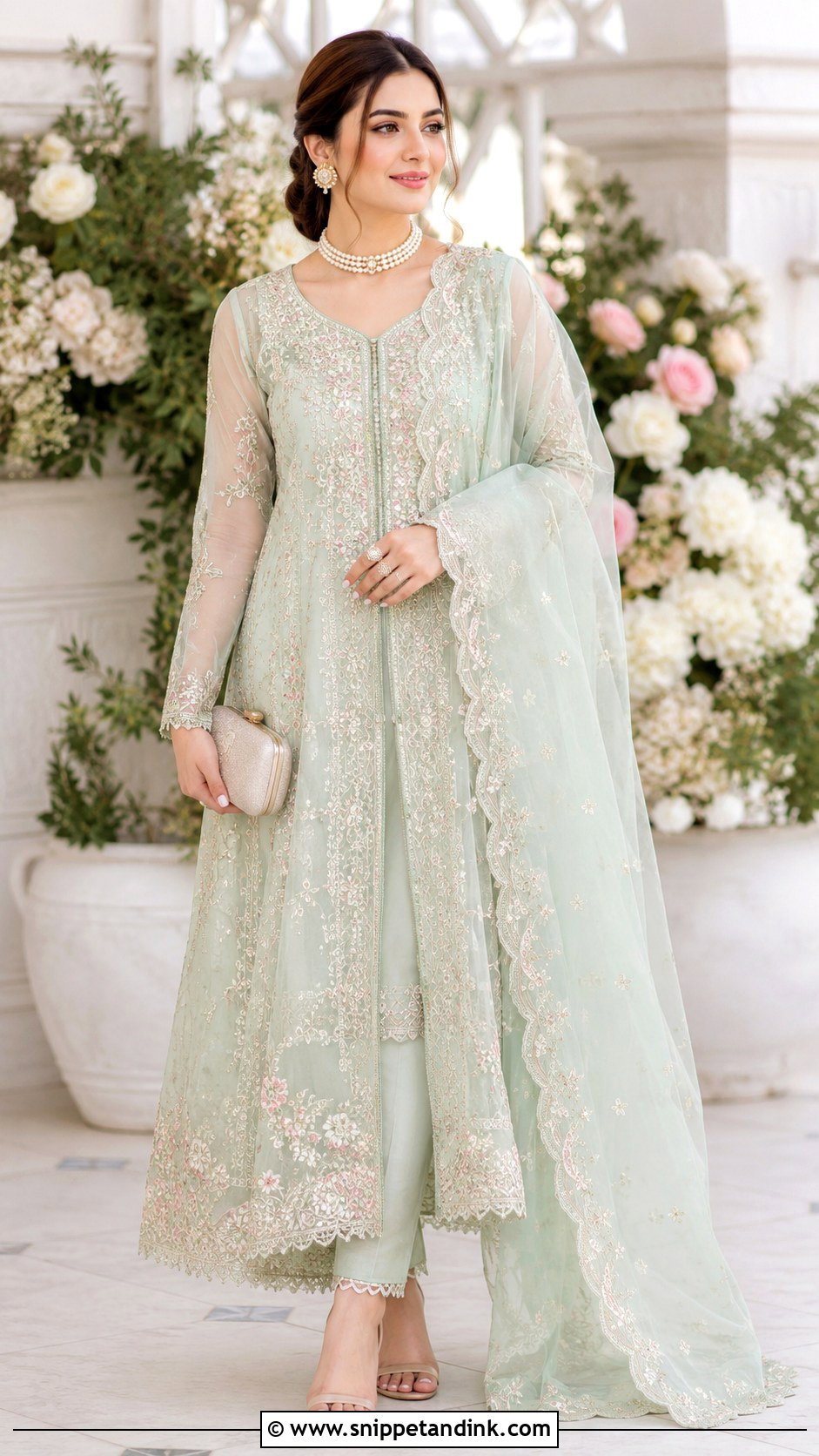
Organza is crisp, so it holds a shape: a flared shirt, a pishwas, a dupatta that stands away from the body. Pearls, sequins, resham or fine threadwork suit its lightness. Mint, blush, lilac, lemon and powder blue look fresh. Pair it with slim trousers, a light sharara or a flared lehenga. One caution: organza can feel scratchy against bare skin at the underarm and neckline, so ask for soft lining there. It’s well suited to Nikah, daytime wedding functions and Walima.

15. Pakistani Chiffon Dress
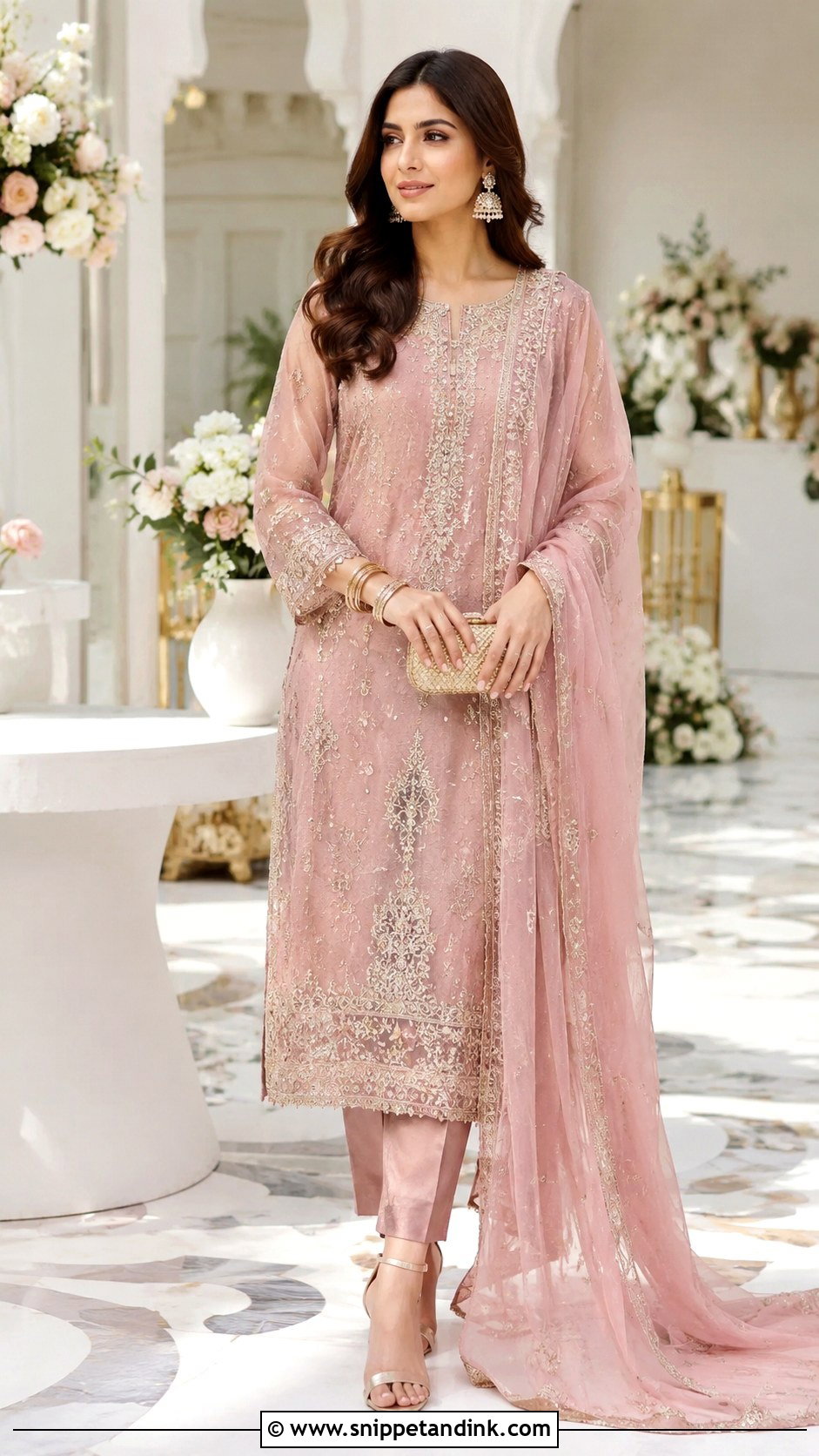
Chiffon is the easy guest fabric. It drapes softly, stays cool and suits long shirts, Anarkalis, pishwas and sarees. Embroidered borders, sequins, lace trims or handwork make it formal. A chiffon kameez with straight trousers and a matching dupatta is refined; a chiffon maxi is more dramatic. Single-layer chiffon is sheer, so check the lining length before you leave the shop. Comfortable heels, jhumkas and bangles finish it for warm-weather weddings.
16. Pakistani Net Lehenga
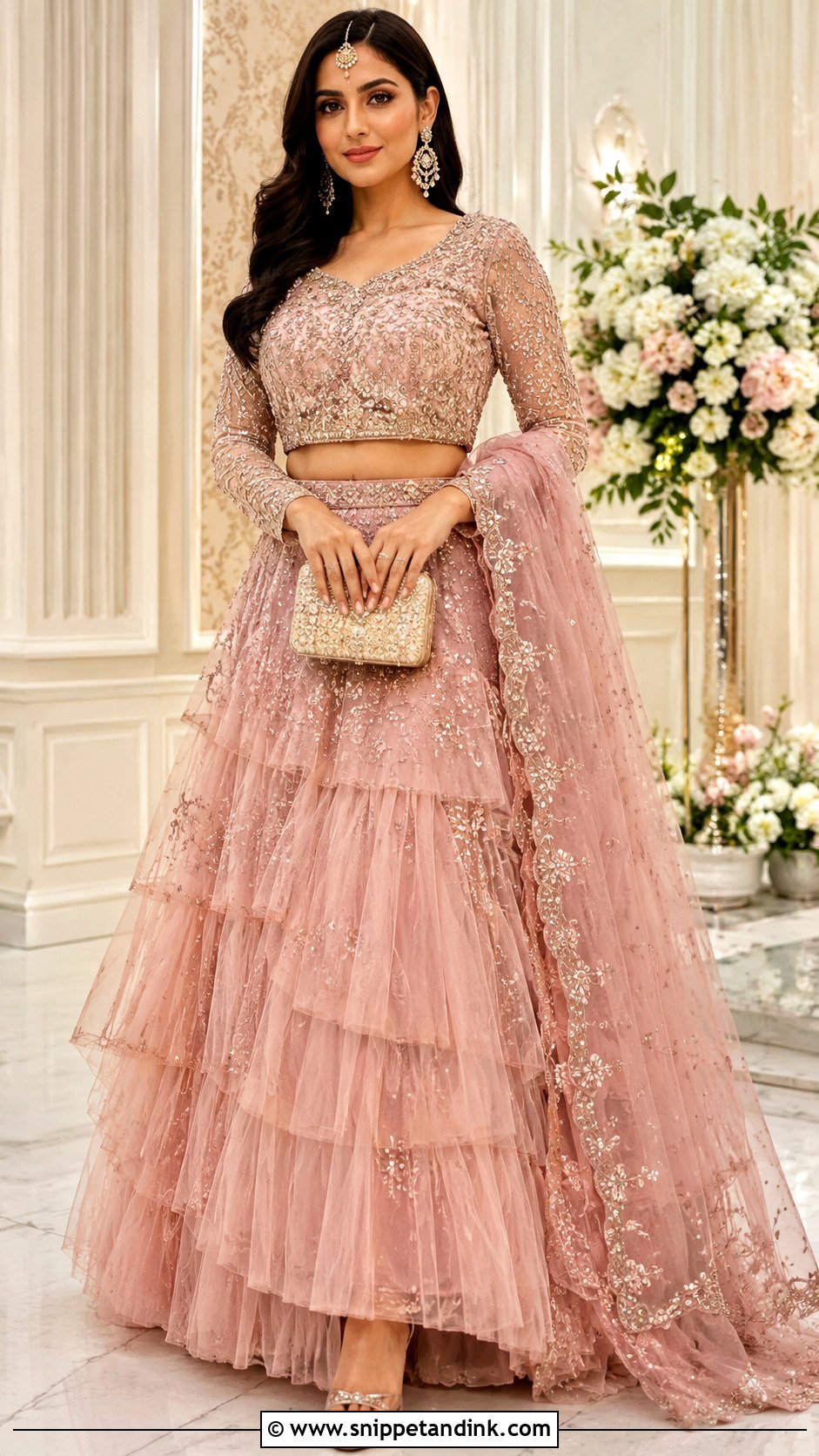
Net gives volume without stiffness when it’s layered over silk, satin or jamawar lining. Embroidered panels, sequins or 3D florals work well on it. Pair a net lehenga with a worked blouse or long shirt and a scalloped net dupatta. Blush, peach, ivory and silver suit Walima; red and maroon suit Barat. Net snags on rings and bangles, so I’d keep jewelry with smooth edges near the skirt. Heels, a tikka and statement earrings finish it.
17. Pakistani Mehndi Dress
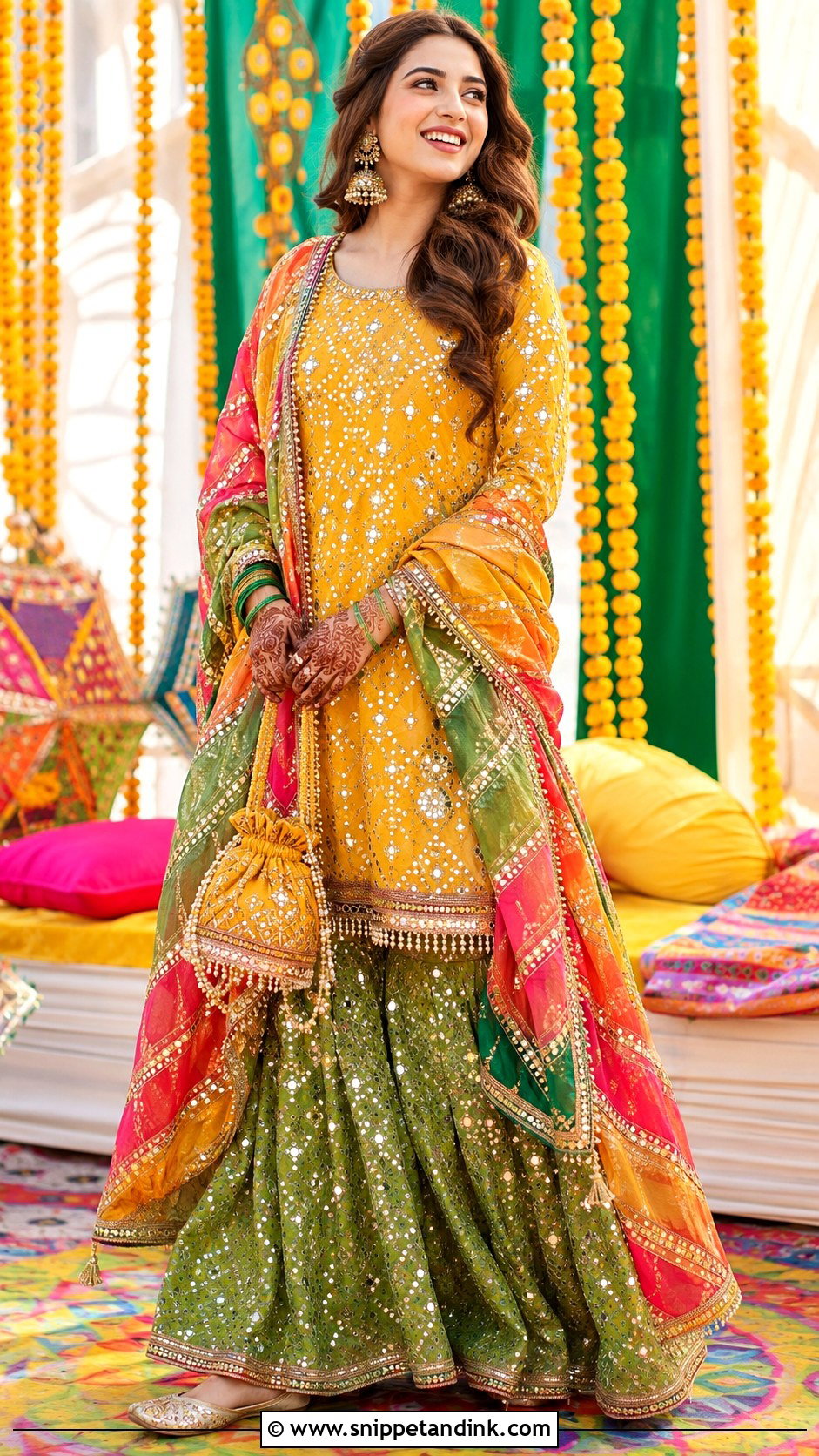
Mehndi outfits need to move. Yellow, green, orange, fuchsia and turquoise are the classic colors, and a short kurti with sharara, a lehenga choli or a mirror-work gharara all suit dancing. Gota, mirror work and playful borders set the mood. Throw a bright dupatta over one shoulder rather than the head, so it stays put during the dances. Khussa, colorful bangles and a potli bag finish it for sisters, cousins and guests.
18. Pakistani Barat Dress
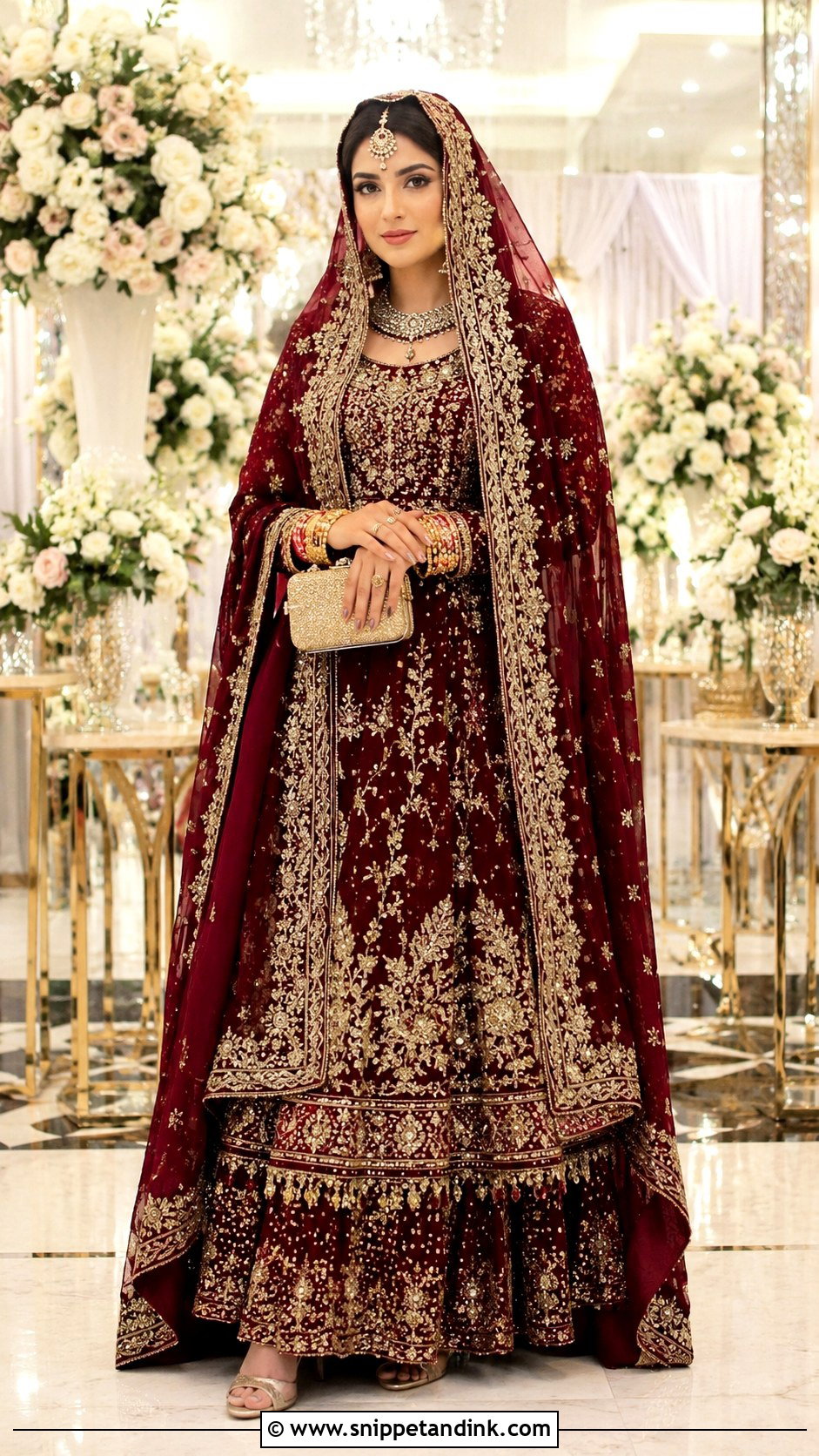
The Barat is the most formal event, and outfits for it are heavier and richer than for anything else. Deep red, maroon, rust, gold, emerald and plum suit it. A bridal lehenga, long shirt with lehenga, gharara or heavily worked pishwas all work, with zardozi, dabka, naqshi, pearls and sequins. The dupatta border frames the face, so give it real weight. For guests and relatives, I’d steer away from bridal red at this event and choose rust, emerald or plum instead.
19. Pakistani Walima Dress
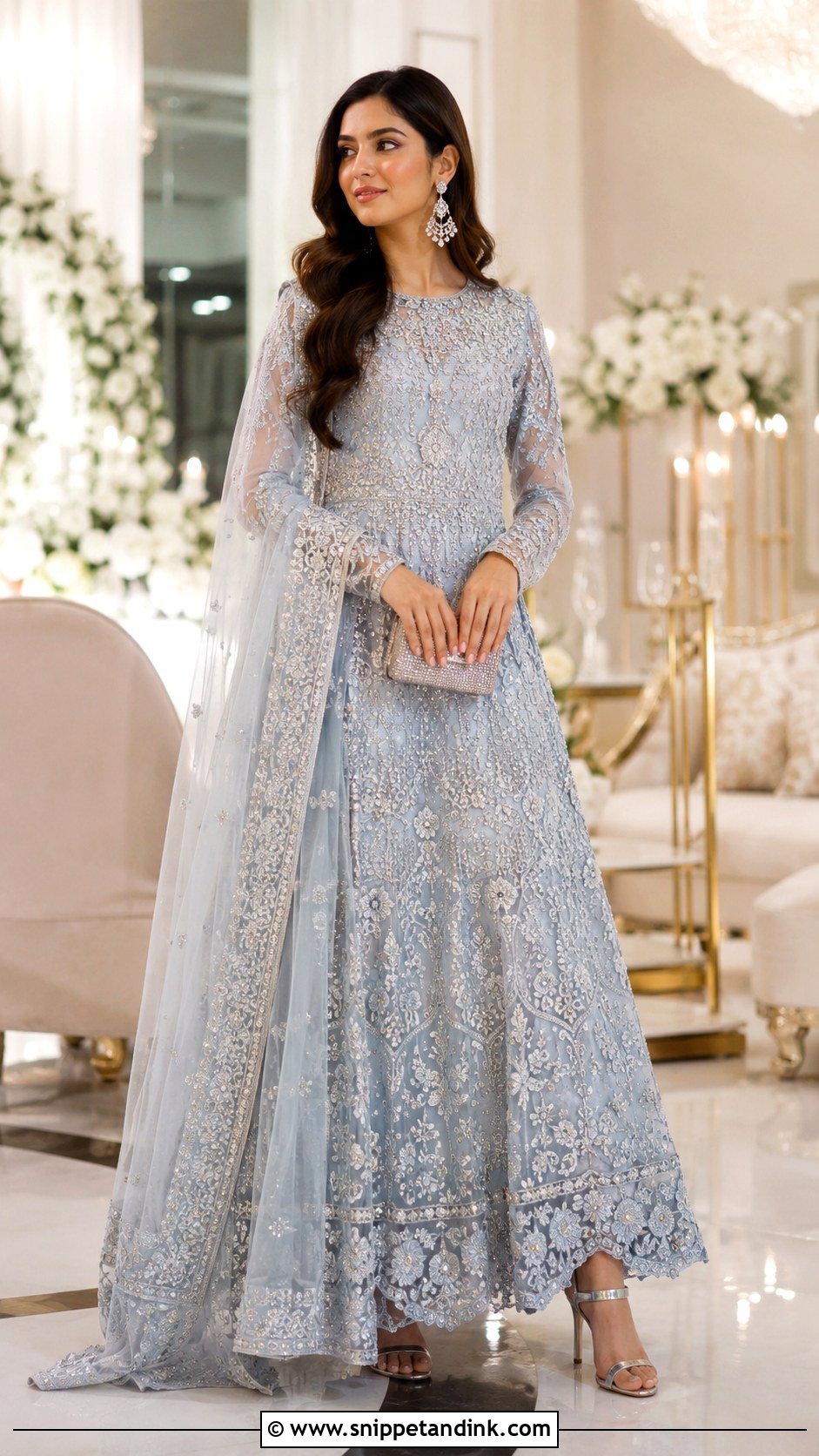
Walima clothes are lighter and softer than Barat wear, and many brides are relieved by that after the previous day’s weight. A Pakistani Walima dress in pastel, silver, champagne, ice blue, blush or lavender, as a maxi, pishwas, saree or light lehenga, suits the reception mood. Pearls, crystals, sequins and fine thread replace dense gold work. A sheer dupatta, metallic heels and delicate jewelry complete it. Pick a fabric you can sit in comfortably, since the Walima often runs late.



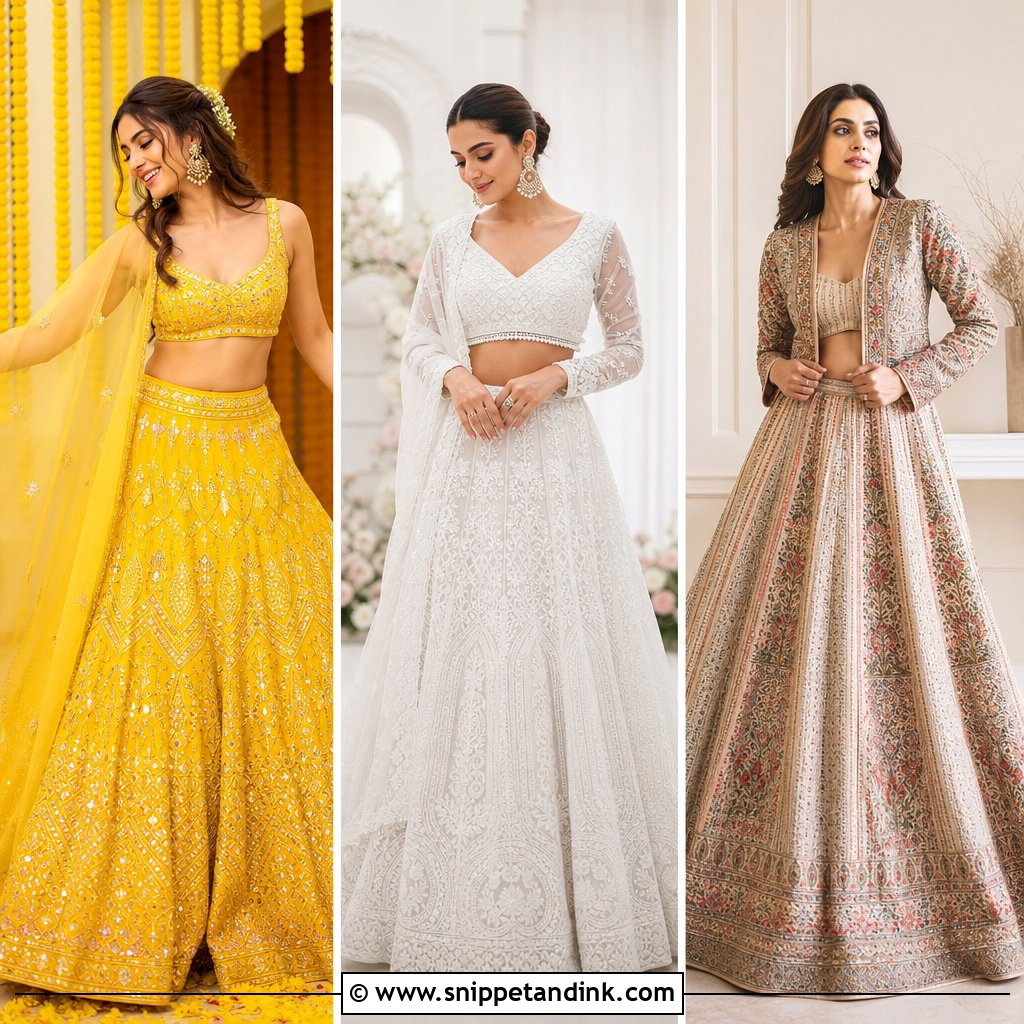
20. Pakistani Engagement Dress
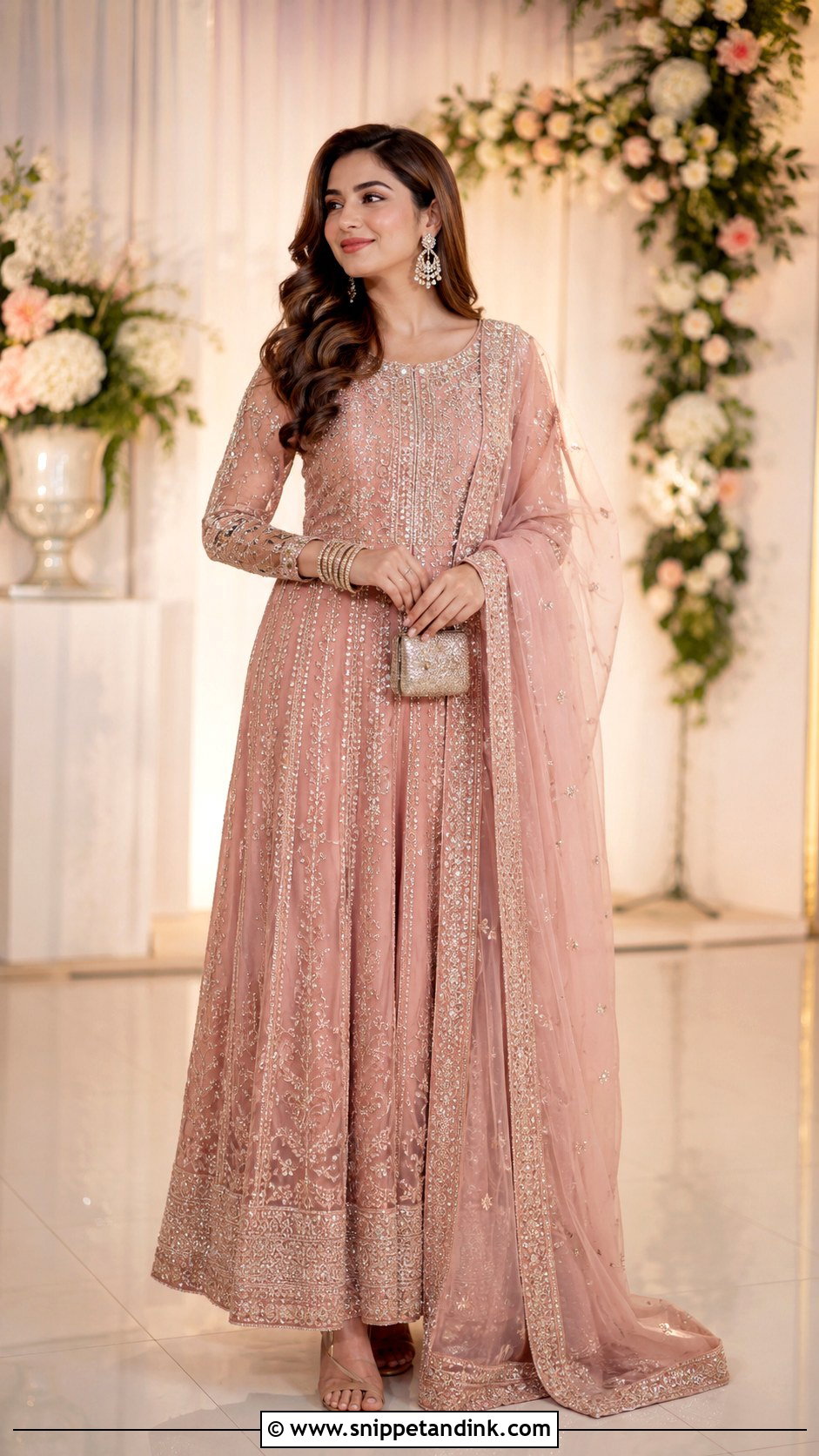
An engagement outfit sits a step below the main wedding wear. A pastel pishwas, embroidered maxi, peplum with lehenga or long shirt with sharara all work. Rose pink, champagne, mint, powder blue, mauve and ivory feel fresh. Keep embroidery balanced so the bridal outfits still feel like a step up. A light dupatta over one shoulder, heels and soft bangles suit ring ceremonies and family gatherings.
21. Pakistani Bridesmaid Dress
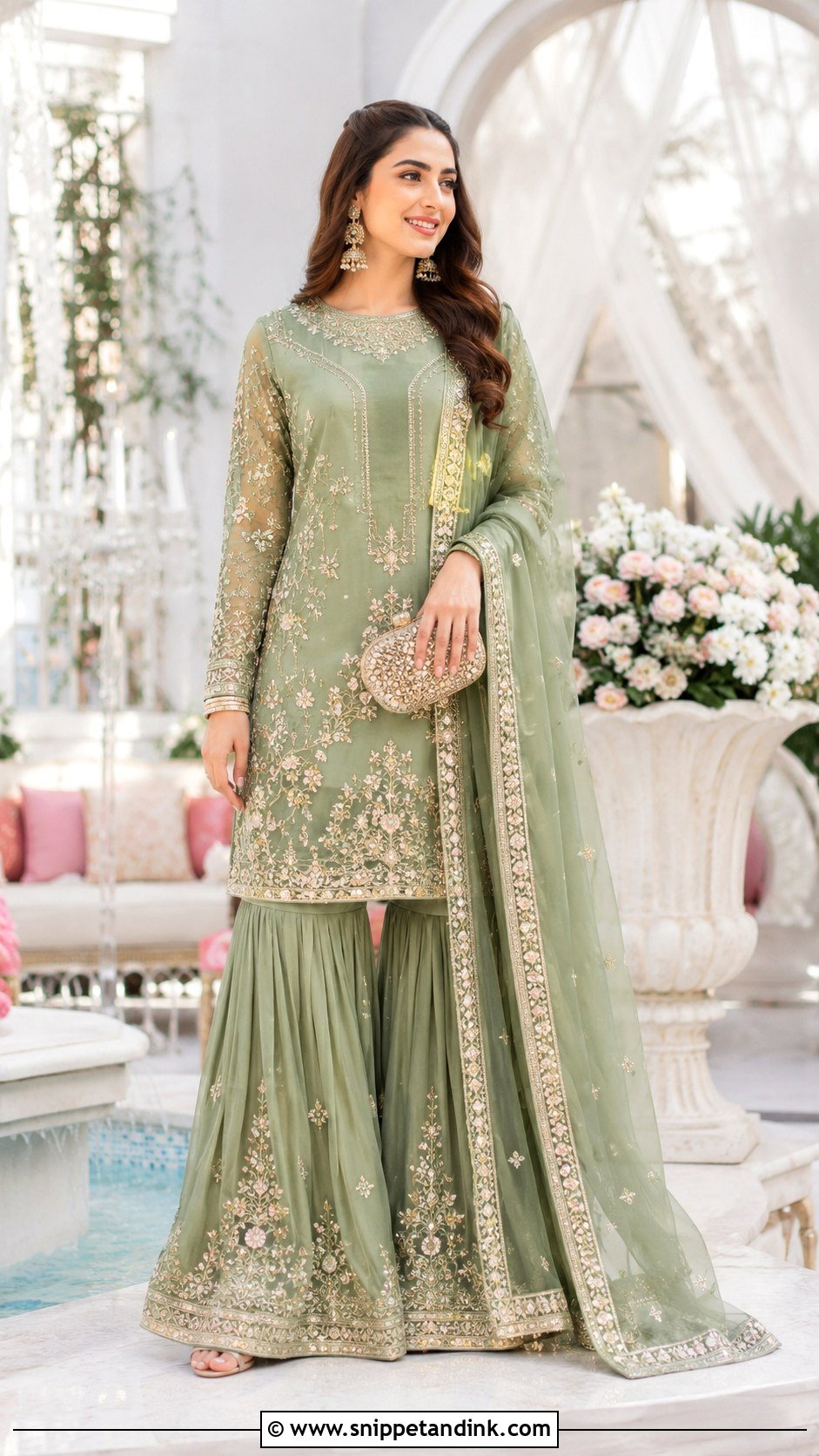
Bridesmaids in a Pakistani wedding usually have jobs: carrying the bride’s dupatta, handing out mithai, dancing at the dholki. So their outfits have to move. Matching sharara suits, pastel Anarkalis, chiffon lehengas or organza pishwas all work. A shared palette, such as sage and gold, blush and ivory or mustard and green, makes the group look coordinated in photos. Keep the embroidery a clear step lighter than the bride’s. Matching dupattas, comfortable heels and bangles finish it.
22. Pakistani Wedding Guest Dress
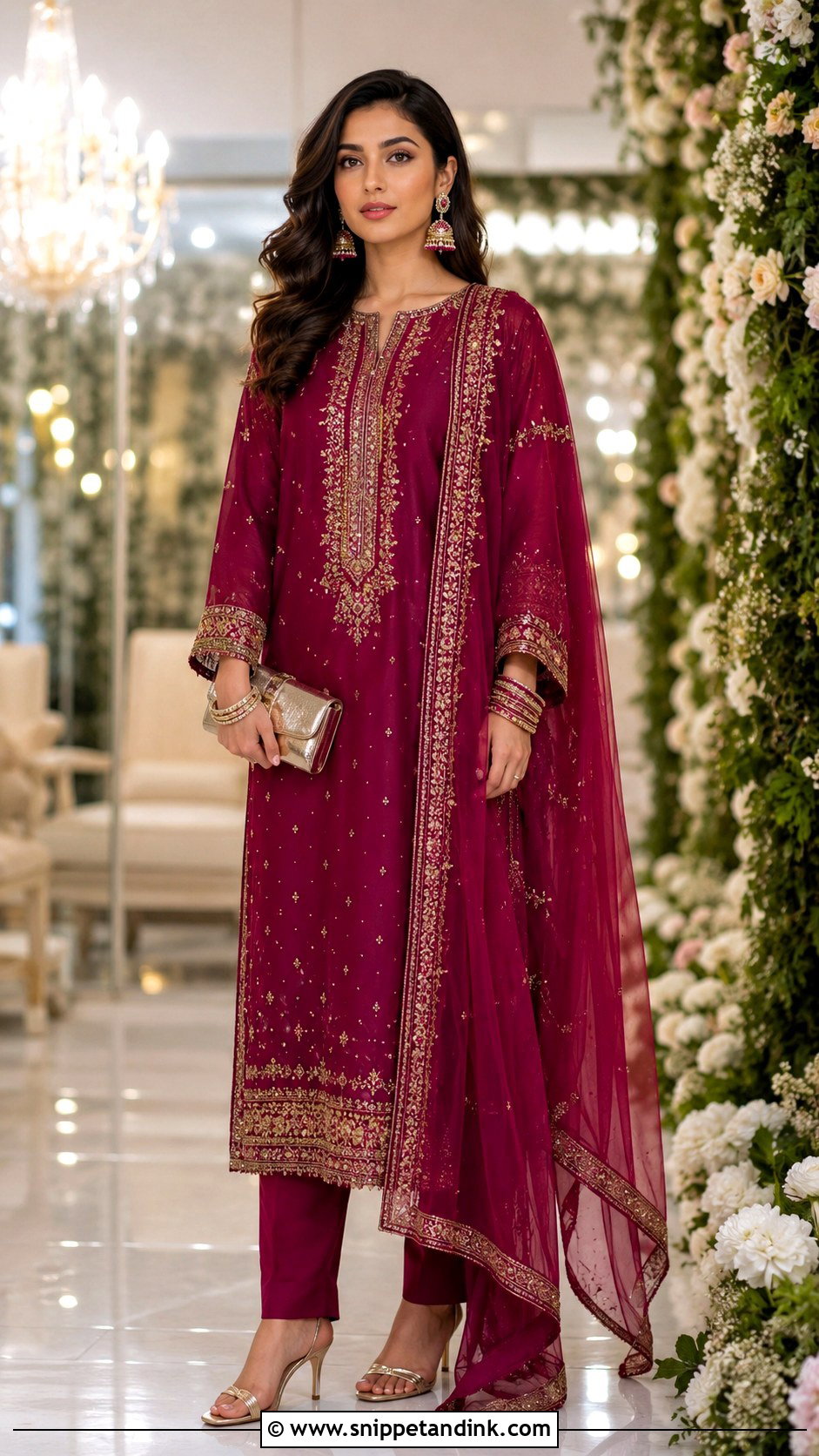
A guest’s job is to look dressed up without looking bridal. A formal long shirt with trousers, a sharara suit, an Anarkali or a light lehenga are safe. Avoid heavy bridal red unless the hosts have said otherwise. Jewel tones, pastels, metallic accents or embroidered prints all suit. If you’re attending several events, save the heaviest outfit for the Barat or reception and wear brighter colors to the Mehndi. A neat dupatta drape and a clutch finish it.
23. Pakistani Formal Trouser Suit
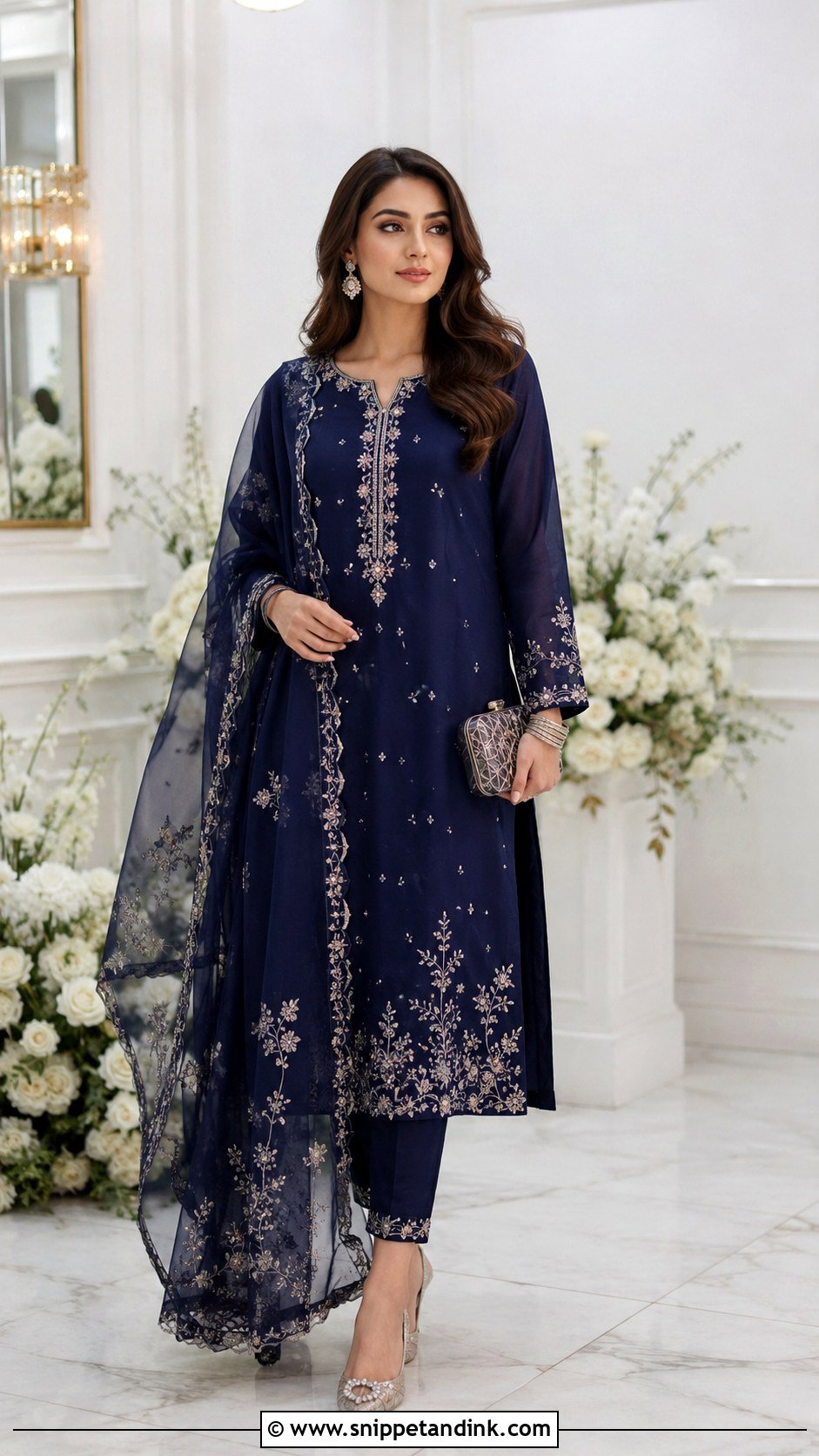
Clean lines and easy movement make a formal trouser suit a good choice for guests who don’t want volume. A long embroidered kameez with cigarette pants, straight trousers or wide-leg pants works. Organza sleeves, embroidered borders, pearl buttons and a statement dupatta keep it formal. Navy, emerald, ivory, mauve and charcoal look refined. Hem trousers to just touch the top of your heels, since a cropped hem reads casual. Pointed heels and a structured clutch suit Nikah, receptions and family dinners.
24. Pakistani Jacket Dress
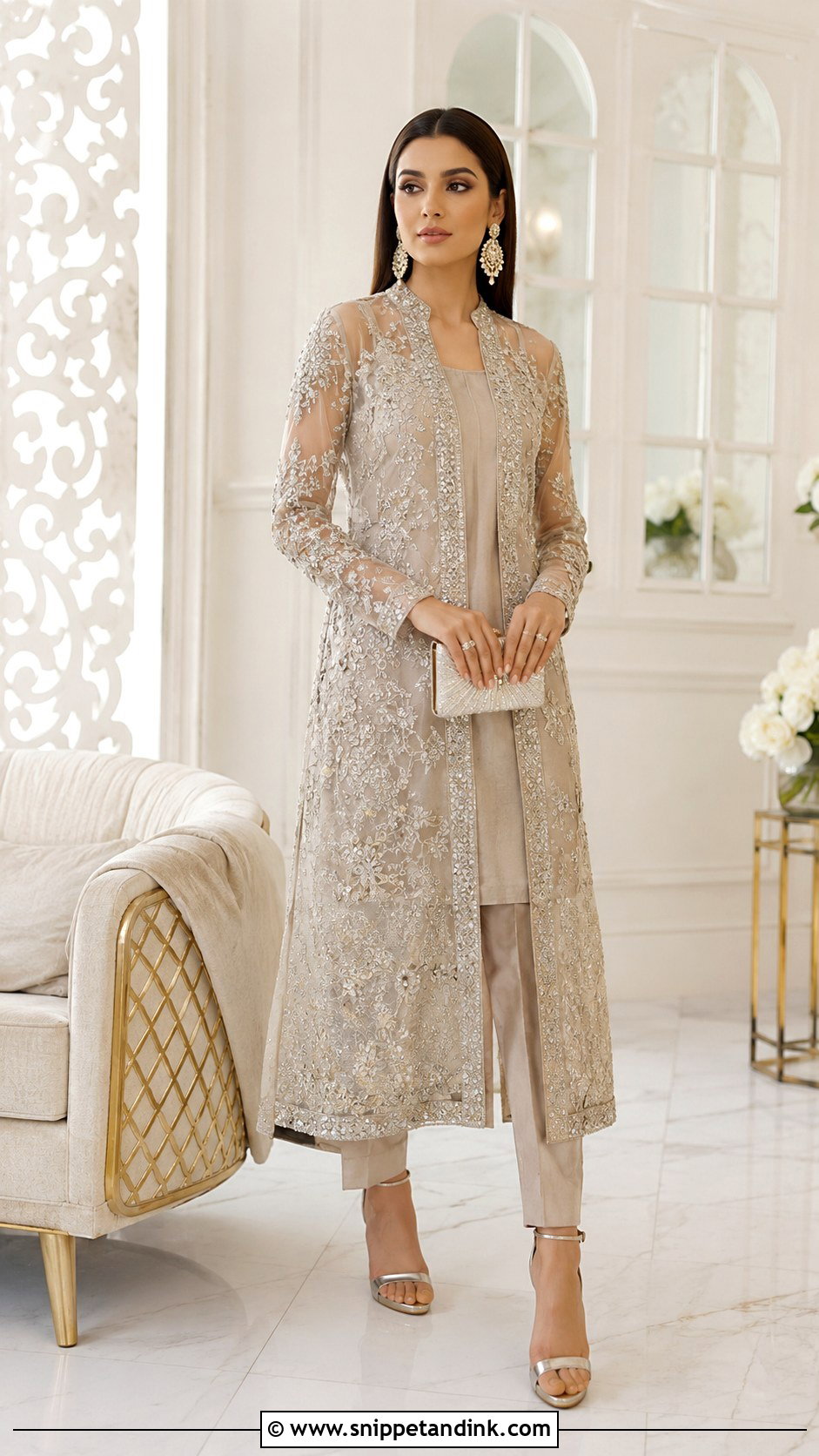
A jacket turns a simple base into a statement outfit. Layer an embroidered long jacket over a plain slip, lehenga, gharara or straight trousers. Organza or net suit summer; velvet or silk suit winter. Heavy work on the jacket with a simple base looks balanced. The jacket’s shoulder seam has to sit exactly on your shoulder, so I’d always have it tailored rather than bought off the rack. A sleek hairstyle keeps the jacket visible. It suits receptions, engagements and fashion-forward guests.

25. Pakistani Cape Dress
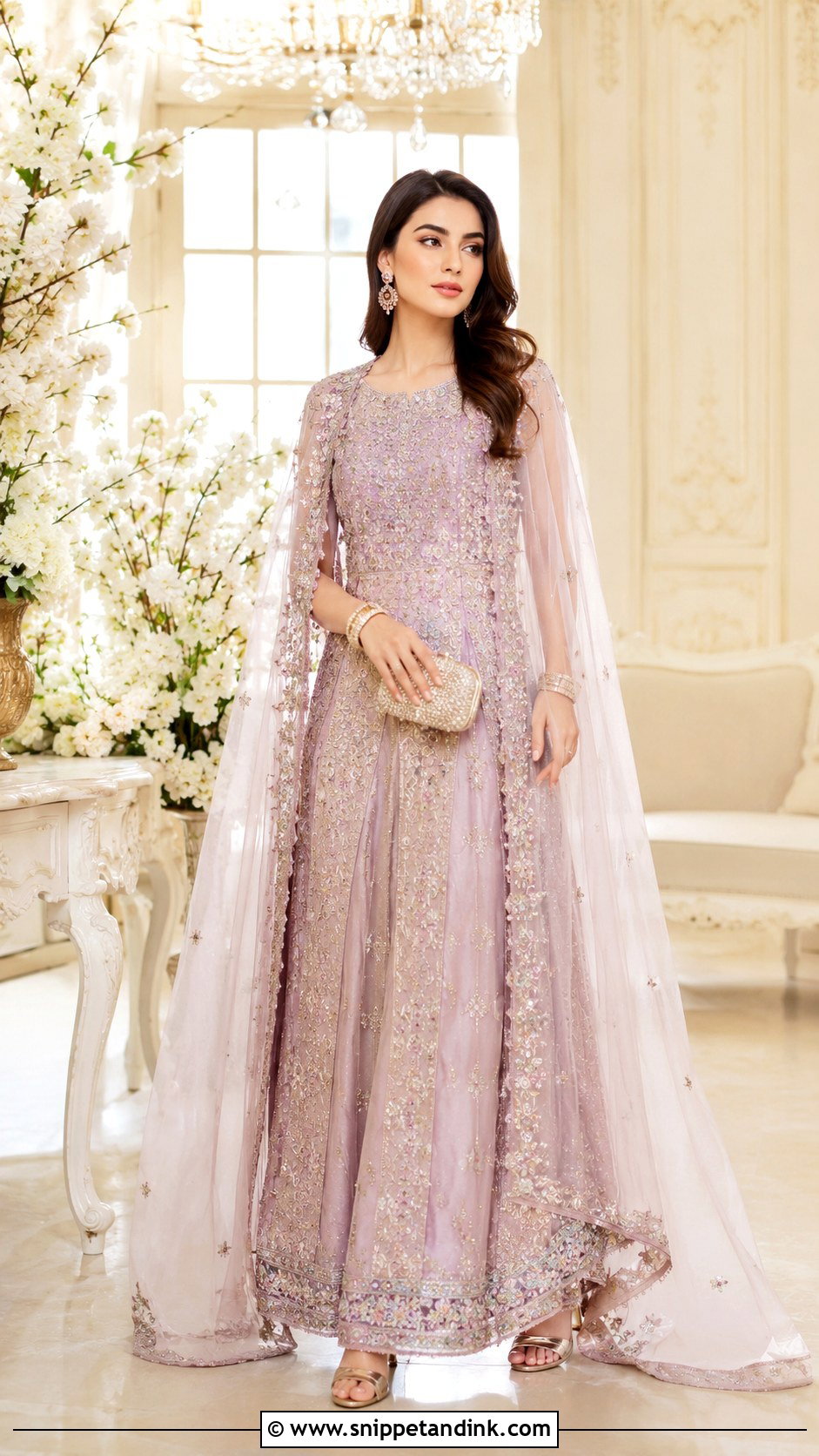
A cape gives arm coverage without a shawl, and unlike a dupatta it doesn’t need fixing every few minutes. It can replace the dupatta or sit over a lehenga, maxi or trouser suit. A sheer organza or net cape with embroidered edges moves softly. Keep bangles minimal so they don’t catch the cape’s edge. Soft metallics, pastels and jewel tones all work for Walima, engagement or formal guest dressing.
26. Pakistani Mirror Work Dress
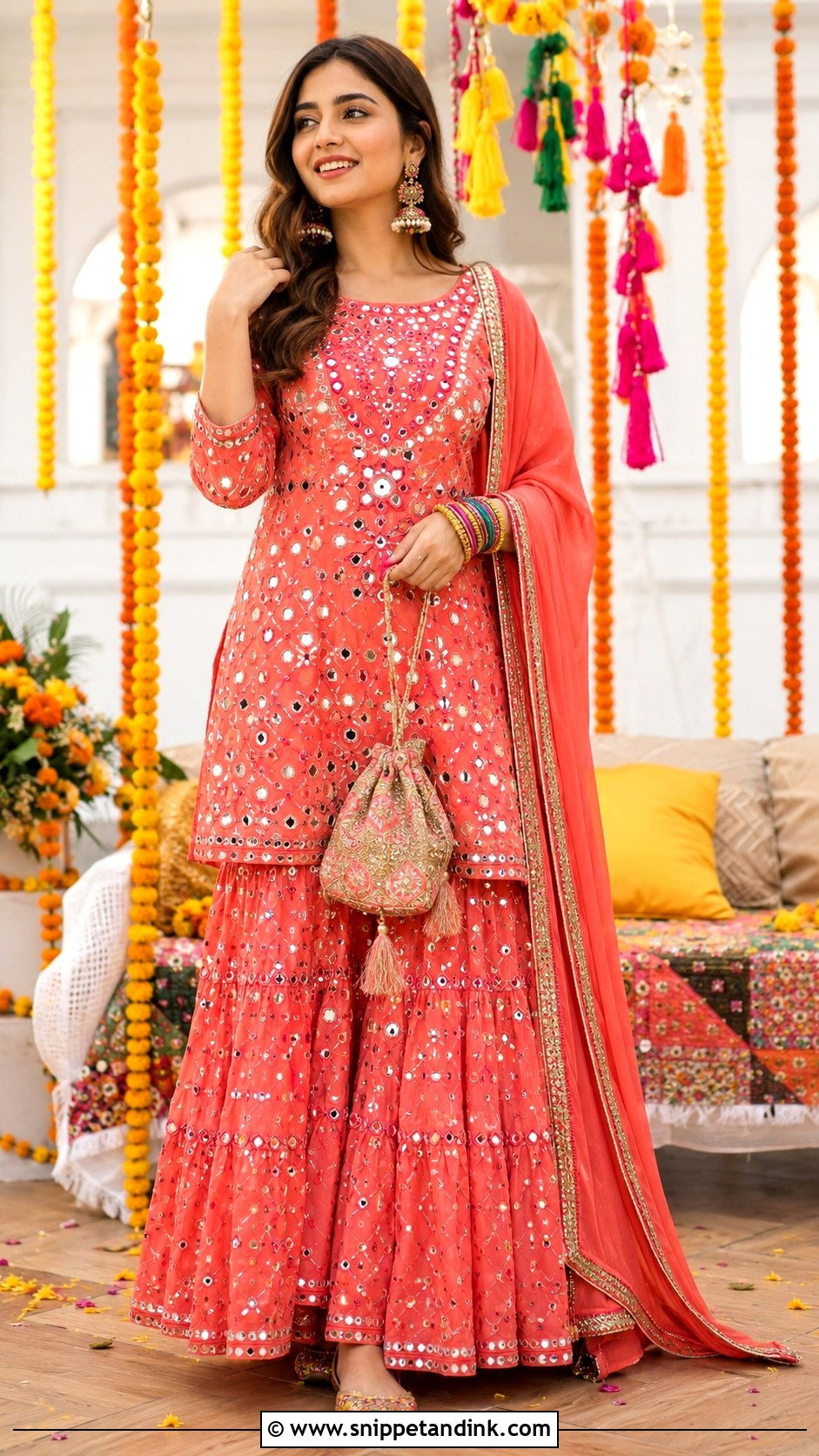
Mirrors catch every light at a Mehndi, which is why a Pakistani mirror work dress belongs there. A short kurti with sharara, a flared lehenga or a colorful Anarkali with mirror accents all suit dancing. Yellow, green, coral, hot pink and turquoise look playful. Mirror work is heavier than it looks and the edges can scratch, so I’d check the inside finishing at the neckline and underarms. Balance the shine with a plain or simply bordered dupatta, khussa and a potli bag.
27. Pakistani Gota Work Dress
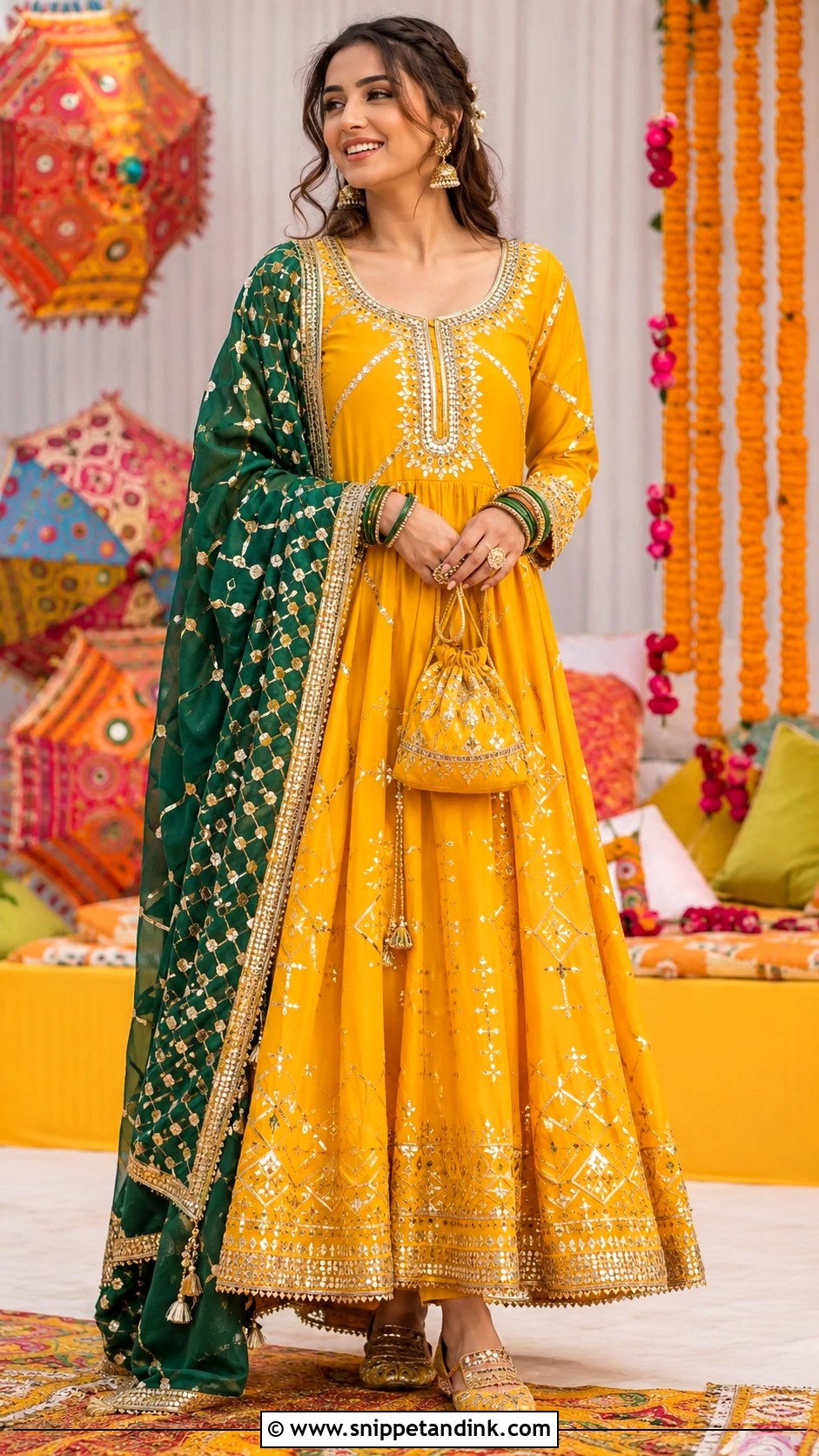
Gota is metallic ribbon stitched into patterns, and it gives shine without the weight of dense zardozi. That makes it ideal for Mehndi, dholki and daytime events. A yellow gharara, green sharara, orange pishwas or pink lehenga with gota borders looks festive. Placement matters: gota on the hem, sleeves, neckline and dupatta edges frames the outfit. Real metallic gota can tarnish, so store it wrapped and away from damp. A contrasting dupatta, bangles and khussa complete it.
28. Pakistani Pastel Wedding Dress
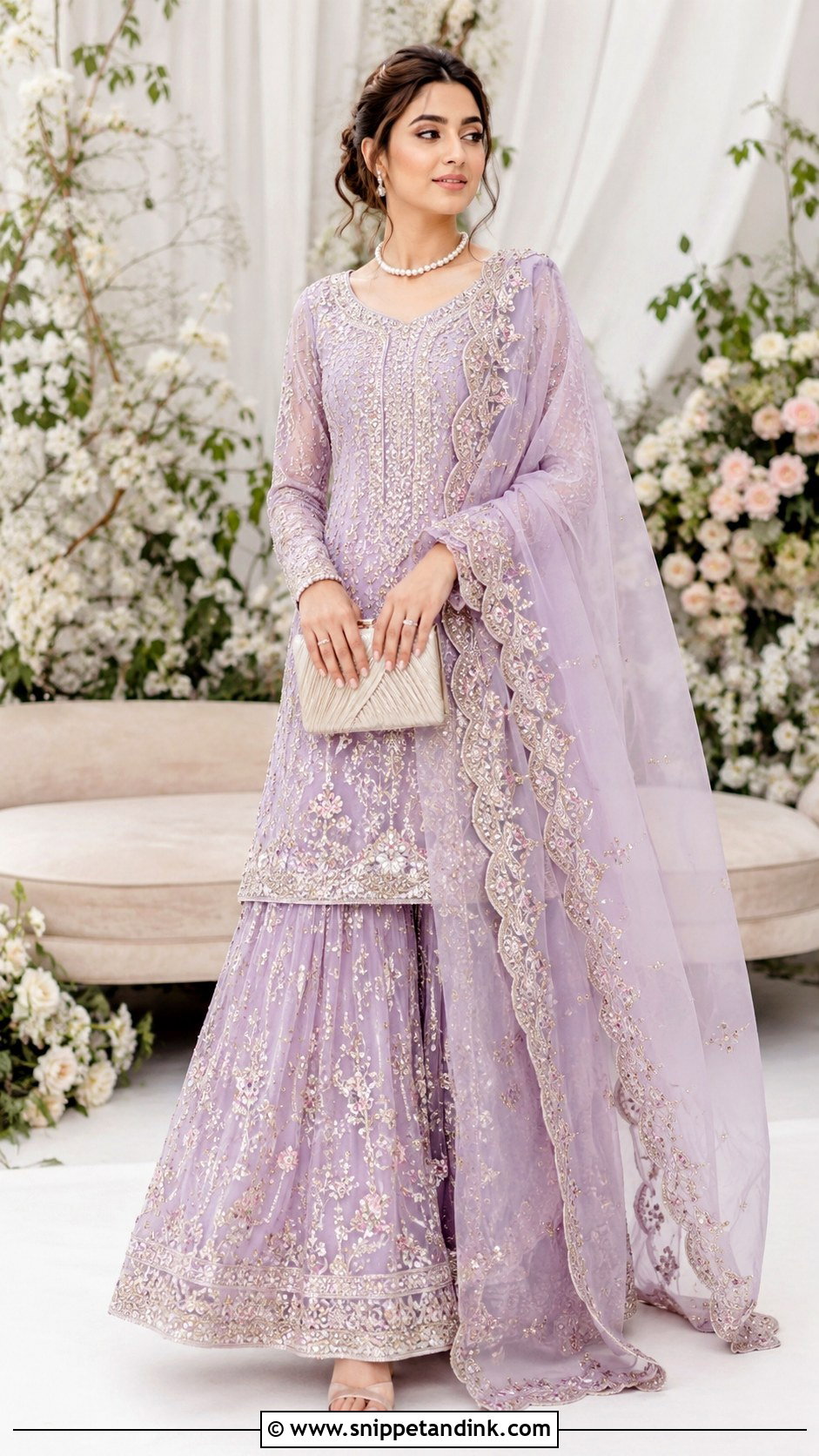
Pastels suit Nikah, Walima, engagement and daytime events. Blush, mint, lilac, powder blue, peach and champagne feel fresh. A pishwas, maxi, lehenga or sharara suit with pearl, silver or tone-on-tone embroidery works well. Tone-on-tone work looks expensive up close and subtle from a distance, which is ideal for the family’s older guests who prefer modest outfits. A sheer scalloped dupatta, nude or metallic heels and pearls finish it.
29. Pakistani Jewel Tone Dress
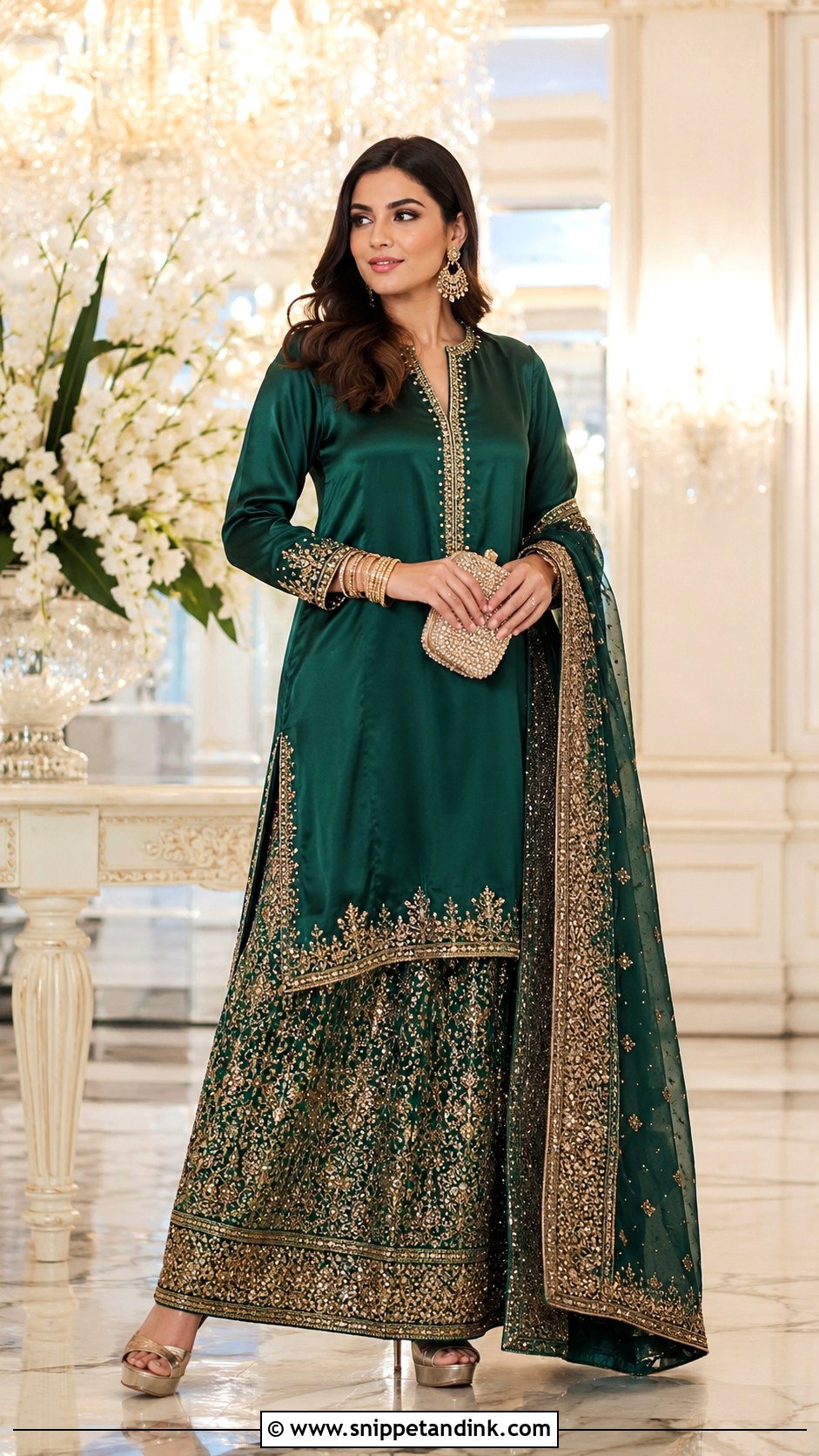
Jewel tones come into their own at evening weddings and formal receptions. Emerald, sapphire, ruby, amethyst and deep teal look rich in silk, velvet, chiffon and organza. A long shirt with lehenga, a velvet maxi, a sharara suit or a saree all work, with gold, antique or copper embroidery. Indoor tungsten lighting warms these shades, so they look deeper on the night than in a shop. Metallic heels and statement earrings complete it. It’s a strong option for guests who want impact without bridal red.
30. Pakistani Black Wedding Dress
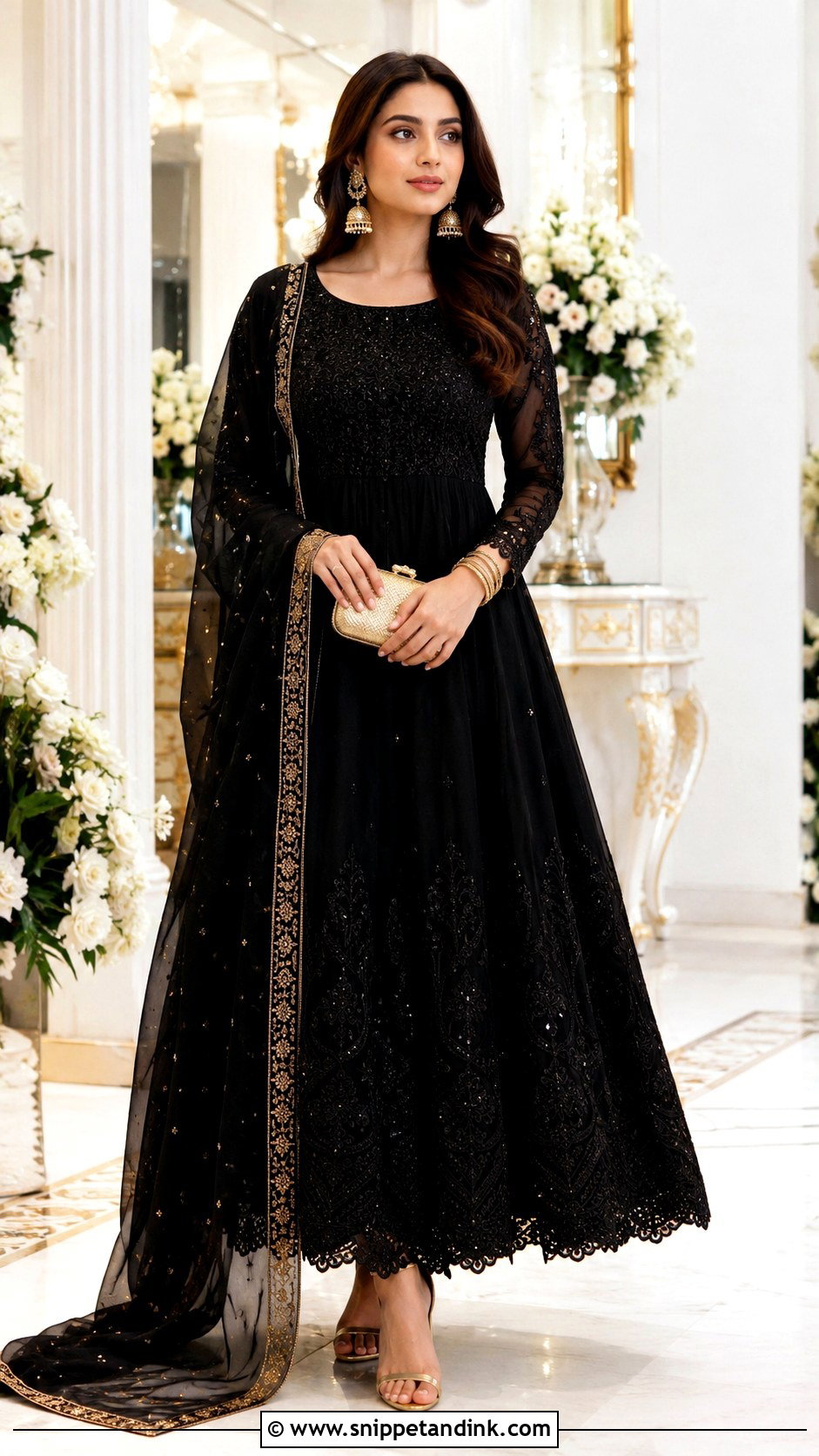
Black can be striking at a Pakistani wedding, but I’d check the family’s feelings first, since some households still see it as unlucky or associated with mourning. Choose black velvet, chiffon, silk or net with gold, silver or antique embroidery. A black Anarkali, saree, long shirt with lehenga or embroidered sharara suit fits evening receptions. A sheer bordered dupatta softens it. Gold heels, jhumkas and festive accessories keep it celebratory. It suits guests, sisters and relatives at evening events.
Getting Unstitched Fabric Made Up by a Darzi
Many Pakistani wedding outfits start as unstitched fabric, and the finished outfit depends on how well you brief the tailor. Tailors get very busy before the winter wedding season, so I’d hand fabric over early and agree a delivery date that leaves time for one more fitting.
What I’d tell the darzi
- Bring an outfit that already fits you well. It’s more reliable than measurements alone.
- Say exactly which cut you want for the bottoms: gharara, sharara, straight trousers or churidar, and how long.
- Ask for lining in every sheer piece, and say where you want it to end on the sleeves and shirt.
- Agree the sleeve length and neckline in writing, with a sketch or photo, since these are the most common surprises.
- Ask for spare fabric to be kept so the outfit can be let out later.
Try the finished outfit on with the shoes and jewelry you’ll wear. Hems especially need checking in heels, since a gharara or sharara cut for flat khussa will drag once you add height.
Match the Outfit to the Event and to Your Place in It
Pakistani wedding fashion stretches a long way, from a heavy red Barat lehenga to an ivory Nikah outfit, a bright Mehndi sharara and a pastel Walima maxi. The shape is only part of the decision. Fabric, embroidery, dupatta styling, jewelry, shoes and comfort all count. Start with the event, then your role in it, whether bride, sister or guest, then your own taste. From a traditional gharara to a modern cape dress, the best outfit is the one that fits all three.
You'll Like These Ideas:






Leave a Reply