
Lace is the fabric I pull most often in bridal appointments, and it’s far more varied than most brides expect. Soft floral Chantilly, raised corded lace, sheer illusion panels, vintage-style patterns and very sparse modern lace all behave differently on the body and in photos. The same lace can look romantic on an A-line and sharp on a sheath. So rather than treating lace as one look, I’d think about which type suits your venue, your season and how much detail you actually want near your face. Below are twenty-five lace gowns, each with the thing I’d check before saying yes.
Turn the Gown Inside Out: Spotting Well-Made Lace
Two lace gowns can look almost identical on a hanger and wear completely differently. When I’m assessing one, I spend more time looking at the inside and the seams than the front.
Seams and pattern matching
On a well-made gown, the lace pattern continues across the side and back seams, often because the motifs have been cut out and hand-stitched over the join. On a cheaper one, the seam slices straight through flowers. Look at the centre back and both sides.
How the appliqués are attached
Lift the edge of an appliqué gently. Hand-stitched motifs sit flat and stay put. Glued or loosely tacked ones lift at the edges and can peel or catch after a few hours of movement.
The hem and edges
A scalloped lace edge used at the hem, sleeves or neckline is a sign of care, because it means the lace was planned around the pattern rather than simply cut. Raw-cut lace edges look fine at first but fray along the bottom.
- Feel the inside of the bodice and underarms for scratchy cords or exposed seams.
- Check whether the net base feels soft or stiff and plasticky.
- Ask what the lining is made of; a breathable lining makes a long day far more comfortable.
1. A Line Lace Wedding Dress
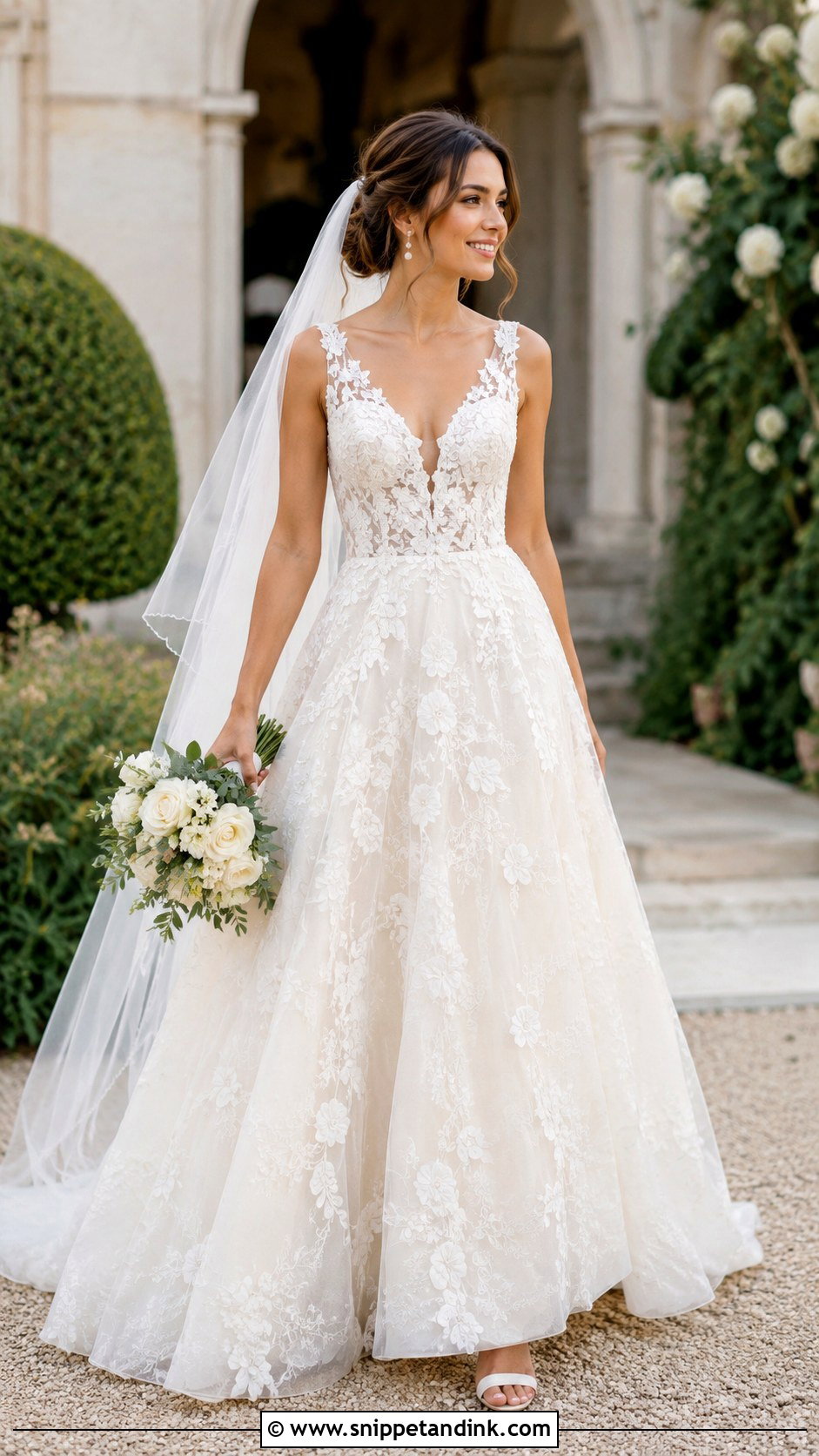
Start here if you’re unsure. An A-line in lace suits most bodies because the skirt moves away from the hips without needing a crinoline. The bodice can be softly structured with floral lace while the skirt stays lighter, often tulle with lace scattered over it. Larger floral motifs look more current than tiny traditional ones. It’s easy to walk, sit and dance in, which matters more by the tenth hour than anything else. Ivory heels, a simple veil and pearl drops are plenty.
2. Long Sleeve Lace Wedding Dress
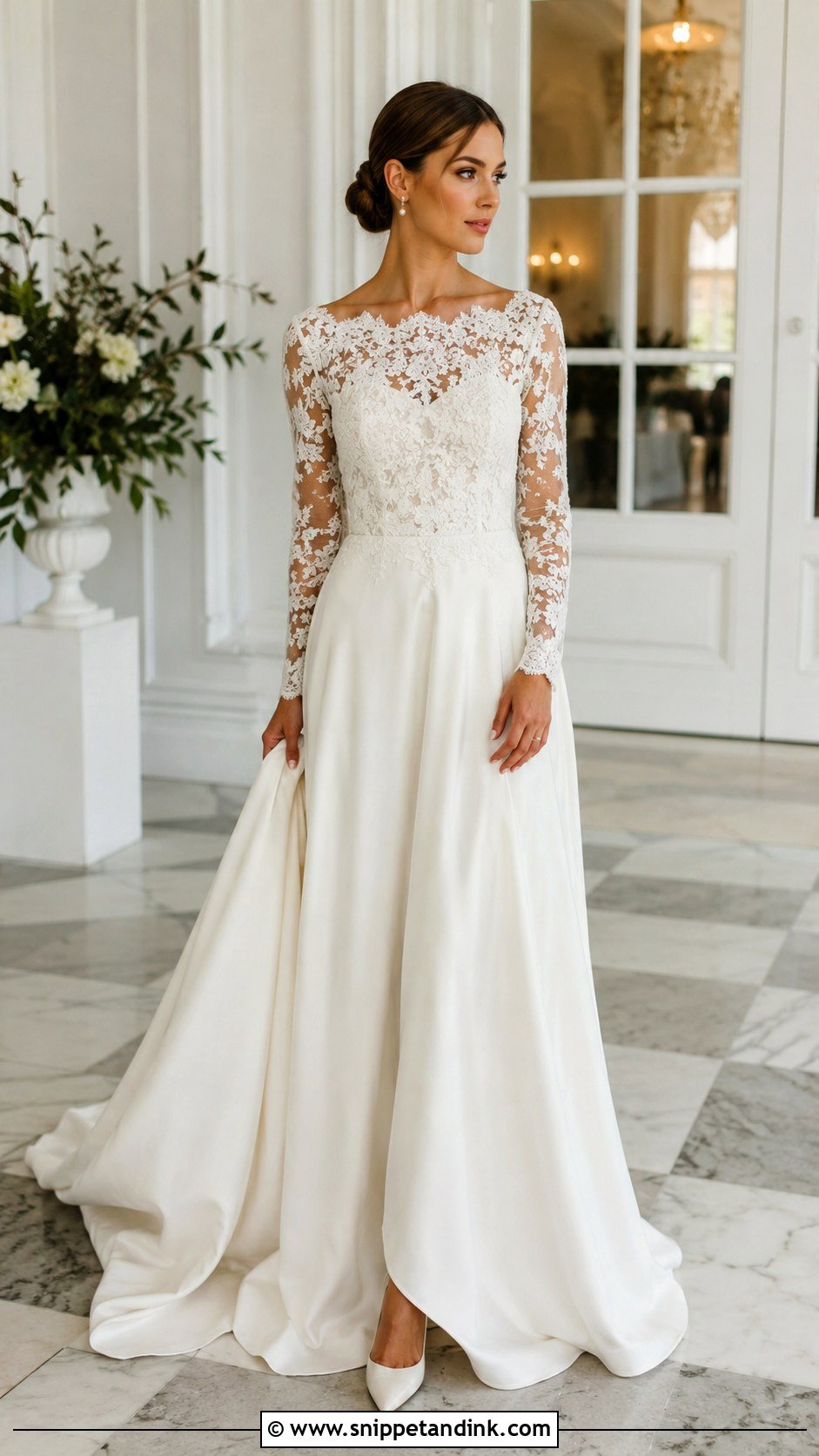
Sheer lace sleeves show the pattern without weight, and covered buttons down the back give the gown a finished look. I check the sleeve at the elbow. Lace has little stretch, so a sleeve fitted tightly while your arm is straight will strain and pull the shoulder seam when you bend it to hold the bouquet or eat. Ask for a touch more ease than feels necessary. A low bun keeps the neckline and sleeves on show. Heavier lace suits autumn and winter; fine lace works in spring.
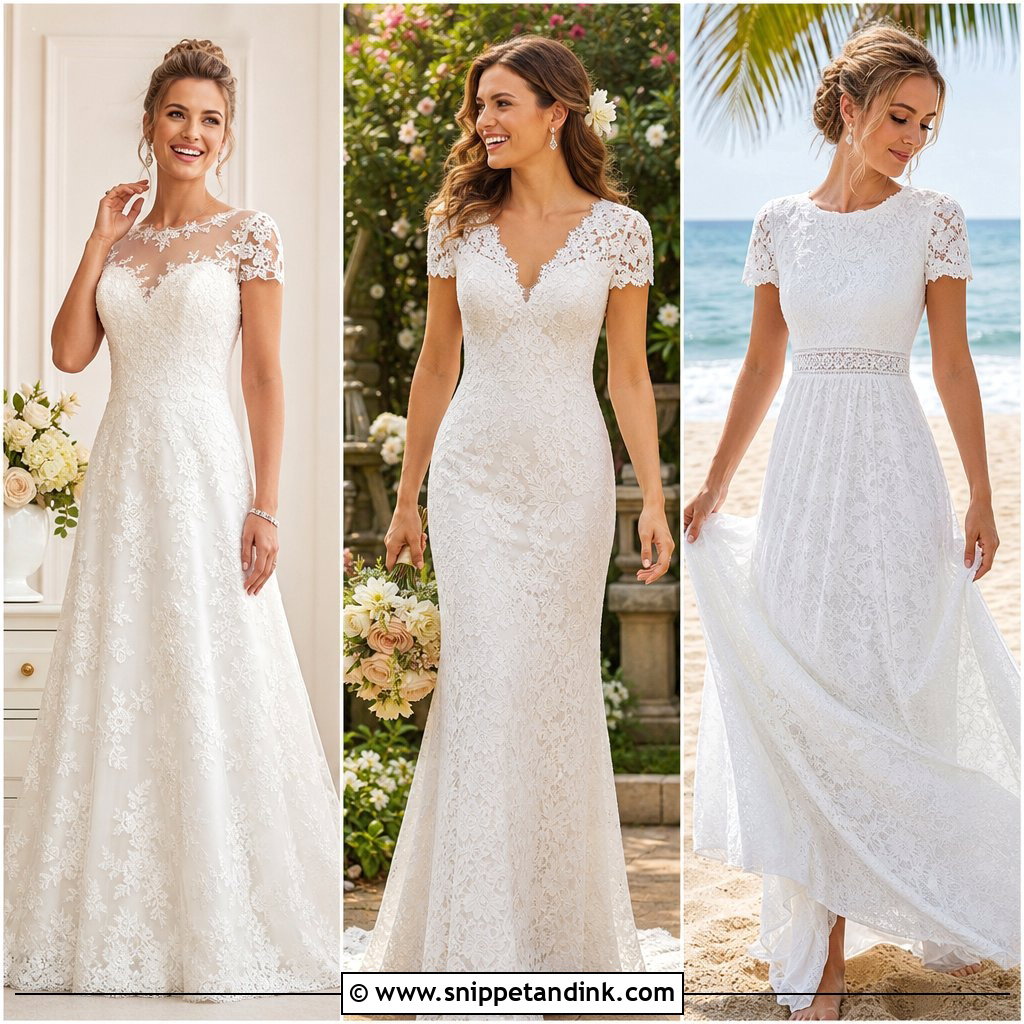
3. High Neck Lace Wedding Dress
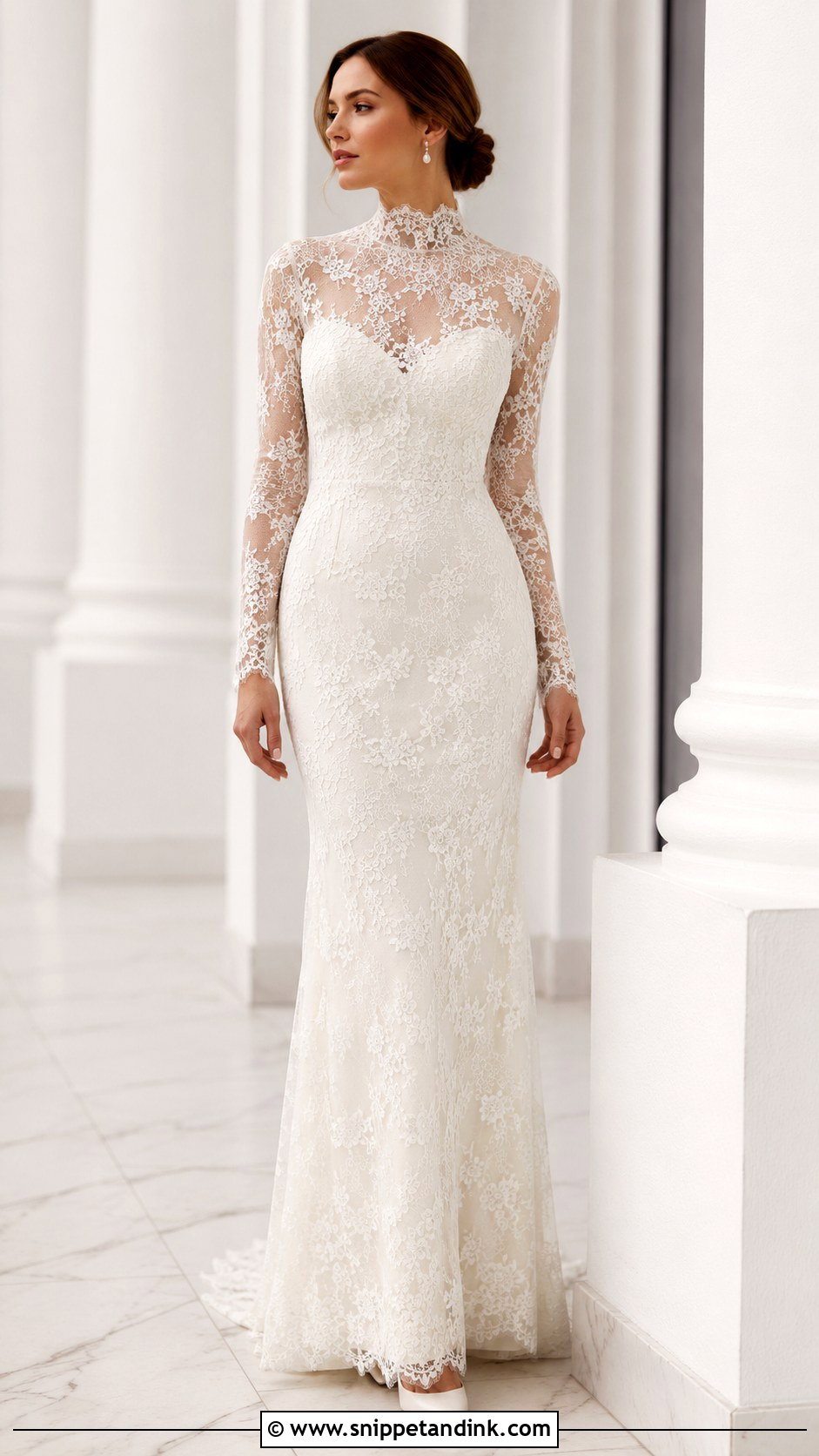
A high lace neckline draws the eye to the face, which is why it does so well in close portraits. The best versions put sheer lace around the throat over a lined bodice, so the collar looks light rather than stiff. Lace collars can scratch, especially corded ones, so run your fingers along the inside edge at the fitting. Slim, A-line and ball gown skirts all work underneath. Skip a necklace, wear small pearls or slim drops, and set a long veil low behind a chignon.
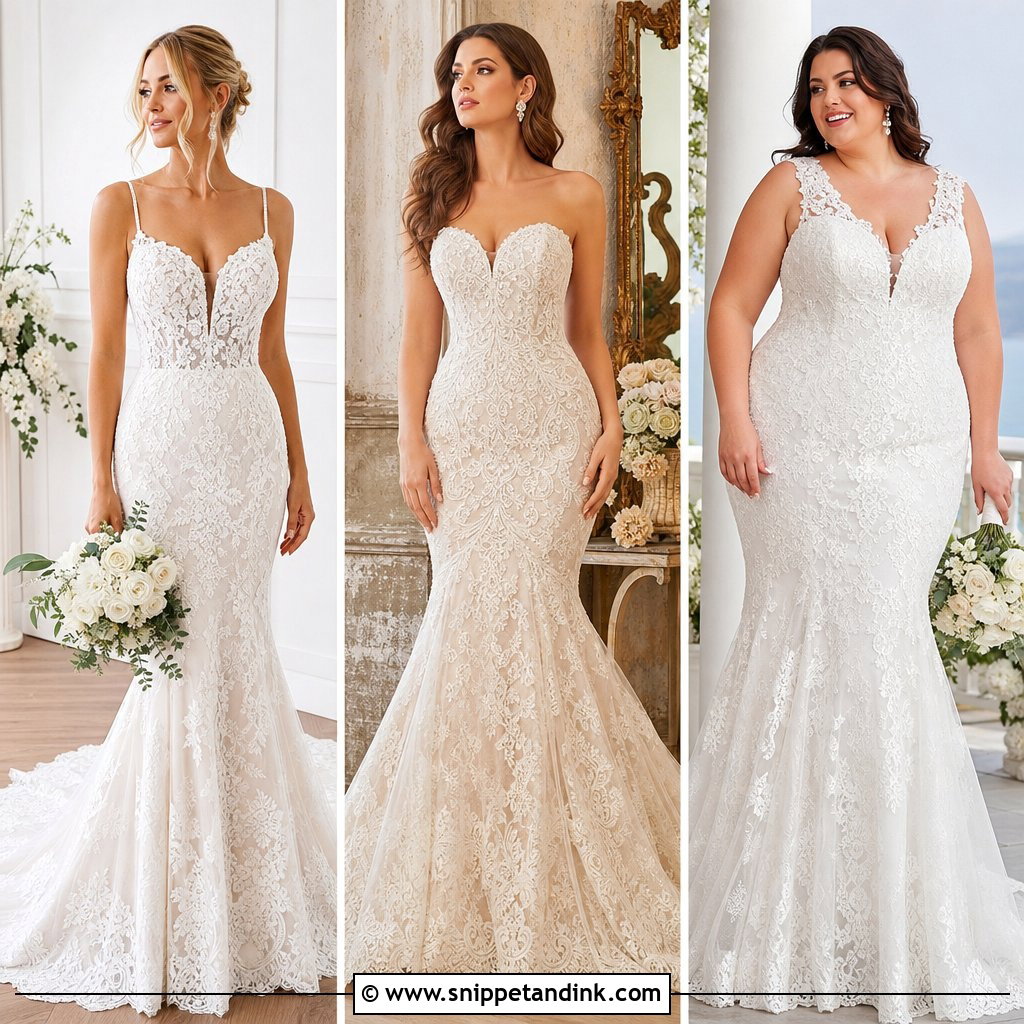
4. Lace Mermaid Wedding Dress
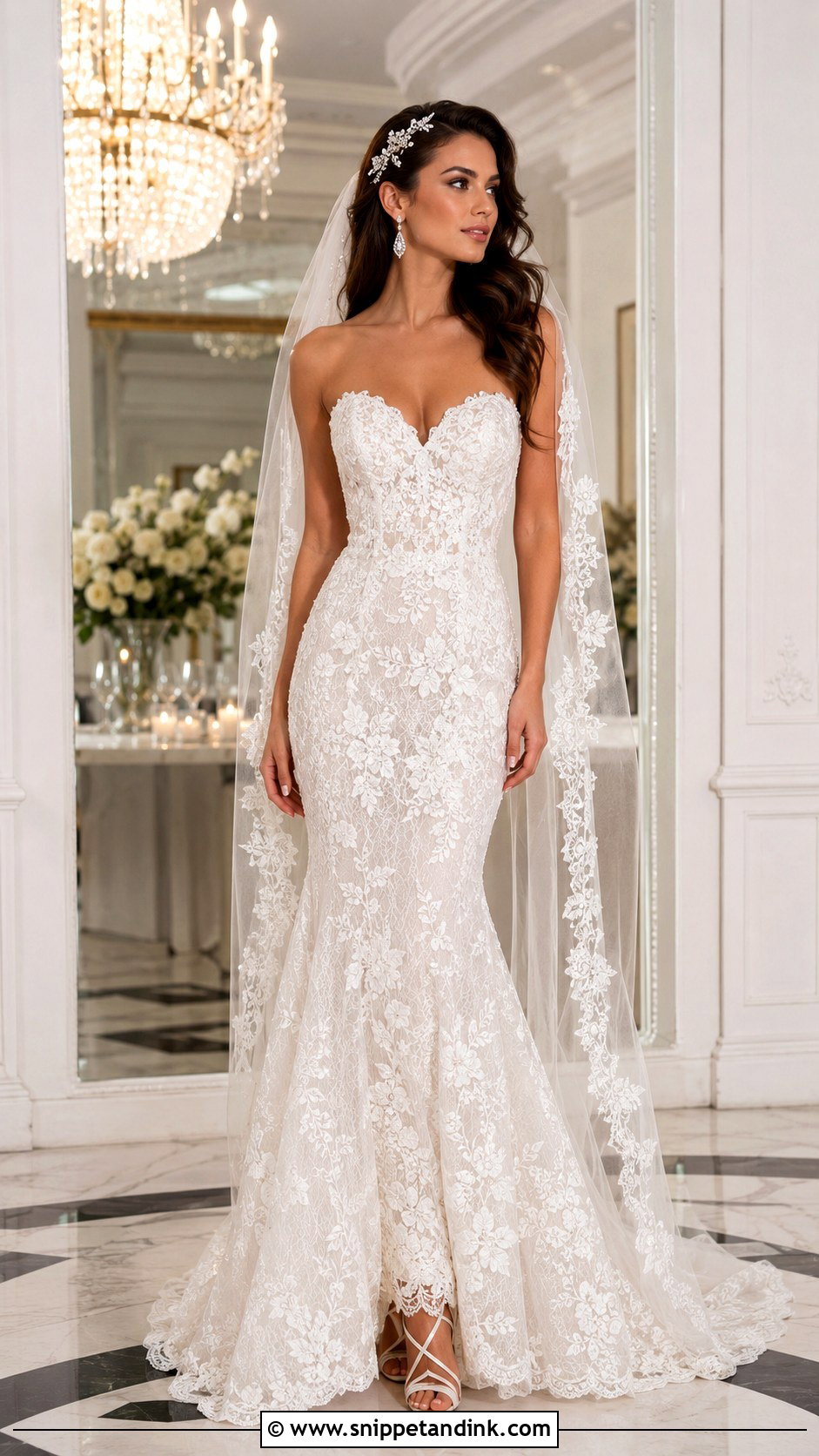
A lace mermaid gives a sculpted shape through the bodice and hips, then flares lower down. Lace actually suits the mermaid well because it hides the slight ripples that a fitted satin skirt can show. It needs strong structure inside, with boning and a firm lining, or the lace stretches across the hips by the end of the night. Walk, climb a step and sit at the fitting before committing. Strappy heels, a fingertip veil and a small crystal comb finish it.
5. Lace Ball Gown Wedding Dress
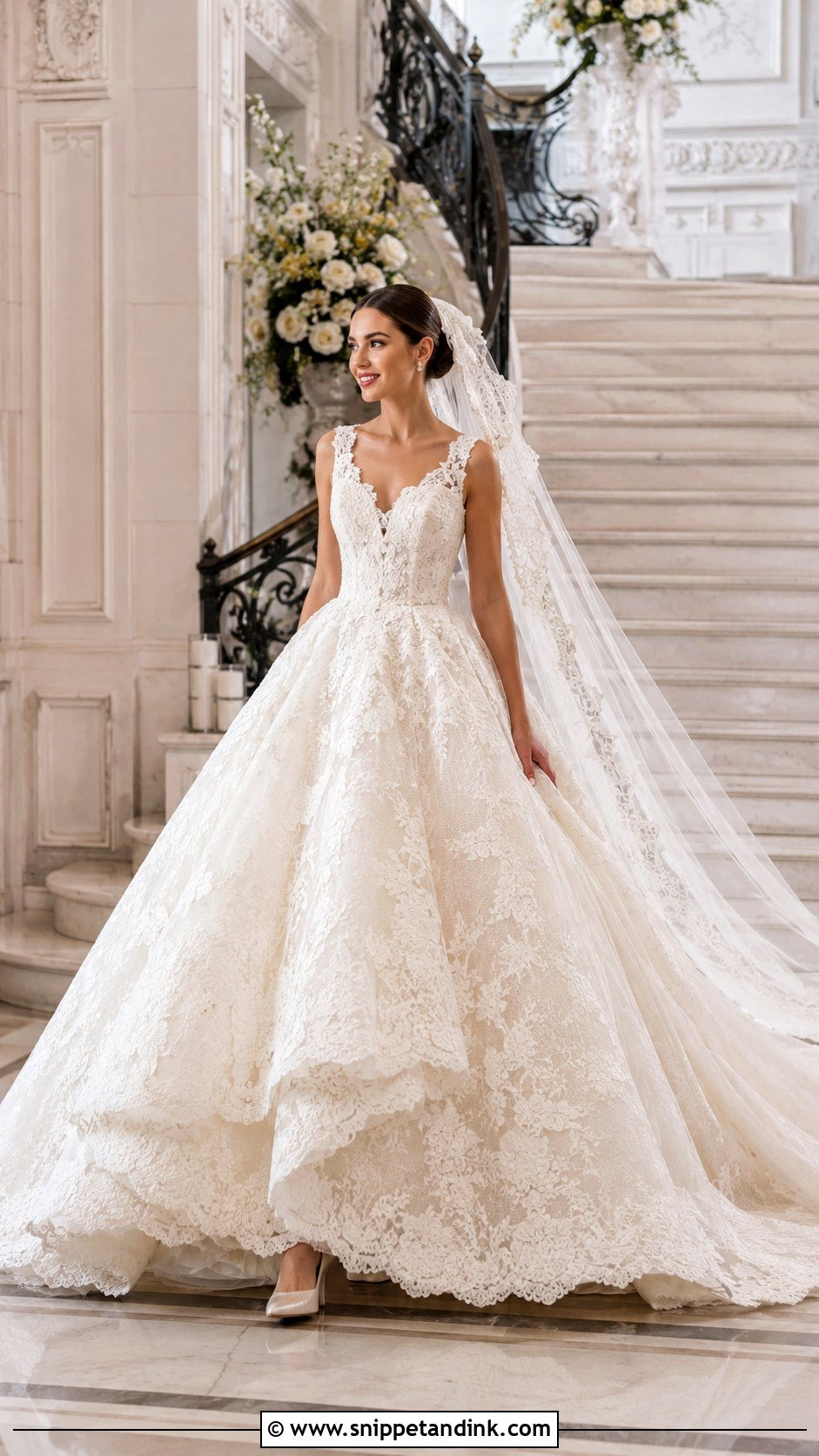
A lace ball gown is the grown-up version of the fairytale dress. The lace keeps a big skirt from looking plain. My advice is to ask what’s under the lace: lace layered over tulle is far lighter than lace on satin, and on a full skirt that weight difference is something you’ll feel by evening. A fitted lace bodice and a defined waist balance the volume. A cathedral veil and classic pumps are all it needs.
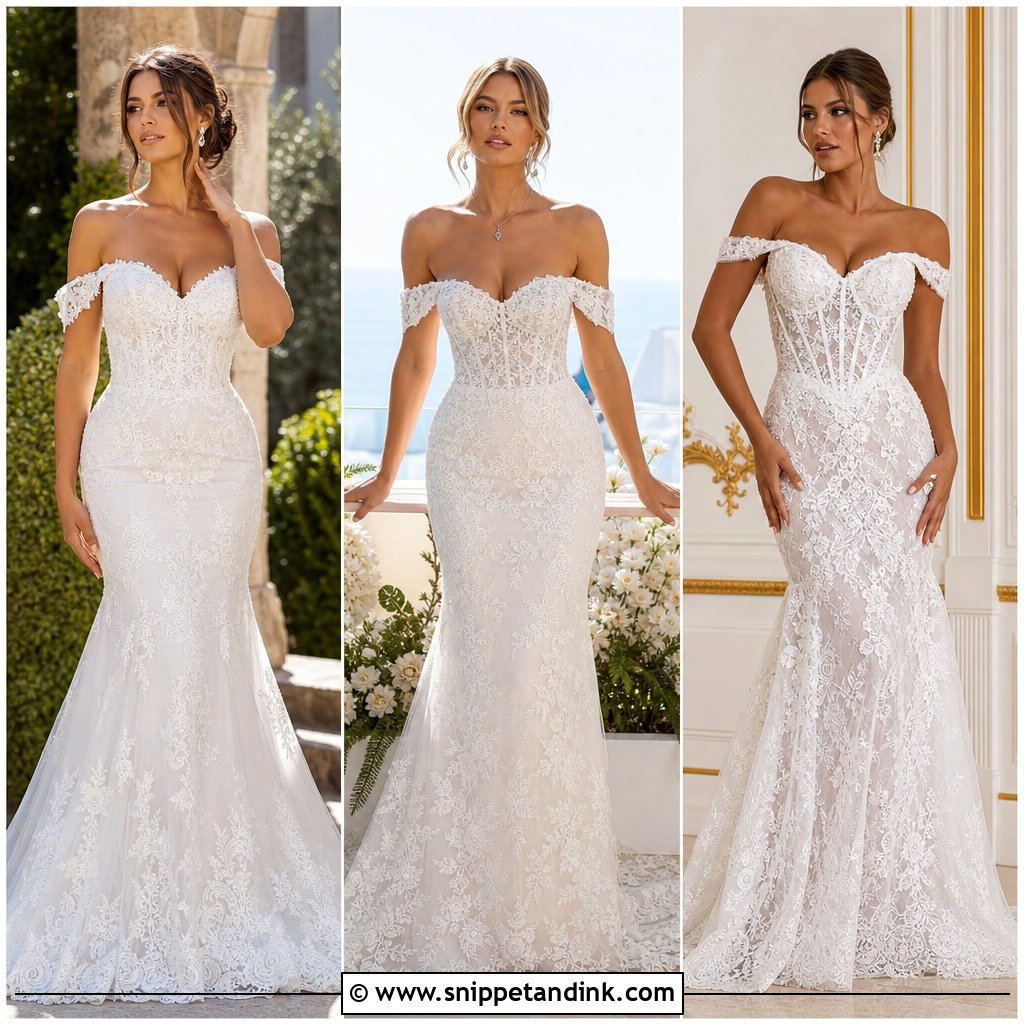
6. Off Shoulder Lace Wedding Dress
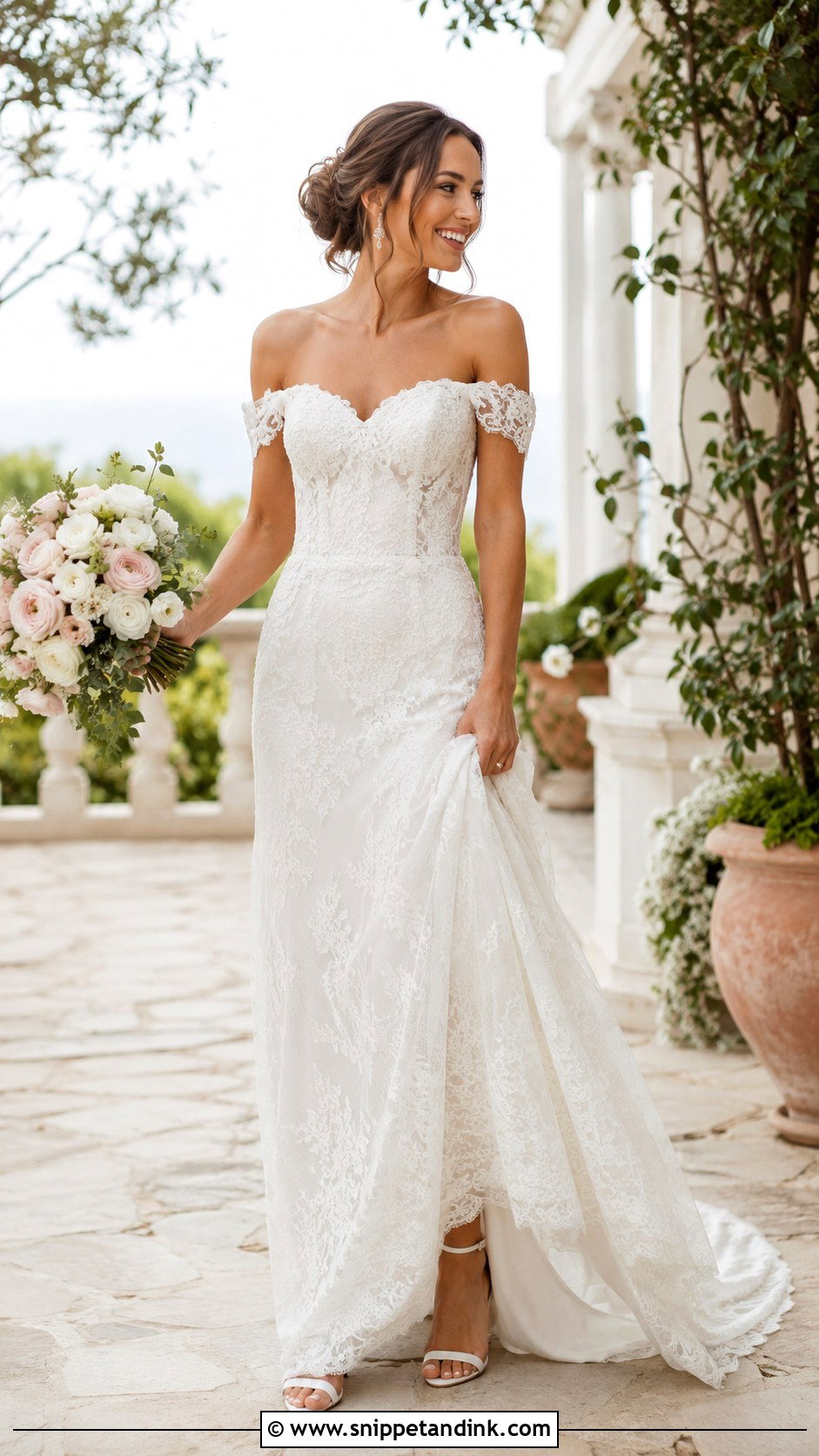
Off-shoulder lace frames the collarbone, and lace sleeves or straps give it a softer edge than plain fabric. Lace straps across the arm have almost no give, so lifting your arms is limited. That’s not a problem for the ceremony, but test it before you plan a lot of dancing. Fitted, A-line and ball gown skirts all suit it. A soft updo, drop earrings and a veil with a fine lace edge look right, and block heels help if you’ll be on grass.
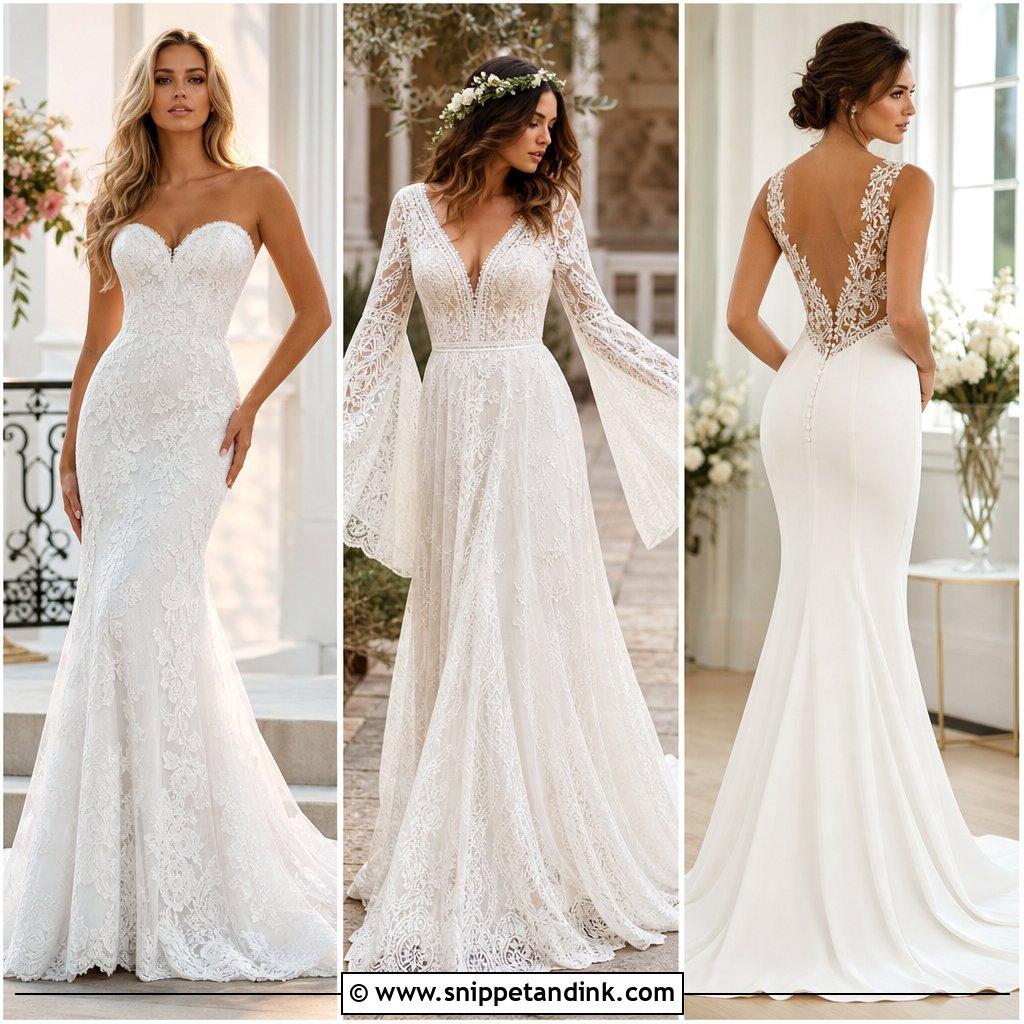
7. Strapless Lace Wedding Dress
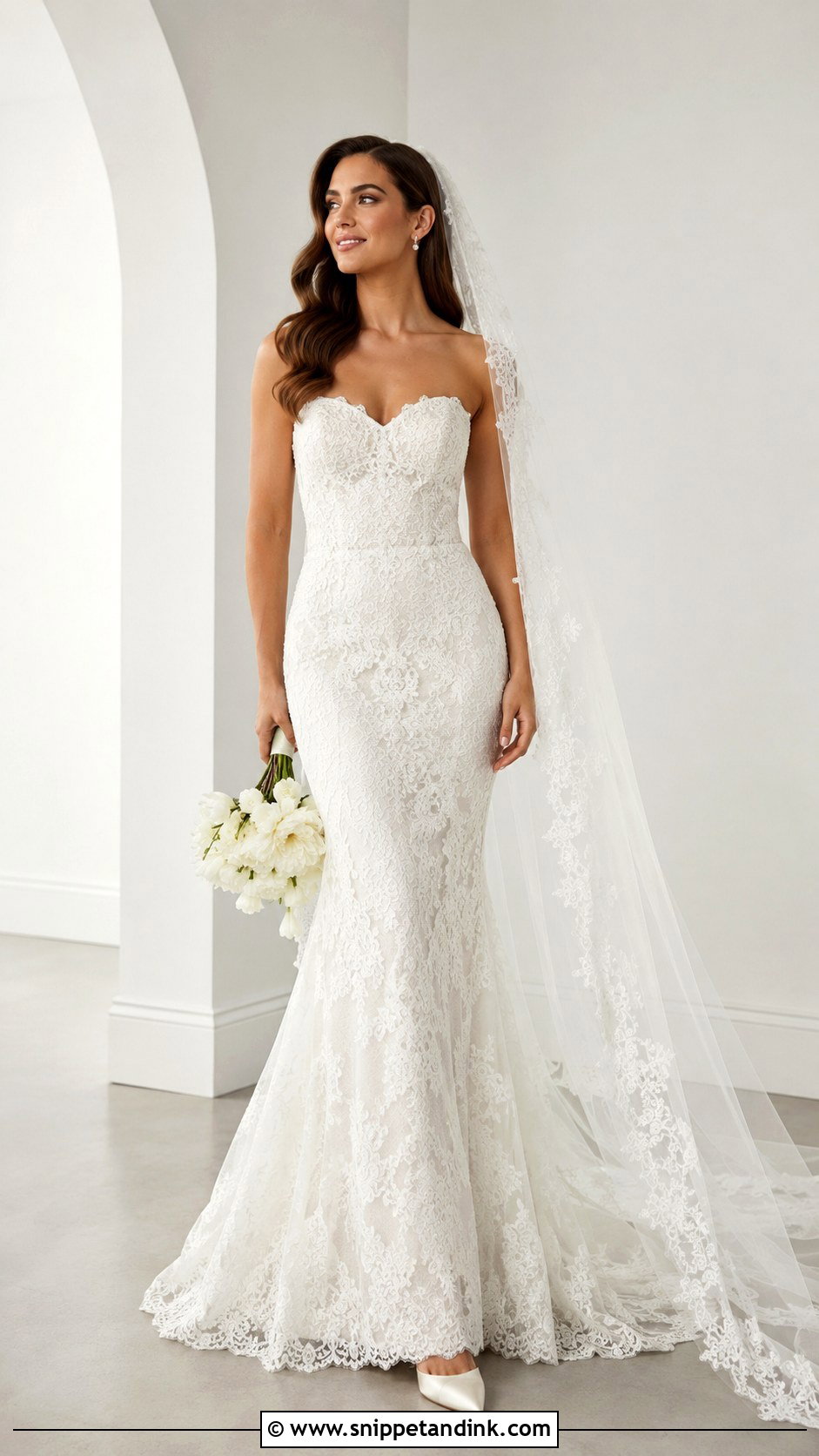
Strapless lace can look completely modern when the lace is sparse and the shape is clean. A straight neckline is sleek; a sweetheart is softer. Everything depends on the bodice construction. If it slides when you sit down at the fitting, it’ll slide all day. Good ones have boning and grip at the waist. For a covered ceremony look, add a lace bolero, sheer gloves or a removable topper, then take it off for the reception.
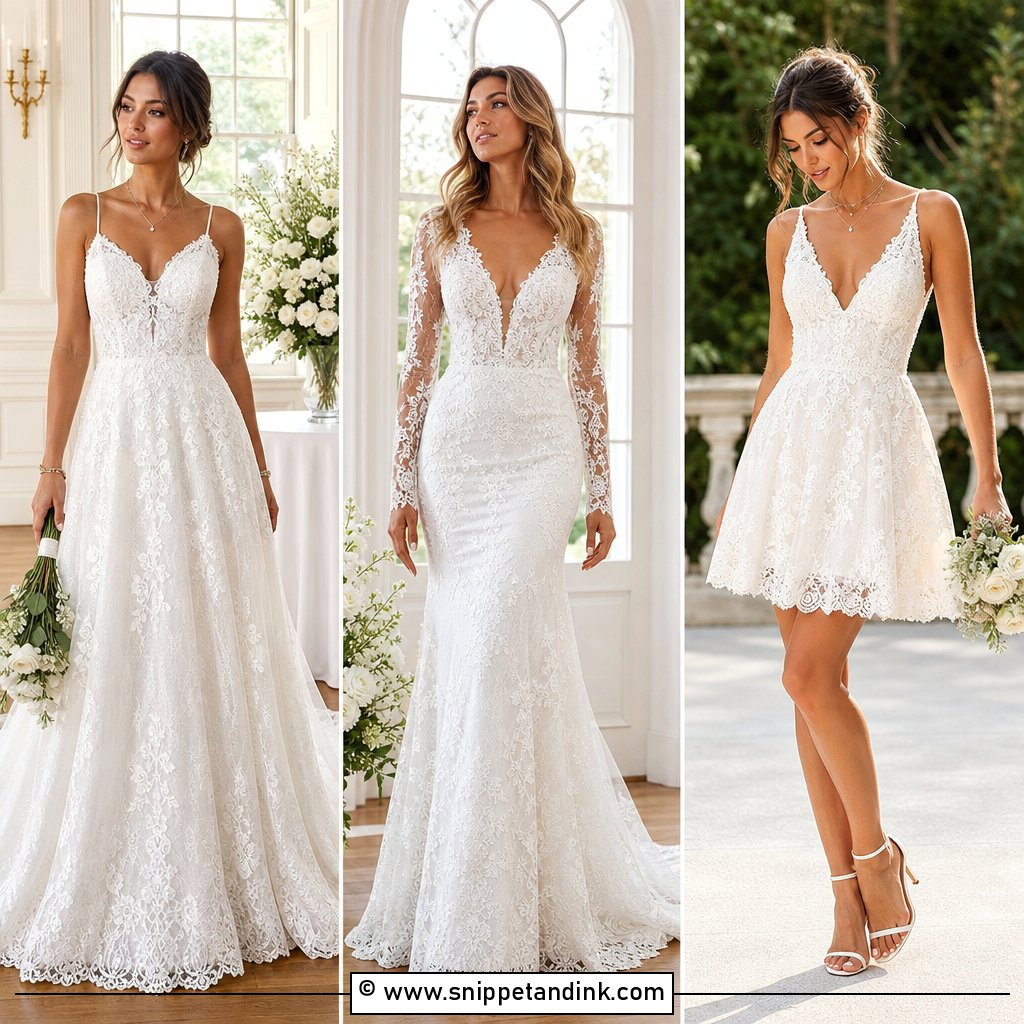
8. V Neck Lace Wedding Dress
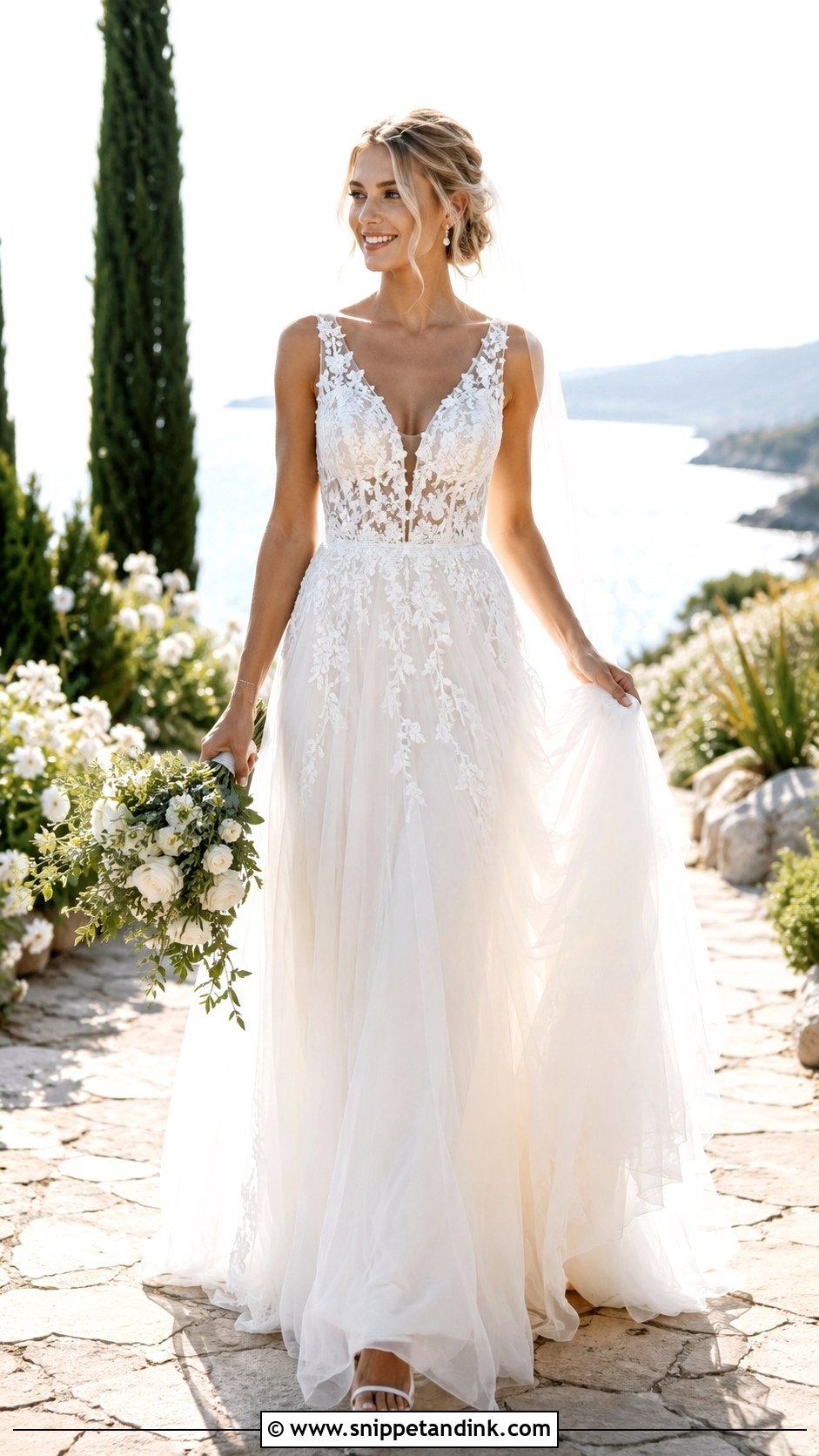
A V neck lengthens the upper body, and with lace around it you don’t need a necklace. Depth is personal. A soft plunge looks modern but needs a mesh panel or fashion tape to stay in place when you bend forward, so I always have brides lean over at the fitting. A modest V is easier to wear. Floral lace on the bodice with a flowing chiffon or tulle skirt looks light for outdoor and destination weddings.
9. Square Neck Lace Wedding Dress
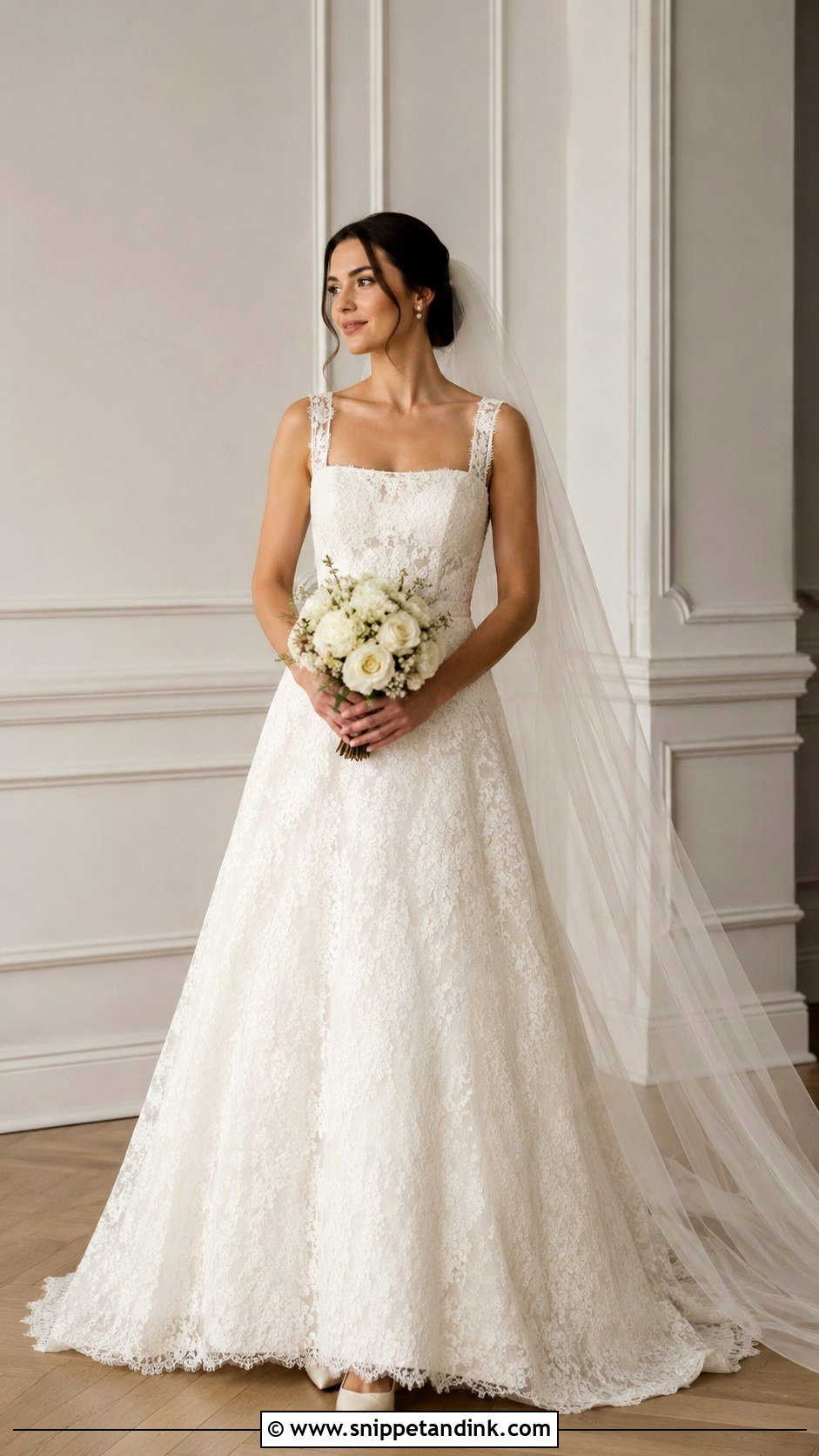
Square necklines give lace a structured, slightly vintage look. The straight edge also tames a heavy lace pattern, keeping it neat at the neckline. Long sleeves, wide straps or a fitted bodice with an A-line skirt all pair well. The open square feels secure because the straps sit on the shoulders rather than off them. Pearl studs, a smooth veil and closed-toe heels are enough.
10. Illusion Lace Wedding Dress
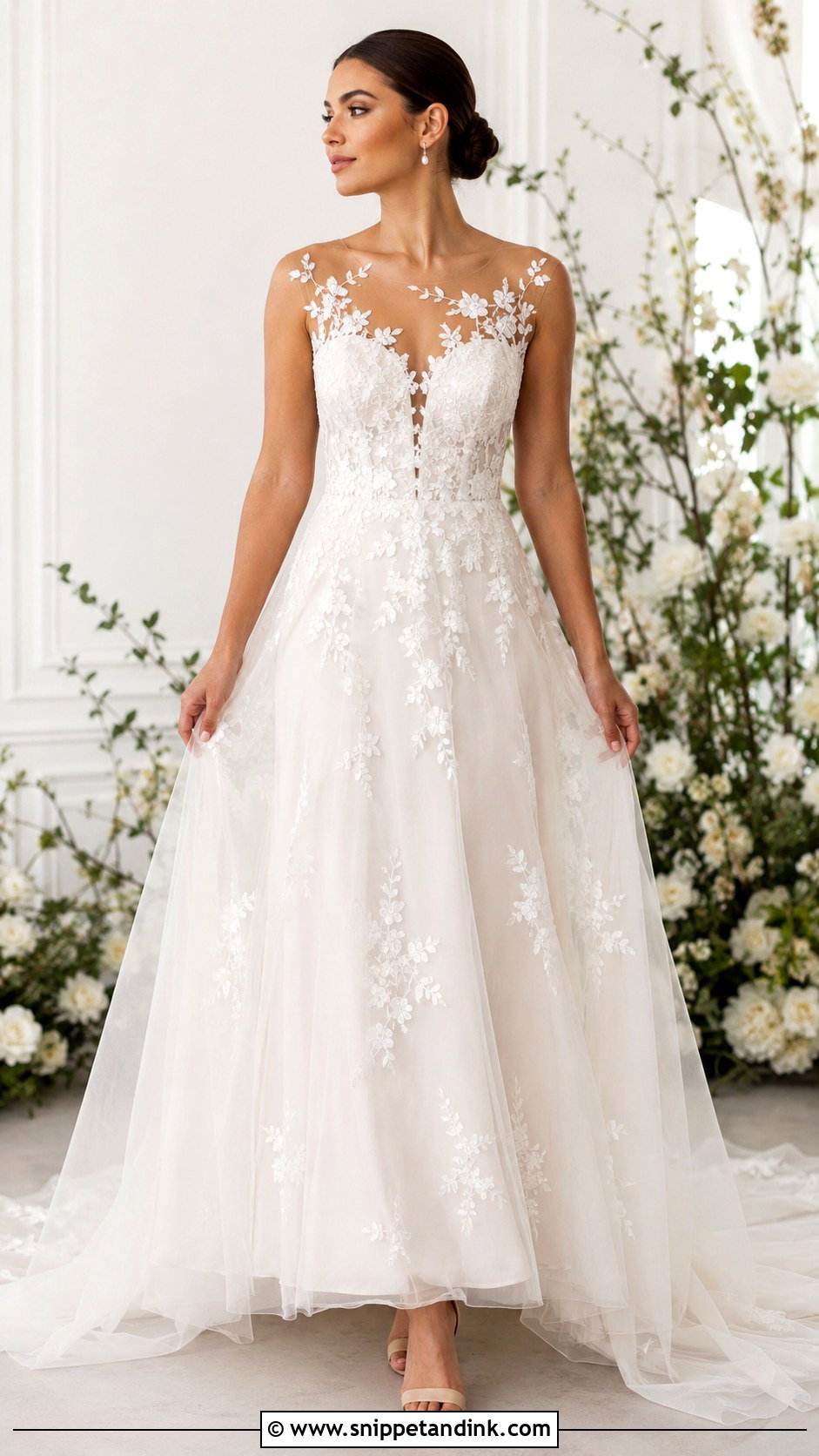
Illusion lace makes the pattern look as though it’s sitting directly on the skin, using a fine mesh underneath. The mesh colour is what makes or breaks it. Match it to your skin tone in daylight, because a mesh that’s too pale shows as a grey film in photographs, especially under flash. It works at the neckline, sleeves, back or side panels. Choose a lined bodice if you want more coverage. Keep jewellery minimal and the hair smooth.
11. Vintage Lace Wedding Dress
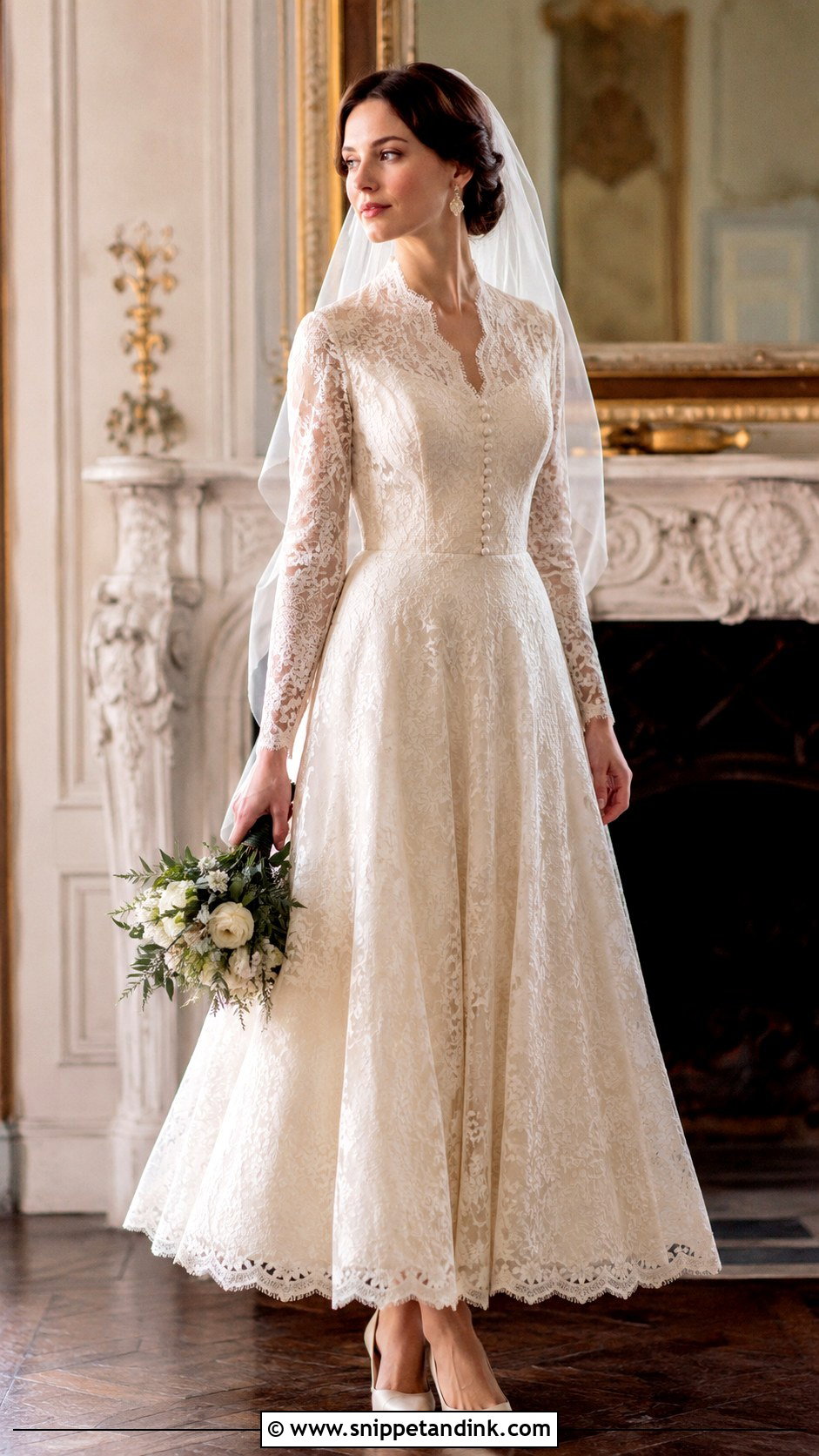
Vintage lace has character: scalloped edges, covered buttons, high necks and old-fashioned floral patterns. Choose one or two of those details, not all of them, and keep the hair and makeup current so the gown doesn’t tip into costume. If the lace is genuinely old, have a specialist check it before alterations. Older lace can be brittle and tears along the folds where it’s been stored. Ivory pumps and heirloom-style earrings suit it in a historic venue or at home.
12. Boho Lace Wedding Dress
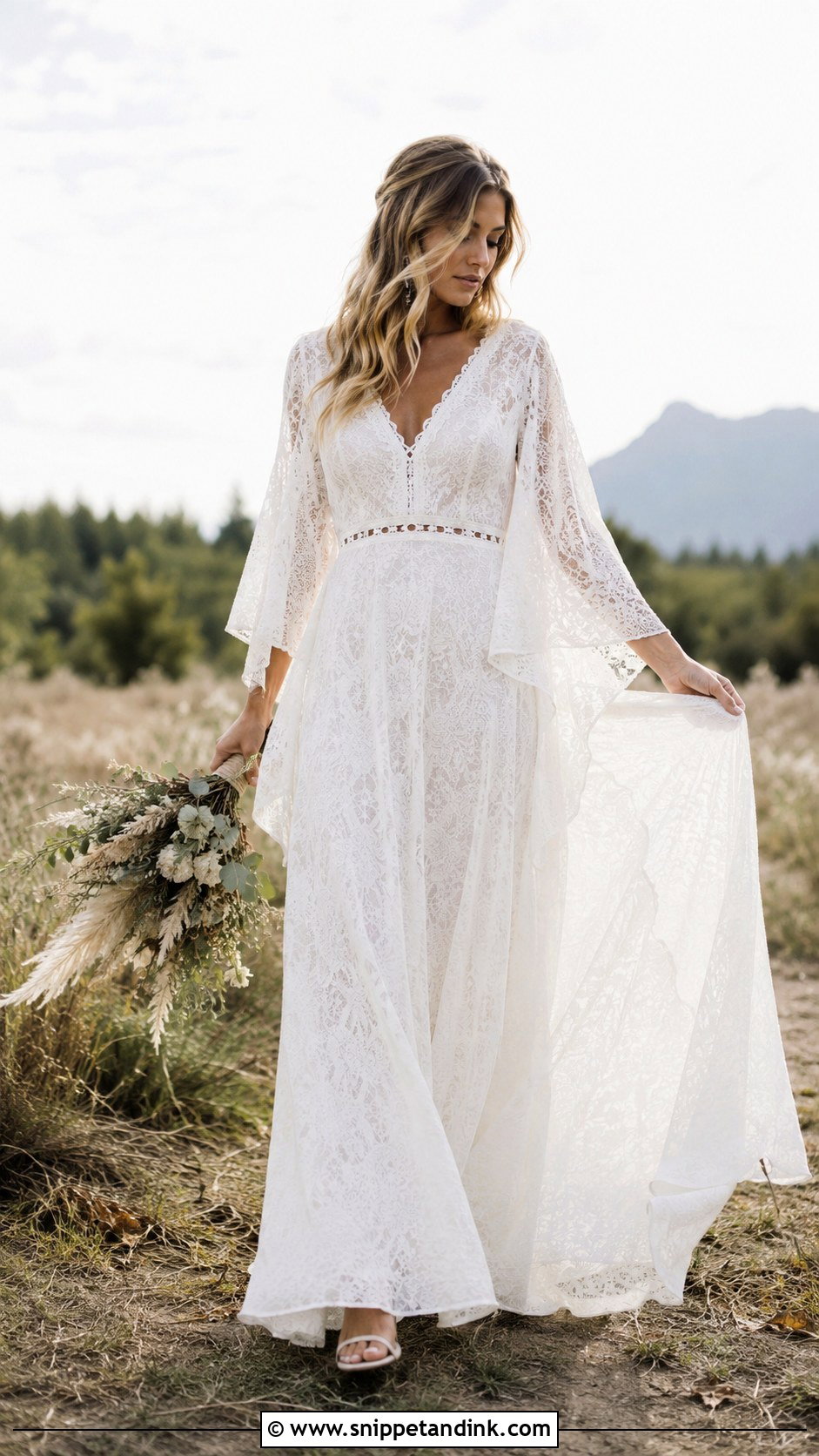
Boho lace is lighter and looser: flowing sleeves, crochet-style lace, a soft skirt that moves. It’s meant for outdoor weddings, and that’s where its weaknesses show. Open crochet lace catches on branches, bark and rough benches, so walk the venue in your mind before choosing a long train. A refined fit stops it from looking too casual. Loose waves, low heels or sandals and a natural bouquet complete it.
13. Floral Lace Wedding Dress
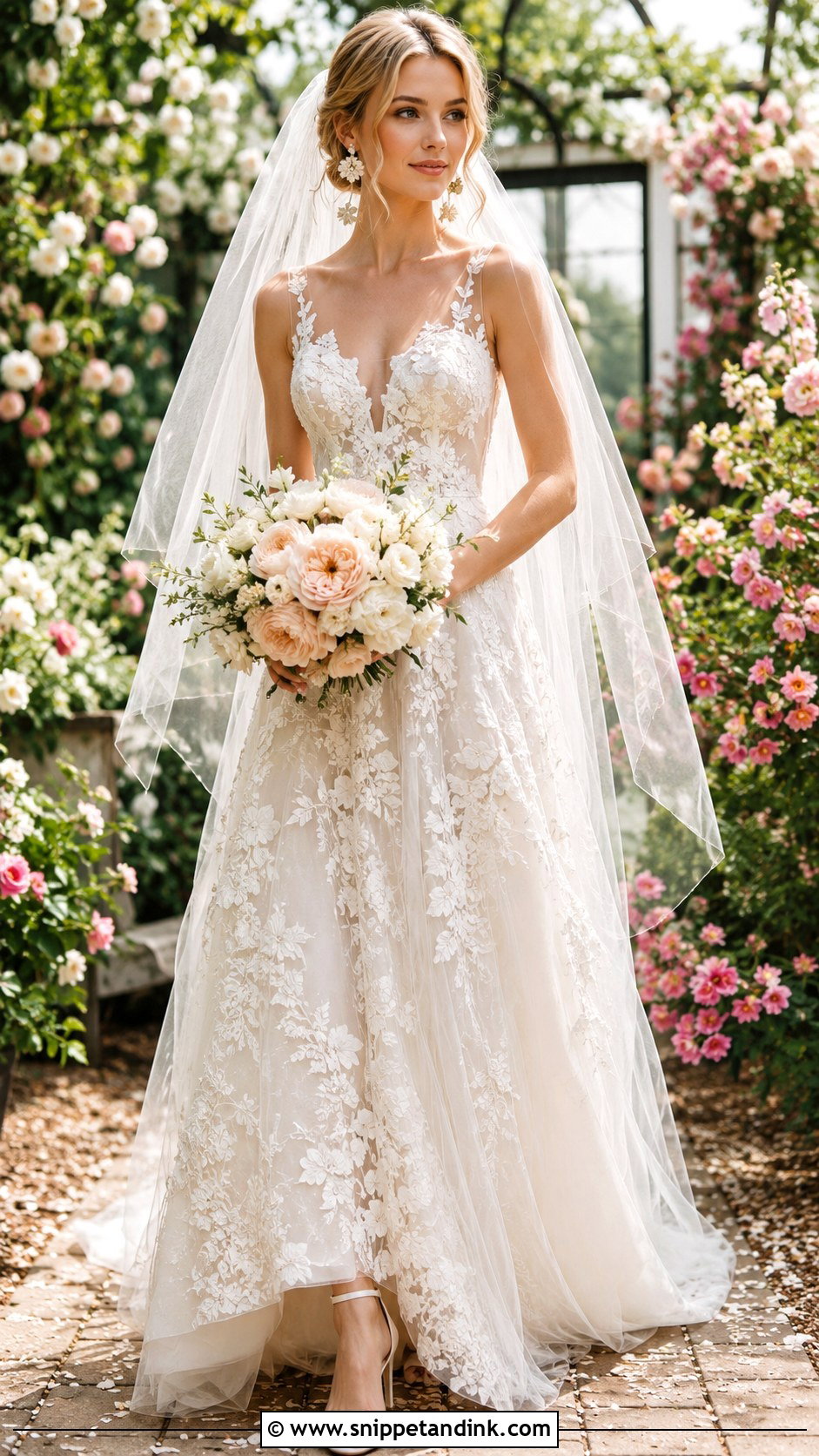
Floral lace is the most varied category here. Large floral appliqués look modern; small, repeating flowers feel traditional. The bigger the motif, the more important its placement, since a large flower landing awkwardly on the bust or hip is distracting in photos. Ask whether the appliqués can be repositioned during alterations. A tulle veil and simple earrings let the lace lead, and a coordinated but quiet bouquet stops the florals from doubling up.
14. Chantilly Lace Wedding Dress
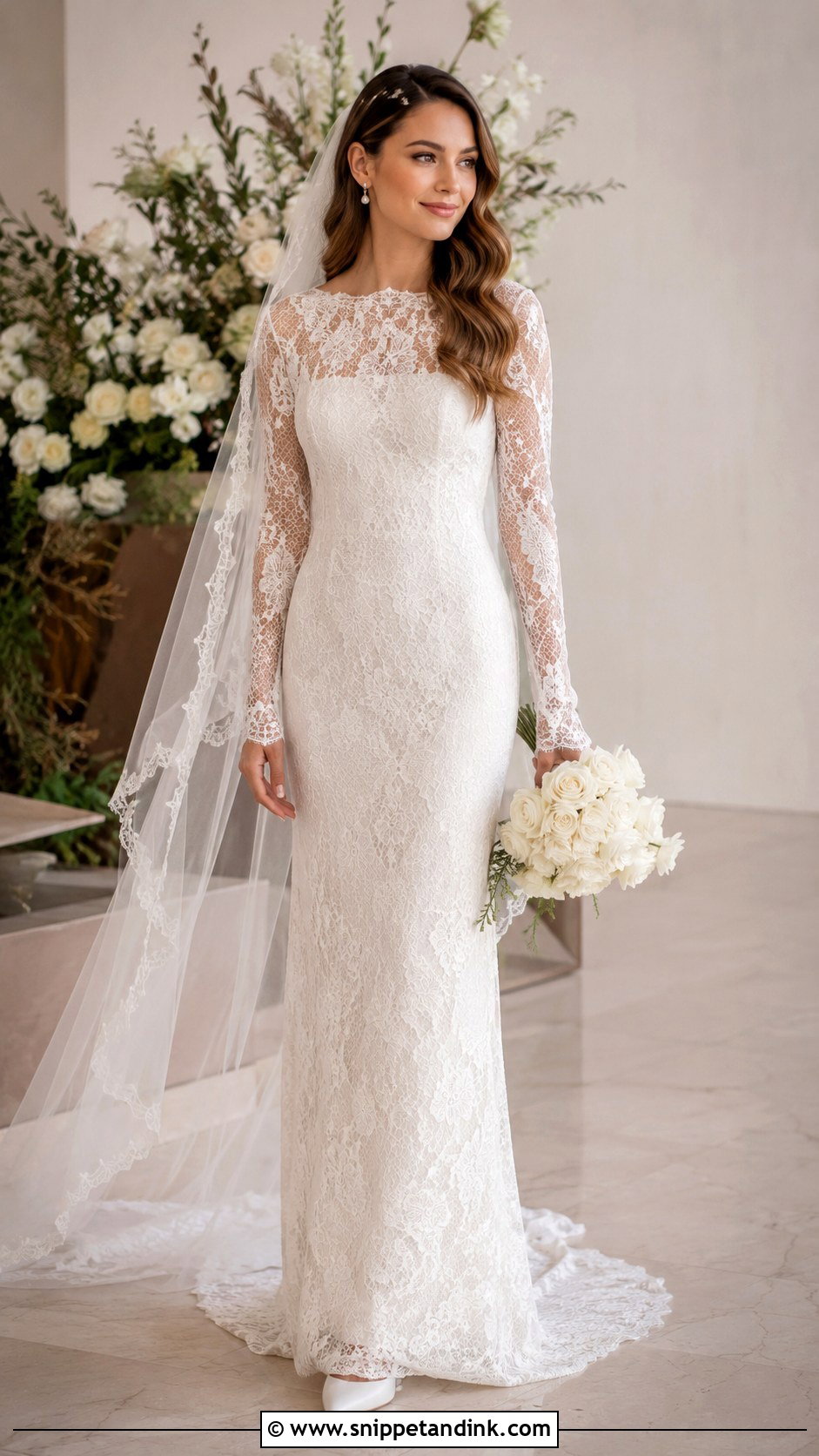
A Chantilly lace wedding dress is light and delicate, with a fine net background and soft outlined flowers. That fineness is also its weakness. Chantilly tears more easily than heavier laces, so I’d keep sharp-edged jewellery and bouquet wires away from it. It looks especially good on a fitted sheath or a soft A-line. A narrow veil and dainty earrings suit the airy quality.

15. Corded Lace Wedding Dress
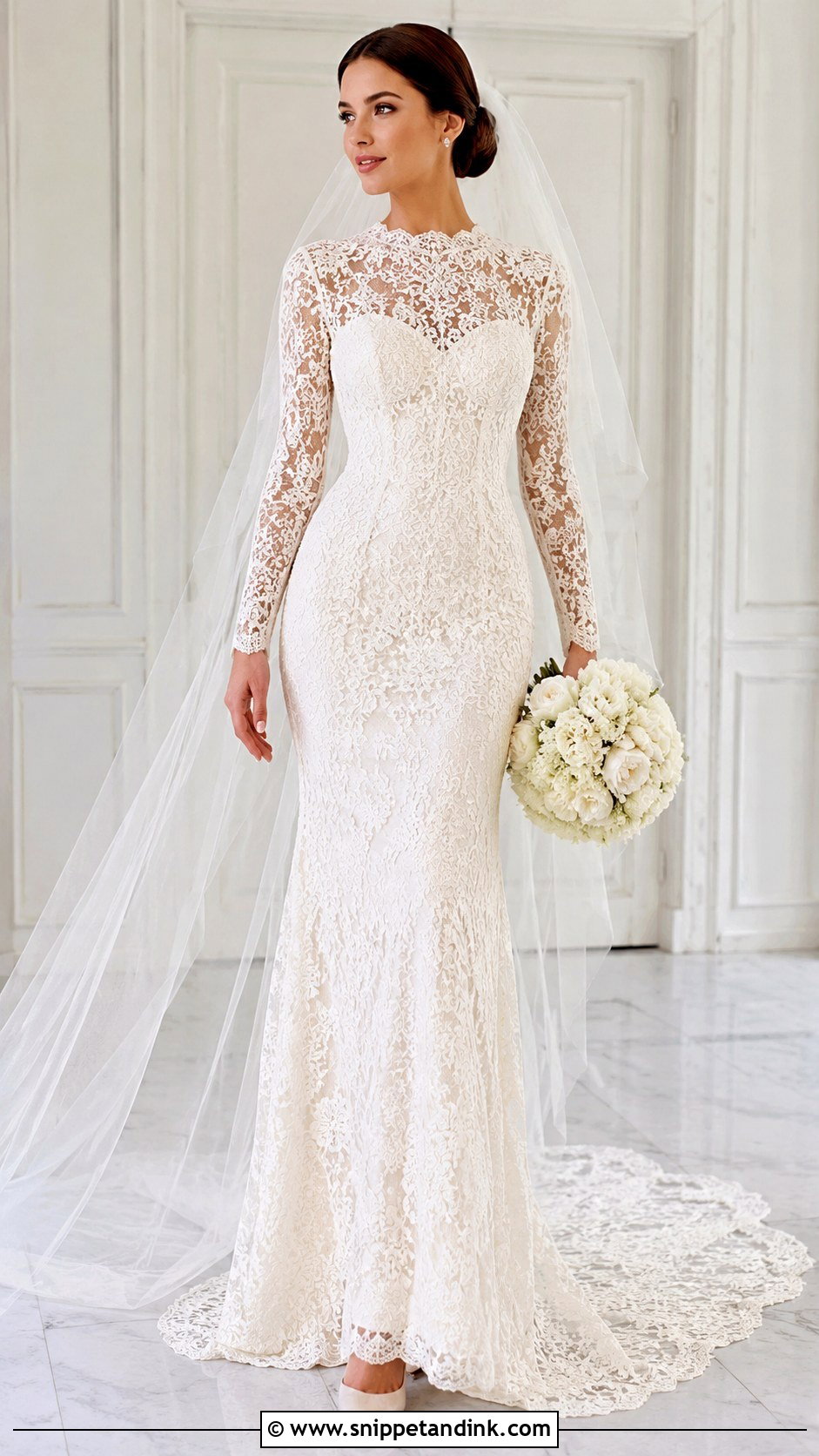
Corded lace has a raised cord outlining each motif, so the pattern stands out clearly in photos even from a distance. It’s sturdier than Chantilly and holds up well on bodices, long sleeves and structured skirts. It’s also scratchier on the inside, so ask for a soft lining where it touches bare skin, particularly at the underarm. A modern silhouette keeps it from feeling traditional. Sleek heels, a clean veil and almost no jewellery.
16. Lace Wedding Dress With Train
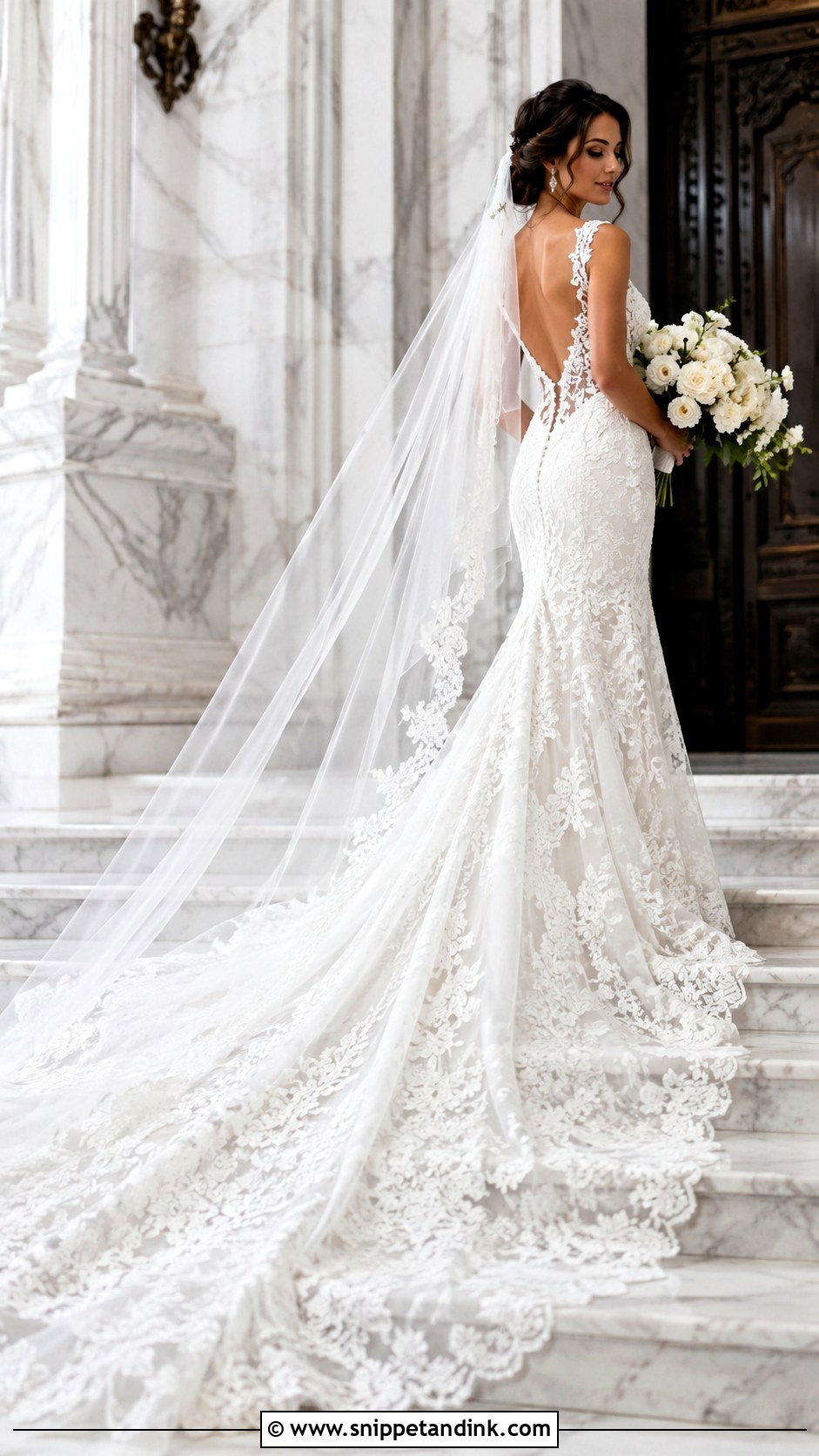
A train gives a ceremony entrance real drama, whether it’s covered in lace, edged with it or trailed with appliqués. A lace train looks wonderful from behind, but it picks up everything it drags over. On gravel or grass, lace edges fray and snag quickly. I’d keep the front easy to walk in and plan a bustle for the reception, with someone who’s practised it. A long veil and supportive heels complete it.
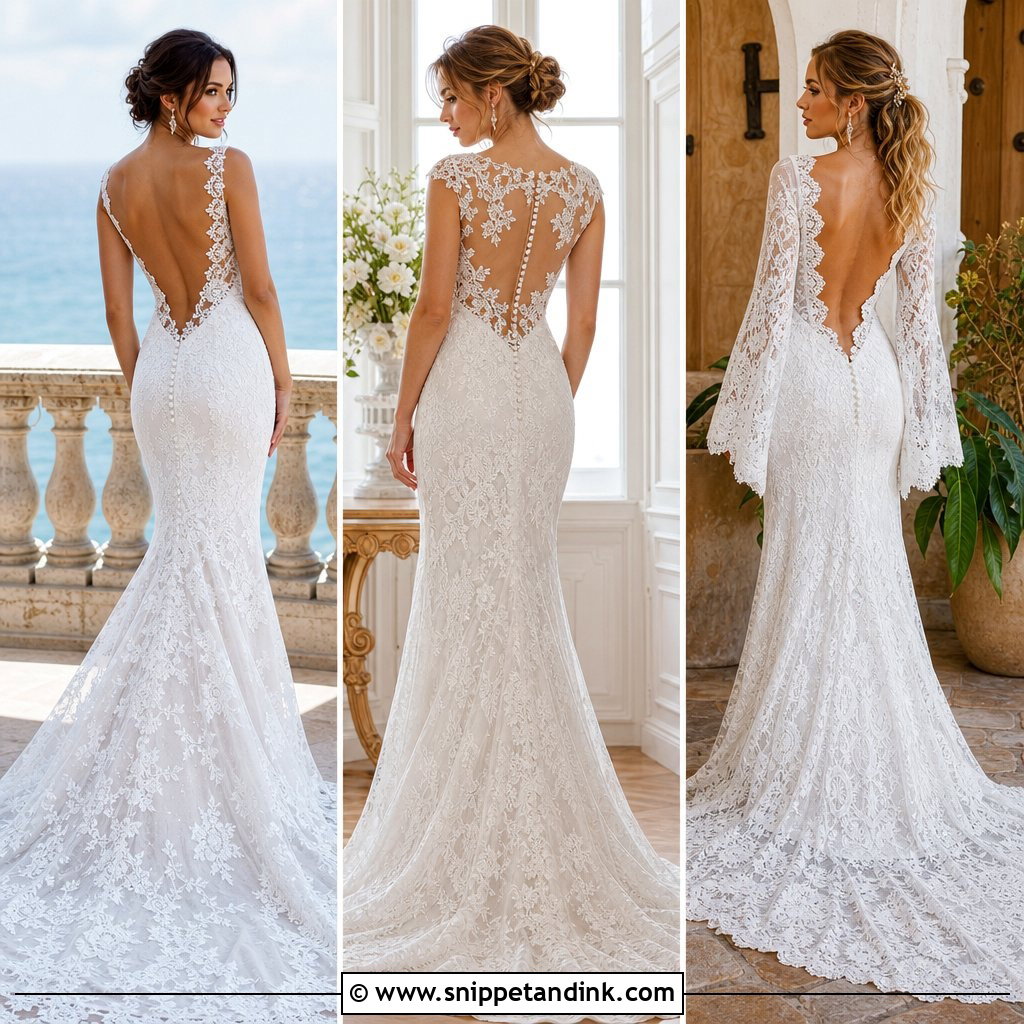
17. Lace Wedding Dress With Open Back
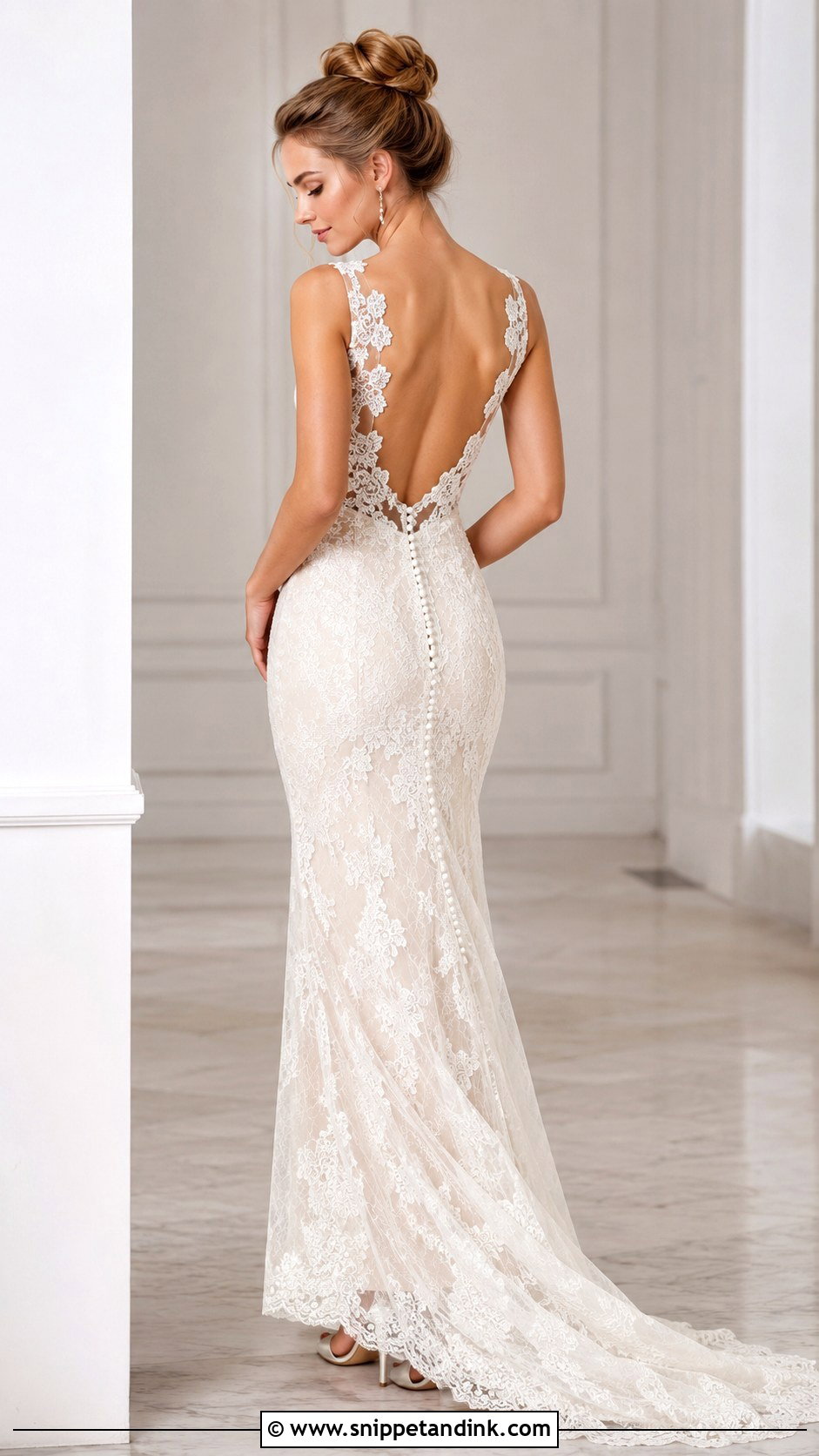
An open back gives a classic front a modern surprise. Lace trim around the opening frames it, and covered buttons add finish. The issue is support. With the back open, everything rests on the straps and front bodice, so built-in cups and secure straps matter, and I’d test it by reaching forward as if signing the register. An updo or back-drop earrings keep the back visible.
18. Lace Wedding Dress With Sleeves
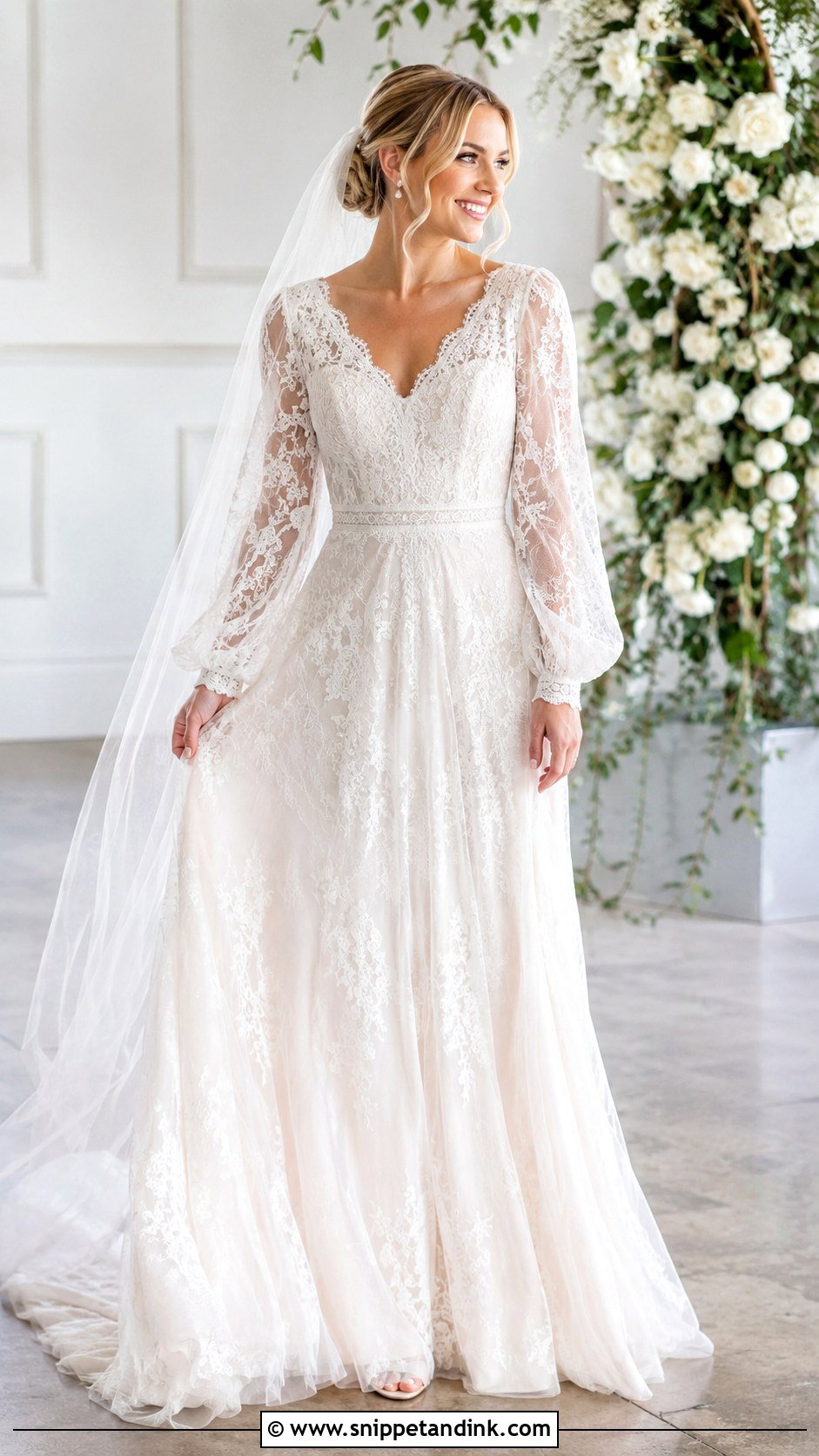
Sleeves change the whole mood of a lace gown. Fitted sleeves look classic, flutter sleeves look soft, and bishop sleeves feel relaxed and fashion-forward. Bishop sleeves gather at the wrist, so check they don’t drag across food or catch on a cake knife. Keep the rest of the outfit simple when sleeves are detailed. Lightweight lace works year-round; lined or heavier lace is better for colder months.
19. Lace Sheath Wedding Dress
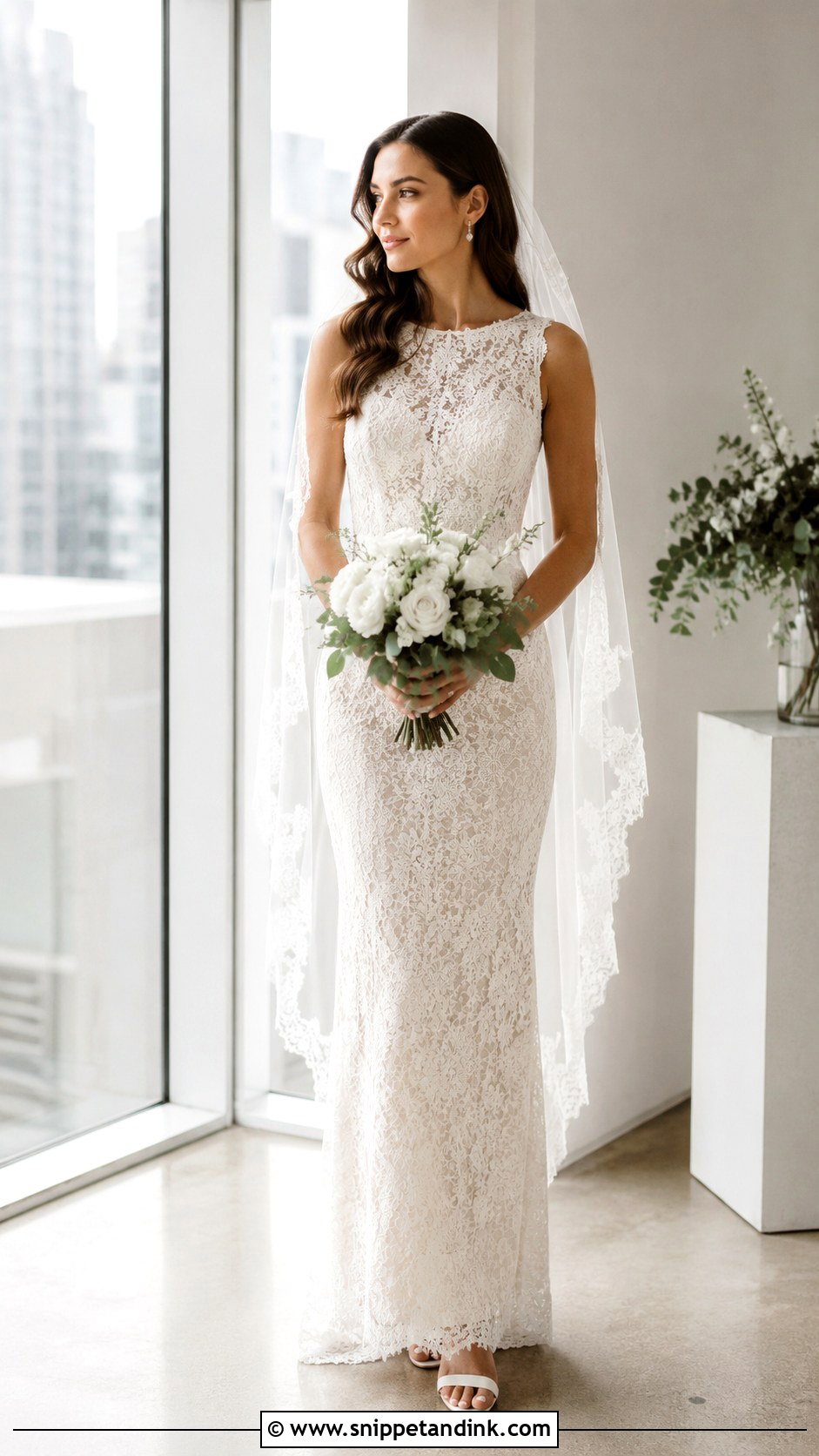
A lace sheath follows the body in a smooth line, less dramatic than a mermaid but still feminine. With so little volume, the lace pattern is the whole show, and seams matter: I look for lace that’s matched across the side seams rather than cut off mid-flower. It suits smaller venues and destination weddings. Want more shape? Choose subtle waist definition or a removable overskirt for the ceremony. Slim heels and soft waves complete it.
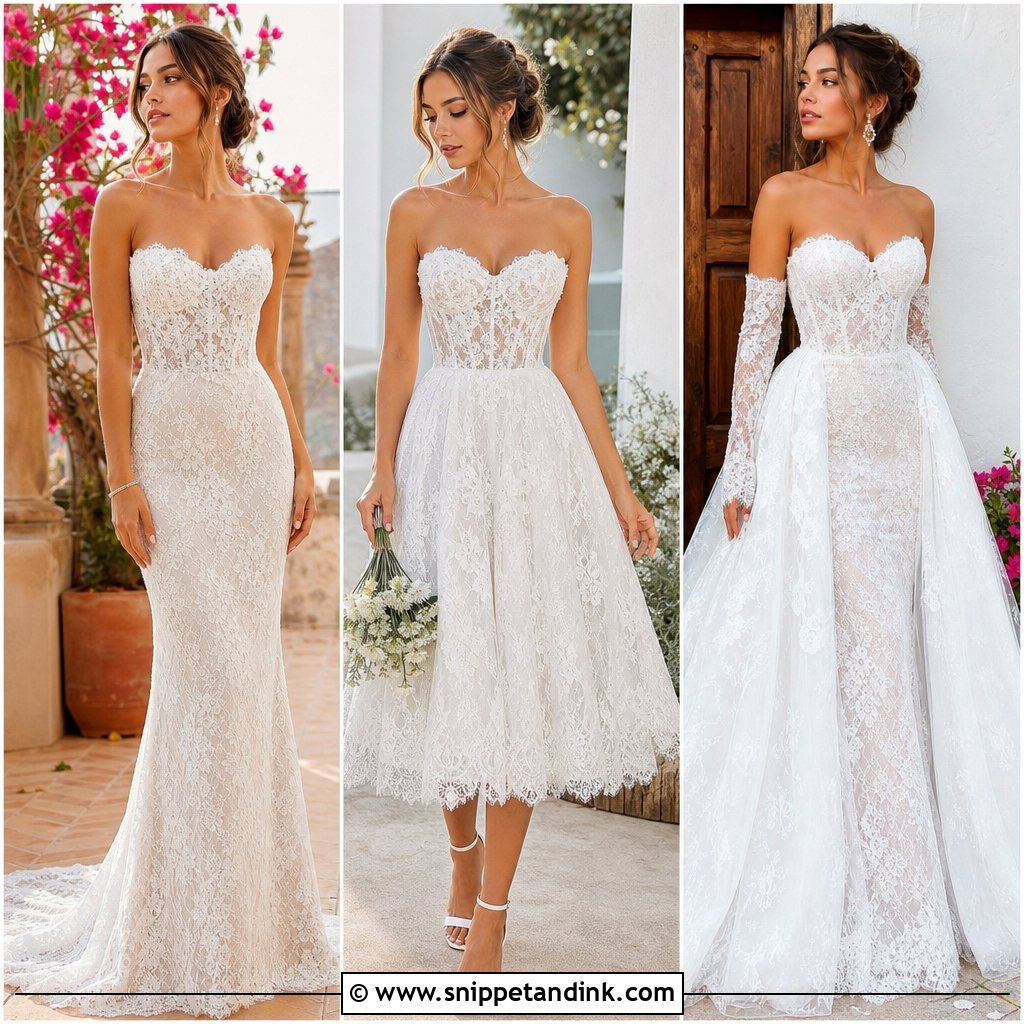
20. Lace Wedding Dress With Detachable Skirt
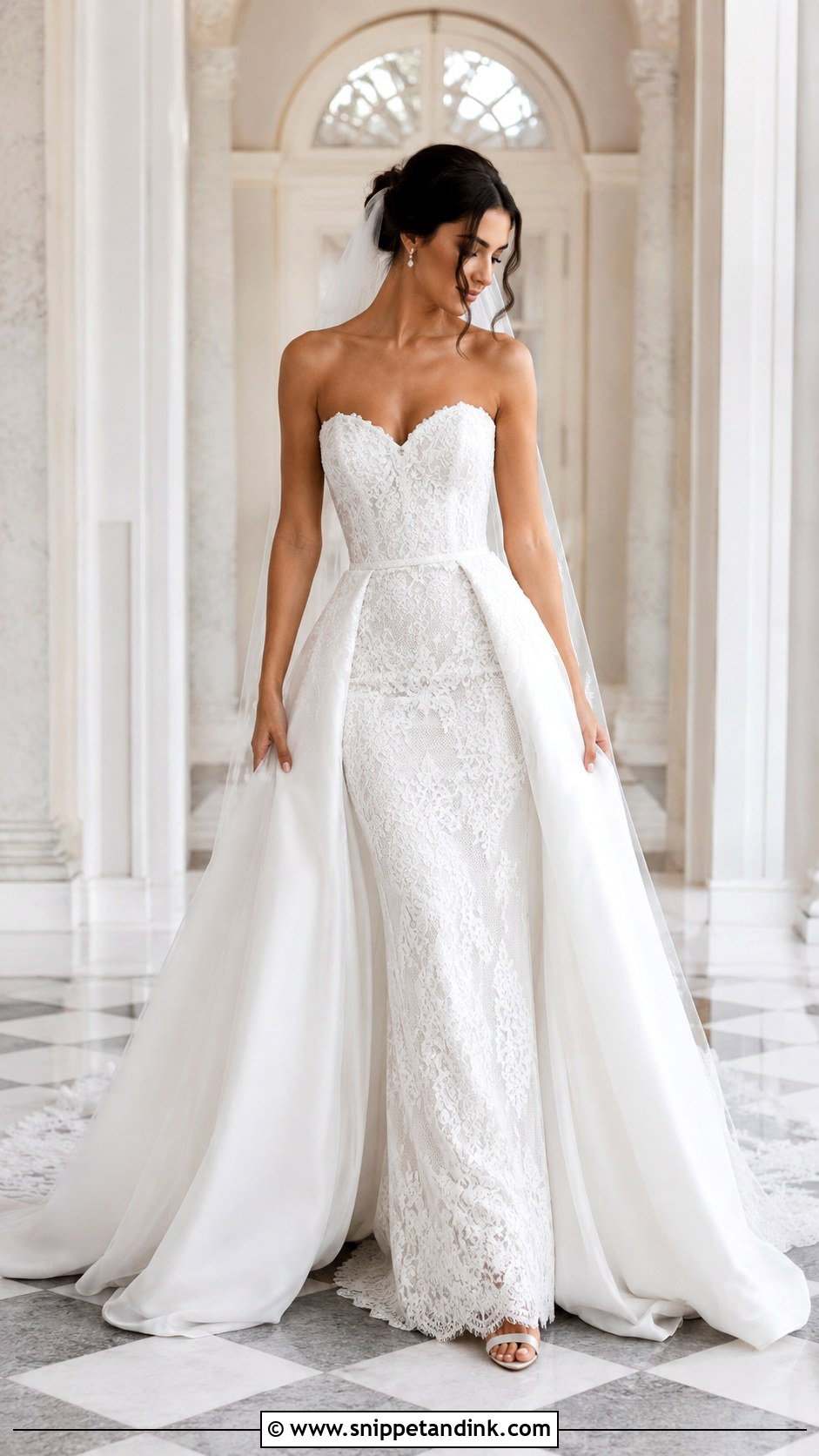
A lace gown with a detachable skirt gives you a full ceremony silhouette and a slimmer reception dress. The overskirt is usually tulle or organza, and the join at the waist is the tricky part, because lace edges can catch in the closures. Test the fastening yourself and make sure it comes off in about a minute. Switch the long veil for a shorter one or a hair accessory once it’s off.
21. Lace Wedding Dress With Pearl Details
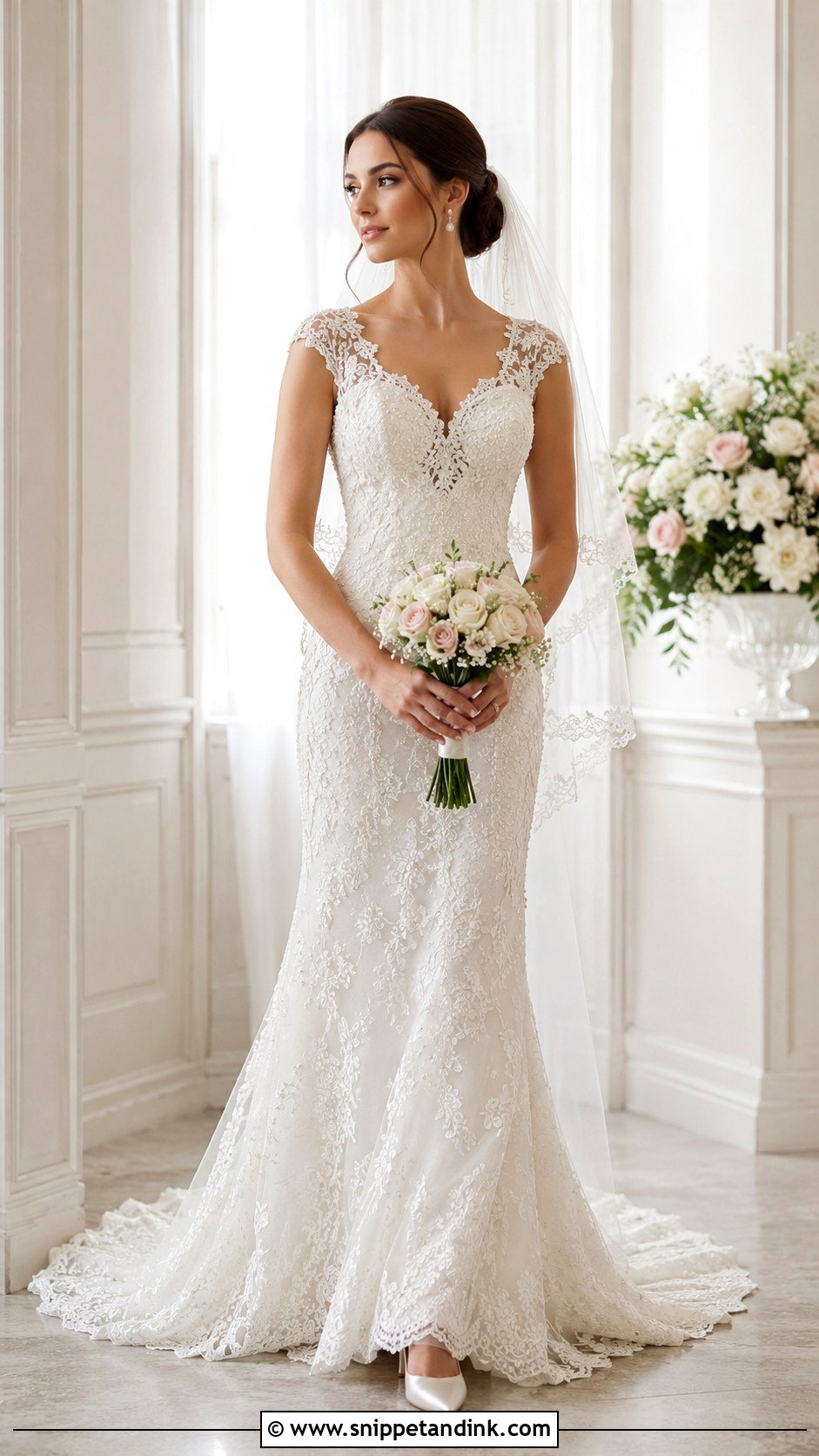
Pearls and lace are a natural pairing, and pearls scattered lightly over the bodice or along the straps catch light softly. The key is restraint: pearls should sit on the lace motifs, not cover them. Pearls also add weight, so a heavily pearled bodice needs a sturdy lining. Pearl earrings, satin shoes and a neat bun or soft waves are enough. It does especially well in bright natural light.
22. Minimal Lace Wedding Dress
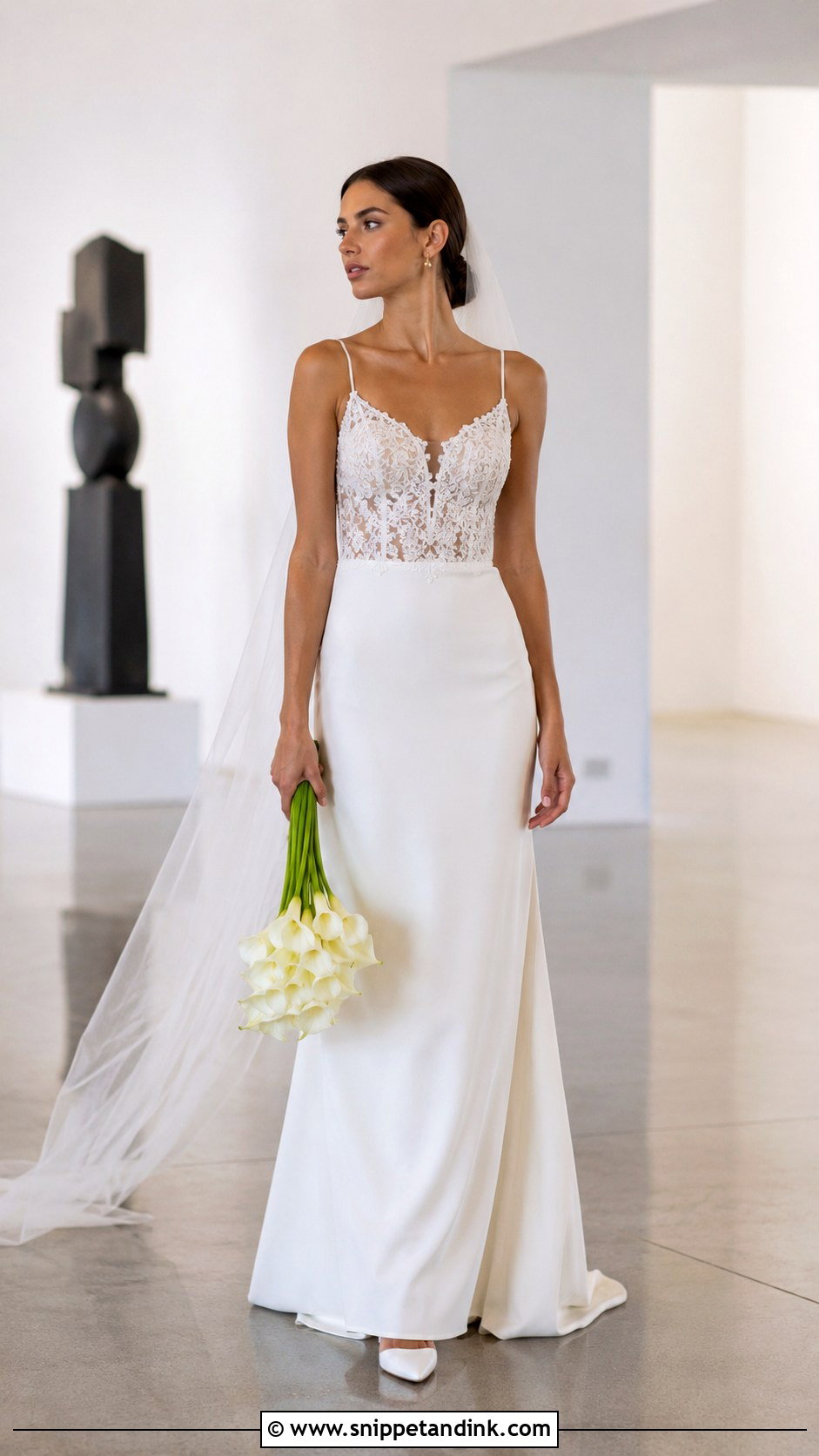
Minimal lace means texture without fuss: a straight neckline, slim straps and lace used in just one place, perhaps a lace bodice over a plain crepe skirt. The join between lace and crepe should be crisp, since a wavy seam is very obvious when everything else is clean. Sleek pumps, tiny earrings and a simple veil keep it calm. It suits city weddings and brides who dislike anything that looks overdone.
23. Lace Wedding Dress With Corset Bodice
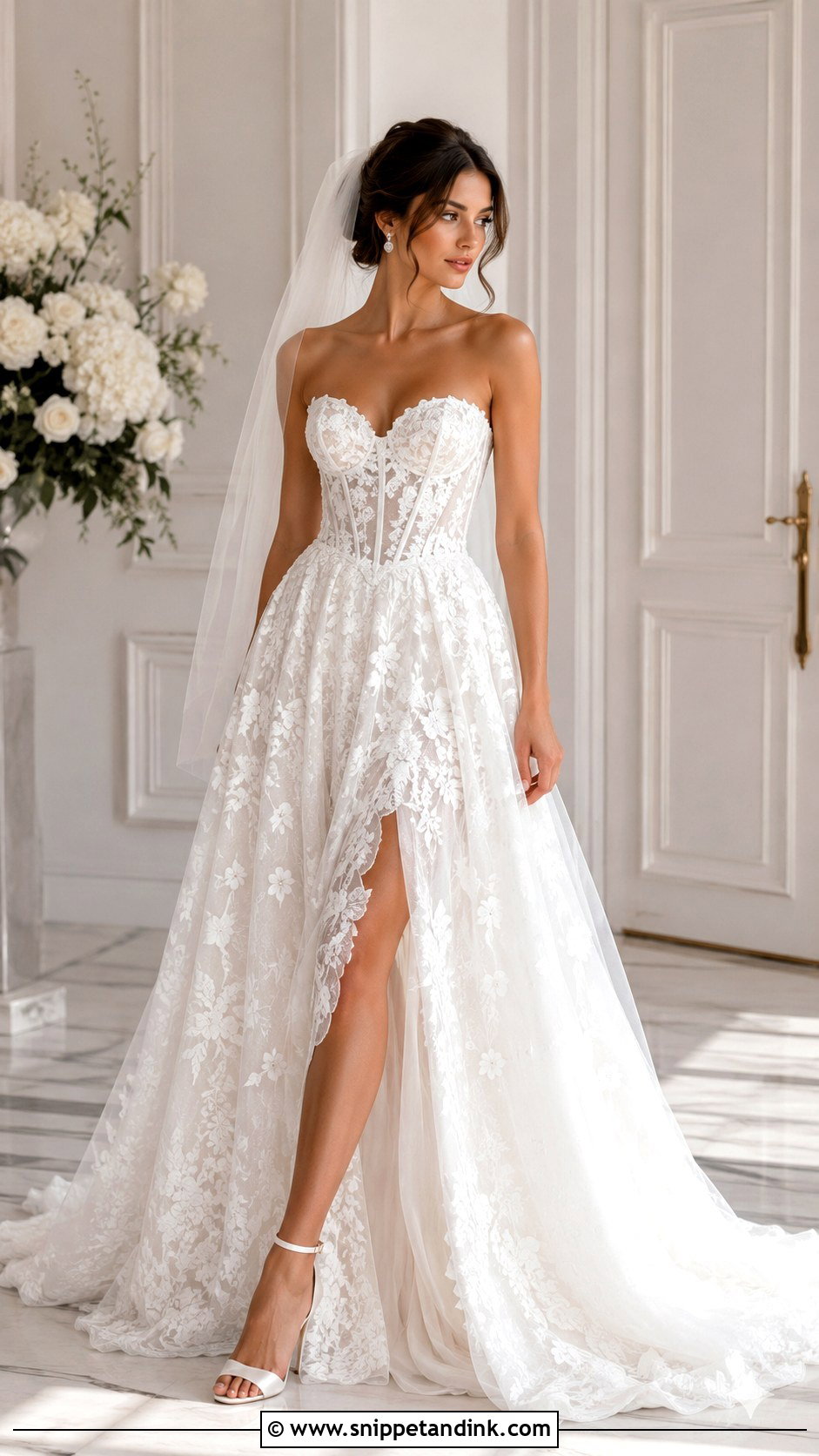
A corset bodice in lace gives shape and support. Visible boning looks modern softened by floral lace or sheer panels. I check the boning channels, since bones that poke through lace after a few hours of sitting are a common complaint, and well-made gowns have them sewn into a lining rather than directly behind the lace. A lined corset gives more coverage; illusion lace looks lighter. Satin heels and a simple veil let the bodice lead.
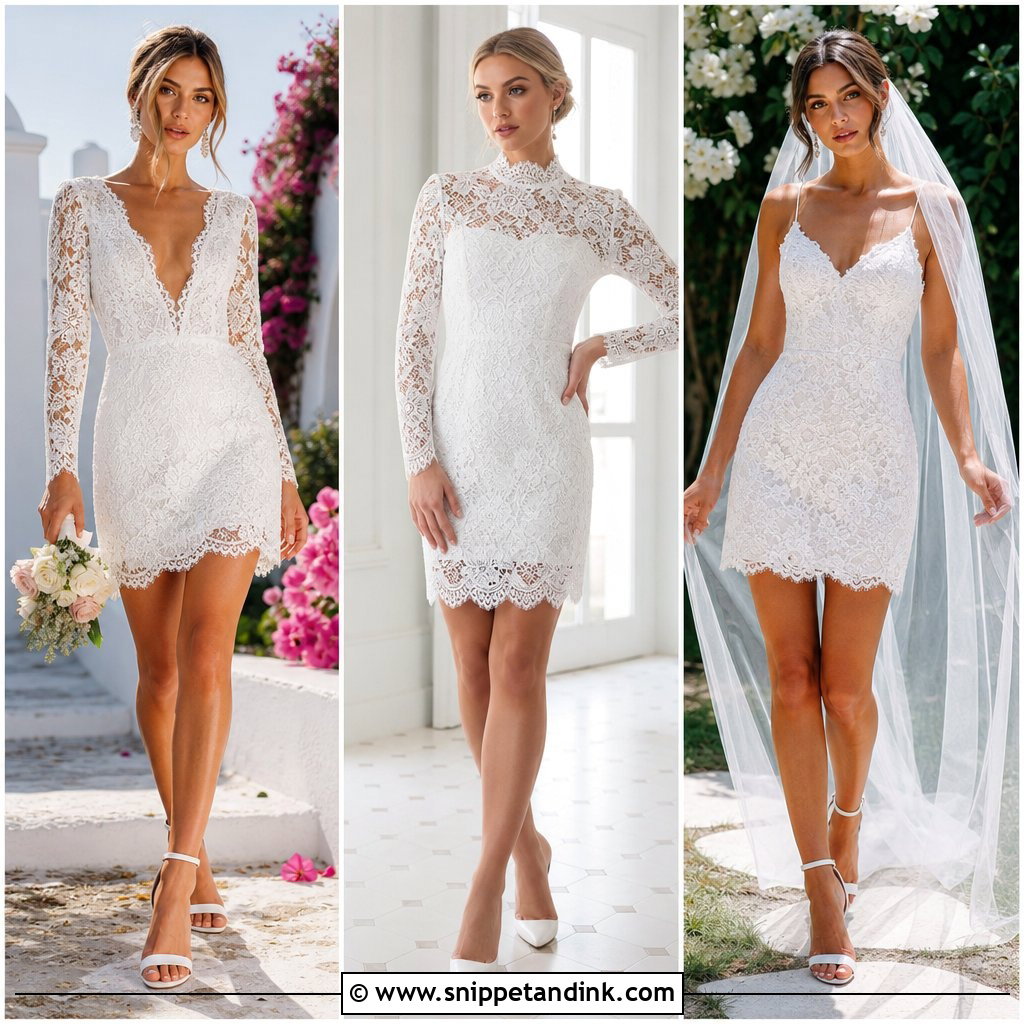
24. Tea Length Lace Wedding Dress
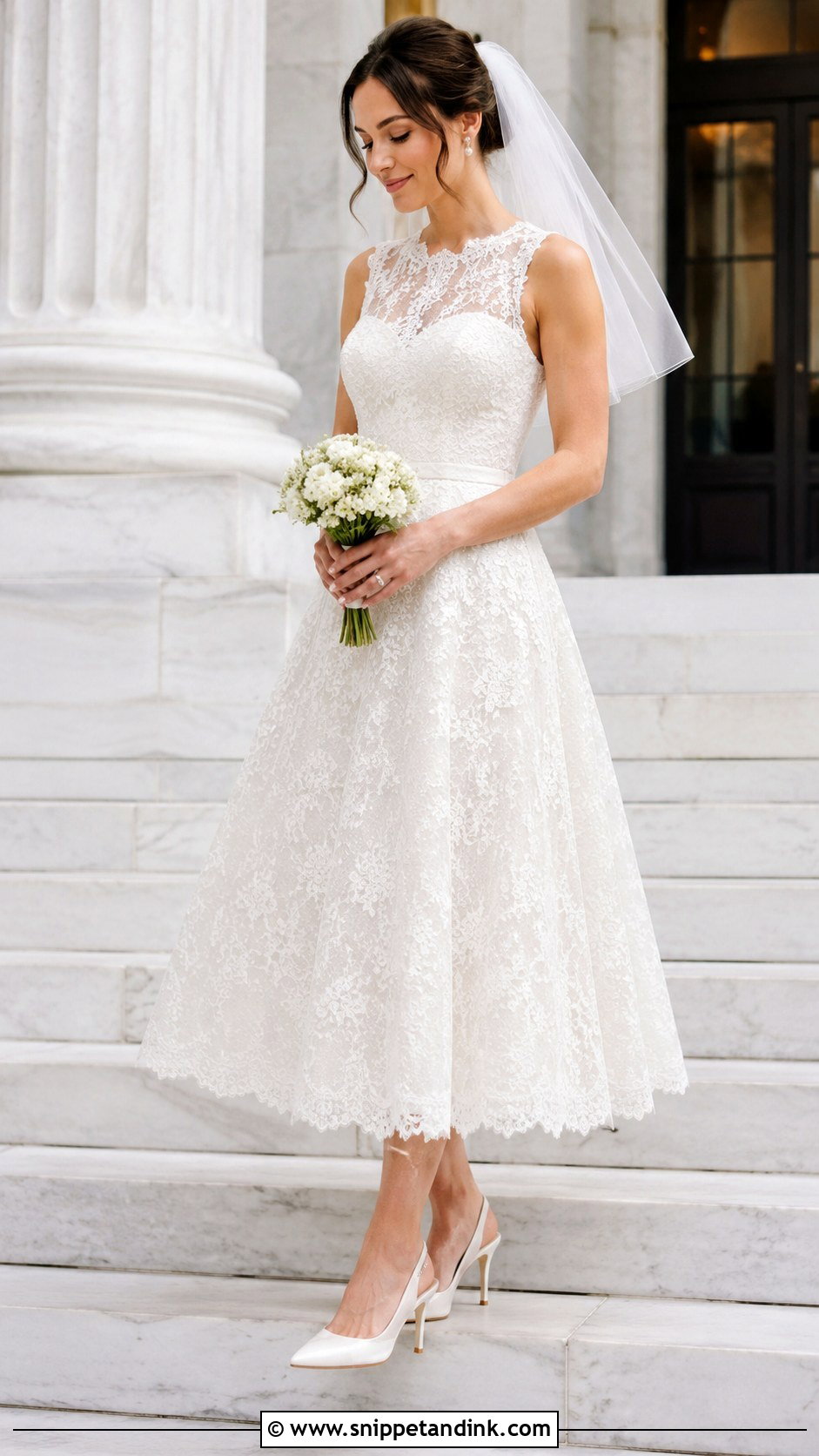
Tea length shows your shoes, so they’re half the outfit: ivory slingbacks, satin pumps or embellished flats. The lace hem matters too, and a scalloped lace edge at tea length looks much prettier than a plain cut hem. It suits courthouse weddings, brunch receptions and gardens. A short veil, pearl earrings and a small structured bouquet keep it polished. The neckline and accessories decide whether it reads vintage or modern.
25. Simple Lace Wedding Dress
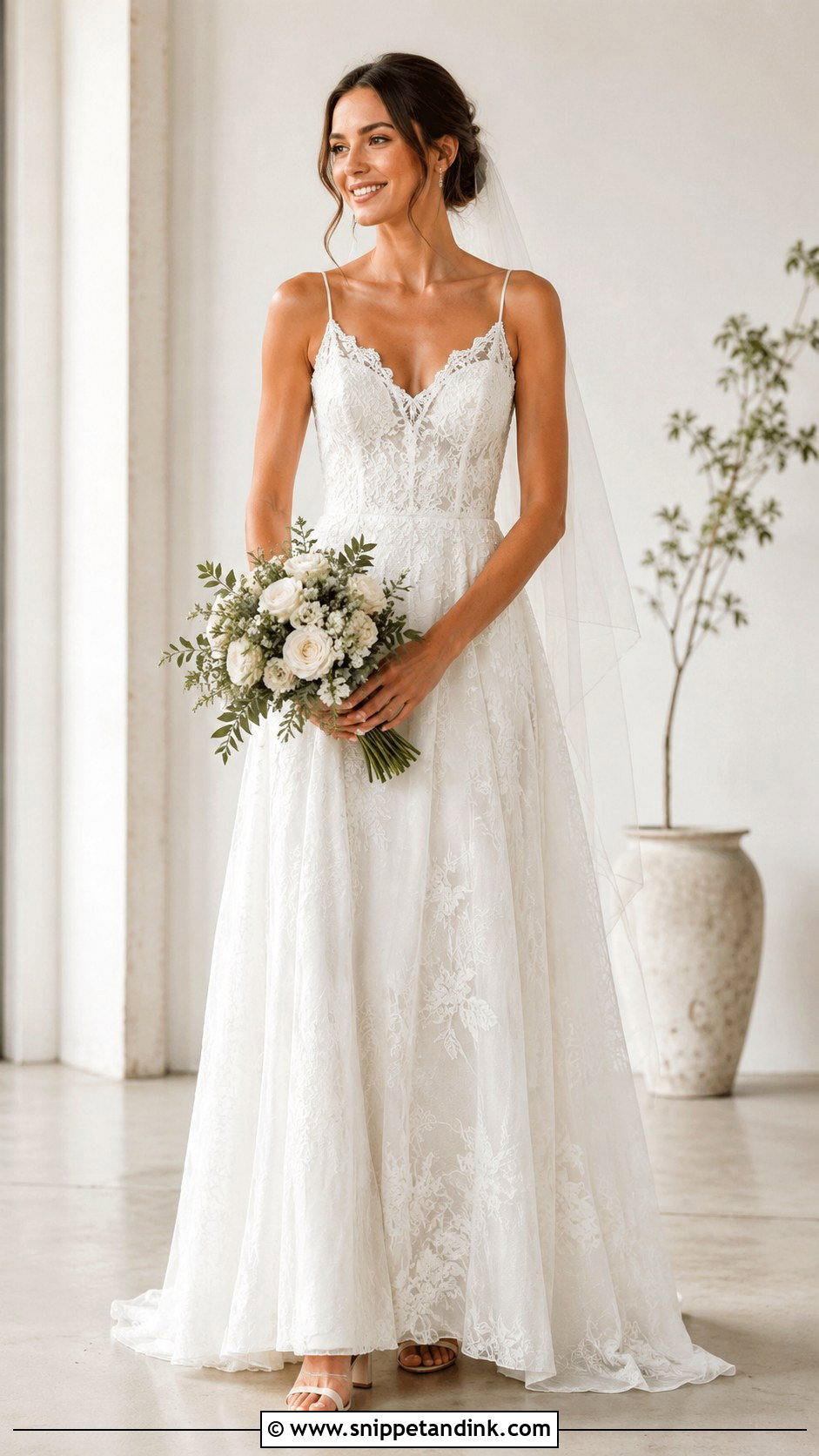
Sometimes the right lace gown is the plain one: a soft lace bodice, a clean skirt, slim straps, a gentle A-line. With nothing dramatic going on, fit carries it, so I’d budget for good alterations rather than extras. It adapts to almost any bouquet, hairstyle or accessory, which is useful if you’re still deciding the rest. Comfortable heels and a light veil are enough. Brides who feel swamped by bigger dresses tend to relax the moment they put this one on.
Snags on the Day, and Storing Lace Once It’s Over
Lace is tougher than it looks, but it has particular enemies. Velcro on a bag or jacket, bouquet wires, hairpins, rough brick walls and the prongs of a ring all catch the threads.
If a thread catches during the day, don’t pull it. Ease the loop back through to the inside with a needle or a pin, or leave it for the seamstress. Tugging turns a small loop into a run that travels through the pattern. Keep a tiny pair of scissors in the emergency bag only for snipping a thread that’s clearly come loose at the end.
After the wedding, get the gown cleaned within a few weeks, even if it looks fine. Spilled drinks and perspiration can leave marks that only yellow later. Use a cleaner who specialises in bridalwear and tell them about any beading or appliqué, since some methods loosen glued details.
For storage, fold the gown with acid-free tissue in the folds and lay it in a breathable box, not plastic, somewhere cool, dry and dark. Hanging a heavy lace gown for months stretches the shoulders and the fine net. Refold it along slightly different lines once or twice a year, so creases don’t weaken the lace in one place.
Fine, Corded, Sparse or Scalloped: Which Lace Is Yours?
The right lace gown matches your body, your venue and how you want to feel moving around in it. Some brides belong in long sleeves and vintage lace; others in a simple lace sheath, a floral A-line or a dramatic lace train. Lace can lean soft, bold, classic or relaxed depending on the type and the cut. Look at the whole outfit, since shoes, veil, jewellery, hair and bouquet all change how the lace reads, and then pick the lace you keep wanting to touch.
You'll Like These Ideas:







Leave a Reply