
Lace can look like your grandmother’s wedding album or like something cut last season, and the lace itself is only half of why. Lining colour, where the motifs are placed, the neckline and how far the pattern runs down the train change it completely. Bridal racks right now carry everything from fine floral lace and crochet textures to sculpted corsets, Basque waists and plain gowns with only a lace edge. Below are twenty lace dresses I like, each with the styling I’d put with it and the fitting problem I’d watch for.
Chantilly, Alençon or Guipure? Know the Lace Before the Dress
Shop labels say “lace” as if it were one fabric. It isn’t, and the type decides how the dress drapes, how heavy it is and how it survives the day. These are the ones you’ll meet most:
- Chantilly: very fine, flat floral lace on a light net, with soft eyelash edges. Drapes beautifully on sleeves and slips, but snags easily on rings and bracelets.
- Alençon: floral lace with a raised cord outlining each motif. Sturdier and more defined, so it shows up well in photos and is a common choice for bodices and scalloped hems.
- Guipure: heavy lace with no net background, the motifs linked by bars. Holds its own shape, which suits structured gowns and modern cuts, but it’s warm to wear.
- Venise and crochet lace: thick, raised and textured. Reads boho and relaxed, and feels heavier on the shoulders than it looks.
Ask whether the lace is appliquéd by hand or cut from a full lace panel. Hand-placed appliqués can be arranged around your seams so the pattern isn’t chopped at the side; cut panels are cheaper but can show breaks in the motif where the dress is joined.
1. A-Line Floral Lace Wedding Dress
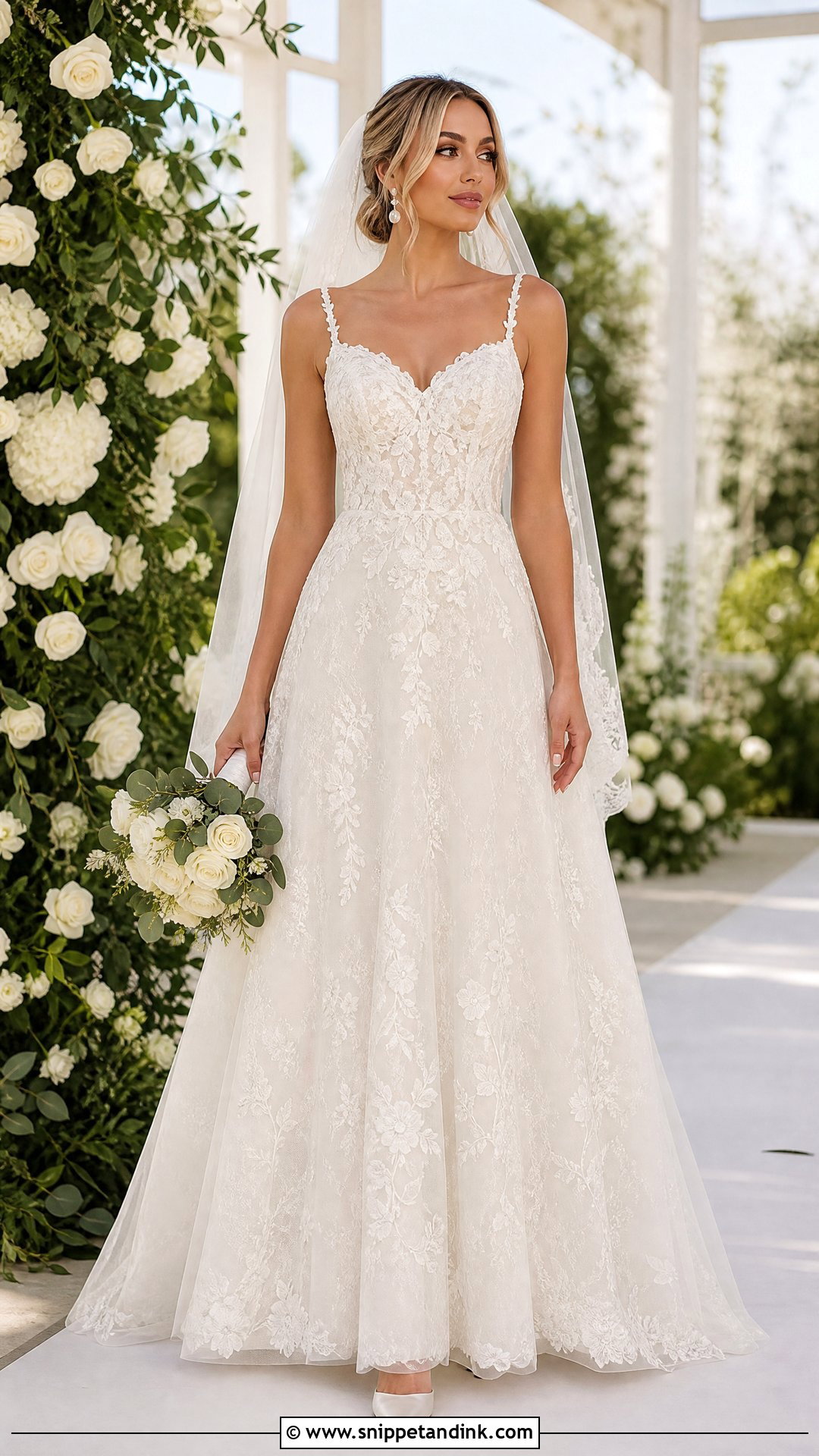
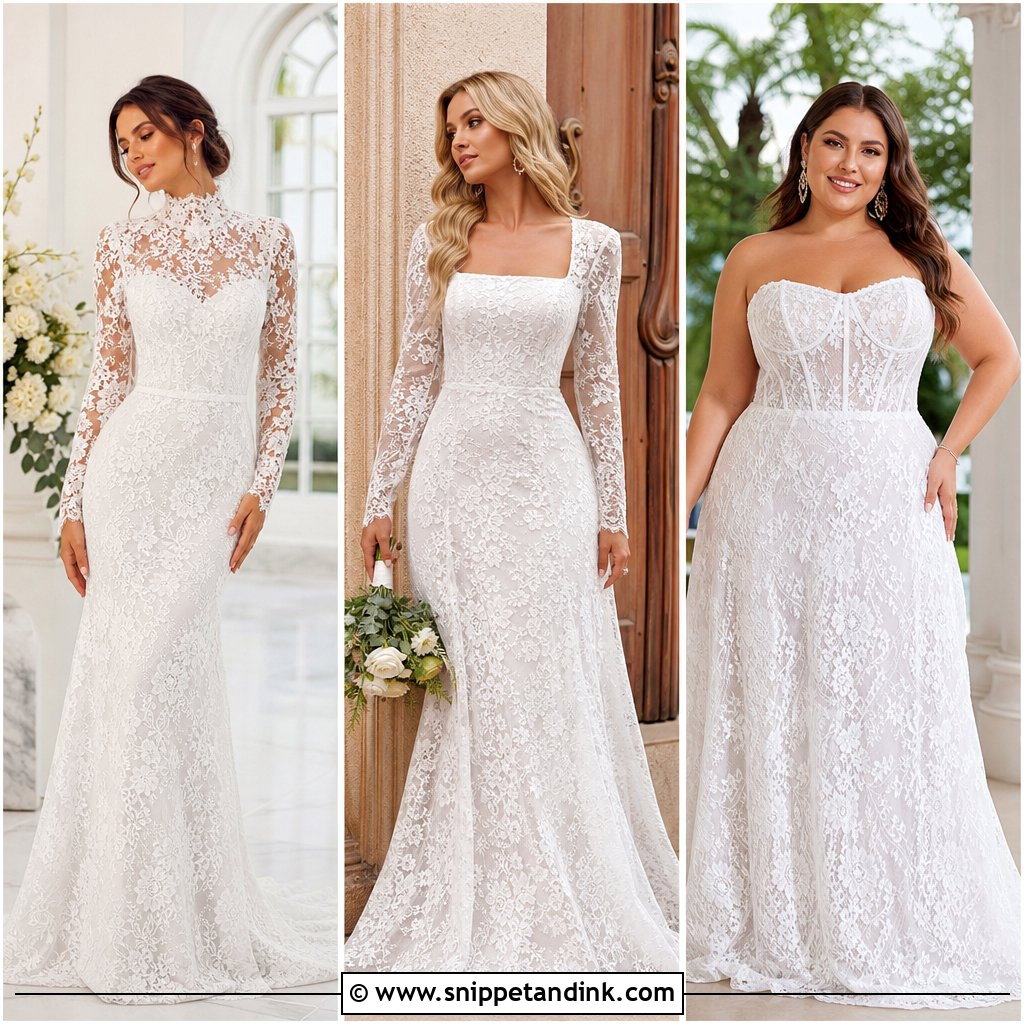
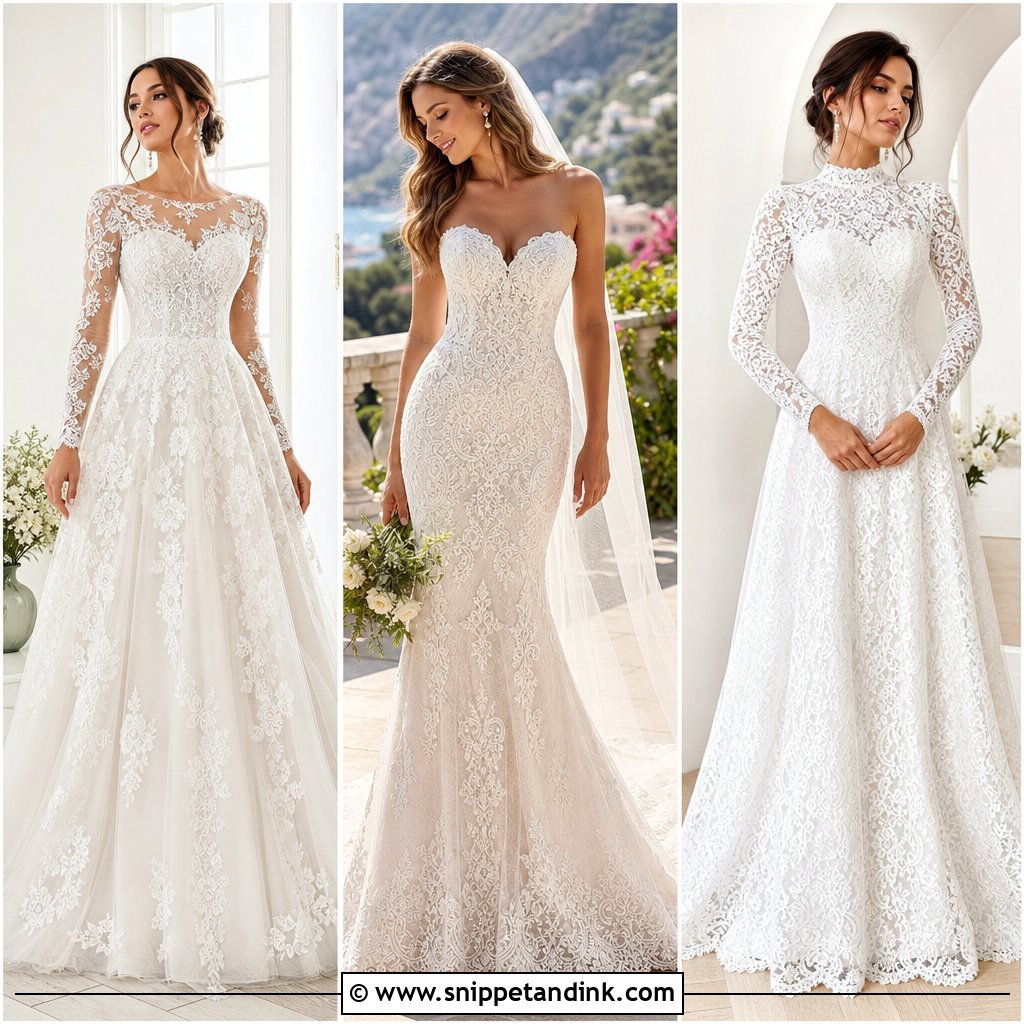
Floral lace on an A-line is the easiest lace dress to wear well. The bodice follows the waist, the skirt opens gently, and nothing about it demands a particular body shape. Medium-sized flowers read clearly in photos; very small motifs blur into texture from a few metres away. I keep the veil plain or with a narrow lace edge so it doesn’t repeat the dress twice. If you want more waist, ask for corset seaming under the lace rather than a belt on top of it.
2. Long Sleeve Lace Wedding Dress
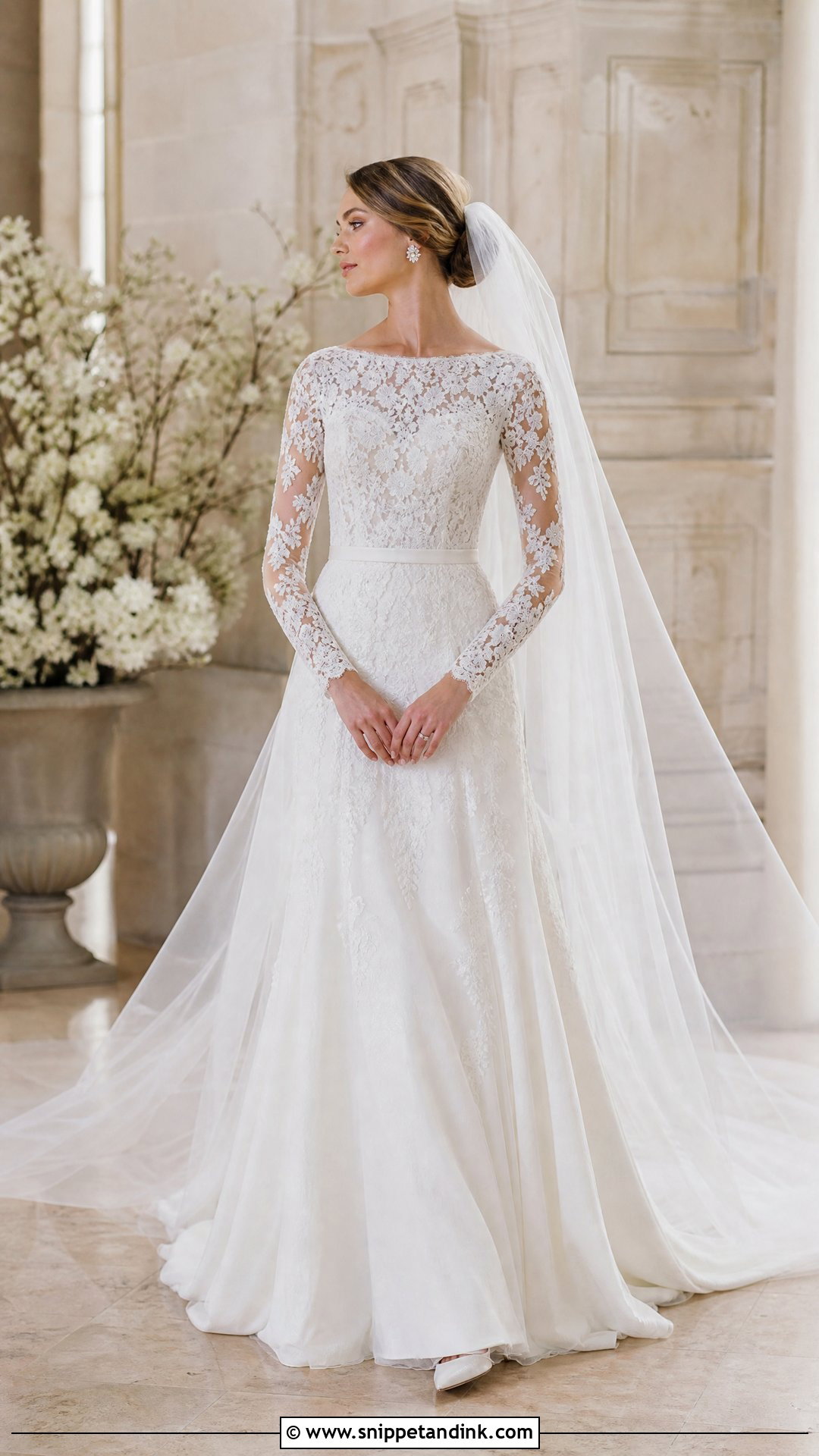
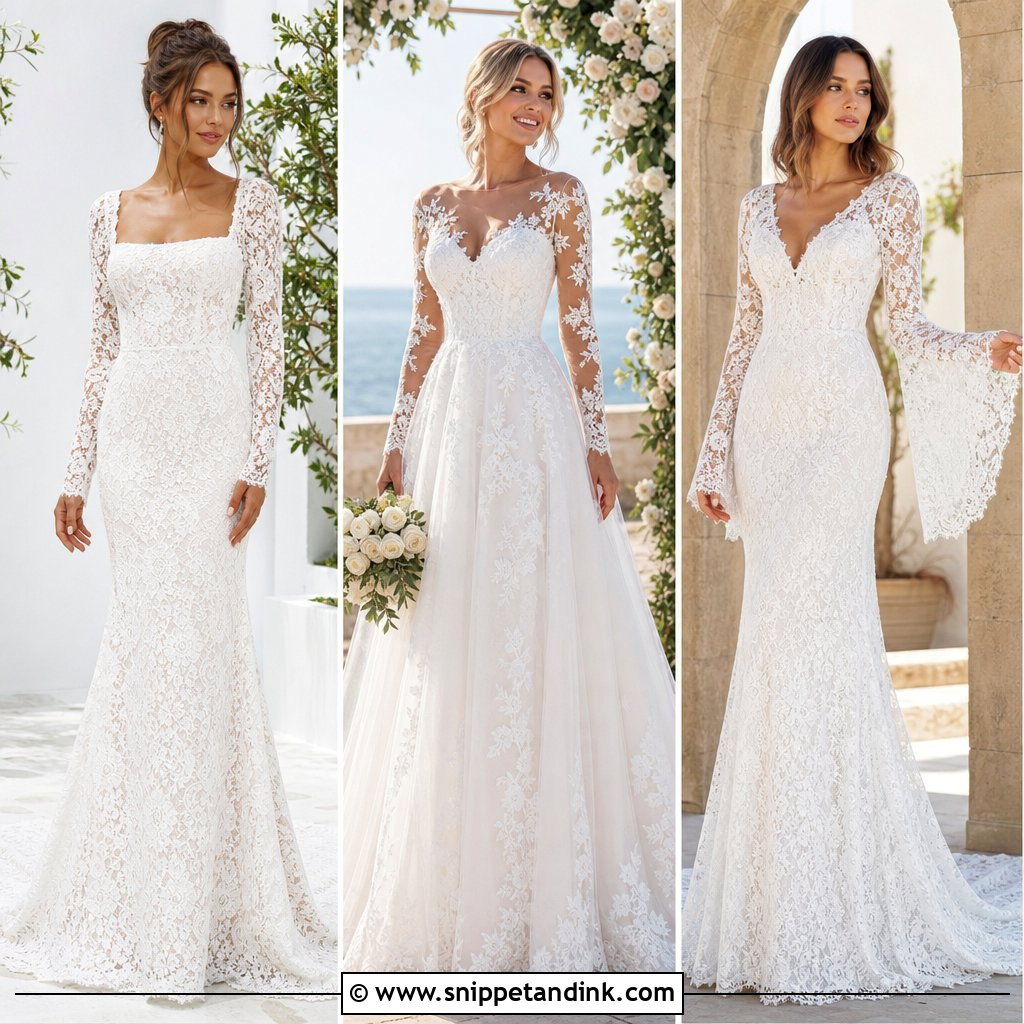
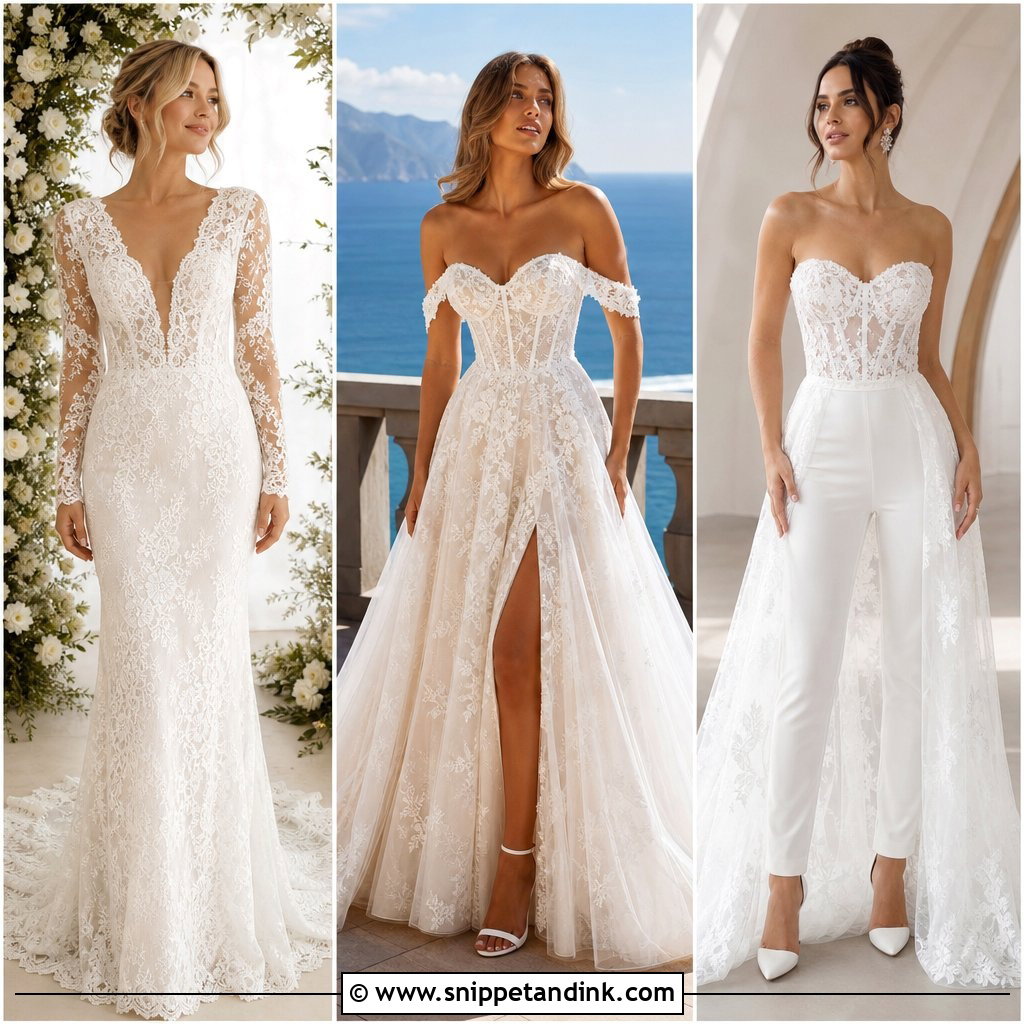
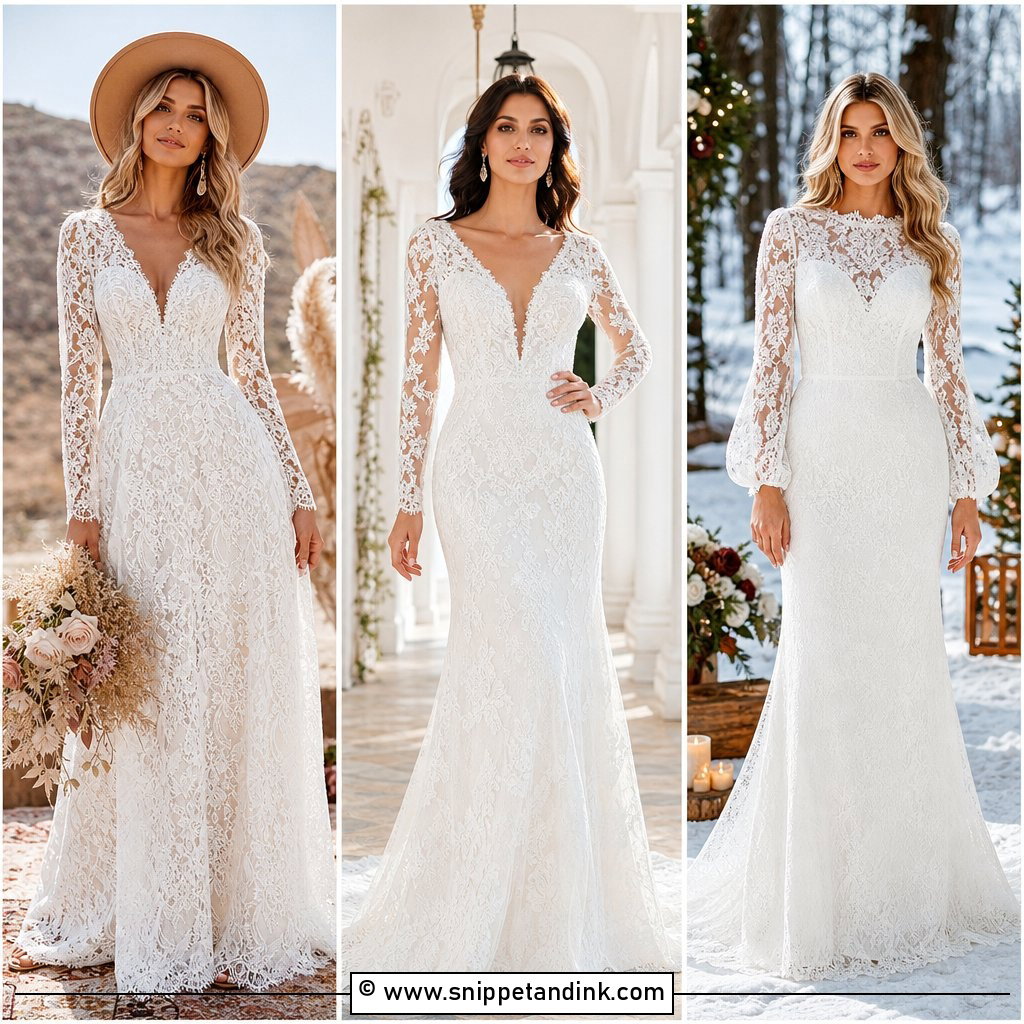
Long lace sleeves look delicate but they’re the part of a dress that fails first if the mesh doesn’t stretch. Ask what the sleeves are made of. Stretch tulle with appliqués lets you lift your arms and hug; rigid net pulls at the shoulder seam. A bateau or scoop neck keeps the top half from getting busy, and a plain cathedral veil lets the sleeve lace stand out. Ask for a wrist loop on the train, too, since sleeves and a bouquet leave you without a free hand.
3. Mermaid Lace Wedding Dress
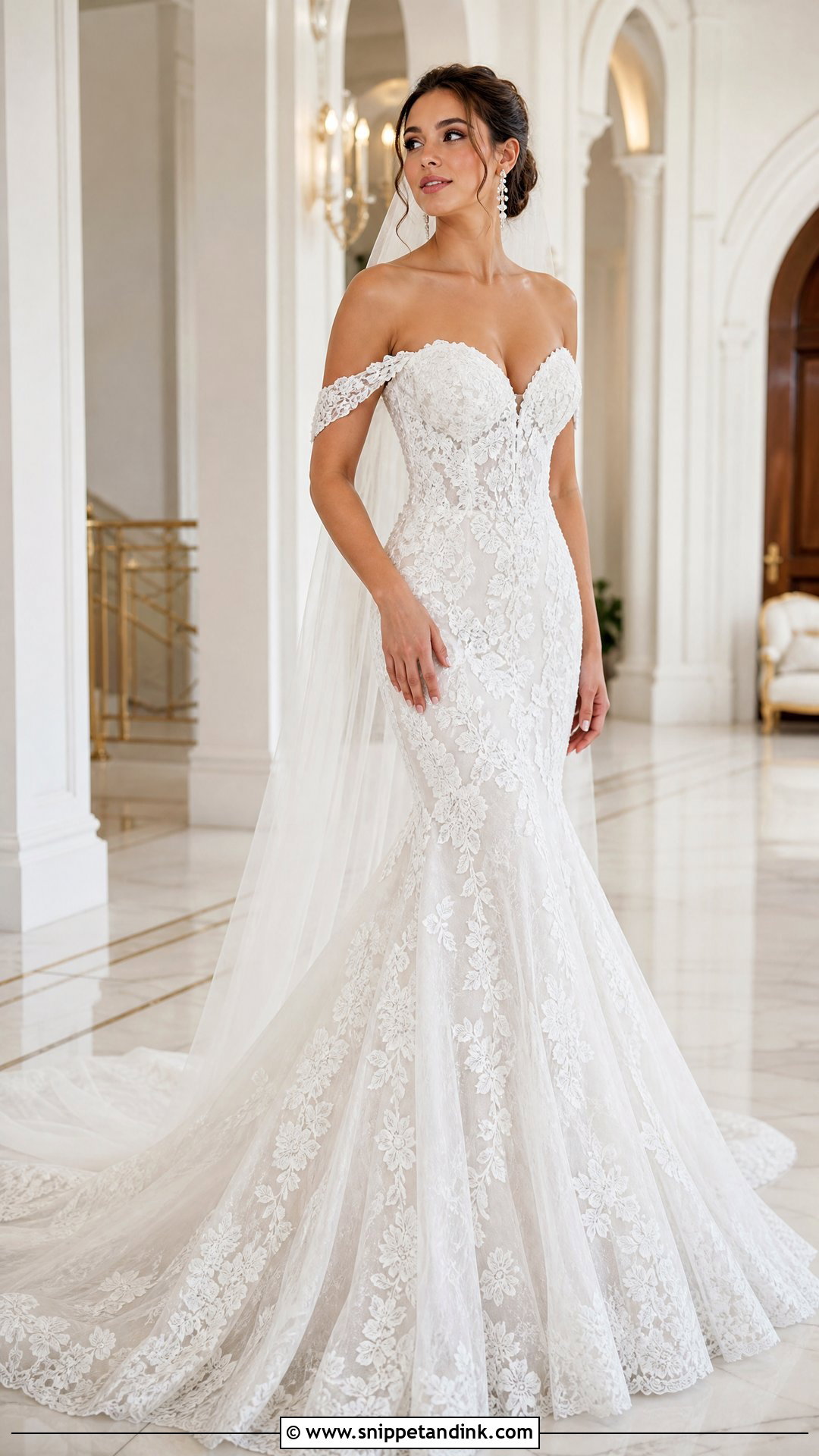
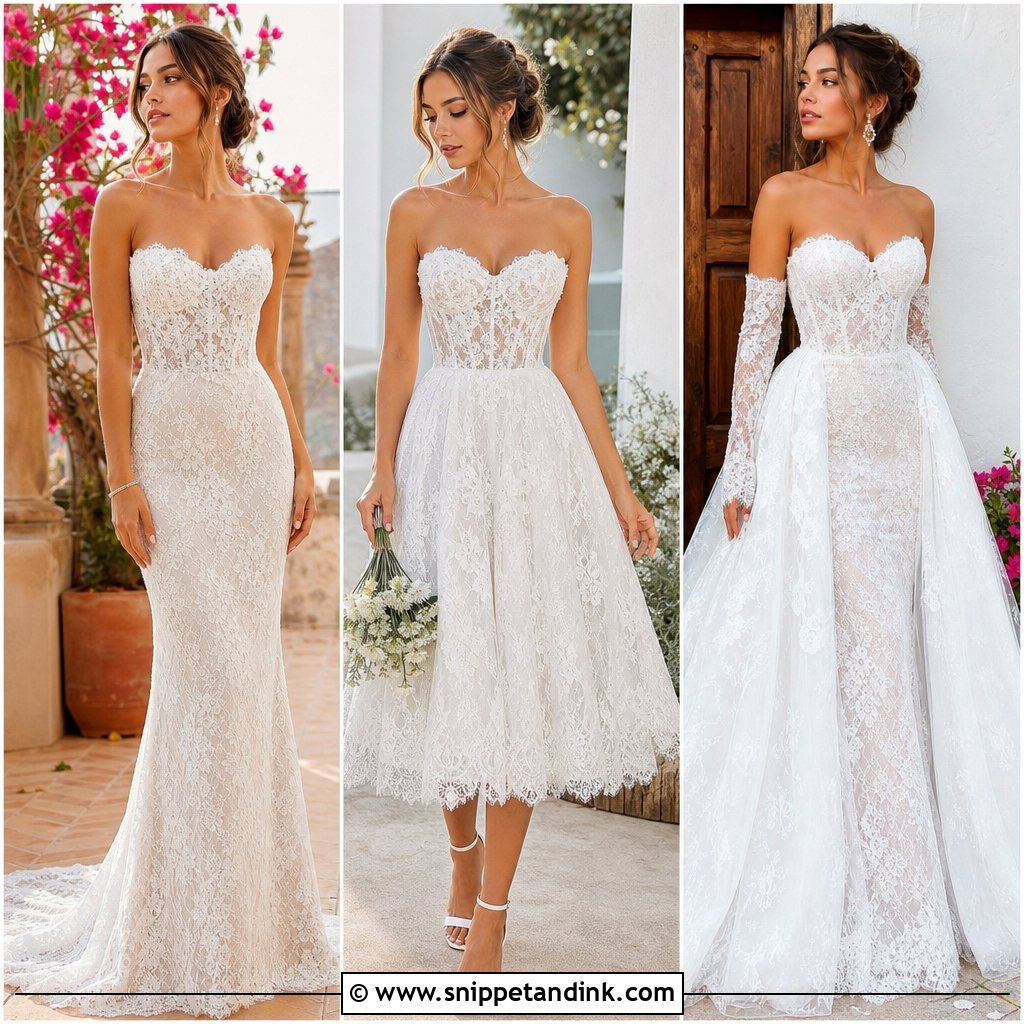
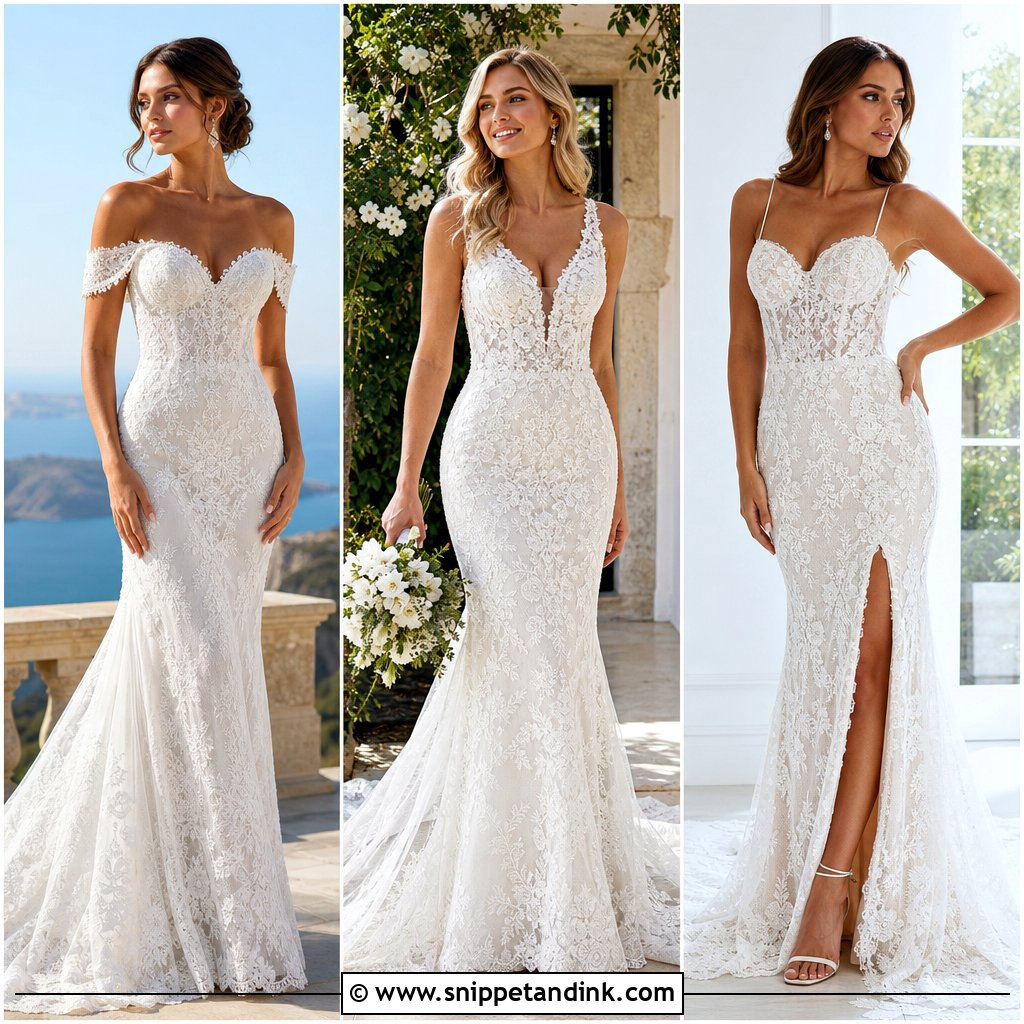
Mermaid lace is most flattering when the motifs run lengthwise. Big round flowers across the hips widen them; long trailing appliqués stretch the eye down to the flare. Sweetheart necklines soften the fitted shape, and detachable off-shoulder straps give you two looks. I always have brides sit on a low chair and walk a full stride at fittings, because where the flare starts decides whether you can climb steps. Hidden under the hem, comfortable platform heels give you the length the dress needs without a stiletto.
4. Lace Ball Gown Wedding Dress
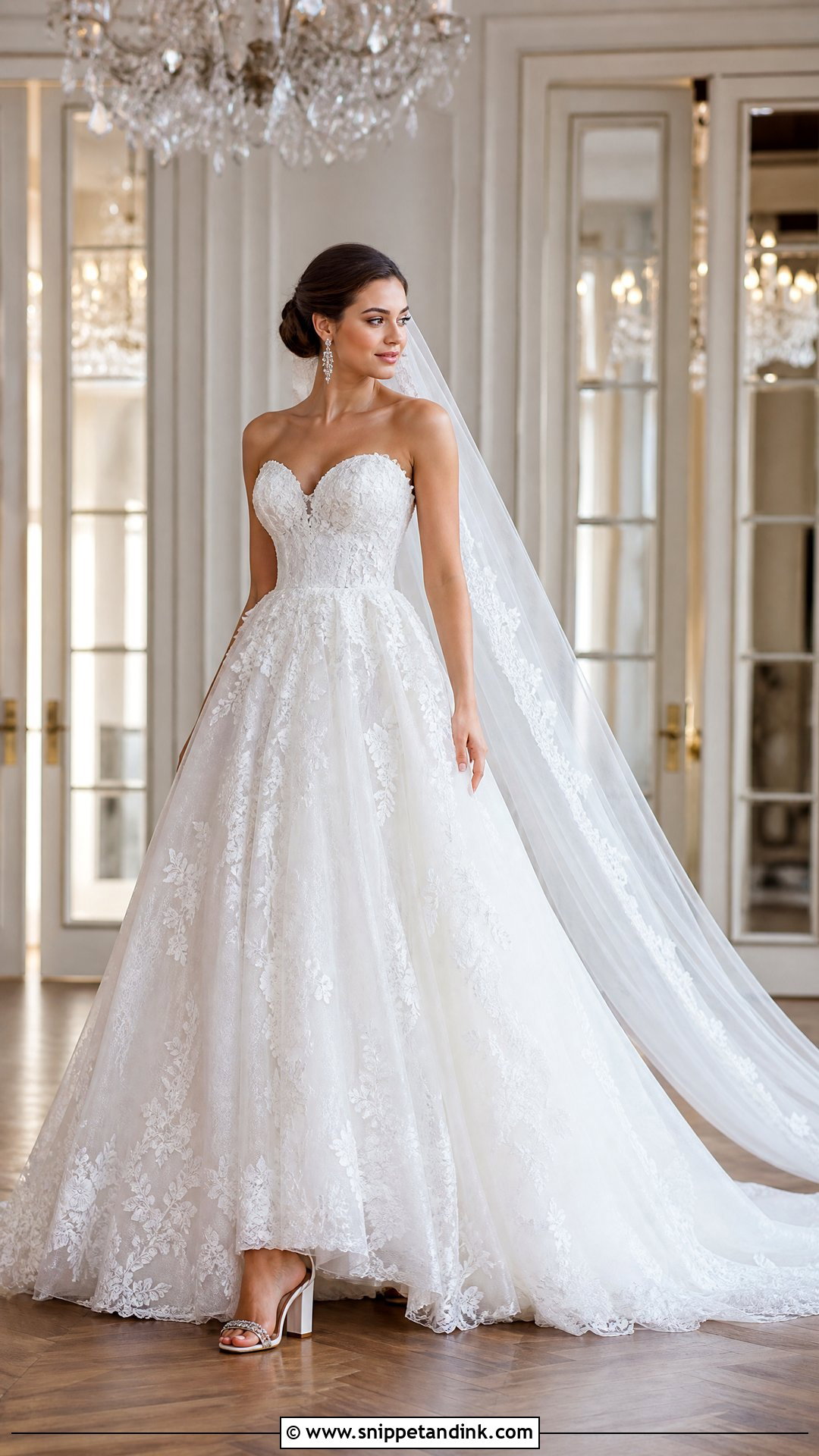
Lace ball gowns are heavy. A full skirt with layers of tulle and lace can weigh a lot more than brides expect, and it all hangs from the waist. Ask the shop to let you hold the skirt up by the waist seam, and ask how it bustles before you buy. I like appliqués that thin out toward the hem so the skirt doesn’t look dense at the bottom. Strapless or a soft scoop suits the proportions; block heels give you stability under all that volume.
5. Strapless Sweetheart Lace Wedding Dress
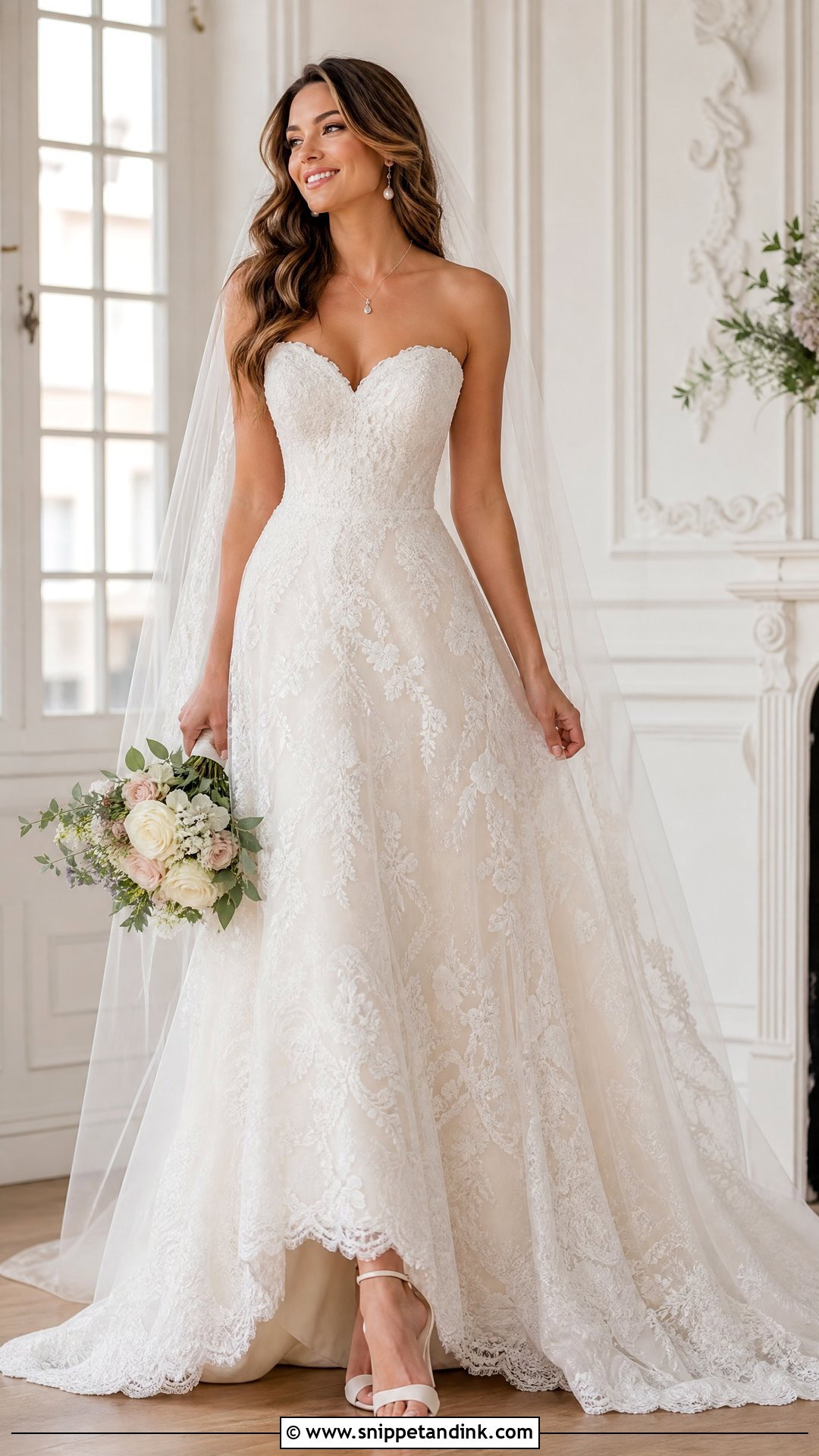
Sweetheart necklines on a strapless lace bodice only stay put if the dress is built properly inside. I look for boning, moulded cups and a waist stay, a grosgrain band that anchors the bodice at your waist so it isn’t hanging off your bust. A gown that relies on being tight across the chest will slide down by the first dance. Removable lace sleeves or a matching bolero give you ceremony coverage. At alterations, check the lace along the top edge lies flat with no gap when you lean forward.
6. Off-The-Shoulder Lace Wedding Dress
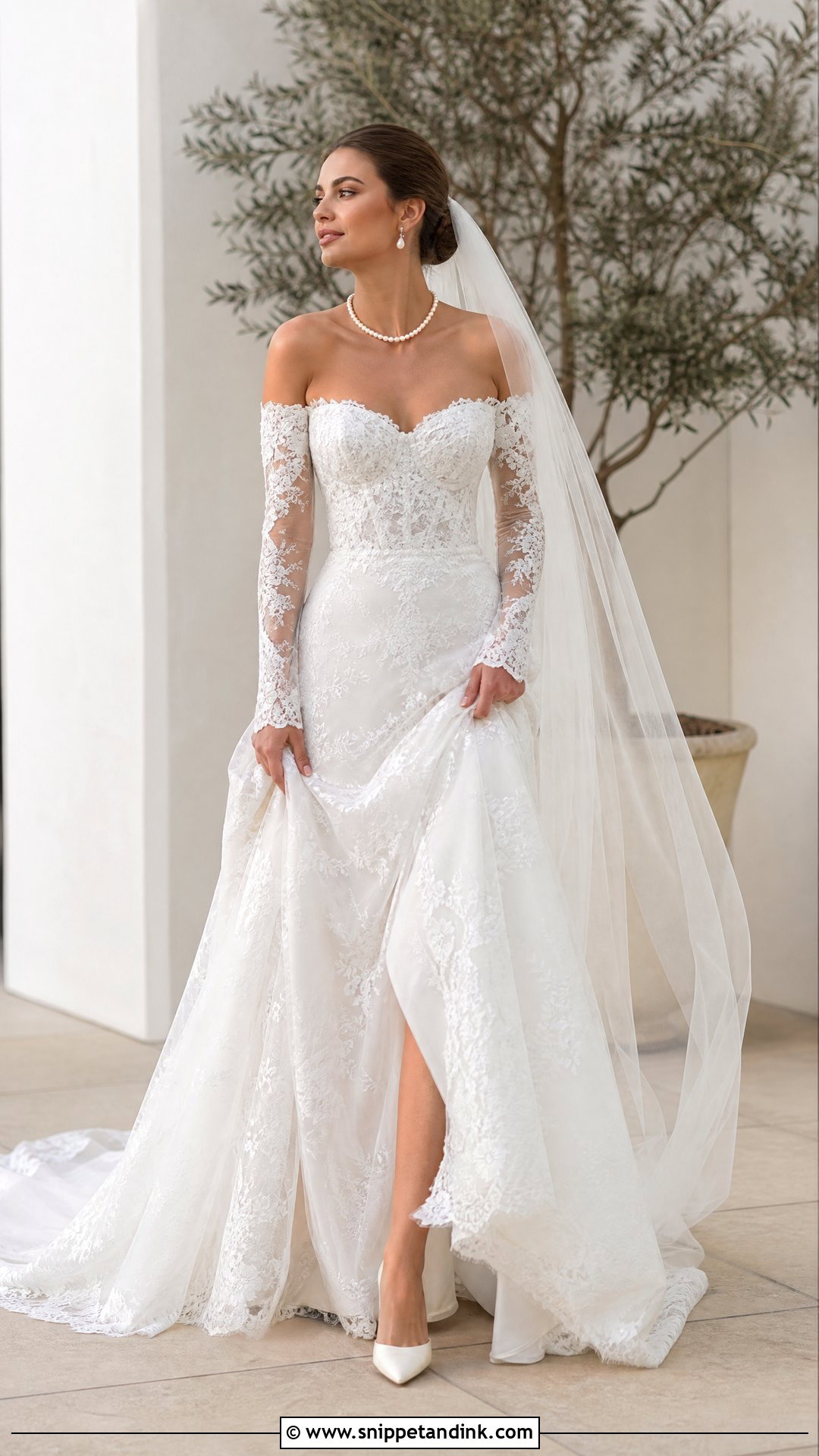
Off-shoulder lace is decorative, not structural, and the most common problem I fix is sleeves trying to hold the dress up. The bodice underneath needs its own support. Fitted lace bands look neat; draped sleeves look softer but slip more. Sweep your hair back so it doesn’t snag on raised lace at the shoulder. Raise your arms and hug someone at the fitting. If the bands dig in or the bodice lifts, the sleeves need to be set lower or made detachable.
7. Square Neck Lace Wedding Dress
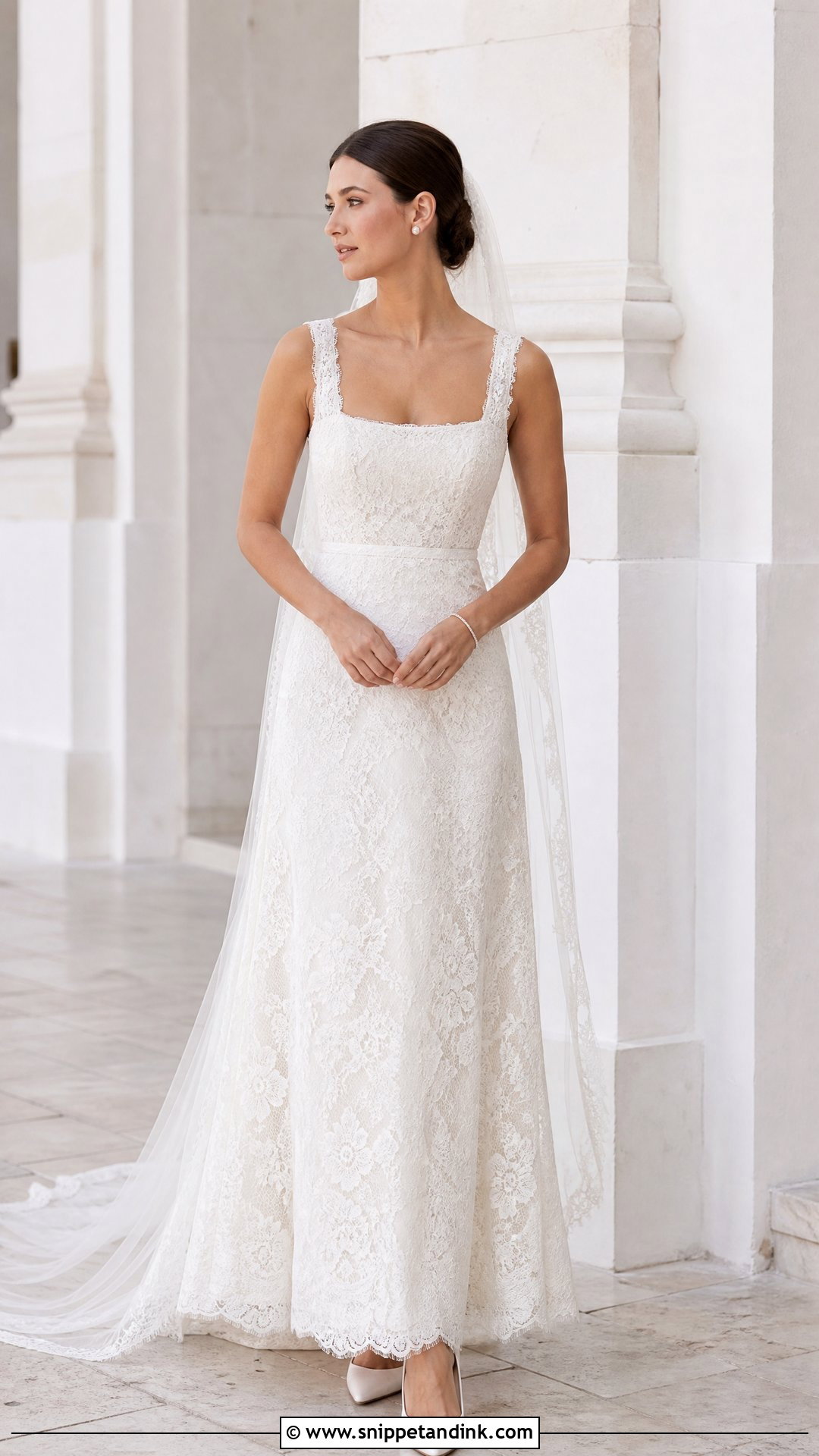
A square neck works on lace only if the corners stay sharp. That means the lace along the neckline should be fine and flat, not thick 3D flowers that blur the edge. Wide straps help it sit. An A-line or column skirt both suit it. I check this one by having the bride bend forward slightly: if the corners pull out from the chest, the neckline needs taking in at the strap seam. A centre-parted low bun echoes the straight lines well.
8. Basque Waist Lace Wedding Dress
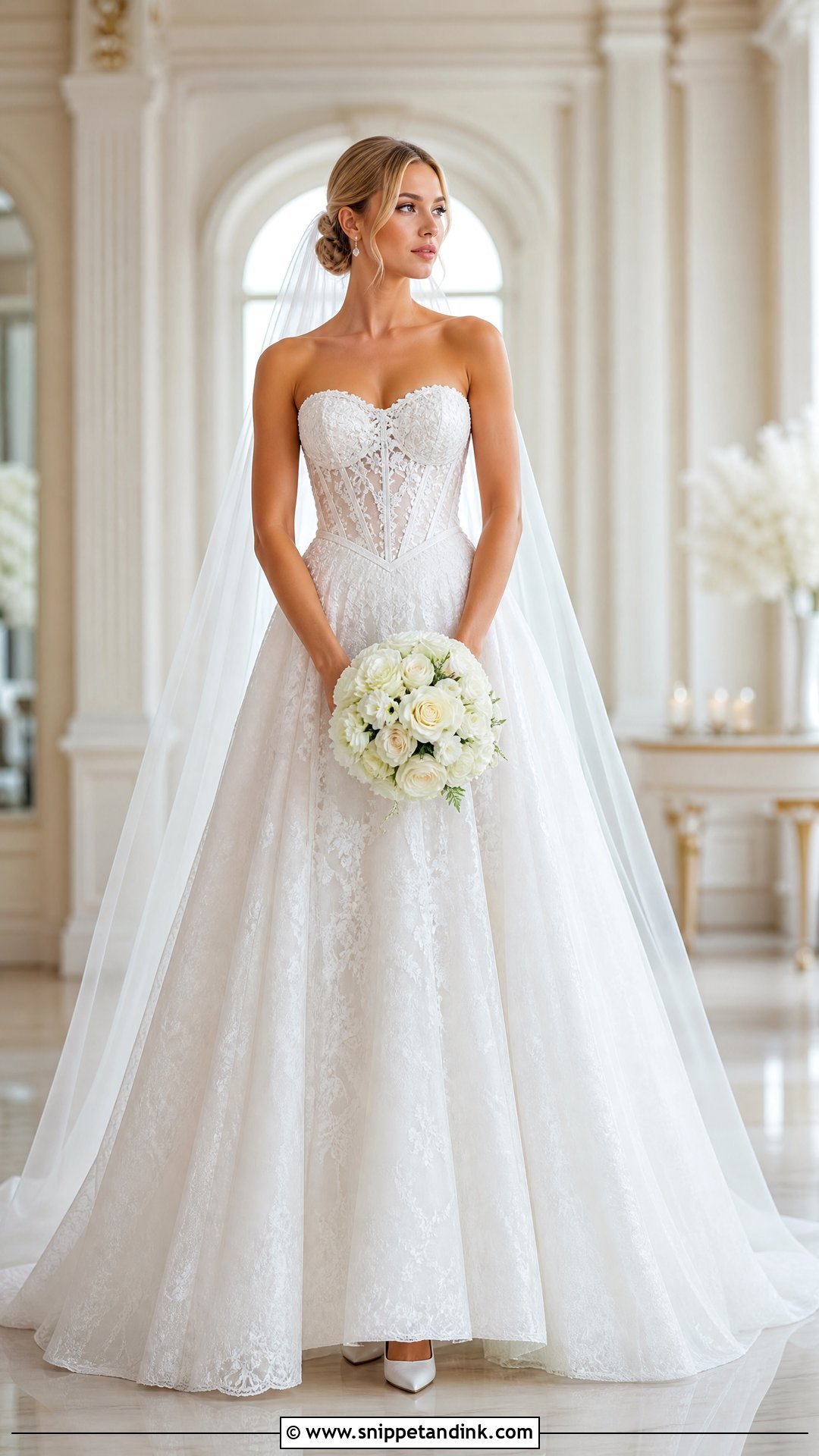
The Basque waist dips into a point below your natural waist, and it’s one of the most flattering shapes on a full skirt because the eye travels down the V. It also crumples when you sit if it’s not fitted precisely. I check it seated every time. Floral lace over a corseted bodice, a plain tulle veil and a bouquet held low so the point stays visible. A shallow dip gives similar definition if a deep V feels too dramatic.
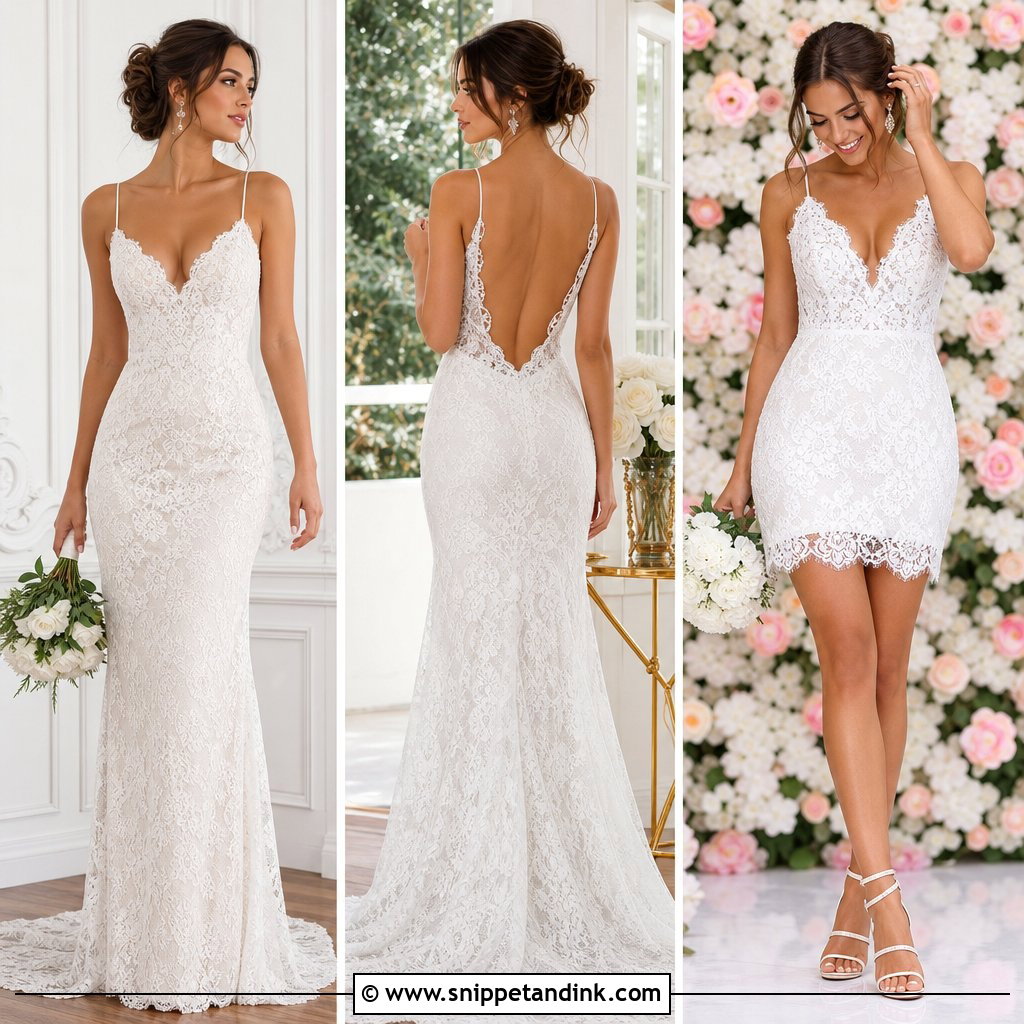
9. Lace Sheath Wedding Dress
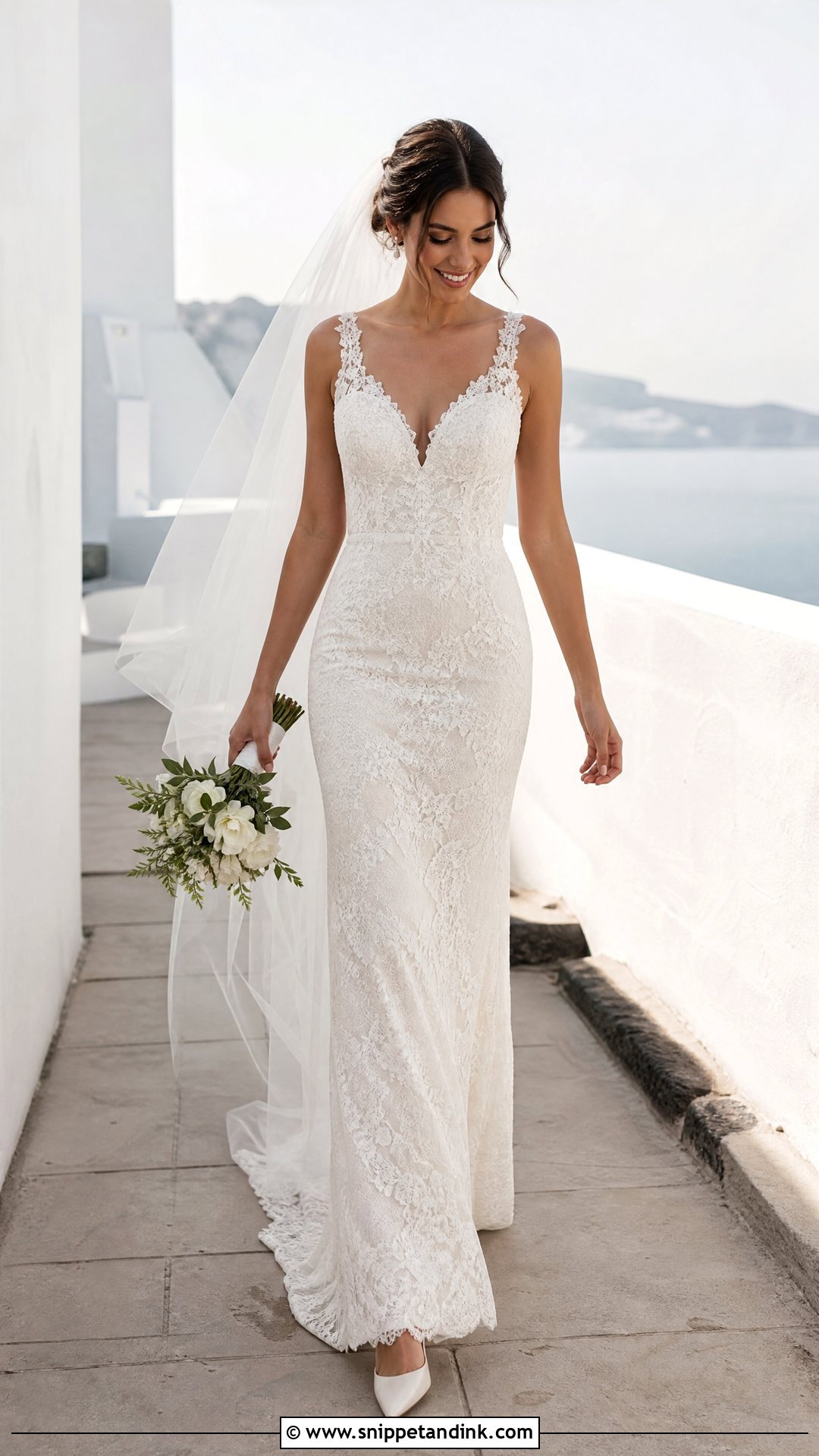
Sheath lace follows the body without the knee flare of a mermaid, so it’s lighter and easier to walk in. The catch is the lining. Soft lace over a stretch lining skims; over a stiff lining it bunches at the hips when you sit. Narrow straps, a V or short sleeves keep the lines clean. If there’s a train, use a simple French bustle so the narrow shape isn’t puffed out at the back. It suits small or destination weddings where a big skirt would be impractical.
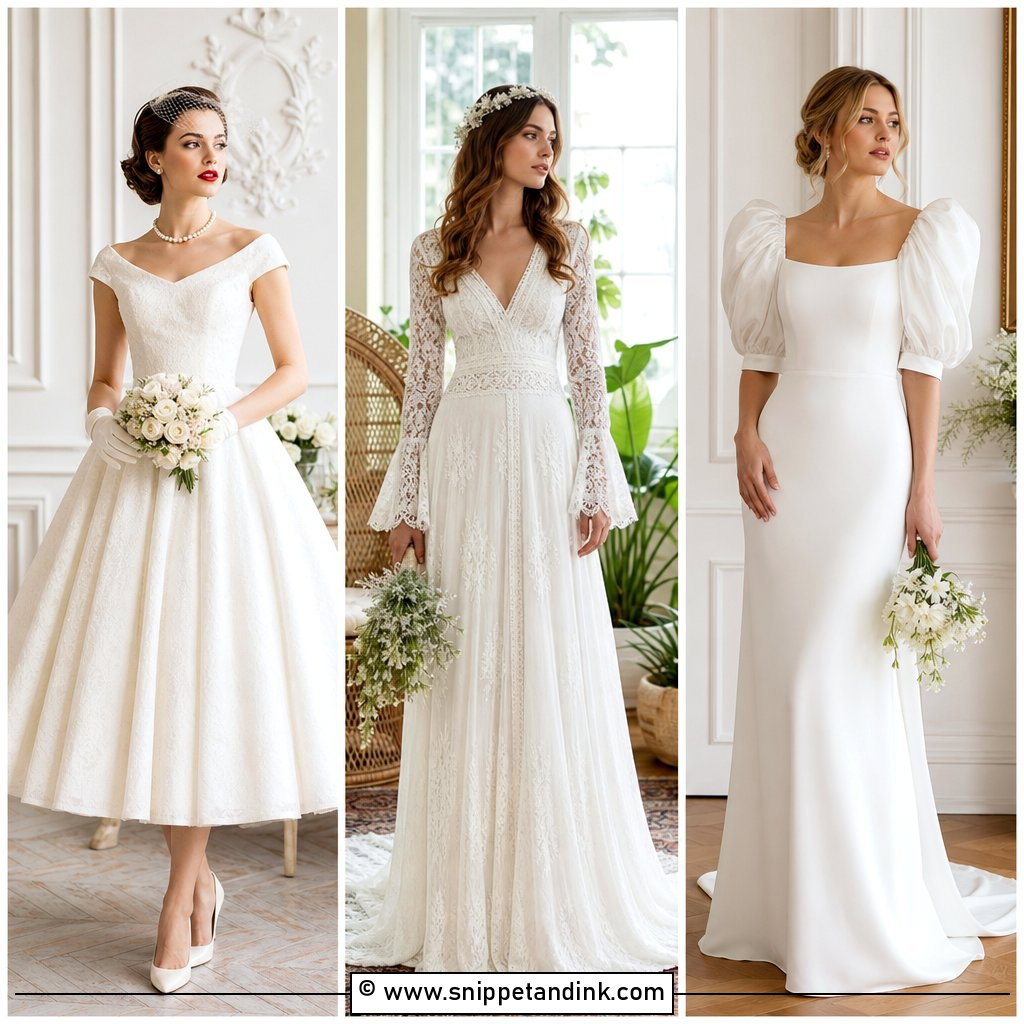
10. Boho Bell Sleeve Lace Wedding Dress
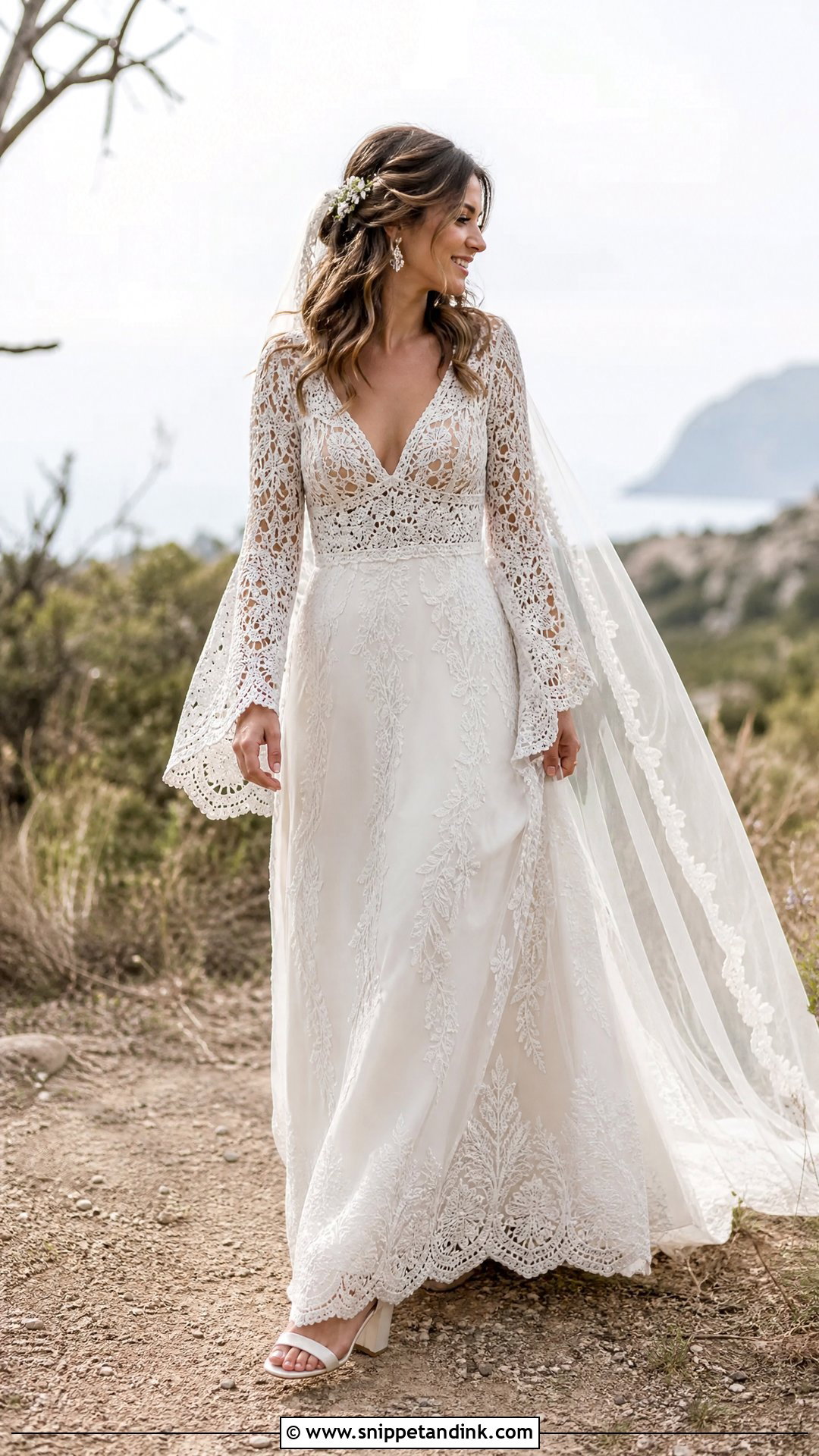
Flowing bell sleeves are what make a boho lace dress move, and they’re also what drags through the cake. I measure the cuff so it ends at the wrist and doesn’t cover the hand holding the bouquet. Crochet lace, leafy motifs and openwork suit the shape; an ivory, sand or light champagne lining shows the pattern. Outdoors, keep the train short and the heel wide. Relaxed doesn’t mean unsupported: you still want cups and secure straps inside.
11. Tea Length Lace Wedding Dress
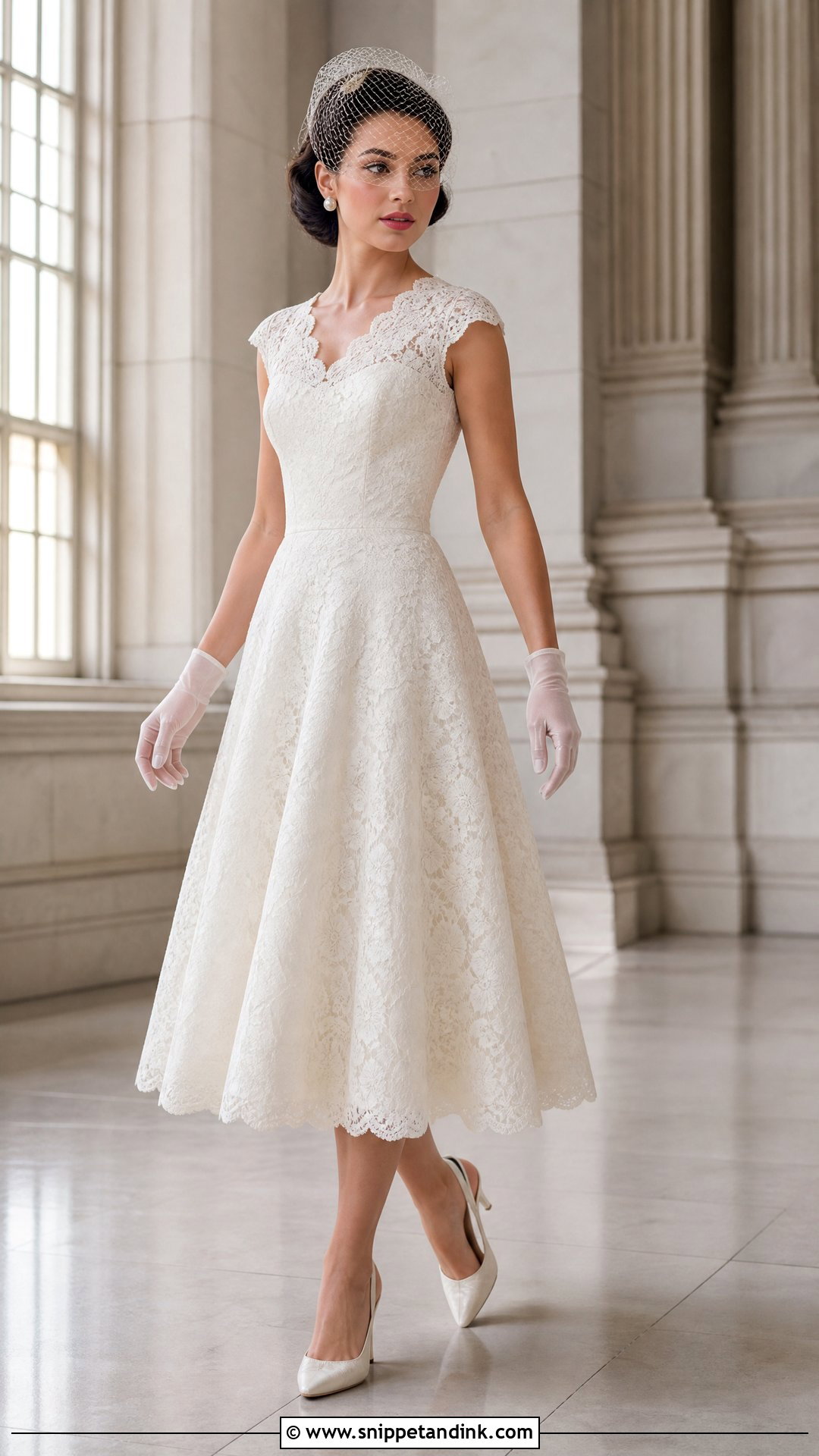
Tea length shows your shoes, so the shoes stop being an afterthought. A fitted bodice, a flared skirt ending between knee and ankle and a scalloped lace hem make the shape. Birdcage or shoulder veils, short gloves and slingbacks give it a fifties feel. Hem height is the thing to test. Sit down at your fitting; flared skirts rise higher than you expect when seated. This suits daytime and courthouse weddings particularly well.
12. Lace Slip Wedding Dress
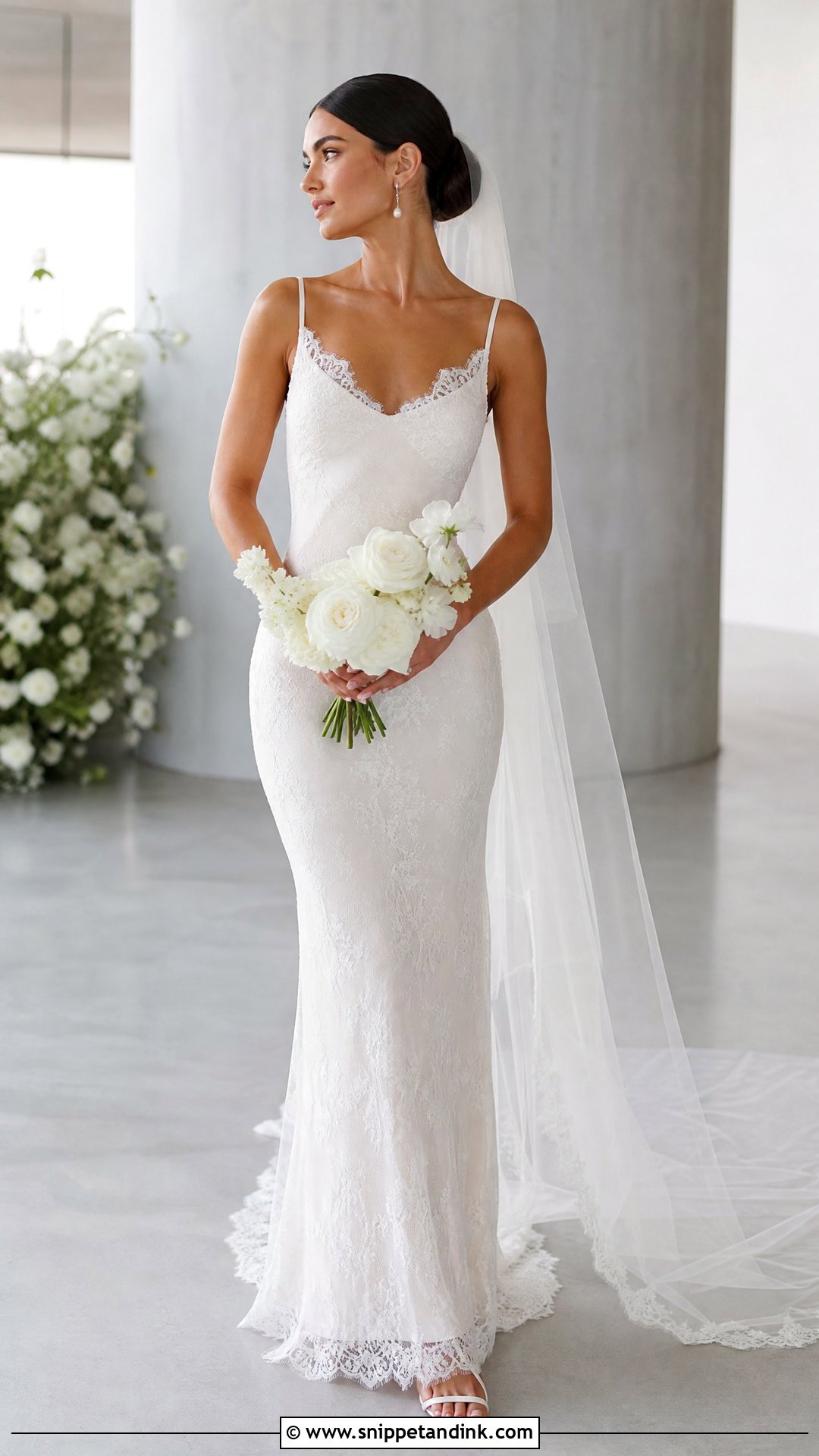
Lace slips are the least forgiving dress here because bias-cut fabric shows every seam underneath. No-line underwear and a smooth lining aren’t optional. I like lace kept to the bodice, the hem or an open back rather than all over, which can look like lingerie. Pair it with a long sheer veil, strappy ivory heels and a sleek bun. Have straps adjusted while you walk, not while you stand still, since bias-cut fabric drops slightly as you move.
13. Corset Lace Wedding Dress
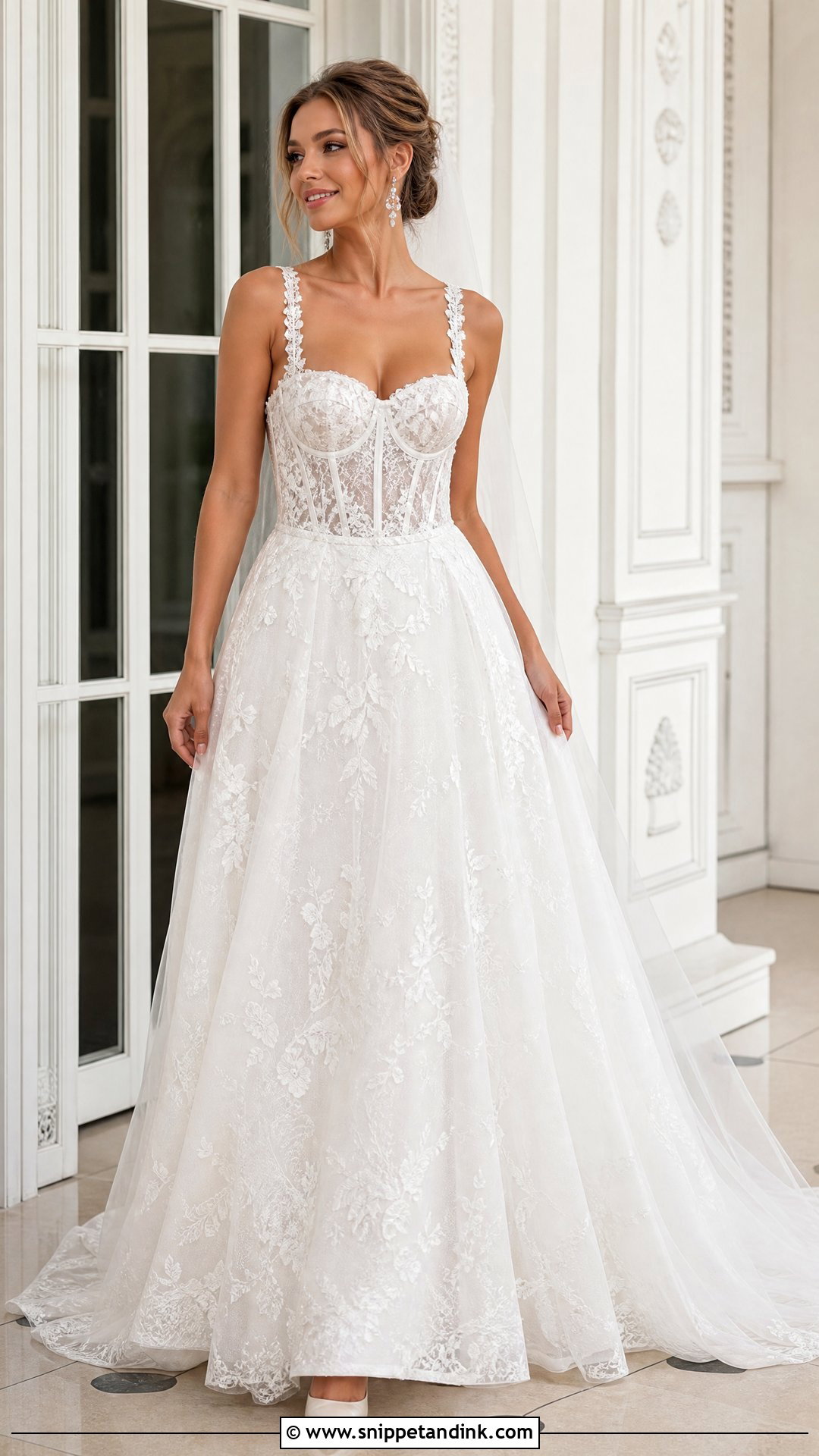
Corset lace bodices are meant to show their structure, so symmetry is everything. Lace panels should mirror exactly across the centre front; ask to see this before you buy, because off-pattern cutting shows. Pair it with a full A-line for romance or a fitted skirt for something sharper. Skip a big necklace if the bodice has visible seam lines. A corset should support you, not stop you breathing. If you can’t sit and take a full breath at the fitting, it’s too tight.
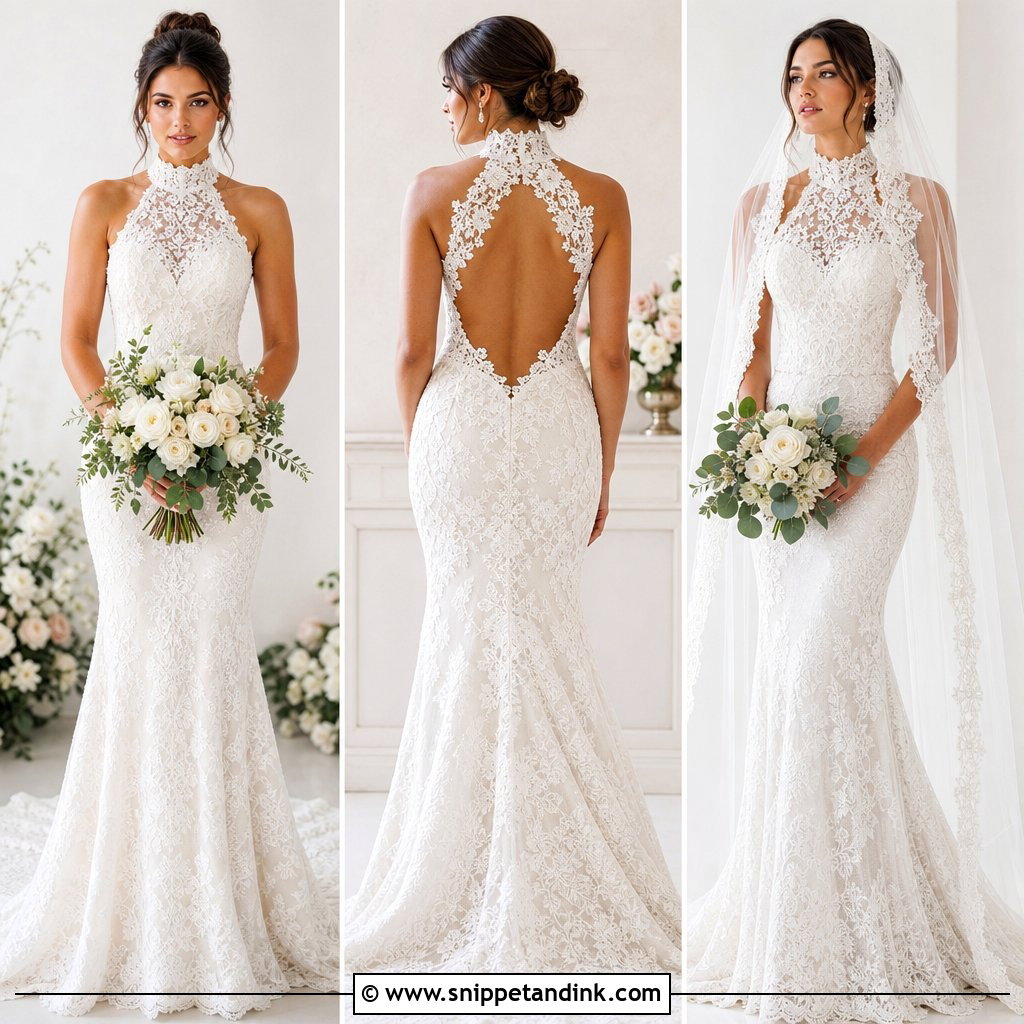
14. Illusion Neckline Lace Wedding Dress
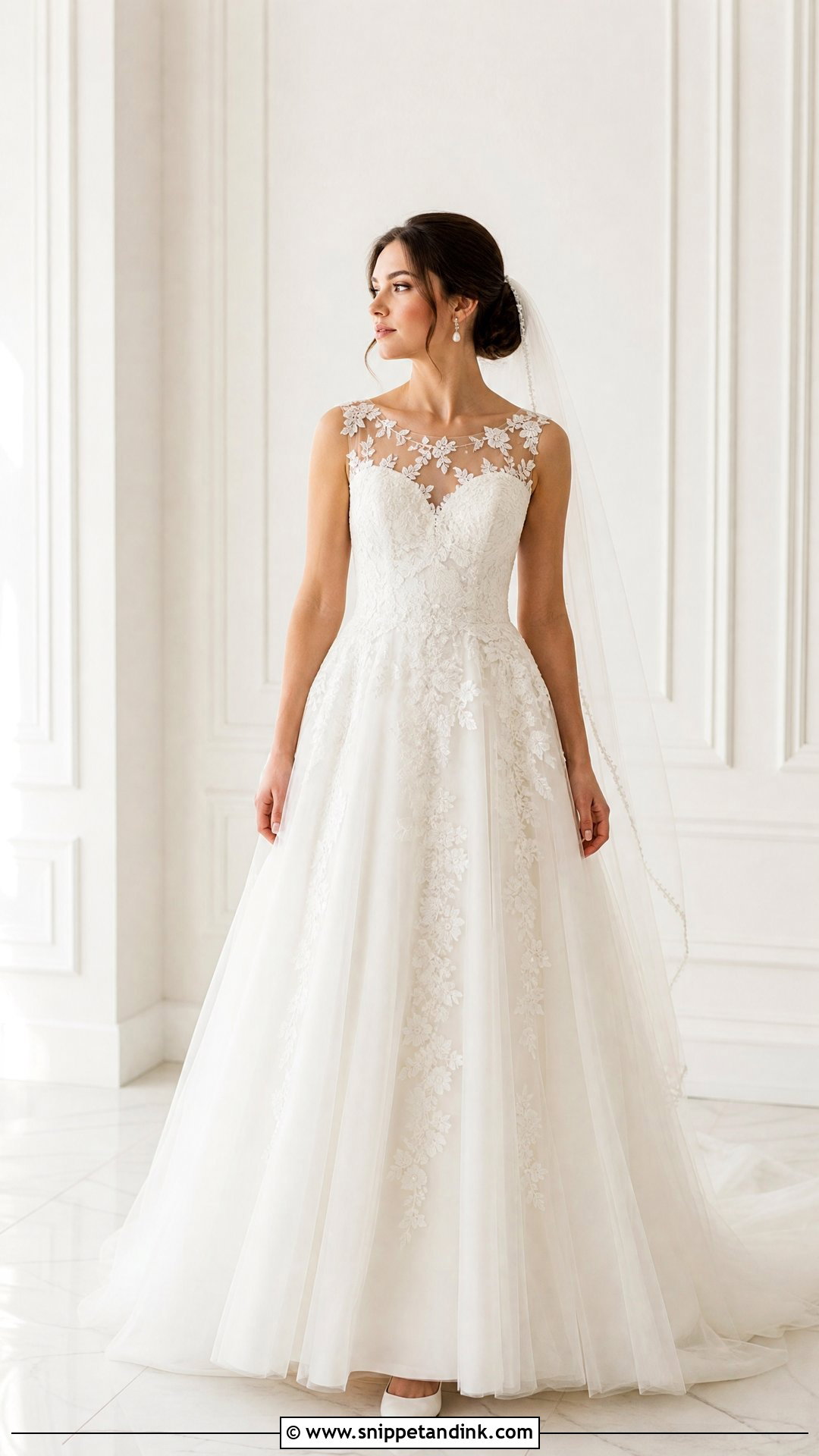
Illusion necklines work only when the mesh nearly disappears against your skin. Shops usually carry a few mesh shades; hold each against your chest in daylight. The appliqués then appear to float on the shoulders. Skip necklaces, which catch on the mesh and fight the lace. Also check under the arms, where illusion panels can rub on a long day. A soft low bun and a veil tucked beneath it keep the neckline clear.


15. Lace Cape Sleeve Wedding Dress
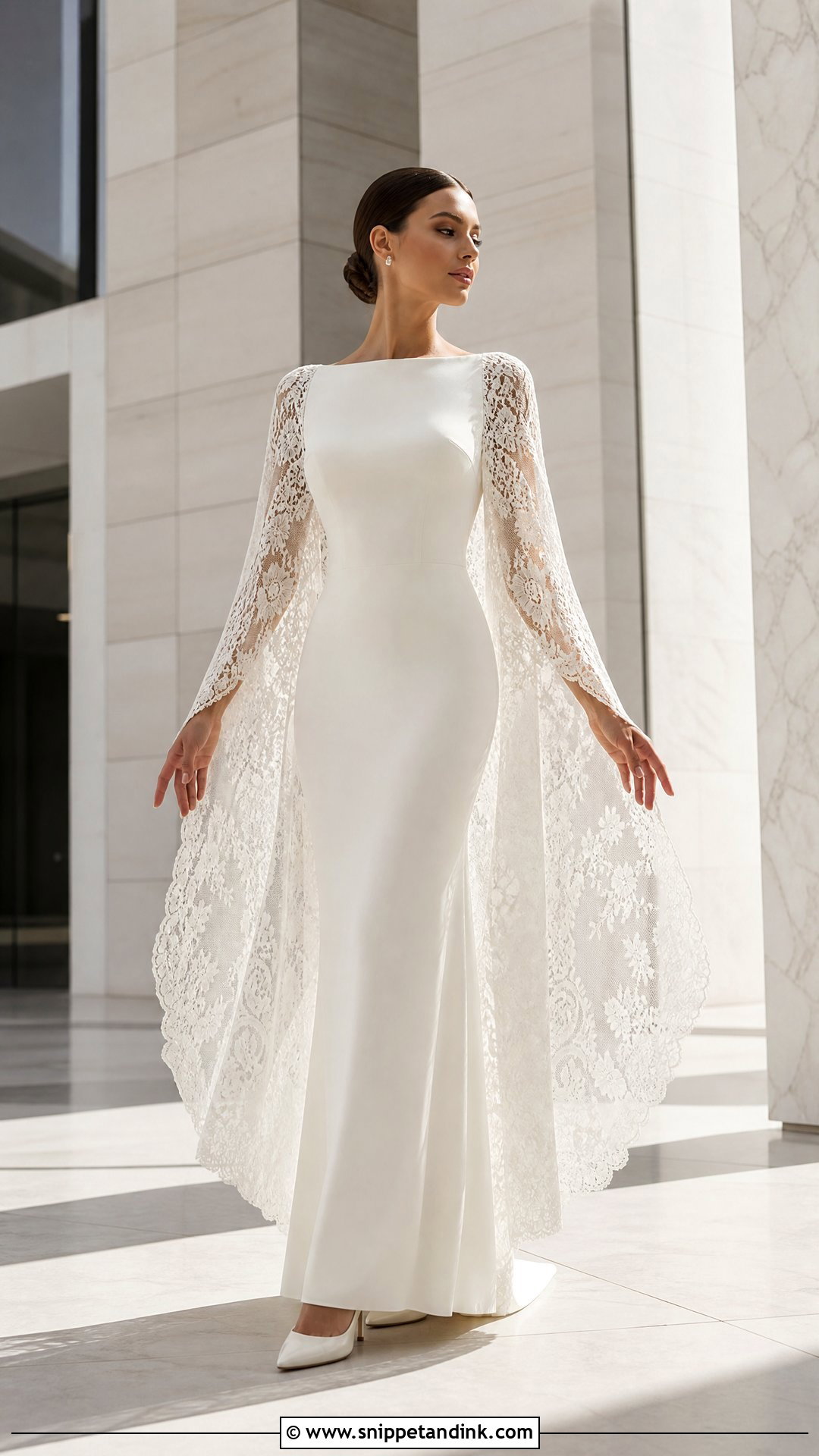
Lace capes replace the veil for a lot of my brides. Underneath, keep the dress plain: a sheath, simple A-line or crepe. The cape can stop at the elbow, wrist or floor. If you add a veil, it must be shorter than the cape, and honestly you usually don’t need one. A cape that hooks at the neck can pull backward with its own weight, so ask for a second attachment point at the shoulder seams. Detachable is best if you want the simpler dress for dancing.
16. 3D Floral Lace Wedding Dress
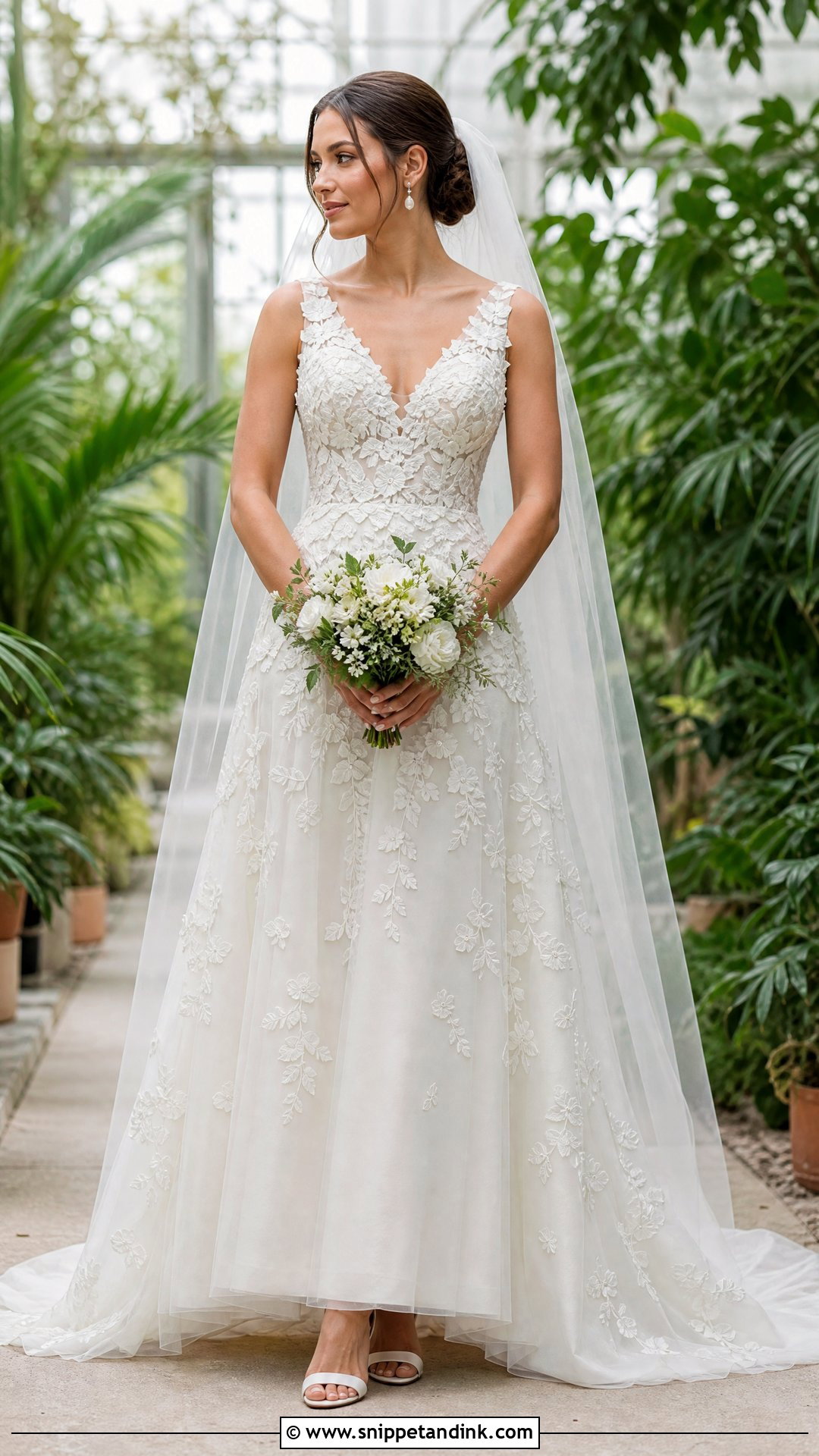
Raised 3D flowers look best concentrated in one area: bodice, sleeves or upper skirt, not everywhere. Spread out, they make the gown look crowded. I run a finger over each appliqué near the waist and underarm at fittings, since those are the ones that get rubbed off by arms and handbags. Keep the veil plain, the earrings small and the bouquet simple in shape and colour. Too many flowers in the bouquet blend into the flowers on the dress.
17. Lace Wedding Dress With Scalloped Train
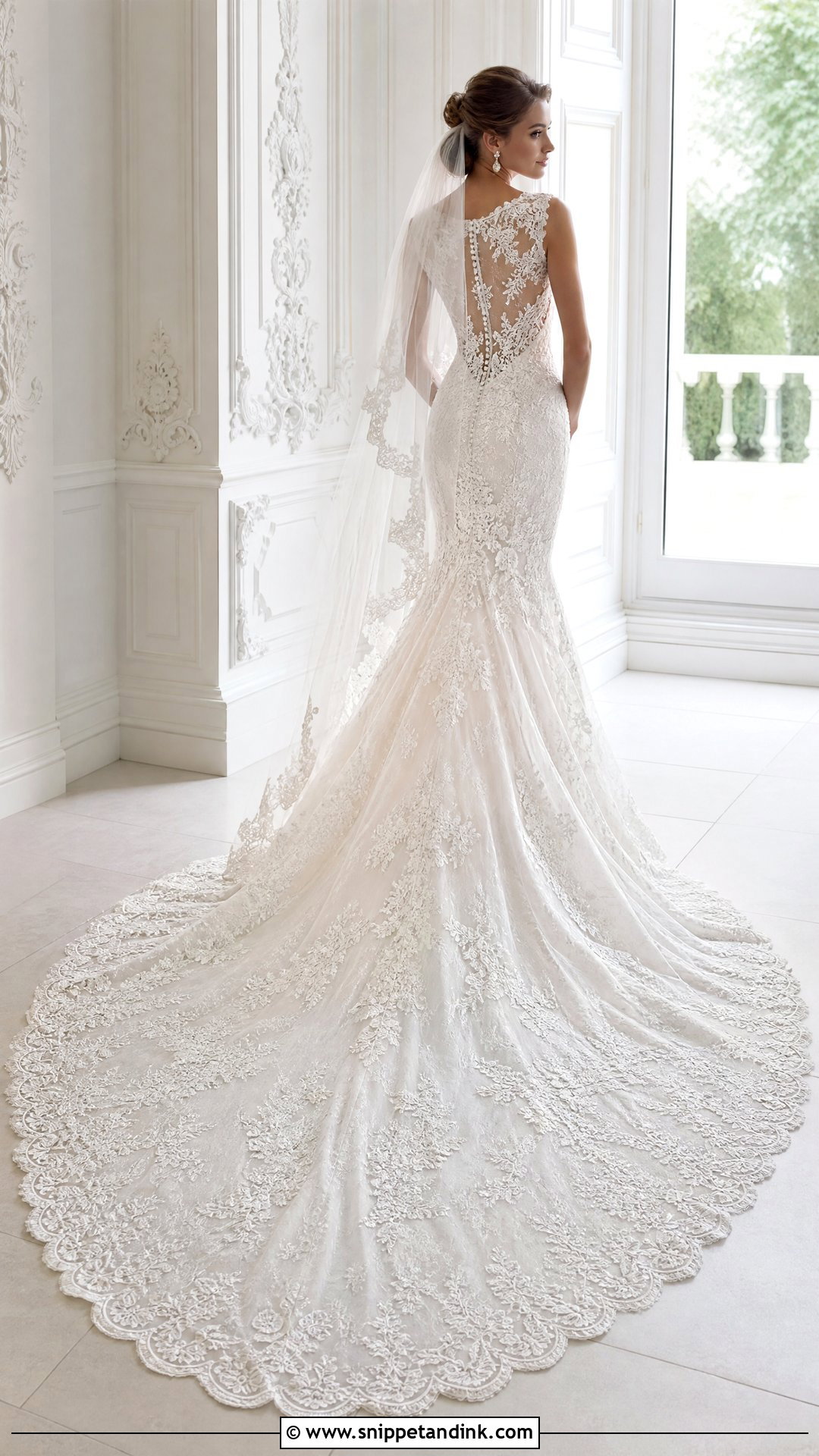
A scalloped train is the back view everyone photographs during the ceremony. The pattern should run continuously from bodice to hem, and the scallops should form an even frame. At the fitting, have someone spread the train flat on the floor so you can see its shape. The bustle is the risk: ask for one that lifts the lace from the underlayer so the scallops aren’t folded or crushed. Keep the veil fingertip length so it ends above the train rather than covering it.
18. Champagne Lined Lace Wedding Dress
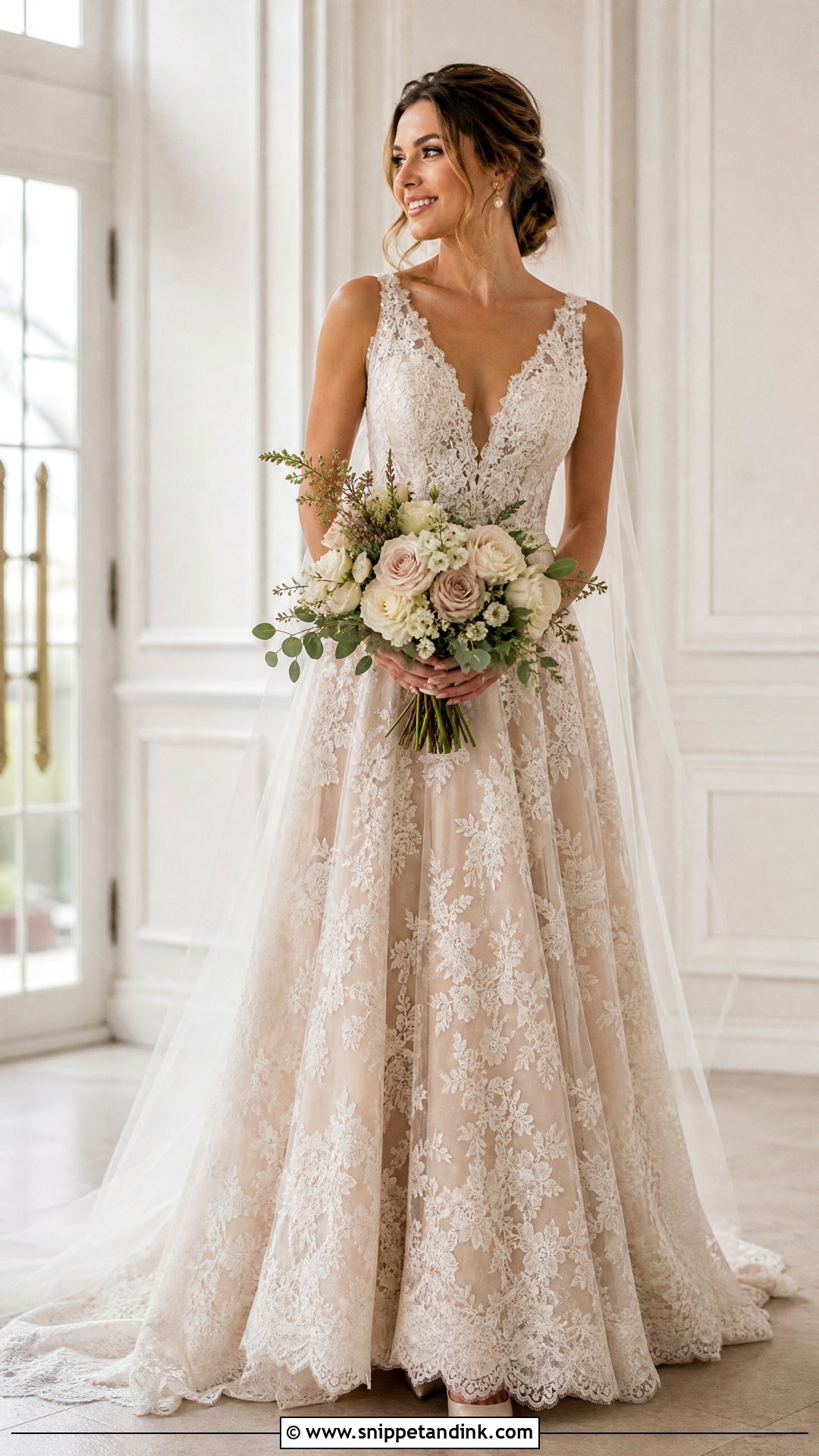
Champagne lining under ivory lace makes the pattern show up from across a room, which matters for ceremony photos taken from the back of the aisle. It works with almost any silhouette. Choose the lining shade against your own skin, not the sample card, since a deep champagne can wash out cool undertones. Champagne looks warmer in candlelight than daylight, so view it both ways. For subtle contrast go pale beige; for strong definition, a deeper champagne.
19. Plus Size A-Line Lace Wedding Dress
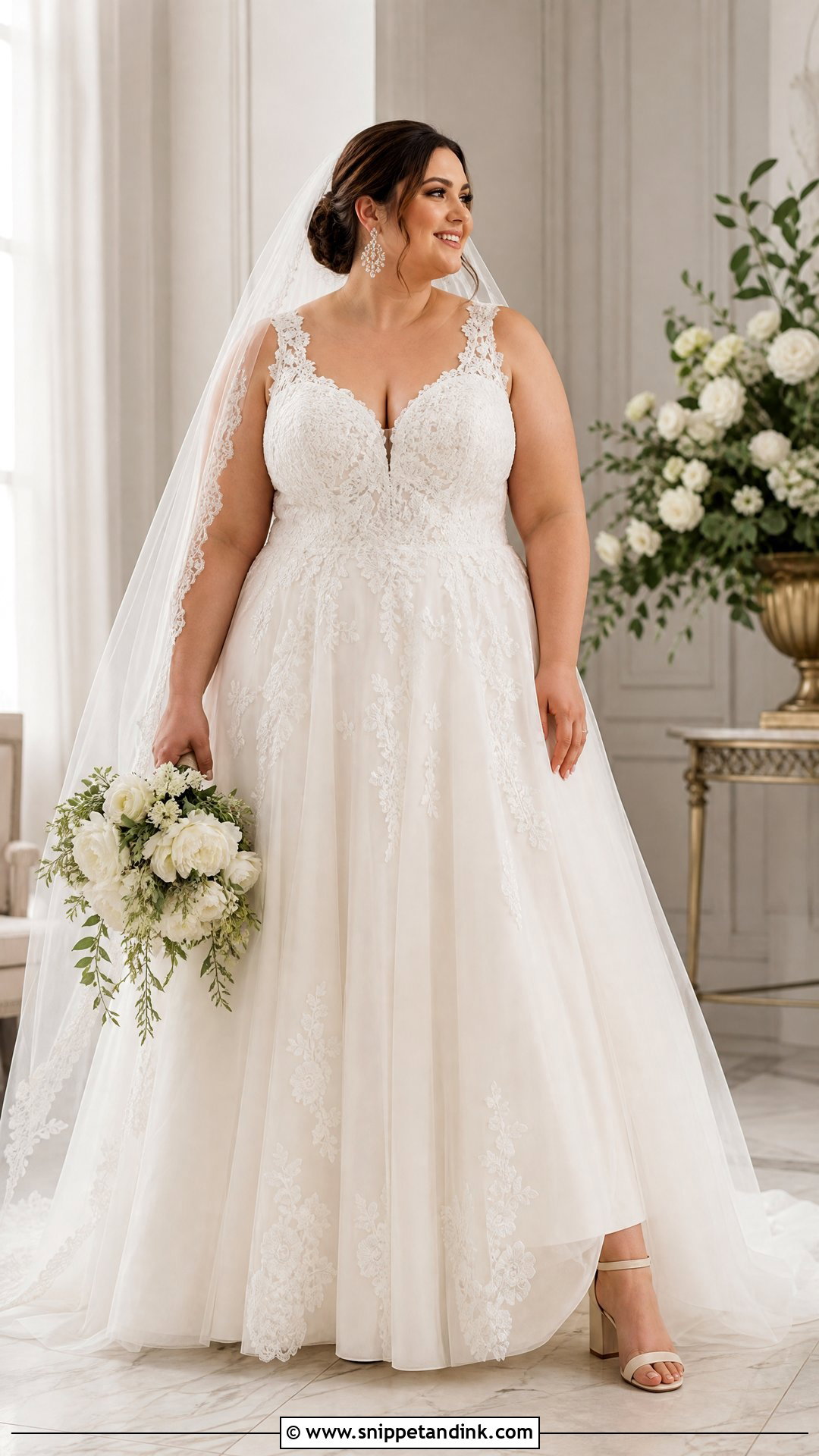
For plus-size brides, the A-line lace dress is popular for good reason: it supports the bust and opens smoothly from the waist without hiding the body. Ask for structured cups and wide enough straps to carry the bodice comfortably. Vertical or diagonal lace placement guides the eye; a defined waistband marks the transition. Buy the size that fits your largest measurement and let alterations take in the rest, never the other way round. Bring your actual underwear and shoes to every fitting so the support and hem are right.




20. Crepe Wedding Dress With Lace Back
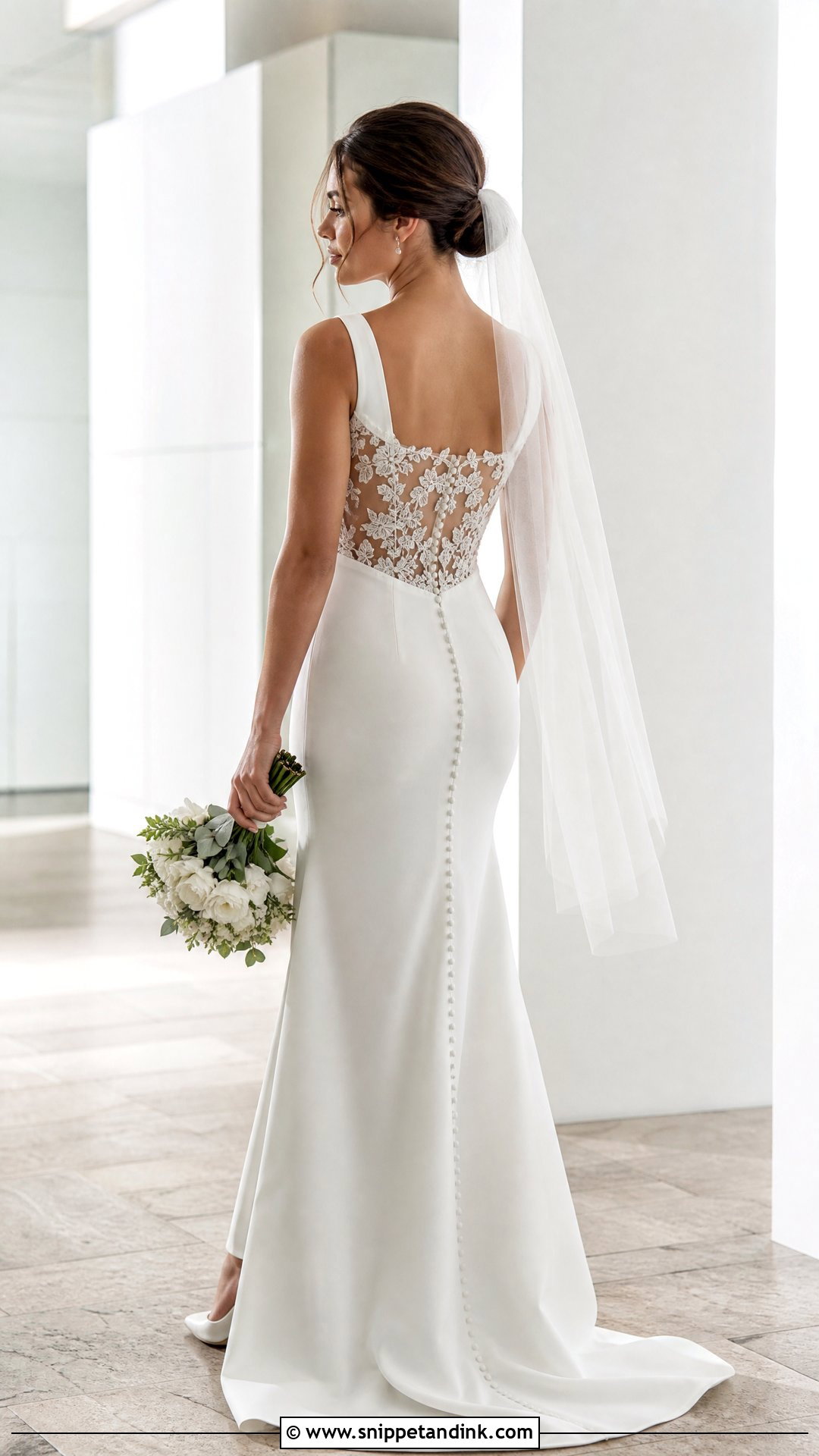
Plain crepe at the front, lace at the back: here the ceremony view, the one guests see during the vows, is the dramatic one. Square, bateau or V necklines keep the front quiet. Sheath and soft fit-and-flare shapes suit crepe best. The lace back panel is where fit fails. The mesh should match your skin and lie flat when you sit, and the bra cups need to be sewn in so no straps show through the lace.
What a Long Day Does to Lace, and What to Do After
Lace picks up everything. The hem and train drag across grass, stone and dance floors, and the open structure traps dirt in a way smooth satin doesn’t. A bustle helps, but expect a grey edge by the end of the night. That’s normal and it cleans.
Snags are the bigger day-of risk. Prongs on an engagement ring, bracelet clasps, beaded clutches and the pin on a groomsman’s boutonniere can pull a thread. Keep your kit simple: small sharp scissors to trim a pulled loop flush instead of tugging it, and a few safety pins to hold a lifted appliqué until someone can stitch it.
Cleaning and storing it
Get the gown to a cleaner who handles bridal lace within a few weeks. Spilled drinks with sugar can dry invisible and then turn brown over time. Store it folded in acid-free tissue in a breathable box, away from light, and never in a plastic dry-cleaning bag, which can trap moisture and yellow ivory lace.
Lace Looks Different Once It’s on You
The lace dress worth choosing feels as good from the back and side as from the front. Pick a silhouette first, then compare necklines, sleeves, lining colour, lace scale and train. Try at least one style you didn’t plan to, since lace changes a lot once it’s on a body. Practise sitting, walking, lifting your arms and turning at every fitting. Accessories should support the lace, not cover the best part of it.
You'll Like These Ideas:





Leave a Reply