
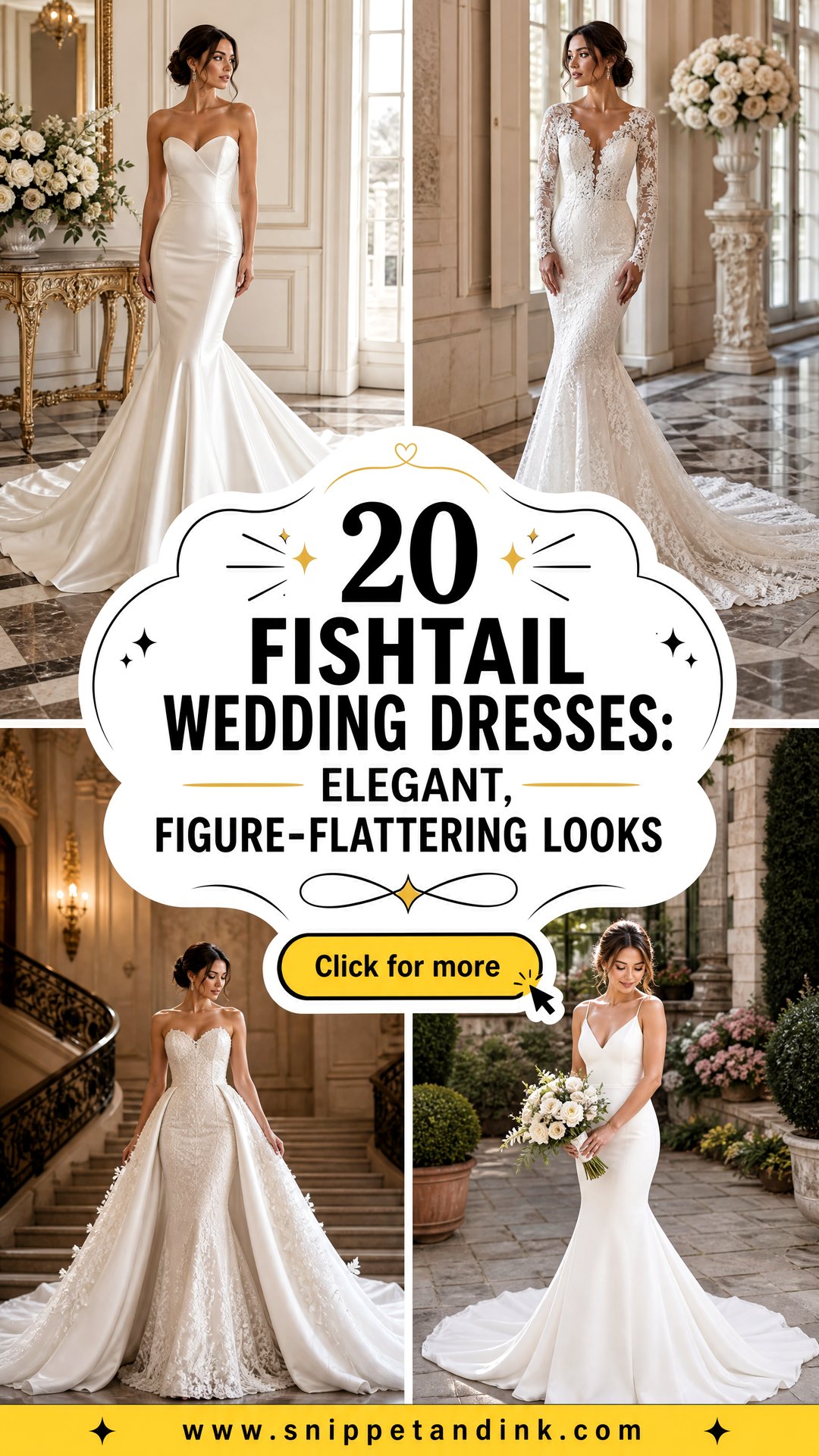
A fishtail gown hugs the bodice and hips, then kicks out somewhere between mid-thigh and the calf. That kick, more than the neckline, decides whether the dress feels sculpted or restrictive, and it’s the first thing I look at when a bride steps onto the fitting platform. This season’s fitted gowns lean on clean satin, bold lace, visible corsetry, draping, detachable sleeves, 3D flowers and removable trains. Looking right in the mirror is only half the test. You also need to sit, climb a step and dance, so as you go through the twenty gowns below, notice where each skirt opens, how much work the bodice is doing on its own, and whether the train could be bustled up for the evening.
Reading the Flare Point on Your Own Body
Shops use fishtail for almost any gown that fits close and then opens near the hem, but the height of that opening changes everything about how the dress wears. Before a bride tries anything on, I have her stand side-on to the mirror and look at three things: where her hips are fullest, where her knee sits and how long her natural stride is.
Flare at mid-thigh
Often sold as a trumpet. It’s the easiest version to walk, sit and dance in, and it suits petite brides and anyone who wants the shape without feeling held in. The skirt opens wider and softer.
Flare at or just below the knee
The classic mermaid line. It shows the most curve and gives the most drama, but it shortens your stride, so stairs, a sloped garden aisle and a long seated dinner all get harder. I’d steer you away from it for a sand or field ceremony.
Flare at mid-calf
Rare and very fitted. I only suggest it for a short ceremony with a planned outfit change, because you’ll be taking small steps for as long as you wear it.
Bring the shoes you’ll actually wear to every try-on. A fitted hem is measured to the floor in those shoes, and two inches of heel shifts where the flare lands on your leg.
1. Strapless Satin Fishtail Wedding Dress
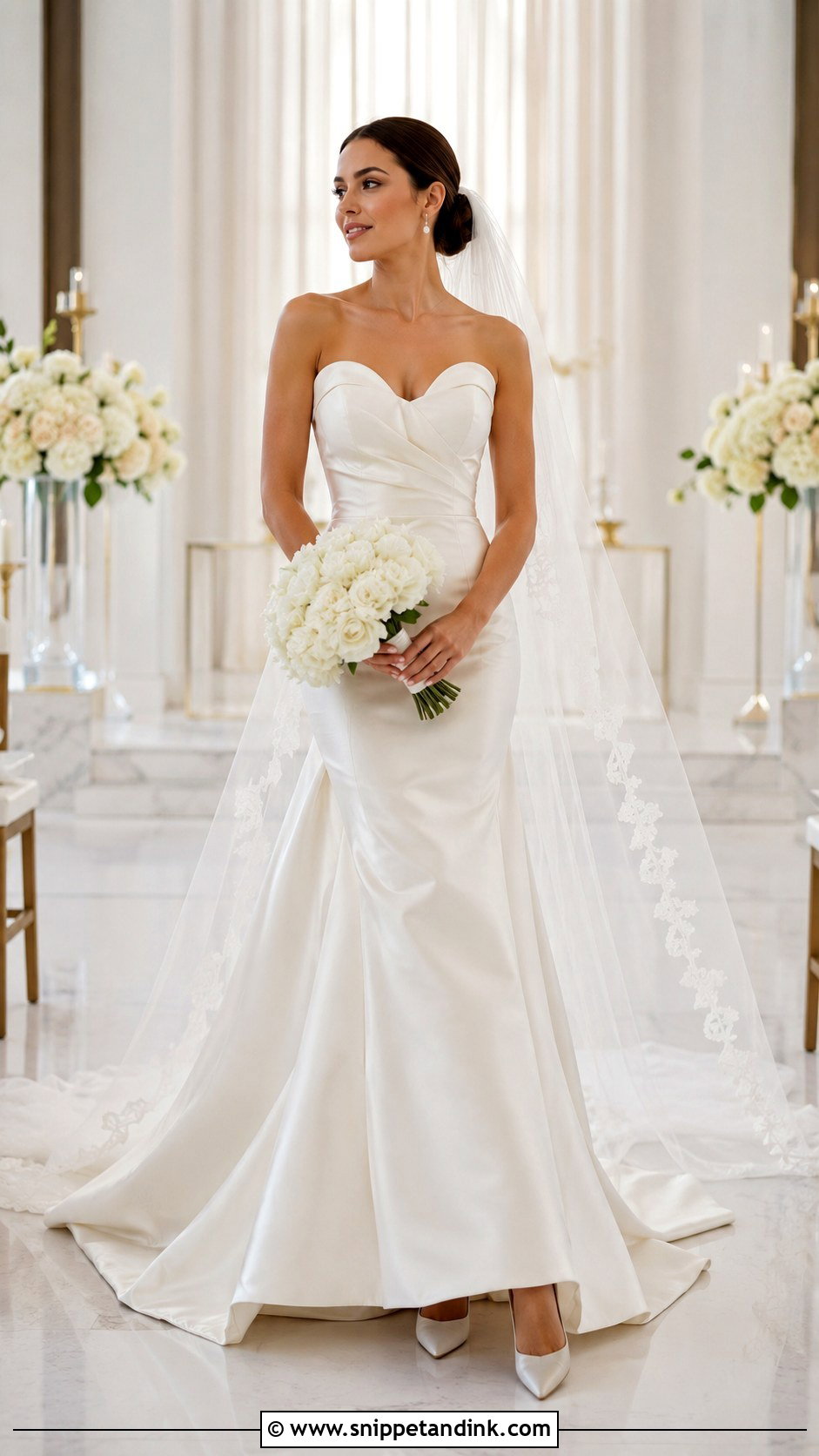
Satin is the least forgiving fabric you can put on a fitted silhouette. It reflects light along every seam, so a waist taken in a few millimeters too far shows up as a ripple across the hip in photos. In a strapless satin bodice I always want internal boning and a waist stay; when those are right, you stop hitching the neckline up between pictures. A sweetheart edge softens the line, while a straight-across neckline reads sharper and more modern. Pointed ivory pumps, pearl drops and a cathedral veil with a raw cut edge keep the focus on the shape, and a low bun leaves the shoulders clear. Plan to take the veil off and bustle the train before the first dance.
2. Long Sleeve Lace Fishtail Wedding Dress
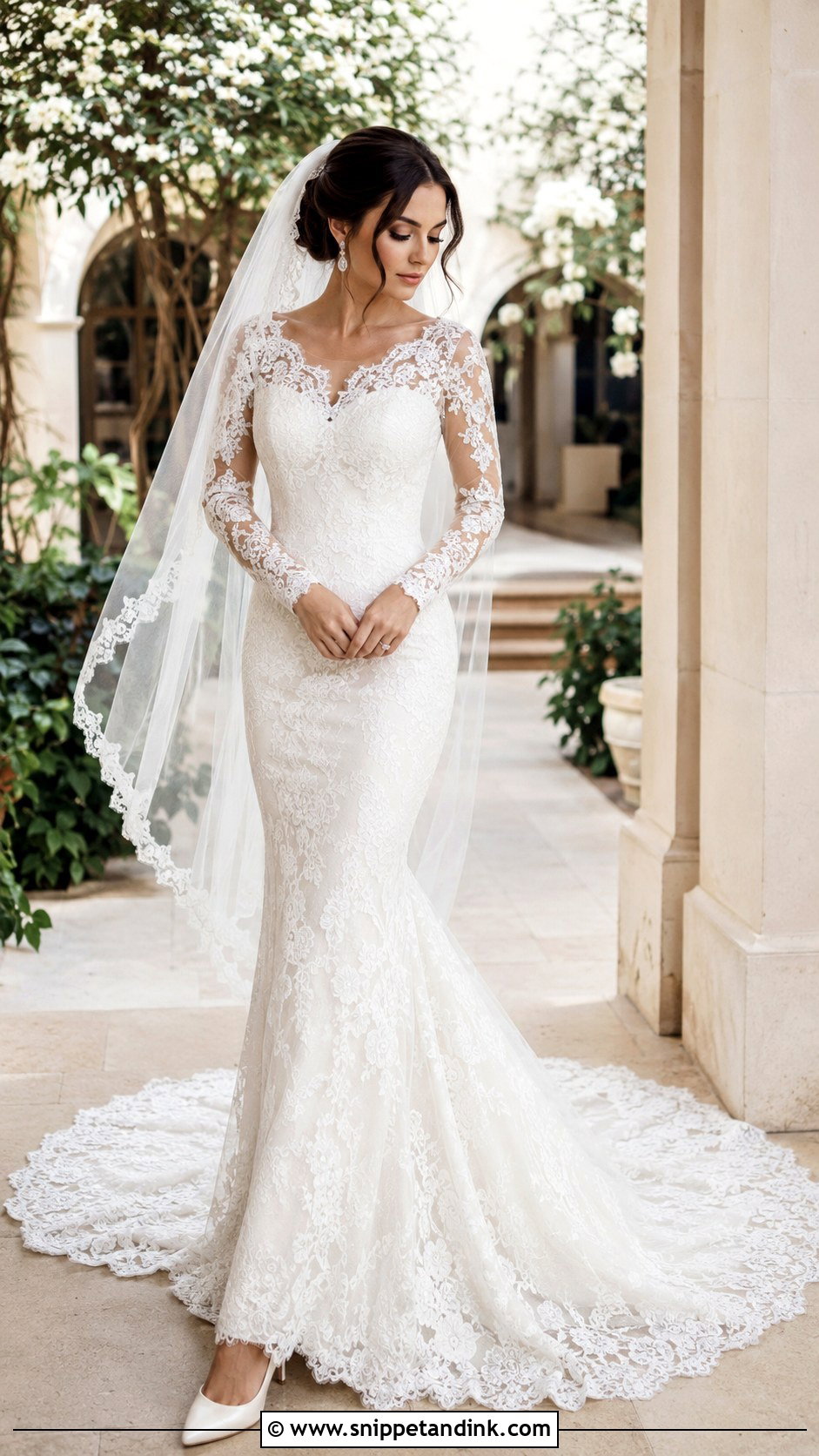
Long lace sleeves look delicate, but they’re where fit trouble hides. Lace has almost no give unless it sits on a stretch base, and a sleeve cut snug at the bicep will pull the whole bodice up the moment you lift a glass. During your fitting, bend your elbows, reach forward as if hugging someone, and raise both arms above your shoulders. A lined bodice with sheer sleeves gives coverage without weight, and the gown reads best when the floral motifs travel from the neckline through the hips and thin out toward the flare. I’d add satin pumps, small crystal studs and a fingertip veil edged in matching lace, with a soft chignon or loose waves that won’t fight the pattern.
3. Off The Shoulder Fishtail Wedding Dress
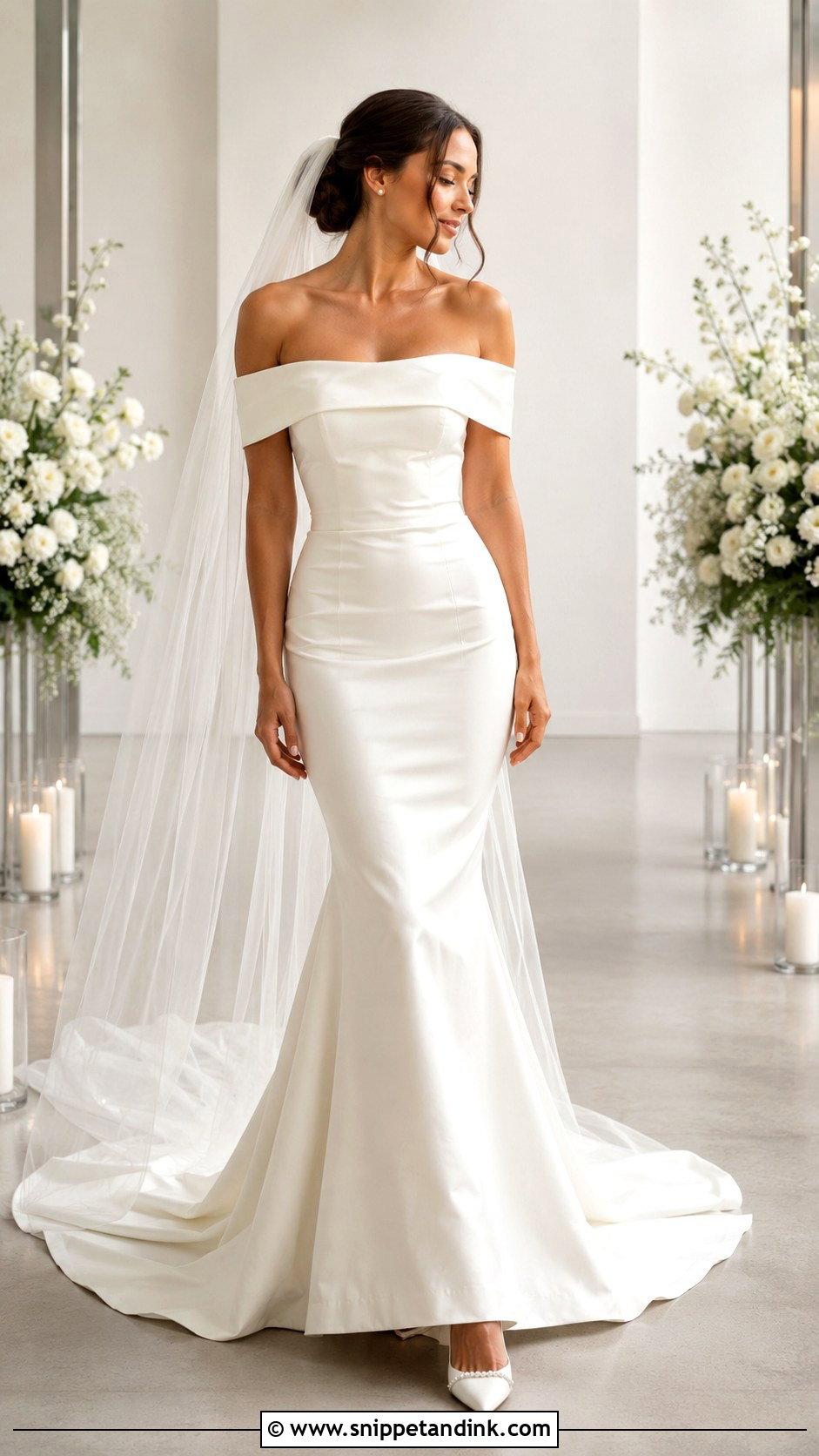
This neckline sits across the upper arms, which means your arms carry part of the dress. That’s my main reservation with it. If the band is too tight, you can’t raise your arms without lifting the bodice; too loose, and it slides down by the speeches. A folded satin band gives the most structure, while lace or tulle straps feel lighter but need more careful fitting. Test it by holding your bouquet at waist height for a full minute and then hugging someone. A delicate pendant, pearl studs, pointed heels and a long veil under a polished bun finish it. Ask about detachable off-the-shoulder sleeves too, since removing them after the ceremony leaves a cleaner strapless gown for the reception.
4. Sweetheart Neck Fishtail Wedding Dress
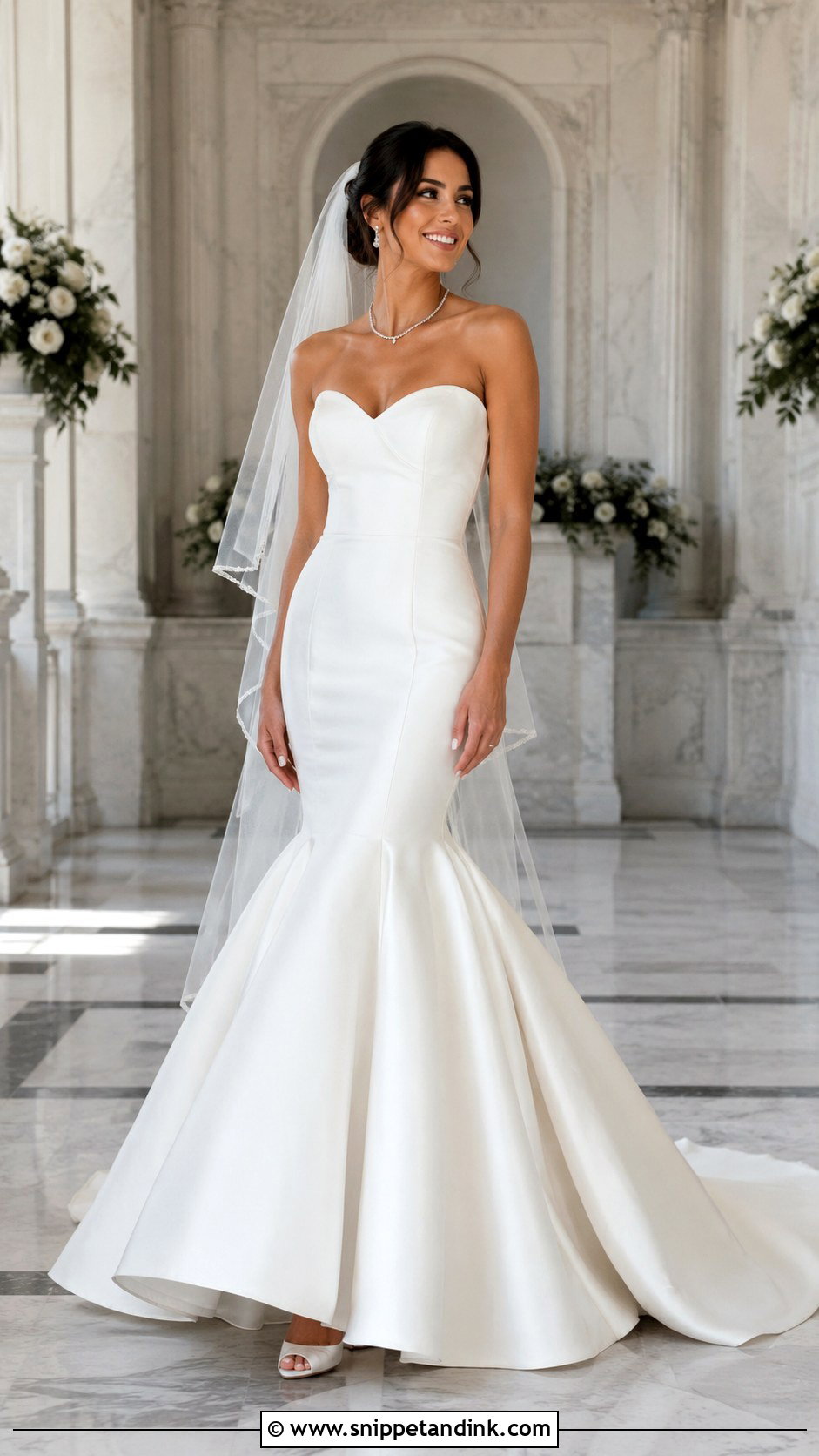
Few combinations feel as classically bridal as a sweetheart neckline and a sweeping fishtail skirt. The dip at the center of the neckline is the detail I watch most closely. On a fuller bust it can gape when you lean forward, and the fix usually lives in the cups and side boning rather than the neckline itself. Mikado holds a crisp curve, embroidered lace softens it, and matte crepe keeps it quiet. A slightly raised curve gives more coverage than a deep plunge. Keep the bouquet compact so it doesn’t block the bodice, and wear a fine tennis necklace, matching earrings and a chapel veil. Sit down at your appointment and have someone check the neckline from the side, because that’s the angle most guests see.
5. Square Neck Fishtail Wedding Dress
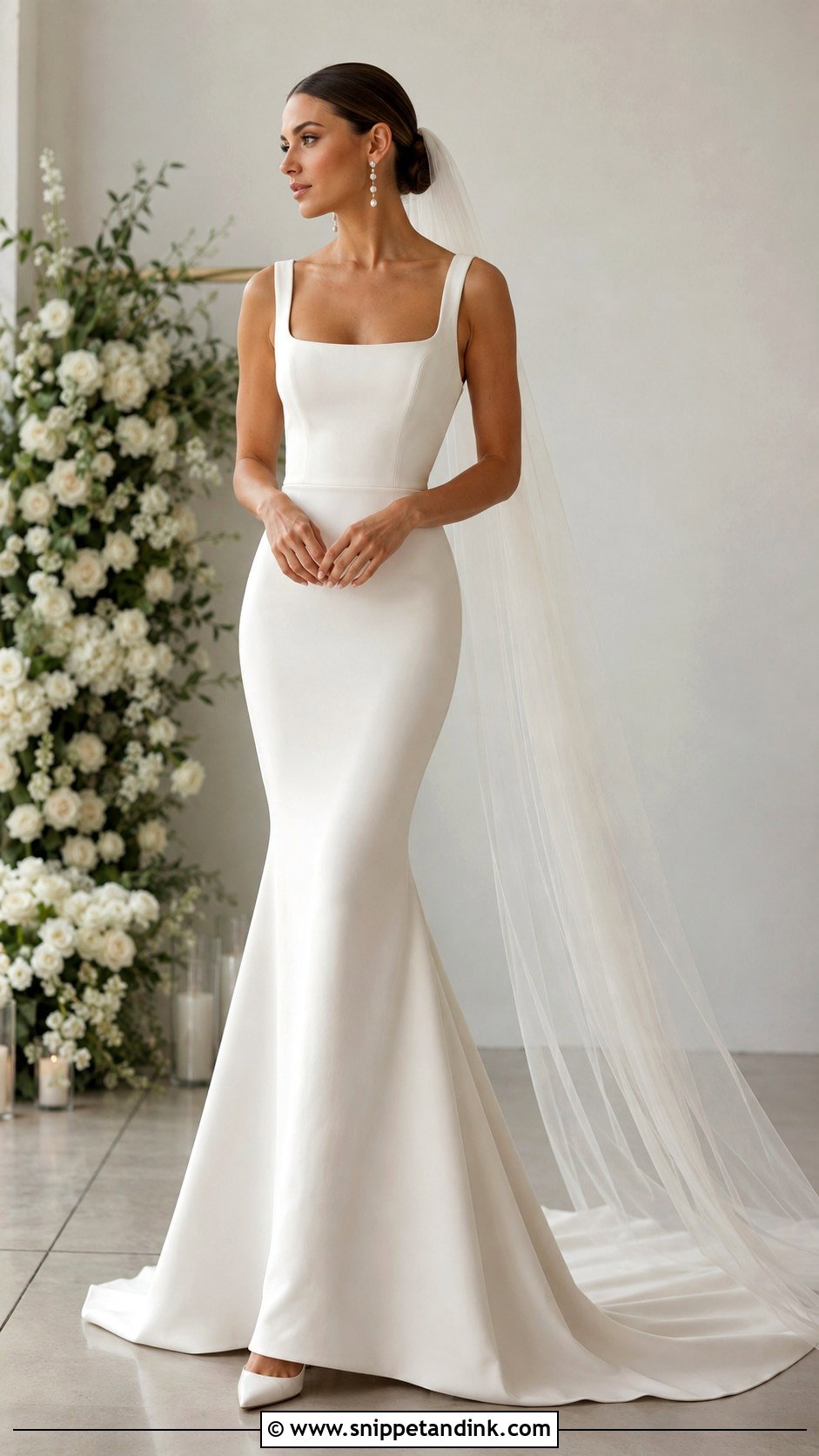
A square neckline is really a geometry problem. The corners need to stay sharp, and on many bodies they collapse slightly once you sit, so I check them seated before anything else. Wide straps help hold that shape, and crepe or satin keeps the line crisp all the way to the flare. It’s a sensible middle ground if you want more coverage than strapless without committing to sleeves. Leave the necklace at home; drop earrings, a sleek low bun, closed-toe pumps and a sheer cathedral veil are enough. Covered buttons down the back add a traditional note behind a minimal front. At the fitting, hold your bouquet and turn to each side to see whether the straps stay flat.
6. V Neck Fishtail Wedding Dress
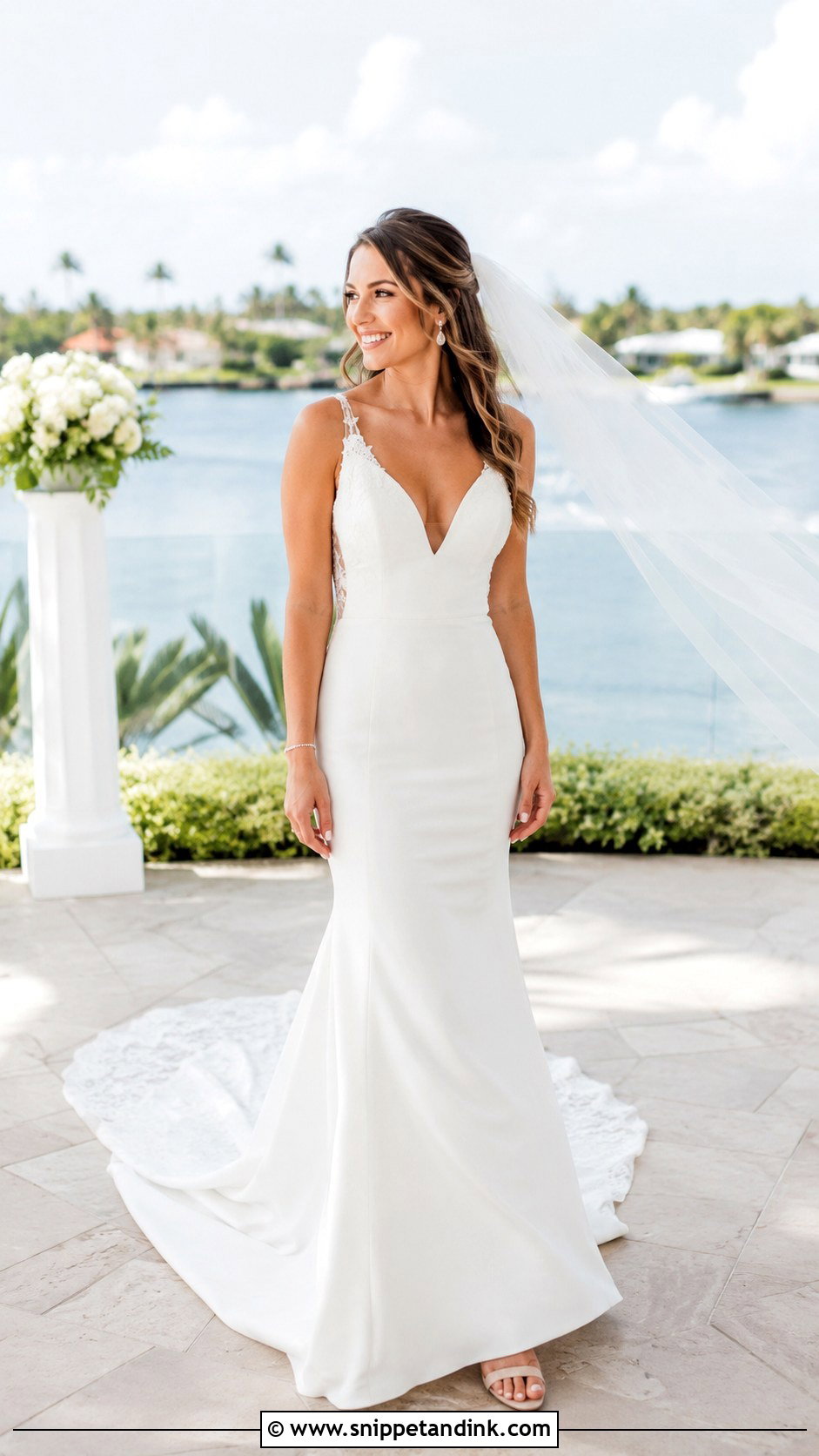
A V-neck pulls the eye down the length of a fitted gown, which is why it suits a fishtail so naturally. How deep is the real question. A modest V is easy to wear all day; a deep plunge needs illusion mesh or a properly built bodice behind it, and I’d never trust fashion tape alone through hours of hugging and dancing. Lace appliqués along the edges soften the line, plain crepe sharpens it. Teardrop earrings, a fine bracelet, ivory sandals, a light veil and a half-up style keep the neckline in view. If the back is low as well, ask for built-in cups so you aren’t hunting for invisible underwear the week before.
7. High Neck Fishtail Wedding Dress
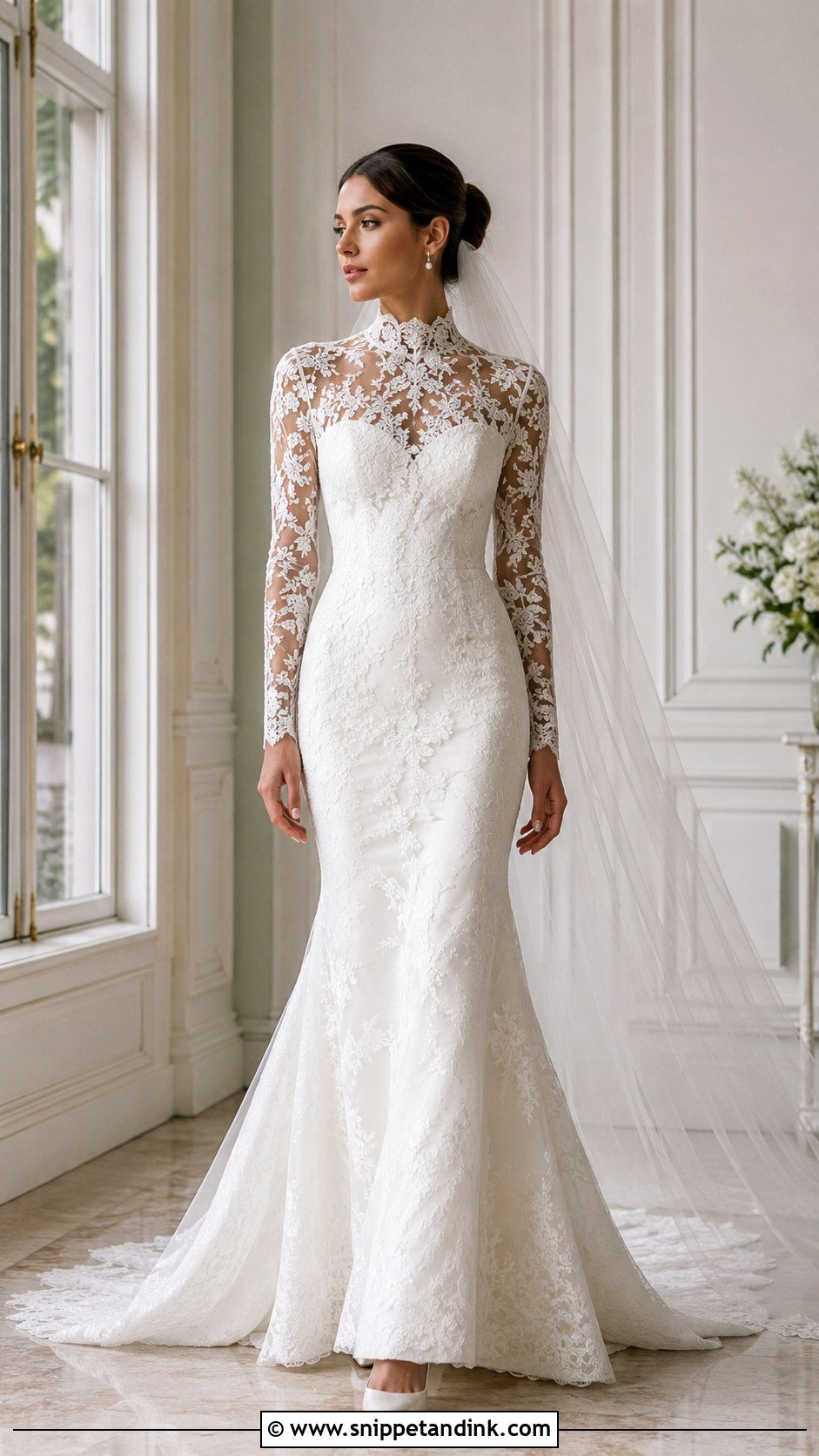
High necklines and fishtail skirts make a striking pair because both ends of the silhouette are defined: the throat at the top, the flare at the bottom. The collar is the part to test. Turn your head fully left and right, then look down at your shoes; a collar cut too high will crease or rub along the jaw. Sheer lace gives a lighter effect, while crepe looks almost sculpted. Since the neckline already frames the face, small earrings and one slim bracelet are plenty, with a neat bun, pointed satin shoes and a veil set beneath the hair. For a winter date, fitted long sleeves and a lined bodice help. In summer, a sleeveless high neck with an open back breathes far better.
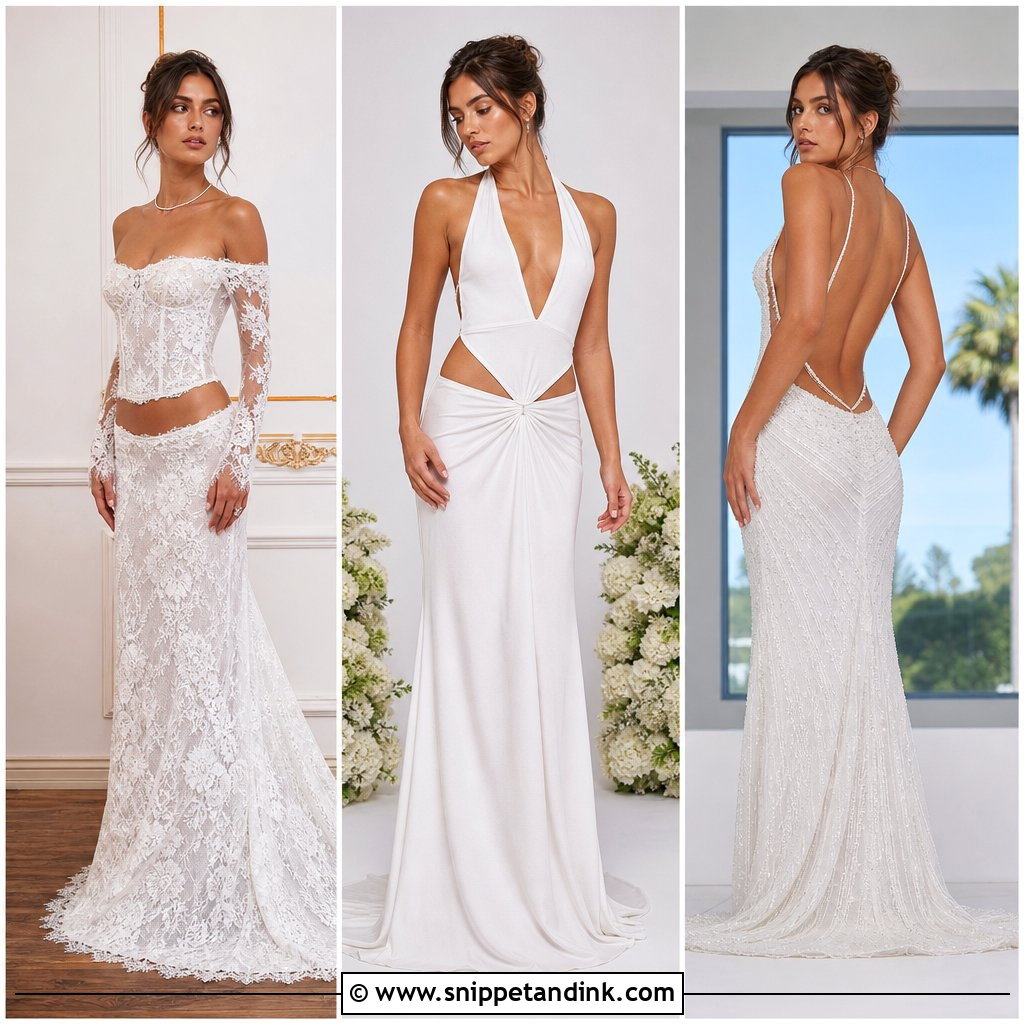
8. Corset Fishtail Wedding Dress
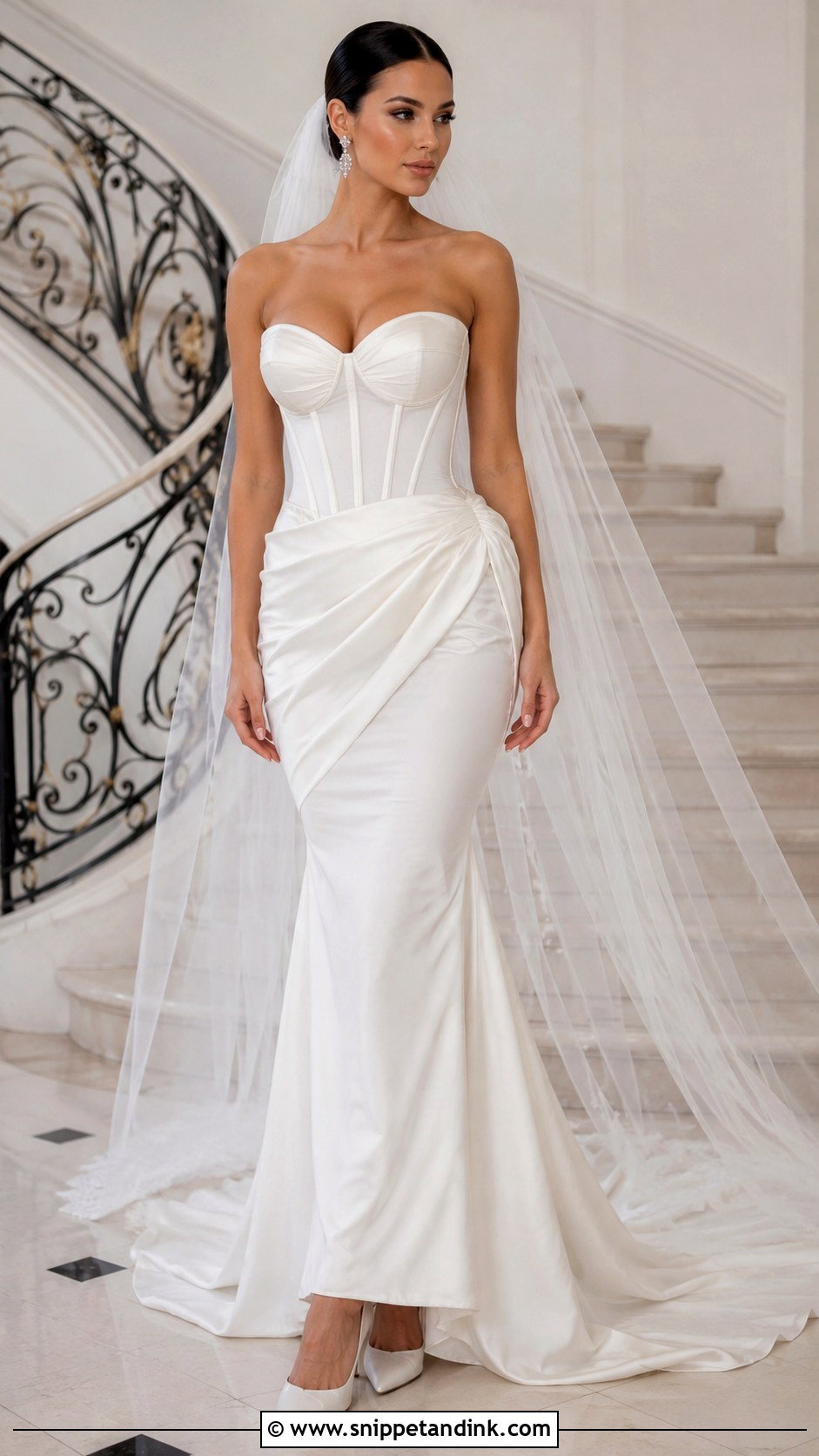
A visible corset is a structural garment first and decoration second. I look at where the waist seam falls: it should sit at your natural waist, the point that creases when you bend sideways, not across the ribs or the top of the hip. The bones should run straight without twisting when you sit. Lace panels soften the look, and satin draping over the structure makes it feel less rigid. If the corset has sheer sections, ask for lining or mesh in a shade closer to your skin. Crystal earrings, ivory pumps, a simple veil and a smooth updo keep attention on the bodice. Breathe deeply and sit for a few minutes at the fitting. Secure is the goal. Tight enough to stop you eating dinner is too far.
9. Minimalist Crepe Fishtail Wedding Dress
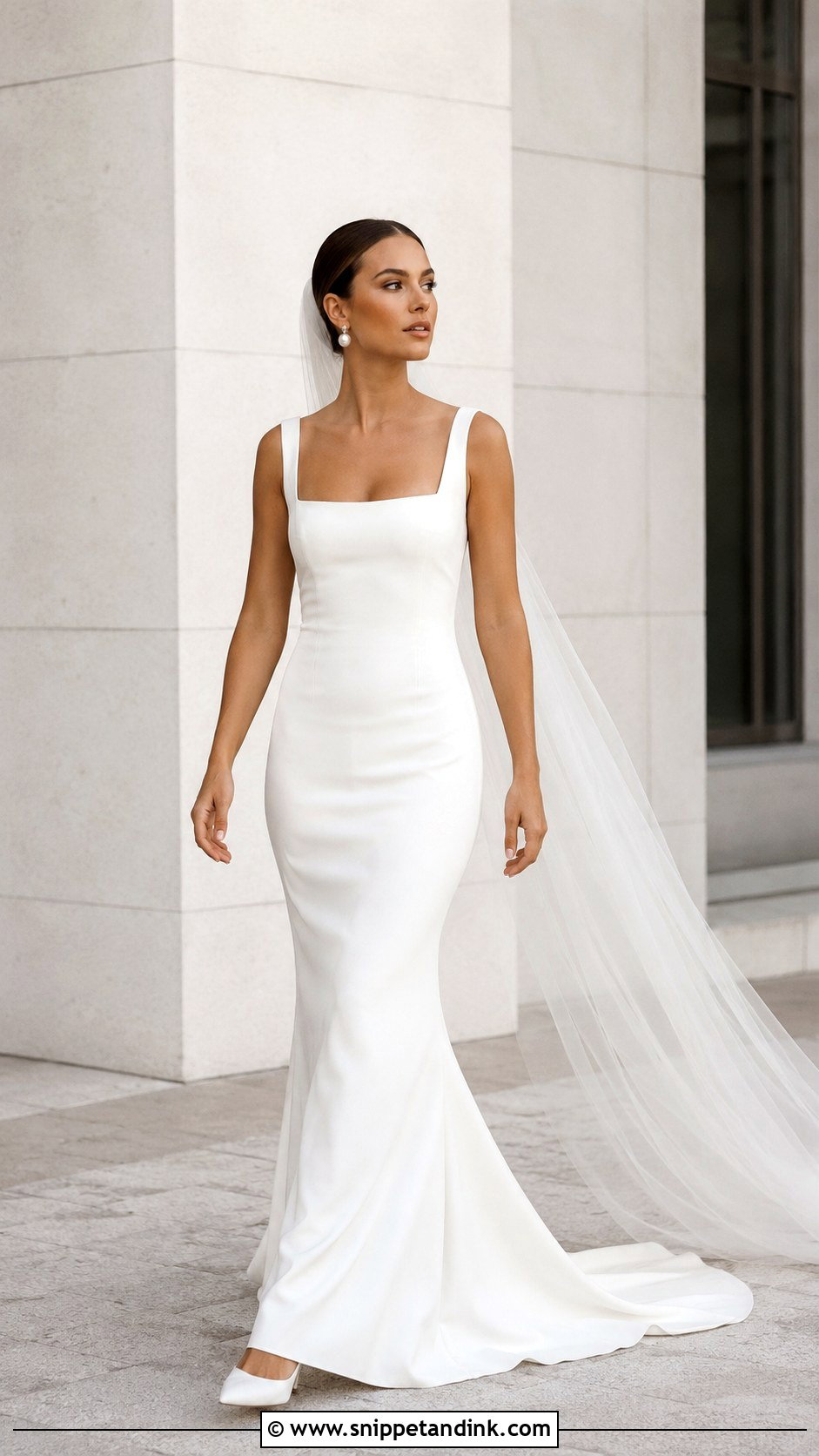
Sometimes the simplest gown makes the strongest impression, but plain crepe hides nothing. Every seam, hem ridge and zipper line shows, so the tailoring has to be excellent. I look for a heavier stretch crepe that skims the body, because lightweight crepe clings and shows every edge underneath. A bateau, square or draped neckline gives it character without adding decoration. Pearl earrings, white pointed pumps, a small structured bag for portraits and a long plain veil complete it, with sleek hair and fresh makeup. Ask your seamstress to check the hem, lining, zip and side seams, and wear smooth, flat-edged shapewear to every fitting.
10. Beaded Fishtail Wedding Dress
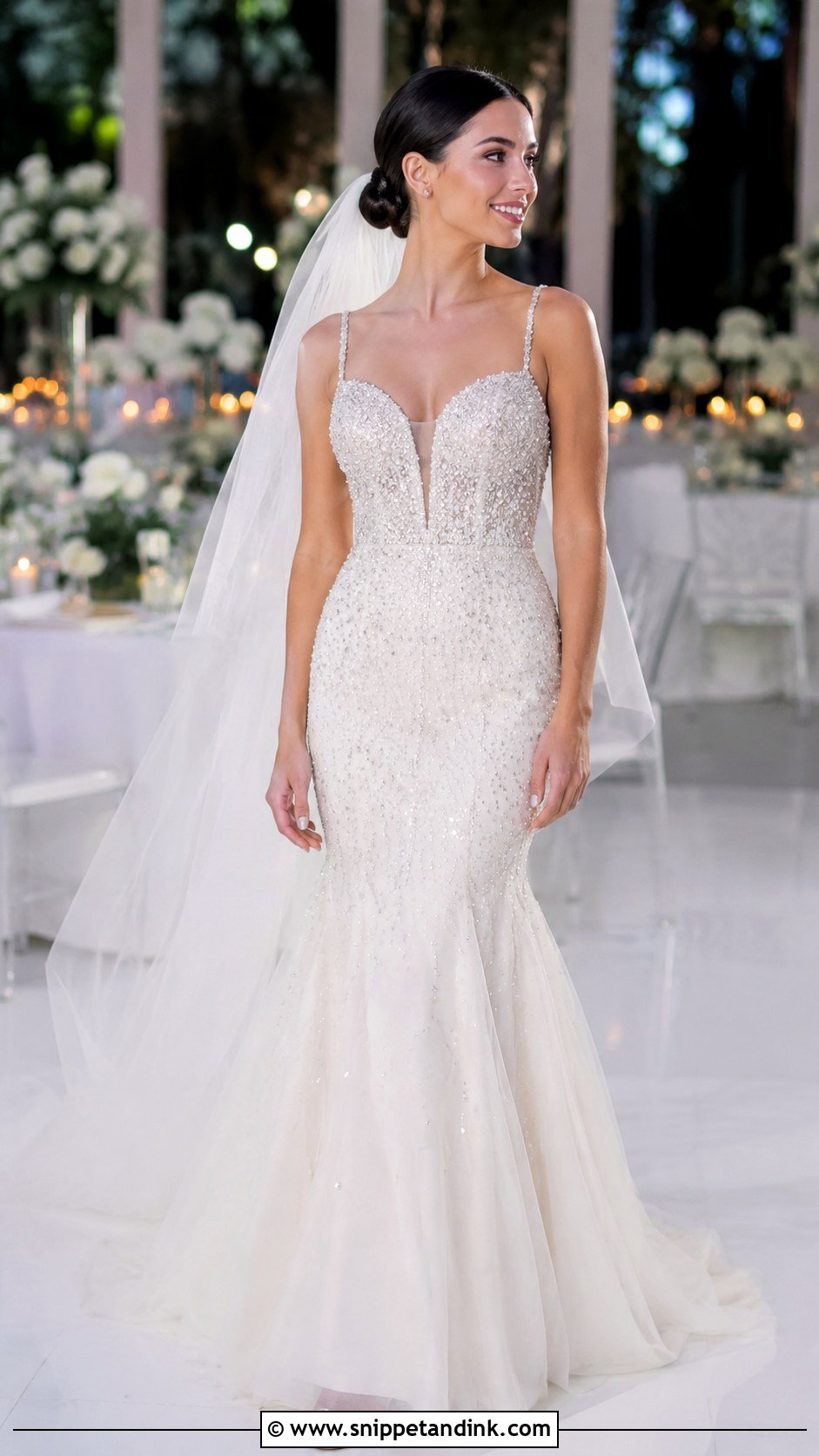
Beadwork changes the way a fishtail moves. A heavily beaded bodice pulls downward and can make the skirt hang lower than it did on the hanger, so I’d always try the actual gown rather than a sample in a different finish. Dense beading at the bodice that fades toward the skirt gives sparkle without dragging the dress down. Silver crystals read cool and glamorous under evening light; pearls and ivory beads give a softer glow. A plain tulle veil, simple earrings, metallic ivory sandals and a sleek ponytail or low bun keep it from tipping into too much. Run your hand along the inner arm area before you buy. Beads there can scratch skin over a long day.
11. Floral Lace Fishtail Wedding Dress
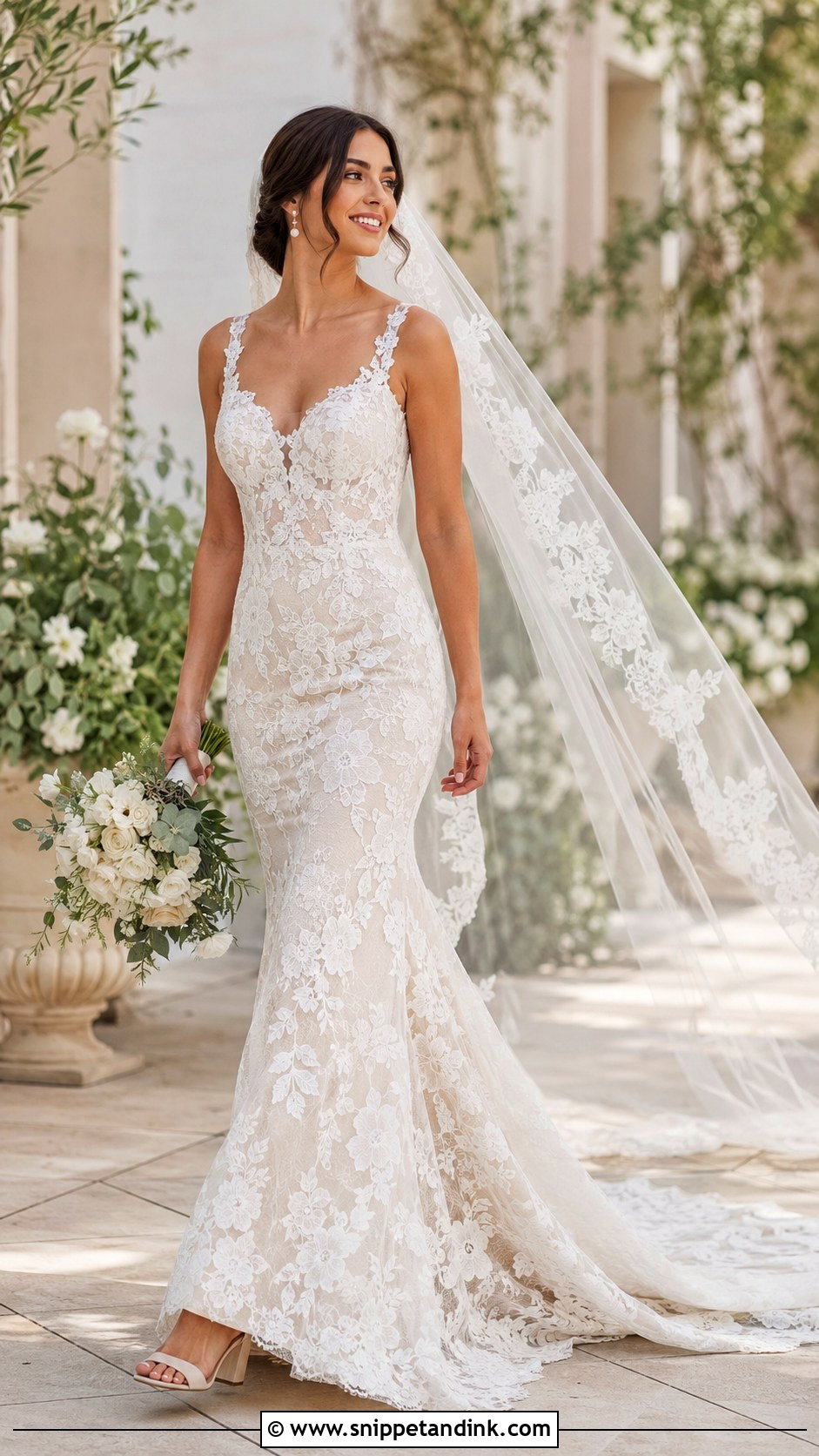
Large-scale lace looks best when the motifs follow the body instead of stopping abruptly at the waist or hip seam. I check the side seams and zip first, because that’s where cheaper construction cuts straight through a flower. Vertical appliqués draw the eye down to the flare, while scattered flowers feel airier and more garden-like. If there’s a nude underlay, look at several lining shades in daylight against your skin before ordering, since showroom lighting flattens the difference. Pearl earrings, block-heel sandals, a lace-edged veil, a loose bun and a white and green bouquet keep everything in proportion.
12. 3D Floral Fishtail Wedding Dress
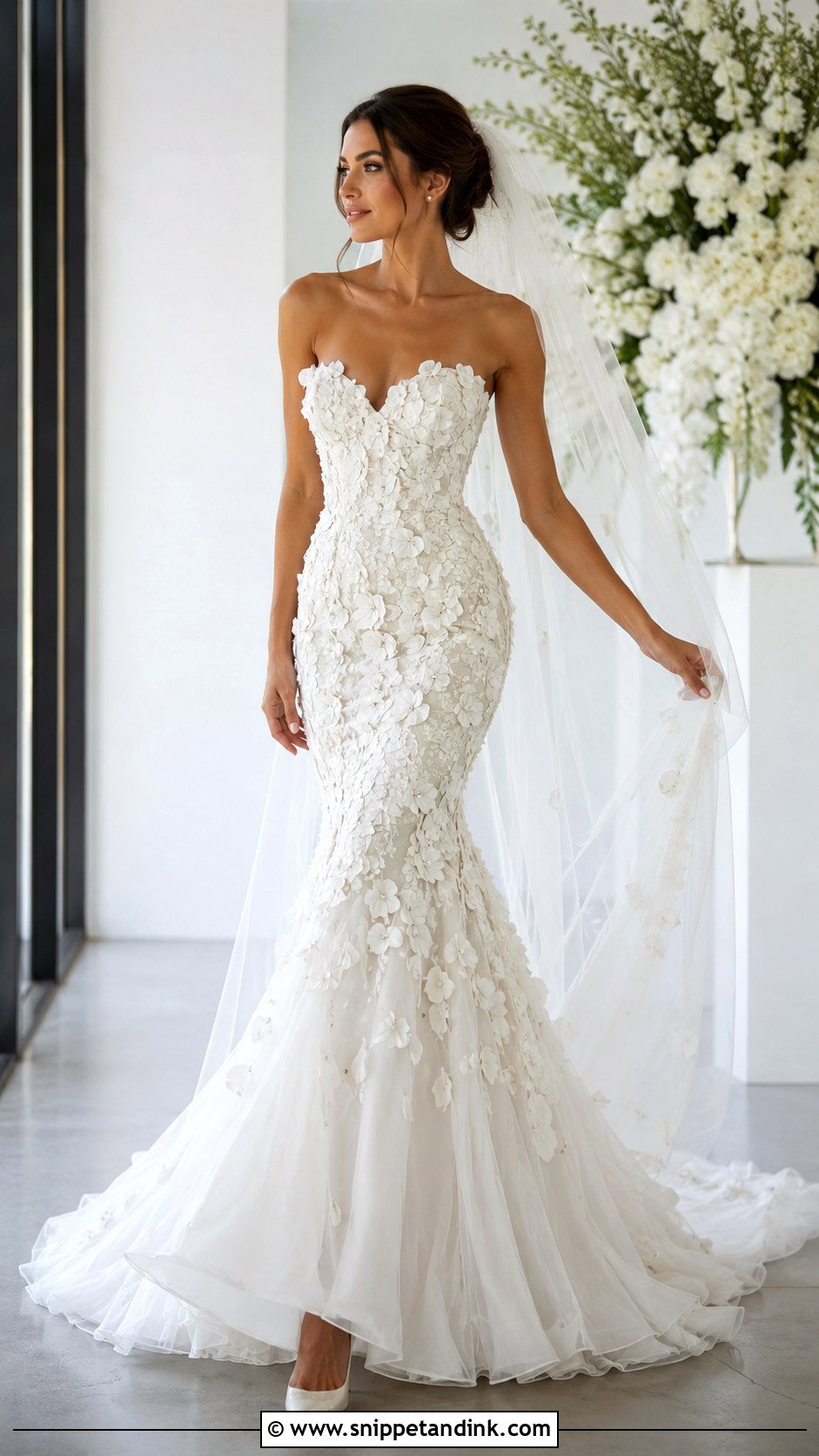
Dimensional flowers bring texture you can read from the back of the room, though they come with practical problems. Petals catch on tulle veils, and flowers over the hips or lower back can press into you when you sit. Sit in the gown before buying, and draw a veil across the appliqués to see whether they snag. The best placement clusters flowers at the neckline, waist and upper skirt, then scatters them toward the flare. Small blooms feel delicate; oversized petals feel more couture. Keep everything else quiet with studs, ivory pumps, a sheer untrimmed veil and a simple updo. I’d also ask where the bustle points will go, as appliqués near the train often get in the way.
13. Pearl Fishtail Wedding Dress
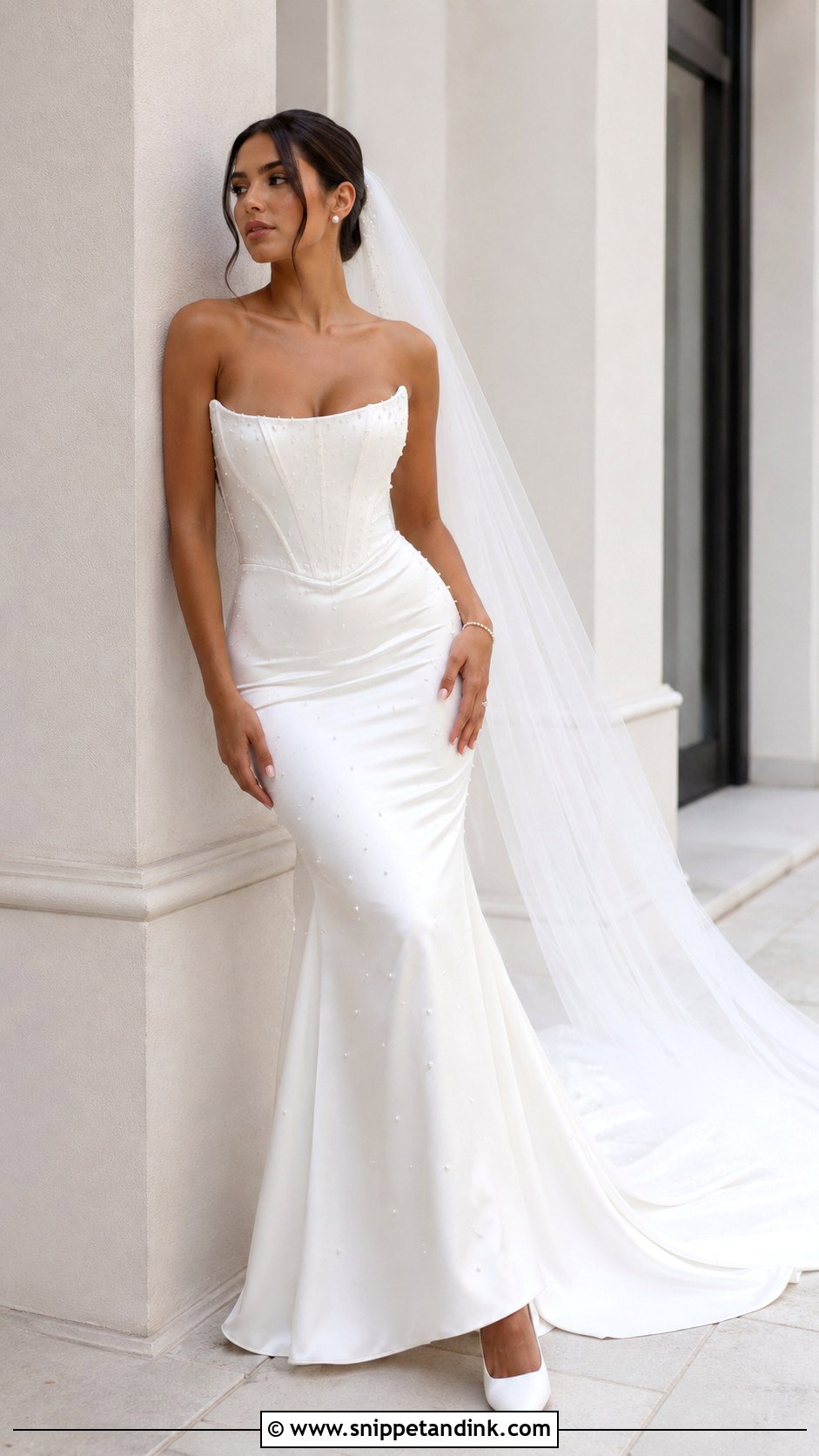
Pearls give a softer glow than crystal, and on a fishtail they can outline a corset, dot sheer sleeves or scatter across the skirt. A matte crepe or satin base keeps them visible without the gown turning ornate. Hand-sewn pearls do work loose, so at the final fitting I go over every embellished area and ask for any wobbly ones to be reattached. Ask the shop how to steam it as well, since direct heat can dull the coating on some faux pearls. Pearl studs, a single-strand bracelet, satin heels and a clean cathedral veil are enough. Skip heavily pearled accessories so the dress stays the main feature, and finish with a polished bun or smooth waves.
14. Detachable Overskirt Fishtail Wedding Dress
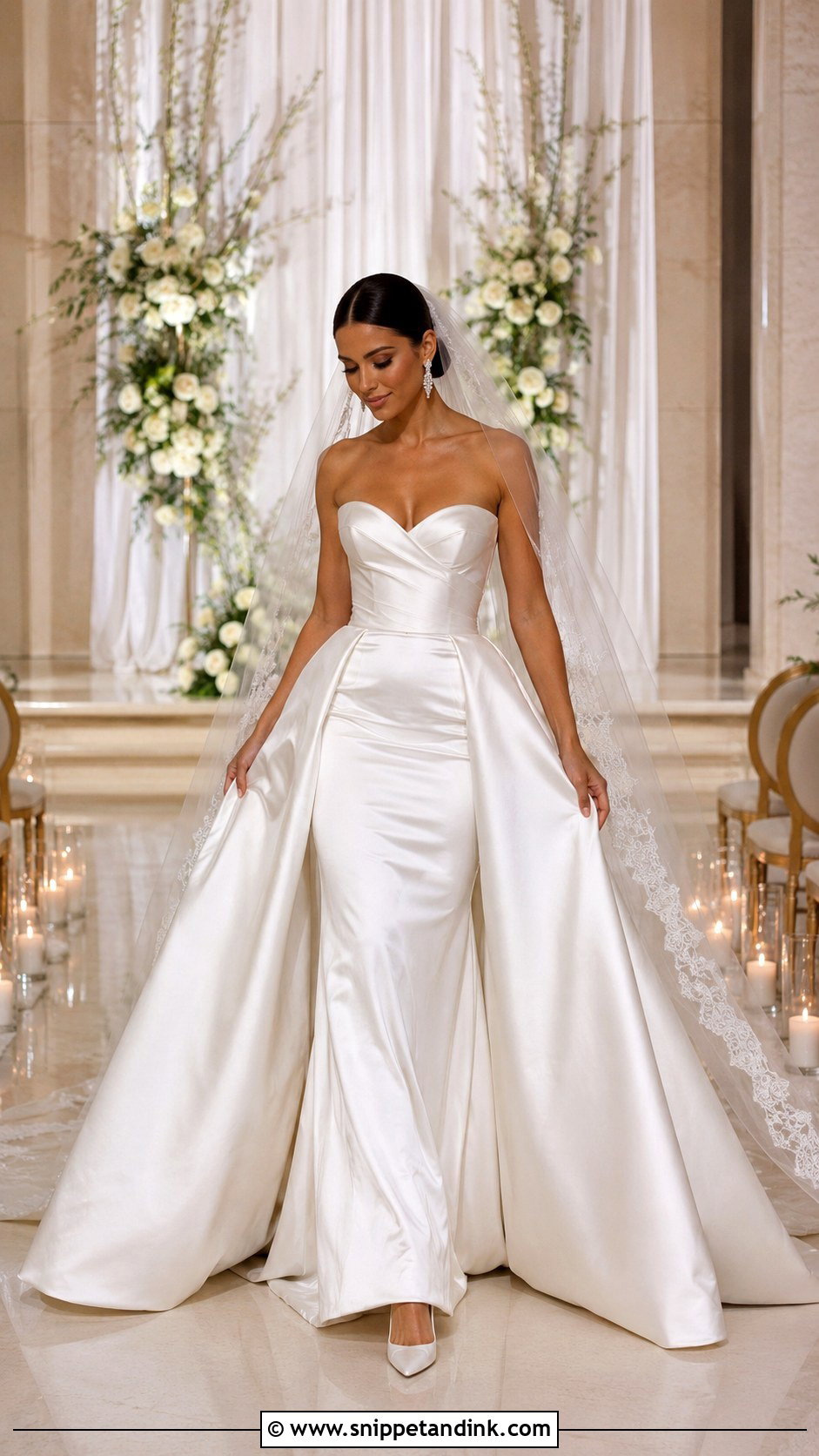
A detachable overskirt gives you ceremony volume over a sleek fishtail that comes out for the party. I find it one of the most practical two-look options, provided the waistband join is clean and flat. Satin overskirts are structured and bold; tulle and organza are lighter. Wear the full look for the ceremony with a cathedral veil, statement earrings and pointed ivory pumps, then remove the overskirt and veil before the reception. Rehearse the change with the person who’ll actually do it on the day, because hooks and snaps at the back waist are awkward to reach. Check that the gown underneath has its own bustle too, since its train will still need lifting for dancing.
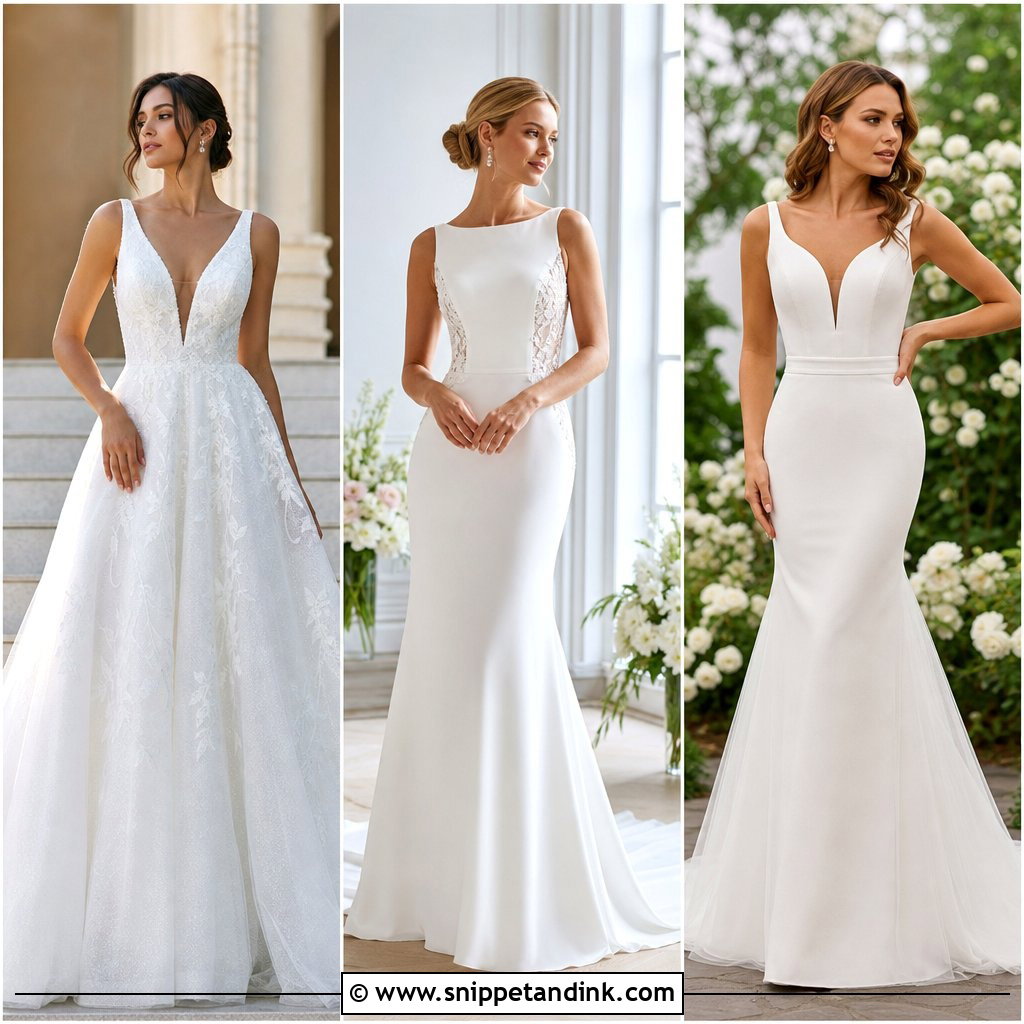
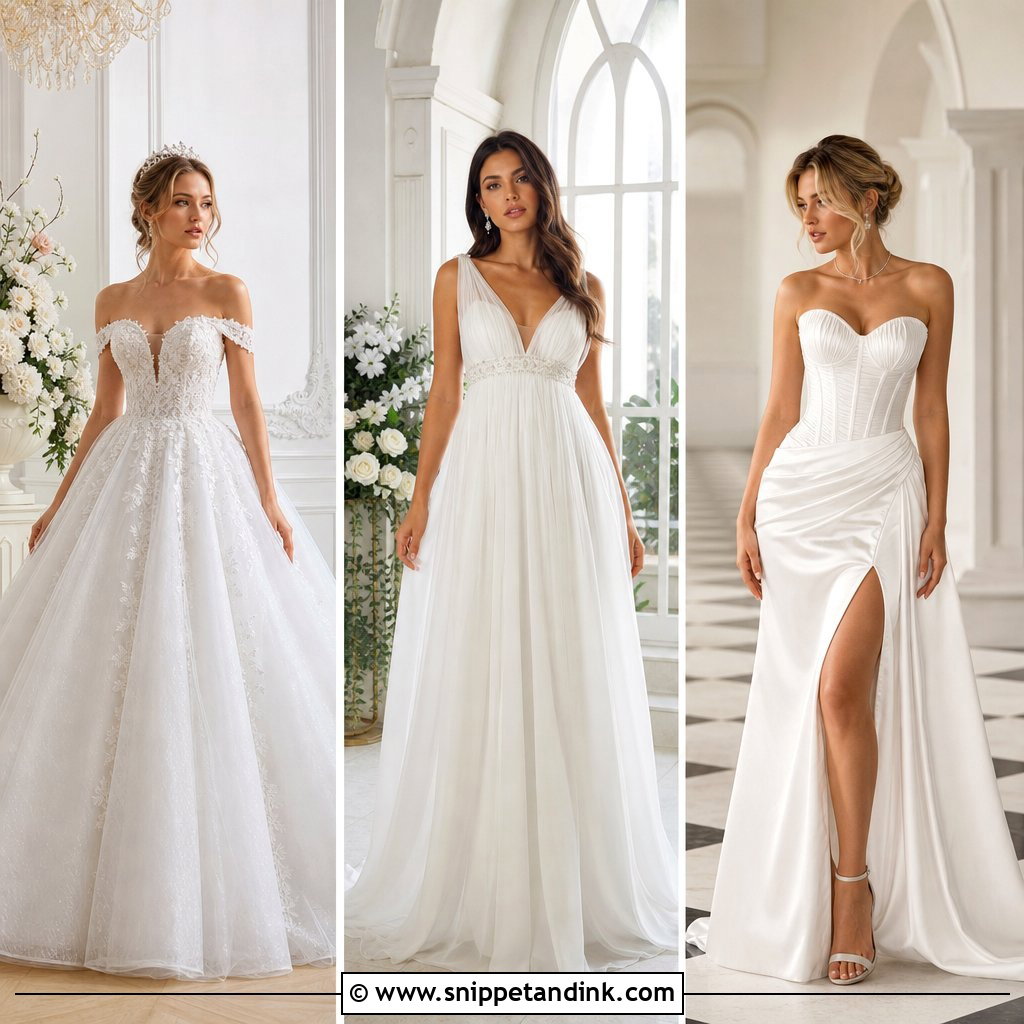
15. Detachable Sleeve Fishtail Wedding Dress
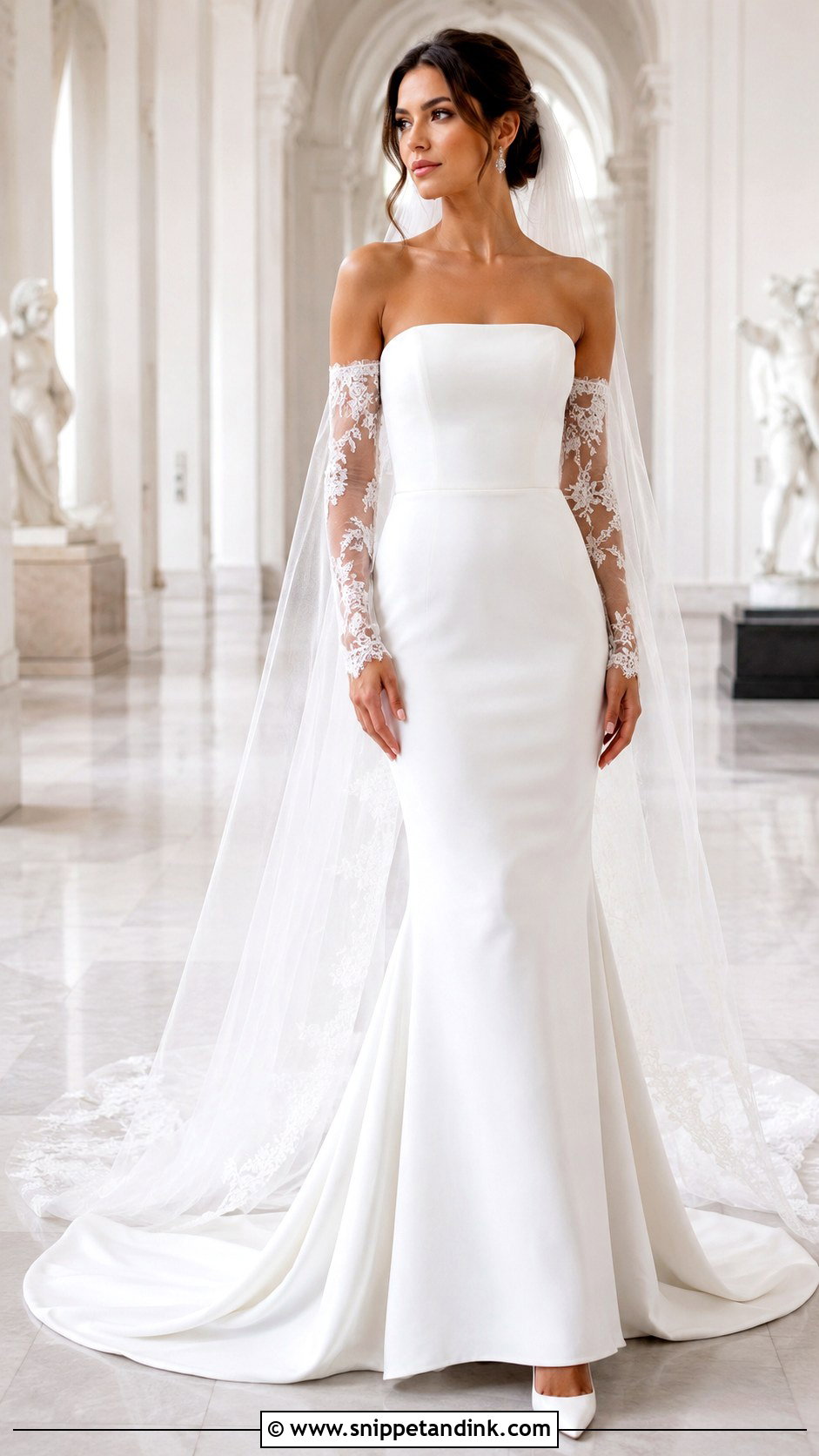
Detachable sleeves let you change coverage across the day without a second dress. Fitted lace sleeves feel traditional, tulle adds volume, and draped satin looks editorial. I check the attachment points first: snaps and loops should hide under the neckline edge, not sit visibly on the shoulder. Wear the sleeves for the ceremony with a long veil, drop earrings and closed-toe heels, then take them off after portraits and switch to a smaller hair accessory. Move your arms at the fitting to confirm they hold without dragging on the bodice. Once they’re off, put them straight into a labeled garment bag, as lace and tulle snag on shoe buckles and jewelry in a crowded bridal suite.
16. Cape Fishtail Wedding Dress
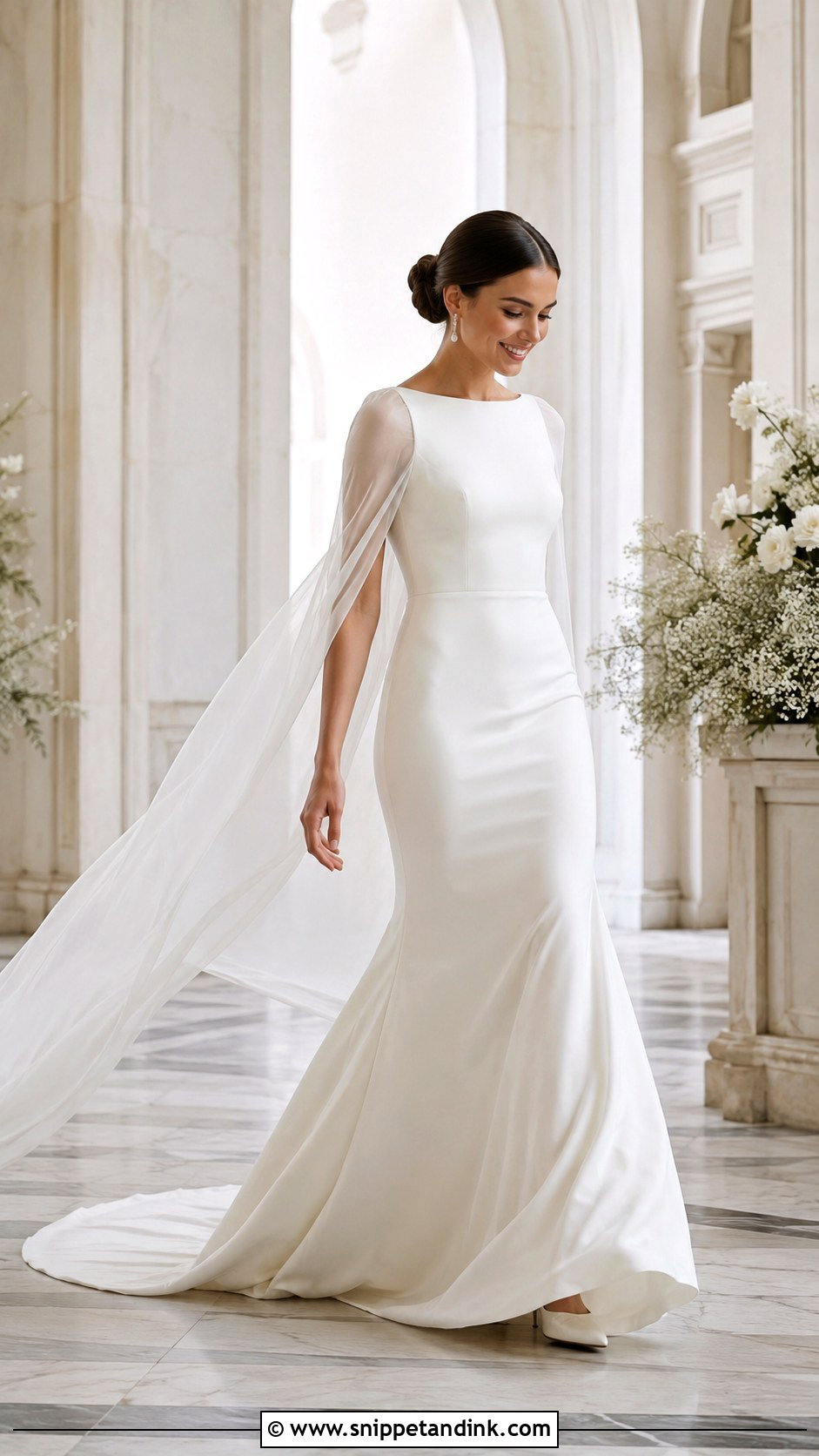
A cape adds movement to a dress that otherwise stays very still. Sheer tulle floats behind you; crepe or satin gives a heavier, more formal drape with real coverage. It should attach at the shoulders or neckline without hiding the bodice fit, because the fishtail shape is the whole point of the gown. With a long cape you may not need a veil at all. Small earrings, pointed pumps and a neat low bun are enough. Walk and turn in it at the fitting, since tulle capes tend to wrap around the arms when you pivot. If it’s detachable, ask someone to take it off and bag it before people start crowding onto the dance floor.
17. Open Back Fishtail Wedding Dress
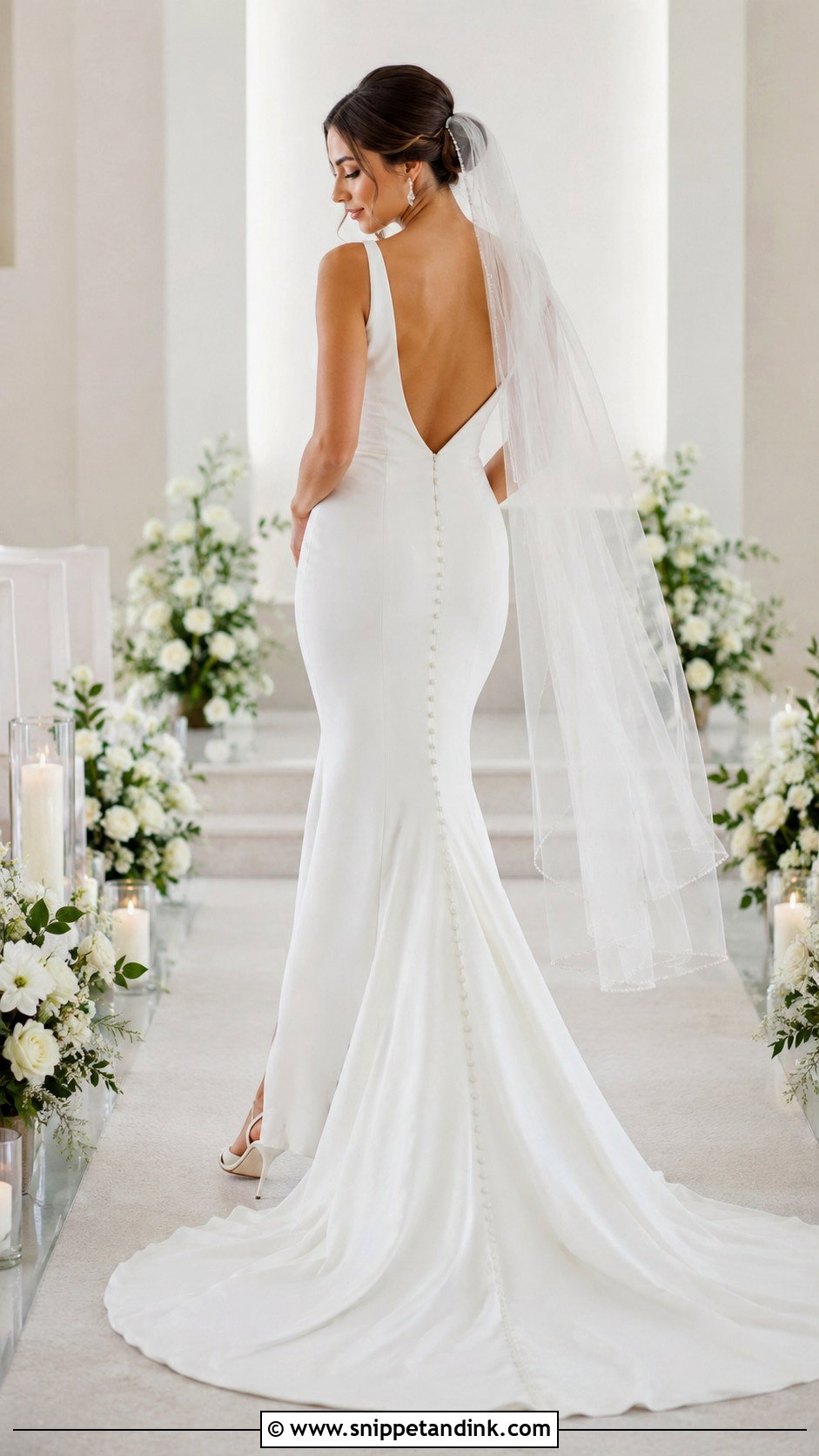
An open back is the detail guests stare at for most of the ceremony, so it needs fitting as carefully as the front. A deep curve, a sharp V, sheer lace or covered buttons framing the opening all work, but the edges must lie flat against your skin. I check this while the bride bends forward and then sits, because gaping almost always shows up in those two positions first. Very low backs need internal cups, firm side panels and secure straps. Keep the front fairly simple for balance. Delicate drop earrings, a slim bracelet, ivory heels and a veil fixed below a smooth updo finish it, and a veil that slips off easily lets the photographer capture the back cleanly.
18. Modest Fishtail Wedding Dress
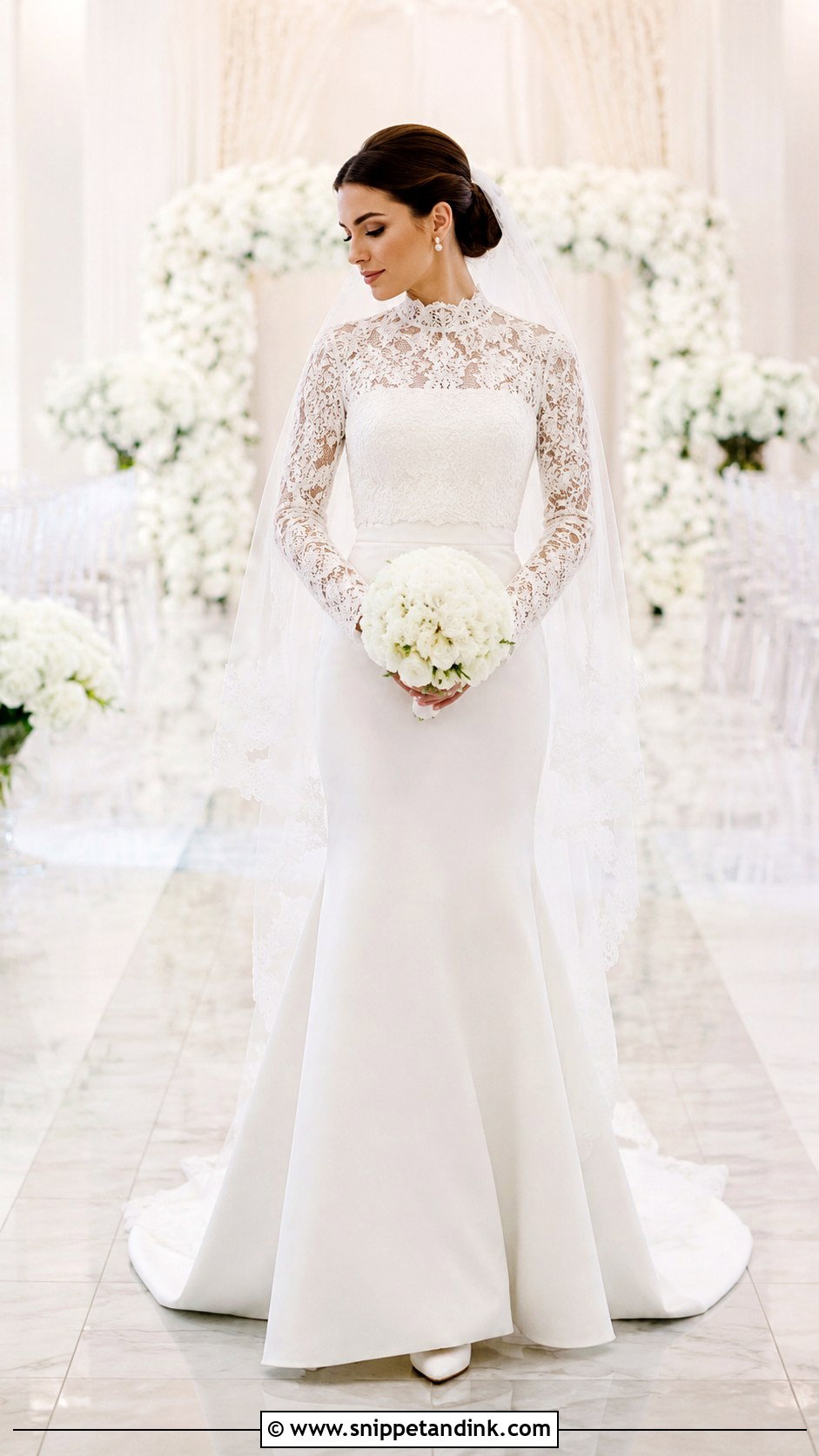
A modest fishtail keeps the defined shape with more coverage: a higher neckline, lined bodice, full sleeves and a flare set slightly above or below the knee. Matte crepe looks smooth and contemporary; lined lace adds traditional texture. The problem I see most often is the lining. If it isn’t cut to move with the outer fabric, it bunches at the hip as you walk. A little more ease through the thigh helps you move while keeping the fishtail effect. Pearl earrings, closed-toe pumps, a chapel veil and a polished chignon suit it, and covered buttons along the sleeves and back add quiet interest. Take normal strides and sit down at each fitting.
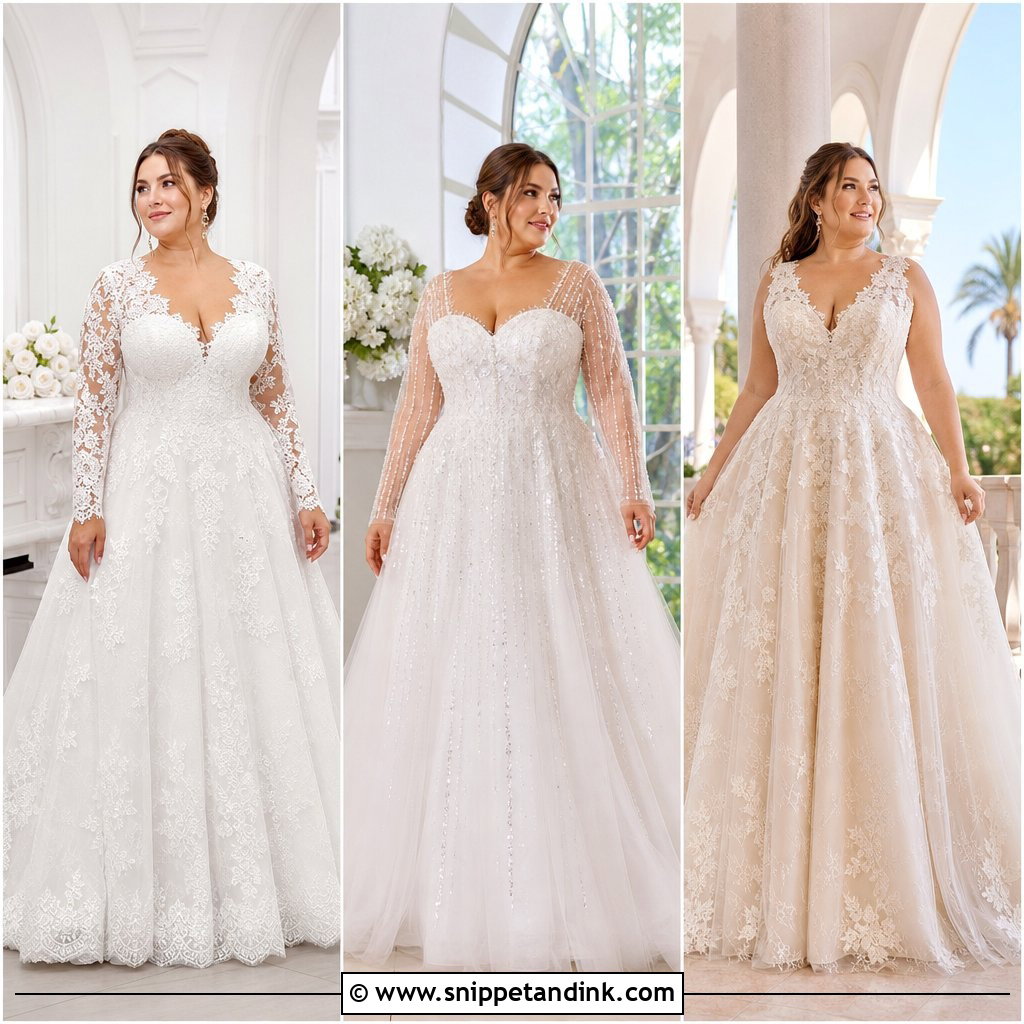
19. Plus Size Fishtail Wedding Dress
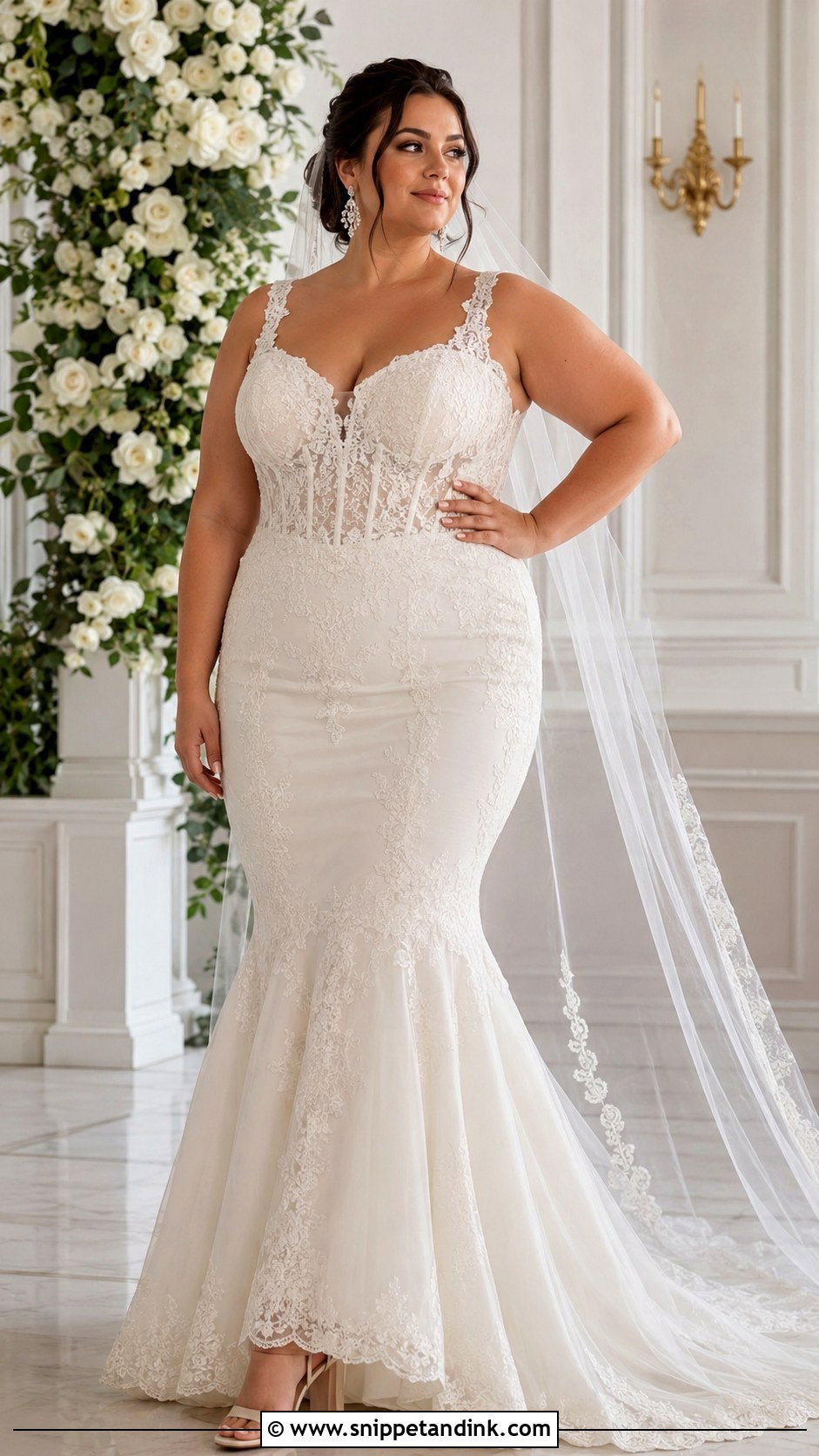
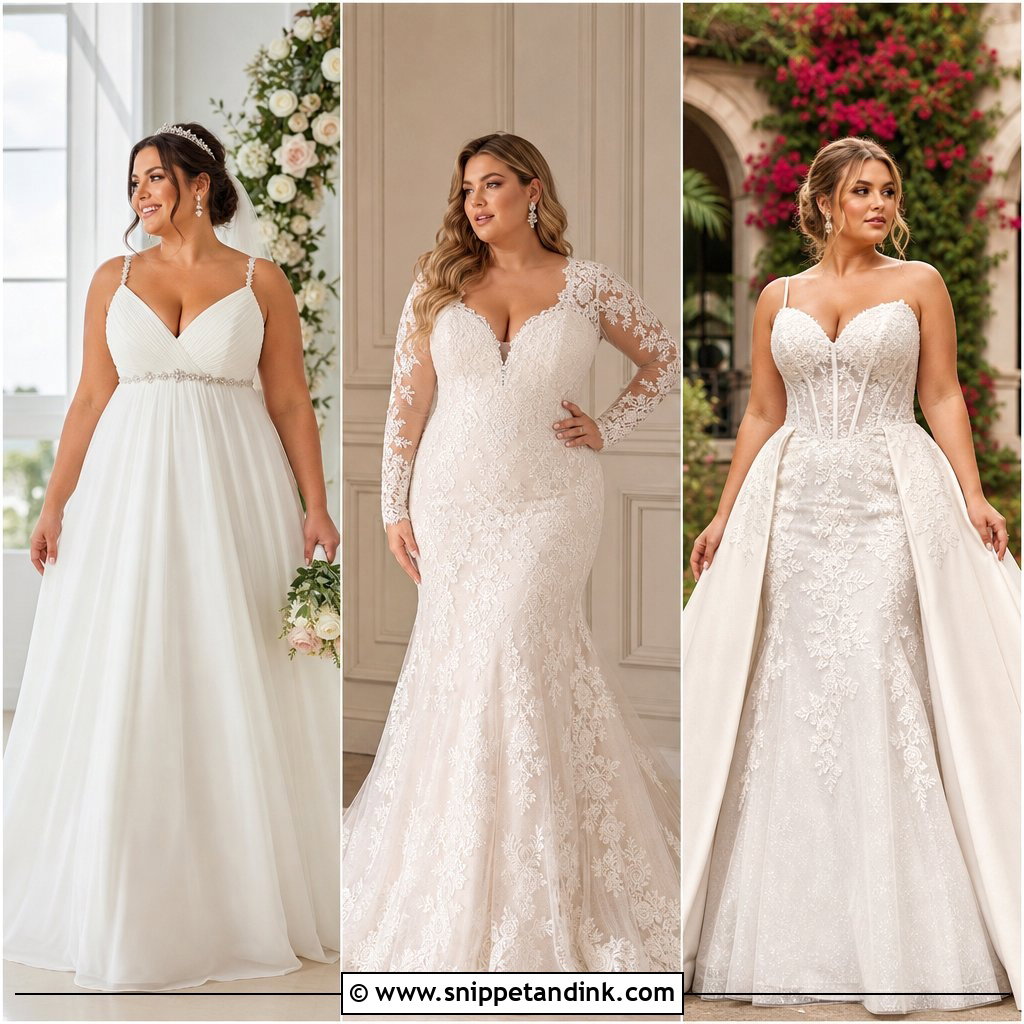
A plus size fishtail rests on its construction. I want strong internal boning, secure straps or sleeves, smooth lining and a flare placed where it balances your figure, which isn’t always at the knee. A corset back allows small fit adjustments on the day; a zip gives a cleaner line. Lace adds texture, crepe stays sleek, and structured satin holds a dramatic shape. Ask the boutique for a sample close to your size, because clipping a much smaller sample tells you very little about how the flare will fall. Comfortable block heels, statement earrings, a long veil and a bouquet scaled to your silhouette suit the look. Sit, walk, hug and lift your arms before approving the final fit.
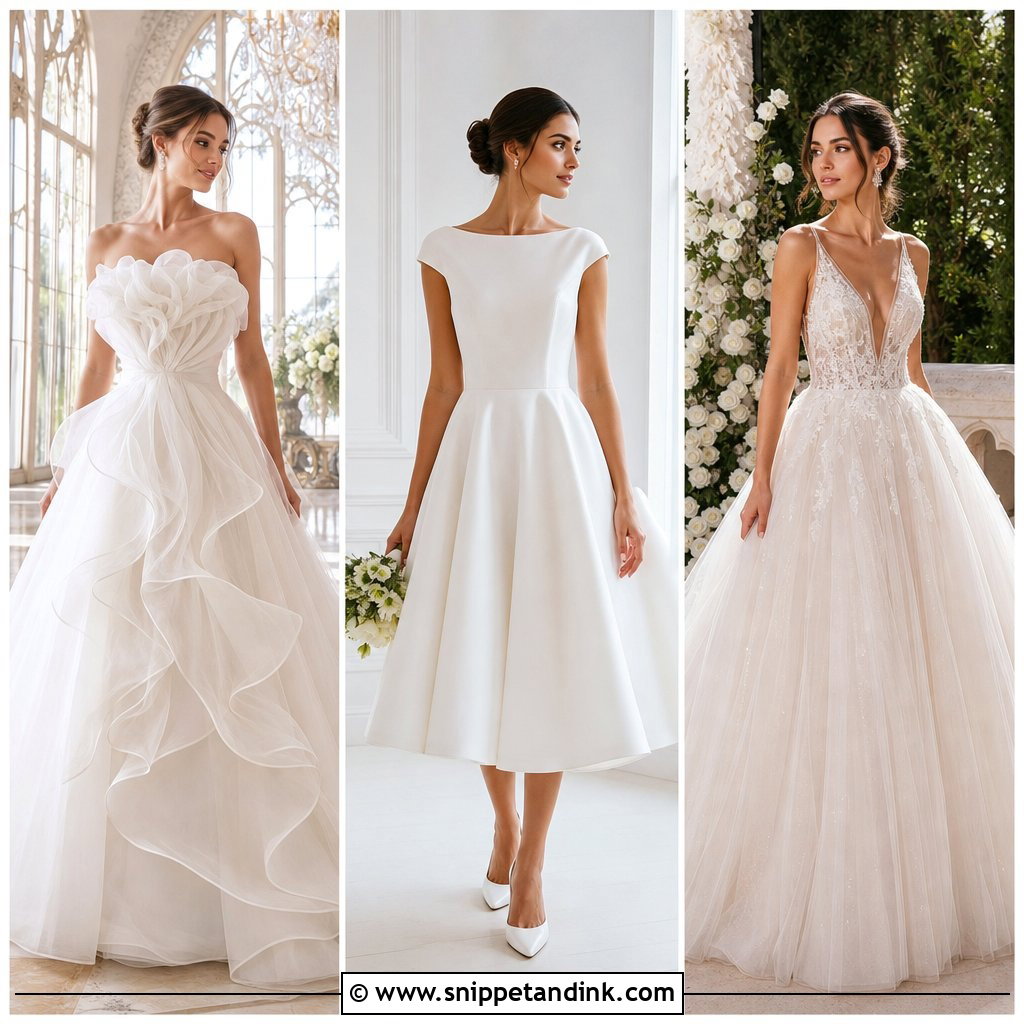
20. Petite Fishtail Wedding Dress
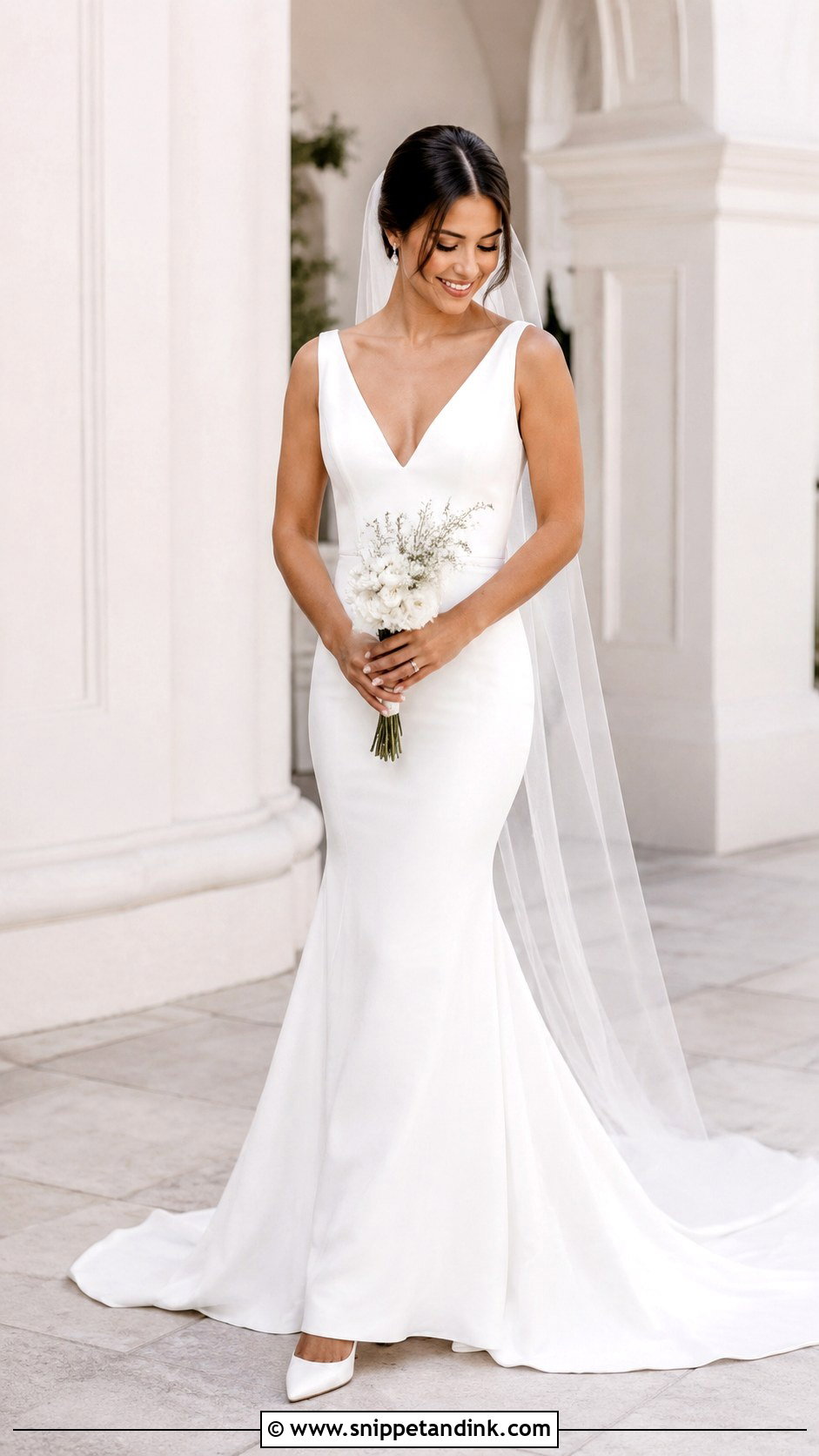
On a petite frame, flare placement does most of the work. A flare starting slightly above the knee usually lengthens the line, while one that opens very low can visually cut the leg in half. A clean V-neck, vertical lace or an uninterrupted crepe bodice keeps the eye travelling upward. Pair it with pointed heels, small drop earrings, a narrow bouquet and a chapel veil rather than a wide layered one. Don’t let the train decide the fit, as most trains can be shortened or reshaped. If the hem has a lace border, ask your seamstress to lift and reattach it instead of cutting it off. Order by your measurements and leave time for hemming, which on a petite fishtail is often the biggest alteration.
Bustles, Car Seats and Stairs in a Fitted Skirt
Most fishtail gowns come with a train, and nearly all of them need a bustle added during alterations. The right style depends on the fabric and the length of the train.
- Over bustle: the train hooks up onto the back of the skirt at one or several points. It’s quick and shows off a lace train, though heavy satin can pull and pucker at the hook points.
- Under bustle, often called French: the train folds underneath and ties inside with ribbons. It gives a soft, layered fall that suits satin and crepe.
- Ballroom bustle: many hidden points lift the train level with the hem all the way around, so the gown looks floor-length. It suits a long train and a lot of dancing, but takes longer to set.
Ask your seamstress to color-code the ties and to teach the bustle to two people, not one. I like them to practice it at the last fitting, because bustling in a dim reception hallway is much harder than in a bright shop.
Getting through the day in it
In a car, sit down first, then swing both legs in together while someone gathers the train onto your lap. On stairs, lift the skirt from the sides at knee height rather than grabbing the hem, and go down at a slight angle. For bathroom trips, a slip-style skirt holder or a friend holding the train from behind is far easier than managing alone. Alterations on a fitted gown usually take two or three fittings, so I’d book the first one about two to three months before the date.
The Flare Point Decides More Than the Lace
The most memorable fishtail is rarely the most dramatic one. It’s the gown that supports your body, suits the venue and lets you move with confidence. Compare flare placement, fabric weight, neckline security, train length and inner construction, and look at every serious contender from the front, side and back. Sit and walk in each one. My rule for accessories is simple: an embellished gown gets a plain veil, and a minimal gown can carry pearls and sharper shoes. Settle your flare point first using the gowns above; every other detail is easier to decide once that part is right.
You'll Like These Ideas:





Leave a Reply