
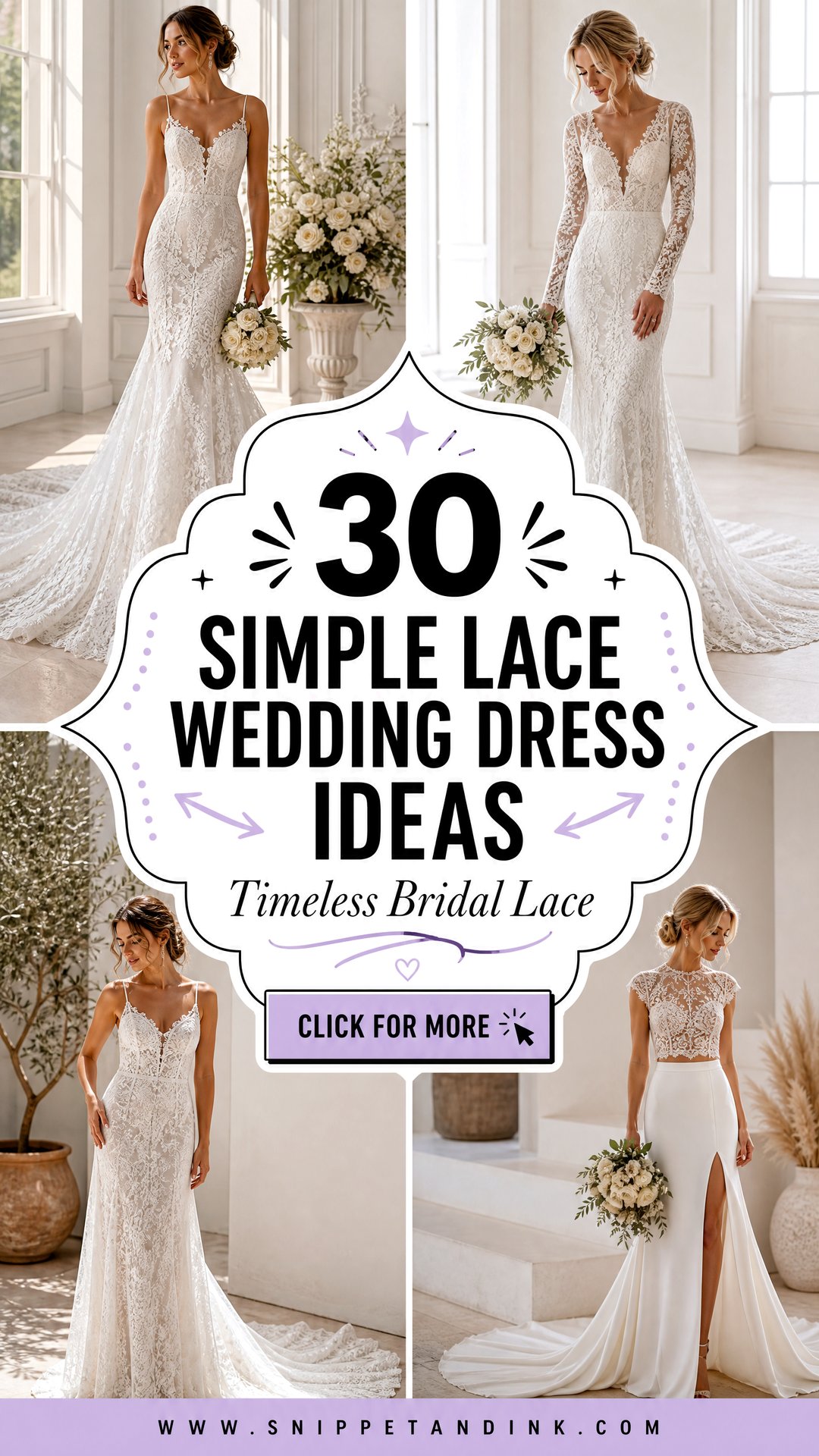
Most brides who ask me for lace are really asking for two things: romance, and a dress that doesn’t weigh a tonne or look like it came out of a 1980s album. Both are possible. The lace gowns I’m dressing brides in now are lighter and cleaner, with soft Chantilly overlays, lace kept to the bodice, sheer sleeves, or a column with just a whisper of pattern. The trick is one focal point and calm everywhere else. Below are thirty shapes, from ball gowns to courthouse minis, with notes on how each one actually wears, so you can find the lace dress that suits your venue and the way you move.
Ordering a Lace Gown on a Realistic Calendar
Most bridal gowns, including the simple ones, are made to order once you’ve chosen a sample. Lace adds time, because it’s cut and placed by hand. I plan backwards from the wedding date rather than forwards from the first appointment.
- Start trying on around nine to twelve months out. That leaves room if your first choice is discontinued.
- Order by roughly seven to eight months out. Production commonly takes four to six months, sometimes longer; rush orders exist but usually cost extra and narrow your choices.
- Allow two to three months for alterations, with two or three fittings. Lace hems and sleeves take longer than plain ones.
- Book the final fitting one to two weeks before the wedding and collect the dress pressed and bagged.
Bridal sizes run smaller than high street sizes, so don’t be put off by the number on the order form. Shops order by your largest measurement and take the rest in. It’s far easier to take lace in than to let it out.
1. Simple Lace A Line Wedding Dress
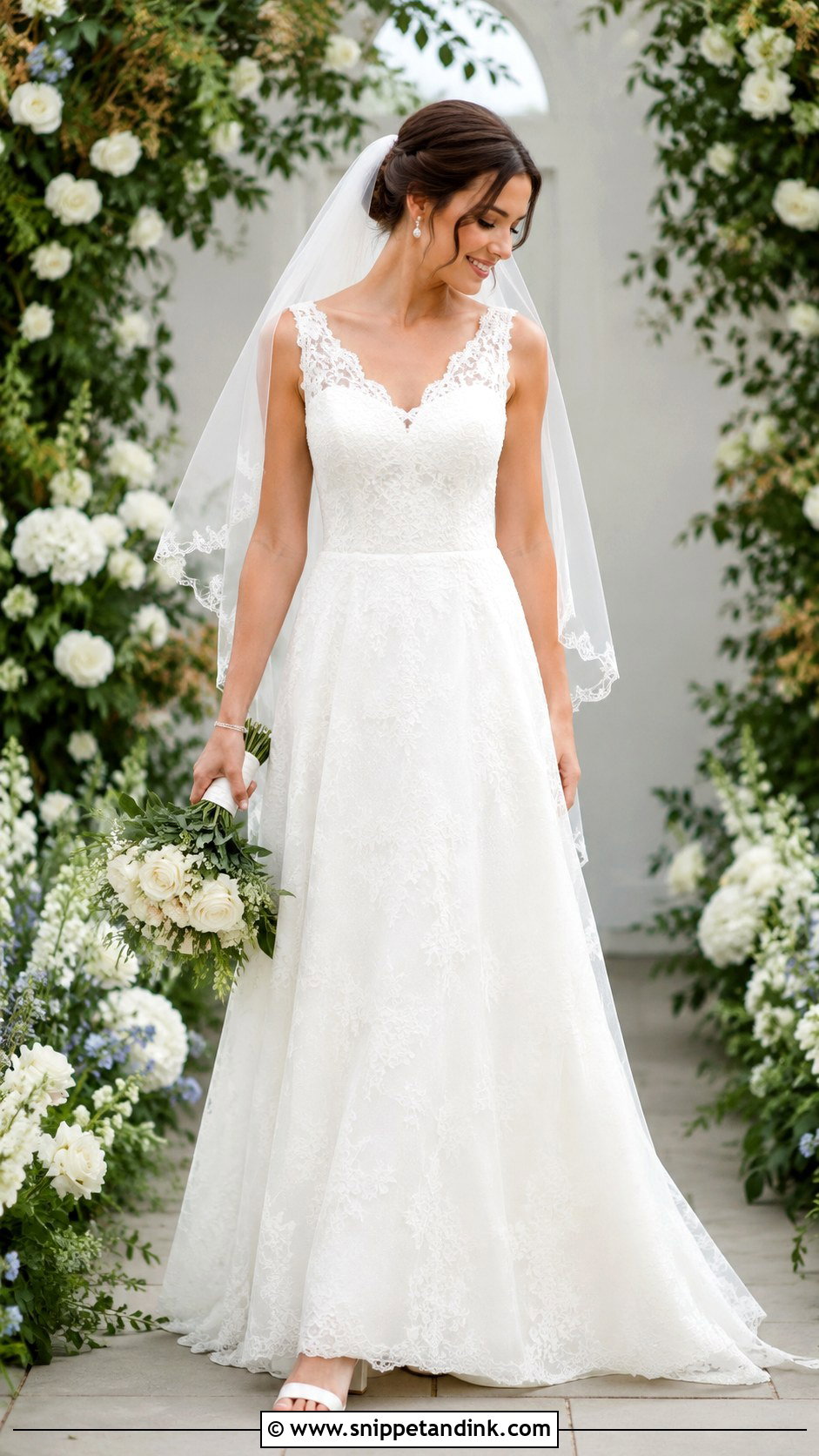
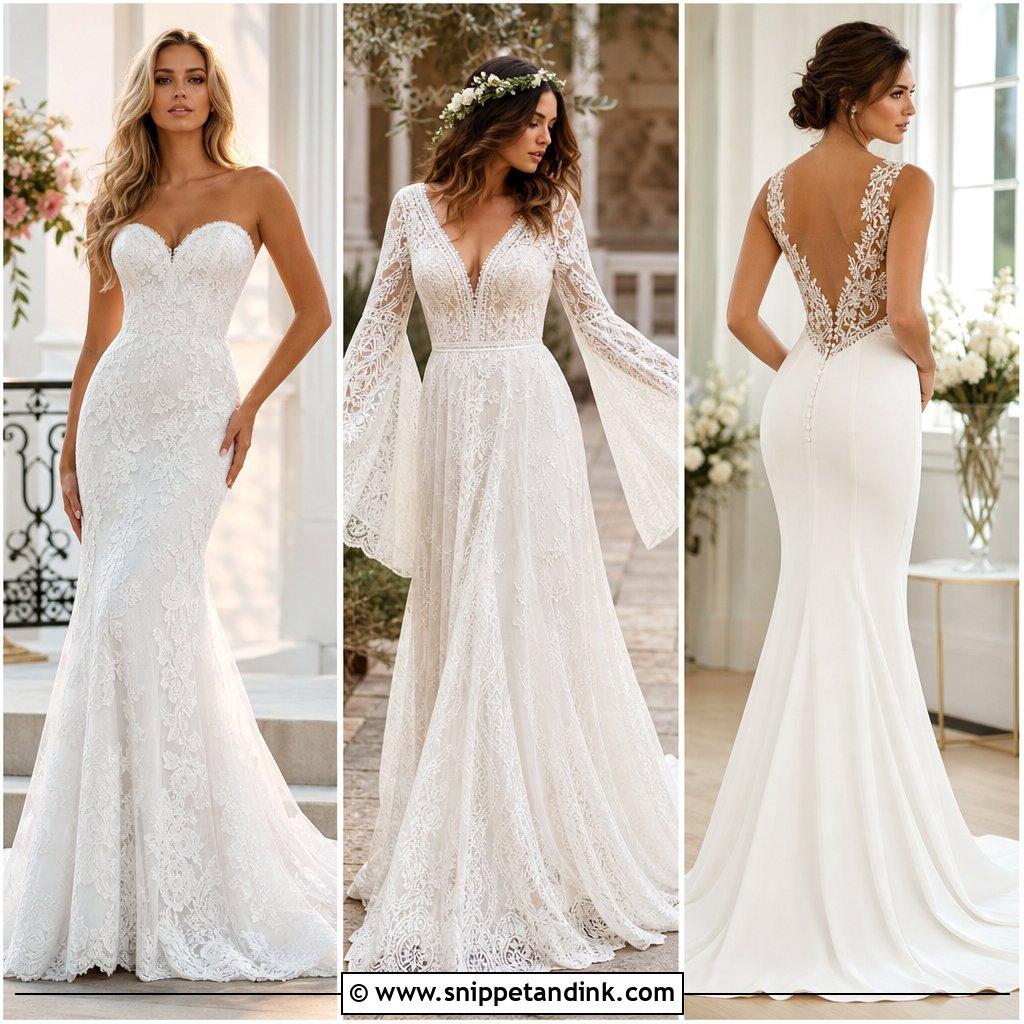
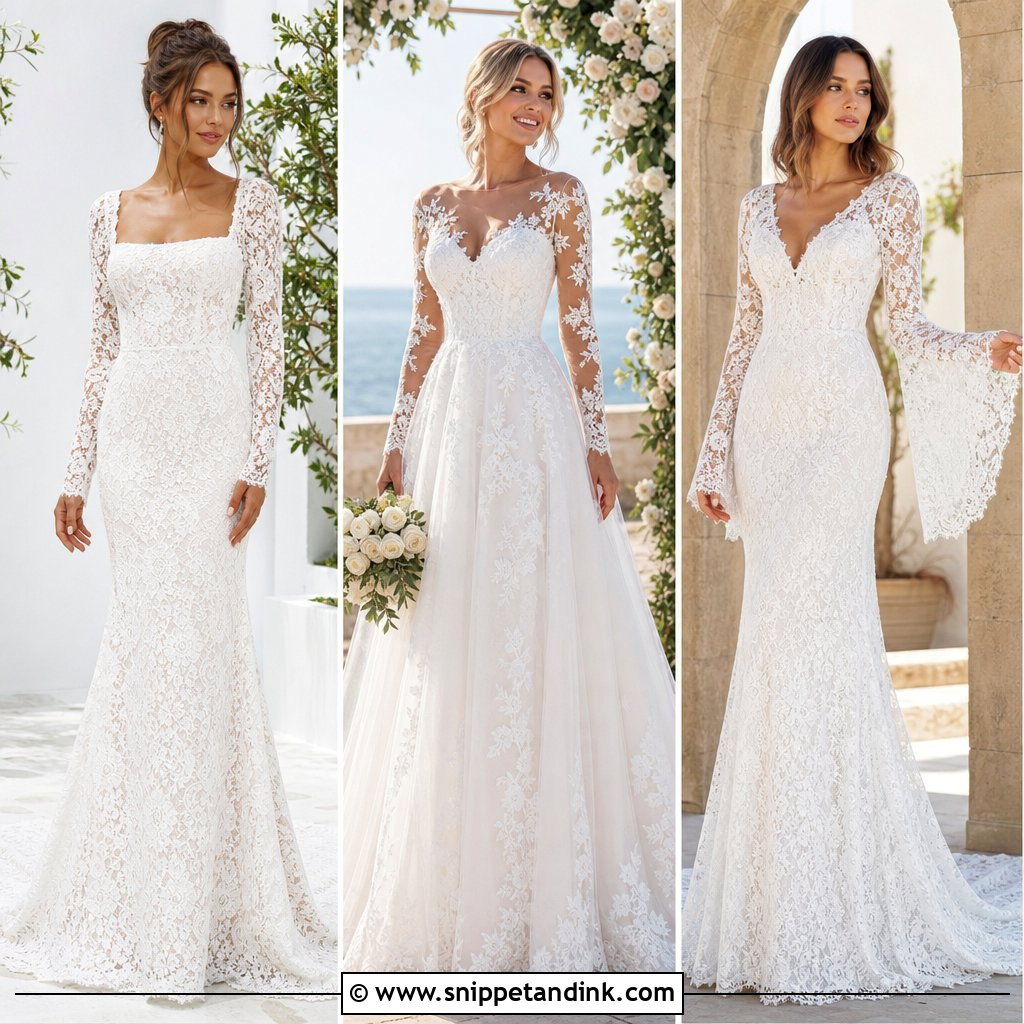
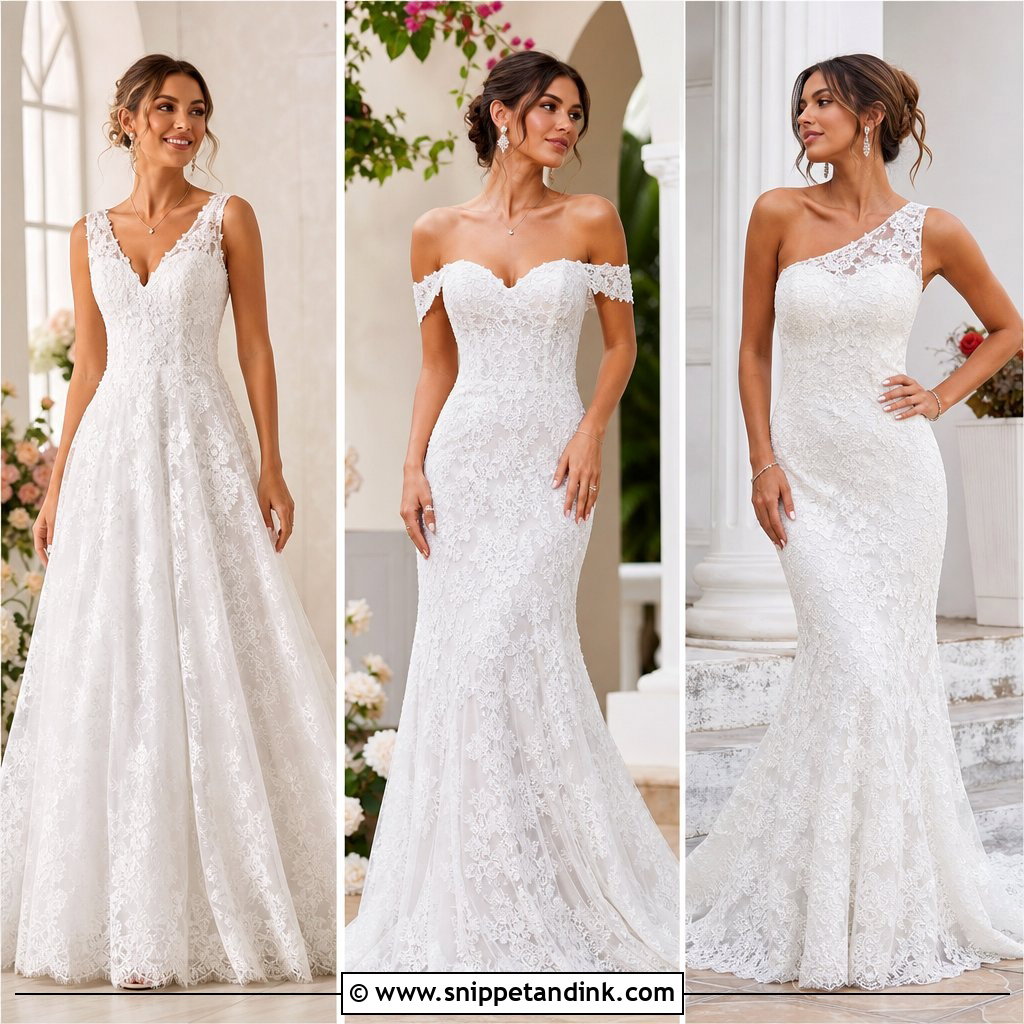
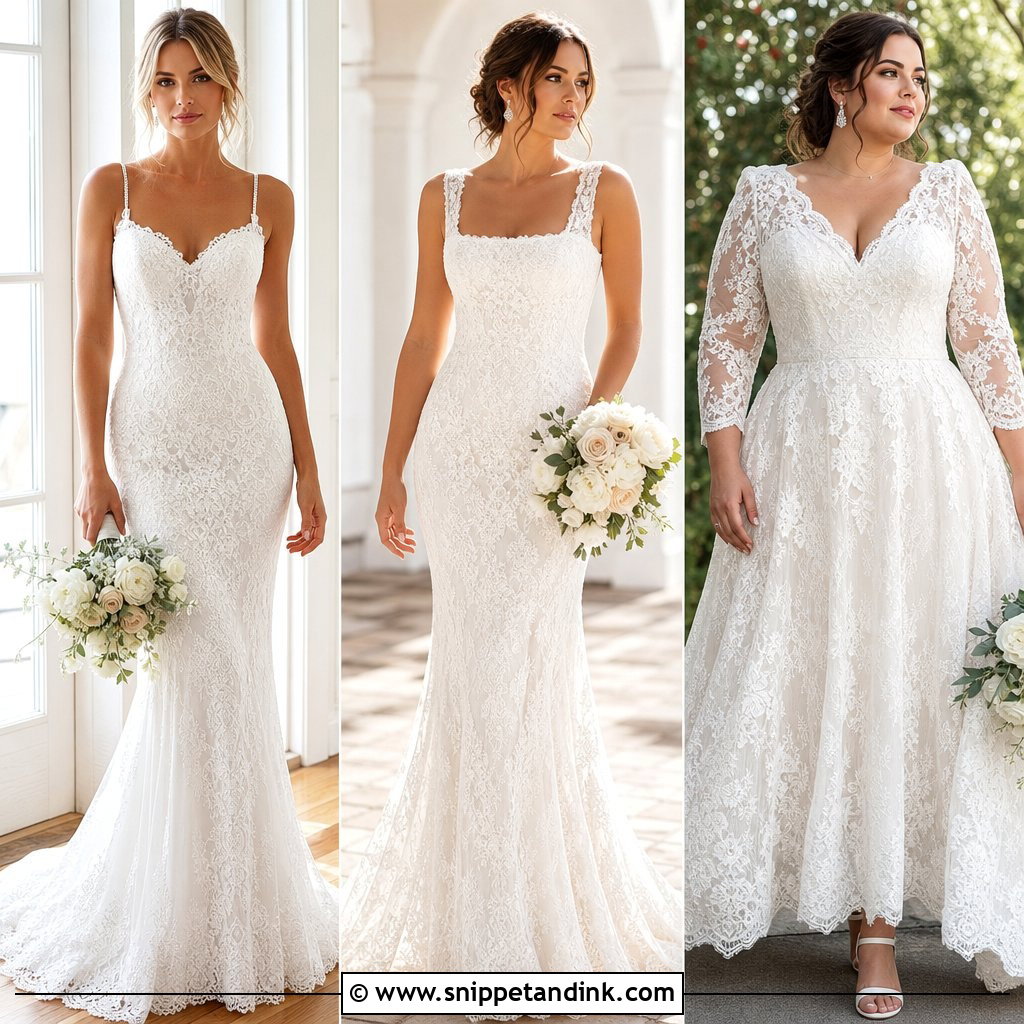
The A-line is the dress I pull first for a bride who isn’t sure what she wants, because it fits at the waist and then simply lets go. Lace kept to the bodice, fading into a tulle or chiffon skirt, keeps it airy. Thin straps and a gentle V neckline are the easiest pairing. I’d add pearl studs, a fingertip veil and low block heels, which matter more than you’d think on a lawn. Garden ceremonies, classic churches, outdoor venues: it fits almost anywhere.
2. Simple Lace Mermaid Wedding Dress
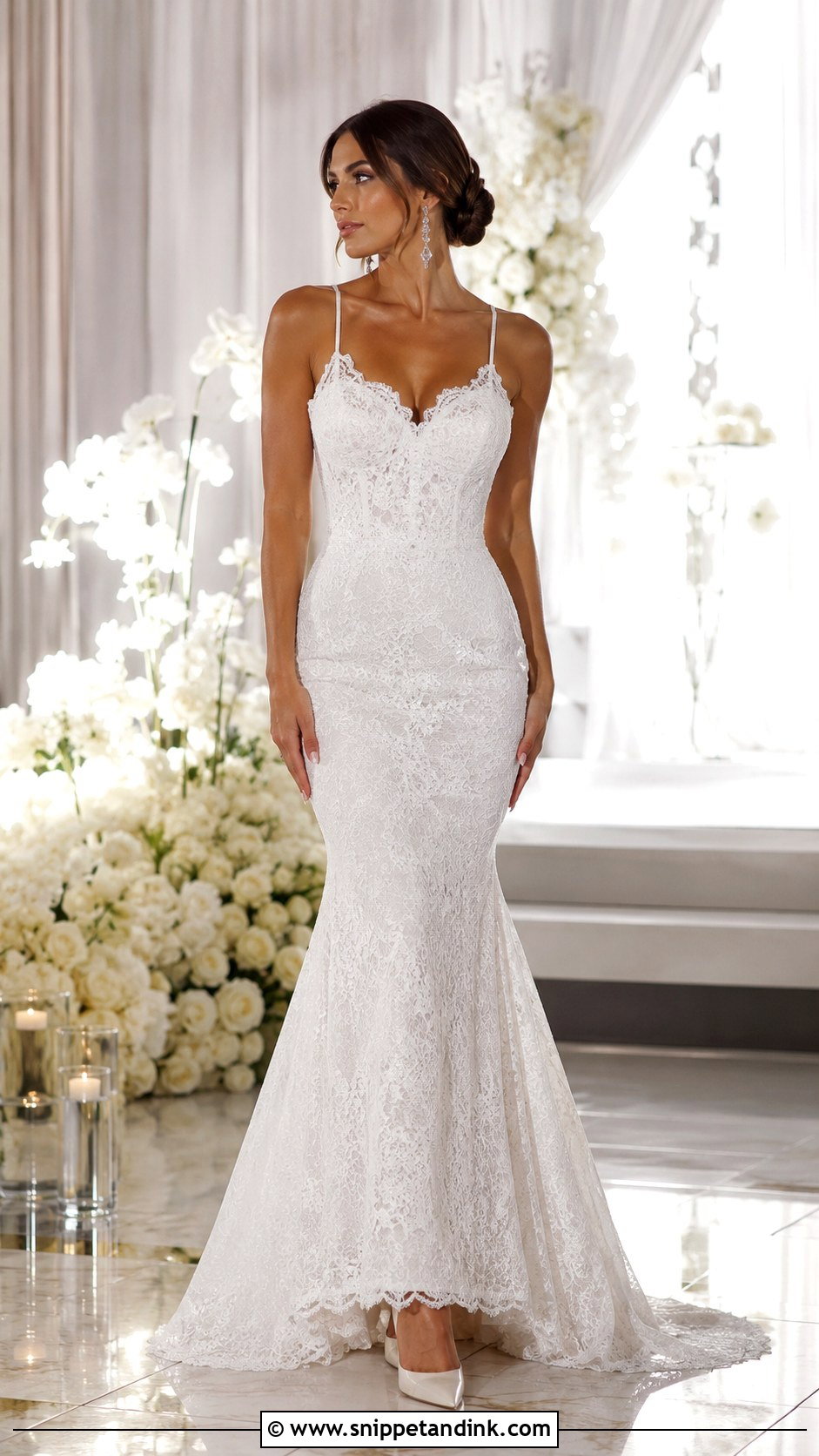
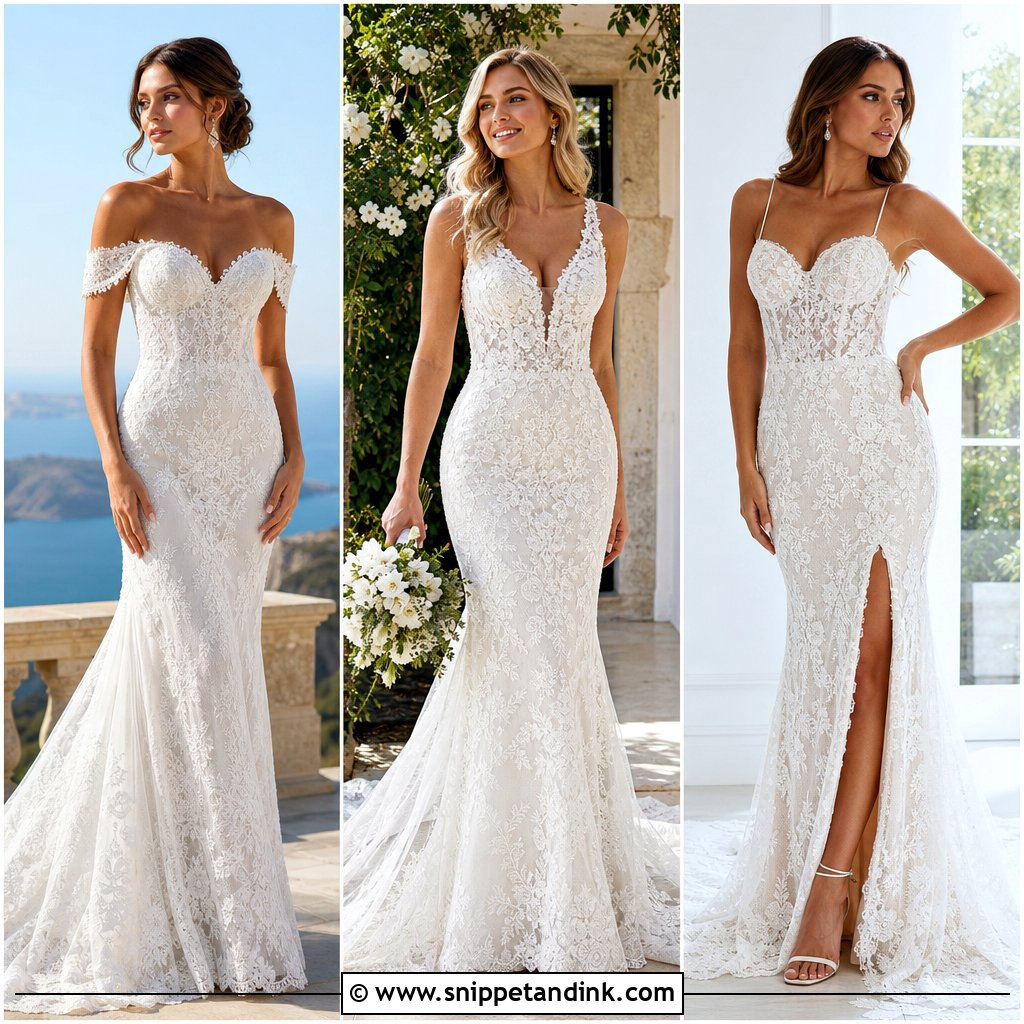
Mermaids get a bad reputation for being hard to move in, and the culprit is usually where the skirt flares. Ask for it just below the knee, not at mid-calf, and choose stretch lace or a soft lining so you can climb steps and sit at the top table. The fitted line shows the waist and hips, and lace keeps it from feeling severe. Sleek drop earrings, a smooth bun and pointed heels finish it. It’s my pick for rooftops, ballrooms and evening receptions.
3. Simple Lace Sheath Wedding Dress
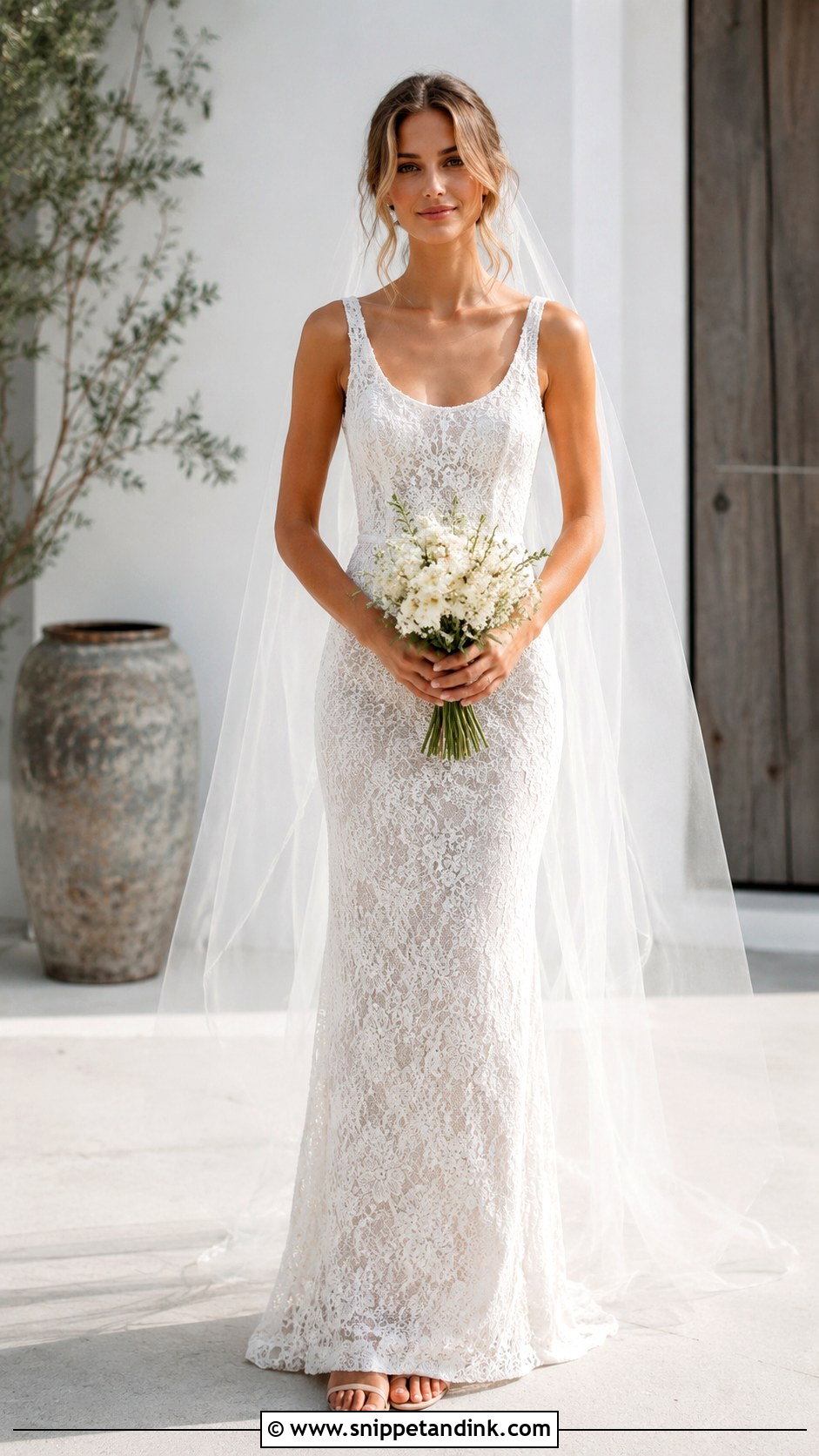
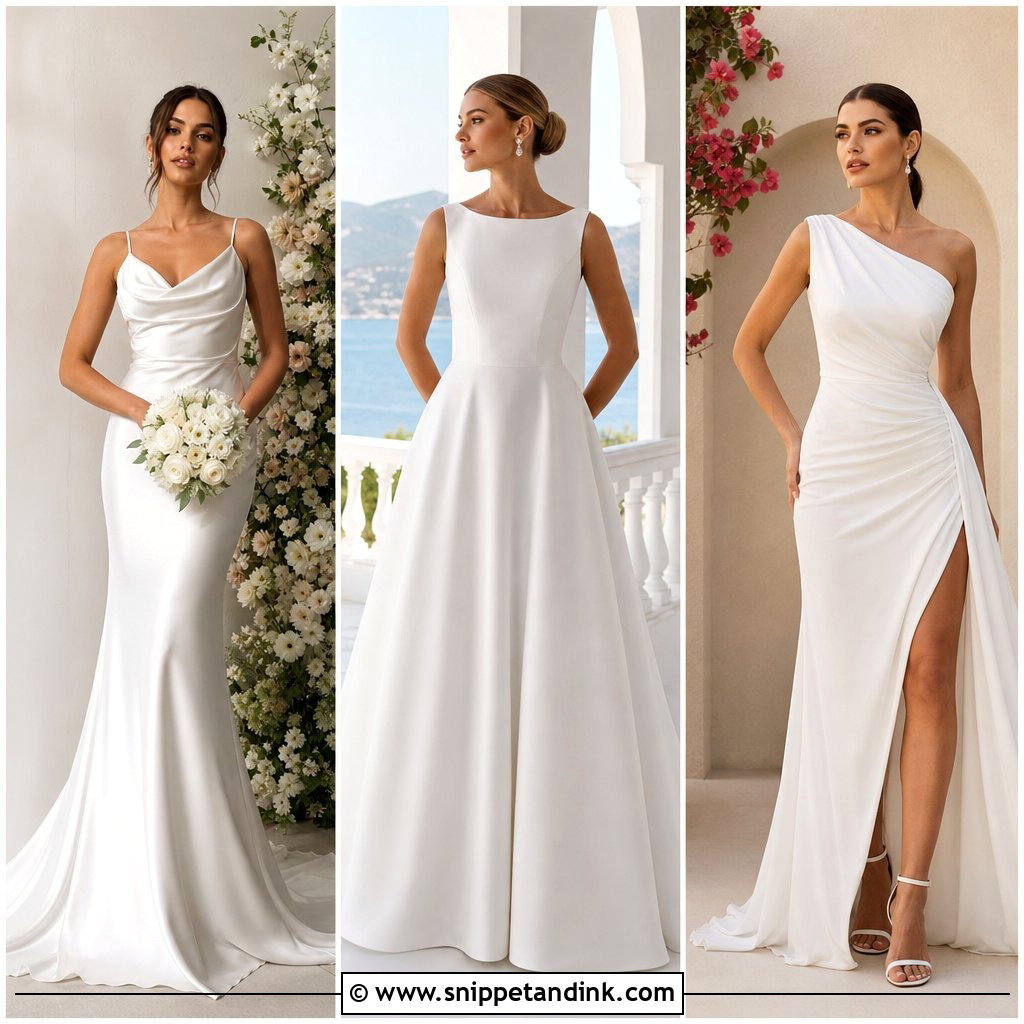
No volume, no train to manage, nothing to hold up when you walk. The sheath sits close to the body, and with delicate lace over a smooth lining it gets texture without bulk. My caution: a sheath shows every seam of your underwear, so bring the exact pieces you’ll wear to every fitting. A scoop, square or soft V neckline keeps it easy. Barely-there sandals, a plain veil and a small posy suit beach weddings, courthouses and minimalist venues.
4. Simple Lace Ball Gown Wedding Dress
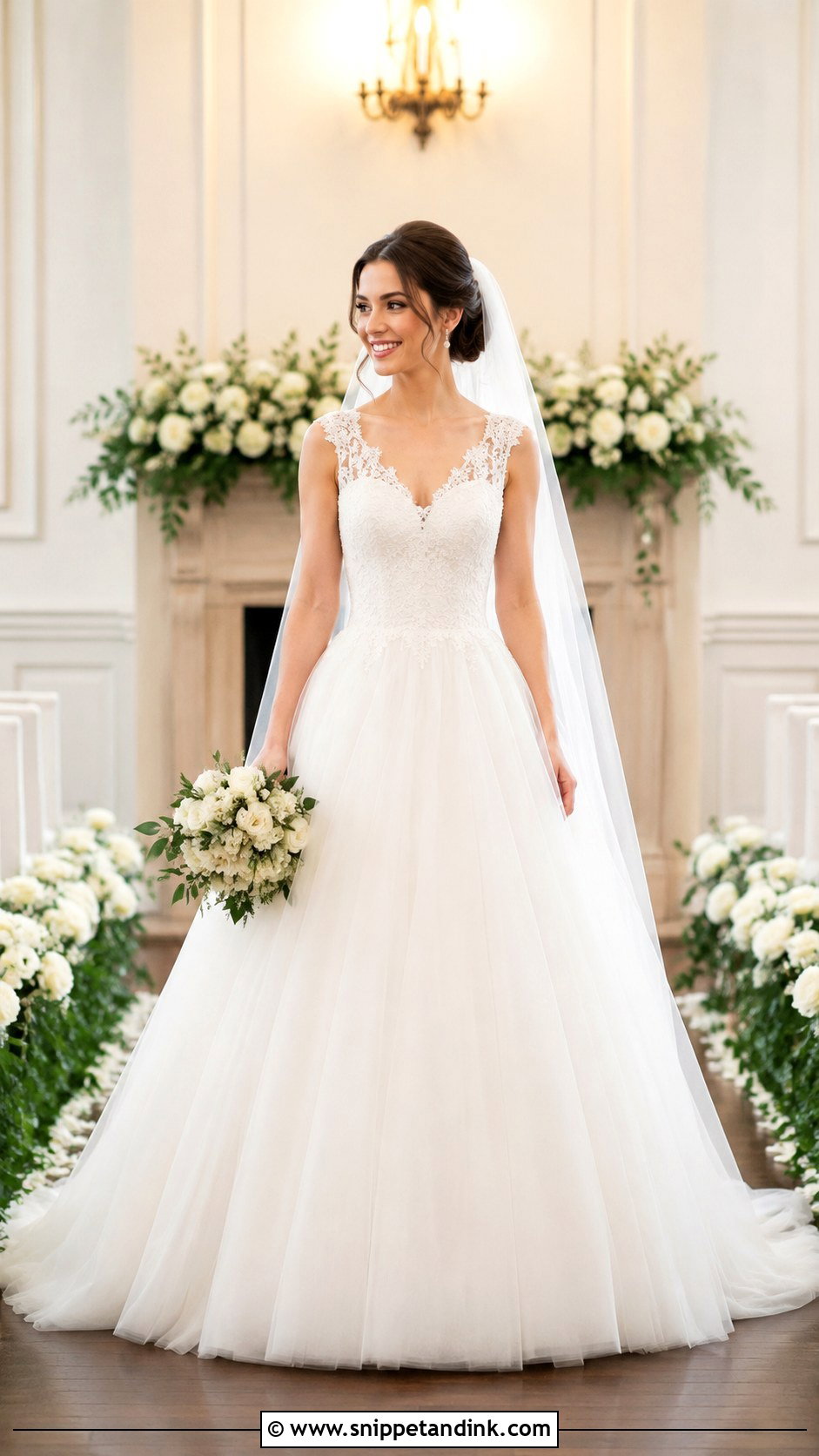
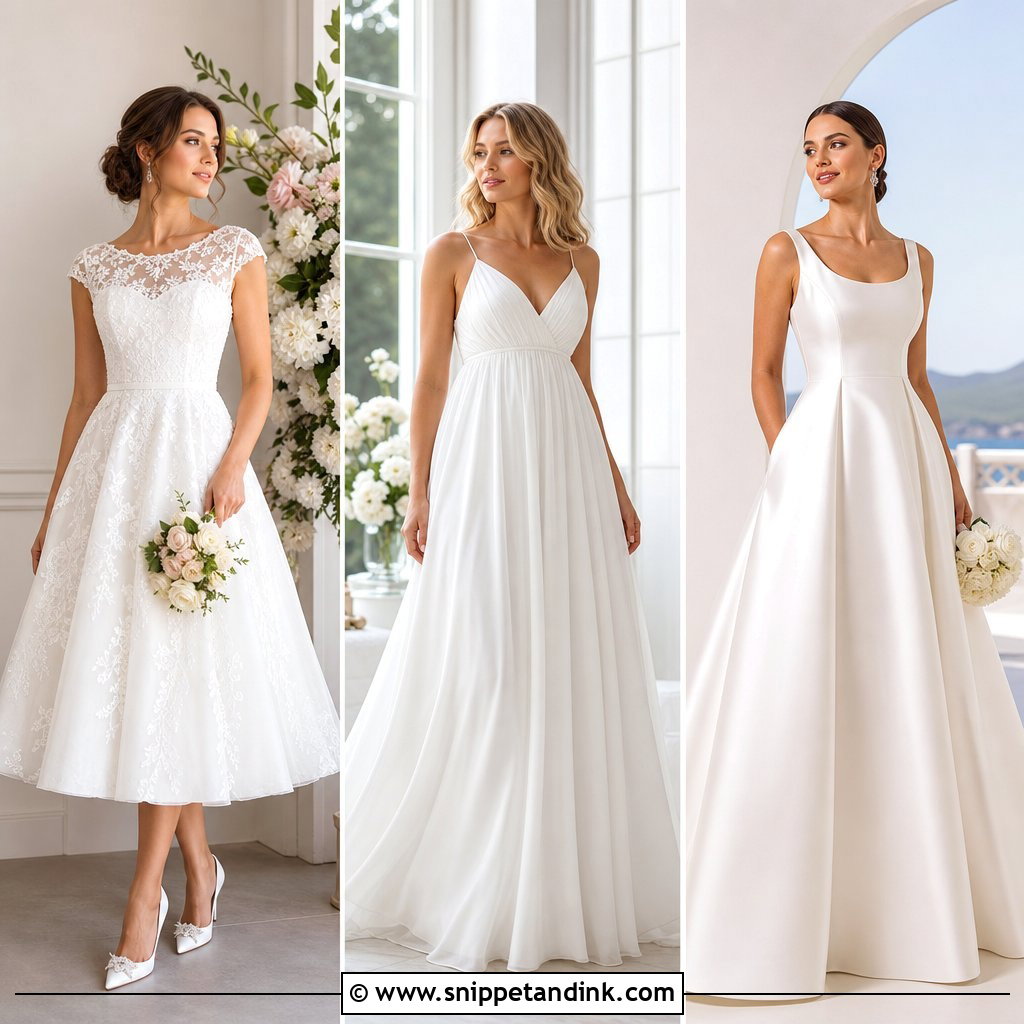
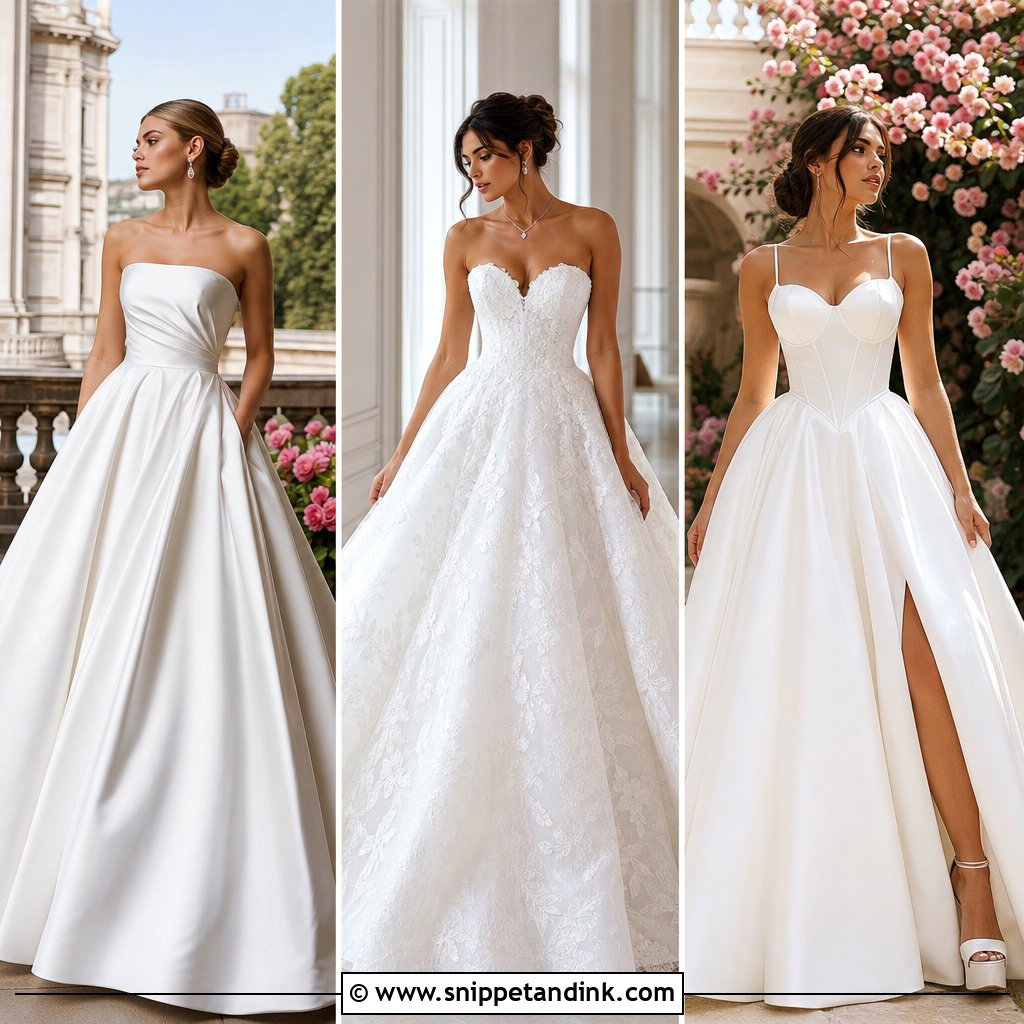
A simple lace ball gown wedding dress stays clean when the lace is kept to the bodice and the skirt is smooth organza, tulle or satin. A ball gown skirt needs a good petticoat or built-in crinoline; without one, the skirt collapses by the evening and the proportions go wrong in photos. Keep the neckline plain, strapless, square or bateau, and wear small pearls and satin pumps. You get the fairytale shape without a single crystal.
5. Simple Lace Strapless Wedding Dress
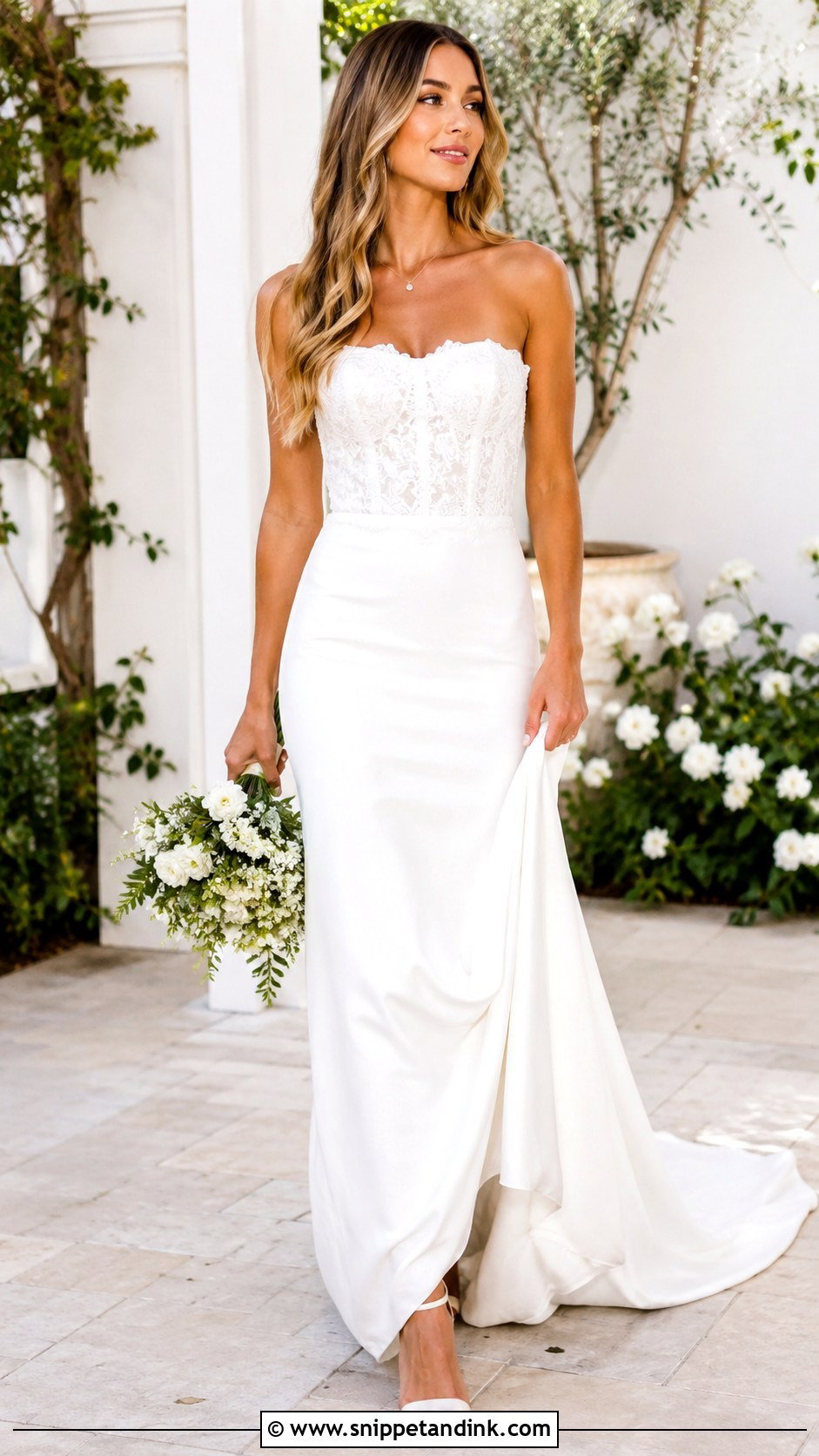
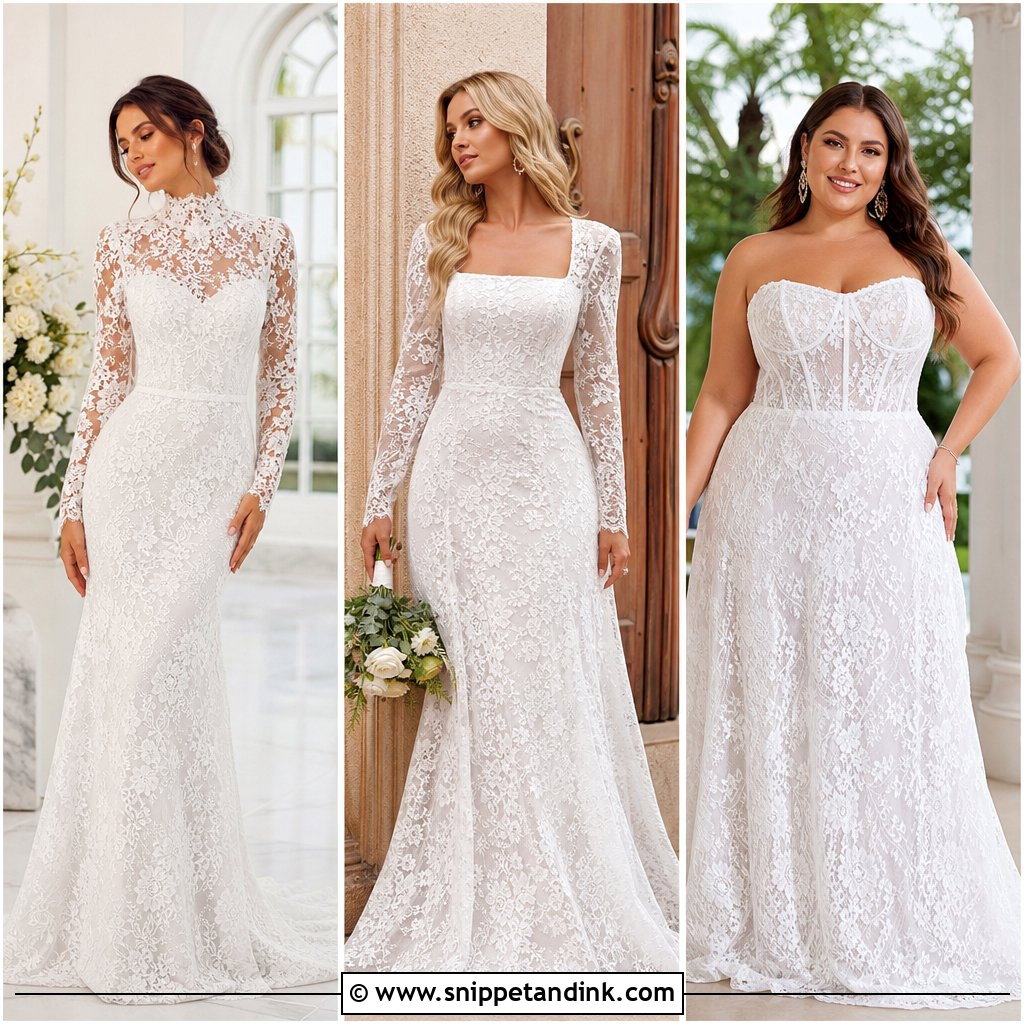
Strapless lace looks clean and leaves the collarbones free for a necklace. The question I always ask is whether the bodice is properly boned and fitted at the ribs, because a strapless dress is held up by the waist, not the bust. If you’re hitching it up at the fitting, it needs taking in. A straight-across or soft sweetheart neckline feels current. Soft waves and a fine necklace balance it. For a cooler evening, a lace bolero or sheer wrap gives you cover later on.
6. Simple Lace Long Sleeve Wedding Dress
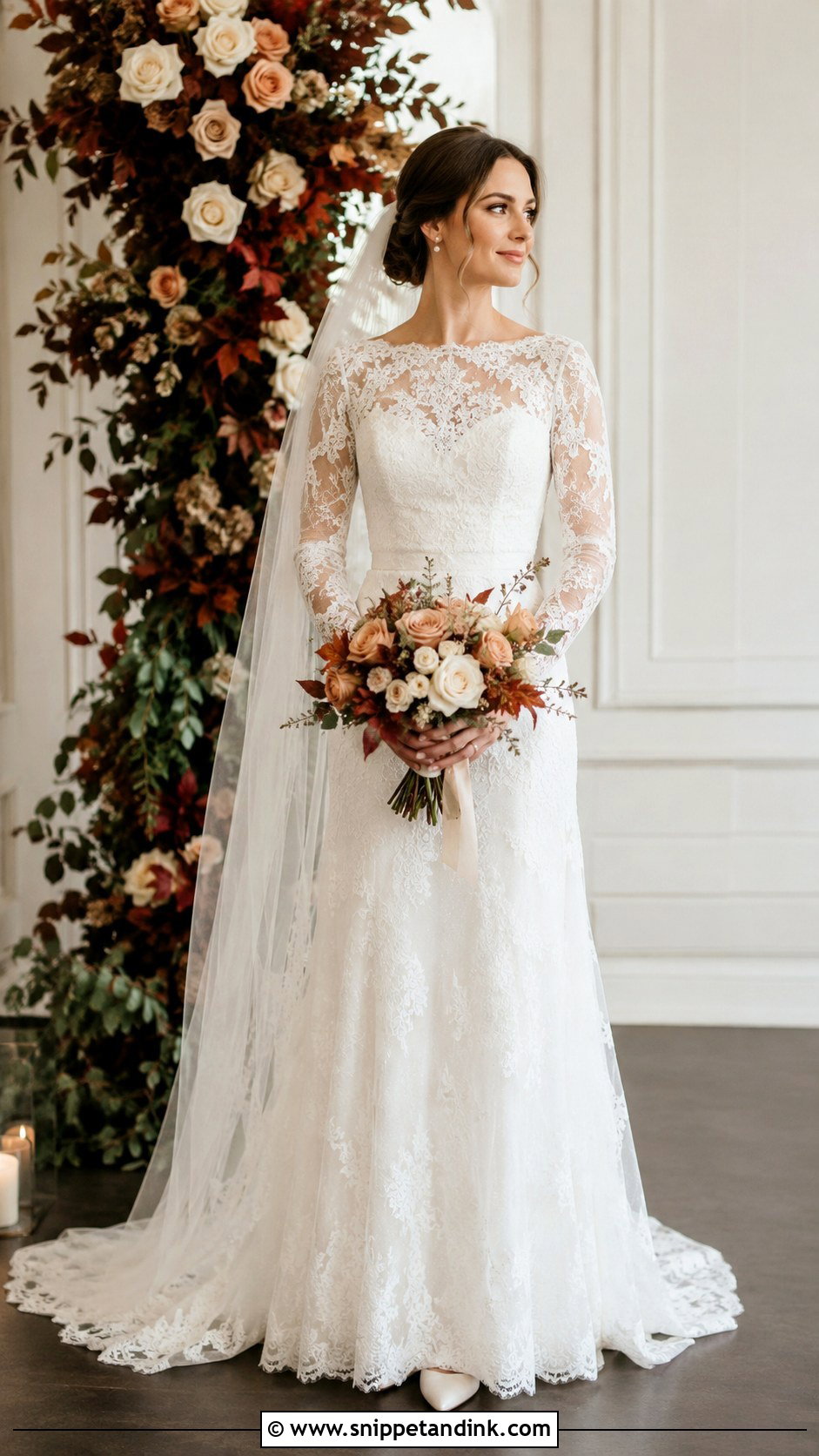
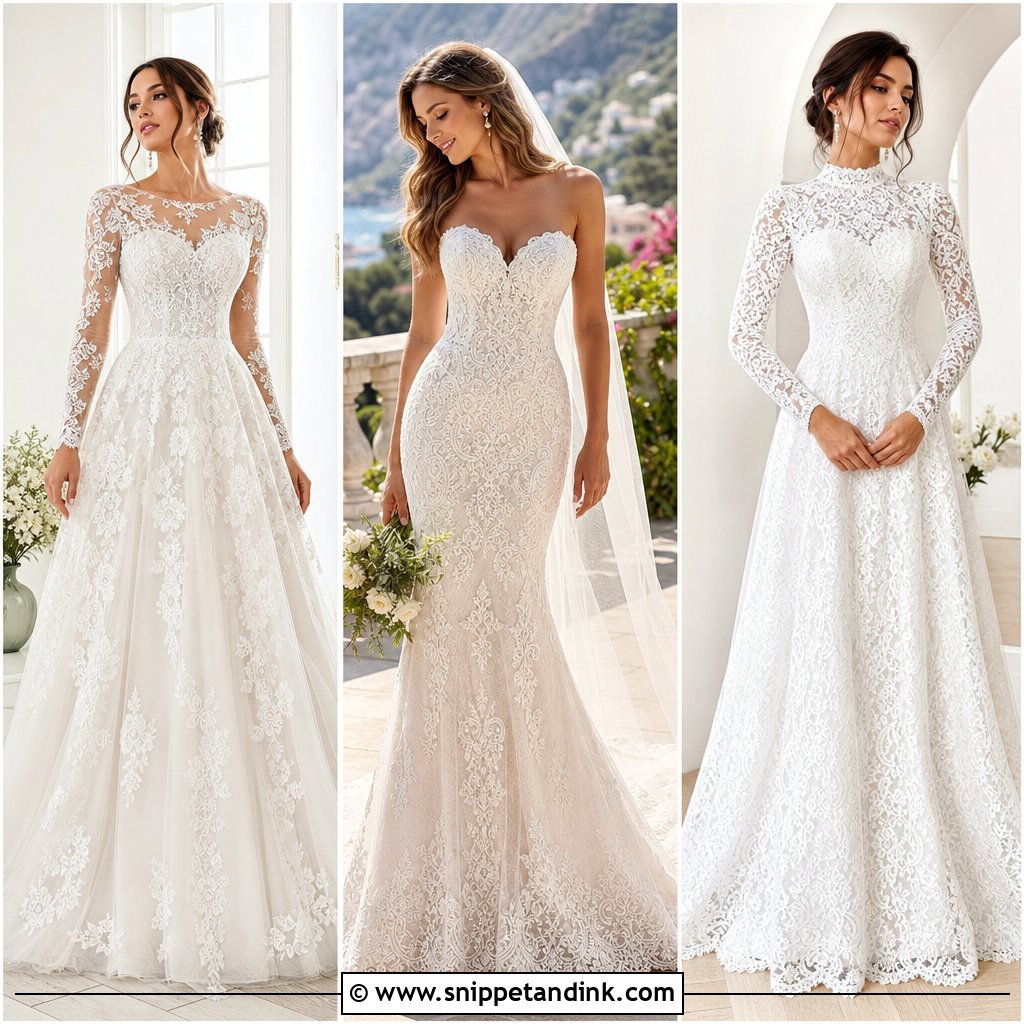
Sheer lace sleeves give coverage and still look light, because the pattern sits on skin rather than on fabric. What makes or breaks them is the fit at the forearm: too loose and they bag, too tight and you can’t raise your arms to dance. Pair fitted sleeves with a clean bodice and a soft skirt. A high neckline feels traditional; a V or open back modernises it. Keep jewellery tiny. I recommend long sleeves for autumn, winter, mountain venues and conservative ceremonies.
7. Simple Lace Short Sleeve Wedding Dress
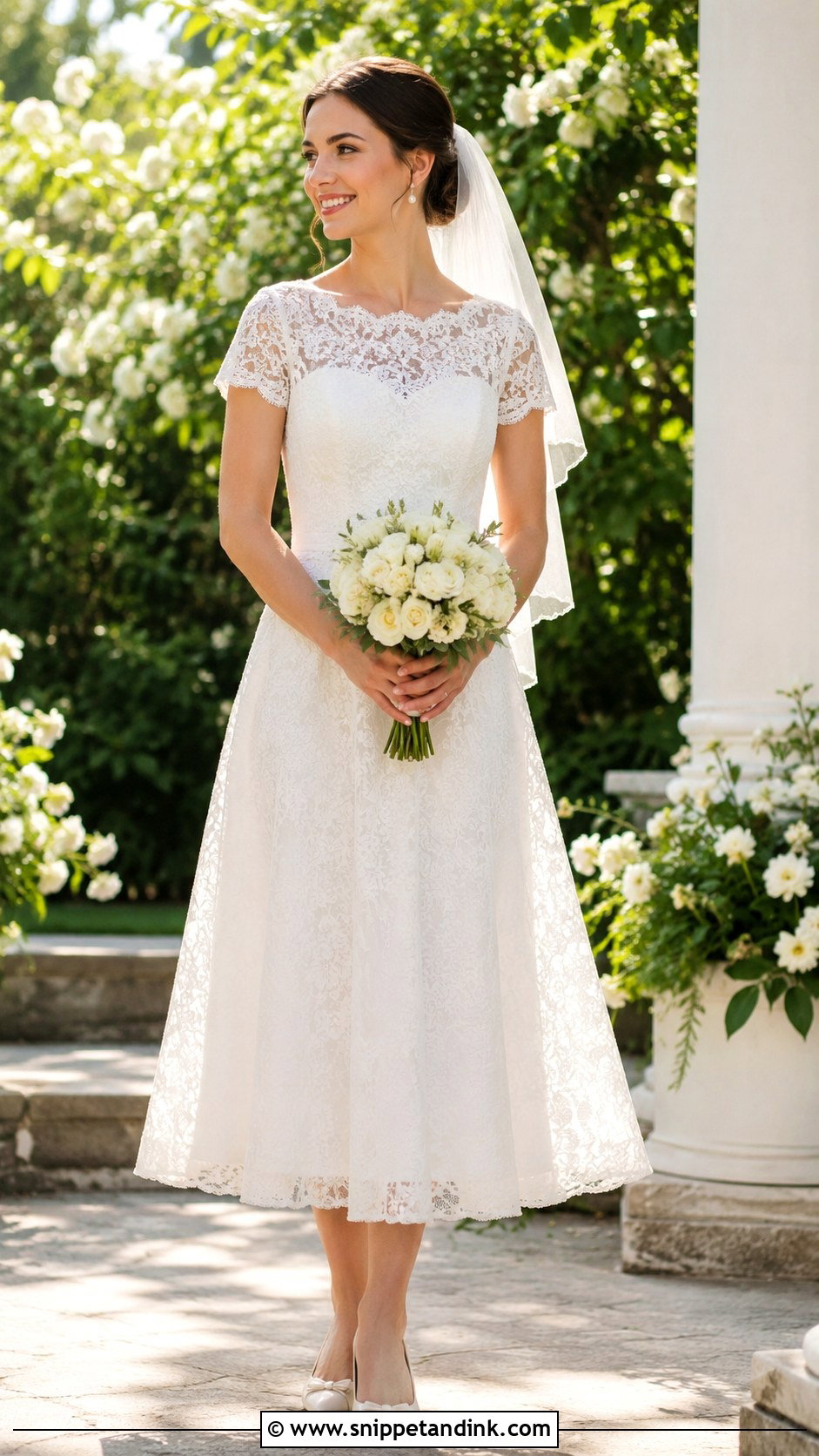
Short sleeves give you some arm coverage without committing to a high neck or full sleeve. Cap, flutter and slim short sleeves each sit differently, so try all three. Flutter sleeves soften broad shoulders, while cap sleeves can cut across the widest point of the upper arm if they’re too short. A fitted lace bodice with a flowing A-line skirt balances the shape. Low heels, pearl earrings and a plain veil keep it classic for spring, backyard and city hall weddings.
8. Simple Lace Off The Shoulder Wedding Dress
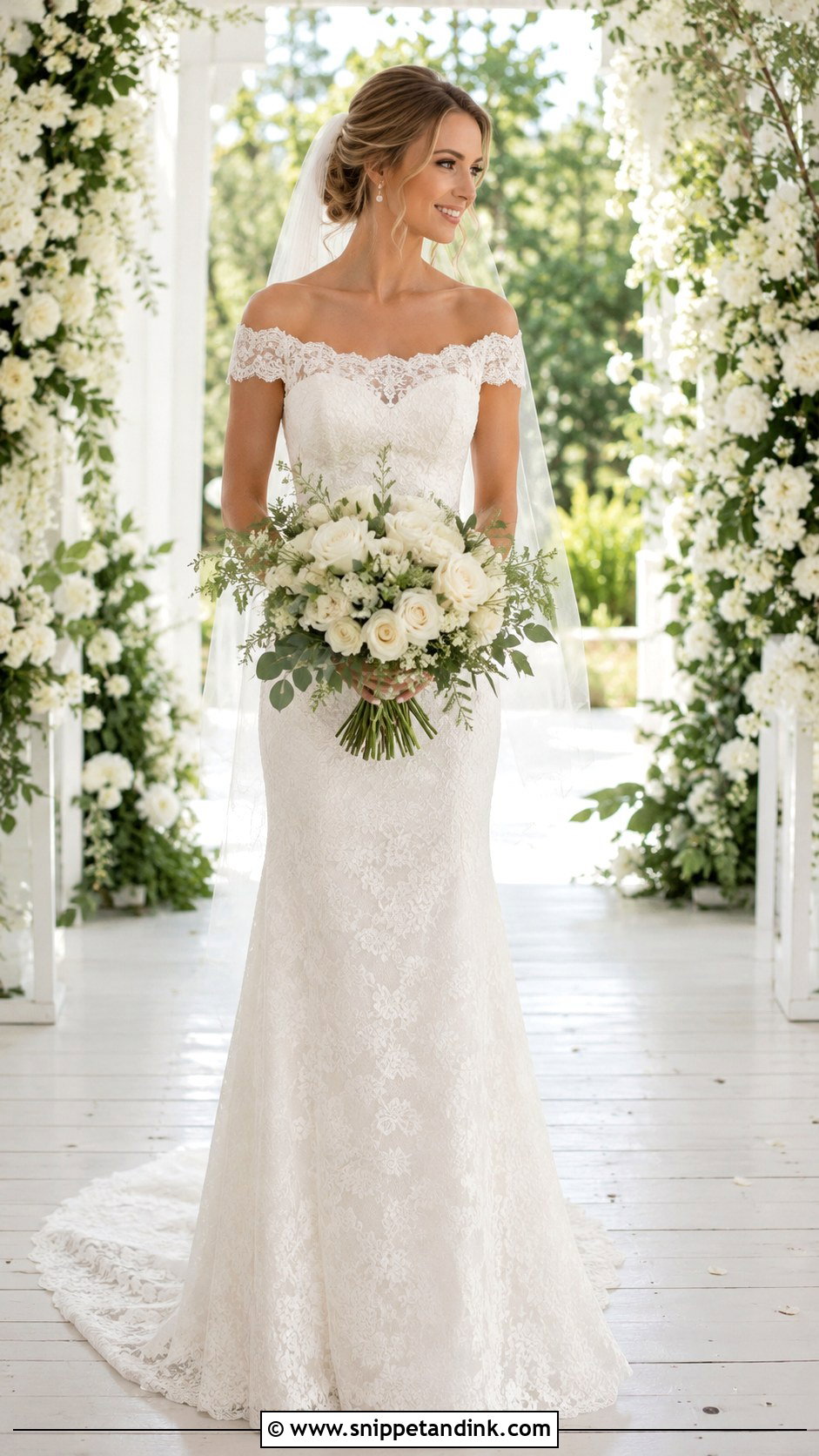
This neckline frames the face better than almost any other. The catch is that the band sits on your upper arm, so check you can lift both arms to hug someone without it sliding down. If it does, ask your seamstress about grip tape or a firmer elastic. Skip big ruffles; let the lace and the line of the shoulders carry it. A fitted bodice with an A-line or sheath skirt, an updo and small earrings is all it needs for a garden or classic venue.
9. Simple Lace Square Neck Wedding Dress
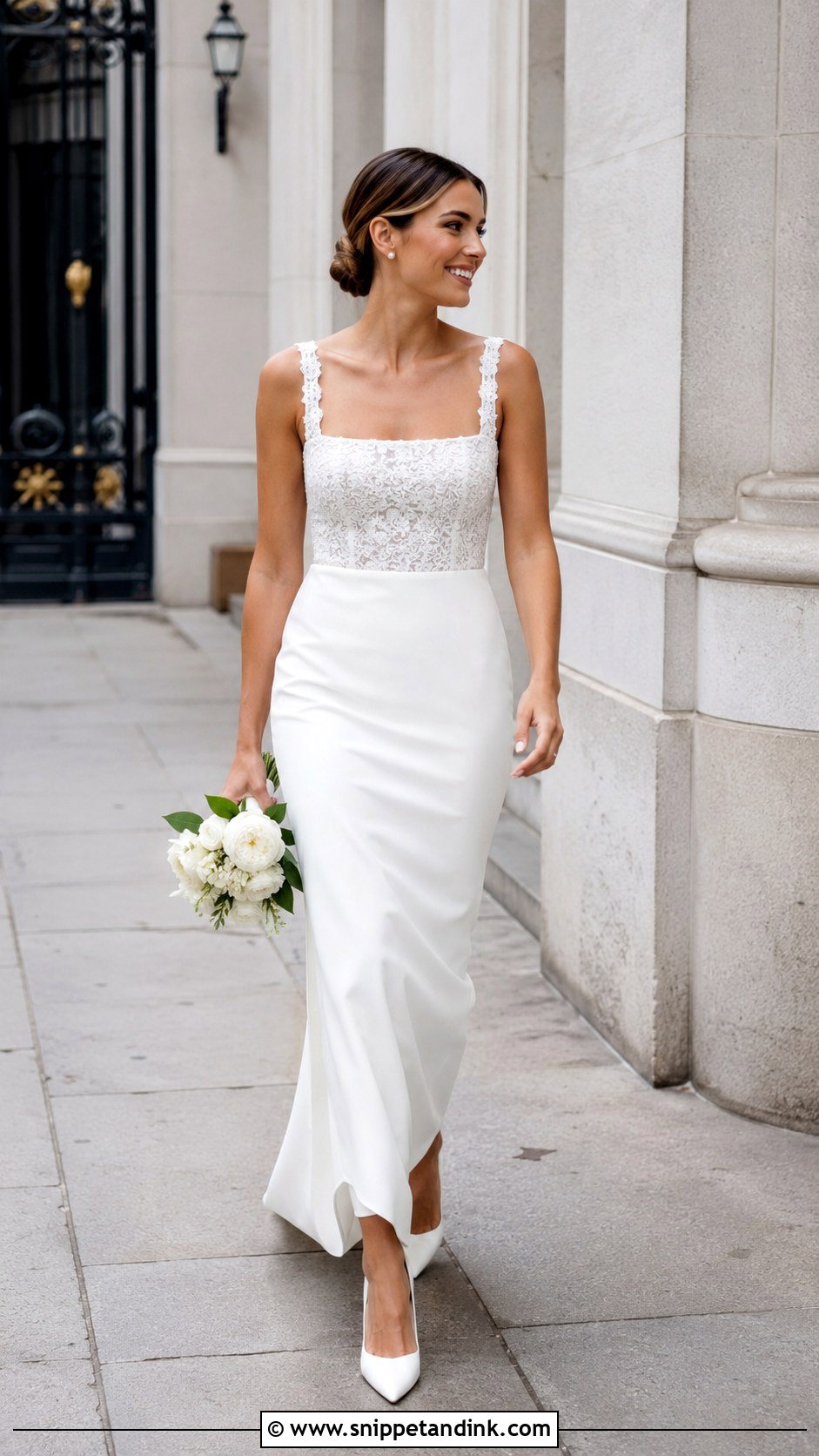
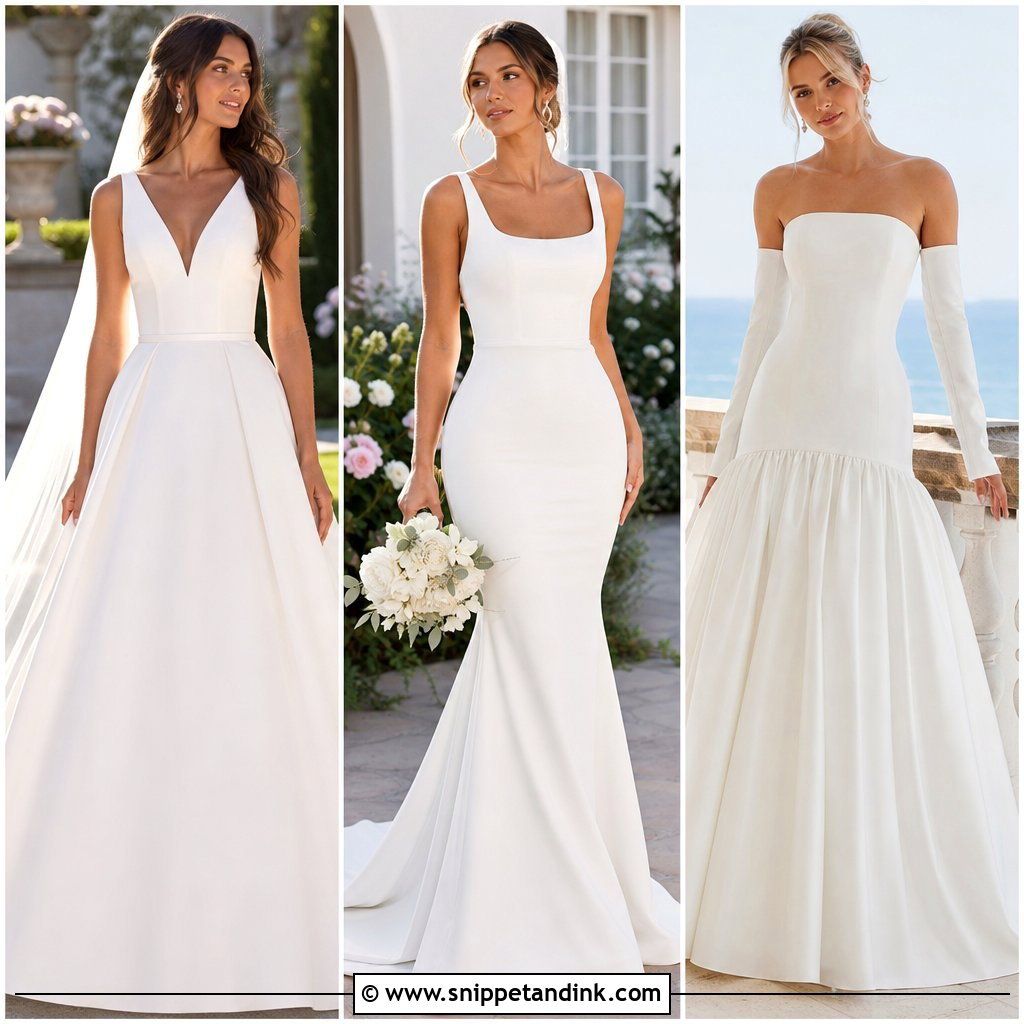
Square necks are having a moment for good reason: they frame the collarbone with a clean line that reads as both classic and modern. Thin straps feel lighter, wider straps give more support. My favourite version pairs a lace bodice with a crepe or satin skirt. Make sure the corners of the neckline sit flat, because they gape on a bodice that’s too loose. Pearl studs, a sleek low bun and pointed pumps polish it off.
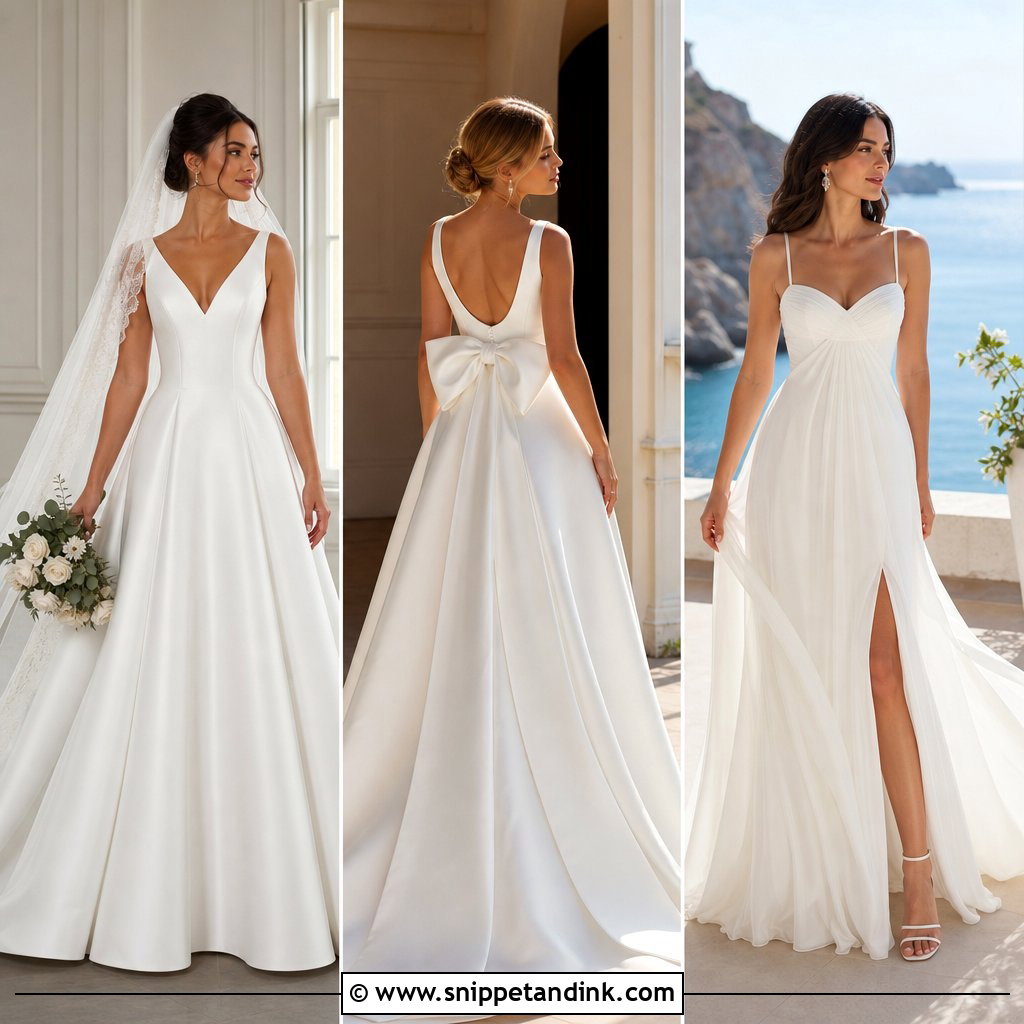
10. Simple Lace V Neck Wedding Dress
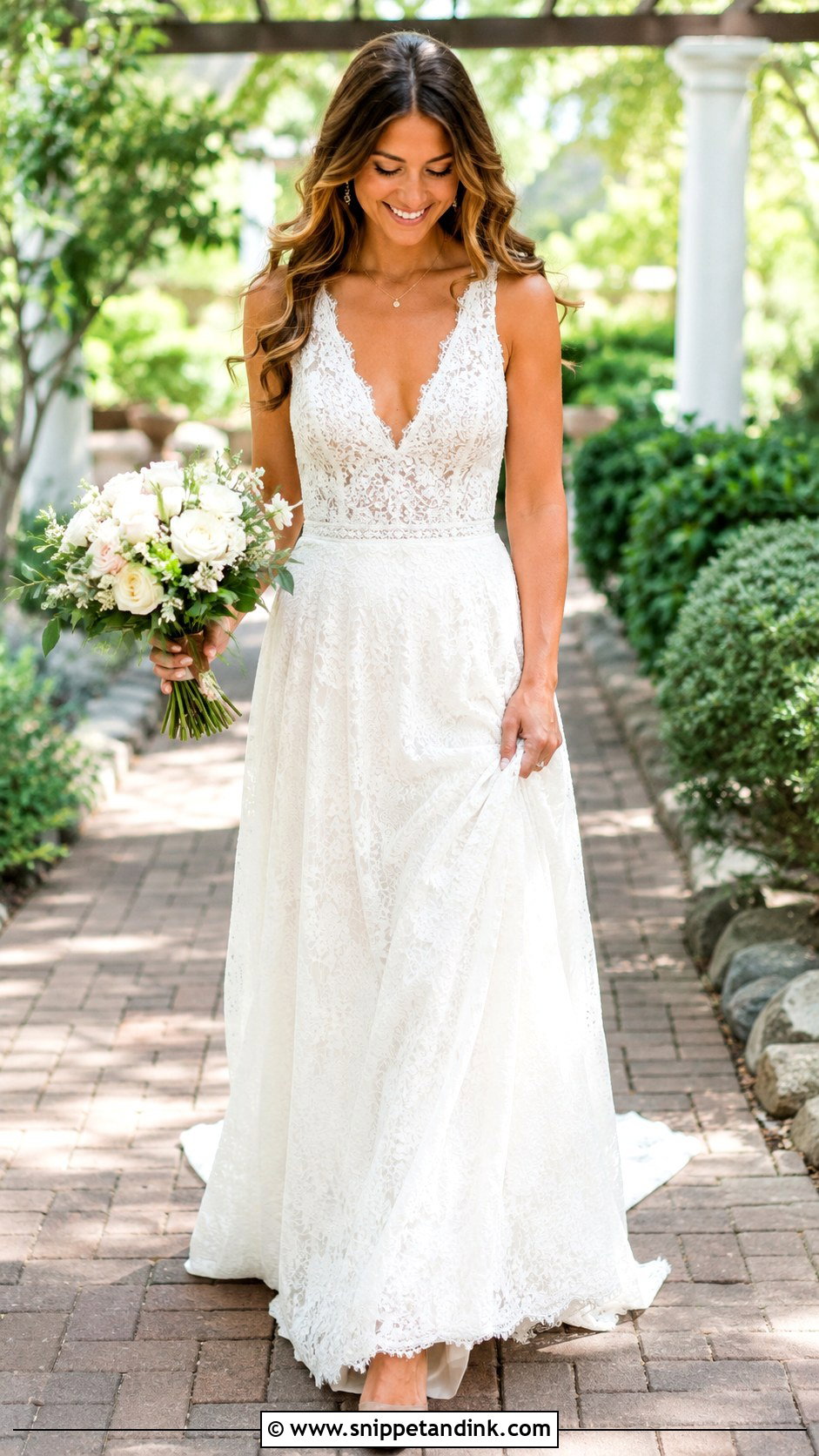
Easy to move in and naturally lengthening. The V draws the eye down, so the torso looks longer and the whole silhouette feels lighter. Choose a depth you won’t spend the day adjusting; a deep lace V often needs a little fashion tape at the edges. A soft lace bodice with a flowing skirt feels romantic, a fitted lace sheath more modern. A fine pendant, soft curls and neutral heels. It suits beach, garden and indoor ceremonies equally.
11. Simple Lace High Neck Wedding Dress
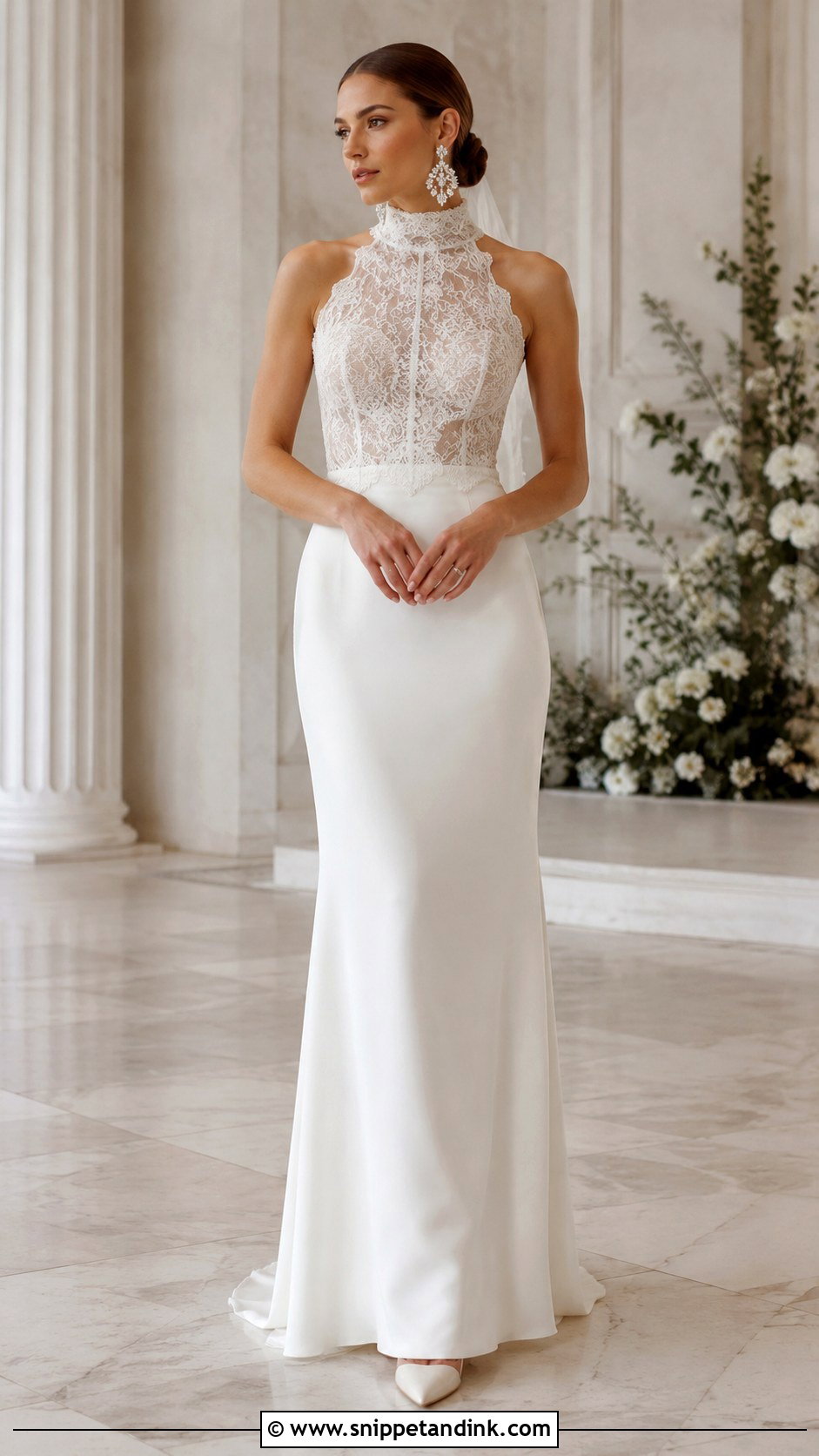
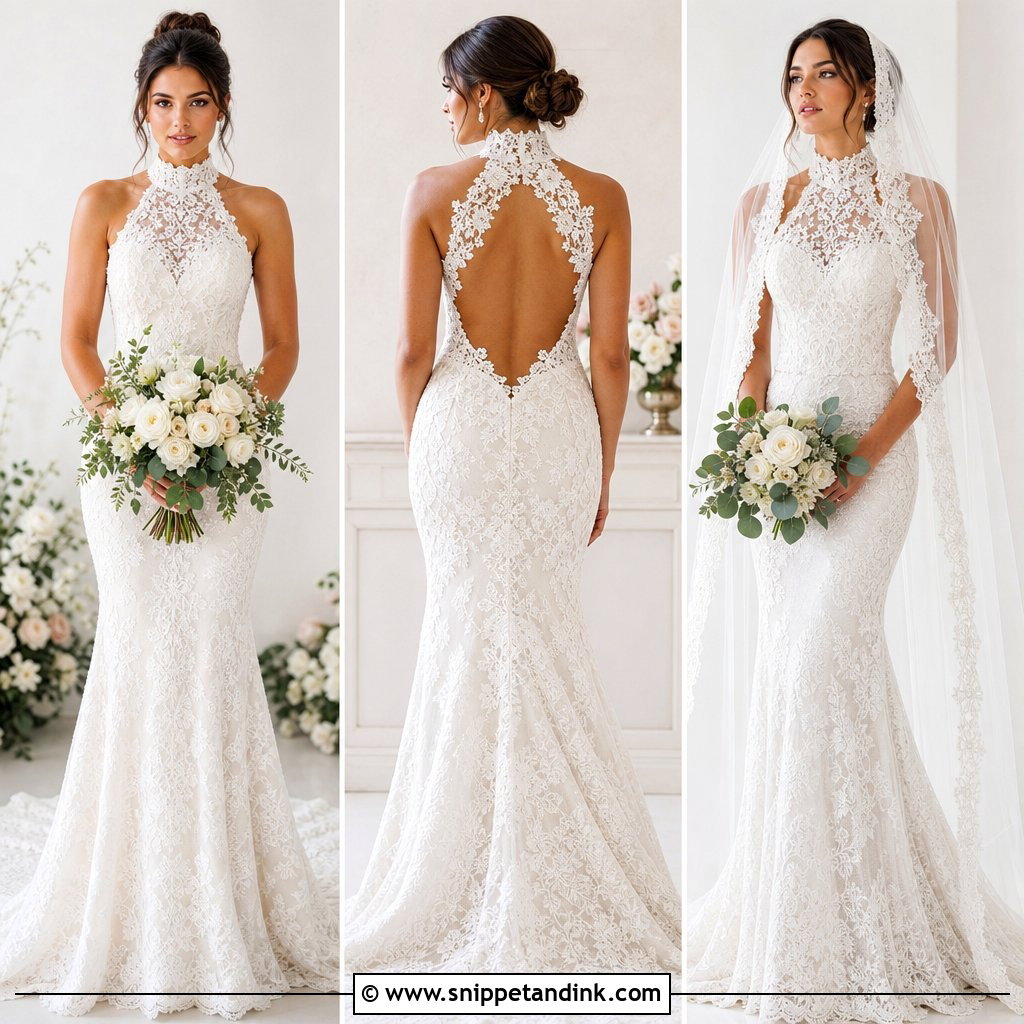
High necks give coverage while still showing the pattern, especially in sheer lace. To keep it from feeling buttoned-up, I’d balance it with a slim skirt or an open back. A high-neck lace bodice over a clean crepe skirt looks very current. Choose earrings over a necklace and wear your hair up so the neckline stays visible. Check the collar while turning your head; it shouldn’t dig in. Historic venues, formal ceremonies and autumn weddings suit it.
12. Simple Lace Open Back Wedding Dress
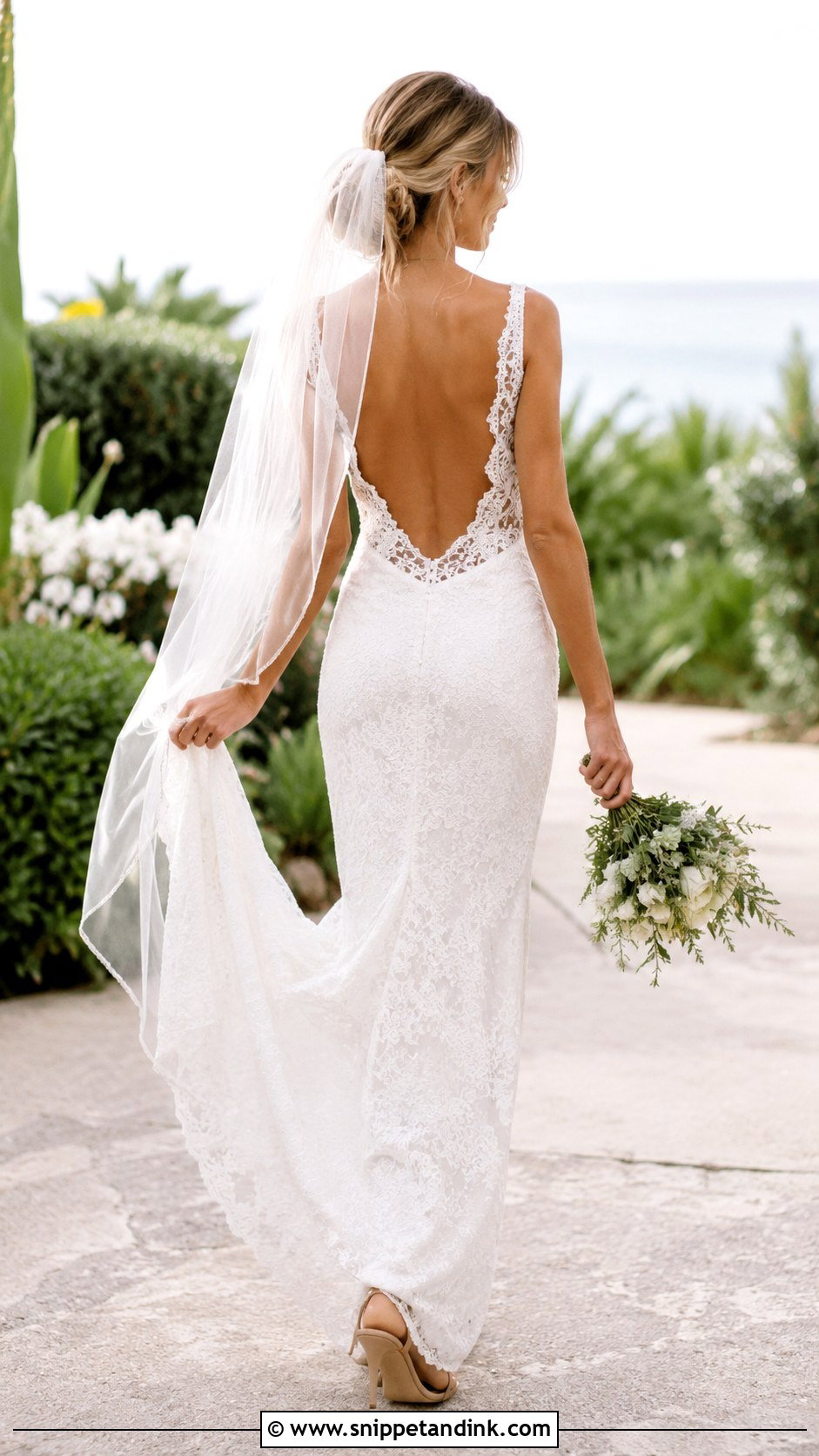
A simple lace open back wedding dress keeps the front calm and saves the detail for the back, which is what guests see for the whole ceremony. Lace straps, covered buttons or a scalloped edge make the moment. Sort the bra question early: a low back needs a built-in cup or adhesive option, and that changes how the bodice is fitted. Sheath, fit-and-flare or A-line all work. Wear a sheer veil so the back still shows.
13. Simple Lace Slip Wedding Dress
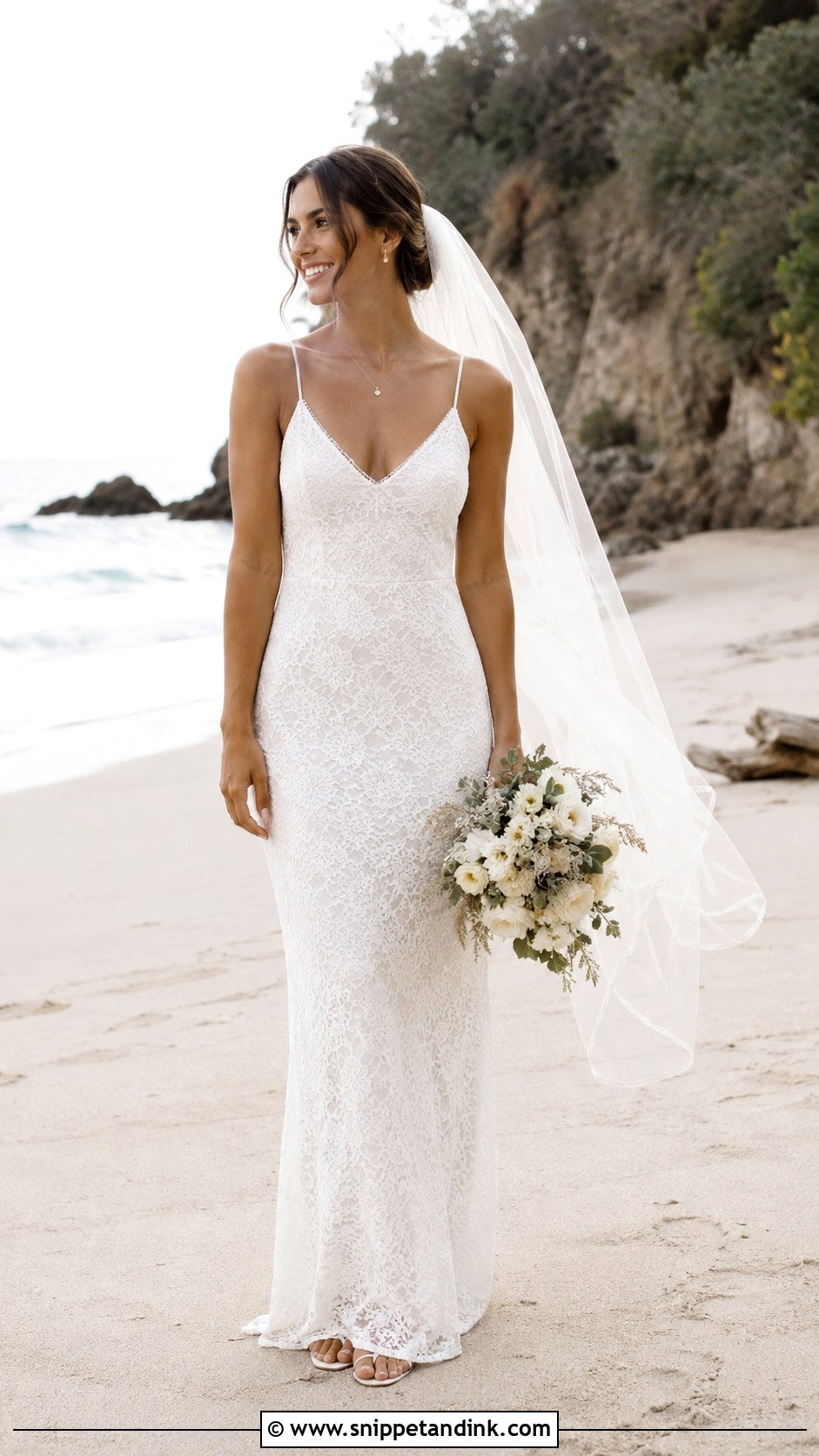
The slip is what I suggest when a bride tells me she’d like to feel as if she’s wearing almost nothing. Thin straps and a straight shape, with lace as an overlay, a neckline trim or a panel at the hem. A bias-cut lining gives it that liquid movement, but bias-cut fabric also shows every line underneath, so plan your underwear and shapewear first. Strappy sandals, a small bouquet and a sheer veil keep it light for beaches, elopements and city halls.
14. Simple Lace Tea Length Wedding Dress
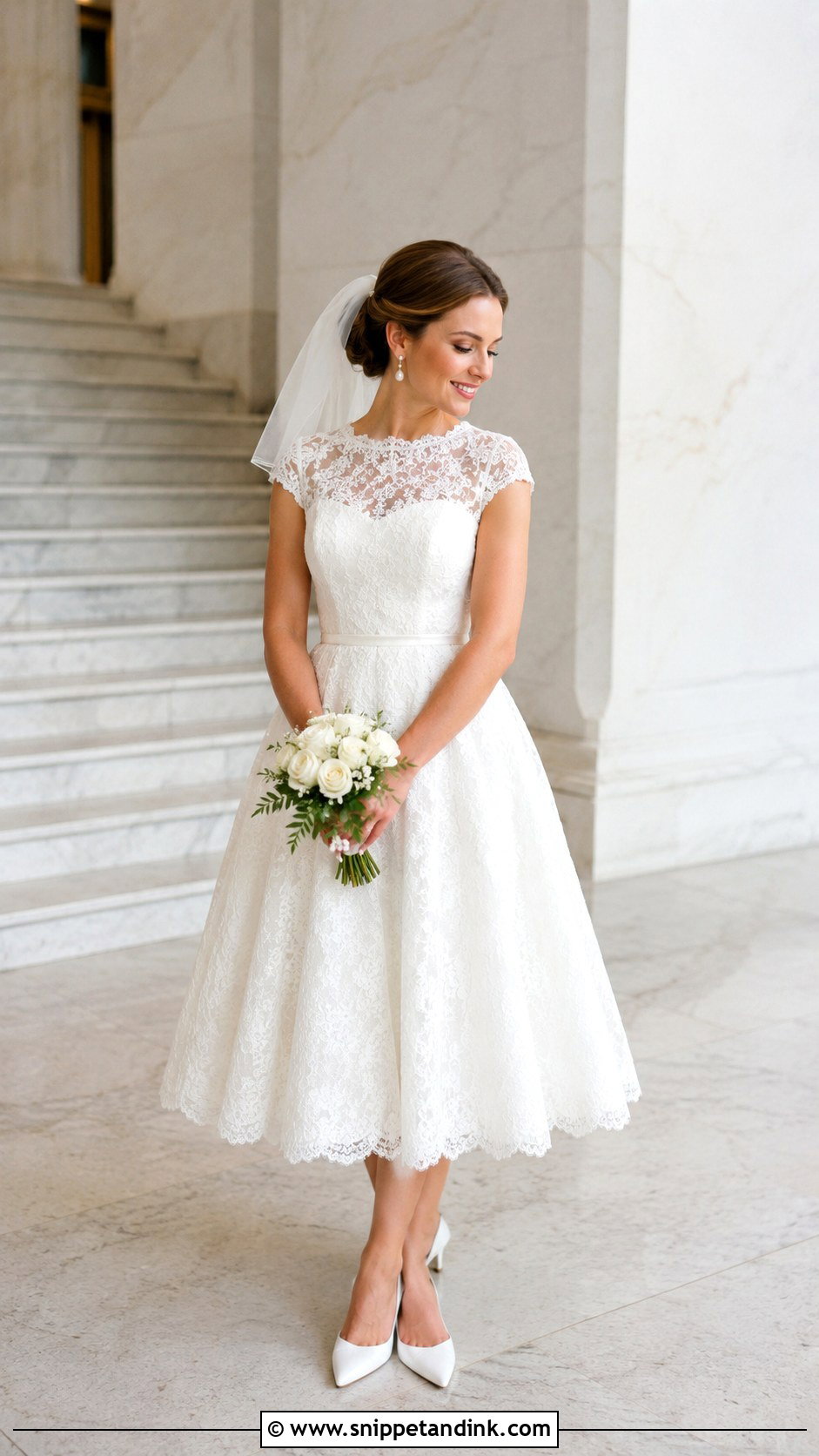
Tea length falls between the knee and the ankle, which means you can walk, dance and actually show off your shoes. A lace bodice with a soft A-line skirt feels classic; allover lace leans vintage. I’d keep the shoes modern, pointed flats, kitten heels or simple pumps, so the dress doesn’t tip into costume. Pearl earrings and a short veil finish it. A sensible choice for courthouses, brunch receptions and garden parties.
15. Simple Lace Midi Wedding Dress
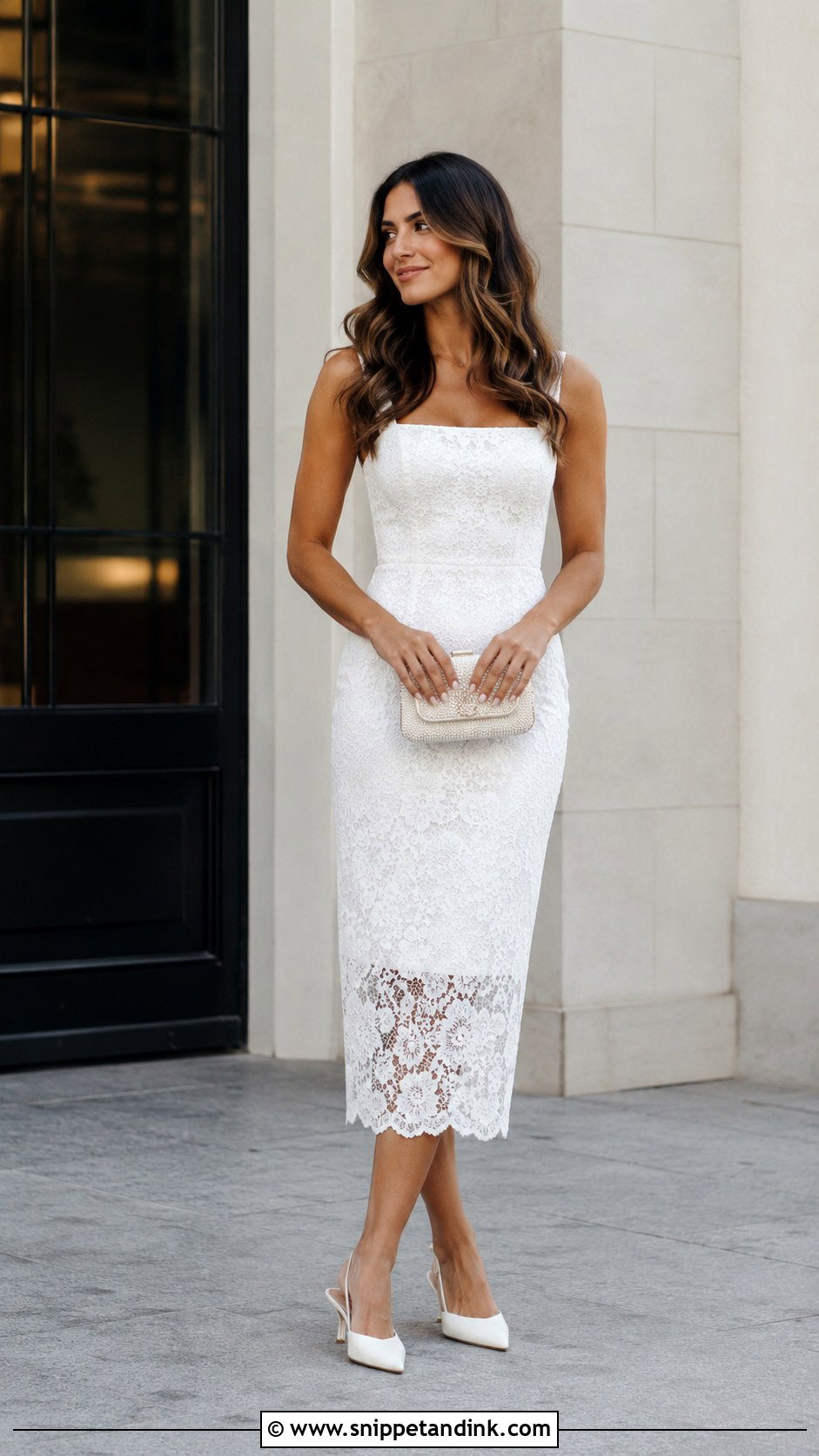
Midi is the length I recommend for civil ceremonies and smaller weddings where a floor-length gown would feel like too much. It needs a little help to look bridal rather than like a smart day dress: clean lace, a fitted waist and a defined neckline. Square, boat and strapless necklines all work. Slingback heels, a structured clutch and soft waves give it a city feel. You can move in it all day.
16. Simple Lace Mini Wedding Dress
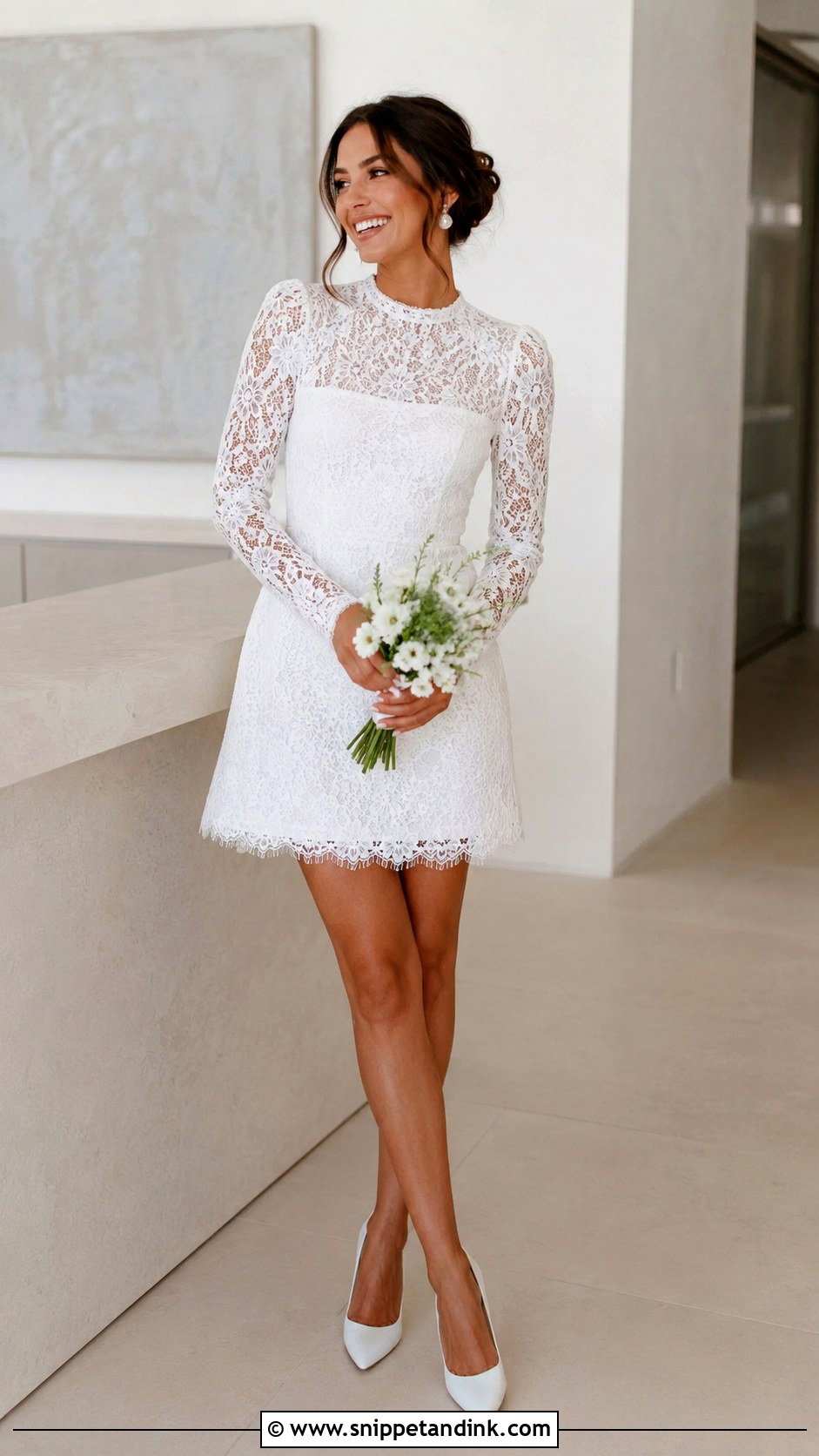
A lace mini is fun as a second look, and for a small ceremony it can be the main event. Pick the shape by comfort: a structured shift, a fitted long-sleeve mini or a short A-line. Balance the short hem with a higher neckline or sleeves. Sit down in it before you buy, because lace minis ride up more than plain fabric. White pumps, bow heels or slingbacks finish it for courthouses, rehearsal dinners and reception changes.
17. Simple Chantilly Lace Wedding Dress
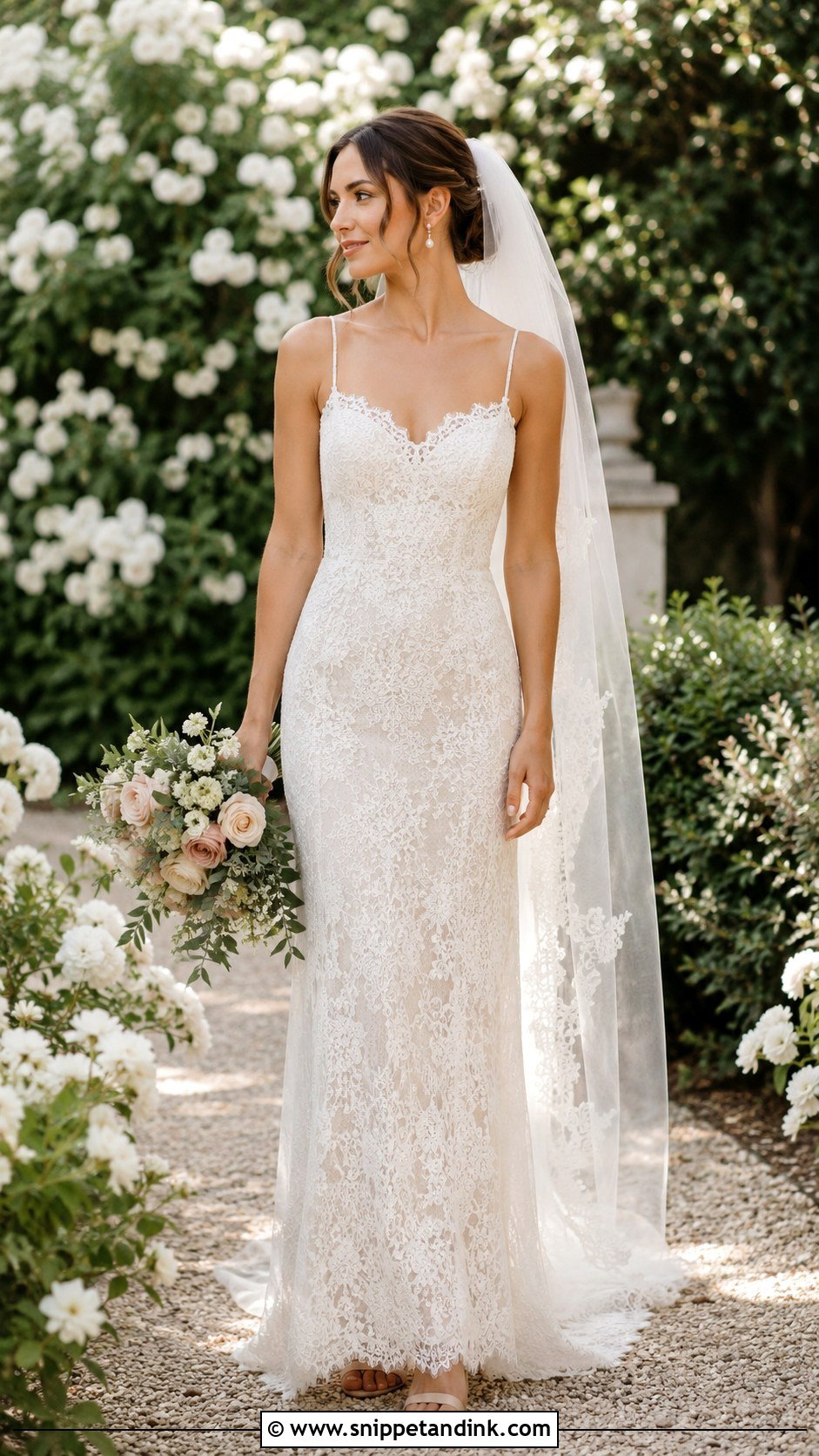
Chantilly is the softest lace there is: fine net, delicate outlined florals, and almost no weight. That makes it ideal for sheath gowns, slip dresses, sleeves and soft A-lines. It also snags on bracelets and rough-edged bouquets, so I’d skip chunky wrist jewellery. Choose a lining near your skin tone for a subtle effect, or ivory for a more traditional look. Dainty earrings, a sheer veil and simple heels suit garden and estate weddings.
18. Simple Alencon Lace Wedding Dress
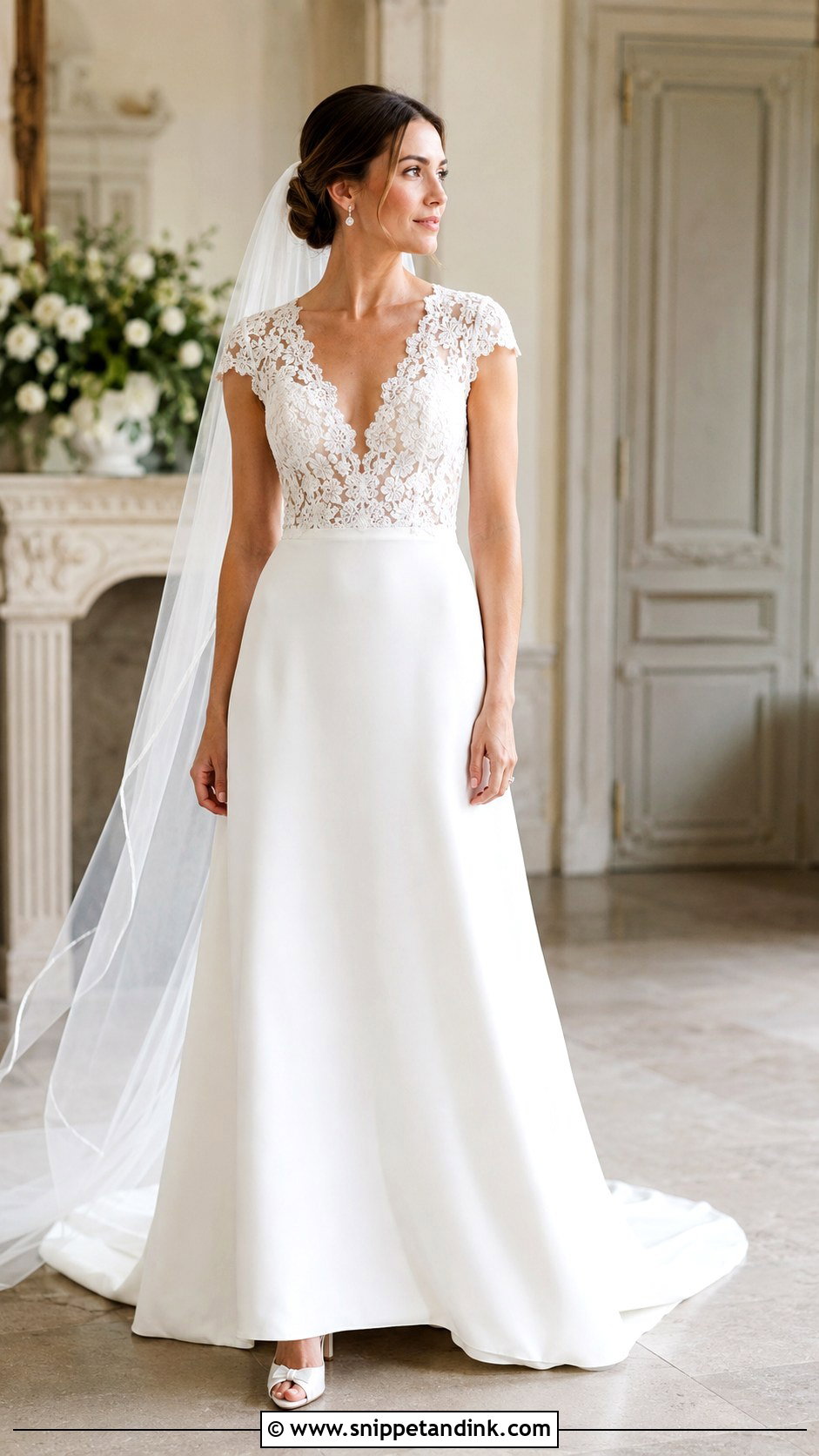
Alençon lace has a raised cord outlining each motif, so the pattern stands up off the net. That’s why it holds its shape on bodices, sleeves, hems and trains, and why it’s often cut to make scalloped edges. To keep it simple, put it in one place: a fitted Alençon bodice with a plain skirt is the classic answer. A smooth veil, pearl earrings and satin heels. Traditional ceremonies and formal venues suit its texture.
19. Simple Floral Lace Wedding Dress
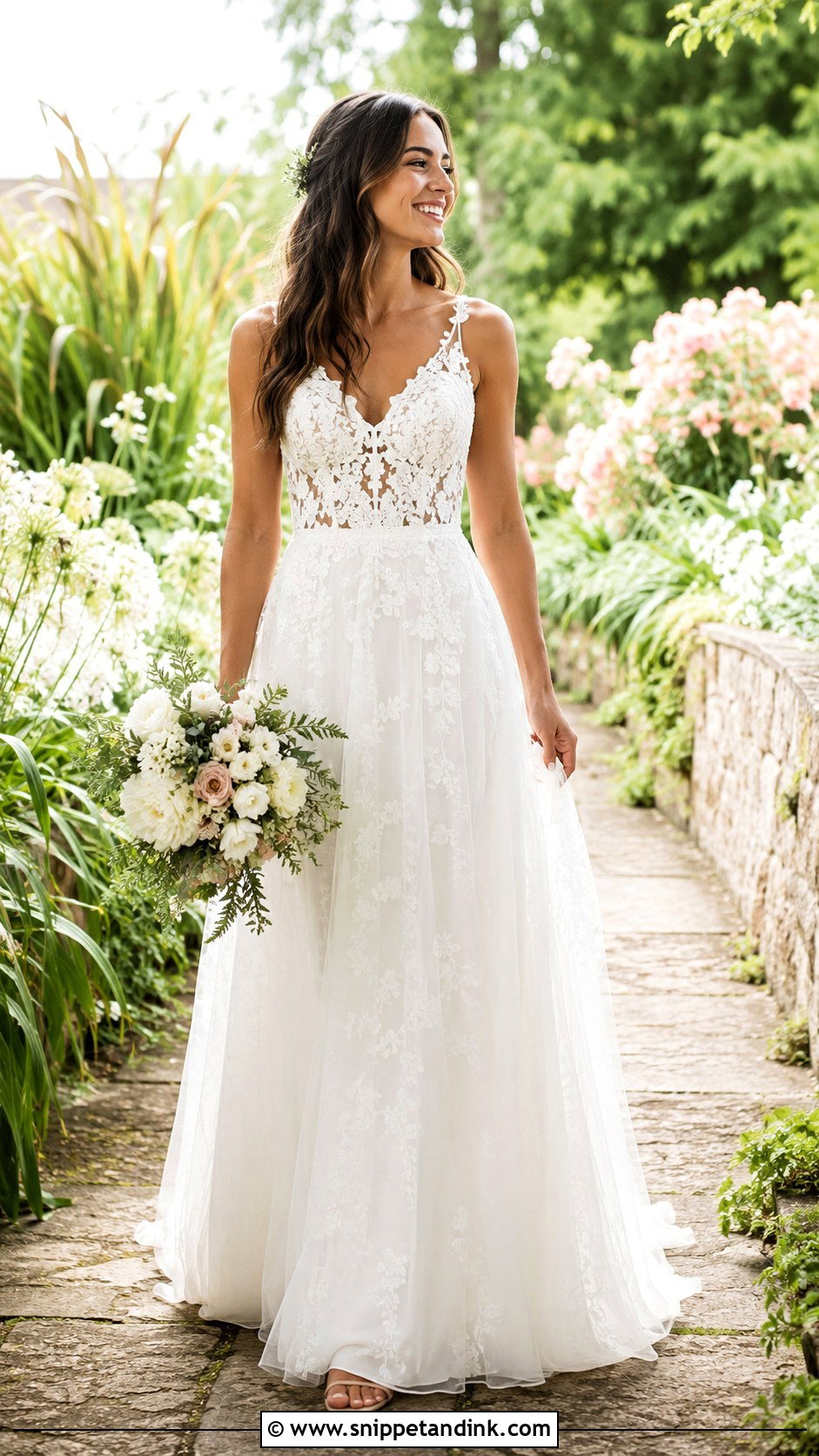
Florals connect naturally with outdoor settings, but scale matters. Tiny flowers read as delicate up close and almost disappear in wide shots; larger motifs show from the back of the aisle. Keep the lace to the bodice, sleeves or hem instead of covering the whole dress. A soft A-line or sheath stays wearable. Loose waves, fresh makeup and simple sandals or heels fit vineyards, gardens and spring ceremonies.

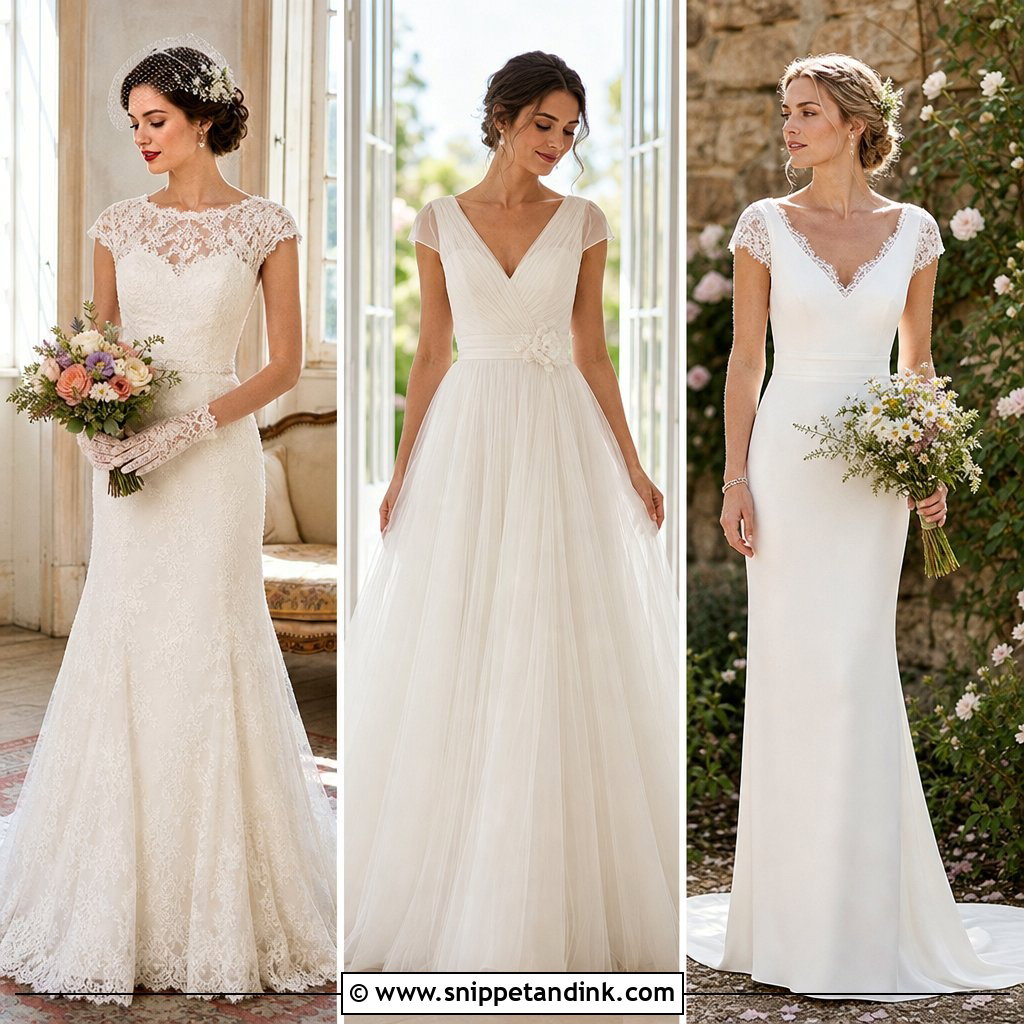
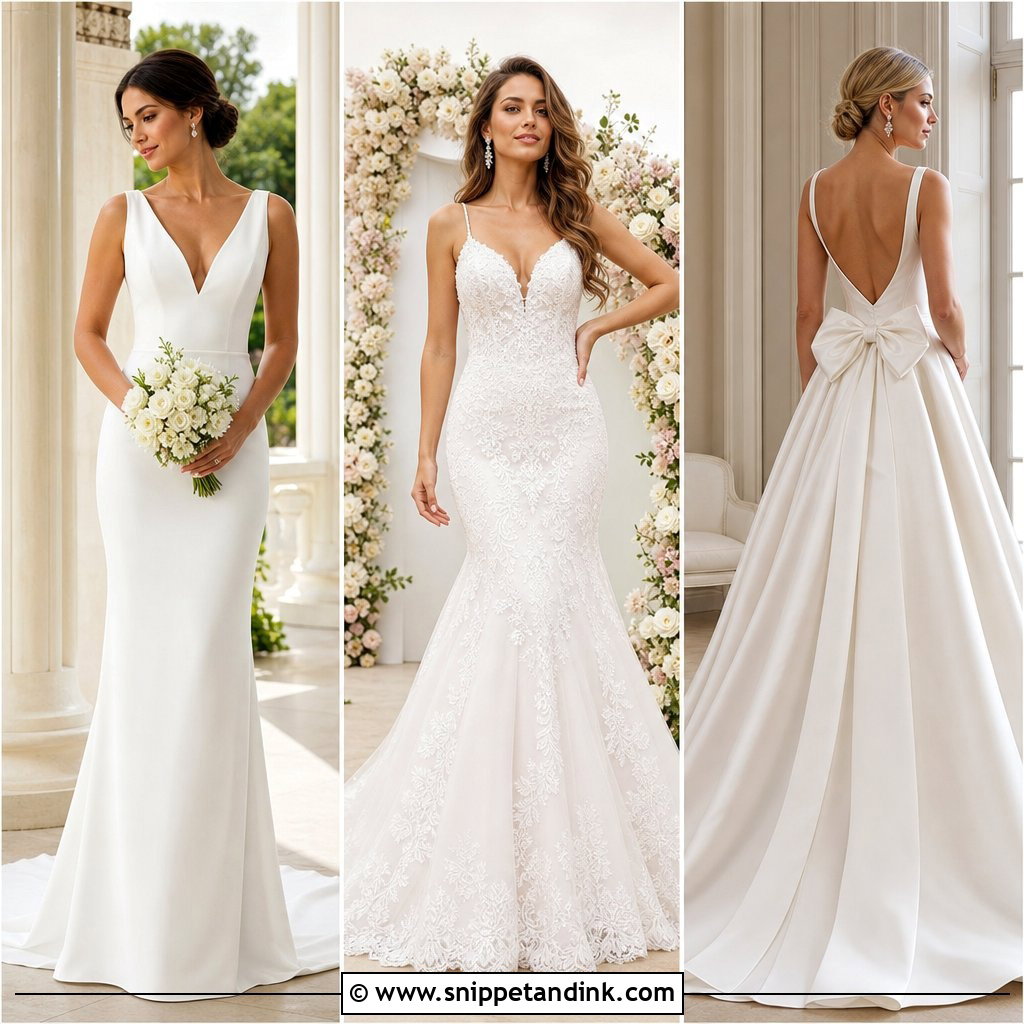

20. Simple 3D Lace Wedding Dress
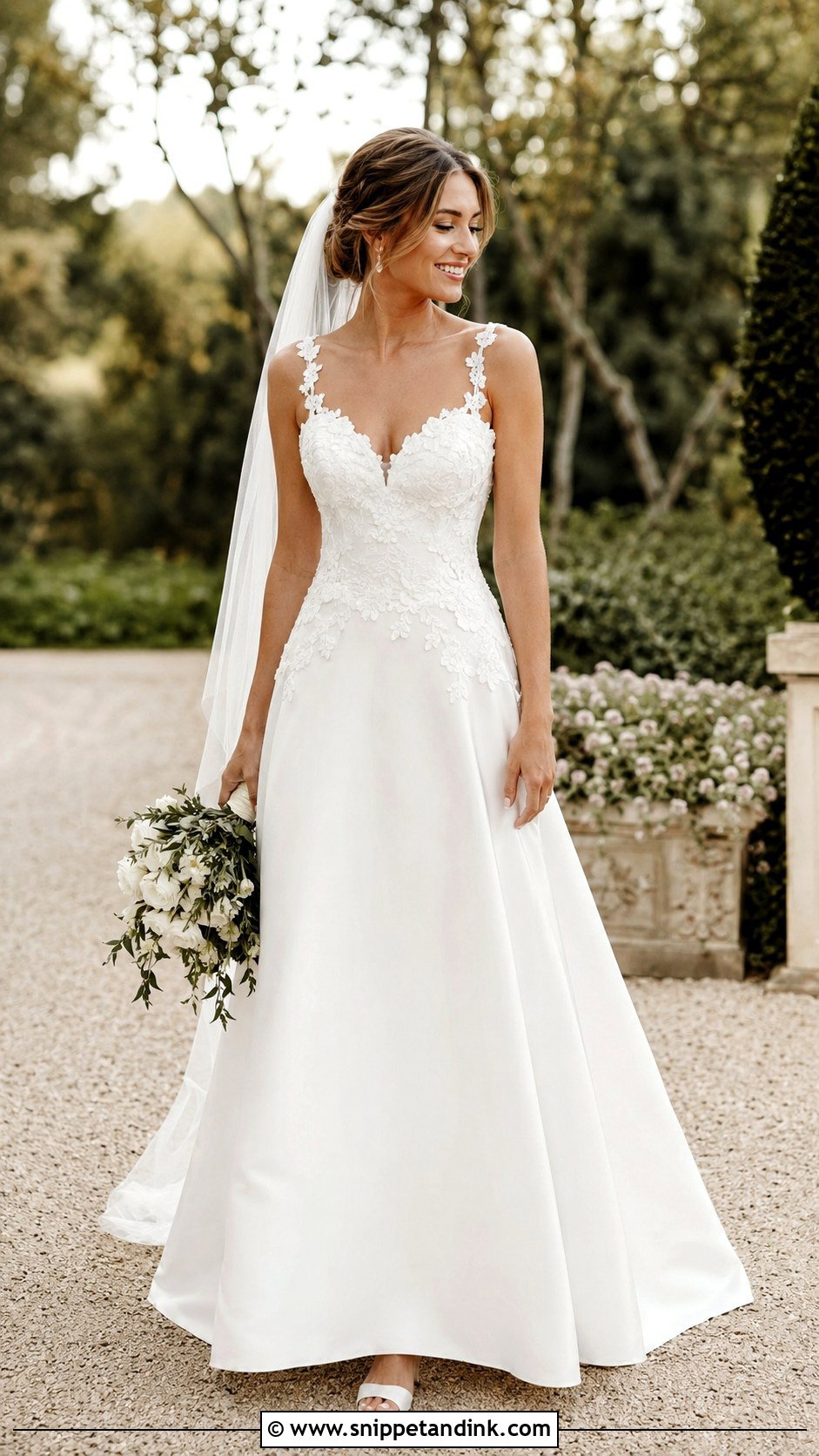
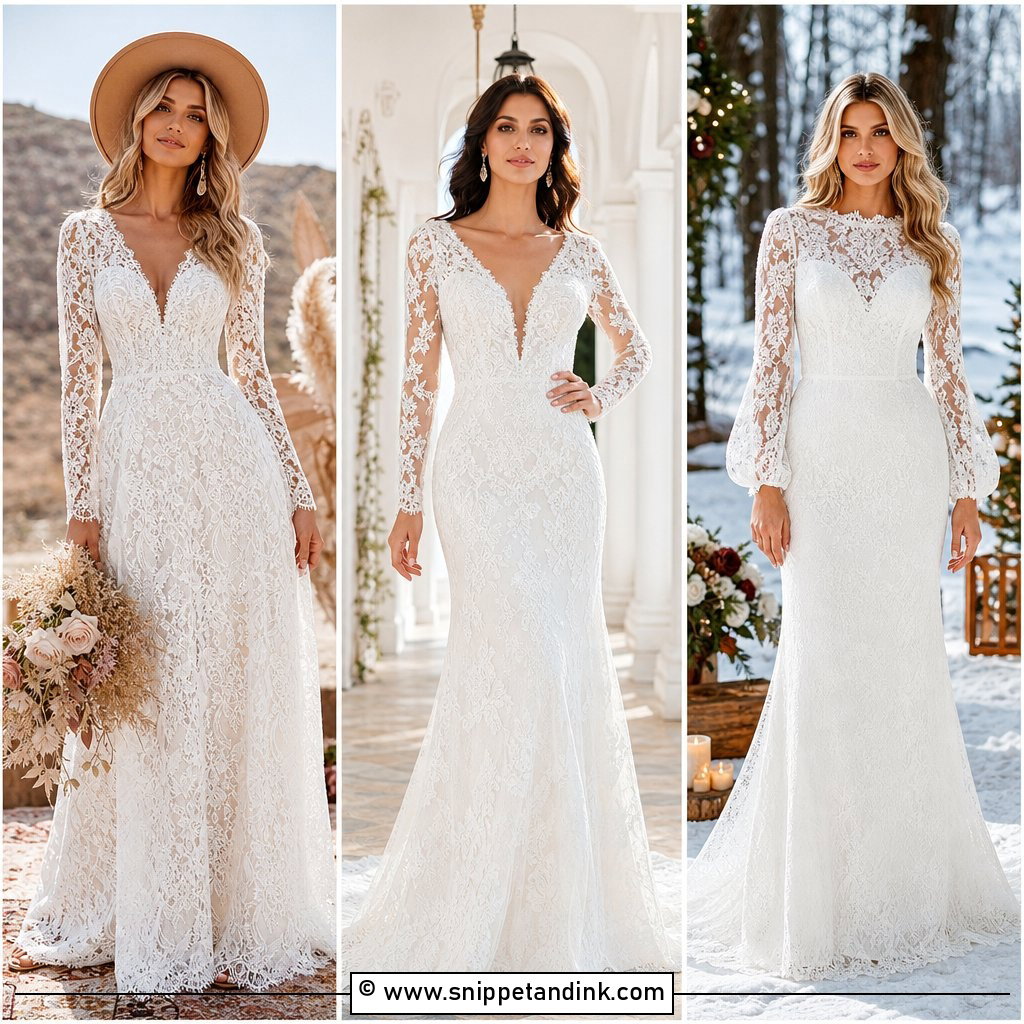
Raised petals and appliqués catch light in photos and add real depth. Keep them sparse: a few placed along the bodice, straps or skirt read as modern, while a dress covered in them gets heavy and catches on everything. Check that each 3D flower is stitched down at its centre, or the petals will flatten when you hug people. A clean sheath, A-line or fit-and-flare silhouette, plain earrings and a sheer veil balance the texture.
21. Simple Lace Bodice Wedding Dress
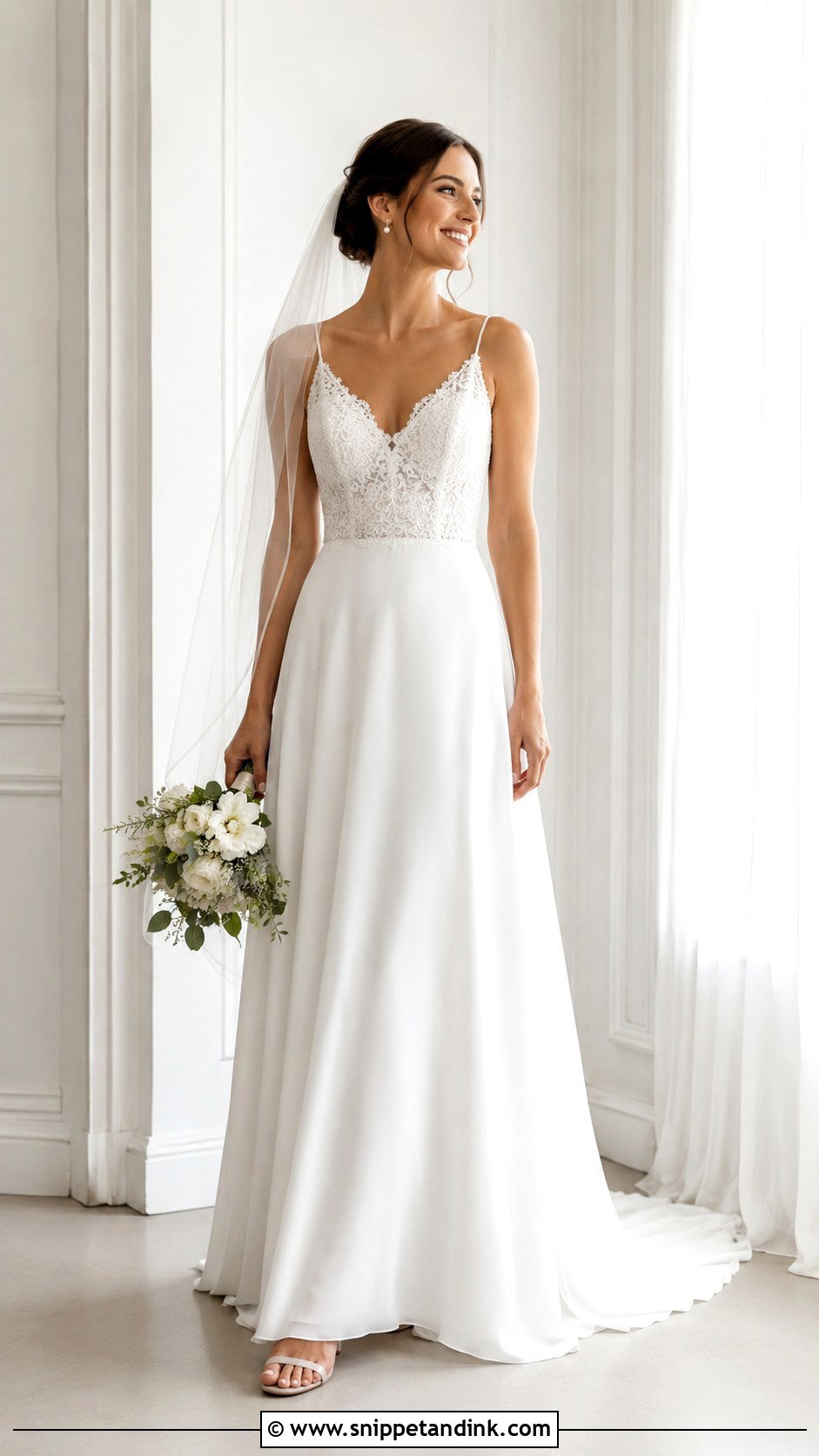
If you love lace but not a whole dress of it, put it on the bodice only. The skirt can be crepe, chiffon, satin, tulle or organza, and that contrast keeps everything clean. Lace on top also draws attention to the waist and neckline. The seam where lace meets skirt is the detail I inspect: it should be finished invisibly, ideally with the lace motifs cut out and laid over it. Thin straps, long sleeves or a square neck, a plain veil and comfortable heels.
22. Simple Lace Top Crepe Skirt Wedding Dress
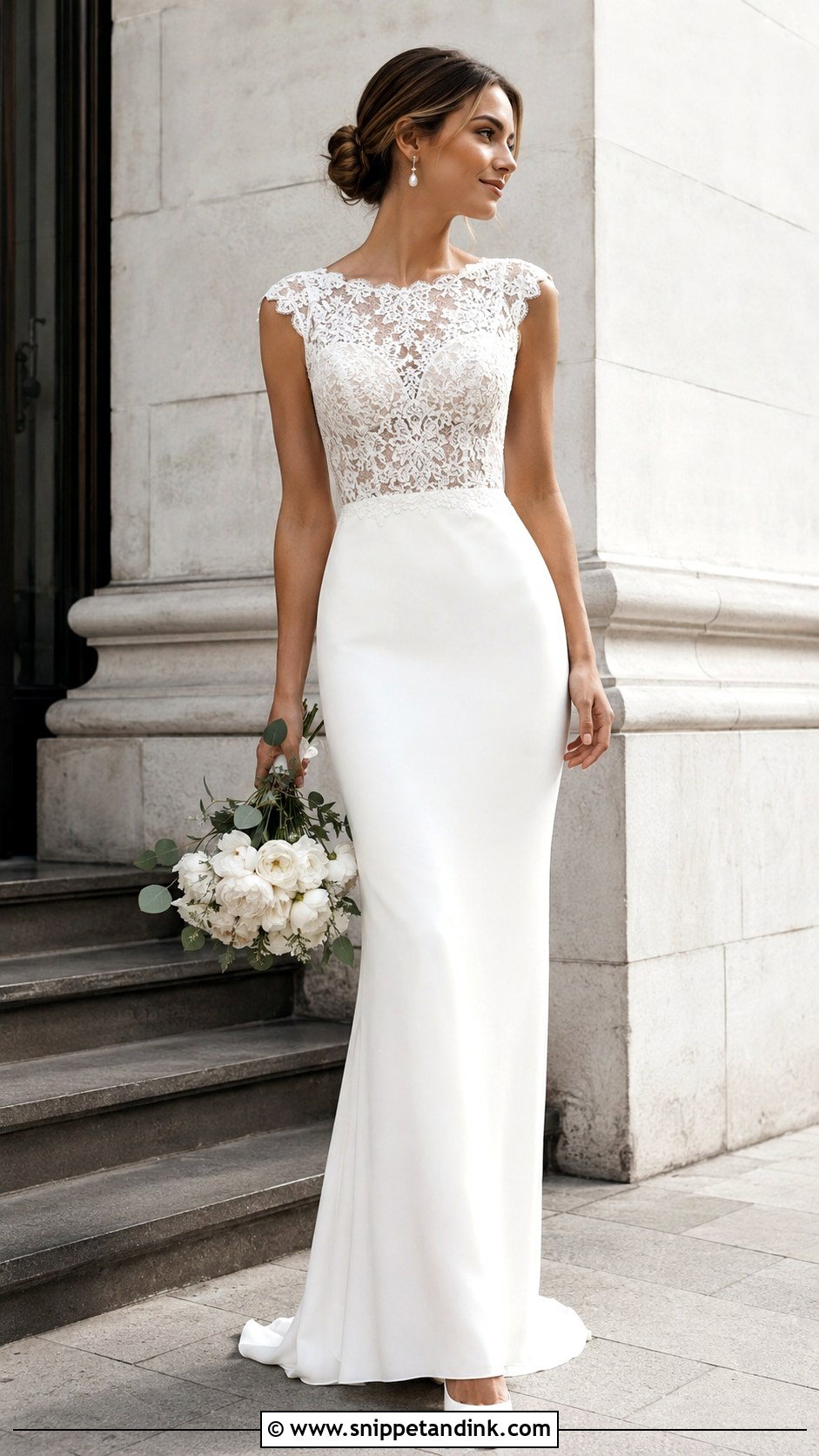
Lace on top, crepe below. The crepe keeps the skirt smooth and sleek, which suits sheath, fit-and-flare and column shapes. Crepe is unforgiving, though: it shows creases from sitting in the car, so steam it at the venue and stand in the back of the car if you can. The skirt should skim rather than cling. A low bun, pearl drops and pointed heels. City weddings and rooftops suit it.
23. Simple Lace Corset Wedding Dress
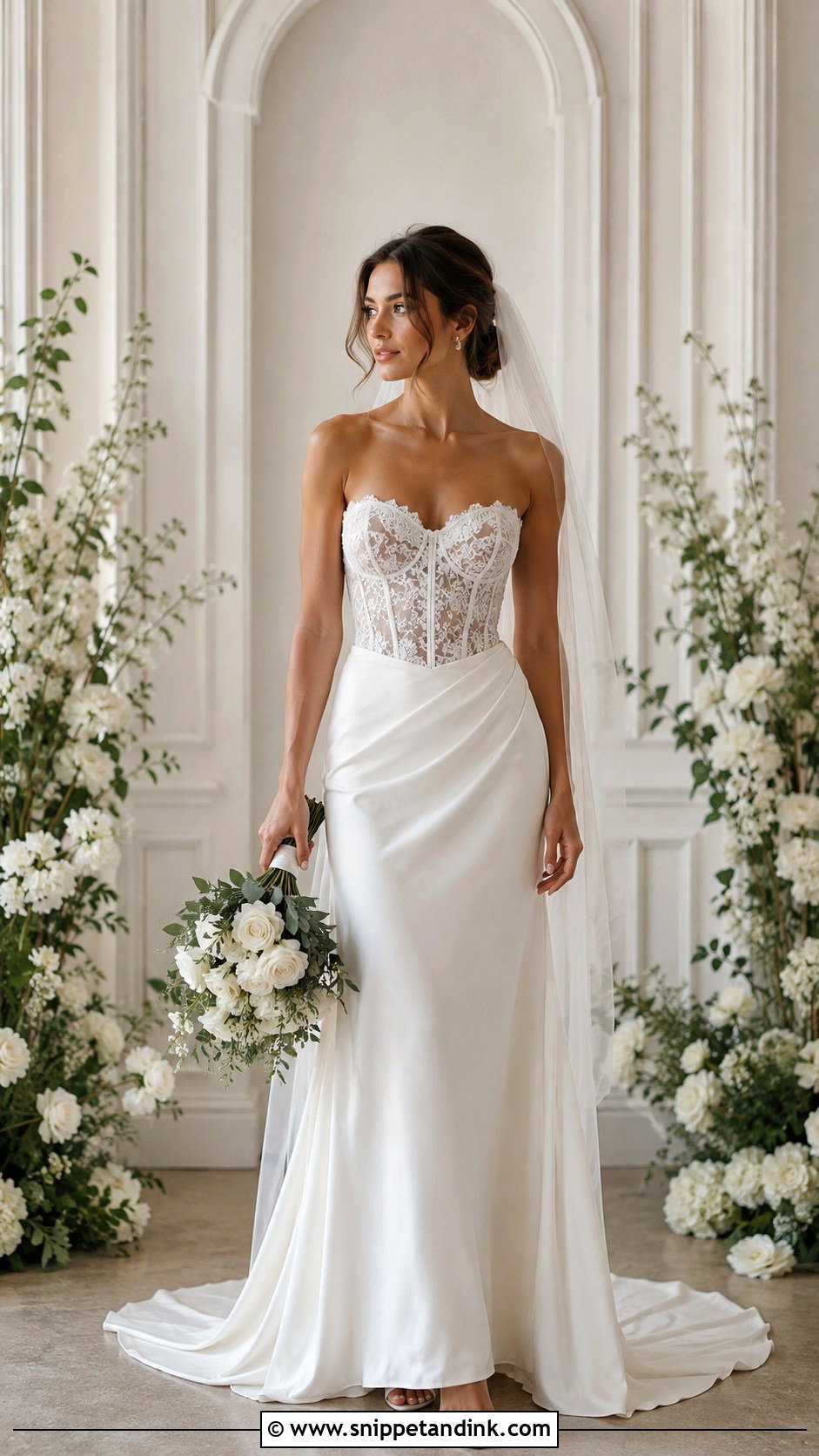
Corset bodices give real support, and plenty of brides love feeling held in all day. The boning should be flexible, not rigid, and the cups should be smooth under the lace, or you’ll see ridges in photos. A plain A-line, crepe or tulle skirt balances the fitted top. I lace corset backs a touch looser for the ceremony meal than for the aisle. Minimal jewellery, a soft veil and classic heels finish it.
24. Simple Lace Cap Sleeve Wedding Dress
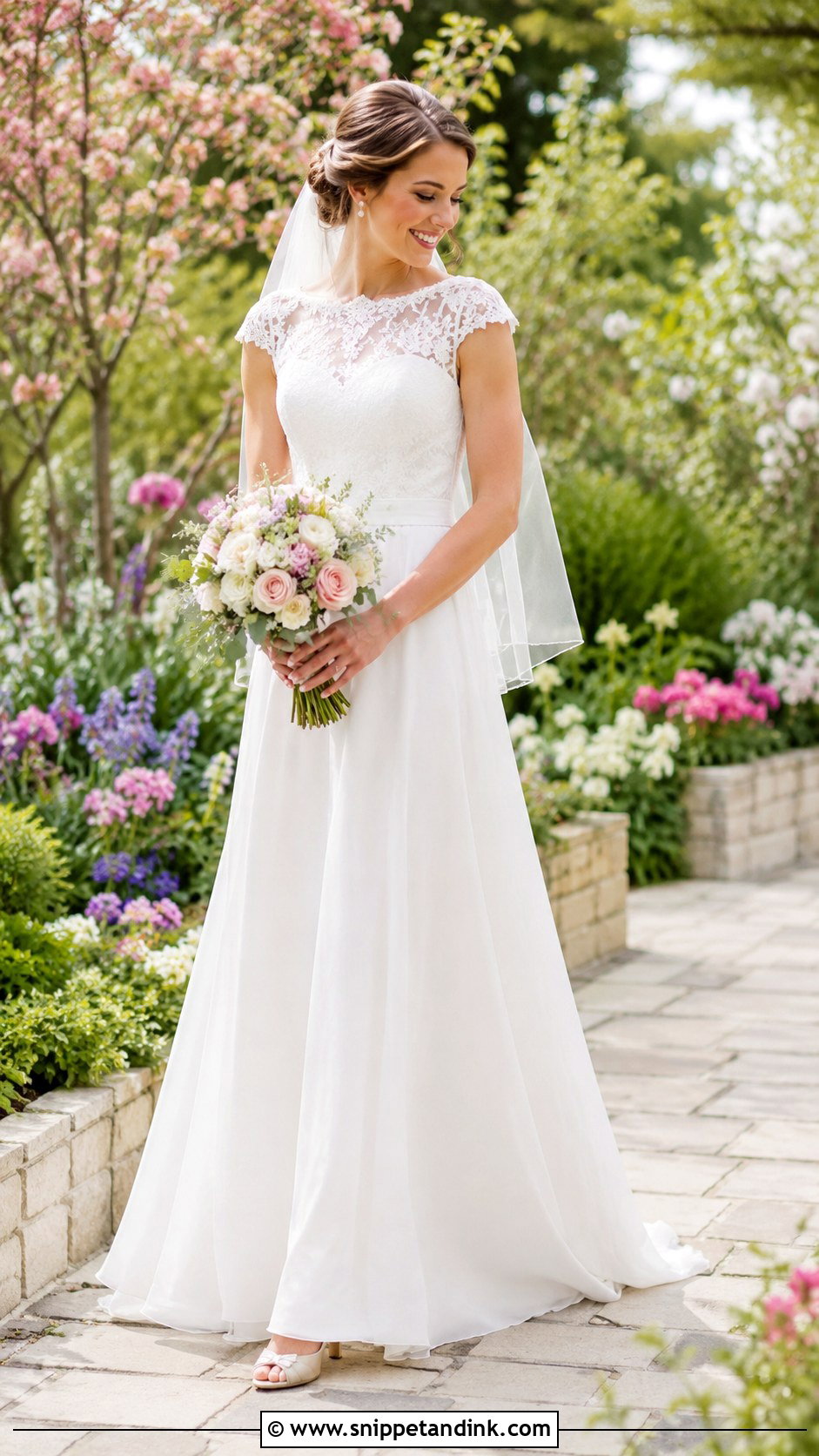
Cap sleeves sit just over the shoulder and soften the upper body. They pair well with a V-neck, scoop neck or illusion neckline. A lace bodice and flowing skirt read romantic; a fitted sheath, more modern. Try lifting your arms in them, since cap sleeves set too tight restrict movement more than long sleeves do. Pearl studs, a short veil and low heels make sense for spring and daytime ceremonies.
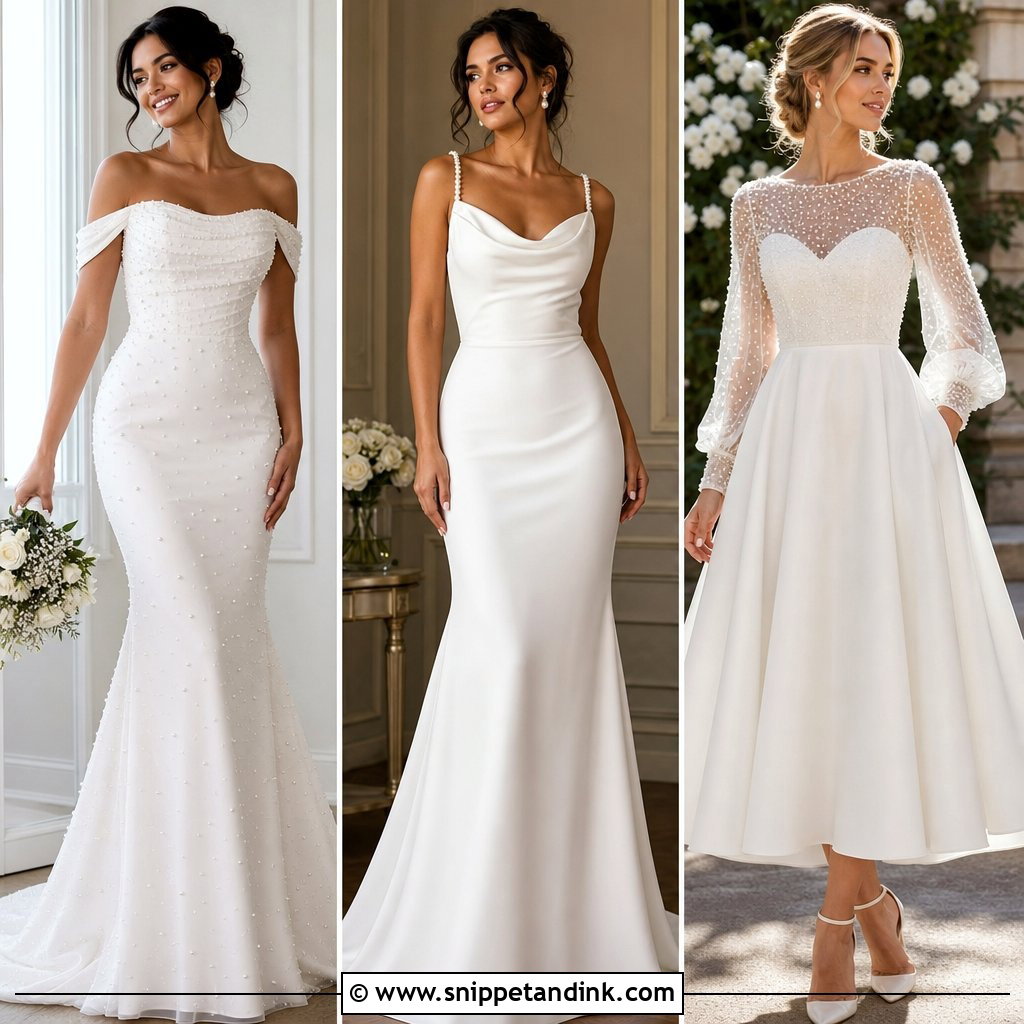


25. Simple Lace Halter Wedding Dress
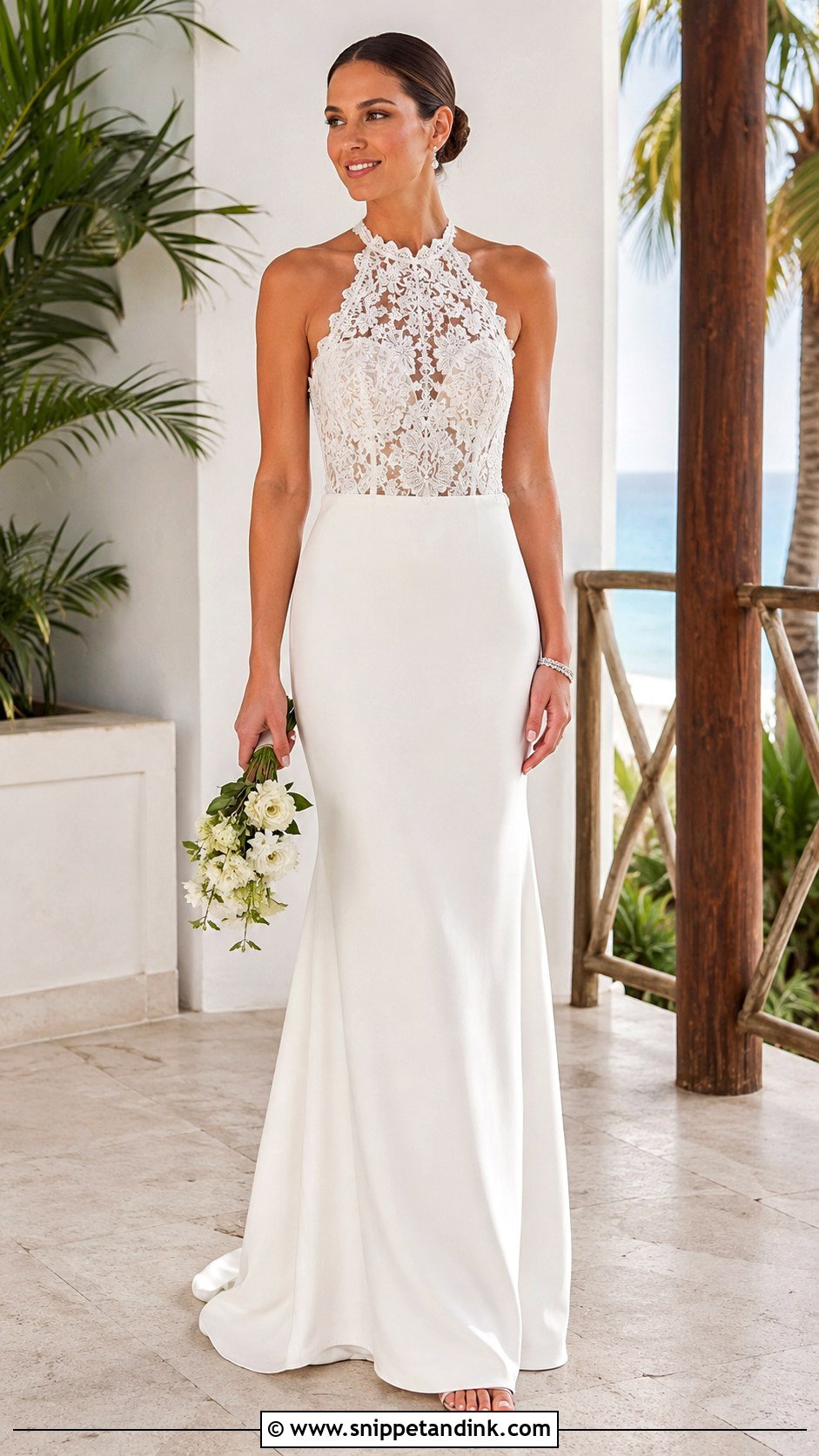
Halters show off the shoulders and arms and carry a slight fashion edge. Lace softens the line. The weight of the bodice hangs from the neck strap, so a heavy lace halter can give you a sore neck by the evening; a light lace with a back fastening spreads the load. Skip the necklace, wear small earrings and pull your hair back. Beaches, destination ceremonies and summer weddings suit it best.
26. Simple Lace Empire Waist Wedding Dress
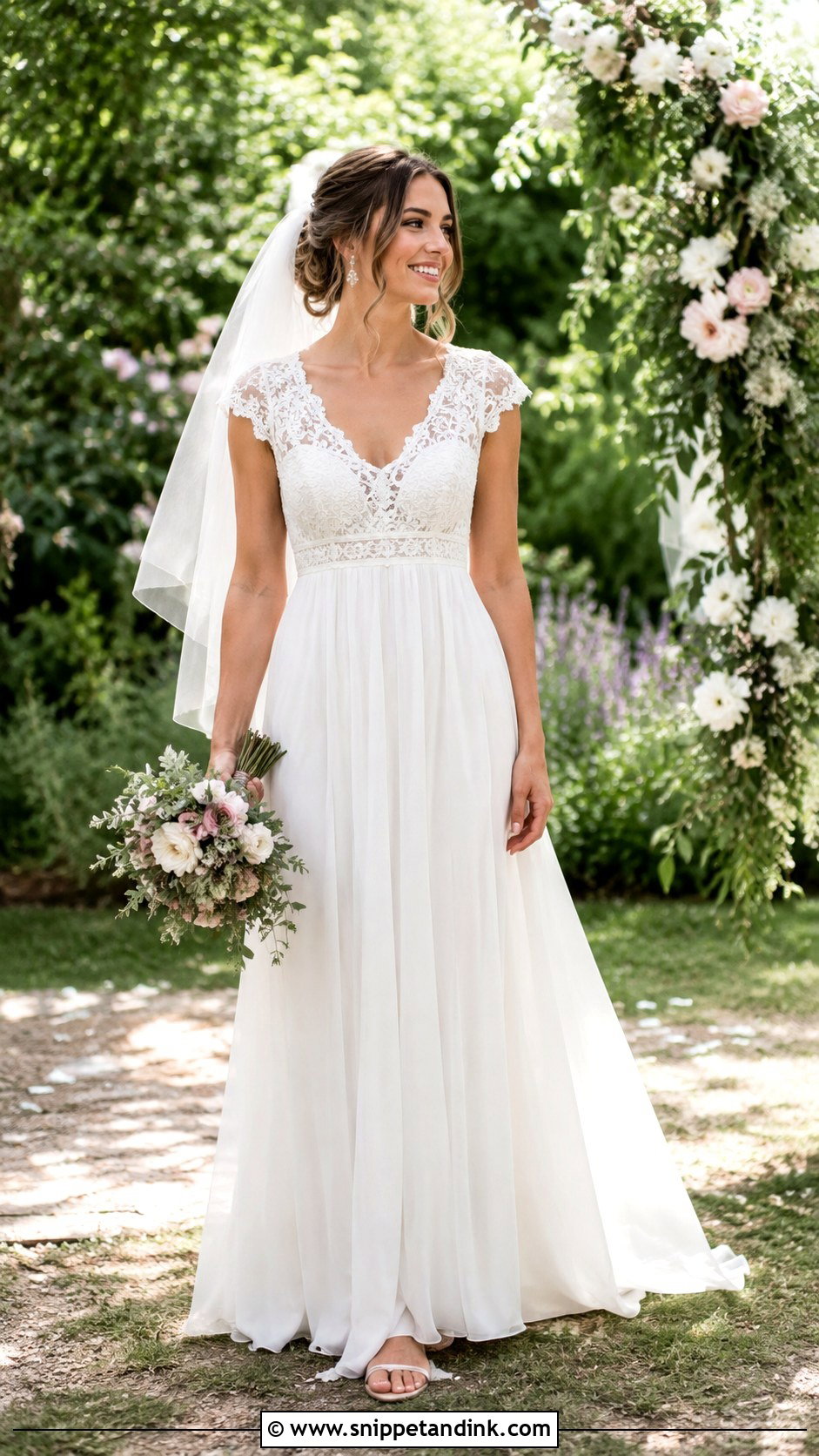
The empire line sits just under the bust and the skirt falls straight from there, so there’s nothing tight around the middle. Lace on the bodice adds romance, while a chiffon or tulle skirt keeps it light. I suggest it often for pregnant brides because it can be fitted late and still look right. Flutter sleeves, thin straps or a soft V, plus delicate earrings and sandals, work for beaches and relaxed outdoor venues.
27. Simple Lace Plus Size Wedding Dress
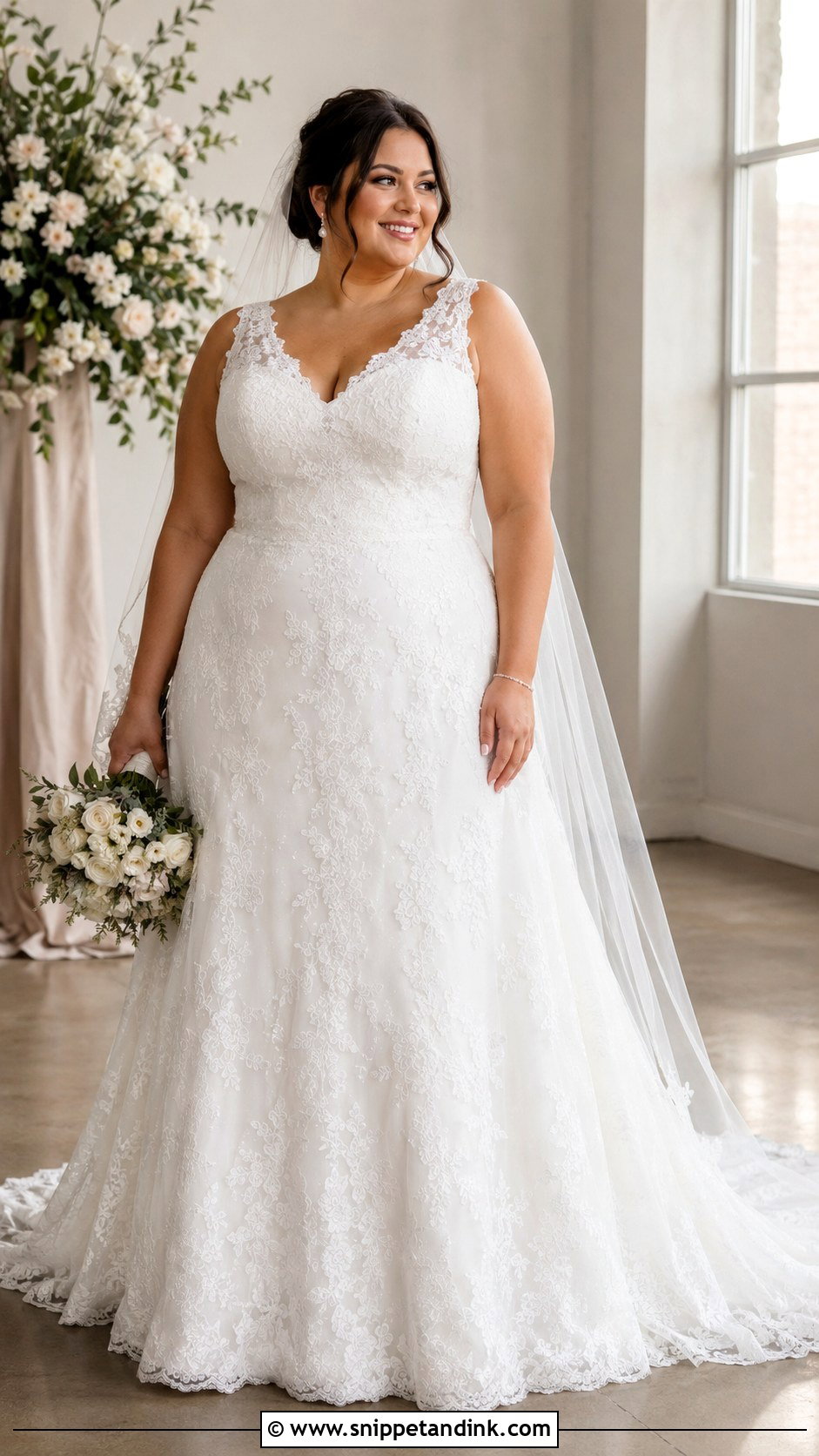
A simple lace plus size wedding dress should feel supportive from the moment you put it on. I look at the internal structure first: a proper corset or boning, a smooth lining and lace that lies flat rather than stretching. A-line, fit-and-flare, sheath and ball gown shapes can all work. Wide straps, illusion sleeves and V-necks add comfort and shape. Ignore the word flattering on a label and go with the dress you stand taller in. Stable heels and a well-anchored veil finish it.
28. Simple Lace Beach Wedding Dress
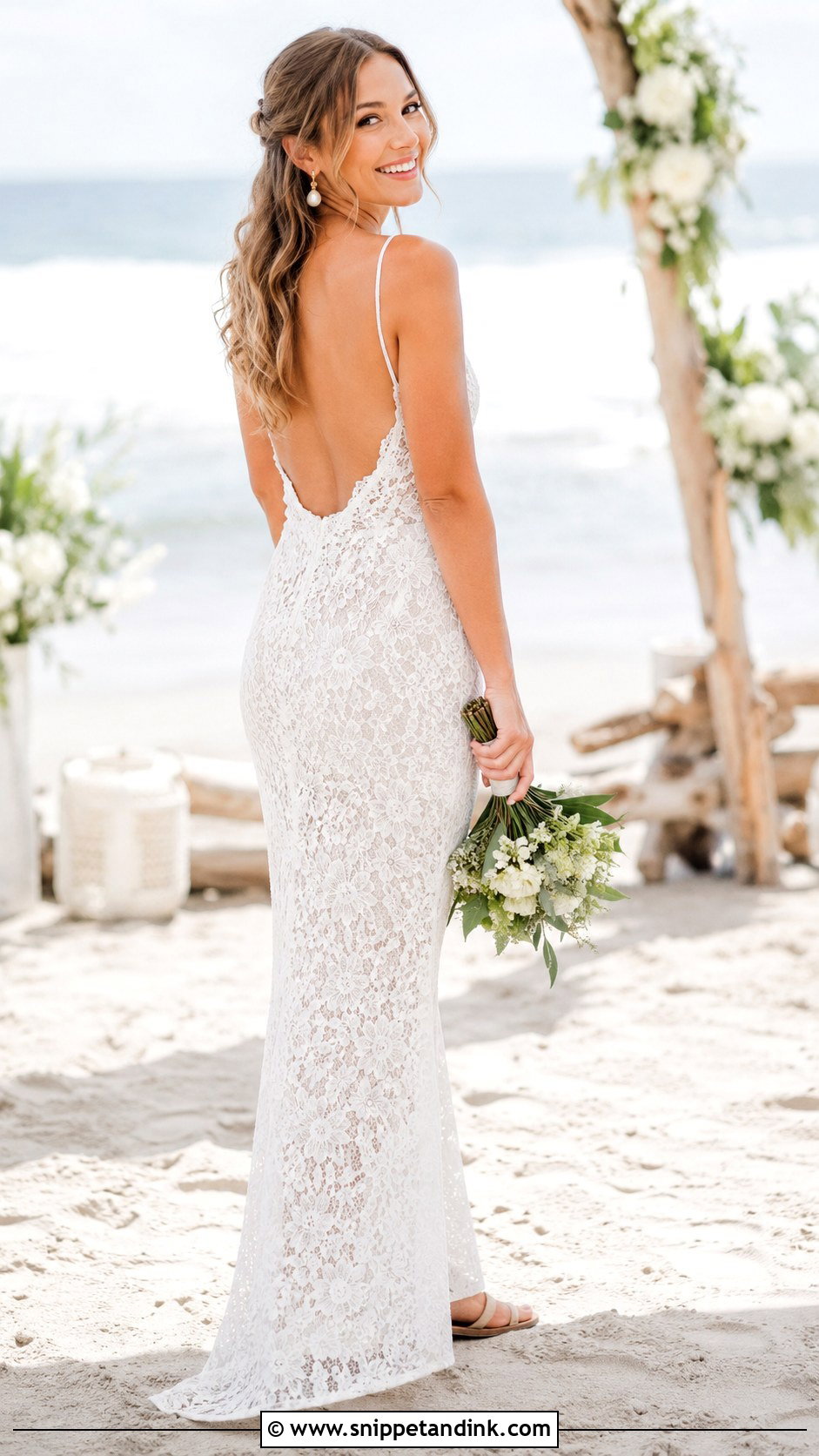
Sand is hard on long trains and stiff fabric, so I’d keep a beach dress to a sheath, slip or soft A-line in delicate lace over chiffon or a light lining. Hem it to just touch the top of your foot when barefoot, since sand drags a longer hem down. Thin straps, an open back or soft sleeves suit the setting. Flat sandals, pearl earrings and loose waves. Near the water, a short veil or hair piece will behave better than a long veil in wind.
29. Simple Lace Courthouse Wedding Dress
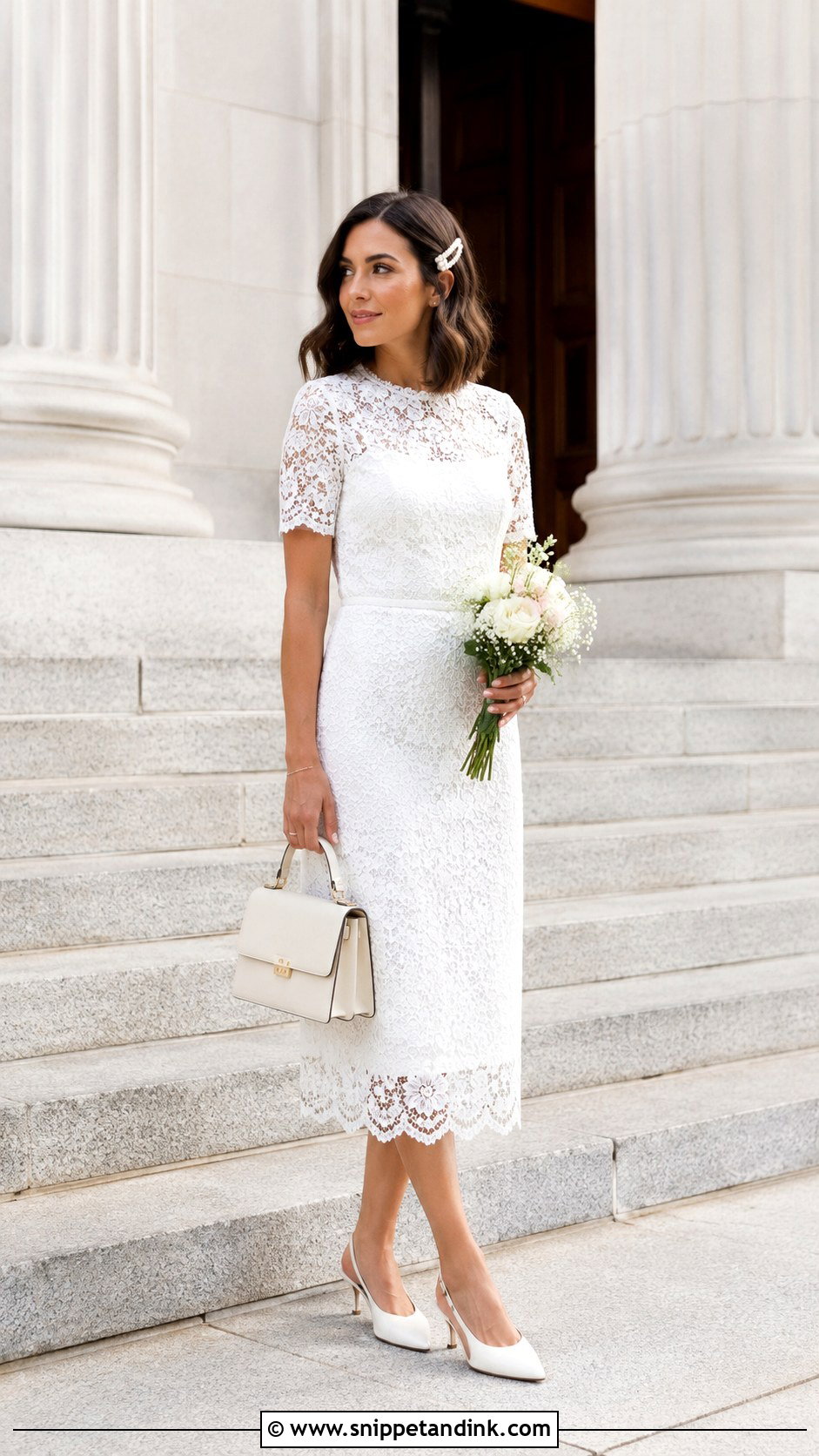
A simple lace courthouse wedding dress has to look special in a plain room and in daylight. Midi, tea-length, lace sheaths and tailored minis all work. Choose a silhouette you can sit in on a bench and climb steps in. Slingback heels, a small bouquet and a structured handbag give it a city finish. A short veil, a bow or a pearl clip is enough to mark it as bridal.
30. Simple Lace Reception Wedding Dress
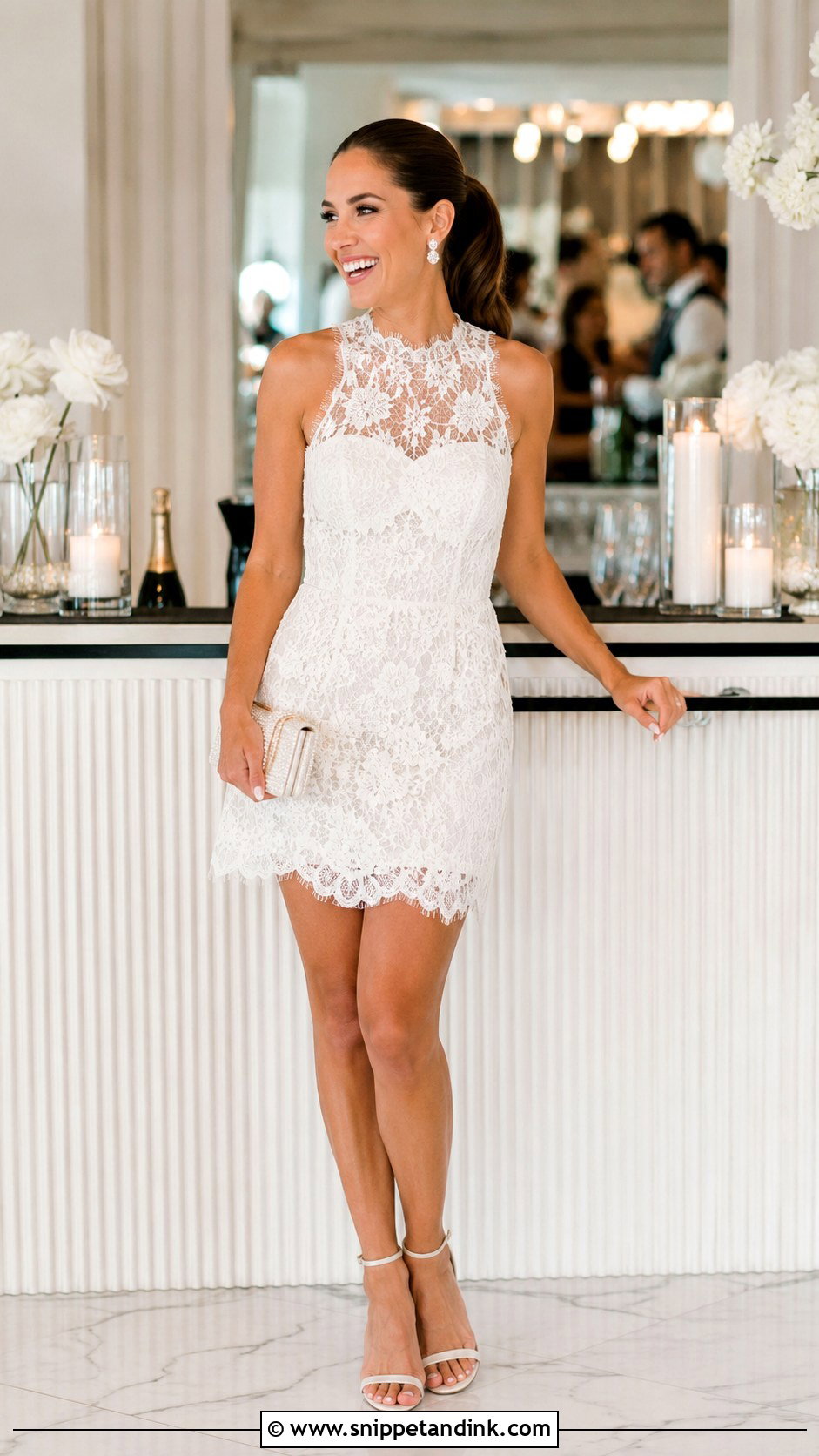
Your reception dress is for dancing, so it can be shorter, lighter and easier than your ceremony gown. A lace mini, midi, sheath or tea-length dress all work. Look for a breathable lining, straps that stay put and a hem nobody can step on. Plan where the change happens and who helps you, because getting out of a corset gown alone takes far longer than you’d expect. Sparkly earrings or a sleek ponytail make it a party look.
Two Ivories That Don’t Match: Veils and Lace Edges
The most common styling mistake I fix with lace dresses is a veil in the wrong shade. Ivory from one maker can be noticeably yellower or greyer than ivory from another, and next to the dress it makes one of them look dirty. Bring a fabric swatch, or the dress itself, when you choose the veil.
If you want a lace edge on the veil, keep it in the same family as the gown: fine Chantilly with fine Chantilly, corded with corded. A busy veil edge over a busy bodice is too much pattern in one frame. A plain cut-edge veil is often the cleaner choice over a lace bodice, and a lace-edged veil works best over a plain crepe or satin dress.
What Lace Goes Through Between the Aisle and the Last Dance
Lace is tougher than it looks, but it has habits. The hem picks up grass stains and dust within the first hour outdoors. Net snags on rough chairs, sequinned guests’ jackets and the stems of a bouquet that hasn’t been wrapped. Once you start dancing, a train that isn’t bustled gets stepped on and tears at the seam.
- Have the bustle practised by a bridesmaid at the final fitting, not explained to her on the day.
- Ask your florist to wrap the bouquet stems fully, with no pins left exposed.
- Pack a small kit: a needle threaded in ivory, clear fashion tape, white chalk for marks, and safety pins.
- If a thread pulls, don’t cut it. Ease it back through from the inside with a pin.
The Dress You Forget You’re Wearing
Lace only feels old-fashioned when it’s heavy and everywhere. Kept to one area, over a clean shape, it looks current and photographs well. Start with how you need to move on the day, then lining and fit, then where the lace sits, and only then accessories. The right dress is the one you stop thinking about an hour into the reception, because it simply works.
You'll Like These Ideas:






Leave a Reply