
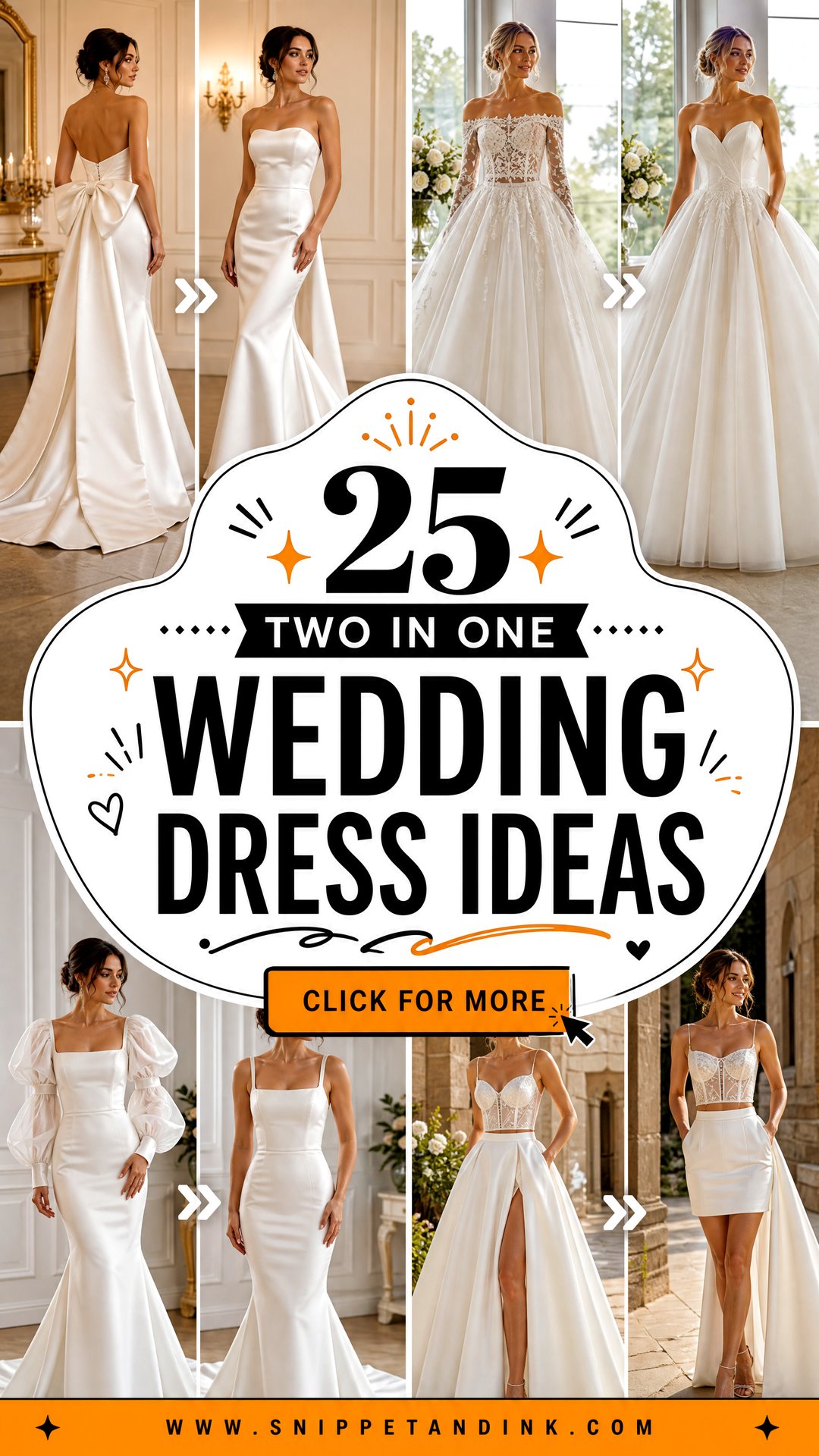
A dress that changes halfway through the day solves a real problem: the gown that looks right walking down an aisle is rarely the one you want to dance in at midnight. Two-in-one designs handle that with a removable piece, so you get a full ceremony look and a lighter reception look from one outfit. The convertible bridal looks I trust most use overskirts, sleeves, capes, trains, bows, toppers or jackets that were designed with the base dress rather than tacked on later. A fitted dress becomes a ball gown; a plain column gains lace sleeves; a mini turns formal under a full skirt. Here are 25 combinations, with notes on what I’d check in each before you commit.
How Detachable Pieces Actually Fasten
Whatever comes off, it has to stay on first. The fastening is the part I test hardest at a fitting, because it is invisible in the shop and very visible if it fails.
- Hooks and eyes along a waistband are the most common for overskirts. More hooks spaced closely hold weight better than a few big ones.
- Snaps or press studs suit sleeves, capes and toppers. They’re fast to undo, but a single snap can pop under strain, so I want several.
- Hidden buttons and loops look neat and hold firmly, though they take longer to undo.
- Ribbon ties are quick for a cape but can loosen; I’d back them with a small snap.
- Hook-and-loop tape is the one I avoid on a wedding gown. It snags tulle and lace and shows through fine fabric.
At the fitting, walk, sit, raise both arms and turn quickly. Then have someone remove the piece while you stand still and time it. If it takes more than a few minutes in the shop, it will take longer on the day.
1. Mermaid Wedding Dress With Detachable Overskirt
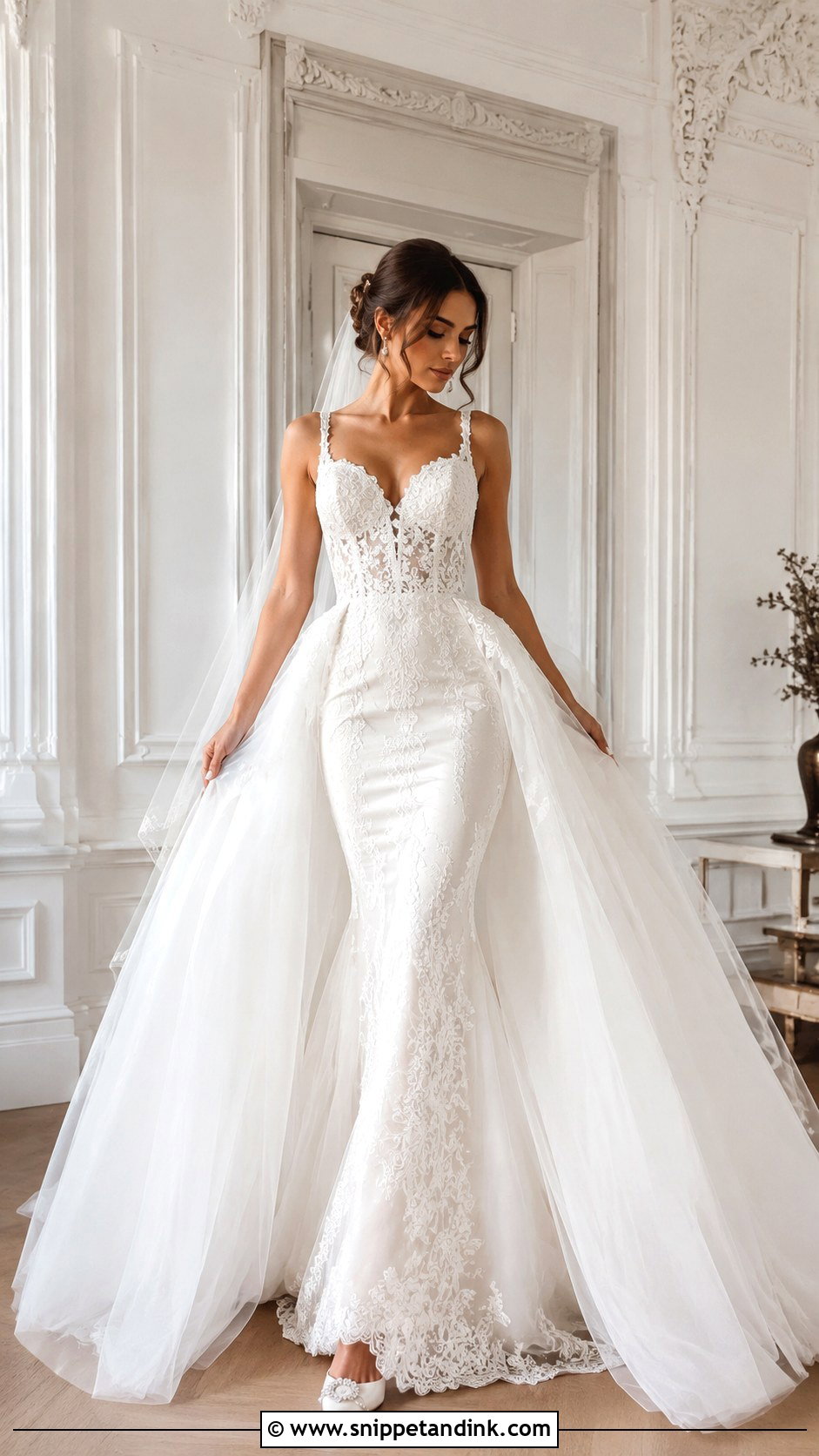
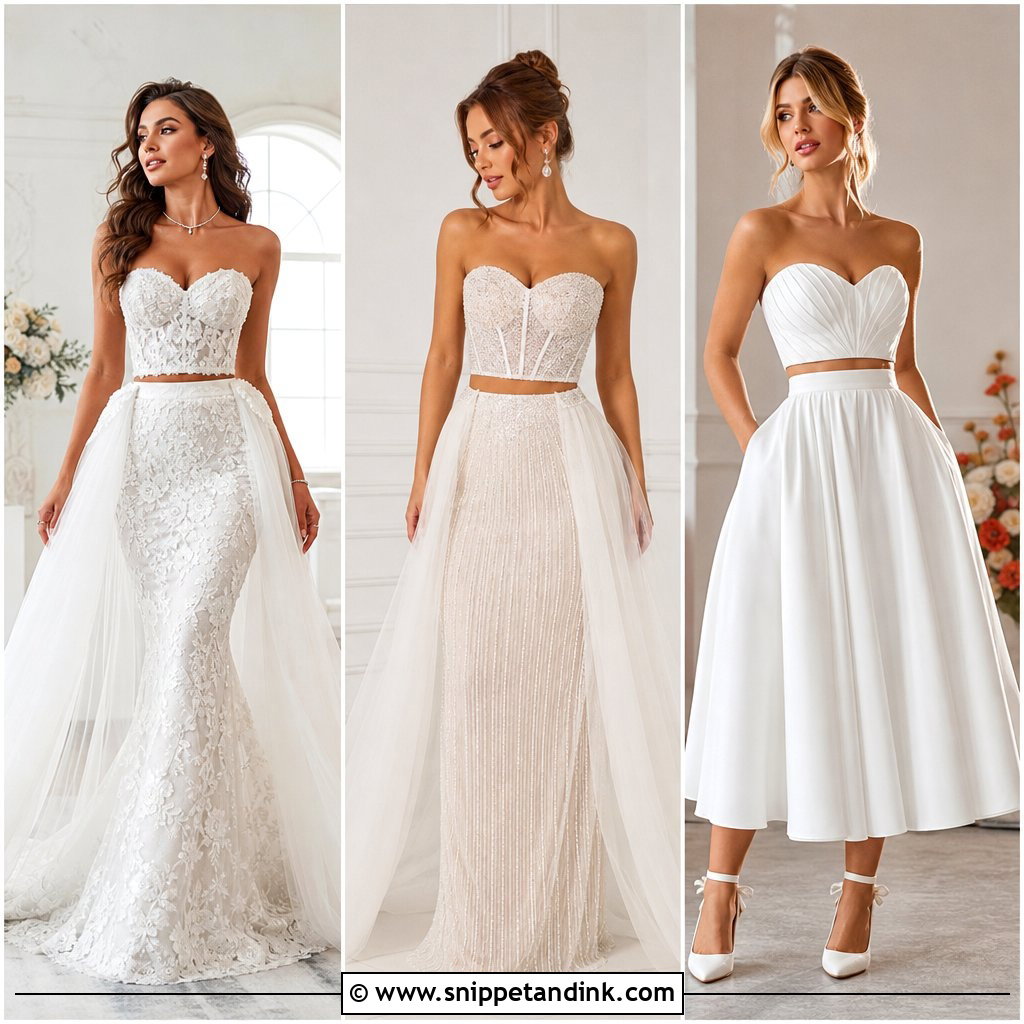
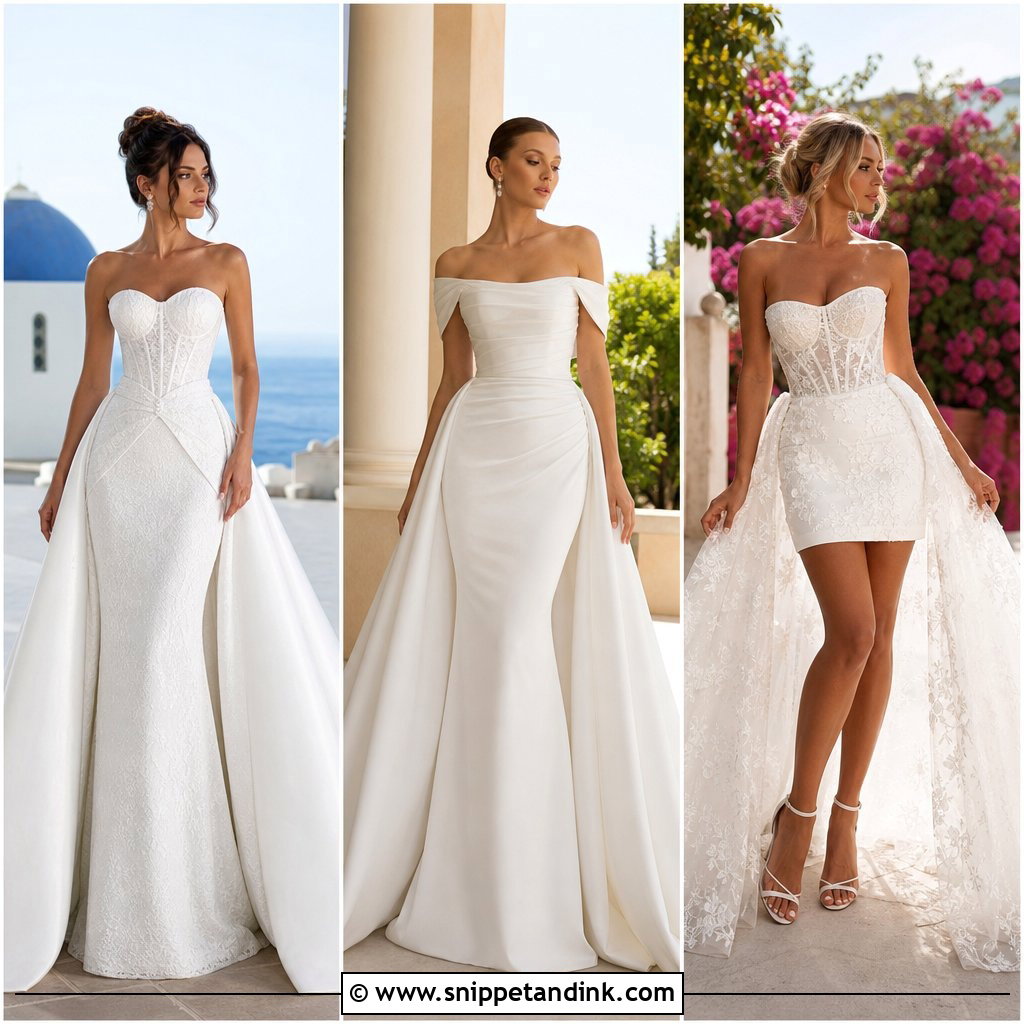
This is the most dramatic switch on the list. An overskirt in satin, tulle, organza or lace gives a full gown shape for the ceremony, then unhooks to leave a fitted mermaid you can actually walk and dance in. The fit point is the waistband: a mermaid is snug at the hip, so the overskirt has to sit flat over it without a visible ridge. If the overskirt is textured, keep the bodice plain; if the base is lace, use a plain skirt.
2. A Line Wedding Dress With Detachable Sleeves
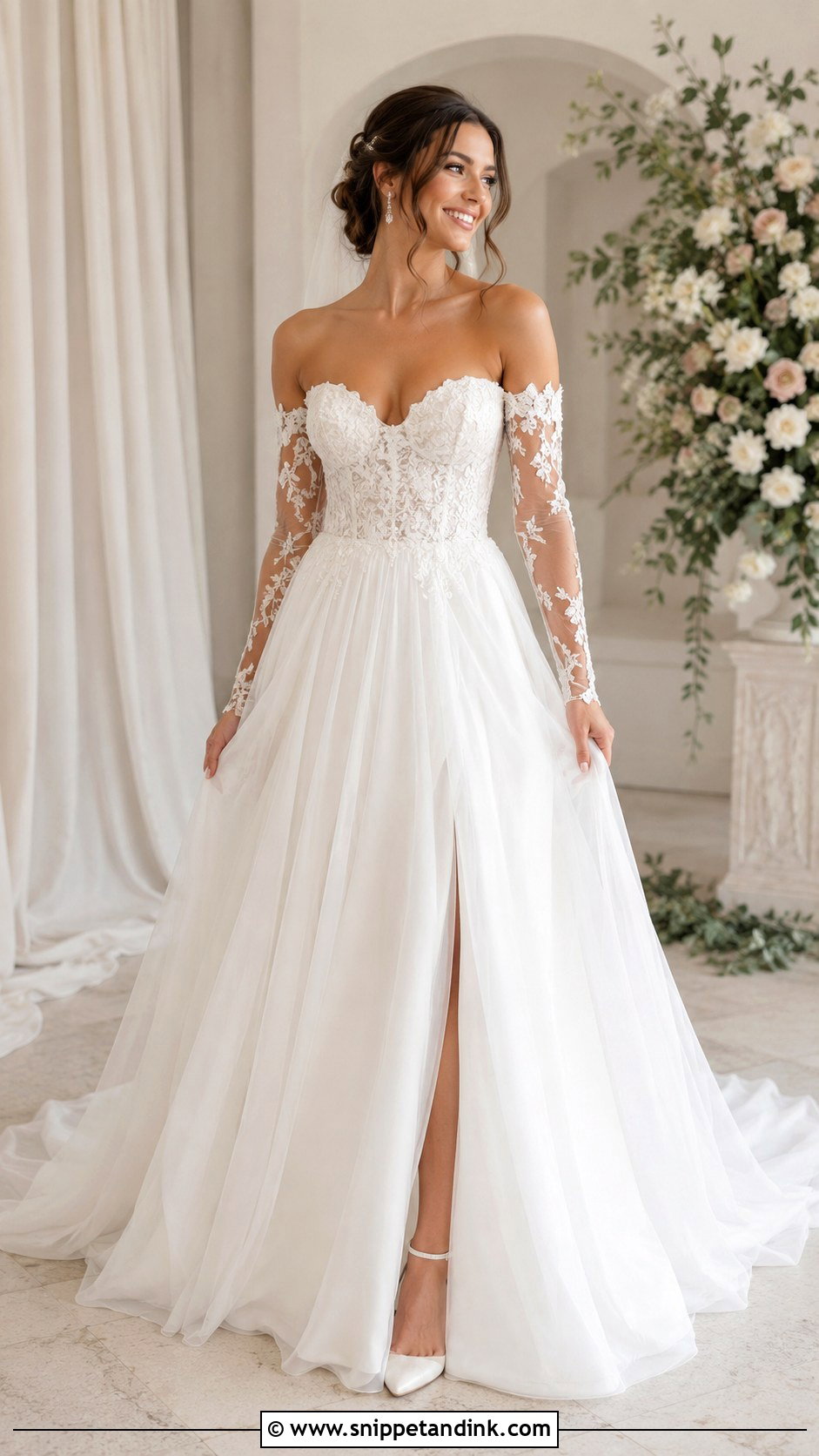
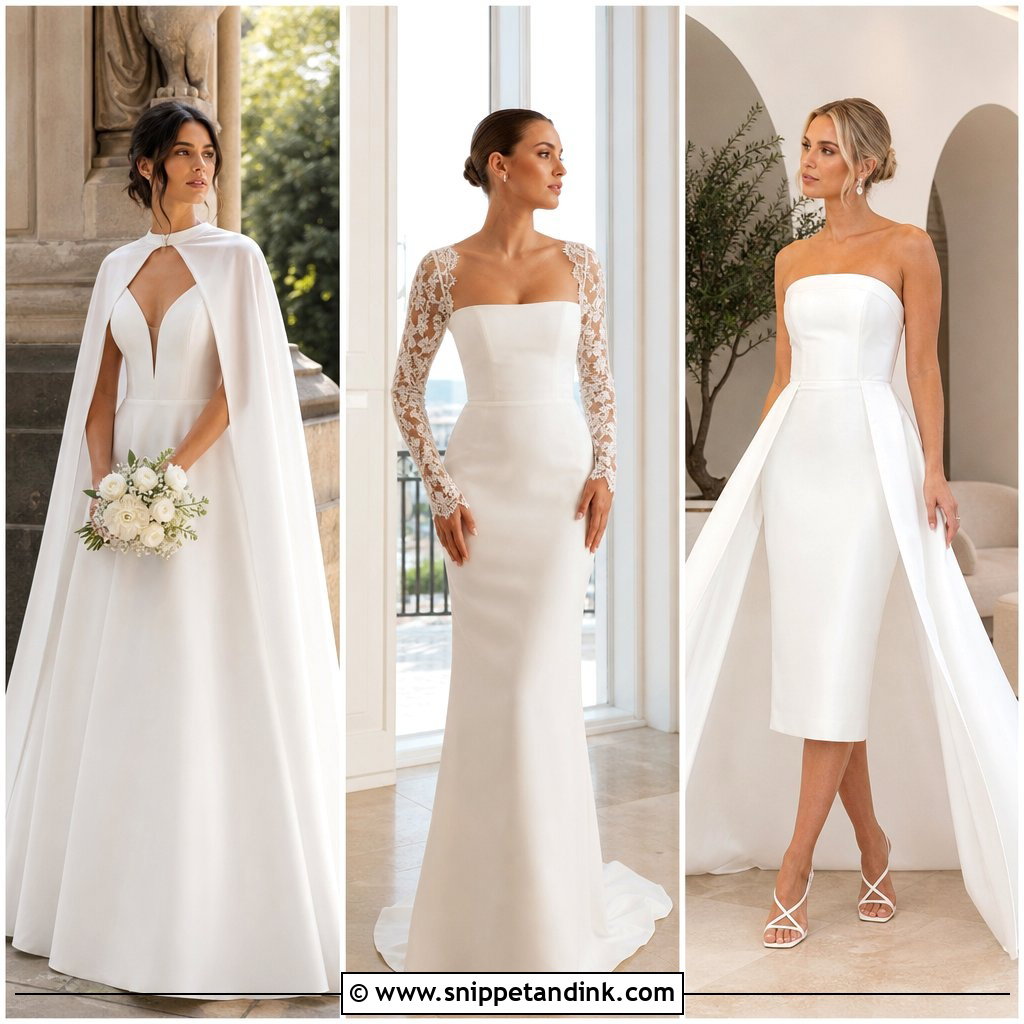
Sleeves are the gentlest way to make a dress two-in-one. An A-line base flatters most figures, and detachable long, puff or off-the-shoulder sleeves add ceremony coverage, which helps in a church or on a cool spring day. Take them off and you’re in a strapless, spaghetti strap or sweetheart dress. I’d insist on sleeve fabric cut from the same bolt as the gown, lace with lace, satin with satin; whites differ more than people expect, and a slightly different ivory is obvious once the sleeve is next to the bodice.
3. Strapless Wedding Dress With Detachable Cape
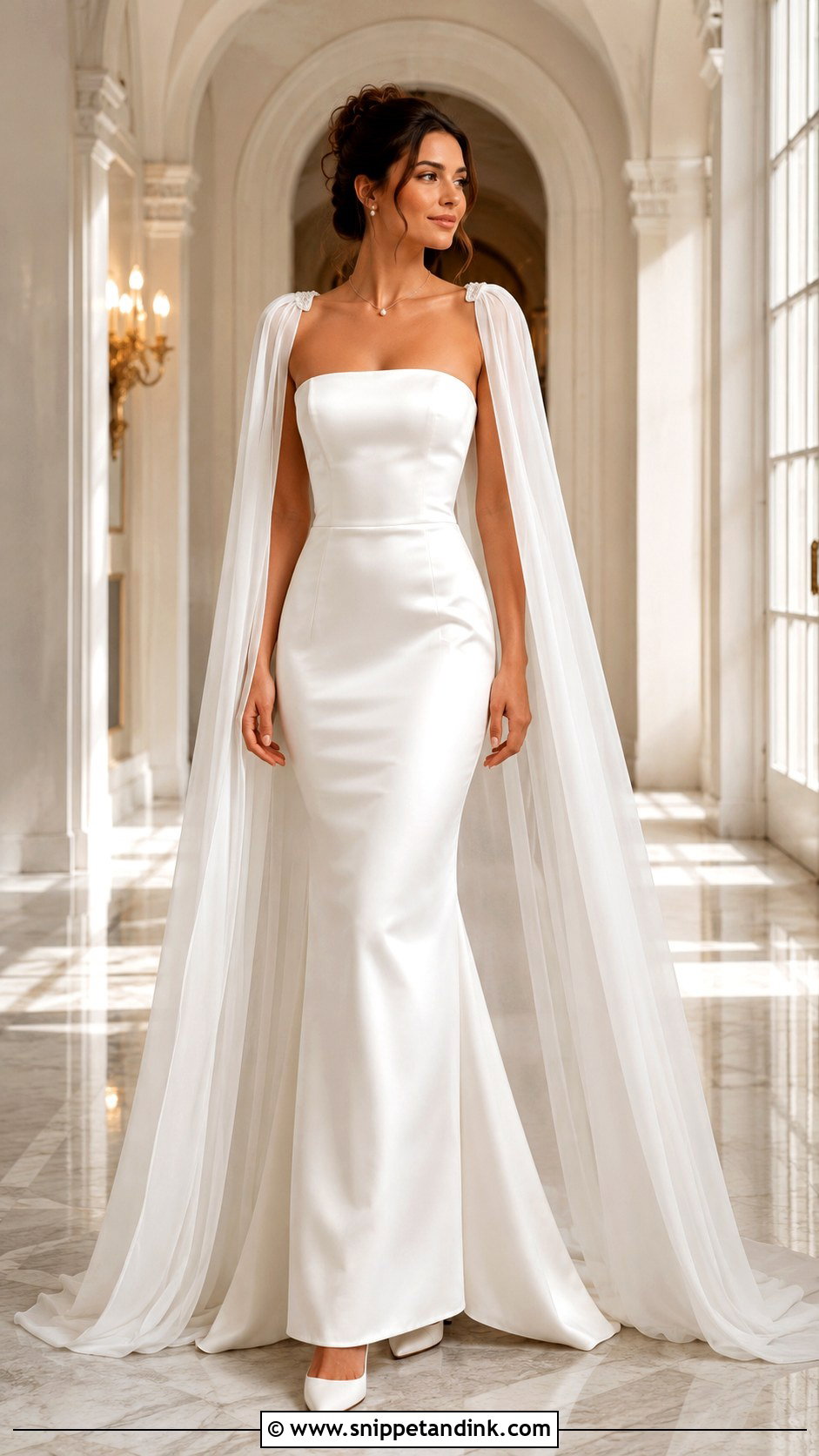
A long sheer cape does three jobs at once: veil, train and shoulder cover. It frames the shoulders and floats behind you down the aisle, then comes off for a sleek strapless dinner look. Brides who want drama without a heavy skirt tend to land here. A plain crepe or satin strapless base takes a pearled, lace or embroidered cape well. Practise sitting with the cape on; a long cape pulls backward when you sit, and the hooks need to take that strain.
4. Satin Wedding Dress With Detachable Bow
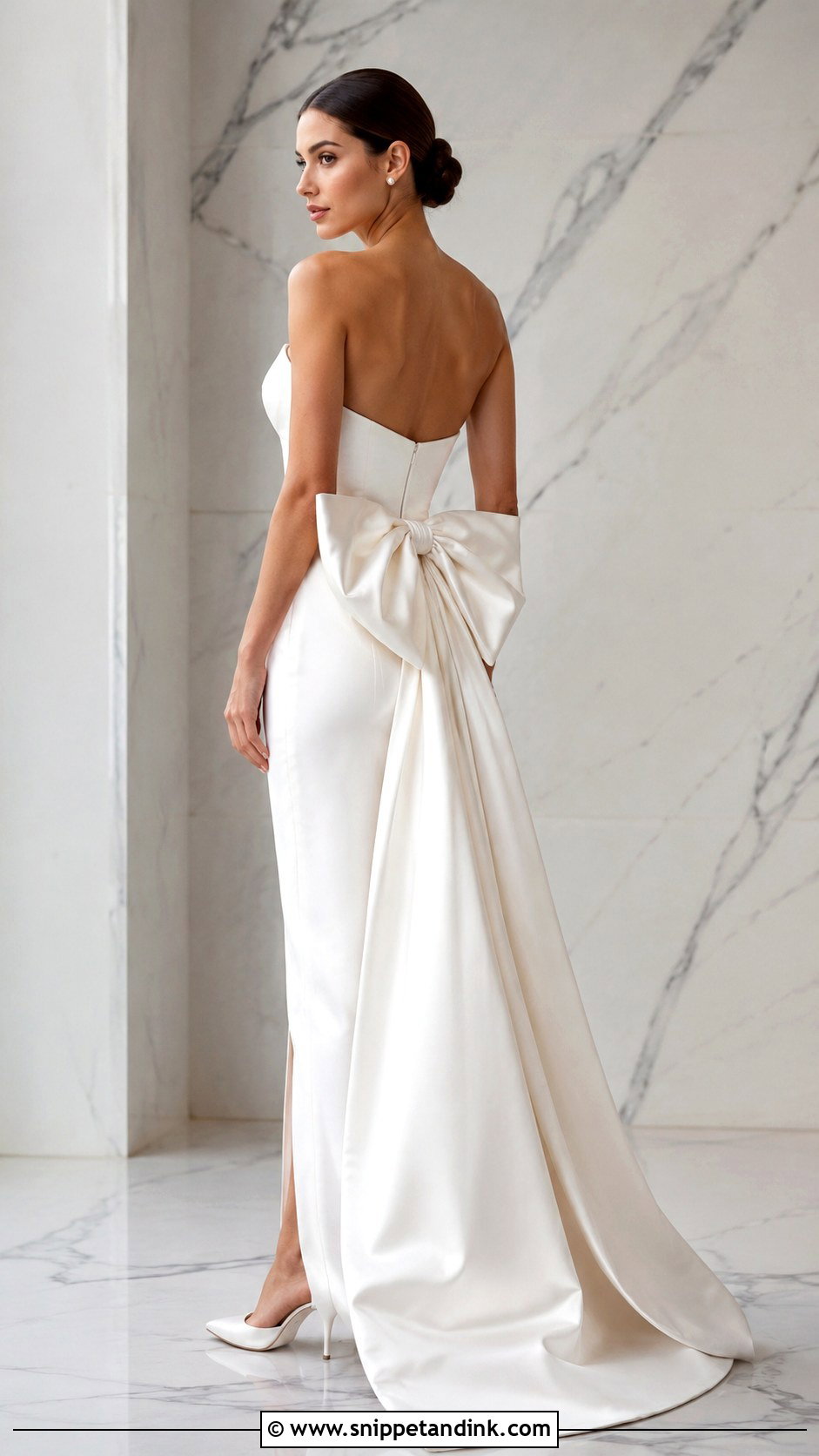
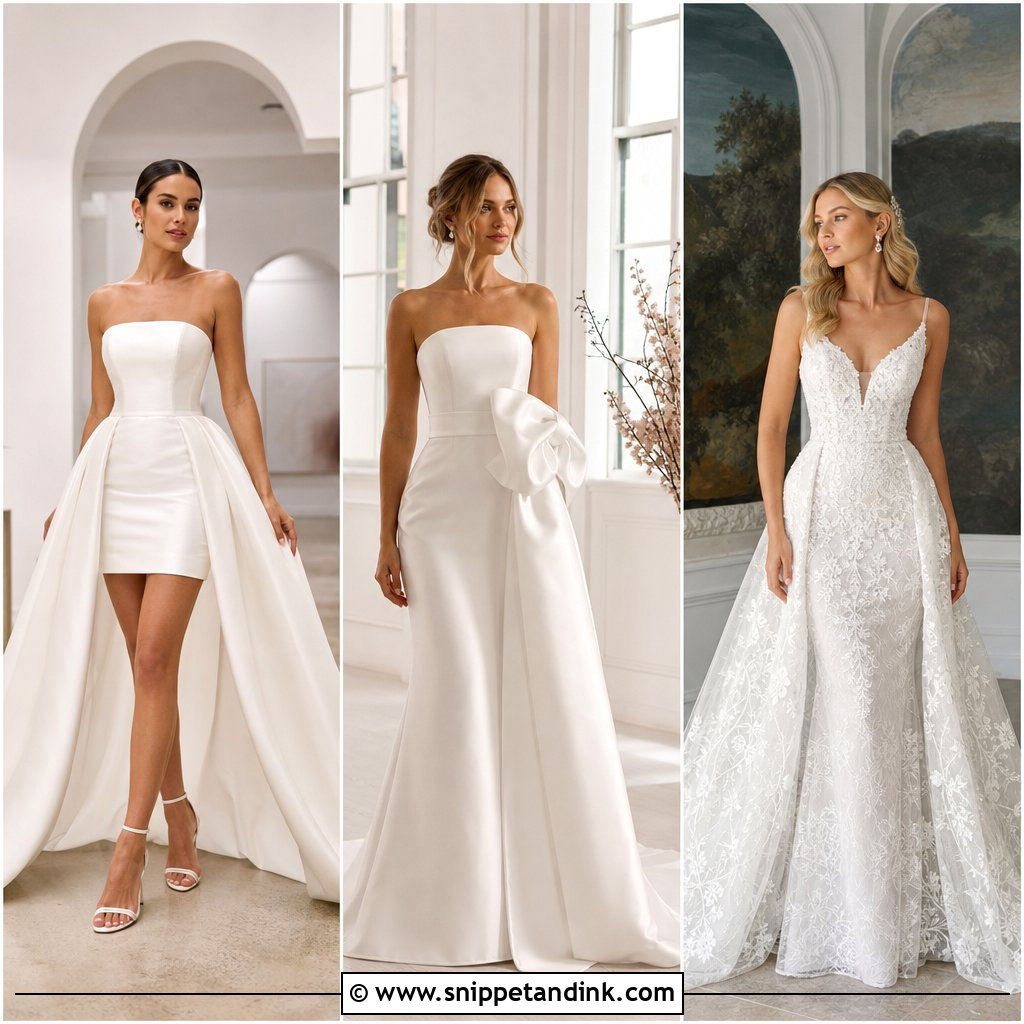
The smallest change on the list, and sometimes the most useful. A large bow at the back waist, shoulder or train adds ceremony presence to a minimal satin dress; remove it and the line is clean for the reception. Structured satin holds a bow’s shape best. The bow itself needs stiffening inside or it flops by the second hour. Sleek hair, pearl earrings and simple heels finish it.
5. Lace Wedding Dress With Removable Tulle Skirt
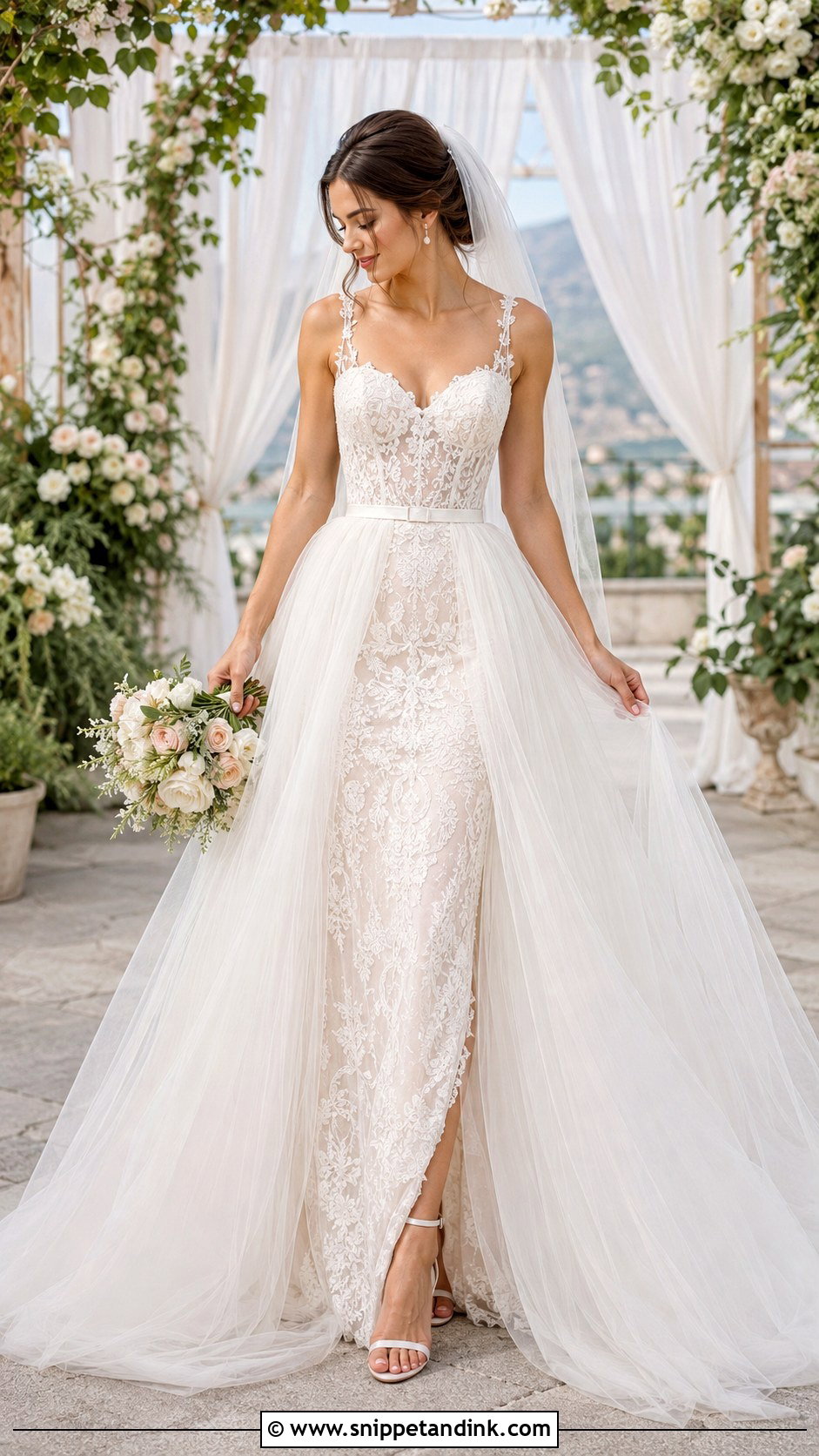
Soft and romantic, with a real transformation. A fitted, sheath or short lace dress sits under a full tulle skirt for the ceremony; afterwards the tulle comes off and you’re in light lace for the evening. Where this goes wrong is the waist: gathered tulle on a band can bunch. I prefer a flat, shaped waistband and a slim belt over the join to hide the hooks completely.
6. Short Wedding Dress With Detachable Ball Gown Skirt
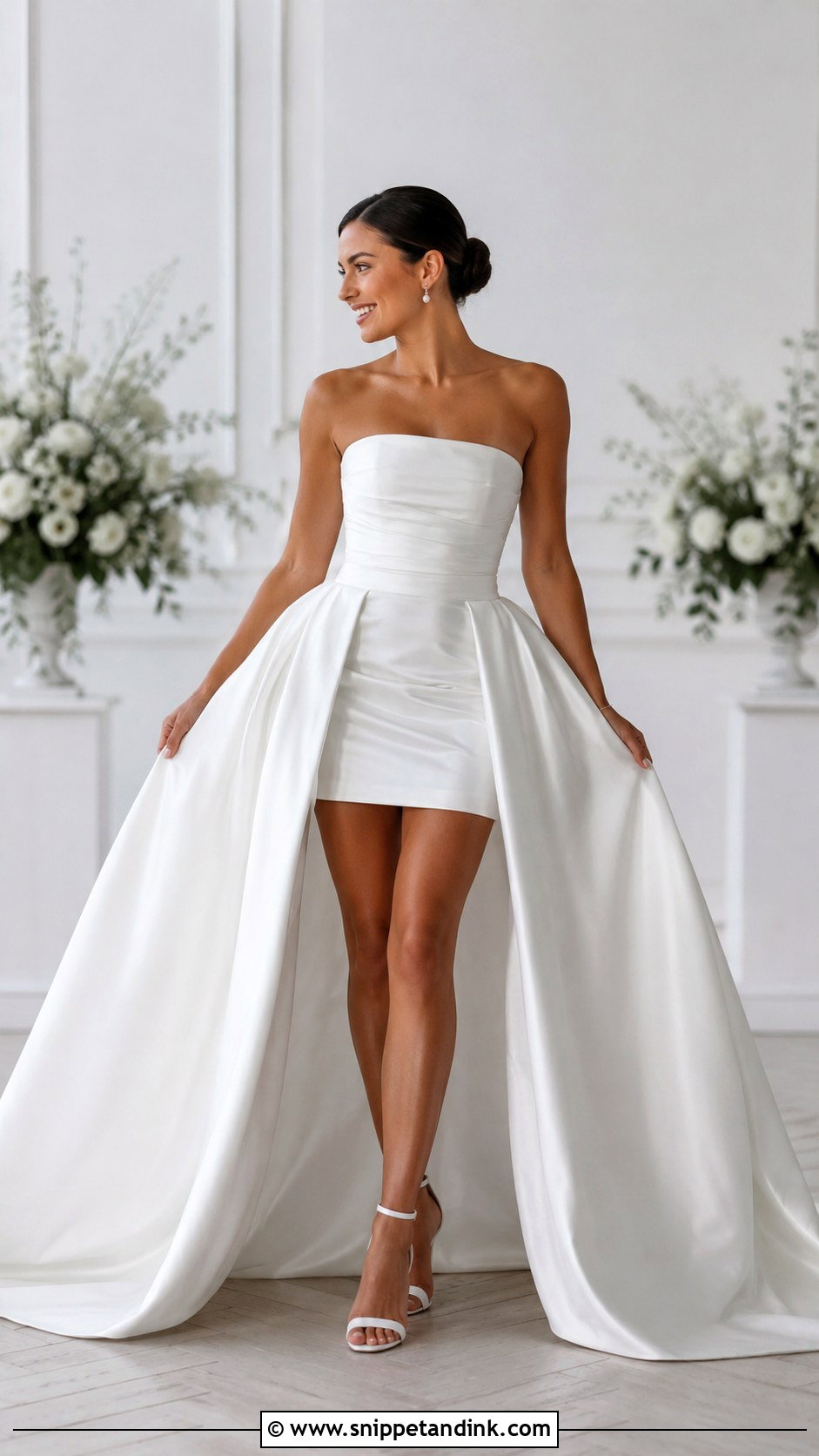
From the front it looks like a traditional full gown; underneath is a mini or knee-length dress ready for dancing. Fun, practical and good for warm-weather weddings where you’ll be on your feet. The base dress needs real structure, a corset bodice or a heavier crepe, or it looks like a slip once the skirt comes off. Wear the shoes you’d want seen in the second look, since they’ll be on show for hours.
7. Column Wedding Dress With Detachable Train
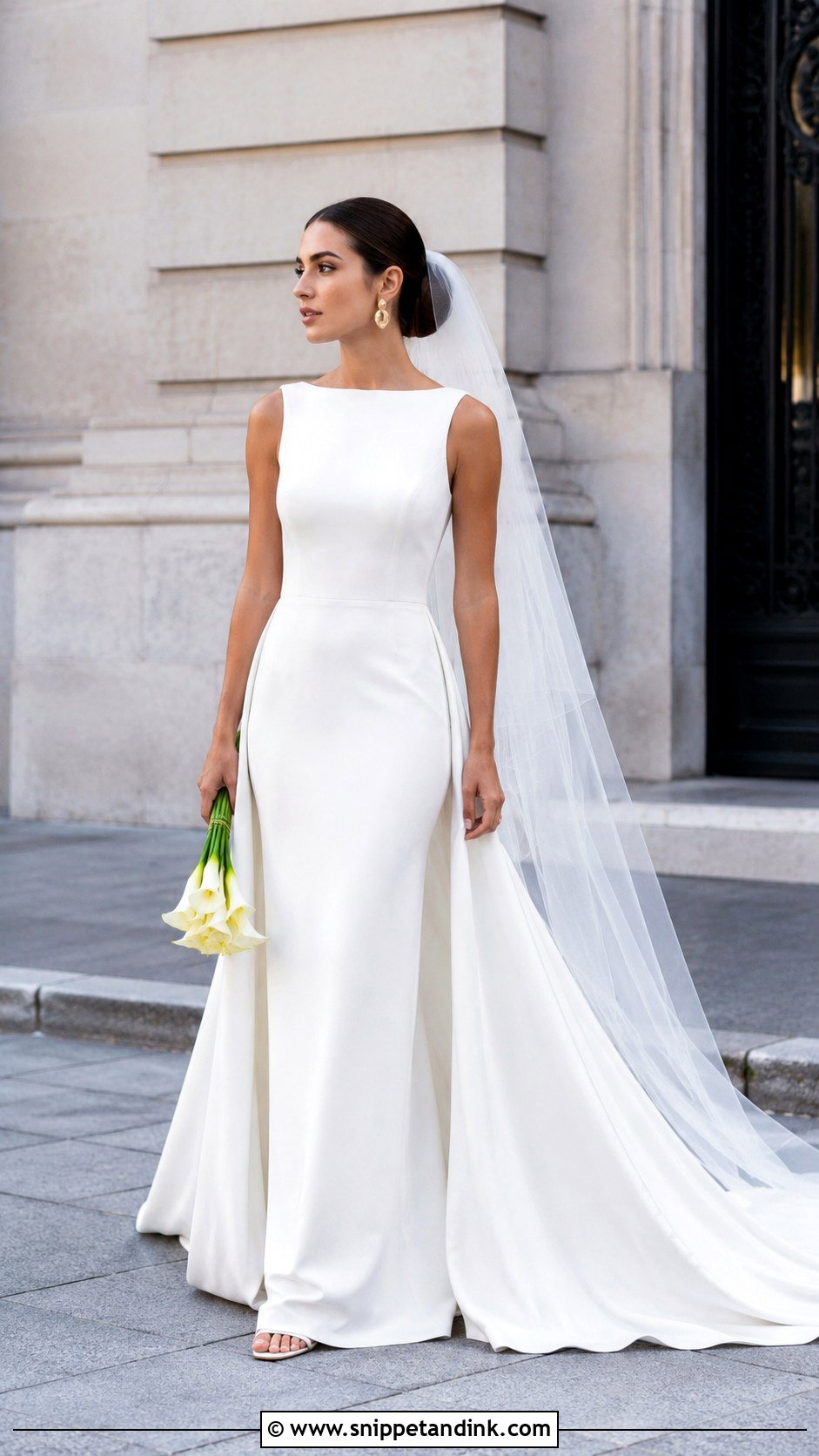
Love a clean line but still want an aisle moment? A column with a detachable train gives you both. The column keeps the body long; the train trails behind for the ceremony and portraits, then comes off so nobody steps on it at the reception. Crepe, mikado, satin or minimal lace all suit it. Ask your seamstress to place the hooks in the back seams so the dress looks finished once the train is gone; visible loops on a plain crepe back look unfinished.
8. Ball Gown Wedding Dress With Removable Bodice Topper
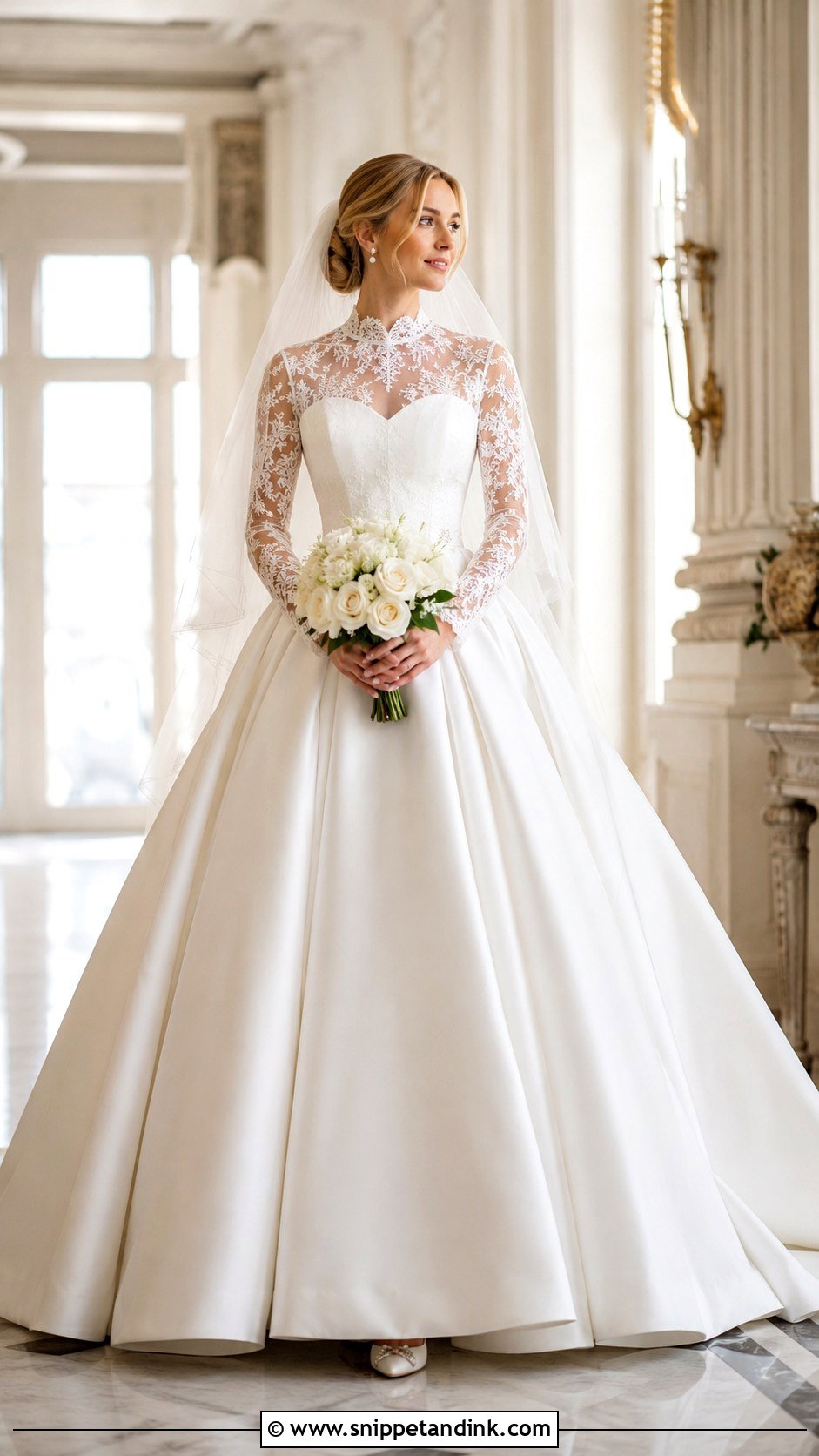
A ball gown with a removable bodice topper gives ceremony coverage and a different neckline later. Lace, sheer tulle, beading or organza toppers can create sleeves, a high neck or a modest overlay without touching the gown. Underneath might be a sweetheart, strapless or thin-strap bodice. The topper must be close-fitting and light; a loose one bunches at the waist where it meets the skirt. Two distinct necklines also mean two quite different sets of photos.
9. Crepe Wedding Dress With Detachable Off Shoulder Sleeves
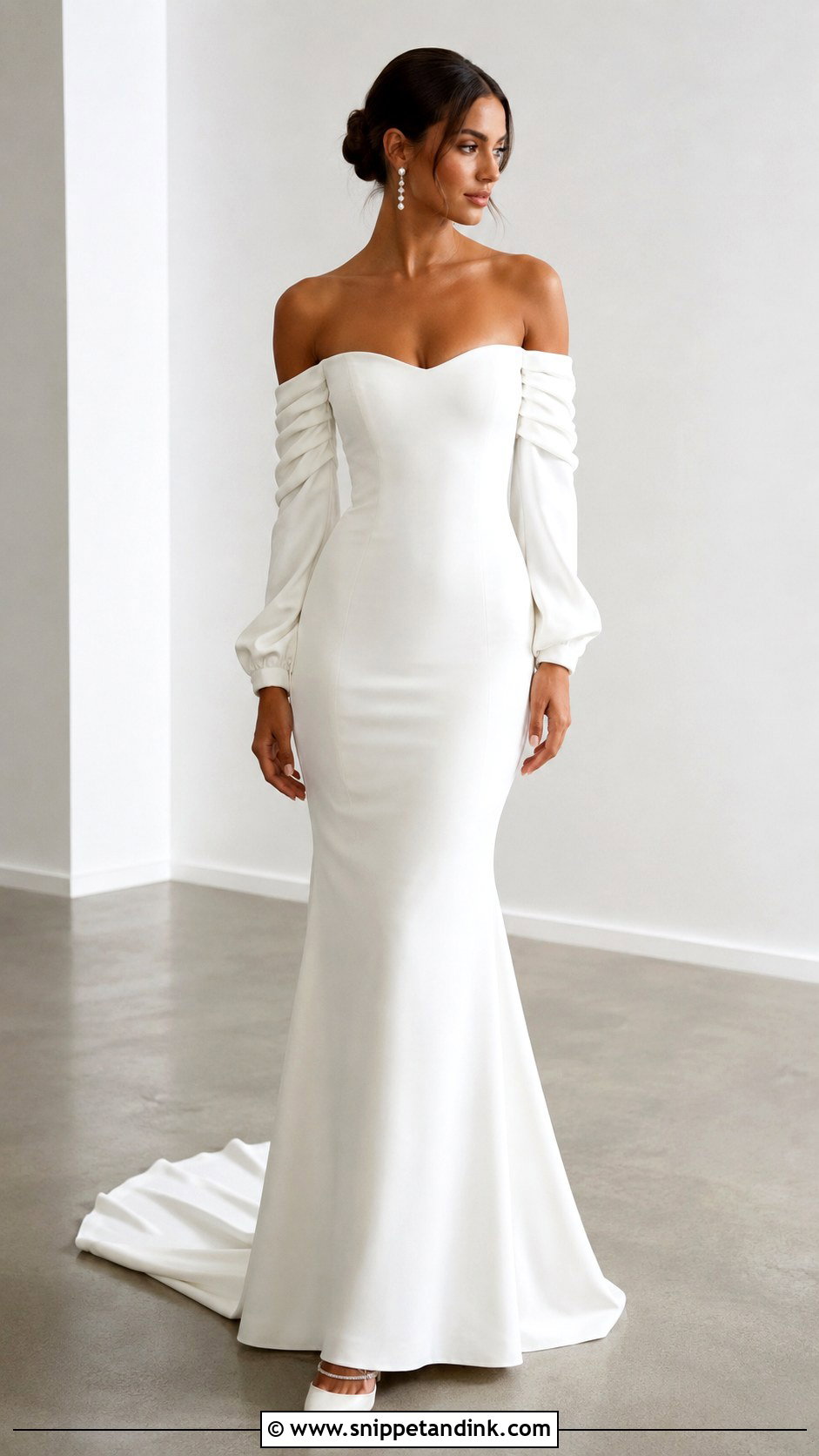
Off-the-shoulder sleeves on a crepe gown are the softest part of an otherwise clean dress. During the ceremony they frame the collarbone; at the reception the dress is strapless or sleeveless. The detail I check is how they’re secured. Sleeves that sit off the shoulder have nothing to rest on, so they need hidden snaps to the bodice and, ideally, elastic or silicone grip inside the band. A low bun, drop earrings and pointed heels.
10. Floral Wedding Dress With Detachable Plain Overskirt
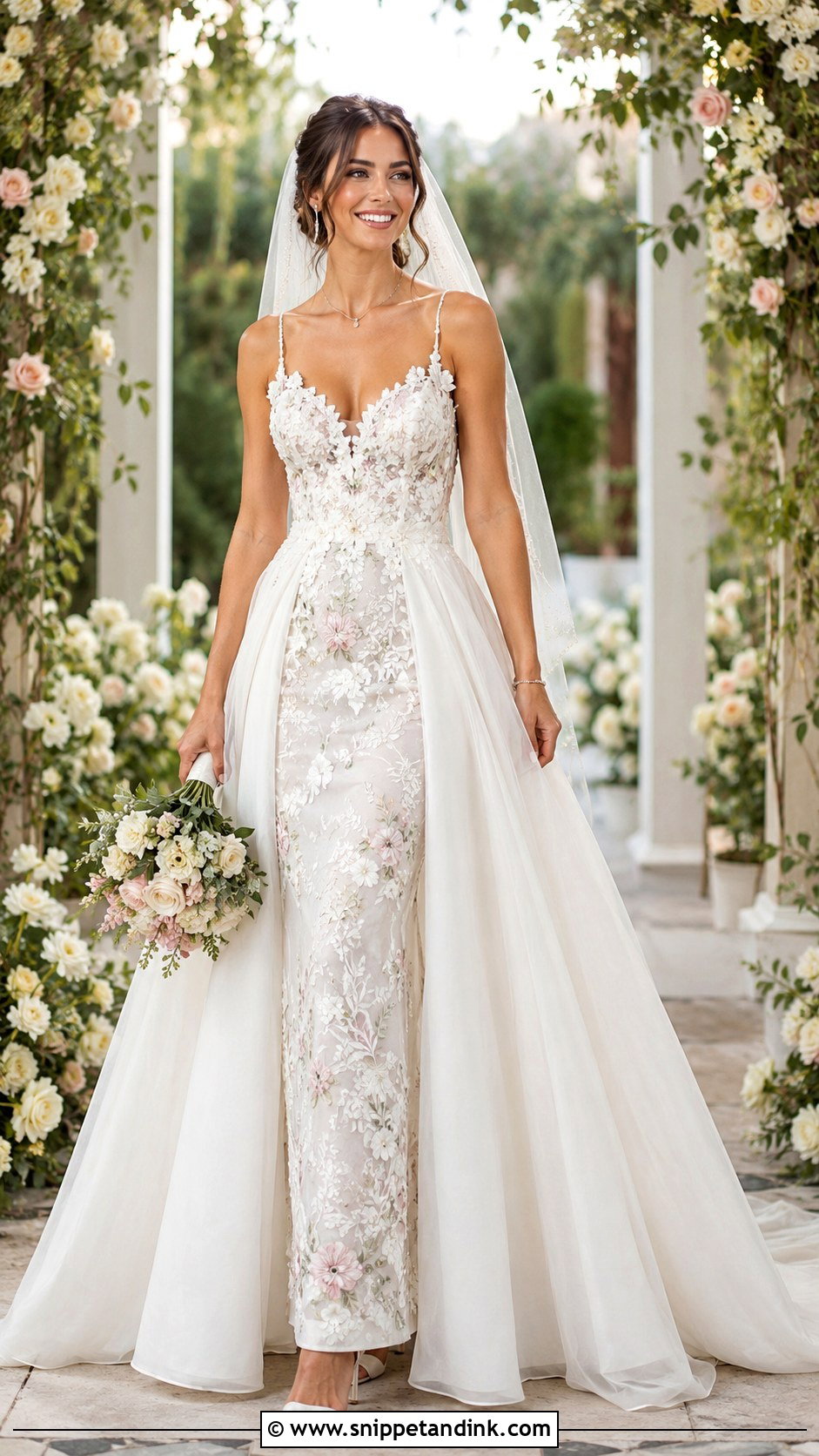
Here the reveal runs the other way: a plain satin, tulle or organza overskirt quiets a floral gown for the ceremony, and the embroidery, appliqué or print comes out for the party. I like it for garden and spring weddings. Because the floral work is the point, keep accessories simple, a soft veil and delicate earrings at most. Make sure embroidery near the waist isn’t crushed by the overskirt band, or it will look flattened afterwards.
11. Beaded Wedding Dress With Detachable Sheer Cape
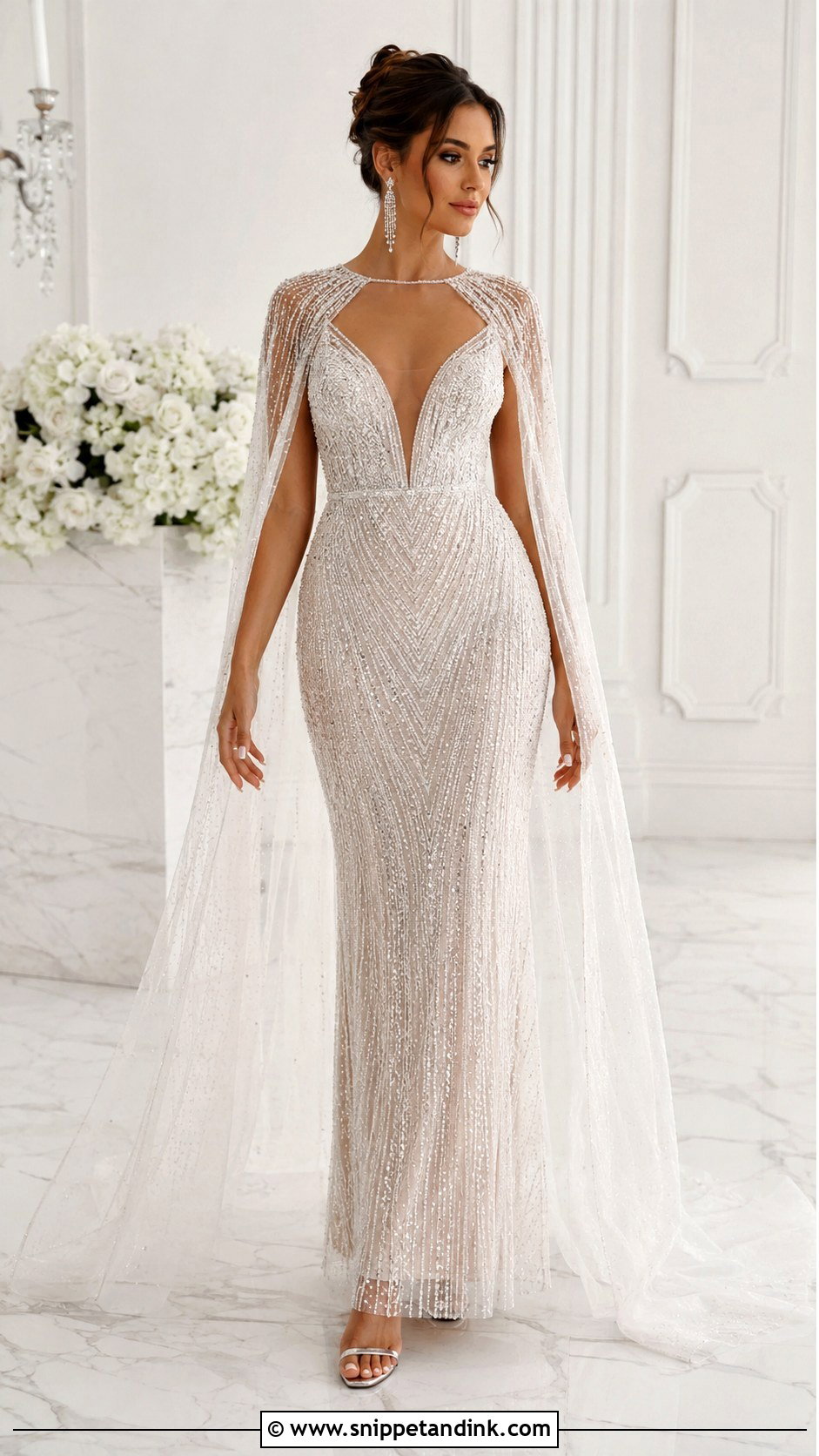
Beading catches light; a sheer cape over it softens the shine for the ceremony, then lets it out for the evening. It can attach at the shoulders, neckline or back. Heavy beading adds weight and the cape adds more, so the attachment points need reinforcing. If the dress is heavily beaded, I’d choose a cape with almost no embellishment so the two don’t fight. Evening weddings and formal venues suit it.
12. Slip Wedding Dress With Removable Lace Overlay
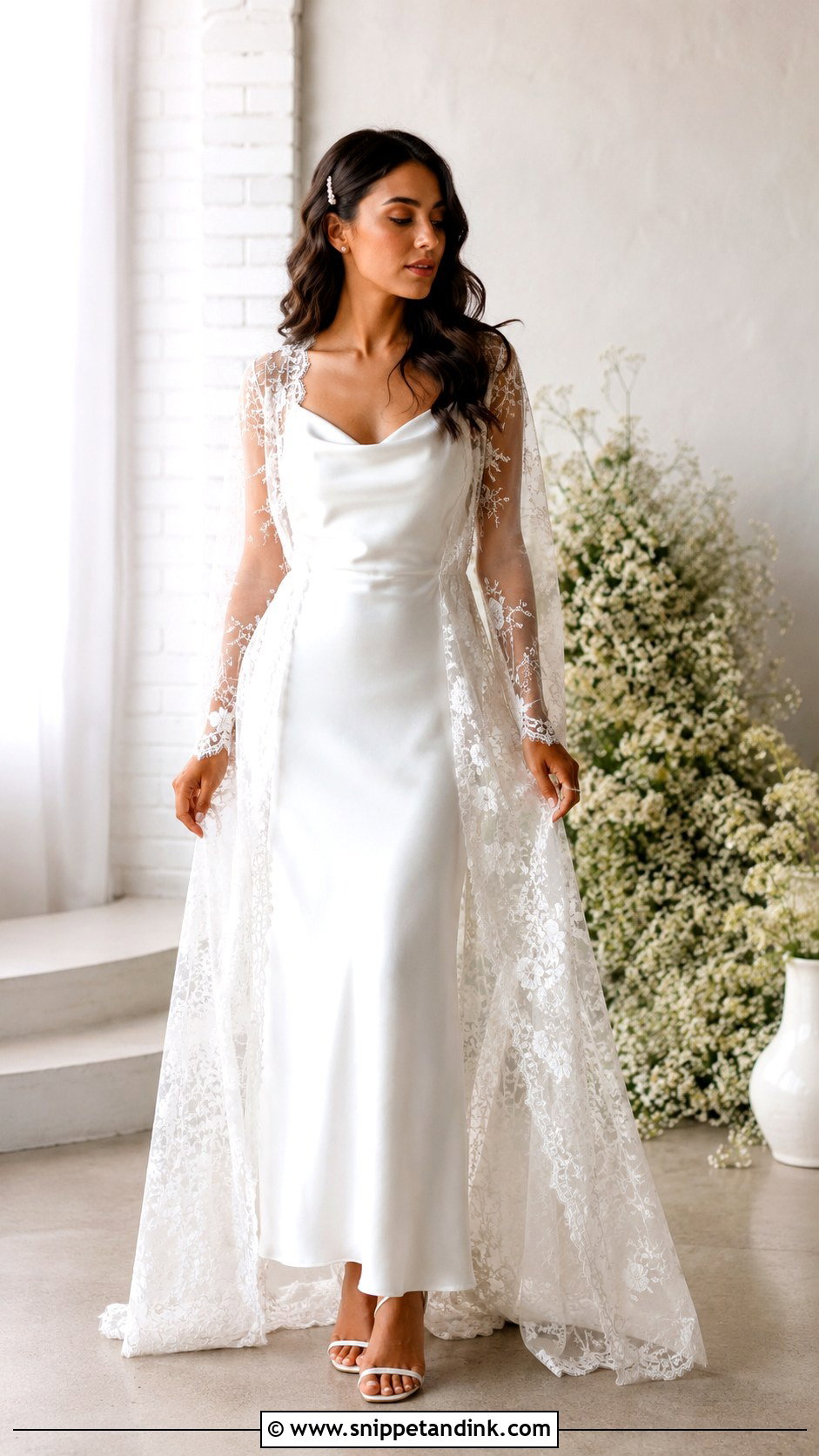
A satin, silk or crepe slip with a simple neckline sits under a lace overlay that adds texture and coverage for the ceremony. Remove it and you have a fluid, minimal reception dress. The overlay has to be fitted to the slip, especially at the bust and hips, or it shifts as you move. Fine lace keeps it soft; bold lace makes a clearer contrast. Good for beaches, small venues and minimalist brides. Slips also show every line underneath, so plan invisible, edge-free underwear early.
13. Wedding Jumpsuit With Detachable Overskirt
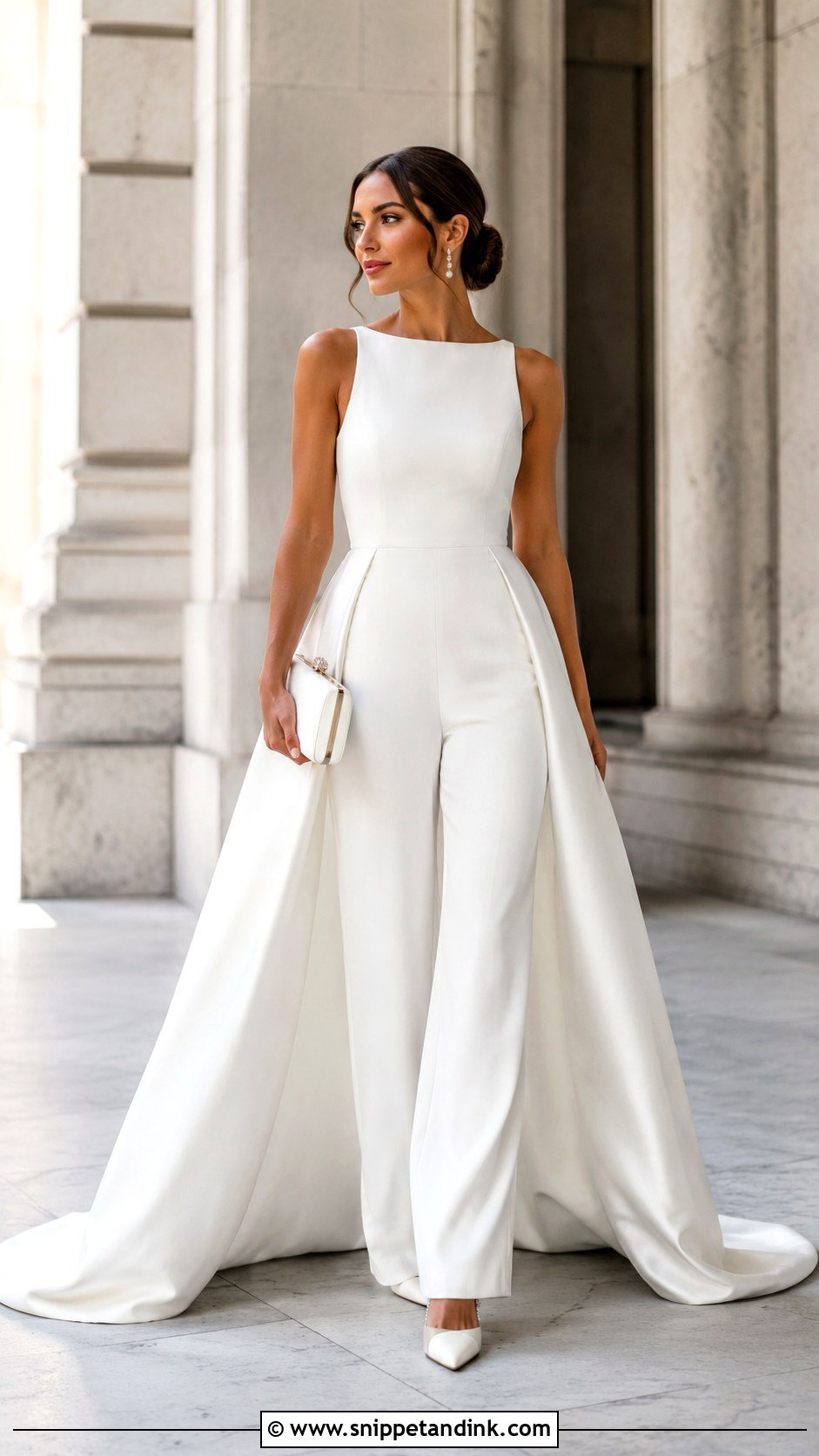
A wedding jumpsuit with a detachable overskirt gives you a gown silhouette for the ceremony and trousers for everything after. Satin, tulle or organza overskirts look most formal. A wide-leg jumpsuit gives the cleanest line under the skirt; narrow legs can make the skirt look as though it’s floating on nothing. Bridal heels, a structured clutch and polished jewelry. It suits city weddings, courthouse ceremonies and brides who never wanted a full dress all day. Check how bathroom trips work in a one-piece jumpsuit before the day.
14. High Neck Wedding Dress With Removable Sleeveless Overlay
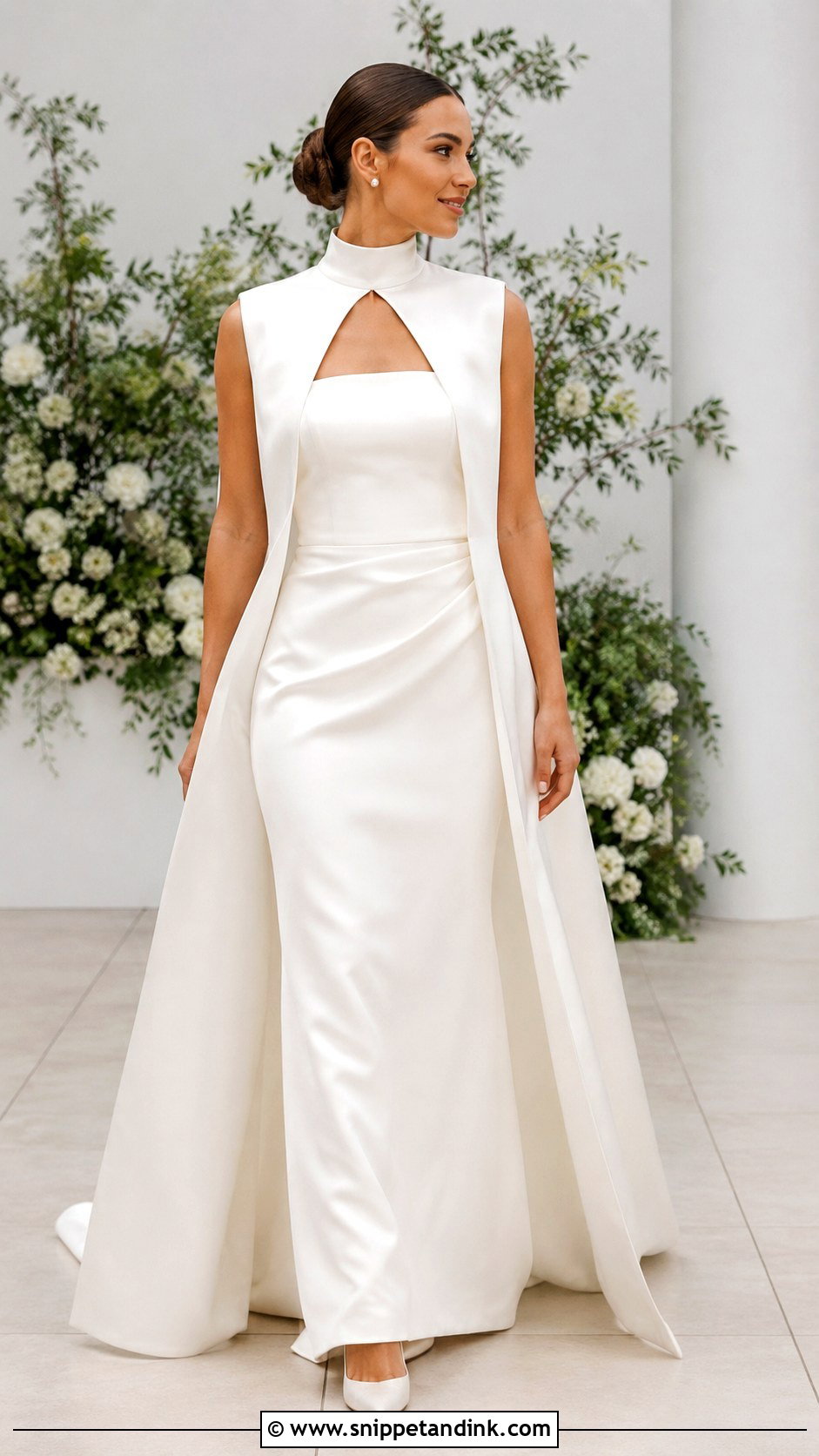
An overlay creates a high, structured neck for the ceremony; beneath it the base has a strapless, square or sweetheart line. That’s a modest, architectural first look and a softer second one. Crepe, mikado, satin and smooth lace hold the shape. Fit decides everything here. The overlay should lie close without pulling when you raise your arms, and it shouldn’t shift sideways. The change is subtle but clear in photos.


15. Square Neck Wedding Dress With Detachable Puff Sleeves
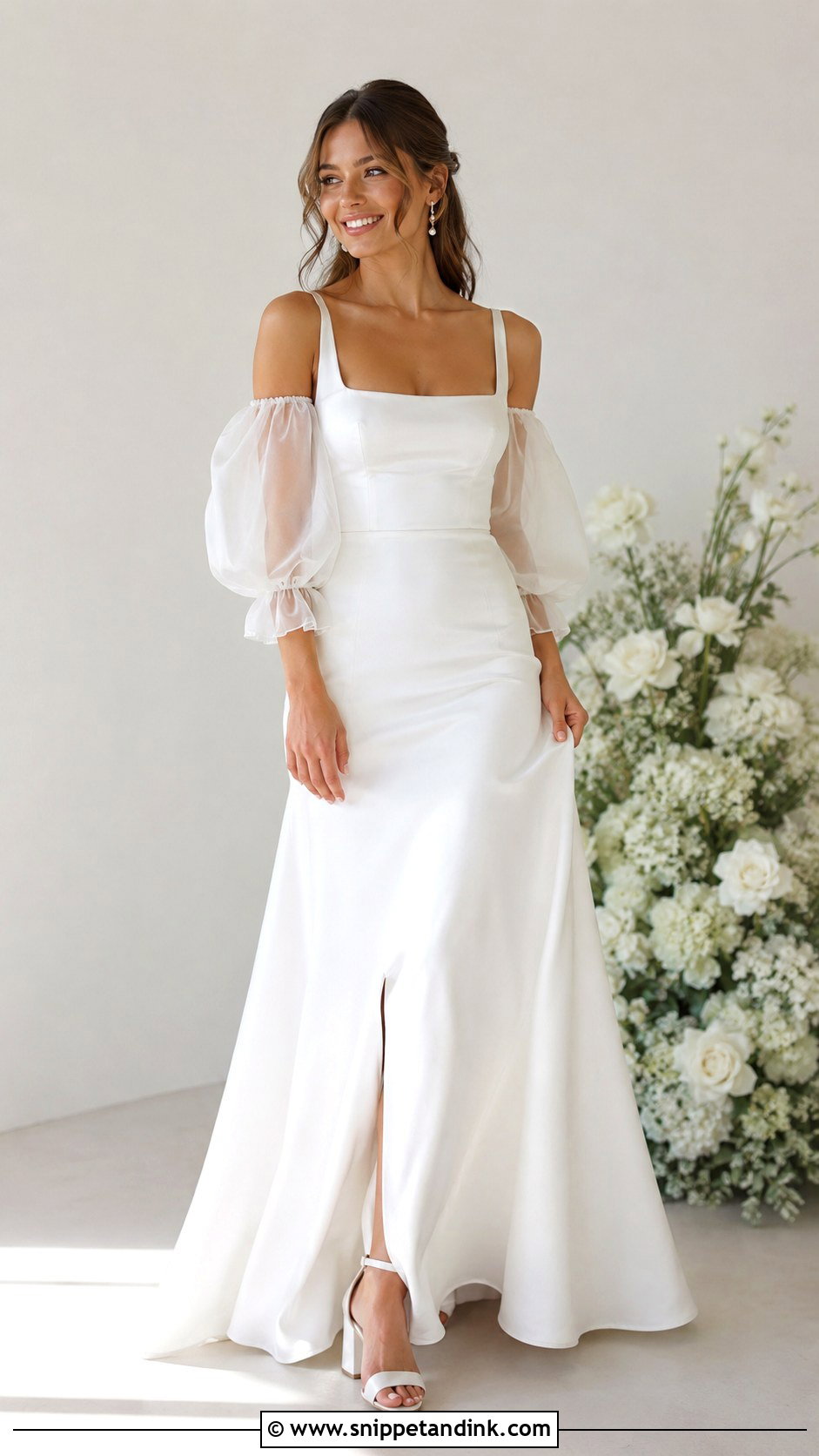
Puff sleeves add volume and a slightly vintage mood; the square neck keeps the bodice structured. Remove the sleeves and the gown slims down for the reception. Organza, tulle or crisp satin give puffs the body to hold their shape; soft fabrics collapse. If the sleeves are big, keep the skirt plain. One thing to plan: full sleeves crush in a garment bag, so pack them separately, stuffed with tissue.
16. Minimal Wedding Dress With Detachable Pearl Sleeves
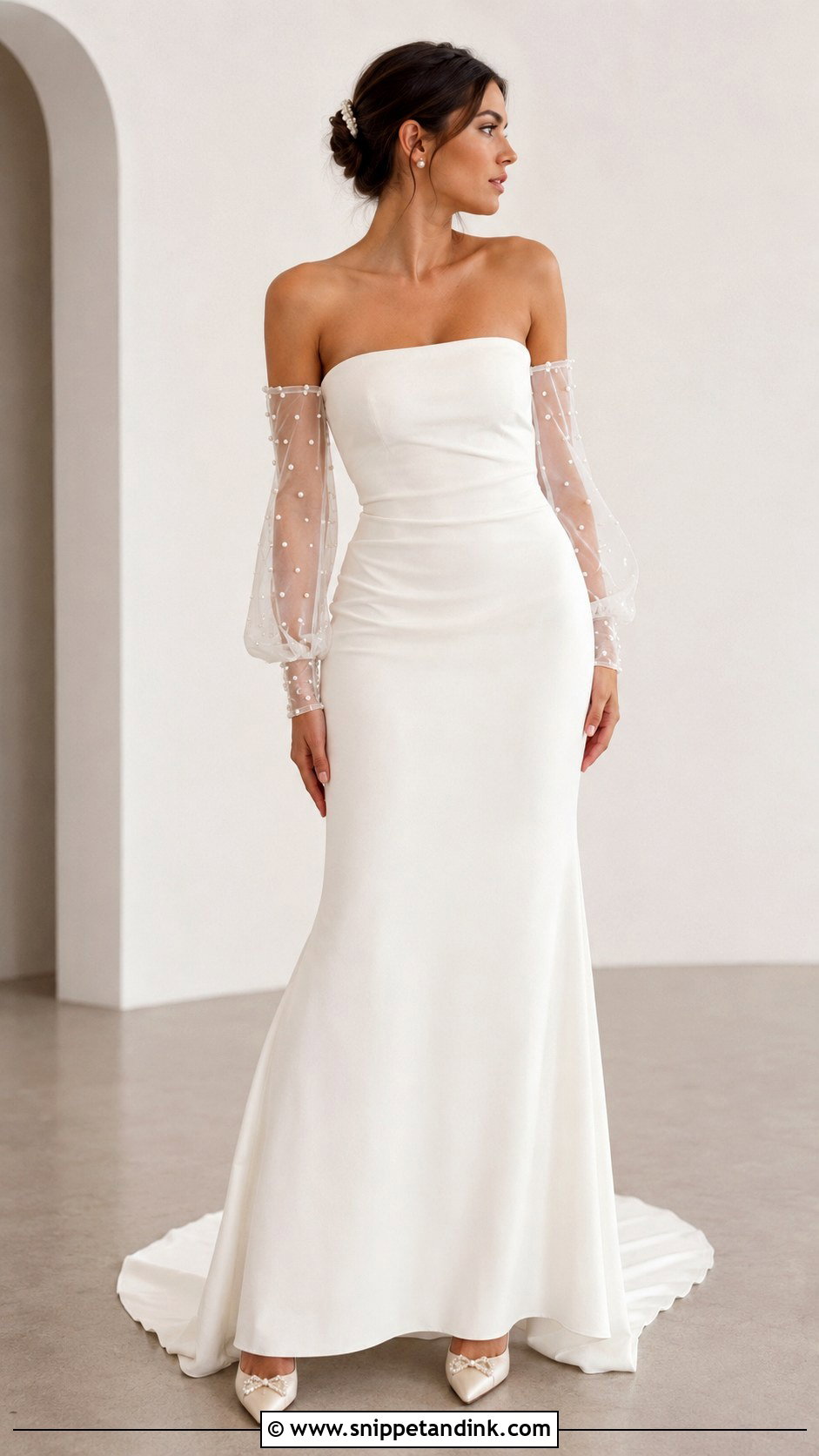
If lace and heavy beading aren’t you, pearl sleeves give texture without either. The base can be a satin sheath, crepe column or fitted strapless. Sheer, fitted, draped or off-the-shoulder sleeves change the mood. After the ceremony they come off and the dress is minimal again. Pearl earrings or a pearl hair pin tie it together; more than that becomes too much. I’d confirm the pearls are sewn on individually so a broken thread doesn’t drop a whole row.
17. Corset Wedding Dress With Detachable Skirt
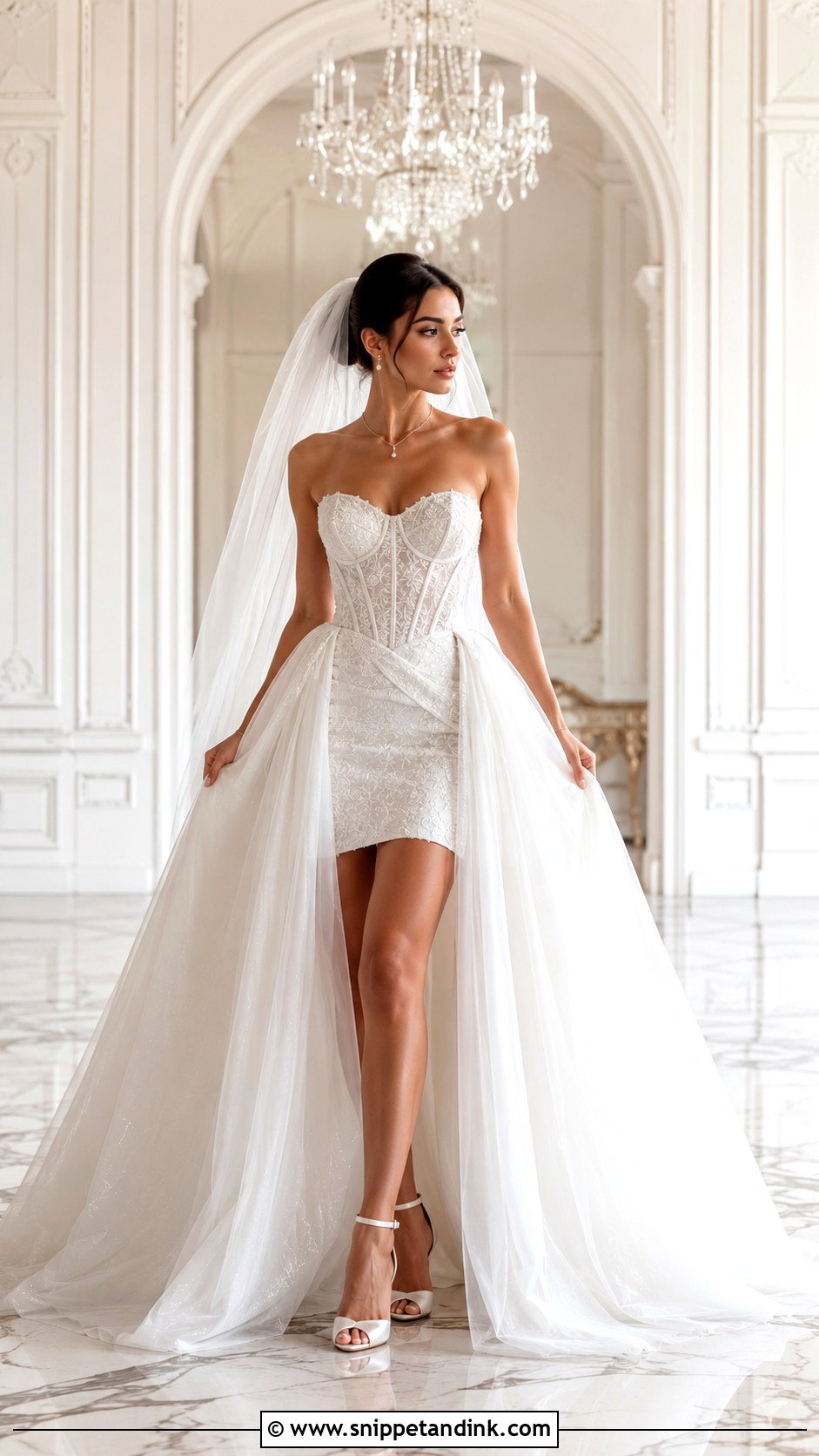
A corset bodice defines the waist and supports the bust without a bra. Add a detachable skirt for ceremony volume, and the base underneath can be fitted, midi or mini. The skirt should attach at the natural waist where the corset ends, otherwise you get two bands stacked on top of each other. Soft tulle or organza balances the structure. This combination gives the strongest before-and-after change on the list, so plan when the reveal happens.
18. Boho Wedding Dress With Removable Bell Sleeves
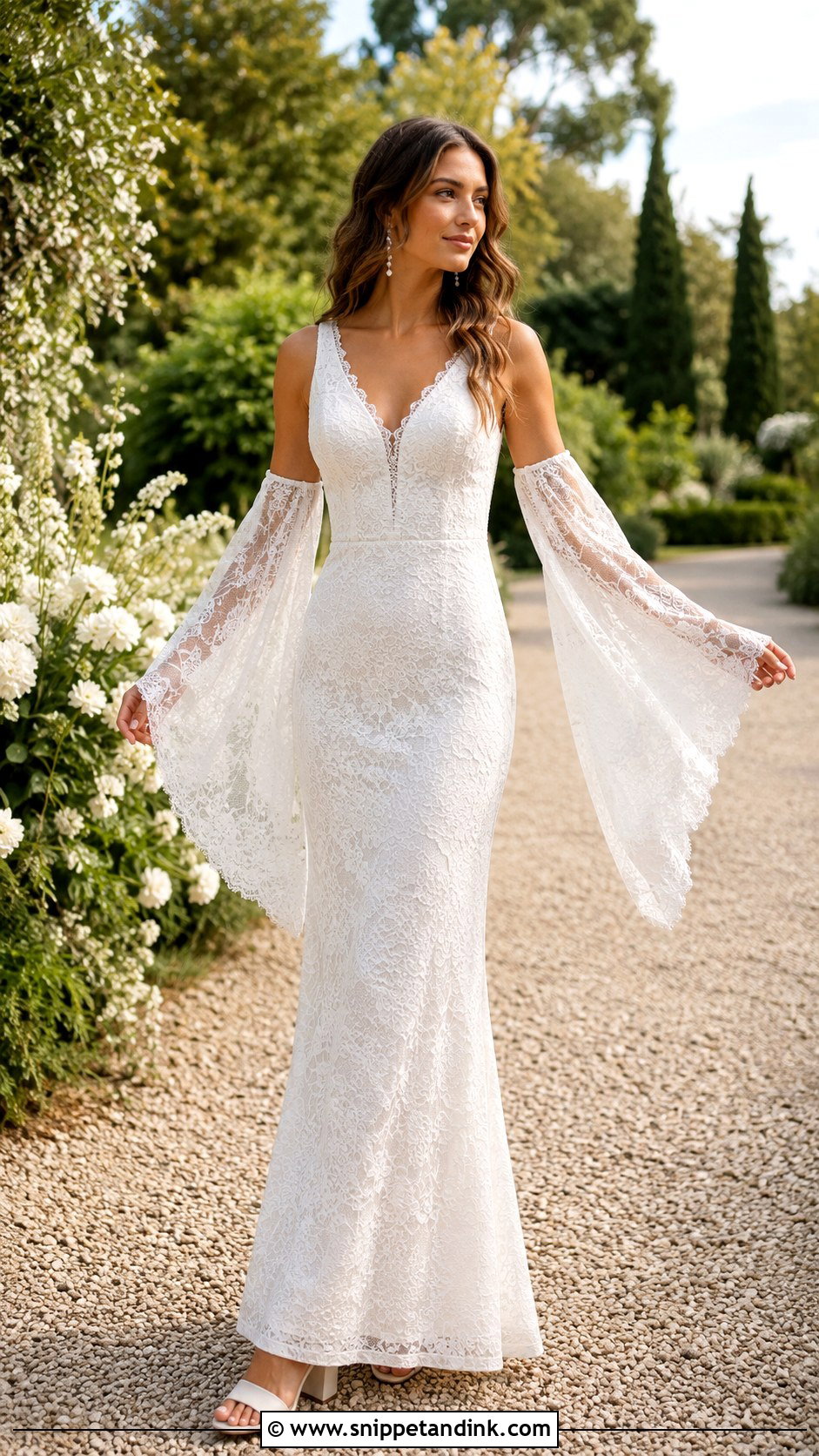
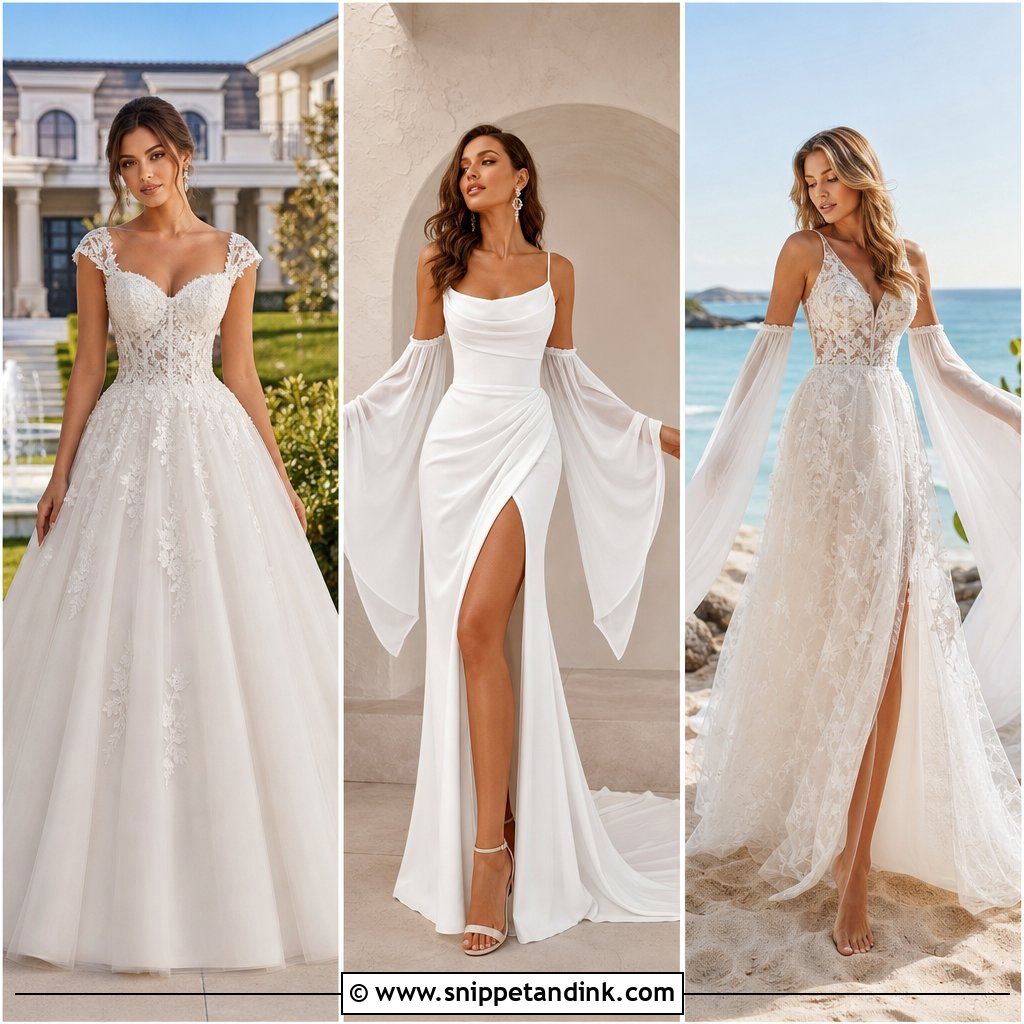
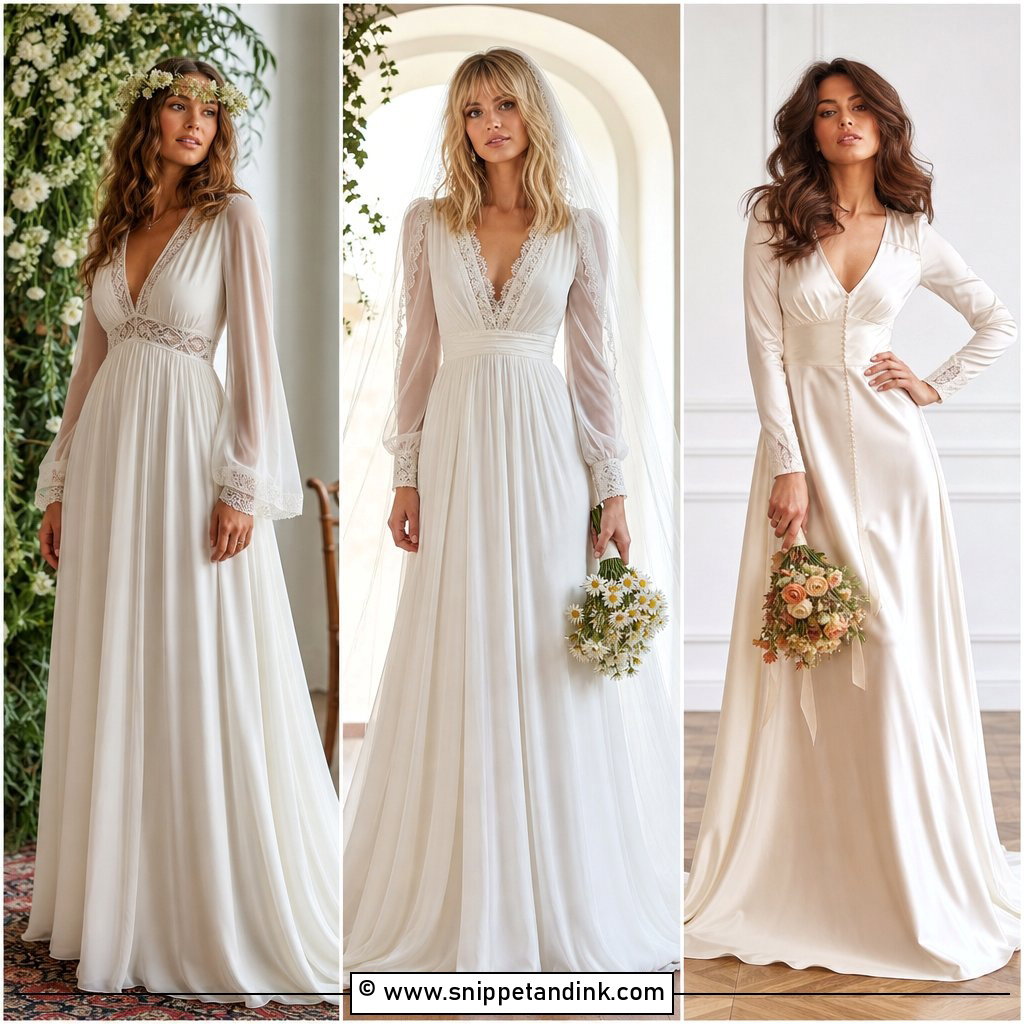
Bell sleeves give a free-spirited ceremony look, especially in sheer lace or light chiffon. With removable bell sleeves on a soft lace or flowing sheath base, the dress becomes simpler for an outdoor reception. Desert venues, gardens and rustic-modern celebrations suit it. Loose waves, delicate earrings and sandals or block heels. Wide sleeves dip into plates and candles at dinner, which is a good reason in itself to take them off before you sit down.
19. Vintage Wedding Dress With Detachable Bolero
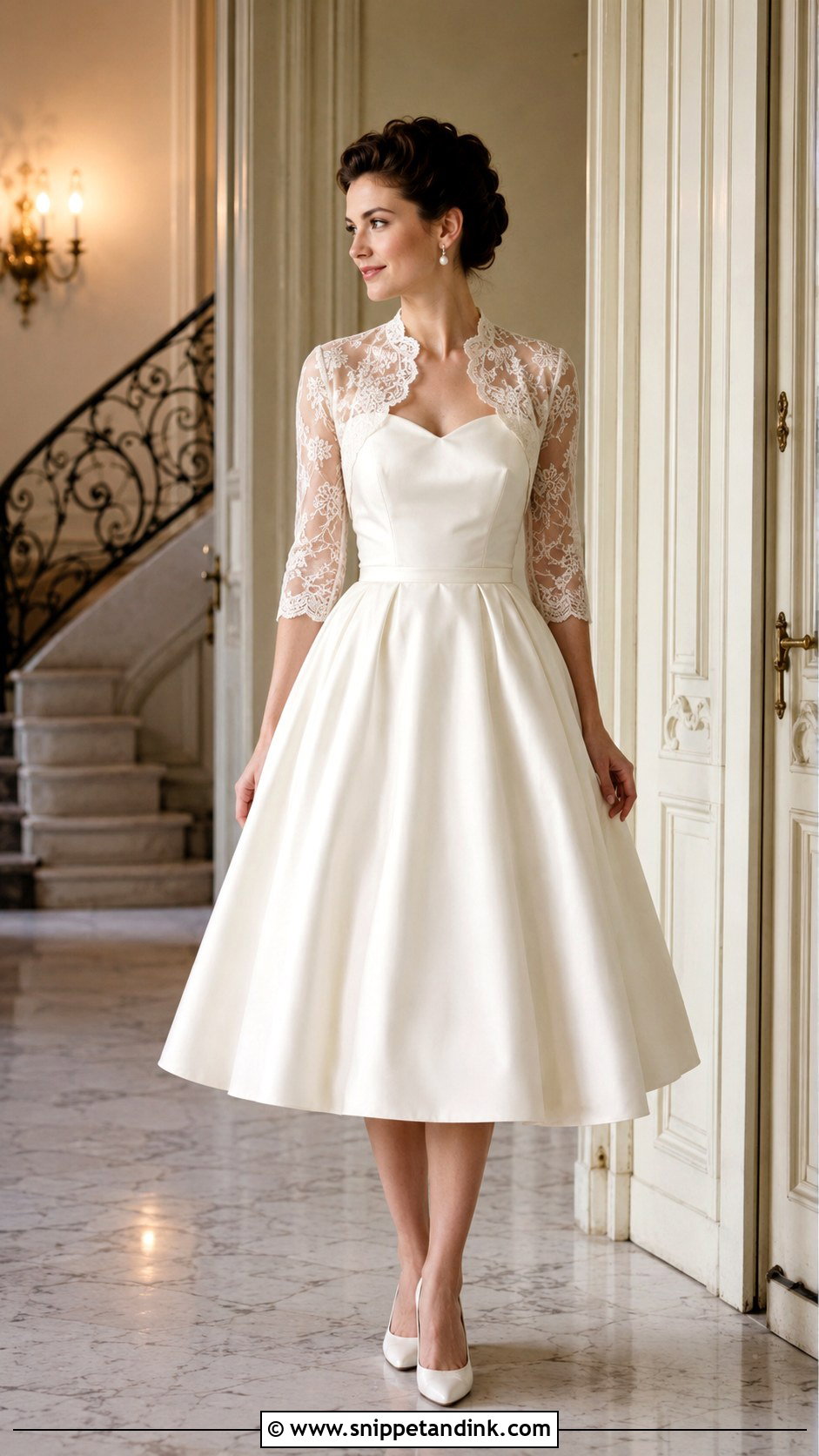
A bolero is the most traditional cover-up there is. In lace, satin, beading or sheer fabric it covers shoulders and arms for the ceremony, then comes off to reveal the neckline. It suits tea-length gowns, A-lines, fitted lace and satin columns. Proportion is what I watch: the bolero should end at the natural waist or just above. Any lower and it shortens the torso.
20. Beach Wedding Dress With Detachable Chiffon Train
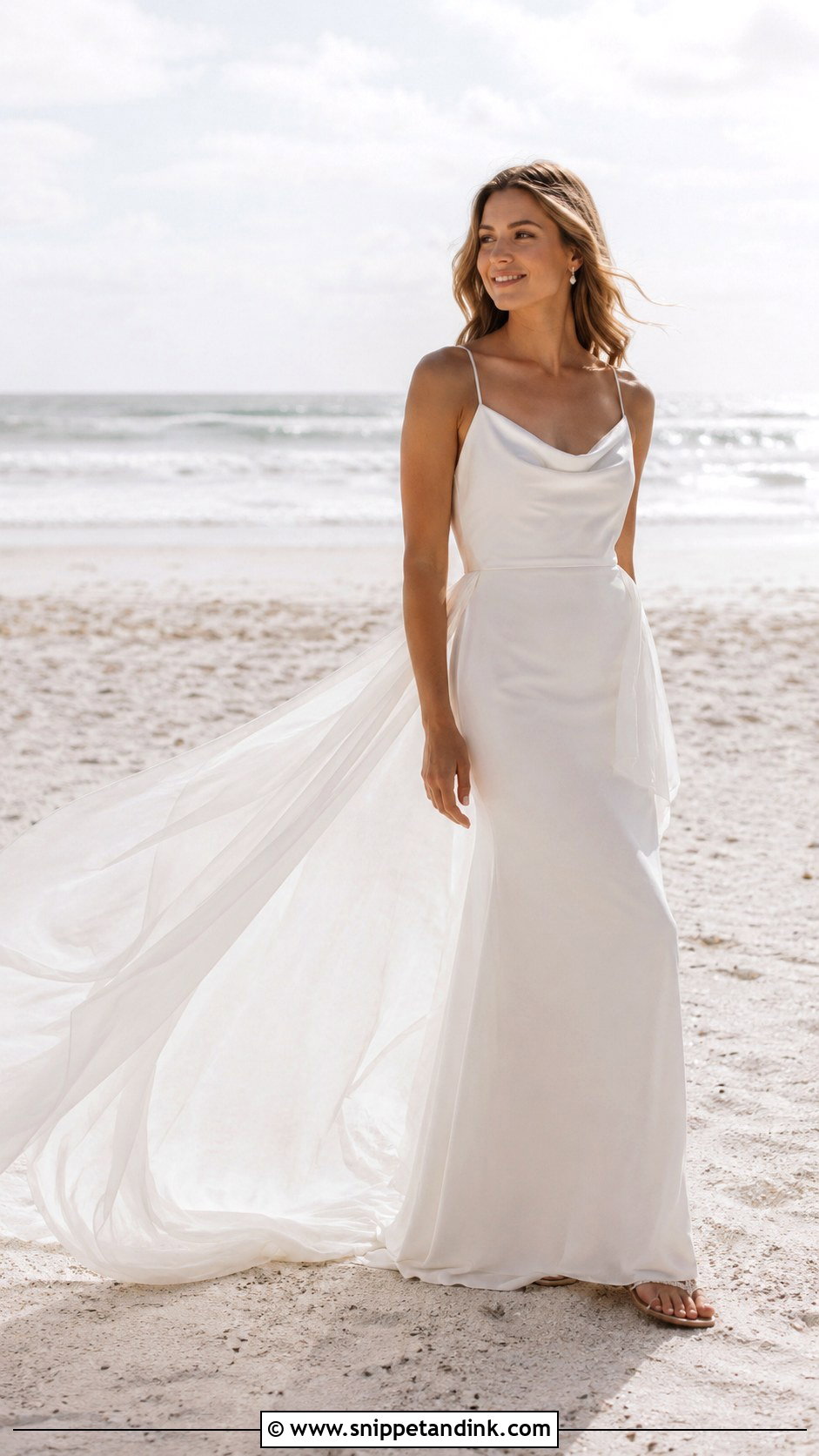
On sand, a heavy skirt is hard work, so here the drama comes from a chiffon train that weighs almost nothing. The base should be simple, a sheath, slip or soft A-line. Let the train fall from the waist or back bodice for the most natural line. After photos, remove it; a train dragging through sand collects it. Flat sandals, soft waves and minimal jewelry. Wind can lift chiffon sideways, so a small weight sewn into the train’s hem helps it fall properly.
21. Winter Wedding Dress With Detachable Bridal Coat
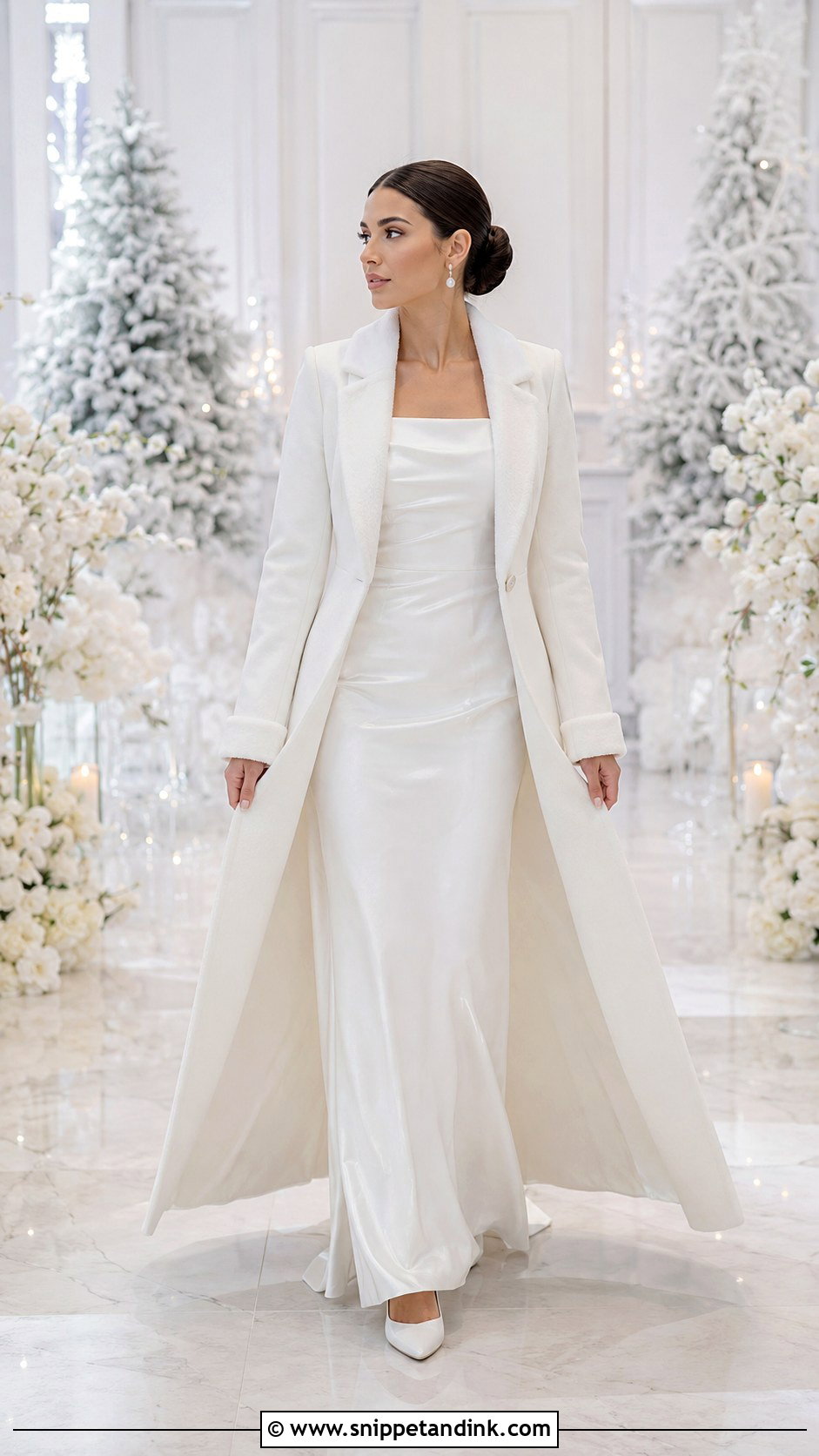
A winter dress with a detachable bridal coat gives warmth for outdoor portraits and a strong ceremony look in a cold church. Satin, crepe, faux-fur trim, wool blends or structured bridal fabric all work. Underneath, a fitted, A-line or column gown. The coat must be tailored at the shoulders and waist; an off-the-rack coat over a full skirt looks bulky. Take it off for the reception and you’re in the dress all evening.
22. Modern Wedding Dress With Detachable Bridal Scarf
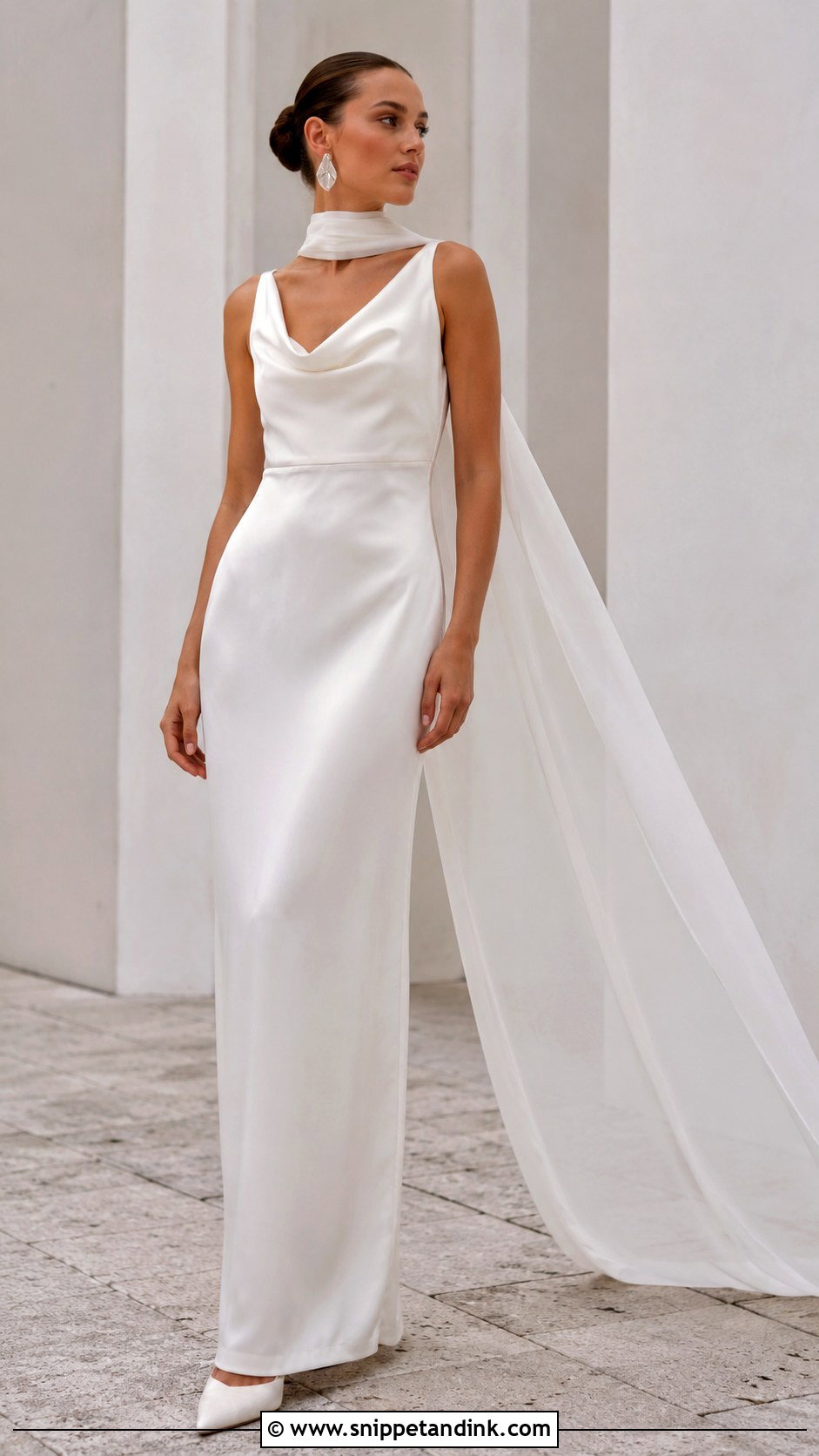
A bridal scarf wraps the neck, drapes over the shoulders or runs down the back like a soft train. It gives the ceremony look motion and a fashion edge, then comes off so the gown stands alone. Clean columns, slips or strapless satin suit it best. Use light chiffon, organza or soft tulle. A scarf has no fixings by default, so I’d add a small hidden loop or snap at the shoulder so it doesn’t slide off during the vows.
23. One Shoulder Wedding Dress With Detachable Shoulder Drape
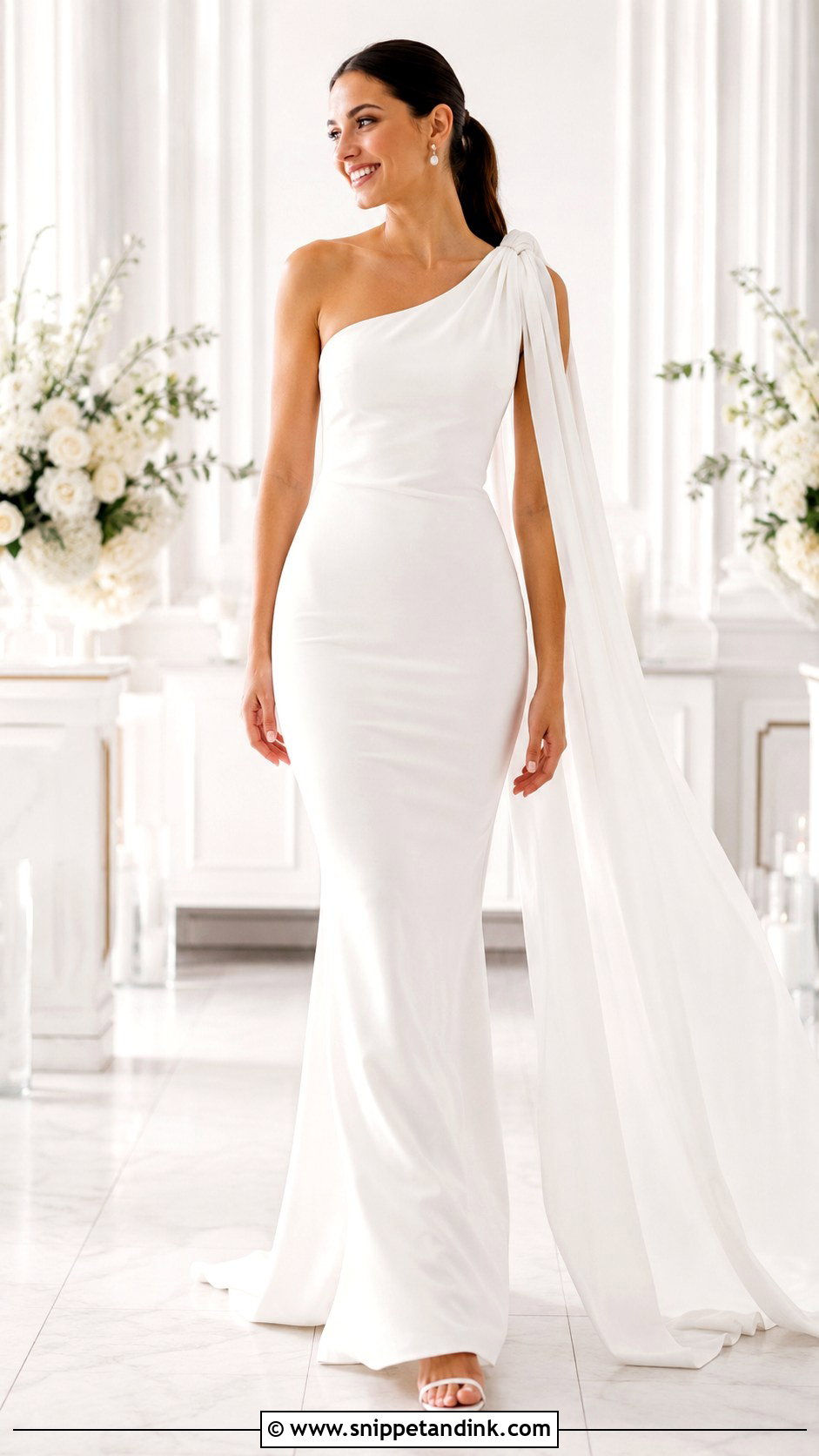
An asymmetric drape falls from one shoulder, sweeps across the arm or trails behind. It brings ceremony drama without a full cape or overskirt, then comes off to leave a sleek one-shoulder dress. Plain fabrics suit it because the diagonal line becomes the focus. Secure it near the shoulder seam; a drape pinned too far out slips down the arm as you walk.
24. Two Piece Wedding Dress With Removable Long Skirt
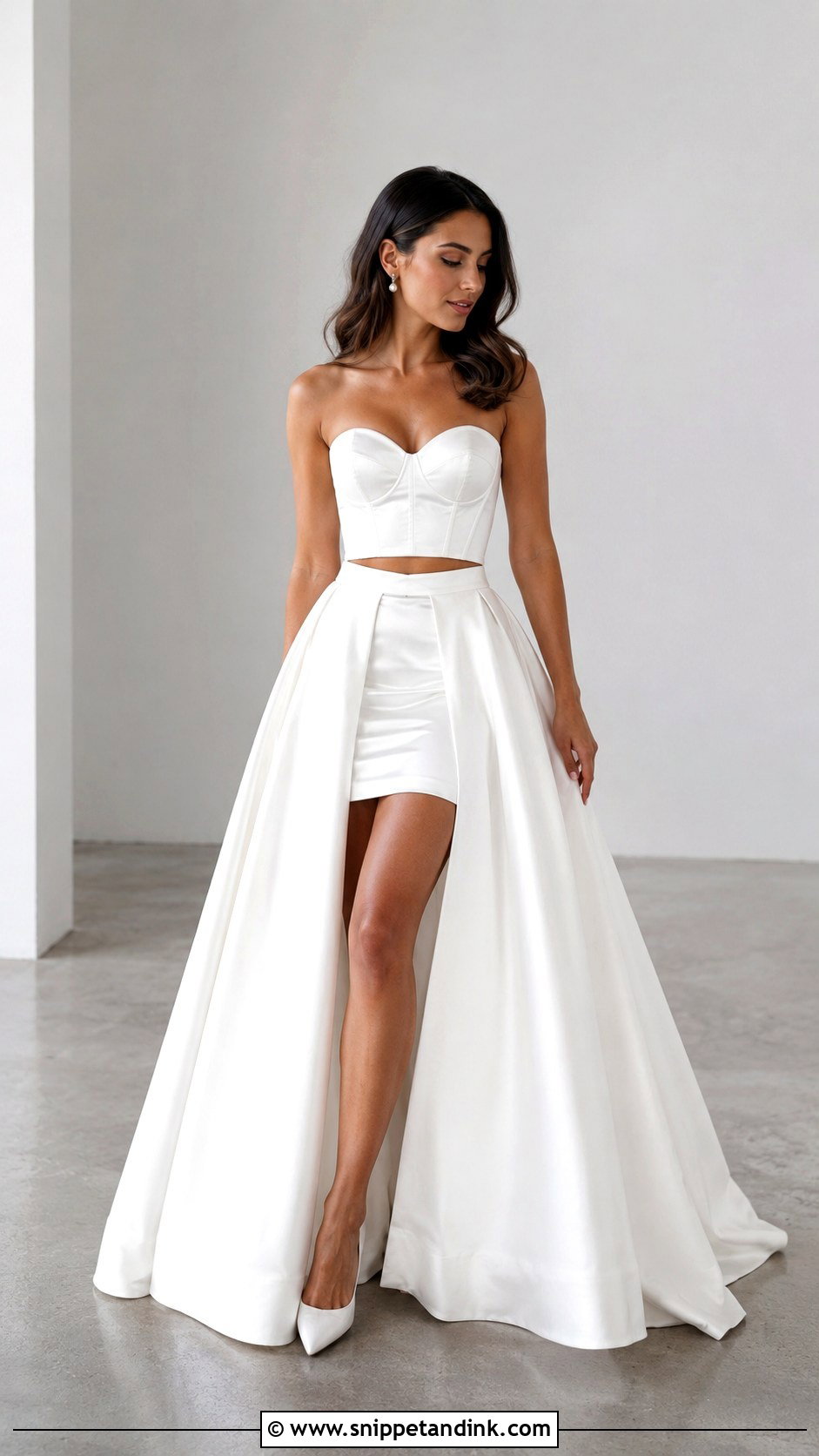
Separates give you the most options. A bridal top with a full skirt for the ceremony, then a shorter skirt, fitted skirt or tailored trousers for the reception, with the top as the constant. Corset, lace, satin crop or structured bodices all anchor it. Every bottom must match the top in color and fabric tone, so order them together. Choose heels that look right with both lengths.

25. Mini Wedding Dress With Detachable Cathedral Skirt
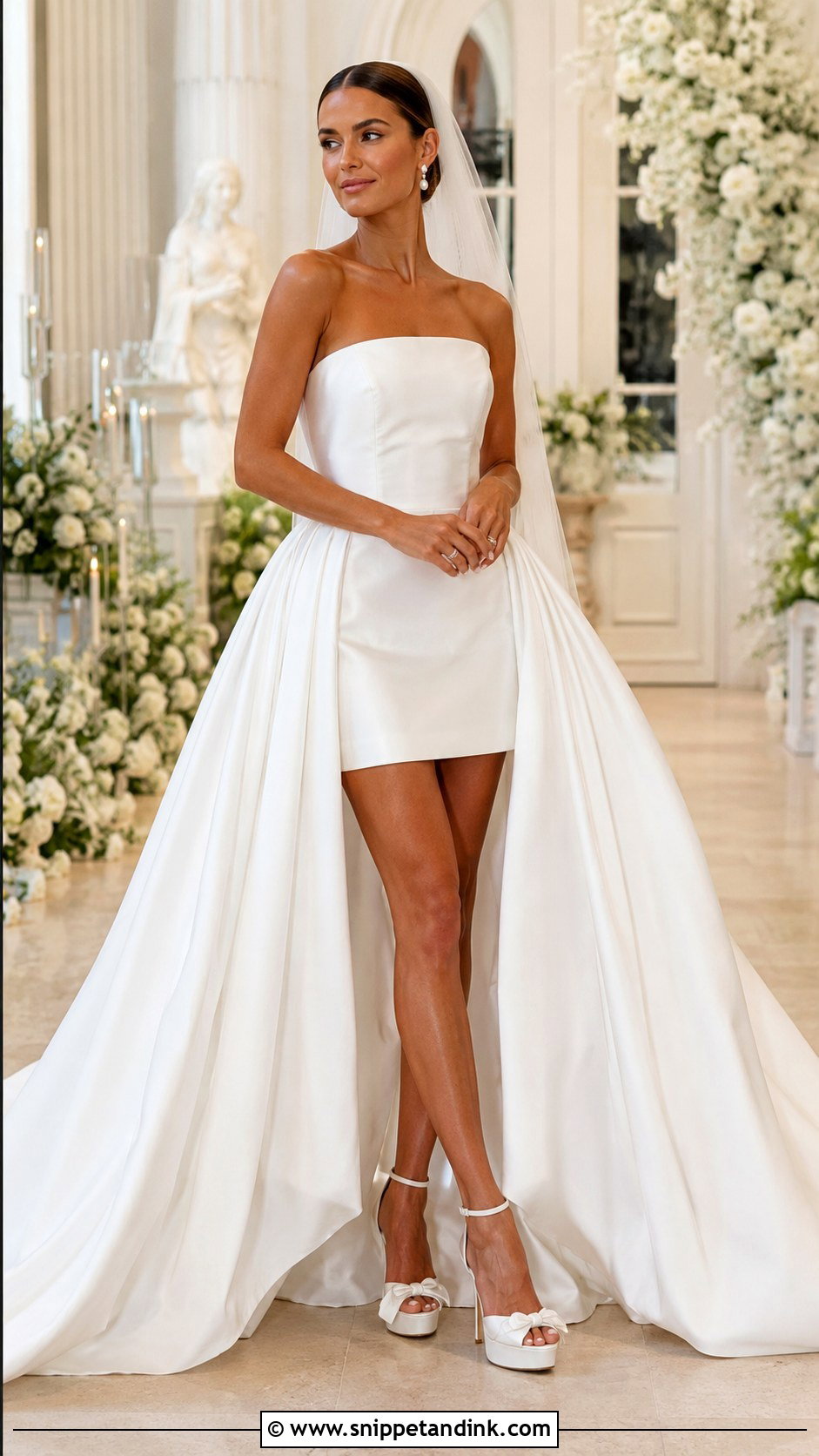
A sweeping cathedral skirt for the entrance, then a mini for the party: the biggest reveal of all. The mini underneath has to look bridal on its own, with satin structure, lace, beading or a corset bodice. Shoes become a large part of the second look, so pick something special. Because a cathedral-length skirt is heavy, its waistband needs firm hooks spaced closely; too few and the weight drags one side down.
Planning the Change Into the Day
The reveal only feels special if it happens smoothly. Most couples schedule it after portraits and before the first dance, or between dinner and the dancing. I’d allow around a quarter of an hour in a private room, not a corridor, with good light and a mirror.
Who helps, and what happens to the extra piece
Choose one person to do the change and have them practise it with you at the final fitting. A bridesmaid who has never seen the hooks will struggle with them at ten at night. Give that same person responsibility for the removed piece afterwards: a padded hanger and a breathable garment bag waiting in the room, so a tulle overskirt isn’t left crumpled over a chair or forgotten at the venue.
Can a Seamstress Make an Existing Dress Convertible?
Often, yes. A good bridal seamstress can make detachable sleeves, a cape, a bolero or an overskirt for a dress you already own, as long as she can source matching fabric. The color match is the hard part; ask for swatches against the gown in daylight. Give her plenty of time, ideally a couple of months before your final fitting, since custom pieces need their own fittings alongside the gown.
Is a Convertible Gown Right for Your Day?
A convertible gown gives you more freedom and comfort across a long day, as long as the base dress is good on its own and the removable piece is secure and simple to manage. Overskirts bring drama, sleeves soften, capes add movement and toppers give coverage you can remove. Before deciding, think about the ceremony setting, the reception, the weather and who will help you change. The right dress should look complete both ways, not only with the extra piece attached.
You'll Like These Ideas:







Leave a Reply