
Plenty of brides fall for a simple gown and then worry it looks too plain for the ceremony, or too formal for the dance floor. Removable pieces solve both problems without buying a second dress. An overskirt, a pair of sleeves, a cape or a long train can change the silhouette between the vows and the reception, which is why so many designers now build convertible elements into their lines. What I look at first is the base dress: its fabric, its neckline and its proportions decide which additions will look like they belong. The twenty ideas below cover classic, modern and modest styles, each with full styling and the fitting checks I’d make before the day.
Diagnosing Your Gown Before Buying a Single Extra
Brides often shop for add-ons the way they shop for jewellery, by what catches the eye. I’d do it the other way round. Put the dress on, stand in front of a full-length mirror, and name the one thing you’d change about it. That answer points you to the right category almost every time.
- Too slim for the venue or aisle: overskirt or detachable train.
- Too bare for a religious ceremony: sleeves, bolero, topper or cape.
- No waist definition: belt, sash or peplum.
- Plain back that guests will stare at for half an hour: bow, Watteau train or shoulder drapes.
- Cold month or outdoor portraits: jacket or gloves.
Buy from the same bridal shop as the dress when you can. Their pieces are usually cut from the same fabric dye lots, and the seamstress can install attachment points while she’s already doing alterations. Separates from another maker can still work, but leave time to compare whites and textures in daylight before you commit.
1. Wedding Dress With Detachable Tulle Overskirt
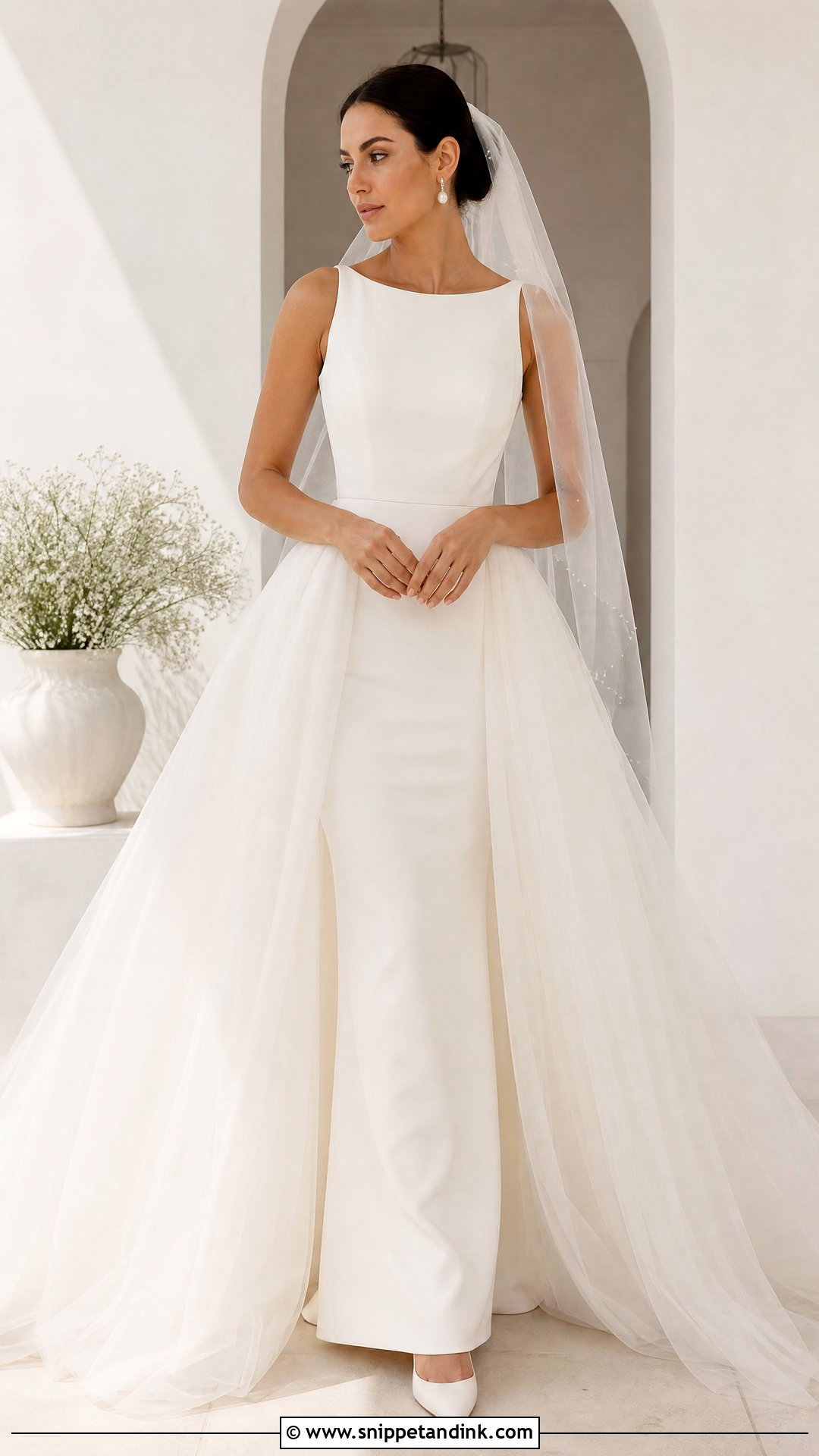
A tulle overskirt is the quickest way to give a slim crepe, satin or lace column the volume of a ball gown for the aisle. Gathered tulle stays soft; a horsehair hem holds a crisper bell. The tricky part is the waistband. I have the seamstress hide the fastening under a sash or along the natural waist seam, because a visible band gives away that it’s a separate piece. Match the tulle to the dress in daylight, too, since white tulle over ivory satin looks grey. Pointed pumps, pearl earrings, a low bun and a fingertip veil keep it romantic, and the column underneath becomes your reception dress.
2. Wedding Dress With Satin Overskirt
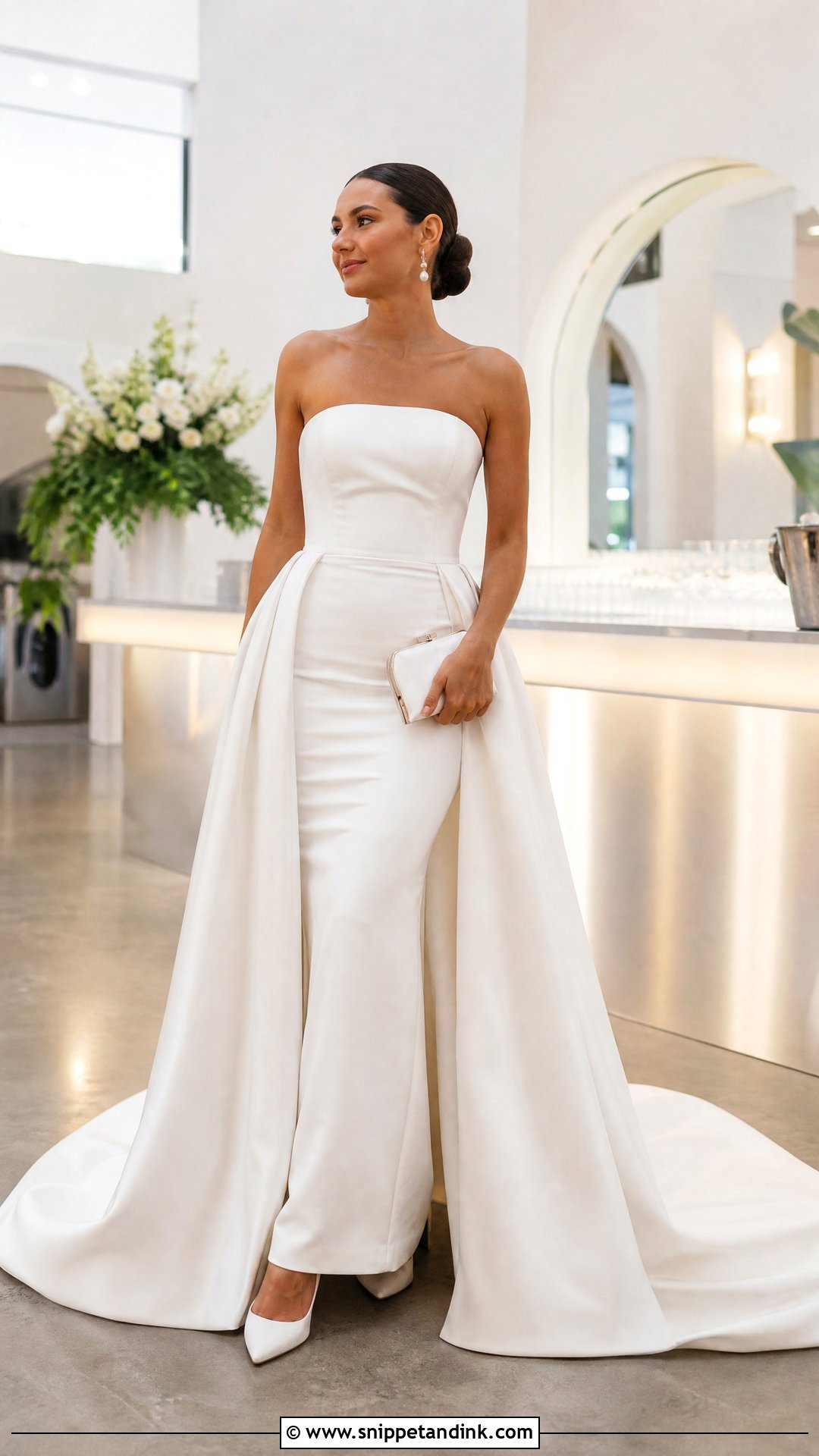
Satin overskirts suit minimalist brides best. A box-pleated layer with a sweeping train over a strapless sheath or fitted mermaid adds ceremony weight with no lace or sparkle at all. Satin is heavy, though, so ask how the overskirt is anchored; it needs firm hooks or a waist stay, not a few snaps. A narrow satin band hides the join and sharpens the waist. Pearl drops, sleek pumps and a neat chignon finish it. Hold both fabrics side by side at a window before you buy, because two whites that look identical in a boutique can split apart in photos.
3. Wedding Dress With Detachable Lace Sleeves
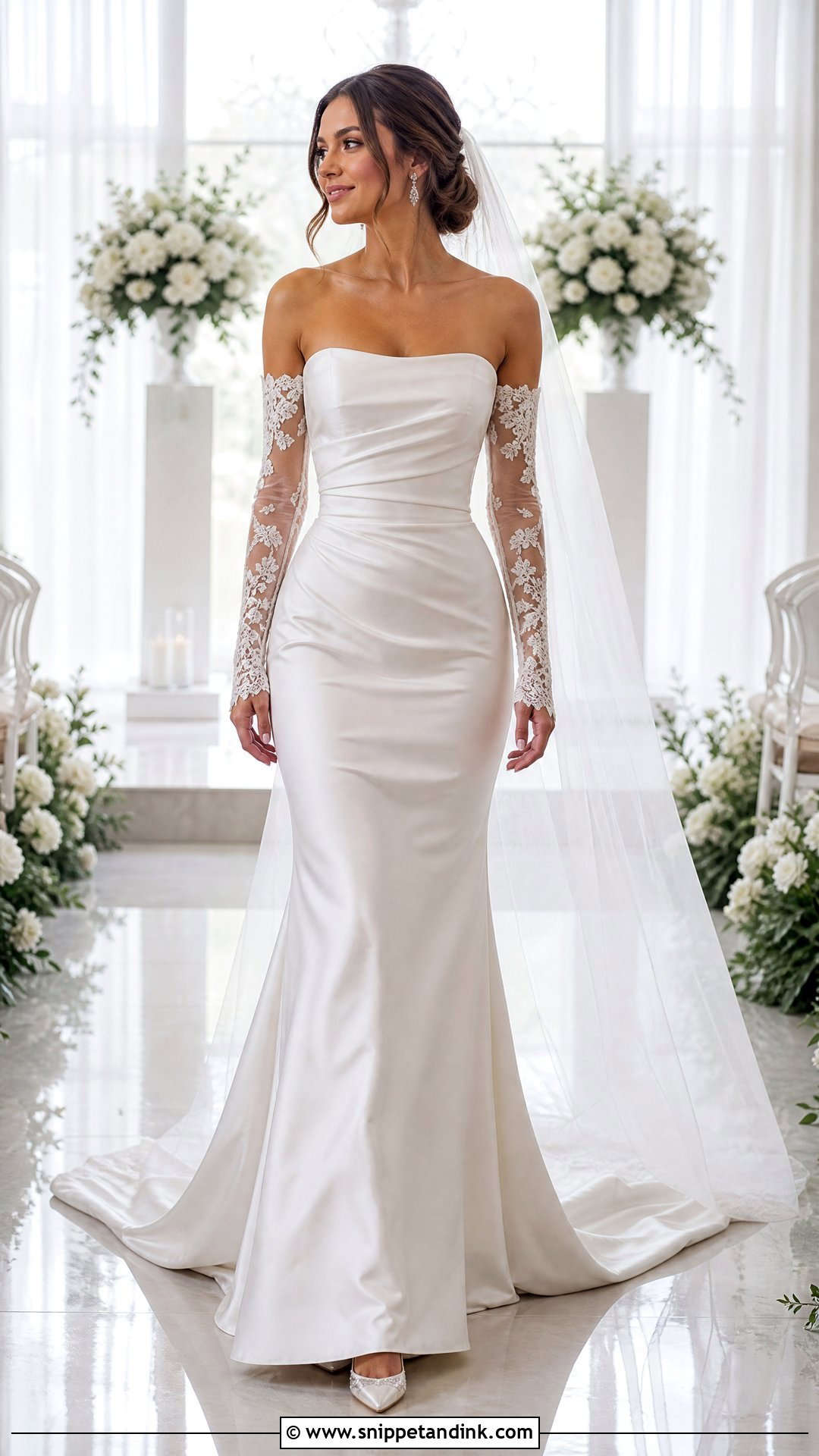
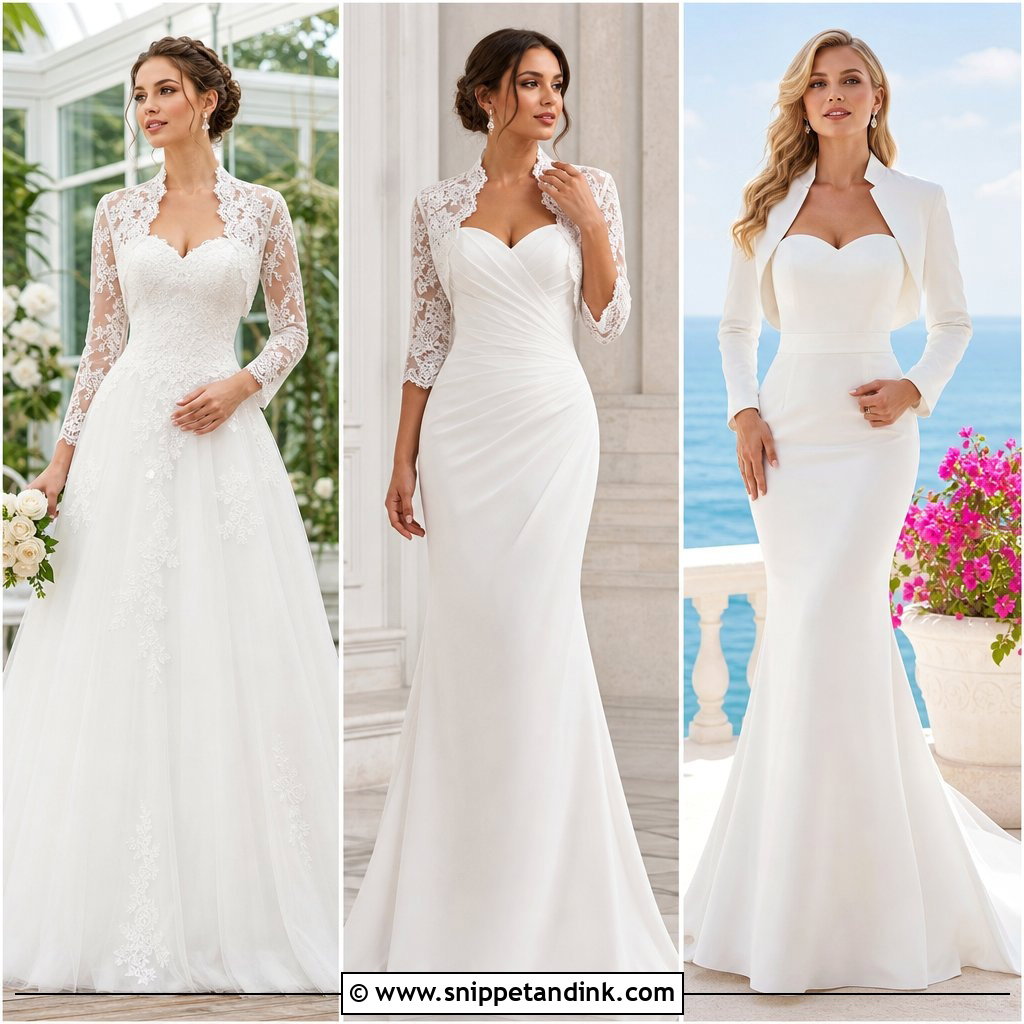
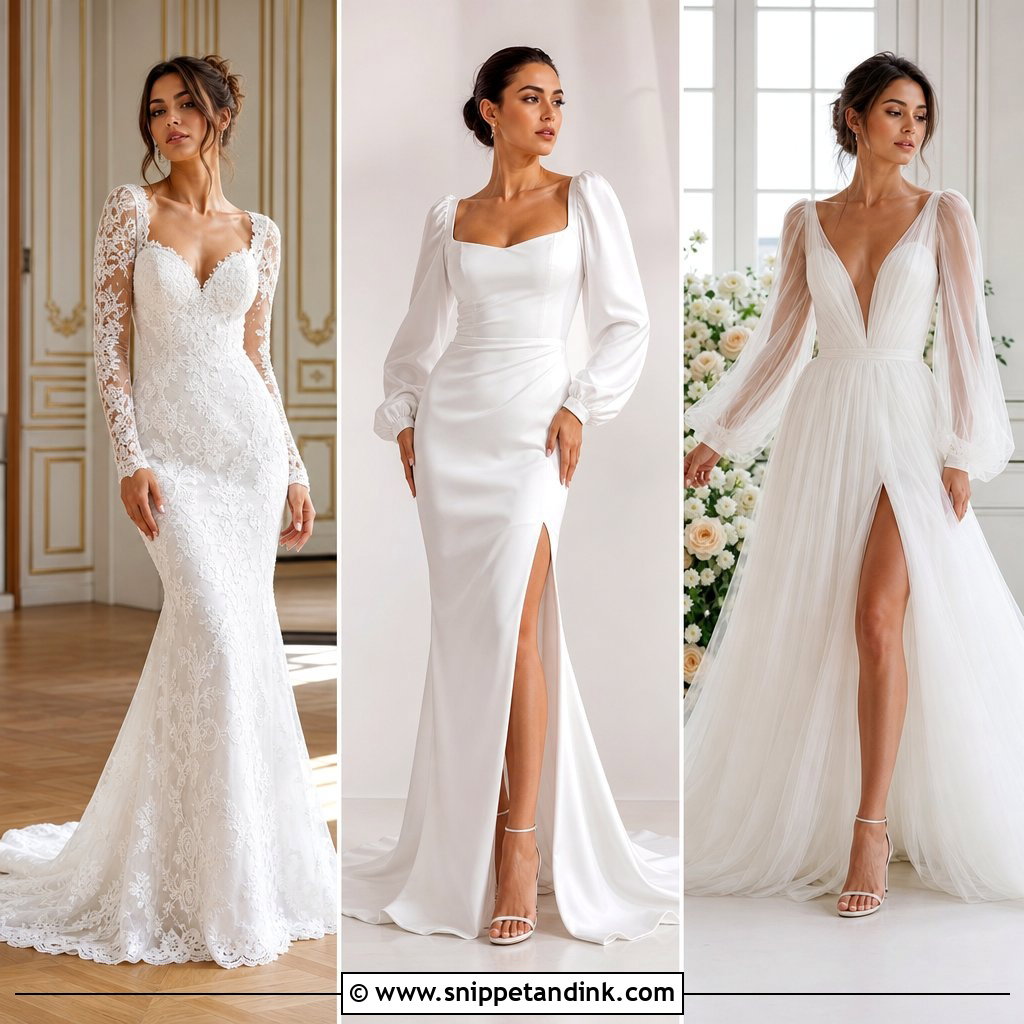
Lace sleeves give a strapless or sleeveless gown coverage for a church ceremony and come off afterward. Fitted illusion sleeves with appliqués look delicate; a slight flare at the wrist feels more relaxed. The lace motif should echo whatever is already on the bodice, or the sleeves look borrowed from another dress. I always ask the bride to lift both arms above her head at the fitting, because sleeves attached at the underarm can pull the bodice up. Closed-toe heels, crystal studs, a loose low bun and a plain veil keep the focus on the lace.
4. Wedding Dress With Puff Sleeves
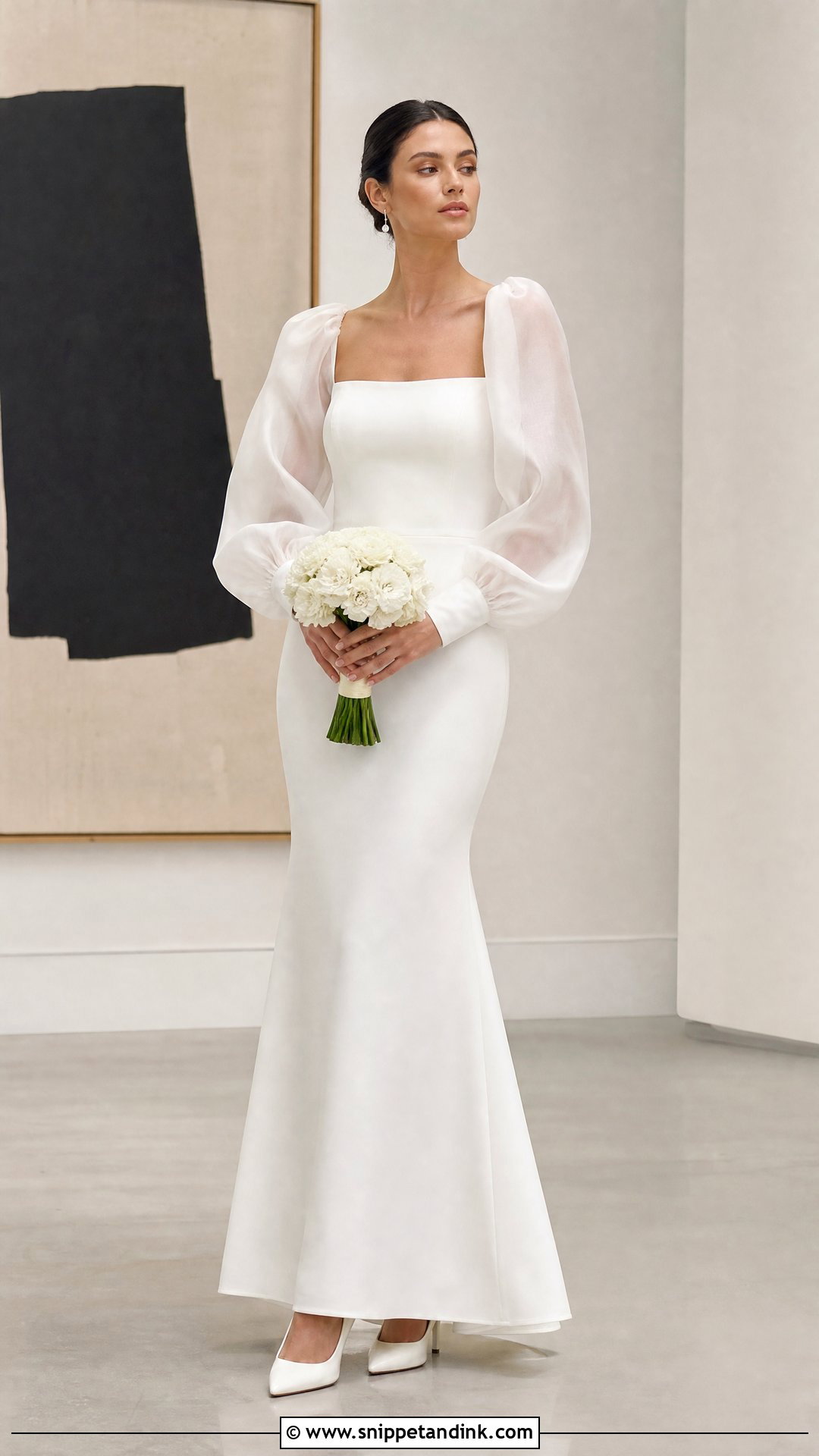
Puff sleeves read fashion-forward rather than vintage when they’re sheer. Adding removable organza or tulle sleeves to a square-neck, sweetheart or strapless gown works best with the volume kept high at the shoulder and tapered toward the wrist. Scale matters: a petite bride can disappear under a big puff, while a taller frame carries it easily. The elastic band should sit flat against the arm and stay hidden; I check it for red marks after twenty minutes of wear. A smooth updo, satin pumps and a small bouquet complete the look, with no necklace competing.
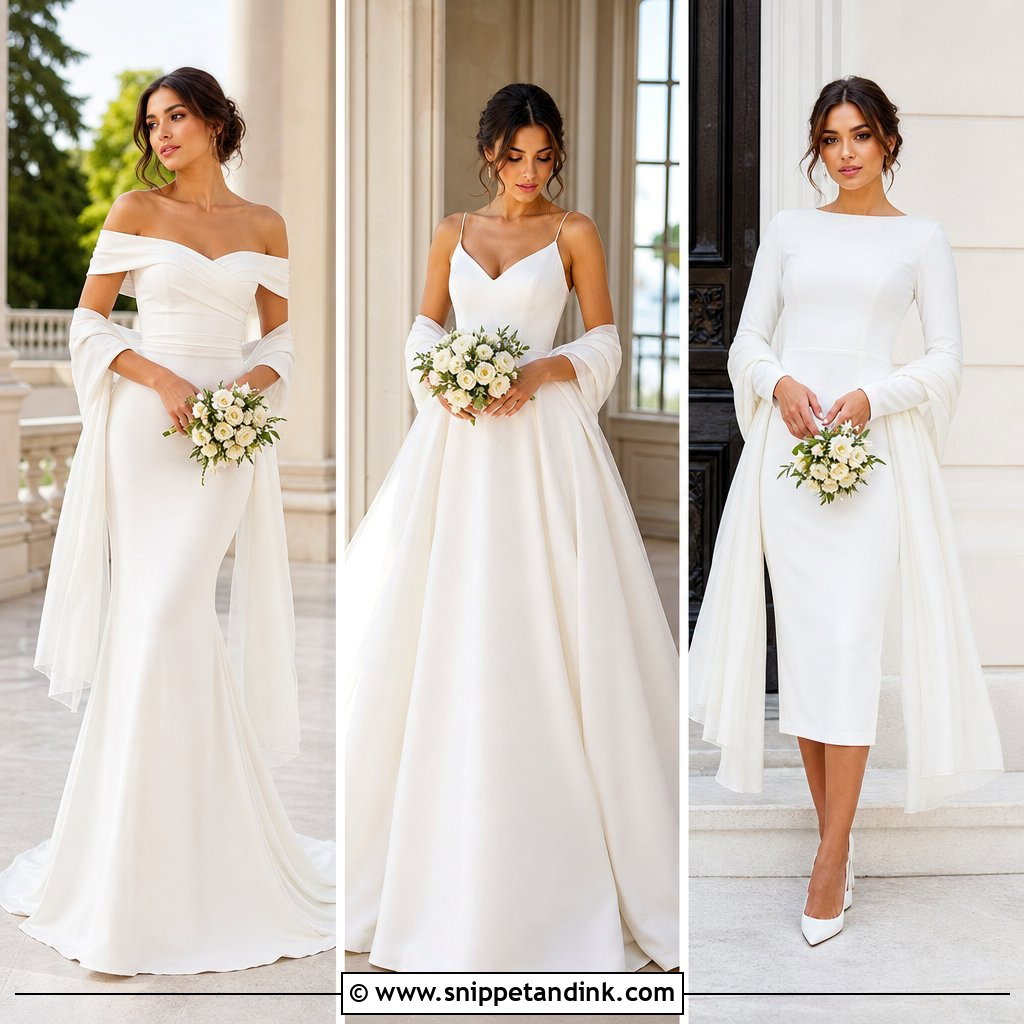
5. Wedding Dress With Off-Shoulder Straps
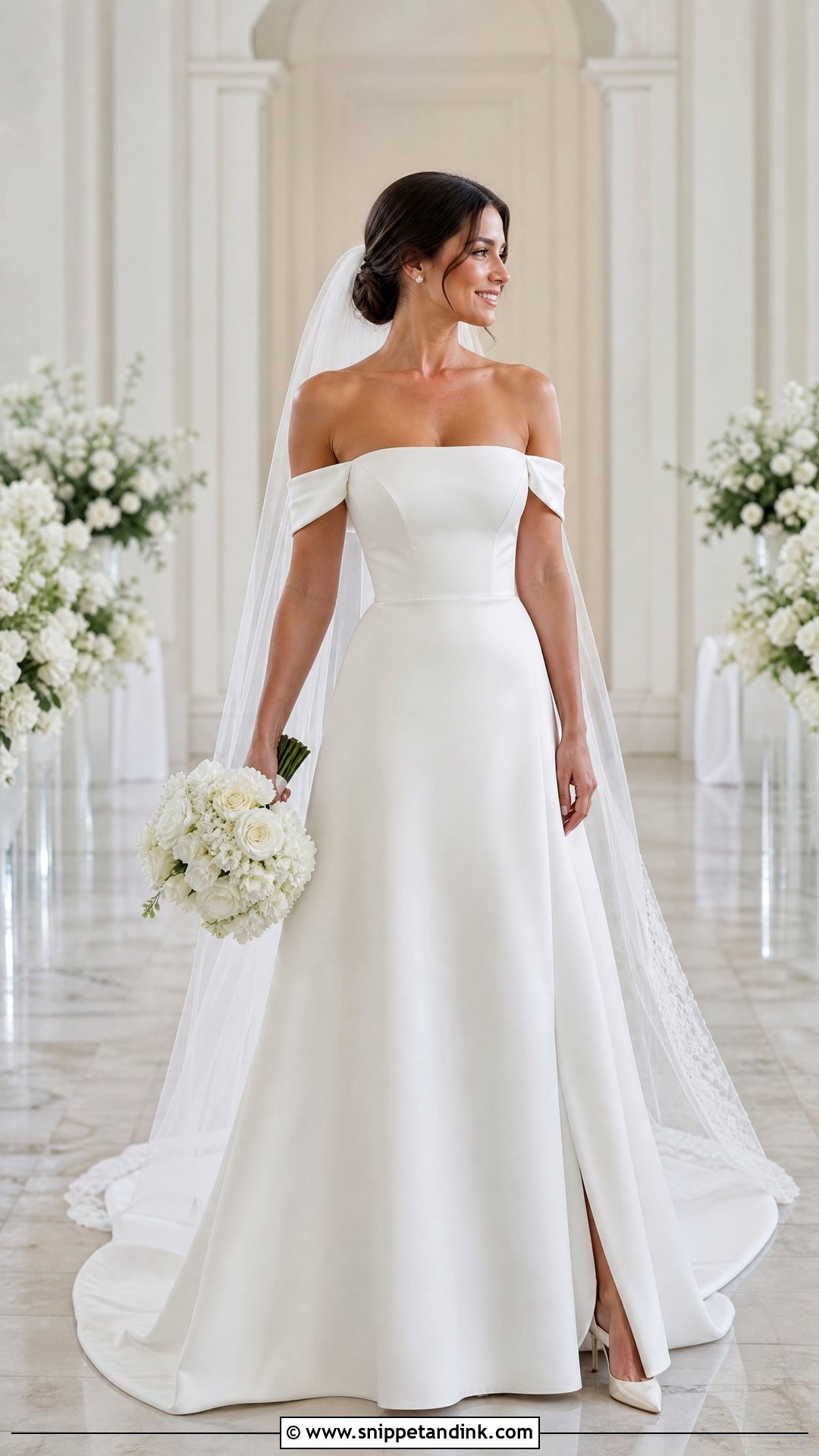
Off-shoulder straps add a romantic neckline to a strapless gown without any permanent alteration. Satin drapes look classic; lace or beading adds texture. The fit is the risk. Straps sitting too tight on the upper arm drag the bodice down every time you reach forward, so I have brides hug someone during the fitting to see what moves. Matching the strap fabric exactly makes the piece look original. Wear a low twisted bun, pearl studs and a cathedral veil with a plain edge, then unhook the straps before dancing and swap in bolder earrings.
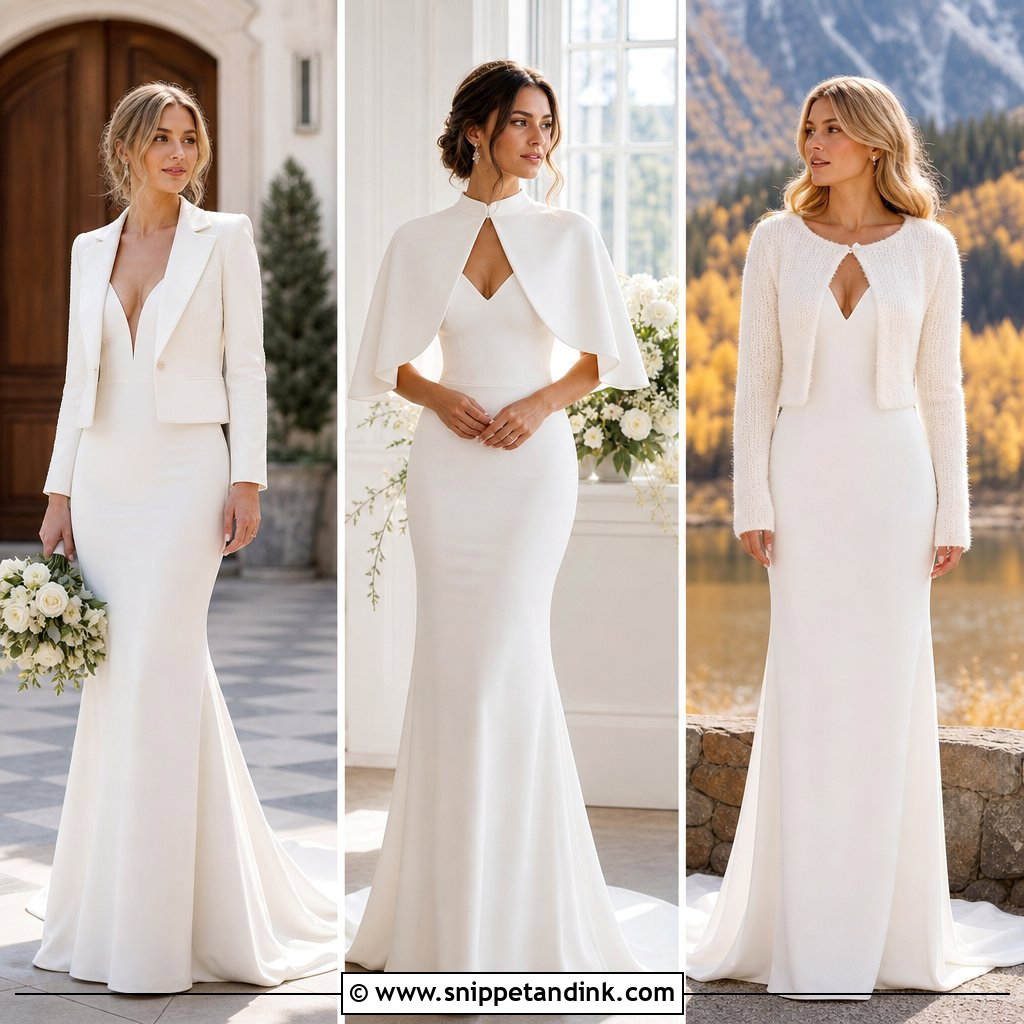
6. Wedding Dress With Bridal Cape
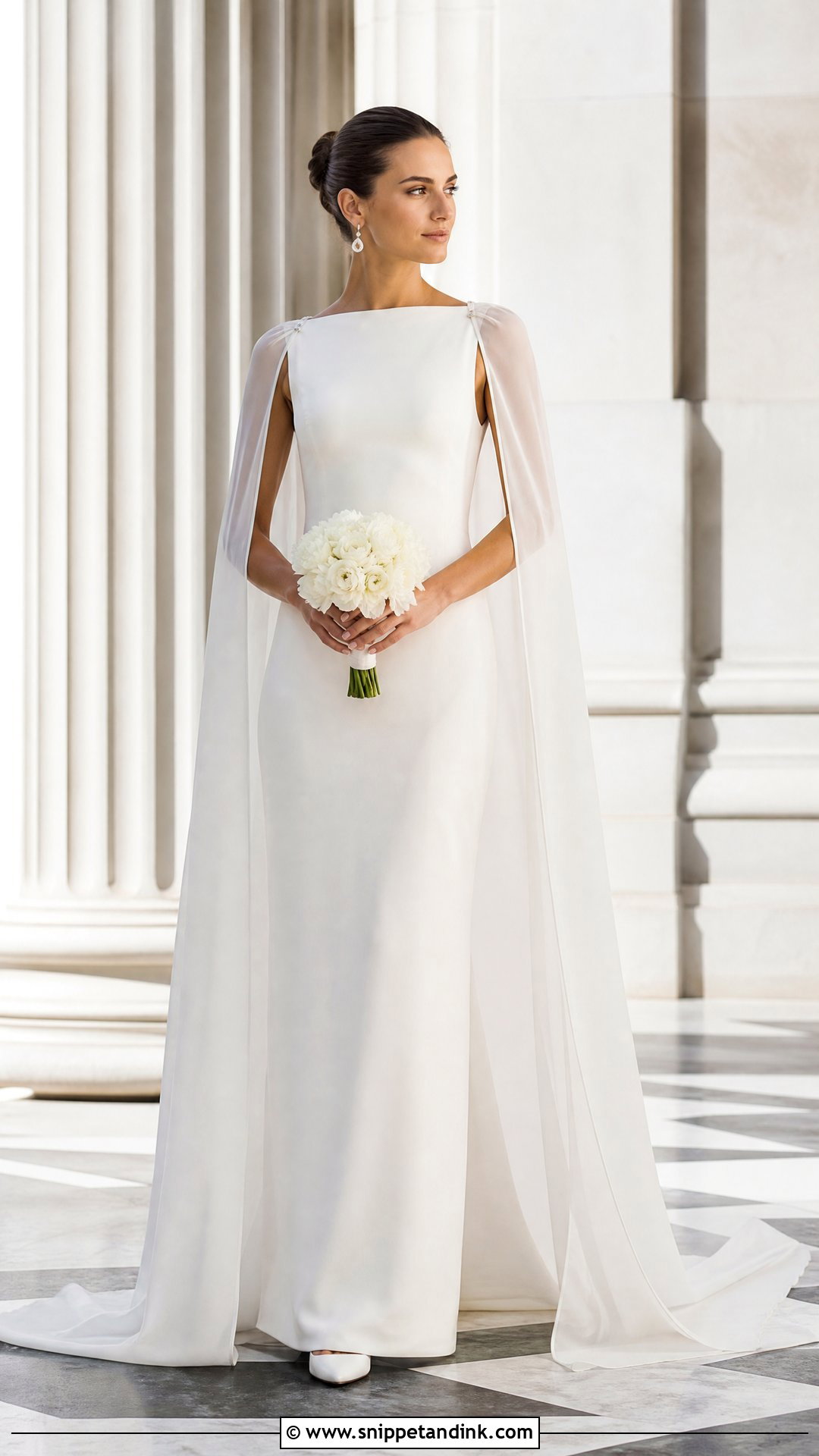
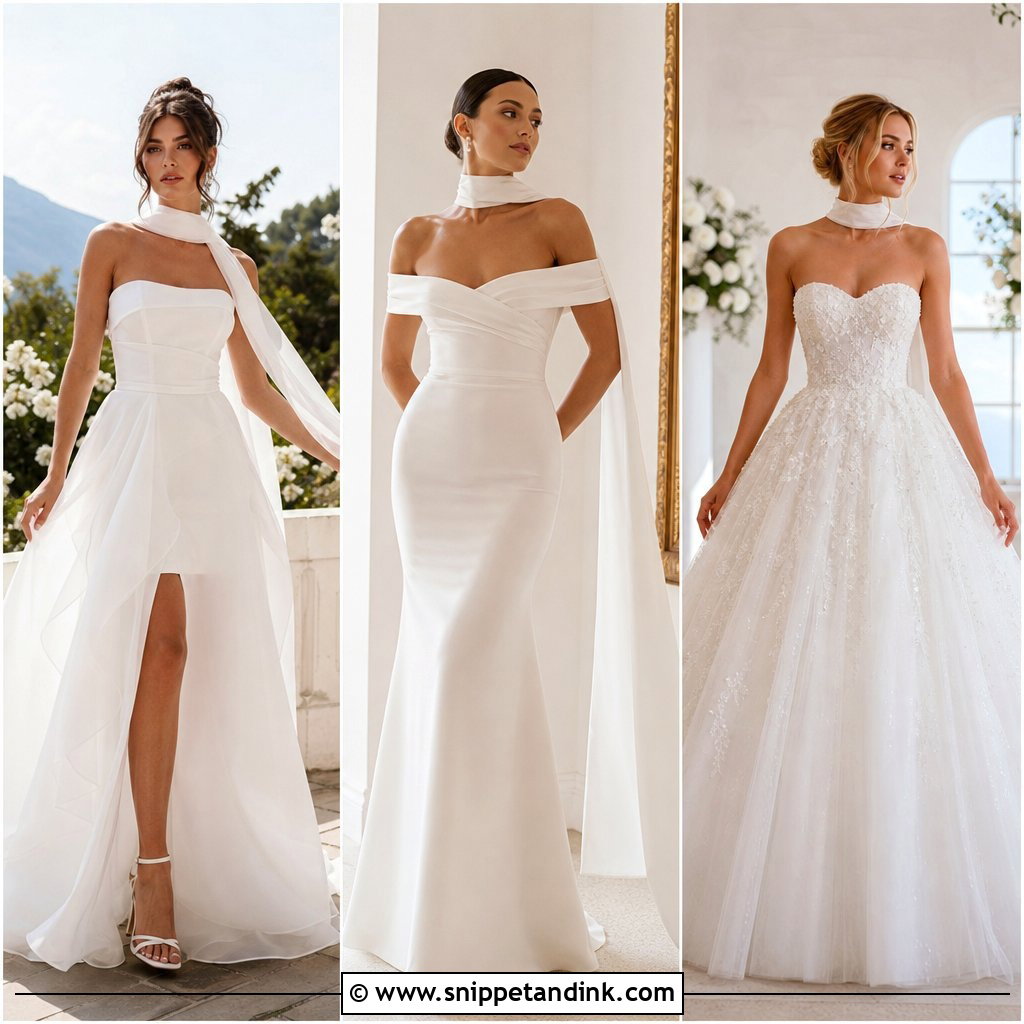
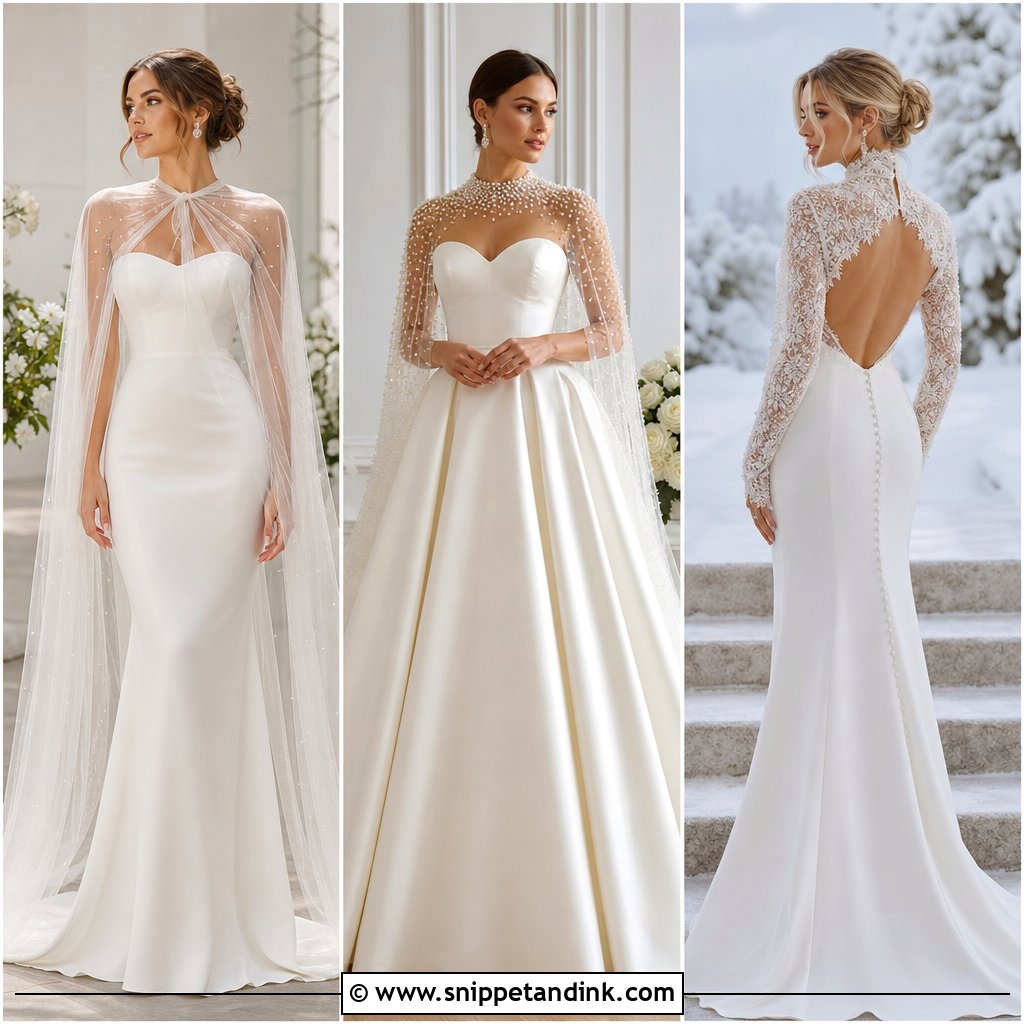
A floor-length cape makes the entrance. Sheer chiffon floats behind you; structured satin gives a more architectural line. It fastens at the shoulders of a sleeveless column, A-line or fitted gown, and because it does most of what a veil does, I usually suggest skipping the long veil and keeping a short blusher only if you want a face covering. Most capes are made as a ceremony layer that comes off for a lighter reception look. Check the length while wearing your actual shoes; a cape that drags under the heel will pull at the neck with every step. Sleek hair, quiet earrings and a simple bouquet finish it.
7. Wedding Dress With Cape Sleeves
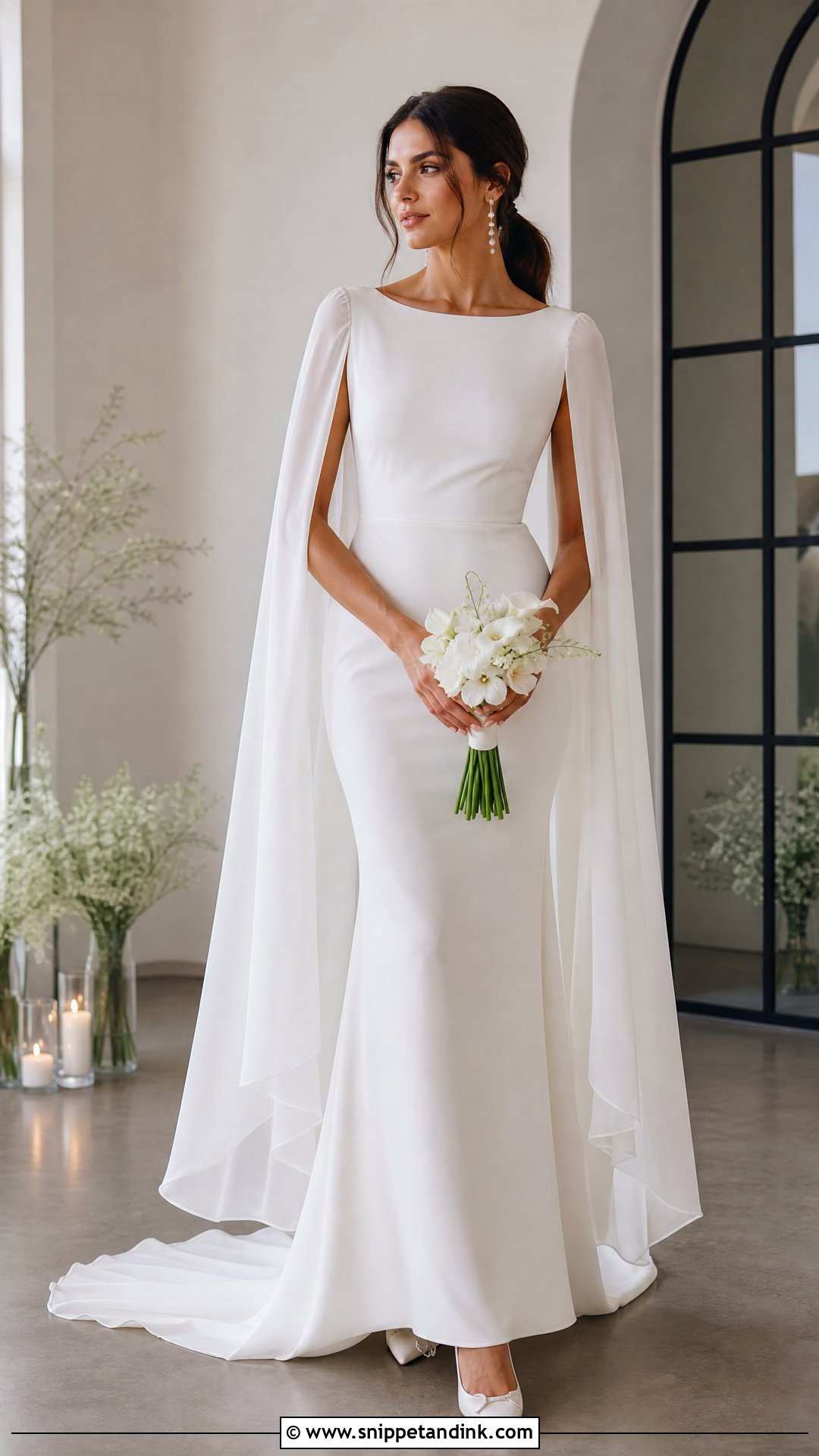
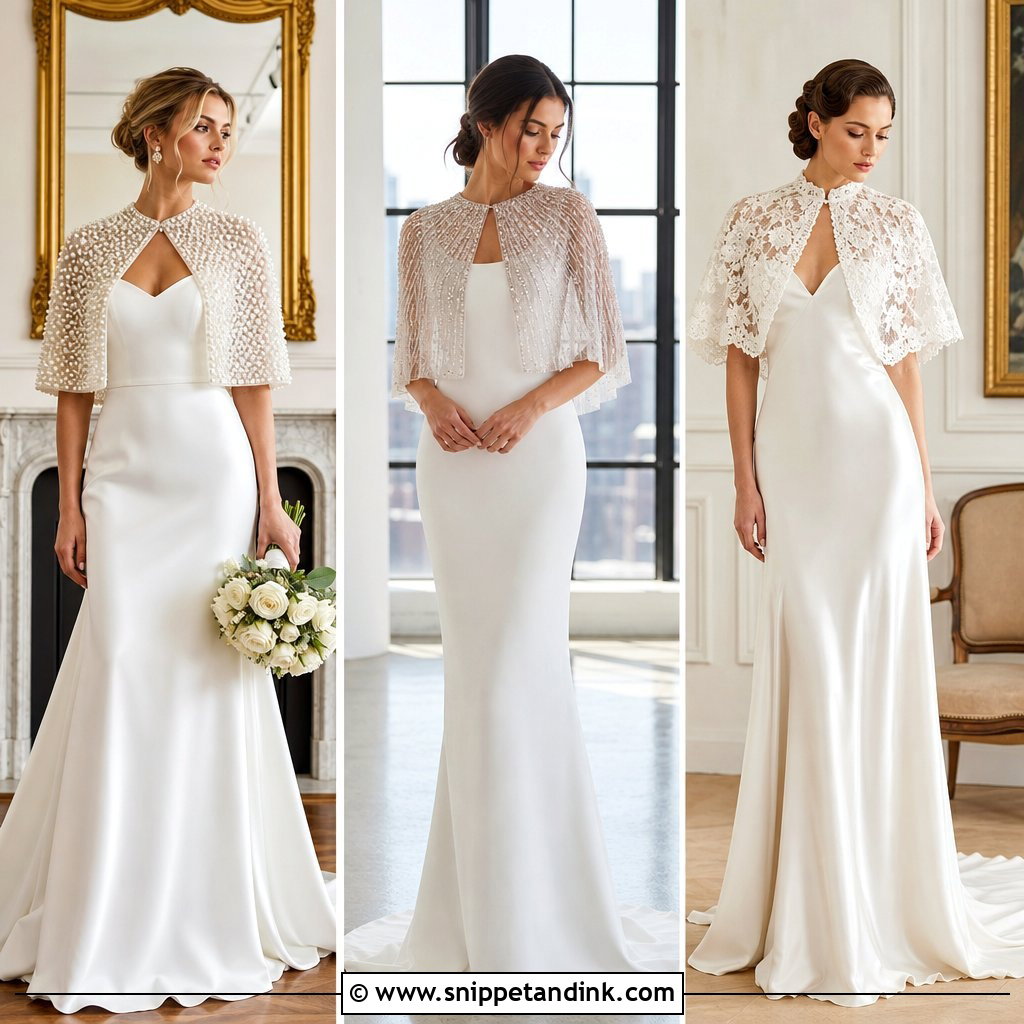
Cape sleeves fall loose from the shoulder or upper arm, so you get coverage without anything gripping the arm. Chiffon or soft tulle over clean crepe looks fluid and modern; lace suits a romantic dress, and satin panels add structure. Keep the veil short or skip it so the back stays visible. I’m cautious with heavy fabrics here, since a weighty sleeve hanging off a fine strap pulls the bodice sideways. Finish with a low ponytail, slingbacks and subtle drops, then remove the sleeves at the reception and switch to bigger earrings.
8. Wedding Dress With Detachable Bow
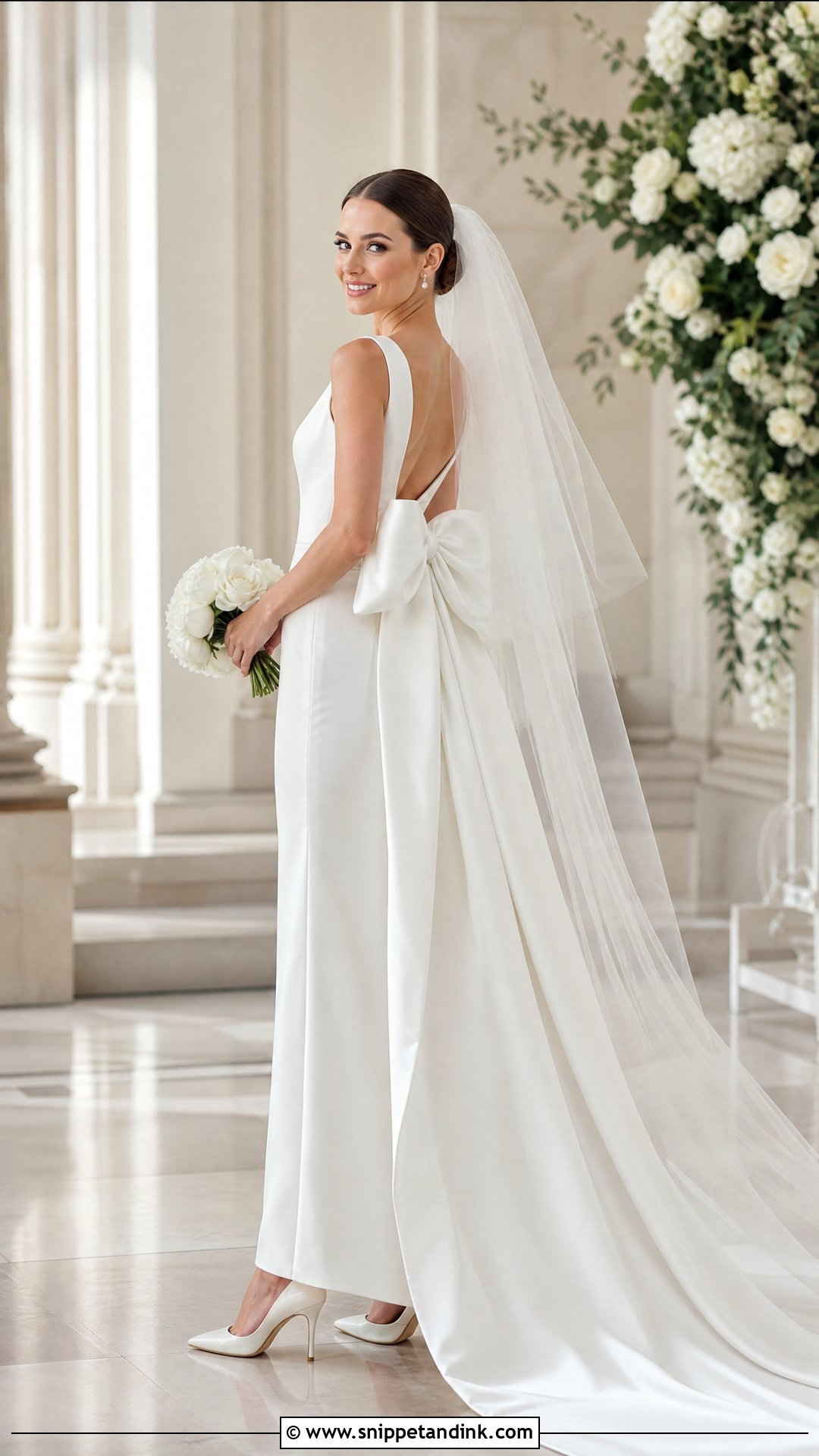
A big satin bow on the back of a clean column gown is one of the easiest ways to change how a dress reads from the aisle. Smaller organza bows sit better on a soft A-line, and long tails can mimic a narrow train. The hidden question is weight: a large bow needs a firm backing and two anchor points, or it droops and rotates off centre by the speeches. Bows are a popular removable detail right now, and they’re easy to take off for dancing. Let the veil end above the bow or well past it; a fingertip veil lying on top flattens it. A polished bun, pearl earrings and pointed pumps complete it.
9. Wedding Dress With Detachable Train
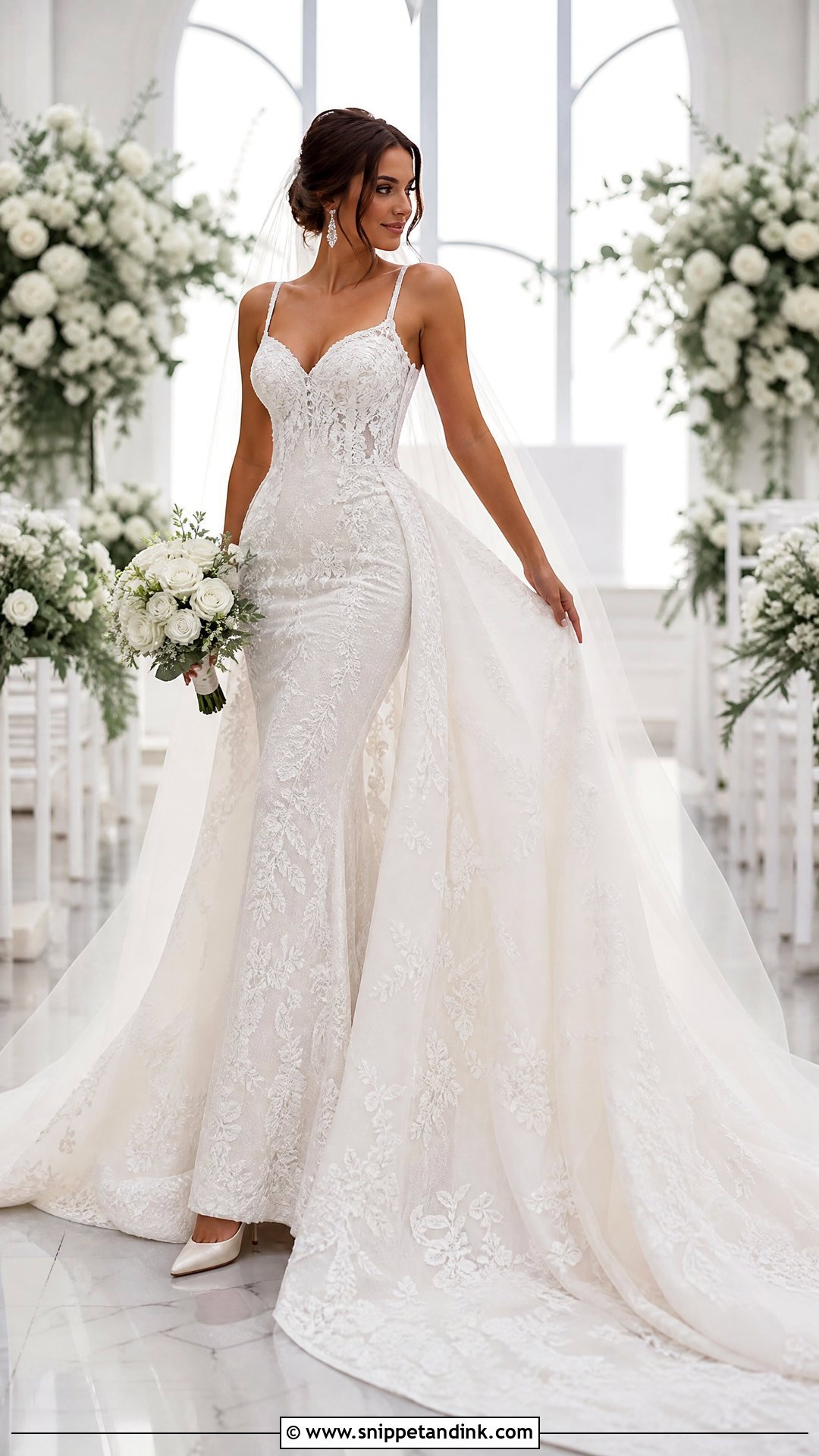
Add a chapel or cathedral train to a fitted crepe, satin or lace dress and you get a full aisle moment with a practical reception gown underneath. It can attach at the waist, lower back or shoulders, and each point changes how the train falls. Waist attachment is the most secure in my experience; shoulder trains move more but need well-fitted straps to carry the pull. Walk away from a mirror and look back over your shoulder to check for visible snaps. A veil matching or slightly longer than the train, drop earrings and a neat updo suit it. After portraits, unhook it and pick up a compact clutch.
10. Wedding Dress With Watteau Train
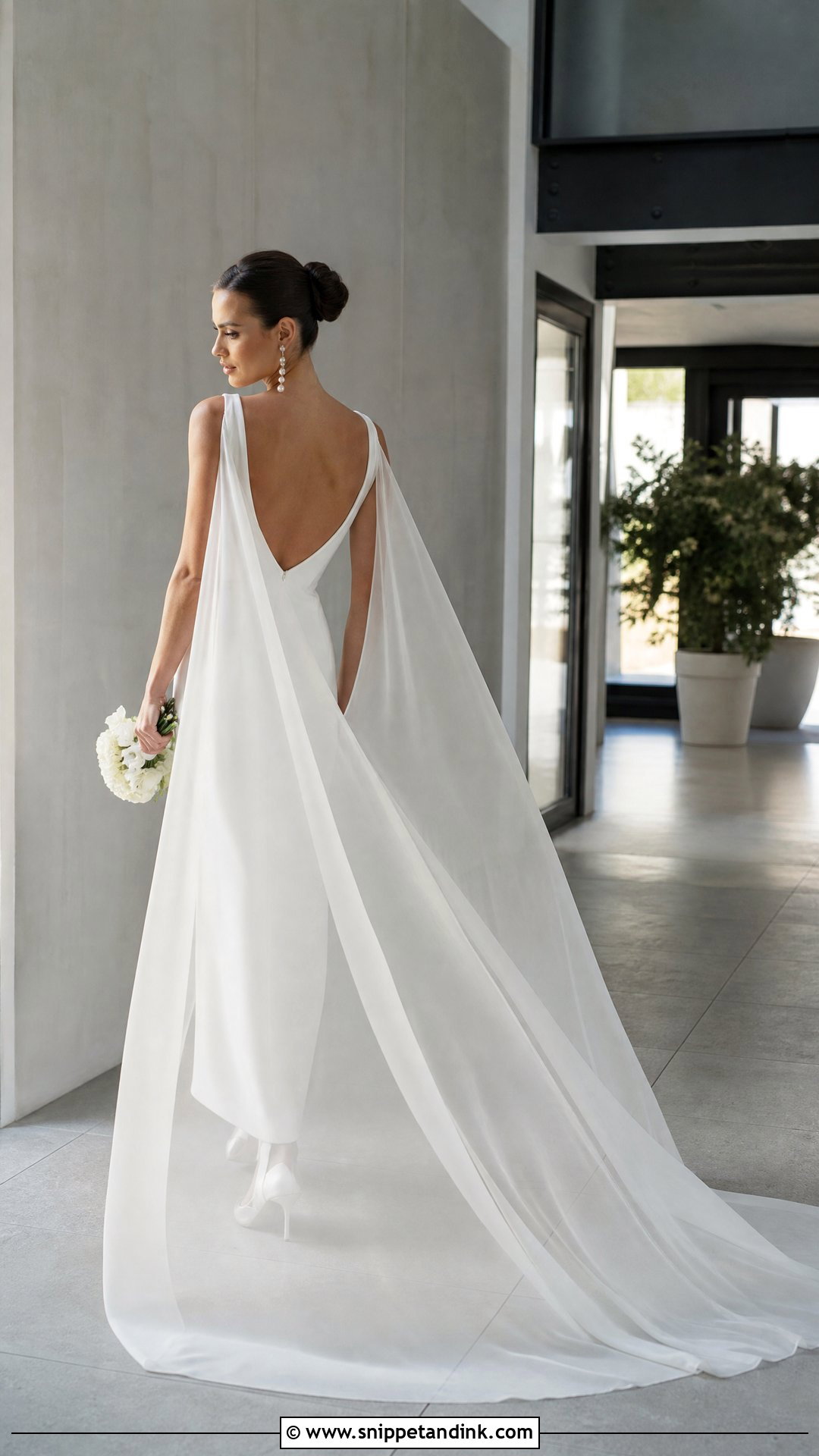
Watteau trains hang from the shoulders or upper back rather than the skirt, so the shape of a slip, column or sheath stays fully visible underneath. Sheer tulle feels airy; satin draws a firmer line. Width changes everything: a narrow panel is understated, while a broad one creates real drama. I check where the attachment sits relative to the hair, because a high updo can sit right on the fastening and press it into the neck. Wear a sleek bun, long earrings and pointed pumps with no veil at all. Detach it after the ceremony and the clean back of the dress takes over.
11. Wedding Dress With Lace Bolero
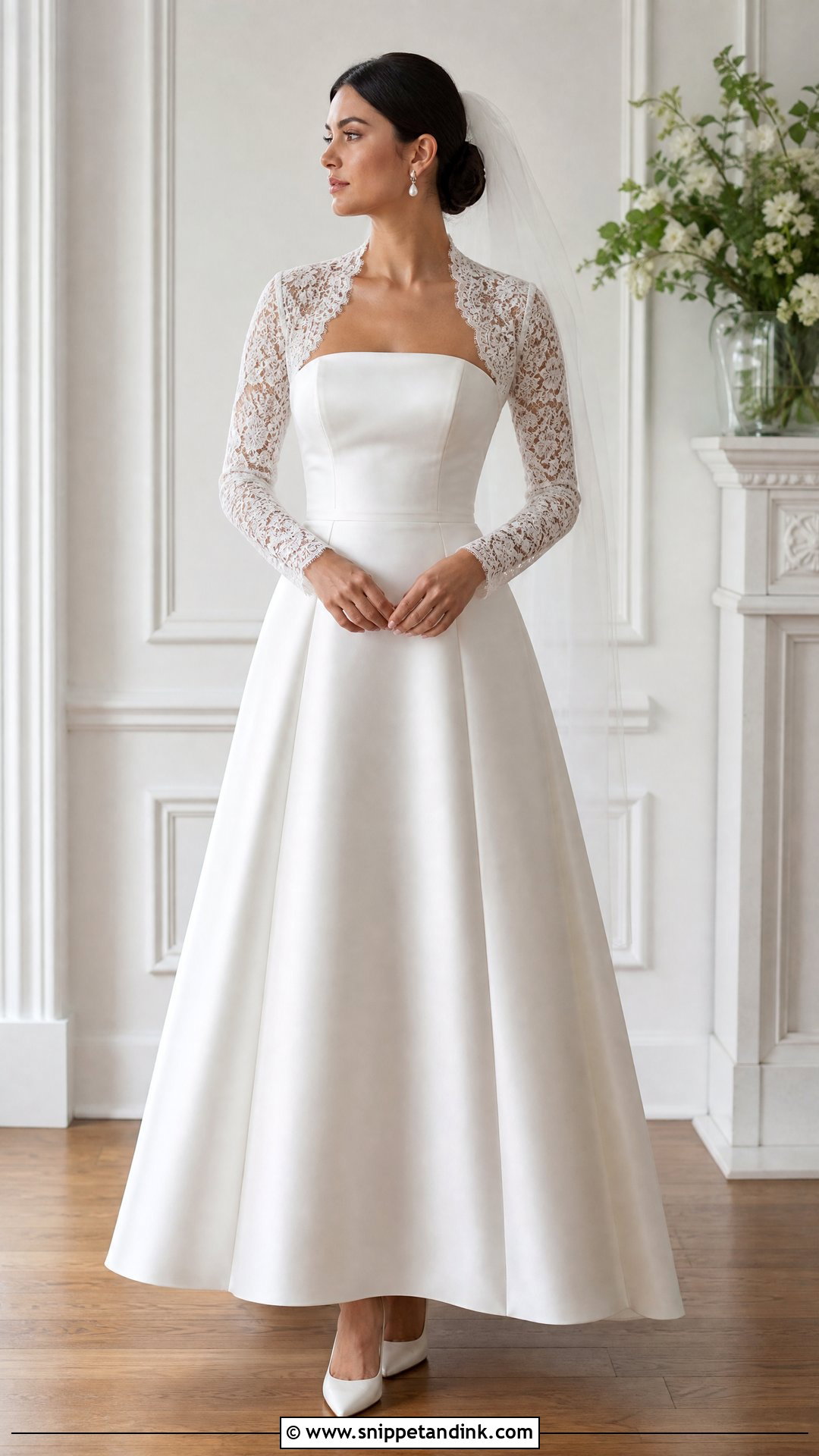
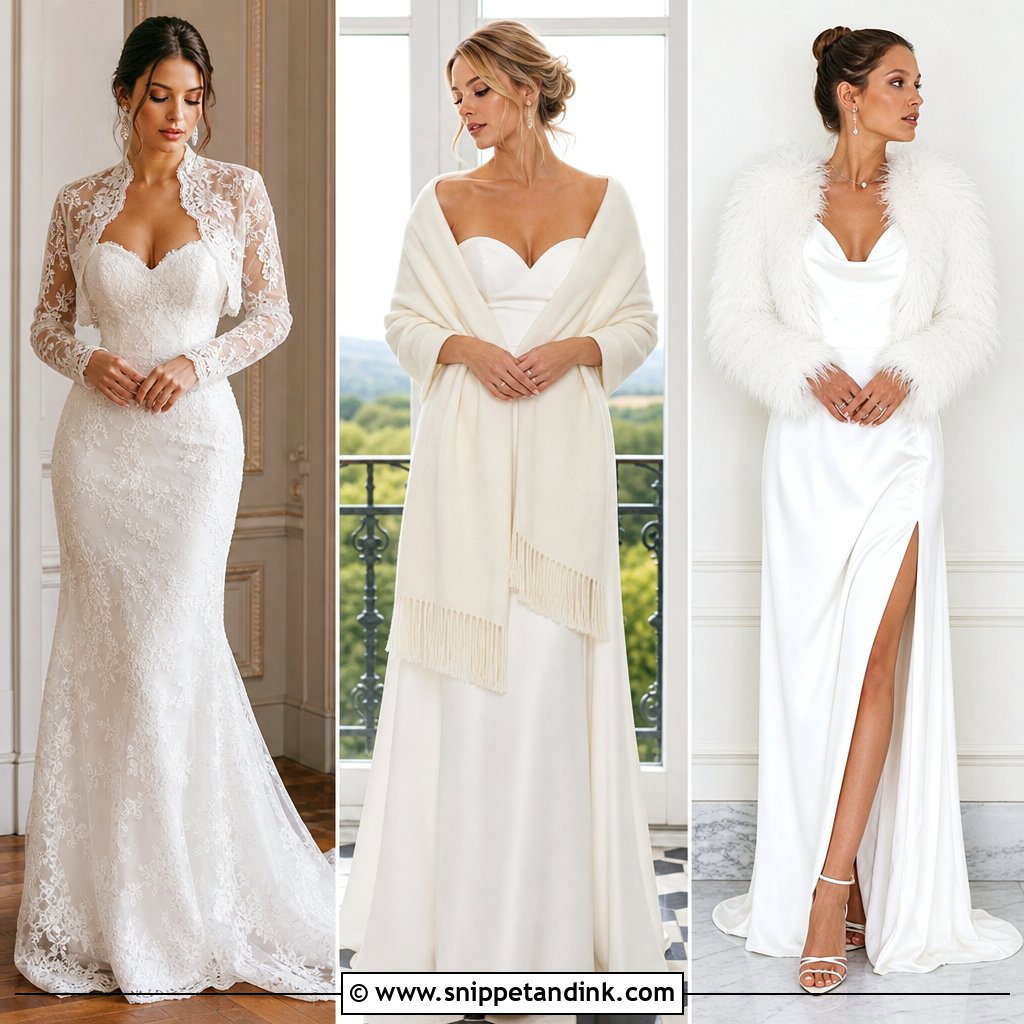
A lace bolero covers shoulders and arms while leaving the dress underneath on show. A waist-length cut over a strapless satin gown or sleeveless crepe works best. Repeat the gown’s floral pattern, or choose a fine Chantilly-style lace for gentle contrast. Where the hem ends matters more than most brides expect: I aim for the natural waist, because a bolero stopping at the widest part of the ribcage makes the torso look boxy. Check that the neckline sits flat without bunching. Pearl earrings, a low bun and closed-toe pumps finish it, and taking it off later reveals the original bodice.
12. Wedding Dress With Sheer Bridal Topper
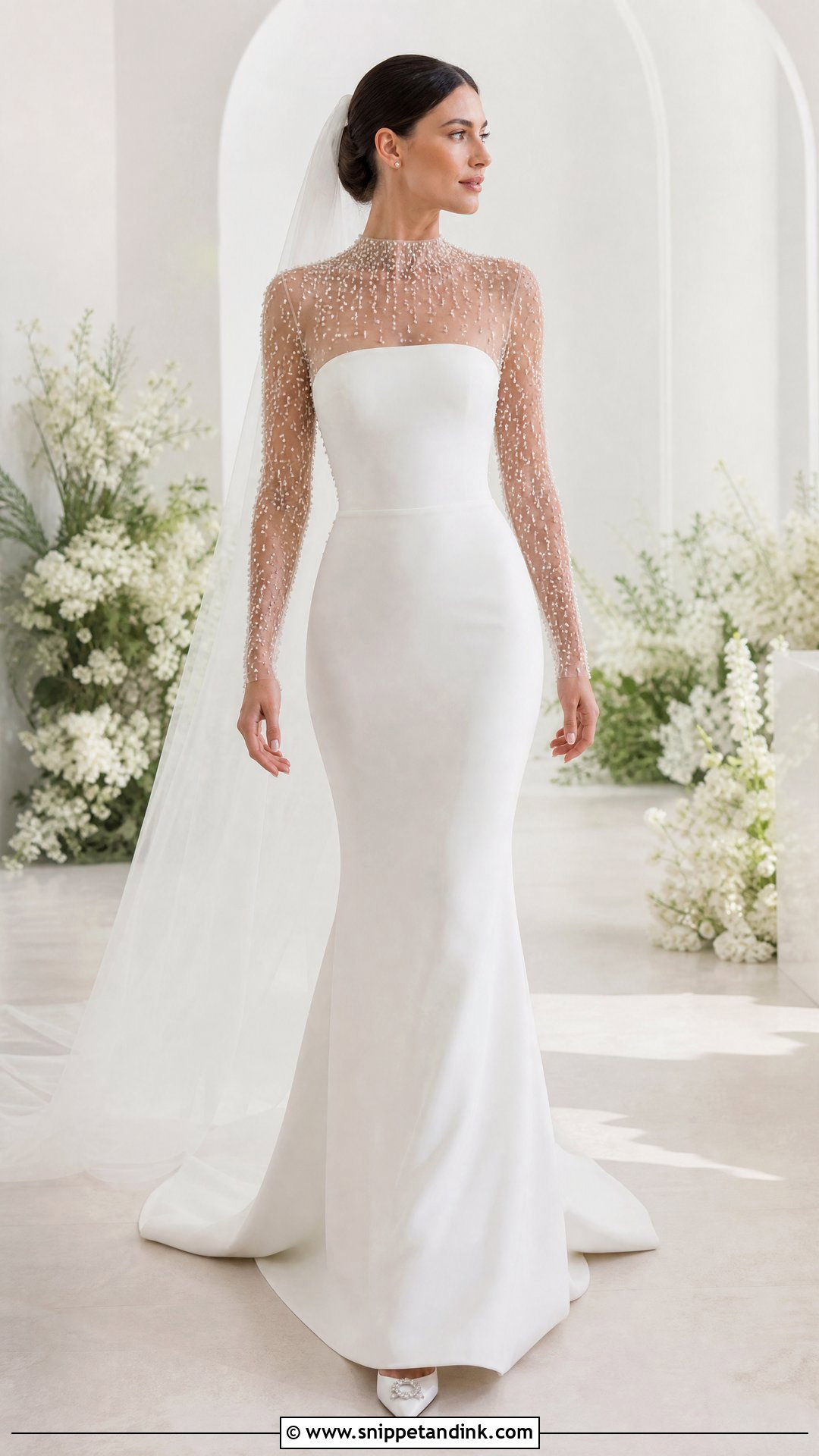
A sheer topper adds sleeves, a higher neckline or embroidery to a minimalist strapless or spaghetti-strap gown. Pearl beading gives subtle texture; floral appliqués look more romantic. Keep seams and closures discreet, and make sure the topper lies flat without pulling the bodice beneath it. Tulle can itch along the neckline and underarm, so I ask brides to wear it for a good half hour at the fitting before deciding. A neat chignon, small studs and a plain veil suit the ceremony. Remove it later and refresh the reception look with statement earrings, looser hair or a brighter lip.
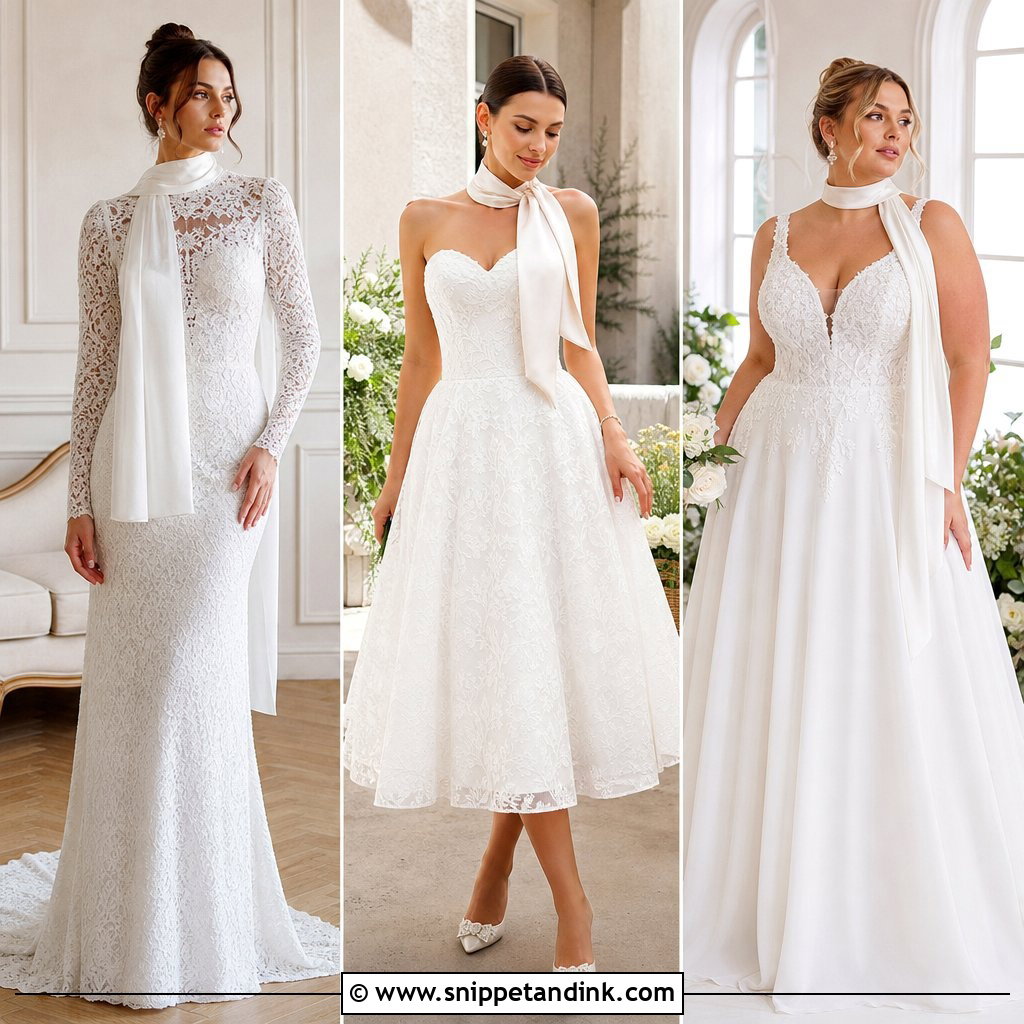
13. Wedding Dress With Bridal Scarf
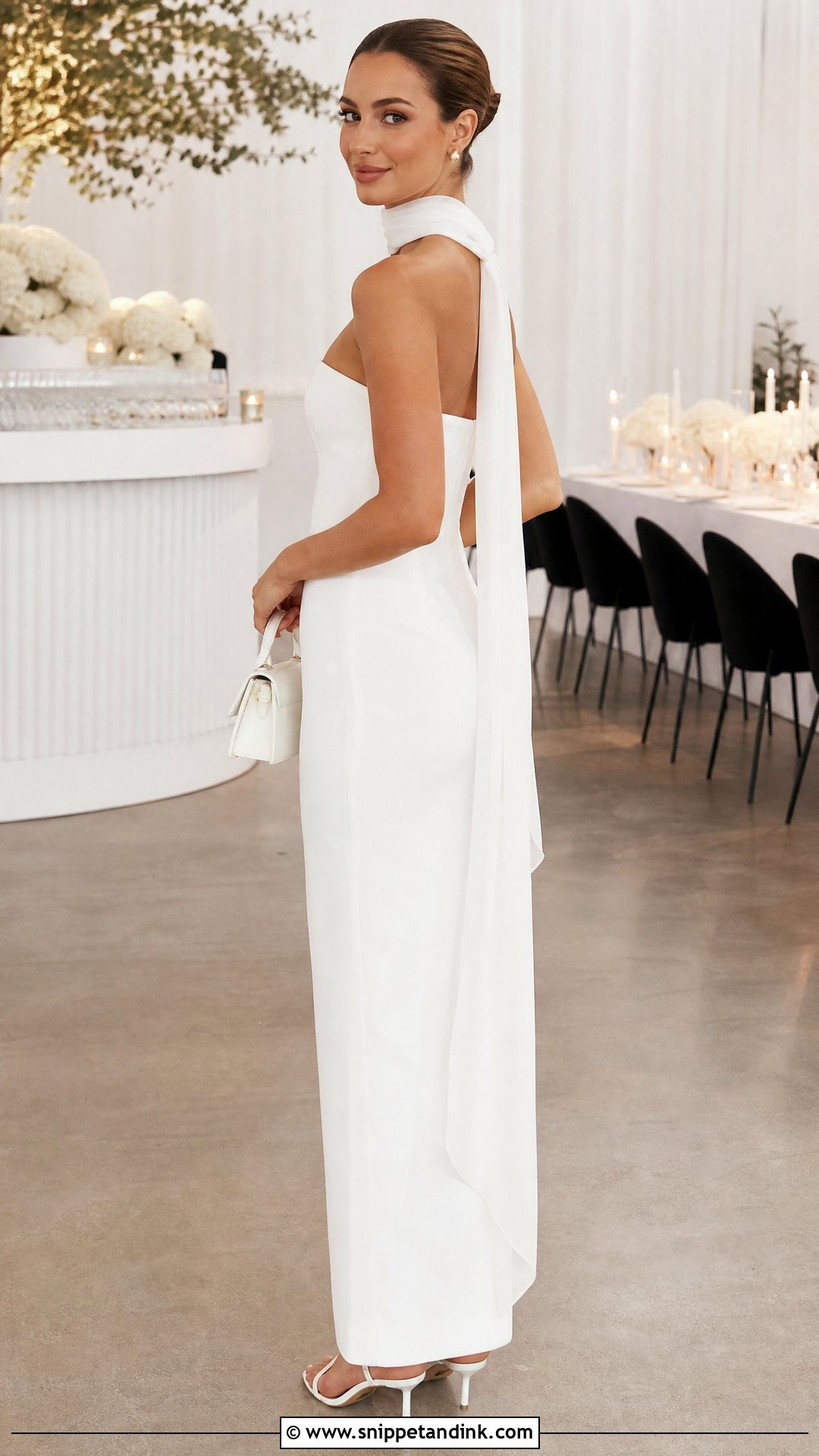
A long, narrow scarf looped at the neck with its ends falling down the back is a cleaner, more modern alternative to a veil. Chiffon, organza or light satin all work, especially with strapless columns, halters and square necklines. Skip the necklace. I secure the scarf with a small hidden stitch or a couple of discreet pins at the back of the bodice, because otherwise it slides every time you turn your head. Bridal neck scarves have become a popular swap for capes and veils, and a short veil can still go on top for the ceremony. A smooth bun, small earrings, slingbacks and a mini bag complete it.
14. Wedding Dress With Bridal Gloves
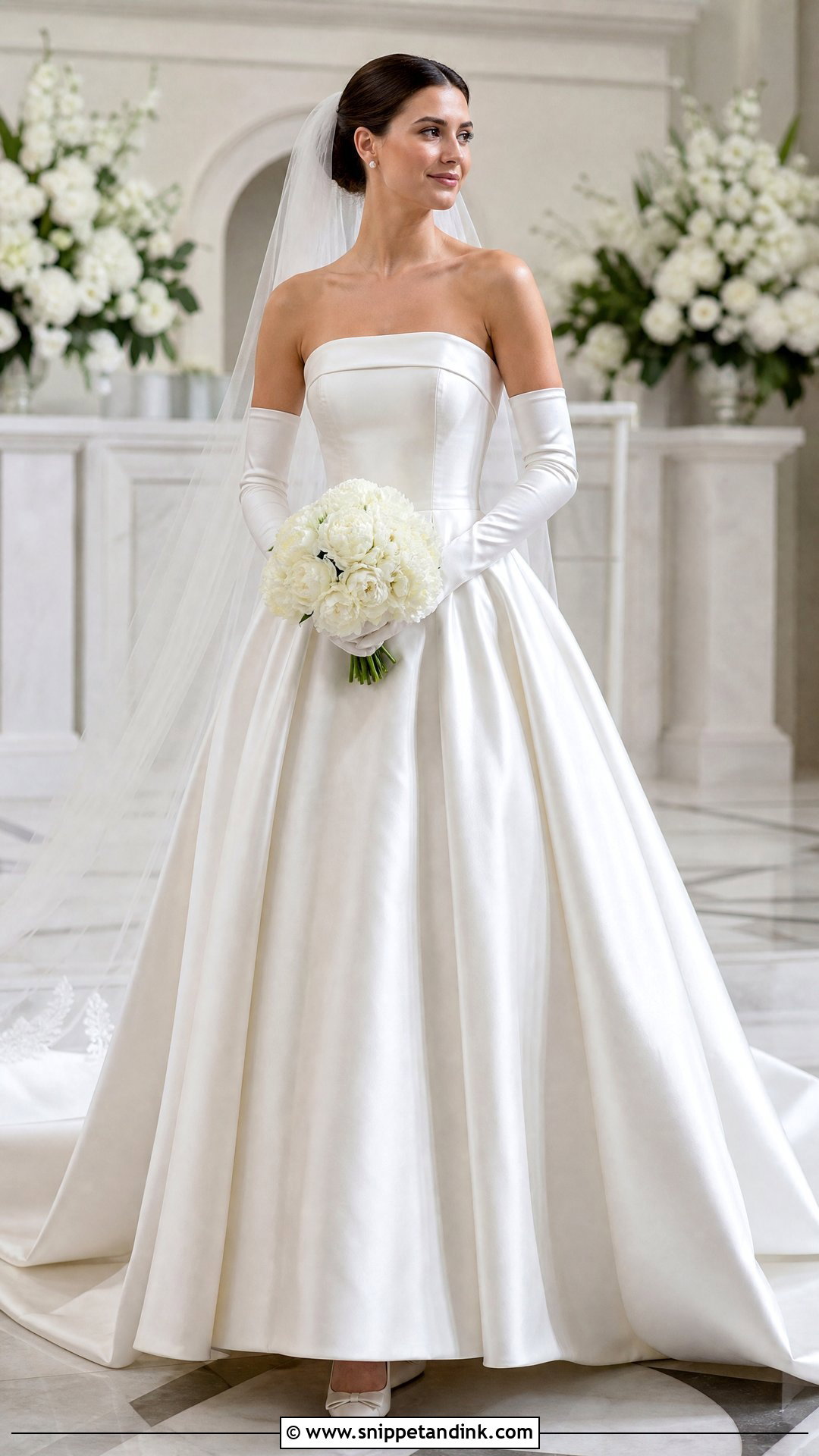
Gloves change a dress without touching it. Long opera-length satin gloves look classic with a strapless ball gown; sheer wrist-length ones suit a lace A-line. Coordinate the shade, since bright white gloves beside an ivory gown look stark. The ring exchange is the moment that catches brides out. Practise it at home: you’ll either remove the left glove before the ceremony and hand it to someone, or have a seam opened at the ring finger. Leave bracelets off, as they snag. Pearl studs, a smooth updo and pointed heels finish it, and both gloves come off at the reception.
15. Wedding Dress With Pearl Straps
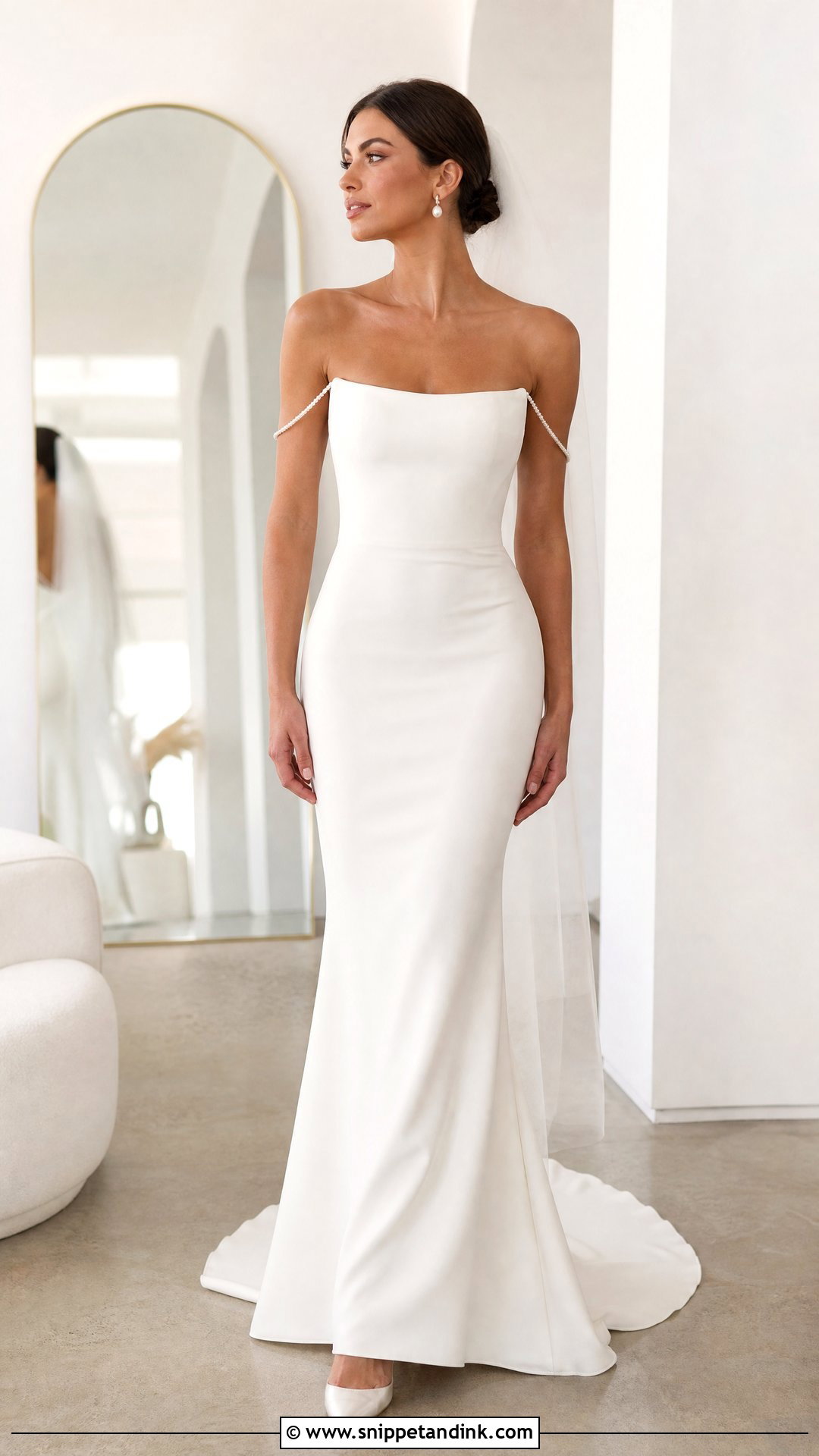
Pearl straps add soft shine to the neckline of a strapless or thin-strap gown, and they show up best against plain satin or crepe. Single strands look delicate; layered strands carry more weight visually. Even decorative straps need strong attachment points, so I tug them gently at the fitting to make sure they don’t stretch the bodice edge. Check the underarm too, because pearls rubbing there through a long evening get uncomfortable. Pearl earrings, a low bun, pointed pumps and a plain tulle veil keep it calm. Skip any pearl necklace, which crowds the neckline. Detach the straps later for a minimal reception look.
16. Wedding Dress With Bridal Belt
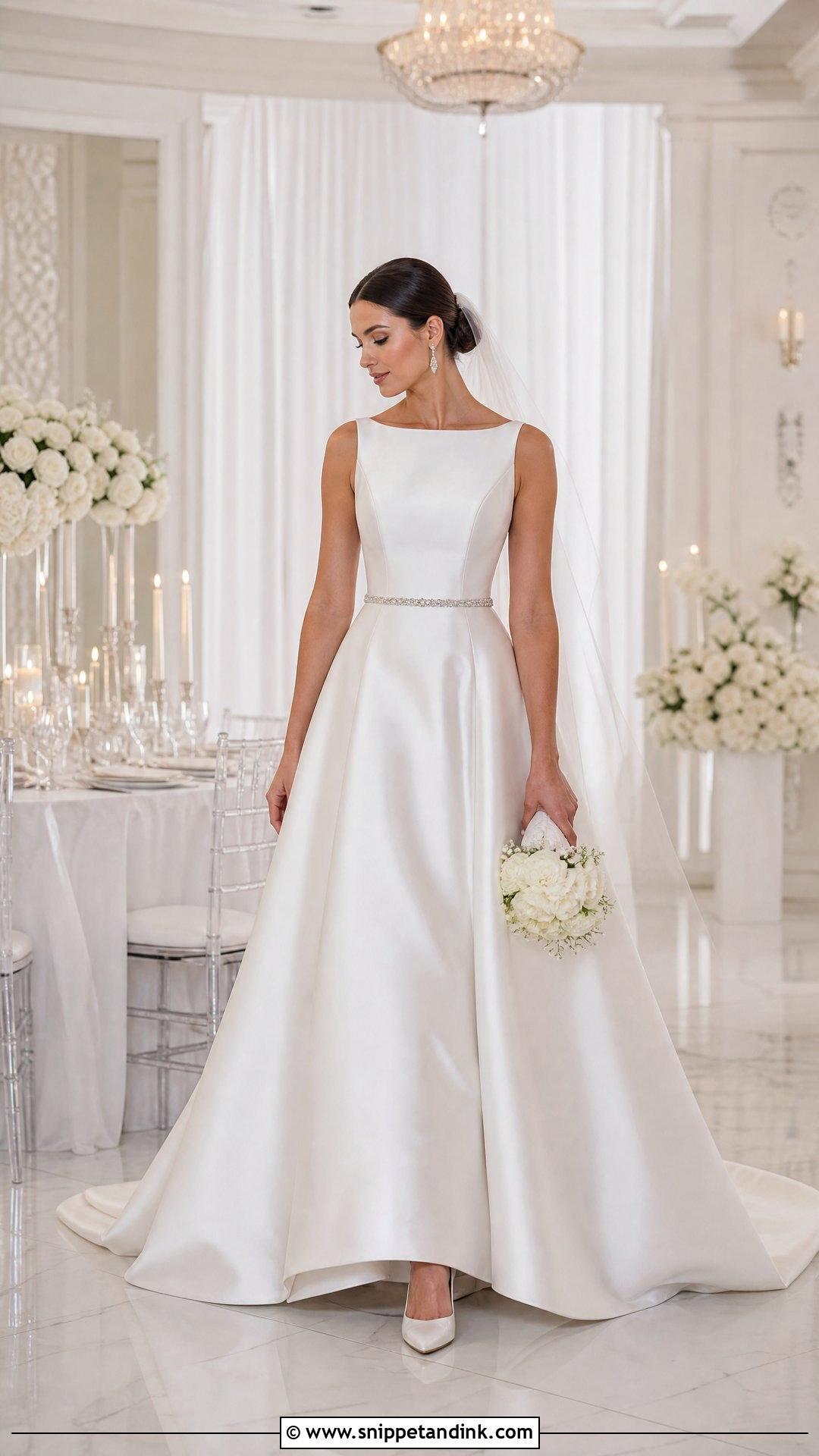
A belt defines the waist and links a detailed bodice to a plain skirt. A narrow crystal belt gives a satin A-line a little sparkle; a pearl sash reads softer. Wear it at the natural waist unless the gown’s seams say otherwise. Sitting is where belts misbehave: stiff beaded belts can dig in and buckle when you sit at dinner, so I have brides sit in theirs before buying. Keep the fastening flat at the back and hidden under any bow or train. On heavy lace, a plain satin sash usually looks better than another bead pattern. Remove it for a cleaner reception outline.
17. Wedding Dress With Detachable Peplum
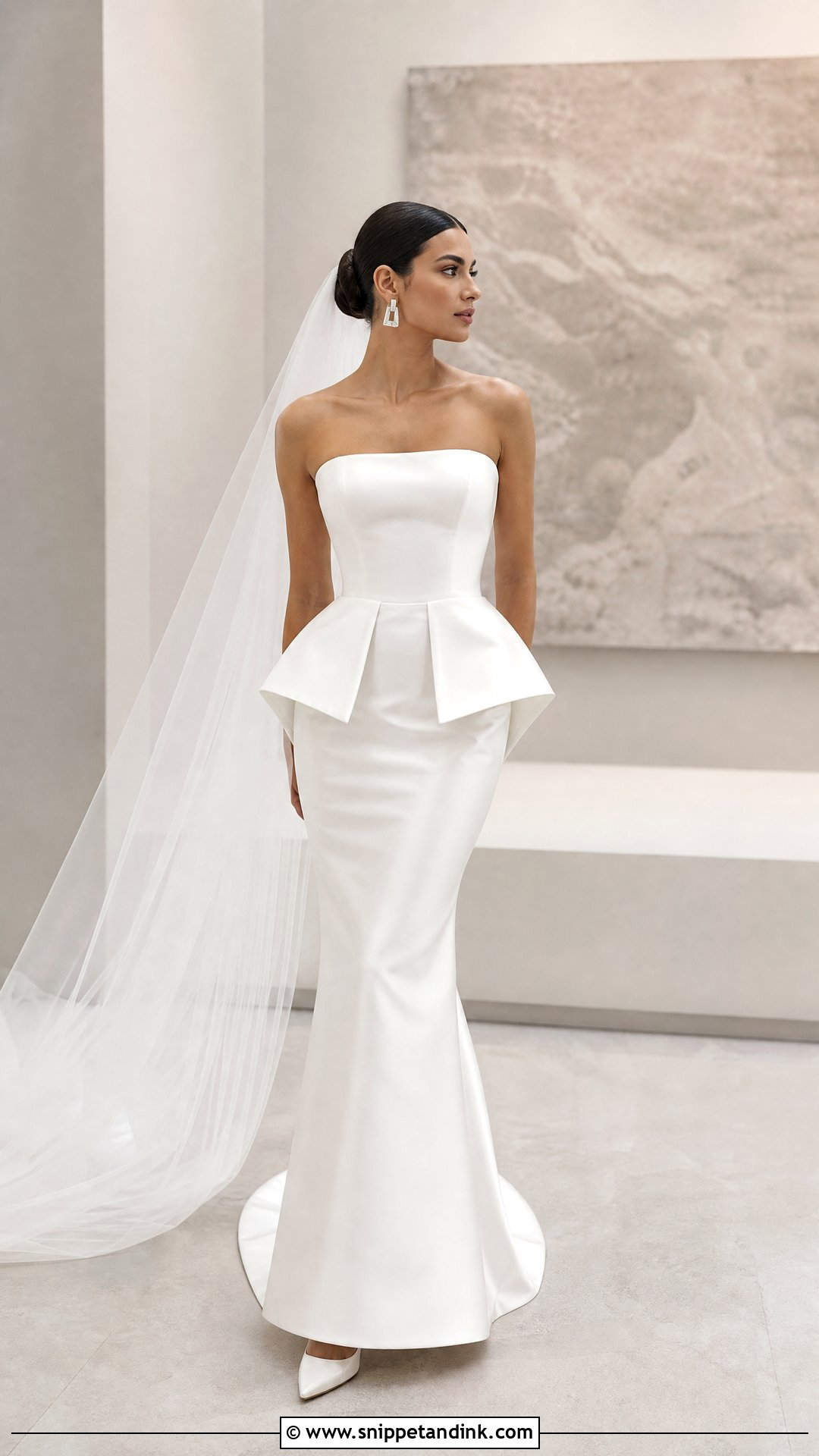
A detachable peplum shifts the proportions of a fitted dress by adding structure at the waist. Sculpted satin over a strapless column or mermaid looks sharp; soft tulle reads more romantic with less volume. Generic sizes rarely work here. A tailor should shape the peplum around your actual dress so it starts at the narrowest point of the waist and sits smoothly over the hip instead of flaring out at the side seams. Geometric earrings, a smooth bun, pointed pumps and a veil without lace edging suit it. Take it off for the reception and the fitted gown is back.
18. Wedding Dress With 3D Floral Appliqués
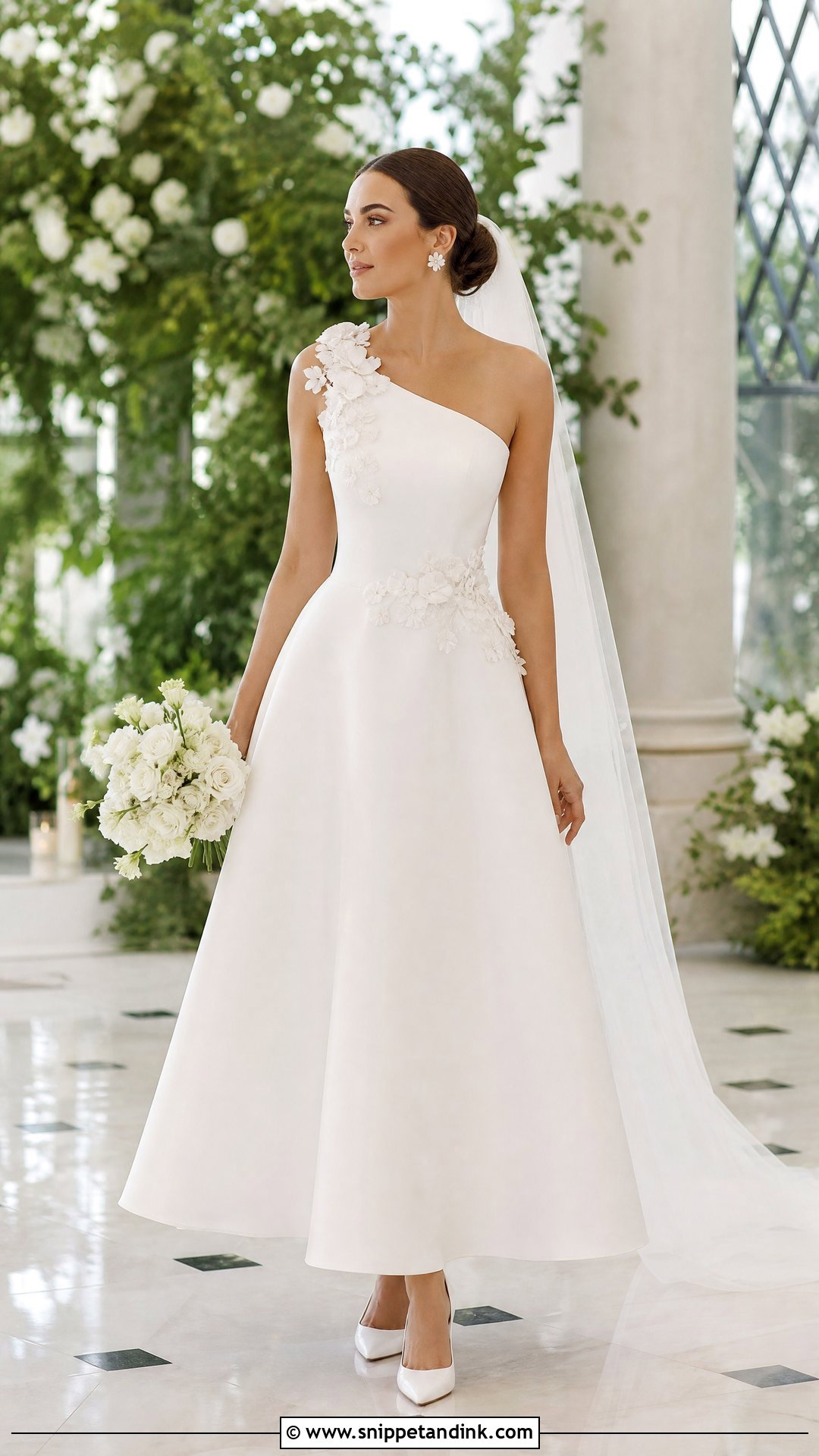
Removable 3D flowers add texture to a plain bodice, neckline, waist or skirt. A tight cluster on one shoulder makes a focused accent; small flowers scattered over a detachable topper look softer. Sewn-on appliqués hold better than adhesive ones, while a detachable panel gives more flexibility. I place them during a fitting with the dress on, pinning a few positions and checking each in a mirror, since flowers that look right on a hanger can land awkwardly on the body. Match the undertone and keep them light enough not to drag the fabric. Simple pumps, floral earrings, a low bun and a plain veil let them lead.
19. Wedding Dress With Bridal Jacket
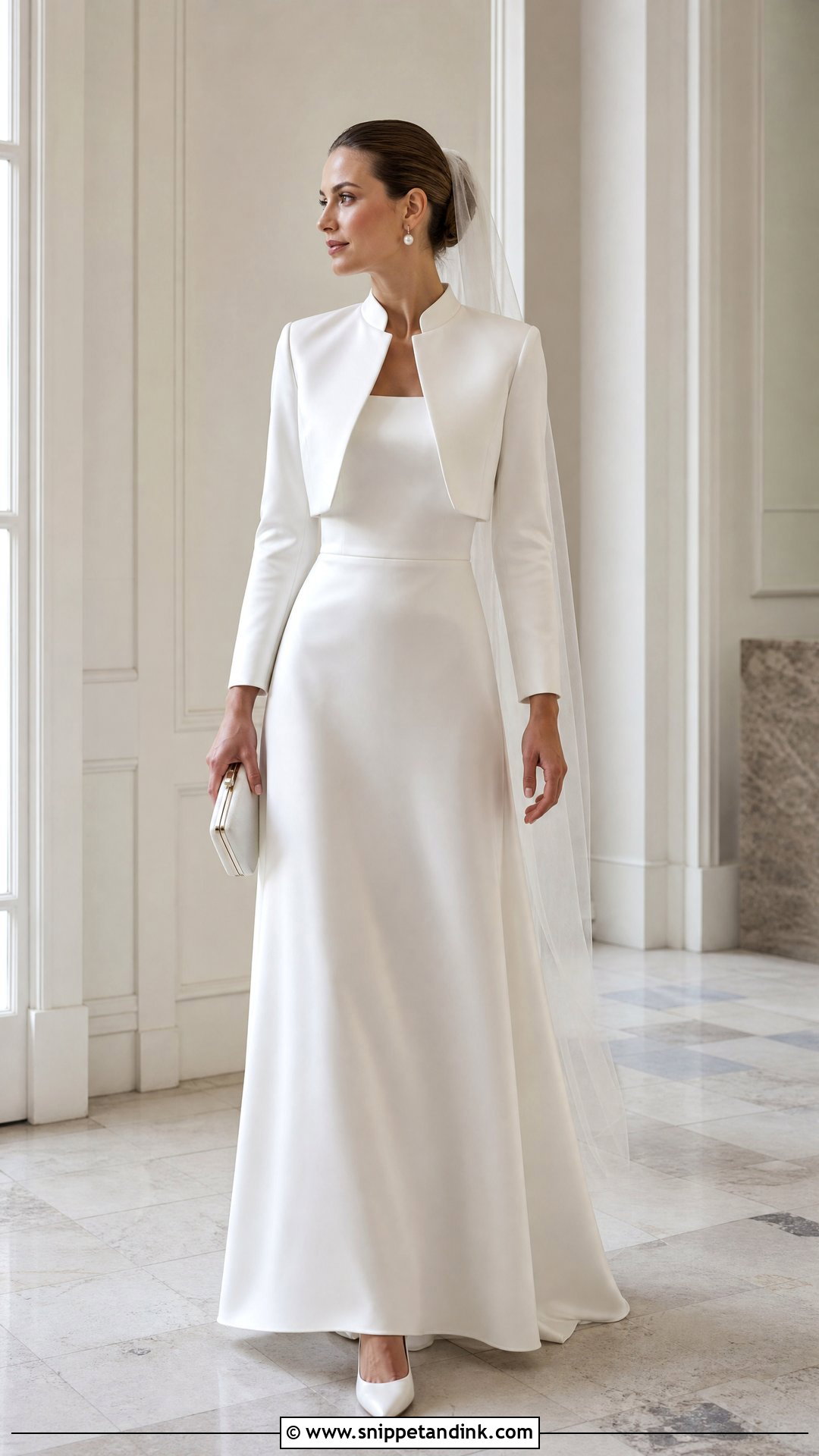
For cool weather or outdoor portraits, a jacket gives warmth and coverage without hiding the dress entirely. A cropped satin jacket suits a modern gown, lace suits a romantic one, and faux fur works for winter. The jacket hem should line up with the waist or bodice seam; ending a few centimetres off makes the outfit look cut in half. Bring the gown to every jacket fitting so the whites and textures can be compared together. Closed-toe pumps, pearl earrings and a polished bun finish it. Once indoors, drop the jacket and carry a small clutch.
20. Wedding Dress With Detachable Shoulder Drapes
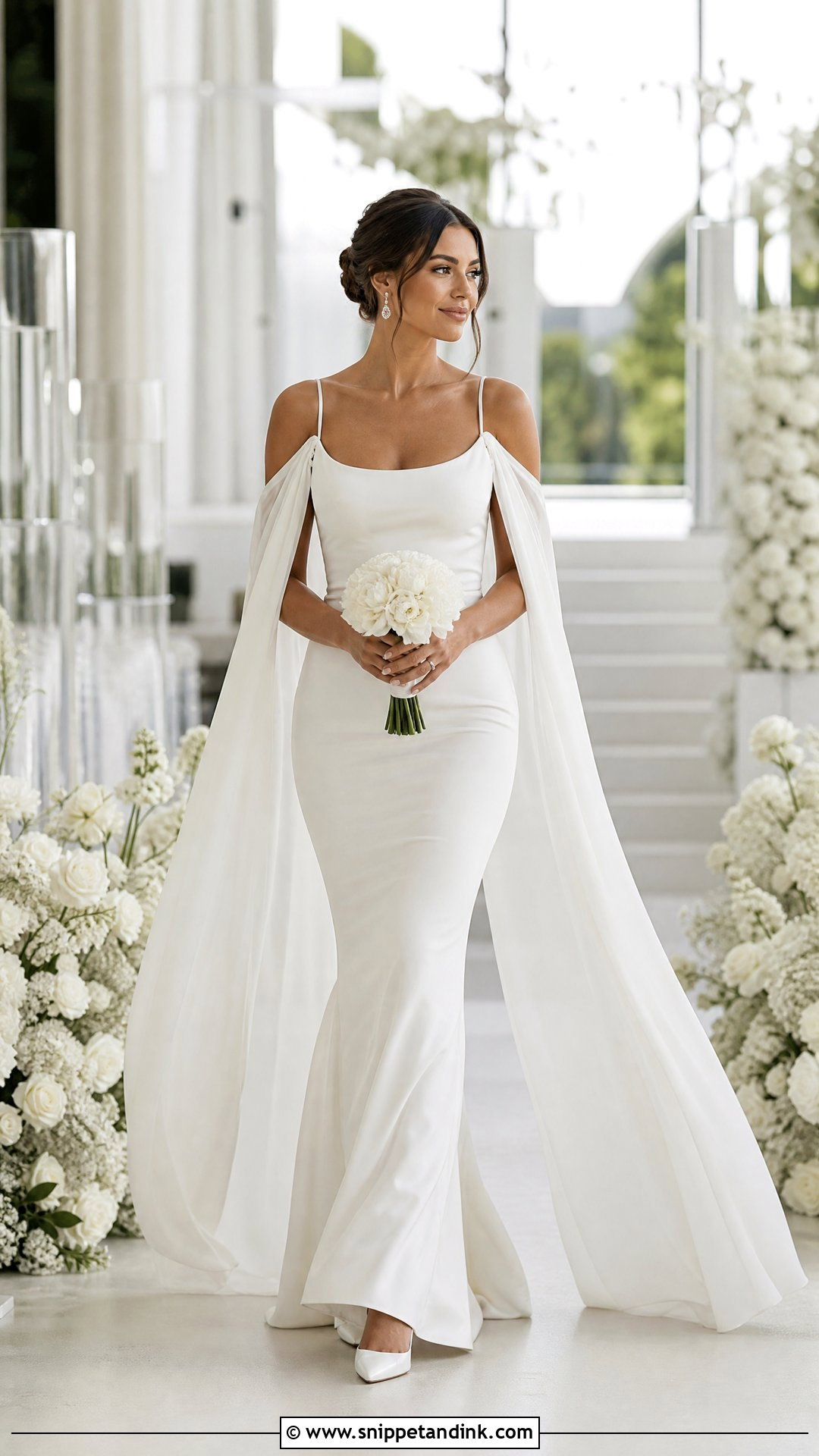
Shoulder drapes frame the neckline and move as you walk. Chiffon, tulle or organza panels attach to the straps or back of a fitted gown; short drapes resemble loose sleeves, and floor-length ones act like a cape. Keep the front of the bodice clean so the fabric leads. The attachment points need reinforcing but should hide under appliqués, buttons or small loops, and I check them from behind, since that’s what guests see during the vows. Wear an updo, delicate earrings and pointed heels with a short veil or none. Remove the drapes for the party, then loosen your hair or add bigger earrings.
Snaps, Hooks and Hidden Loops: How Add-Ons Actually Attach
The fastening decides whether an add-on comes off in thirty seconds or ten minutes, and whether it stays put through the ceremony. Ask your seamstress which method she plans to use before she starts, because each one suits a different weight of fabric.
- Snaps: quick and flat, fine for light sleeves and scarves, but they can pop open under a heavy train.
- Hooks and thread loops: stronger and nearly invisible, the usual choice for overskirts, belts and bows.
- Buttons with elastic loops: secure and easy to undo with someone’s help, common on trains.
- Ribbon ties: adjustable and gentle on fabric, though bulkier under a fitted bodice.
- Sewn-in placement tabs: small fabric tabs on the dress that line up the add-on in the same spot every time.
The Changeover Between Ceremony and Party
Taking something off sounds simple until you’re doing it in a corridor with a photographer waiting. Plan it like a costume change and it takes a few minutes.
- Choose one helper who attended your final fitting and knows where every fastening sits.
- Pick a private room near the reception and book it on the timeline for ten to fifteen minutes.
- Have a labelled garment bag ready so the removed piece doesn’t end up on a chair.
- Do a quick check in the mirror for stray threads, loose loops or creases where the piece sat.
- Swap accessories at the same time: bigger earrings, a looser hairstyle or a different shoe.
Will Your Dress Work With One Extra Piece or Two?
A single well-made addition can change the shape, coverage and mood of a gown you already love. Start by naming what the dress lacks, whether that’s volume, arm coverage, a defined waist or ceremony drama, then pick one main piece and keep the other accessories quiet. Two add-ons can work if they sit in different zones, such as sleeves and a train. Bring every removable item to each fitting so your seamstress can check colour, placement, comfort and security on your body. Then walk, sit and hug someone in the full outfit before you sign off.
You'll Like These Ideas:


Leave a Reply