
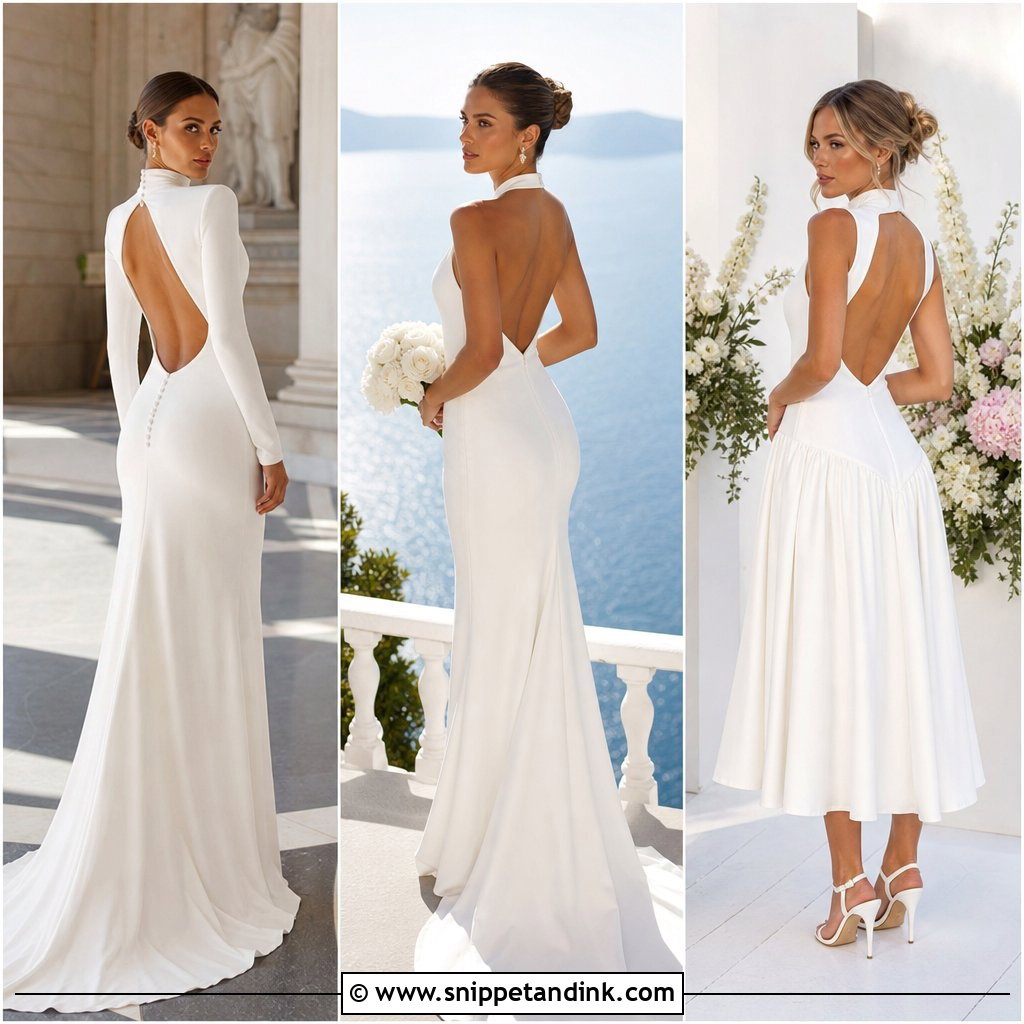
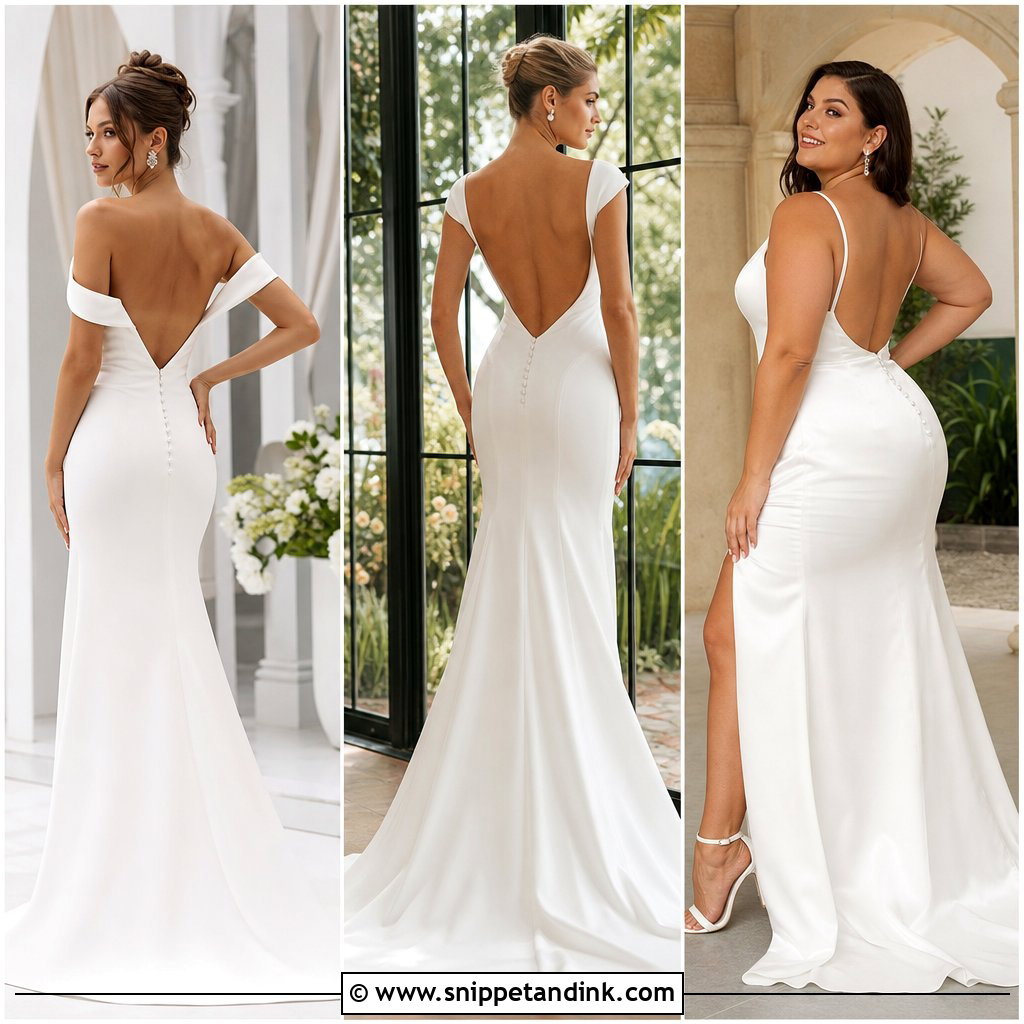
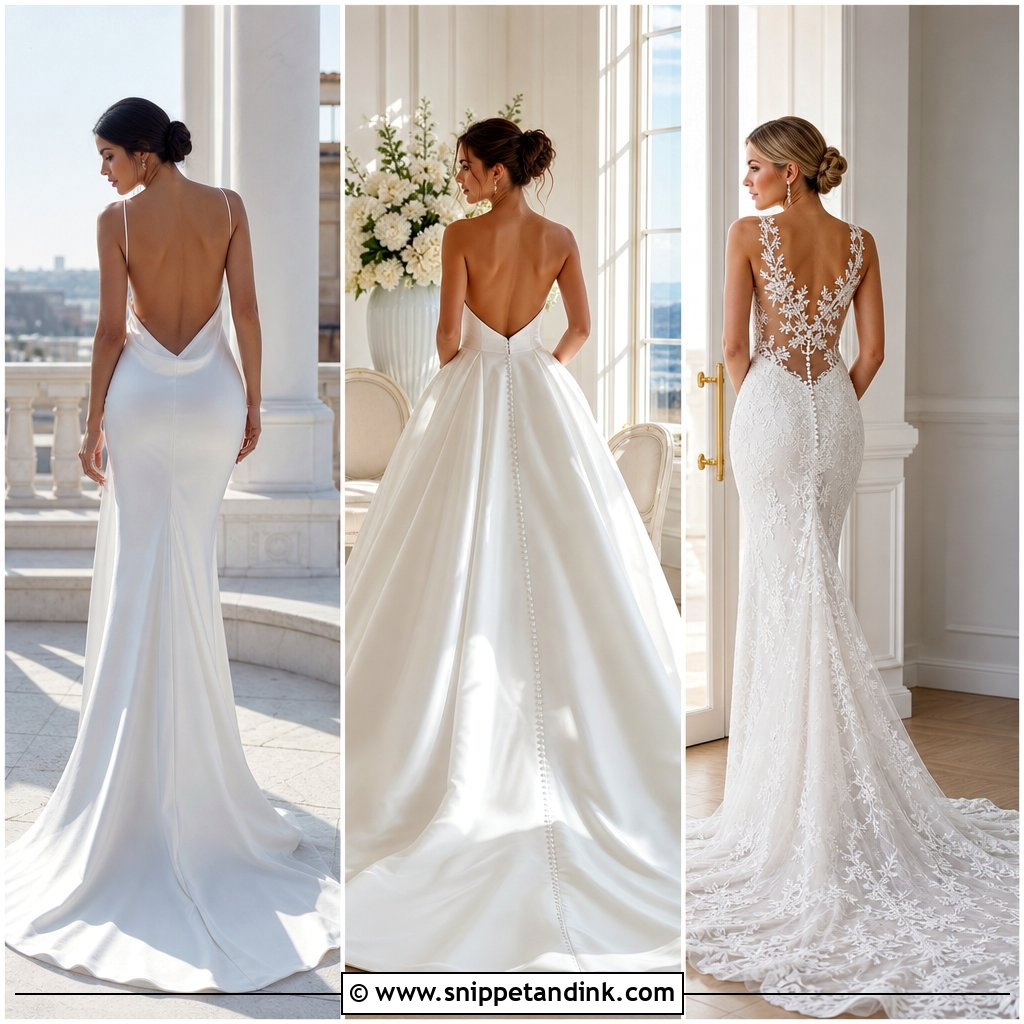
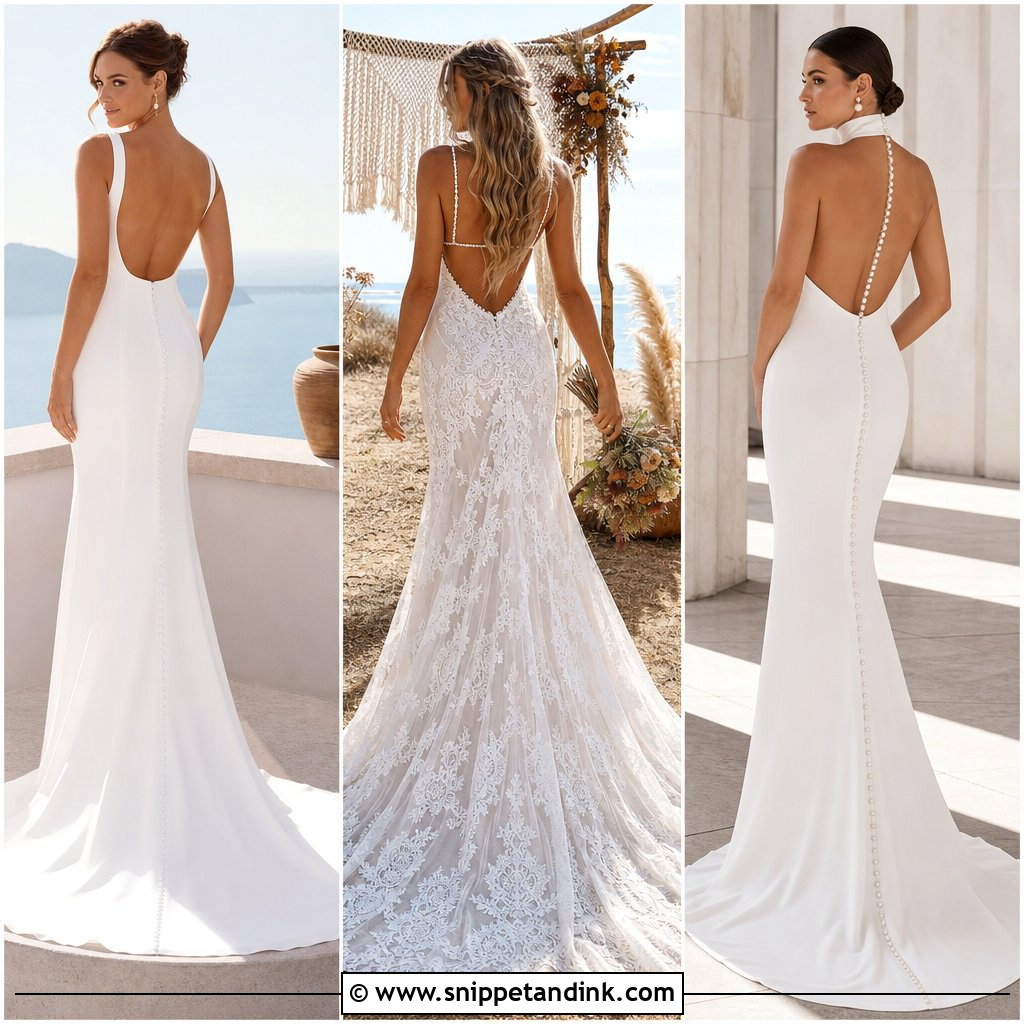
Lace and an open back suit each other better than almost any other pairing, because lace can be cut around its own motifs. Instead of a hard hem, the edge of the back can follow the outline of a flower or a scallop, which is why these gowns look so finished from behind. The dresses here all have striking open-back details: deep V backs, sheer illusion panels, button rows and scalloped borders, on everything from classic A-lines to slim, body-skimming shapes. Each comes styled with a veil, shoes, jewelry and hair, plus what I’d look at when you try it on. Your venue, how much coverage you want and how much support you need will narrow the field quickly.
Chantilly, Alençon or Guipure Behind an Open Back
Shops often just say “lace”, but the type changes how an open back looks and behaves. Ask which lace is on the gown, then feel it. These are the ones you’ll meet most often.
- Chantilly is fine, flat and soft, with delicate patterns outlined in a thin thread. It drapes beautifully over a bias or sheath cut and feels light against bare skin, but it’s the most fragile of the group and snags easily on jewelry and bouquet wire.
- Alençon, and the re-embroidered laces modeled on it, have a raised cord outlining each motif. That cord gives the back edge structure, so it suits deep V backs where the border needs to hold its shape.
- Guipure has no net between the motifs; the shapes are joined by small bars. It’s heavier and more graphic, holds a clean line on a structured gown and is less likely to snag, but it can feel stiff on very fitted styles.
- Embroidered tulle is thread stitched onto mesh rather than true lace. It’s light, cool for summer, and often used for illusion backs.
Lace with a lot of open space between motifs shows more skin than you might expect once there’s no lining behind it. If you love an airy pattern but want coverage, a nude lining under the back section changes the effect completely without changing the design.
1. A-Line Backless Lace Wedding Dress
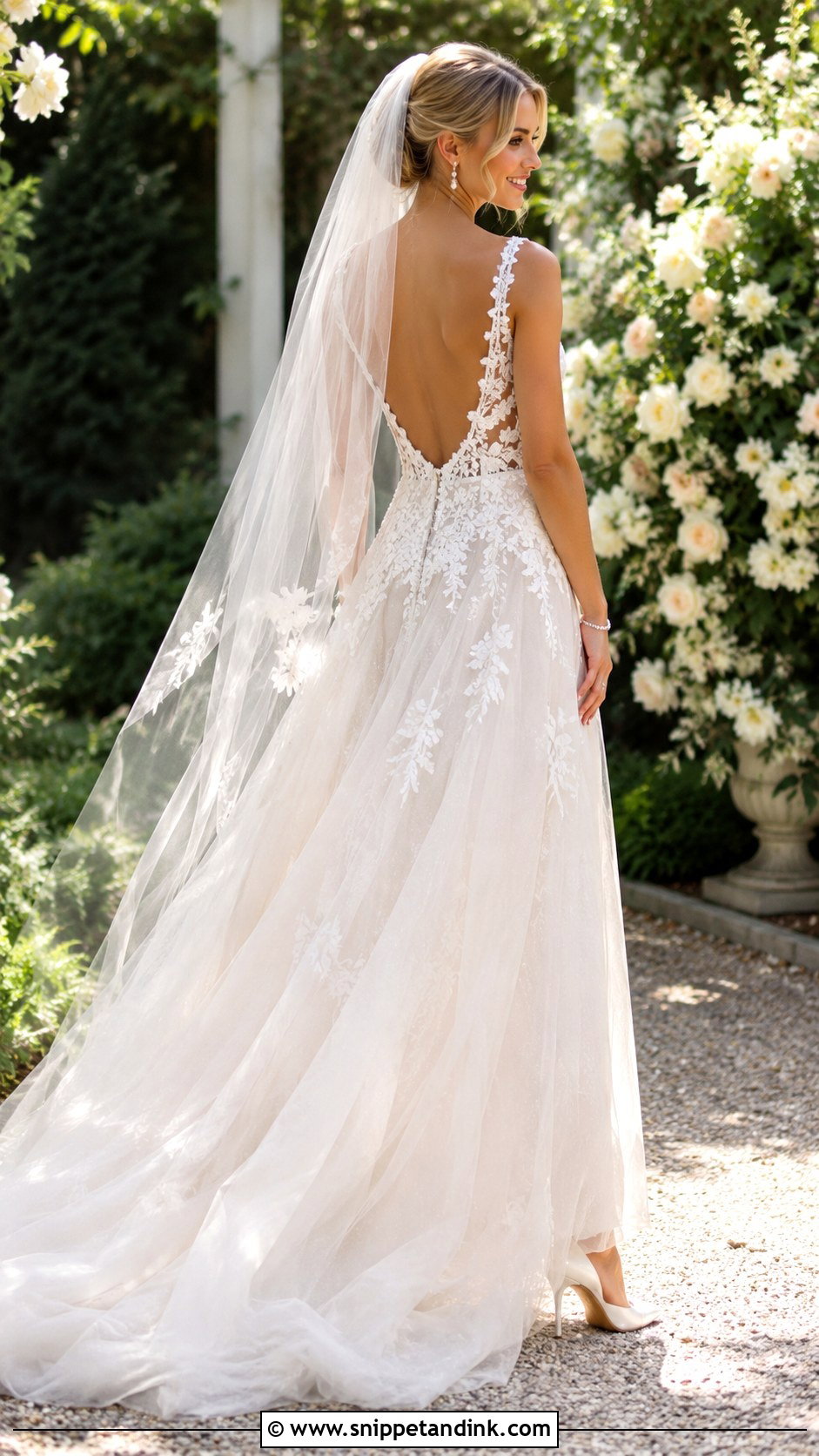
The A-line is where I start most lace brides, because it fits close where the lace is and lets the skirt do the moving. A fitted lace bodice with a deep V back, firm side panels and a chiffon or tulle skirt gives a soft contrast of textures, with appliqués trailing from bodice to waist to blend the two. Choose a fingertip veil that ends above the lower back so the opening still shows. Pearl drops, a fine bracelet, ivory pointed heels and a loose low bun complete it for a garden or estate ceremony.
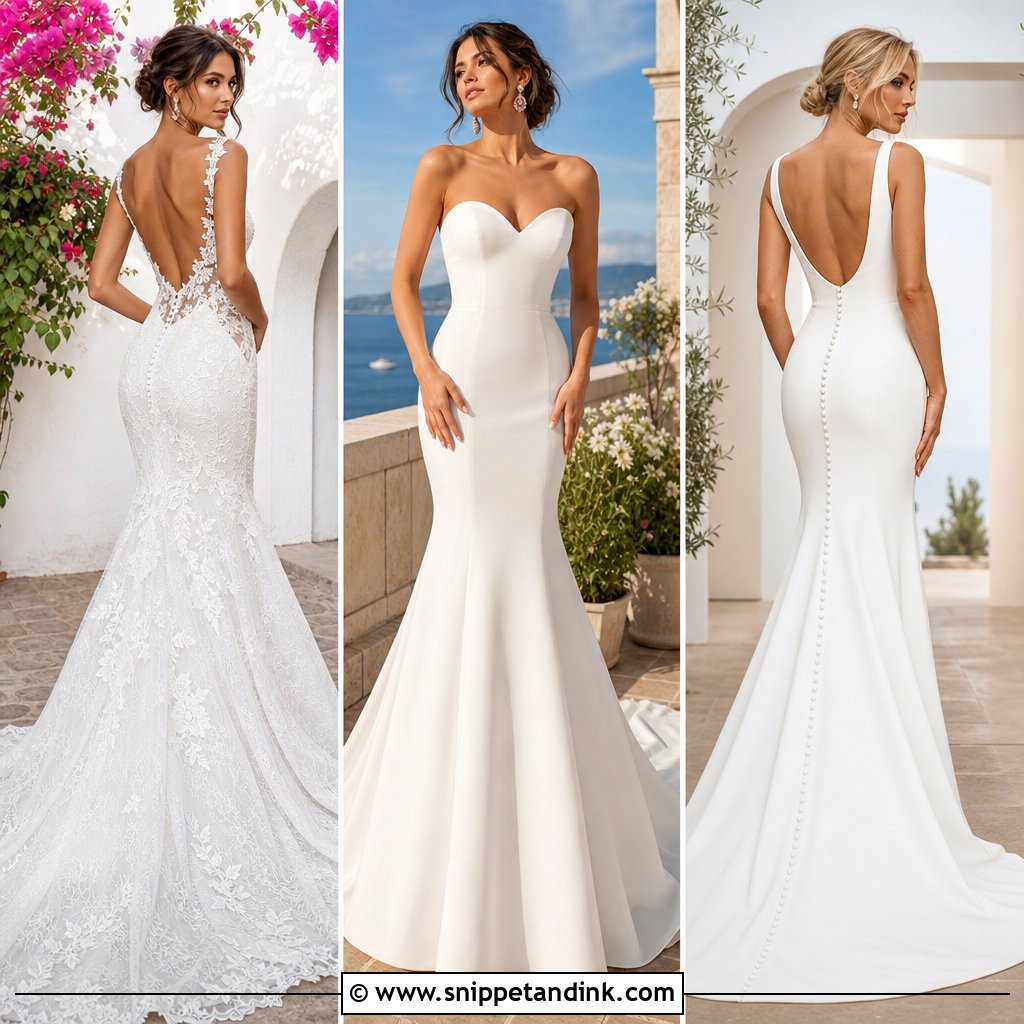
2. Mermaid Backless Lace Wedding Dress
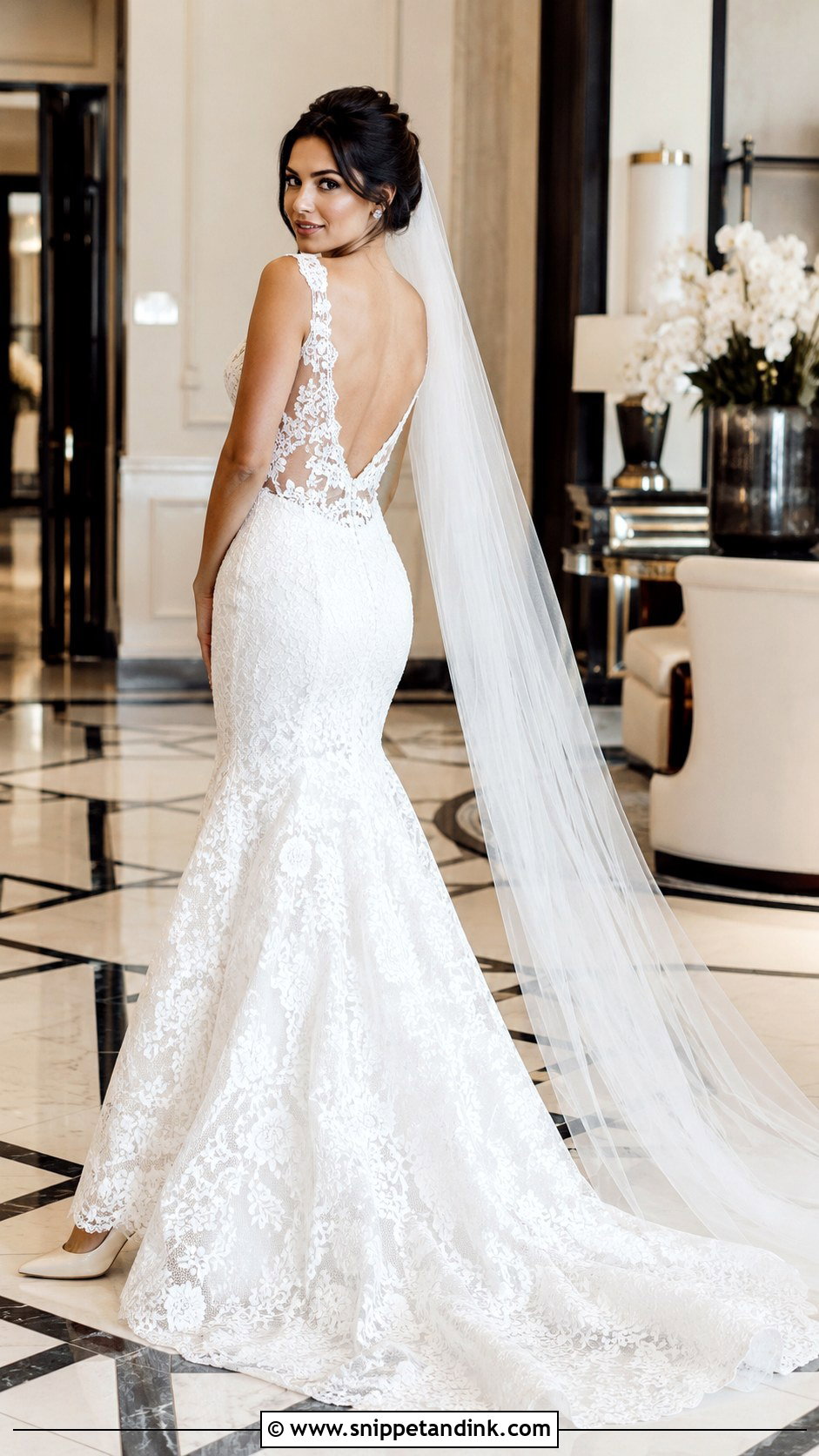
Lace from neckline to train on a mermaid is a lot of lace, and on a fitted skirt it has to stretch across hips and thighs without distorting. Ask whether the lace is laid over a stretch lining; rigid lace on a tight mermaid wrinkles every time you sit. The low scoop or V back needs internal boning or a strip of illusion mesh behind it when the cut goes deep. Sparkling studs, a sleek bun, a long sheer veil set below the hair and pointed pumps. I’d skip the necklace entirely.
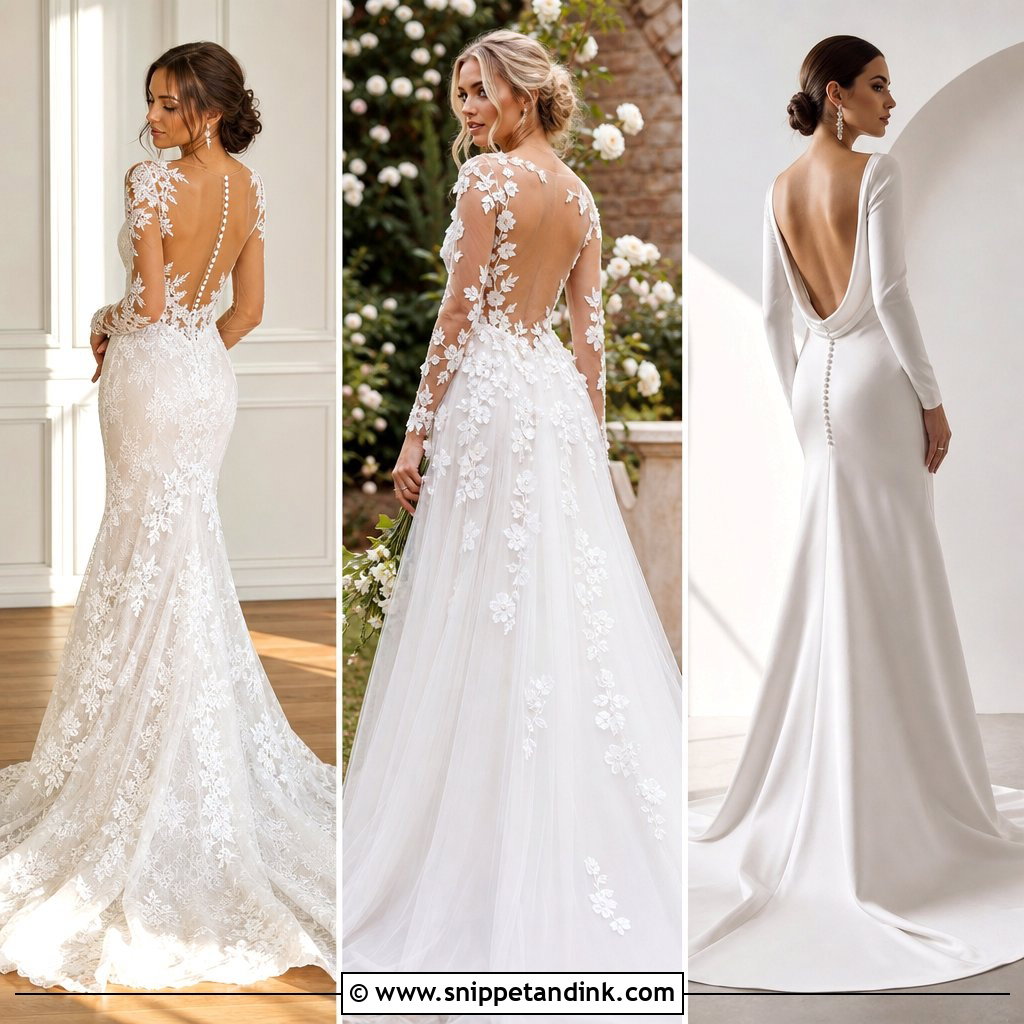
3. Long Sleeve Backless Lace Wedding Dress
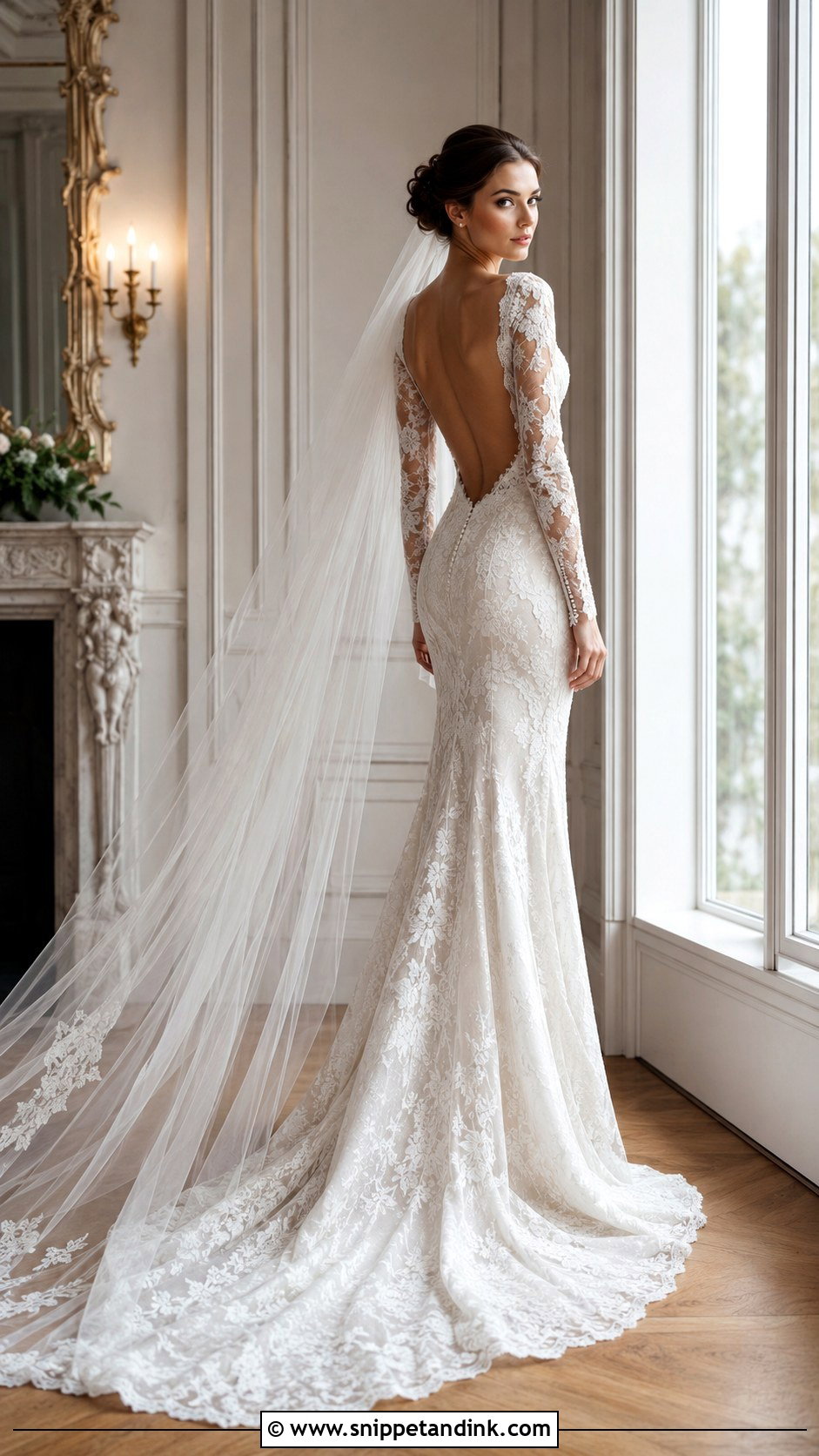
Sheer lace sleeves with a fully open back is a contrast I never tire of, and it’s practical for autumn and winter. Covered buttons at the wrist, a back that ends near the natural waist and a narrow lace border around the opening keep it cohesive. The shoulder fit decides whether it works. With no back panel, the sleeves and shoulder seams are what hold the bodice up, so your seamstress should fit them before anything else. Pearl studs, a slim comb, a light cathedral veil, closed-toe ivory heels and a smooth low chignon.
4. Boho Backless Lace Wedding Dress
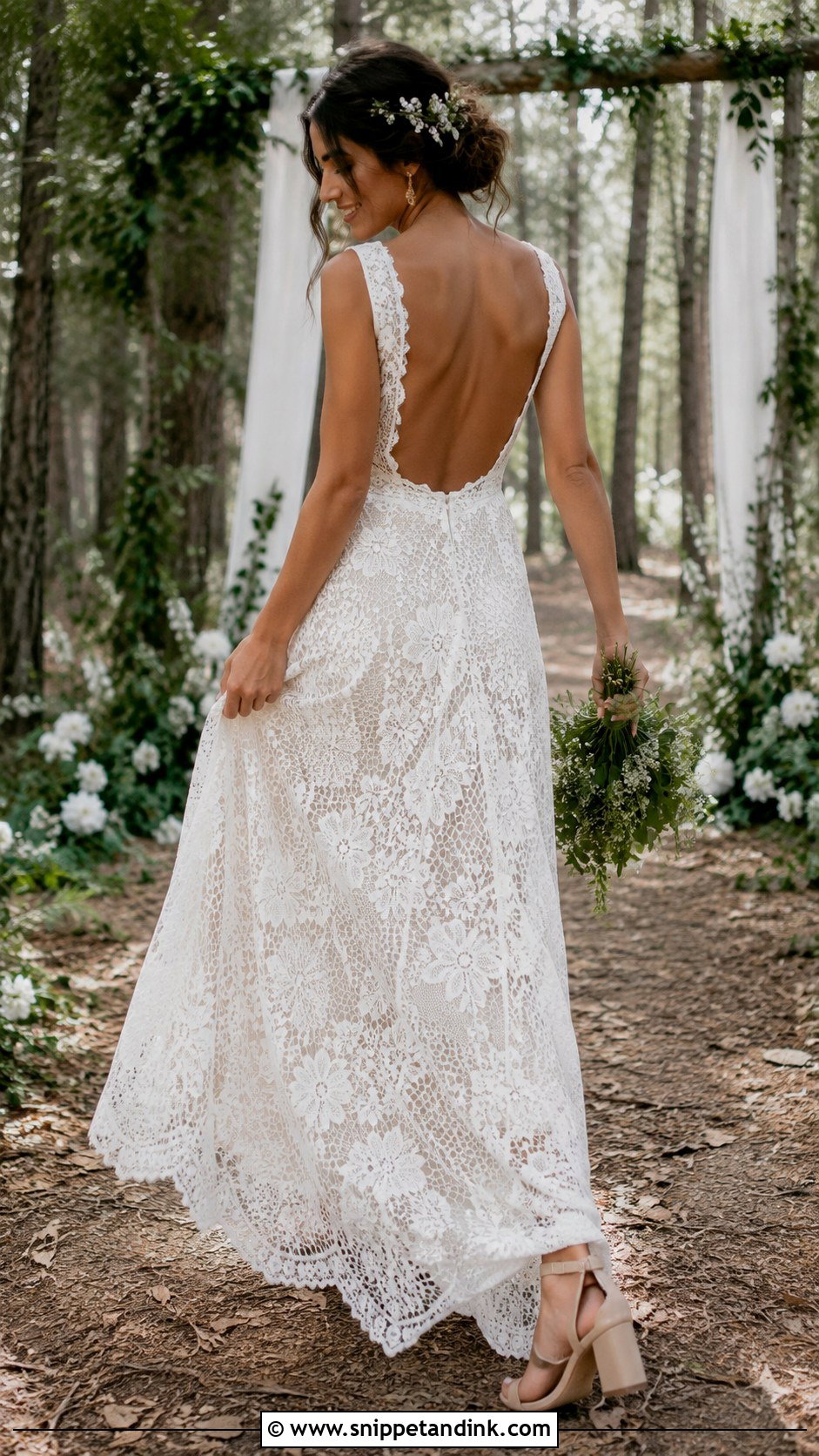
Botanical lace and a looser cut give the dress an unmistakable bohemian mood. A flowing sheath or gentle A-line with wide lace straps and a low back moves easily, and crochet-style lace, eyelash trim or a little fringe add texture. Crochet and cotton laces are heavier than they look and can stretch out at the straps over a long day, so ask for a stay tape inside them. Loose waves, small floral pins and block-heel sandals suit a woodland or outdoor ceremony, with natural makeup and quiet gold jewelry.
5. High Neck Backless Lace Wedding Dress
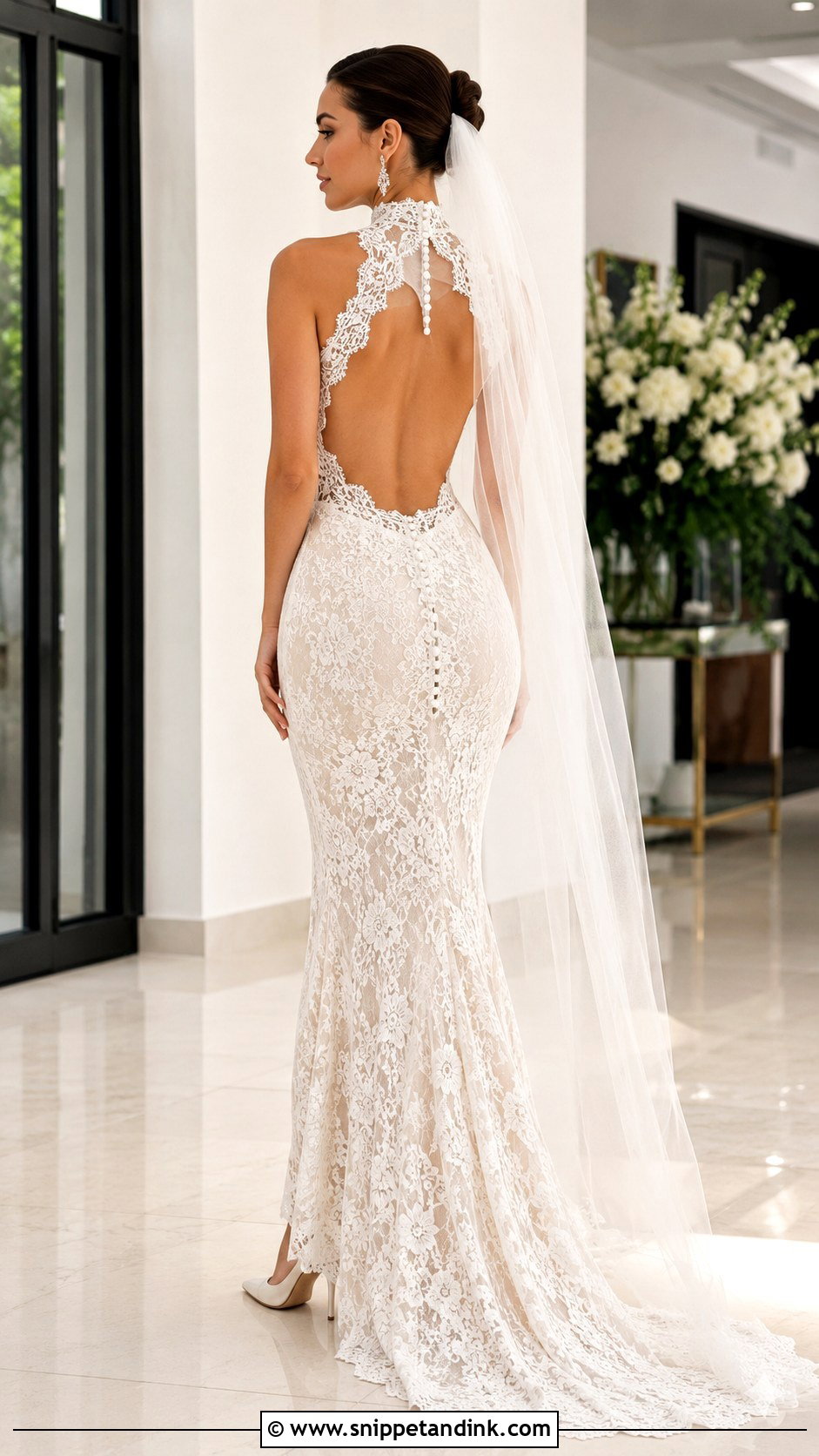
Covering the front up to the collarbone makes a low back feel more surprising, not less. A bateau, mock or halter-style lace neckline with a dramatic opening behind gives you that, and a row of covered buttons at the nape both closes and decorates it. Check that the buttons sit flat when you bend your head forward; a stiff closure presses on the neck through a long ceremony. A neat updo shows off both the neckline and the back. Small crystal earrings, a narrow bracelet, pointed satin heels and plain tulle with a clean edge, anchored below the bun.
6. Strapless Backless Lace Wedding Dress
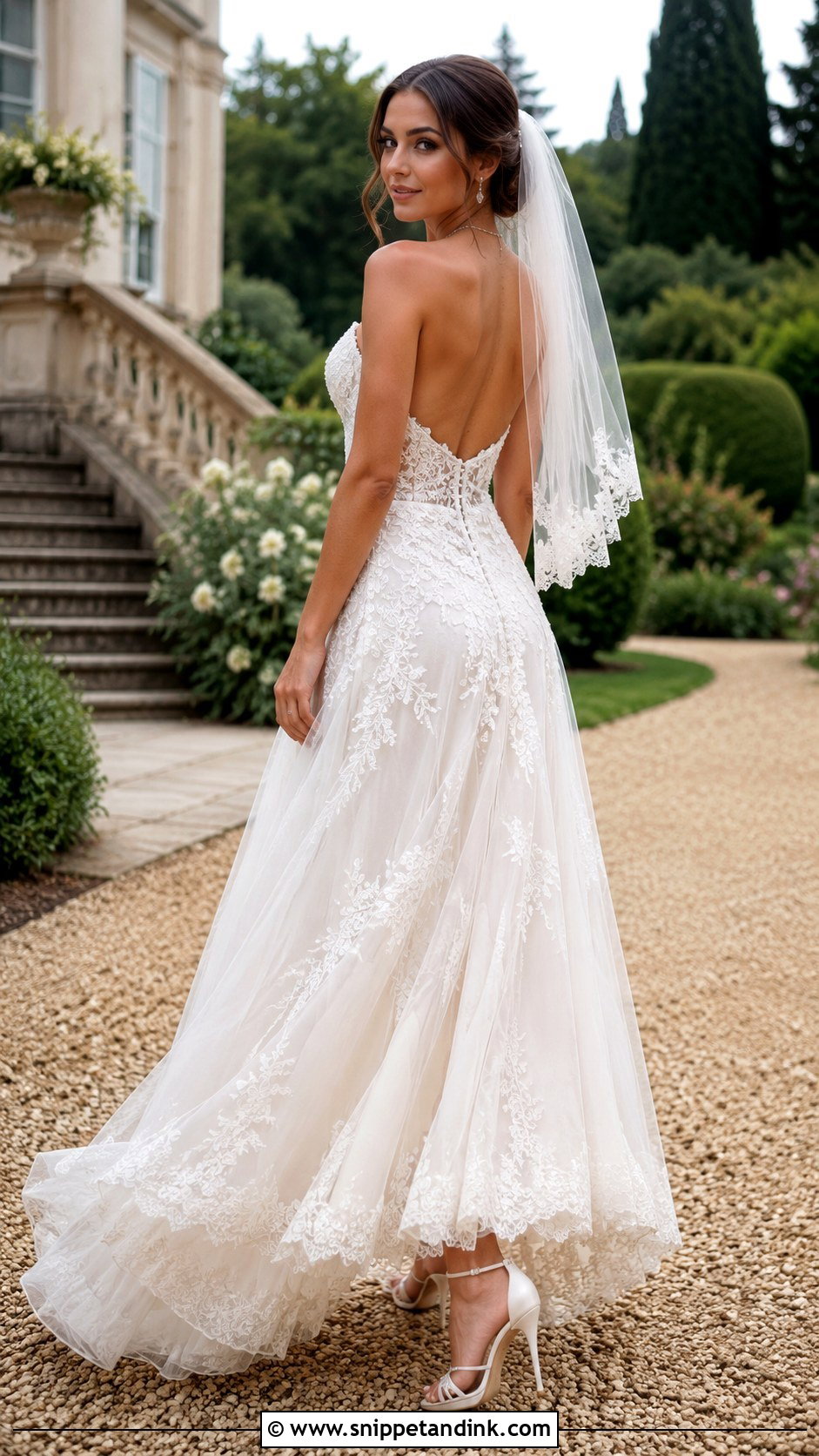
Strapless and open-backed, this gown depends entirely on what’s inside it: boning, sewn-in cups and firm side panels behind the lace. Lace stretches more than satin, so a strapless lace bodice that feels secure at the fitting can relax over an evening. I fit them a touch firmer for that reason. A soft sweetheart neckline, a low curved back and either an A-line or layered tulle skirt. A fine collarbone necklace, an elbow-length veil, ivory ankle-strap heels and sleek waves or a bun. Bring your exact underwear and shoes to every fitting.
7. Illusion Back Lace Wedding Dress
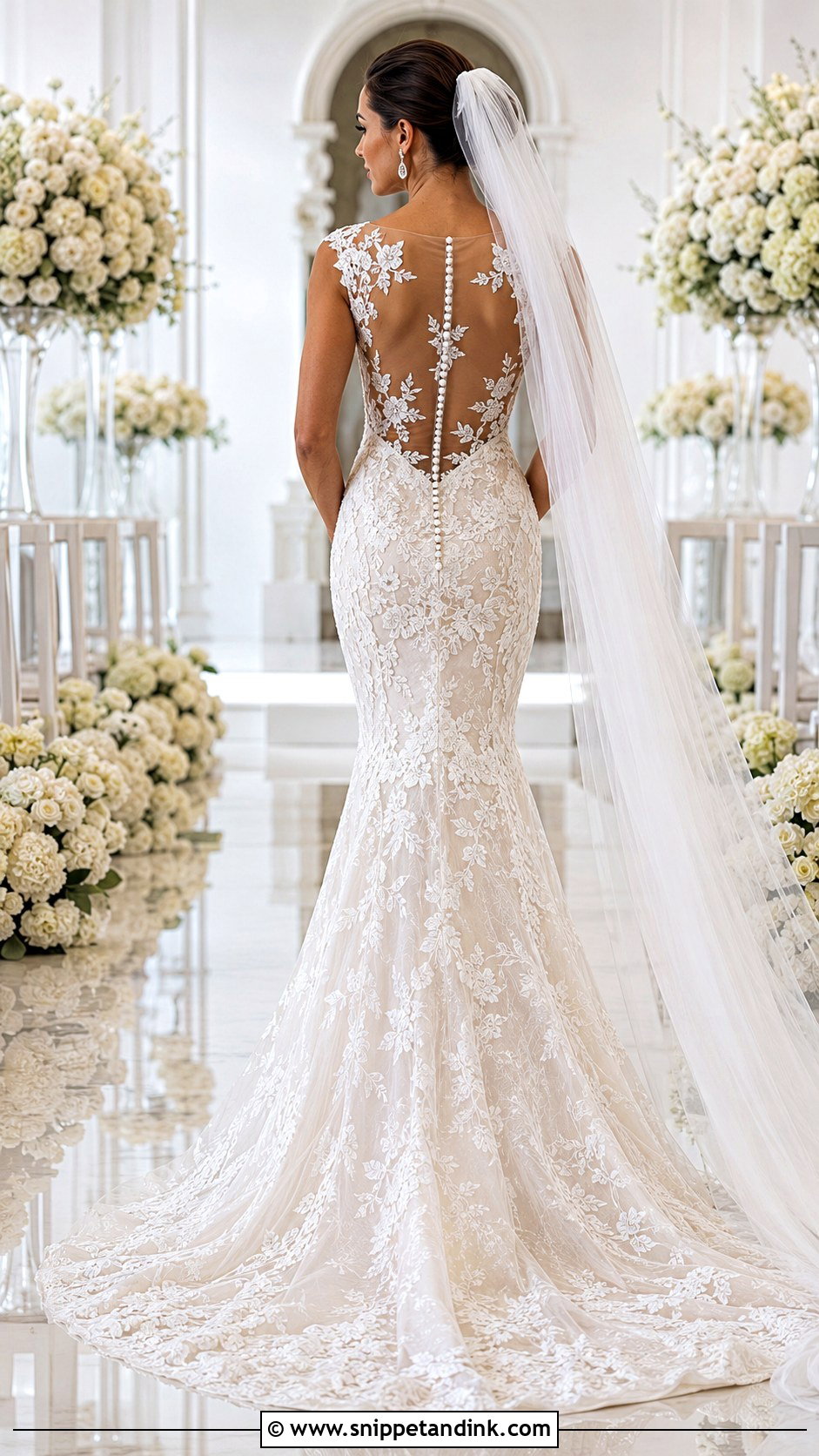
Illusion backs look like lace floating on skin, held in place by fine mesh. It’s the most secure way to wear an open-back look, because the mesh stops the bodice from gapping. Everything rests on the mesh matching you. Shops usually carry several shades, so ask to compare them on your skin in daylight. A fit-and-flare adds definition; an A-line is softer. A low bun shows the panel, and a plain cathedral veil can come off after the ceremony. Crystal earrings, pointed heels, a simple bracelet and no elaborate necklace.
8. Square Neck Backless Lace Wedding Dress
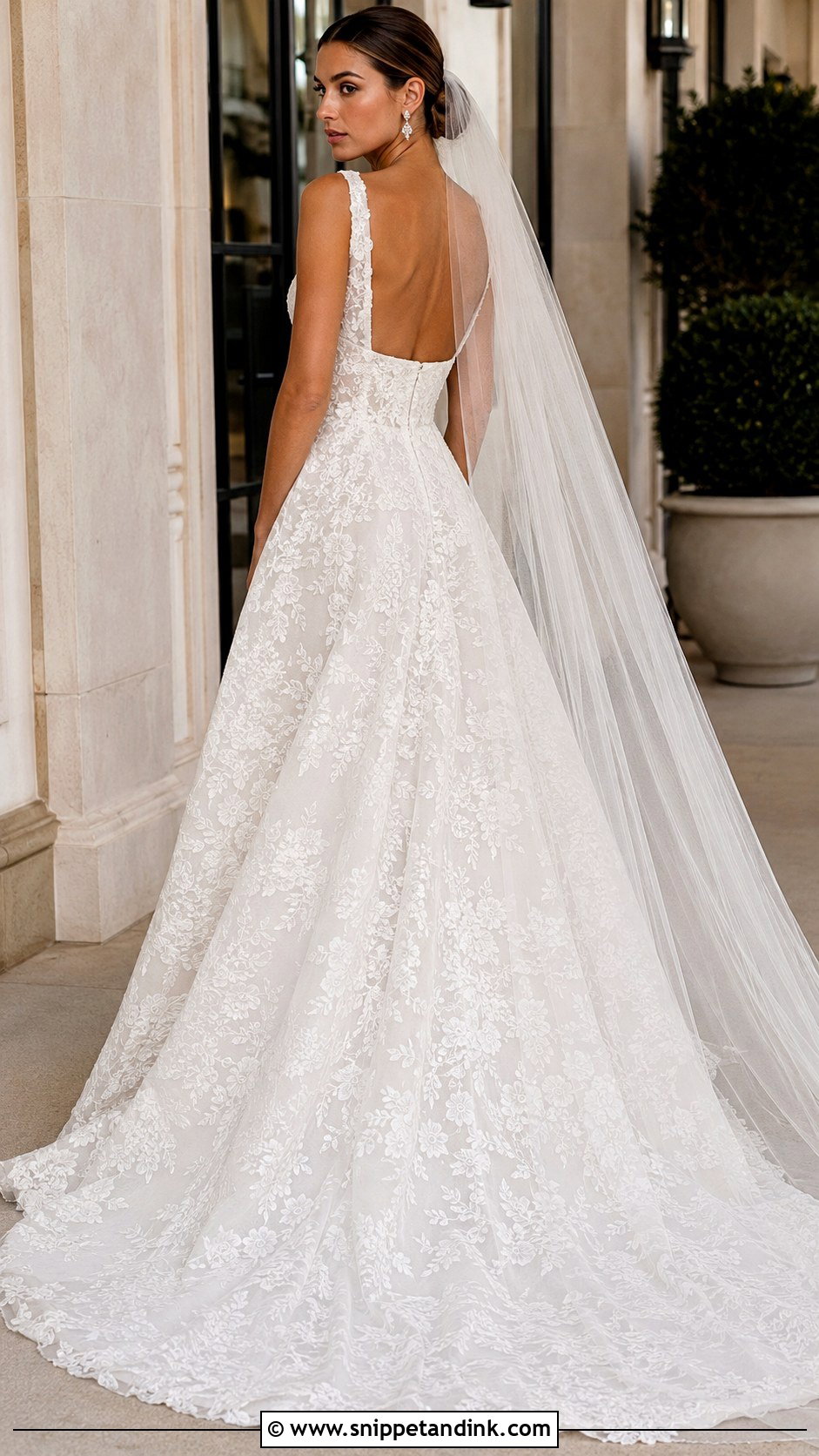
A square neckline gives lace a sharper outline. Wide straps, a fitted bodice and a squared or gently scooped back frame the collarbone in front and keep the back soft. Heavily patterned lace on a square neck needs care: the straight top edge should be cut along a calm part of the pattern, not through the middle of a flower. A basque or natural waist leads into a full A-line skirt. A smooth bun, pearl-and-crystal earrings, a medium veil set low and pointed satin pumps; with busy lace, keep everything else quiet.
9. Halter Neck Backless Lace Wedding Dress
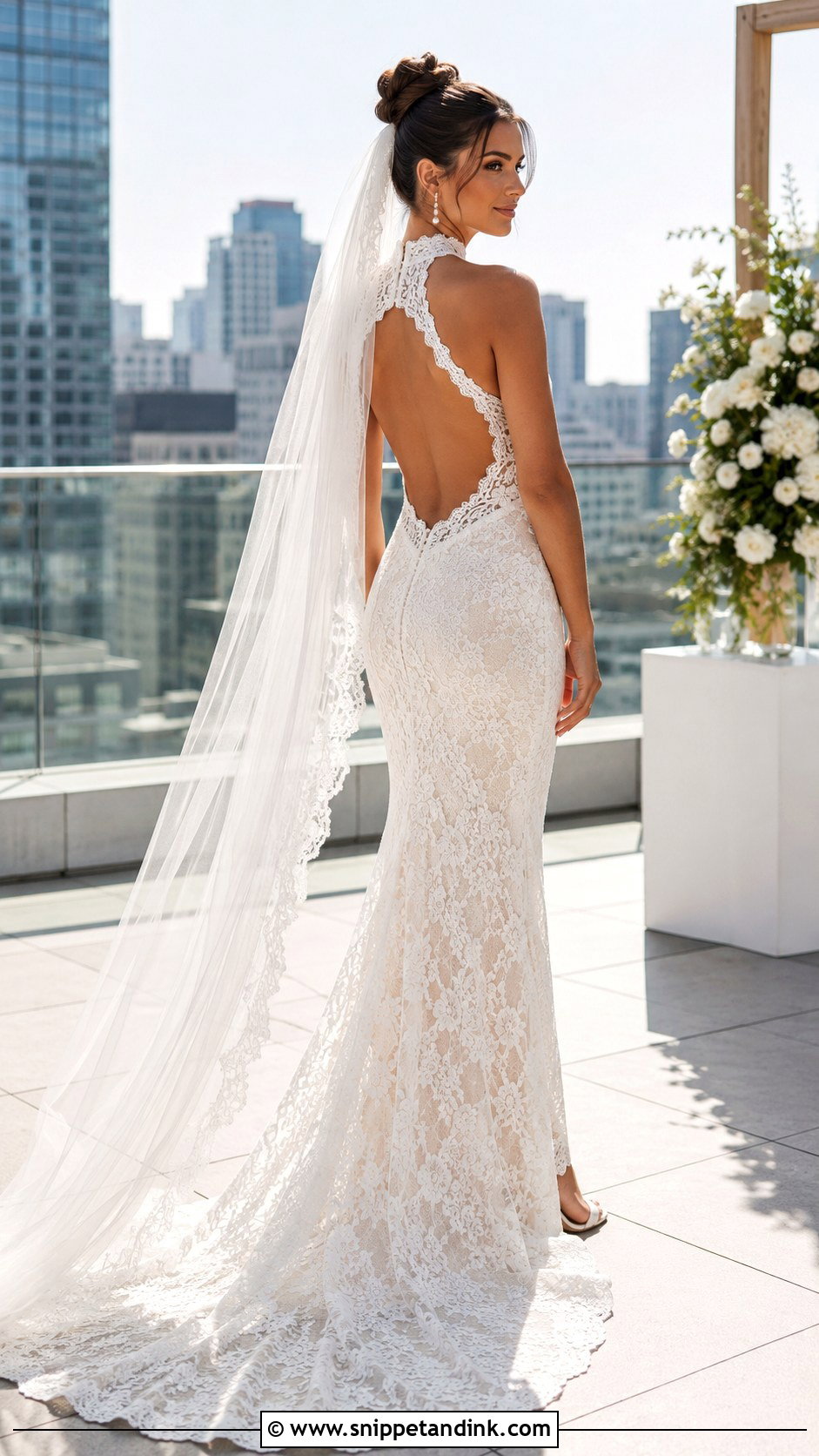
A lace halter draws the eye to the shoulders and leaves the back fully open, which makes it a strong pick for warm venues and rooftops. Scalloped lace around the back softens the line, and a slim sheath or gently flared skirt keeps it long. The neck fastening should feel firm but not tight; I check it after you’ve worn it for ten minutes, since the pressure builds slowly. A high bun, braid or polished ponytail keeps the hair off the gown. Long drops, a simple cuff, ivory sandals and a sheer chapel veil.
10. Cap Sleeve Backless Lace Wedding Dress
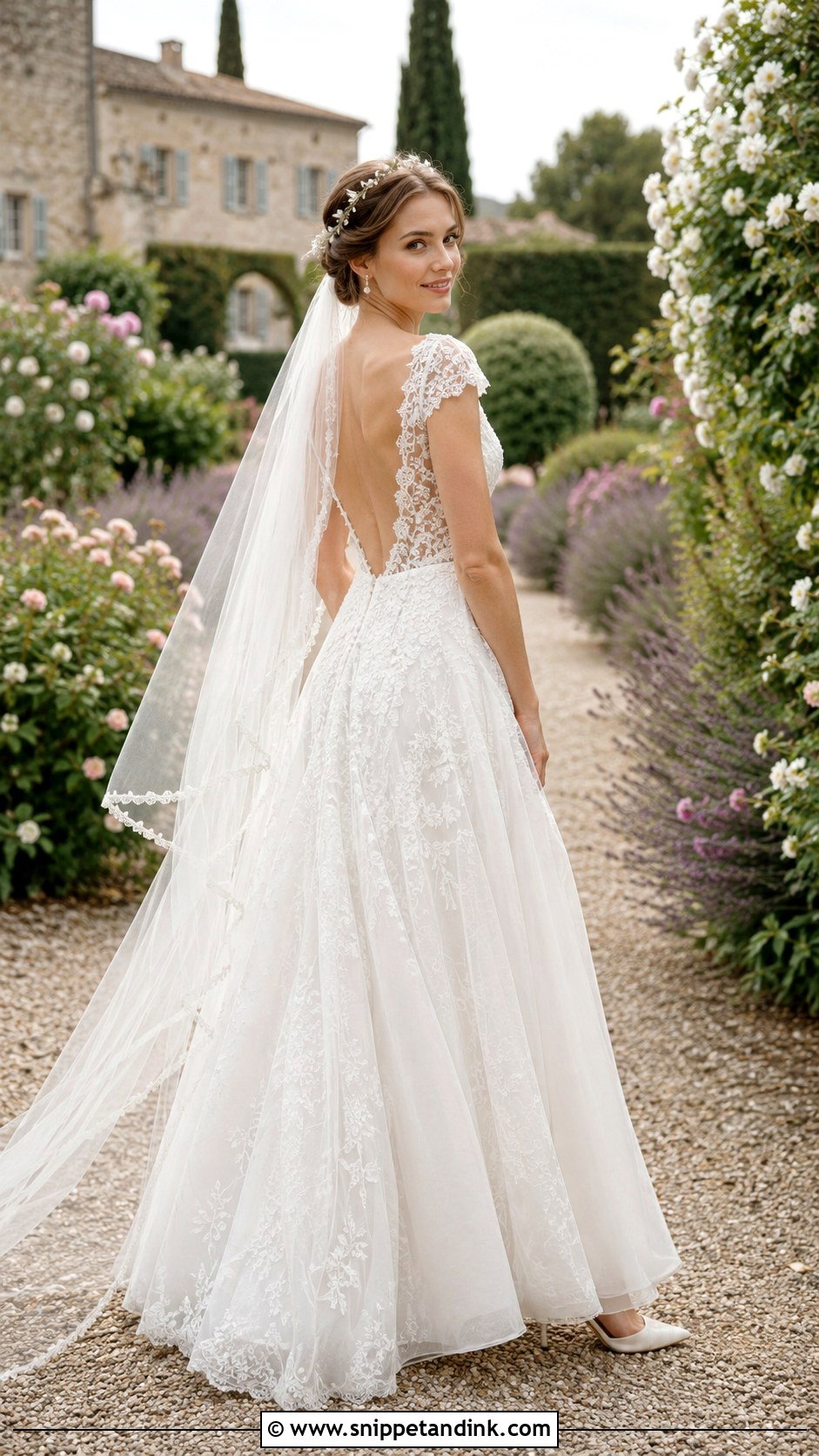
Cap sleeves give a little shoulder coverage while the back stays bare. They’re short, which means they cut across the top of the arm, and if they’re too tight they pinch every time you reach. Hug someone in the fitting and dance a few steps. A lace bodice with a rounded or V front, a low back and an A-line or fit-and-flare skirt suit daytime ceremonies. Pearl earrings, a fine hair vine, a soft updo with a few loose pieces, a fingertip veil and comfortable pointed heels or embellished flats.
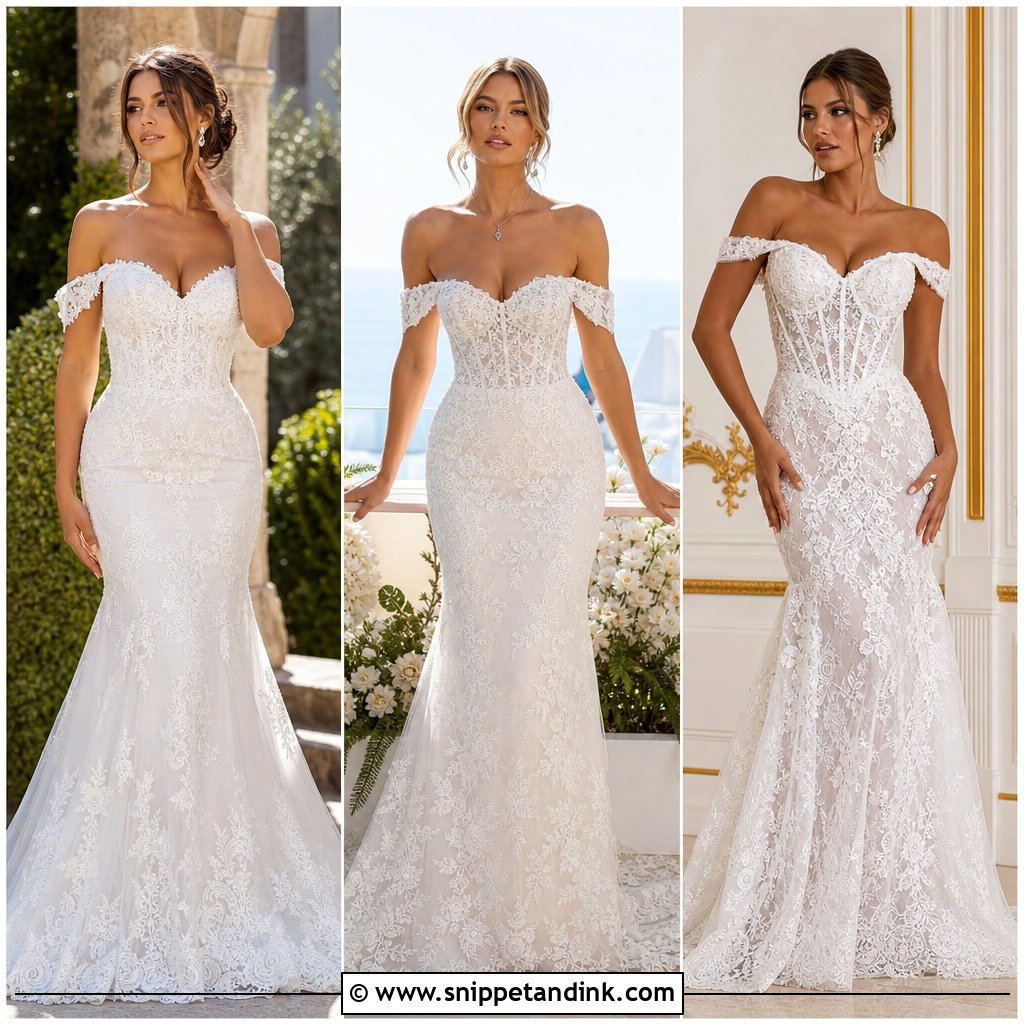
11. Off-The-Shoulder Backless Lace Wedding Dress
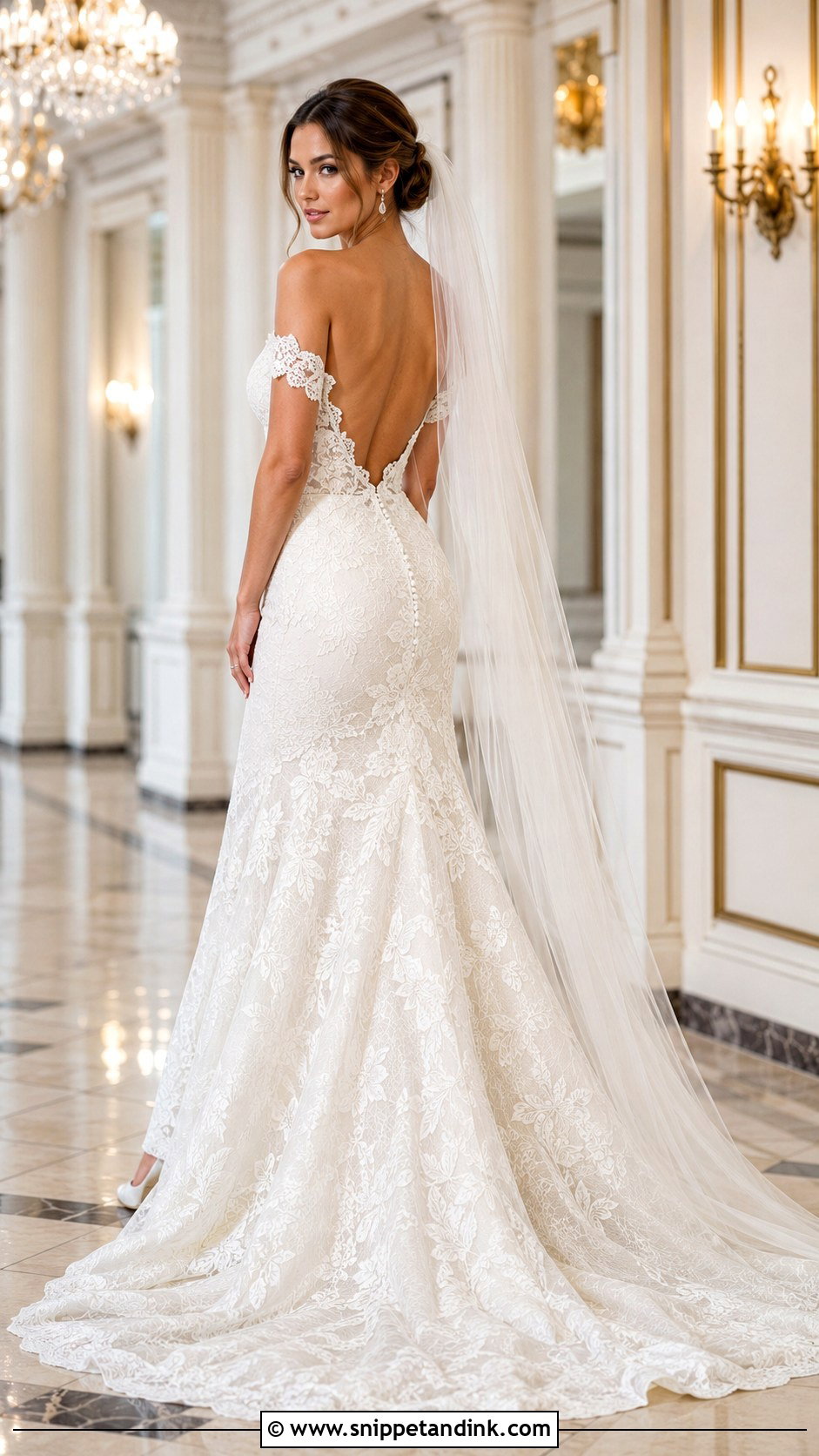
An off-the-shoulder lace neckline frames the collarbone, then the back drops away. The straps rest on your upper arms, and they should feel comfortable there with your arms down, raised and crossed. If they only feel right in one position, the bodice isn’t doing enough holding. A mermaid or fit-and-flare skirt emphasizes the shape; an A-line moves more easily. A low textured bun, teardrop earrings and a plain veil under the hair. No necklace, or only the finest chain. Ivory pumps and a structured bouquet give it a formal finish.
12. Sheath Backless Lace Wedding Dress
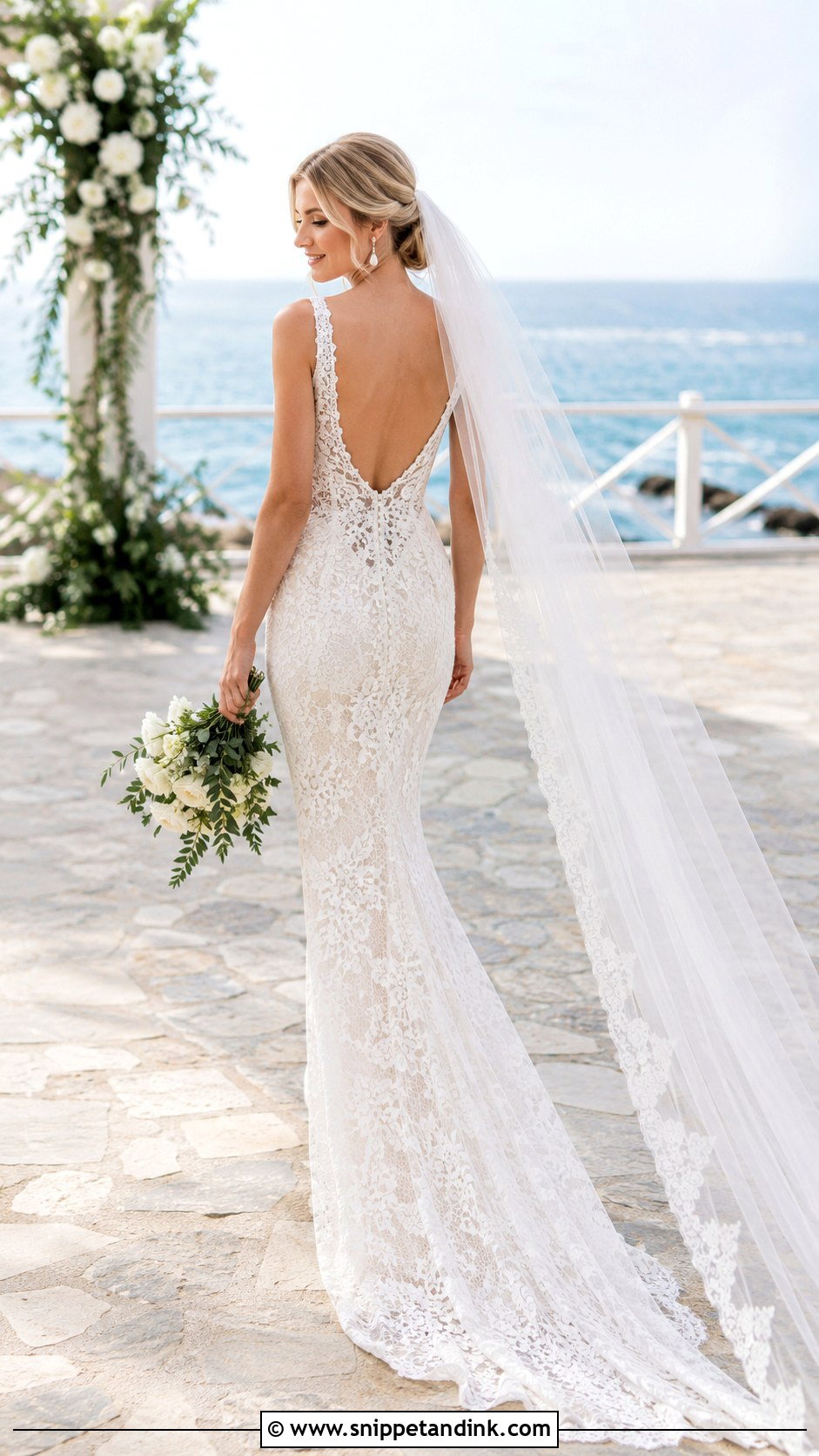
The lace sheath is the quietest gown here and one of the most comfortable. It follows the body in a narrow line with wide straps or a secure halter, a deep V back and a short sweep train. Lightweight lining lets it move, and well-placed seams shape it without bulk. Because the sheath hides very little, I check how the lace lies over the hip and seat after you’ve sat down; a lining that’s too stiff will crease there. A sleek low bun, pearl drops, a chapel veil that comes off for the reception, low block heels and a small bouquet.
13. Ball Gown Backless Lace Wedding Dress
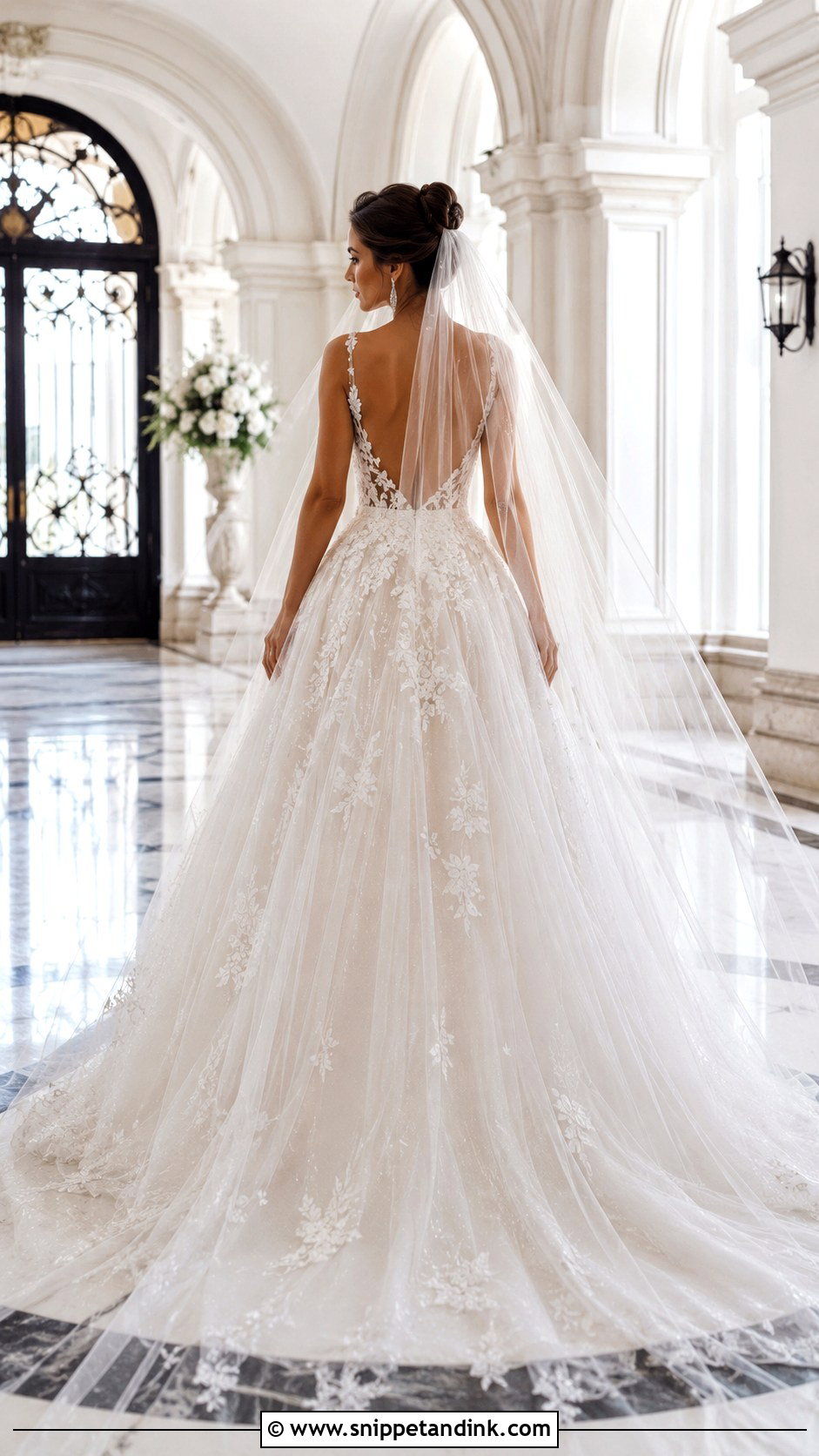
A full lace ball gown with an open back has scale on its side. A structured bodice with a low V back, secure straps and a defined waist sits over layers of tulle or organza. Lace can cover everything or fade out down the skirt, which I often prefer because a fully laced skirt is heavy and the weight pulls at the back edge. A cathedral veil matches the gown’s scale; set it below a polished bun so the back shows through. Sparkly studs, a slim bracelet and platform heels hidden under the skirt for a grand venue or historic estate.
14. Basque Waist Backless Lace Wedding Dress
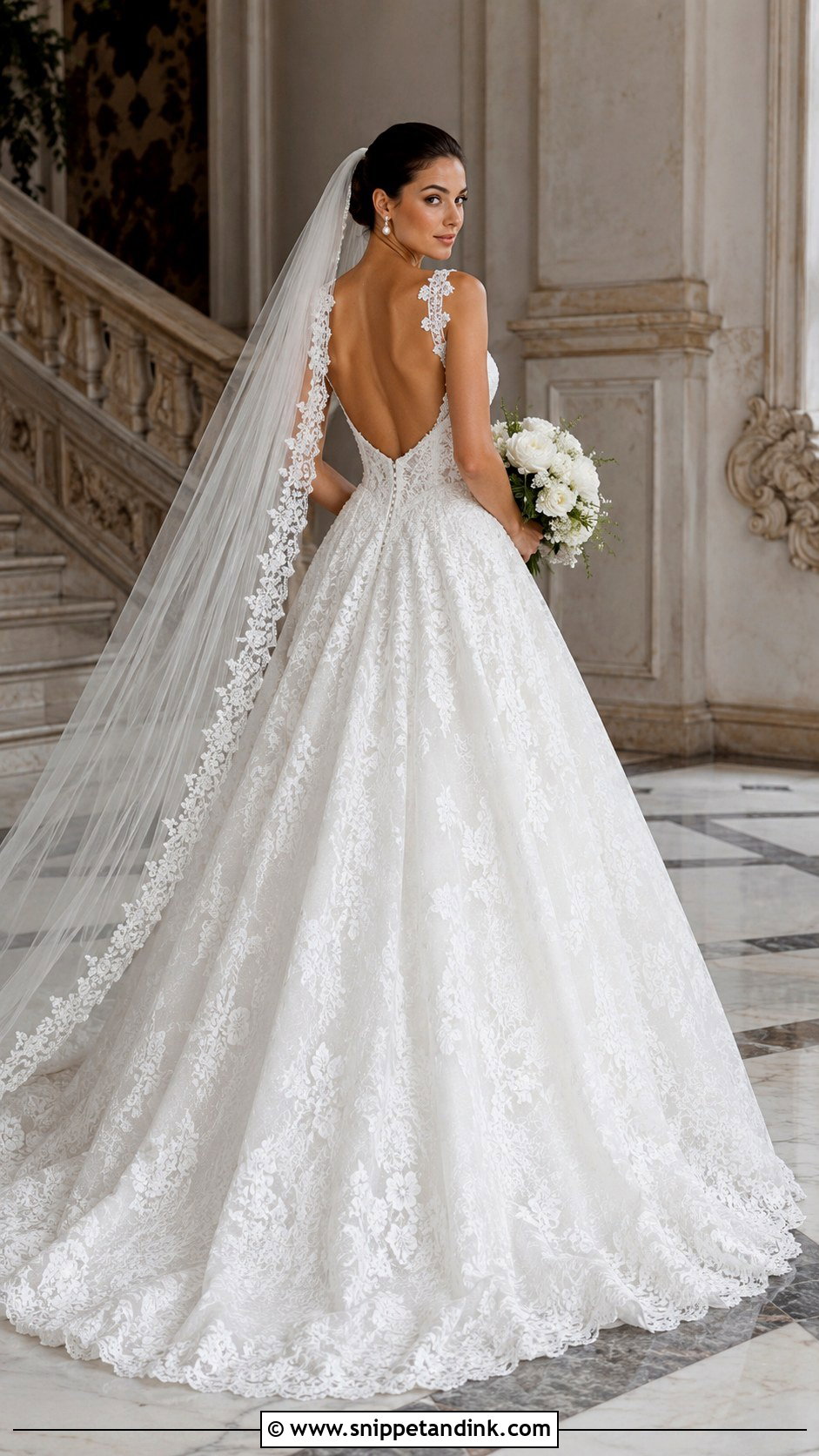
A basque-waist gown dips into a V below the natural waist and runs smoothly into a full or gathered skirt. With a low scoop back, floral lace straps and hidden support, it’s sculpted and secure. Where the point lands is the entire design, and the sample’s point rarely suits everyone. I have brides sit, stand and bend while I watch it; if it digs into the stomach when you sit, it’s too low. A clean cathedral veil, a polished updo, small pearls, satin pumps and a rounded bouquet.
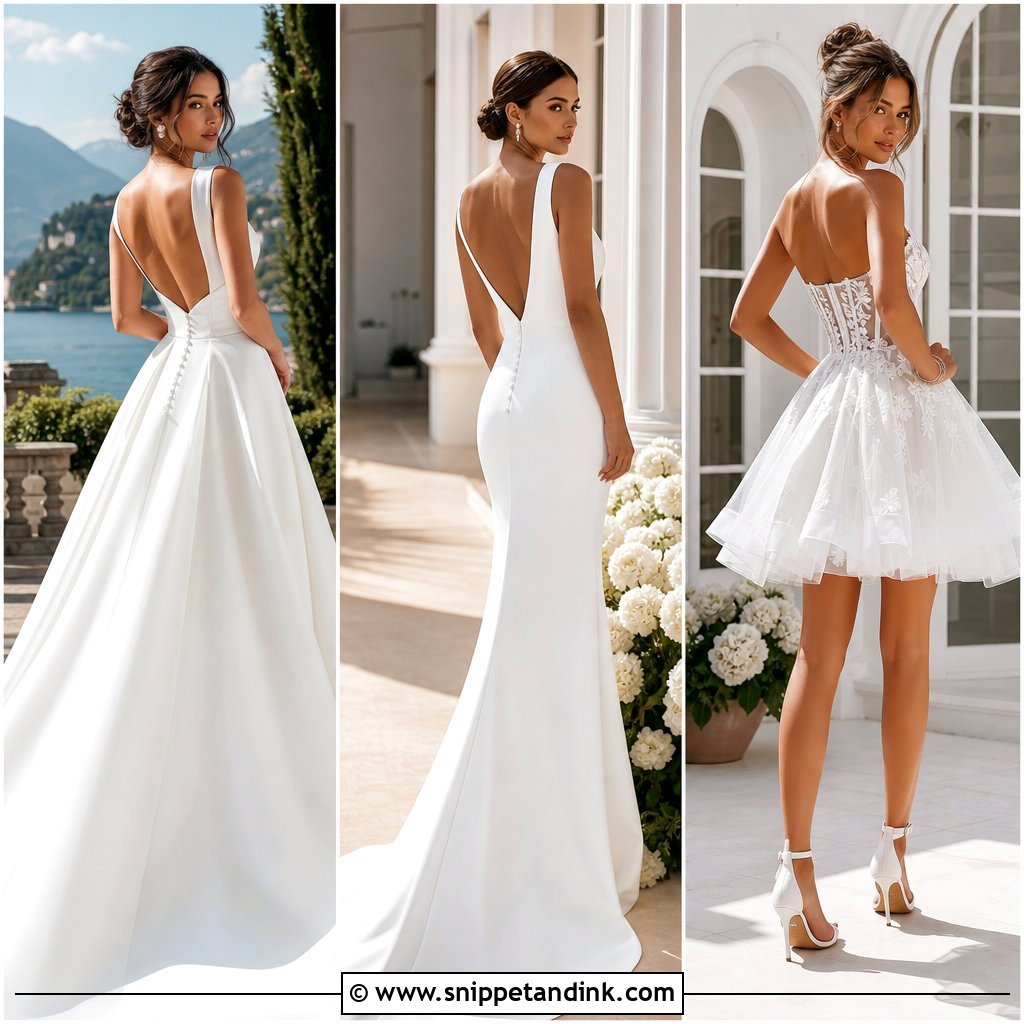


15. Floral Appliqué Backless Lace Wedding Dress
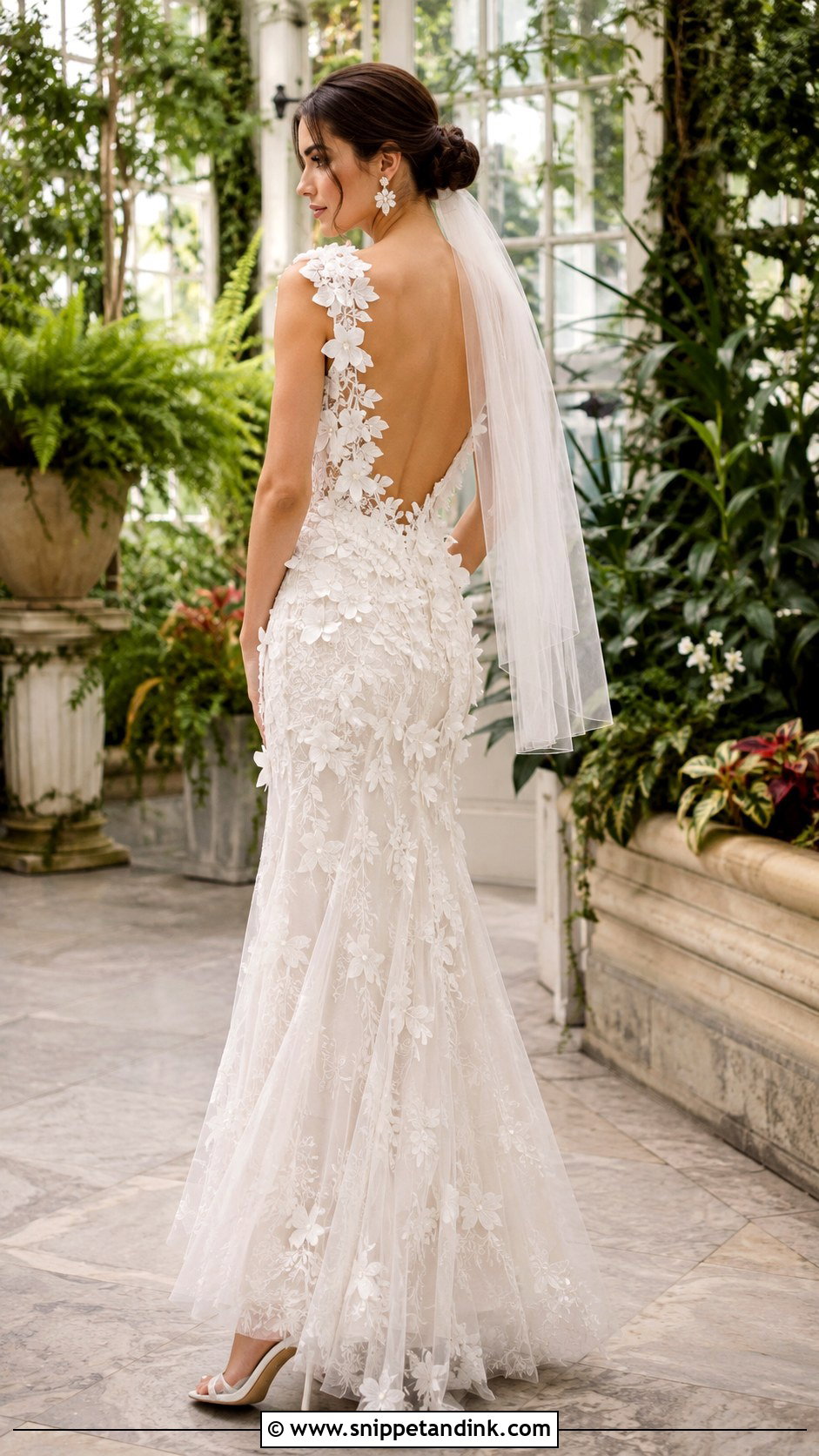
Raised floral appliqués make a backless gown read as texture first and lace second. Clustered at the straps, sides and edges of the back, with smaller ones scattered onto a tulle A-line or mermaid skirt, they look generous without crowding. These flowers are usually hand-applied, so ask how alterations will be done; a skilled seamstress lifts the appliqués, alters the seam and stitches them back. Keep the veil plain or add just one or two matching flowers to it. A low bun, flower-inspired earrings and simple ivory heels.
16. Scalloped Backless Lace Wedding Dress
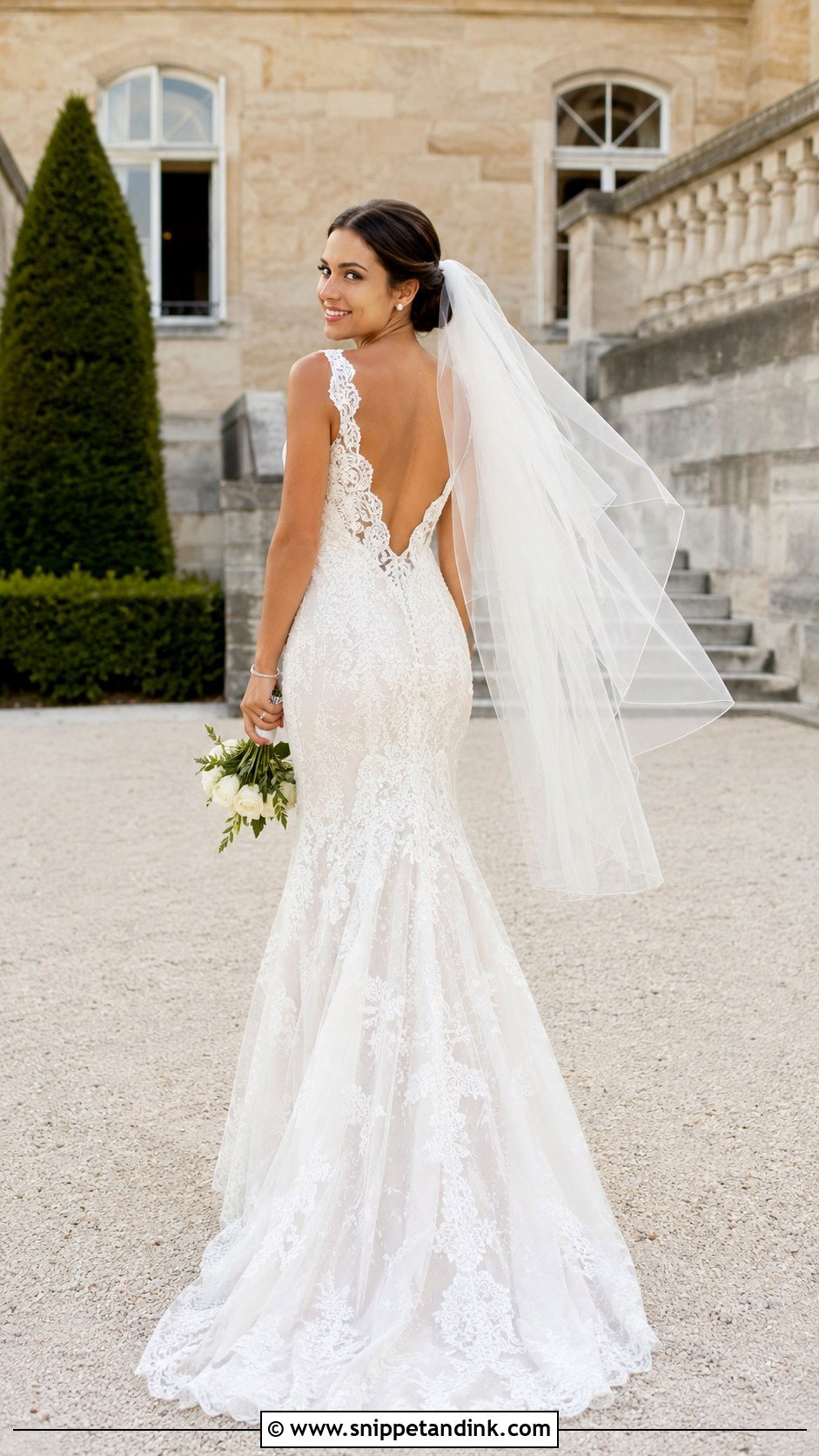
Scalloped lace gives the back a soft border without beading or appliqué. Look for curved edging around a V or rounded back, repeated at the neckline, straps or train. The scallop has to lie flat against your skin, and at the shoulders and lower back it often wants to flip outward. A seamstress can fix that with a fine elastic or a few tacks on the underside. A fit-and-flare shows the outline best; an A-line feels more relaxed. A low chignon, pearl studs, a light veil under the hair, pointed heels and a simple bracelet.
17. Vintage Backless Lace Wedding Dress
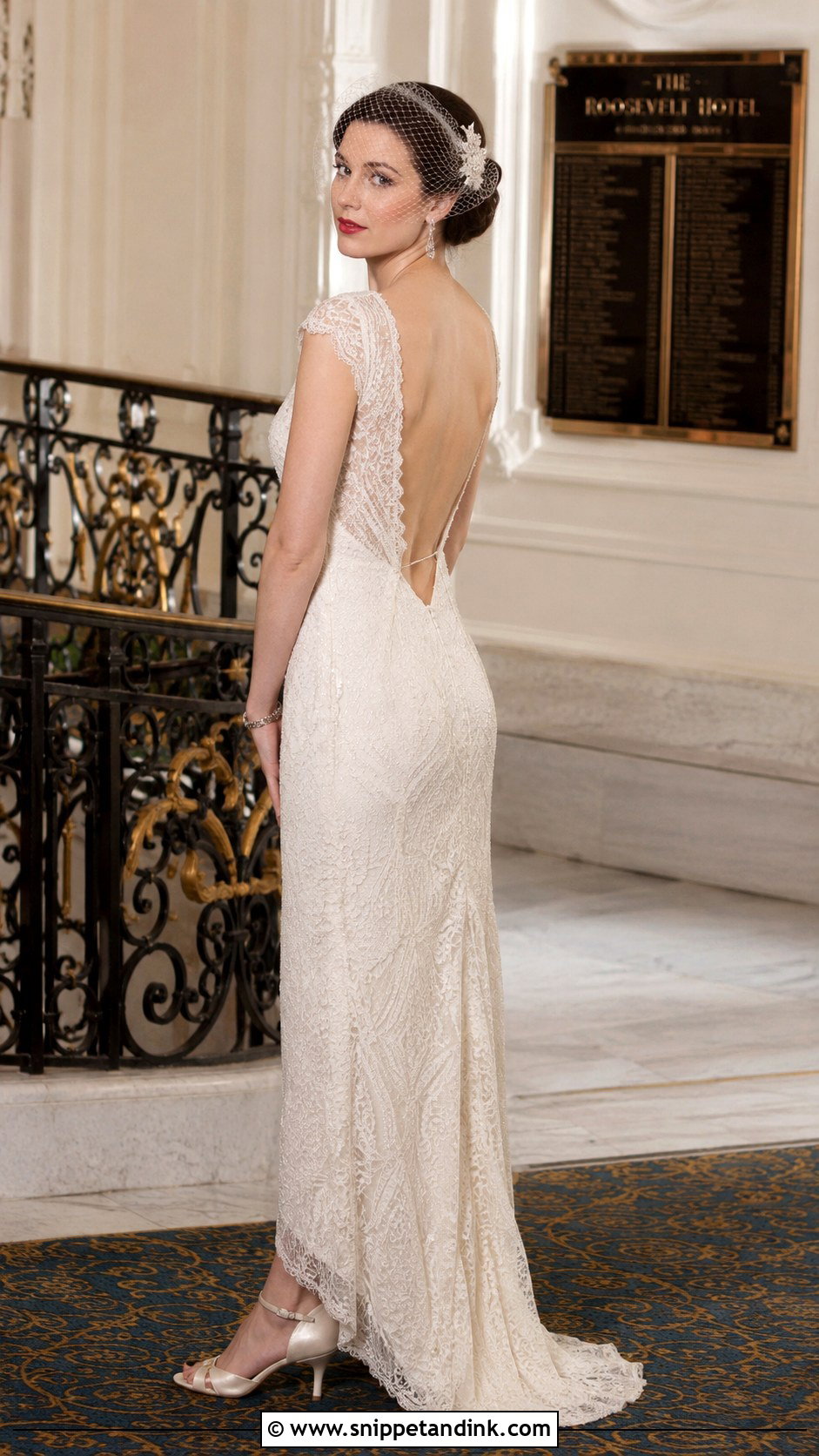
Vintage-style lace gives you the period feel without a fragile antique gown. A slim bias-cut silhouette, eyelash trim, cap sleeves and a low keyhole or V back set the tone, and Art Deco beading or geometric lace adds character. Bias cuts cling, so wear the exact shapewear you’ll have on the day to your fittings. Soft finger waves, a jeweled comb and drop earrings that echo the gown, ivory T-strap heels and either a birdcage veil or a plain chapel veil. Keep the makeup polished, not theatrical.
18. Beach Backless Lace Wedding Dress
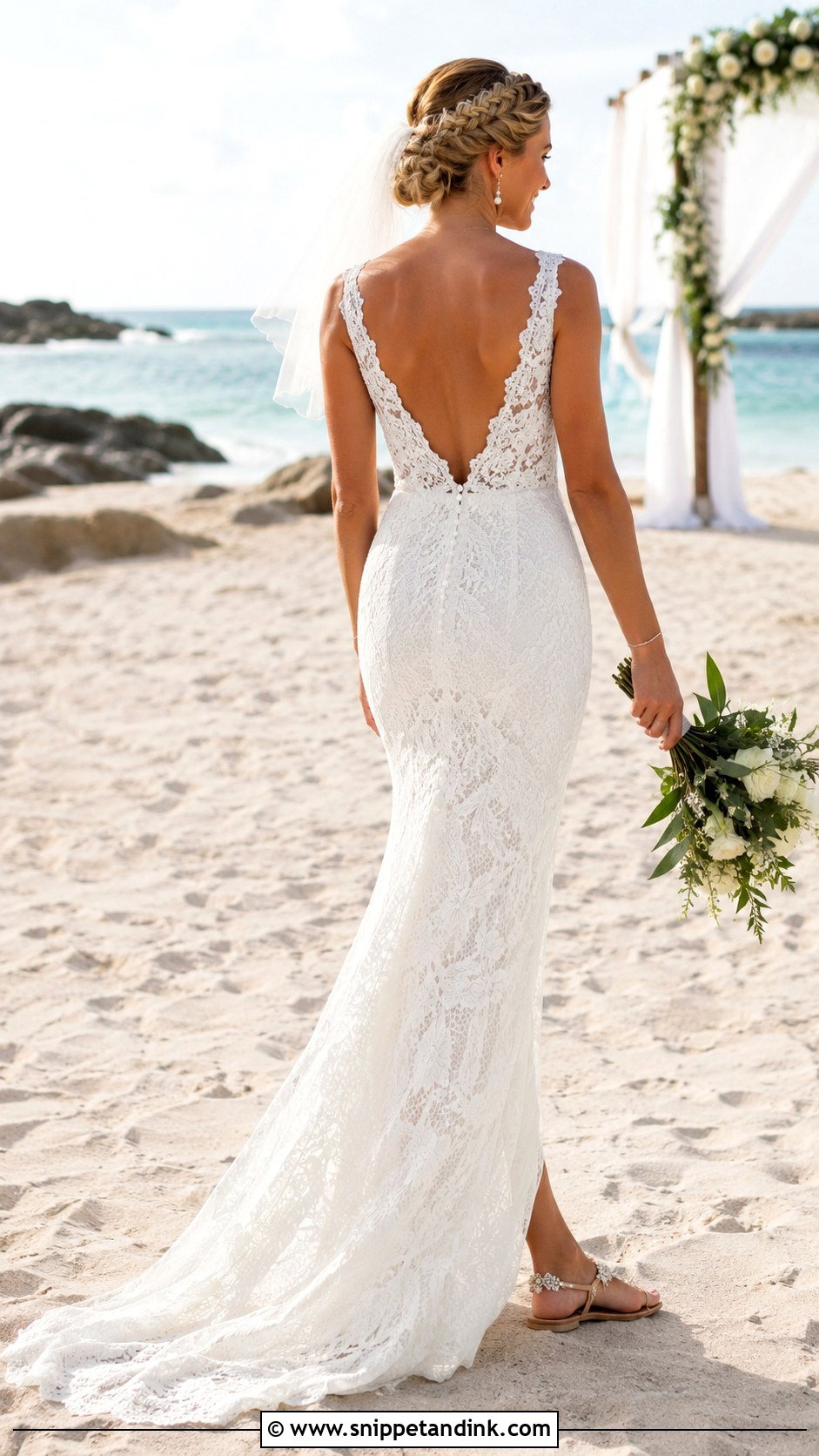
Sand, wind and sun are hard on lace. Fine lace snags on shells and rough boardwalk boards, and loose sand works into an open pattern. A flowing sheath or relaxed A-line in soft lace with breathable lining, wide straps, a modest V back and a short sweep train keeps things manageable. A loose braided updo holds up in a breeze; small pearls and flat embellished sandals finish it. A short veil or removable chiffon cape is easier than a long veil. Test the dress outdoors before the day for sheerness and how the hem behaves.
19. Minimalist Backless Lace Wedding Dress
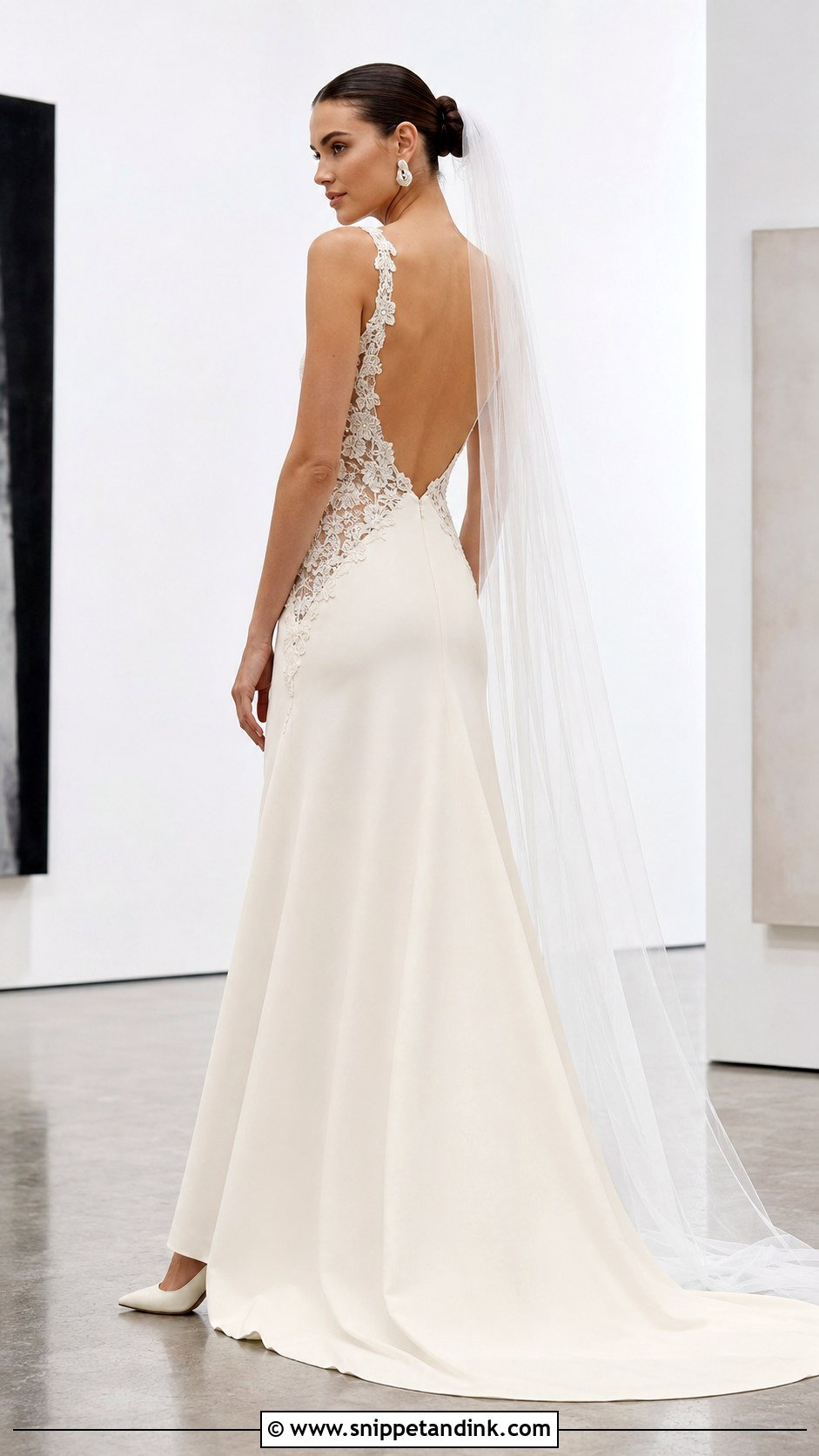
Lace doesn’t have to cover the whole dress. A clean crepe sheath or A-line with lace placed only at the straps, side panels and low back keeps the look modern and puts the texture exactly where the back opens. The join between crepe and lace is the detail to check; the lace edge should lie flat and the crepe shouldn’t pucker at the seam. A sleek bun, sculptural earrings, pointed ivory pumps and a plain chapel veil with a narrow edge. Simple bouquet, no stacked jewelry.


20. Short Backless Lace Wedding Dress
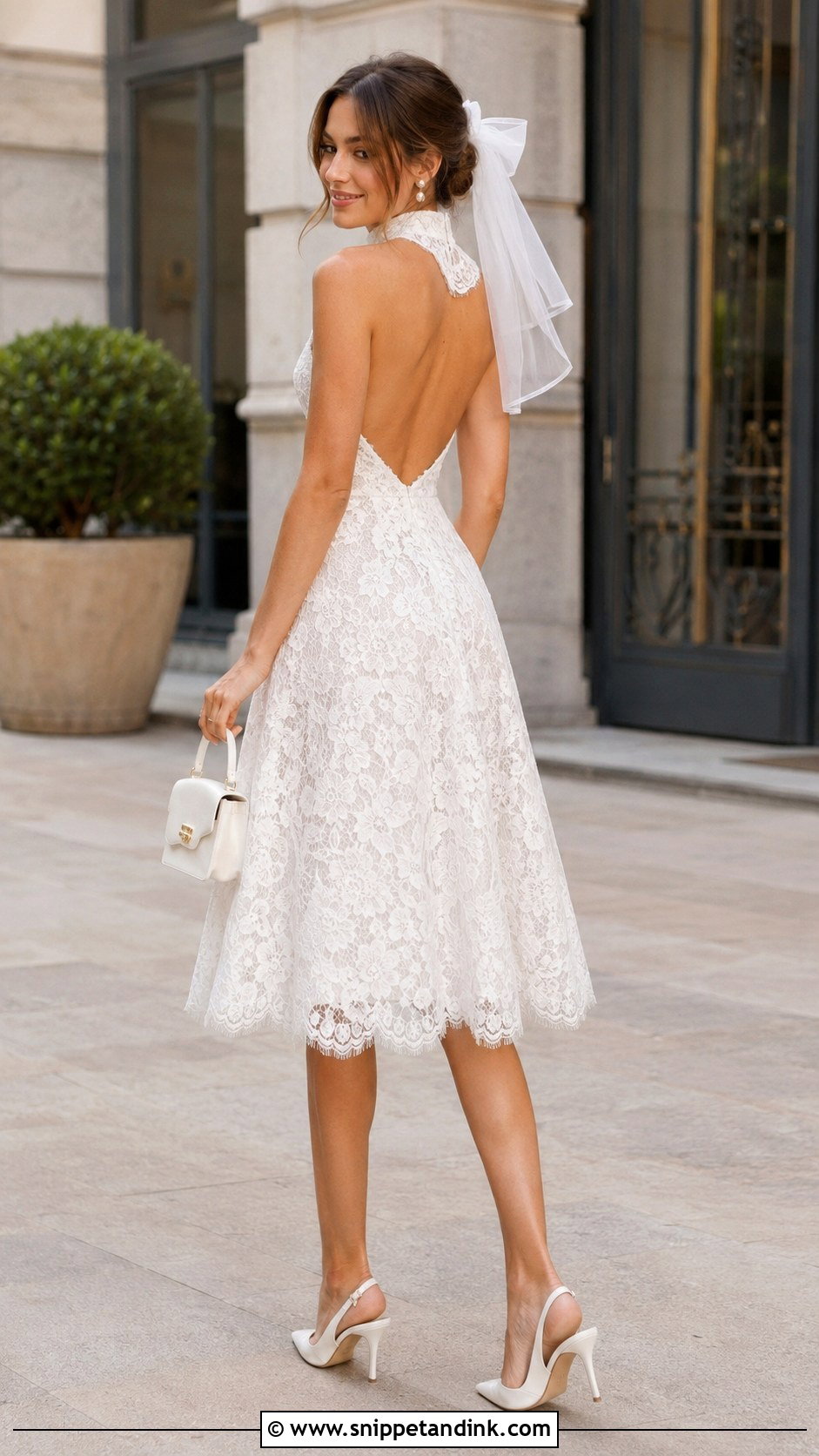
A short backless lace dress works for a civil ceremony, a reception change or a small wedding. A fitted mini or tea-length shape with a high neckline, wide straps or a structured bodice keeps it secure, a low V back adds interest, and a scalloped hem keeps it bridal. Shorter hems ride up when you sit, so test that, along with dancing. Pointed slingbacks, pearl earrings and a top-handle bag for portraits; a short veil, bow veil or jeweled comb suits the proportions. A removable overskirt gives you a ceremony look too.
Snags, Spills and Storing Lace After the Wedding
Lace gets caught on things. Most snags on the day are a single pulled thread, and they look worse than they are. Never cut it or pull it. Ease the loop back to the underside with a blunt needle or a pin, or simply tuck it and leave the repair for later.
Spills need a light hand too. Blot, don’t rub, because rubbing raises the fibers and spreads the mark. Pack a small kit with white cloths, a few safety pins and a matching thread so a bridesmaid can deal with small problems at the reception.
After the wedding
- Get the gown to a specialist cleaner within a few weeks. Sugar from champagne or cake can dry invisibly and then turn brown on lace over time.
- Store it out of plastic, which traps moisture. A breathable box with acid-free tissue in the folds is the safer choice.
- If you keep it hanging, use the inner hanger loops so the weight of the skirt isn’t pulling on the lace straps, and keep it out of light.
- Check on it once a year and refold along different lines so creases don’t set into the lace.
Lace Has to Move With You
Lace with an open back covers a lot of ground here: flowing A-lines, fitted mermaids, long sleeves, illusion panels, ball gowns and short reception dresses. Whatever shape you lean toward, look at the back construction as closely as the front. Secure straps, good lining, careful tailoring and the right underwear make the difference. Then choose hair that shows the lace, a veil that doesn’t hide it and shoes that suit the ground you’ll stand on. Pick the gown that feels right walking, sitting, hugging and dancing, not only standing still.
You'll Like These Ideas:




Leave a Reply