
A cape changes a wedding dress more than almost any other accessory I style. It can add movement, cover the shoulders or bring sparkle, all without hiding the gown, and it frees your hair from the pins a veil needs. Below you’ll find 25 complete looks: sheer tulle and pearl shoulder capes, lace capelets, floor-length satin, hooded winter wraps and a few short, playful versions. The right one depends on your neckline, the gown’s fabric and the season, so I’ve paired each cape with the dress, hair and shoes I’d actually put with it.
How a Cape Stays Put Through Hugs and Wind
Brides fall for the look of a cape and rarely ask how it’s held on, yet the fastening decides whether you spend the day adjusting it. I settle this at the fitting, with the gown on, because the attachment points depend on the dress underneath.
Stitched or snapped to the gown
The most secure option is to have your seamstress add small snaps or hooks under the shoulder seams or straps of the dress. Nothing shows, the cape can’t slide, and it comes off quickly if you want a second look. On a strapless gown there’s less to grip, so the cape usually needs its own fastening at the collarbone.
Front closures and arm loops
Freestanding capes fasten at the front with a hook, a button or a tie. They’re simpler but more likely to shift backwards as you move, especially when they’re heavy. Clear elastic loops under the arms, or small wrist loops on long capes, stop that drift and keep the cape from flying up outdoors.
Bring the cape itself to your last fitting. Shades of white vary widely, from bright white to ivory and champagne, and I check the two fabrics side by side in daylight. If a separate cape is being made to order, ask for the delivery date up front, because it needs to arrive before that final fitting, not after.
1. Sheer Tulle Bride Cape With Satin Wedding Dress
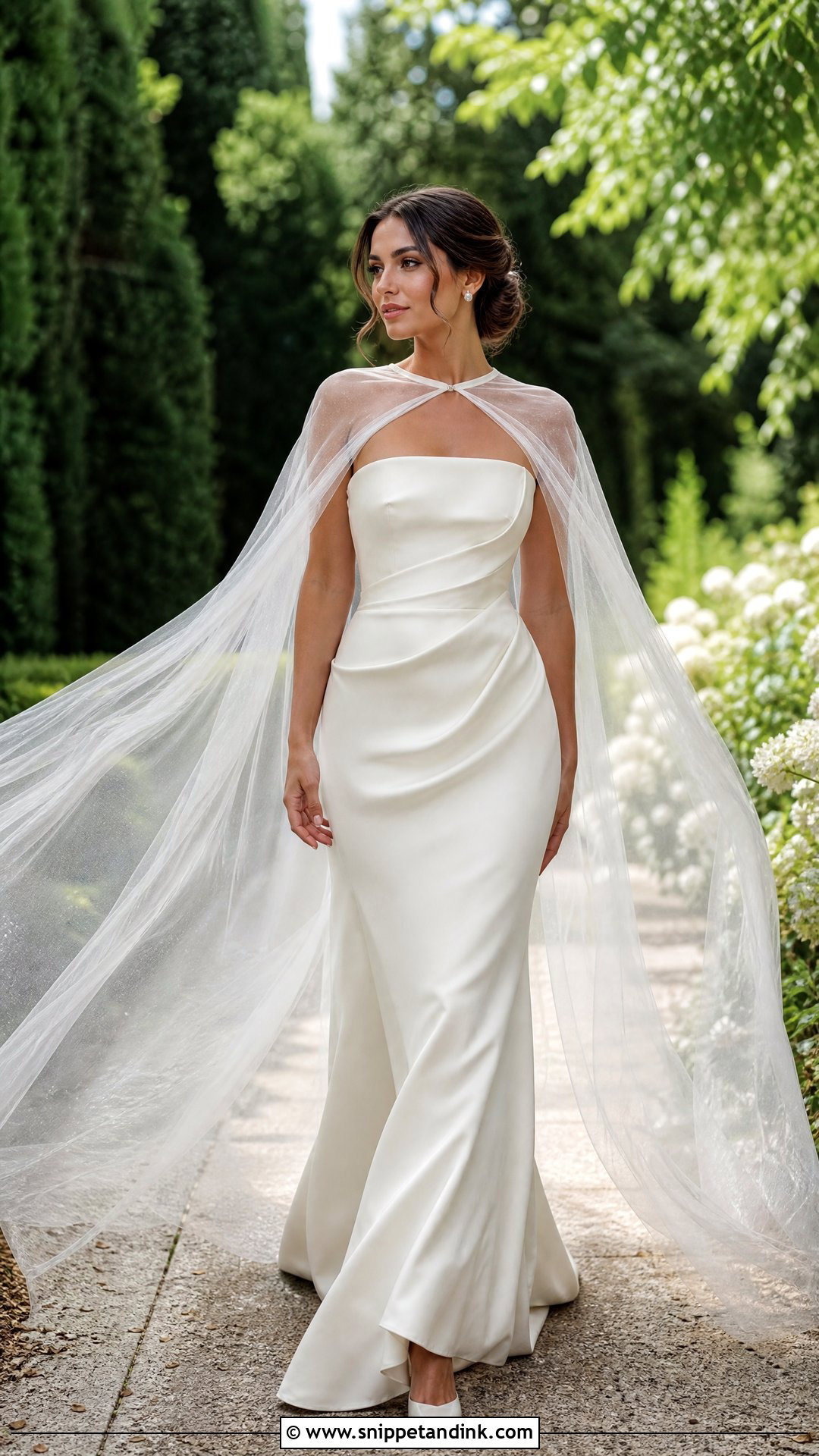
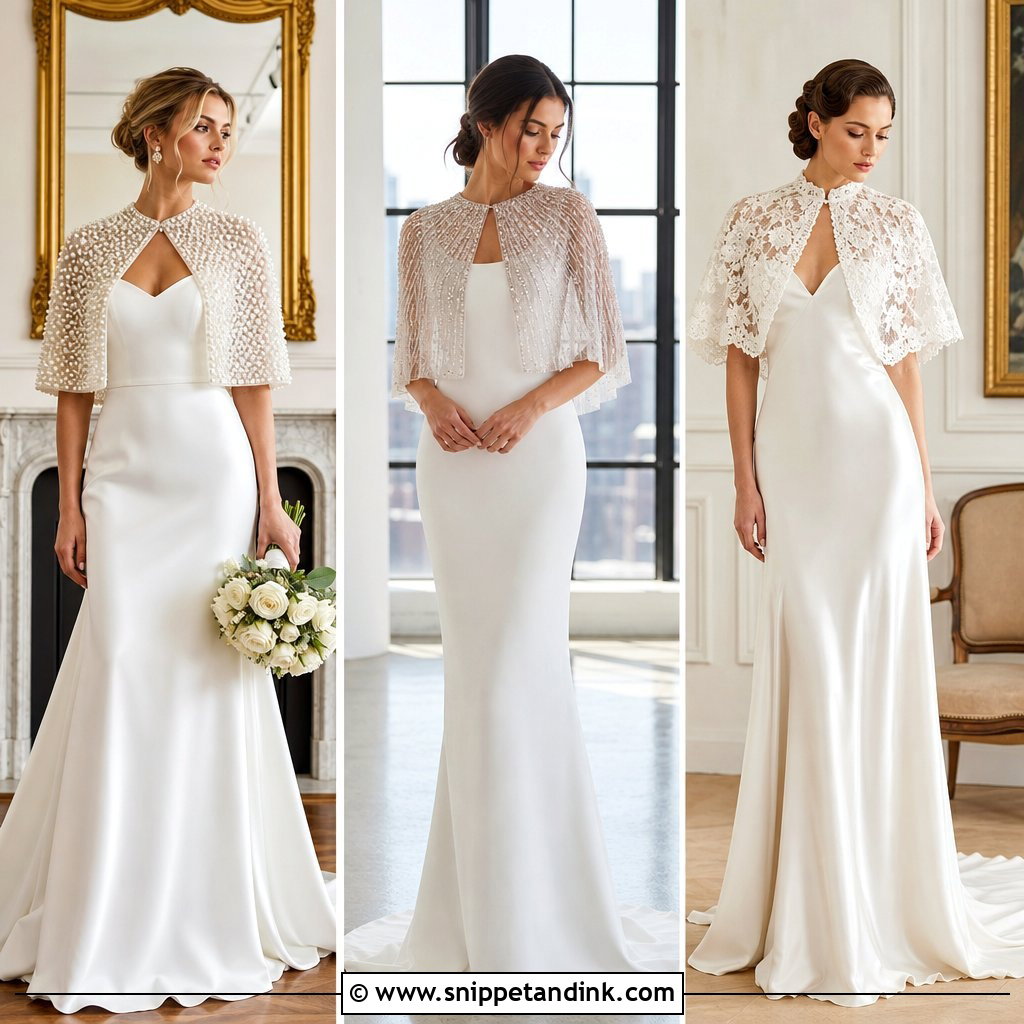
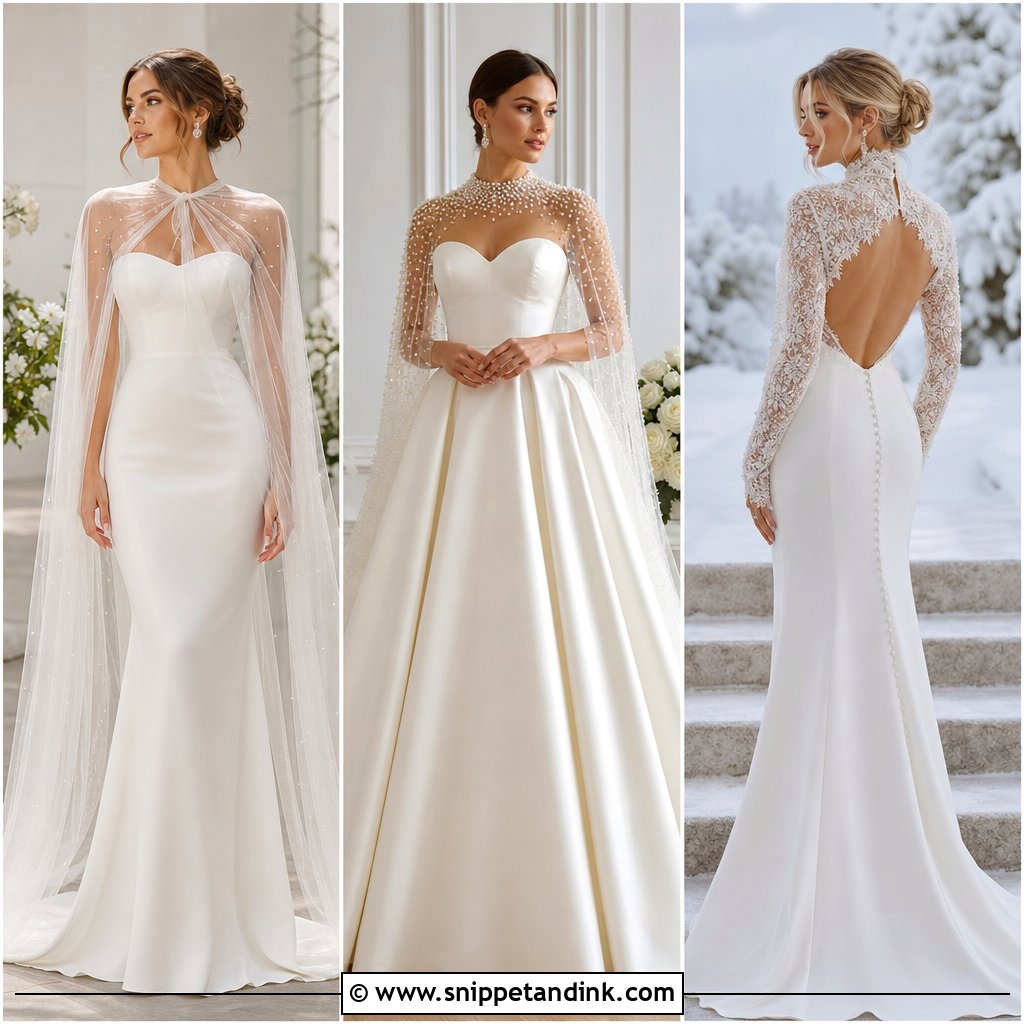
Sheer tulle over satin is the pairing I suggest first, because the two fabrics contrast without fighting. Satin is smooth and weighty; tulle barely registers until it moves. A strapless, scoop or square-neck gown lets the tulle fall cleanly from the shoulder, and floor or chapel length gives you the trailing effect of a veil. One honest warning: soft tulle catches on rings and bouquet stems, so I ask brides to hold their flowers slightly forward. Pearl studs, a slim bracelet and ivory heels are all the jewellery it needs, and a light garden breeze shows the tulle at its best.
2. Pearl Bride Cape With Minimal Wedding Dress
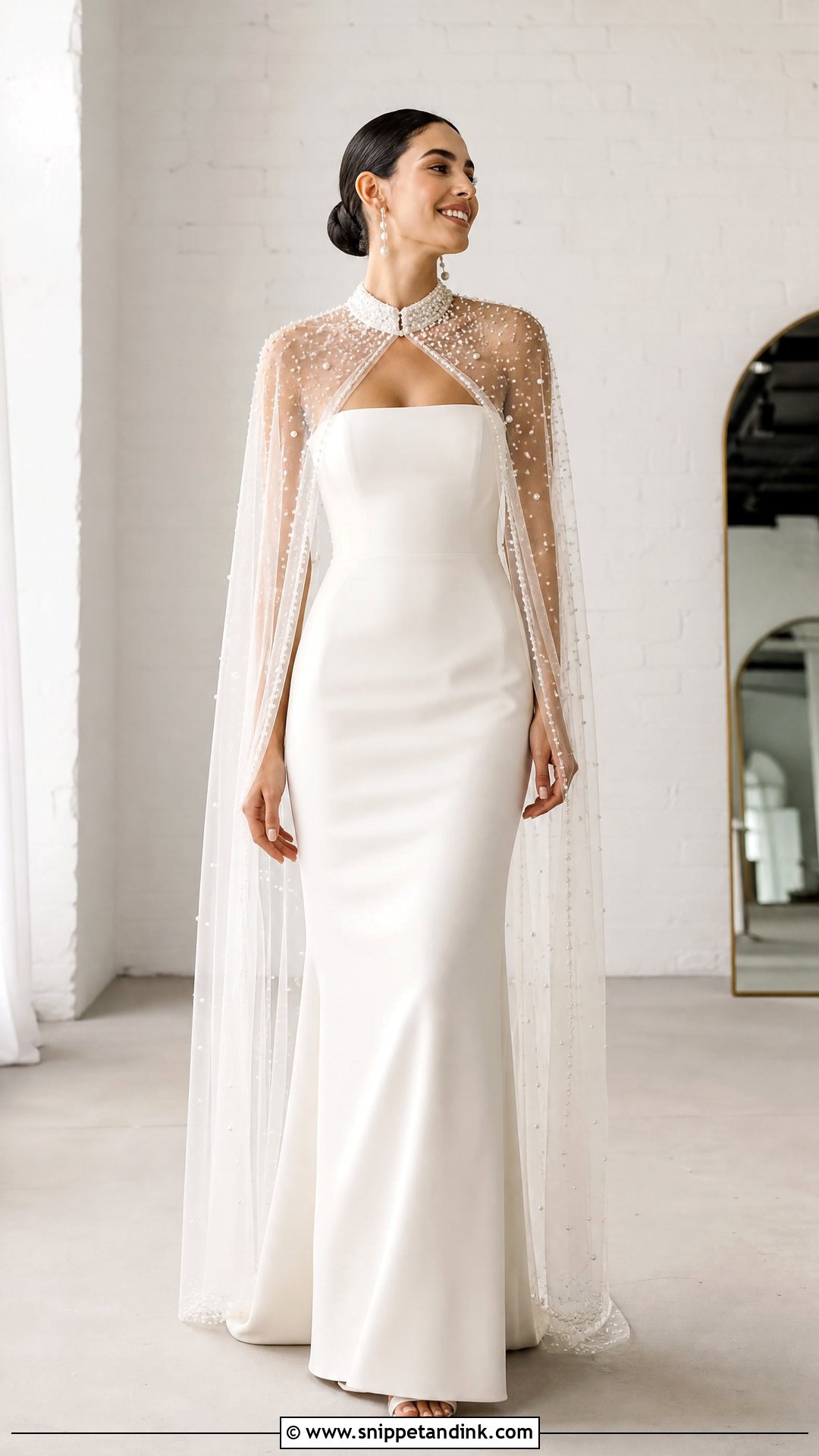
Pearls on a cape do the job a necklace would, so I skip the necklace entirely. Over a crepe sheath, a satin column or a clean A-line, the beading at the shoulders and back gives the plain gown its detail. Weight is the thing I check. A heavily pearled cape can drag backwards and pull at the neckline, so look for even weight across both shoulders and a secure fastening at the front. Pearl drops, soft waves and pointed heels balance it, and the pearls catch light well as you walk away down the aisle.
3. Lace Bride Cape With Mermaid Wedding Dress
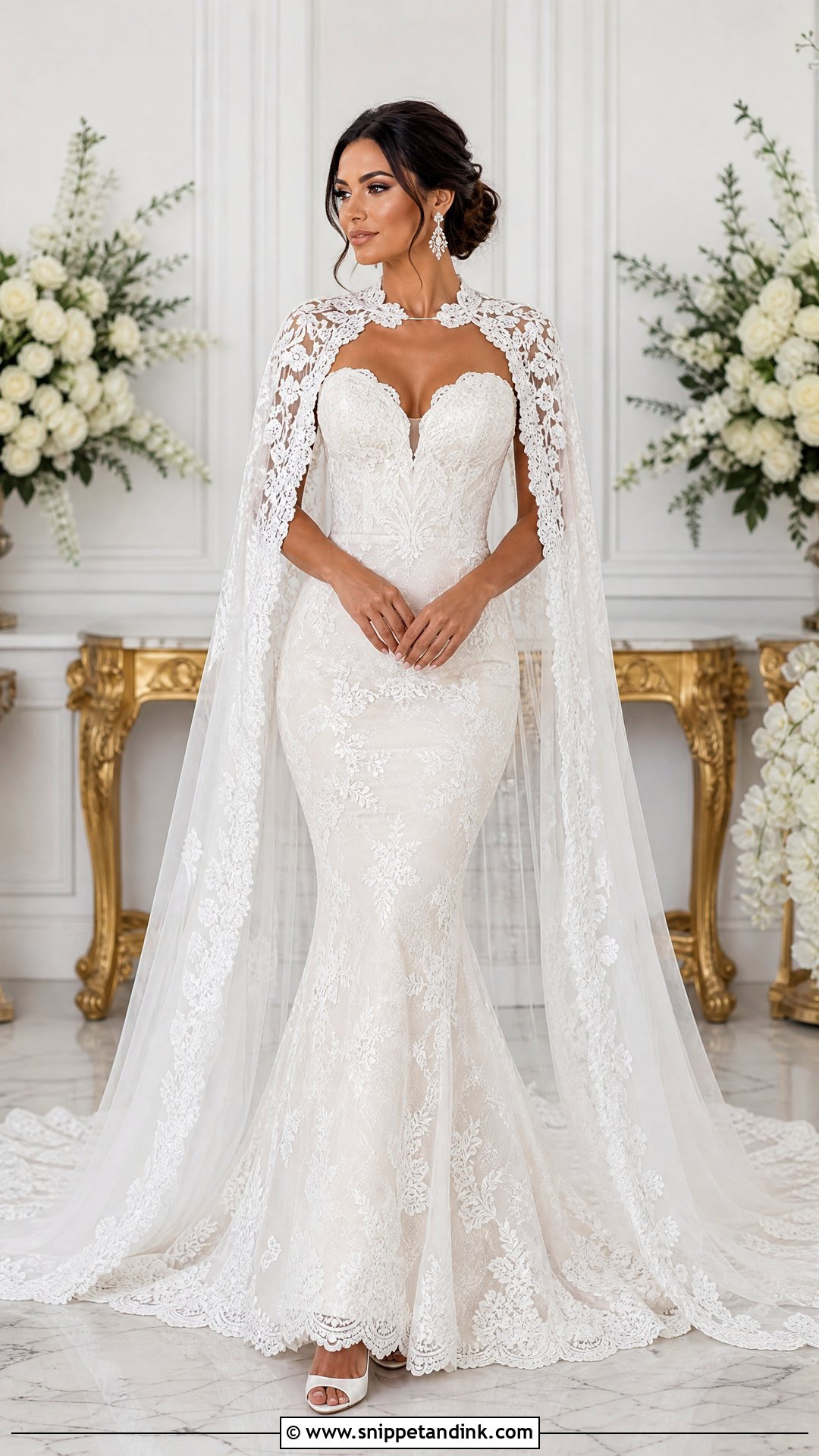
Mermaid gowns are fitted and sculpted, and a lace cape takes a little of that hardness away. The lace needs to complement the dress, not compete with it. If the gown is plain, a floral lace cape adds the detail; if the gown is already lace, I go for a lighter pattern or a sheer cape with only a lace edge, otherwise the two motifs blur together in photos. Let the cape run long enough to follow the train. Swept-back hair, small earrings and elegant heels keep it formal for a classic indoor ceremony.
4. Cathedral Bride Cape With Ball Gown
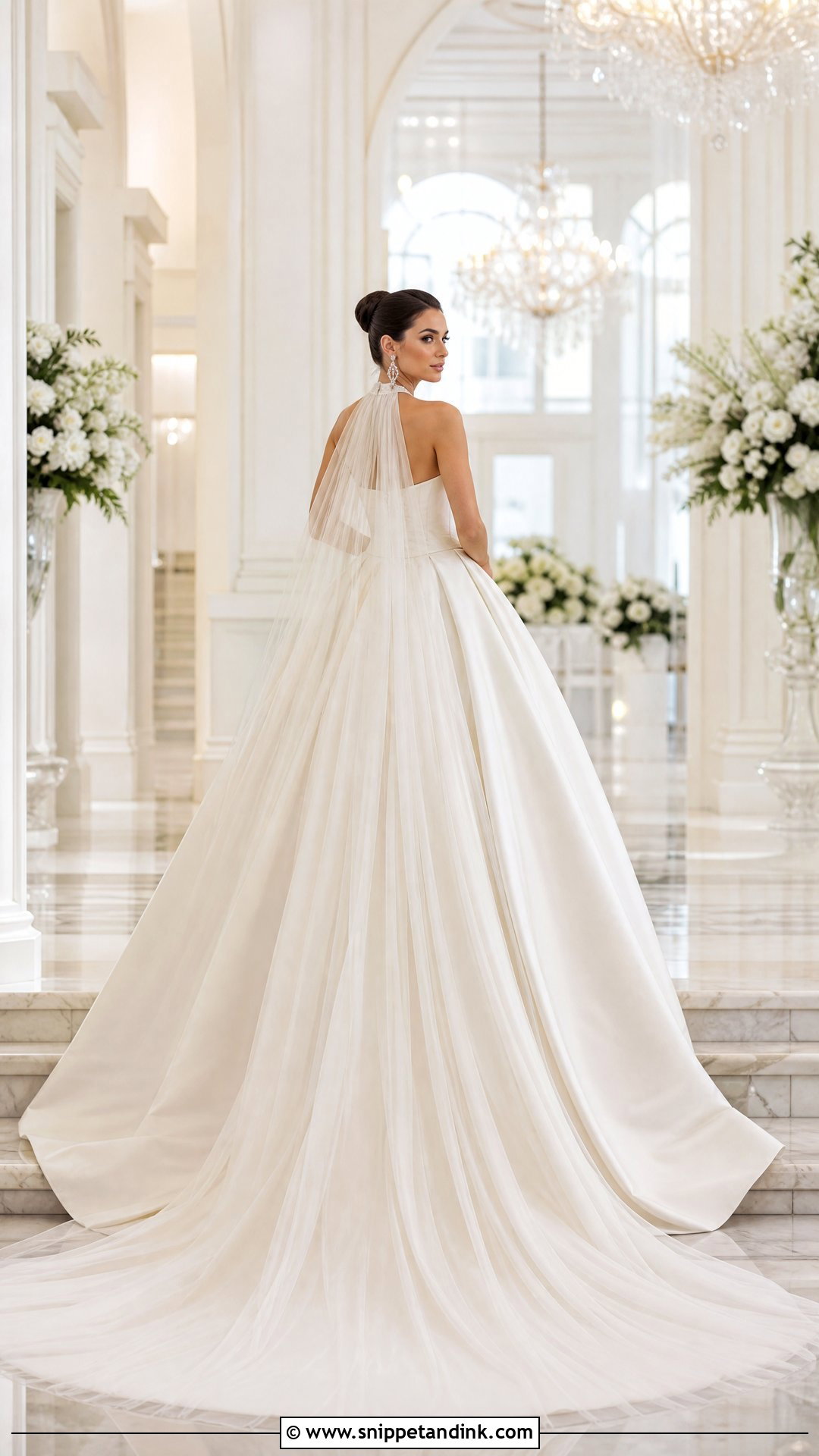
For the bride who wants the grandest possible entrance, a cathedral-length cape over a ball gown is it. The cape should fall from the shoulders or upper back and run past the gown’s train. It suits a strapless ball gown, an off-shoulder bodice or a simple corset dress. Because the skirt already has volume, I keep the cape fabric light, in tulle, organza or soft chiffon; a heavy cape on top of a heavy skirt is genuinely tiring to carry for a whole day. A clean updo, crystal earrings and ivory heels finish it, and you’ll want a large venue so the length has room to settle.
5. Short Bride Cape With Tea Length Wedding Dress
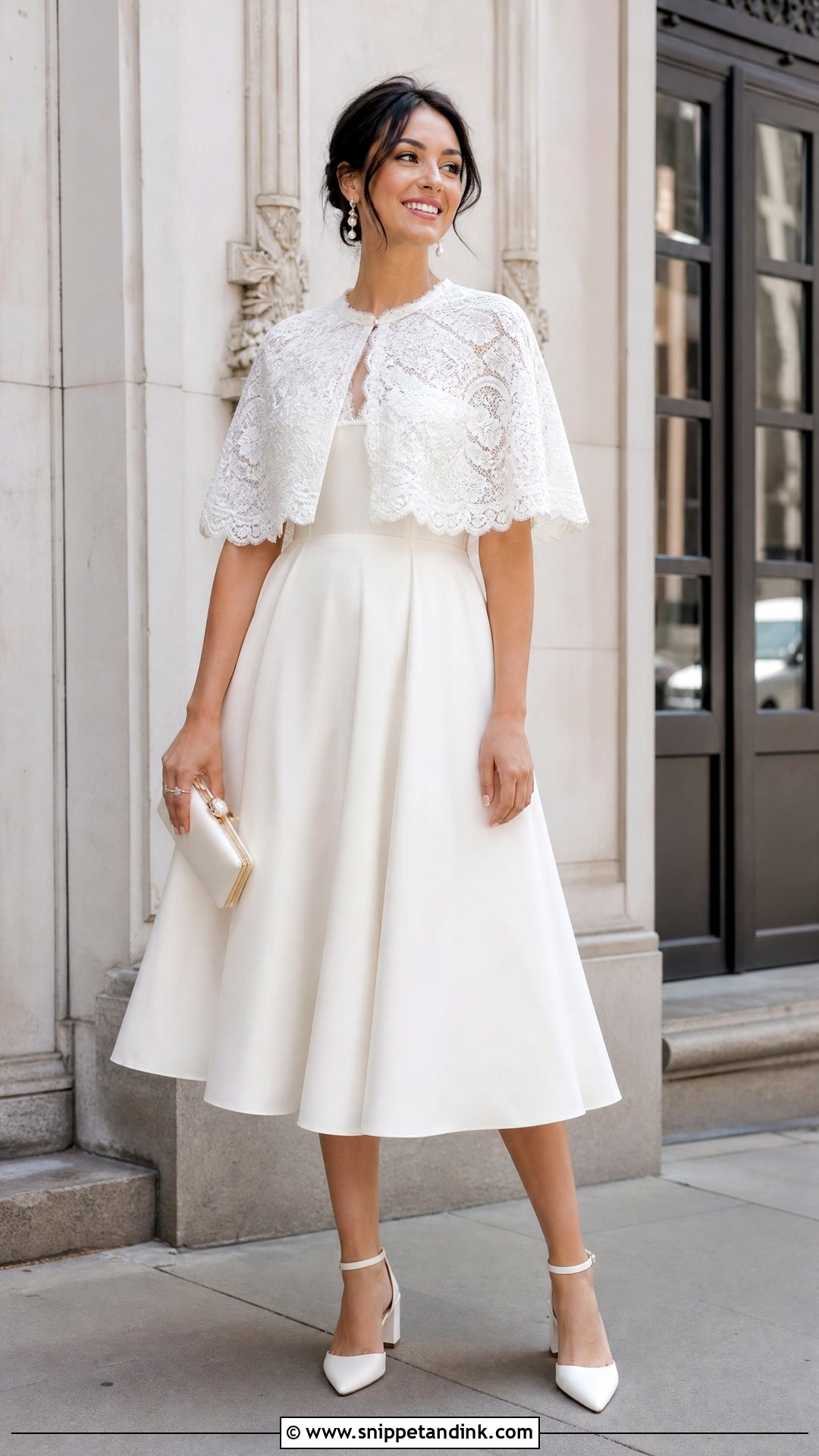
A cropped capelet with a tea length dress keeps everything short, light and easy to move in. I like it for courthouse weddings, city ceremonies and elopements where you’ll be walking a lot. The capelet should end above the waist so the dress keeps its shape, and tulle, lace or satin all work. Block heels, slingbacks or Mary Janes give it a vintage note, and pearl earrings with a small structured clutch complete it. It also gives just enough shoulder coverage for a chilly registry office.
6. Satin Bride Cape With Crepe Wedding Dress
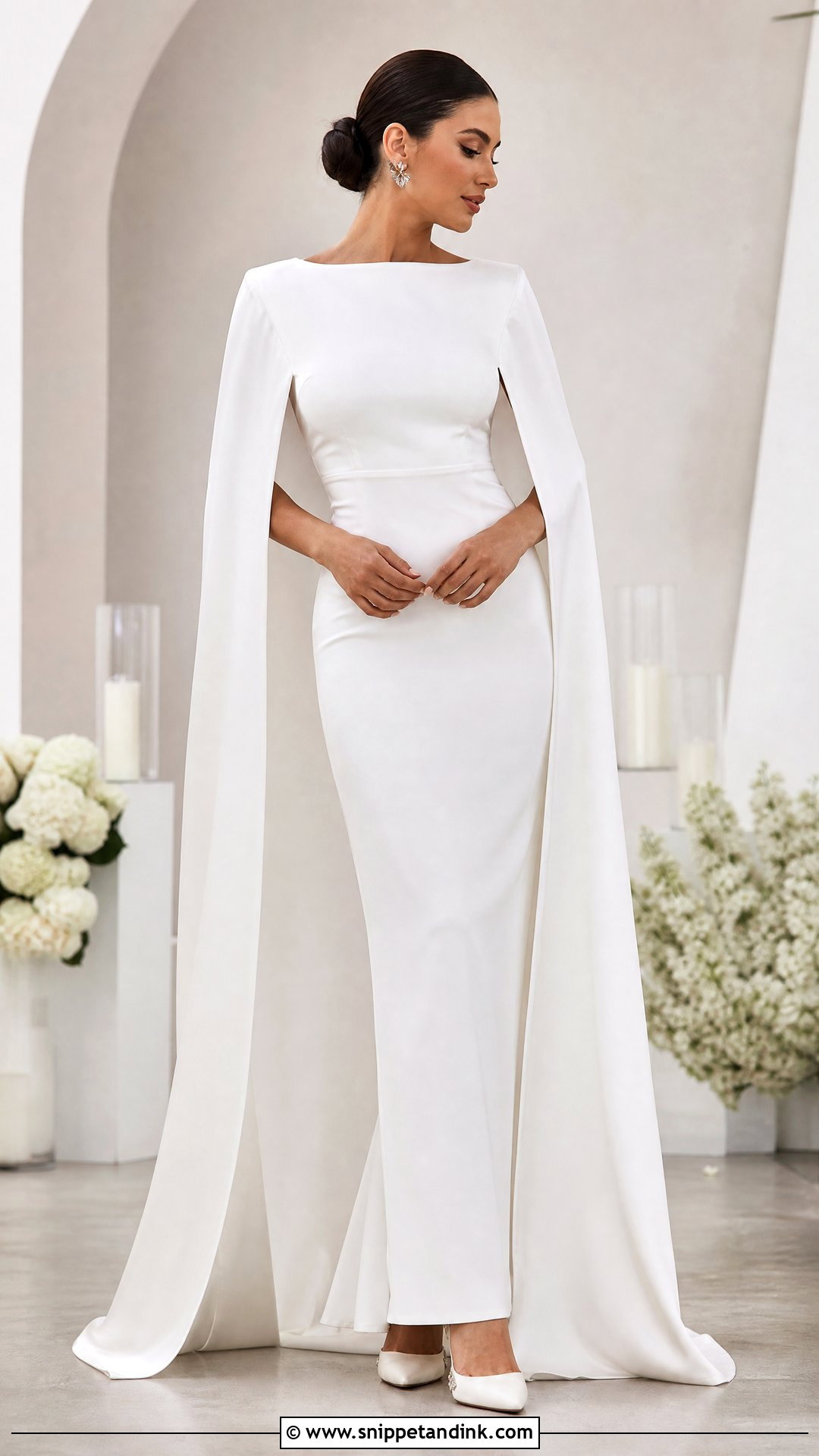
Satin over crepe looks simple, but the shades have to match closely. Two fabrics in slightly different ivories look like a mistake next to each other, so I compare them in daylight, not under shop lighting, before committing. Once the colour is right, the satin gives a sleek crepe gown more presence without any lace or sparkle. A shoulder cape, a long cape or a detachable cape train each change the mood, from subtle to dramatic. Pointed satin heels, a low bun and sculptural earrings keep the outfit modern and quiet.
7. Beaded Bride Cape With Simple Wedding Gown
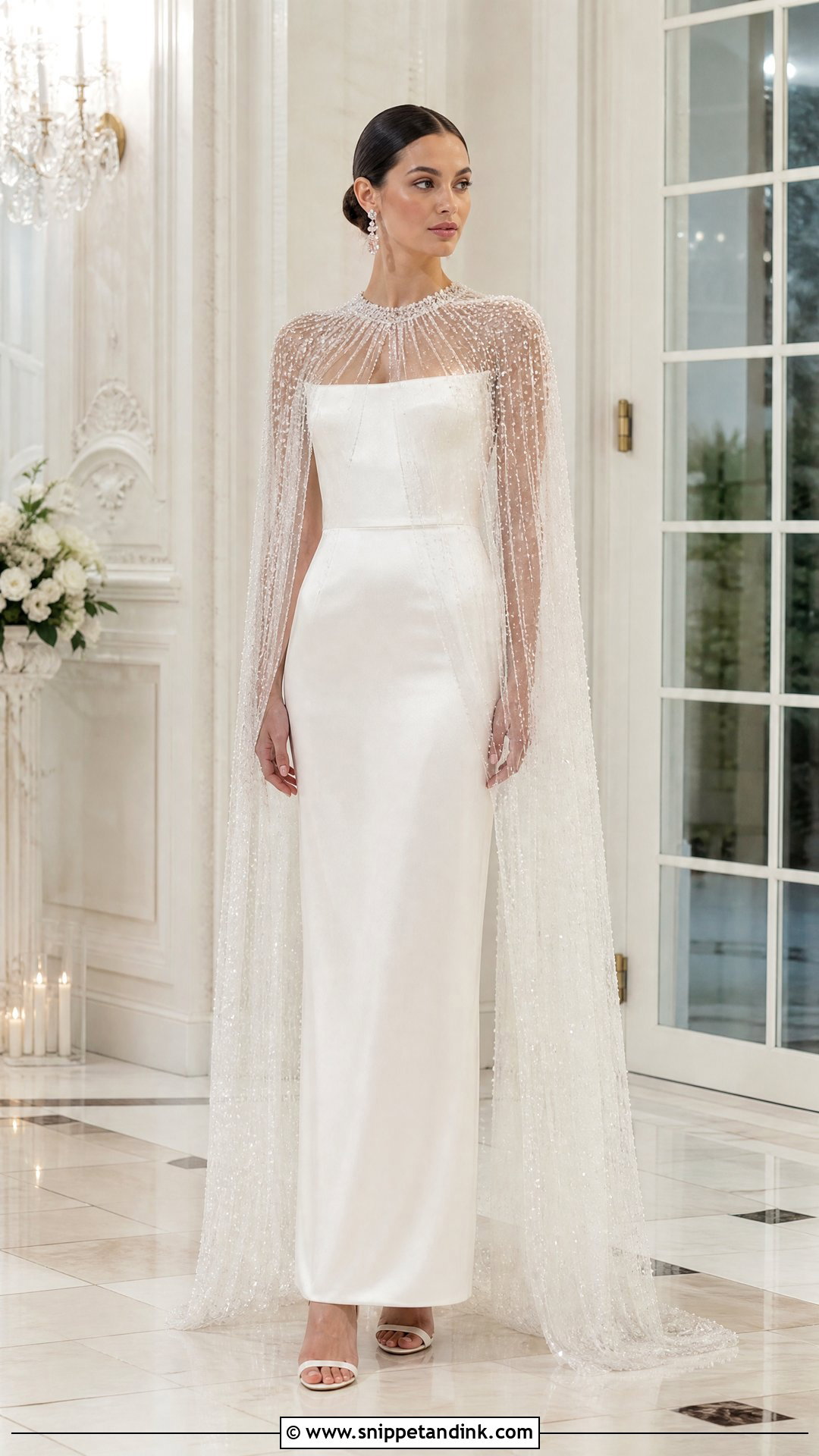
If your gown is plain satin, crepe or mikado, a beaded cape is the cleanest way to add sparkle without buying an embellished dress. Clear beads, crystals or soft silver read as bridal glow in photos, while coloured beads tend to look like evening wear. A long beaded cape suits an evening wedding; a shorter capelet suits a small ceremony and is far lighter to wear. With that much detail on the shoulders, I keep the hair smooth, the earrings crystal and the shoes minimal.
8. Chiffon Bride Cape With Beach Wedding Dress
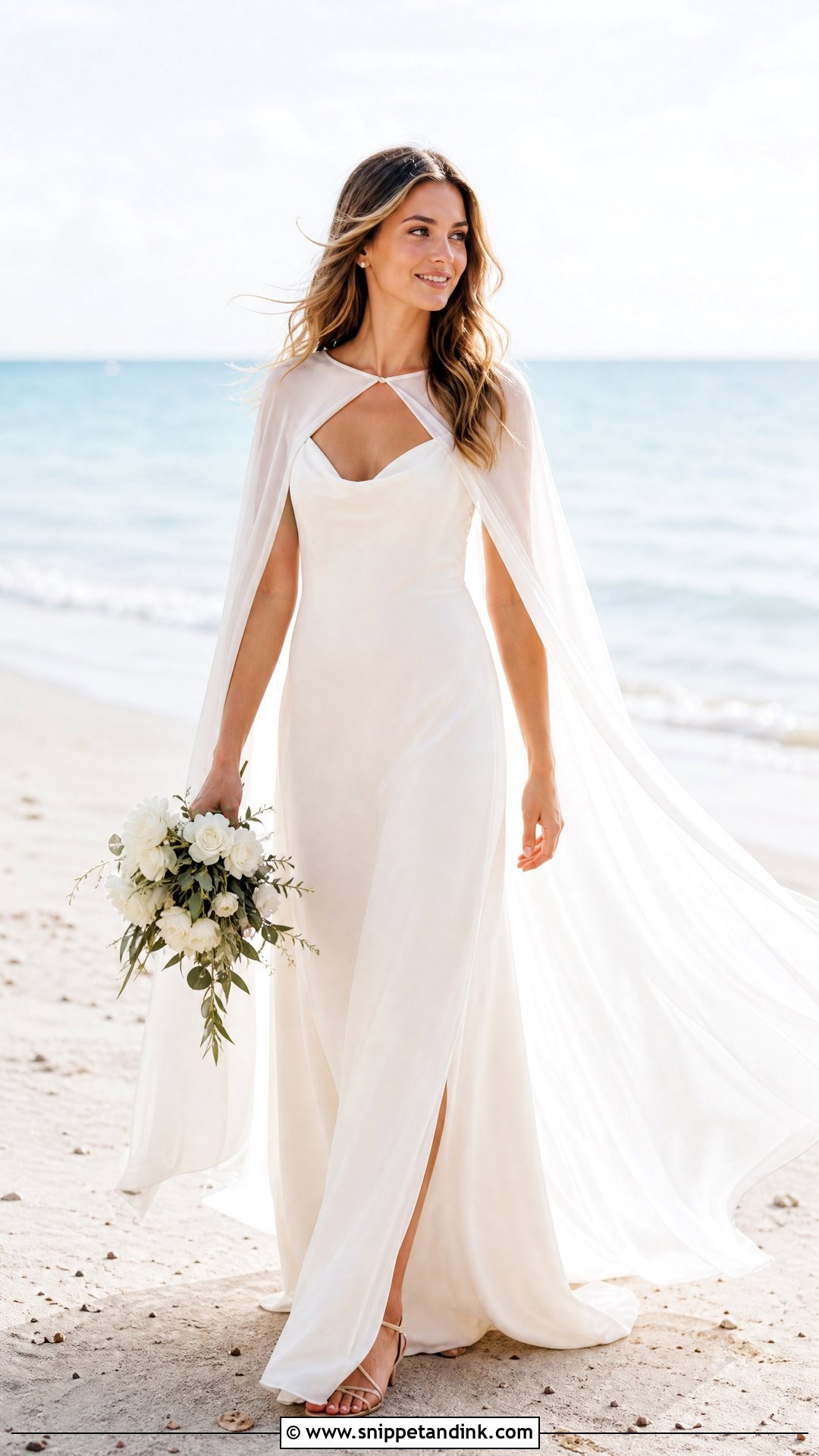
On a beach, a veil turns into a sail and wraps around your face, which is why I often swap it for a chiffon cape attached at the shoulders or neckline. Chiffon is light and drapes softly, and it gives coverage from the sun without adding heat. It pairs with a simple slip dress, a flowy A-line or a relaxed sheath. Skip heavy beading or stiff structure, which drag in sand. Barely-there sandals, pearl studs and loose waves are all it needs. In a strong wind, small wrist loops on the cape’s back corners stop it from flying up during the vows.
9. Hooded Bride Cape With Winter Wedding Dress
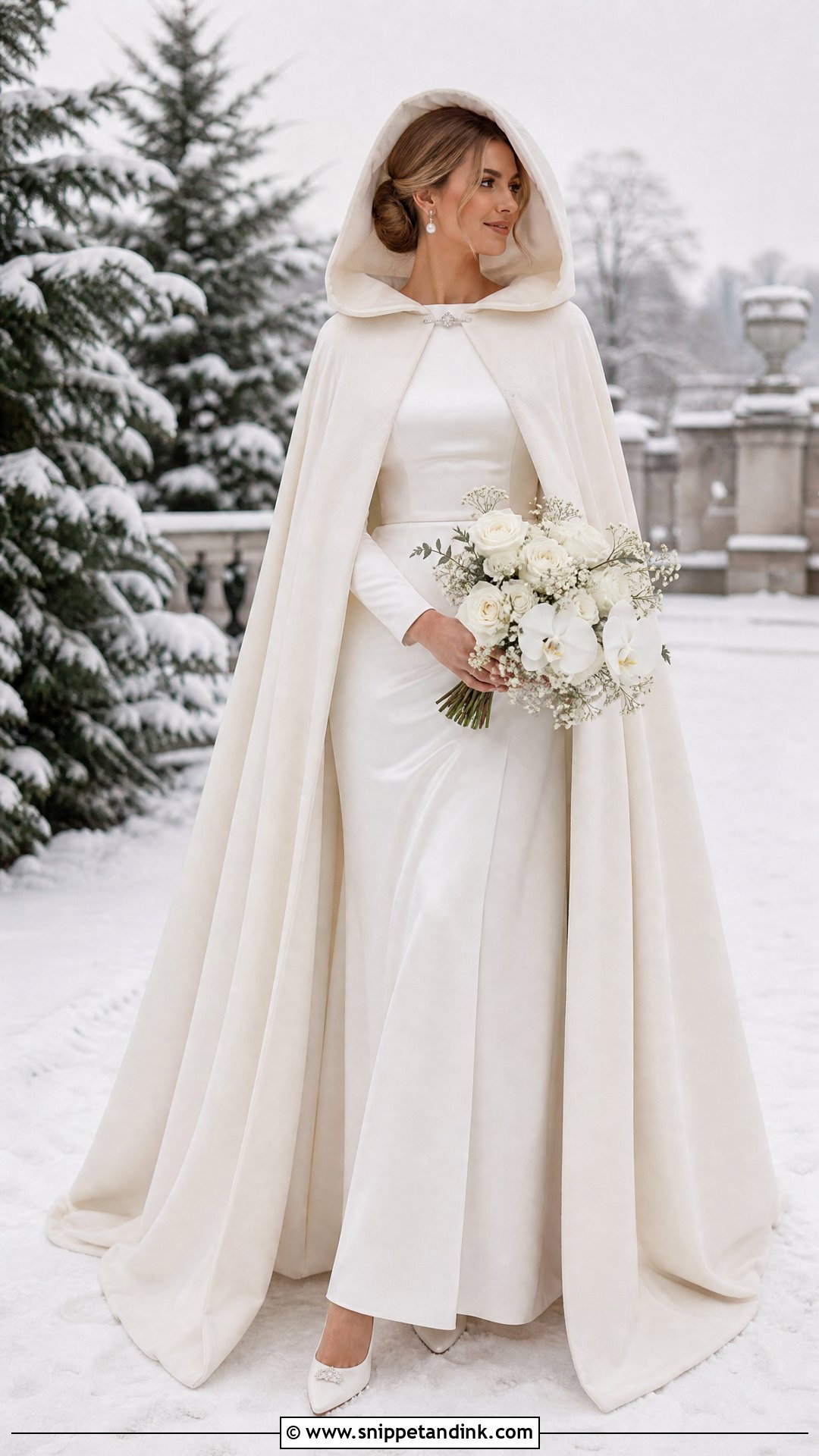
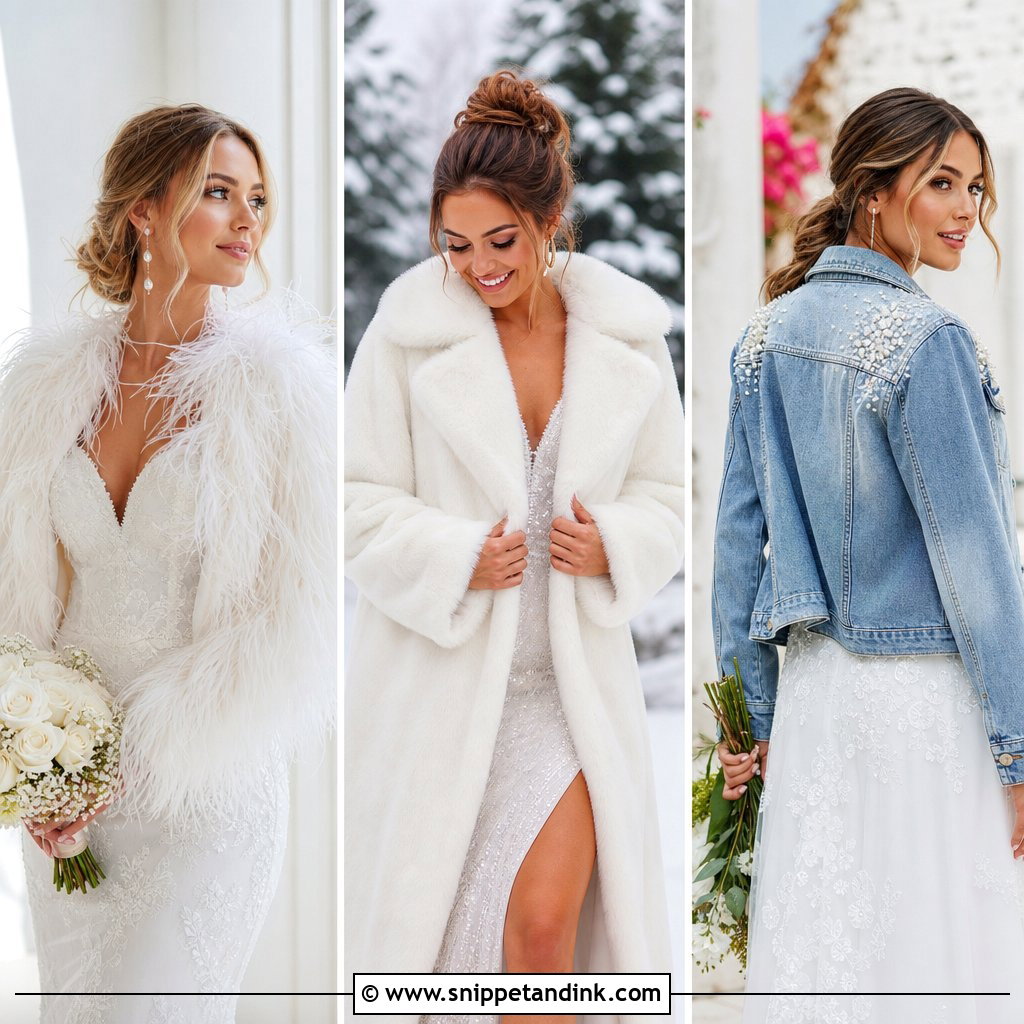
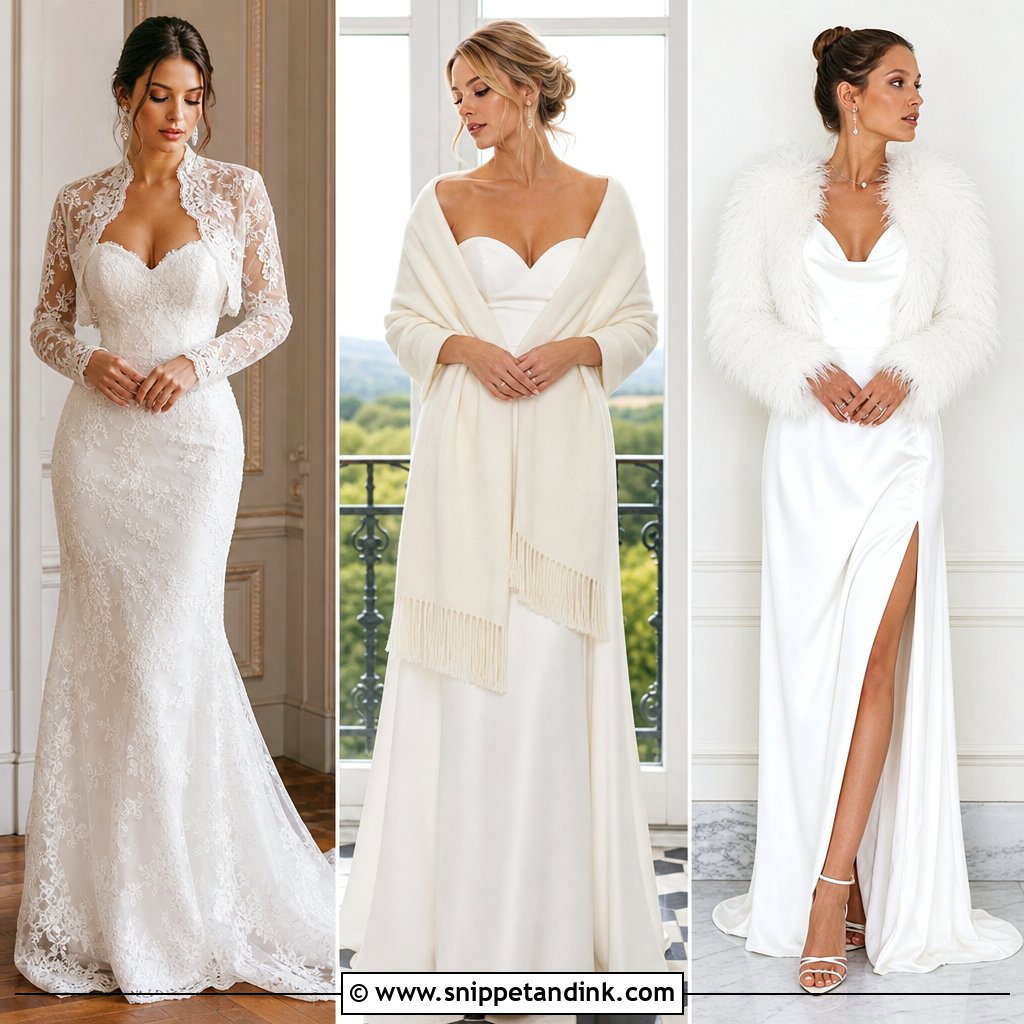
A hooded cape is the warmest way to dress a winter wedding dress for outdoor photos without hiding it under a coat. Velvet, wool blends, satin-lined crepe or heavier silk all keep the cold out. I always try the hood up at the hair trial. A deep hood flattens volume at the crown and can smudge makeup along the hairline, so a shallower hood that frames the face rather than enclosing it is easier to live with. Full length suits long-sleeve gowns, satin ball gowns and lace. Closed-toe heels, pearl earrings and a soft bun keep it neat underneath.
10. Floral Embroidered Bride Cape With A Line Dress
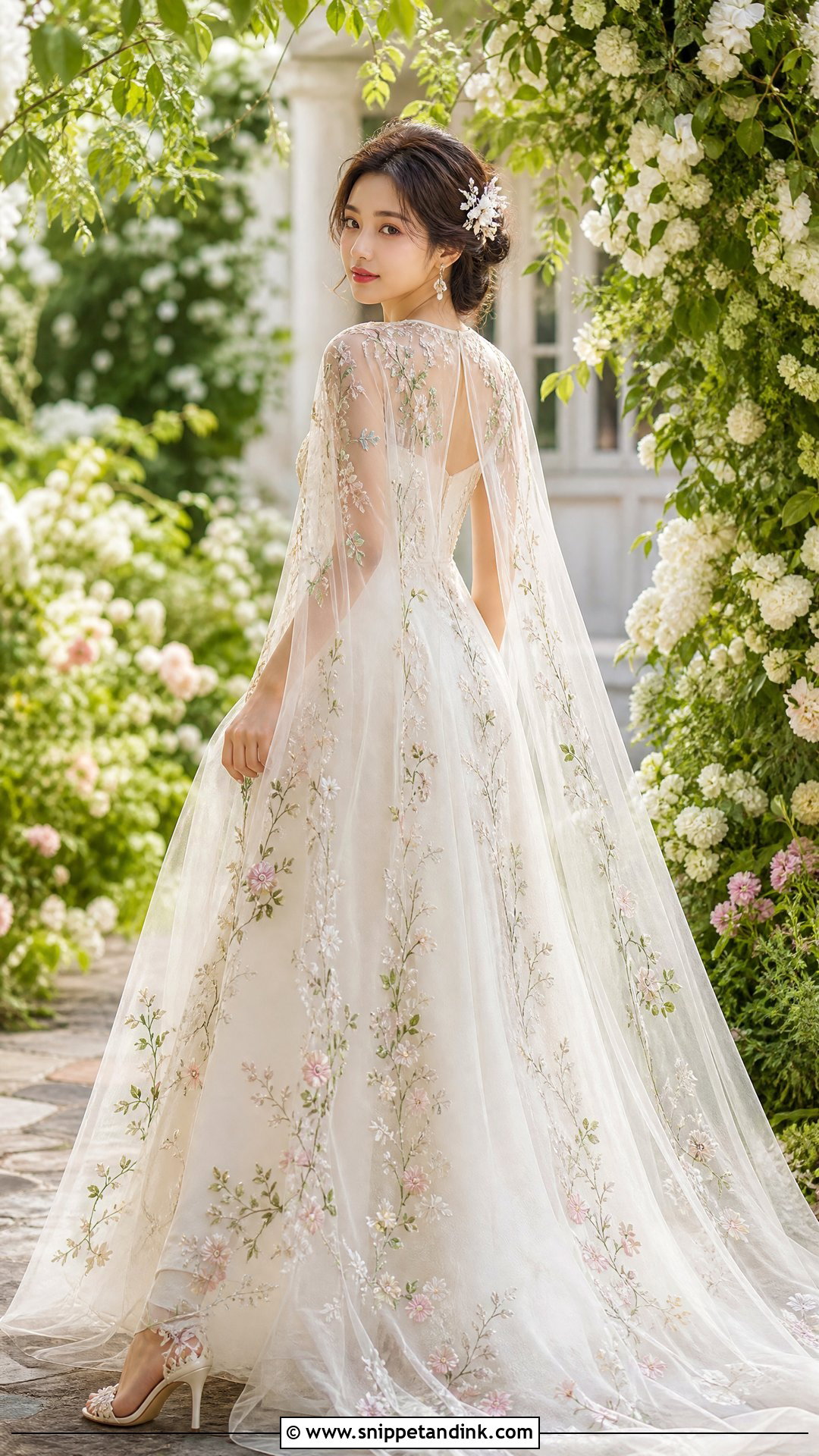
Embroidered flowers on a cape bring a garden into the outfit, which is why I suggest it for spring and outdoor ceremonies. Match the thread to the gown’s tone, whether that’s ivory, champagne or blush. An A-line skirt gives the cape room to fall without clinging to the dress. Keep the gown underneath plain so the stitching stands out, and pick up one flower from the embroidery in your hair pins or bouquet. Pearl earrings and delicate heels finish it without tipping into sugary.
11. Detachable Bride Cape With Reception Wedding Dress
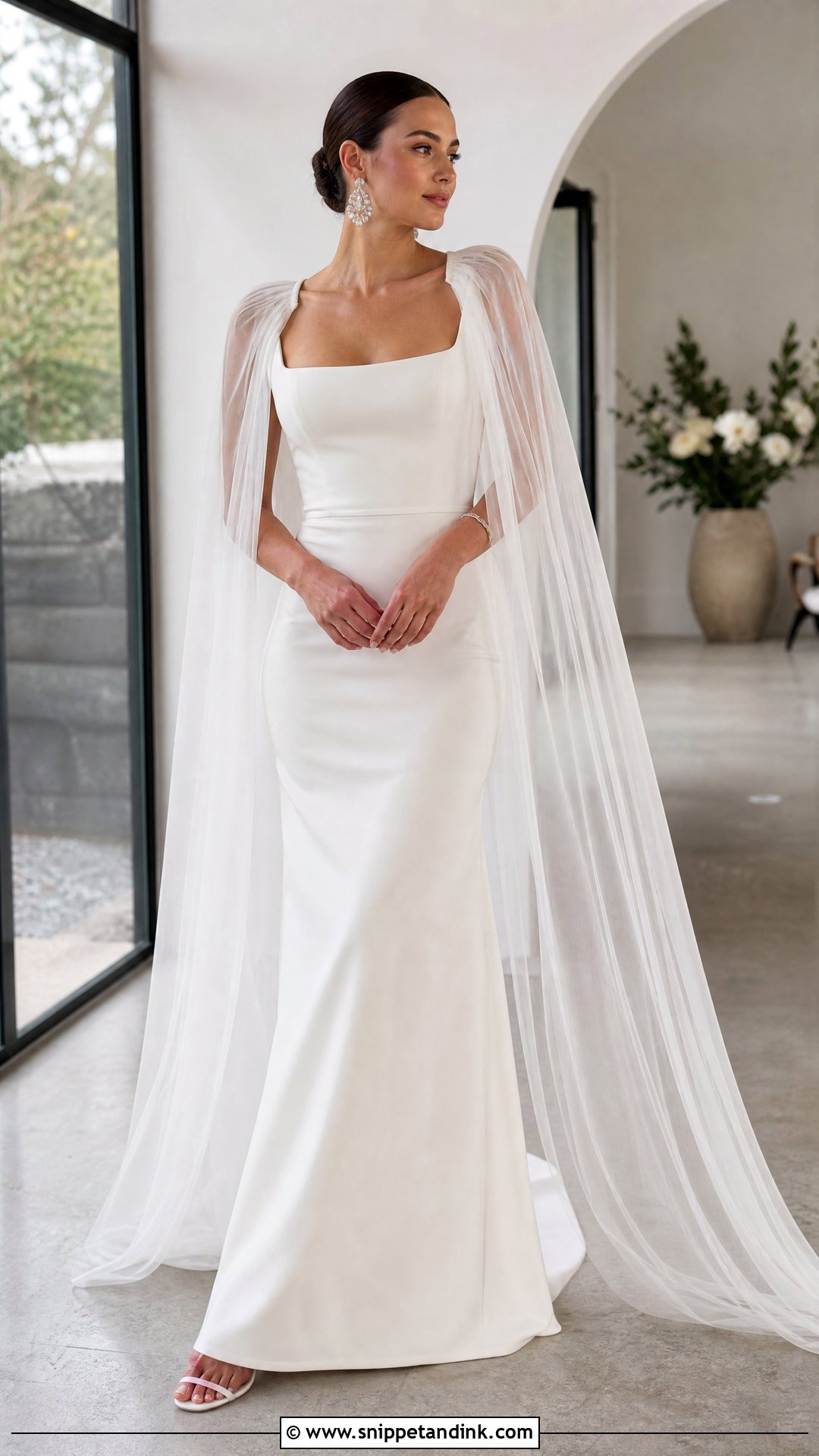
Detachable capes are the easiest way to get two bridal looks without a dress change. You wear the cape for the ceremony and portraits, then take it off before dancing. Fitted dresses, columns and minimal A-lines all work underneath. The attachment matters more than the cape: hidden snaps, shoulder loops or a clean collar fastening should be secure enough for a hug but quick enough for a bridesmaid to undo in a minute. I always practise the removal at the final fitting. Statement earrings, simple heels and sleek hair stay the same through both looks.
12. Organza Bride Cape With Strapless Wedding Dress
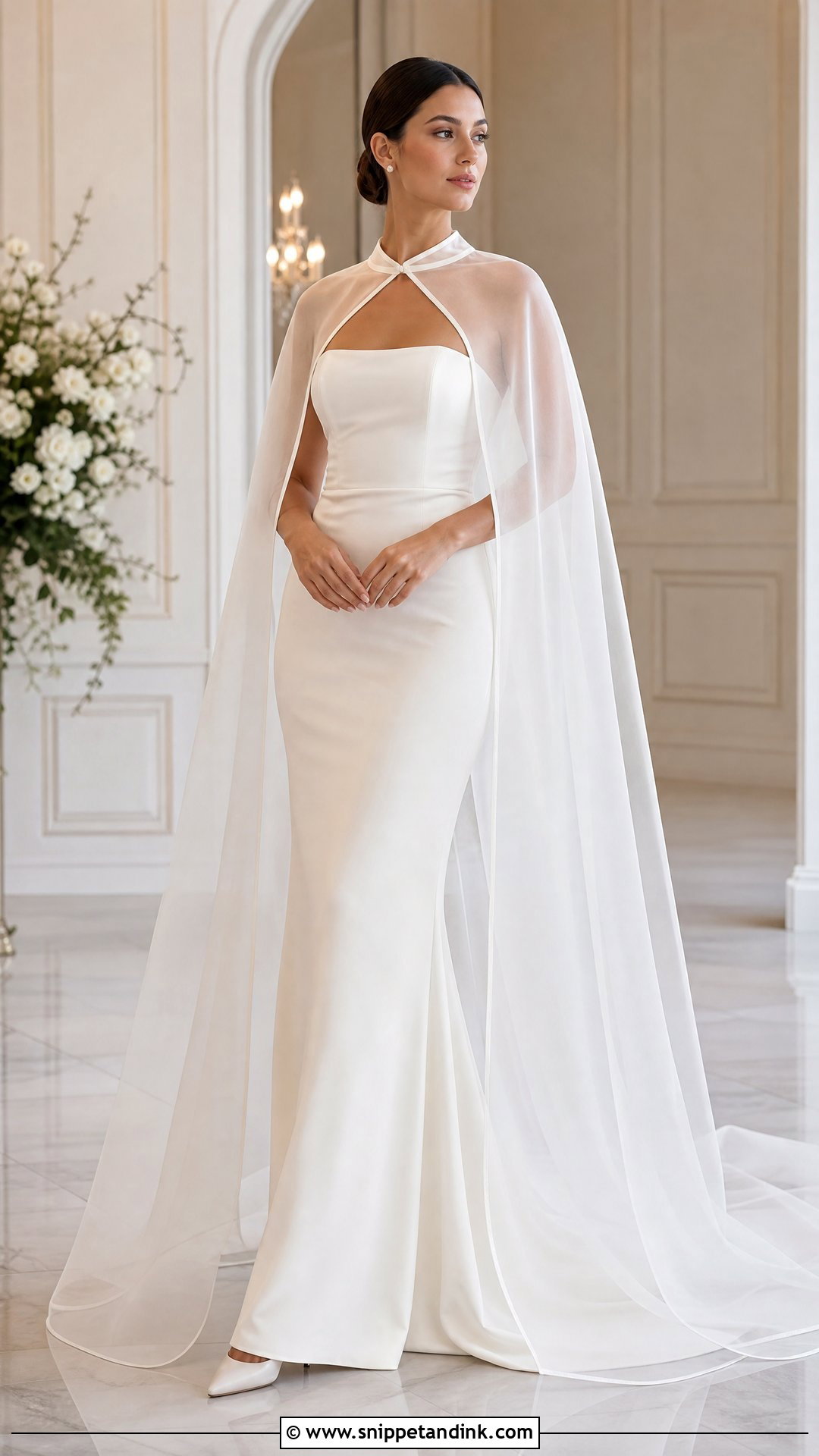
Organza sits between chiffon and taffeta: crisper than chiffon, but still sheer. Over a strapless gown that crispness gives the shoulders some shape and coverage without committing to sleeves. Organza does crease, though, and creases show in a sheer fabric, so I steam it at the venue and keep it on a hanger, not folded in a bag. Minimal jewellery works best, perhaps small pearl earrings, alongside a smooth updo and ivory heels. Ballrooms, museums and modern spaces suit its architectural feel.
13. Cape Sleeve Bride Cape With Column Wedding Dress
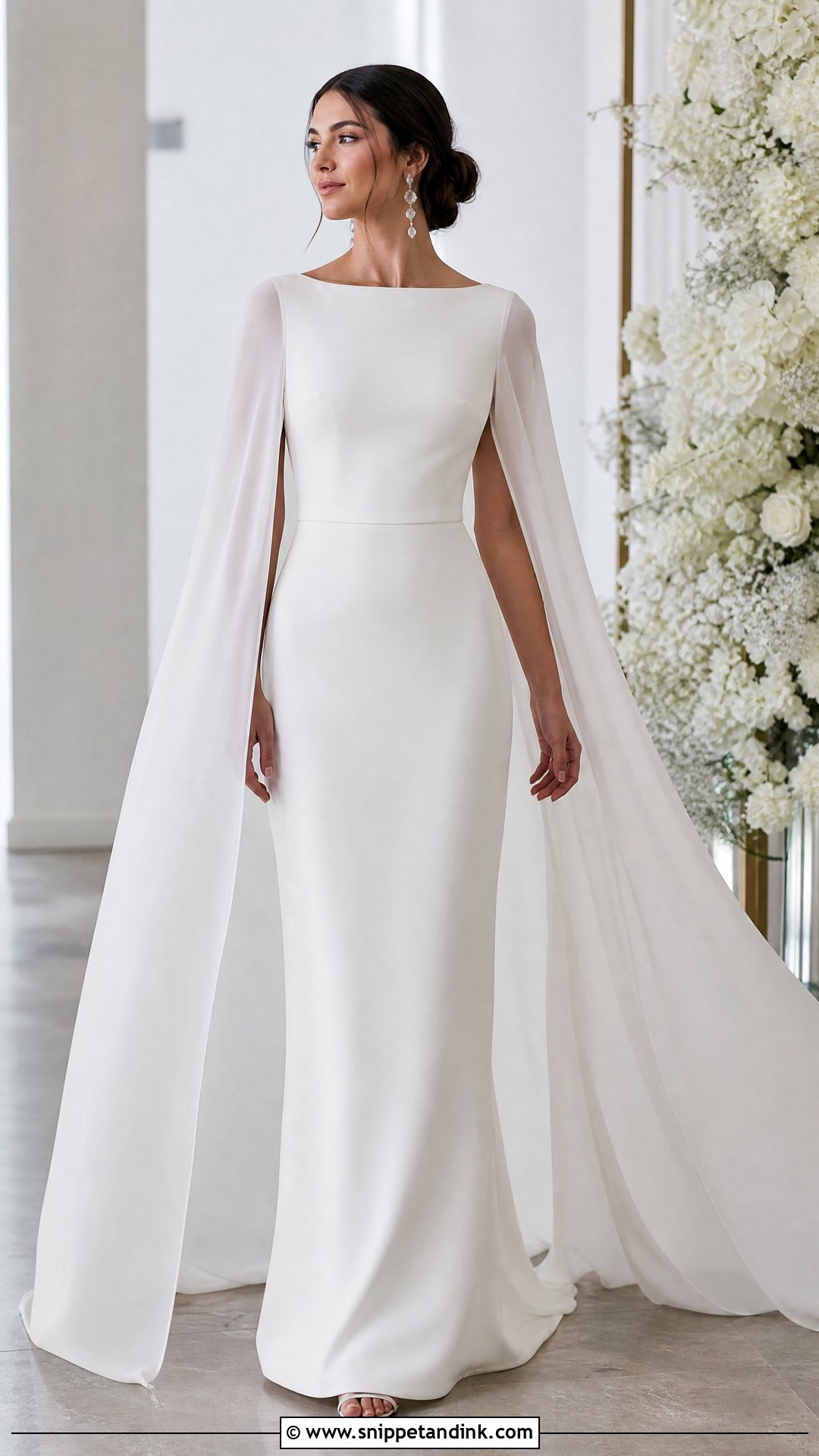
Cape sleeves give the look of sleeves while leaving the arms free to move, which brides who dislike fitted long sleeves appreciate. Over a column wedding dress, the straight gown keeps the flowing shoulder panels from looking busy. Soft tulle, chiffon or crepe panels fall and move naturally. The panels can slide off the shoulder if the gown is loose there, so I check the shoulder fit with arms raised. Sleek heels, a low chignon and drop earrings finish it, and the side profile is where this one shines.
14. Shoulder Bride Cape With Off Shoulder Wedding Dress
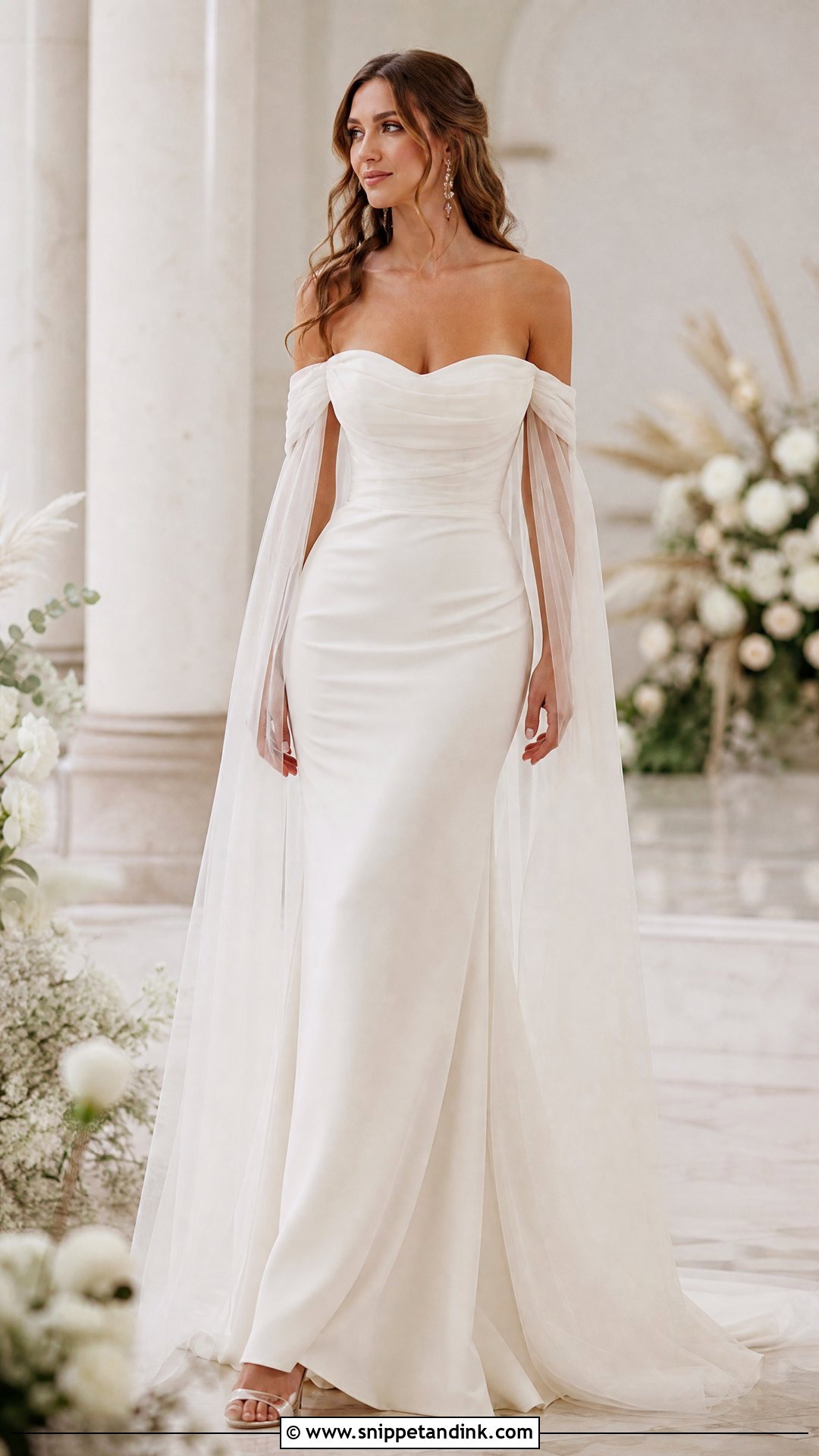
With an off shoulder gown, the cape has nowhere to sit except the upper arm or the neckline, so placement decides everything. Sitting it on the upper arms keeps the collarbones visible; attaching it near the neckline gives more coverage. Tulle and lace feel delicate, satin more formal. Leave the neck bare and move the jewellery to your ears. Soft curls, a low bun or half-up hair all suit, with elegant heels and a small bouquet.
15. Feather Trim Bride Cape With Modern Wedding Dress
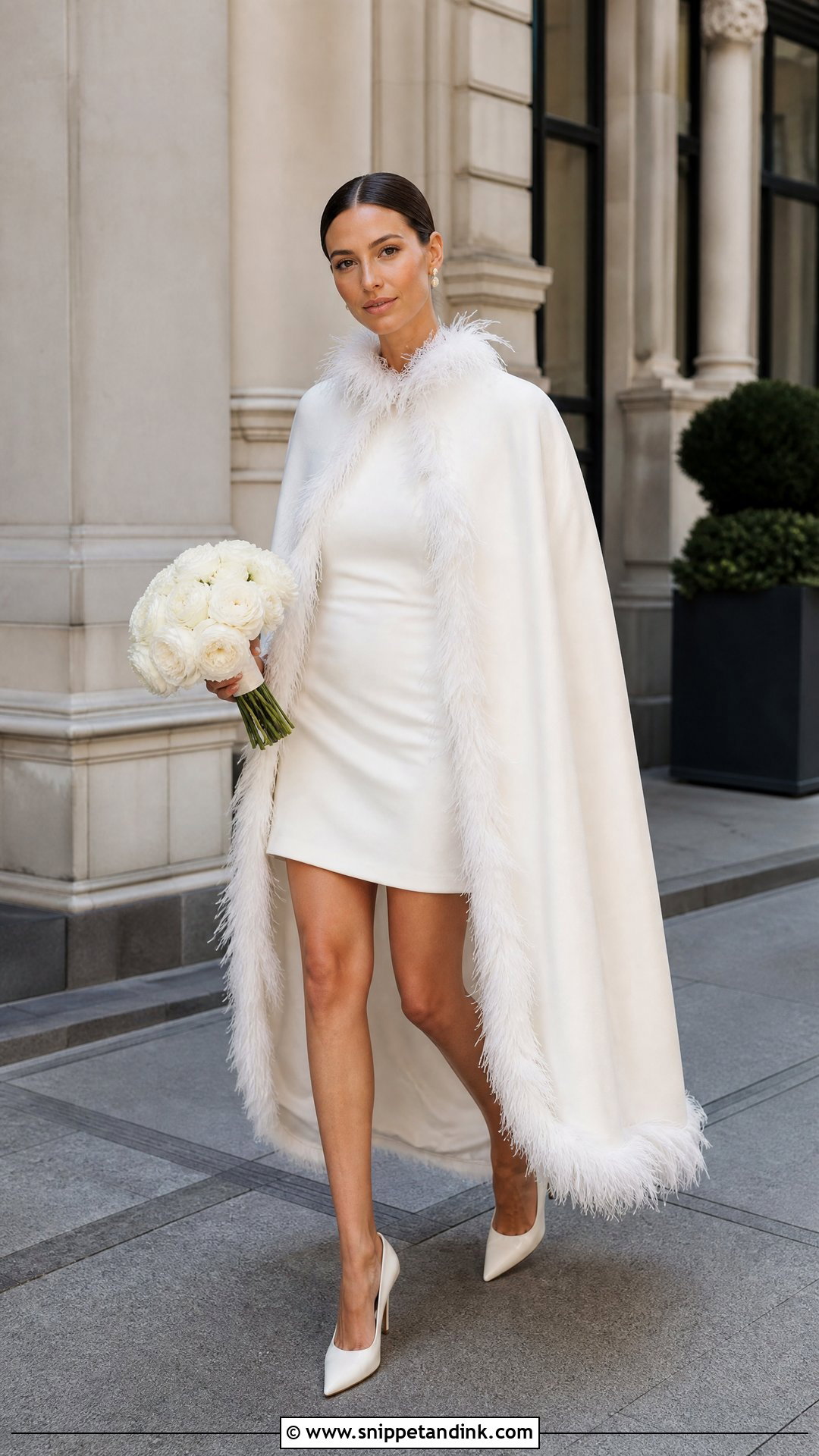
Feathers are the most playful cape trim and the easiest to get wrong. I keep the gown very plain, maybe a sleek mini dress, a column or a strapless crepe, and let the feathers sit at the hem, neckline or shoulders, not all three. Soft ivory feathers read bridal; high-contrast or dyed feathers start to look like costume. Feathers shed and stick to lipstick, so a quick check before the kiss is worth it. Clean heels, simple earrings and smooth hair keep it sharp for a city wedding or a reception entrance.
16. Sequin Bride Cape With Evening Wedding Dress
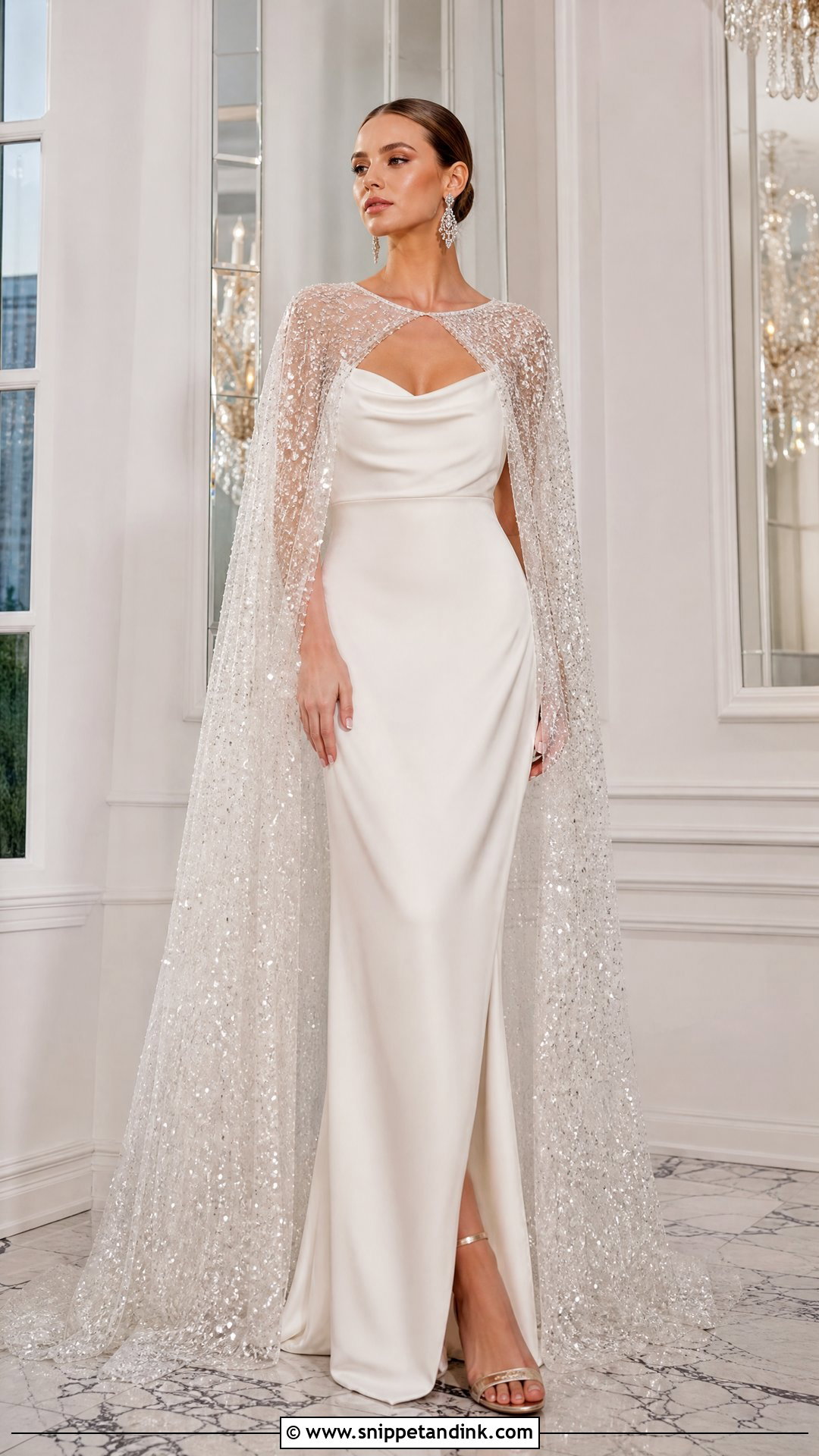
Sequins pick up every light source in a room, which is why a sequin cape belongs at an evening wedding. A sheer cape scattered with small sequins over satin, crepe or silk glows; oversized sequins look flashier and date faster. Sequins also scratch, so I have the inside edges finished cleanly where the cape touches bare skin. Crystal earrings, metallic or ivory heels and a slim clutch carry it into the evening. Keep the hair smooth so there aren’t too many textures around your face at a rooftop or formal indoor venue.
17. Tulle Cape Veil With Princess Wedding Dress
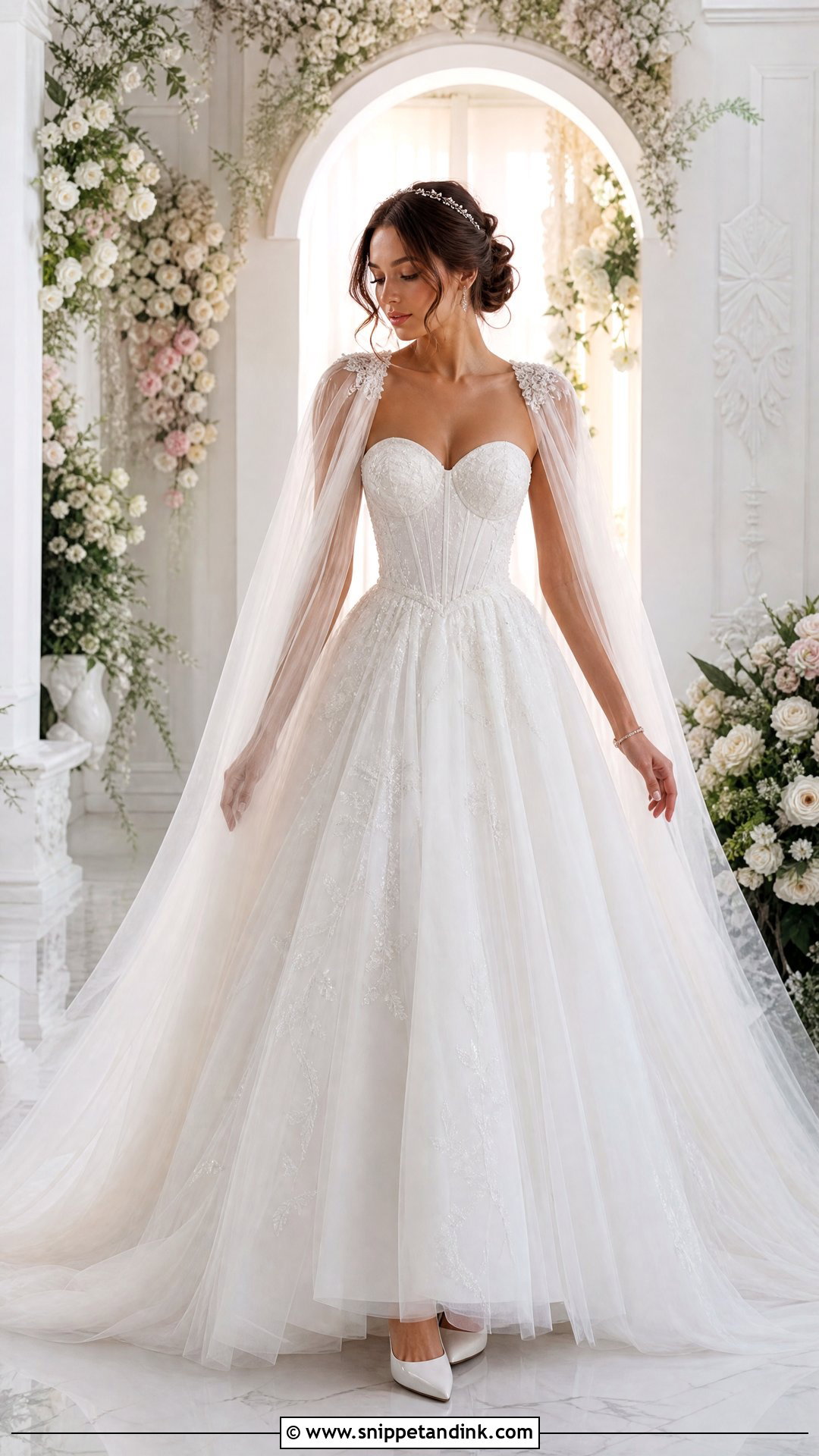
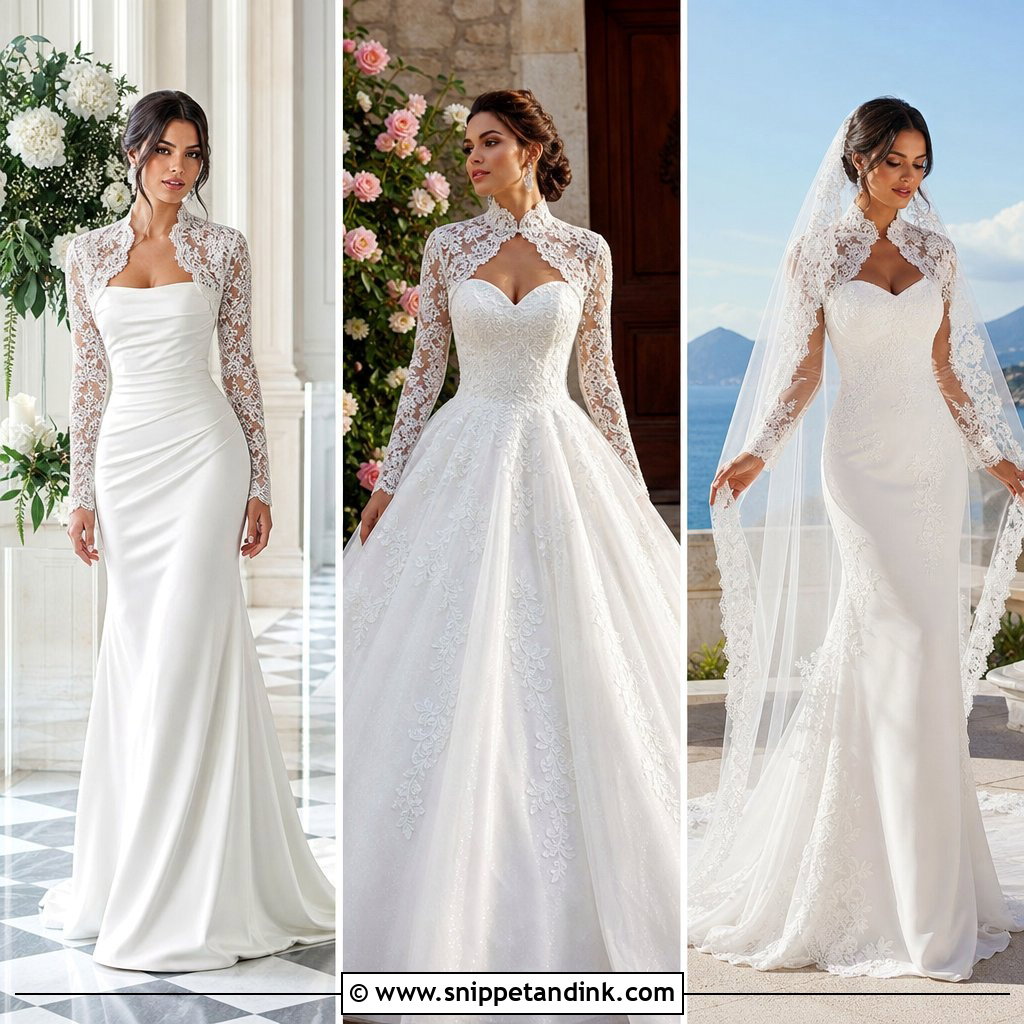
A tulle cape veil attaches at the shoulders rather than the hair, so you get the softness of a veil without combs, pins or weight on your hairstyle. For brides with fine hair that won’t hold a heavy veil, this is the answer I give most often. With a princess wedding dress, a full skirt, corset bodice or sweetheart neckline, a long cape veil trails behind and moves down the aisle. Crystal studs, a soft bracelet and ivory heels keep the rest delicate. Plain tulle is classic; edged or embellished tulle makes it your own.
18. Ruffle Bride Cape With Simple Bridal Gown
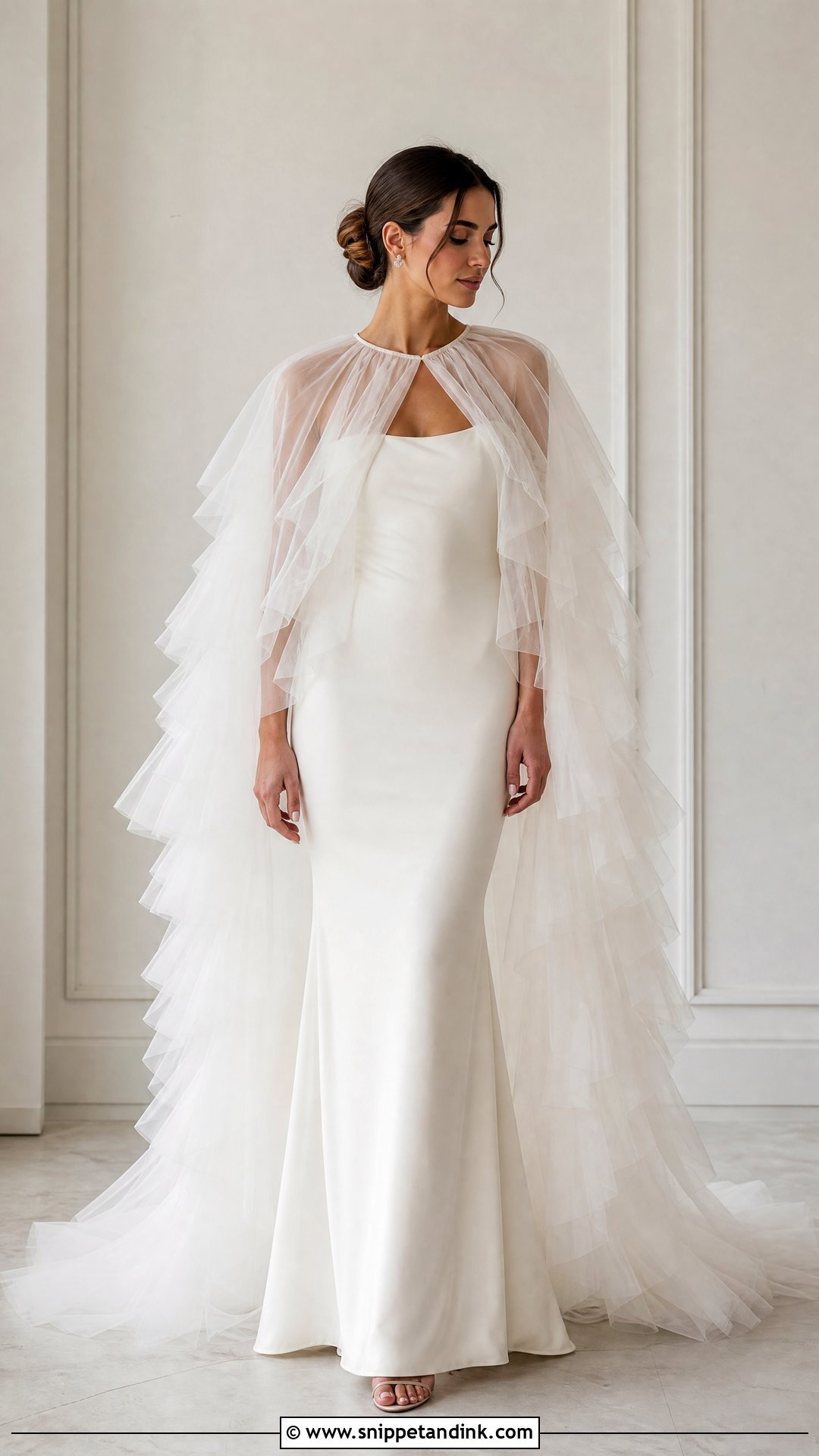
Ruffles add volume fast, so I only put a ruffled cape over a slim, clean gown. Layered tulle, organza ruffles or chiffon edges move nicely, but stacked ruffles get bulky across the shoulders and can make you look wider in front-on photos. Ask to see it from the front as well as the back before you choose. Minimal jewellery, a smooth bun and elegant heels keep it calm, and the ruffles come to life in walking and twirling shots.
19. Bow Bride Cape With Classic Wedding Dress
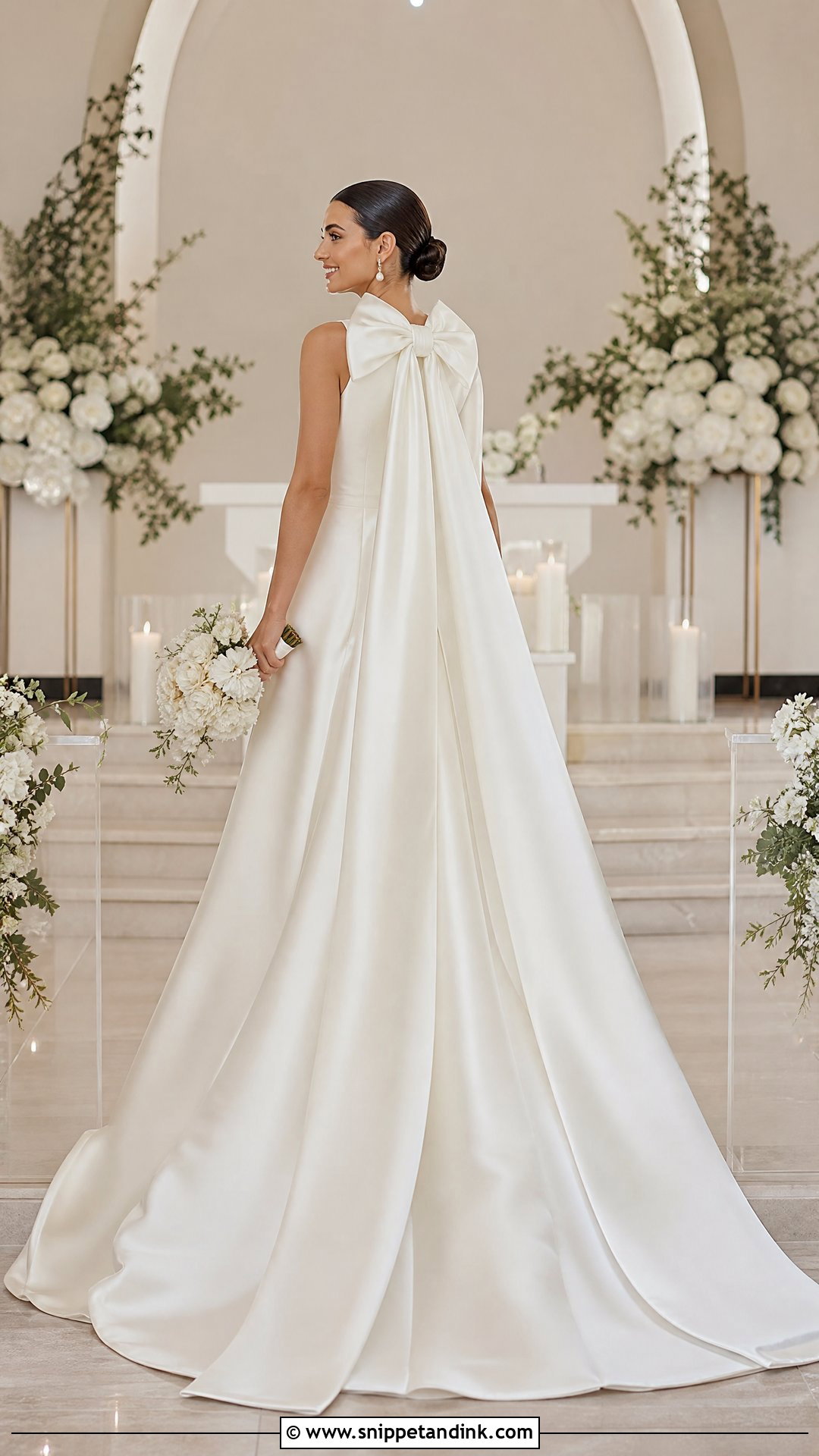
A bow can sit at the neck, the shoulders or the back of a cape, and the back placement is my favourite for aisle photos. It suits satin A-lines, mikado dresses and plain strapless shapes. The bow needs enough structure to hold its shape all day, usually a light interfacing inside, but if it’s too large it overwhelms the dress. Pearl earrings, pointed heels and a clean updo leave the bow as the single standout feature.
20. High Neck Bride Cape With Sleek Wedding Dress
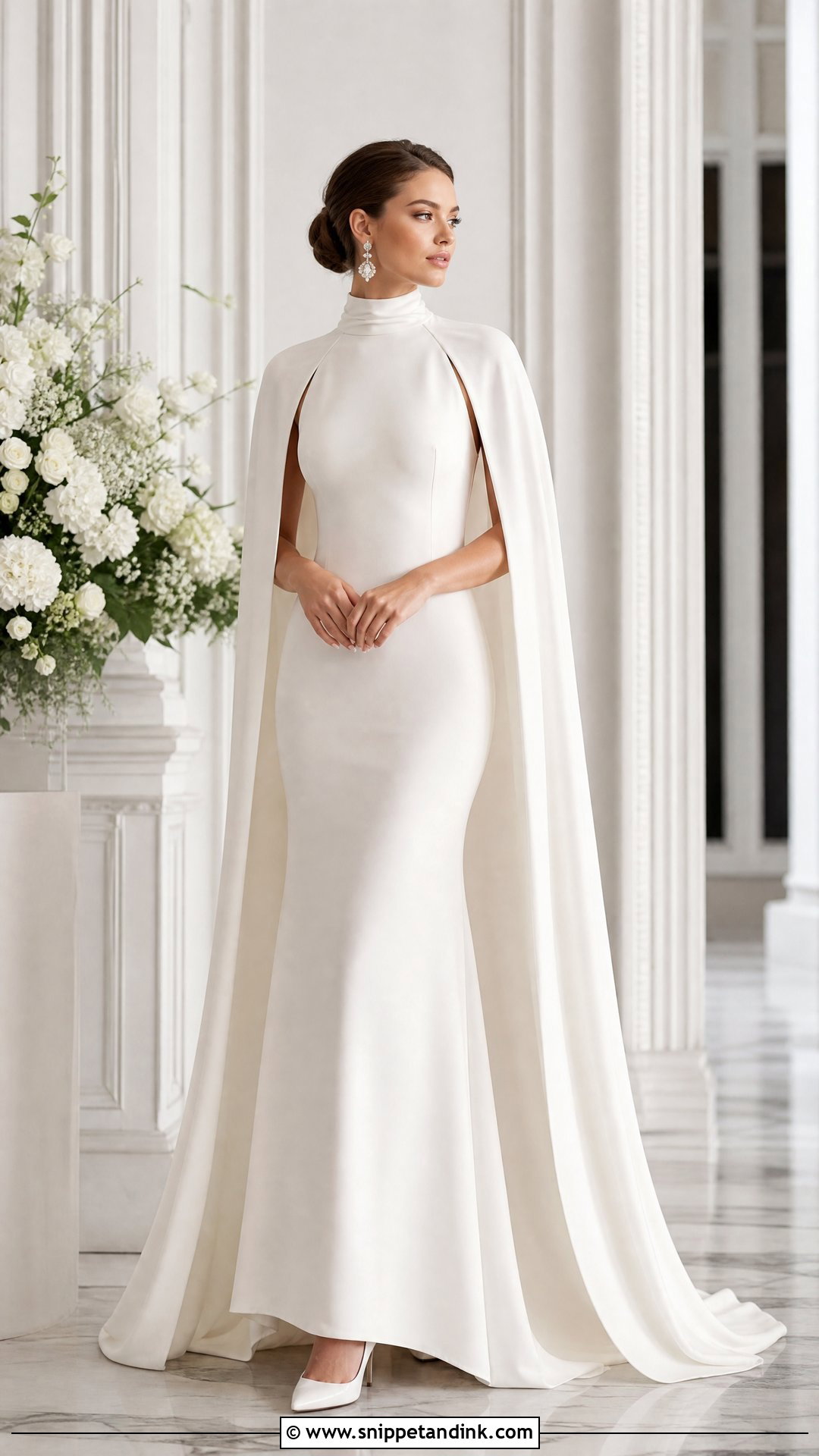
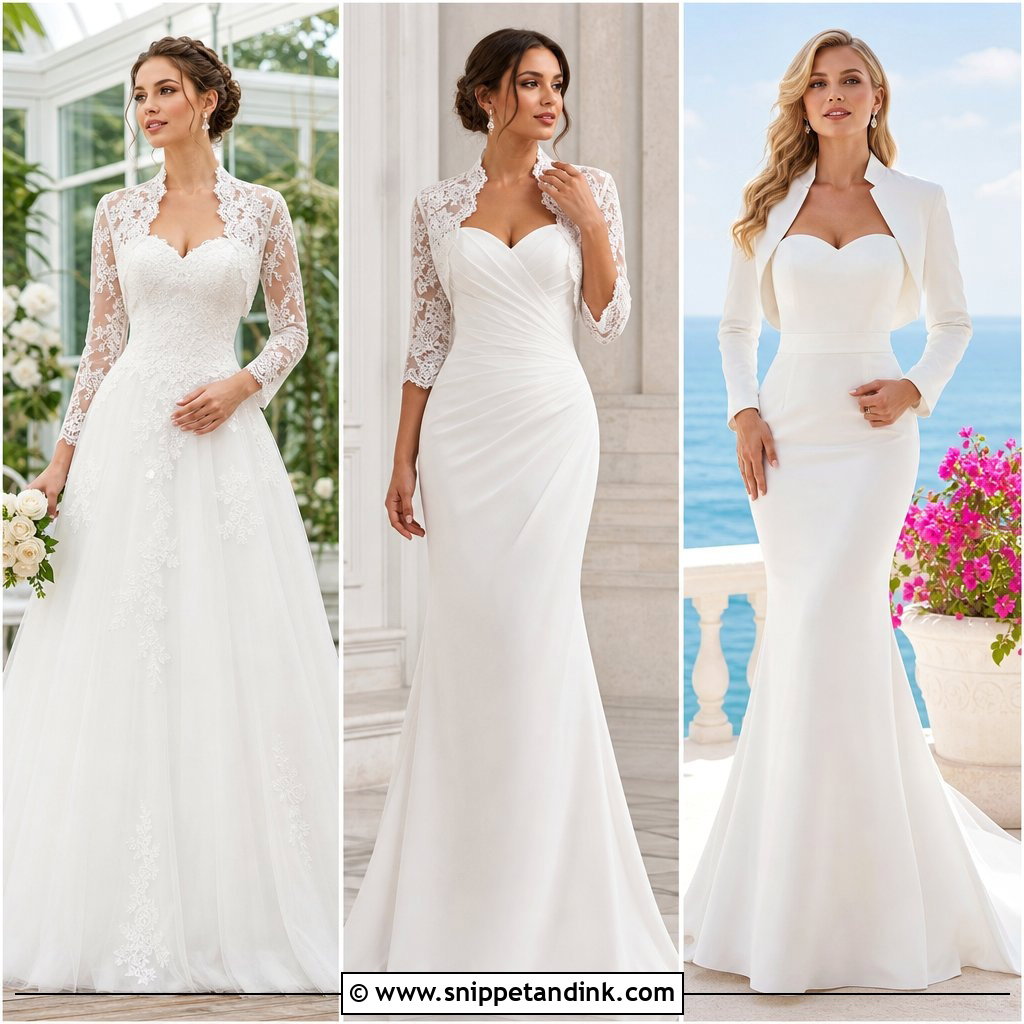
High-collared capes give a strong, modest line. The cape fastens at a high neck and falls straight down the back, adding length to a slim crepe gown, a satin sheath or a minimal long-sleeve dress. The collar must be comfortable when you turn your head and swallow, so I fit it with a finger’s room to spare. With the neck covered, choose earrings to frame the face, and wear a bun or tucked style to keep the upper body clean for a formal ceremony or contemporary venue.
21. Capelet Bride Cape With Vintage Wedding Dress
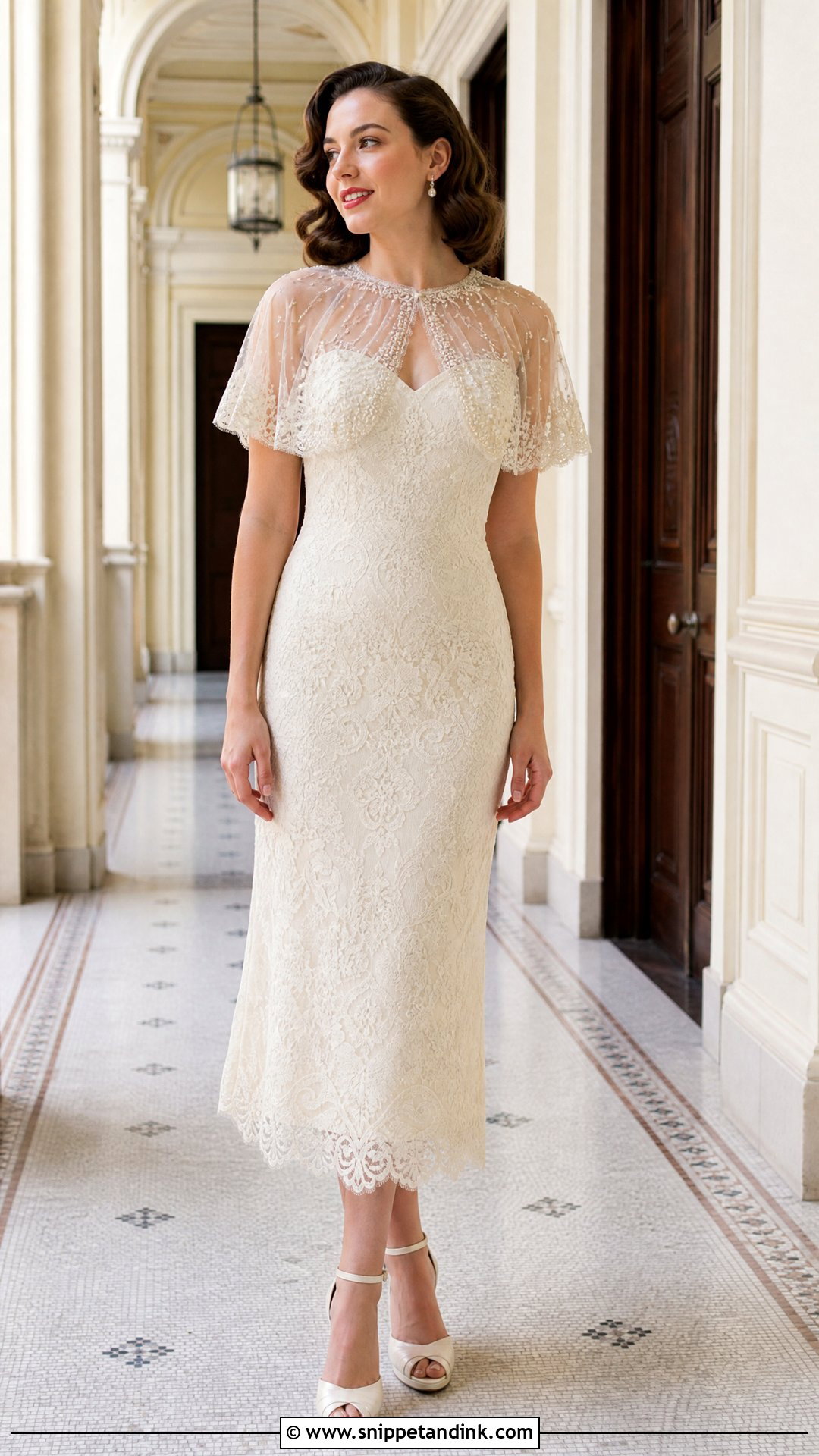
Capelets suit vintage gowns because so many older bridal looks had covered shoulders. Lace, beaded tulle or soft satin can each hint at a different era. Over a tea length dress, a bias-cut gown or a lace sheath, the capelet adds charm without hiding the dress. Fit matters at the shoulder; a capelet that stands away from the body looks borrowed, so have it taken in if needed. Pearl earrings, soft waves and vintage-inspired heels finish the look for a small wedding or a historic venue.
22. Illusion Bride Cape With Fitted Wedding Dress
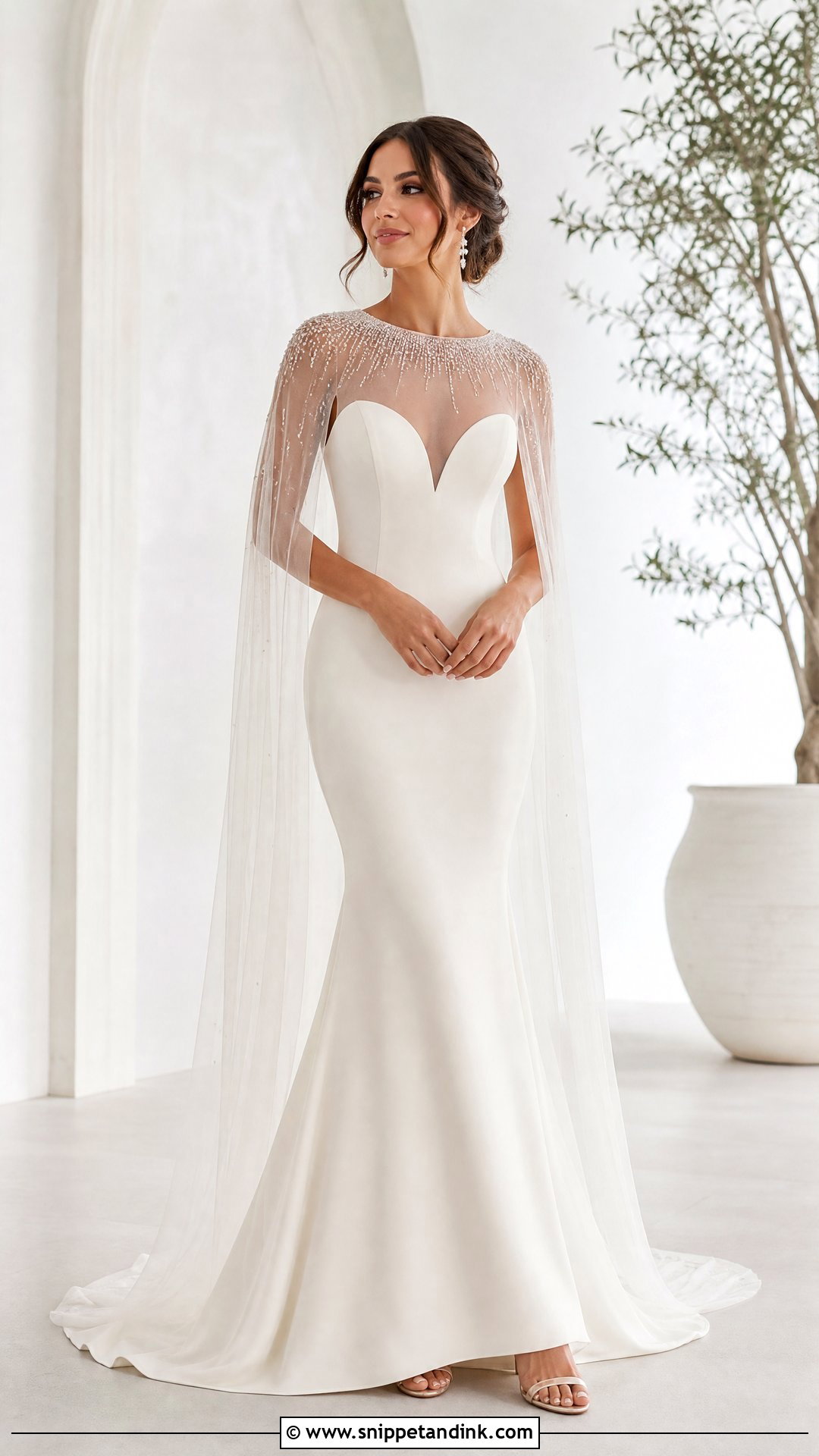
Illusion capes are almost invisible in person, which is exactly their point. Barely-there tulle, mesh or finely edged lace adds the impression of coverage while the gown’s shape shows through, over a fit-and-flare, a sheath or a slim crepe dress. If your dress has a detailed back, a transparent cape keeps it visible. I match the mesh to your skin as well as to the gown, since a mismatch reads as a grey film in flash photos. Soft makeup, delicate earrings and elegant heels keep it light.
23. Color Tinted Bride Cape With Ivory Wedding Dress
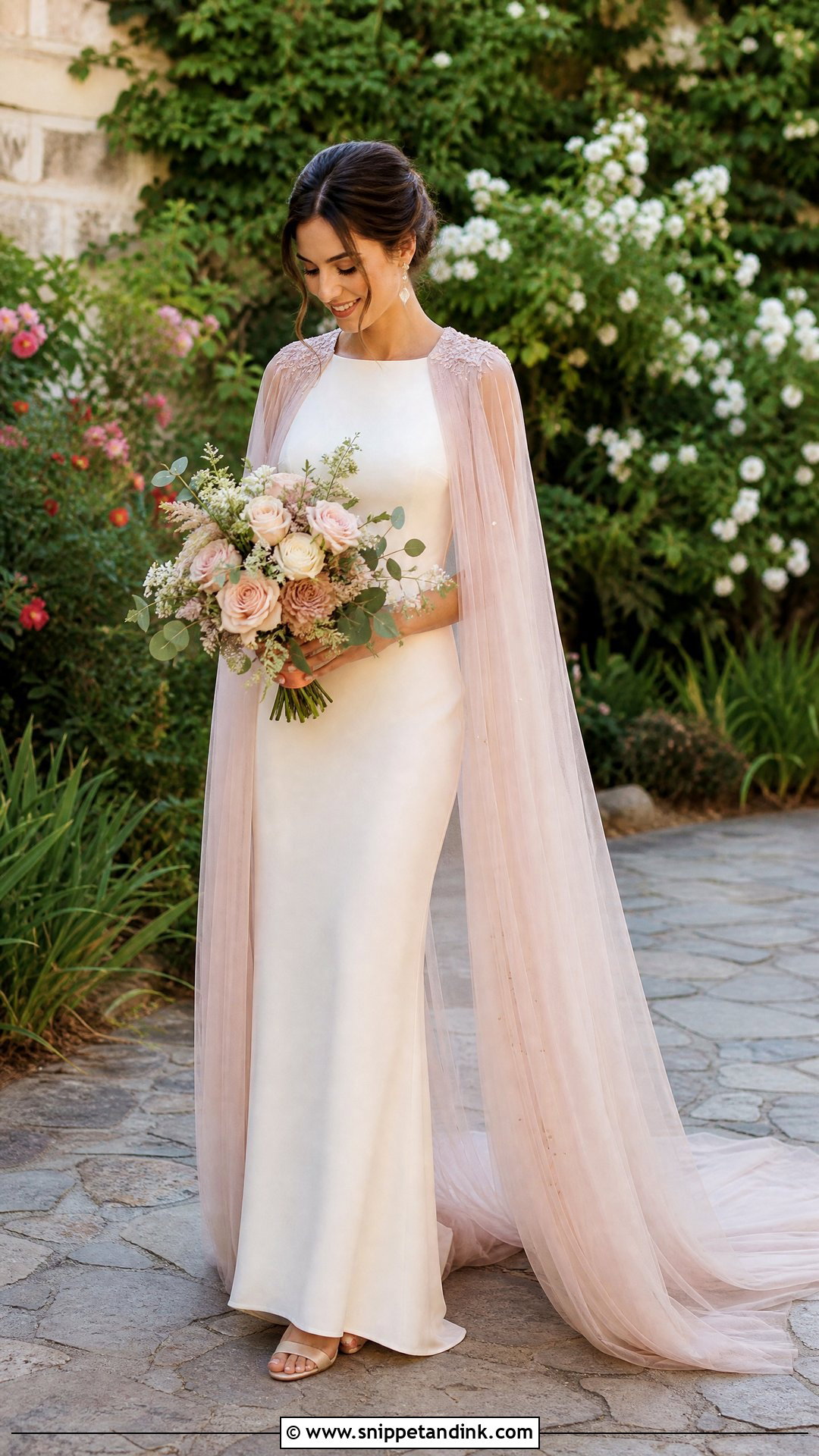
A tinted cape is a subtle way to add colour without wearing a coloured dress. Soft blush, champagne, pale blue, misty grey or nude tulle over ivory adds depth, and outdoor light brings the shade out. The gown underneath should be plain so the colour looks deliberate. I tie the tint to one other element, the bouquet, the shoes or a hair accessory, rather than all of them. Keep the jewellery soft, especially if the cape has embroidery or sparkle.
24. Long Sleeve Bride Cape With Winter Bridal Gown
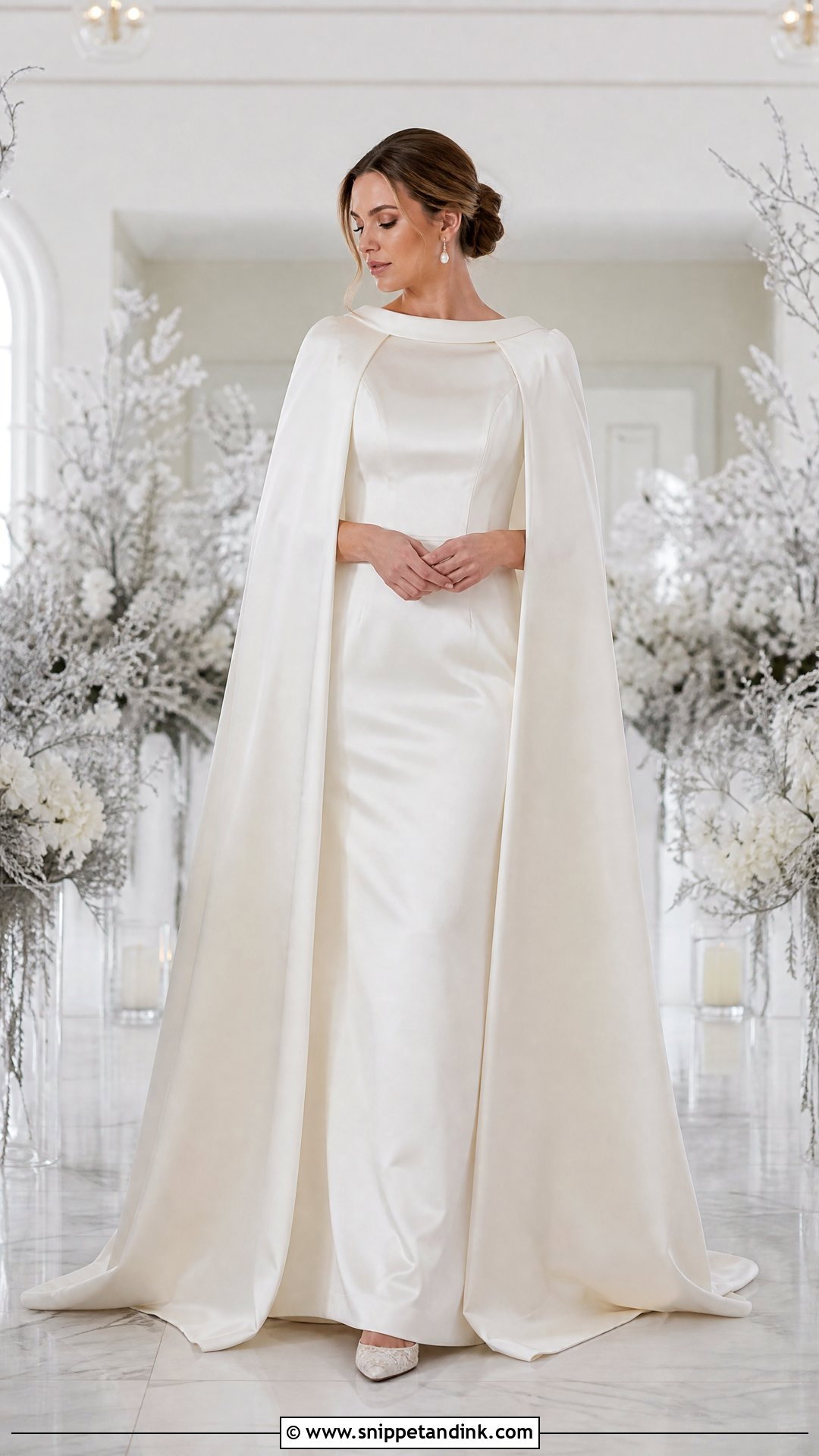
For a winter gown, a cape with sleeves gives real warmth without a coat over the dress. It can be flowing cape sleeves, a full cape with arm openings or a soft overlay across the shoulders and arms, worn over satin, crepe or lace. If warmth matters, heavier tulle, velvet or lined satin will do far more than thin chiffon. I check that the armholes let you hold the bouquet at waist height without the cape riding up at the back. Closed-toe heels, pearl earrings and a neat updo keep it polished for cold outdoor portraits.
25. Sparkle Bride Cape With Courthouse Wedding Dress
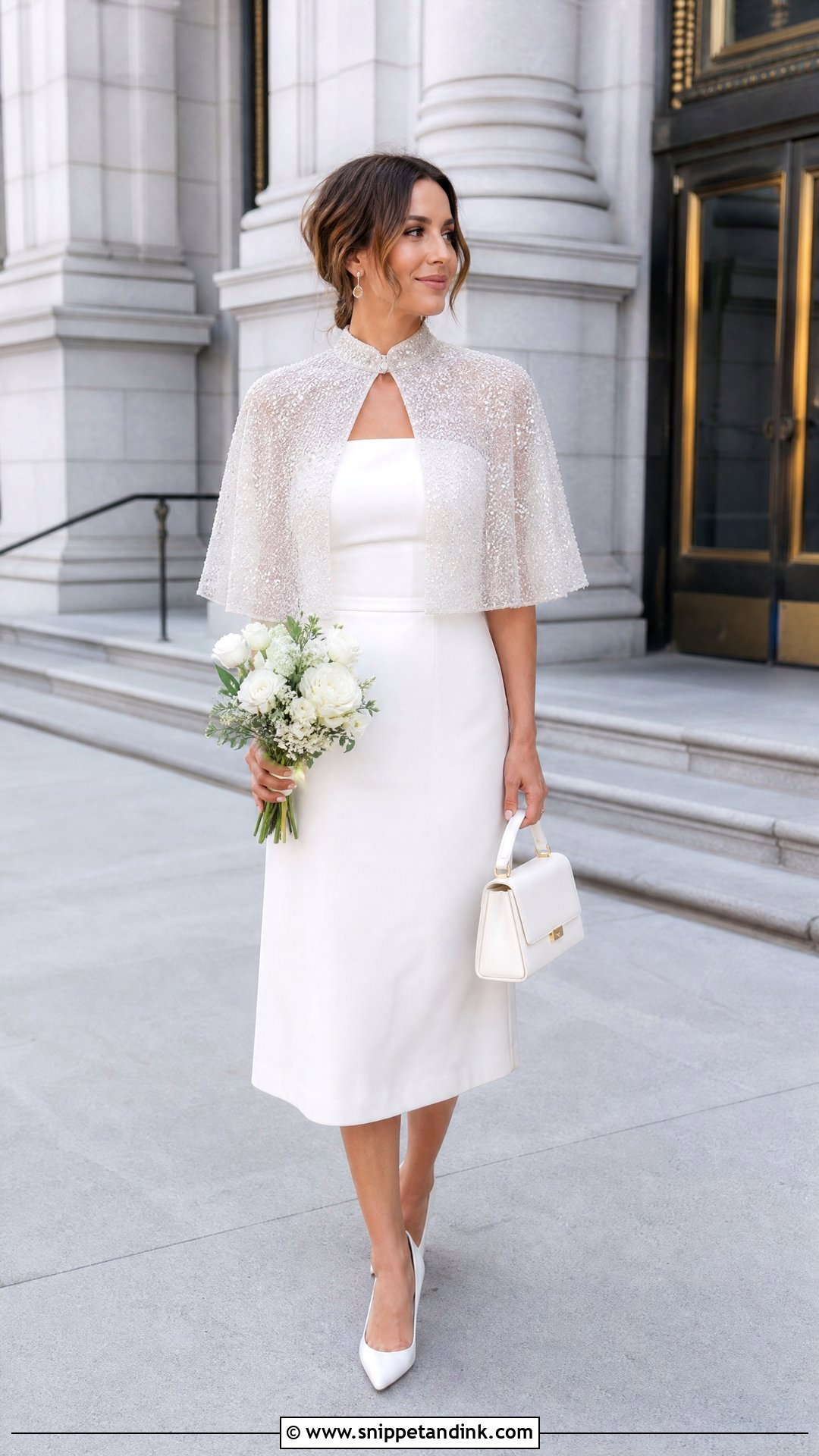
Courthouse outfits are short and simple, and a sparkling cape turns them into wedding clothes. Over a white mini, a midi, a tailored bridal suit or a sheath, a short or mid-length cape with fine crystals, sequins or pearls adds celebration. Keep the shoes sharp: pointed pumps, slingbacks or clean block heels. A small bouquet, simple earrings and a structured bag finish a city-ready outfit. Since you’ll sit and stand in a busy building, a cape that ends above the hip won’t catch on chairs.
Sitting, Stairs and Car Rides in a Long Cape
Floor-length capes are wonderful standing up and awkward everywhere else. These are the moments I walk brides through before the day:
- Sitting down: lift the cape and let it fall over the back of the chair, or gather it to one side. Sitting on it pulls hard at the shoulders and creases the fabric.
- Stairs: hold the front edges lightly in one hand going down, so you don’t step on the hem. Going up, the cape trails safely behind.
- The car: get in seat first, then have someone fold the cape loosely across your lap. A cape shut in a door is a common snag.
- Dinner: delicate tulle near candles is a real risk, so I’d take a long cape off for the meal or keep it well back from the table.
Sheer capes also need steaming at the venue, since they crease in transport and every fold shows in a translucent fabric. Hang it apart from the gown so the two don’t press into each other.
The Back View Is Where a Cape Earns Its Place
A cape is one of the simplest ways to make a wedding outfit personal. It can replace a veil, add coverage, bring movement or turn a plain gown into a ceremony piece. It has to support the dress rather than fight it: light fabrics for beach and garden weddings, satin, velvet and embellishment for formal or winter settings. Before you buy, check the length, the attachment, how it sits with your neckline and, above all, how it looks from behind, because that’s the view your guests will have for most of the ceremony.
You'll Like These Ideas:


Leave a Reply