
Most of the wedding hair I see saved on phones was shot on a model with thick, freshly coloured hair, under studio light, for about ten minutes. Your version has to last through a ceremony, a hundred hugs and a dance floor. So below are 25 styles I genuinely like, with notes on how each one behaves once the photos are done, what hair it suits and where it tends to let people down. Read the notes as much as you look at the pictures.
What Your Hair Will Realistically Hold
Before you fall for a picture, look at the hair in it and compare it honestly with yours. Most styles are built for a certain weight and texture, and fighting that is how a bride ends up with a bun sliding down her neck by the first dance.
- Fine or very straight hair struggles to hold curl. I prep it with texture spray or dry shampoo for grip, and lean towards pinned styles like a braided updo or a chignon over loose waves.
- Thick, heavy hair holds curl beautifully but its weight drags. Braided and twisted updos spread that weight across many anchor points.
- Natural curls and coils are best styled in their own pattern. A curly half updo or a soft low bun keeps the curl definition you already have.
- Short hair and bobs suit finger waves, a textured pixie or slicked back styles more than extensions forced into a big updo.
- Heavily layered cuts poke out of folded styles. Braids and twists hide short layers far better than a French twist.
Washing matters too. I prefer hair washed the night before, not the morning of, because squeaky-clean hair is slippery and lets pins slide.
1. Half Up Half Down Wedding Hairstyle
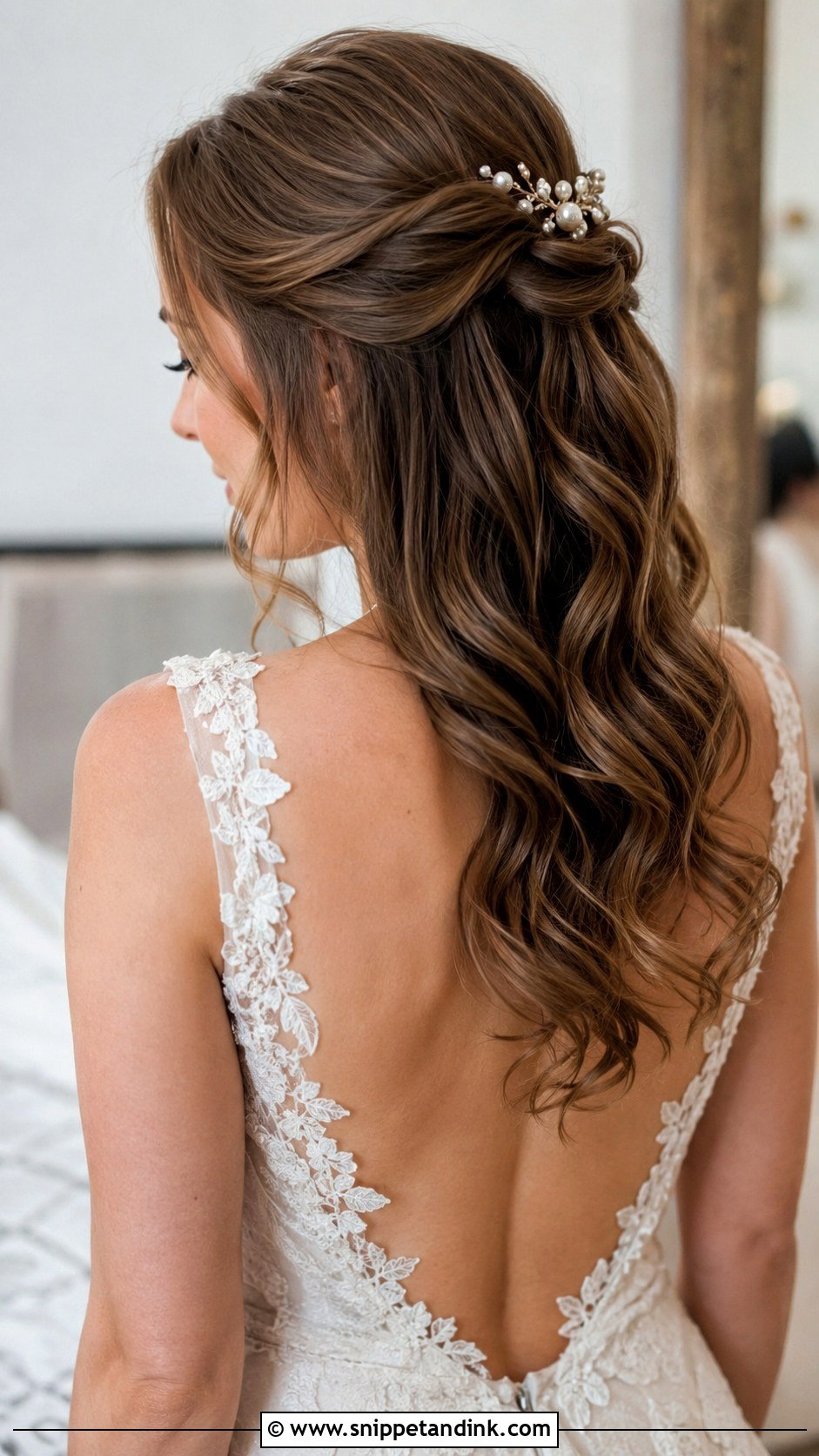
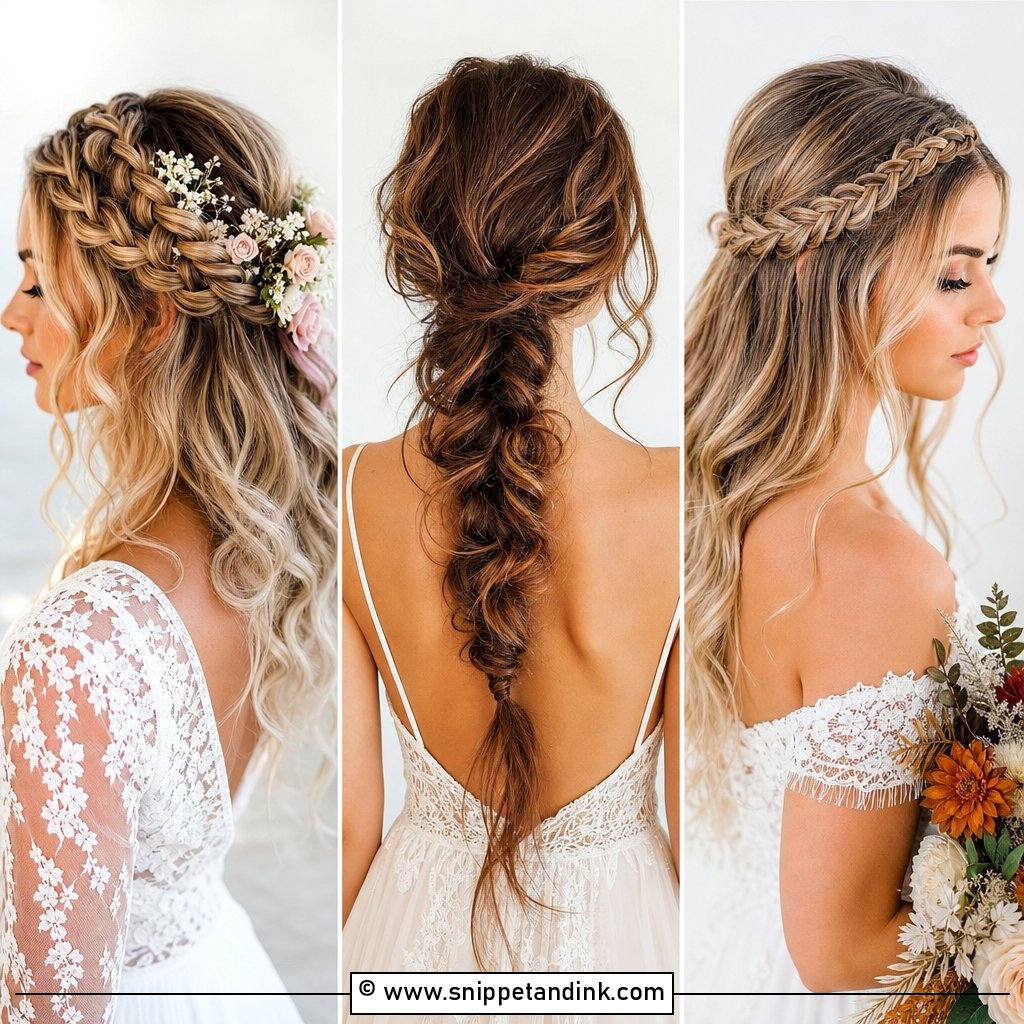
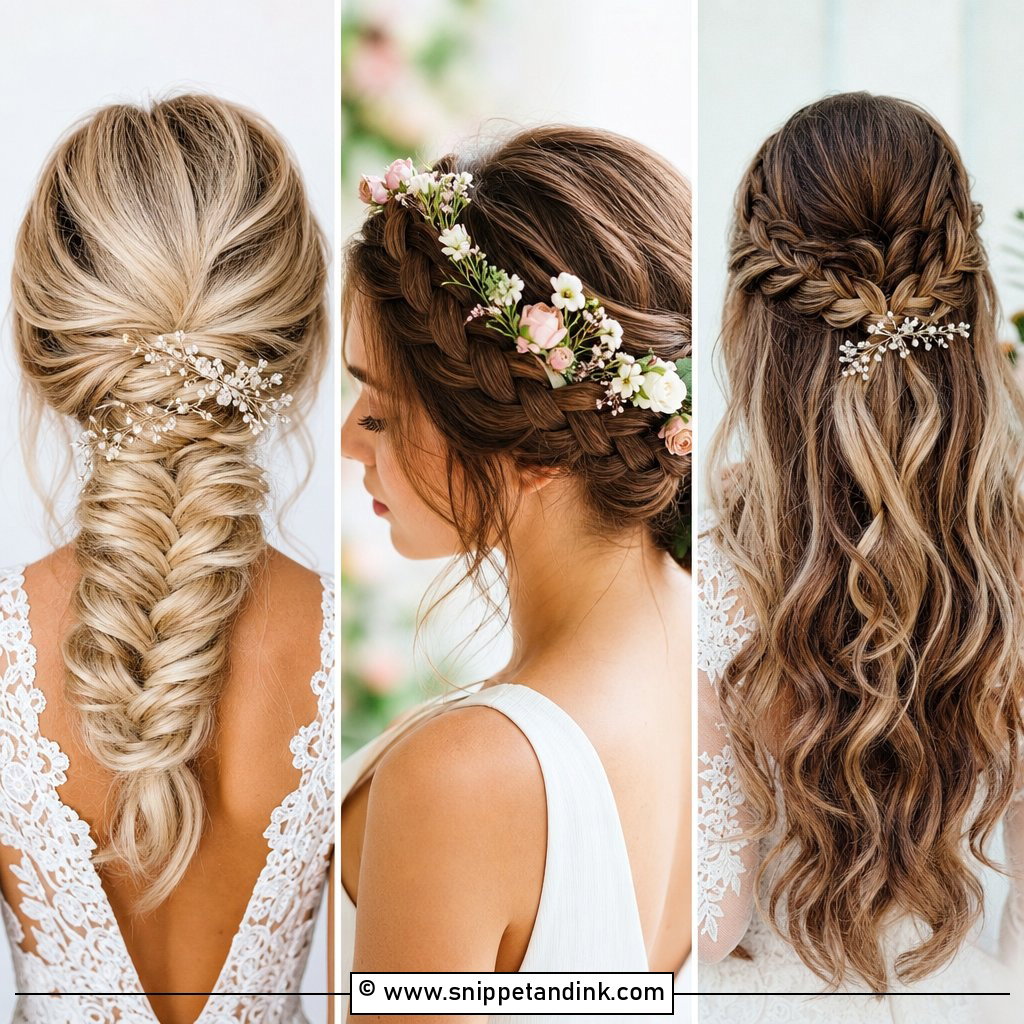
Half up, half down is the style I’m asked for most, and the one that most often droops by the reception. The top section carries the weight of any clip or veil, so I anchor it with two crossed pins under the hair rather than relying on the decorative piece to hold anything. Curl the loose lengths with a slightly smaller iron than you think you need, because they will relax. Fresh flowers sit nicely here, but tuck them in last so they don’t wilt under a hot iron.
2. Sleek Low Bun Wedding Hairstyle
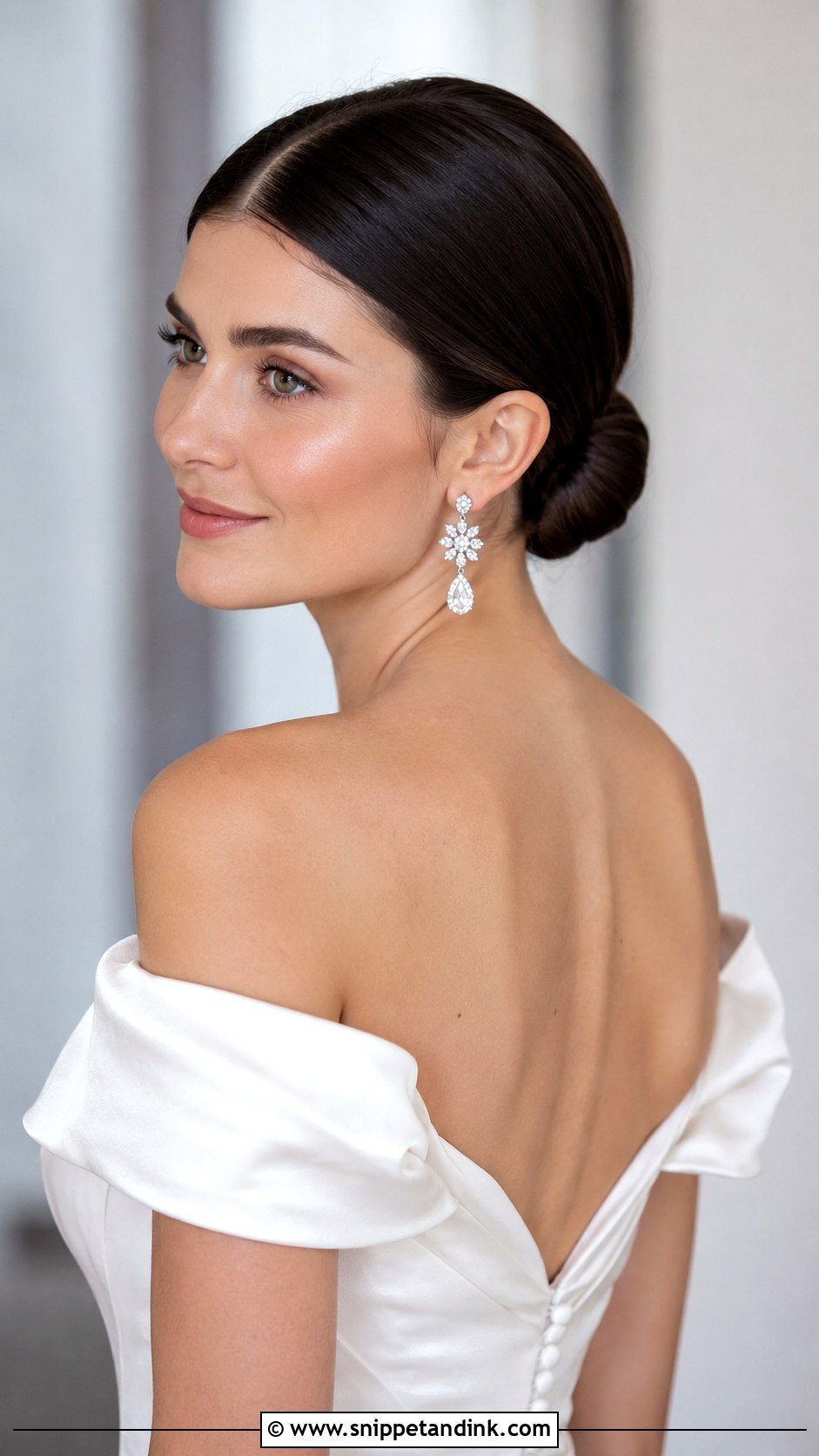
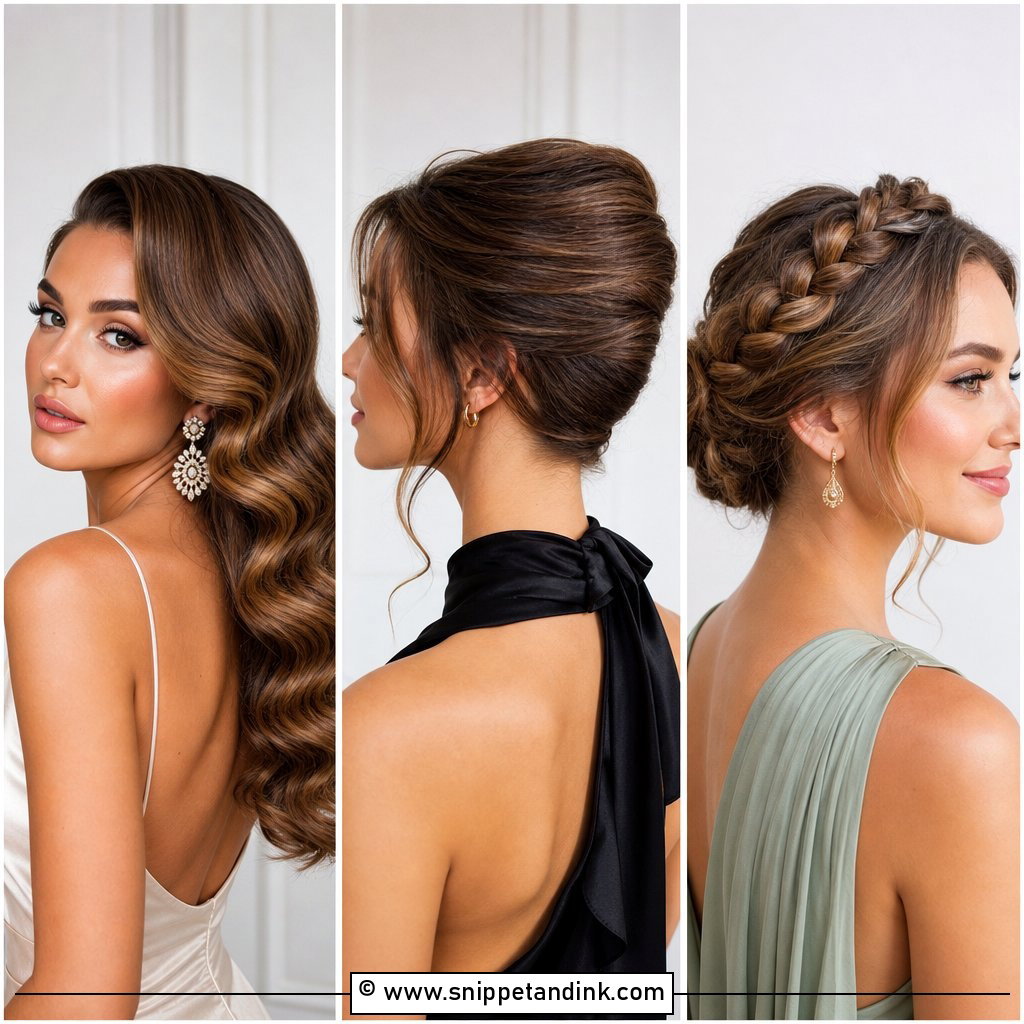
A sleek low bun lives or dies on the prep. I blow-dry the hair completely straight and smooth with a paddle brush before I ever reach for a band, because any kink from air-drying shows up as a ripple across the back of the head. A centre part is unforgiving if your parting has a natural cowlick, so we check that first. Once it’s set, it really does hold all day, which is why I suggest it to anyone marrying somewhere windy.
3. Romantic Loose Waves Wedding Hairstyle
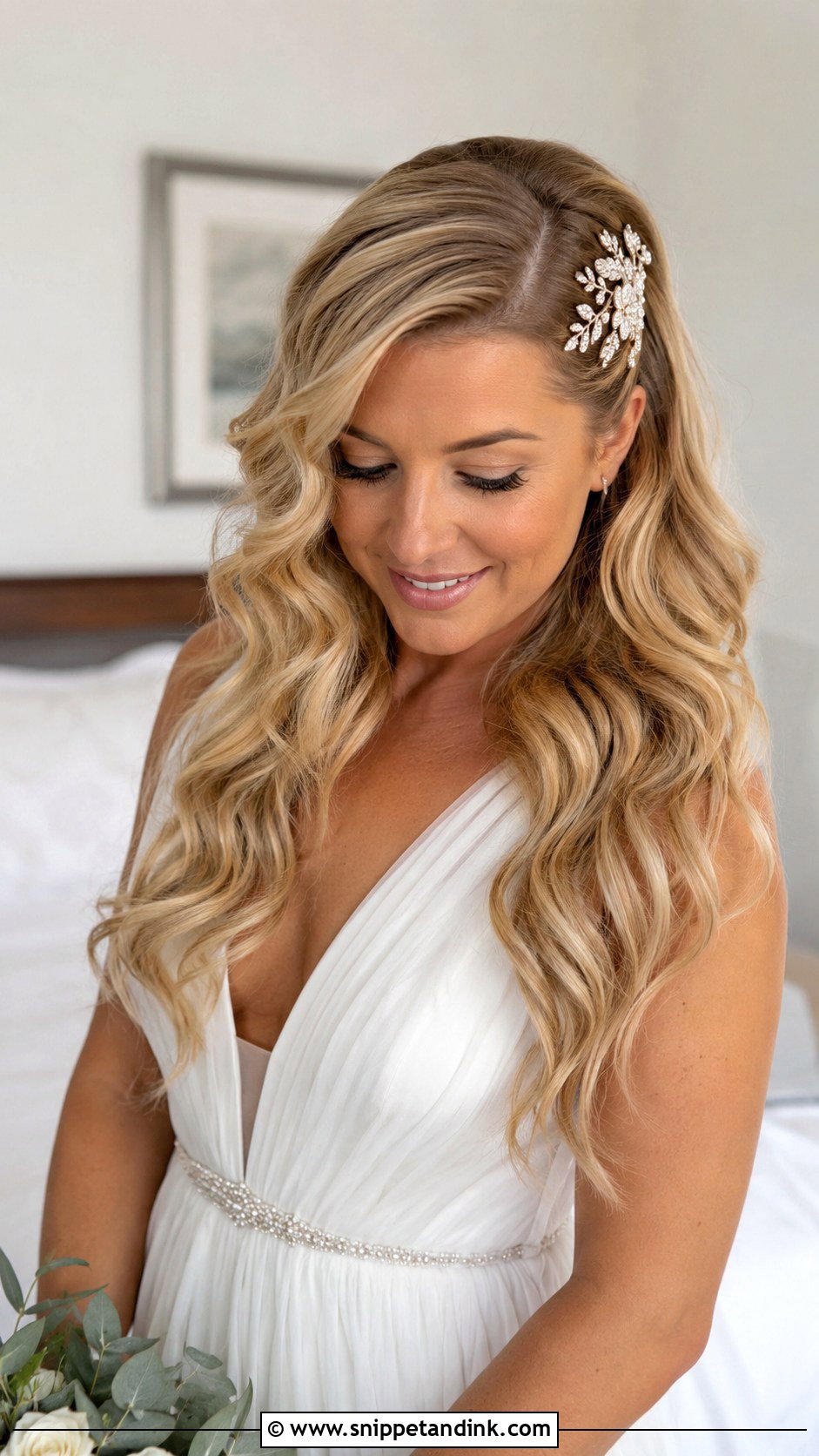
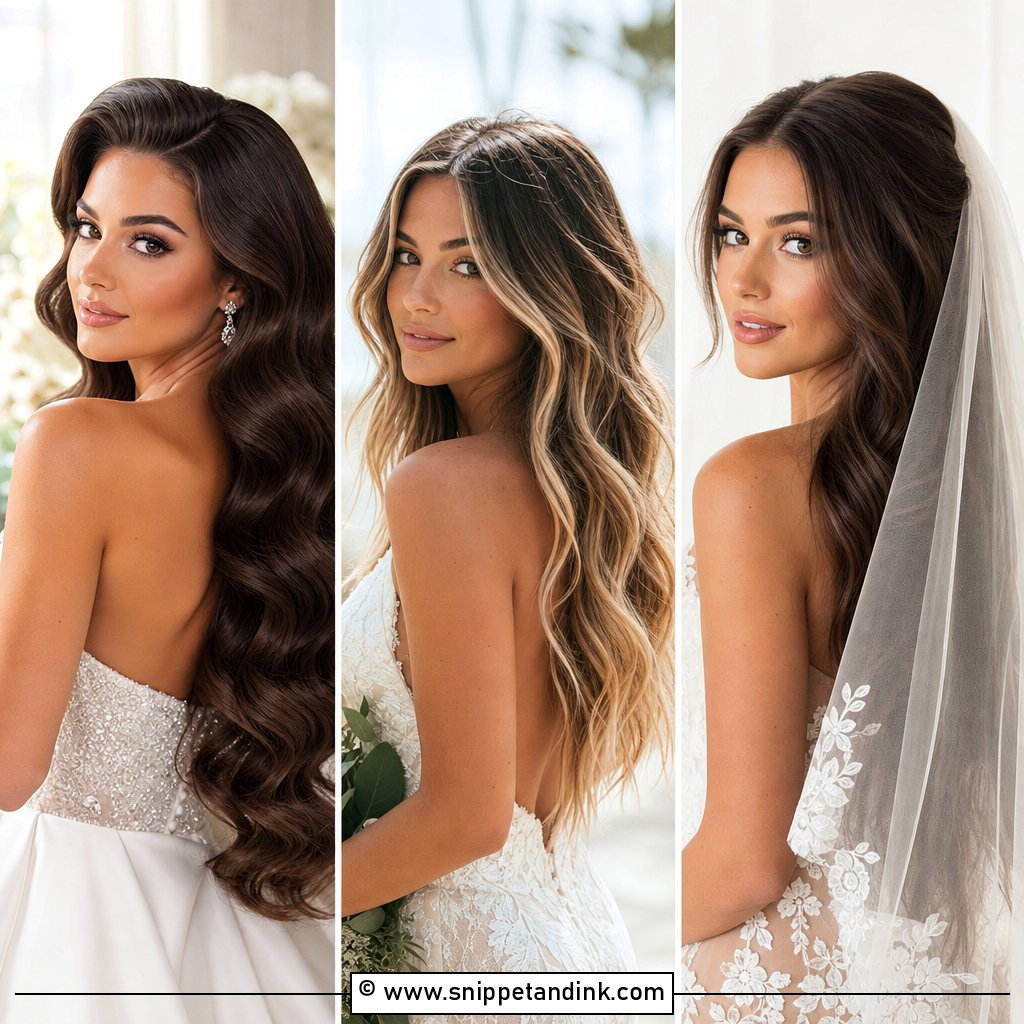
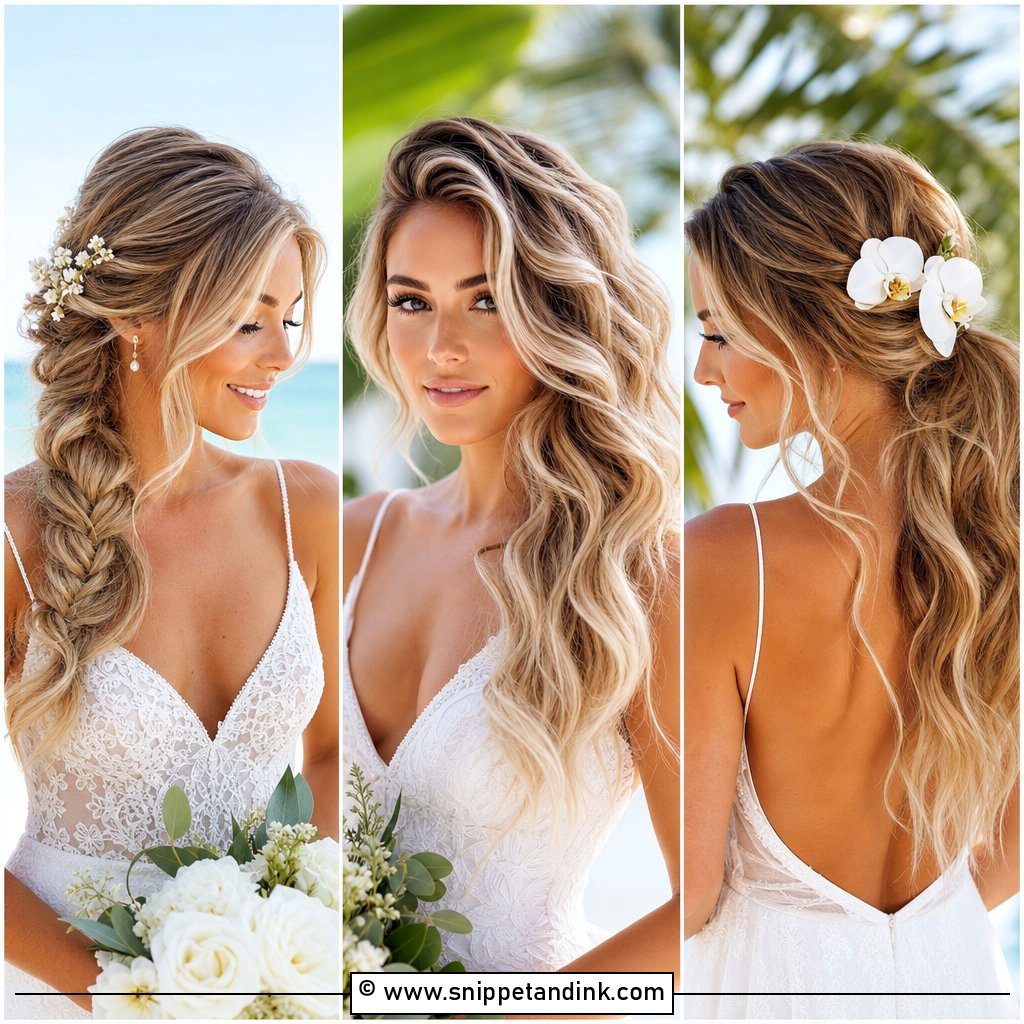
Loose waves look easy and are the hardest style to keep. Down hair has nothing pinning it, so the curl falls a little every hour, faster in humidity and faster still on fine hair. I set each curl, let it cool fully in a pin curl or in my hand, and only brush through once the whole head is cold. If your wedding is outdoors in summer, I’d plan for waves that look a touch too tight at 10 a.m.; by the speeches they’ll be right.
4. Classic Chignon Wedding Hairstyle
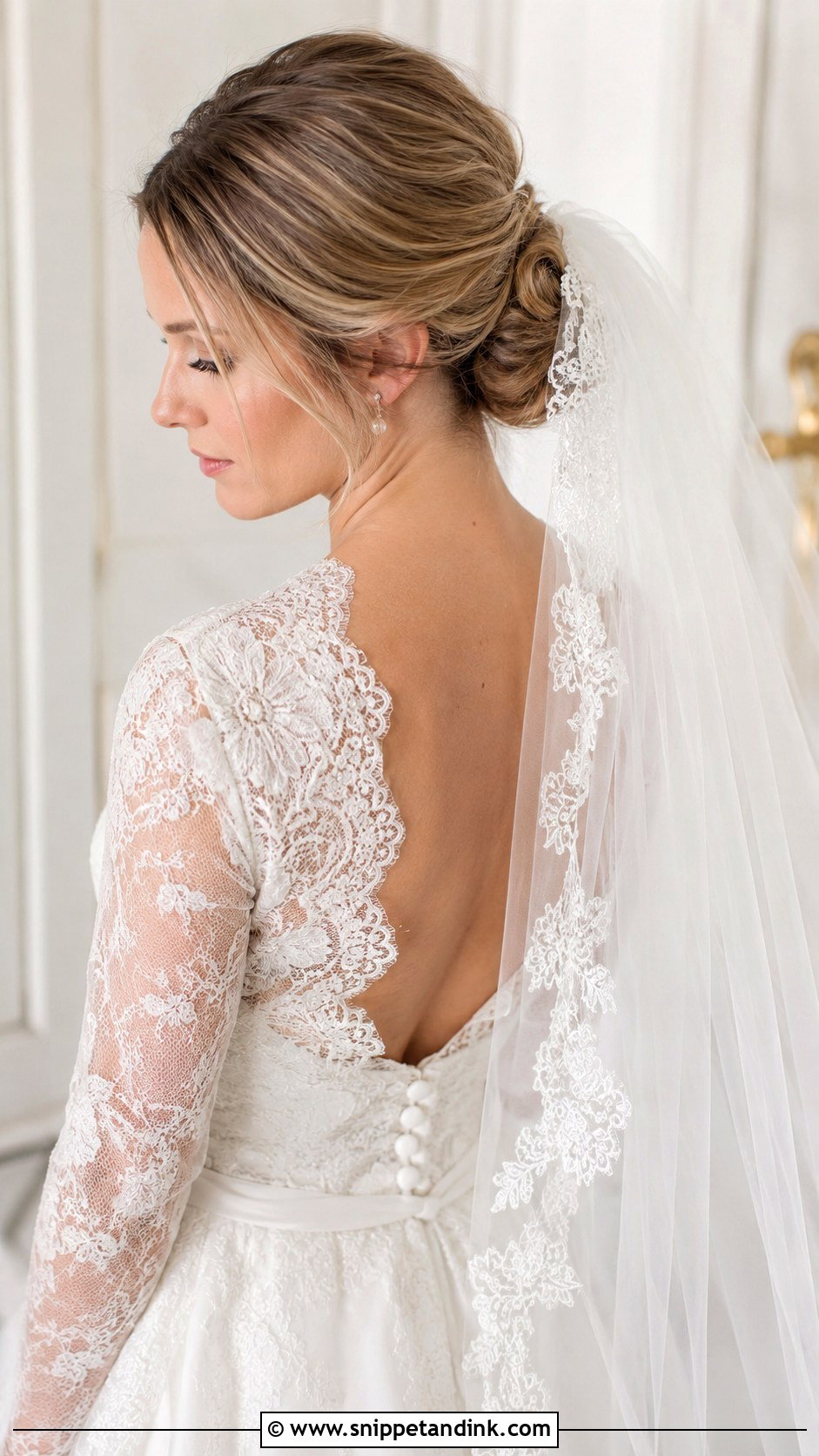
The classic chignon is folded rather than wound, which is why it sits flatter and cleaner than a bun. It needs enough length to wrap around itself, roughly past the shoulders, and heavily layered hair will poke out at the fold unless I pin each layer in as I go. Leave two soft pieces at the temples if a full sweep back feels severe on you. It’s my favourite base for a cathedral veil because the comb has something solid to bite into.
5. Bridal Ponytail Wedding Hairstyle
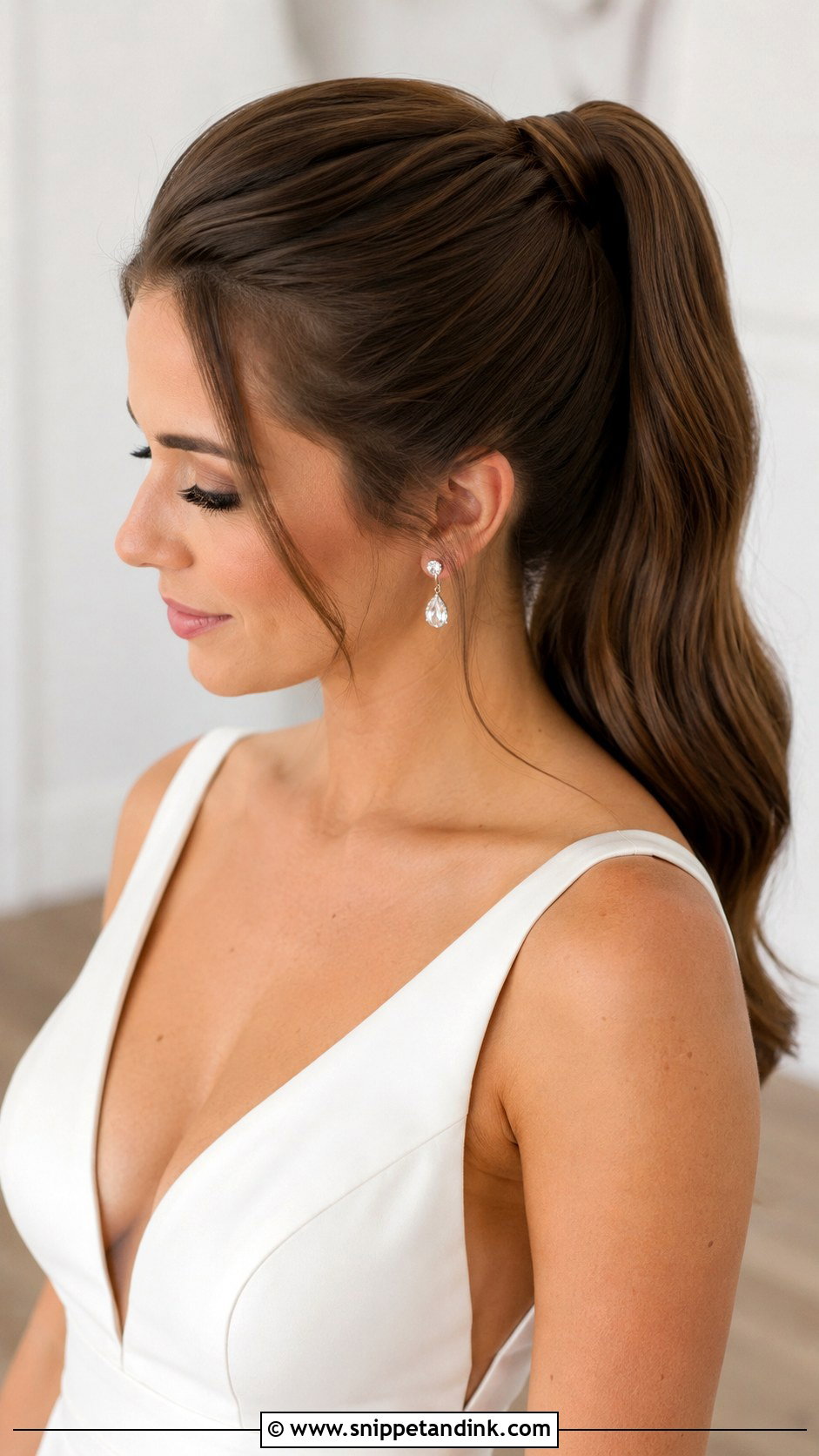
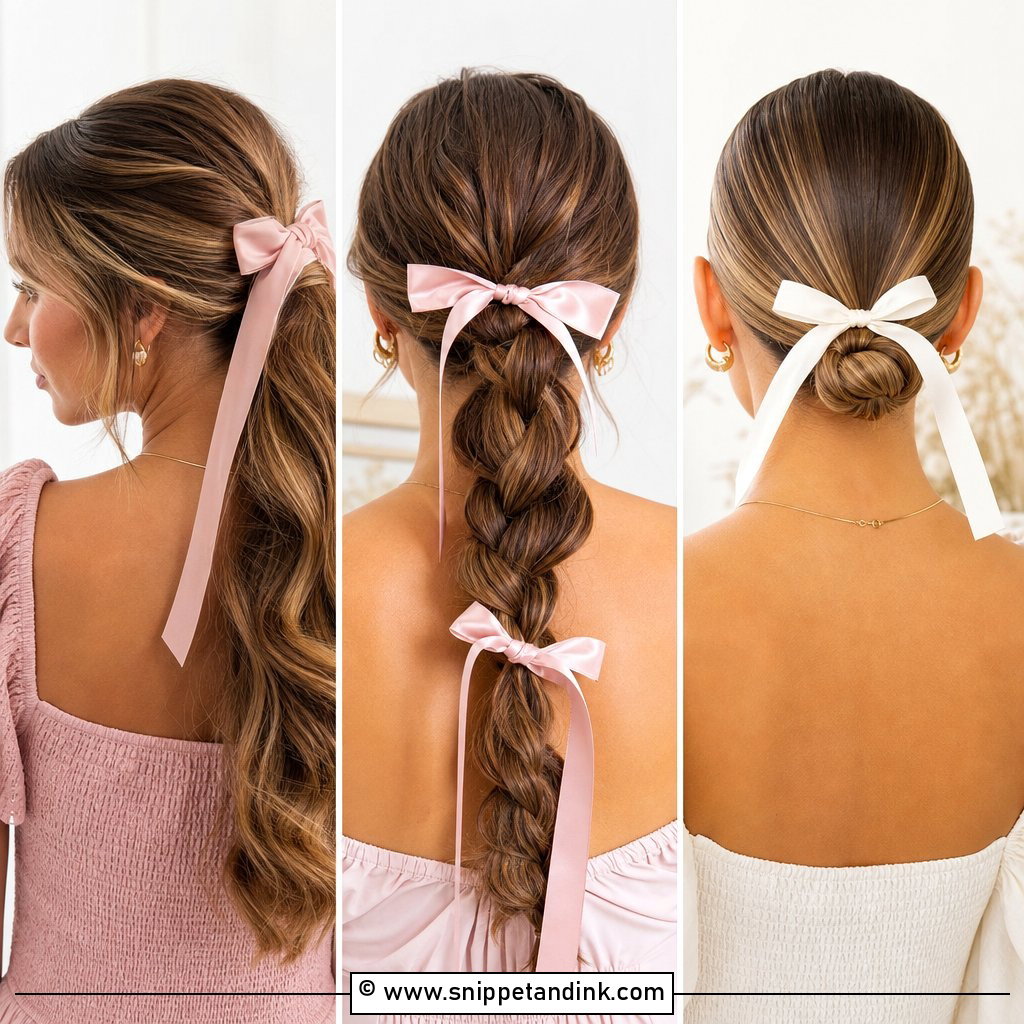
A bridal ponytail looks simple but needs real structure underneath. I build it on a hidden band with a little backcomb at the crown for lift, then wrap a strand around the base and pin it from underneath so no elastic shows. High ponytails put strain on the hairline over a long day, so if you get tension headaches, go lower. Thin hair can borrow a clip-in piece here; it’s the easiest style to add length to without anyone noticing.
6. Boho Braided Wedding Hairstyle
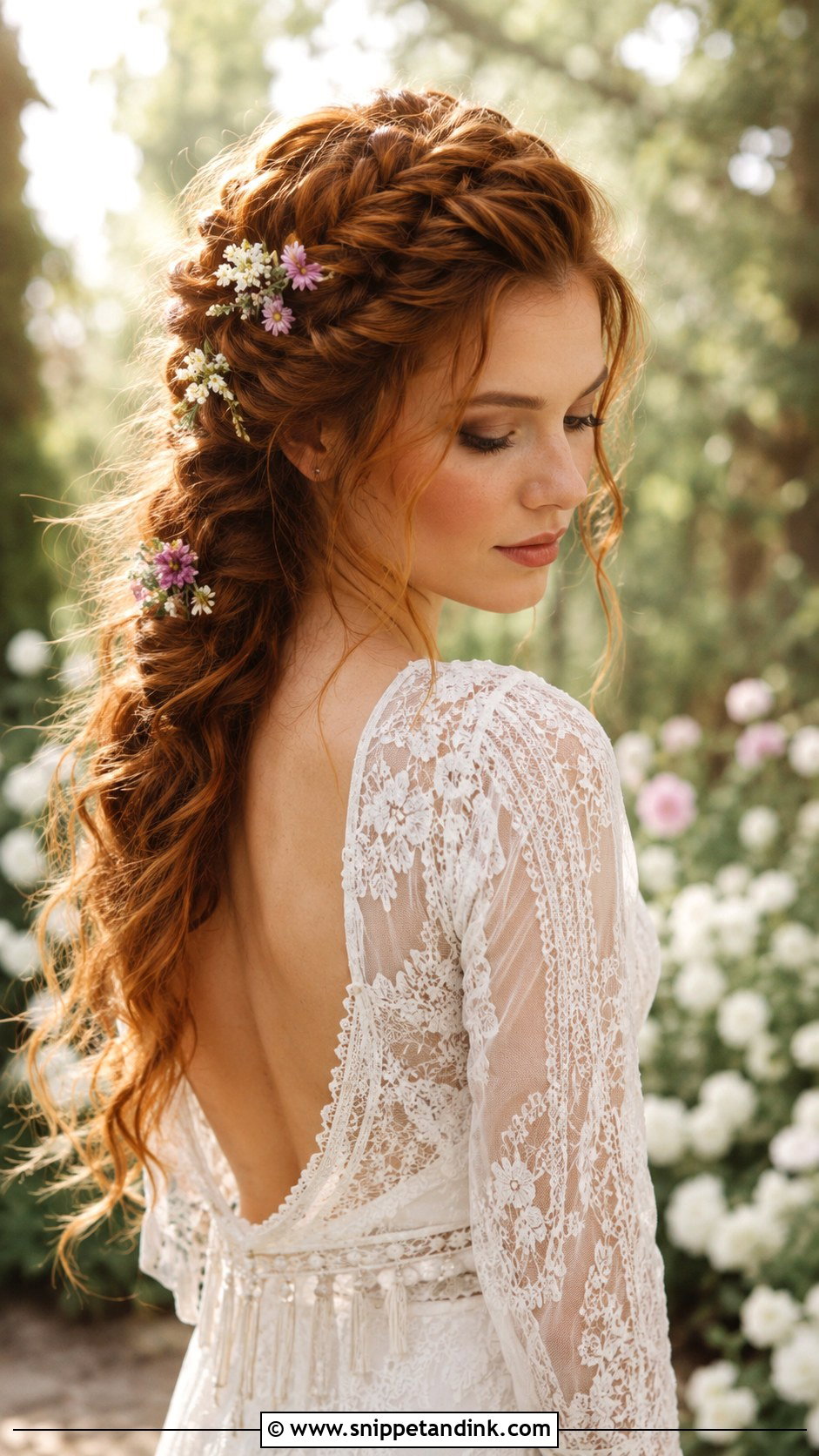
Boho braids rely on texture, so freshly washed, slippery hair is the enemy. I prep with a texturising spray, braid loosely, then pull the edges of each stitch out by hand to widen it. That pancaking is what makes a thin braid read as full from across a garden. Wildflowers wilt faster than people expect once they’re off water; hardier stems like waxflower or gypsophila last best, and they suit the whimsical charm of the look.
7. Hollywood Glamour Waves Wedding Hairstyle
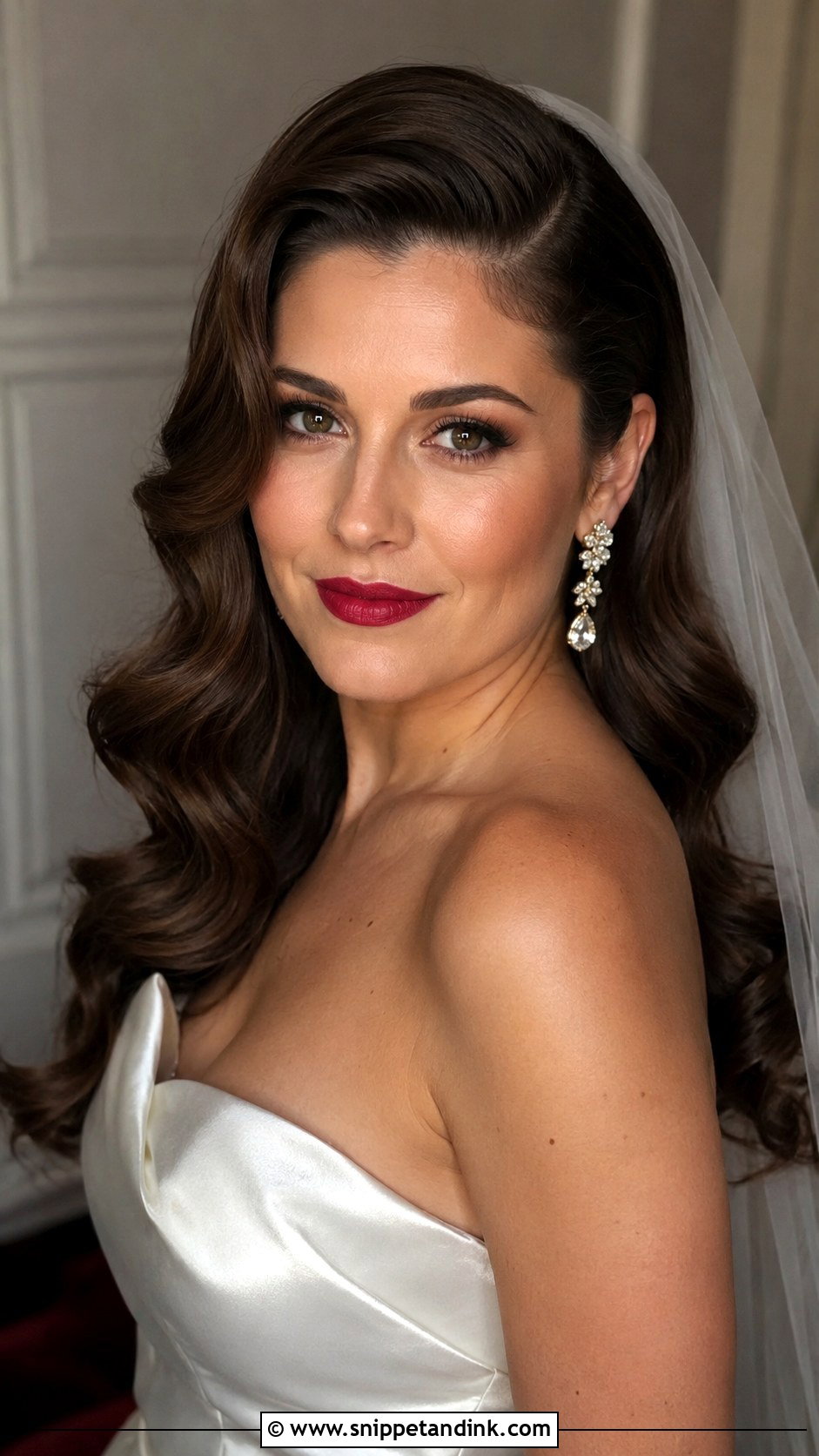
Hollywood waves are a set, not a curl. Every section is curled in the same direction, pinned while hot, then brushed out into one continuous ripple and shaped with clips while a light spray dries. A deep side part does most of the work. The finish is glossy and very structured, so it suits a sleek gown and a strong lip far more than a lace boho dress. Allow your stylist extra time for this one; rushing the brush-out is what leaves it frizzy.
8. Messy Bun Wedding Hairstyle
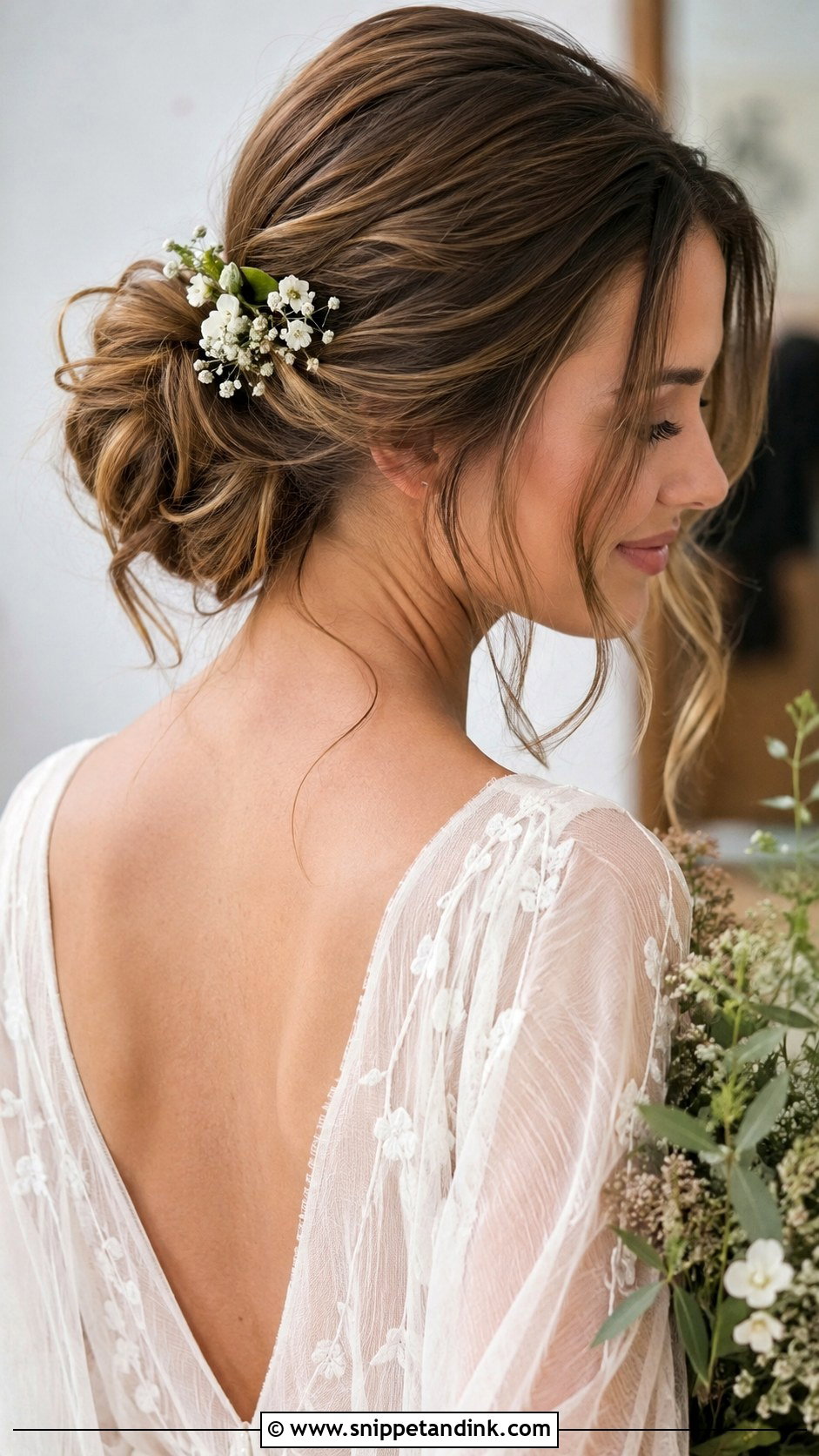
A good messy bun is pinned more carefully than a neat one. The trick is to secure the core tightly and only loosen the outer layer, so it looks undone but doesn’t actually move. I pull out face-framing tendrils last, after I’ve seen the veil or headpiece in place. It’s forgiving in heat and on second-day hair, and honestly it often looks better at 11 p.m. than at noon.
9. Braided Updo Wedding Hairstyle
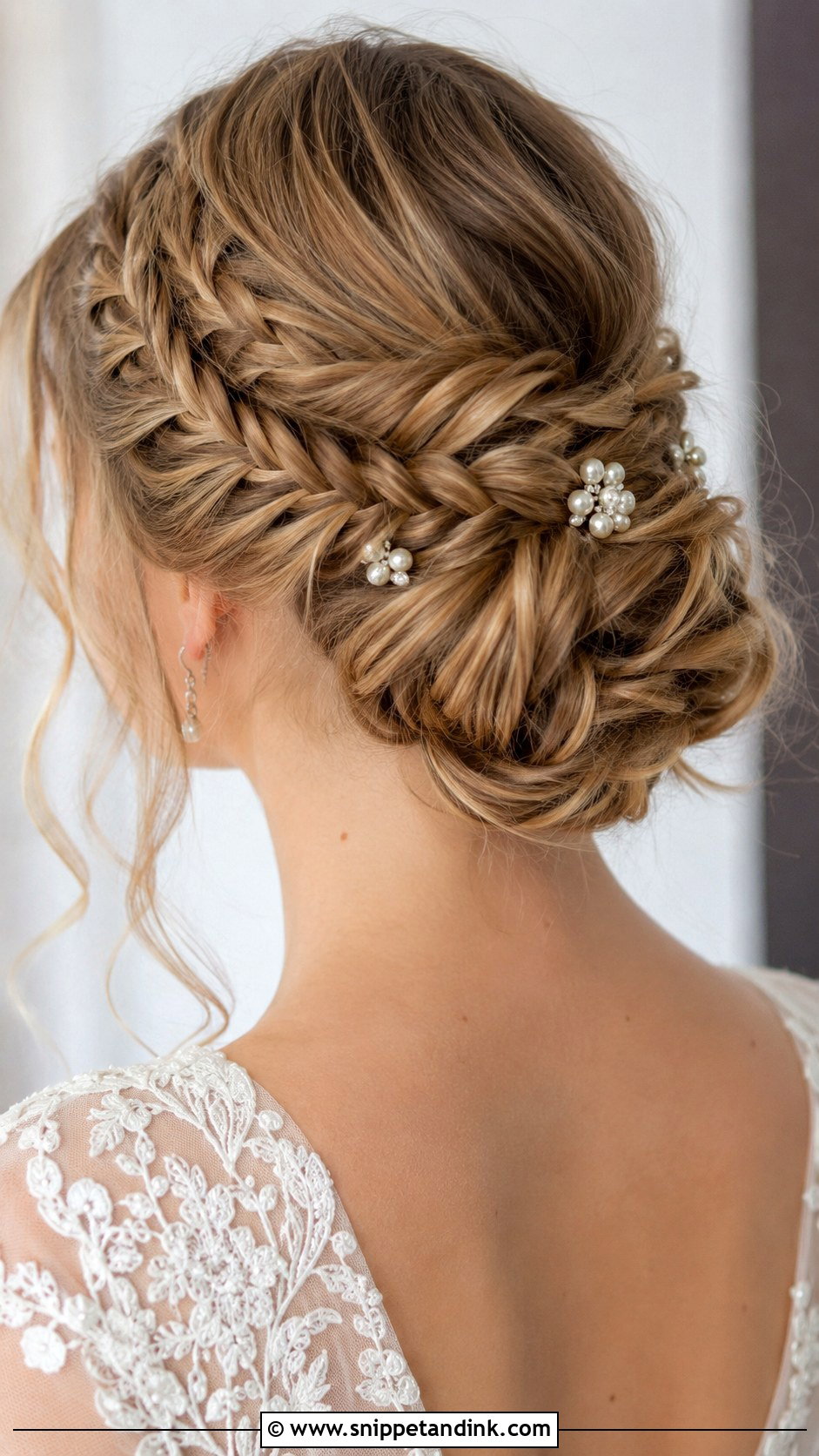
Braided updos grip better than any smooth style, because the braids act as built-in anchors for pins. Dutch braids sit raised off the head and give more dimension; French braids lie flatter and read as more refined. I usually suggest this to brides with thick, heavy hair, since the weight is spread across several braids instead of hanging on one bun. Pearl pins or small blooms can go straight into the braid stitches, where they’ll stay put.
10. French Twist Wedding Hairstyle
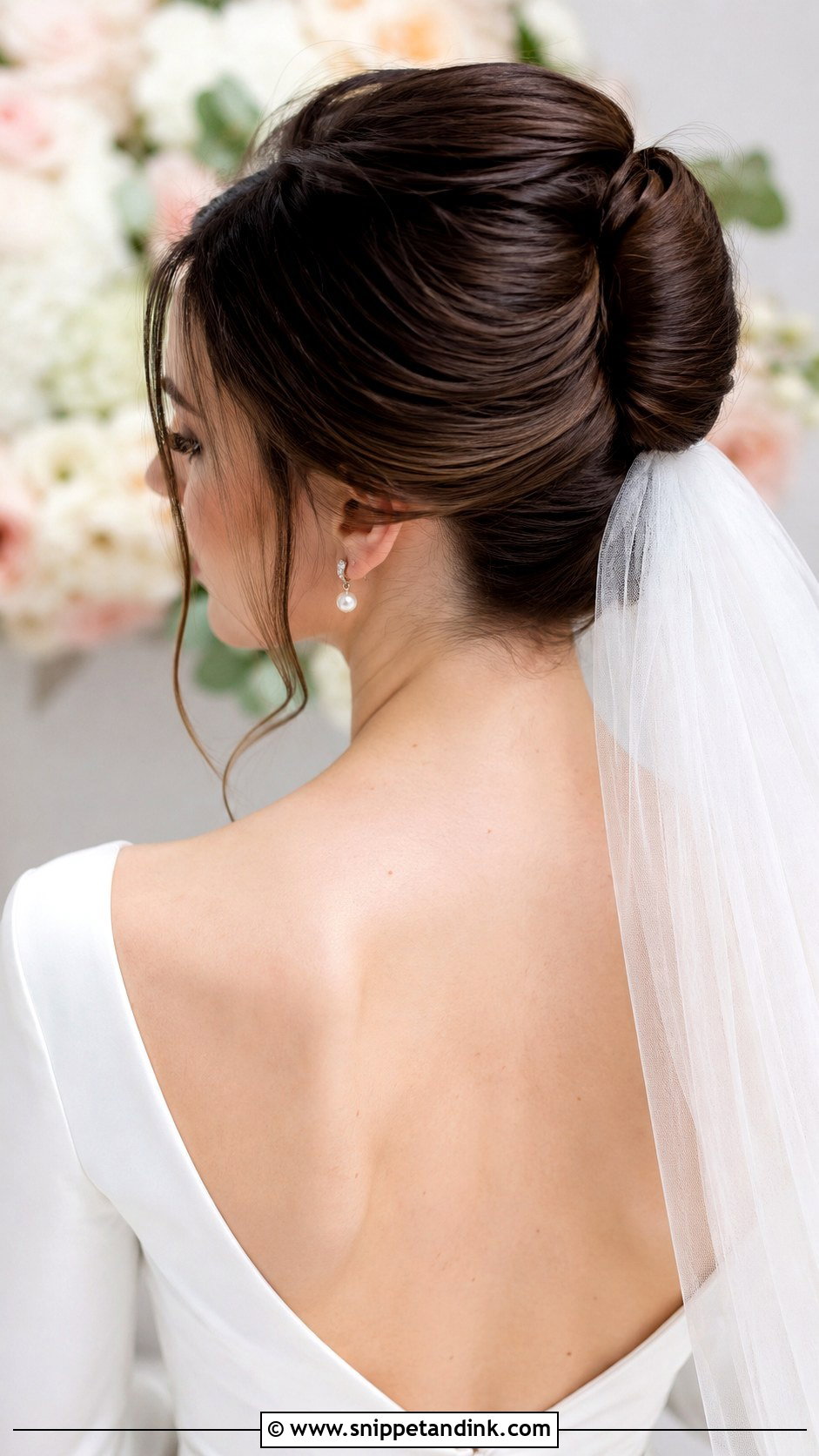
A French twist only works if the hair is long enough to fold back on itself and smooth enough to lie flat. I backcomb the inside of the roll slightly so the pins have something to hold, then hide every pin inside the fold. Very short layers at the nape are the usual problem; they fall out underneath. If you’re growing out a bob, we’ll talk about a low chignon instead. A veil comb slides neatly under the base of the twist.
11. Wedding Hairstyle With Tiara
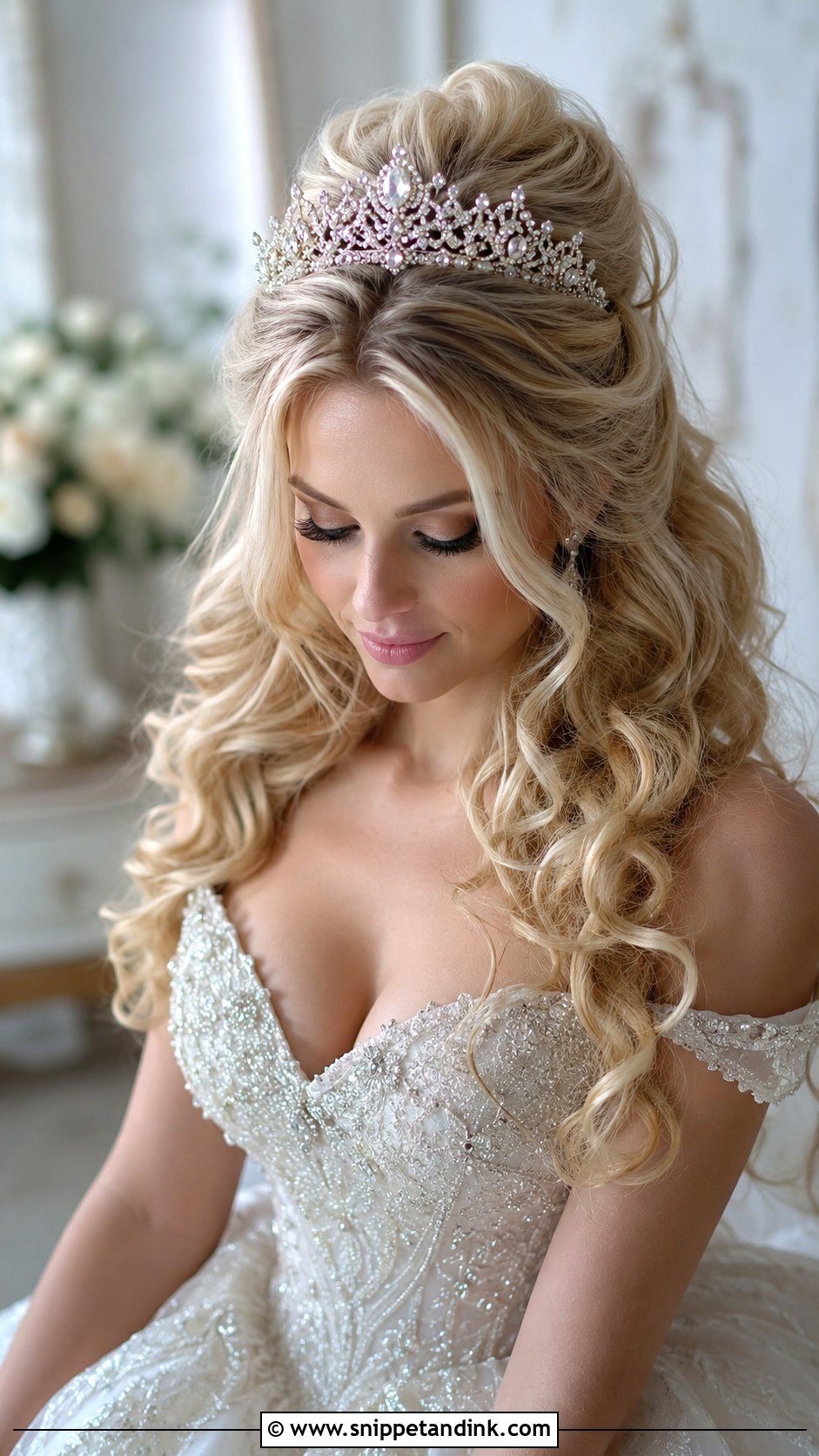
With a tiara, the hair has to be built around the piece, not the other way round. I place it first, mark where it sits, then add backcomb behind it so it has a cushion to rest on and doesn’t slide forward when you look down. A delicate tiara works on hair worn down; a heavier one really wants an updo to anchor its combs. Bring it to the trial so we can see how it sits on your head shape.
12. Curly Half Updo Wedding Hairstyle
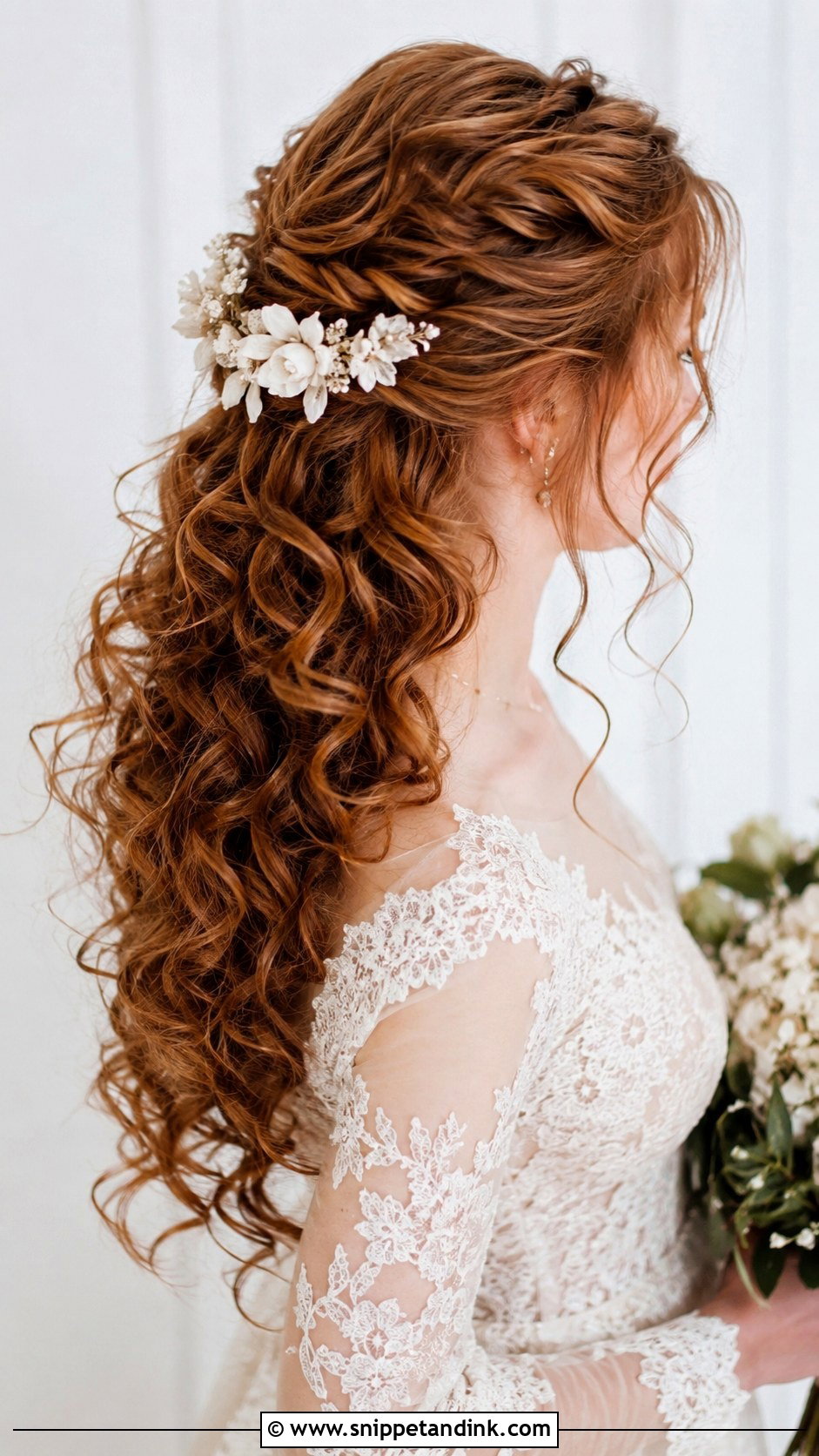
If your curls are natural, I’ll work with them rather than iron them out. A curly half updo is styled on hair that’s been refreshed with a little water and curl cream, then each ringlet is left alone; brushing curly hair creates frizz instantly. I twist and pin the top sections with matching coloured pins so they disappear into the curl pattern. Expect it to grow a little in volume as the day goes on, which on curls usually looks better.
13. Low Side Bun Wedding Hairstyle
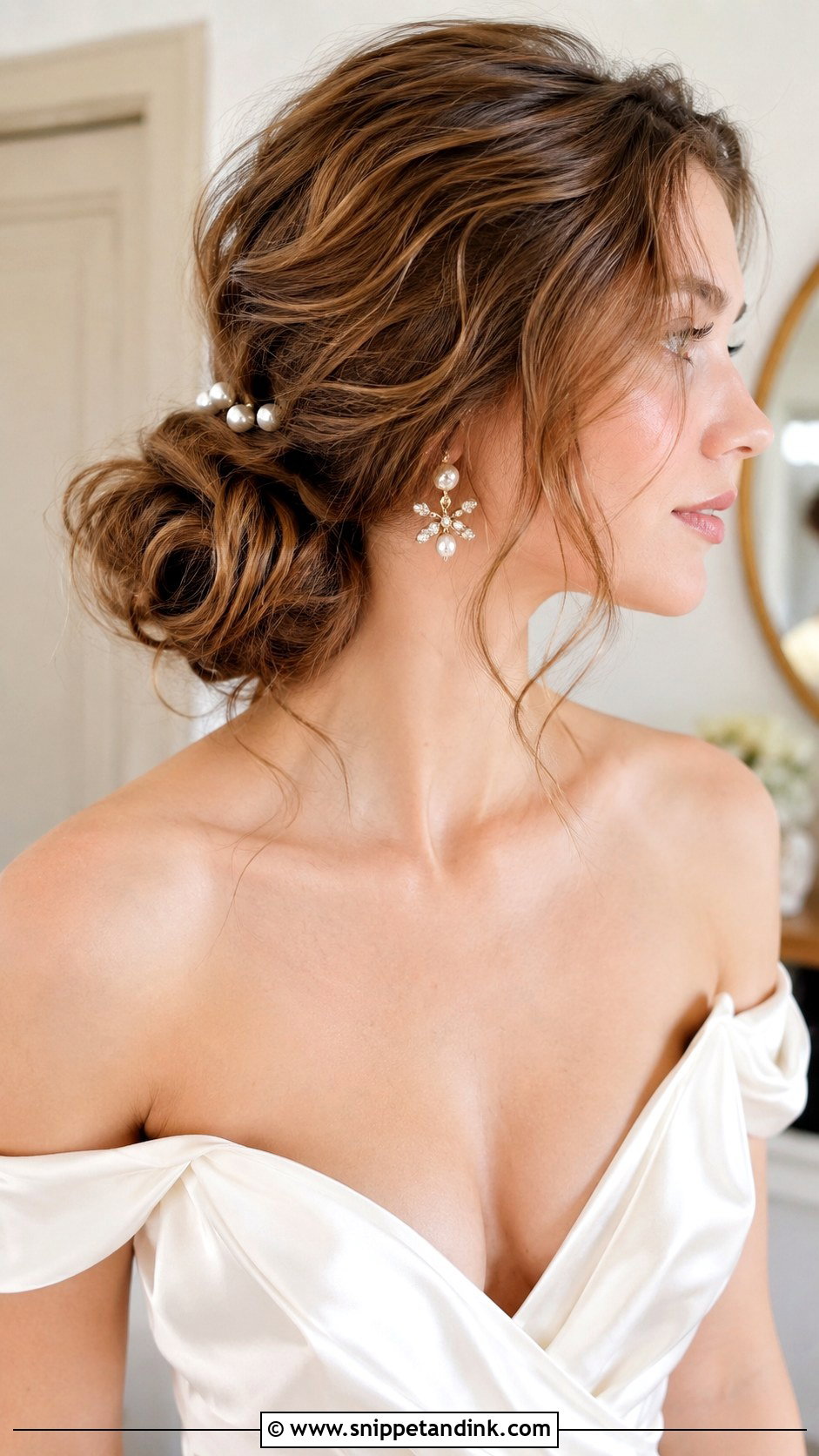
Placing the bun to one side changes how your face reads in profile, so decide which side the photographer will mostly see during the ceremony and put the bun there. A low side bun is comfortable to lean back on, unlike a central bun, and it leaves the opposite ear free for a single earring. I’d avoid it with a high-neck gown that has detail on one shoulder; the two compete.
14. Flower Crown Wedding Hairstyle
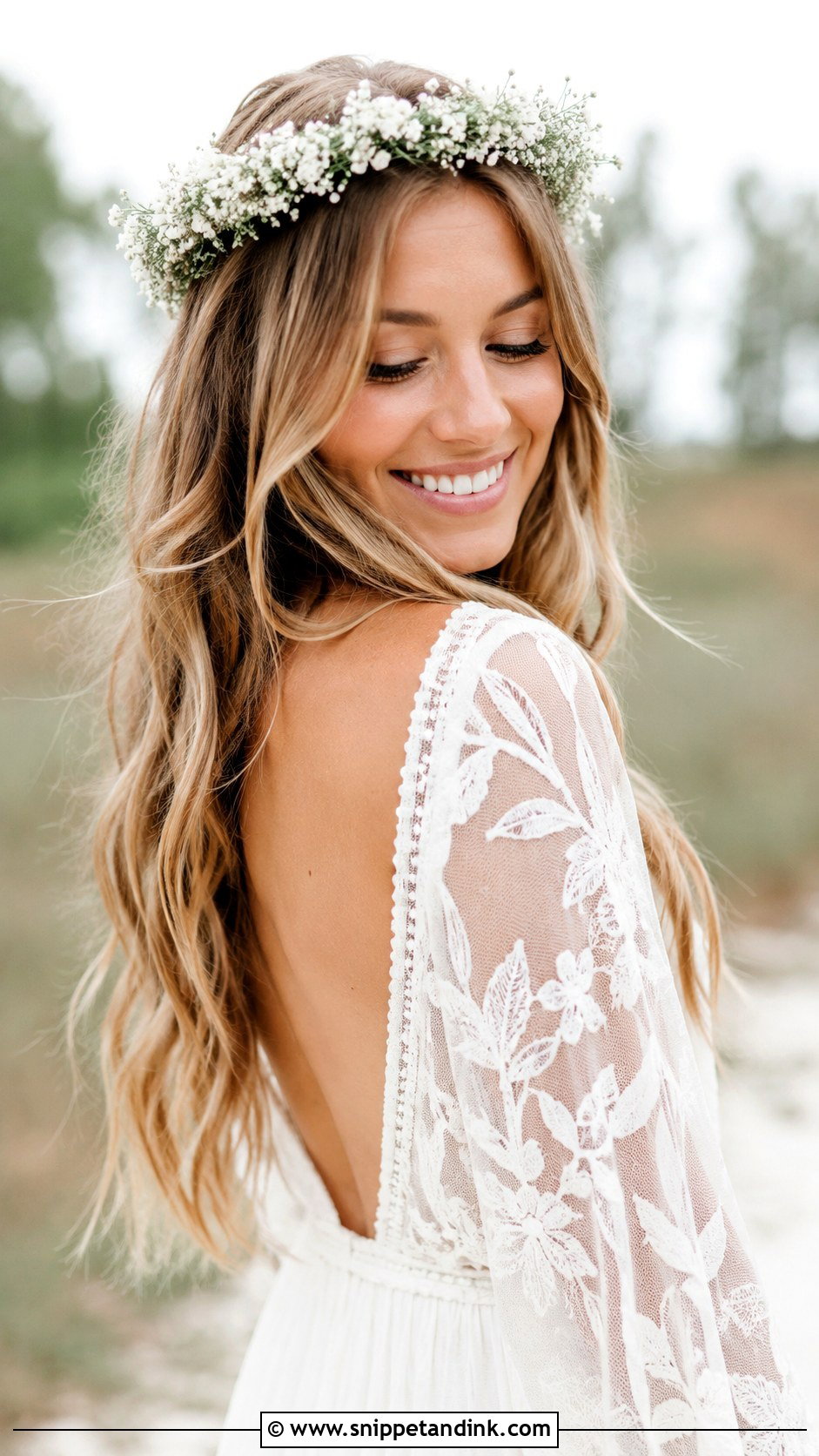
A flower crown is really floristry that happens to sit on your head. Fresh crowns are built on wire and taped stems the morning of the wedding, and they’ll droop in direct sun by mid-afternoon, so ask your florist which blooms are sturdy. I pin the crown through the hair at four points rather than just resting it on top. Baby’s breath reads airy and delicate; big garden roses look generous but weigh more than people expect.
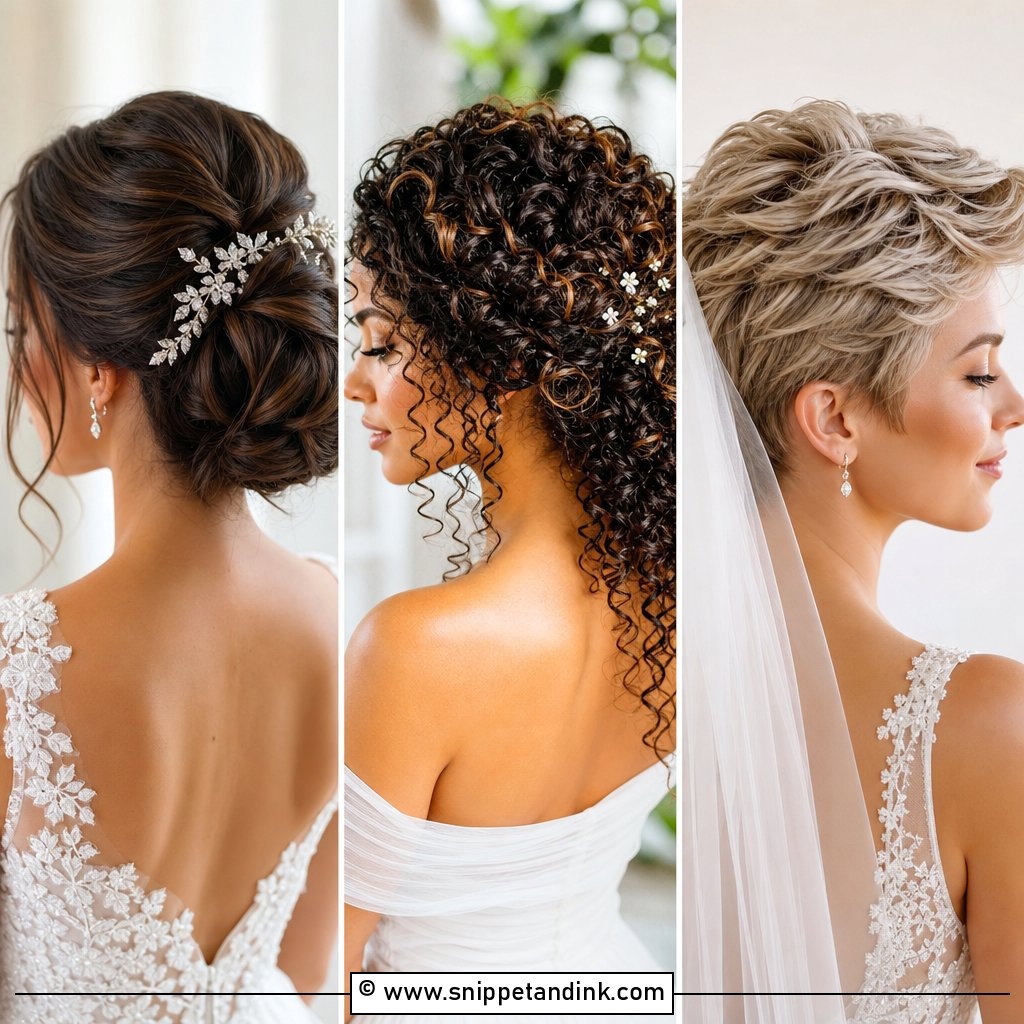
15. Sleek High Bun Wedding Hairstyle
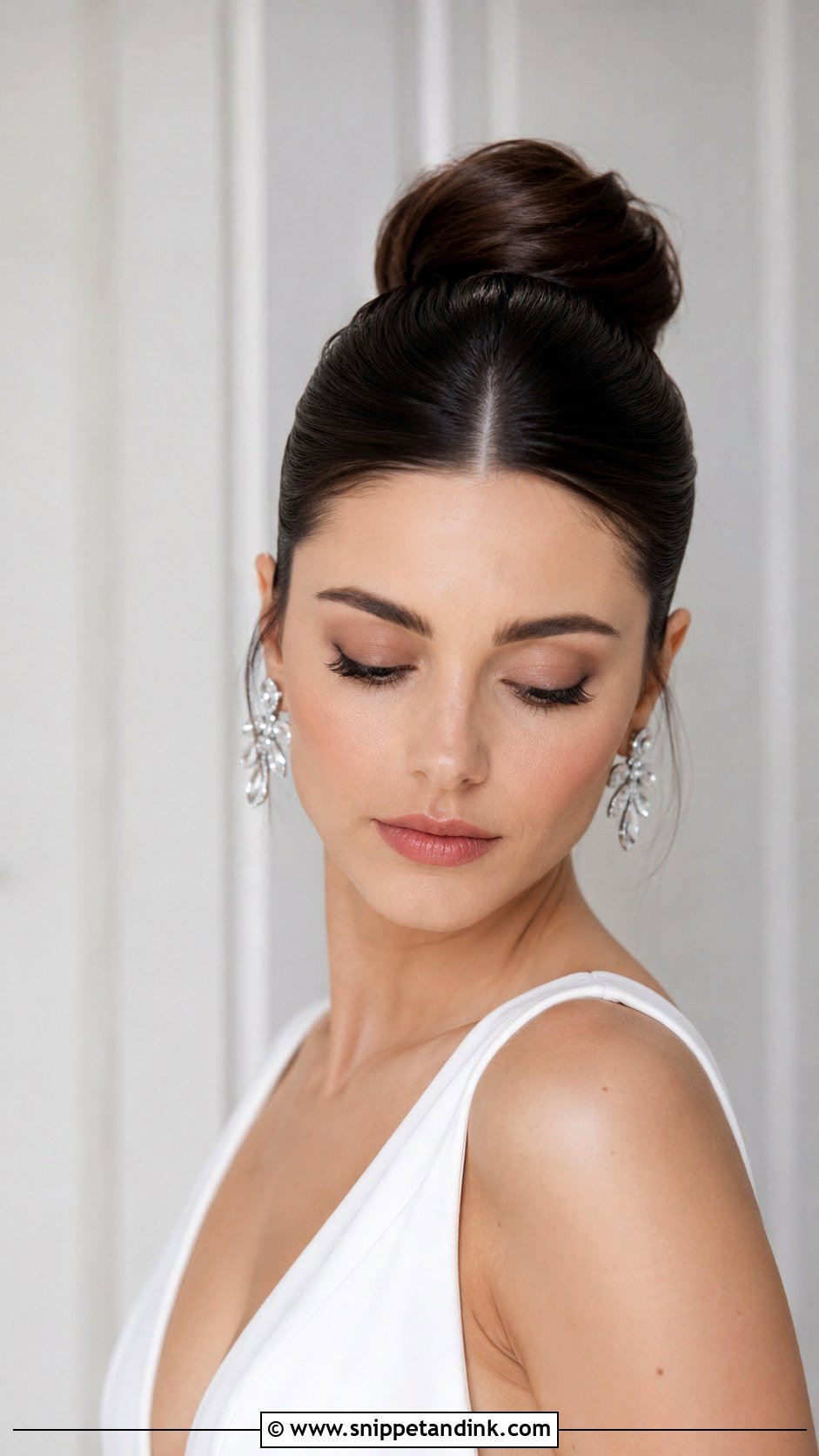
The high bun, sometimes called the ballerina bun, shows your neck and earrings better than anything else here. It’s also the most exposing style if your hairline has gaps or baby hairs that won’t lie flat, so I use a soft brush and a little gel at the edges. Very long, heavy hair can make a high bun drag and ache by evening; a donut form under it spreads the weight. Keep the veil comb below the bun rather than on top of it.
16. Wavy Hair Down Wedding Hairstyle
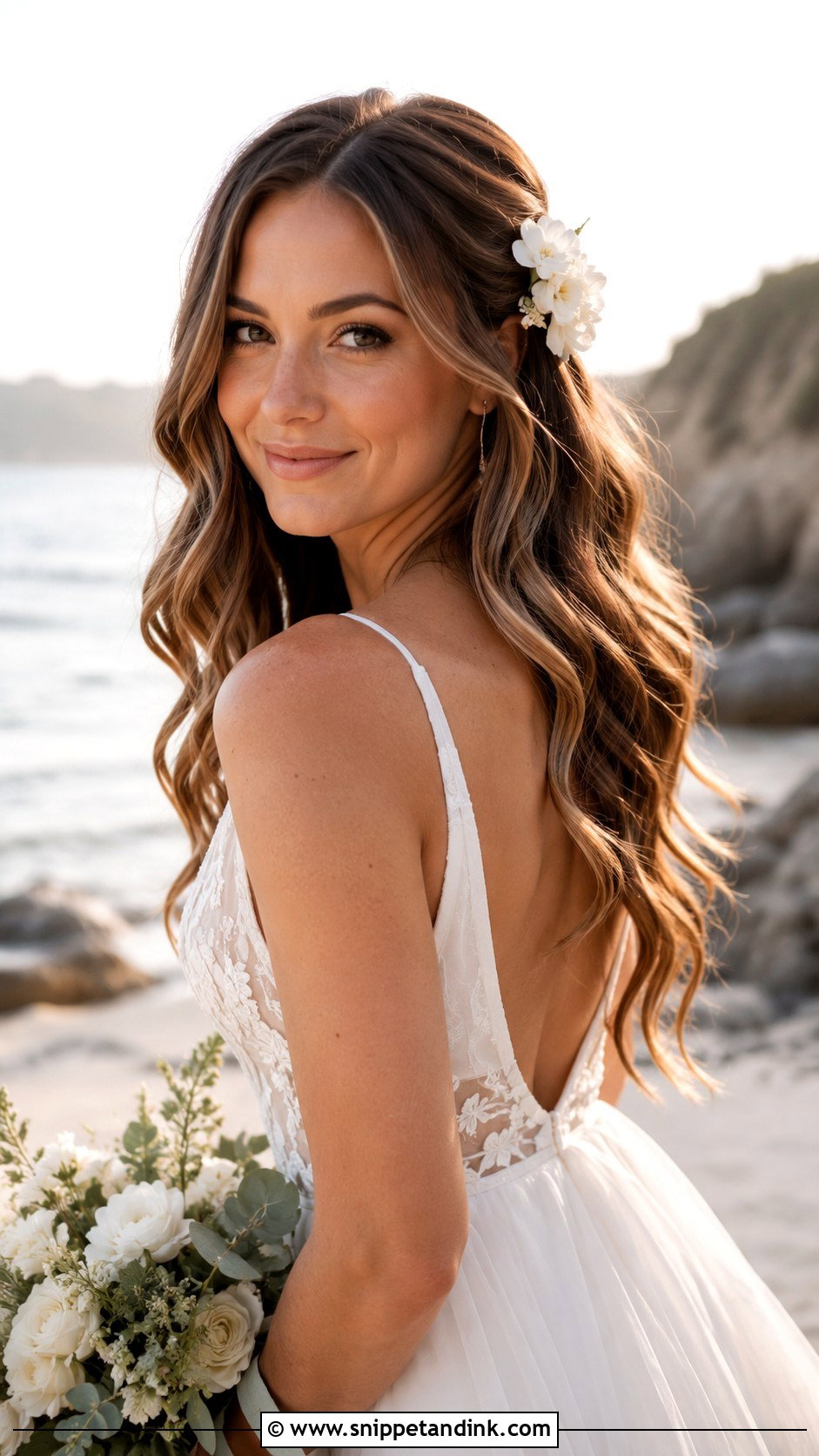
Hair worn down in waves looks simplest and asks the most of your hair’s condition. Split ends and uneven colour show up in close portraits, so I’d book a trim a few weeks before, not the day before. A little root lift at the crown stops it collapsing flat against the veil. Humid outdoor weddings are where it struggles most; a small clip and a few pins in your bag let you sweep it half up if it gives in.
17. Vintage Finger Waves Wedding Hairstyle
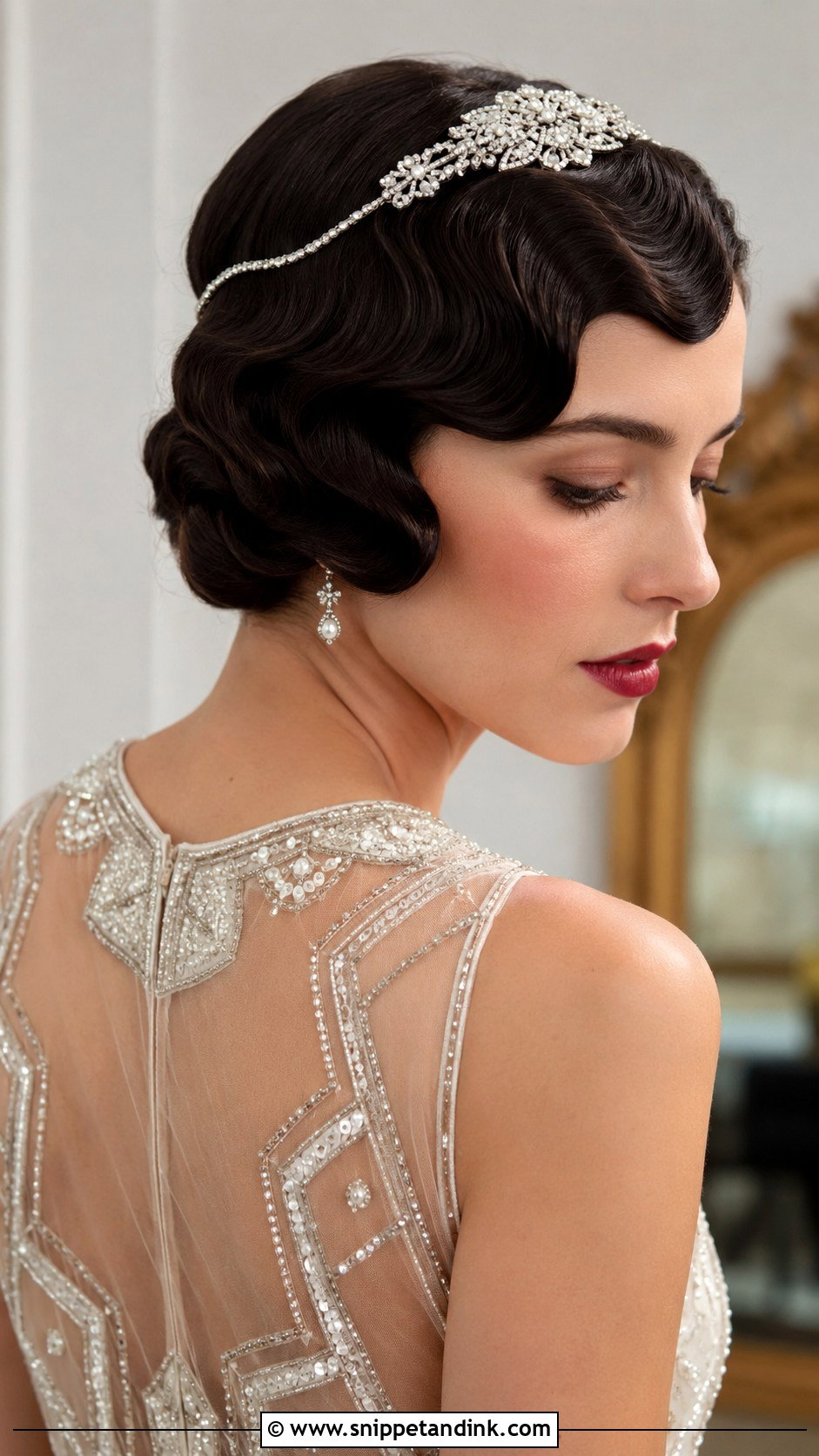
Real vintage finger waves are sculpted with fingers and a comb into wet, gelled hair, then left to dry. It’s a technique that suits short hair, a bob or shorter, because longer hair is too heavy to keep the ridges crisp. Long-haired brides can get the same look on the front sections, finished into a low roll. Ask whether your stylist has actually done wet-set waves before; it’s a specialist skill.
18. Twisted Updo Wedding Hairstyle
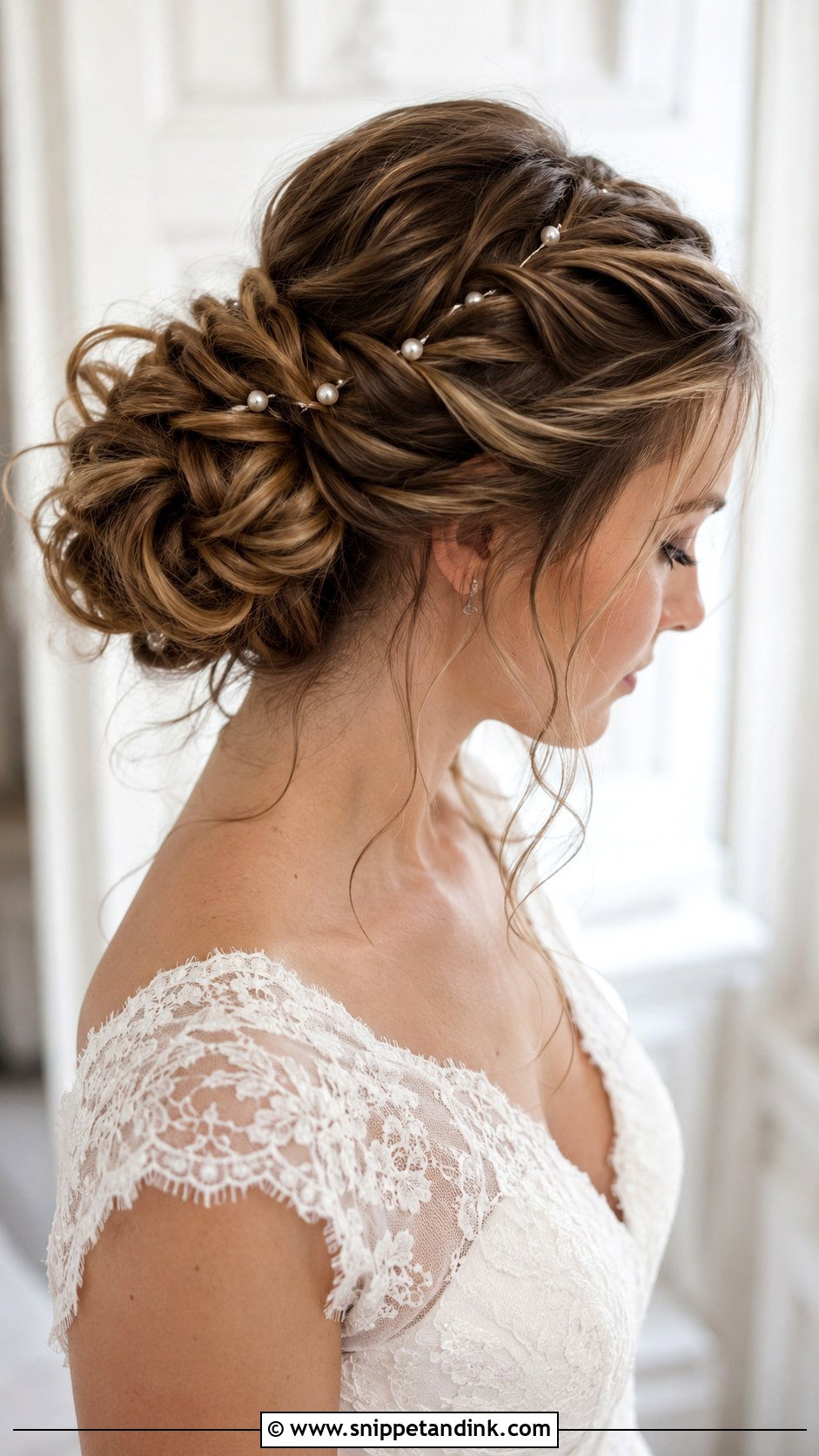
A twisted updo is built from rope twists rather than braids, which makes it faster and a little softer. Twists unwind if they aren’t pinned at both ends, so I lock each one with a pin going in the opposite direction of the twist. It’s more forgiving of shorter layers than a French twist, because each section is small. Pearl pins tuck into the grooves between twists without slipping.
19. Braided Crown Wedding Hairstyle
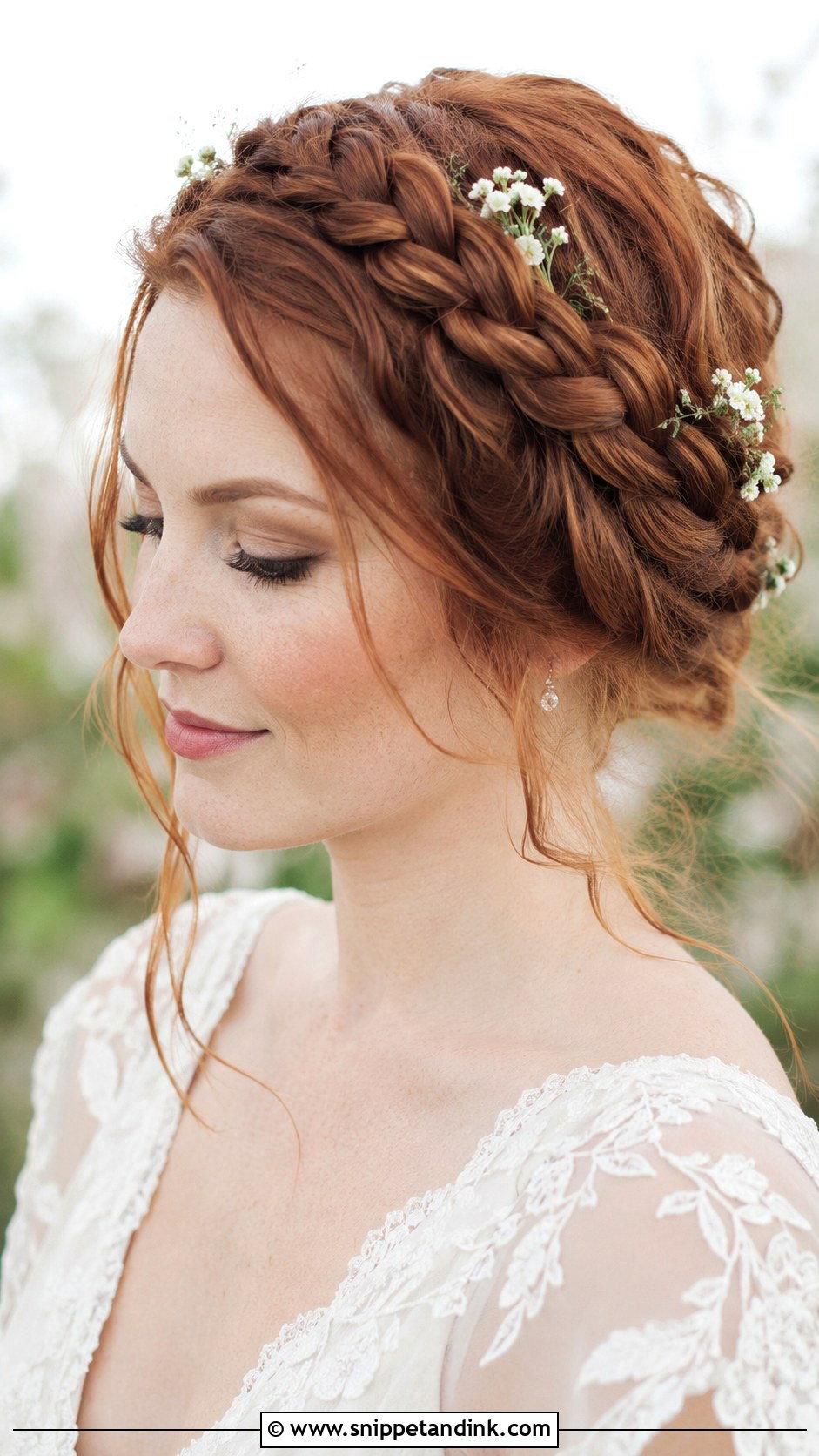
A braided crown needs hair long enough to reach around your head, roughly mid-back if it’s one braid. Shorter hair can still do it with two braids meeting at the back, or a small clip-in piece. I pull the braid out wide so it reads as a halo, not a headband, and pin it every few inches so it can’t slip when you dance. It’s comfortable all day because the weight sits evenly around your head.
20. Pinned Back Curls Wedding Hairstyle
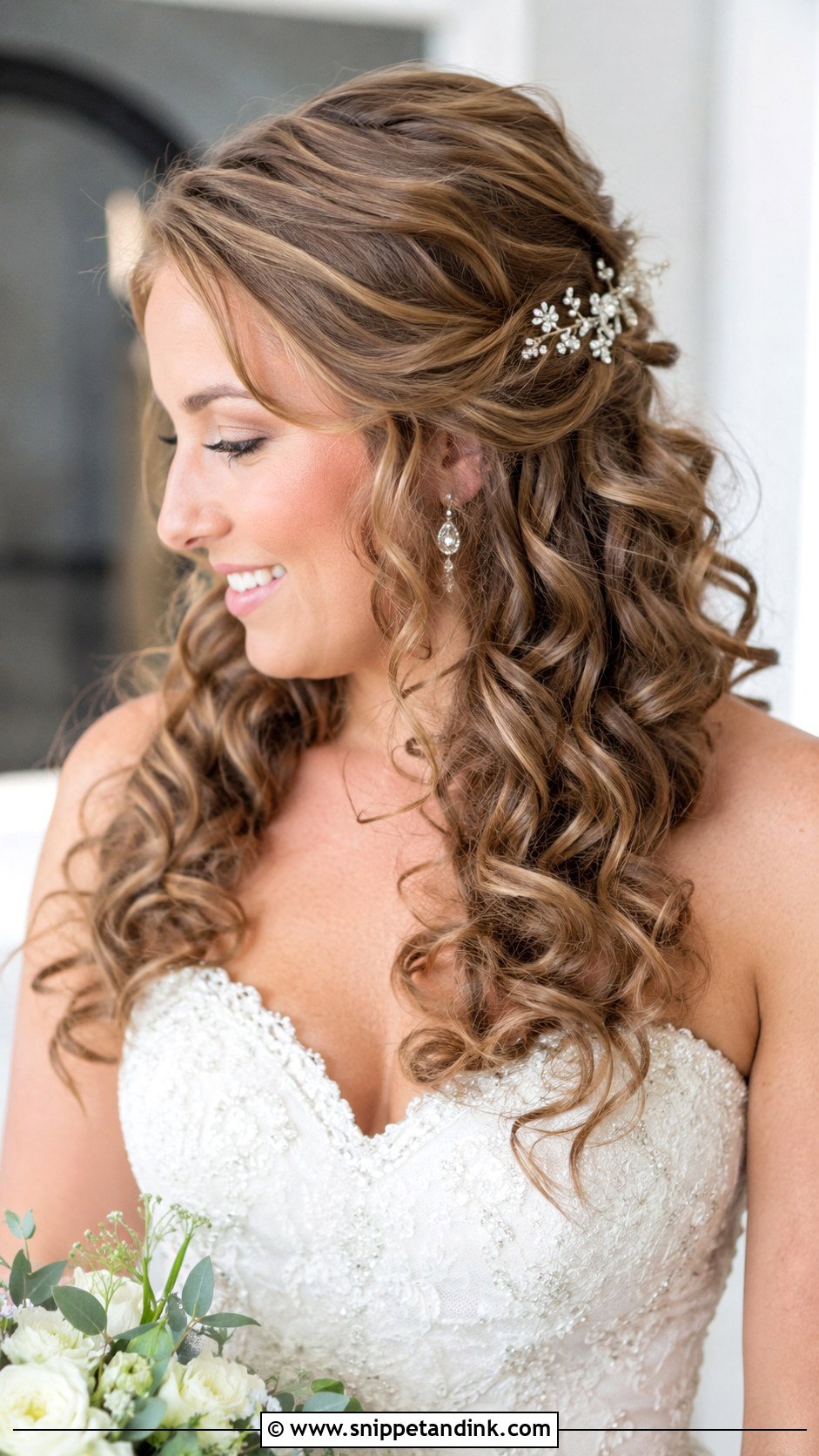
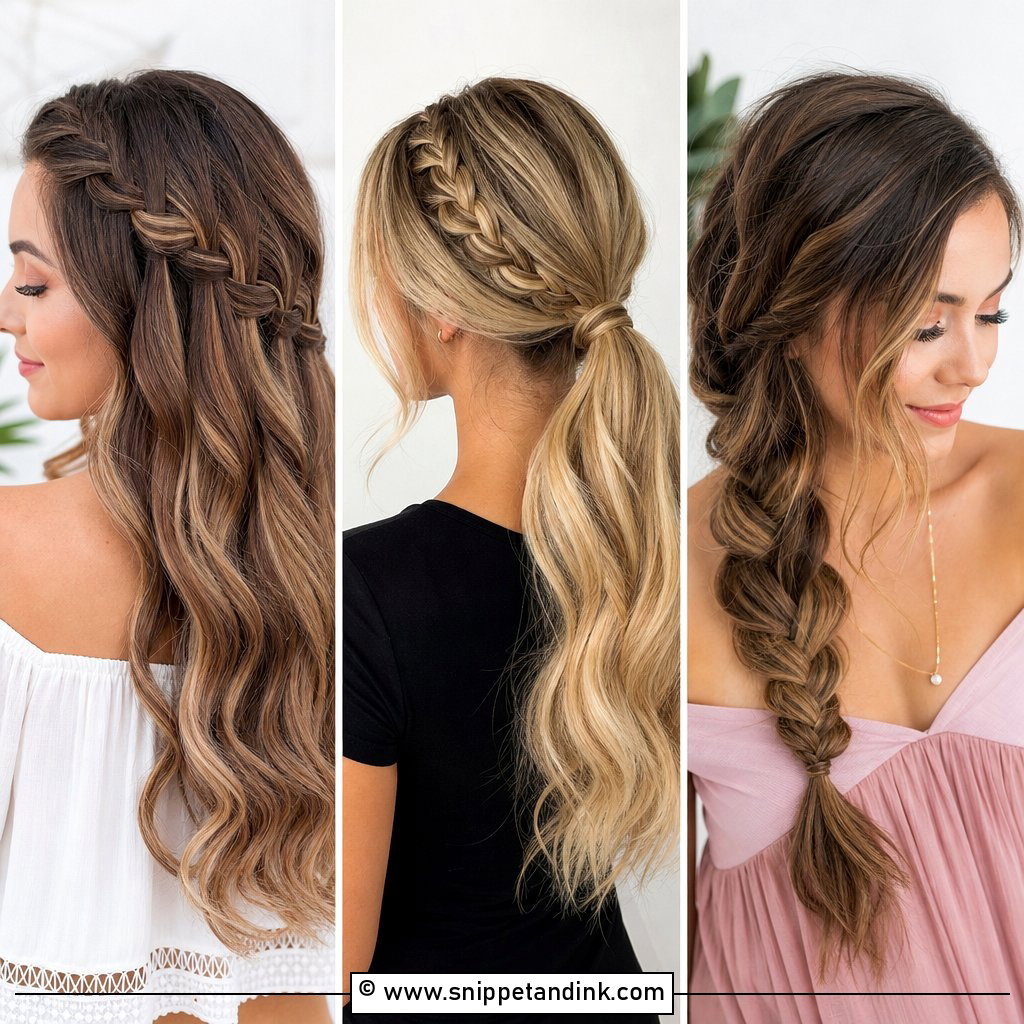
Pinned back curls are what I suggest when someone wants their hair down but is worried about it in their face. I take two sections from above the temples and cross them at the back, so the front stays off your skin and your makeup. The pins take most of the strain, so I use a sturdy bobby pin hidden under a decorative one. It’s especially good for medium hair that’s a little too short to put fully up.
21. Slicked Back Wedding Hairstyle
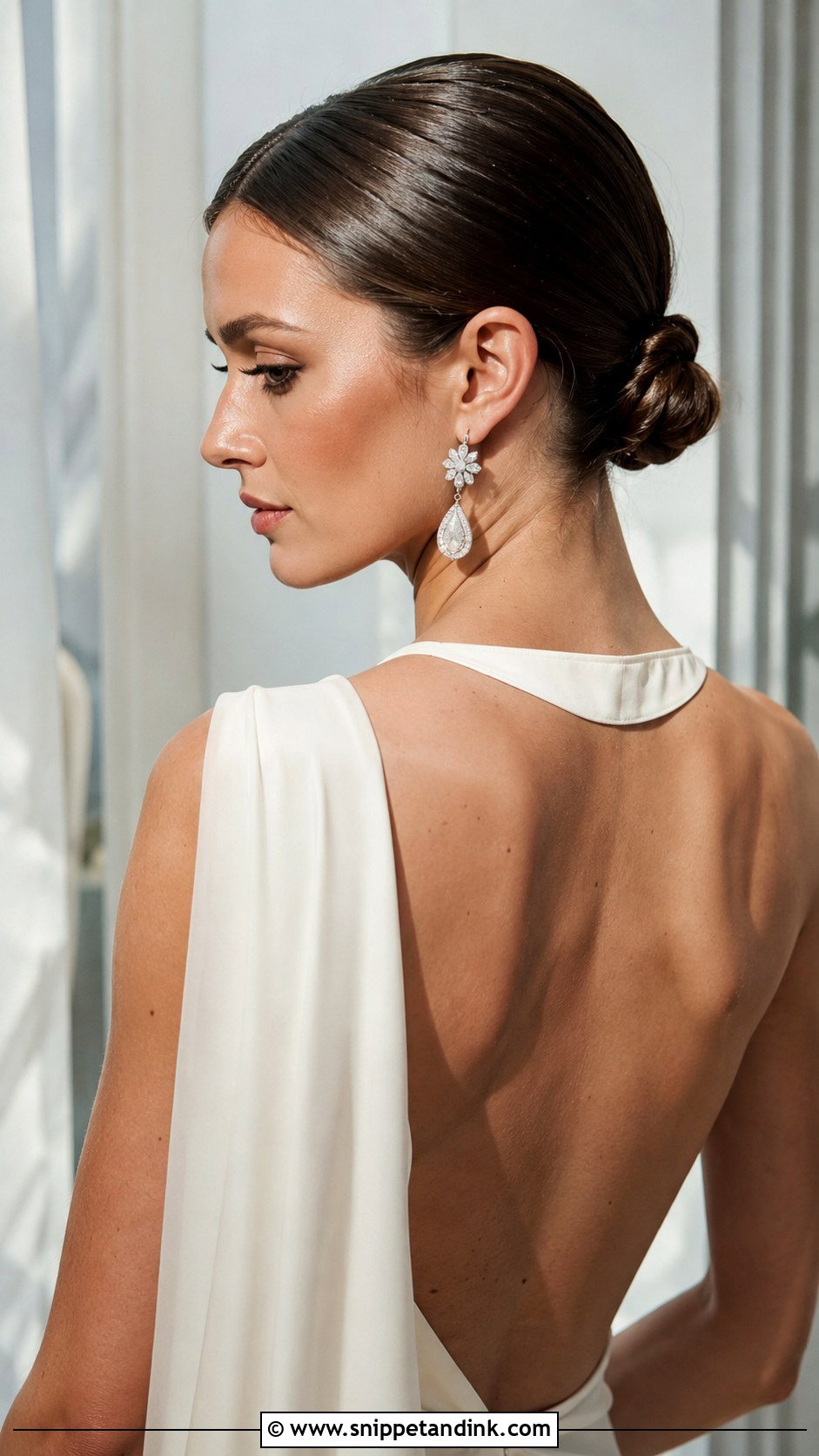
Slicked back hair is bold and very honest about your face shape and hairline. I comb a strong gel or pomade through damp hair and blow-dry it in place for hold, then finish into a low bun, a ponytail or simply a sleek crop. It pairs naturally with a minimalist gown and big earrings. Skip it if you dislike how your forehead looks bare; it will be bare in every photo.
22. Wedding Hairstyle With Veil
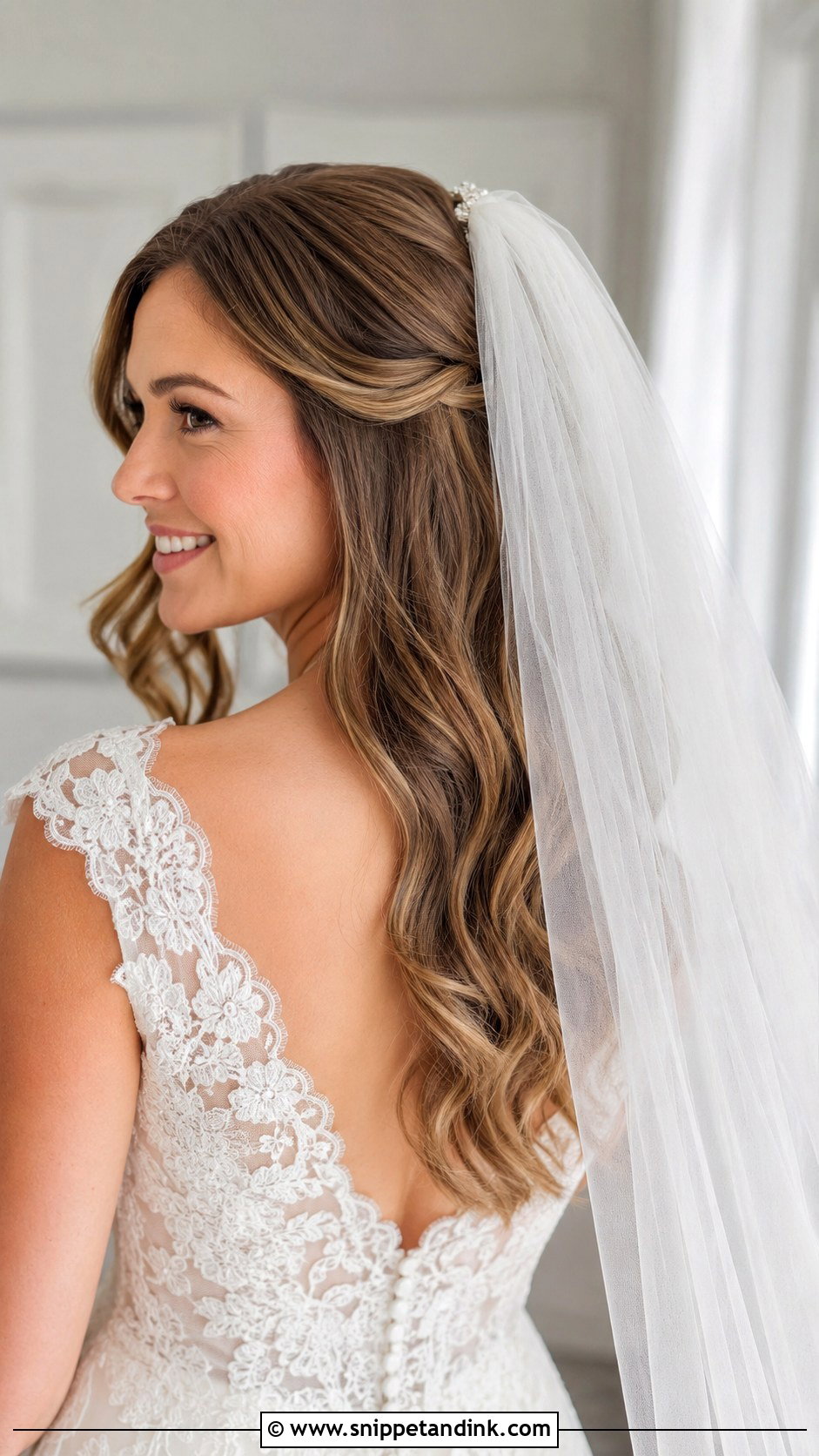
Almost any hairstyle can carry a veil, but the placement matters more than people think. Under the bun gives a clean line from the back and is the most secure; at the crown gives more drama and length but needs a solid base to grip. I always insert the comb downward into a backcombed patch of hair, never into smooth hair, or it slides out the first time someone hugs you. Plan the removal: whoever takes it out should know how, so it doesn’t drag a whole section of your style with it.
23. Textured Pixie Wedding Hairstyle
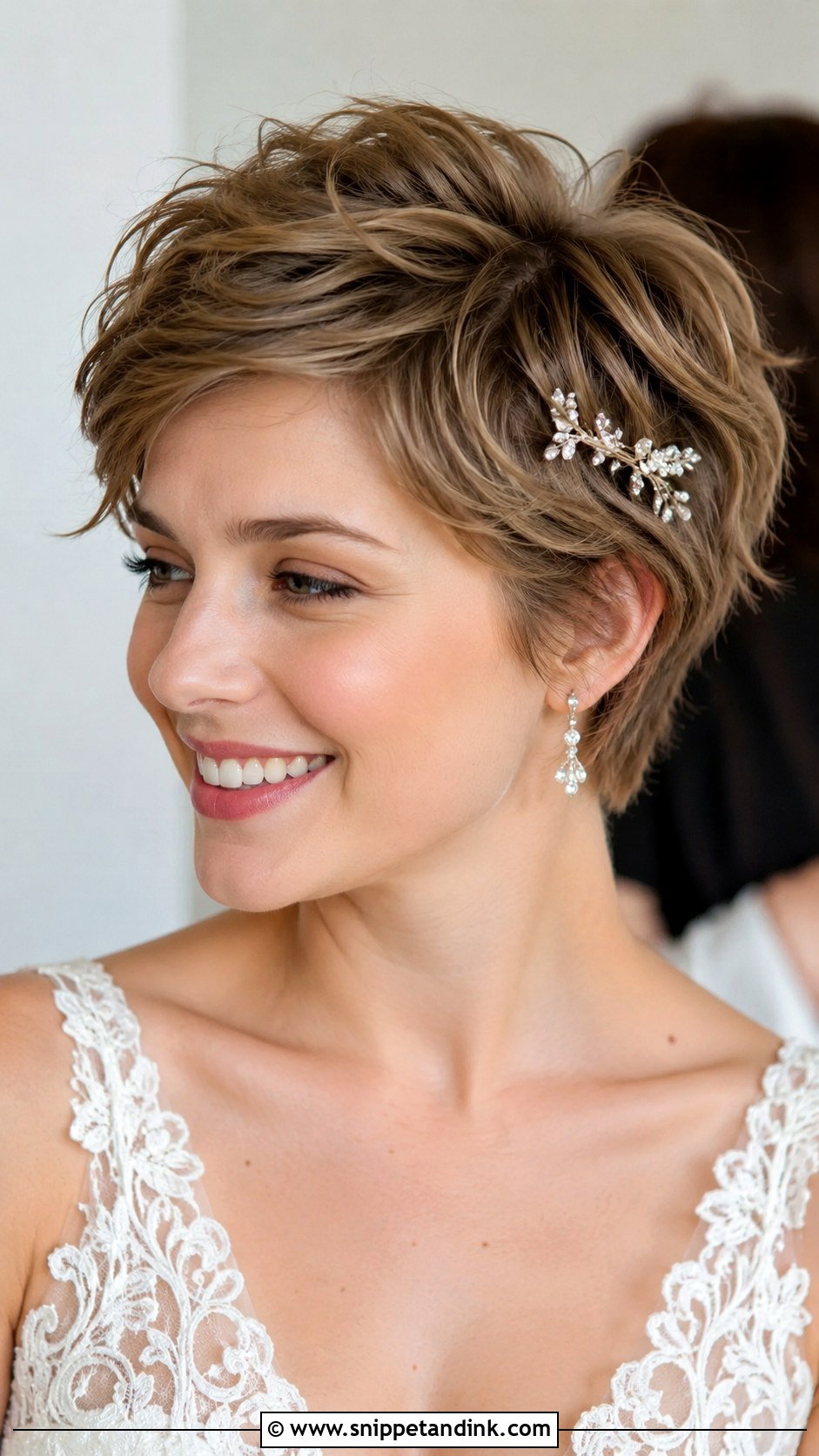
Short hair is easier on a wedding day than most people expect. A textured pixie needs a good cut about a week or two out, so it has settled but hasn’t grown shaggy. I add texture paste with fingertips and a light hold spray, and a small clip or a slim headband marks it as bridal. There’s almost nothing that can fall, so you can skip touch-ups entirely.
24. Side Swept Curls Wedding Hairstyle
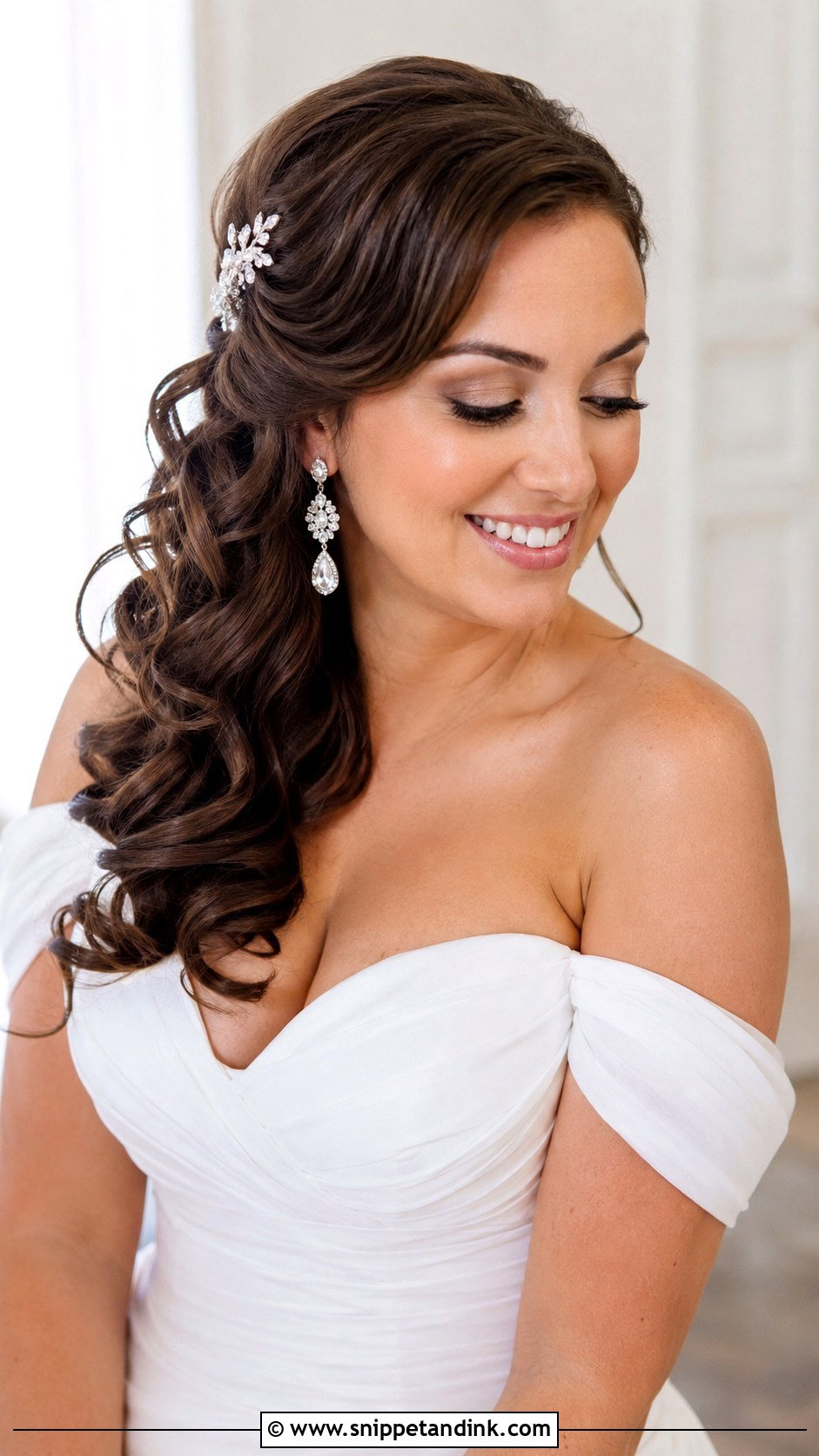
Side swept curls rely on hidden anchoring. I pin the hair on the ’empty’ side flat against the head first with crossed pins, then sweep everything across, otherwise the weight pulls it back to centre within an hour. It flatters an off-the-shoulder neckline because it shows one shoulder fully. Volume is the key ingredient, so fine hair usually needs a few extensions to look as full as the photo.
25. Accessorized Updo Wedding Hairstyle
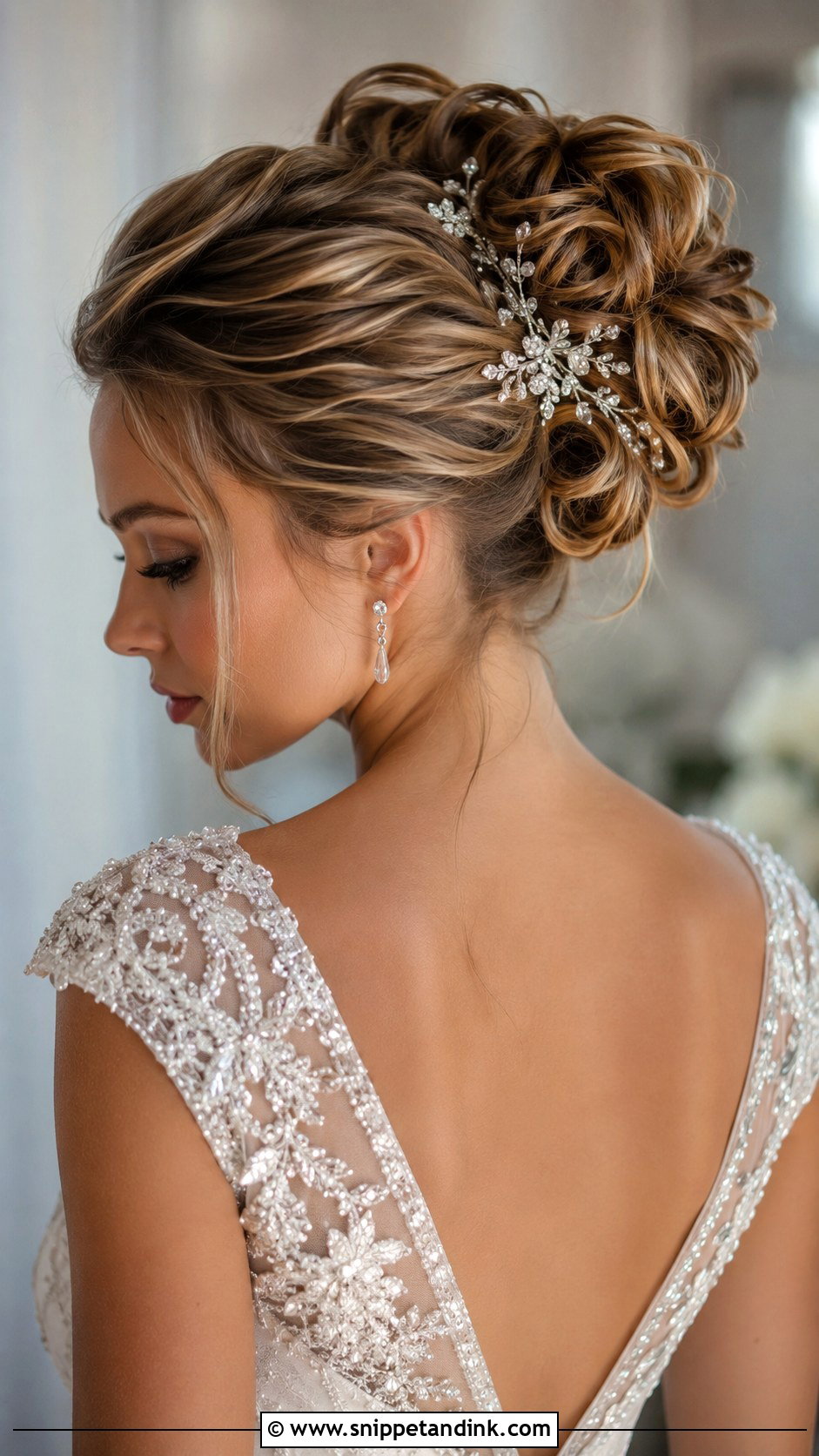
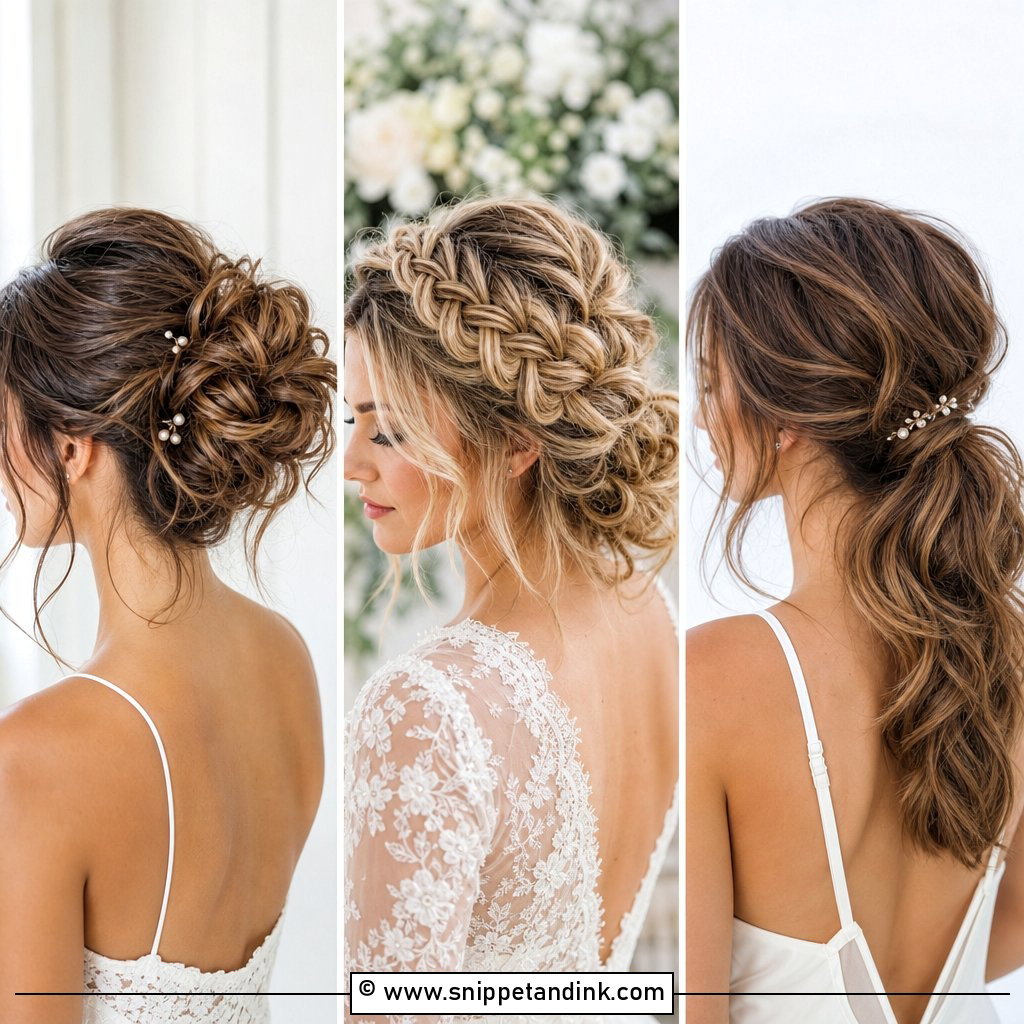
An accessorised updo is a style where the decoration is the main act, so the hair underneath should be fairly simple. I place pins and jeweled combs where the light will catch them during the ceremony, which is usually the side facing your guests. Crystal pieces add weight, and three or four heavy combs can drag a soft updo downward, so the base needs to be firmer than usual. I’d hold back if your gown already has a lot of beading; let one area carry the sparkle.
Rehearse It Once With the Veil and Dress Neckline
I’d rather a bride change her mind at the trial than on the morning. Bring the veil or headpiece, the earrings, and a top with a neckline close to the gown’s, because a high collar and a low bun can fight each other in a way no photo shows. Wear the style for the rest of the day, take a picture at dinner, and notice where it pulled or slipped.
Ask your stylist to show you how the veil comes out after the ceremony, and which pins are holding the structure. It’s the moment most styles get damaged, usually by a well-meaning friend tugging the comb straight back.
How Each Style Ages Between Photos and the Last Song
Every style changes over a long day, and some get better while others give up. Sleek buns, slicked back hair and braided updos barely move. Messy buns, boho braids and textured pixies tend to improve as they soften. Waves worn down, side swept curls and half up styles drop the most, especially in humidity.
For the styles that loosen, I’d hand a bridesmaid a small bag: a few matching bobby pins, a travel hairspray, a slim comb and a clip that can turn down hair into a quick half up if the weather wins. Ten minutes before the reception entrance is a good time to check it in a mirror.
Which Style Still Looks Right After the Dancing?
The right style is the one your hair can actually hold for a whole day, worn with your dress and veil, in the weather you’ll have. Start with your length and texture, then the neckline, then the venue. Do one honest trial with everything you’ll wear, take photos from behind and the side, and live in it for a few hours. If you still like it at dinner, that’s your answer.
You'll Like These Ideas:


Leave a Reply