
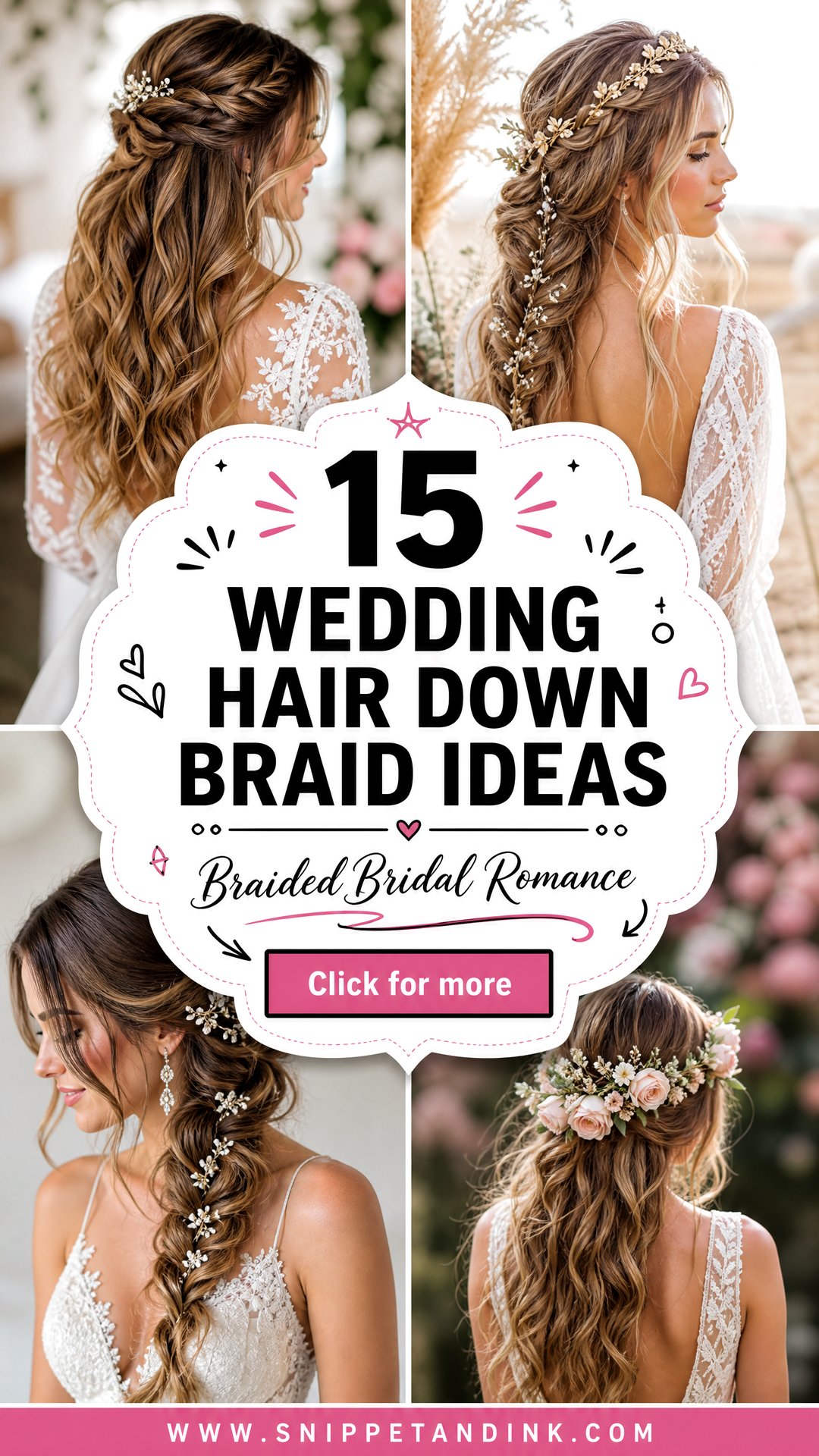
Most brides who ask me for down hair are really asking for two things at once: they want to see their length in the pictures, and they don’t want to spend the reception tucking pieces behind their ears. A braid is how I give them both. It holds the front sections back, gives a veil comb or pearl pins something solid to grip, and turns an ordinary curl set into something that reads as wedding hair from across a room. The fifteen styles below all keep the bulk of the hair loose. What changes is where the braid sits, how tight it is, and how much of the work it has to do.
Why Freshly Washed Hair Fights a Braid
The biggest problem I see at trials is hair that is too clean. Freshly washed, conditioned hair is slippery, and a braid in slippery hair loosens within an hour. I’d rather see hair washed the day before, with no heavy conditioner on the roots or mask left in overnight.
On the morning, I add grip before I touch a braid: dry shampoo or texture spray at the roots and along the sections I’m going to plait. Curls go in first and are left to cool fully, sometimes pinned up in loops, because a curl set while warm drops much faster. Only then does the braid go in, and the pins go under it, crossed in an X, never just pushed straight into loose hair.
- Fine or silky hair: texture spray on every section, and slightly smaller braids that hold better than one big one.
- Thick or coarse hair: braid at full tension, and use more pins than you think, because the weight pulls.
- Layered hair: a little pomade on the fingers keeps short ends tucked in the braid.
- Coily or curly hair: braid on damp-to-dry, hydrated hair and skip strong spray so the curl stays soft.
If you want extensions for fuller lengths, clip-ins should be fitted at the trial, not on the day. I braid over the clip line to hide it, and that changes where the braid can sit.
1. Half Up Wedding Hair Down Braid
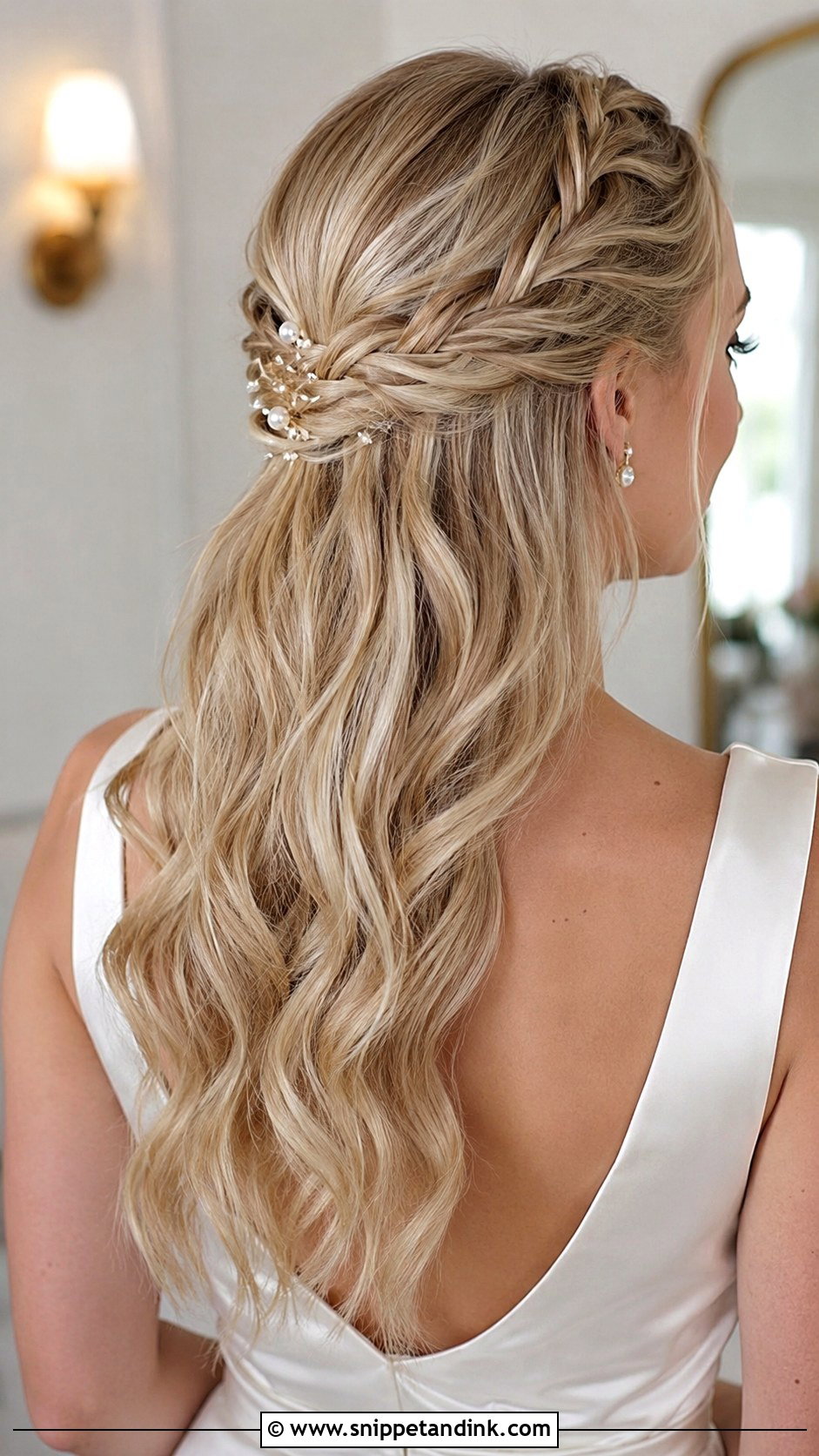
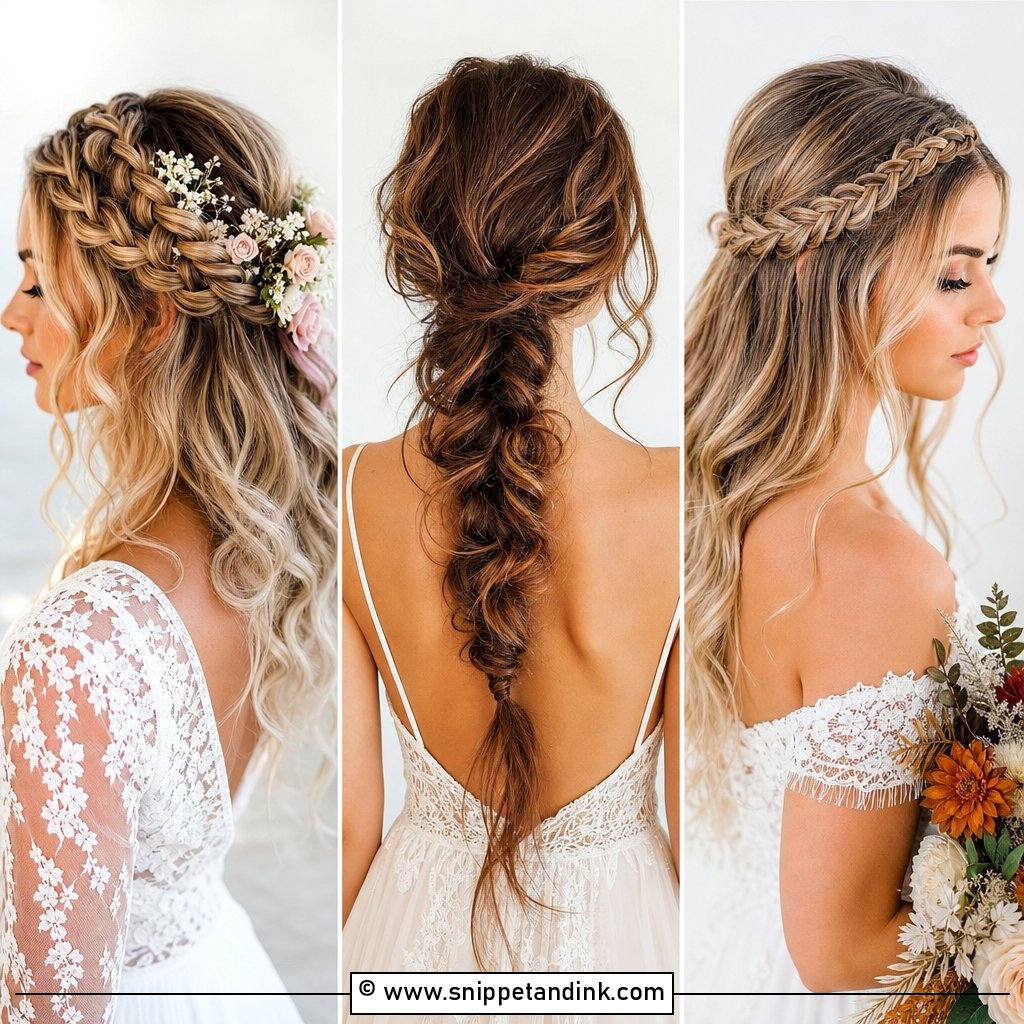
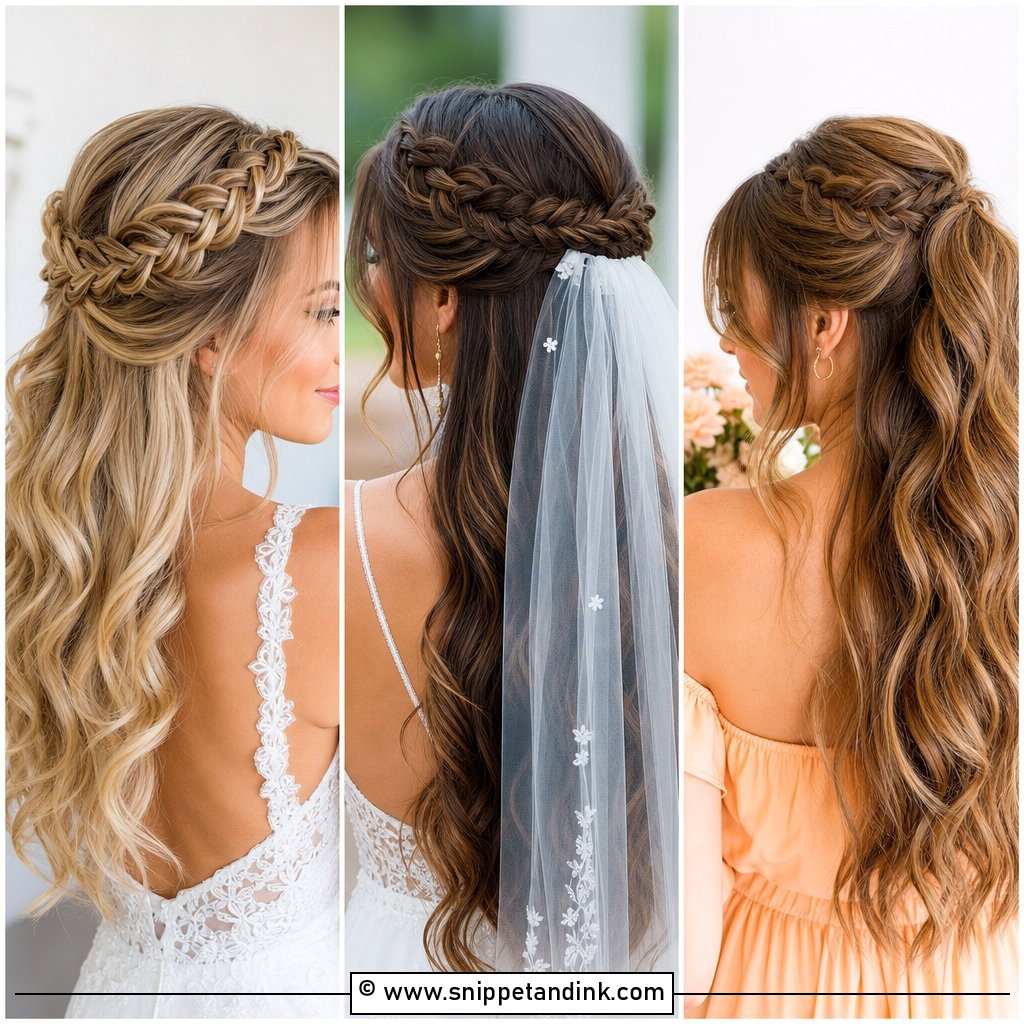
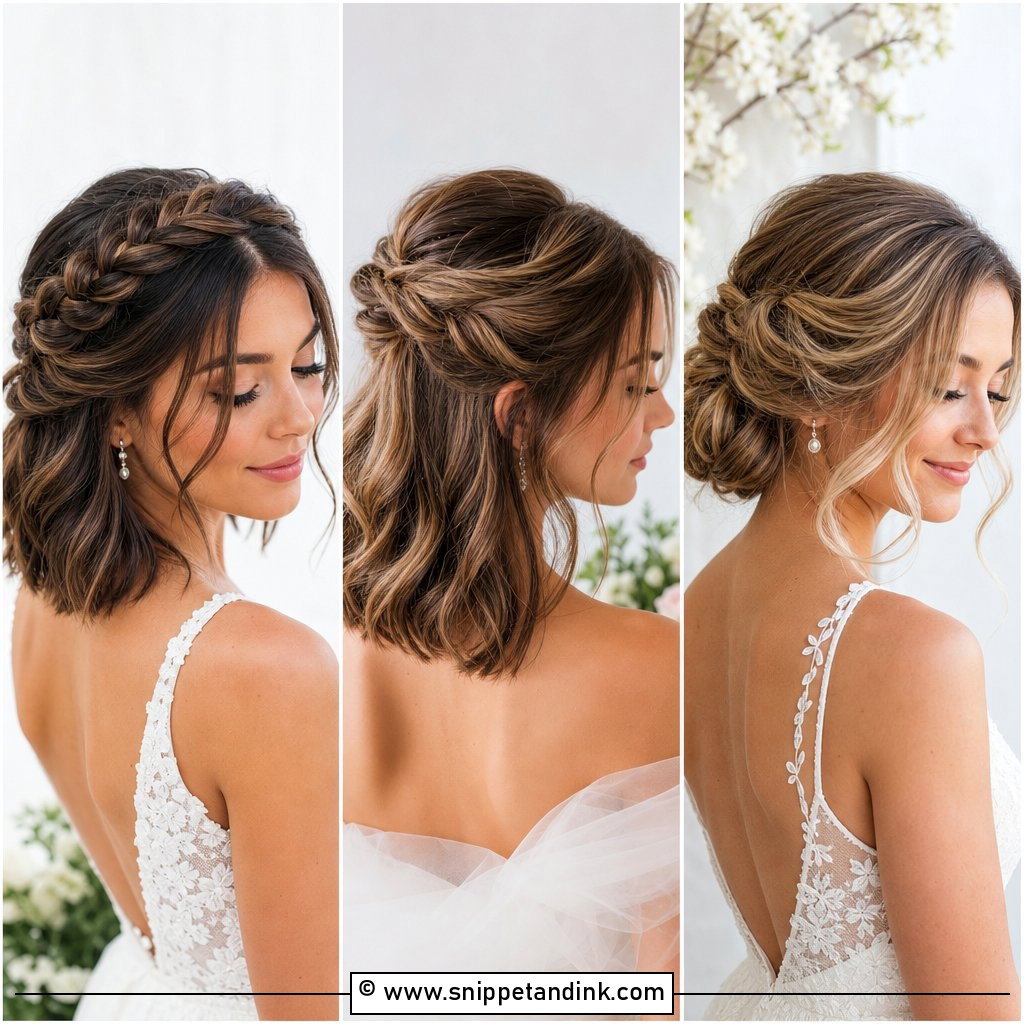
This is the braid I put in more than any other. I take a horseshoe section from temple to temple, braid one or two small plaits back from it, and join them just below the crown with a clear elastic and two crossed pins. That join is the anchor for everything, so it has to sit on the round of the head, not low on the neck where it slides. It suits medium to long hair best, because the loose length underneath needs to be longer than the braided part or the shape looks top-heavy. Pearl pins or a small comb go right over the join to hide it.
2. Boho Wedding Hair Down Braid
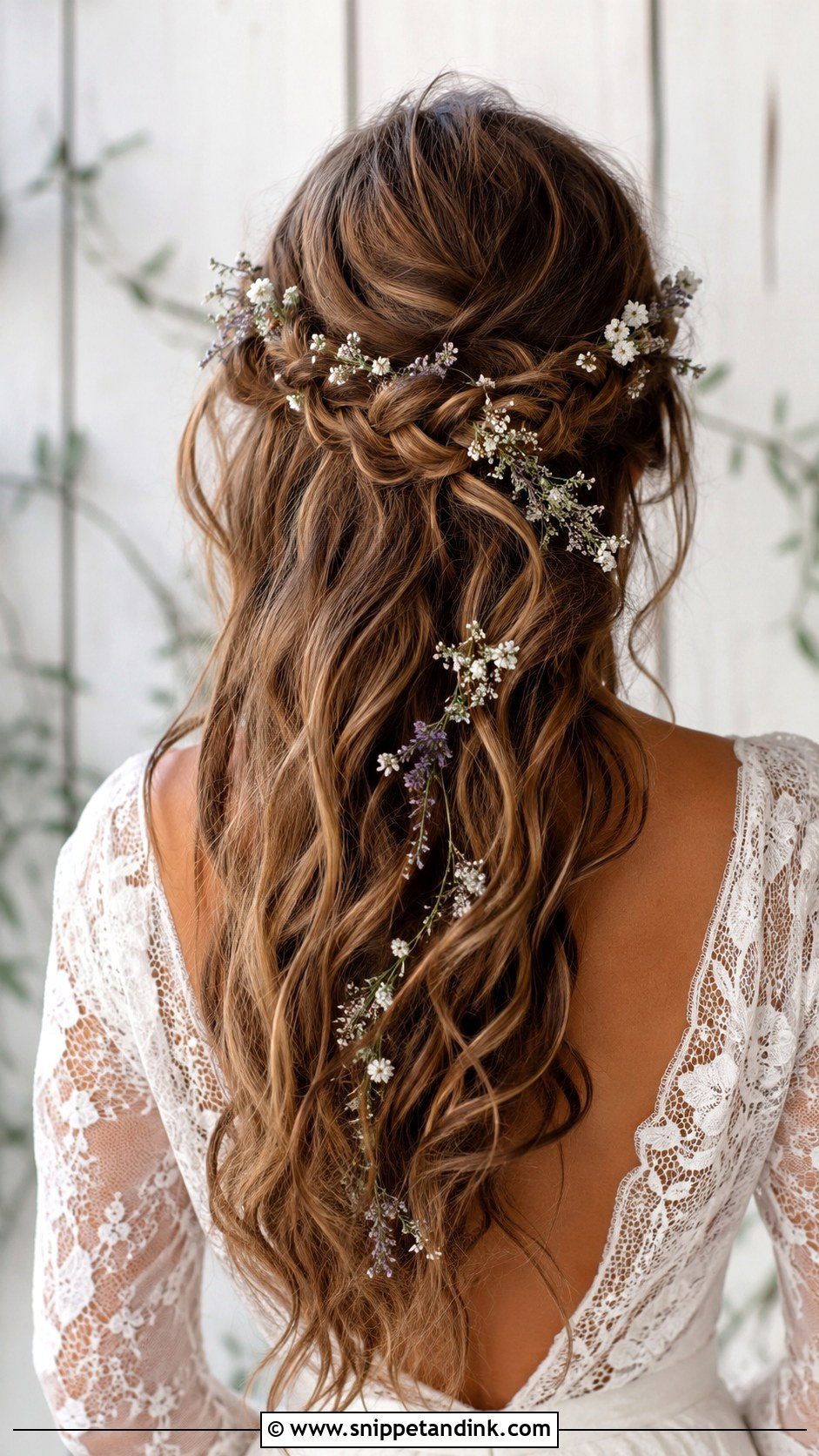
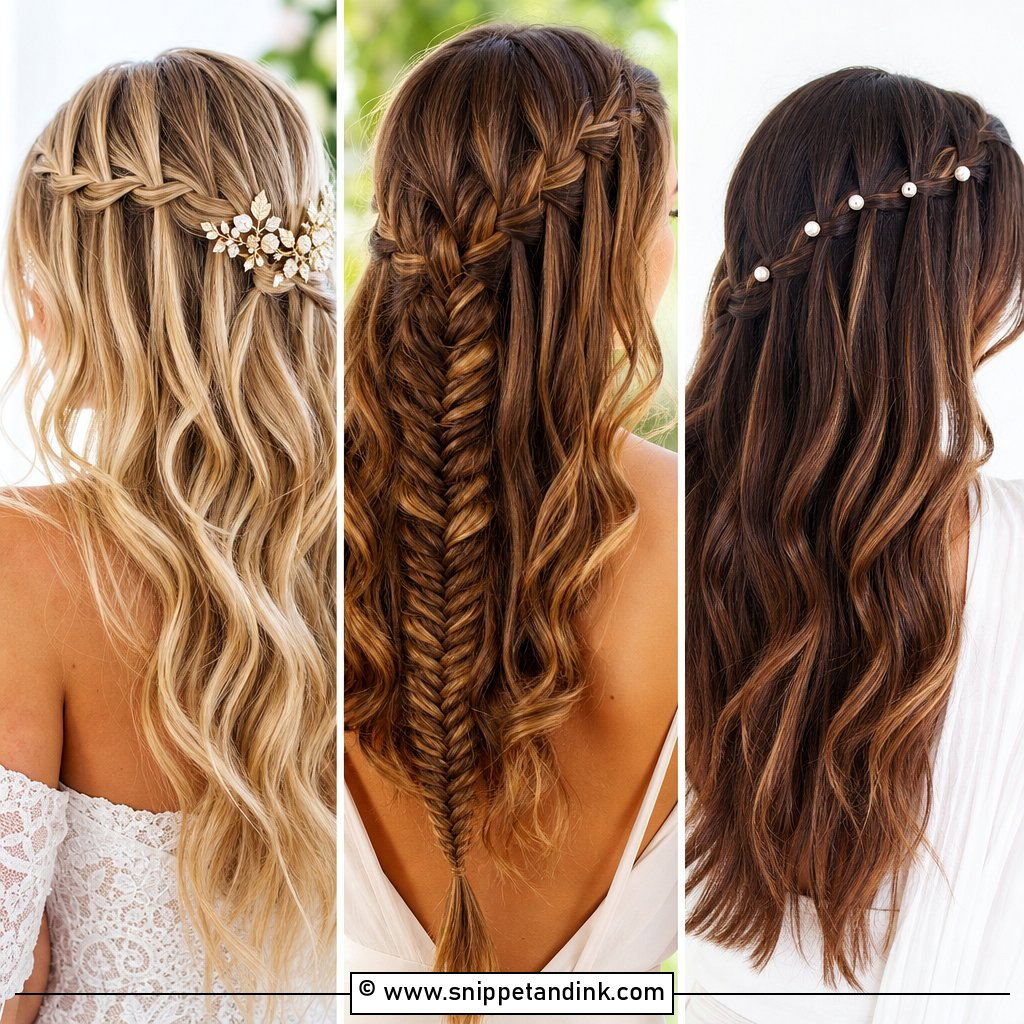
A boho braid only works if it looks a little unfinished, and that is harder to do than a neat one. I braid it firmly first, pin it, and only then pull the edges loose, because a braid that starts loose falls apart by the first dance. It suits outdoor and rustic venues where tidy hair can look out of place. Placement can be across the crown, down one side, or woven through the back. On balayage, dimensional blonde, or warm brunette hair the twisted sections catch the different tones, which flat curls never show. Keep the trim small: a few leafy pins or tiny blooms. A heavy flower crown on top of a textured braid starts to look like costume.
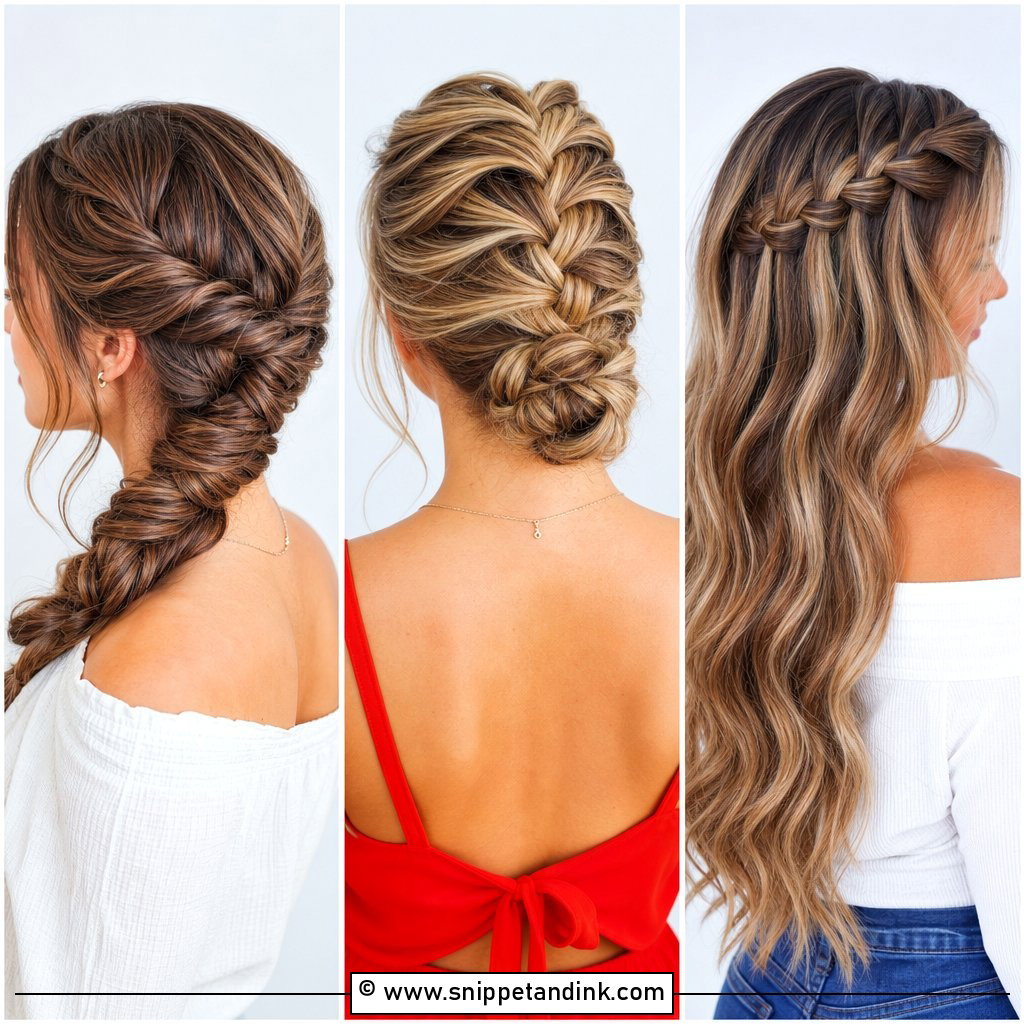
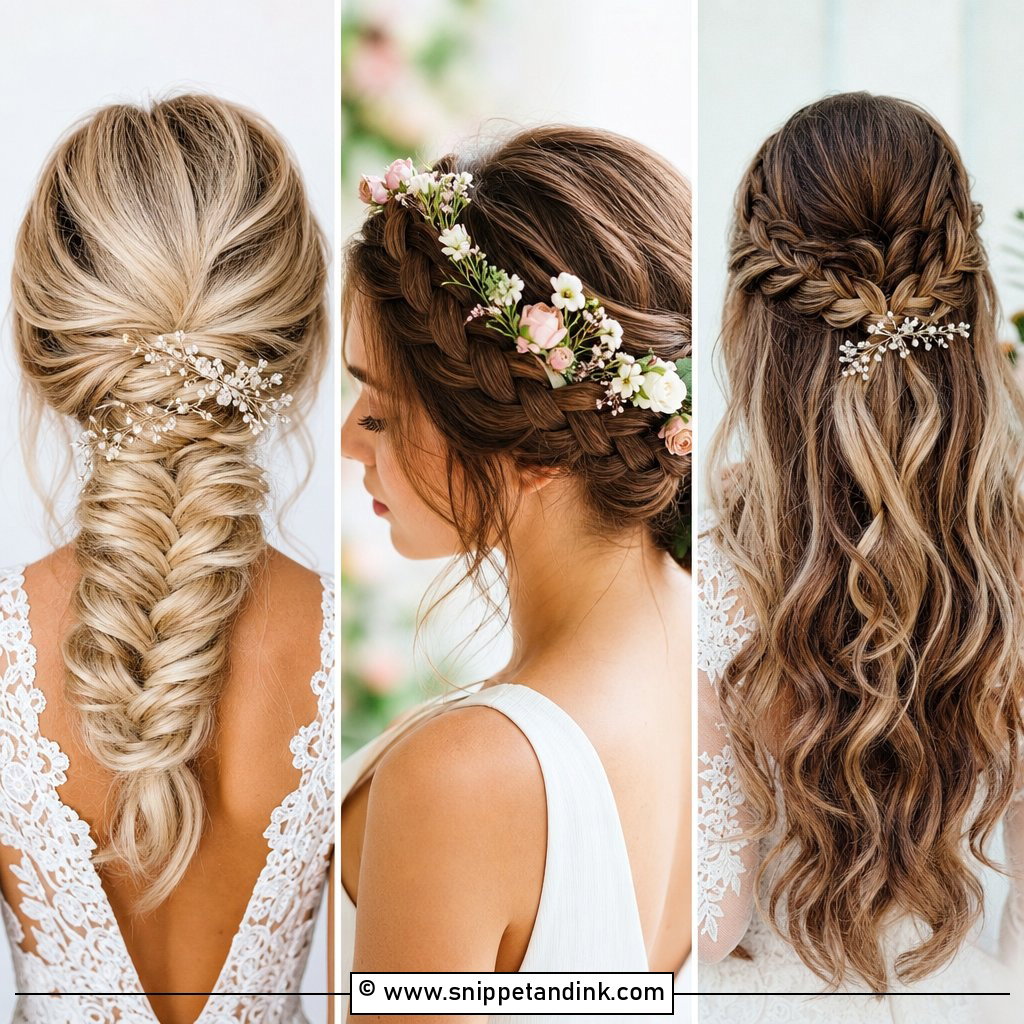
3. Fishtail Wedding Hair Down Braid
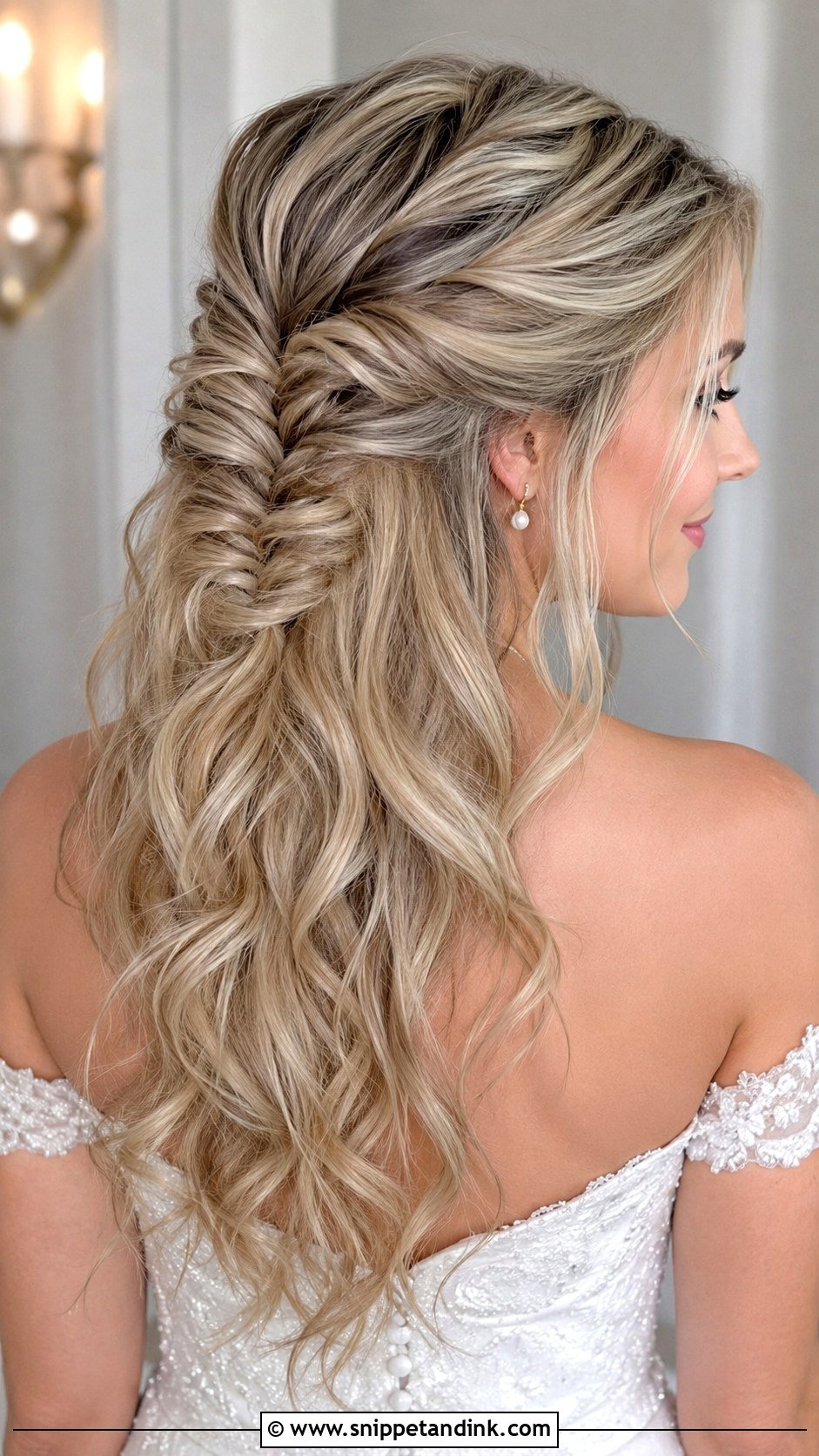
A fishtail is made from just two sections, passing a thin strand from the outside of one to the other, and that fine crossing is what gives it the herringbone look. It takes longer to plait than a three-strand braid and it needs length to show, so I rarely suggest it above the shoulder blades. Once it’s secured I gently widen it with my fingertips, working from the bottom up so the pattern stays even. A flexible spray finishes it. Stiff spray on a fishtail makes it look crunchy in close-ups, and you lose that woven texture.
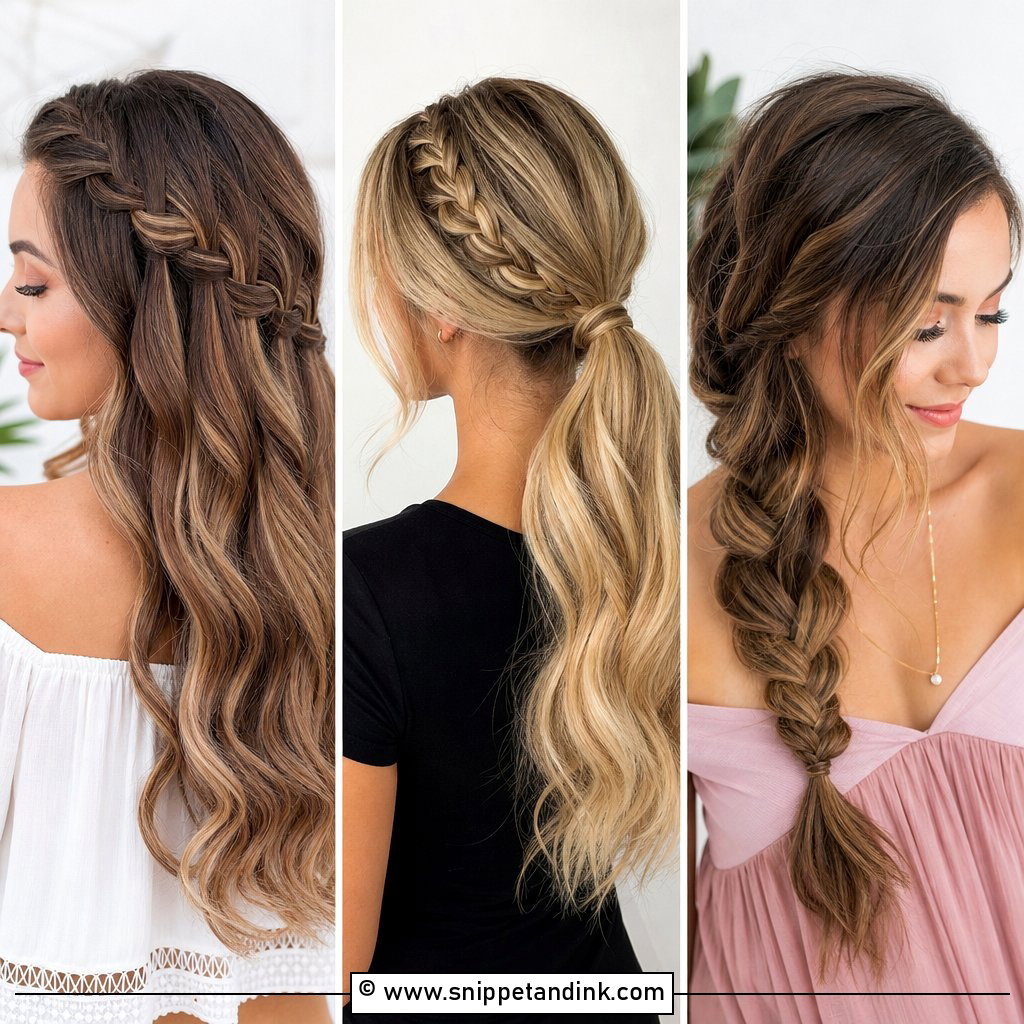
4. Side Wedding Hair Down Braid
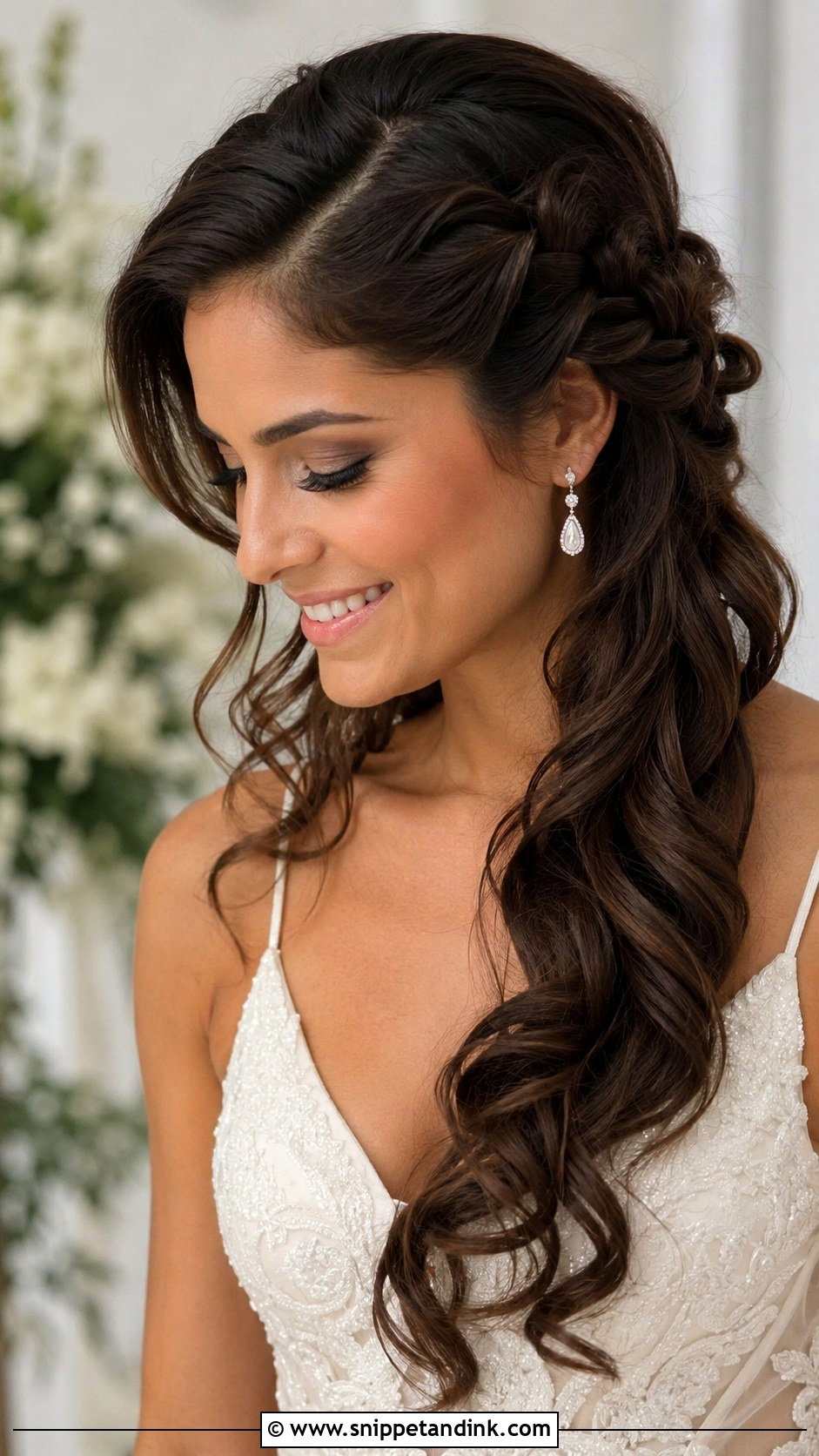
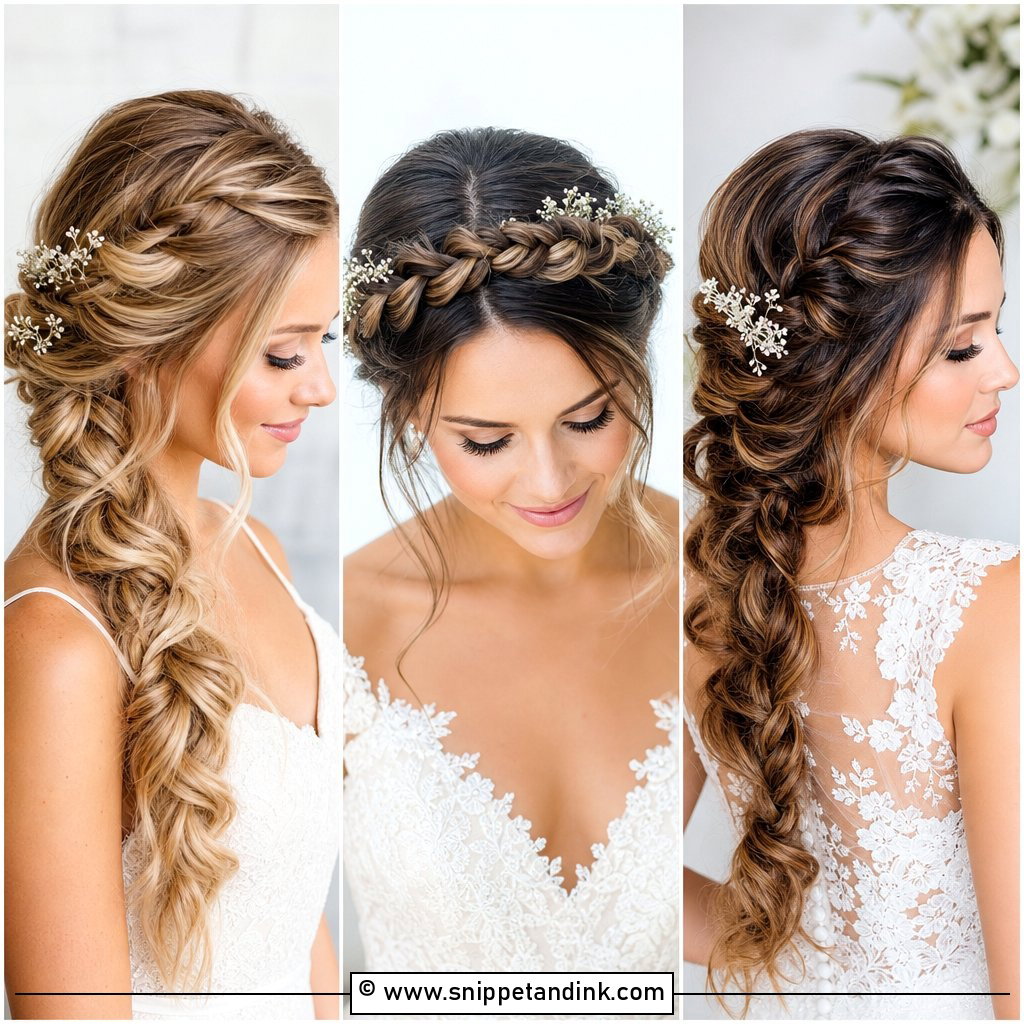
Sweeping one braid along a single side opens up the other half of your face, so your earring and neckline get the attention on that side. I usually start it at a deep part and run it behind the ear, then let it vanish into the curls at the collarbone. Fine hair benefits most here: one braid adds a focal point without asking thin hair to fill out a full updo. Check which side you’ll stand on at the ceremony before you commit. The open side should face your guests, and ideally your partner. A bit of lift at the crown balances the weight sitting low on one side.
5. Crown Wedding Hair Down Braid
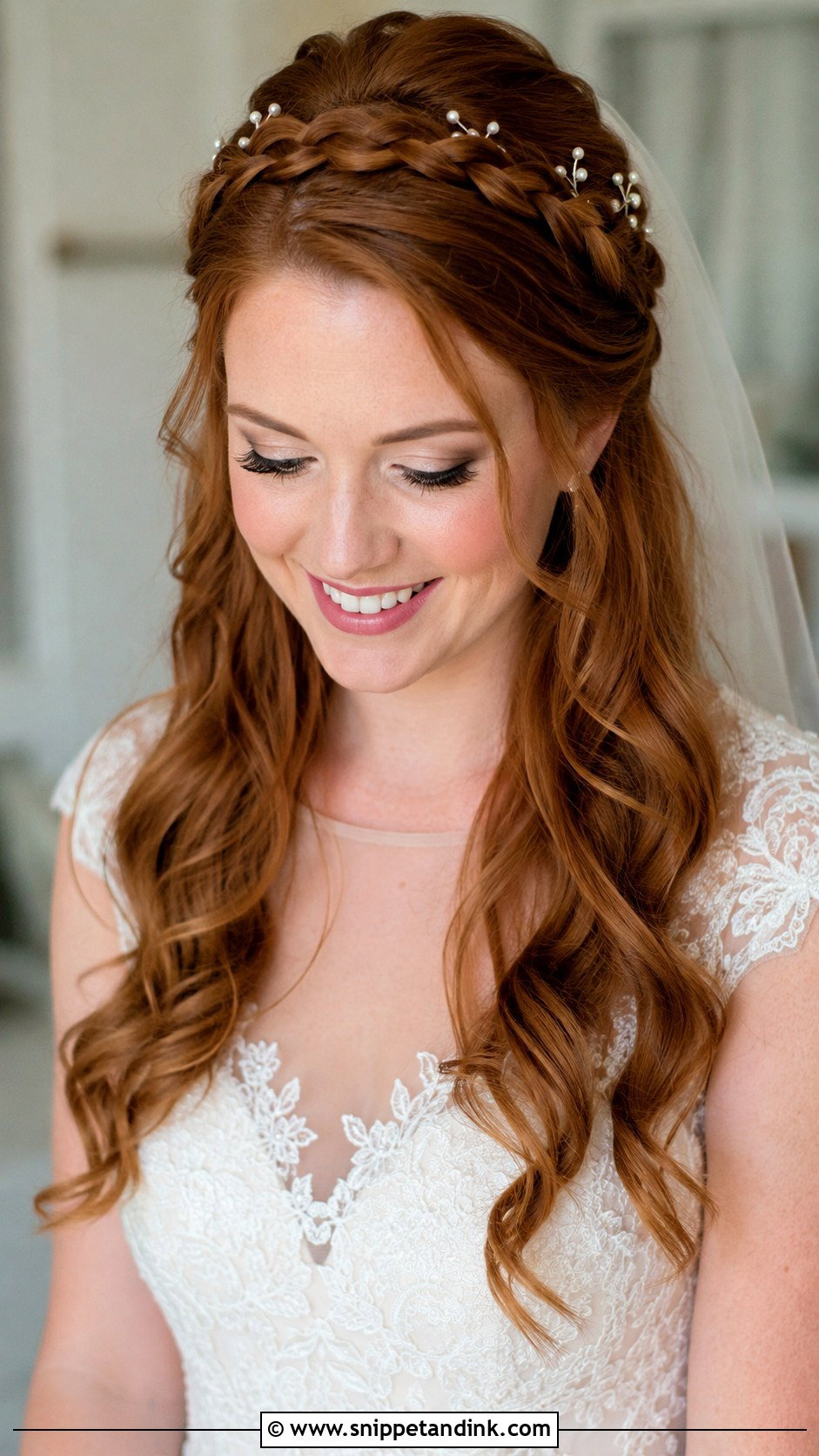
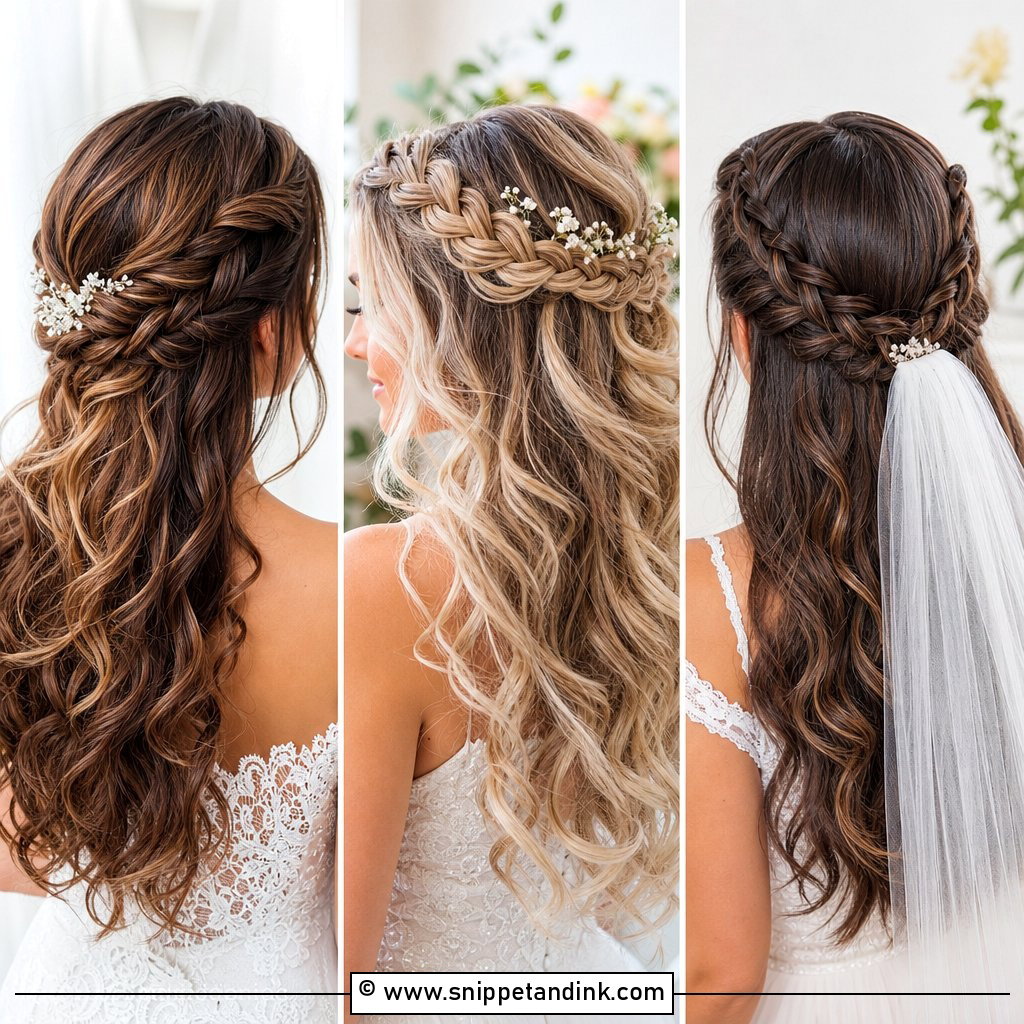
Wrapping a braid around the top or back of the head gives a soft halo effect while the rest of the hair stays loose. For veil wearers it’s my favourite base, because a comb slid upward into a braid holds far better than a comb pushed into loose, curled hair. How polished you make the waves underneath decides whether it reads classic or folk. I leave a couple of thin pieces at the temples so the band doesn’t look like a headband. Tiny pearls or florals tucked along the braid’s length finish it without adding weight.
6. Waterfall Wedding Hair Down Braid
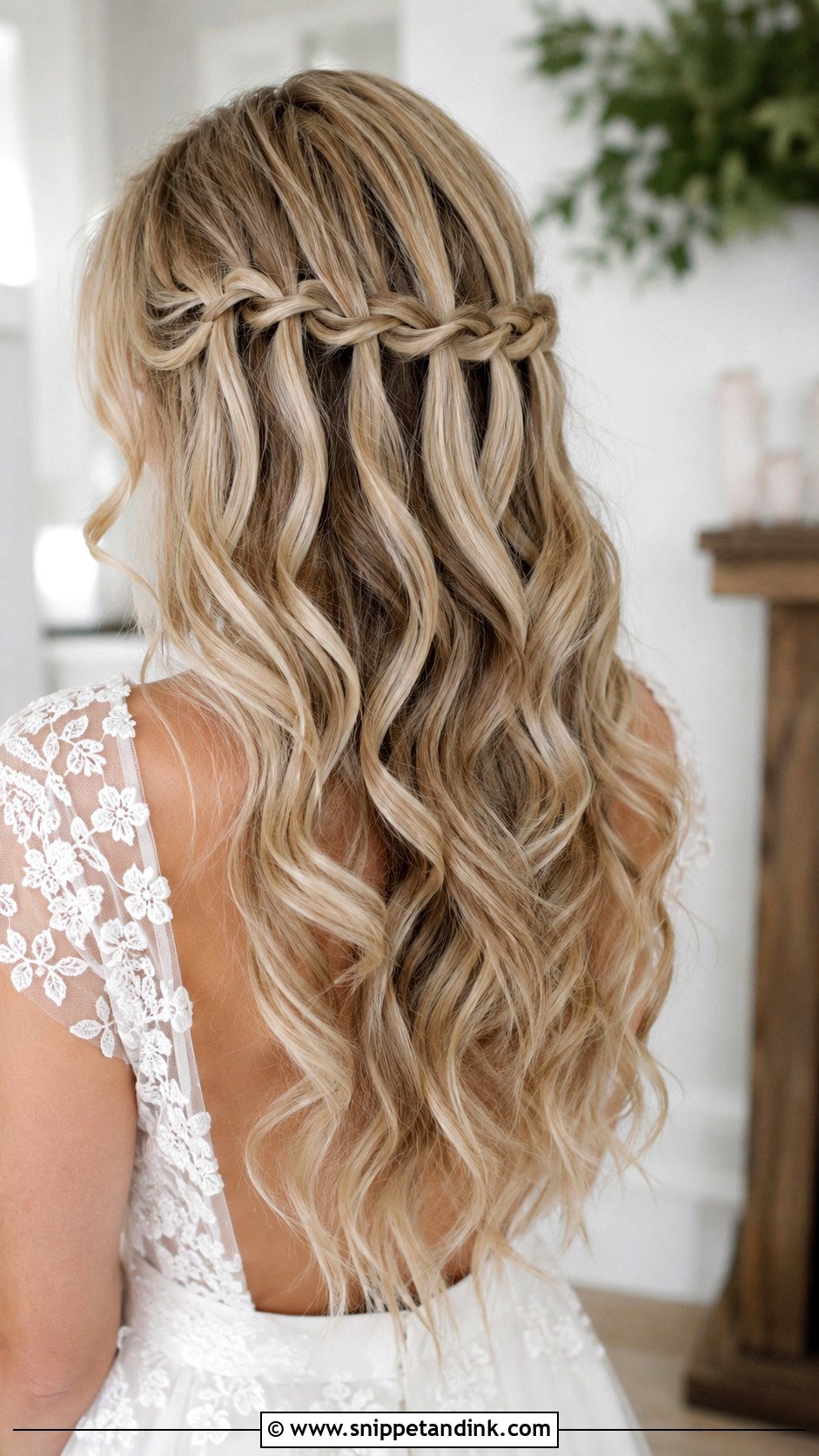
In a waterfall braid, the top strand is dropped on every pass and a new one picked up, so loose pieces fall through like a curtain. That dropped hair is still part of your curl set, so it has to be curled before the braid goes in. It shows highlights and balayage well, because each falling section shows a different tone. I keep it for medium to long hair; on shorter lengths the drops are too short to hang. It’s a softer, daytime kind of braid and less secure than the others, so I back it with two hidden pins at the end. A light shine spray helps the falling pieces pick up light.
7. Dutch Wedding Hair Down Braid
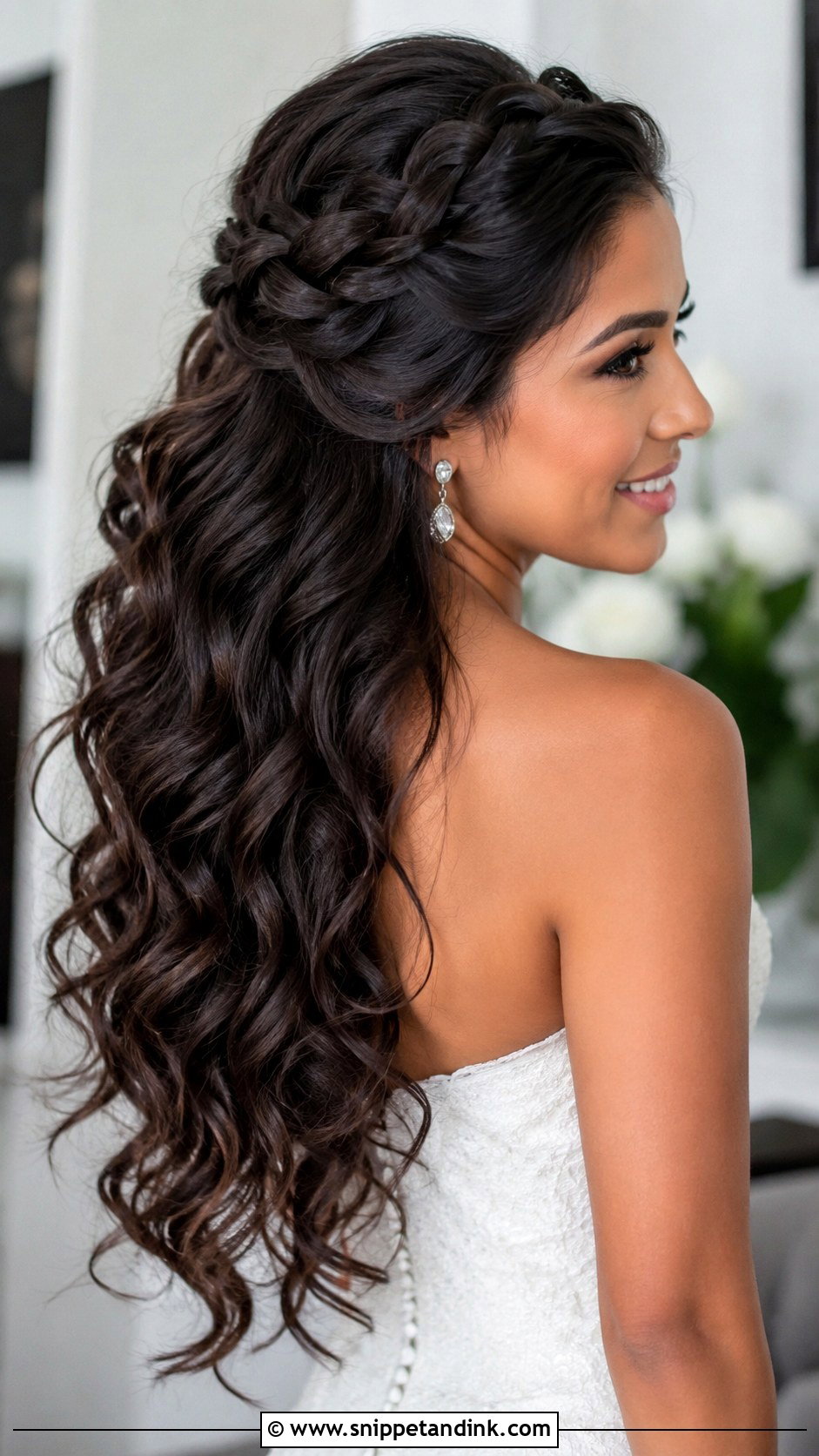
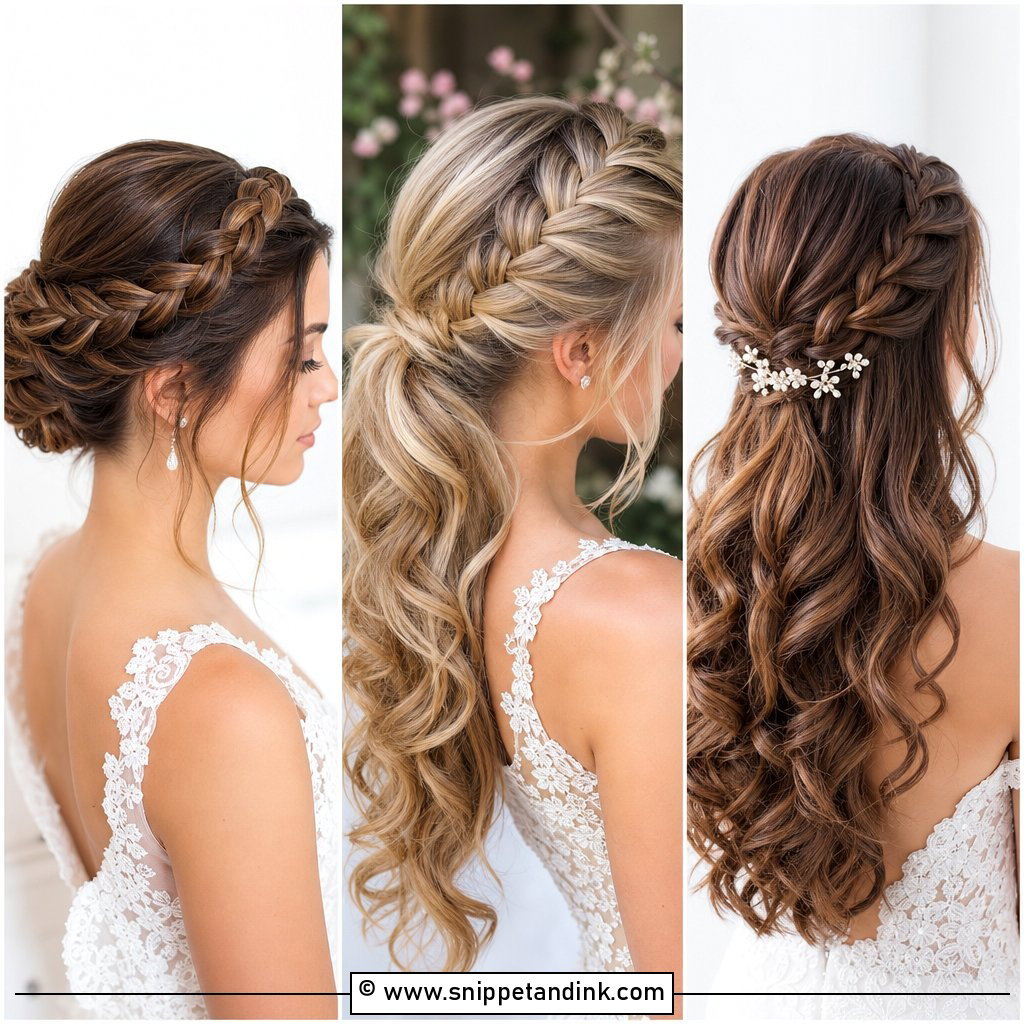
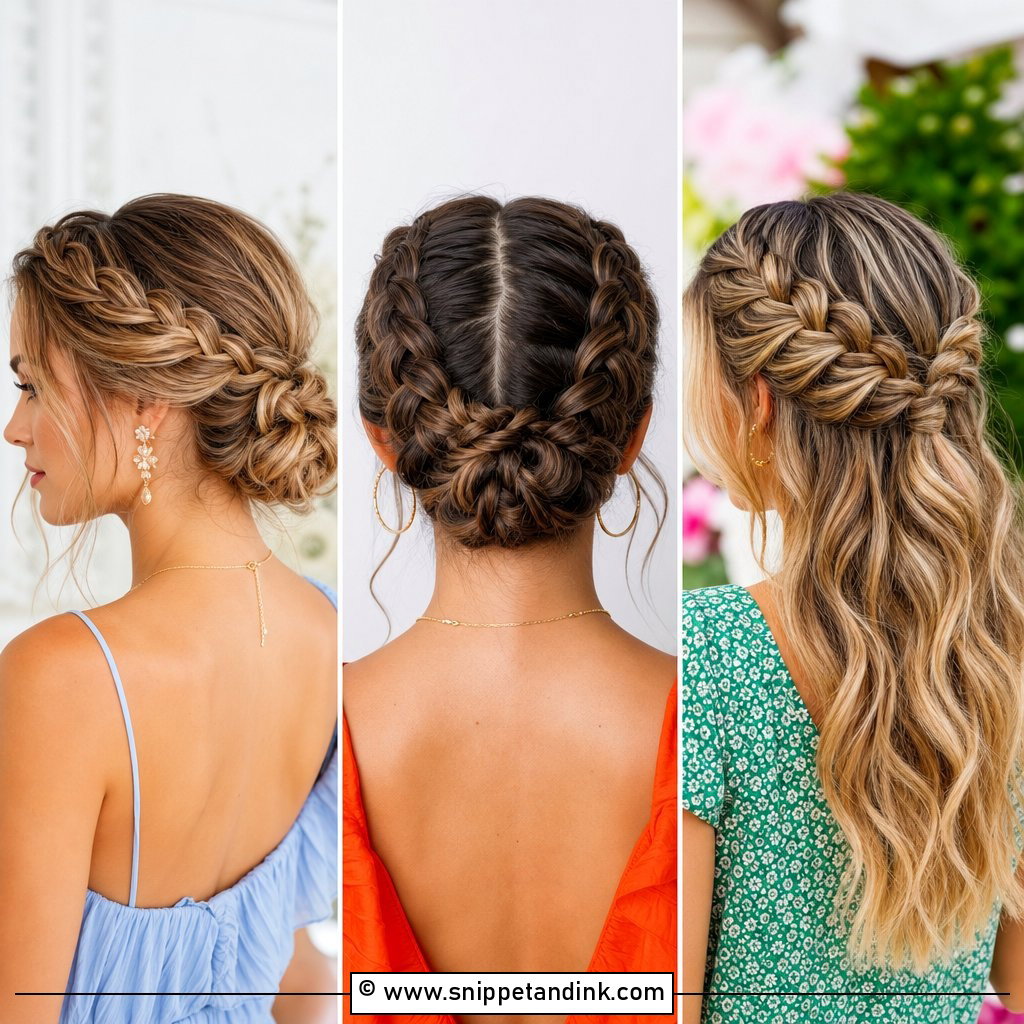
Crossing the strands under instead of over makes the plait sit raised on top of the hair rather than lying flat, which is why a Dutch wedding hair down braid is the easiest to see in photos from the front and side. I use it as a half-up band, a side braid, or two small braids meeting at the back. Because each crossing grips the scalp, it’s one of the most secure options for a twelve-hour day. I pin first, then gently widen the loops so it looks fuller without loosening at the root.
8. French Wedding Hair Down Braid
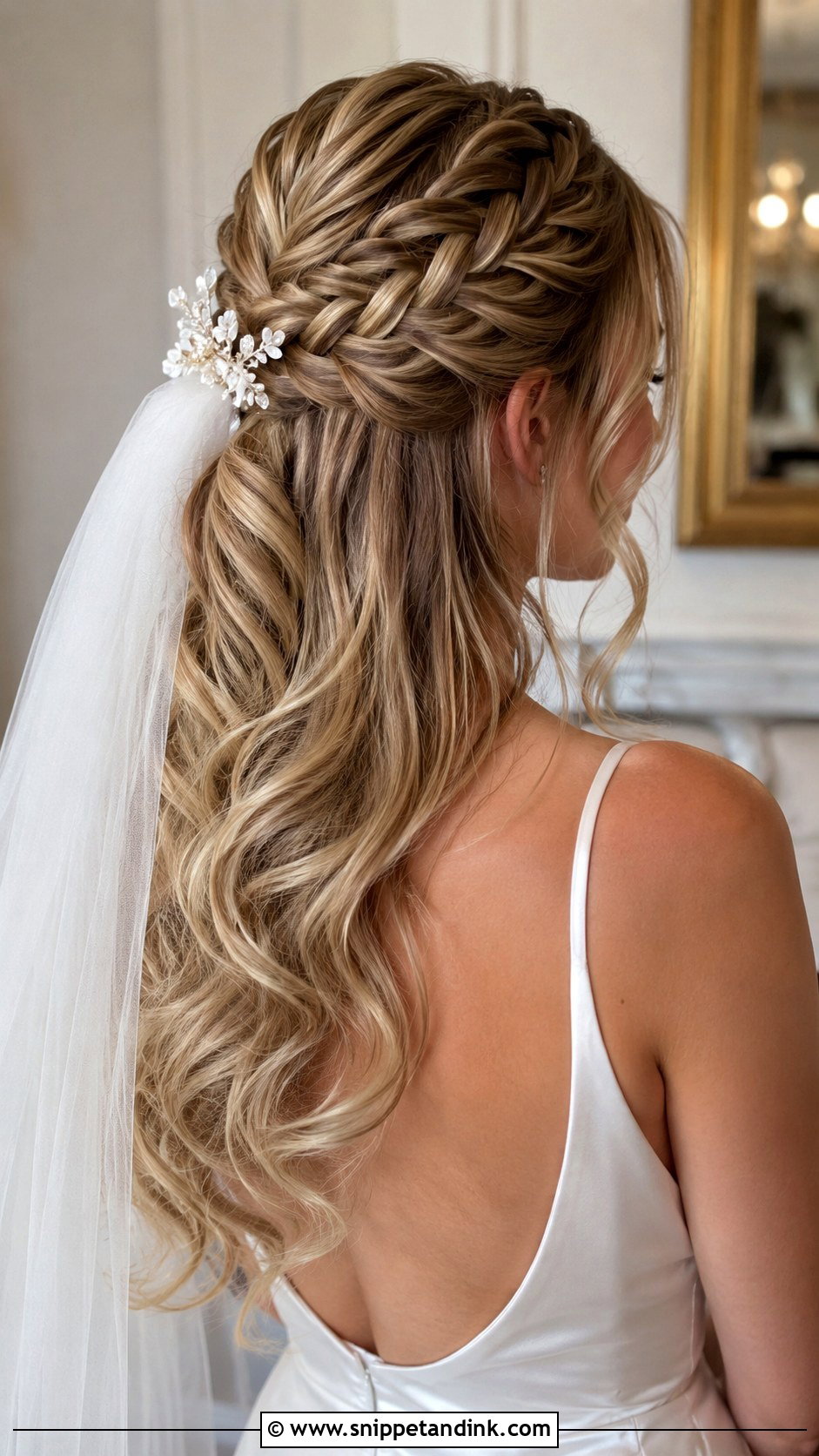
French braiding crosses each strand over, so the plait lies flat and close to the head. That makes it the quiet choice: it controls the top section without drawing much attention to itself. If your hair tends to fall forward over your face or lose shape by evening, this is the one I’d reach for. It can start at the crown and run back into a half-up, or sweep along one side and disappear into the curls. Pearl pins, crystal clips, or a veil comb all sit neatly against it. Brushed-out curls underneath keep it from looking like a school plait.
9. Loose Wedding Hair Down Braid
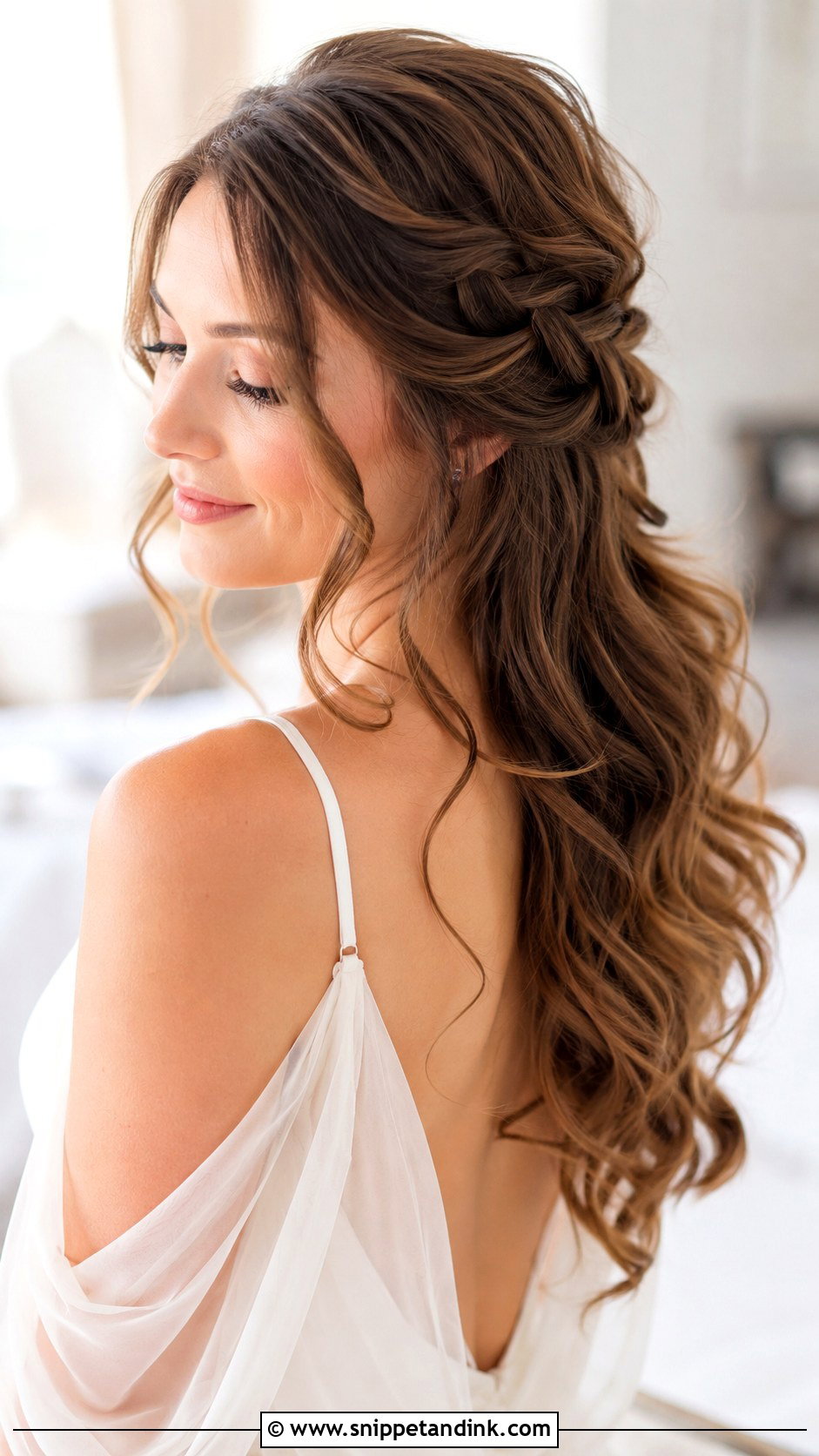
A loose braid should look full and pulled apart, blending into the waves instead of sitting on them like a rope. The trap is braiding it loosely to begin with. I braid it at normal tension and widen it afterwards, so the base stays tight. Thick hair gives this style easy volume. Fine hair can still manage it, but only with texture spray worked in before braiding, so the strands have grip and something to spread. A few curls left out around the face soften the front.
10. Curly Wedding Hair Down Braid
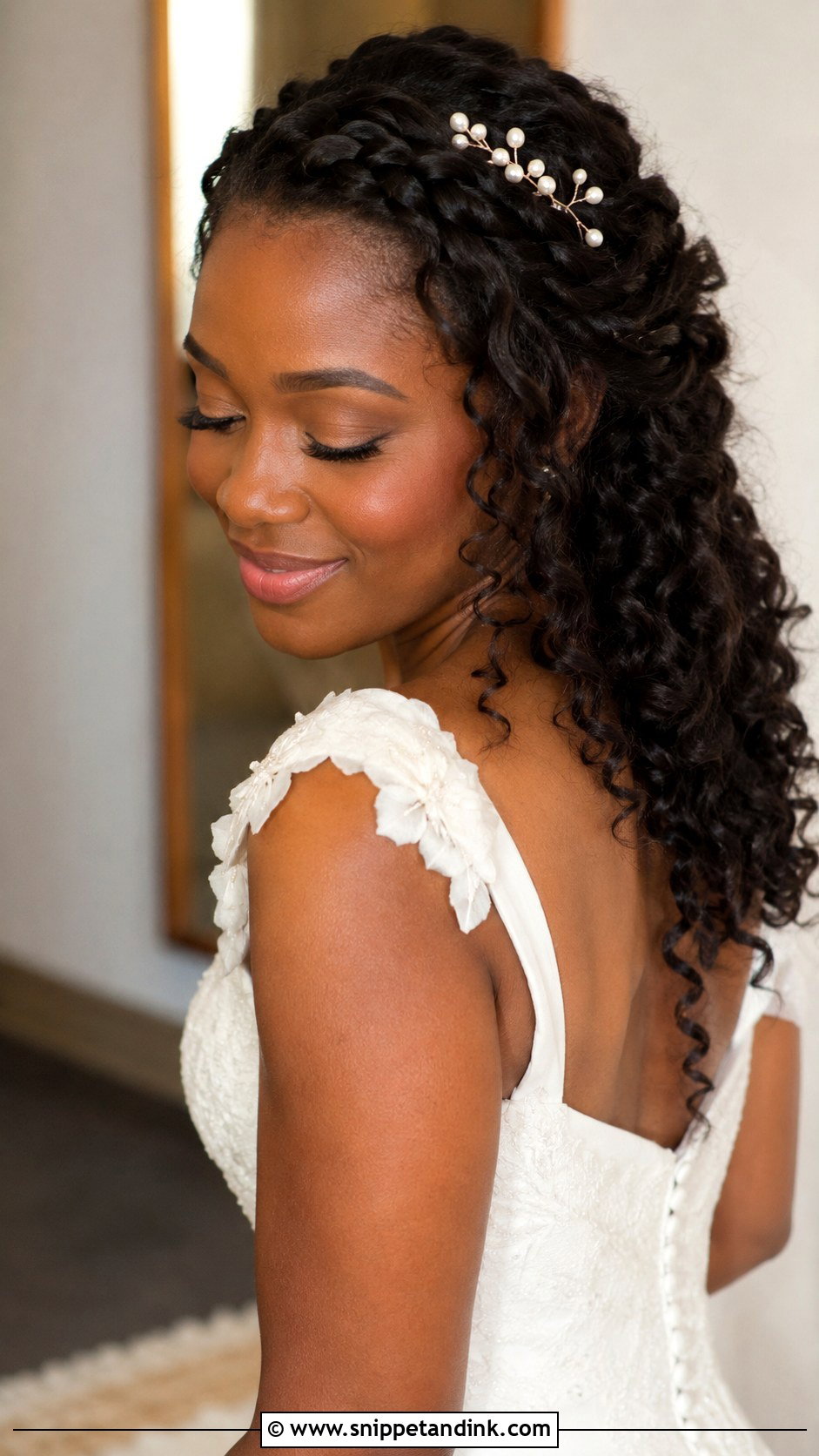
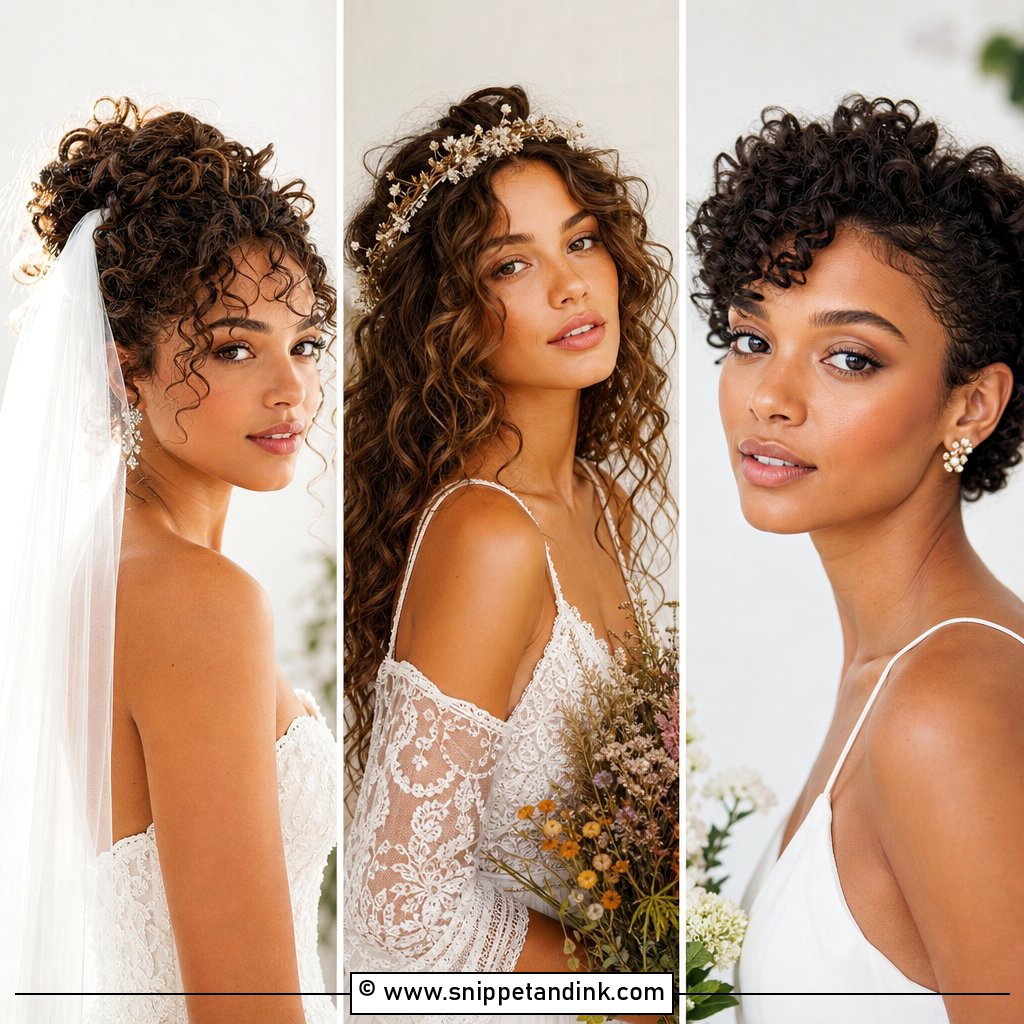
With natural curls, I braid only as much as I have to. A small crown, a side plait, or a half-up braid keeps the curls off the face while the rest of the pattern stays untouched. The braid has to go in on hydrated, defined curls; braiding dry curls breaks the clumps up and you get frizz. I work in a light leave-in or curl cream and avoid anything with heavy hold, because crunchy curls lose their bounce in photos. A tiny pearl pin or floral comb at the braid is enough decoration, since the curls already carry a lot of texture.
11. Long Wedding Hair Down Braid
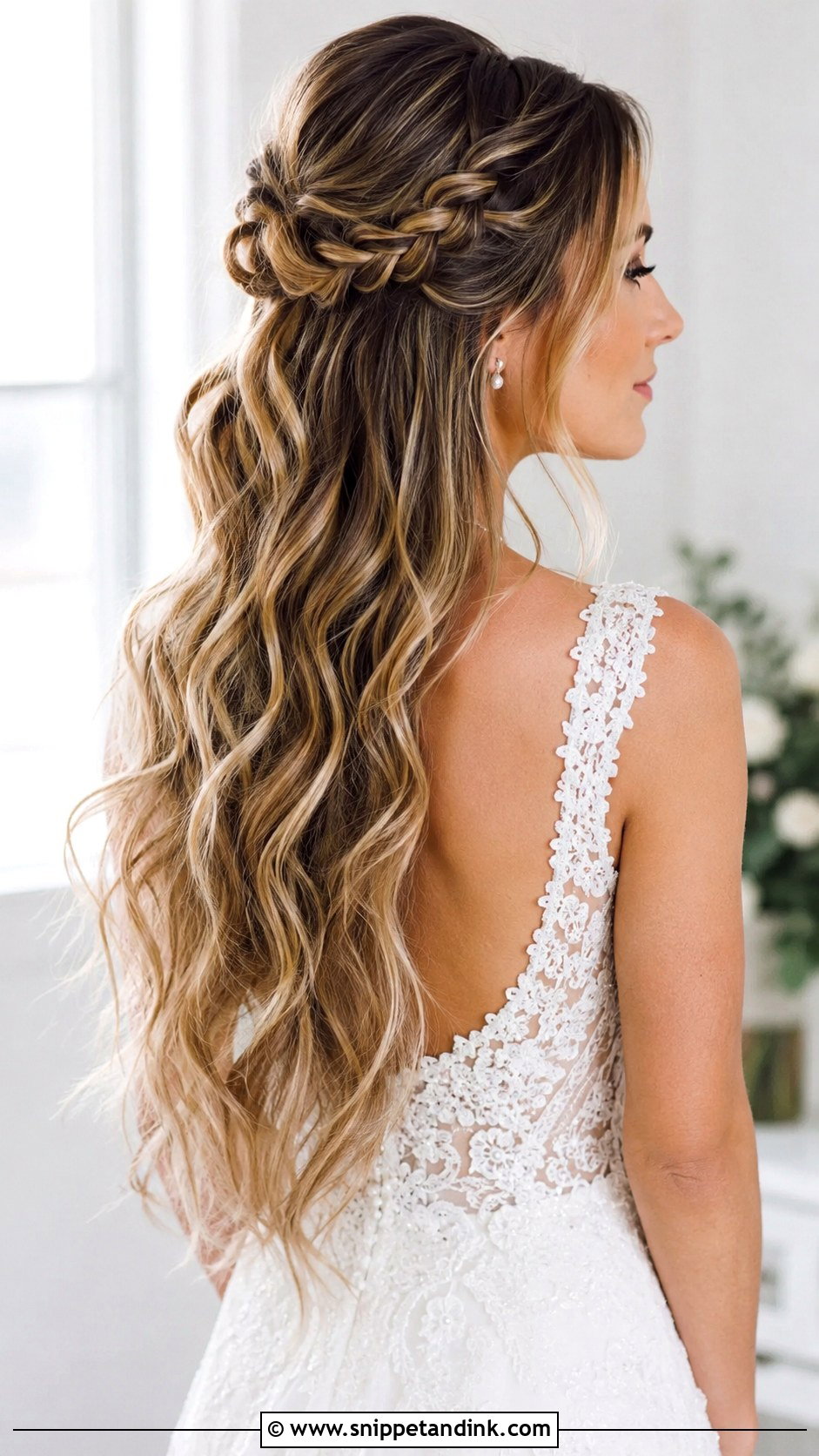
Very long hair worn down can look like it has no plan. A braid gives it a focal point. A half-up plait, a waterfall braid, or a fishtail accent all have room to show their pattern at this length. What I watch is weight: long hair pulls a braid down over a day, so I set the anchor pins higher than you’d expect. Loose waves through the lengths stop it hanging straight and flat. If your hair reaches your waist, ask your stylist to balance volume between crown and ends so the shape doesn’t drag downward.
12. Short Wedding Hair Down Braid
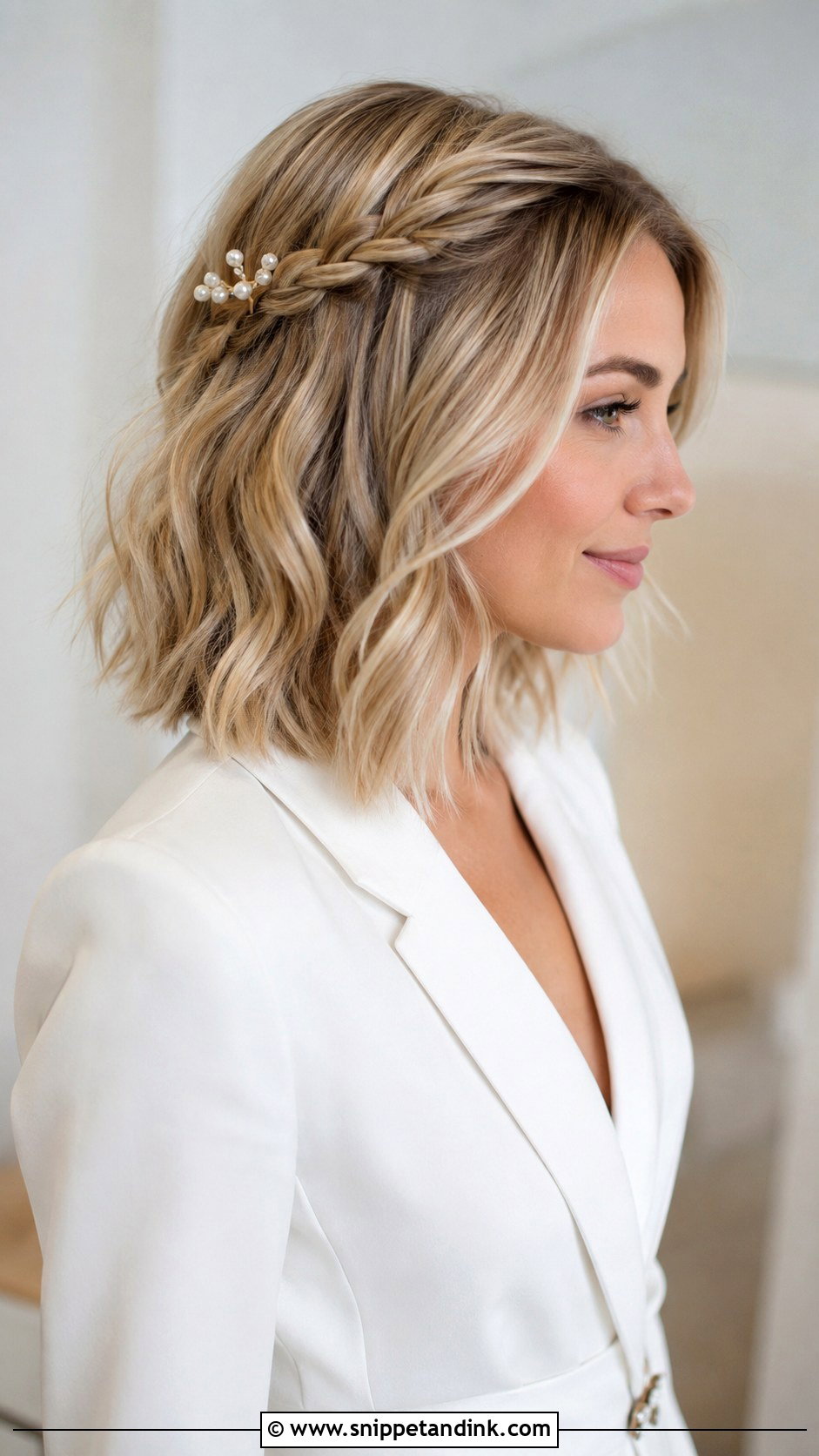
Short hair can carry a braid well if it’s placed with some thought. On a bob, lob, or shoulder-length cut I usually braid just the front: a mini plait along the hairline or a small side braid that tucks behind the ear. Layers will poke out of a braid on short hair, so I braid with a little pomade on my fingers to hold short ends in. The rest gets a soft wave. Accessories do more work on shorter lengths, so a pearl pin or small floral clip near the braid end helps hide where it finishes.
13. Beach Wave Wedding Hair Down Braid
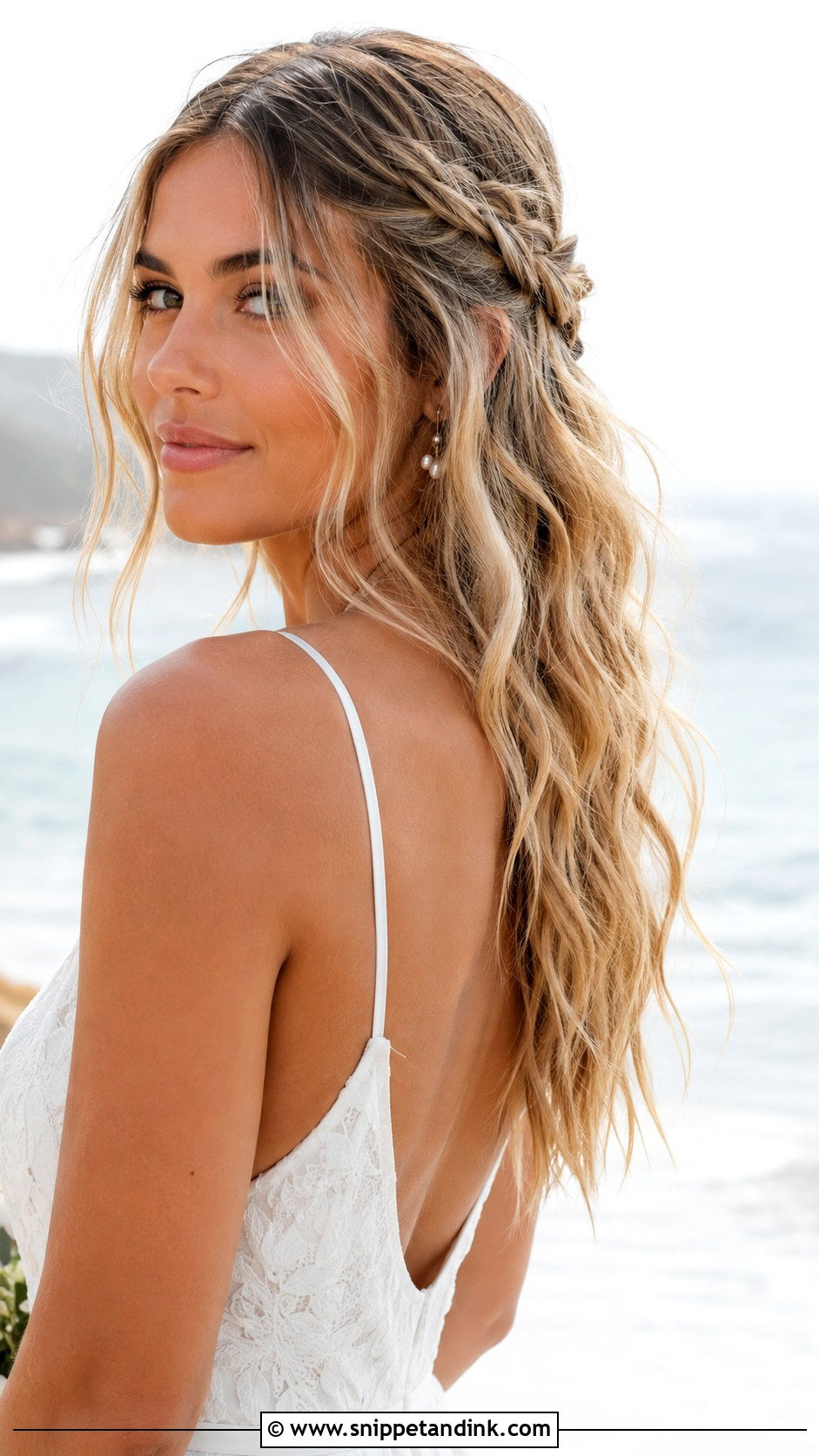
Without some structure, beach waves start to look like you’ve just come off the sand. A small side braid or half-up plait gives this texture enough polish to read as bridal. The waves should be loose and a little undone. For coastal venues I swap heavy creams for a texture spray and flexible hairspray, because damp sea air pulls weighty products down and the waves flatten. Expect some drop by evening near the water and plan for it. A Beach wave wedding hair down braid pairs well with a simple gown and a light veil. Leave a few face-framing pieces for close-ups.
14. Pearl Wedding Hair Down Braid
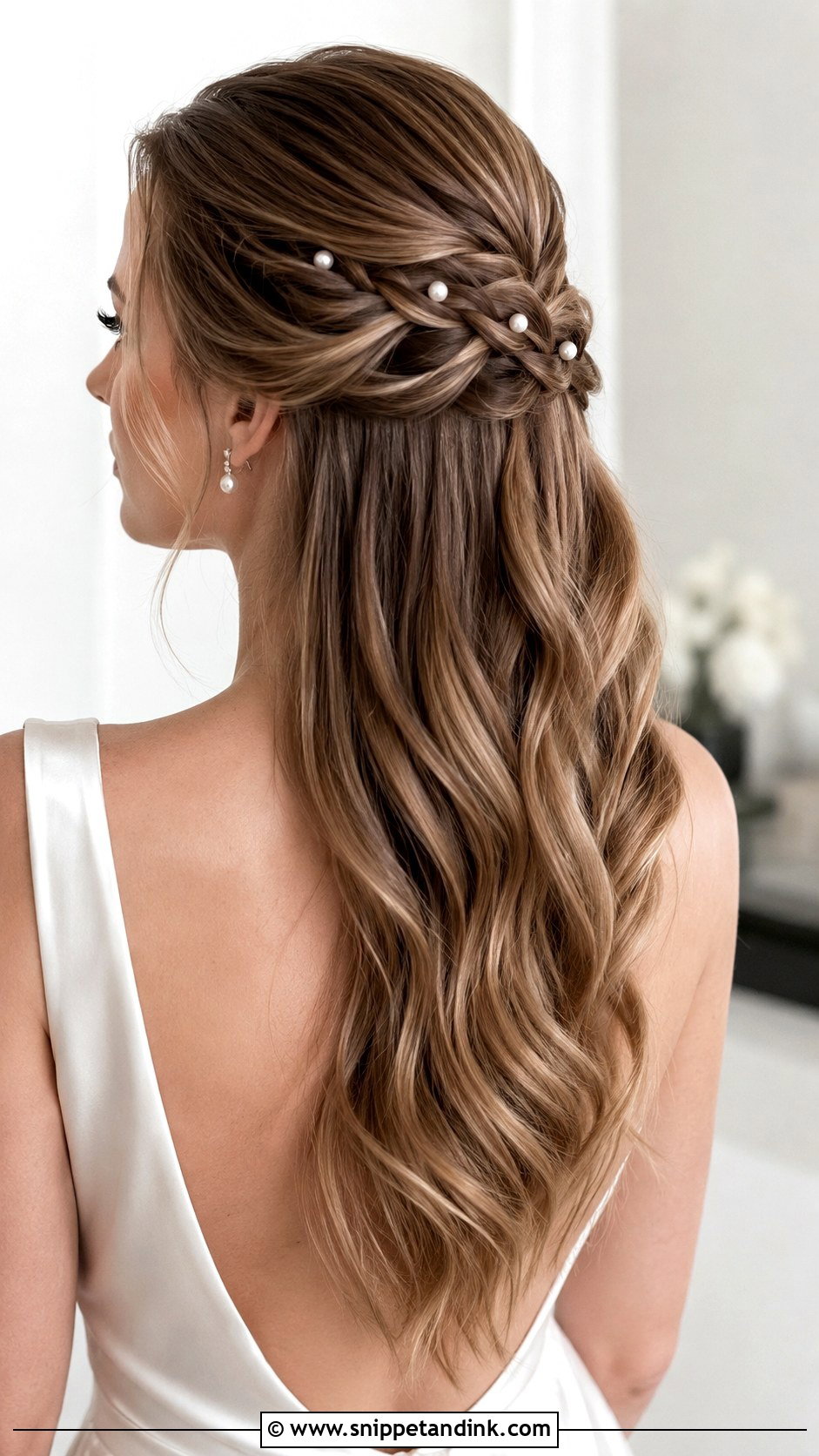
Pearls look intentional when they follow a braid. Scattered through loose waves with nothing behind them, they can look like they’ve fallen in. The braid gives each pin a secure place to sit. I usually space five to seven along a braid rather than packing them in, and I push each one in against the direction the braid runs so it can’t slide out. Sleek waves, soft curls, and boho texture all suit pearls. They match satin and lace especially well. Keep them balanced, though: too many crowded together read as a hair clip rather than a detail.
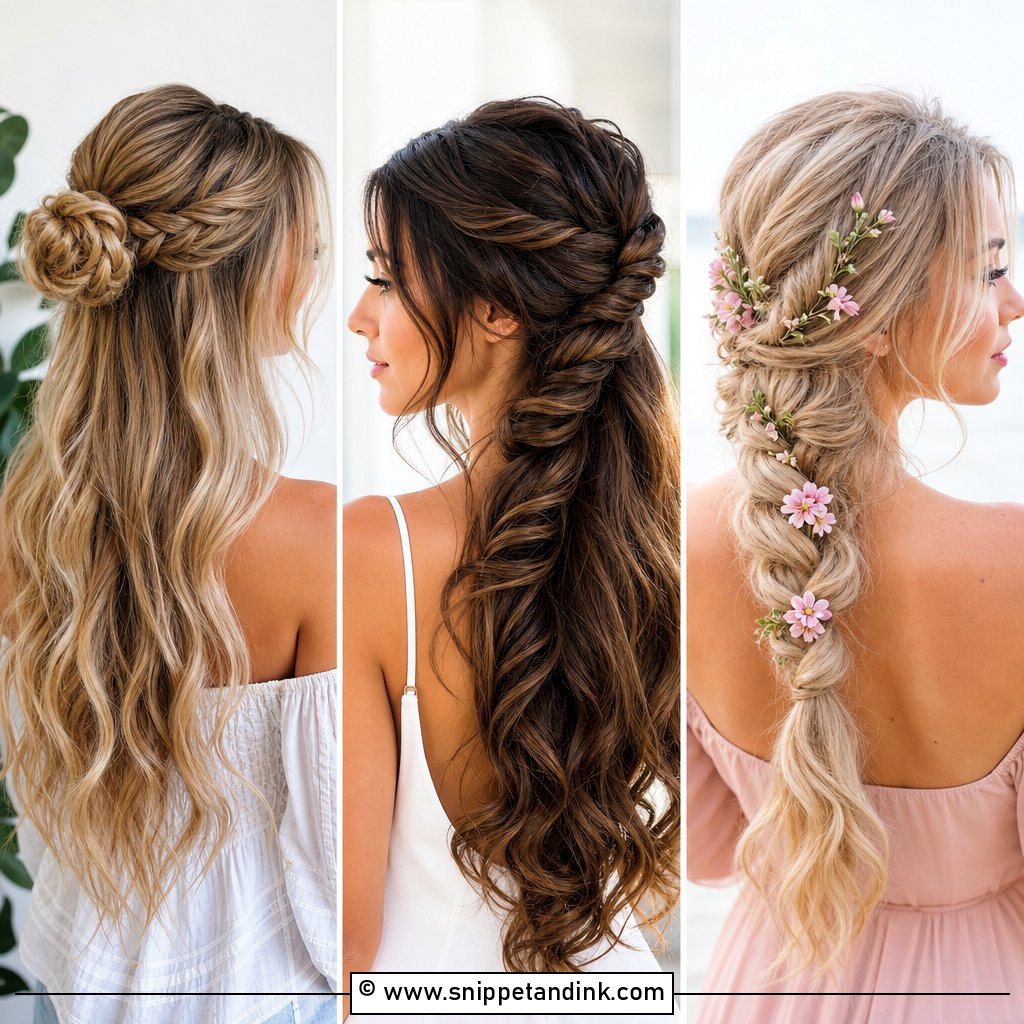
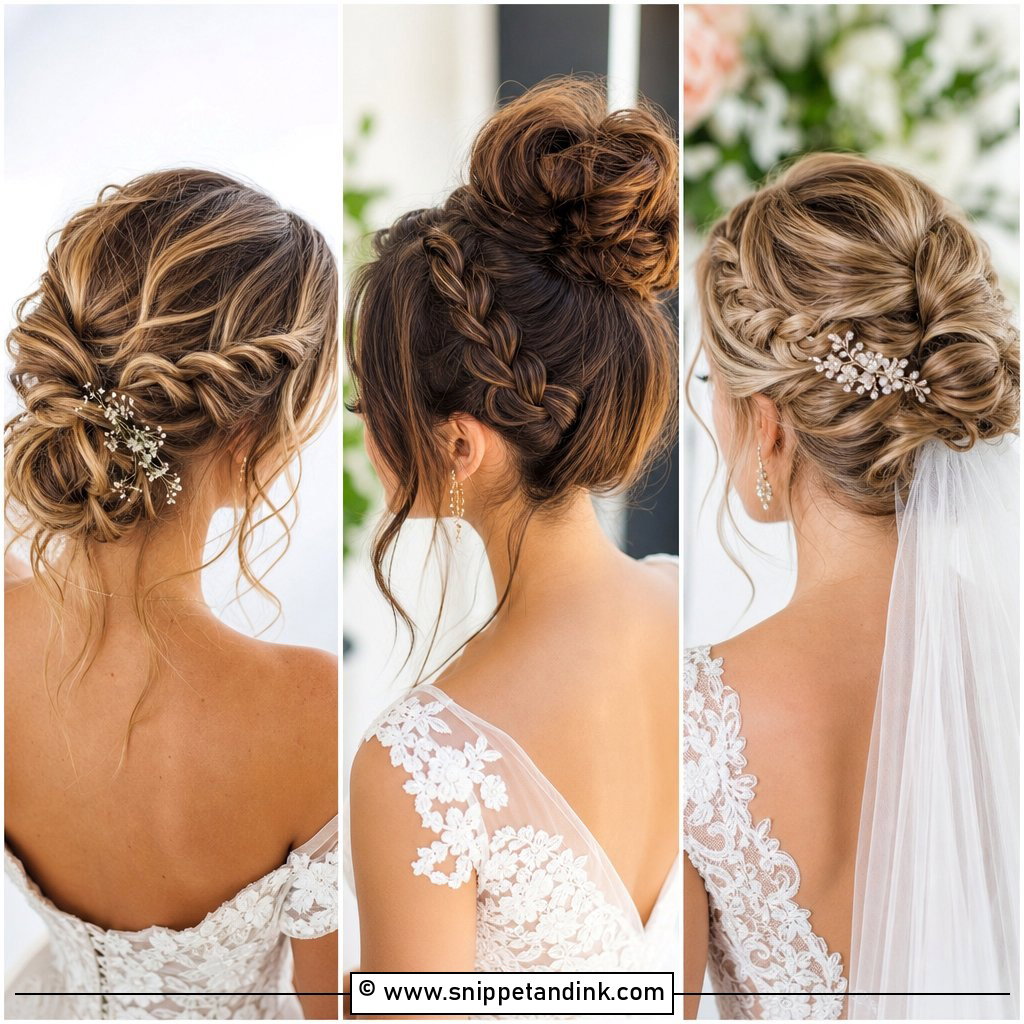
15. Flower Wedding Hair Down Braid
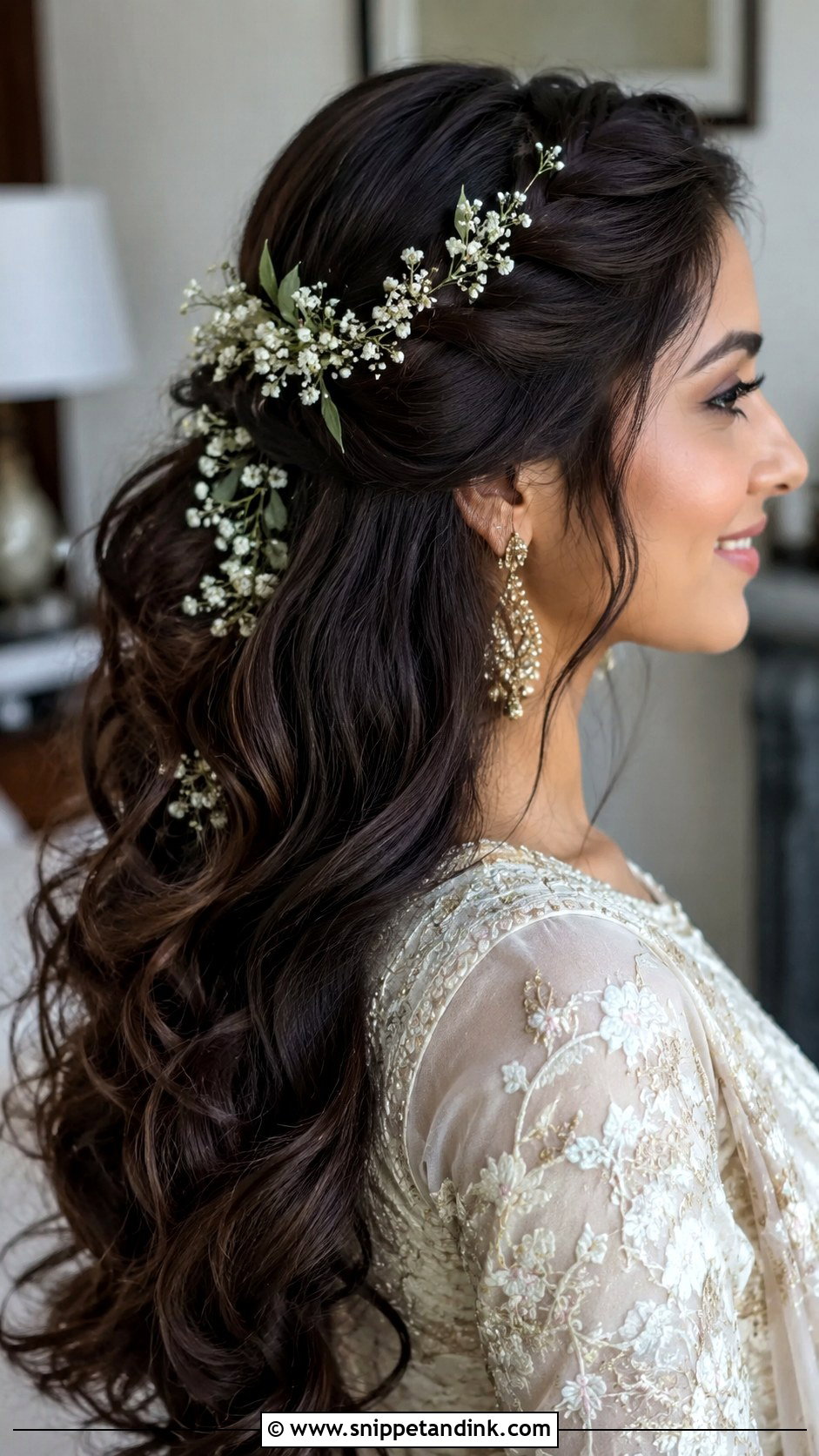
Fresh flowers in a braid need choosing with care, since they’re out of water all day. Baby’s breath, wax flower, and small spray roses hold up well. Hydrangea and gardenia bruise and wilt in a few hours, so I steer brides away from them in summer. I wire small stems or pin them into the braid itself, not the loose hair, where they would drop. This style suits garden, spring, and outdoor weddings, and it looks best from the back with a low veil or an open-back dress. Keep the braid slightly loose so the blooms sit in the hair rather than on top of it.
When a Braid Starts Slipping Halfway Through the Reception
Down hair moves all day, and by evening something will have shifted. The good news is that a braided style is easy to rescue, because the braid itself rarely falls apart. It’s the pins around it that work loose. These are the fixes I teach the bridesmaid who’ll be holding the kit.
A small repair pouch
- Six or eight bobby pins matched to your hair colour, plus two or three U-pins.
- A travel-size flexible hairspray, not a firm one.
- Two clear elastics, in case a join or braid end gives way.
- A wide-tooth comb for the loose lengths; a brush will pull the curls straight out.
Quick fixes that hold
If the braid has dropped at the back, don’t take it down. Slide a fresh pin up under the braid and into the hair beneath it, then cross a second pin over it. If loose pieces have fallen from the front, twist them back and tuck them under the braid instead of pinning them flat. And if the curls have relaxed, I’d honestly let them. Softer waves late in the evening look natural in the dance photos, and reworking them with a hot tool in a crowded room rarely improves anything.
Humid summer days are the one time I’d plan ahead differently. If your venue is outdoors and muggy, choose a braid that does more of the holding, like a Dutch half-up, and accept that the loose lengths will relax.
Which Braid Fits Your Hair, Dress and Day
If you’re stuck between a few of these, start with your hair rather than the photo. Fine hair does best with a flat French or a single side braid; thick and long hair can take a fishtail or a waterfall; natural curls want the smallest braid that does the job. Then think about your veil, your neckline, and how long you’ll be dancing. Bring two or three pictures to your trial, wear a top with a similar neckline, and let your stylist tell you honestly which braid will still be holding at midnight.
You'll Like These Ideas:


Leave a Reply