
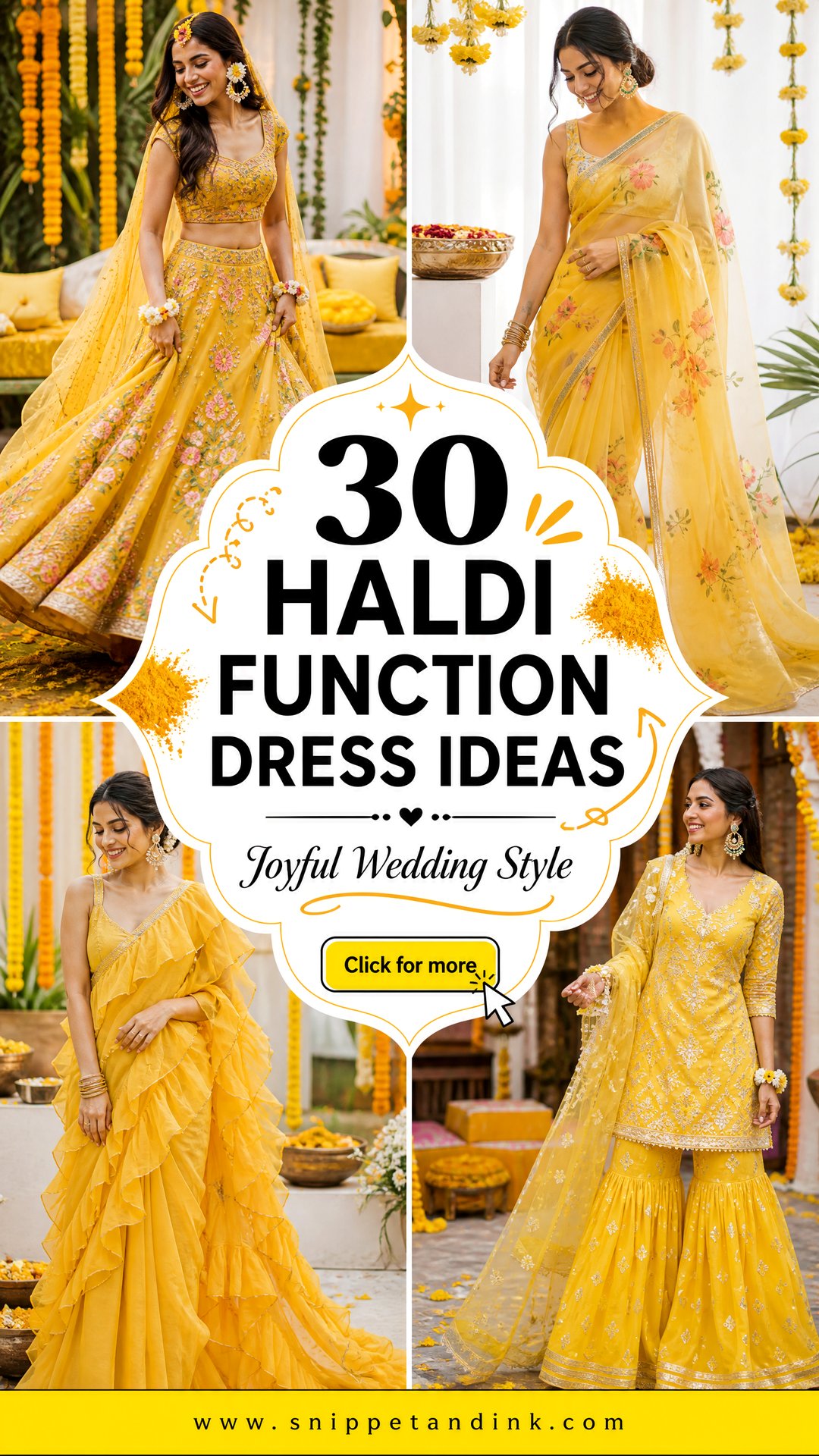
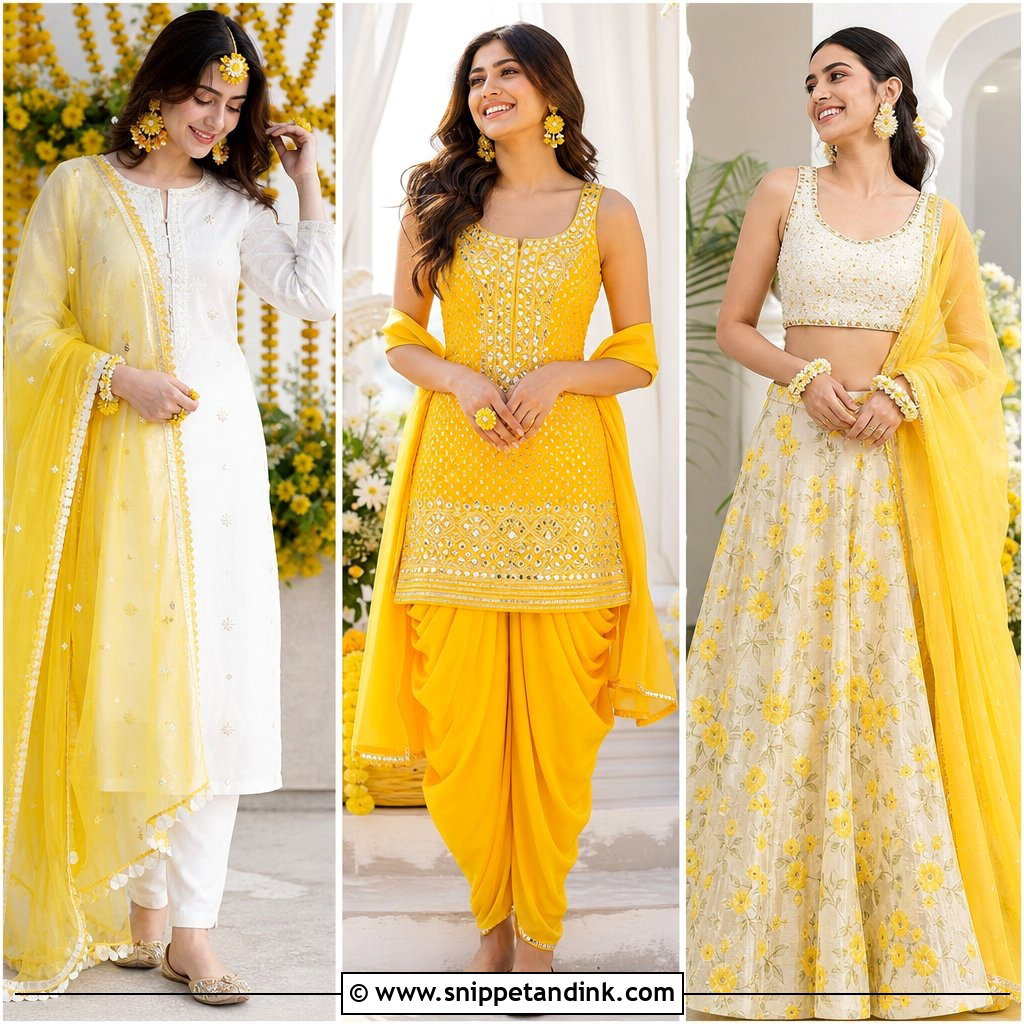
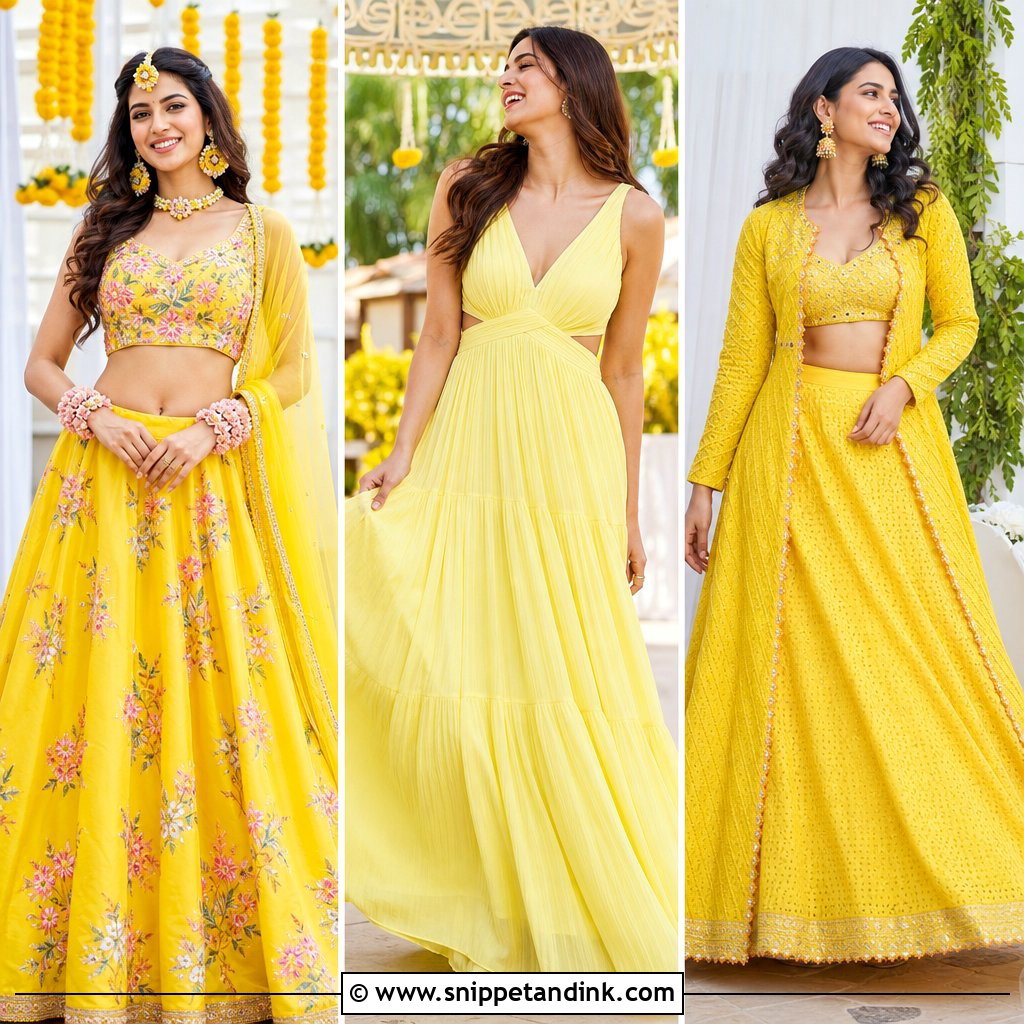
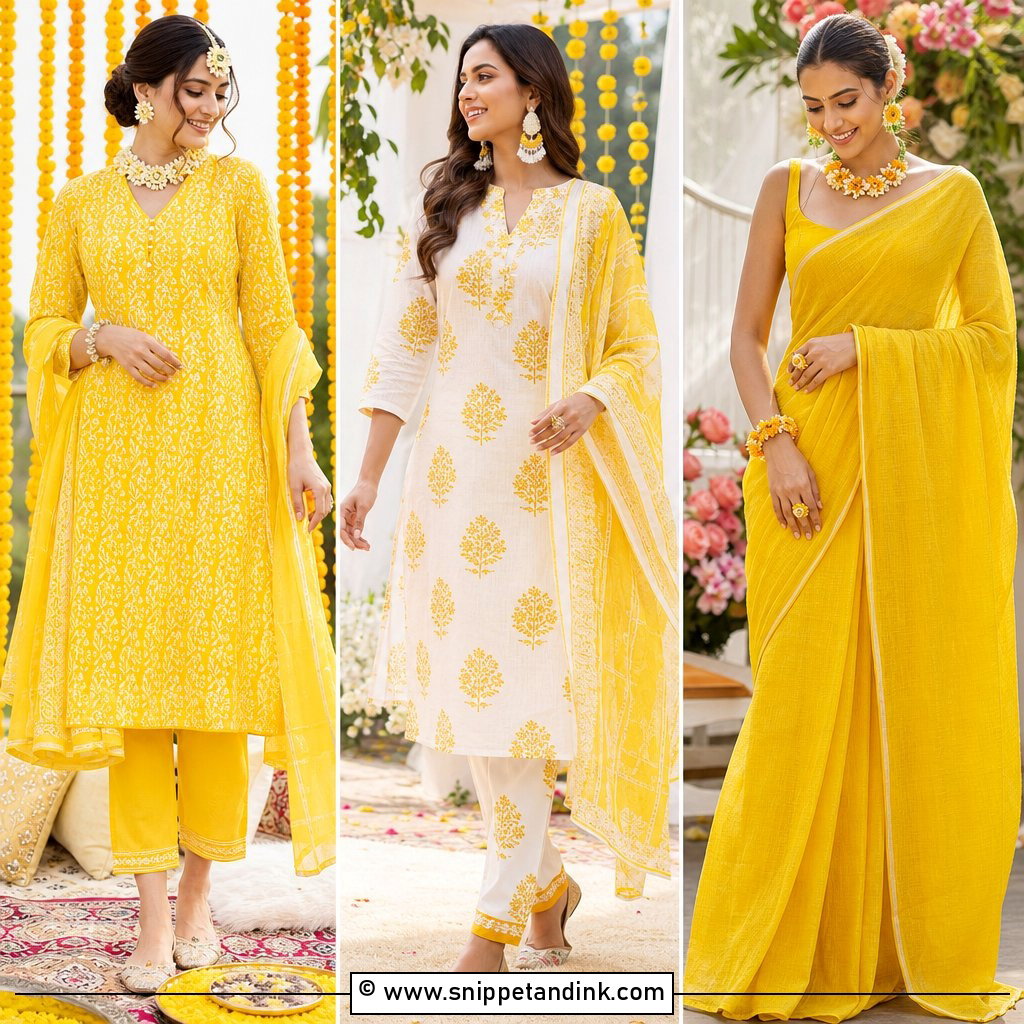
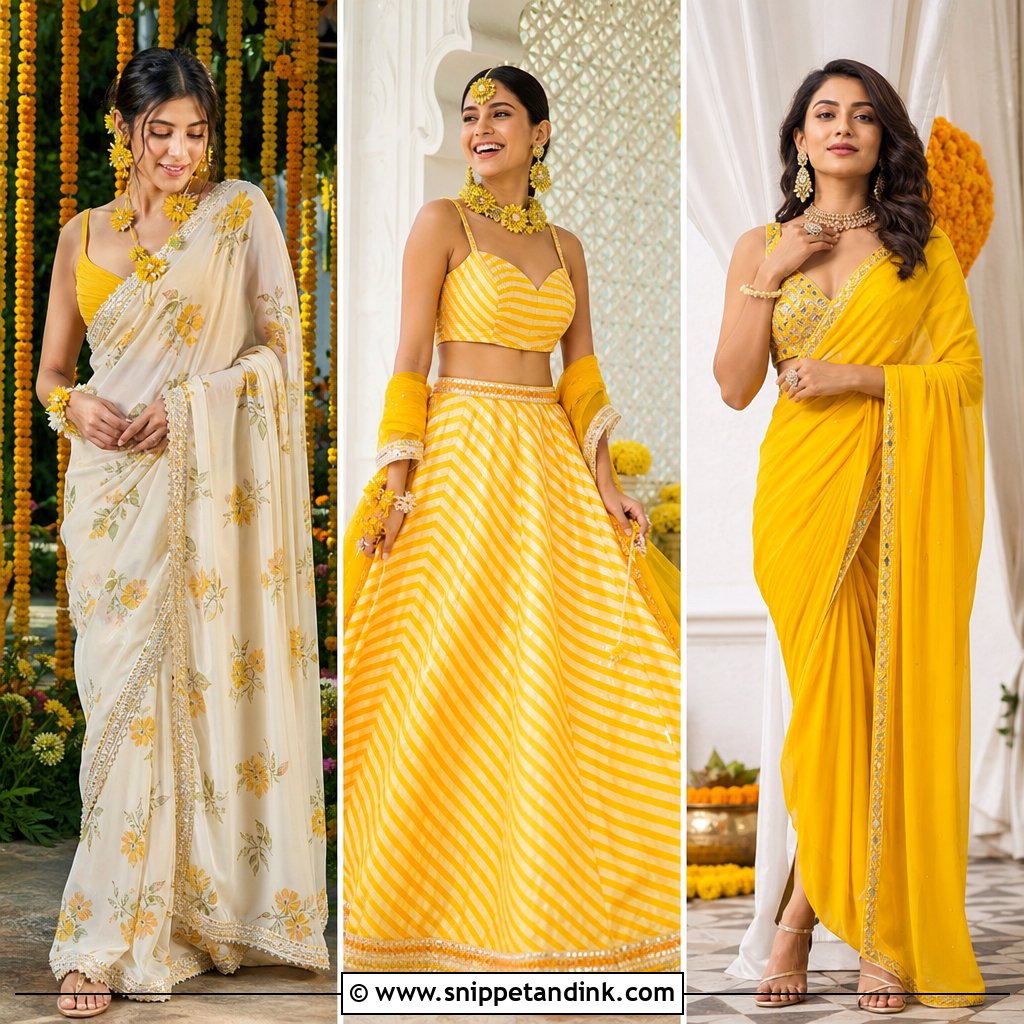
A Haldi is the one wedding event where the outfit is guaranteed to get dirty. Wet turmeric paste lands on sleeves, hems and dupattas, relatives pull you into hugs, and you spend a good part of the ceremony sitting low on a cushion or a patla. So when I dress someone for it, I start with movement and stain tolerance, then get to color and embellishment. Below are thirty outfits that hold up to that reality, from classic bridal lehengas and sarees to shararas, ghararas, anarkalis, kurta sets, co-ords and Indo-western dresses, with notes on who each one actually suits and where it tends to cause trouble.
Dressing for Turmeric That Will Land on You
The bride gets the most paste, but anyone within arm’s reach gets some. Before I look at any embellishment, I run each outfit through a few quick checks.
- Fabric: cotton, cotton silk, chanderi and crepe take a stain and still look fine. Pale chiffon and white georgette show every mark.
- Sleeves: elbow length or sleeveless. Full sleeves get soaked in paste the moment someone reaches for your hands.
- Dupatta: pinned in at least two places, or swapped for a cape or jacket.
- Hem: just above the floor. Anything that drags will soak up wet turmeric from the sheet or the tiles.
- Shoes: you will likely kick them off for the ritual, so pick juttis or sandals you can slip back on without bending.
For brides, I almost always plan two looks. The ritual outfit is the one that gets ruined, and a fresh, similar outfit goes on afterwards for portraits and lunch. Many families are relaxed about the first one being an older or inexpensive piece, so I’d save the heirloom silk for later.
1. Yellow Haldi Lehenga
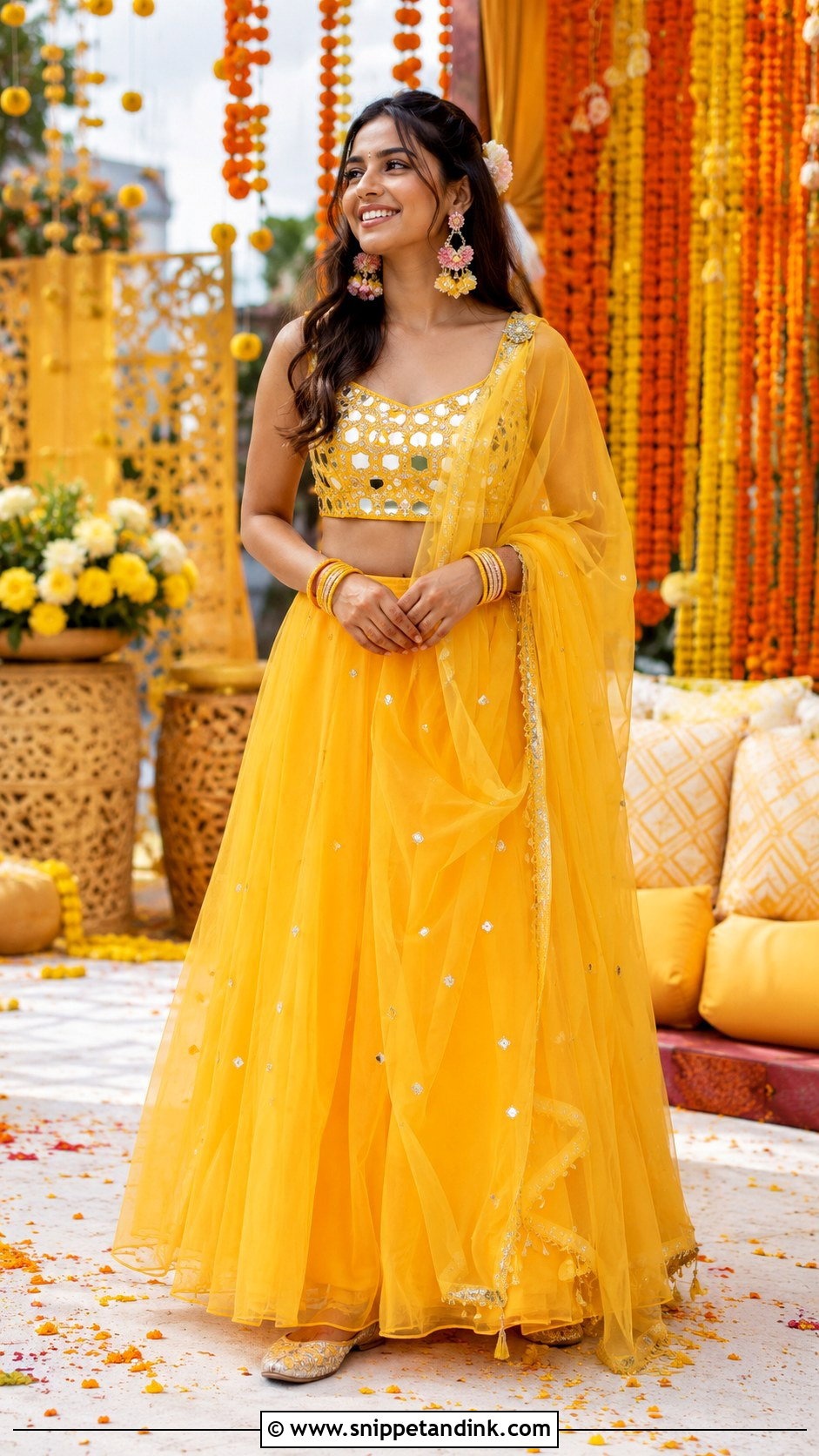
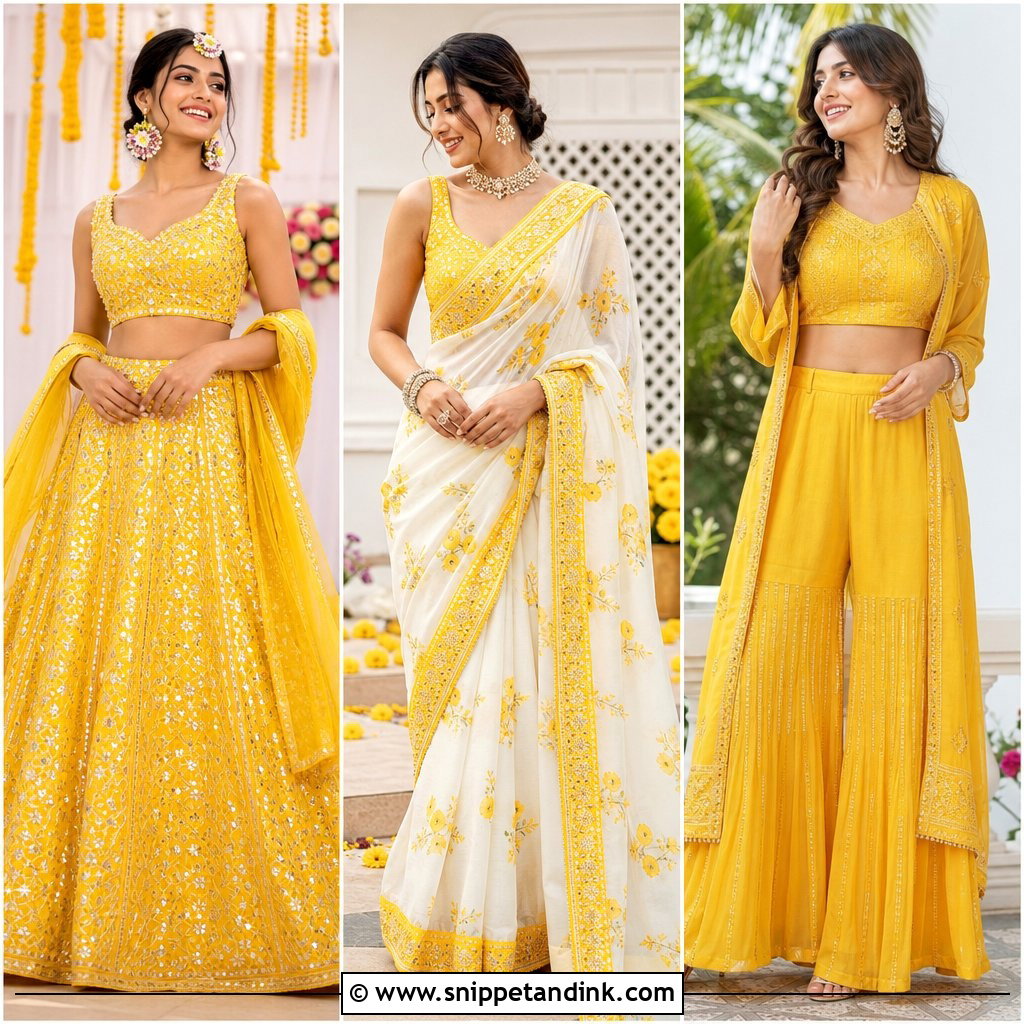
A yellow Haldi lehenga is still the classic for the bride and her closest family. I keep the skirt in georgette, organza, cotton silk or chiffon so it can fold under her when she sits and spring back when she stands. A cropped blouse with mirror work or gota patti gives sparkle without the weight of zardozi. I pin the dupatta on one shoulder only, because a bride whose hands are full of turmeric cannot keep re-draping fabric. Fresh floral earrings and a light maang tikka finish it, and I’d skip anything gold-plated near the wrists, since paste in the crevices of plated bangles is hard to clean.
2. Floral Haldi Saree
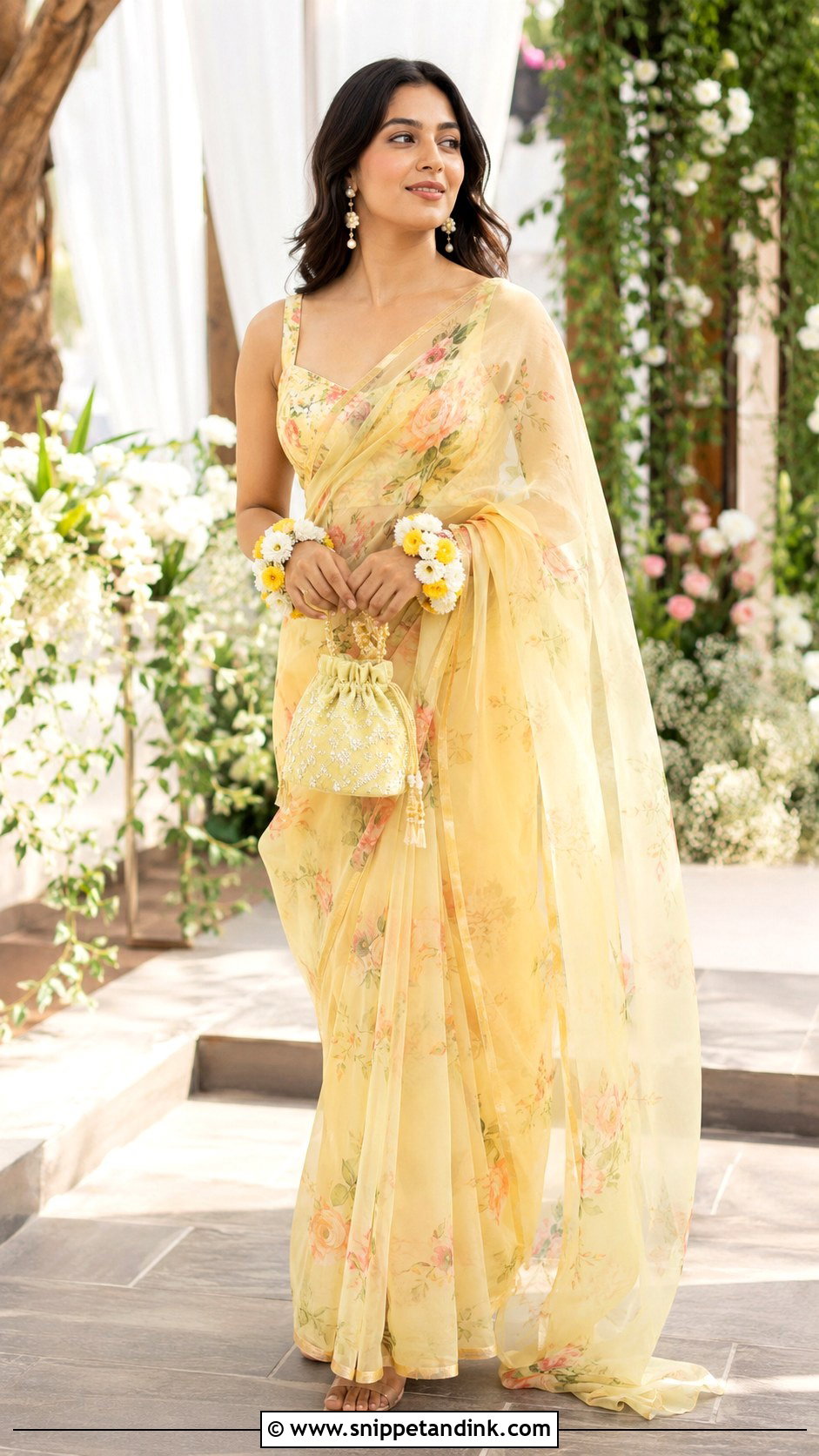
Floral printed sarees are where I send sisters and bridesmaids who want grace without lehenga weight. Yellow, ivory, peach or lime grounds with small florals hide the odd turmeric smudge far better than a plain pale saree does. Crepe and georgette fall well and recover from creasing after you sit; chiffon is lighter but shows water marks. Choose the blouse you can lift your arms in, because a Haldi involves a lot of reaching, then add pearl studs, floral bangles and low juttis so you can stand for hours.
3. Yellow Sharara Set
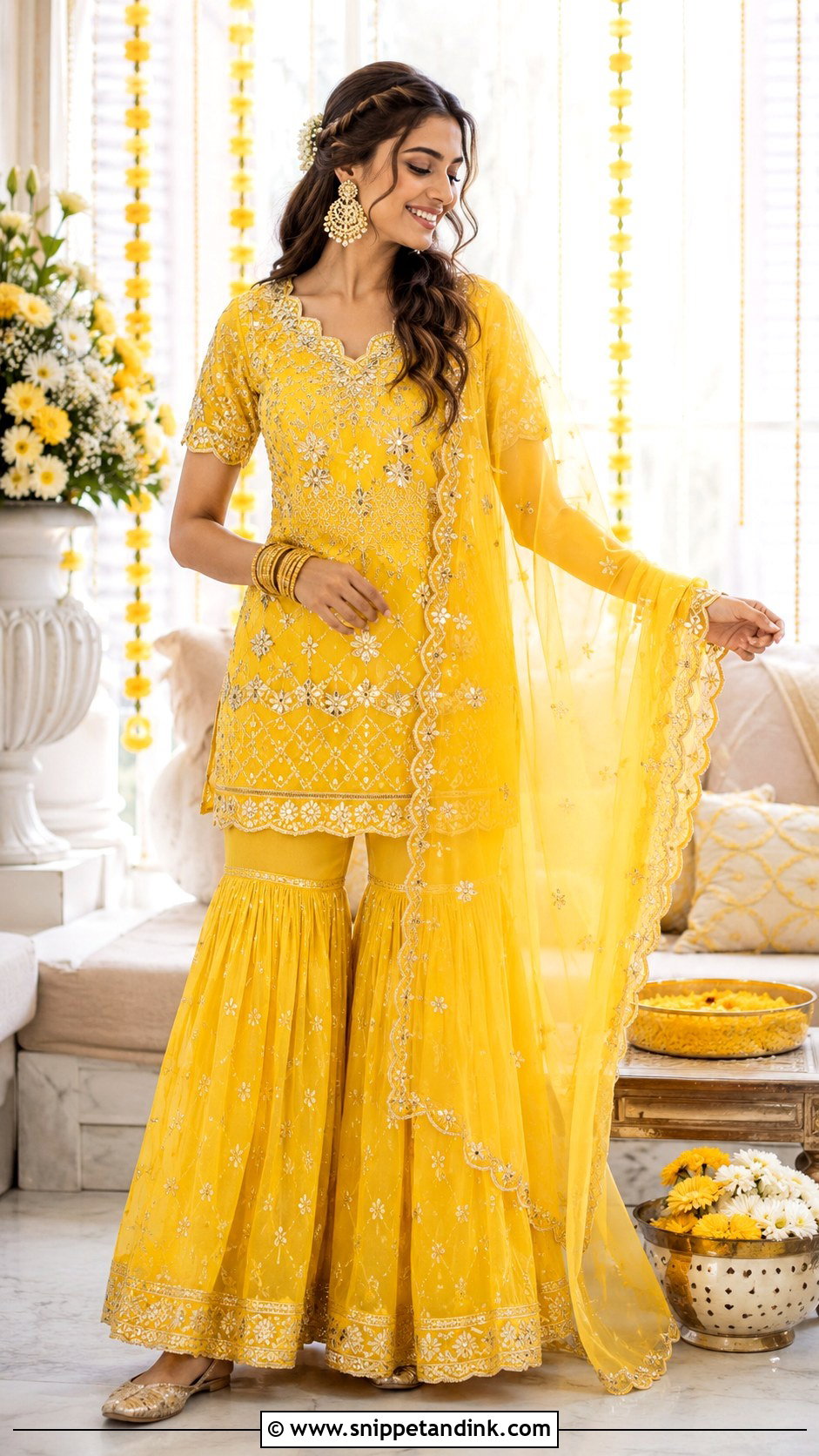
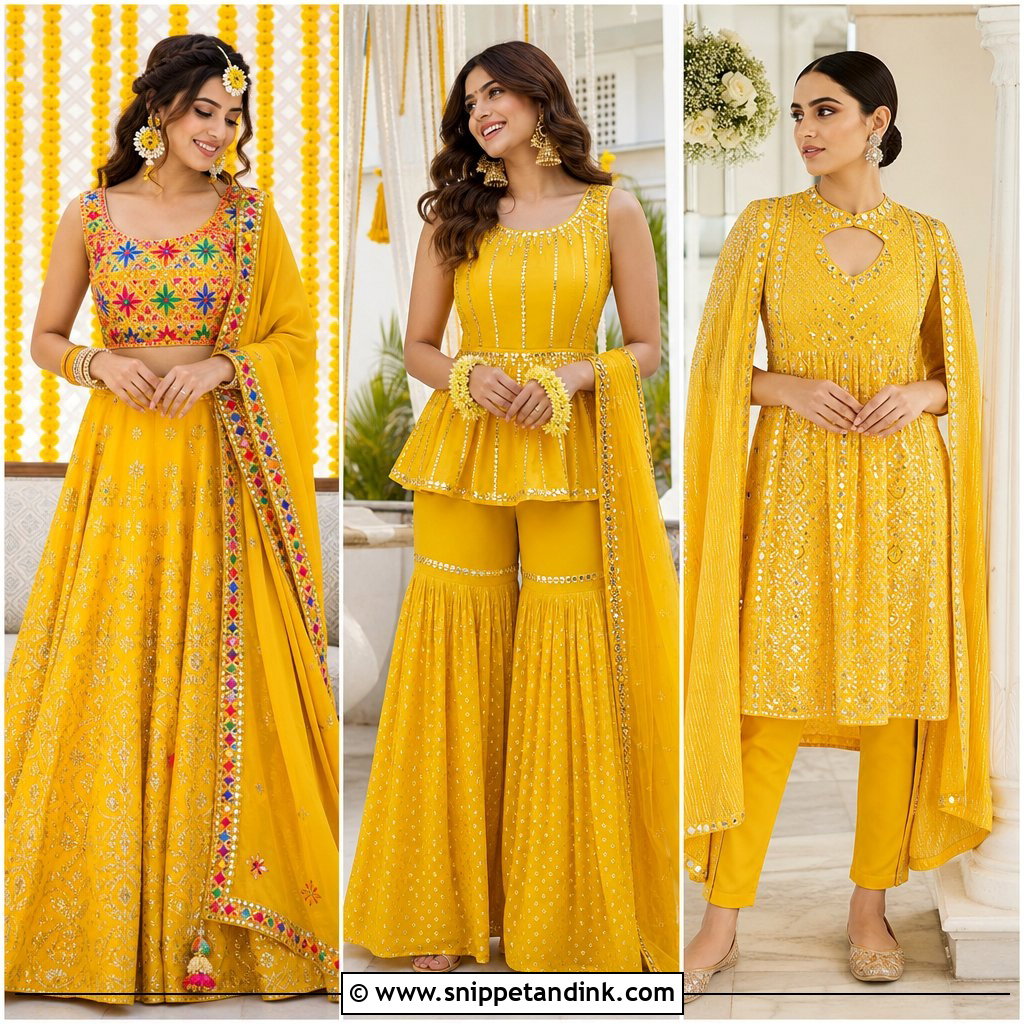
Shararas are my quiet favorite for anyone who expects to dance. The flare starts at the knee, so the legs stay free, and you can sit cross-legged without hitching a skirt around. Mirror work, gota borders or small sequins read as festive from across the courtyard. Pin a light dupatta to one side, add chandbalis and stacked bangles, and the outfit suits a minimal bride as easily as a cousin. One fit note: get the hem taken up so the flare skims the top of your juttis, or it collects paste and dust from the floor.
4. Haldi Gharara Outfit
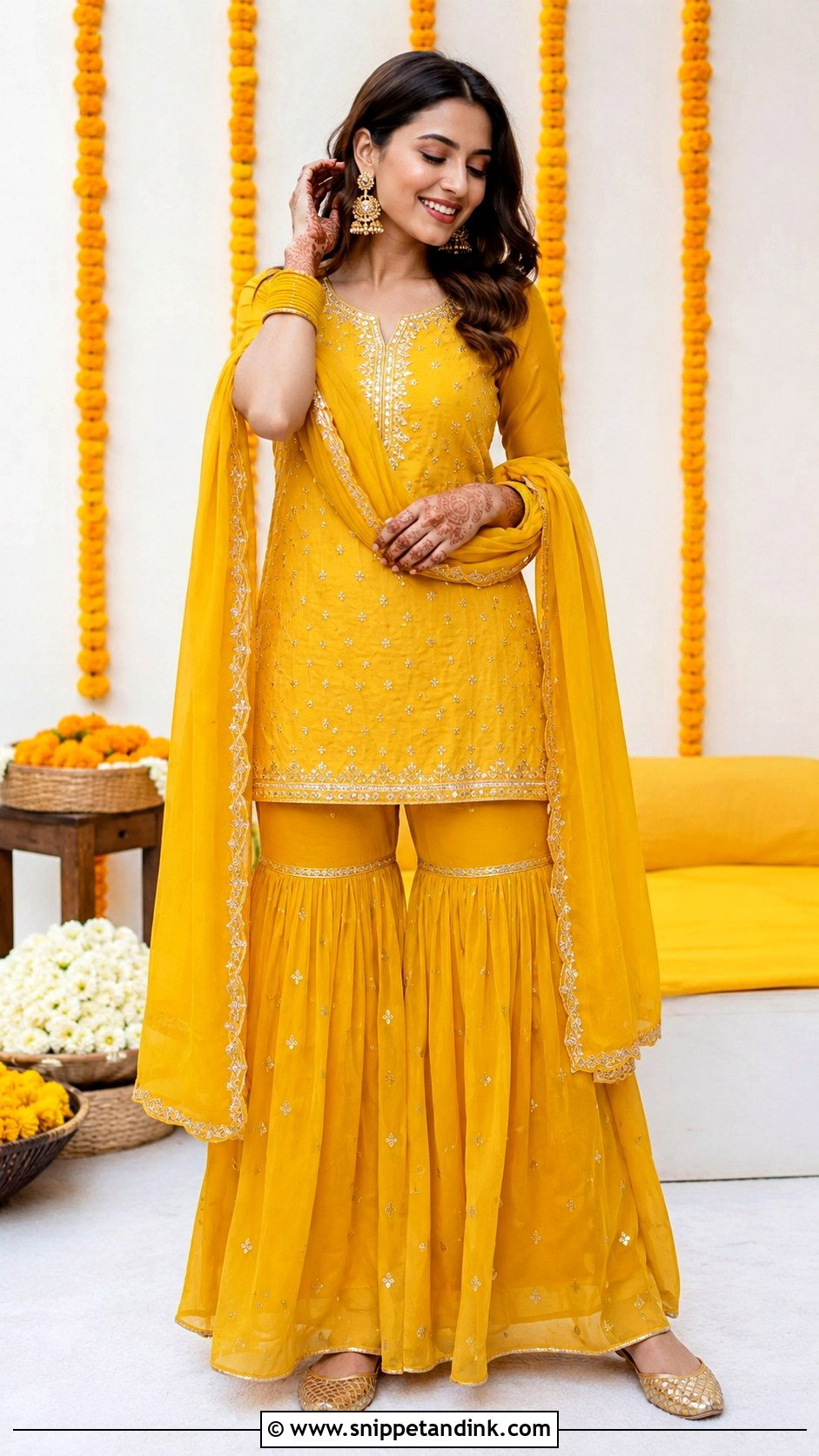
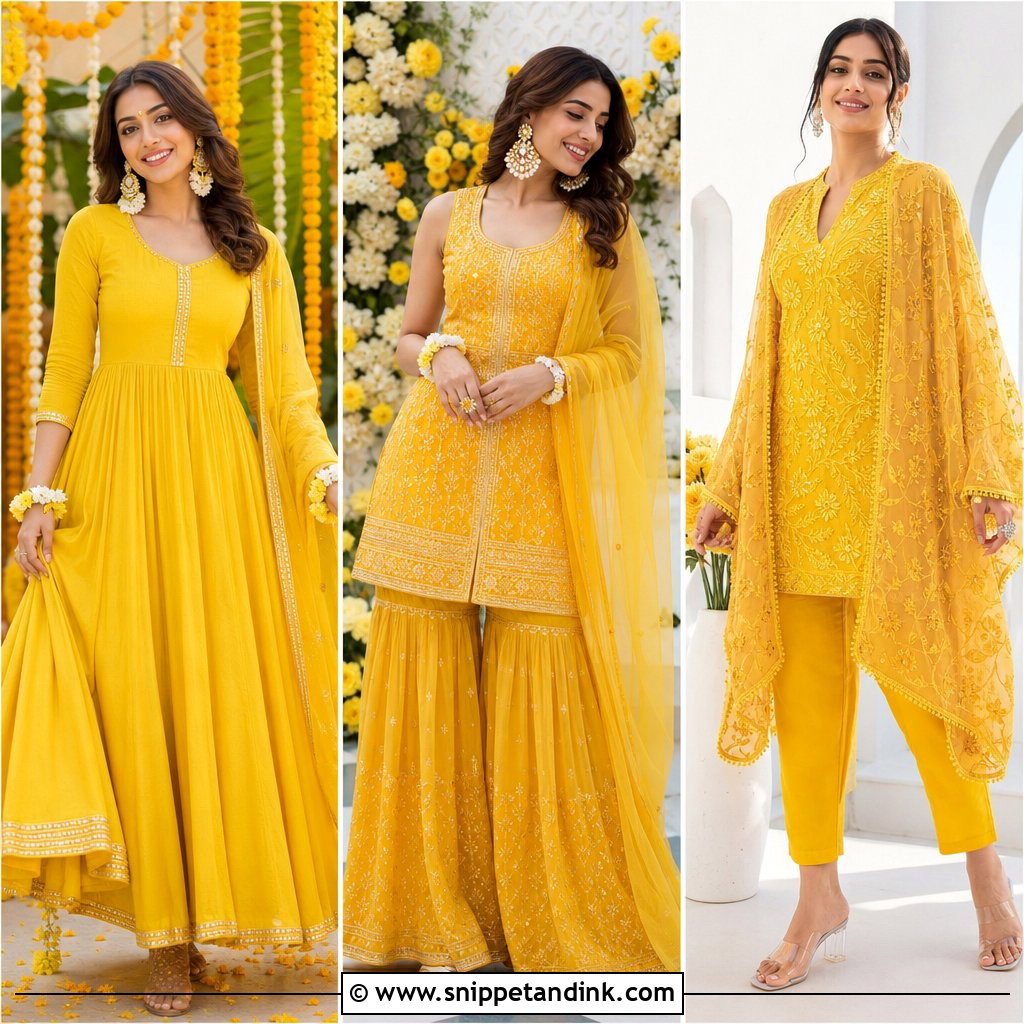
A Haldi gharara outfit has more drama than a sharara because the pants fit close to the knee and then burst into a gathered flare, usually joined with a decorative band. That join is where I check the stitching first, since it takes all the strain when you sit down and stand up. Mustard, marigold or soft lemon all suit the ceremony, and a short kurti with zari, chikankari or scalloped edges balances the volume below. It sits neatly between a kurta set and a full bridal lehenga in effort and formality.
5. Yellow Anarkali Suit
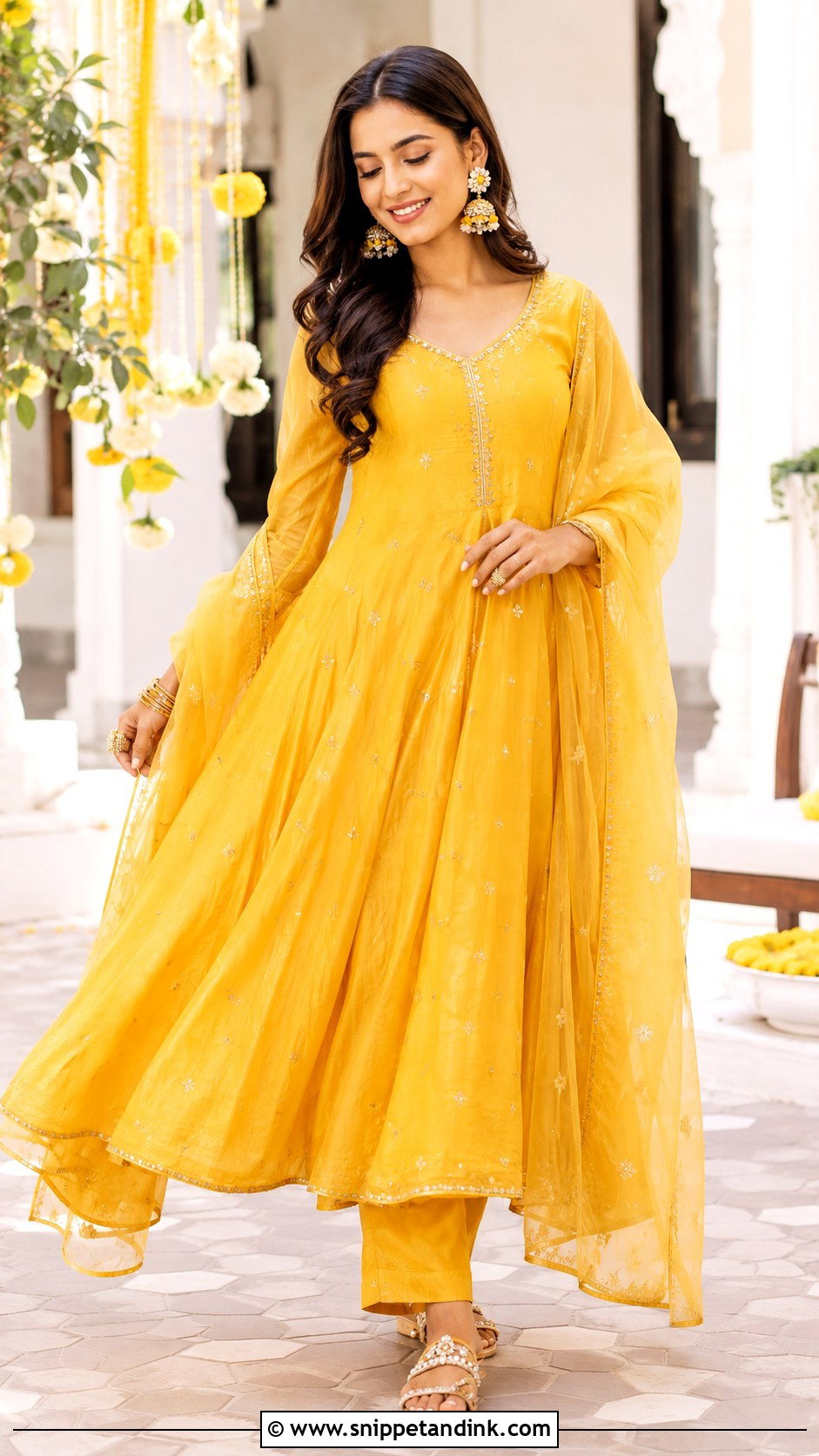
An Anarkali gives the sweep of a gown with a lot more coverage, which is why mothers and aunts often ask me for one. Cotton silk, chanderi and rayon blends breathe in daytime heat; heavy georgette Anarkalis get hot once the panels are fully lined. Sleeve length depends on the season and how modest the family wants to be. Churidar pants look most traditional, though palazzos are easier if you will be sitting on the floor for long. Keep the dupatta sheer and the sandals flat, and it works indoors or out.
6. Haldi Kurta Palazzo Set
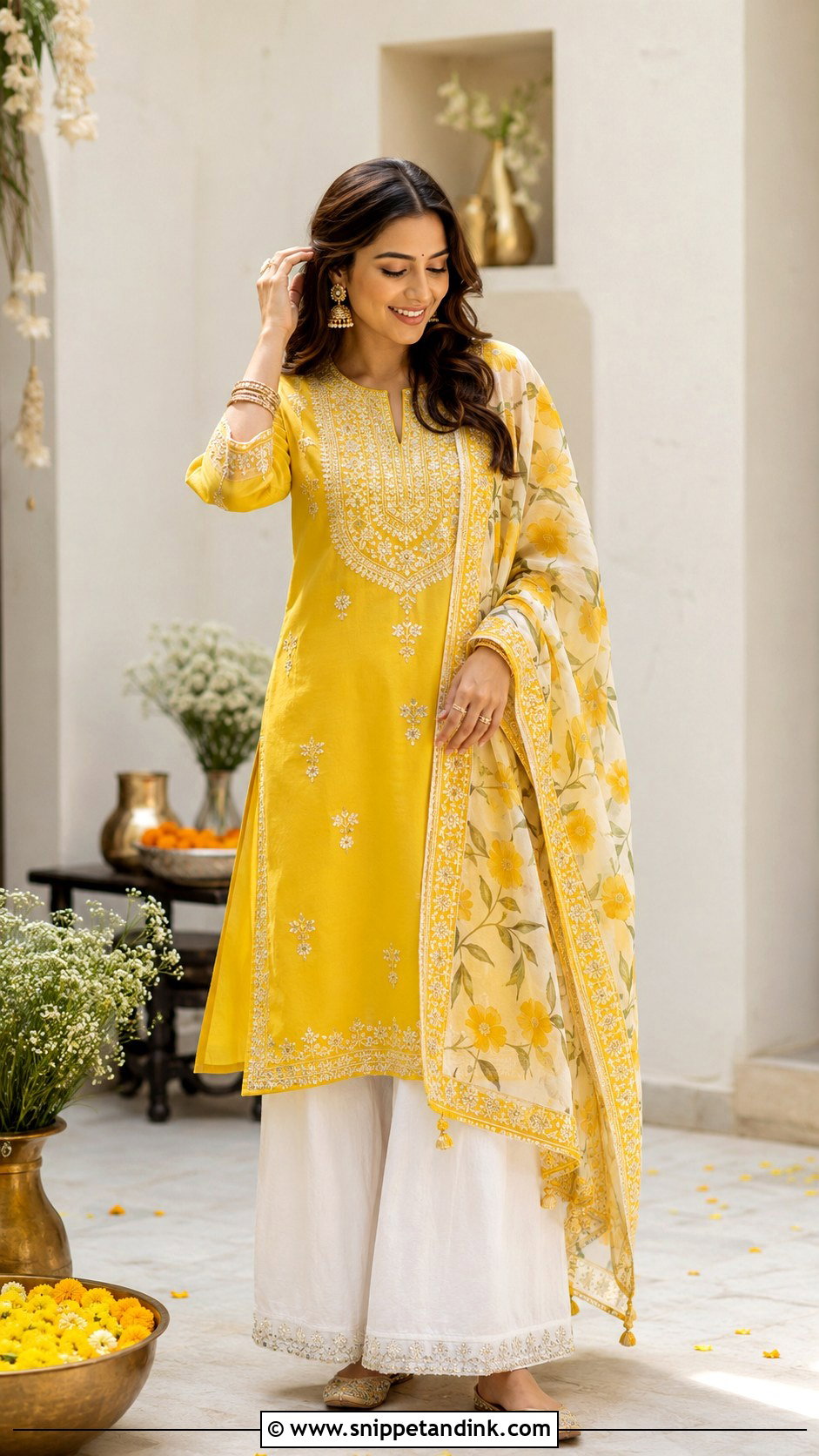
A kurta and palazzo set is the outfit I recommend to the guest who is also helping run the day, carrying thalis and herding children. A yellow kurta with white palazzos is cheerful, though be honest with yourself about the white bottoms: they will show every fleck of turmeric. Cotton, muslin, rayon and chanderi are the coolest fabrics for summer functions. Add a printed or organza dupatta, simple earrings, and a low bun that will not catch on anything.
7. Yellow Co Ord Set For Haldi
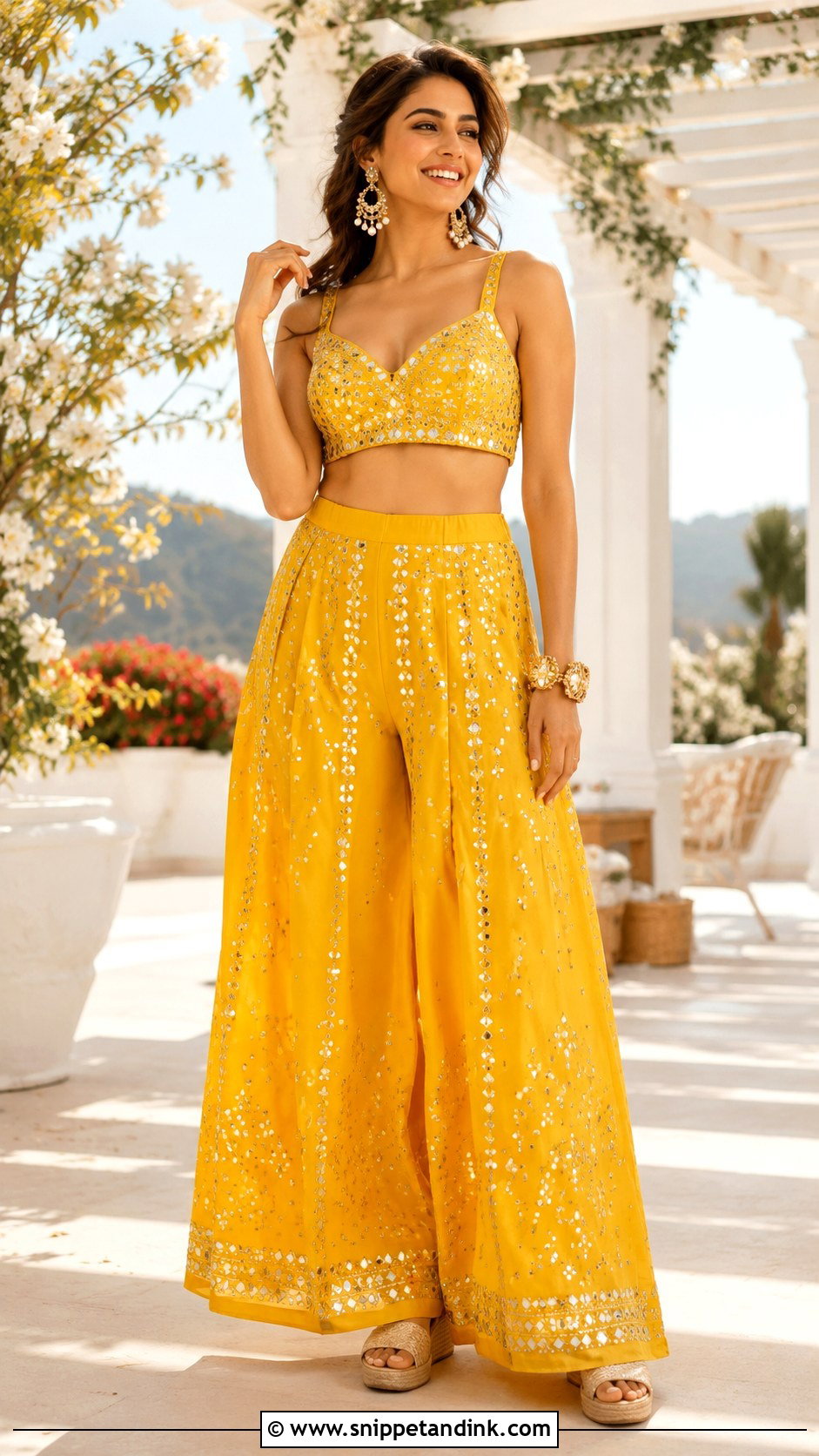
Co-ord sets suit women who like a modern line: a crop top with a flowy skirt, a short kurti with wide pants, or a structured blouse with matching palazzos. Because both pieces are cut from the same fabric, the outfit looks planned even with minimal jewelry. I like them for destination Haldis since they pack flat and come back out as separates later. Look for scalloped hems or light embroidery rather than heavy mirror work, which can tug a thin fabric out of shape.
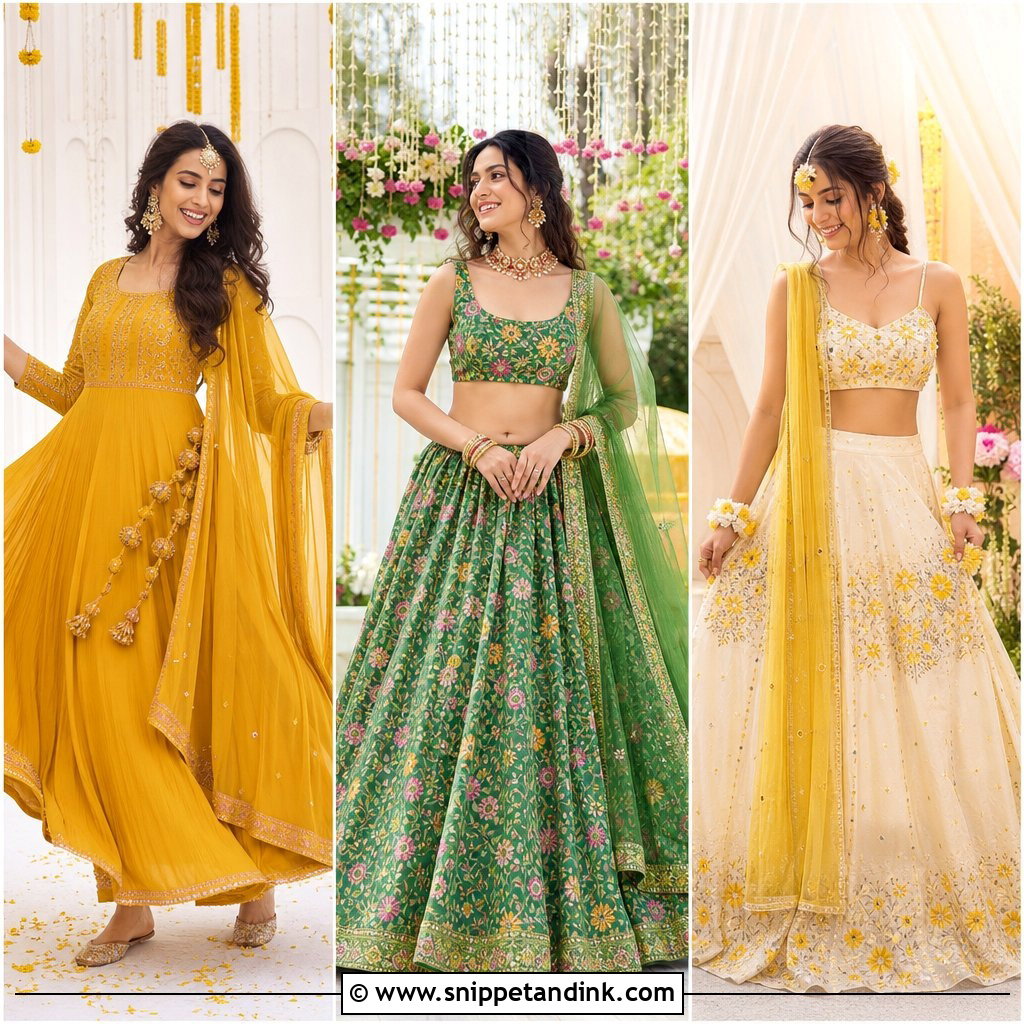
8. White And Yellow Haldi Lehenga
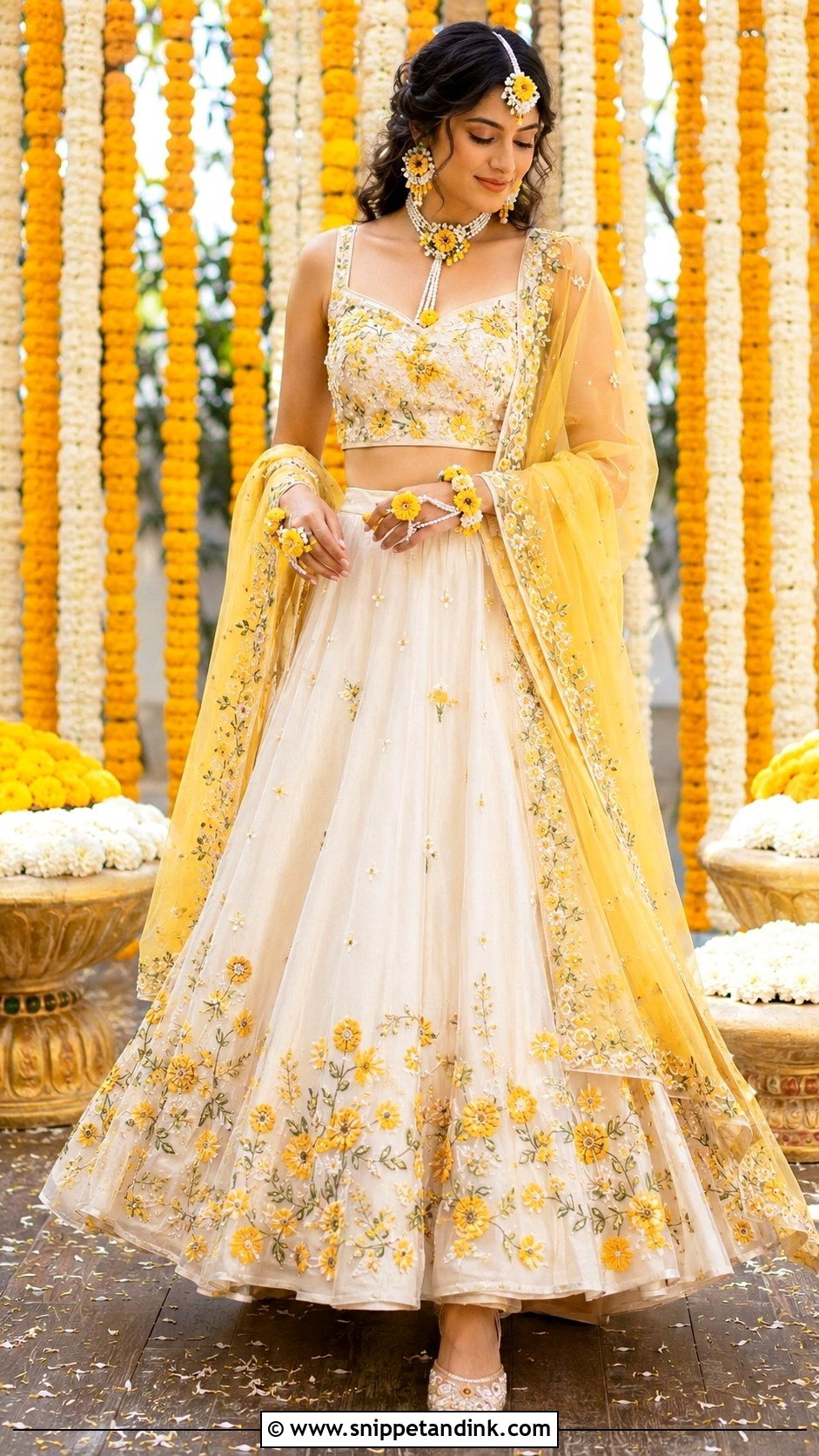
White and yellow together give a bridesmaid group a clean, bright look, with the white base softening yellow embroidery or a marigold dupatta. My honest warning is the obvious one: a white skirt at a turmeric ceremony will not come home white, so I only suggest it to people who accept that or who are standing a little back from the paste. Keep the blouse fitted, pin the dupatta firmly, and choose embroidered juttis. Against a wall of yellow decor, the contrast reads crisp in group photos.
9. Mustard Haldi Saree
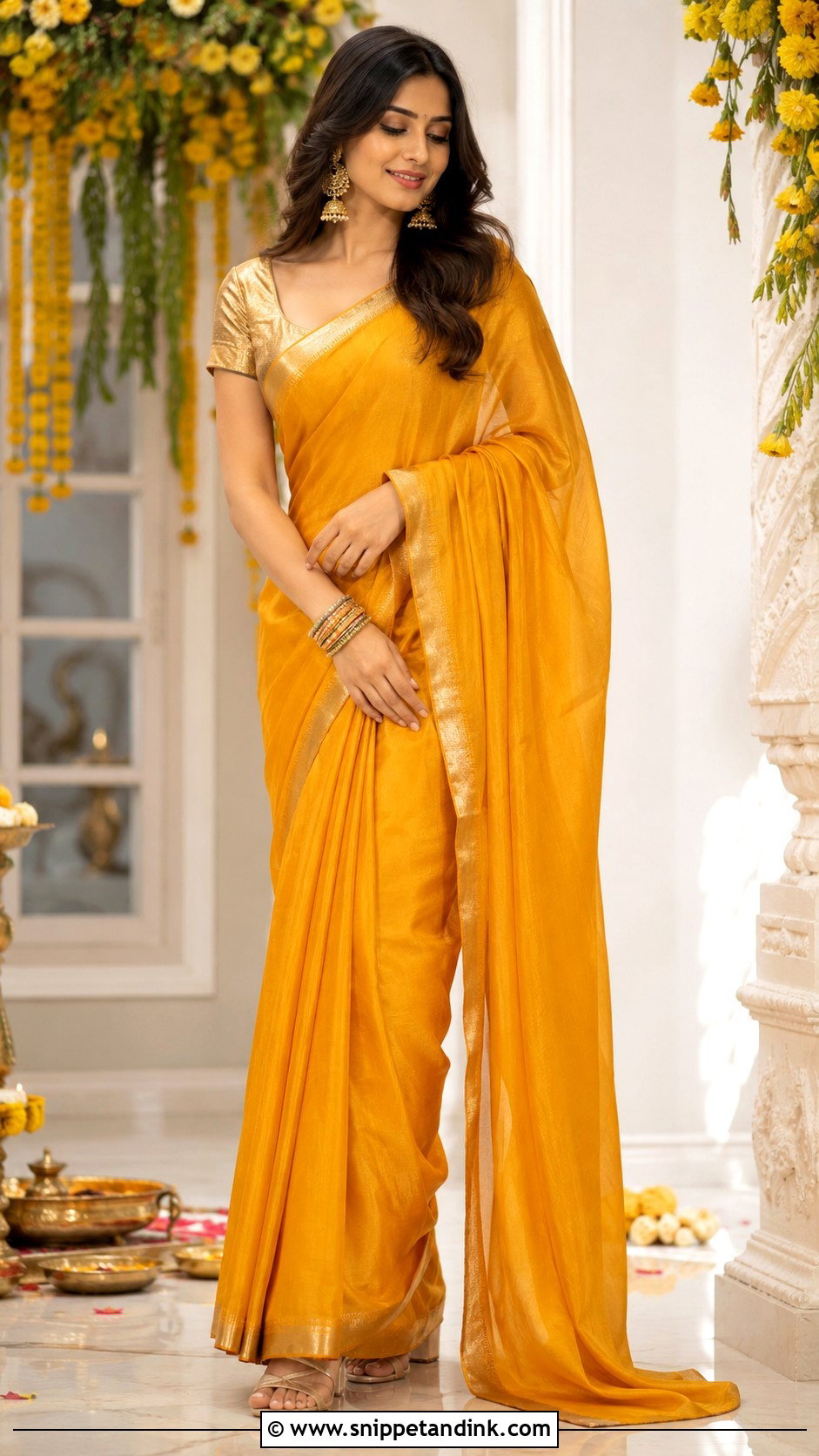
Mustard is warmer and a touch more grown-up than lemon yellow, and it flatters deeper skin tones particularly well. Silk cotton or chanderi suits a home ceremony; lightweight Banarasi lifts it for a larger event. A gold or ivory blouse keeps the shade from feeling flat. When I drape a mustard saree for Haldi, I tuck the pleats deeper and pin the pallu at the shoulder and waist, because playful rituals involve a lot of grabbing and smearing.
10. Lemon Yellow Haldi Dress
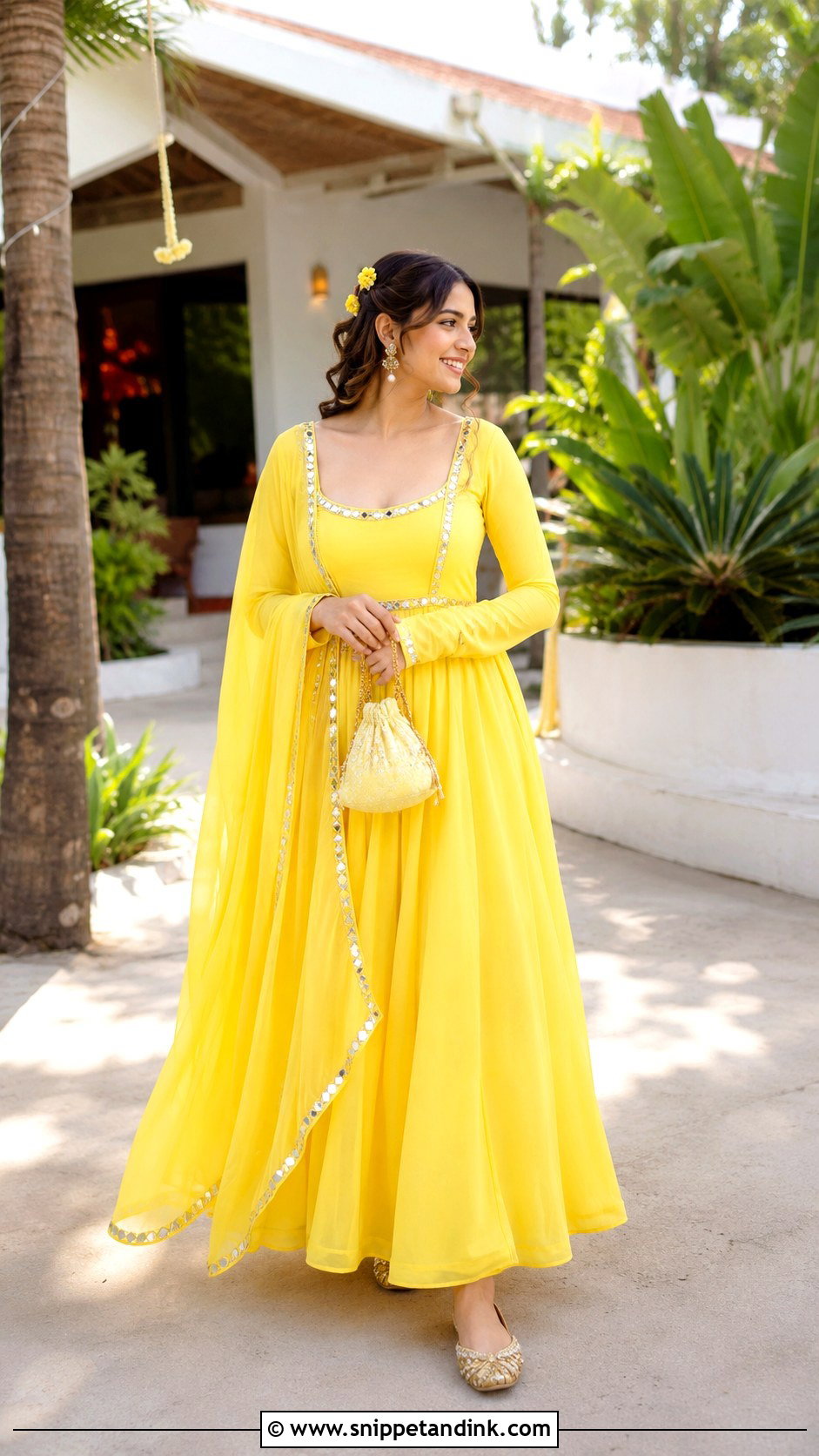
A lemon yellow dress suits a relaxed or destination Haldi, especially for guests who are new to Indian wedding dressing. A maxi, tiered or wrap shape with mirror edging, tassels or embroidery nods to the occasion without asking you to manage a drape. Gold flats, pearl earrings and a floral clip are enough. It is breezy on a beach or lawn; at a very traditional family function, I’d check with the hosts first, since some households expect ethnic wear from everyone.
11. Haldi Skirt And Crop Top
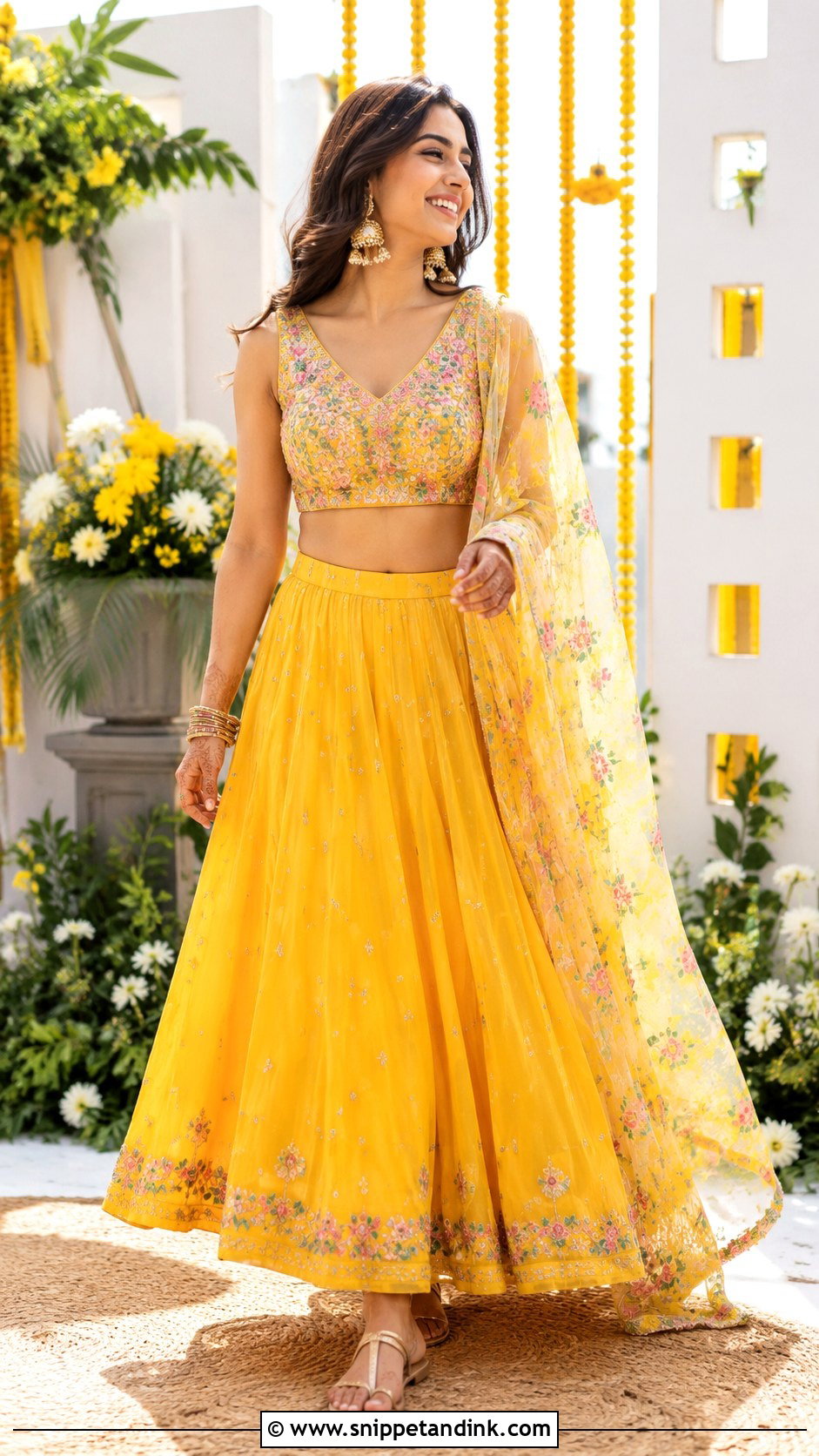
A flared yellow skirt with a crop top gives the lehenga effect at half the weight. Add a dupatta for tradition or leave it off for an Indo-western finish. I always have clients raise both arms and do a few dance steps in the fitting room, because a crop top that rides up during the dhol is the most common complaint I hear afterwards. A high-waisted skirt solves most of that. Afterwards the two pieces rewear easily with other tops and skirts.
12. Haldi Dhoti Pants Outfit
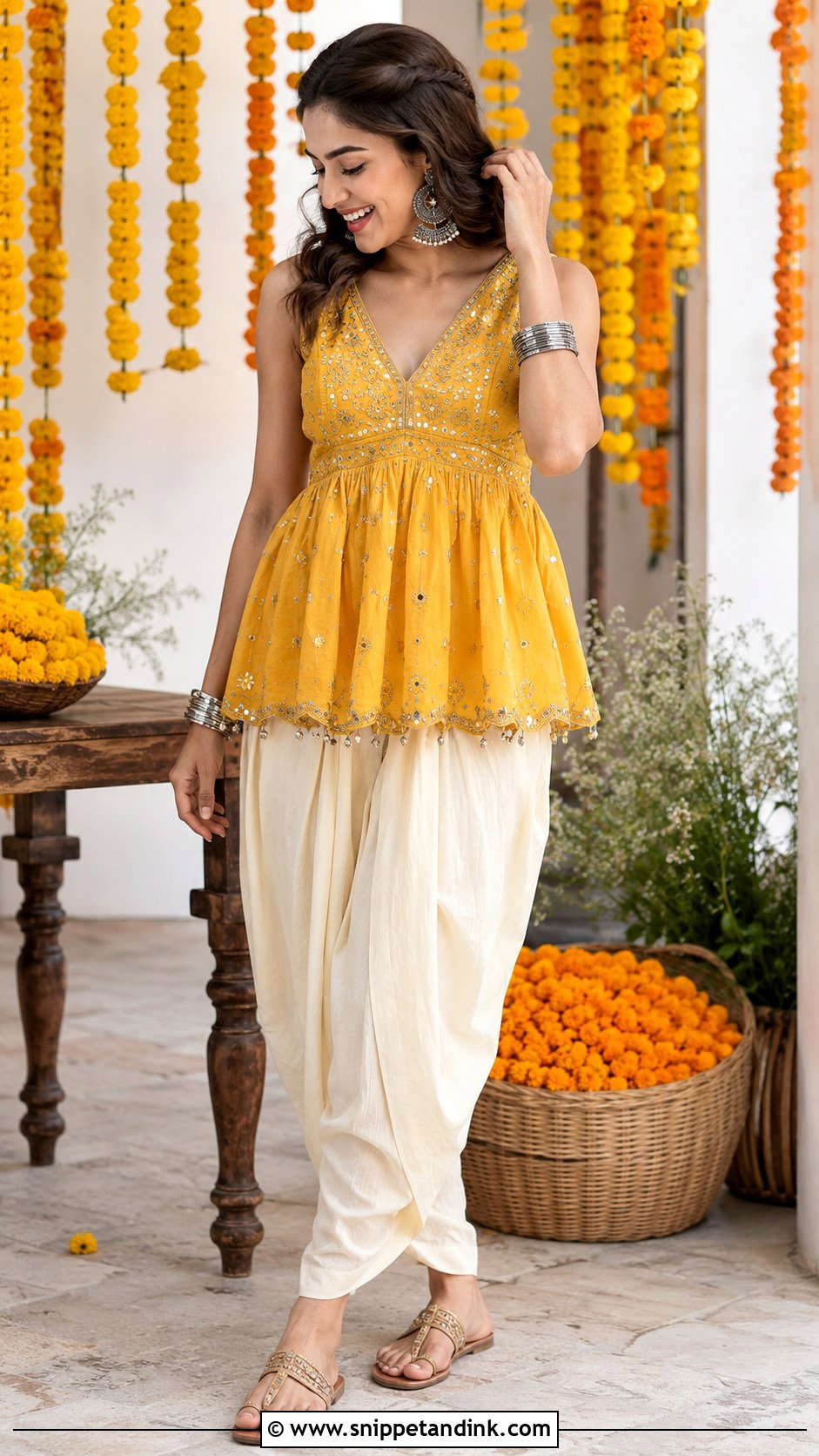
A Haldi dhoti pants outfit suits the woman who wants something other than a lehenga or saree. Pair yellow or ivory dhoti pants with a short kurti, peplum top or jacket-style blouse. The draped pleats need a soft fabric to sit right; stiff silk makes them bunch at the hip. Oxidized earrings, mirror bangles and kolhapuri flats keep it playful, and it handles sitting, dancing and running around better than almost anything else on this list.
13. Yellow Peplum Sharara Set
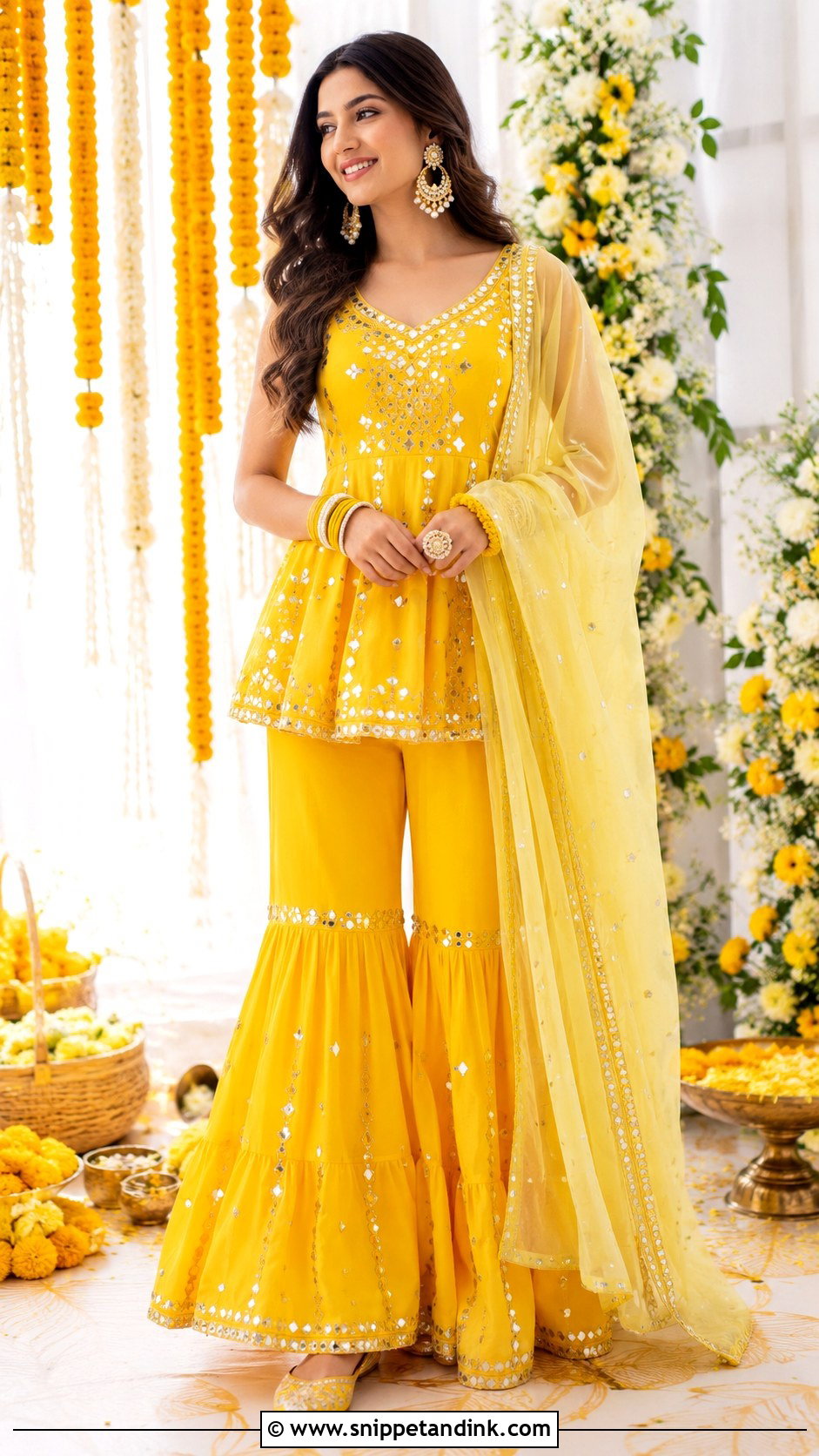
The peplum flares from the waist, so it defines shape without needing a tight blouse, and that makes this set comfortable for long, hot afternoons. Mirror work, thread embroidery or florals keep it ceremony-ready. The dupatta is optional here; I’d leave it off entirely if you are one of the people applying paste. Danglers, bangles and juttis or low heels finish it. Bridesmaids and close relatives tend to love this one because it looks dressy and asks very little of them.
14. Haldi Cape Lehenga
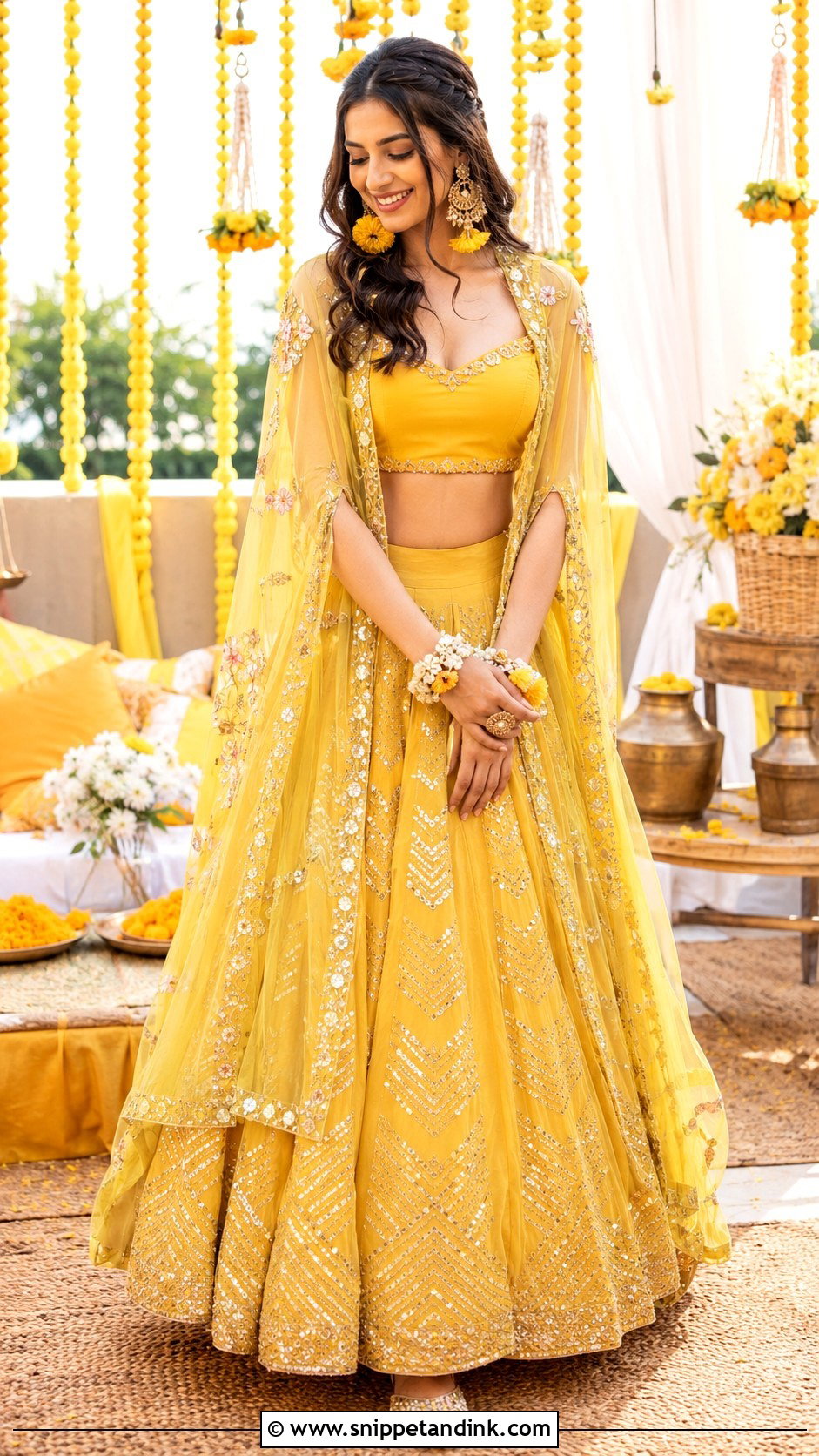
A cape replaces the dupatta and stays put on the shoulders, which solves the constant re-draping problem in one move. A sheer or embroidered cape over a yellow or ivory lehenga reads modern. Keep the blouse plain so the cape does the talking, wear statement earrings and leave the neck bare, since a necklace under a cape tends to tangle in the fabric. Make sure the cape fastens securely at the shoulder seams, not just with hooks at the front.

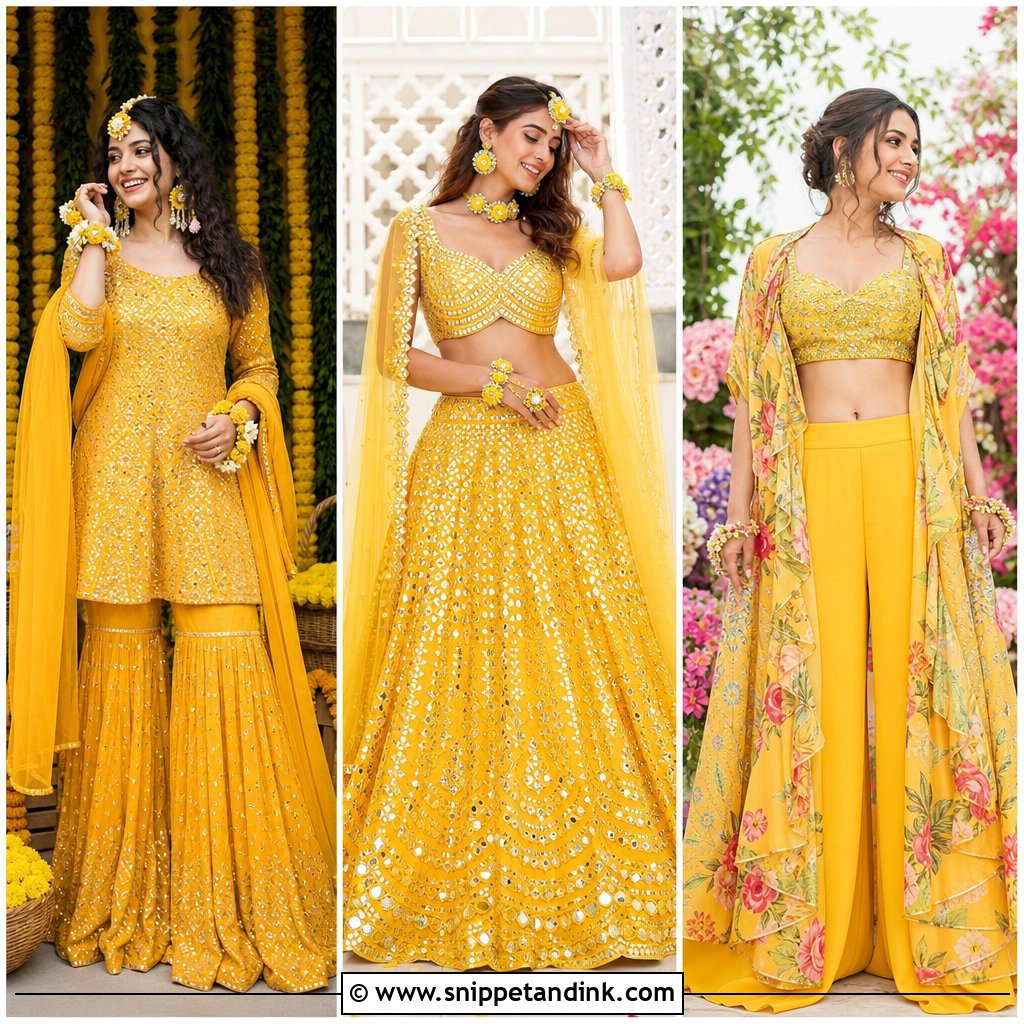
15. Printed Haldi Lehenga
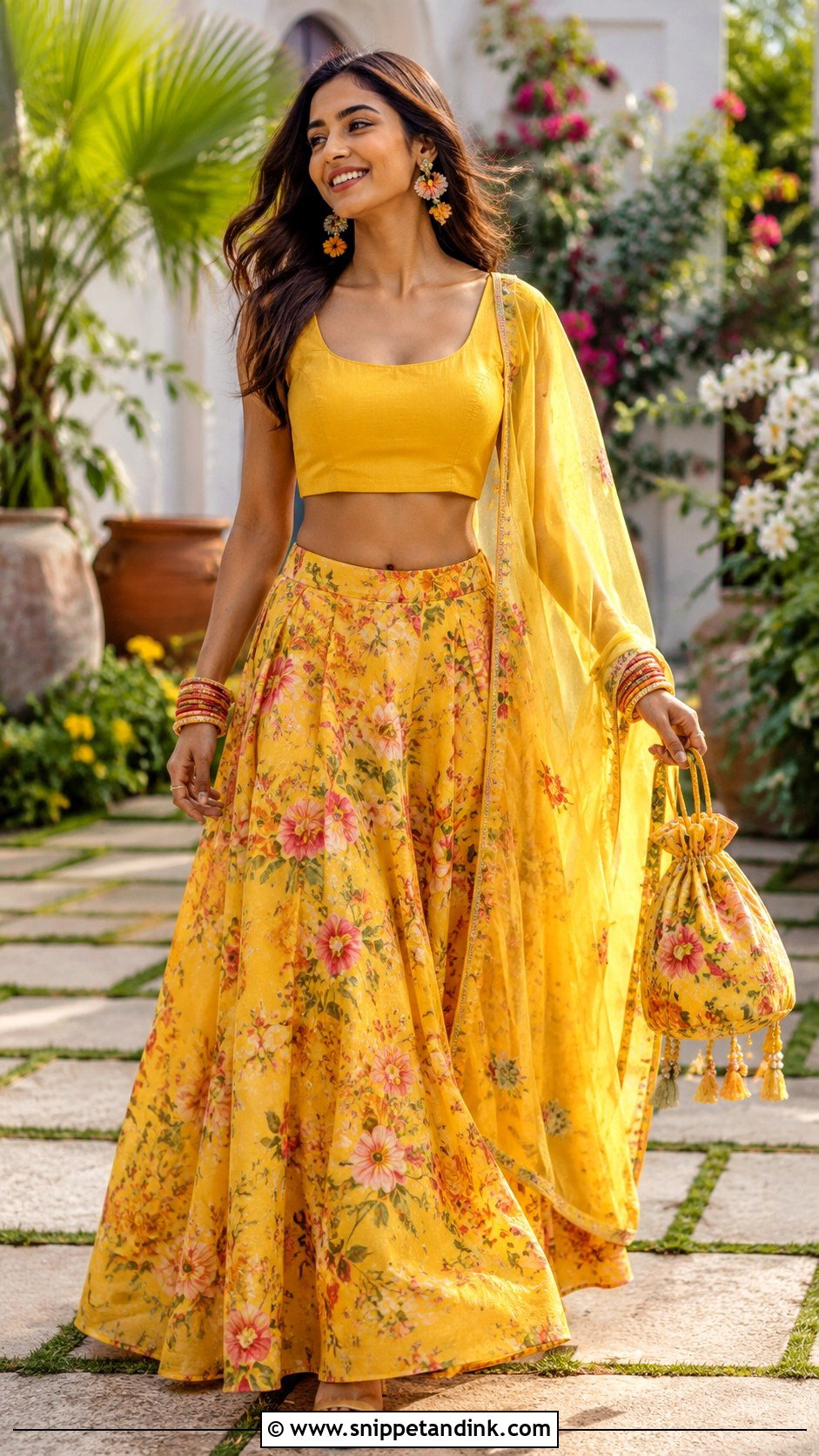
Printed lehengas are cheerful and usually far lighter than embroidered ones. Block prints, florals, paisleys and tropical motifs all suit a daytime ceremony, and a print with orange, pink or green in it hides turmeric marks remarkably well. Keep the blouse and dupatta simple so the print stays the focus. This is my practical pick for a less formal look, and it rewears well at festivals and other family functions.
16. Yellow Chikankari Kurta Set
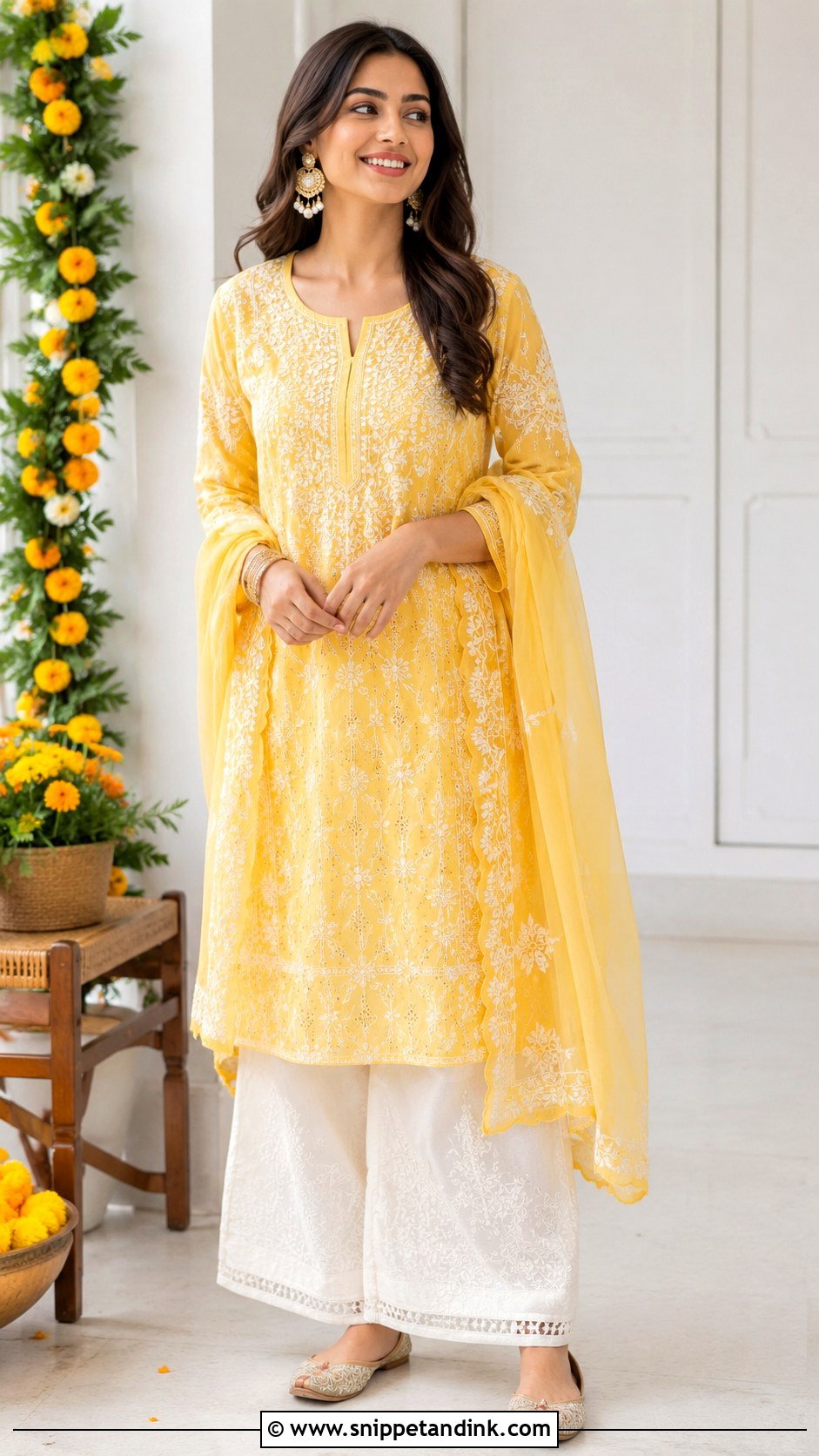
Chikankari is hand embroidery from Lucknow, traditionally white thread on fine cotton or georgette, and white work on yellow looks very fresh at a Haldi. The stitching is delicate, so I tell clients not to scrub at turmeric on it later; soak and dab instead. A straight, A-line or short kurta works with palazzos, straight pants or a sharara. Pearl earrings, glass bangles and embroidered juttis suit the subtle mood, and it stays cool in warm daytime ceremonies.
17. Haldi Mirror Work Lehenga
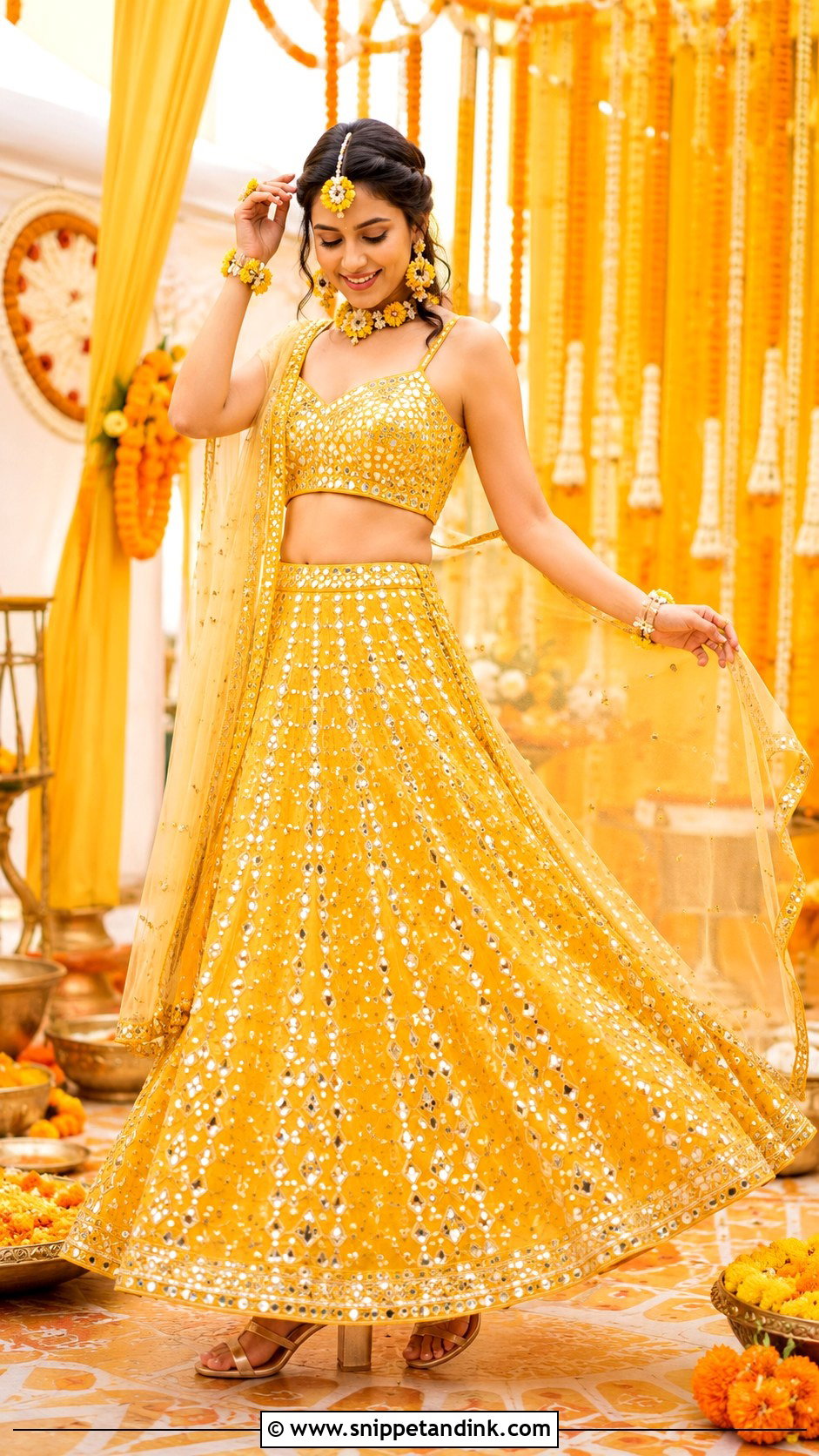
Mirror work catches the daylight from every angle, so a little goes a long way. I steer people toward small, scattered mirrors on a yellow, mustard or mango lehenga rather than dense panels, which add weight and can scratch the skin on the inner arm. A dupatta with mirror edging ties it together. Keep the jewelry floral or plain gold so the outfit does not turn busy, and pick juttis or block heels you can stand in.
18. Haldi Organza Saree
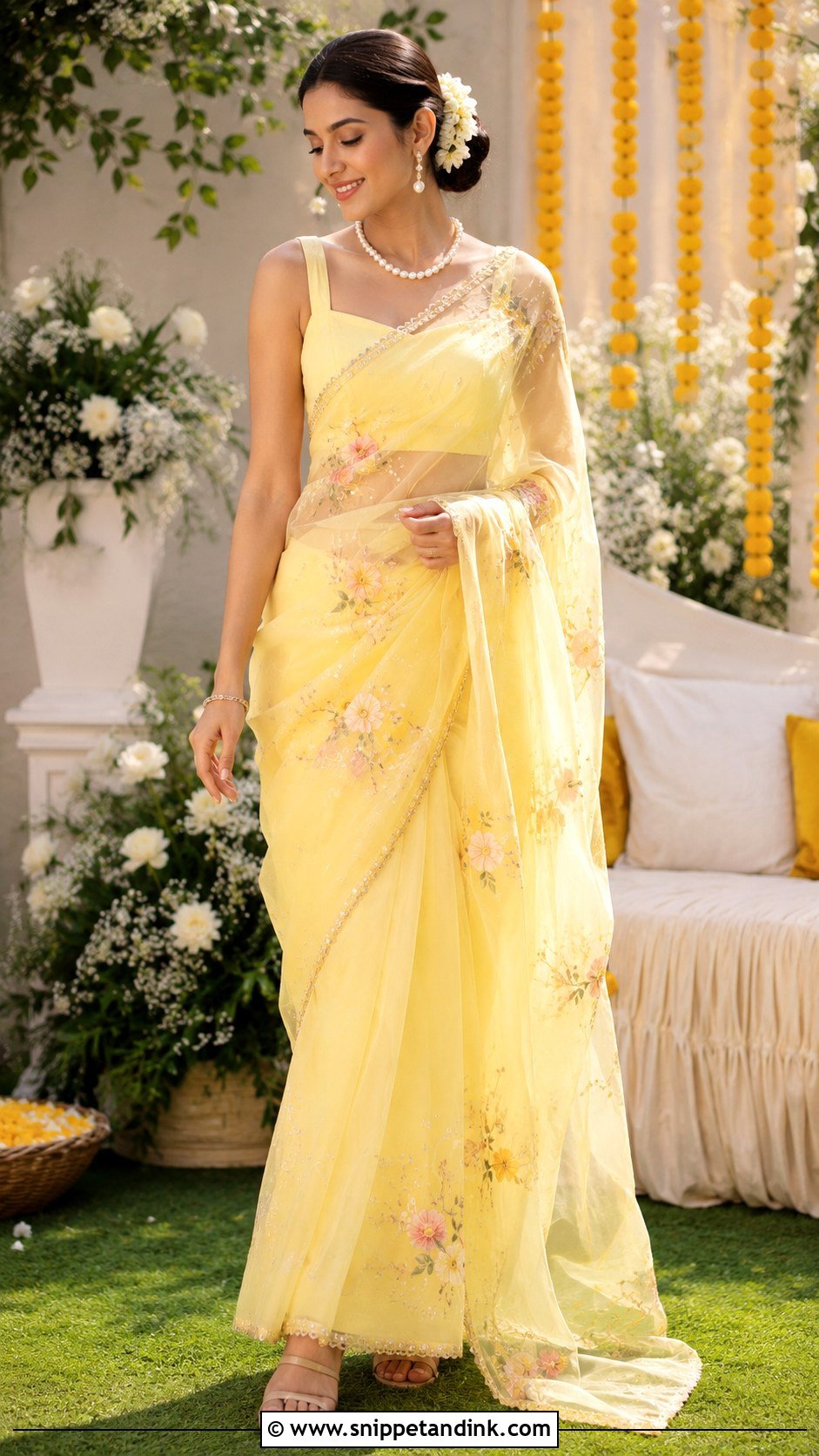
Organza has a soft crispness that holds a drape in shape, so the saree looks polished all afternoon. Lemon, marigold, ivory-yellow and pastel tones with small florals or delicate borders all work. Because the fabric is springy, pleats can fan out, so I pin each pleat at the waist and the pallu at the shoulder. Pair with a fitted blouse, pearl jewelry and comfortable sandals. Water spots can show on organza, so keep a distance from the splashing at the end of the ritual.
19. Yellow Salwar Suit For Haldi
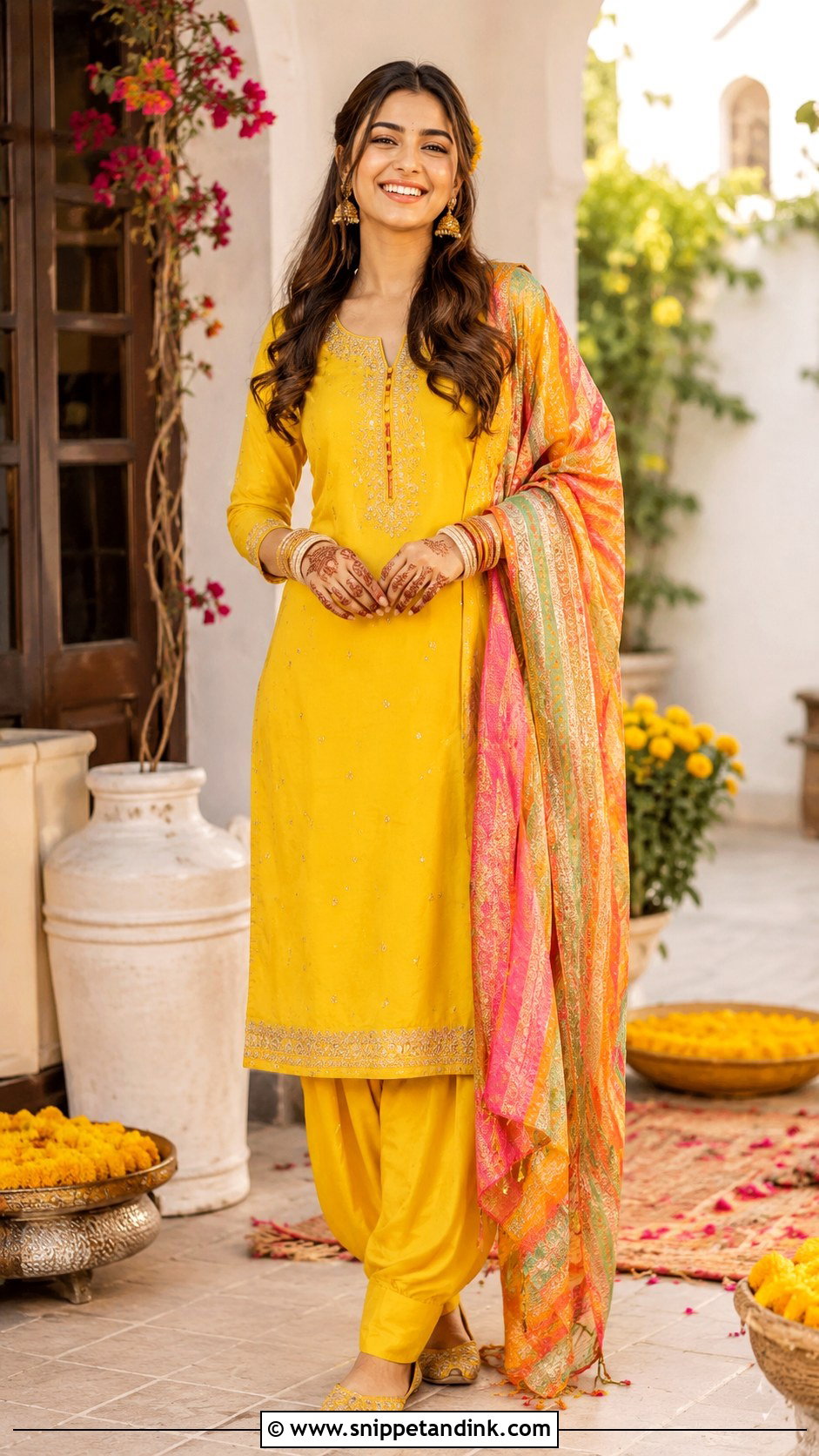
A yellow salwar suit is the simplest, most comfortable traditional option here. A straight kurta with salwar, a Patiala suit or a relaxed Punjabi-style set all let you sit on the floor and get up again without thinking about it. Lace borders or gota details lift a plain suit. Juttis, small jhumkas and bangles are plenty. It is especially good at home ceremonies, where you may spend as much time in the kitchen as in front of the camera.



20. Haldi Palazzo Saree
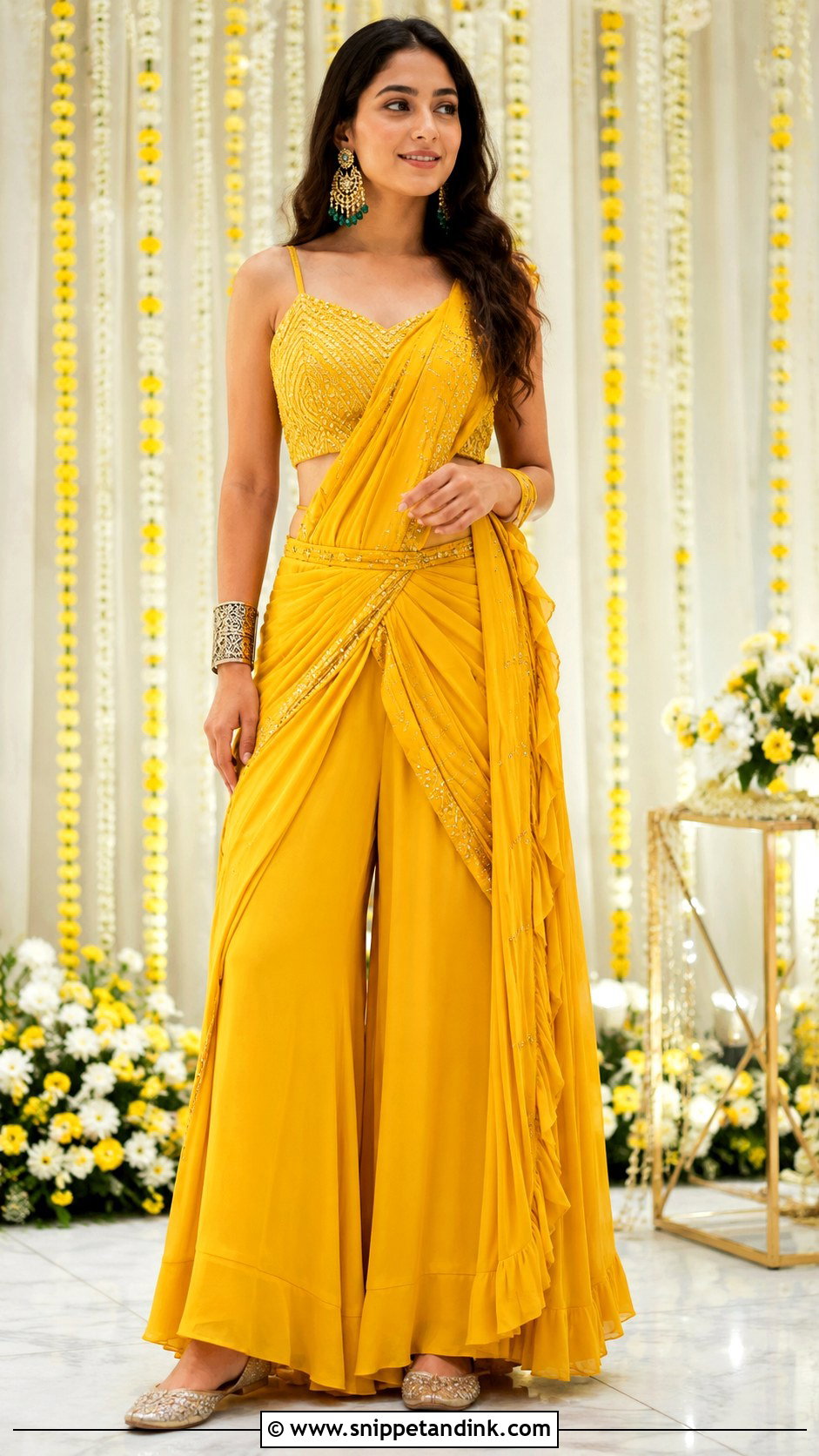
A Haldi palazzo saree is pre-draped: palazzo pants stitched to a saree drape, so the pleats cannot come loose. That makes it ideal for anyone who has never managed six yards through a lively ceremony. Choose a yellow, ivory or floral version with a fitted blouse or crop top. I check the waist fit carefully on these, since there are no pleats to adjust if it is loose. Statement earrings, a cuff and flat sandals finish it.
21. Yellow Jacket Lehenga
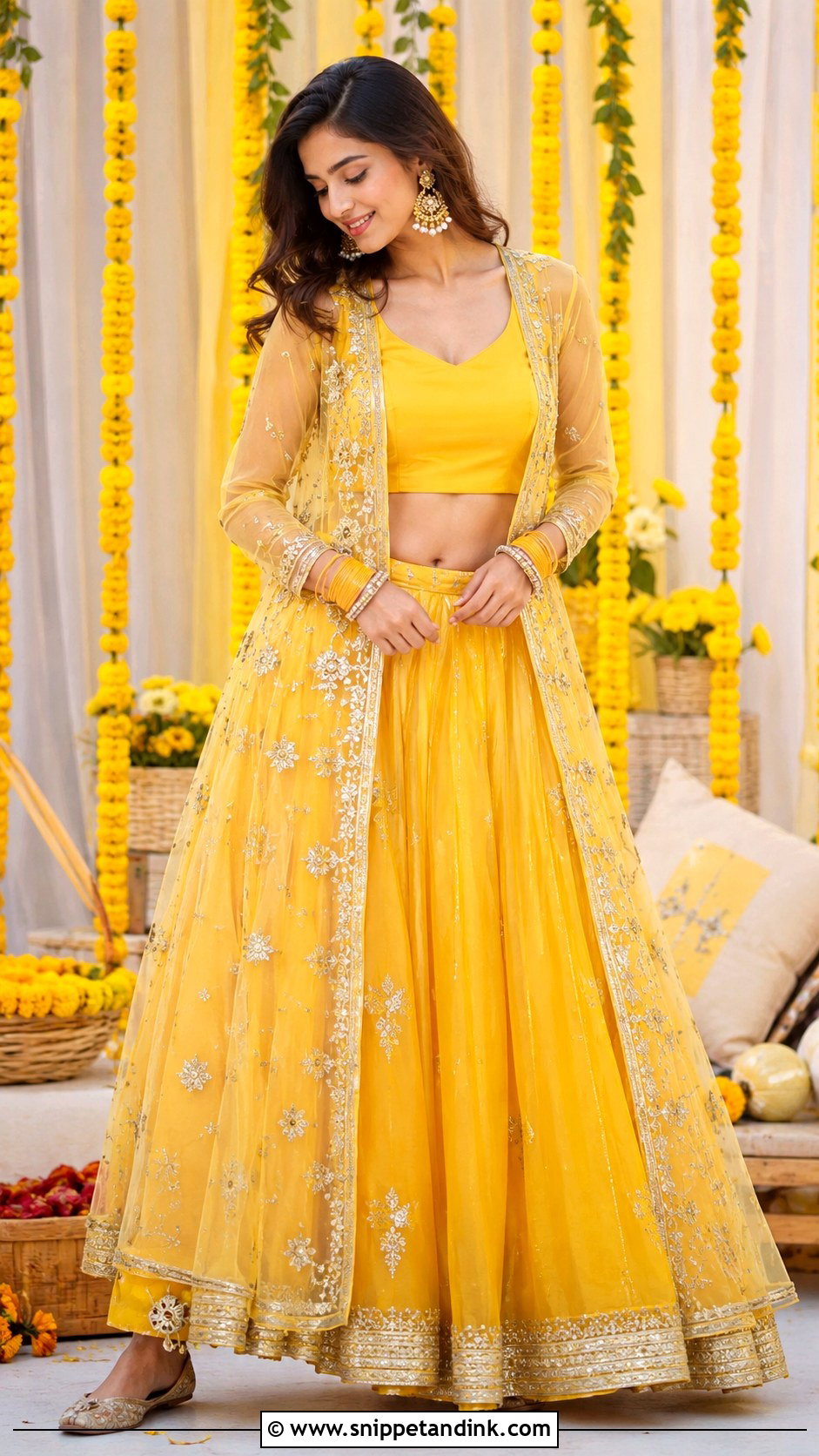
A jacket over a simple blouse and skirt gives you layering without a dupatta to manage, and it adds coverage for women who want it. Short, long, sheer, embroidered or printed jackets all work. In summer, insist on georgette, organza or cotton silk; a lined brocade jacket at an outdoor noon Haldi is uncomfortable within the hour. Earrings, bangles and juttis are enough, because the jacket is already the statement.
22. Haldi Ruffle Saree
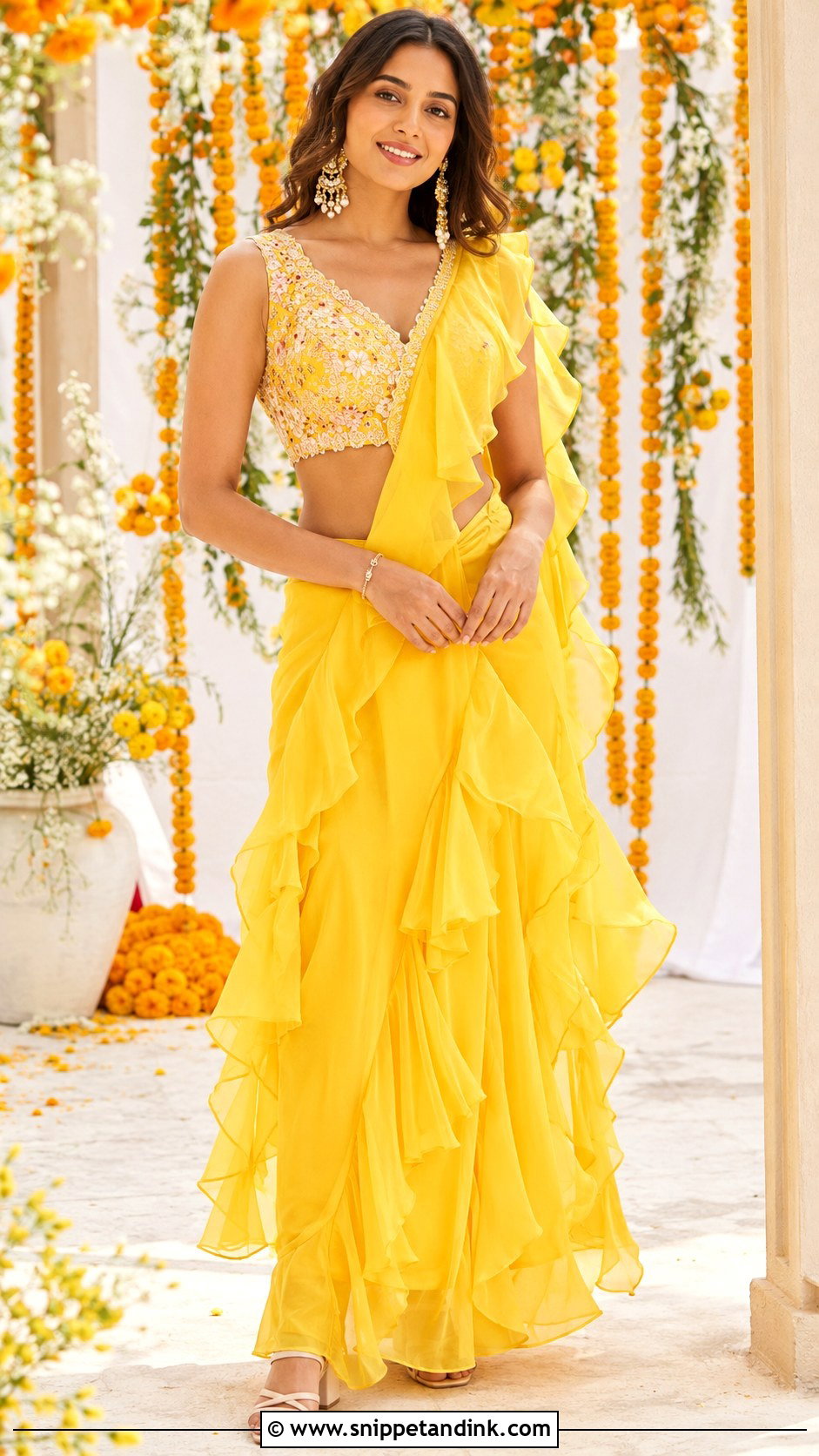
Ruffled sarees bring movement and volume from the border instead of embroidery. Yellow, peach-yellow or floral versions read bright in daylight. Because the ruffles already add texture, I keep the blouse simple and the jewelry to statement earrings. My one caution: layered ruffles at the hem drag through wet paste on the floor, so this is better on a guest than on someone sitting at the center of the ritual.
23. Haldi Angrakha Suit
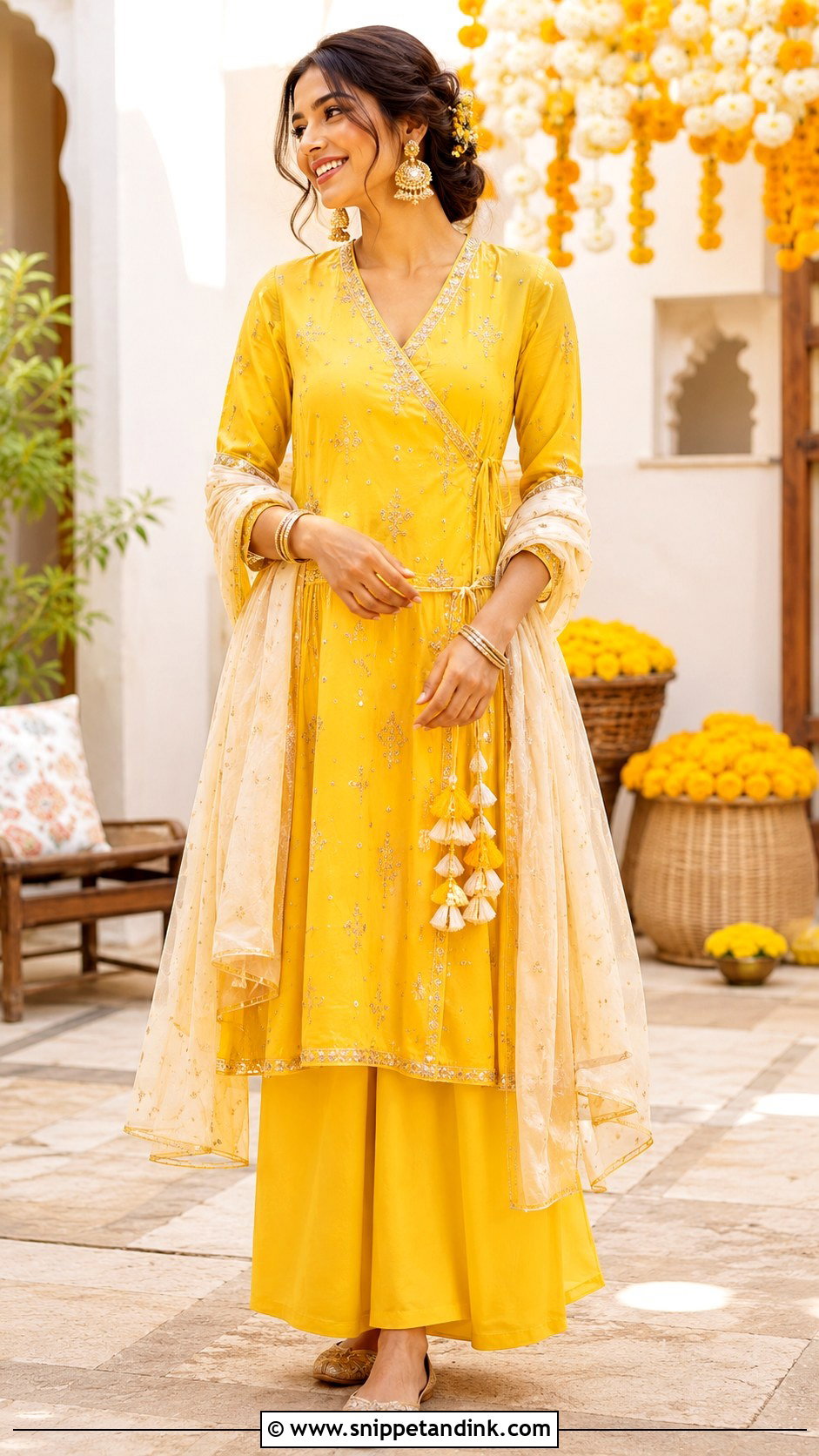
The angrakha closes with an overlapping wrap and side ties, which gently marks the waist and flatters most figures. Paired with palazzos, straight pants or a flowy skirt, it is relaxed and traditional at once. Block prints, gota borders, tassels and mirror accents suit the mood. I double-stitch or safety-pin the inner tie before an event, since a wrap that loosens while you dance is hard to fix discreetly.
24. Yellow Maxi Dress For Haldi
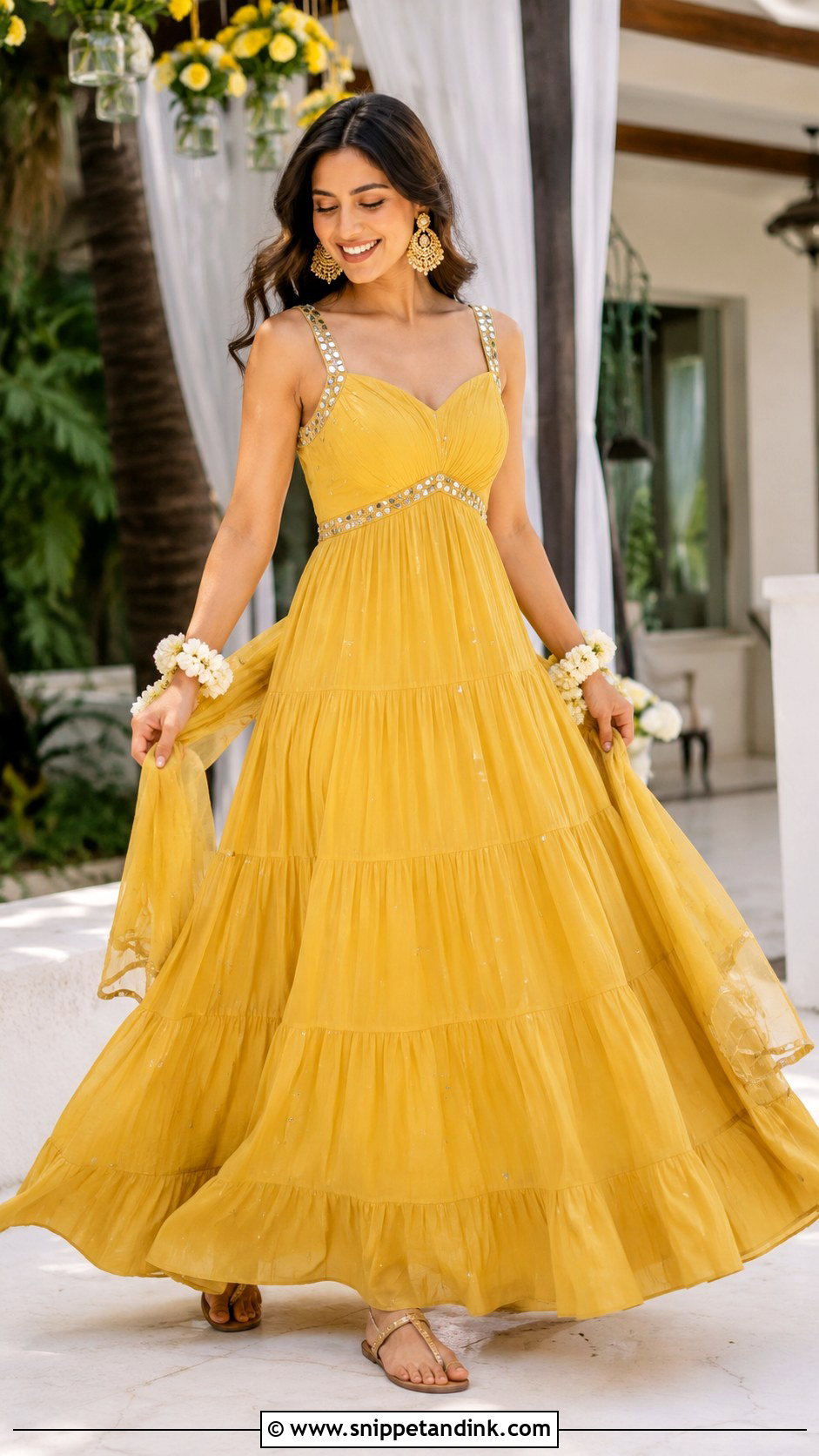
A yellow maxi is the easiest way to follow the color theme without a full ethnic set. Mirror straps, an embroidered waist, tassel ties or a floral print give it an Indian touch. Tiered cotton, georgette or muslin works for garden, beach and resort Haldis. Gold earrings, floral bangles and flat sandals keep it light, and a thin dupatta over one shoulder adds a traditional note when the hosts expect one.
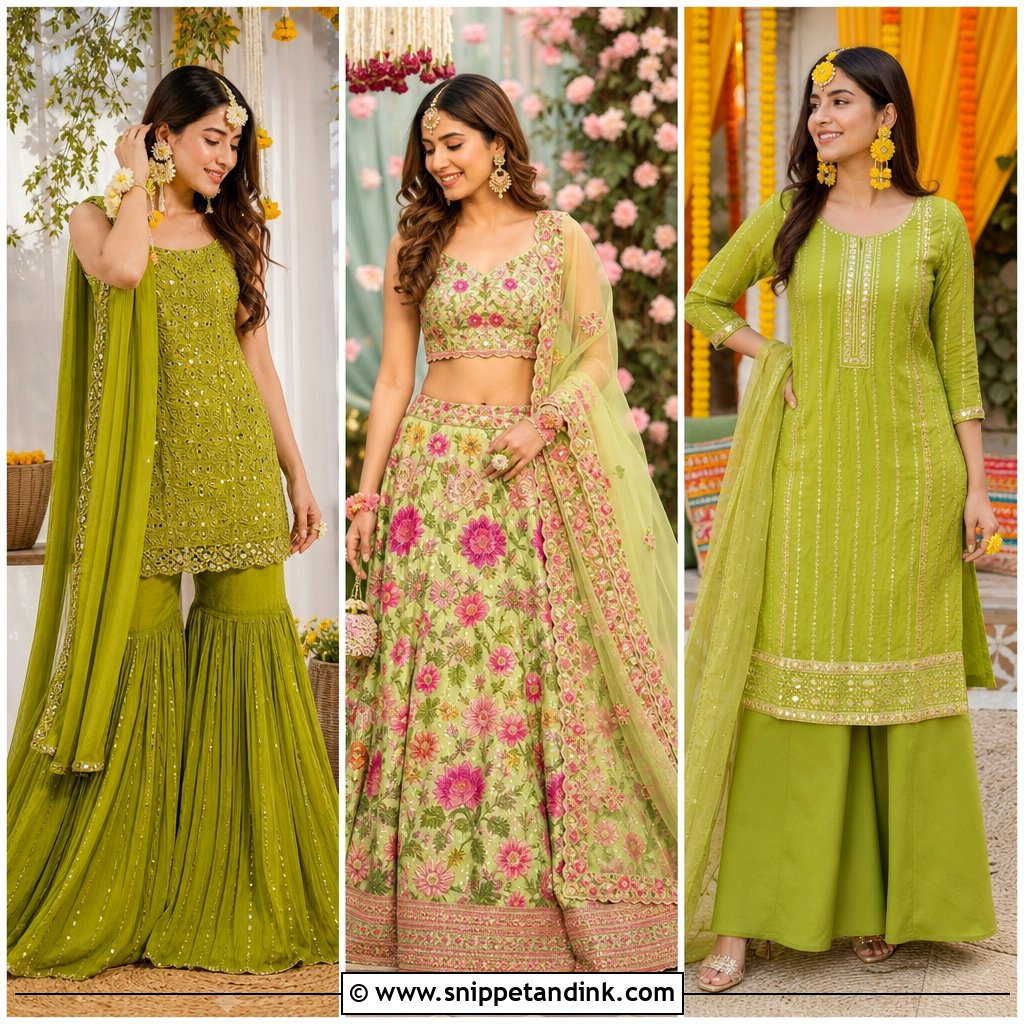

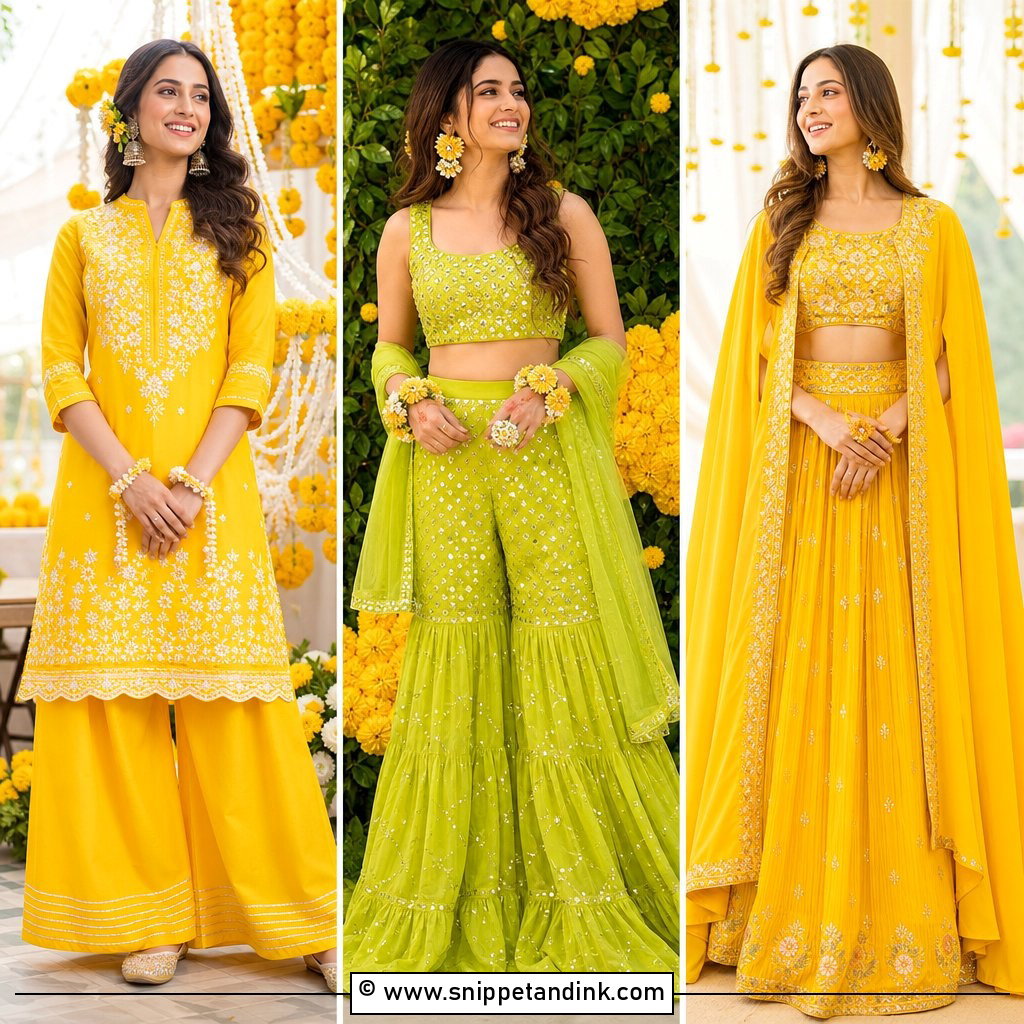
25. Haldi Banarasi Saree
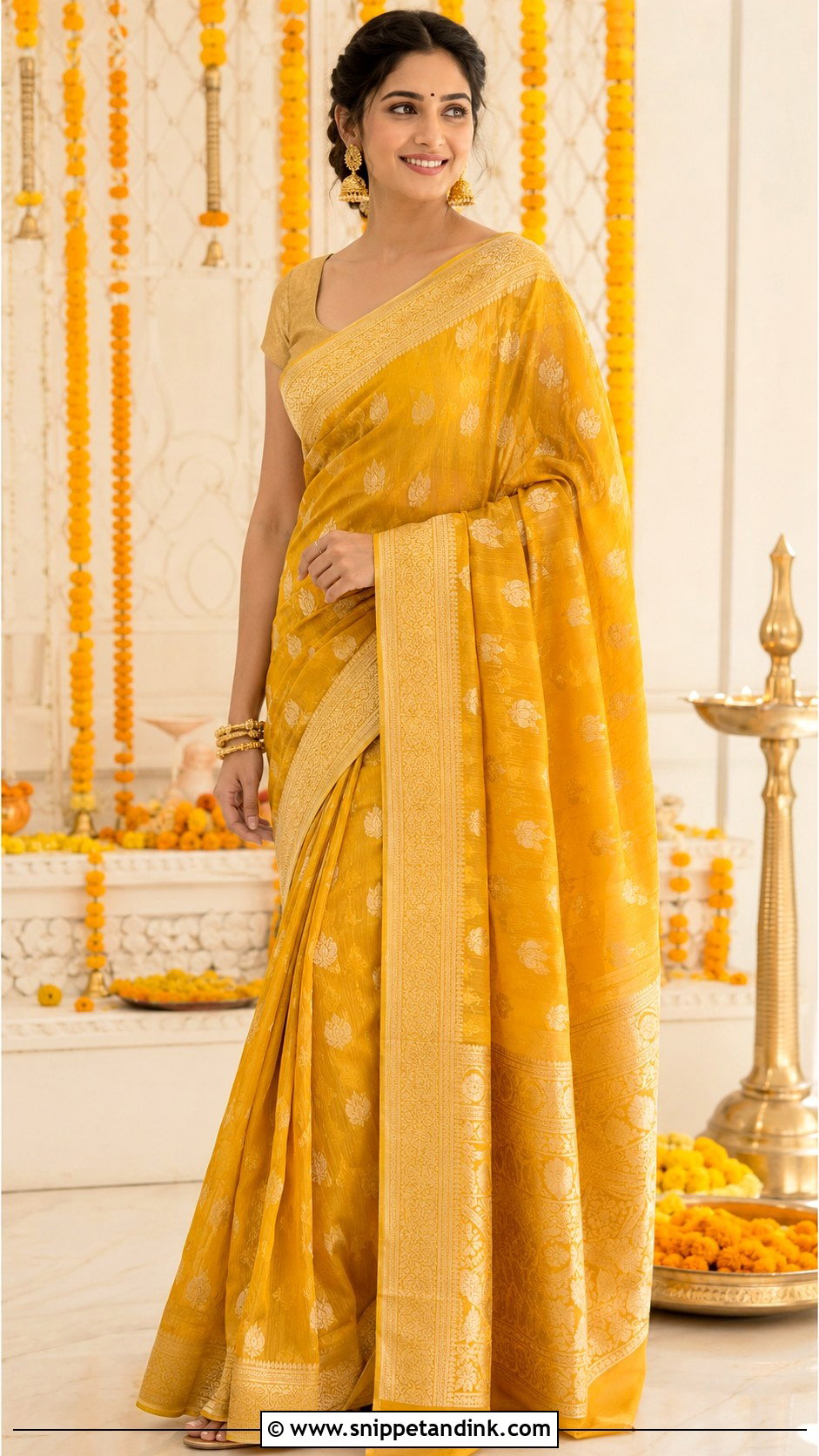
Banarasi silk belongs at the more formal, traditional Haldi. I’d go for a lightweight weave in yellow, mustard or gold rather than a heavy bridal one, both for comfort and because zari is expensive to clean. A plain blouse lets the weave lead, and gold jewelry, a small bindi and bangles complete it. Real silk Banarasi is dry-clean territory, so tell your cleaner about any turmeric marks right away; the longer they sit, the harder they are to lift.
26. Haldi Short Kurta Sharara
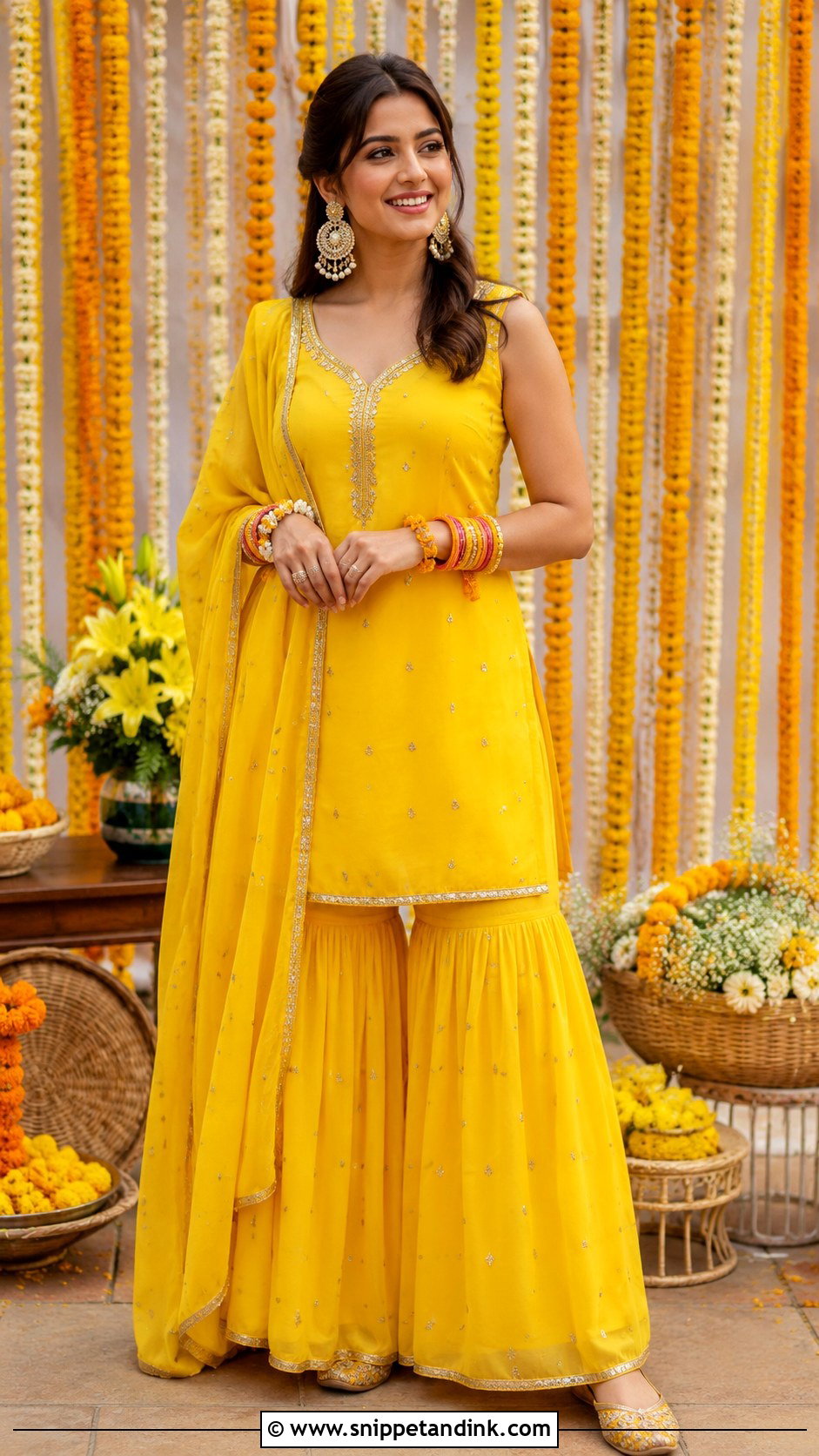
A short kurta over a sharara keeps the top half light and gives all the flare to the bottom, which makes it airy in summer and easy to dance in. Bright yellow, mustard, mango or yellow-and-white combinations with embroidery or gota trim all fit. Pin the dupatta neatly, add chandbalis, colorful bangles and juttis, and it works for the cousins who will be dancing and helping out all afternoon.
27. Yellow Indo Western Haldi Outfit
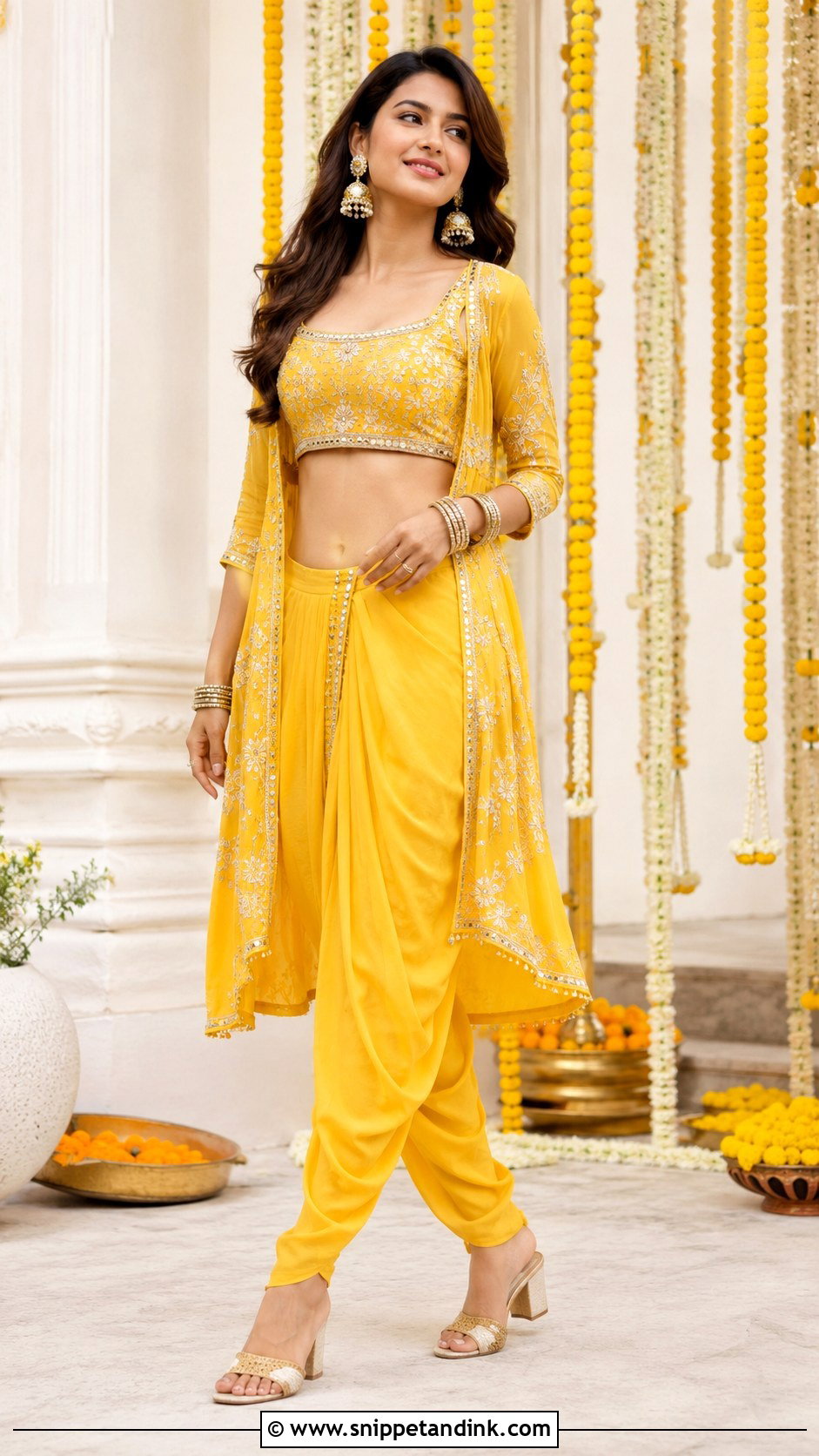
A yellow Indo western Haldi outfit mixes tradition with a fashion edge: a crop top with dhoti pants, a draped skirt with a cape blouse, or palazzos with an embroidered bustier and jacket. The rule I follow is bright color and an easy silhouette, nothing that has to be held in place. Jhumkas, bangles or a potli bag tie it back to the wedding. It suits modern brides and bridesmaids who want something other than a lehenga or saree.
28. Haldi Pastel Yellow Lehenga
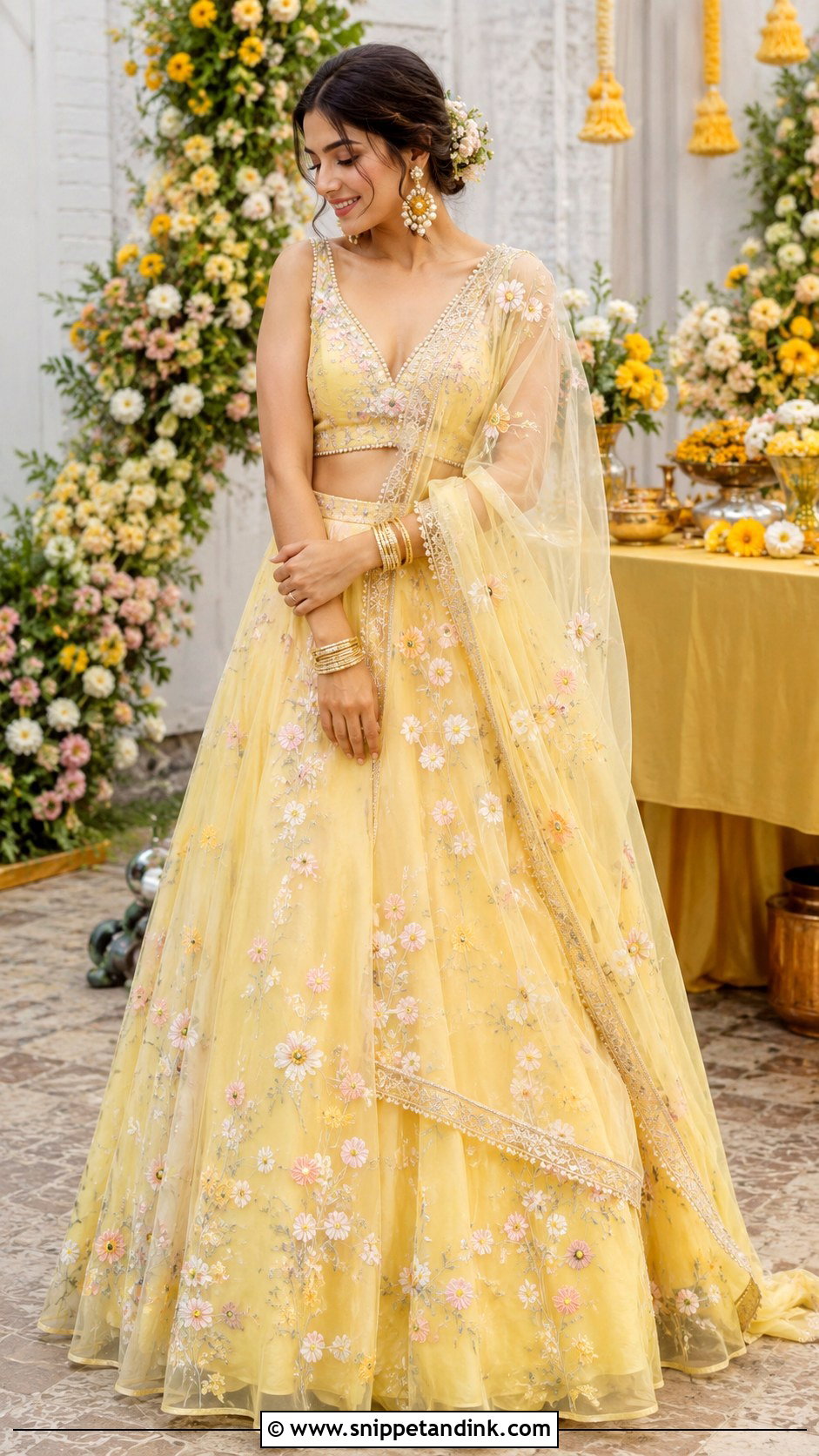
Pastel yellow is gentler than marigold and suits brides who find bright yellow harsh against their skin. Organza, net, chiffon or georgette with floral embroidery, pearl work or fine sequins keeps it airy. One thing I flag at fittings: pastel shows turmeric more than any other shade here, so plan a change of outfit straight after the ritual if you also want clean photos. Keep makeup fresh and natural so the pale color is not overpowered.
29. Haldi Yellow And Pink Outfit
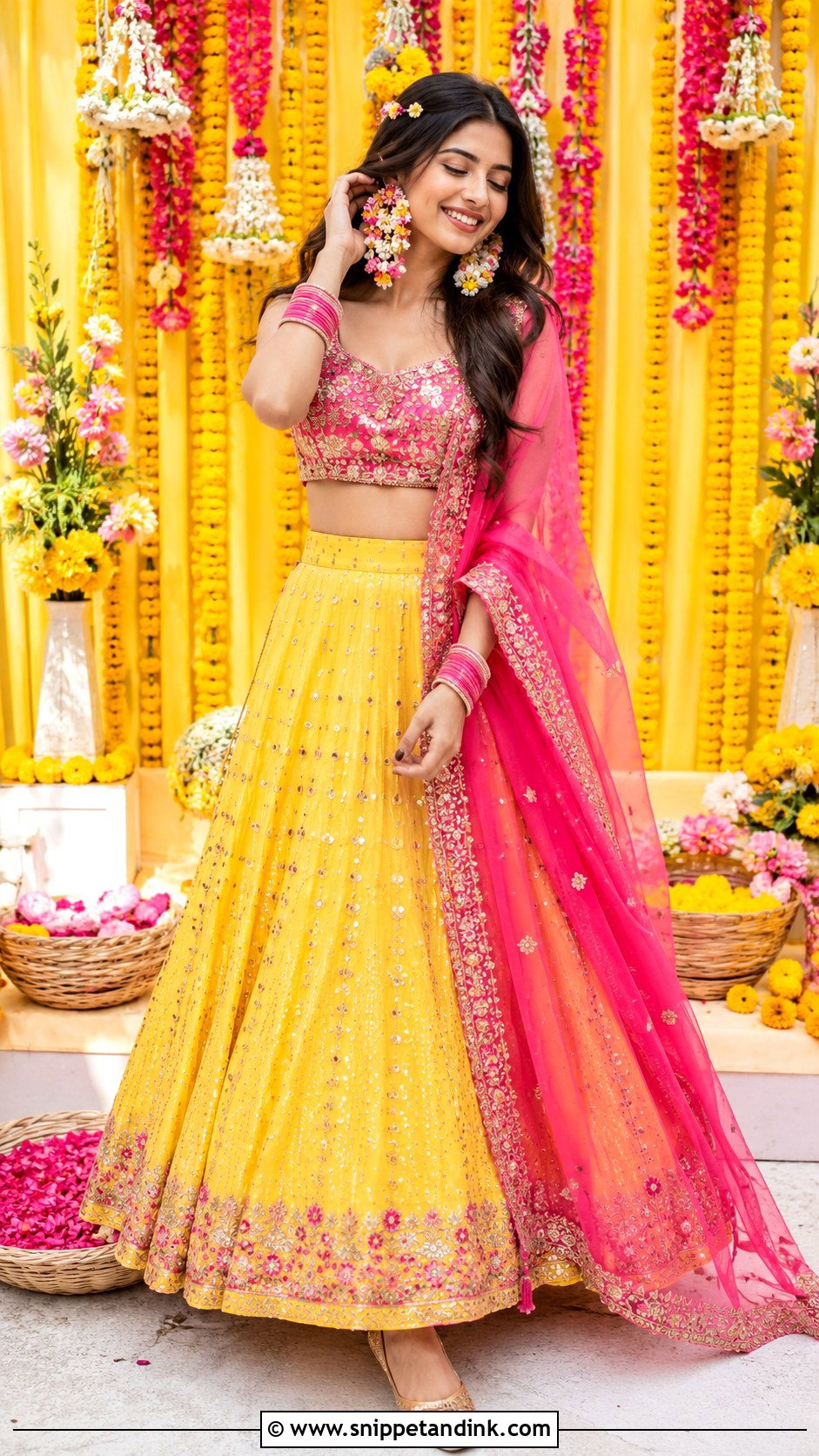
A Haldi yellow and pink outfit is brighter than a single-color look and plays well against marigold decor. A yellow lehenga with a pink dupatta, a pink blouse with a yellow skirt, or a printed sharara mixing the two all work. The trick is to keep one color dominant, roughly two-thirds yellow, so it reads as Haldi rather than mehndi. Keep the silhouette comfortable for sitting, and finish with pink bangles, floral earrings and gold juttis.
30. Haldi Yellow And Green Outfit
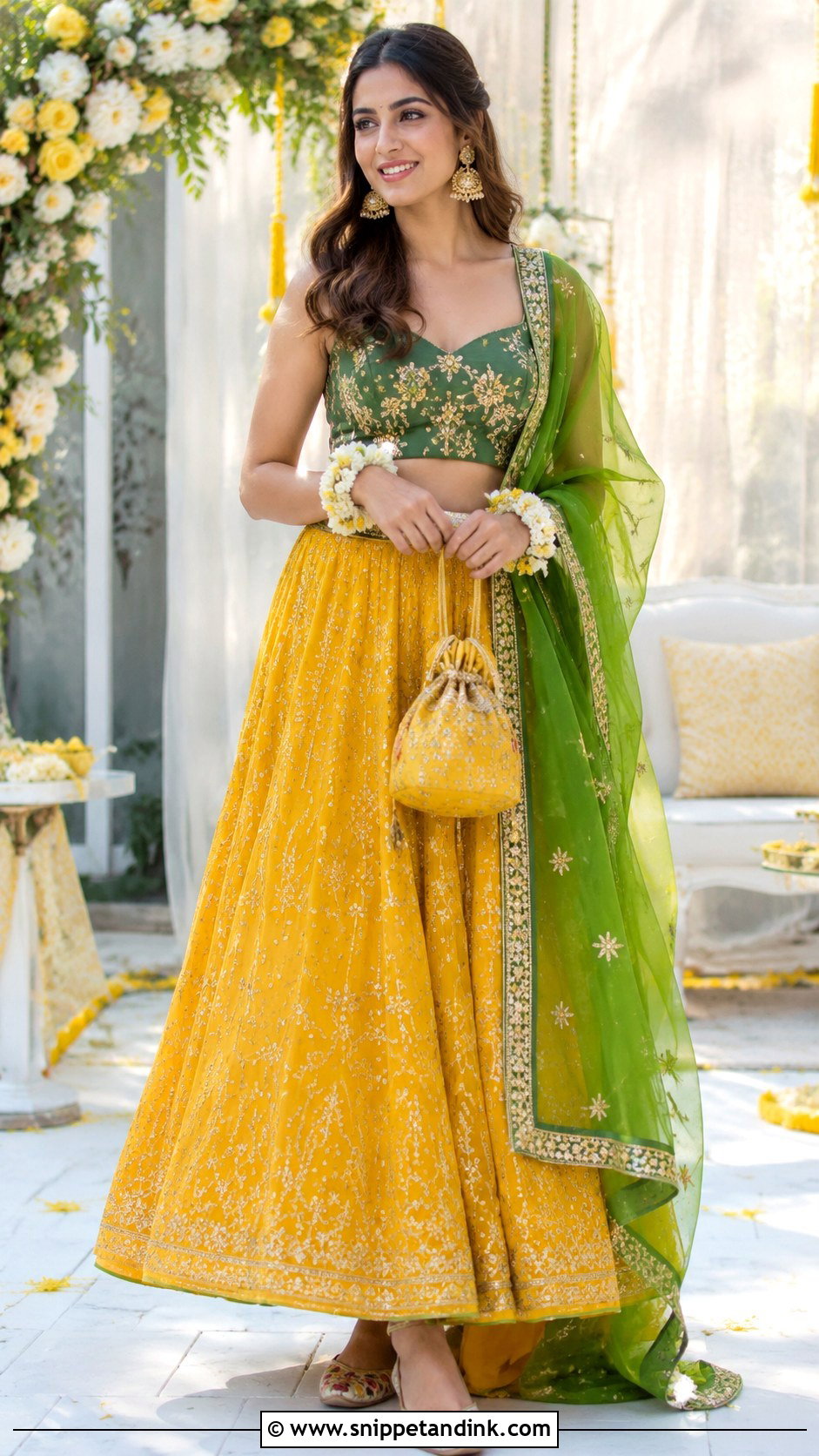
Yellow keeps the outfit true to the ceremony, and green adds depth, which matters in group photos where a sea of yellow can flatten. A yellow kurta with a green dupatta, a green blouse with a yellow lehenga, or a saree printed with both all work well. Leaf green is fresher than bottle green in daylight. Floral jewelry and gold accessories suit the pairing, with juttis or low heels underfoot.
Getting Turmeric Out Without Setting the Stain
Turmeric reacts to alkali. Ordinary bar soap and many powder detergents turn a yellow mark reddish brown, and plenty of people panic at that point and scrub harder. The order I give clients is simple.
- Scrape off any dried paste gently with a blunt edge before it gets wet.
- Rinse from the back of the fabric under cold water. Hot water helps the dye bond.
- Work a drop of mild dish liquid in with your fingertips, then rinse again.
- For washable cotton, dry it in direct sunlight. The pigment fades noticeably in strong light.
- Silk, Banarasi, zari and anything with mirror work goes straight to a dry cleaner, with the stain pointed out.
Act the same day if you can. A turmeric mark that sits for a week on silk is often there for good.
Who Wears What at the Ceremony
Yellow is the expected color, but guests do not all need to wear it. In many families the bride and the immediate family wear the strongest yellow, and guests choose softer shades, prints or a yellow accent. Some hosts send a color note with the invitation, and when they do, I follow it. If nothing is mentioned, a yellow or floral outfit that is clearly less ornate than the bride’s is the safe guest choice. It is also worth asking whether the ceremony is at home on the floor or at a venue with chairs, because that one detail changes which silhouettes from the list make sense.
Will Your Haldi Outfit Survive the Paste and the Dancing?
Every outfit above comes back to the same test: can you sit, hug, dance and get smeared with turmeric without spending the afternoon fixing your clothes? Breathable fabric, a secured dupatta, flat shoes and a color that forgives a stain matter more than how heavily something is embellished. Pick the silhouette that fits your role at the ceremony, bride, sister, bridesmaid or guest, then let the yellow and the flowers do the celebrating.
You'll Like These Ideas:








Leave a Reply