
Indian weddings ask more of hair than almost any other celebration: several functions, heavy jewelry pinned into the parting, a dupatta resting on the crown and hours of dancing in warm rooms. Curls handle that load better than people assume, because textured hair grips pins and holds volume without endless backcombing. As the bride, a bridesmaid, the sister of the bride or a guest, you can wear curls with a lehenga, saree, sharara or gown. What decides the style is the event, the jewelry, the neckline, where the dupatta sits and your own curl pattern. Below are twenty curly looks I’d build for these functions, with notes on how each one carries the weight.
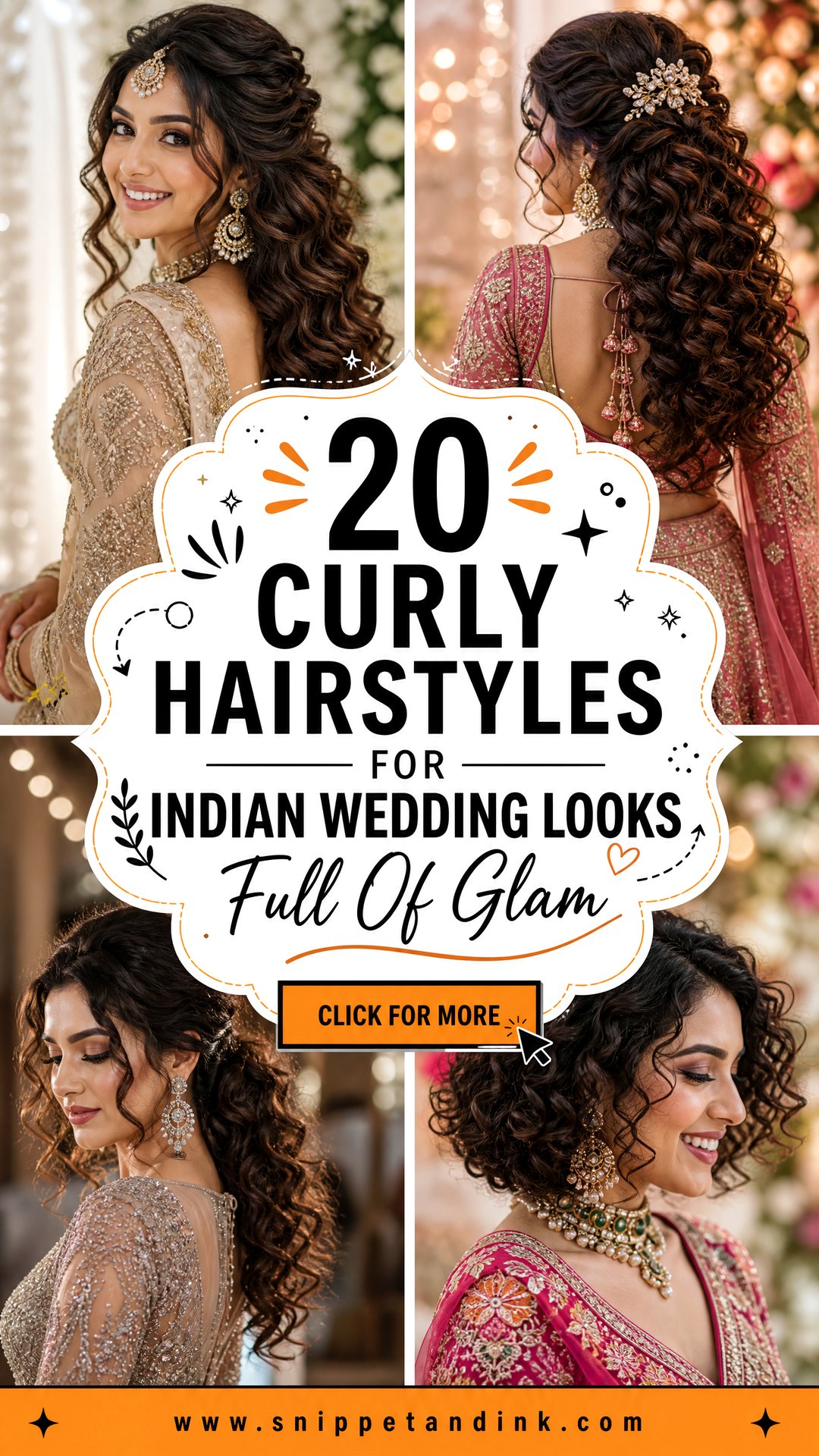
Planning Curly Hair Across Haldi, Mehendi, Sangeet and the Pheras
A wedding spread over three or four days changes how I plan curly hair. Curls look best a day after washing, but you can’t wash before every function, and the haldi ceremony coats hair in turmeric paste and oil. I map the wash days to the events before any style is chosen.
- Wash and define the day before the main ceremony, so the curls are at their best for the most photographed event.
- For haldi, wear a simple braid or bun you don’t mind getting messy, then rinse the paste out with plenty of conditioner; turmeric dries curls and can tint light or highlighted hair.
- Between functions, sleep in a loose pineapple on silk and refresh with water and a little cream instead of a full wash.
- Keep the most structured style, a bun or juda, for the ceremony, and save open or high styles for events where nothing sits on your head.
If you’re getting your hair oiled as part of the pre-wedding rituals, do it at least two days before the main event. Oil left in curls makes pins slip and flattens the volume you need for a bun.
1. Curly Bridal Bun For Indian Wedding
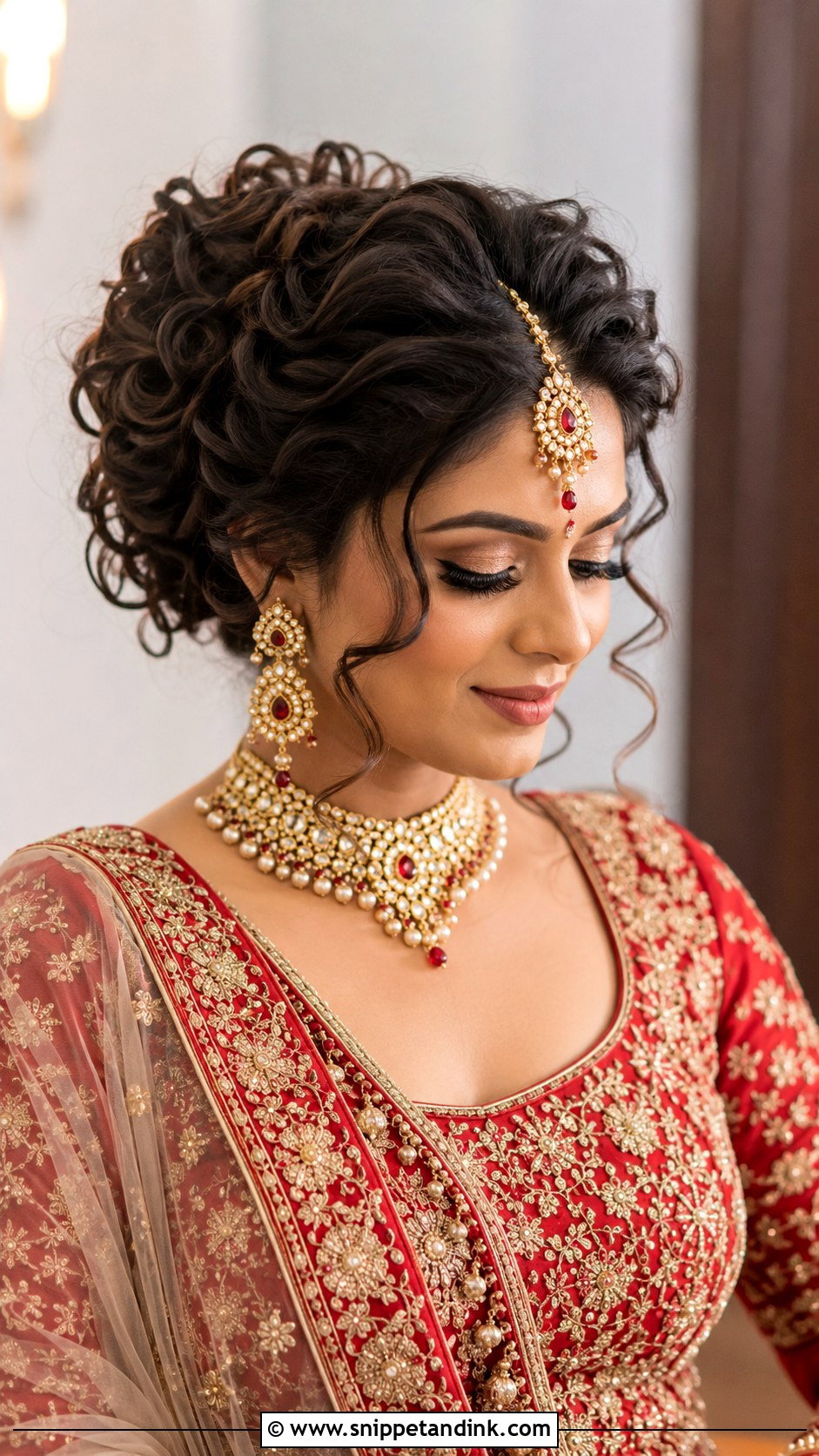
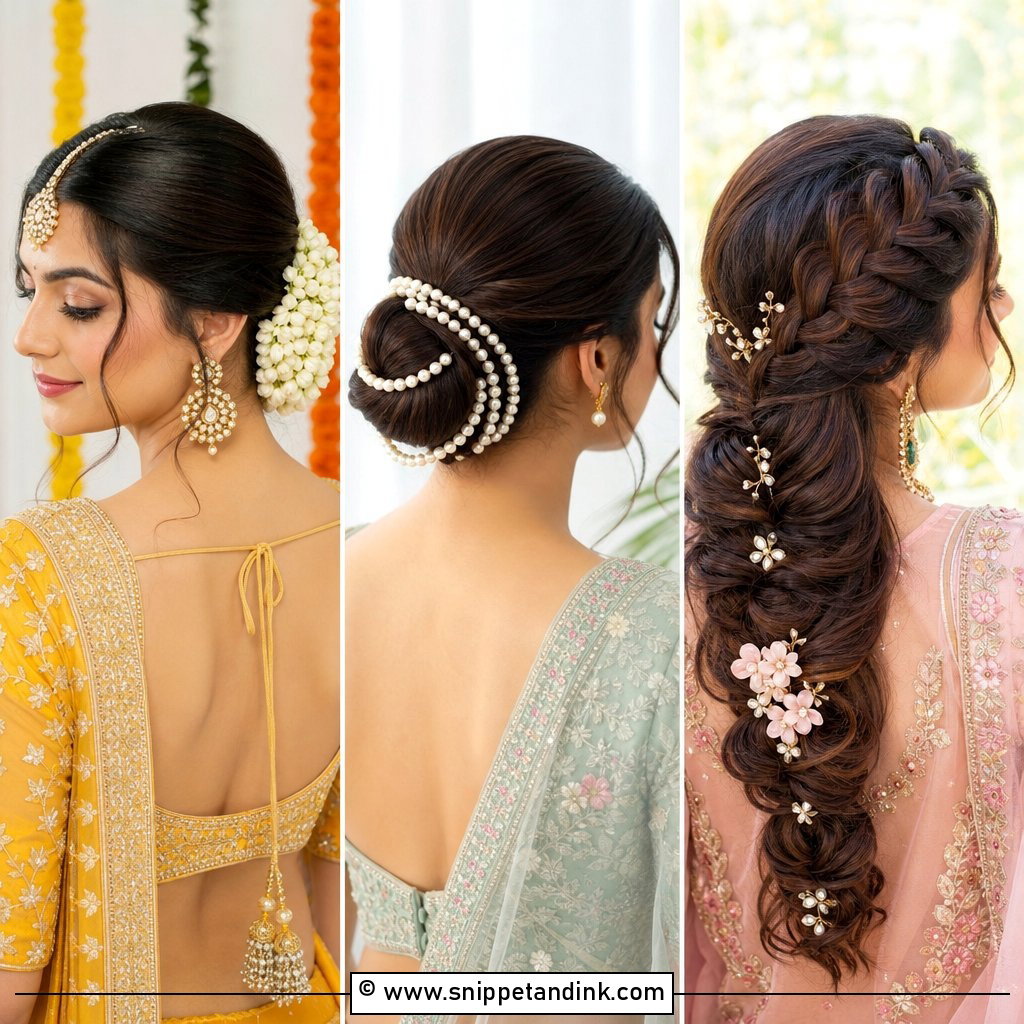
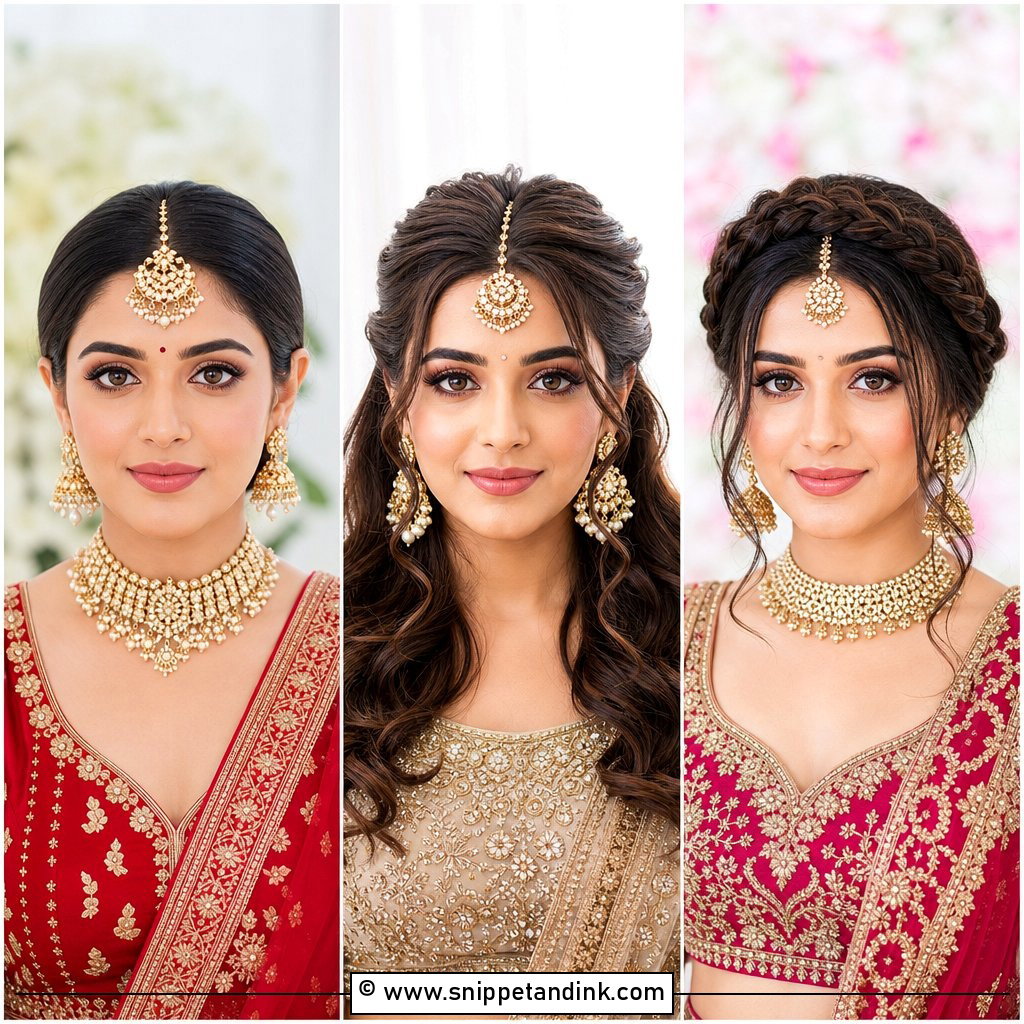
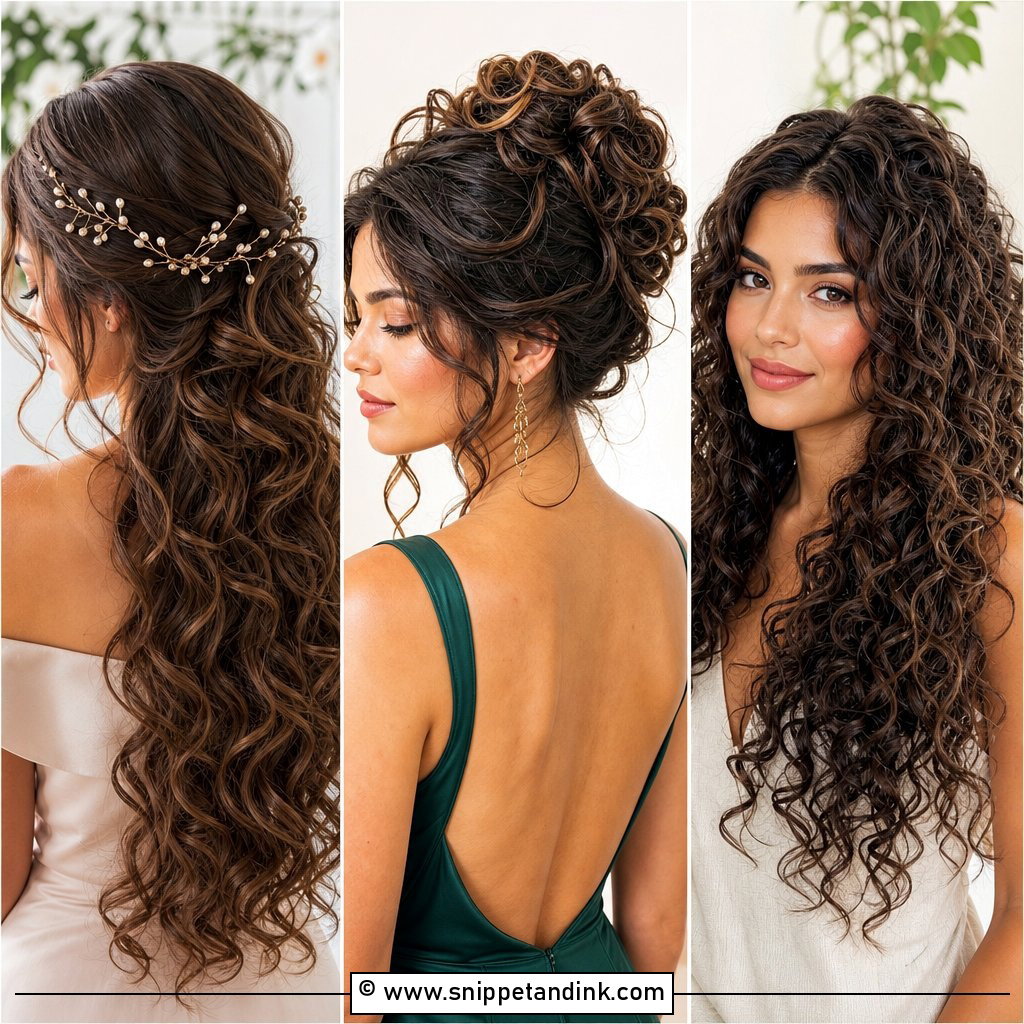
For the main ceremony, a curly bridal bun is the style I trust most, because it gives the jewelry and dupatta a firm base. I gather the curls into a soft, rounded bun at the back or just above the nape and pin each section through to the hair underneath rather than only into the bun. The crown stays smooth enough for a maang tikka, matha patti or veil to sit flat. A few face-framing curls soften it. For a long muhurat, ask for strong pins, light curl cream and a flexible spray; a stiff lacquer cracks and flakes once the dupatta rubs against it.
2. Curly Half Up Half Down Hairstyle For Indian Wedding
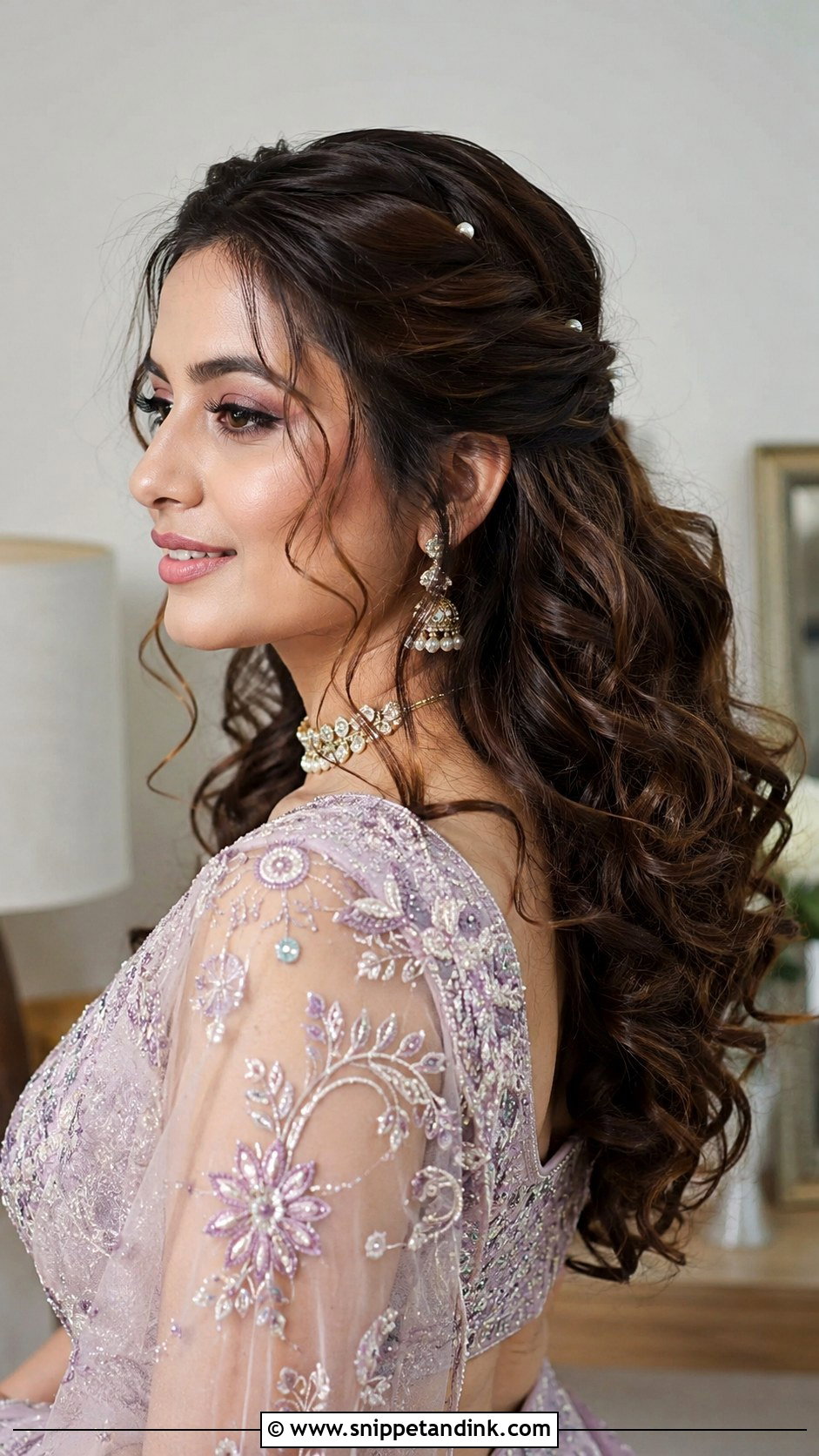
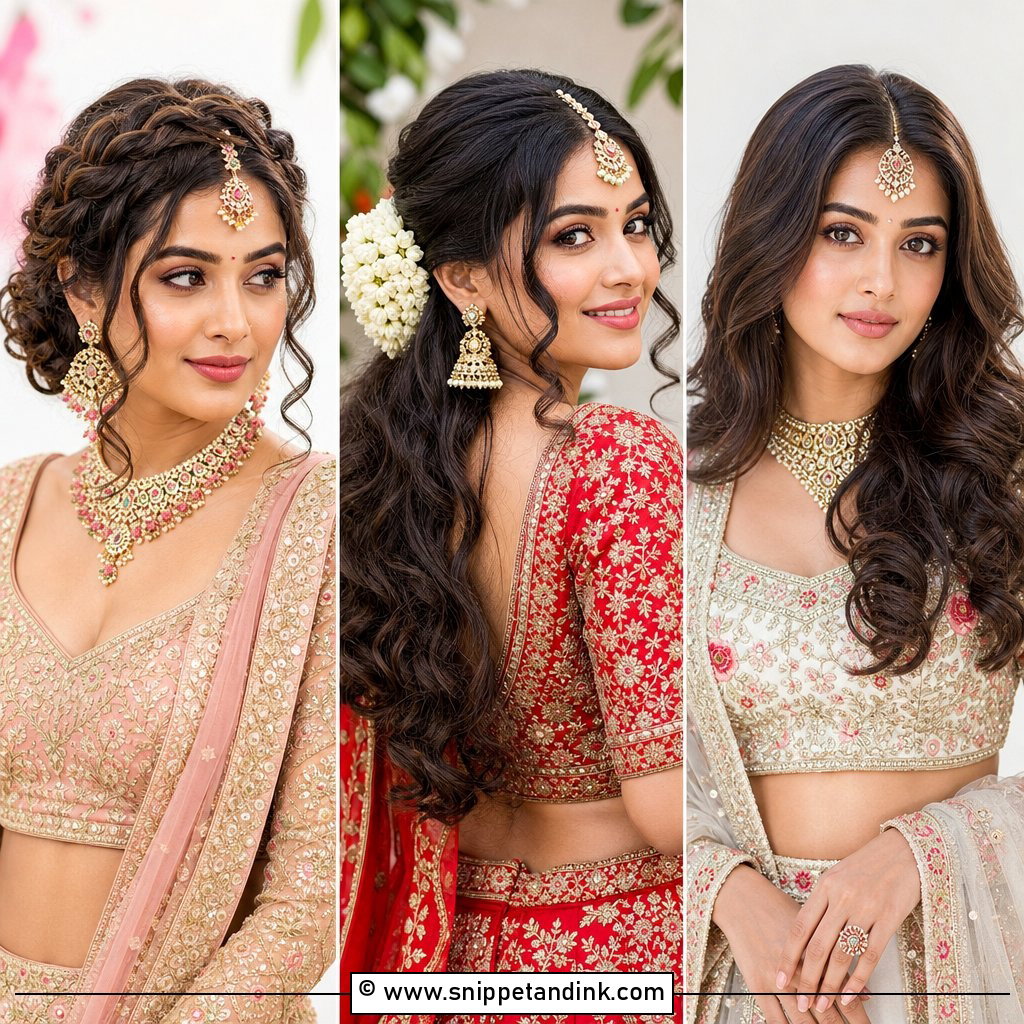
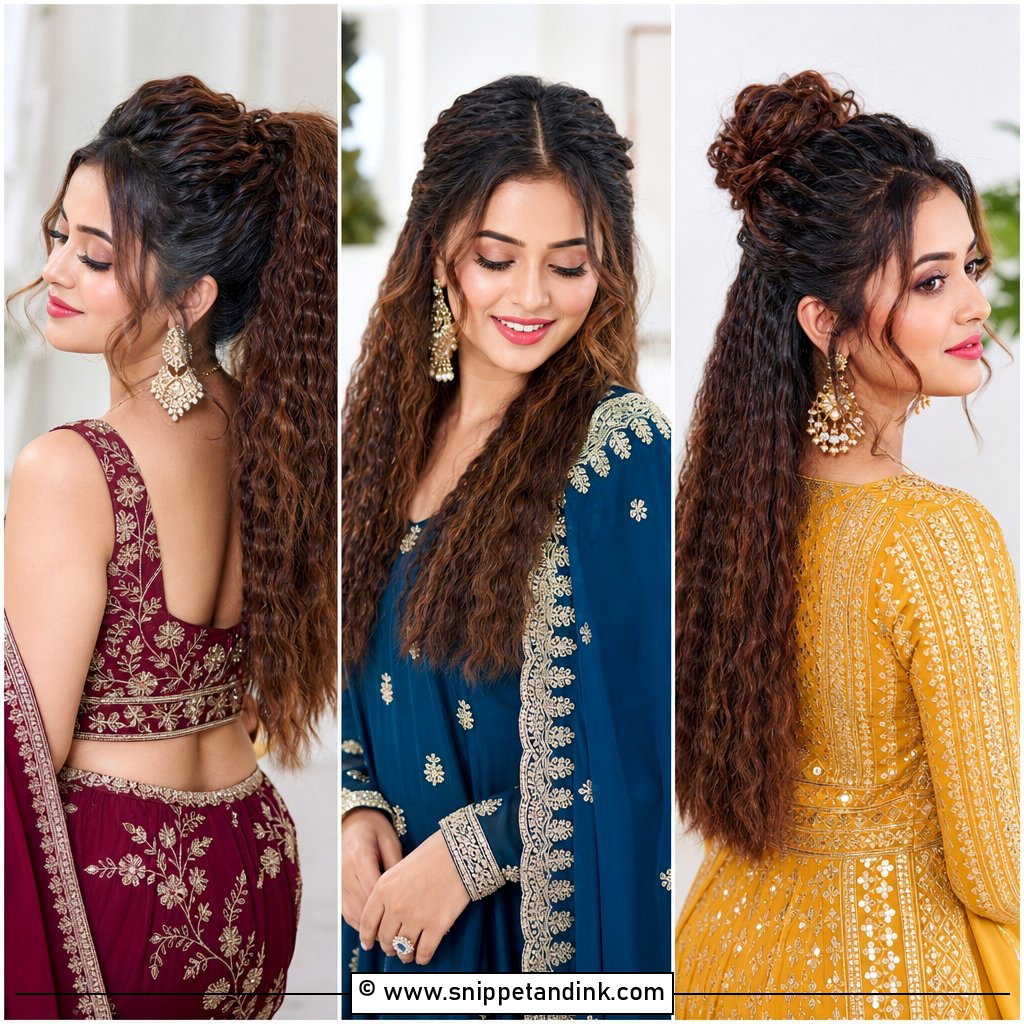
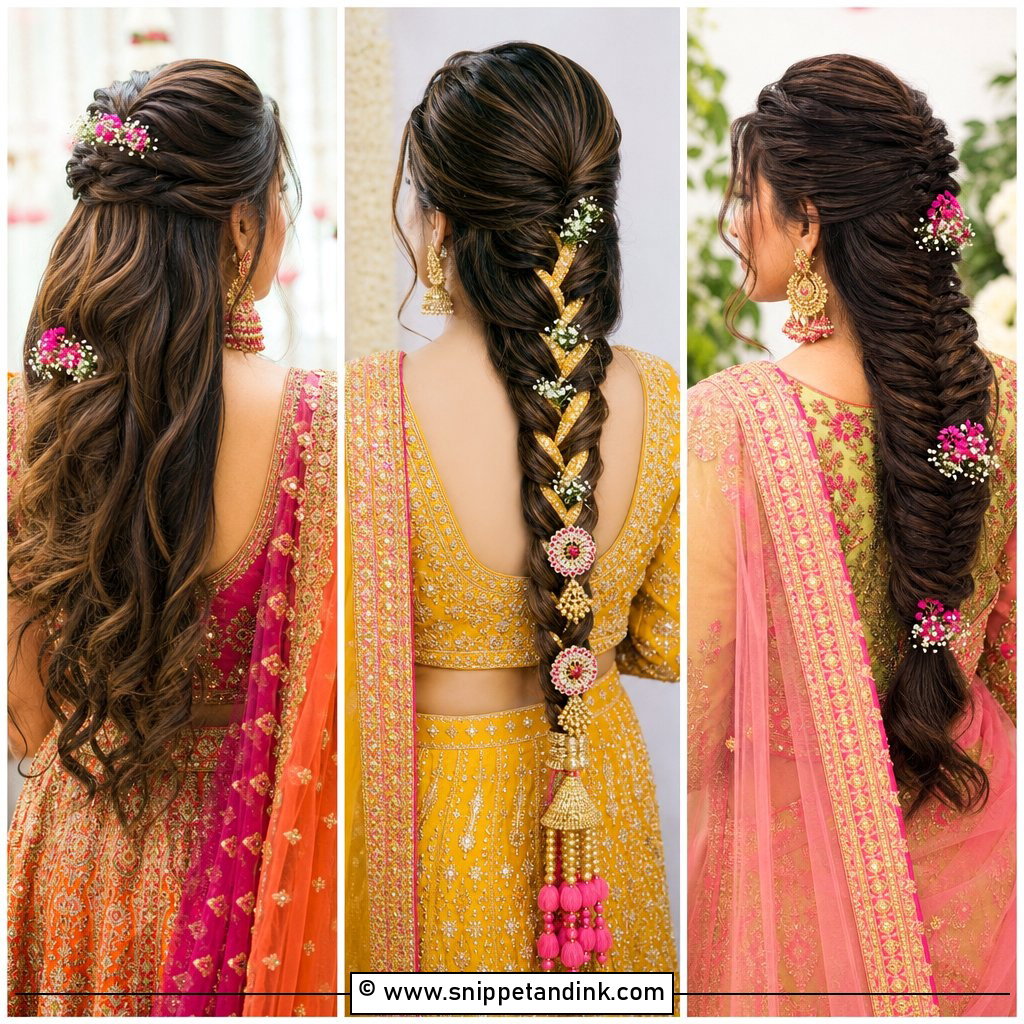
Half up keeps the curls visible and the front off your face, which is useful when you’ll be bending forward through rituals. I twist or braid the top at the crown and leave the lower curls over the shoulders. With a dupatta, this is gentler than fully open hair: the pinned top takes the fabric, so the curls below aren’t flattened. It sits well with lehengas, sarees and Indo-western outfits. Small flowers, pearls or a jeweled clip at the back finish it.
3. Curly Open Hairstyle For Indian Wedding
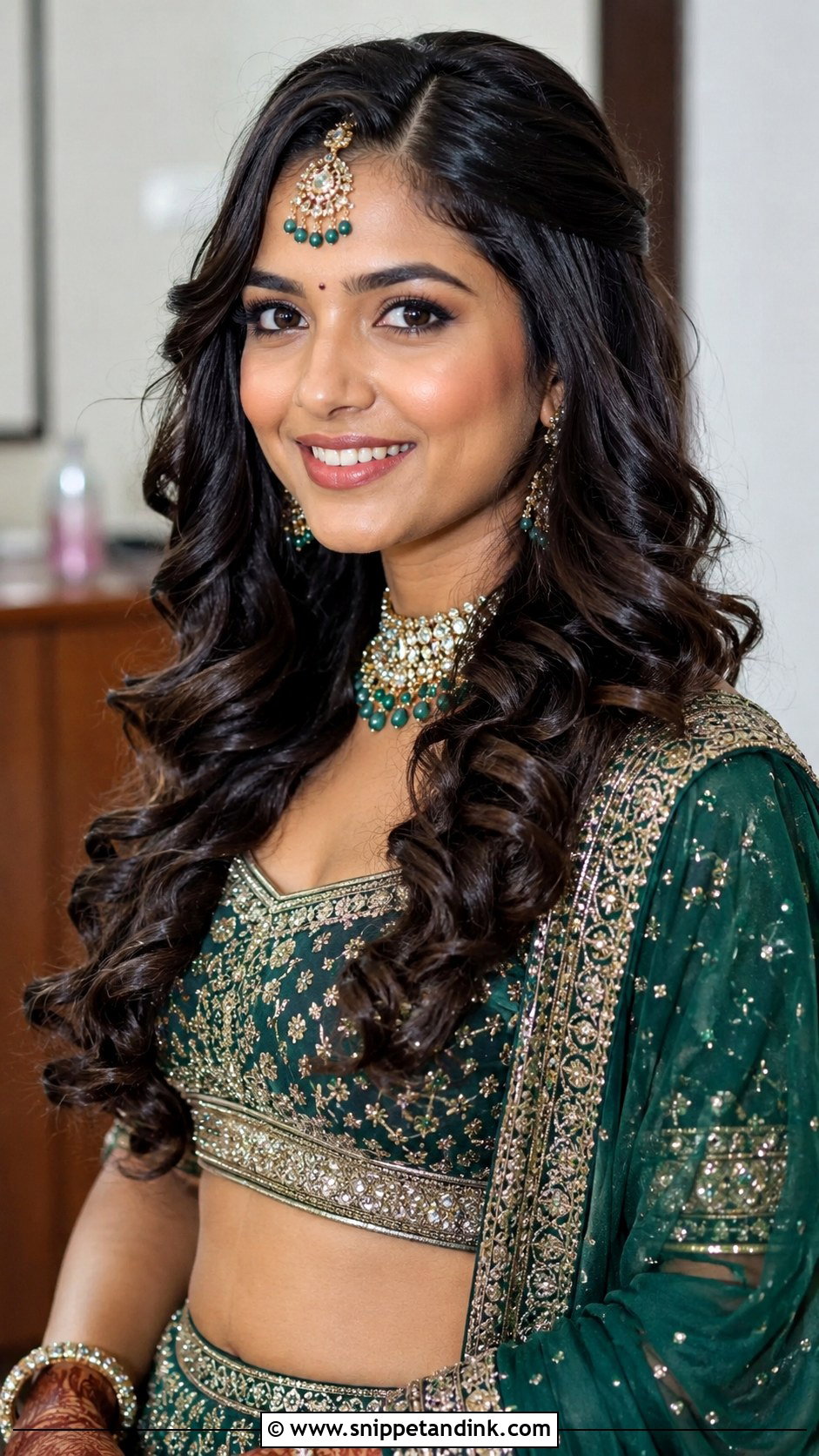
Open curls only look dressed for a wedding when the shape is deliberate. I want defined curls, a clean part, smooth roots and volume balanced on both sides of the face. It suits mehendi, sangeet and the reception, or a bridesmaid who doesn’t want much pinning, and it pairs with statement earrings and a light dupatta over one shoulder. Refresh the curls with mousse or gel before styling. I usually pin two small sections at the temples out of sight; otherwise curls fall forward every time you lean in for a photo.
4. Curly Side Swept Hairstyle For Indian Wedding
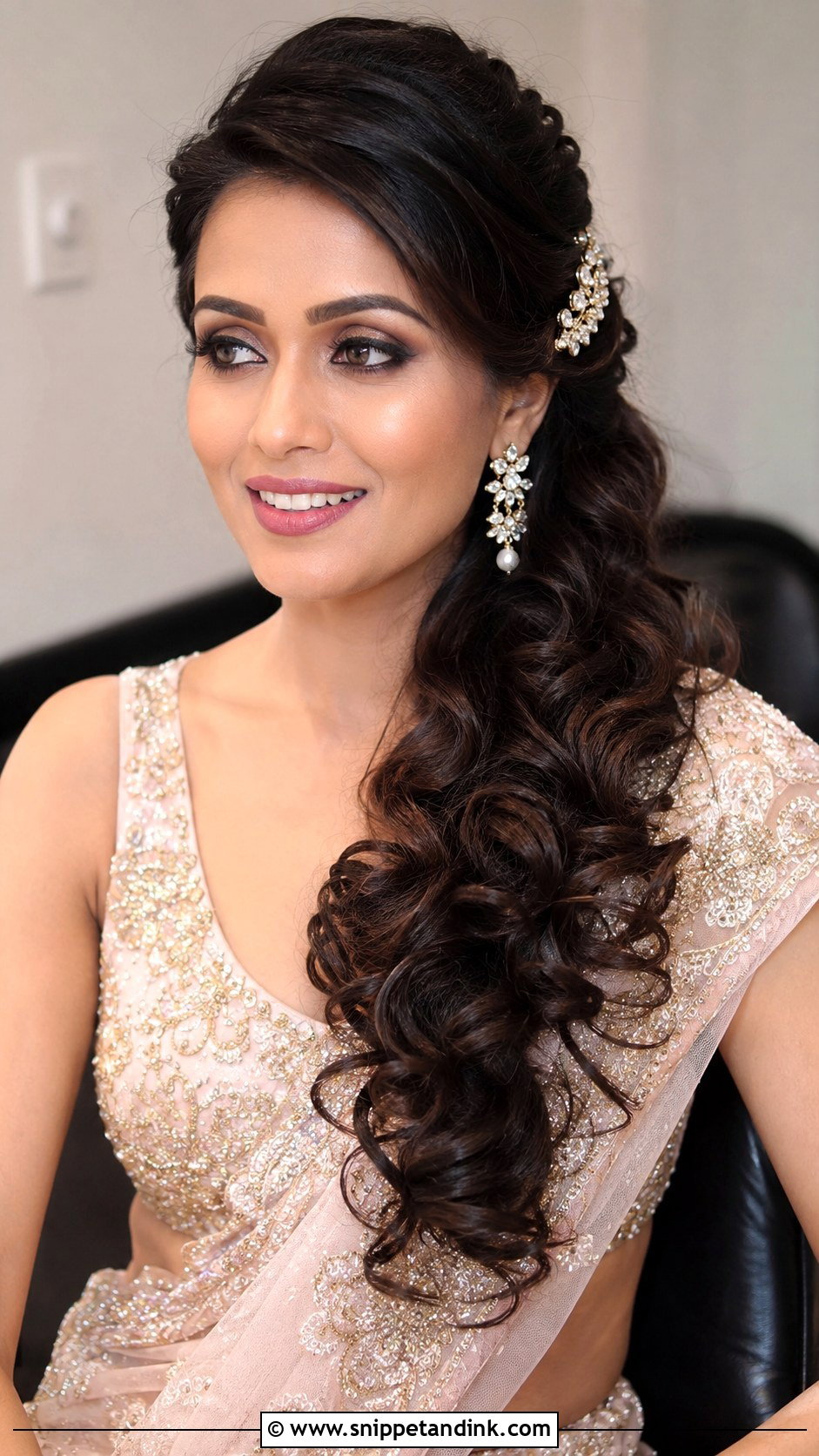
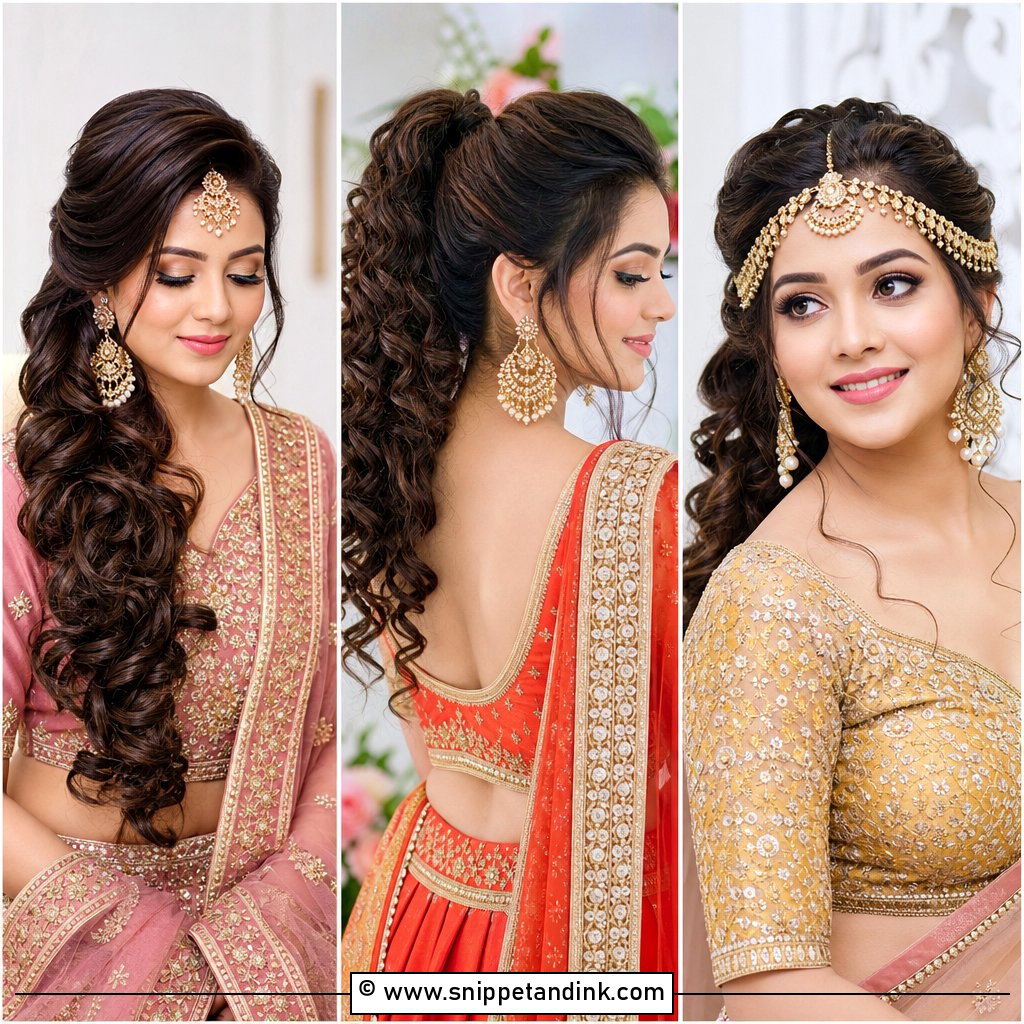
Swept to one side, curls show from the front and frame the face for reception gowns and embroidered necklines. The hidden work is a line of crossed pins on the bare side that the curls hang from; without it the weight slides back by the second hour. A side part and a little lift at the crown keep the shape balanced. A passa-style accessory on the swept side looks festive, though a heavy passa needs its own anchor pins so it doesn’t drag the curls down with it. A decorative comb or a few fresh flowers are lighter alternatives.
5. Curly Low Bun For Indian Wedding
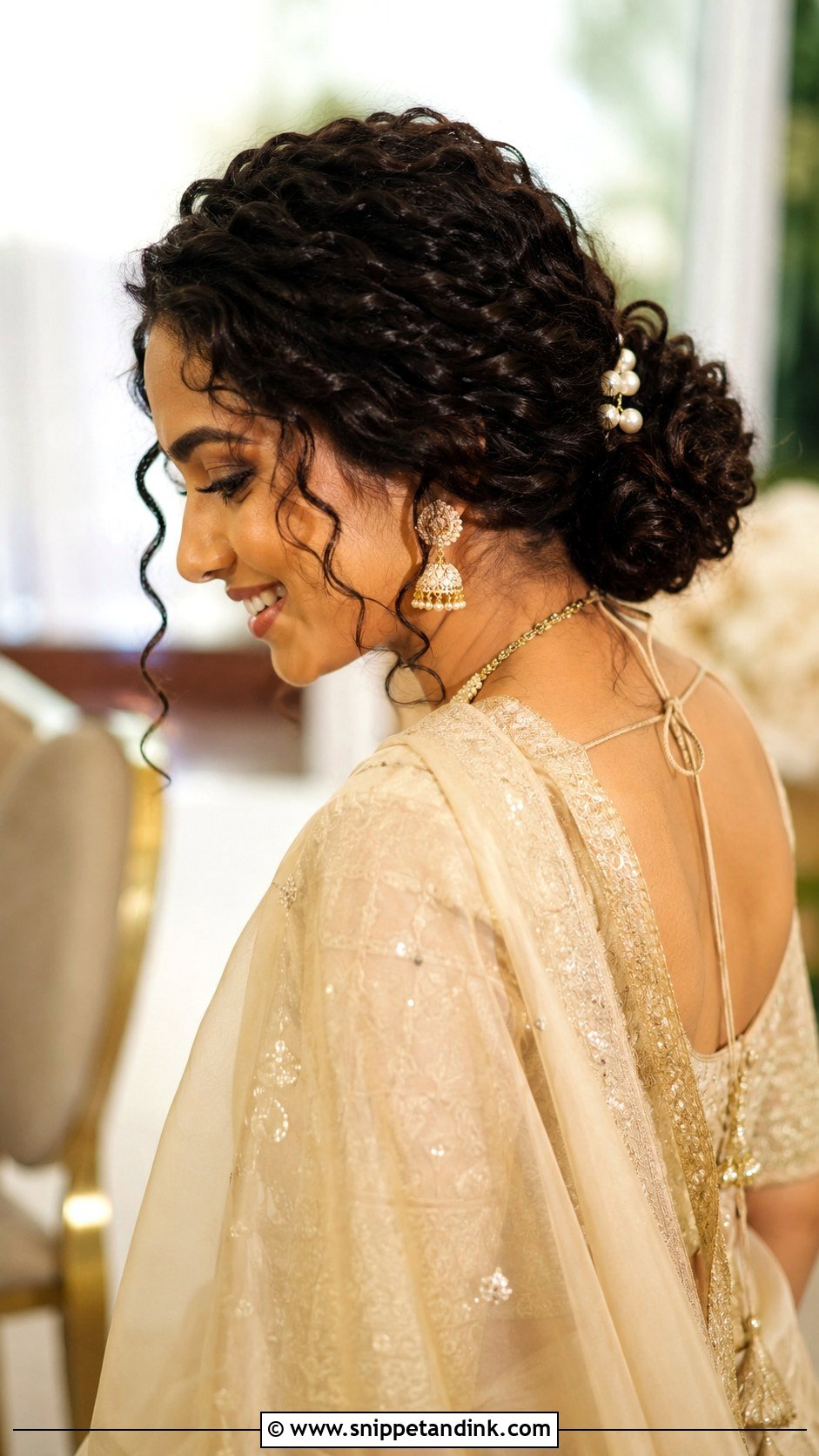
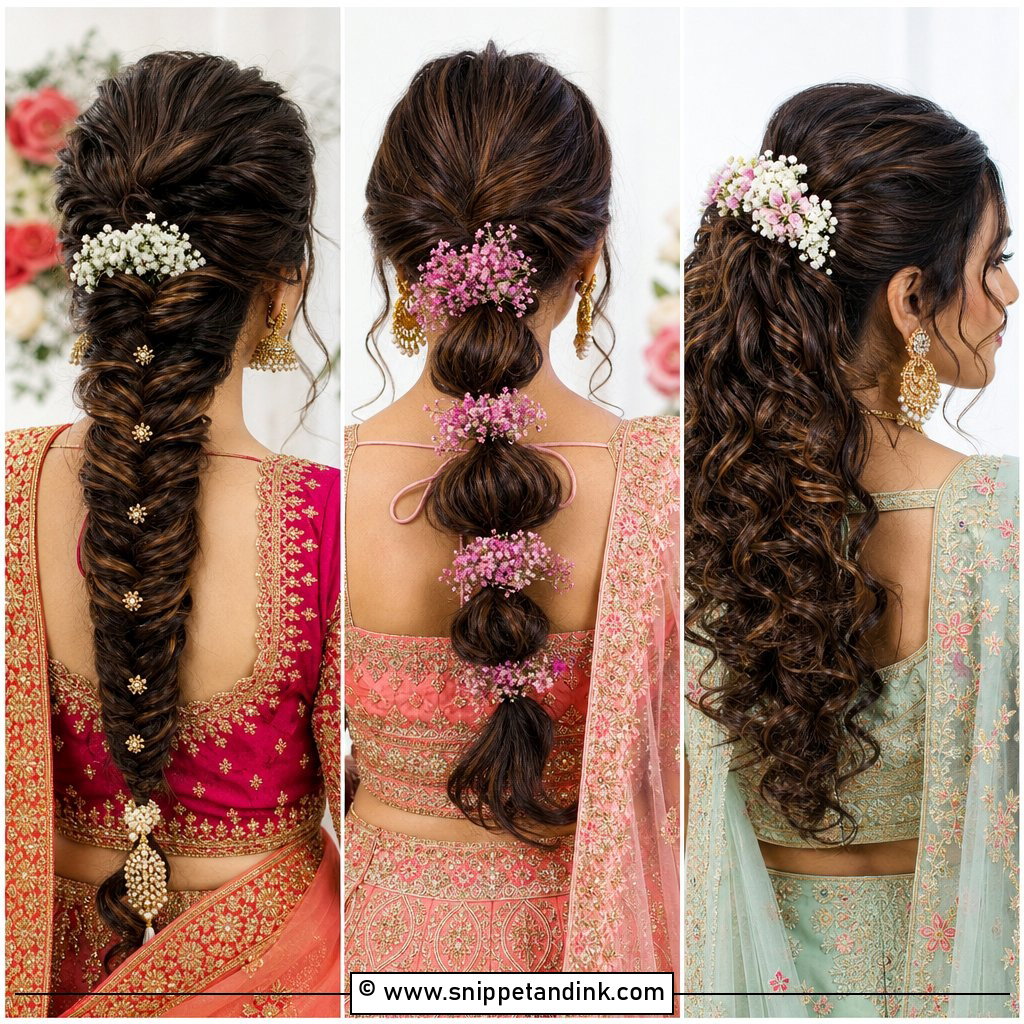
Heavy jewelry and saree pallus sit most comfortably against a low bun, since nothing pushes against the back of the head when you lean on a chair. I pin the curls loosely so the bun looks full without much teasing. It gives a softer profile than a high updo. Leave two small curls at the face for movement or keep the front sleek for a classic finish. Fresh jasmine, gypsophila or gold pins dress it; jasmine is heavier than it looks, so it needs two pins at each end.
6. Curly High Bun For Indian Wedding
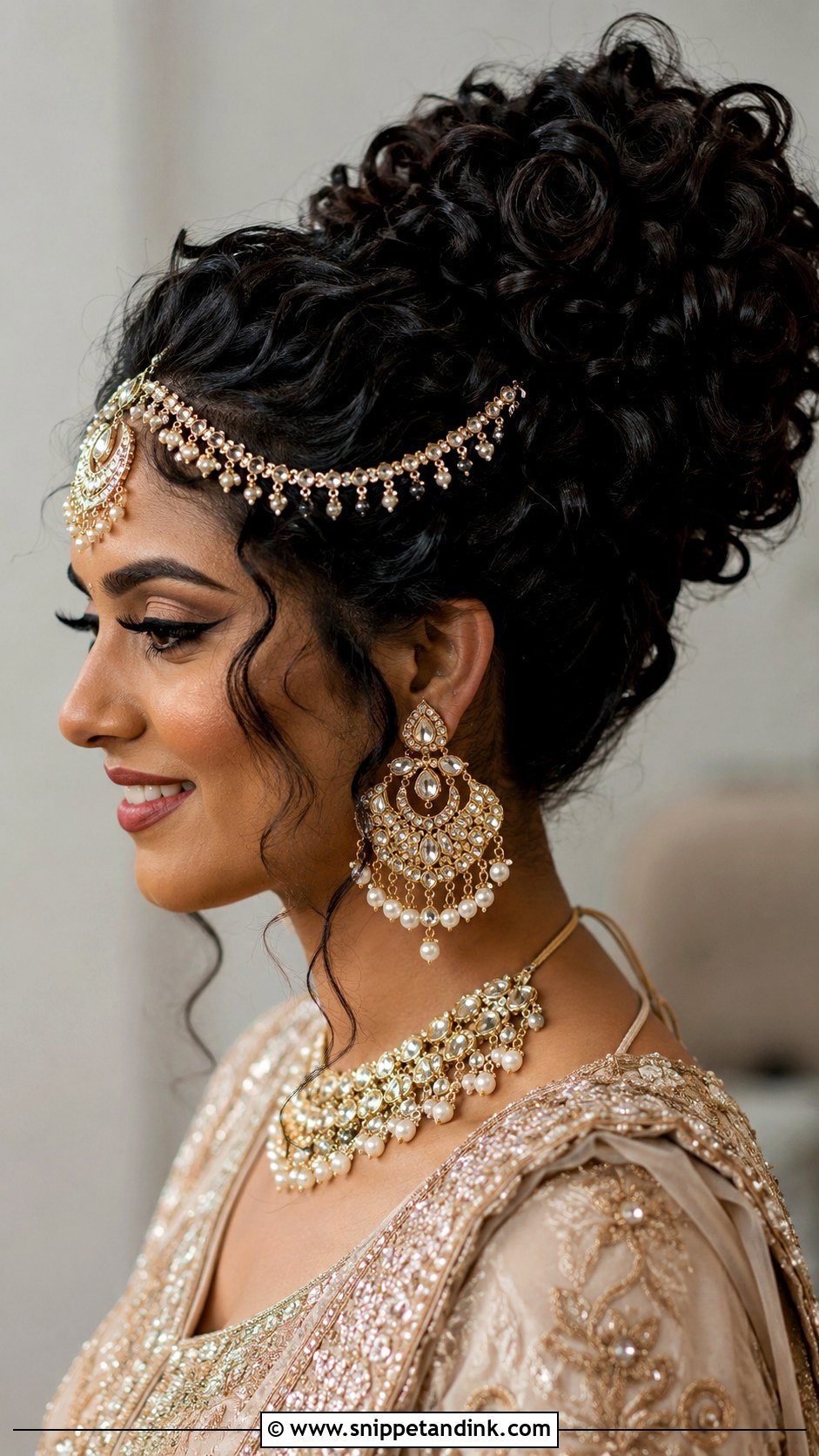
Height adds a regal line to heavily embroidered blouses and high necks. I gather the curls upward and pin them into a full bun, keeping texture visible rather than smoothing it. It’s the coolest option for hot weather and long ceremonies because the neck stays bare. Neat edges and a few defined tendrils keep it soft from the front. A matha patti or bold earrings complete it. The trade-off: a high bun can clash with a dupatta draped over the head, so I’d save it for the reception or the sangeet.
7. Curly Braided Bun For Indian Wedding
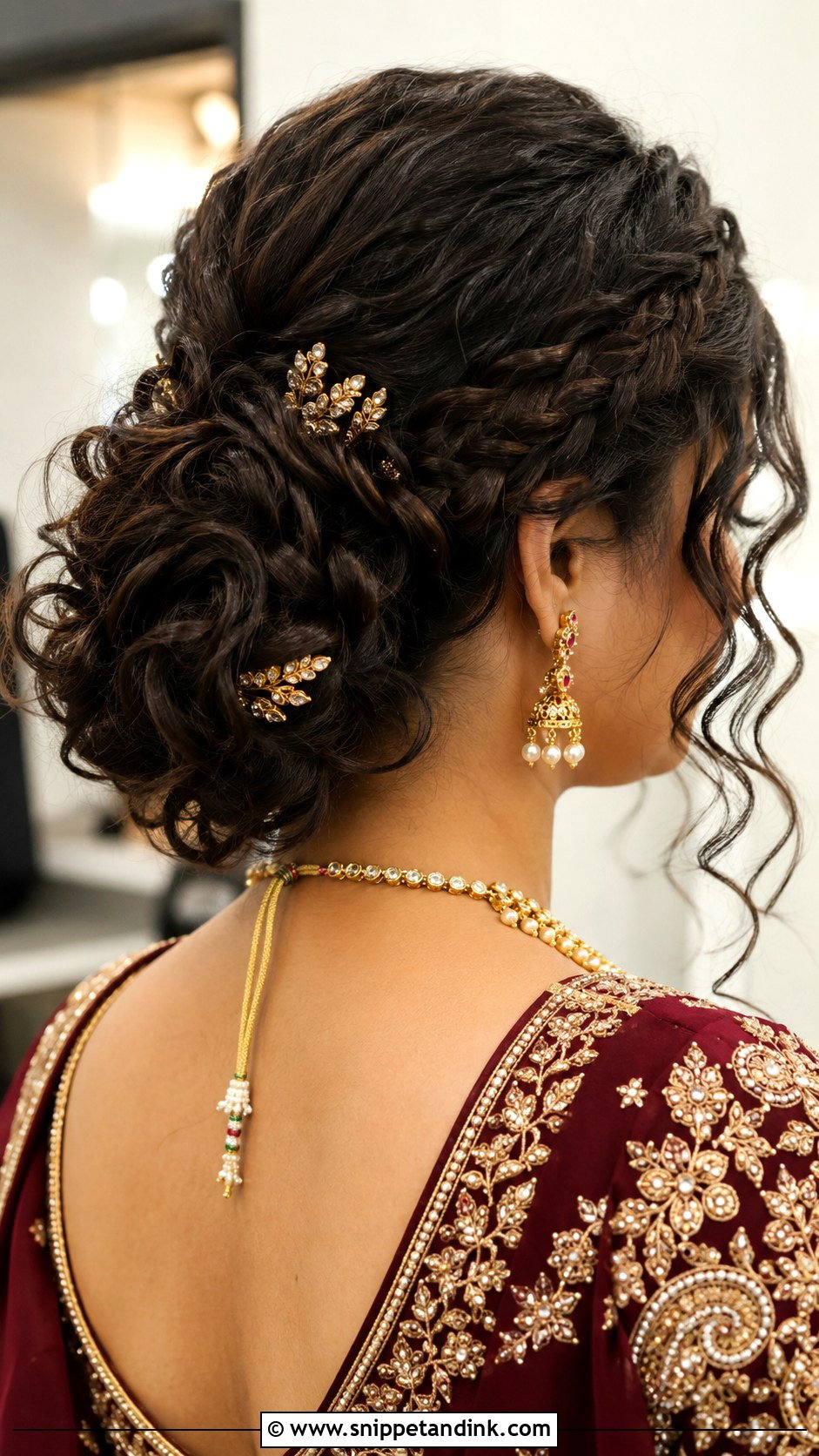
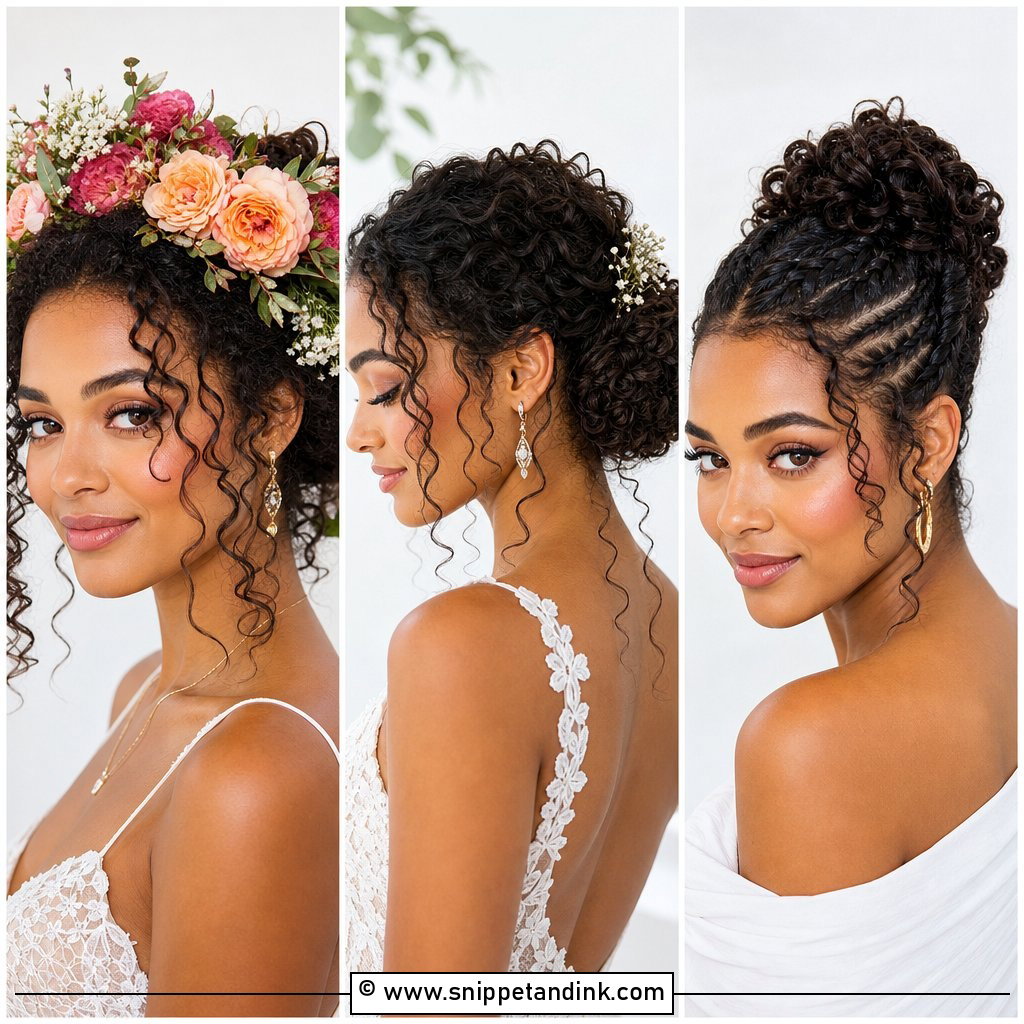
Braids help where curly hair frizzes first, along the hairline. I braid the front or side sections before wrapping them into a textured bun at the back, which adds detail and gives the bun a firm grip. Bridesmaids, sisters and brides who want something secure but not plain tend to like it. Small flowers, pearls or gold accessories slide into the braid gaps. Because a braid holds pins so well, this one barely moves through dancing, ceremonies and long photo sessions.
8. Curly Ponytail For Indian Wedding
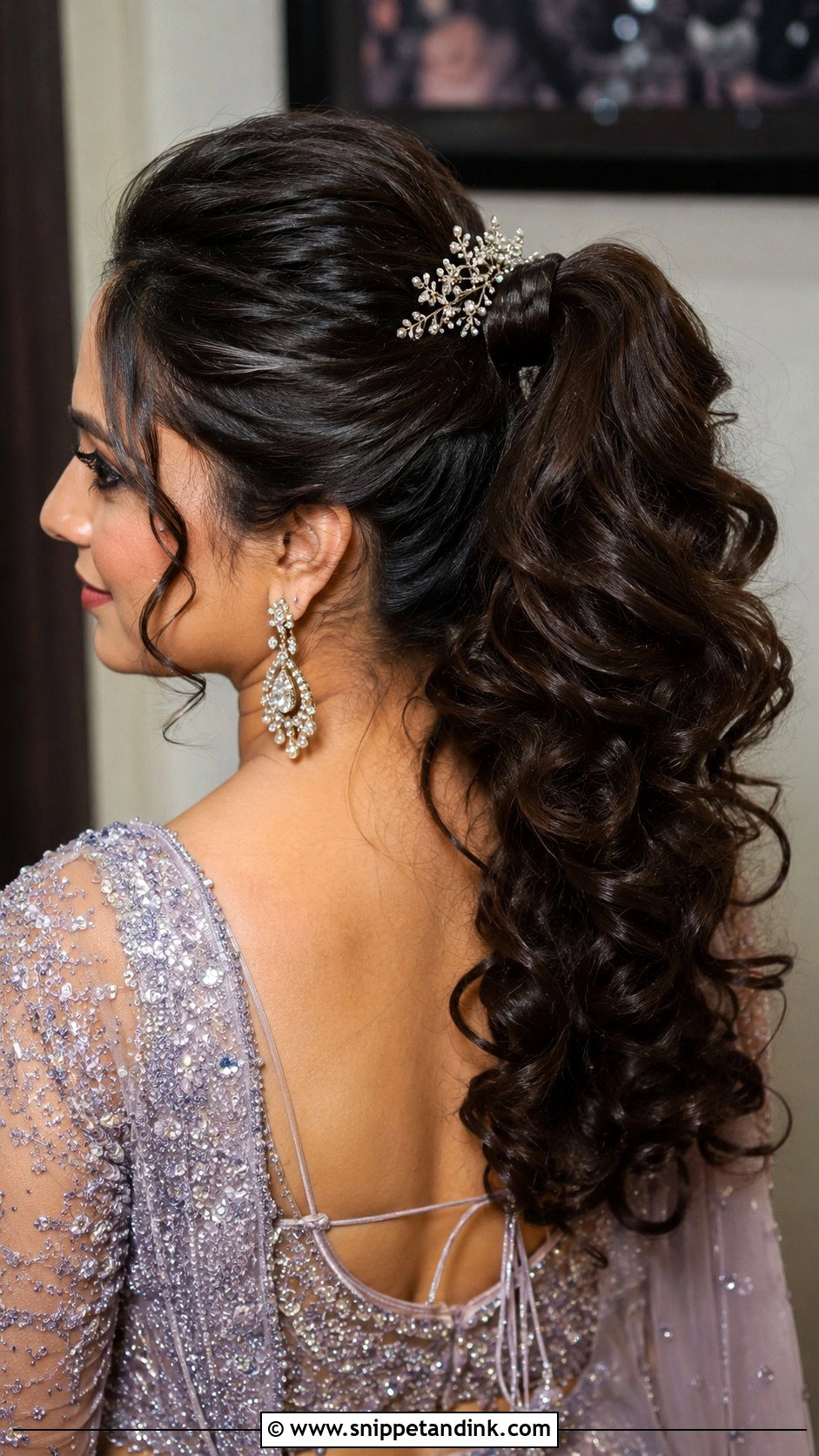
A ponytail looks polished when it has volume, shine and a carefully chosen height. For Indian weddings I place it mid-height or high on the crown, with the curls falling full and bouncy. The front can be sleek, twisted or softly puffed to suit the outfit. I wrap a strand around the base to hide the elastic and pin it underneath, then add a jeweled clip. It moves well at a sangeet or cocktail night. On fine curly hair, a mid-height tie is safer, since a high one shows the scalp at the crown.
9. Curly Puff Hairstyle For Indian Wedding
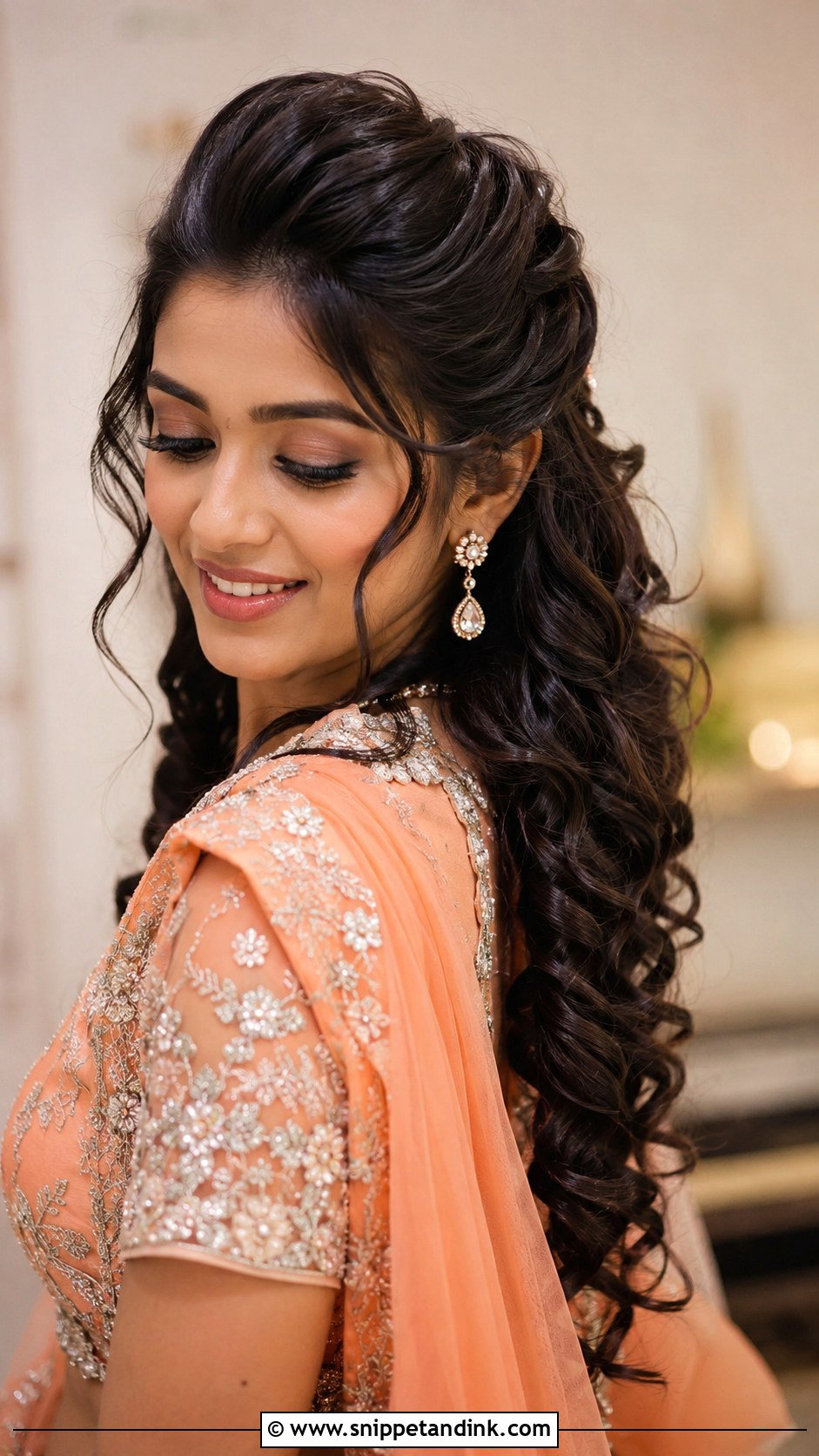
A puff lifts the front section to give height at the crown. I backcomb gently at the root only, smooth the surface with a soft brush and pin it from underneath so no teased hair shows. The rest of the curls can stay open, go half-up or sit in a low ponytail. The extra height lengthens round and heart-shaped faces. Overdo the backcombing on curly hair and you get a puff that’s bigger than you meant, so I build it in small layers and check in the mirror after each one. Lightweight products keep the curls springy.
10. Curly Juda Hairstyle For Indian Wedding
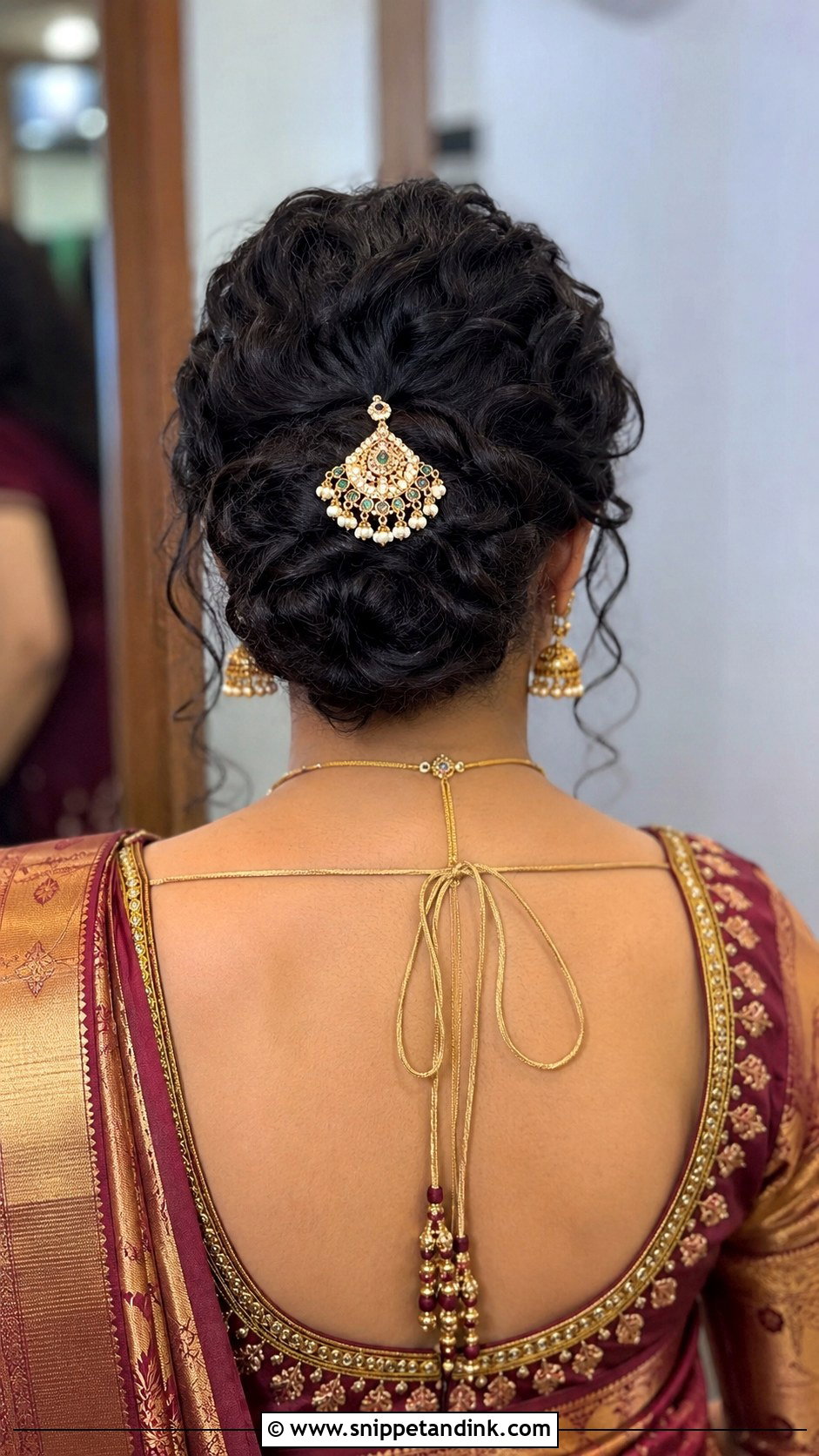
A juda is a classic Indian bun, and on curls a curly juda hairstyle becomes rounder and more textured than the smooth version. It suits sarees, silk lehengas, temple jewelry and traditional accessories, and it holds firm under a dupatta or veil. Fresh gajra wrapped around the juda gives a South Indian finish, while pearls feel lighter and more modern. Keep the crown neat so the bun’s texture is what draws the eye. I set a hidden donut or padded base only if the hair is fine; thick curls make their own shape.
11. Curly Gajra Bun For Indian Wedding
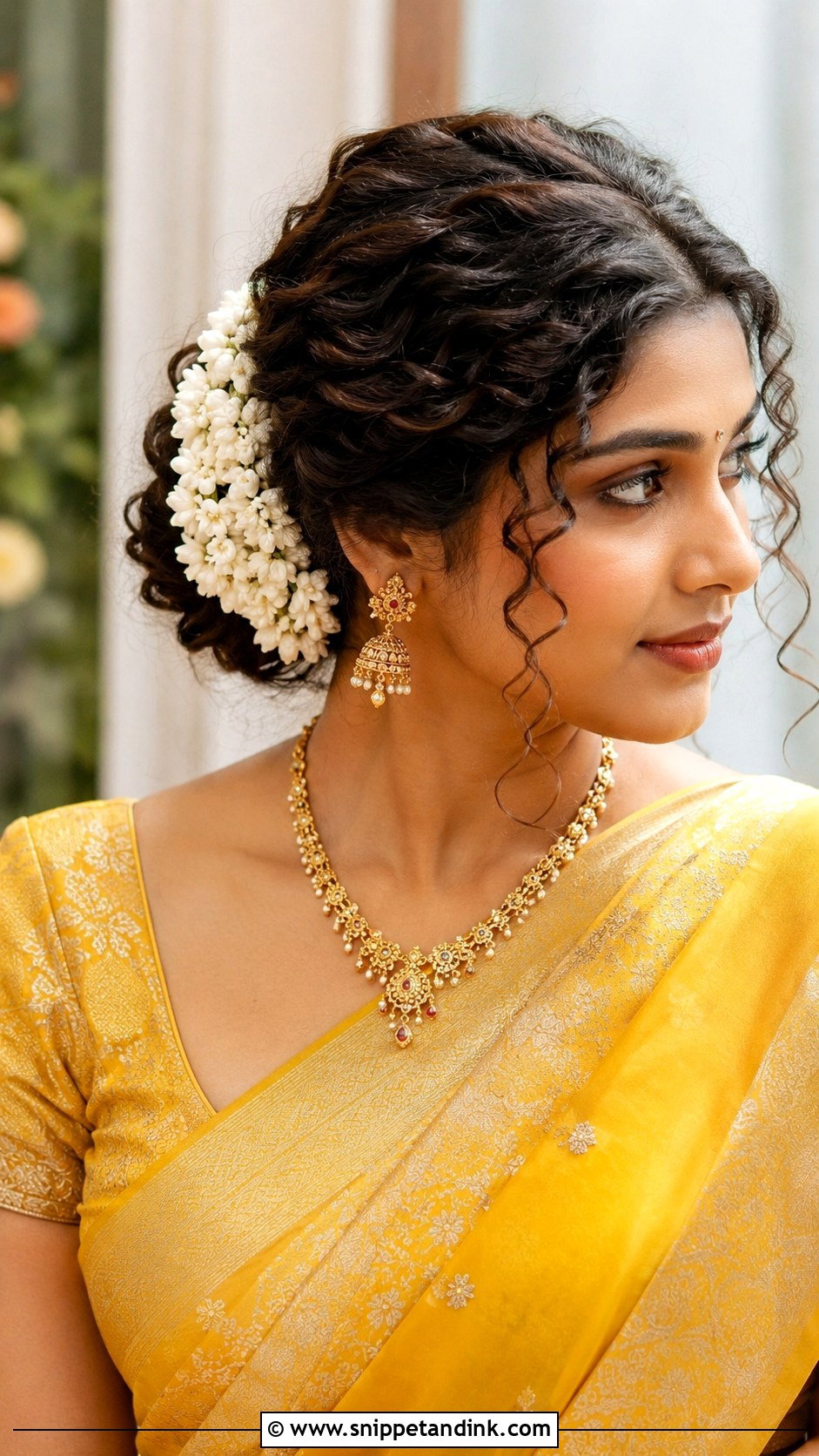
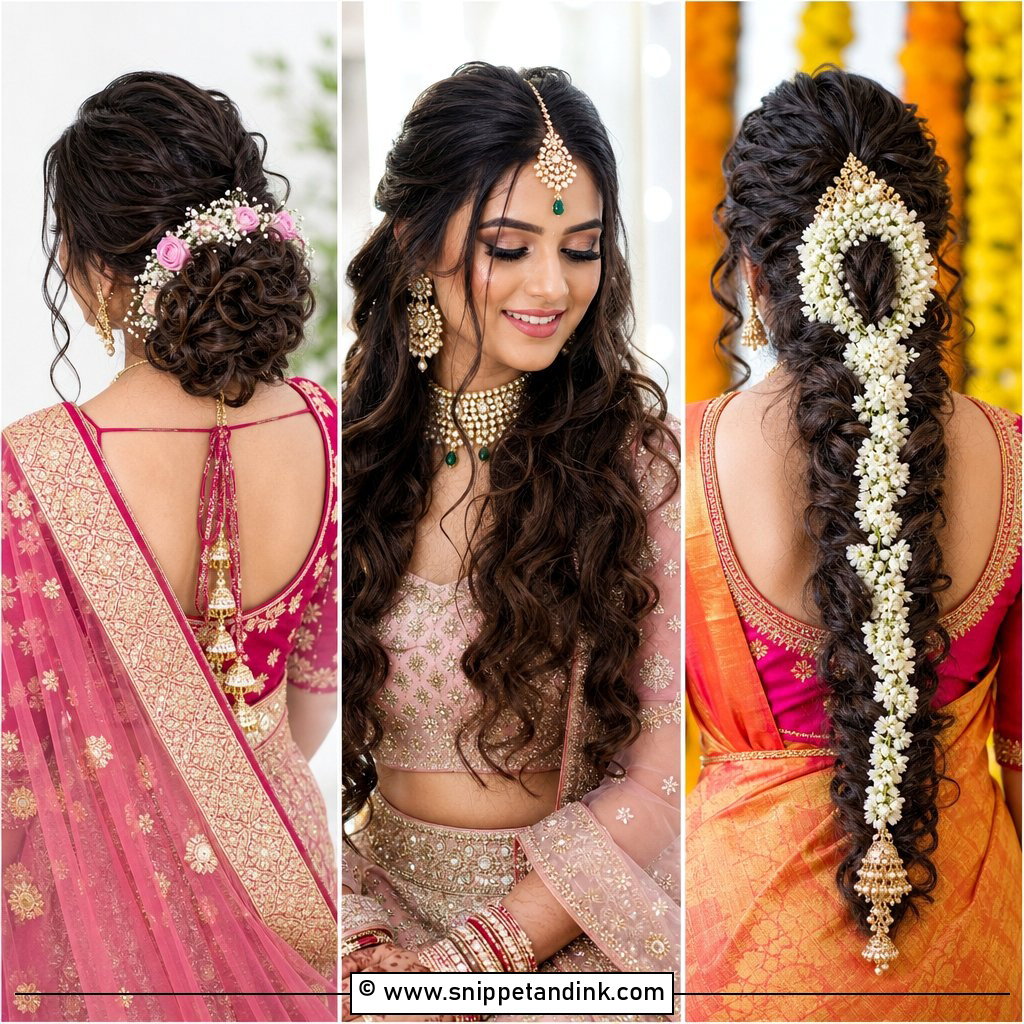
The scent of fresh flowers is half the appeal of a curly gajra bun. I form a low or mid bun from the natural curls, then wrap the gajra around it or run it along one side. Curls add volume so the bun doesn’t look flat under the flowers. It fits haldi, the wedding ceremony, temple weddings and saree looks. Buy jasmine strands with closed buds and keep them wrapped in a damp cloth until styling; they open and release scent as the day goes on. Roses or mixed blooms can pick up the outfit colors.
12. Curly Hairstyle With Maang Tikka For Indian Wedding
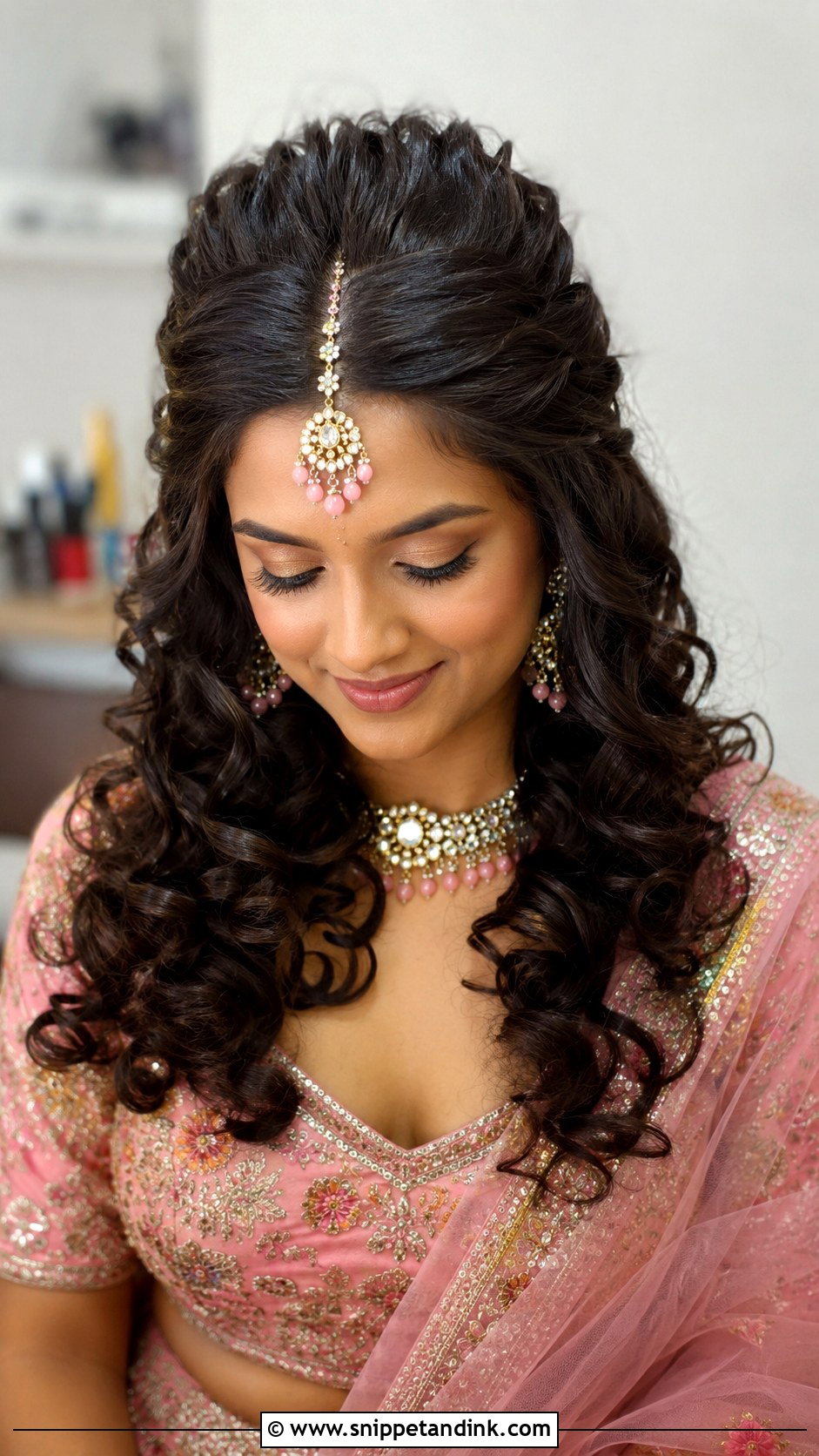
A hairstyle with maang tikka starts with the parting, so I make a clean center part before any curl goes anywhere. The tikka’s chain is hooked into a small hidden anchor of crossed pins at the crown, which takes the weight off the hairline. Open curls, half-up or a low bun all work as long as the volume on both sides is balanced and the stone sits centered. Curls love to swallow a tikka chain; I lay the front curls back from the part so the chain stays visible.
13. Curly Hairstyle With Dupatta For Indian Wedding
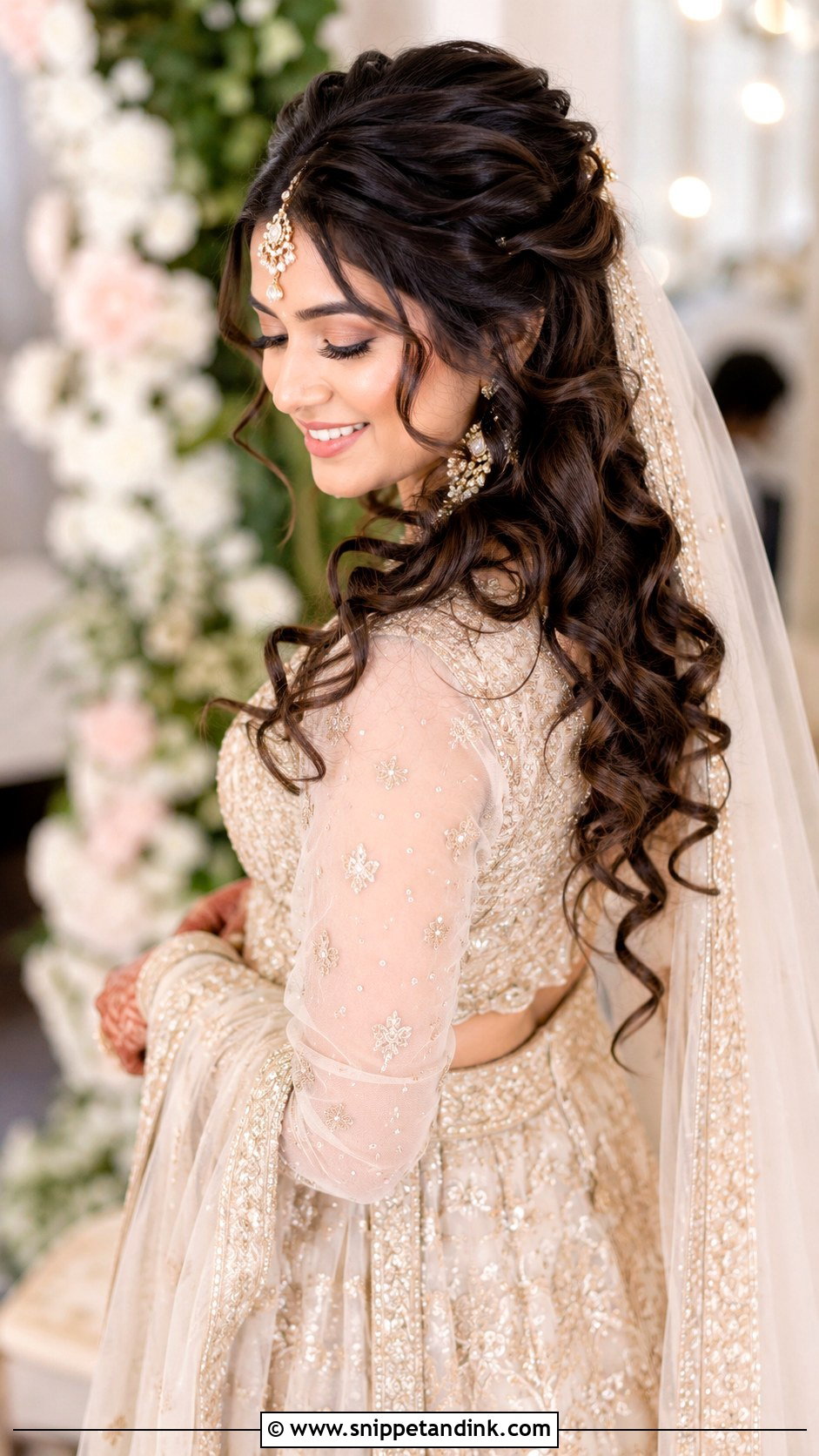
Curly hair gets crushed under a dupatta unless the crown is prepared for it. A half-up, a low bun or pinned open curls work best because the top section is controlled enough to take the fabric. For a heavy dupatta, I smooth and pin the top before placing it, using U-pins through the fabric into that base. Lighter dupattas can sit over more open curls at the shoulders. Ask your stylist to test the drape before the final setting spray, since repositioning a dupatta over sprayed curls pulls them out of shape.
14. Curly Lehenga Hairstyle For Indian Wedding
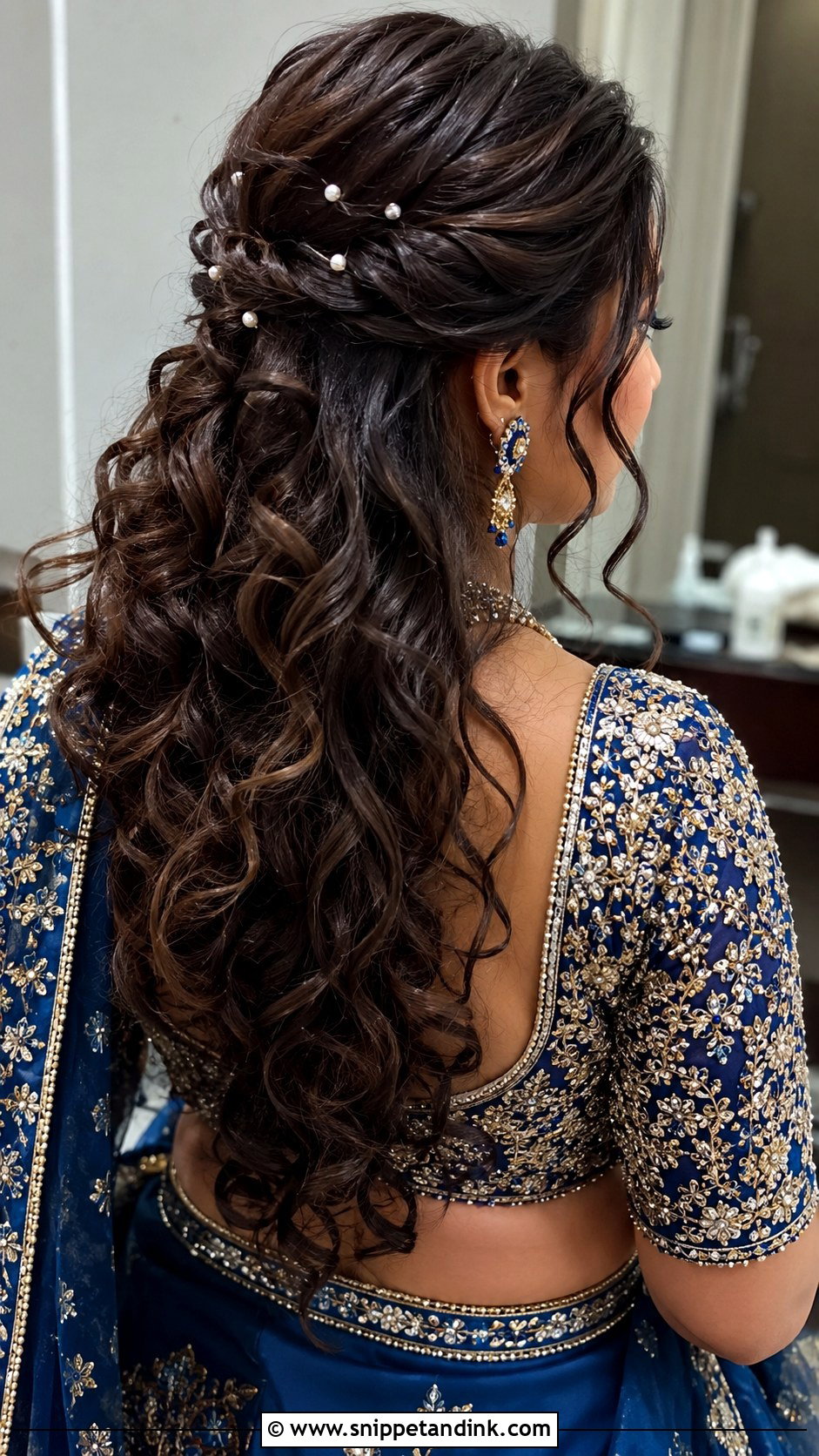
Balance is everything with a lehenga. A heavily embroidered one wants a half-up or low bun, so the hair doesn’t compete; a simpler lehenga can carry open curls or a side sweep. Lehenga photos tend to focus on the blouse, neckline and jewelry, so I keep the curls defined and shiny around the face. Center parts read traditional, side parts softer. If you’re choosing a hair accessory, I’d match its metal to the embroidery rather than the jewelry, which keeps the look from feeling over-coordinated.
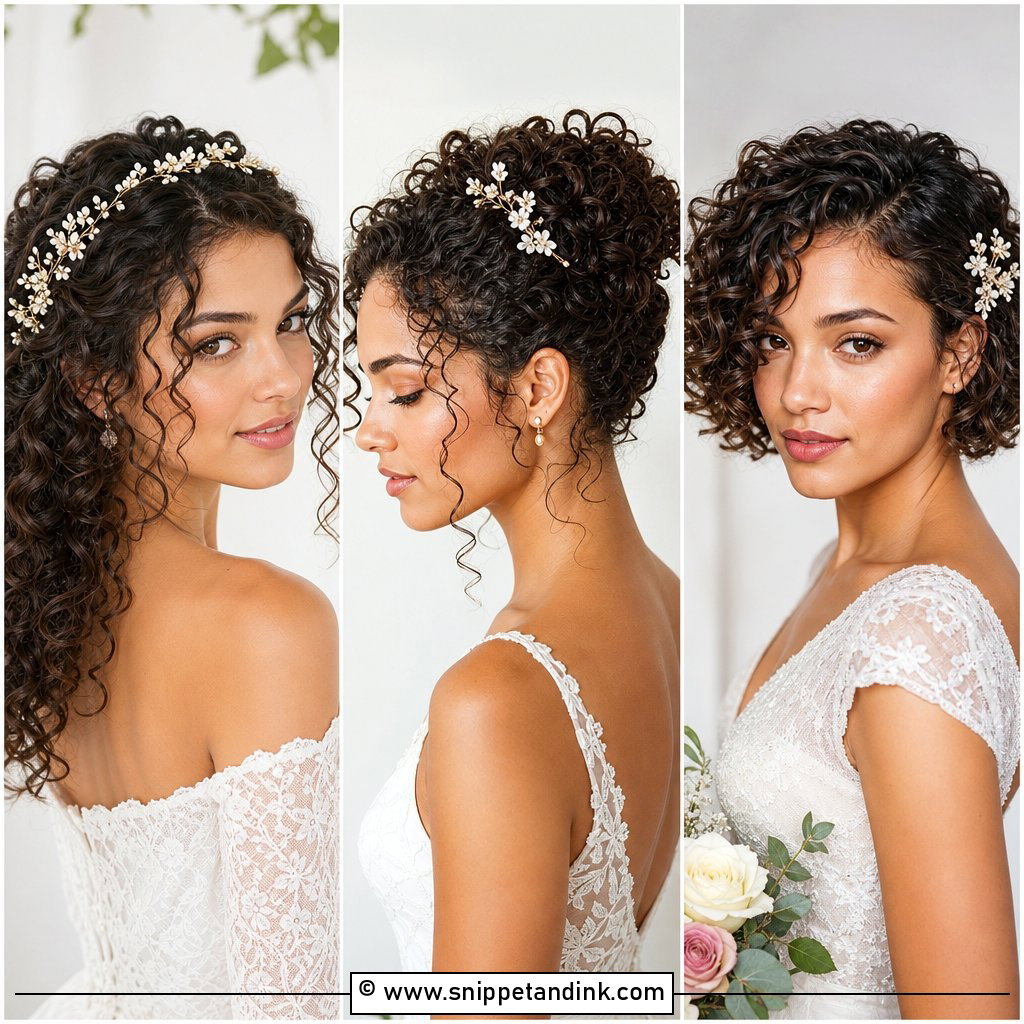
15. Curly Saree Hairstyle For Indian Wedding
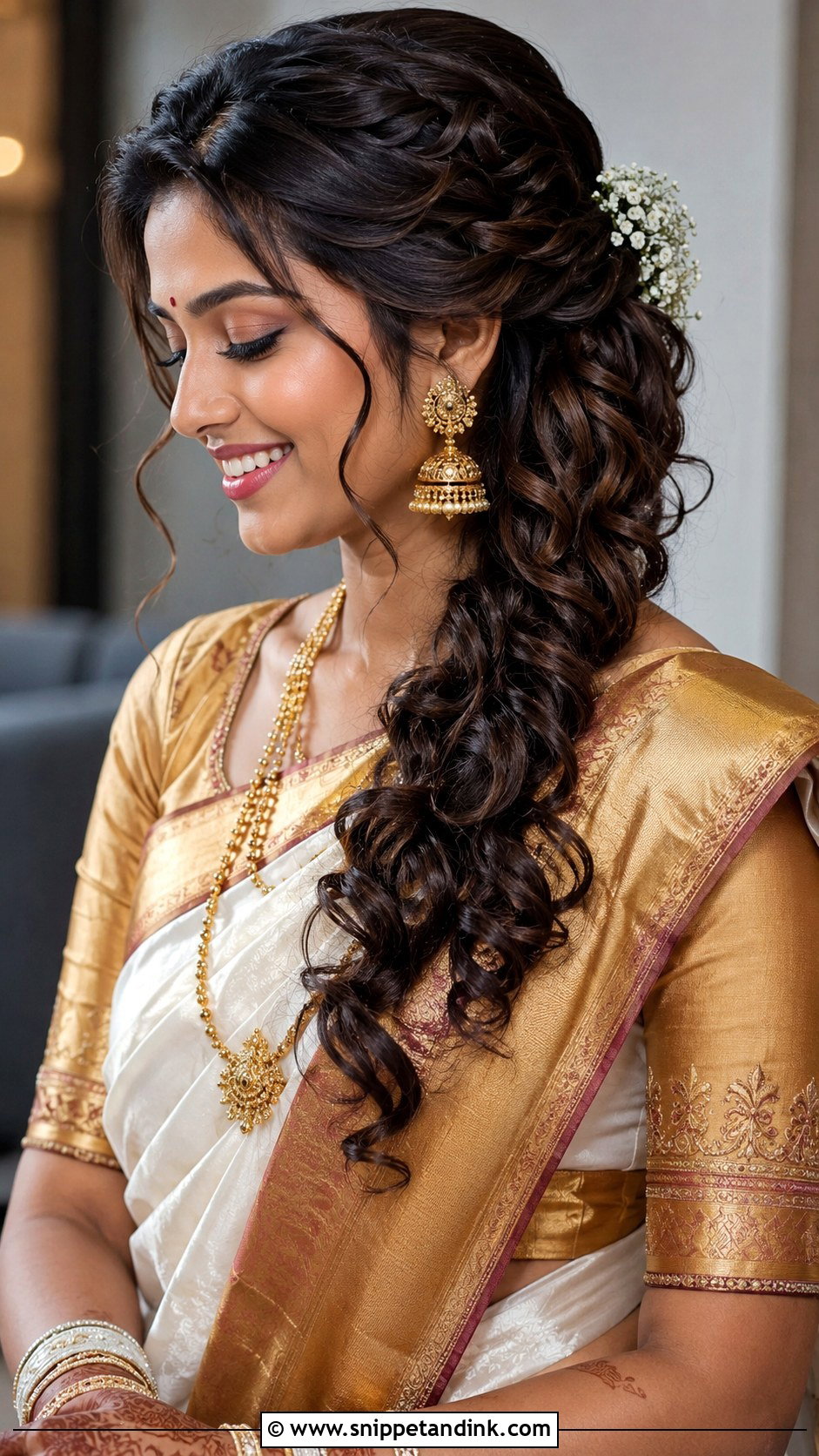
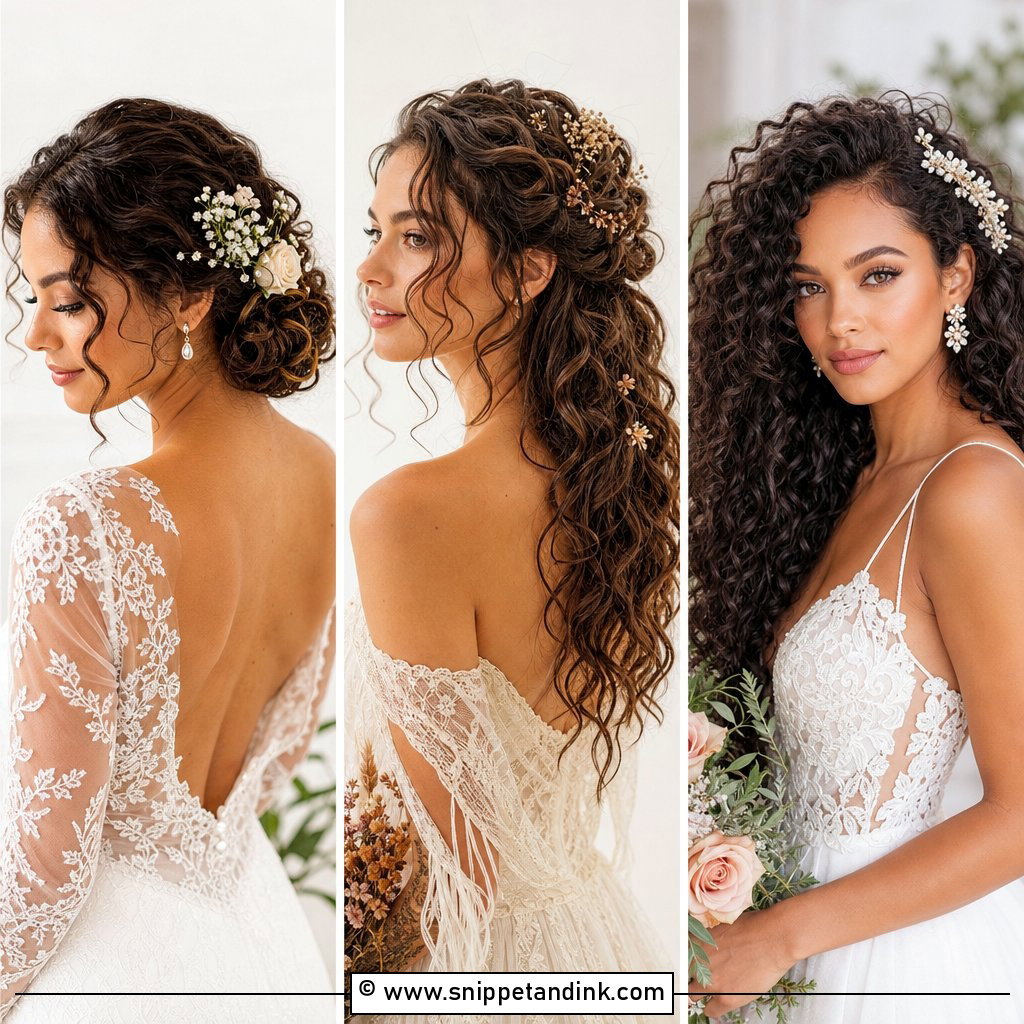
A saree’s drape sets the mood for the hair. With silk, I lean toward a curly juda, gajra bun or textured low bun; with lighter fabrics, open curls or a side sweep feel fresher. Keep the parting and temples polished so the saree stays the focus. Jhumkas, chokers and layered necklaces all suit it. If your curls are very full, pin one side back behind the ear, or the curls will hide both the earring and the pallu on that shoulder.
16. Curly Reception Hairstyle For Indian Wedding
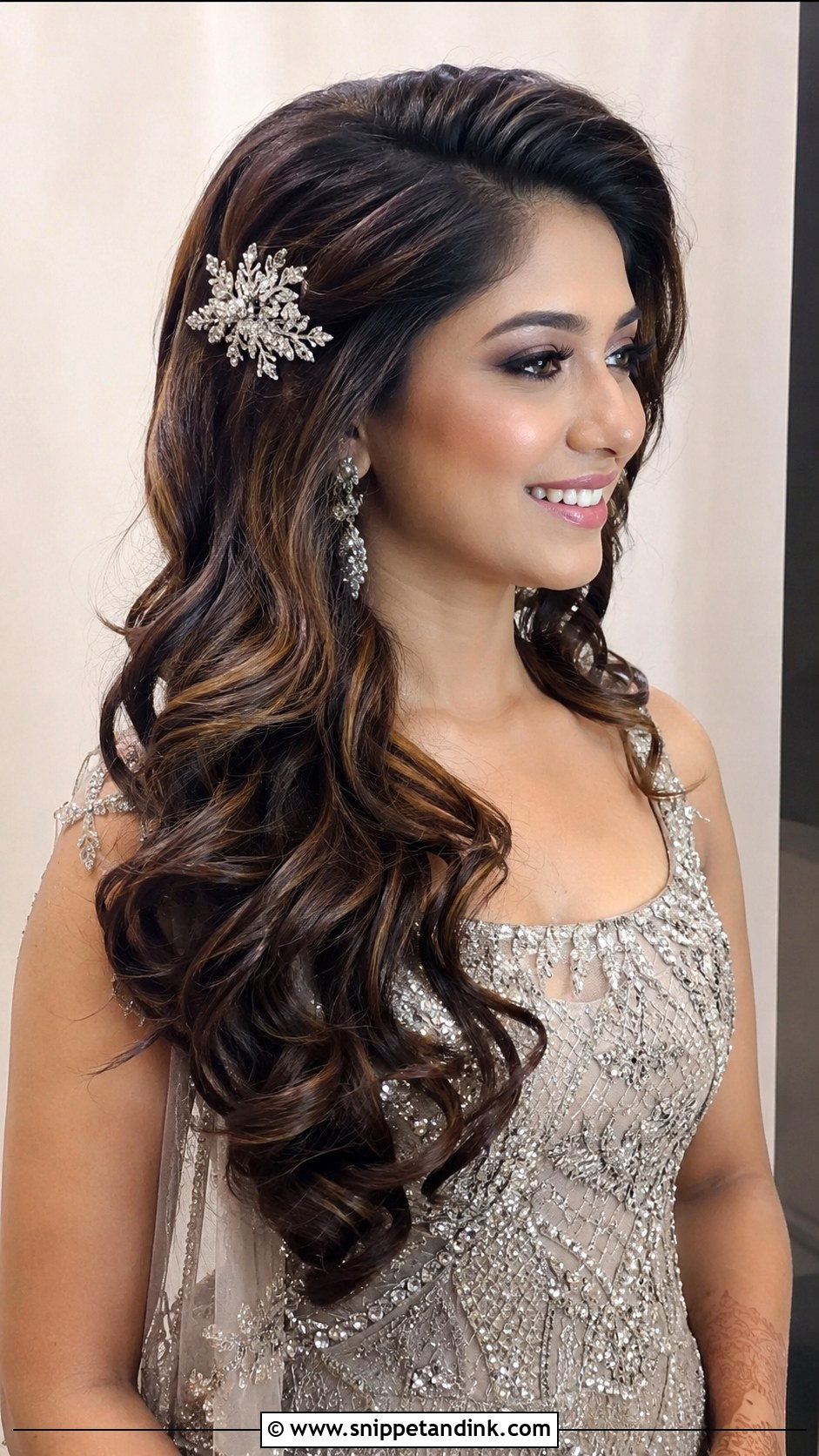
Receptions usually allow more shine and movement than the ceremony. Soft curls with a Hollywood-style finish, a curly ponytail or side-swept curls sit well with gowns, lehengas and modern sarees. I keep the roots smooth and the lengths defined, then add a jeweled clip, crystal pins or a sleek side part. It’s a good night to show highlights or your natural pattern. Keep the finish touchable rather than crunchy, so the curls move through the greeting line and the dancing.
17. Curly Mehendi Hairstyle For Indian Wedding
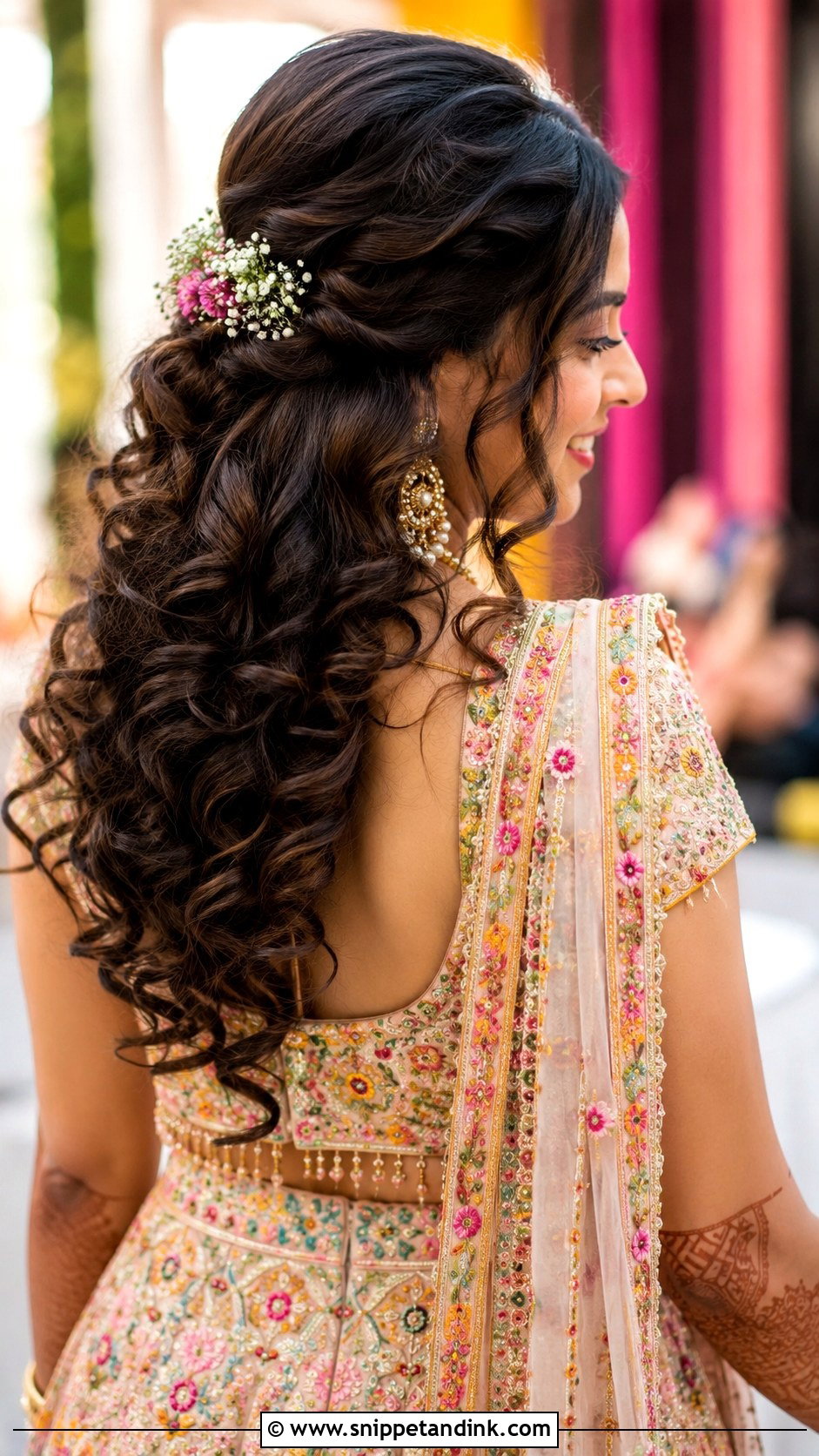
At a mehendi you’re sitting still for hours with your hands out, and you can’t push hair off your face without smudging the paste. Since mehendi functions are all about the hands, I keep every curl away from the face: a half-up, a floral ponytail or open curls pinned firmly at the temples. Fresh flowers, small clips or colorful accessories match the mood. It’s a good event to show full natural volume. If it’s outdoors, secure the front well, because wet henna and a stray curl are a bad combination.
18. Curly Sangeet Hairstyle For Indian Wedding
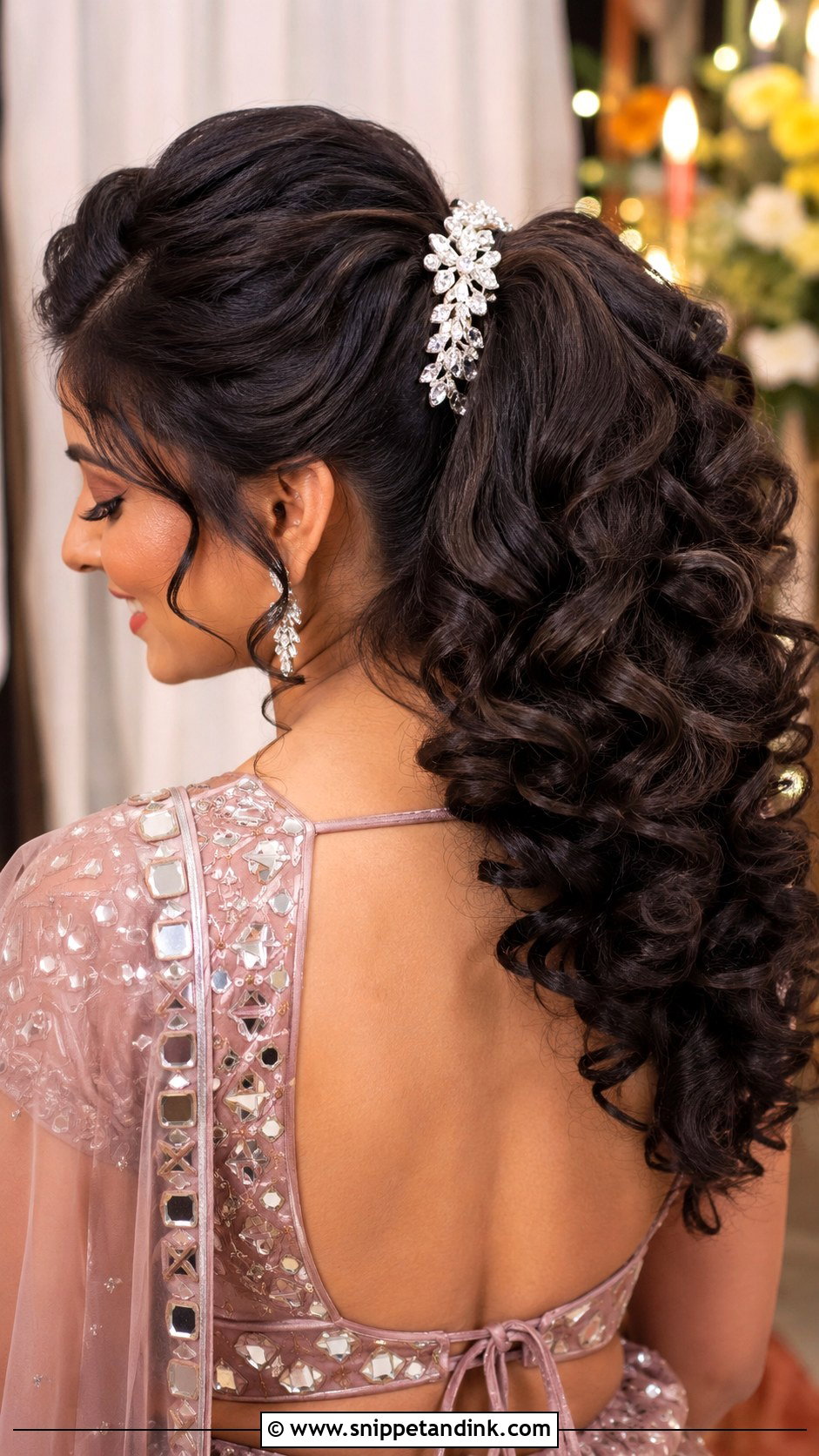
Sangeet hair has to survive choreography. A high curly ponytail, half-up curls or pinned side-swept curls look festive and stay put. I avoid loose face-framing pieces for anyone performing a dance, since they stick to the face and get whipped around; the volume comes from the ponytail or back section instead. It pairs well with lehengas, shararas and mirror-work outfits. A strong but flexible spray keeps the bounce. Add a sparkly clip at the base.
19. Curly Short Hair Hairstyle For Indian Wedding
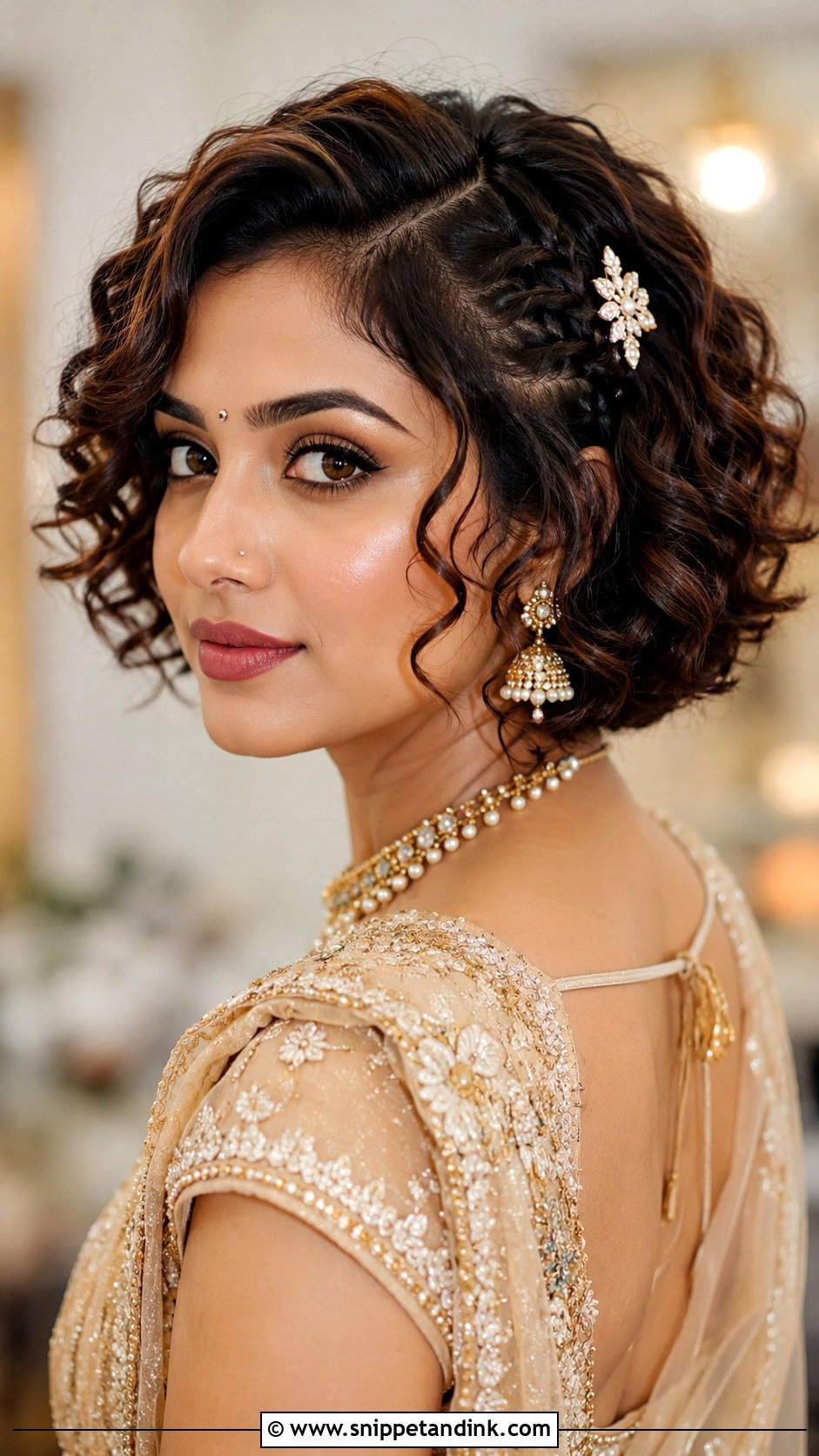
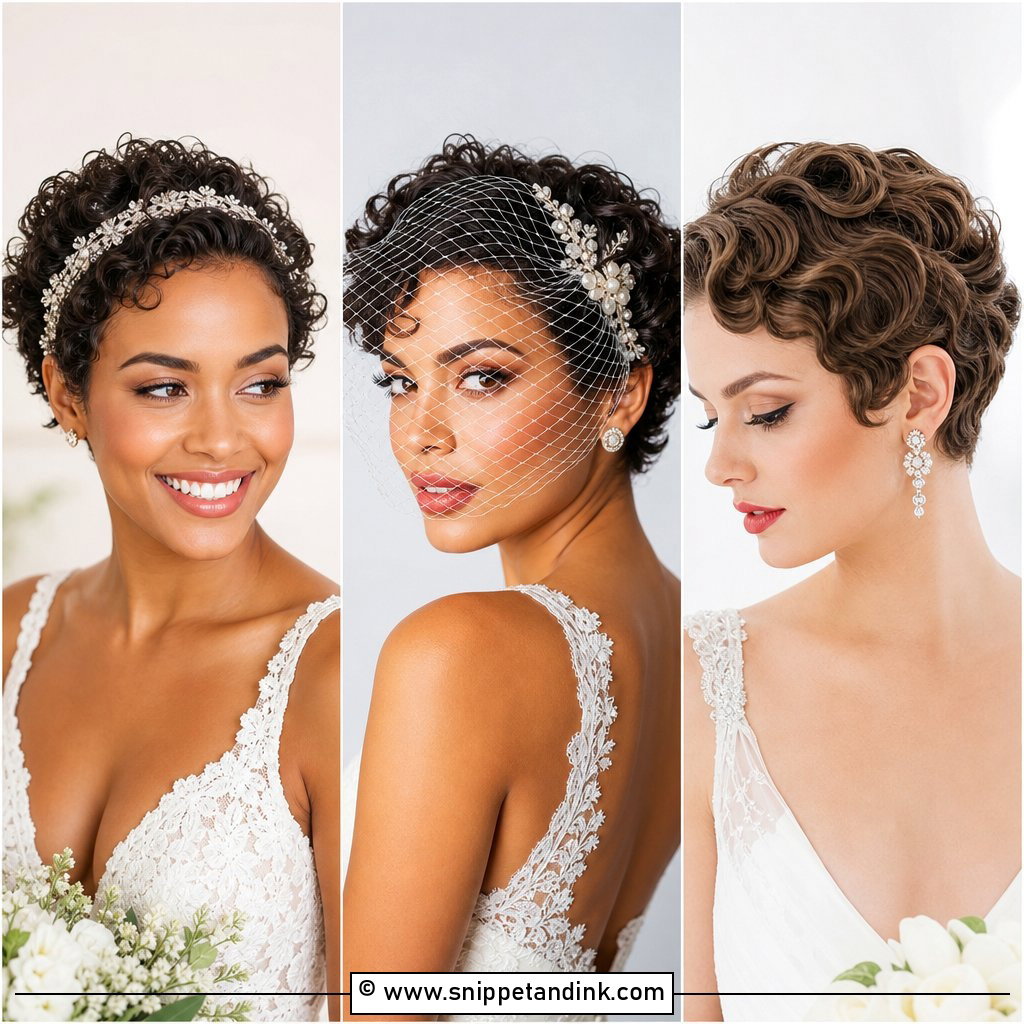
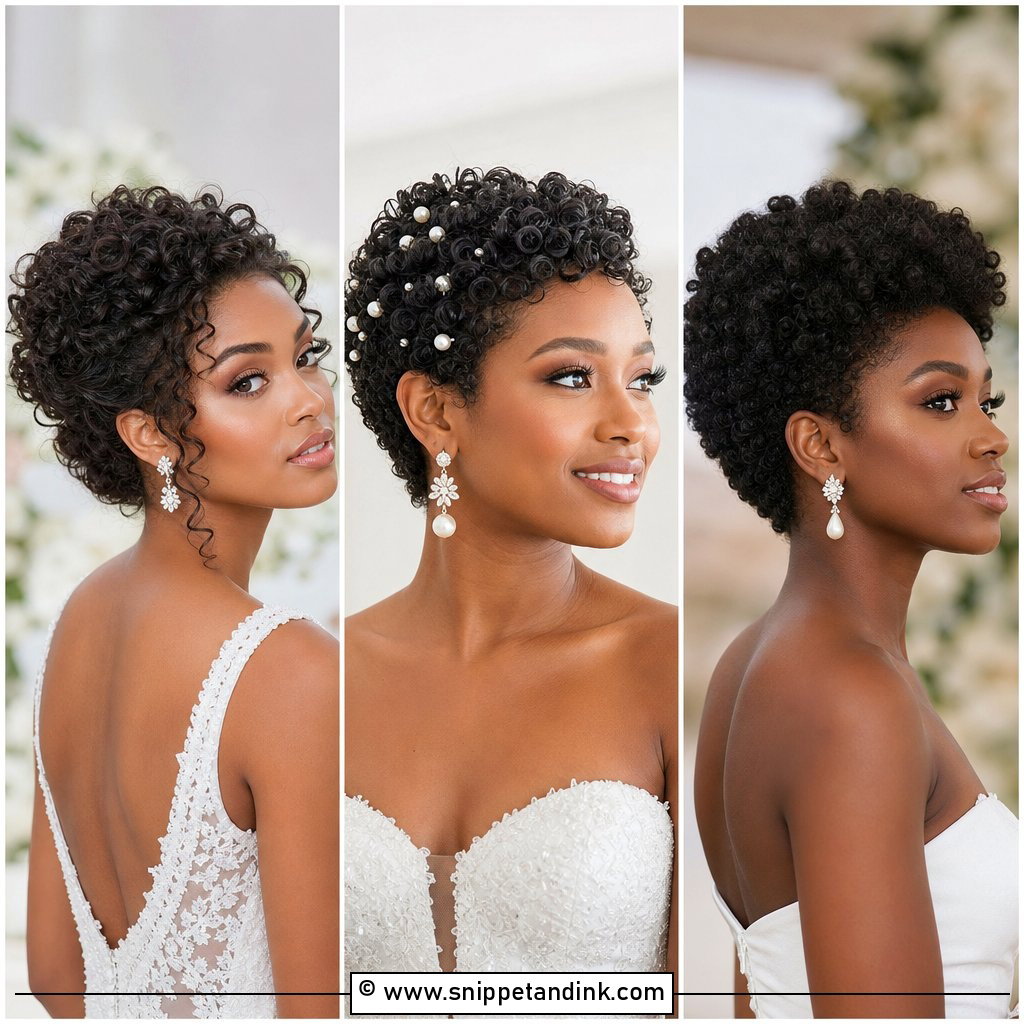
Short curls can look festive without trying to imitate a long style. A curly bob, a pinned side part, a mini half-up or defined cropped curls all work if the shape looks intentional. I define with cream or mousse, then pin one side behind the ear with a jeweled clip or small flowers, which opens the face for earrings and makeup. The catch is a heavy tikka: very short hair has little to anchor it, so I’d choose a lighter piece or a small side passa.

20. Curly Long Hair Hairstyle For Indian Wedding
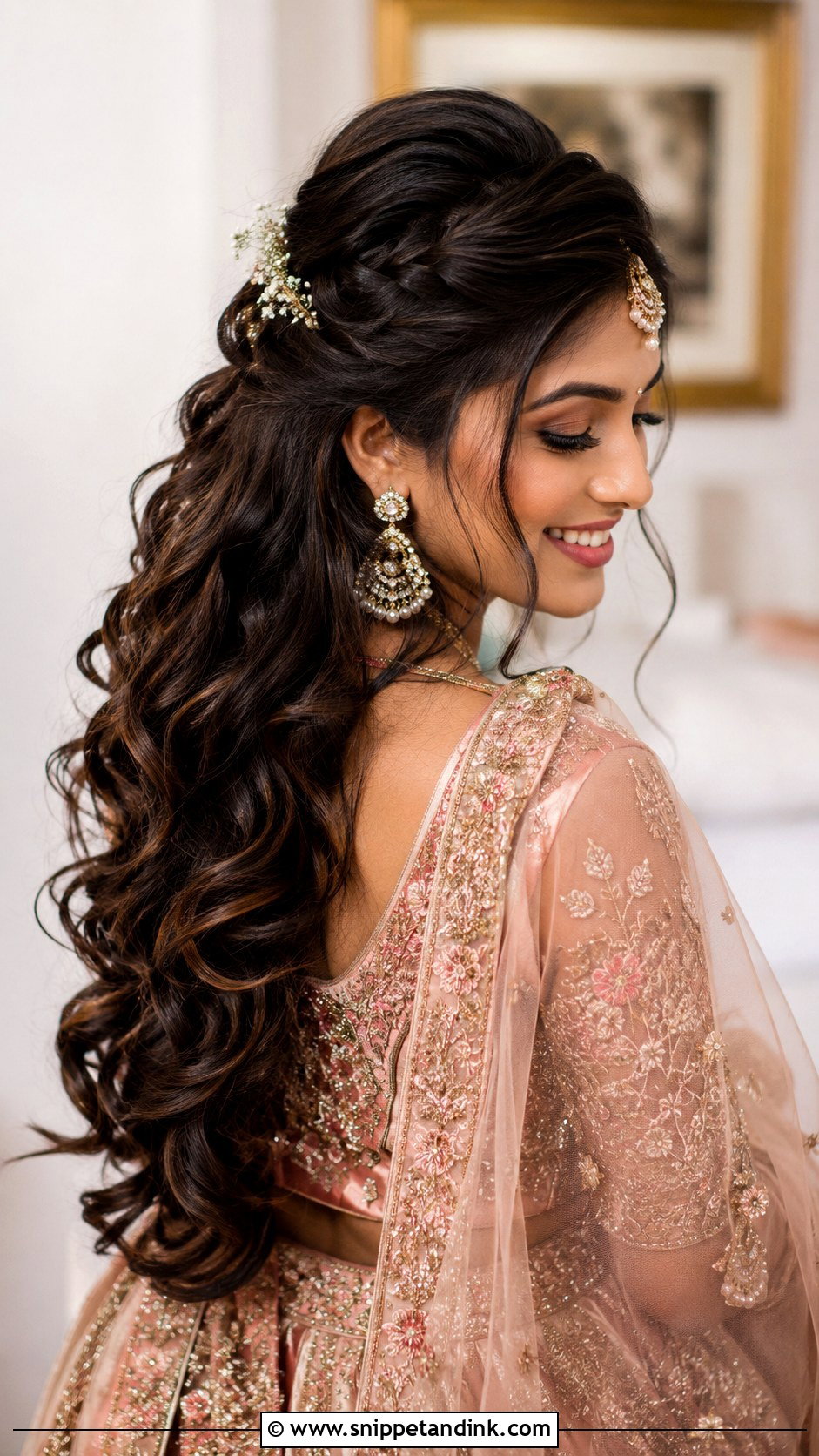
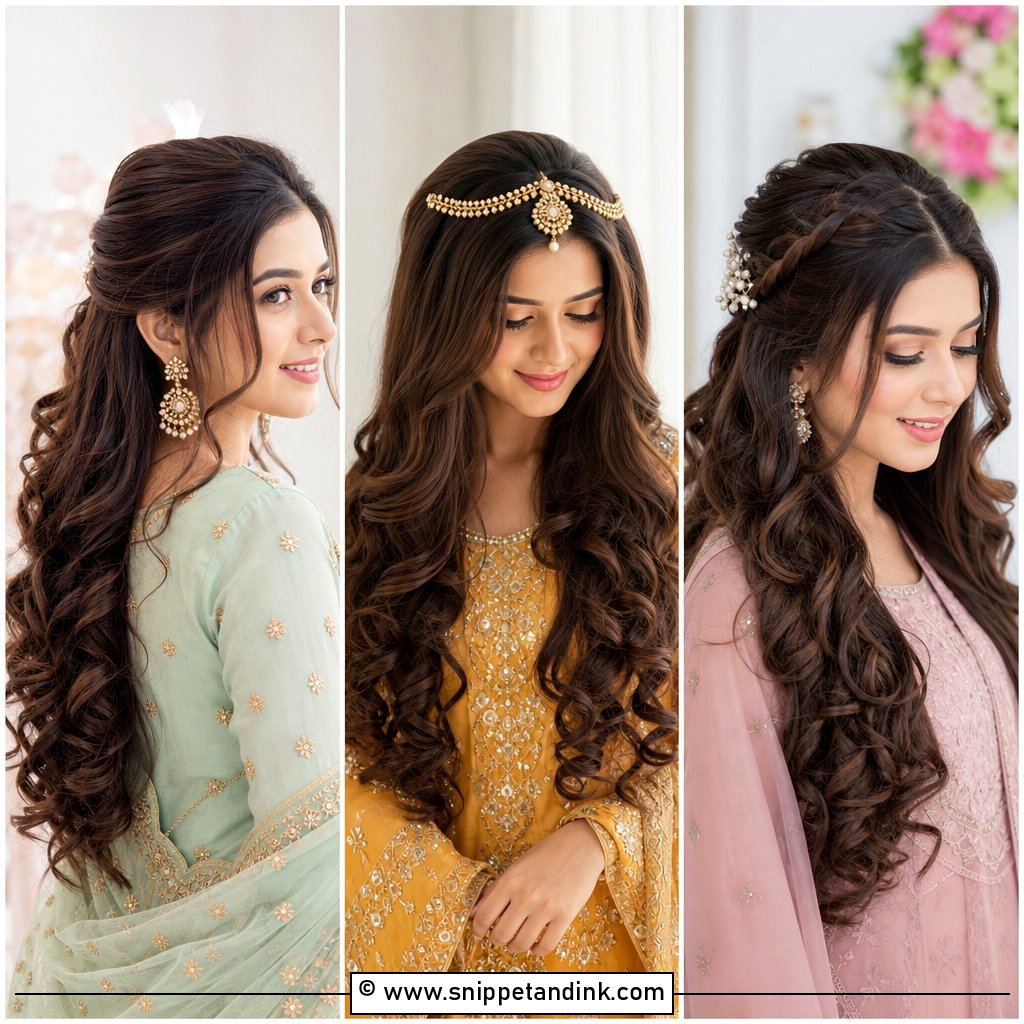
Long curls give the most options but also the most weight to manage. For a heavy bridal lehenga, I’d keep long hair in a half-up or low curly bun so it doesn’t add bulk to an already full silhouette. For the reception or sangeet, long open curls flow well. Ends that are thinner than the rest look bulky and uneven in curls, so a light trim a few weeks before helps. A few face-framing curls soften it, and pins at the crown keep everything steady through ceremonies, photos and dancing.
Where the Pins Go Under a Tikka, Passa and Heavy Dupatta
Indian bridal jewelry and a heavy dupatta can easily add real weight to the head, and curls will carry it only if the weight lands on a proper anchor rather than on loose hair. This is what I set up before any accessory goes on.
- A small, flat base at the crown, either a few crossed pins or a hidden braid, for the tikka chain and the front of the dupatta.
- Separate anchor points at the temple for a passa or matha patti, so its weight doesn’t pull on the parting.
- U-pins rather than bobby pins through the dupatta, angled toward the back so the fabric can’t slide forward when you bow.
- A quick head-shake test after everything is on; anything that moves gets a second pin before you leave the chair.
Removing Pins and Gajra Without Snapping Curls
At the end of a long day, take jewelry off first, then the dupatta, then the flowers, and only then the pins. Pull pins out in the direction they went in rather than dragging them through the hair. Wet the curls with a conditioner and water mix before finger-detangling; brushing out a day’s worth of spray and backcombing dry breaks curly hair.
Let the Outfit Set the Shape and the Curls Carry the Rest
Curly hair can look traditional, modern, romantic or bold at an Indian wedding depending on how it’s shaped and what it carries. The most complicated style isn’t always the right one; the right one supports the outfit, frames your face, stays comfortable and leaves your texture visible. Buns handle heavy dupattas and ceremonies, while open curls, ponytails and half-ups suit mehendi, sangeet and receptions. Do a trial with your actual jewelry and dupatta if you can. Secure anchors, curl-friendly products and a little planning across the functions will keep your hair holding up until the last guest leaves.
You'll Like These Ideas:




Leave a Reply