
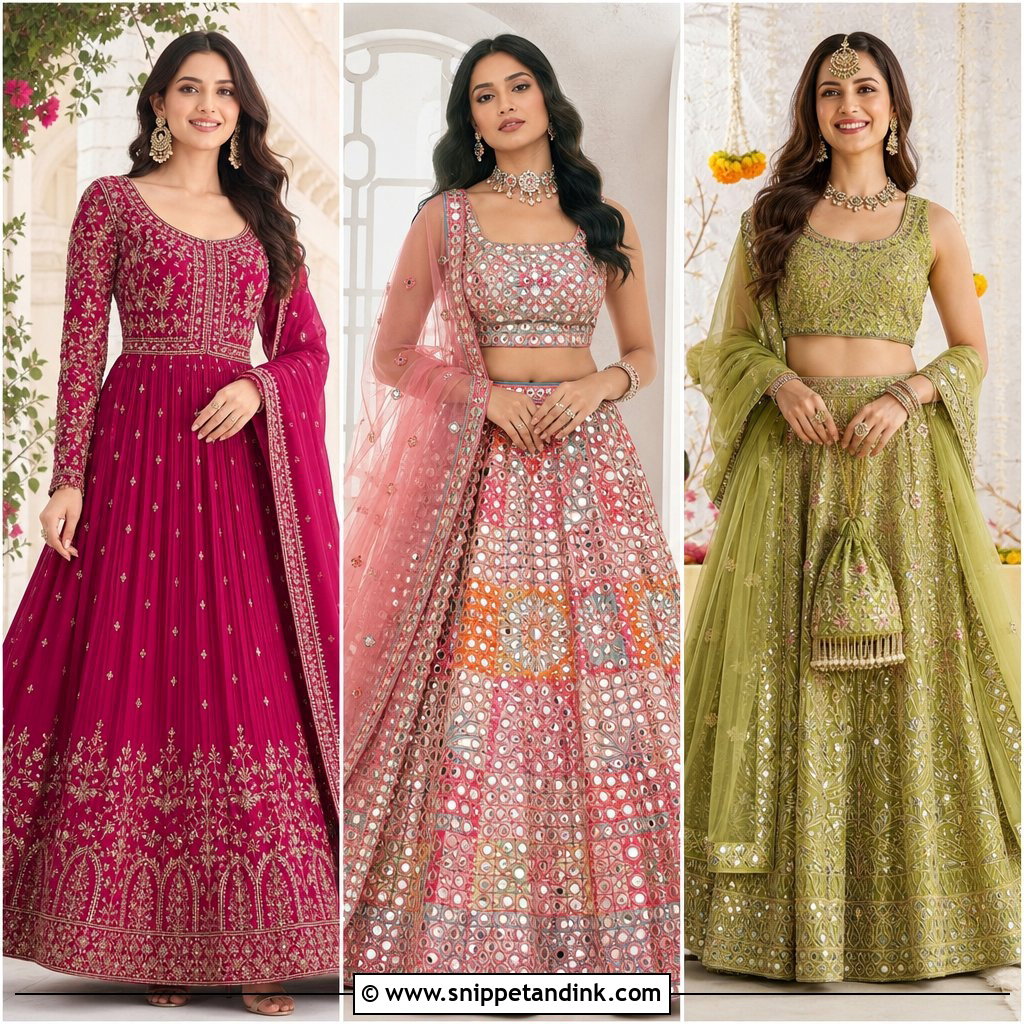
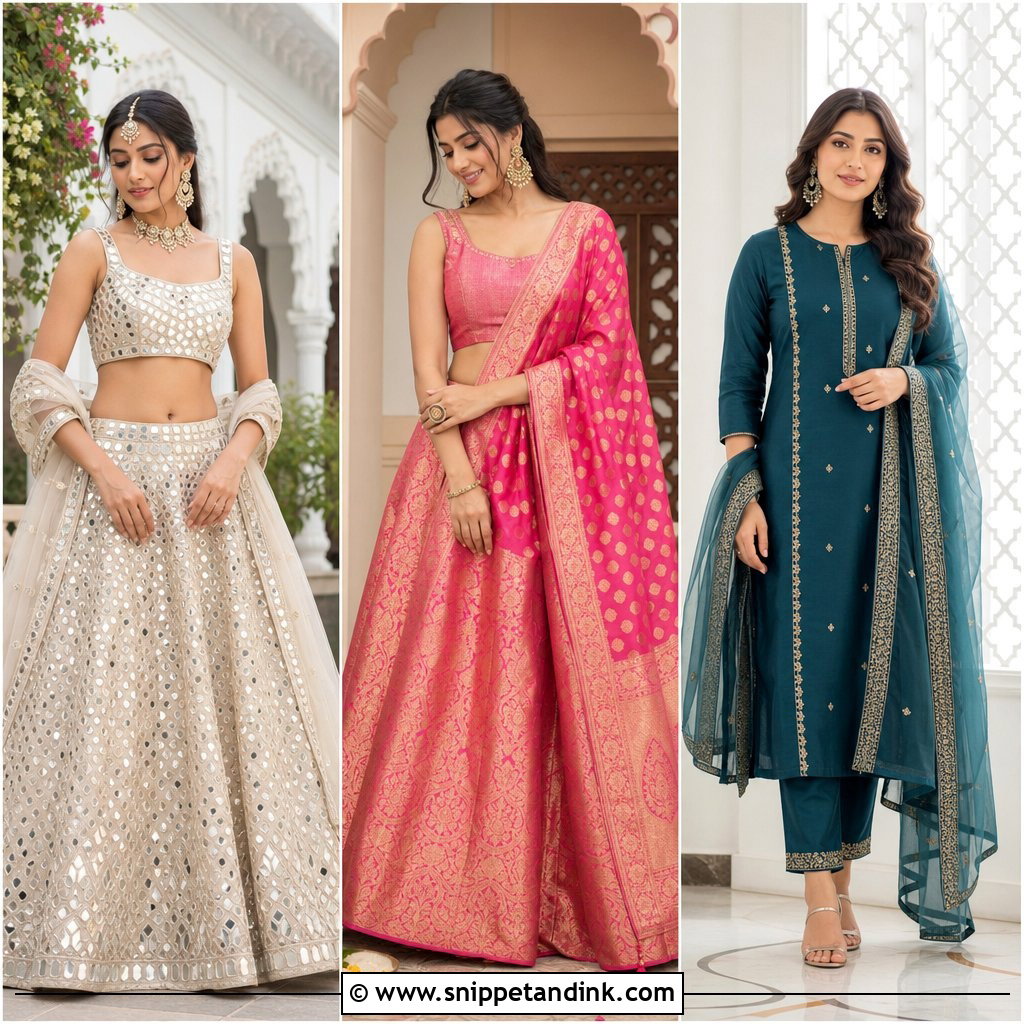
Indian Muslim wedding fashion has always leaned on coverage and handwork rather than skin, and that gives a stylist a lot to play with. A gharara, a sharara, a lehenga with a jacket or a plain silk suit can all be right; the question is which event it is for and how long you will be wearing it. When I dress a bride for Nikah, mehndi and Walima, I think about sleeves you can lift your arms in, a dupatta that stays put over a hijab, and embroidery heavy enough to read in photos without pulling the neckline down by evening. The thirty outfits below are grouped loosely by silhouette and colour, with notes on where each one earns its place.
Planning Three Outfits Across Nikah, Mehndi and Walima
Most brides I dress need at least three looks, and each event asks something different of the clothes. Thinking about them together stops you from buying three heavy outfits that all feel the same.
- Nikah: this is where coverage and head draping matter most. I choose a dupatta that can sit over the head for the full ceremony and embroidery concentrated on the borders, so the face is framed rather than crowded.
- Mehndi: you will sit for long stretches with your hands out. Short kurtis, three-quarter sleeves and lighter fabrics like georgette or cotton silk keep fabric away from wet henna.
- Walima: often the most photographed event, and usually in a hall with mixed lighting. This is where gowns, pastels and jacket lehengas come in, because there is less ritual draping to manage.
I also try to vary the silhouette, not only the colour. A gharara on the Nikah, a sharara at the mehndi and a lehenga or gown for the Walima gives the album some range, and it means your body is not carrying the same weight of fabric three days running.
1. Red Bridal Gharara Dress
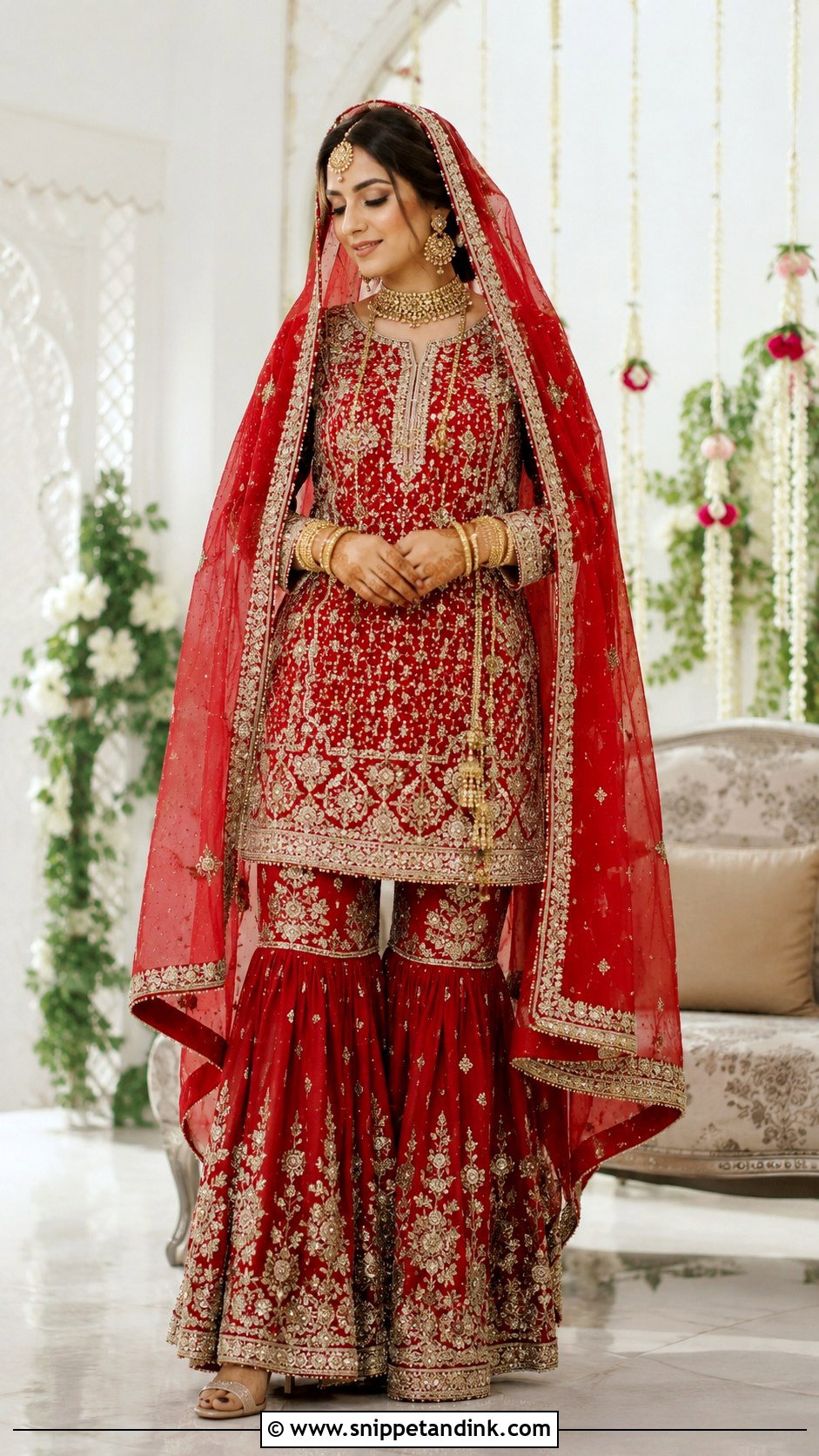
Red is still the colour most families picture for the Nikah, and a gharara is the shape that carries it with the most history: a long embroidered kurti, wide pants gathered at the knee into a flared panel, and a matching dupatta over the head. Raw silk and velvet hold zardozi and dabka without puckering, while tissue gives a lighter shimmer. The detail I fuss over is the knee joint, the gota band where the gharara gathers. If it sits too high you look shorter when standing; too low and it bunches when you sit on the stage. Add a passa, a choker and bangles, and keep the heels embroidered but low.
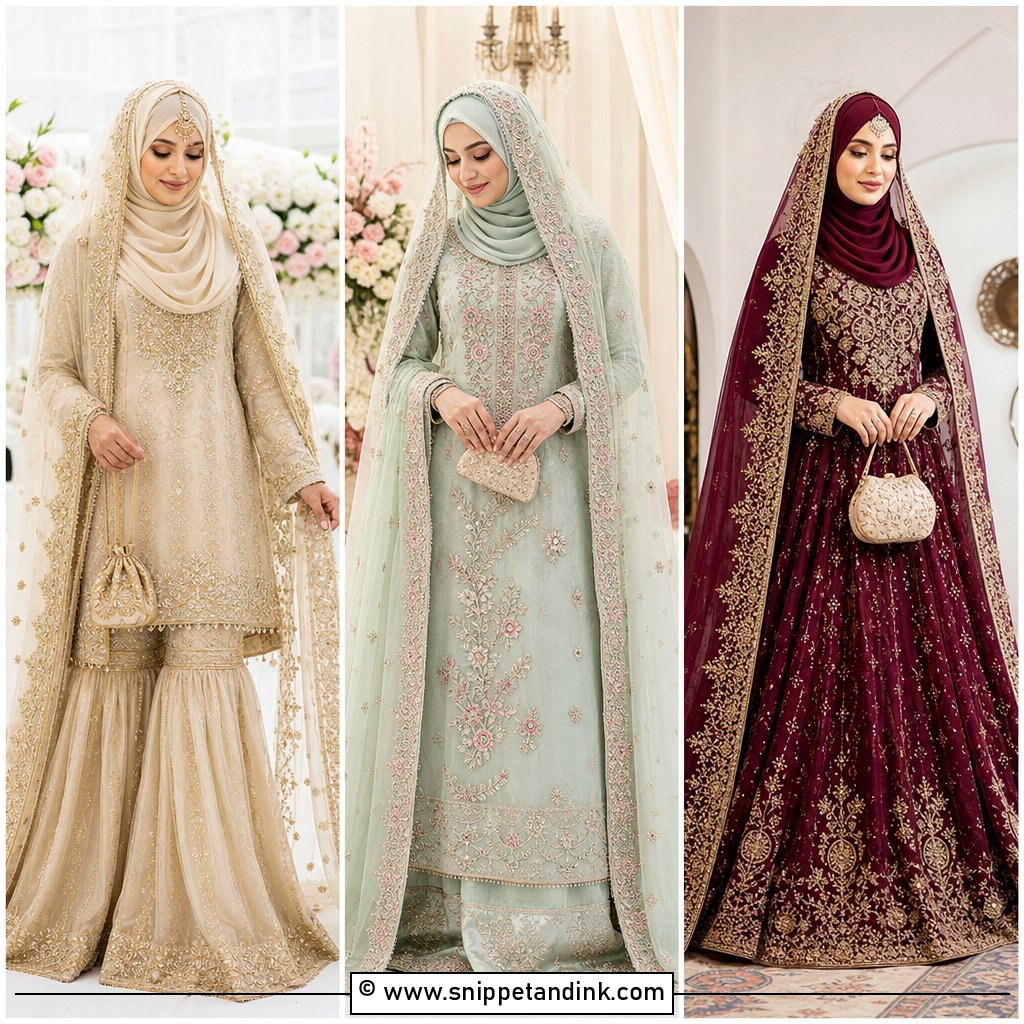
2. Green Nikah Sharara Dress
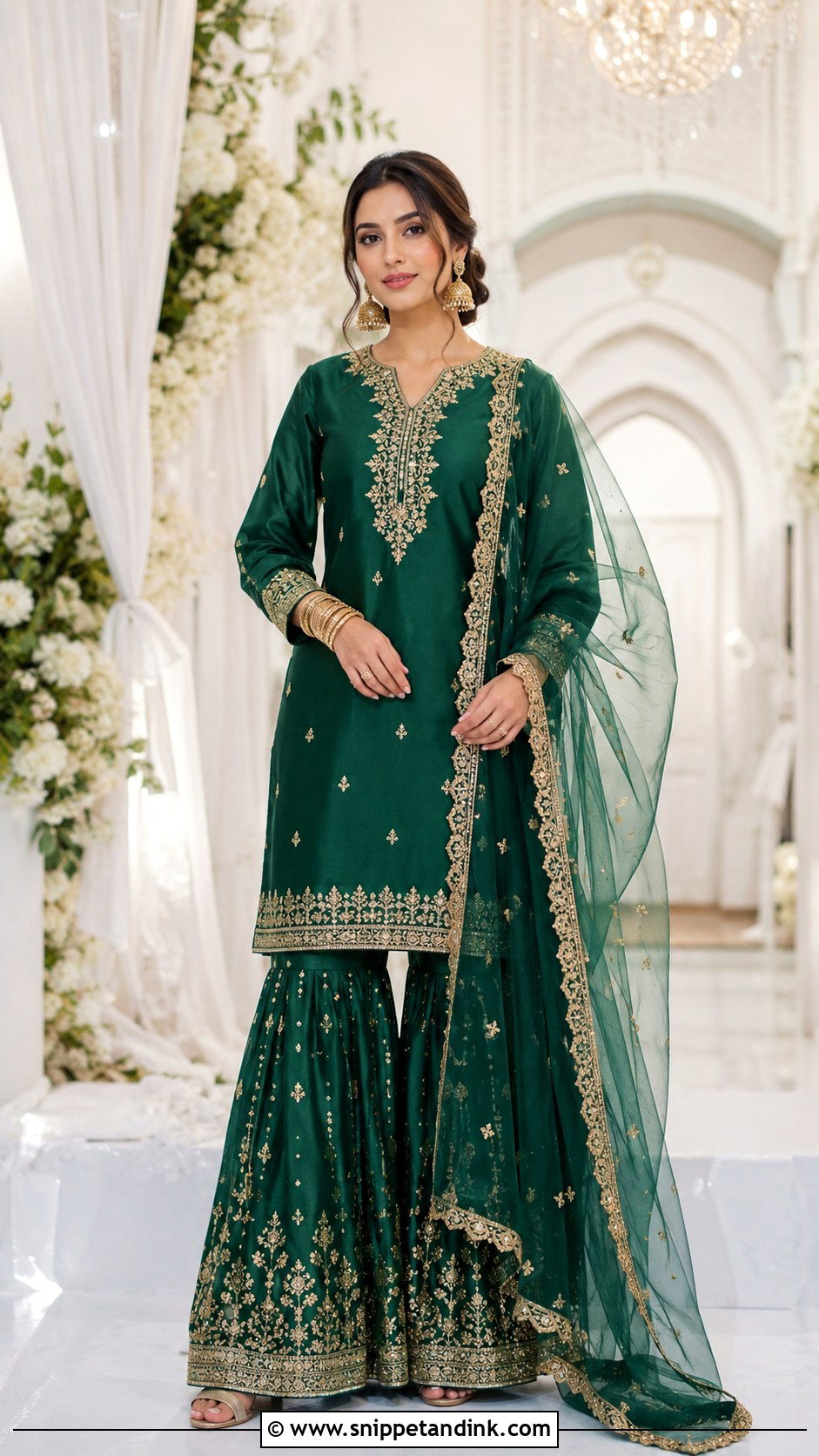
Green has a long association with Muslim weddings, and a green Nikah sharara dress gives you that colour in a shape that is easy to sit and walk in. Pistachio and sage read softer in daylight; emerald and bottle green need evening light or they can look nearly black in indoor photos. I’d pair pale greens with ivory thread and the deeper ones with antique gold, which keeps the embroidery from fighting the base. A hijab in a matching tone goes under a sheer bordered dupatta, and jhumkas sit just below the scarf line. Sisters of the bride can wear the same idea in a lighter weight.
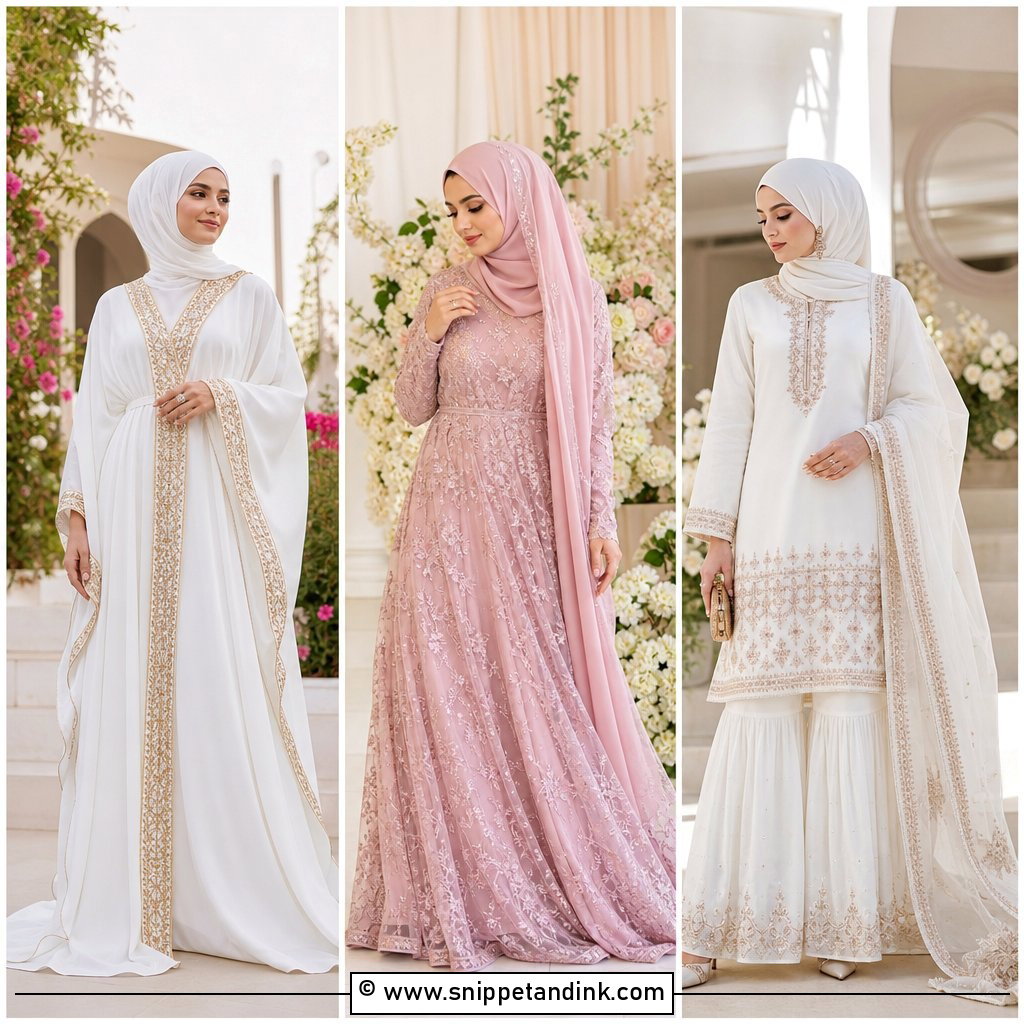
3. White Anarkali Wedding Dress
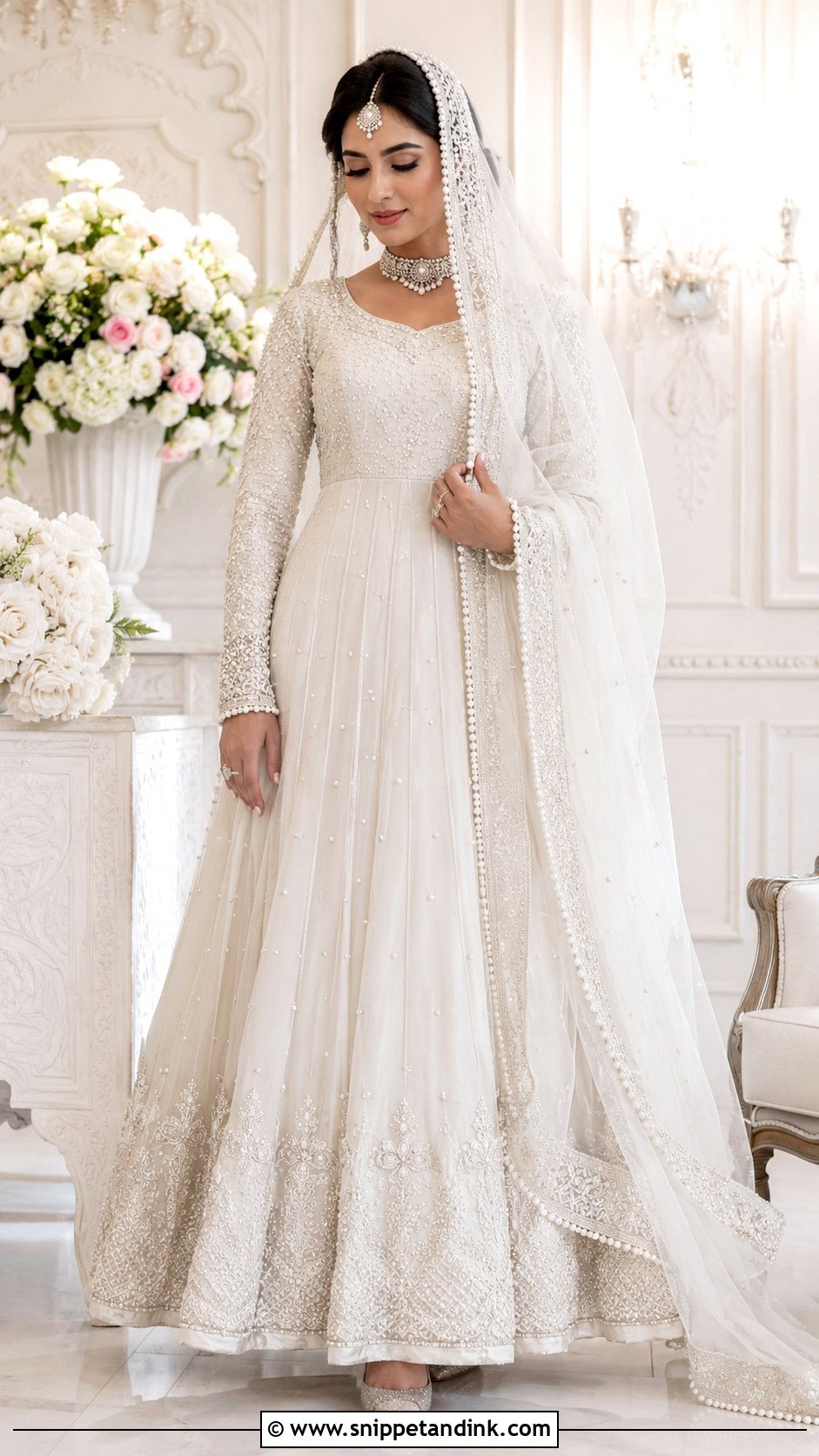
A white Anarkali relies on the flare from the waist seam, so the fit through the bodice decides whether it moves well or just hangs. I almost never let a bride choose stark white; ivory, pearl and off-white are kinder to most skin tones and show silver or champagne embroidery more clearly. Full sleeves and a high neck keep it modest, and a passa sits naturally against the pale fabric. The weak spot is the hem. White picks up every mark from a venue floor, so I ask the tailor for a slightly shorter length at the back and a faced hem that can be spot-cleaned between functions. It carries over to a Walima with a neat bun or hijab and a firmer makeup look.
4. Gold Lehenga Wedding Dress
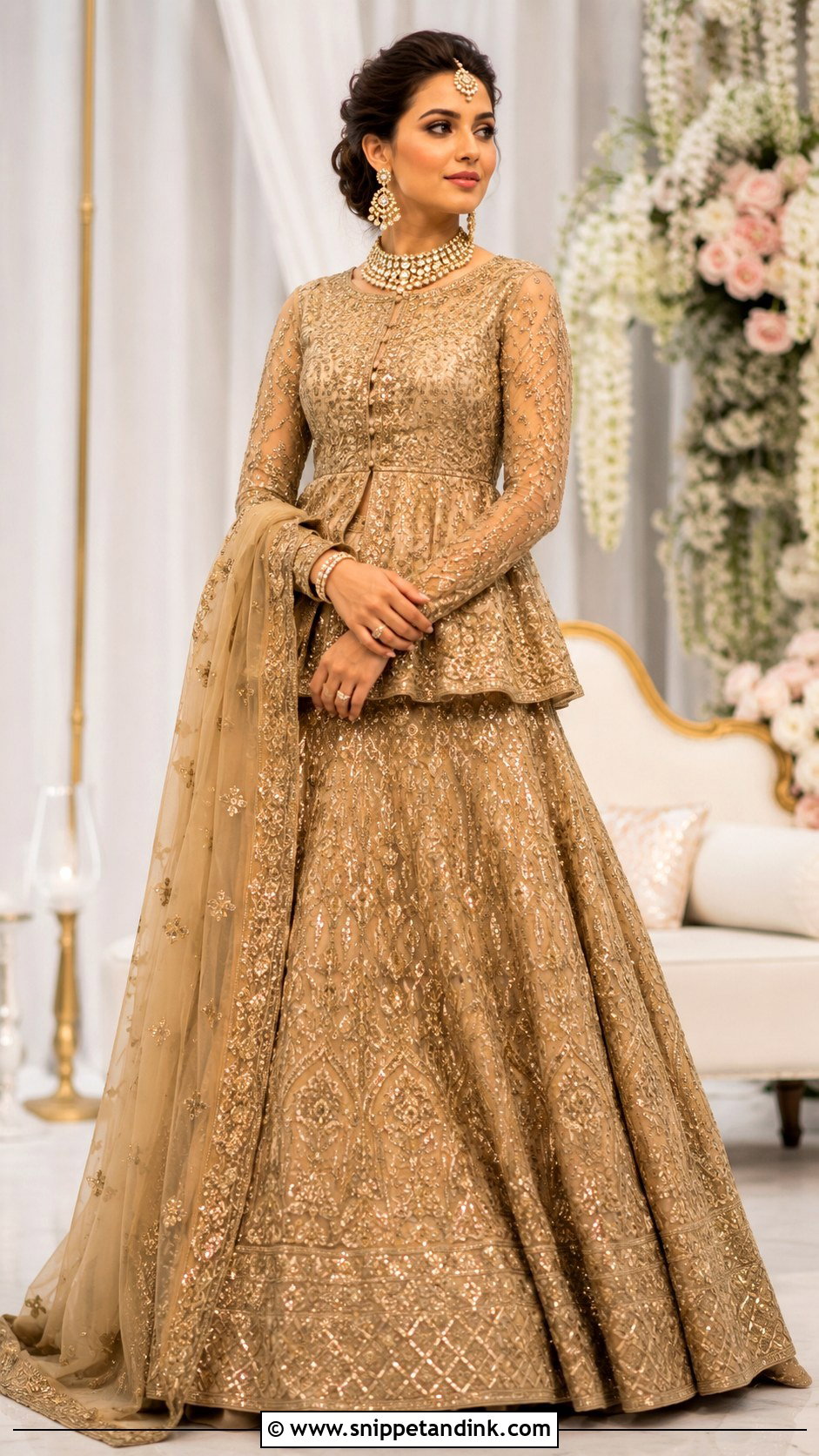
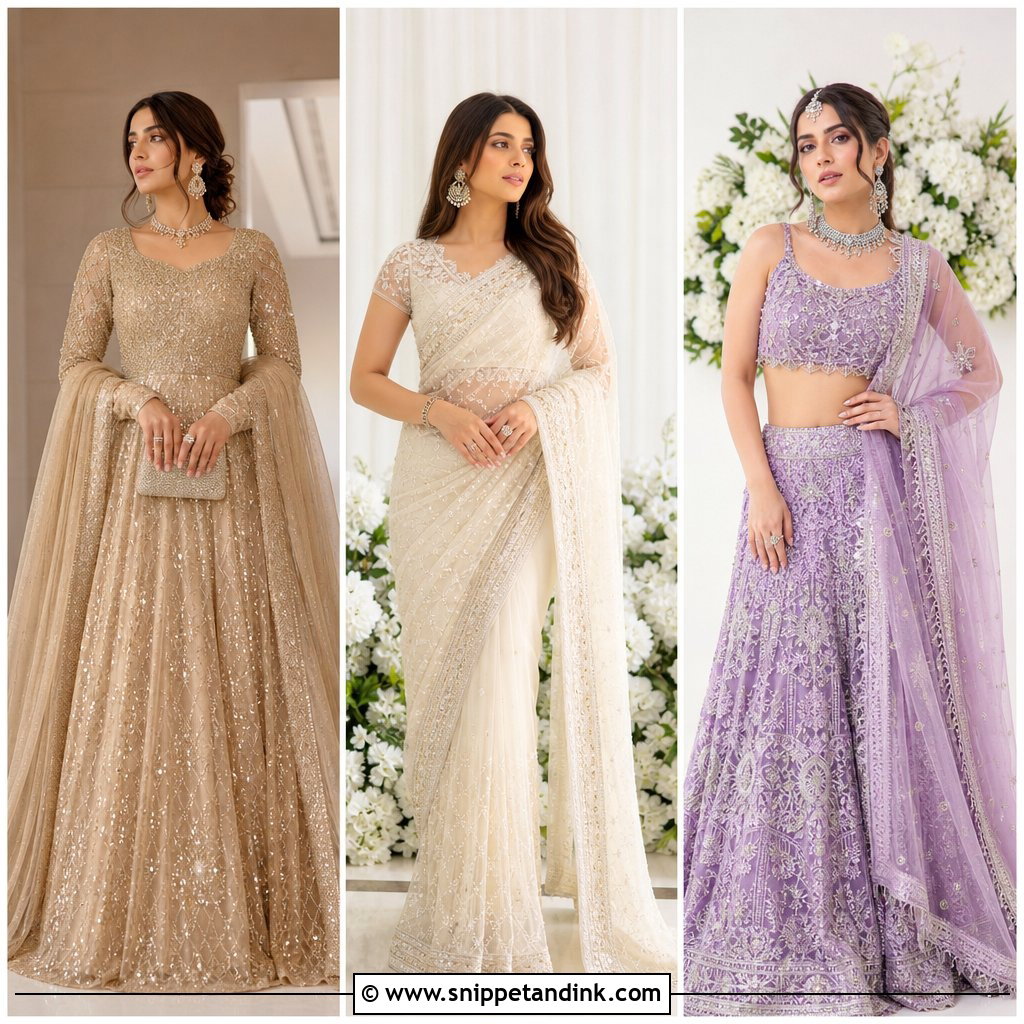
Gold lehengas suit the reception or Walima, where the lighting is warmer and the mood is more about display than ceremony. For coverage, a long-sleeve blouse or a peplum top does more than a cropped choli, and the peplum also hides the lehenga waistband when you sit. Antique gold zari or tone-on-tone thread gives depth; bright yellow gold all over can look flat on camera because there is nothing for the light to catch against. Drape the dupatta across the front or pin it at one shoulder, and keep the jewellery to kundan, a few bangles and a structured clutch. Gold flatters most skin tones, which is why I reach for it when a bride is unsure.
5. Pink Sharara Wedding Dress
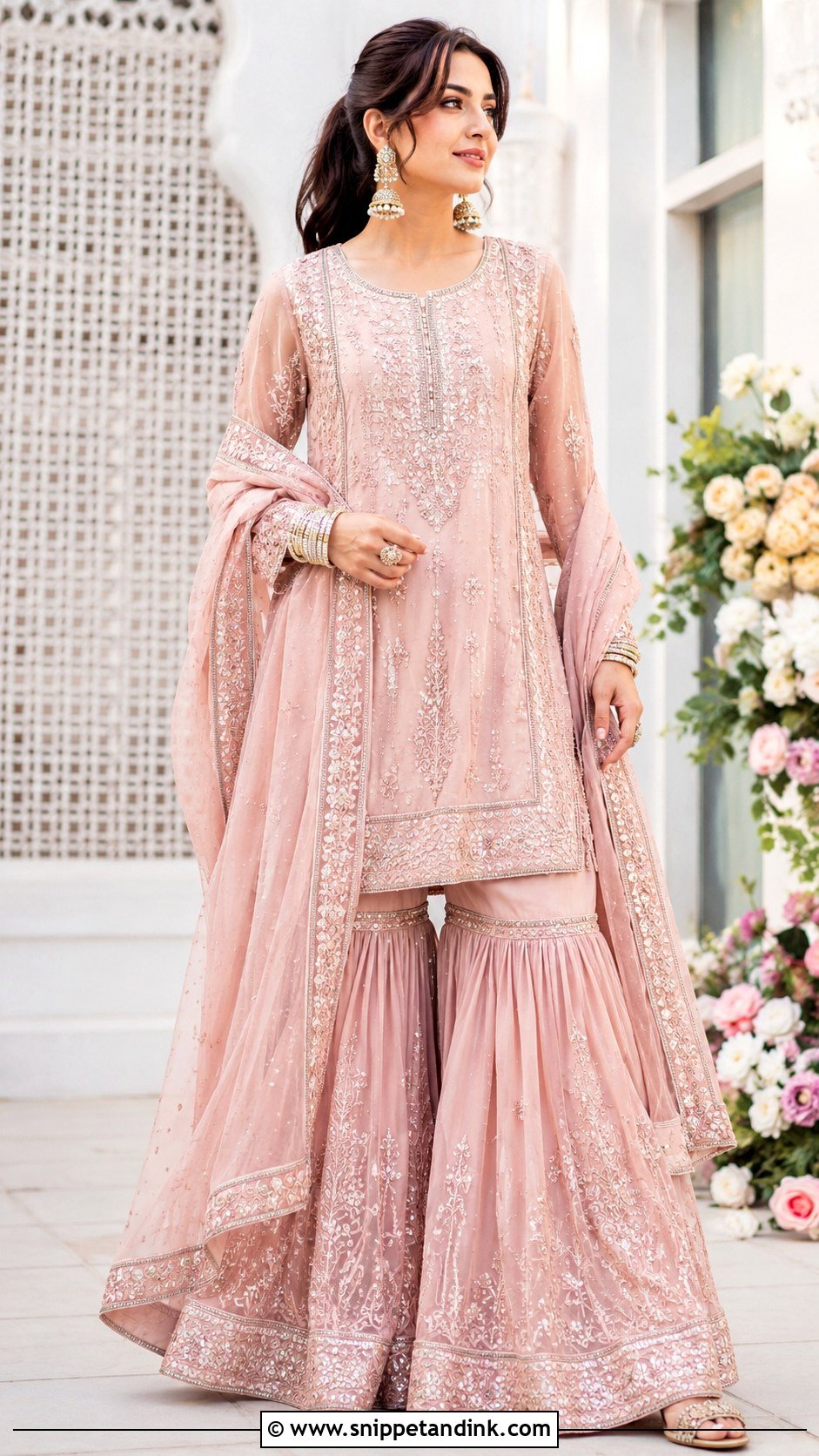
Pink shararas are my go-to for mehndi and daytime events because they are forgiving to wear for hours. Blush and dusty rose stay quiet, while rani pink brings real energy. A short kurti looks younger and lets the sharara swing; a longer kurti reads more formal and gives more coverage. Check the lining before you buy: a lot of pink georgette is sheerer than it looks on a hanger, and a non-sheer lining matters if you want full modesty. Gota patti and pearls keep it festive. Bridesmaids, cousins and guests can all wear versions of this without competing with the bride.
6. Ivory Gharara Wedding Dress
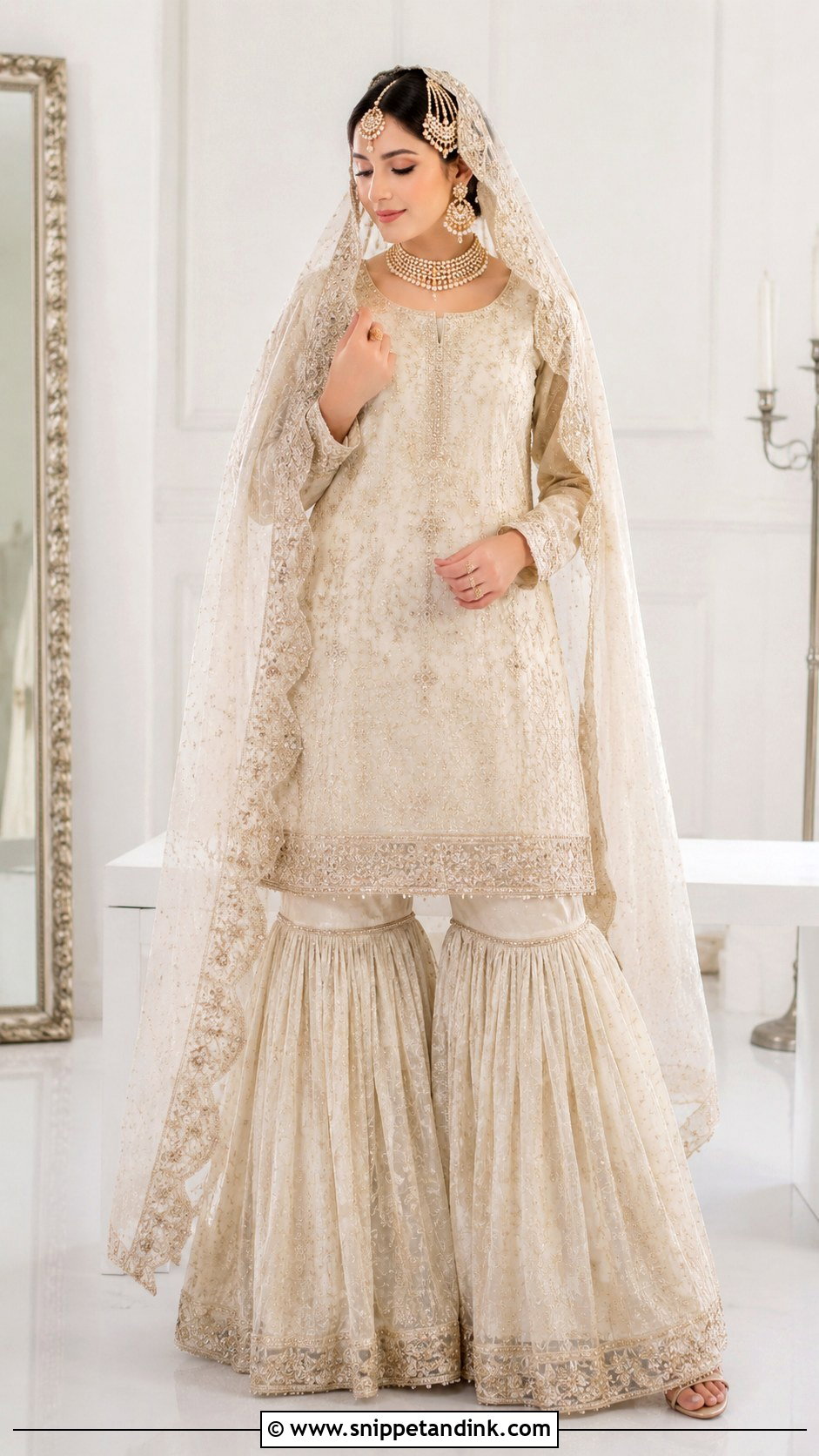
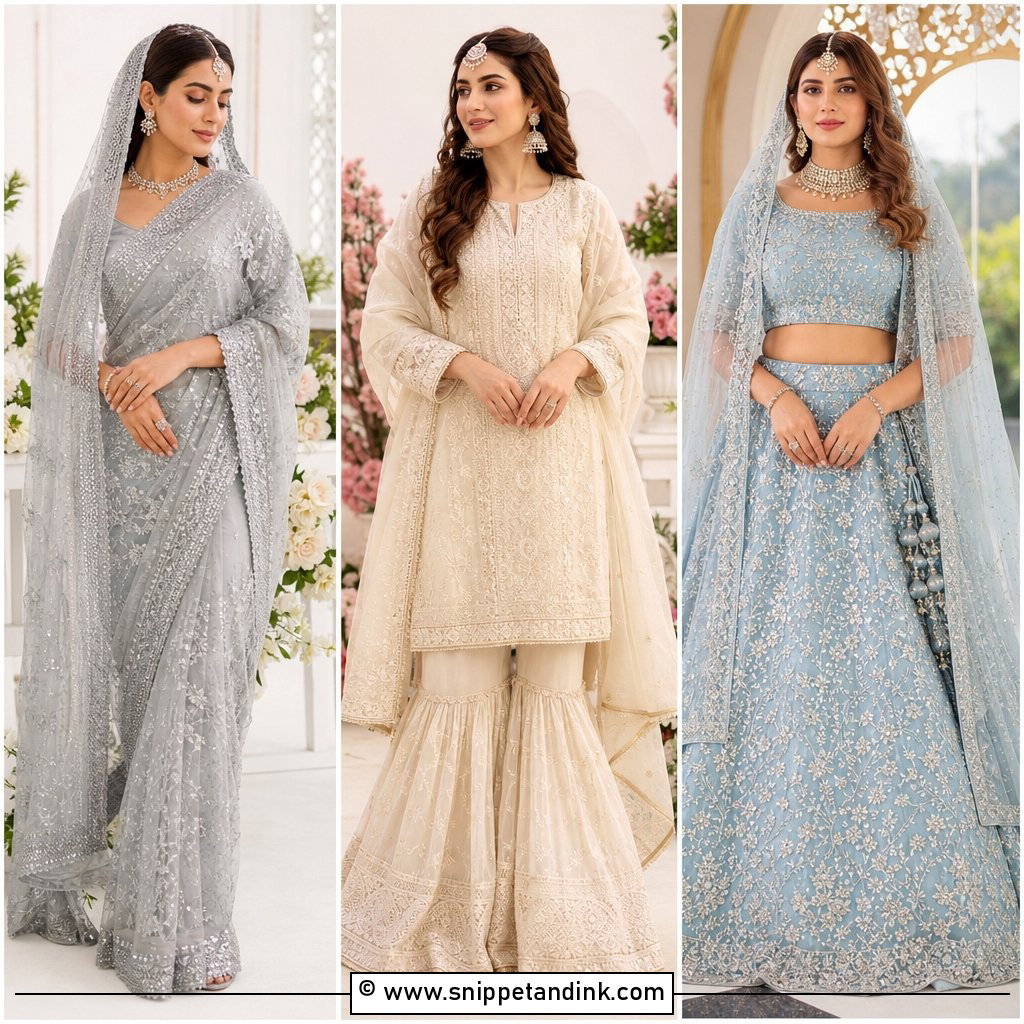
Ivory with a gharara gives the calm, expensive look many brides want for Nikah or Walima, without a loud colour doing the work. Because the base is pale, the embroidery placement carries the outfit, so I look for work around the neckline, sleeve hems, kurta hem and the gharara panels rather than an allover spray. Champagne, pearl and antique gold read richly on ivory. A scalloped dupatta border frames the face when worn over the head, and pearl earrings with a delicate passa keep everything in the same tone. It suits a bride who wants traditional cuts with a fresher palette.
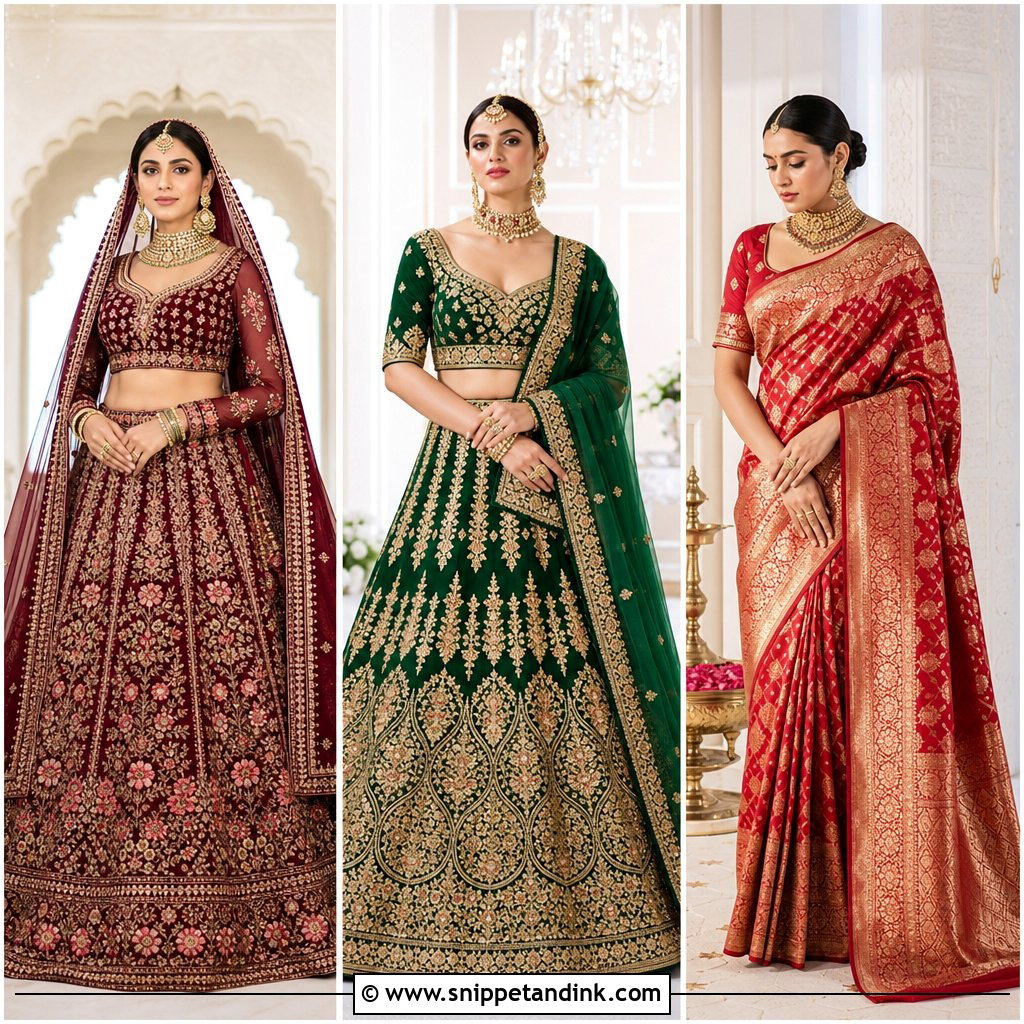
7. Maroon Bridal Lehenga Dress
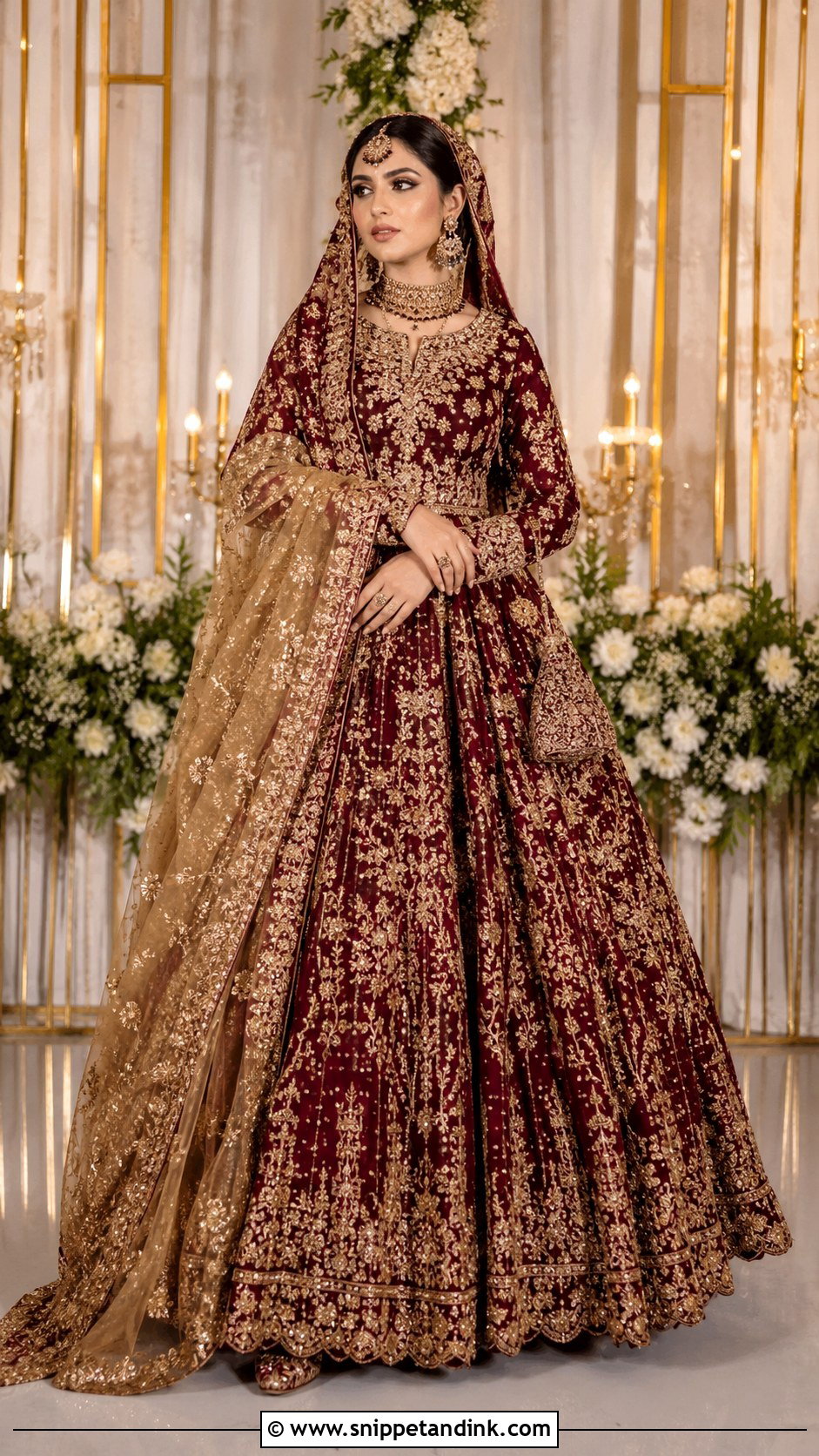
Maroon gives you the richness of bridal red without the brightness, and it looks particularly good under evening lighting. A long blouse, a jacket-style top or a peplum choli keeps the coverage while the lehenga stays fully bridal. Zardozi and dabka in copper or old gold sit better on maroon than yellow gold, which can look brassy against the deep base. A contrast dupatta in beige or blush softens the whole thing near the face. One warning from fittings: heavy maroon velvet is warm, so if the event is indoors in summer, ask for a silk version instead.
8. Pastel Walima Lehenga Dress
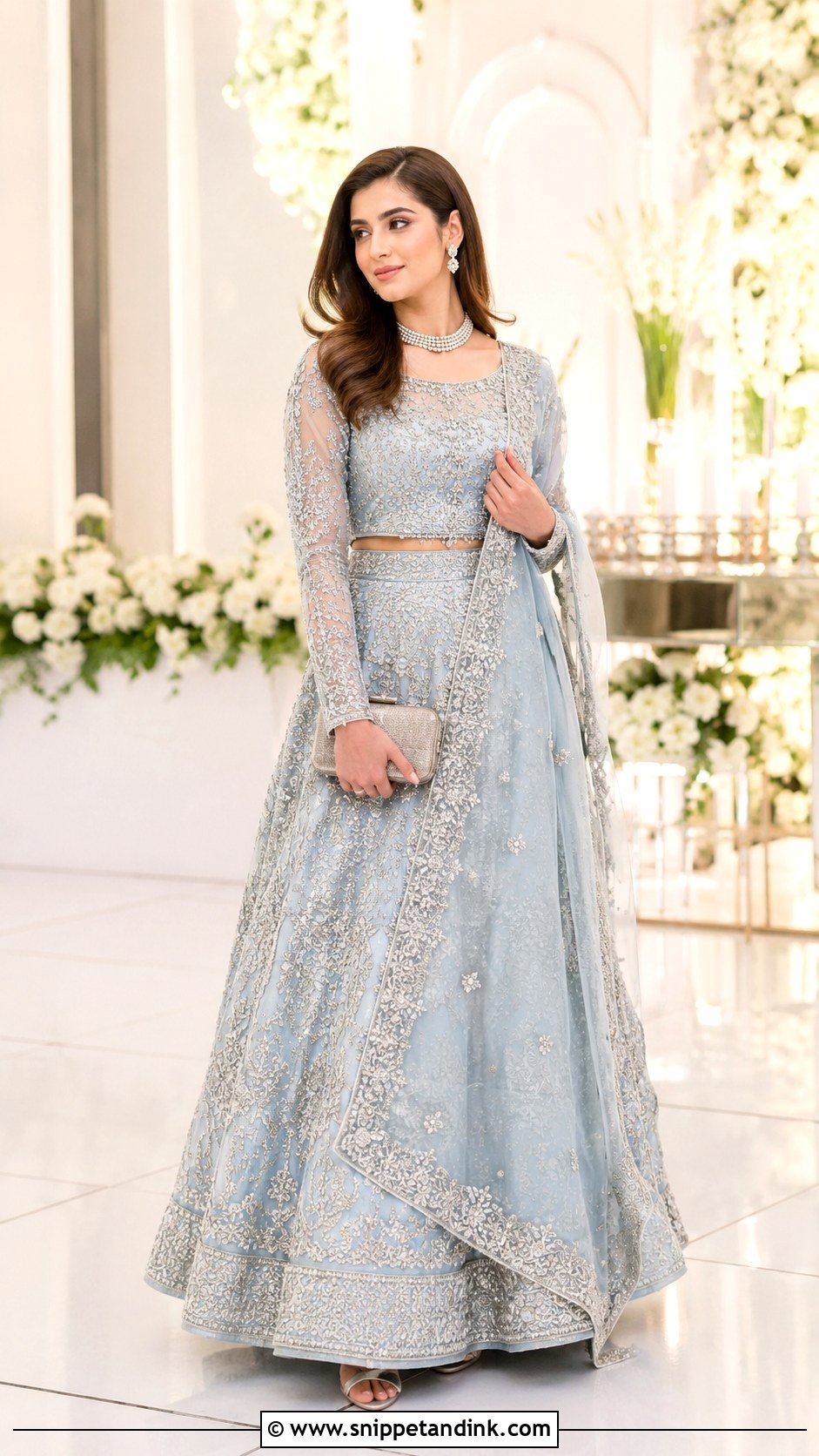
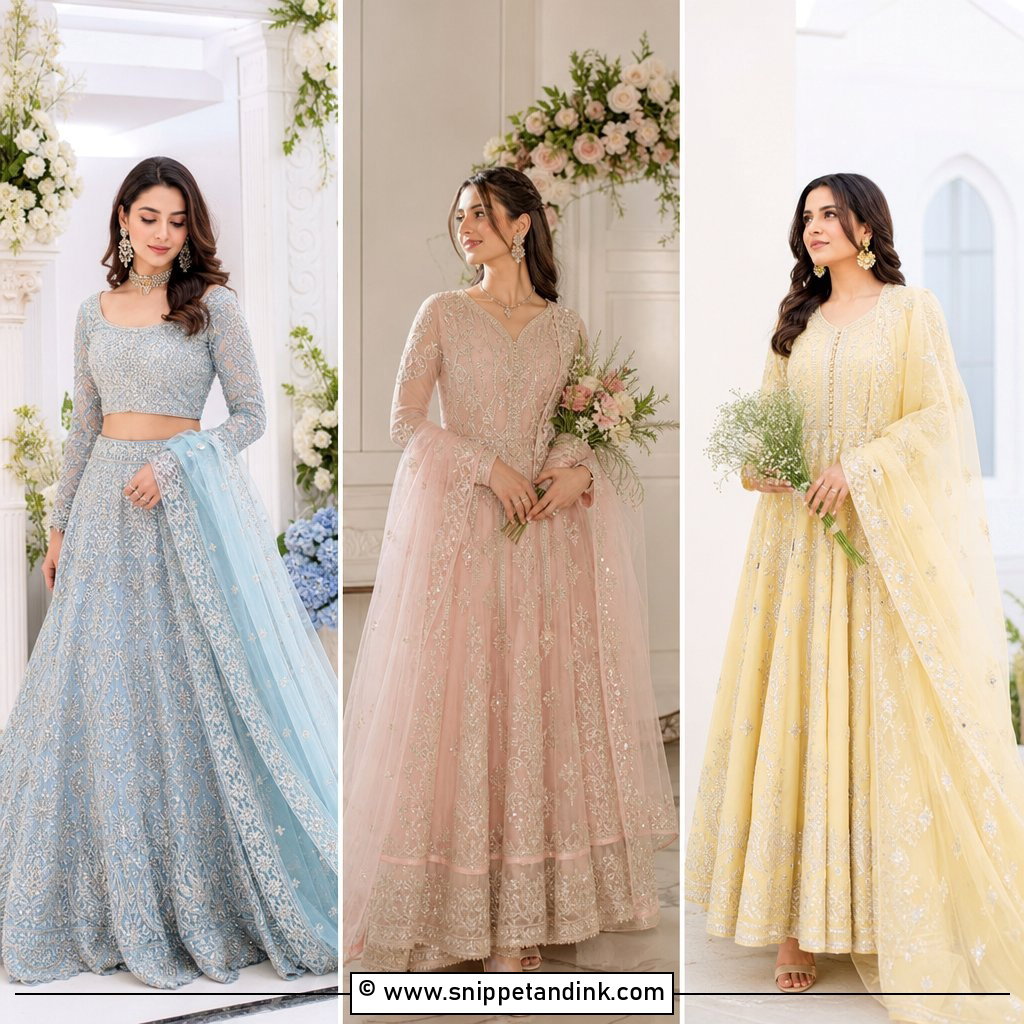
A pastel Walima lehenga dress is the natural switch after a deep red or green Nikah, and families often like the change in mood. Powder blue, mint, lavender and peach all hold fine threadwork and pearls well. Pastels are more sensitive to venue lighting than jewel tones, though. Under warm yellow bulbs, lavender can turn grey and mint can look washed out, so I always ask brides to hold the fabric up in the actual hall or in a photo taken there. Choose a long-sleeve blouse or jacket top, drape the dupatta over one shoulder, and stick to silver or diamond-style jewellery.
9. Yellow Mehndi Sharara Dress
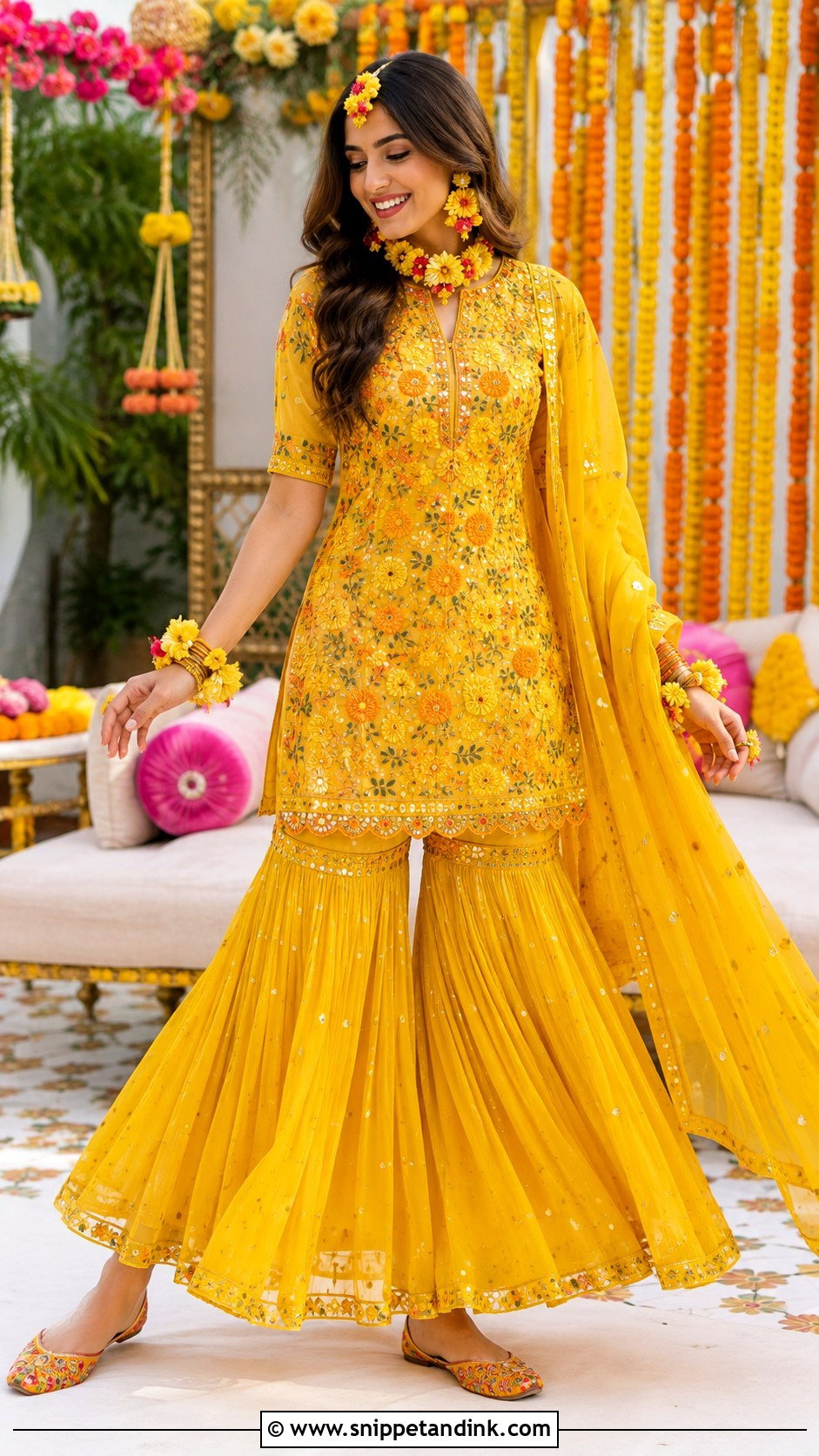
Mehndi is the one event where a bride is expected to sit for long stretches with her hands out, so a yellow mehndi sharara dress with a short kurti makes practical sense. Mustard and marigold suit most skin tones better than lemon yellow, which can drain colour from the face. Gota patti, mirror work and tassels give the playful finish. Make sure the sleeves can be pushed above the elbow or are three-quarter length, because henna on the forearm needs time to dry and fabric smudges it. Add floral jewellery, juttis and a light dupatta you can take off while the henna sets.
10. Black Reception Gharara Dress
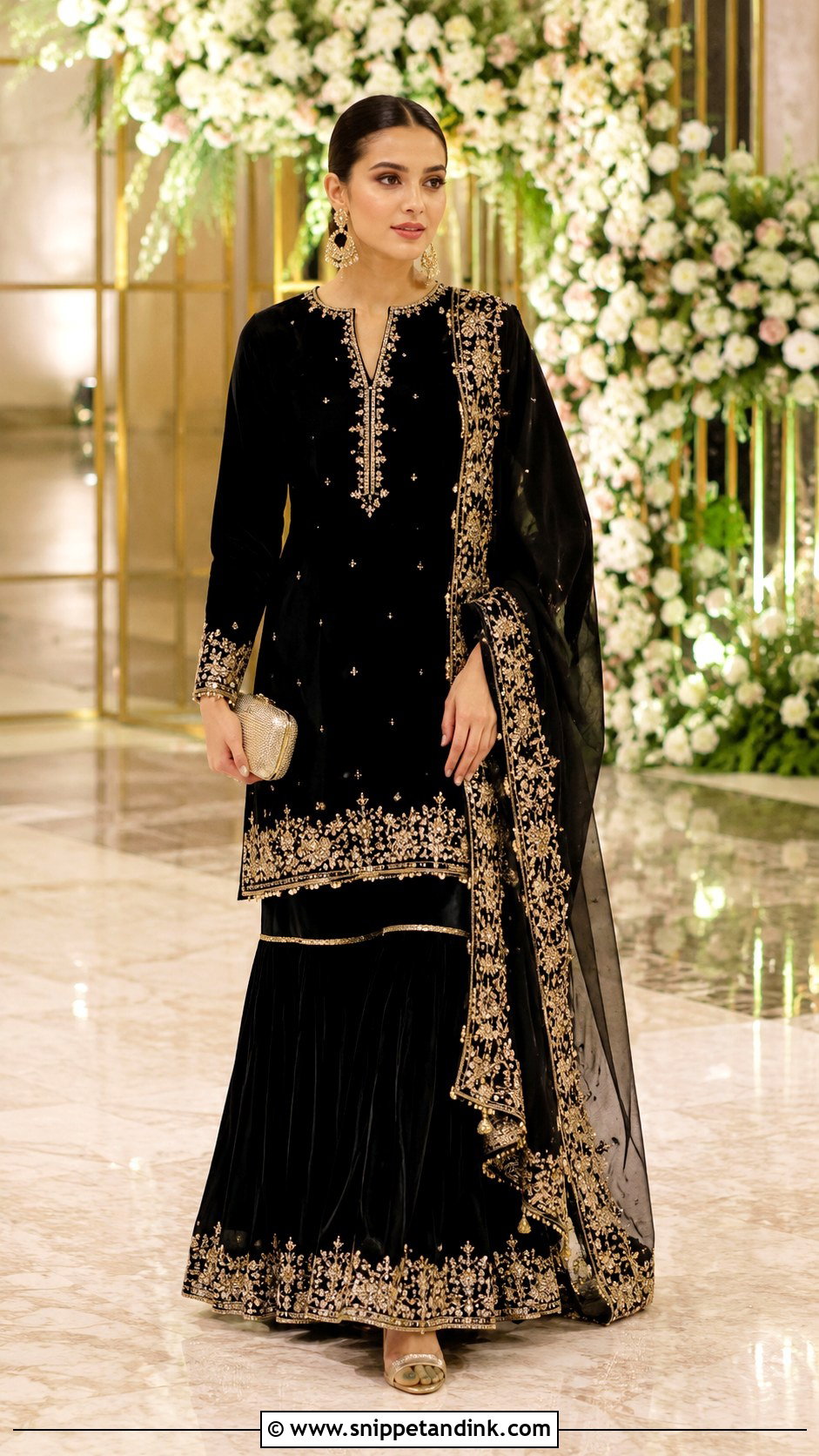
Black is a careful choice. Some families avoid it for any wedding event, so I always suggest checking before buying, but for a reception or an evening function where the dress code allows it, a black gharara looks sharp and formal. Velvet, silk or georgette all take gold, silver or crystal work well. A structured gharara with a long kurta and an embroidered dupatta border stops it from feeling like a party outfit. Statement earrings, sleek heels and a metallic clutch finish it. I’d suggest it for guests, sisters or cousins rather than the bride.
11. Blue Anarkali Wedding Dress
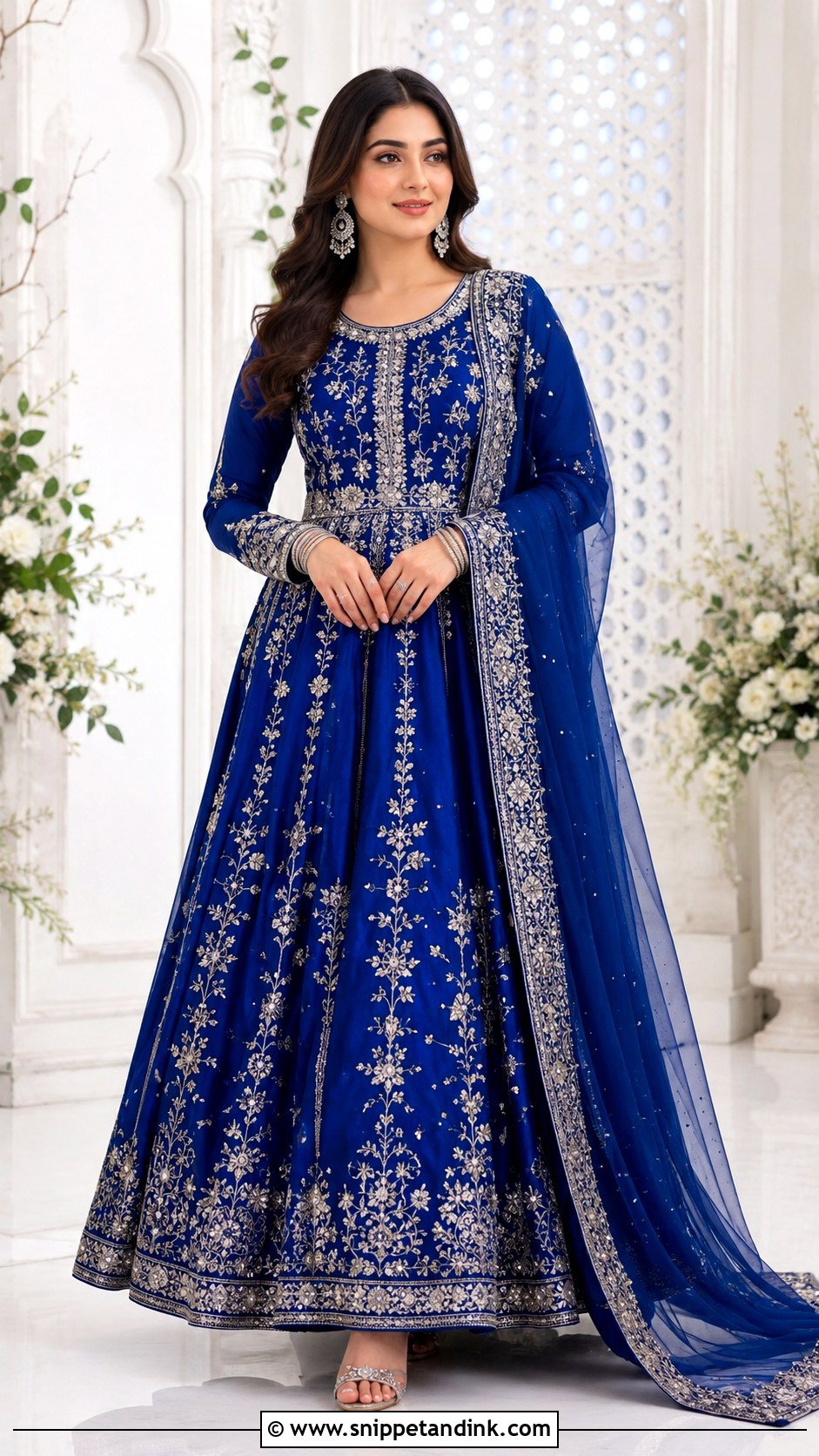
Blue Anarkalis cover a wide range of formality: navy and teal feel like evening wear, while powder blue sits comfortably at a daytime Nikah or Walima. Silver thread suits the cool blues; gold gives navy and teal a warmer, richer finish. A floor-length cut with full sleeves moves well and keeps coverage throughout. I recommend this shape to women who feel boxed in by a fitted lehenga or weighed down by a heavy gharara. Drape the dupatta on one shoulder, and if you wear a hijab, match it to the base colour rather than the embroidery so your face stays the focus.
12. Peach Muslim Wedding Lehenga
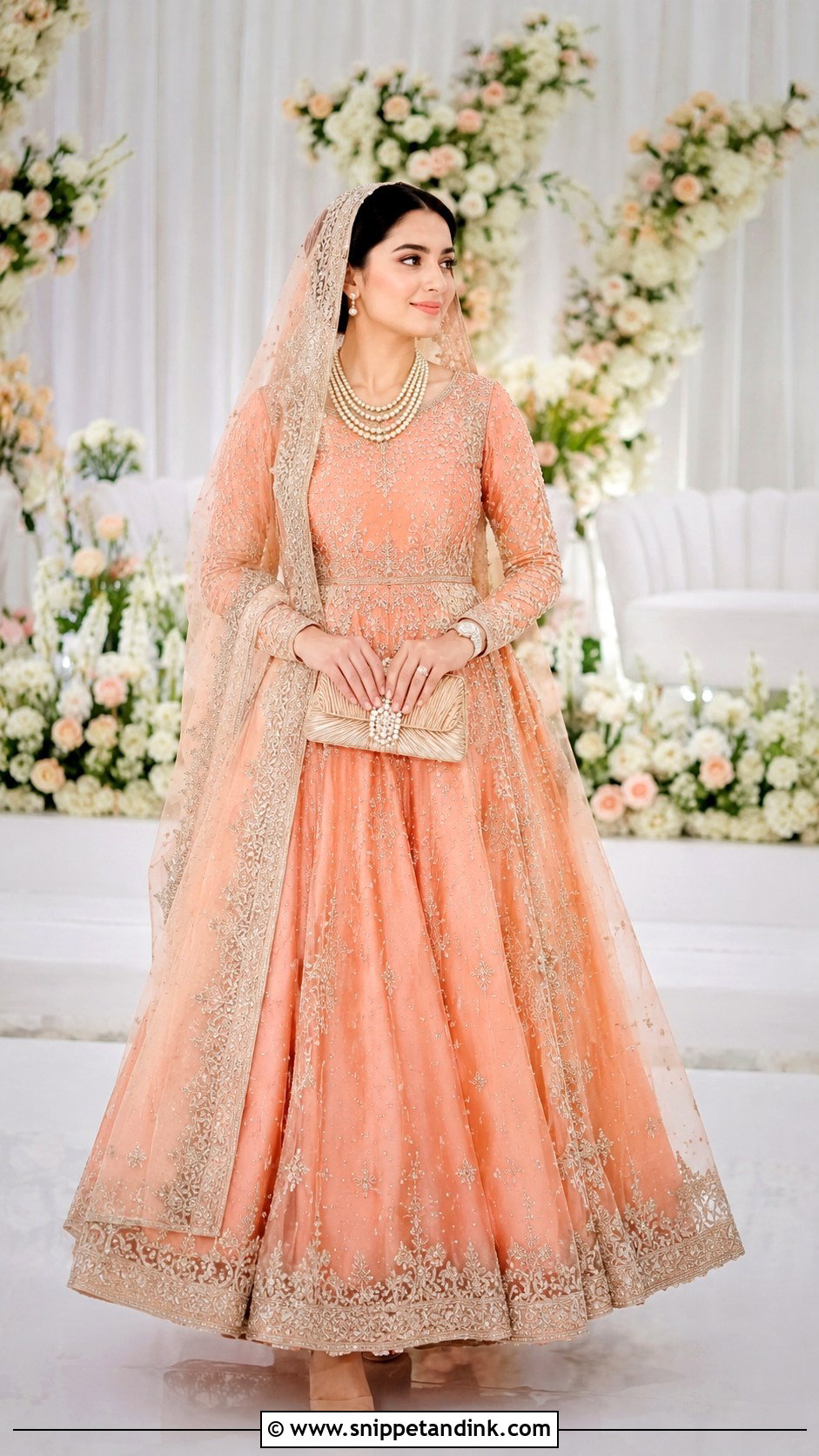
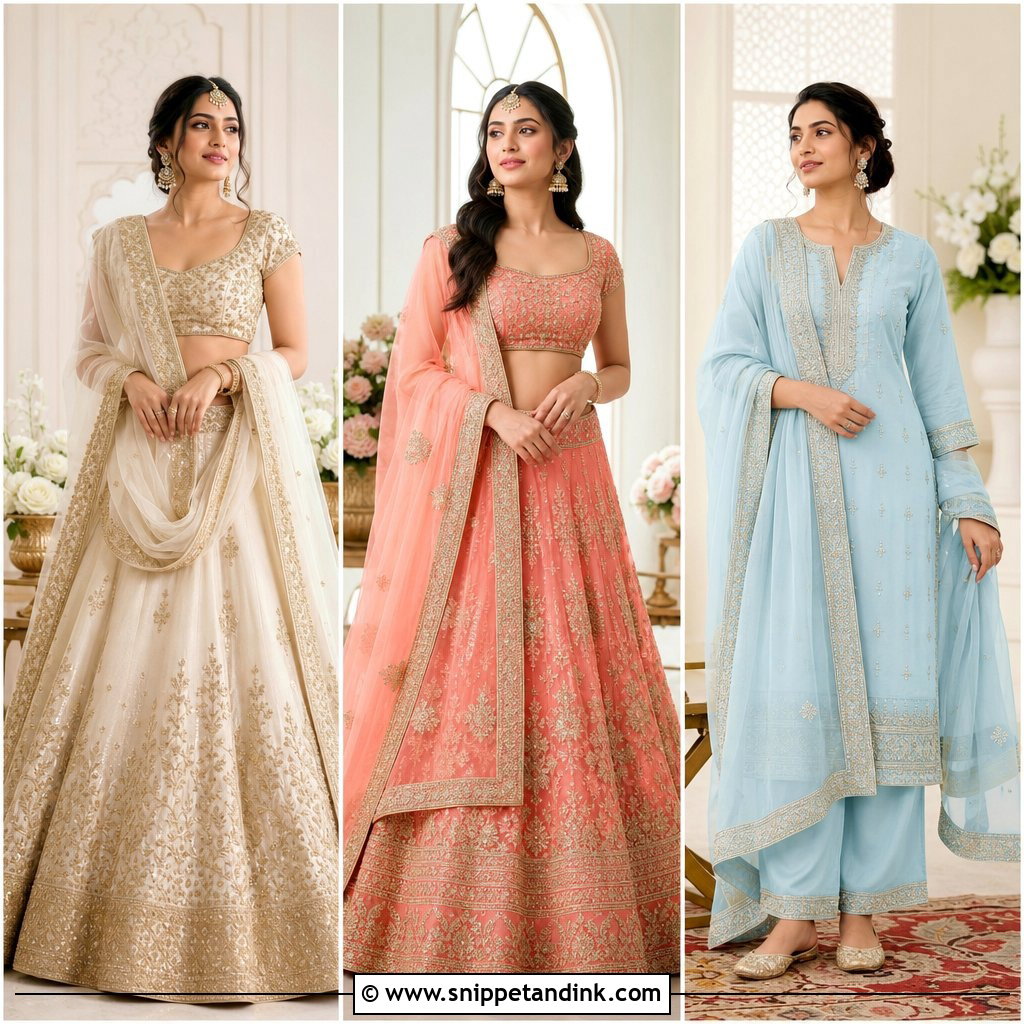
A peach Muslim wedding lehenga is my suggestion for daytime events like an engagement or a lighter Walima. Peach can tip into casual if the embroidery is too sparse, so I look for champagne, rose gold or ivory work dense enough at the borders to look finished. A full-sleeve blouse, high neck or longer peplum gives coverage and comfort. Pearl jewellery and soft curls or a hijab in the same tone keep it delicate. Bridesmaids can wear it too, since peach sits comfortably beside most other colours in group photos.
13. Purple Gharara Wedding Dress
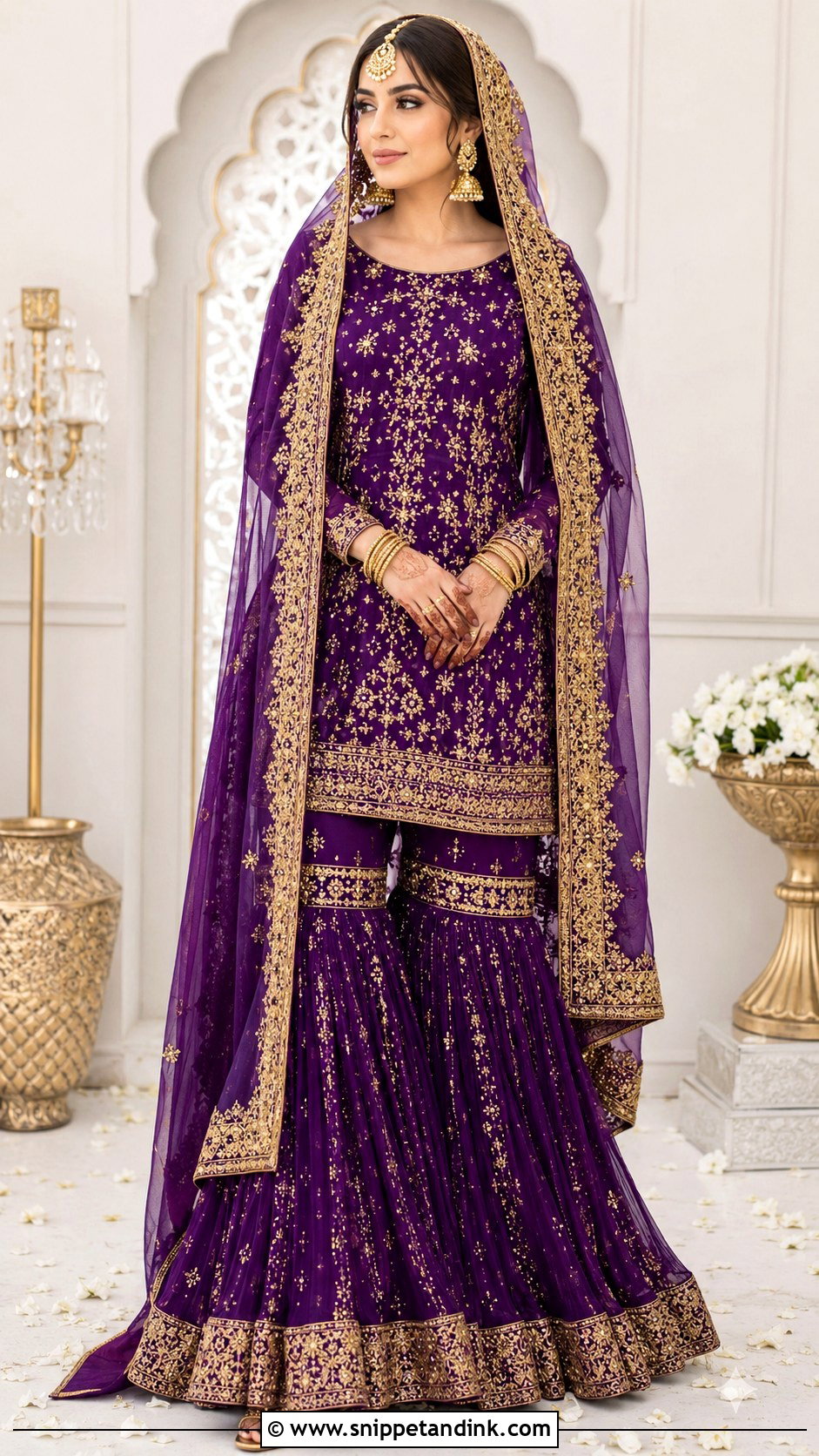
Purple is a good answer when a bride wants a traditional gharara but is tired of red, pink and green. Plum and royal purple hold heavy gold or antique threadwork for a main ceremony; lilac with pearl and silver feels lighter for Walima or an engagement. Purple dyes vary a lot between batches and under different light, so I ask to see the fabric in daylight before ordering. Keep the dupatta border finished, add a passa and jhumkas, and choose embellished heels to complete it.
14. Beige Zardozi Sharara Dress
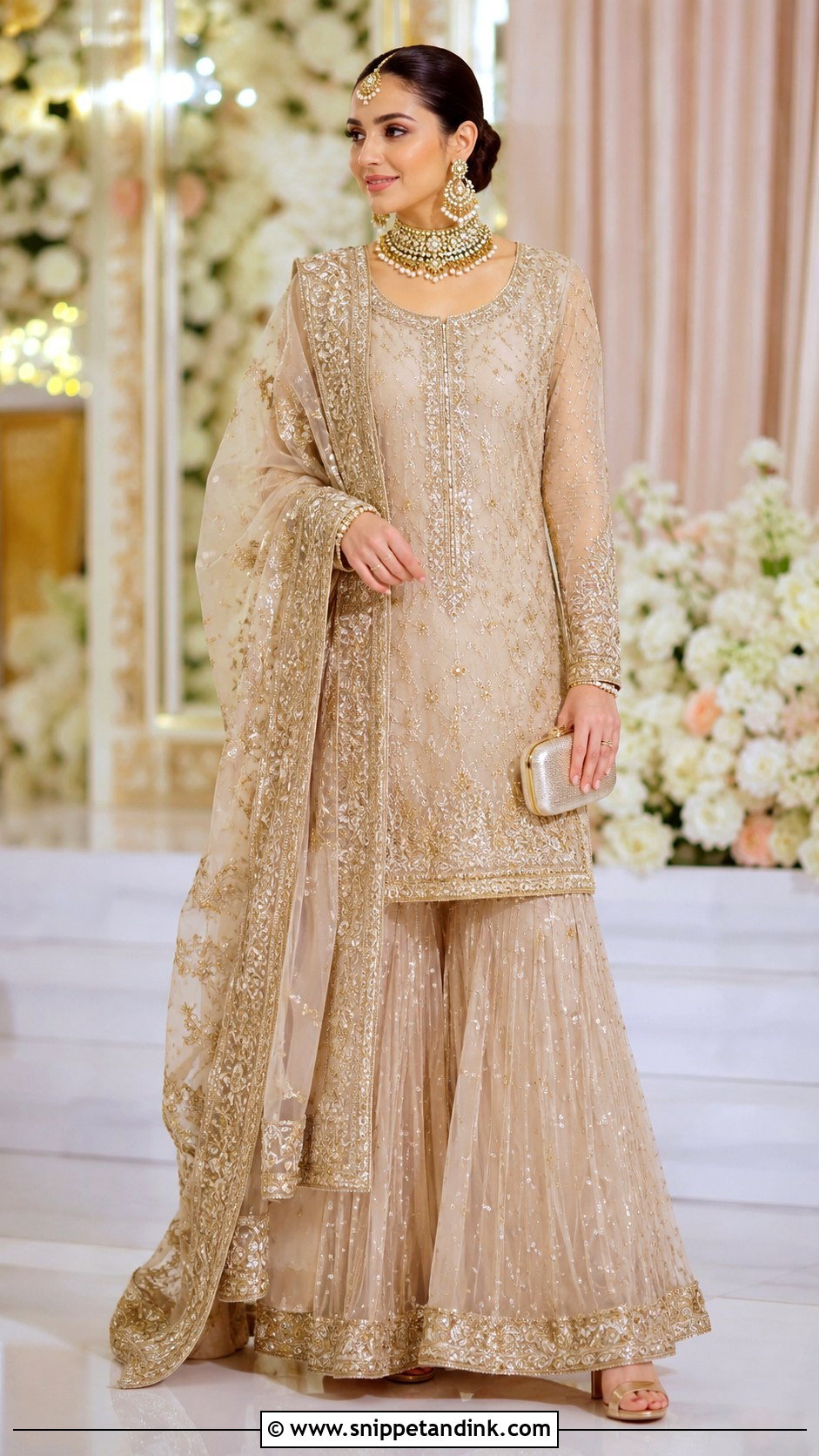
Beige and champagne look quiet on a hanger, but with dense zardozi they give a very polished result, and they suit mothers and close family as much as brides. A long straight kurta over a flared sharara balances most figures because the straight line lengthens the torso. The real advantage is how restylable it is afterwards: change the dupatta, the jewellery or wear a different blouse underneath, and it becomes a new outfit for the next family wedding. For the Nikah, add a heavy bordered dupatta, gold heels and kundan pieces.


15. Silver Walima Gown Dress
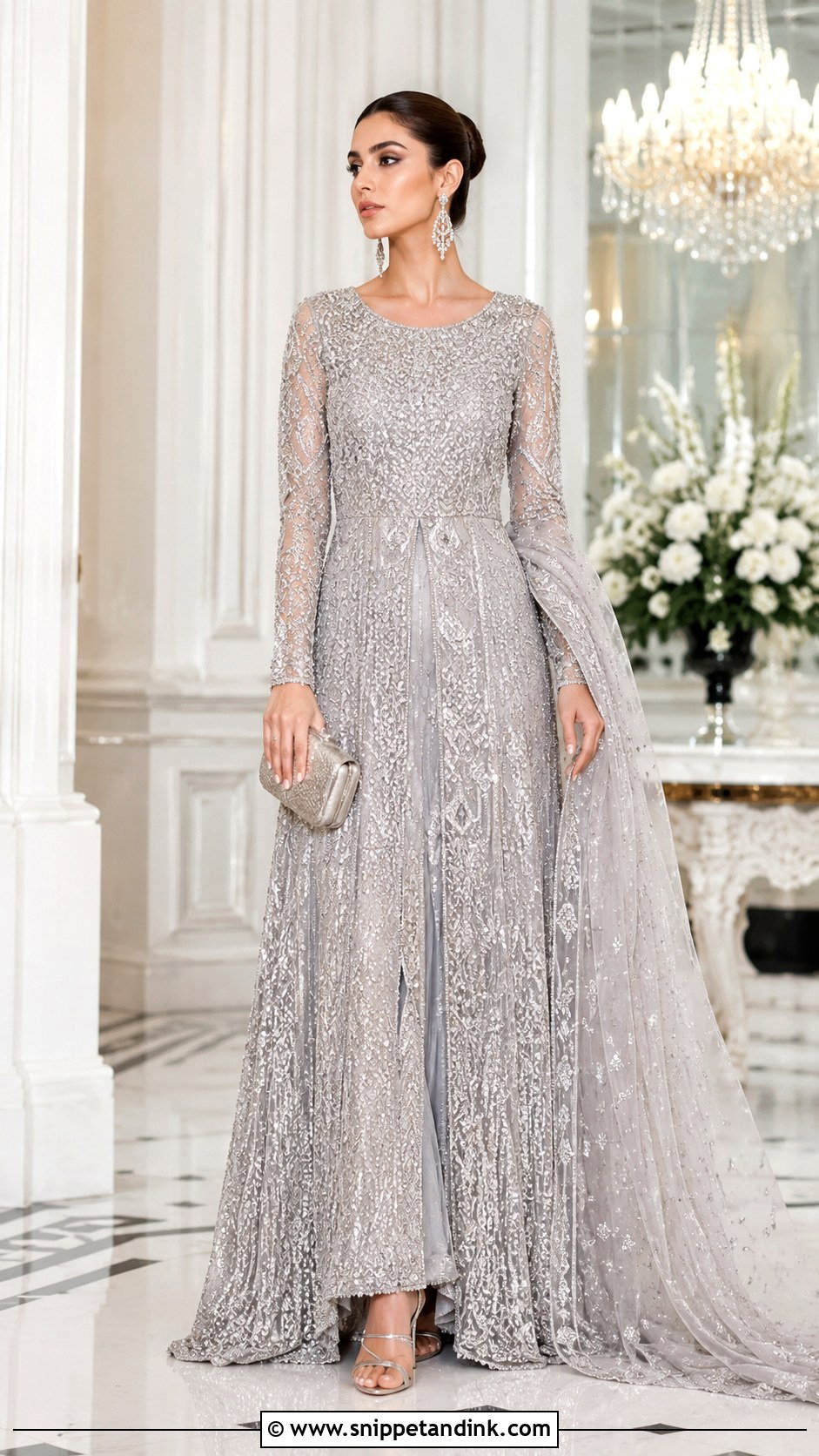
Silver gowns are for the bride who wants her Walima to look modern without dropping modesty. A floor-length cut with long sleeves, a structured bodice and a soft flare gives that, and sequins, crystals and pearls add dimension. A matching dupatta or cape-style overlay ties it back to South Asian dress. I check one thing above all with these gowns: heavy beading on the bodice can scratch the inner arm through the evening, so I ask for a soft lining on the underside of the sleeve. A silver or ivory hijab under the dupatta, silver heels and a sleek clutch round it off.
16. Orange Mehndi Lehenga Dress
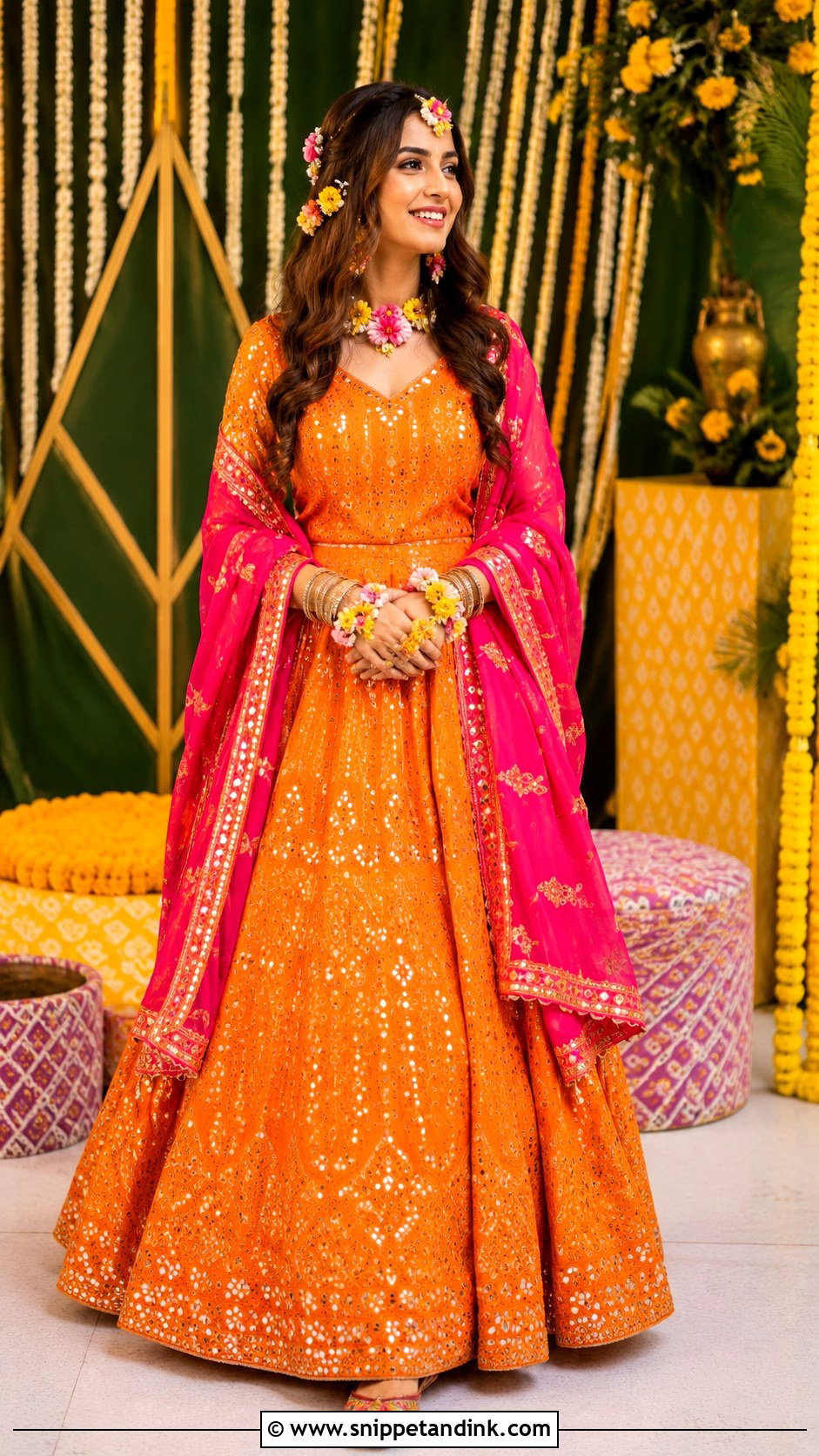
Orange lehengas carry mehndi energy better than almost any other colour. Burnt orange and saffron suit warm skin tones; coral-orange is gentler on cooler ones. A modest blouse keeps the base traditional, while mirror work, gota patti and tassels add the fun. The trick is a contrast dupatta in pink, green or ivory so the whole outfit does not merge into one block of colour. Juttis, bangles and floral jewellery keep it light. Sisters and friends can wear it with fewer accessories.
17. Mint Green Nikah Dress
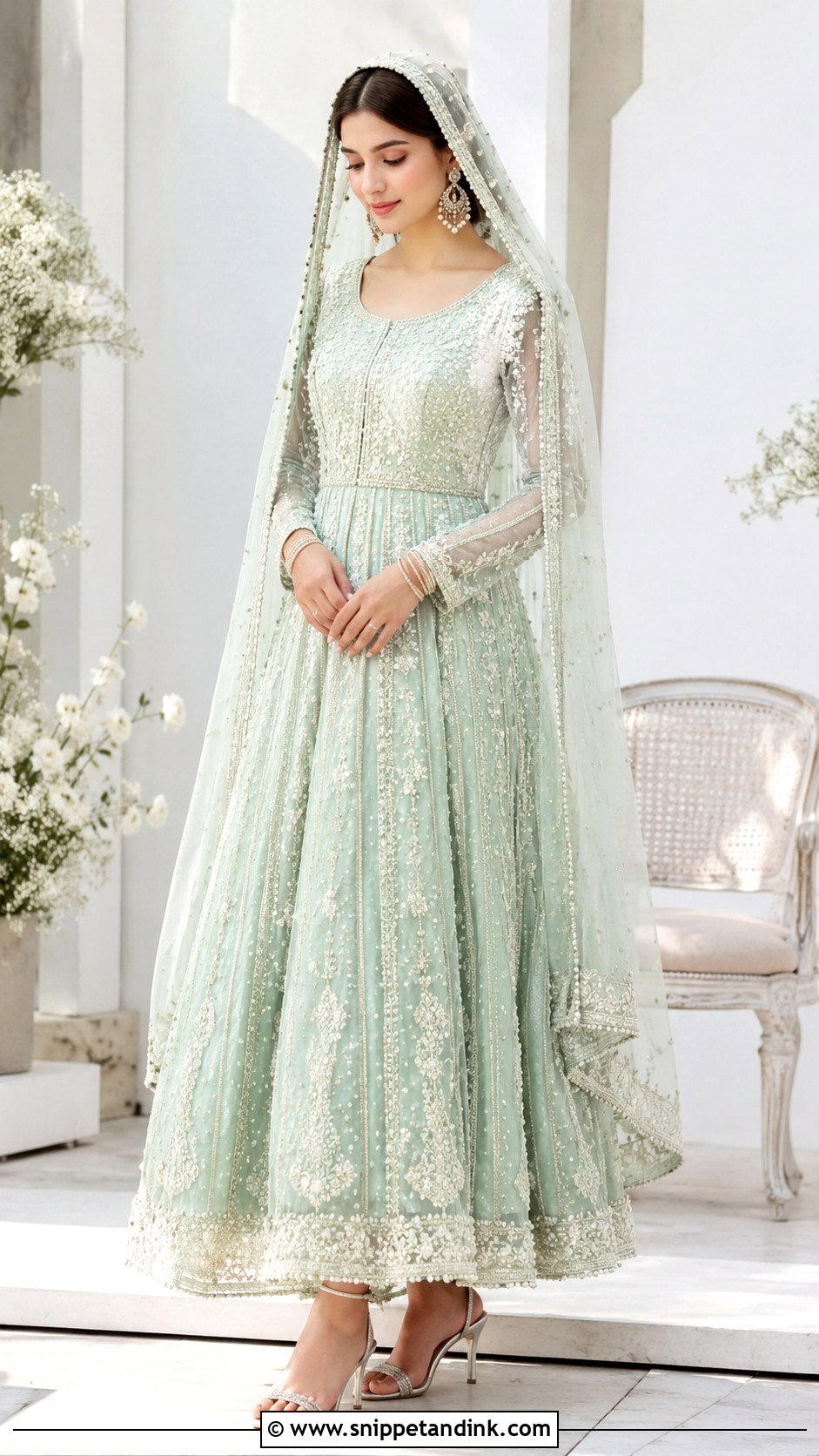
Mint is gentle enough for a daytime Nikah but still counts as colour. It works across an Anarkali, a sharara set or a full-sleeve lehenga, and silver, pearl and white thread look fresh against it. Mint can look washed out under fluorescent hall lighting, so I’d steer clear of it for an indoor evening event. Choose a lightweight dupatta you can keep over your head for the whole ceremony without it slipping, then add pearl earrings, soft bangles and nude or silver heels.
18. Velvet Bridal Sharara Dress
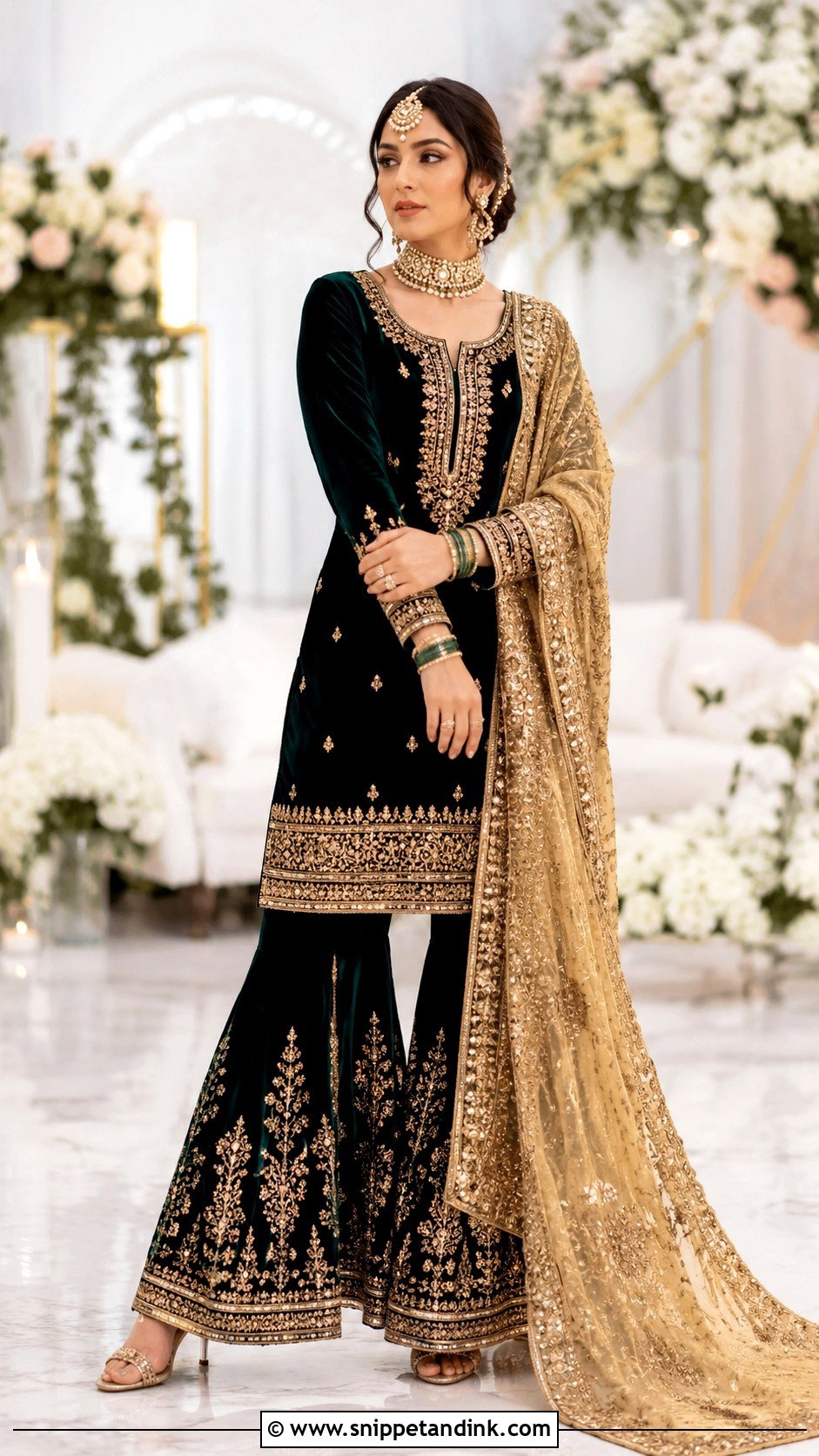
Velvet belongs to winter and evening weddings. It gives depth and warmth, and deep emerald, maroon, navy and plum look rich in it. Zardozi and dabka stand out against the pile. Velvet is heavy, so keep the jewellery to a choker, earrings and a passa rather than layering everything at once. I always warn brides that velvet crushes when you sit for long periods, so the back of the kurta may show pressure marks in later photos. Block heels or embellished platforms are kinder than stilettos under a velvet sharara.
19. Chikankari Gharara Wedding Dress
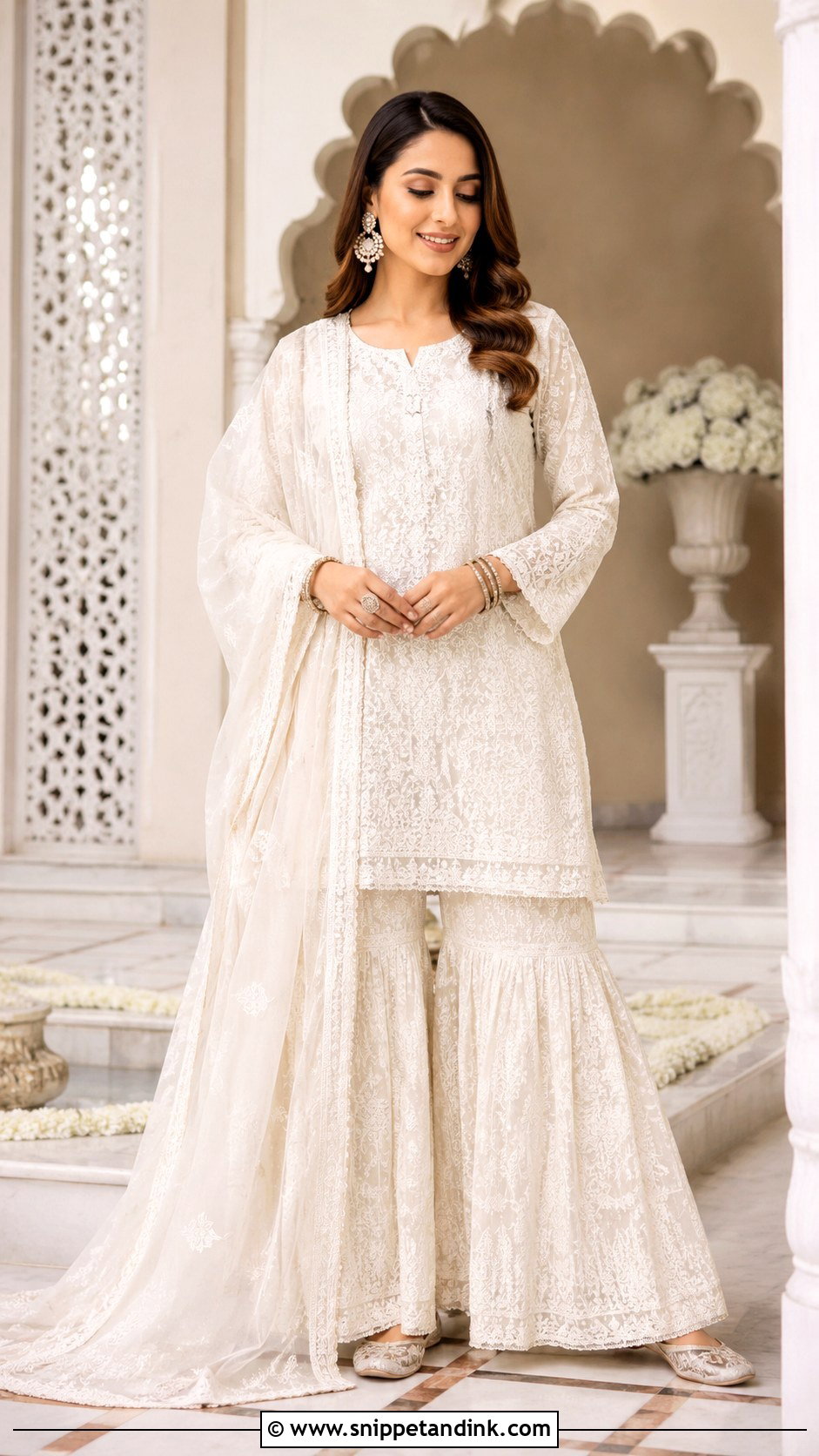
Chikankari is Lucknow’s shadow-work embroidery, traditionally hand-stitched in white thread on fine cotton or georgette, and it suits Nikah, engagement and daytime events. White, ivory, blush, mint and powder blue let the stitching show. A long kurta over a gharara keeps the traditional silhouette, and mukaish or pearl accents push it toward festive. It is much lighter than a bridal lehenga, which is a relief during long events. Before buying, I turn the kurta inside out: hand-done chikankari has small irregularities and knots on the reverse, while machine copies look identical from stitch to stitch.


20. Organza Lehenga Wedding Dress
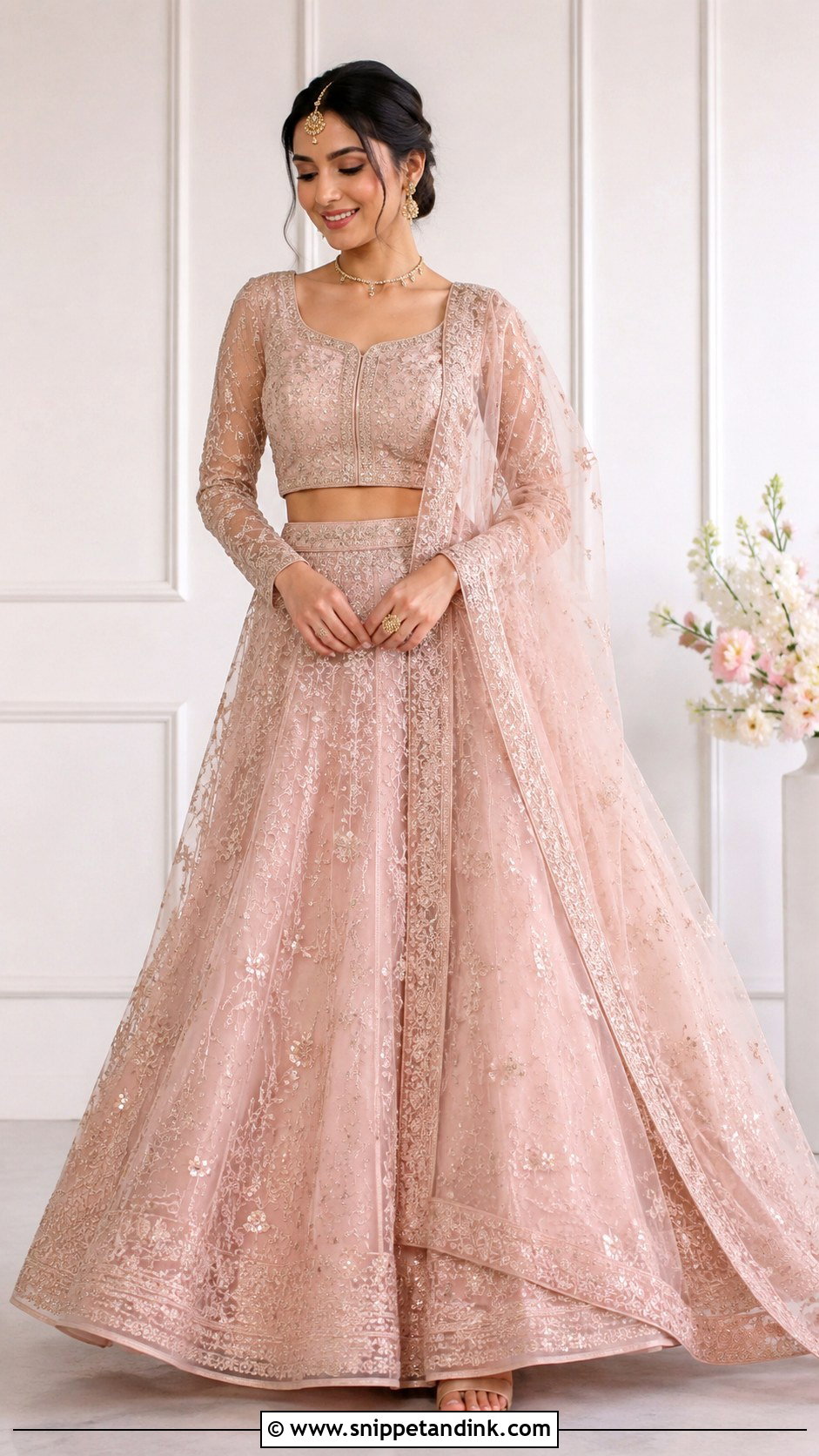
Organza gives volume without weight, so a lehenga in it stands out from the body while staying comfortable for long ceremonies. Blush, ivory, peach and lavender suit it well; deeper shades turn dramatic. Organza does crease sharply and can be scratchy against bare skin, so I ask for a soft lining and a steamer on hand before the event. A full-sleeve blouse or peplum top, a bordered dupatta and floral embroidery with pearls work nicely. Pick heels you can actually walk in, because the volume hides your feet.
21. Farshi Gharara Bridal Dress
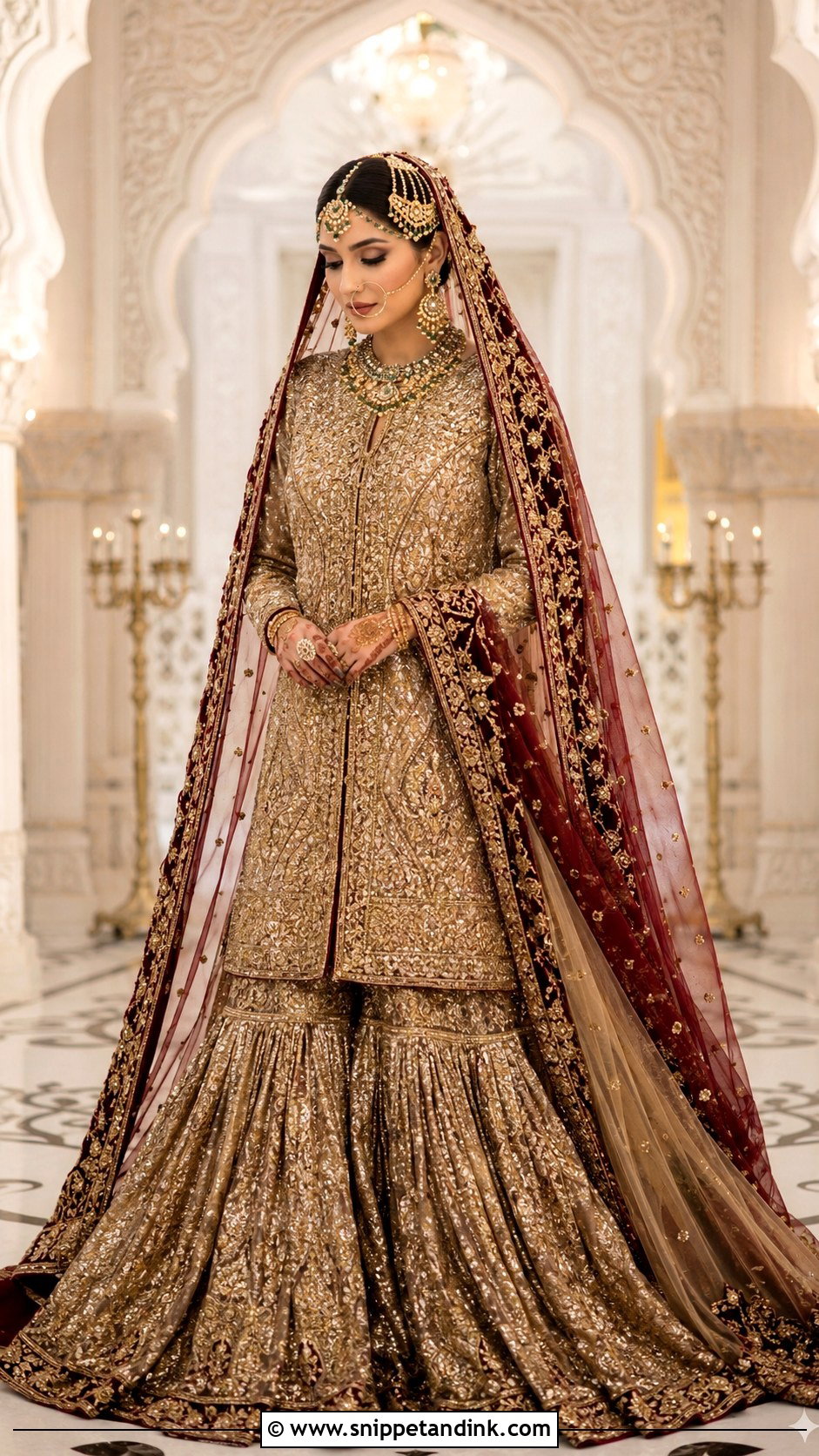
The farshi gharara is the most regal shape in this list. The flare runs extra long so the bottoms trail on the floor, which is where the name comes from, and it gives an old-world, royal look. A long kurta, the heavy flared trousers and a dupatta over the head make up the set, usually in brocade, silk, jamawar or tissue with gold borders. Because there is so much fabric below, the shoulders and sleeves need tailoring to avoid looking swamped. Practise walking in it before the day: you lift the front slightly as you step, and someone should help with the trailing hem on stairs.
22. Long Kurti Sharara Dress
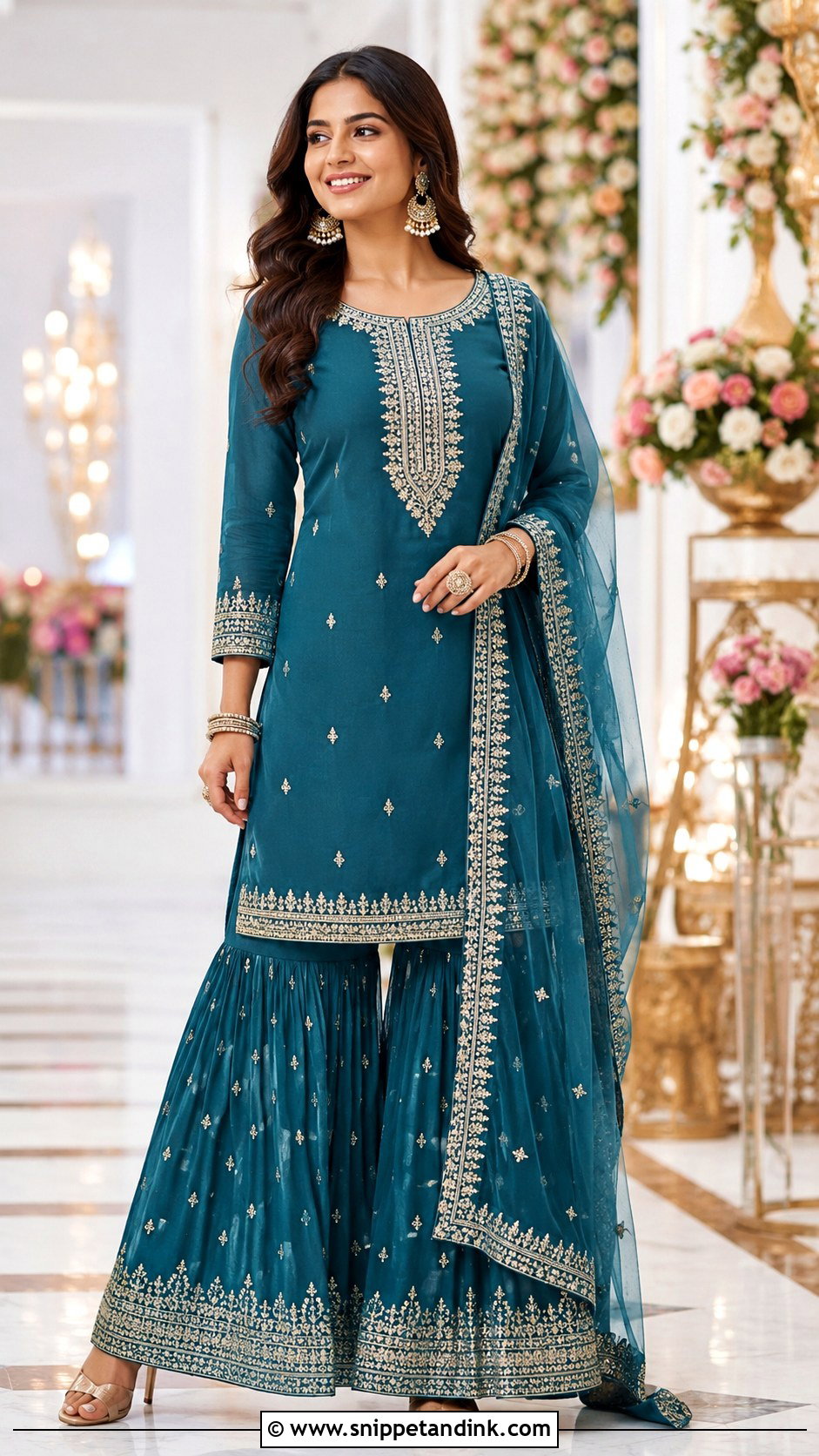
The long kurti over a sharara is the workhorse silhouette of the list. The longer top gives coverage and lengthens the frame, while the sharara flare balances it below. Georgette, silk, crepe or net all work. For the main ceremony I go heavier with zari or zardozi; for a guest look, lighter threadwork or sequins. Pin the dupatta at one shoulder or drape it across the front. Jhumkas, bangles and comfortable heels finish it, and it is easy to wear from morning until late.
23. Jacket Lehenga Wedding Dress
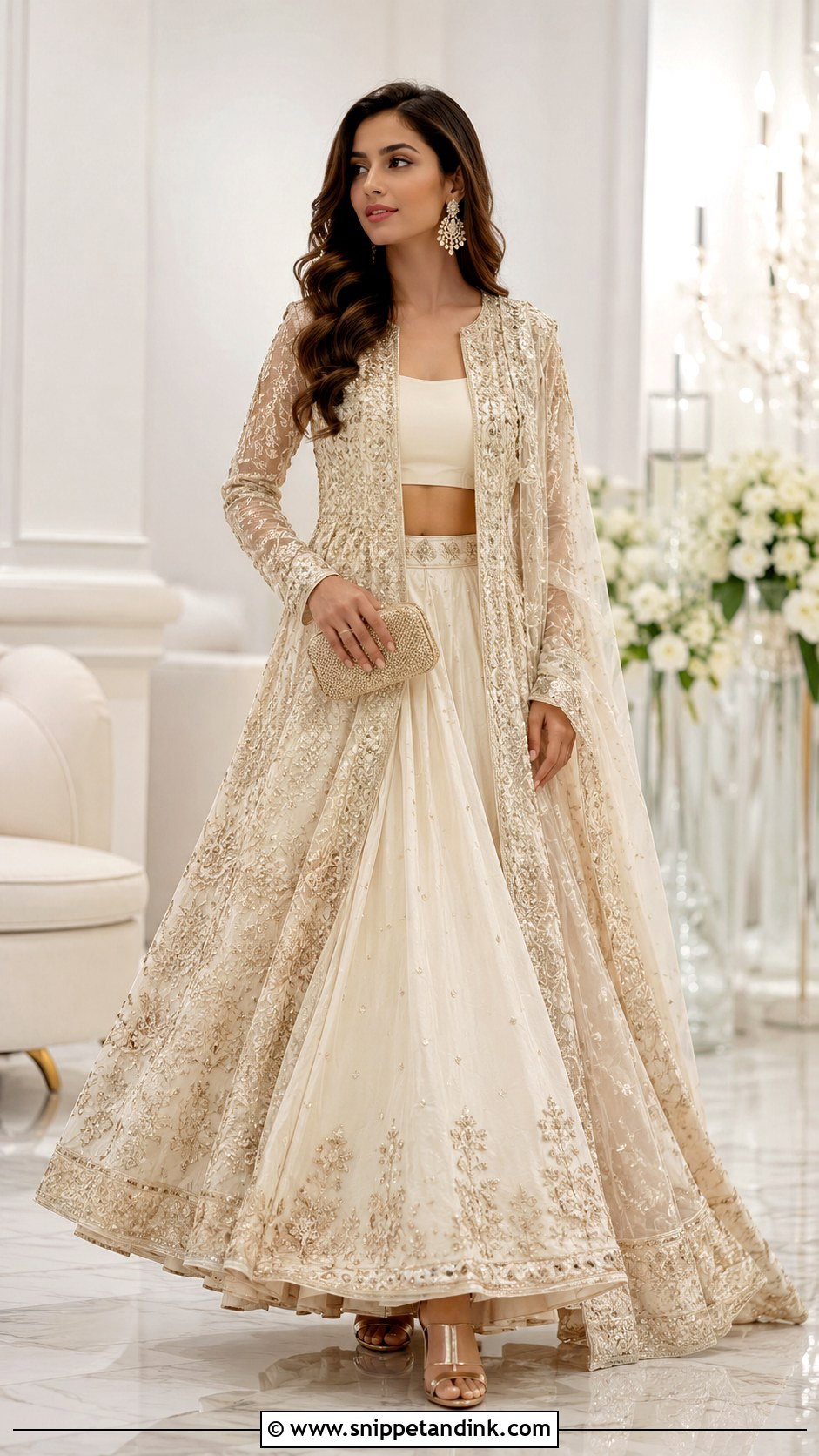
A jacket lehenga wedding dress solves the coverage question in one piece: a long embroidered jacket over the lehenga covers the waist and arms, so there is no dupatta to manage. It suits reception, Walima and engagement events. Silk, organza, net and velvet all work for the jacket. I check the jacket length against your height at the fitting, because hip-length and knee-length jackets change the proportions completely. Keep the blouse underneath plain and the jewellery simple, like statement earrings or a choker.
24. Cape Lehenga Wedding Dress
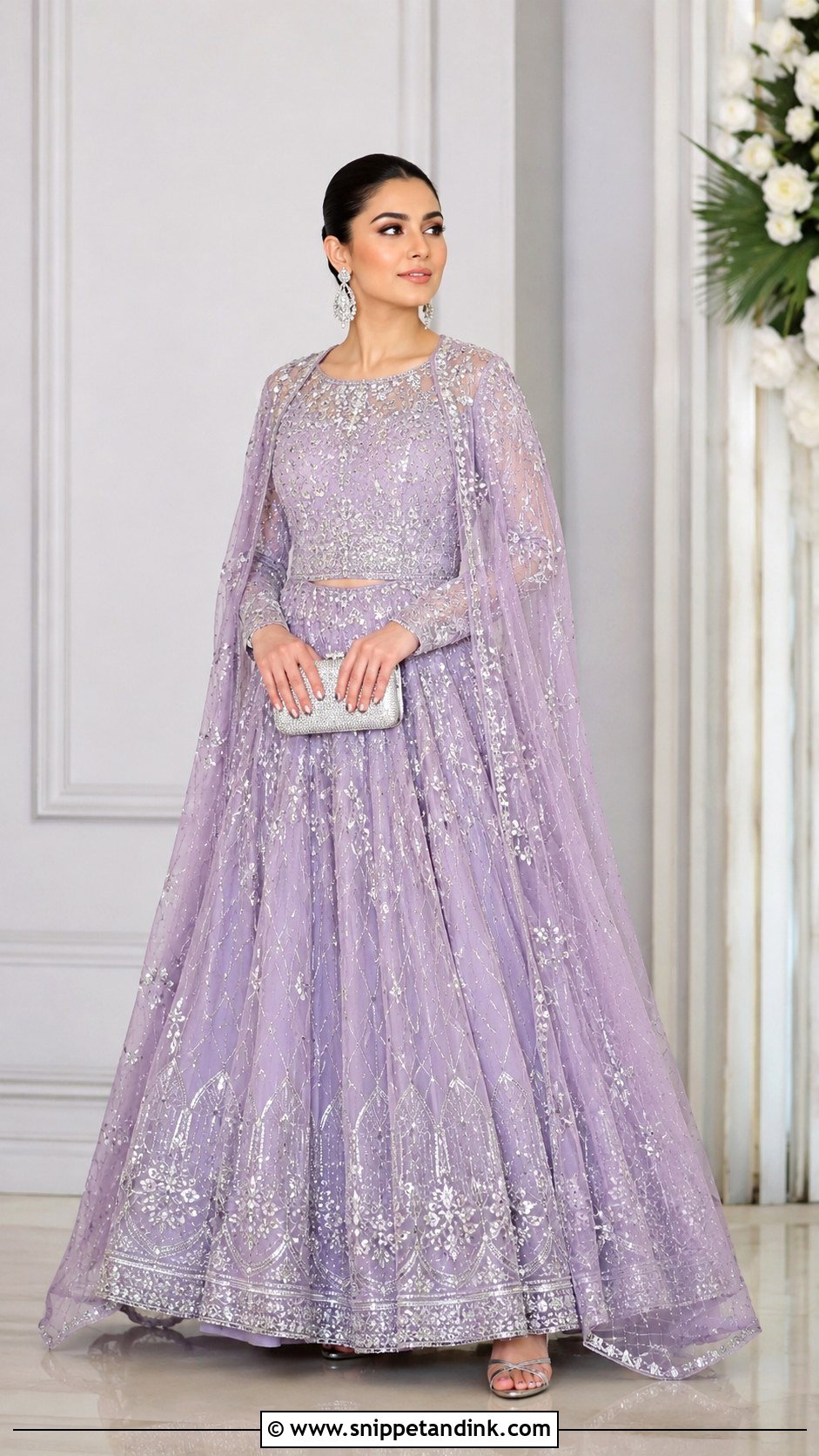
Capes replace or sit over the dupatta, and they stay in place far better than a loose drape. That makes a cape lehenga one of the easiest outfits to manage at a busy reception. A full-sleeve blouse, flared lehenga and sheer embroidered cape keep it balanced. Pastels suit Walima, deeper tones the reception, and crystal or sequin work catches light. Ask for the cape to be attached at the shoulders with hooks or snaps rather than relying on it sitting freely, especially if you will be hugging a lot of guests.
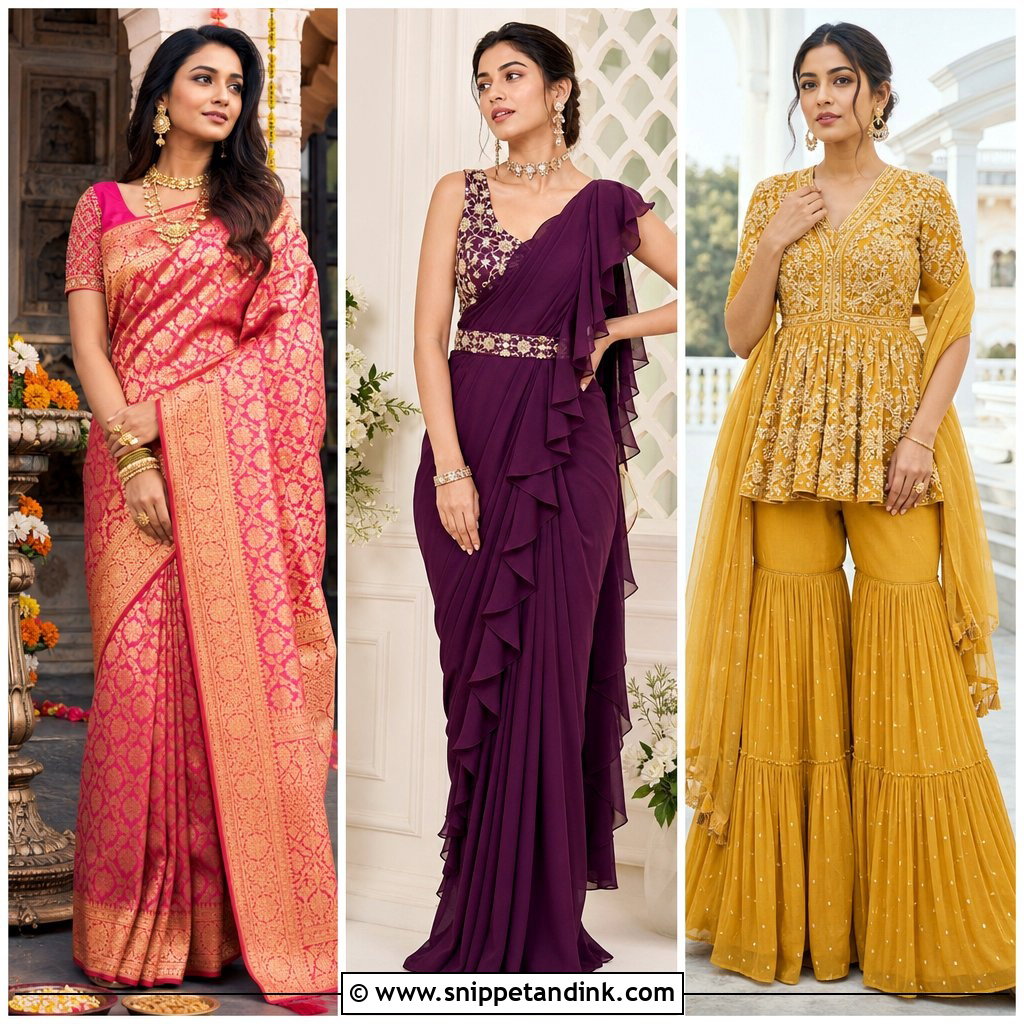




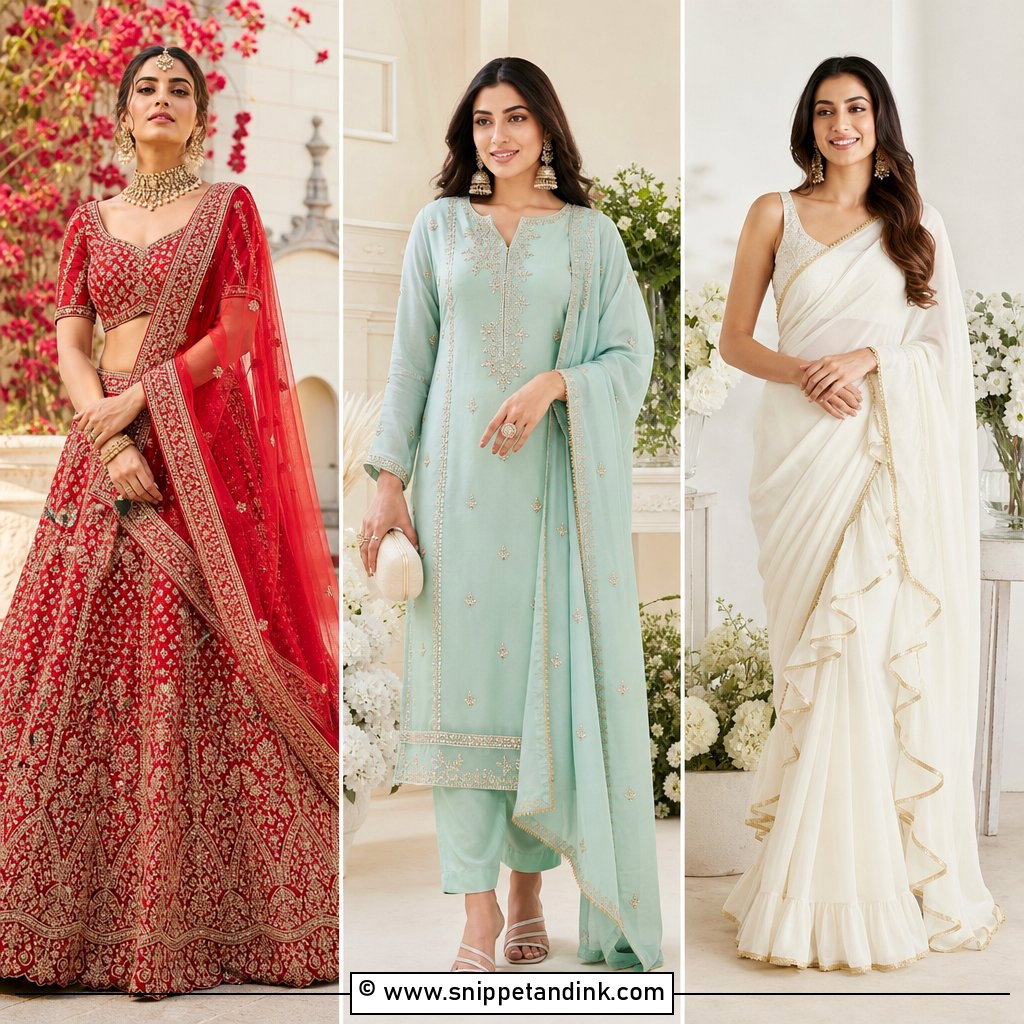
25. Salwar Kameez Wedding Dress
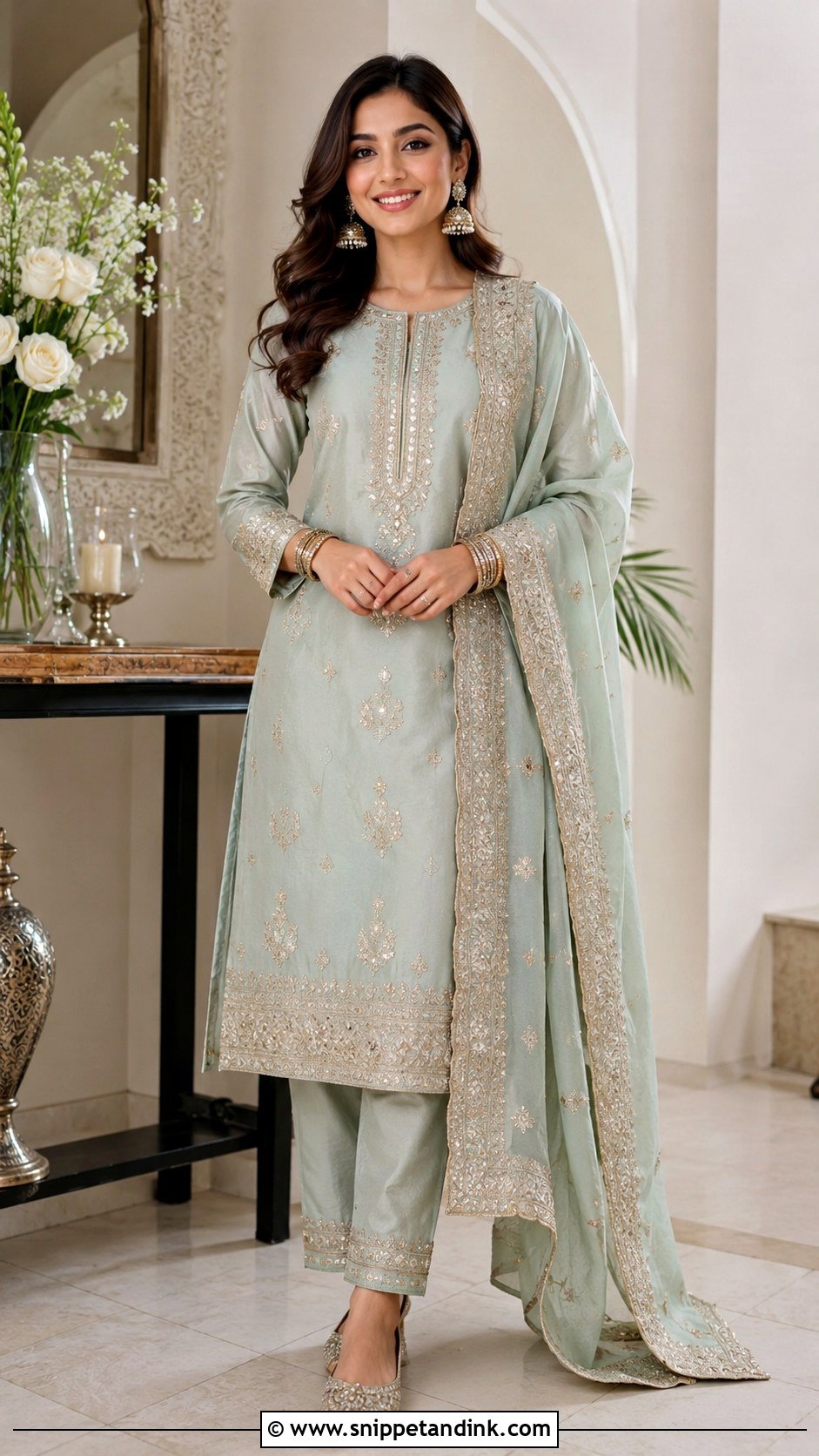
A salwar kameez is easy to underestimate, but in festive fabric with real embroidery it looks entirely wedding-ready. It is modest, comfortable and appropriate for a Nikah, a family dinner or guest wear. A long kameez with straight or slightly flared trousers and a bordered dupatta is the classic set. Silk, chiffon, georgette and brocade lift it; zardozi at the neckline, sleeves and hem makes it heavier. I recommend it to anyone who prefers simple shapes, and it is also the outfit people most often wear again afterwards.
26. Hijab Bridal Lehenga Dress
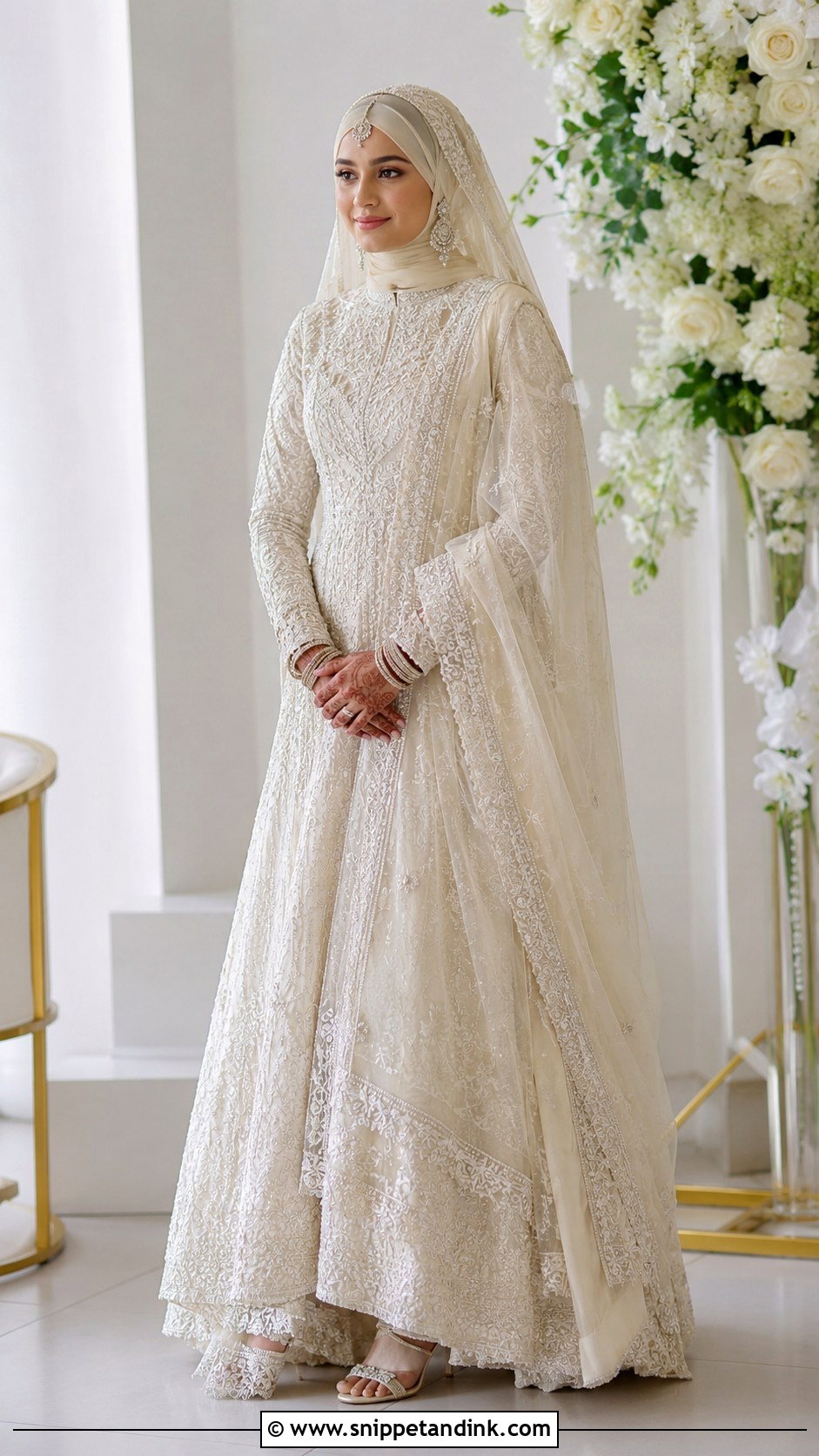
A hijab with a lehenga only works when every piece is planned together, so I fit all of them at the same appointment. The blouse needs full sleeves and a high neck, and the lehenga needs enough flare to hold its bridal shape. The hijab can match the blouse, dupatta or embroidery tone, with a second sheer dupatta over the head for the traditional finish. Chiffon, georgette and silk frame the face well. Earrings and a passa have to sit comfortably over or under the scarf, so try the jewellery with the hijab on before the day.
27. Banarasi Lehenga Wedding Dress
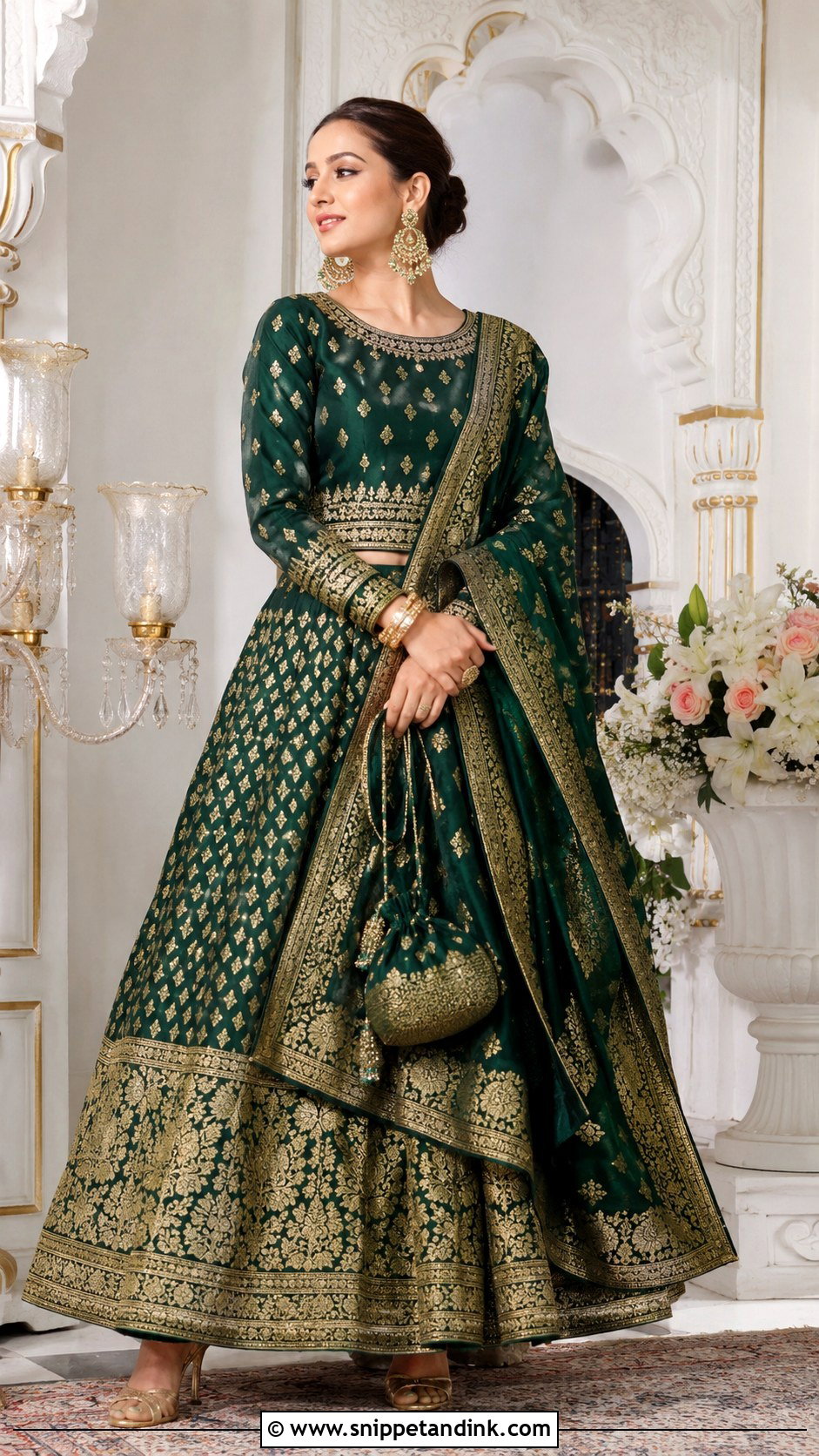
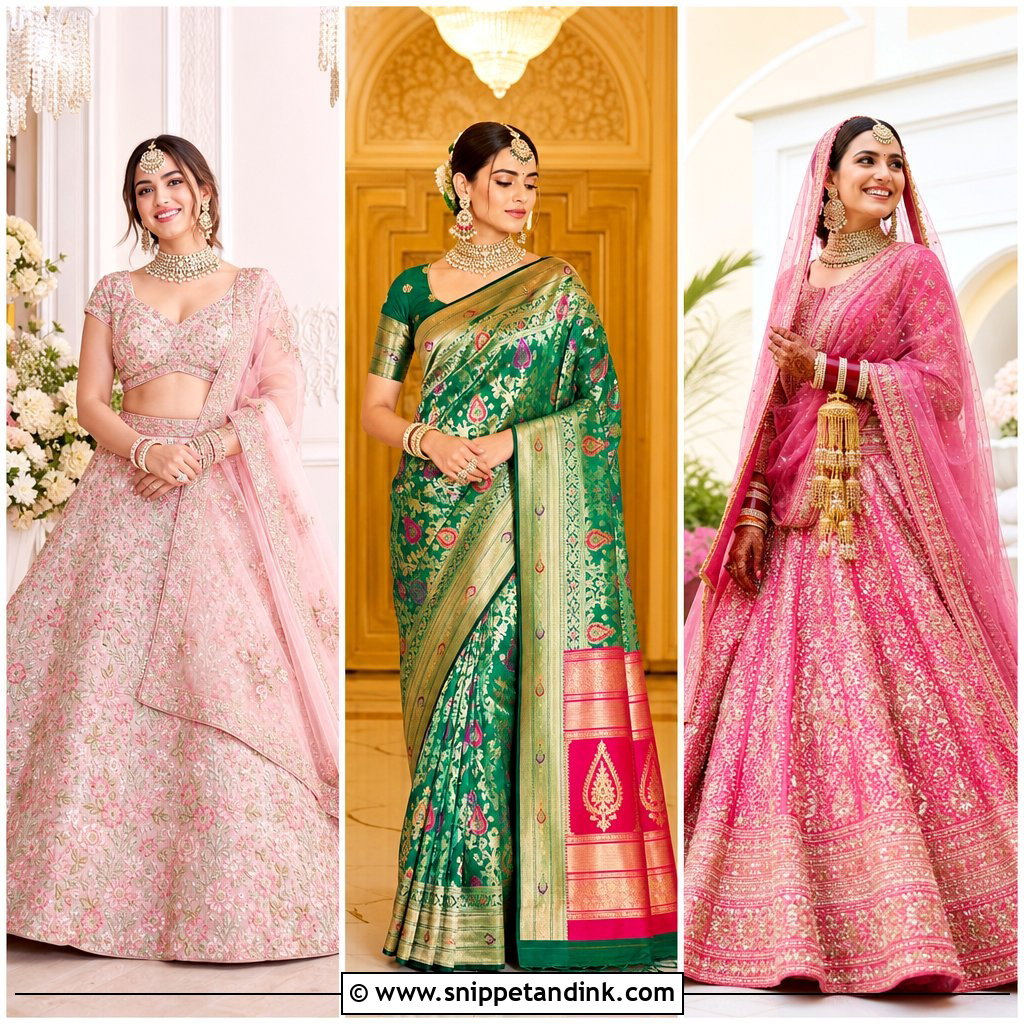
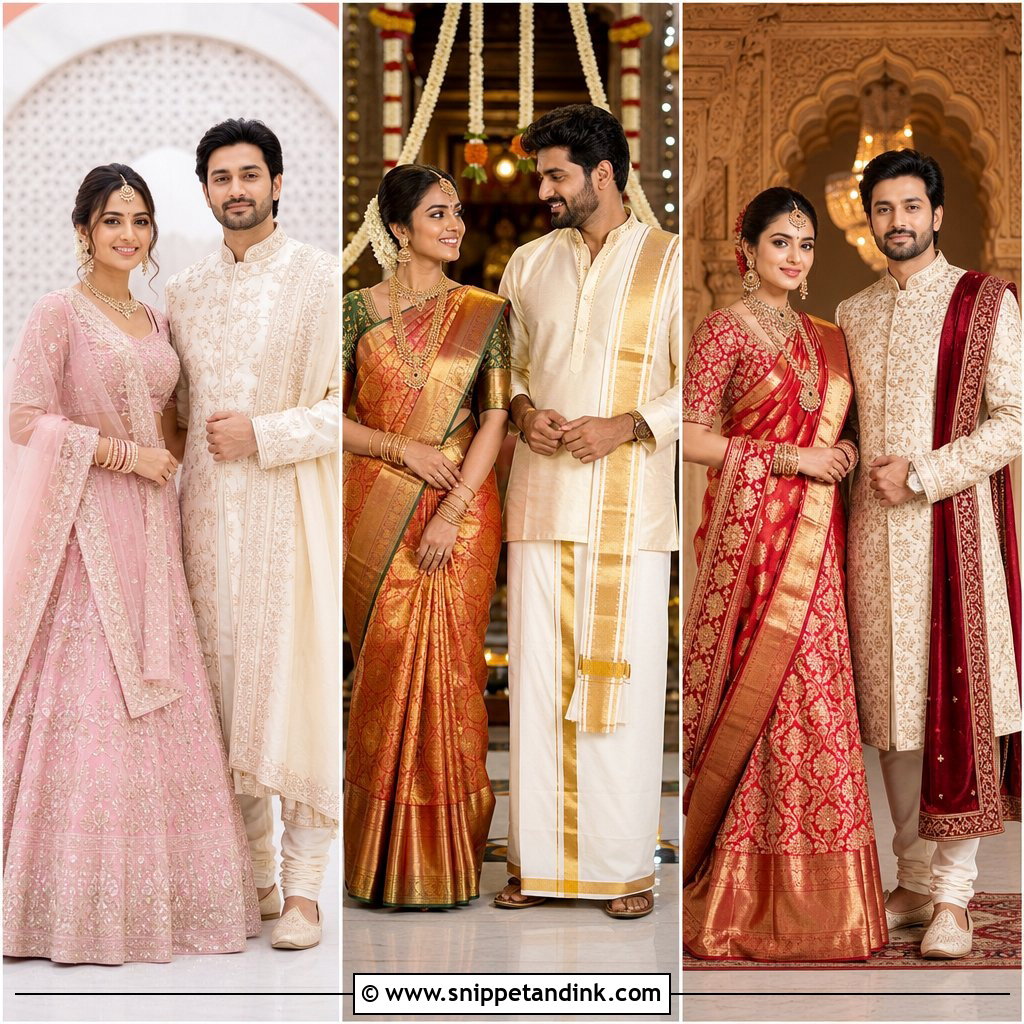
Banarasi silk is woven with its motifs, so the fabric already looks festive before any embroidery is added. Deep red, green, purple and royal blue are classic; pastel Banarasi feels more modern. Pair the lehenga with a long-sleeve blouse or a kurti-style top and a dupatta with zari borders. Because the fabric already has shine and pattern, crowded jewellery fights it; I keep to kundan earrings, a few bangles and a potli bag. Real Banarasi zari is heavier than it looks, so wear it for an hour at home before committing to a full evening in it.
28. Embroidered Saree Wedding Dress
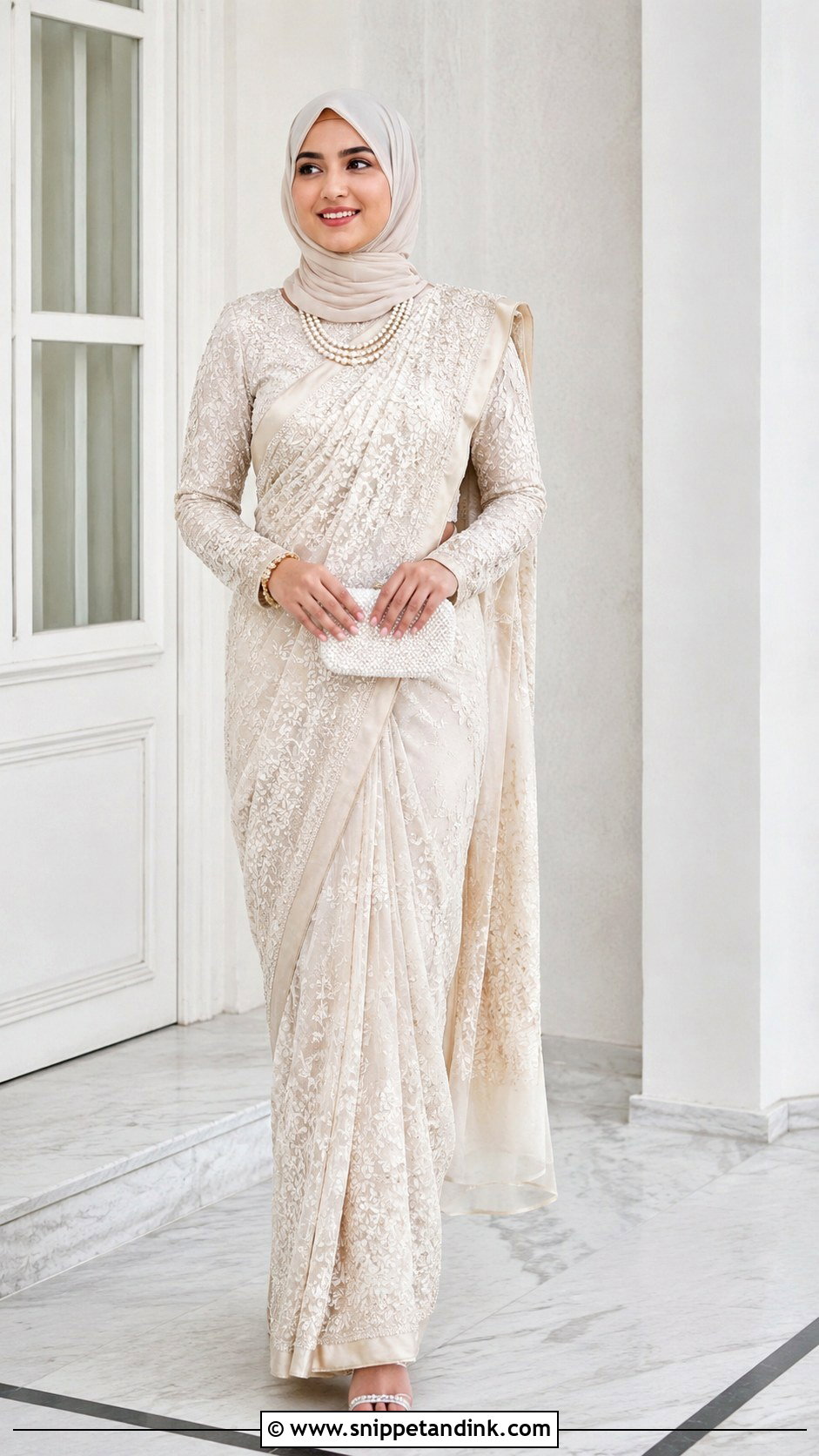
A saree suits mothers, sisters, guests and brides who prefer a draped outfit. A modest blouse with full sleeves and a higher neck keeps it refined. Silk, georgette, chiffon, organza and net all work at different levels of formality, with zari borders, sequins or pearls for detail. Pin the pallu securely at the shoulder, or bring it across the front for extra coverage. If you wear a hijab, match it to the saree and keep the pallu drape simple, so the two layers do not compete around the shoulders.
29. Palazzo Suit Wedding Dress
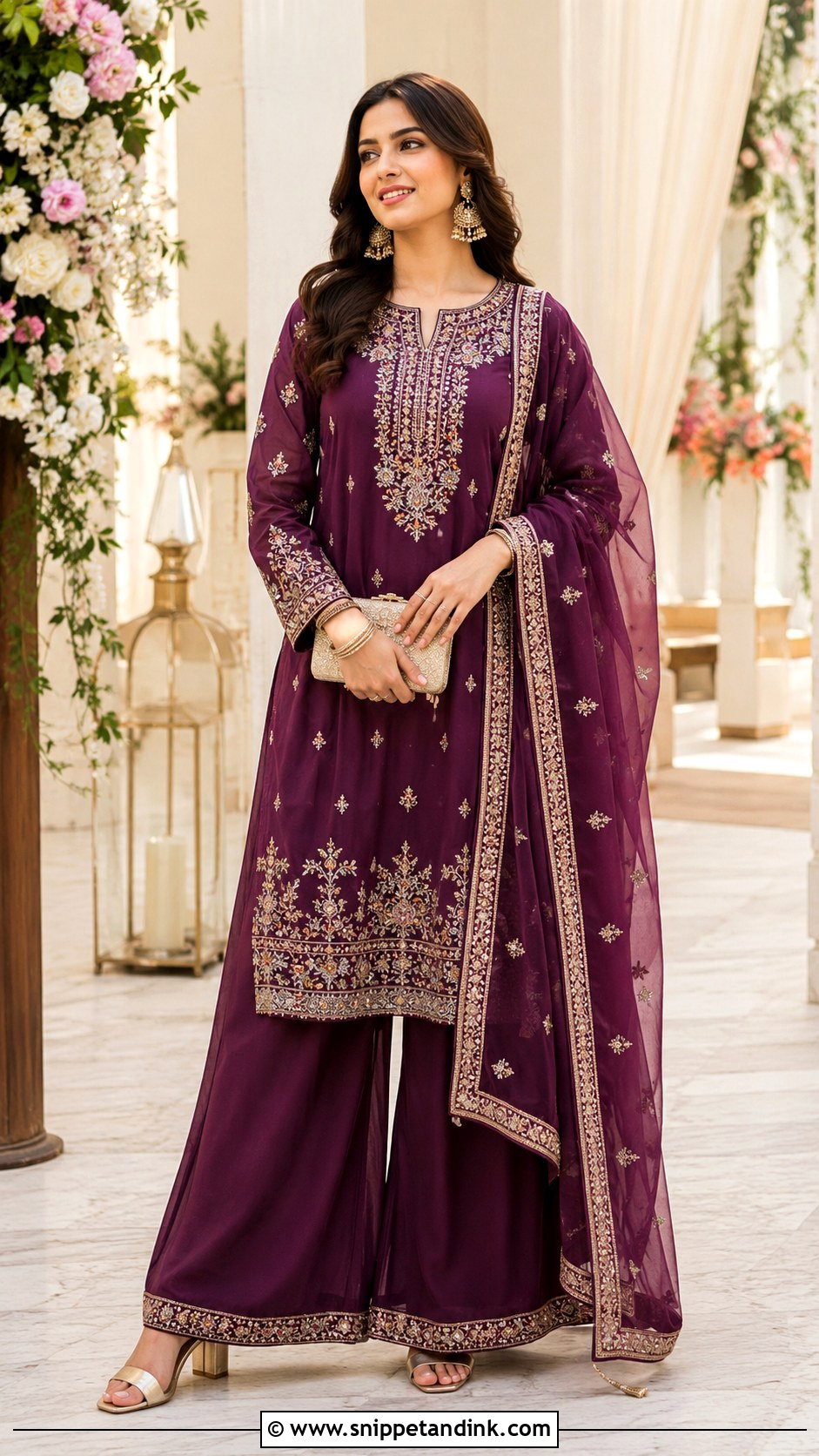
Palazzo suits are for long wedding days. The kurta, wide-leg trousers and dupatta allow you to move without feeling casual if the fabric and embroidery are right. Silk, georgette, chiffon or brocade with work at the neckline, sleeves and hem lifts the set. A floor-length or calf-length kurta makes it more formal. Pastels suit daytime, jewel tones the evening. Block heels, jhumkas, bangles and a small clutch complete it. Guests who want coverage and breathability will find this the most comfortable option on the list.
30. Simple Nikah Suit Dress
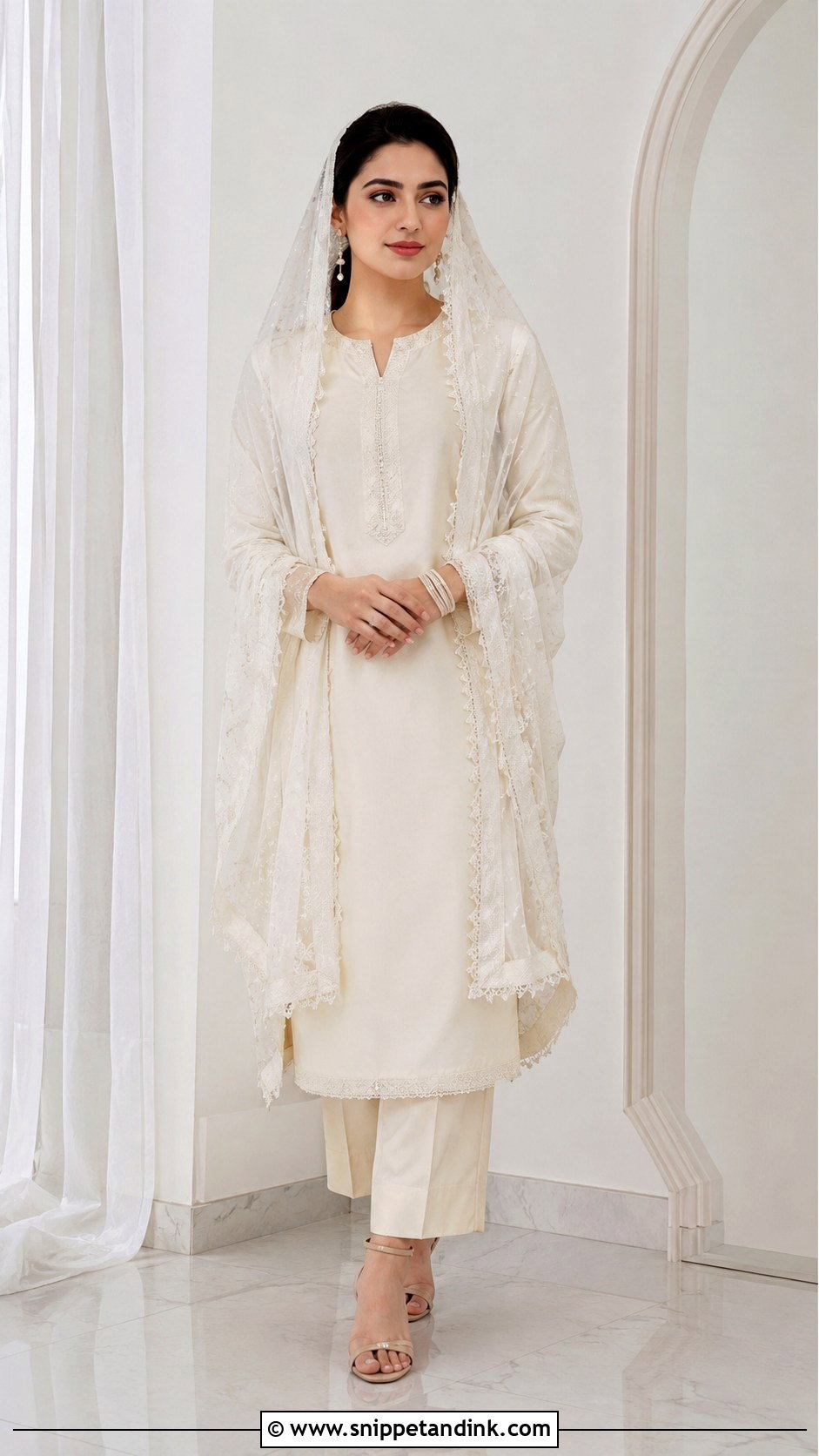
Some brides want the Nikah to feel quiet, and a simple suit does that. A straight kurta, trousers and a dupatta in ivory, blush, mint, beige or pale gold with fine embroidery, lace edging or pearls looks special without weight. Full sleeves and a modest neckline keep it graceful, and a dupatta neatly draped over the head gives the traditional finish. Delicate jewellery, soft makeup and juttis or low heels complete it. It suits intimate ceremonies and small family Nikahs, where a heavy outfit would look out of place.
Why Heavy Zardozi Changes Your Fitting Schedule
Hand embroidery takes time, and it changes how the garment fits. Zardozi uses metal wire, beads and sequins couched onto the fabric, which adds real weight and makes the fabric stiffer at the embroidered areas. A blouse that fits perfectly as plain cloth can sit differently once the work is done.
- Order early. Heavily embroidered bridal pieces often take several months to finish, and timelines vary by workshop and season, so ask your designer for the realistic date rather than the hopeful one.
- Book at least two fittings after the embroidery is complete. The first catches shoulder and sleeve pull from the weight; the second checks the length with your actual shoes.
- Sit, raise your arms and turn your head at each fitting. If the neckline drags forward when you sit, the tailor can add a hidden weight or a strap at the back.
- Bring your hijab and the pins you will use. A dupatta over a hijab adds bulk at the crown, and the neckline and passa placement may need adjusting around it.
Storing Zari and Zardozi So They Don’t Tarnish
After the wedding, the embroidery is what needs care. Metallic thread can tarnish and catch, and heavy work stretches fabric if it is hung for months. This is how I tell brides to put their outfits away.
- Air the outfit for a day before storing, away from direct sun, so sweat and perfume can evaporate. Never spray perfume directly onto zari, because it speeds up tarnishing.
- Fold heavy lehengas and ghararas rather than hanging them, and wrap them in clean muslin or soft cotton, not plastic, which traps moisture.
- Place a layer of muslin between embroidered sections so sequins and wire do not snag the fabric facing them.
- Refold every few months along different lines so permanent creases do not set into the fabric.
- Dry cleaning should go to someone who handles bridal embroidery; spot-test anything you are unsure of on an inside seam first.
Dressing for the Event, Not Only for the Photos
Ghararas, shararas, lehengas, gowns, sarees and plain suits can all be right for an Indian Muslim wedding. What decides it is the event, your family’s traditions, the season and how long you will be wearing it. Brides usually carry the heavier embroidery and richer fabrics, and guests can choose lighter versions of the same shapes. Whatever you pick, I’d put your effort into modest cuts that fit when you sit and lift your arms, a dupatta that stays secure, shoes you can stand in, and jewellery that supports the outfit rather than covering it.
You'll Like These Ideas:


Leave a Reply