
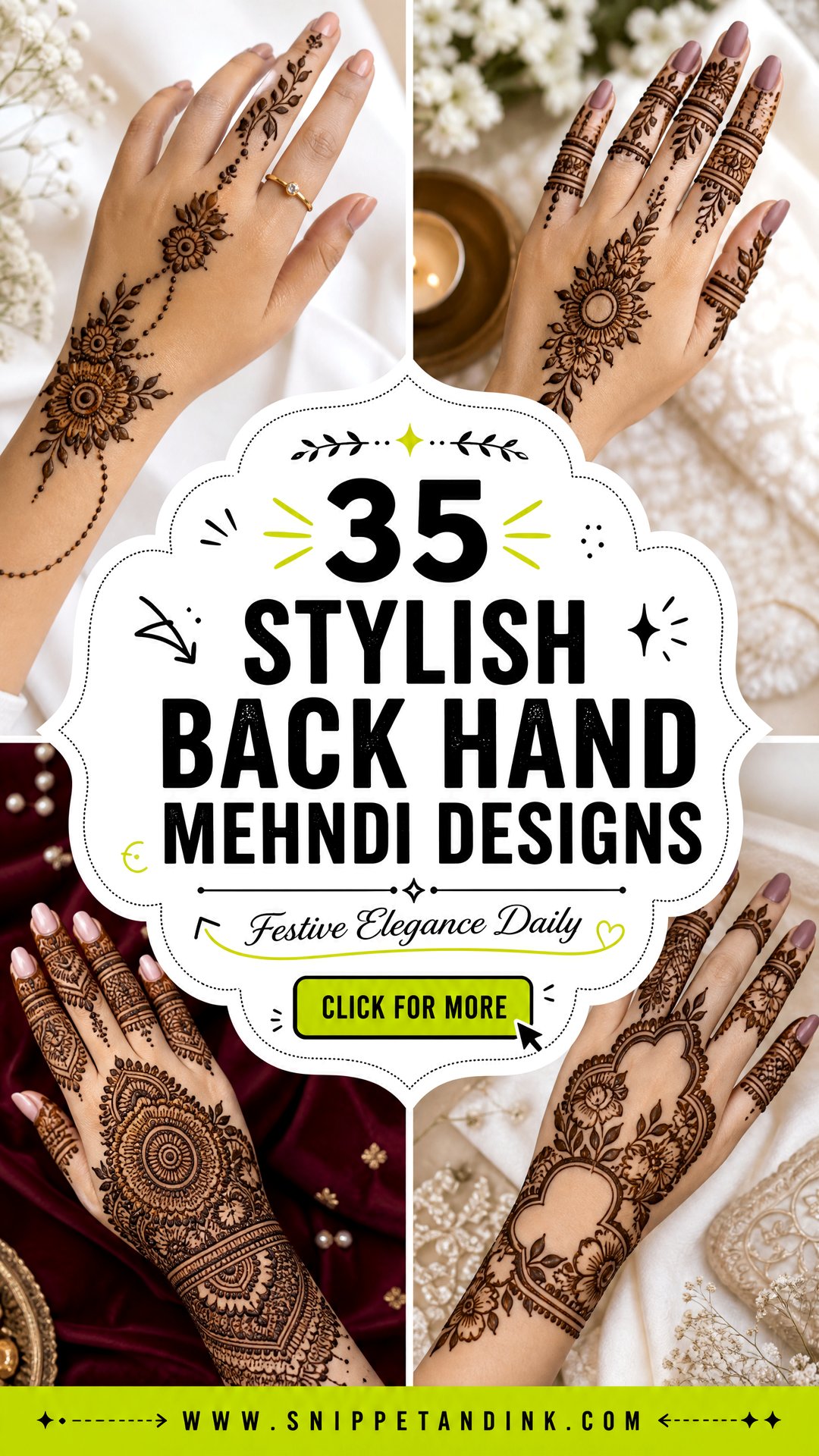
The back of the hand is the side people actually see. It’s on show when you pass a plate, adjust a dupatta, hold up a ring or rest your hands in your lap for a photo, and that’s why so many people who sit with me care more about it than the palm. It’s also trickier to draw on: thinner skin, bony knuckles, a wrist that bends and creases. The 35 layouts below range from a single floral trail to full bridal coverage, with Arabic, Indian, jaali, bracelet and modern negative-space styles in between. With each one, I’ve noted how it sits on the hand, how it stains and who it suits, from Eid and Karva Chauth to a sangeet or your own wedding.
Mapping a Design Over Knuckles, Tendons and Wrist Bone
The back of the hand is not flat. It has knuckles, tendons that rise when you spread your fingers, and a wrist bone that sticks out. I always draw with the hand resting flat and fingers slightly apart, and I check the design with the hand relaxed and in a fist before I call it done.
- Knuckle creases: lines drawn across a crease crack when the hand bends, so I put finger bands just above or below the crease.
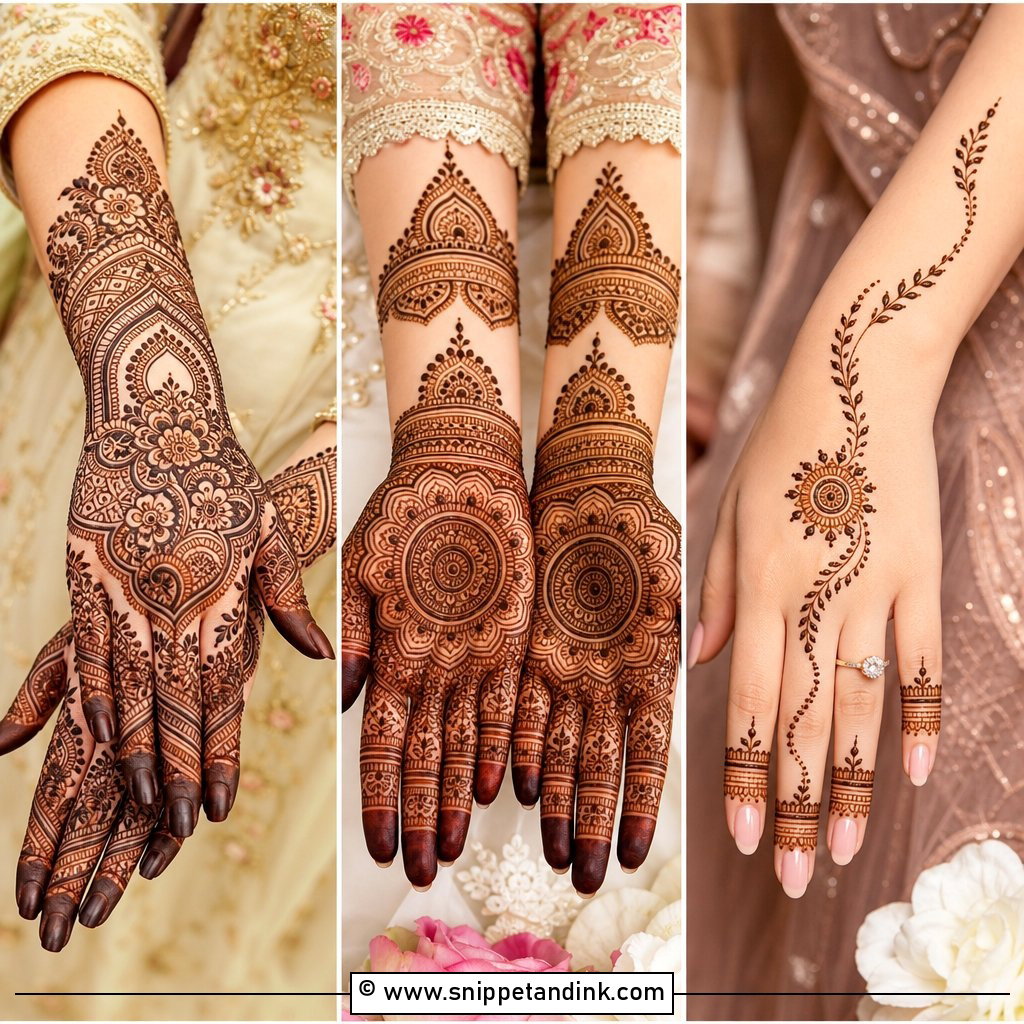
- Tendons: a straight line drawn over raised tendons looks wavy when the hand relaxes, so I use curves there.
- Wrist bone: a bracelet across the bone can look lopsided. I set the band slightly above it.
- Thin skin: the back of the hand stains lighter than the palm. Bold outlines and longer paste time help.
This is also why a design copied from a photo rarely fits exactly. Your artist should adjust the size and placement to your hand.
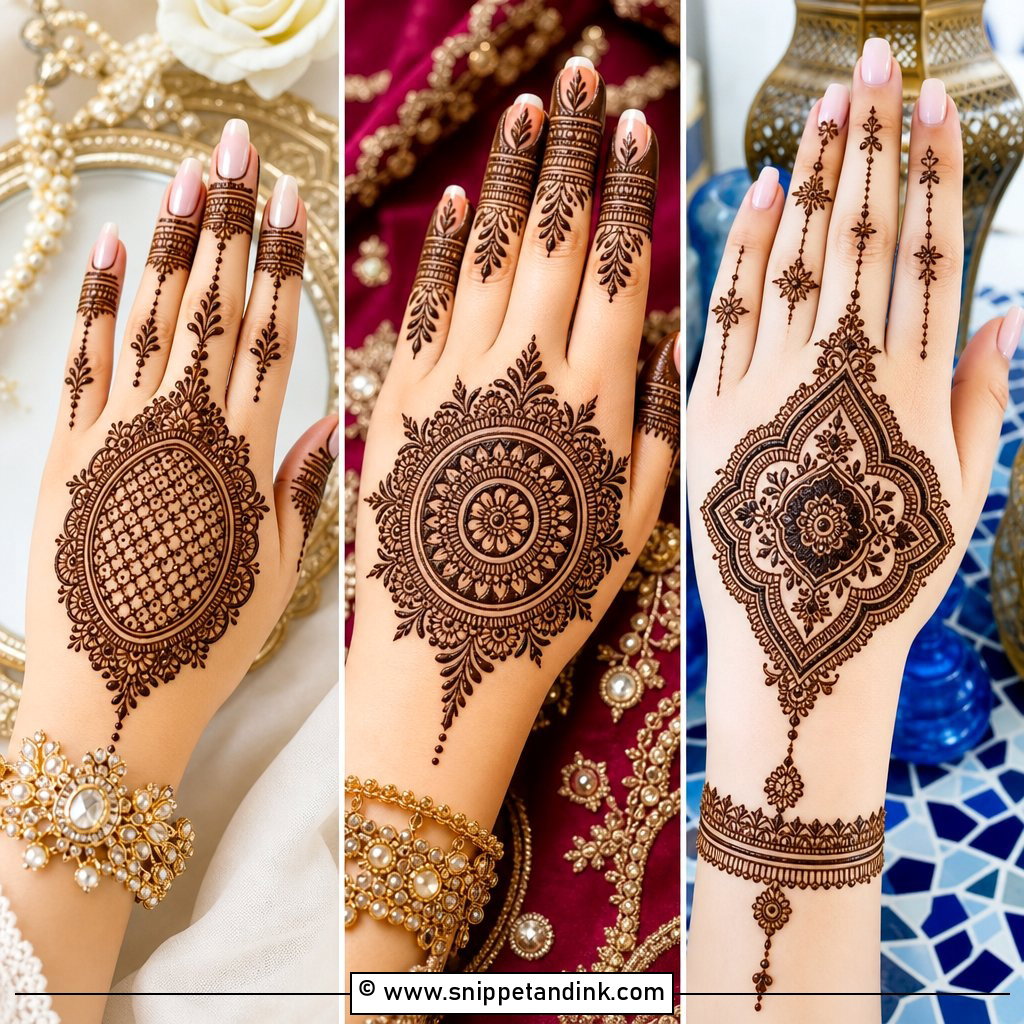
I also ask which hand you use most. The dominant hand gets washed, wiped and bumped more in the hours after application, so its paste often comes off first and its stain ends up a shade lighter. I finish that hand last and give it a second coat of lemon-sugar, and I tell you honestly that the two hands may not match perfectly.
1. Simple Back Hand Mehndi Design
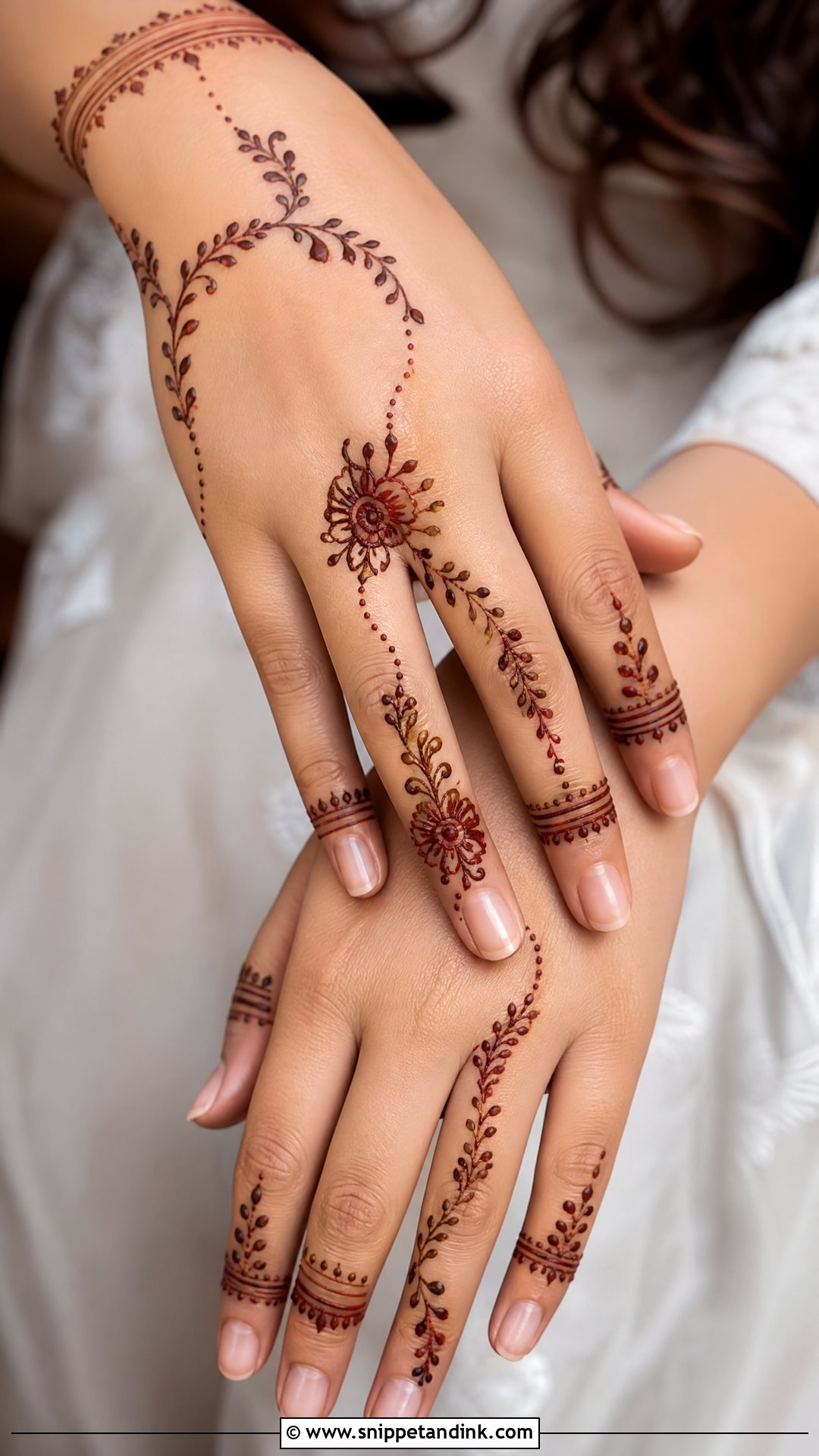
When someone sits down and says she just wants something light, this is what I draw. A small flower or mandala goes in the center of the back hand, then dots, leaves and curved lines drift toward the fingers. The wrist can stay bare or get one slim band. Spacing hides small wobbles, so beginners can manage it. I cap the fingertips with solid henna because tips stain darker than anywhere else on the back hand, which gives the light design a finished edge.
2. Arabic Back Hand Mehndi Design
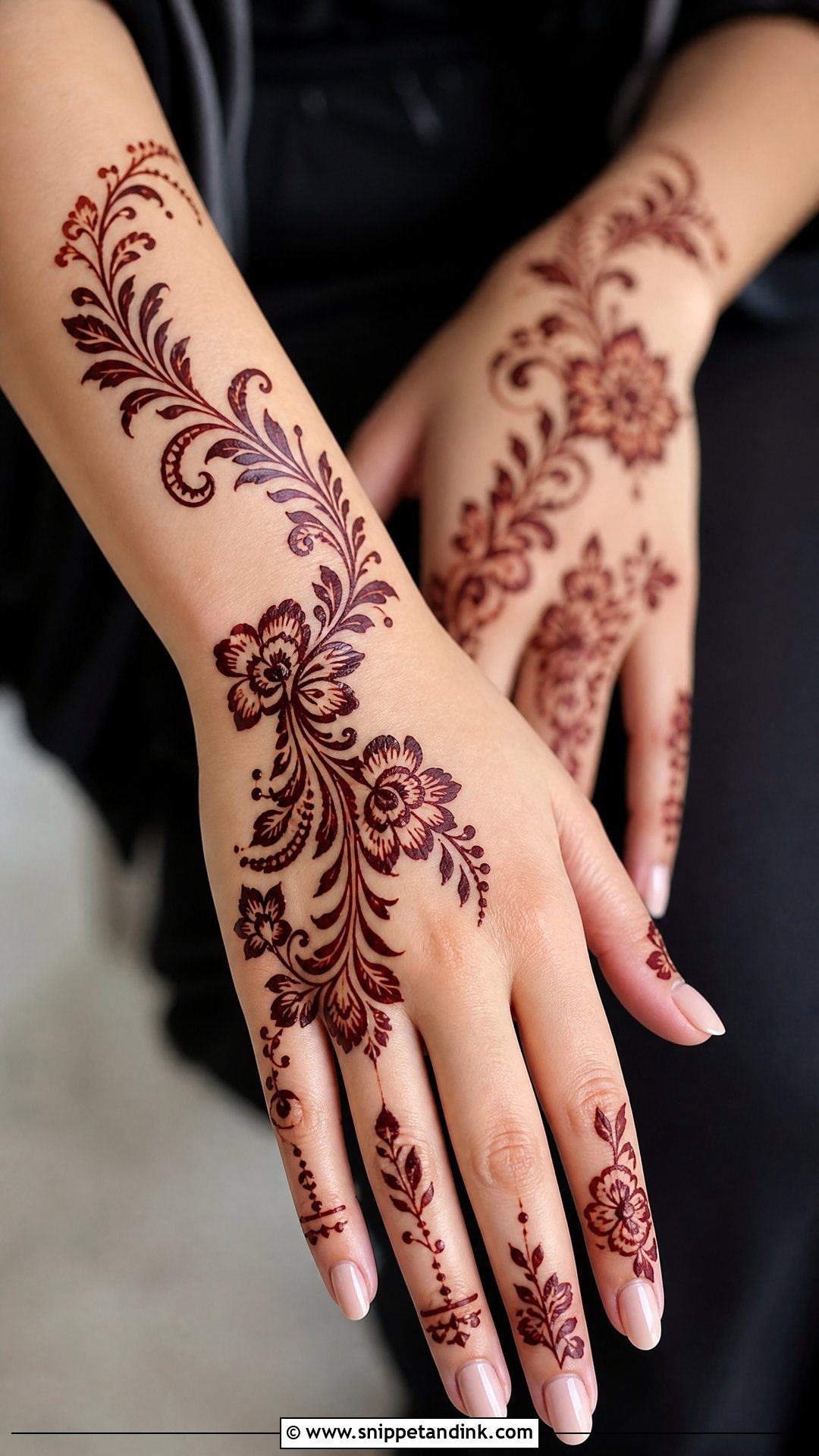
Arabic layouts run diagonally from the wrist to one or two fingers, and that diagonal is why they make a hand look longer. Large flowers, leafy vines, paisleys and dotted trails are typical, set against plenty of bare skin. Ask for bold outlines with fine detail inside. On the back hand, very thin outlines can stain faintly, and the bold edge is what keeps the shape readable after a few days. It’s a reliable choice for Eid, sangeet and anything worn with bangles.
3. Modern Back Hand Mehndi Design
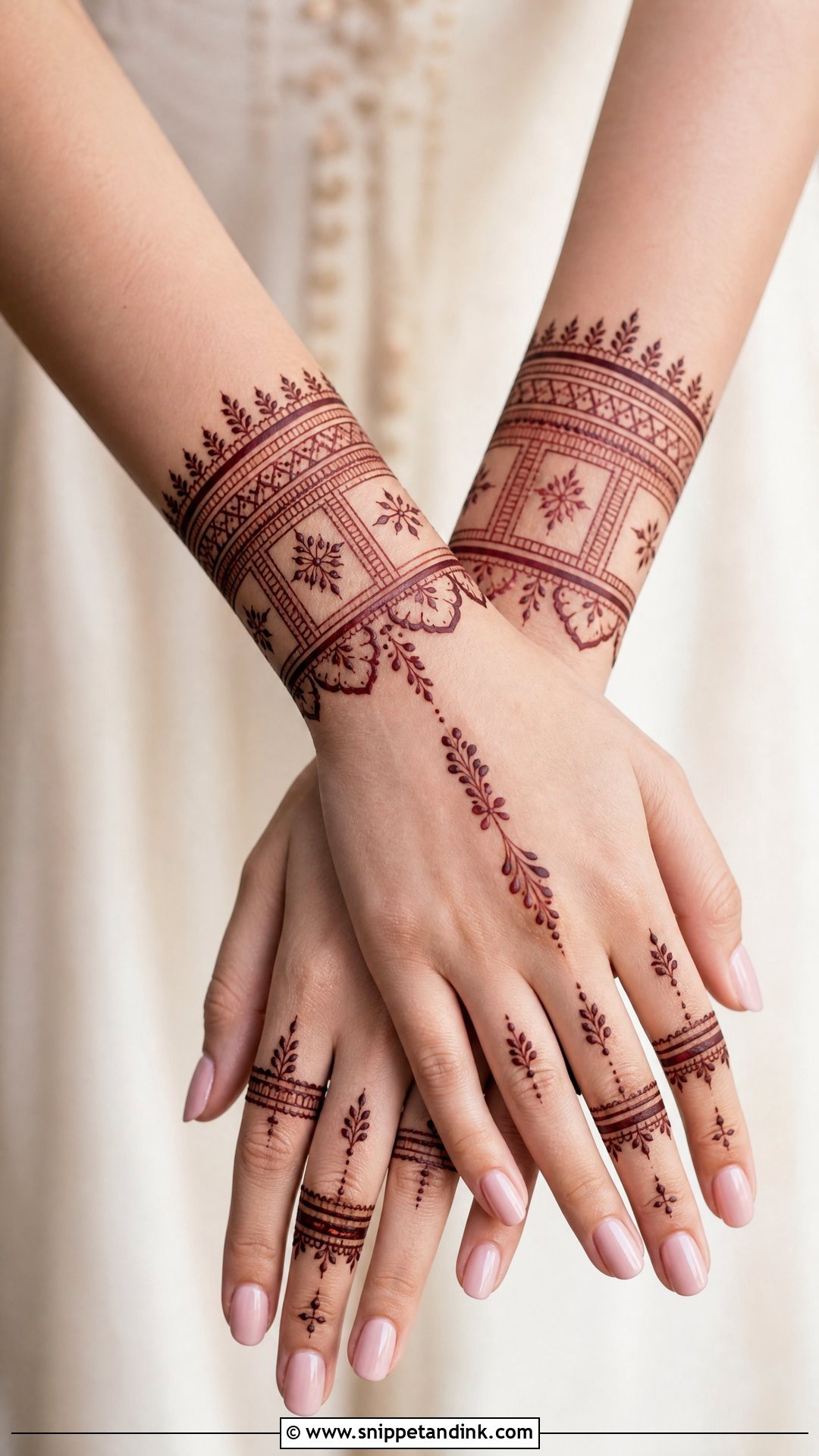
Placement does the work in a modern design. I’ll put a center motif, sharp finger lines and a small cuff at the wrist, and leave everything in between empty. Geometric bands and tiny florals fit well. It goes with fusion and ethnic outfits alike, and the open skin makes each detail stand out in photos. I suggest it often for bridesmaids, engagement parties and college functions.
4. Bridal Back Hand Mehndi Design
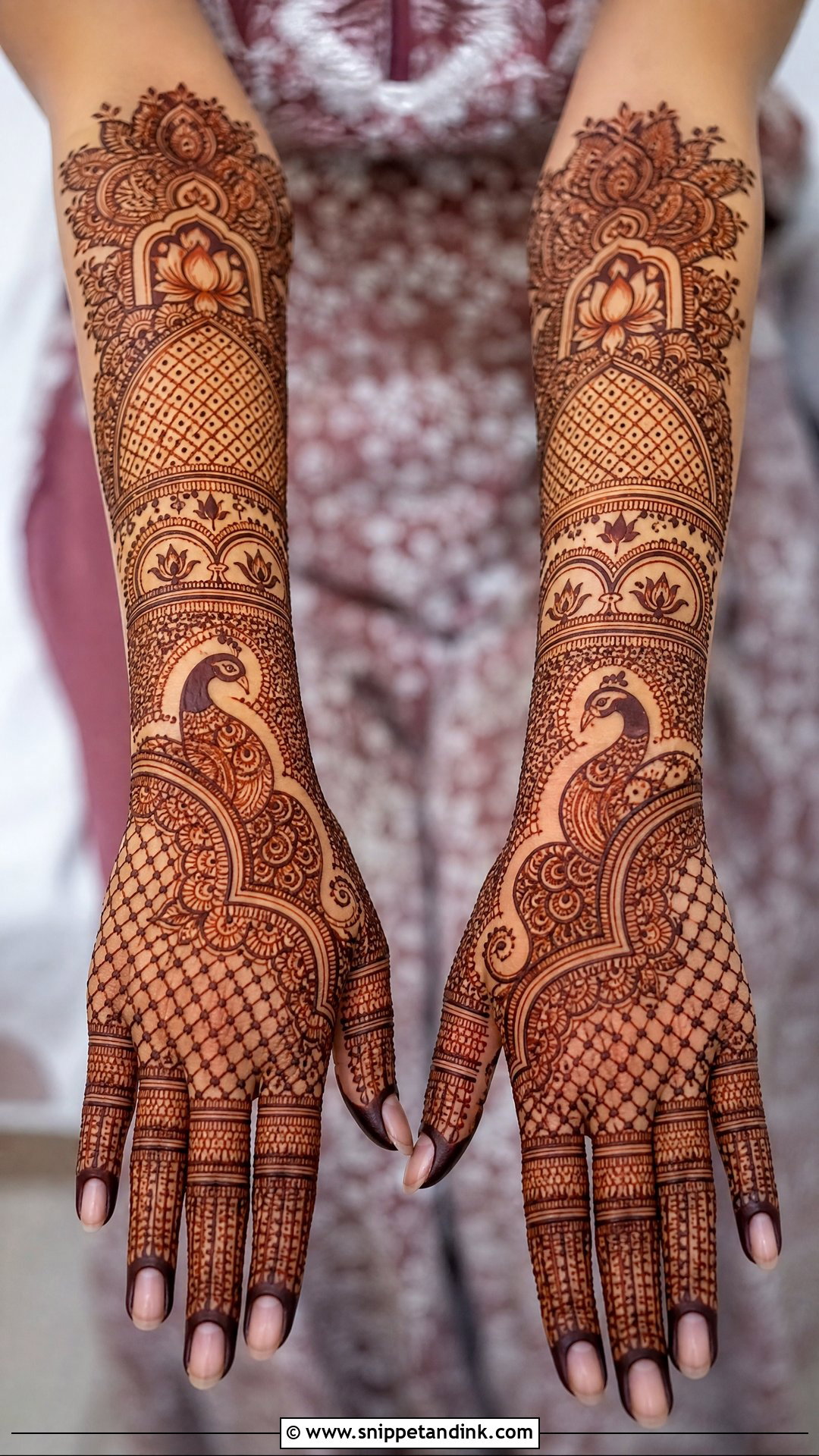
Bridal back hands carry the weight of the photos: ring shots, bangle ceremonies, hands resting on a lehenga. I take the design from the fingertips over the wrist and partway up the forearm, with paisleys, peacocks, lotus, jaali panels and mandalas, sometimes a hidden name. The biggest risk is muddle, so I separate dense sections with clean borders and small gaps. Brides should get their mehndi one to two days before the wedding, which gives the stain time to reach deep maroon by the ceremony.
5. Full Back Hand Mehndi Design
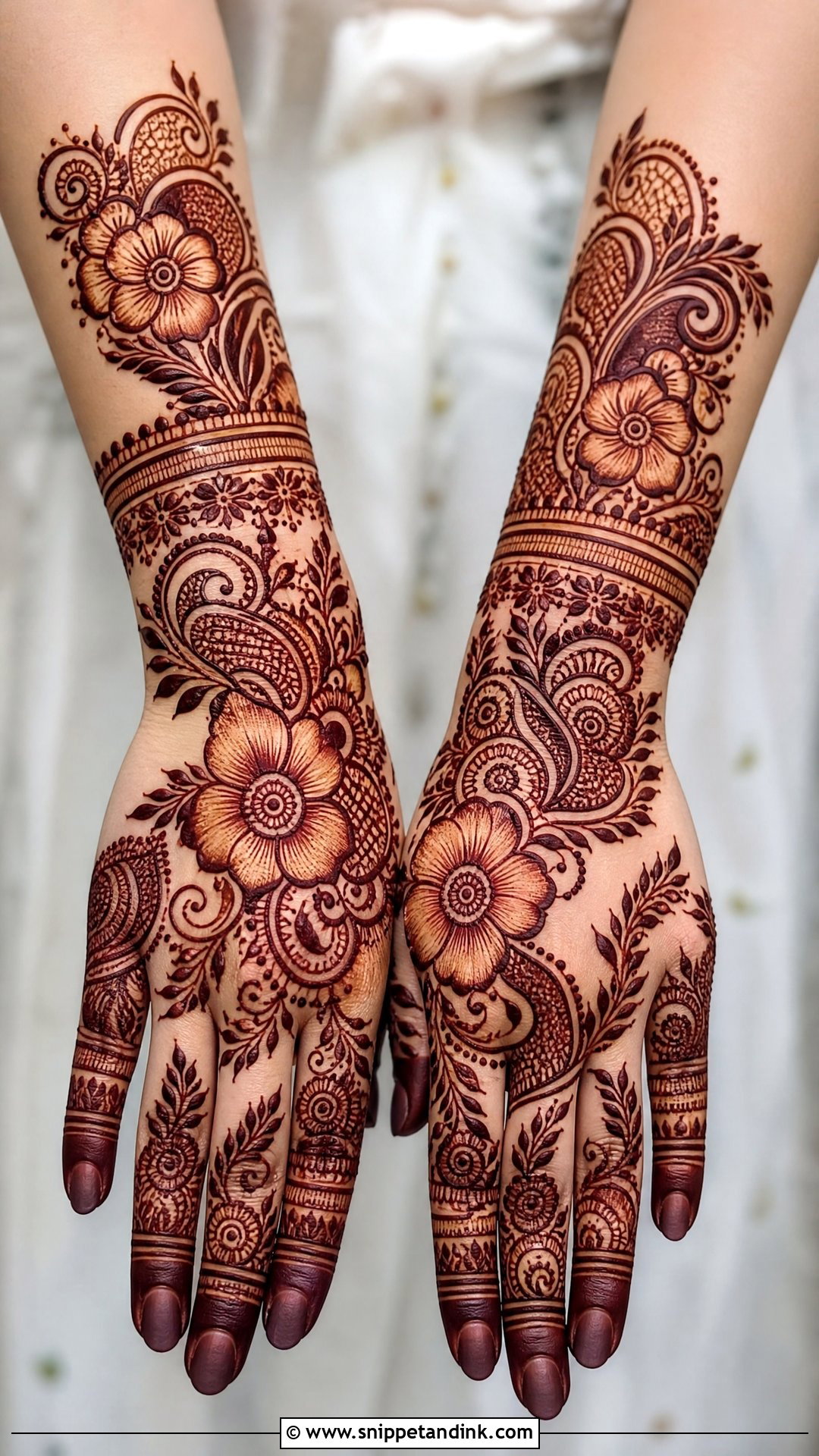
Full coverage runs from fingertips to wrist, sometimes beyond. I use floral clusters, paisley chains, net sections, shaded leaves and thick borders. The back of the hand isn’t flat, so I follow the knuckles and the slope toward the wrist rather than drawing as if on paper; a band that ignores the knuckle bones looks crooked as soon as you make a fist. Each finger gets its own slightly different pattern that still connects to the rest. Plan for a few hours, and for the paste to need time to dry.
6. Mandala Back Hand Mehndi Design
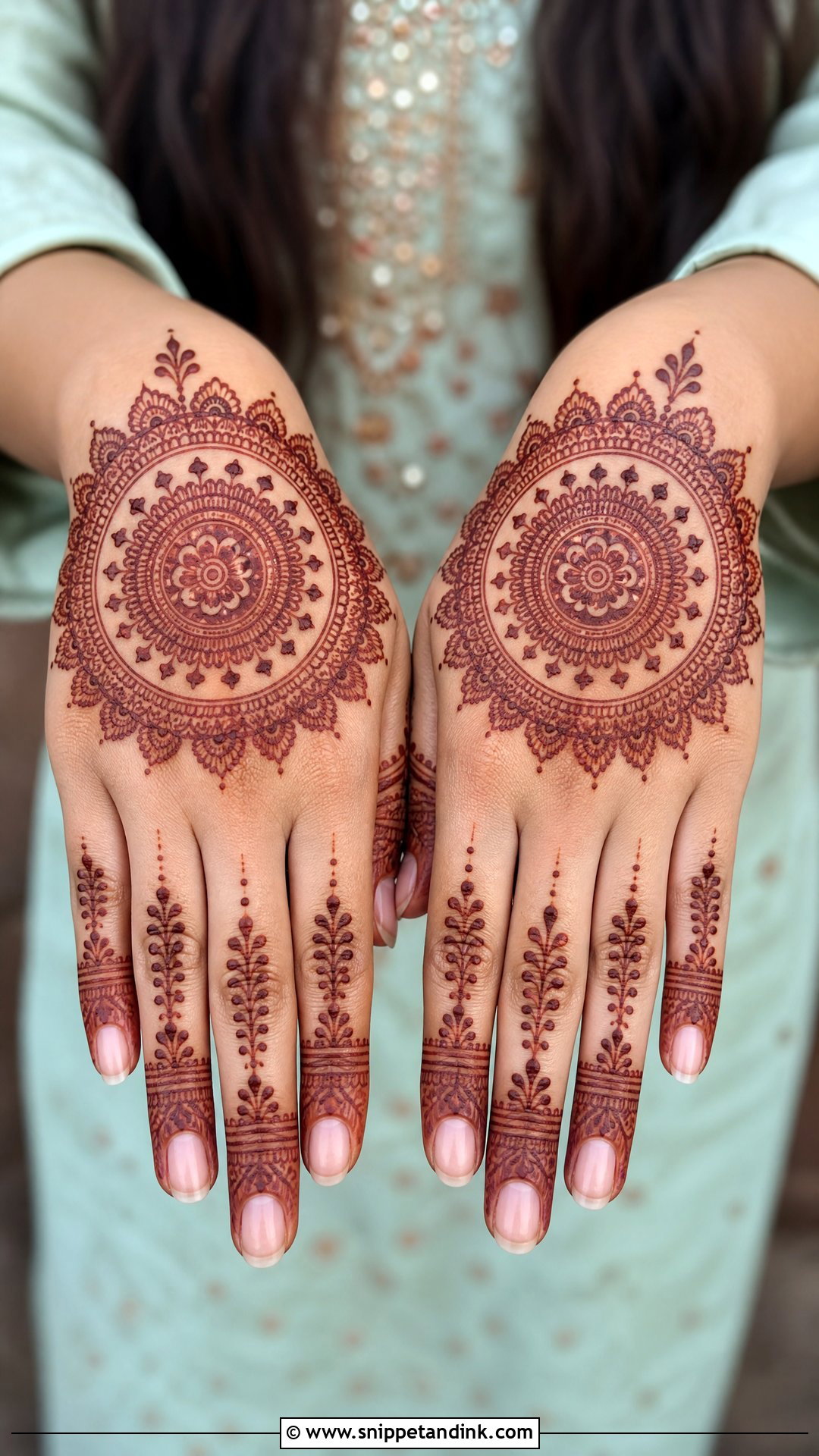
A mandala in the middle of the back hand looks balanced on almost any hand shape. I place it slightly above the center, closer to the knuckles, because the hand looks bigger toward the wrist when you hold it flat. Dots, petals, rings, leafy circles and lace-like edges build around it. The fingers get bands, caps or vine work. Keep it small for a minimal look or layer it for festivals. The circle draws the eye to the center of the hand in every photo.
7. Floral Back Hand Mehndi Design
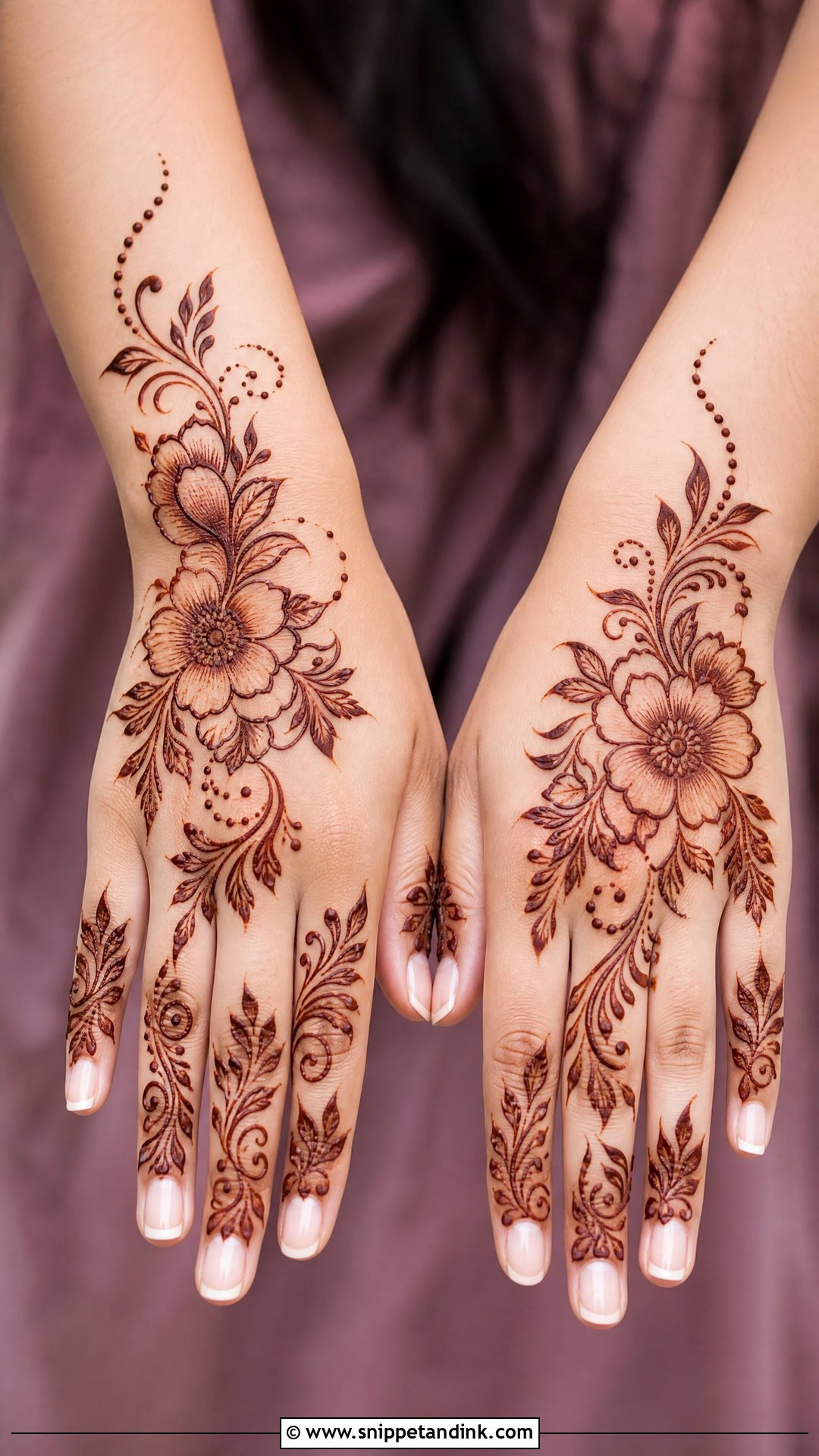
Flowers can go diagonal, centered or scattered like a garden trail. Large flowers read Arabic; small repeated ones lean Indian. On the back hand, I like to combine shaded petals with open space and thin vines, so the shading has room to show. A matching floral bracelet at the wrist and small leaves on the fingers finish it. Florals work at every age and for almost any event.
8. Jaali Back Hand Mehndi Design
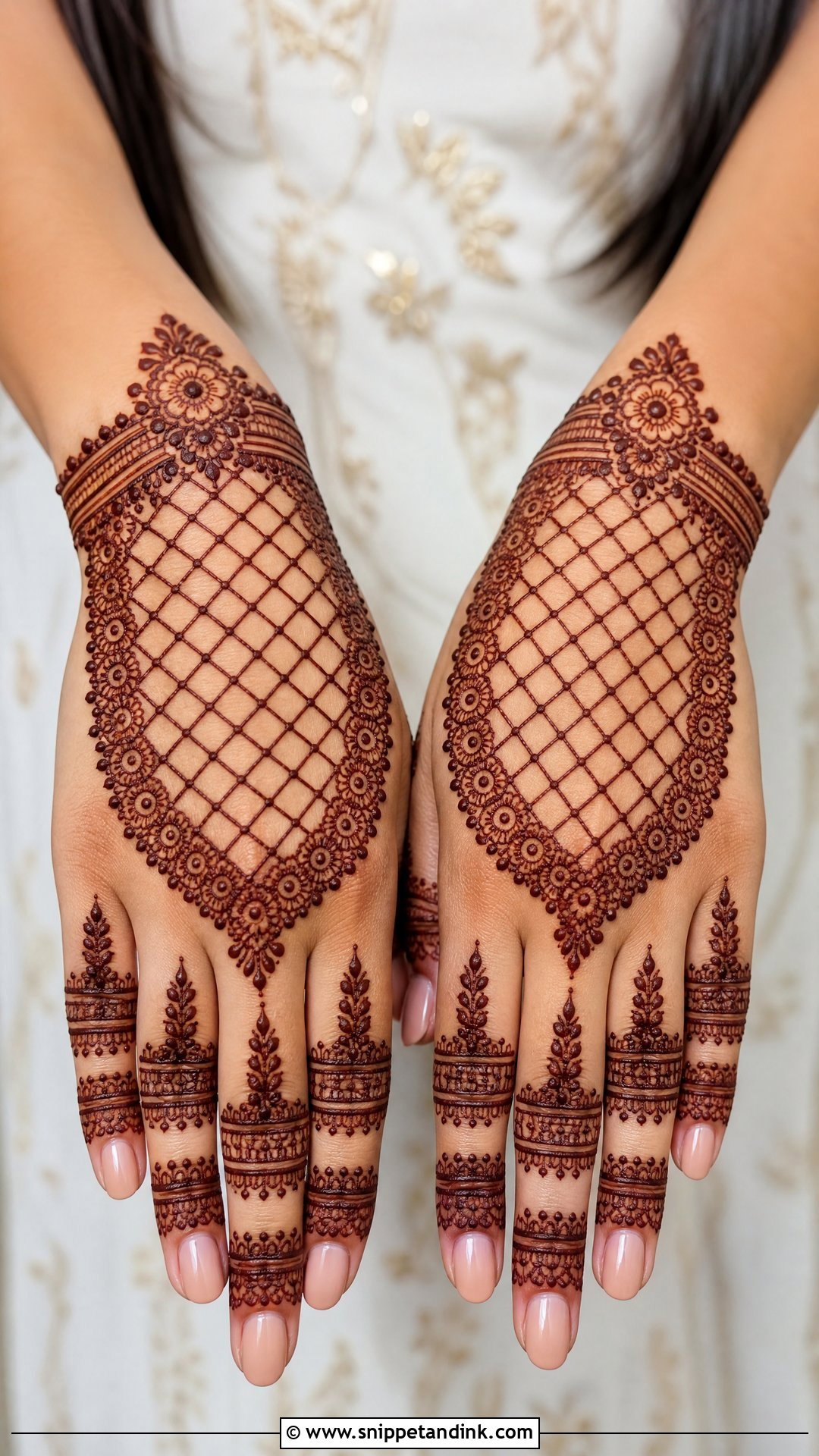
Jaali is a crisscross mesh: diagonal lines, diamonds, dots or curved panels. I use it in one area, the center, the wrist or a diagonal strip, and pair it with bold flowers or a clean border. Too much mesh looks busy and, on the back hand, the close lines can merge as the stain darkens. It gives a filled look for bridal and semi-bridal designs without heavy motifs, and it looks neat in close-up shots.
9. Bracelet Back Hand Mehndi Design
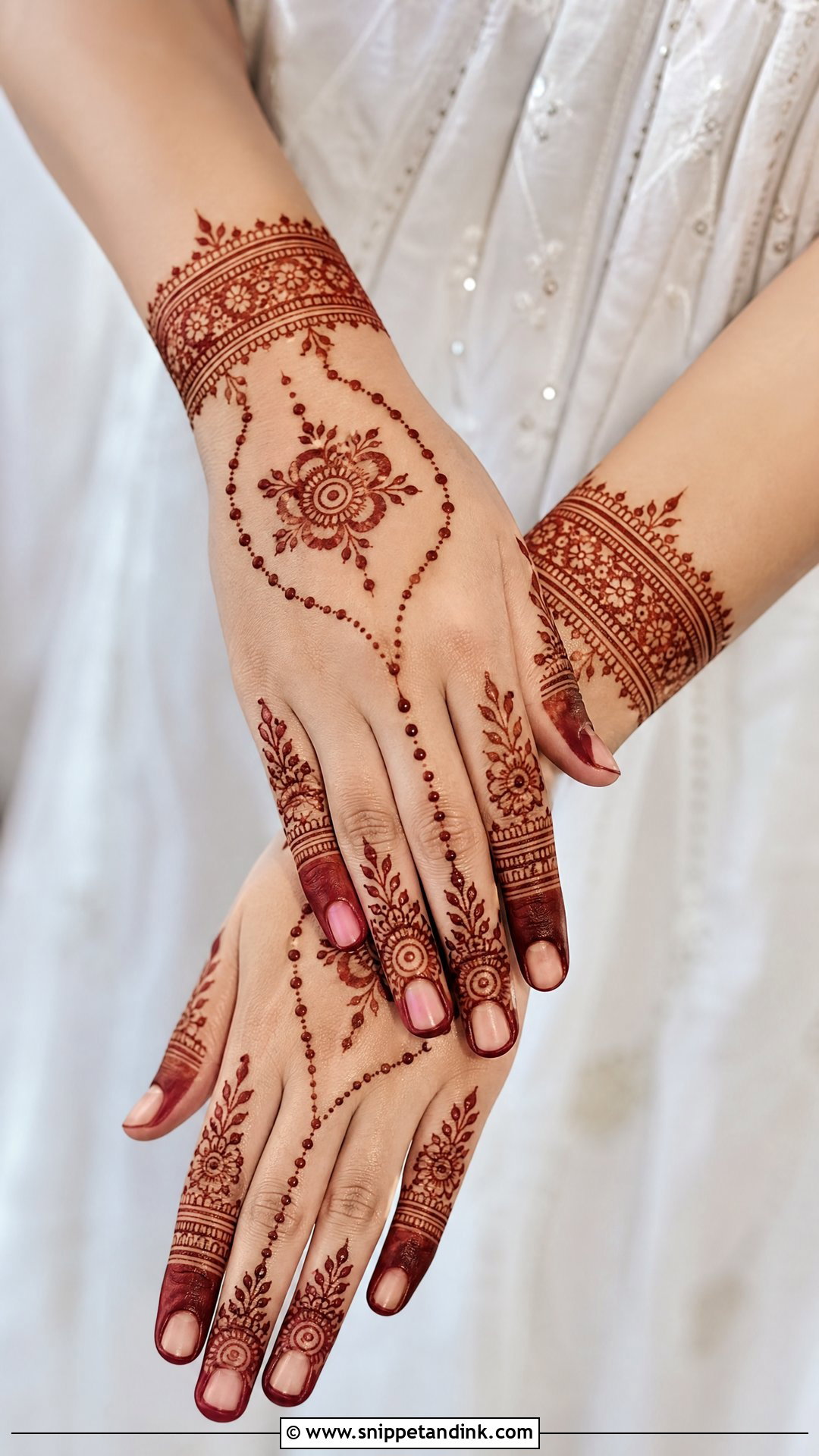
Henna jewelry at the wrist is the point of this one: bands, chains, dots, leafy cuffs and small hanging drops, then a thin line or central flower leading to the fingers. I draw the bracelet just above the wrist crease, since paste on the crease cracks off when you bend your hand. It complements real bangles without looking heavy. Keep it symmetrical, with one slim band or several layered cuffs.
10. Finger Back Hand Mehndi Design
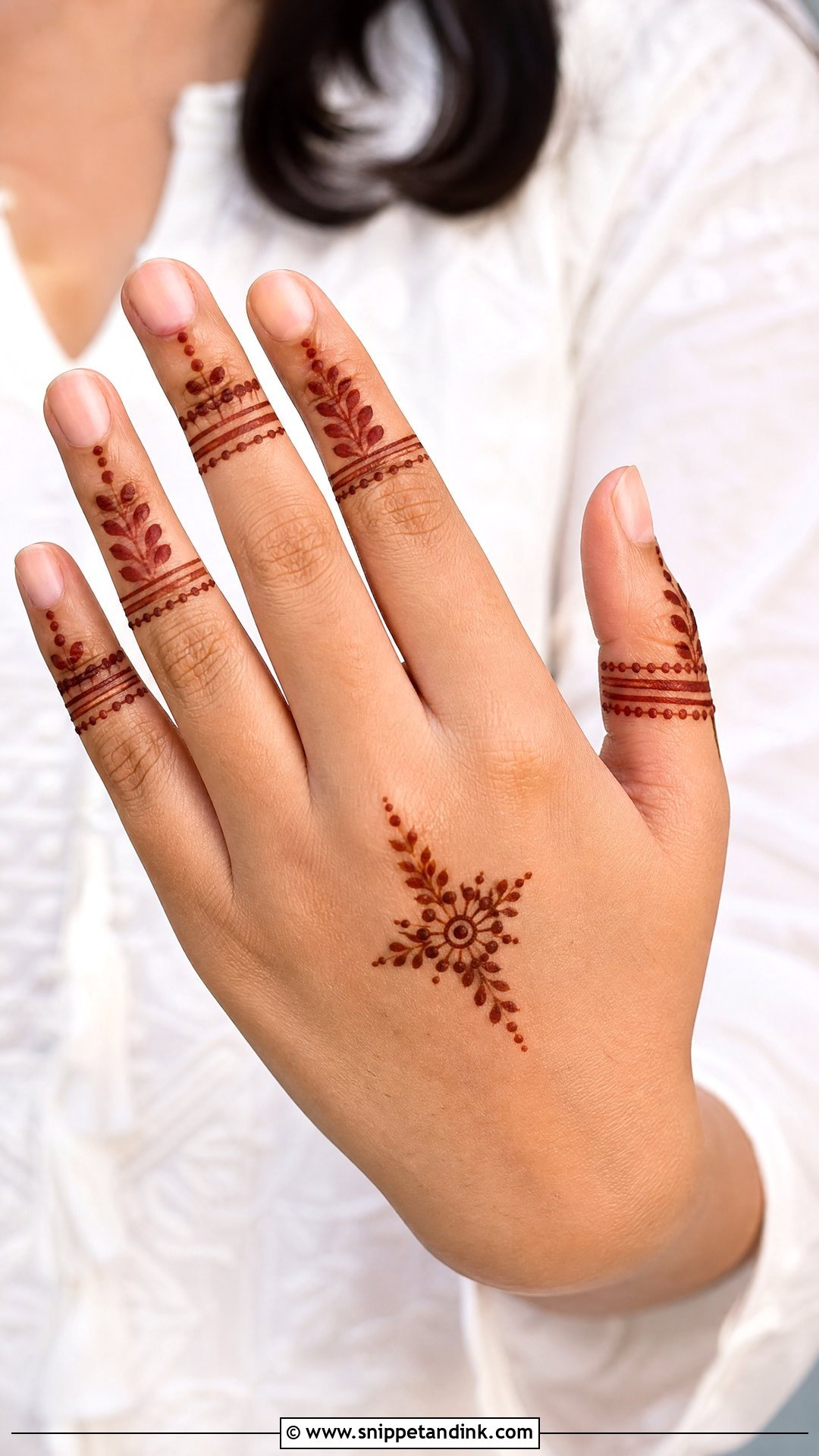
Putting most of the work on the fingers keeps the back of the hand light and modern. Each finger gets bands, leafy strokes, dots, small flowers or ring circles, and the center stays bare or has one small motif near the knuckles. Vertical lines and slim vines on the fingers make them look longer. It’s quick, and it’s a good fit when you need your hands back soon after.
11. Indo Arabic Back Hand Mehndi Design
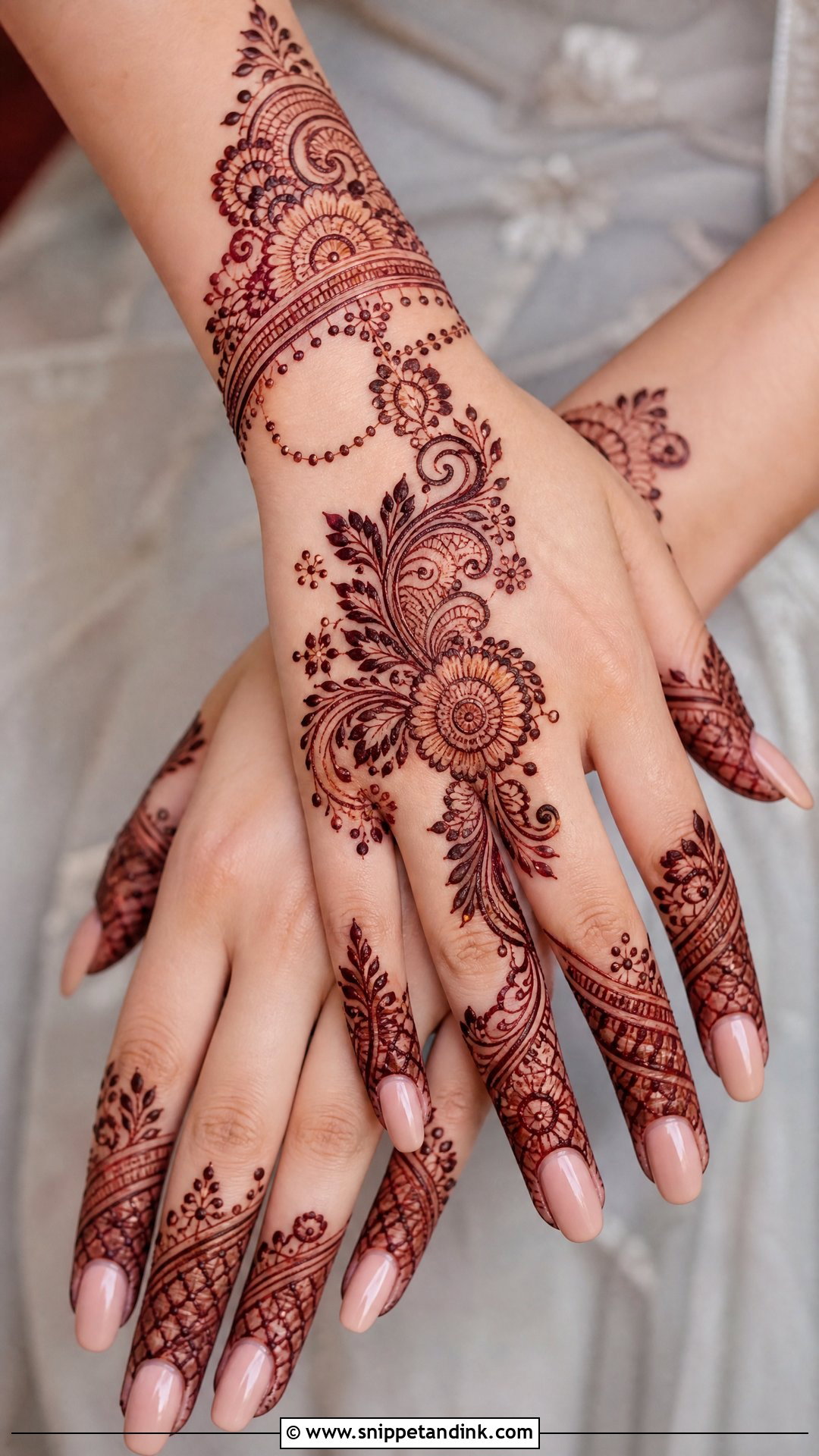
Indo-Arabic takes the bold flow of Arabic work and adds Indian fine detail inside it. I outline large flowers and paisleys boldly, then fill them with tiny lines, dots, checks and curls. It usually runs diagonally but can cover the whole back hand. It sits between Arabic and full Indian bridal, which suits bridesmaids, guests and festive evenings. Clean spacing, strong borders and detailed fingers make it work.
12. Indian Back Hand Mehndi Design
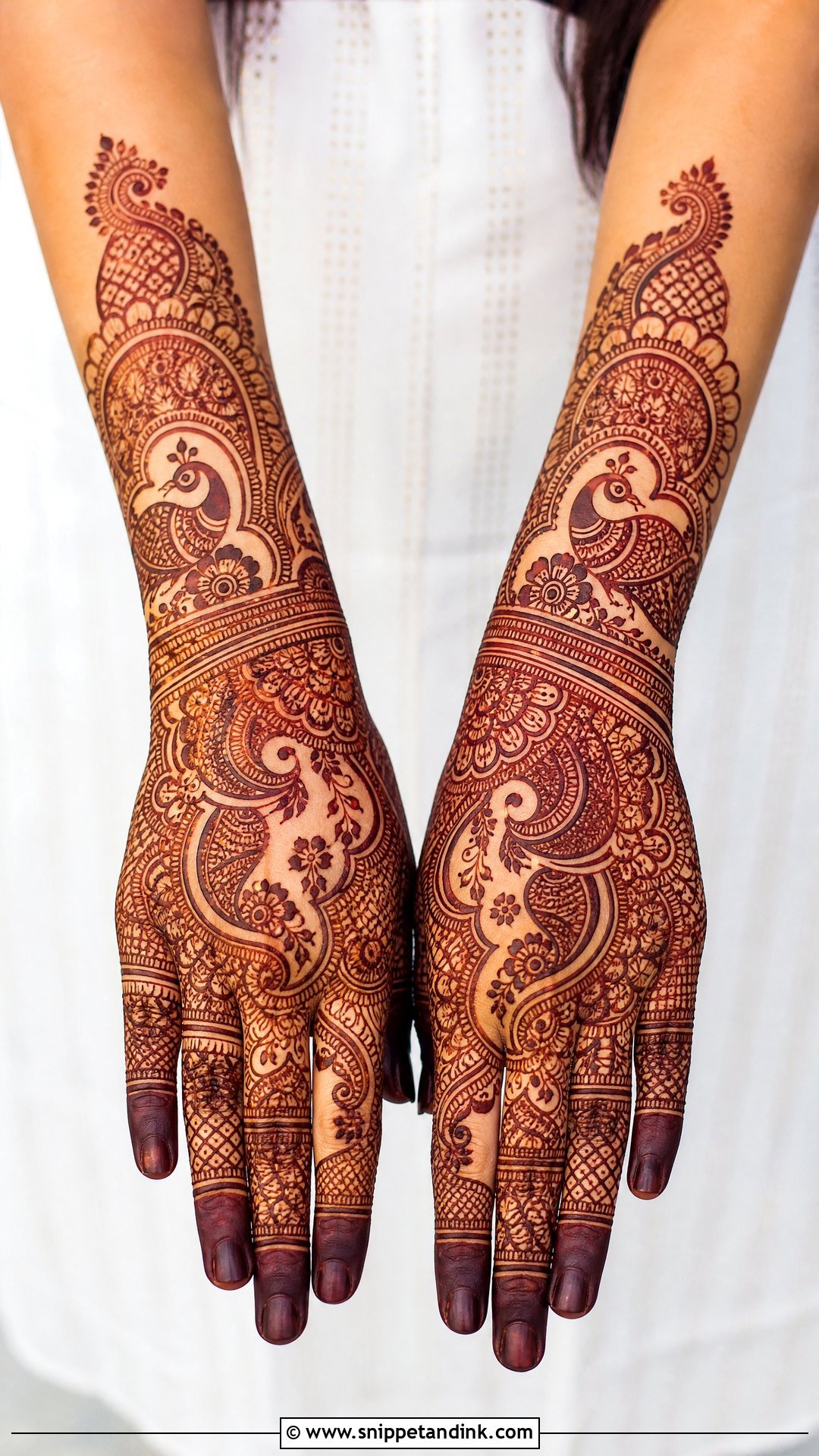
Traditional Indian work fills the back hand with fine detail: paisleys, flowers, peacocks, leafy curves, dotted fillers and small repeated patterns, with little bare skin. It’s the style for weddings, Karva Chauth, Teej and Diwali. I give it a clear focus, a mandala, a paisley cluster or a floral panel, so it doesn’t turn into texture with no center. The fine lines need a steady hand and a fine-tipped cone.
13. Minimal Back Hand Mehndi Design
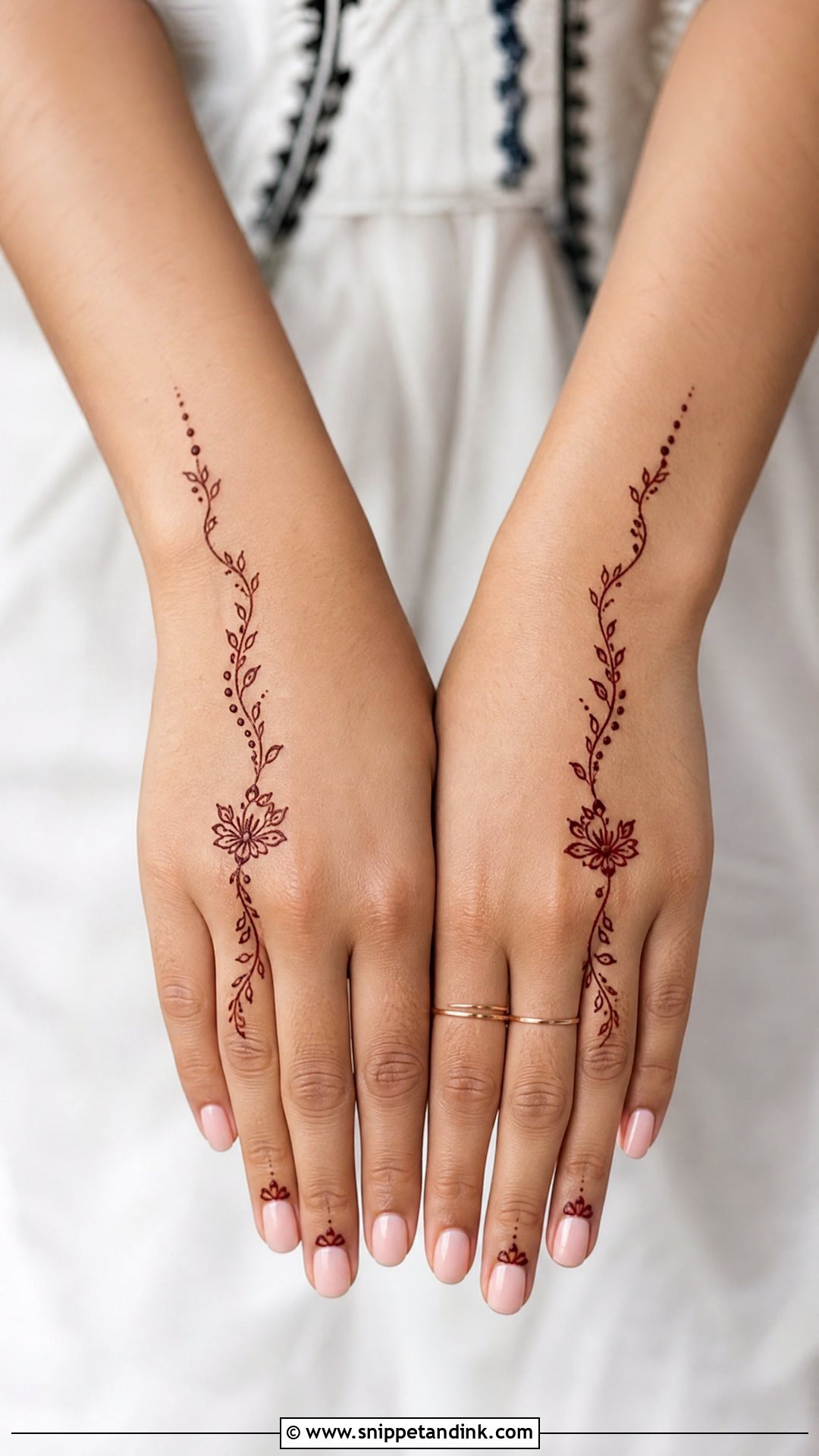
Minimal designs use few motifs, delicate strokes and lots of space: a small flower near the center, one vine across the hand or ring-style finger details. It suits modern outfits and office celebrations, and it dries quickly. Neatness is everything here. Every dot and line shows, so I’d take my time on fewer strokes.
14. Heavy Back Hand Mehndi Design
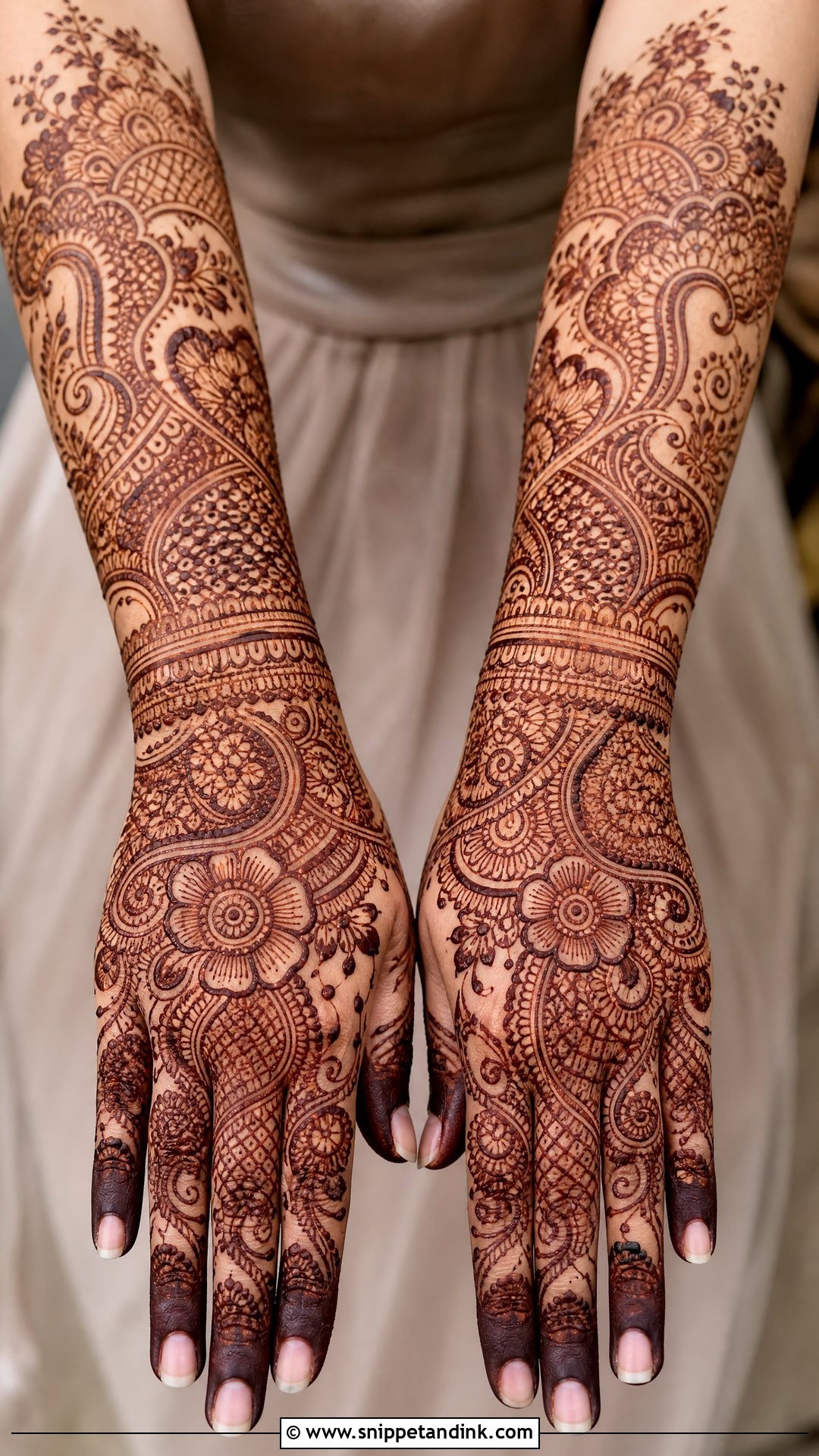
Heavy designs fill the fingers, knuckles, back hand, wrist and often the forearm with connected patterns: paisley blocks, jaali, floral clusters, leafy borders and shading. They’re for brides, close family and big occasions. Because it’s dense, it needs structure; I divide it with borders so the hand doesn’t look confused. Expect a long sitting and a long drying time, but the stain on a fully covered hand is rich and dramatic.

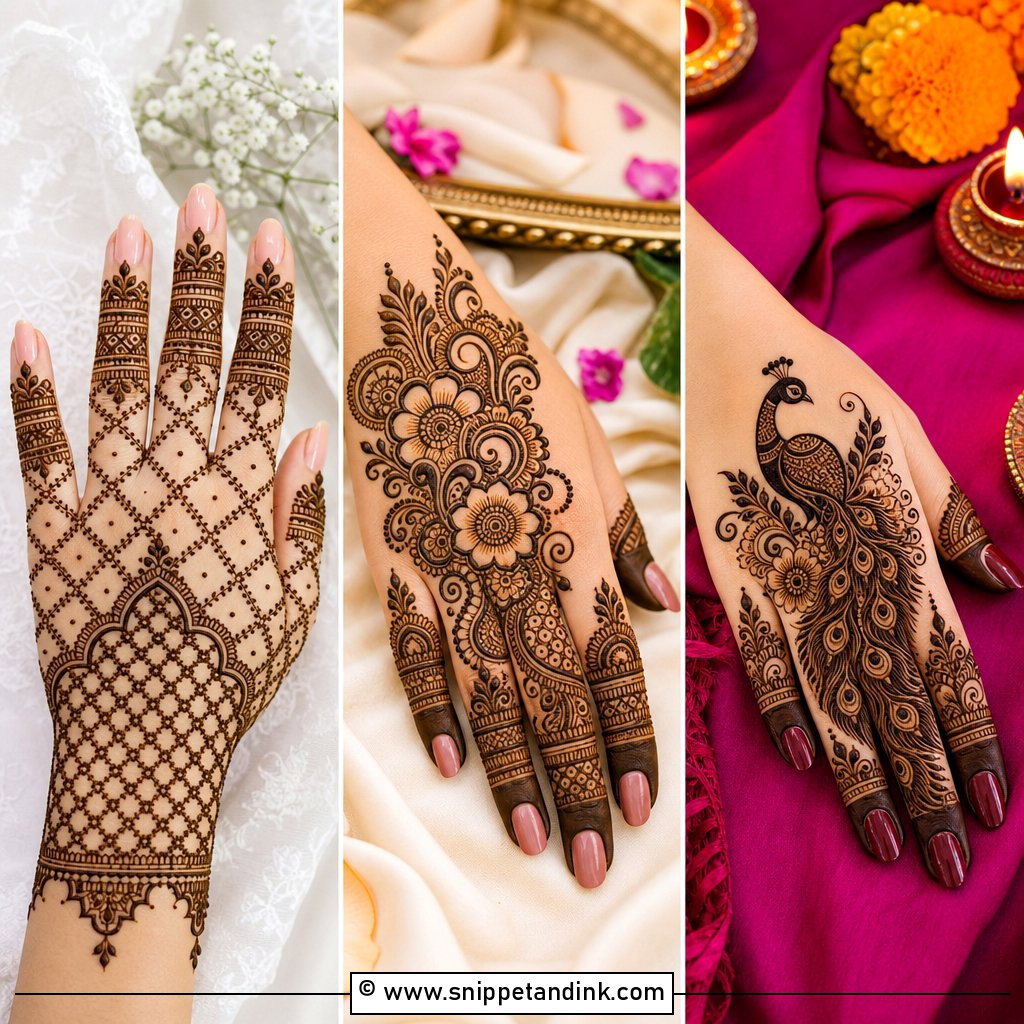
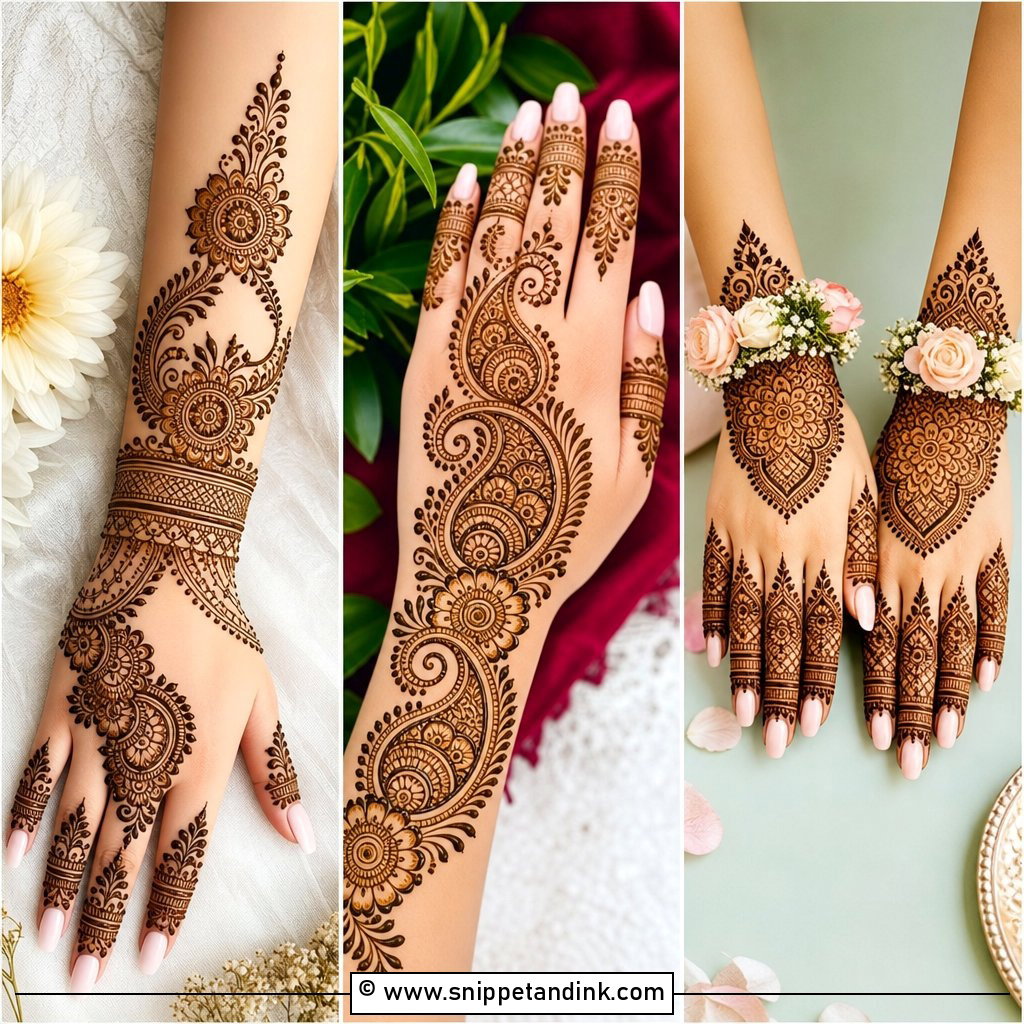
15. Easy Back Hand Mehndi Design
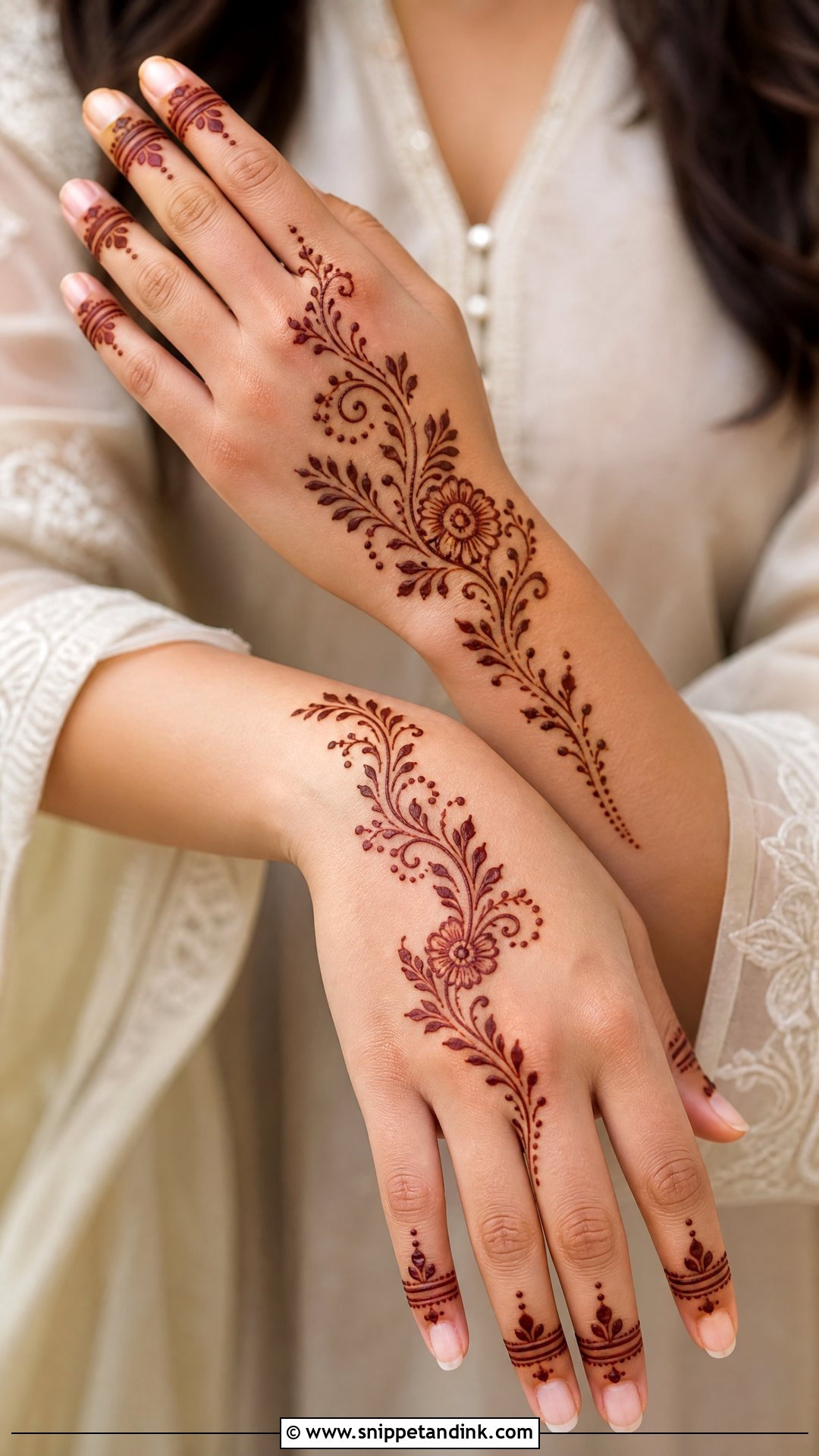
For a quick, easy look, I draw a diagonal vine from the wrist to the index finger, with small flowers, dots, leaves and curves along it, and simple finger bands. No symmetry is needed, so slight differences between hands look natural. Use steady cone pressure and leave space between motifs. A neat simple design always beats a rushed complicated one.
16. Stylish Back Hand Mehndi Design
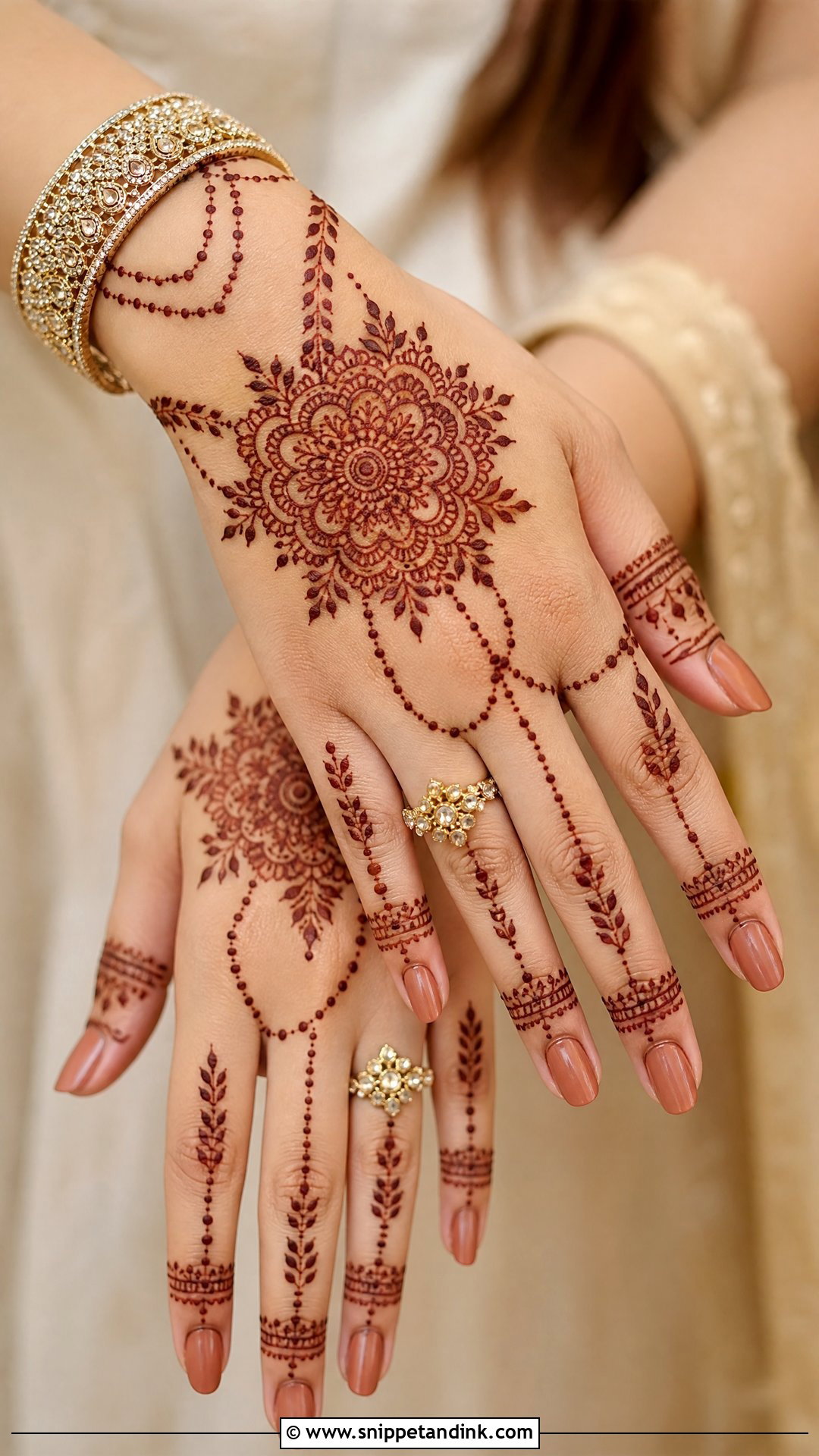
Trend-led layouts mix placement ideas with classic motifs. One I draw often starts at the wrist like a hand harness and runs a dotted chain to the middle finger; another puts bold florals on one side and leaves the other open. A bracelet cuff, finger rings, a mandala or geometric panels can all fit. Crisp outlines matter, because natural henna stains reddish-brown to maroon and soft edges blur at that color.
17. Peacock Back Hand Mehndi Design
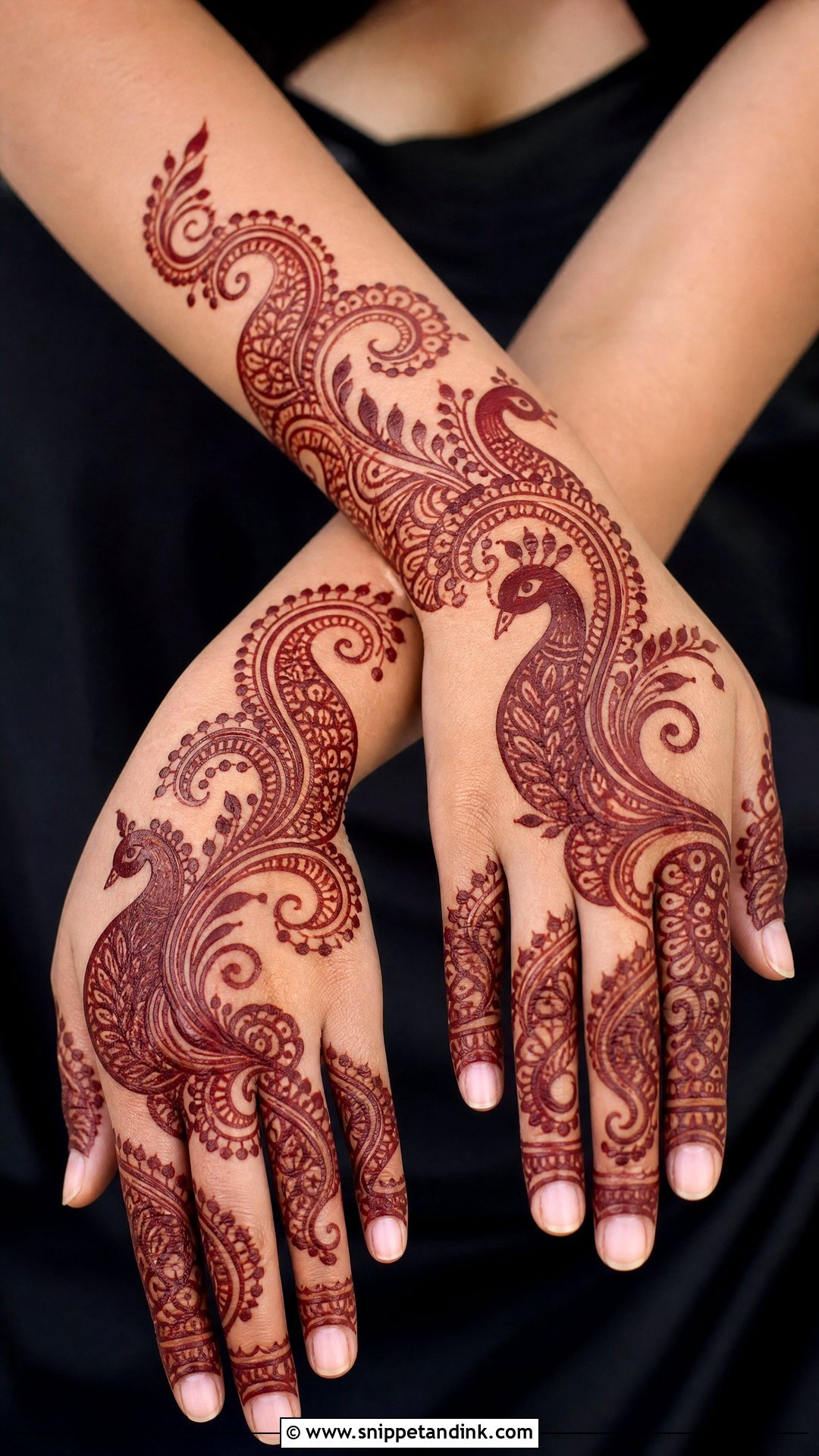
Peacocks can sit near the wrist, in the center or along a diagonal, with feathers spreading into paisleys, scallops, dots and leafy curves. They’re a festive, celebratory motif at weddings. I keep the bird outline clear and put fine fill inside the feathers so it doesn’t get heavy. Fingers can carry matching feather strokes or small paisley bands.
18. Paisley Back Hand Mehndi Design
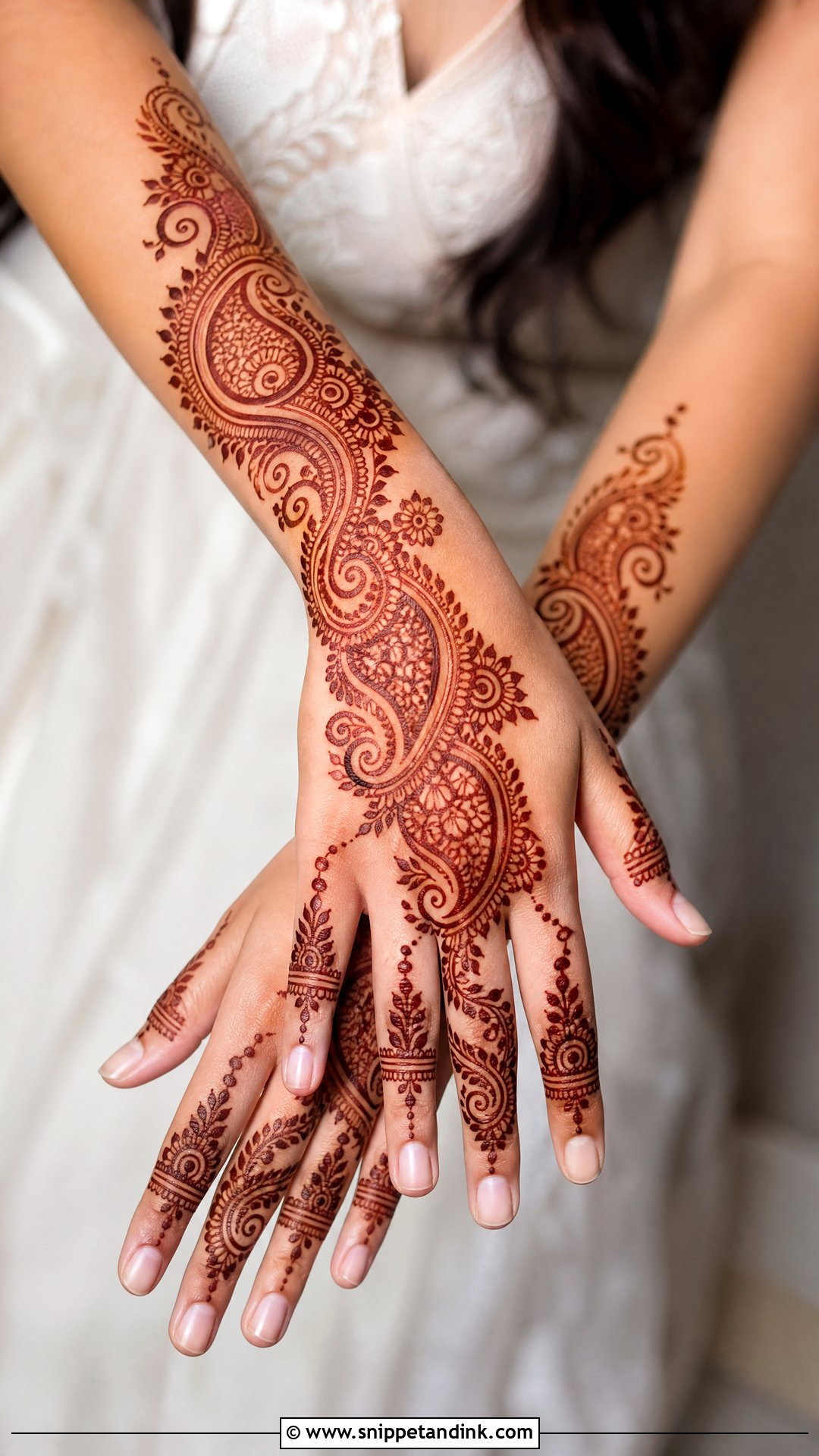
Paisleys are the curved teardrop shape that appears in almost every tradition I draw. On the back hand, they work in diagonal trails, wrist panels or full bridal layouts. I usually put one large paisley near the center and let smaller ones flow toward the fingers, filled with dots, leaves, lines and florals. They can be light for casual wear or dense for weddings.
19. Rose Back Hand Mehndi Design
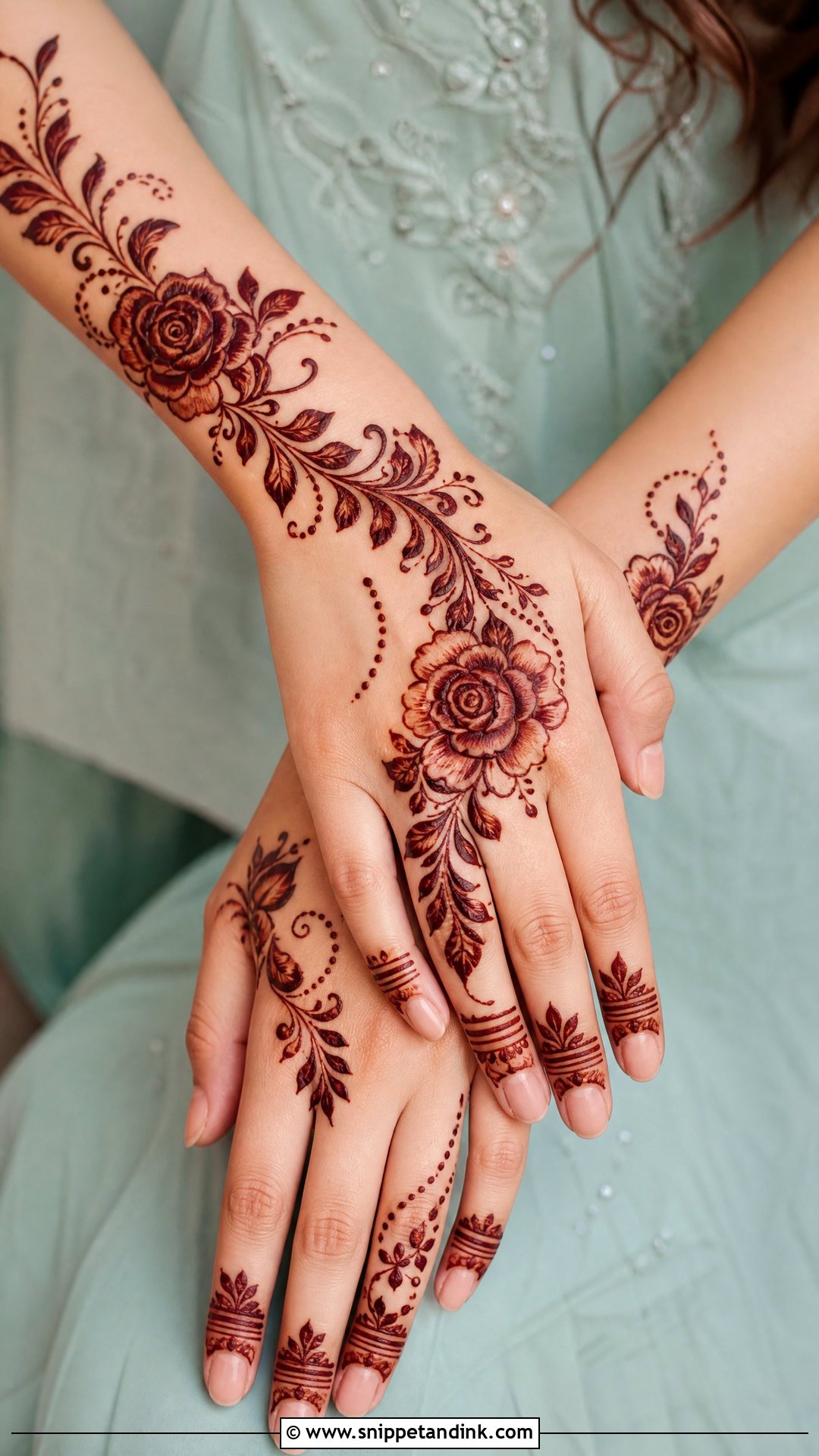
Roses can be open blooms, shaded petals or simple spirals. On the back hand, I arrange them in a diagonal trail with leaves and dotted curves, or put one large rose near the wrist with vines toward the fingers. Rounded, clear shapes with space around each bloom read best once stained. It’s a good pick for engagements, bridesmaids and parties.
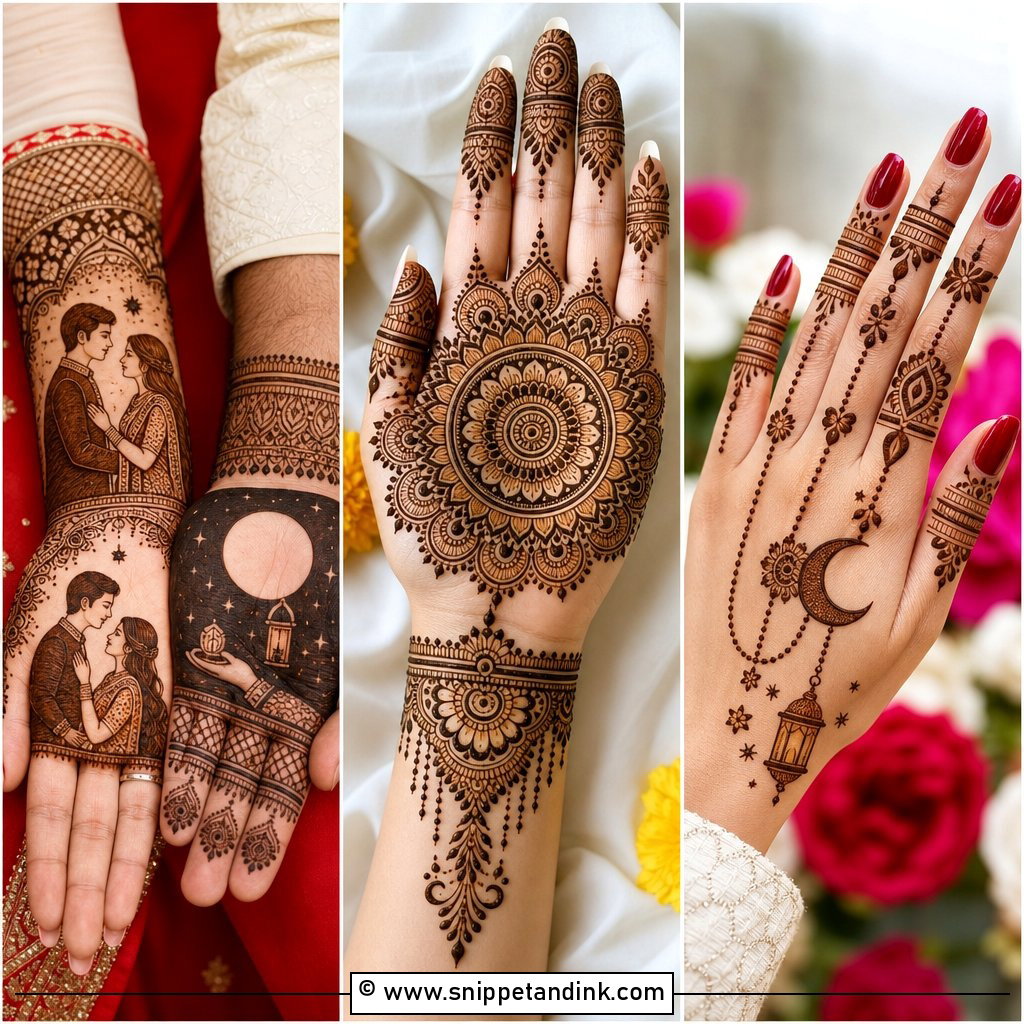
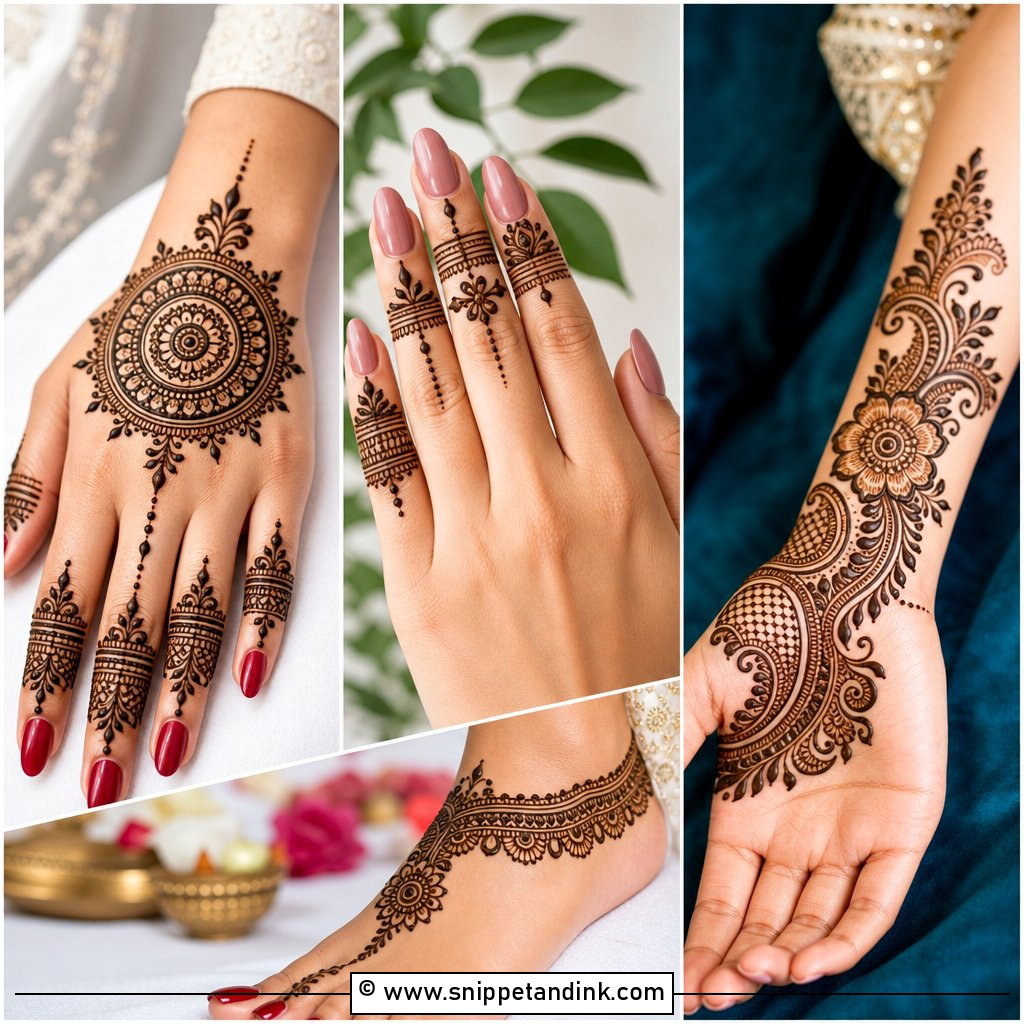

20. Lotus Back Hand Mehndi Design
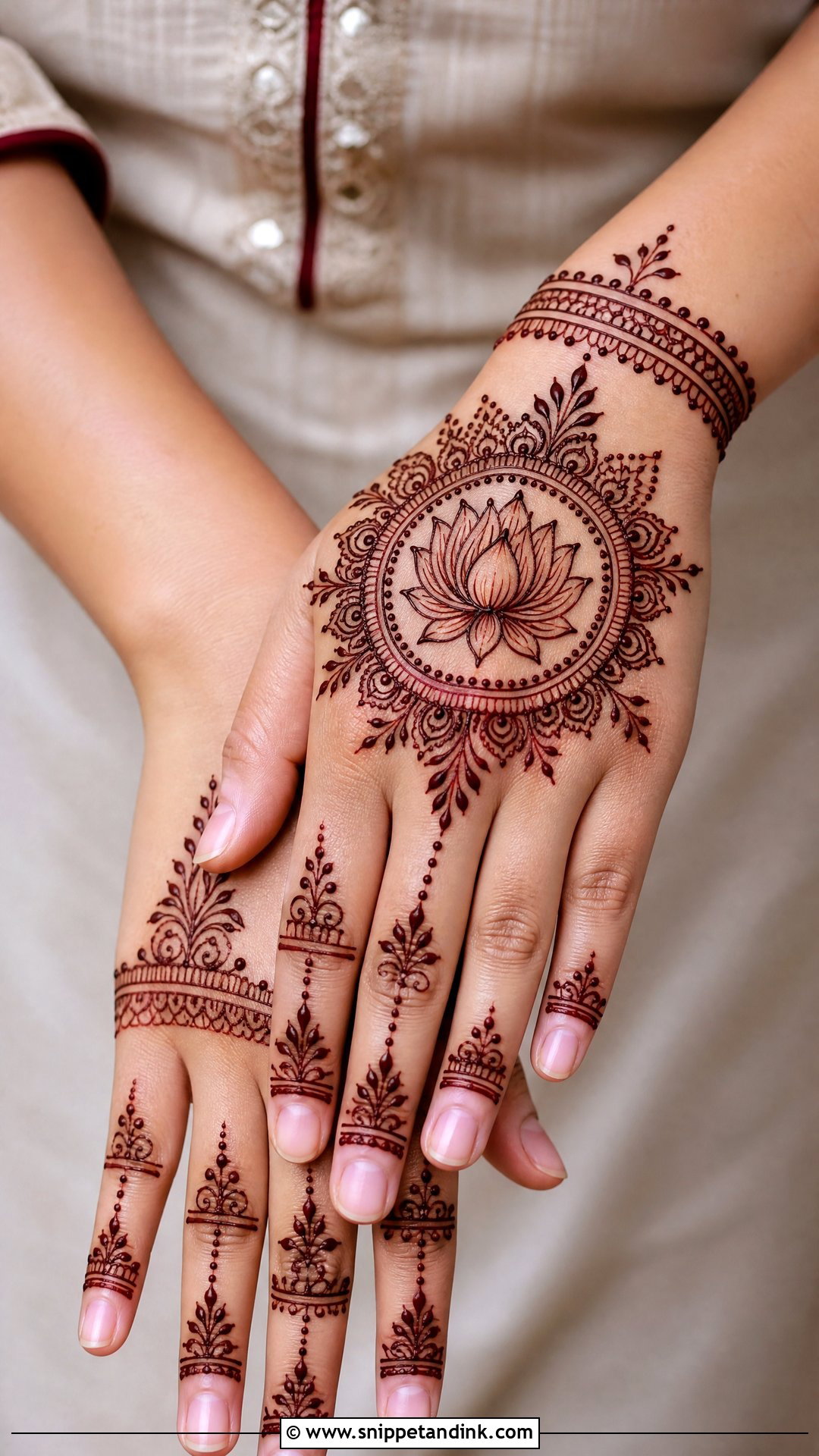
The lotus has a calm, symmetrical shape that suits bridal, festive and religious occasions. For Lotus back hand mehndi, I place a large lotus at the center, with smaller petals and leaves reaching toward the fingers and wrist. It also works in a wrist band or inside a mandala. Keep the petals clean and lightly shaded. It goes well with silk suits, lehengas and sarees.
21. Moroccan Back Hand Mehndi Design
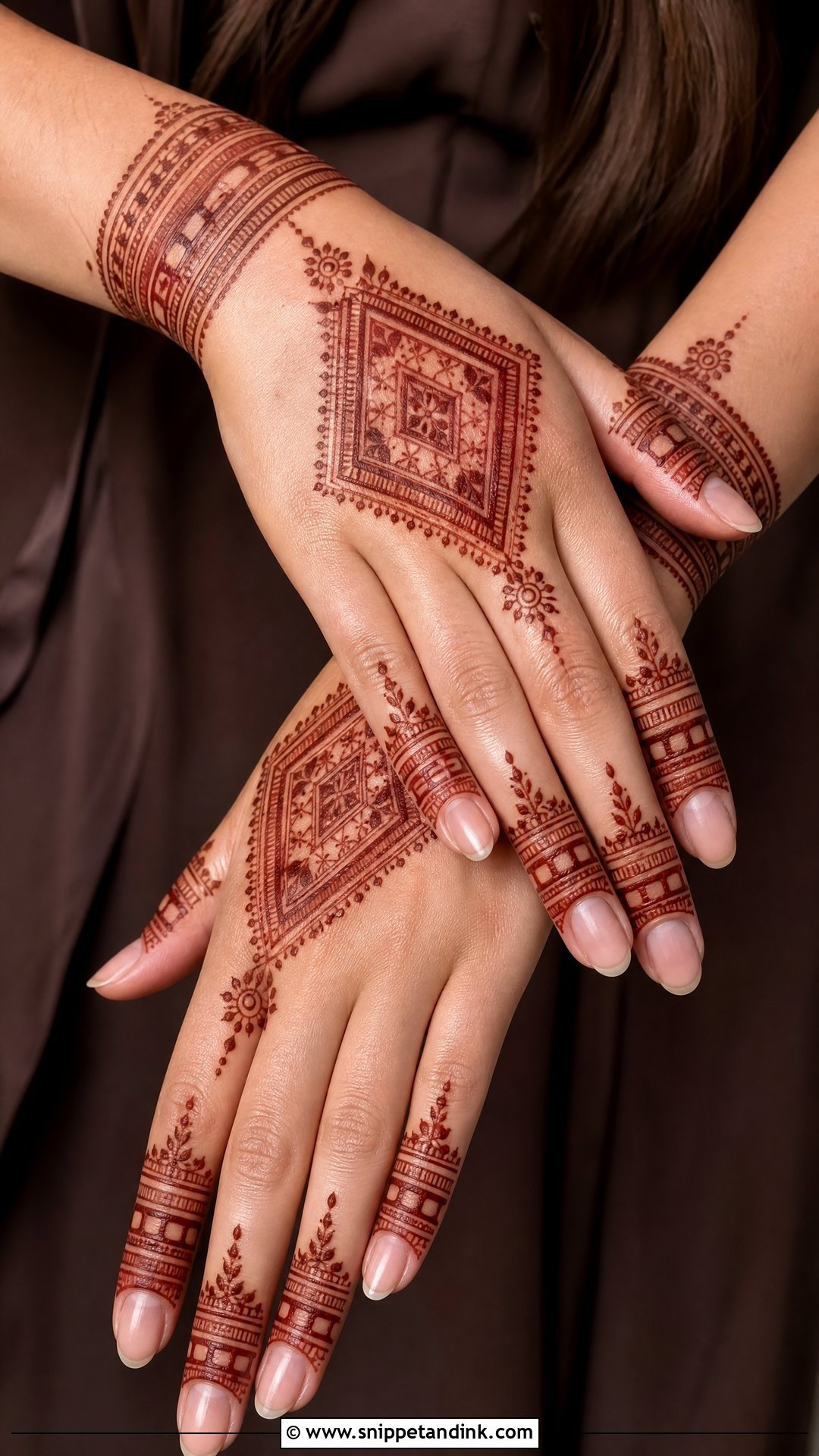
Moroccan-inspired henna uses geometry instead of flowers: diamonds, triangles, lines, dots, grids and angular bands. A central diamond panel can connect to finger patterns and wrist cuffs. Straight lines with a cone are harder than they look, so I let the paste fall onto the skin rather than dragging it. It’s a good choice if you want something unlike the usual florals, and it pairs well with minimal outfits.
22. Gulf Back Hand Mehndi Design
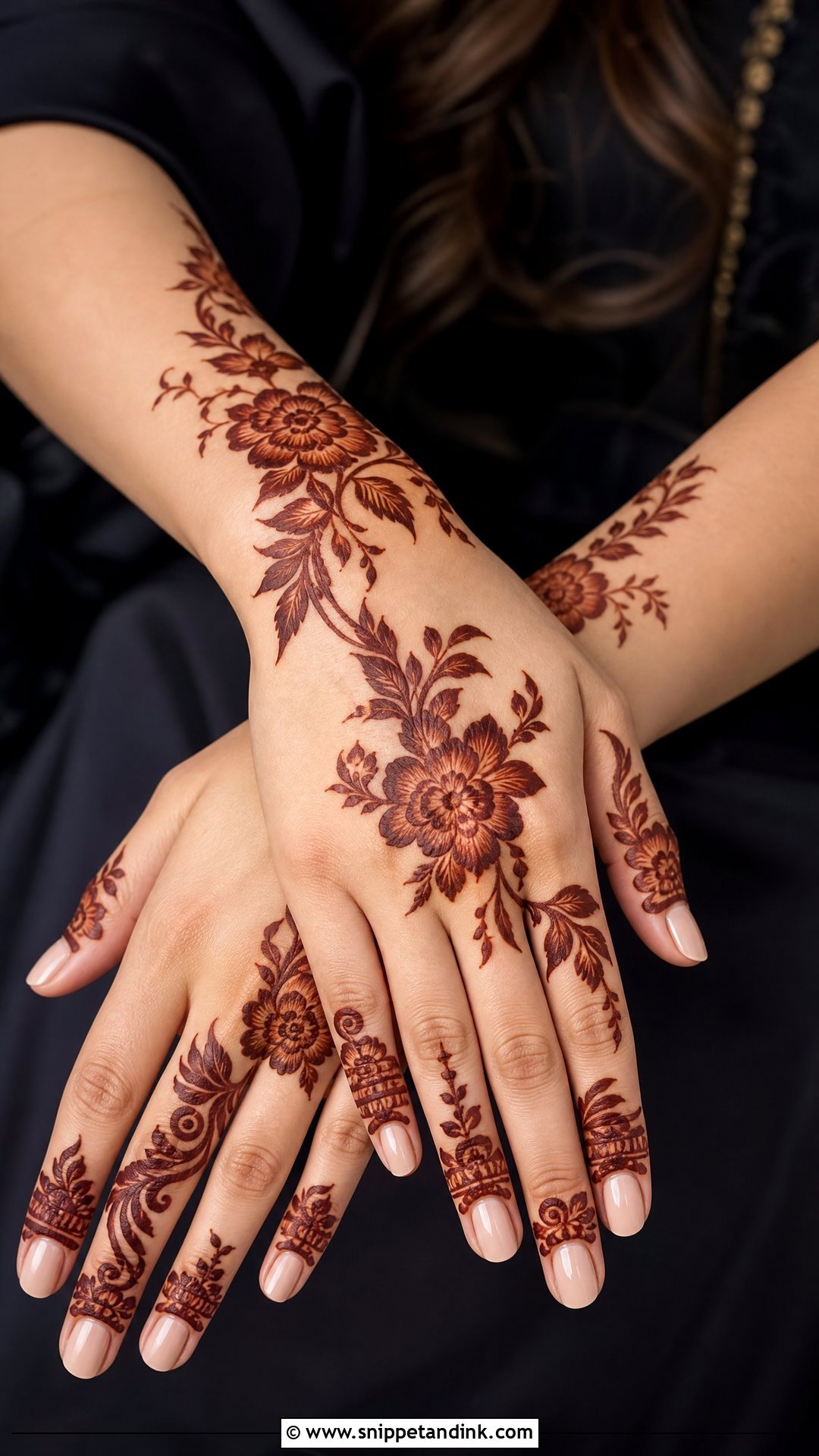
Gulf or Khaleeji-inspired henna has bold flowers, leafy clusters and thick outlines, with larger and more open motifs than dense Indian work. It may cover one side of the hand or run in a bold trail from wrist to finger. Big florals, shaded leaves and curved vines are typical. The thick outlines are an advantage on the back hand, where thin lines stain faintly. Fingers can stay partly open with simple bands.
23. Engagement Back Hand Mehndi Design
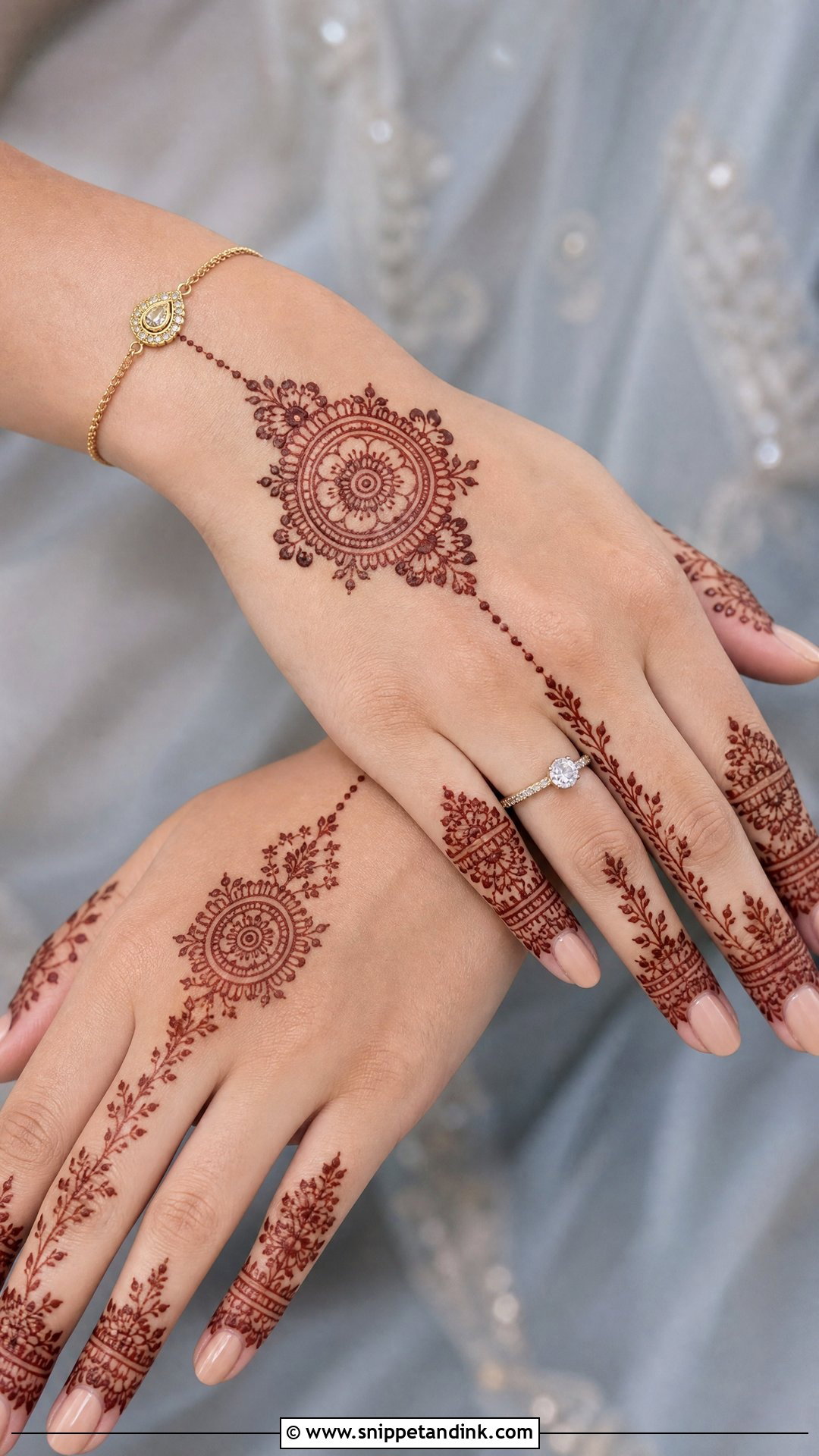
In engagement photos, the back of the hand is the main subject, so I design around the ring. A bracelet pattern connected to the ring finger is the popular choice, with florals, dots, leafy chains and a small mandala for balance. I leave the base of the ring finger fairly open so the ring sits on clear skin and stands out. It’s lighter than bridal mehndi and works for the bride-to-be and close family.
24. Eid Back Hand Mehndi Design
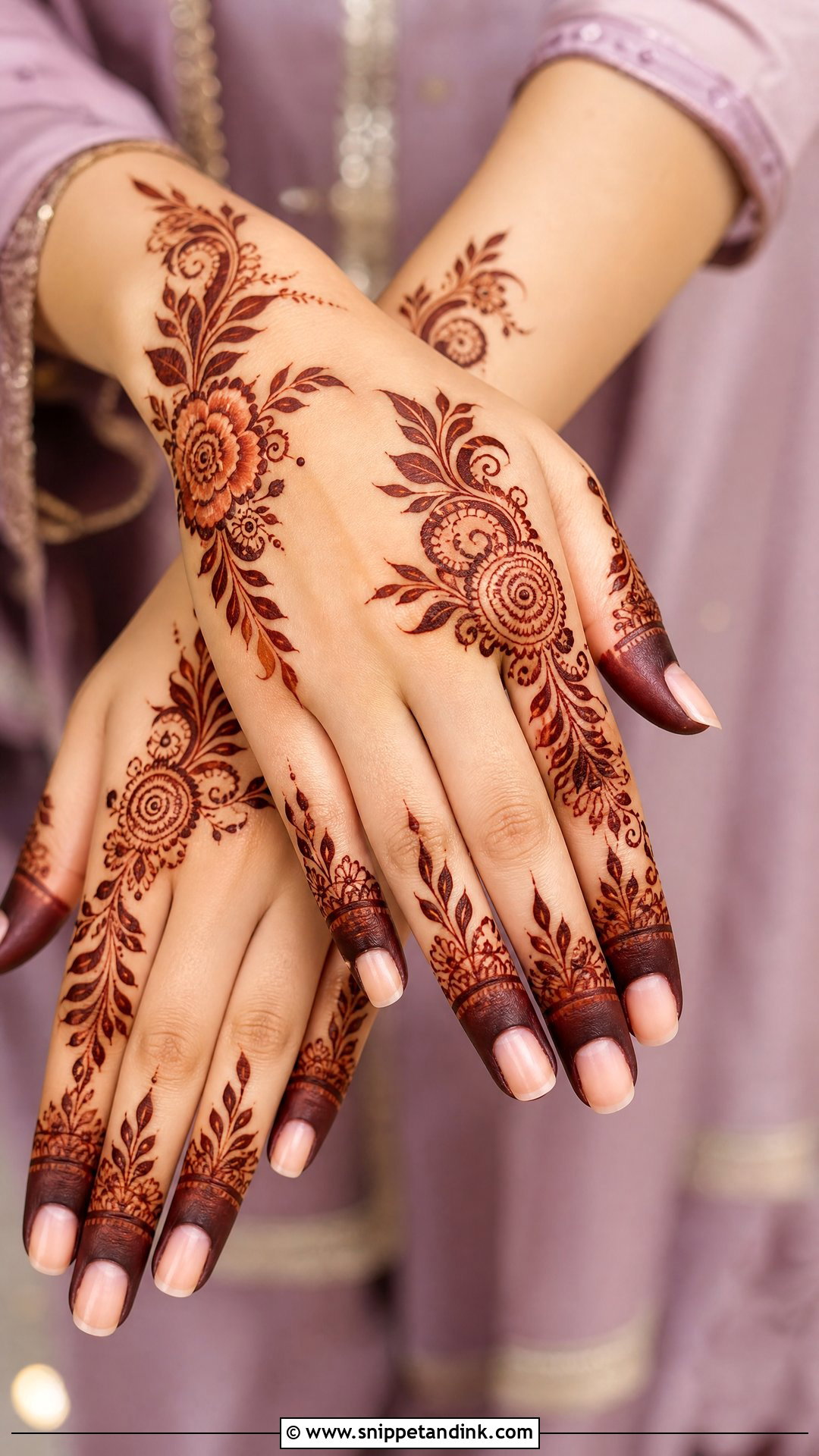
On Eid I’m usually drawing for a whole family, so designs need to be quick and comfortable. Arabic floral trails, bracelet bands, mandalas and finger patterns are all popular. A diagonal vine with bold flowers looks great with bangles. For something cleaner, a small center motif with decorated fingers. Apply it the night before Eid so the stain has darkened by morning.
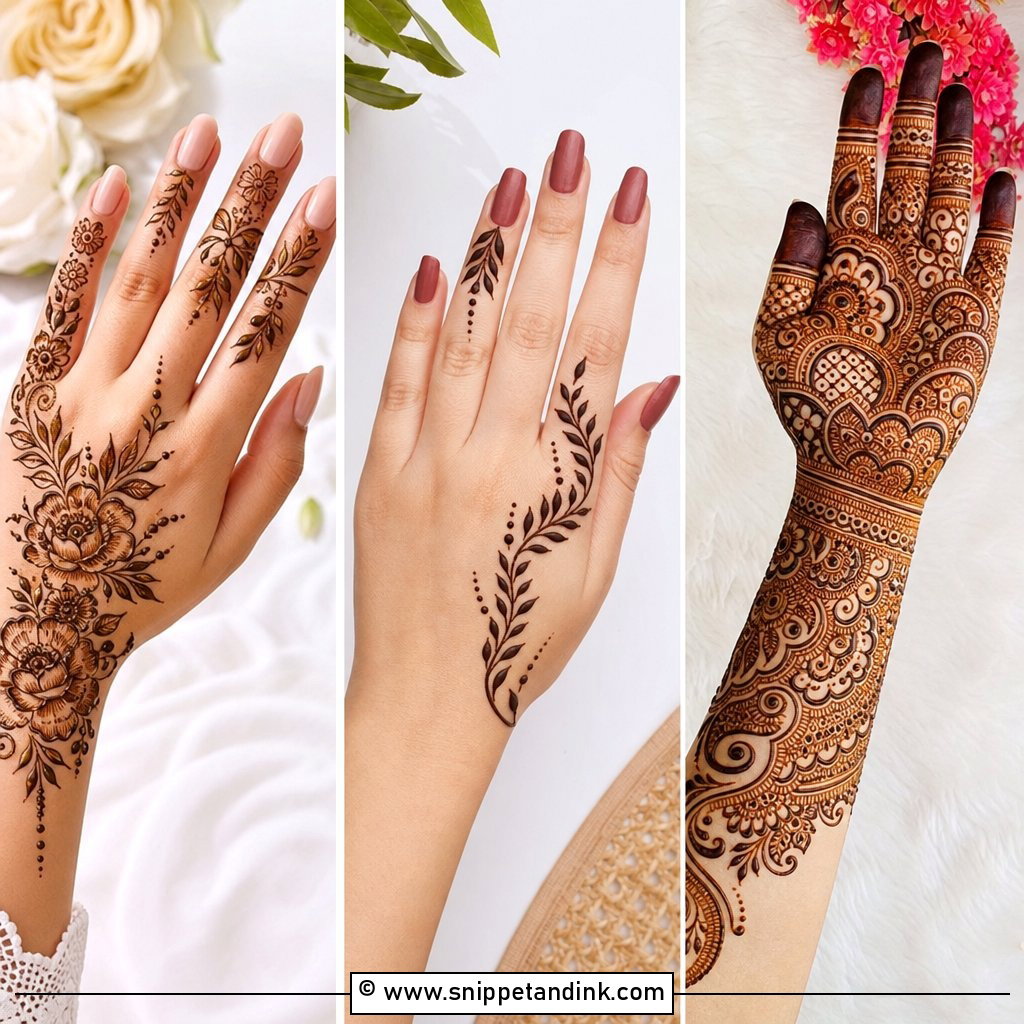
25. Diwali Back Hand Mehndi Design
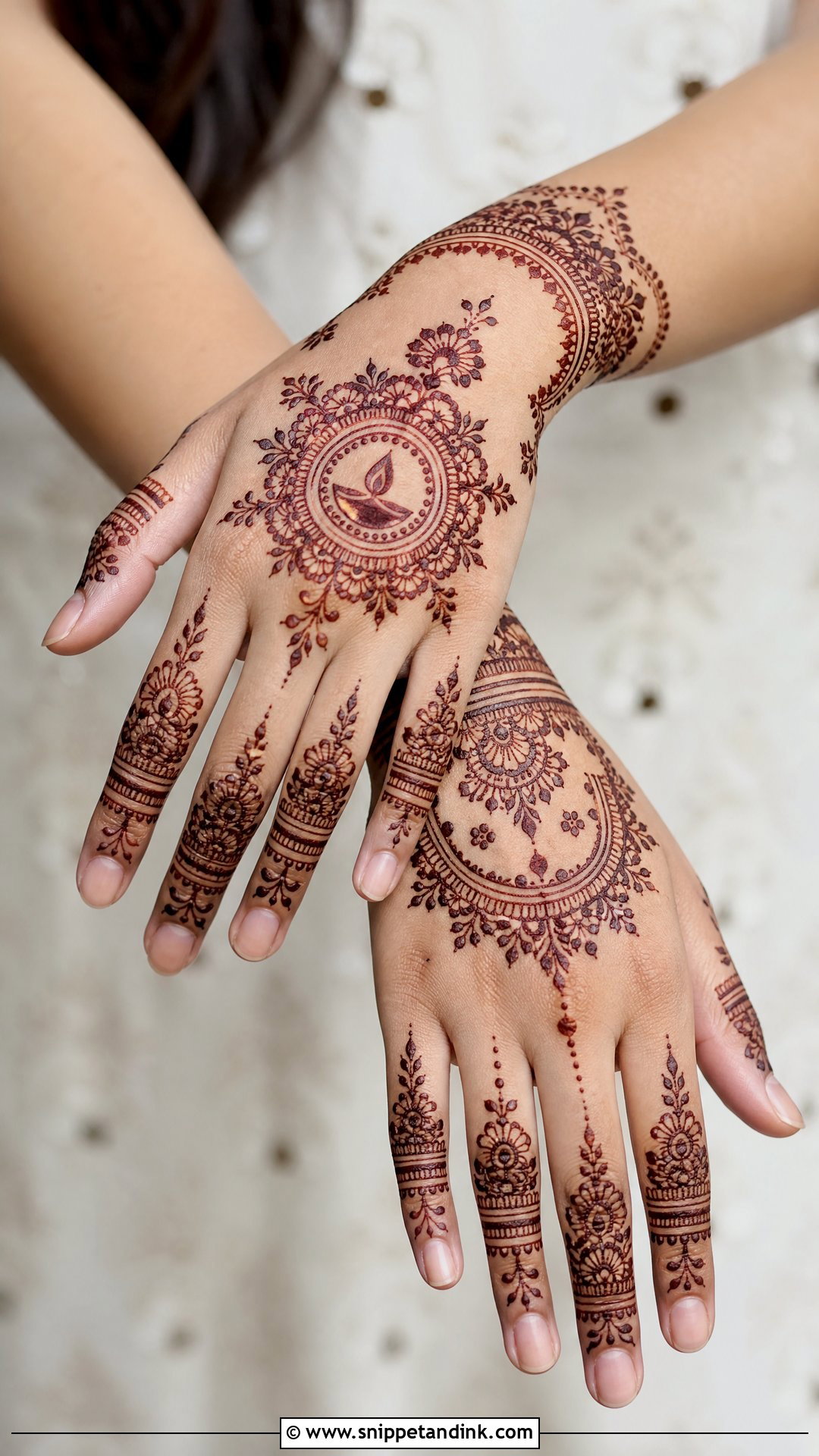
For Diwali back hand mehndi, I’d go bright and detailed: mandalas, diya shapes, floral chains, paisley trails or bracelet cuffs. Diwali outfits come with bangles and rich fabrics, so the mehndi needs to be clear enough to show. A centered mandala with finger detail is balanced; jaali patches and floral wrist borders make it fuller. It pairs with sarees, lehengas, salwar suits and kurtas.
26. Karva Chauth Back Hand Mehndi Design
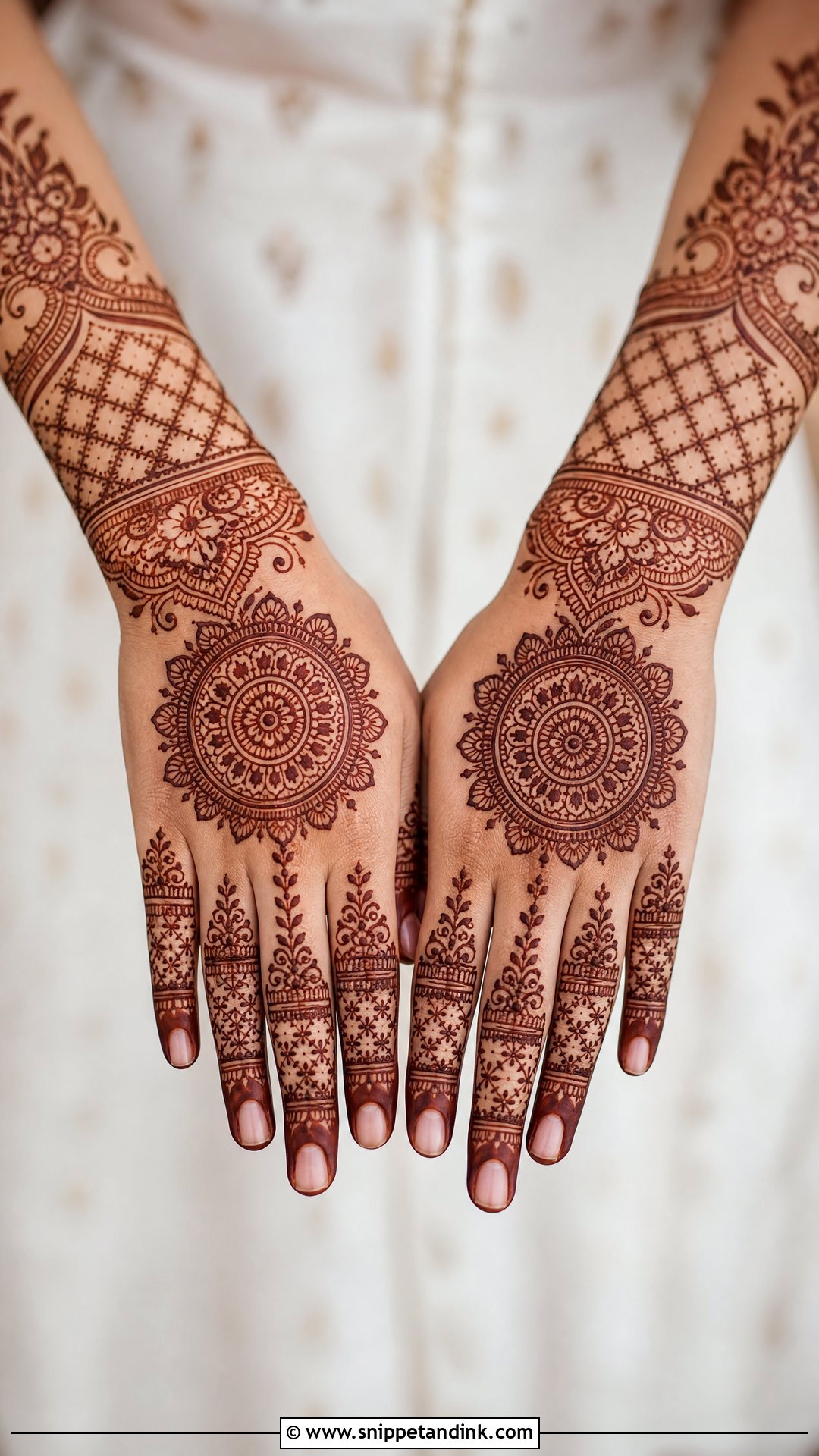
For Karva Chauth back hand designs, clients usually want something a bit fuller than everyday mehndi: mandalas, jaali, paisleys, floral bracelets and detailed fingers. Bangles are part of the look, so the wrist needs to work with them. A bracelet connected to a central motif is a good fit, or full coverage for a more bridal feel. Let the paste dry fully and stay on for several hours, since the stain needs that time to deepen.
27. Raksha Bandhan Back Hand Mehndi Design
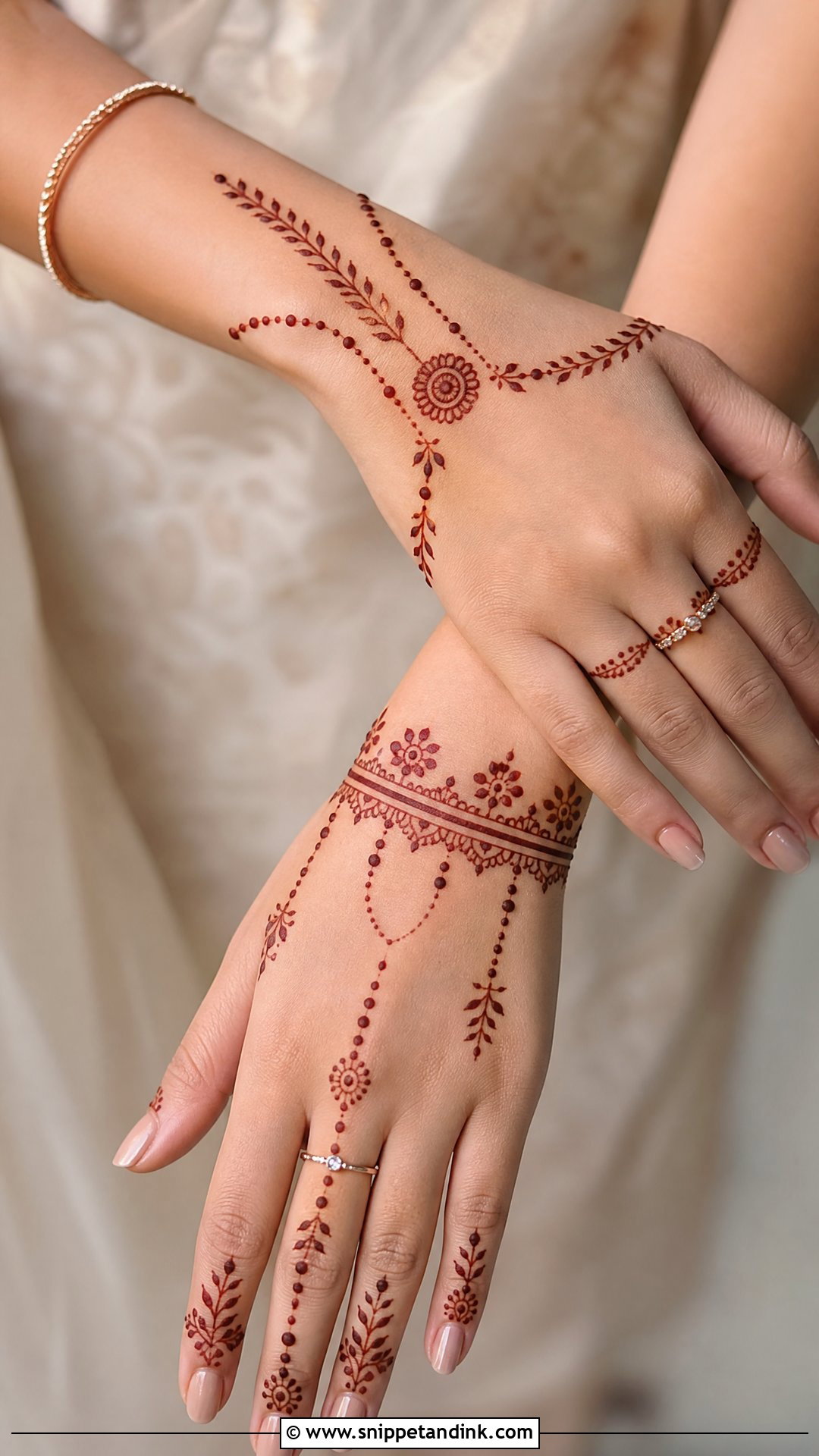
During the rakhi ceremony, all eyes are on the wrist, so bracelet patterns make sense. A slim band with flowers, dots and leafy chains connects to a small motif on the back hand, and the fingers get delicate rings or lines. It’s easy to wear all day. Keep the spacing light for a soft look or add more filled petals for something more festive.
28. Kids Back Hand Mehndi Design
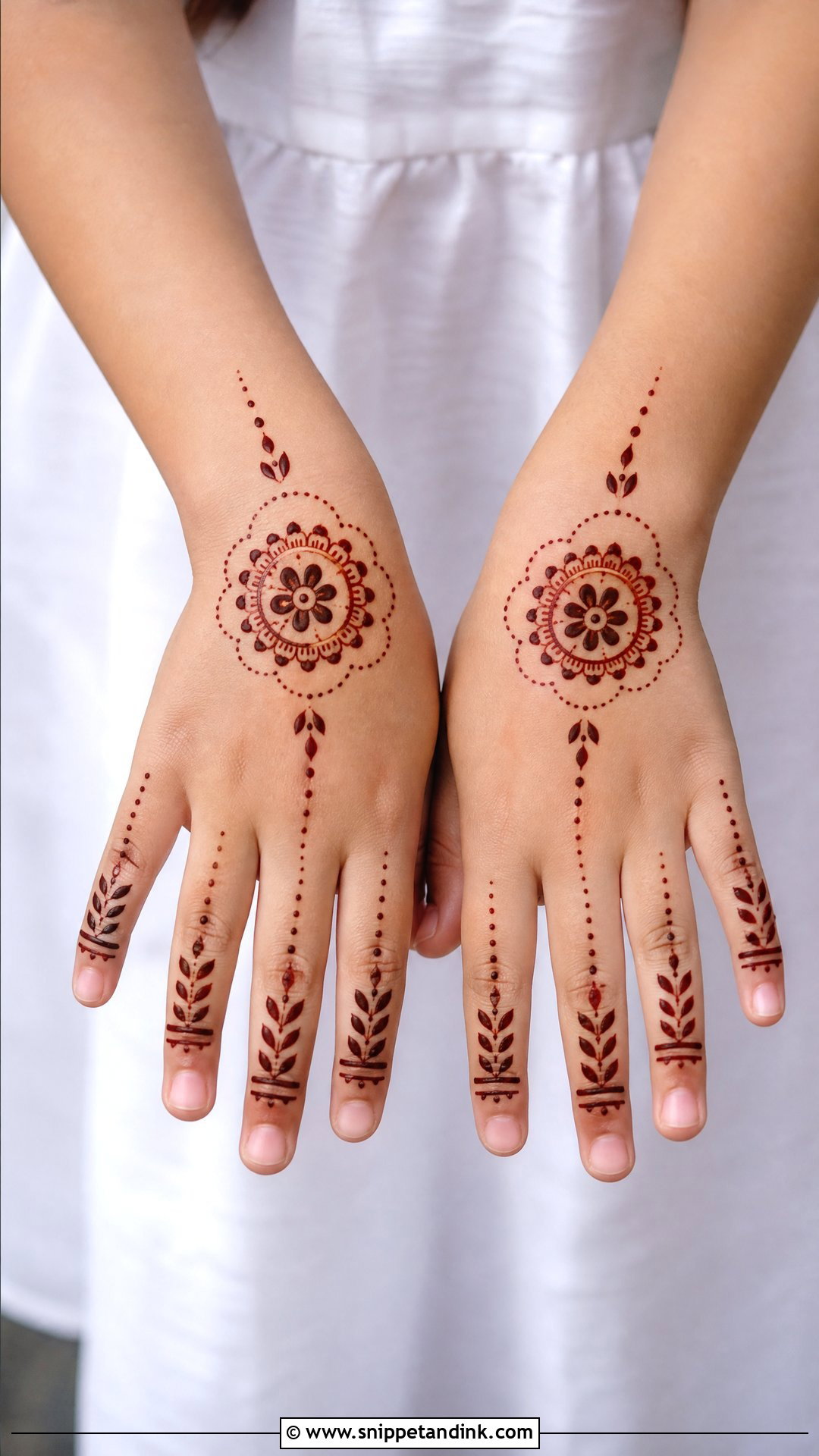
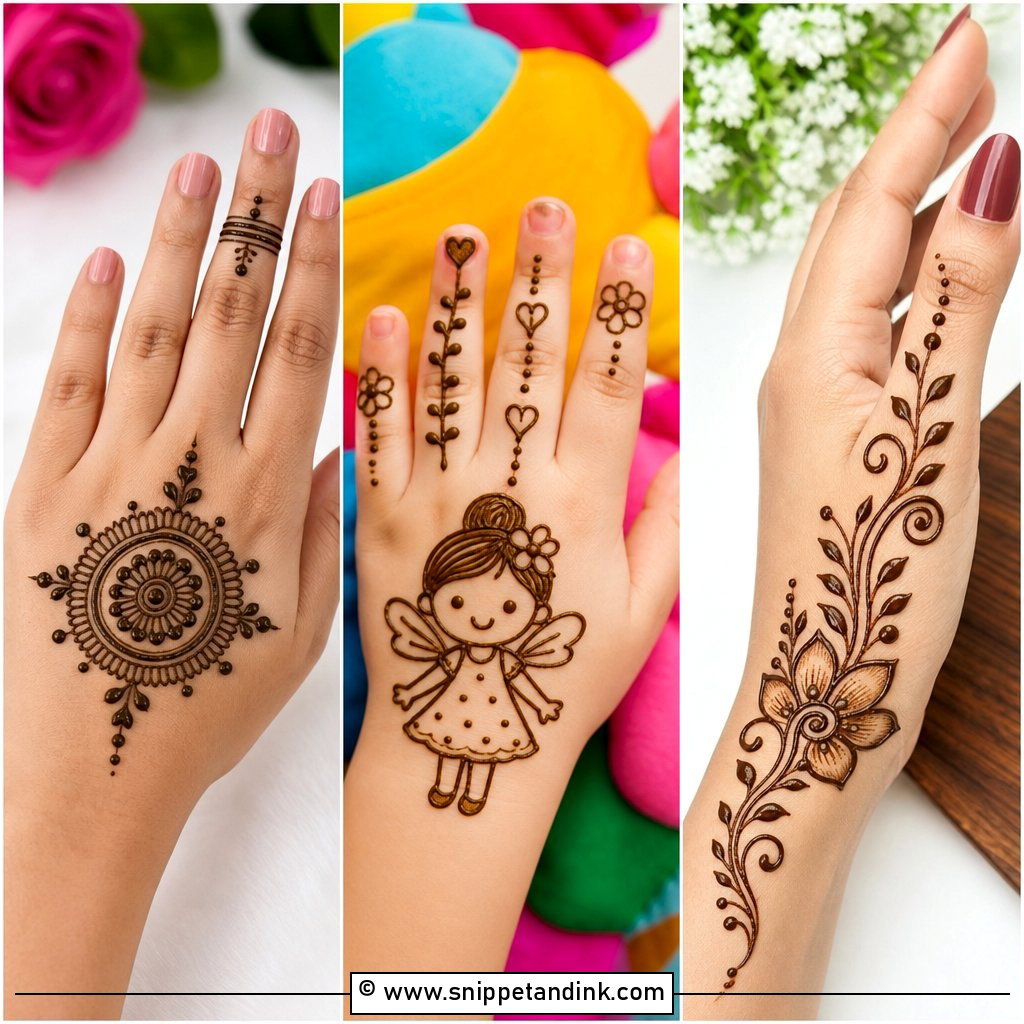
Children need designs that take minutes, not hours. Small flowers, tiny mandalas, leafy vines, dots, hearts and bracelet bands all work on the back of the hand and fingers. Skip dense filling, which takes longer to dry and gets smudged. One small central flower with dotted trails to the fingers is usually plenty. Only use natural henna on children, never anything sold as black henna.
29. Teen Back Hand Mehndi Design
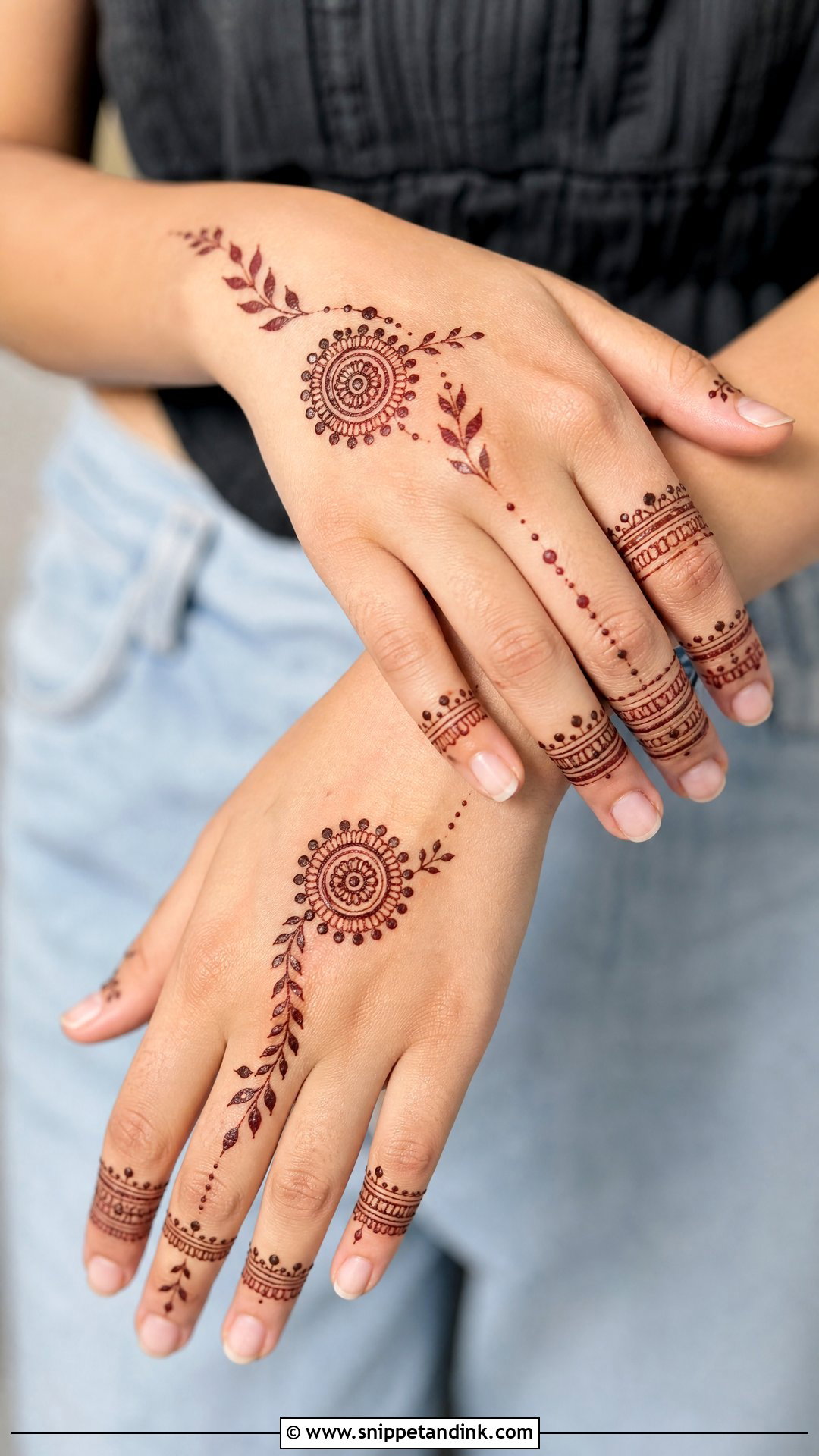
Teenagers usually want something that doesn’t look like their aunt’s mehndi. Finger patterns, mini mandalas, leafy trails, bracelet chains and negative space all suit. A diagonal floral vine with slim finger bands dries faster than full coverage. Small geometric or Moroccan-inspired layouts look modern too. Keep the wrist simple and the center clear.
30. Back Hand Mehndi Design For Short Fingers
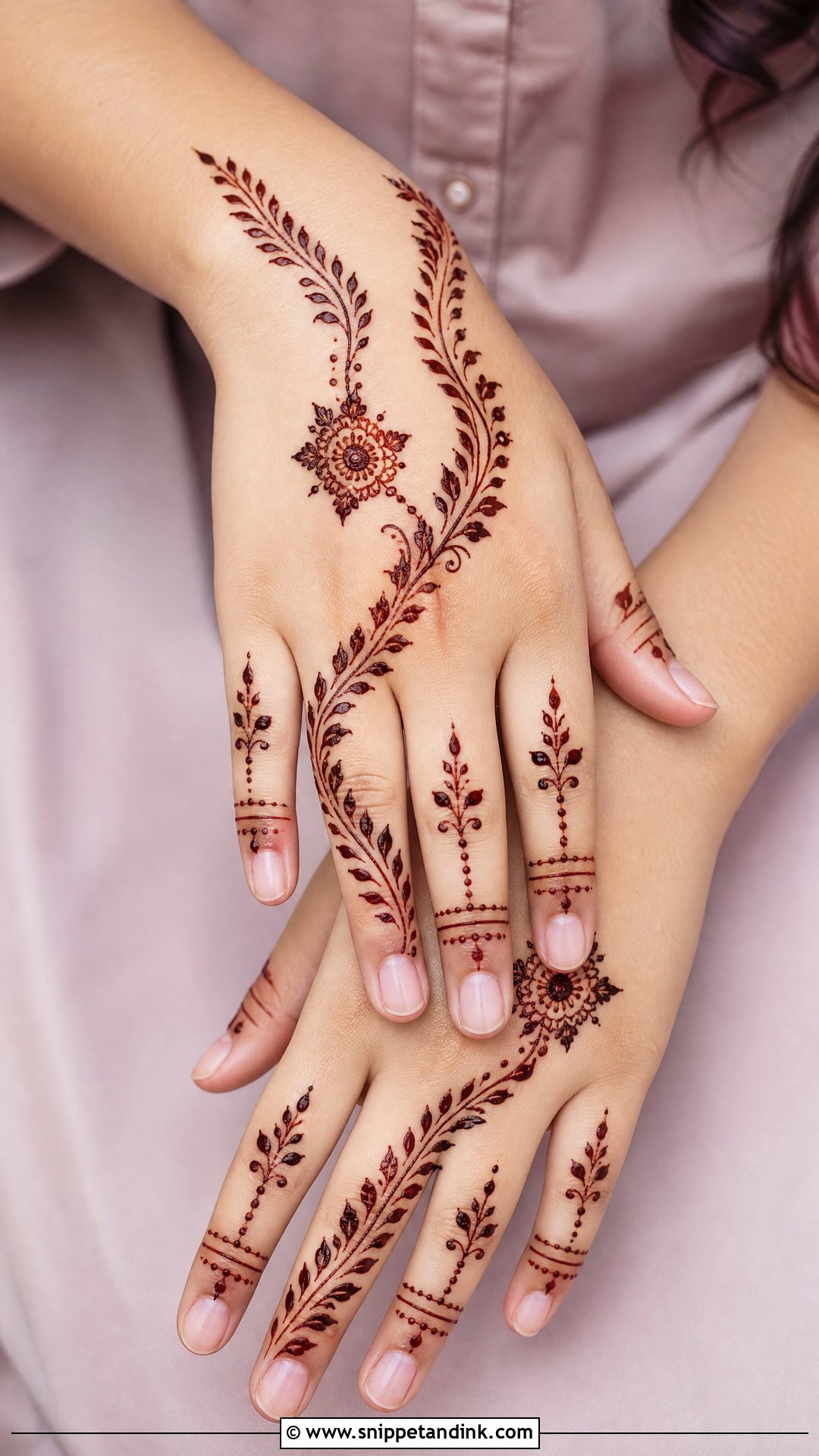
For short fingers, I use vertical details: thin vines, straight lines, narrow leaf chains and finger bands with space between them. Avoid thick blocks of color on the fingertips, which make fingers look shorter. A central motif with fine lines running toward the fingers, or a diagonal Arabic trail, lengthens the hand. Keep the knuckles clean or lightly dotted so the design doesn’t look squashed.
31. Back Hand Mehndi Design For Long Fingers
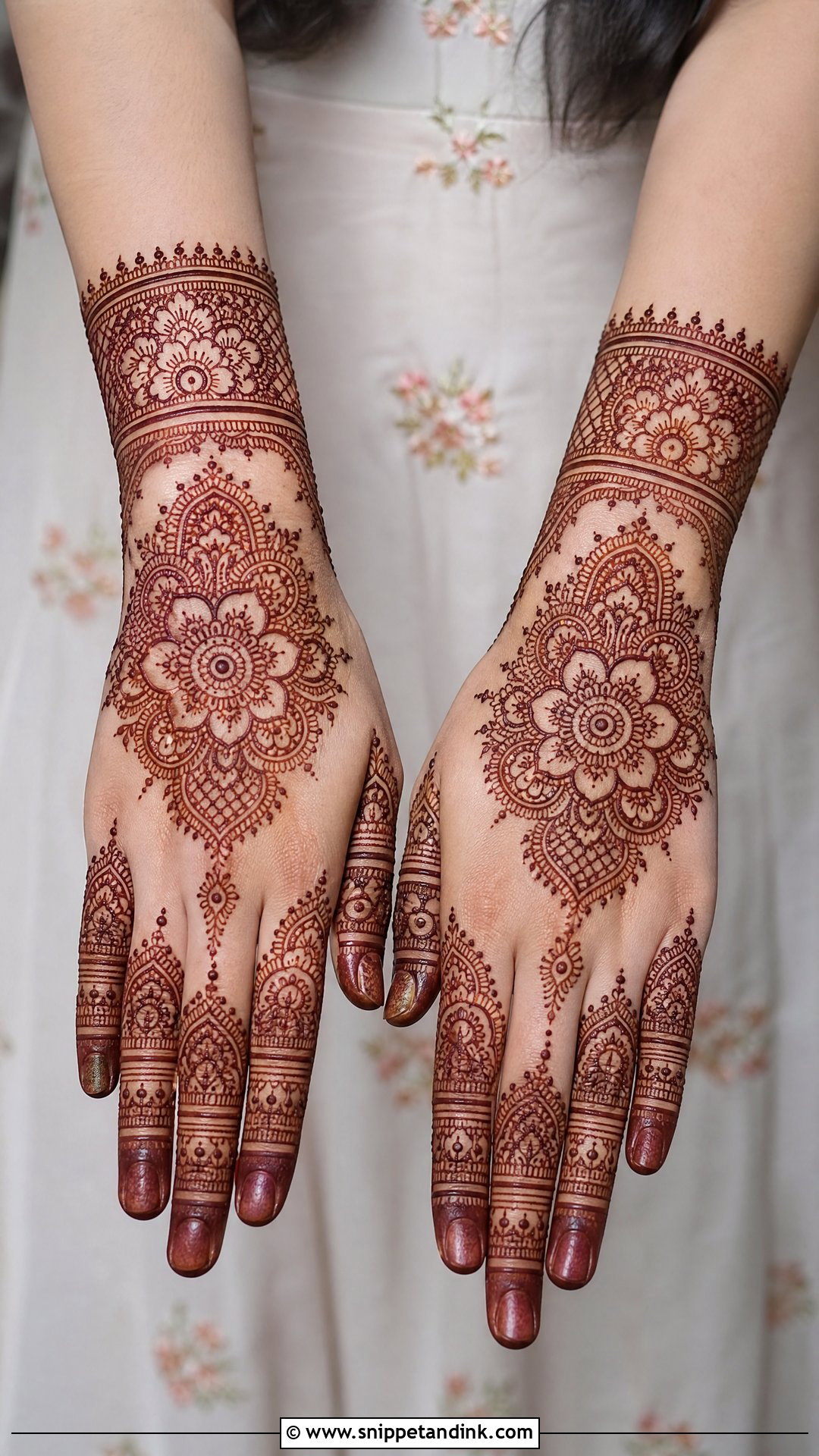
Long fingers can take more detail: stacked bands, leafy sections, ring patterns, fine mesh and shaded tips. A wide mandala or floral cluster on the back hand balances the length, and bracelets add weight near the wrist. Negative space between finger sections looks modern. Keep the design connected from wrist to fingertip.
32. Back Hand Mehndi Design For Dark Skin
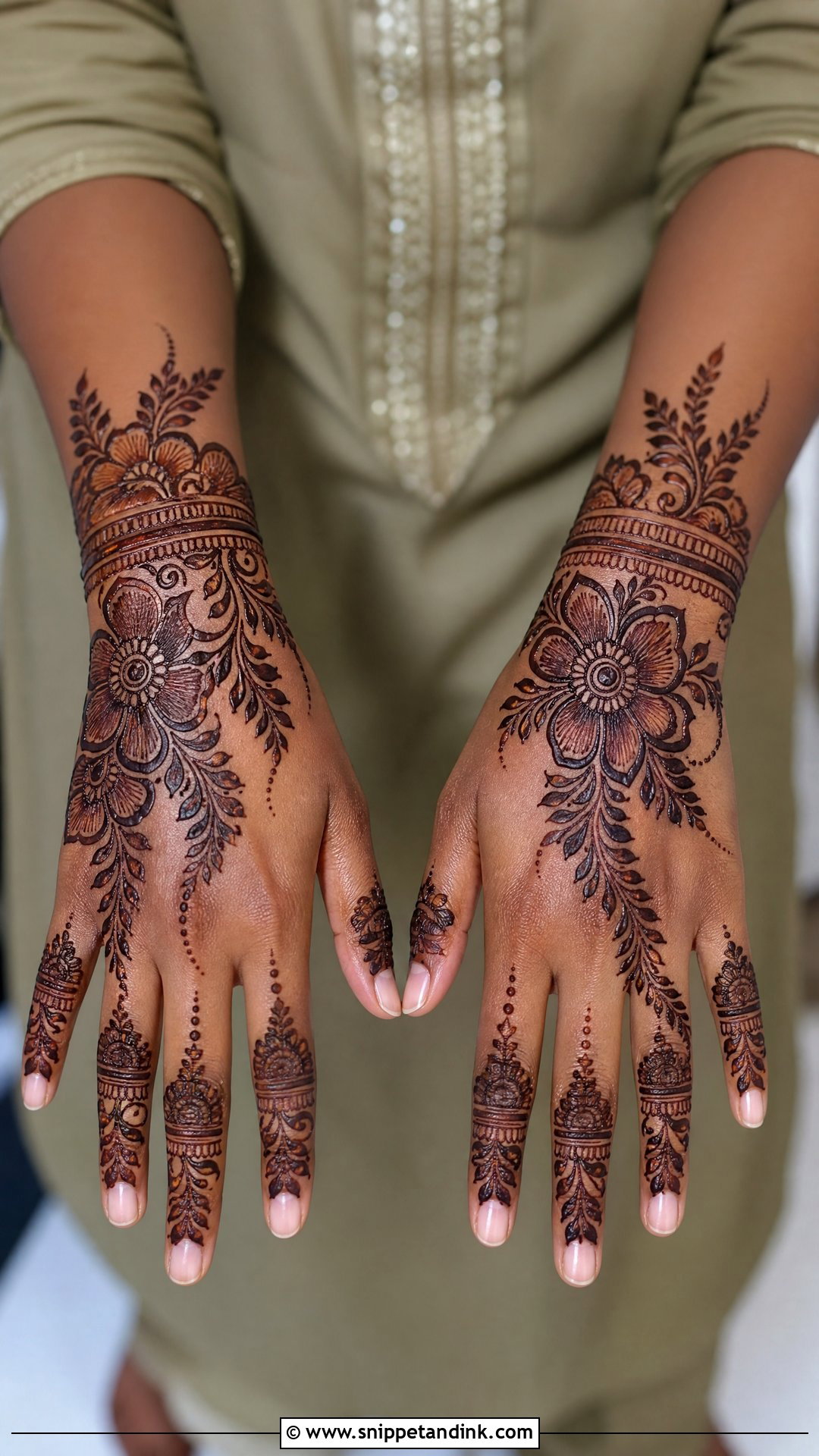
On deeper skin tones, I draw bolder and space things wider. Natural henna stains deep brown to maroon, and clear outlines help the pattern stand out against the skin. Larger motifs, open spaces and defined borders work best: Arabic trails, Gulf florals, bracelets and mandalas. Very tiny details packed together can be hard to read. Leave the paste on longer and keep it dry afterward for the strongest color.
33. Back Hand Mehndi Design For Fair Skin
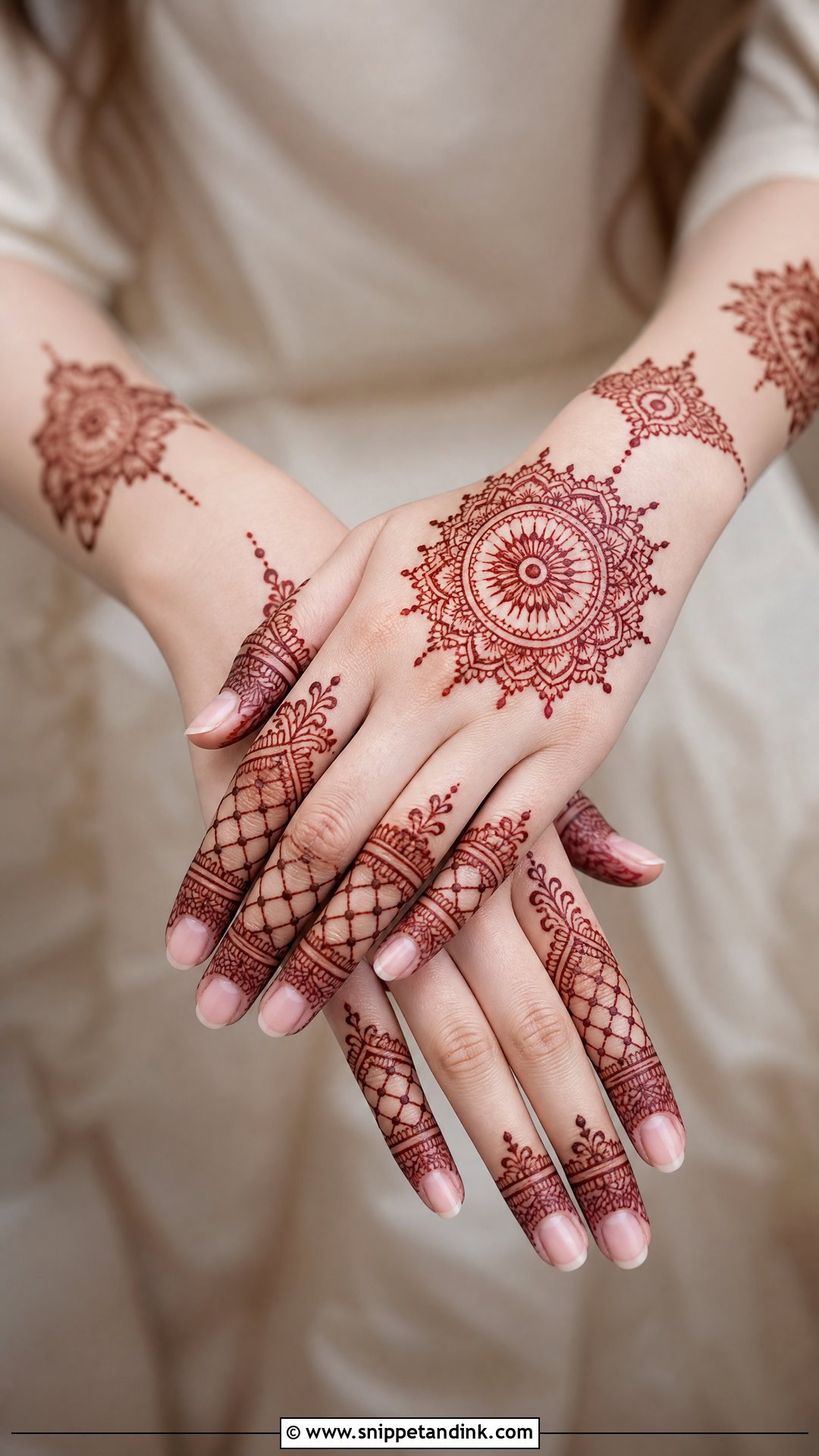
On fair skin, fine detail shows clearly, so thin lines, tiny dots, jaali, shading and detailed mandalas all stand out. The contrast of a deep maroon stain makes even minimal designs look decorative. Gaps also show more, so I make sure the design doesn’t look scattered. A fine Indian pattern for tradition or a bracelet design for something lighter both work.
34. Back Hand Mehndi Design With Rings
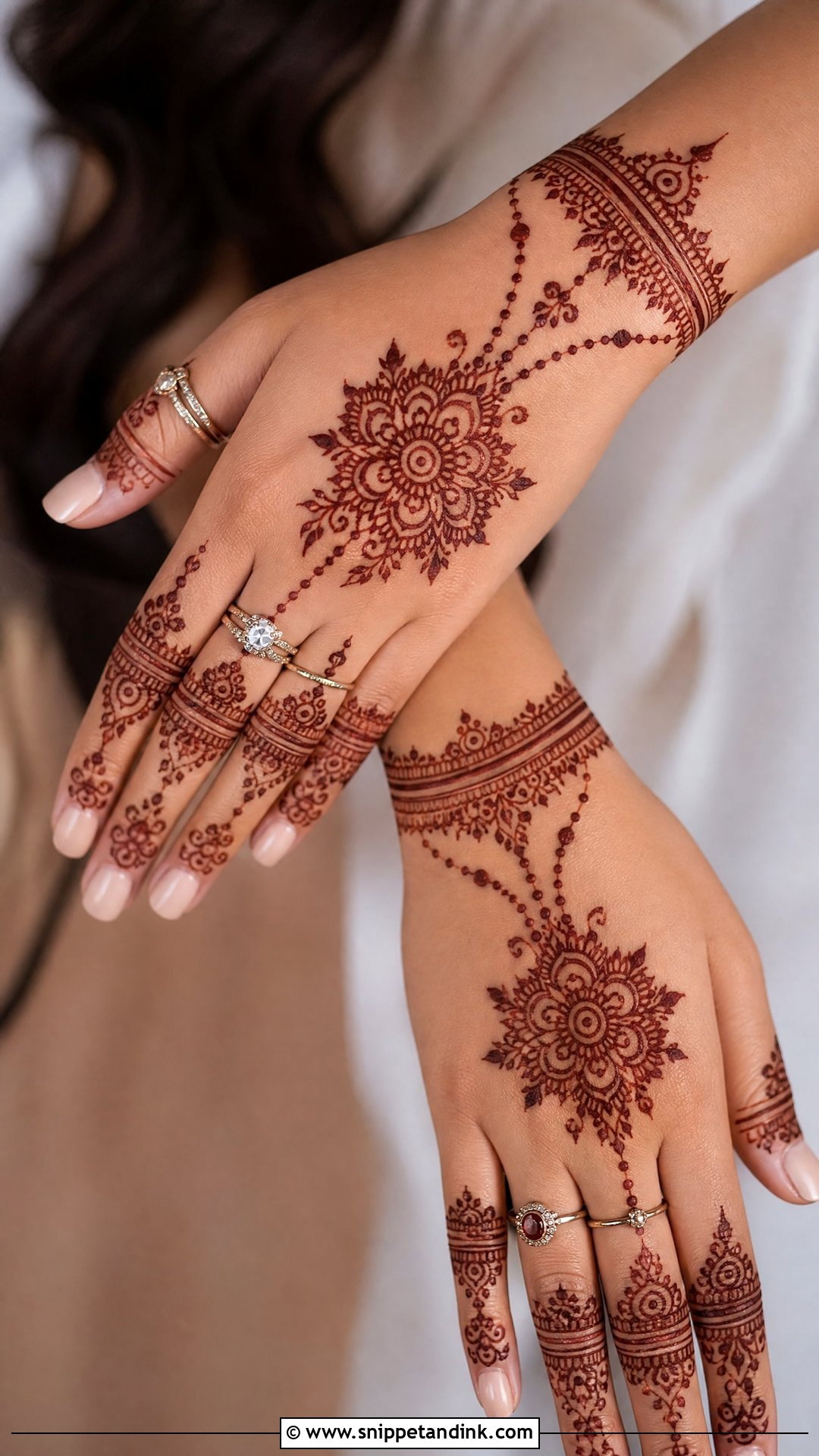
Ring designs turn henna into jewelry: small bands around the fingers, dotted chains, bracelet cuffs and harness lines. The center of the back hand gets a flower, mandala or paisley, with thin chains to the fingers. I line the rings up with the finger joints so they move naturally when you bend your fingers. It’s popular for engagements, bridesmaids and Eid, and it looks delicate in close-up photos.
35. Back Hand Mehndi Design With Negative Space
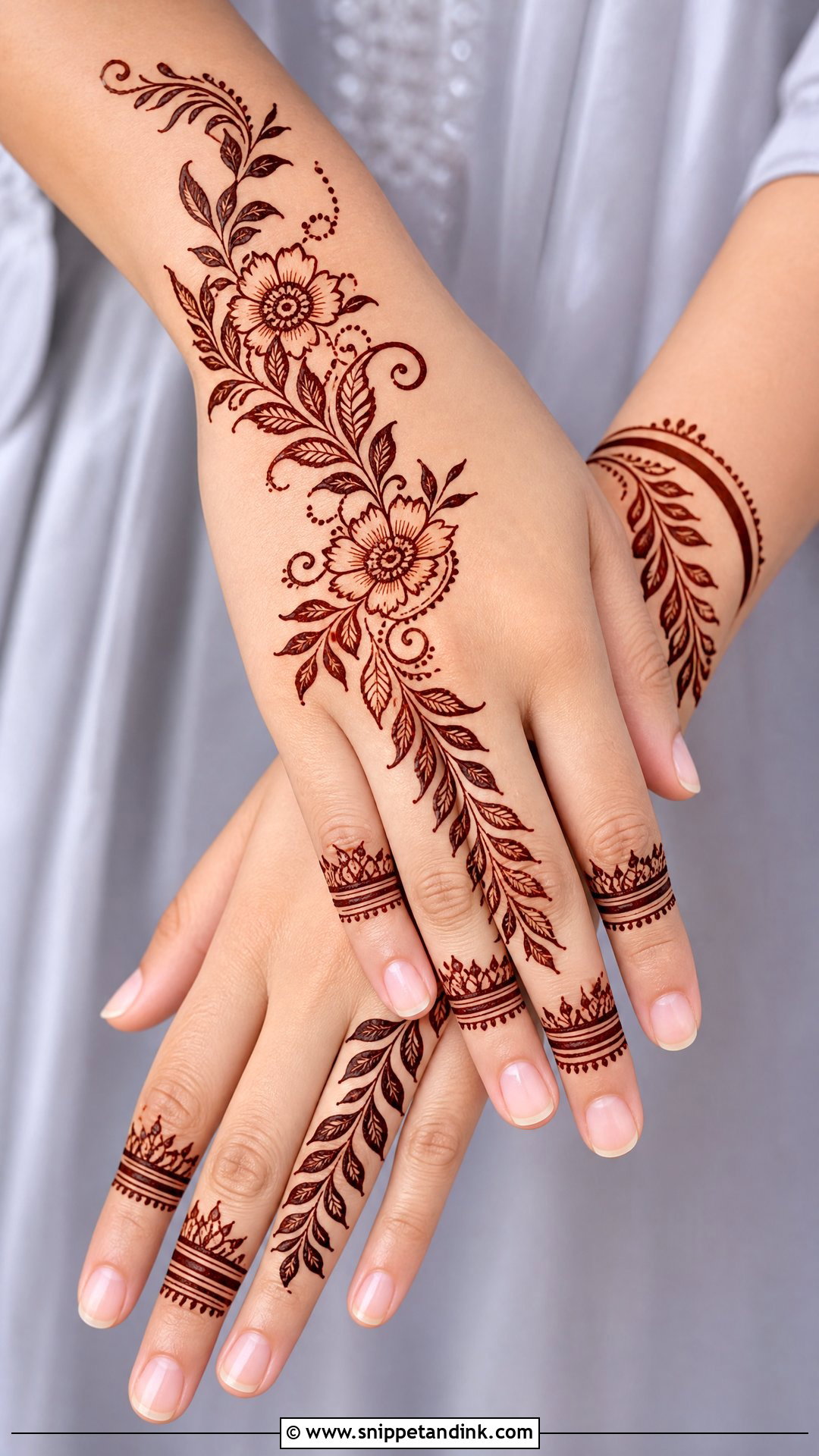
Negative space means leaving clean gaps between motifs, so flowers, mandalas, vines and geometry stand out. A diagonal Arabic trail with open skin around it is the classic example; a half-hand look with detailed fingers and a simple wrist band is another. These designs dry faster and pair with both traditional and modern outfits. Sharp lines and balanced empty areas are the whole trick.
A Festival-Week Timeline for Back Hand Henna
Back hand designs are the ones people see first, so the color needs to be at its darkest on the day itself. Natural henna peaks a day or two after application, then slowly fades over one to three weeks.
- Two days before: the right time for bridal or heavy designs. The stain will be at its deepest on the wedding day.
- The evening before: fine for Eid, Karva Chauth, Diwali and other festivals. Sleep with the paste on if you can.
- The same morning: possible for light designs, but the stain will still be orange and won’t darken until later.
- Afterward: keep the hands away from water for 12 to 24 hours, and avoid hand sanitizer and scrubbing, which fade the back hand fastest.
Sleeping with paste on
Once the paste is fully dry, I wrap the hands loosely in tissue and then medical tape, or slip on loose cotton gloves. Tight plastic traps sweat and can smudge the design. Keep your hands above the blanket so the paste doesn’t rub off on the bedding.
If the back of your hand still looks pale on day two, it was usually one of three things: the paste came off too soon, the hands got wet early, or the henna itself was old. A rich, dark result on the palm with a weak one on the back is normal, though. That difference is skin, not a bad cone.
Your Hand Shape Should Have the Last Word
Back hand mehndi can be a floral trail, an Arabic pattern, a traditional Indian layout, a bracelet or full bridal coverage. The heaviest design isn’t always the best one. The right one suits your hand shape, your outfit, how long you can sit and how much you want to show. Save the layouts you like from this list, bring them to your artist, and let her adjust the details to your fingers and wrist.
You'll Like These Ideas:










Leave a Reply