
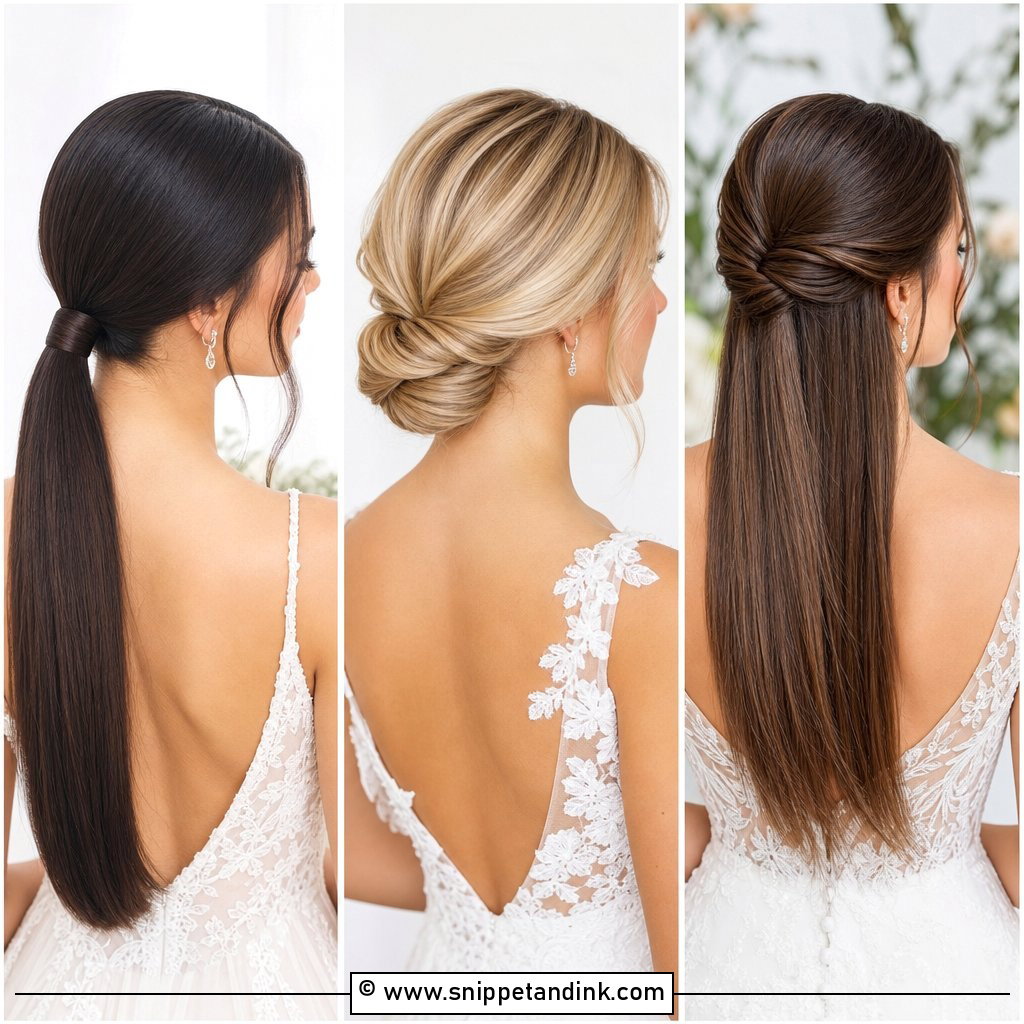
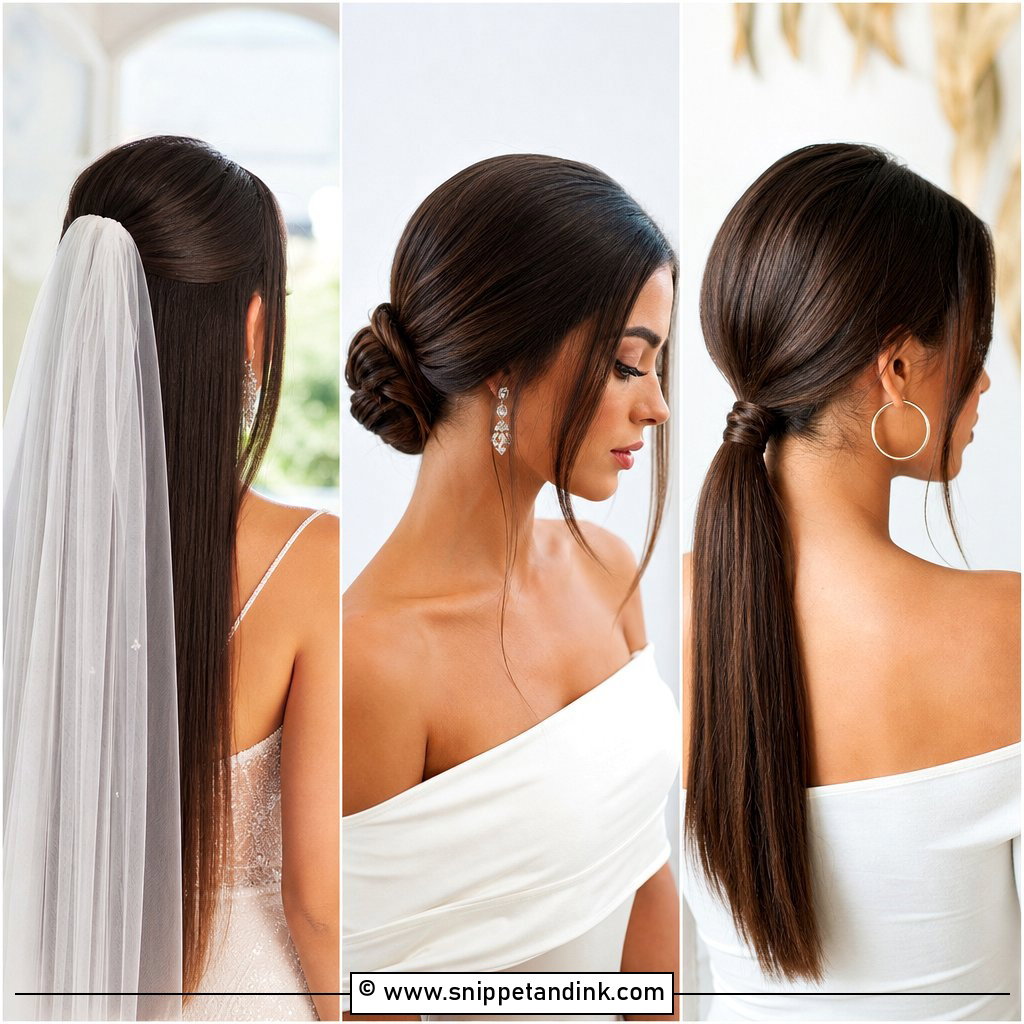
Open hair is the style I get asked for most at Indian weddings, and it is also the one people underestimate. Straight lengths look simple, but they have to survive a dupatta pinned on top, a heavy maang tikka, a sweaty sangeet floor and a humid baraat, then still look glossy in the pheras photos. Done well, sleek hair sits quietly behind kundan and embroidery instead of fighting it. Below are 30 straight open styles I’d recommend for the bride, her sisters or a glam guest, along with what each one needs from your hair and your stylist to last the night.
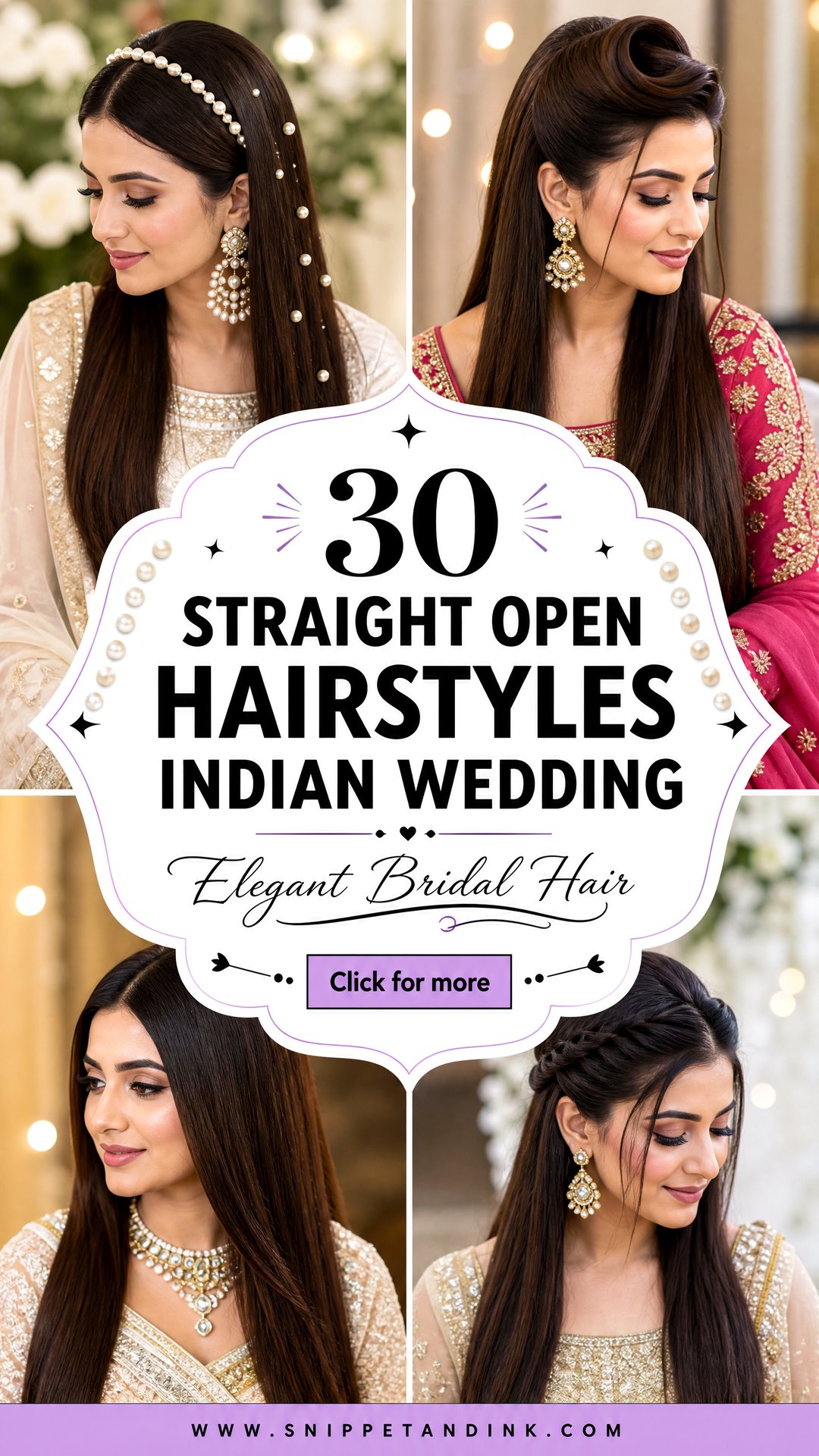
Making Sleek Hair Hold Up Against Humidity and a Long Baraat
Straight hair has one enemy at Indian weddings: moisture. Most hair absorbs water from the air, swells and frizzes, so a flat-ironed finish that looks like glass at 10am can be fluffy by the time the baraat arrives. I plan around that from the first trial.
- Wash the night before or the morning of, and dry it completely. Hair that is even slightly damp at the root will puff once the iron’s heat is gone.
- Use a heat protectant and an anti-humidity spray, then iron in thin sections. Thick sections mean more passes at higher heat and dull, brittle ends.
- Let every section cool before touching it. The shape sets as the hair cools, not while it is hot.
- Keep serum off the roots. It looks shiny for an hour and then turns flat and greasy under hot lights.
If your hair is naturally curly or wavy, be realistic. A straight finish on coily hair in monsoon humidity may need a smoothing treatment beforehand, or a style with some bend built in, like the soft end curls or loose waves further down. I’d rather put you in a style that ages well through the evening than one that looks perfect in the first photo only.
1. Sleek Straight Open Hair With Middle Part
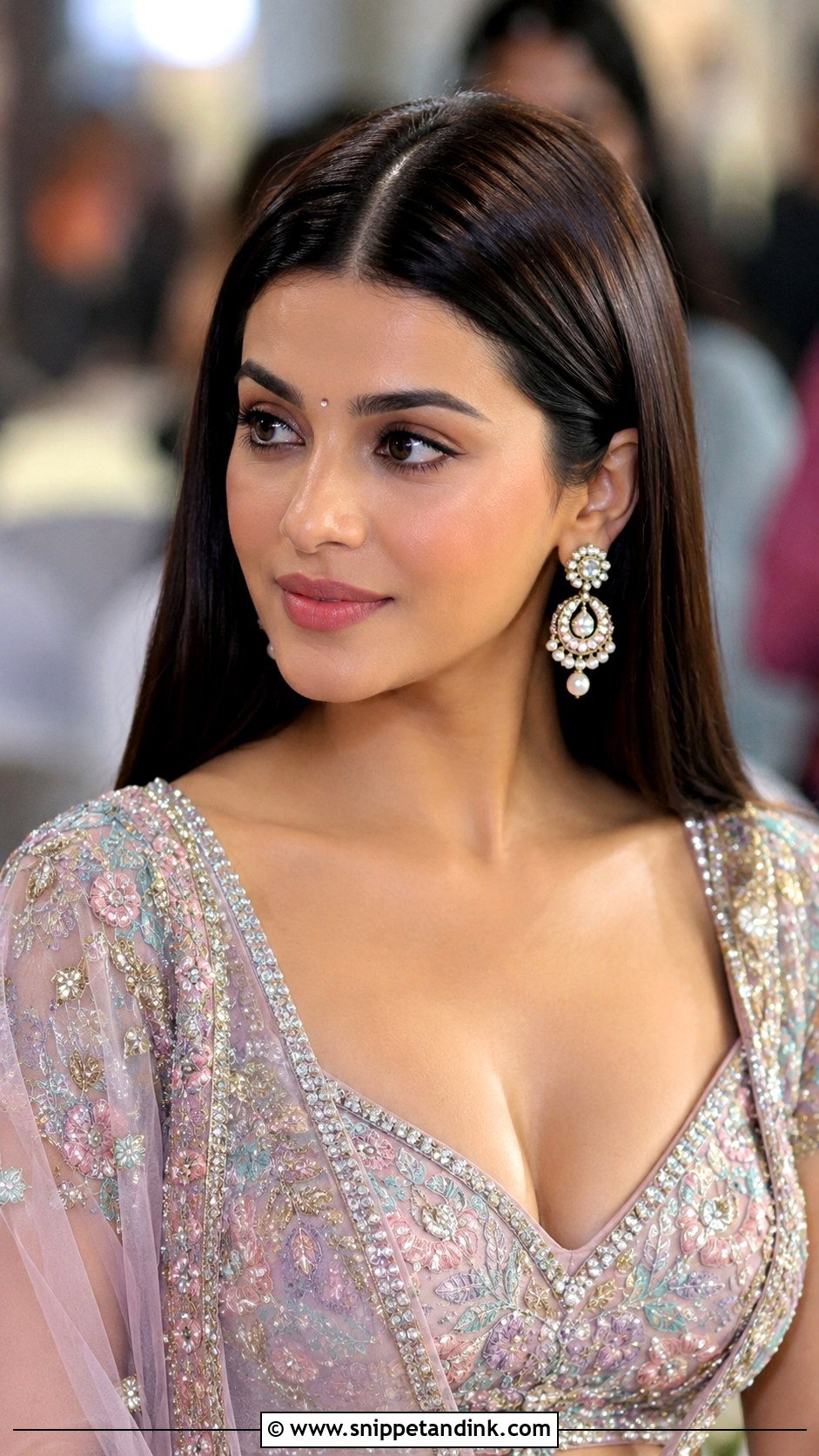
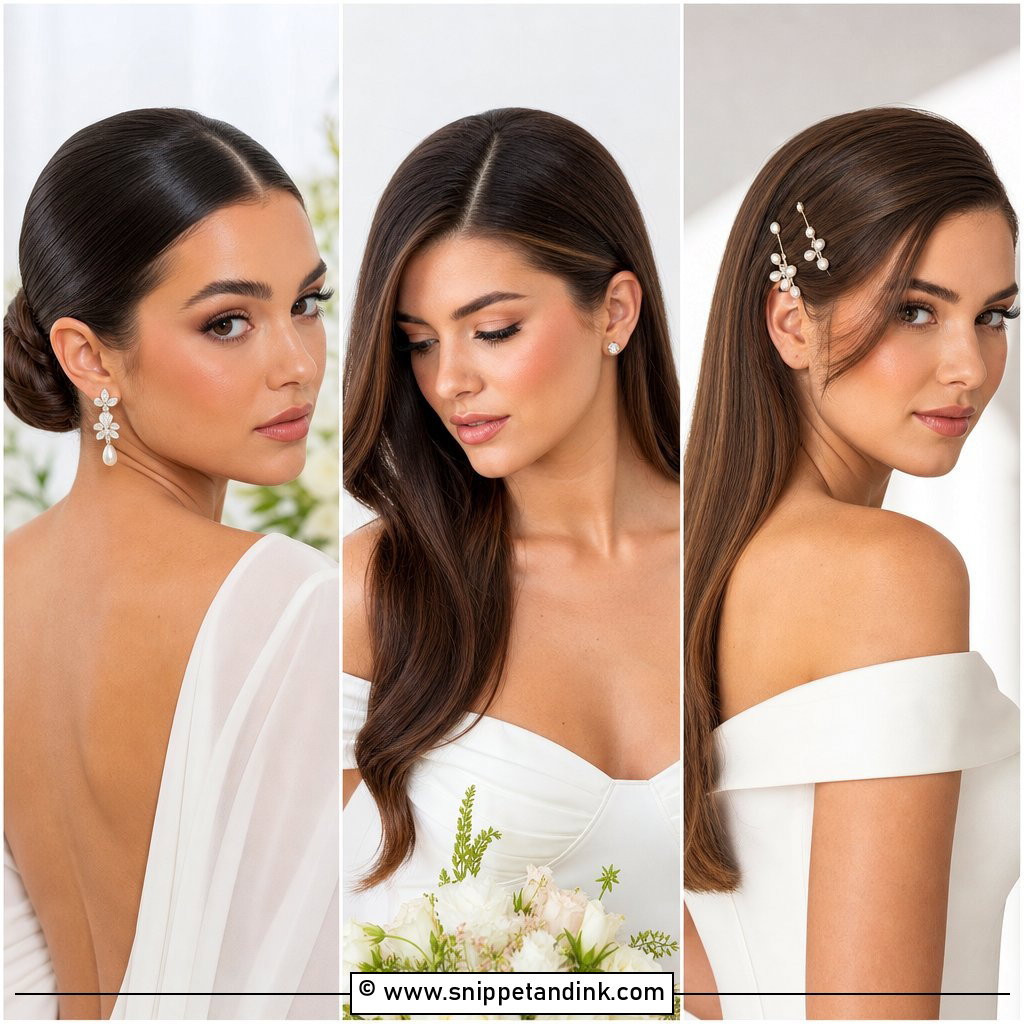
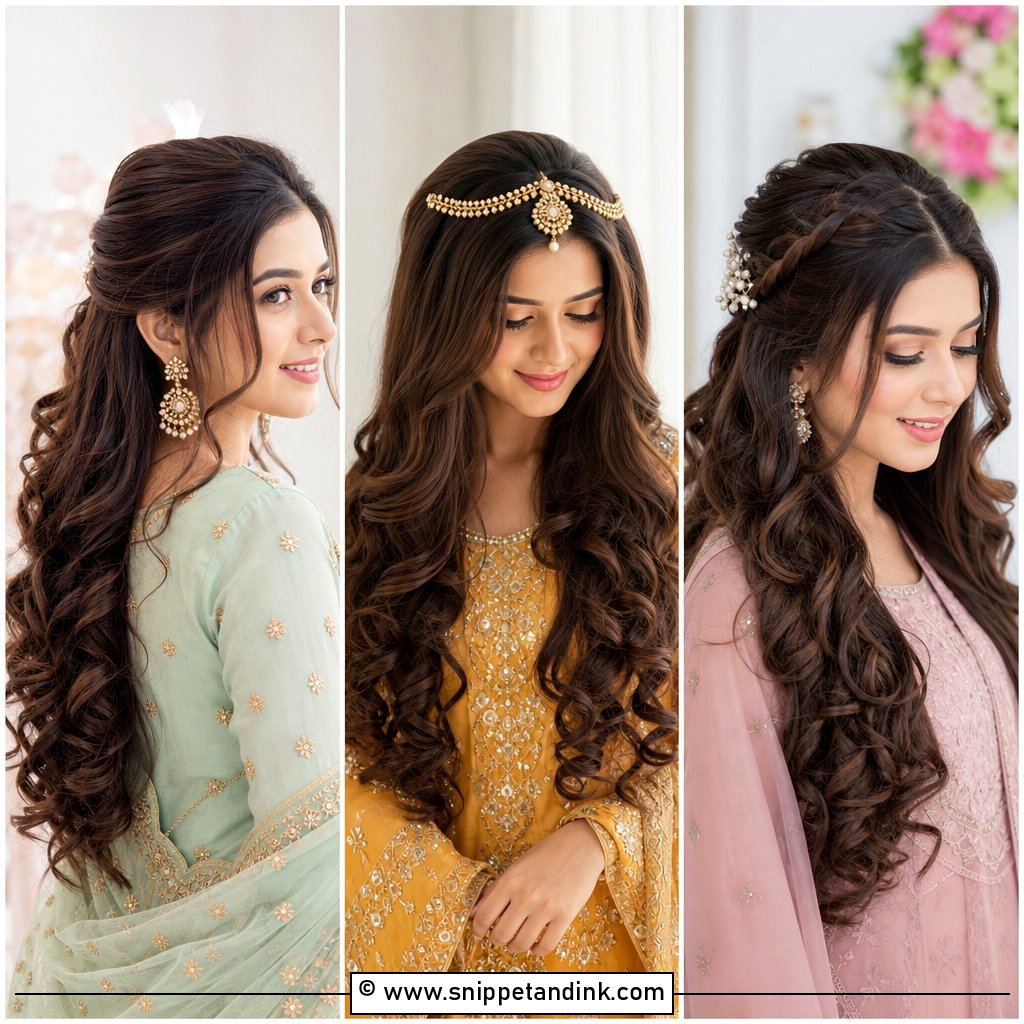
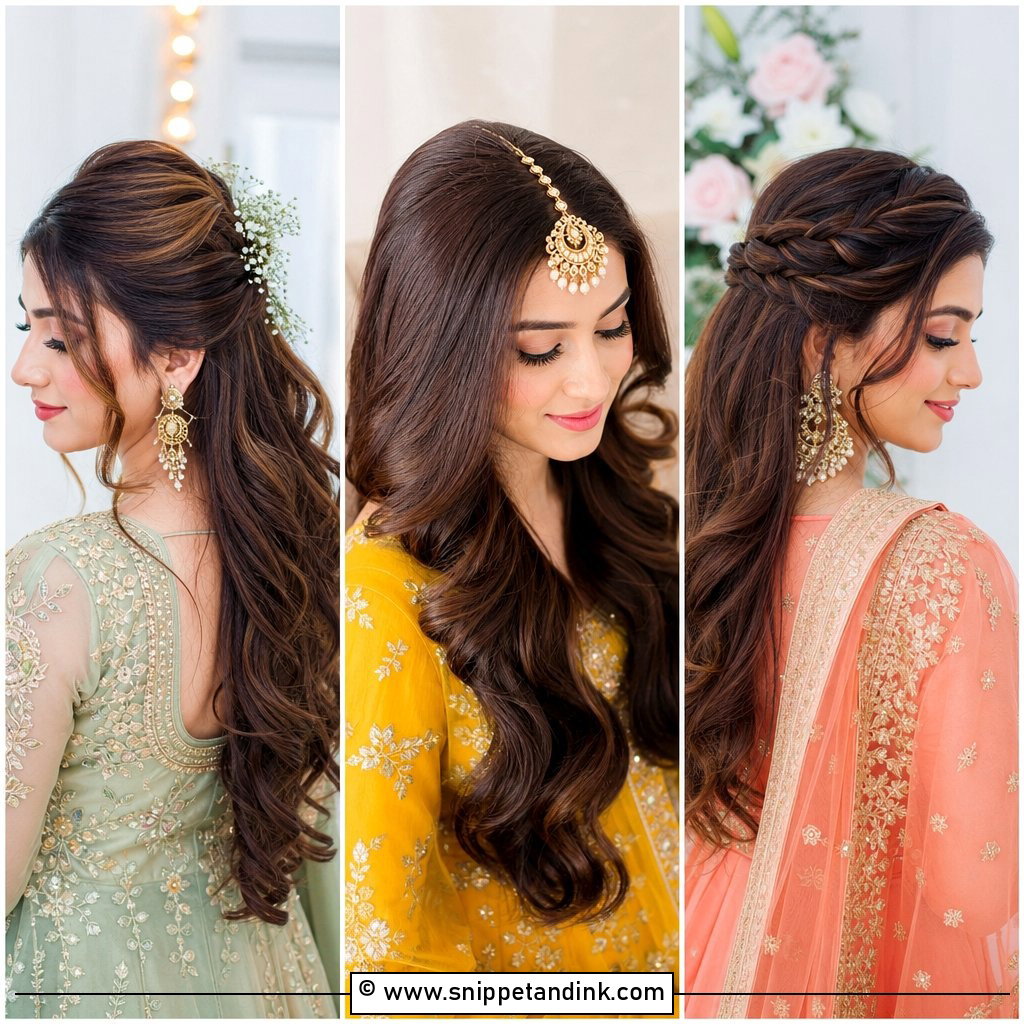
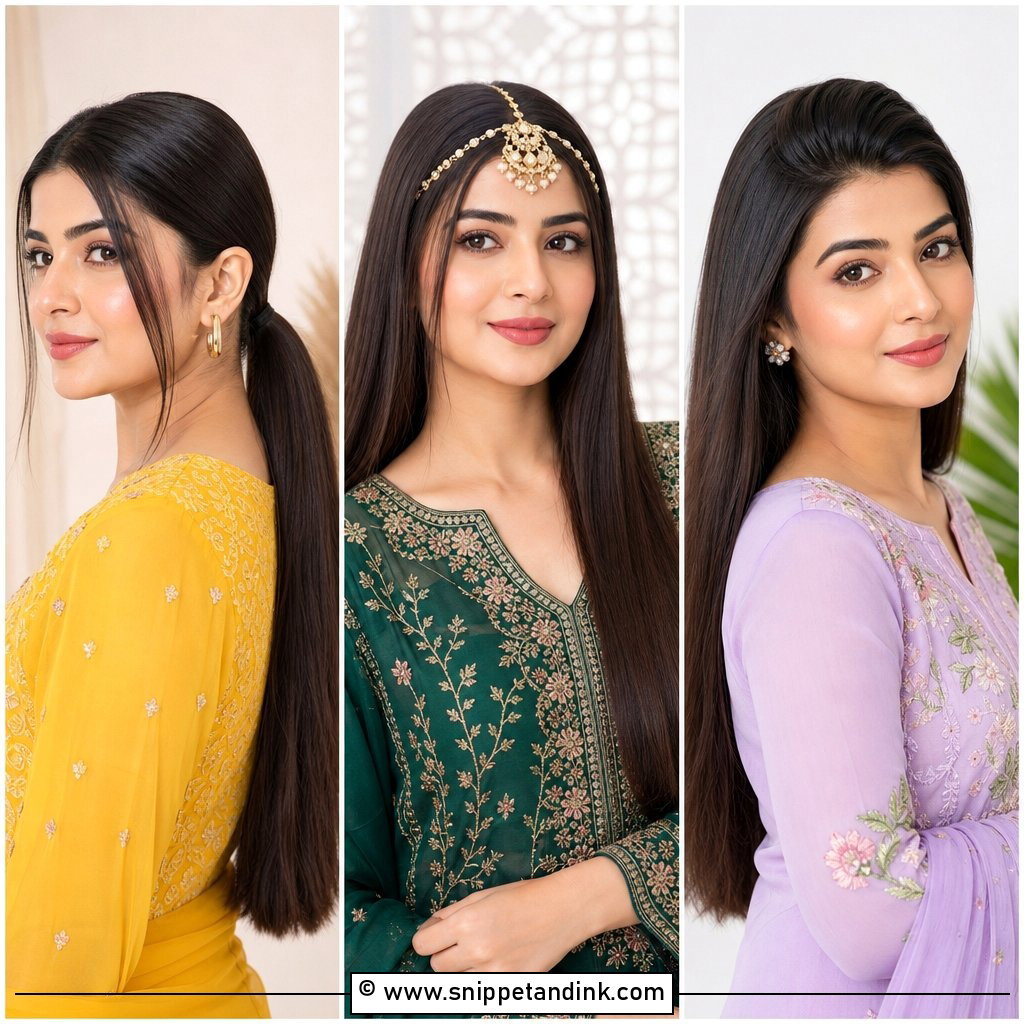
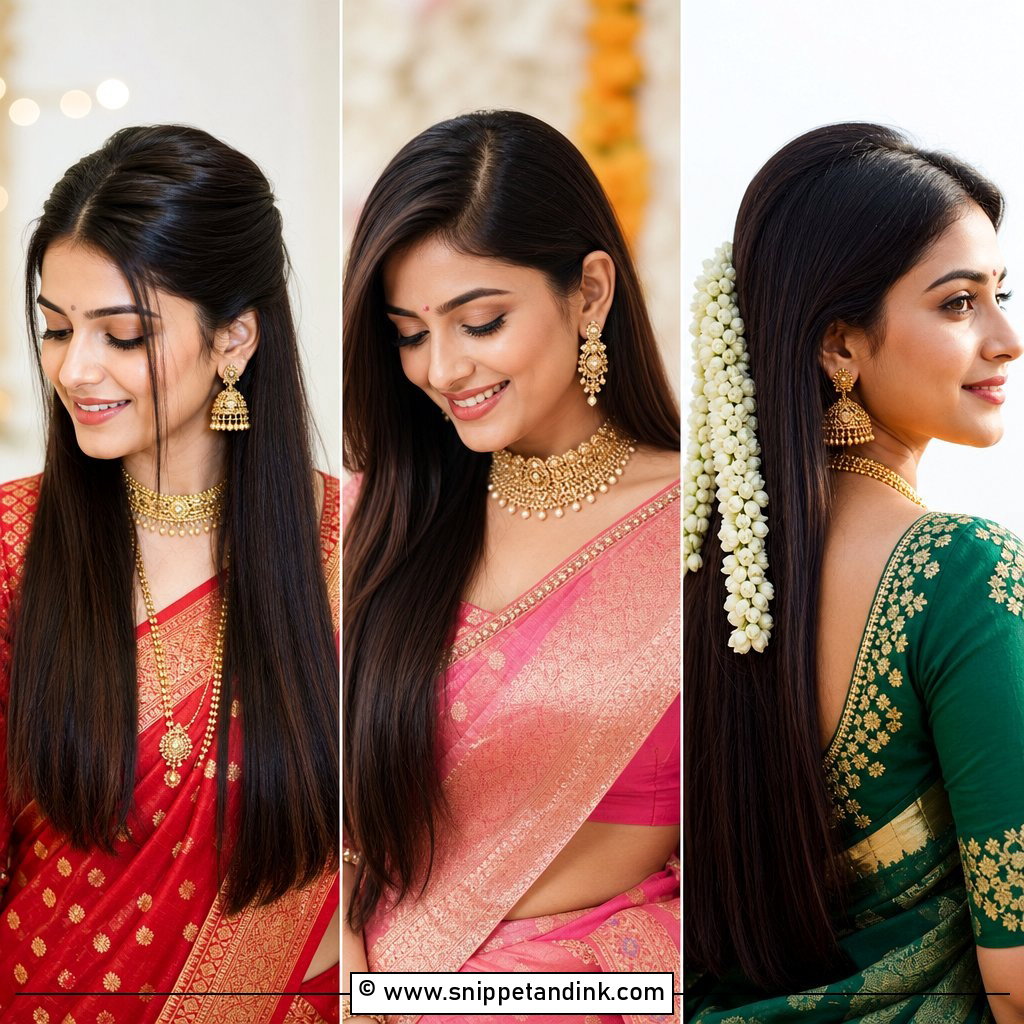
A middle part is the most honest test of a blowout, because any kink or flyaway shows right along the line. I press the part flat with a little gel on a toothbrush before the flat iron goes anywhere near the lengths, then iron in thin sections at a moderate heat so the hair keeps some movement instead of going limp. It suits a Sabyasachi-inspired bridal saree or a pastel lehenga because nothing on the head competes with the jewelry. Oval and heart-shaped faces carry it best. On a very round face I’d shift the part a few millimetres off center, which nobody notices except the camera.
2. Straight Open Hair With Maang Tikka
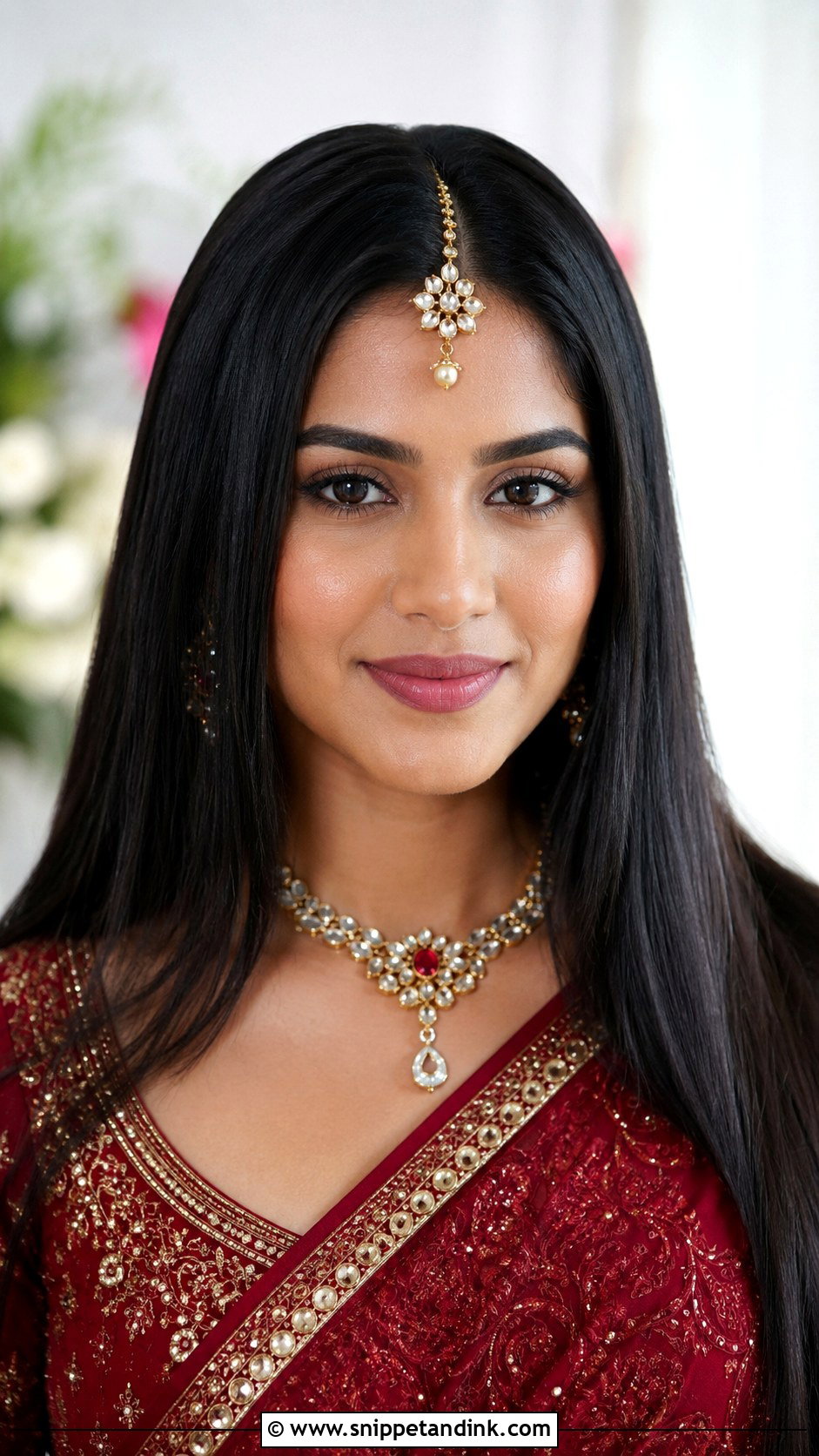
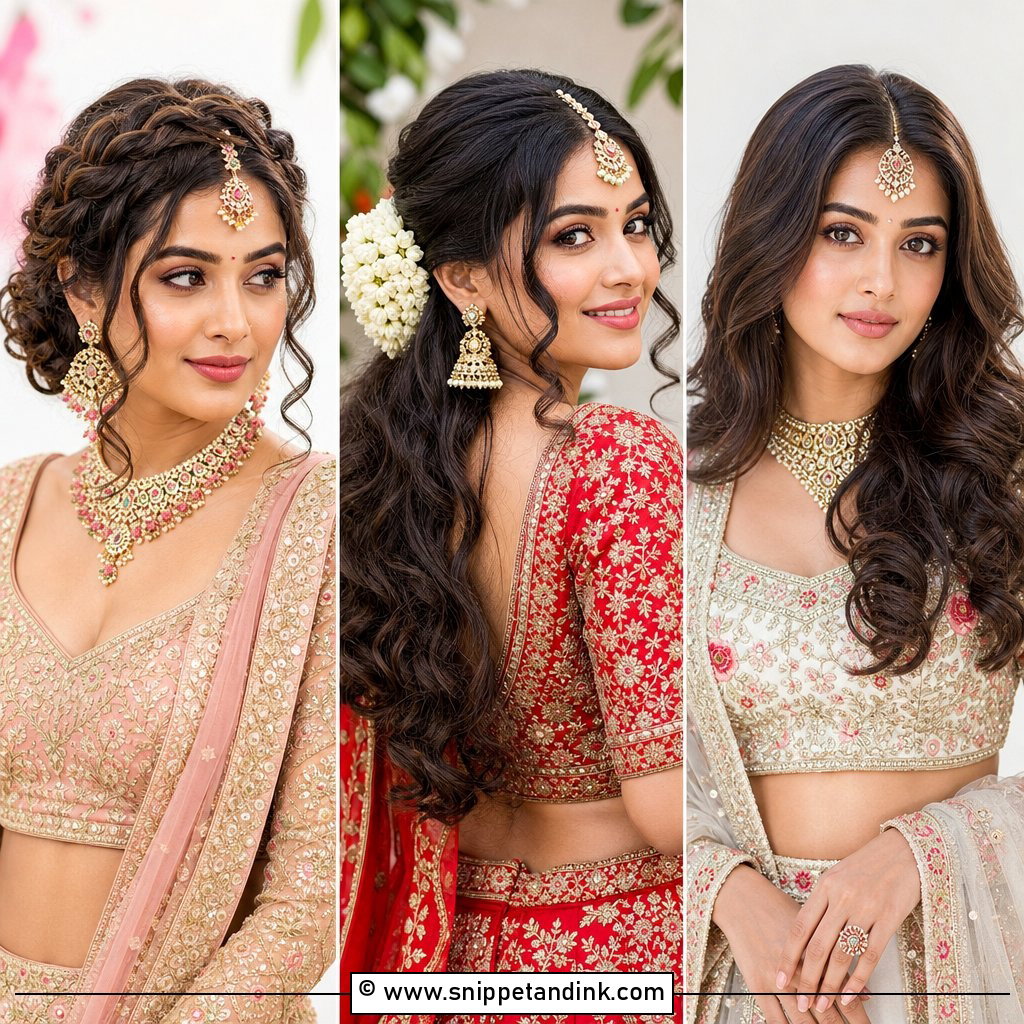
Straight hair is the cleanest background a tikka can ask for, which is why this pairing has lasted generations. The smooth strands let the traditional headpiece sit flat on the forehead instead of rocking on a bumpy part. My one rule: the tikka chain needs something to grip. I tuck a small hidden pin cross under the hair at the crown and hook the chain there, otherwise a polki or kundan piece slides sideways the first time you bend to touch an elder’s feet.
3. Side-Swept Straight Hair With Deep Part
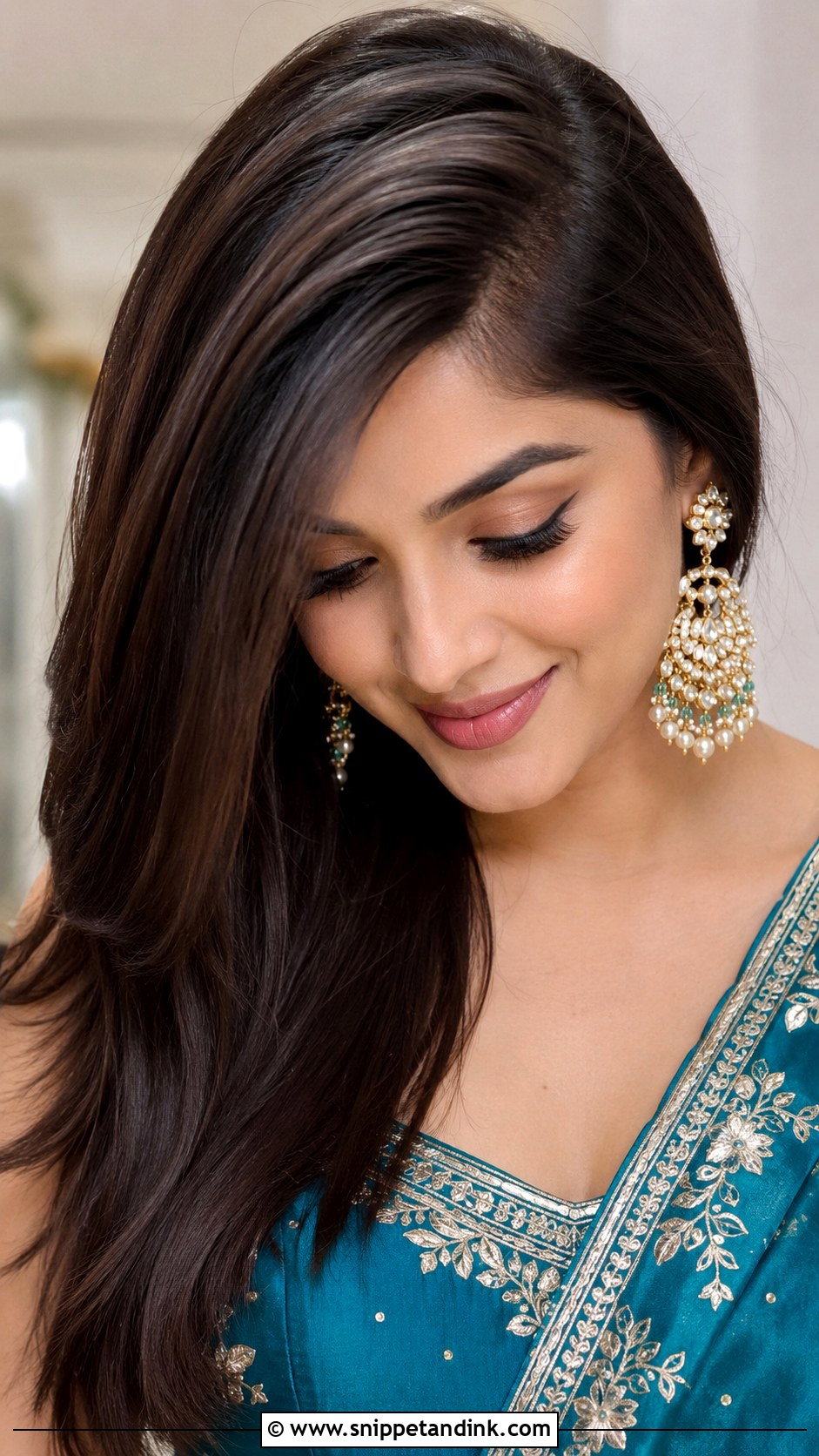
Want drama without an updo? A deep side part throws the heavier section across the forehead and gives one diagonal line through the face, which is why it softens round and square jaws. The catch is gravity. Straight hair falls back toward its natural part within an hour unless I blow-dry the roots in the new direction first, so I always set the part while the hair is still damp. Show off the bare side with a chandelier earring and keep the lengths smooth so the sweep reads as intentional.
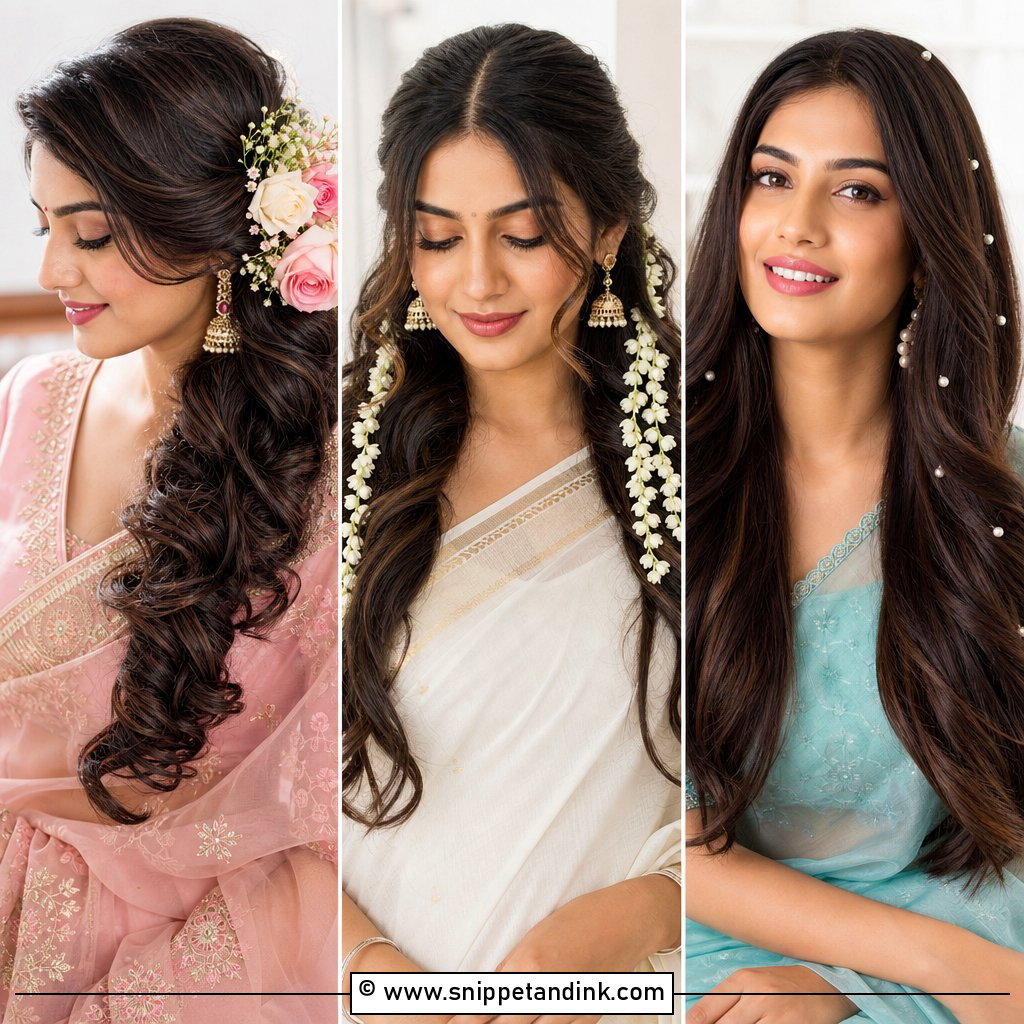
4. Straight Open Hair With Jeweled Hairband
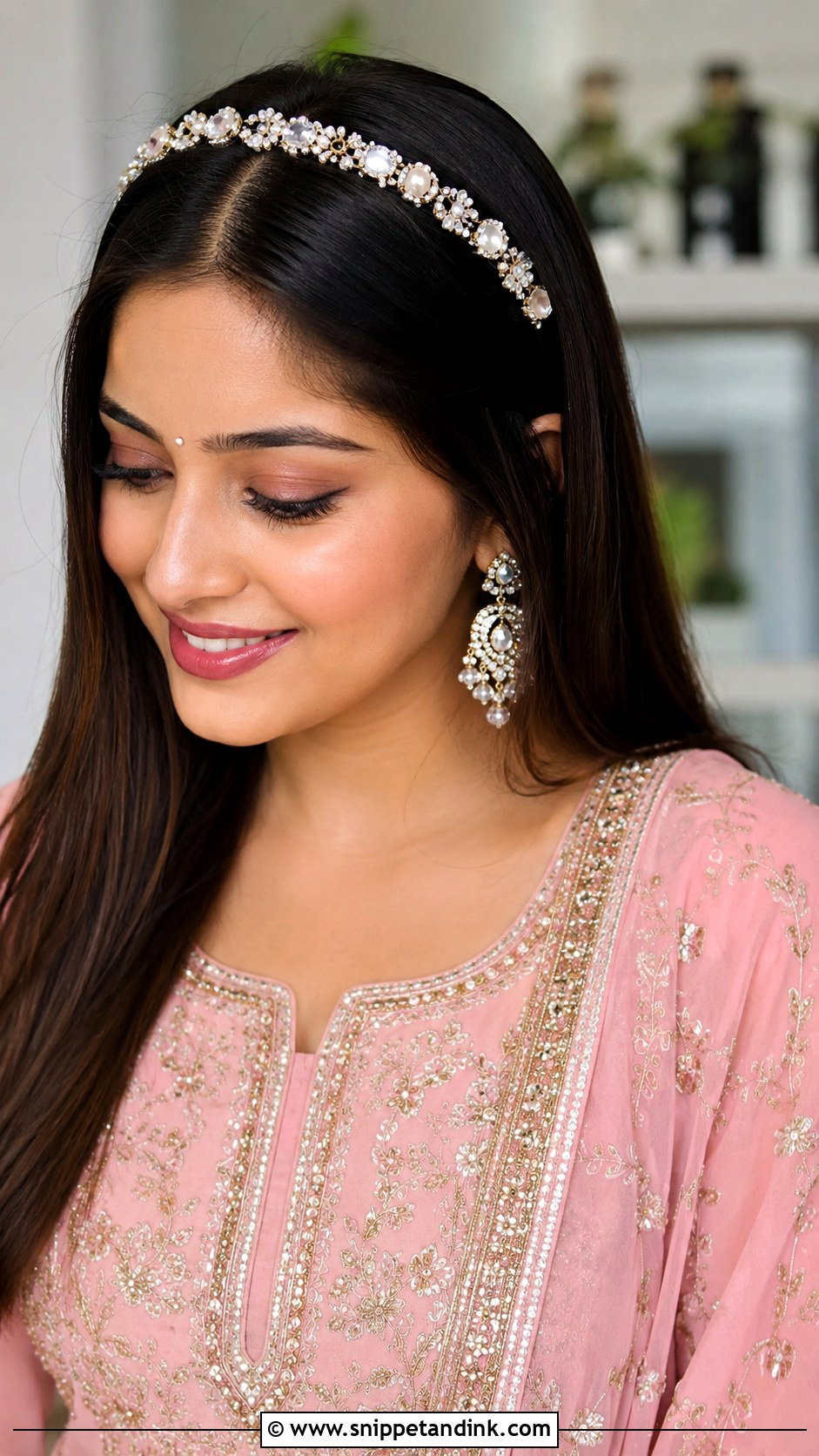
A jeweled hairband turns plain straight hair into something festive in under five minutes, which is why I suggest it to bridesmaids who are getting ready in a rush. Slide it on over hair that has already cooled from the iron, or the band flattens the crown into a dent. Pick kundan, pearl or crystal to echo the embroidery on your outfit. Bands tend to pinch behind the ears after a few hours, so I bend the ends slightly outward before placing them. Daytime and pastel functions suit it most.
5. Straight Open Hair With Side Braid
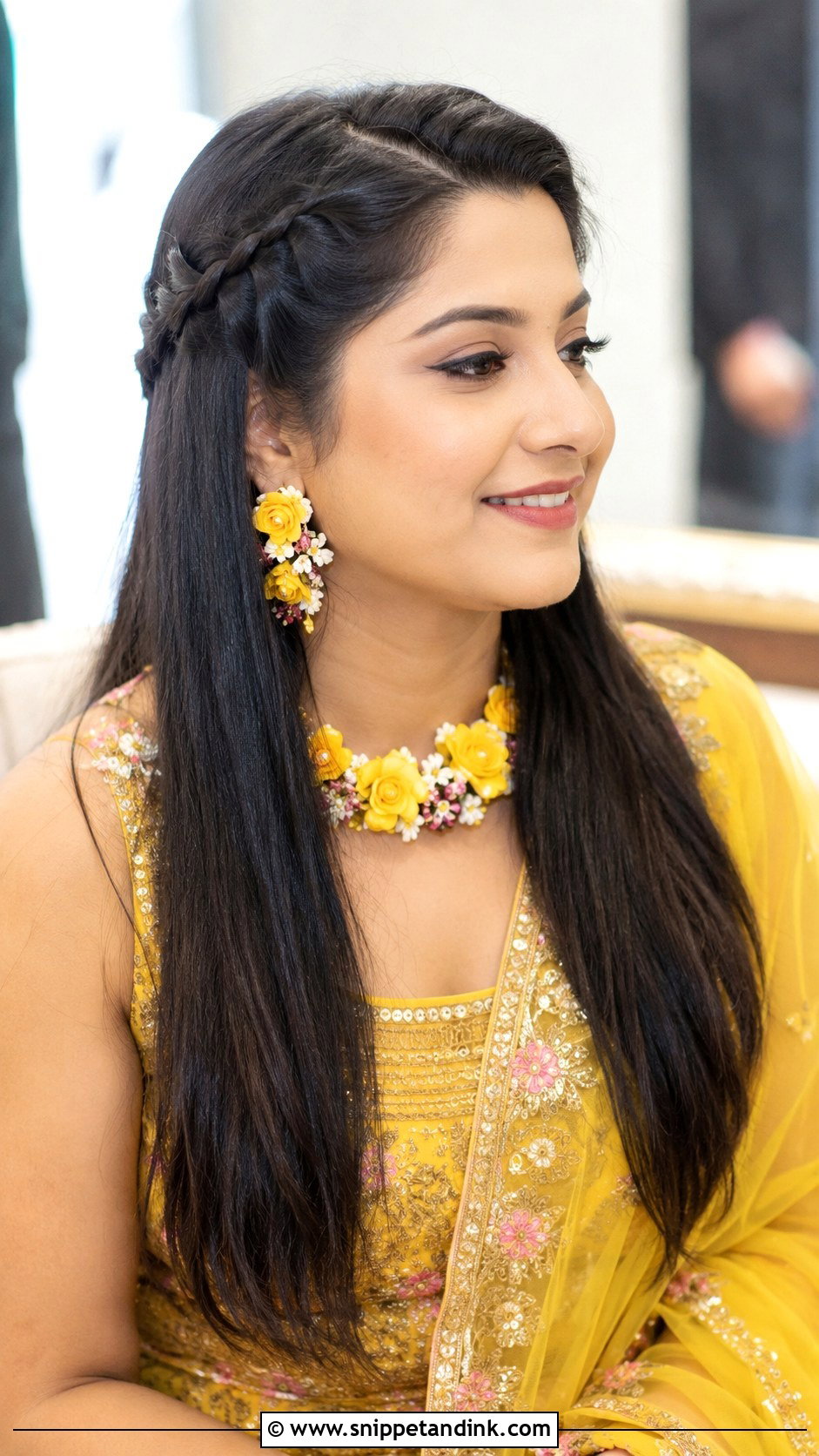
A thin side braid at the temple is my quiet fix for the one section that always ends up in your mouth on the dance floor. I braid it before ironing the rest, so the lengths stay straight while the braid holds a little texture. Keep it fine on a petite face and slightly chunkier on thick hair, otherwise it disappears. It sits well with floral clips at the mehendi or haldi, and long straight hair gives the braid a clean line to run along in photos.
6. Straight Open Hair With Curtain Bangs
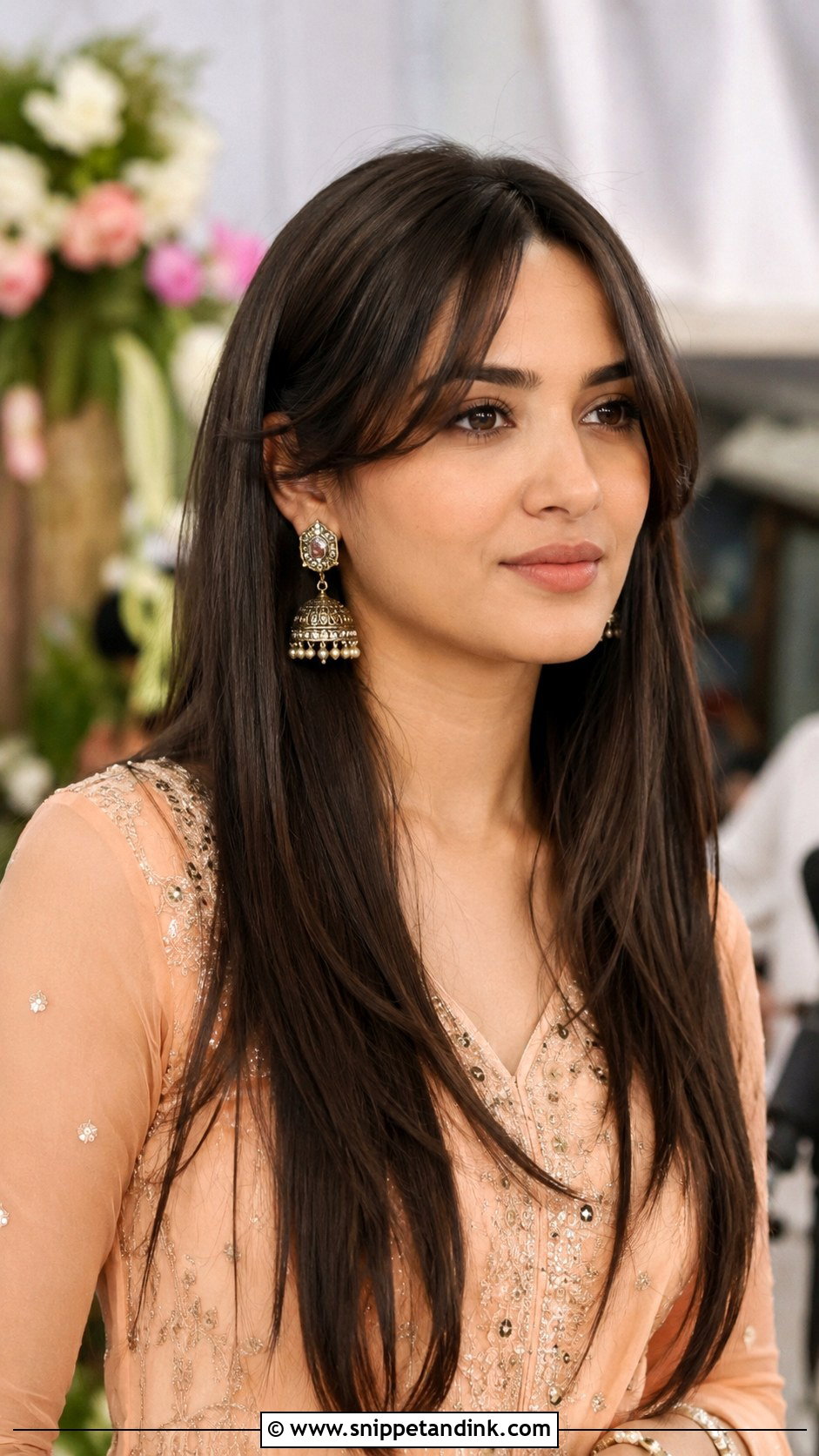
Curtain bangs split at the center and fall toward the cheekbones, so they draw the eye up to your liner and soften a strong jaw. The risk is timing. A fresh fringe cut the week of the wedding often sits too short and too heavy, so I ask brides to have it cut three to four weeks out and let it settle. On the day I round-brush the bangs away from the face, then let them drop back. They balance heavy jewelry better than a blunt fringe does.
7. Straight Open Hair With Front Twists
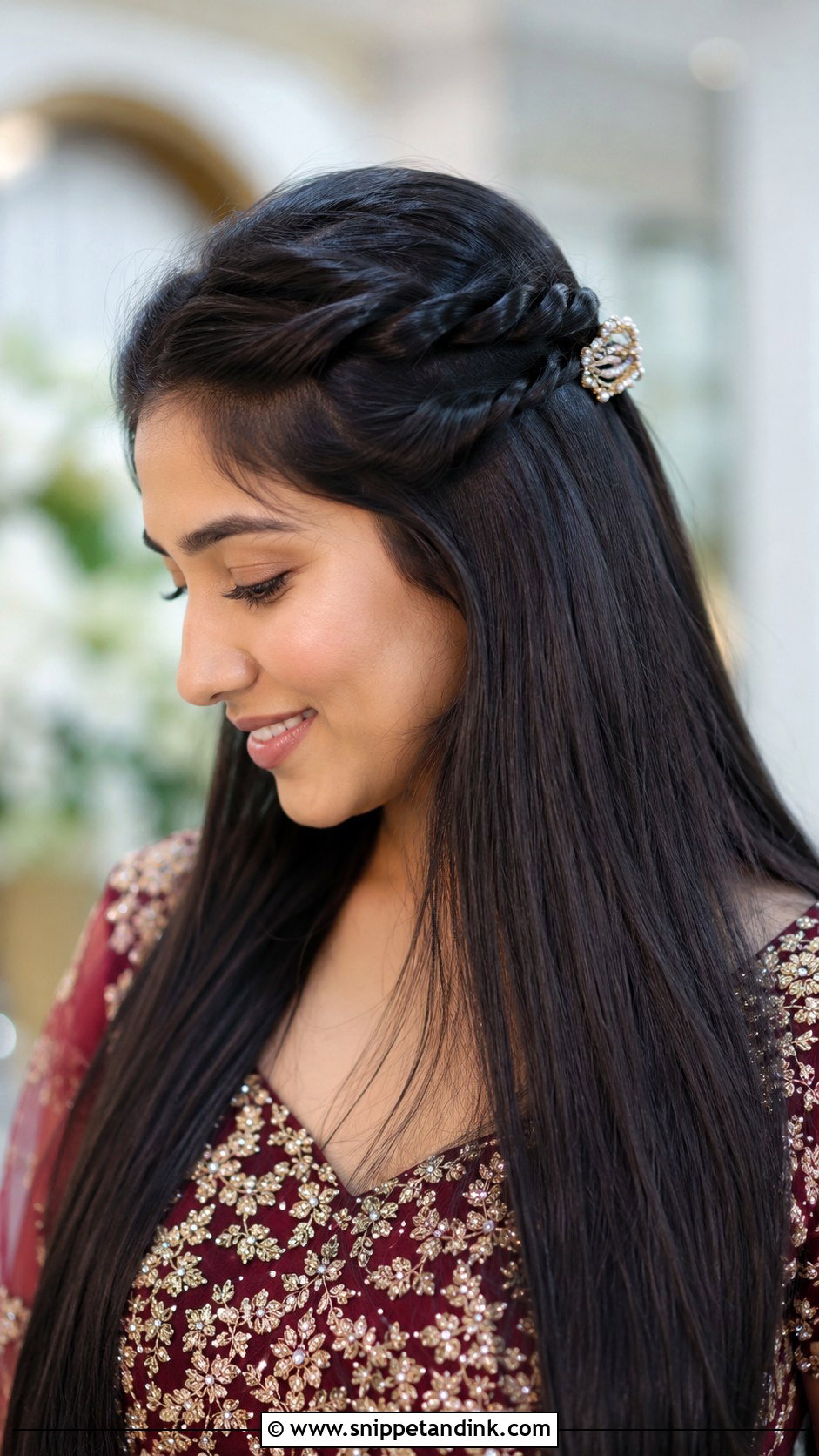
Two small twists pulled back from the temples and pinned at the crown keep your face clear while the length stays open. I twist away from the face, never toward it, because a twist that rolls inward loosens every time you turn your head. Cross two bobby pins in an X under each twist and cover the join with a small jeweled clip. Reception and engagement looks suit it, and it’s comfortable enough that you forget it’s there after the first hour.
8. Straight Open Hair With Half-Up Half-Down
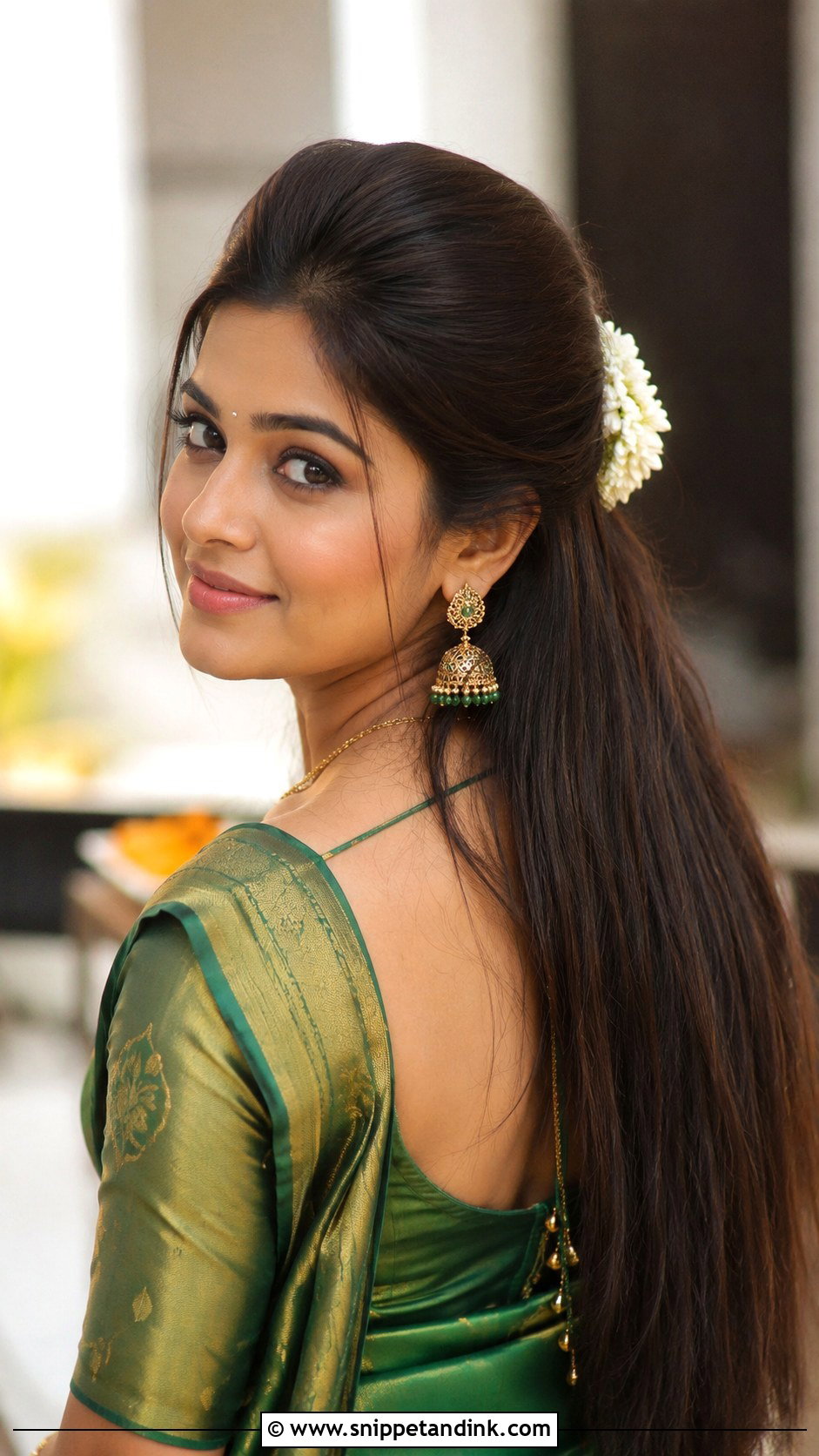
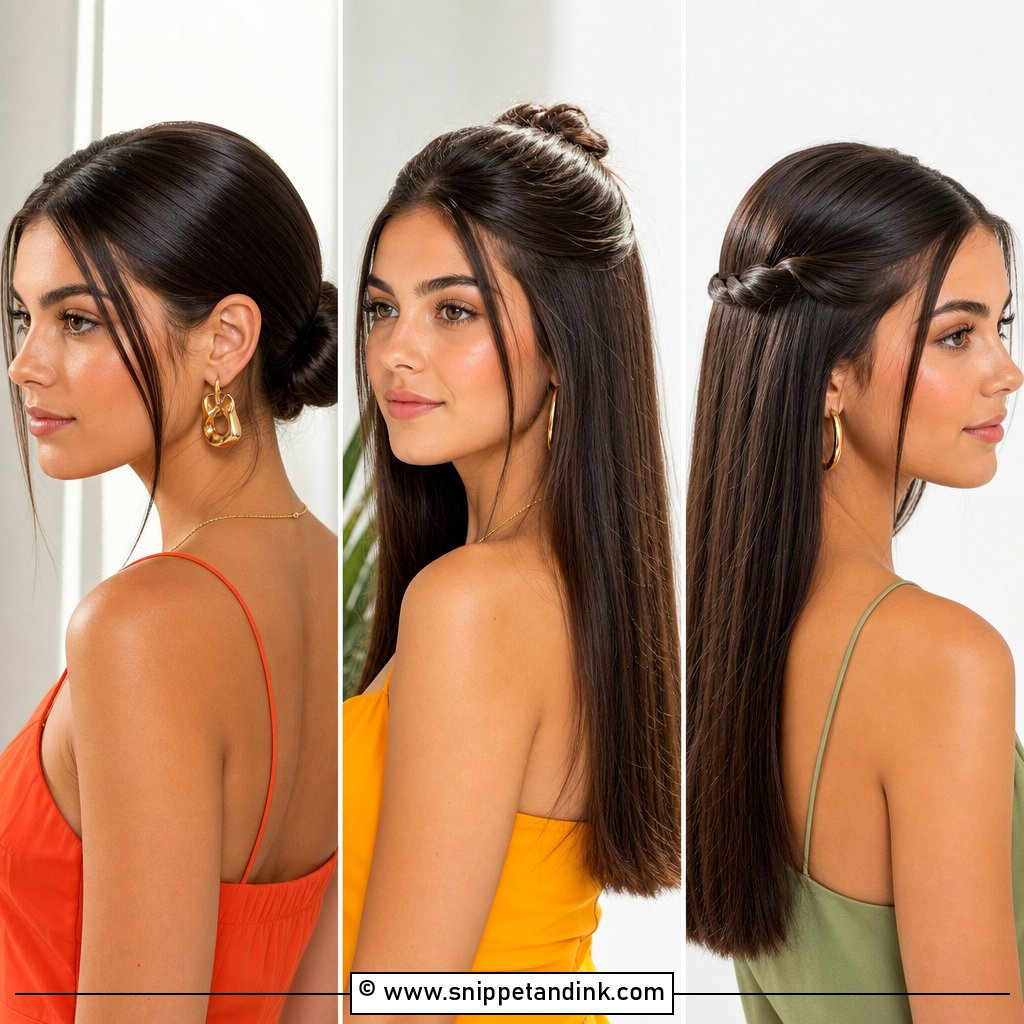
Half-up, half-down is the style I can adapt to almost anyone, from a teenage cousin to the bride. Pull the top section back, add a little backcombing at the crown for lift and let the rest fall straight. I place the anchor pins slightly below the crown rather than on it, so the volume doesn’t collapse when a dupatta goes on. A gajra or jeweled pin over the join turns it festive, and it stays tidy through dinner and dancing because the face-framing hair is secured.
9. Straight Open Hair With Soft End Curls
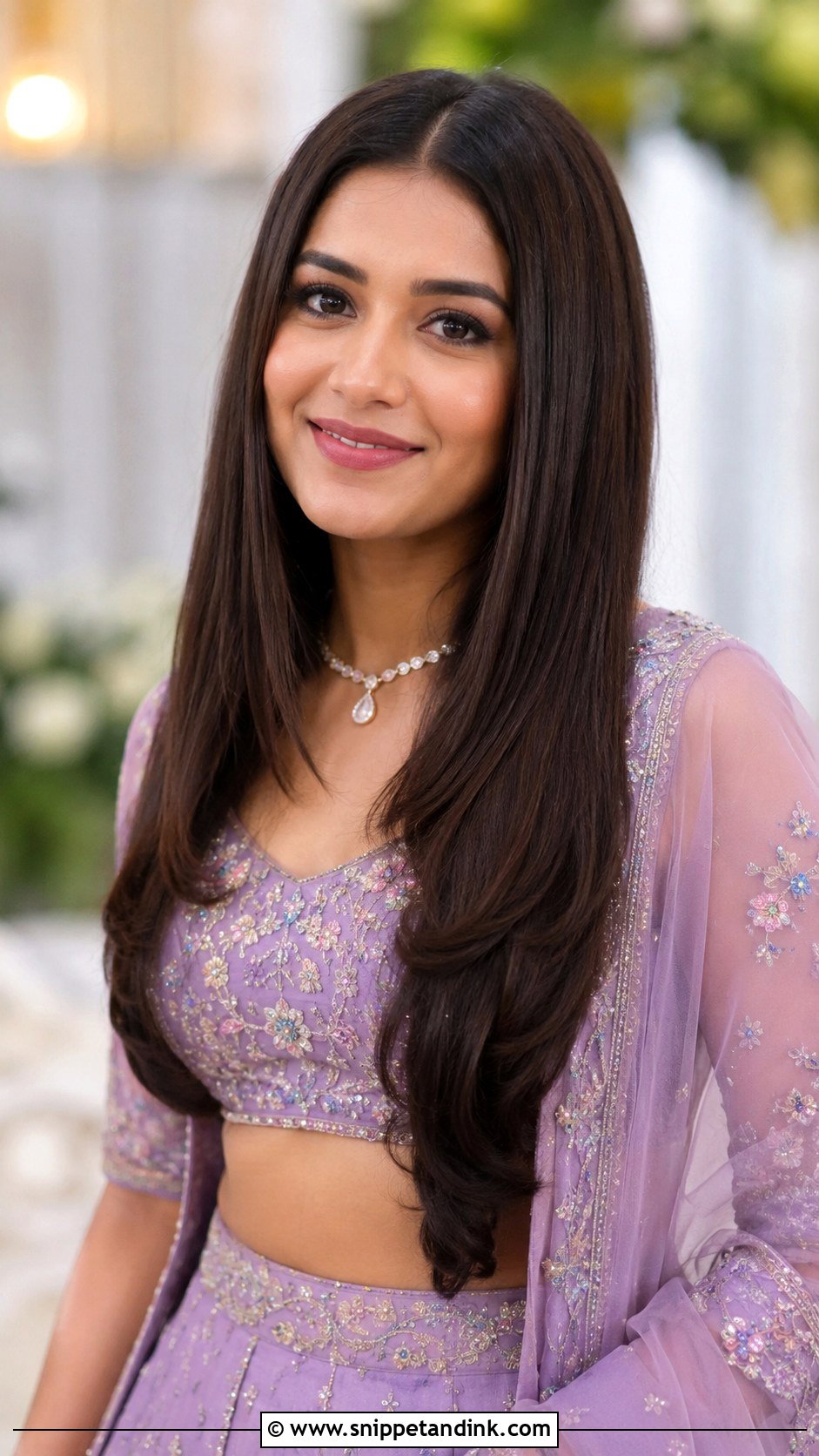
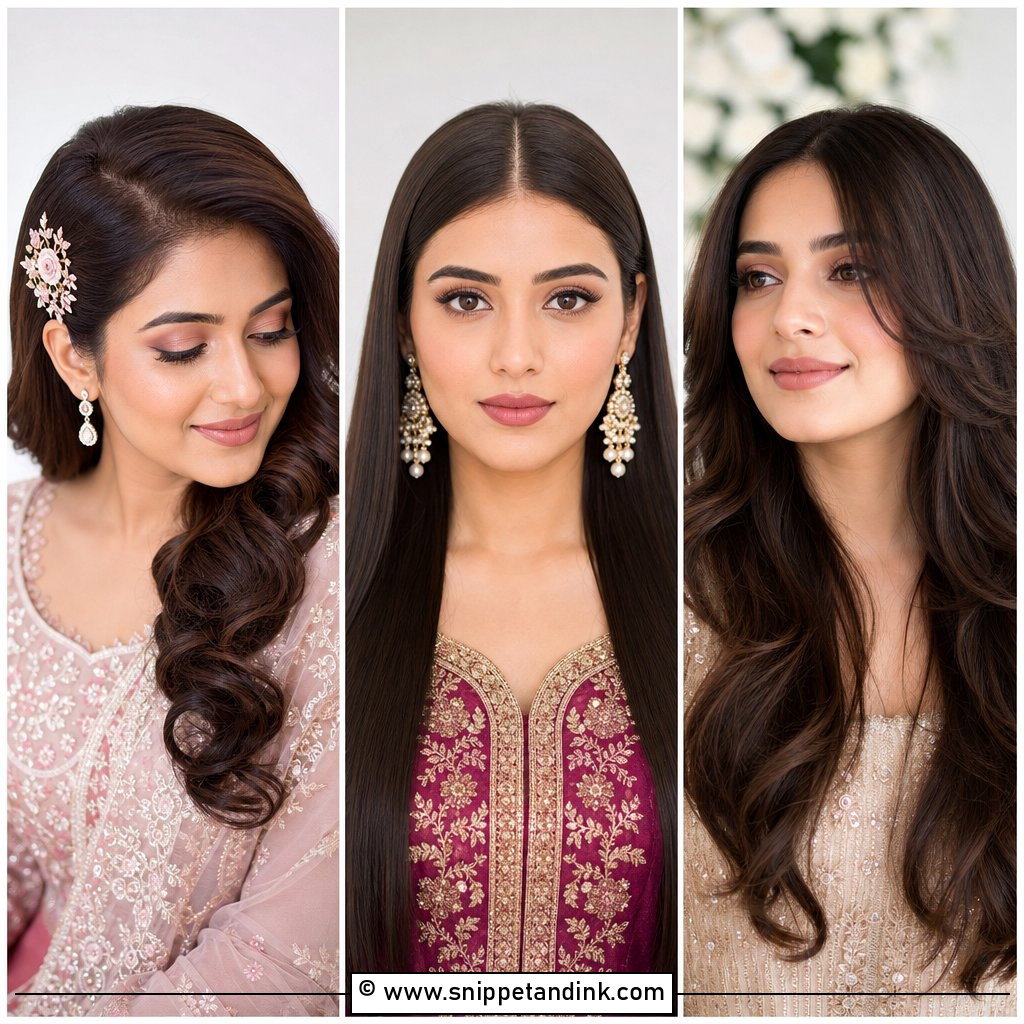
Most of the hair stays poker straight and only the last few inches get a soft bend from a curling wand. I like this for brides whose hair looks thin when it is ironed completely flat, because the bend at the ends adds visual weight right where it falls on the blouse. Curl away from the face and let each section cool in your palm before releasing it. Fine hair loses the bend by evening, so I’d add a light texture spray to the ends only, not the roots.
10. Straight Open Hair With Puff
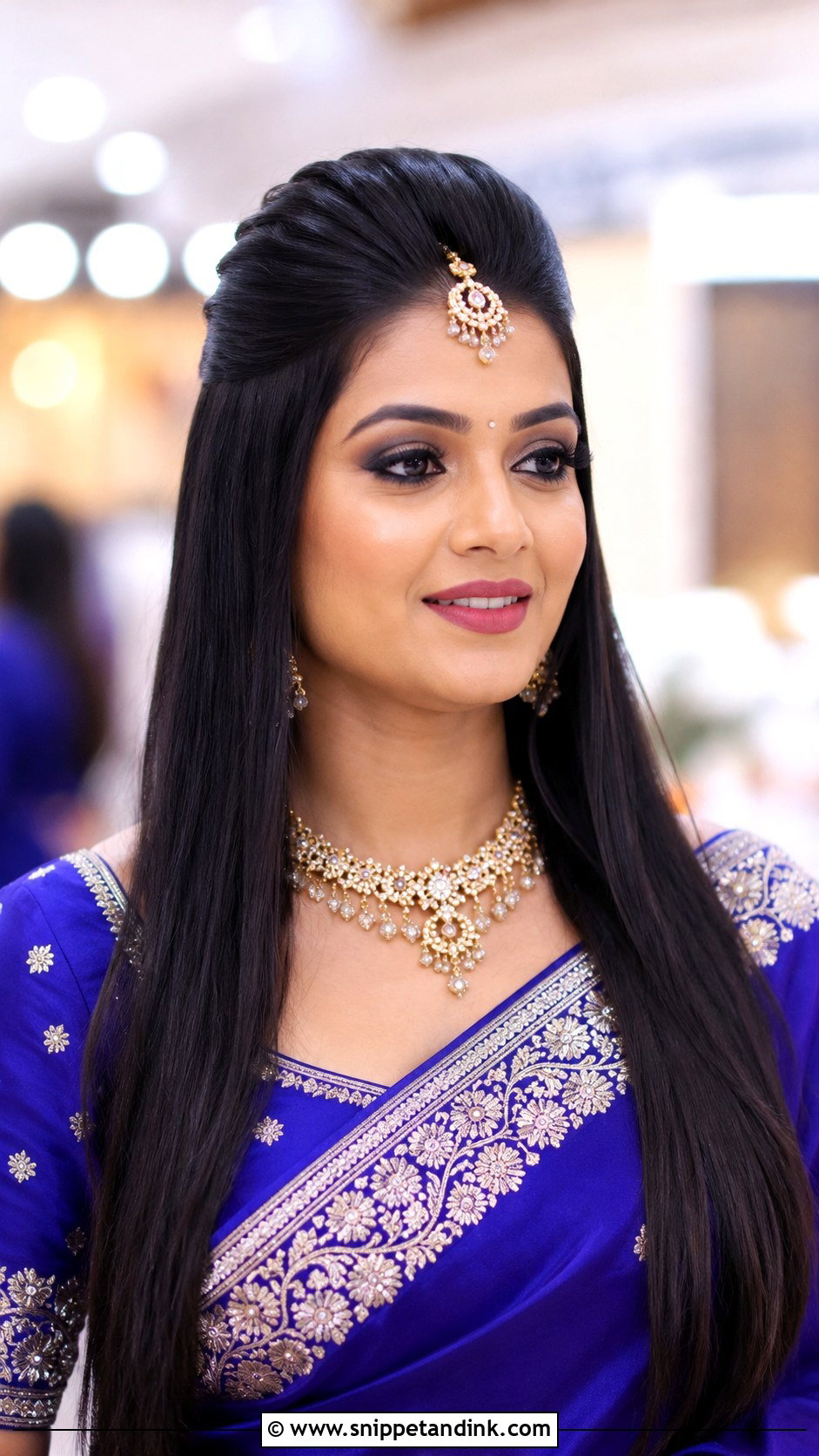
A teased puff at the crown lengthens the face and gives the maang tikka something to hang beneath. I backcomb from the underside of the section, smooth only the top layer over it and pin it with the pins hidden under the lift. On round and oval faces the height works well. On a long face I’d keep the puff low and wide. The lengths should stay sleek, since the contrast is what makes the shape read as vintage rather than accidental.
11. Straight Open Hair With Pearl Accessories
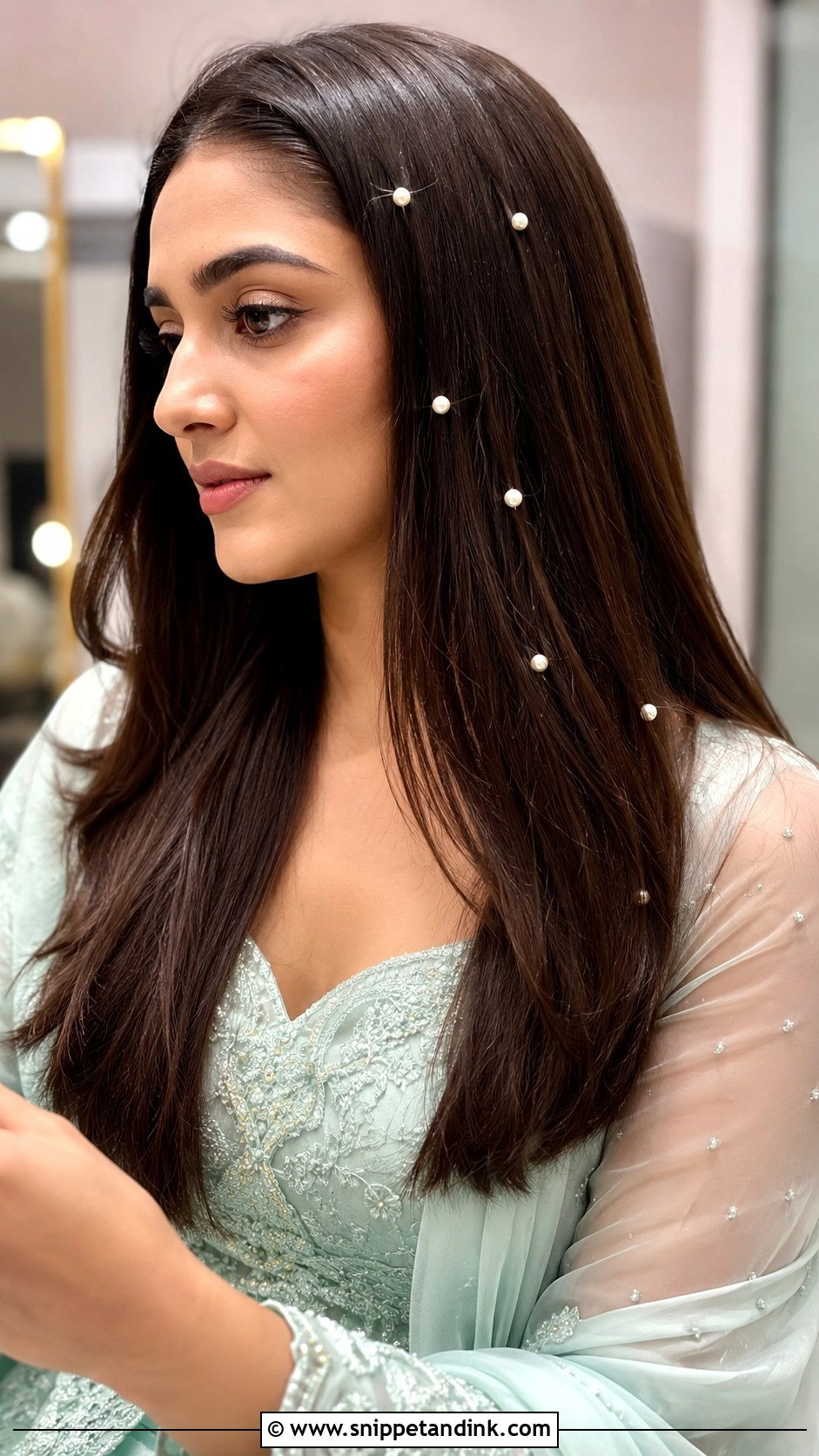
Small pearl pins scattered through sleek hair suit pastel outfits and engagement or reception looks where heavy ornaments would feel too much. Placement is where most people go wrong: pins pushed straight in slide out of slippery hair within an hour. I slide each pin in against the direction the hair falls, then turn it back, so it locks over a few strands. Keep them to one side or a loose diagonal line, and keep the makeup and jewelry soft to match.
12. Straight Open Hair With Waterfall Braid
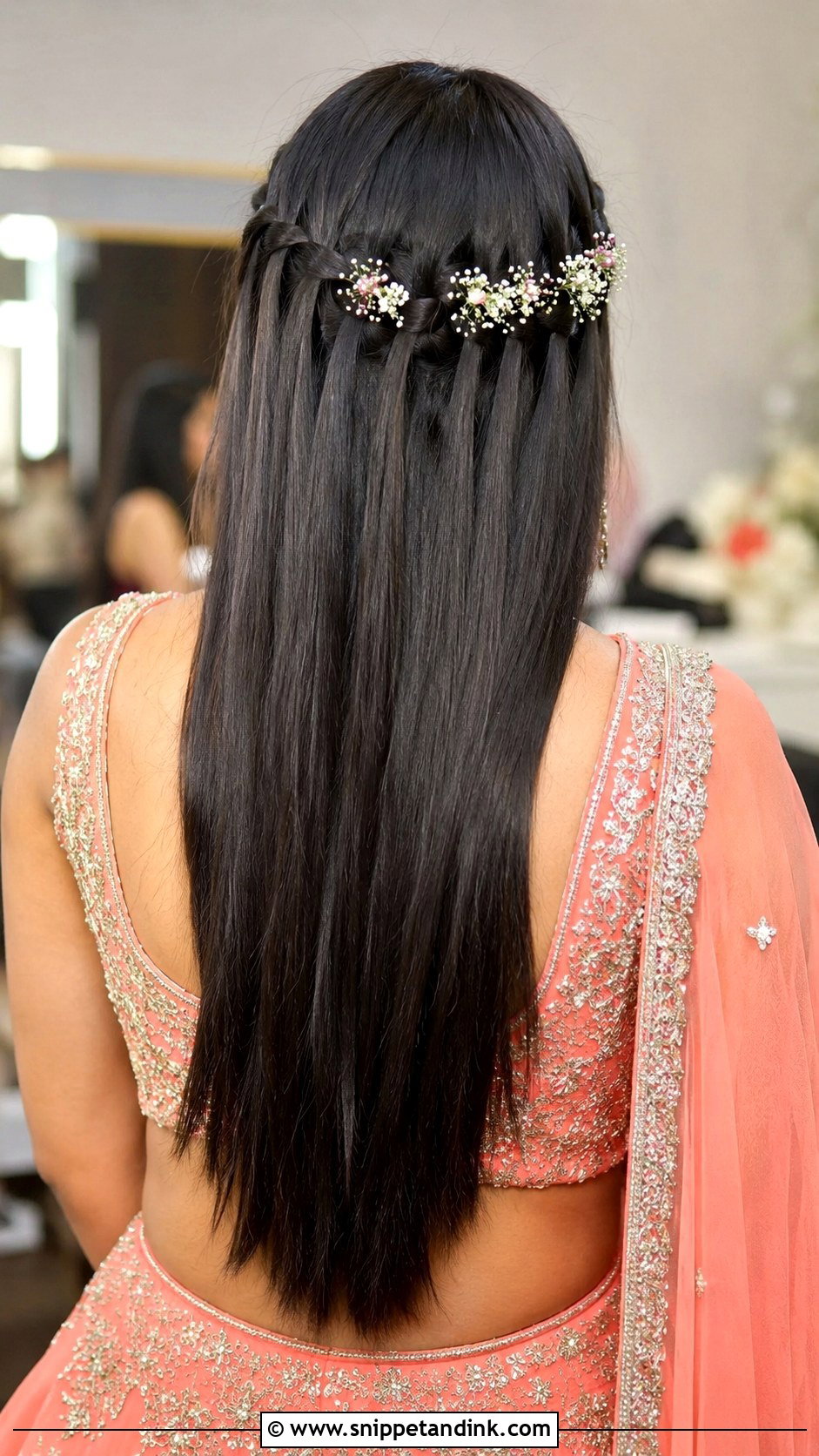
A waterfall braid runs across the back of the head, dropping one strand on each pass so it looks like the hair is spilling through the braid. Straight hair shows the structure clearly, but it is slippery, so I mist each section with a little dry texture spray before I start. It suits mehendi and sangeet where you want detail without pinning everything up. A couple of tiny flowers tucked along the braid line finish it.
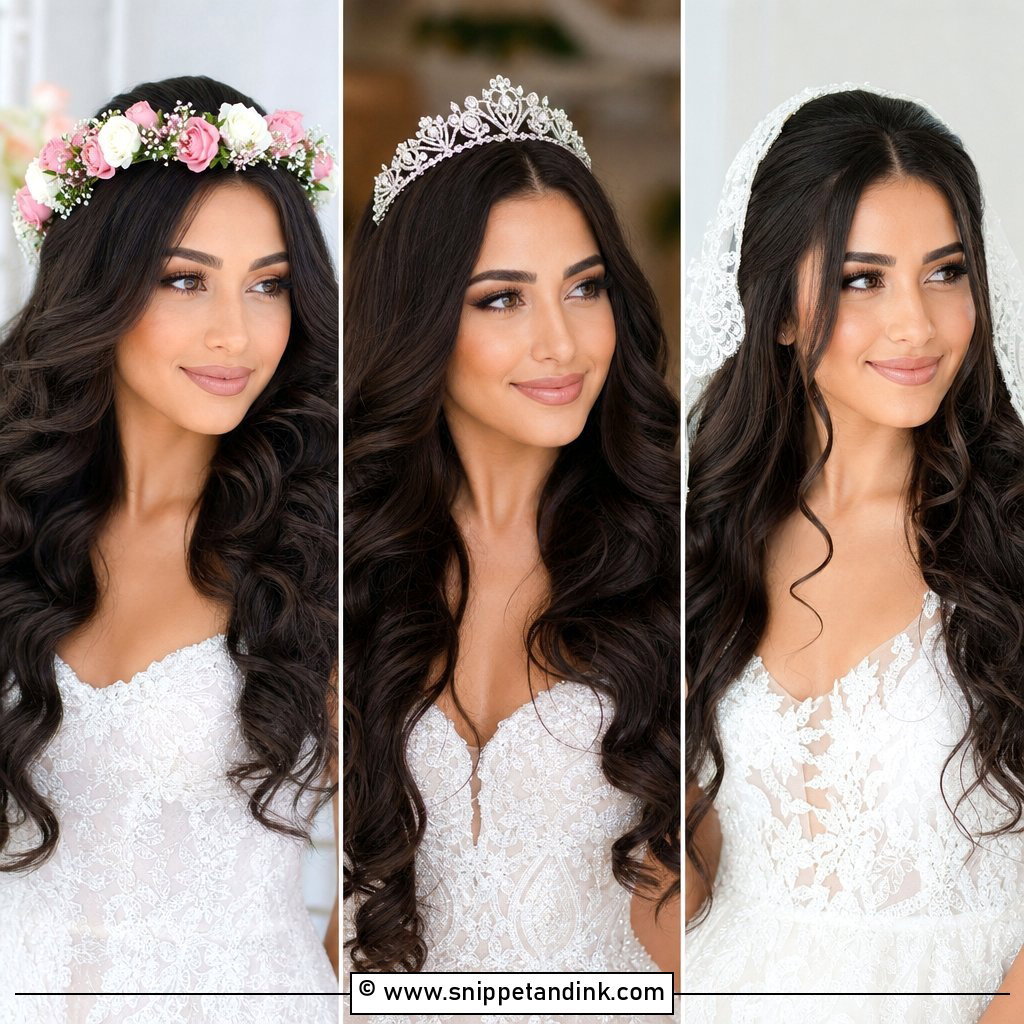
13. Straight Open Hair With Center Part and Flowers
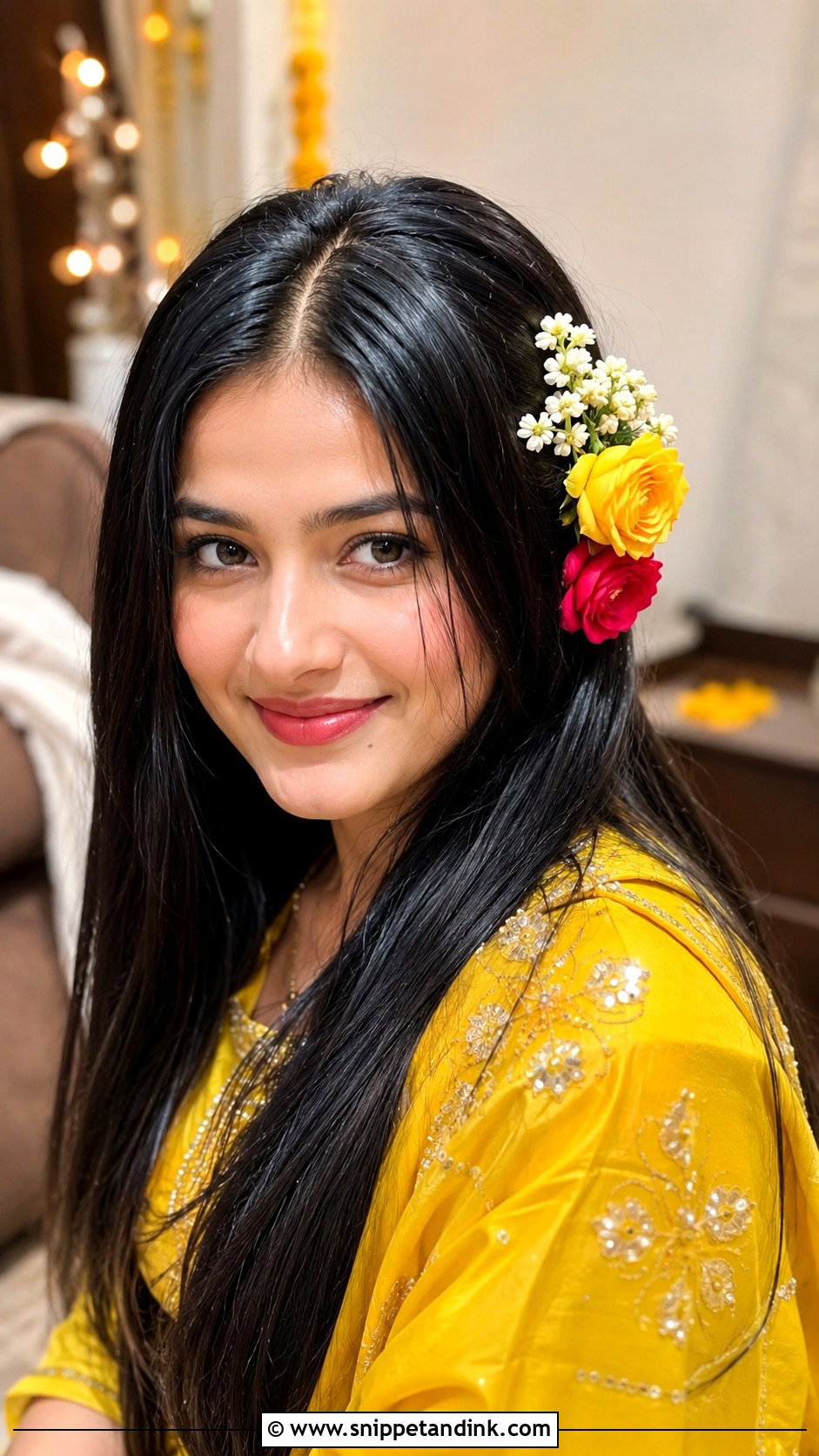
Fresh flowers against a clean center part feel right at a haldi or mehendi, where the mood is relaxed and the blooms often match the decor. Jasmine, small roses and marigold heads all work, but they behave differently. Marigolds are heavy and need a pin through the base, while jasmine buds can be woven straight into a thin section. I keep flowers in a cool box until the last minute, since heat wilts them fast, and I place them along one side near the crown so they don’t brush the face.
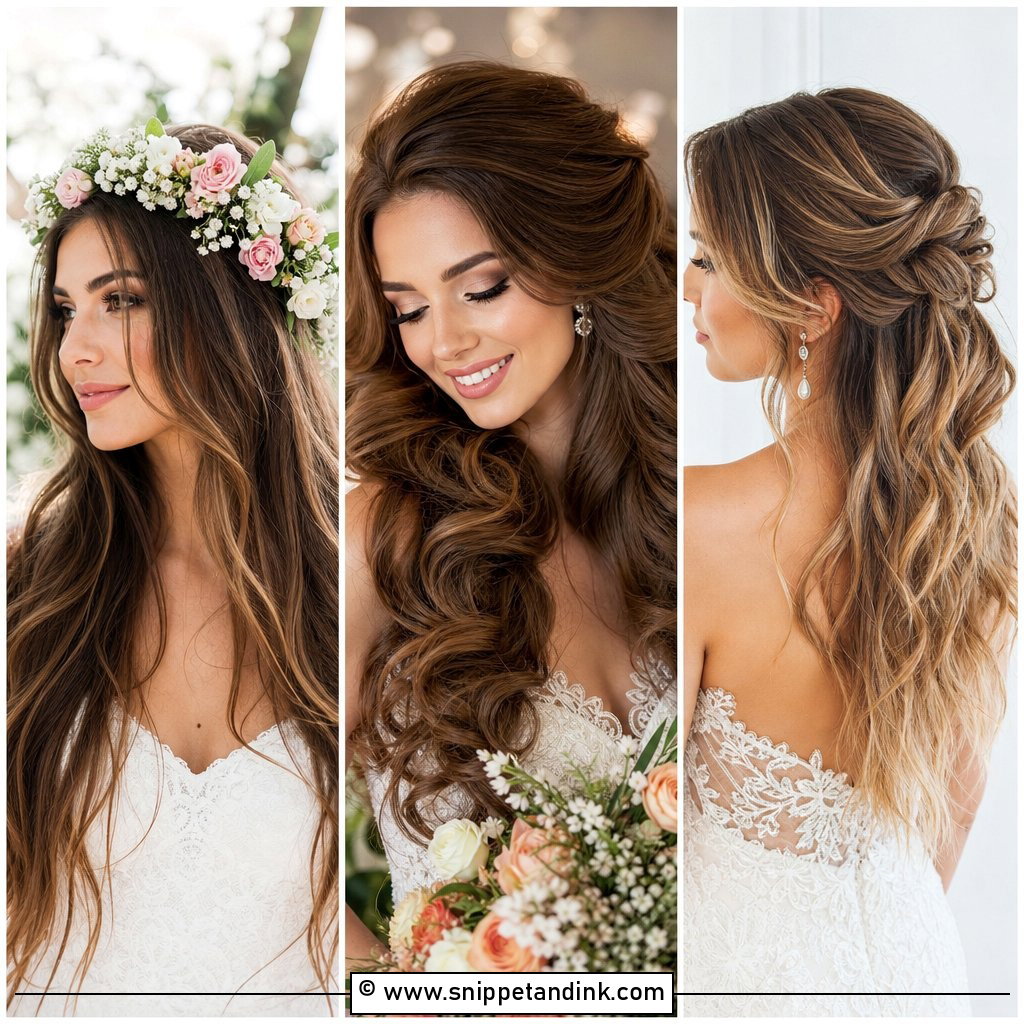
14. Straight Open Hair With Loose Waves
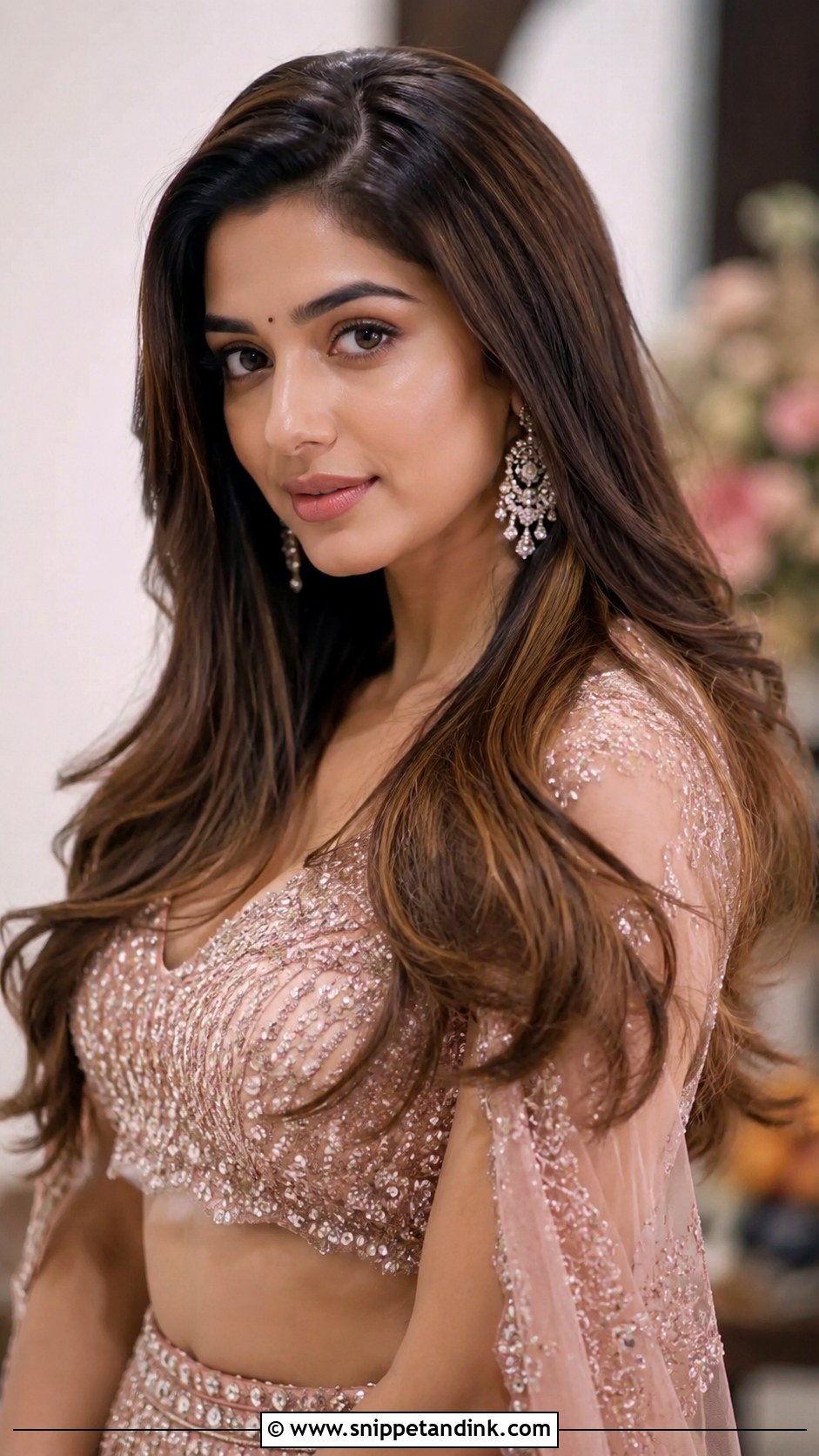
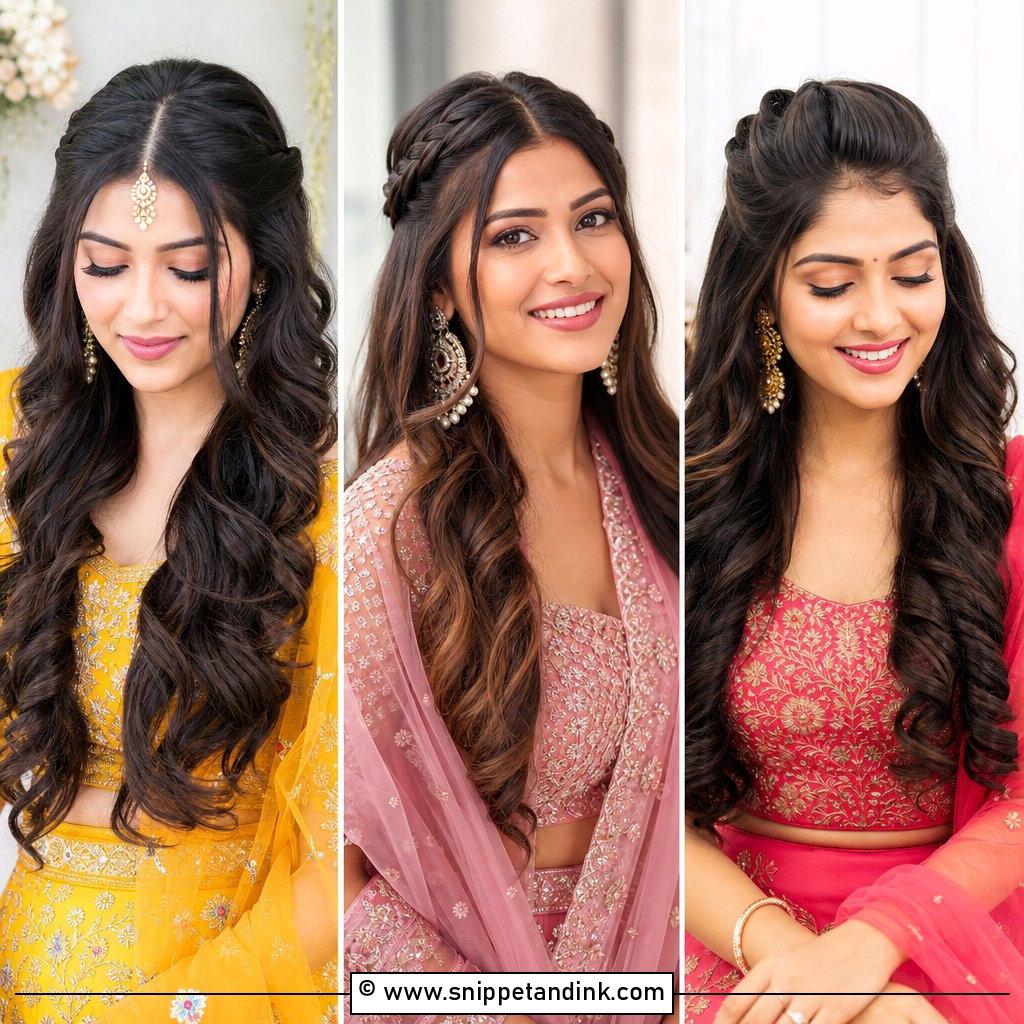
Loose waves are the style I reach for when straight hair refuses to stay flat in humidity, since the bend hides the frizz that a sleek finish would show. A wide barrel and big sections give you open bends rather than ringlets. I brush them out once they cool. They move with you from a daytime ceremony to an evening reception, and they soften the face without needing any accessory at all.
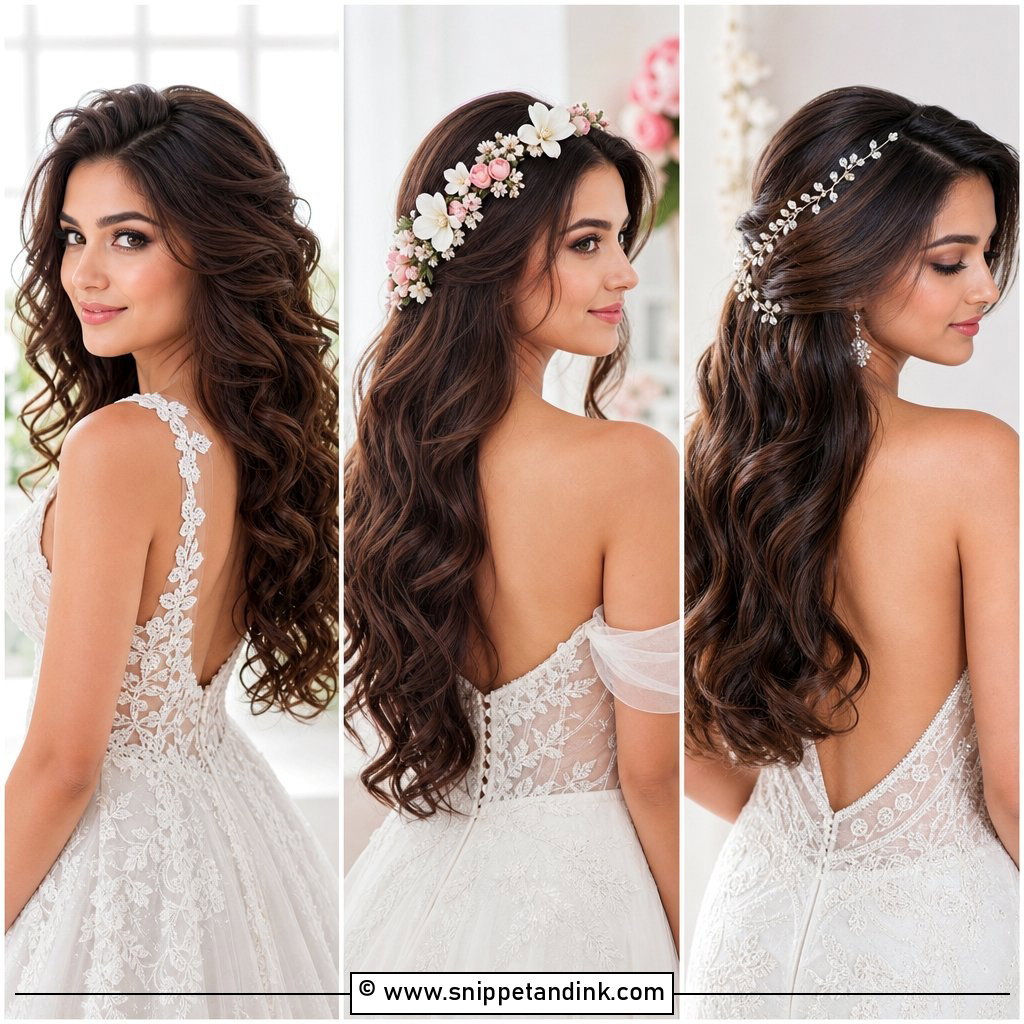
15. Straight Open Hair With Side Part and Tucked Ear
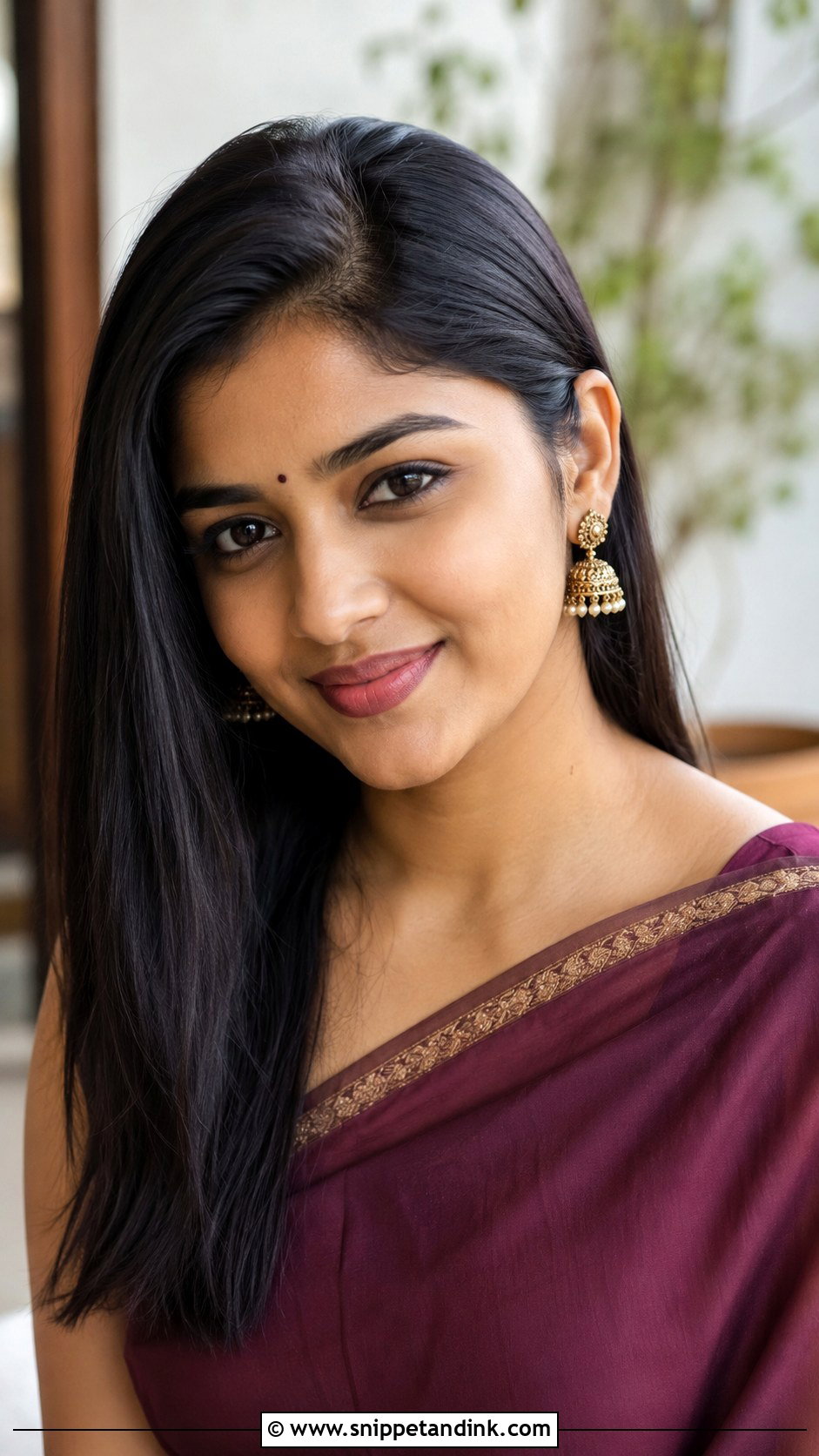
Tucking one side behind the ear sounds like nothing, but it is the fastest way to show off a pair of jhumkas. A deep part on the opposite side keeps the framing hair on the other half of the face. Ears are smooth and hair slides off them, so I pin a bobby pin behind the ear, hidden under the tucked section, to hold it in place. Cocktail and reception looks suit it, and it keeps the earrings from tangling in loose hair.
16. Straight Open Hair With Crown Braid
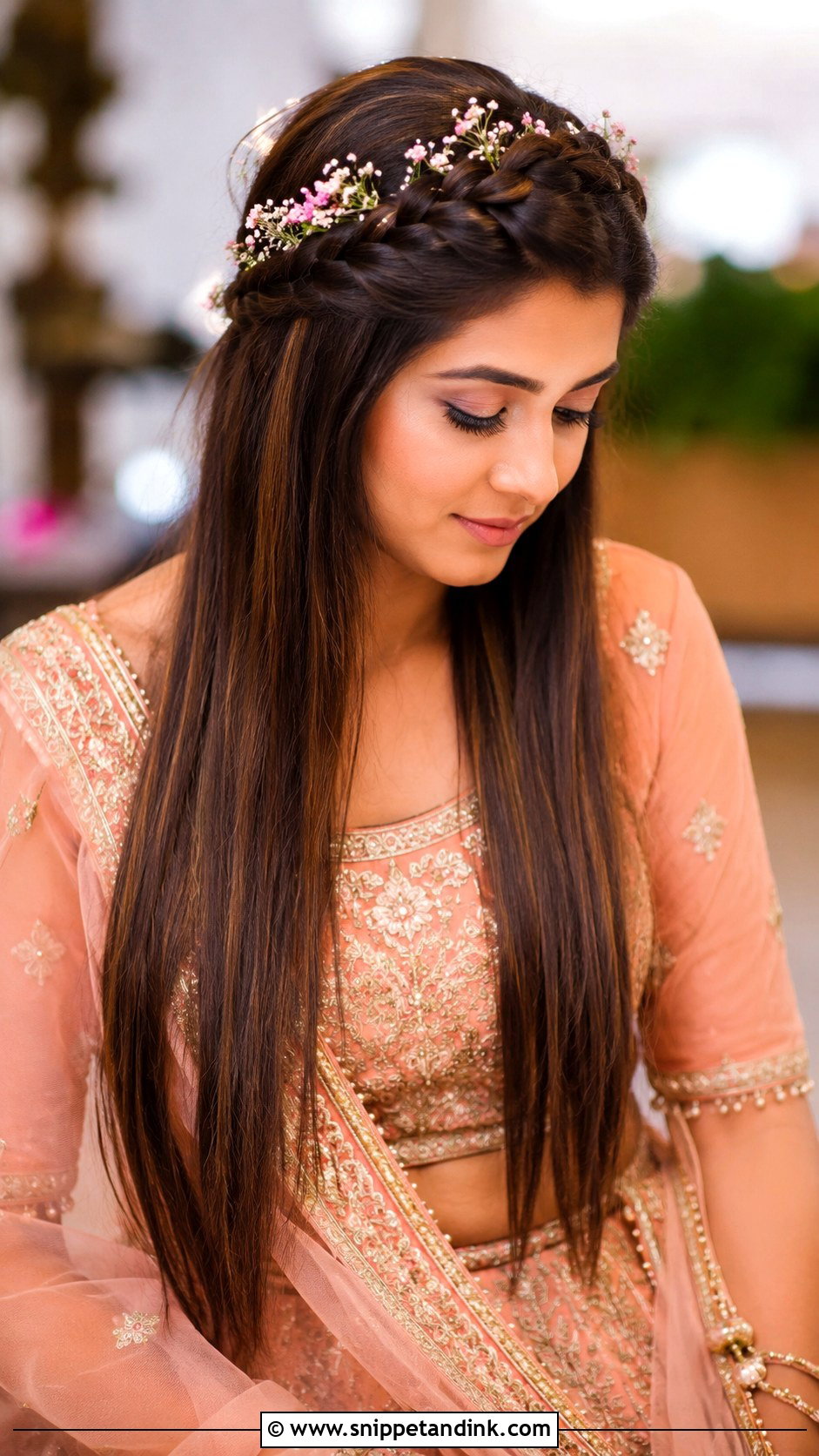
A crown braid wraps along the hairline and pins at the back like a halo, holding every short layer away from the face while the rest falls straight. I braid it slightly loose and then pancake the edges a little, so it looks full even on finer hair. Tiny flowers or jeweled pins along the top make it festive. It suits daytime mehendi and haldi best, and it hides grown-out layers or a short fringe that would otherwise flop forward.
17. Straight Open Hair With Retro Roll
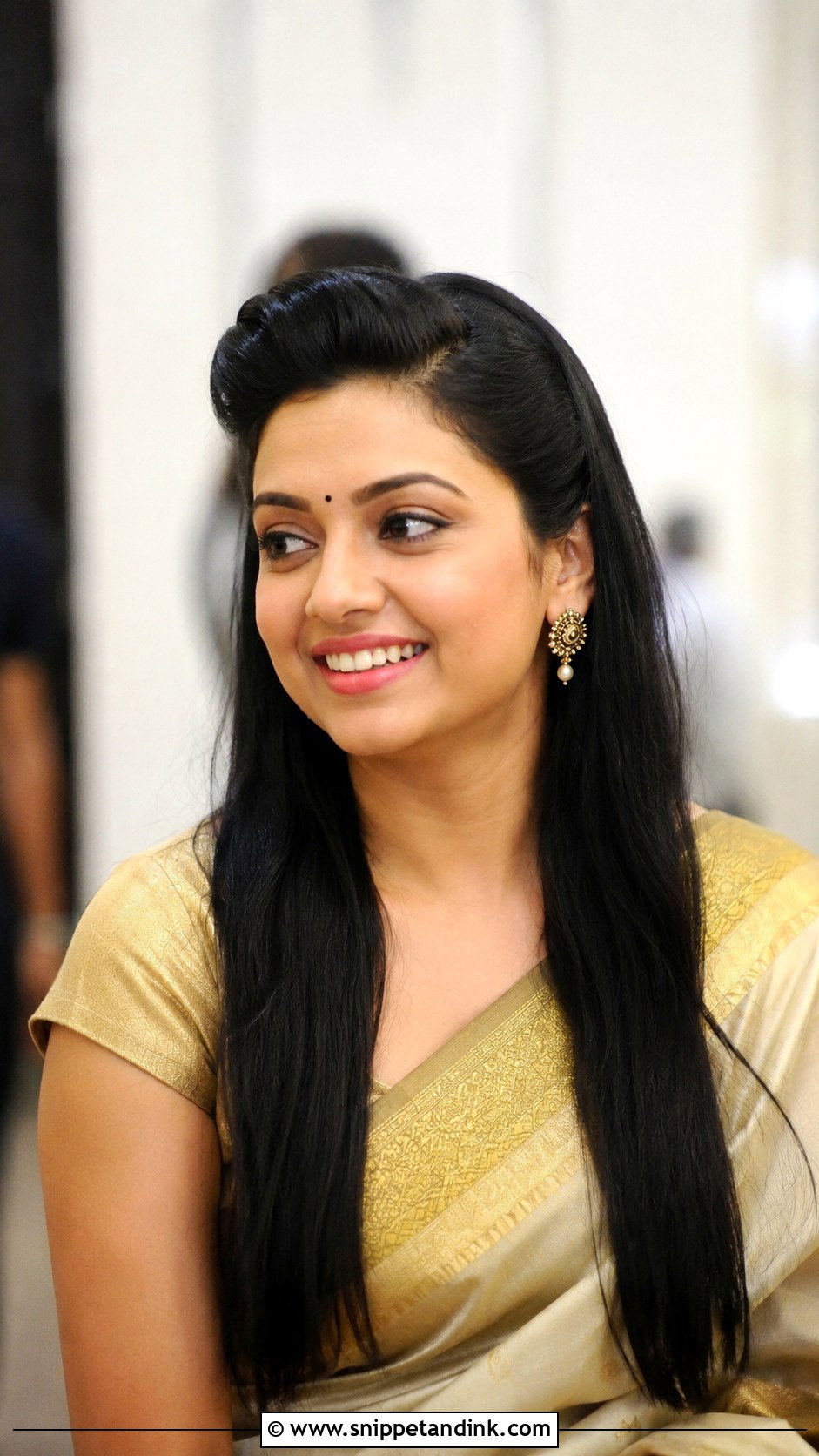
A front roll channels old Bollywood glamour and pairs naturally with a classic saree and traditional jewelry. I backcomb the base of the front section, roll it back over two fingers and pin it from underneath, so the roll holds its shape without any visible metal. The rest falls sleek. Fine hair needs a light dusting of texture powder at the root first or the roll sinks by the second hour, and a setting spray will hold it through a long evening.
18. Straight Open Hair With Glossy Blowout
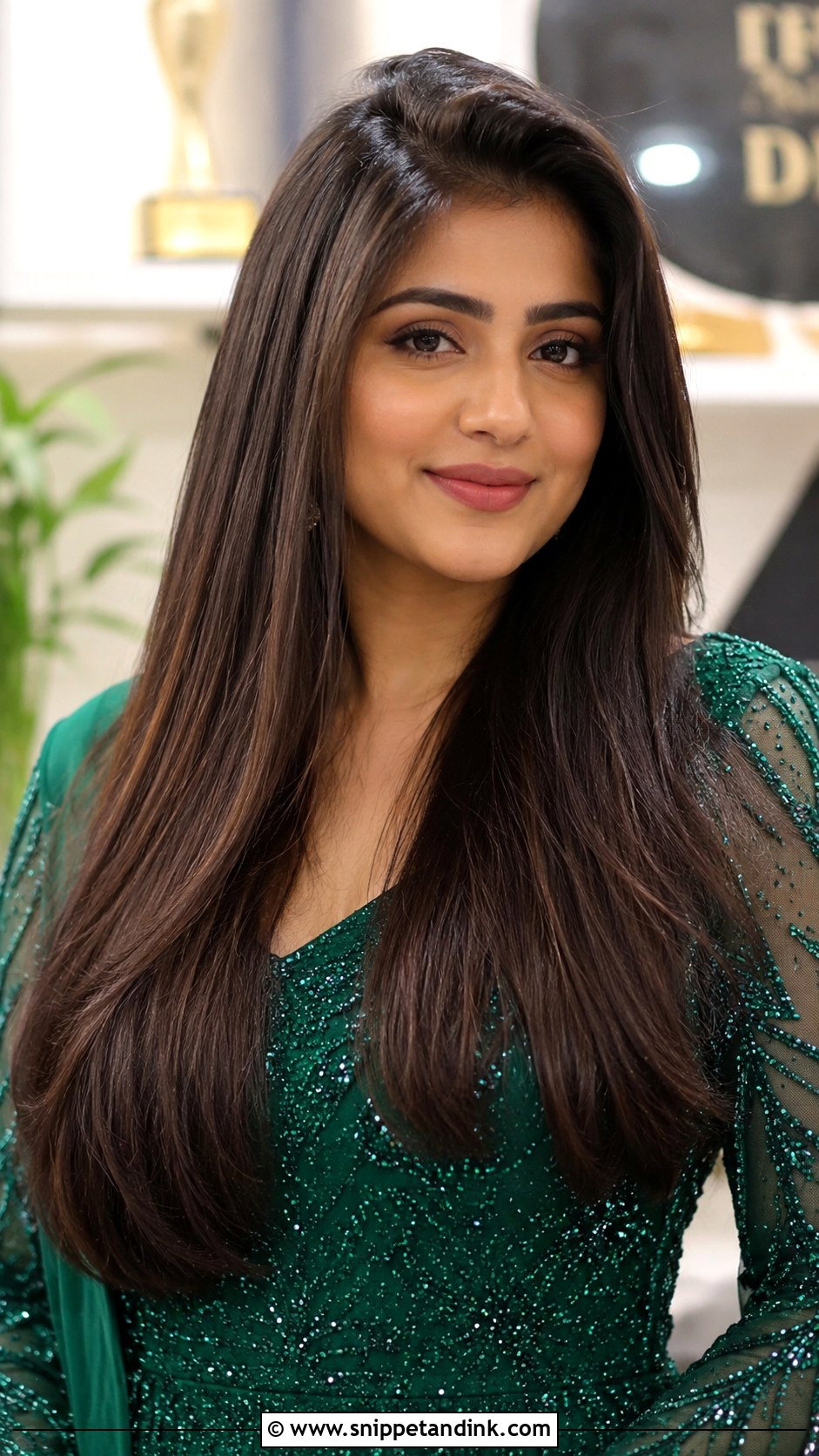
A round-brush blowout gives straight hair body at the root and a soft curve at the ends, which I prefer over flat ironing for receptions. Flat-ironed hair looks thinner under a heavy lehenga, and the blowout fills out the silhouette. Dry the roots upward first, then work the lengths section by section. A drop of shine serum on the mid-lengths only, never the roots, keeps it glossy without going greasy by midnight.
19. Straight Open Hair With Center Part and Maang Tikka
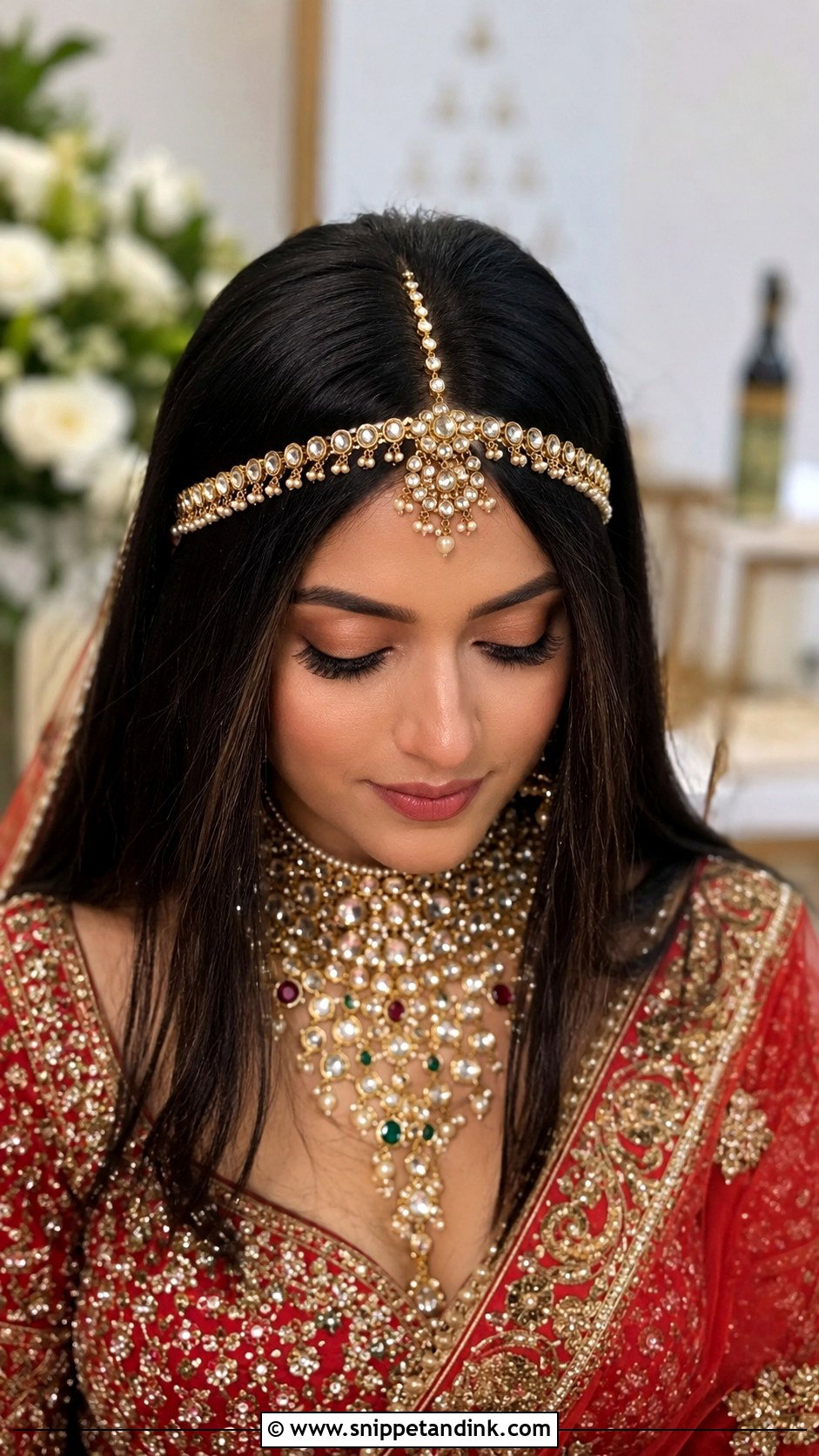
A matha patti needs an exact center part, because the central chain and the side chains have to fall symmetrically across the forehead. I measure the part from the tip of the nose rather than by eye. Sleek, frizz-free hair keeps the chains lying flat. Oval and heart-shaped faces wear it most easily, and kundan or polki matha pattis are heavy enough that I always secure the side hooks into hidden pins above the ears.
20. Straight Open Hair With Twisted Headband Braid
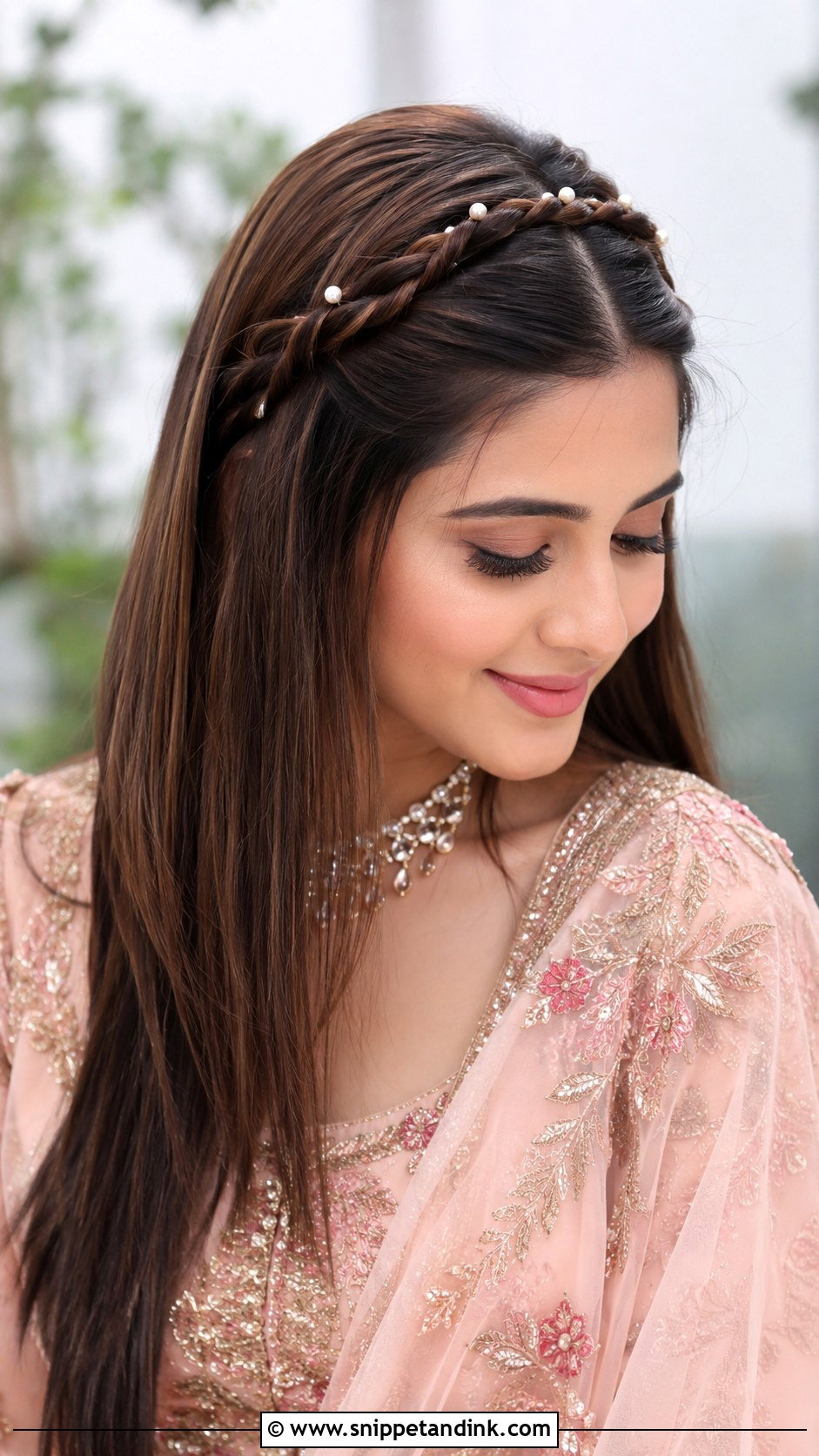
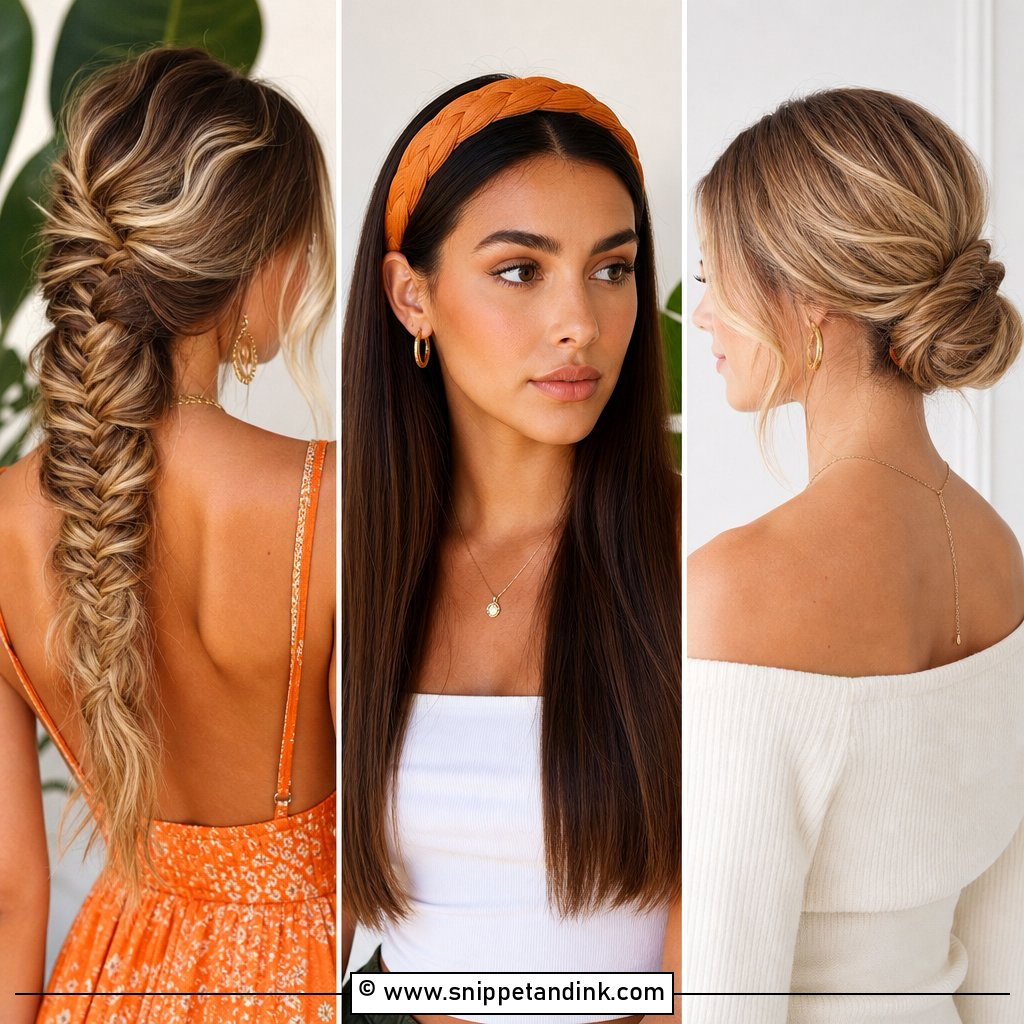
Two twists taken from each side and joined at the back create a soft braided band across the crown. It is practical rather than showy, which is exactly why I like it for mehendi days: hands are covered in wet henna and you cannot push hair out of your face. Small flowers or pearls tucked into the twist dress it up. Pin the join with two crossed pins so it survives hours of dancing.
21. Straight Open Hair With Bouncy Volume
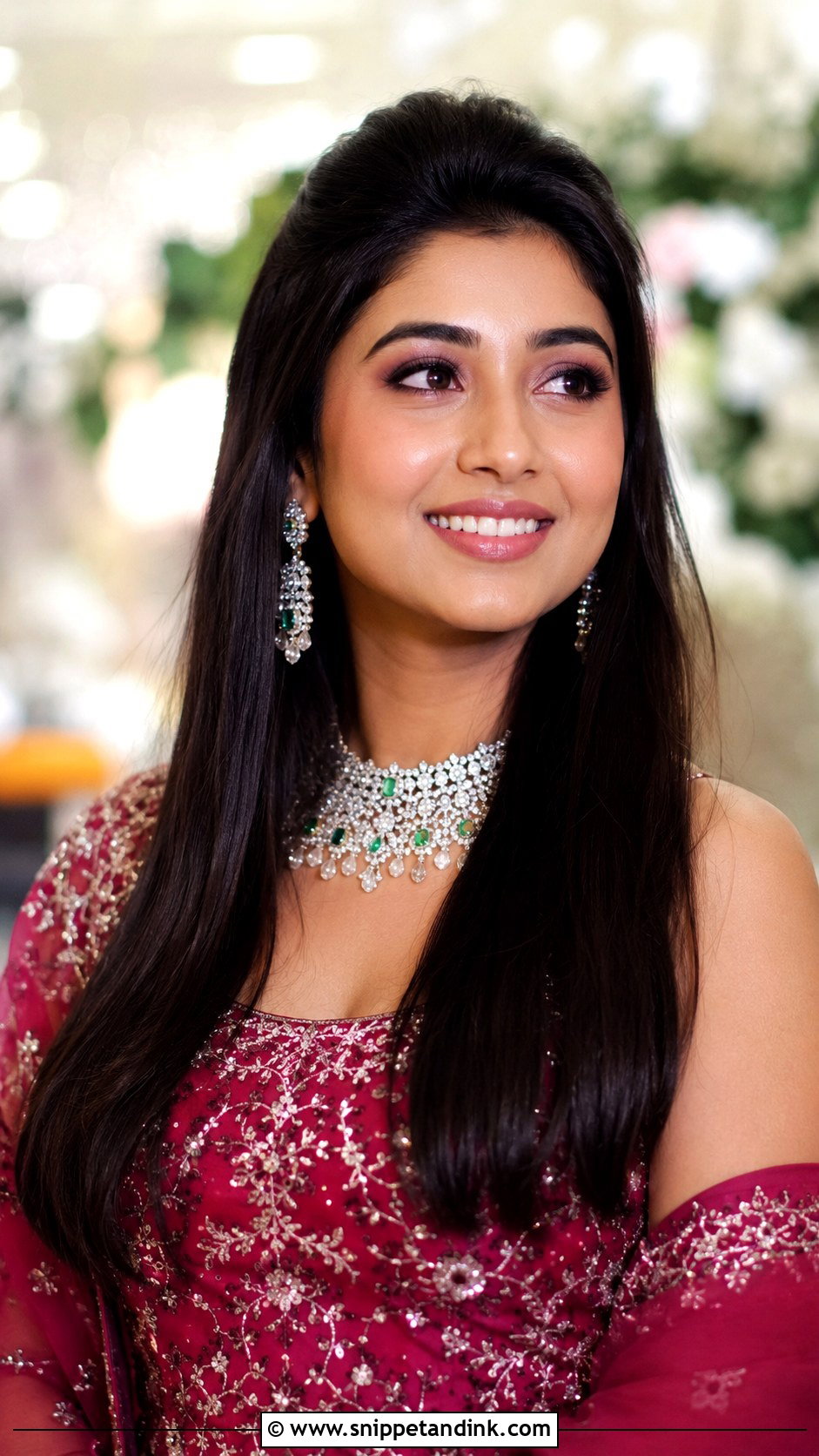
Big, bouncy hair needs root lift built in from the start, not added at the end. I use volumizing mousse at the root, blow-dry upside down, then smooth the lengths while keeping the crown full. Backcombing is a backup, not the plan, because teasing on the day can leave knots that hurt to brush out the next morning. The volume balances heavy embroidery at grand receptions and flatters round and oval faces.
22. Straight Open Hair With Side Flower Tuck
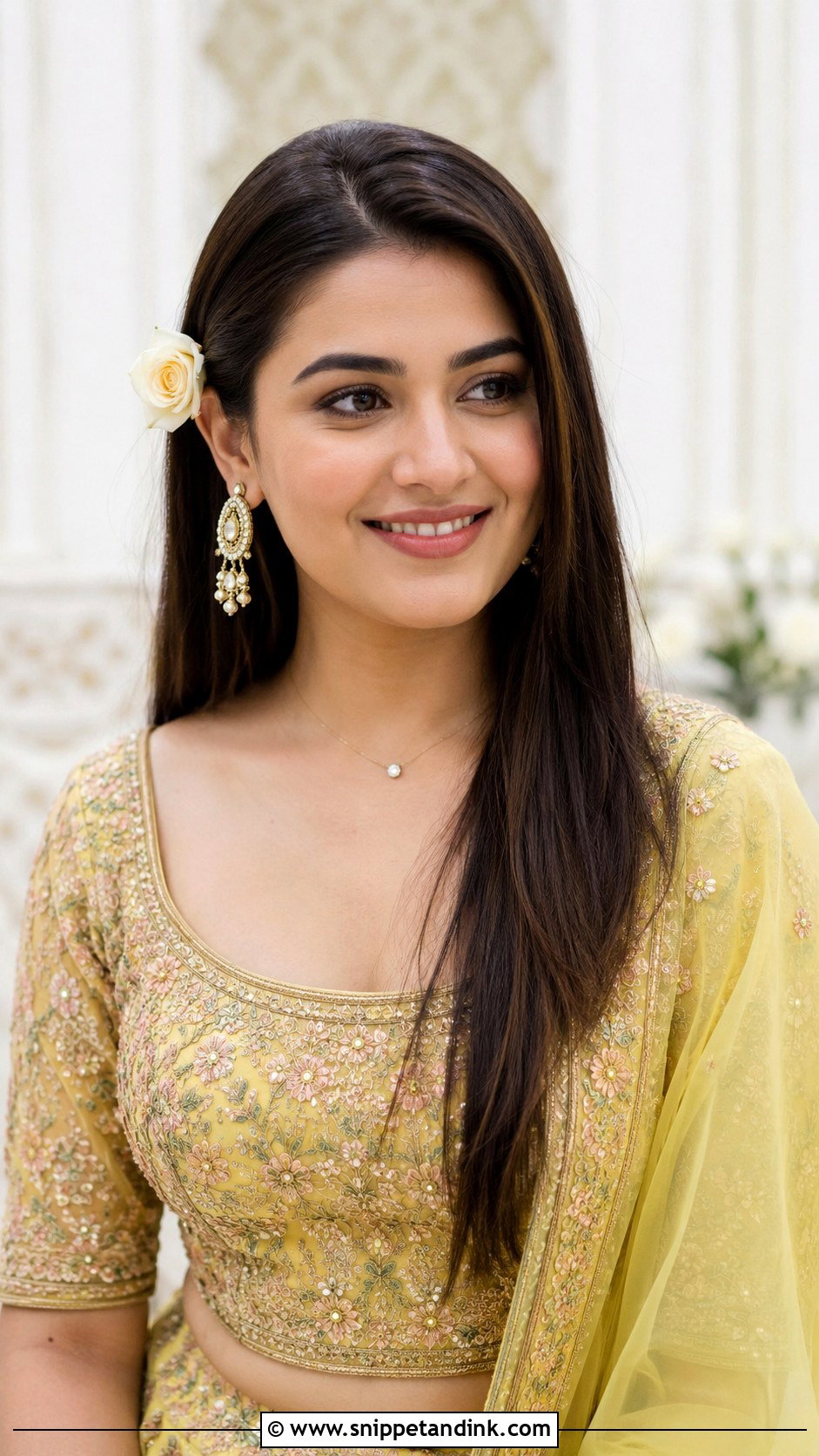
A single flower tucked behind one ear is the simplest accessory on this list and works best at daytime functions. Roses, orchids and gardenias all suit it. Gardenias bruise brown wherever they are touched, so I handle them by the stem only and place them last. Keep the hair parted to the flower side so the bloom sits against smooth hair. One flower is plenty; add a second and it starts to look like a costume.
23. Straight Open Hair With Fishtail Side Braid
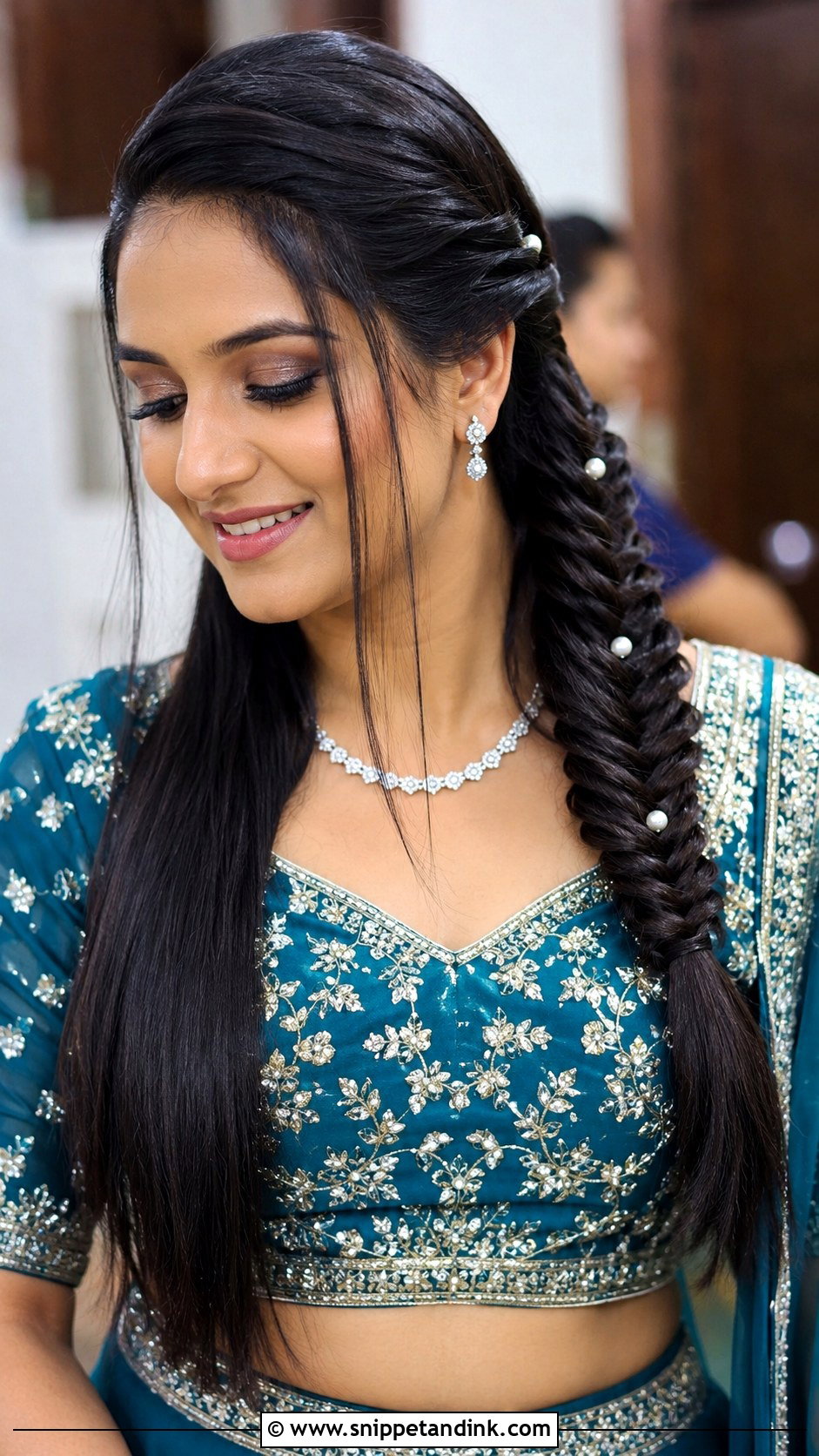
A fishtail braid down one side, left fairly loose, gives sleek hair a woven detail near the shoulder. Fishtails take longer than a regular braid but hold better in slippery straight hair because the strands cross over more often. I secure the end with a clear elastic and hide it under a small flower or pearl pin. It suits sangeet and mehendi, and it keeps half the hair secured while you dance.
24. Straight Open Hair With Deep Side Part and Waves
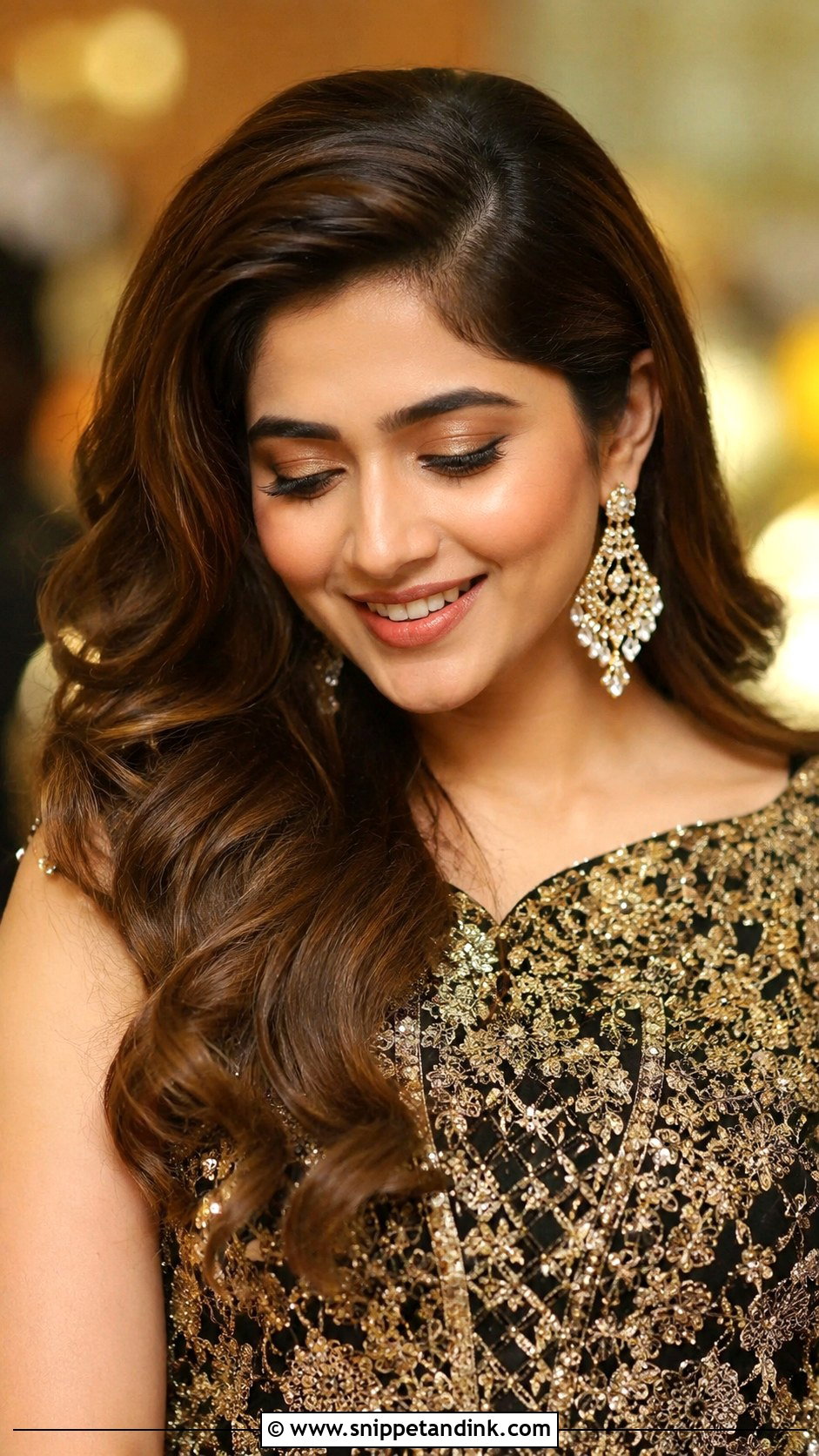
A deep side part with soft waves gives you old-Hollywood shape with Indian jewelry. The part creates volume on one side; the waves give movement below. I set the waves on the heavy side with a few pin curls while the makeup is being done, then release them last so they hold longer. Round and square faces benefit from the angle. Under evening lights the shine on the waves catches every flash, so I go light on serum to avoid greasy patches in photos.
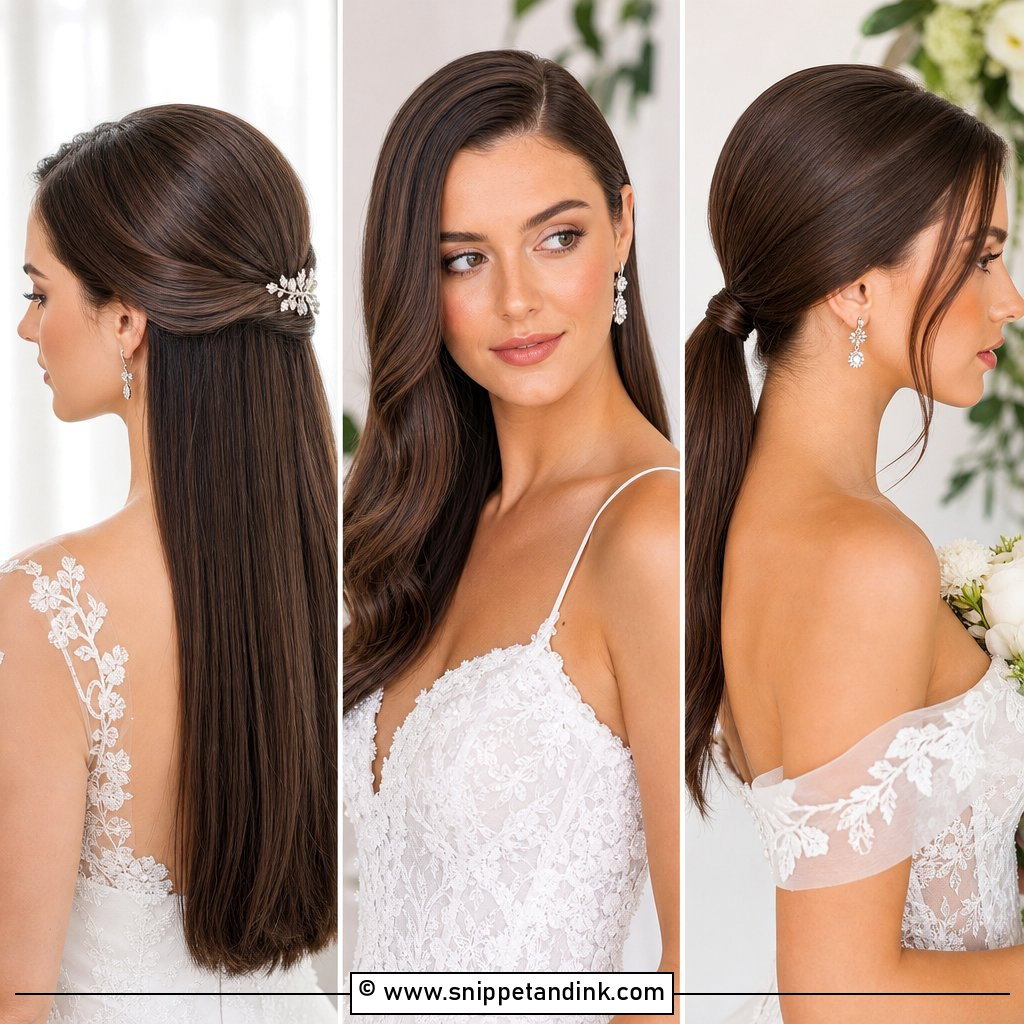
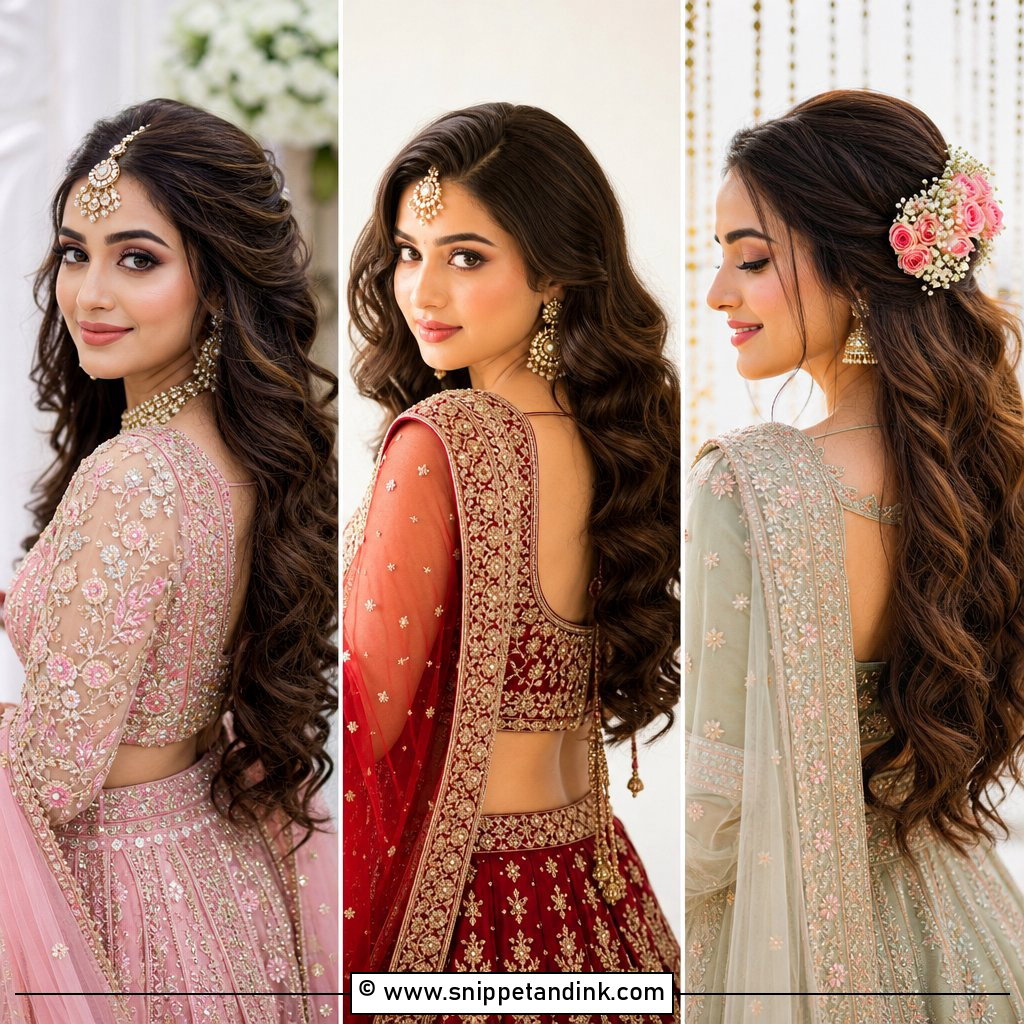
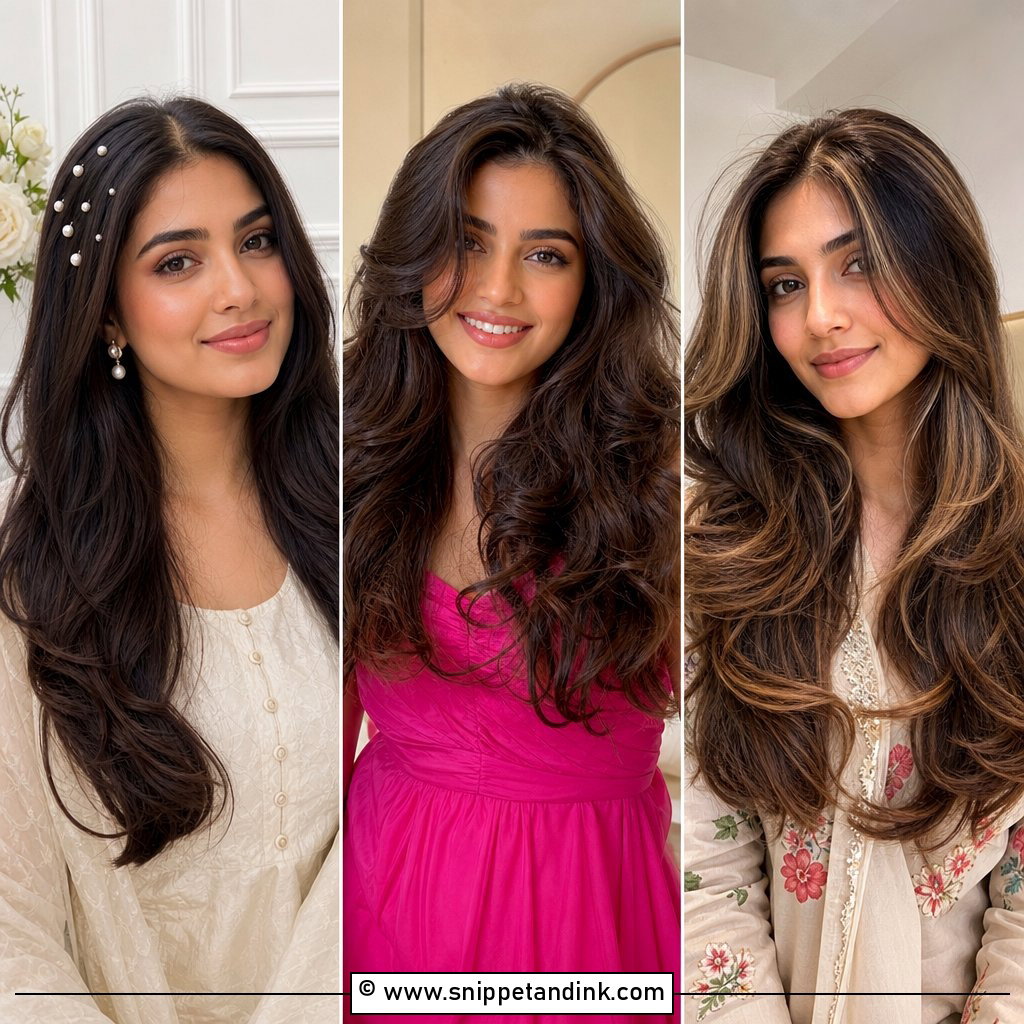
25. Straight Open Hair With Gajra Accent
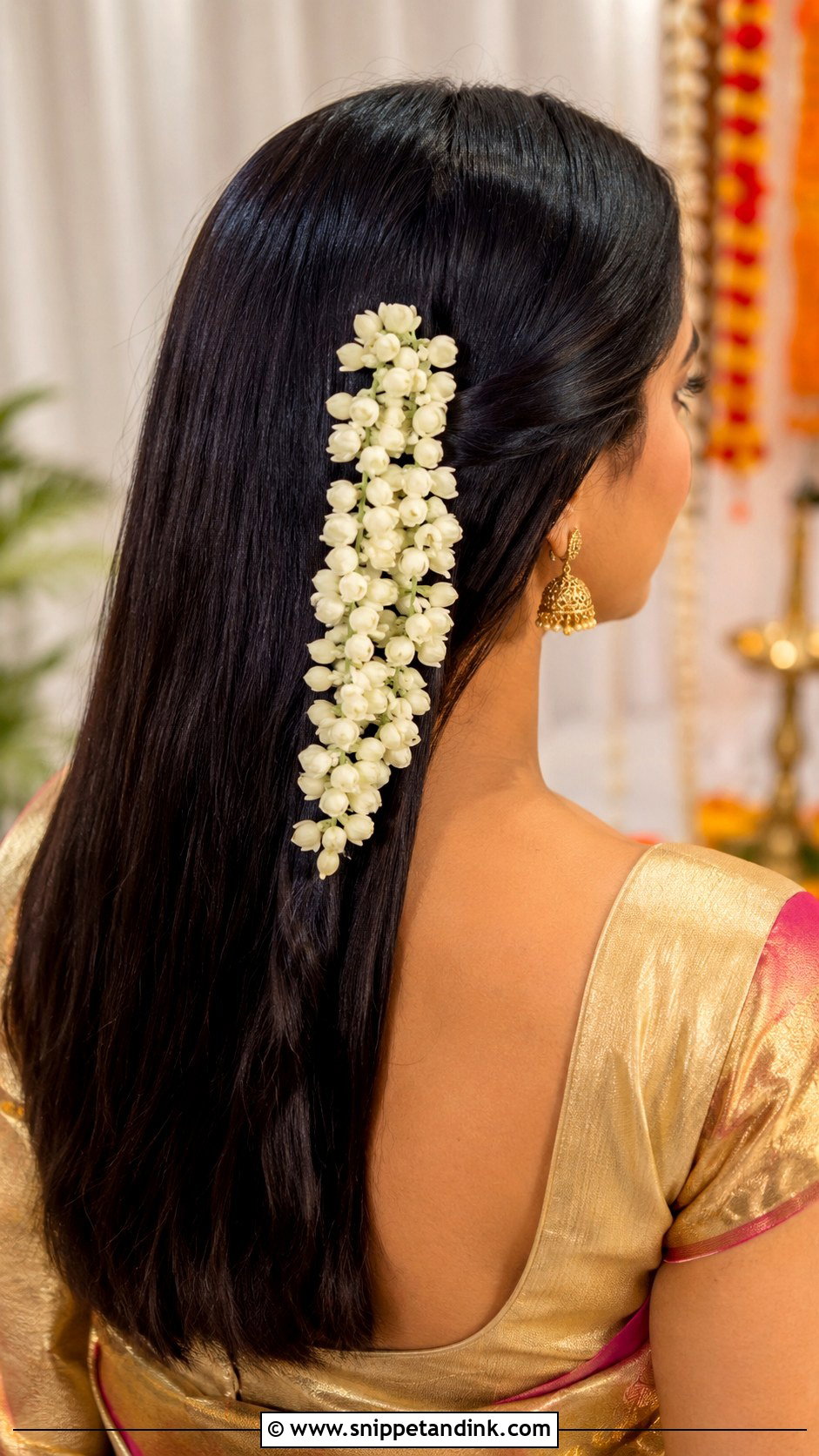
A gajra across the back or down one side brings the South Indian tradition of jasmine into open hair, and the white flowers stand out against dark, sleek hair. It suits brides for mehendi, haldi, and main ceremonies. Fresh gajras are heavier than they look once wet, so I pin them at three points, not one. The fragrance lasts through the day, but buds brown after several hours in heat, so for a long ceremony I’d keep a spare string in the fridge.
26. Straight Open Hair With Crystal Hairpins
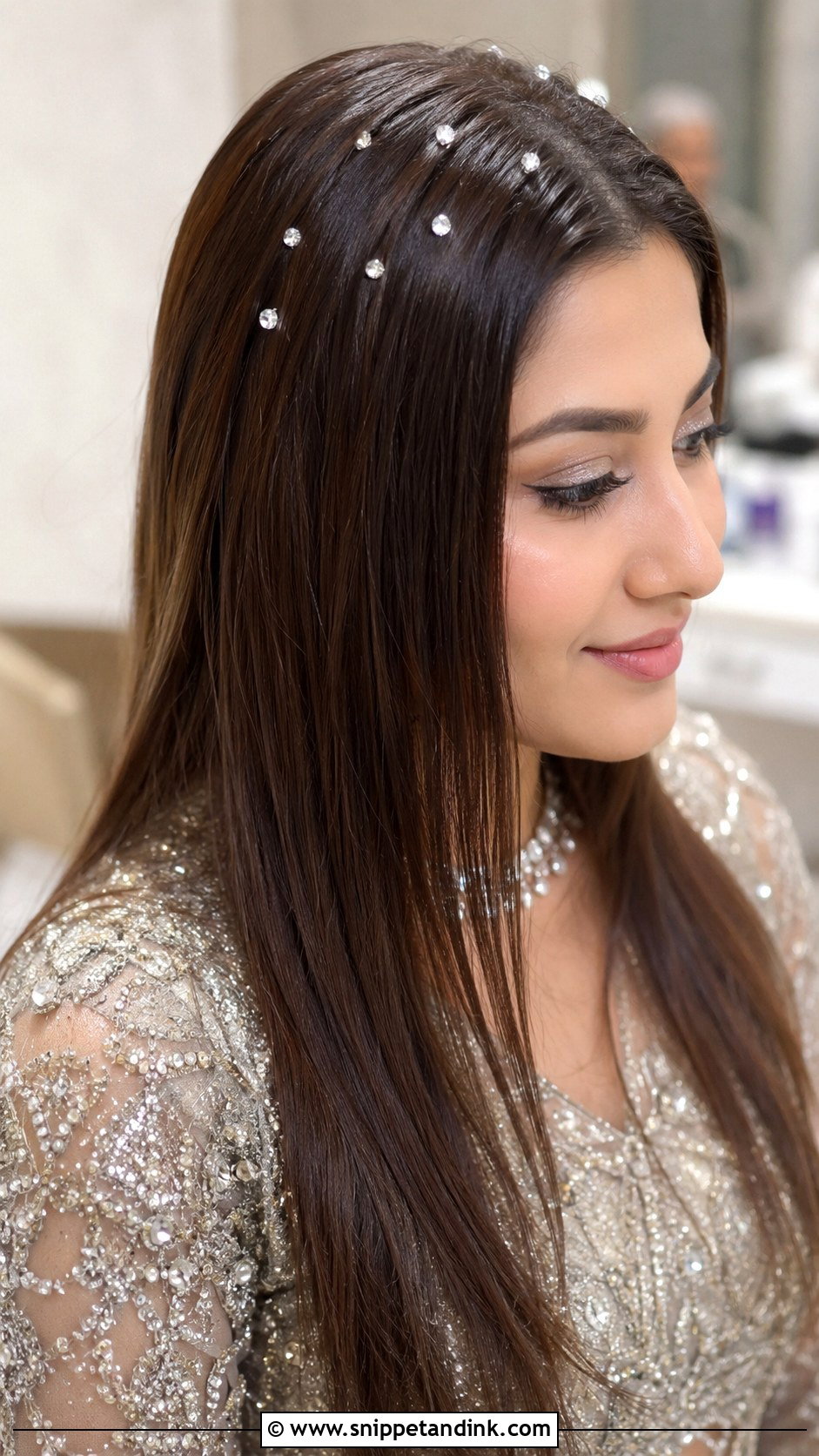
Crystal pins scattered through sleek hair catch light every time you turn your head. They suit receptions and engagement parties more than daytime events, where crystals can look flat in sunlight. Keep the pins to one side or scatter them loosely, and keep the hair smooth so they stand out. I’d match crystal pins with crystal jewelry rather than gold kundan; mixing the two finishes reads as busy in close-ups.
27. Straight Open Hair With Bardot Bangs
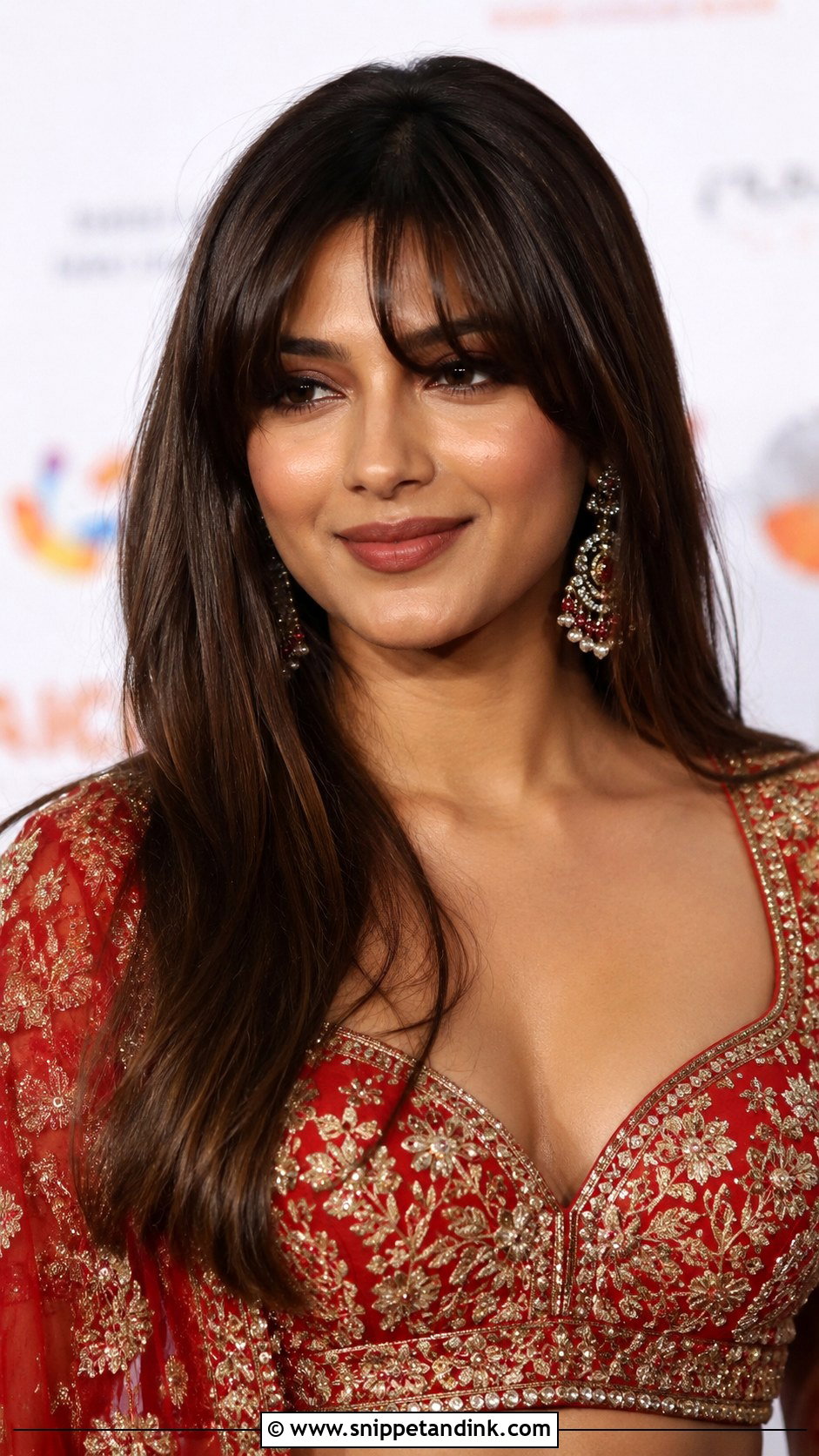
Bardot bangs are wispy and graze the eyebrows, giving a retro feel to straight hair. They frame the eyes and suit oval and long faces. Wispy bangs separate and go stringy with sweat or heavy foundation on the forehead, so I keep blotting papers on hand and put a light dusting of dry shampoo on the underside. Pair with bold eye makeup and statement earrings, and keep the rest of the hair sleek.
28. Straight Open Hair With Slicked-Back Crown
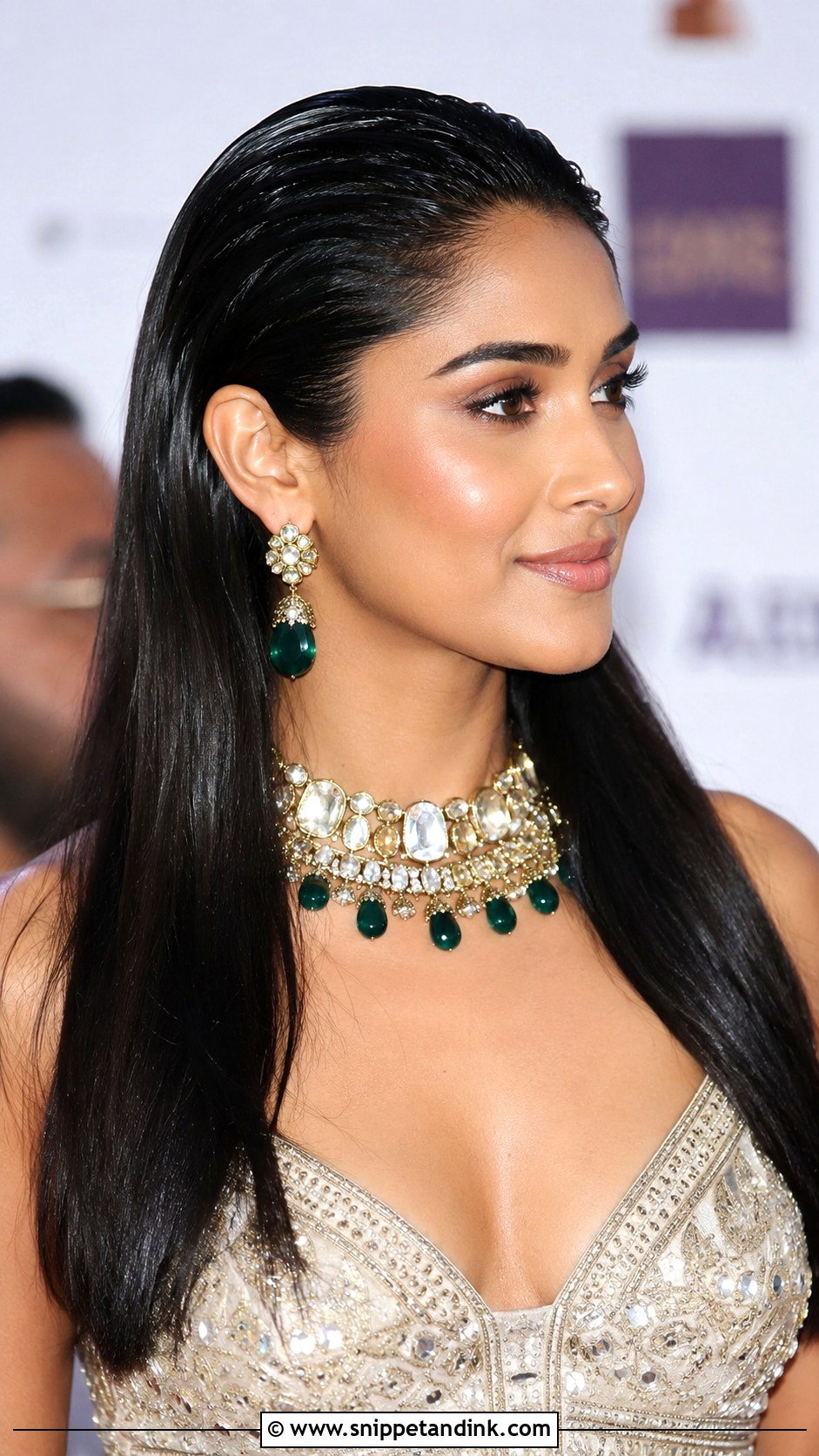
A slicked-back crown works with fusion outfits and bold jewelry because nothing distracts from the face. I smooth the front with a strong-hold gel and a fine comb, pin it flat, then let the rest fall glossy. A wet-look shine spray finishes the crown. Be careful on very fine hair: slicked styles can show the scalp under bright lights, so I’d use a tinted root powder first.
29. Straight Open Hair With Twisted Crown and Open Length
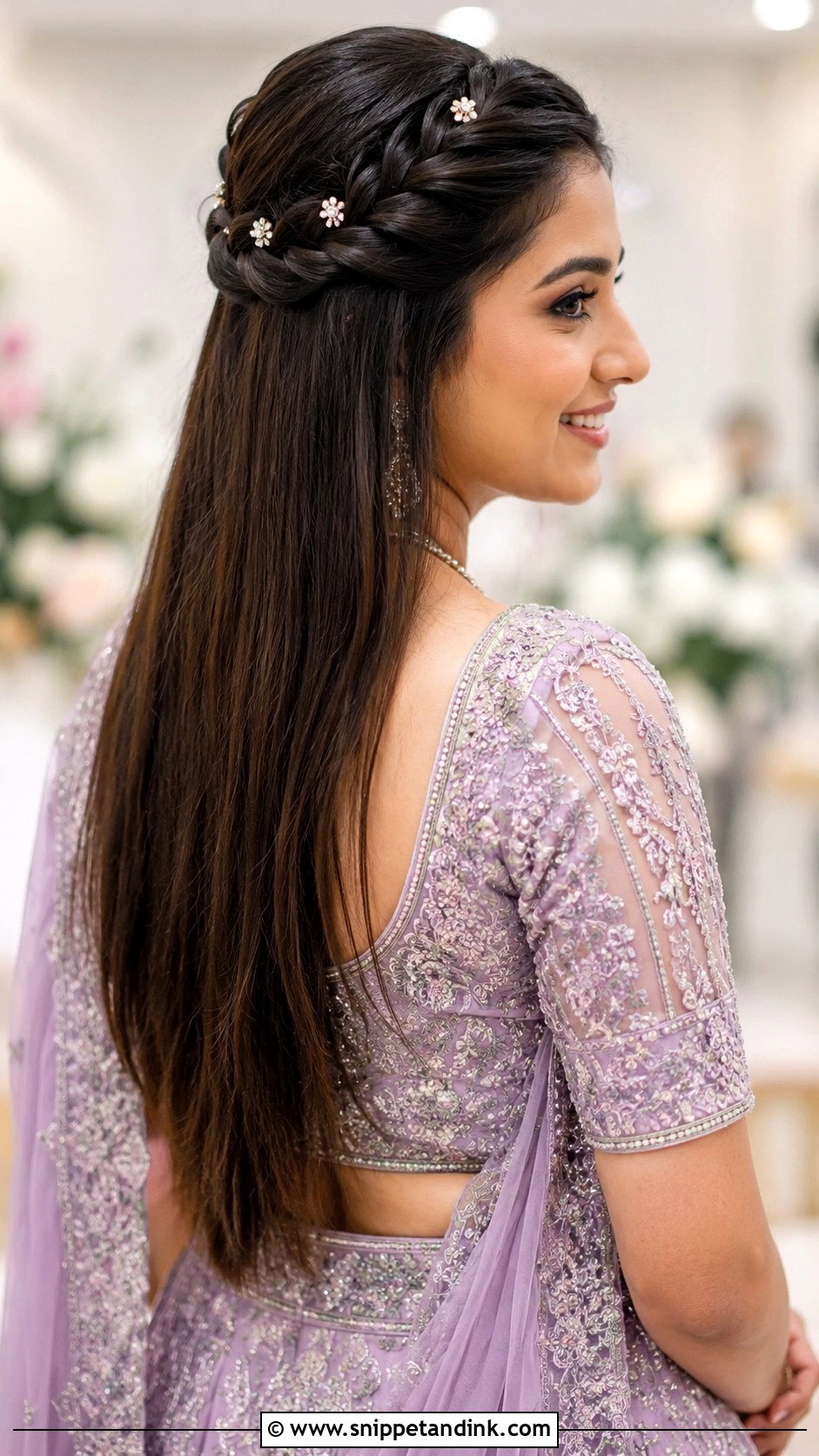
Twists around the crown create a halo while the straight length falls free below. It works for daytime and evening functions, and the twists keep hair off the face during long celebrations. Jeweled pins or fresh flowers decorate the twists well. I secure each twist with pins crossed in the opposite direction from the twist, which stops them untwisting through dancing and long ceremonies.
30. Straight Open Hair With Center Part and Sleek Ends
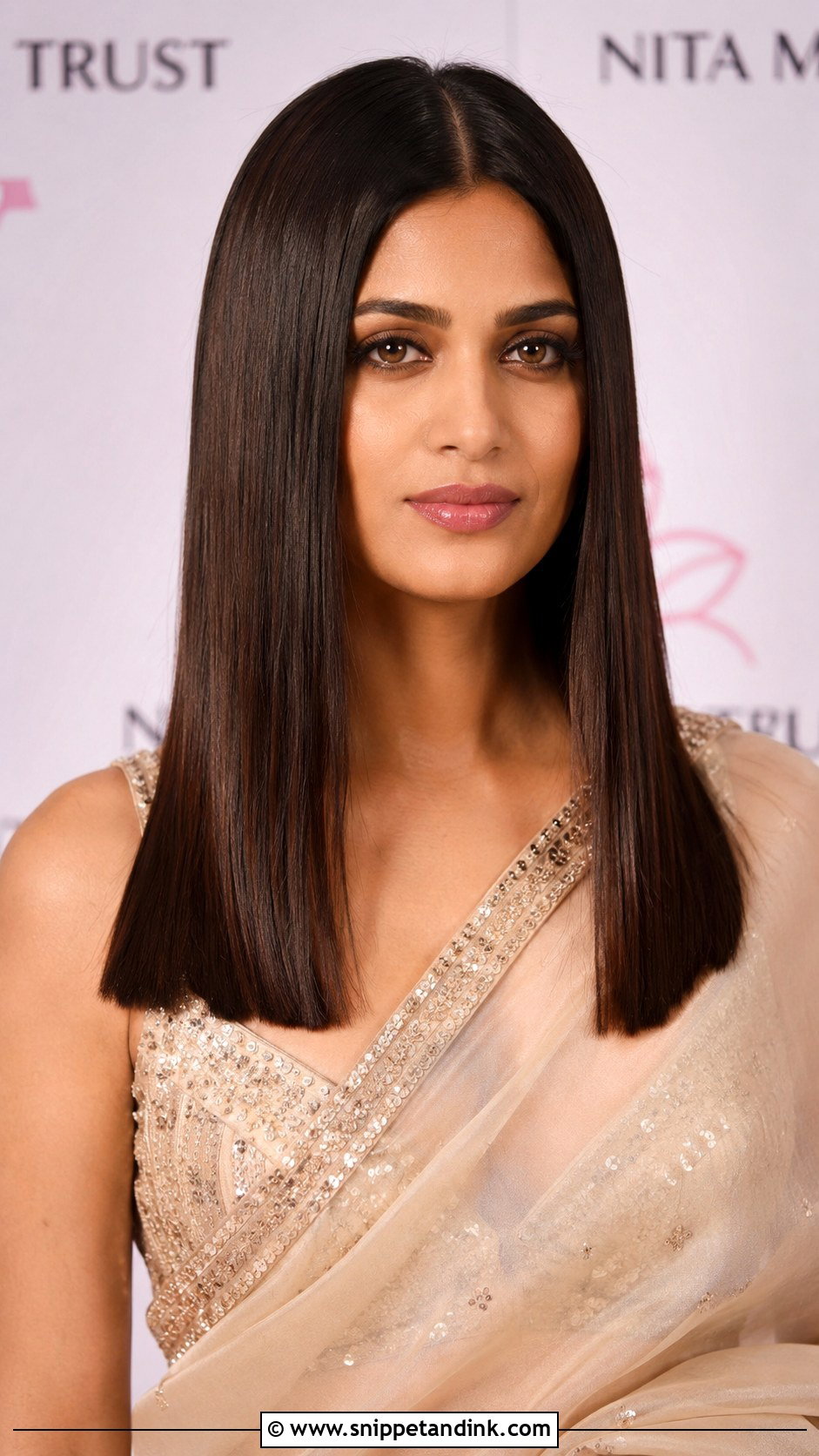
A clean center part with blunt, glossy ends is the most minimal look here, and it puts your outfit and jewelry first. Iron in thin sections and finish the ends with a slight inward curl from the iron, so they sit neatly against the blouse instead of flicking out. It suits both heavy lehengas and lighter sarees and flatters oval and heart-shaped faces. If your ends are split, this look exposes them, so book a trim two weeks before.
Pinning a Heavy Dupatta Over Open Hair
This is where open styles most often fail. A bridal dupatta can weigh a lot once the embroidery and borders are added, and without a hidden anchor it drags straight hair backward and flattens the crown within an hour. Open hair gives the pins nothing to grip.
My fix is a small concealed base. I take a section at the crown, tie it into a tiny flat braid or twist, and pin it close to the scalp. The top layer of hair covers it, and the dupatta pins go into that base, never into loose hair. On fine or very slippery hair I add a second base just above each ear so the side drape stays put too.
- Bring the actual dupatta to the trial, not a stand-in. Weight and fabric change everything.
- Ask someone to walk around the room and sit down in it before you leave the trial.
- Keep a few U-pins and bobby pins in your clutch for re-pinning after the pheras.
Smoothing Treatments and Trims on a Countdown
Keratin and similar smoothing treatments can make straight styles far easier on the day, but timing matters. I’d book one roughly four to six weeks before the wedding so the hair has had a few washes and the finish no longer looks flat or stiff. Doing it the week of the wedding is a gamble: you cannot wash it for a few days afterward, and a reaction or uneven result leaves no time to fix it.
Have a trim about two weeks out, just enough to take off split ends. Sleek styles show every frayed tip, but a fresh cut the day before can leave a hard line that hasn’t softened yet. Skip new color in the final week too; fresh dye can bleed onto a light blouse or dupatta if you sweat.
Open Hair From the Haldi to the Vidaai
Straight open hair rewards preparation more than any other style I do. A good blowout, the right pins in the right places and a plan for the dupatta will carry you from the haldi to the vidaai. Pair your style with a maang tikka, gajra, or a few jeweled pins, keep a small touch-up kit nearby and save the looks that suit your hair texture, not just the ones you like on a screen. Then bring those photos to your trial so your stylist can tell you honestly which ones your hair will hold.
You'll Like These Ideas:





Leave a Reply