
A slip dress is the most honest gown in a bridal salon. There’s no boning, no crinoline and no layered skirt to hide behind, so the fabric and the cut do all the work. That’s exactly why I enjoy fitting them, and why I’m careful with them: a bias-cut satin that looks liquid on a hanger can show every seam of the wrong bra. Today’s bridal slip dresses come with cowl necks, lace edging, pearl straps, sleeves and even mini hems, and each of those details changes how the dress sits on you. Below are the versions I’d happily put a bride in, with what I check at the fitting for each one.
The Fitting Room Test a Slip Has to Pass
A slip dress has no internal structure, so the fitting is where it either works or it doesn’t. I run the same short test with every bride before we even talk about trims or straps.
- Sit down for a full minute, then stand. If the satin holds a sharp crease across the lap or pulls at the hip seam, the size or the fabric is wrong.
- Raise both arms and hug someone. Straps that dig in or a back that lifts off the skin will only get worse after hours of greeting guests.
- Walk toward a mirror in the shoes you’ll actually wear. A bias skirt that’s too long wraps around the ankles, and one that’s too short flips up at the hem.
- Stand under a bright overhead light. Thin satin is unforgiving there and shows every lining line, so this is where you learn what has to go underneath.
Underwear Decides Half the Result
Bring your undergarments to the first fitting, not the last. For most slips I suggest laser-cut briefs in a shade close to your skin rather than white, because white shows through ivory satin. If you need bust support, your seamstress can sew cups into the lining, which is usually more comfortable over a long day than an adhesive bra.
Shapewear is fine, but it should end above the waist or below the hem. An edge that stops mid-thigh prints straight through a bias cut the moment you walk.
1. Satin Slip Wedding Dress
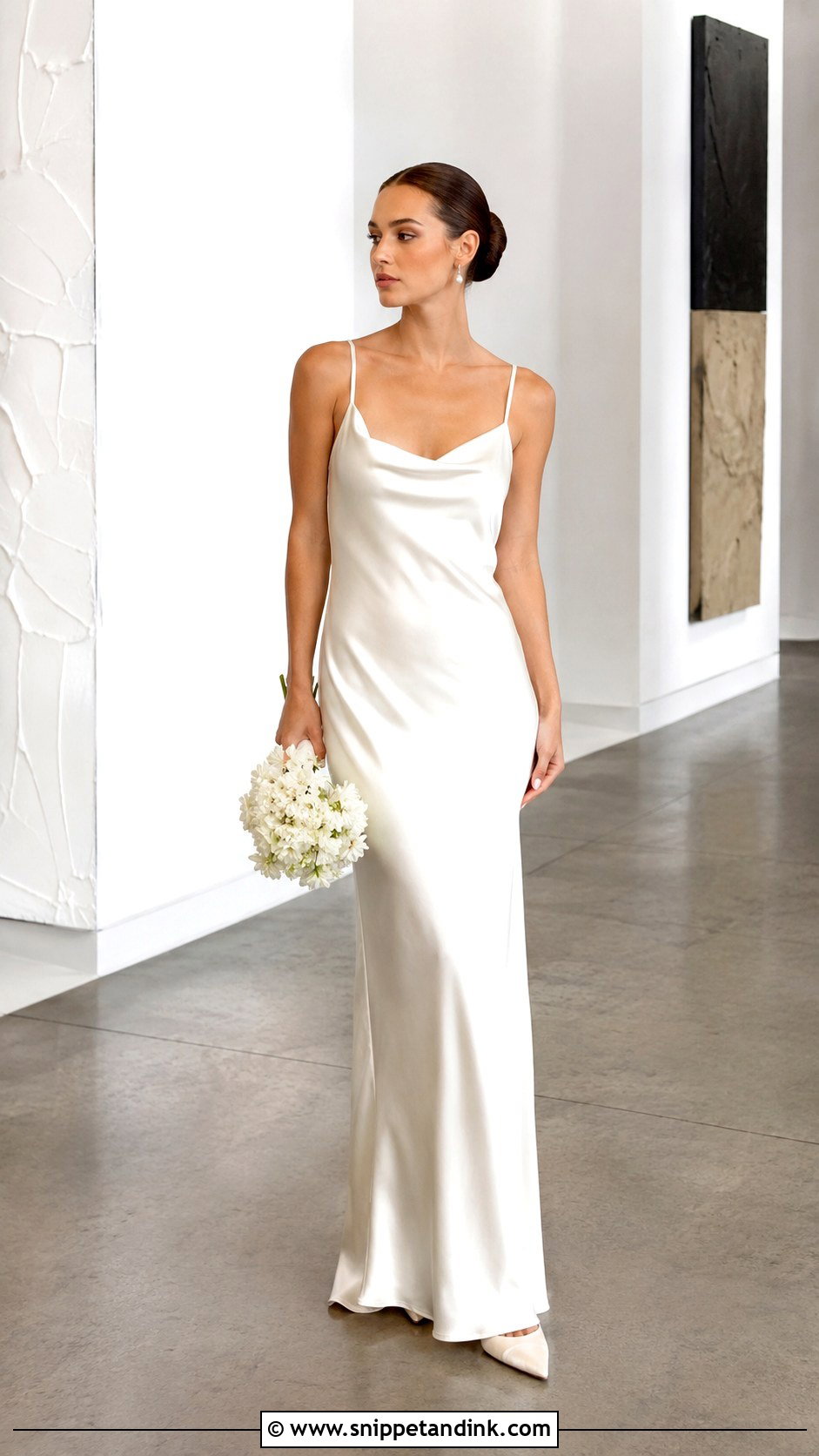
Satin is where most brides start, and for good reason. It reflects light evenly, so a plain bodice still reads as finished in photos. The catch is that satin shows pressure: thin straps dig, a tight seat pulls across the hips, and a crease from the car ride stays visible. I ask brides to sit in the sample for a full minute before we settle on a size. An ivory or pearl satin with a gentle V, pointed satin pumps, pearl drops and a sleek low bun suits a city hall, a gallery or a dinner reception. A soft veil is the quickest way to make it read bridal.
2. Cowl Neck Slip Wedding Dress
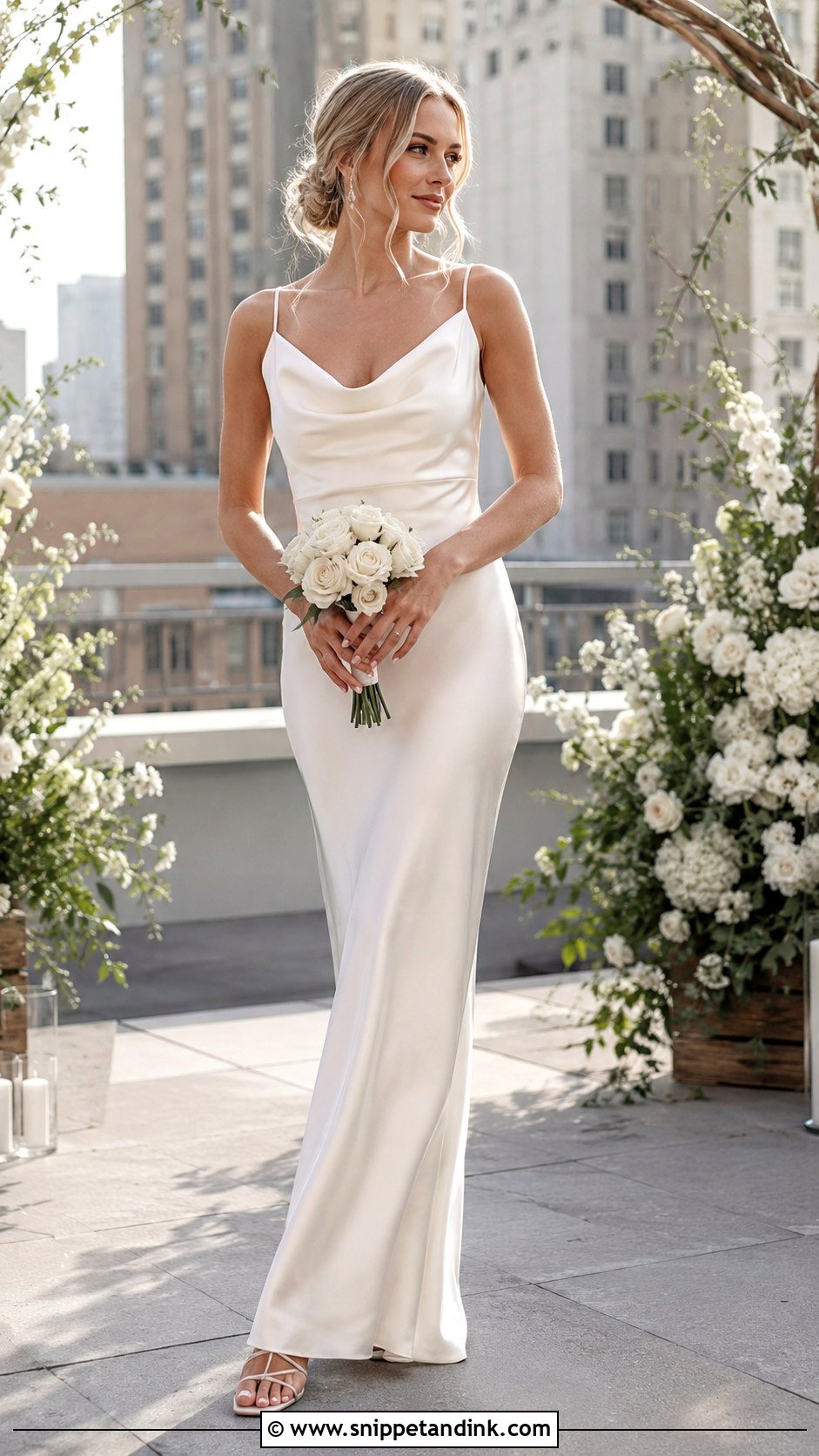
The cowl is draped fabric, not a stitched shape, so it moves when you move. That’s its charm and its risk. On a fuller bust a deep cowl can gape when you lean forward to sign the register, so I often add a small weight or a hidden snap at the centre fold. Silk or satin both drape well here. Strappy heeled sandals, fine earrings and a small bouquet of white roses or orchids keep the neckline in focus, with a tucked chignon or soft waves. I’d wear it on a rooftop or at an evening reception.
3. Lace Trim Slip Wedding Dress
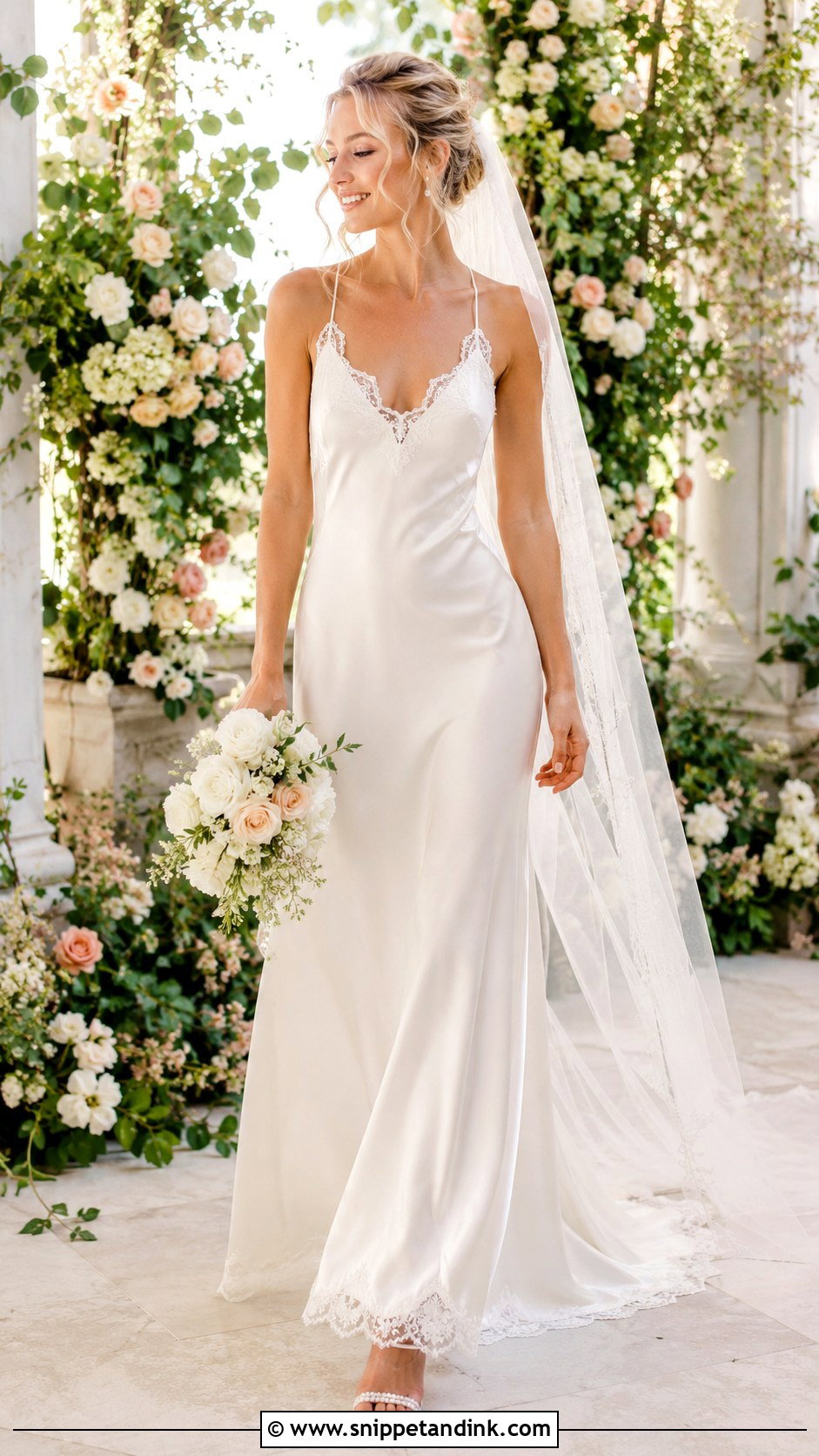
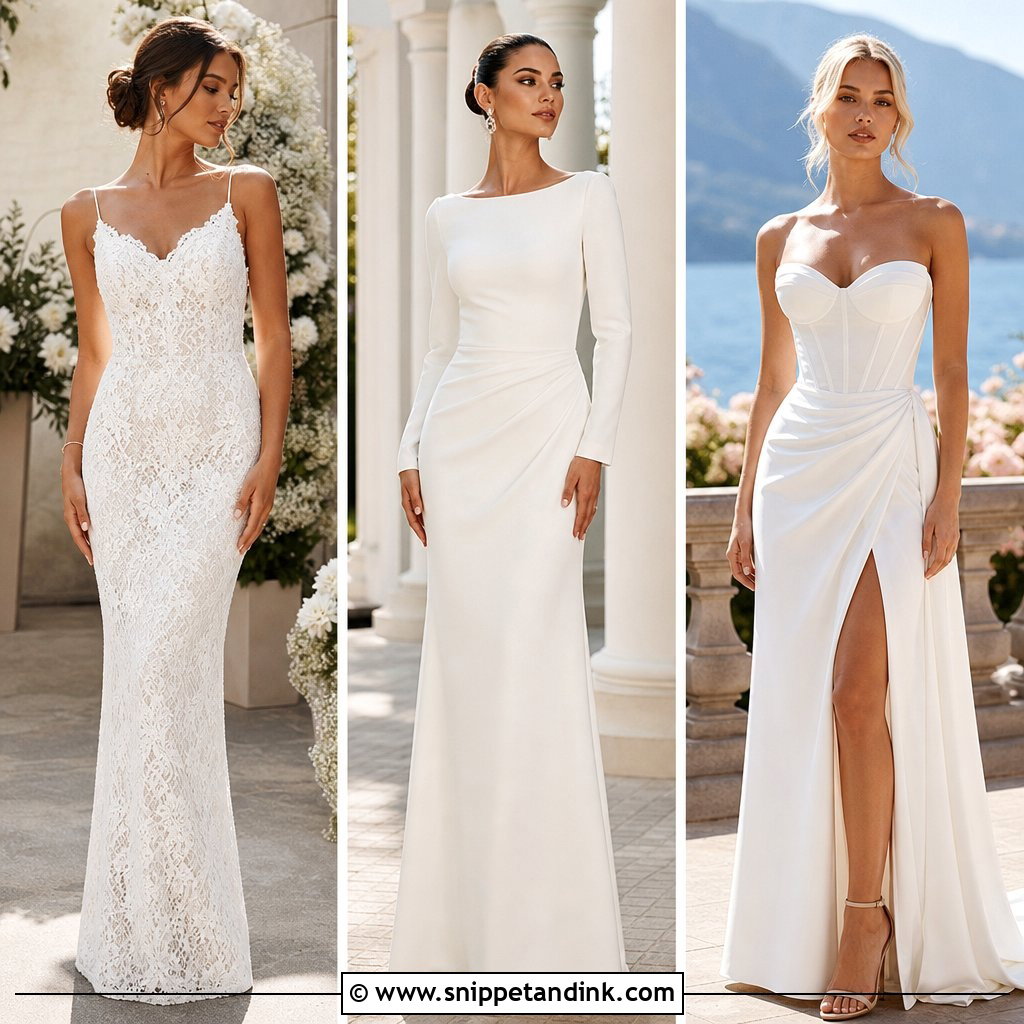
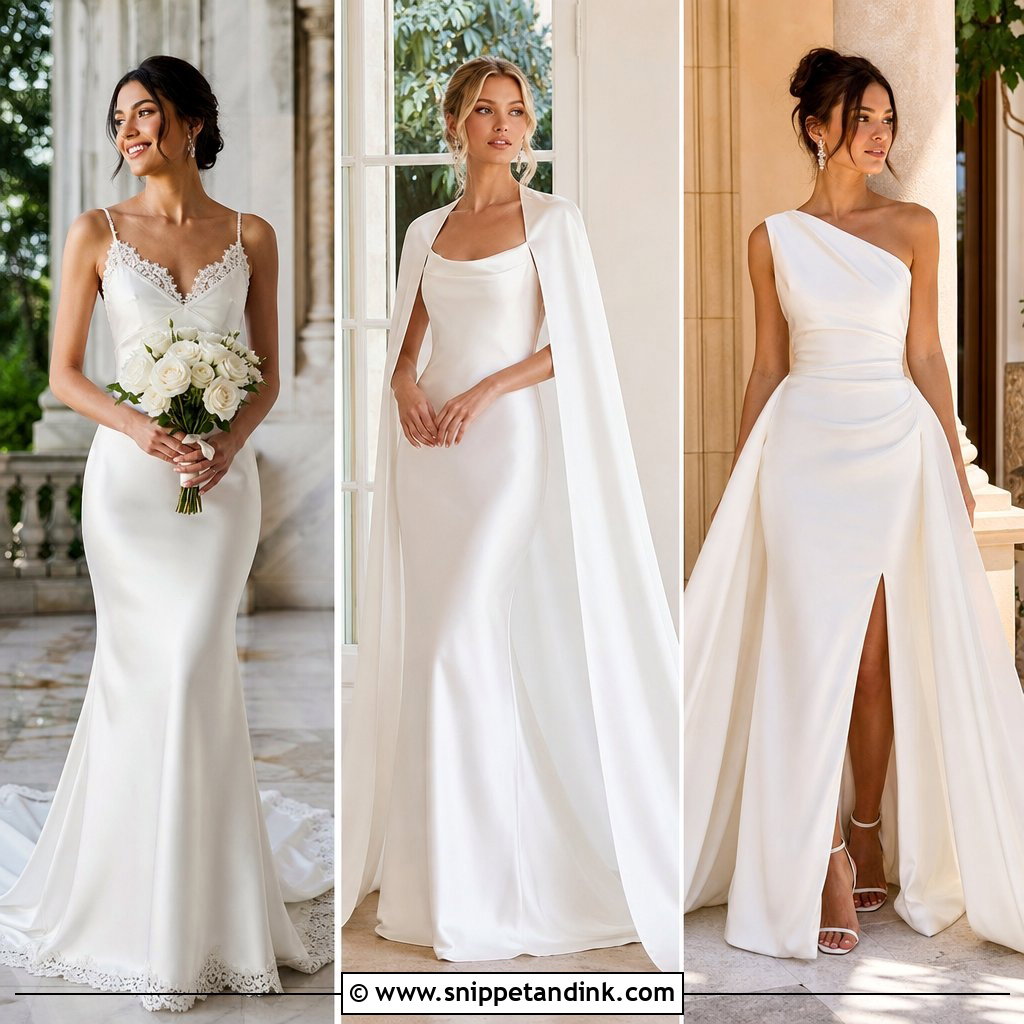
Lace edging gives a plain slip some vintage character, but the type of lace matters more than people think. Chantilly is fine and flat, so it lies quietly along a neckline or hem, while a heavy corded lace can stiffen the edge and stop the bias from draping. I always check that the trim was attached with some give, because lace sewn on tight will pucker the satin when you sit. Pearl heels, a simple bracelet and a sheer veil are enough. Garden weddings and small estate venues in spring suit it, and a soft updo keeps the trimmed neckline on show.
4. Silk Slip Wedding Dress
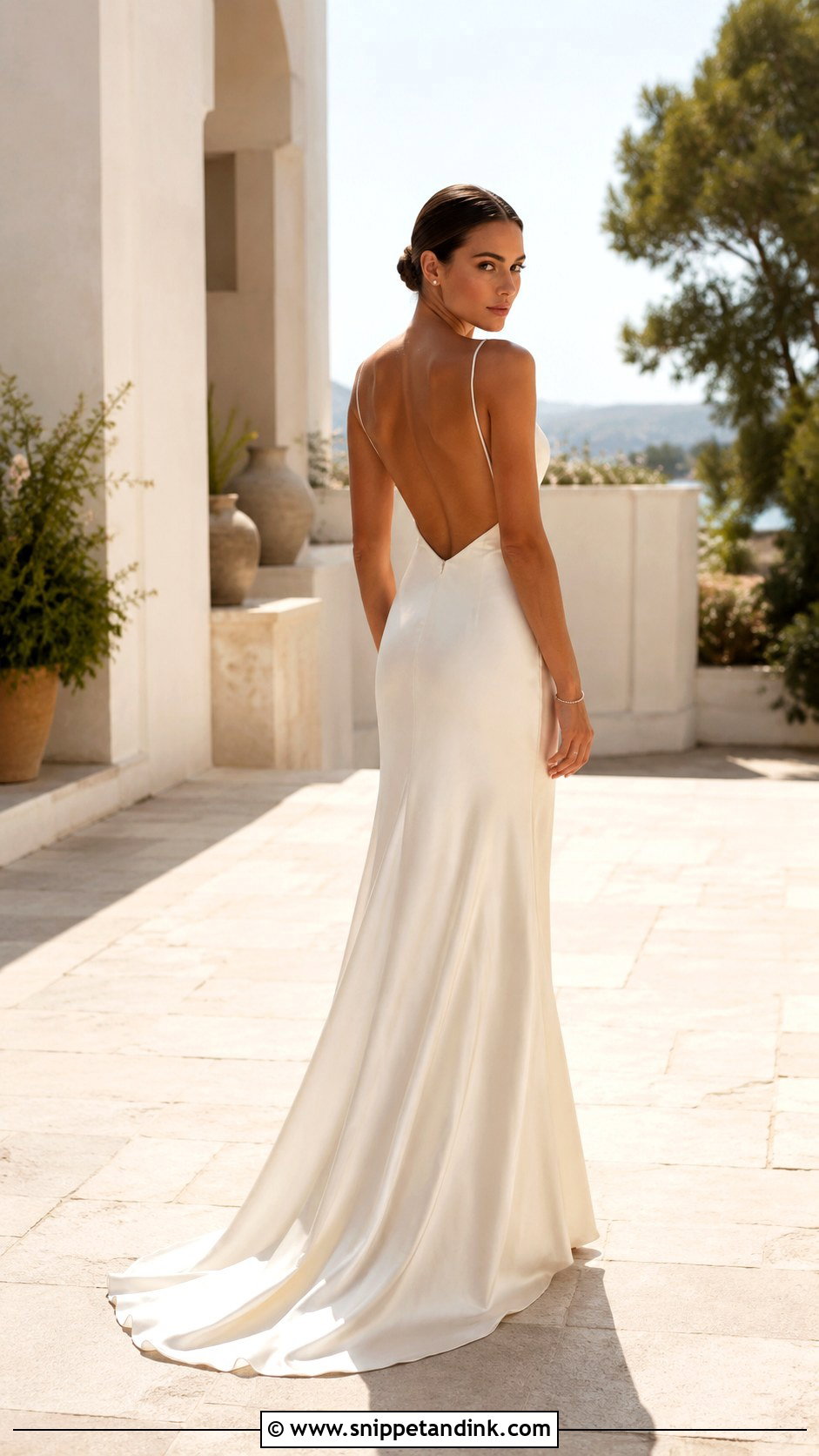
Real silk feels cool on the skin and drapes more softly than polyester satin, but it’s less forgiving. It water-spots, it shows sweat at the underarm and lower back, and it marks if a hem drags across wet grass. A bias-cut silk gown in cream or ivory looks best with barely-there heels, diamond studs and a slim bracelet. Tailoring is the key. The dress should glide over you rather than cling, and that often means letting a seam out, not taking it in. If the back is low, wear your hair up, and save a long veil for the ceremony only.
5. Low Back Slip Wedding Dress
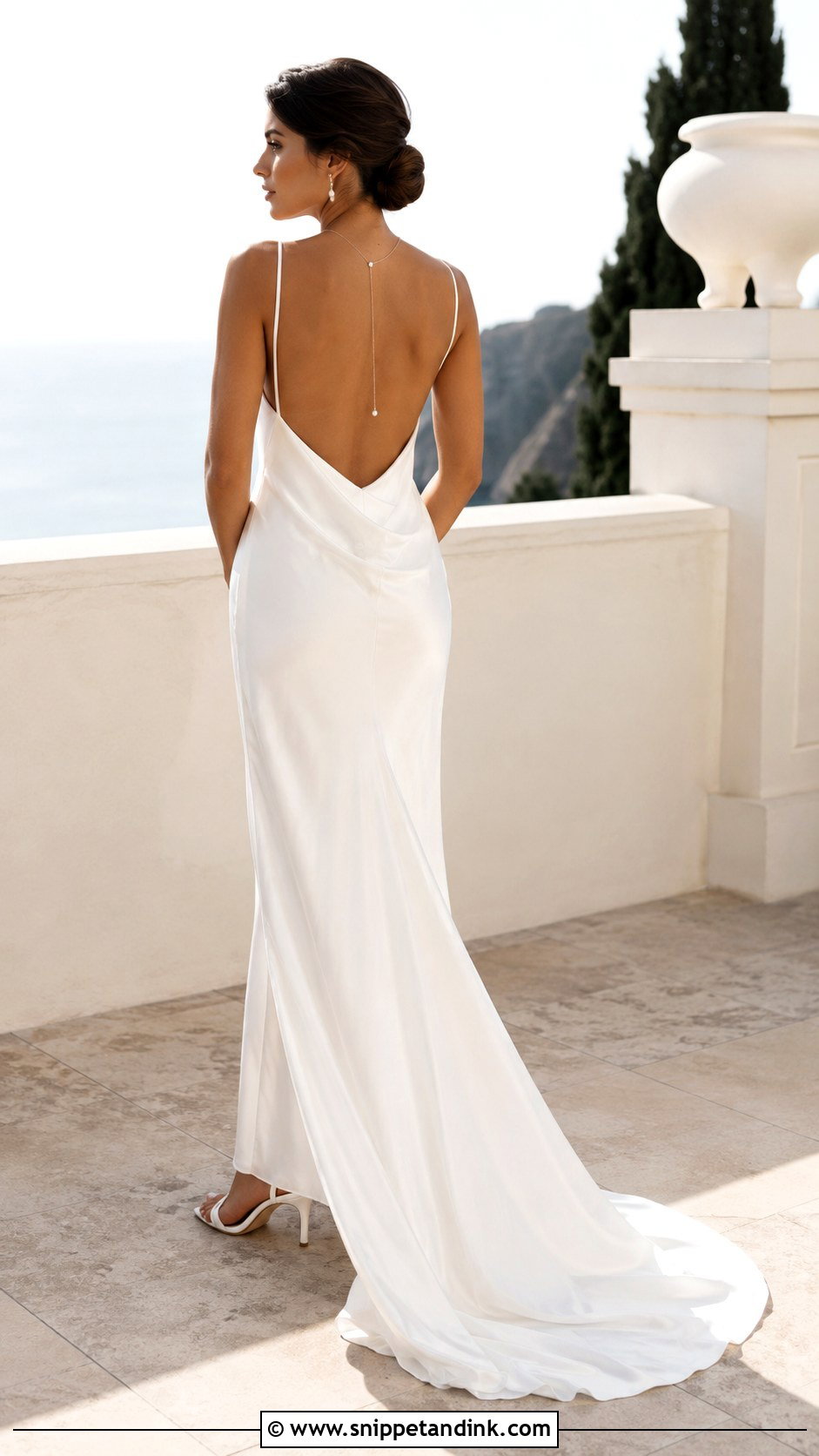
The first thing I check on a low back is where the drape lands against your bra line, because most standard strapless bras will show. A low-back bra, adhesive cups or cups sewn into the lining are the usual answers, and that decision has to be made before the final fitting. Look for thin straps and a back that dips without gaping when you raise your arms. Back-detail jewelry, simple heels and a smooth updo keep the back open for summer, beach and modern indoor venues. A sheer scarf or light shawl gives you coverage for a religious ceremony.
6. Halter Slip Wedding Dress
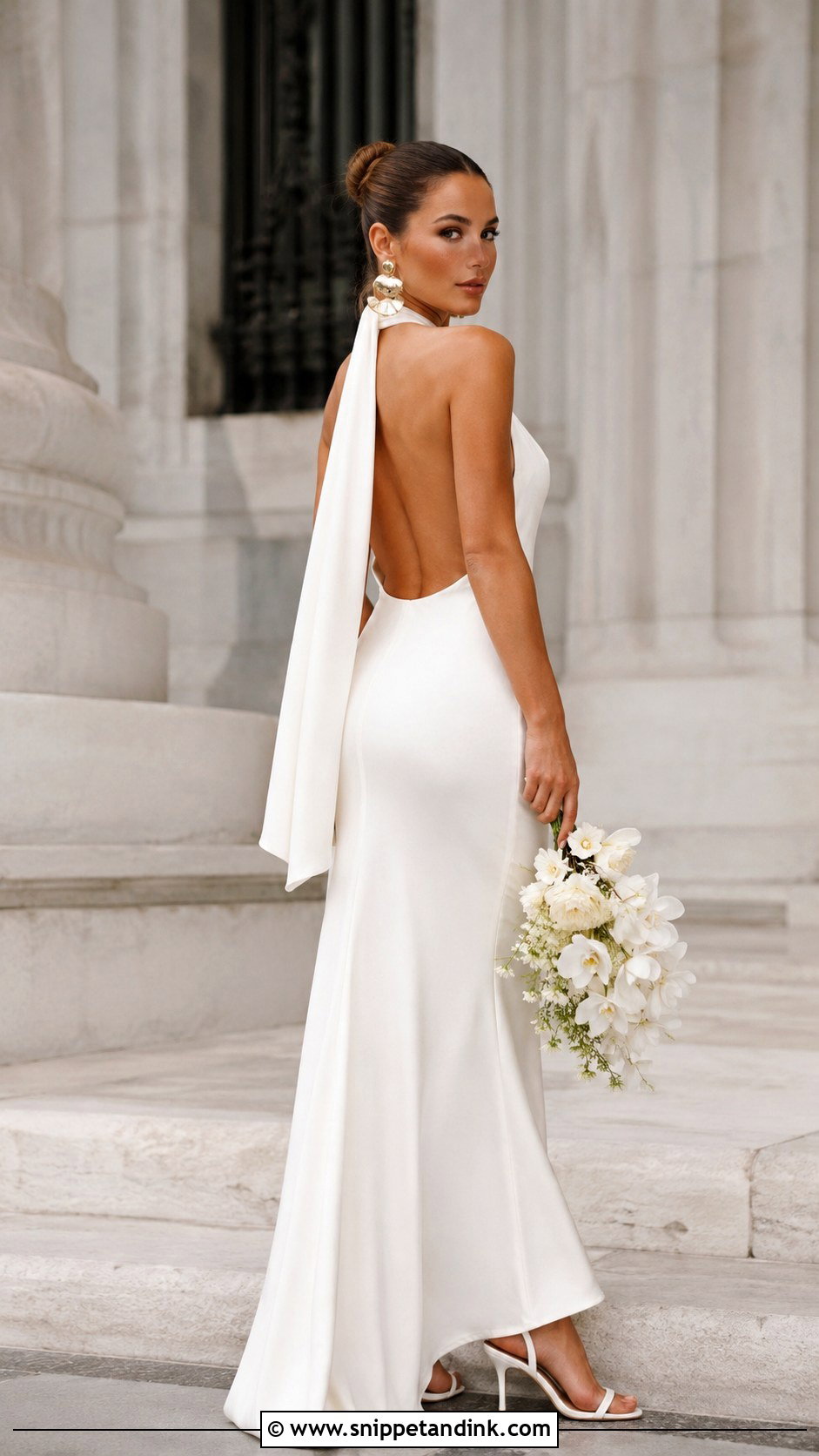
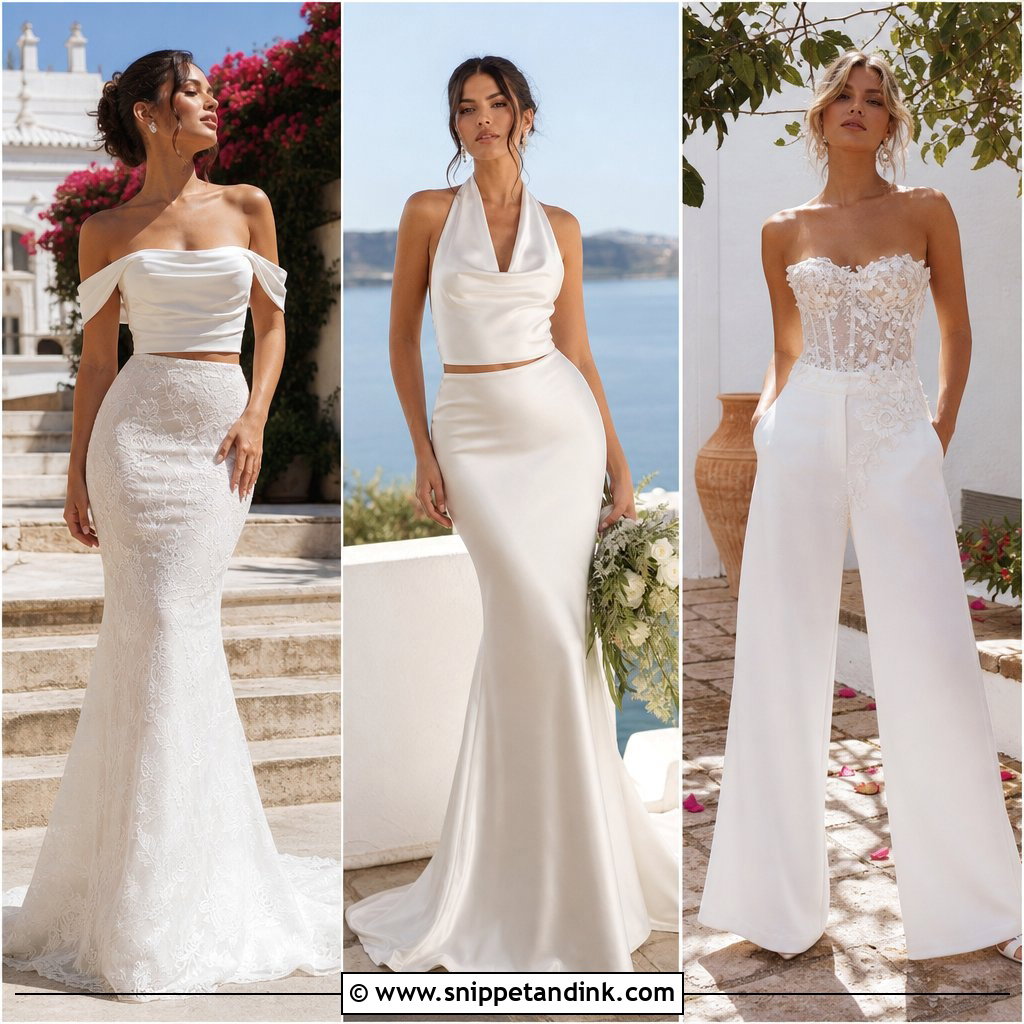
A halter puts the weight of the bodice on your neck instead of your shoulders, which gives more support across the bust than spaghetti straps ever will. I’d steer you away from it only if you get neck or shoulder tension easily, because a tight halter strap for a whole day is a long time. Satin or crepe with a slim skirt and an open back is the cleanest version. Sculptural earrings, simple heels and a smooth bun or ponytail suit the shape at a city ceremony or restaurant reception. The structured neckline holds its line from the side and the back, so keep the bouquet small.
7. Pearl Slip Wedding Dress
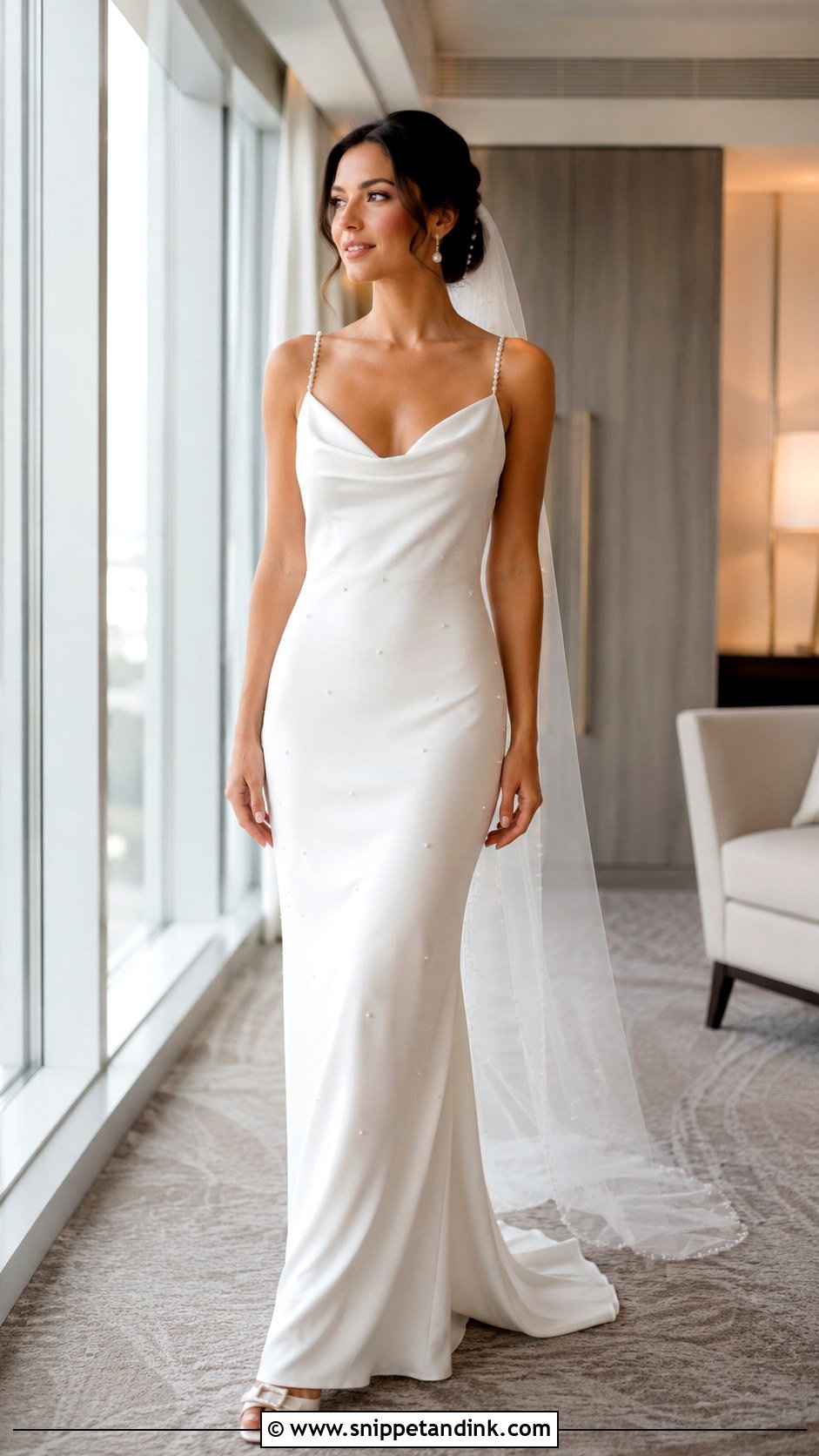
Pearl embellishment on a slip should stay light. A few pearls on the straps or scattered over the bodice add detail; a heavily pearled bodice pulls a bias-cut fabric down and the skirt starts to twist. When I fit one, I check that the pearls are hand-stitched rather than glued, since glued pearls pop off along the hug line. White or ivory with subtle pearl accents pairs well with pearl earrings, satin heels and a plain veil for an evening ceremony or hotel wedding. Finish with a polished low bun or side-parted waves and stop adding pieces there.
8. Beaded Slip Wedding Dress
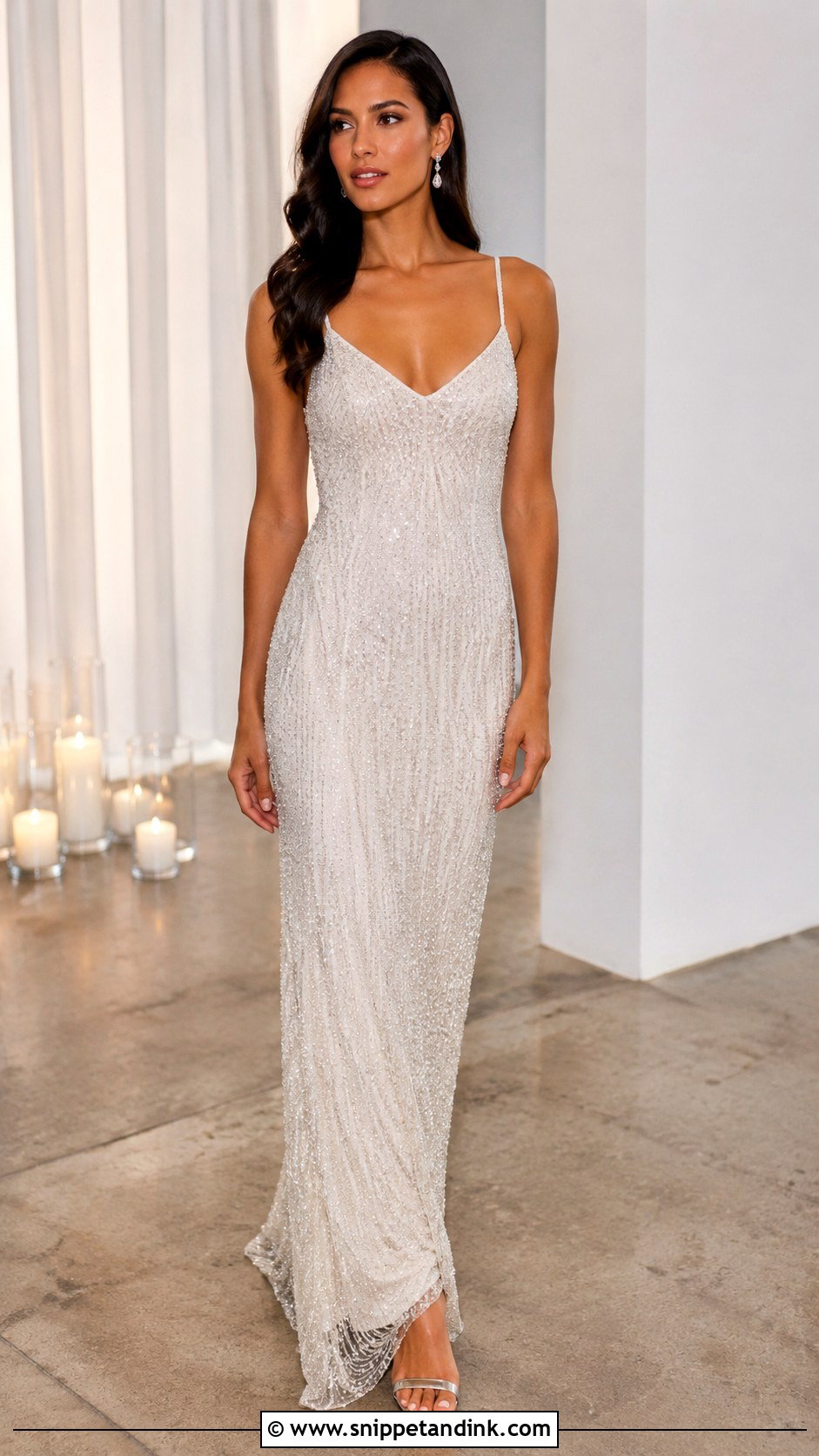
Beading changes how a slip behaves. Fine beads on a mesh or satin base add real weight, so the dress hangs straighter and moves less than a plain slip. That’s good news if you worry about cling, less good if you want fluid movement on the dance floor. Look for fine beading or crystal straps rather than heavy clusters, and ask whether beads run over the seams, since that makes alterations harder and dearer. Metallic heels, small earrings and a clutch are plenty at night or for an after-party change. Keep makeup soft, because the dress already throws light.
9. Long Sleeve Slip Wedding Dress
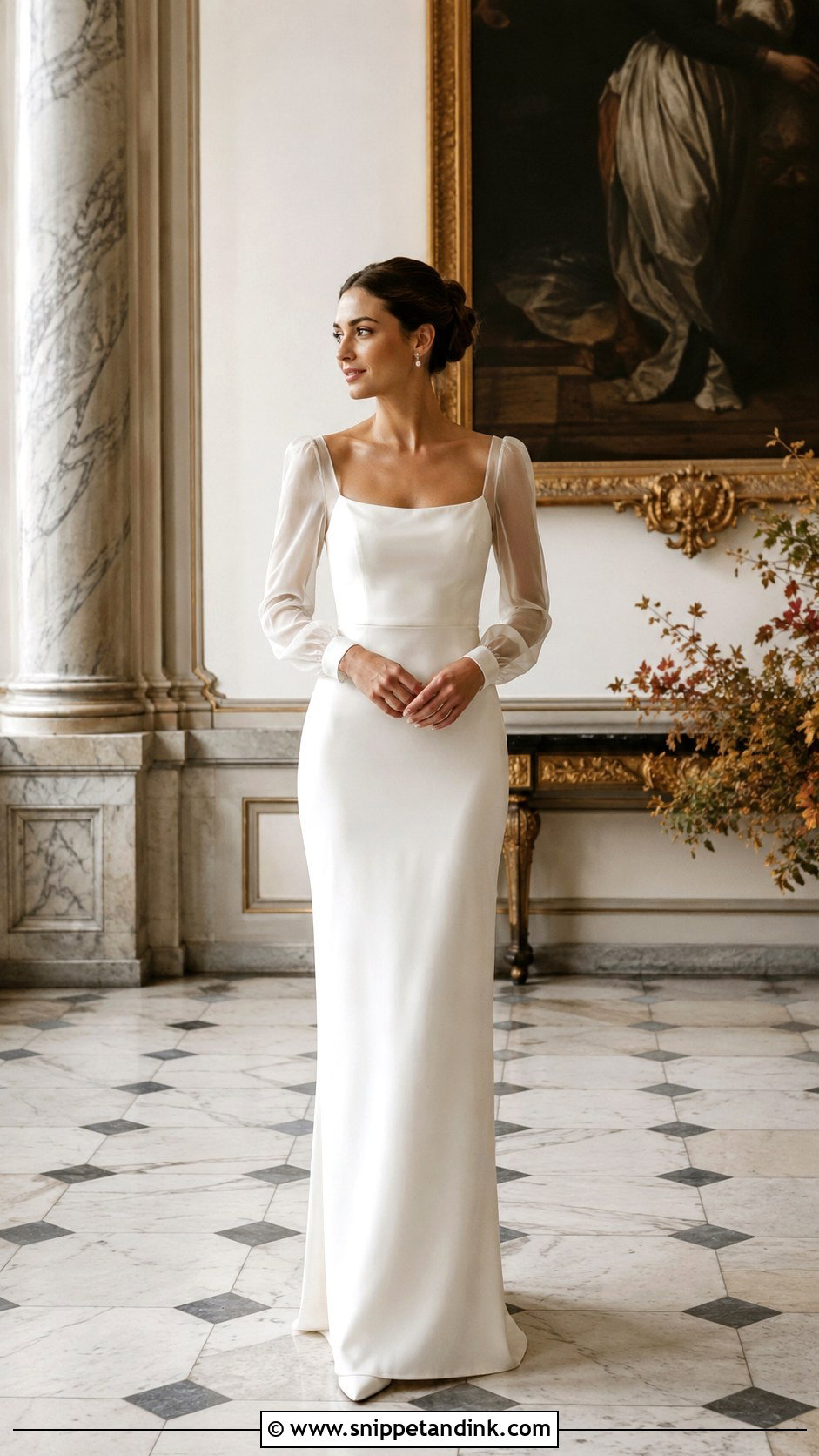
A long sleeve slip wedding dress gives coverage without losing the slim line, which makes it a natural fit for fall, winter and formal indoor ceremonies. The sleeve fabric sets the mood: sheer sleeves feel romantic, satin sleeves feel modern. At the fitting I have brides raise both arms and hug someone, because a fitted sleeve set into a slip with no stretch will pull the whole bodice up. A slim ivory gown, closed-toe heels, pearl studs and a neat bun is a complete outfit. If the dress is very plain, let a cathedral veil carry the drama.
10. Off Shoulder Slip Wedding Dress
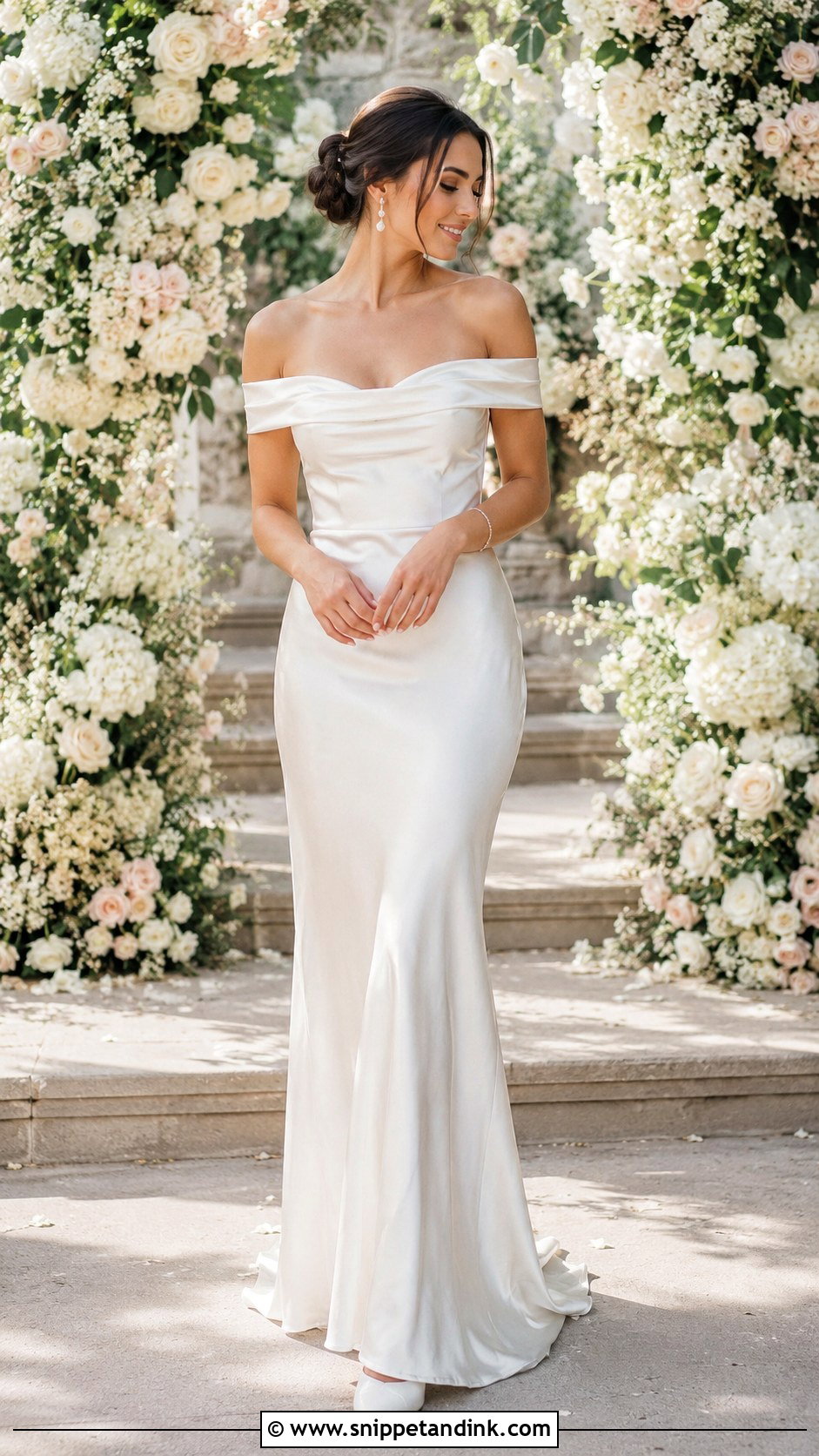
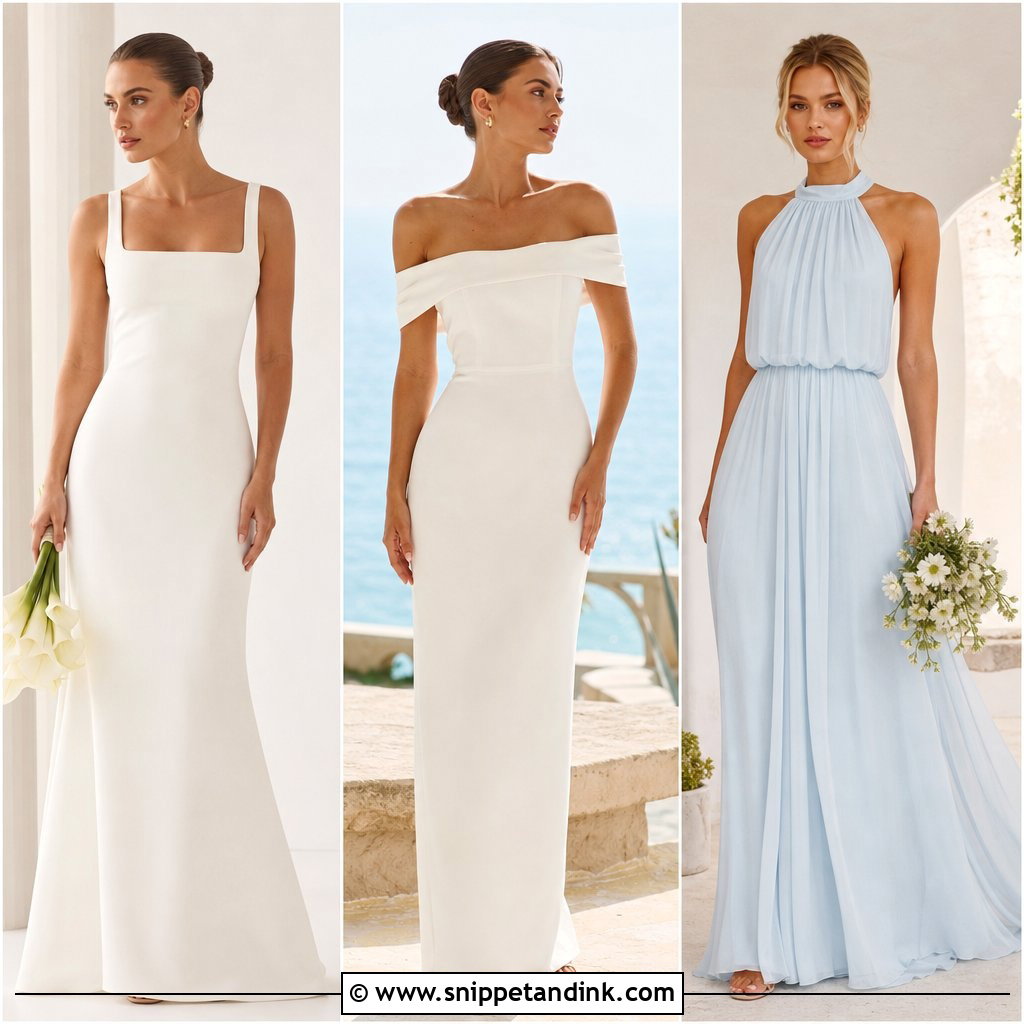
Off-shoulder bands on a slip need something to grip, otherwise they creep up toward the neck every time you lift your arms. I look for a hidden elastic or silicone strip inside the band, and if there isn’t one, I have it added. The shape itself is soft across the shoulders and sleek through the skirt, a good balance for a candlelit evening or a garden. Choose satin or crepe with gentle draping and a smooth column skirt. Drop earrings, pointed heels and a low chignon are enough. Skip the necklace, because the neckline already frames your face and collarbone.
11. One Shoulder Slip Wedding Dress
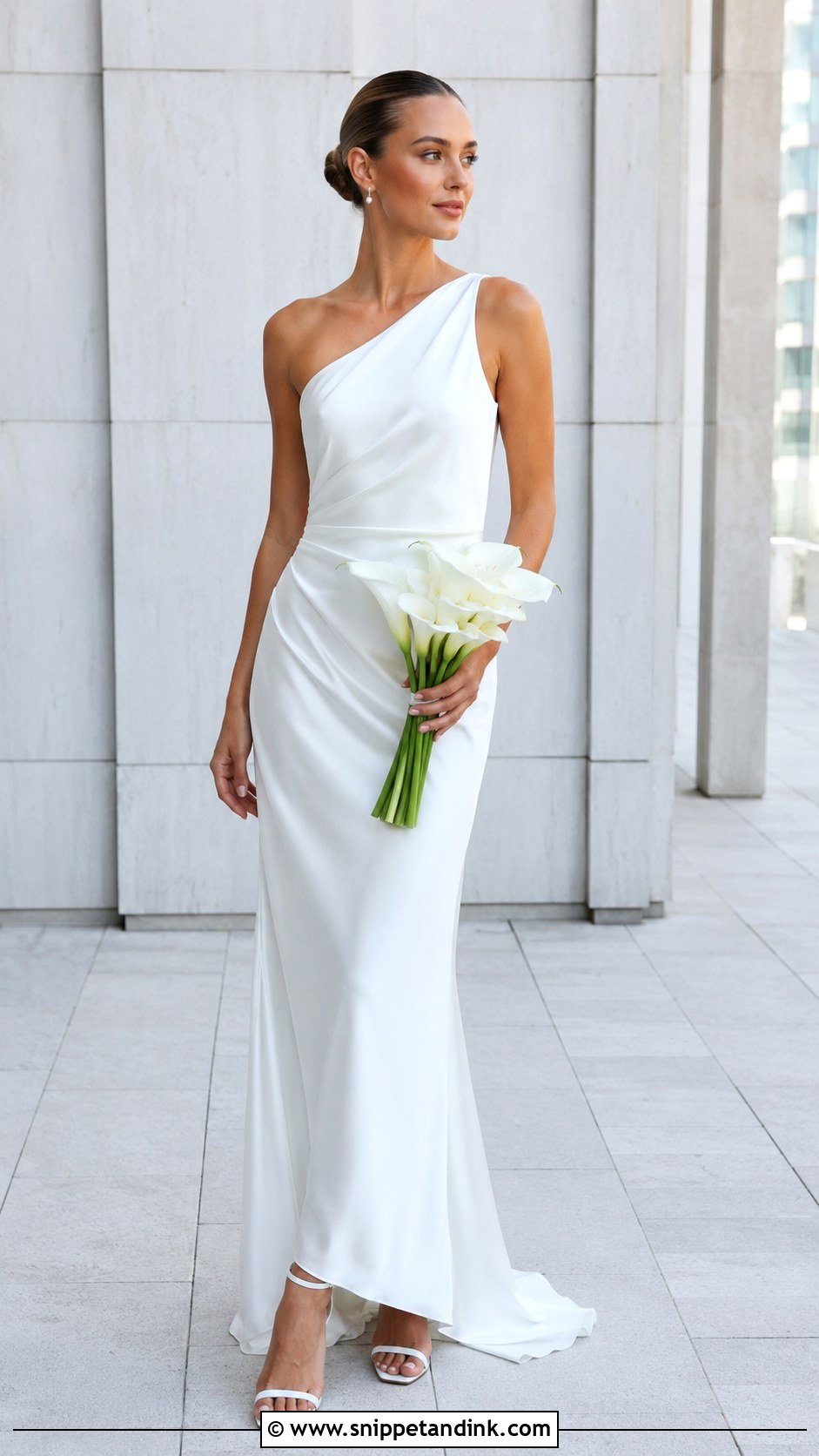
One shoulder is the most fashion-led neckline here, and it’s easier to wear than it looks, as long as the single strap is wide enough to carry the bodice. A pencil-thin strap on one side tends to slip or cut in. White satin or crepe with a straight or bias-cut skirt is the cleanest base, with modern heels, small hoops and a sleek bun. It suits a civil ceremony or a contemporary venue and doubles as a reception change. A few calla lilies match the mood.
12. Square Neck Slip Wedding Dress
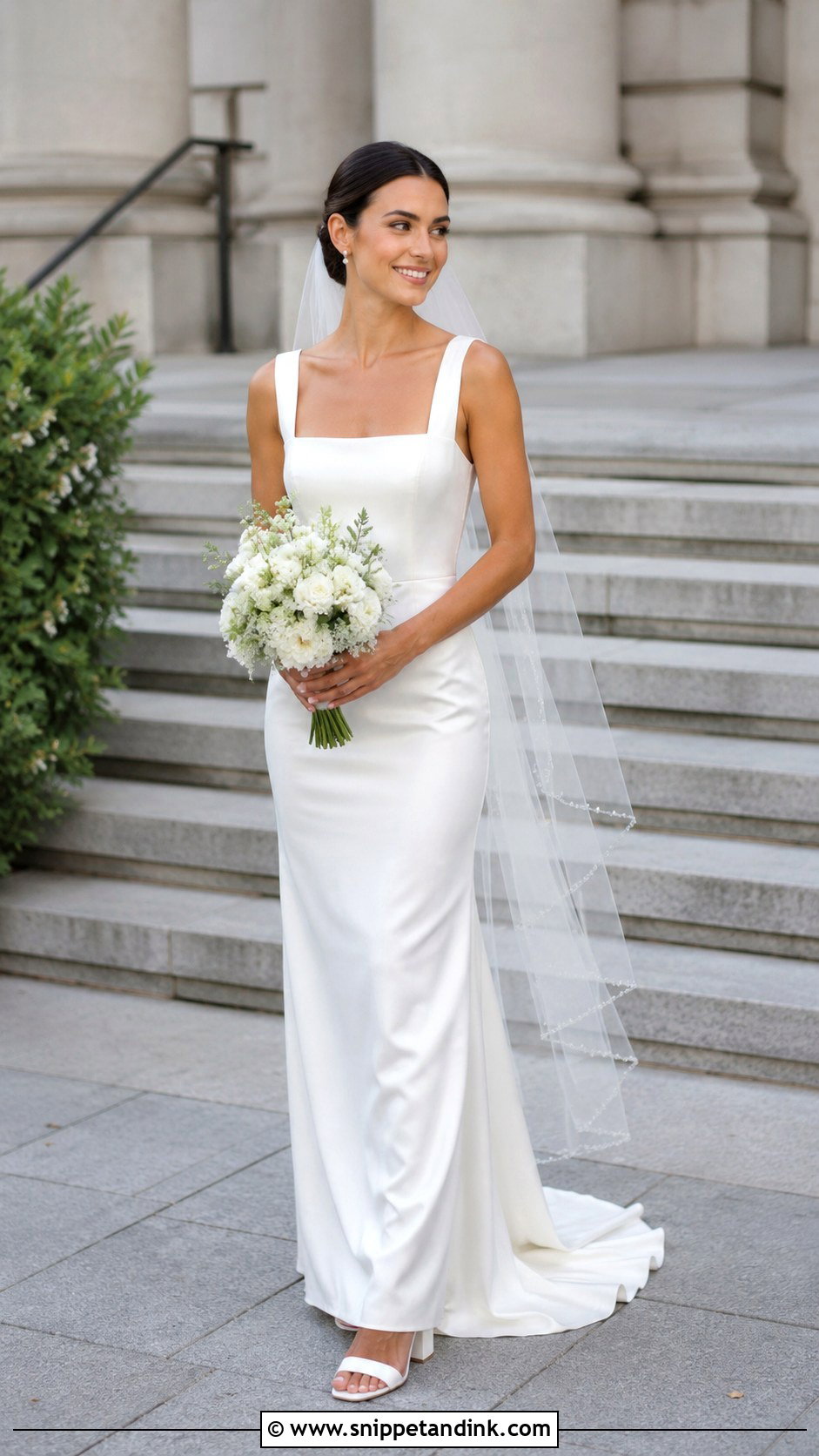
The square neck gives a slip some architecture. Because the neckline is straight, it needs wider straps and a fitted bodice to sit flat; if the bodice is loose, the corners bow outward, and that’s the first thing I look for in the mirror. Satin or silk with a slim, falling skirt works best, styled with block heels, pearl studs and a neat veil. Brides who want more coverage than a deep V but still want a modern line tend to land here. Courthouses, gardens and small traditional venues all suit it, with a soft bun or shoulder-length waves.
13. V Neck Slip Wedding Dress
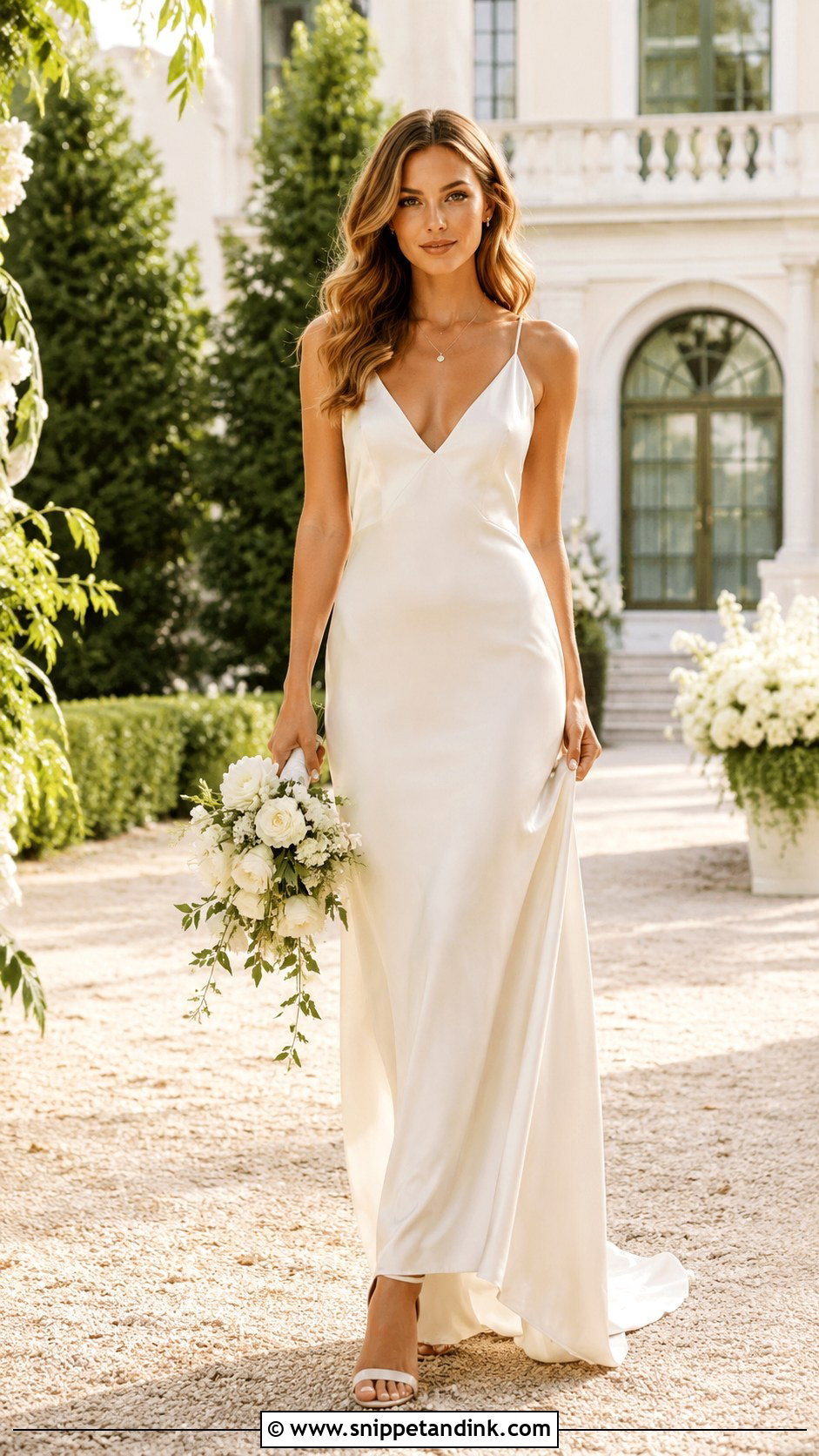
A V lengthens the upper body, which is why it flatters so many people. Depth is what to watch. A plunging V on a slip has nothing structural holding it in place, so I usually suggest fashion tape or a mesh modesty panel if it dips below the bust line. Satin gives more shine, matte crepe less. A fine pendant, strappy heels and soft waves are a classic finish for an outdoor ceremony or estate wedding. For more drama, add either a long veil or statement earrings. Not both.
14. Champagne Slip Wedding Dress
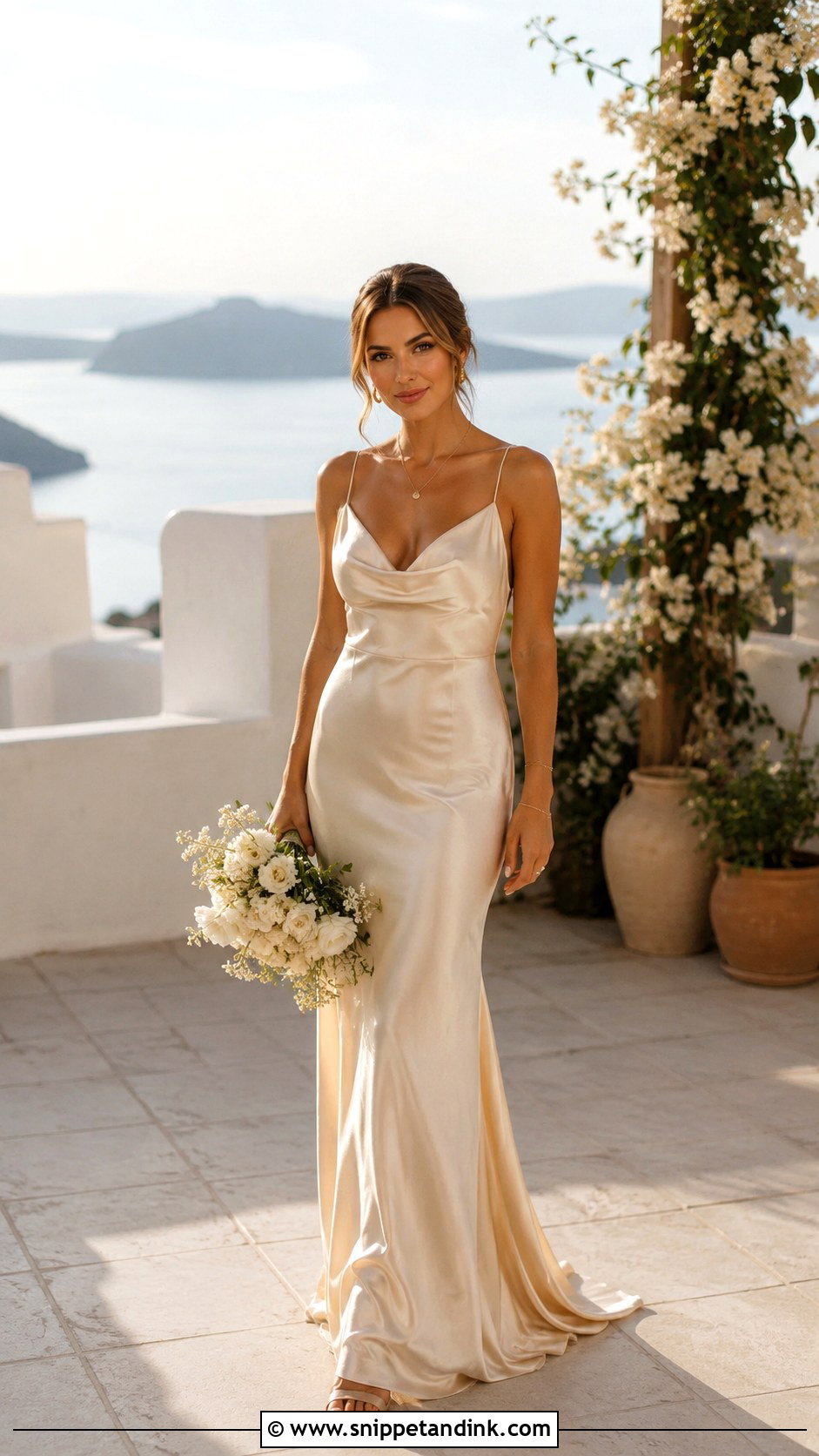
Champagne is the answer when bright white makes your skin look grey. The warm tone suits a wide range of complexions, but the exact shade matters: some champagnes read almost pink on camera and some read gold. I always suggest looking at the swatch in daylight and in warm indoor light before ordering. A champagne satin or silk with simple straps and a fluid skirt pairs well with nude or metallic heels, gold jewelry and an ivory bouquet at a sunset ceremony. Keep makeup warm, and an ivory veil still makes the look clearly bridal.
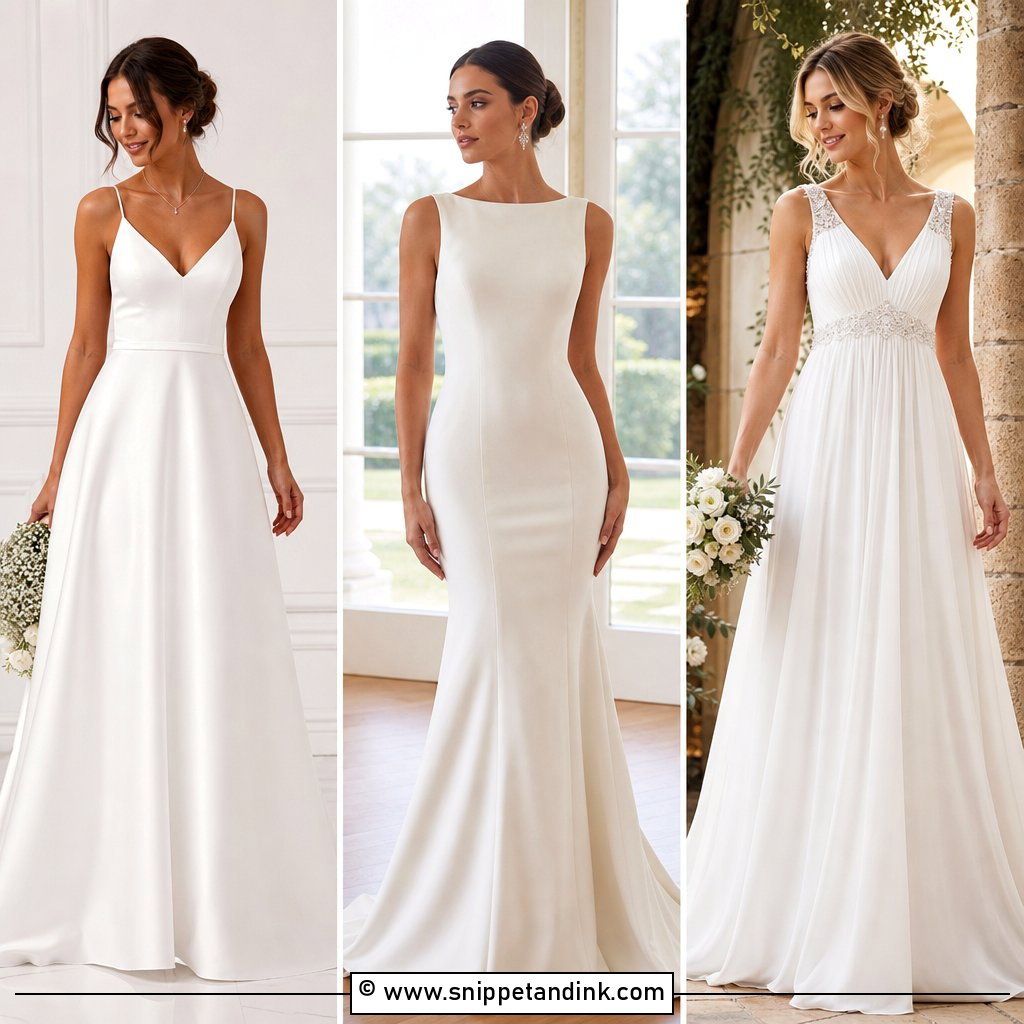
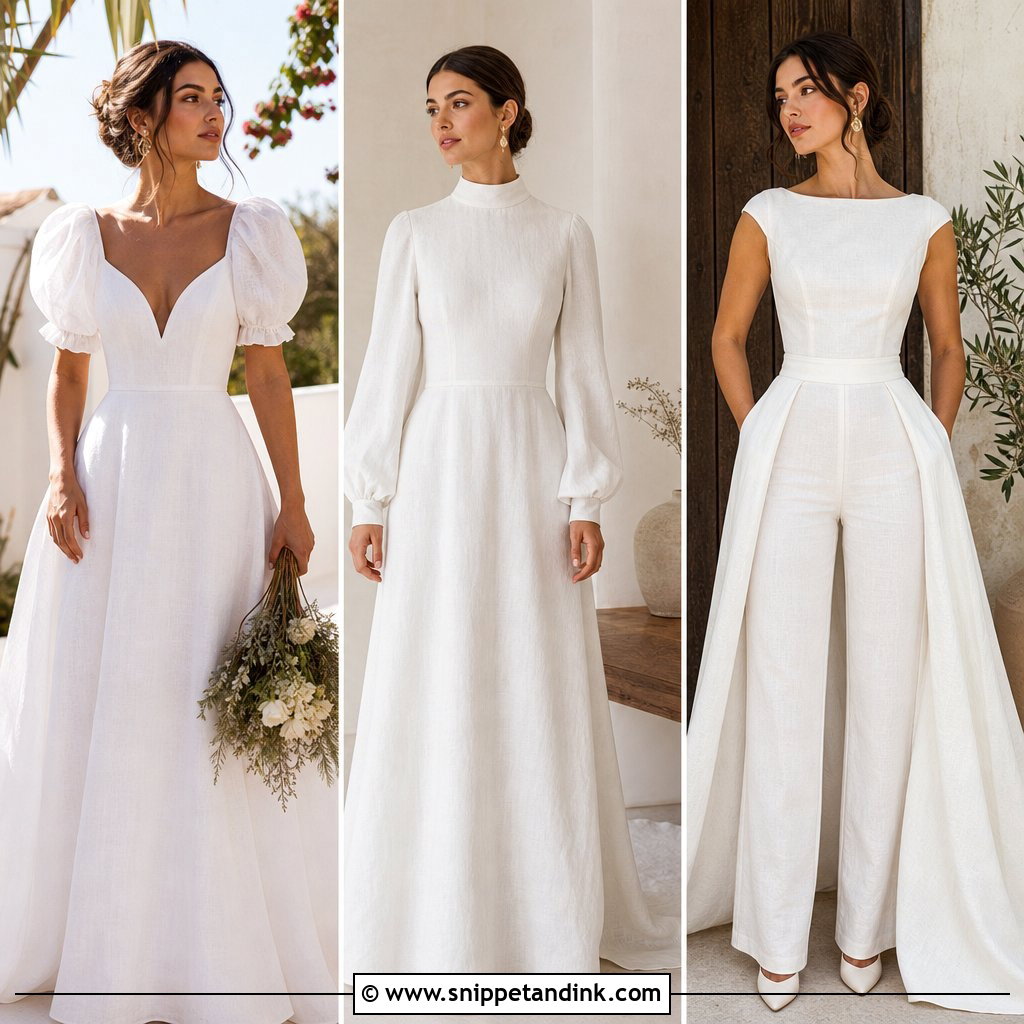

15. Ivory Slip Wedding Dress
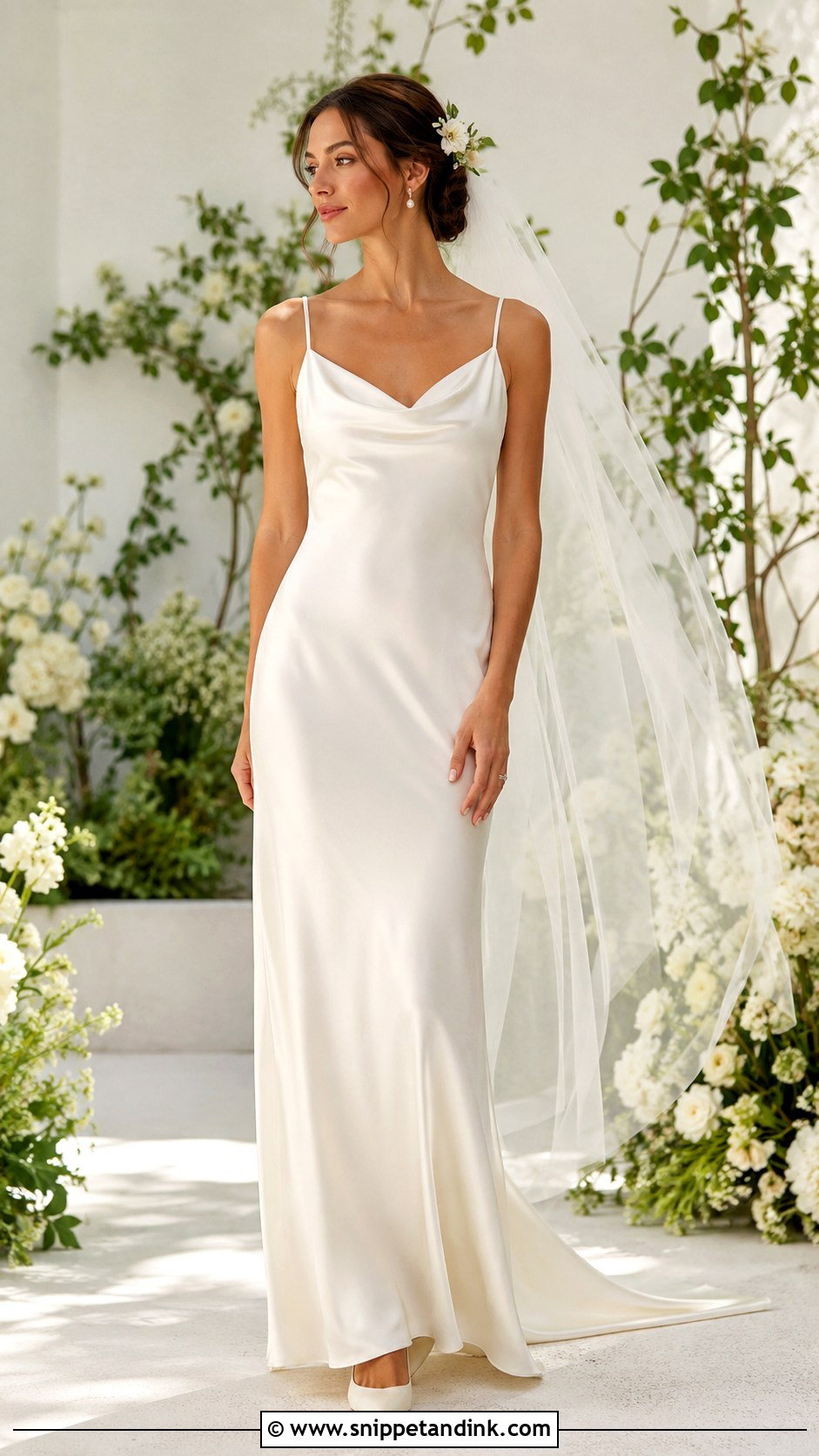
Ivory is the shade I suggest most often. It softens next to skin in a way stark white rarely does, and it still reads as bridal in every photo. It’s also the most adaptable, because the same ivory slip can go sleek or vintage depending on what you add. Choose a fluid satin or crepe with a clean neckline and a fit you can breathe in, then pair it with ivory heels, pearl earrings and a soft veil. It works at almost any venue. If you want more detail, change the veil or add a floral hair pin rather than changing the dress.
16. Crepe Slip Wedding Dress
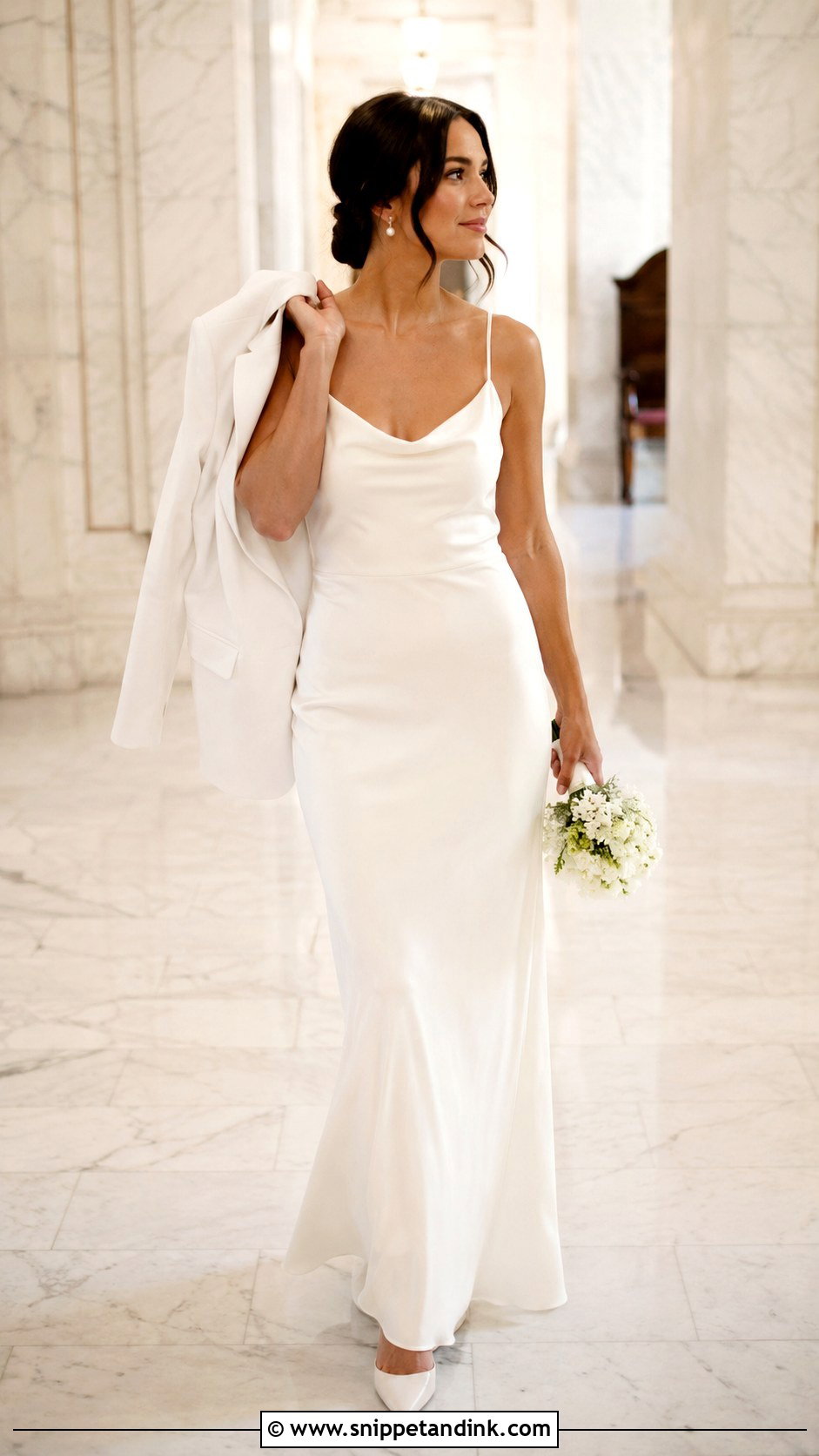
Crepe is the fabric I suggest to brides who are nervous about satin showing everything. It has a matte surface and more body, so it smooths over the hips and doesn’t catch light on every curve. It creases less when you sit, too. A white or ivory crepe gown with clean seams and a soft V or square neckline looks sharp with pointed heels, simple earrings and a tailored veil in a formal venue or courthouse. A fitted blazer for photos or cooler weather is easy to put on and take off.
17. Bias Cut Slip Wedding Dress
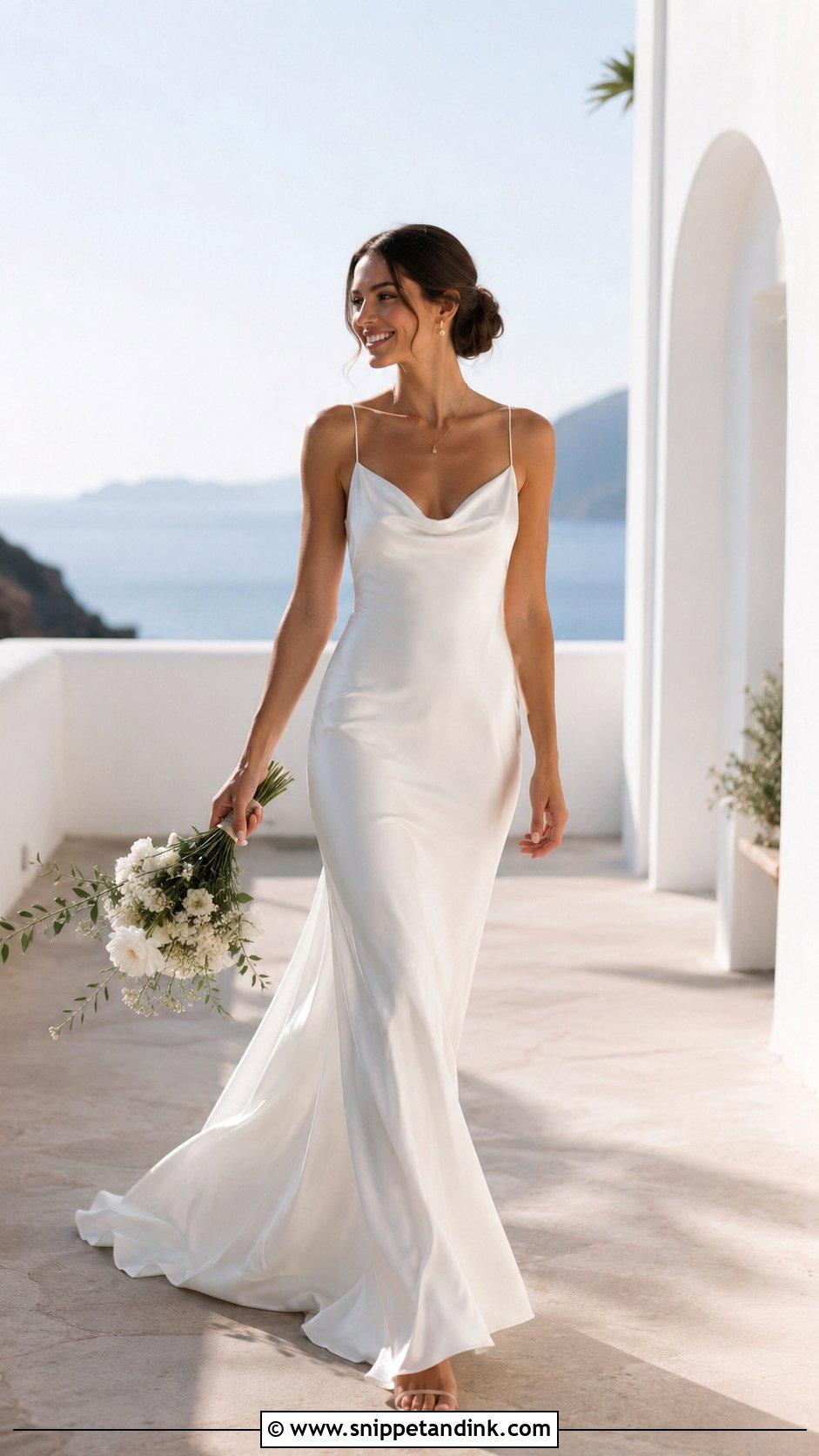
Bias cut means the fabric is cut diagonally across the grain, which lets it give slightly and fall close to the body. That give is also why bias gowns grow. A silk bias dress can drop at the hem after hanging, so I always let it hang for a day before marking the final length. Choose silk, satin or lightweight crepe in ivory or pearl white. Minimal heels, a low bun and fine jewelry keep the cut in focus at a beach or relaxed outdoor venue, and a long veil or simple bouquet adds the bridal note.
18. Slip Wedding Dress With Train
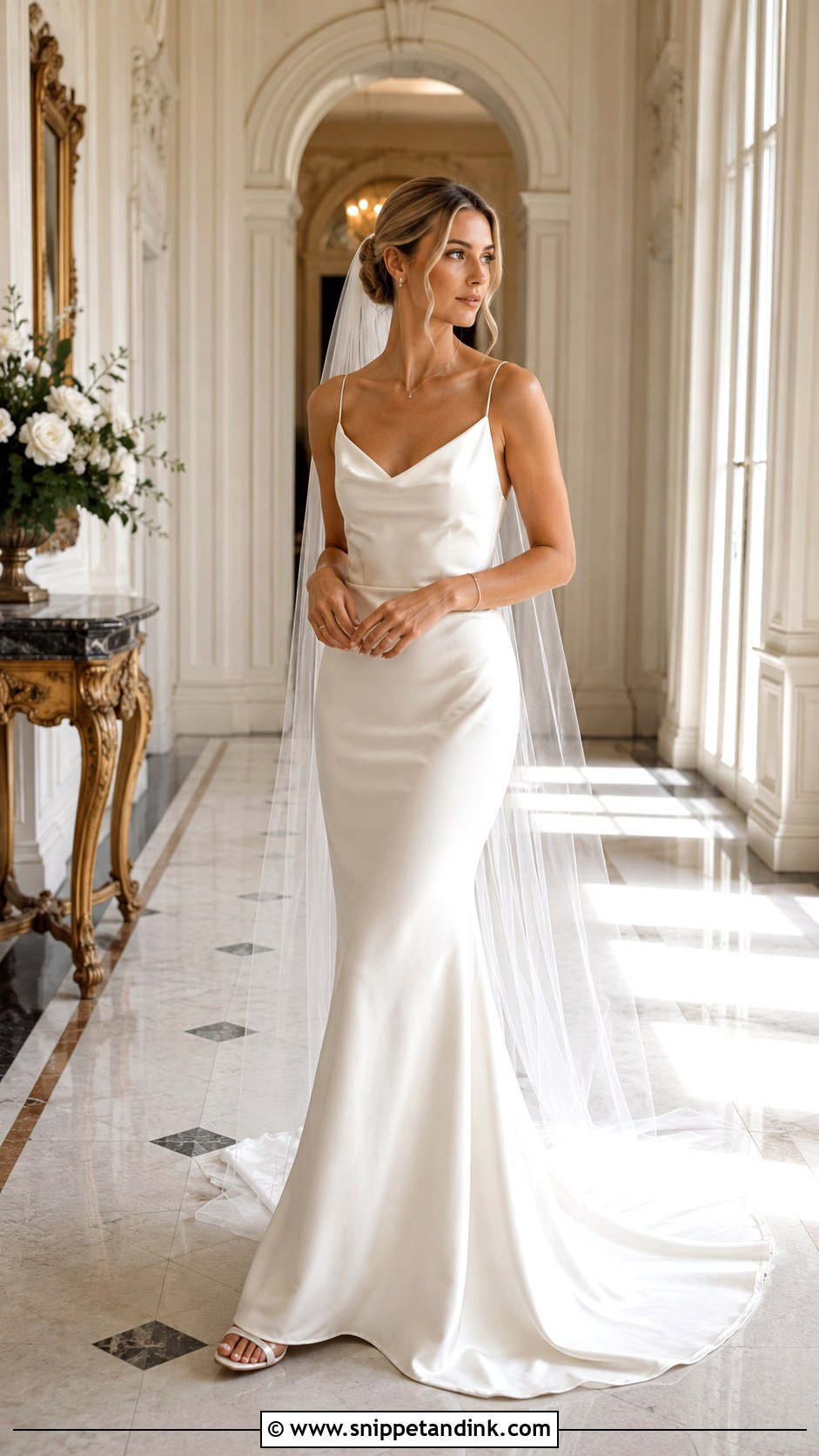
A train on a slip keeps the bodice and hips sleek while giving you a proper aisle moment. A sweep or chapel train is the most manageable. Anything longer needs a bustle, and satin bustles need more points than you’d expect because the fabric is slippery and loops can drop. Ask your seamstress to show you and one bridesmaid how it works at the last fitting. Elegant heels, a veil and understated jewelry finish the look for a formal ceremony, a hotel ballroom or an estate wedding.
19. Slip Wedding Dress With Overskirt
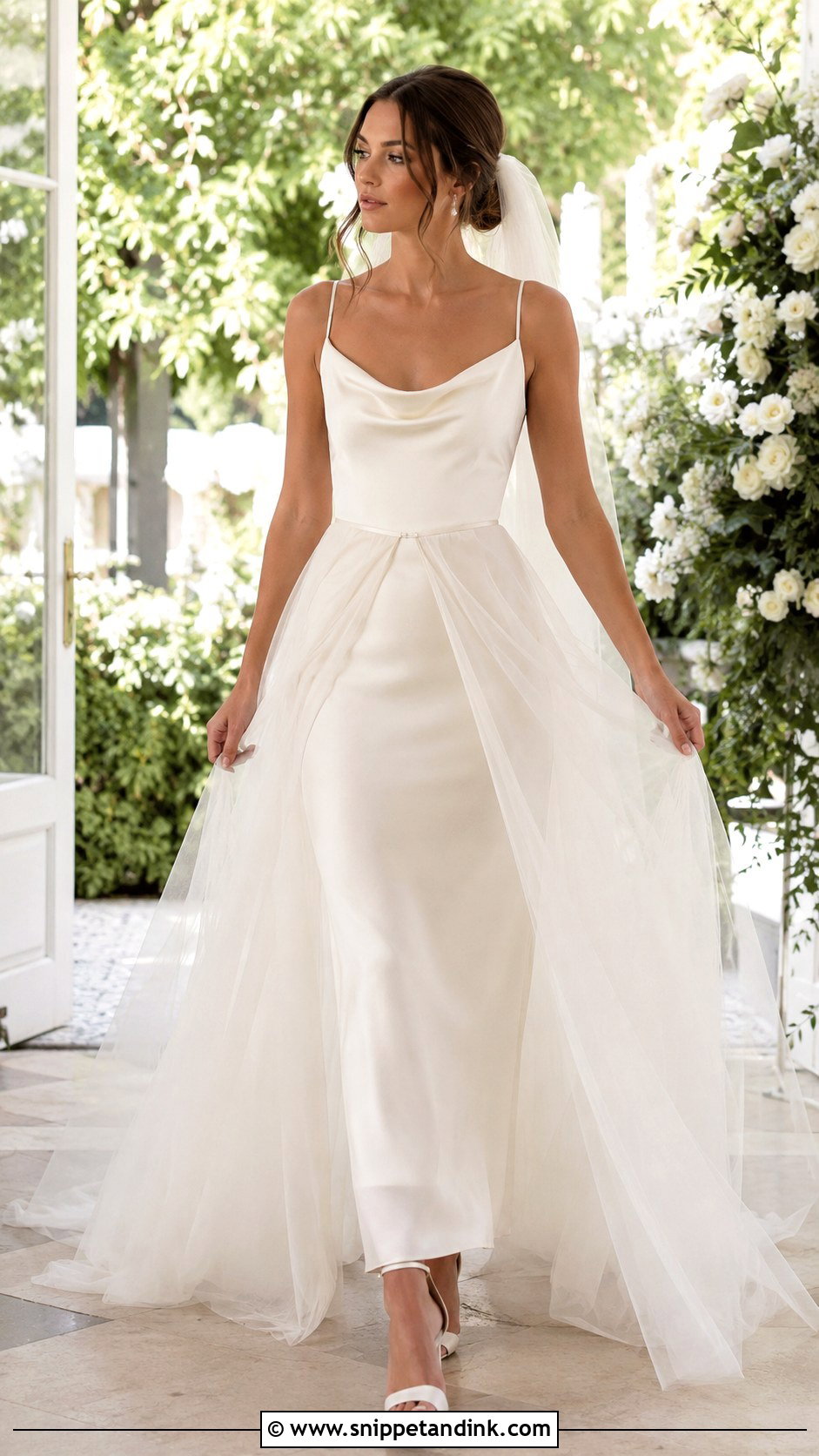
Two looks from one dress is the reason most brides go this way. The ceremony can feel grand with a detachable tulle, organza, or satin overskirt, then the reception turns sleek once it comes off. Start with a simple satin or crepe slip underneath and ask how the overskirt fastens. Hooks and a waistband come off faster than a row of snaps, and you don’t want to lose half your cocktail hour to it. Heels, a veil and soft jewelry finish it, and the change gives your photographer two different sets of images.


20. Slip Wedding Dress With Cape
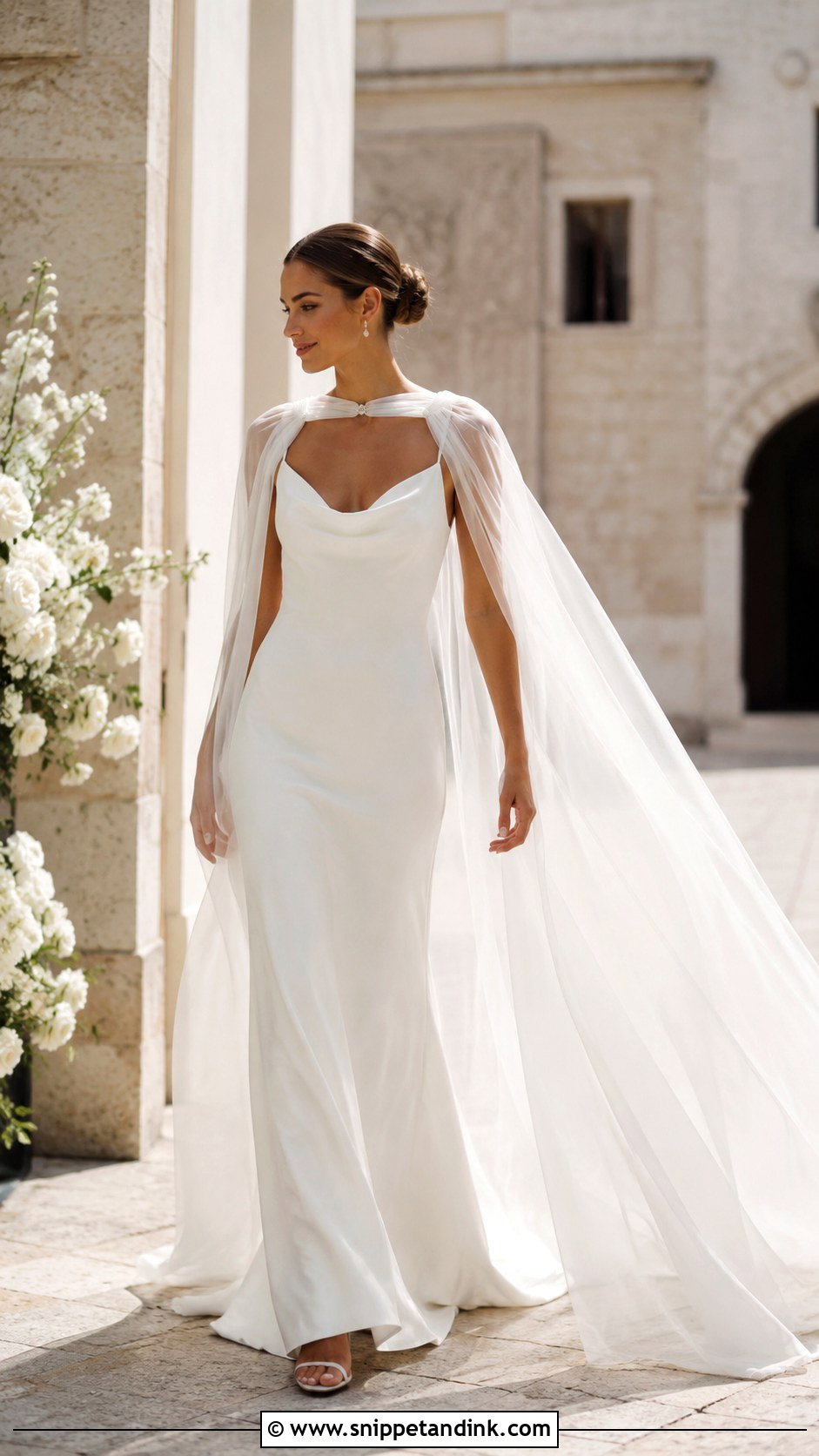
A cape gives movement and coverage without hiding the clean dress underneath, and it’s a good swap if you don’t want a traditional veil. Weight matters. A sheer tulle cape floats, while a pearl-edged one drapes heavier and can drag the shoulder seams back, so I check it’s anchored to the dress or a hidden strap rather than just clipped at the neck. Chiffon sits between the two. Sleek heels and minimal earrings keep it balanced. A long cape suits an outdoor entrance; a shorter one is easier once you start hugging guests.
21. Slip Wedding Dress With Blazer
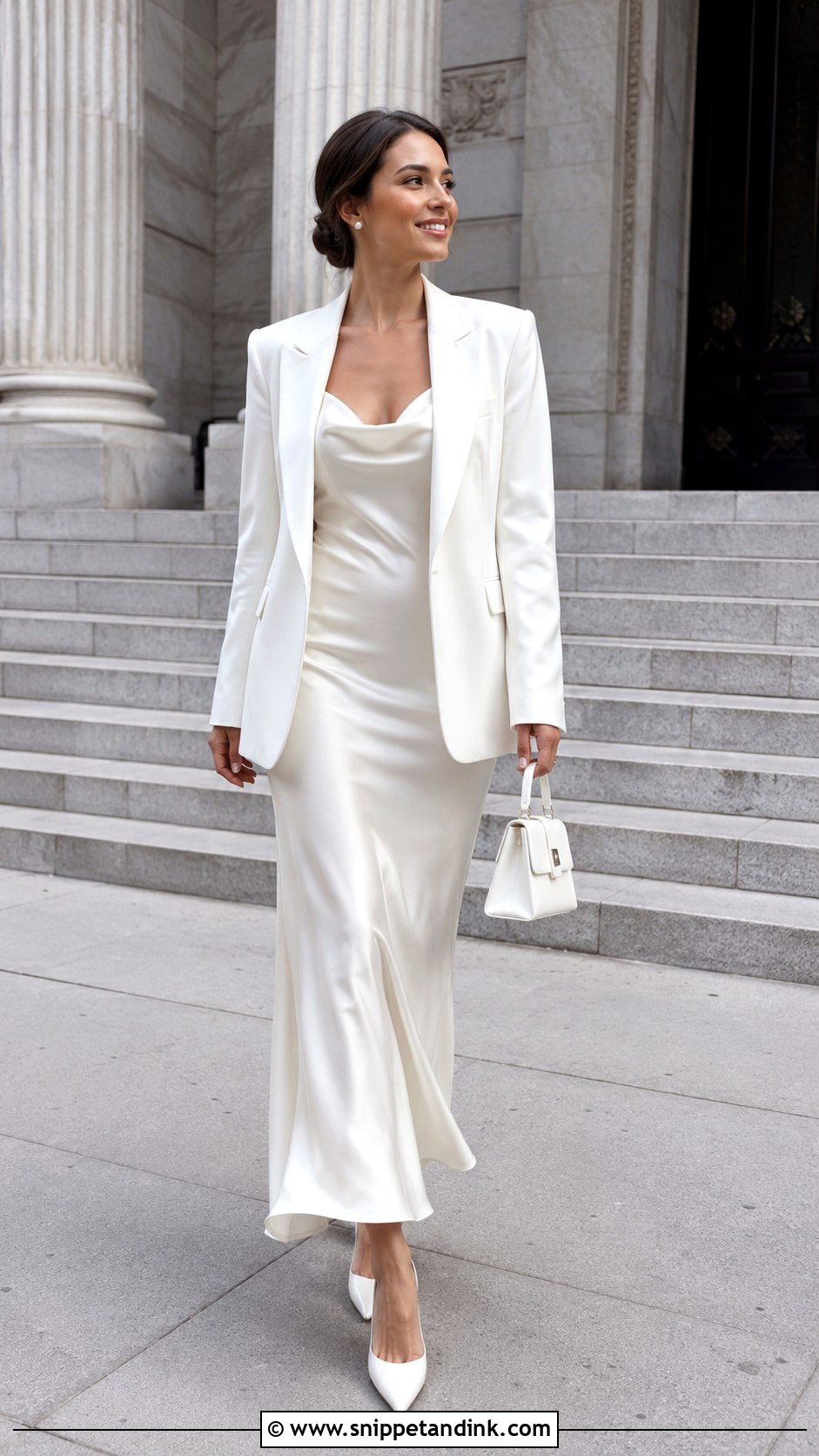
A slip wedding dress with a blazer is one of my favourite courthouse looks. The tailoring gives a soft dress an edge, and it solves the cold-room problem. The trick is matching whites. An off-white blazer next to an ivory slip can look like a mistake on camera, so bring the dress with you when you shop for the jacket. Fitted or slightly oversized both work. Add pointed pumps, pearl studs and a structured mini bag, wear the blazer for the ceremony and drop it for dinner.
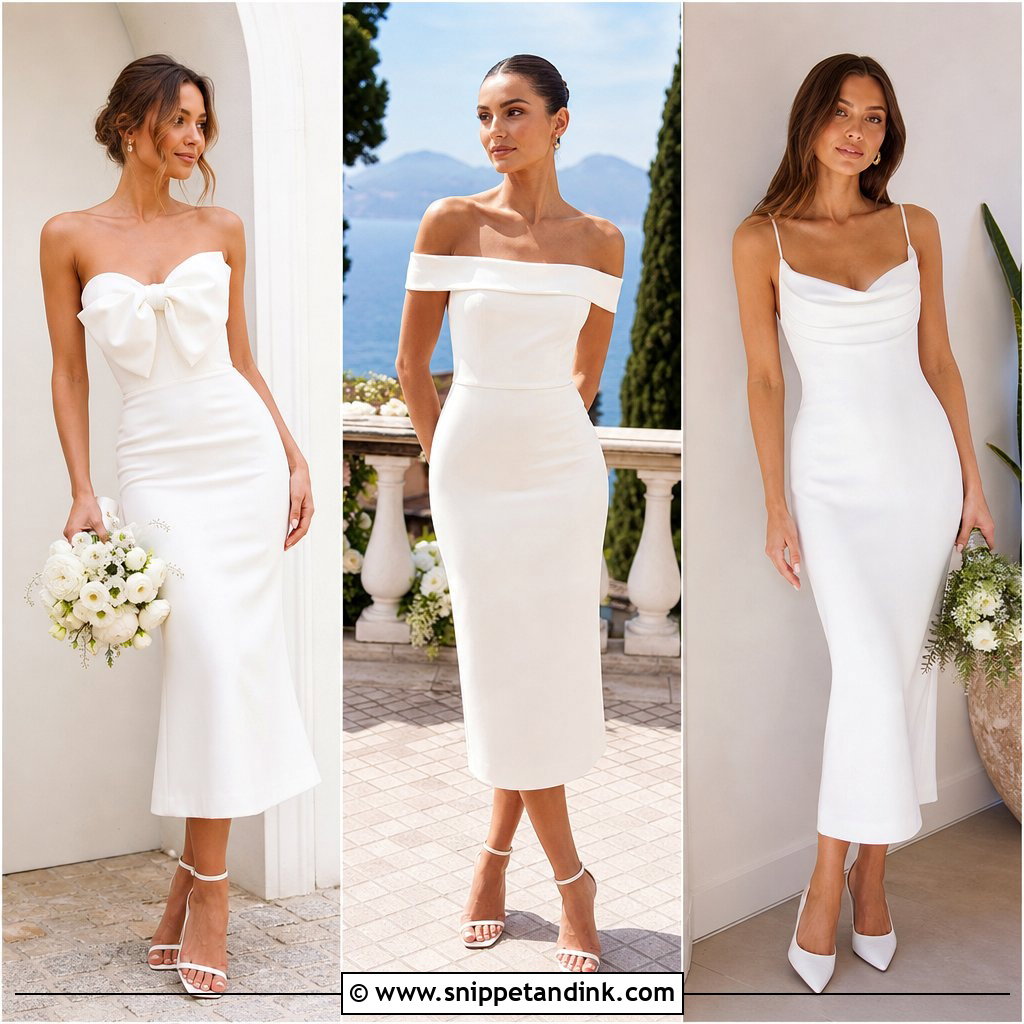
22. Mini Slip Wedding Dress
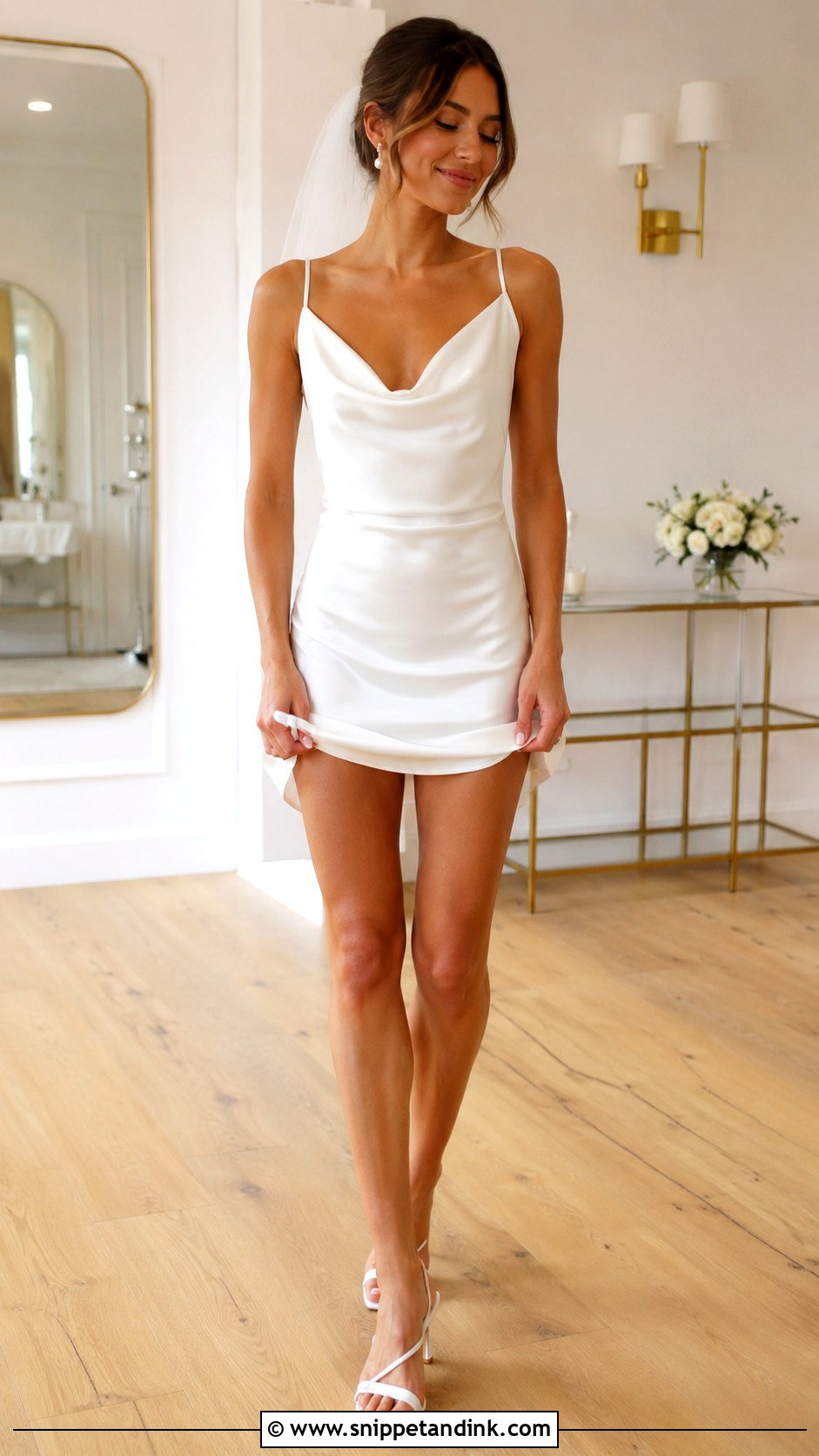
A mini slip fits a courthouse ceremony, a reception change, a bridal shower or the after-party. The short hem feels playful, and the slip shape keeps it grown-up. Fit is everything here: a mini that’s snug through the hips rides up when you walk and sit, so I size for movement rather than for the mirror. A white satin or crepe mini with a cowl or square neckline pairs with slingback heels, pearl earrings and a small veil or hair bow. Sheer tights in cooler months, bare legs in summer.
23. Midi Slip Wedding Dress
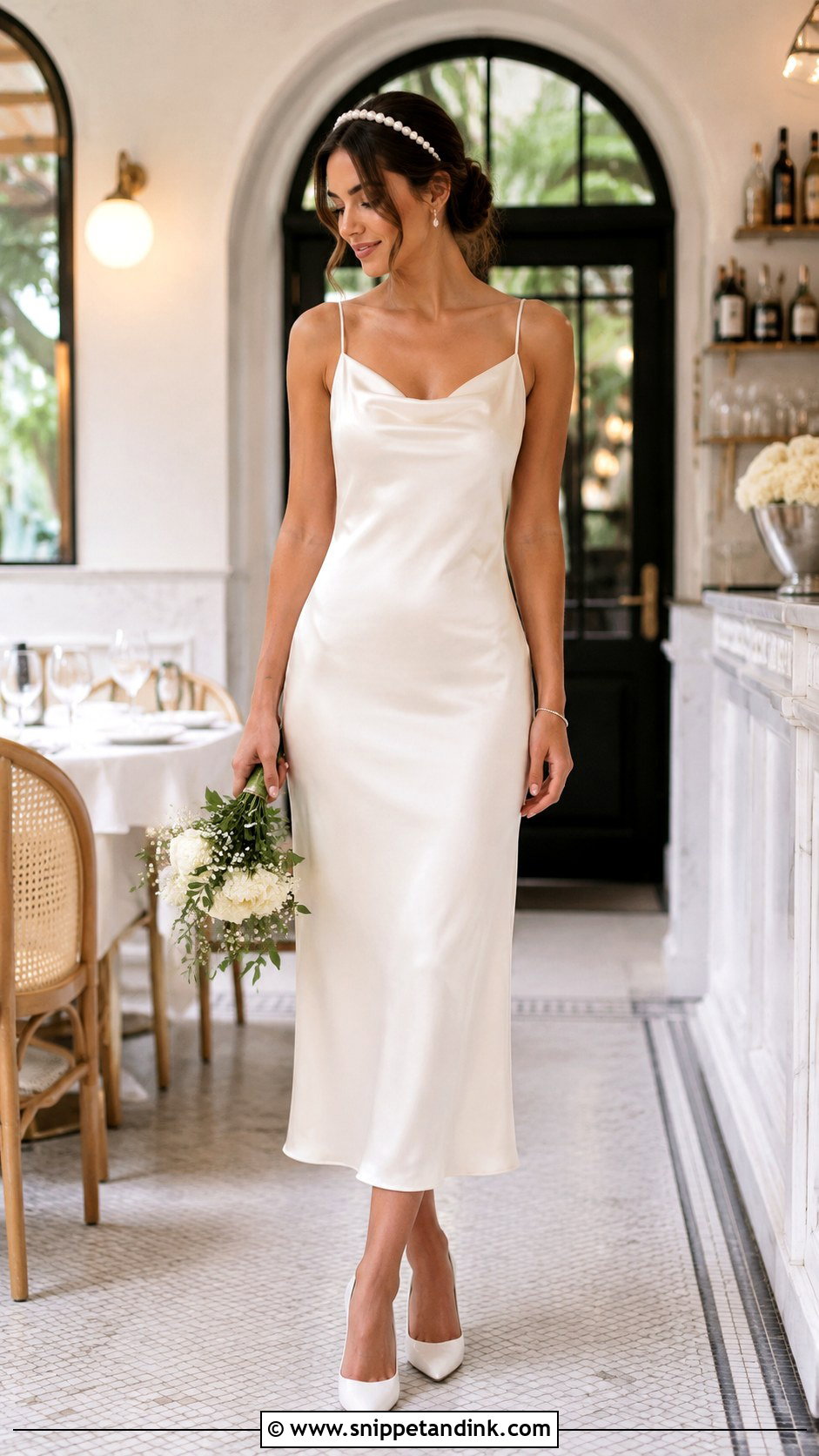
A midi sits between formal and relaxed, and it’s the easiest length to walk in. Courthouses, garden ceremonies and restaurant receptions all suit it. Because the hem stops at the calf, the shoe becomes part of the look, so choose a pair you’d happily be photographed in from the ground up. Look for a satin or silk midi in ivory or soft white with slim straps, then add pointed pumps, small jewelry and a short veil or pearl headband. This is also the slip you’re most likely to wear again, and if it’s real silk, a specialist can even dye it afterward.
24. Plus Size Slip Wedding Dress
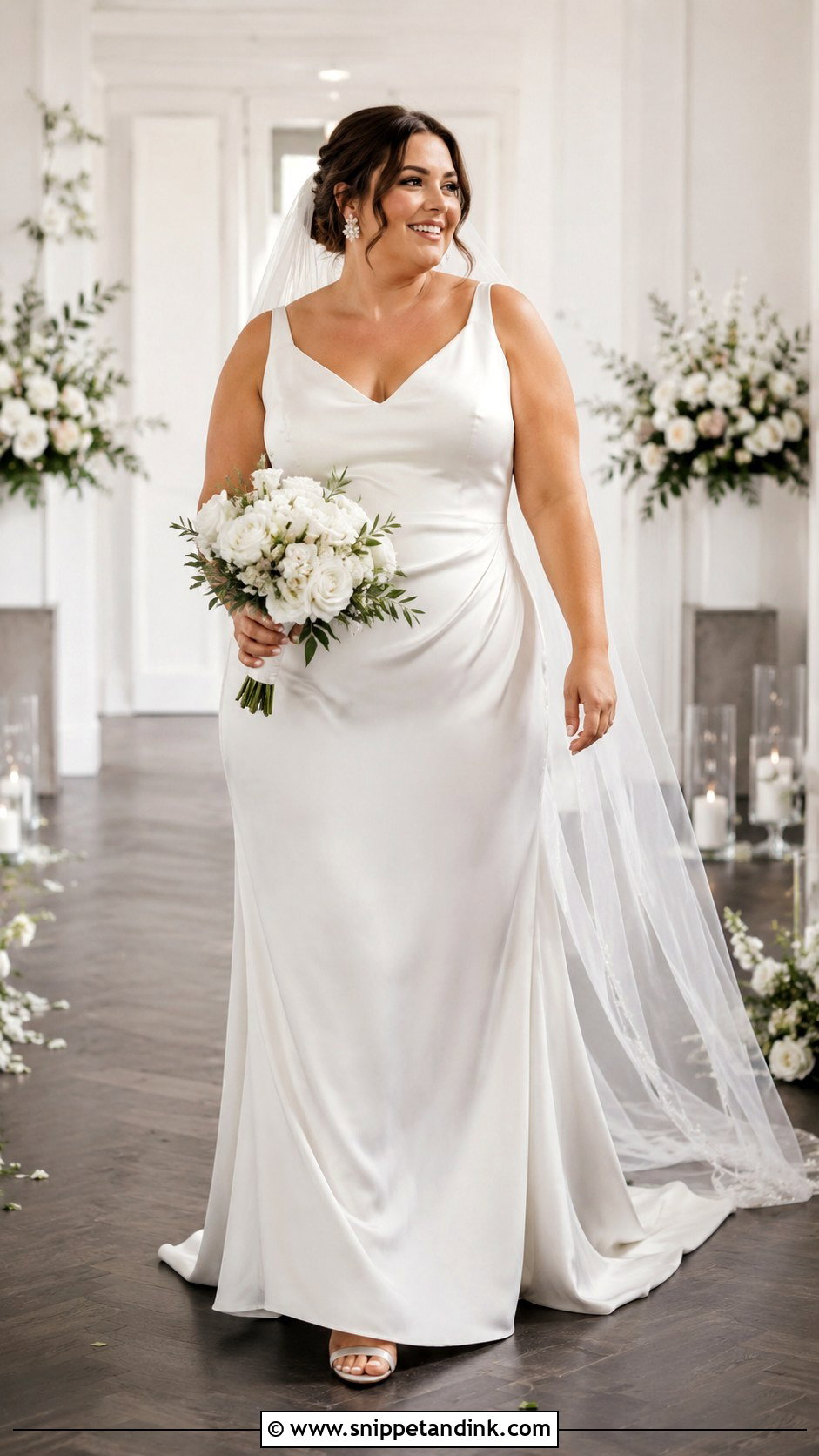
A plus size slip wedding dress works when fit, fabric and support are sorted before anything else. I look for a quality lining, adjustable straps and a cut that skims rather than clings. Matte crepe, heavier satin and silk blends give a smoother line than thin charmeuse, which shows every ridge of shapewear. A cowl, V or square neck can all work; it comes down to where you want support. Supportive bridal undergarments, block heels and statement earrings complete it, and a soft veil or cape adds movement without weight.


25. Beach Slip Wedding Dress
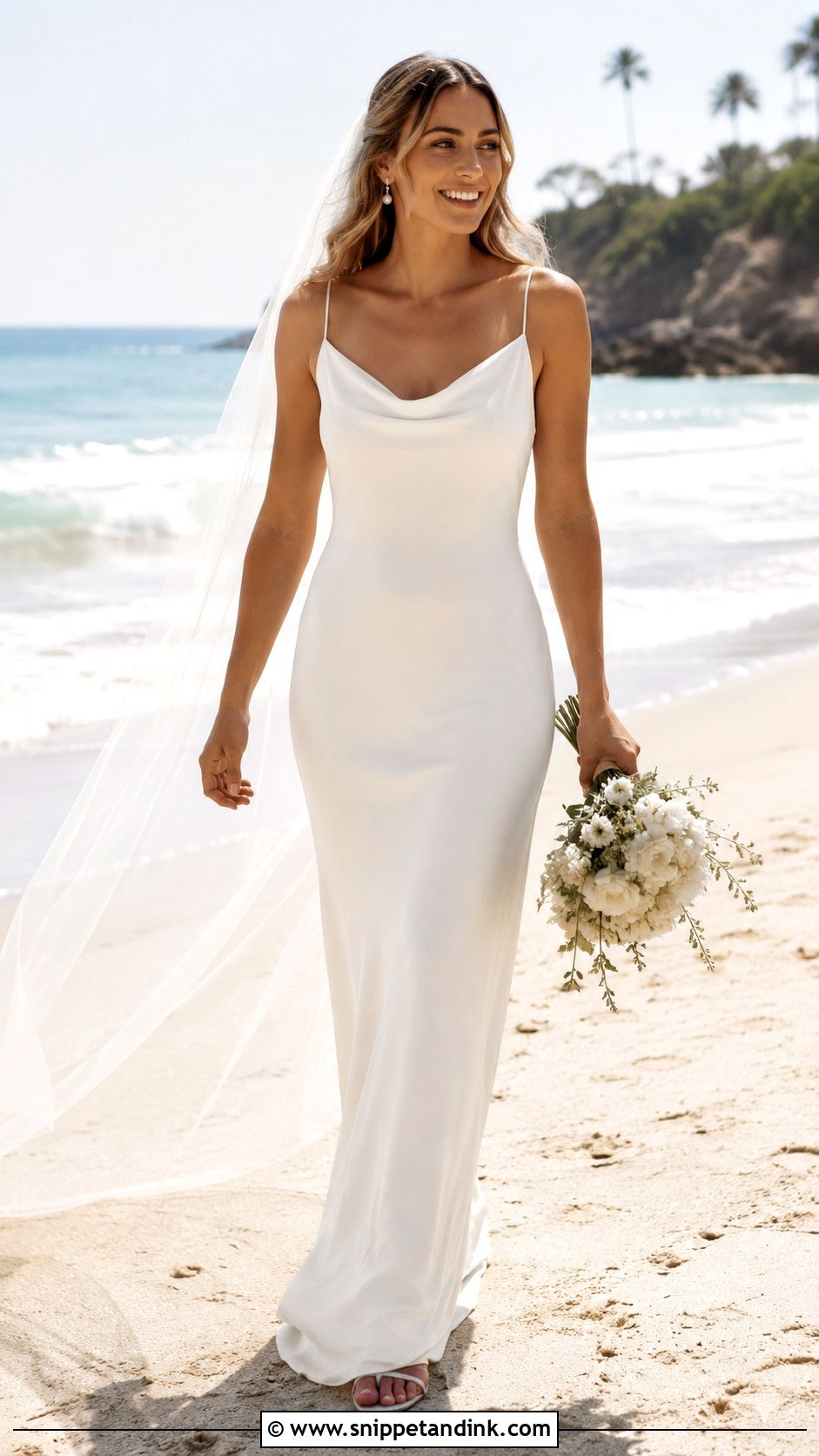
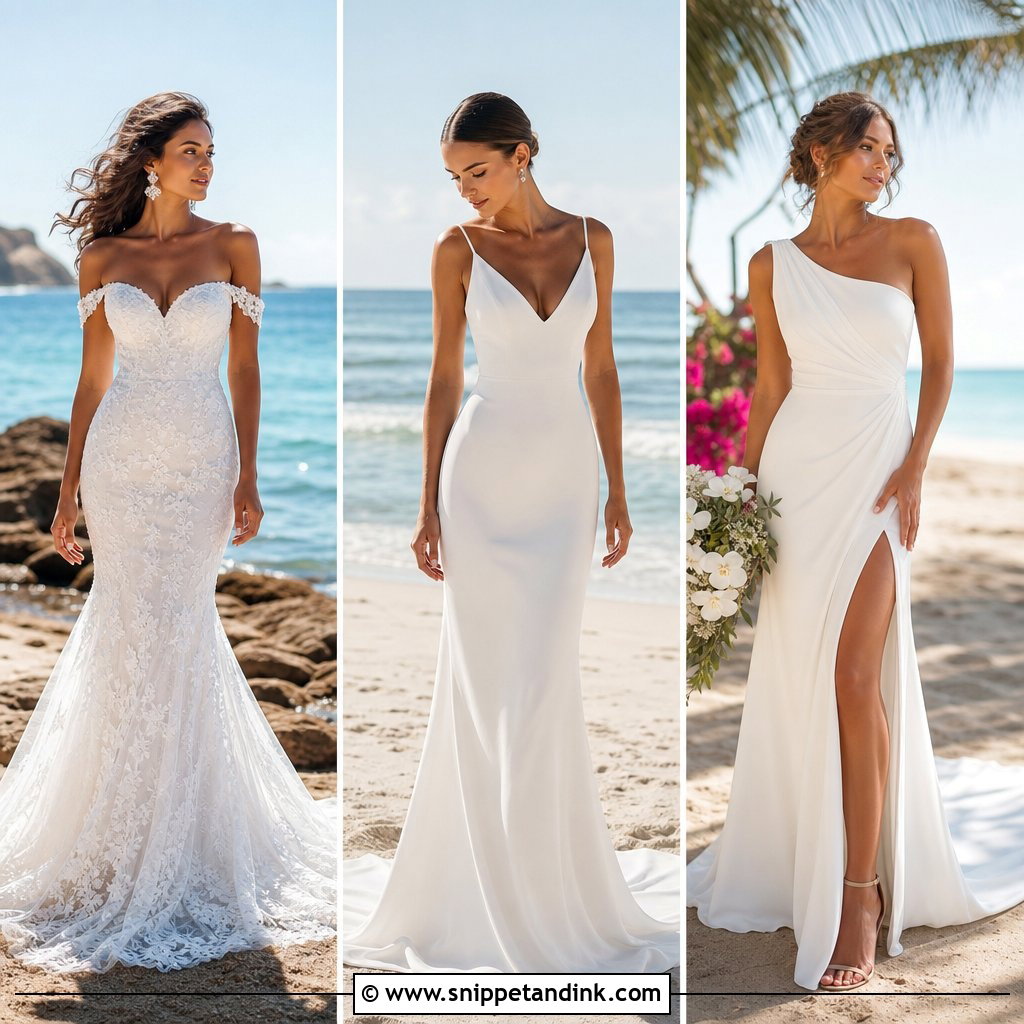
Sand, wind and salt air are hard on a slip. Breathable silk or lightweight crepe handles heat better than polyester satin, which traps warmth and shows sweat. A bias-cut shape with thin straps moves naturally in a breeze, but a breeze also presses fabric flat against you, so a good lining matters more by the water than anywhere else. Pair it with flat sandals, pearl earrings and loose waves. Skip a heavy train on sand or keep a short sweep for photos, and if you wear a long veil on a windy shore, have it pinned very securely.
Creases, Spills and the Morning After
Satin and silk crease, and no fabric treatment stops that completely. What you can control is when it happens and how much of it ends up in your pictures.
On the Wedding Morning
- Steam the dress on the morning itself, not the night before, and hang it from its inner loops so the straps don’t stretch.
- Get dressed last, after hair and makeup, with a soft cotton scarf over your face so foundation stays off the neckline.
- In the car, gather the skirt up over your lap instead of sitting on the back of it.
- Keep a handheld steamer and a clean white cloth at the venue. Water dries on silk with a ring, so blot spills gently and never rub.
Once the Party Is Over
Have the dress professionally cleaned within a few weeks, even if it looks spotless. Sugary drinks and sweat dry invisible and then yellow over the following months.
Store it folded with acid-free tissue in a breathable box, away from light. Plastic garment bags trap moisture, and years on a hanger can stretch a bias-cut slip out of shape, which is why I’d never keep one hanging long term.
Fabric Decides More Than the Neckline
Simple doesn’t have to mean plain. A slip can read romantic, modern or vintage depending on the fabric, neckline, length and what you add to it. Satin and silk give a fluid glow; crepe gives structure and forgives more. Lace, pearls, capes, trains and overskirts make it more bridal without losing the clean shape. My advice is to try the fabric before you fall for the neckline, sit down in it, and plan your undergarments early. Get those right and any of the slips above will feel like your own.
You'll Like These Ideas:






Leave a Reply