
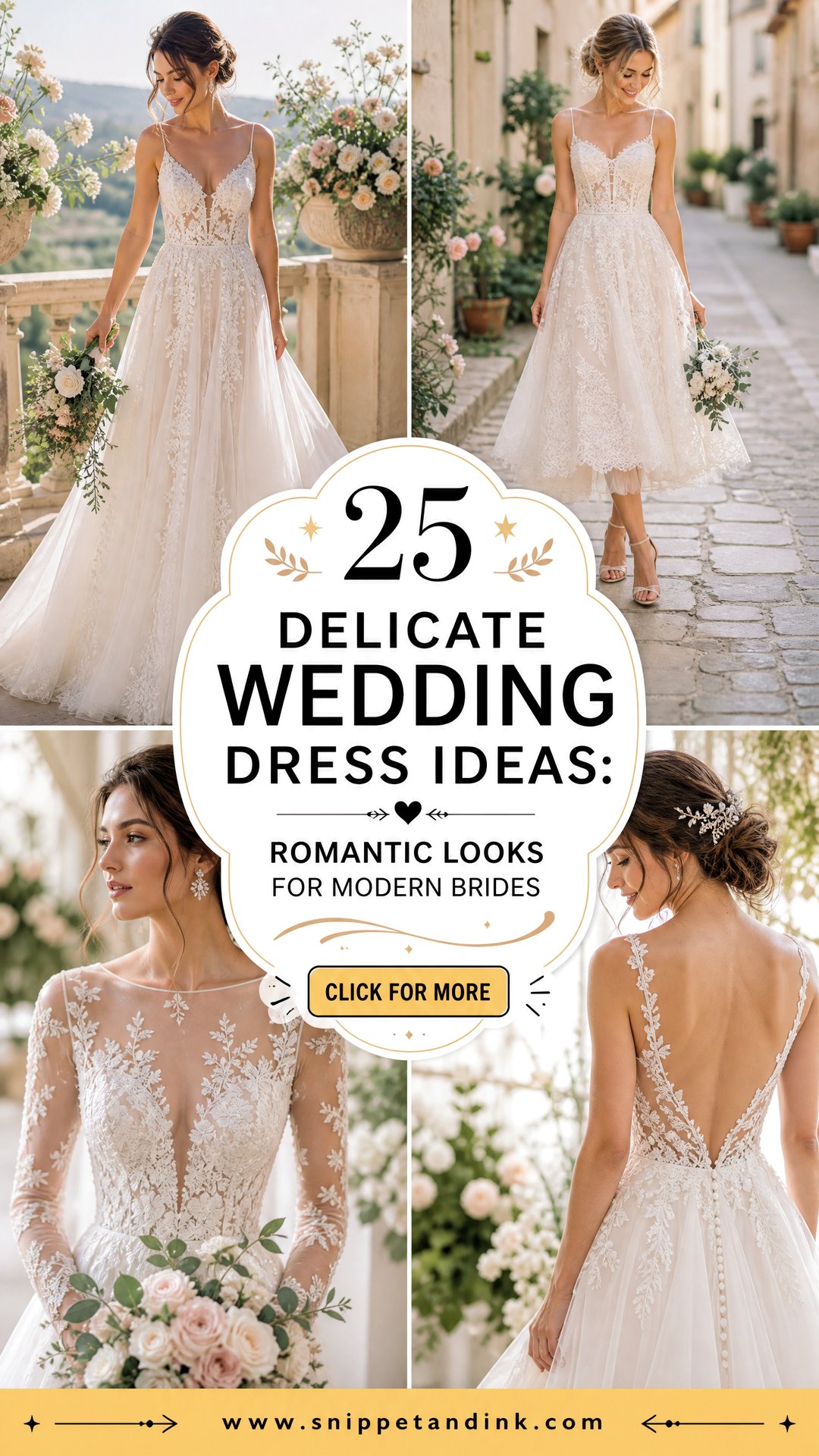
A delicate gown is mostly a question of restraint. Airy tulle, fine lace, fluid silk, a scatter of seed pearls or a few floral appliqués can each carry the softness, but only when the shape around them stays clean and the accessories stay quiet. In fittings I always ask where the wedding is before I ask what a bride likes, because a chiffon dress that floats beside the sea can look underdressed in a candlelit ballroom, and a long-sleeve lace gown that suits October will cook you in July. Shoes, veil, earrings and flowers then do supporting work. The ideas below come with the full outfit I’d build around each dress, plus the practical things I check before anyone signs an order.
How Fine Fabrics Behave Once You Actually Put Them On
Brides fall for a delicate dress on the hanger, then discover on the day that light fabric has habits. I explain these in the first appointment because they change which gown suits which wedding.
- Chiffon breathes and moves, but creases in a car and frays at the hem if it drags on stone. Plan to steam it at the venue.
- Fine lace hides small wrinkles well, though open lace snags on rough walls, bouquet wire and some beaded jackets.
- Silk or crepe follows the body, so underwear lines and a slightly loose seam show. Sweat marks can also show on pale silk in heat.
- Soft tulle is forgiving and light, but a long tulle train collects grass and petals outdoors.
- Organza holds its shape in photos and creases sharply when crushed.
None of this rules a fabric out. It tells you what to pack: a steamer, a lint roller, a small sewing kit and a clean sheet to stand on while you dress.
1. Delicate Lace A-Line Wedding Dress
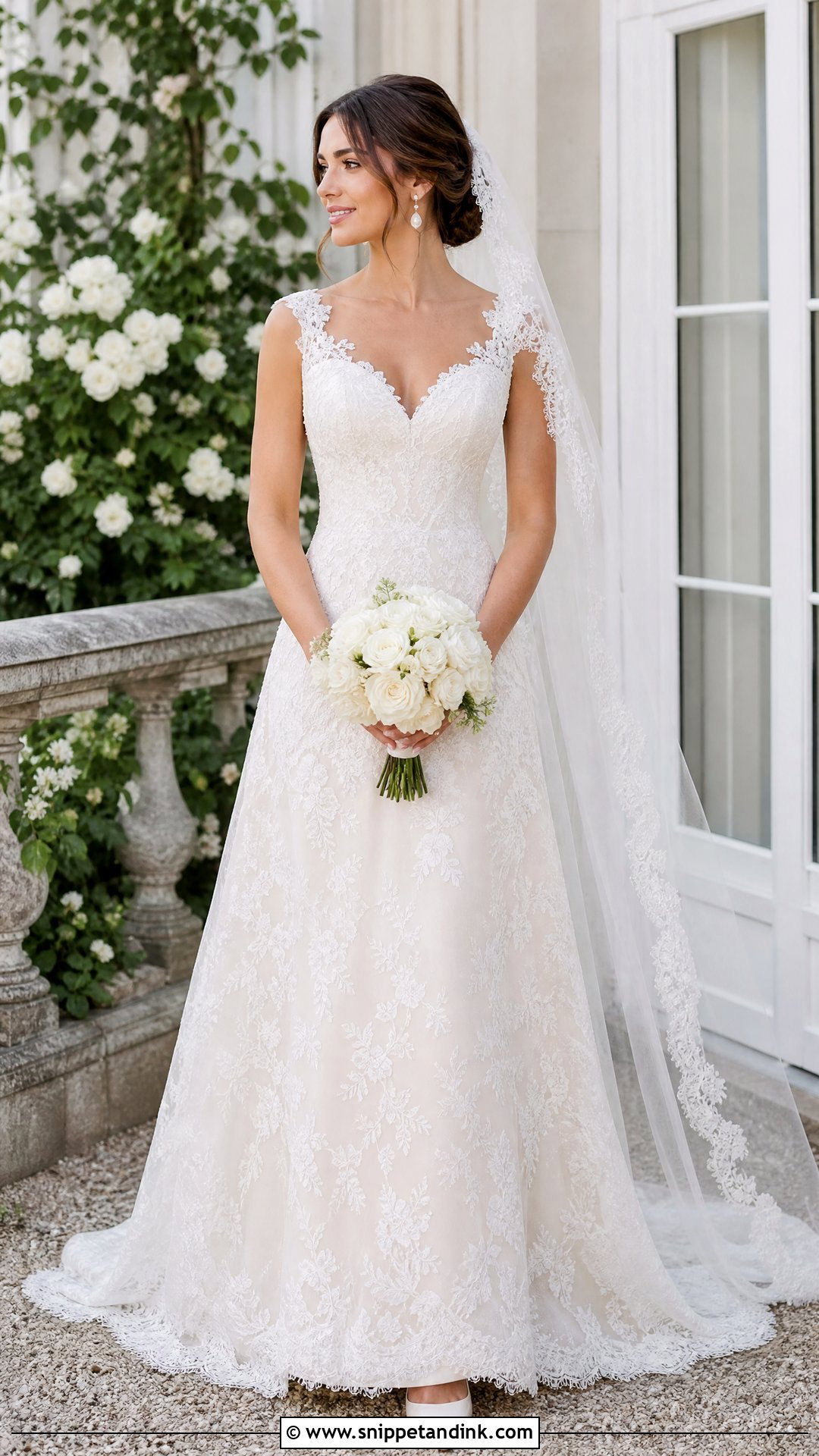
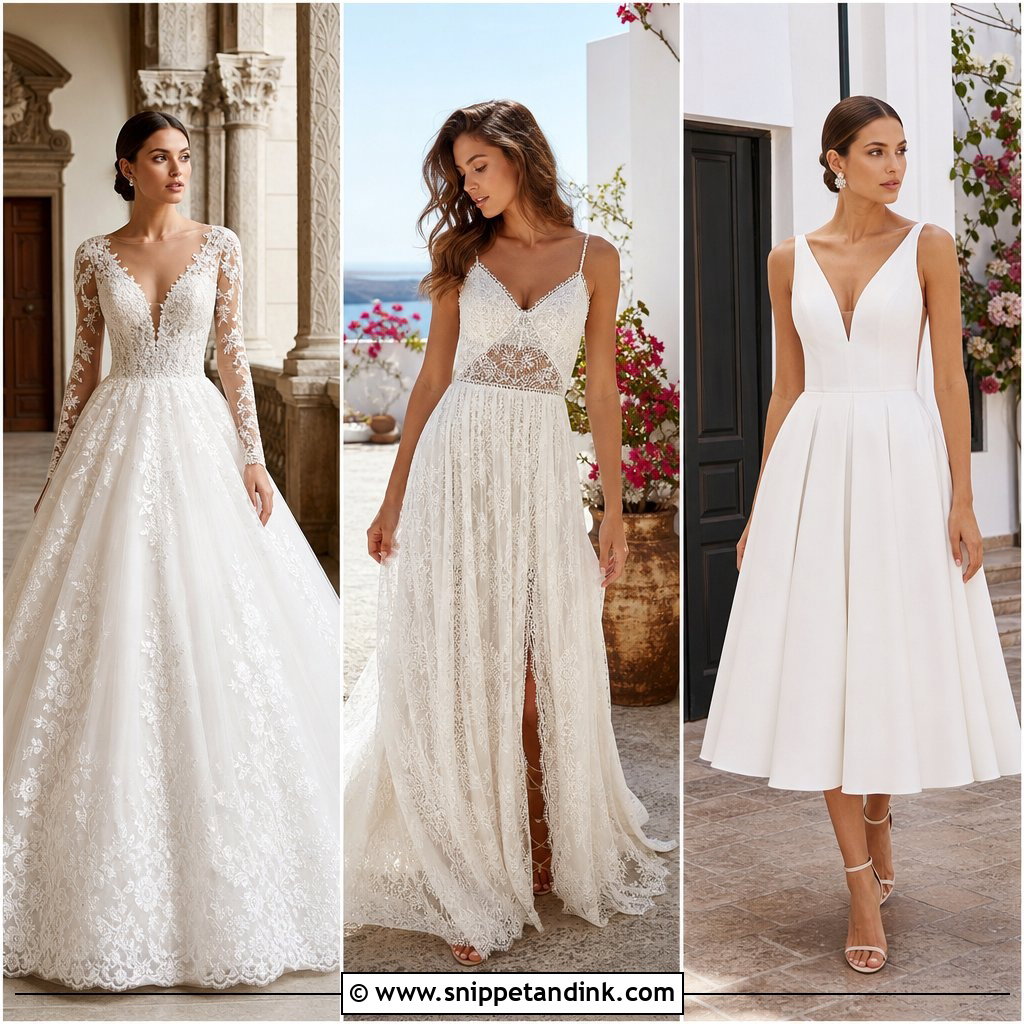
Lace over an A-line is the shape I reach for first with a bride who isn’t sure yet, because it flatters almost everyone and forgives a fitting that shifts a few pounds. The detail that matters is the weight of the lace: fine Chantilly-style floral over a light lining moves, while heavy corded lace on a thick base starts to look like upholstery. Scoop, V or a soft sweetheart are all fine here; pick by how much coverage you want. I’d finish it with pointed ivory pumps, pearl drops and a fingertip veil edged in narrow lace, hair in a loose low bun so the neckline stays visible. A small bouquet of white garden roses keeps the whole thing in proportion, and the outfit sits comfortably in a garden or a traditional ballroom.
2. Delicate Chiffon Wedding Dress
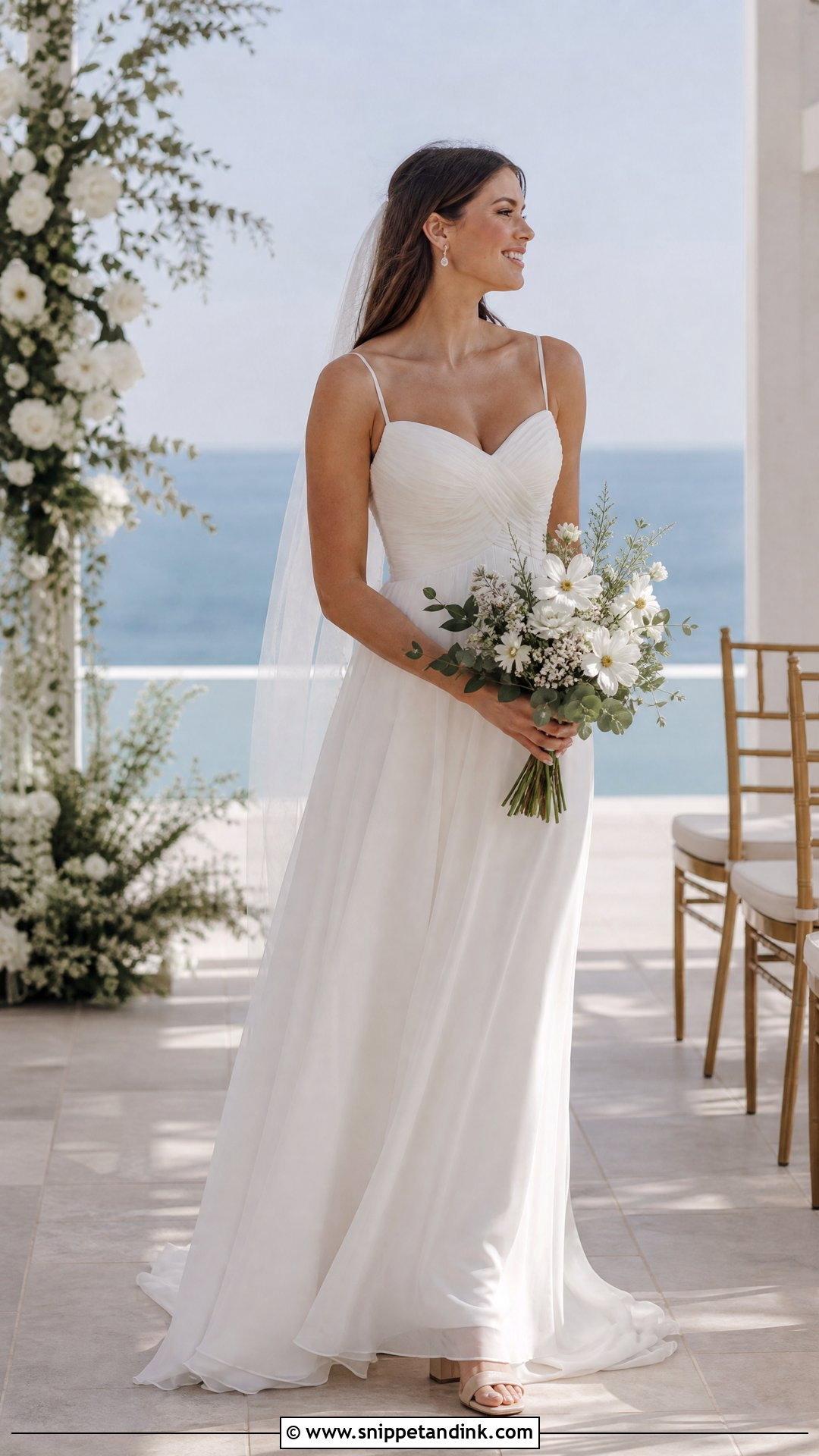
Chiffon is the fabric that moves when you walk, and that movement is the whole point. It suits beach and garden ceremonies because it breathes, but it shows every crease from a long car ride, so I always hang it in the venue and steam it on the morning. A gathered bodice with slim straps or flutter sleeves over an A-line skirt is the classic build; a modest slit adds stride room without changing the mood. Block-heel sandals stop you sinking into lawn. Keep jewellery to small crystal earrings and a thin bracelet, add a barely-there tulle veil, and let soft waves or a relaxed twist echo the fabric. White cosmos, sweet peas and eucalyptus finish it without weight.
3. Delicate Long Sleeve Lace Wedding Dress
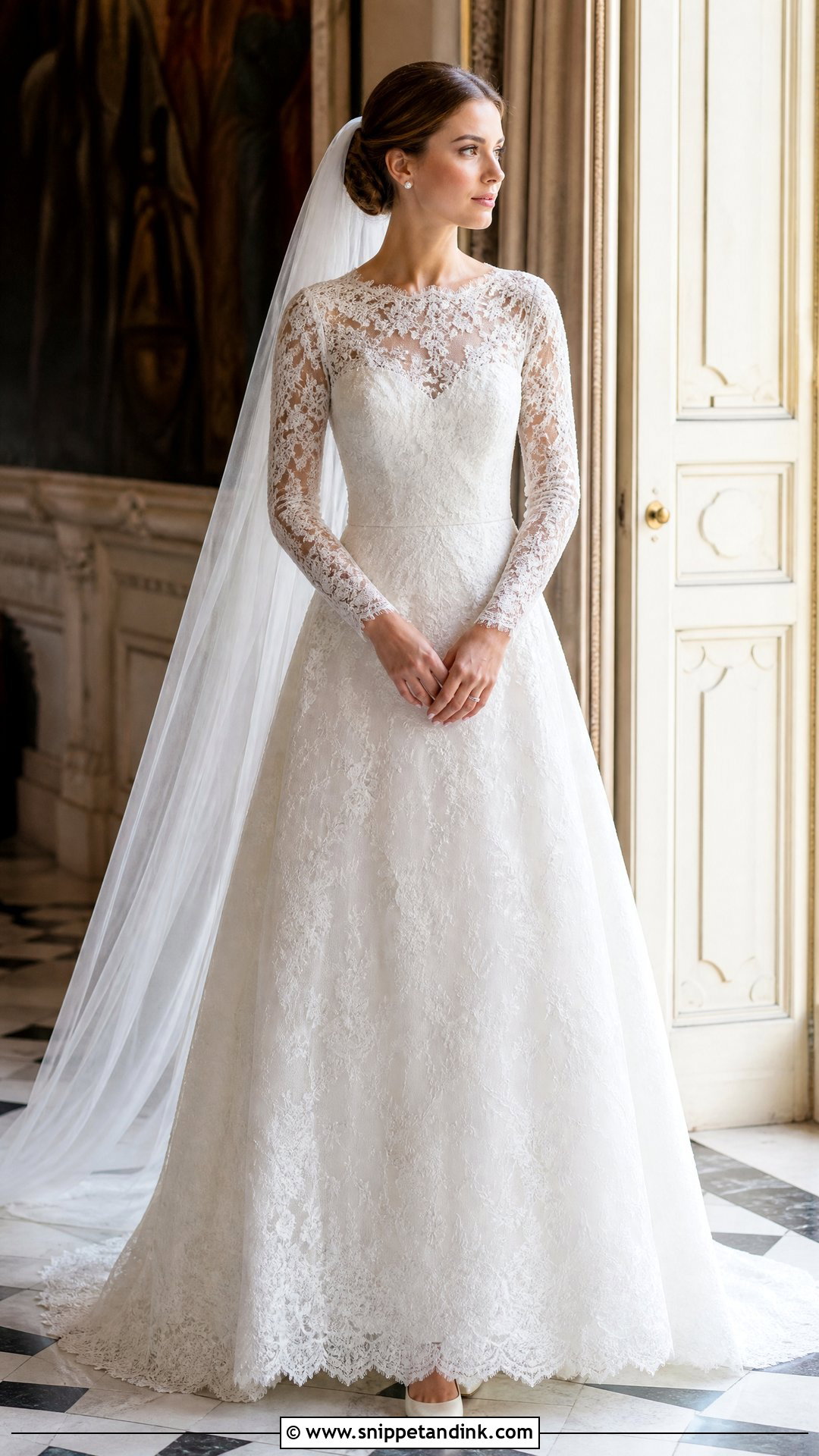
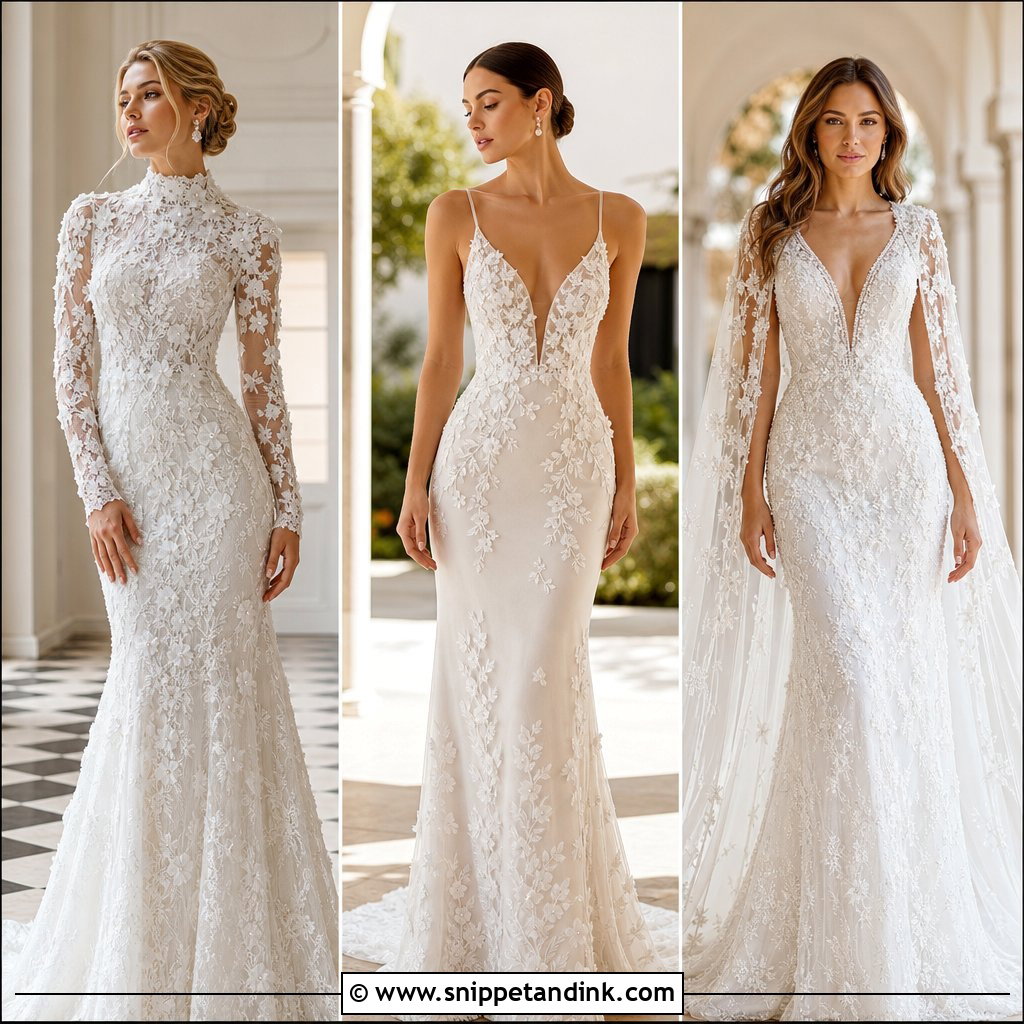
Sheer lace sleeves give coverage without the heaviness of a closed sleeve, which is why I like this one for cooler months. The fitting point everyone forgets: lift your arms above your head and hug someone. Rigid lace with no stretch will pull the bodice up or split at the underarm seam, so look for stretch lace or well-placed seams. A fitted bodice, defined waist and flowing skirt keep it classic. I pair it with closed-toe ivory heels and a plain cathedral veil, since an embroidered veil on top of lace sleeves becomes too busy. Pearl studs and a slim comb are enough, and a smooth chignon frames the neckline for a formal autumn or early spring ceremony.
4. Delicate Tulle Ball Gown Wedding Dress
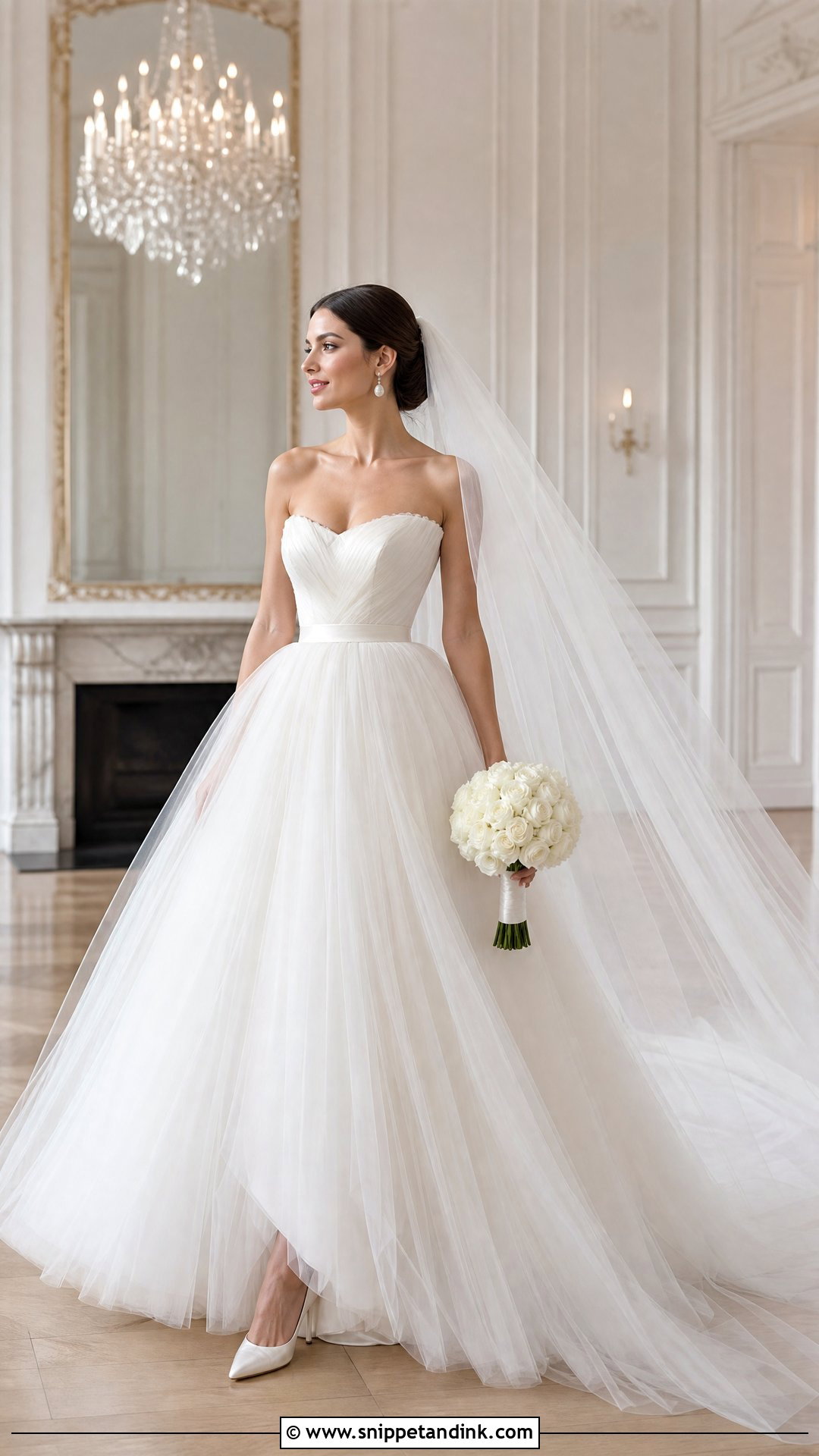
Ball gowns read as delicate only when the skirt is built from many fine layers of soft tulle rather than a few stiff ones. Press a fold of the skirt in your hand at the shop; good tulle springs back softly, cheap net crunches. Keep the bodice plain or lightly structured, with a narrow waistband or a gentle basque point to shape the waist. With that much skirt I hold everything else back: pearl earrings, satin pumps, a single-layer cathedral veil, a low bun or soft half-up style. A compact bouquet of white roses and ranunculus stops the outline from tipping into costume. You get the presence of a ball gown while it still feels light to wear.
5. Delicate Satin Slip Wedding Dress
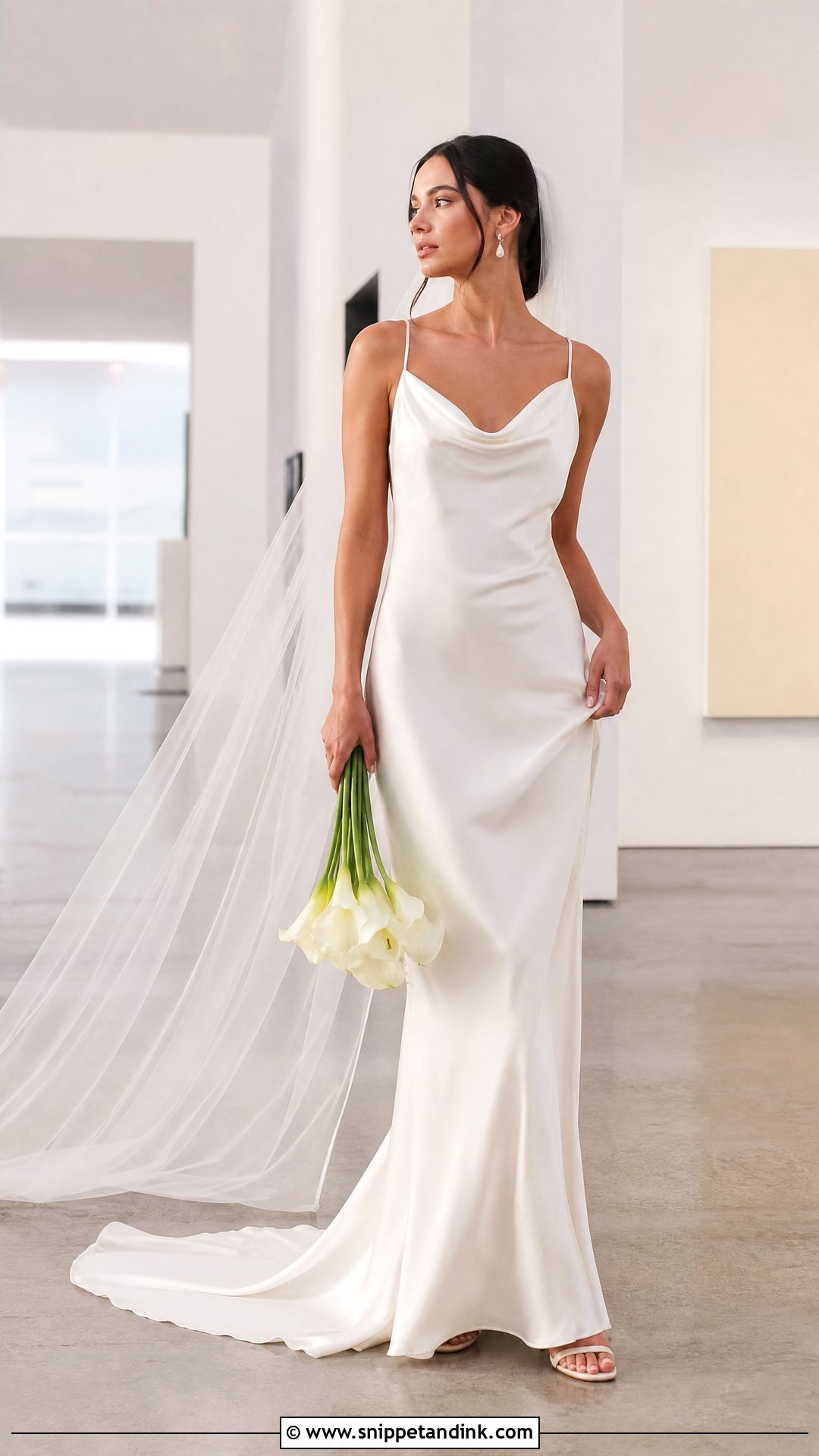
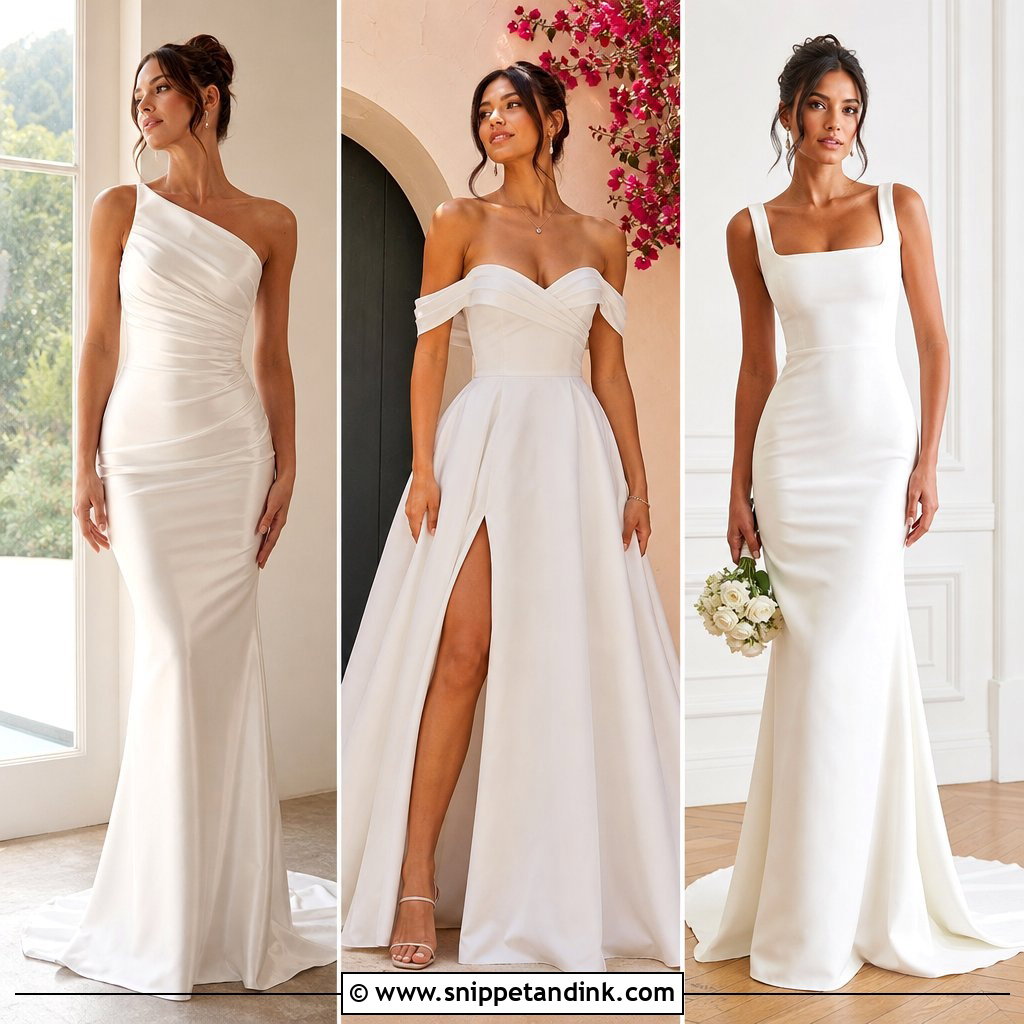
Satin slips are the least forgiving dress in this list, and I tell brides that plainly. Fluid satin shows every seam, every undergarment line and every fitting error, so budget for proper tailoring and smooth, no-seam underwear chosen before the first fitting, not after. Pick a soft draped neckline or a plain V depending on how much structure you want. Barely-there sandals, pearl drops and a long sheer veil are all it needs. A low twisted bun or glossy waves suit the clean line, and calla lilies or a small orchid posy keep it modern. City venues, galleries and small destination weddings are where I’ve seen it work best.
6. Delicate Off Shoulder Wedding Dress
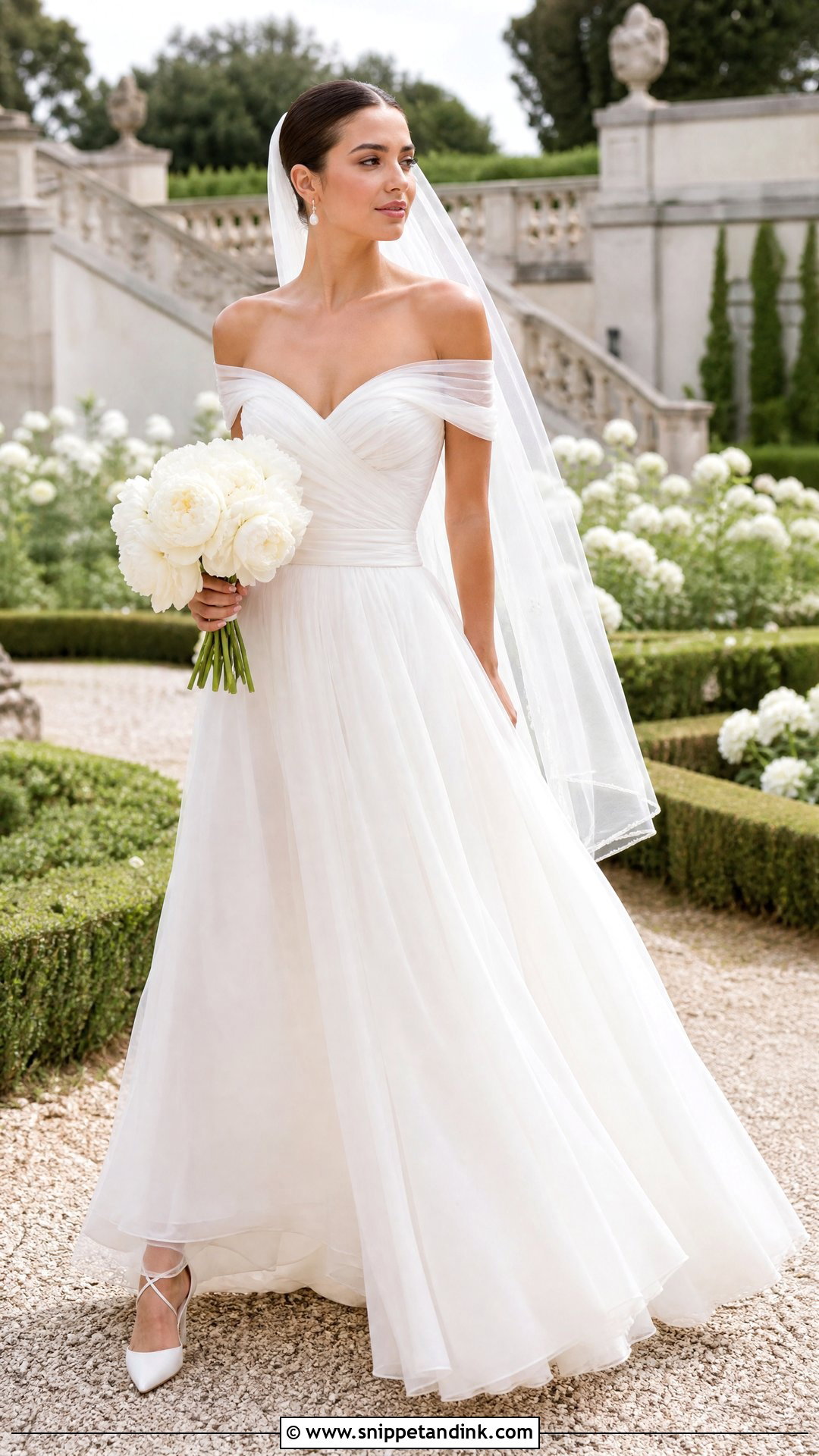
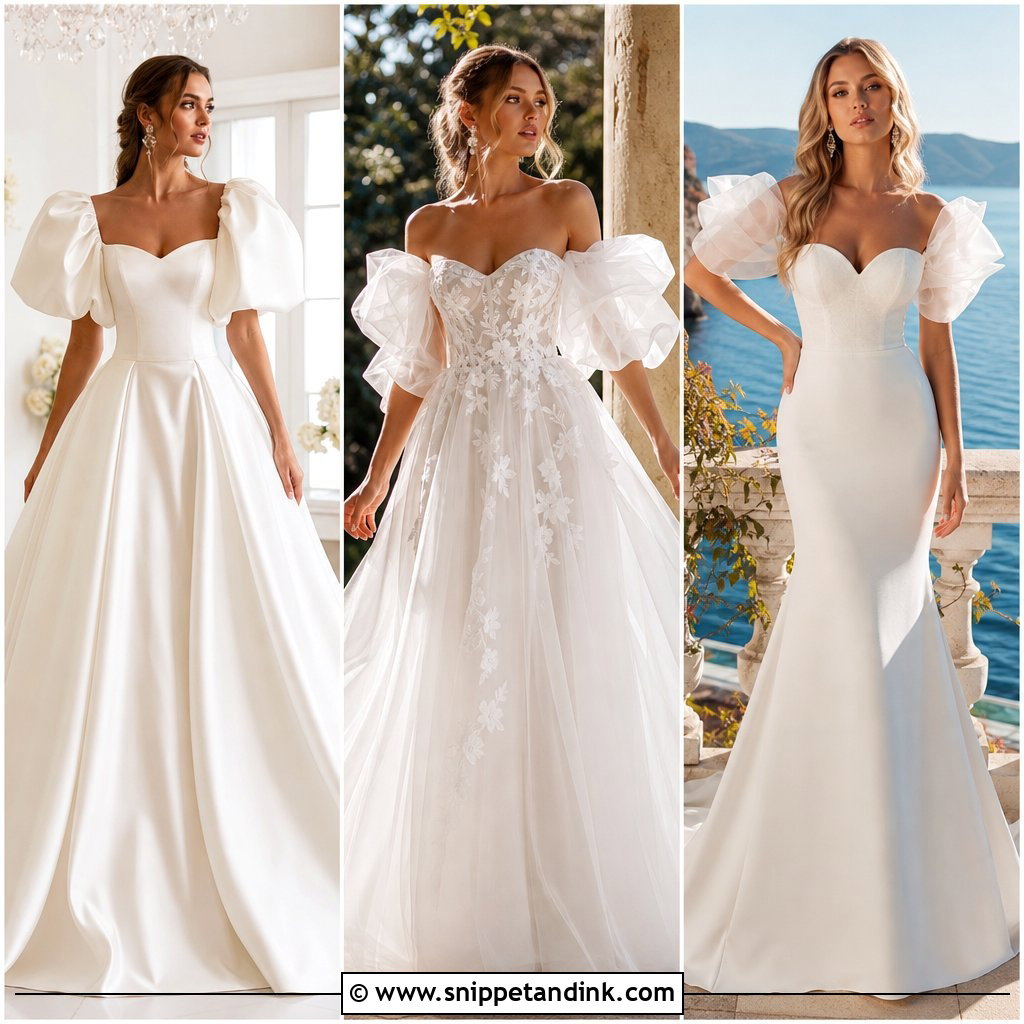
The off-shoulder line frames the collarbone, but the risk is a strap that slides every time you raise a glass. I have the tailor check it with arms lifted and reaching forward, because a band cut too loose will creep down all evening. Soft tulle straps, narrow lace bands or draped satin look lighter than stiff puffed sleeves, and an A-line or fit-and-flare skirt balances the open neckline. A fine pendant, small pearls and pointed slingbacks fit the shape. Attach a fingertip veil beneath a loose updo so the shoulders stay visible from the back too, and carry a rounded posy of peonies or seasonal roses.
7. Delicate Floral Appliqué Wedding Dress
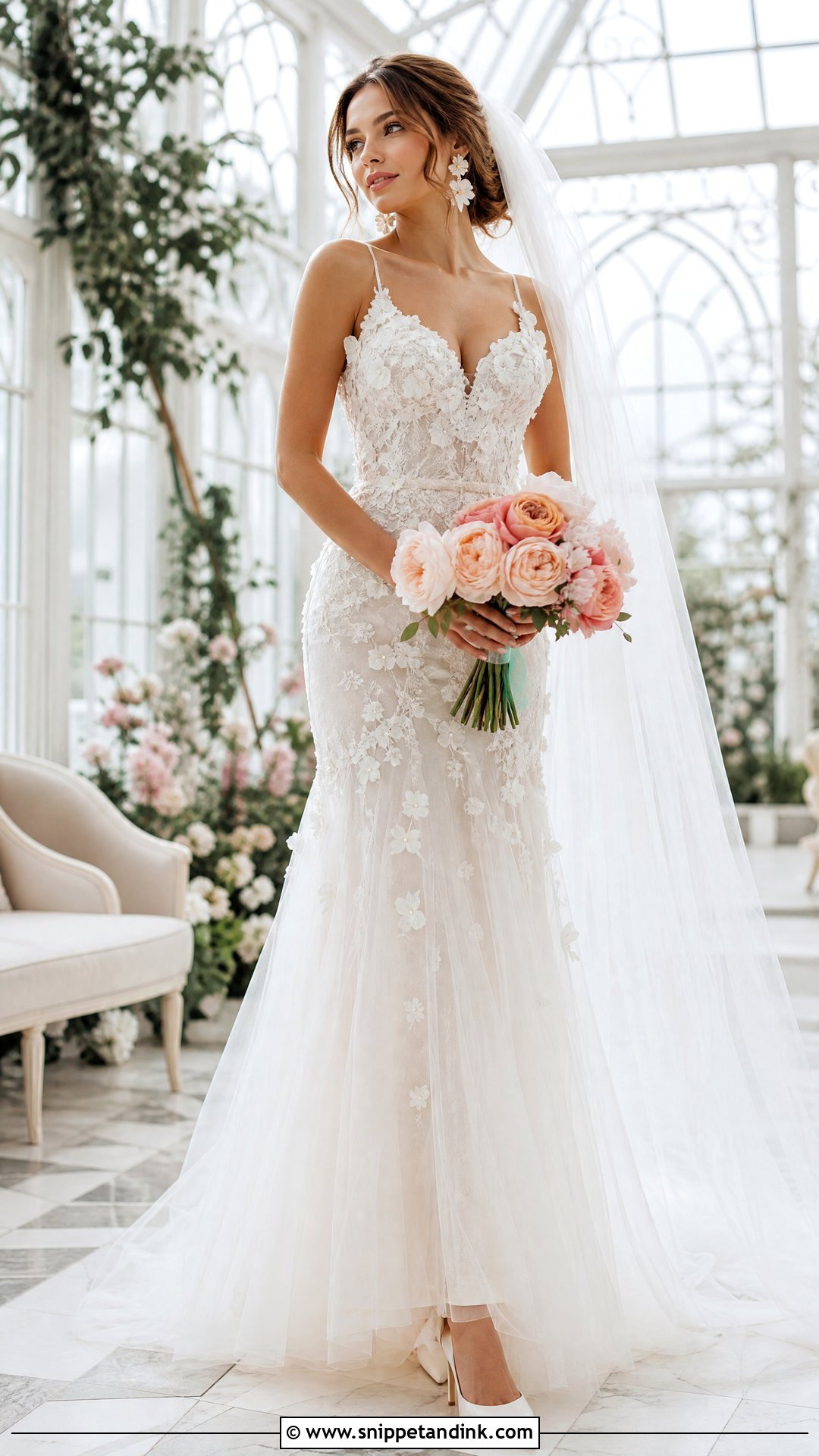
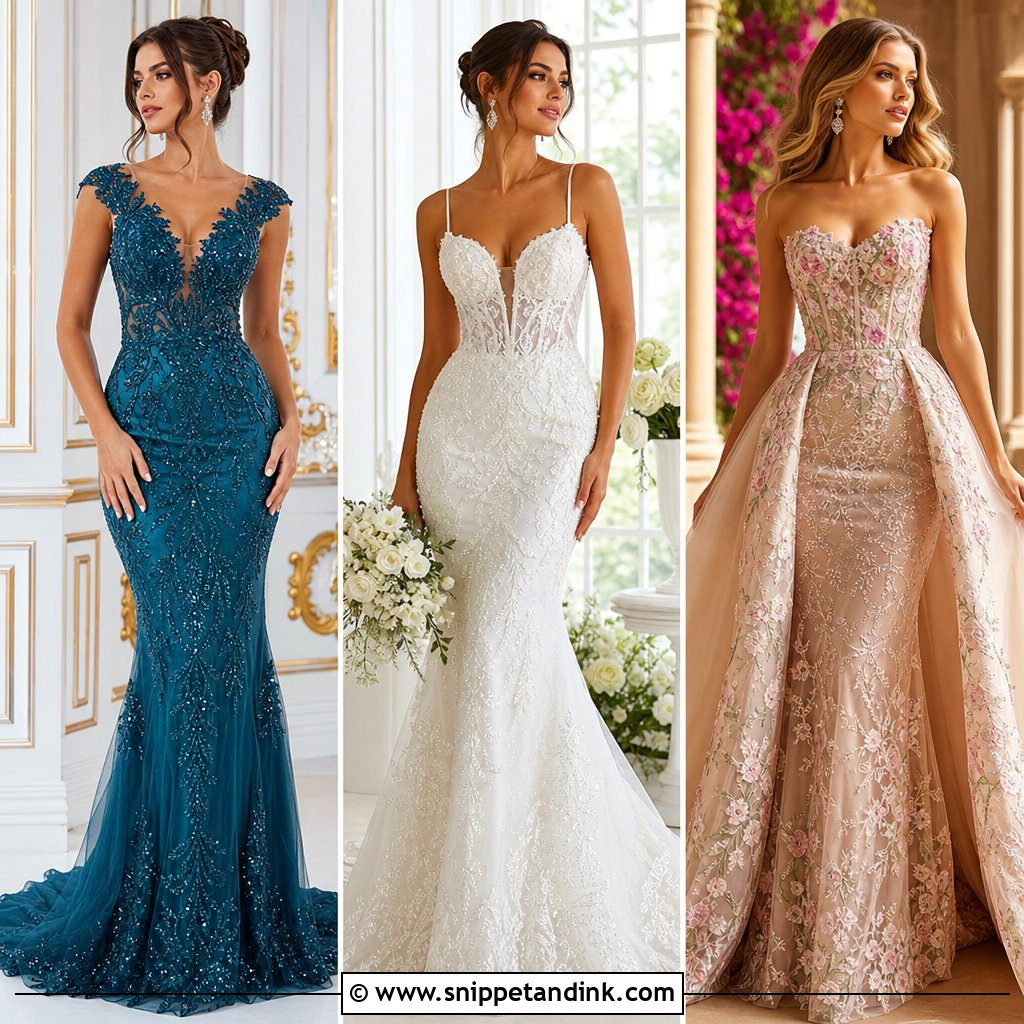
Appliqué flowers give texture without the weight of all-over beading. What I look for is a gradient: blooms clustered on the bodice and thinning into a soft tulle or organza skirt, which draws the eye to the waist and keeps the hem calm. Tiny pearl centres look finer than crystal ones and don’t catch the light so harshly in flash photos. Keep the veil plain so it doesn’t compete. Slim ivory heels, small floral earrings and a loose braided updo pick up the organic shapes, and a garden-style bouquet of white roses, lisianthus and trailing greenery suits spring gardens, conservatories and country venues.
8. Delicate Square Neck Wedding Dress
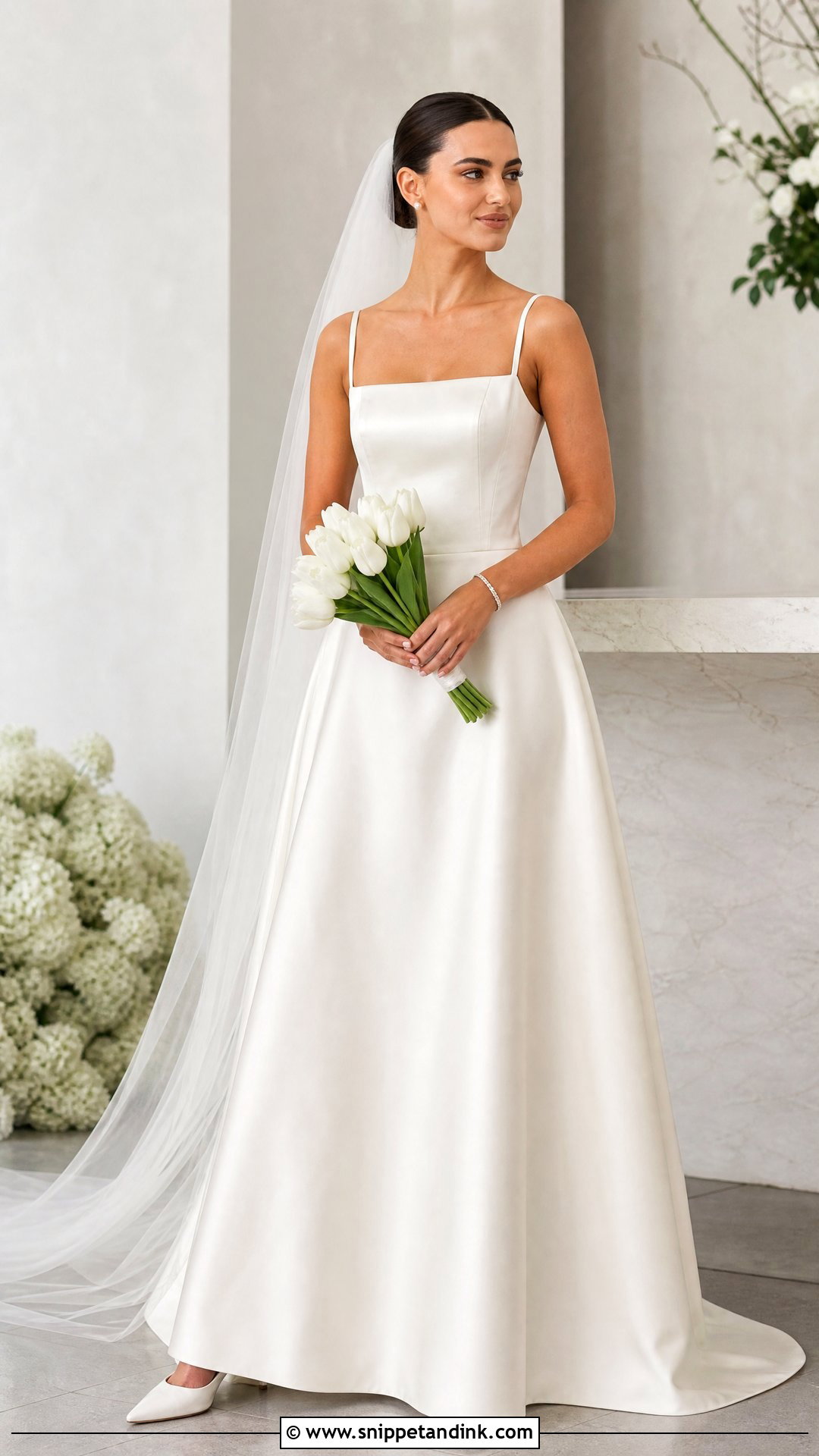
A square neckline is the modern take on softness: straight lines, but in light fabric. Crepe, satin or fine lace all work with slim straps and a softly fitted bodice. The one fitting issue I see is gaping at the corners of the square when a bride leans forward, so check the neckline bent over as if signing the register. An A-line skirt keeps it classic; a straight column makes it current. Pearl or crystal studs, a simple bracelet, pointed heels, then a shoulder-length or plain long veil. A smooth low bun shows off the angular neckline, and white tulips or callas carry the clean shape through to the bouquet.
9. Delicate Pearl Wedding Dress
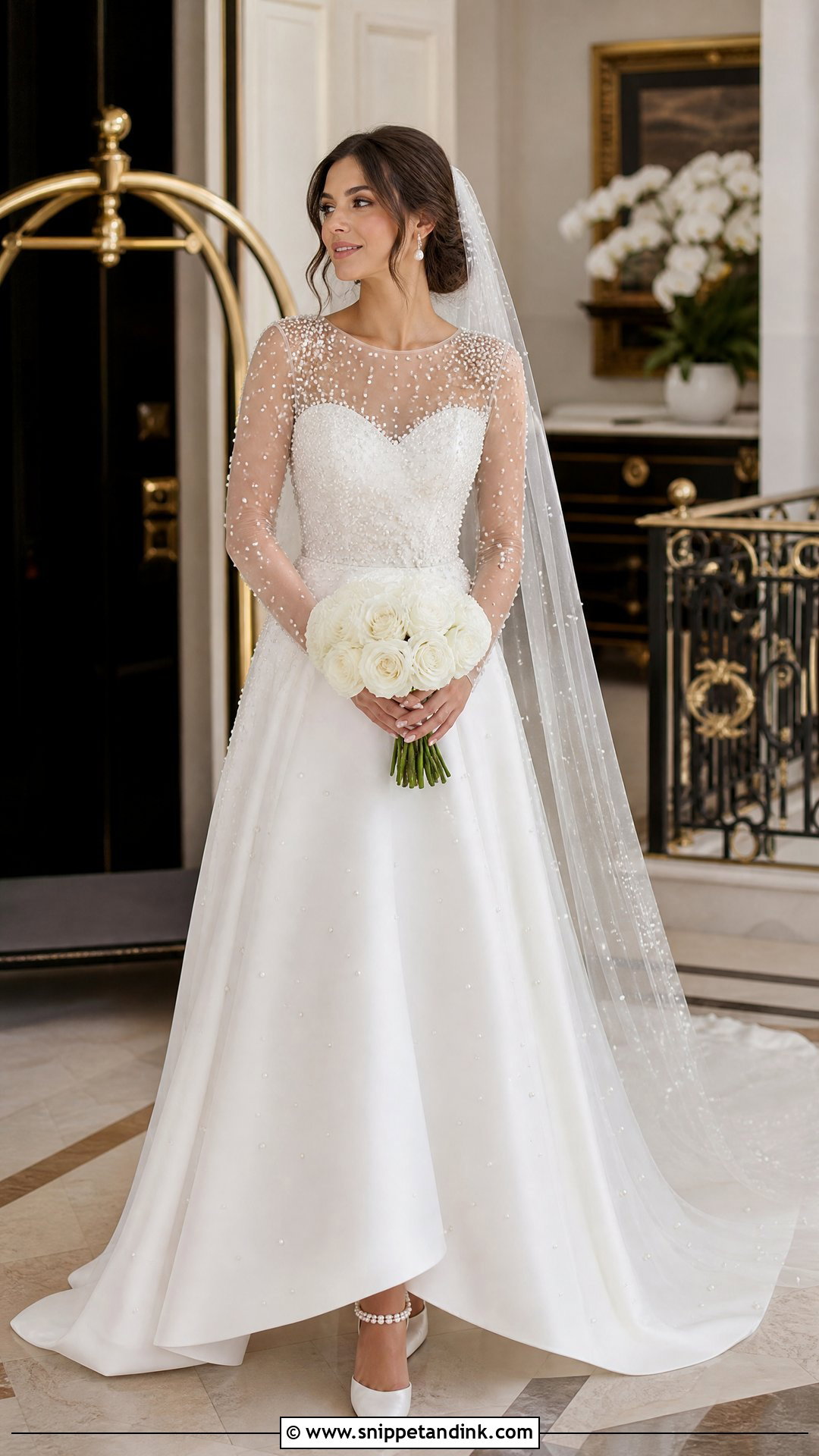
Pearls give a quiet glow instead of sparkle, and the best pearl gowns scatter them rather than encrust them. Seed pearls across the bodice, sleeves or upper skirt over an illusion neckline and a soft A-line stay wearable. Before buying, I turn the bodice inside out and look at how the pearls are attached: individually stitched pearls survive a day of hugging, glued or chain-stitched rows can unravel if one thread breaks. Also drape the veil over them, because beaded edges and scattered pearls can snag each other. Satin pumps, tiny pearl studs, a sleek bun and white roses tied with ivory silk ribbon keep the whole look polished.
10. Delicate Boho Lace Wedding Dress
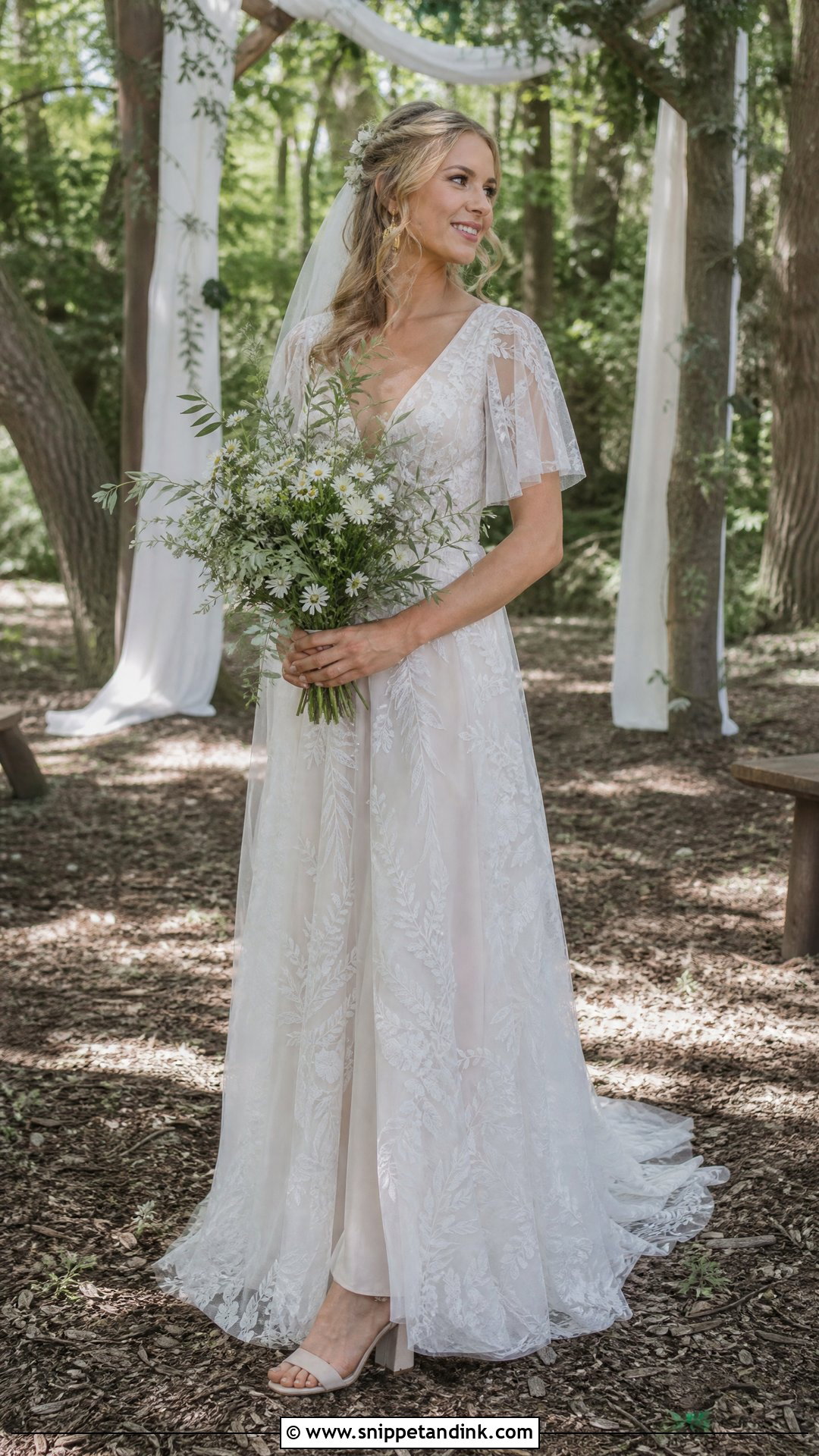
Boho lace has to stay bridal, and the line between relaxed and underdressed is usually the lining and the fit. Soft geometric or botanical lace on a fitted bodice with a defined waist keeps it from looking like a sundress. Flutter sleeves, narrow straps or a low back add the easy feeling. For outdoor ground I’d choose ivory block-heel sandals, small gold earrings and a light fingertip veil. Loose waves or a textured low braid suit the lace, and a bouquet of white wildflowers and dried grasses should be kept controlled, not oversized. Woodland venues and open-air estates are its natural home.
11. Delicate High Neck Wedding Dress
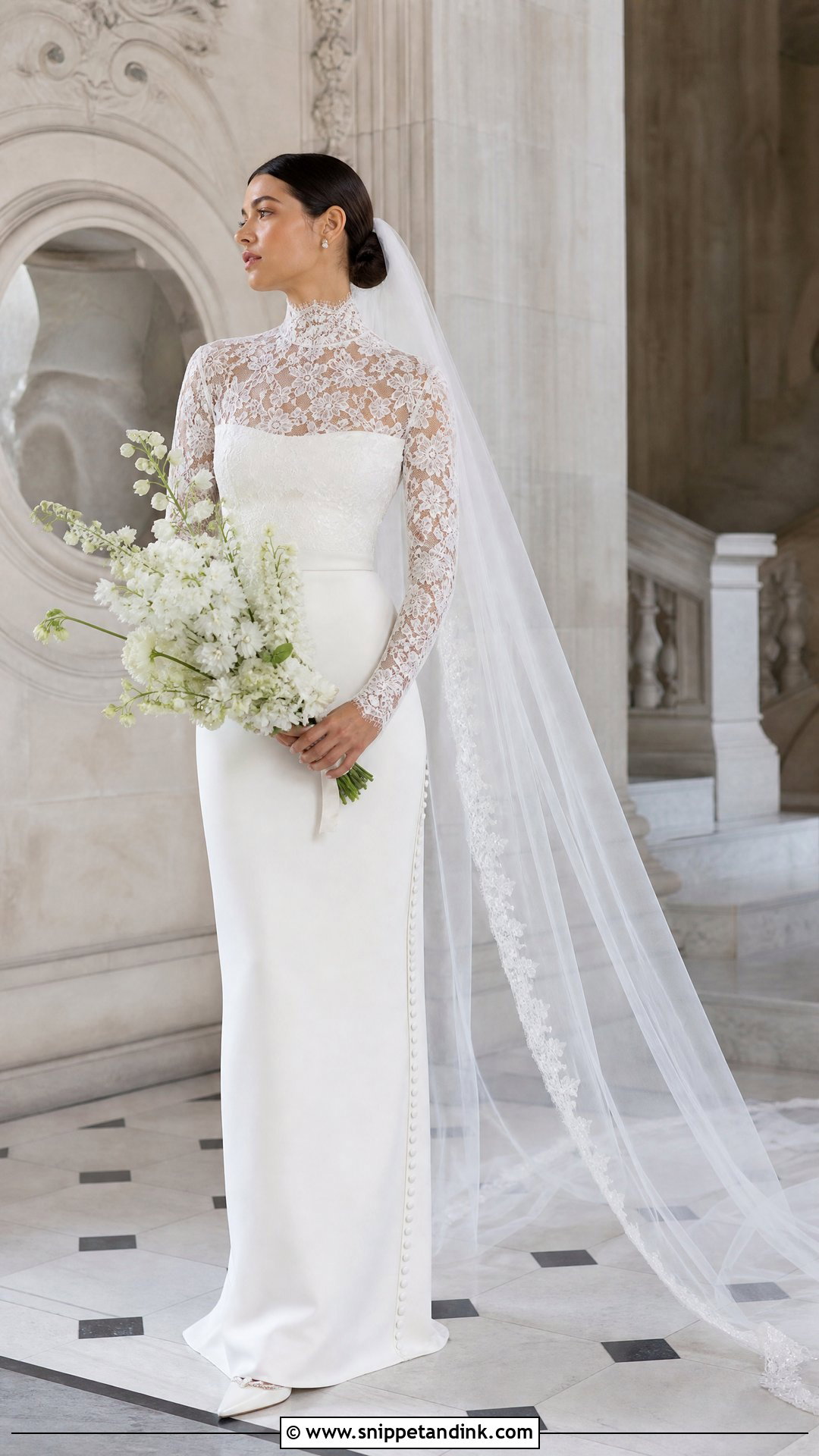
High necklines only look light when they are sheer. A fitted illusion bodice with covered buttons over an A-line or column skirt keeps the effect airy; a solid high neck in heavy fabric reads severe. Sit down and turn your head both ways in the fitting, because a collar cut too high rubs the throat by the speeches. Leave out the necklace and wear small pearl drops or crystal studs instead. Pointed satin pumps and a plain cathedral veil tucked under a neat bun are enough, and a long, narrow bouquet of delphiniums, roses or tulips repeats the vertical line. Historic venues and formal ceremonies suit it well.
12. Delicate Cap Sleeve Wedding Dress
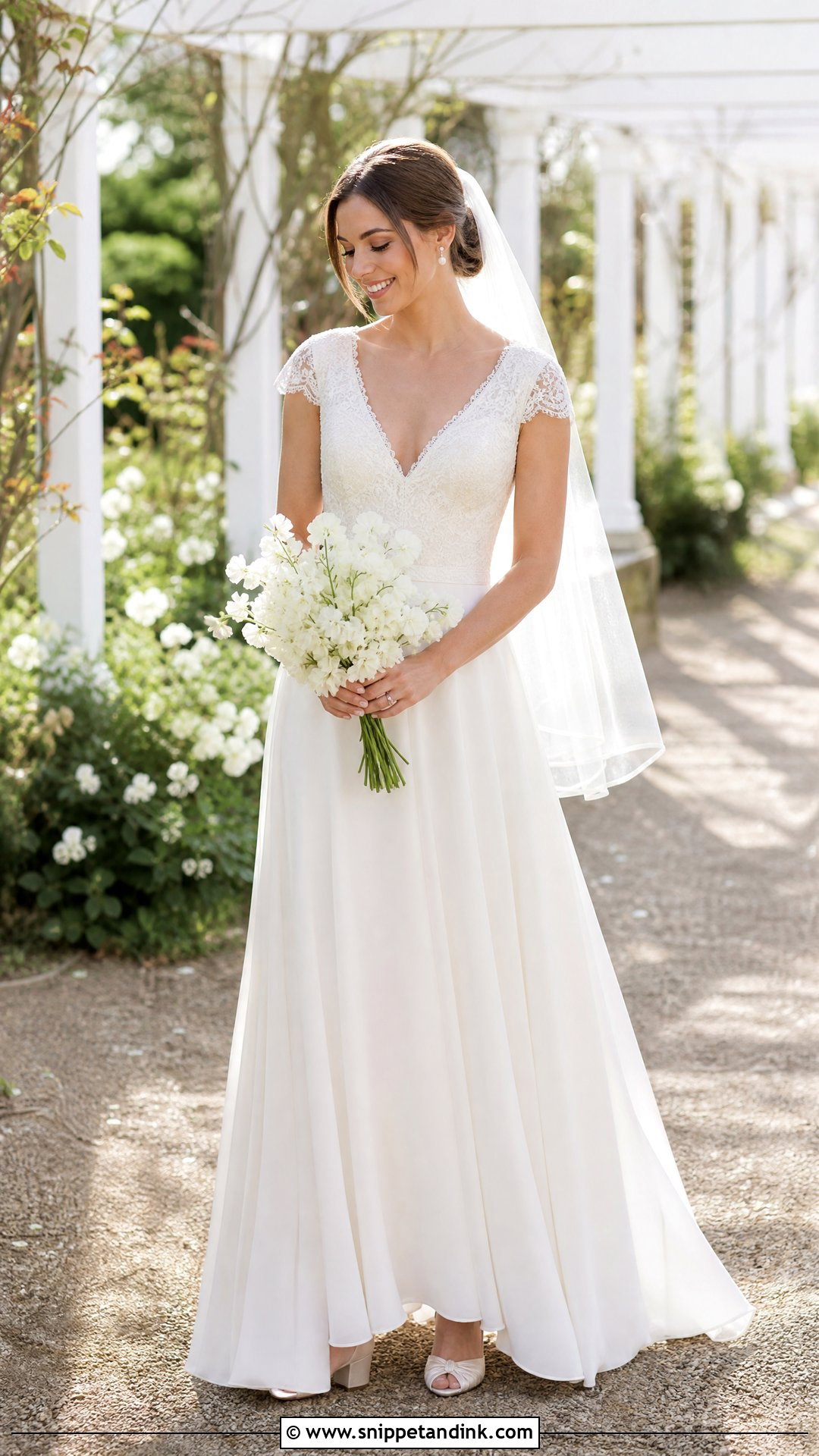
Cap sleeves are my answer when a bride wants something on the shoulder but feels trapped in a full sleeve. Fine lace, embroidered tulle or the bodice fabric continued over the shoulder all work. Pair it with a V or soft scoop so the top half doesn’t close up. Check the sleeve edge sits on the shoulder rather than biting into the upper arm, which happens when the sleeve is cut tight to look neat on the hanger. Chiffon or tulle A-line skirt, low ivory heels, pearl earrings, a clean-edged fingertip veil and a half-up style that leaves the sleeves visible. Sweet peas and garden roses suit a spring ceremony.
13. Delicate Crepe Wedding Dress
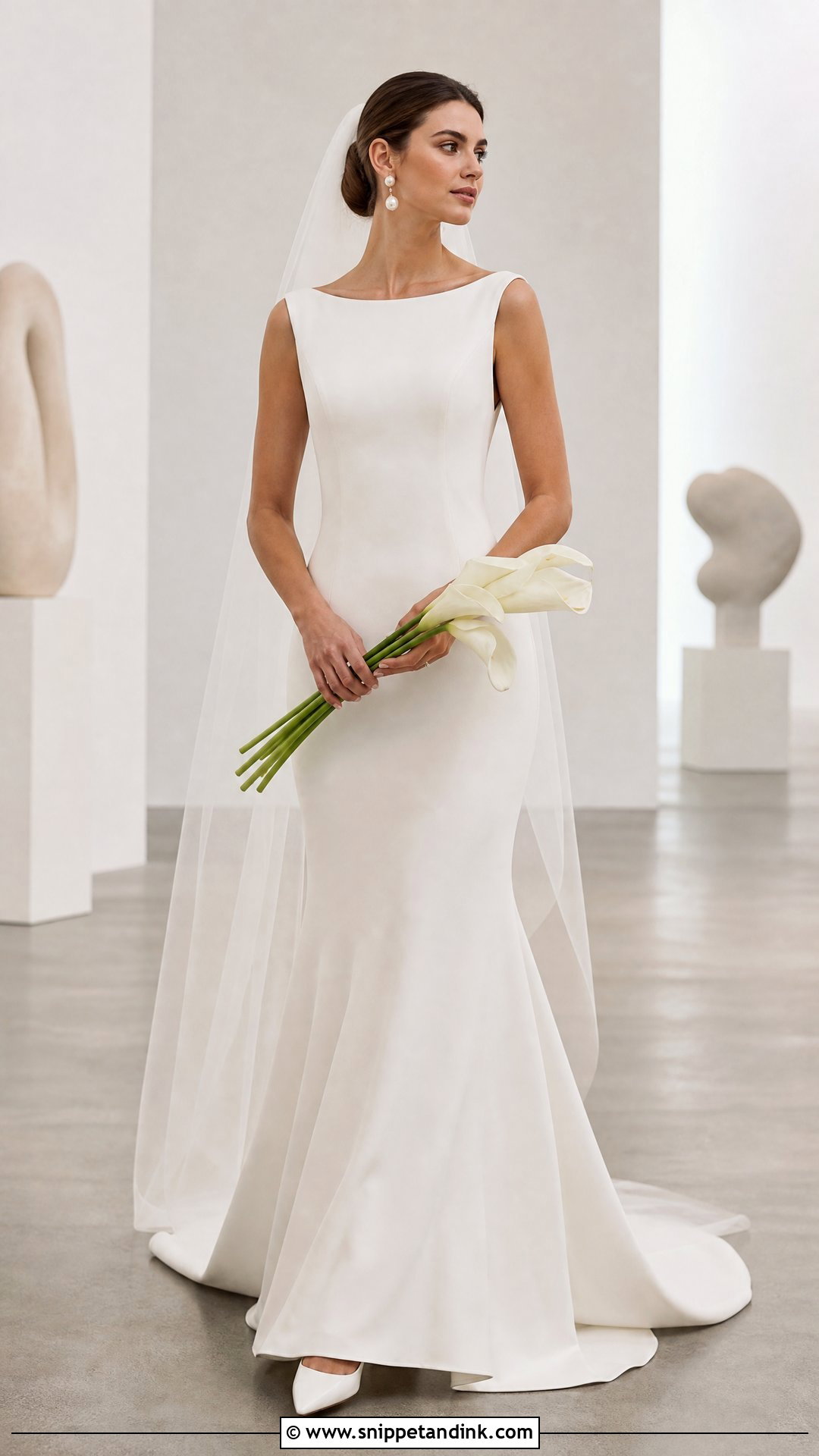
Crepe is delicate through cut rather than decoration. A fit-and-flare with a bateau neckline, covered back buttons and a short train shows it at its best. Because crepe follows the body closely, I sort the shapewear before alterations start; changing underwear between fittings changes the fit. Pointed ivory pumps, sculptural pearl earrings and a long plain veil complete it. Hair goes into a sleek low knot or polished waves, and callas or white orchids keep the outline streamlined. One romantic touch is plenty, usually a sheer lace back or a narrow lace trim. Lofts, galleries and minimalist hotel spaces suit it.
14. Delicate Sweetheart Neck Wedding Dress
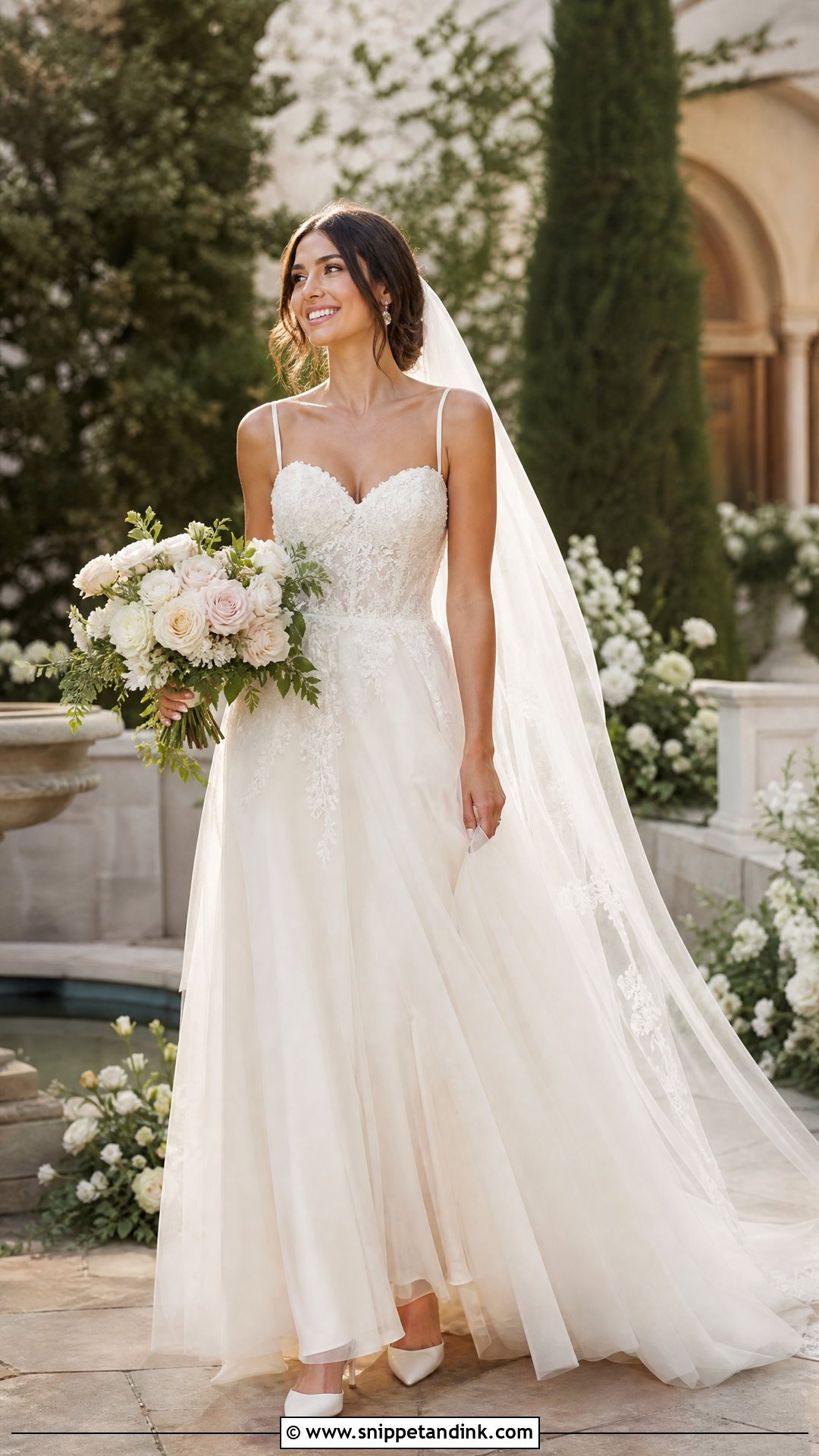
A sweetheart neckline softens the bodice, but it needs real structure underneath or it sags by mid-afternoon. A gently boned bodice with fine lace appliqués over a tulle or chiffon skirt is the classic version, and thin detachable straps help brides who worry about support. Dance in it during alterations, then sit for twenty minutes. If you find yourself tugging the top up, the bodice needs taking in. Ivory slingbacks, pearl drops and a single-layer veil that falls past the train keep the look calm. Soft waves, a low bun or a half-up style all suit the rounded line, with white roses and a little pale blush in the bouquet.

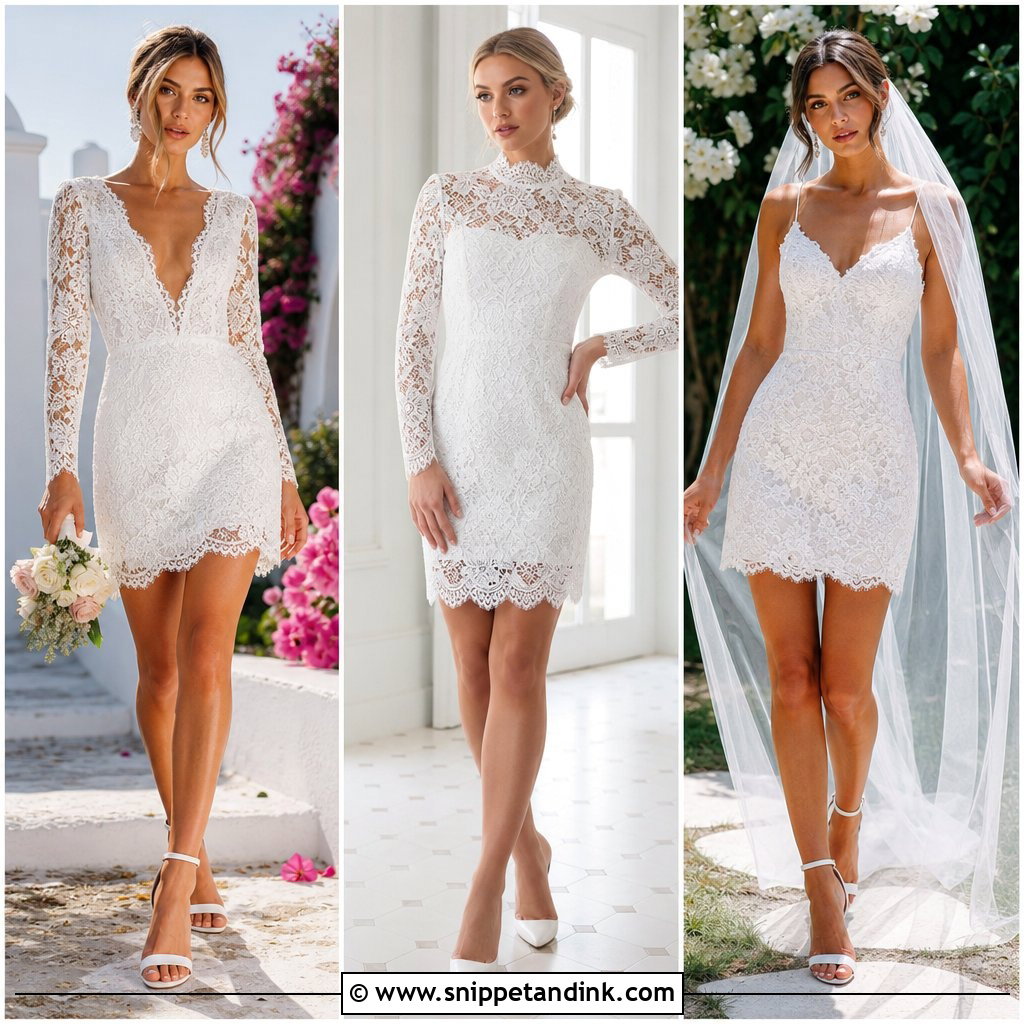
15. Delicate Tea Length Wedding Dress
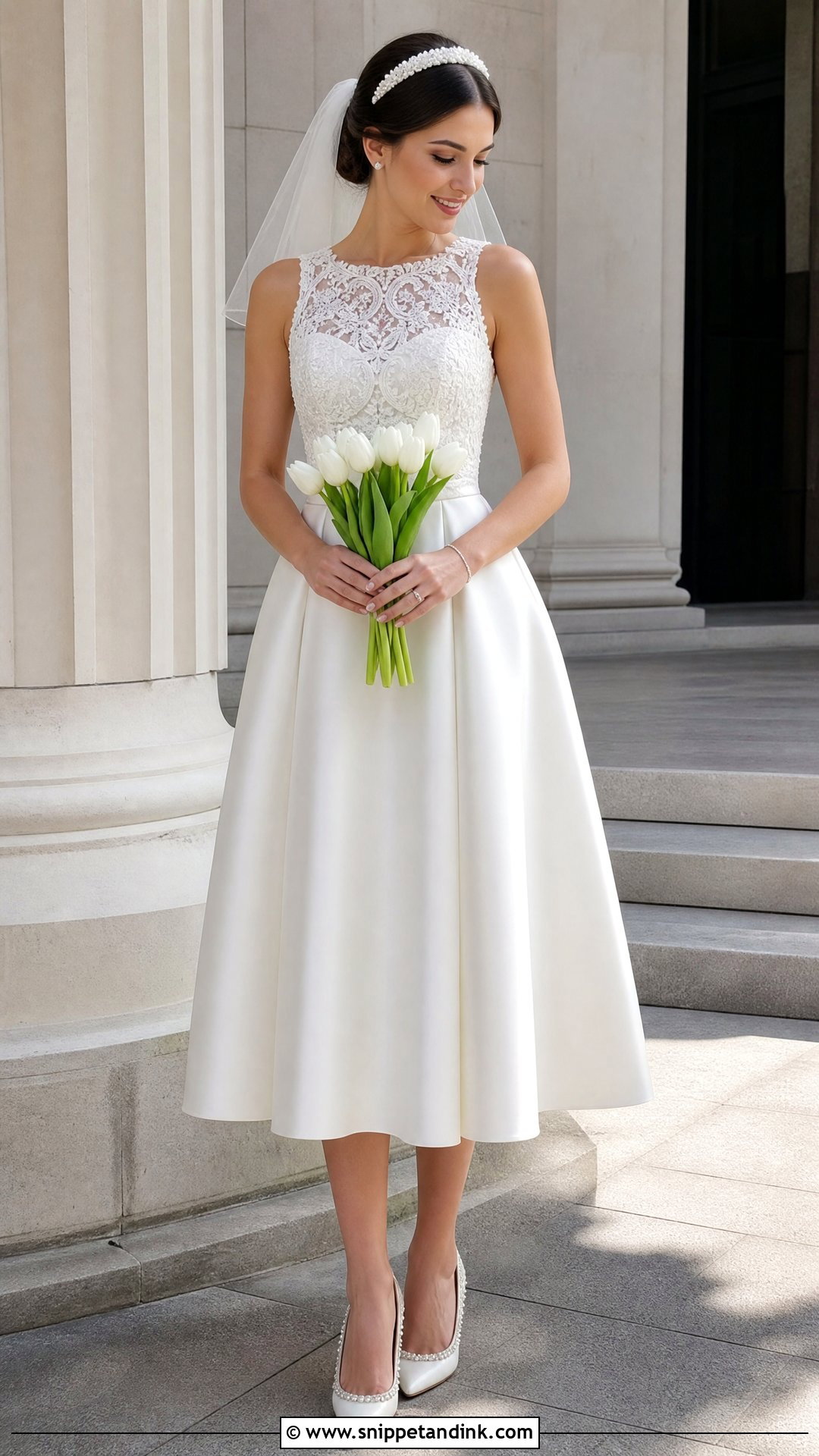
Tea length is the most practical dress here: you can walk, dance and climb stairs without a bustle. The hem lands between knee and ankle, so the shoes become part of the outfit, and I spend almost as long on them as on the dress. Pearl-trimmed pumps, sleek slingbacks or low block heels all work over a fitted lace or satin bodice and flared skirt. Keep the veil short, add a delicate headband and small studs so the proportions stay balanced. A polished bun or softly curled bob suits the shorter line, with white tulips or ranunculus. Courthouse ceremonies and brunch receptions are where it shines.
16. Delicate Illusion Neckline Wedding Dress
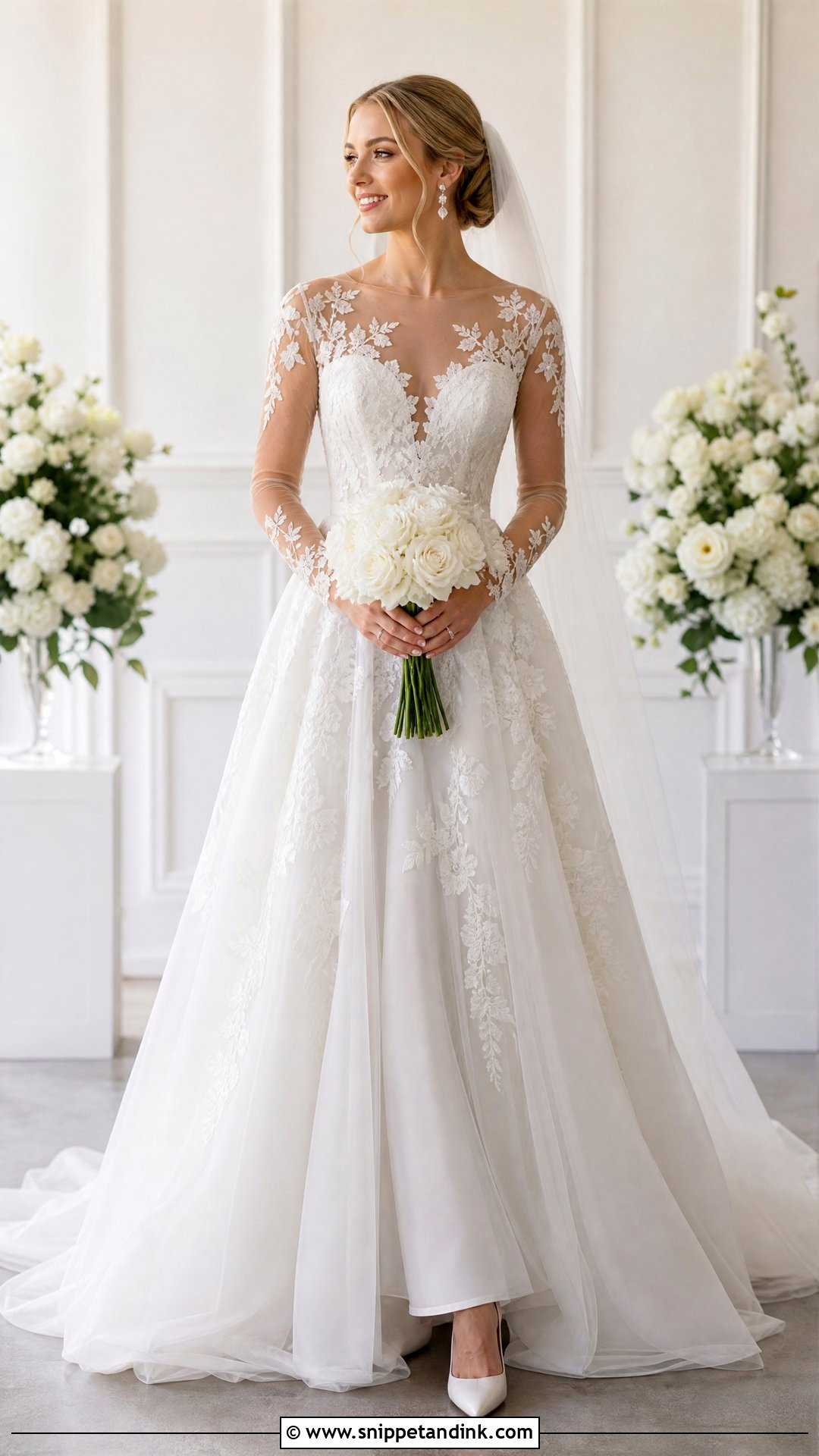
Illusion necklines float lace on the skin, and the whole trick depends on the mesh colour matching your skin tone. I always take the bride to a window and look at the mesh in daylight; under shop lighting a mismatched net looks fine and then shows as a grey or pink panel in outdoor photos. A softly fitted bodice and A-line skirt make a clean base for the transparent detail, with small floral motifs around neck and shoulders. Skip the necklace. Pointed satin heels, fine crystal earrings, a plain veil placed below a low updo and white roses with fine greenery complete it.
17. Delicate Embroidered Wedding Dress
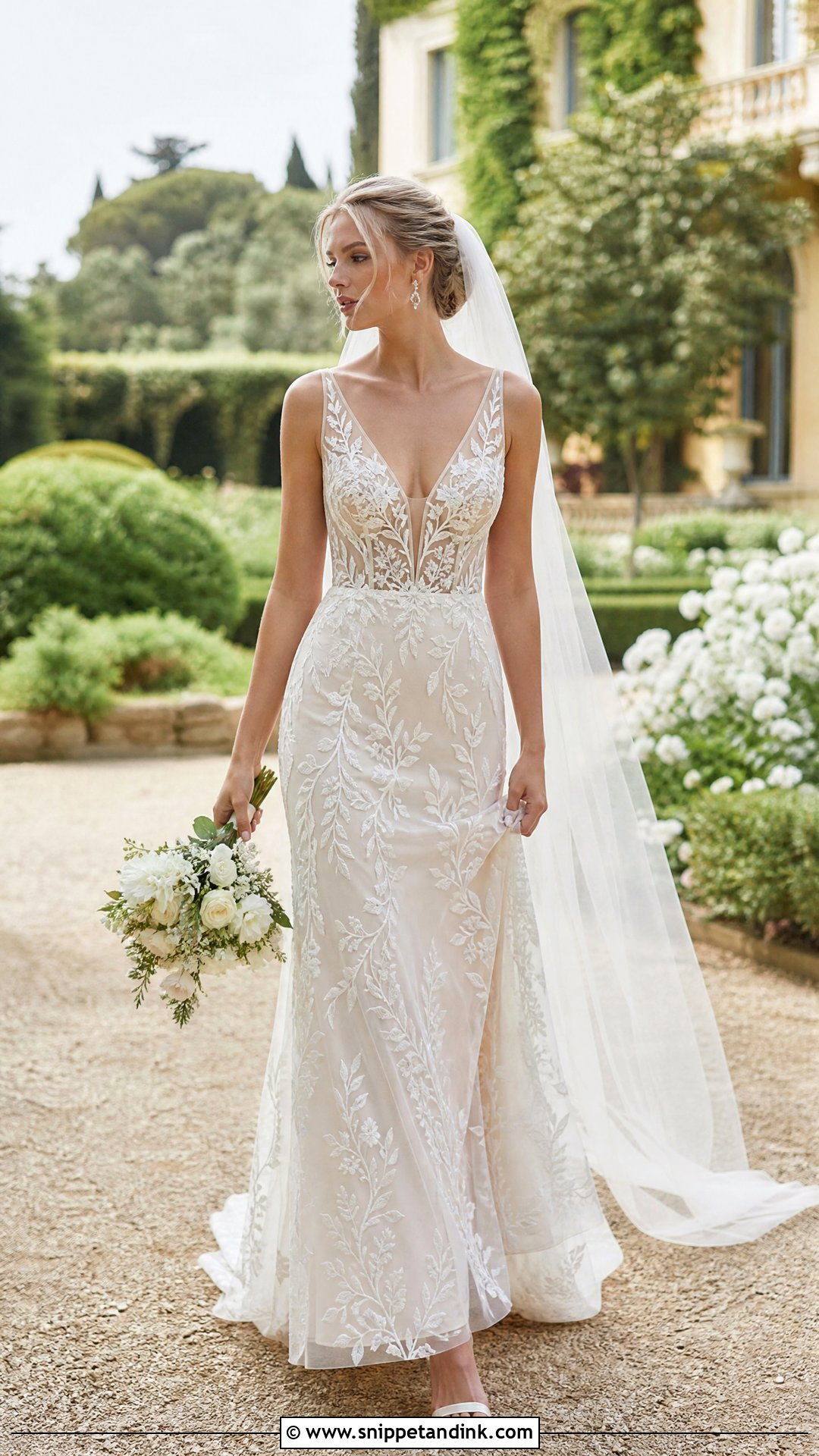
Tonal embroidery turns a plain gown into something personal without a bold contrast. Botanical vines or tiny flowers across a sheer bodice, scattered more lightly down the skirt, give texture you notice up close. If you want a hint of colour, pale blue or blush thread in a few small spots reads as a quiet secret rather than a pattern. Keep the veil free of pattern so the two don’t fight. Simple satin heels, small drops and a relaxed low bun leave the neckline clear, and seasonal white flowers tied with ribbon matched to the gown suit garden and estate weddings.
18. Delicate Open Back Wedding Dress
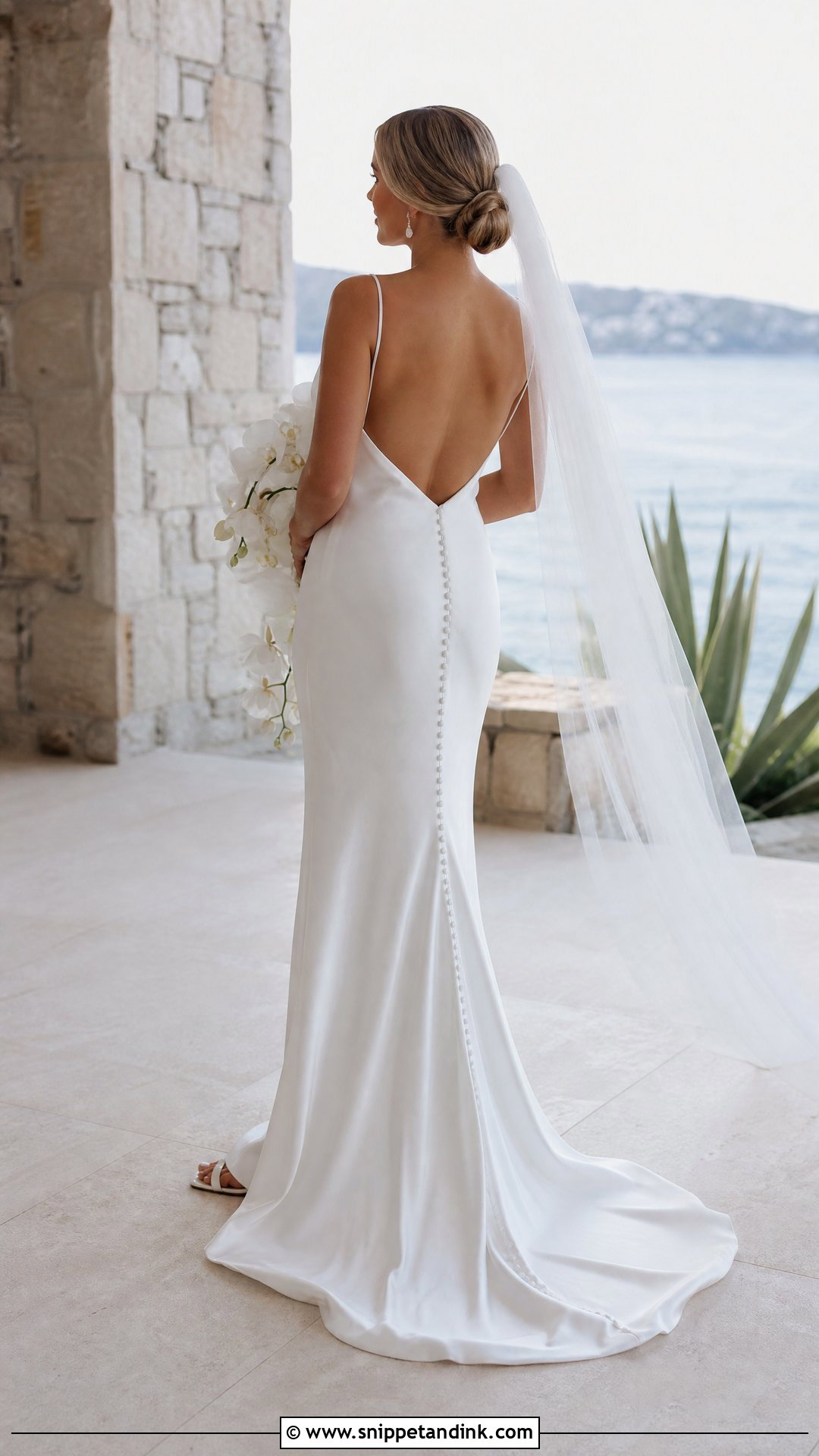
Most of the drama in an open back happens when you’re walking away, so the ceremony is when it gets seen. The fitting question is support: I prefer cups sewn into the bodice or a professionally fitted internal structure, since a clear-strap bra looks worse in photos than any bride expects. Satin, crepe or lace with slim straps, a bateau front or sheer sleeves all work, framed by covered buttons, lace edging or a soft cowl drape. A low side bun keeps the back visible, with ivory sandals, small earrings and a long sheer veil attached below the hairstyle. White orchids or roses suit coastal and summer ceremonies.
19. Delicate Blush Wedding Dress
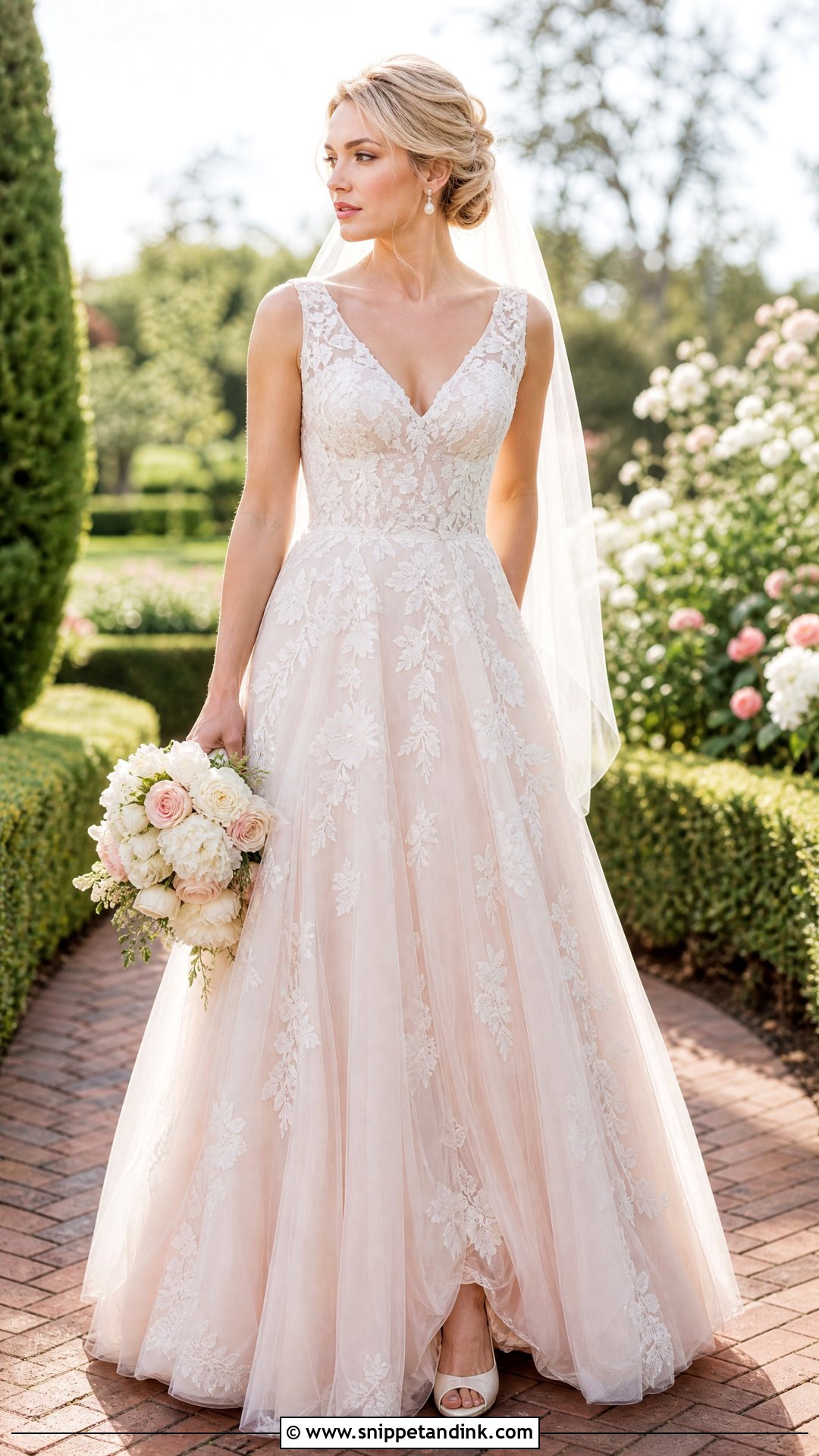
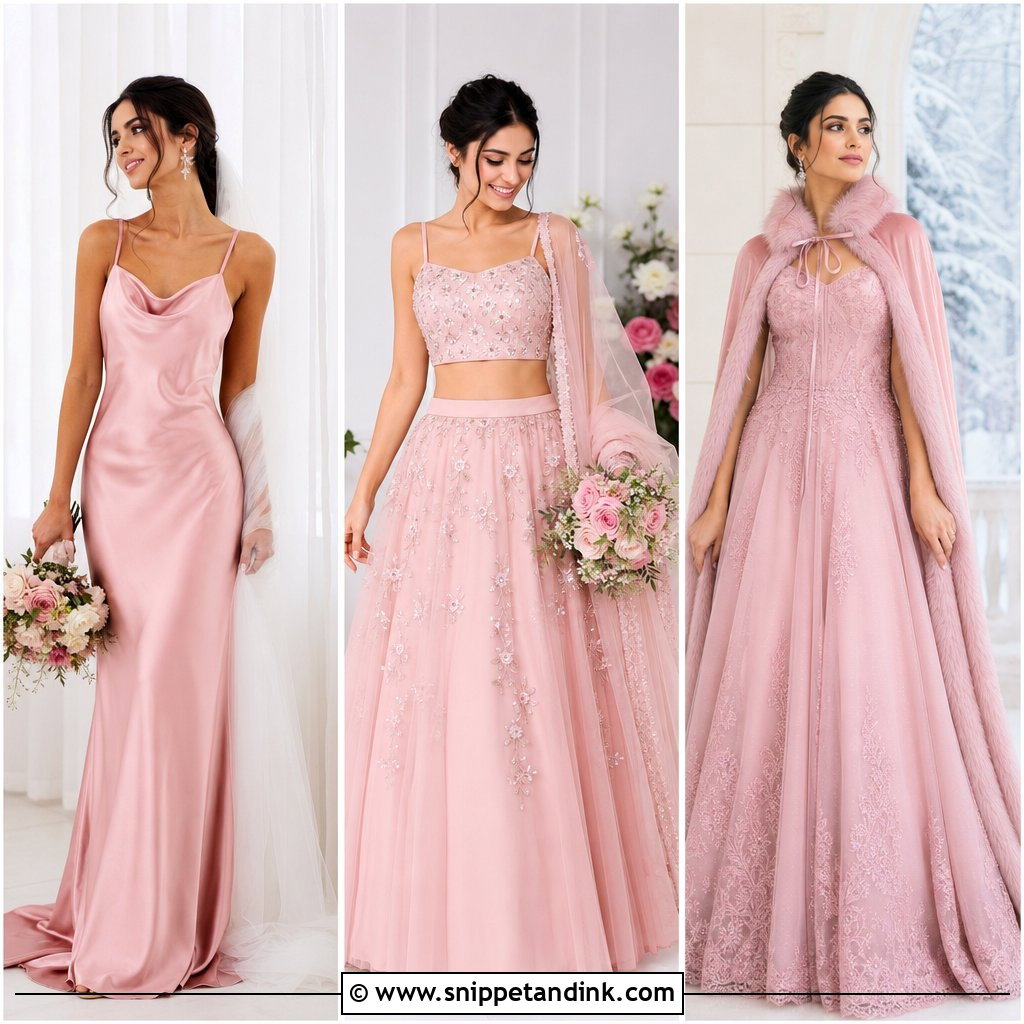
Blush reads as bridal only when it’s pale and layered. Blush tulle under ivory lace gives depth without turning the dress pink; a solid blush satin can tip into bridesmaid territory fast. The other thing I warn about is light. Warm indoor bulbs push blush toward peach, and shade outdoors can make it look grey, so view it in daylight and under tungsten before ordering. An ivory veil, ivory heels and rose gold or pearl earrings keep it soft. Neutral pink makeup ties in, and white with pale blush roses makes a coordinated bouquet for a garden or spring ballroom.

20. Delicate Cowl Neck Wedding Dress
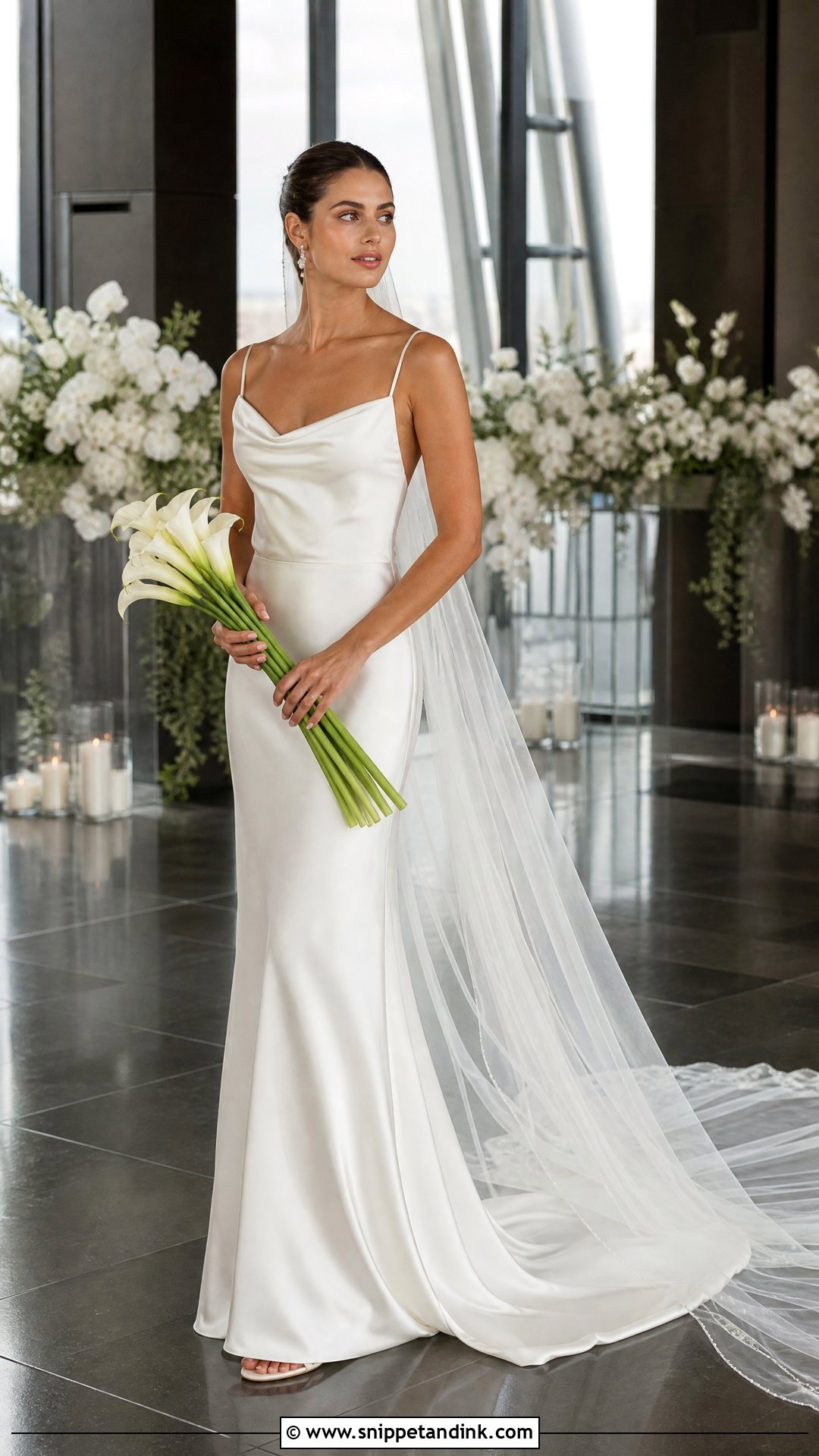
A cowl neck wedding dress relies on fabric that falls under its own weight, which is why silk satin or charmeuse does it best and stiff polyester satin tends to stick out in a cone. Slim straps, a low back and a skirt with enough room to walk are the build. No necklace, since it fights the drape. Minimal ivory sandals, fine drops and a sheer cathedral veil complete it, with a smooth bun if you want the neckline sharp or relaxed waves for something softer. Long-stemmed callas or a small orchid bouquet suit city evenings and small coastal ceremonies.
21. Delicate Flutter Sleeve Wedding Dress
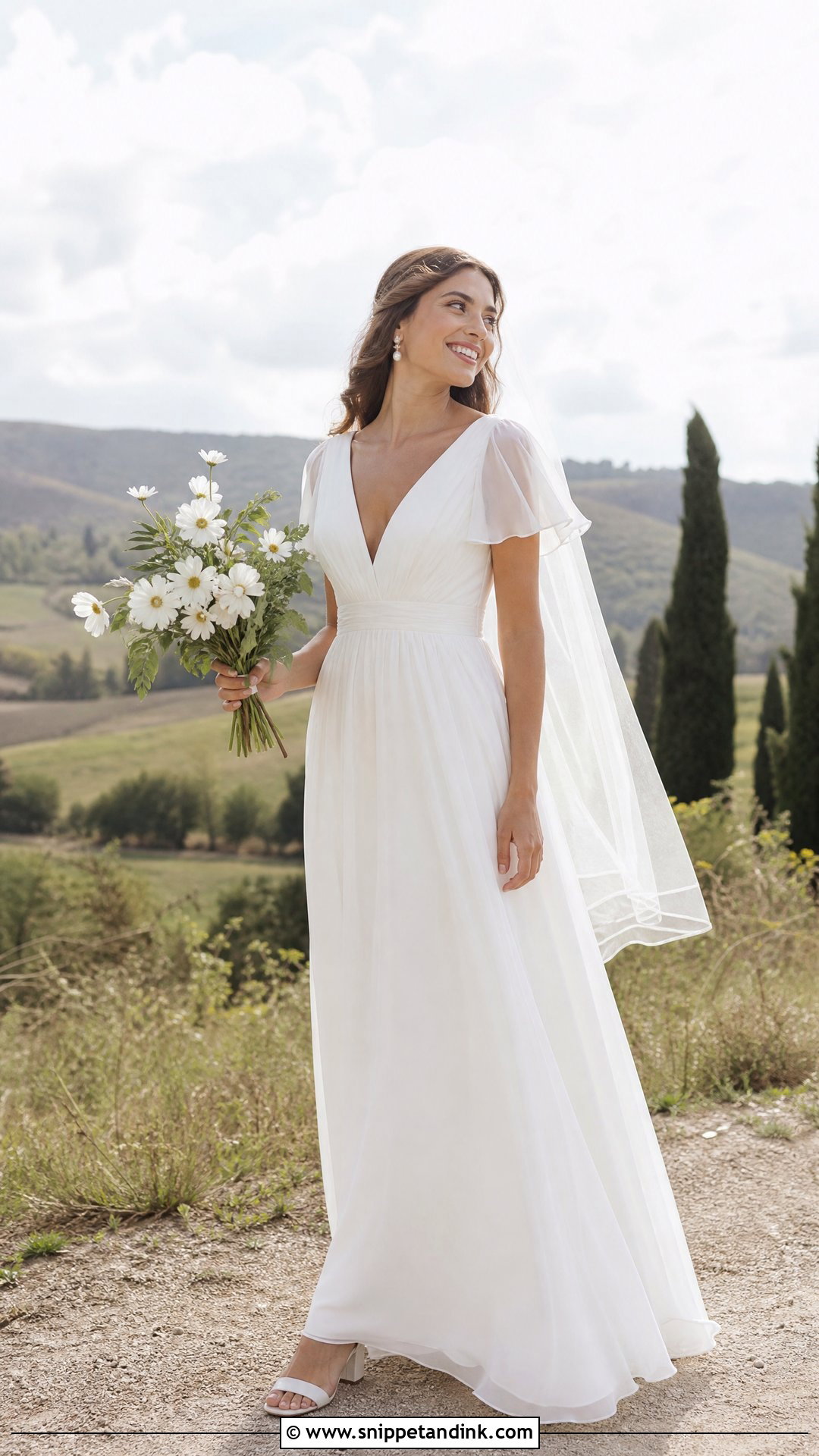
Flutter sleeves catch the breeze and cover the upper arm without any band to restrict you, which makes them comfortable for a long day. Keep them short: they should fall lightly over the shoulder, not extend halfway down the arm, or they start to look like a capelet. A chiffon or tulle V-neck bodice with a defined waist and A-line skirt is the natural base. Low block heels, petite pearls and a fingertip veil go with a loosely pinned updo or soft waves. Cosmos, sweet peas and airy greenery suit the garden, beach and countryside ceremonies where this dress makes most sense.
22. Delicate Corset Wedding Dress
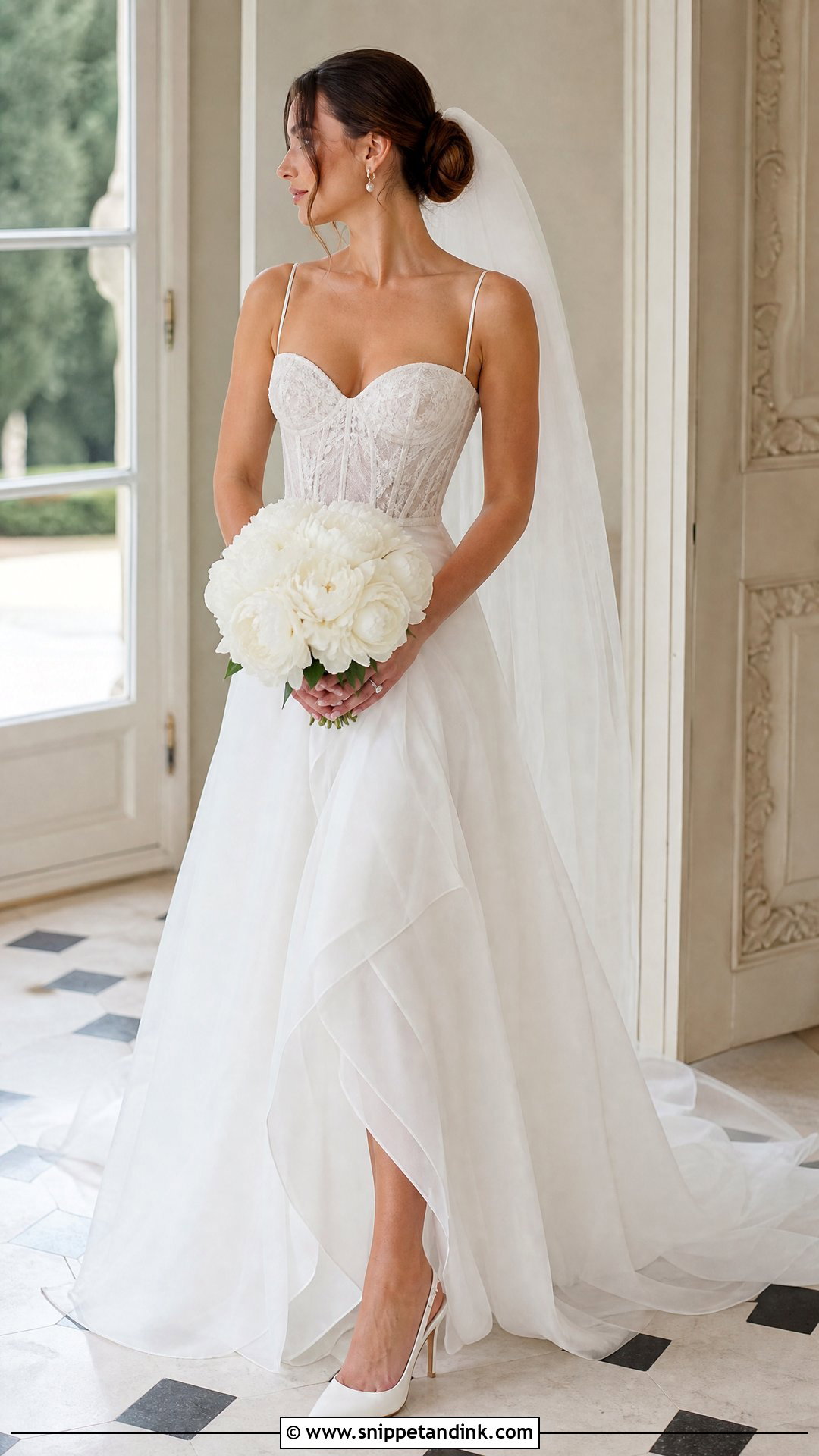
Corset bodices give support and shape, and fine lace or sheer tulle over boning matched to the gown colour keeps it from feeling theatrical. Breathing is the test I never skip. Sit, take a deep breath, then laugh; a corset laced for the mirror rather than the meal will be miserable by dinner. Balance the structured top with a flowing chiffon, organza or soft tulle skirt. Pointed slingbacks, small pearl drops and a plain veil just past the train, then a low bun with a few face-framing strands. White peonies and roses suit its classic shape.
23. Delicate Organza Wedding Dress
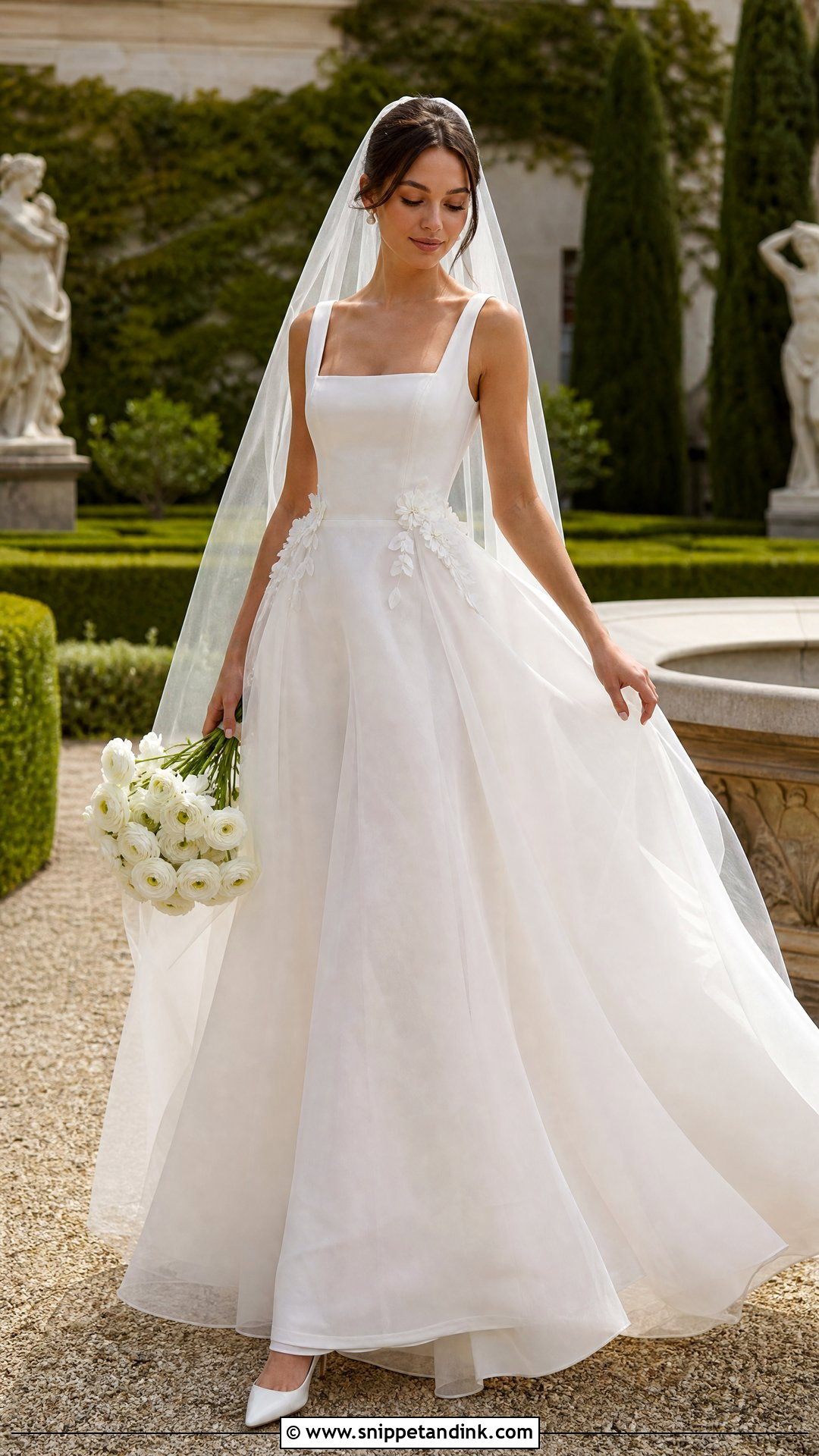
Organza is crisp and see-through at once, so it gives volume without weight. That crispness also means it creases sharply if crushed, so I keep organza skirts away from long car journeys sitting on the back of the dress. A plain A-line or softly full skirt with a fitted scoop or square bodice is enough; a few floral appliqués at the waist add dimension. Satin pumps, pearl earrings and a light veil with a raw or narrow edge keep it clean, and a polished half-up style suits the controlled shape. Anemones, ranunculus or roses in a compact bouquet work for formal gardens and spring receptions.
24. Delicate Detachable Sleeve Wedding Dress
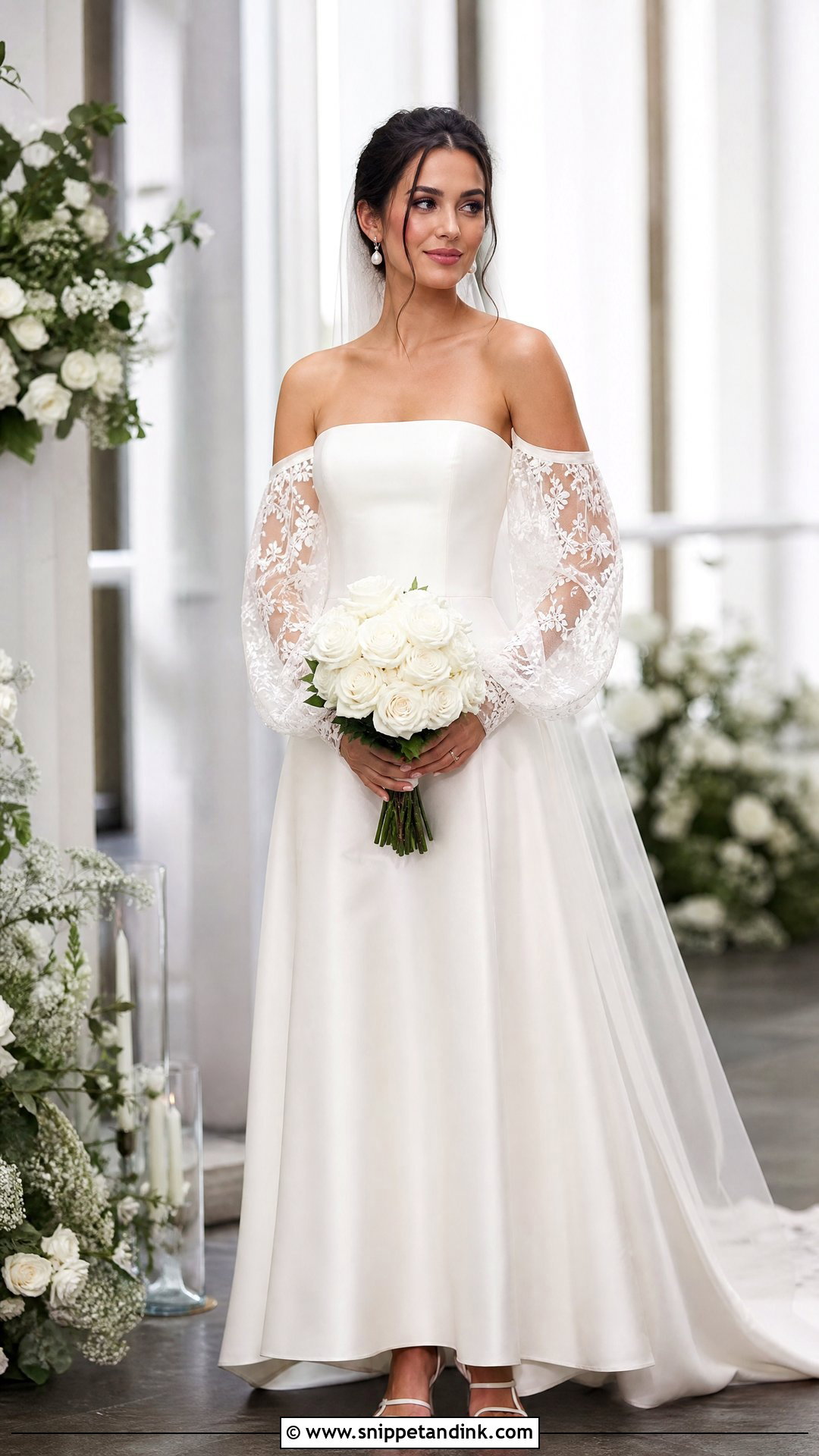
Detachable sleeves give you two looks from one gown: sheer lace, tulle or chiffon sleeves for the ceremony, bare shoulders for dancing. Start from a strapless or slim-strap bodice with a soft A-line skirt. The attachment matters more than the sleeve. I ask for snaps or hooks hidden under lace rather than visible ties, and I make sure someone in the bridal party practises taking them off, because it’s a fiddly job in a crowded bathroom. A low chignon keeps the shoulders clear. Ivory heels, pearl earrings, a simple veil and white roses with seasonal flowers complete both versions.
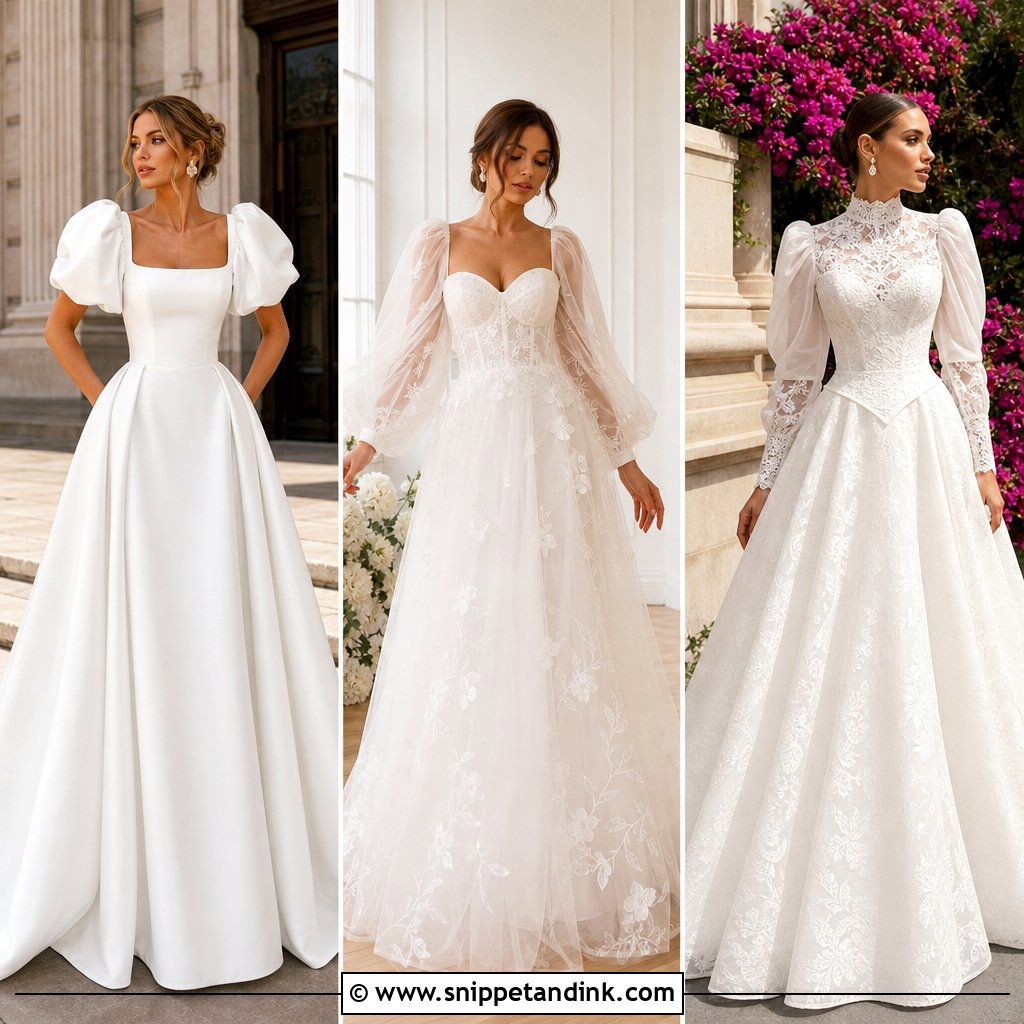
25. Delicate Lace and Satin Wedding Dress
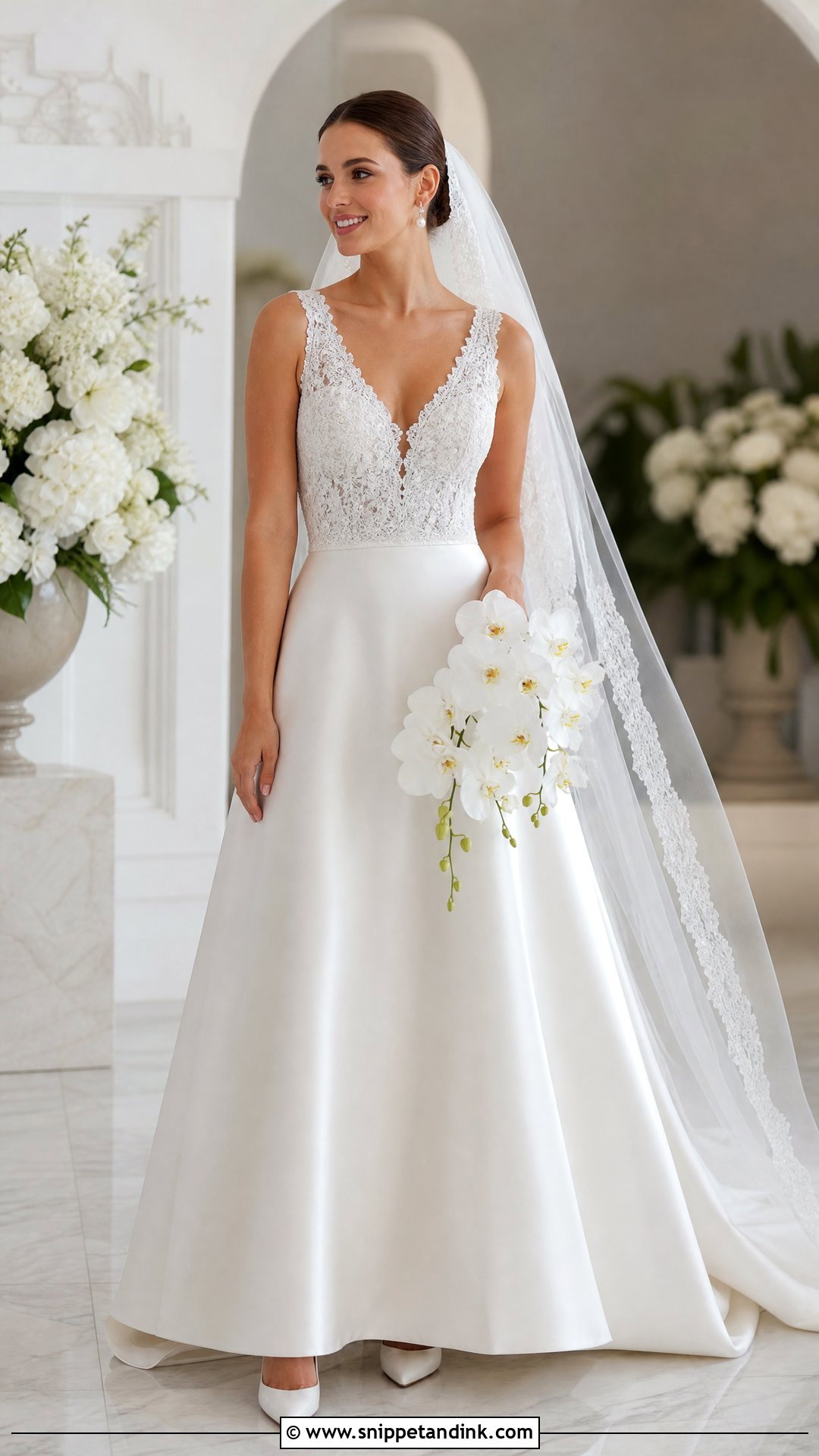
Lace on top and satin below is a combination I suggest when a bride loves lace but worries it’ll swamp her. The smooth skirt defines the waist and lets the lace bodice be the detail. A soft V, narrow straps or fitted sleeves all suit it. Check the lace and satin colours together in daylight, since two ivories from different mills rarely match perfectly and the seam shows it. Pointed satin heels, pearl drops and a veil with a very narrow lace edge echo the bodice. A low twisted bun and a simple arrangement of roses, orchids or tulips carry it from a formal ceremony to a relaxed reception.
Fittings for a Light Gown Run on a Tighter Clock
Delicate gowns need fewer structural changes than corseted ones, yet sheer layers and lace edges take careful hand work, so I don’t let anyone leave alterations late. Most brides need two or three fittings, with the first roughly two to three months before the wedding. Timing varies by shop and season, so ask your seamstress for her own schedule when you order.
- Bring the actual shoes and underwear to the first fitting. Hem length and bodice fit are set against them.
- Ask for the bustle to be shown and practise it with whoever will do it on the day.
- At the last fitting, wear the veil and earrings too, to check the veil comb doesn’t catch lace or pearls.
- Sit, dance and lift your arms every time. A dress that only looks right standing still isn’t finished.
Sheer Fabric Needs Different Care Once the Party Ends
I’d get the dress to a specialist cleaner within a few weeks, even if it looks clean. Sugary drinks and sweat dry invisible on pale fabric, then turn yellow-brown over months. Point out any spills, grass marks or makeup on the neckline when you drop it off.
For storage, skip the plastic garment bag. Acid-free tissue in the folds and a breathable cotton bag or acid-free box, kept somewhere cool and dark, protect lace and silk far better. Hanging a heavy skirt by thin straps for years stretches them, so fold it gently or use the hanging loops sewn inside the waist.
The Gown You Forget You’re Wearing
Softness comes from many directions: fine lace, fluid satin, airy chiffon, sheer tulle, quiet embroidery. Settle the silhouette, support and movement first, then add shoes, jewellery, veil and flowers that support the gown rather than compete with it. Before the final alteration, wear the complete outfit in daylight and walk, sit and raise your arms in it. From a plain slip to a lace ball gown, the gown that works is the one you forget you’re wearing by the second hour.
You'll Like These Ideas:







Leave a Reply