
Most brides come to their first appointment with a silhouette in mind and leave having fallen for something else. That’s normal. A dress that looks right on a hanger can feel wrong once you sit, walk and lift your arms, and a shape you’d never pick from a photo can turn out to be yours. I start every search with three questions: where is the wedding, how long will you be in the dress, and how much do you want to move? This list covers ball gowns, clean satin, lace sleeves, minis, tulle, pearls, courthouse looks and reception changes, with the shoes, veil and finishing pieces I’d pair with each.
Optic White, Natural White or Ivory?
White isn’t one colour in bridal. Before we talk silhouettes, I hold a few shades up to a bride’s face in daylight, because the wrong white can make skin look grey or sallow even in a perfect dress.
- Optic or bright white is the coolest and crispest. It suits very fair and very deep skin with cool undertones, and synthetic fabrics take it best. On warm skin it can look stark.
- Natural or silk white is slightly softer, the shade most silk is in its undyed state. It flatters the widest range of skin tones and is what many shops simply call white.
- Ivory has a warm, creamy cast. It’s kind to warm and olive undertones and looks rich in candlelight, though next to a bright white veil or shoes it can look yellow.
- Champagne and blush-tinted whites sit beyond that, with a visible colour under lace or tulle.
Once you choose, match the veil, shoes and any lace jacket to the dress, not to each other. Bring a fabric swatch when you buy accessories, and look at them together under the same light.
1. White Satin A Line Bridal Dress
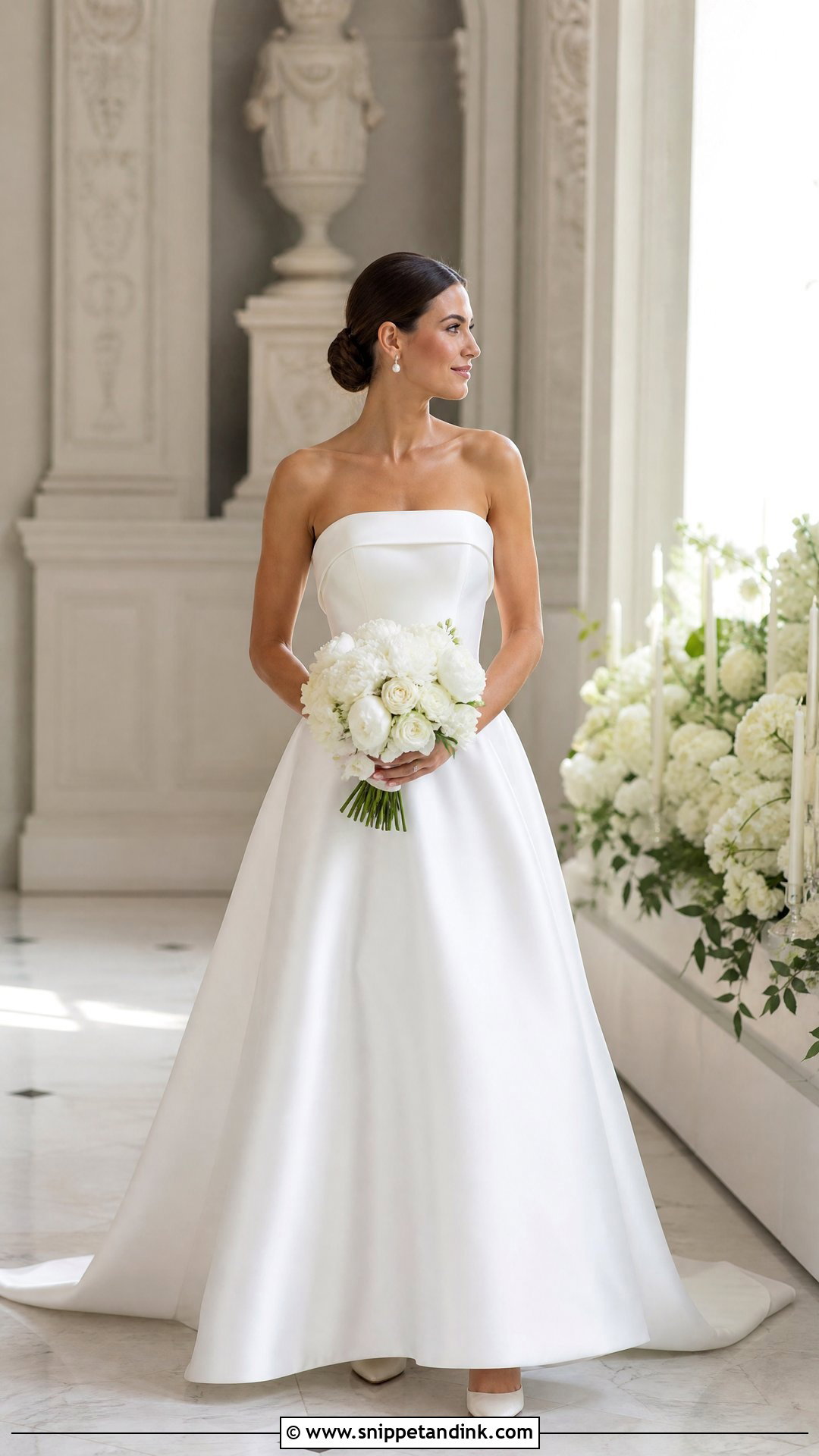
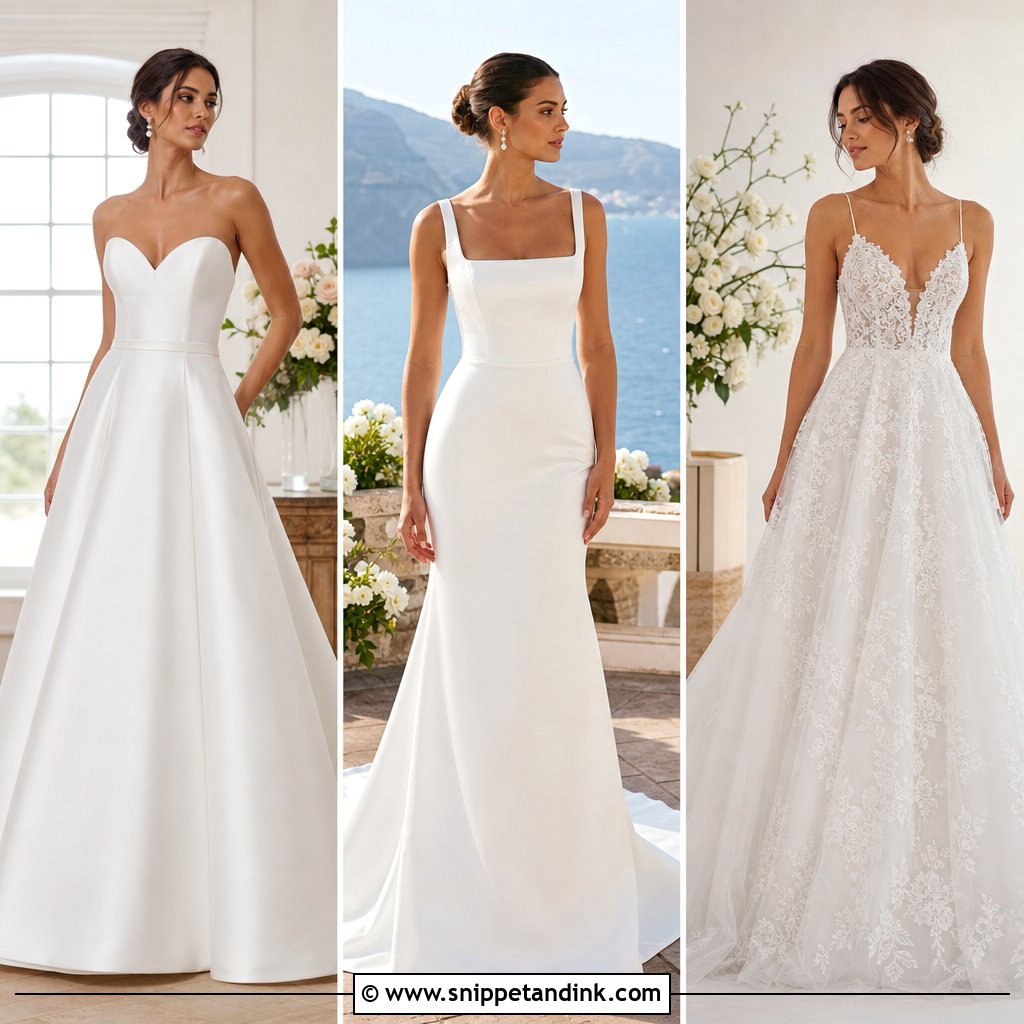
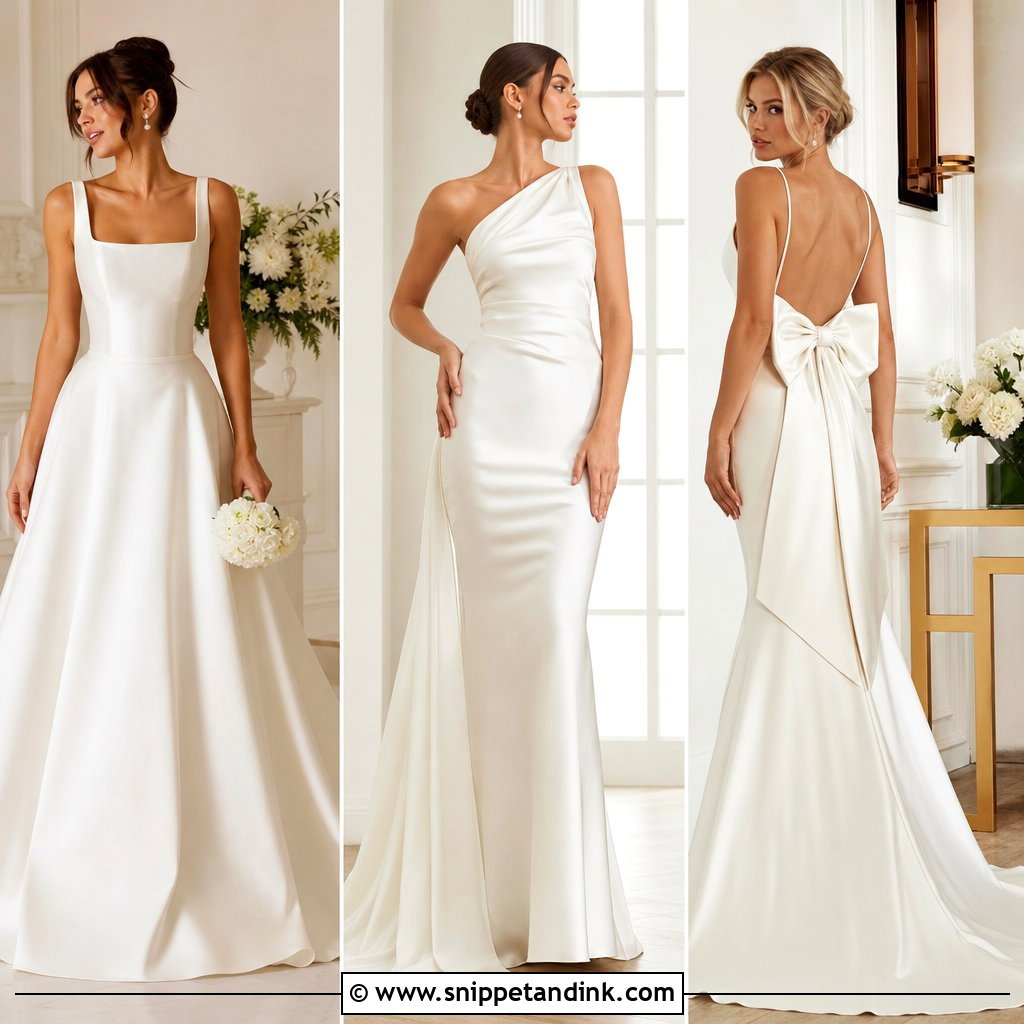
The satin A-line is the shape I’d put on almost anyone first, because it shows me where to go next. A fitted bodice marks the waist, and the skirt opens gently from there without weight. A square, sweetheart or bateau neckline keeps it polished. Satin has its own glow, so it needs very little: pearl earrings, a low bun and a plain veil. The one thing to watch is crease marks across the lap after the car ride and the signing, which a heavier satin resists far better than a thin one.
2. White Lace Long Sleeve Bridal Dress
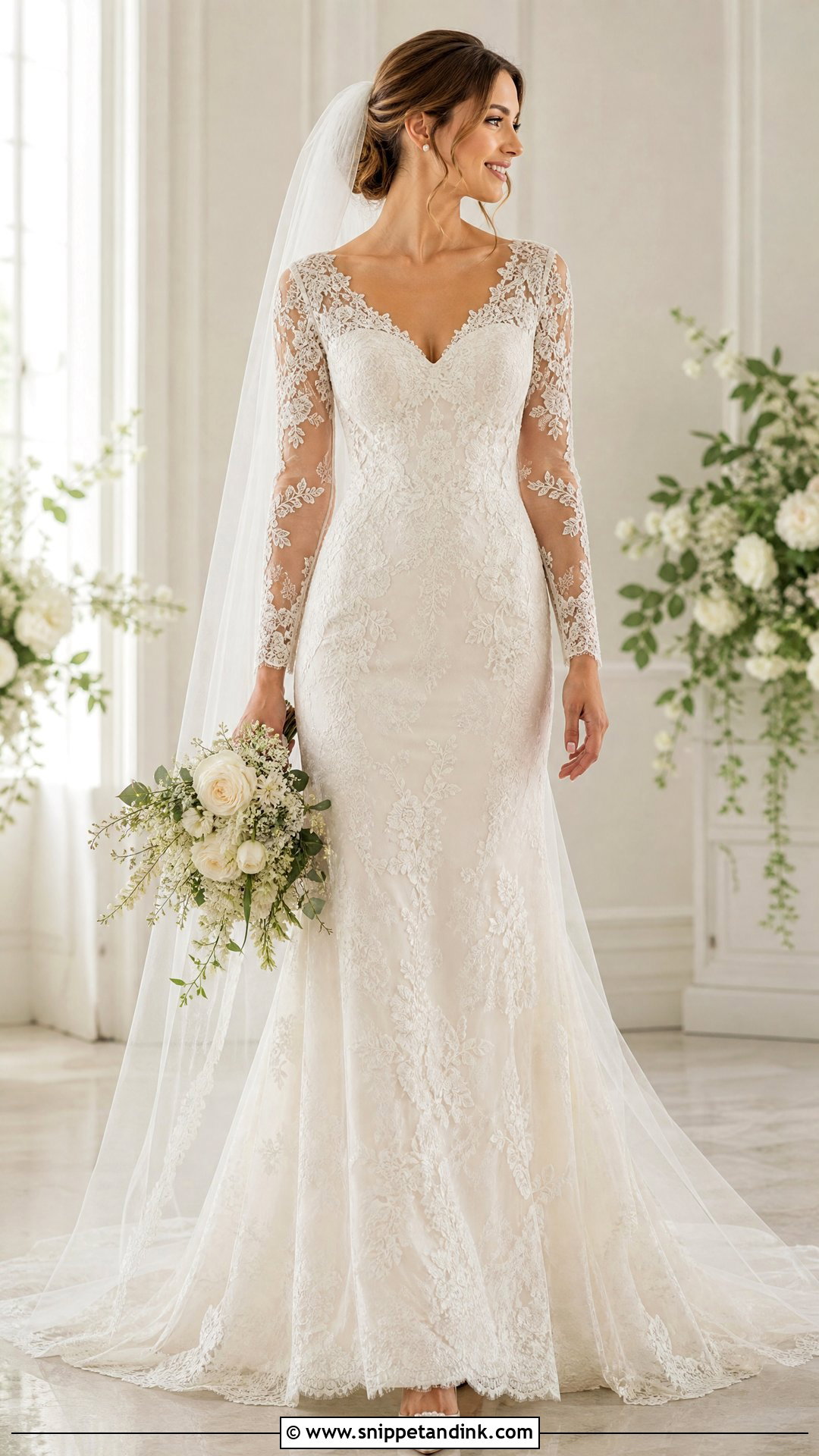
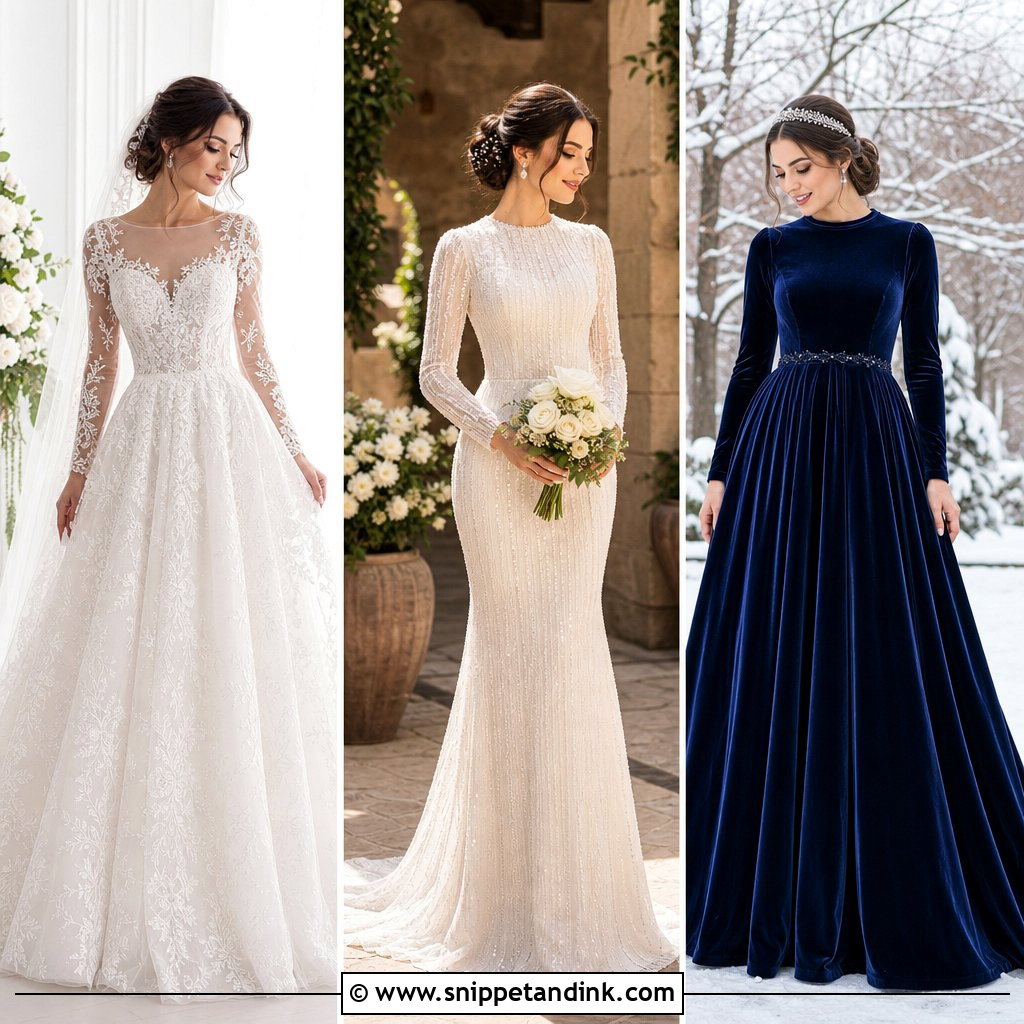
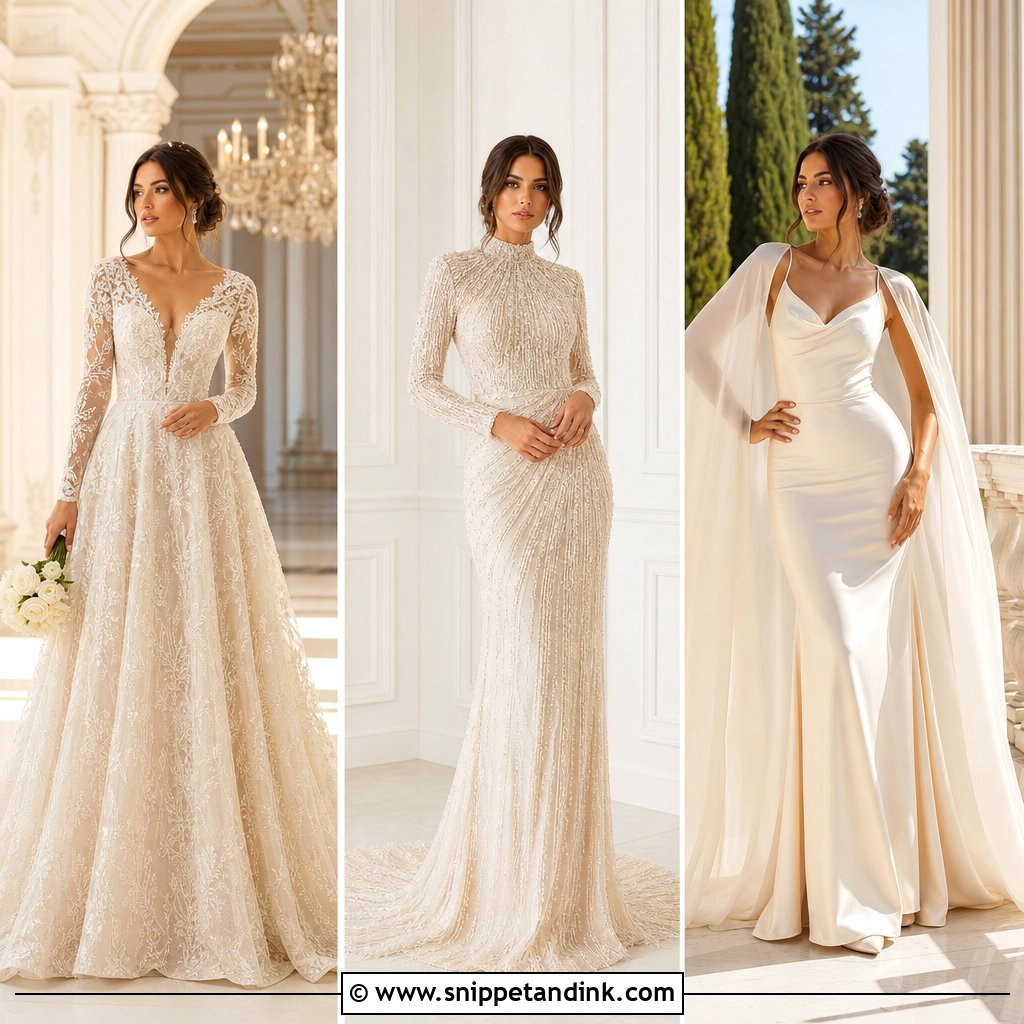
Lace sleeves give coverage without heaviness, and sheer sleeves over a lined bodice keep the balance light. They work on a mermaid, an A-line or a soft sheath. My fitting check is the elbow: lace sleeves cut too close bind when you bend your arm to hold the bouquet, so I always have brides hold a pretend bouquet and hug me in the dress. Delicate accessories let the lace lead. Pearl studs, a slim bracelet and a fingertip veil are plenty, with nude or ivory heels. Cooler months and estate venues suit it well.
3. White Off Shoulder Bridal Dress
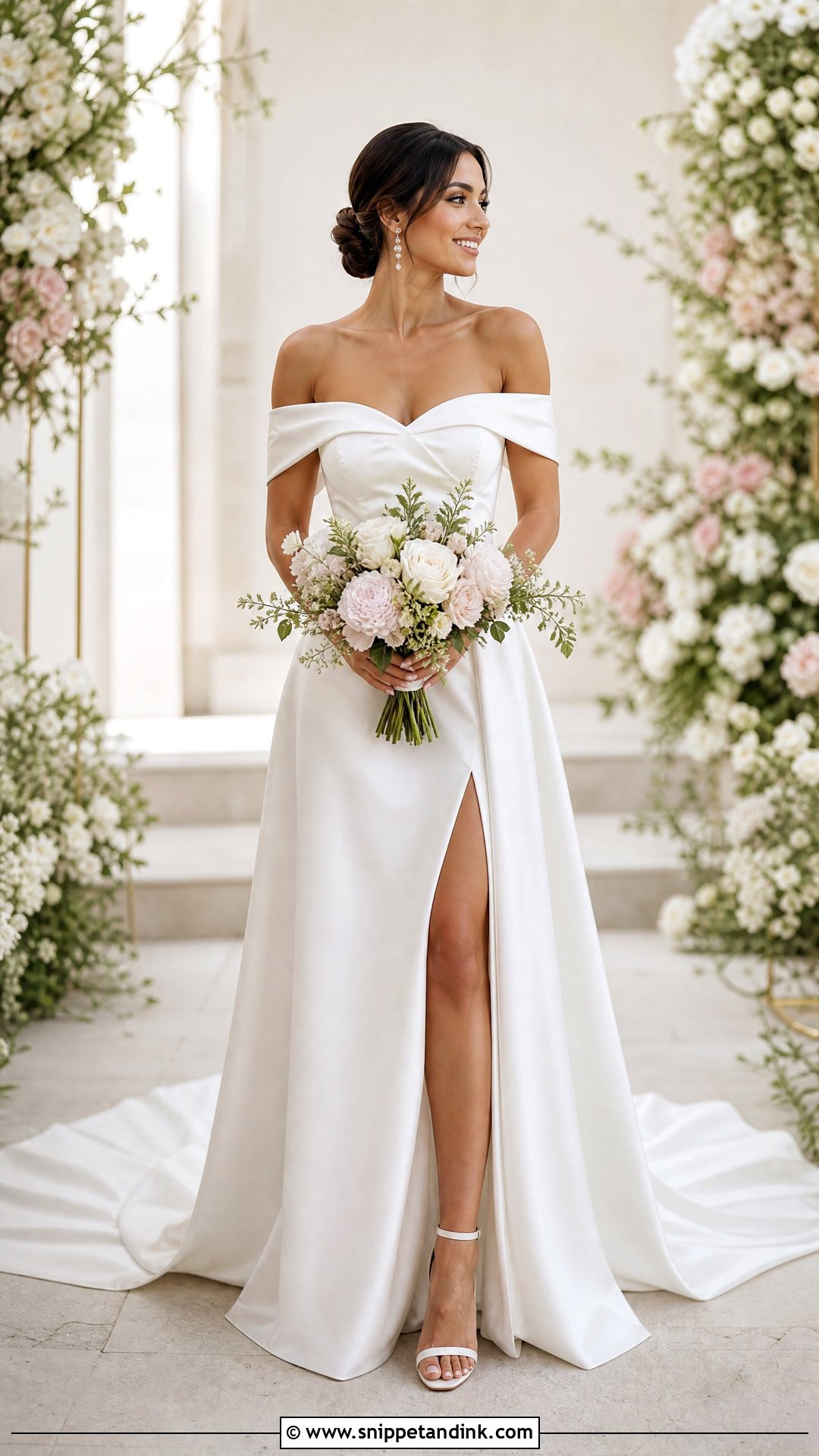
An off-shoulder neckline frames the collarbones and shoulders. In satin it reads classic; in tulle, dreamy; in crepe, clean. I nearly always suggest an updo with it so the neckline stays clear. A pearl choker, drop earrings or a thin diamond necklace finish it without crowding. The practical issue is arm movement: you can’t lift your arms high in an off-shoulder band, so test hugging and the first dance at your fittings. Strappy white heels or pointed pumps both work.
4. White Strapless Ball Gown Bridal Dress
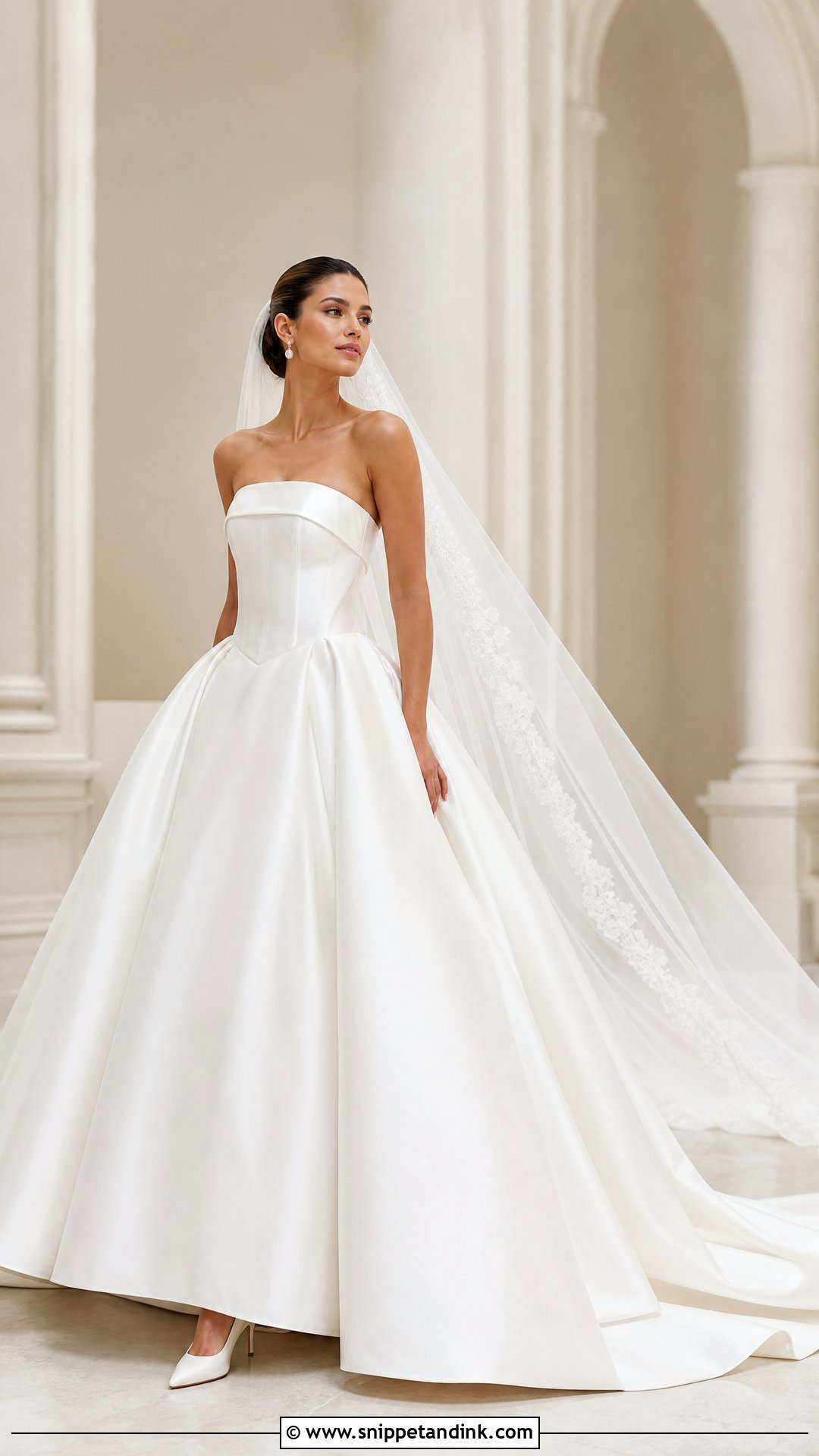
A strapless ball gown is the full traditional moment, with a structured bodice holding the upper body and a wide skirt filling the aisle. It only works with excellent tailoring. If the bodice isn’t fitted snugly with proper boning, you’ll spend the night pulling it up, which shows in every candid. A cathedral veil makes it grand; a shorter one softens it. Keep shoes simple and comfortable, since no one will see them. Pearl earrings and a smooth bun finish it for large venues and formal weddings.
5. White Crepe Sheath Bridal Dress
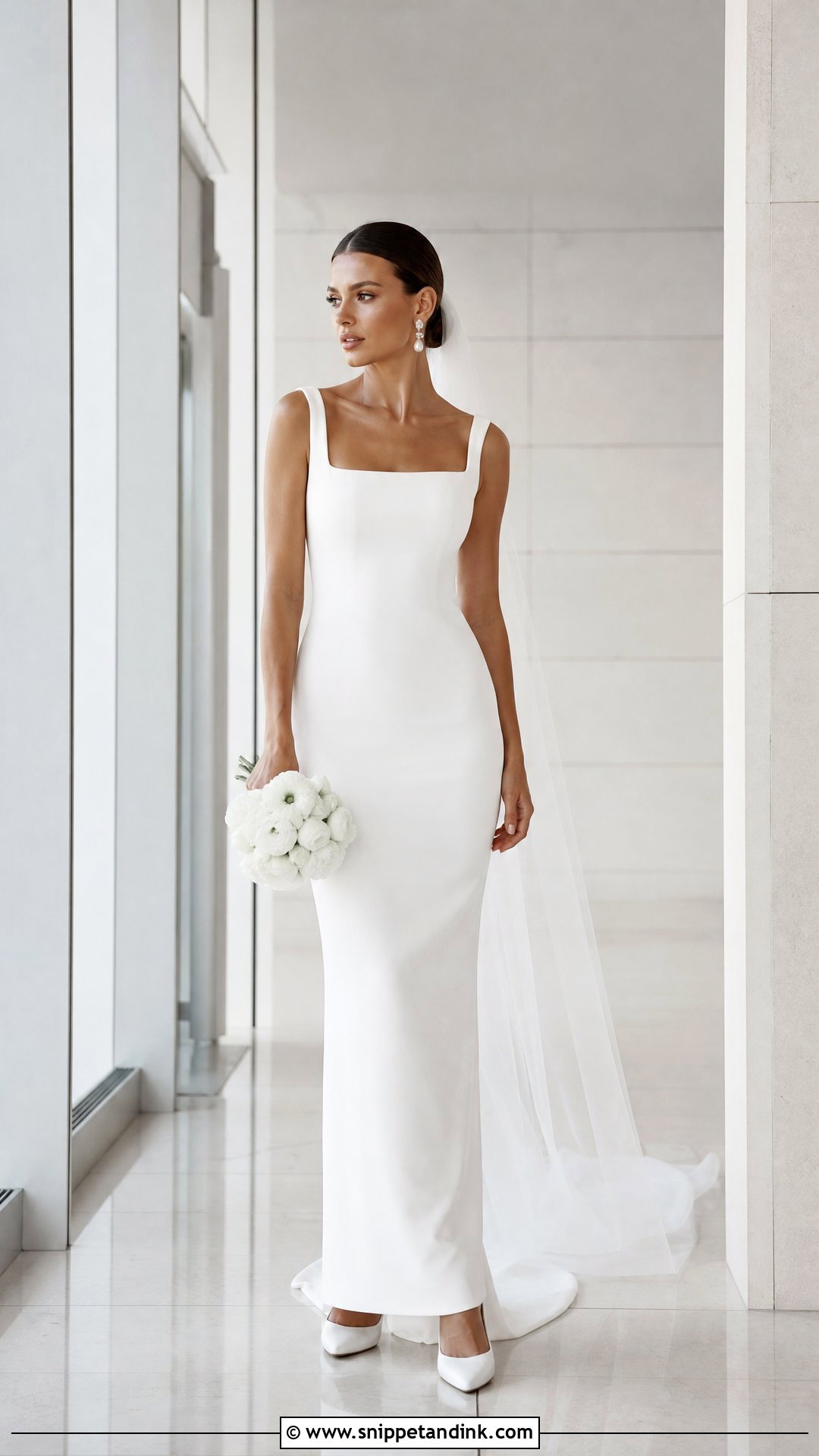
A white crepe sheath bridal dress is about clean lines. Crepe skims the body with almost no shine, so the cut does all the work, and that also means it shows underwear lines and uneven seams more than any other fabric. I’d sort your foundation garments before the first fitting. A high neck, square neck or open back personalises it. Sculptural earrings, sleek heels and a low veil suit courthouses, rooftops, beaches and small celebrations.
6. White Tulle Princess Bridal Dress
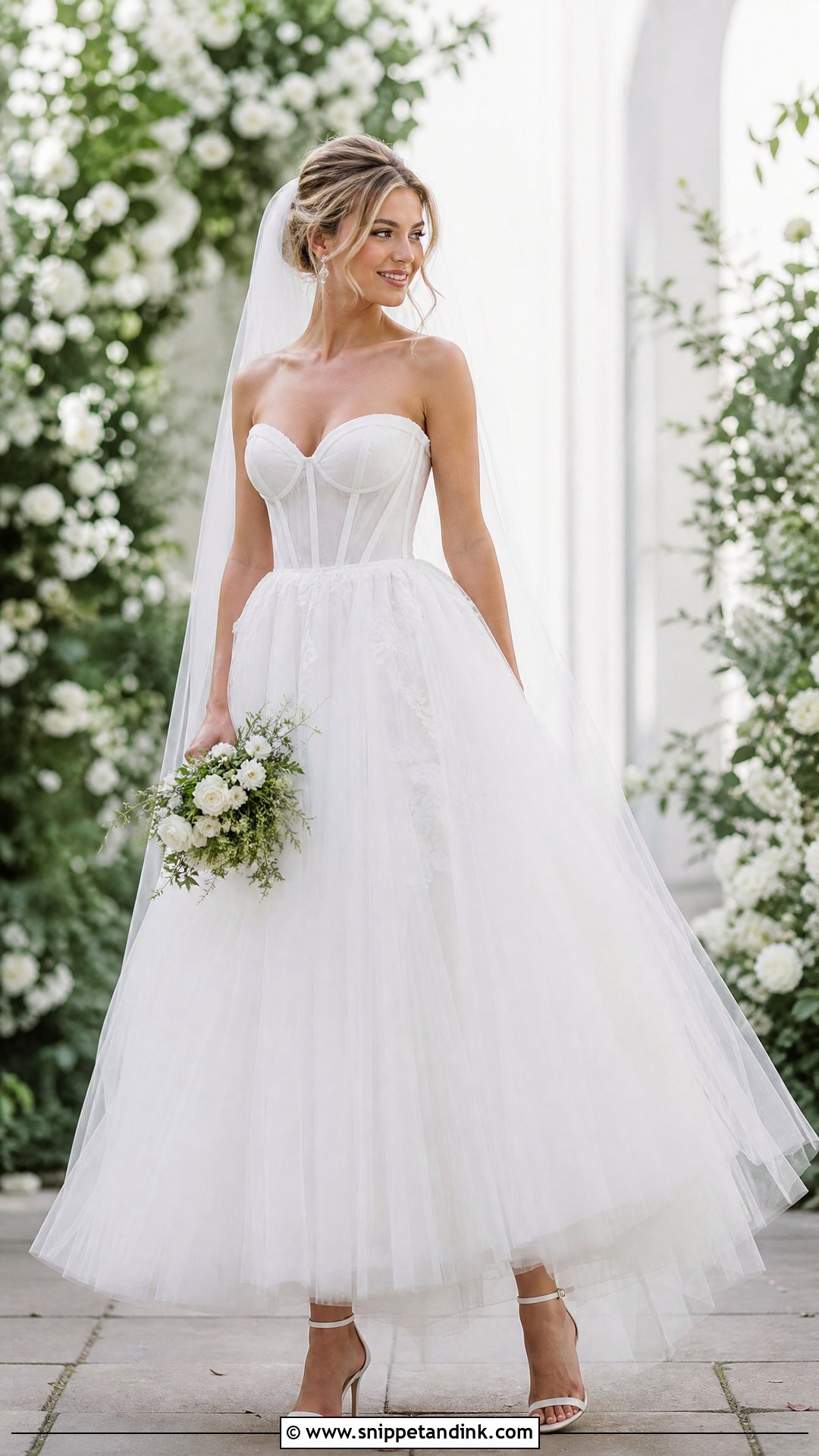
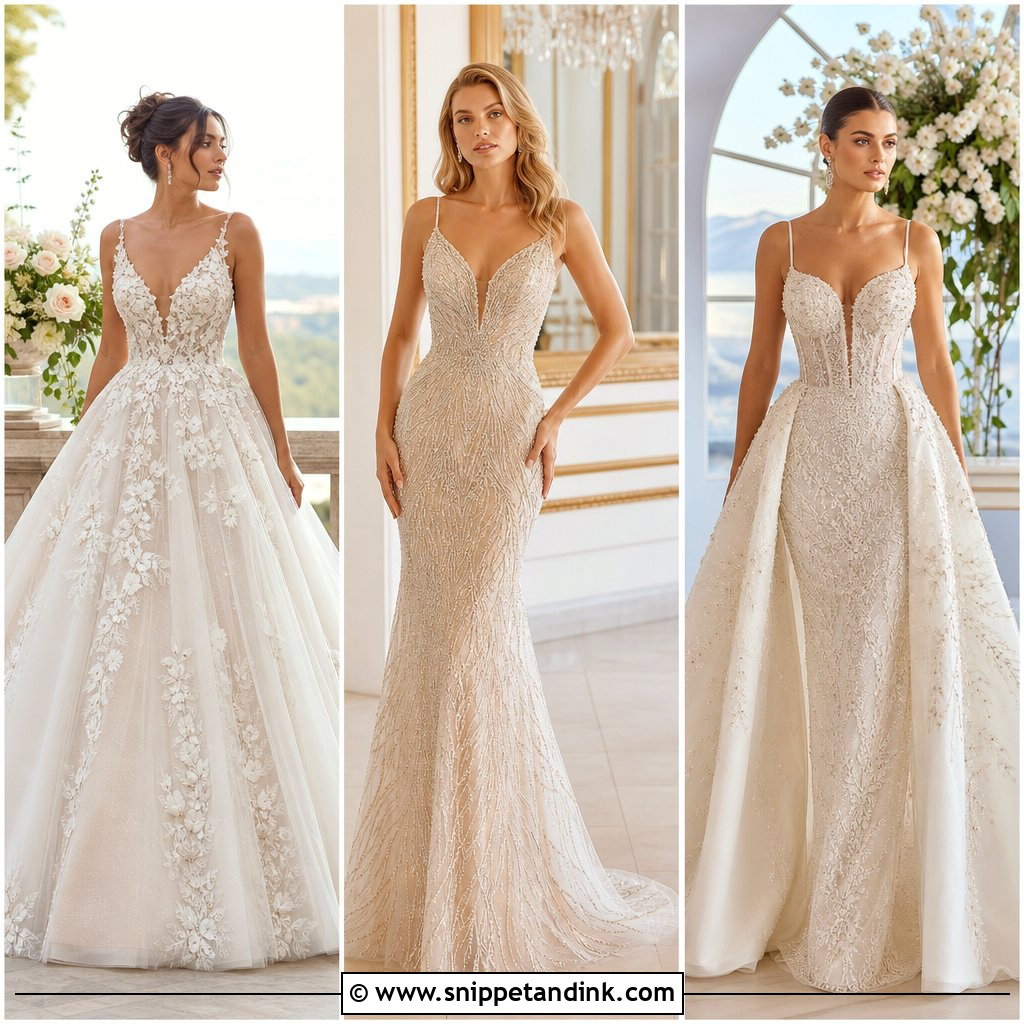
Tulle gives volume that still moves lightly when you walk, which is why it feels airy rather than stiff. A corset bodice, sweetheart neckline or delicate straps shape the top. Tulle’s weak point is snagging: it catches on rings, bracelet clasps, bouquet wire and rough floors, so I keep jewelry smooth and pick a bouquet wrapped in ribbon. A soft veil and ballet flats, white heels or embellished pumps finish it. Gardens, ballrooms and outdoor ceremonies all suit it.
7. White Mermaid Bridal Dress
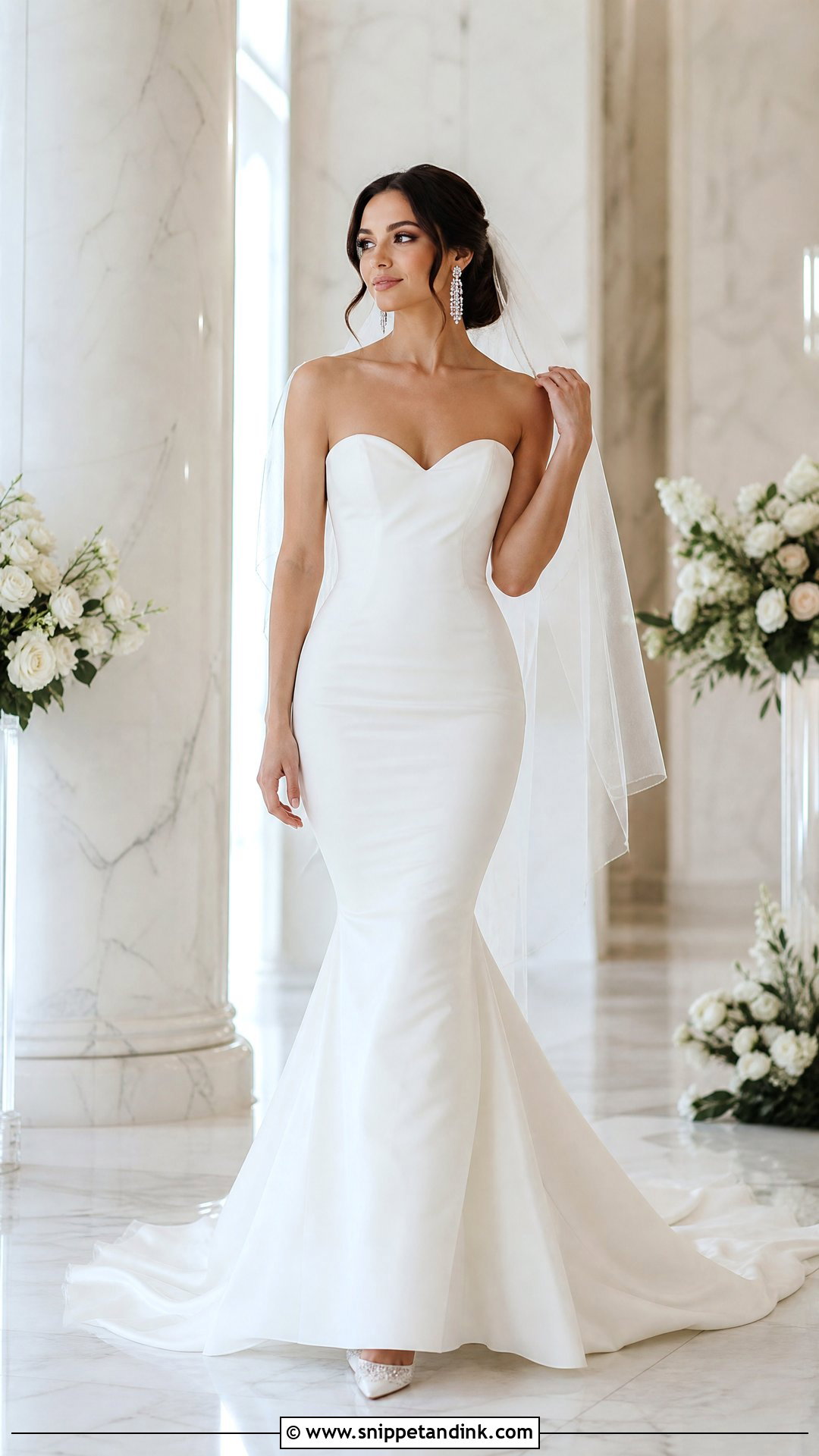
Mermaid gowns hug through the bodice, waist and hips before flaring near the knee or lower thigh. Stretch crepe, lace, satin and mikado all hold this shape. The flare point decides how you’ll move. Higher on the thigh gives a longer stride; at the knee it looks more dramatic but limits stairs and dancing, so I always have brides walk a staircase at the fitting. Long earrings, smooth waves and a simple veil keep it from looking overloaded. Comfortable heels matter more here than anywhere.
8. White Slip Bridal Dress
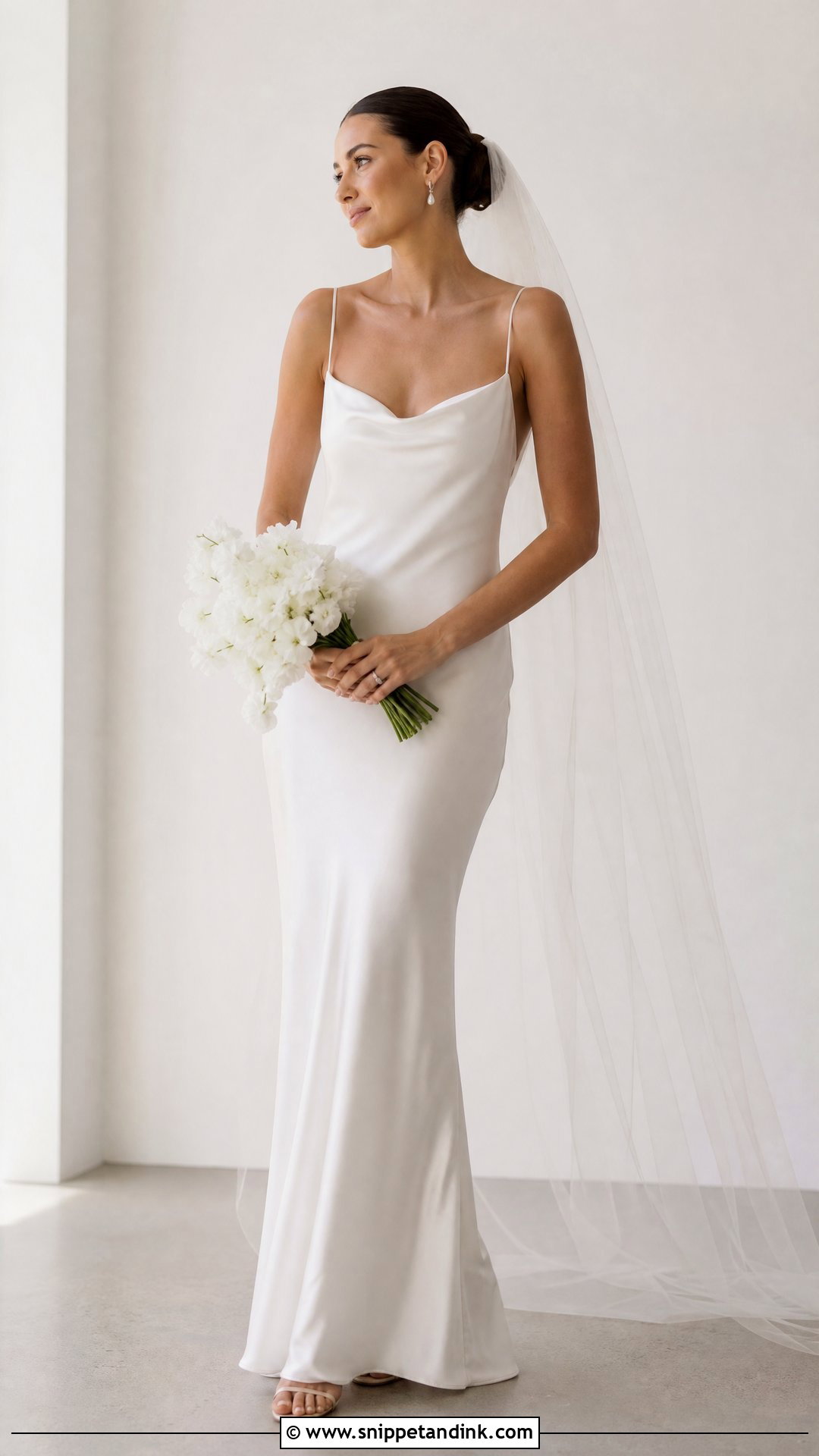
A slip dress is all fit. Thin straps, a fluid skirt and silk or satin leave nothing to hide behind, so the tailoring has to be precise, especially at the hip where bias-cut fabric can cling. Barely-there heels, pearl drop earrings and a clean bun are all it needs. A long veil adds ceremony drama; a short one keeps it relaxed. It suits beaches, courthouses and modern venues, and it makes an easy second look after a bigger ceremony gown.
9. White Halter Neck Bridal Dress
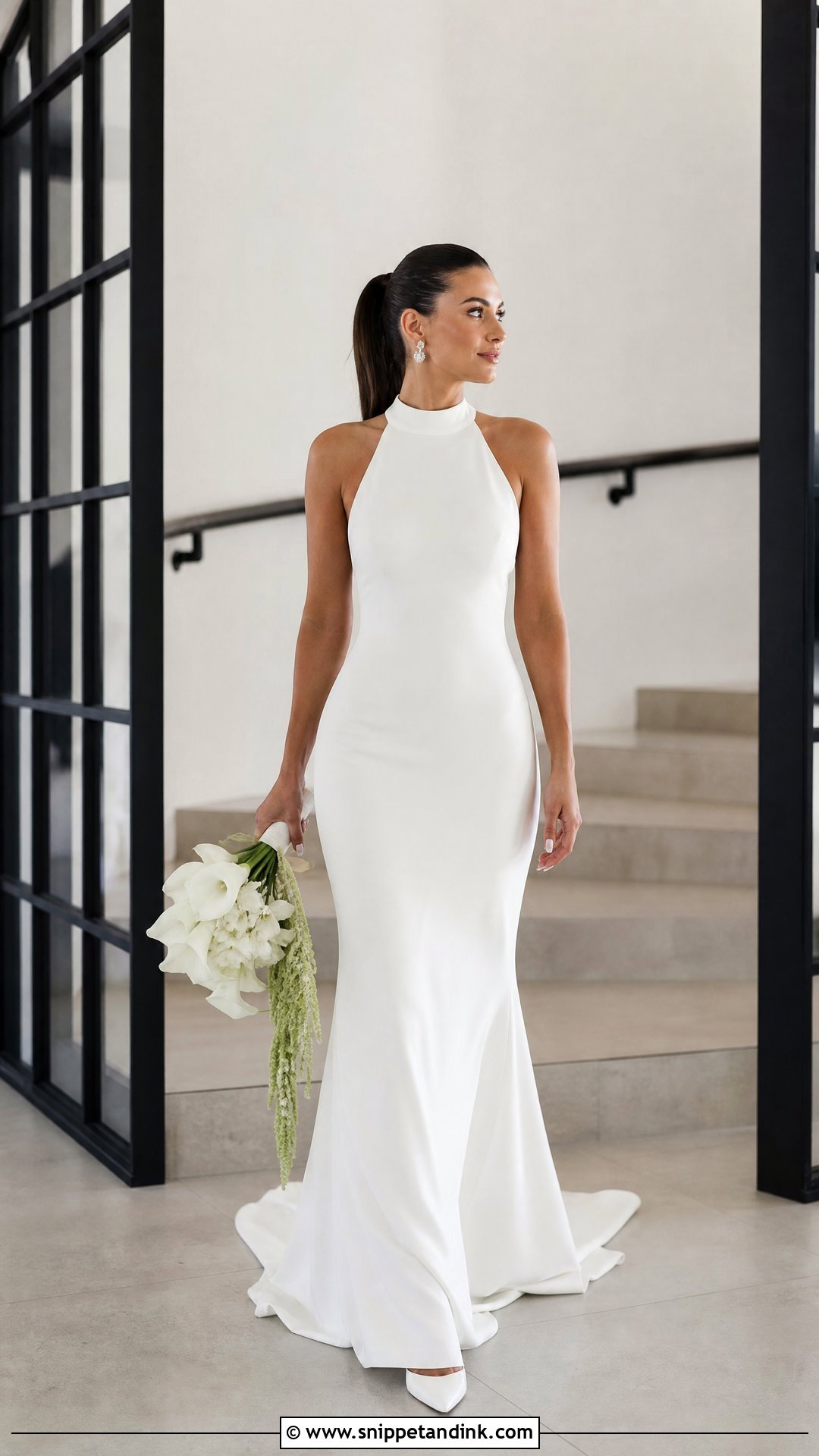
A halter neck draws the eye up and makes the shoulders look strong. Crepe, satin or mikado hold the shape best, over a slim skirt or soft A-line. Because the halter carries the bodice from the neck, I check the strap at the fitting for any pull; a well-built halter has internal support so the neck isn’t doing all the work. Skip necklaces and wear earrings. A ponytail, low bun or waves tucked behind the ears shows the line, with pointed heels and a structured clutch.
10. White Square Neck Bridal Dress
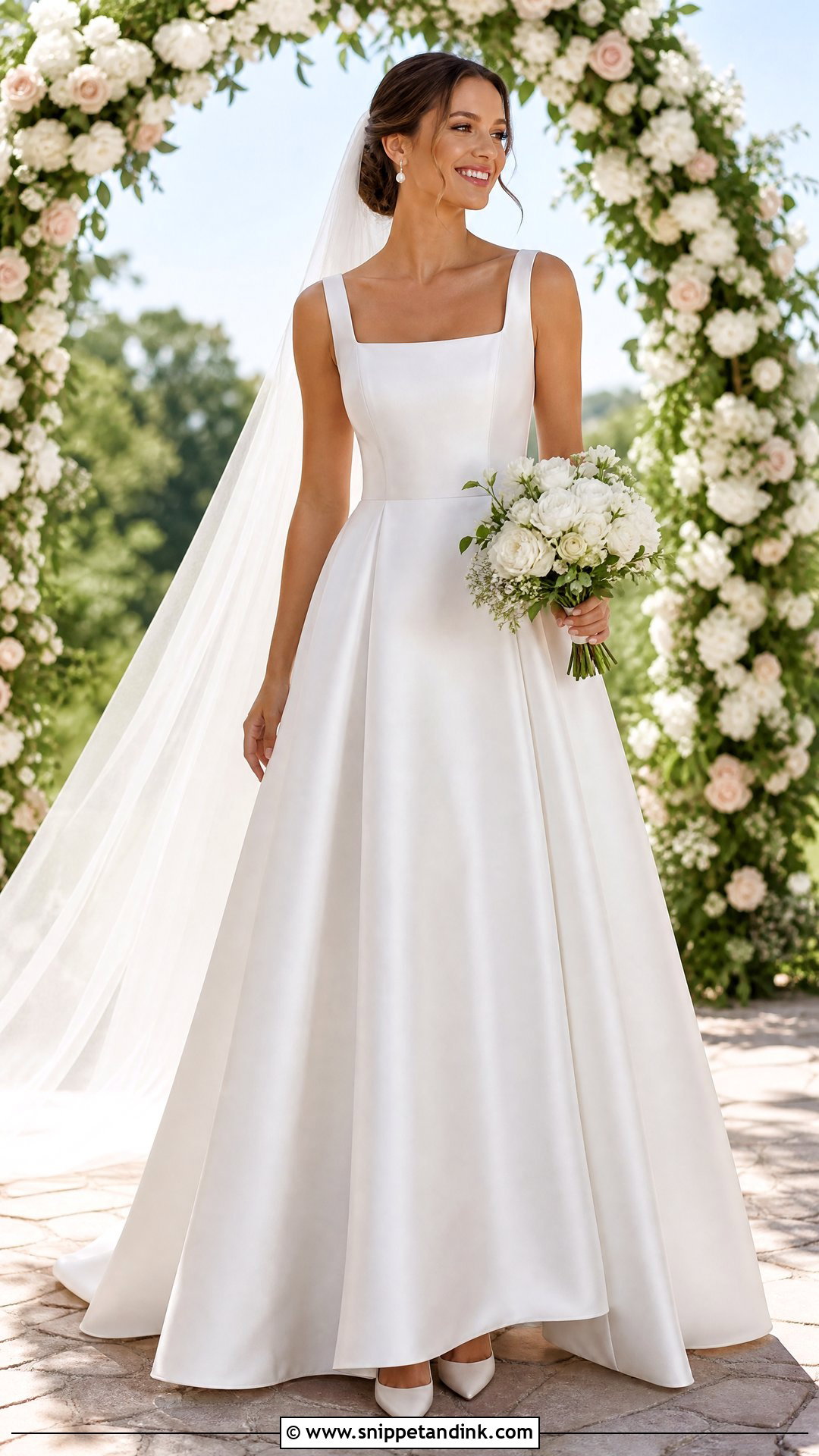
Square necklines flatter a wide range of bust sizes, giving shape without revealing much. They work with straps, sleeves or a corset bodice. Satin reads polished, lace romantic, crepe minimal. The detail I fuss over is the width: too wide and the straps slip off the shoulder edge, too narrow and it looks pinched, so I match the neckline width to the bride’s shoulders. Pearl earrings, a sleek veil and classic pumps keep it balanced, and soft curls or a low chignon both suit it.
11. White Corset Bridal Dress
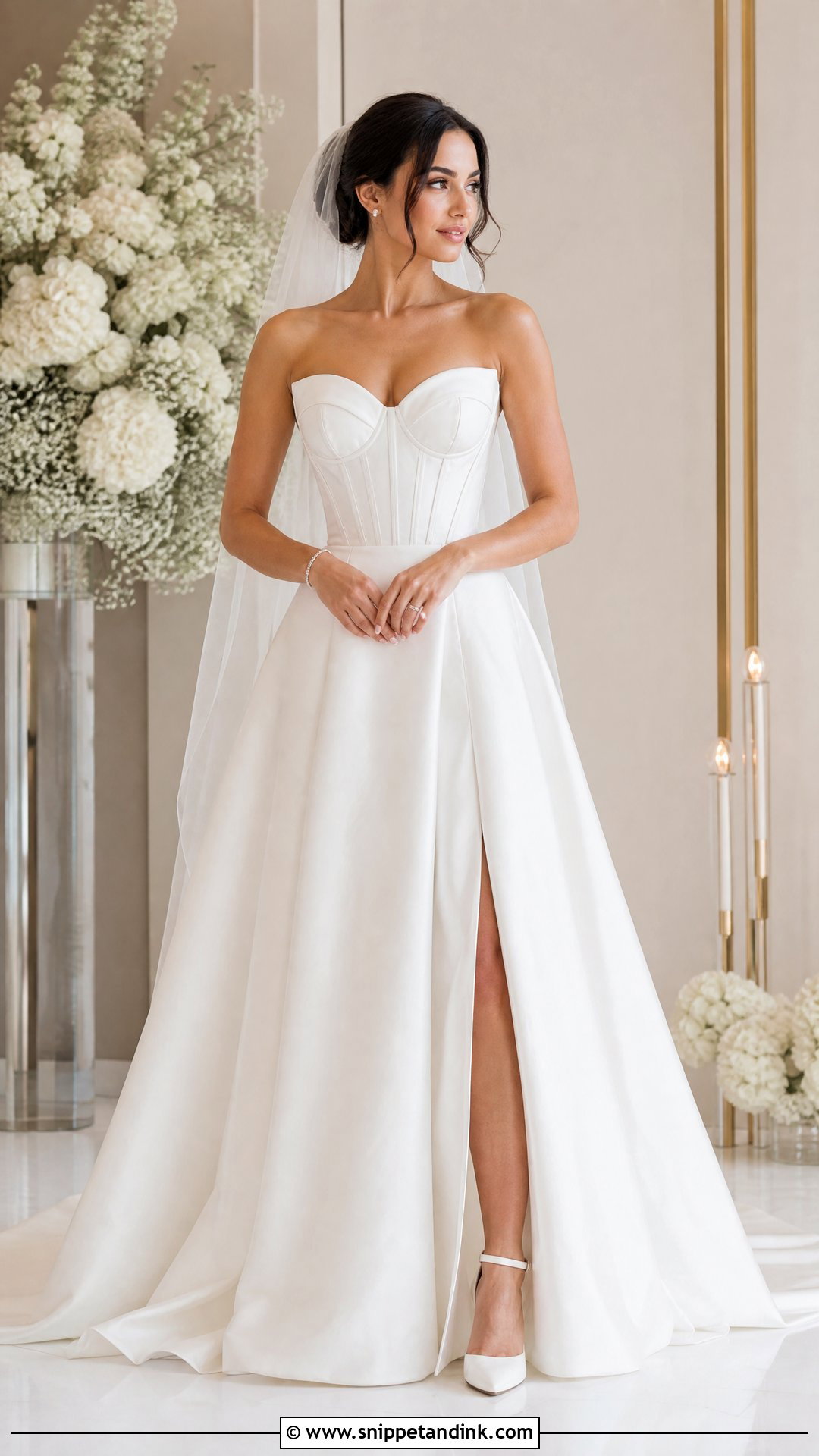
A corset bodice gives structure and the clearest waist, with visible boning, lace panels, satin cups or a smooth modern finish. Pair it with an A-line skirt for softness or a fitted skirt for drama. A real corset is fitted on your body and laced snug, not tight; you should be able to eat and breathe deeply in it, and I test that by having brides sit down and laugh. Pearl studs, a delicate bracelet and satin heels keep it clean, and a plain-edged veil softens the structure.
12. White Floral Applique Bridal Dress
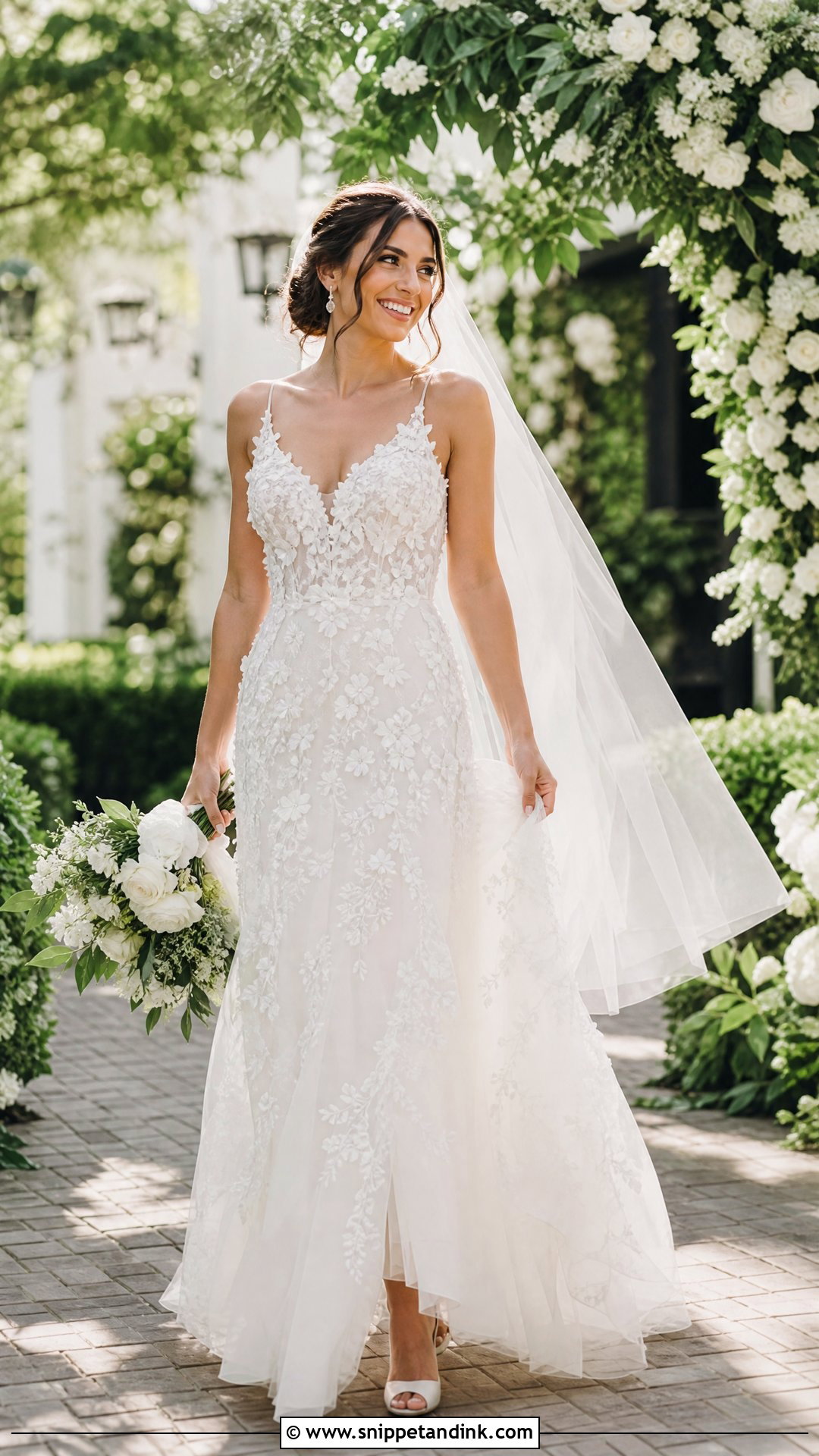
A white floral applique bridal dress brings texture and depth, whether the flowers are scattered and subtle or bold and three-dimensional. It sits well on A-line, sheath and ball gown shapes. Raised appliqués can crush in a car or under a seatbelt, so I travel these gowns hung and have the bride sit carefully. Keep the rest soft: simple heels, dainty earrings and a veil with little embellishment. A loose updo or waves fit spring gardens and outdoor ceremonies.
13. White Pearl Bridal Dress
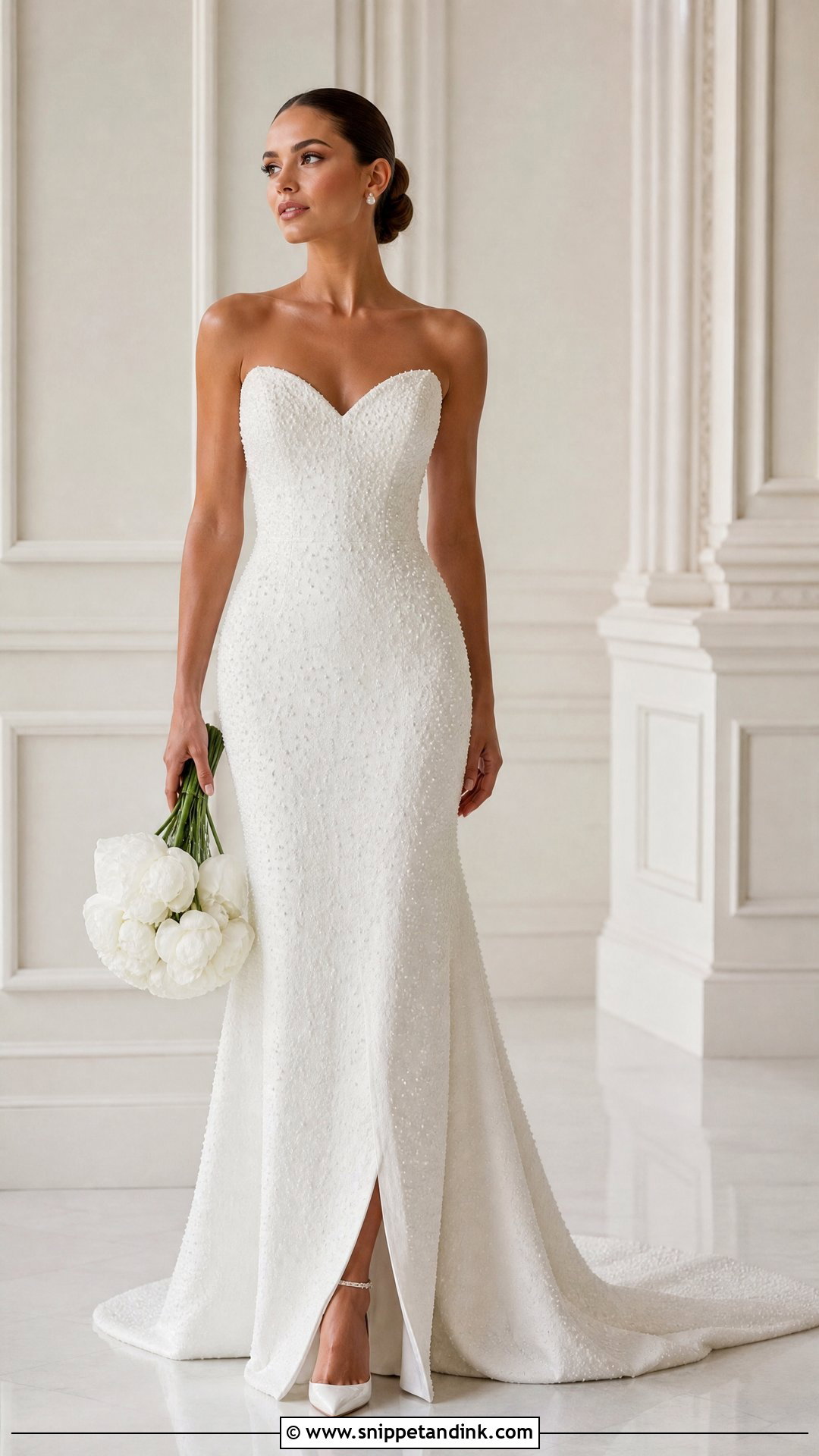
Pearls give texture without flashy sparkle, and they pick up light gently in photos. They can sit across the bodice, sleeves, skirt, neckline or veil. Heavily pearled fabric is heavy, though, and that weight drags thin straps down through the day, so I check the shoulder support on any beaded gown. With a lot of pearls on the dress, accessories should be small: studs or short drops, white satin heels, a smooth bun and a clean bouquet. Formal and modern venues both suit it.
14. White High Neck Bridal Dress
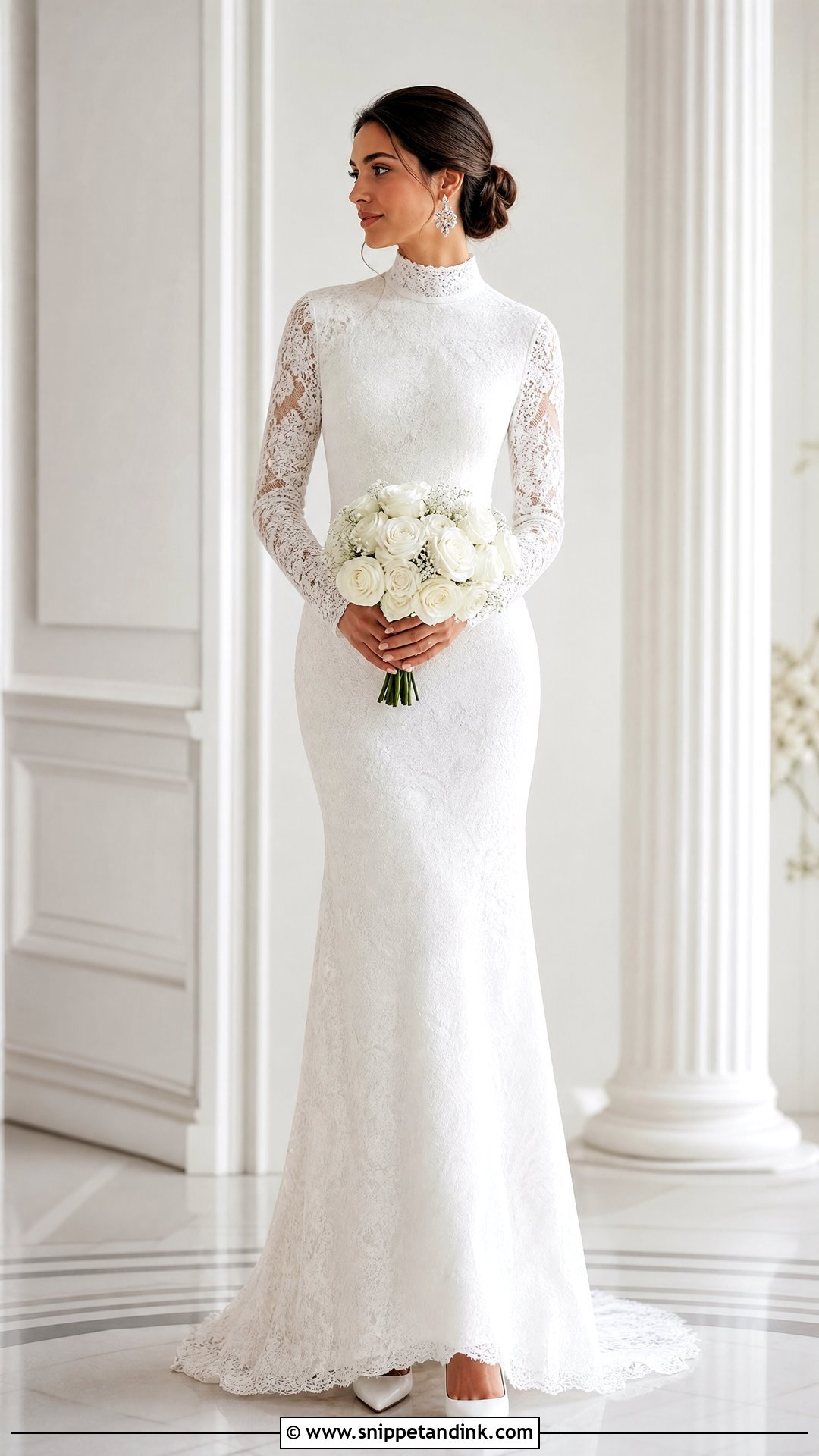
A high neck gives a modest, polished line in lace, satin, crepe or sheer fabric. A fitted high-neck sheath reads modern; a lace high-neck A-line reads romantic. If you run warm or the ceremony is outdoors in summer, choose a breathable lace or sheer neck rather than solid satin up to the chin. Skip necklaces and let earrings bring light to the face. A sleek bun, pointed heels and a simple veil suit formal ceremonies and city weddings.
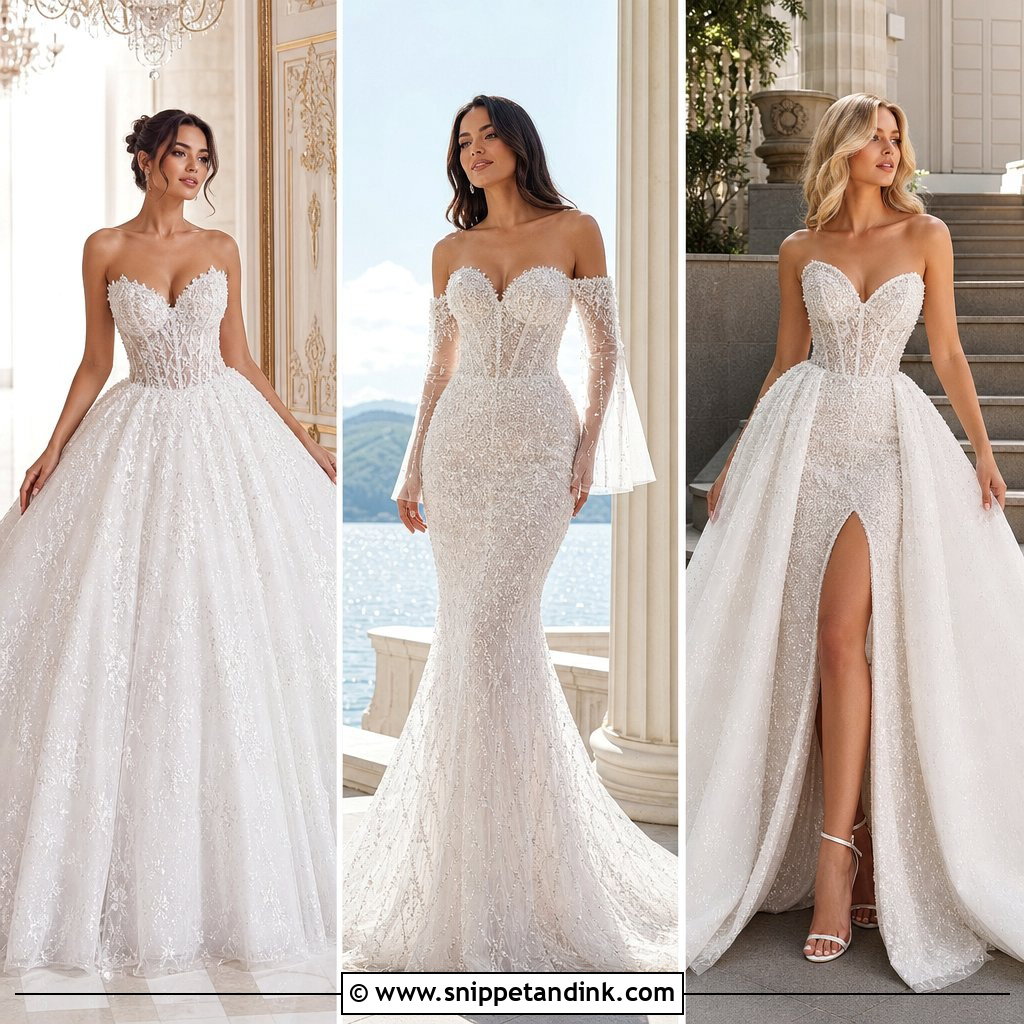
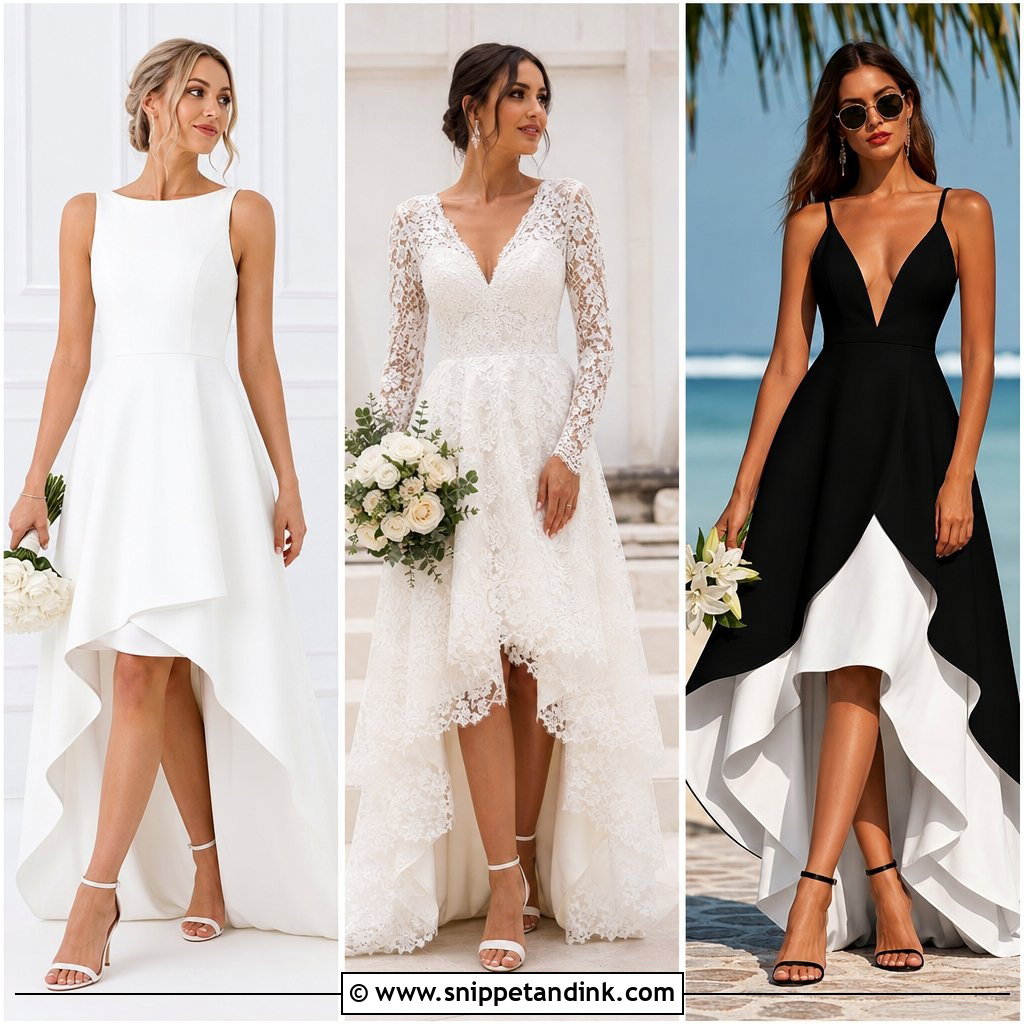
15. White Tea Length Bridal Dress
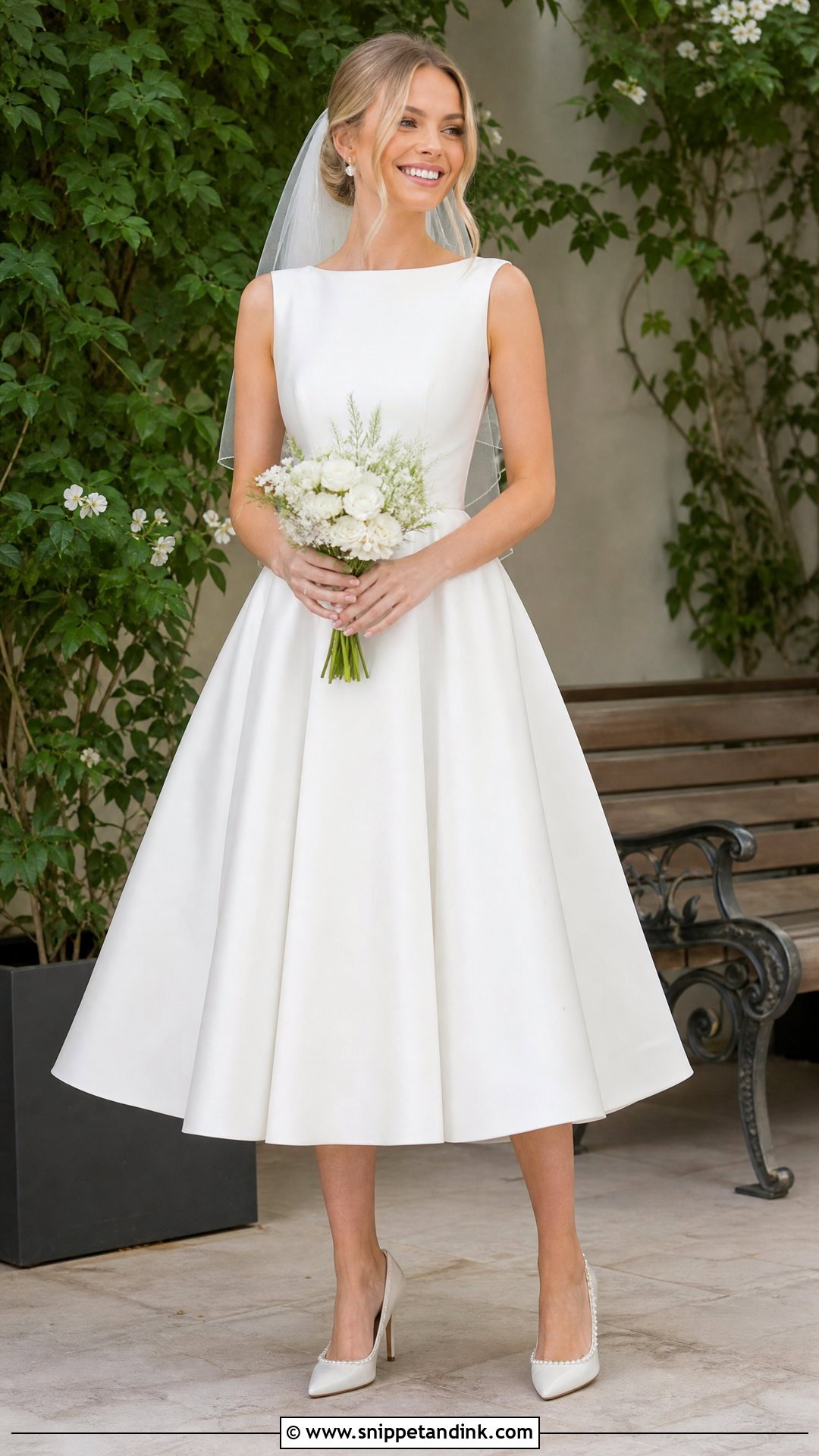
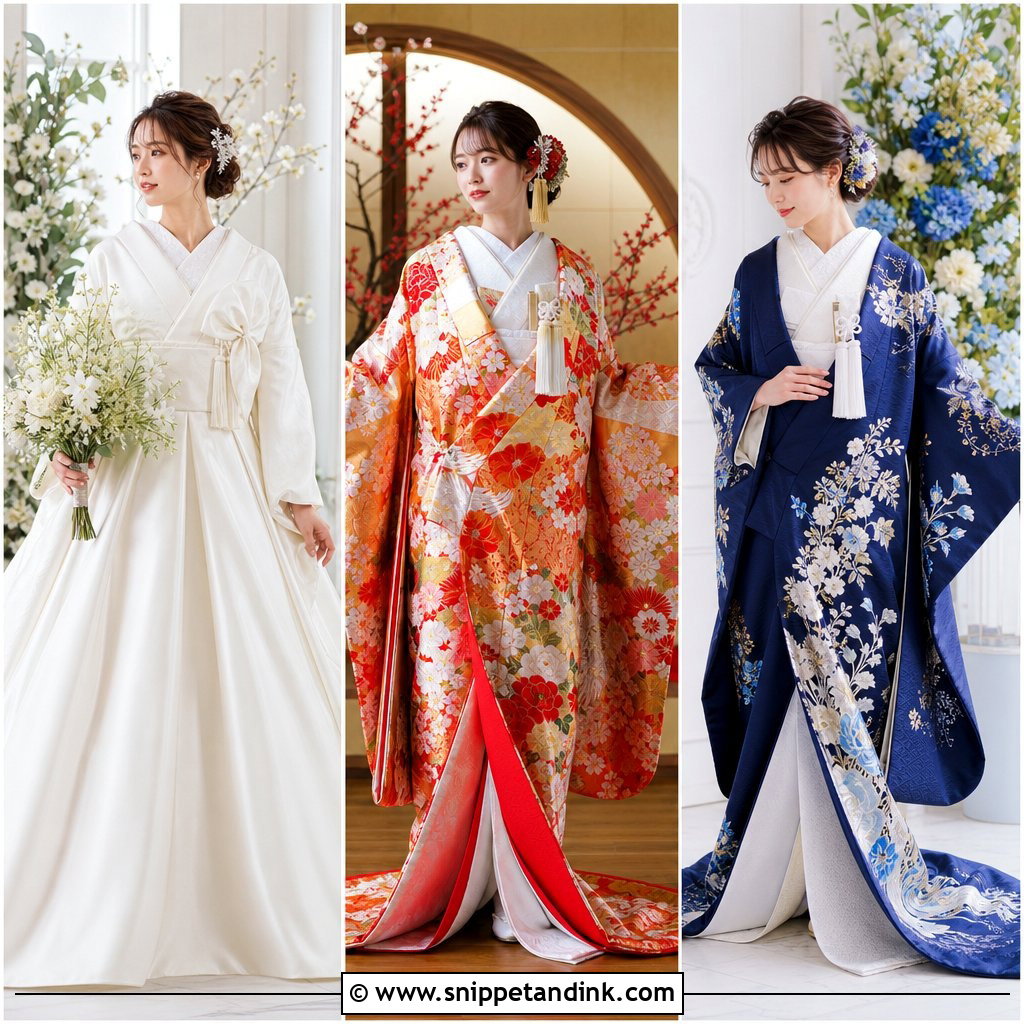
Tea length falls between the knee and ankle, which makes it easy to move in and puts your shoes on show. With lace and a full skirt it reads vintage; in smooth satin with a fitted bodice it’s modern. The hem should hit at a slim point of the leg, so I usually adjust tea length by an inch or two during fittings until it lands right. Pointed pumps, ankle-strap heels or embellished flats work, plus a short veil, pearl earrings and a neat bun.
16. White Mini Bridal Dress
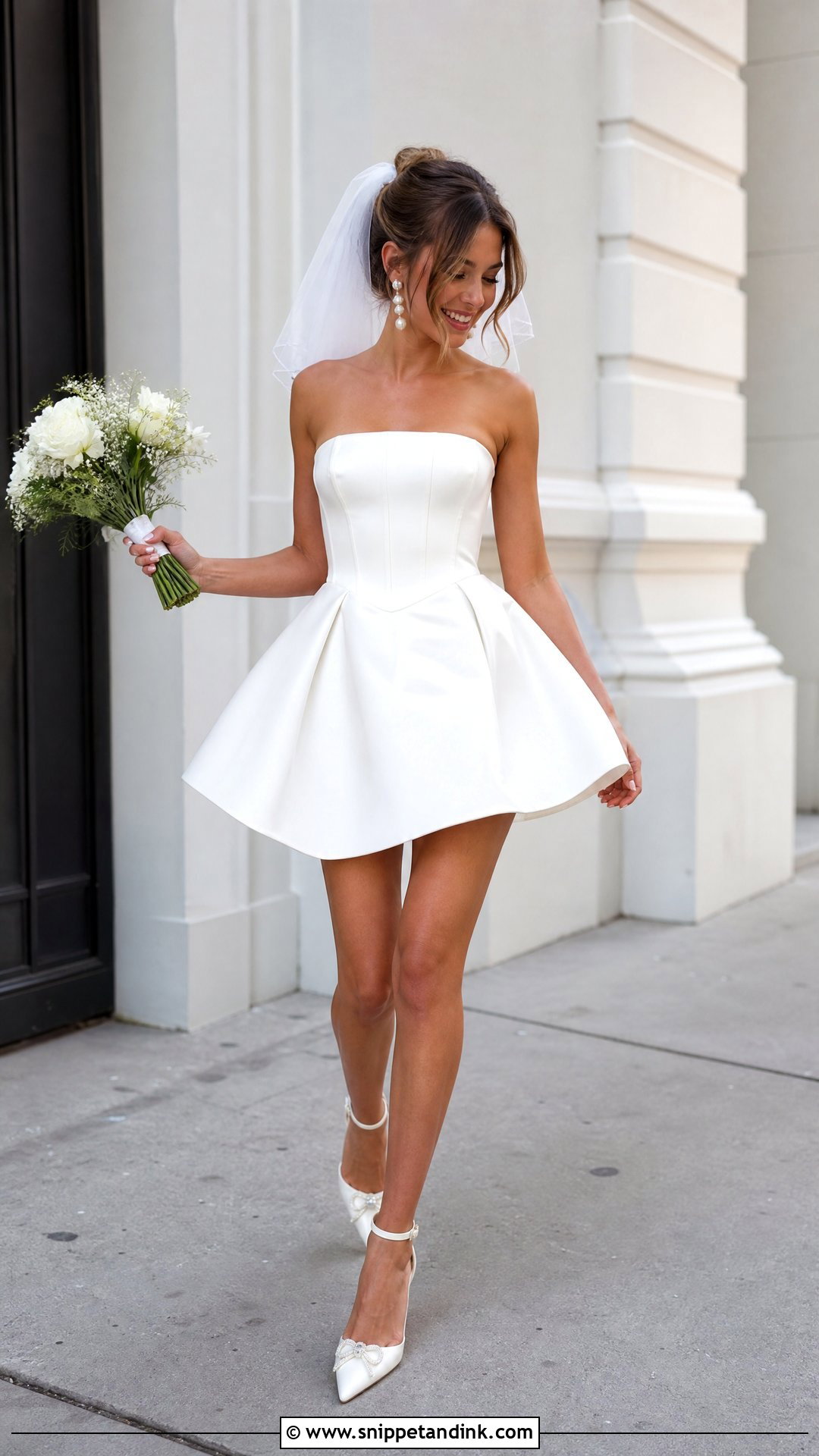
Minis suit a courthouse ceremony, a reception change or a wedding weekend event. Bridal fabrics like satin, lace, feathers or pearls keep it special. The shorter the dress, the more polished the accessories need to be, so I’d go with closed-toe pumps, slingbacks or refined sandals rather than anything casual. A short veil, statement earrings and a small bouquet make it read clearly as a wedding look. Sit down in it before buying; minis ride up more than you think.
17. White Bridal Midi Dress
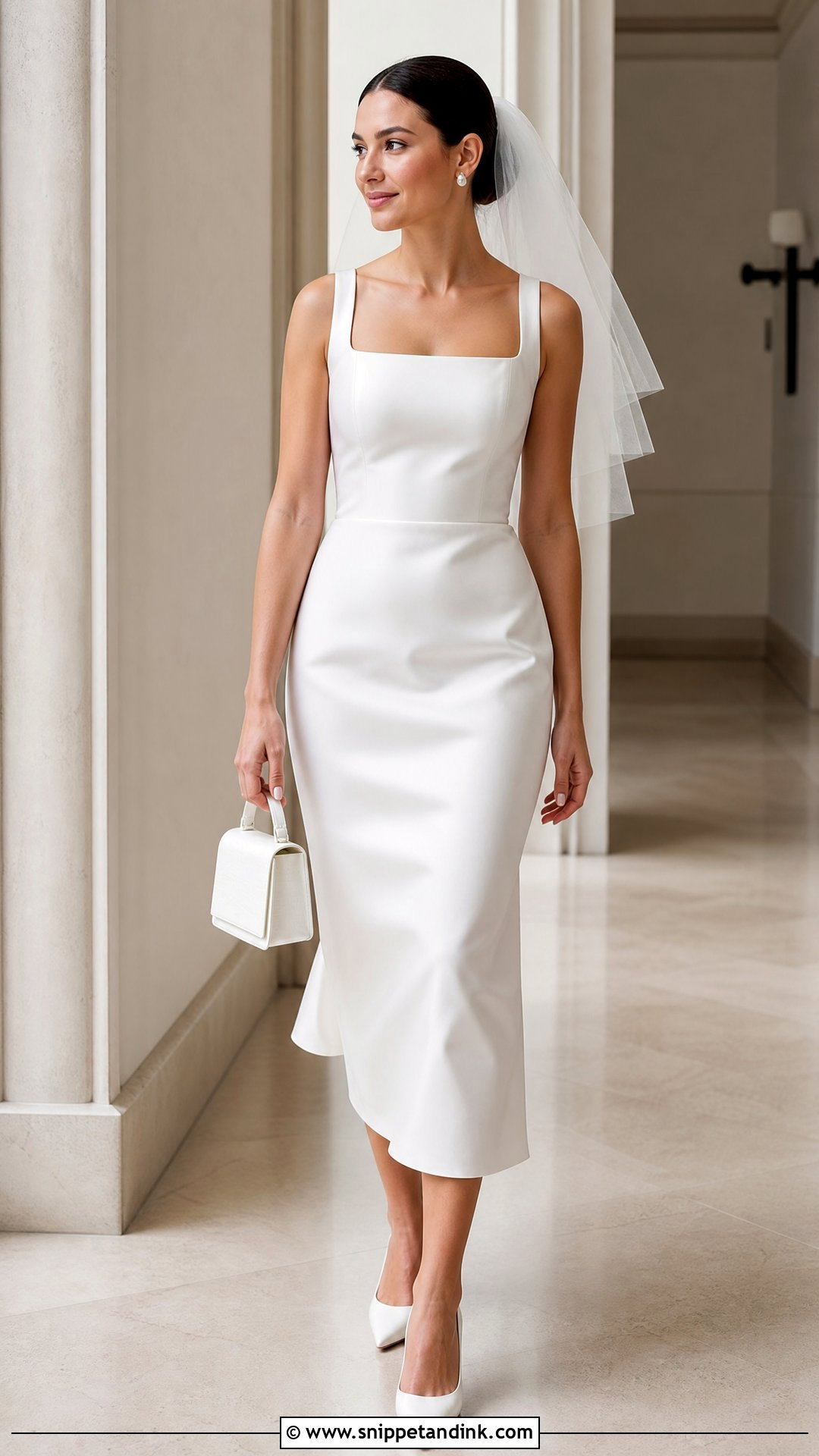
A midi is elegant but less formal than a full gown, and it suits courthouse weddings, civil ceremonies, rehearsal events and small receptions. Satin feels sleek, crepe minimal, lace romantic. Pointed heels, pearl earrings and a structured mini bag complete it. A birdcage veil or short tulle veil adds bridal charm without overwhelming the length. I recommend midis to brides who want to walk a city, sit through a long lunch and still look pressed in the last photo.
18. White Backless Bridal Dress
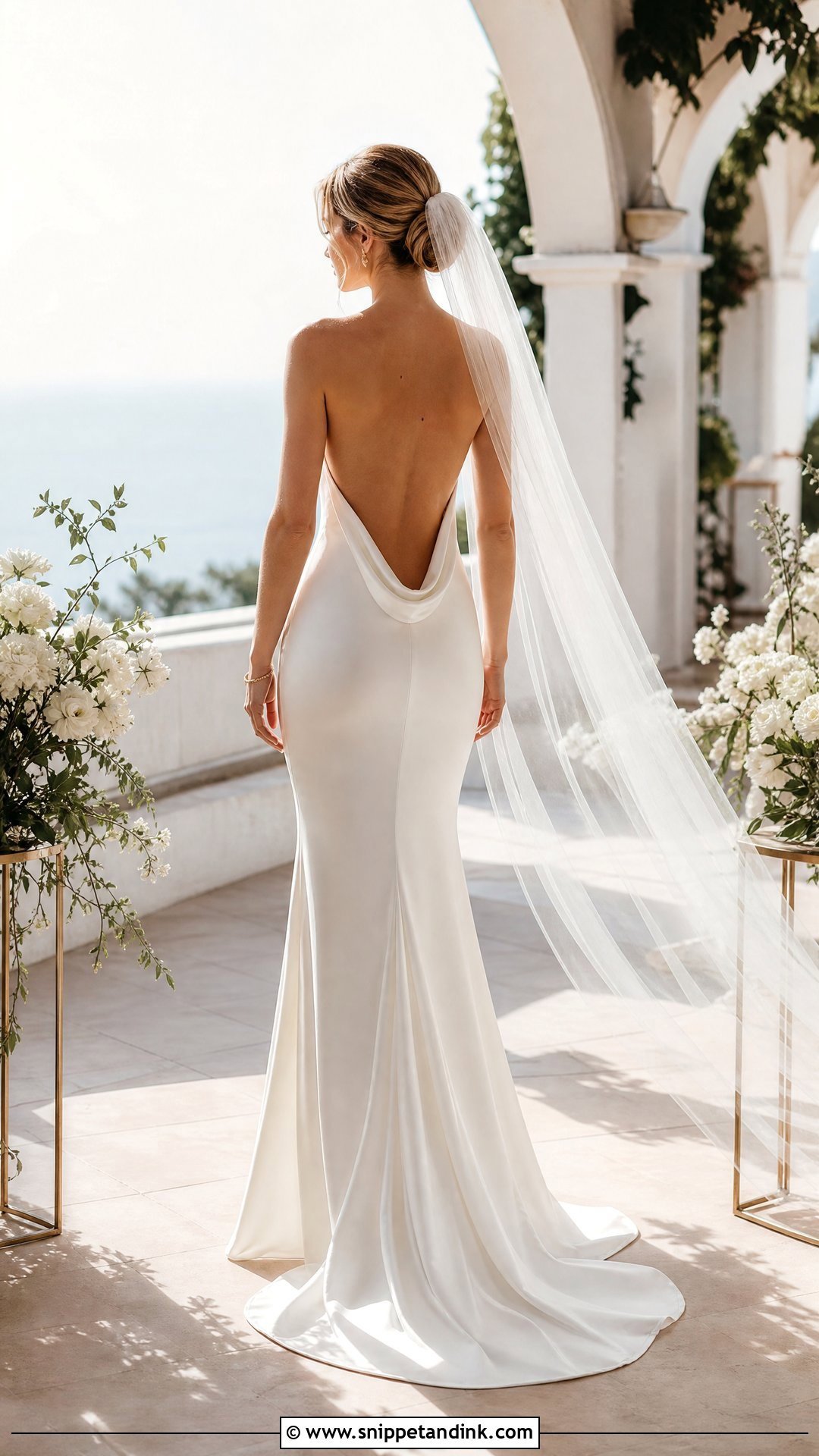
An open back keeps the front simple and saves the reveal for the walk away. Smooth fabrics like satin, crepe and silk show the line cleanly. The fit is what matters: the back edge should sit flat against the skin without gaping when you lean forward. Sort your bra before the first fitting, because most open backs need cups sewn into the bodice. A low bun or side-swept waves keep the back visible, with earrings or a bracelet instead of a necklace. Warm-weather and beach weddings suit it.
19. White Puff Sleeve Bridal Dress
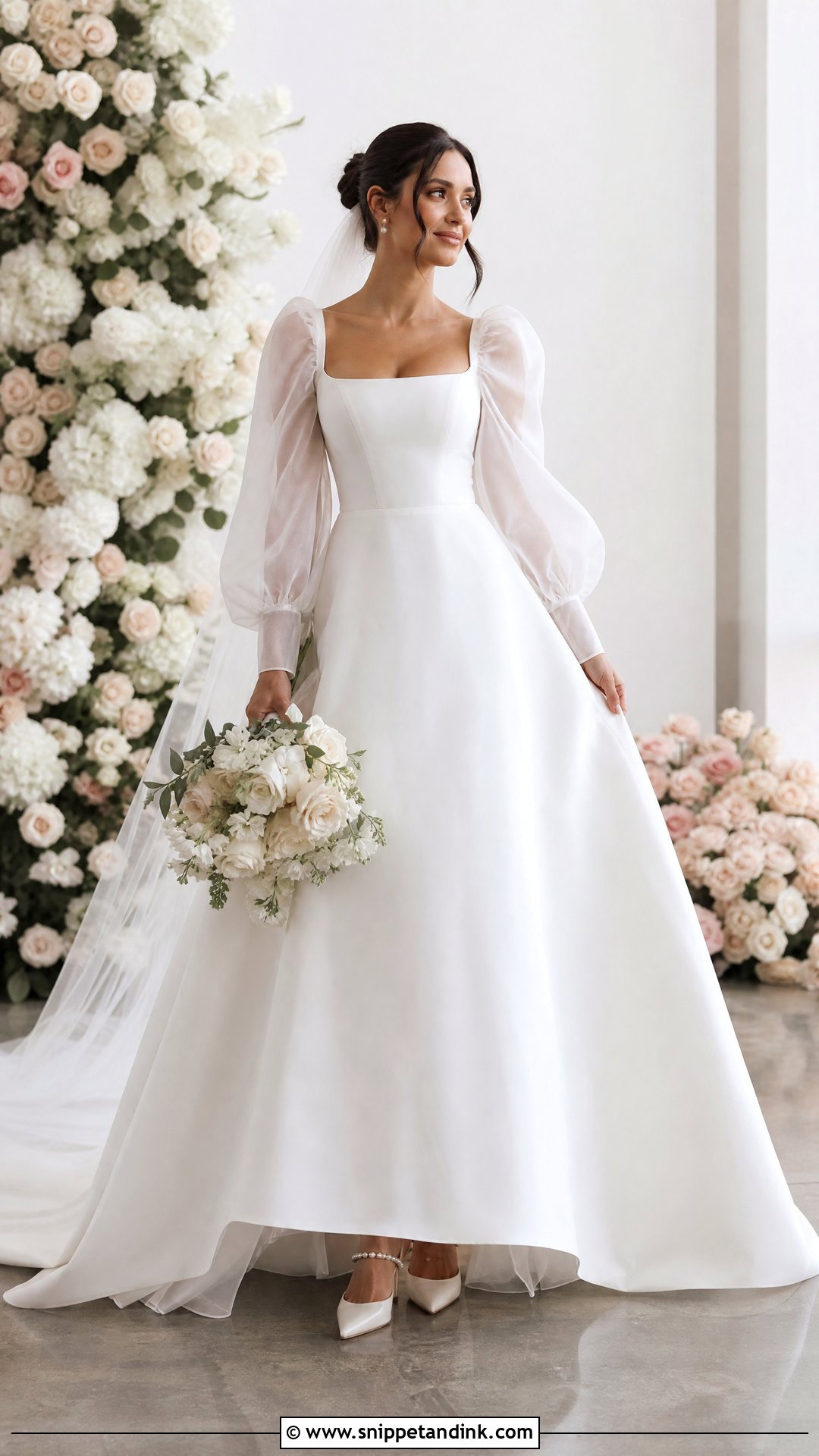
Puff sleeves add volume and charm, and they can be sheer, structured or detachable for two looks in one day. A fitted bodice over an A-line skirt balances them. Detachable sleeves are worth asking about: they let you keep the drama for the ceremony and dance freely later. Since the sleeves already draw the eye, accessories stay small. Pearl studs, satin heels and a smooth veil, with a low bun or soft curls.
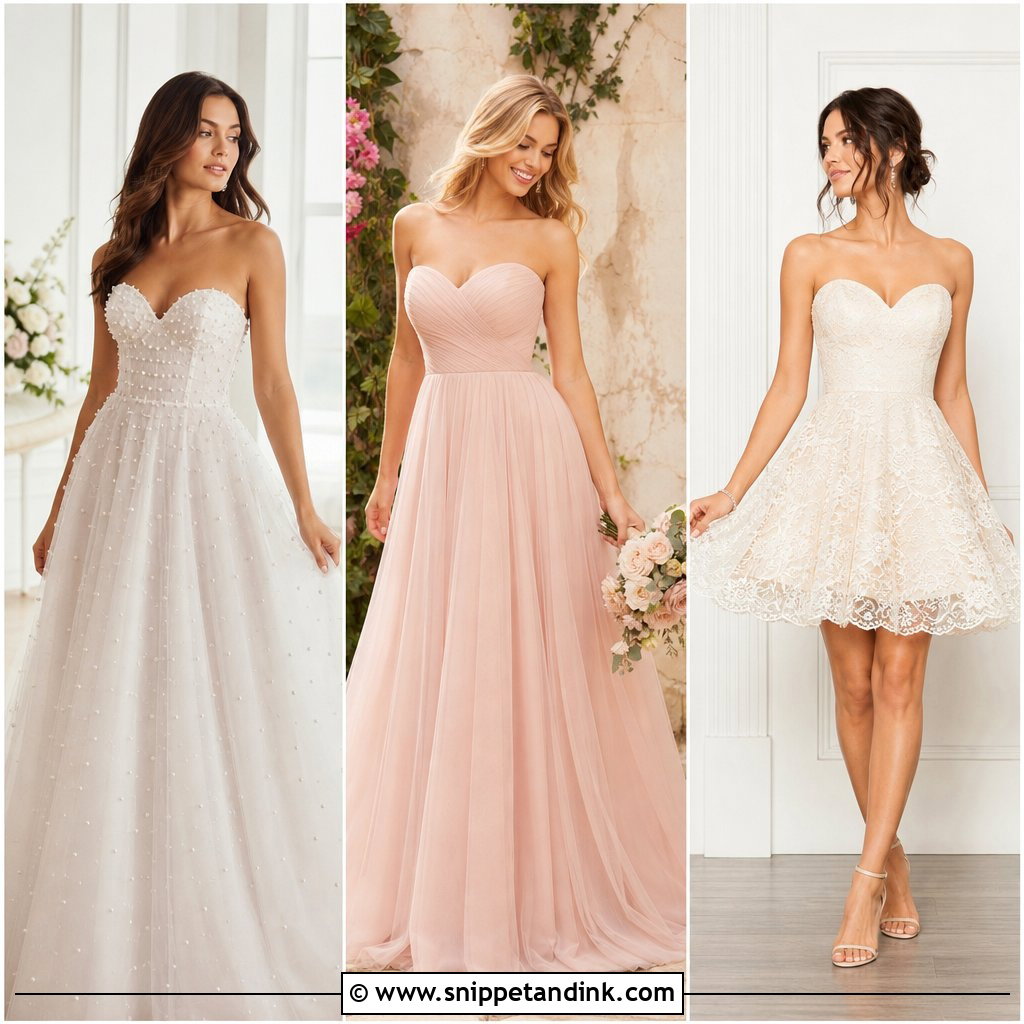

20. White One Shoulder Bridal Dress
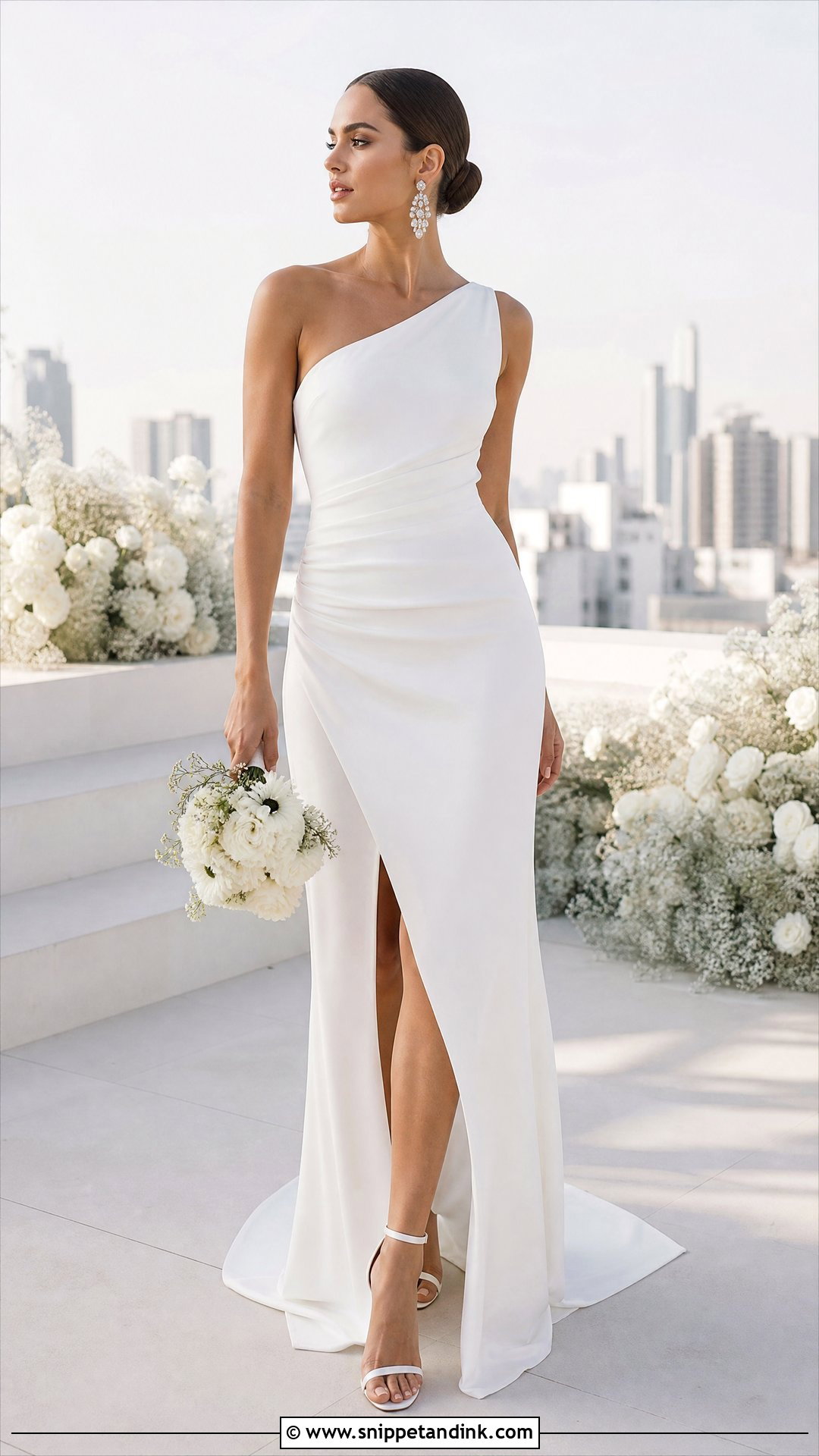
One shoulder is sleek and slightly unexpected. The asymmetrical neckline needs little embellishment, and crepe, satin or mikado hold the line cleanly. The bare side needs a strapless bra or cups built in, which I’d confirm at the first fitting. Statement earrings replace a necklace so the neckline stays open. A smooth bun, white heels and a simple bouquet suit city weddings, rooftops and gallery venues.
21. White Bridal Dress With Bow
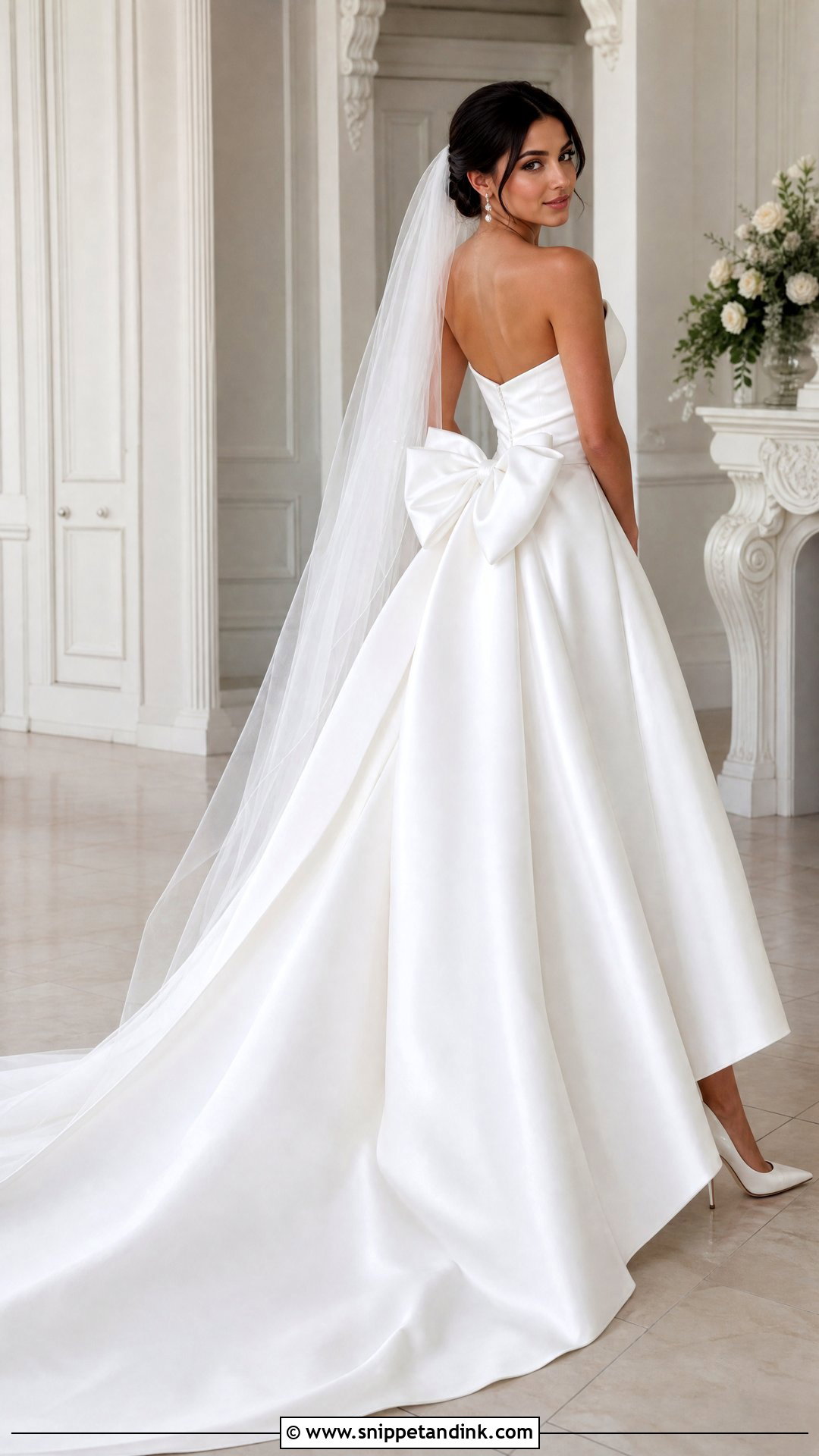
A bow can sit at the back, waist, shoulder, neckline or train. A big back bow is made for the walk away from the altar; a small waist bow feels sweet and classic. Bows only hold their shape in structured fabrics like mikado or heavy satin, so I’d avoid a large bow in soft crepe, which droops by evening. Keep everything else clean: satin pumps, pearl earrings and a smooth veil. One standout detail on a simple gown.
22. White Drop Waist Bridal Dress
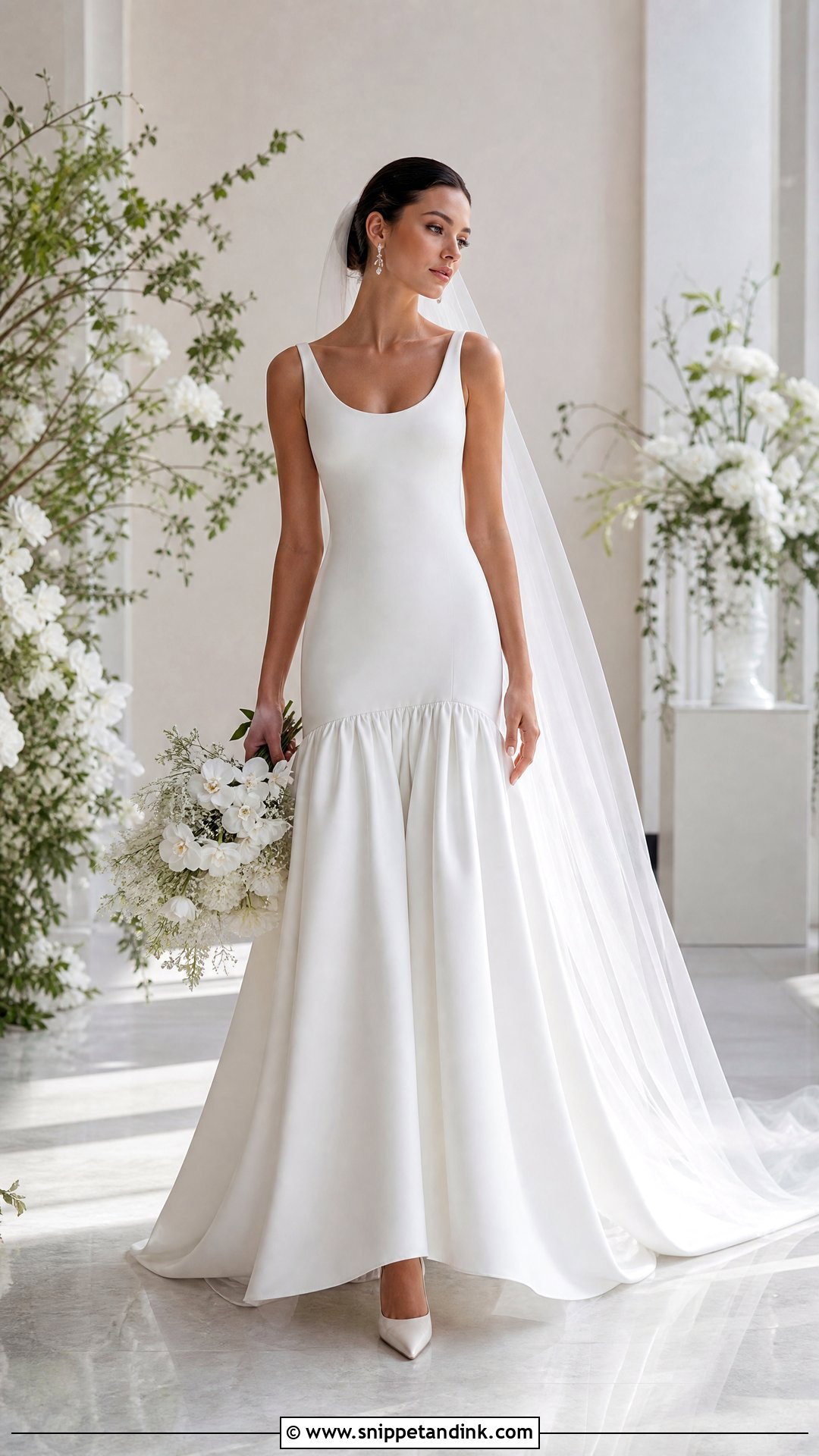
A drop waist extends the bodice below the natural waist before the skirt begins, giving a long, smooth line through the torso. A full tulle skirt makes it romantic; sleek satin keeps it clean. It flatters long torsos most easily. On a shorter torso, I adjust where the seam sits so the legs don’t look cut off. Pointed heels, delicate earrings and a long veil lengthen the line further. A distinctive alternative to a standard waist.
23. White Bridal Dress With Detachable Overskirt
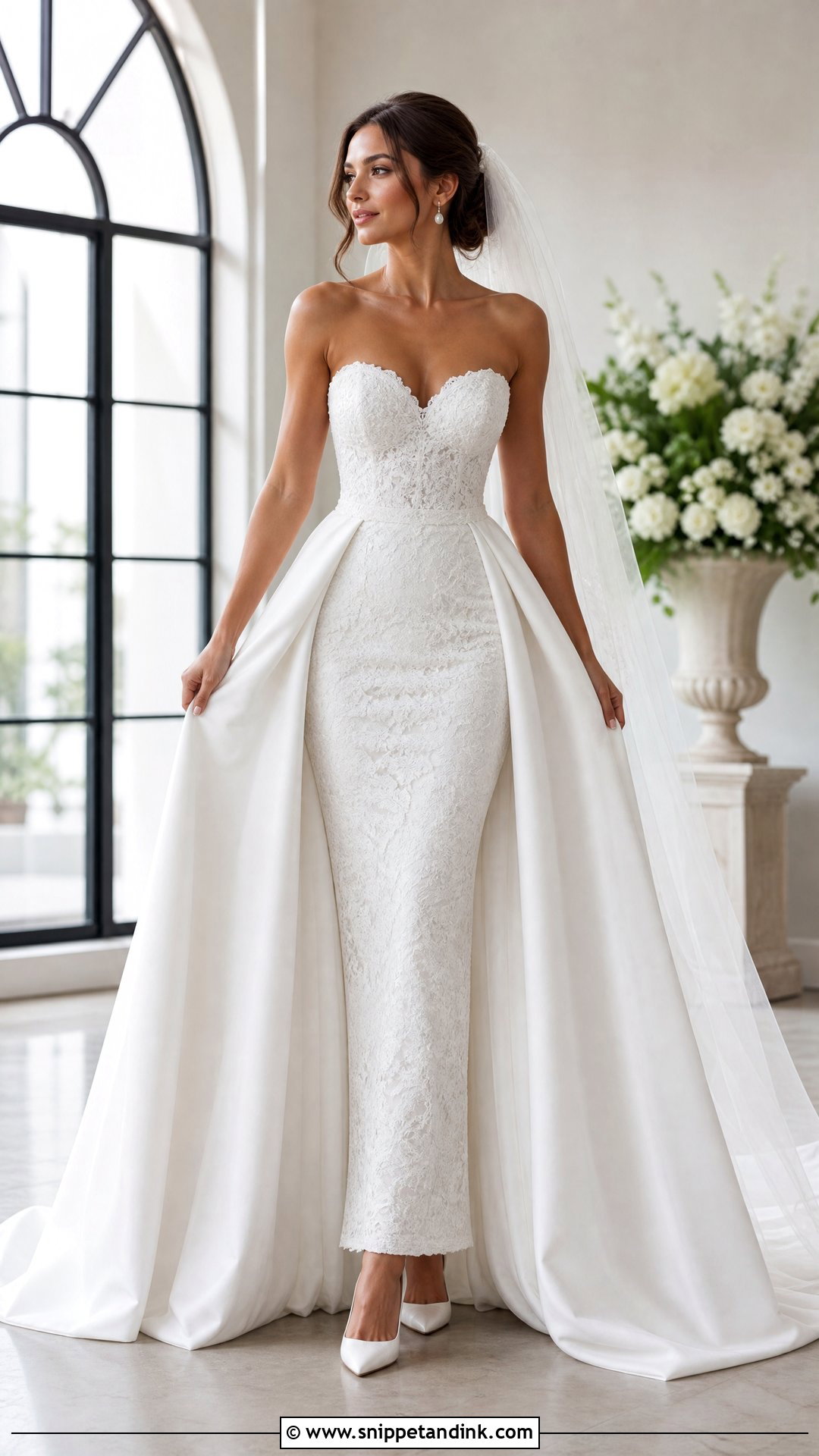
A white bridal dress with detachable overskirt gives you a ceremony look and a reception look without a full change. Wear the overskirt down the aisle for volume, then unhook it for a slimmer, easier dress. Fitted crepe, lace or satin underneath works best. Practise the removal with whoever will help you, because a stiff hook or button under a full skirt can take ten minutes the first time. Choose shoes that suit both versions, like white pumps or comfortable block heels.
24. White Bridal Dress With Cape
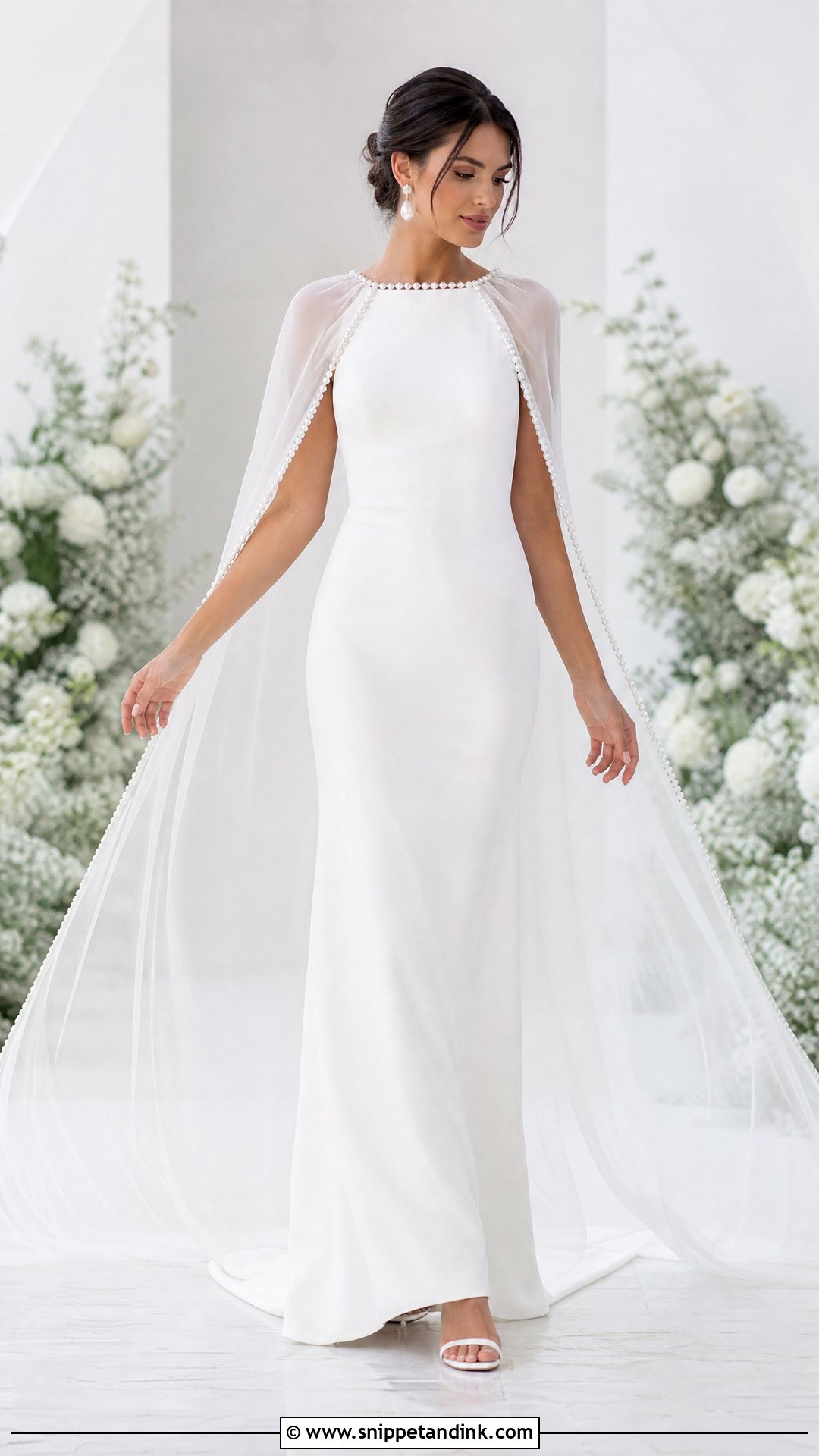
A cape can replace a veil and adds movement without a long train. It can be sheer, lace, pearl-trimmed or soft tulle, and it sits best over simple sheath, column and A-line dresses. Ask how it attaches: capes stitched at the shoulder seams stay put, while capes on hooks or snaps can drift off-centre during hugs. Keep the neckline clean, choose earrings to match the dress, and finish with white heels and a sleek hairstyle.
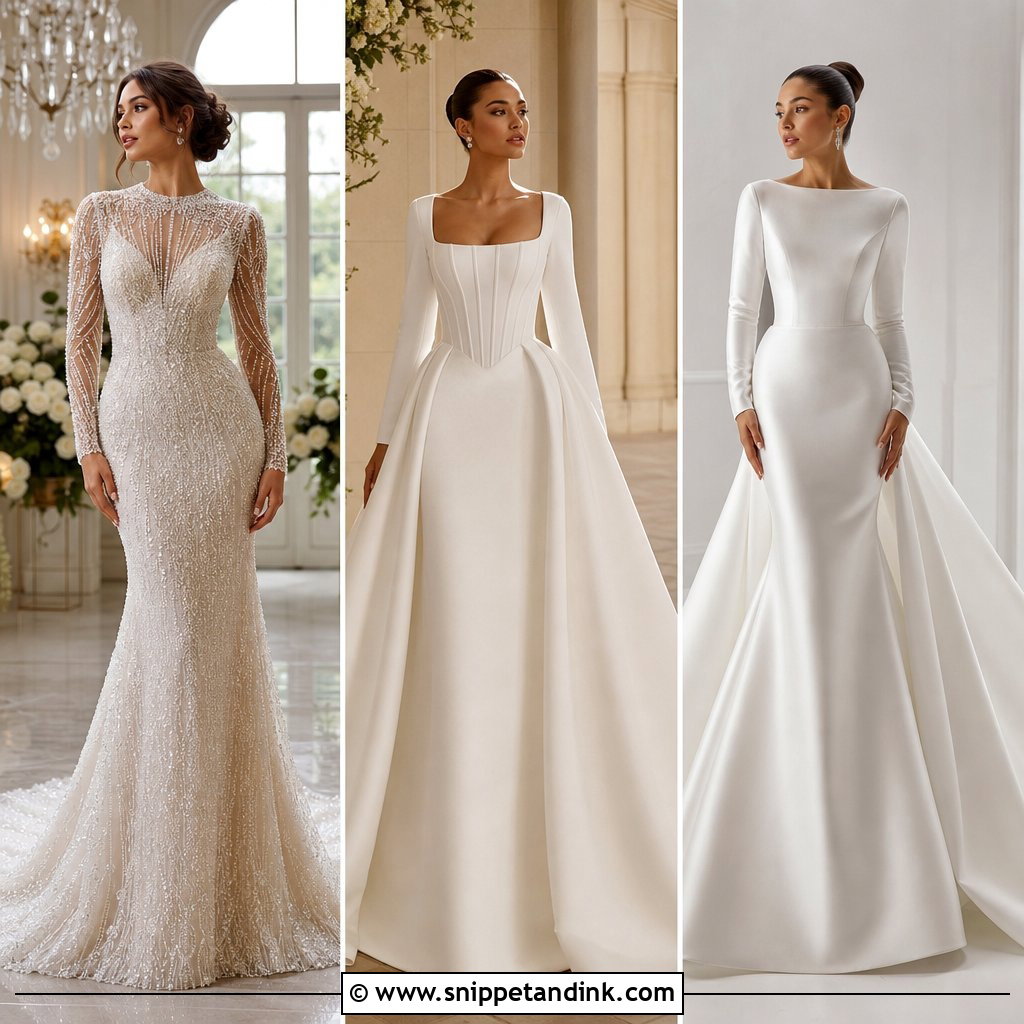

25. White Courthouse Bridal Dress
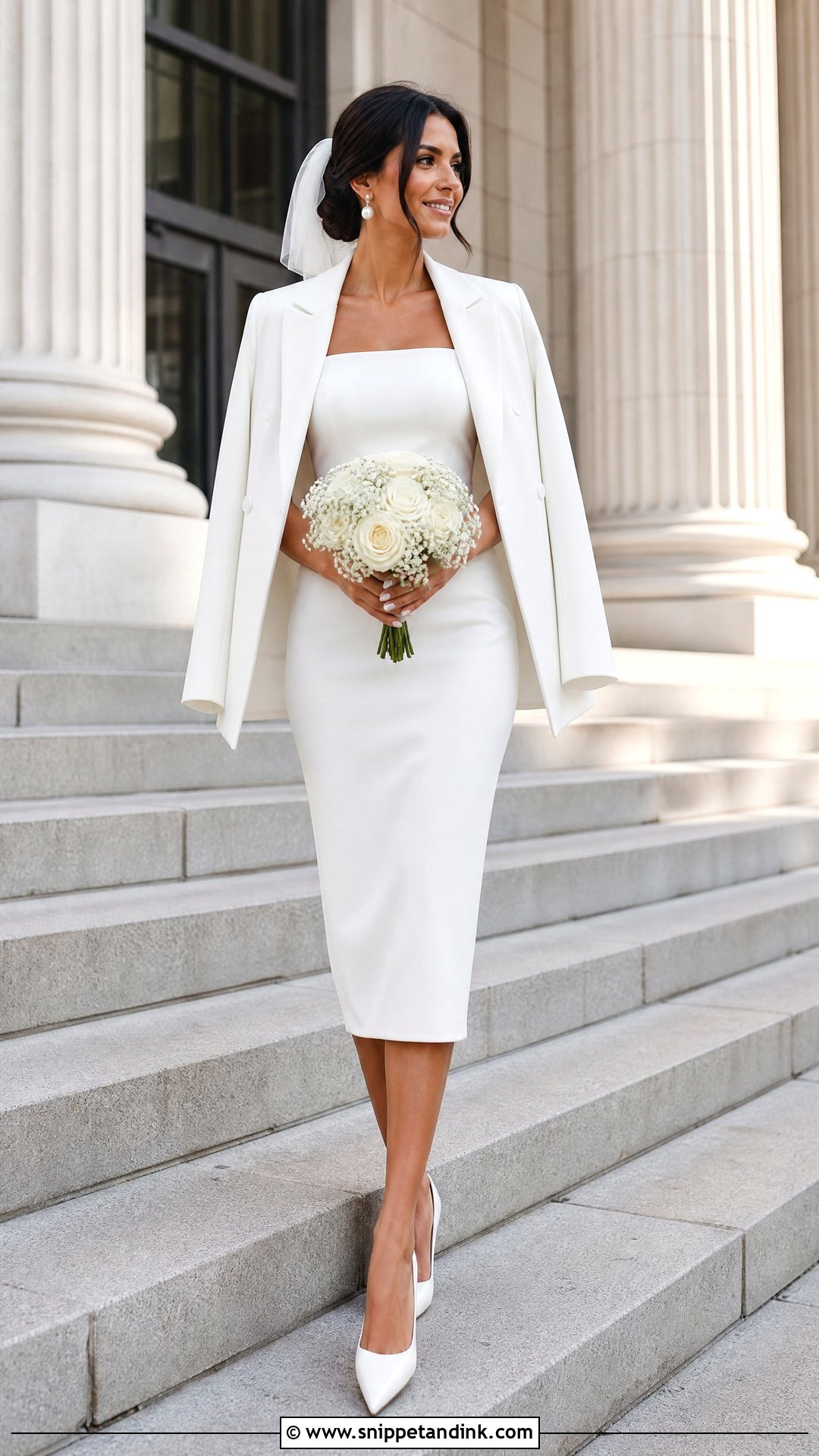
A courthouse dress should be comfortable and special without being complicated. A midi, tailored mini, sleek sheath or simple satin gown can all work. City-hall ceremonies are short, but the day often includes walking, a long lunch and street portraits, so I’d plan the shoes around that. Pearl earrings, pointed heels, a small bouquet and a short veil or hair bow make it read as bridal. A structured blazer over the dress suits a city finish.
A Realistic Timeline From First Appointment to Final Fitting
Most gowns are made to order after you say yes, and alterations come after that, so the calendar matters as much as the style.
Ordering
Production times vary a lot by designer, but several months is common for made-to-order gowns, and some take longer. I’d start shopping around nine months to a year before the wedding if you can, which leaves room for delays. Rush options exist but usually cost extra and limit your choices.
Alterations
Plan for two or three fittings, starting a couple of months before the date. Bring your actual shoes and the underwear you’ll wear on the day to every one; a hem set in the wrong heel is the most common thing I see redone.
Short on time?
Buying a sample or off-the-rack gown skips production entirely. Expect some wear from try-ons and allow for cleaning and repairs, but it can make a wedding a few months away completely realistic.
The Dress You Forget You’re Wearing
There’s no single rule for a wedding dress. Some brides want a full ball gown with lace sleeves and a long veil; others feel most themselves in a slip, a midi or a clean courthouse look. Think about the venue, the season, how long you’ll be on your feet and how much you want to move. The fabric, neckline, sleeves, shoes and hair can each change the mood of the same white dress. The right one is the one you stop noticing an hour in, because it fits and lets you enjoy the day.
You'll Like These Ideas:










Leave a Reply