
An Indian wedding can mean five or six functions spread over several days, and each one asks something different of your clothes. A haldi outfit will meet turmeric paste, a sangeet outfit has to dance, and a pheras outfit has to sit on the floor for hours. That’s why I never plan one look in isolation. Below are 25 traditional outfits, from silk sarees and bridal lehengas to shararas, ghararas, Anarkalis and regional drapes, with notes on which events each one suits and how to wear it comfortably. Bride, sister, mother of the groom or guest, think about fabric, jewelry, footwear and dupatta together before you commit to anything.
Matching Each Outfit to Haldi, Sangeet, Pheras and Reception
When a family asks me to plan outfits for a full wedding, I start with a list of functions and what physically happens at each one. That decides the fabric long before color does.
- Haldi: expect turmeric everywhere. Wear cotton or an inexpensive Bandhani or chikankari set you won’t mourn, and skip silk.
- Mehendi: you’ll sit still for hours with wet hands, so pick sleeves that end above the wrist and a dupatta you can pin out of the way.
- Sangeet: you’ll dance. Shararas, light lehengas and georgette sarees move well, and heavy velvet does not.
- Pheras or the main ceremony: you’ll sit on the floor or low seating near a fire. Silk sarees and lehengas with secure pinning, and nothing synthetic and floaty near the flame.
- Reception: the most Western-leaning event. Saree gowns, jacket lehengas and velvet in winter all suit it.
Repeating jewelry across events is fine. Repeating a heavy lehenga across two long days usually isn’t, because it will be crushed and creased by the second wearing.
How Silk, Velvet and Georgette Behave in Heat and Air Conditioning
Fabric choice should follow the venue, not just the season. A summer wedding in a heavily air-conditioned banquet hall can make velvet bearable, while a spring ceremony under a tent can make the same lehenga miserable. I ask clients where each function happens before I approve any fabric.
Pure silk breathes reasonably well but shows sweat marks under the arms, so I suggest dress shields stitched into the blouse. Georgette and chiffon are cooler but cling when humid and can build static in dry, cold halls. Organza holds its shape in heat but scratches at the waistline without a soft petticoat. Velvet is warm in any setting, so in hot weather I keep it for evening events only. If a function is outdoors in summer, cotton silk and Chanderi are the honest answer.
1. Red Bridal Lehenga
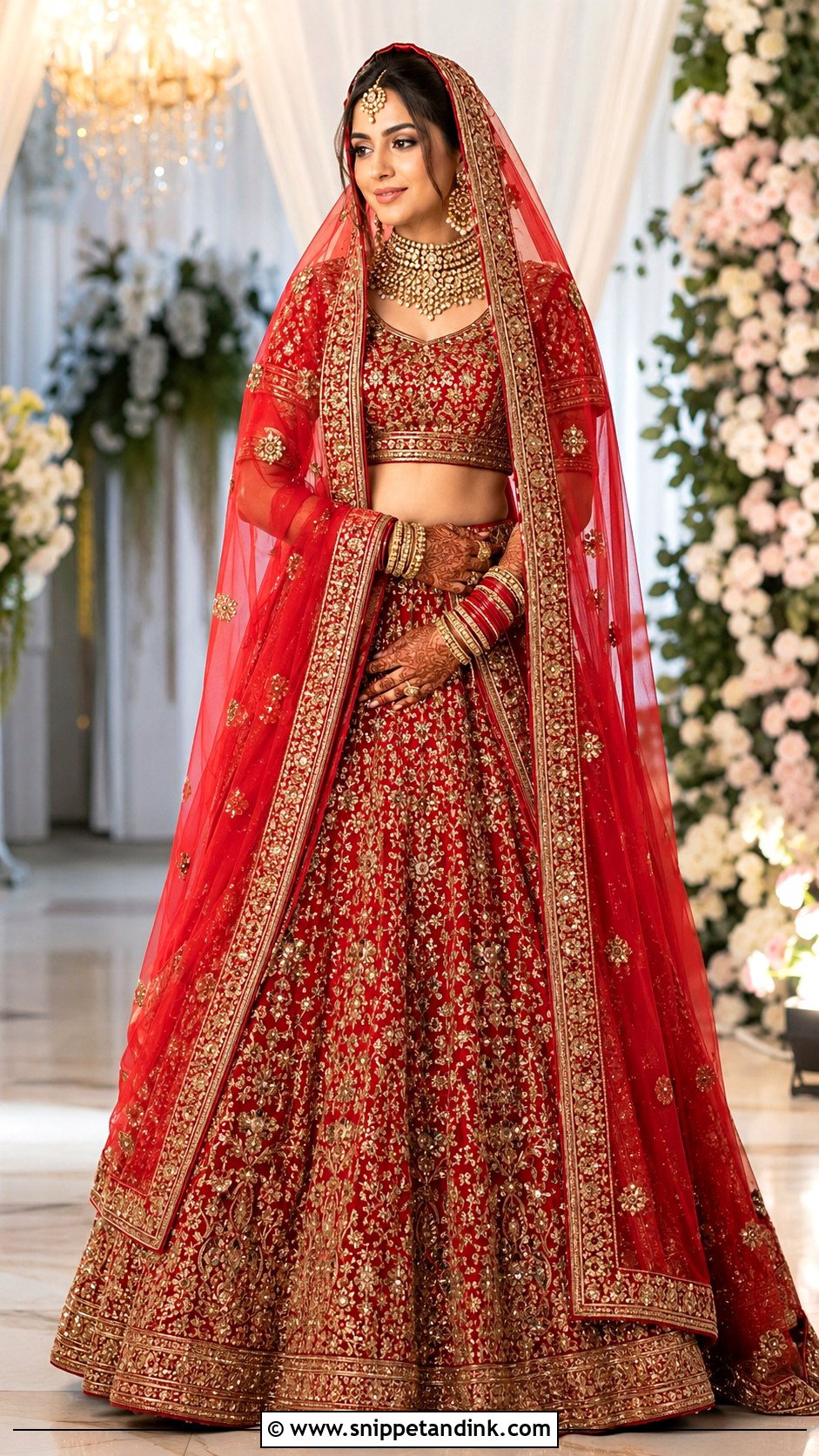
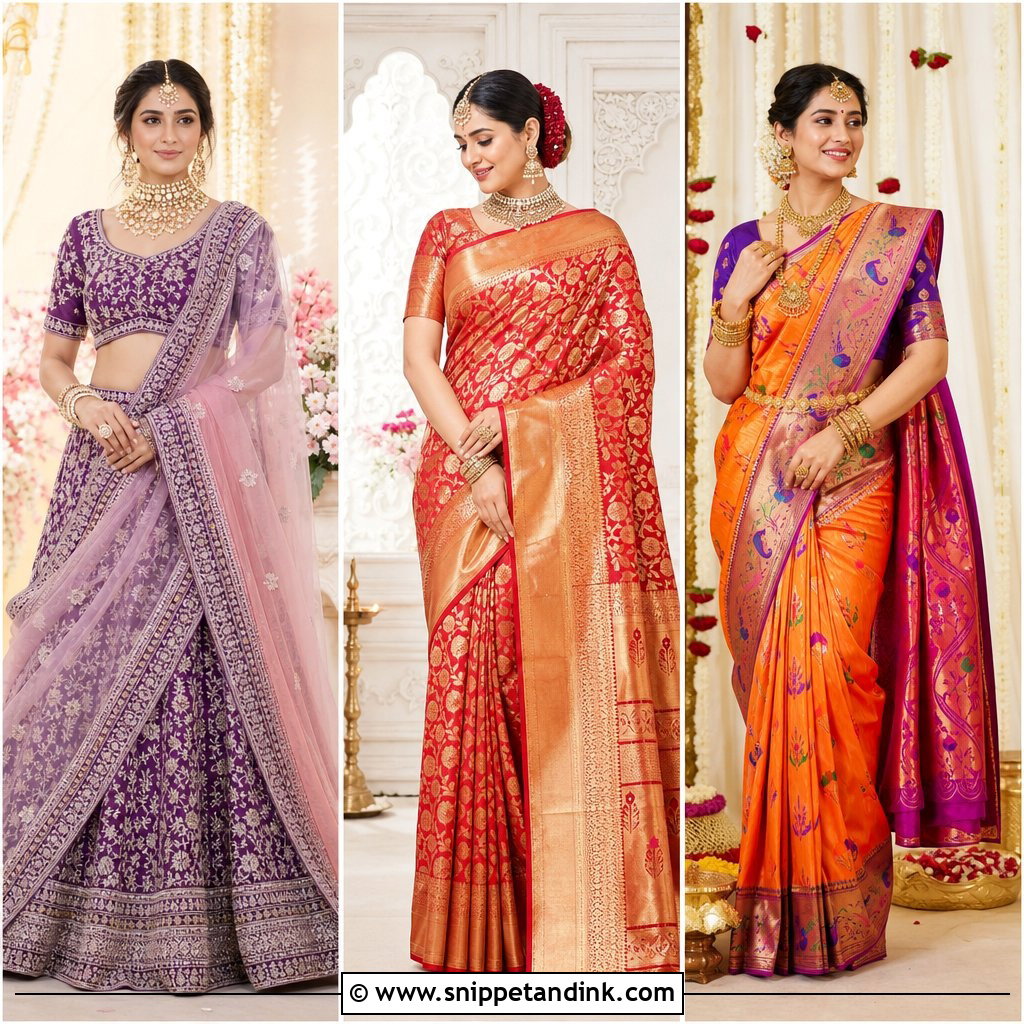
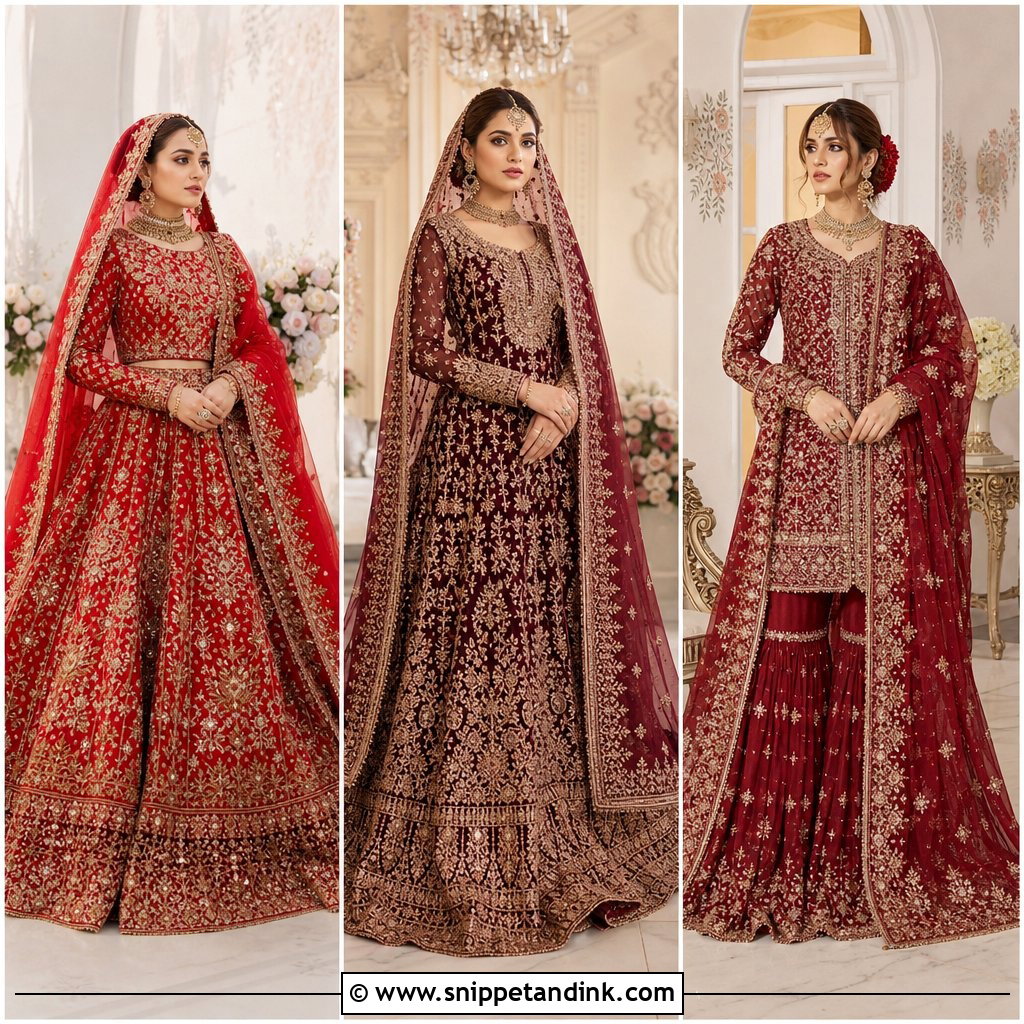
For the main ceremony, a red lehenga still leads, and the exact red matters more than people think. Sindoor red, ruby and maroon all read bridal, but I hold swatches against the bride’s face in daylight, because some reds turn orange against warm skin and others go purple on camera. The look pairs an embroidered skirt with a matching choli and a dupatta over the head or shoulder, worked in zari, zardozi or gota patti. Add a kundan necklace, matha patti, bangles and juttis. The choli should allow a full breath while seated, since rituals run long.
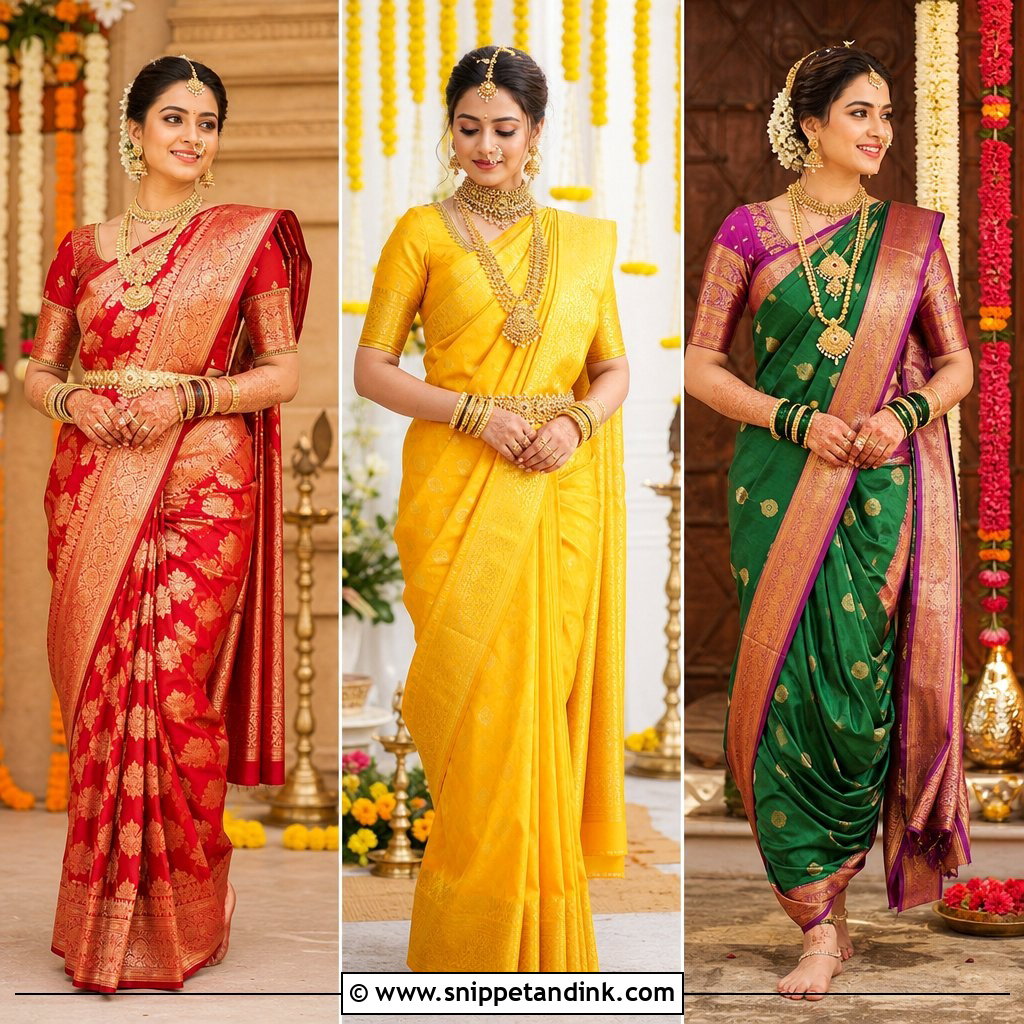
2. Banarasi Silk Saree
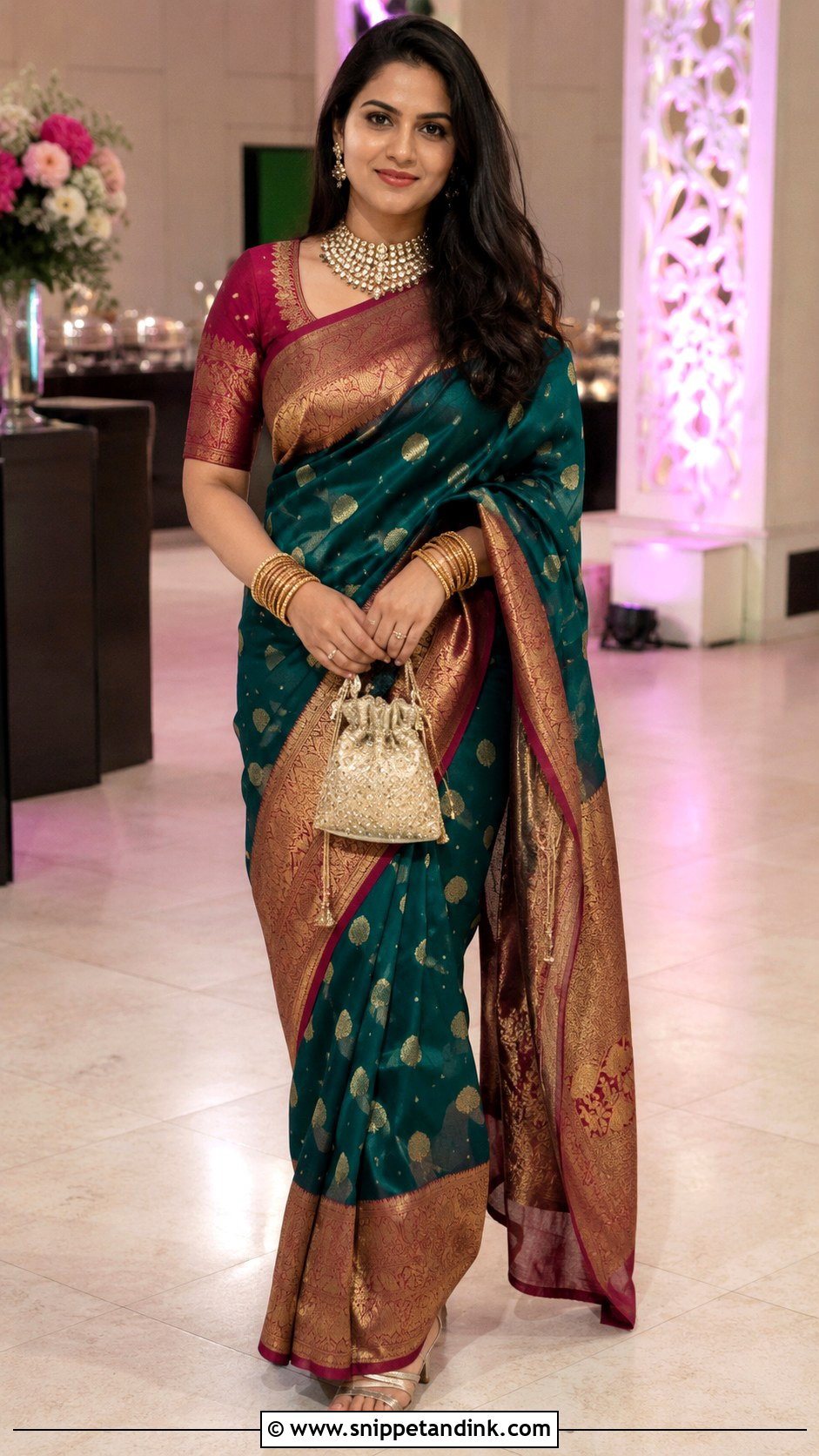
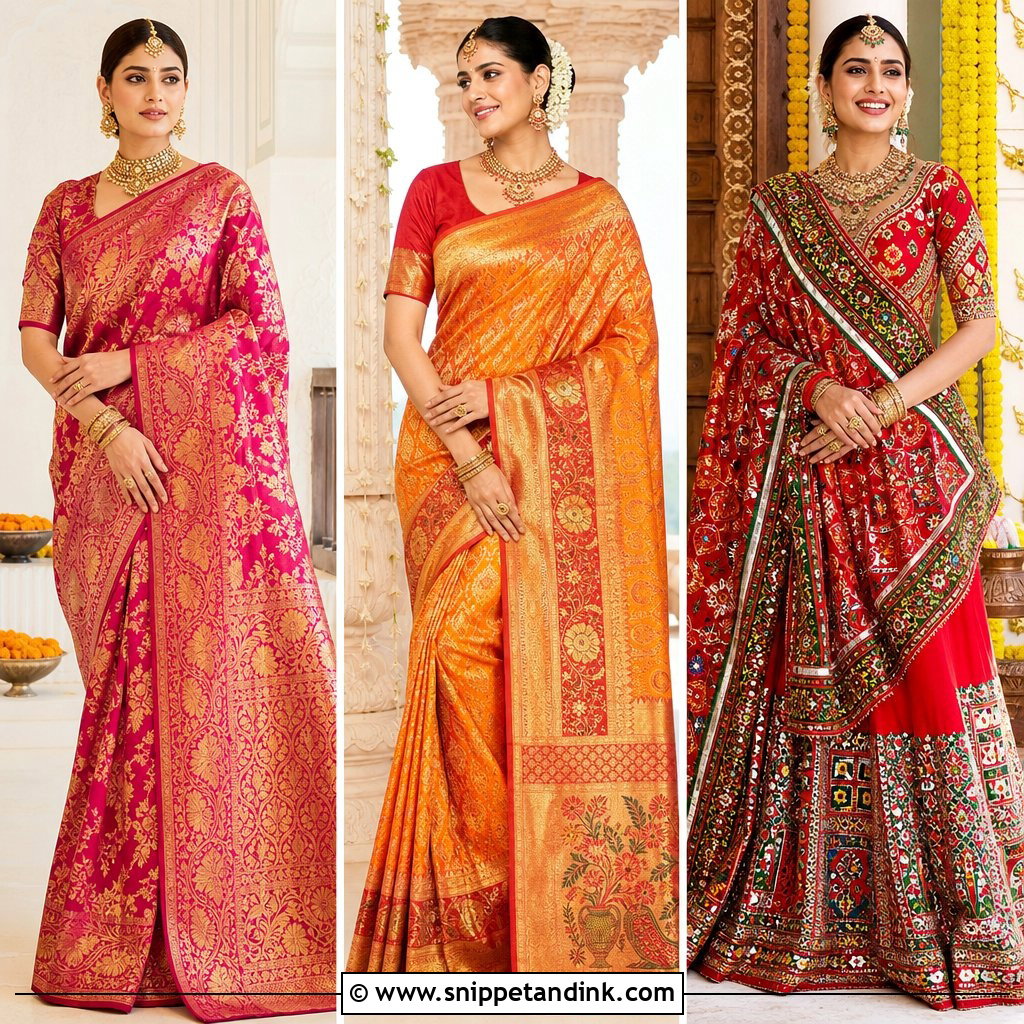
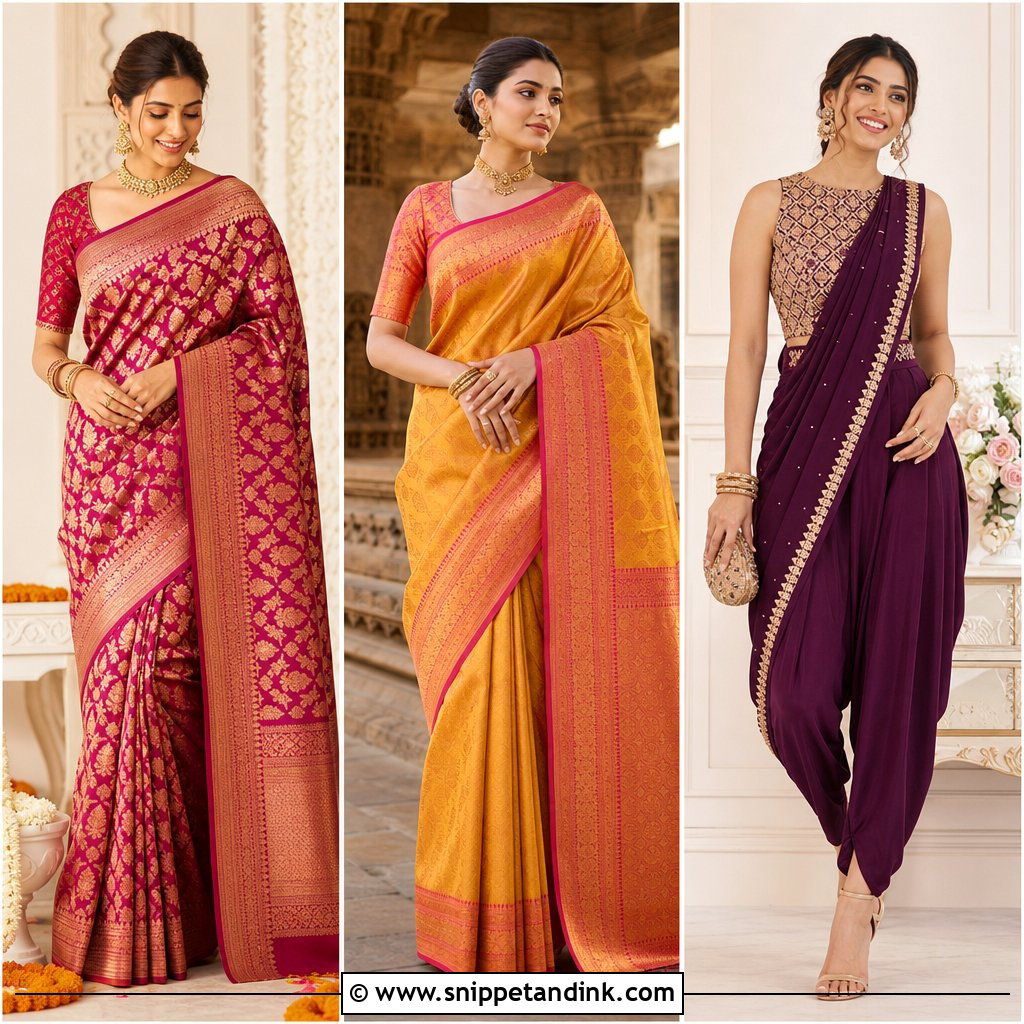
Banarasi silk earns its place at weddings because the motifs are woven in, which gives it formality without a stitch of embroidery. Emerald, royal blue and magenta suit guests and family, while brides go for heavier weaving and layered necklaces. The silk has a stiff hand and holds a crisp fold. I press the pleats into place the night before with a cool iron and a cloth, then pin them at the waist so they open and close as you walk. Gold bangles, a potli and block heels finish it, and a bride can add a flowered bun.
3. Kanjeevaram Saree
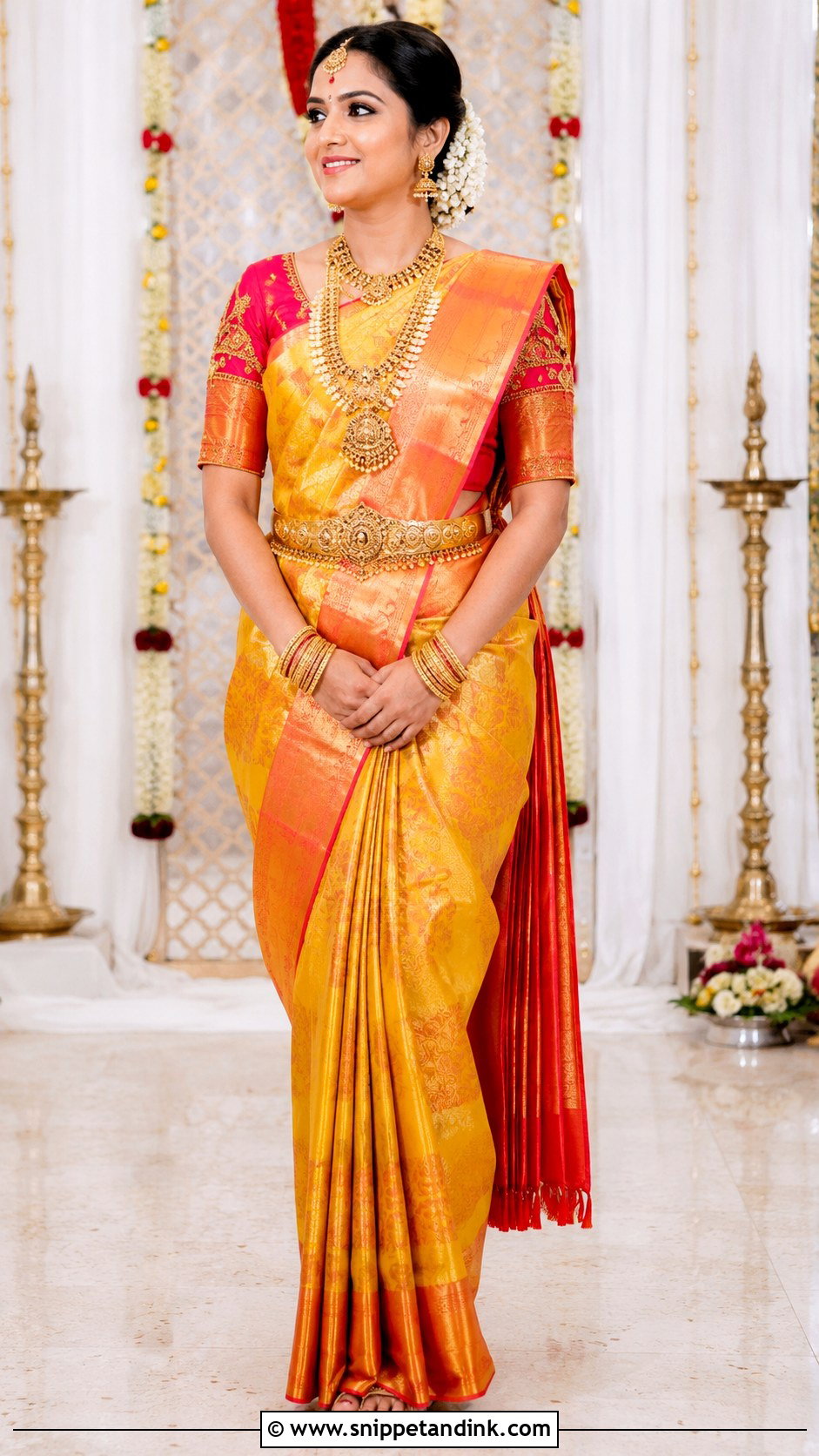
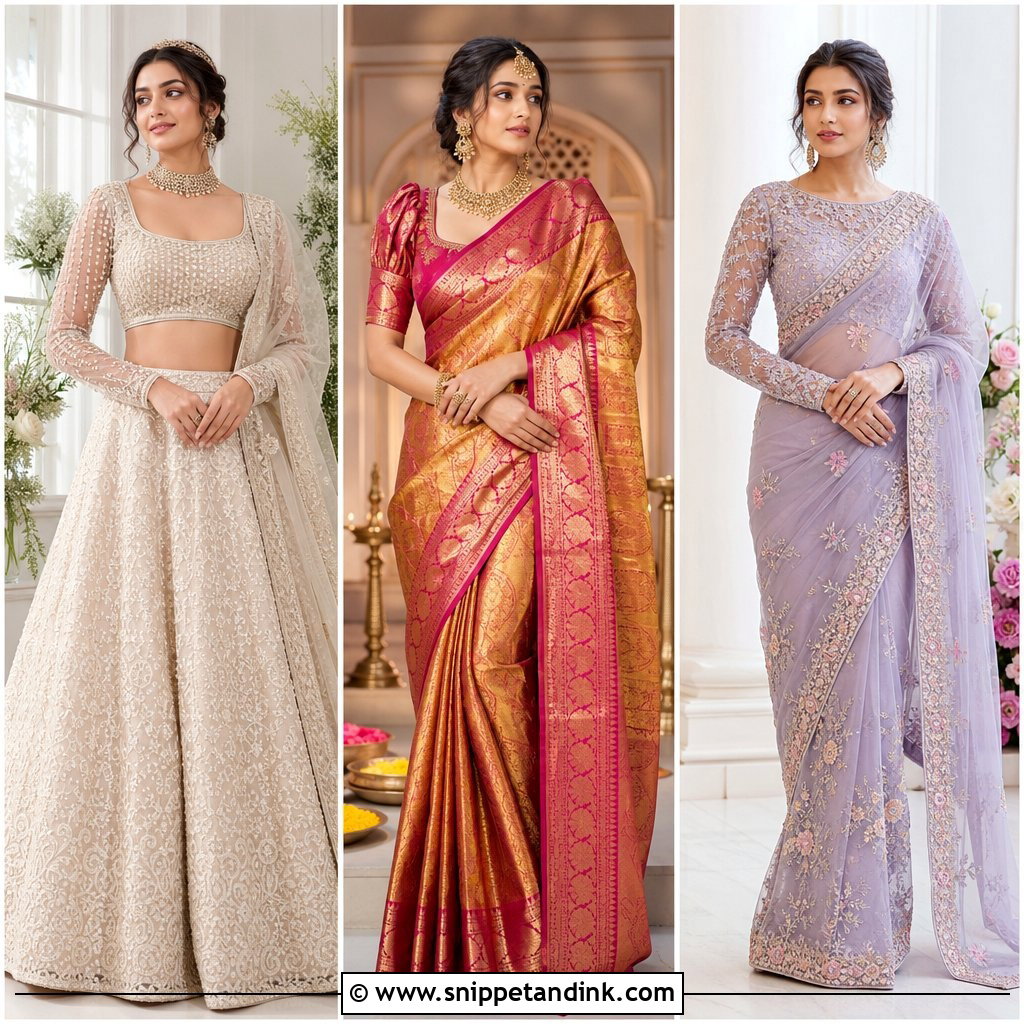
South Indian brides have trusted Kanjeevaram for generations, partly because of the heavy contrast border that is often woven separately and interlocked with the body of the saree. That border gives the drape its weight and structure. Temple motifs and contrast blouses define the look, with gold temple jewelry, a waist belt and jasmine in the hair. Mustard, rani pink and deep red are popular festive choices. A good Kanjeevaram is often passed down, so I’d rather a bride spend on the saree itself than on an overworked blouse. Guests keep the gold lighter, and low heels help on the walk to the mandap.
4. Anarkali Suit
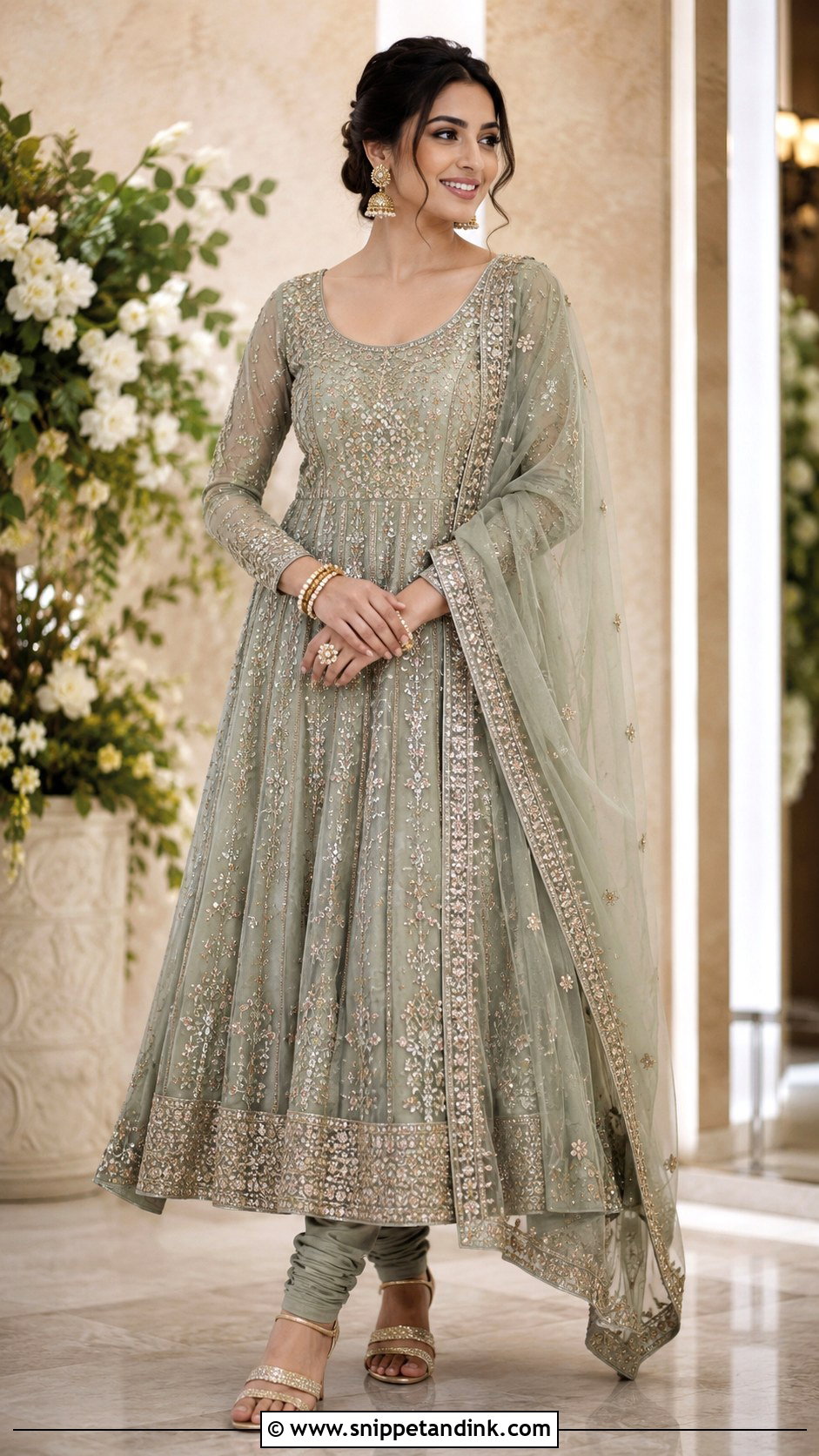
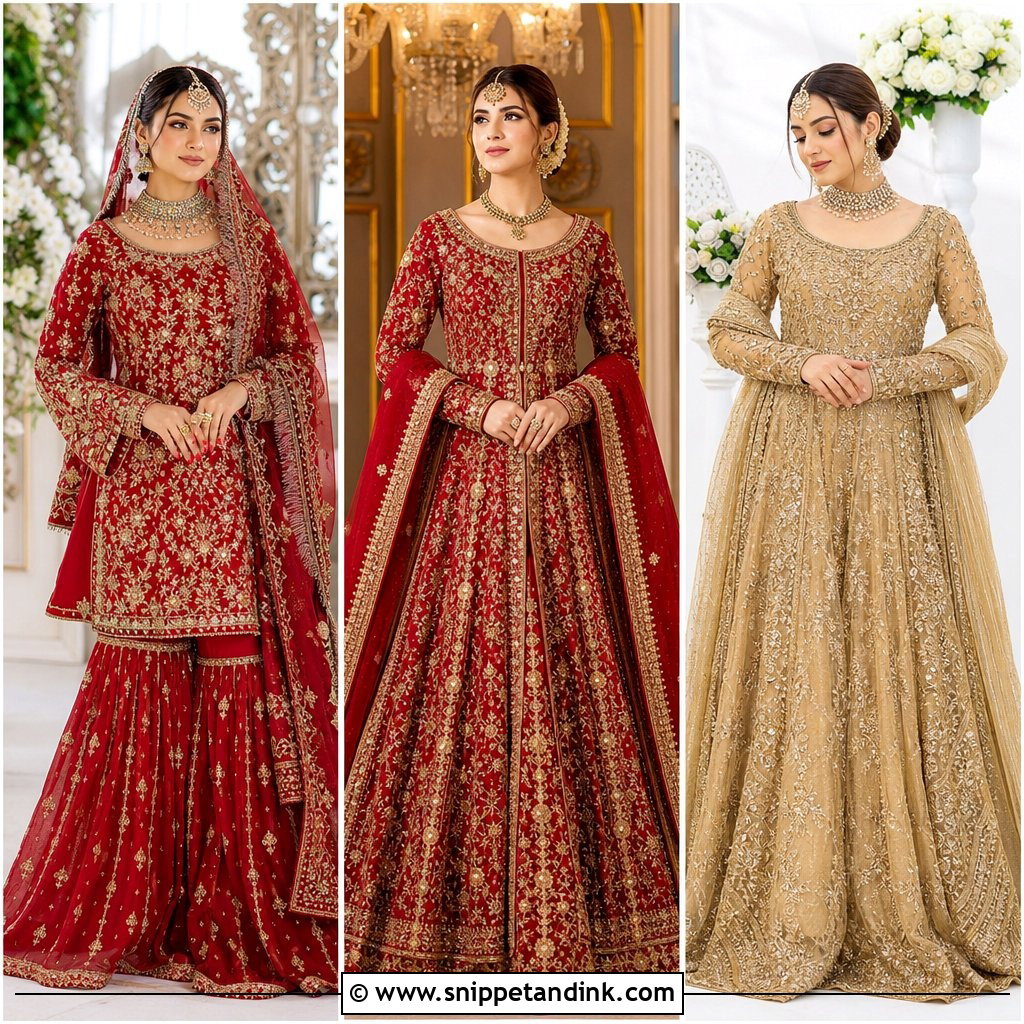
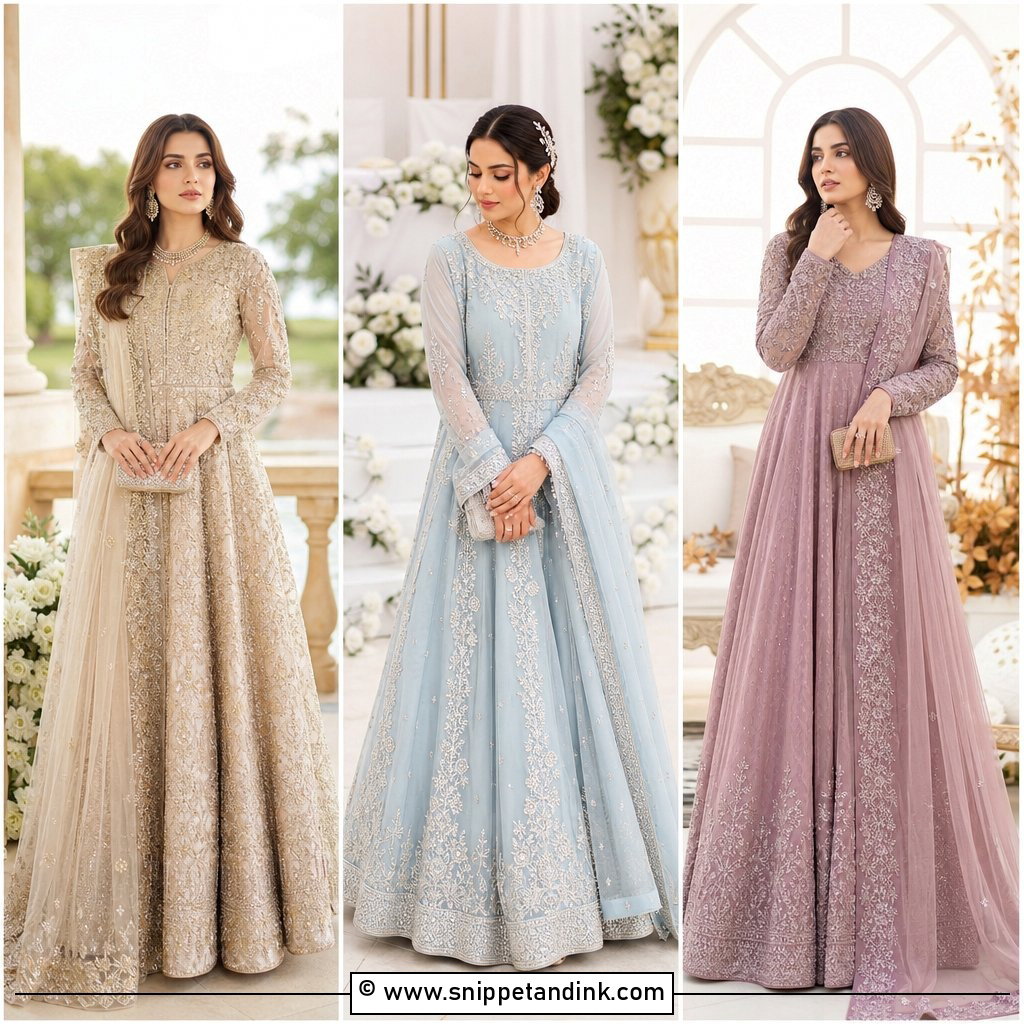
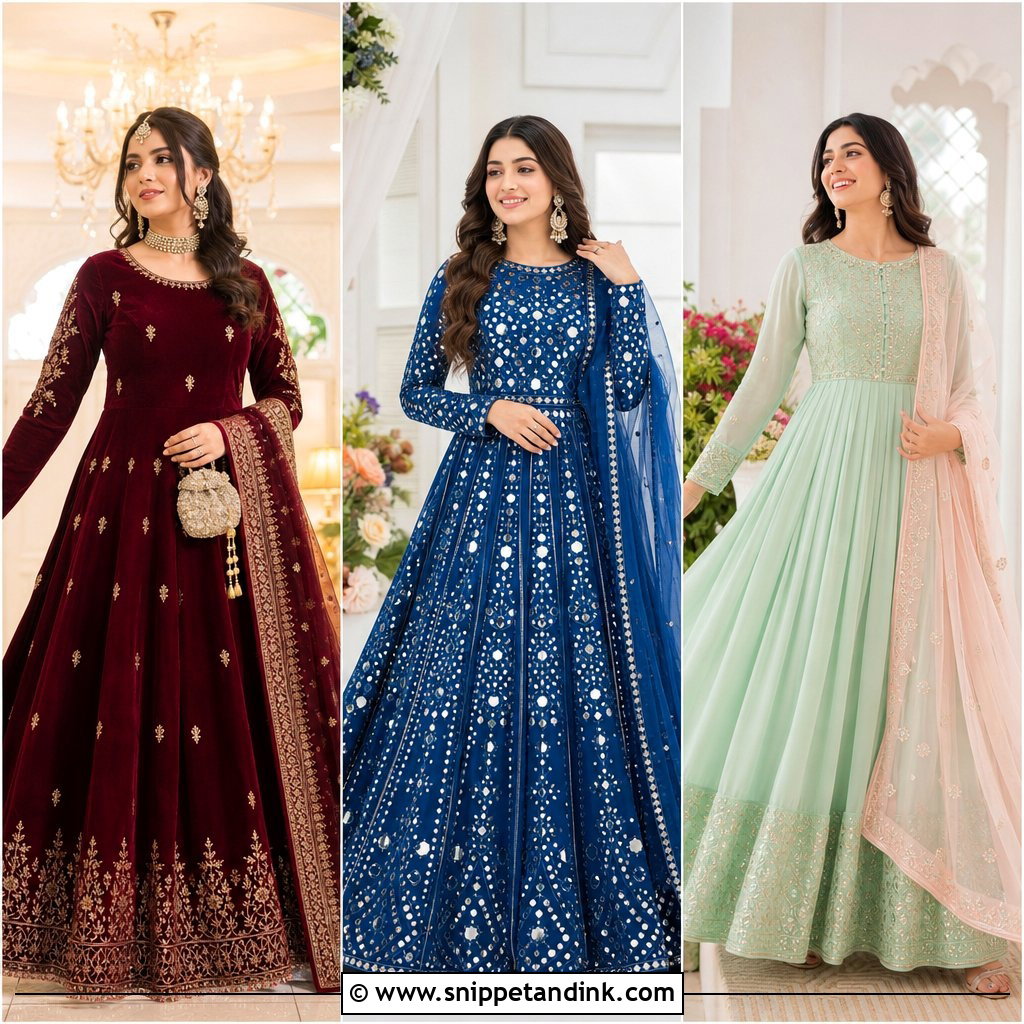
Anarkalis solve a problem that comes up at most engagements and receptions: you want coverage and movement with nothing to drape. The long flared kurta swings as you walk, while churidar or slim pants keep the lower half neat. Silk, georgette and brocade with embroidery at the neckline, sleeves and hem look wedding-ready. The detail I look at is the number of kalis, the panels in the skirt. More panels mean more flare, which suits taller frames; fewer panels hang straighter on petite women. Finish with a bordered dupatta, jhumkas and juttis.
5. Sharara Suit
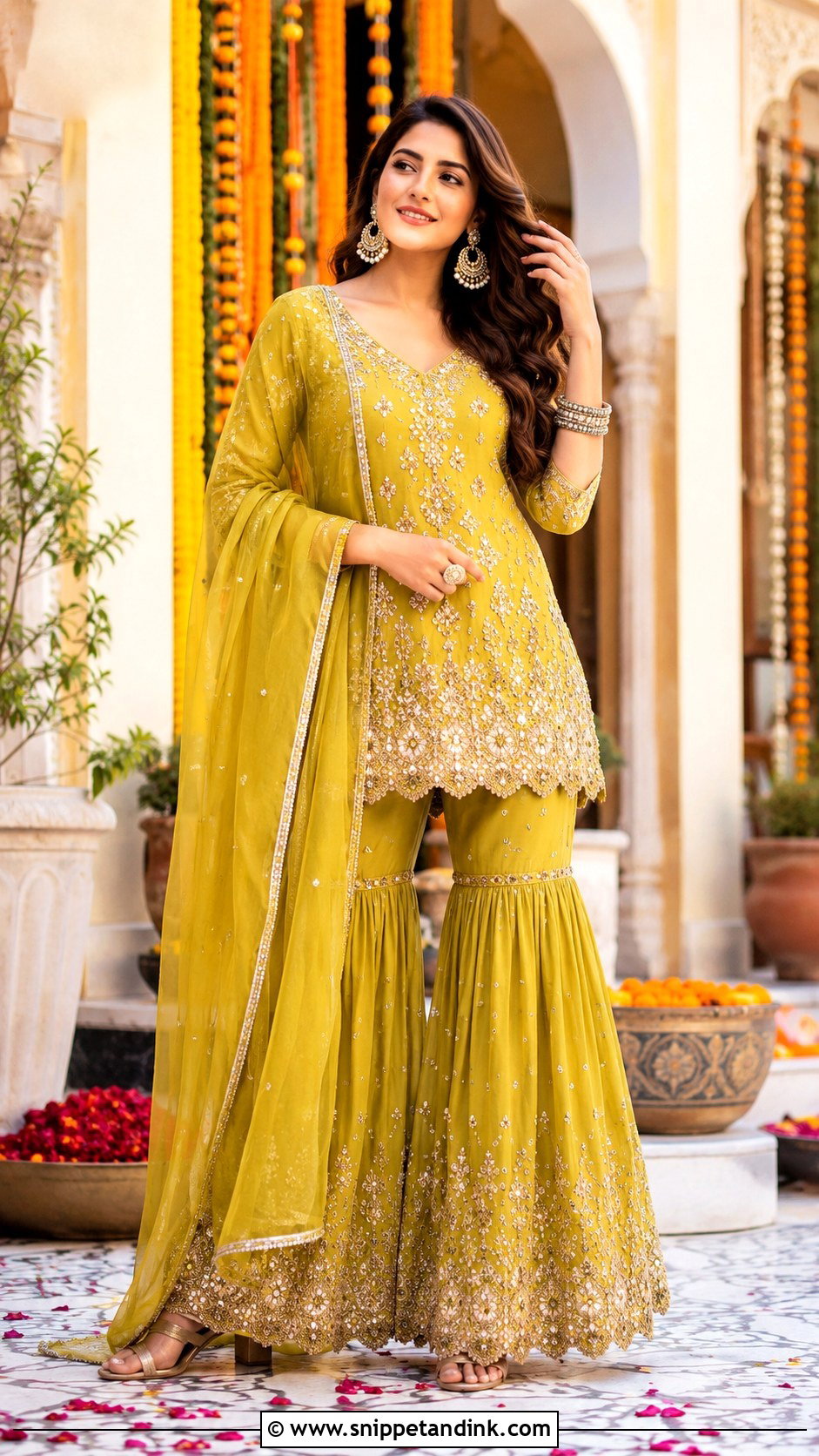
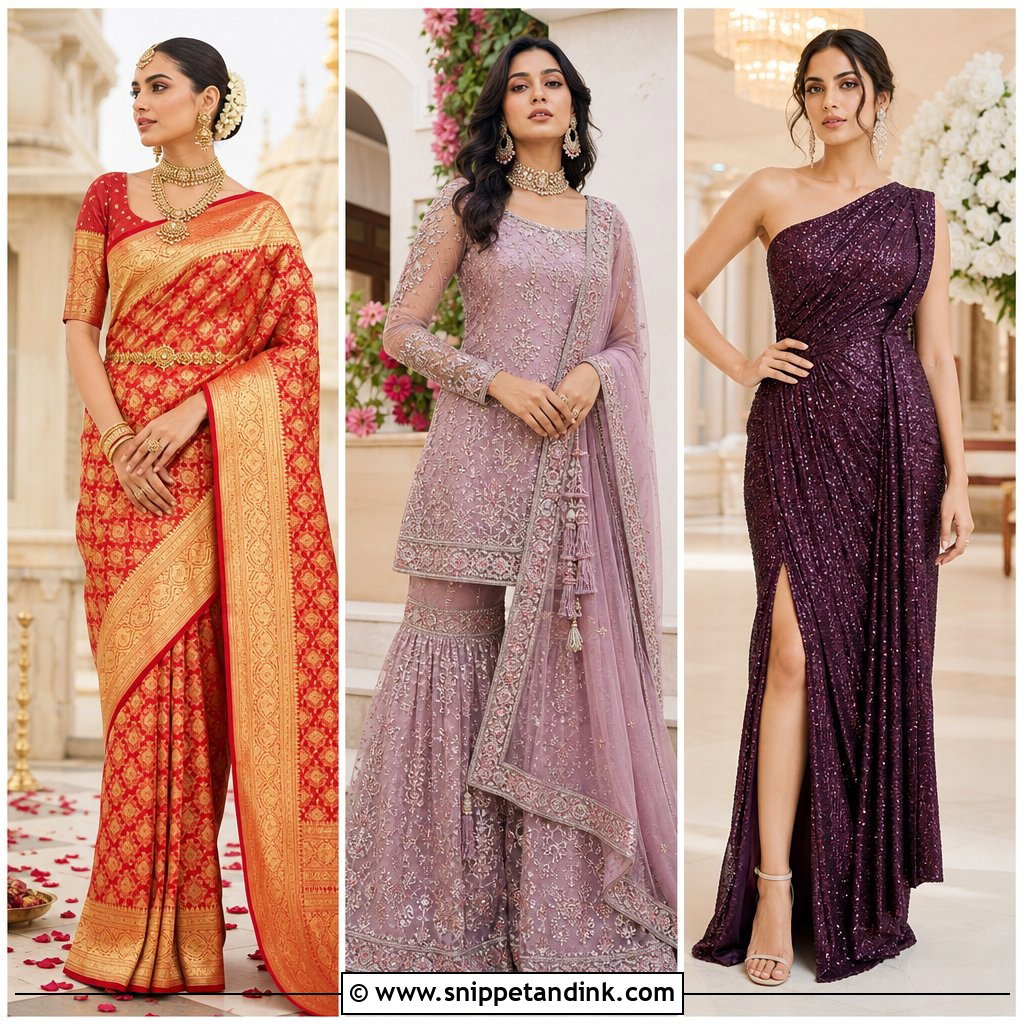
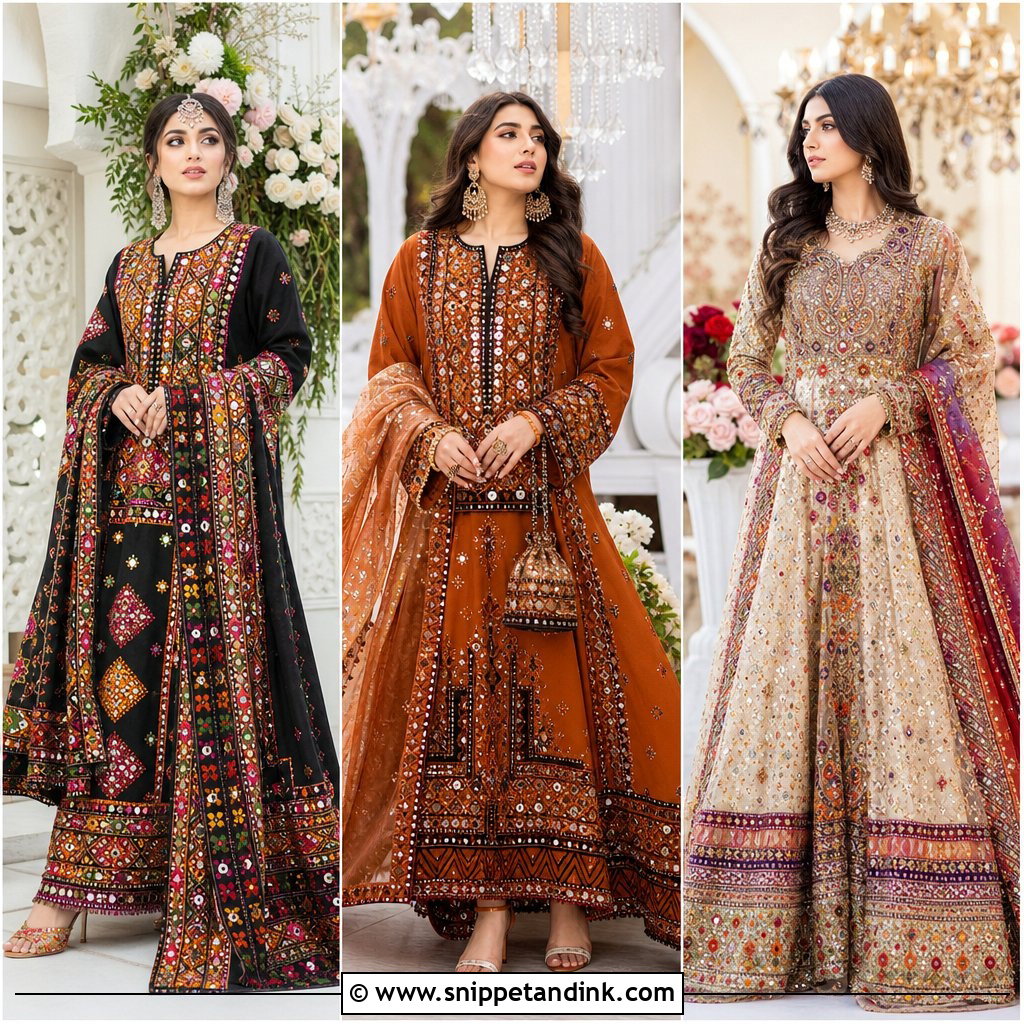
Mehendi and sangeet nights are where a sharara suit earns its keep. A short or mid-length kurta sits over wide flared pants with a dupatta, and the split legs let you dance without treading on a skirt. Mirror work and gota patti suit festive nights; chikankari suits daytime. I’d avoid heavy mirror work on the pants themselves, since it weighs the flare down and scratches when you sit cross-legged. Chandbali earrings, stacked bangles and block heels balance the volume.
6. Gharara Suit
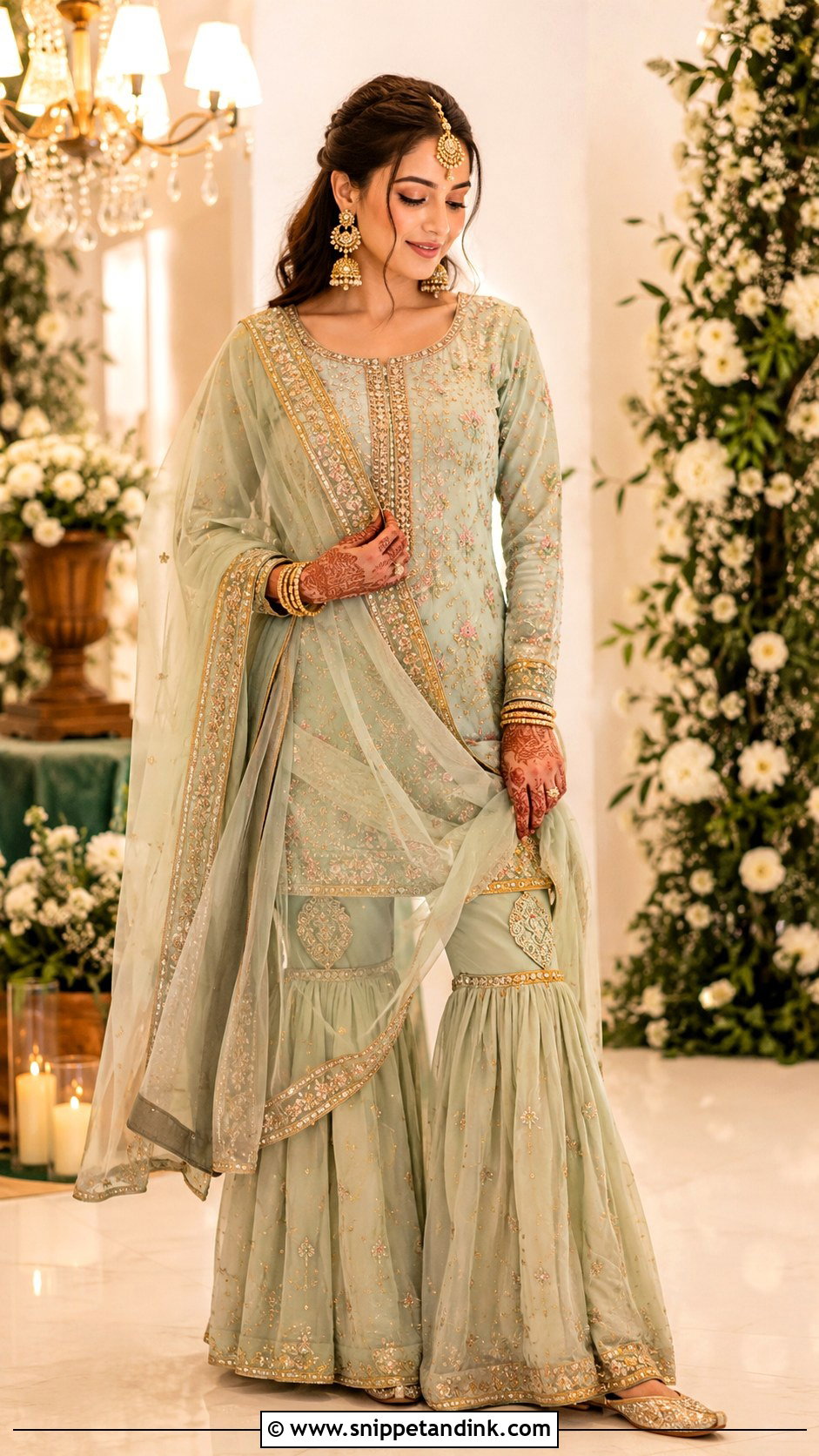
The gharara has an old-world Lucknow feel that suits nikah ceremonies and receptions. The pants fit to the knee, then flare in gathers, usually with an embroidered band covering the knee joint. That join is the defining detail, so a shorter kurta that stops above it shows the shape best. Silk, brocade and velvet suit formal events. Gharara pants use many meters of fabric, and I always check the waistband, because the weight of the flare drags a flimsy drawstring down by evening. A passa, jhumkas and pointed flats complete it.
7. Chikankari Lehenga
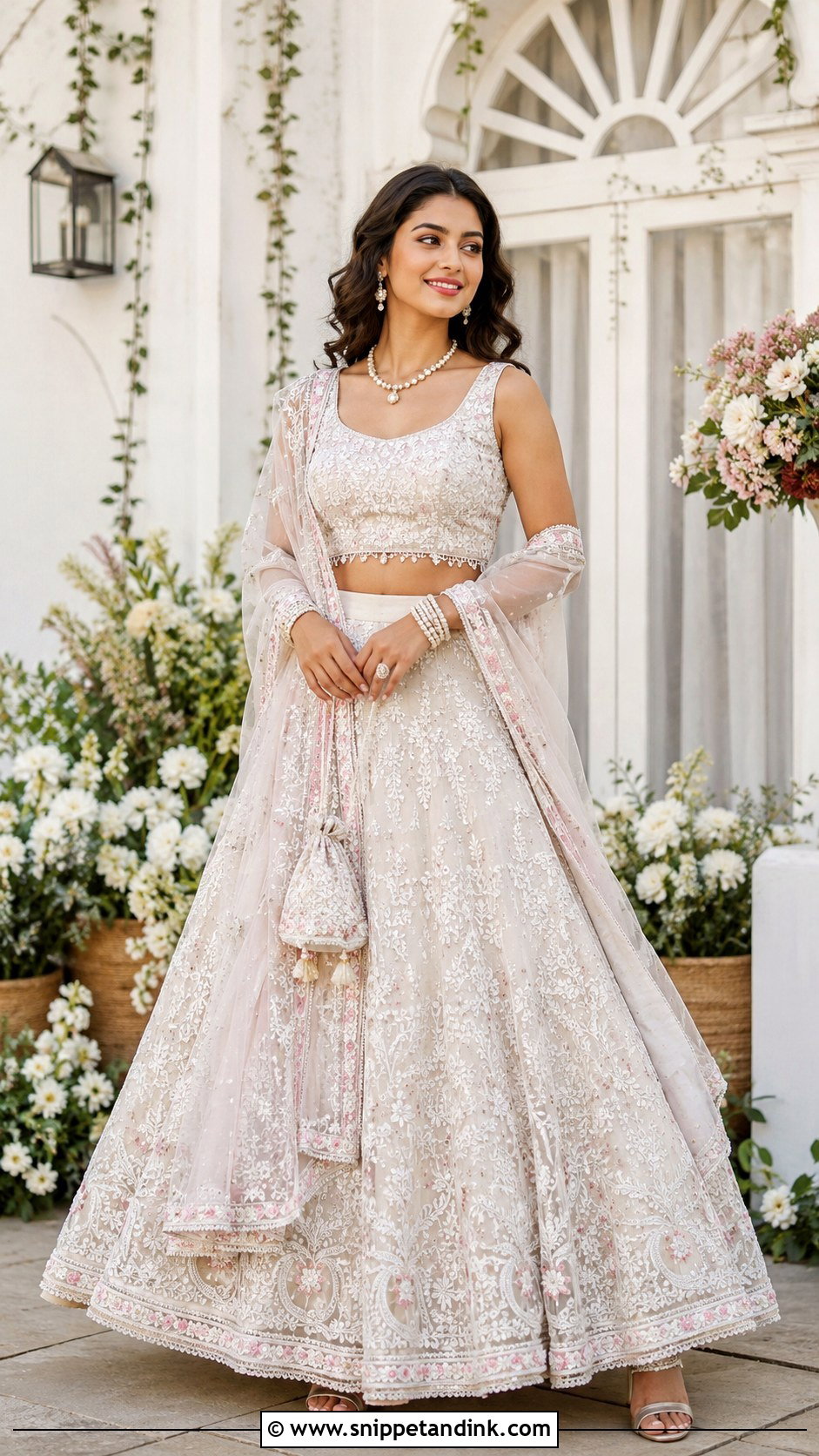
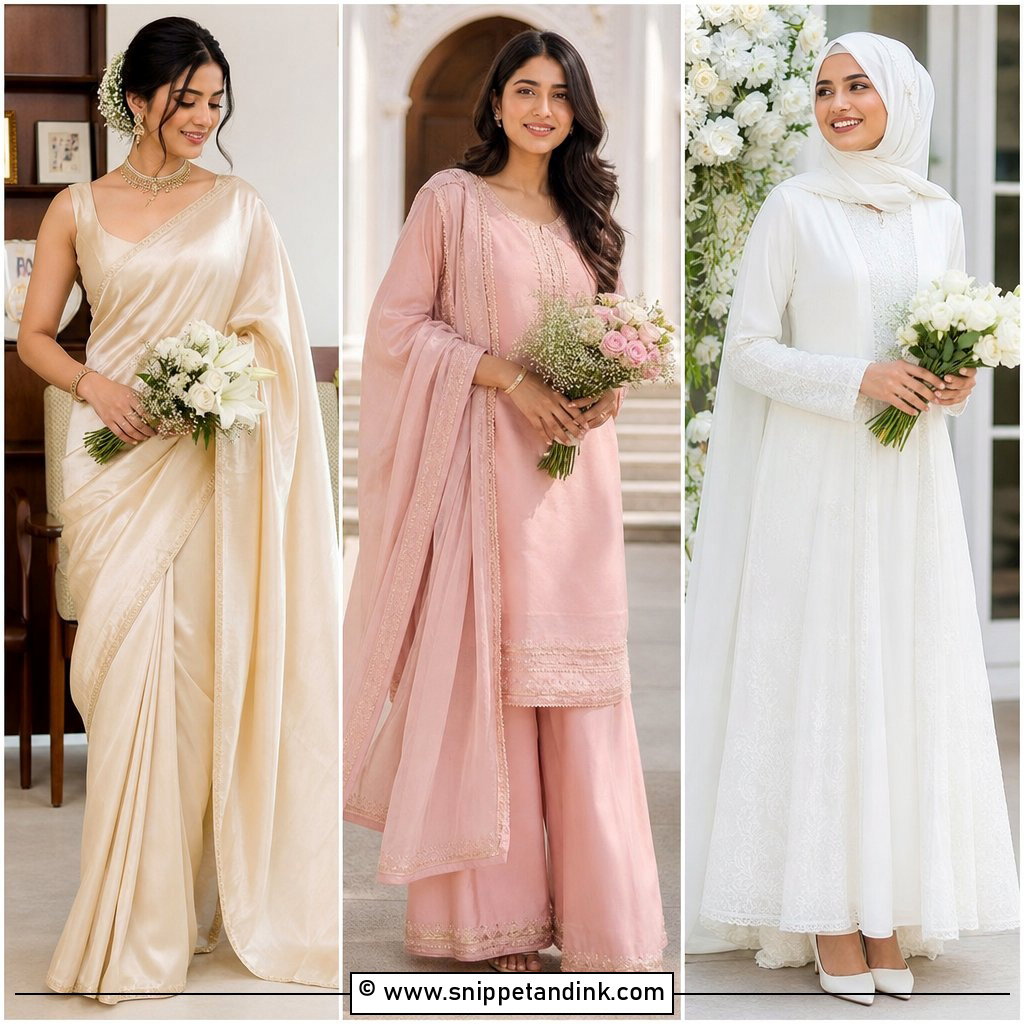
Chikankari is hand embroidery from Lucknow, traditionally pale thread on fine fabric, and its stitches give texture and shadow rather than shine. That makes a chikankari lehenga a natural fit for haldi, mehendi or a garden ceremony, in ivory, blush, mint or powder blue. On its own it can look underdressed at an evening function, so I lift it with a blouse carrying a little sequin or mukaish work. Pearl jewelry, glass bangles and metallic sandals finish it, with fresh, glowing makeup.
8. Velvet Lehenga
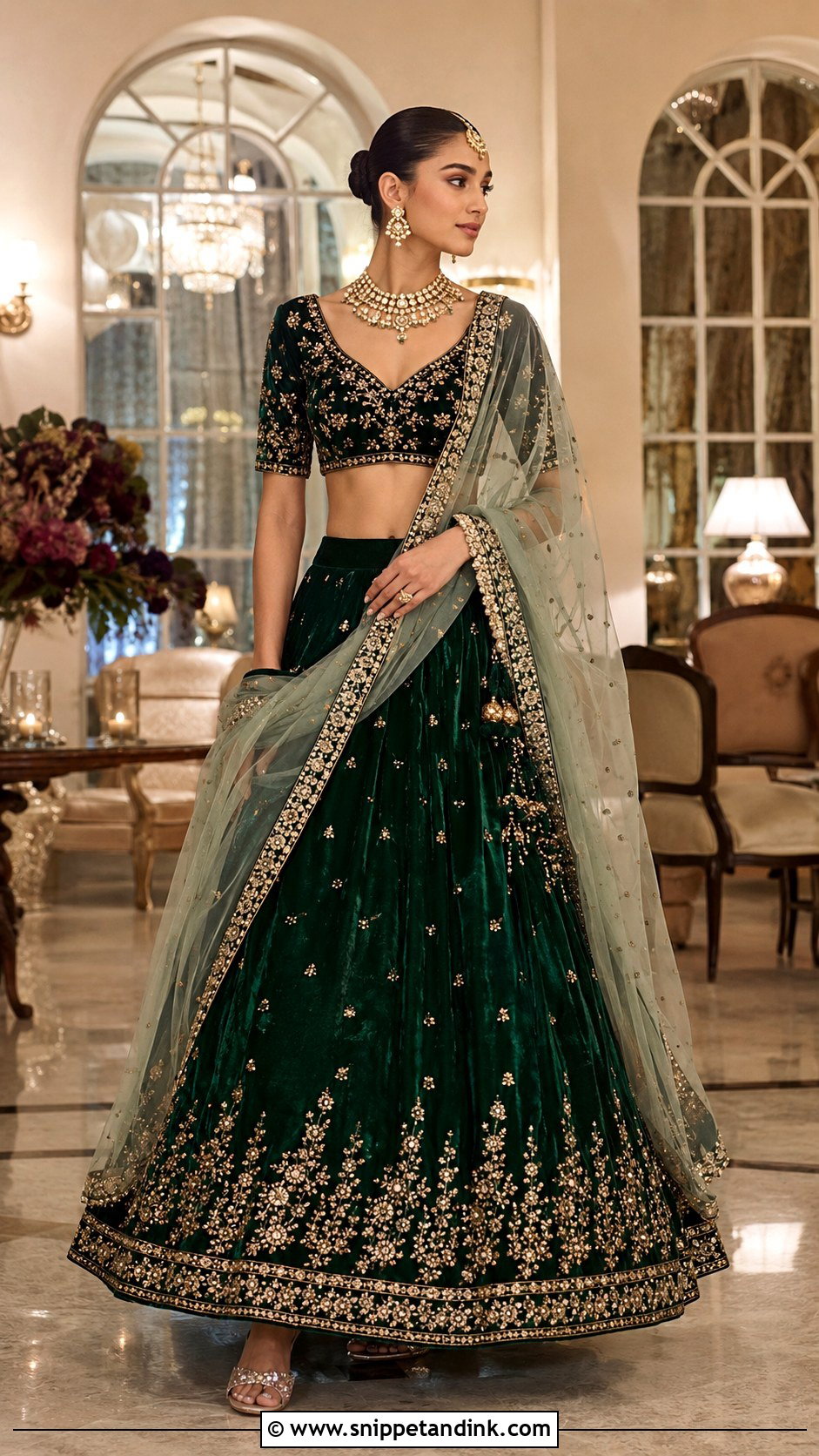
Velvet is my first suggestion for winter weddings and evening receptions, because the pile holds deep color better than almost any other fabric. Maroon, emerald, navy and plum look richest. A velvet skirt with zardozi or antique gold embroidery pairs with a fitted blouse and a sheer net or organza dupatta, which stops the outfit feeling like a blanket. Velvet marks wherever it’s crushed, so sit on the lehenga as little as possible before portraits. Polki jewelry and a sleek bun suit its weight. In a warm, crowded hall, though, velvet is simply too hot.
9. Organza Saree
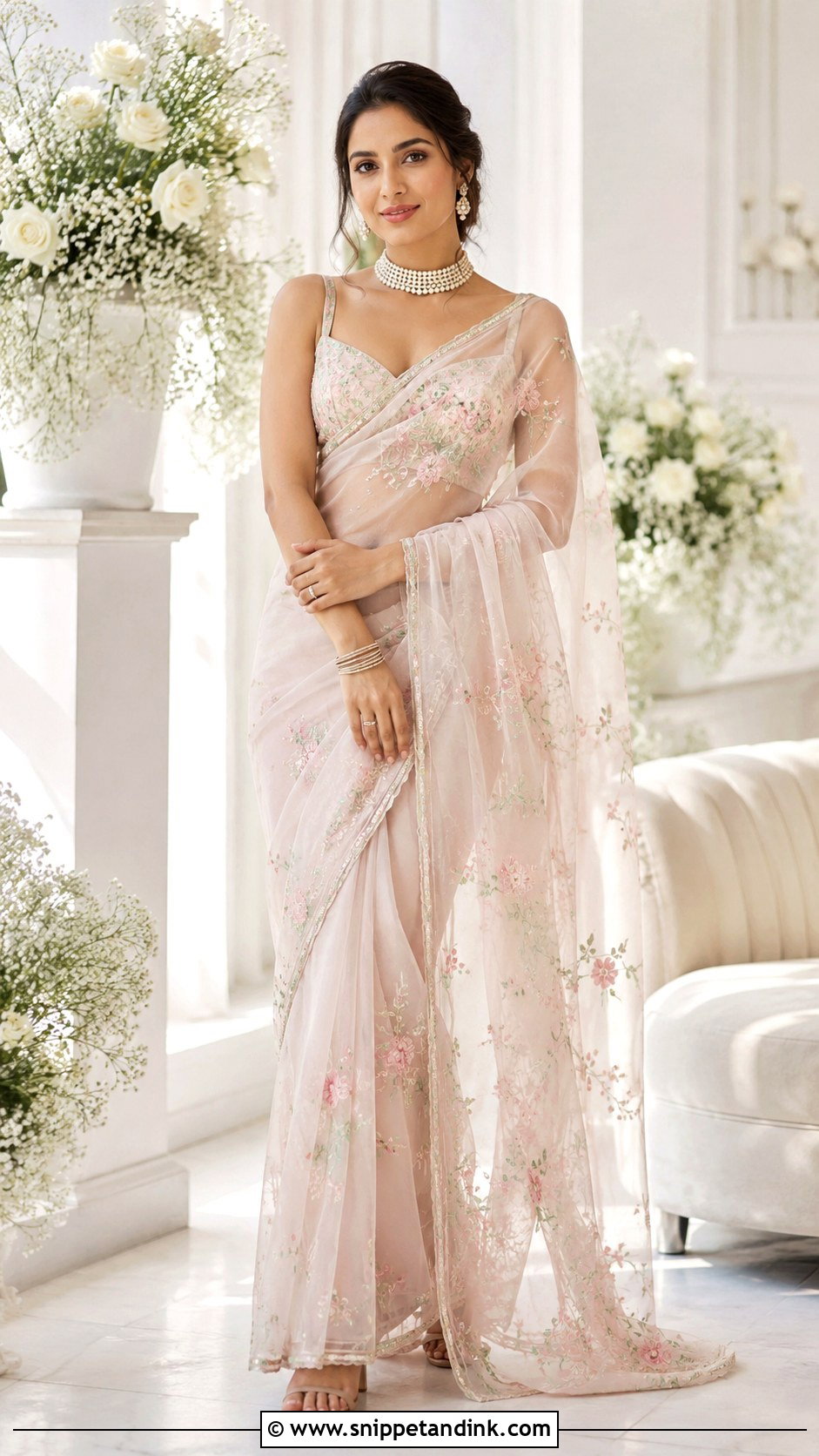
Organza is crisp and sheer, so it holds a soft volume in the drape instead of clinging. Floral prints, pearl borders and light sequins suit daytime ceremonies and engagements. Because you can see through it, the petticoat matters: I match it to the saree’s base color, never to the print. Organza also creases sharply, so smooth the pleats under you as you sit down. Pearl earrings, a delicate choker and heeled sandals finish it, and deeper tones with metallic detail move it into evening.
10. Patola Saree
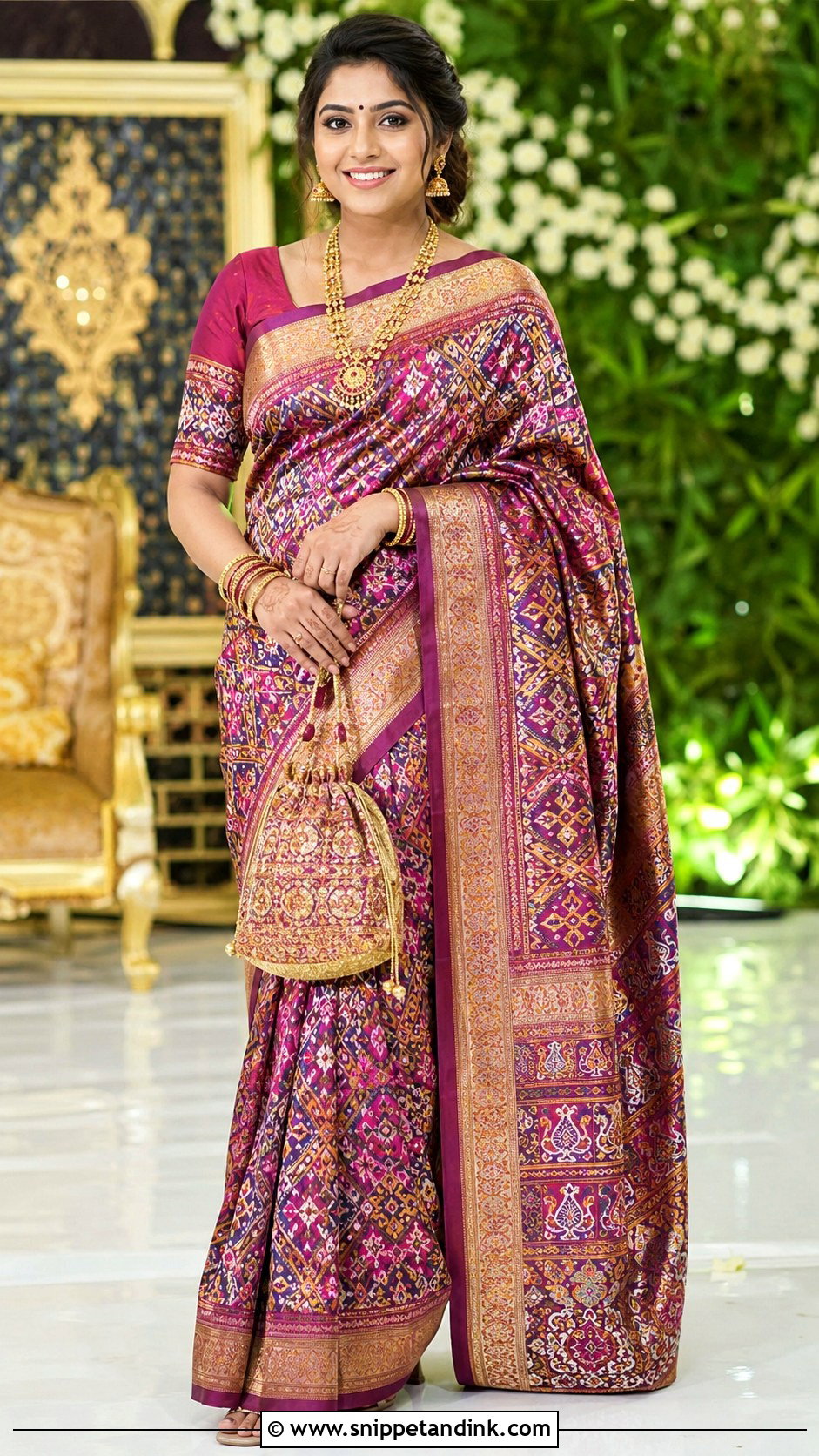
Patola is double ikat: both warp and weft threads are dyed in the pattern before weaving, which is why a genuine Patan Patola is so costly and why the design shows on both sides. Its geometric motifs give guests, mothers and close family a striking option without heavy embroidery. Red, green and yellow feel festive. With patterned sarees I set fewer, wider pleats, so the motifs aren’t lost in folds. A silk blouse, gold jewelry, kohl-lined eyes and a simple bun complete it.
11. Chanderi Kurta Set
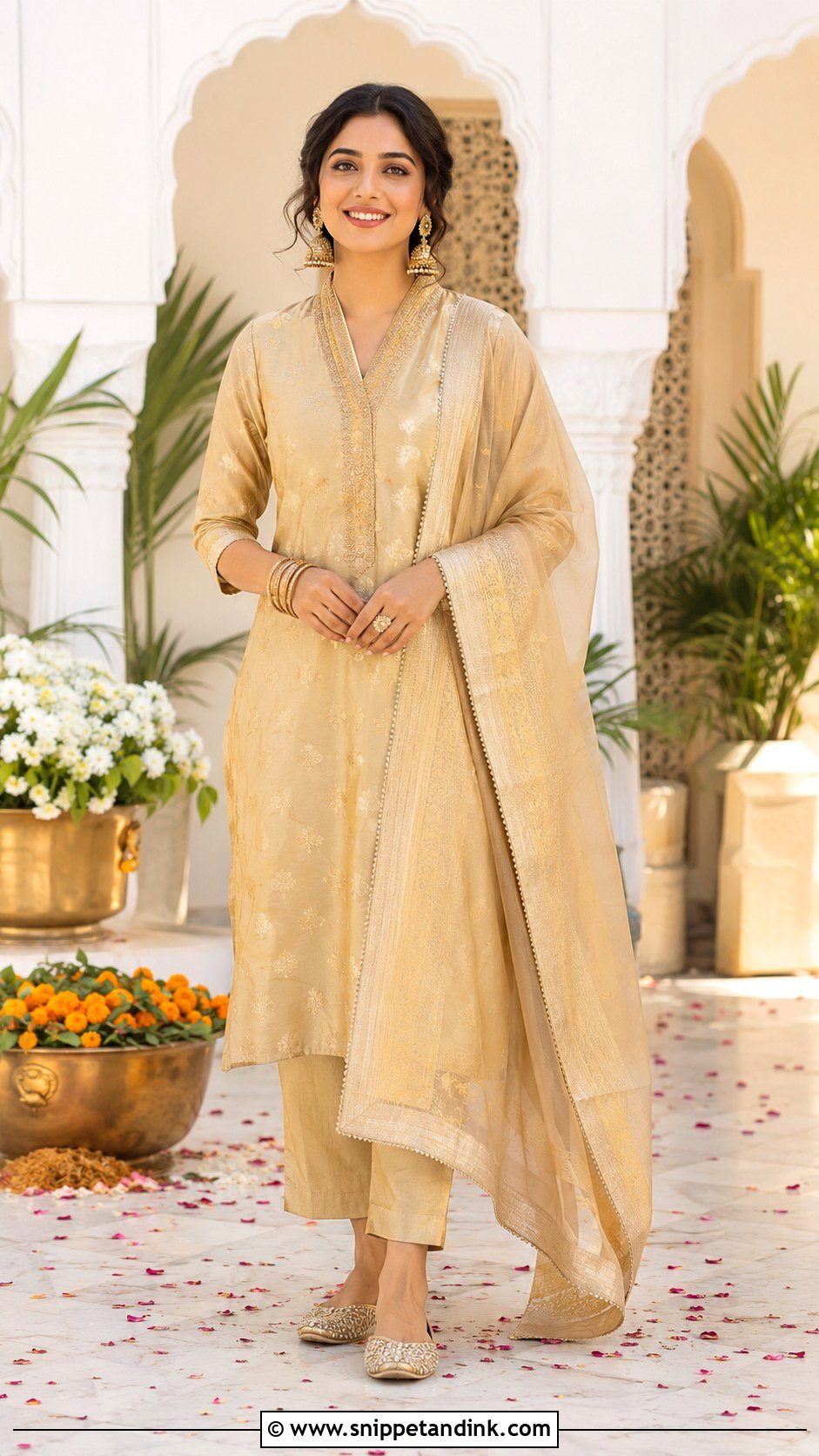
For a small ceremony, a puja or a daytime ritual, a Chanderi kurta set gives you festive sheen in a fabric light enough for summer. A straight or A-line kurta with matching pants and a zari-edged dupatta is all you need. Ivory, mustard, rose and teal look refined. Chanderi is slightly sheer, so I check whether the kurta comes lined; if not, add a slip in the same color. Jhumkas, bangles, embroidered flats and a small bindi finish it.
12. Georgette Saree
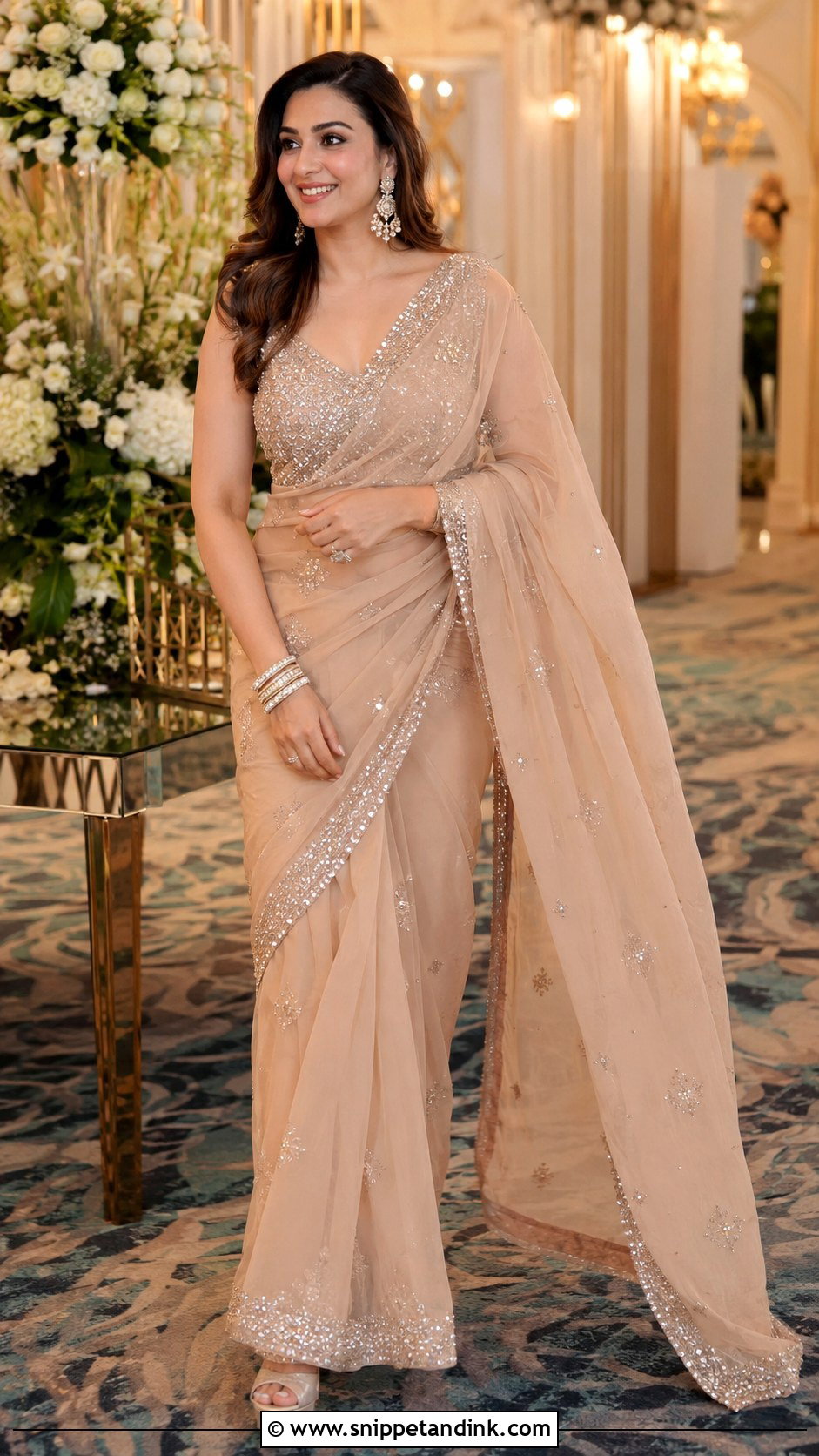
Georgette is the saree I recommend to guests who’ve never draped one. It falls softly, forgives an uneven pleat and moves well at a sangeet or reception. Sequin borders, threadwork or beading make it festive. The catch is that georgette is slippery, so pins grip less than they do on silk. I hide a few extra safety pins in the folds and make the tuck at the petticoat firm. Dark shades look sleek and pastels feel modern. Pair a fitted blouse with statement earrings and heeled sandals.
13. Phulkari Suit
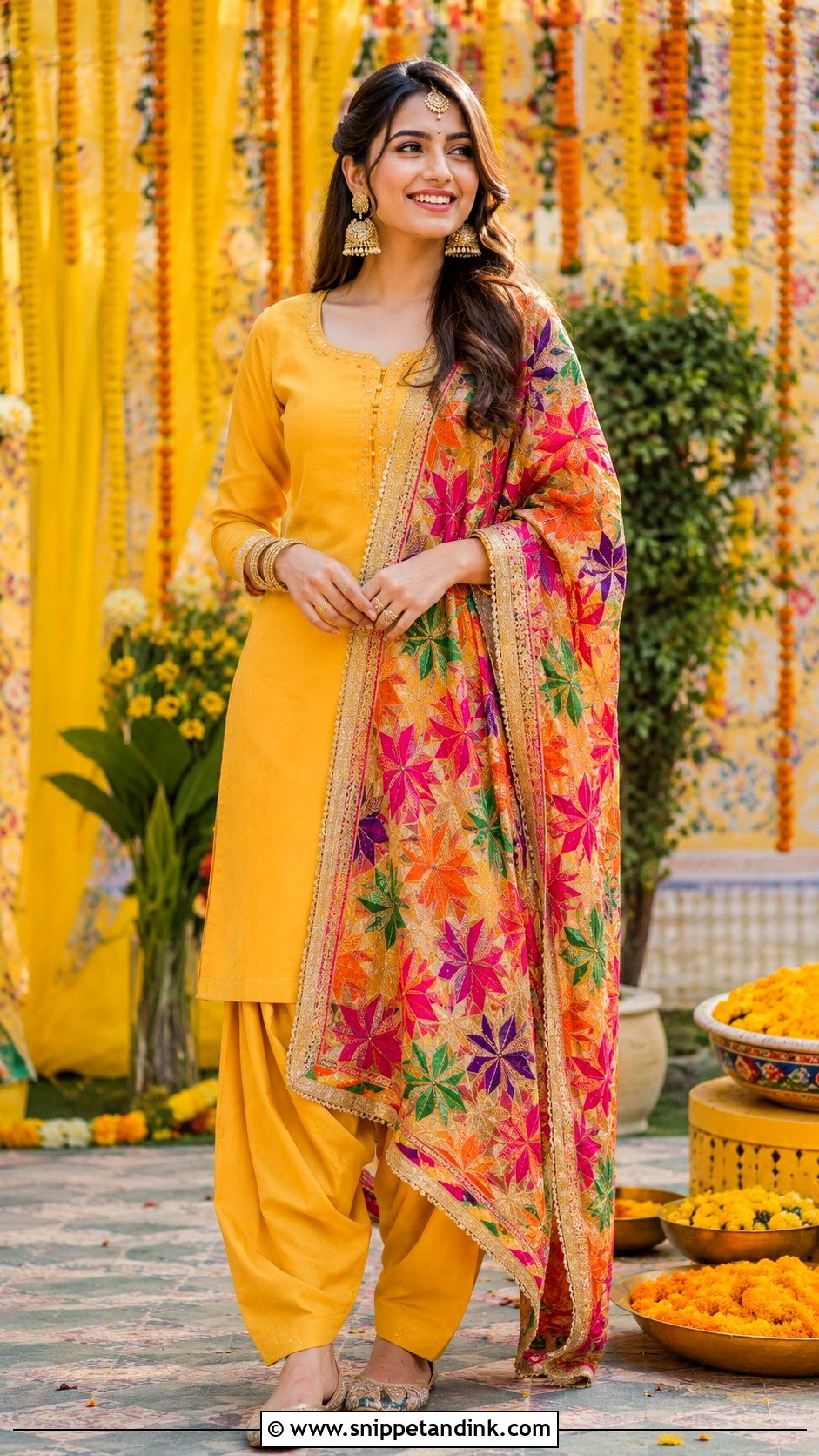
A Phulkari suit brings Punjabi color to mehendi, haldi and daytime functions. Phulkari means flower work, and the embroidery traditionally covers the dupatta, which becomes the centerpiece. So I keep the kurta plain whenever the dupatta is busy. Mustard, fuchsia and green are cheerful choices. Juttis, gold or oxidized earrings, bangles and soft waves or a braid finish it. For guests who want to honor tradition without carrying a heavy lehenga, it’s a comfortable answer.
14. Bandhani Saree
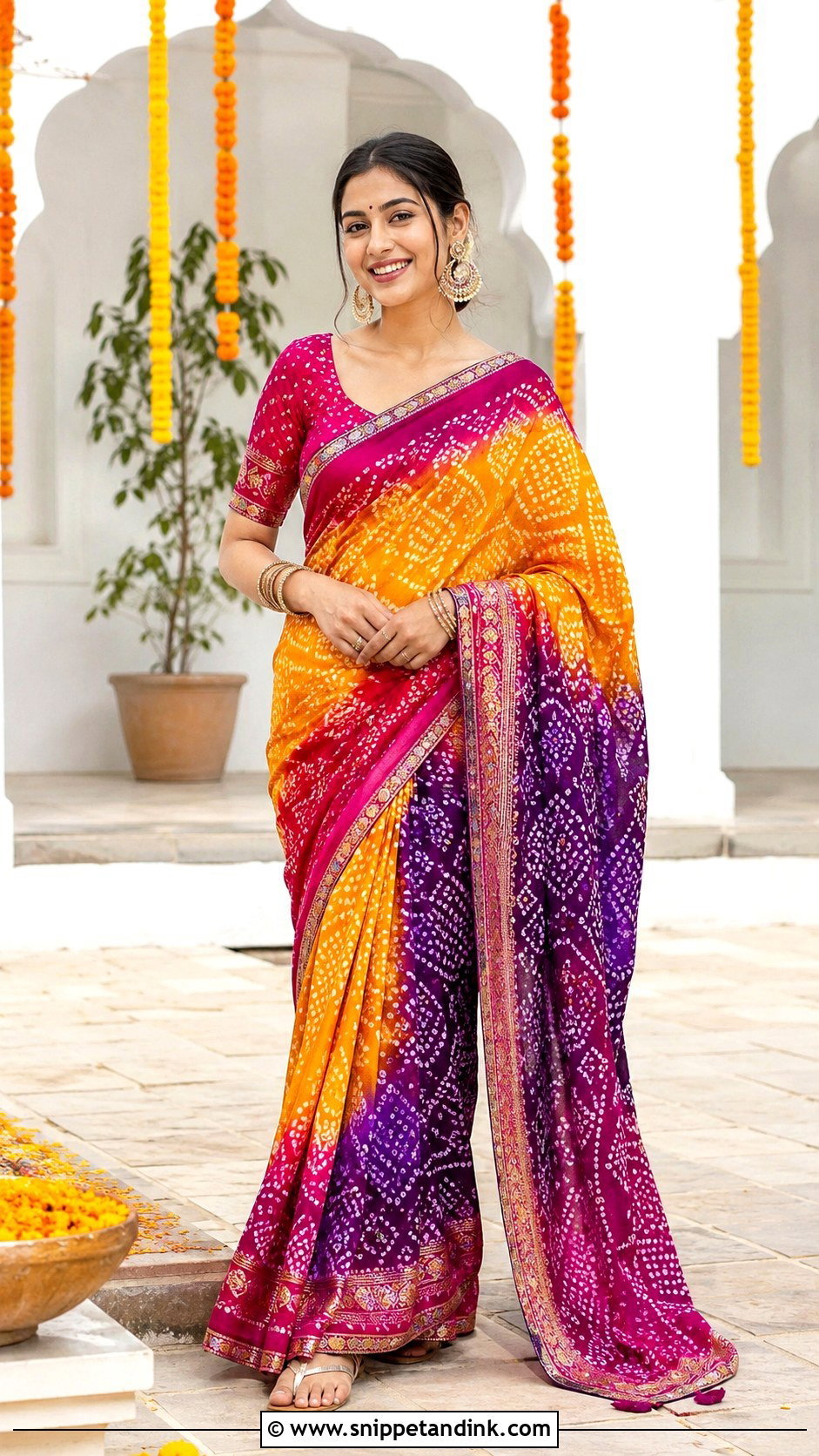
Bandhani is made by tying tiny points of cloth before dyeing, and the dots left behind are its signature. For mehendi and daytime rituals, a bright yellow, red or green Bandhani feels festive and breathes well in heat. Silk Bandhani is dressier; georgette and chiffon versions are lighter. I’d keep a Bandhani you love away from the haldi itself, because turmeric stains bright dyes just as readily as white. A contrast blouse, mirror-work jewelry, bangles, juttis and a bindi finish it.
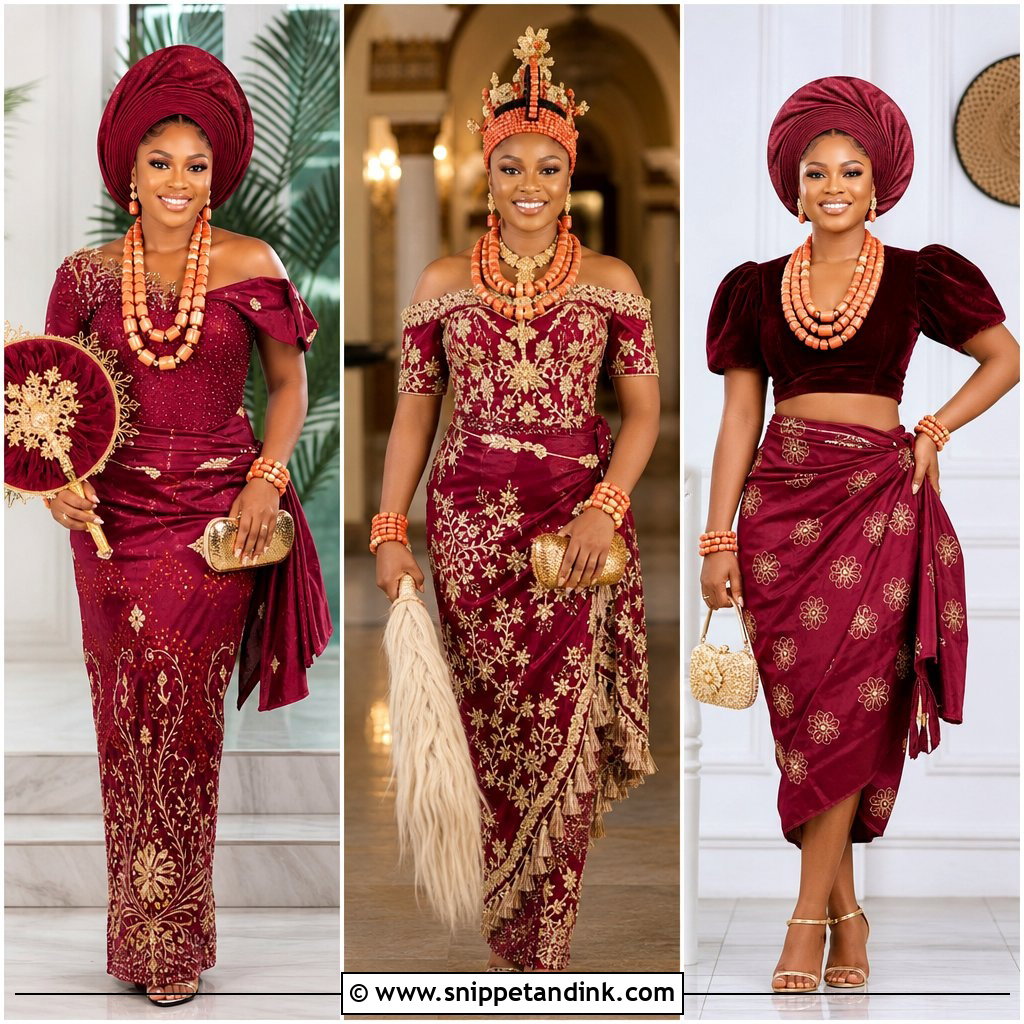
15. Mirror Work Lehenga
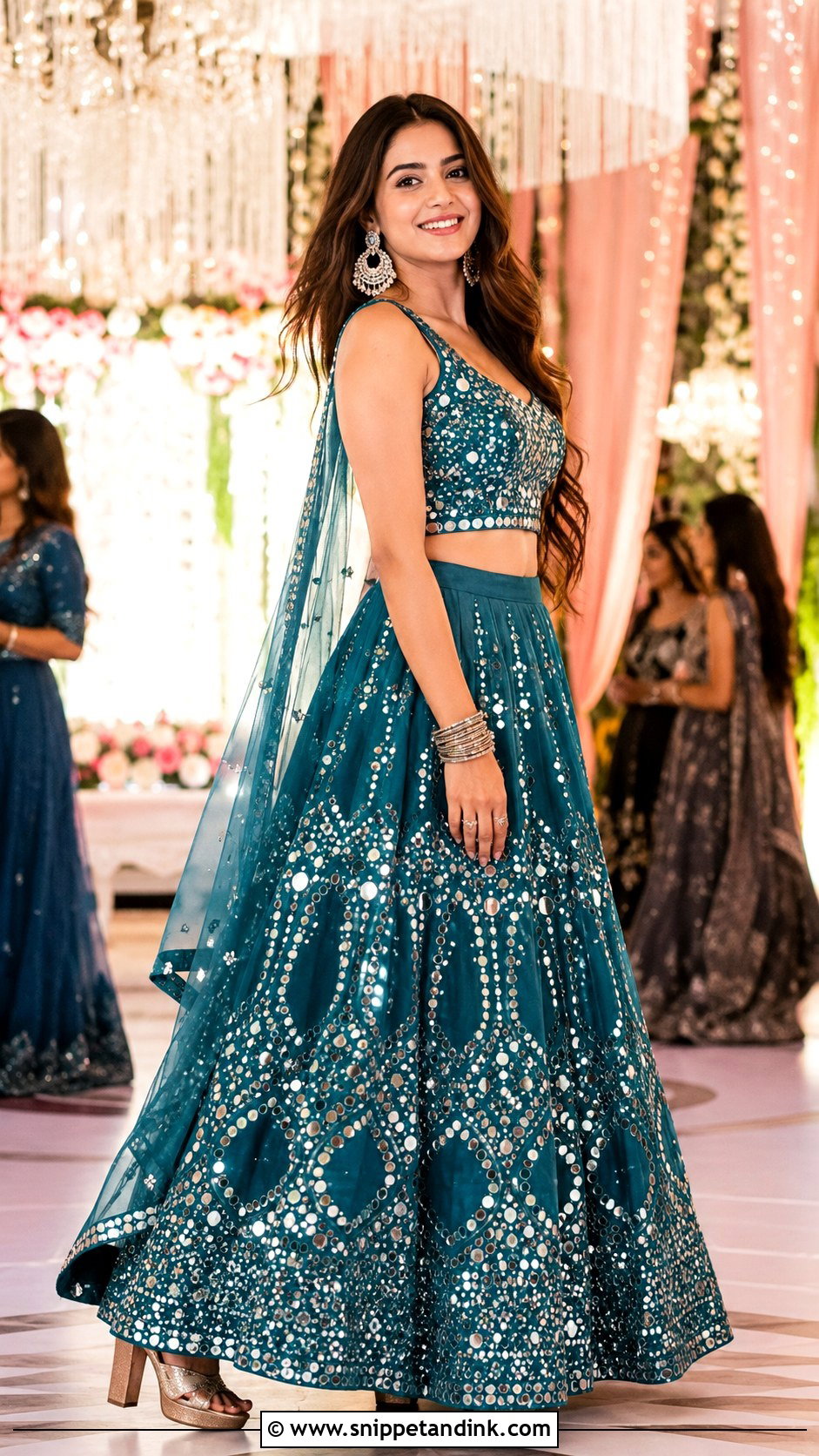
A mirror work lehenga catches the light every time you move, which is why it’s a favorite for sangeet and mehendi nights. Choose one strong color, such as teal, pink or yellow, and let the mirrors carry the sparkle. Mirrors are stitched on by hand and their edges can catch a dupatta or rub the inner arm, so I check that the blouse sleeves are lined. If the blouse is heavily mirrored, skip the necklace. Statement earrings, bangles, block heels and soft waves or a braid finish it.
16. Paithani Saree
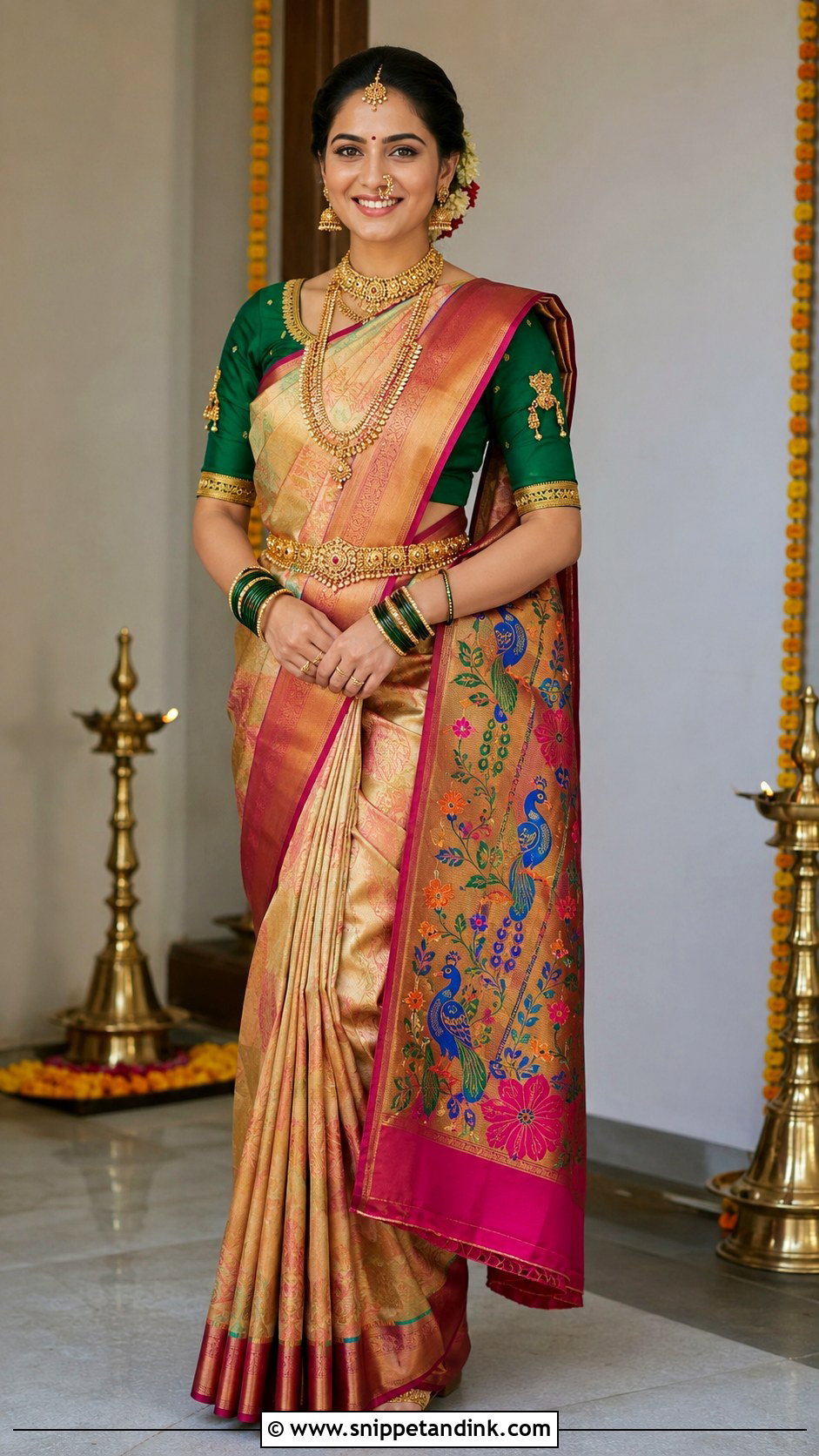
Paithani from Maharashtra is known for its peacock motifs and an ornate pallu, often in a contrasting color. Brides, mothers and close relatives choose it when regional meaning matters, in purple, green or magenta. I pair it with green bangles, gold jewelry and a flowered bun, and add a traditional nath if it suits the wearer. The pallu is the showpiece, so I drape it to fall open down the back rather than bunched on the shoulder. Keep the pleats clean and structured.
17. Pastel Lehenga
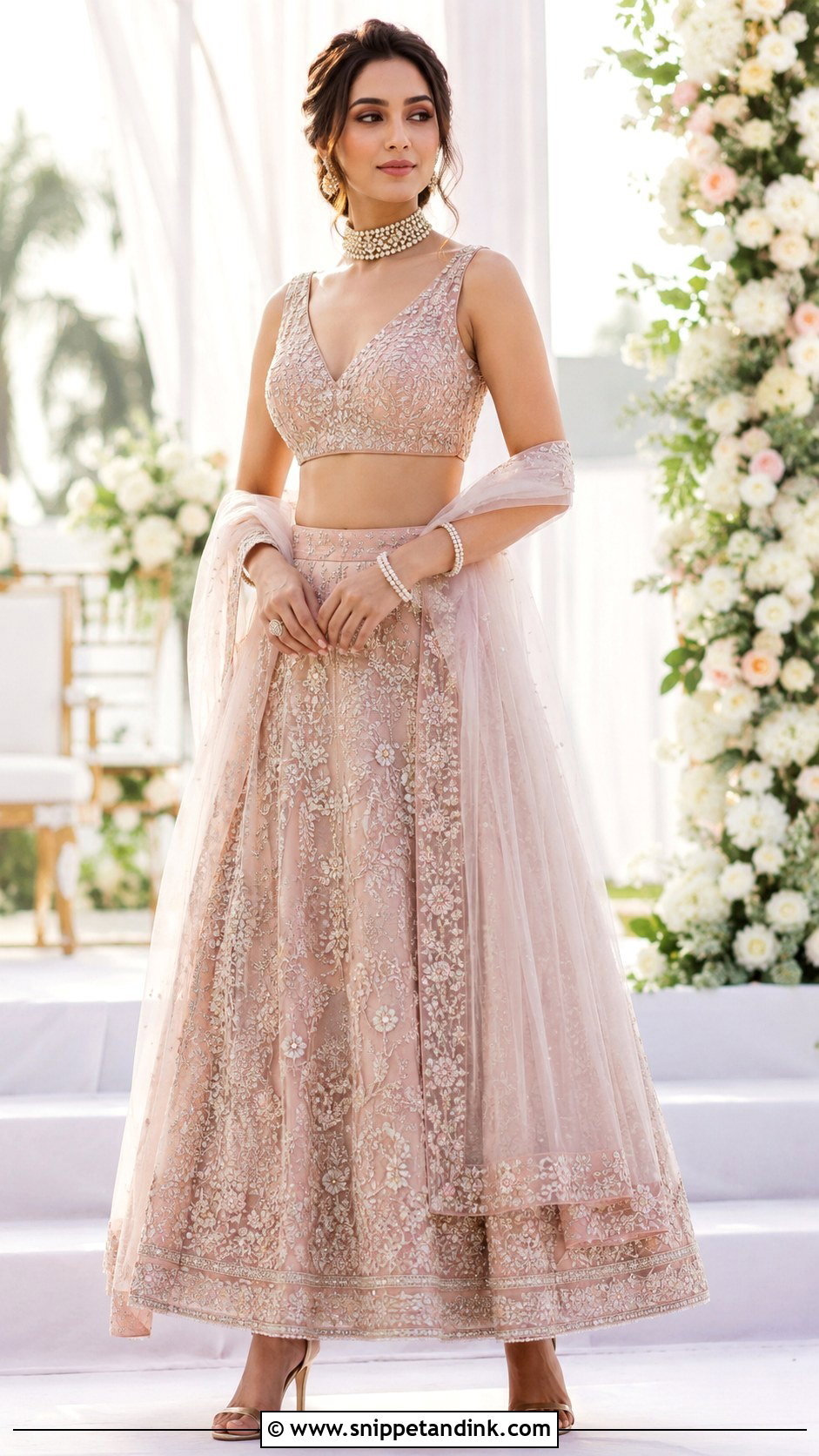
Engagements, garden weddings and bridesmaid lineups are where pastel lehengas shine, since soft colors look fresh in natural light. Blush, mint, lavender and peach are popular, usually as a lightly embroidered skirt, blouse and sheer dupatta. Pastels can look casual if every piece is understated, so I make sure one element carries wedding-level detail, such as an embellished blouse or a heavier dupatta border. Pearl jewelry or kundan earrings and nude or metallic sandals keep it clean. Save them for daytime; warm evening light washes pastels out.
18. Silk Salwar Kameez
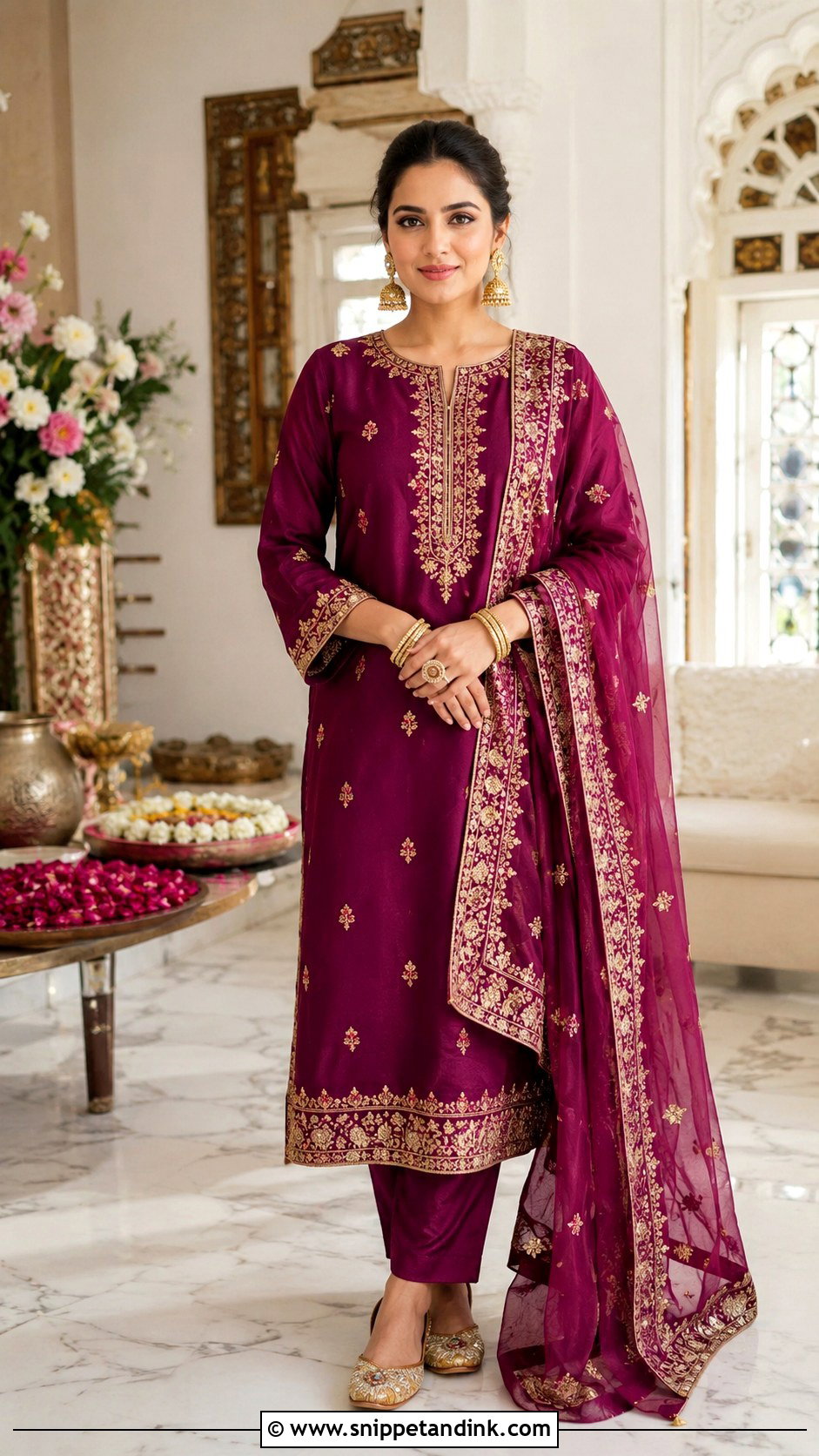
Elders and guests who need to sit, stand and take part in rituals all day tend to be happiest in a silk salwar kameez. Rich fabric makes even a simple cut look formal, and a dupatta edged with zari or brocade completes it. Jewel tones, cream, coral and teal all work. Tailoring decides everything here. I check the shoulder seam, the armhole depth and the trouser length, because a kameez that’s tight at the armhole pulls every time you raise a hand for blessings. Gold earrings, bangles and embroidered juttis finish it.
19. Half Saree Lehenga
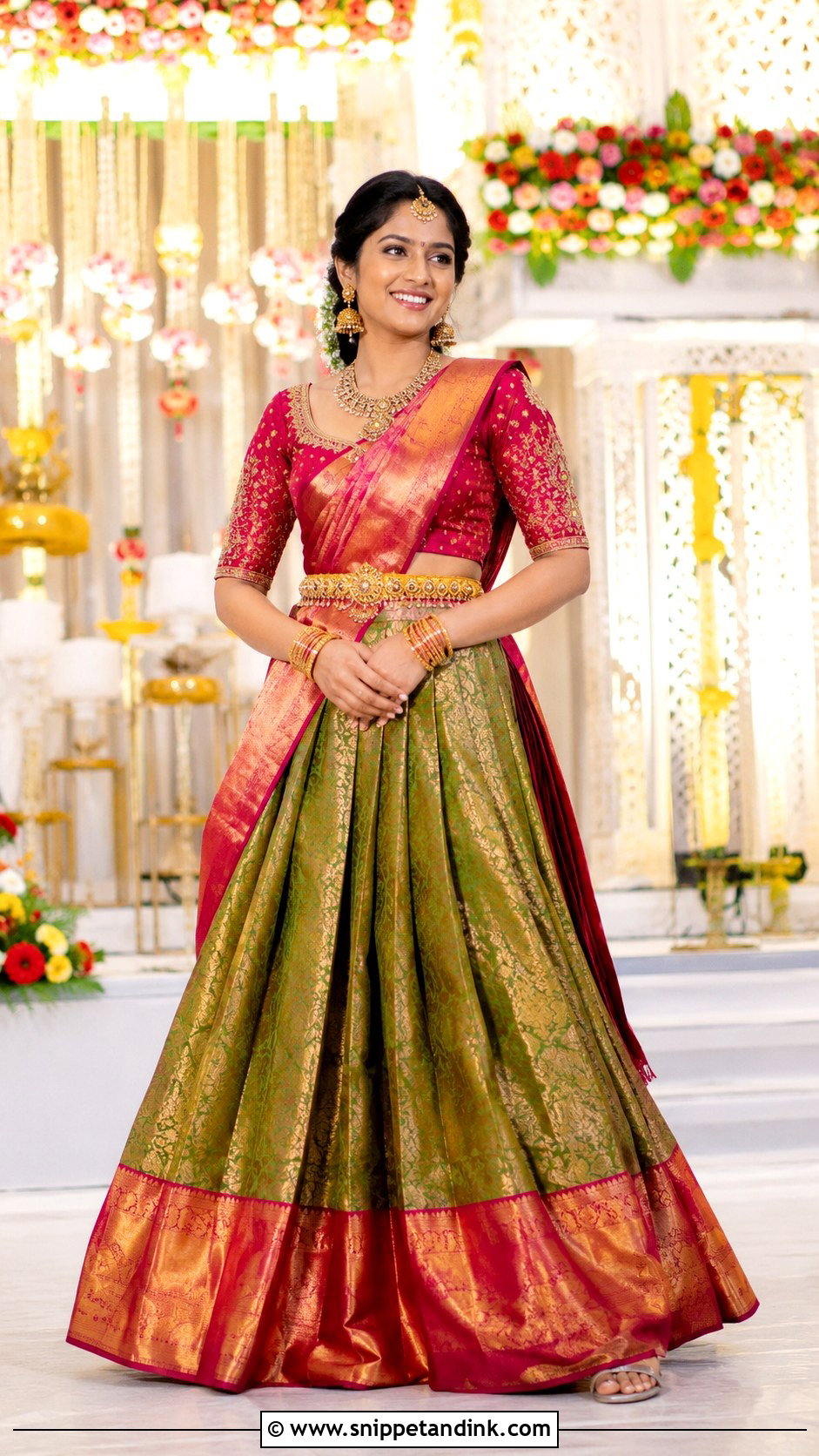
The half saree, known in the south as langa voni or pavadai davani, pairs a flared skirt with a dupatta draped like a pallu. It suits younger guests, bridesmaids and pre-wedding events, and pink with orange or green with gold feels festive. It’s easier to move in than a full saree, but the dupatta still needs a firm tuck into the skirt waistband and a pin at the shoulder, or it creeps off by the second dance. Jhumkas, a waist belt and sandals finish it.
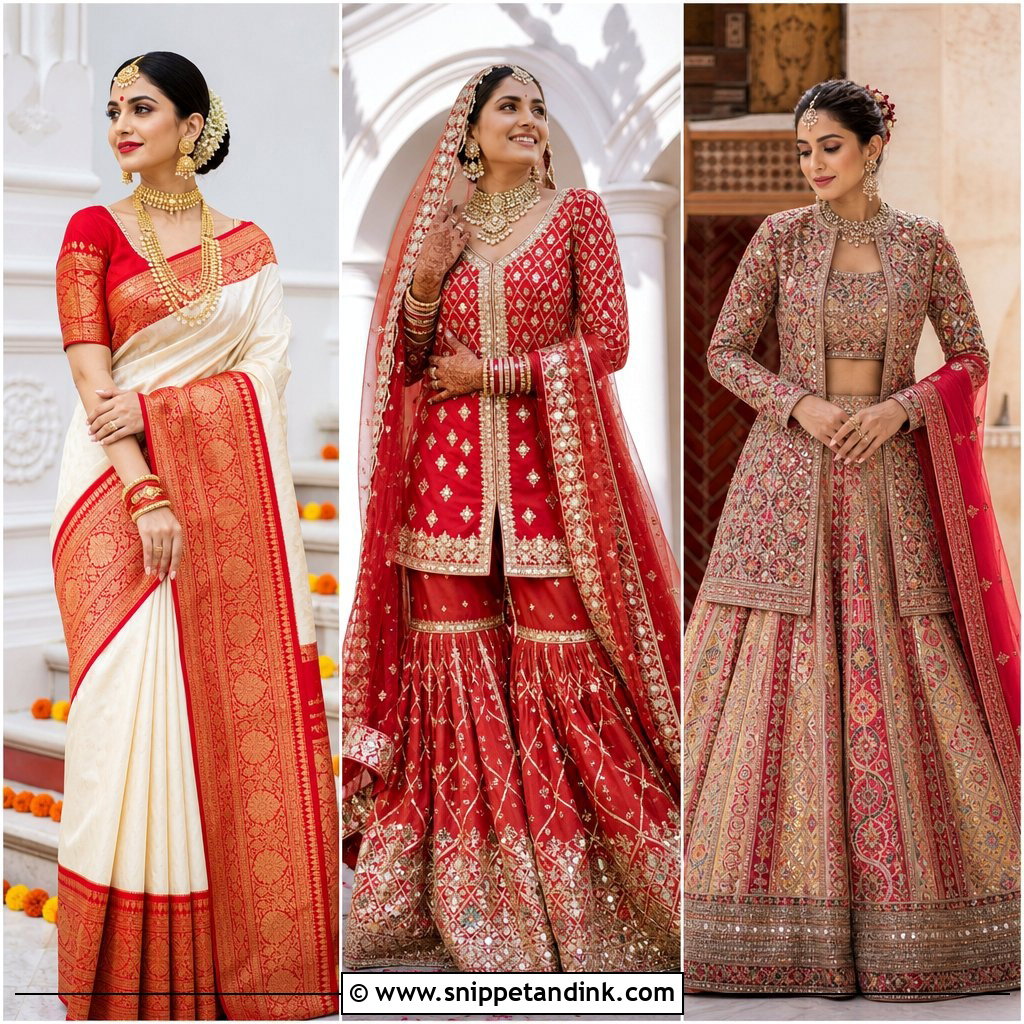
20. Embroidered Jacket Lehenga
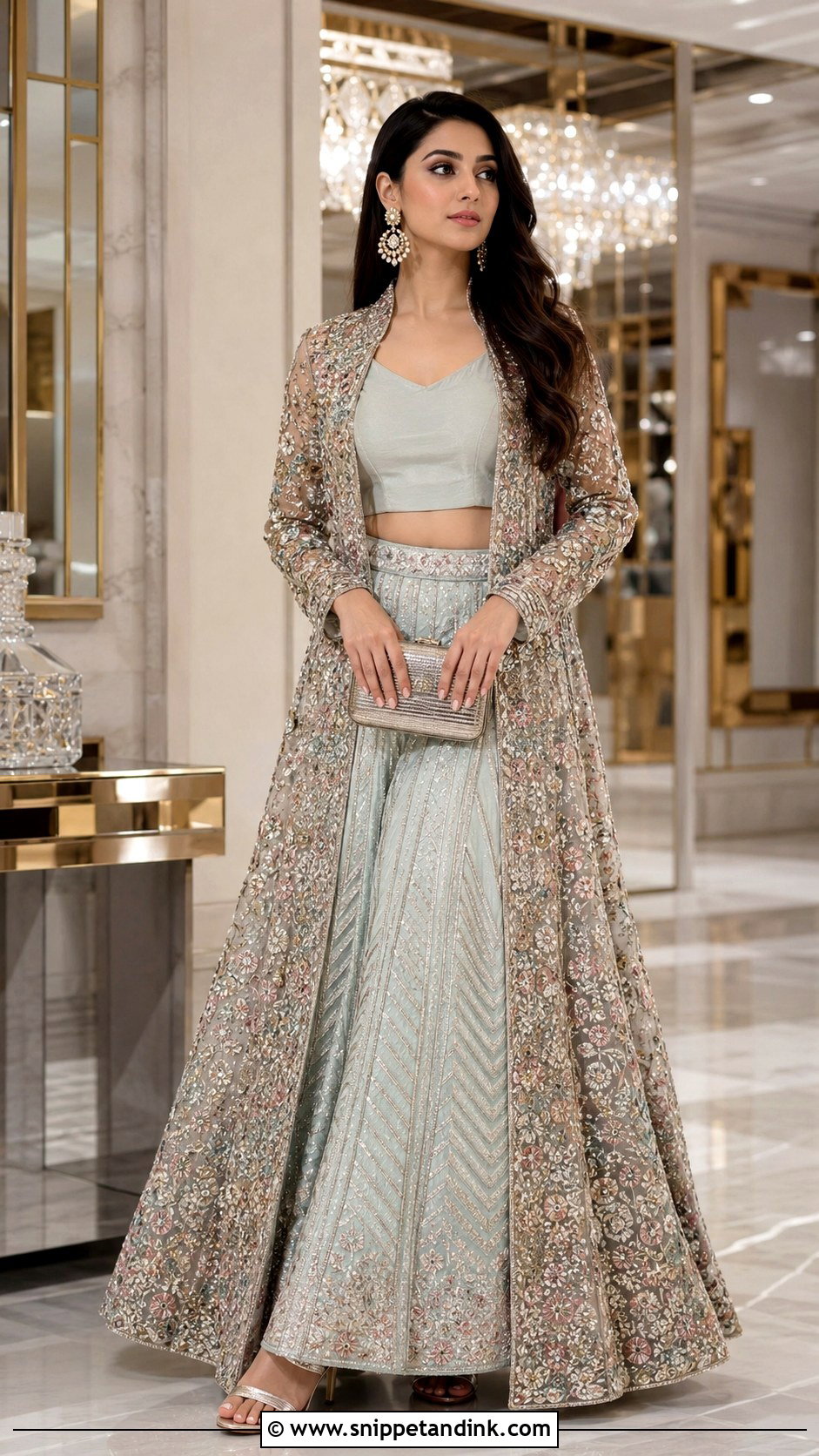
A jacket lehenga adds coverage and structure for receptions and winter weddings: a lehenga skirt, a blouse or crop top, and a long or short embroidered jacket. Sheer jackets feel soft, brocade feels richer. Since the jacket carries detail near the face, I treat the dupatta as optional and usually drop it. It’s a good route for women who don’t want to wear a deep-neck blouse on its own. Check that the jacket closes over the blouse without gaping when you sit. Statement earrings, a clutch and heels finish it.
21. Rajasthani Poshak
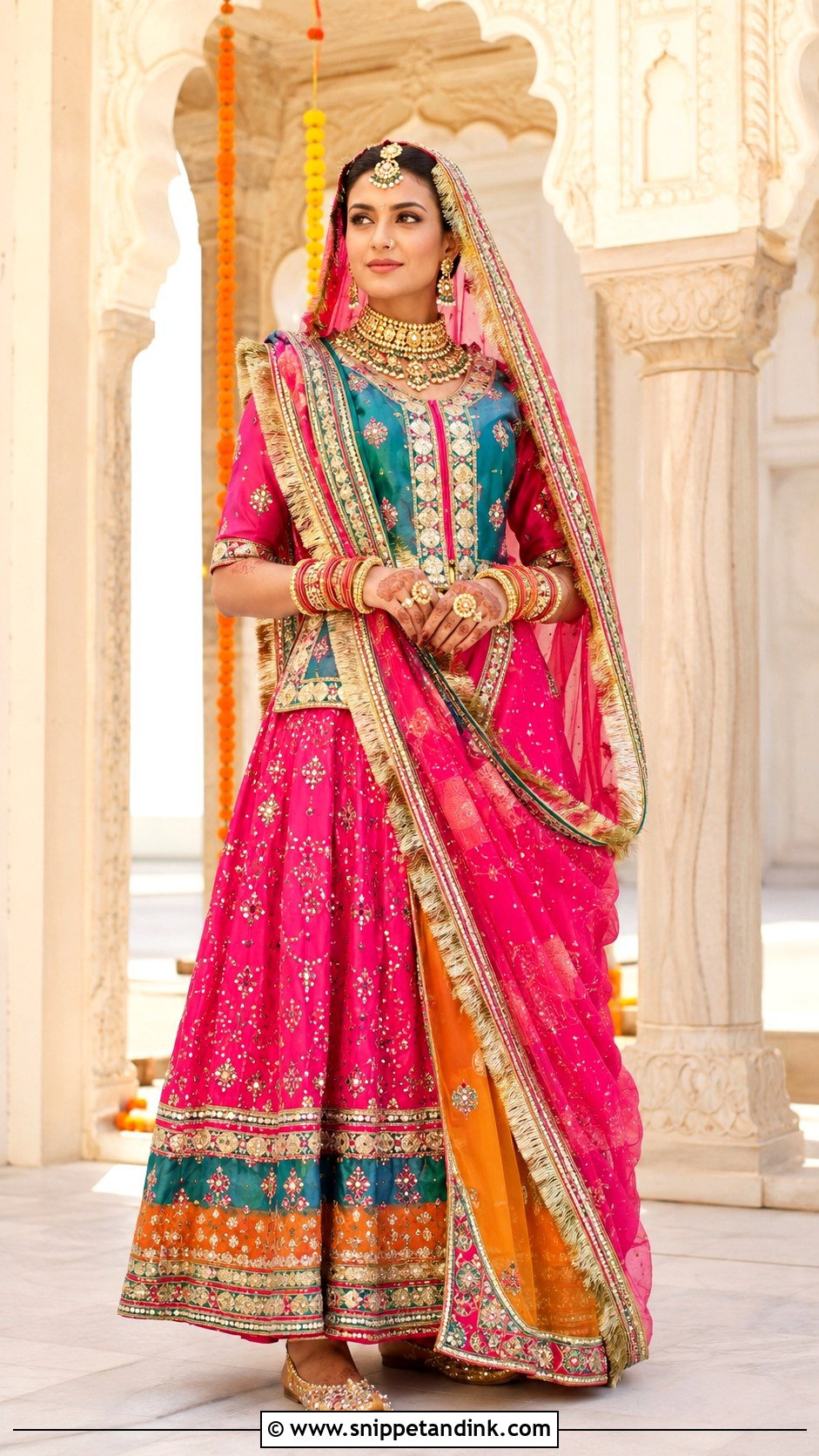
A Rajasthani poshak is one of the most rooted wedding outfits in India: a ghagra, a kanchli or kurti, and an odhani, sometimes with an extra veil layer. Red, orange, yellow and pink with gota patti, zari or bandhani detail are common. The odhani is central to the look and, with gota edging, a heavy one, so I pin it into the hair at the crown and again at the shoulder. Traditional jewelry, bangles, a maang tikka and juttis finish it. It carries real meaning for families with roots in Rajasthan.
22. Assam Mekhela Chador
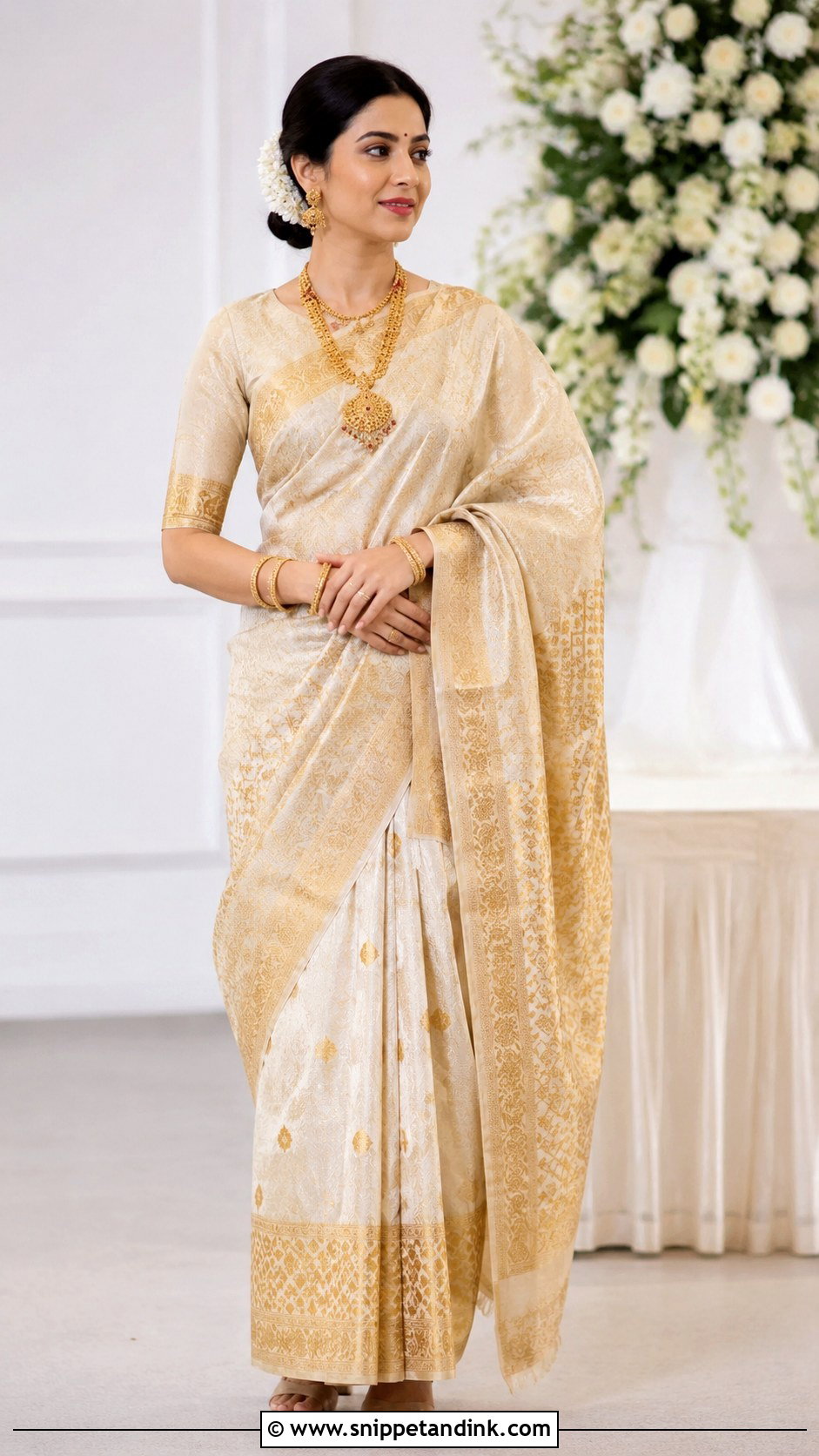
A Mekhela Chador is the Assamese two-piece drape, worn with a blouse. Silk versions with woven motifs feel ceremonial, and cream with gold, red or green look refined. Unlike a saree, the mekhela is stitched into a cylinder and pleated at the front, so it’s easier to manage than first-time wearers expect. The chador needs more care; I pleat it at the shoulder and pin it from underneath. Traditional Assamese jewelry, a neat bun and simple sandals complete it. Its clean lines read well in photographs.
23. Kerala Kasavu Saree
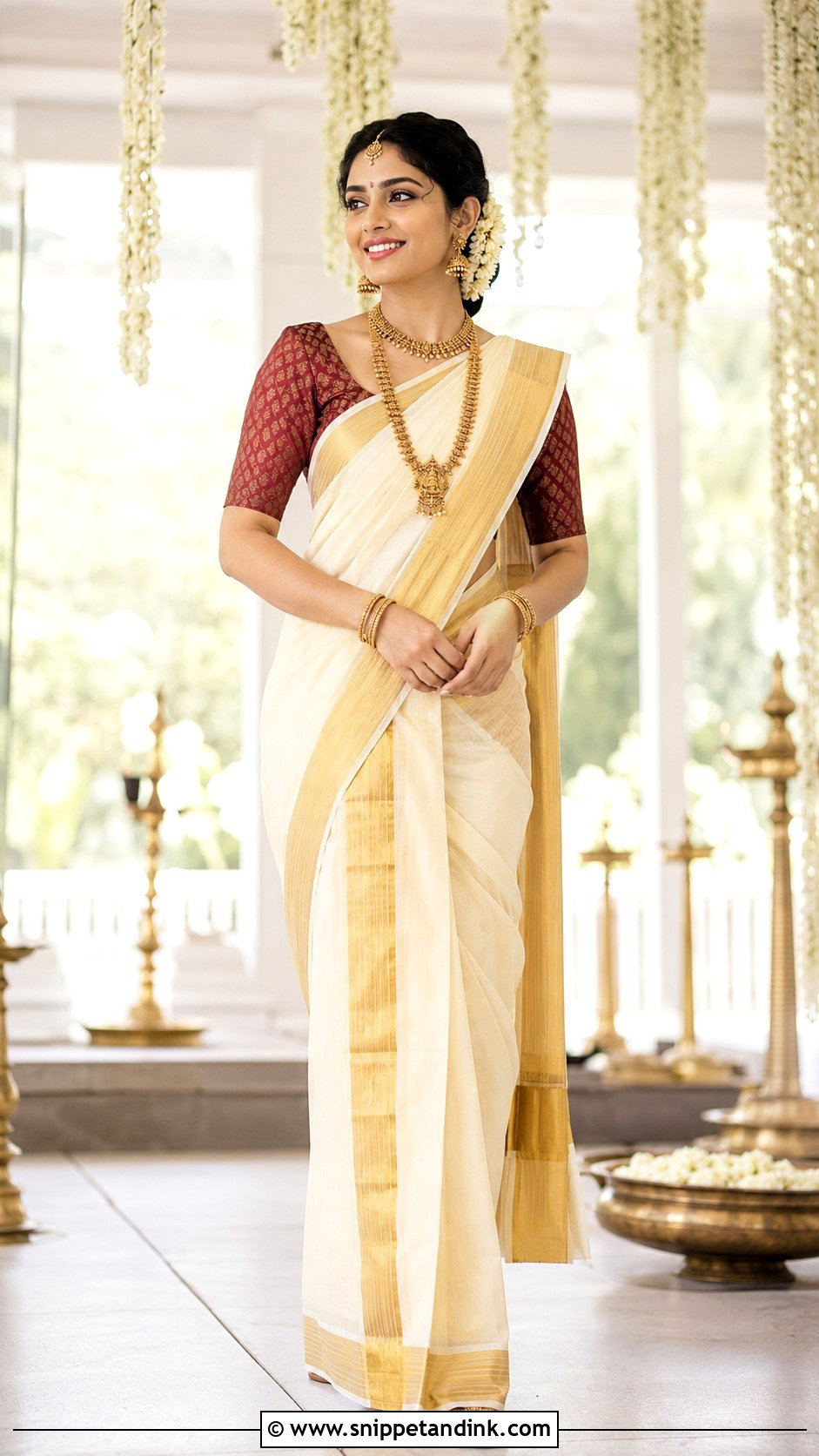
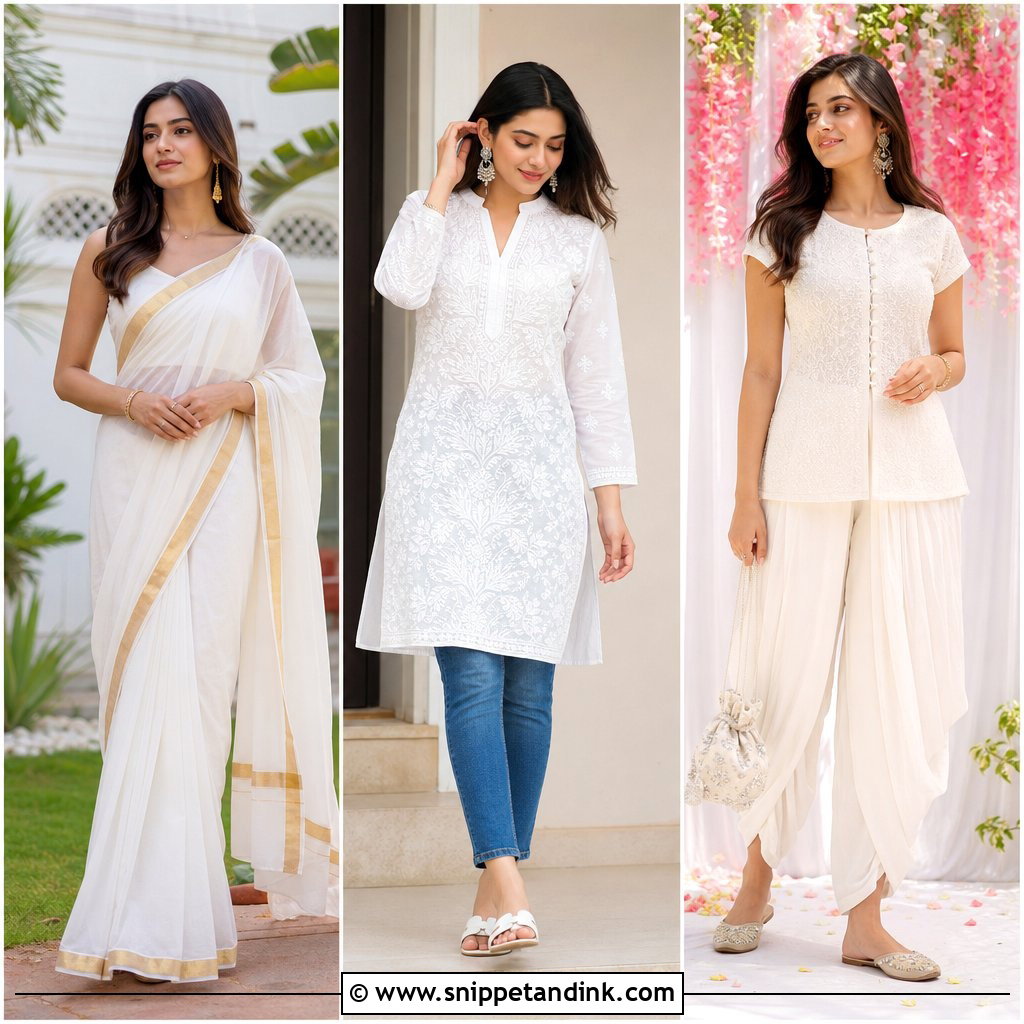
A Kerala Kasavu saree relies on almost nothing: a cream base, a gold border and a blouse in gold, green, red or maroon depending on formality. Temple jewelry, gold bangles, jasmine and a neat bun complete it. Brides add heavier jewelry and an ornate blouse; guests keep it minimal. Kasavu is cotton, which breathes in heat but creases quickly, so I starch the pleats lightly and dress the wearer just before she leaves. Warm makeup with defined eyes suits it.
24. Bengali Saree
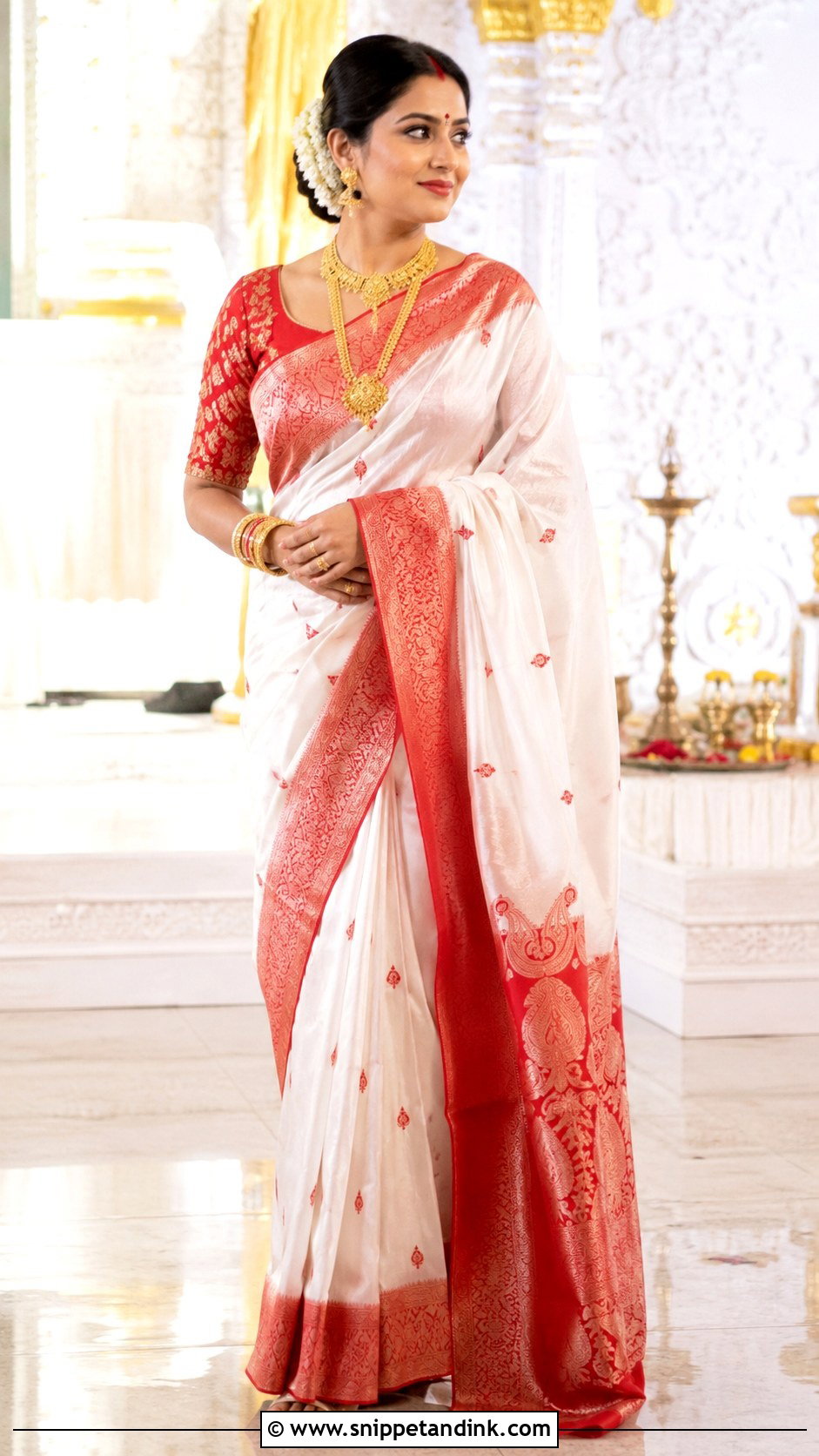
Bengali wedding dressing has a distinct identity: a red and white or richly woven silk saree, a classic blouse, gold jewelry, bangles and a bindi. Brides add a traditional headpiece and heavier gold; guests wear lighter versions. The traditional Bengali drape differs from the everyday Nivi style most people know, so if you want it, find someone who has done it before rather than learning from a video that morning. Silk, cotton silk or organza suit different events. A neat bun and kohl-lined eyes complete it.
25. Indo Western Saree Gown
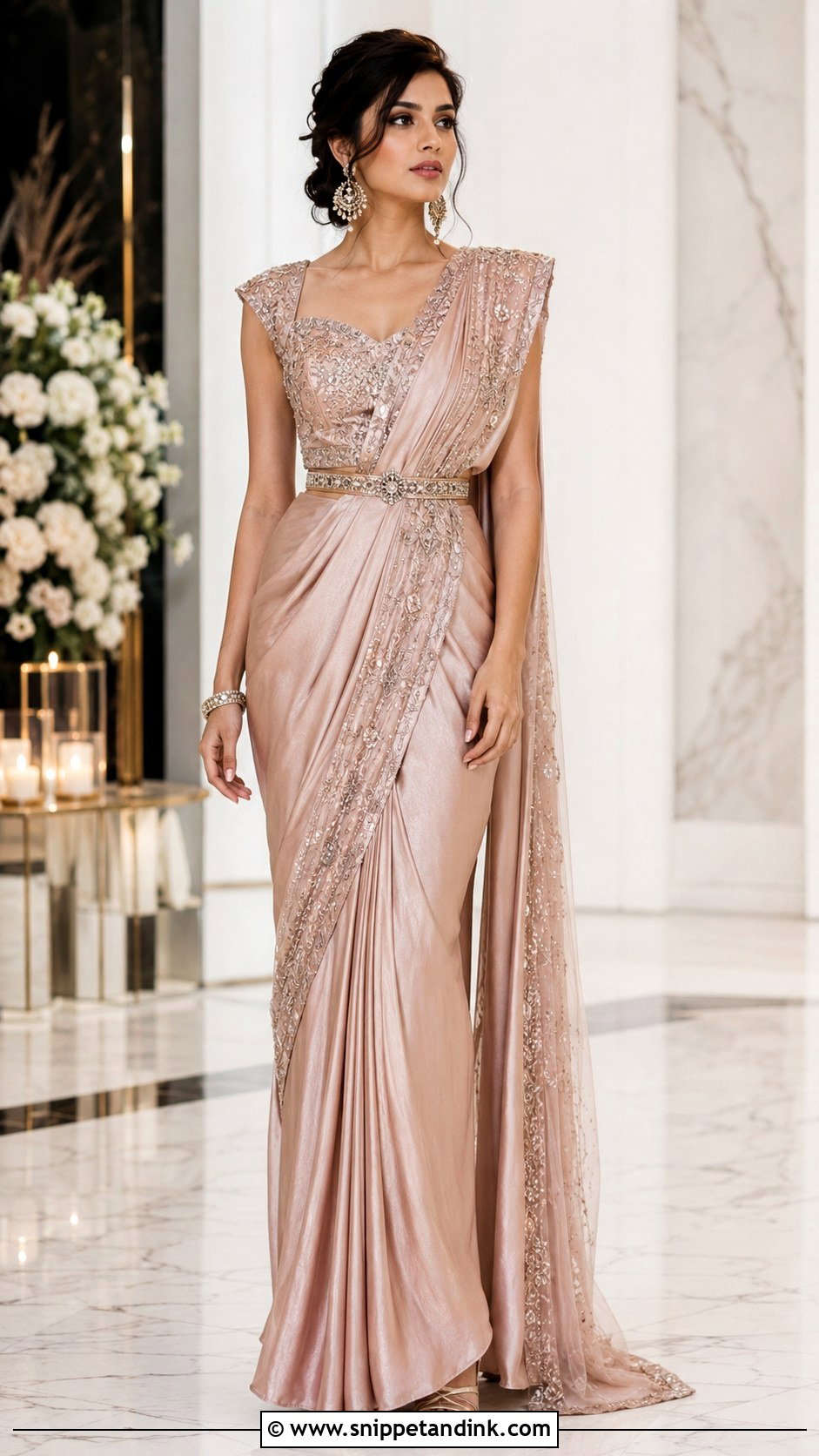
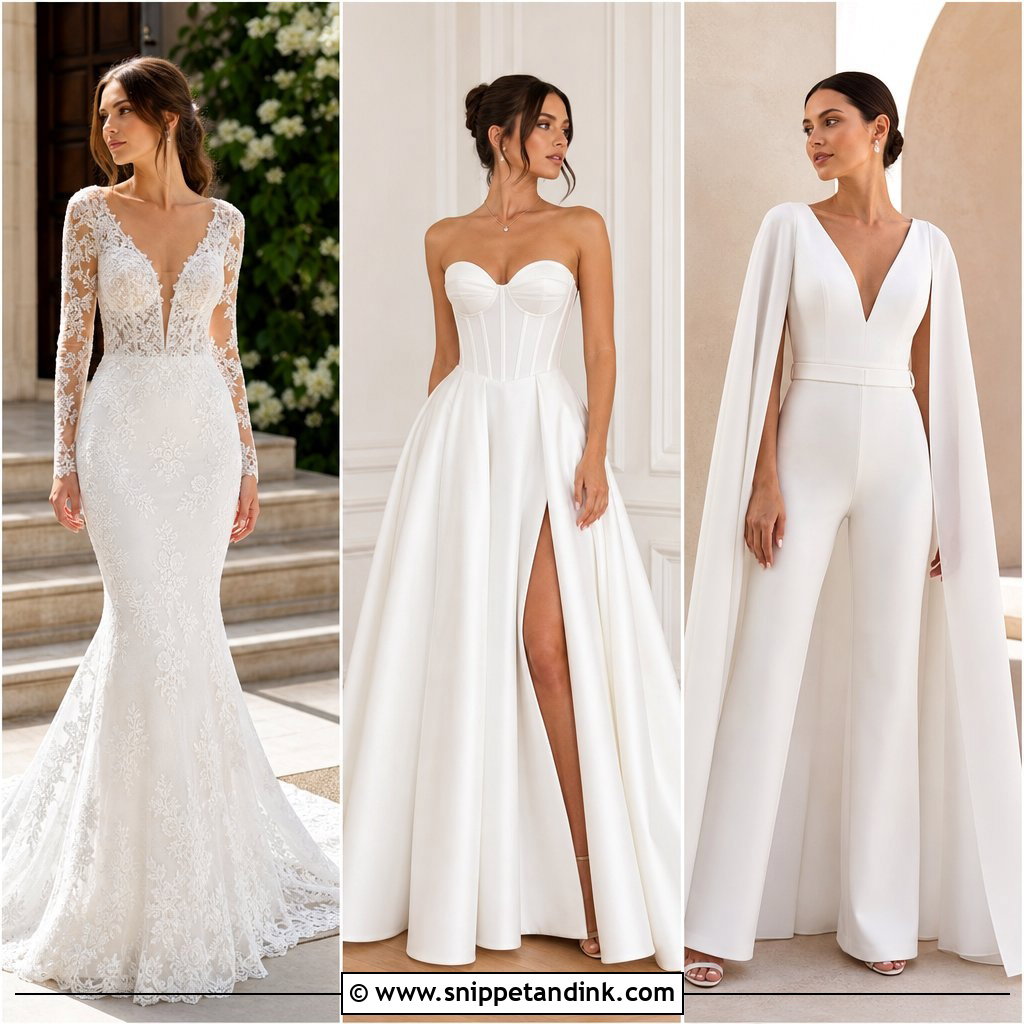
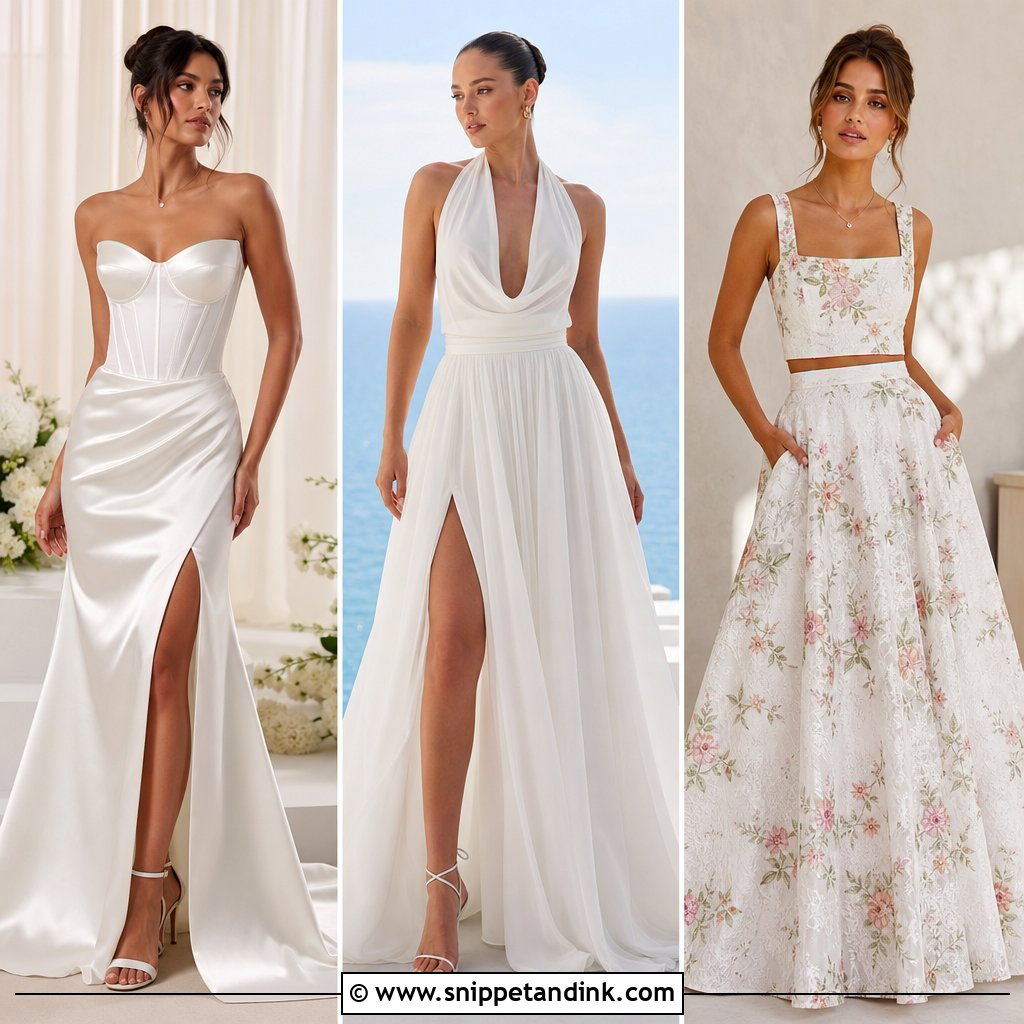
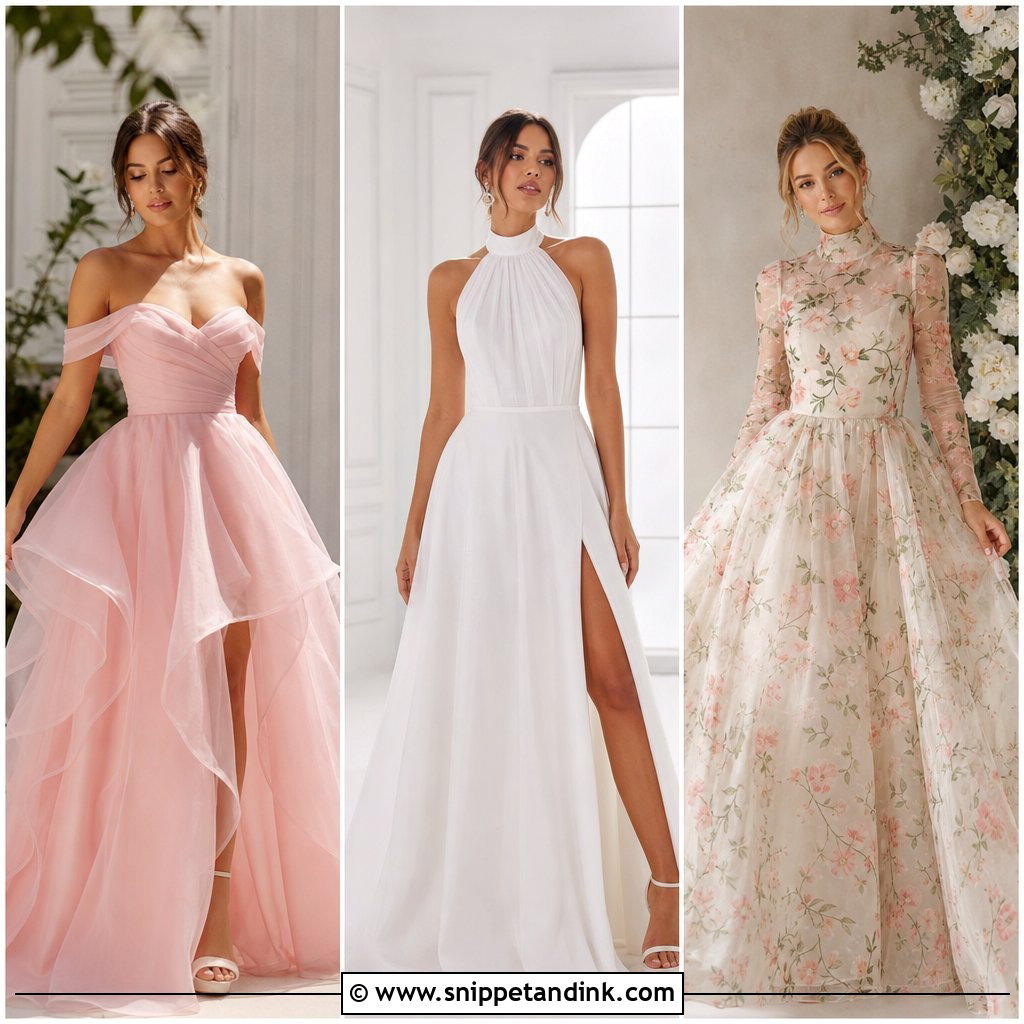
A saree gown gives you the line of a saree without the draping. The skirt, attached pallu and structured blouse come stitched together, sometimes with a belt, in georgette, satin, crepe or net. It’s my usual suggestion for guests who can’t drape and don’t want to depend on someone else on the day. At the fitting, check where the pallu is attached: if it’s fixed too far back, it pulls the blouse off the shoulder when you lift your arm. Statement earrings, a bracelet and heels are enough, since the silhouette is already dramatic.
Turmeric on Silk and Other Mid-Wedding Disasters
Something goes wrong at almost every multi-day wedding, and the outfit usually survives if you act calmly. Turmeric is the big one. On silk, don’t rub and don’t add water; blot off what you can and get it to a dry cleaner who handles bridal wear as soon as the wedding ends. On white cotton, turmeric often fades with sunlight, so drying the washed piece outside helps.
- Mehendi paste on fabric: let it dry completely, then gently lift it off. Wiping it while wet spreads the stain.
- A broken blouse hook: a large safety pin from the inside holds until the ceremony ends.
- A torn hem caught under a heel: pin the hem up from inside rather than cutting loose threads.
- A slipping dupatta: re-pin it through a bobby pin anchored in the hair, not just the fabric.
I pack a small kit for every client: safety pins in two sizes, bobby pins, matching thread, a needle, fashion tape and blotting paper. It fits in a potli and has rescued more outfits than any tailor on the day.
Dress for the Function, Then for the Photos
Start with the function, not the outfit. A bride may wear a red lehenga, a silk saree or a regional drape for the main ceremony, while guests can move between Anarkalis, shararas, sarees, kurta sets and lighter lehengas across the different events. Every outfit has to survive rituals, meals, photos and dancing, so tailoring, footwear, jewelry weight and dupatta placement deserve as much thought as color. Classic or regional, minimal or festive, the right outfit respects the occasion and lets you take part in all of it.
You'll Like These Ideas:


Leave a Reply