
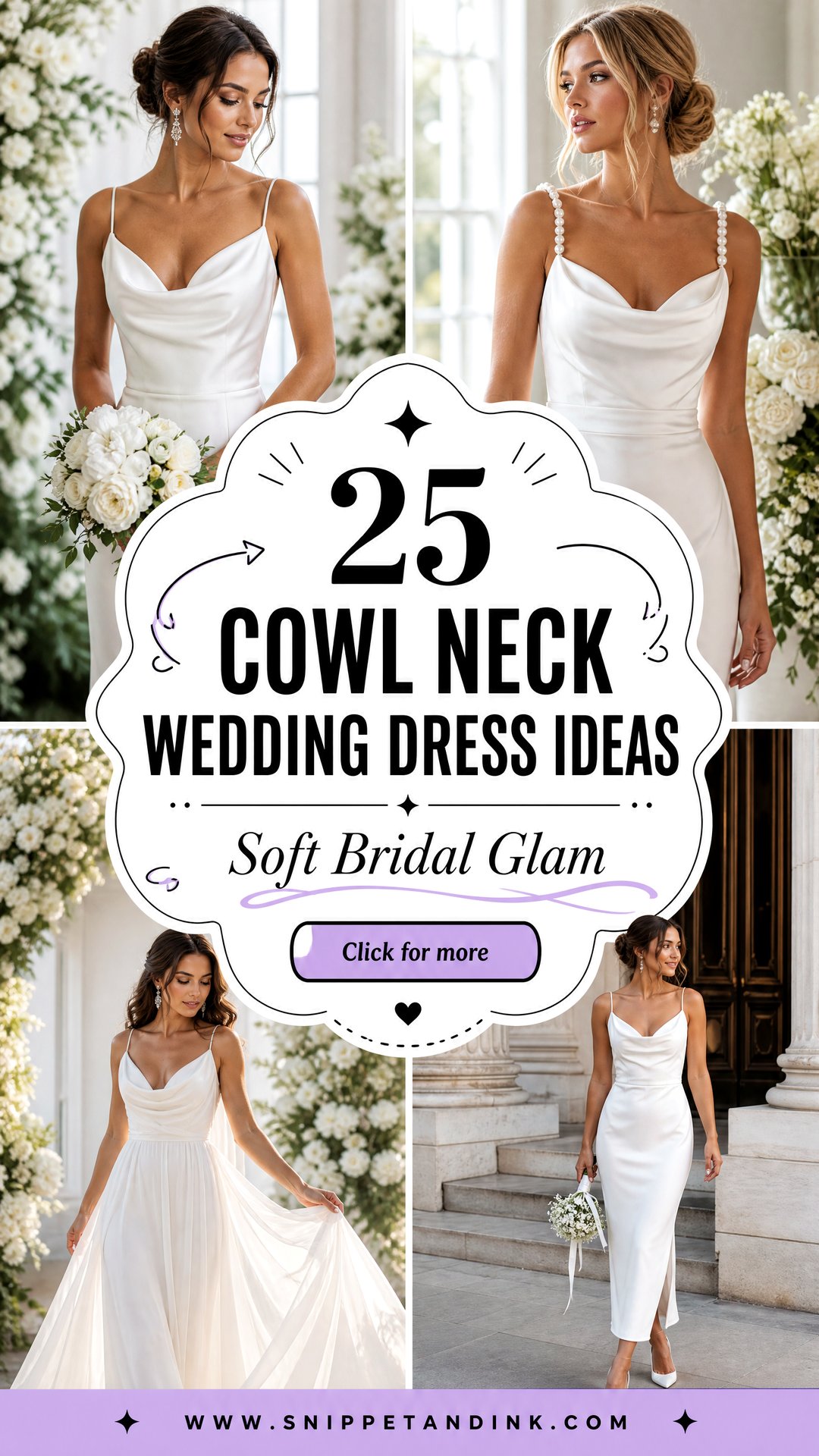
A cowl neck is one of the few bridal details that relies entirely on fabric and cut, with no lace or beading to hide behind. The drape falls across the collarbone in soft folds, and when it’s right it looks relaxed and quietly glamorous. When it’s wrong, it gapes every time you lean forward. I spend more time fitting cowls than almost any other neckline, so the notes below focus on how each version behaves on a body. Satin, silk, crepe, chiffon and fluid lace all let the neckline fall naturally, and the shape appears on everything from a simple slip dress to an open-back gown, a long-sleeve design or a beach silhouette. Here are 25 of them, from modern and minimal to vintage and destination.
Why a Cowl Gapes, and How a Fitter Stops It
A cowl is a piece of fabric cut on the bias, the diagonal grain, so it hangs in soft folds instead of lying flat. That same quality makes it move with you. Lean forward to sign a register or hug your grandmother, and the drape swings away from your body. Most brides only notice this at the first fitting, which is why I start every cowl appointment with a lean test before I look at anything else.
What alterations can fix
A seamstress has a few tools. She can shorten the straps to raise the drape, take in the side seams so the bodice holds closer, or tack the inner fold at one or two hidden points so it can only open so far. Some designers sew a small weight inside the lowest fold, which keeps it hanging neatly in a breeze. Fashion tape at the edges helps for the photos too.
The underwear question
Cowls are cut for bare skin or built-in cups. A regular bra shows when the drape moves, and strapless bras can push the fabric forward. If the dress has no cups, ask to have them sewn in. Bring the shoes and any shapewear you plan to wear to every fitting, because both change where the folds fall.
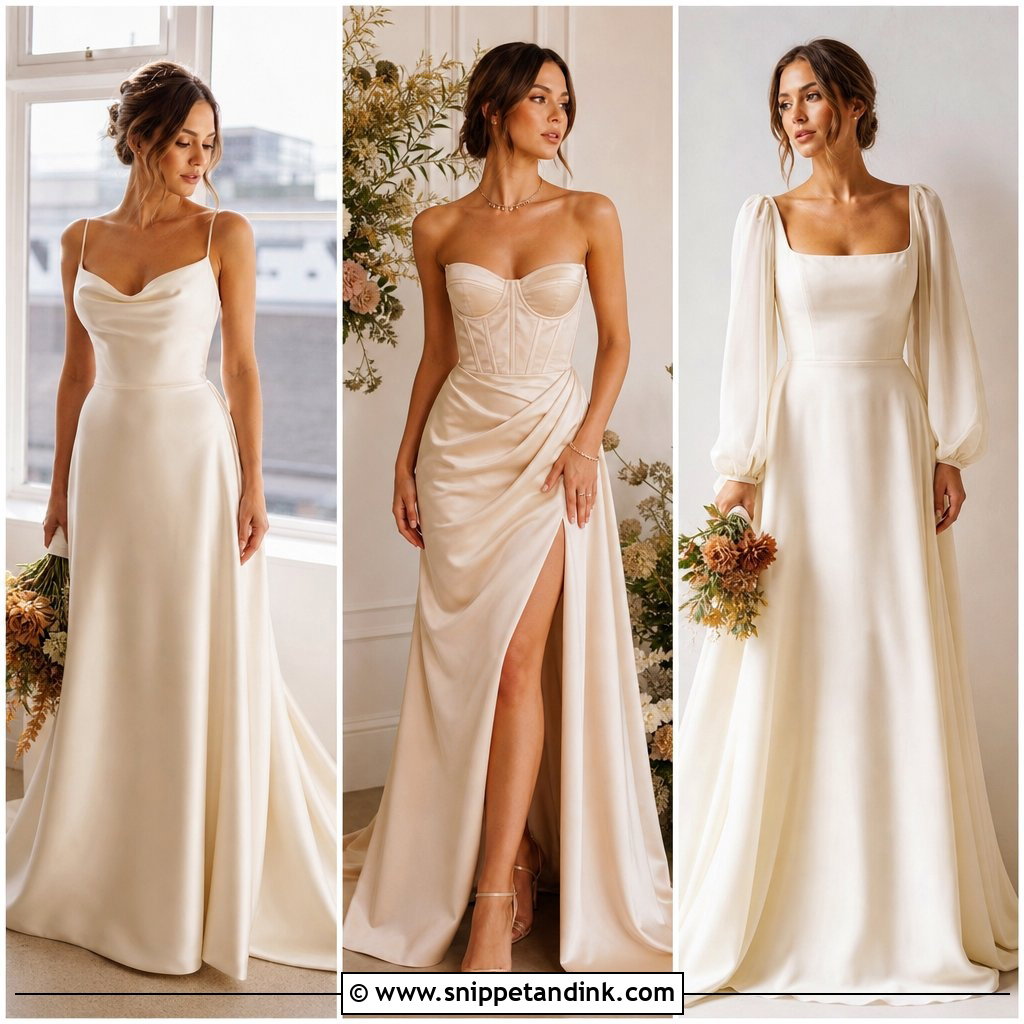
1. Cowl Neck Satin Slip Wedding Dress
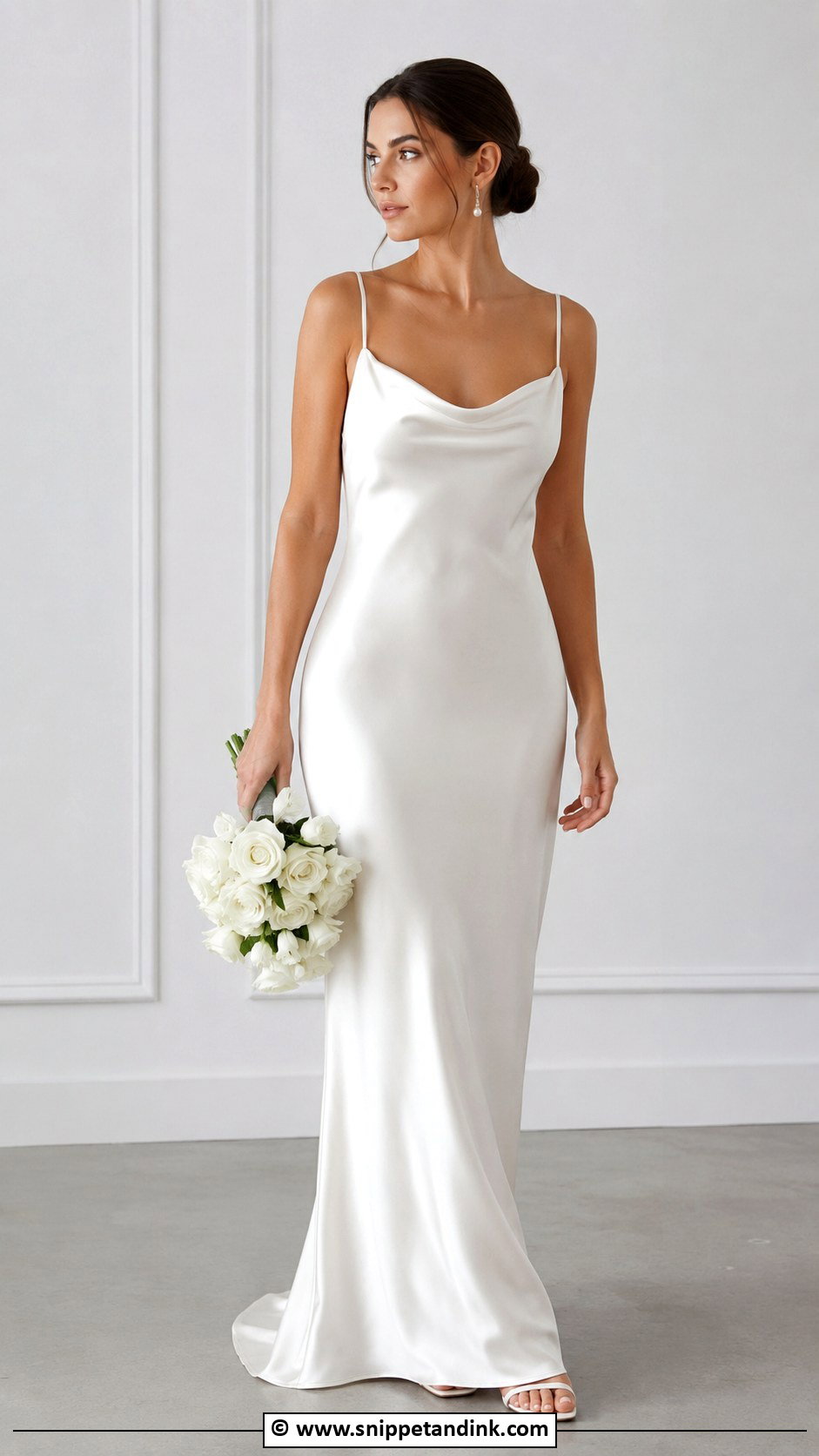
The satin slip is where the cowl neck is most at home. The drape adds movement to an otherwise straight line, and the result looks sleek at a city ceremony, a rooftop or a modern indoor venue. Watch the strap tension: if spaghetti straps are adjusted too tight, the cowl flattens; too loose, and it drops lower than you planned. A smooth low bun, fine drop earrings and barely-there heels suit it. I’d skip a heavy veil, or wear none, so the neckline stays visible. Ivory satin looks warm; pearl white looks brighter and more current.
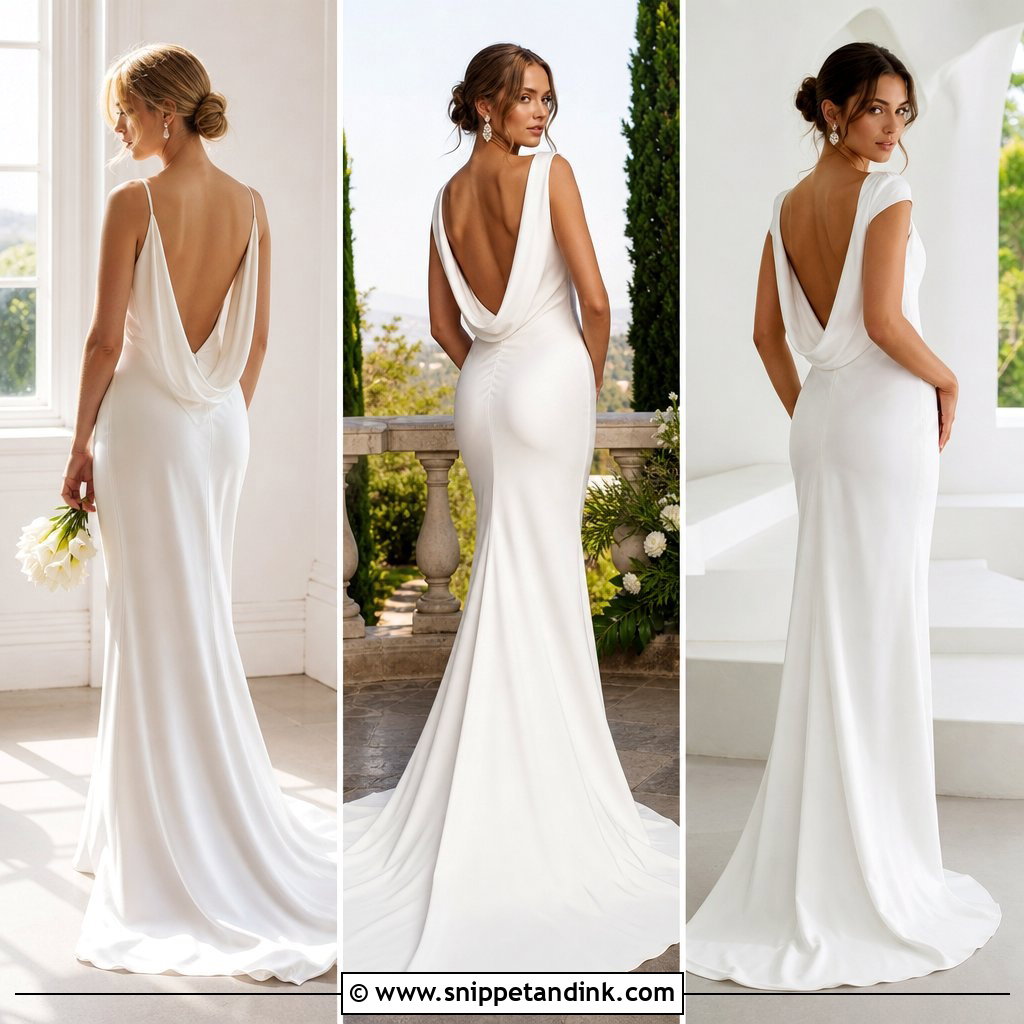
2. Cowl Neck Open Back Wedding Dress
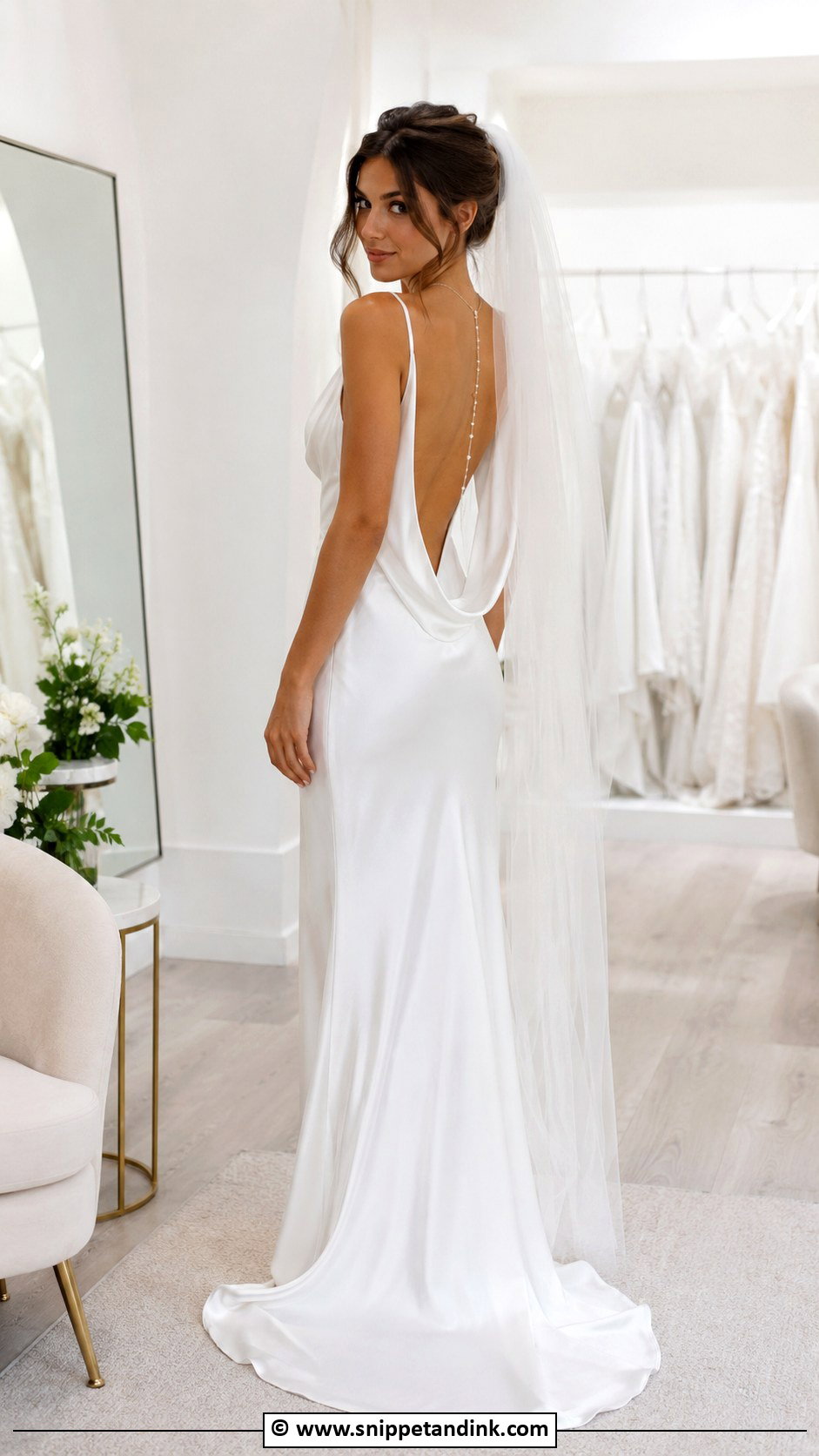
Front cowl, open back: soft from one side and dramatic from the other. Silk charmeuse, satin or light crepe all move well here. With so little structure at the back, I always look for built-in cups or a tailored bust panel, since a bra is out of the question. Keep the front clean and put the interest behind you: a back necklace, a low veil or pearl pins in an updo. It’s a minimal dress with a real reveal when you turn around at the altar.
3. Cowl Neck Mermaid Wedding Dress
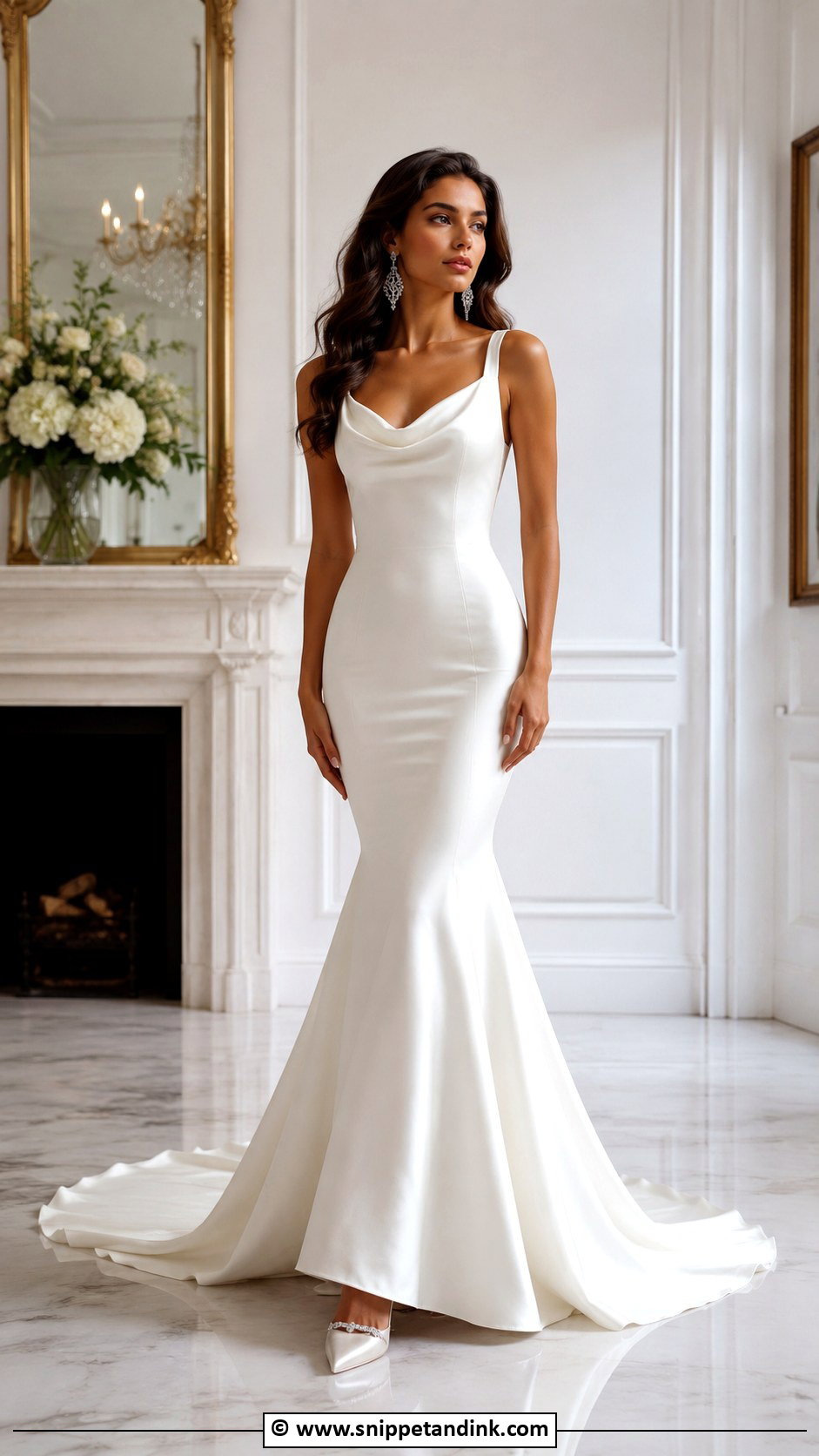
Mermaid gowns have a lot of structure through the body, and the cowl stops that structure from looking severe. Stretch crepe sculpts smoothly; satin gives more shine but shows every line underneath. I’d keep the cowl moderate in depth on a mermaid, because a deep drape plus a tight silhouette can look like two dresses fighting. Simple earrings, sleek waves and pointed heels are enough. Practice walking and sitting at the fitting, as a knee-level flare shortens your stride.
4. Cowl Neck A Line Wedding Dress
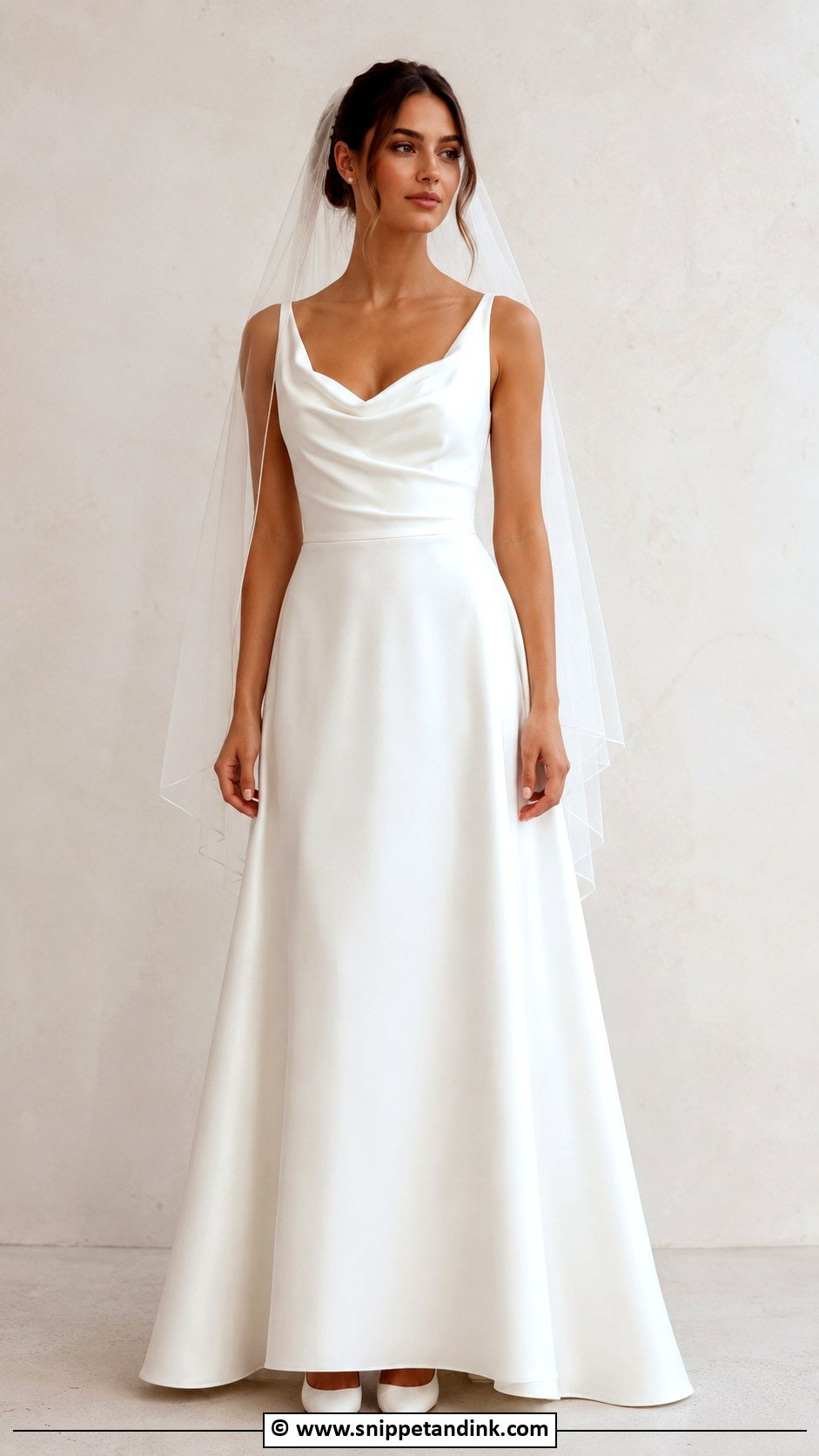
The A-line is the most comfortable cowl gown on this list. The skirt skims away from the waist so you can sit, walk and dance without thinking about it. The draped neckline softens the bodice without any embellishment. Satin and crepe give a cleaner skirt; chiffon floats; organza holds more volume. A fingertip veil, pearl studs and classic pumps finish it. I suggest this shape often to brides who want the cowl but not a body-skimming fit.
5. Cowl Neck Lace Wedding Dress
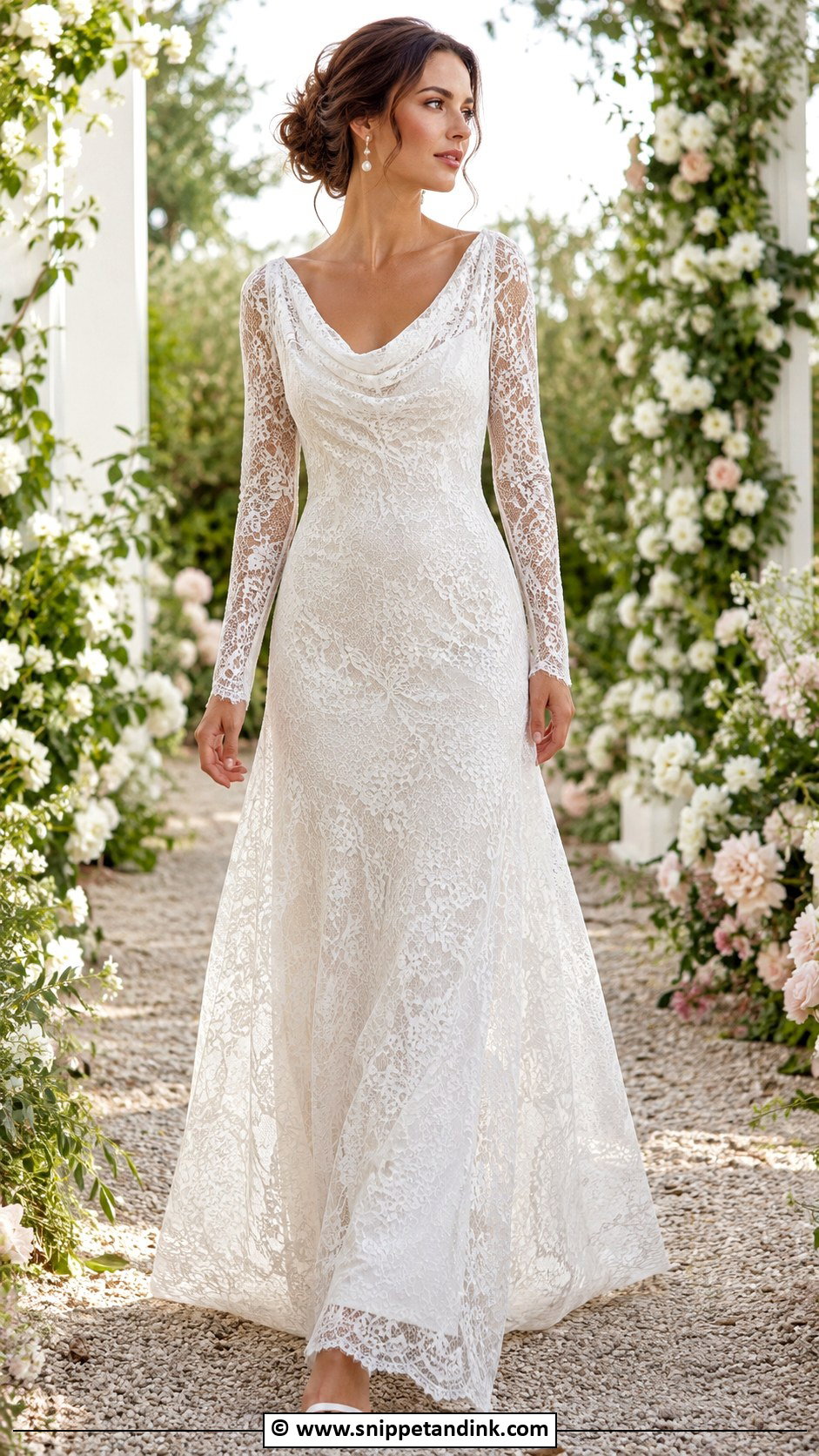
Lace and cowls are tricky together, and only lightweight lace works. Stiff or corded lace won’t fold into soft drapes; it buckles and stands away from the body. Look for fine Chantilly-style lace over a soft lining, so the neckline falls in curves rather than creases. Sheer sleeves, a low back or a little floral appliqué pair well. Small pearl earrings, a fine bracelet and a loose updo keep it gentle. The lace gives it romance, and the cowl keeps it from feeling old-fashioned.
6. Cowl Neck Long Sleeve Wedding Dress
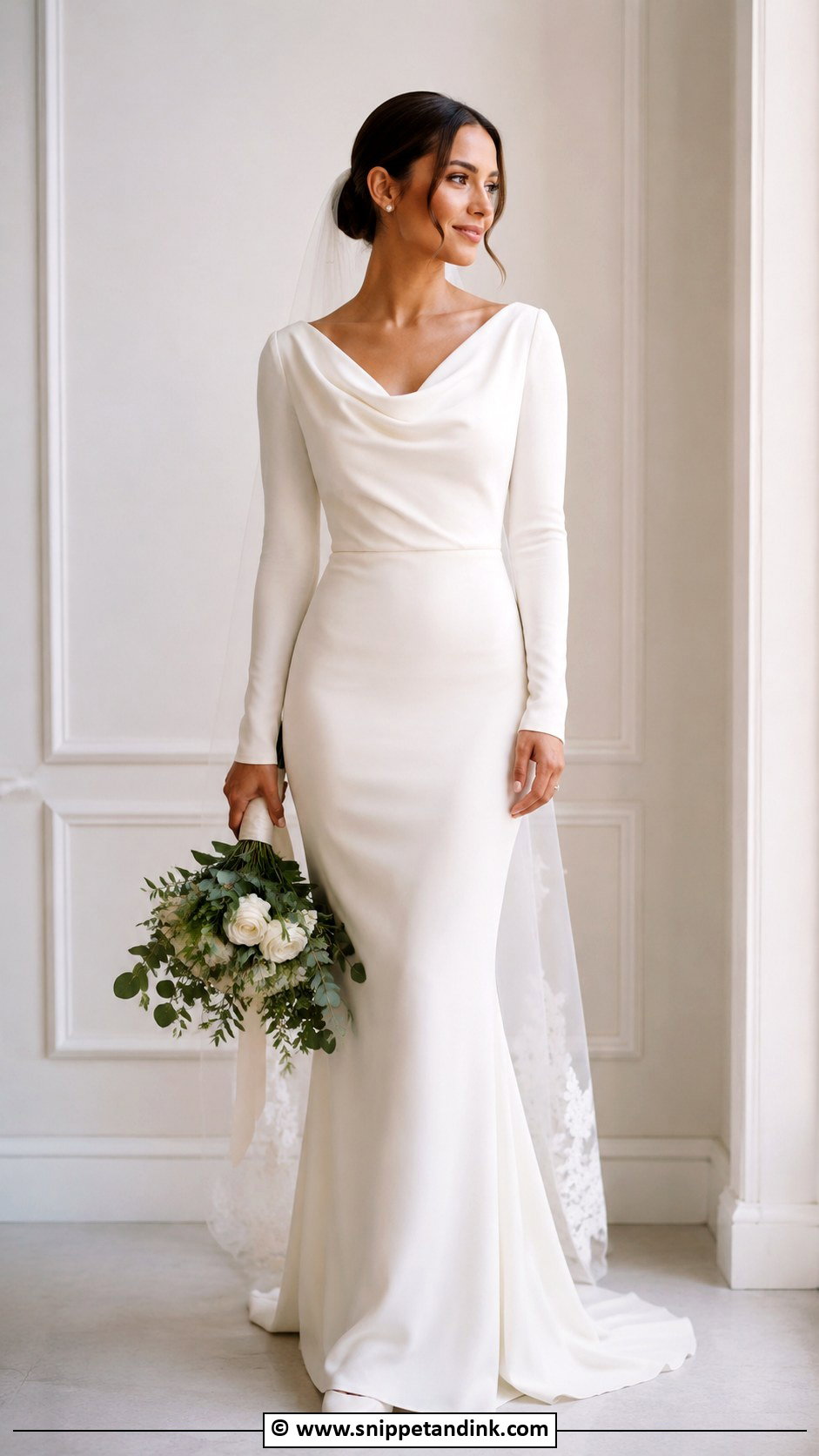
Long sleeves can make a gown feel buttoned-up, and a cowl loosens that feeling right away. Crepe sleeves look clean and modern; sheer lace sleeves look romantic. One fitting check I never skip: lift your arms. Fitted sleeves pull at the shoulder seam, and that tension drags the cowl tight and flat across your chest. A slim skirt reads refined and an A-line gives more movement. A low bun, plain veil and closed-toe heels suit fall, winter and formal evening weddings.
7. Cowl Neck Backless Wedding Dress
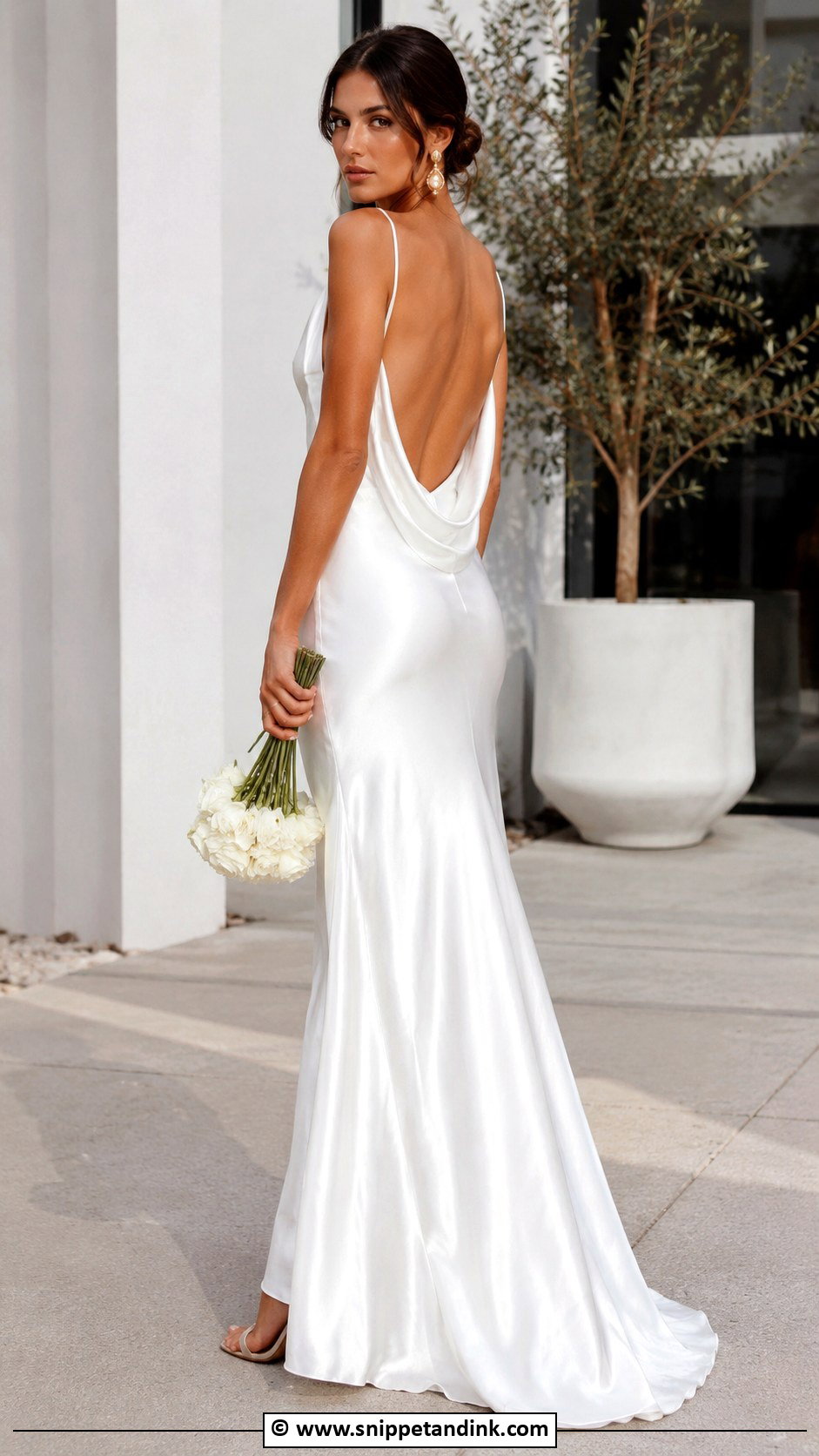
Backless gowns look simple head-on and dramatic from the side and back. The front cowl softens the gown while the bare back keeps it modern. Liquid satin, silk and crepe give the smoothest line, but they also cling and show any lingerie, so you’ll be wearing very little underneath. If you need more support, look for thicker straps, built-in structure or a higher side seam that holds the bust in place. Statement earrings and a clean updo keep the back visible.
8. Cowl Neck Halter Wedding Dress
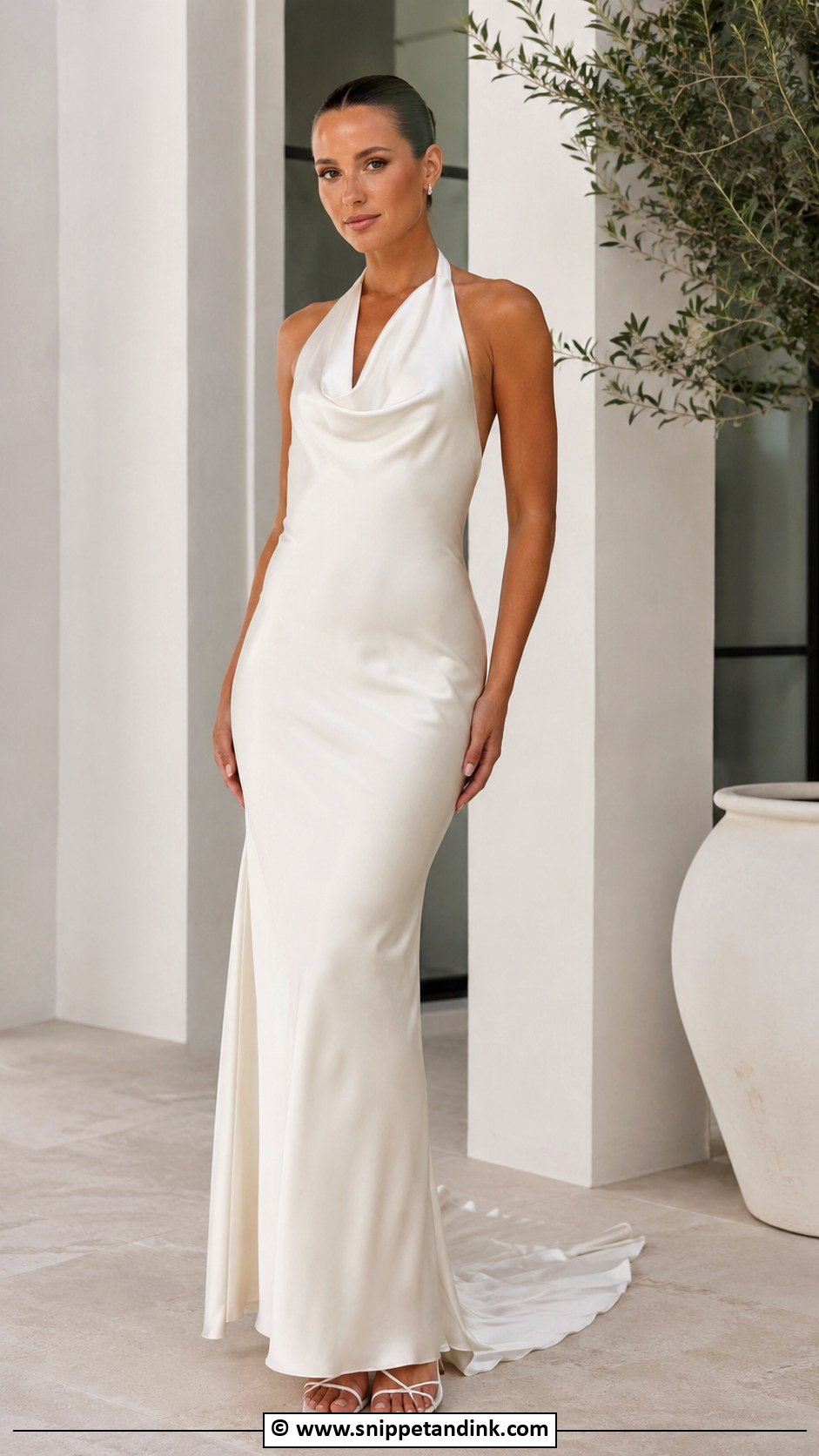
A halter lifts the neckline and shows off the shoulders, and the cowl softens the front. It’s one of the more supportive cowl options because the strap around the neck holds the drape up. The trade-off is neck strain: heavy fabric hanging from a halter tie can feel tiring by the evening, so check the weight. Satin, crepe and lightweight silk blends all work. Pull your hair back so the shoulders stay visible, and keep jewelry to a narrow bracelet and small earrings.
9. Cowl Neck Spaghetti Strap Wedding Dress
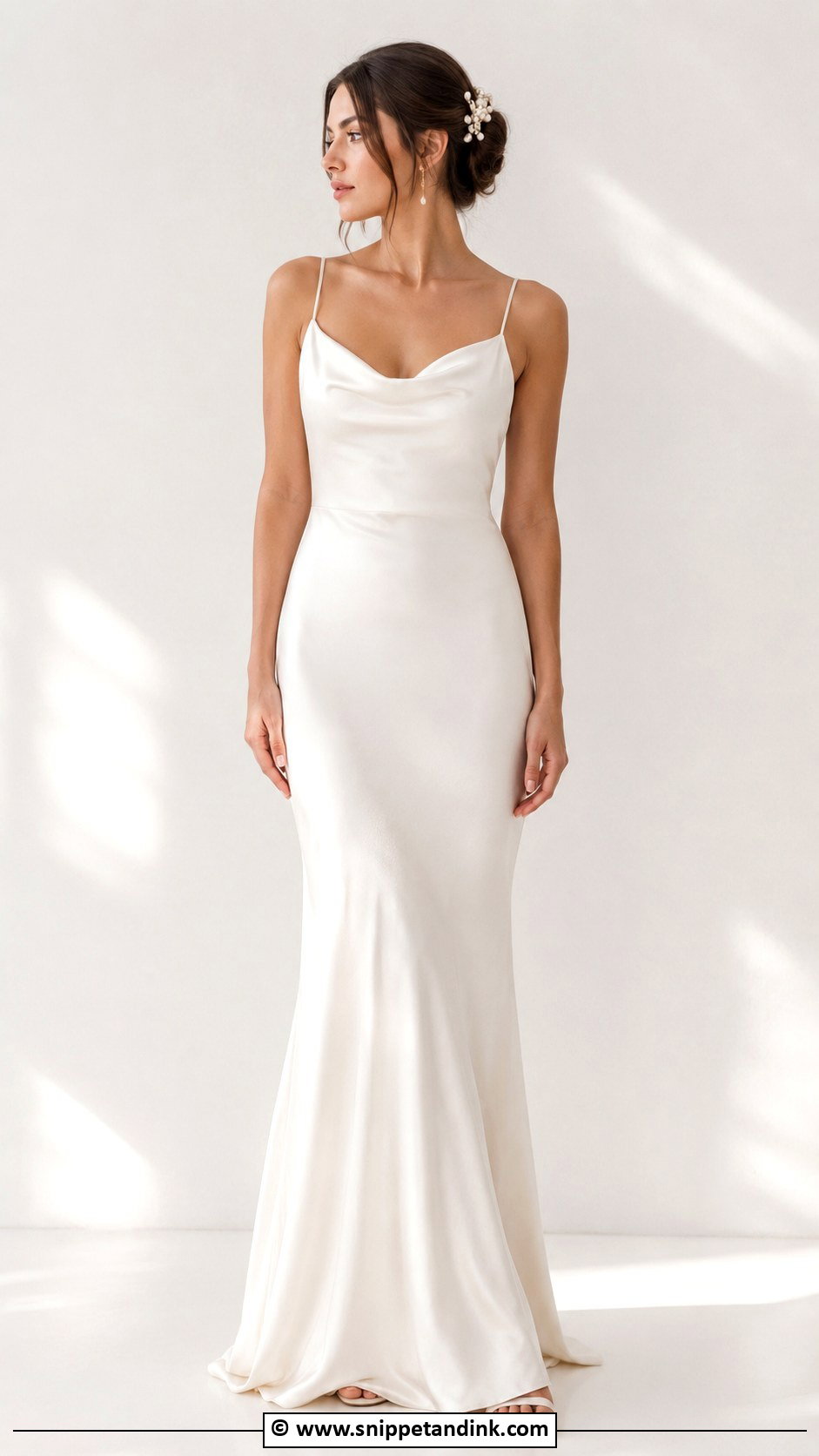
A cowl neck spaghetti strap wedding dress is the lightest version of the look, and it’s popular for destination weddings and relaxed receptions. Satin gives shine, silk feels luxurious, and crepe gives a smooth matte finish. I’d add a thin clear silicone strip inside each strap so they don’t slide off the shoulder during hugs. Wear a veil for the ceremony and swap to a pearl clip or sleek headband later. Dainty jewelry suits delicate straps best.
10. Cowl Neck Pearl Strap Wedding Dress
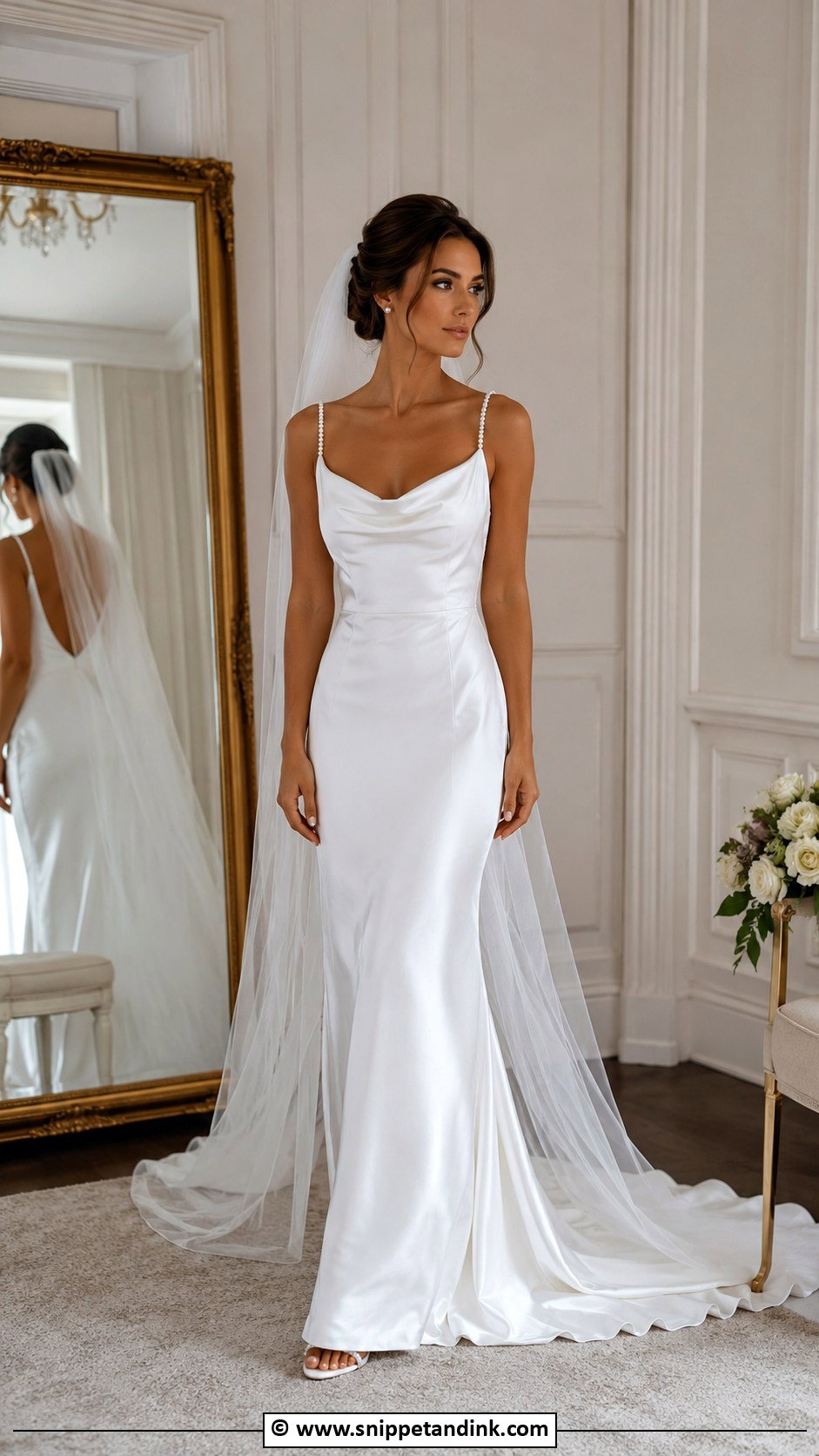
Pearl straps make the neckline look deliberate, framing the shoulders without overwhelming a plain gown. Satin and crepe show the pearls best because the smooth surface doesn’t compete. Pearl straps are heavier than fabric ones, so they need secure anchoring at the bodice; I check the stitching before every fitting. Pearl studs, a plain veil and soft heels are plenty. If the dress has an open back, the straps continue the detail behind you.
11. Cowl Neck Silk Wedding Dress
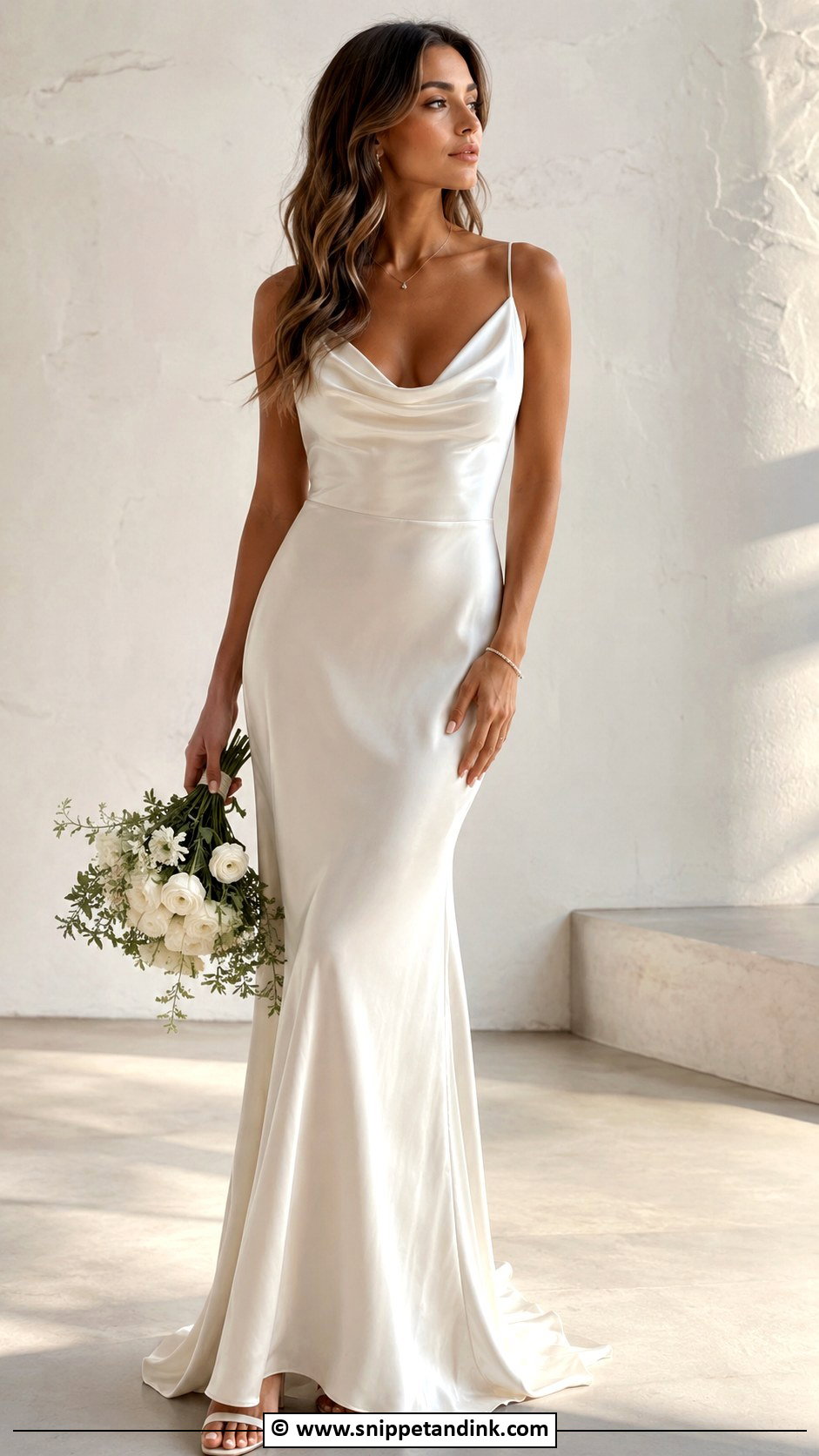
Silk is the fabric the cowl neck was made for. It falls naturally, moves like water and has a quiet sheen. It also shows everything, from body lines to undergarments to the smallest fitting error, so tailoring is not optional. A good tailor will adjust the straps, waist and hem until the drape sits exactly where you want it. Fine jewelry, soft waves and elegant sandals or pumps suit it. Silk also marks with water, so keep drinks and rain away from it.
12. Cowl Neck Crepe Wedding Dress
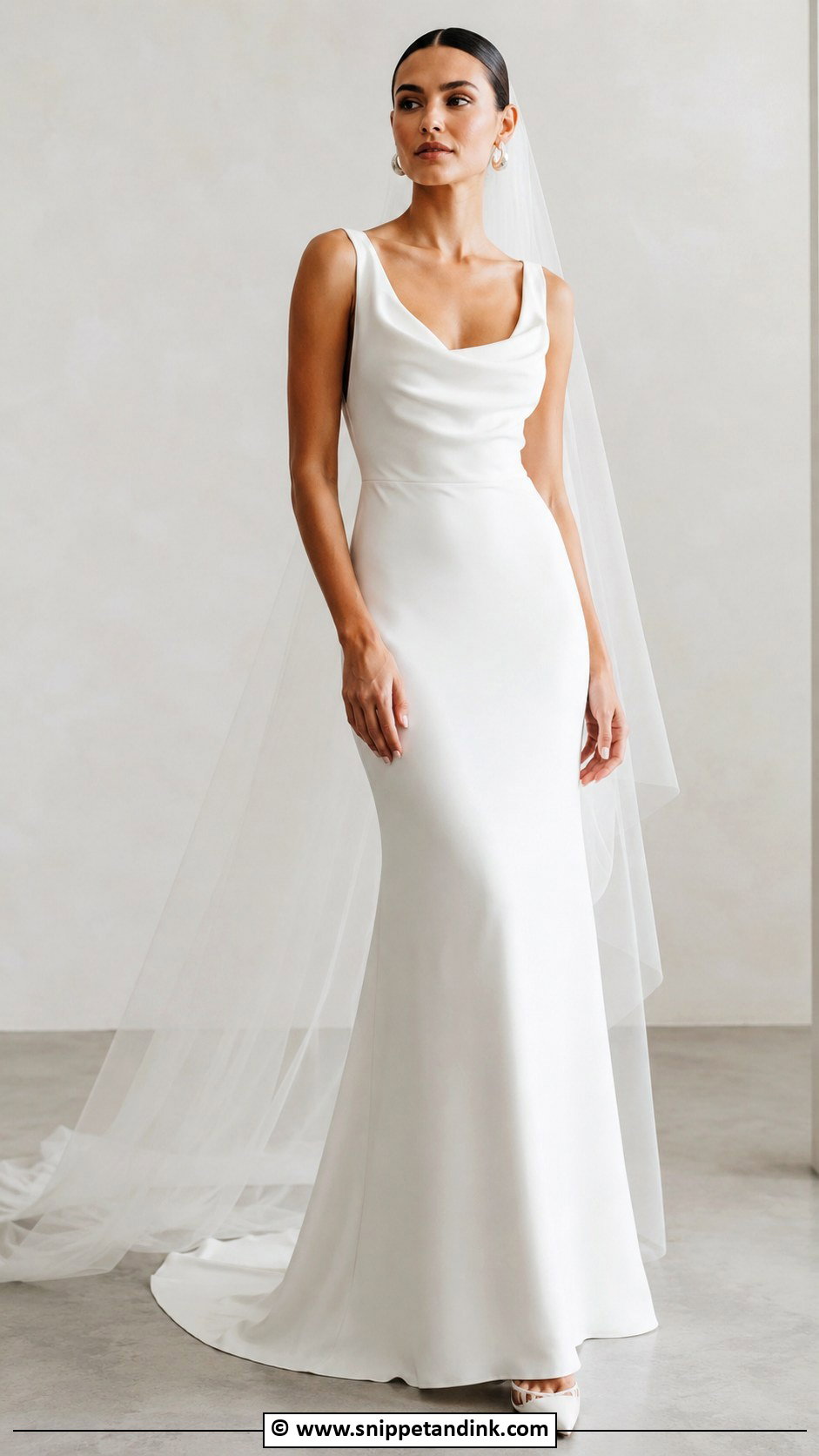
Crepe has enough weight to skim the body while the neckline drapes softly, which makes it forgiving. Its matte surface photographs cleanly under flash and doesn’t glare in sunlight. It suits sheath, fit-and-flare and minimal A-line shapes. Sculptural earrings, a sleek veil and pointed heels give a modern finish. For more coverage, look for wide straps or long sleeves. If you want a cowl but worry about satin’s shine, start here.
13. Cowl Neck Chiffon Wedding Dress
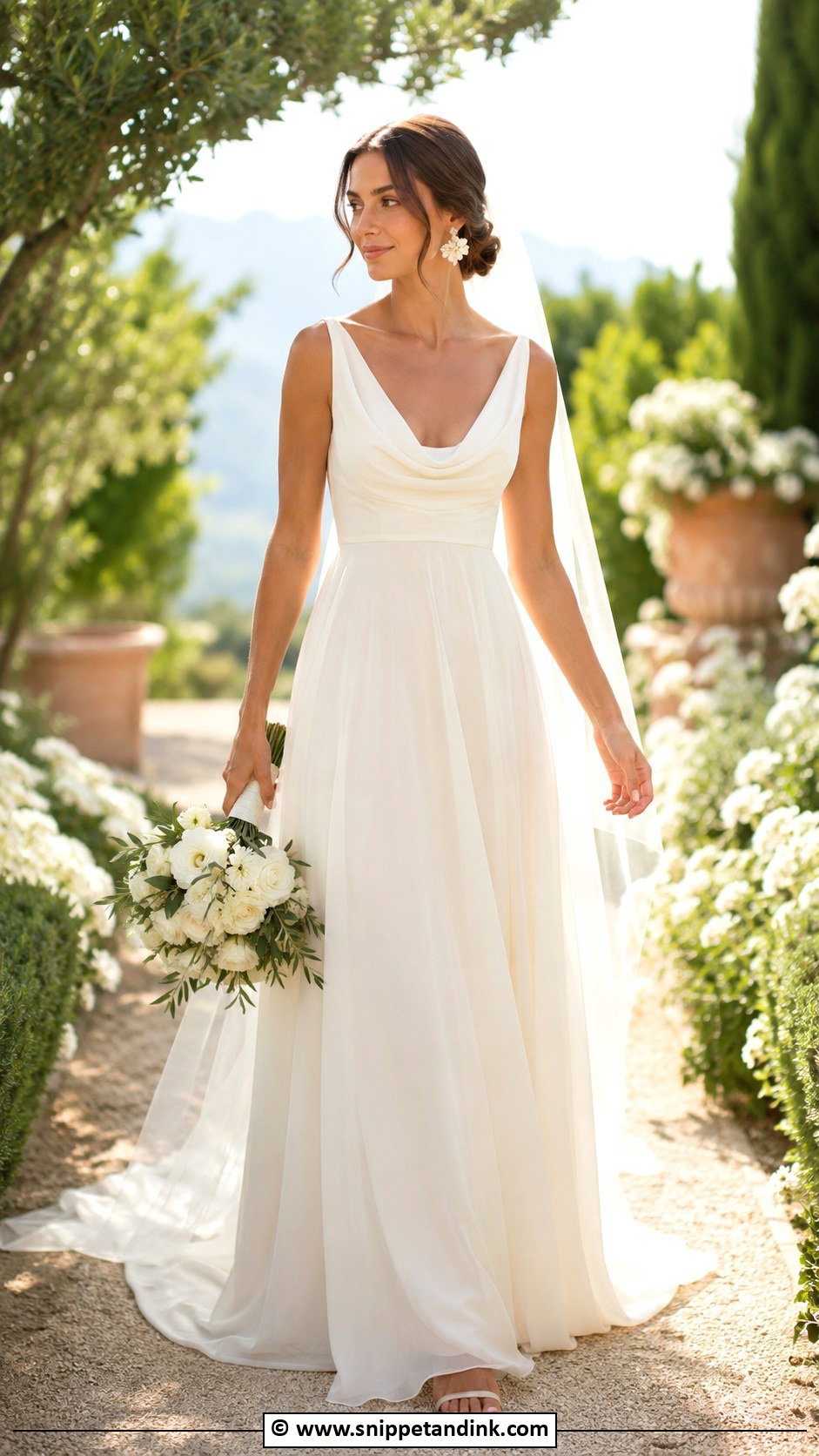
Chiffon is light and floaty, so the cowl drapes gently without weight. It moves with every step in an A-line or flowing sheath, and it’s cooler to wear than satin or structured lace in hot weather. Sheer areas need a comfortable lining that stays put; I check that the lining edge doesn’t show at the neckline when the cowl falls open. Delicate sandals, floral-inspired earrings and a soft veil keep it breezy for outdoor and destination weddings.
14. Cowl Neck Beach Wedding Dress
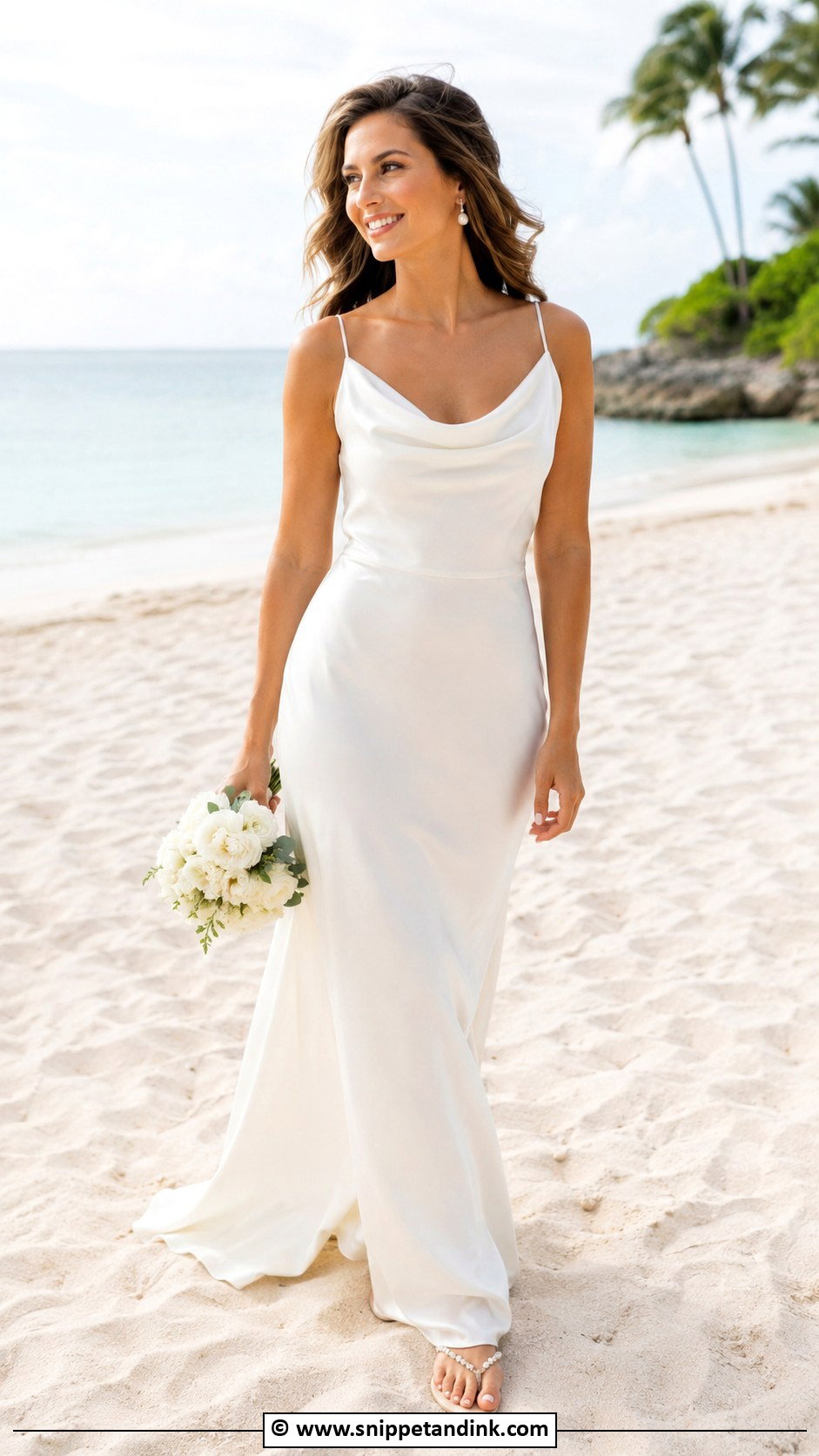
On a beach, wind and sand decide the dress. Soft satin, chiffon or silk blends move with the breeze and don’t look overdressed by the water. Skip the train or keep it very short, since sand clings to anything trailing. Wind also lifts a cowl and flips it, so ask your seamstress about a small weight sewn inside the drape. A slim sheath, flowing A-line or slip silhouette suits it. Flat sandals, pearl earrings and loose waves finish the look.

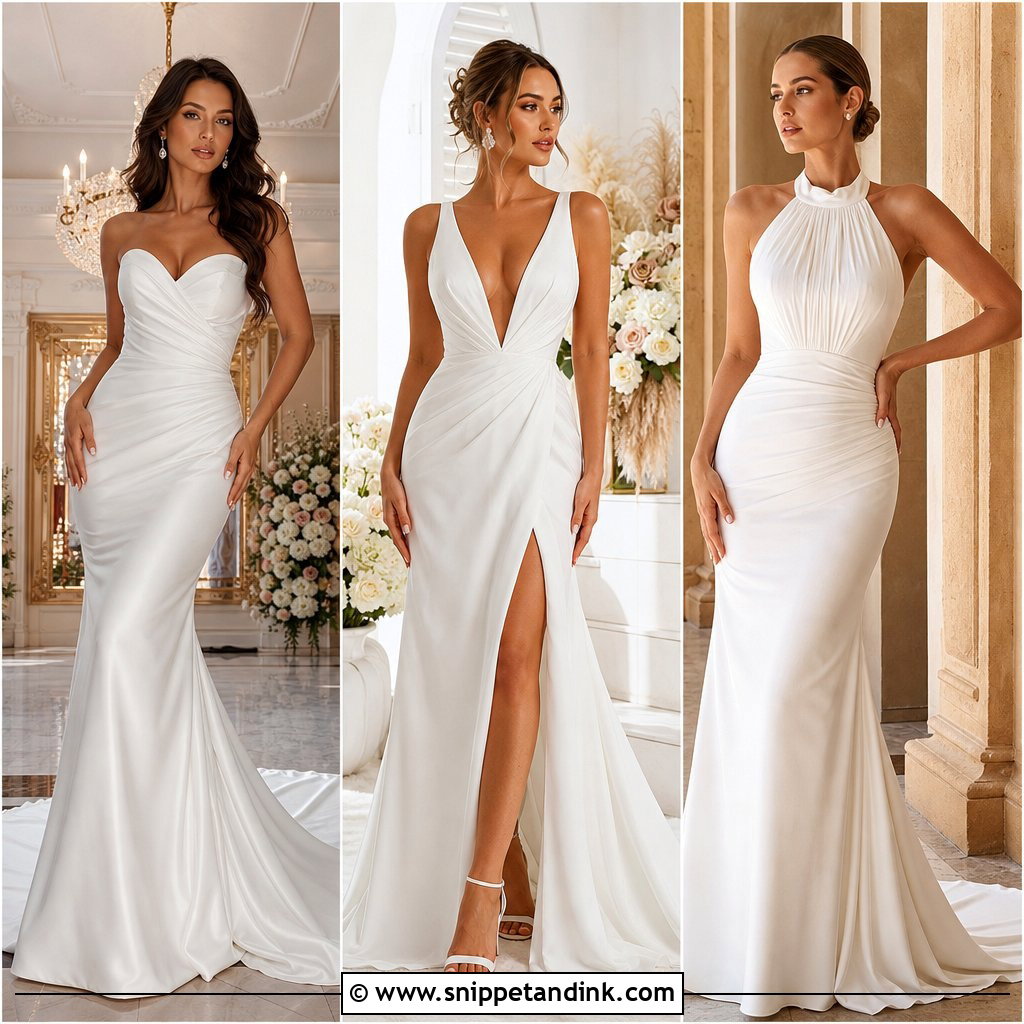
15. Cowl Neck Courthouse Wedding Dress
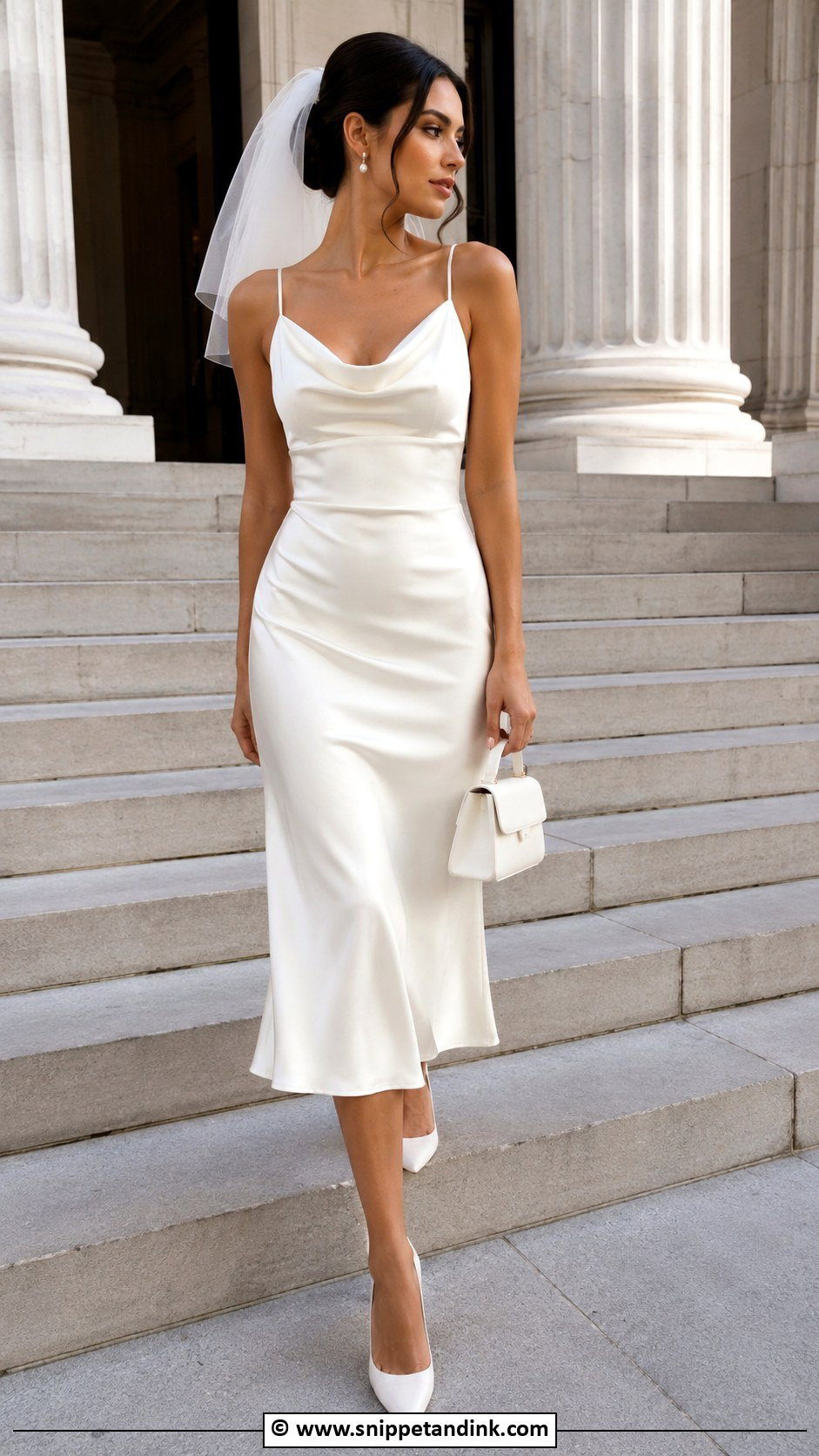
For a civil ceremony, a cowl neck courthouse wedding dress gives softness without the formality of a gown. A midi satin slip, simple crepe sheath or ankle-length cowl all work. You’ll sign papers, so lean forward in the dress at your fitting and see where the neckline falls. Pointed pumps, a structured mini bag and small earrings keep it sharp. A short veil, hair bow or pearl clip makes it feel ceremonial. It goes straight from vows to lunch.
16. Cowl Neck Reception Wedding Dress
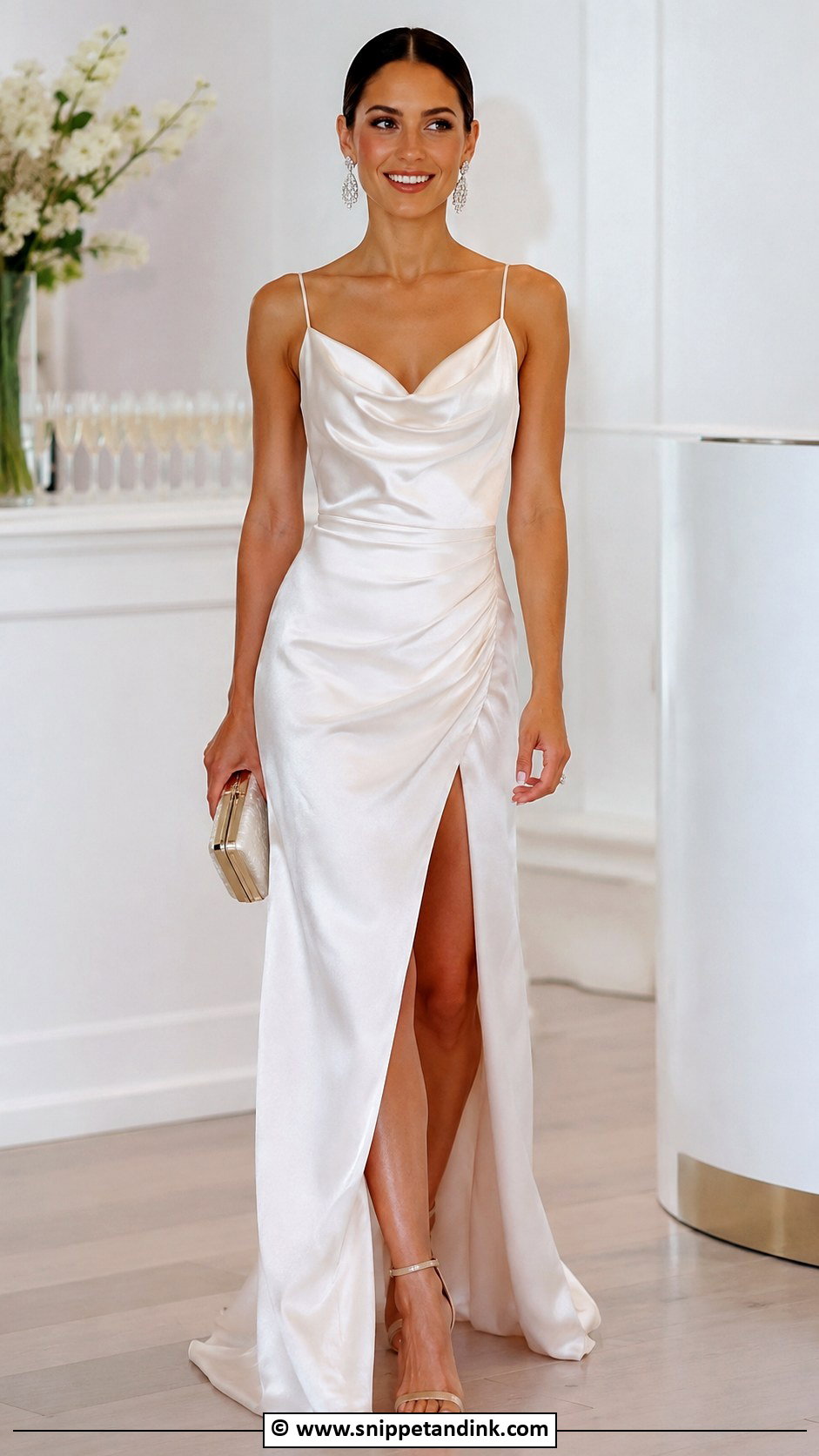
A cowl reception dress is the easy second look after a fuller ceremony gown. A satin slip, a midi or a simple draped dress keeps you bridal but lets you dance and mingle. A side slit or low back makes it more playful. Dancing is hard on cowls, so I’d tack the drape lightly at two points inside so it doesn’t fall open with raised arms. Sparkly earrings, comfortable heels and a sleek clutch complete it.
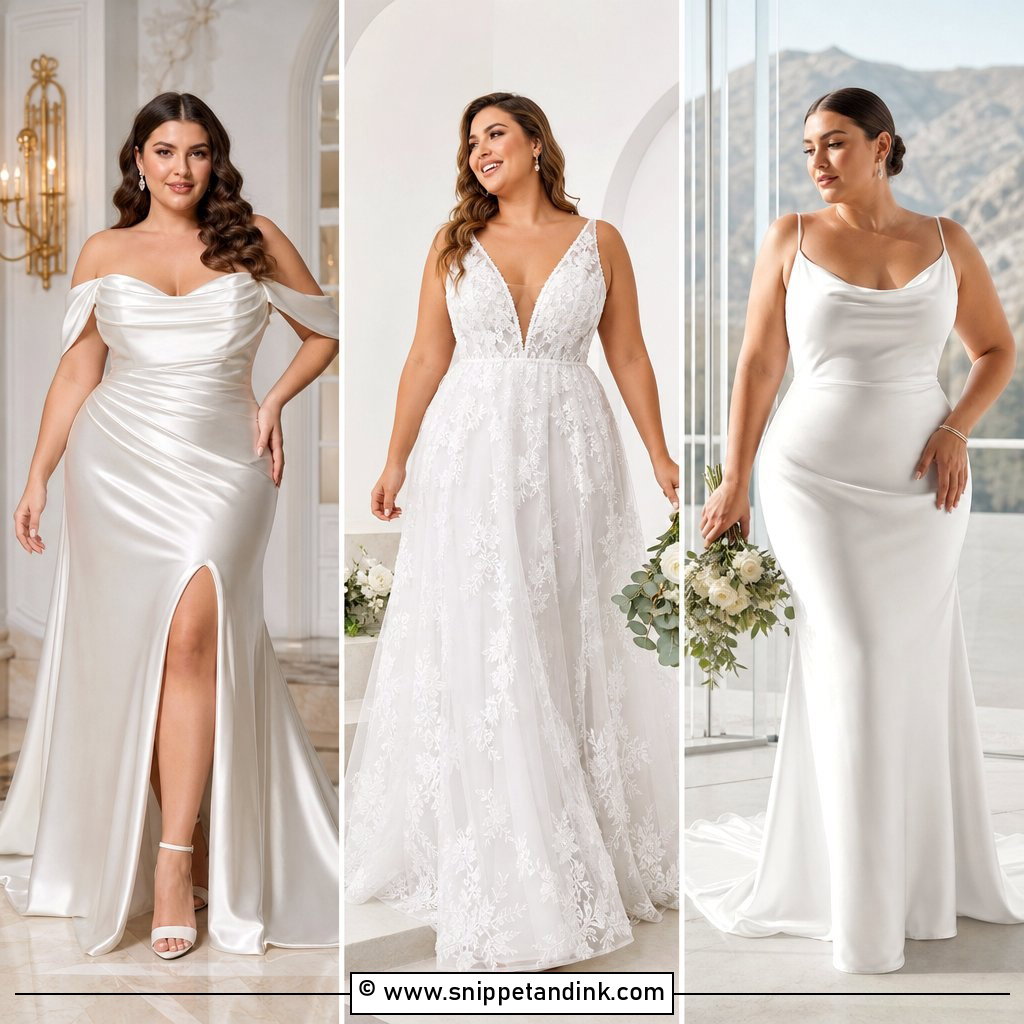
17. Cowl Neck Plus Size Wedding Dress
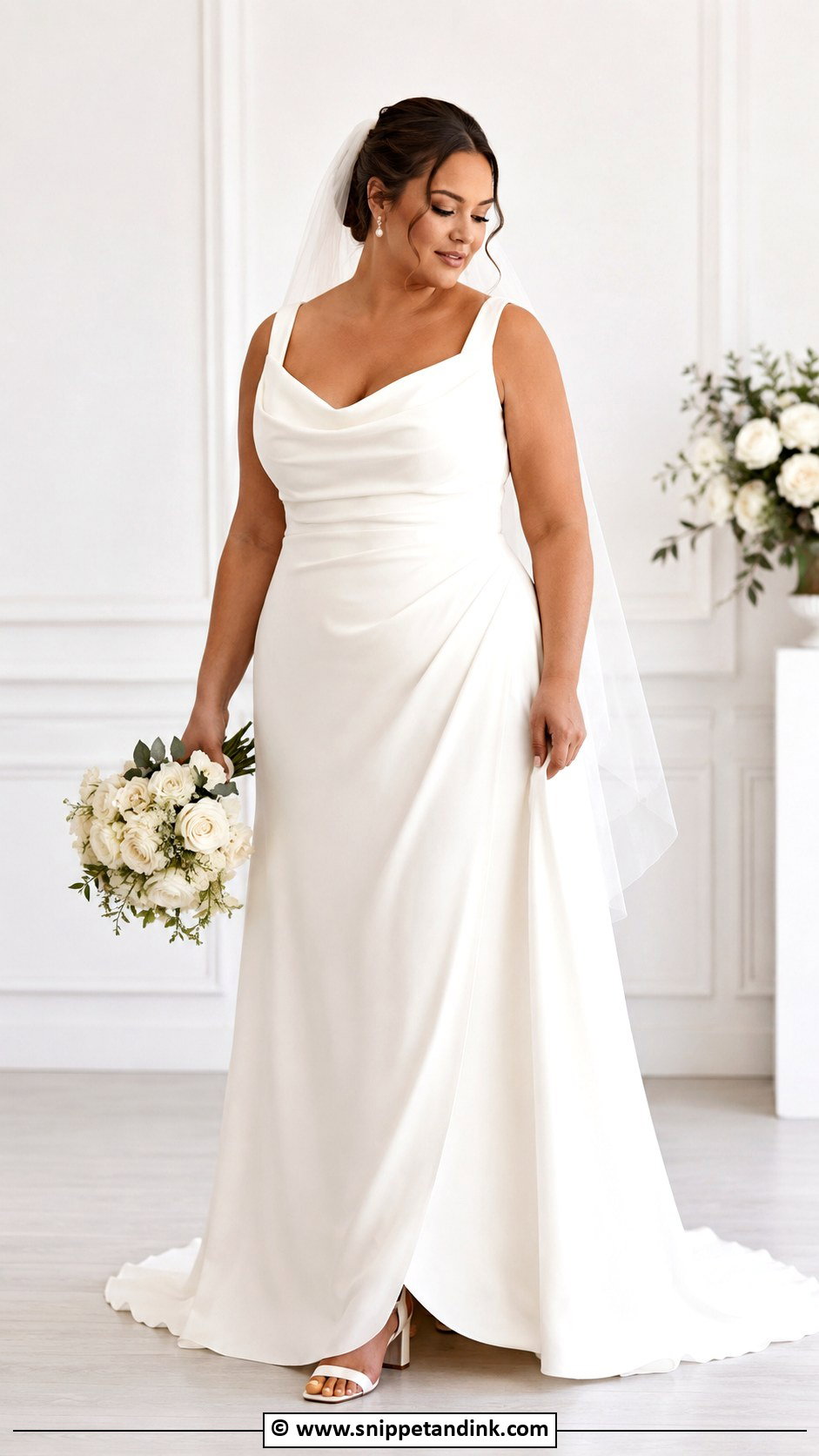
A cowl neck plus size wedding dress works when support comes first. I look for built-in structure, wider straps and a drape that falls softly without collapsing flat. Crepe, satin and silk blends all work if the bodice is tailored to support the bust and define the waist. An A-line skirt gives easy movement, while a fit-and-flare highlights curves. Bring your actual bridal undergarments to every fitting, since they change how the cowl sits. A veil that matches the gown’s formality finishes it.
18. Cowl Neck Petite Wedding Dress
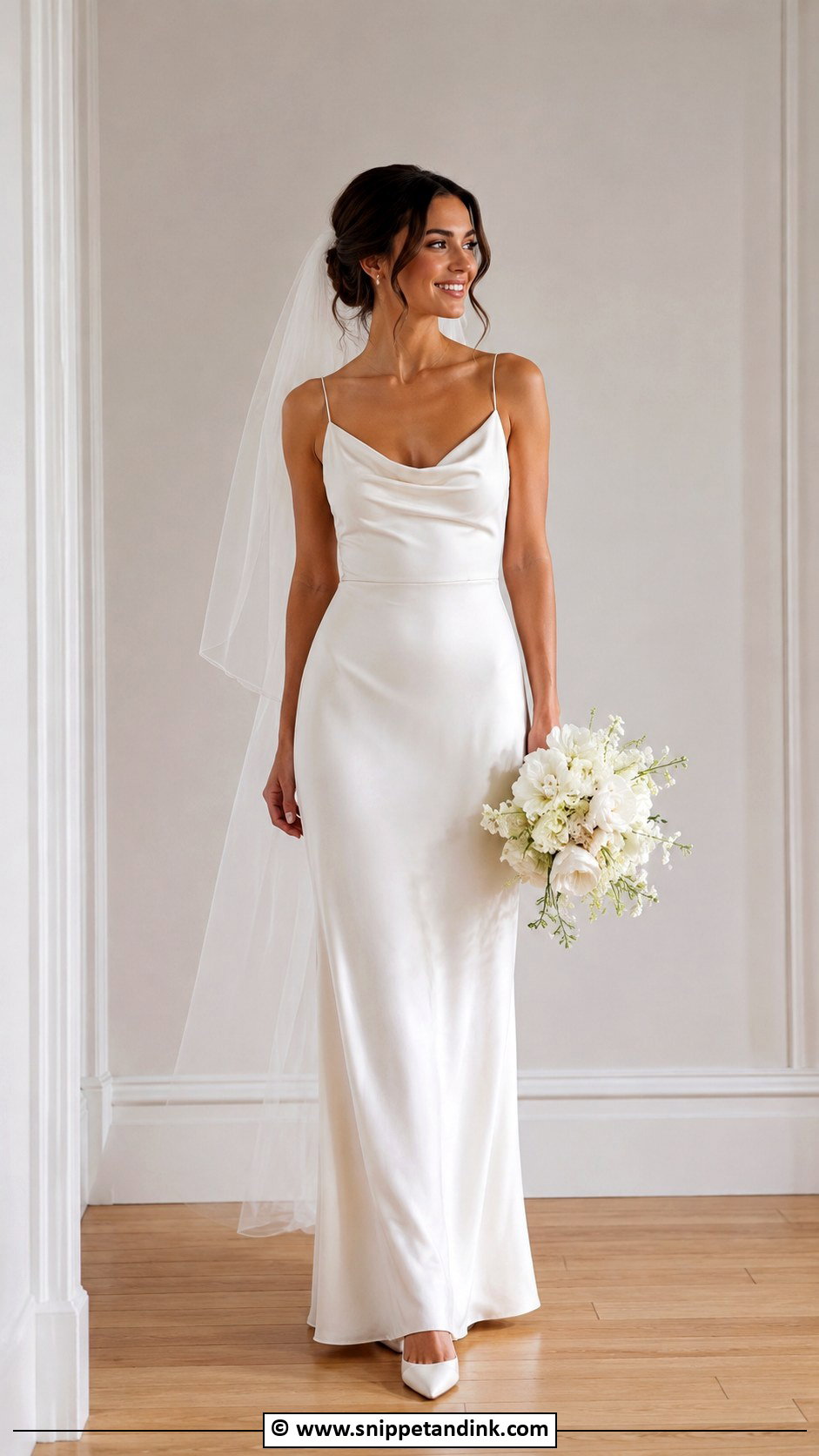
On a petite frame, proportion is everything. A deep, heavy cowl can swallow a small torso, so I’d keep the drape moderate and the straps thin. Slim slips, sheaths and soft A-lines keep the eye moving vertically. A slightly higher waist and a skirt with little volume help too. Pointed heels or simple sandals lengthen the line. Skip heavy trains for easier movement. Get the cowl depth adjusted in alterations, since standard sizes are cut for a longer torso.
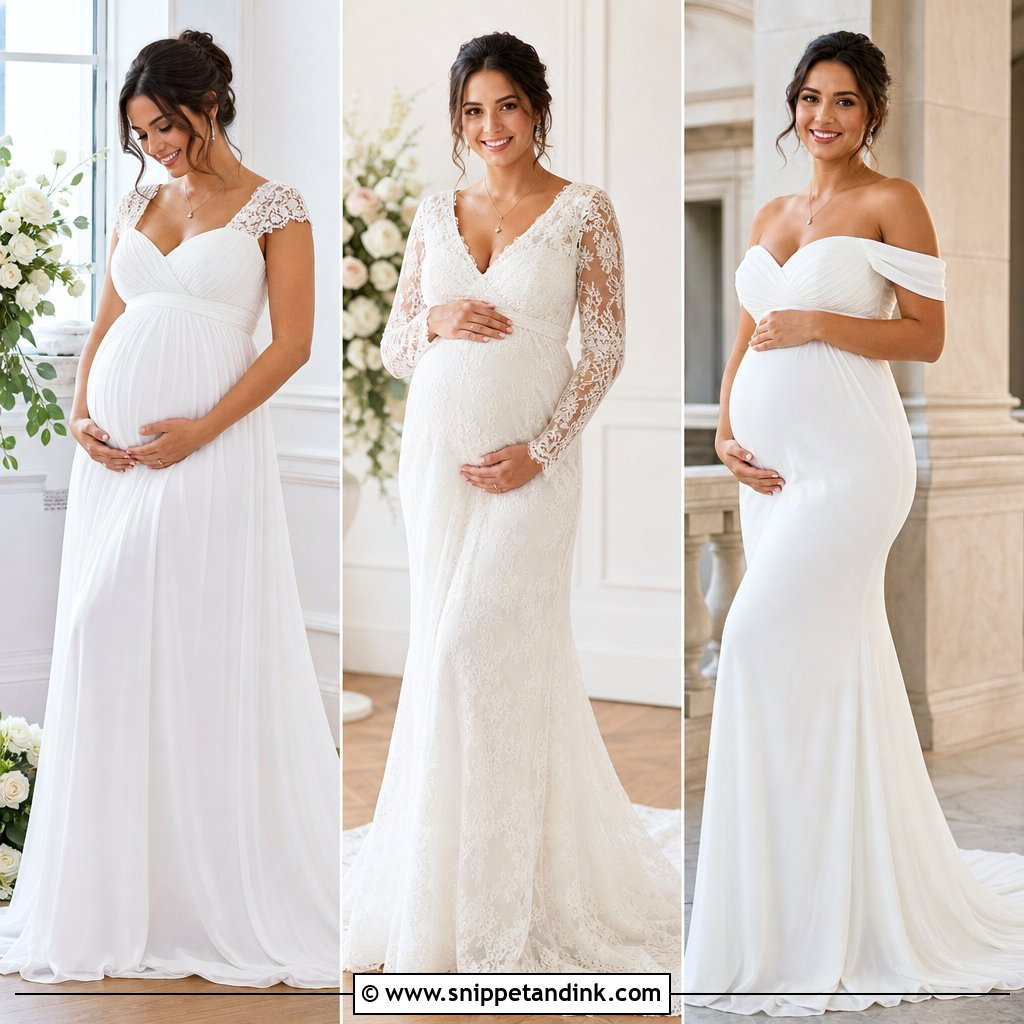
19. Cowl Neck Maternity Wedding Dress
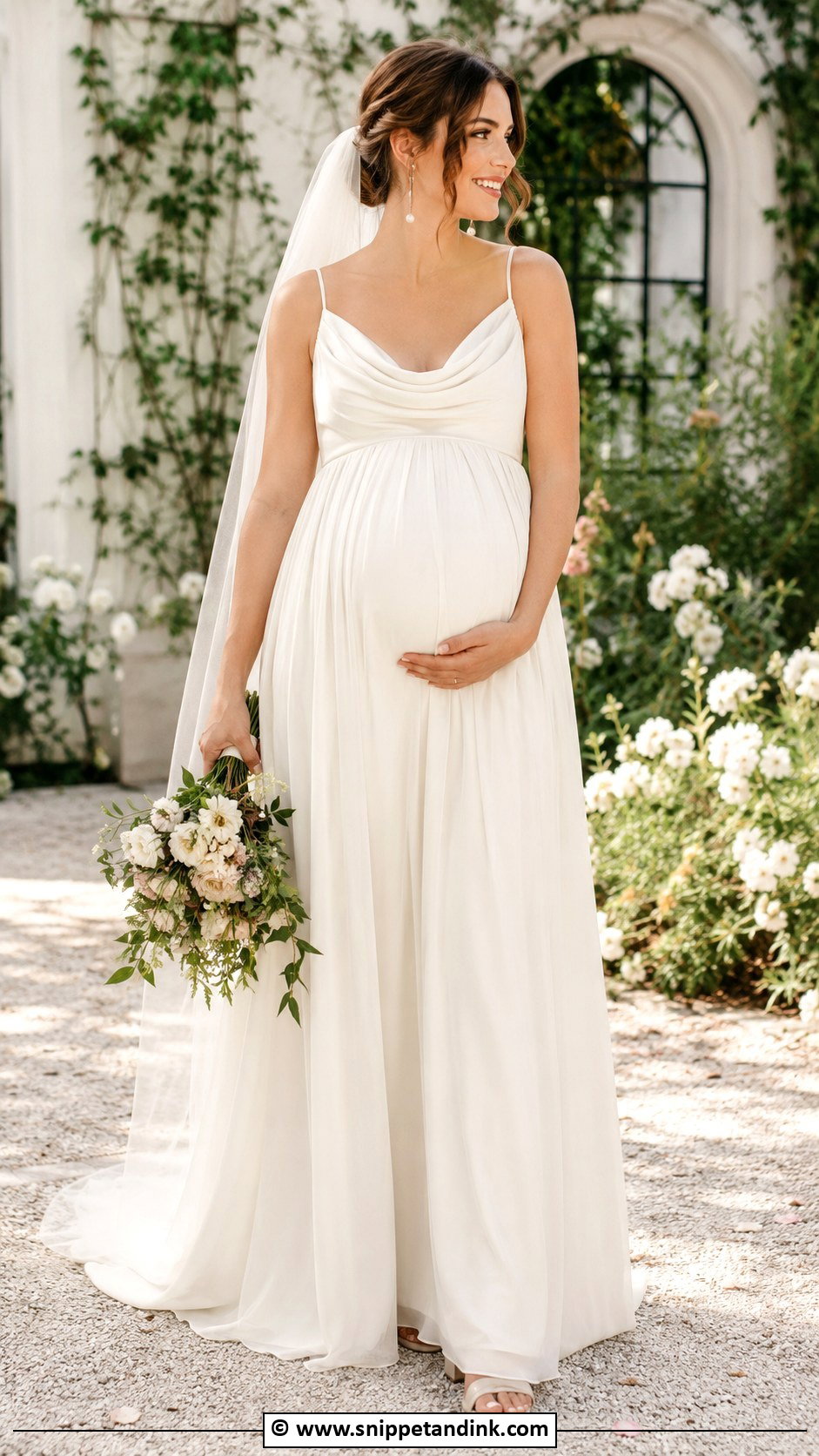
A cowl neck maternity wedding dress needs to feel comfortable through a full day without any pressure at the waist. Empire waists, flowing A-lines and stretch crepe all work well. The cowl brings softness near the face while the skirt gives room through the body. Bodies change quickly in pregnancy, so I’d schedule the final fitting as close to the date as your seamstress allows and choose adjustable straps. Low block heels, delicate earrings and a lightweight veil complete it.
20. Cowl Neck Vintage Wedding Dress
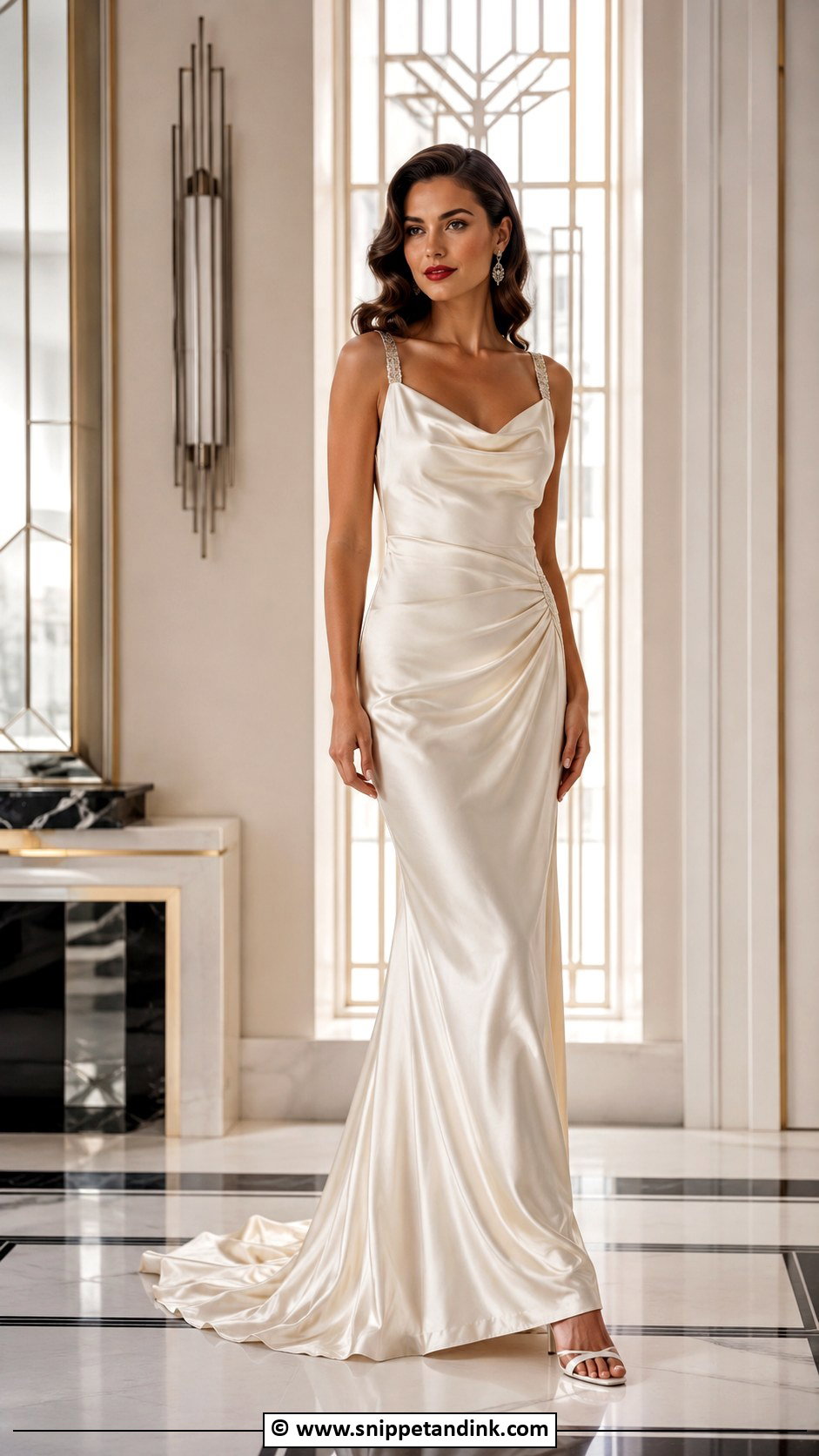
This one borrows from 1930s and Old Hollywood bridal fashion: fluid satin cut on the bias, fine straps and a drape that skims the body. Bias cuts stretch slightly, so the hem can drop over time; let the dress hang for a day before the final hem is set. Soft waves, vintage-inspired earrings and elegant heels suit it, and a small train or low back adds the finishing touch. Keep accessories refined so it looks like a nod to the past, not a costume.
21. Cowl Neck Boho Wedding Dress
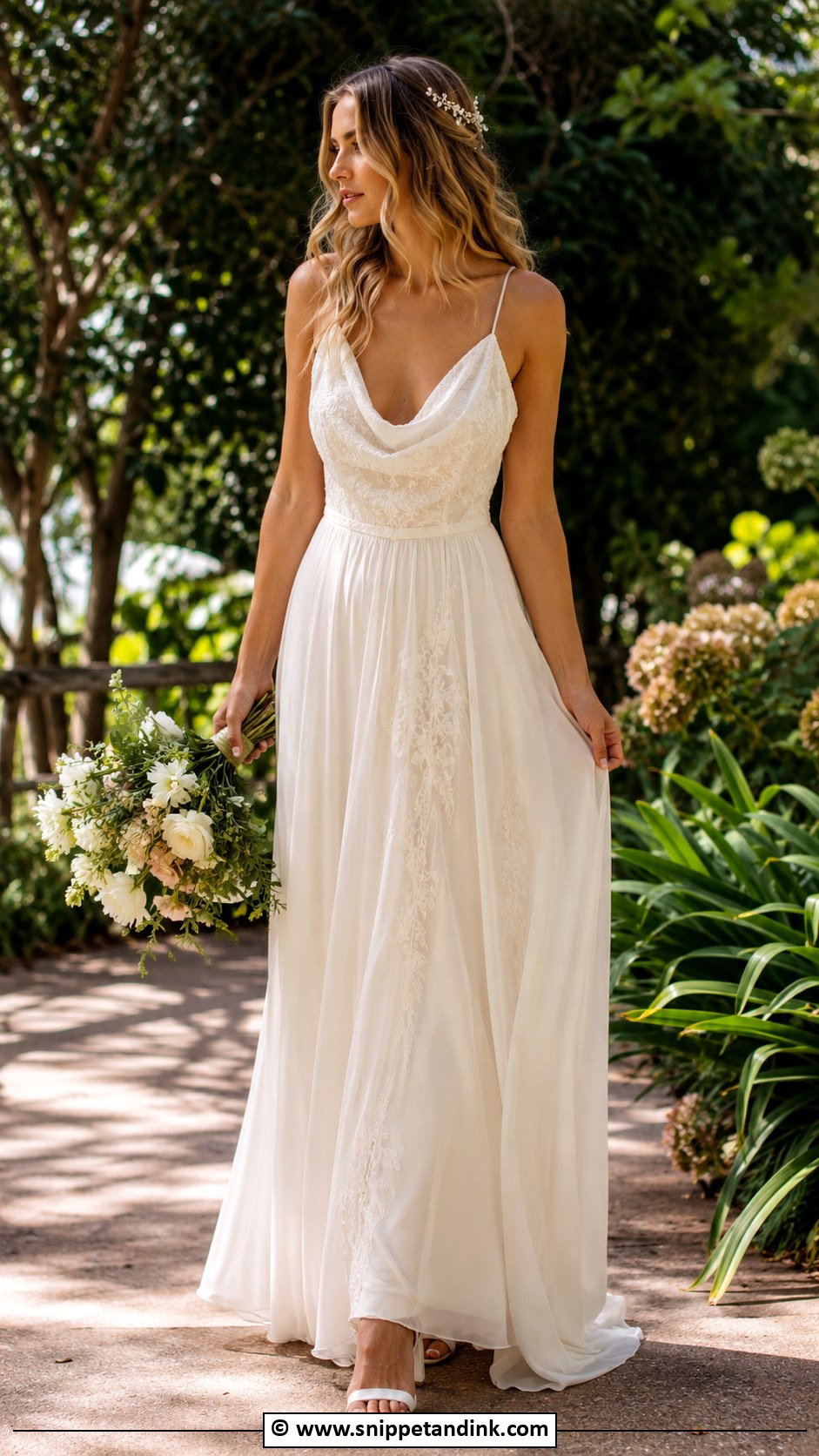
Boho cowls use soft chiffon, matte satin, lace trims and flowing skirts. The cowl adds a gentle drape, and flutter sleeves, a low back or subtle embroidery give the free-spirited feel. Loose waves, delicate hair pins and simple sandals or block heels suit it, along with a bouquet of soft textures. Go light on accessories; boho style depends on looking unforced. It suits garden and outdoor weddings.
22. Cowl Neck Minimalist Wedding Dress
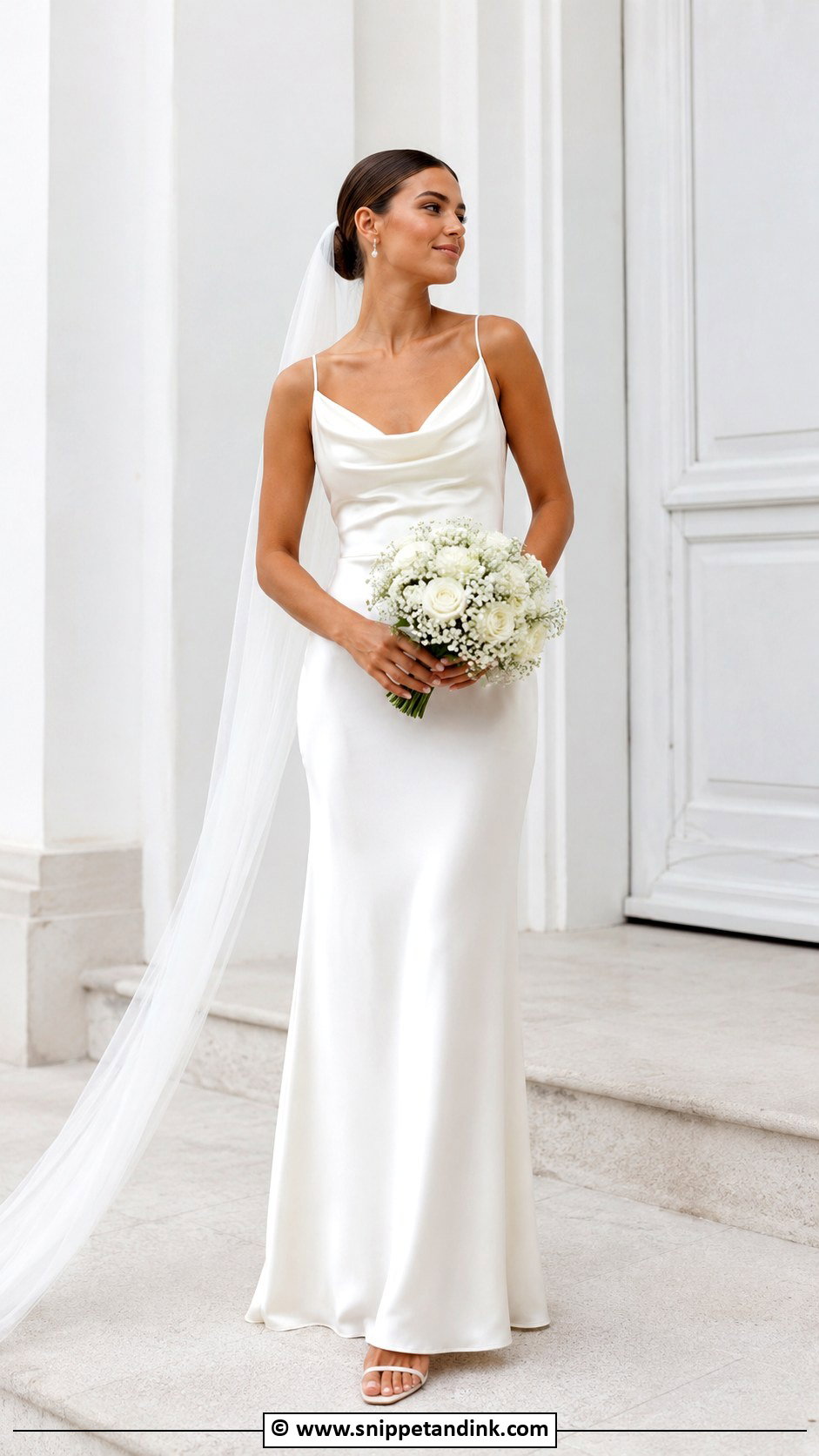
With nothing else on the gown, the drape is the whole design, so fabric and fit carry everything. Satin, silk and crepe keep the surface smooth. A sheath, slip or simple A-line all work, depending on how much movement you want. Small earrings, sleek hair and elegant heels keep it calm. A plain veil adds drama for the ceremony without changing the mood. Any fitting flaw shows on a minimal gown, so budget for alterations.
23. Cowl Neck Ball Gown Wedding Dress
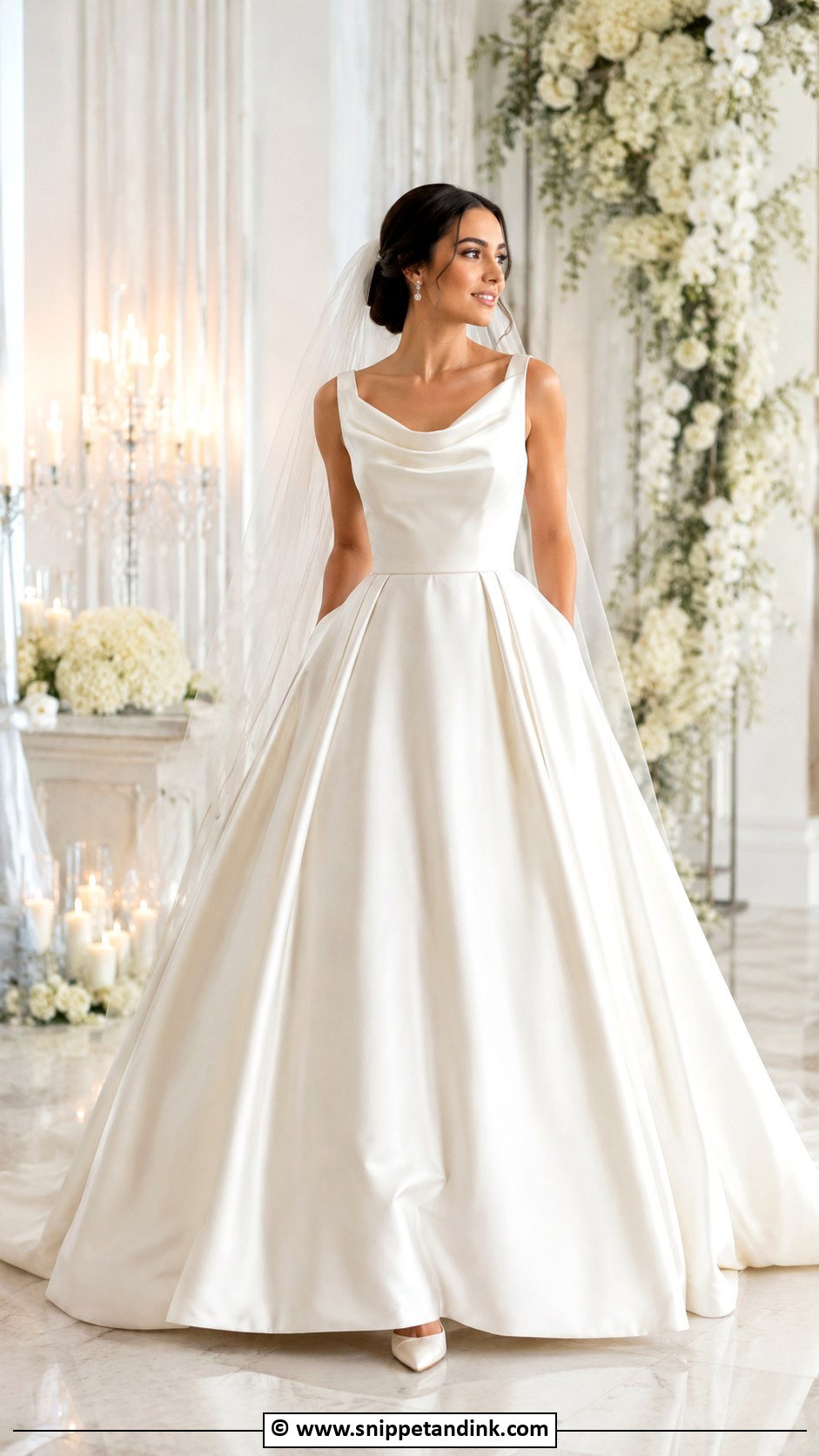
Can a cowl neckline work with a dramatic skirt? Yes, when the bodice is structured and the drape is controlled. A cowl neck ball gown gives you a soft upper body and a full skirt. Satin and mikado hold volume; organza is lighter and airier. Ask how the cowl is anchored, since a ball gown’s weight pulls the bodice down and can drag the drape lower over the day. Keep the waist defined. A simple veil, small earrings and classic heels keep the attention on the dress.
24. Cowl Neck Tea Length Wedding Dress
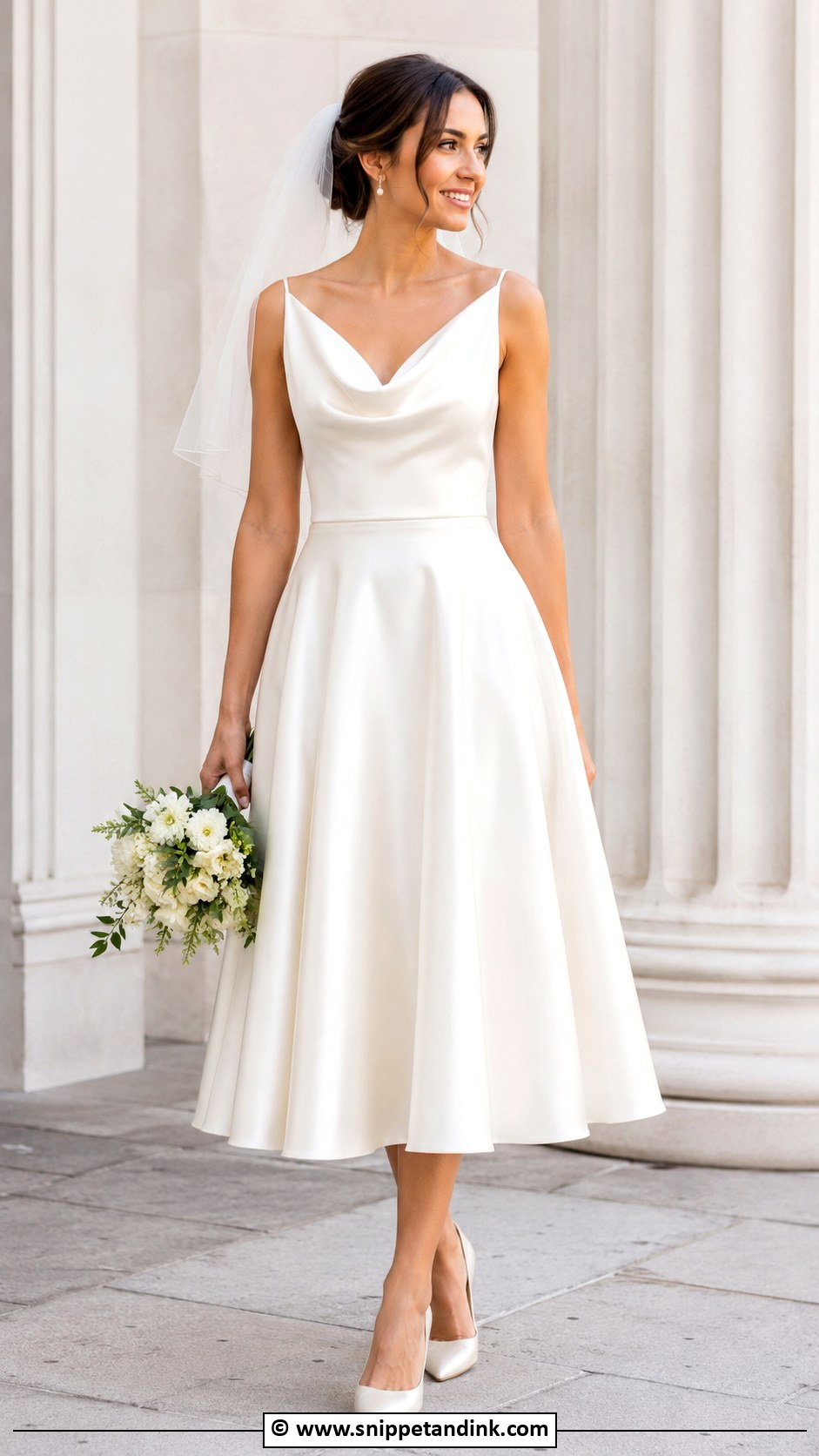
Tea length is the playful option. The shorter hem shows your shoes, while the draped neckline keeps the dress feeling dressed up. It suits courthouse weddings, casual receptions and garden ceremonies. Satin gives a polished finish; crepe is more modern. Pointed pumps, pearl earrings and a short veil or hair bow complete it. Your shoes are on show here, so choose a pair that is both special and comfortable enough for hours.
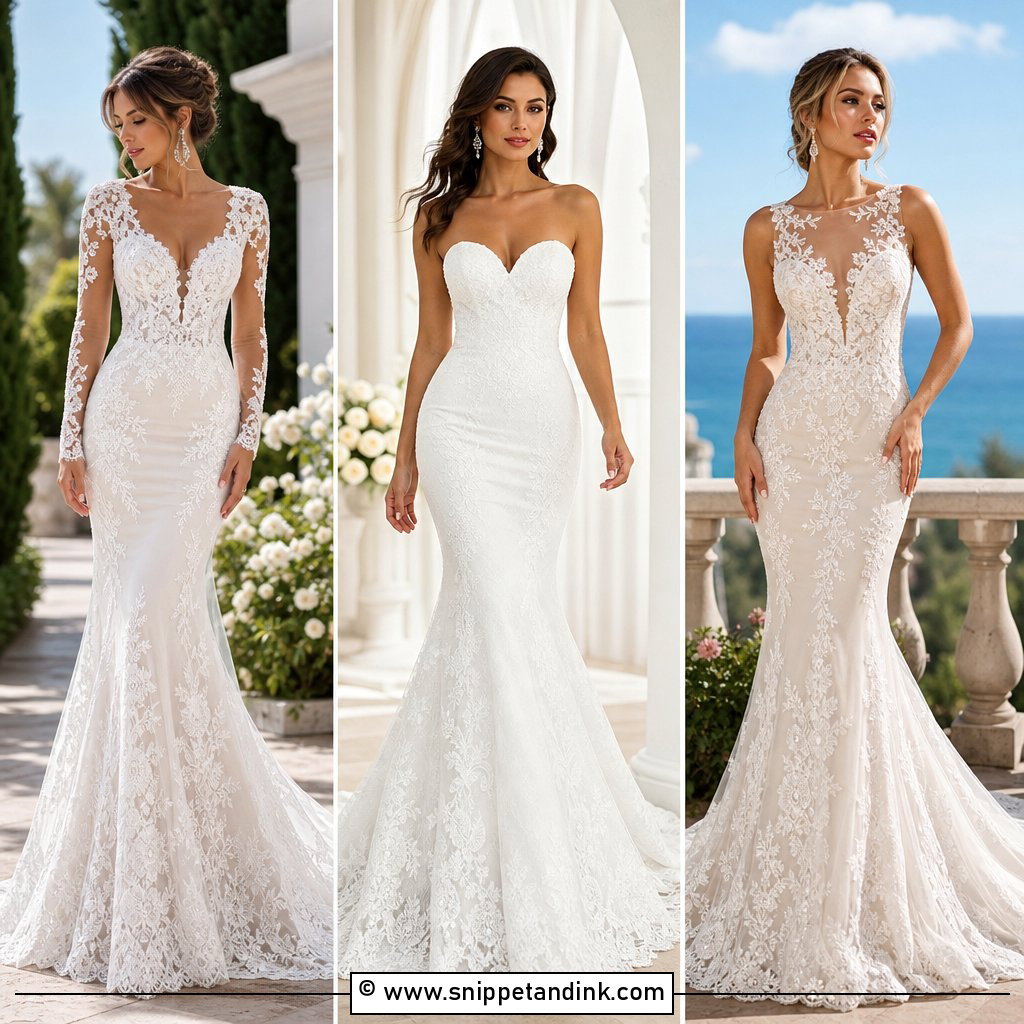
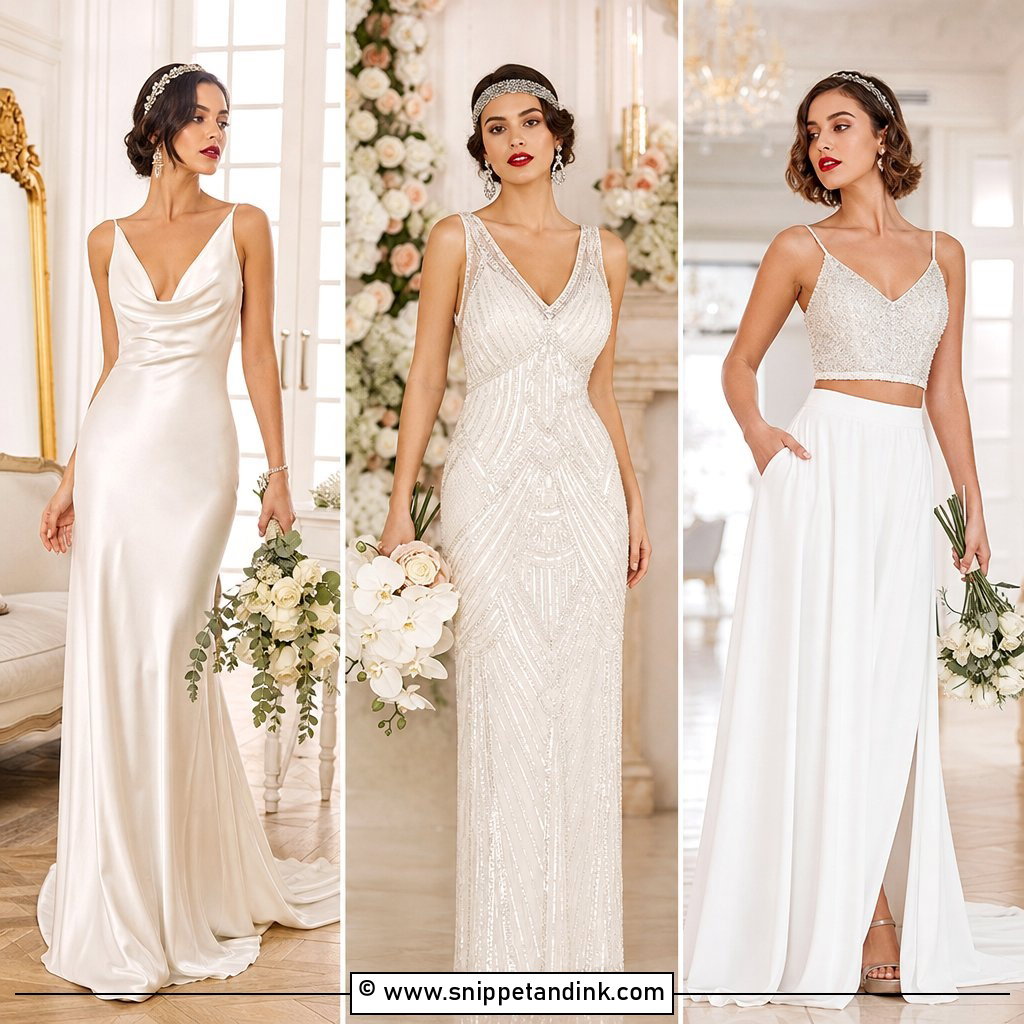
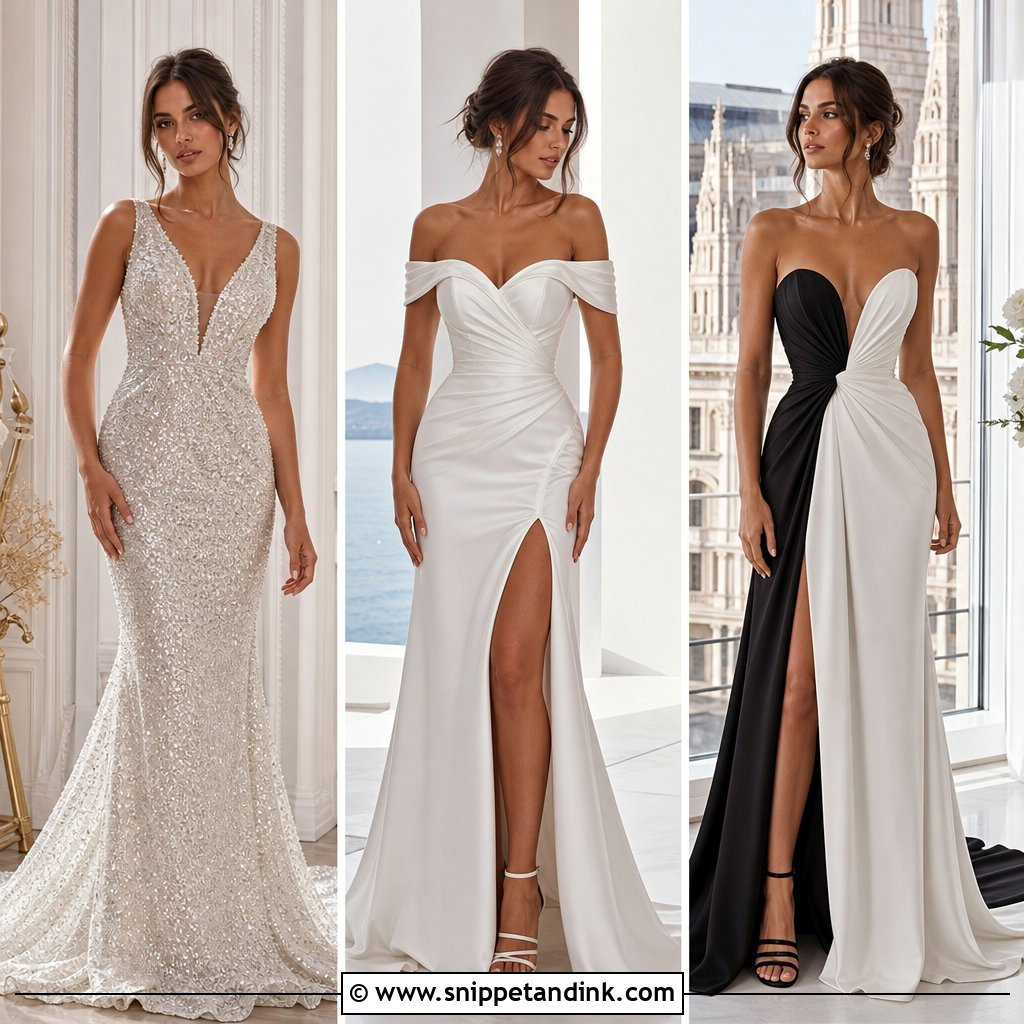
25. Cowl Neck Wedding Dress With Detachable Sleeves
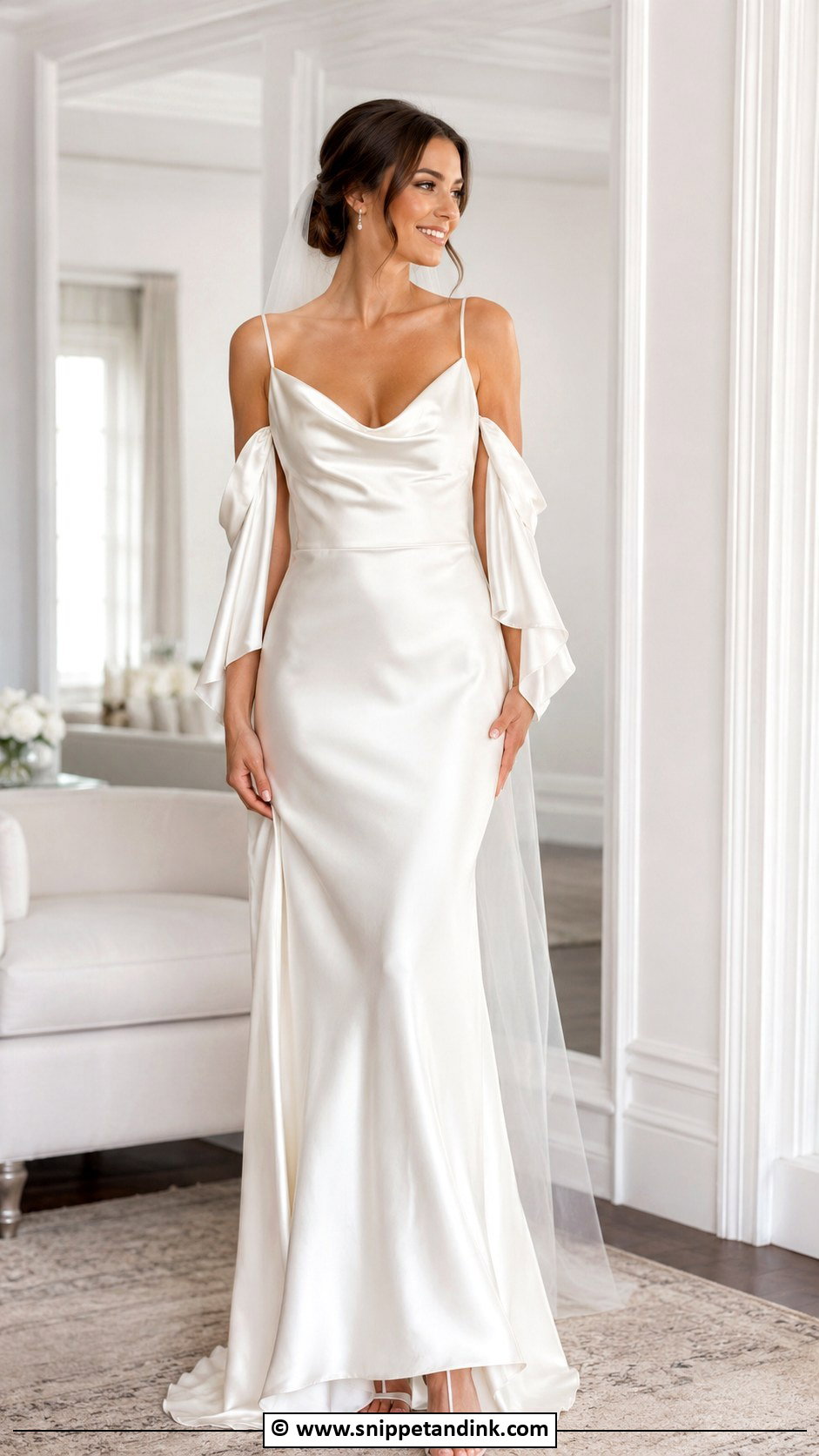
Detachable sleeves give you two dresses. Wear them for the ceremony for softness and coverage, then remove them for a cleaner reception look. Draped satin, sheer chiffon or fitted crepe sleeves all work. Ask how the sleeves attach: small hooks, snaps or ties should sit hidden under the strap, and someone should practice removing them before the day. Keep jewelry simple, and wear a low bun or half-up style so the shoulders show.
What Goes Around a Draped Neckline?
Less than you’d think. The folds of a cowl are already the decoration, so most of my styling choices are about not covering them.
Necklaces: usually none. A pendant gets lost in the folds and slides around, and a choker crowds the drape. A back necklace on an open-back gown is the exception, since it sits away from the cowl.
Earrings: this is where your jewelry goes. Drops or small sculptural shapes fill the space between jaw and neckline. Keep them in the same metal tone as any hair accessories.
Hair: an updo or a low bun shows the neckline and the shoulders. Long loose hair hides the drape in front, which defeats the purpose, though a half-up style is a fair compromise.
Bouquet: hold it low, at the hip or waist. A large bouquet held high covers the neckline in every ceremony photo. A slimmer, trailing arrangement suits the long line of most cowl gowns.
One last thing: boutonnieres and corsage pins snag silk and satin during hugs. Ask your partner to pin his flower on the side away from you, or swap pins for magnets.
Fit the Drape Before You Fall for the Dress
A cowl neckline can read soft, modern, vintage or completely minimal, depending on the fabric and silhouette underneath it. A satin slip is pure simplicity; lace, chiffon, sleeves or an open back change the mood entirely. What decides whether it works on you is fit, support, fabric weight and where the drape lands on your body. Try several strap widths, skirt shapes and back designs, and bend, sit and hug in each one. The right cowl gown stays graceful in every one of those moves.
You'll Like These Ideas:


Leave a Reply