
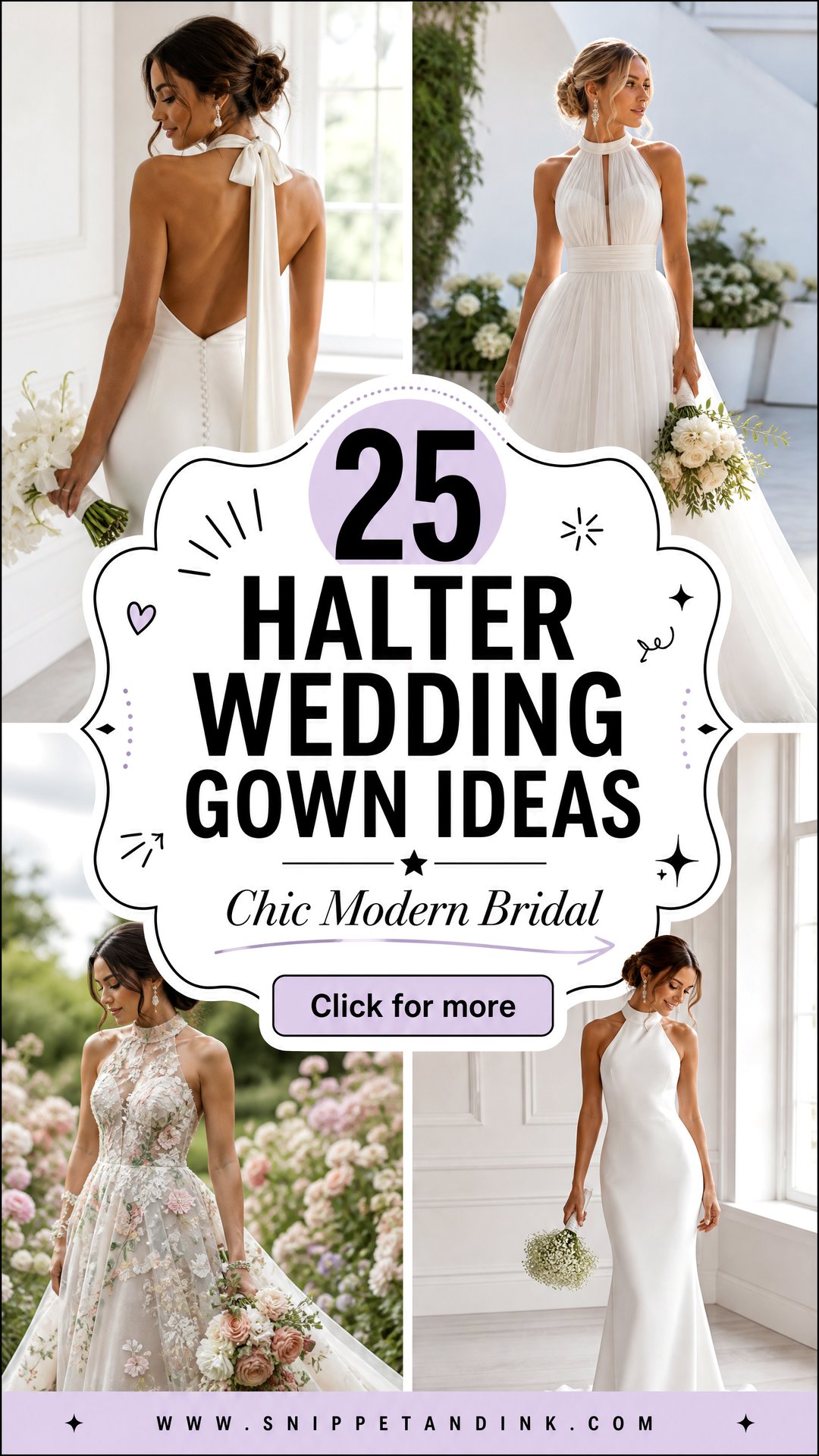
Halter necklines keep coming up in my fittings, and I understand why. The strap anchors the bodice at the neck instead of relying only on boning and grip at the ribs, so brides who have spent an afternoon tugging a strapless dress up tend to relax the moment they try one. The shape also changes completely with fabric: crepe makes it sharp and architectural, lace softens it, a bias-cut silk turns it into something closer to 1930s evening wear. What I want you to take from the ideas below is less about which picture you like and more about how each version sits on a real body for a whole day, because a halter has its own quirks with support, posture and hair that are worth knowing before you book appointments.
Getting a Halter Strap to Sit Right at Your Fitting
Most halter complaints I hear trace back to one thing: the strap is doing the work the bodice should do. The neck strap is there to hold the shape of the neckline, not to lift the bust. If you feel the dress pulling forward on the back of your neck in the fitting room, it will feel twice as heavy by the speeches.
These are the checks I run on every halter, in this order:
- Slide two fingers between the strap and the back of your neck. If they don’t fit, the strap is too tight; if a whole hand fits, it will slip toward your shoulders.
- Look at the clasp. A hook-and-eye or a button loop can be adjusted later; a strap sewn into one continuous band is harder to alter, so get the length right early.
- Lean forward as if signing the register. The front should stay flat against your chest without gapping at the sides.
- Lift both arms. If the side panels pull away and show your bra line, they need taking in, not the strap shortening.
Bring the shoes and the undergarments you will actually wear to every fitting. A halter is cut close at the side bust, so a change of bra between fittings can undo a week of alterations.
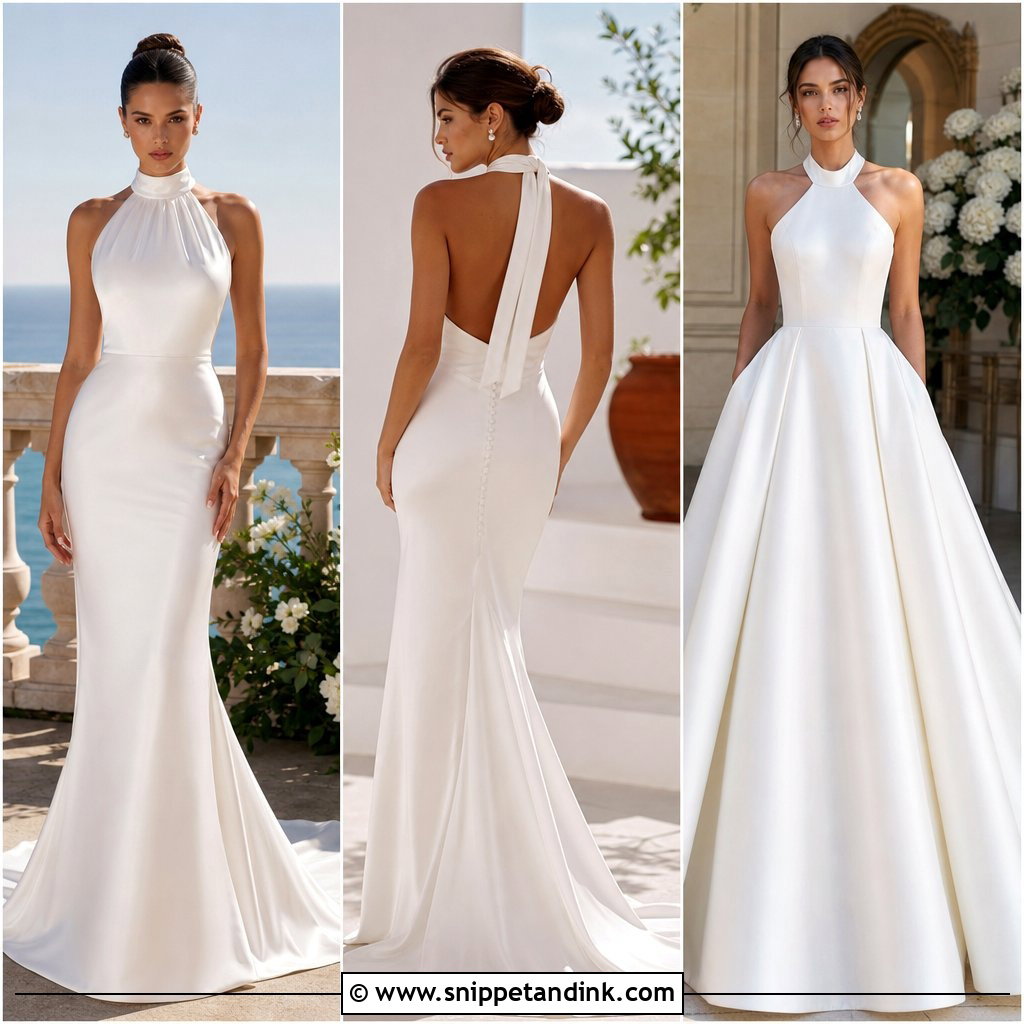
1. Satin Halter Wedding Gown
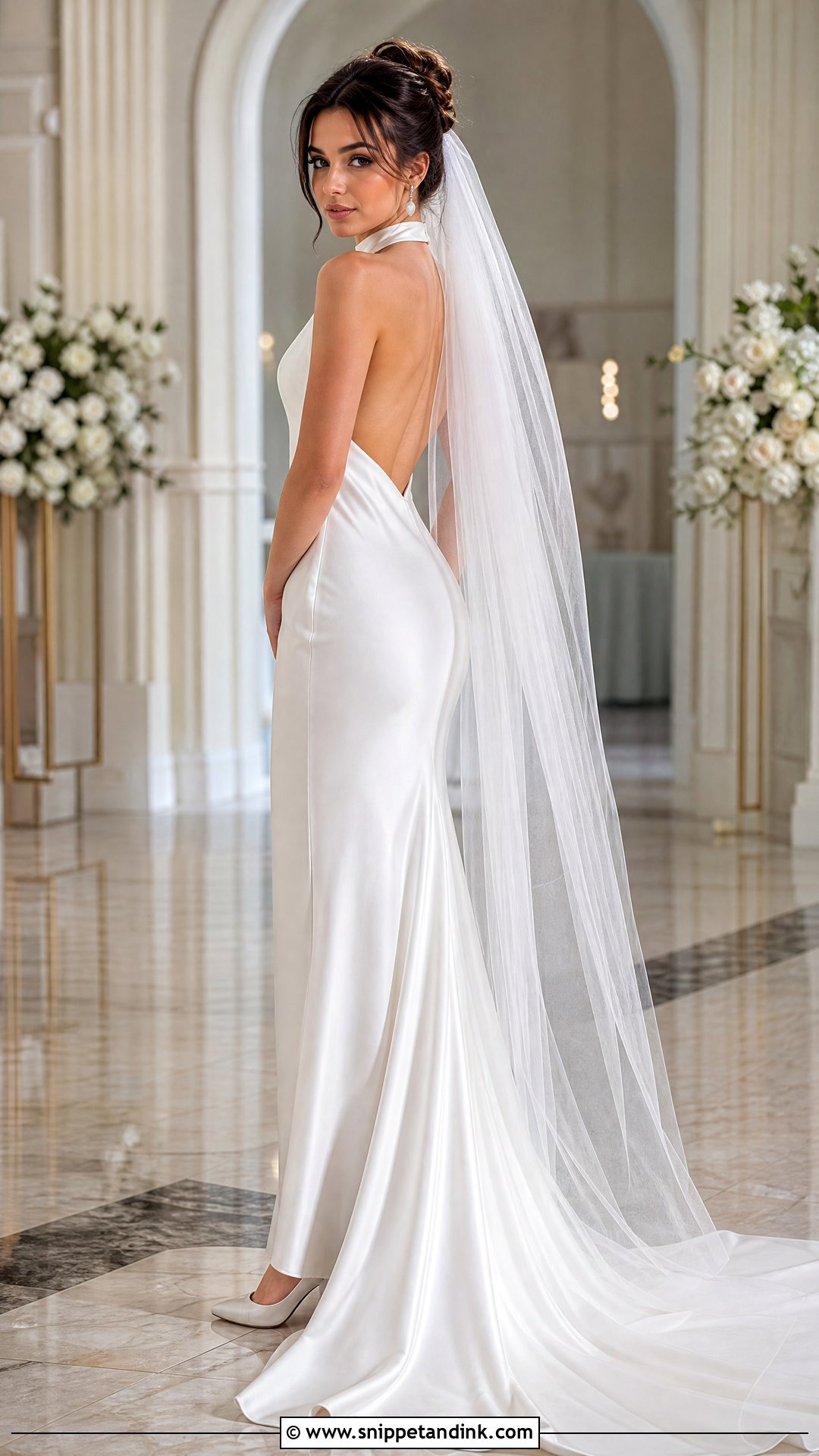
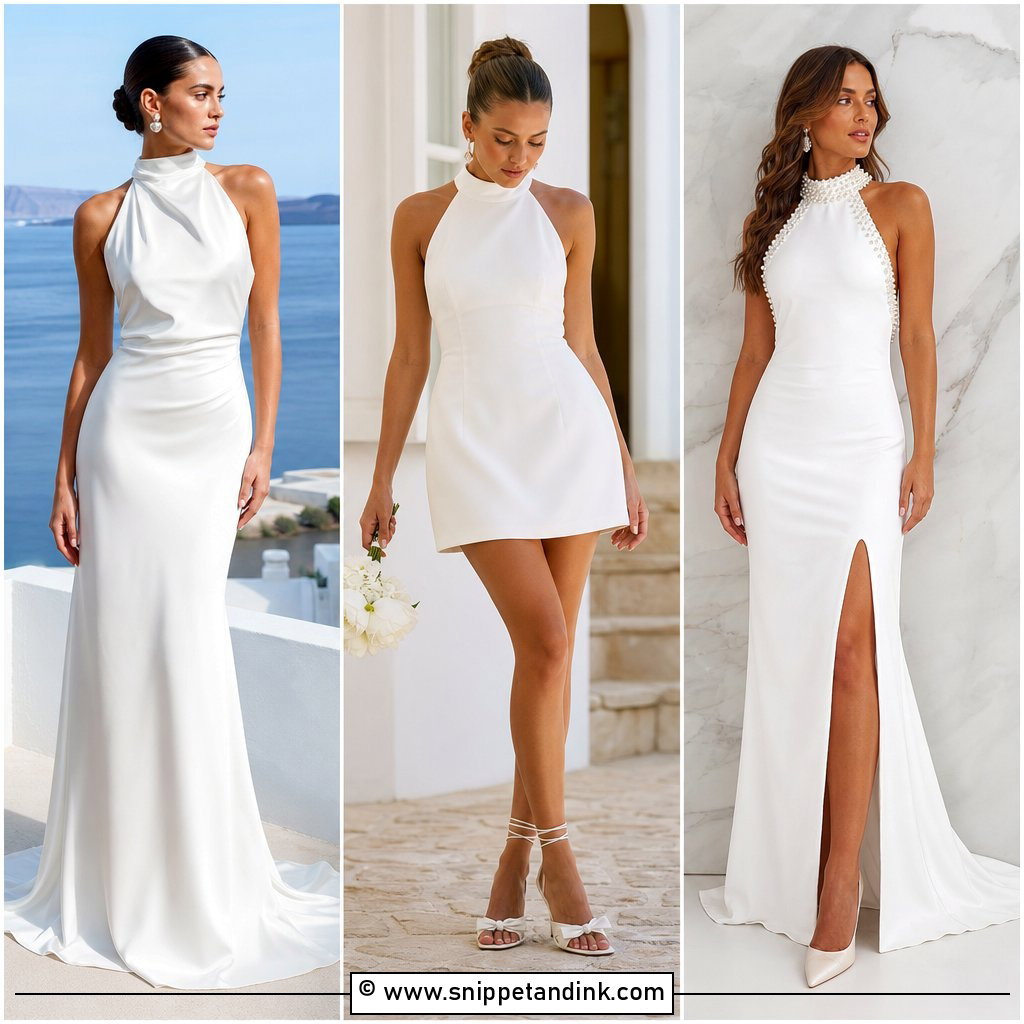
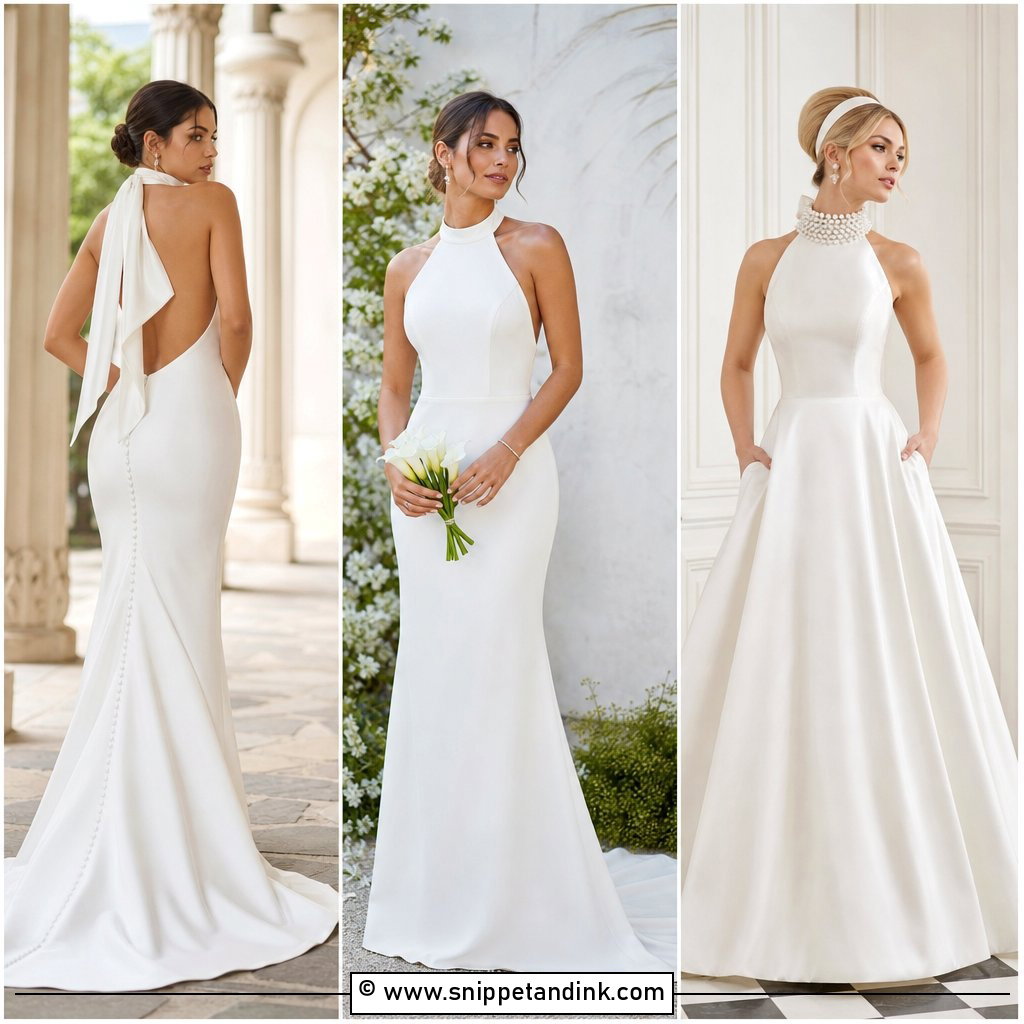
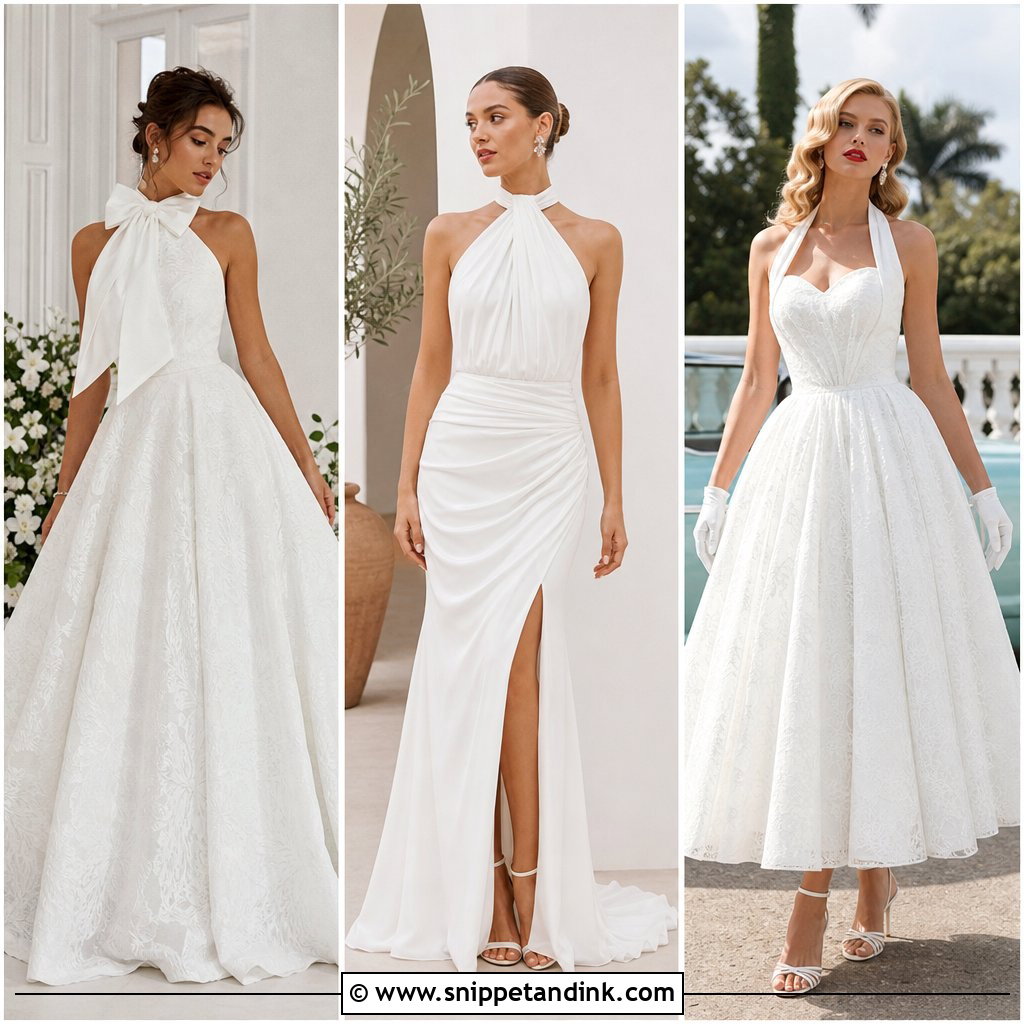
Satin is the most honest fabric you can put in a halter, because it shows everything. A heavy duchess or crepe-backed satin holds the sculpted line of the neck straps; a thin, shiny polyester satin will ripple at the side seams and catch every pucker in flash photos. When I fit one, I ask the bride to sit down in it before we pin anything, since satin creases across the lap more than people expect. Keep the accessories quiet: pearl drops, a low bun and pointed ivory heels are plenty. If the back is open, a long veil gives the bare skin some movement as you walk.
2. Lace Halter Wedding Gown
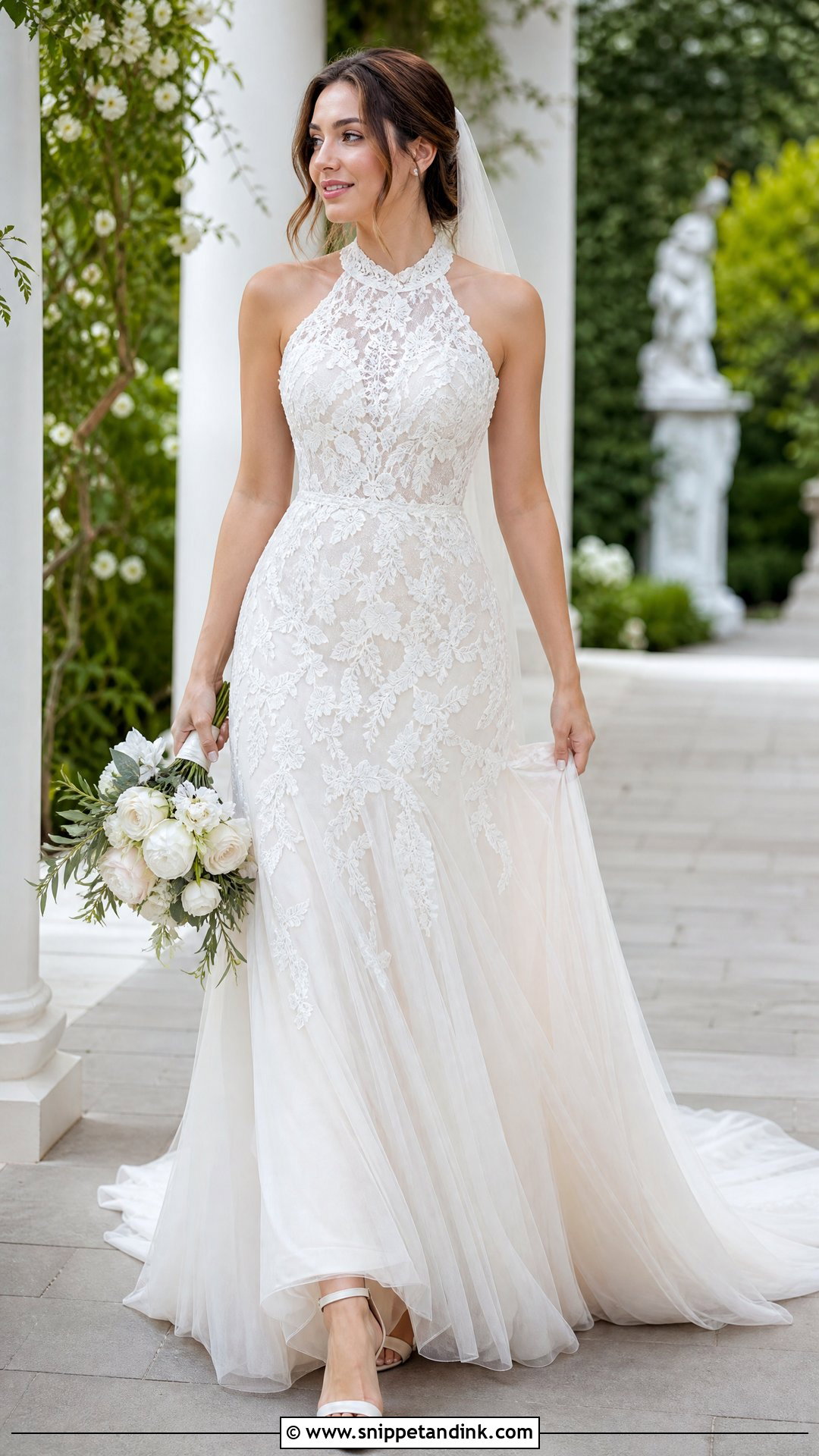
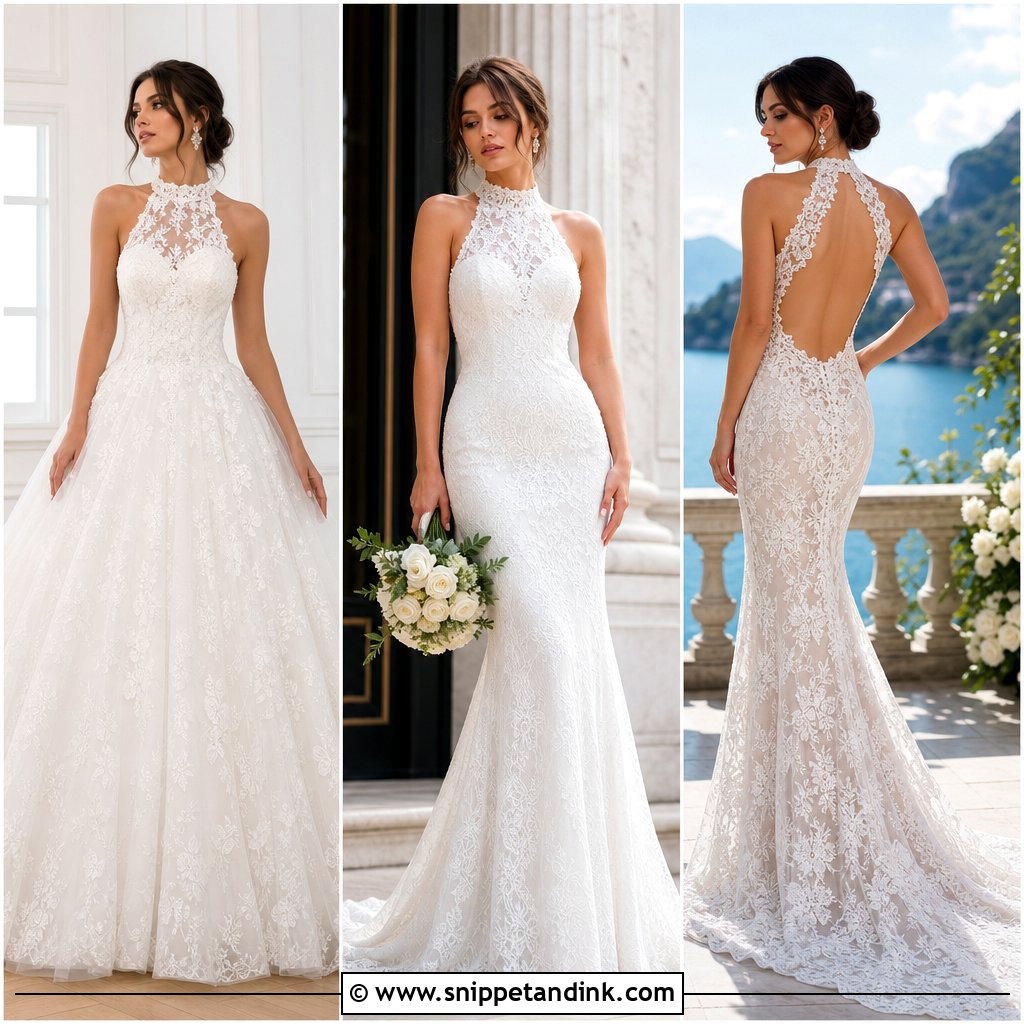
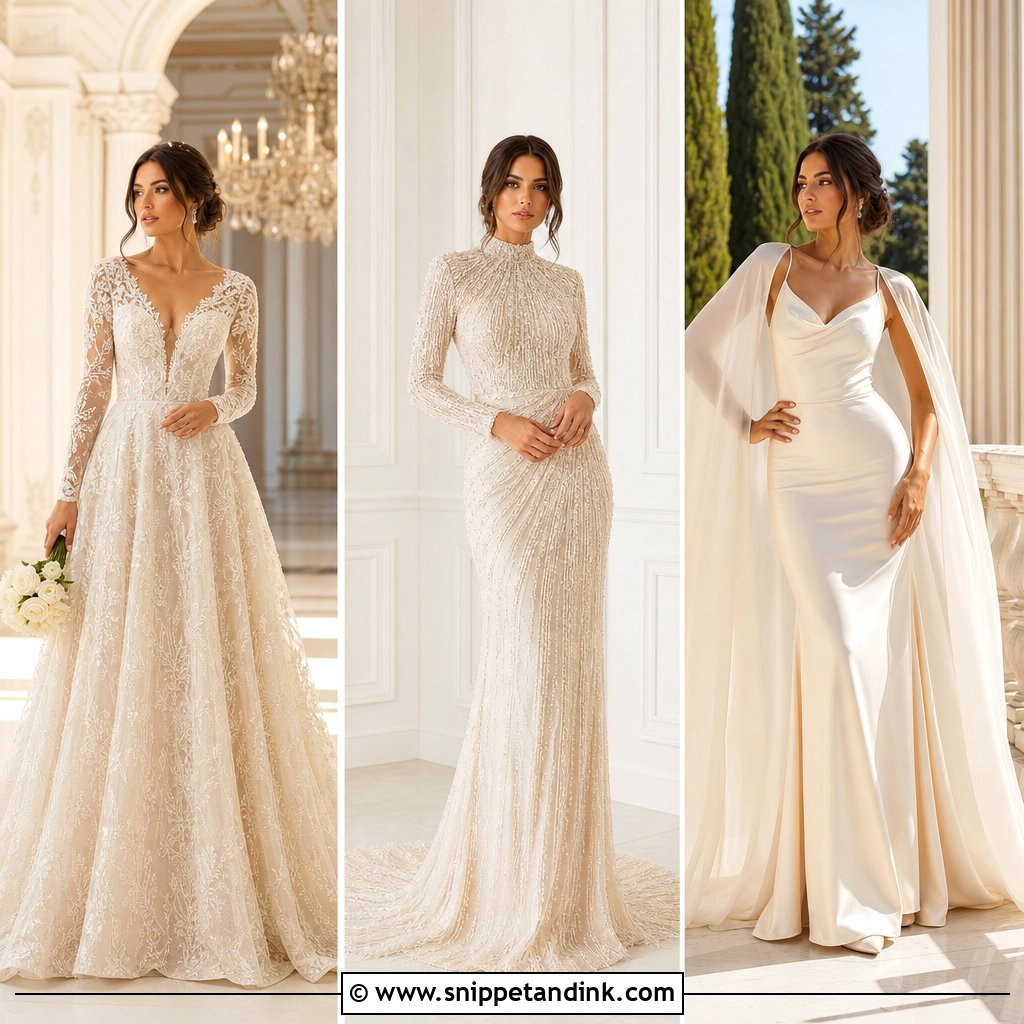
Lace takes the hard edge off a halter. Floral corded lace reads classic; a geometric guipure feels more current and has more body, so it holds the strap shape better on its own. The thing I check first is how the lace is finished where it meets the neck. Scalloped edges that sit right on the skin can scratch after a few hours, and a soft tulle backing behind them makes a real difference. For an outdoor wedding, a lace bodice over a flowing skirt keeps the weight low, and the detail near the face pulls the eye up toward your expression in close portraits.
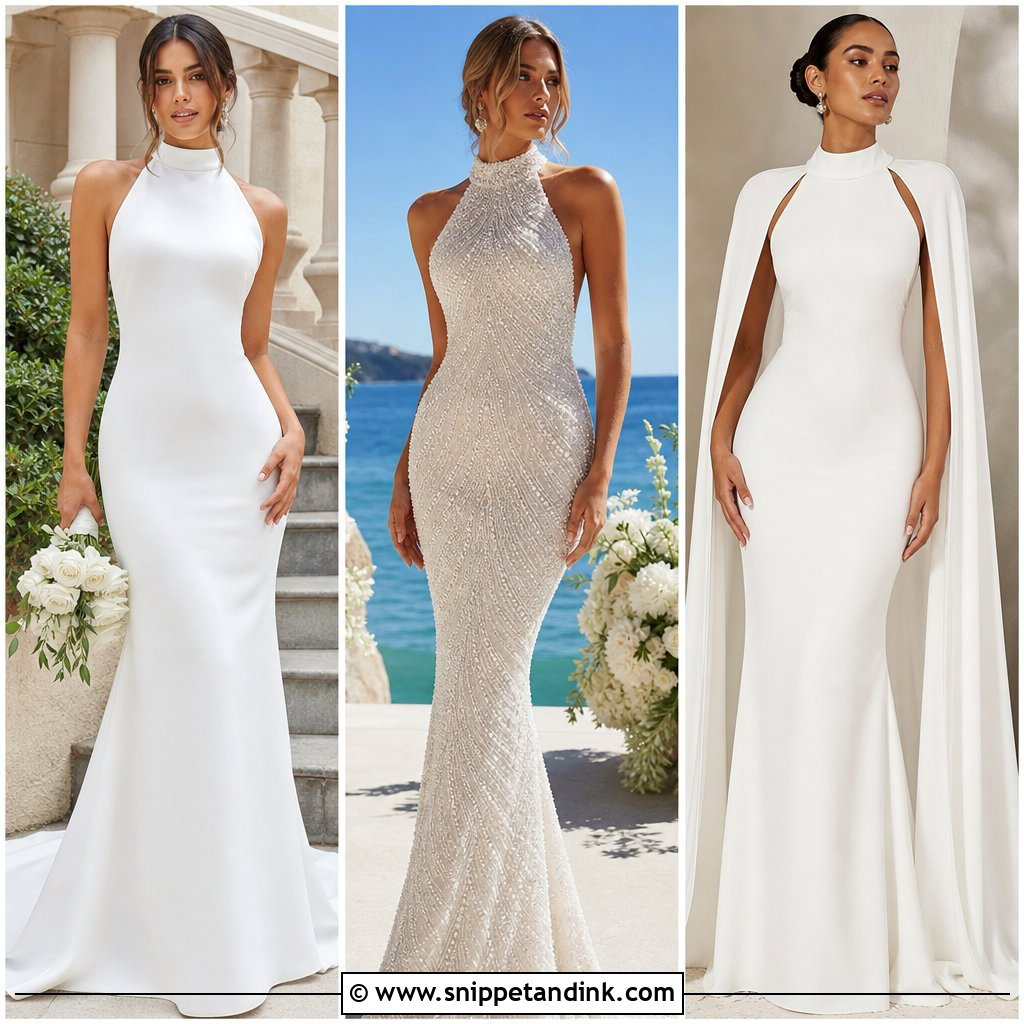
3. High Neck Halter Wedding Gown
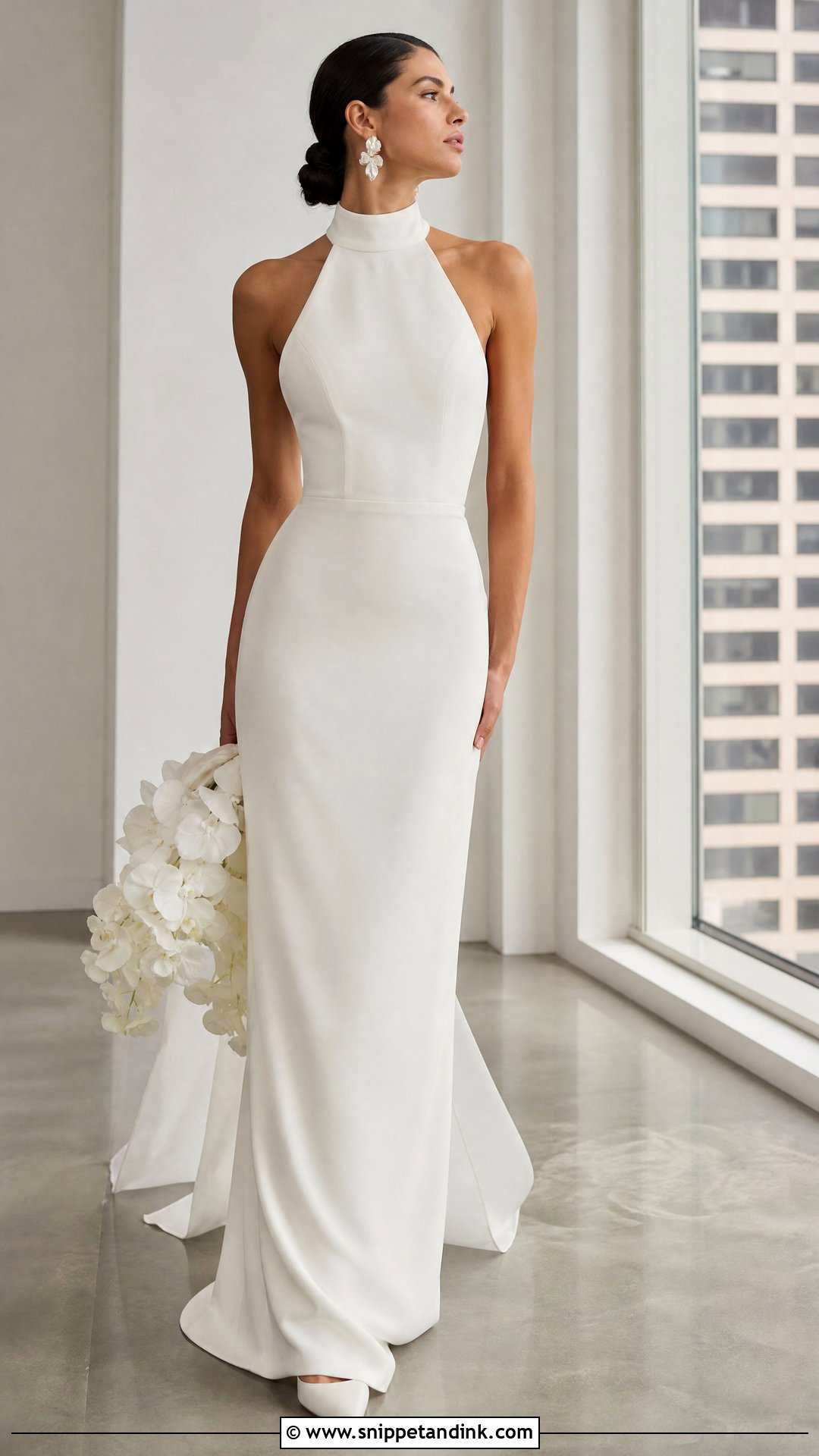
A high neck halter covers the collarbones completely and puts all the drama in the back, so it rewards a bride who wants to feel covered during the ceremony and still have a reveal when she turns around. It needs a fabric with some structure, like crepe, satin or a firm lace, or the collar will fold over itself. Skip the necklace; the neckline is already the jewelry. I’d steer someone with a shorter neck toward a slightly lower collar or a keyhole opening, because a band sitting right under the jaw can make the neck look compressed. A sleek bun or polished ponytail keeps the line clean.
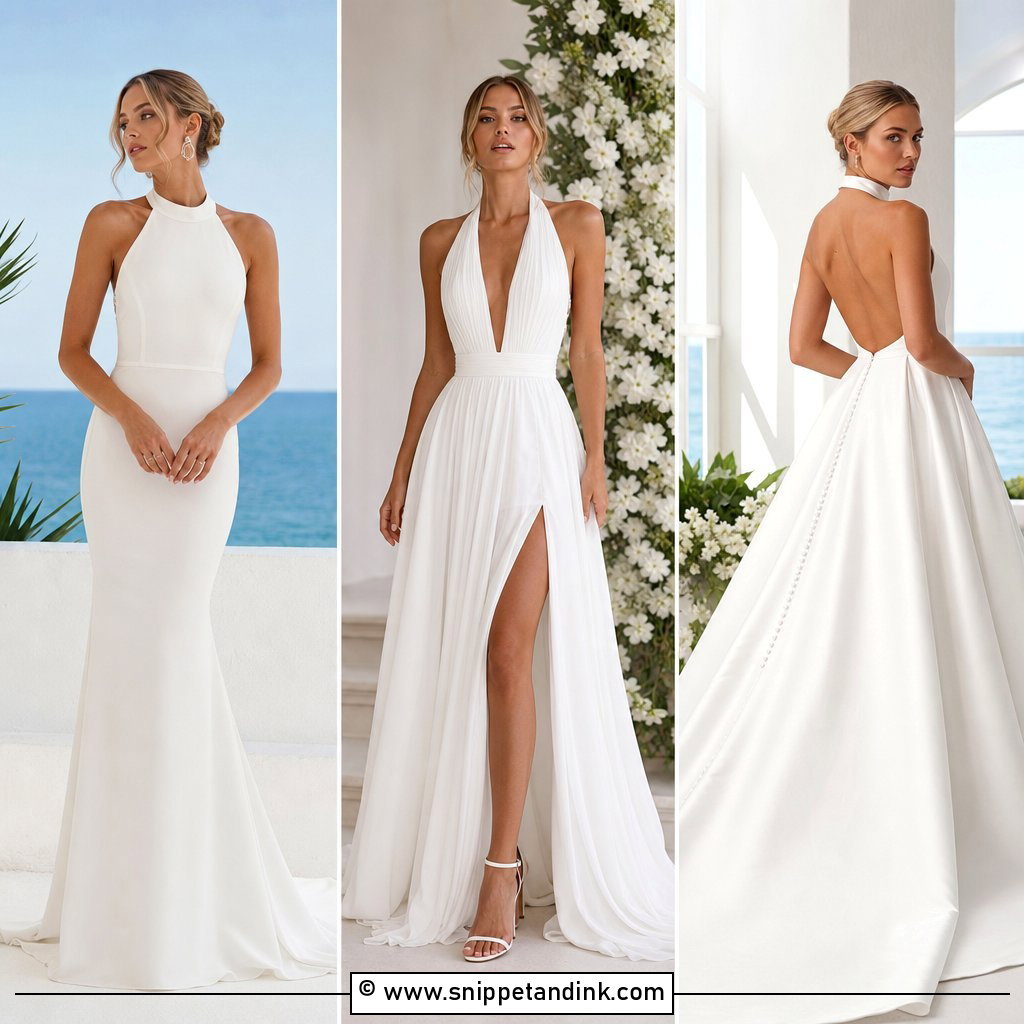
4. Open Back Halter Wedding Gown
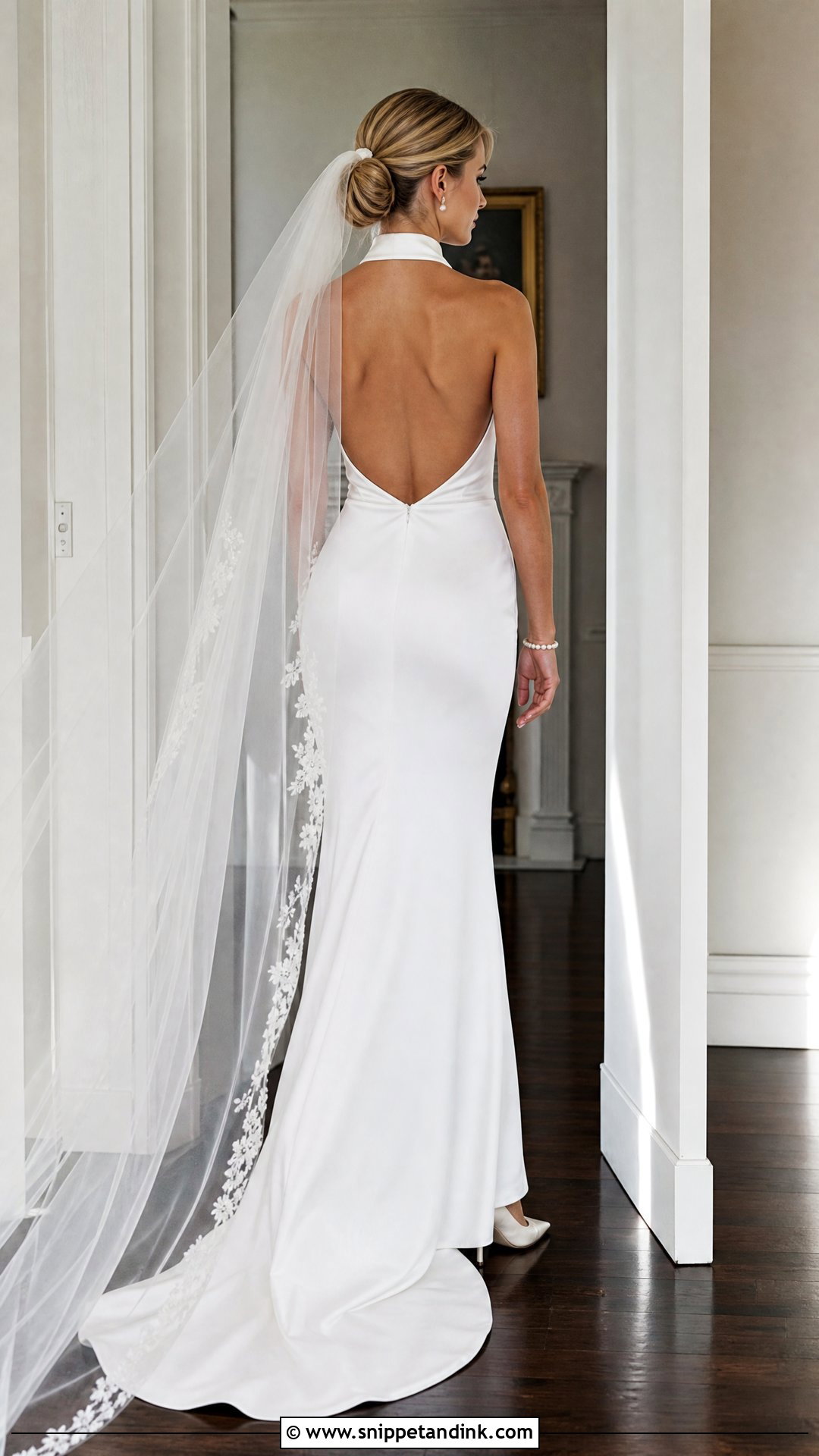
Here the halter straps carry the whole bodice, which is what lets the back drop low without the front shifting. That only works if the side panels are cut close to the body. At fittings I have the bride raise her arms and hug someone, because a gap at the side of the bust shows up in exactly those moments. Smooth satin, crepe or silk lets the back cut read clearly. A veil that falls past the waist floats over the open skin during the ceremony, and statement earrings with a bracelet take the place of a necklace.
5. Beaded Halter Wedding Gown
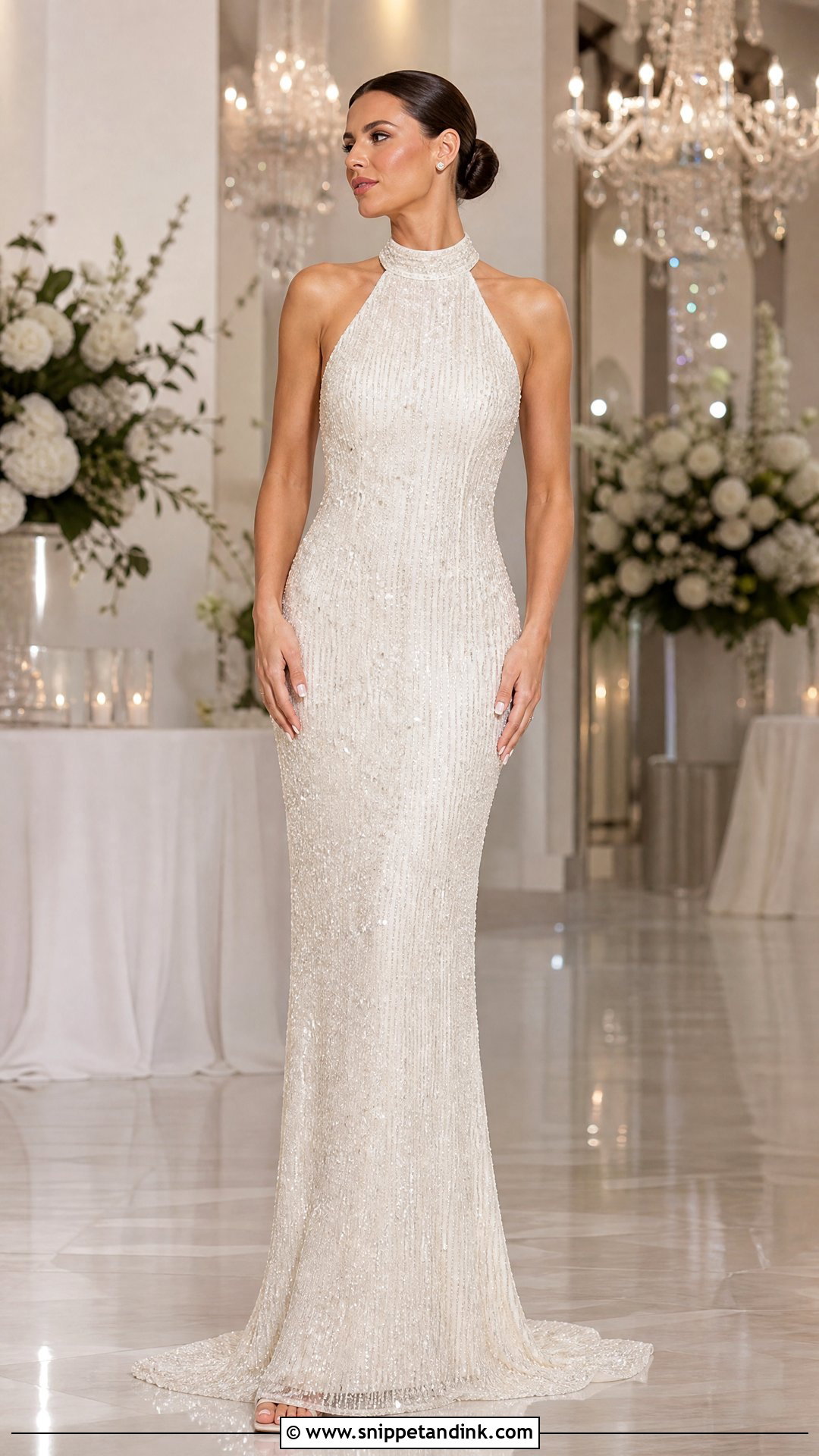
Beading does the accessorizing for you, so the work is in choosing how much. Fine crystal beading gives a glint when you move; heavy pearl and sequin work becomes the whole outfit. Be aware that heavily beaded straps add weight that sits on the back of your neck all day, and I always have brides wear a sample for twenty minutes before deciding. Also run your hand along the inner arm area: beads sewn near the underarm can rub. A column or fitted shape keeps it from looking busy, and small earrings with smooth hair are enough for an evening or candlelit room.
6. Mermaid Halter Wedding Gown
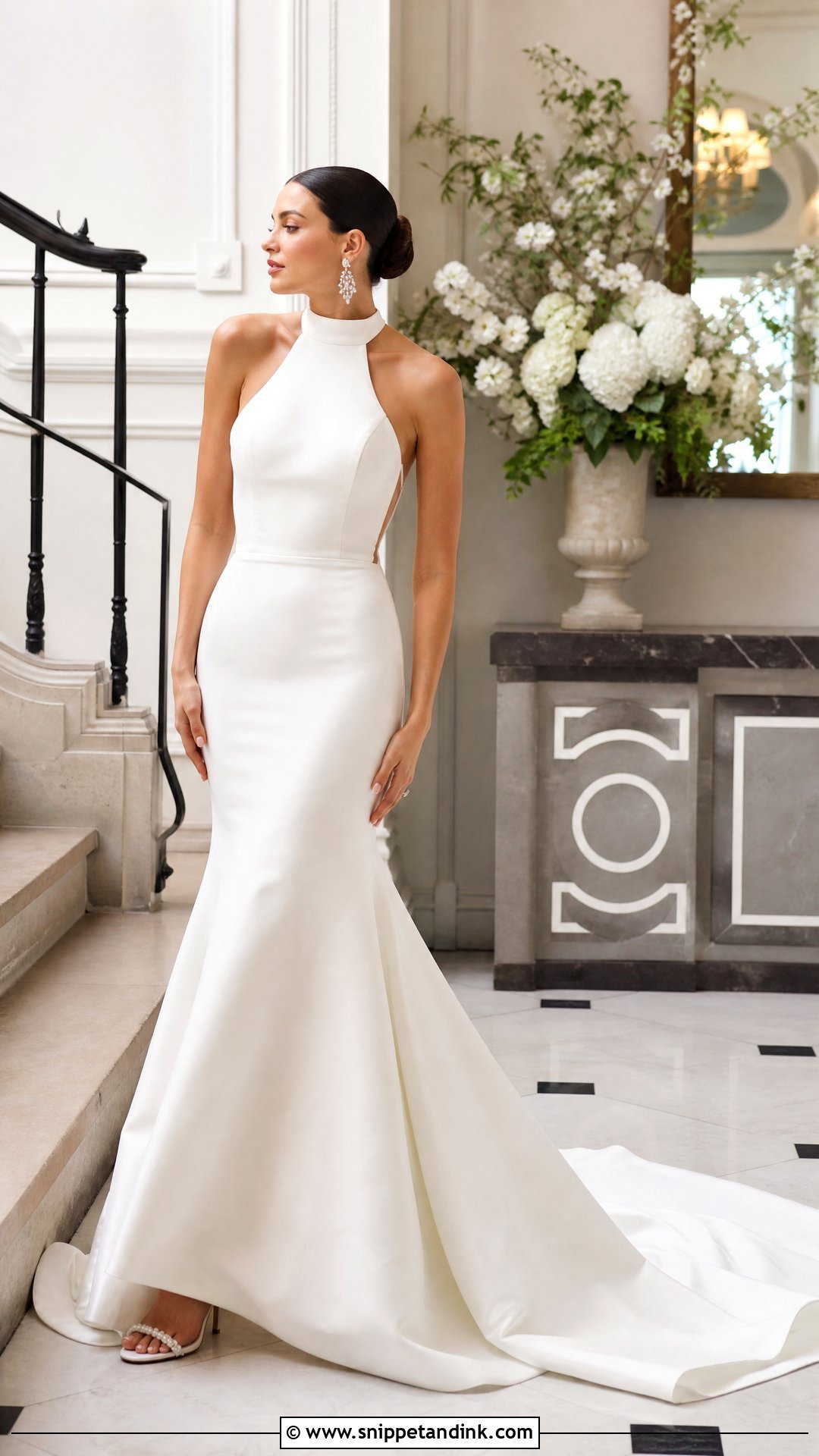
The mermaid cut fits snugly through the hips and flares at or below the knee, and the halter balances it by pulling attention back up to the shoulders. Where it goes wrong is the flare point. If it sits too high, you walk in small steps; too low, and the skirt kicks awkwardly. I mark it while the bride walks, not while she stands on the box. Crepe looks sleek and modern, lace or beading softens it. Choose heels you can actually stand in for hours, because a mermaid hem is cut to one exact shoe height.
7. A Line Halter Wedding Gown
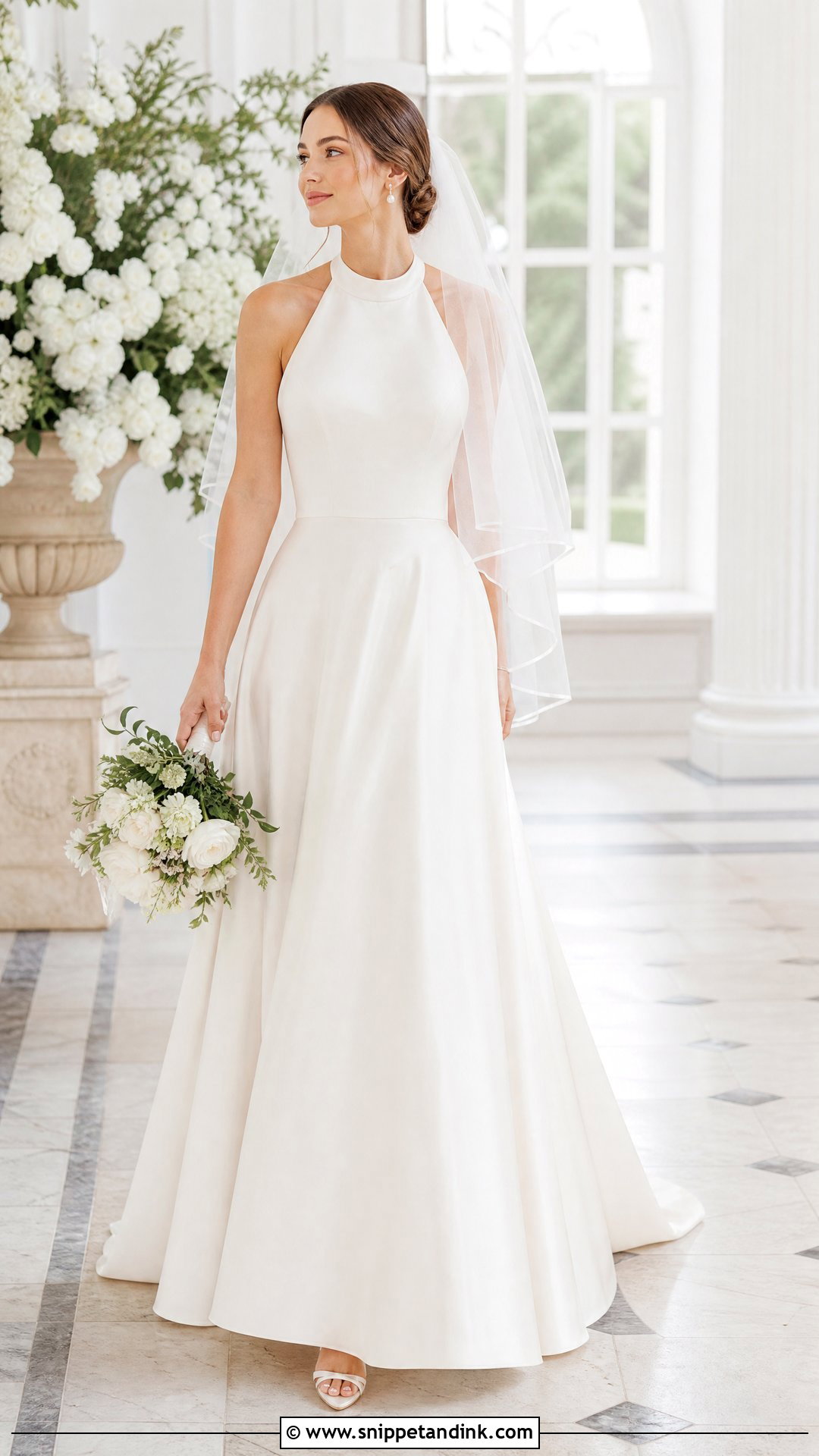
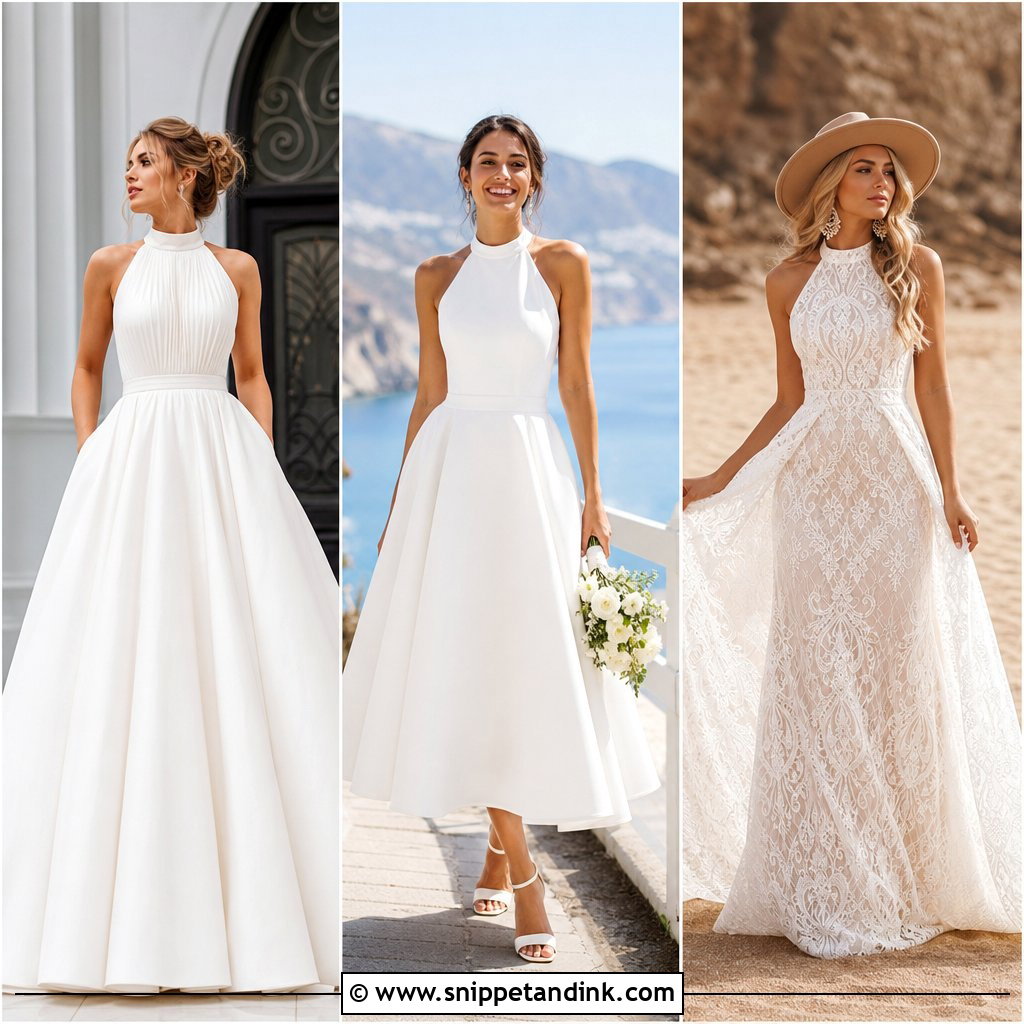
If I had to name the halter shape that suits the most bodies, it would be this one. The fitted bodice marks the waist and the skirt falls away from the hips without the volume of a ball gown, so you can sit, dance and climb stairs with no fuss. Fabric decides the mood: satin is clean, lace is romantic, tulle is soft and slightly informal. One practical note is that an A-line hem drags on grass faster than you think, so ask for a bustle point even on a sweep length. Pearl earrings, a soft updo and ivory heels finish it.
8. Ball Gown Halter Wedding Gown
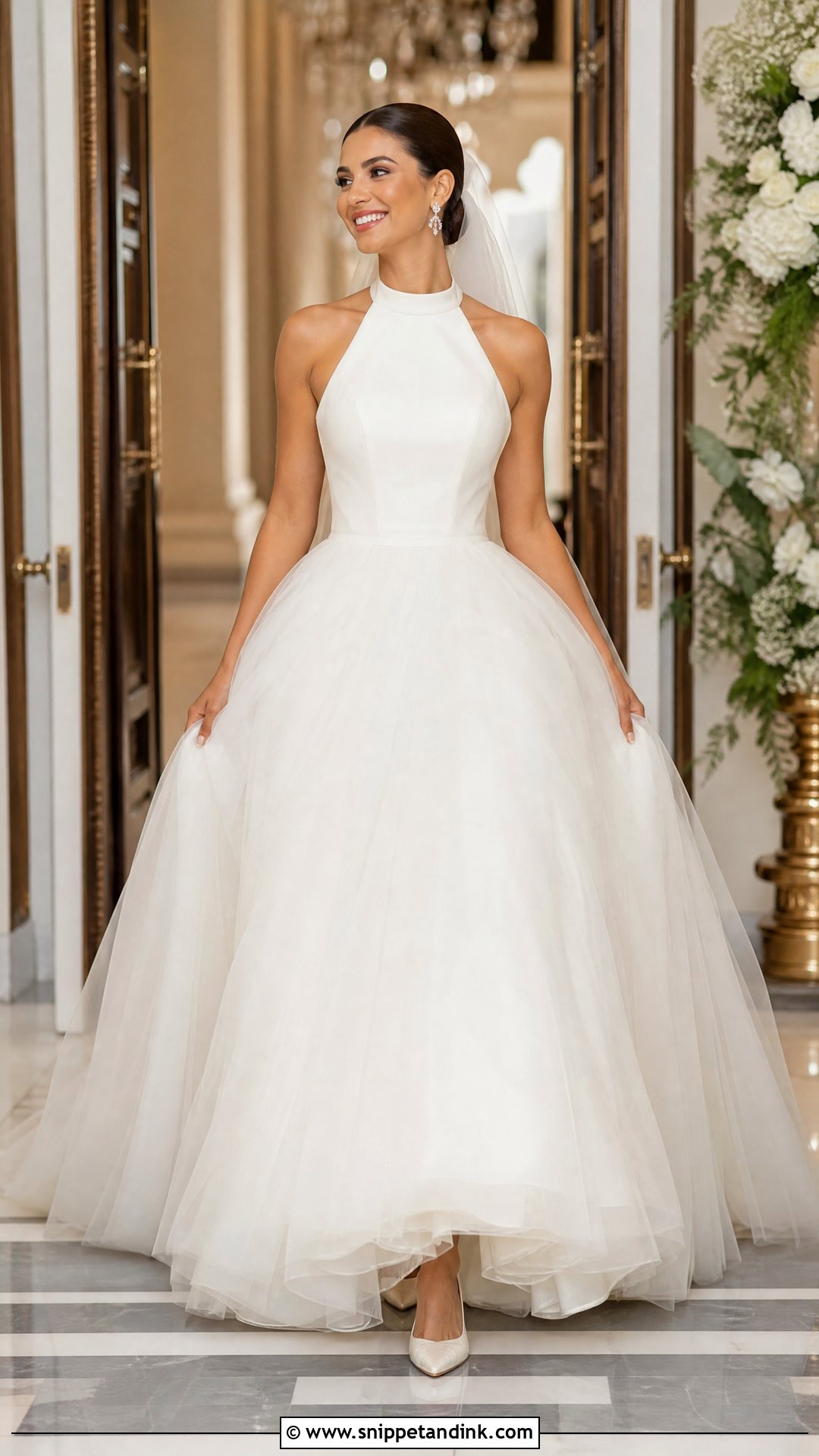
A full ball gown skirt under a halter is a nice contradiction: the skirt says princess, the neckline says current. The catch is proportion. Layers of tulle, organza or mikado are heavy, and the bodice has to be firmly structured or the skirt drags the waistline down by the reception. I check the waist seam after the bride has walked the length of the salon twice. Keep everything else neat (a tidy bun, crystal earrings, a plain veil) and save this for a venue with room for the skirt, because a narrow aisle or a tight reception table makes it hard work.
9. Tulle Halter Wedding Gown
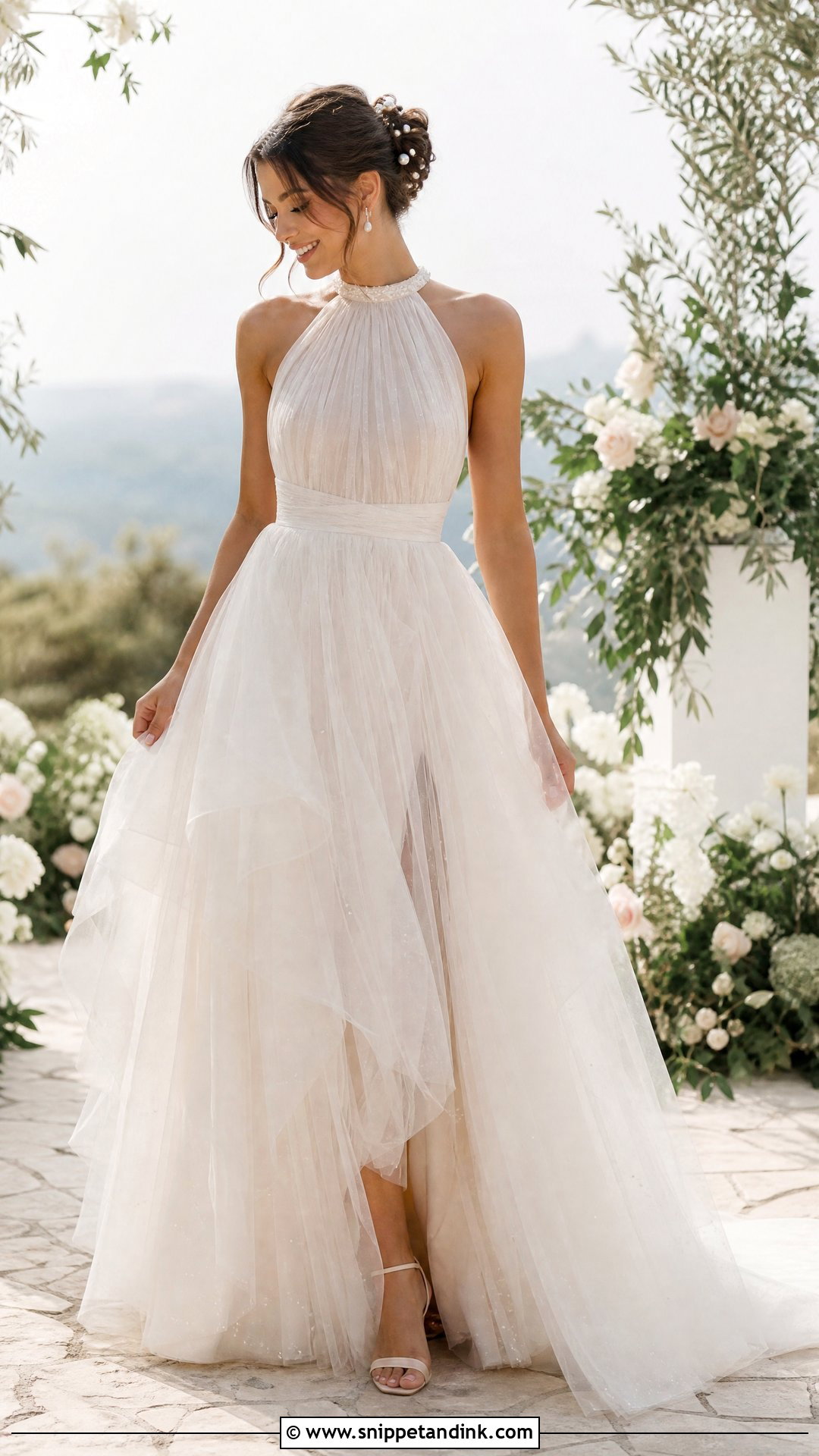
Tulle is the lightest-looking option here and it moves well when you walk, which is why it works so well outdoors in soft light. It does have a weakness: soft tulle catches on brick, rough wood and bouquet stems, and it shows dirt at the hem quickly. Layered skirts with a little sparkle or floral appliqué look pretty, but if the bodice has sheer panels, I make sure the lining underneath is a close match to the bride’s skin tone, or the sheer areas read as patches in daylight. Loose waves, pearl pins and simple heels suit it.
10. Crepe Halter Wedding Gown
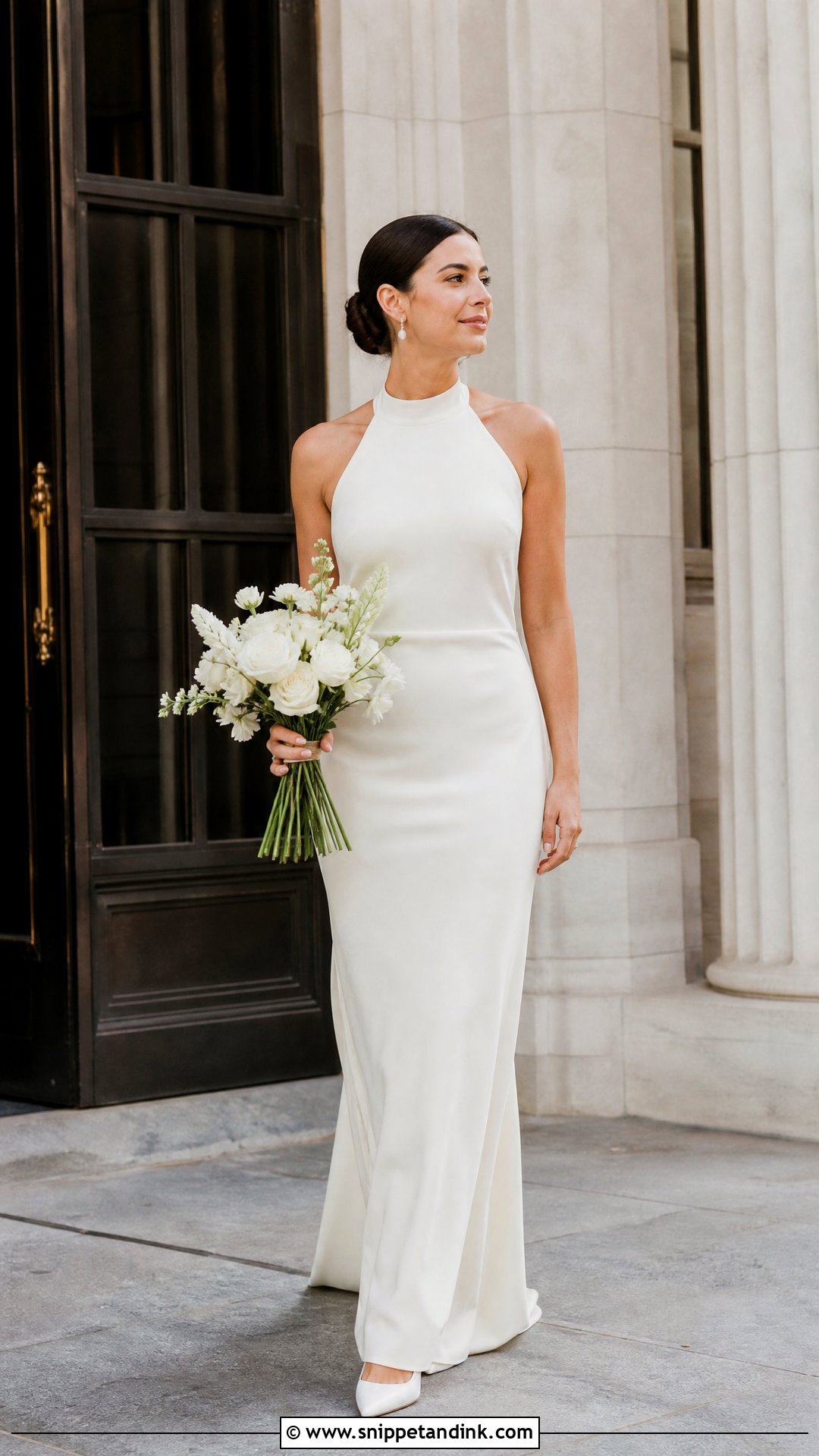
Crepe is the fabric I suggest to brides who say they want something plain. It has enough weight to skim the body and it barely wrinkles, so you look as pressed at the last dance as you did at the ceremony. The trade-off is that crepe hides nothing about the tailoring. A waist that is half an inch off or a hem that ripples will show, so budget for proper alterations rather than an off-the-rack fit. Style it with a low bun, pearl or gold earrings and ivory pumps for a city hall, courthouse or minimalist reception.
11. Silk Halter Wedding Gown
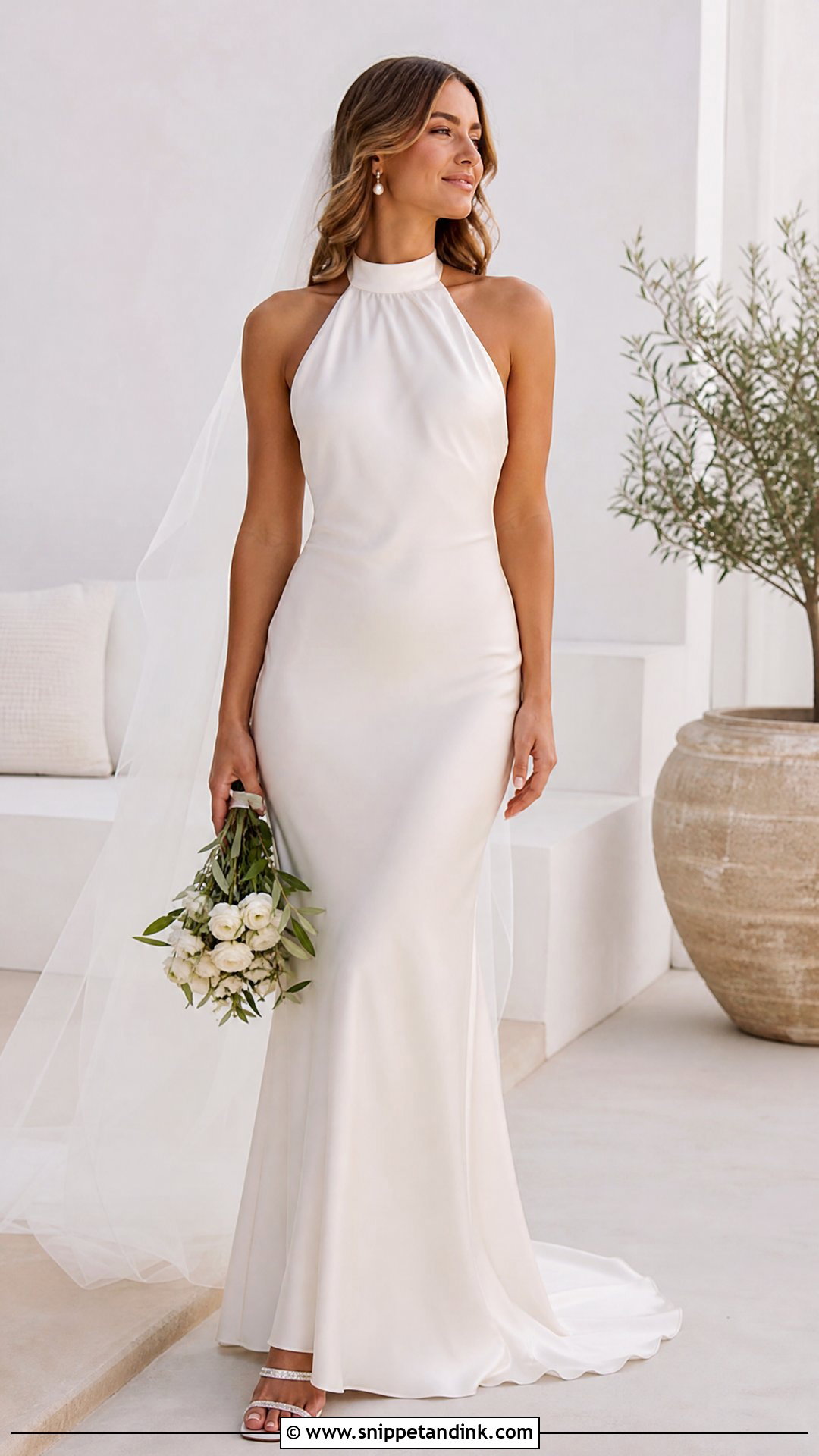
Silk moves with you more than any other fabric on this list, and a bias-cut slip skirt or draped bodice shows that off. It is also the most delicate. Real silk marks with water, shows sweat at the back and wrinkles when you sit, so I tell brides to plan for a steamer on the day and to avoid this one for a midsummer outdoor ceremony with no shade. When it suits the wedding, soft waves, simple sandals and pearl studs are all it needs, and a featherweight veil or sheer cape keeps the line uninterrupted.
12. Chiffon Halter Wedding Gown
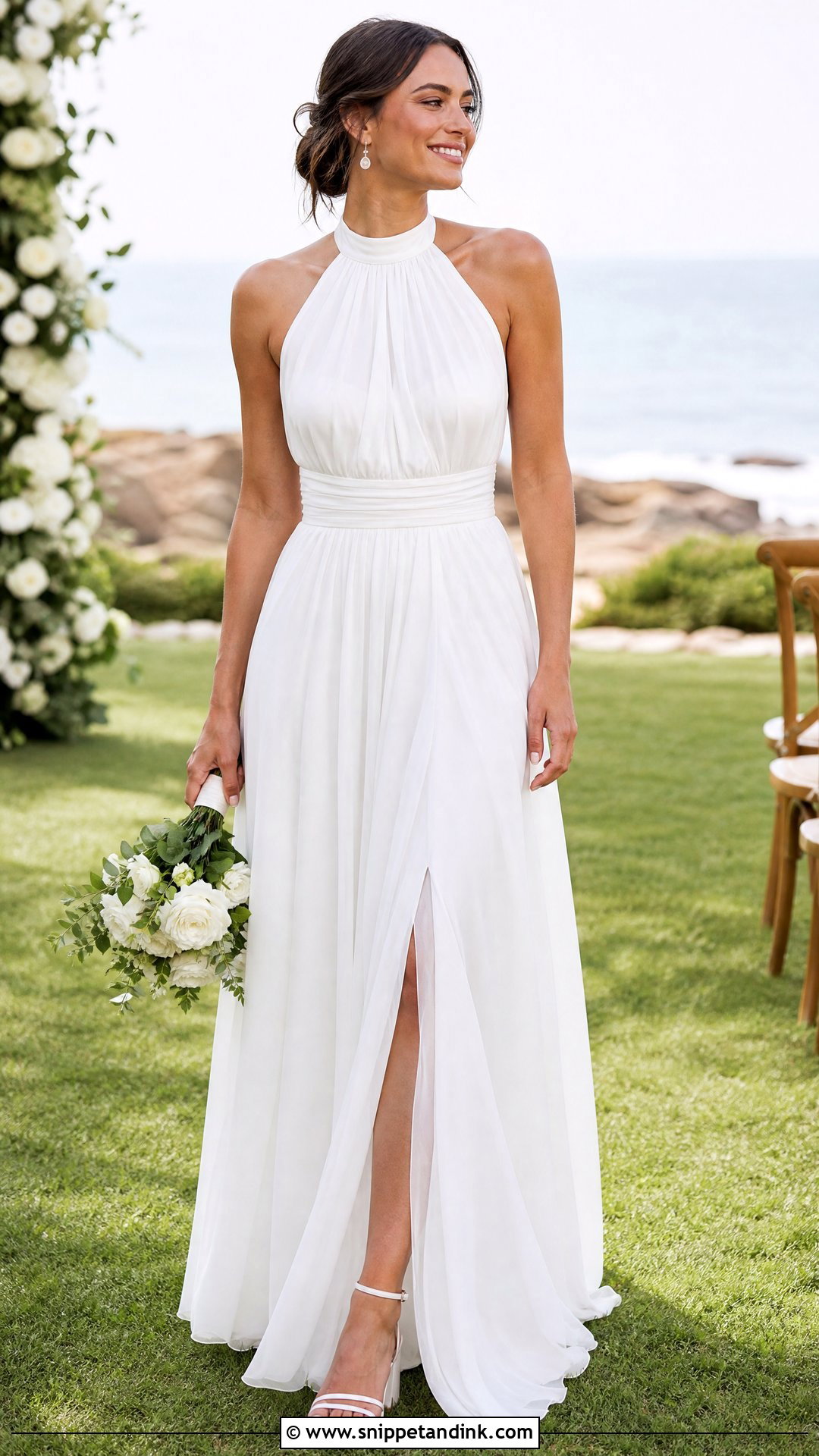
Chiffon breathes. That is its real advantage for a warm ceremony or a beach, where heavier fabrics leave you damp by the photos. A halter bodice gives the soft fabric some shape, and gathered pleats or a wrapped waist add definition where chiffon tends to collapse. I warn brides that chiffon snags on jewelry clasps and bouquet wire, so check your earrings and bracelet against it at the fitting. Delicate earrings, strappy heels and a loose updo keep it relaxed for a garden, beach or destination wedding.
13. Minimalist Halter Wedding Gown
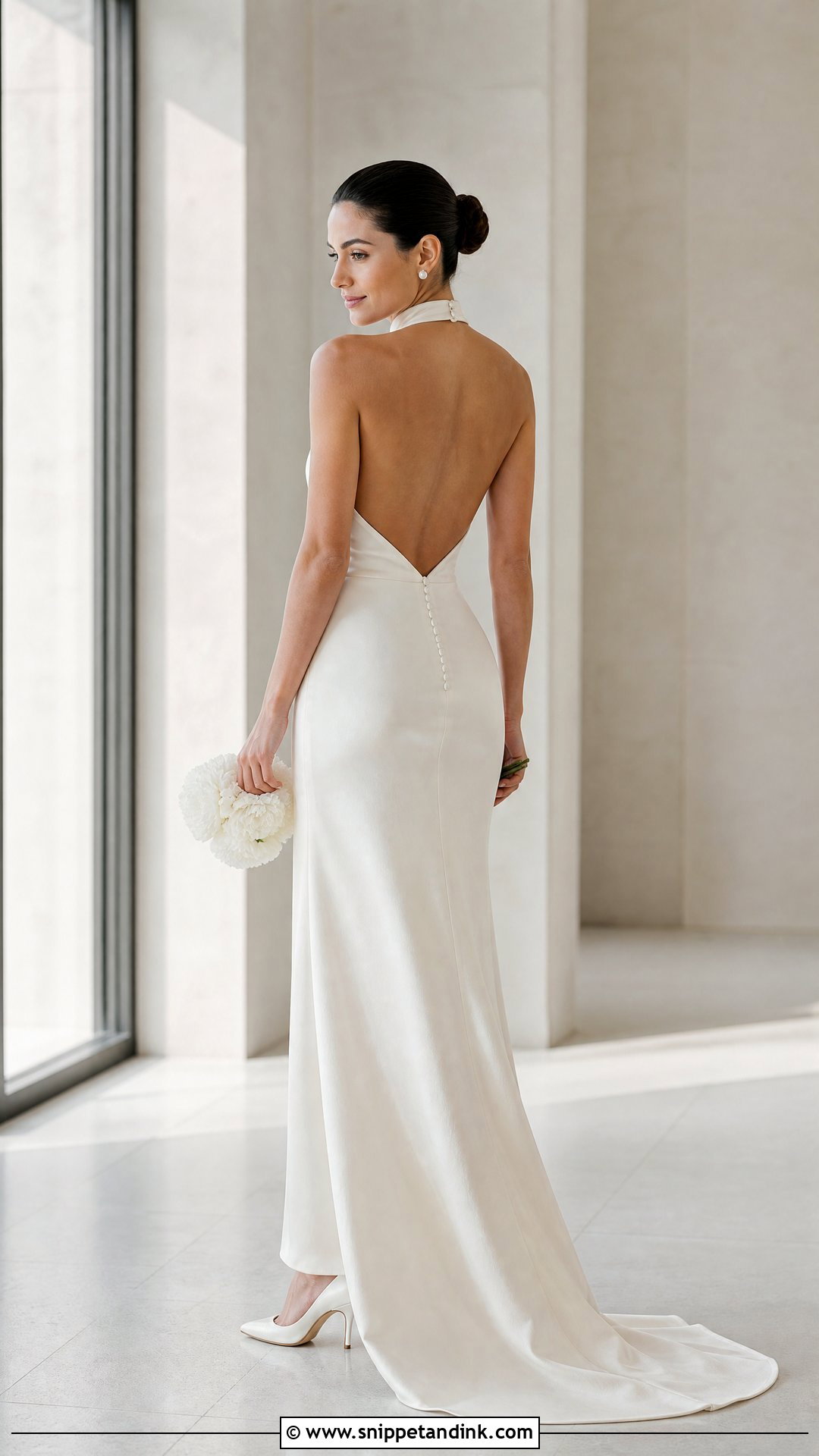
With no embellishment to hide behind, a minimalist halter lives or dies on cut and fit. Clean satin, crepe or silk with a smooth bodice is where I start, and then one detail at most: a higher neck, a low back or a short train. The mistake I see is adding accessories to make a simple dress feel bridal, which ends up cluttering it. Pearl studs, a sleek bun, a plain veil and classic heels are enough. It works almost anywhere, from a courthouse to a gallery space.
14. Vintage Halter Wedding Gown
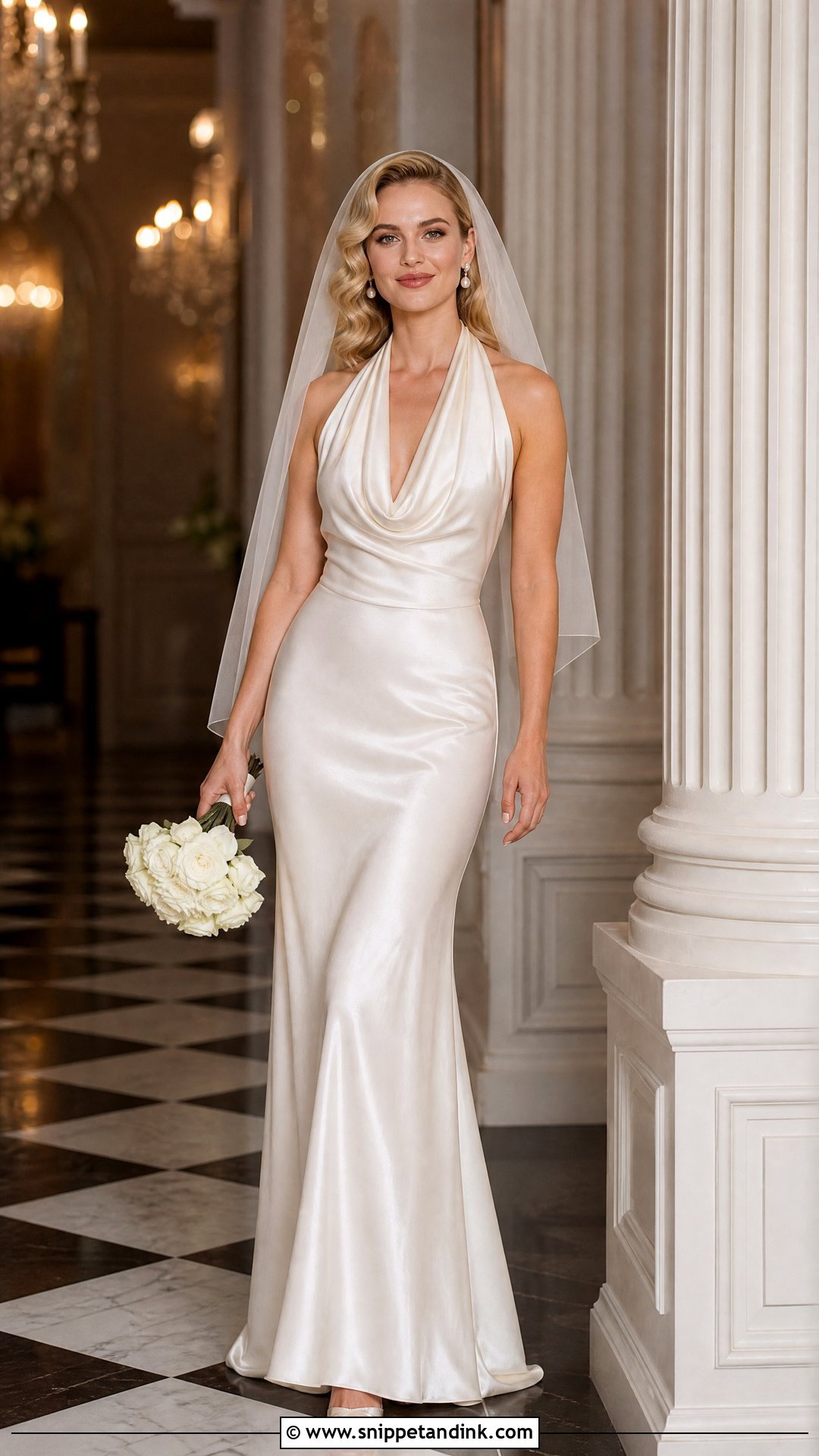
Old Hollywood is where the halter came from, so a vintage version feels natural rather than costume. Soft satin, draped necklines and bias-cut skirts are the hallmarks, often with a low back and a gentle train. The risk is overdoing it. One or two period touches, like finger-wave curls or pearl earrings, say vintage; add a fur stole, gloves and a birdcage veil together and it starts to look like a theme party. Satin heels and a simple veil keep it grounded for a hotel ballroom or historic venue.
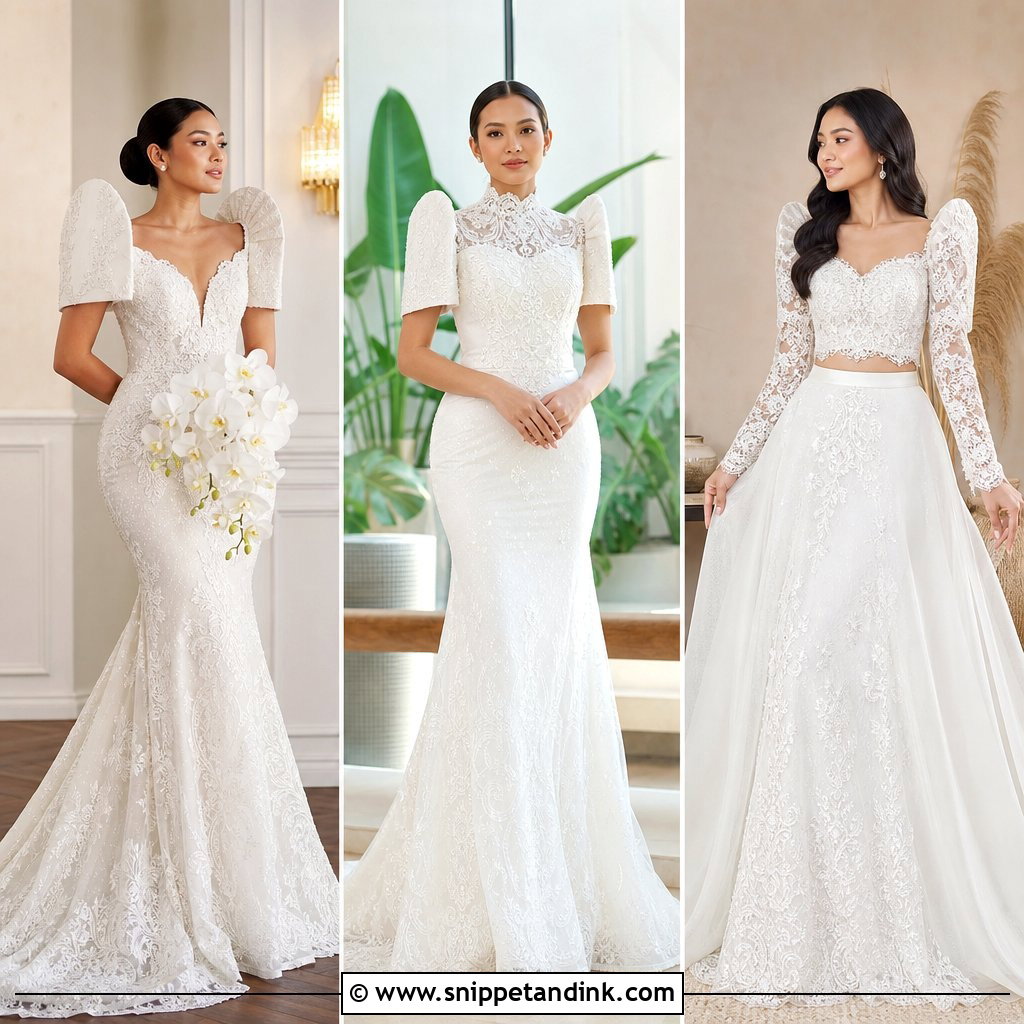
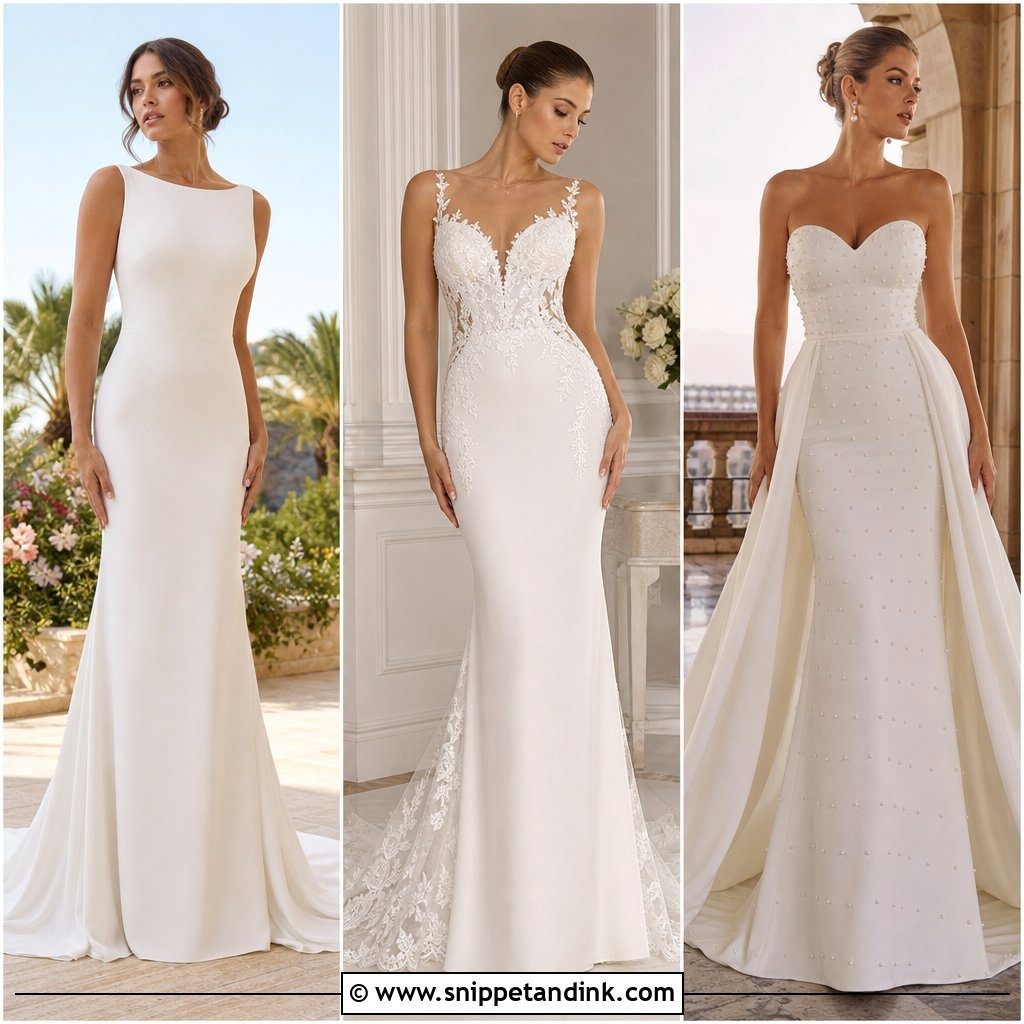
15. Beach Halter Wedding Gown
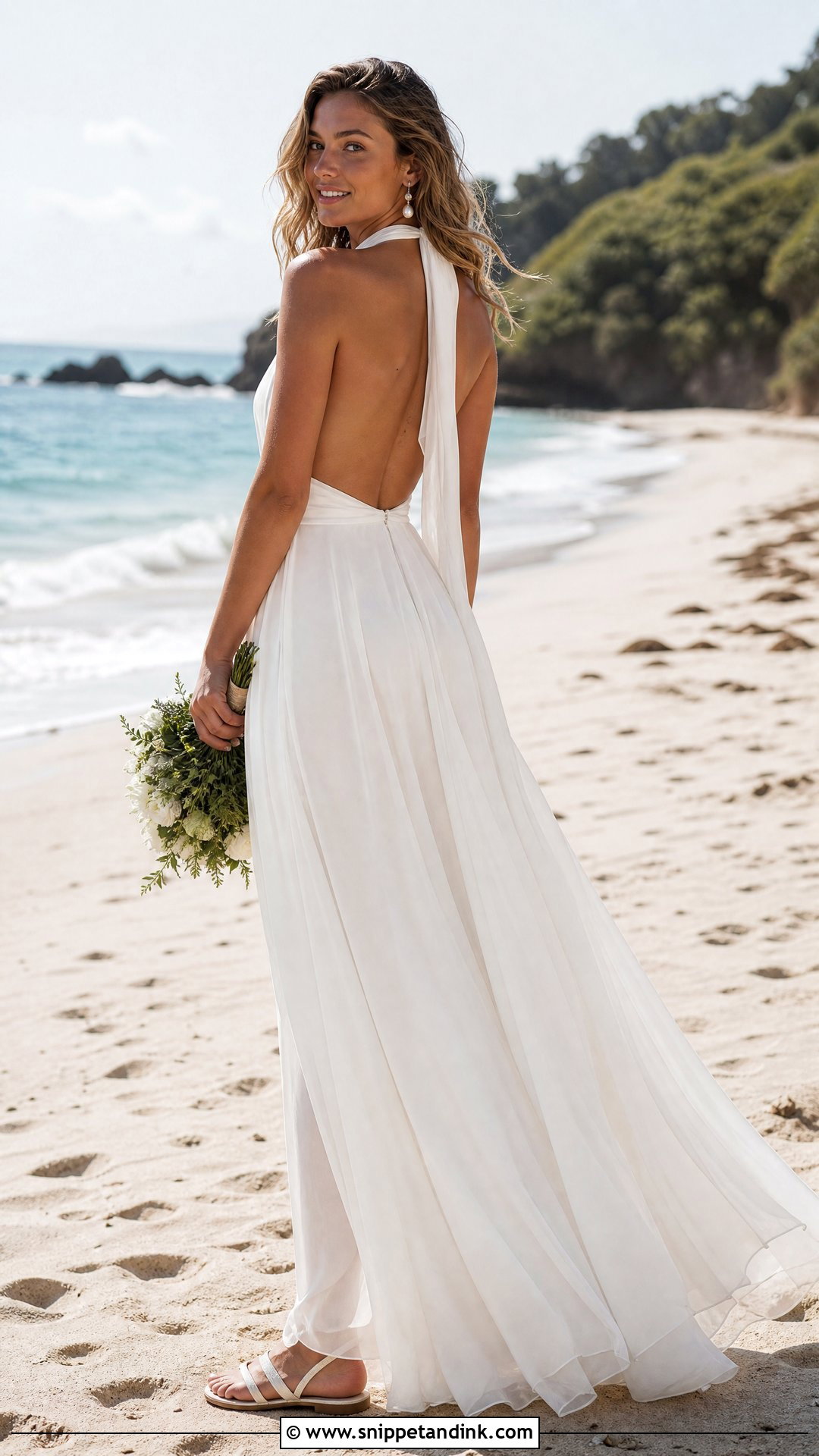
A beach halter wedding gown has one job above the others: staying comfortable in wind, sun and sand. Chiffon, silk, soft crepe or light lace move freely, and the halter strap means you are not hitching the bodice up between photos. A side slit or a hem that clears the ground makes walking on sand far easier than dragging a train. I suggest flat sandals and a short veil or hair accessory, since a cathedral veil in a sea breeze tends to wrap around your face. Pearl earrings and relaxed waves suit the setting.
16. Garden Halter Wedding Gown
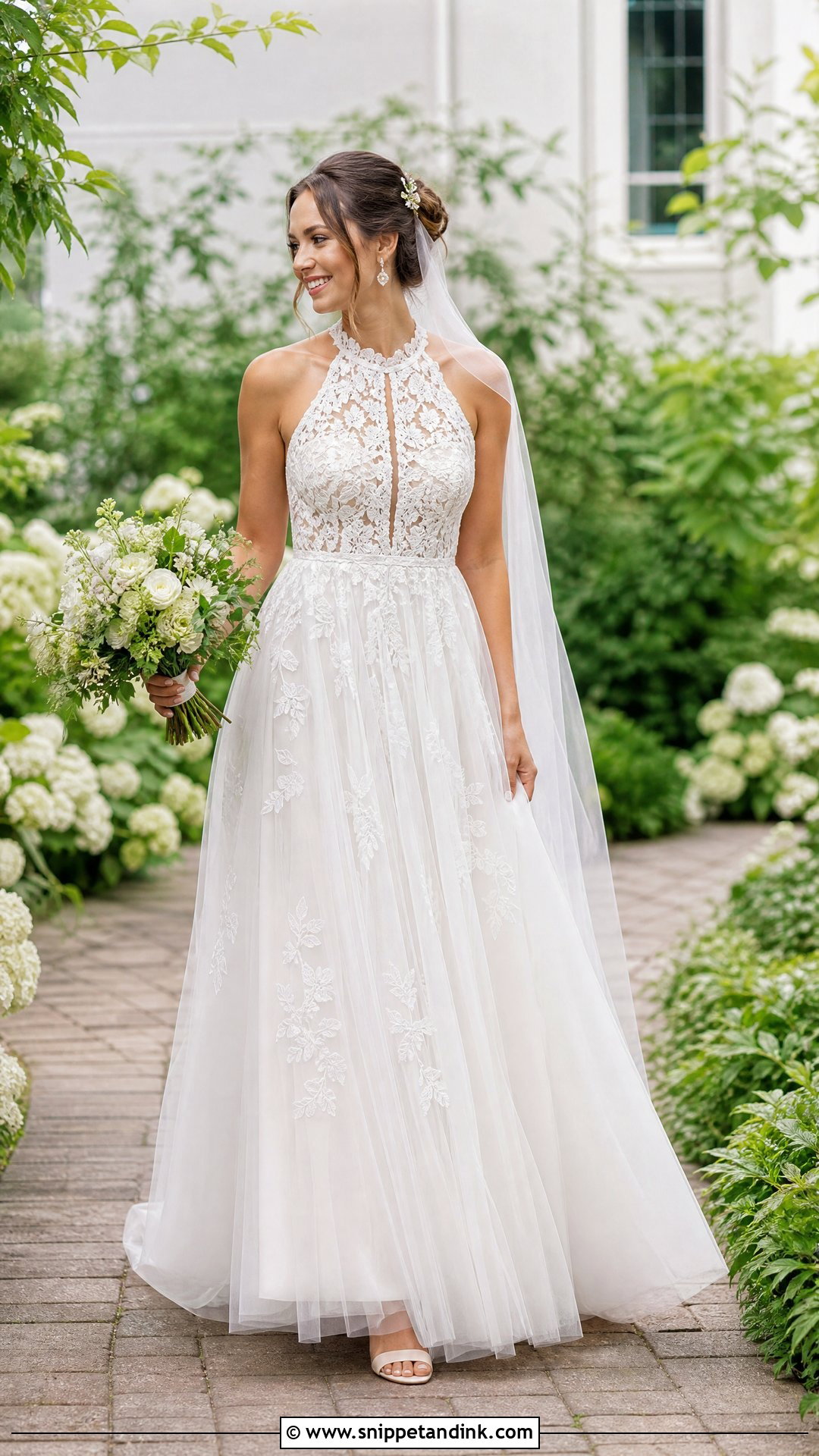
Garden ceremonies forgive softness, so lace, floral appliqué, tulle and chiffon all sit well against greenery. The practical concern is the ground. Grass, gravel and stone paths are hard on heels and hems, so I recommend low block heels and a skirt that skims rather than pools. A halter bodice keeps the dress looking intentional even when the fabric is relaxed. A soft updo with a few pins and pearl earrings is plenty for spring, summer and early autumn dates.
17. Boho Halter Wedding Gown
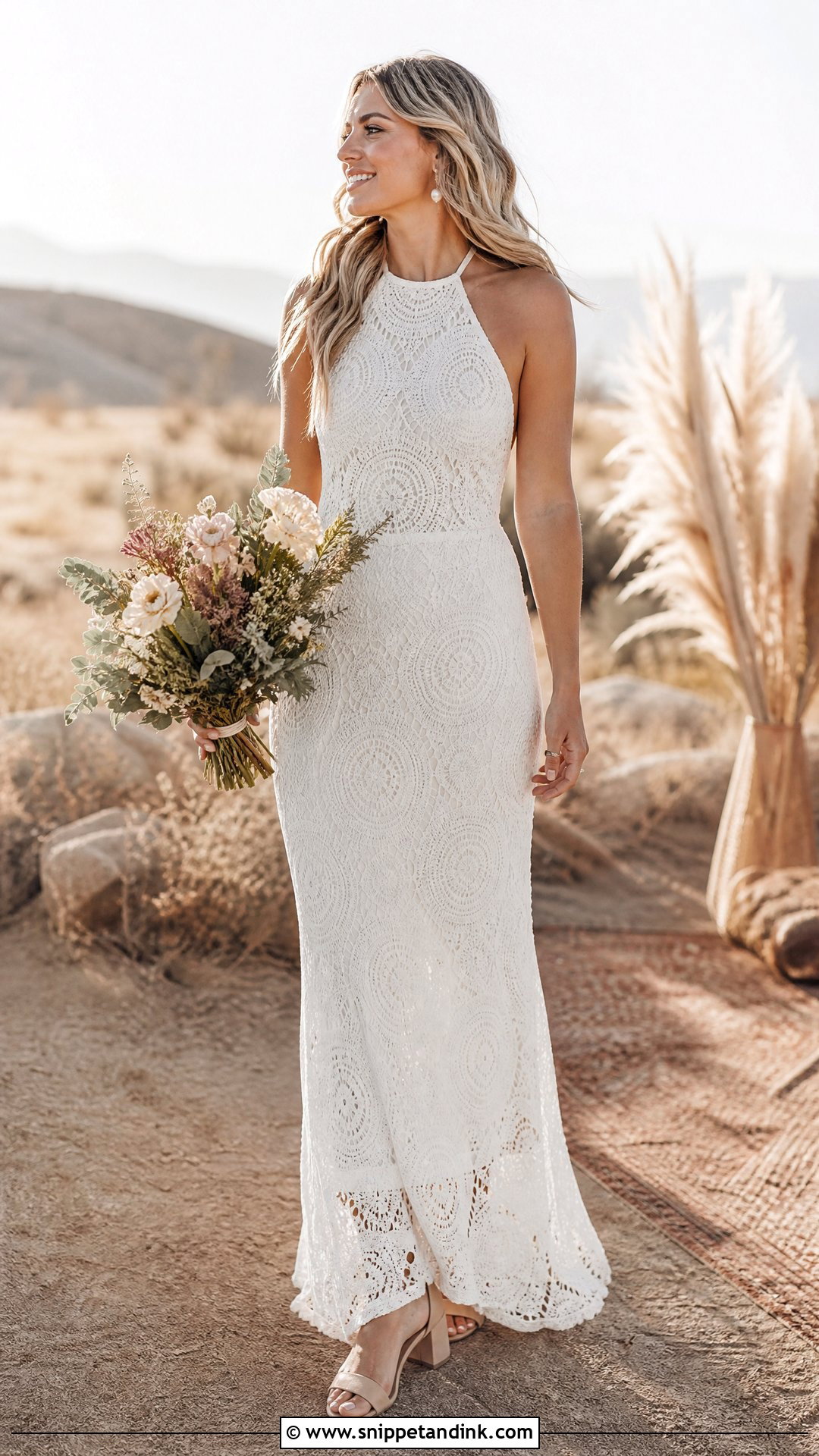
A boho halter wedding gown gets its character from texture: crochet lace, embroidery, a bit of fringe or loose chiffon. The halter tidies up the shape so the free-spirited details look chosen rather than accidental. Crochet lace is heavier than it looks, so I check that the strap is reinforced and does not stretch out over the day. Loose waves, simple earrings and sandals or block heels let the fabric lead. Desert, beach and other outdoor venues with a relaxed feel suit it best.
18. Pearl Halter Wedding Gown
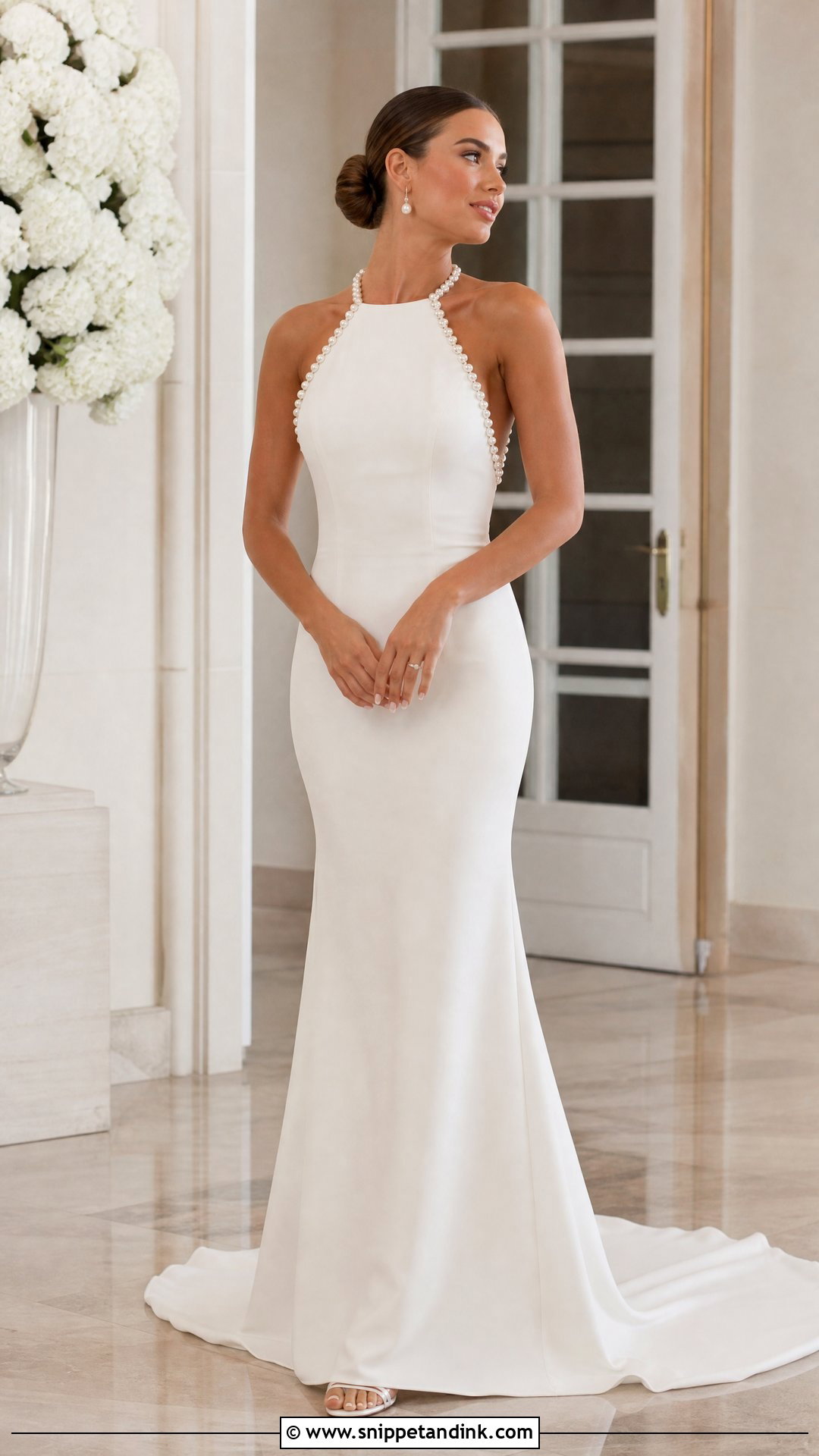
Pearls on a halter can sit along the neckline, scatter over the bodice or trace the straps. They read best on a clean base, such as a fitted crepe gown with pearl straps or satin with pearl embroidery, because a busy lace under pearls makes both disappear. One fitting check I never skip: hand-sewn pearls sometimes loosen where your arms brush the bodice, so ask how they are attached and whether spares come with the dress. Pearl earrings, satin heels and a smooth bun keep the look coherent.
19. Floral Halter Wedding Gown
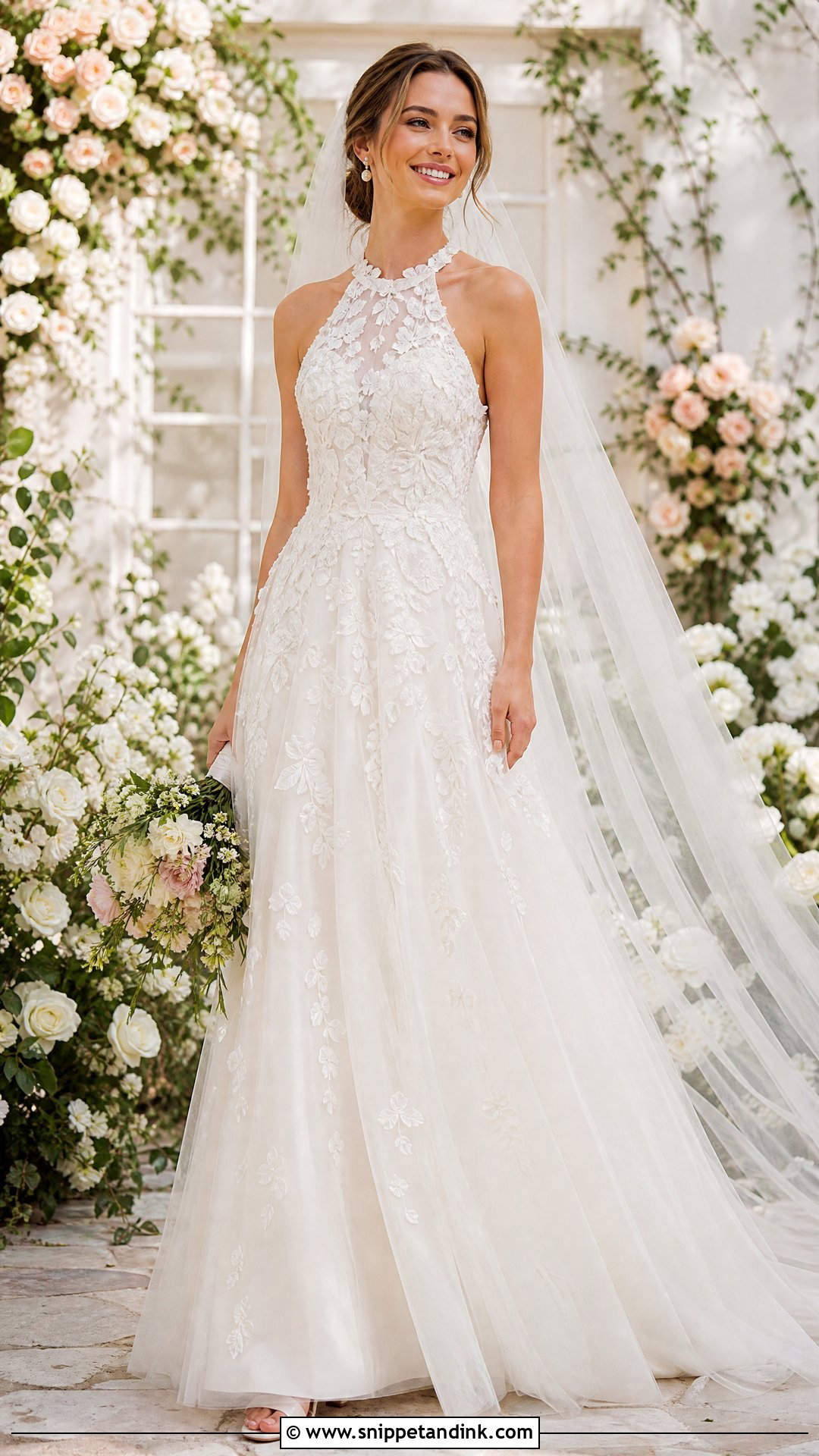
Floral detail comes in very different strengths: flat lace, raised 3D appliqué, embroidered vines or a scatter of beaded petals. The halter neckline keeps the structure so the florals can stay soft. Raised appliqué looks lovely in person and in portraits, but it crushes under a tightly held bouquet and can snag a veil, so I’d keep the veil plain and the bouquet compact. Small pearl earrings and simple heels let the dress do the talking at a spring or garden ceremony.
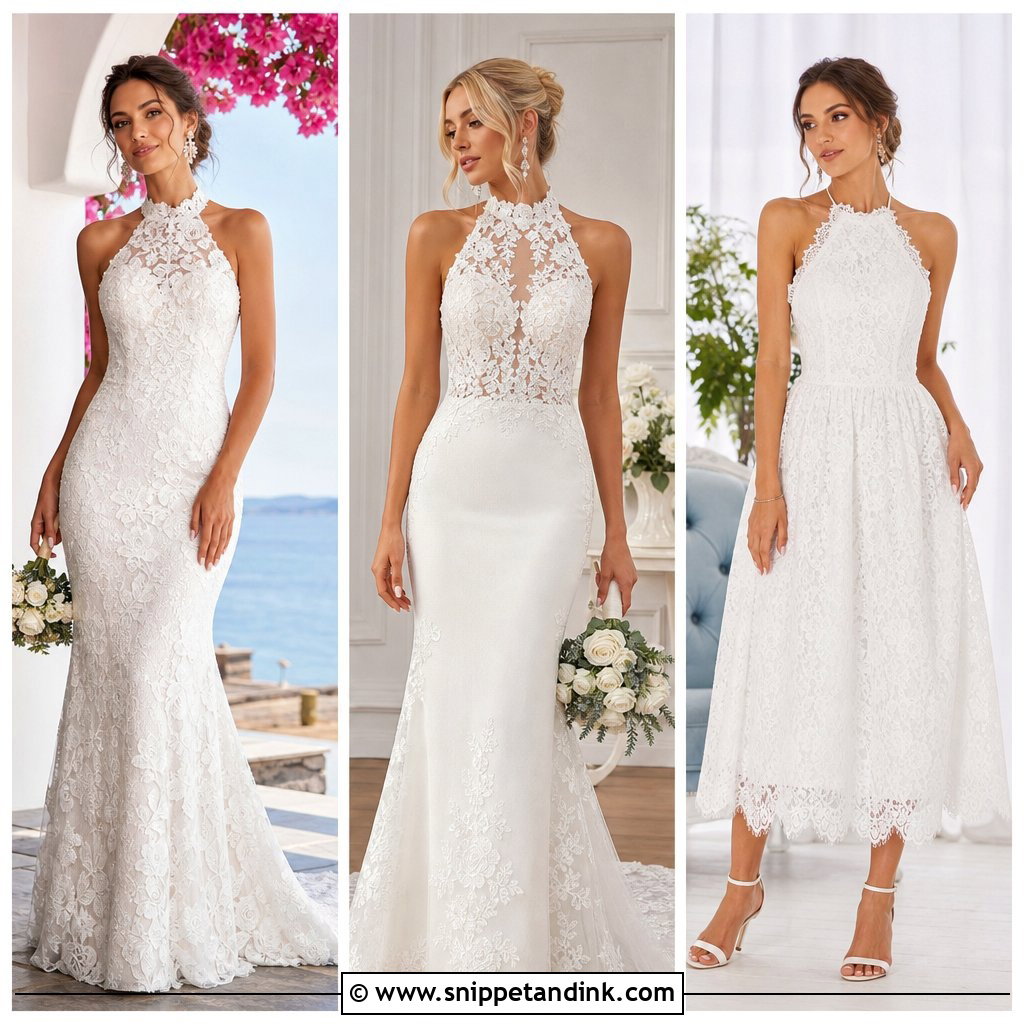
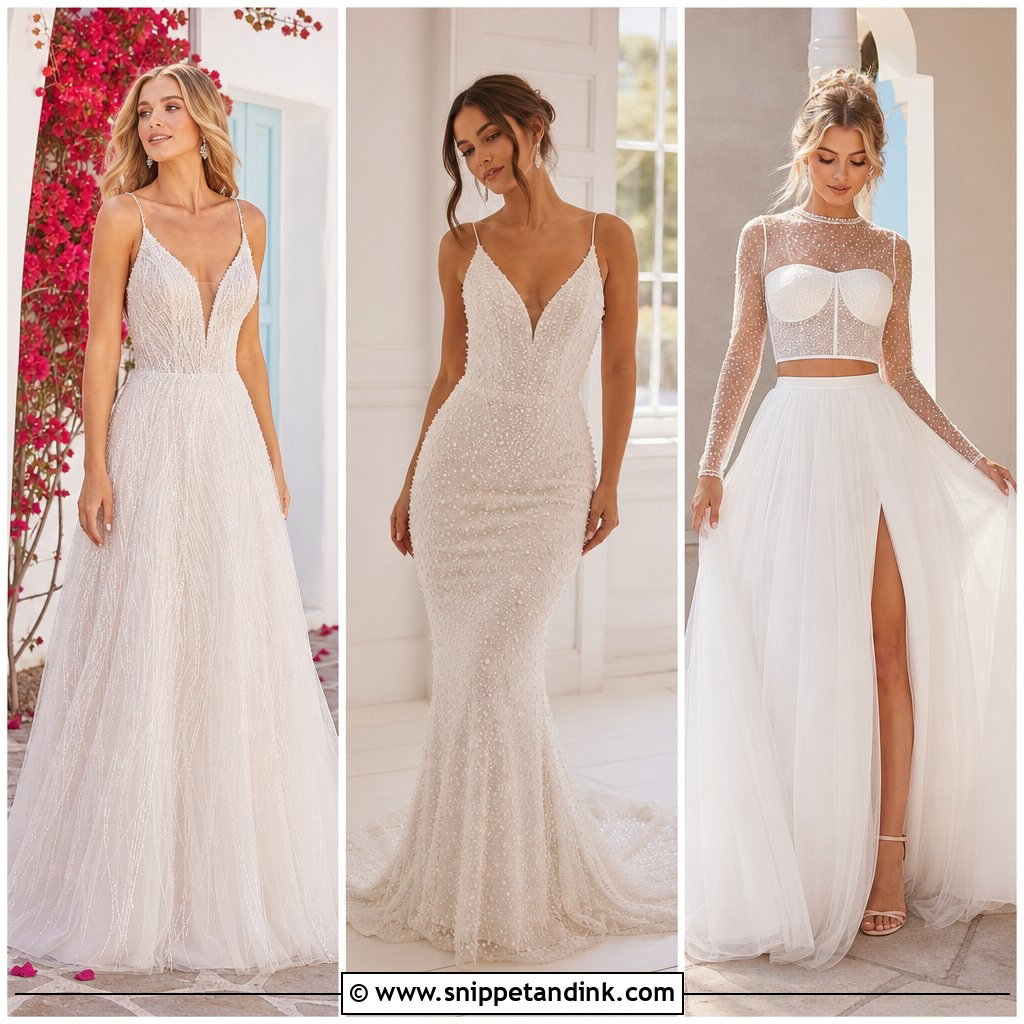
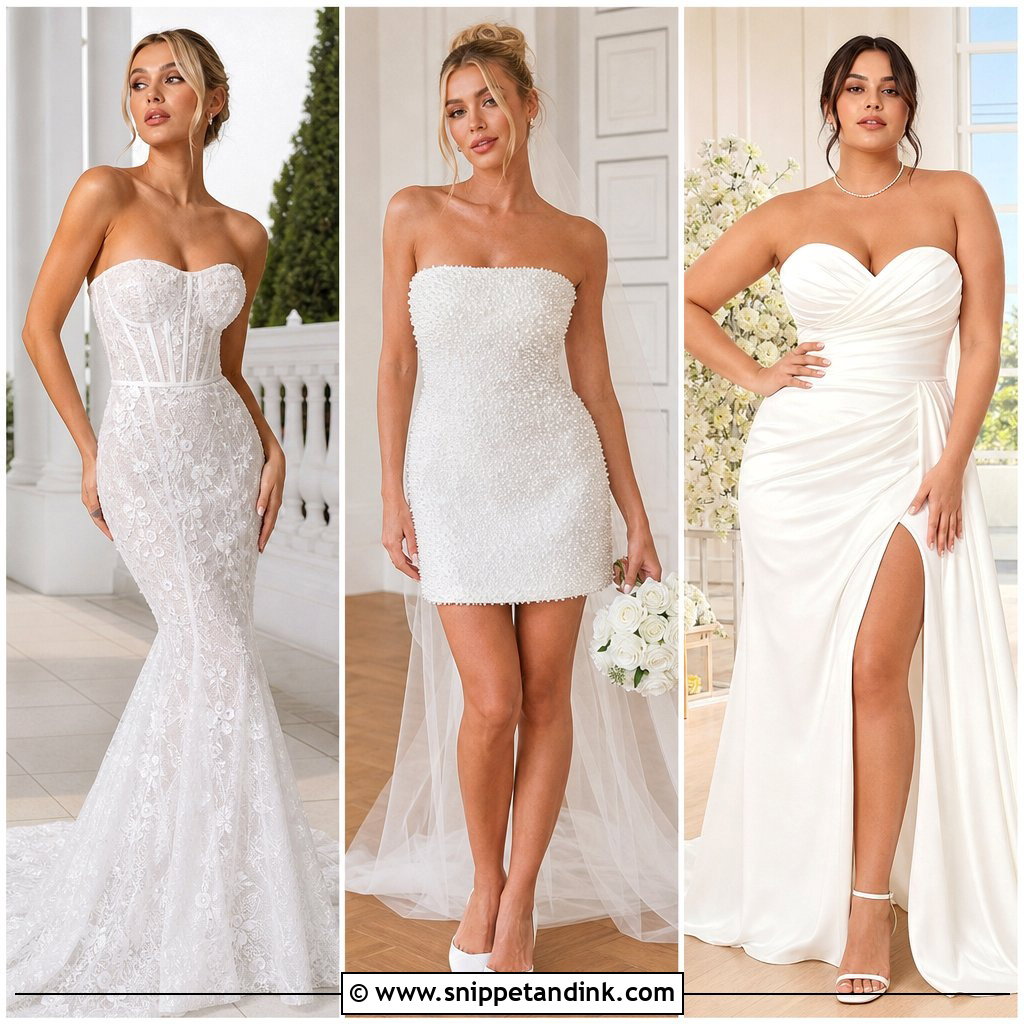
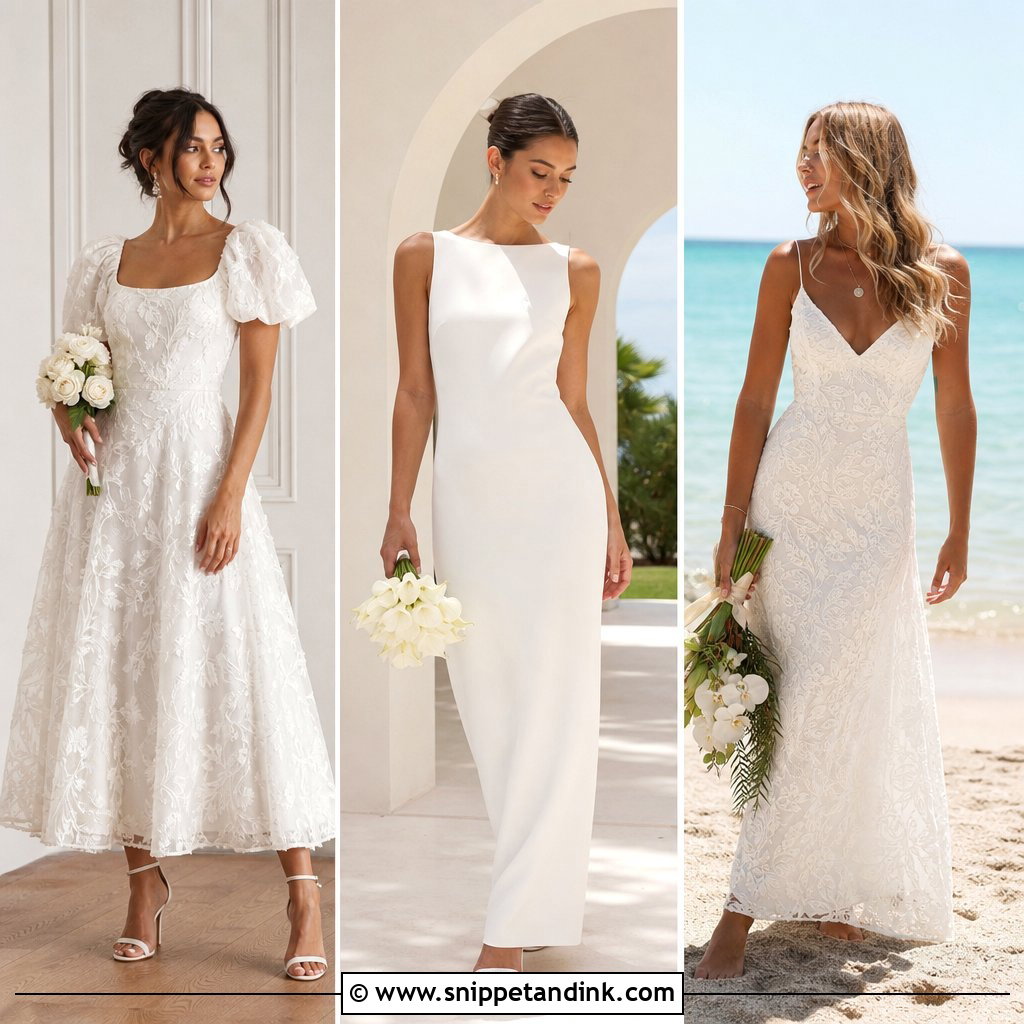

20. Plus Size Halter Wedding Gown
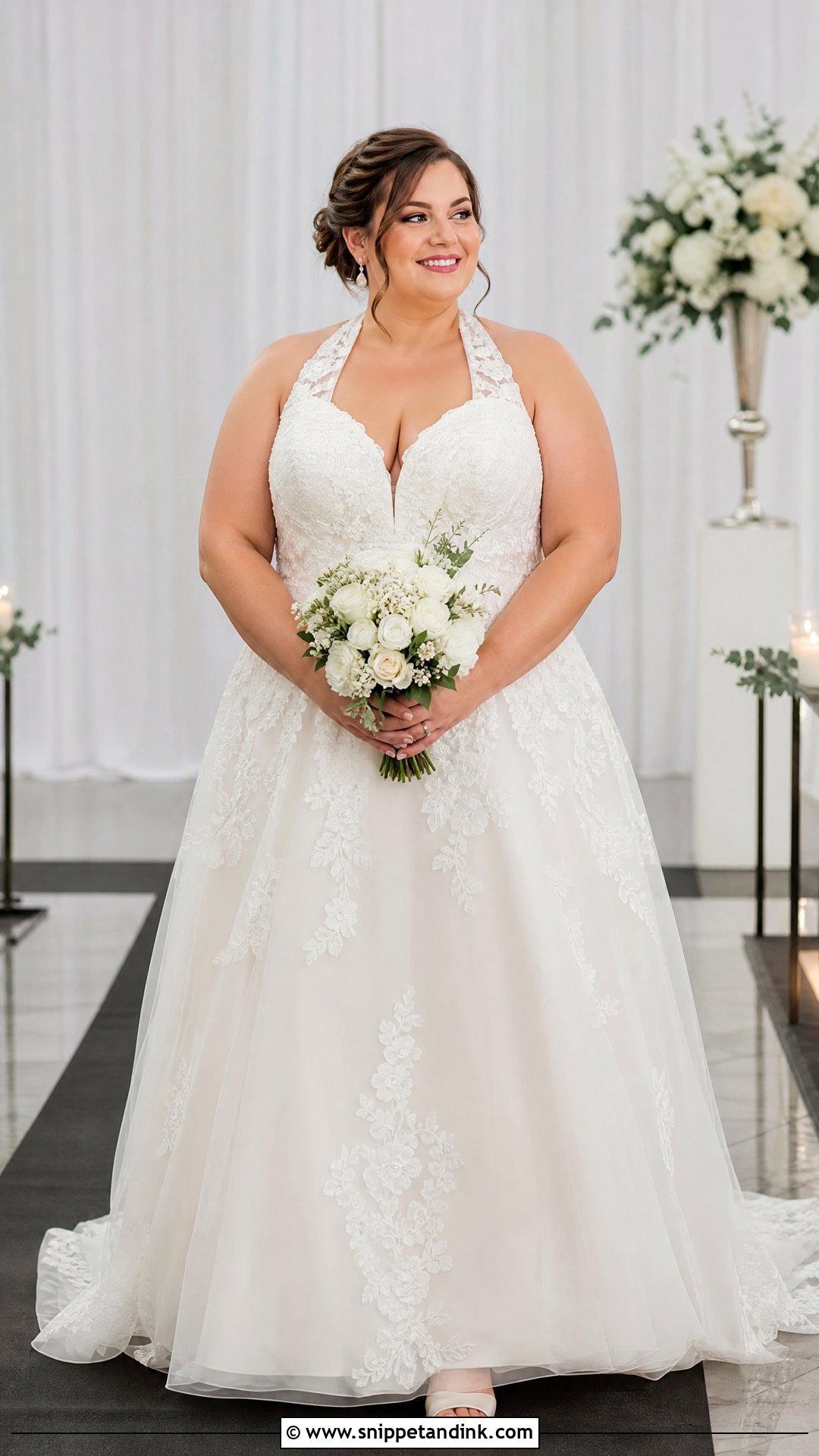
Support is the first conversation I have with a plus size bride considering a halter, before we talk about style. The bodice needs real structure, a comfortable lining and ideally built-in cups, because the strap alone should never carry the bust; if it does, it pulls on the neck within an hour. Wider straps spread the load and look more balanced. A-line, fit-and-flare and soft mermaid shapes all define the waist. Crepe, satin and lace all work, and good undergarments plus comfortable heels matter more than any accessory. Earrings that frame the face finish it.
21. Petite Halter Wedding Gown
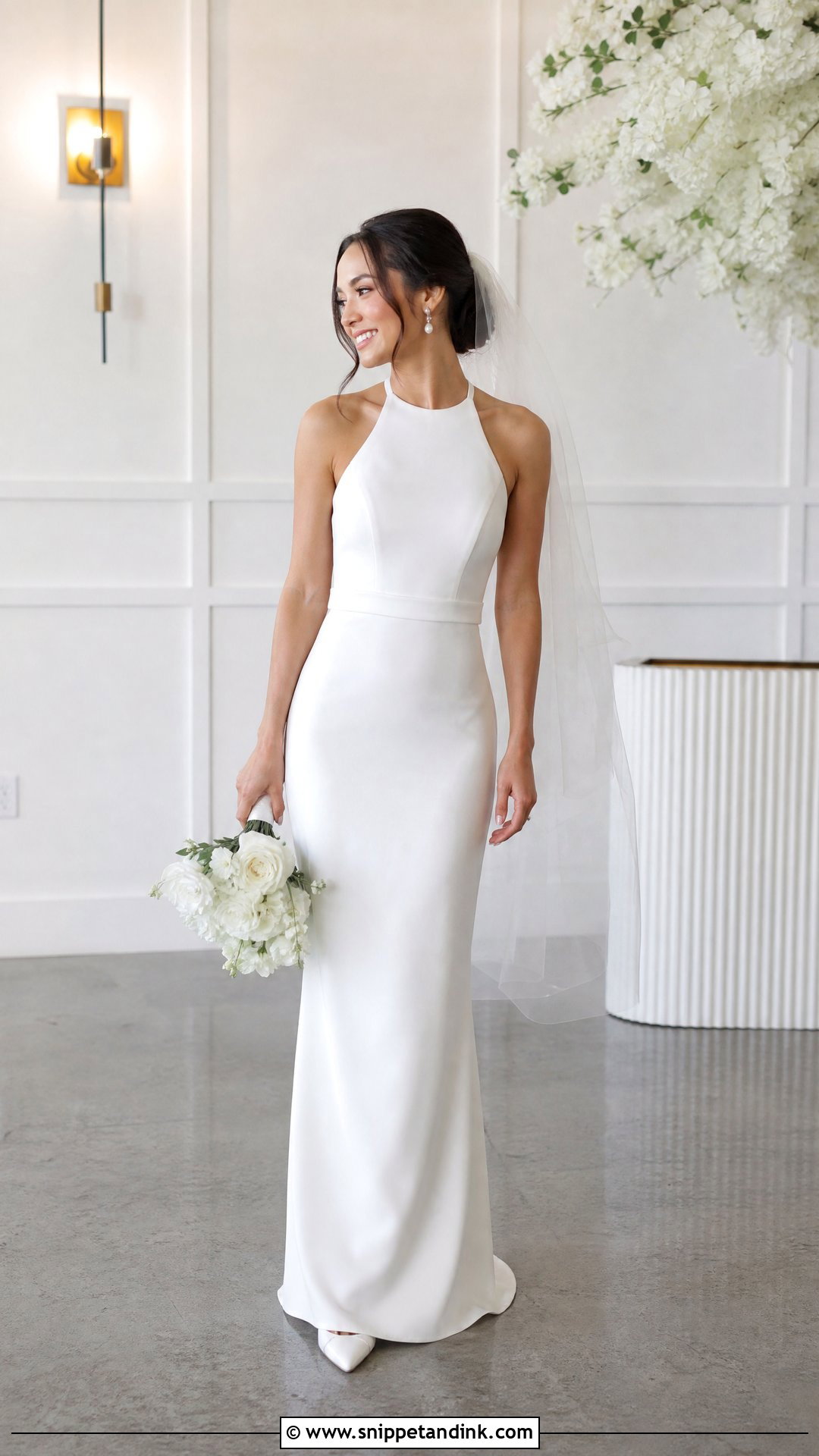
A petite halter wedding gown works because the neckline draws a vertical line from the throat down, which adds height in photos. Proportion is everything: a raised waist, slim A-line, sheath or soft mermaid suits a smaller frame, while heavy skirts swamp it. I usually have to shorten the straps as well as the hem on a petite bride, so expect that at alterations. Crepe, silk, chiffon or soft tulle stay light. Match the veil to the gown length and pick pointed heels or simple sandals.
22. Long Sleeve Halter Wedding Gown
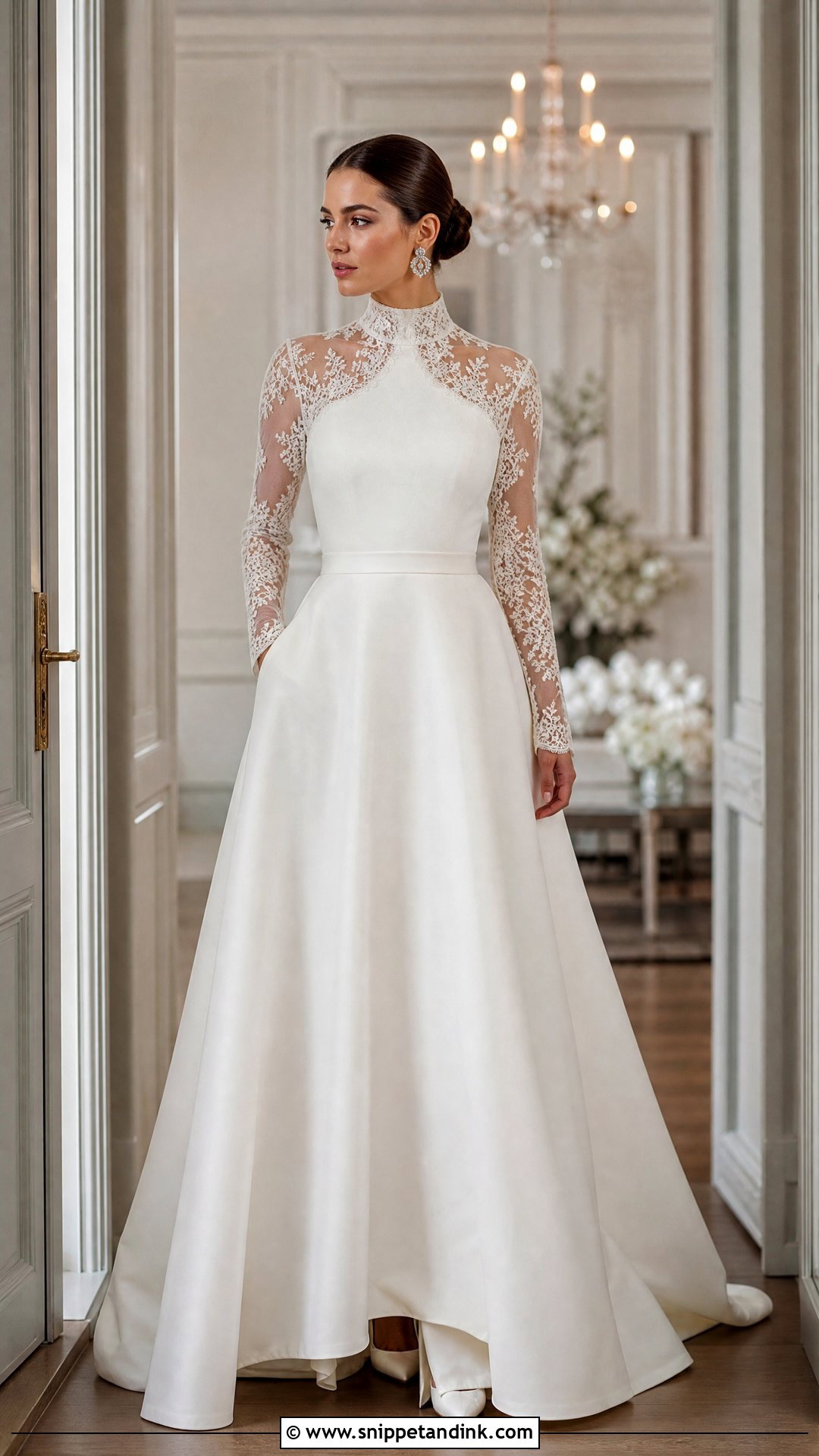
Sleeves on a halter sound contradictory, and in practice they usually mean a sheer layer over the arms with the halter cut visible underneath. Illusion mesh or fine lace keeps it from feeling heavy; fitted crepe sleeves look sharper but warmer. I always test arm movement here, since a fitted sleeve joined to a halter armhole can restrict reaching up for a hug. It suits autumn and winter dates and formal rooms. A bun, statement earrings and closed-toe heels keep it sleek.
23. Detachable Skirt Halter Wedding Gown
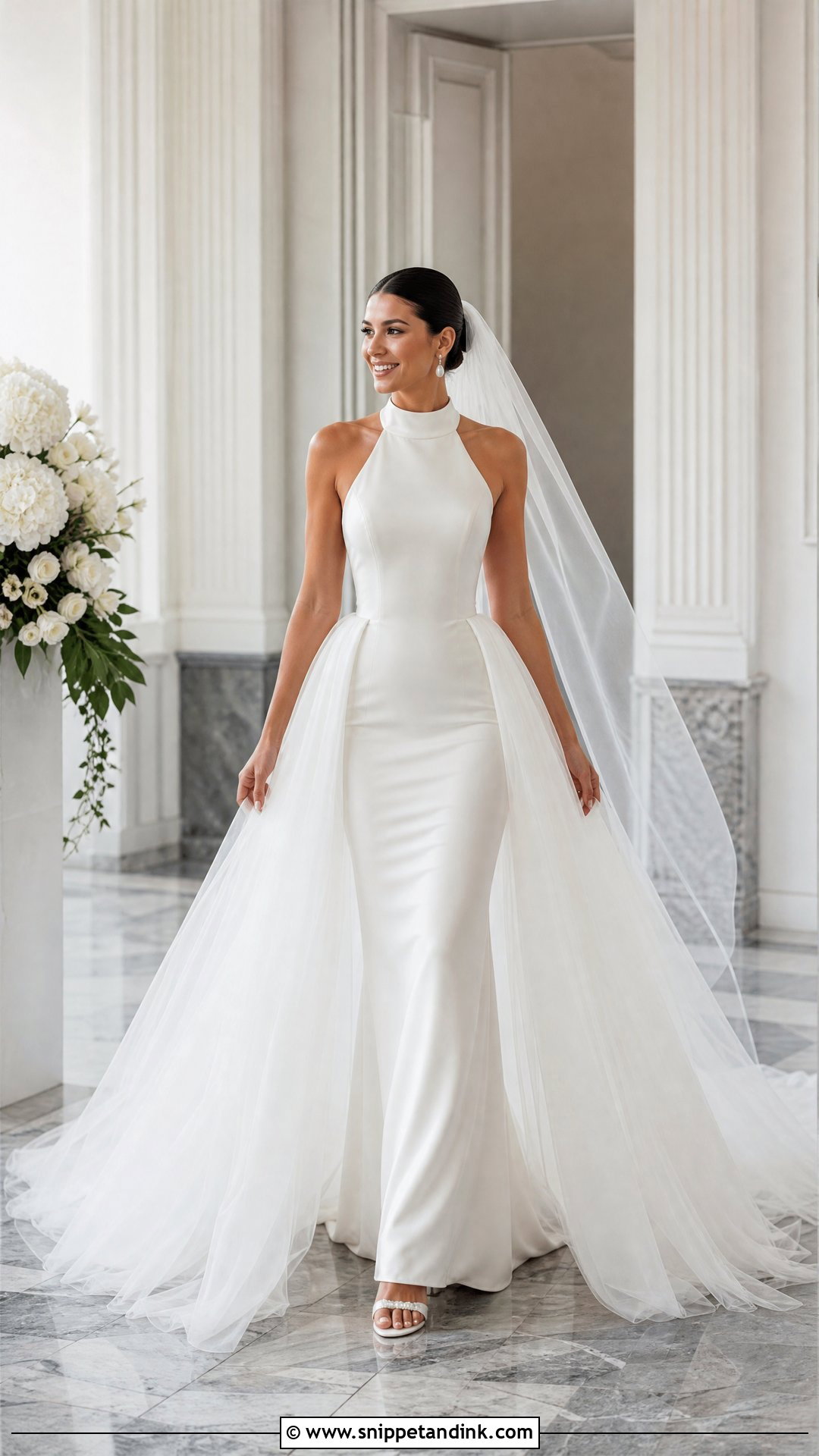
Two looks, one dress: the overskirt gives you volume for the aisle, and taking it off reveals a slim gown for dancing. Satin, tulle, organza or mikado all work for the overskirt. Ask how it attaches. Hidden hooks and a button band are quick; a skirt that zips under the bodice seam needs someone who has practised removing it, so I brief a bridesmaid at the final fitting. The halter keeps the bodice secure through both versions, and simple jewelry, a sleek bun and comfortable heels work with either.
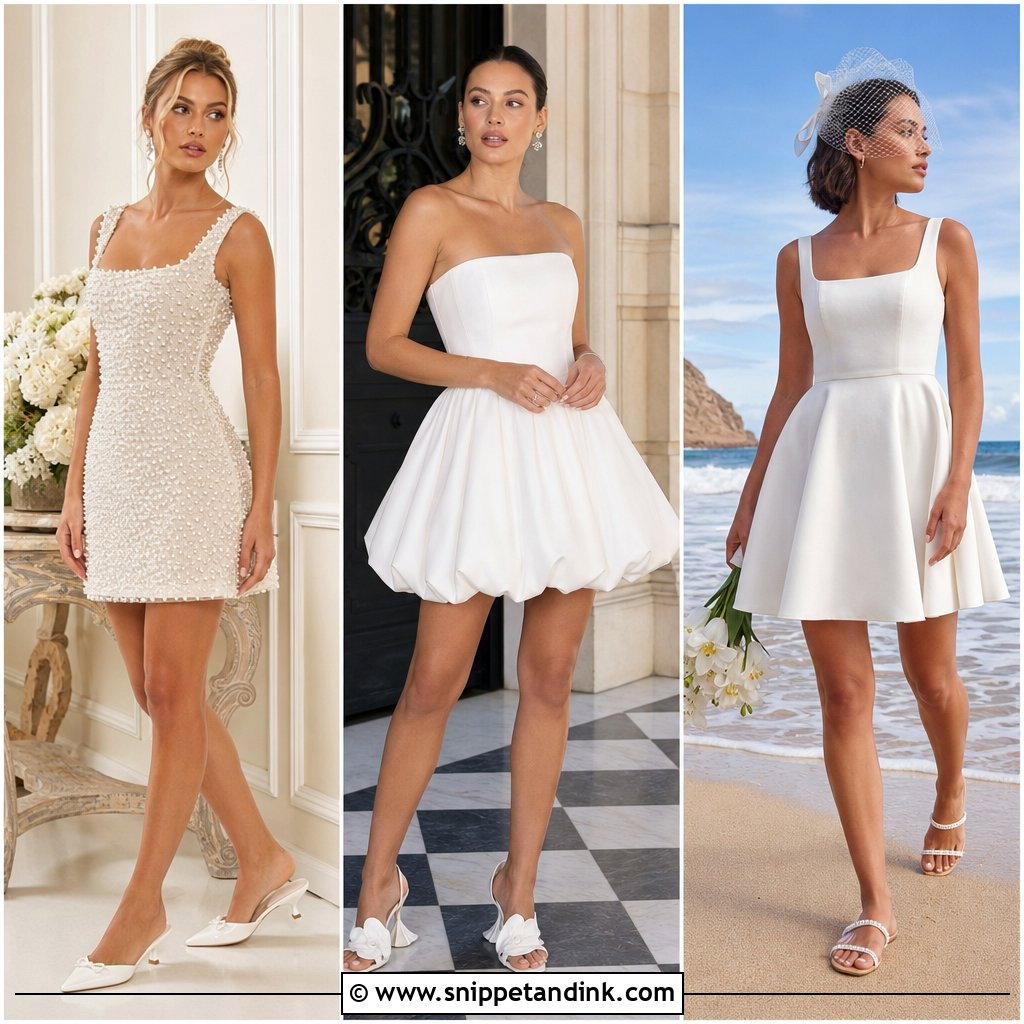
24. Short Halter Wedding Gown
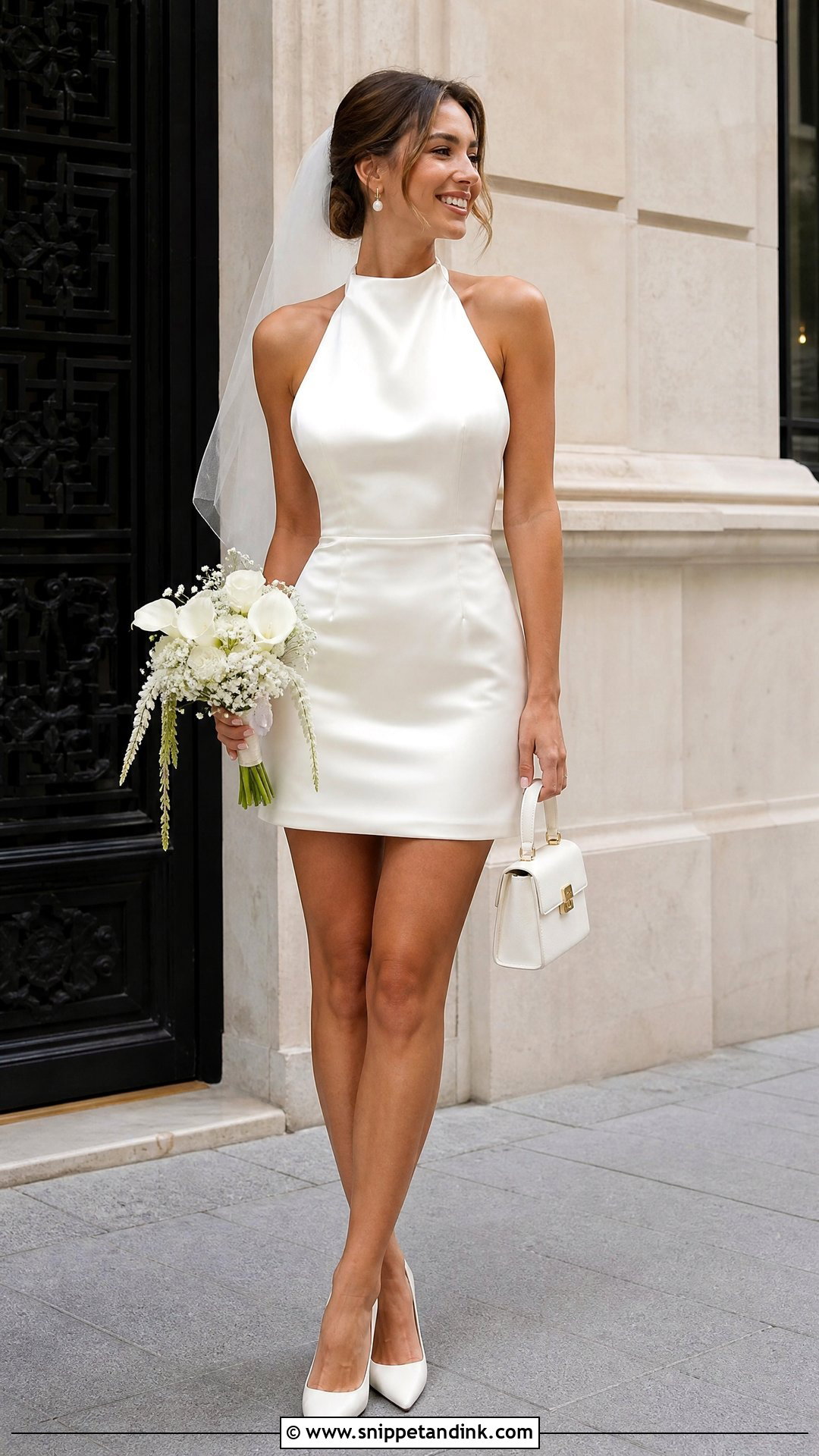
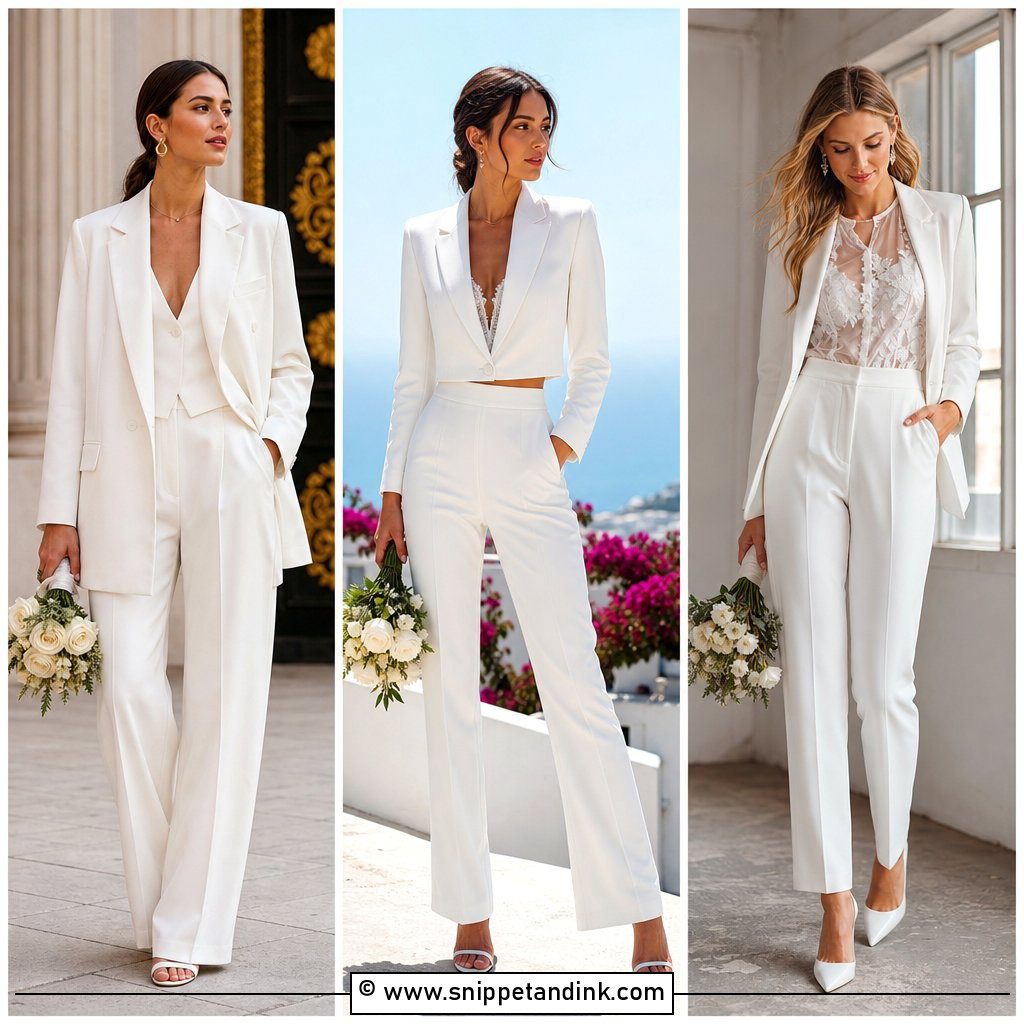
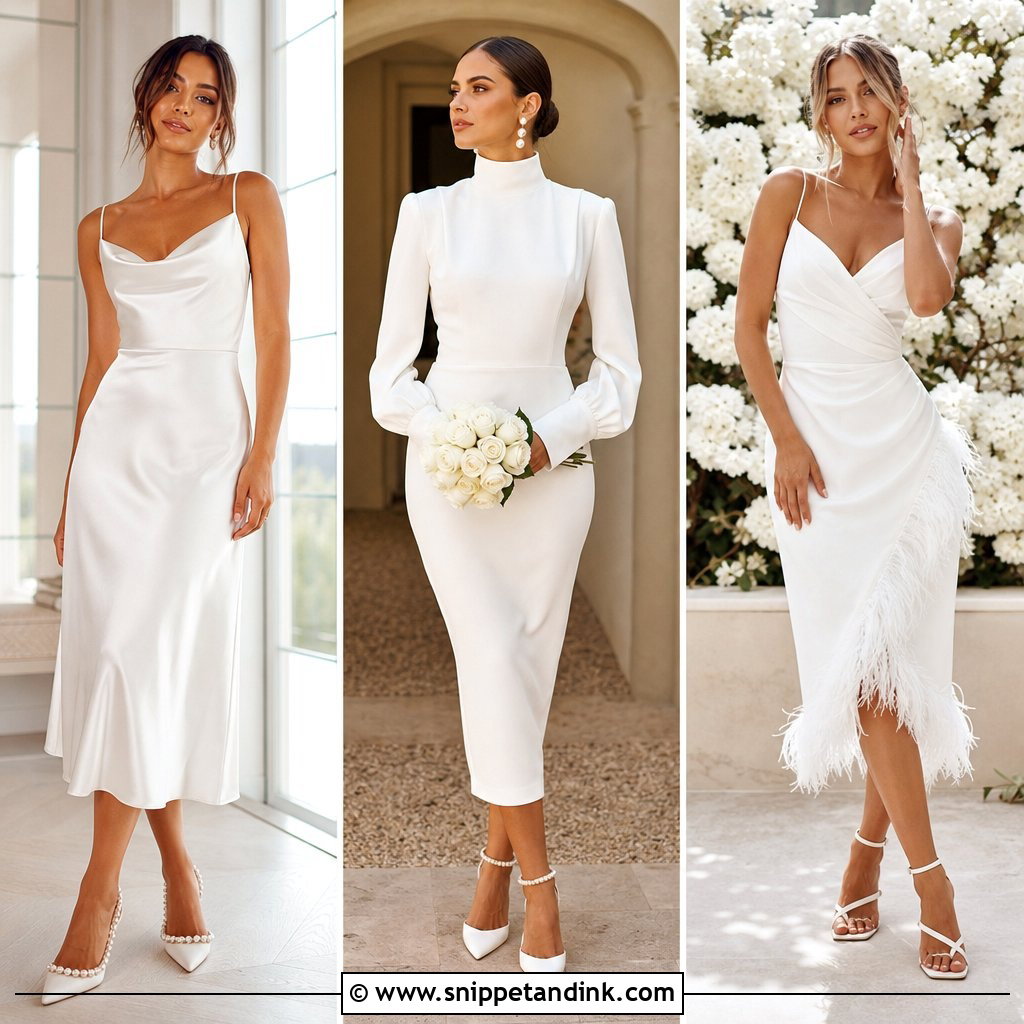
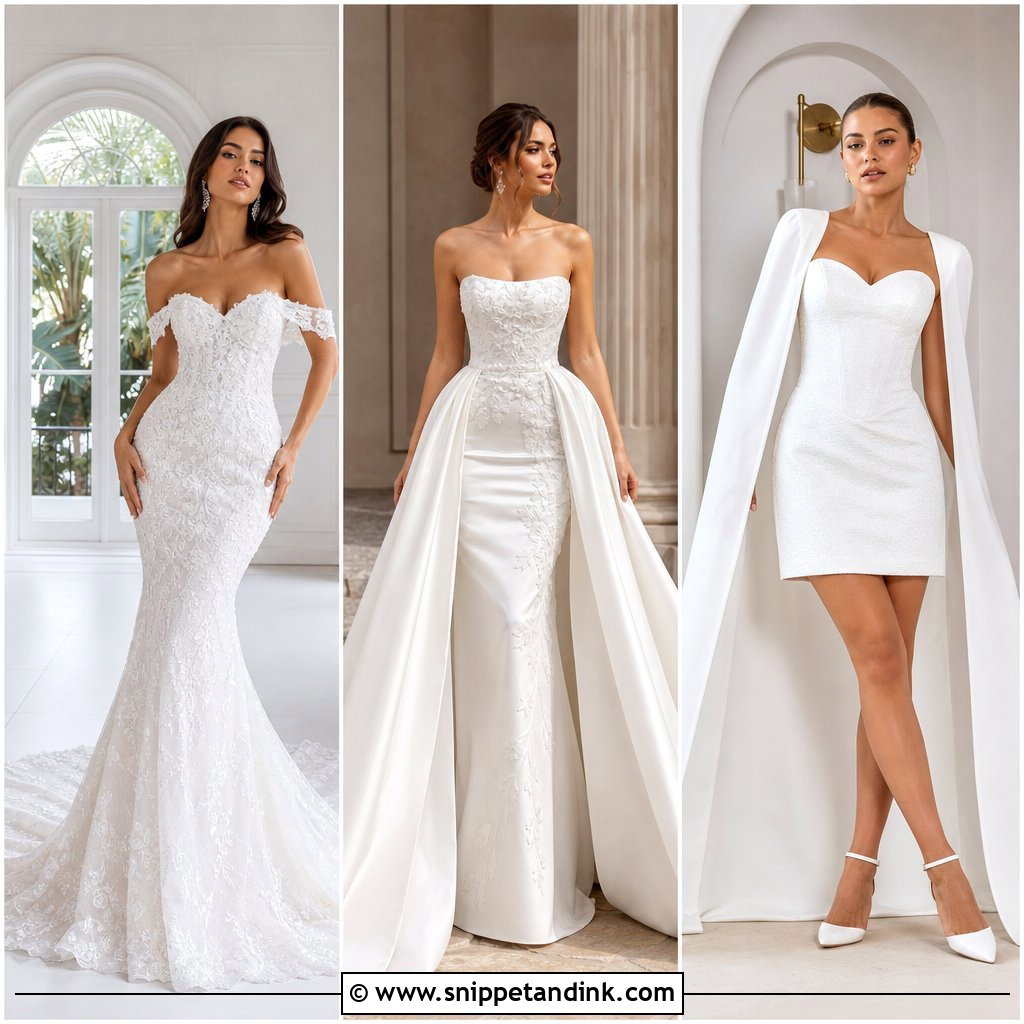
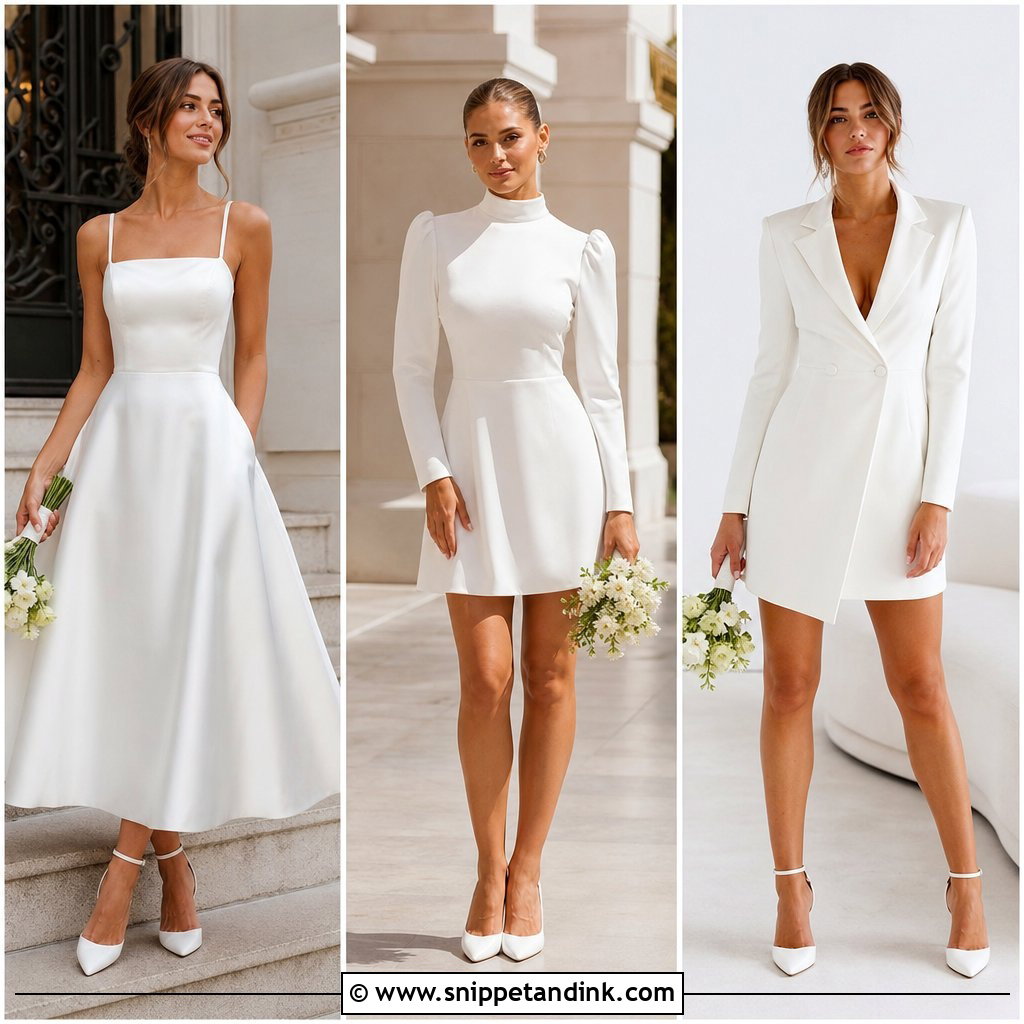
A short halter wedding gown is the easiest dress here to actually move in, which is why I see it chosen for civil ceremonies, warm-weather weddings and as a change for the party. The halter keeps a mini or tea-length dress looking bridal, especially in satin, lace, crepe or mikado. Shoes become more visible, so choose them as carefully as the dress: pointed pumps, block heels or embellished flats. Add pearl earrings and a short veil, or a structured bag for a city hall look.
25. Halter Wedding Gown With Train
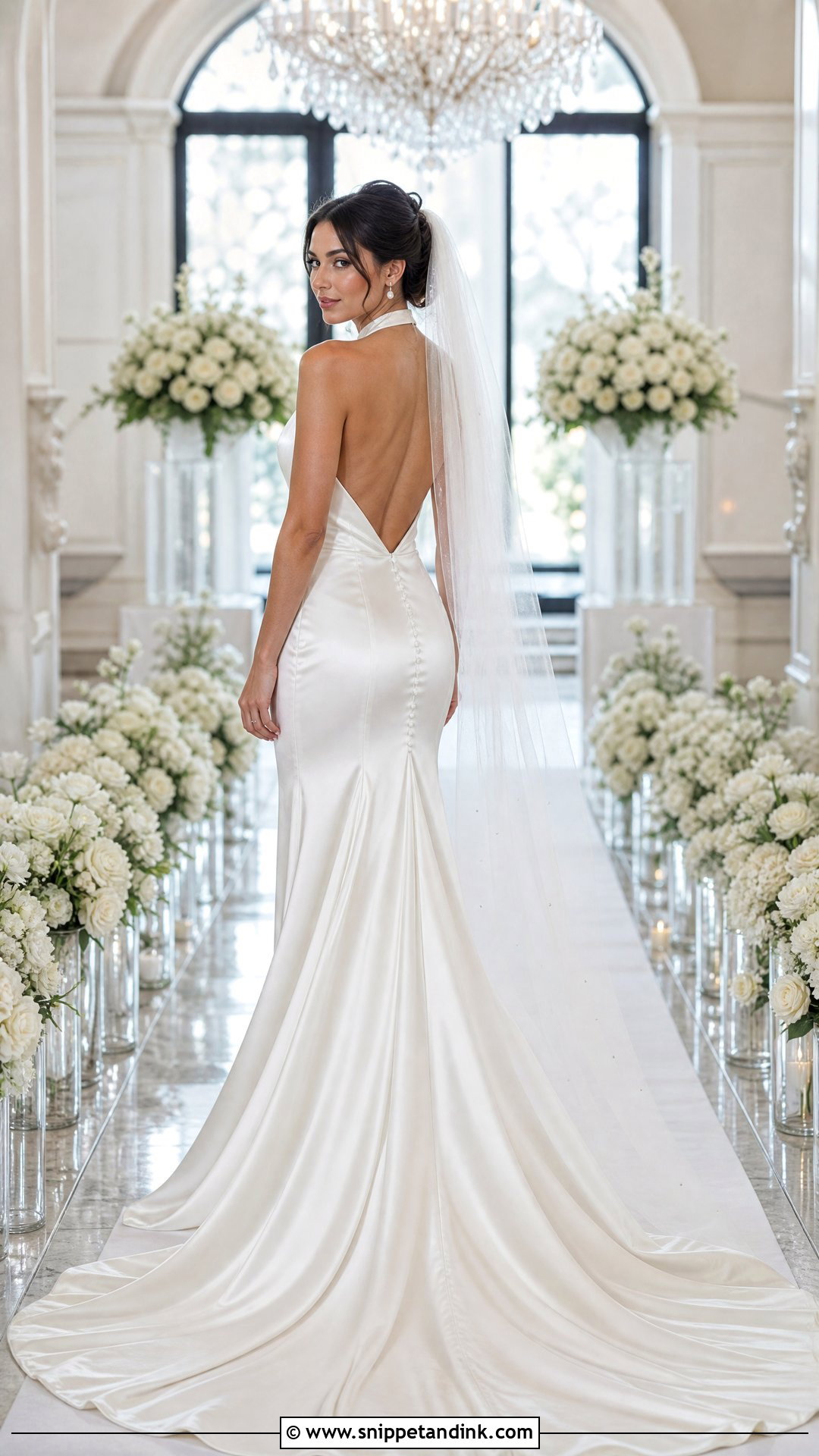
A train adds ceremony to the clean top line of a halter. Satin or crepe with a long train looks modern; lace or tulle makes it softer. Venue decides the length. A chapel or cathedral train suits a long aisle and a formal room, while a sweep train is kinder on grass and gravel. I always ask how many bustle points the train has and practise bustling it with a bridesmaid at the last fitting, because an unbustled train gets stepped on in the first ten minutes of the reception. Pair it with a veil that sits inside the train length rather than competing with it.
What Goes Under an Open Halter Back
An open back rules out most bras, and this is the question I get asked more than any other with this neckline. The best answer is cups sewn into the bodice by your seamstress, matched to your size, so nothing sits on your skin that can shift. For a smaller bust that is often all you need.
If you need more lift, a low-back bra with a strap that wraps around the waist can work under backs that stop at the waist, but try it with the dress on, not on its own. Adhesive cups and tape are fine for a few hours; on a hot day or a long dance floor night, they can lose grip, so treat them as a backup rather than the plan.
Two smaller things. Halters show any tan line across the shoulders, so keep strap marks in mind if you’re outdoors in the weeks before. And moisturize your back a few days ahead rather than the morning of, since body lotion can leave marks on satin and stop tape from sticking.
How a Halter Behaves Over a Long Wedding Day
A well-fitted halter is one of the most comfortable necklines I dress brides in, but there are a few things that only show up after hours of wear. Heavy beaded or crochet straps start to feel noticeable around the back of the neck by the evening. Ask your seamstress to add a soft lining or a slightly wider band where the strap meets your skin.
Hair matters more than with most necklines. Long loose hair hides the strap and the back, and it can tangle in a beaded clasp, so most halter brides I style end up in an updo, a low bun or a sleek ponytail. If you love your hair down, a half-up style keeps the back visible.
Finally, sit in the dress for ten minutes at your last fitting. A halter bodice with a high side seam can dig in at the ribs when seated, and that is far easier to fix with a quarter inch of let-out than to put up with through dinner.
The Strap Tension Matters More Than the Lace
A halter gives you a secure bodice, a neckline that feels current and a back that photographs well, and it comes in more variations than most brides expect, from sleek satin to lace, tulle, pearls and boho textures. What decides whether you love it at midnight is fit: where the strap sits on your neck, how the bodice supports you without leaning on that strap, and what is going on underneath. Think about the back view as much as the front, keep the jewelry near your ears rather than your throat, and give yourself time for alterations. Get those right and almost any version on this list will carry you comfortably through the whole day.
You'll Like These Ideas:



Leave a Reply