
Old screen glamour is about one strong line: liquid satin, a sculpted shape, a long train and accessories that know when to stop. Bias-cut slips, off-the-shoulder necklines, mermaid skirts and formal ball gowns all belong to it, but they come from different decades and suit different bodies and venues. The mistake I see most is piling every glamorous detail onto one outfit. Pick the gown first, then build the jewelry, shoes and hair around it so the whole look reads as one decision. The twenty dresses below range from quiet and sleek to full sparkle, each styled head to toe.
Which Decade of Screen Glamour Do You Mean?
When a bride tells me she wants Hollywood glam, my first question is which Hollywood. The eras dress very differently, and knowing which one you love saves hours in bridal shops.
- The 1930s: bias-cut satin, cowl necks, low backs and very little structure. Suits a lean frame or anyone happy to wear smoothing underwear, and a hotel or supper-club wedding.
- The 1950s: fitted bodices, full skirts, tea lengths, gloves and pearls. Easier to wear because the shape comes from the dress, not the body.
- Modern red carpet: sculpted mermaid and column gowns, plunging necklines, crystal and sequin finishes, long trains. Best in a big room with evening light.
Bring two or three photos from one period to your first appointment rather than twenty from all of them. A consultant can pull far better options when the brief is narrow, and you’ll avoid ending up with a 1950s skirt fighting a 1930s neckline.
1. Satin Bias Cut Wedding Dress
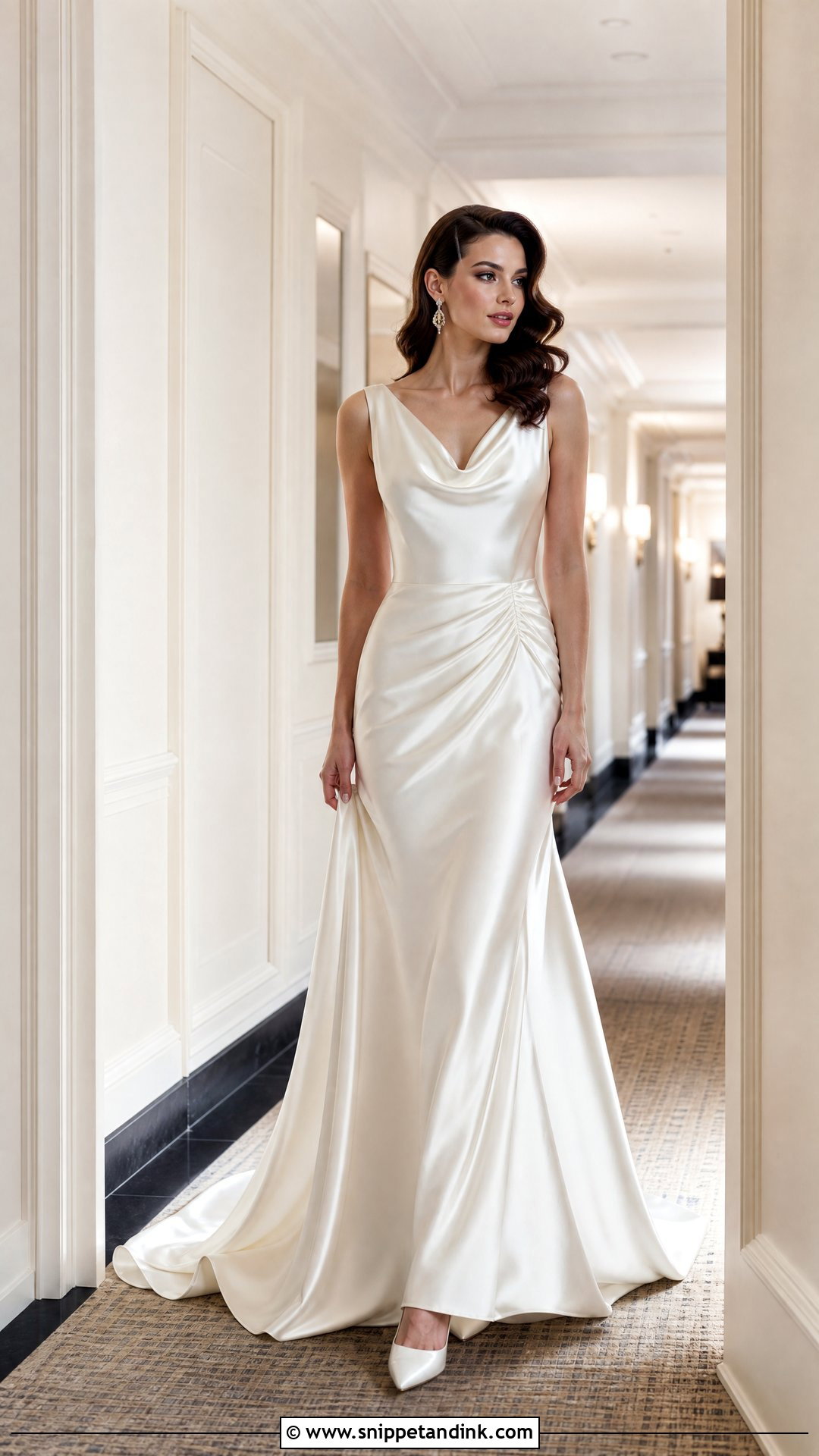
Bias cut is the 1930s original, and it’s the least forgiving cut in bridal. Because the fabric runs diagonally it stretches over the hip and shows every line underneath, so I’d only go for a heavyweight silk or satin that has enough body to skim rather than cling. A softly gathered waist and a sweeping train keep it moving. Crystal drops, pointed ivory pumps and side-parted waves finish it; choose a fingertip veil or a slim crystal comb and leave the neck bare so the shine of the fabric carries the look.
2. Off Shoulder Mermaid Wedding Dress
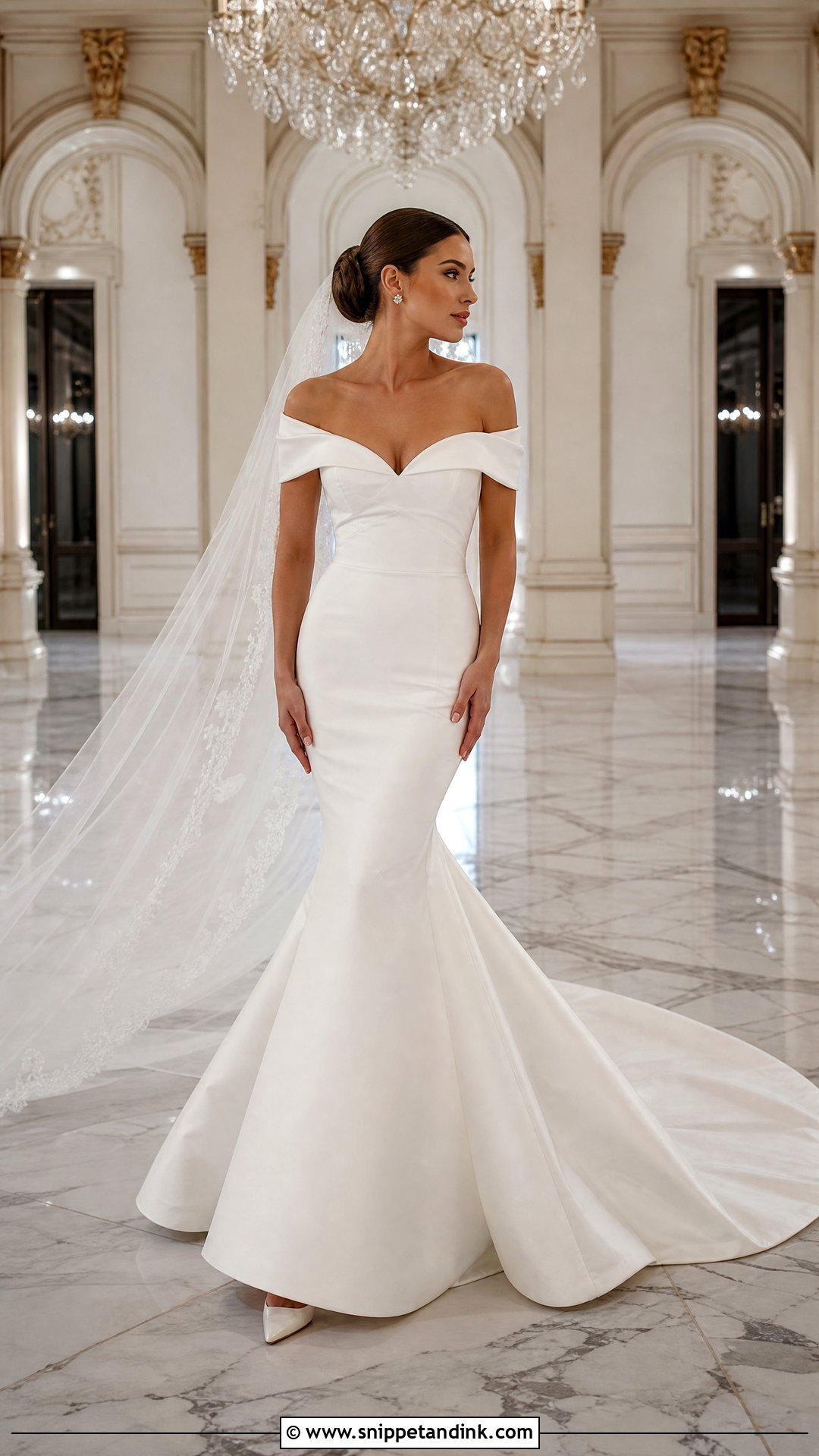
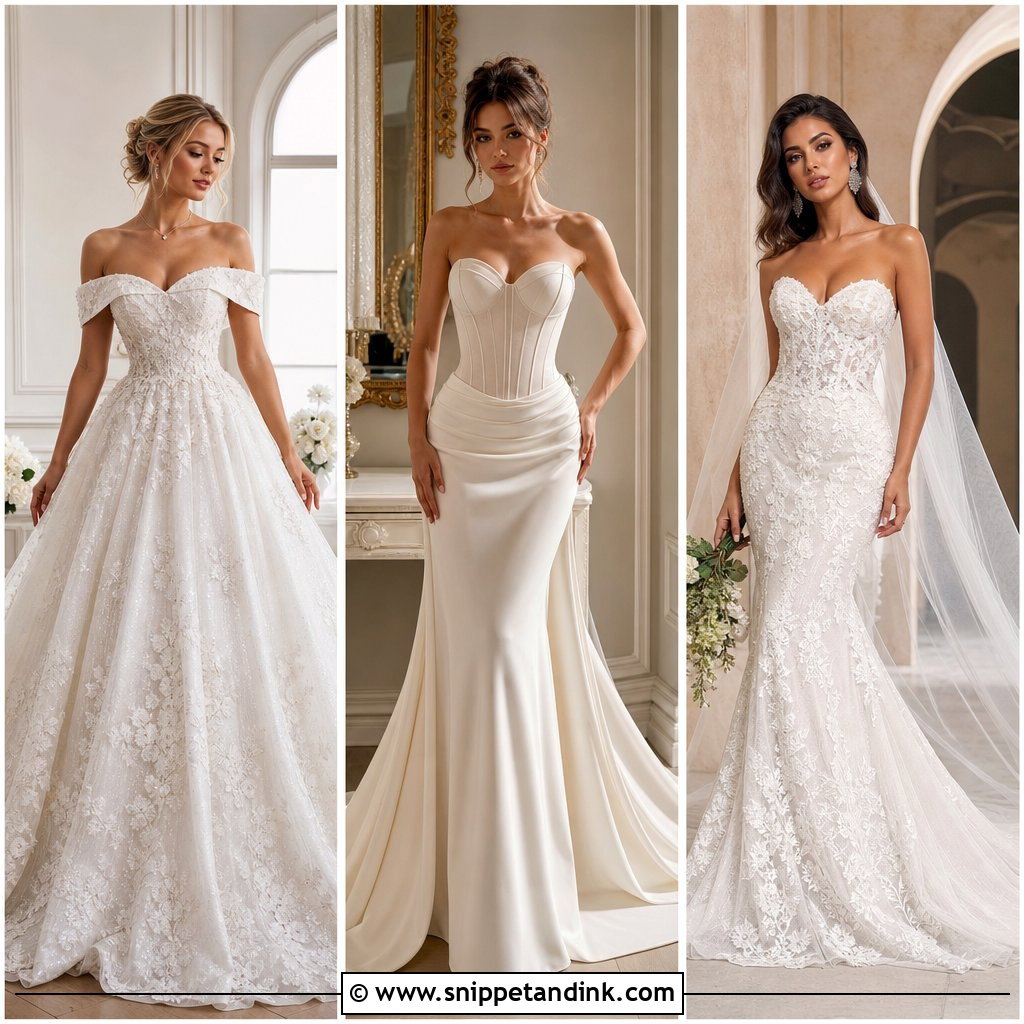
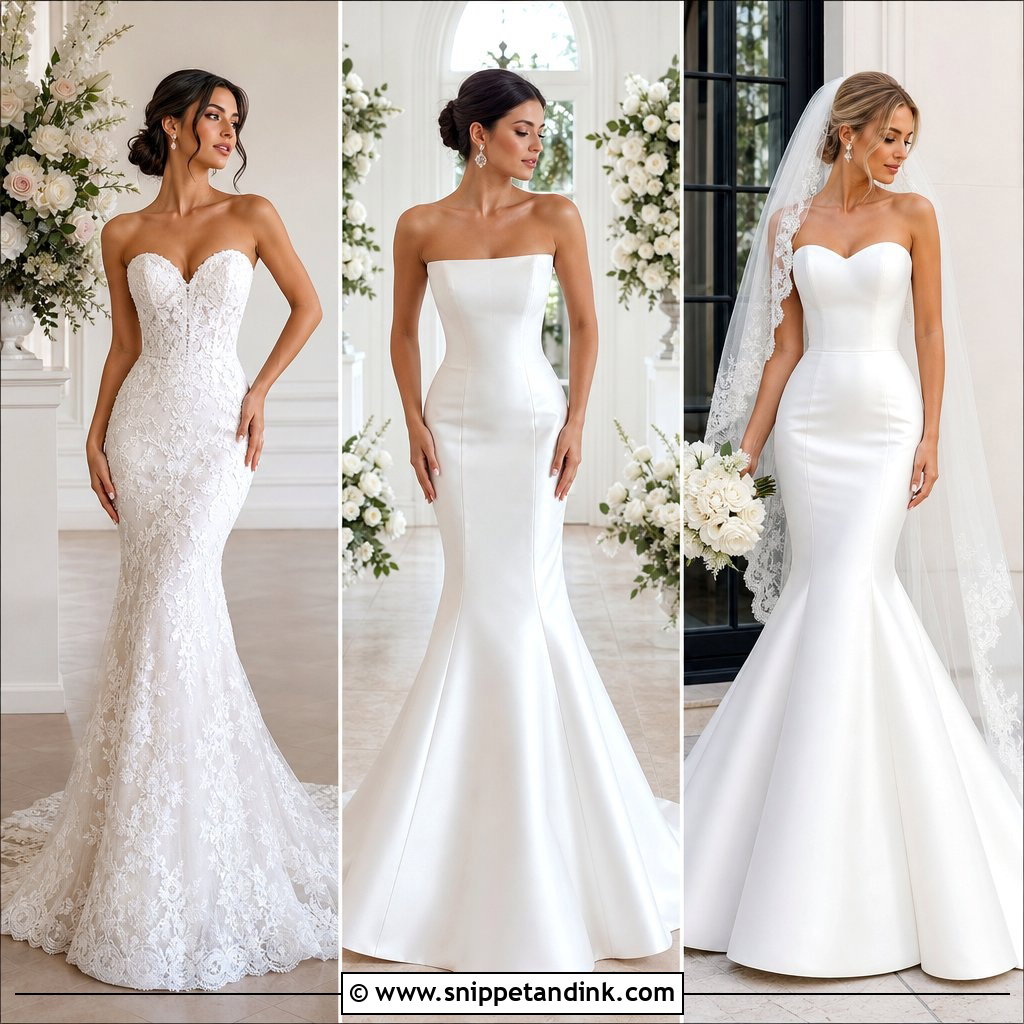
Nothing makes an entrance like a mermaid, but the flare point decides whether you can walk. I want it at or just above the knee for most brides; set too low and you’ll be taking tiny steps all night and sitting sideways at dinner. Smooth satin, structured crepe or silk mikado hold the shape cleanly in photos. If the neckline already has sculpted folds, wear crystal studs instead of long gloves. A cathedral veil under a polished chignon suits the ceremony, and a removable overskirt can hide the mermaid shape until the reception.
3. Strapless Satin Ball Gown
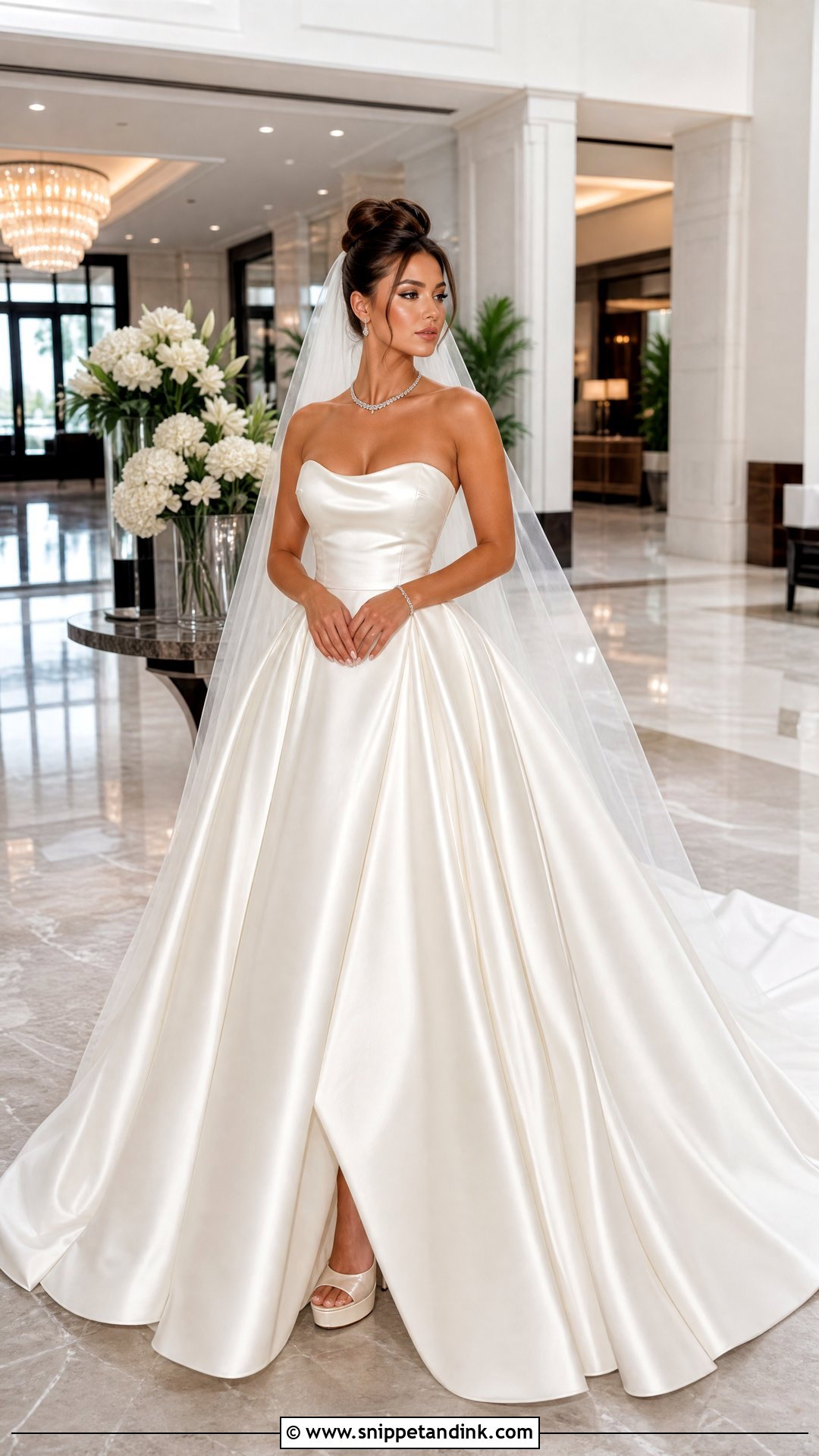
A strapless ball gown in satin stays up because of what’s inside it. Before I look at the neckline, I check for proper boning and a waist stay, since a heavy skirt pulls the bodice down with every step. A softly curved neckline sits more securely than a straight one on most busts. Pair it with a tennis necklace and matching earrings, satin platforms under the hem, and a sleek bun or sculpted waves. A clean-edged cathedral veil suits a ballroom or hotel ceremony. If the skirt feels heavy, a detachable train gives you the entrance and then lets you dance.
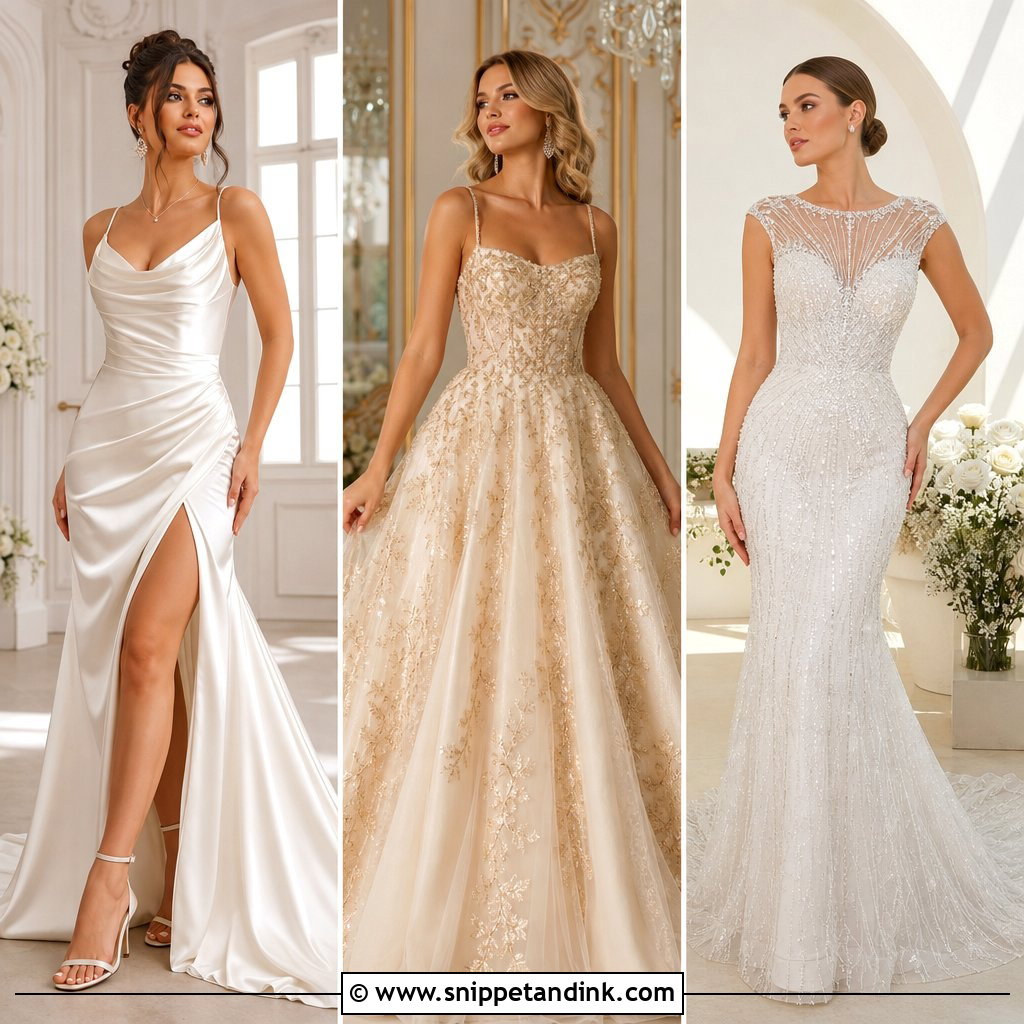
4. Cowl Neck Slip Wedding Dress
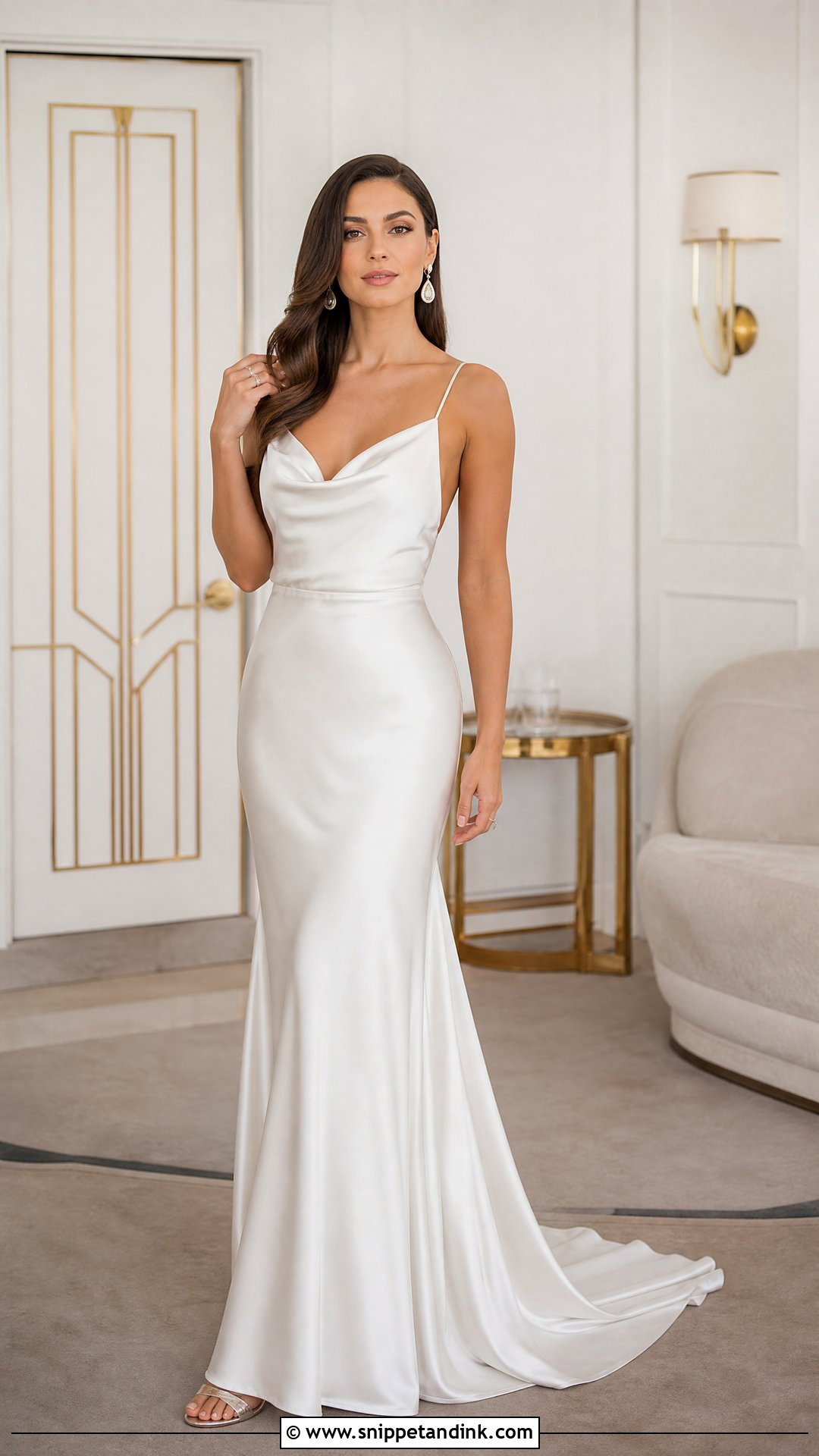
The cowl drape does the work a necklace would, so I’d leave the throat bare and wear pear-shaped drops instead. This is the easiest way to get Old Hollywood influence without a big skirt or a boned bodice. Fluid silk satin with narrow straps and a gently shaped waist is the classic version; a low back or short train adds drama without bulk. Metallic sandals, a fine bracelet and smooth side-parted waves keep it clean. In cooler months, a faux-fur wrap or satin stole covers the shoulders without hiding the drape.
5. Long Sleeve Lace Wedding Dress
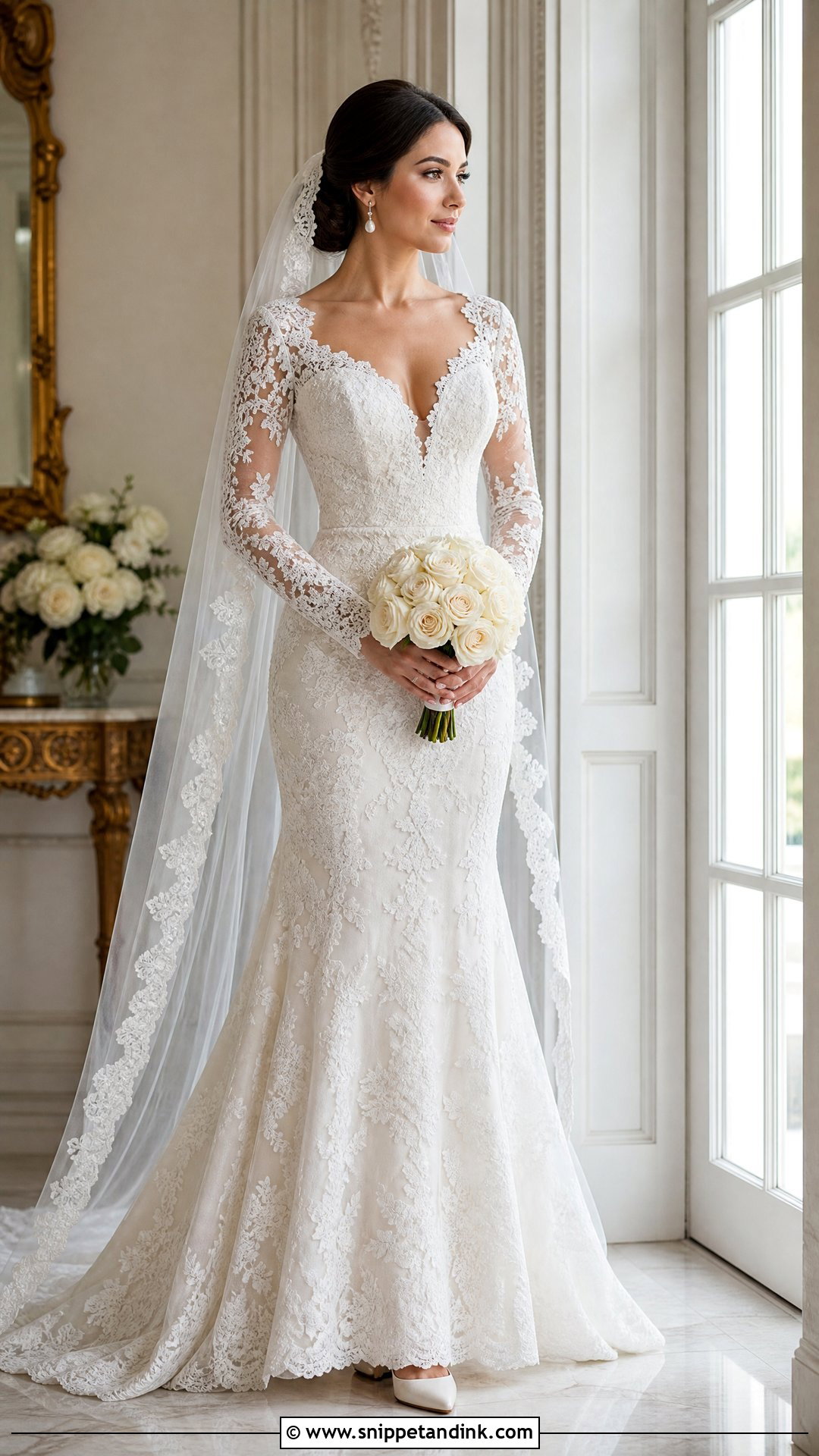
Lace softens the glamour. Fitted sleeves, a defined waist and a gently flared skirt keep the line long, and the lace itself sets the period: floral reads traditional, geometric or beaded lace reads more 1920s. Fitted lace sleeves need a little ease at the elbow, which I’d ask for at the first fitting. A lace-edged veil that echoes the dress without matching it exactly, pearl earrings, satin pumps and a low chignon complete the outfit. With a busy lace, keep the bouquet compact, ivory roses or calla lilies held close.
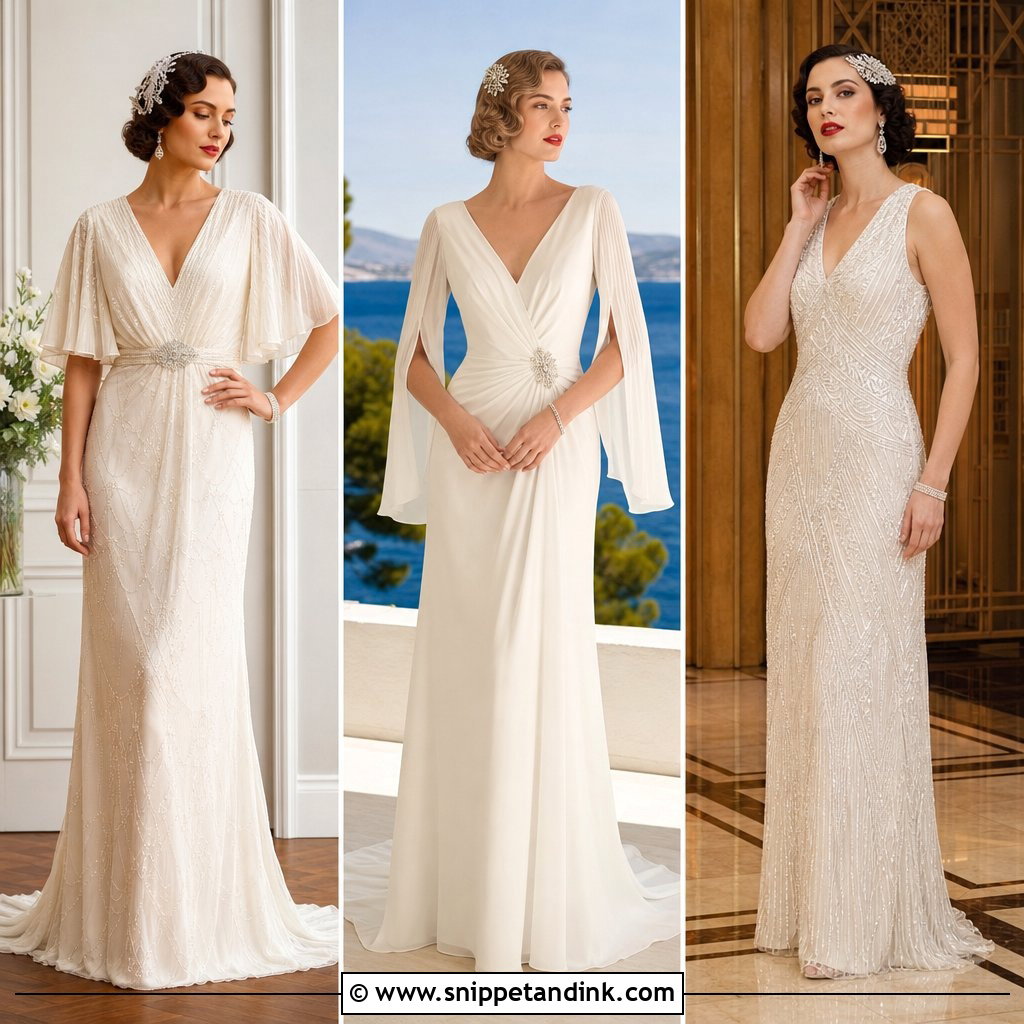
6. Beaded Art Deco Wedding Dress
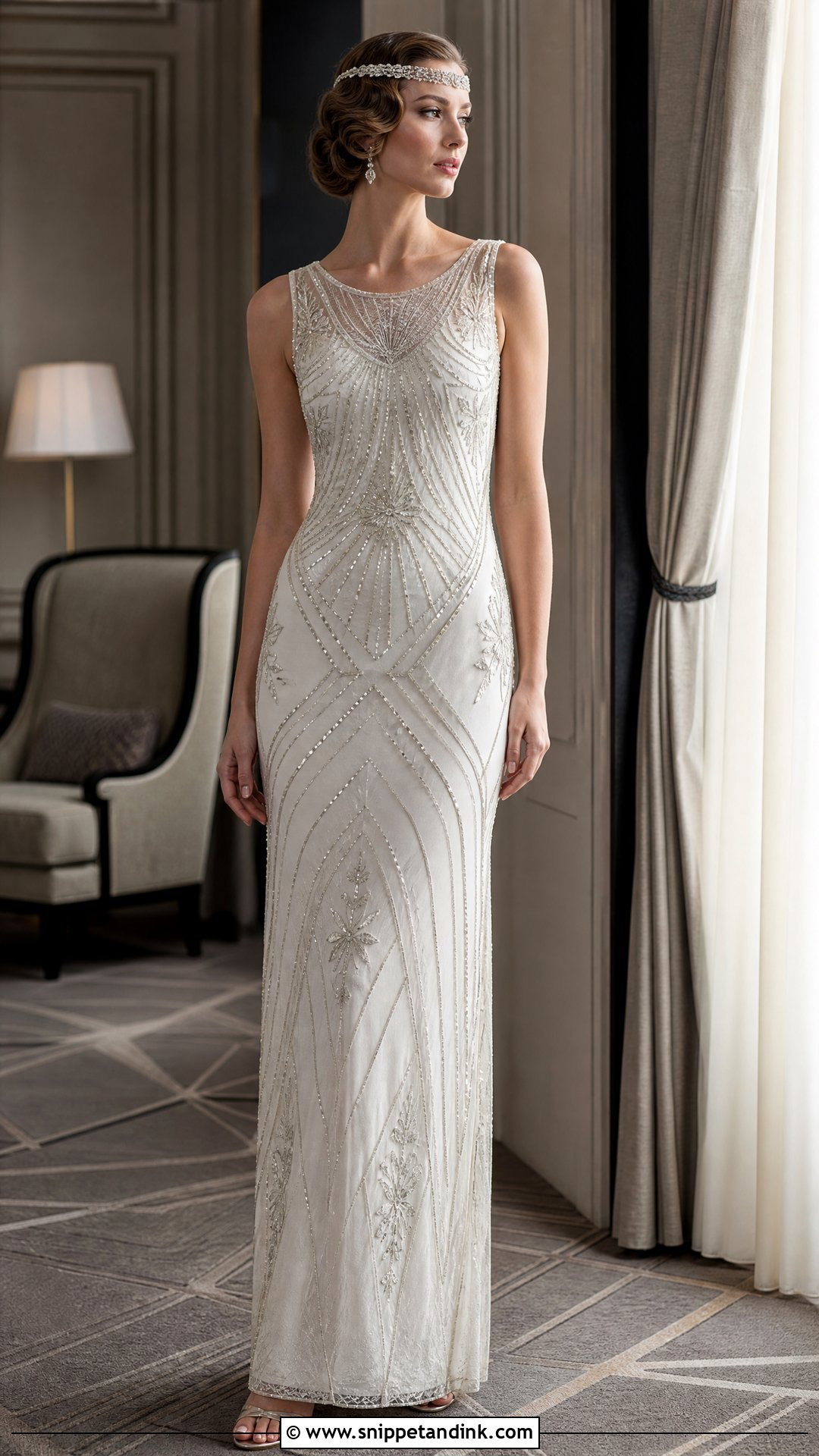
Art Deco beading is heavy, and that weight changes how the dress hangs. Linear beadwork, fans and geometric motifs on a sleek column look sharp standing still, but I always check the armholes, because stiff beading there rubs by the end of a long evening. Silver, pearl and clear crystal keep it bridal. With that much sparkle, simple metallic sandals and small earrings are enough. A jeweled headband over a smooth low bun or finger waves leans into the 1920s. Choose a veil with a plain edge so it doesn’t snag on the beads; a champagne lining will make the pattern show up more.
7. Halter Neck Column Wedding Dress
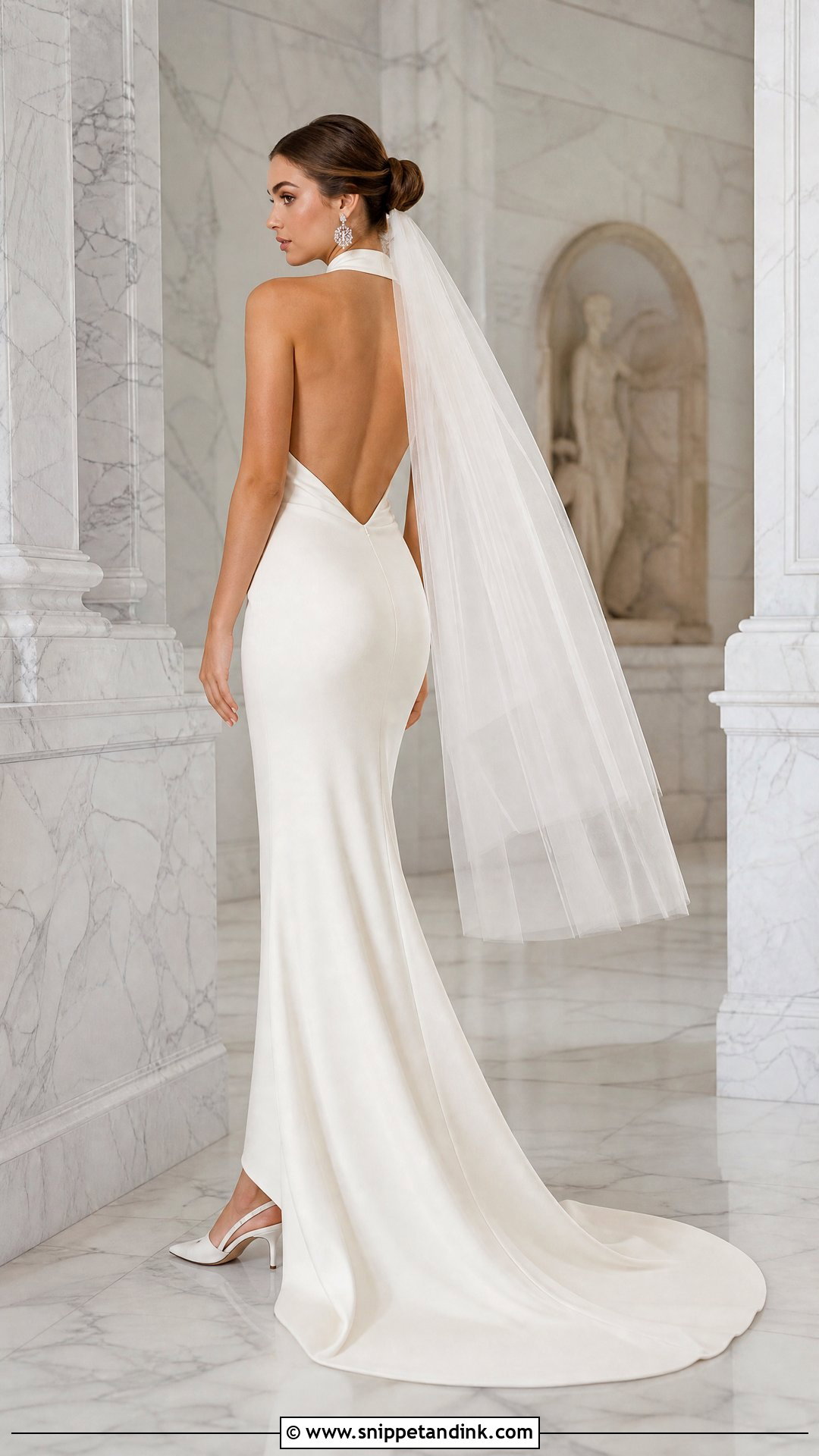
Halter necks draw the eye straight up to the shoulders, which is why I’d skip the necklace every time. The column skirt below gives a long, confident line, and the cut pairs naturally with an open back or a softly draped train. Crepe gives modern structure; silk satin gives that warm vintage glow. Statement earrings, a slim bracelet and pointed slingbacks suit it, with a sleek chignon or waves swept behind the shoulders. Check the halter strap at a fitting: if it pulls your head forward after an hour, it needs adjusting. A detachable satin cape adds drama for the ceremony and comes off for the party.
8. One Shoulder Draped Wedding Dress
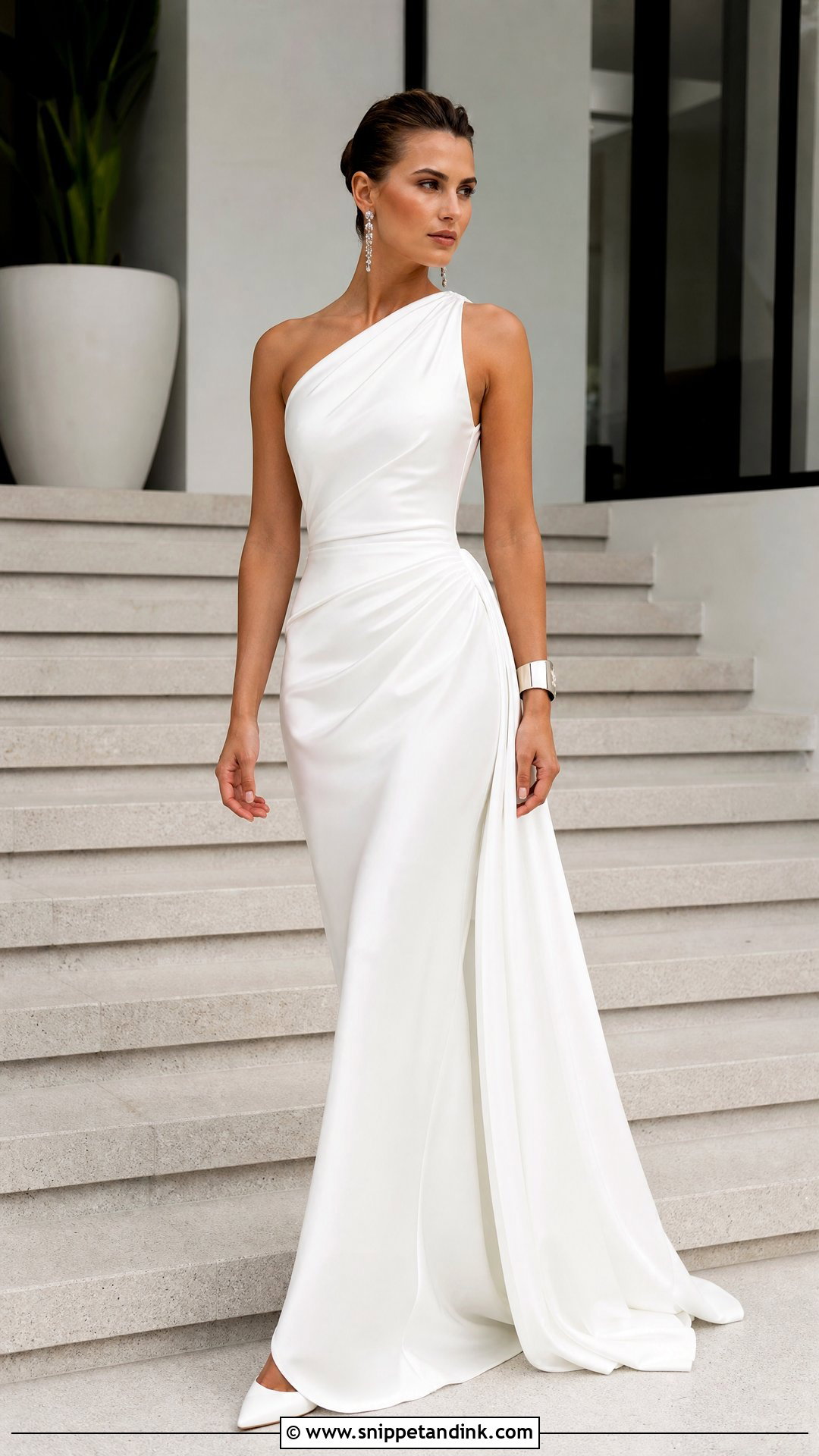
Asymmetry needs one counterweight, not three. On a one-shoulder gown with soft pleating across the bodice, I’d add either a single statement cuff on the bare arm or a pair of long earrings. Satin reflects more light than crepe, which matters if your photographer shoots with flash. Pointed pumps and a smooth updo keep the shoulder clear. A traditional veil can tangle with the strap, so a crystal comb or detachable shoulder cape often works better. If you want waist definition without a corset, look for draping gathered at the waist.
9. Square Neck Mikado Wedding Dress
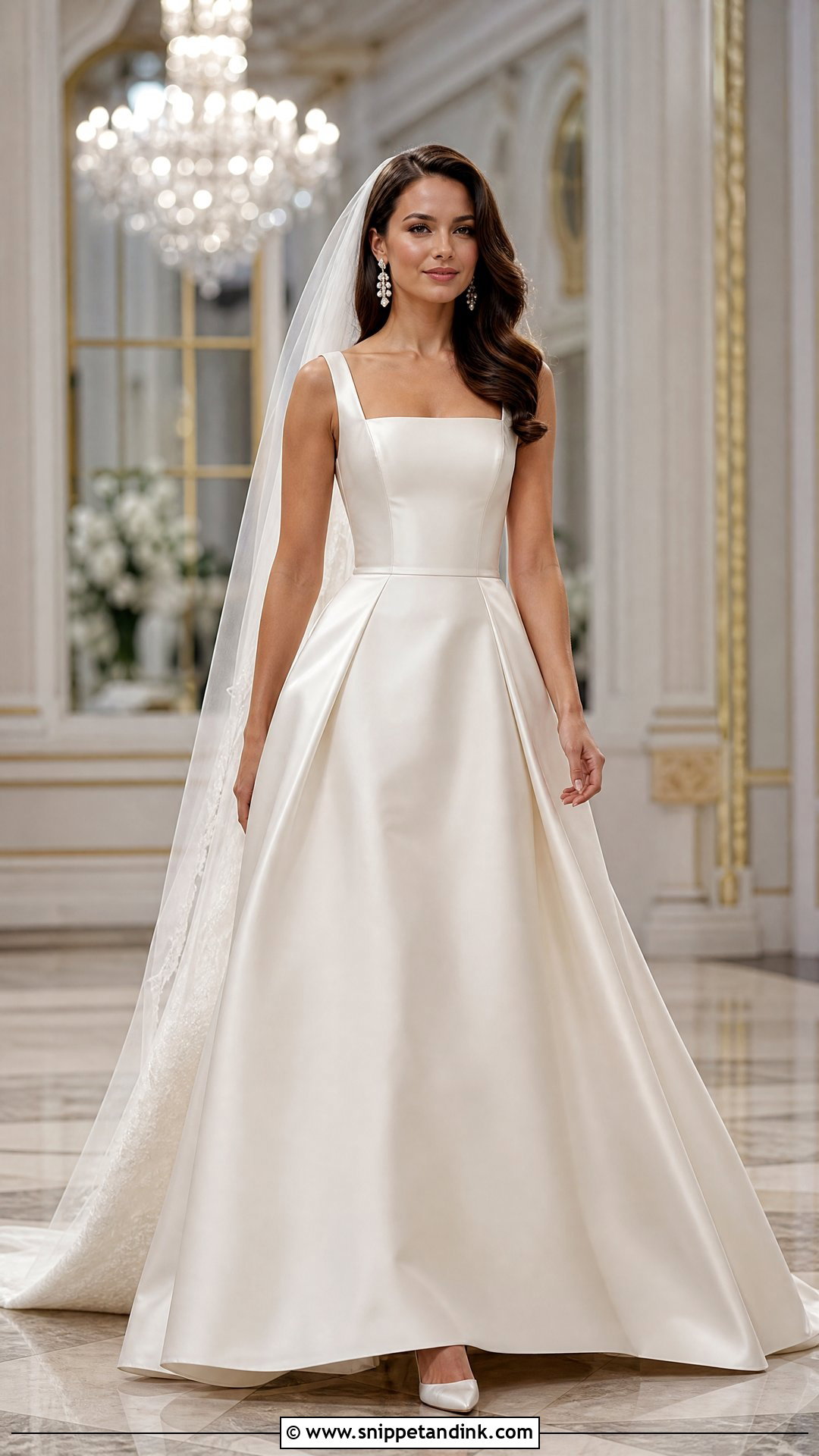
Mikado is the fabric I reach for when a bride wants structure without boning everywhere. It’s a stiff, slightly textured silk or blend that holds a crisp A-line skirt and a square neckline exactly where they’re cut. The square neck frames the collarbones; wide straps look classic, narrow ones lighter. Pearl-and-crystal earrings, closed-toe satin pumps and a plain cathedral veil suit it, with a polished bun or deep side-parted waves. Covered buttons down the back are a good detail. A waist bow can work, provided it stays small. Mikado also creases less than soft satin when you sit, which helps on a long formal day.
10. Cape Sleeve Wedding Dress
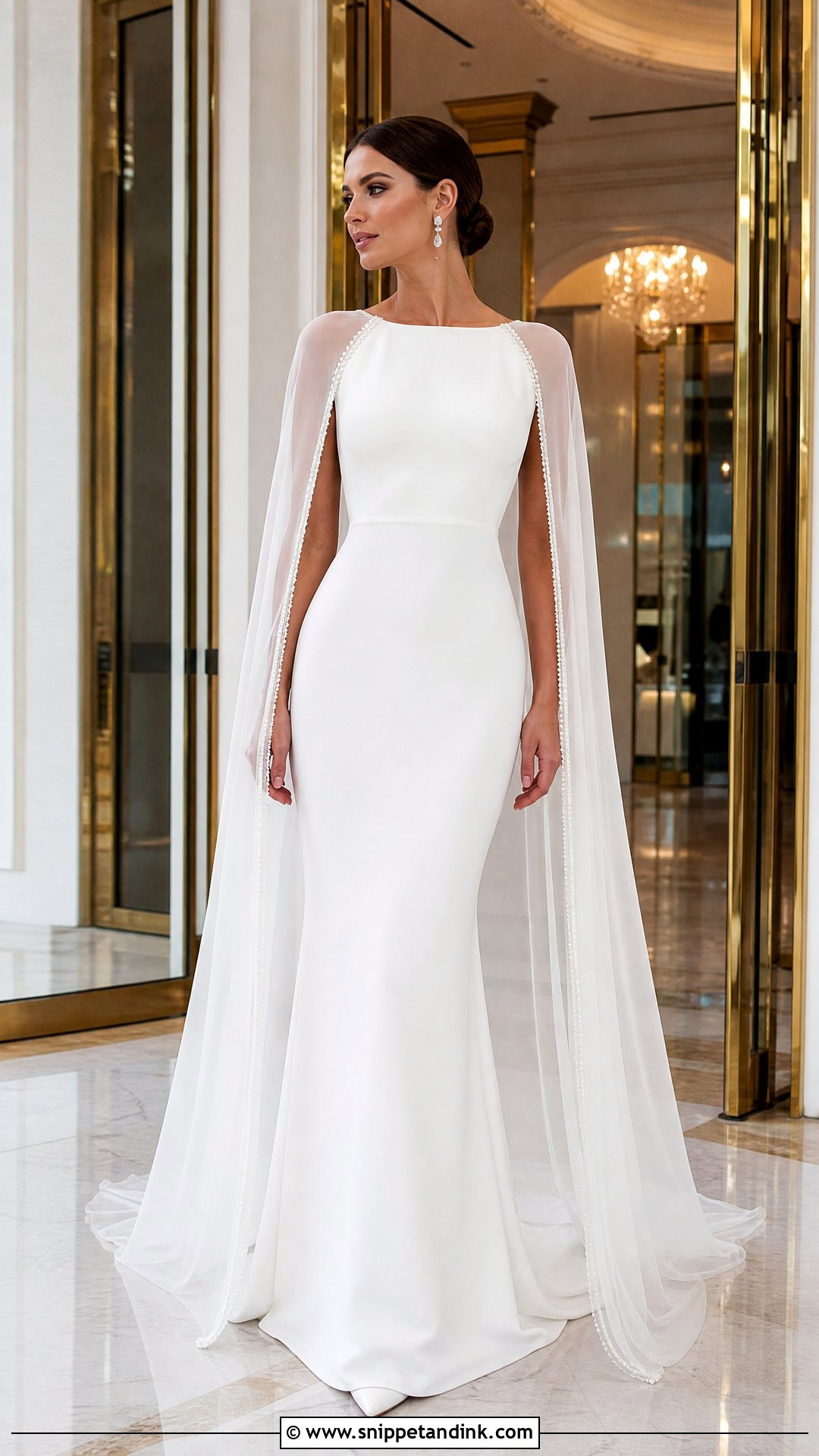
A floor-length cape gives the ceremony its drama, so the gown under it can stay simple. A fitted crepe or satin dress with a sheer cape falling from the shoulders, edged in satin or touched with pearls, looks finished on its own. Skip a veil if the cape already runs past the train, because two long layers swamp the silhouette. Pointed heels, drop earrings and a sleek low bun are all you need. I’d choose a detachable cape so the column or trumpet underneath feels lighter later, and you keep the same Hollywood glam mood from aisle to dance floor.
11. Sweetheart Corset Wedding Dress
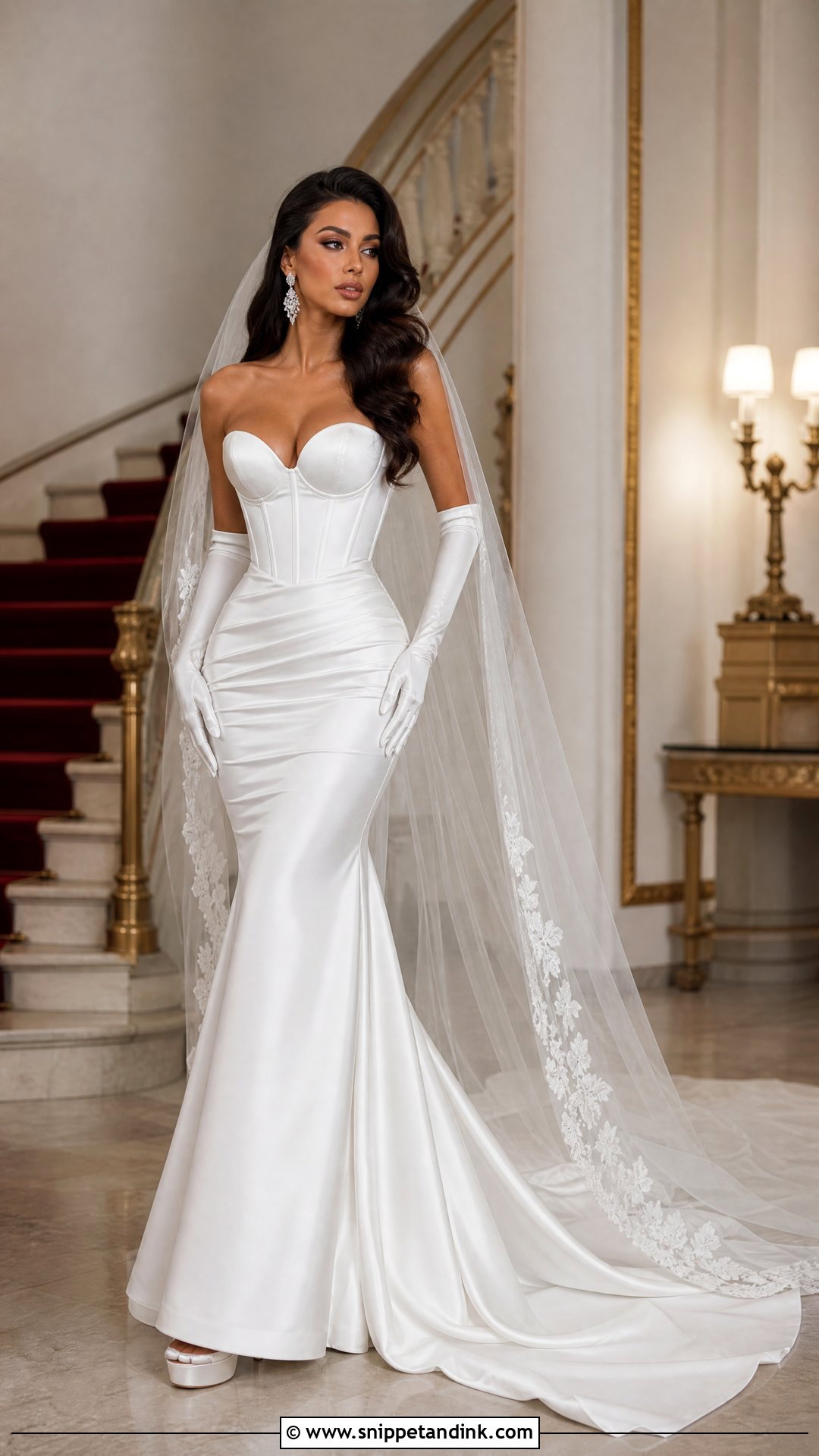
A real corset should stay in place without you tugging at it. Visible seaming and proper boning hold the sweetheart neckline steady, and a good fit means you can breathe deeply and lift your arms without it shifting. It pairs with a satin mermaid skirt for drama or a full skirt for grandeur. Choose either a crystal necklace or chandelier earrings, not both if the bodice is beaded. Platform pumps, a cathedral veil and big side-swept waves suit it. Plain satin gloves are another option for the ceremony when the gown is already detailed.
12. High Neck Satin Wedding Dress
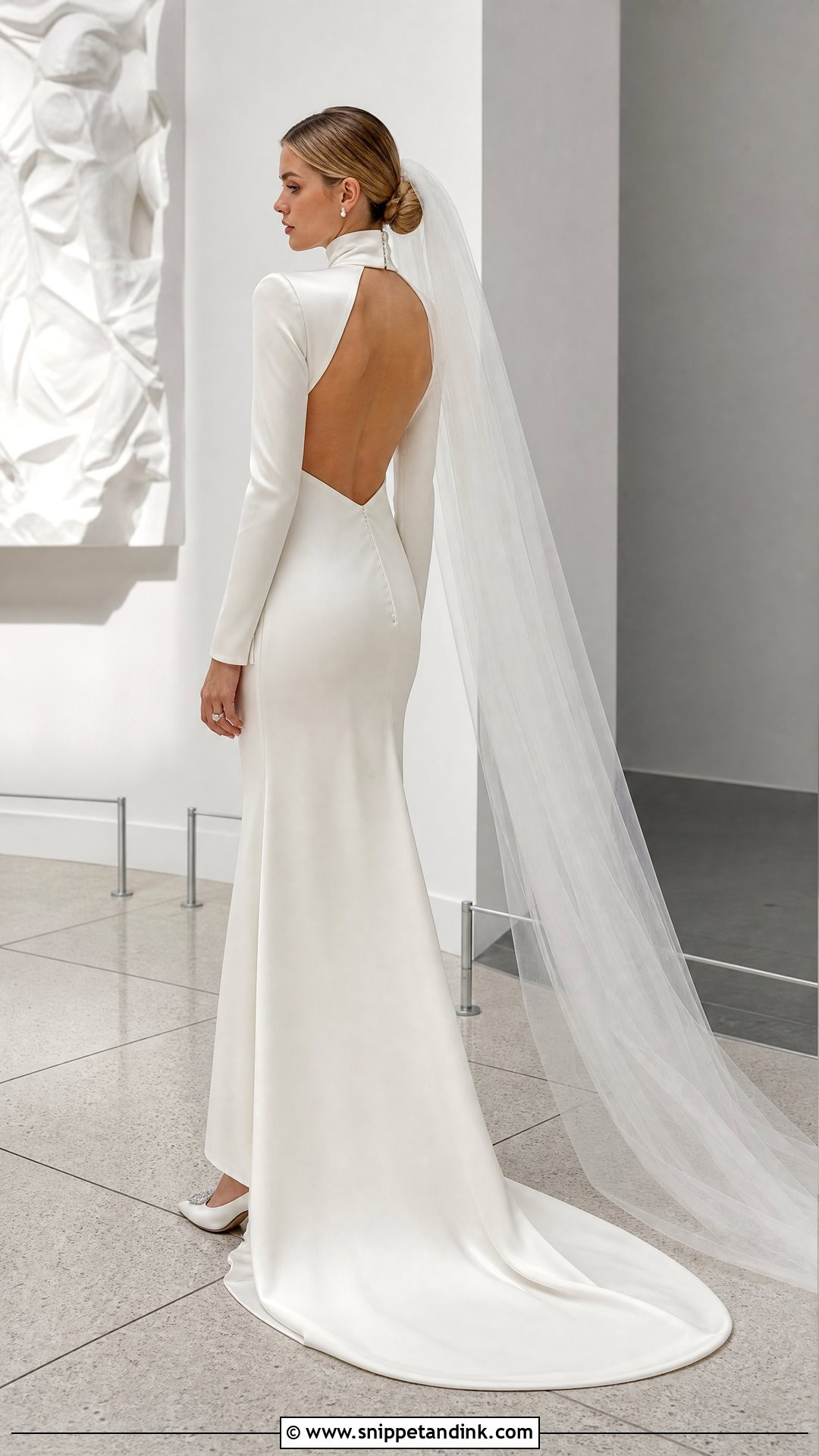
A high satin neck looks most striking when something else is open: the back, or a clean column skirt that shows the waist. Liquid satin moves; mikado holds an architectural shape. The collar replaces the necklace, so pearl studs, a statement ring and a small hair accessory are plenty. Pointed heels and a low bun show both the collar and the back detail. Try a long plain veil rather than an embellished one, since detail at the head and neck together crowds the top half. With long sleeves, keep the bouquet small.
13. Feather Trim Wedding Dress
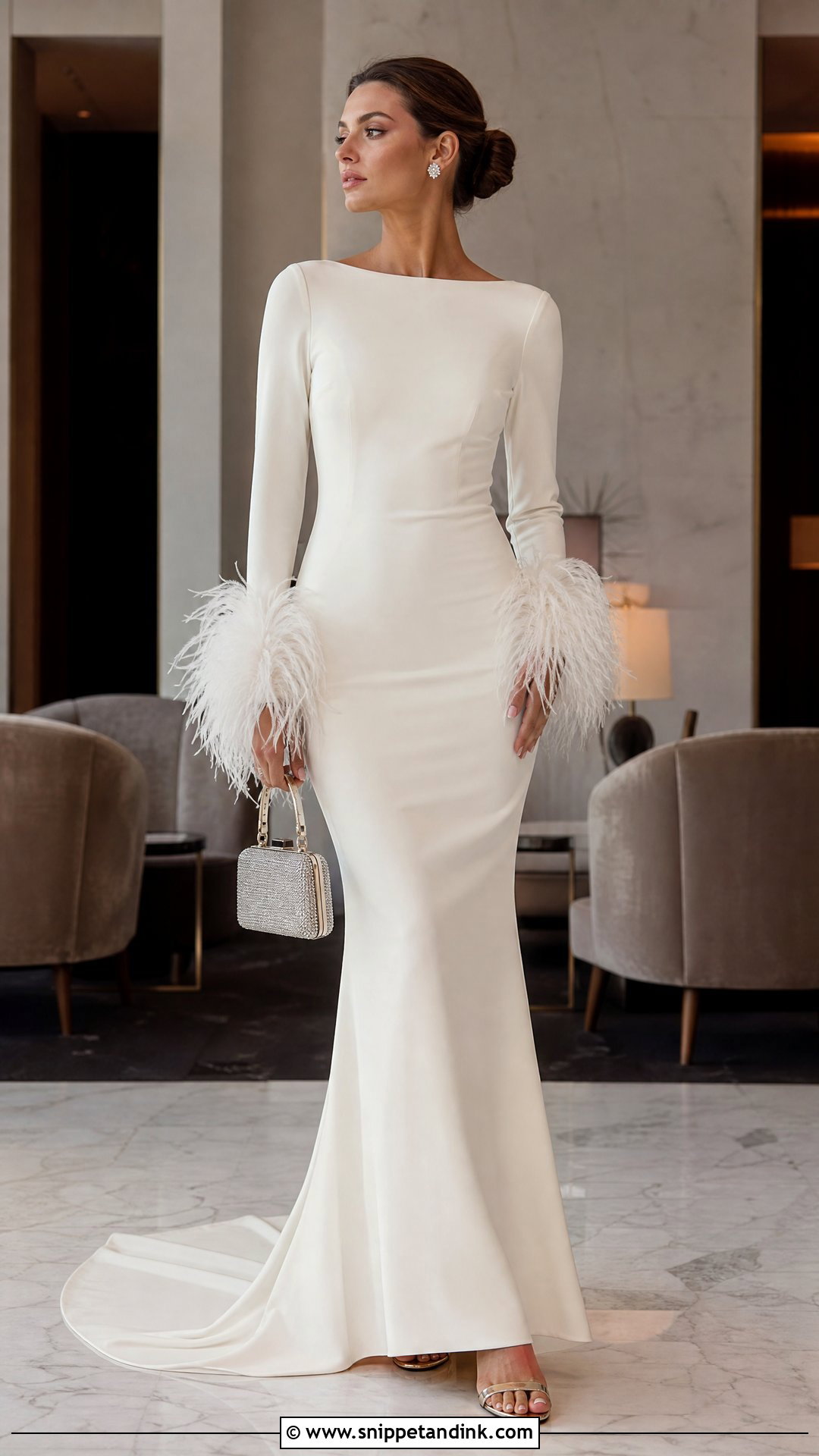
Feathers are fun, and they shed. I’d keep them to one area, the neckline, the cuffs, the train or a removable overskirt, and ask how they’re attached, because loose ostrich fronds catch on everything including your partner’s buttons. A fitted satin or crepe gown under the trim keeps it polished. Metallic sandals, crystal studs and a smooth chignon balance the softness, and a plain fingertip veil or crystal comb is enough. For a ceremony look that changes, detachable feather sleeves or a feather-trimmed cape come off easily before dancing.
14. Pearl Beaded Wedding Dress
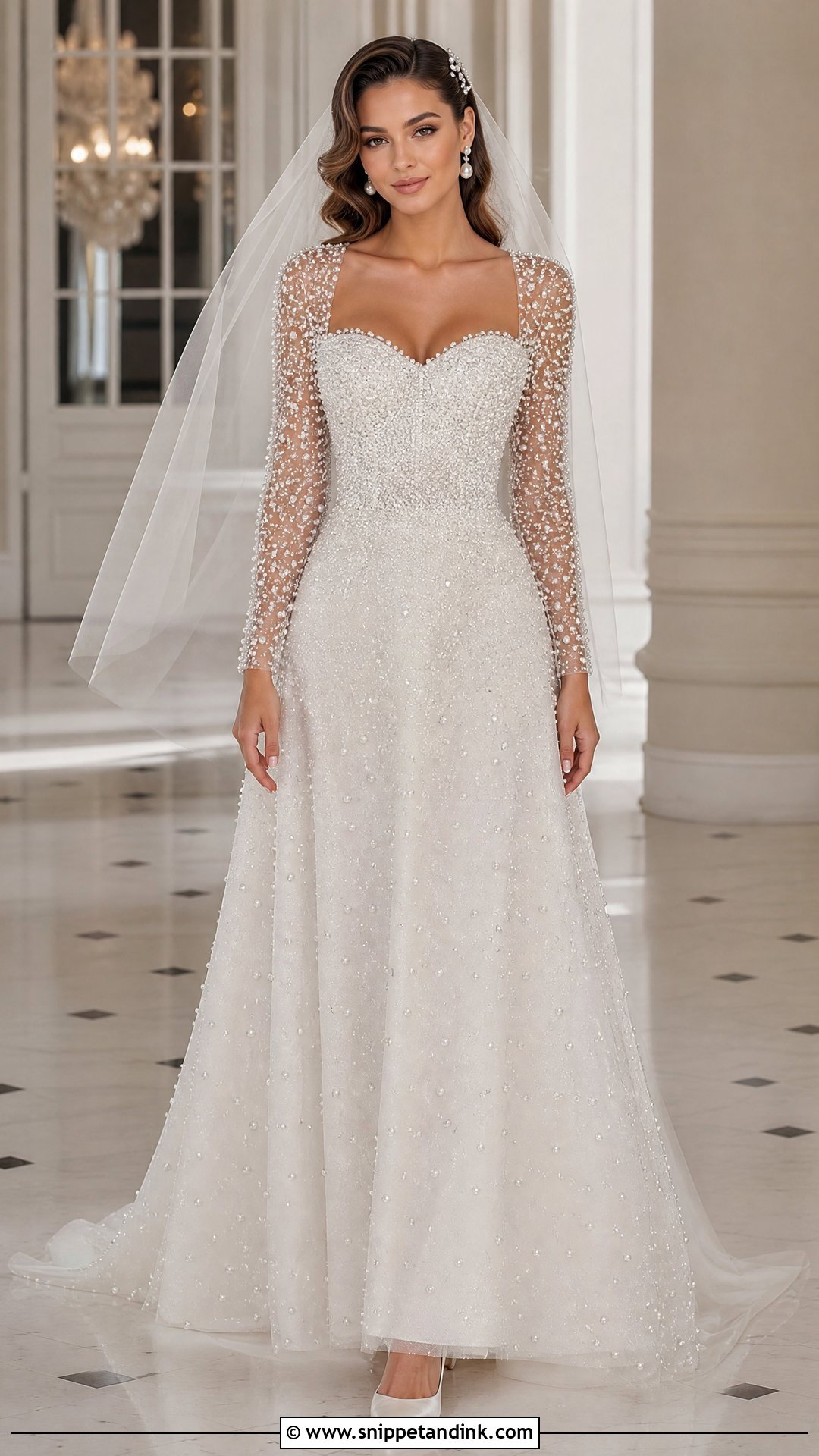
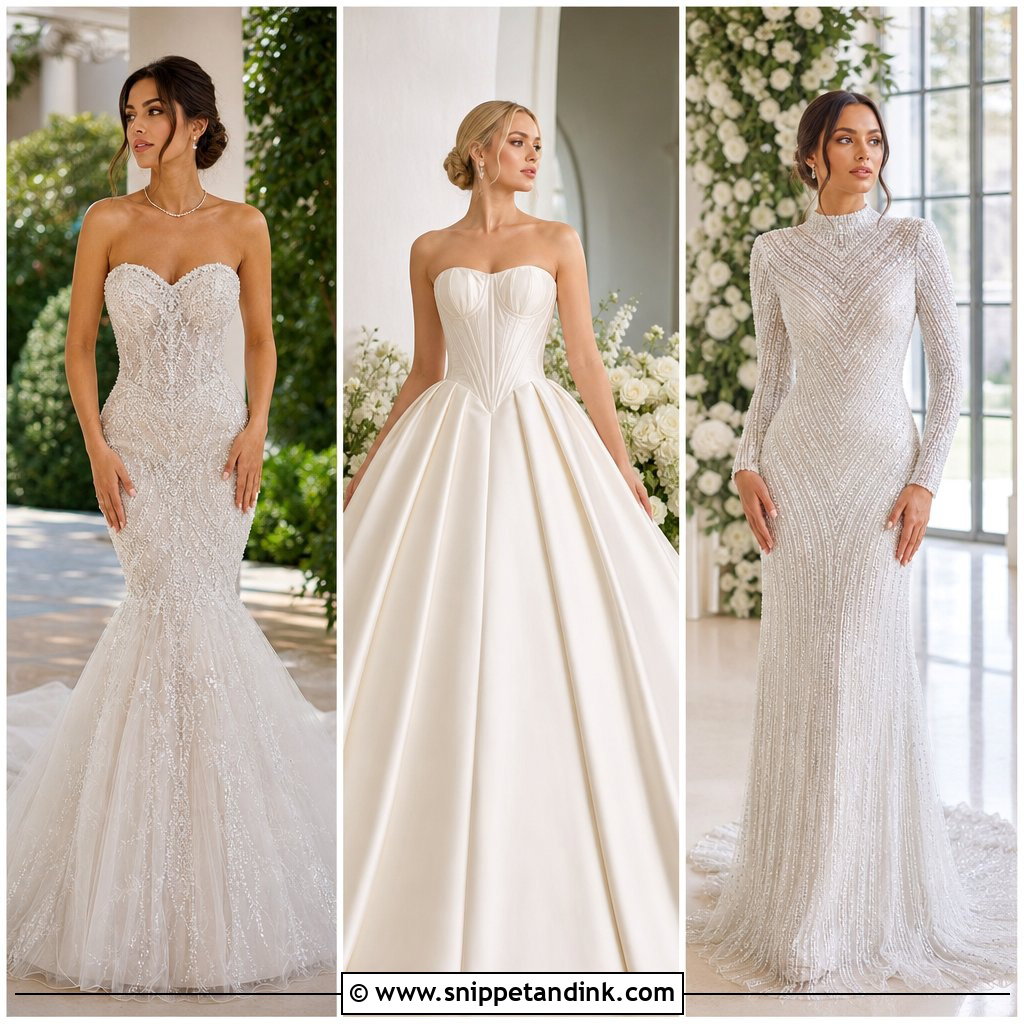
Pearl beading looks soft rather than sparkly, and it photographs as texture instead of flash. On a fitted bodice, in geometric lines or over sheer sleeves, it needs a column, trumpet or slim A-line skirt so the whole dress doesn’t look heavy. Don’t add a matching pearl necklace; small pearl earrings and a few pearl pins at the base of a smooth bun are enough. A plain tulle veil lets the beading show. Run a hand along the underarms and waist at your fitting, since that’s where pearls get pulled loose by movement.
15. Basque Waist Ball Gown
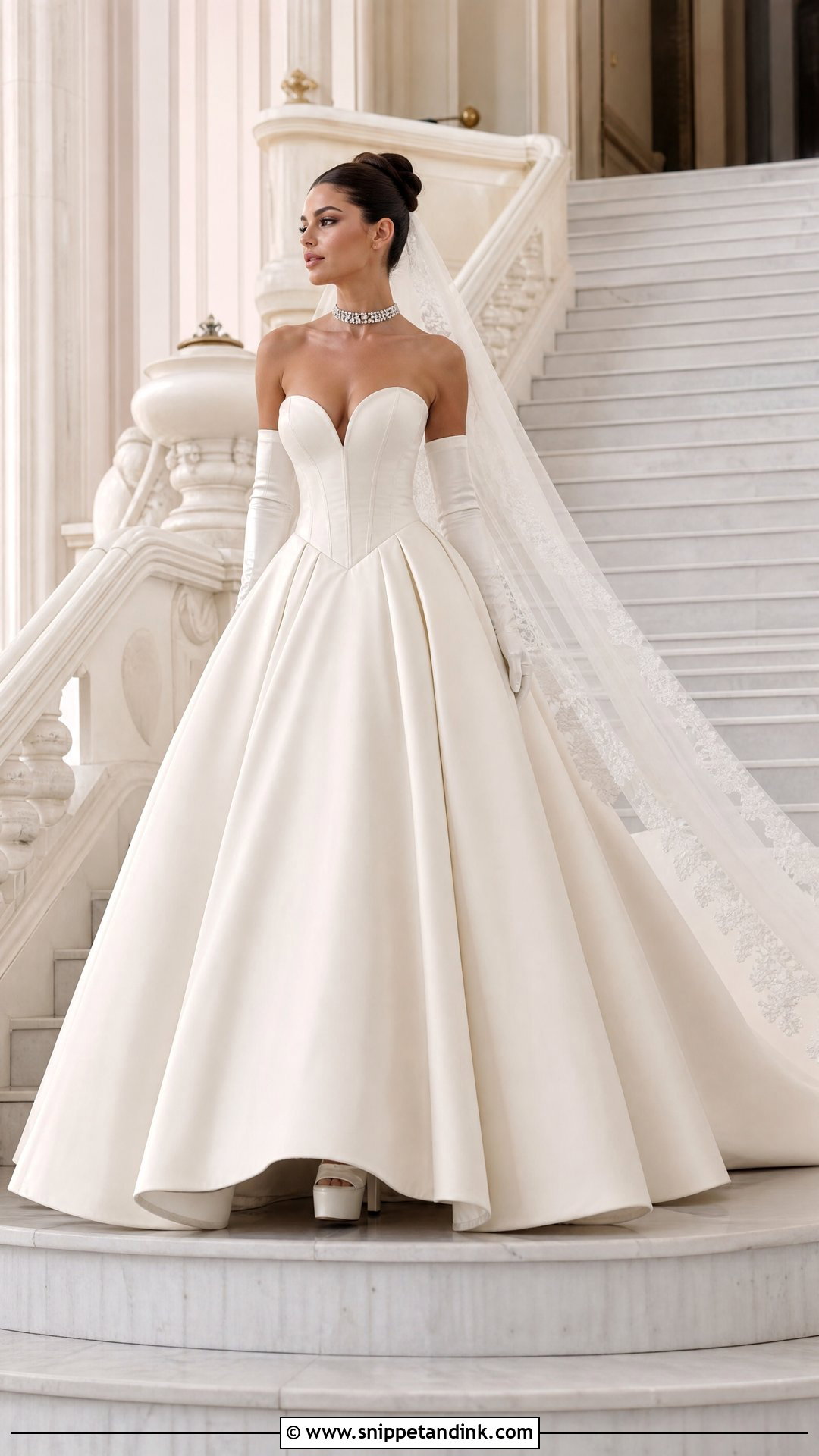
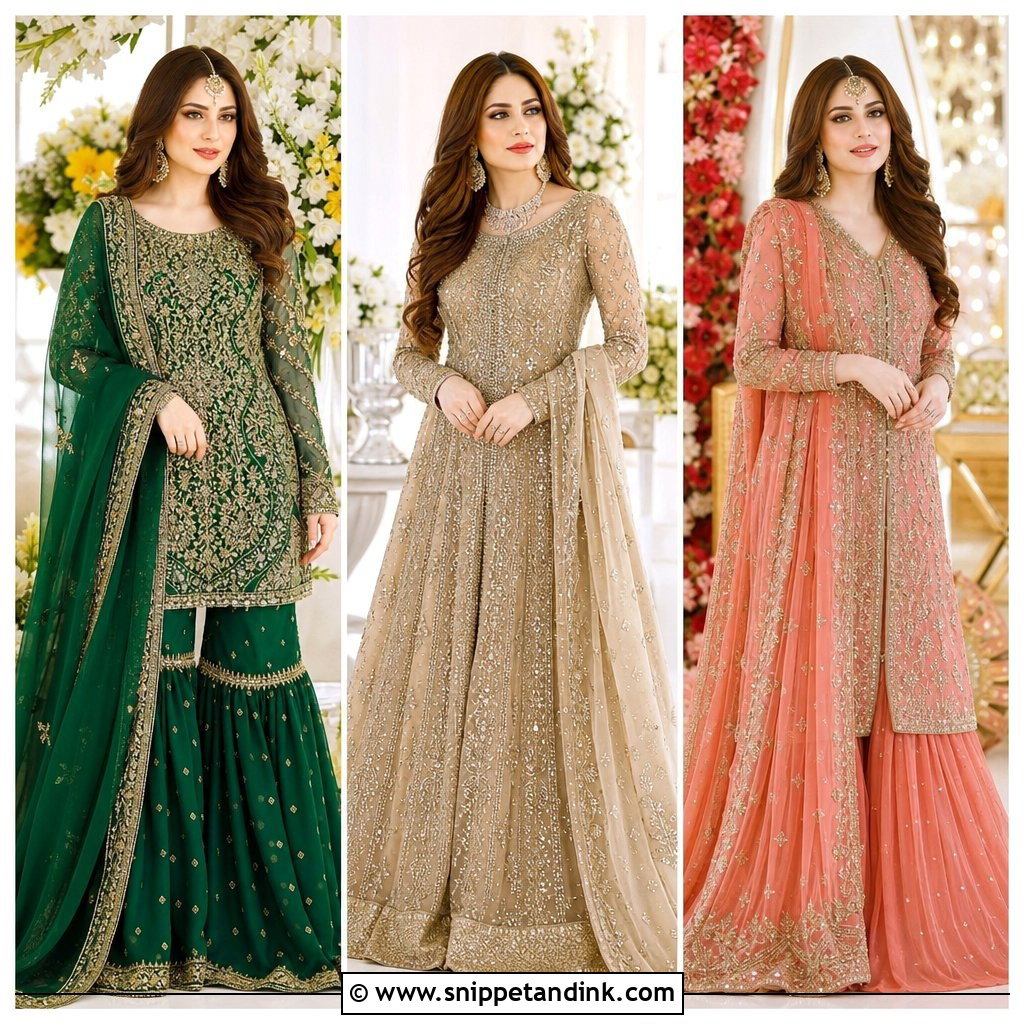
The dropped V of a basque waist ball gown lengthens the torso and sharpens the waist before the skirt opens out. Smooth satin or mikado shows the construction best. Long gloves suit a formal ceremony; a crystal choker, delicate earrings and covered platforms finish it without pulling focus from that point at the waist. Start the cathedral veil below the hairstyle so the bodice stays visible. I’d ask about the skirt’s internal support, because a well-built petticoat gives volume with far less weight than extra layers of fabric, and confirm the bustle holds before the reception.
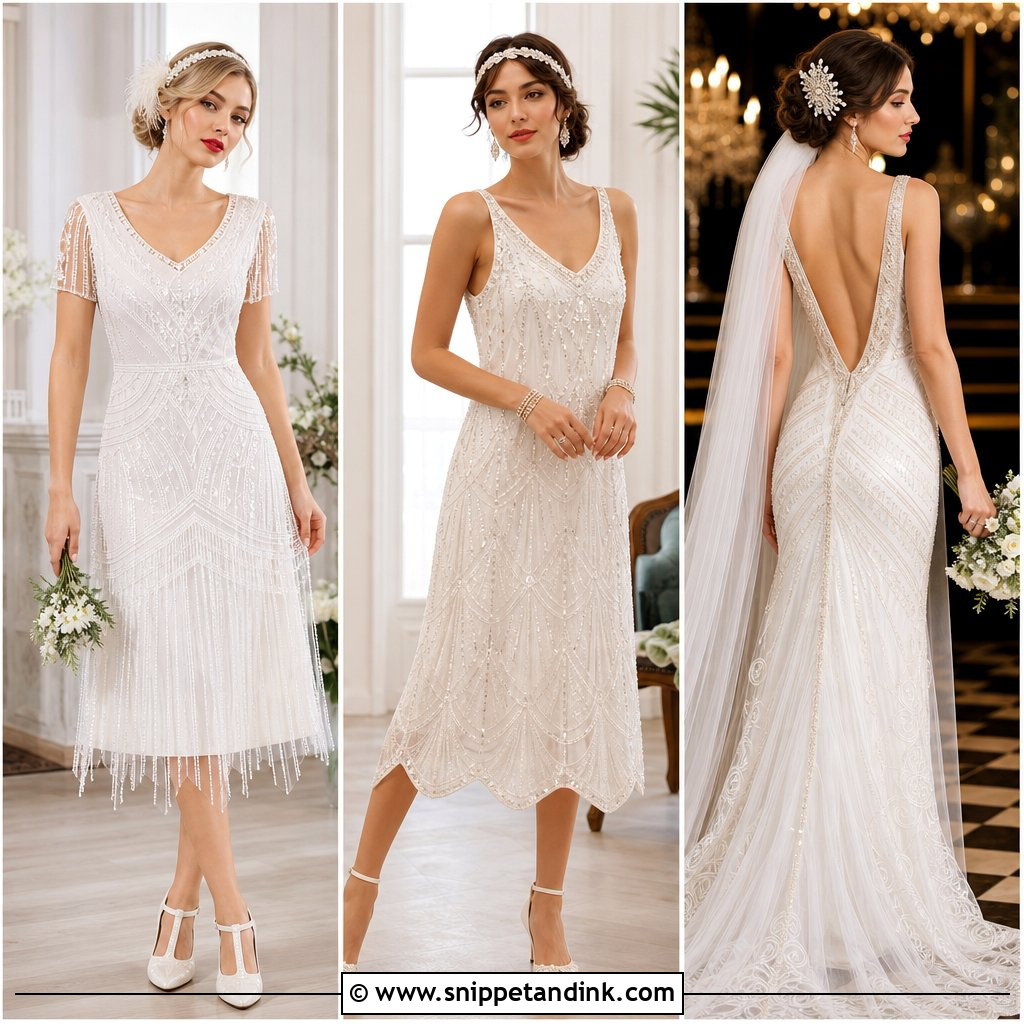
16. Tea Length Wedding Dress
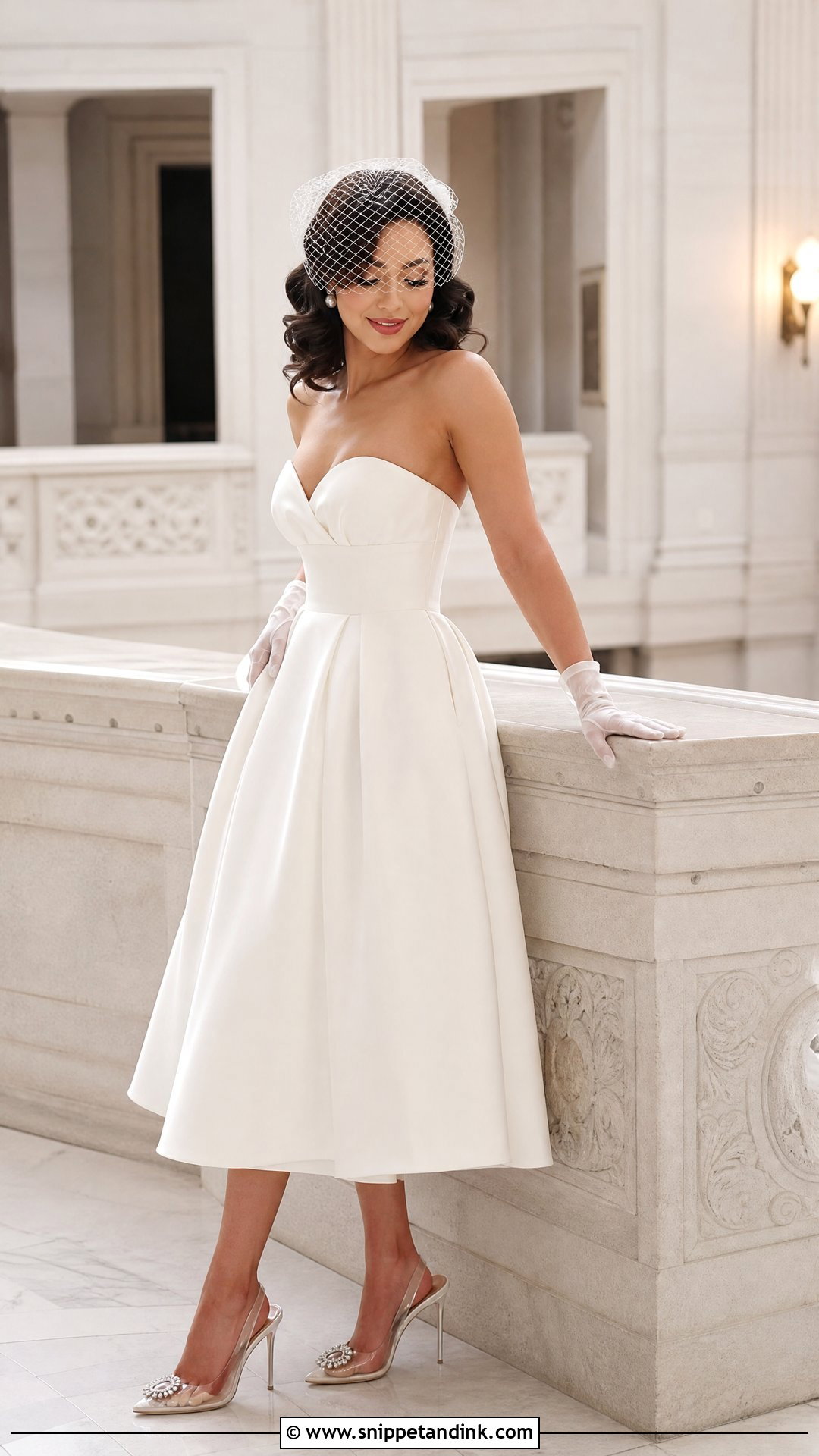
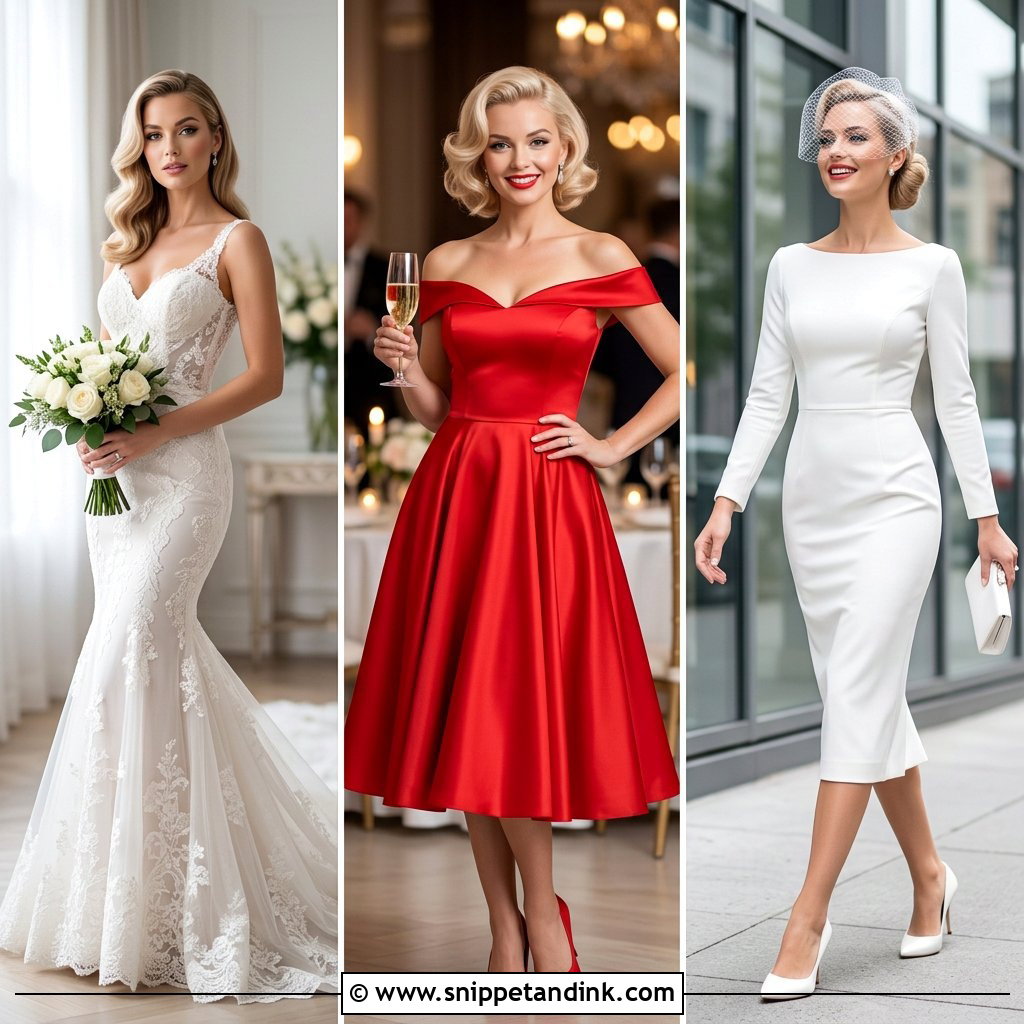
Tea length is 1950s glamour, and it means your shoes are on show all day. Crystal pumps, satin slingbacks or peep-toe heels become part of the outfit, so break them in. A fitted bodice with a sweetheart, bateau or off-shoulder neckline over a structured skirt ending between knee and ankle suits a civil ceremony or a reception change. Satin looks polished; layers of tulle bounce when you dance. Short gloves, pearl earrings and a birdcage veil lean vintage. Keep the styling restrained so it stays sophisticated rather than theatrical.
17. Backless Silk Wedding Dress
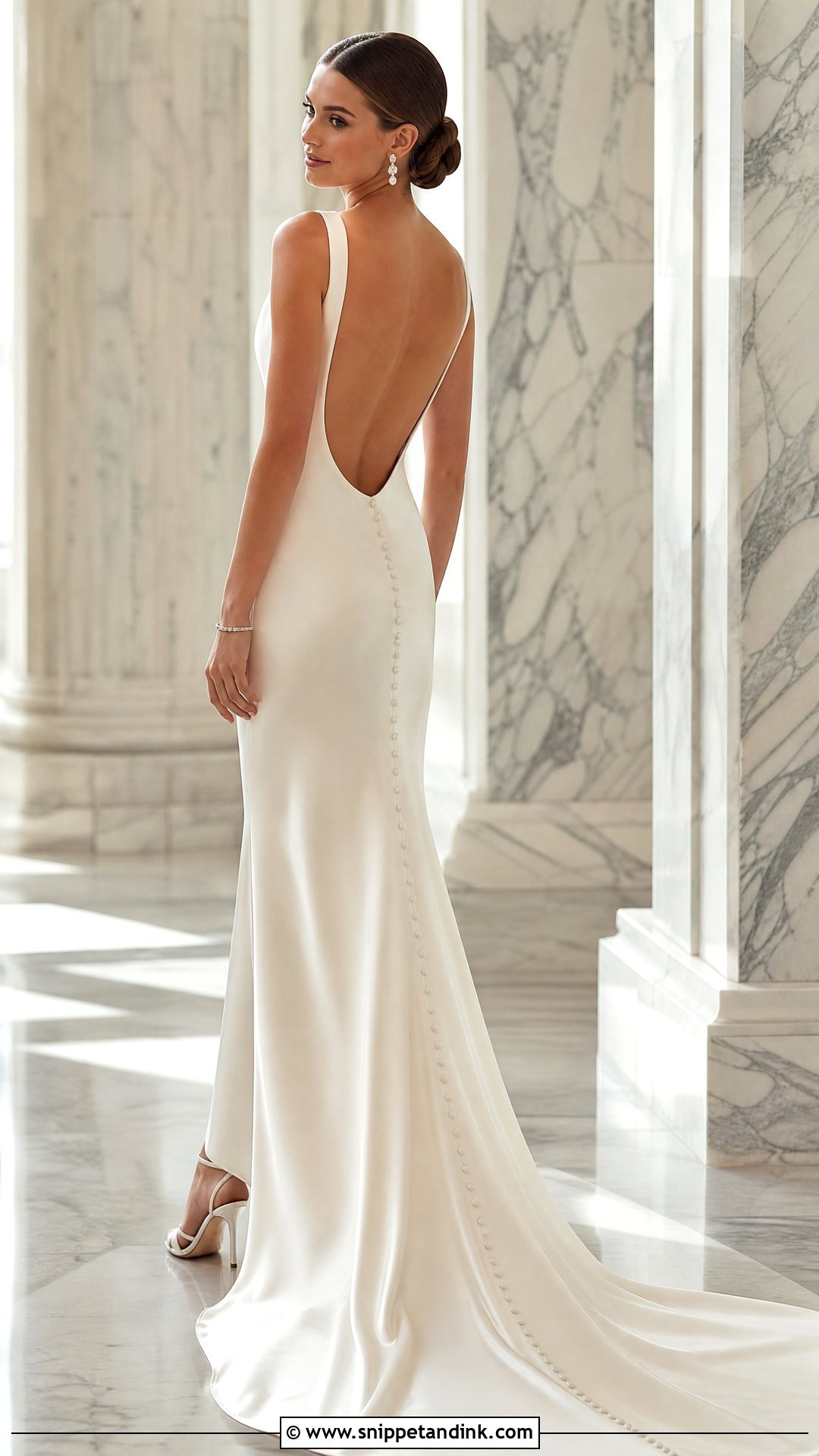
The back is the reveal. With a backless silk wedding dress, the front can stay simple, a bateau neck, narrow straps or a soft cowl. What holds it up is the internal structure, so I look for well-placed seams and built-in support that lets you skip a bra entirely. Covered buttons or a fine pearl strand across the back add a small detail. Drop earrings, a slim bracelet, pointed satin heels and a low side bun keep the back clear, with the veil attached beneath the hair. Walk, turn and sit in it before deciding; a back that gapes when you lean forward needs taking in.
18. Plunging Neckline Crepe Wedding Dress
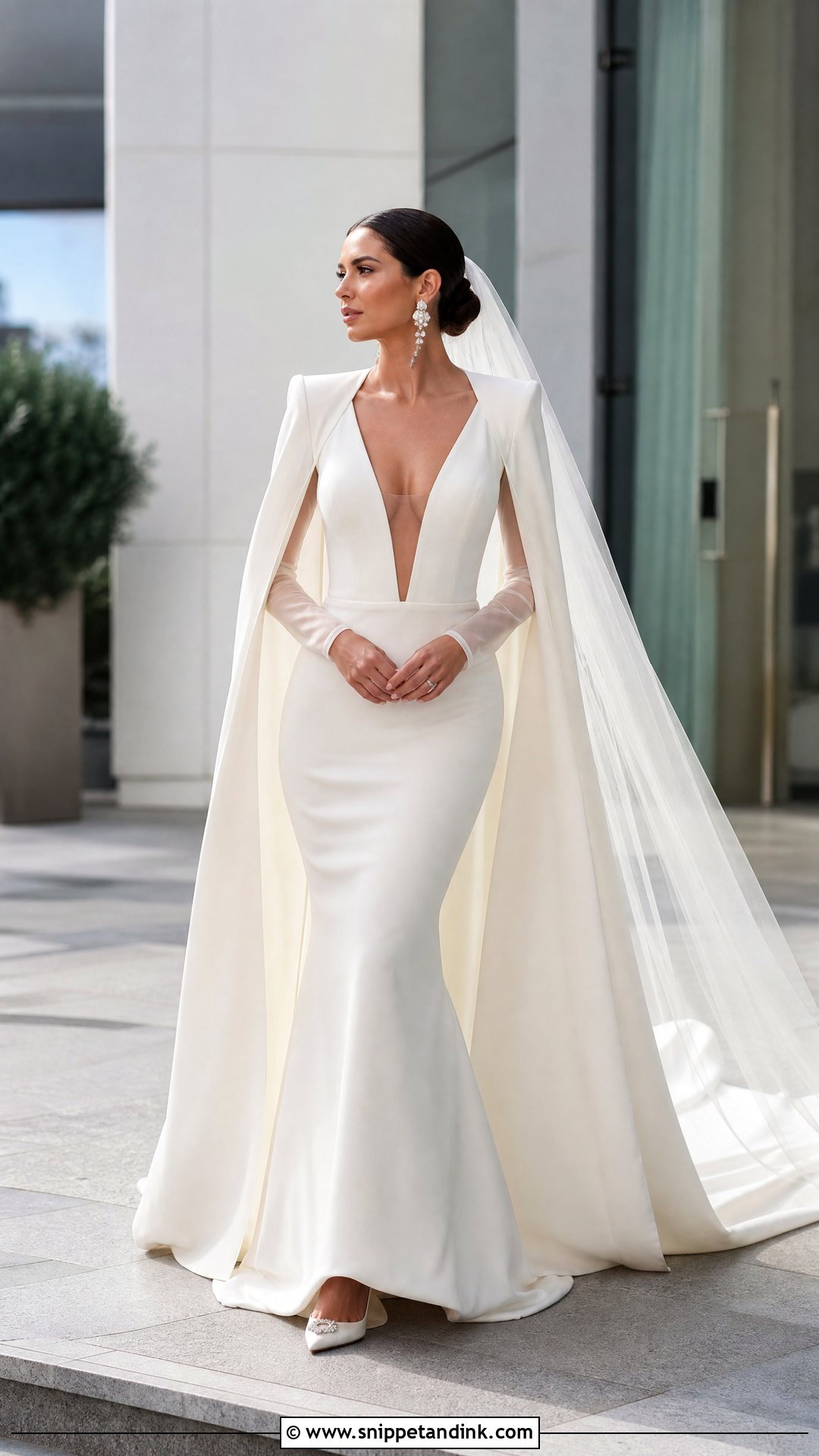
A plunge works when the support is invisible. Illusion mesh and firm side panels hold the neckline in place, and structured crepe keeps a column or flared trumpet skirt crisp. I’d balance the depth with covered shoulders, long sleeves or a plain skirt. Statement earrings, pointed pumps and a smooth low bun finish it, with a plain cathedral veil to soften the line for the ceremony. Leave out any necklace that would hang into the V. A removable satin cape gives a more covered entrance, then comes off for portraits.
19. Champagne Sequin Wedding Dress
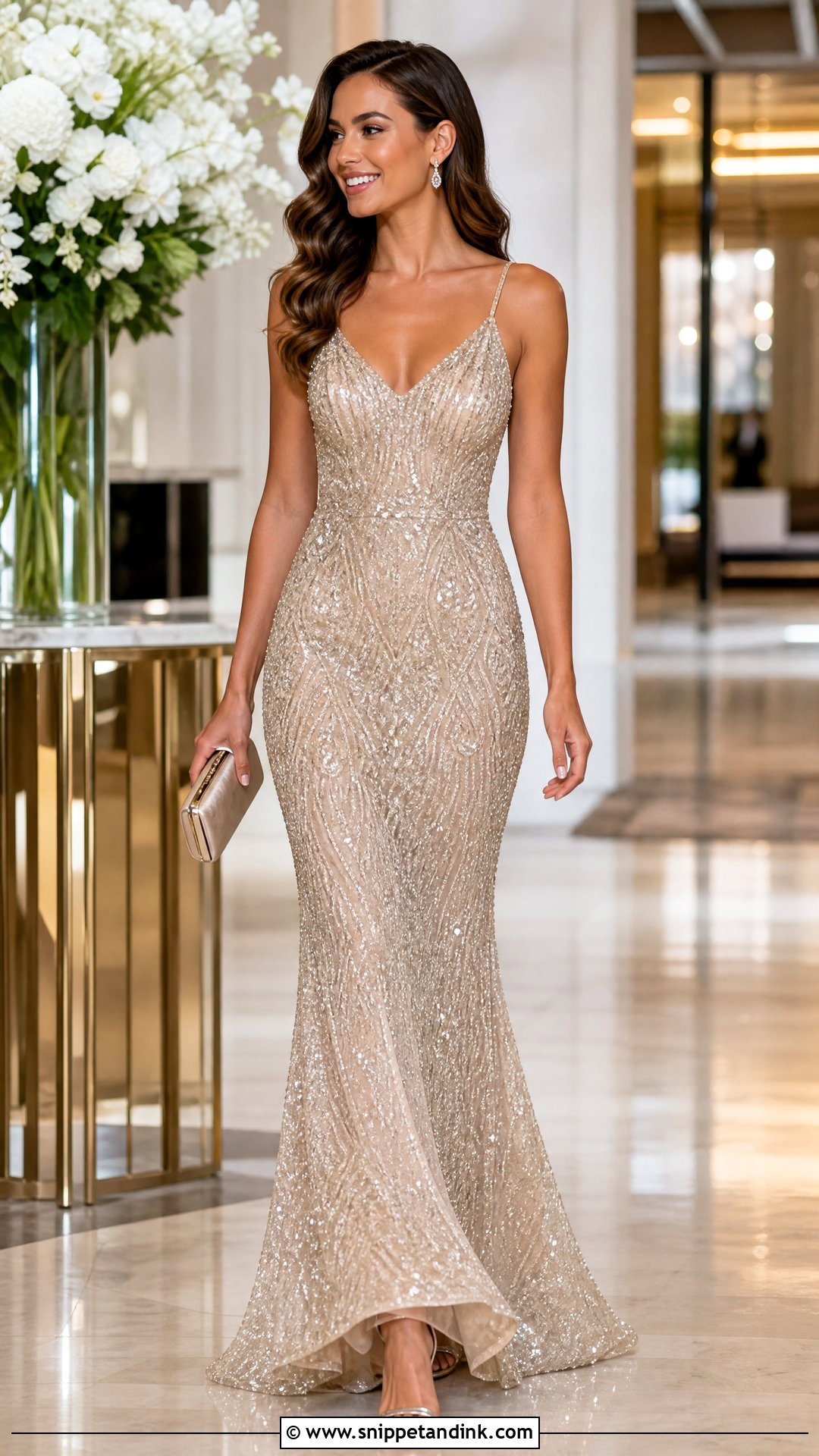
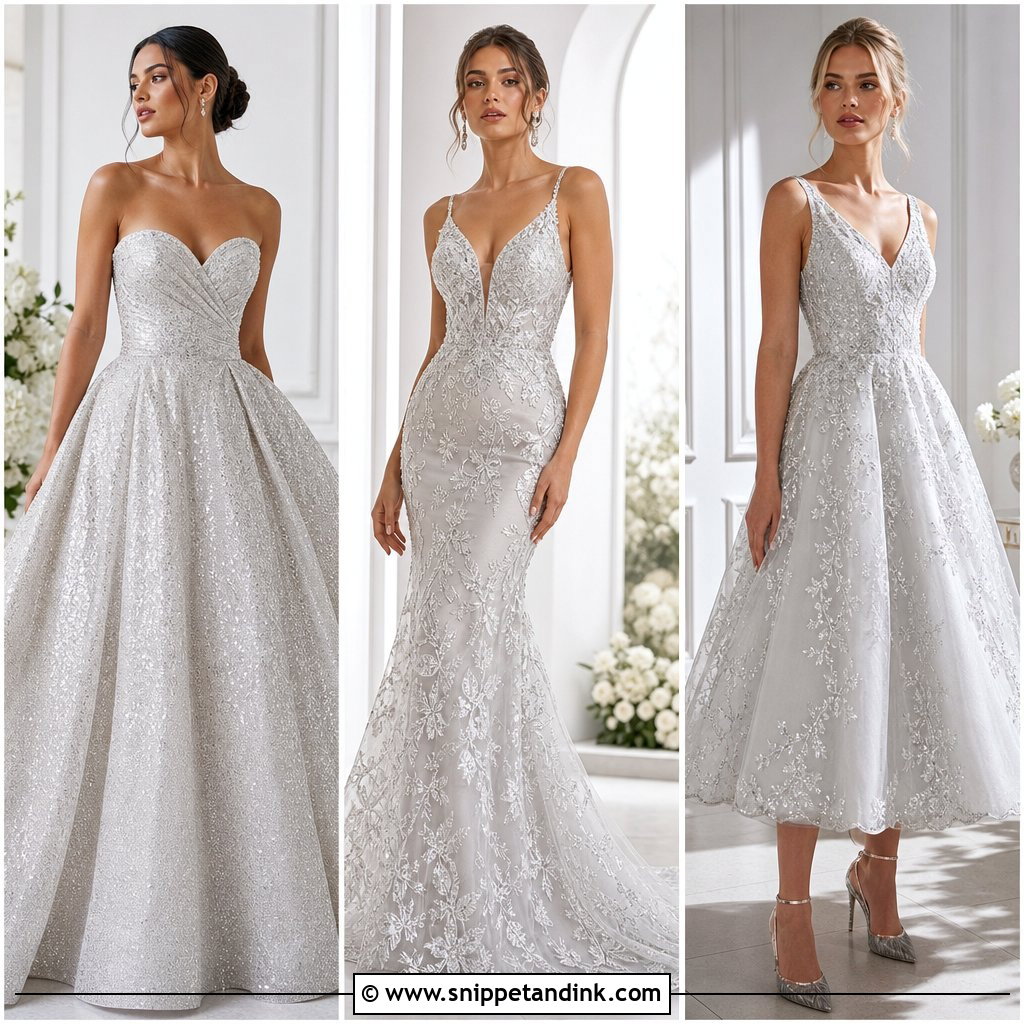
Champagne sequins glow under warm evening light and look richer than bright white beside most skin tones. Fine sequins or crystal beading over a champagne, pale gold or soft nude lining reads glamorous without looking like a party dress. A fitted column keeps it sleek; a flared skirt adds drama. Metallic sandals, small crystal earrings and a satin clutch are enough. Avoid an ornate necklace and a beaded veil, since sequins already throw plenty of light; a plain ivory tulle veil softens the color for the ceremony. Look at the lining by a window and under indoor bulbs, because nude linings can read very differently in each.
20. Black And White Wedding Dress
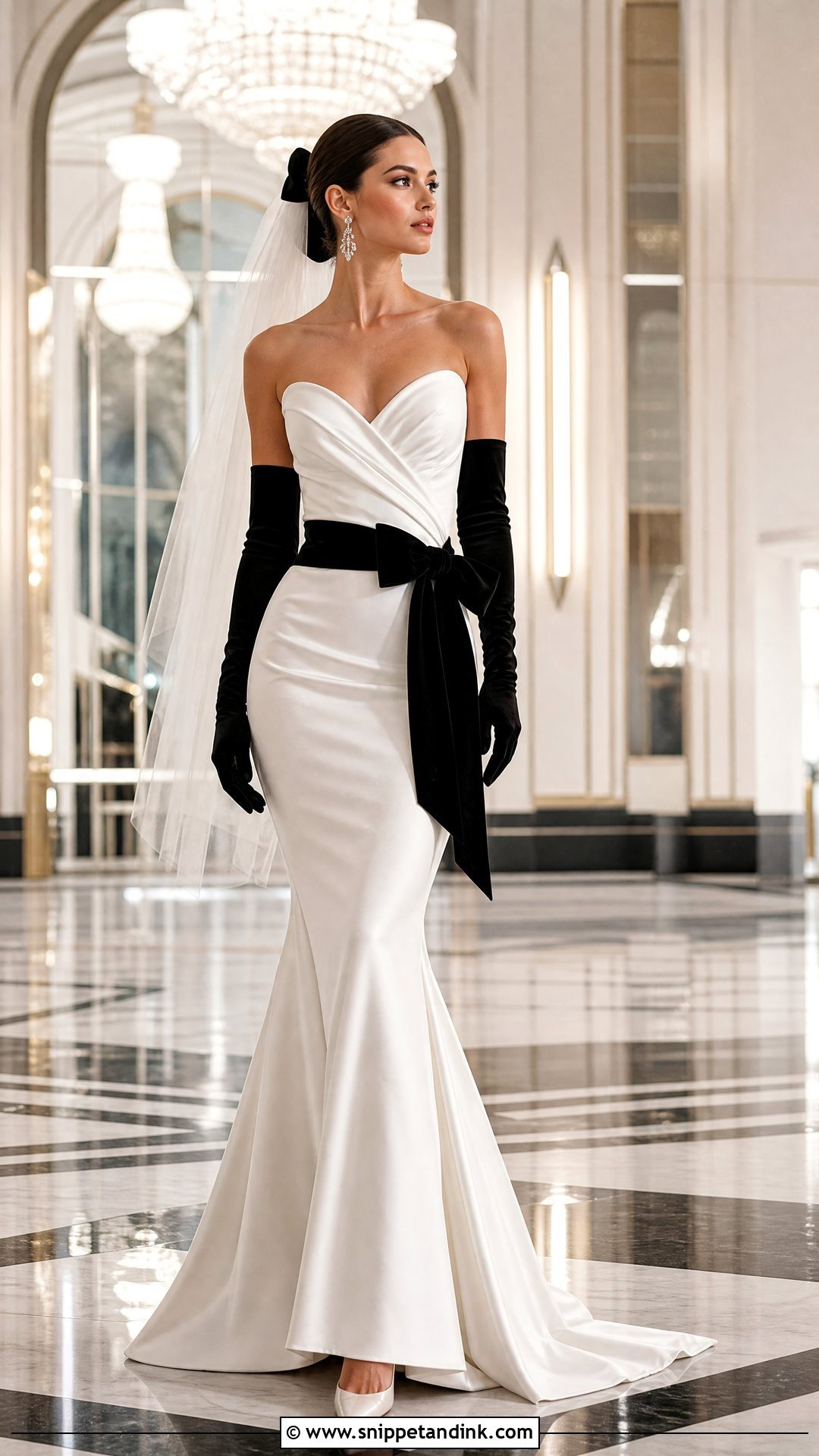
Black on a wedding dress is the boldest move here, and it works best in small doses. Start with a white satin column, mermaid or ball gown and add black through a velvet waist bow, opera gloves, appliqués or a removable overskirt. Deliberate accents look refined; too many look like a theme party. Crystal earrings, white or black pointed pumps, a compact ivory bouquet and a sleek bun tied with black velvet ribbon tie it together. I’d make the black pieces removable, so the ceremony stays traditional and the reception turns dramatic.
Satin Shows Everything Underneath
Liquid satin, bias cuts and sequin columns are the least forgiving fabrics in bridal. Every seam, strap and line from underwear shows through, especially in flash photography. I’d buy foundation garments before the first fitting and bring them to every one after, since a seamstress fits the dress to whatever is under it.
- Choose underwear in a shade close to your skin rather than white, which can show through ivory satin.
- Laser-cut or bonded edges disappear under a slip dress far better than lace trims.
- For backless and plunging gowns, ask the seamstress about sewing cups into the bodice instead of relying on adhesives that loosen in heat.
Trains and Bustles on a Formal Evening
A cathedral train is wonderful for the aisle and a hazard on a crowded dance floor. Most satin and mikado gowns can take an over-bustle, where the train hooks up onto the back of the skirt, or an under-bustle that tucks it beneath, which keeps a cleaner line on a column or mermaid. Ask your seamstress to show the bustle to the person who will fasten it on the day, and practice once at the final fitting.
Heavy satin also creases where you sit. Plan for a steamer at the venue for touch-ups before portraits, and carry a small white cloth to blot any marks rather than rubbing them, which leaves a shiny patch on satin.
One Strong Line, Then Stop Adding
Glamour on screen always came from restraint. A fluid slip feels quietly luxurious, while a mermaid or structured ball gown brings more drama, and beading, pearls, feathers, gloves and long veils should support the gown rather than fight it. Start with a silhouette you can sit, walk and dance in, then add shoes, jewelry and hair. Do one full dress rehearsal with everything on, veil and gloves included. When the proportions balance, the look will feel polished in the room and in the photos alike.
You'll Like These Ideas:



Leave a Reply