
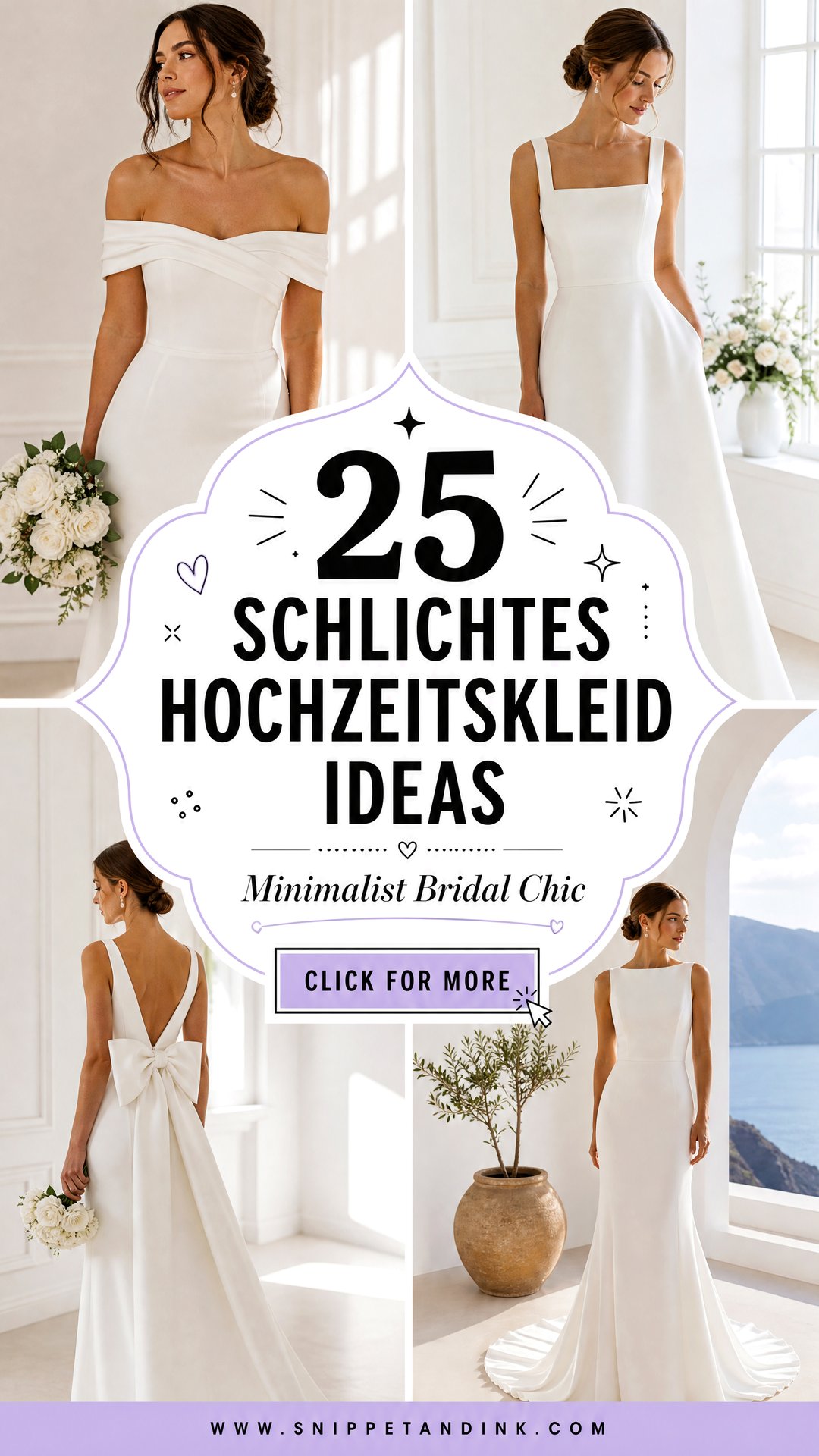
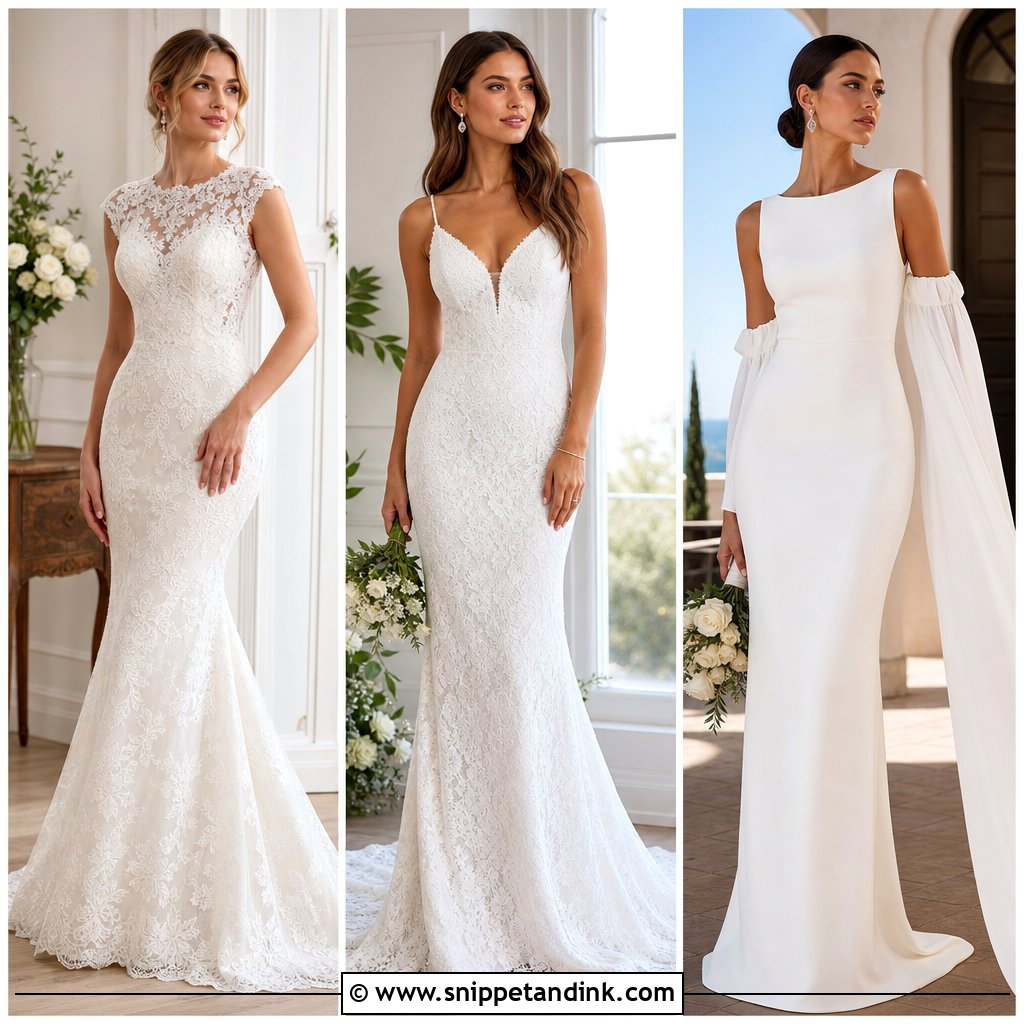
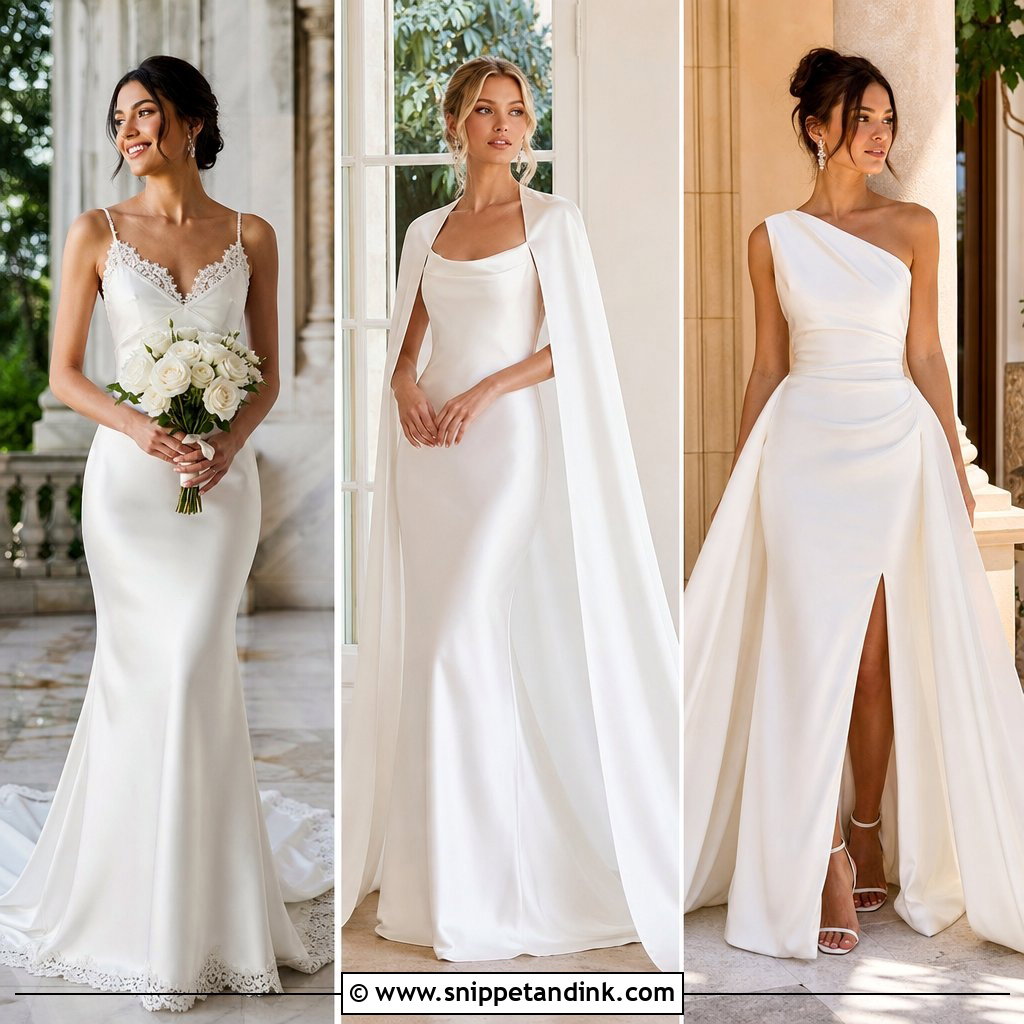
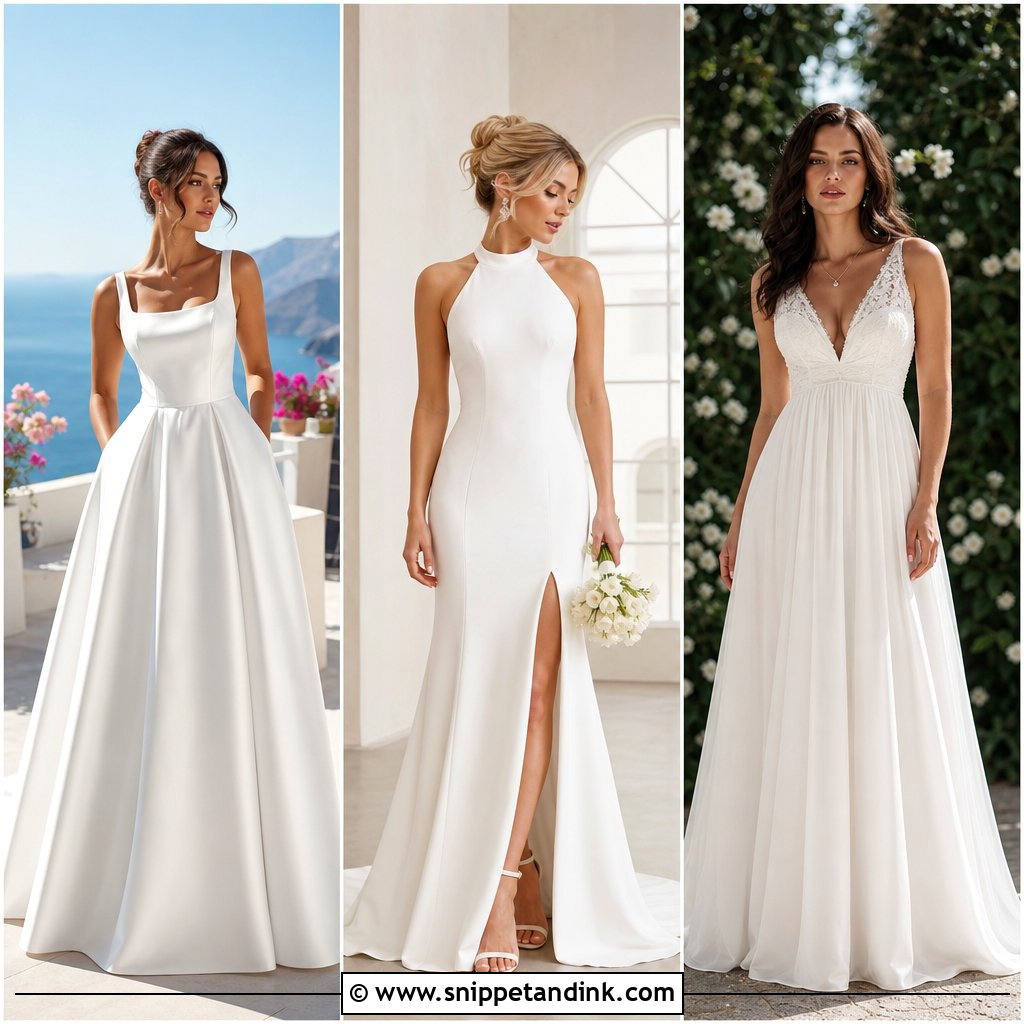
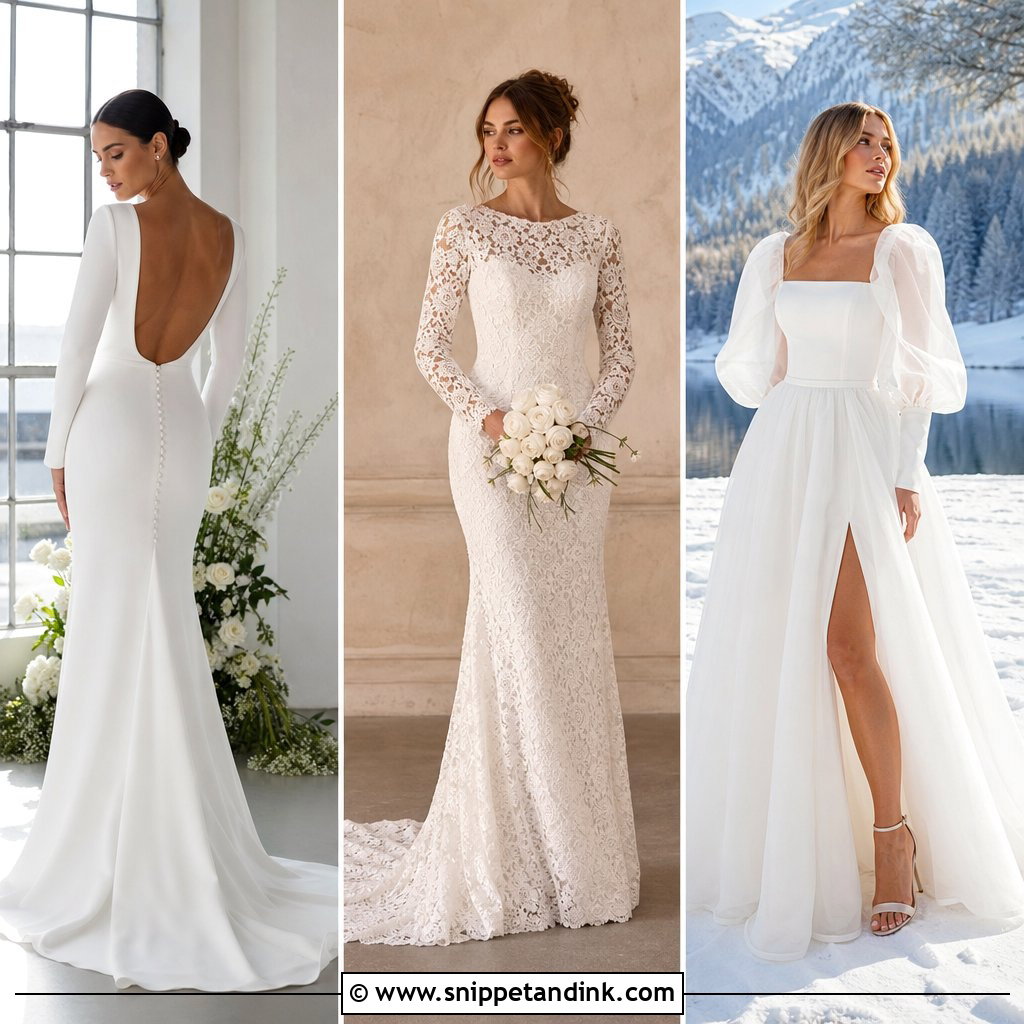
Simple dresses are harder to get right than ornate ones, and I say that as someone who spends most fittings taking things away. With no lace or beading to distract the eye, the fit, the neckline and the weight of the fabric are all anyone sees. What German brides call a schlichtes Hochzeitskleid covers a lot of ground: satin, crepe, silk, chiffon and mikado each give a plain dress a completely different character. Below are 25 versions, styled with the veil, shoes, jewelry and bouquet that keep each one clean, for anywhere from city hall to a beach.
Telling a Simple Dress From a Cheap One
Minimal dresses have nowhere to hide their construction. Before I let a bride fall for a plain dress, I turn it inside out and look at four things.
- Seams. They should lie flat with no puckering, especially down the sides and beside the zip. In a plain fabric, a wavy seam is visible from across the room.
- The zip. An invisible zip should disappear completely and close without the fabric bubbling next to it.
- The lining. It should be cut a touch smaller than the outer layer so it never peeks out at the hem or neckline.
- The hem. A skirt meant to stand out needs horsehair braid or similar structure; crepe needs a deep, clean hem that hangs straight.
Then I look at the fabric in daylight. A thin satin looks glassy and shows every ripple, while a dense crepe or a good mikado looks expensive even at a modest price. If the budget is tight, I’d always put it into fabric and fit, and skip the embellishment you weren’t going to want anyway.
1. Simple Satin Wedding Dress
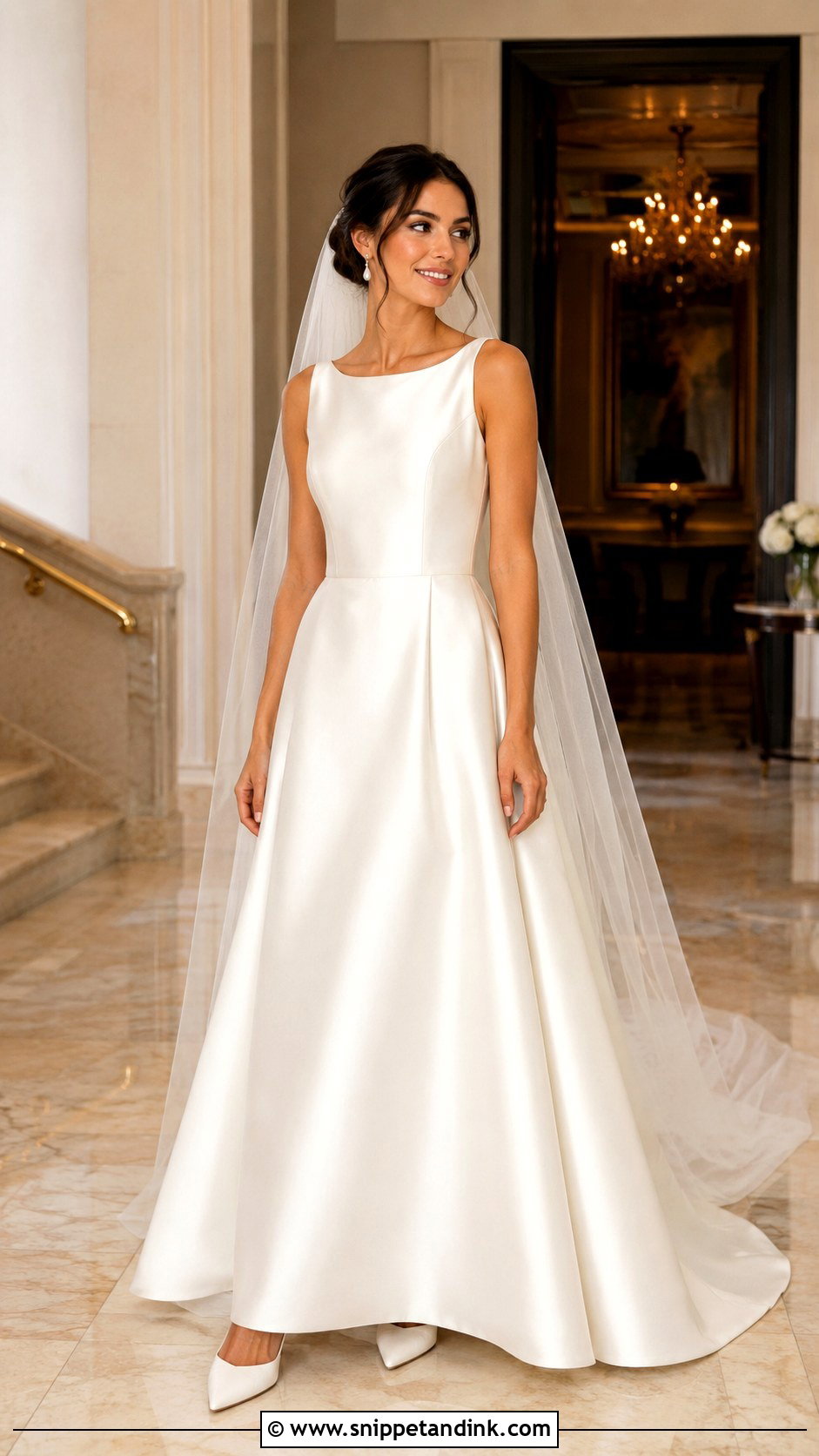
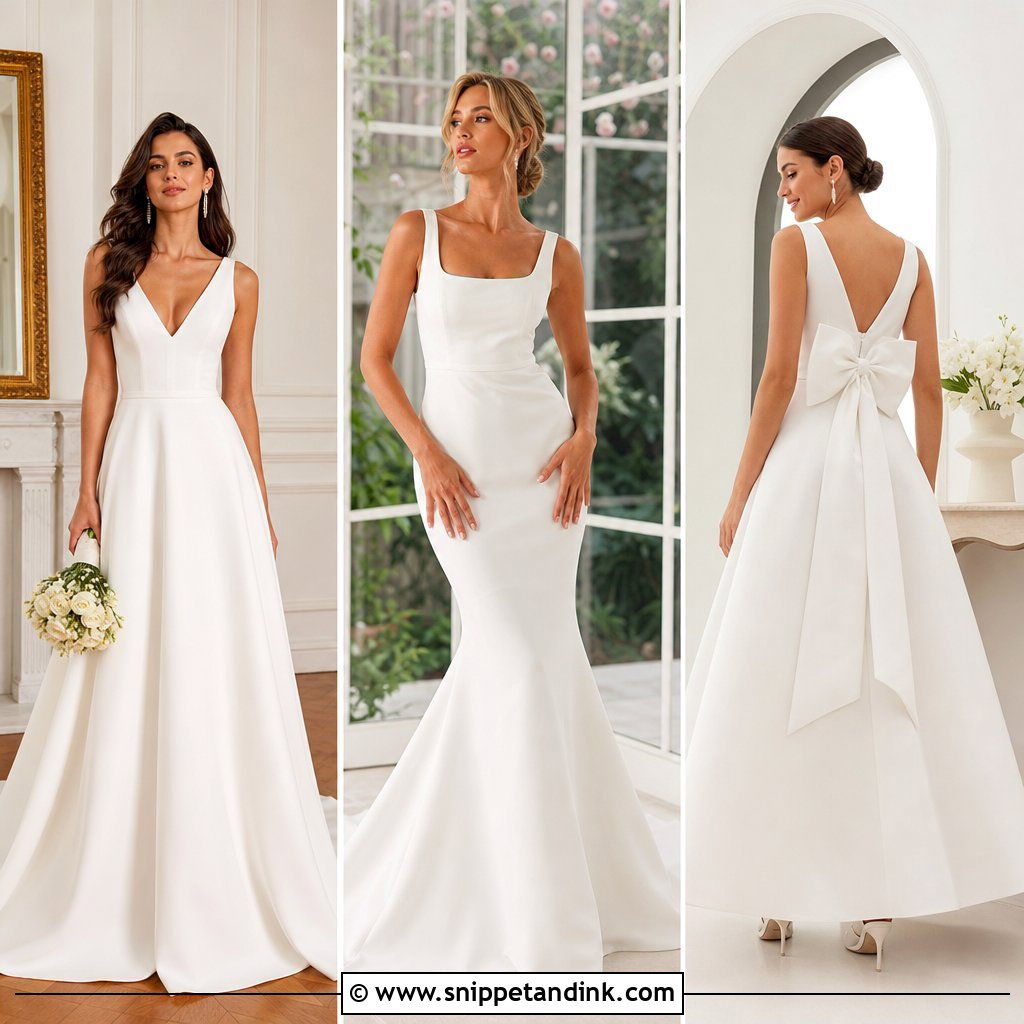
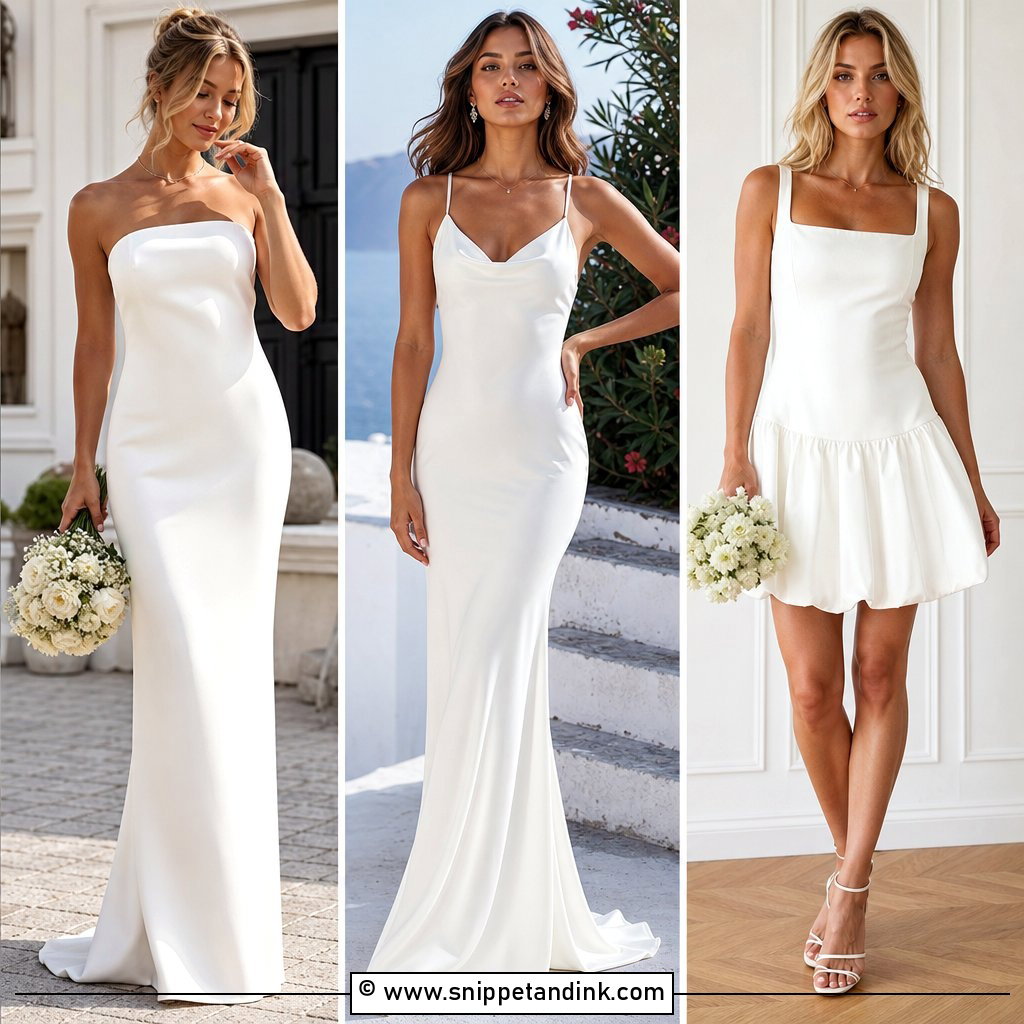
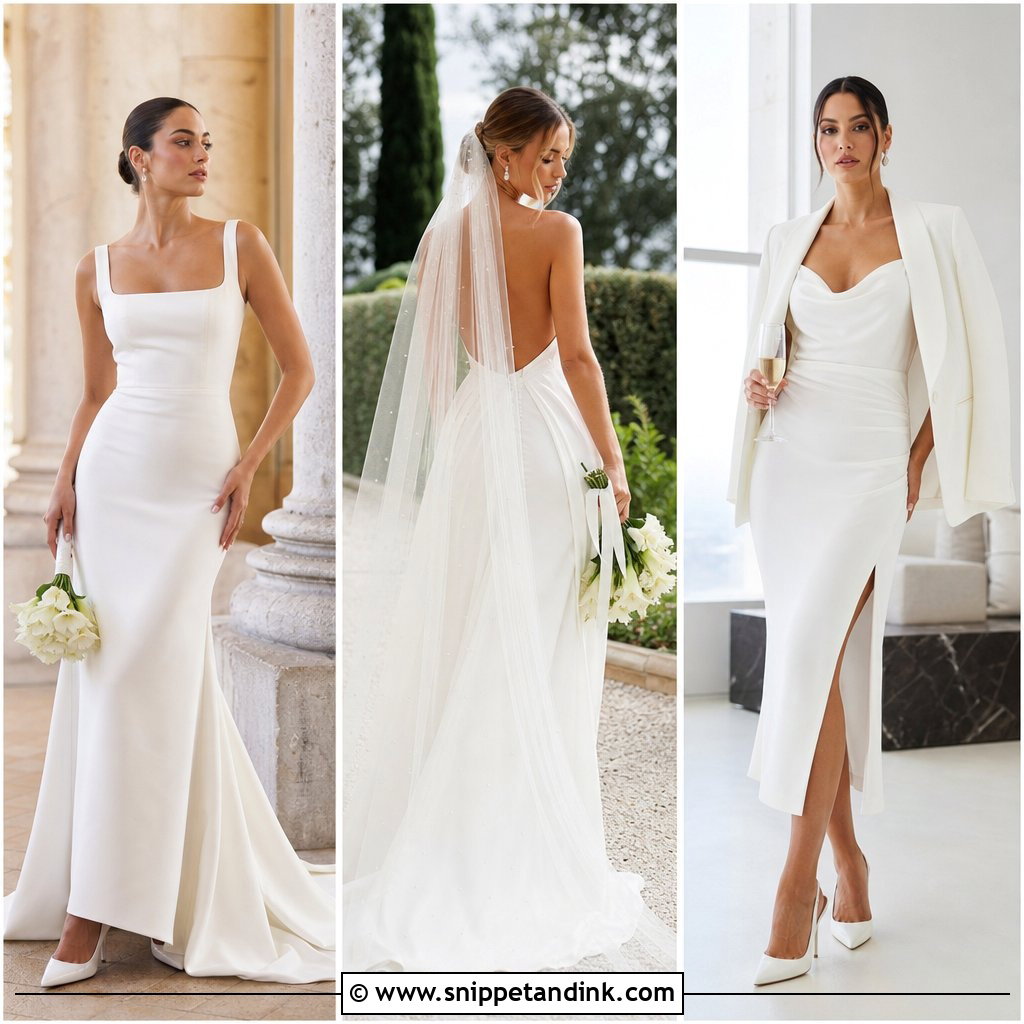
Satin is the plain fabric with the most built-in drama, because the sheen alone reads as dressed up. A slim A-line or column keeps it quiet. The catch is that satin shows every pull at the zip and every line underneath, so I take the most care over the fit at the waist and hips. Pointed ivory heels, pearl drops, a sleek low bun and a long plain veil finish it, with white roses, callas or orchids in a tight bouquet.
2. Simple Crepe Wedding Dress
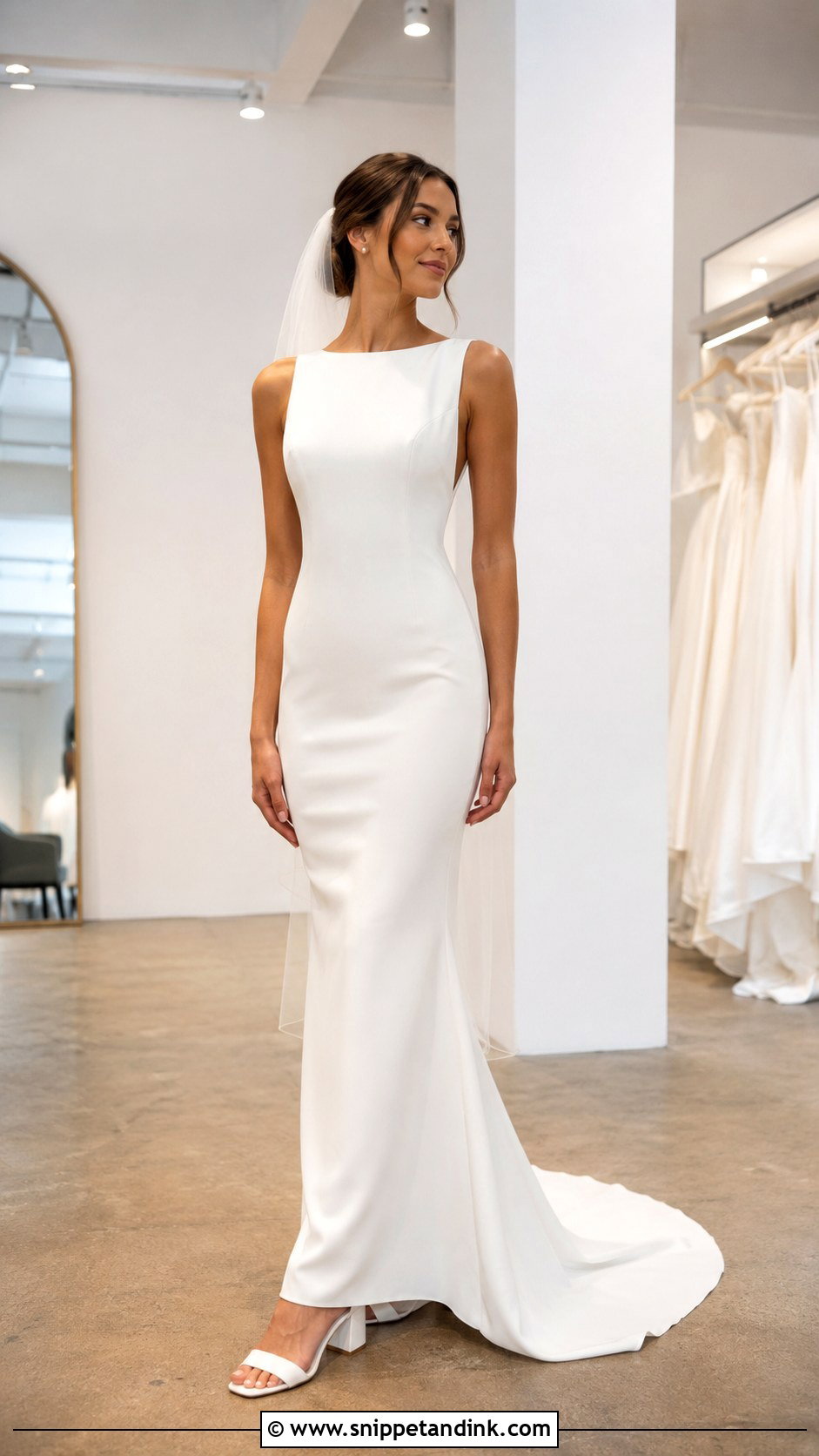
Crepe is what I suggest most often to brides who dislike shine. It’s matte, it has some weight, and many bridal crepes carry a little stretch, so a fitted bodice follows the body without clinging. It does mark easily with foundation at the neckline, so drape a scarf over your face as you step into it. Block heels or slim sandals, delicate studs and a narrow veil suit it. With a low back, wear your hair up.
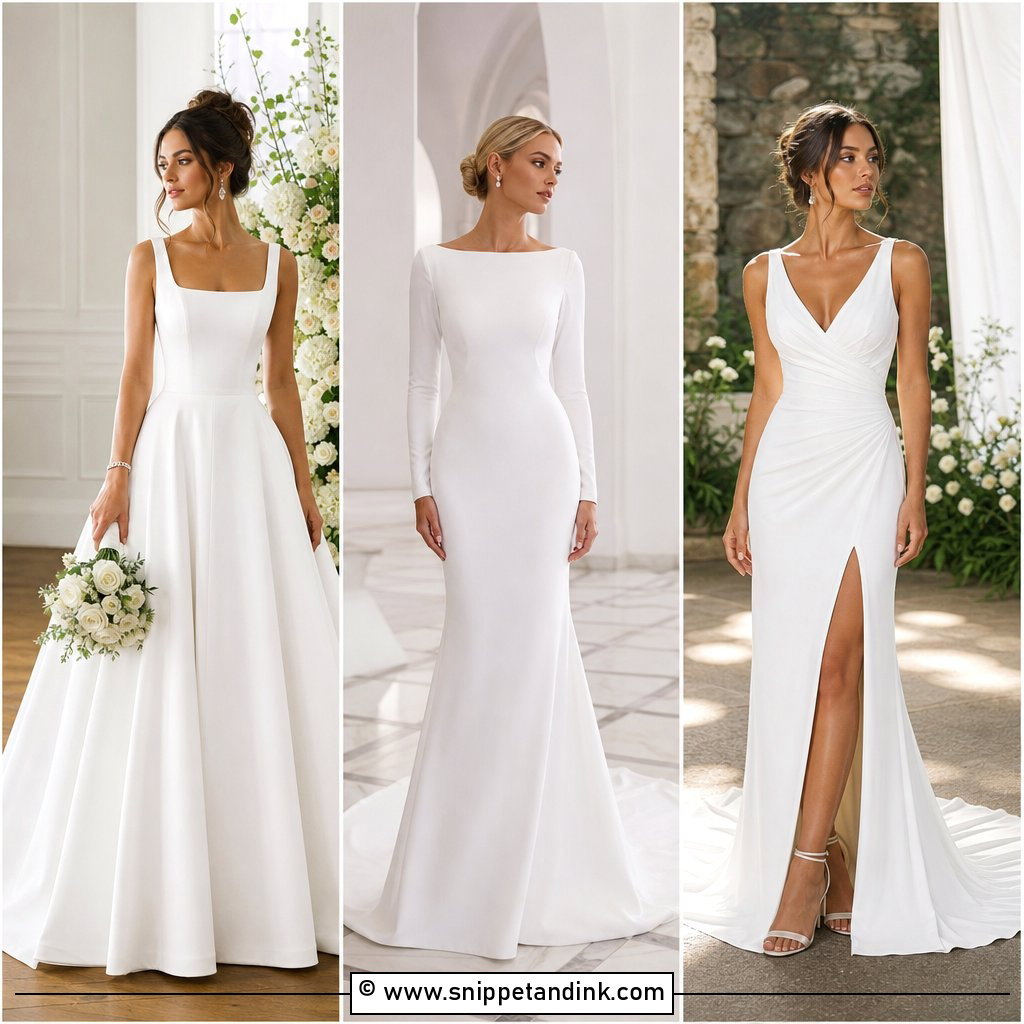
3. Simple A Line Wedding Dress
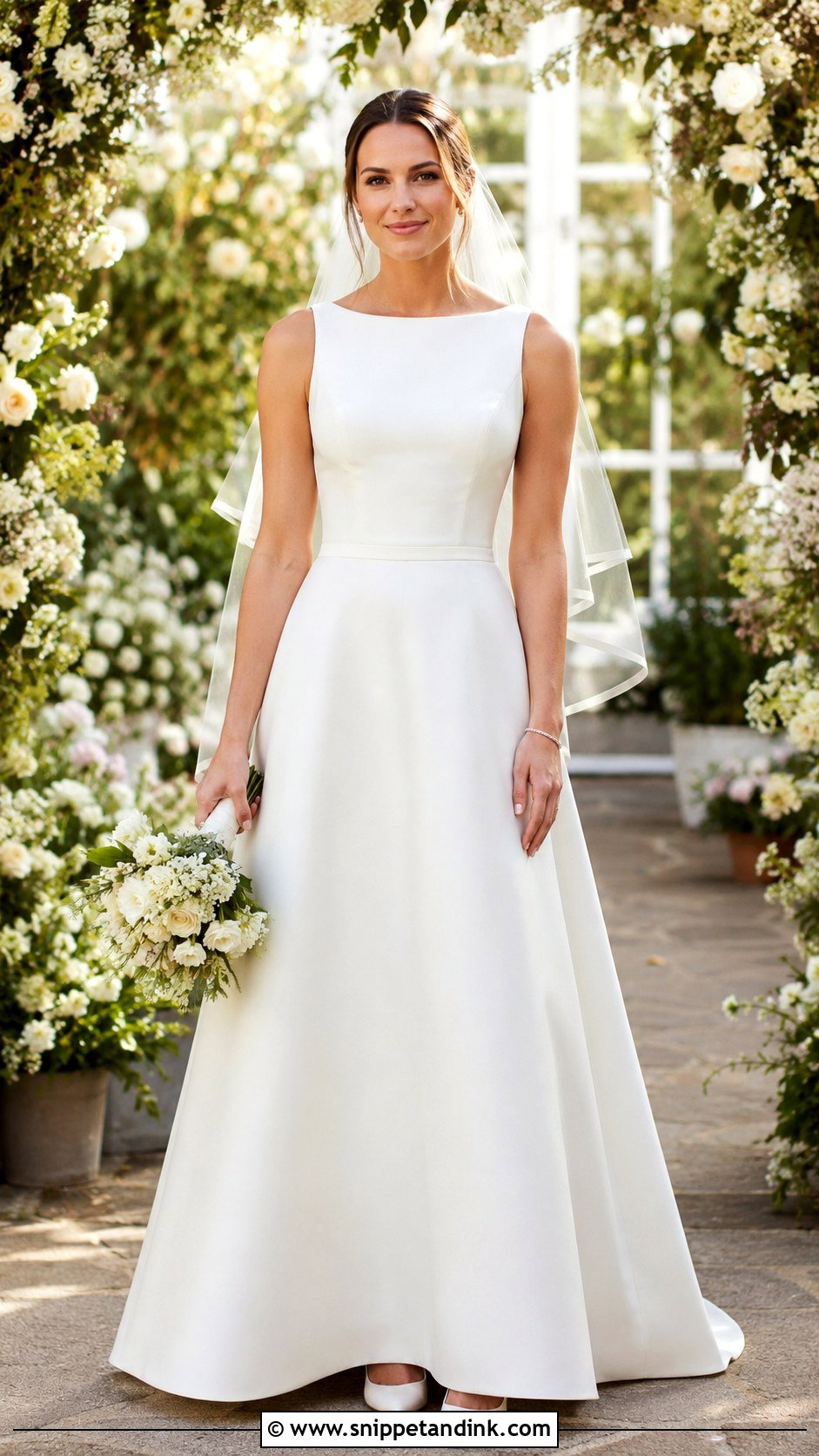
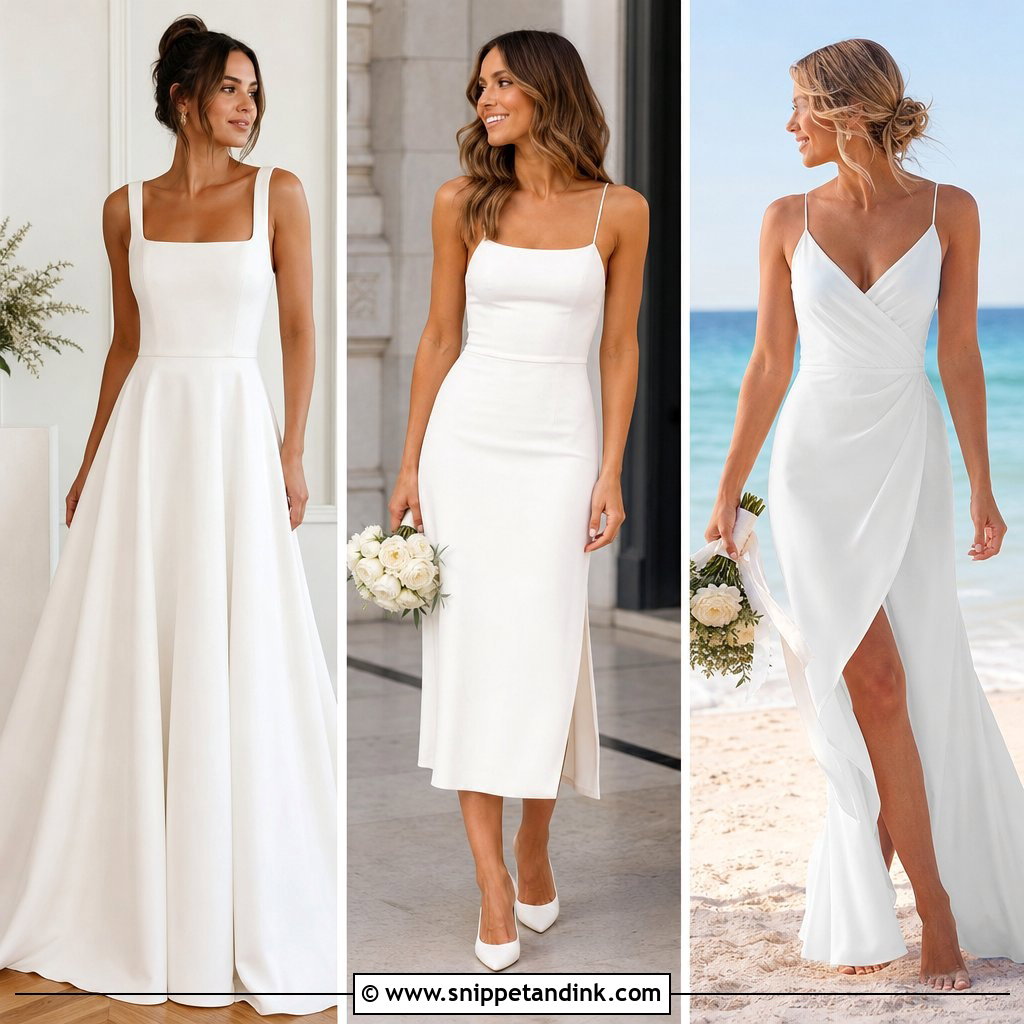
Of all the silhouettes in bridal, this is the one I’d call most forgiving. The fitted top defines the waist and the skirt opens from there, so it skims the hips and moves easily. In a plain version, the fabric sets the mood: mikado stands away from the body, organza floats, satin sits between the two. Closed-toe pumps, a thin bracelet and a fingertip veil keep it balanced, and a bateau neckline or wider straps add coverage.
4. Simple Long Sleeve Wedding Dress
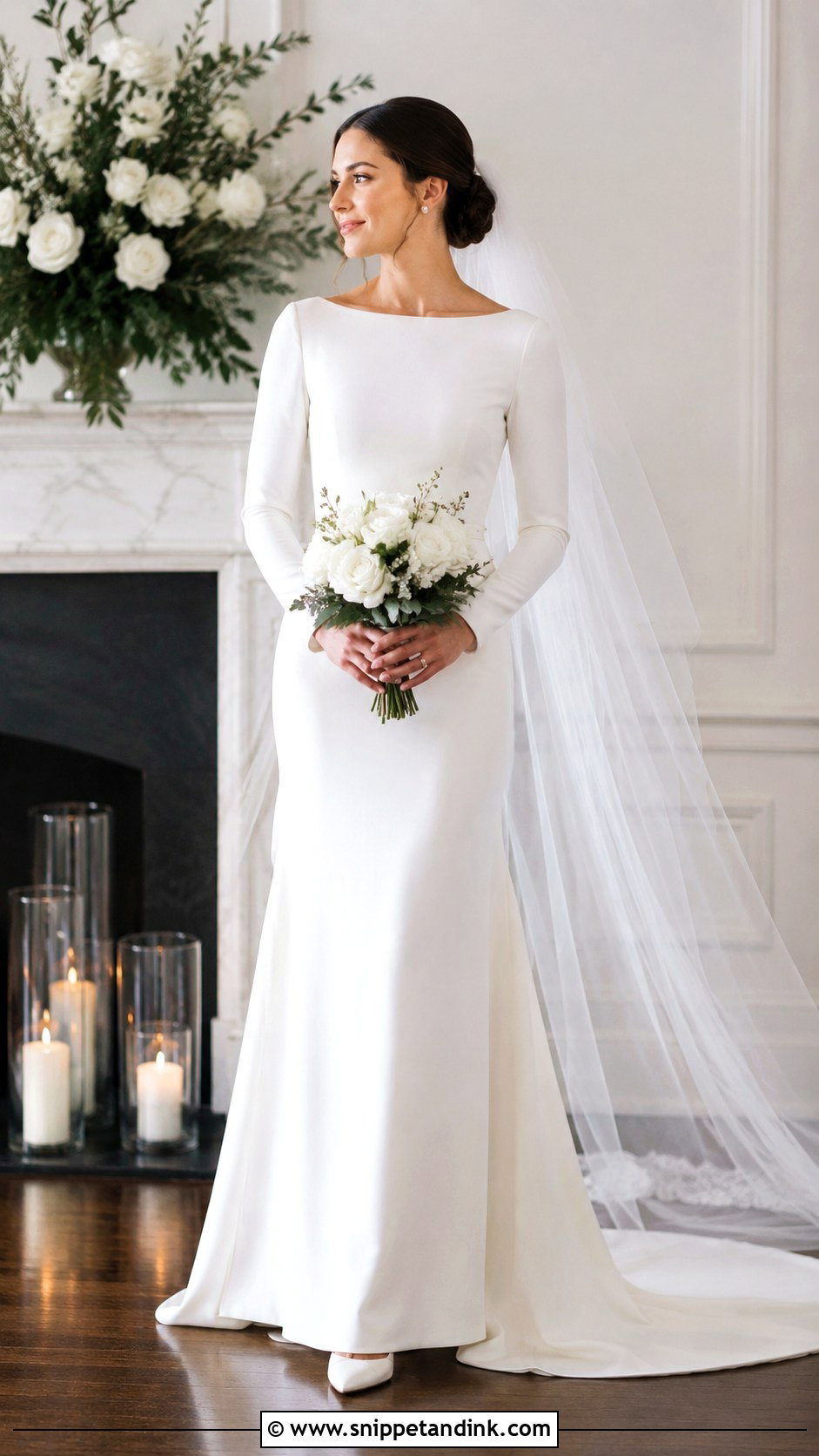
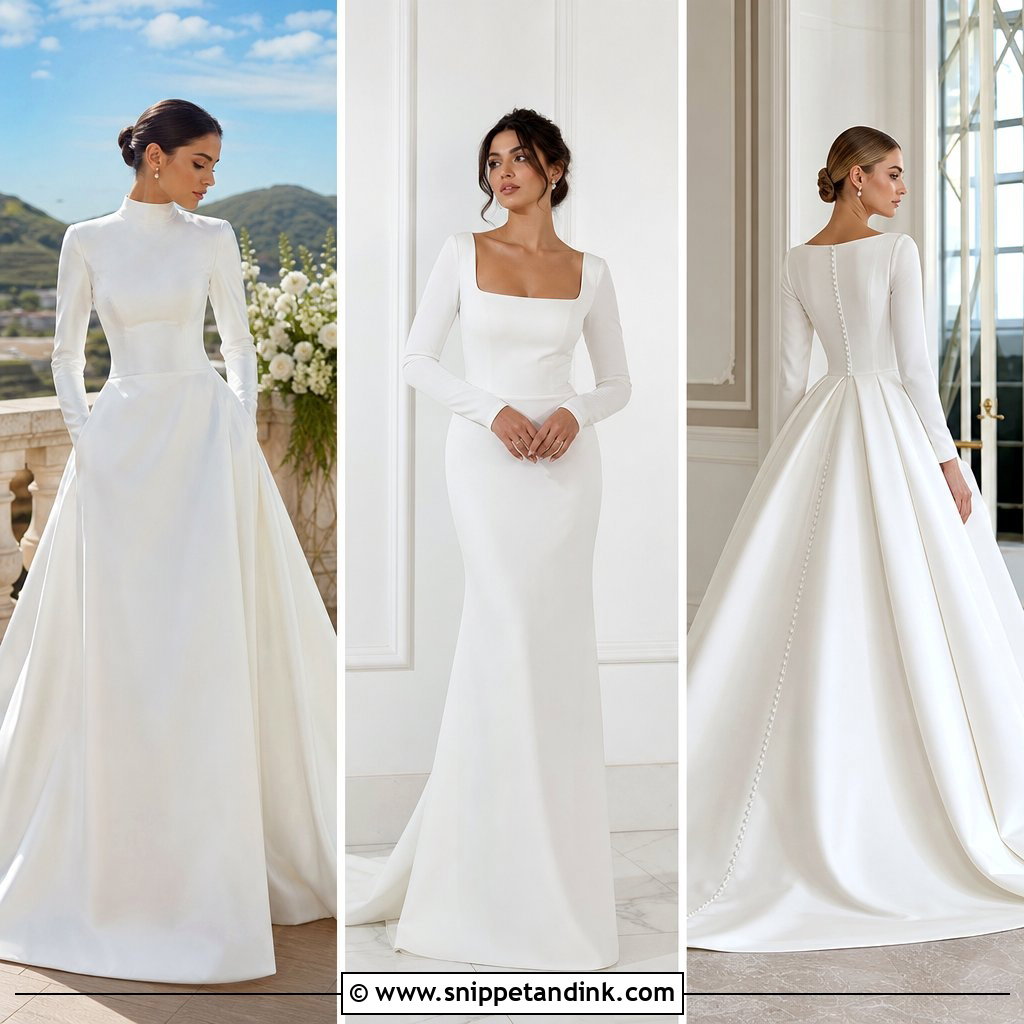
A simple long sleeve wedding dress works almost year-round if you change the fabric, fitted crepe for winter and soft chiffon or a sheer sleeve for spring. Without lace on the arm, the cut of the sleeve is very exposed, so I check that the shoulder seam sits exactly on the shoulder bone. Satin pumps, pearl studs, a smooth chignon and a clean long veil complete it. With a high neckline, wear earrings only.
5. Simple Off Shoulder Wedding Dress
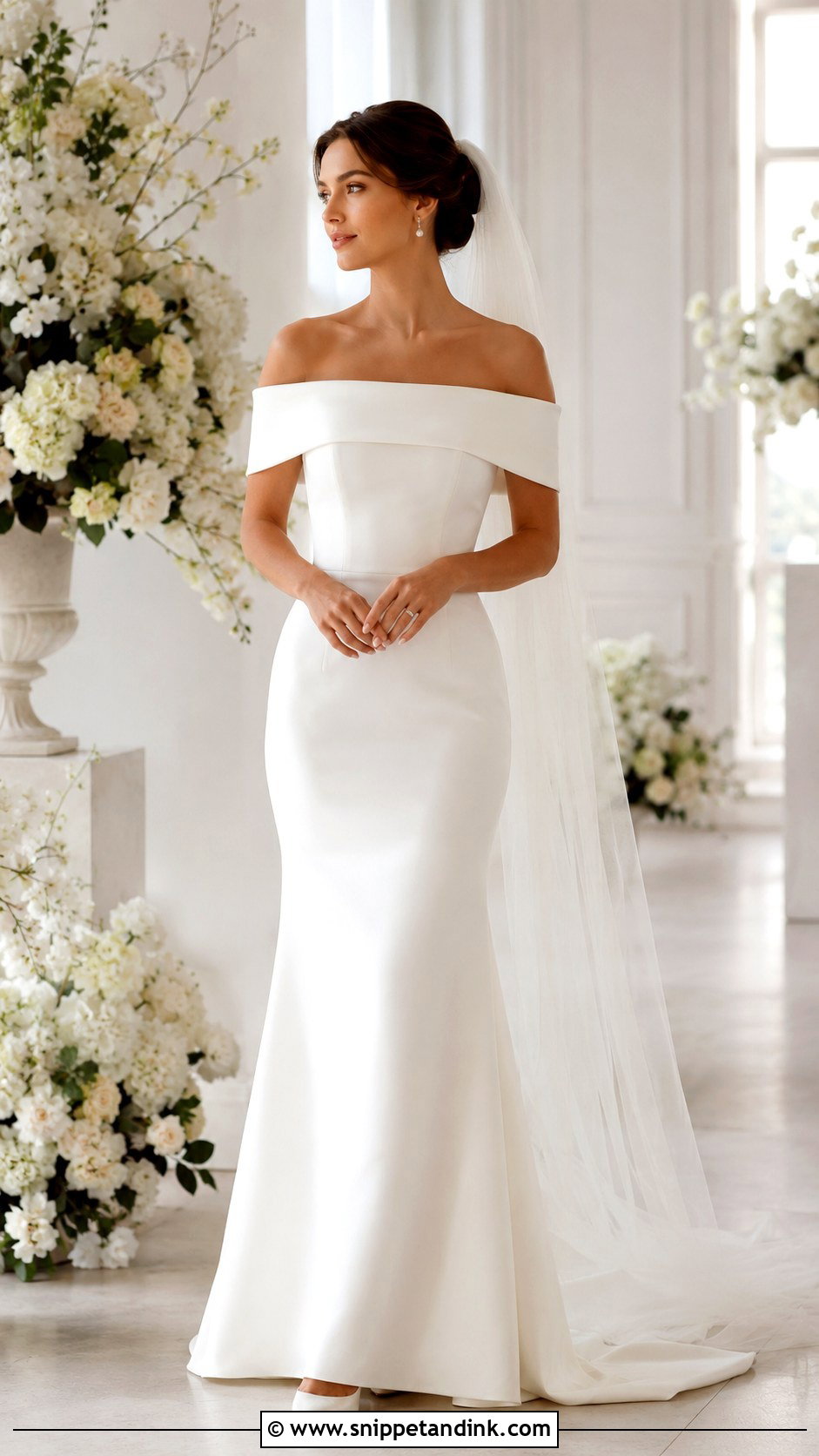
An off-shoulder neckline brings romance with no decoration at all. Fabric changes how it behaves: crepe has a little give and stays put, while satin and mikado rely entirely on internal structure to stop the band creeping up. Small pearl earrings, a smooth updo and ivory heels suit it. A short veil keeps things light, and a cathedral veil makes them formal.
6. Simple Strapless Wedding Dress
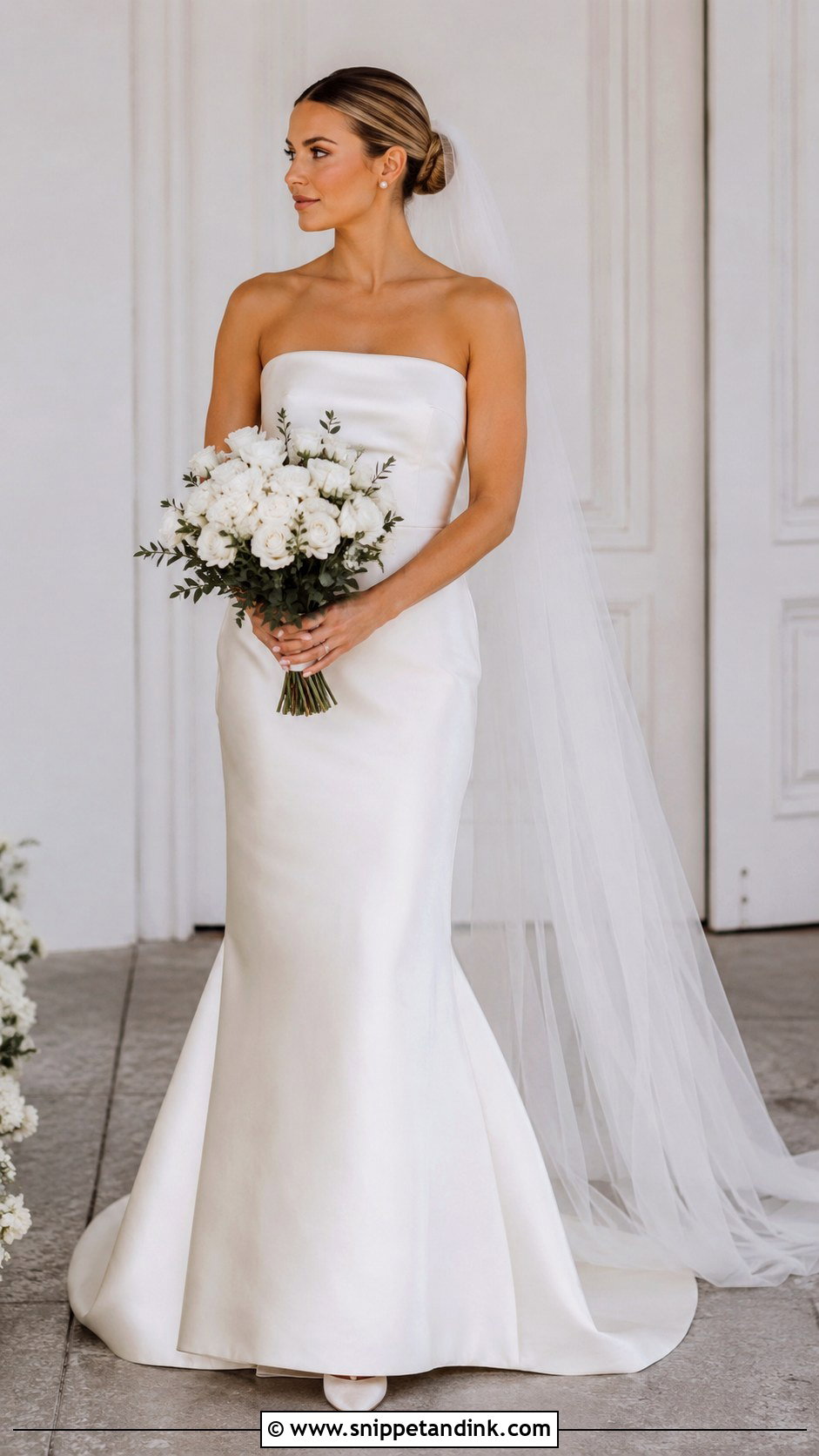
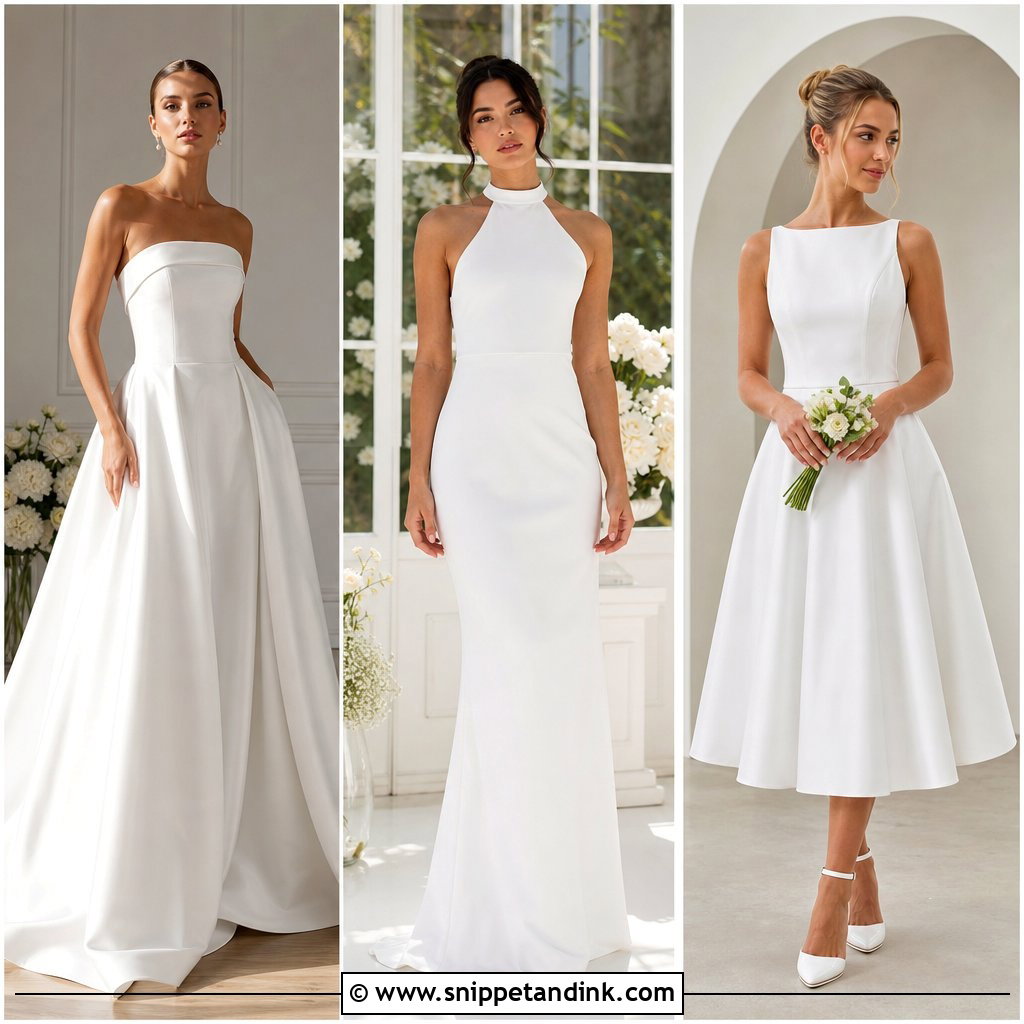
Strapless lets the silhouette carry everything, which means the bodice has to be perfect. A straight neckline reads most modern, a scoop softer, a subtle sweetheart more traditional. Sheer gloves are one of my favorite additions here, since they add interest without breaking the clean line. A sleek bun, pearl studs and pointed heels finish it for almost any venue.
7. Simple Square Neck Wedding Dress
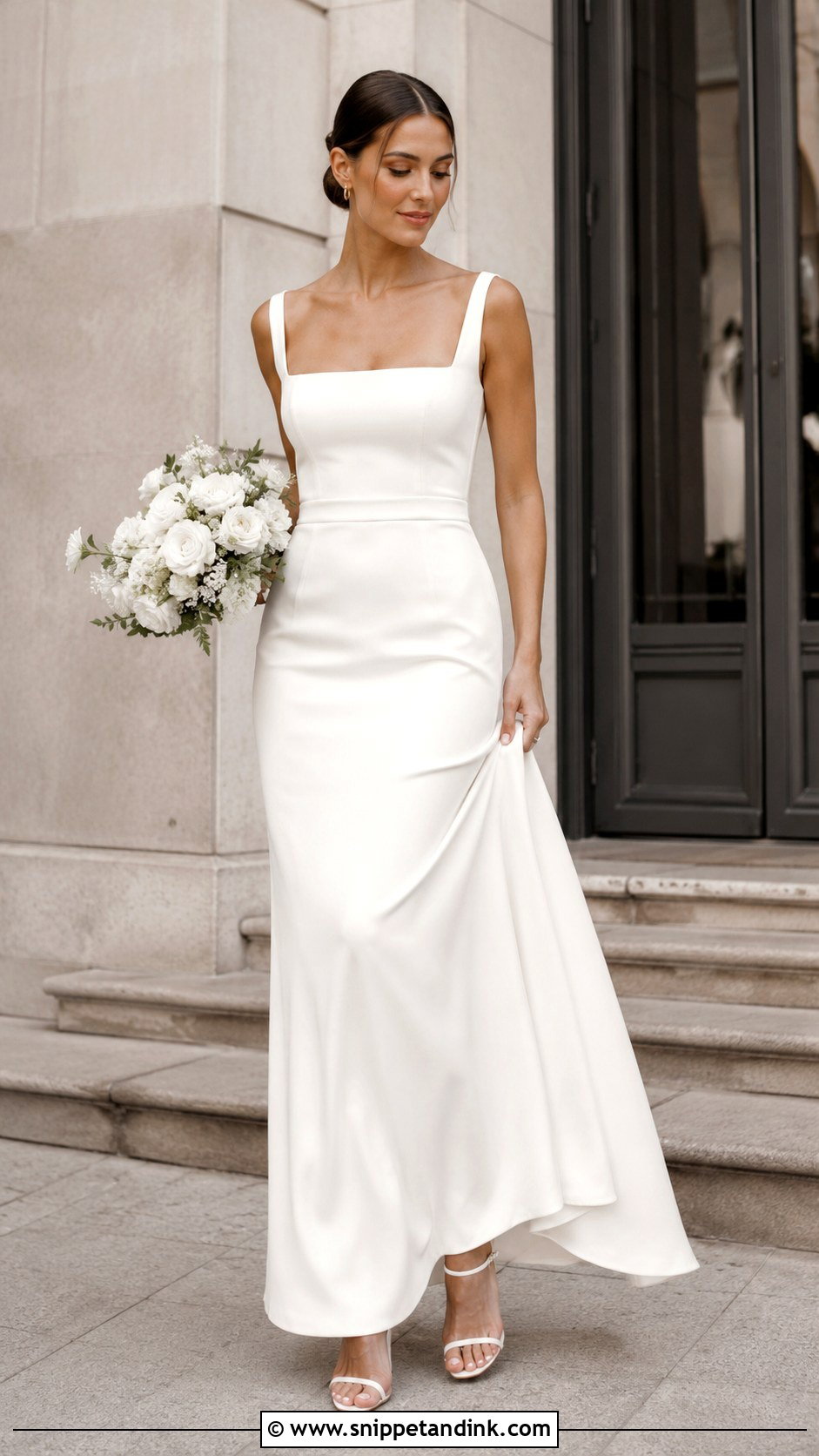
On a plain dress, a square neckline is the detail. Wide straps feel structured and slim ones lighter. I’d keep the fabric smooth, crepe or satin, with a fitted waist over a straight or A-line skirt. Slingback heels, small hoops and a soft veil tucked under a low bun finish it, and a fine necklace can sit inside the square if it stays delicate.
8. Simple V Neck Wedding Dress
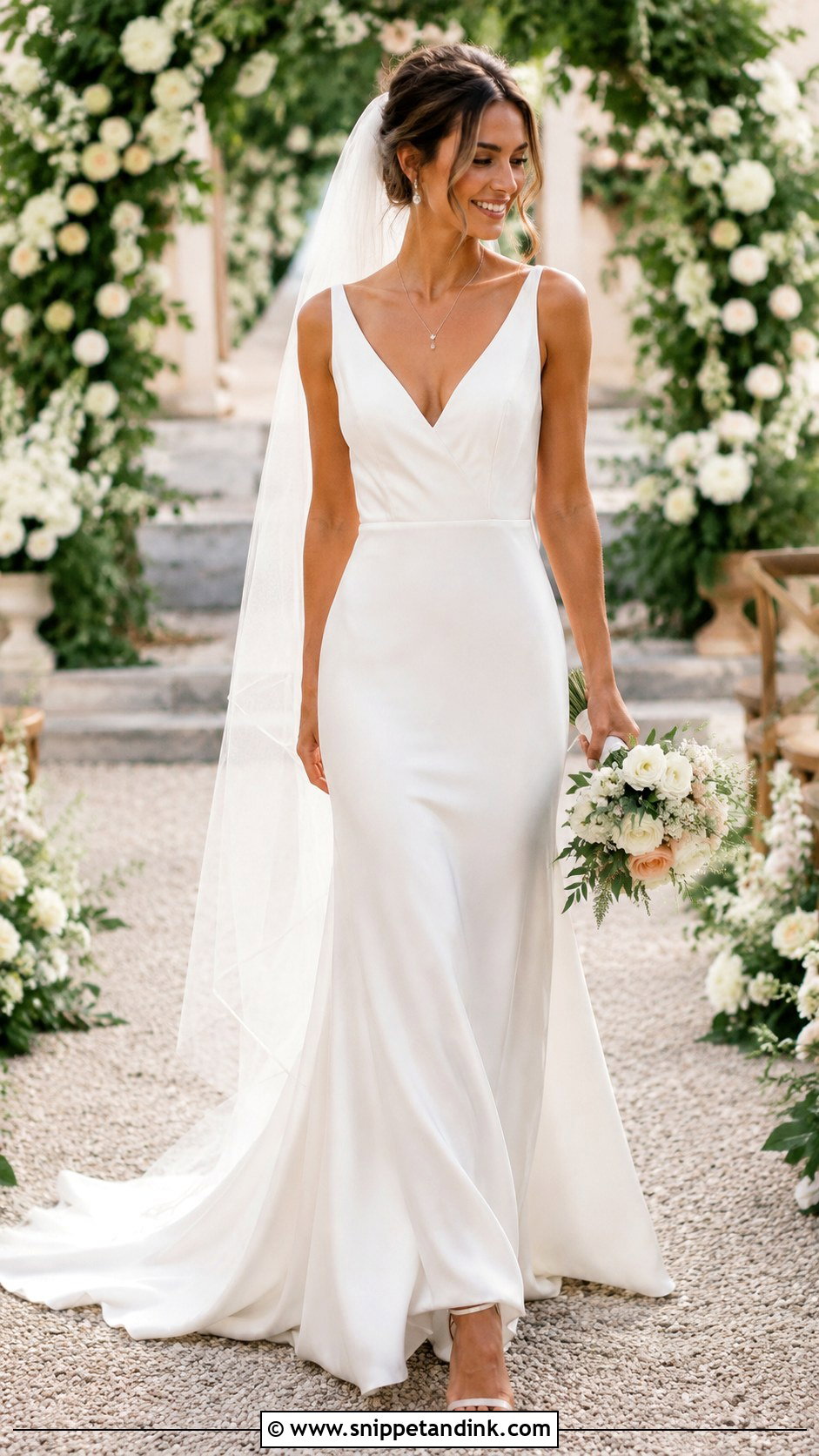
A V neck lengthens the body, and the fabric decides the tone: satin for evening, crepe for something more tailored. Depth is a balancing act. A deeper V wants a fuller skirt or a longer veil beneath it, or the whole outfit starts to feel top-heavy. Strappy ivory heels, a fine pendant and soft waves suit a destination or garden wedding.
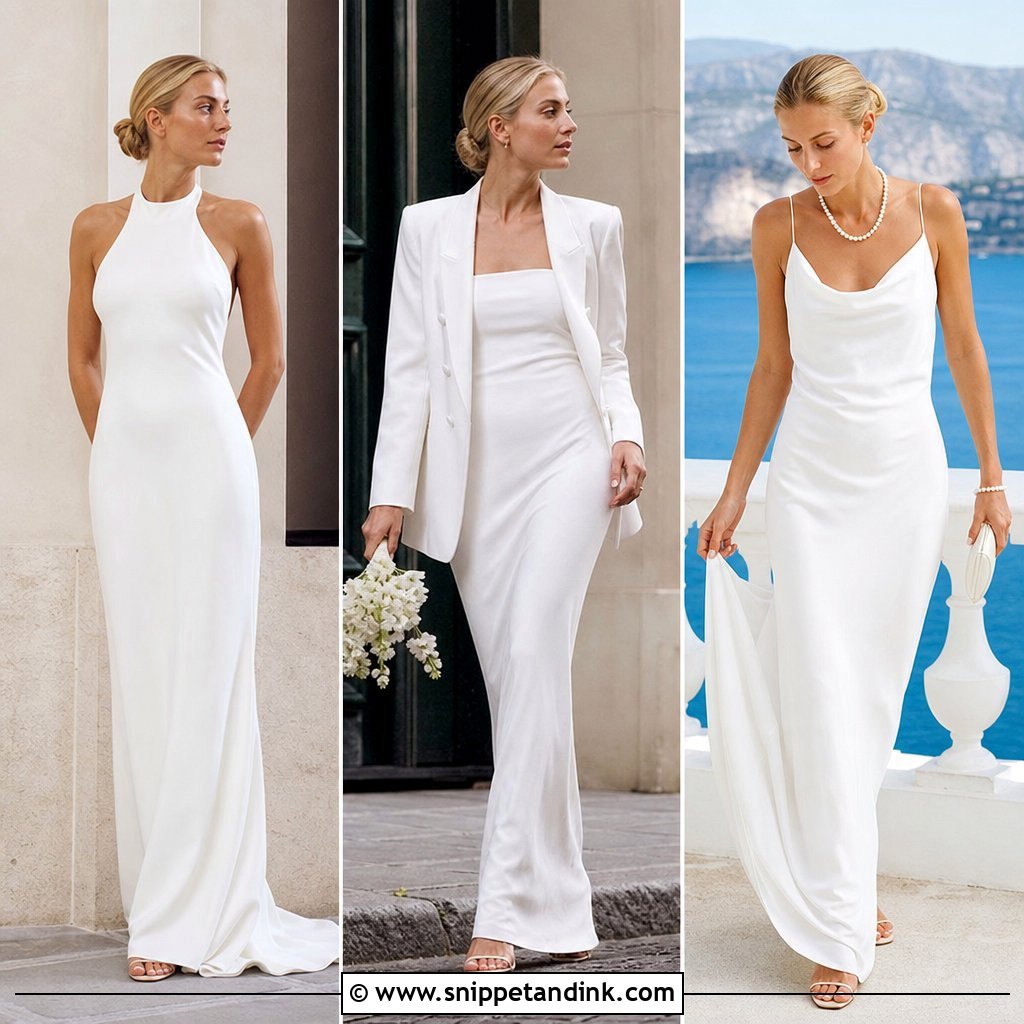
9. Simple Silk Slip Wedding Dress
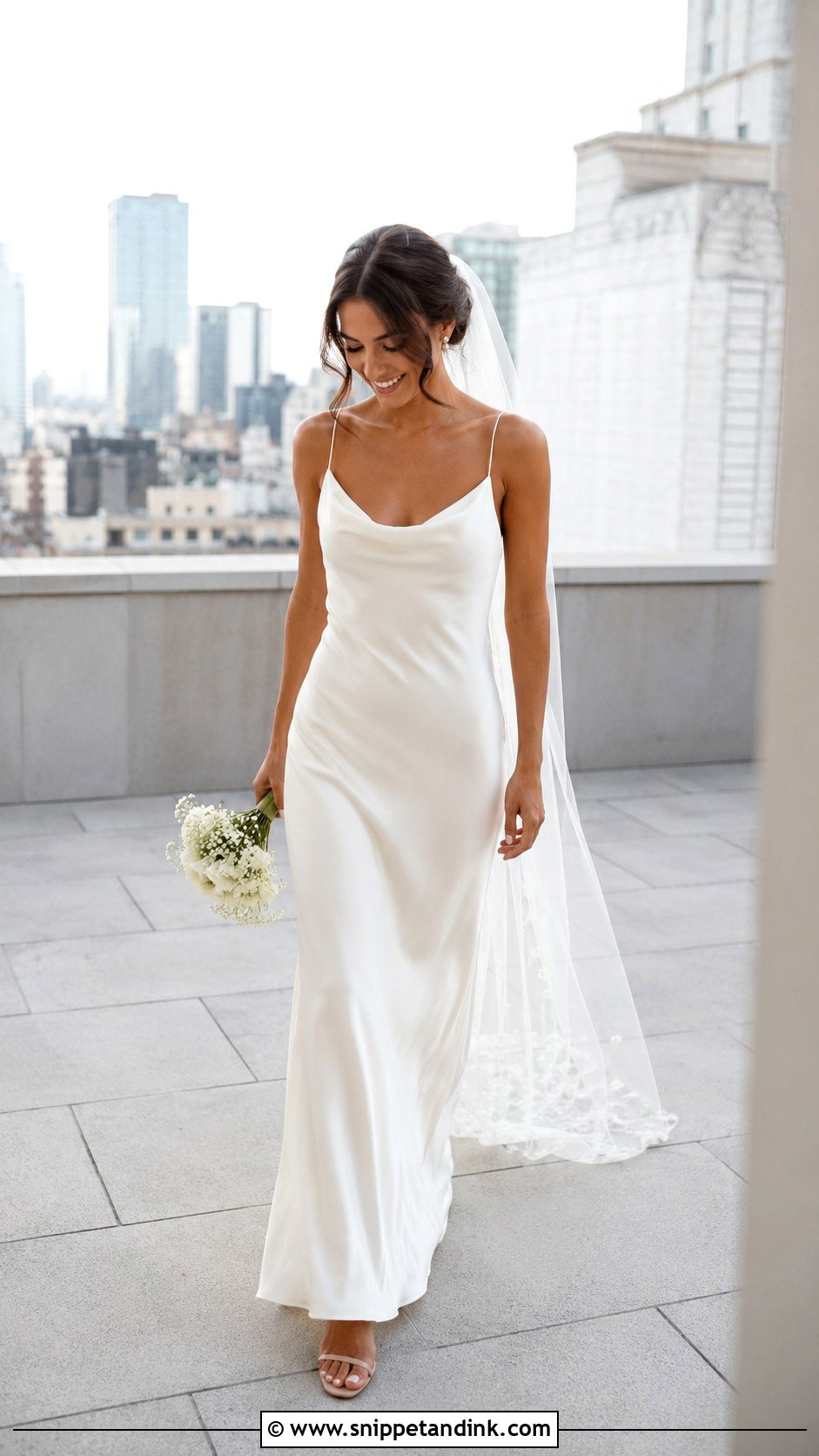
Bias-cut silk slips look like nothing on the hanger and come alive on the body, which is exactly why they’re unforgiving. The bias drapes over every curve and every edge beneath it, so smooth, edge-free underwear isn’t optional. I’d also want alterations done by someone experienced with bias cuts, because taking one in wrongly makes the skirt twist. Barely-there sandals, pearl earrings and a clean bouquet are enough. A sheer long veil makes it ceremonial; a short one keeps it modern on a beach or rooftop.
10. Simple Column Wedding Dress
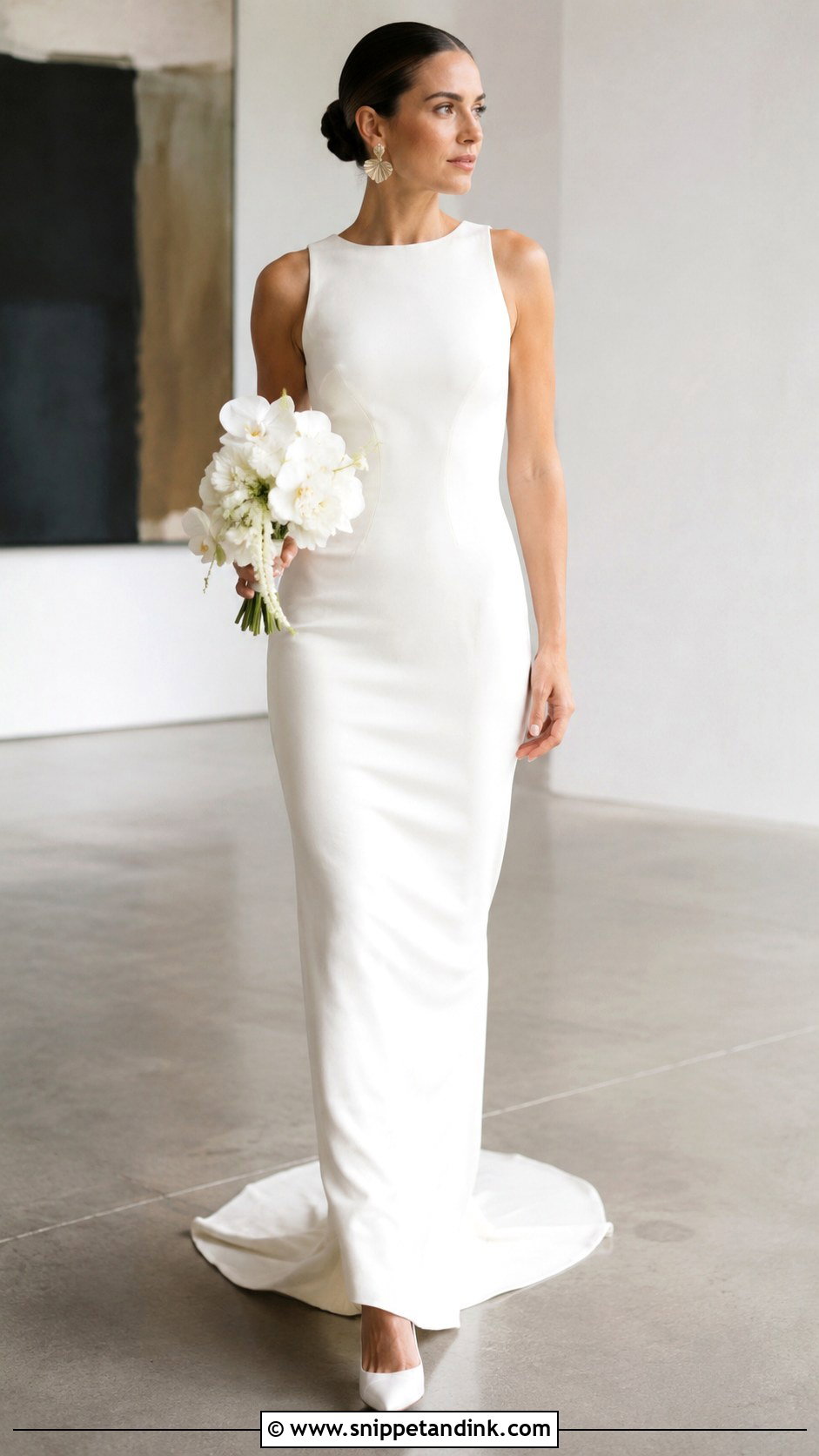
Column dresses have almost no volume, so they live on a long vertical line. Princess seams or a center-back seam shape the body without showing. A center-back slit is essential in a true column, or you’ll take tiny steps all day. Pointed pumps, sculptural earrings and a clean bouquet suit a gallery or city hotel, and a long plain veil adds impact if you want it.
11. Simple High Neck Wedding Dress
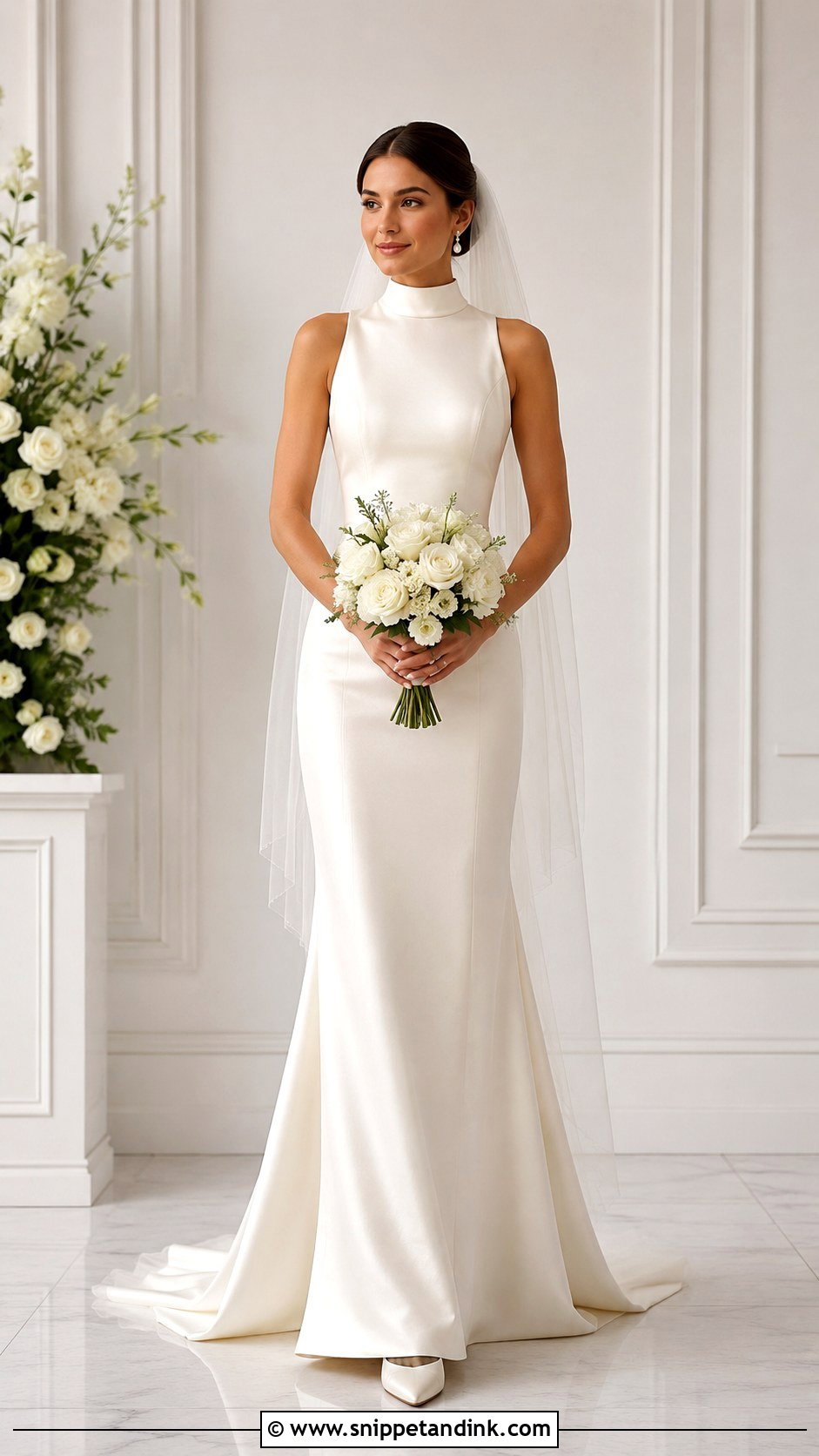
A high neckline in a plain fabric looks quietly regal. Sleeveless reads modern; long sleeves read formal. Skip the necklace and wear statement studs or small pearl drops. I check the neck edge while the bride looks down at her bouquet, because if it presses into the throat there, it needs a fraction more room. Sleek pumps, a low bun and a soft veil placed at the crown finish it.
12. Simple Halter Wedding Dress
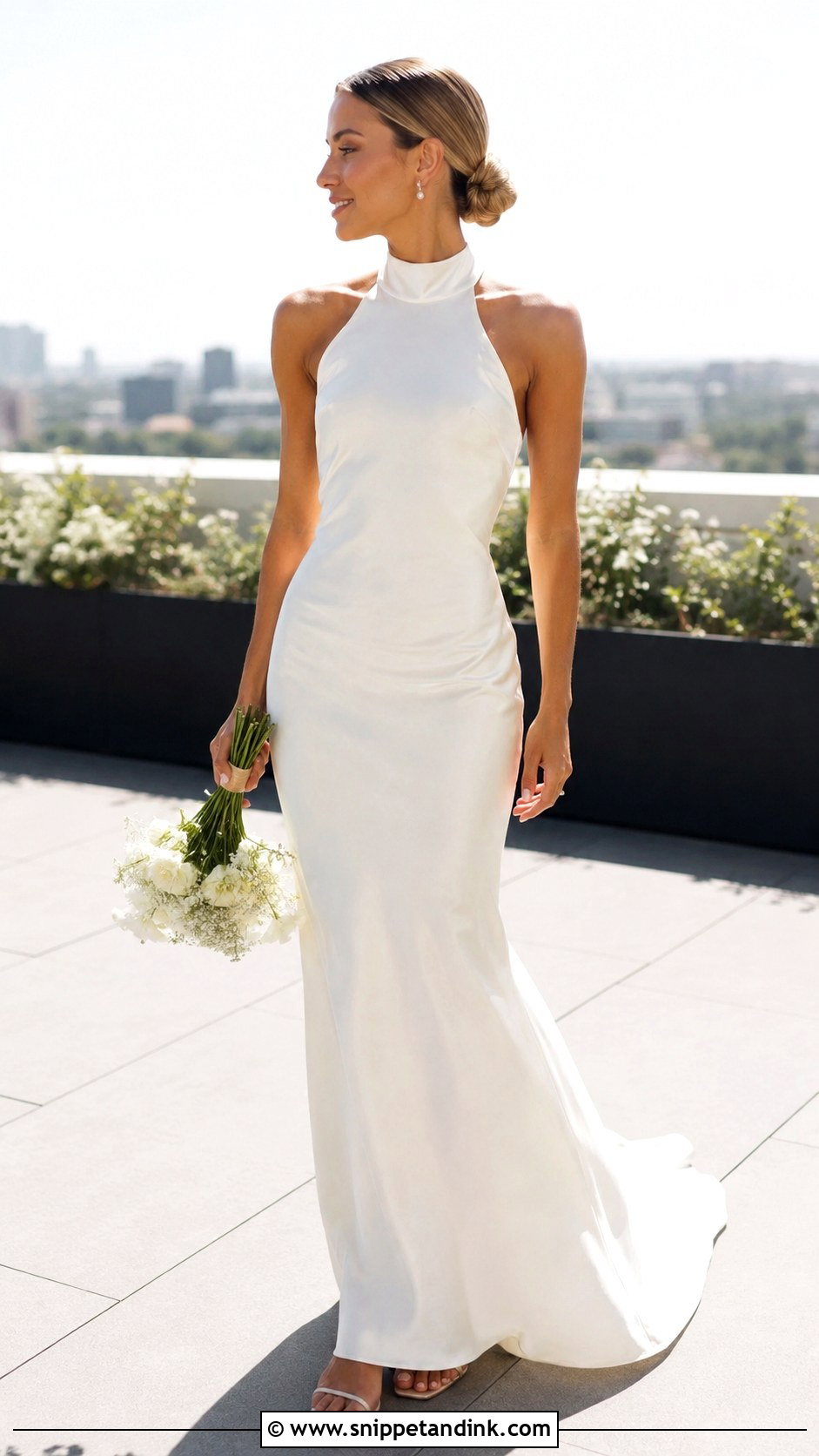
Halters show the shoulders and pull the eye upward. Satin glows; crepe looks tailored. Wear your hair up in a smooth ponytail or bun so it doesn’t catch on the neck strap, and keep everything else minimal with slim sandals and small earrings. For a summer beach or rooftop, think about sun on bare shoulders in the weeks before, since a strap tan line shows clearly with this neckline.
13. Simple Midi Wedding Dress
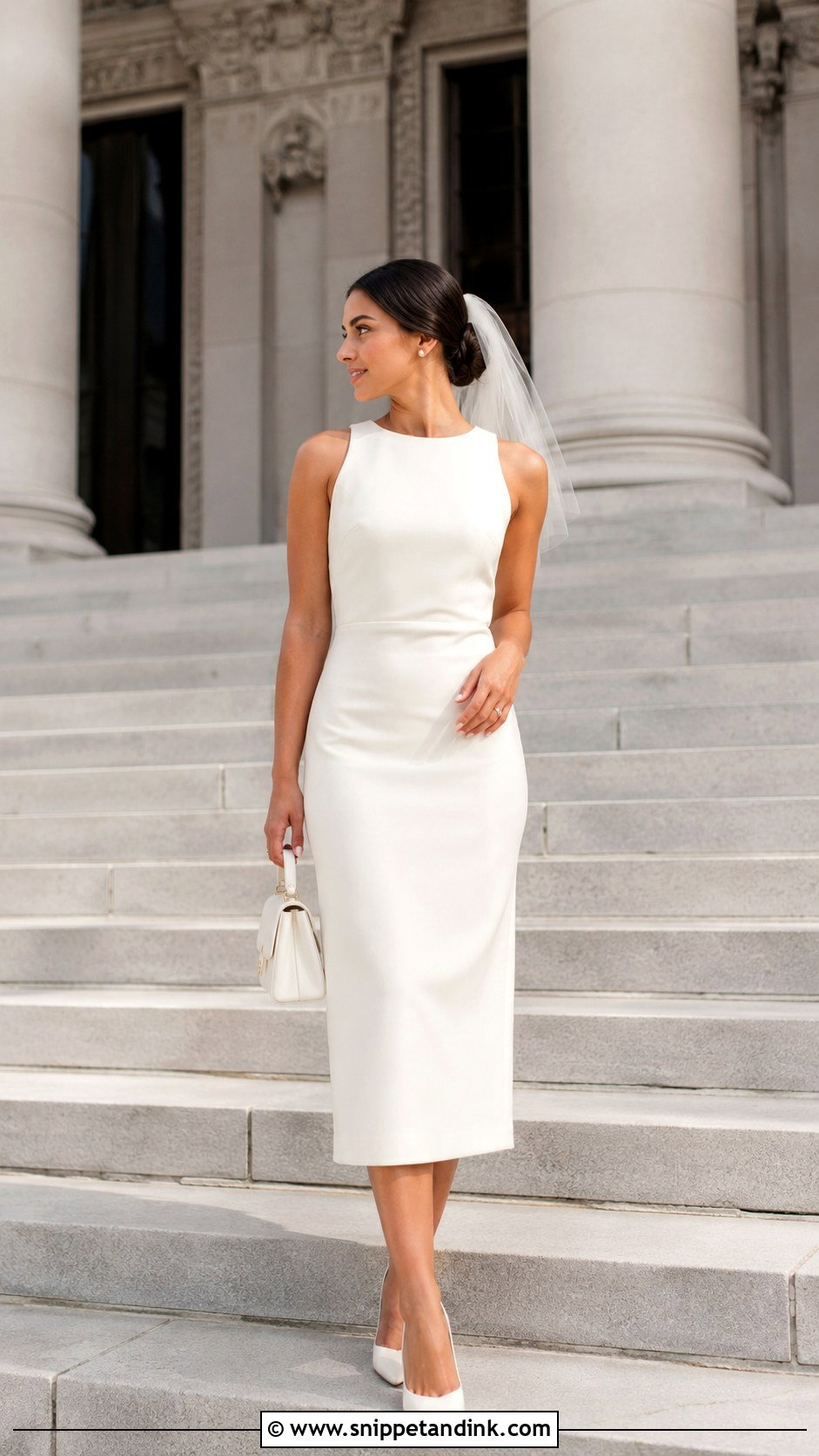
A simple midi wedding dress is the most practical shape here, and the one brides most often wear again. The hem shows your shoes, so slingbacks, pointed pumps or ankle-strap heels deserve real thought. A fitted bodice with an A-line skirt reads classic; a slim sheath reads modern. Pearl studs, a mini veil and a structured handbag complete it. I set the hem where the calf narrows, which usually flatters more than mid-calf.
14. Simple Tea Length Wedding Dress
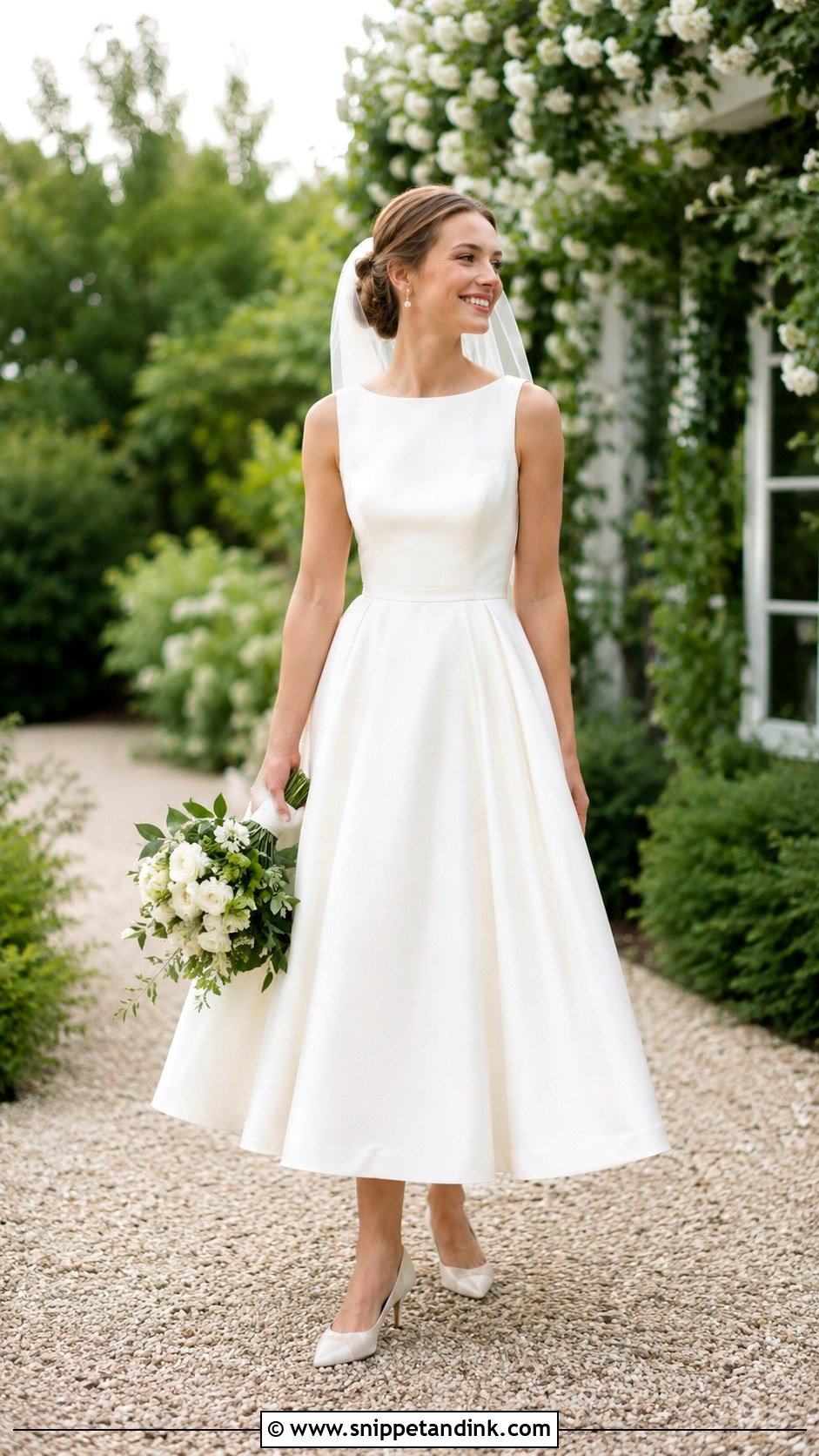
Tea length falls between knee and ankle and brings a vintage note without looking like fancy dress. A clean satin bodice over a soft A-line skirt keeps it balanced. Low heels, pearl earrings and a short veil or hair bow suit a daytime garden wedding, and it’s easy to walk, dance and greet guests in. If a petticoat gives the skirt its shape, sit down at the fitting to check it doesn’t peek out.
15. Simple Wedding Dress With Bow
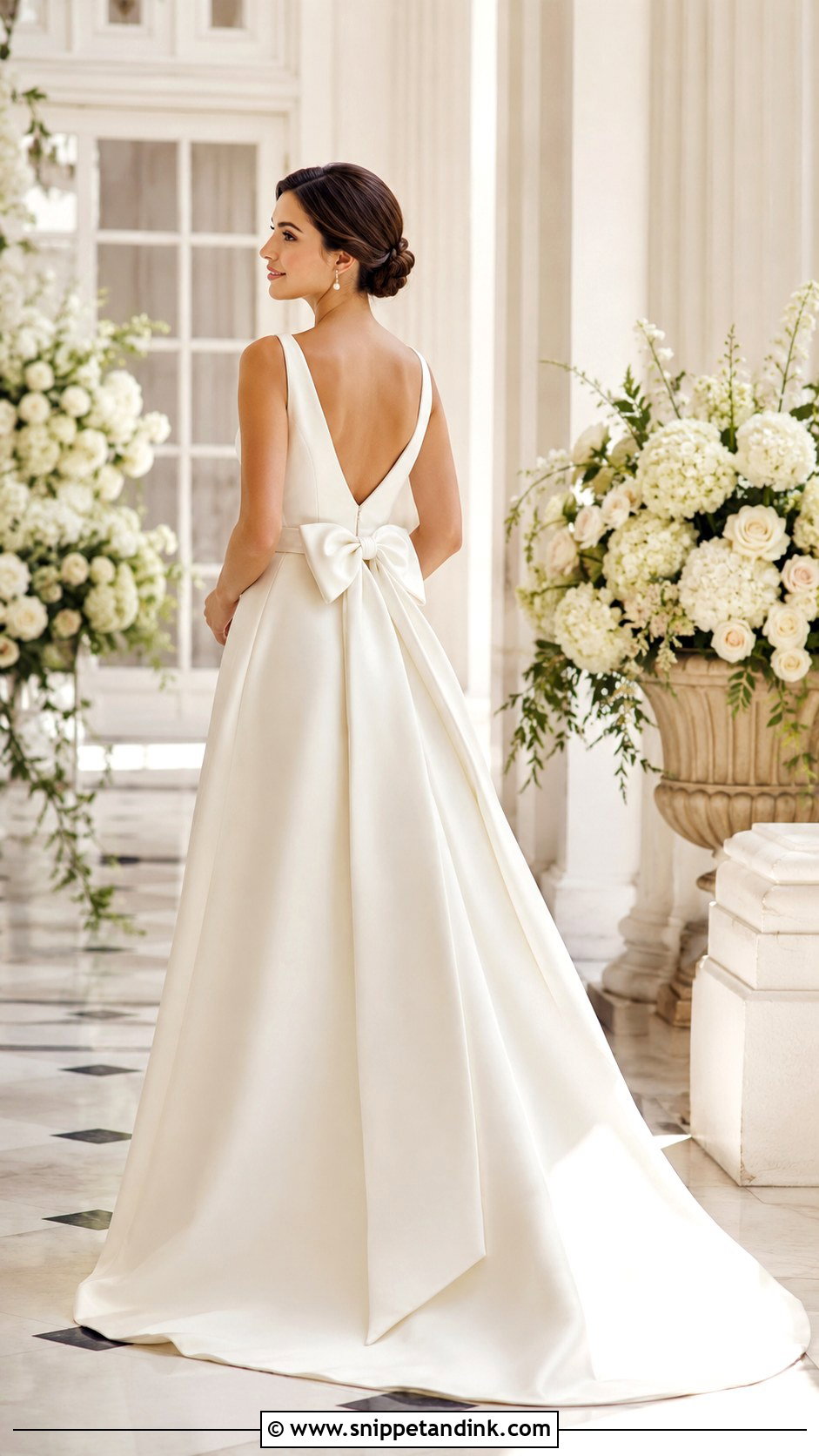
One bow, placed well, gives a plain dress its focal point, at the back waist, on the shoulder or on a detachable train. The dress beneath should be clean satin, mikado or crepe. Crisp fabrics keep a bow’s loops standing all day, while a soft crepe bow droops by evening unless it’s interfaced inside. Plain heels, pearl earrings and smooth hair complete it, and the bow really comes into its own in back-view photos.
16. Simple Wedding Dress With Slit
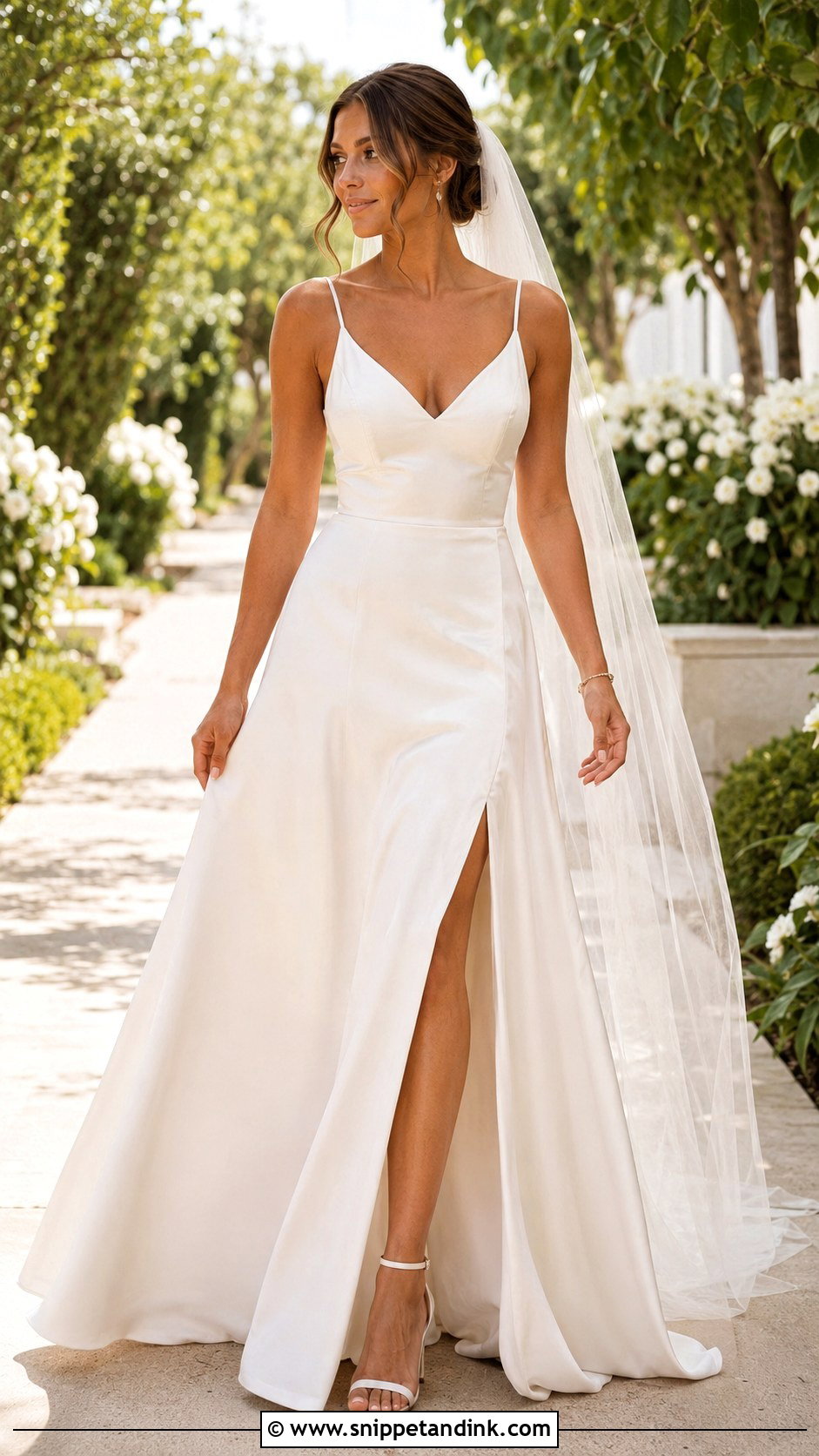
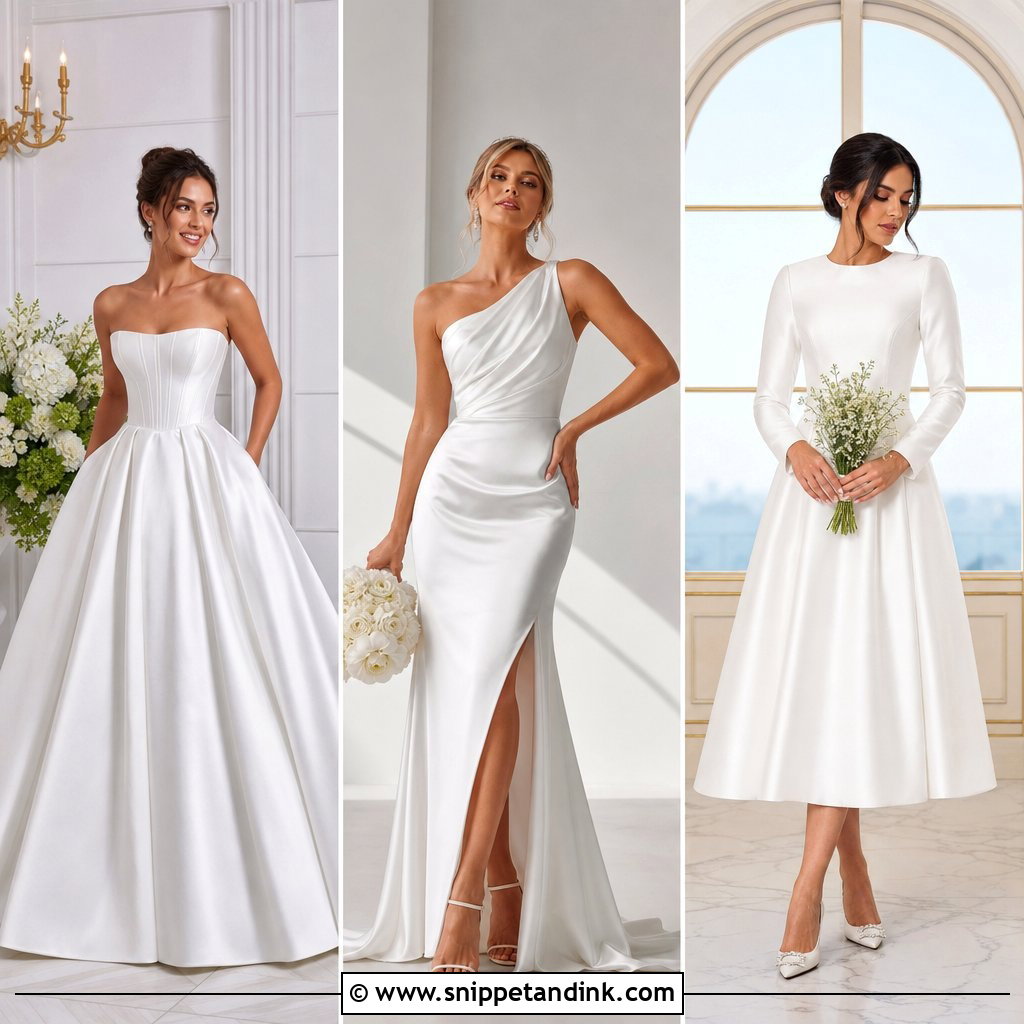
A slit gives a plain dress movement and a flash of shoe, and satin A-lines, crepe columns and soft chiffon all take one well. Height matters more than anything. Sit down in the fitting room and see where it opens, because a slit that looks modest standing can ride much higher once you’re seated. Elegant heels, small earrings and a simple veil finish it for a warm-weather wedding.
17. Simple Wedding Dress With Pockets
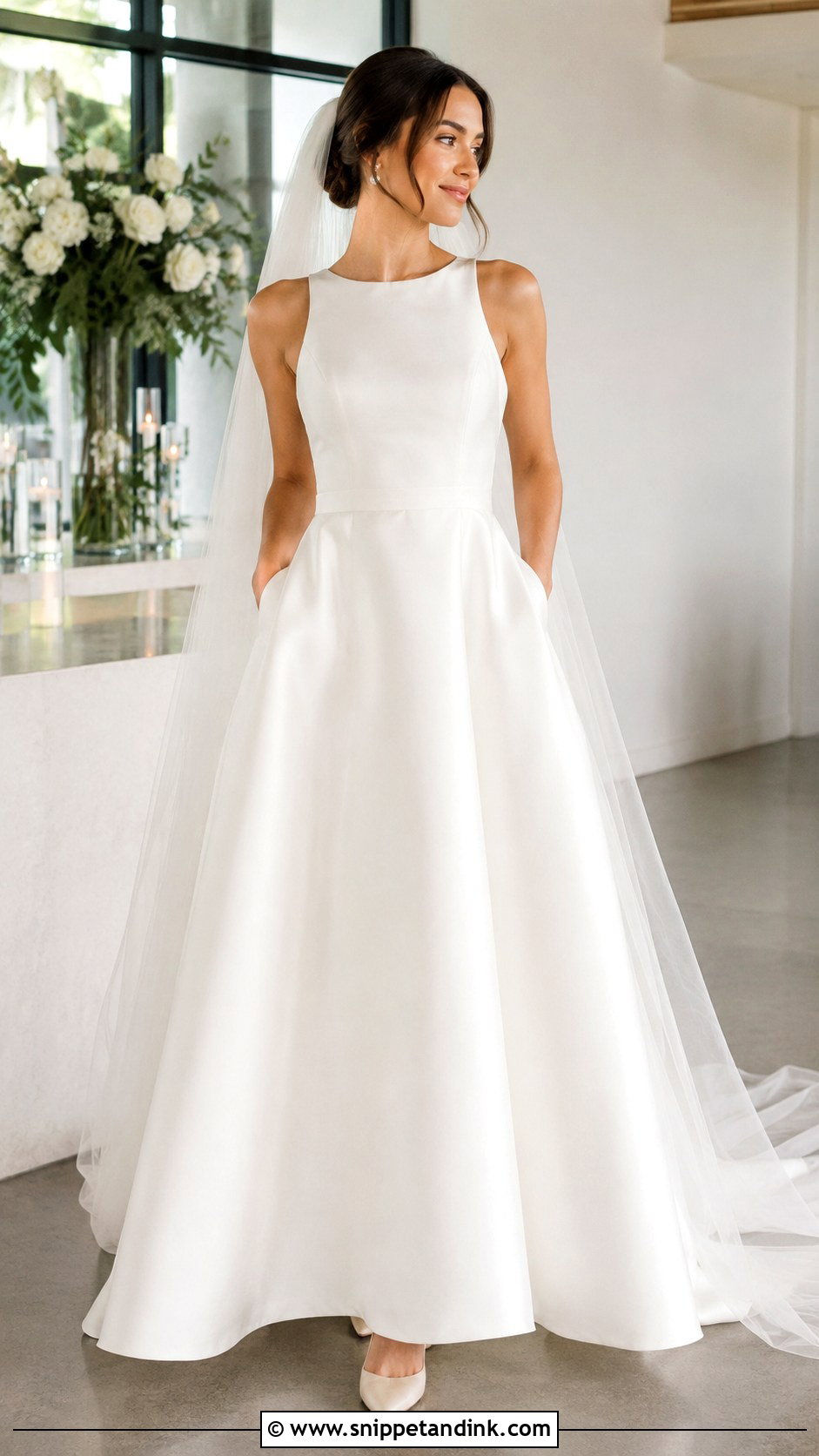
Pockets need a fabric with body. On A-line, ball skirts or mikado, the skirt holds its shape over them; in soft fabrics, they bag and show. They carry a lip balm or a tissue and give your hands something natural to do in portraits. Satin pumps, pearl earrings and a clean veil keep it classic, and a simple bodice lets the pockets register as a deliberate design choice.
18. Simple Mikado Wedding Dress
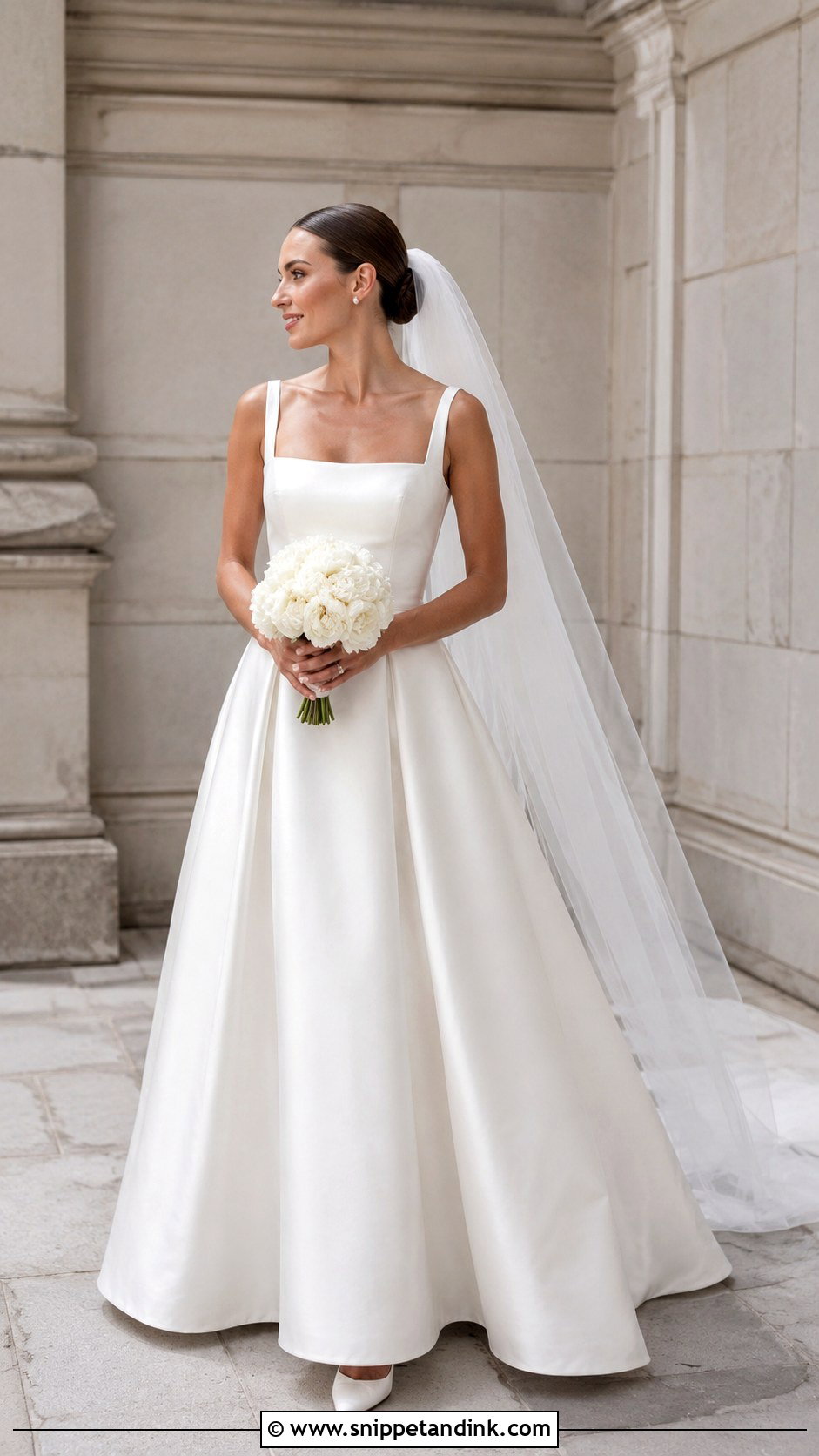
Mikado is a heavy, crisp silk-blend weave with a low sheen, and it holds sculpted shapes better than almost anything else, which is why it suits A-lines, square necks and clean ball skirts. It’s warm and stiff to sit in for hours, so I’d pick it for a cool-season formal venue over a July garden. Pointed heels, pearl studs, a smooth bun, a plain veil and a small bouquet are enough.
19. Simple Chiffon Wedding Dress
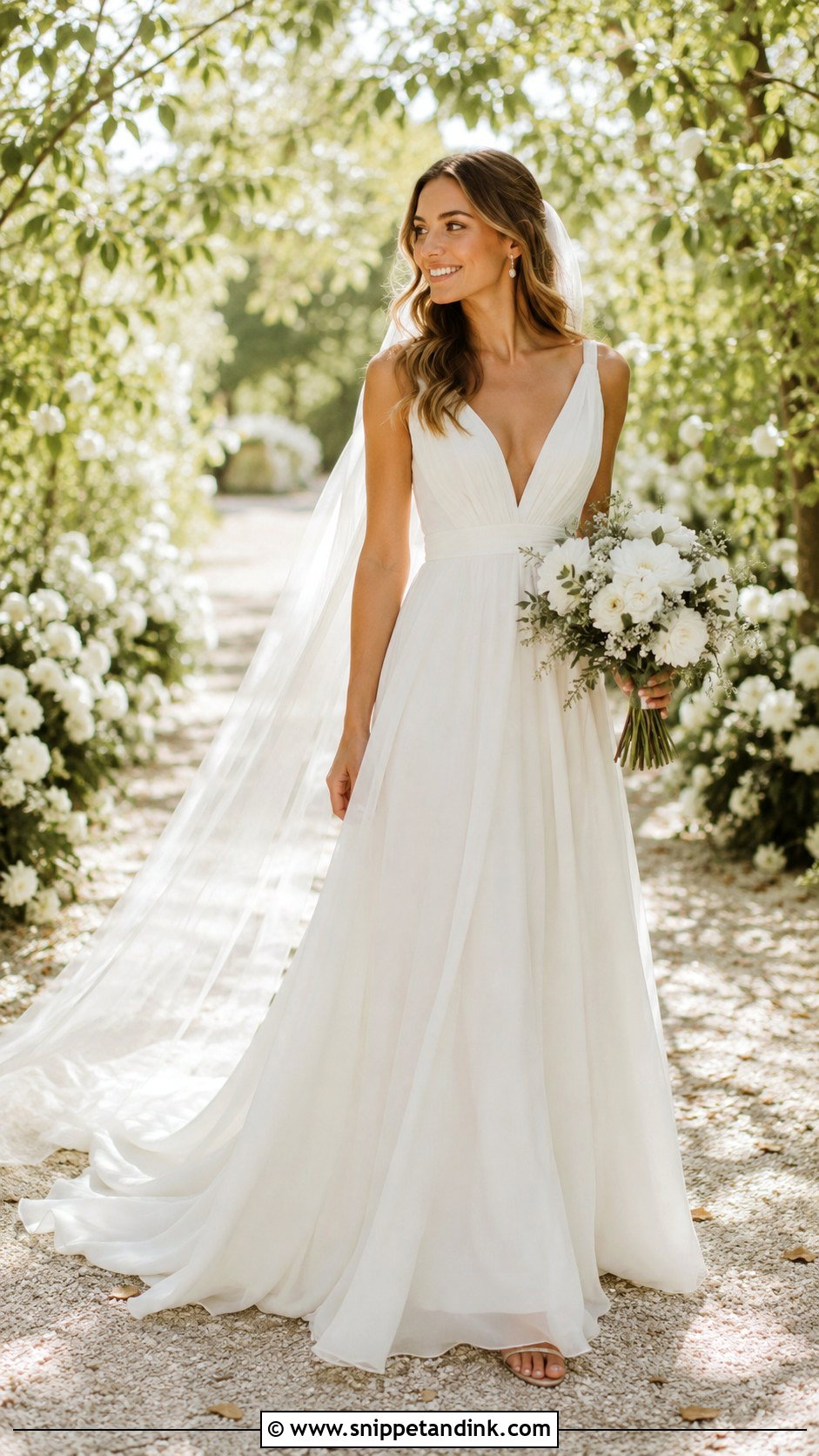
A simple chiffon wedding dress moves with the slightest breeze, which is exactly why it belongs outdoors. Chiffon is delicate, though. It snags on rough stone, bark and jewelry clasps, so I’d skip any bracelet with prongs. A flowy A-line, soft V or empire waist suits it, with delicate sandals, loose waves, a light veil and a natural white and green bouquet.

20. Simple Beach Wedding Dress
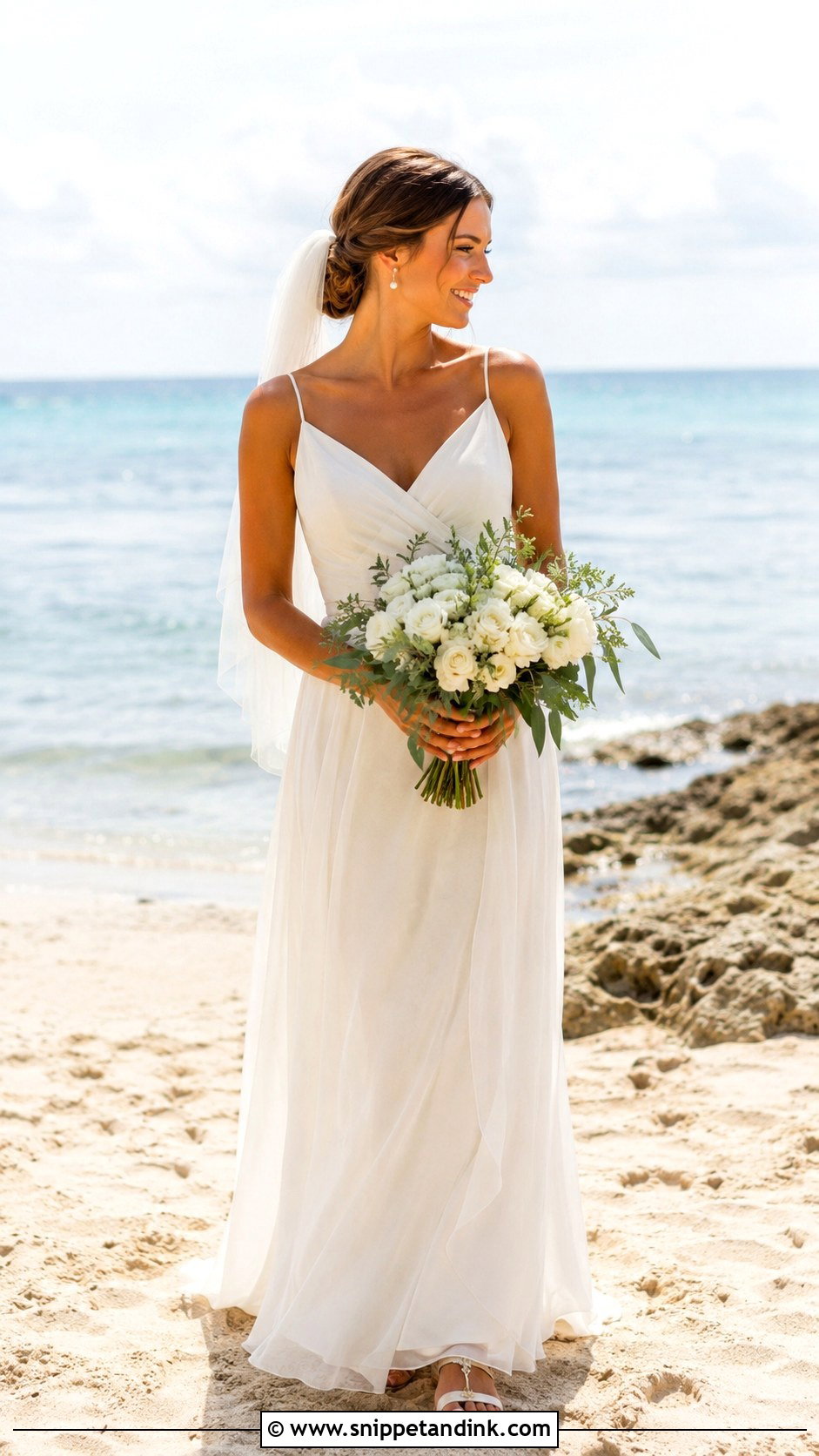
By the water, comfort decides everything. Chiffon, silk, crepe or soft satin in a relaxed slip, halter or flowy A-line all breathe well. Leave the heavy train at home; on sand it drags and fills with grit. My usual advice is flat sandals, pearl studs and a soft low bun that can handle the breeze. Pin a veil with more grips than you think you need, or swap it for a hair accessory.
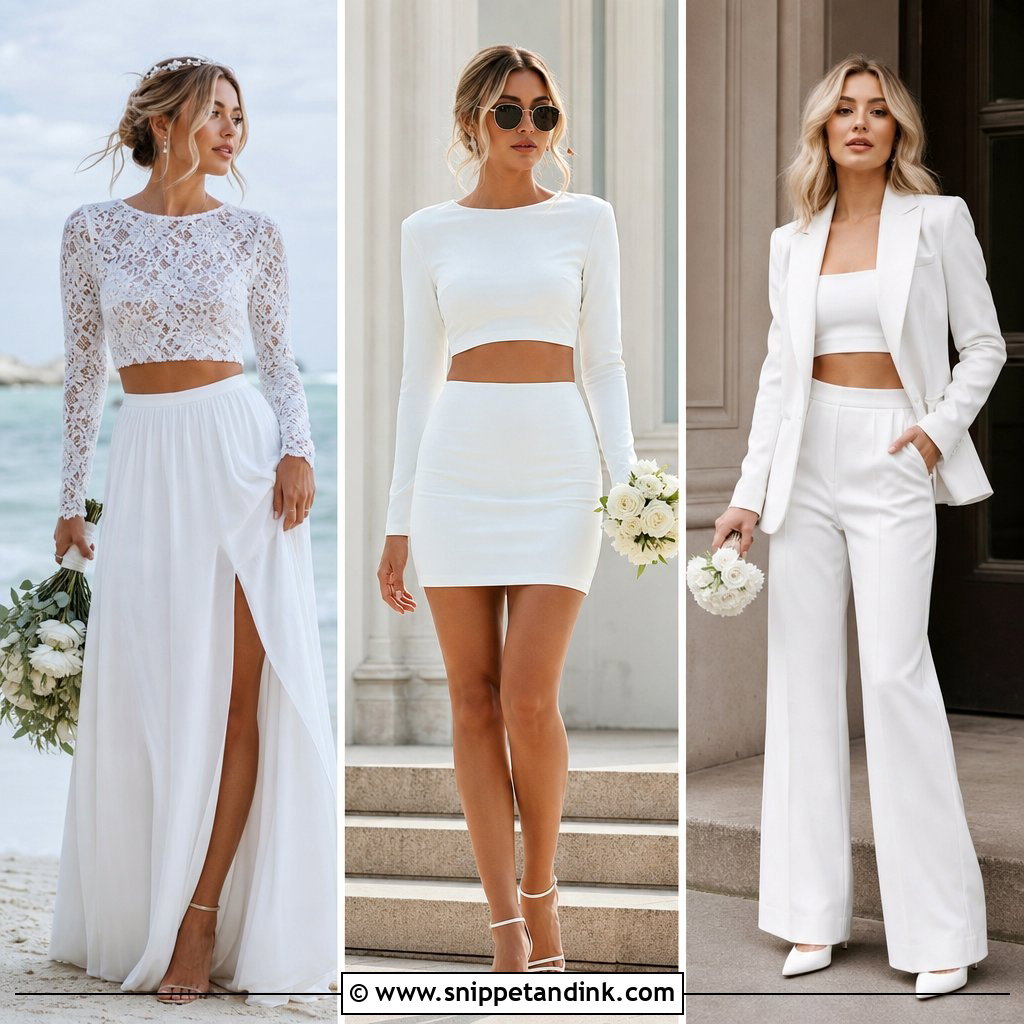
21. Simple Courthouse Wedding Dress
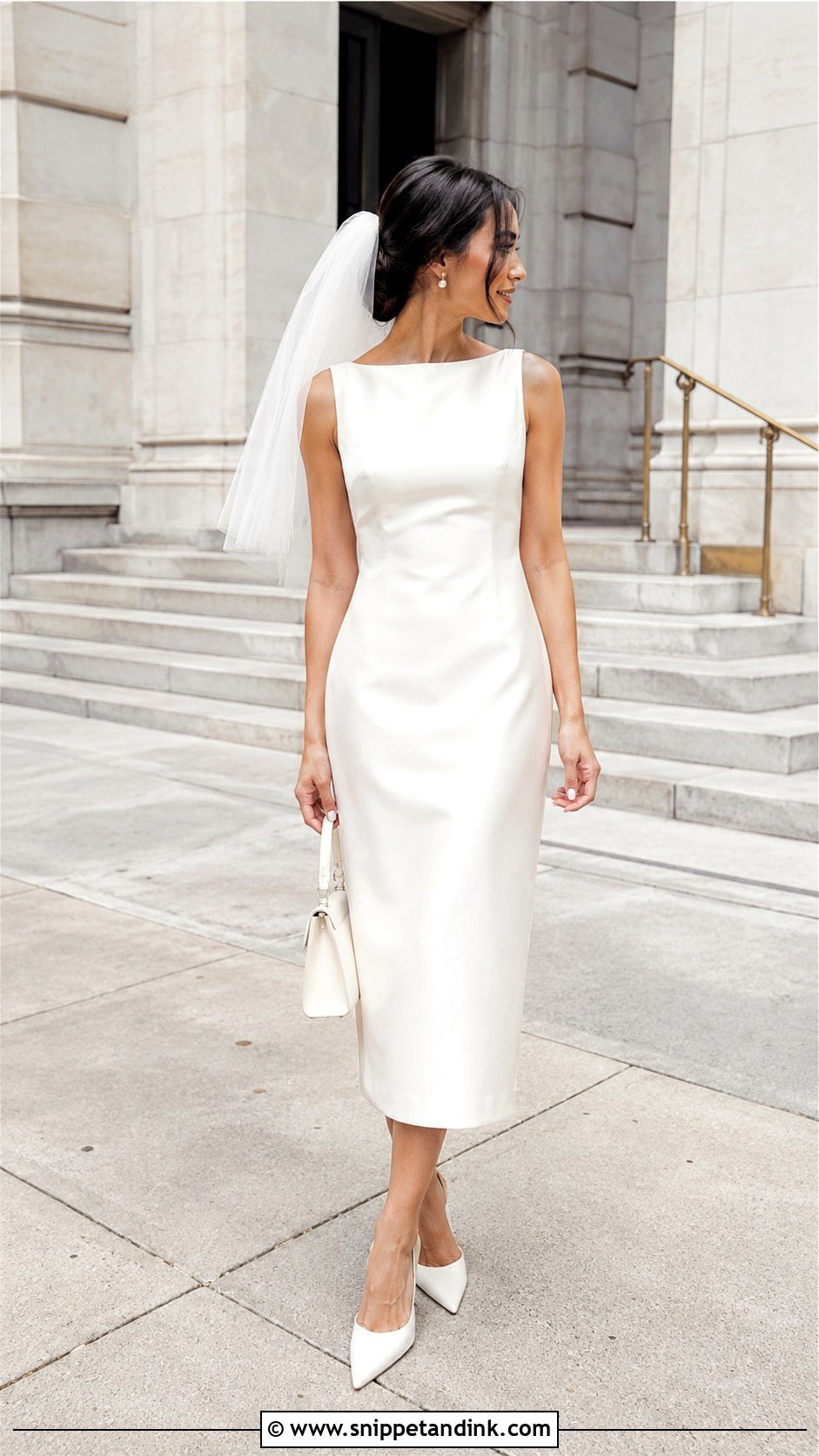
A simple courthouse wedding dress has to look right inside a public building and in portraits on the steps outside. A midi, sleek sheath, tailored mini or satin slip can all work. Pointed heels, a small structured bag and pearl or crystal earrings suit it, and a short veil, headband or soft blazer makes it read clearly as bridal. You don’t need a full gown. You need a look that feels intentional.
22. Simple Plus Size Wedding Dress
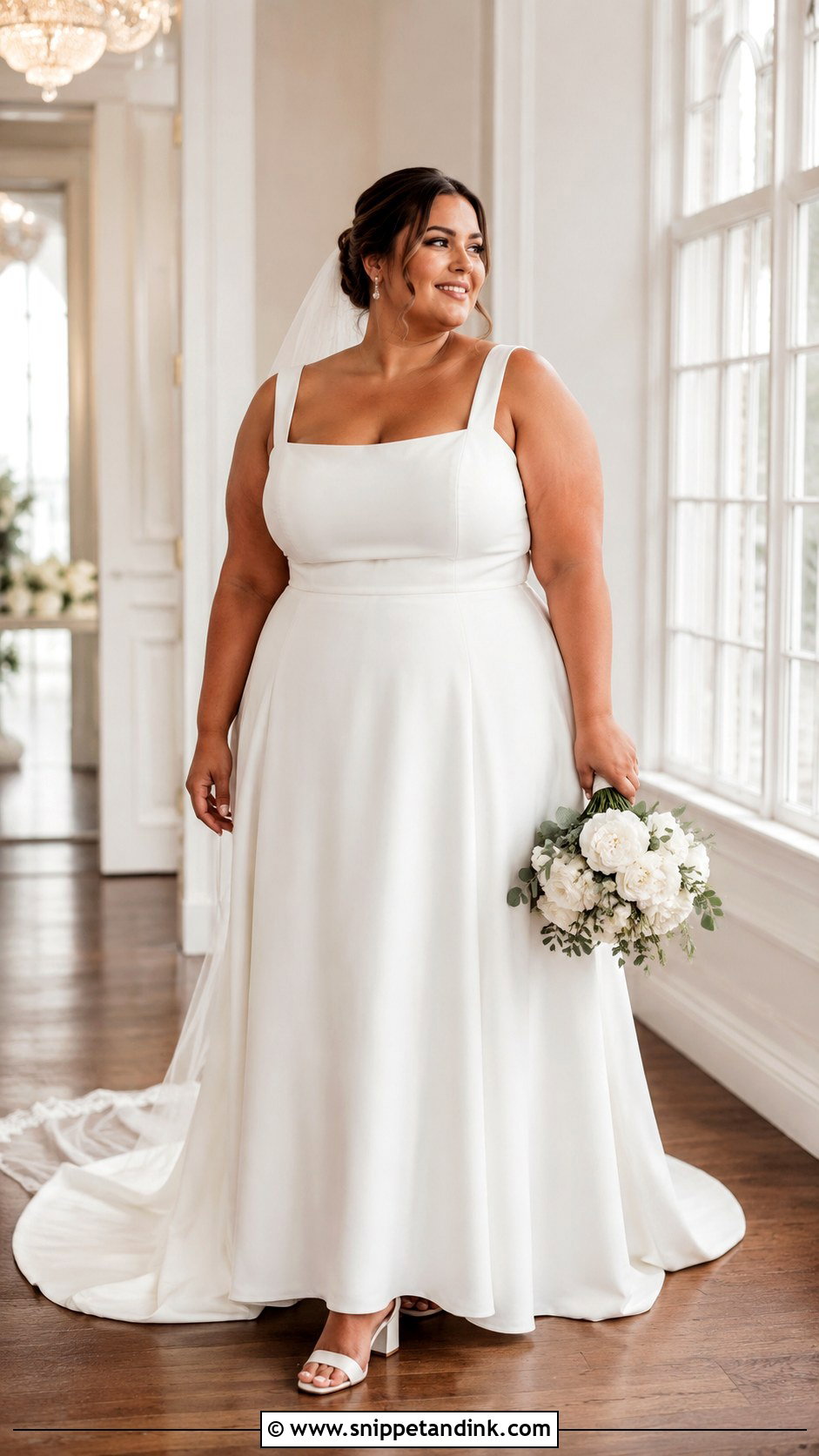
Support and proportion come first. Crepe, satin and mikado have enough body to shape smoothly rather than cling. I look for a supportive bodice, wider straps if you like them, a defined waist and an A-line skirt, then add comfortable block heels, pearl earrings and a veil that suits the venue. Don’t pick a dress only because someone calls it “flattering.” Pick the one you forget you’re wearing by the second hour.
23. Simple Maternity Wedding Dress
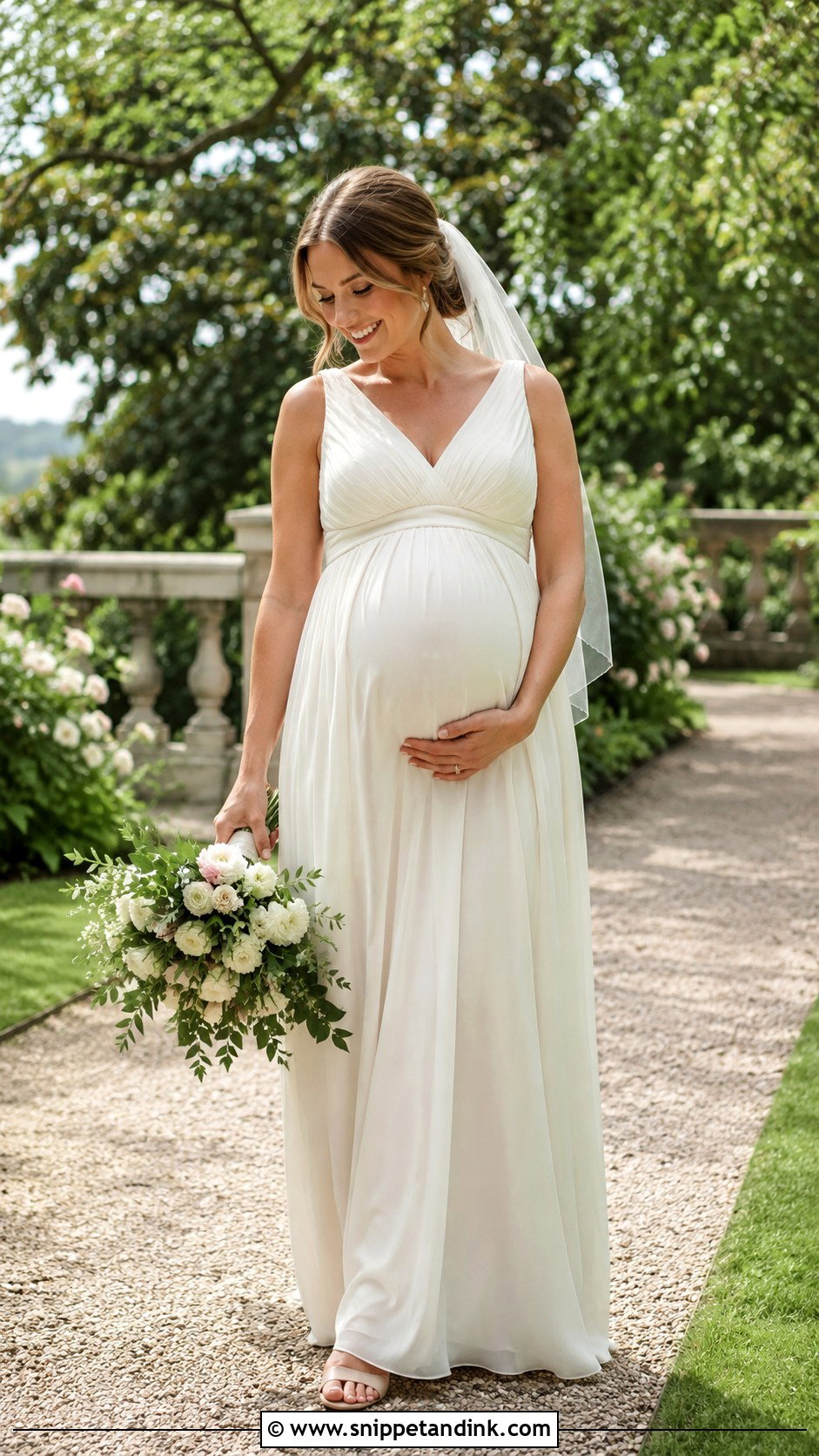
A simple maternity wedding dress needs room through the waist and hips that will still be there on the day. Empire waists, flowy chiffon, stretch crepe and wrap shapes all allow for growth. I book the final alteration as close to the wedding as the seamstress will allow, because a bump can change a great deal in a month. Low block heels, delicate earrings, a lightweight veil and soft waves keep it relaxed, in a breathable fabric.
24. Simple Wedding Dress With Detachable Train
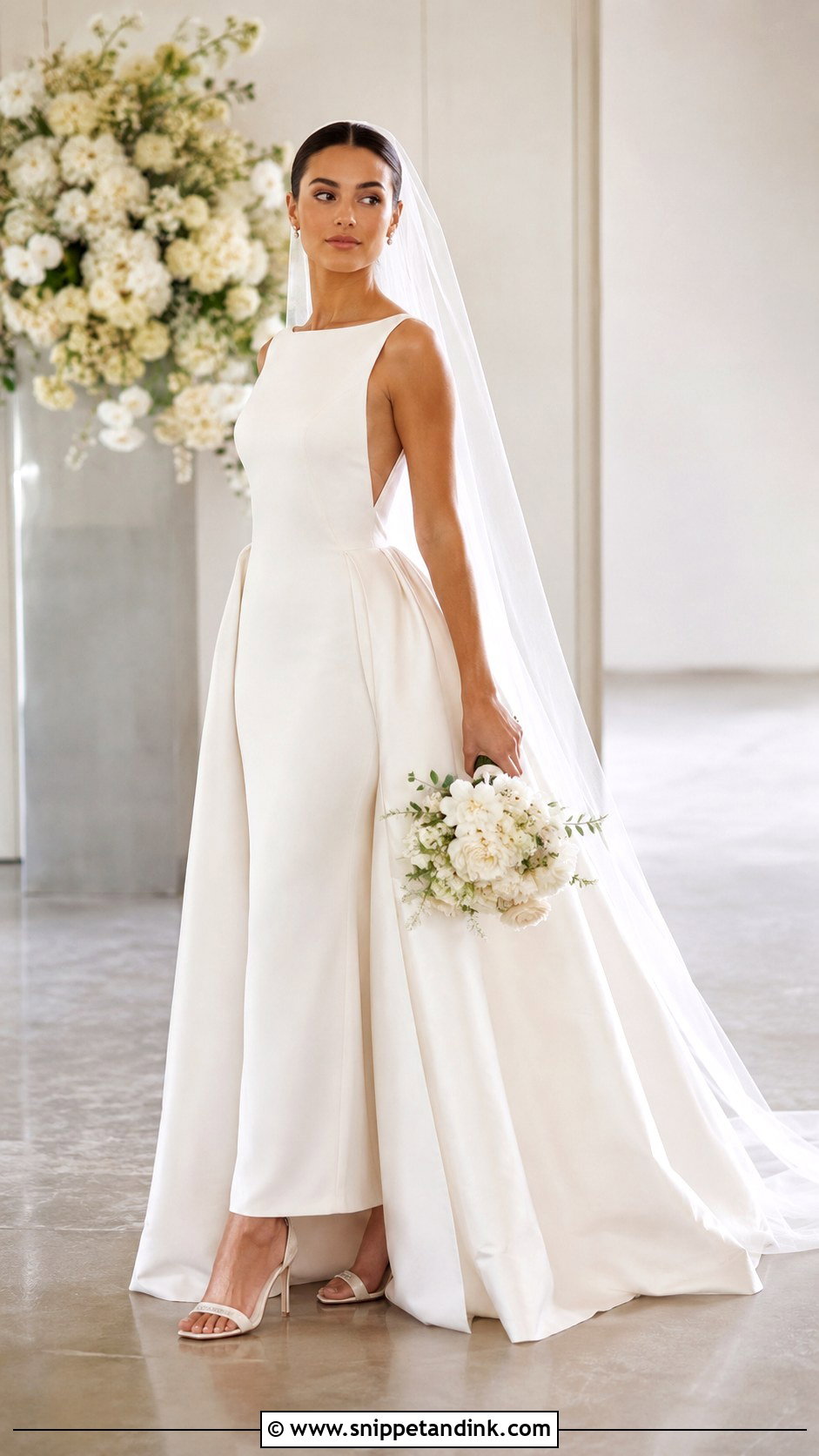
A detachable train gives a plain column, satin gown or fitted crepe dress a ceremony entrance, then comes off for dinner and dancing. Ask how it attaches. Hooks or buttons hidden at the waist hold firmly; press studs can give way under a heavy train. Keep the veil simple so the two layers don’t compete, and finish with elegant heels and minimal earrings.


25. Simple Modern Wedding Dress
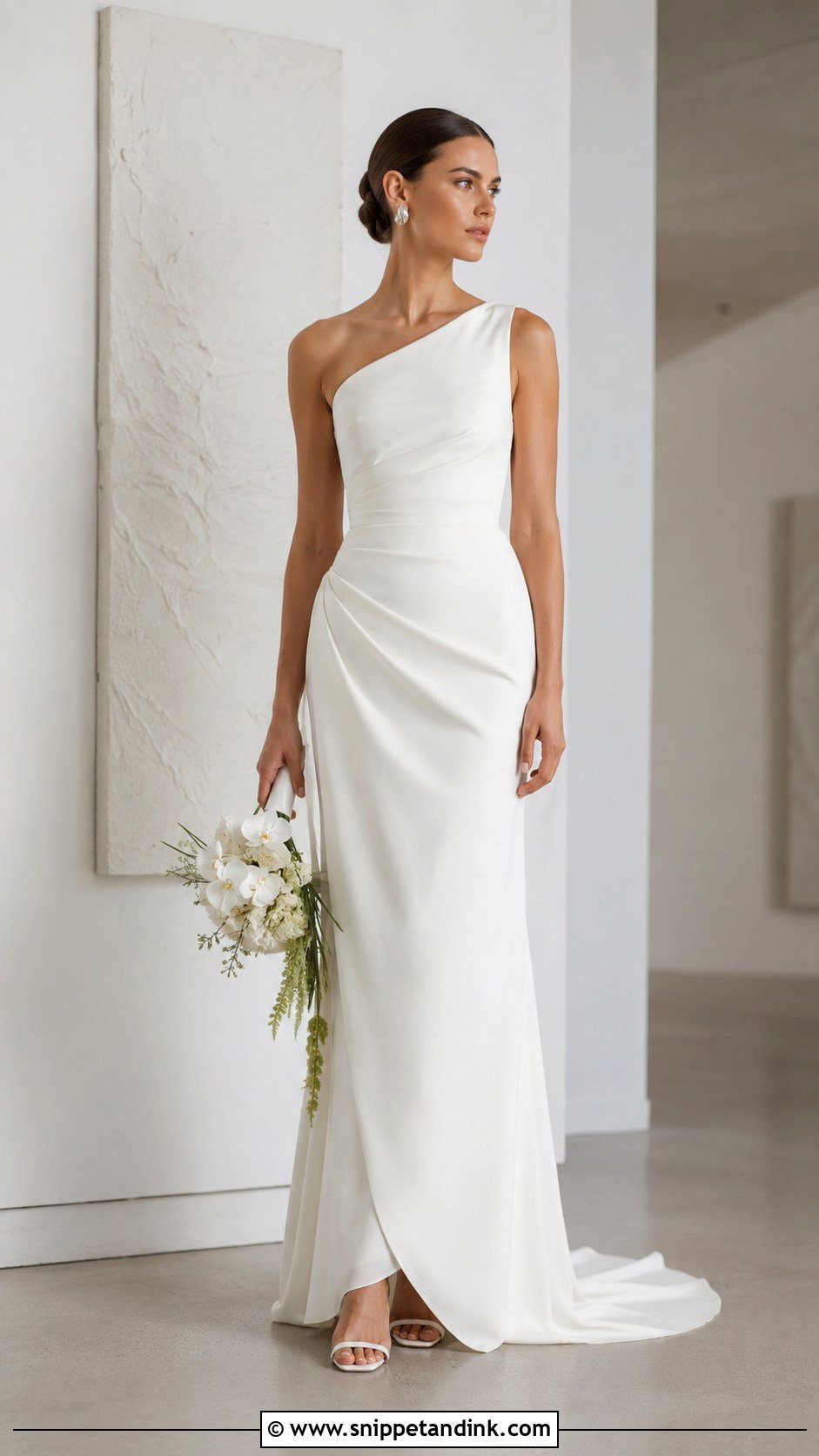
Modern minimal usually means one deliberate detail: an asymmetric neckline, a sculptural sleeve, a low square back or a draped waist. Pick one, not two. The rest stays quiet, with sleek heels, small earrings and polished hair. Fabric quality shows more here than in any decorated gown, so feel the weight of the cloth before you fall for the shape.
One Point of Interest, Not Five
A minimal dress needs one thing with character, or it can drift toward looking unfinished in photos. I pick a single focus with each bride and keep everything else quiet.
- The veil: a long plain one adds ceremony, while a raw-edge or pearl-scattered veil adds texture without touching the dress.
- The shoes: with a midi or tea length, a pair in an unexpected color is enough on its own.
- The hair: a sculptural bun or a single fresh flower does more than a necklace.
- A layer: sheer gloves, a short cape or a tailored blazer for a courthouse ceremony.
A Second Life for a Plain Dress
Simple dresses are the easiest to wear again. A seamstress can shorten a long crepe or satin gown to midi length, remove a train or add straps. Silk and other natural fibers take dye reasonably well, but polyester satin resists most dyes, so read the fabric label before planning a color change. If you’d rather keep it as it is, have it professionally cleaned and store it in a breathable garment bag, away from light.
Plain on the Hanger, Personal on You
A simple dress is never boring when the fit is right and the styling is careful. Across satin slips, crepe columns, courthouse midis, beach dresses and structured mikado, the minimal look leaves plenty of room to make it your own. Start with fabric, neckline and comfort, then think about how the outfit sits in your venue. Shoes, jewelry, veil and bouquet should support the dress, never overpower it.
You'll Like These Ideas:




Leave a Reply