
By the walima, a Pakistani bride’s hair has usually been through a mehndi, a barat and a day or two of heavy pins and spray. The reception look is softer: pastel outfits, lighter jewelry and a mood closer to a dinner than a ceremony. Whether your outfit is a flowy gown, a delicate lehenga or a saree, I plan walima hair around two things: how the jewelry and dupatta will sit, and how tired the hair and scalp already are. These 25 styles are the ones I return to, with notes on who each suits and how I’d secure it.
Recovering From Barat Hair Before the Walima Chair
Most of my walima brides arrive with hair that still holds the barat. It’s stiff with spray, tangled from backcombing and often tender at the scalp from dozens of pins and a heavy dupatta. Styling straight over that never works well.
Here’s what I ask brides to do the night before:
- Remove every pin first, then gently brush out backcombing from the ends upward with a wide-tooth comb.
- Wash twice with shampoo to dissolve spray, then use a conditioner on the lengths only.
- Dry fully. Going to bed with damp hair leaves dents that are hard to style out.
If your scalp is sore, tell your stylist. I’ll choose a lower bun, fewer pins and lighter jewelry placement rather than put weight back on the same spot as the barat look.
When the walima falls the very next day, there often isn’t time for a full wash and dry before the appointment. In that case I work with the texture that is there: a dry shampoo at the roots, a soft brush-out and a style that uses the leftover grip, like a braided bun or a low chignon, rather than sleek hair that needs clean, smooth lengths.
1. Low Bun With Maang Tikka
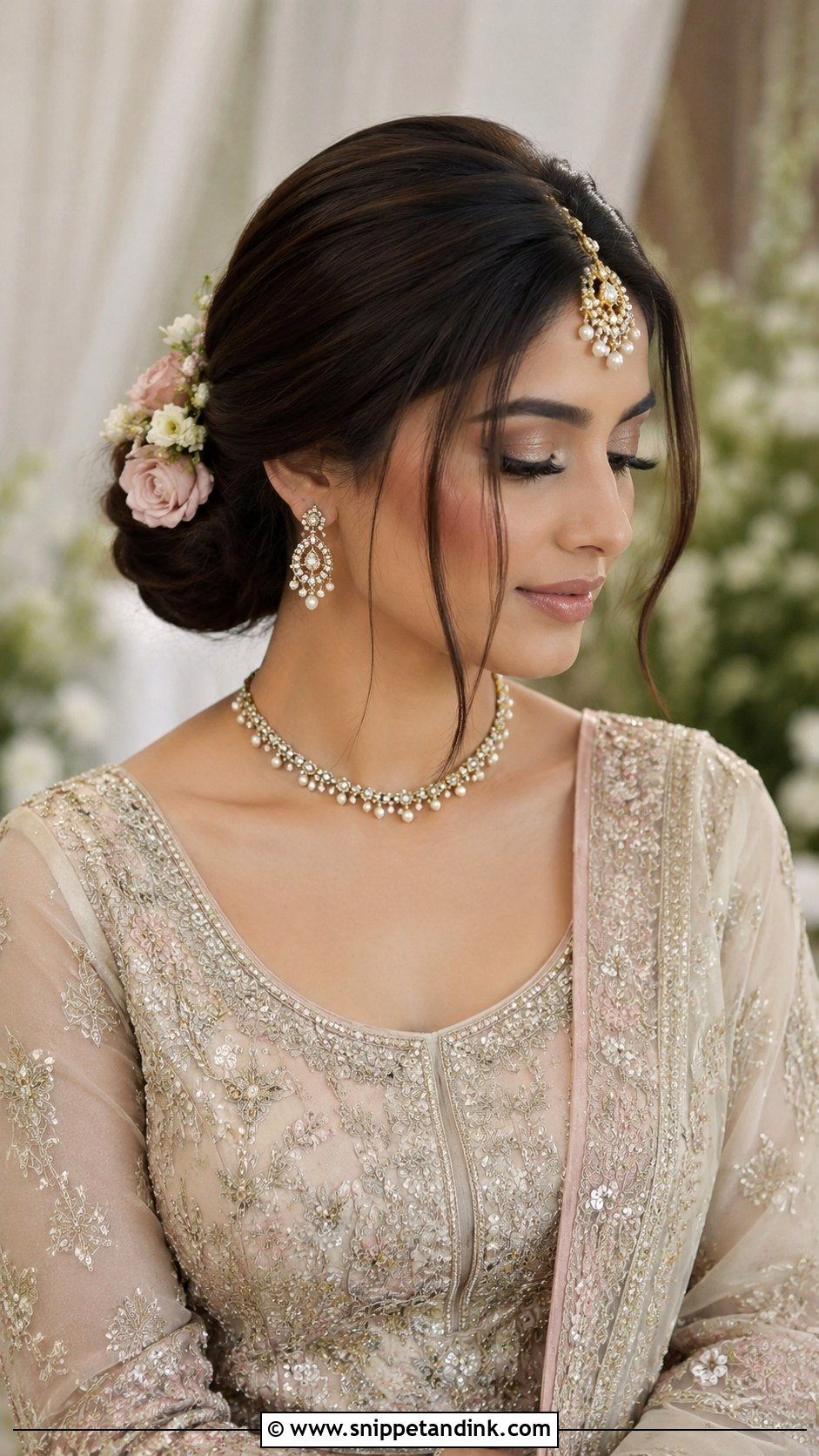
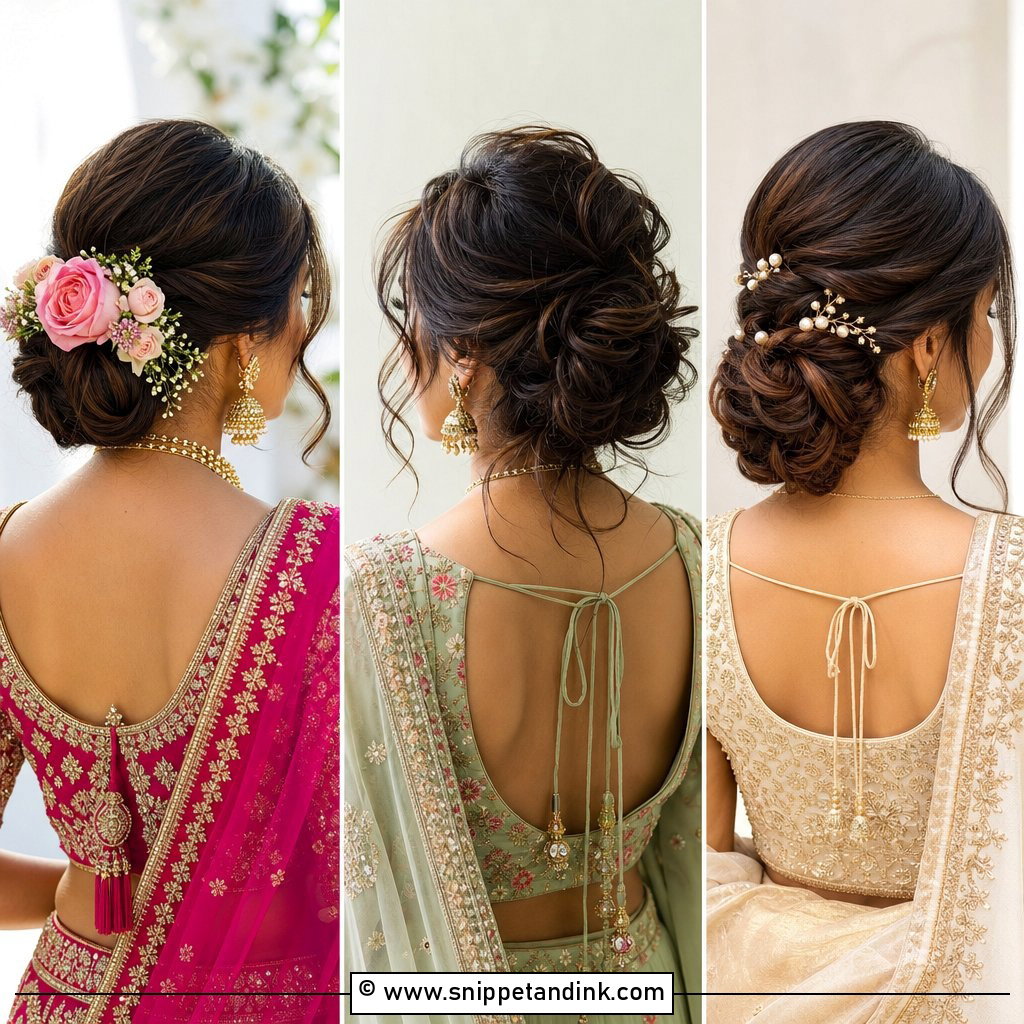
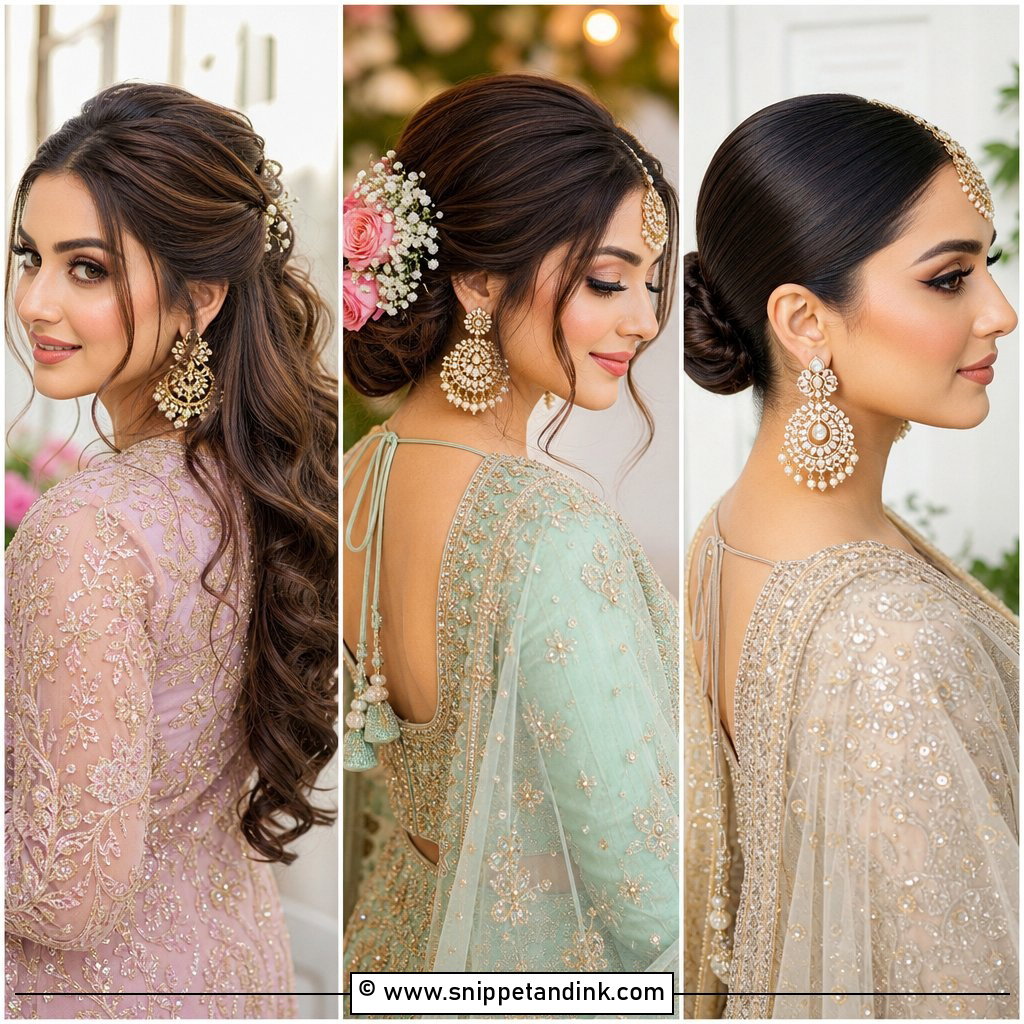
I place a low bun a little above the nape rather than right on it, so a heavy dupatta can rest on it without pushing it down. The knot is twisted and pinned with crossed pins into a small hidden ponytail base, which holds far better than a twist alone. A few loose strands soften the cheeks, and the maang tikka sits on the center part. Pastel flowers along the bun are optional; they add colour without the weight of jewelry.
2. Side-Swept Curls
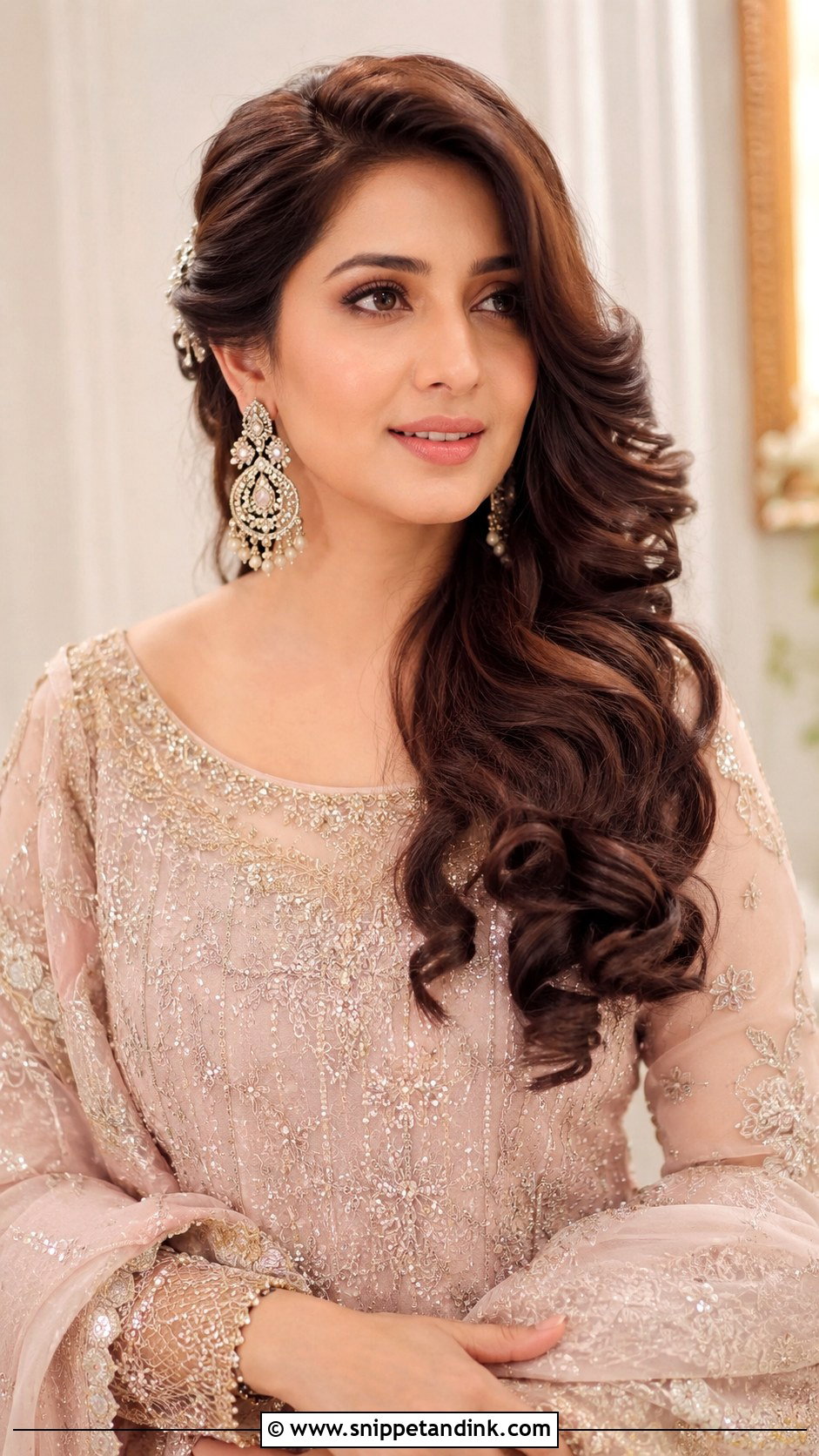
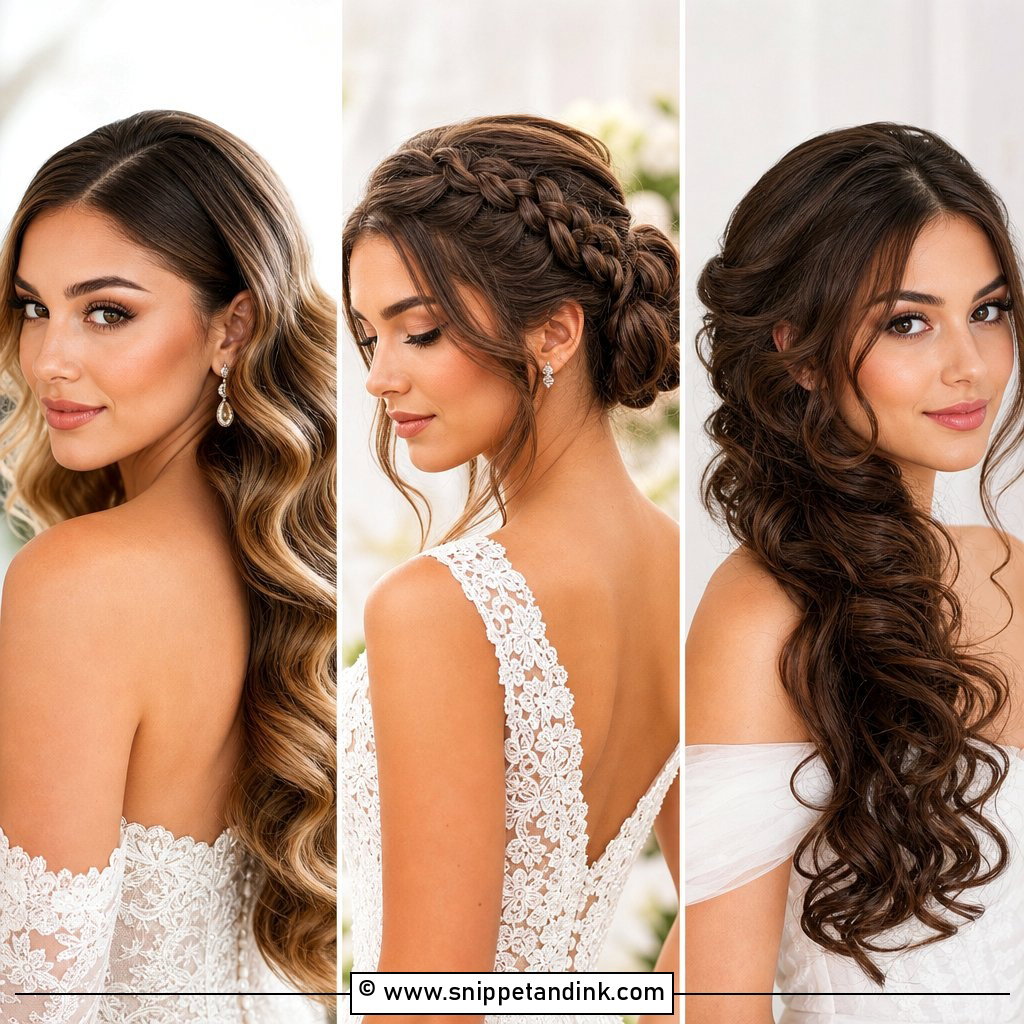
Side-swept curls look effortless but depend on a hidden anchor. Before sweeping, I pin a vertical row of crossed bobby pins behind the ear on the bare side, then bring all the curls over the other shoulder. That makes room to place a passa or maang tikka on the opposite side for balance. Long hair carries it best. I’d skip it with a heavy embroidered dupatta draped over one shoulder; the curls get flattened under it within minutes.
3. Half-Up Half-Down With Loose Curls
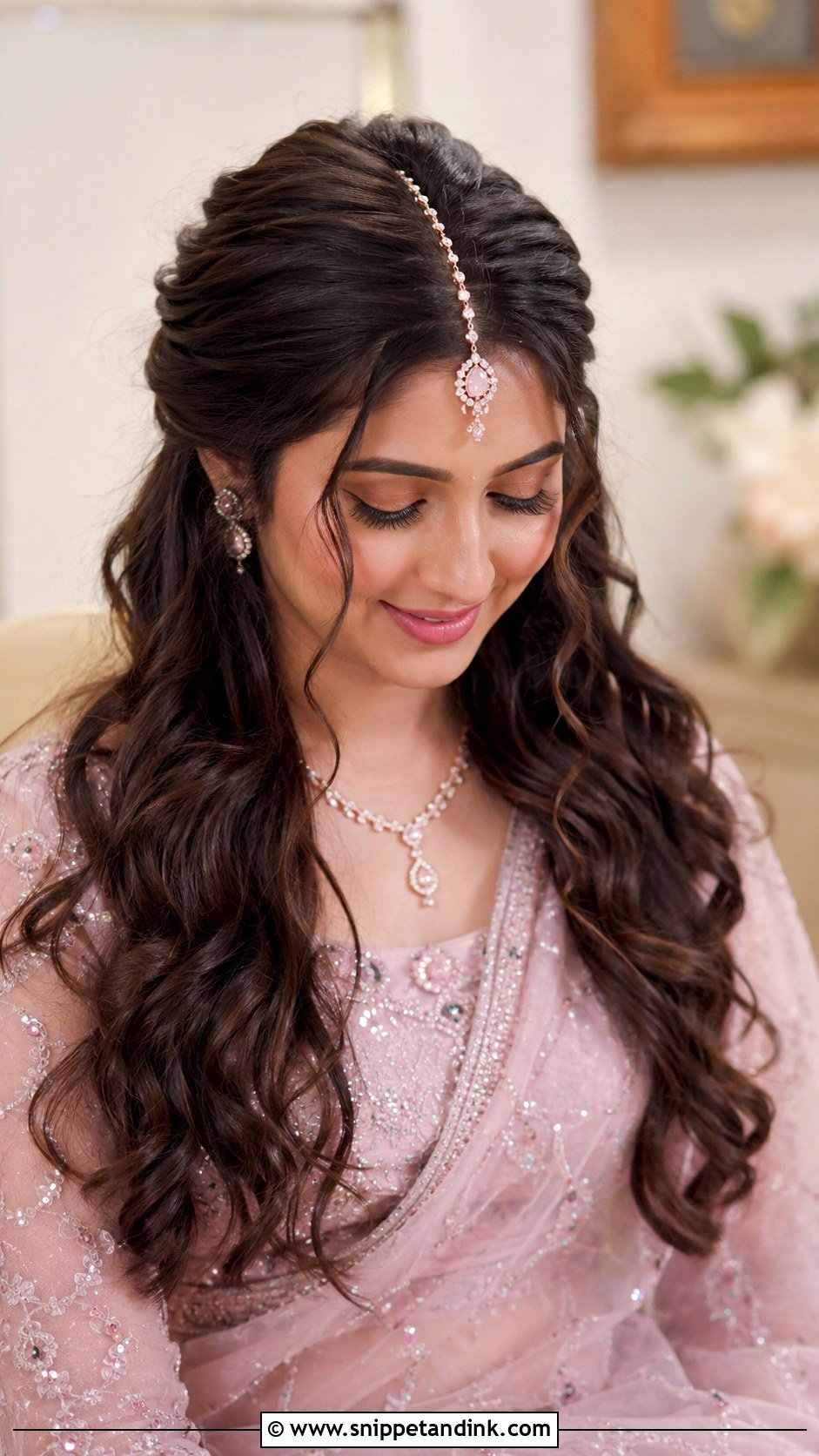
Half-up is my answer for the bride who can’t choose. I secure the top section with a small elastic hidden under a twist, then curl the lengths loosely. A center part keeps the maang tikka straight. On thick hair this holds all evening; on fine hair, the curls in the open part drop by dinner, so I set them tighter than they’ll finish. A jeweled clip or small blooms at the crown cover the anchor.
4. Braided Ponytail Over the Shoulder
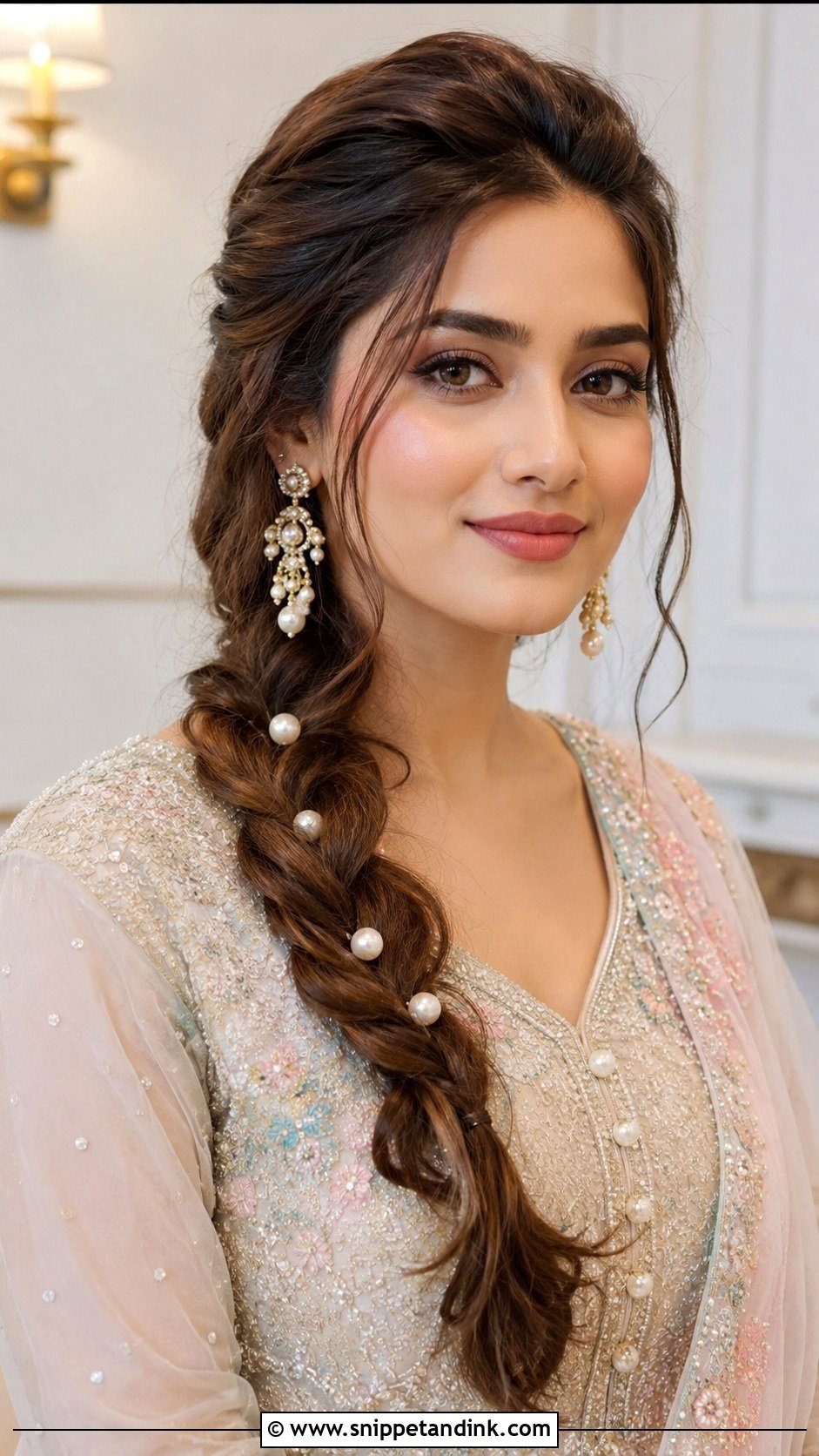
This is one of the most comfortable styles for a long walima. I tie a low ponytail at the side, braid it, then pancake the braid by pulling the edges out gently so it looks twice as full. Statement earrings and a maang tikka balance it. Open or detailed shoulders show well with the braid resting on one side. Tiny pearl pins along the braid catch the light without adding weight.
5. Messy Bun With Loose Tendrils
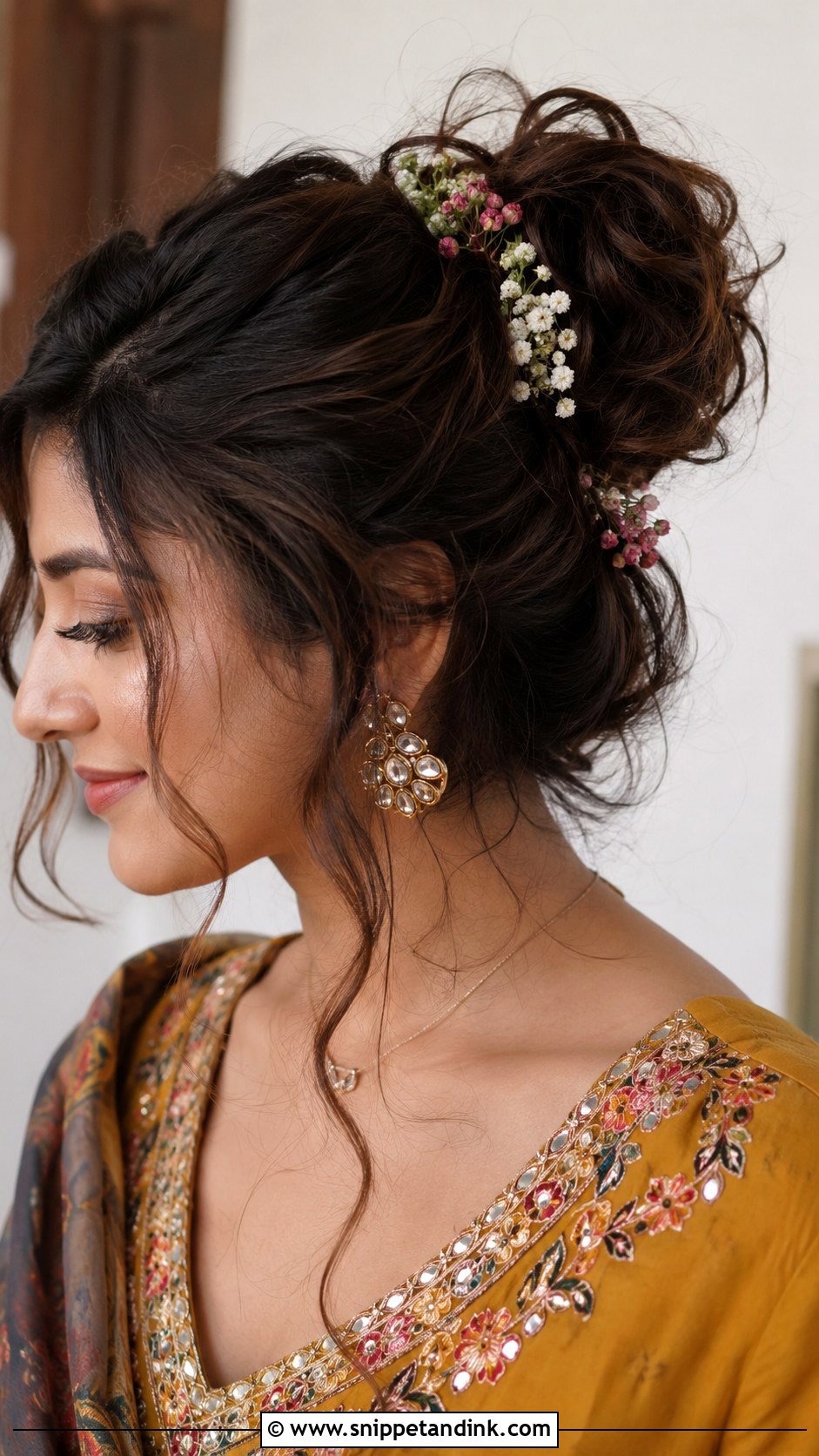
A messy bun only looks messy; every loose piece is placed. I backcomb the crown lightly, gather the hair into a soft knot, then pull out tendrils with the tail of a comb and curl them separately. On thin or medium hair it creates the impression of fullness. I’d avoid it for a bride whose hair is very silky and straight, since the knot slips loose before the cake cutting. A delicate jhoomar or pastel flowers finish it.
6. Voluminous Curly Updo
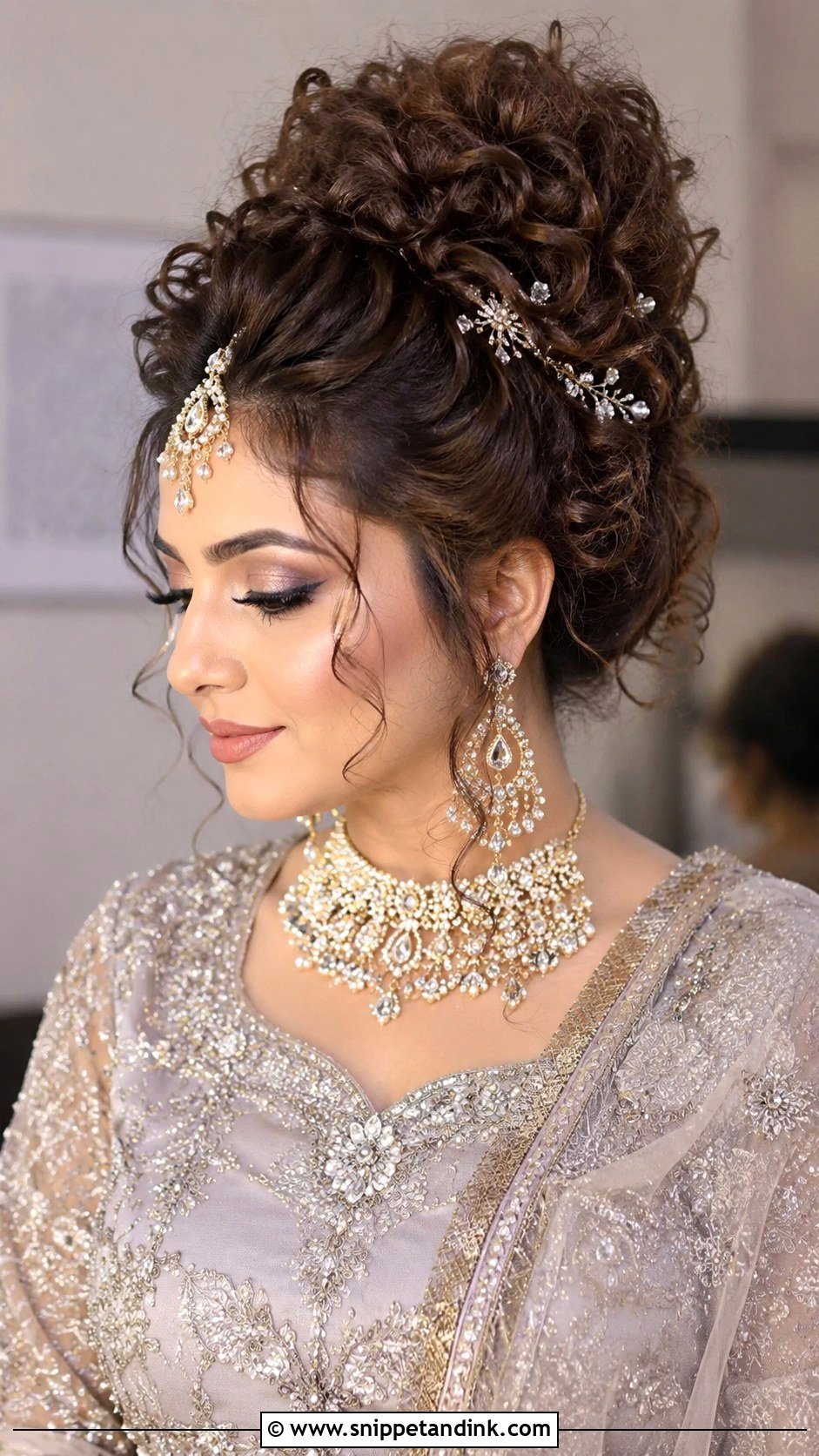
For drama, a voluminous curly updo has impact. I curl the whole head, let it cool, then pin the curls up in rows into a full, textured shape, working from the nape upward. The height suits round and heart-shaped faces, and a jhoomar or scattered crystal pins add a regal touch. It’s heavy, though; for a bride whose scalp is sore from the barat, I’d use fewer pins and more padding underneath.
7. Sleek Low Bun
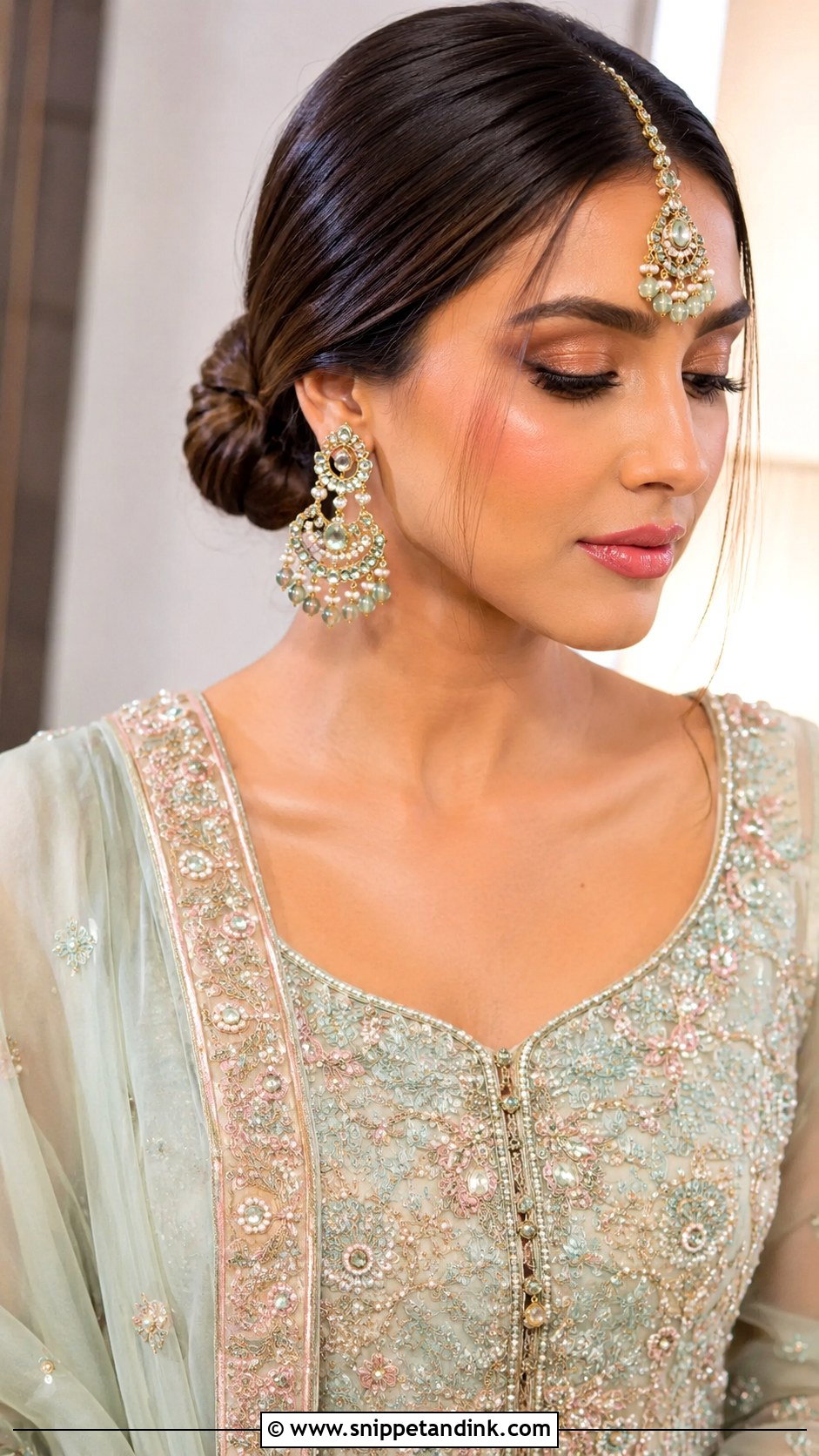
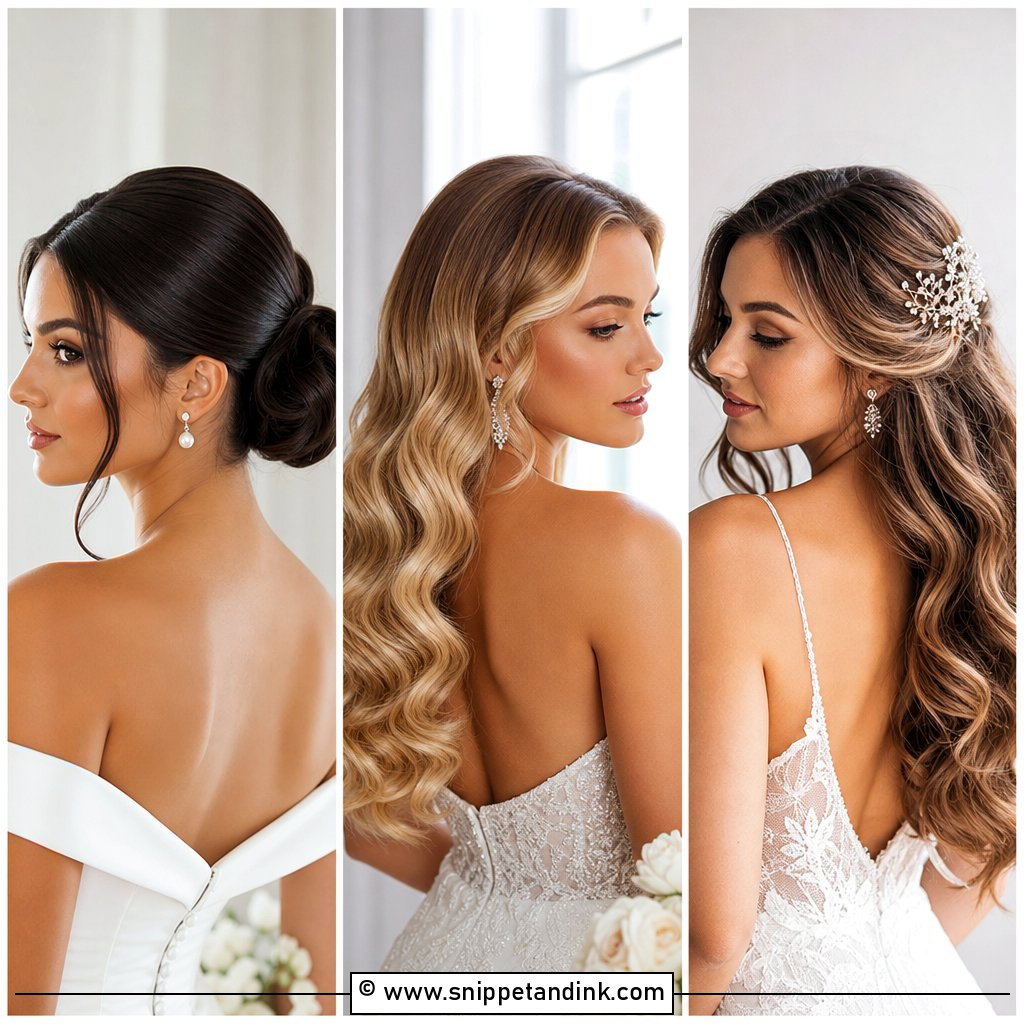
A sleek low bun shows every bump, so the brushing matters more than the bun. I smooth each section with a paddle brush and a little gel, tie a firm ponytail, and wrap the hair into a tight knot pinned flat. Statement earrings, a maang tikka or a tiara become the focus. It suits a fitted lehenga or modern gown and flatters longer faces. A shine serum on top gives the glossy finish without making it look wet.
8. Beachy Waves
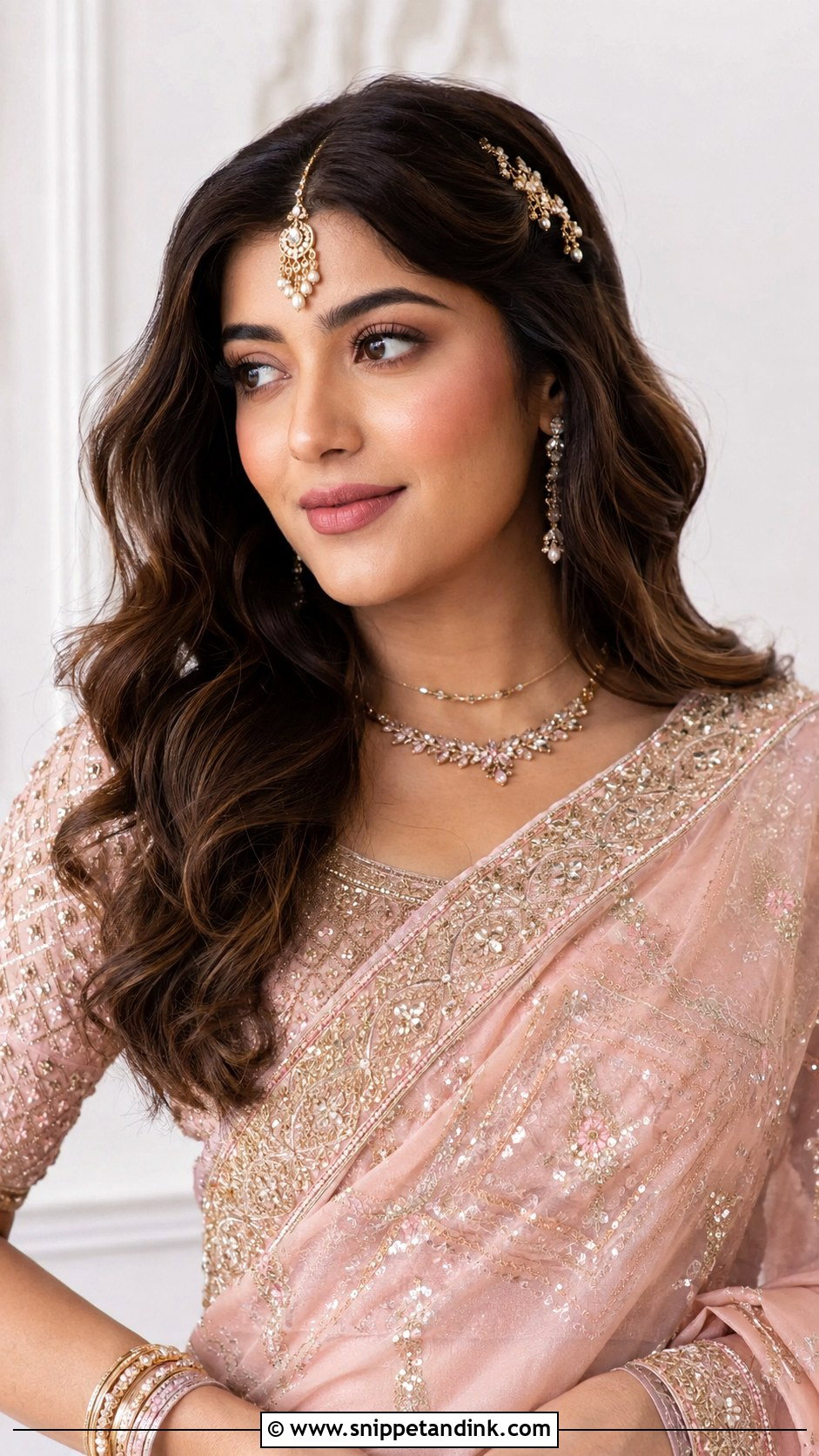
Beachy waves are a soft, relaxed choice, and I make them with a flat iron rather than a curling wand so the ends stay straighter. They suit flowing gowns and sarees and pair with a maang tikka or a few hairpins. On a walima evening indoors, with air conditioning, they hold better than at an outdoor barat. Set them with a light spray; heavy spray makes waves look crisp under evening lighting.
9. Floral Bun
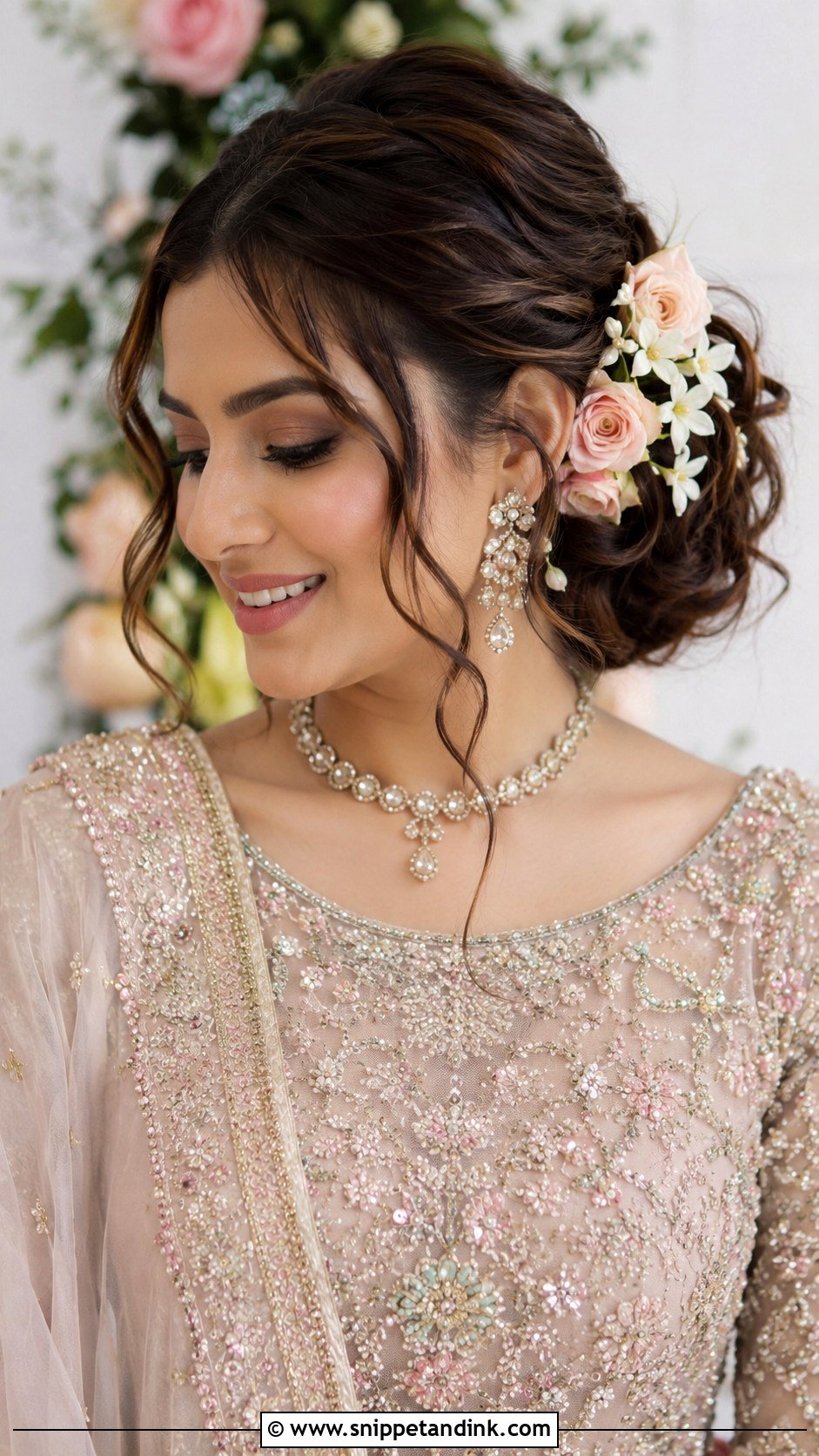
Fresh flowers around a bun are traditional for a reason: jasmine and roses smell wonderful and look right with pastel walima colours. I wire and tape each bloom, then pin them around the bun from the outside in. Jasmine browns at the edges after a few hours, so I ask for buds rather than open flowers. Leave a few face-framing strands loose for softness.
10. Twisted Updo With Jhoomar
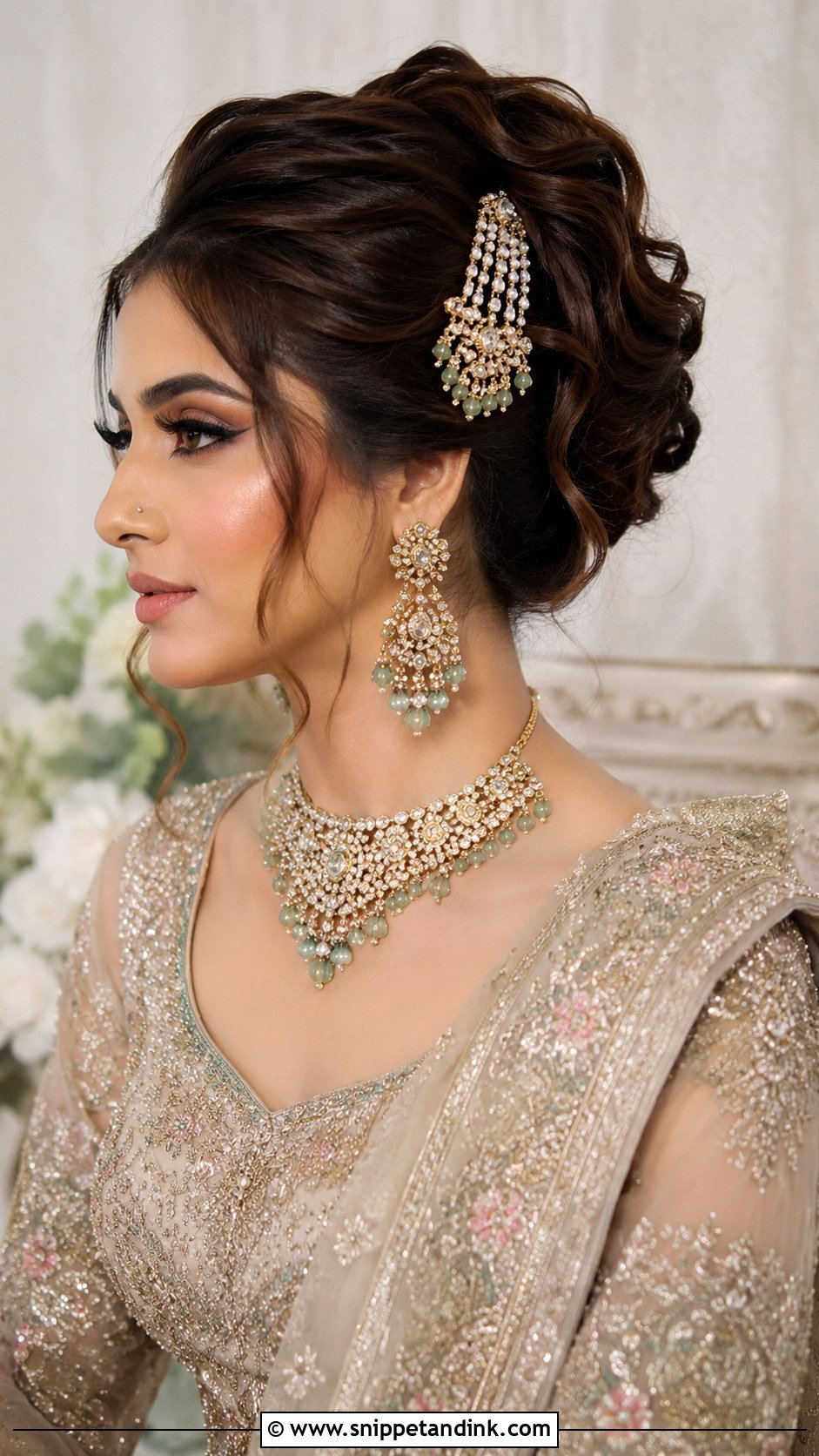
A twisted updo paired with a jhoomar is built around the jewelry. I twist sections upward and pin them into a sculpted shape, then place the jhoomar on the left side, anchored to a hidden pinned section so its weight doesn’t drag the twists down. The updo keeps the neckline open for necklaces. Soft tendrils near the face balance the structure, and it holds well through a long evening.
11. Crown Braid
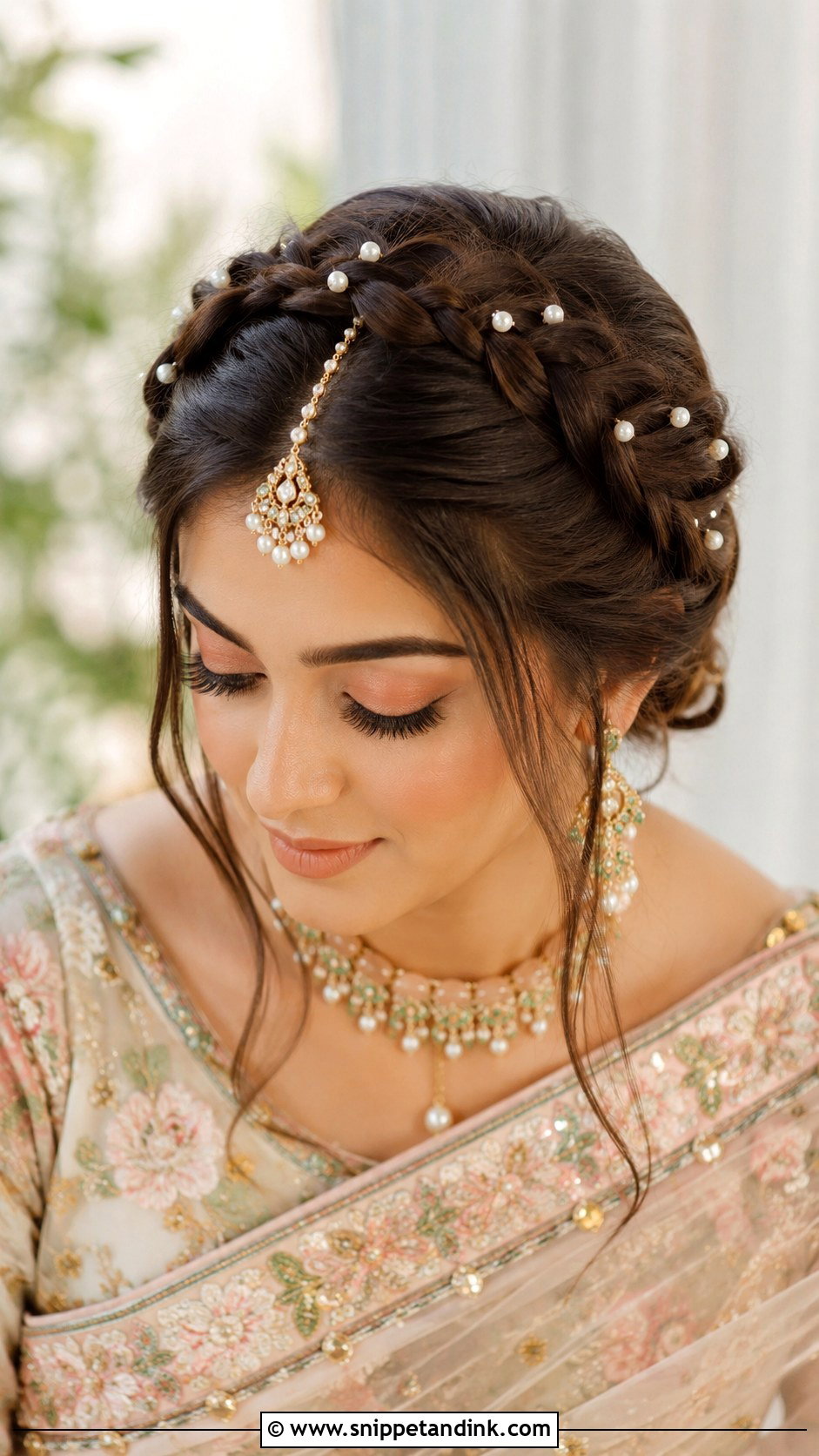
A crown braid stays put through hours of dancing and photos. I braid two sections from behind each ear, wrap them across the top of the head, and pin the ends under the opposite braid. Long, thick hair gives the fullest result; on shorter hair I’d add a matching braid extension. Small flowers or pearl pins along it, plus a maang tikka at the center, make it bridal.
12. High Bun With Backcombing
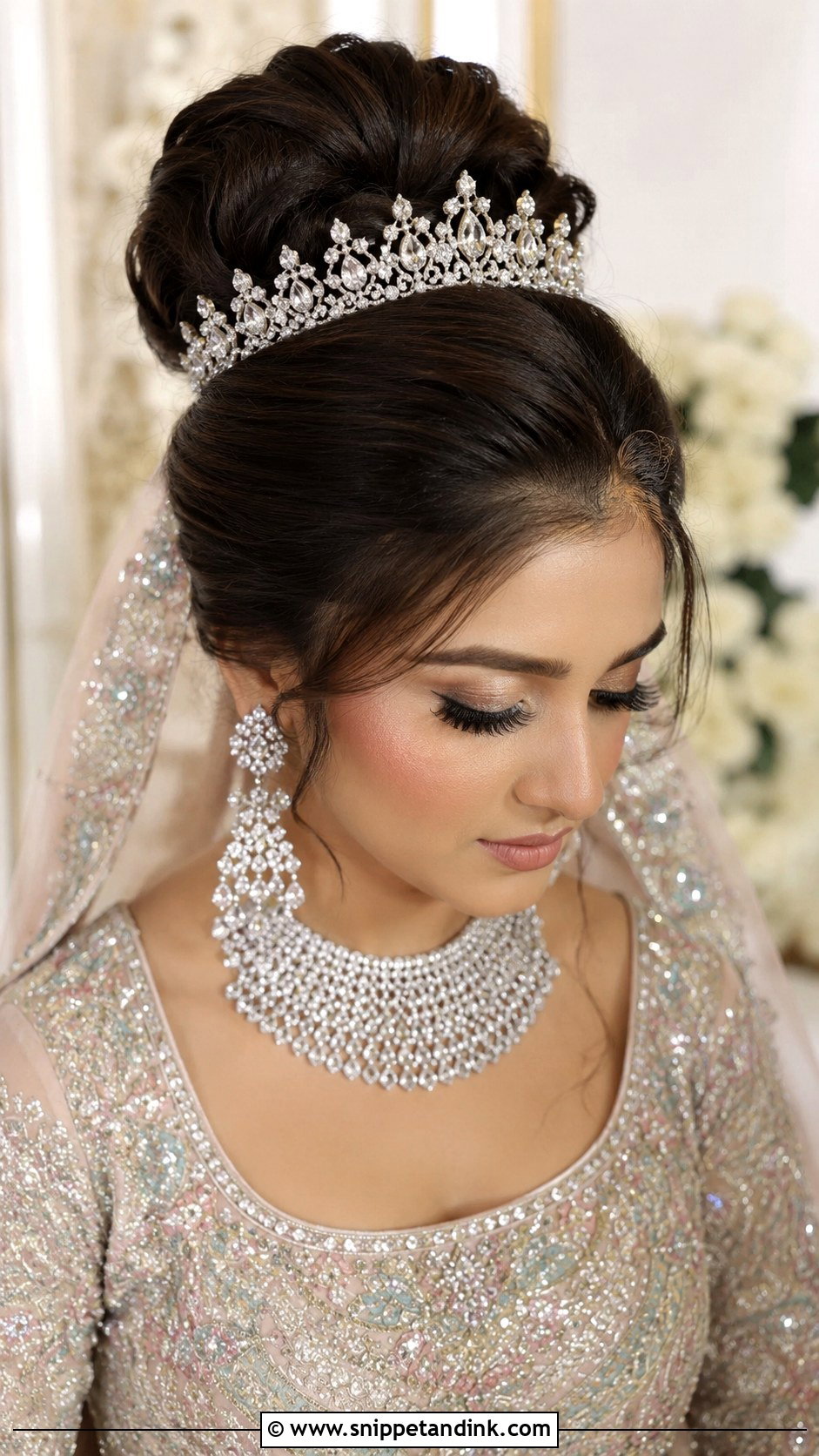
A high bun with backcombing adds height that lengthens the neck and flatters round faces. I tease the crown at the root, smooth a thin layer over it, and sweep everything up into a full, rounded knot. It’s a formal shape that suits heavy necklaces and statement earrings. The downside is weight on a tired scalp, so I use a lightweight bun donut rather than packing it with more hair and pins.
13. Side Bun With Passa
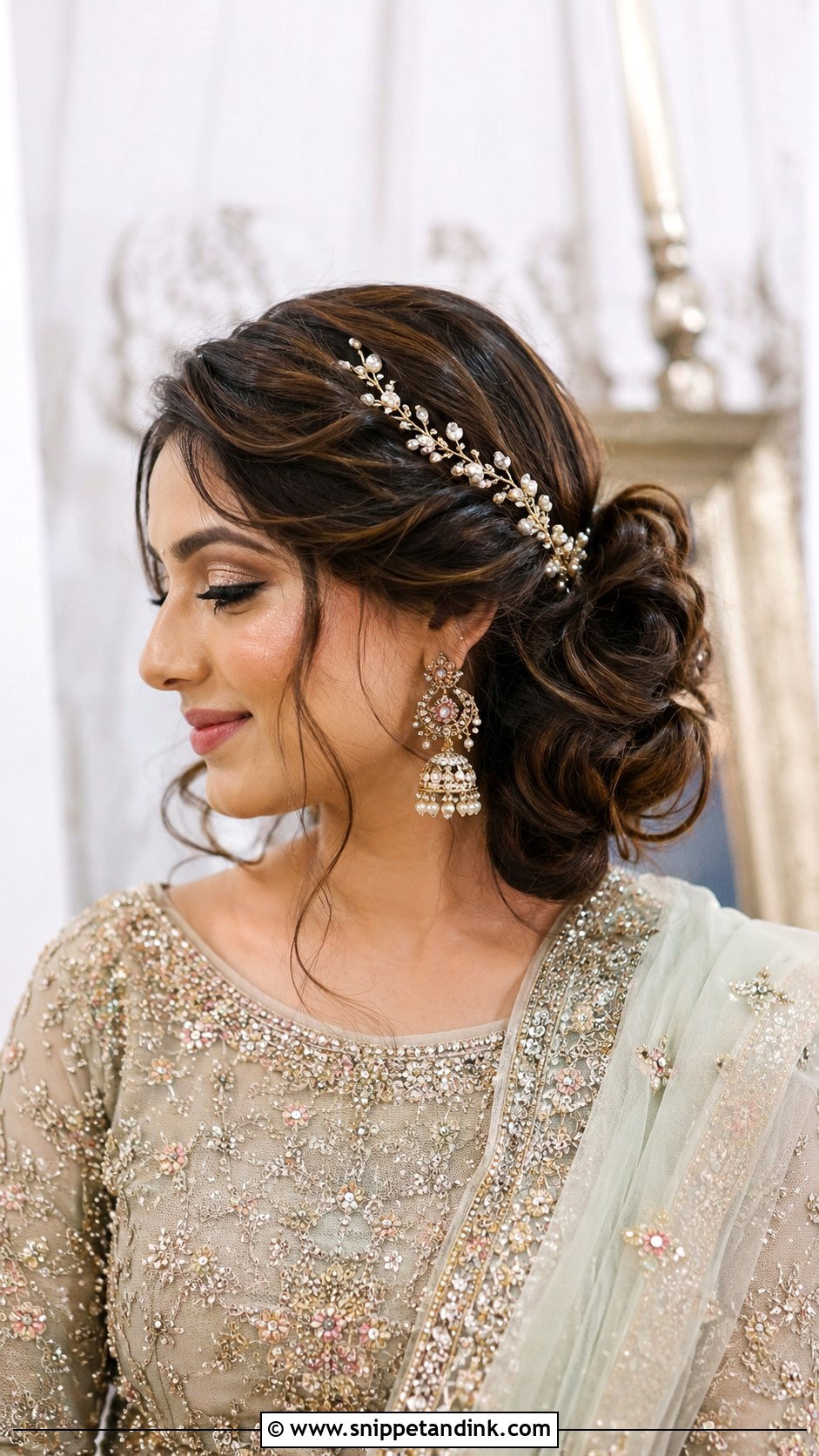
The side bun is the friendliest style for a dupatta. Because it sits low near one shoulder, the dupatta drapes over the other side and pins without crushing the knot. I twist the bun from a low side ponytail and place a passa on the opposite side for balance. A few curls left near the cheek add softness and keep earrings visible.
14. Soft Curls With Center Part
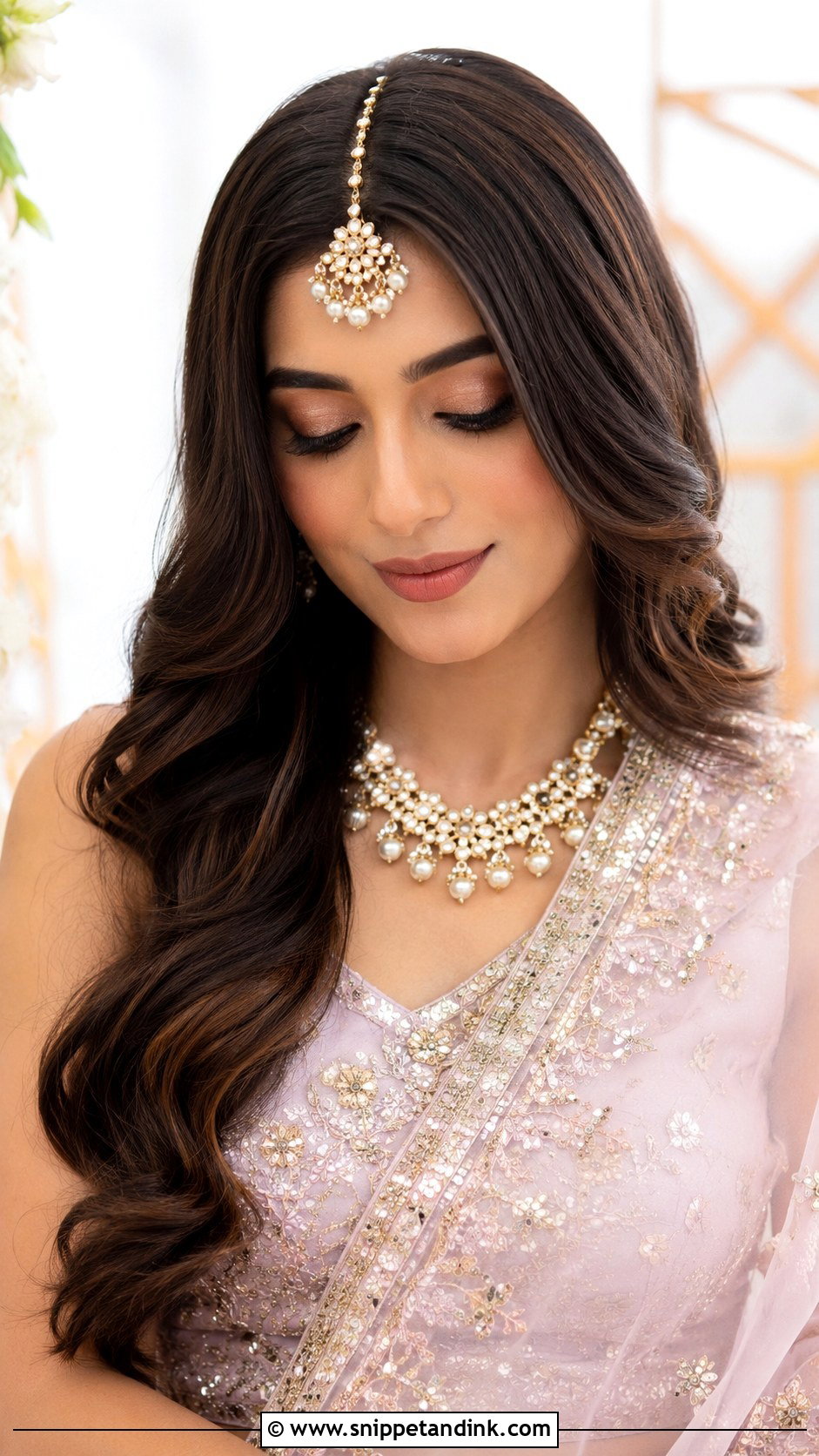
Soft curls parted neatly down the center flatter most faces through symmetry alone. I curl in vertical sections and brush them gently so they become waves. The maang tikka rests right on the part, which is why the part must be perfectly straight; I set it with the tail of a comb and a touch of spray. Long hair shows the shine best.
15. Fishtail Braid
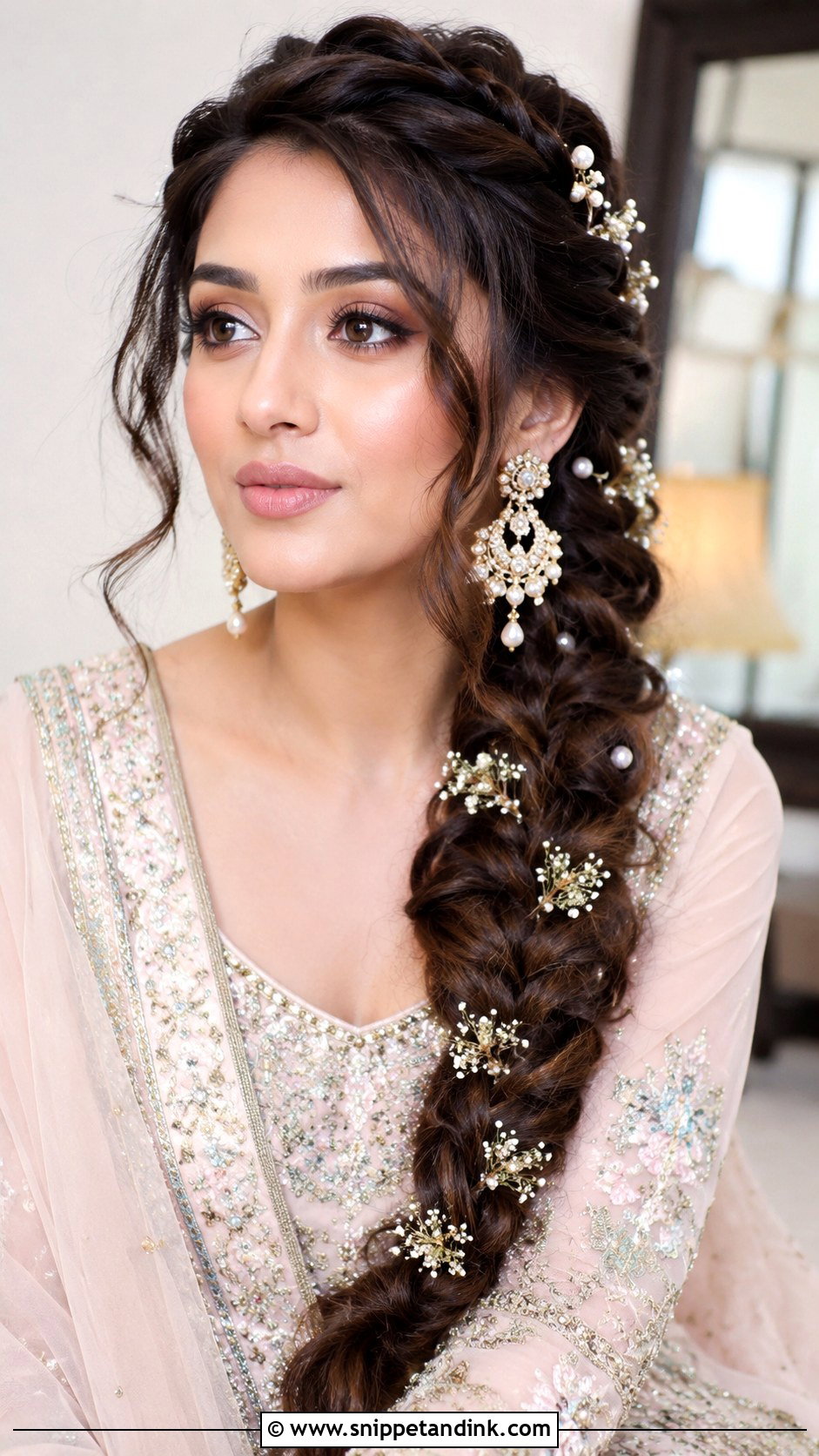
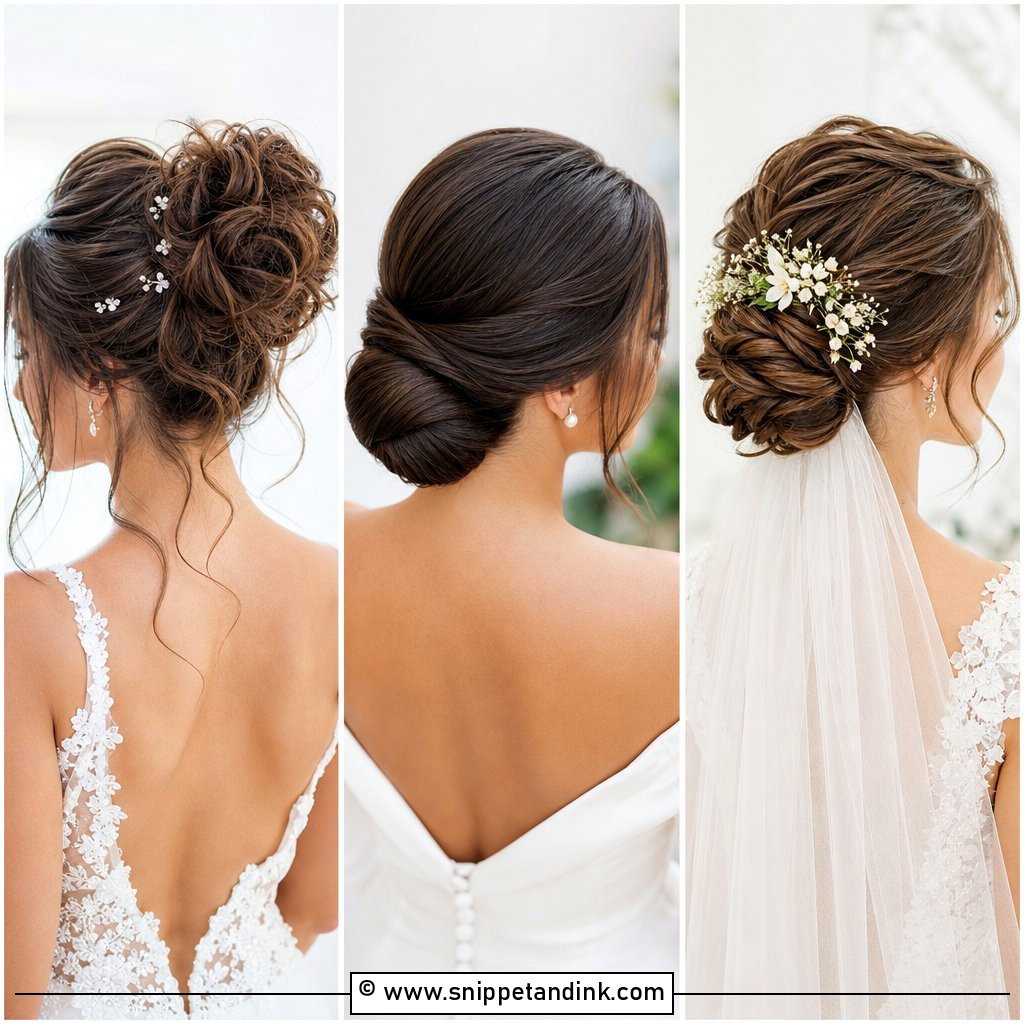
Fishtail braids take longer than they look, about twice as long as a three-strand plait. I sweep the hair to one shoulder, braid it in small crossing pieces, then loosen the edges for fullness. Long, thick hair suits it; shoulder-length hair runs out before the braid gets interesting. Tiny flowers or pearl pins add detail, and the fishtail stays secure through a long walima.
16. Loose Waves With Maang Tikka
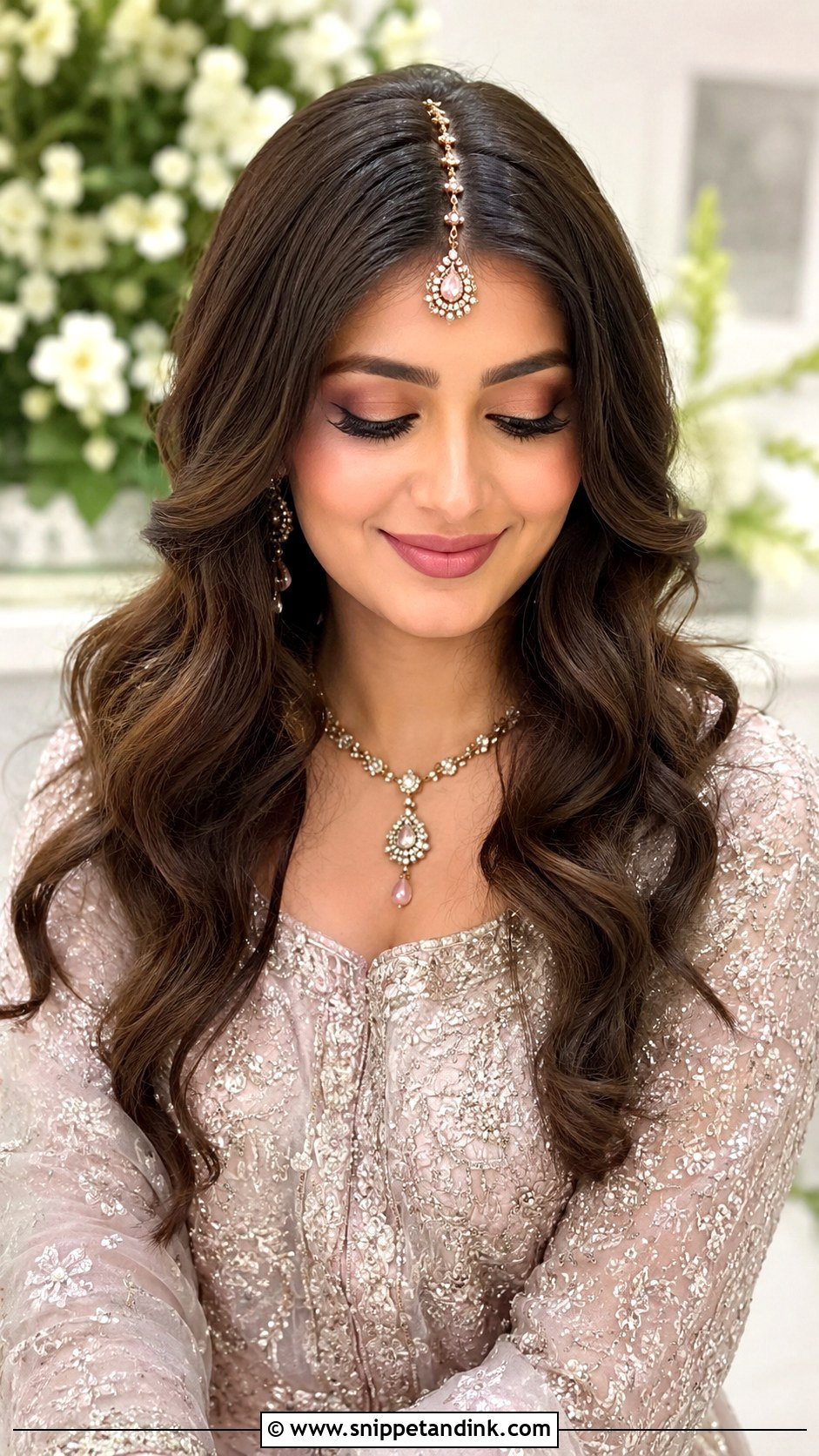
Loose waves with a maang tikka is one of the easiest walima looks to wear for five hours. I wave the hair, center-part it for the tikka, and set lightly so the waves move. It suits almost every outfit. The tikka chain needs to be pinned under the hair at the crown so it doesn’t slide when the bride turns her head, a small step that saves a lot of adjusting at photos.
17. Dutch Braid Updo
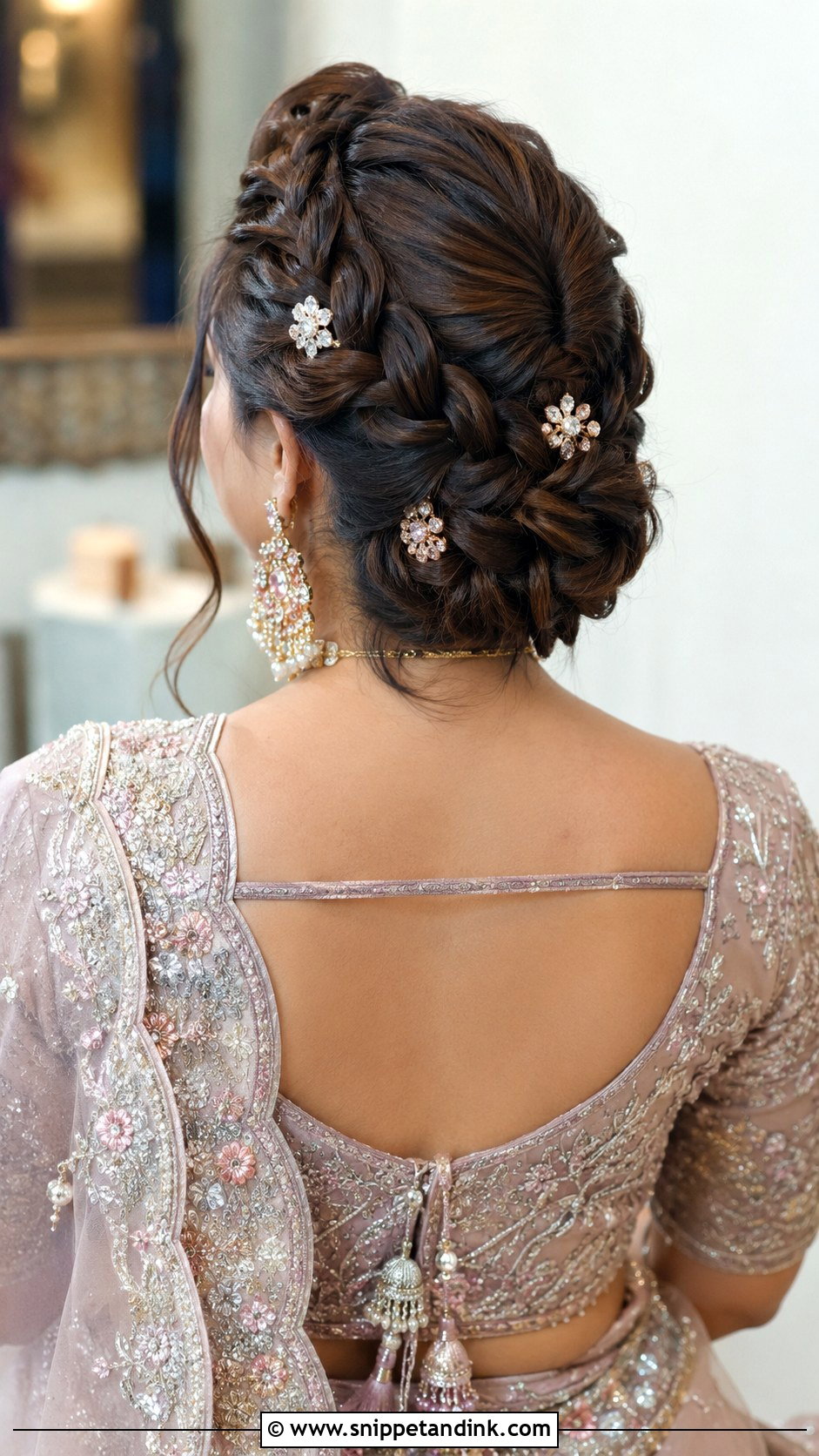
A Dutch braid is braided under rather than over, which makes it stand up from the head. I braid sections outward, then tuck and pin them into an updo. It suits a bride who loves artistic, detailed styling. Jeweled pins or small flowers along the braids add sparkle, and soft strands near the face keep it gentle. It’s very secure once pinned.
18. Bouffant With Open Curls
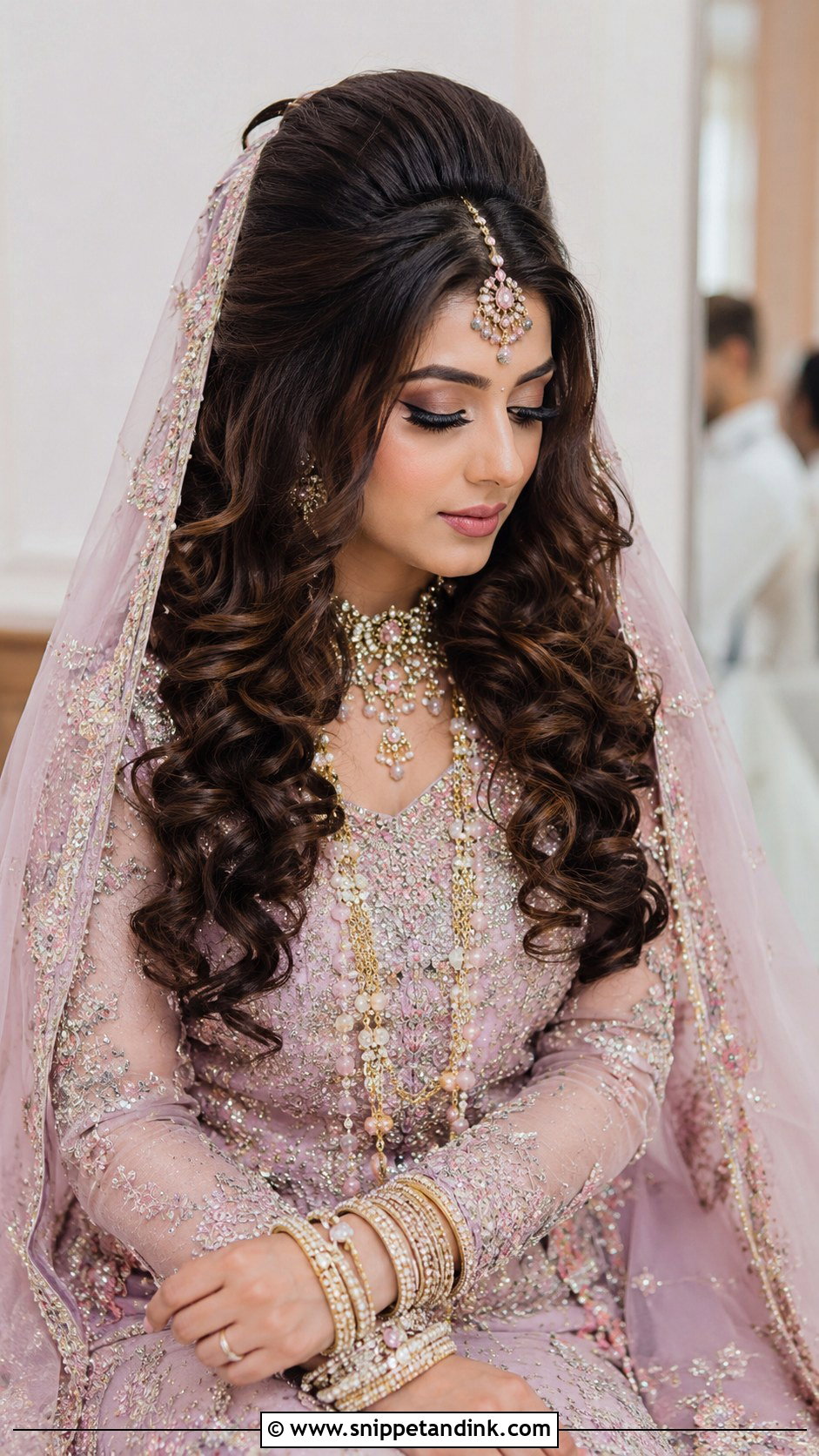
The bouffant gives height at the crown with curls left open below. I tease the crown in thin sections, smooth the top layer, and pin it back with a cross of pins. It flatters round and heart-shaped faces, and pairs with a maang tikka or sparkling pins at the crown. Under a dupatta worn on the head, the bouffant flattens, so I’d only suggest it if the dupatta is pinned at the back or shoulder.
19. Rose Bun
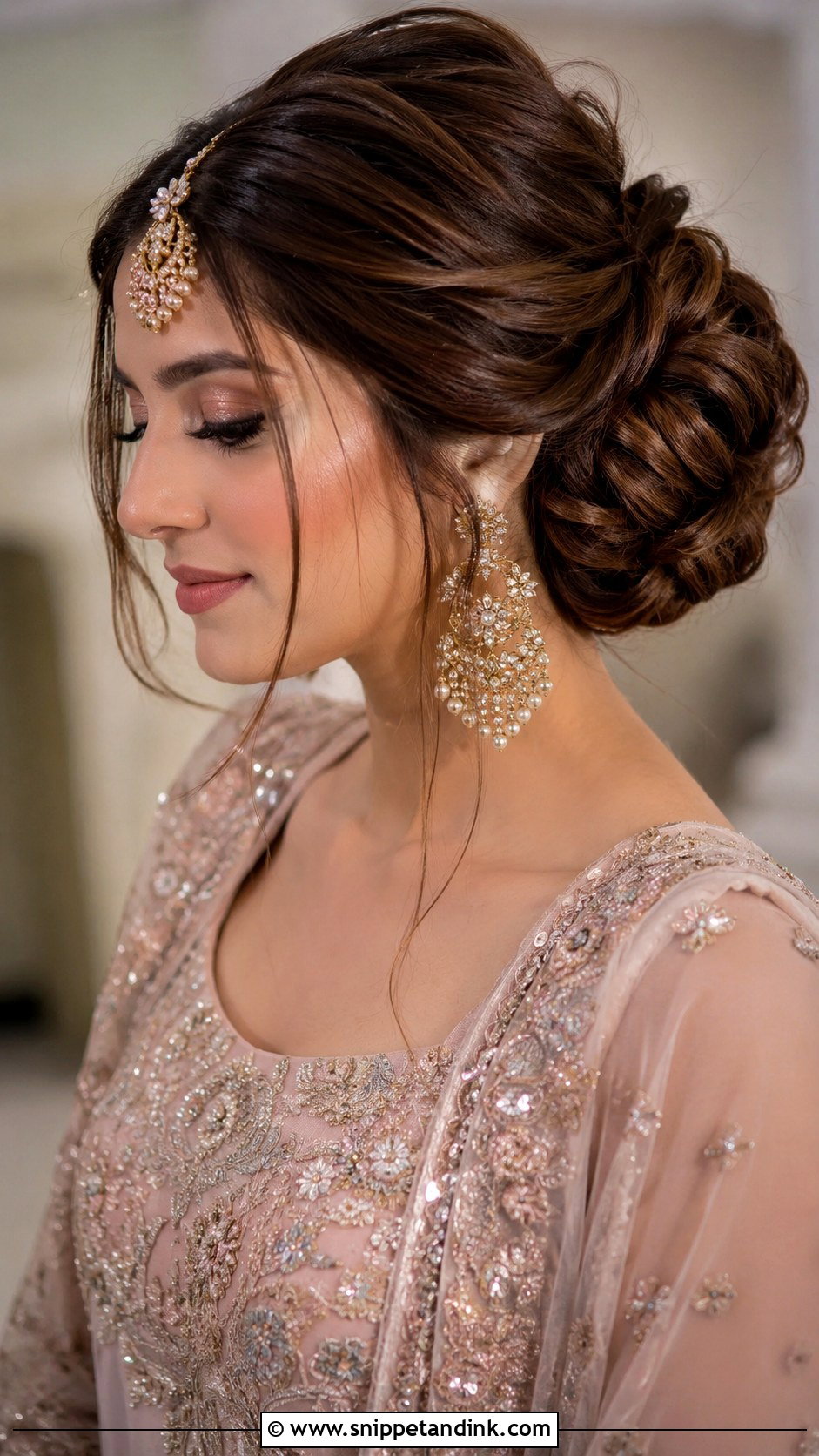
A rose bun is a skill piece. I divide the ponytail into small sections, twist each one, and coil them into overlapping petals pinned close together. It sits low at the nape or slightly to one side. Each petal needs its own pins, so this style takes time; I’d allow it in a schedule where the bride isn’t rushing. A jhoomar or pearl pins nearby add sparkle.
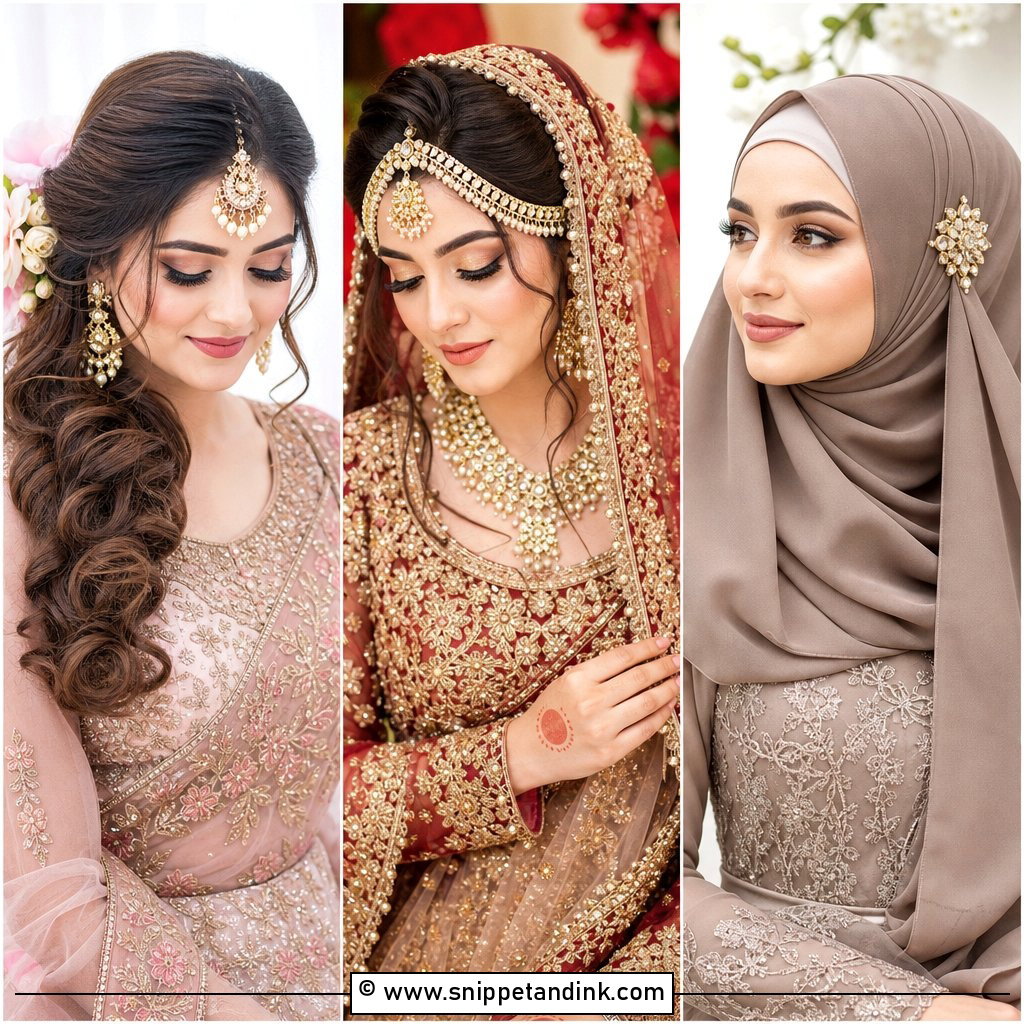
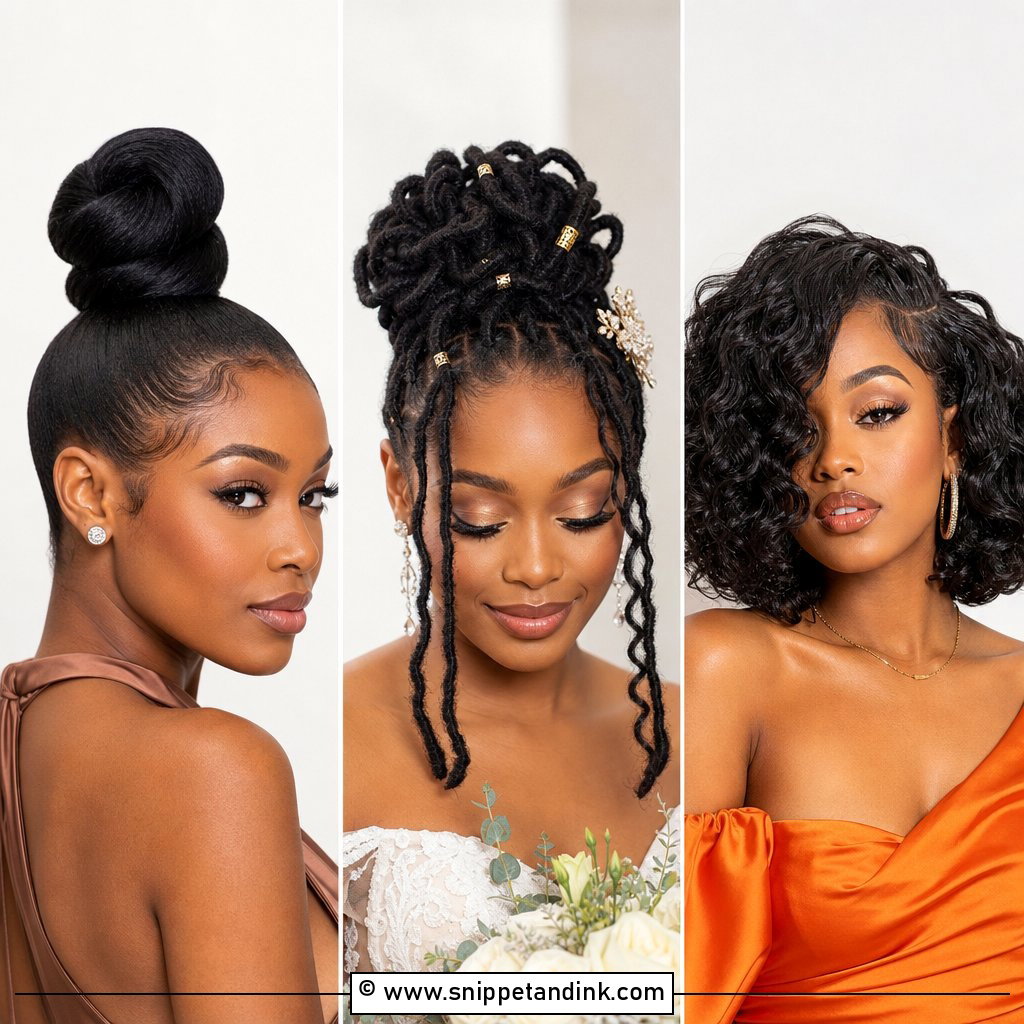
20. Half-Up Twisted Crown
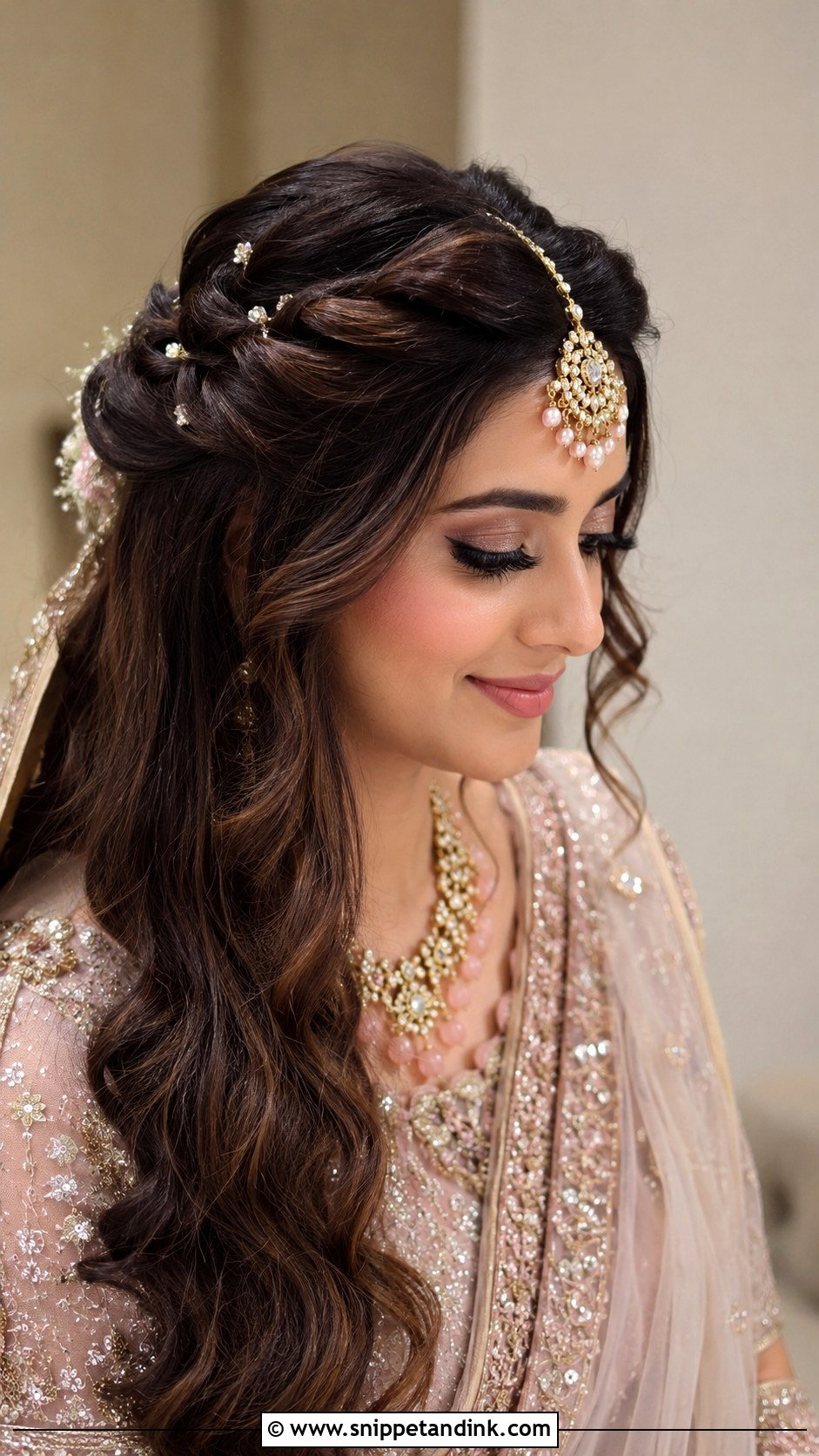
Twisting two front sections back into a soft crown keeps hair off the face while leaving most of it open. I twist from each temple and pin them where they meet, then wave the lengths below. A maang tikka sits at the center part. Tiny flowers or sparkling pins hide where the twists join. It’s an easy style to wear comfortably for a whole evening.
21. Low Chignon
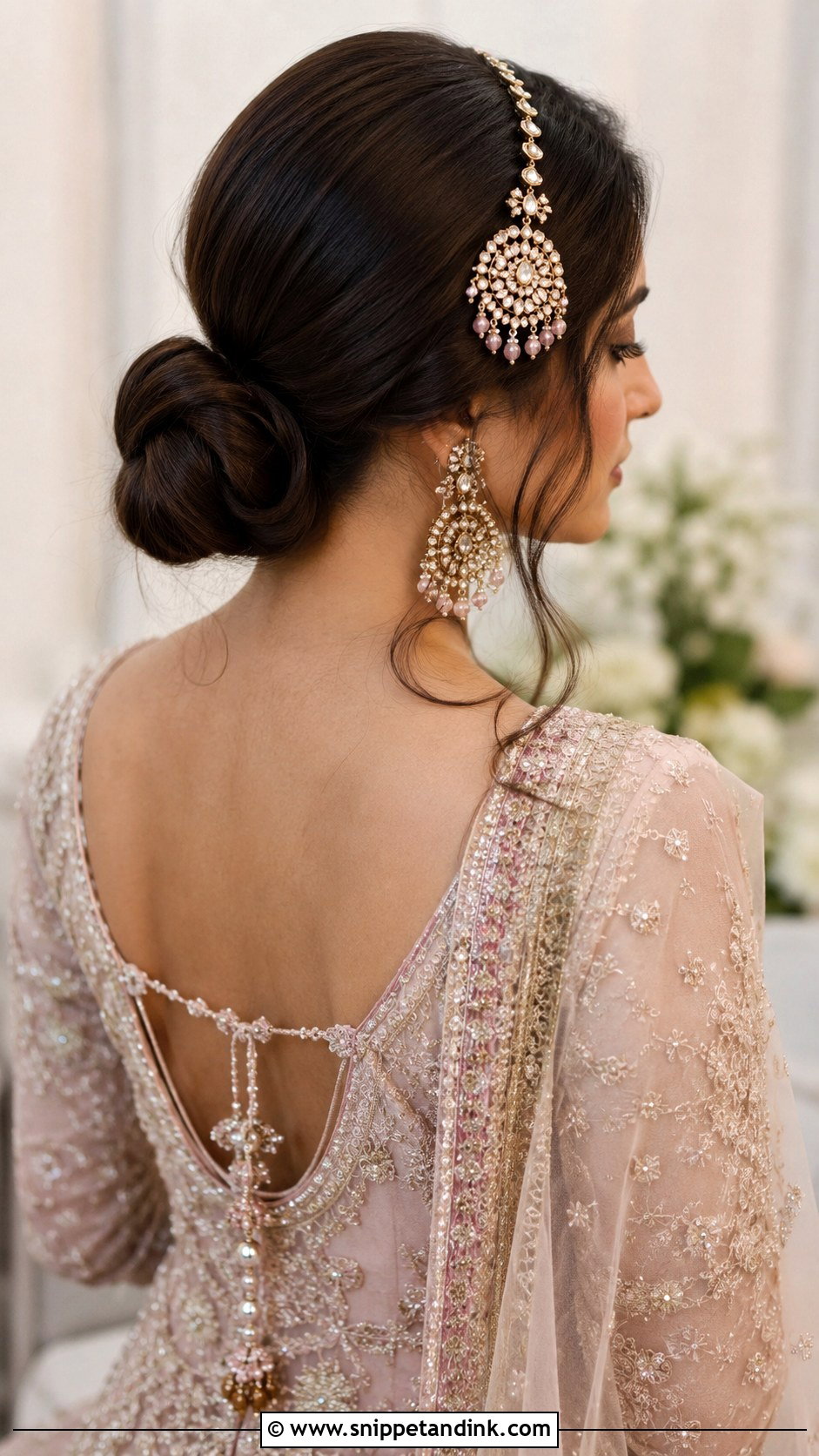
A low chignon is a looped knot rather than a twisted bun. I gather the hair at the nape, loop it under itself and pin it flat so the neckline stays visible. It shows statement earrings and suits modern gowns, fitted lehengas and sarees alike. Soft tendrils near the face add romance, and a jhoomar or pearl pins add quiet sparkle.
22. Wavy Side Ponytail
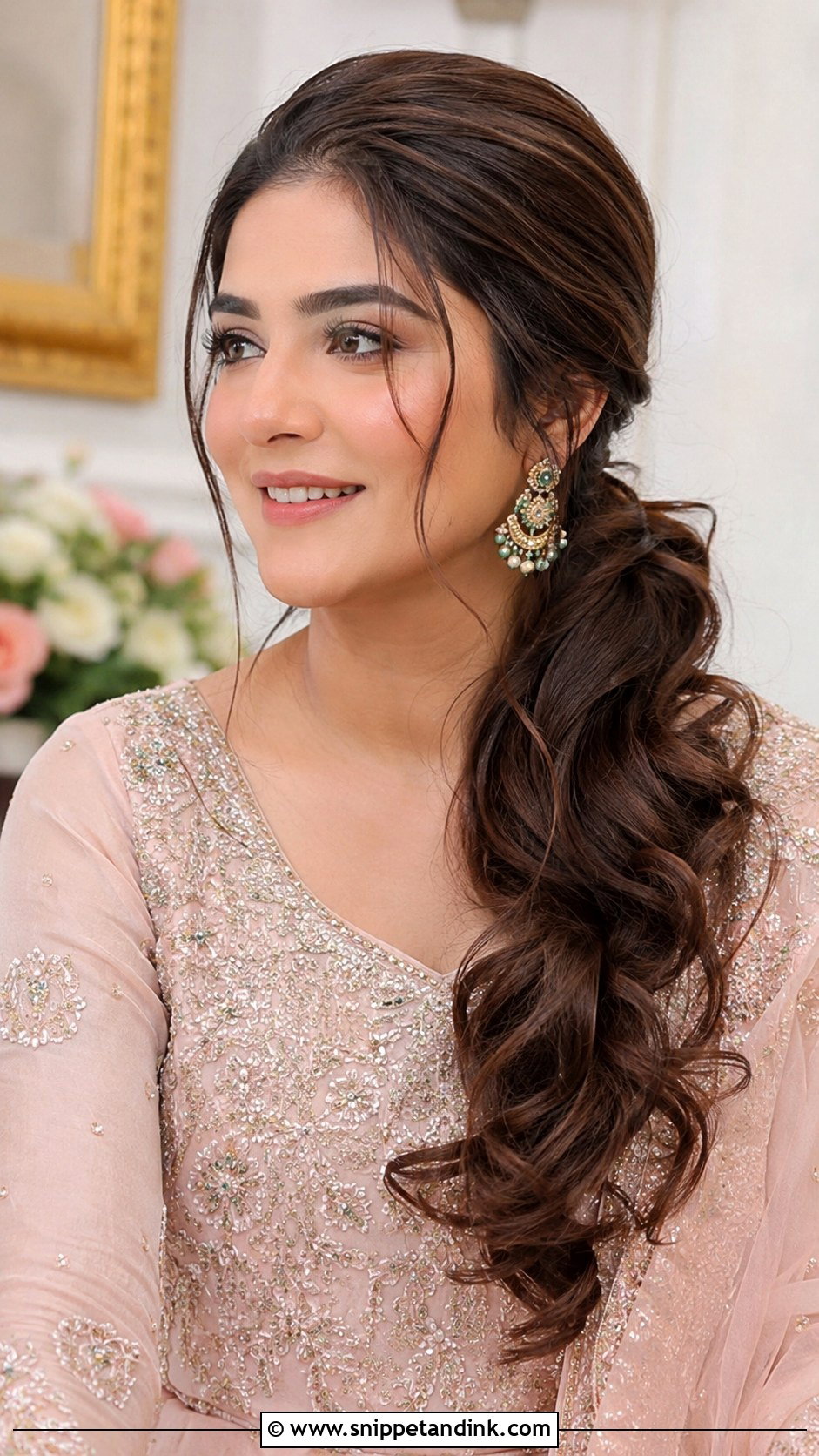
A wavy side ponytail is relaxed and simple. I sweep the hair to one shoulder, tie a low ponytail, and wrap a small strand around the band to hide the elastic. The waves add movement. Statement earrings and open necklines suit it. The elastic can loosen after hours, so I tie the base with a second band underneath.
23. Vintage Finger Waves Updo
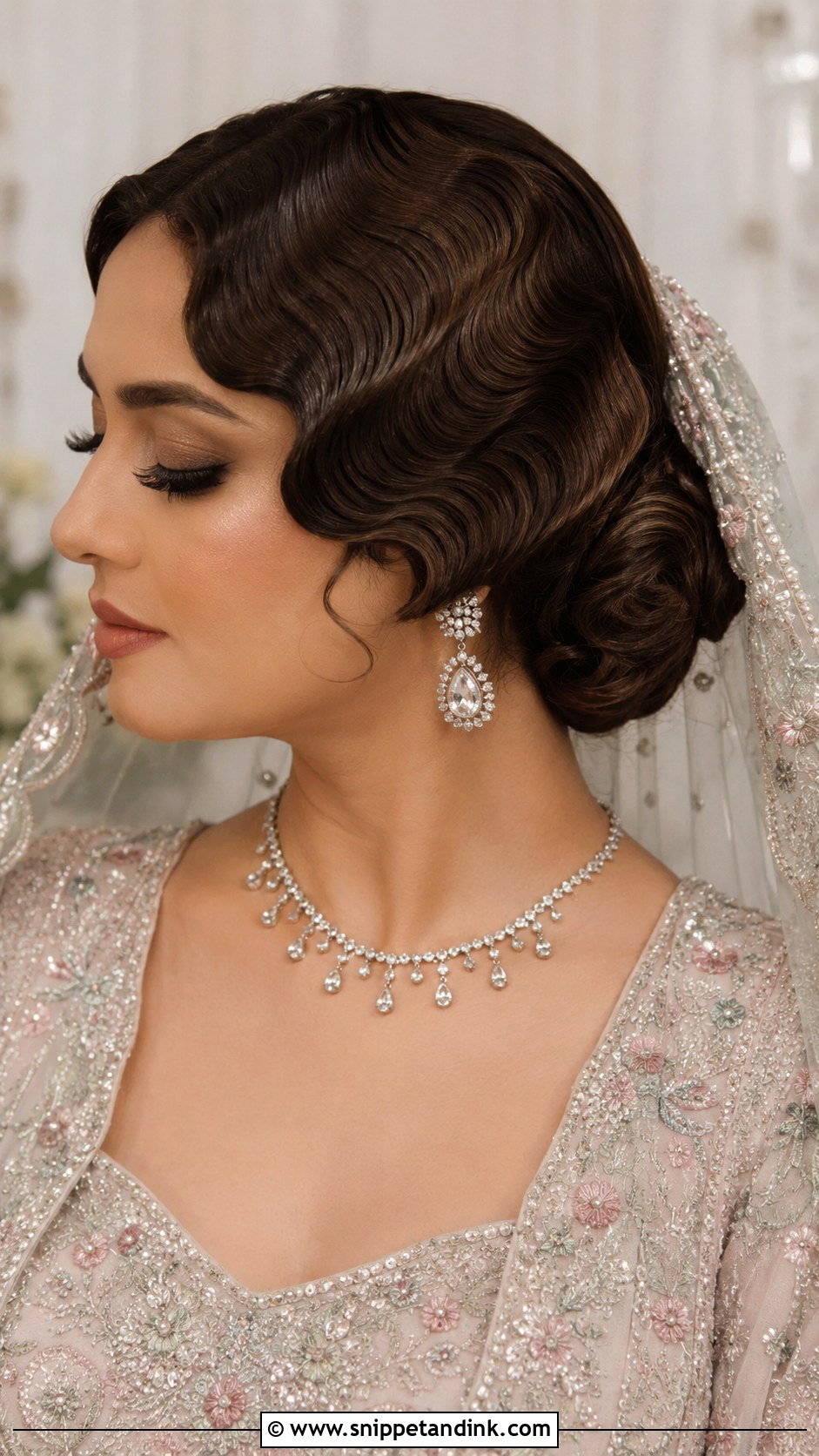
Finger waves are one of the most technical styles here. I set S-shaped waves close to the head with gel and clips, let them dry fully, then gather the back into a low updo. They suit oval and heart-shaped faces and a bride who loves vintage detail. If your hair has a strong natural curl, the waves need longer to dry under the clips.
24. Pinned Curls With Tiara
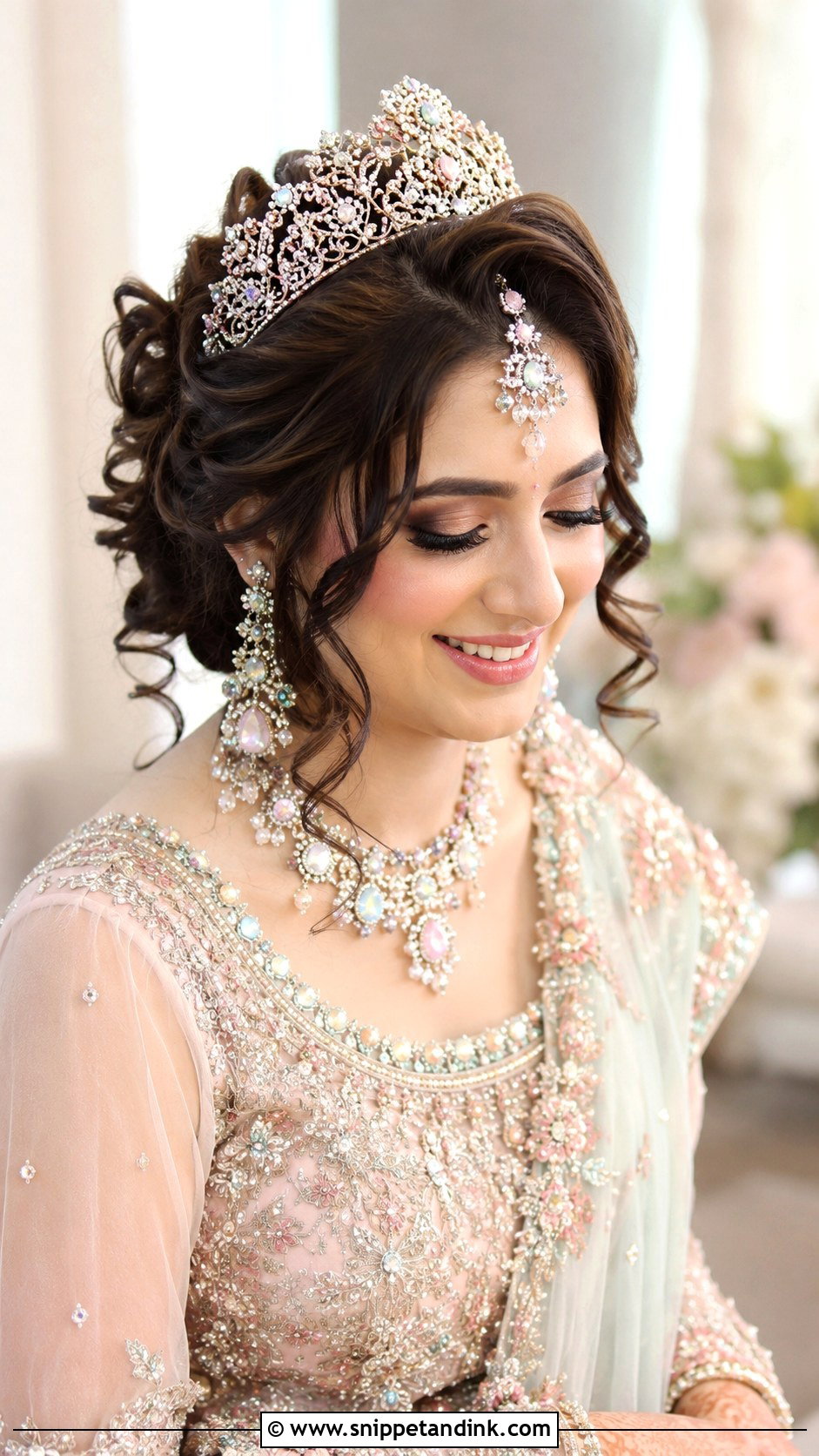
Pinned curls with a tiara feel regal. I curl the hair, pin the curls loosely upward, and place the tiara at the crown. The tiara’s combs or side loops must grip into a teased base or pinned section; on smooth curls alone it slides backward. A few loose curls near the face add softness. Under evening lights, the tiara reads very well in photos.
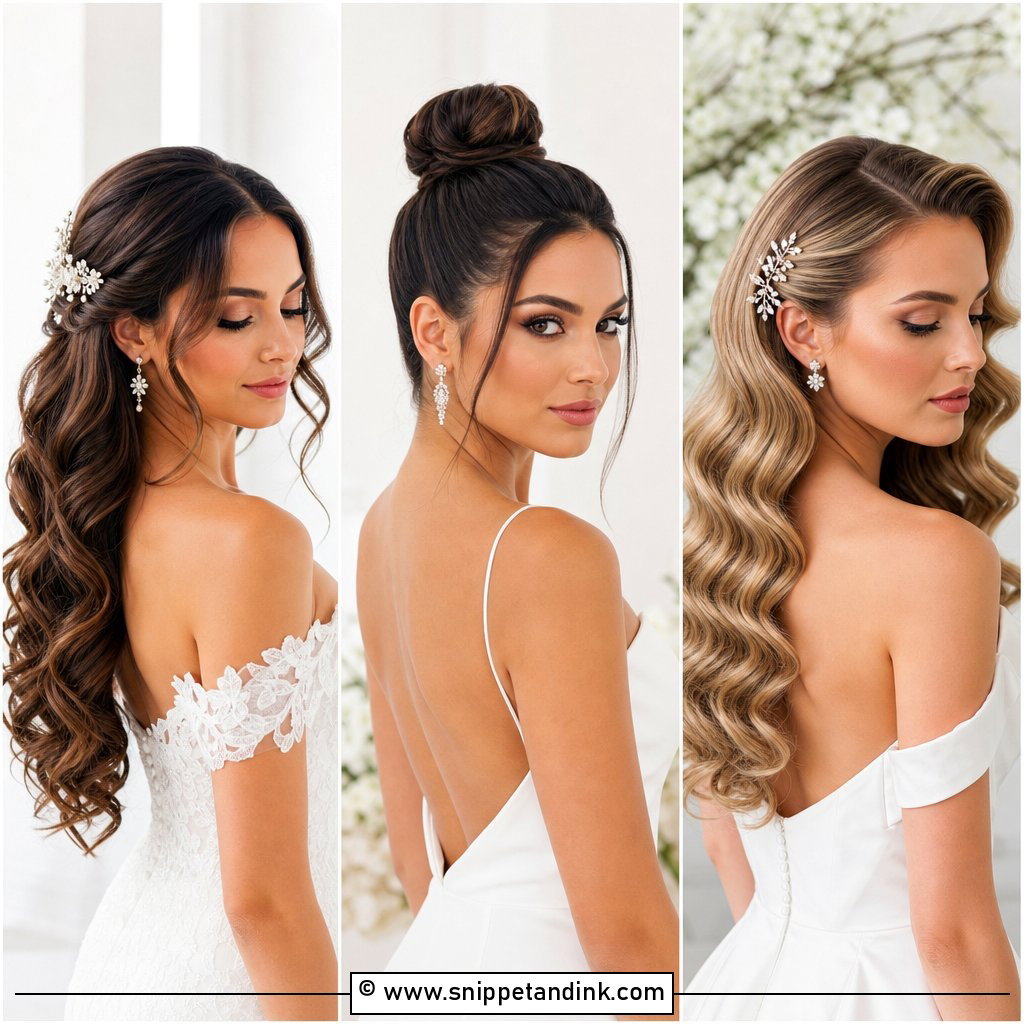
25. Braided Bun With Flowers
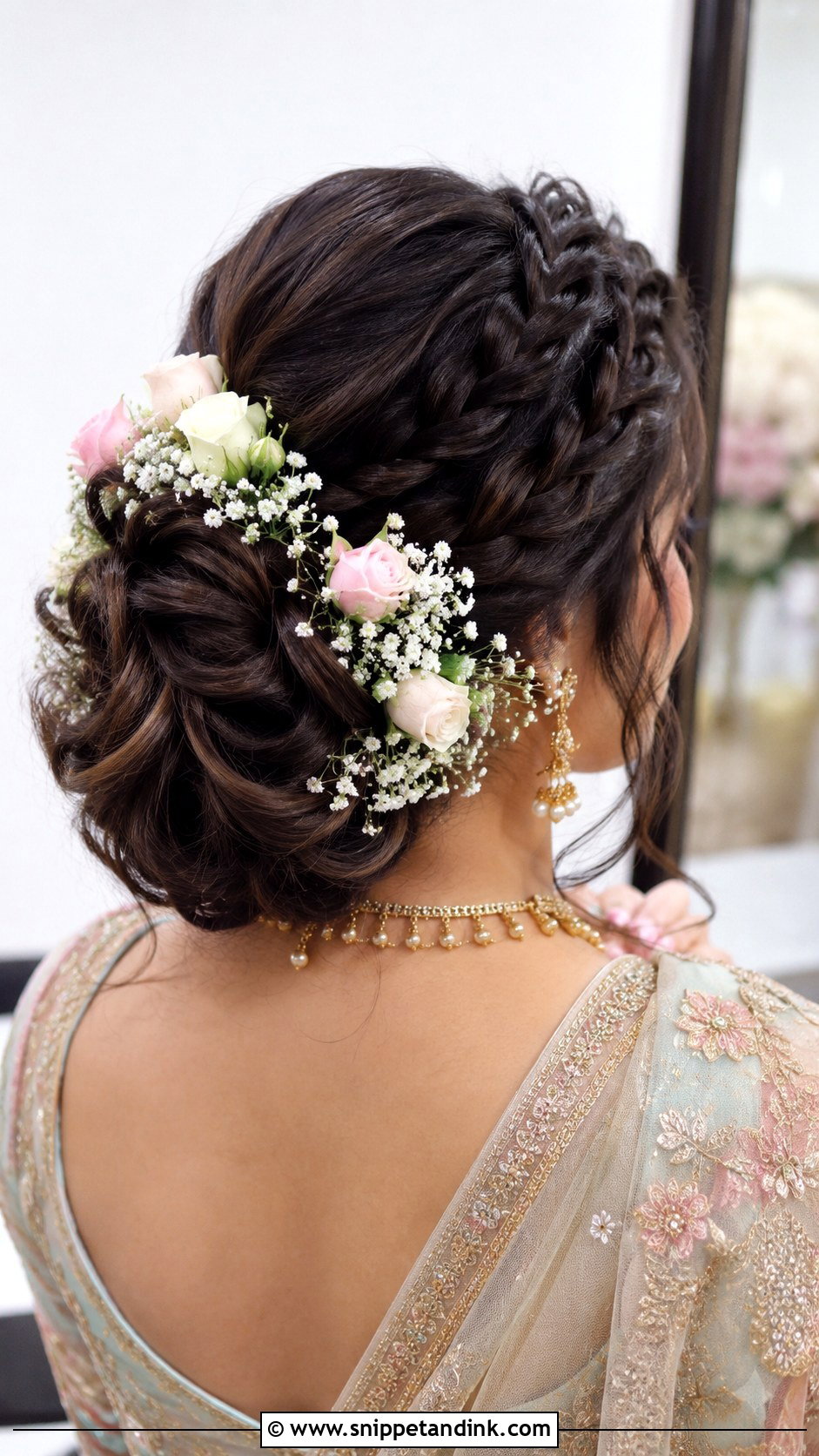
A braided bun with flowers combines texture and colour. I braid sections of hair, then coil and pin them into a bun before tucking pastel blooms or baby’s breath around the shape. Wired flowers stay put far better than loose stems pushed in. It suits flowing fabrics and gentle colours. Leave a few face-framing strands loose.
Where the Dupatta, Jhoomar and Tikka Actually Sit
A walima hairstyle is never finished until the jewelry and dupatta are on, and the order matters. I style the hair first, then place the maang tikka, then the jhoomar, and pin the dupatta last. Each piece needs its own hidden anchor: a small pinned section or a few crossed pins under the hair where the jewelry hooks in.
Bring every piece to your trial, including the dupatta. I have seen a perfect bun pushed sideways in seconds by a heavily embroidered border, and that is far easier to solve a week before than in the bridal room.
A jhoomar is traditionally worn on the left side. It is heavier than it looks, so I hook it into an anchor near the part and another behind the ear. If a bride’s dupatta goes over her head, I choose a low bun or side bun; anything high gets crushed and pushes the dupatta forward.
Getting Pins Out Without Snapping Hair
At the end of the night, ask someone to help. Remove the jewelry first, then the pins one by one, and never brush through teased hair while it’s still dry and stiff. A little conditioner or oil on the ends lets backcombing slip loose without breaking.
A Walima Look Should Feel Lighter Than the Barat
The walima is the one wedding event where comfort really shows in photos. These 25 Pakistani bridal looks range from sleek buns to braids and open curls, and most work with a maang tikka, passa or jhoomar. I’d pick based on three things: your dupatta’s weight and how you’ll drape it, how your scalp feels after the barat, and how long the evening runs. Wear the style once at a trial with the actual jewelry, and you’ll know before the day whether it’s a style you can relax in.
You'll Like These Ideas:


Leave a Reply