
Most of the bridal hijab fittings I do start the same way: the bride has found the gown, and the hijab has been treated as an afterthought. It shouldn’t be. The wrap sits closest to your face in every photo, it carries the weight of any crown or veil, and it has to stay put through hugs, prayer and hours of dancing. Bridal fashion right now suits modest brides well, with high necklines, pearl work, long veils and clean minimal gowns all easy to find. Below are thirty pairings I’d actually put together, from a plain white wrap with lace to a hijab styled with a sharara or a tailored jumpsuit, each with the fabric and fit notes that make it hold up on the day.
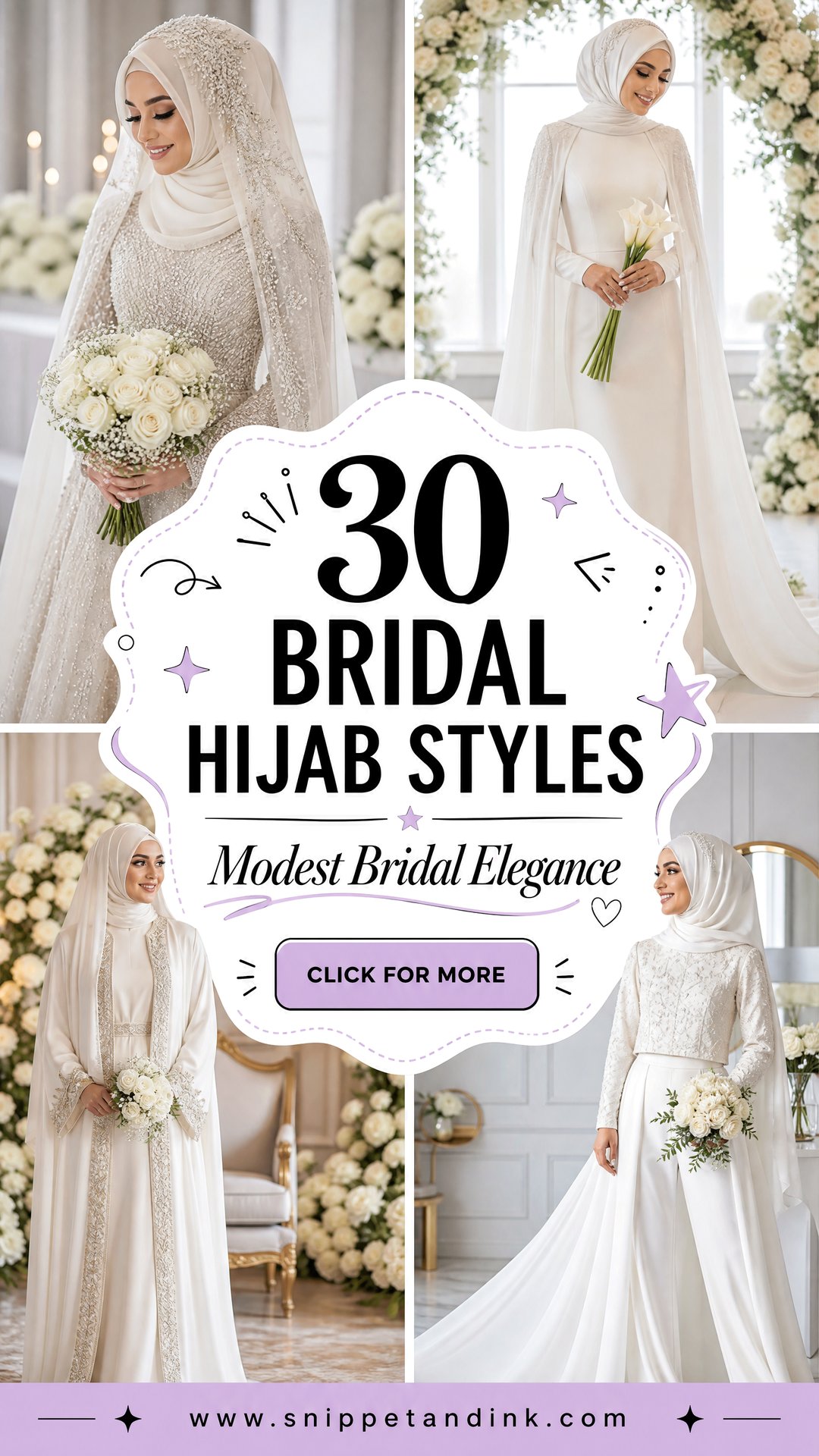
Building a Bridal Hijab From the Undercap Up
Before we talk about gowns, here is how I put a bridal hijab together, because a lovely wrap that slips by mid-afternoon is no use to anyone. Nearly every problem I fix on wedding mornings comes from the base, not the outer fabric.
The base layer
Start with a snug undercap in cotton or jersey that matches your skin or the hijab colour. Chiffon and satin are slippery on their own; the undercap gives pins and veil combs something to grip. If your hair is long, wear it in a low flat bun rather than a high one, so crowns and veil combs sit level instead of tilting forward.
Fabric by job
- Chiffon and georgette: light, drapes well, needs a grippy base and more pins.
- Satin: holds a sculpted shape, but shows creases, so steam it the morning of.
- Jersey: the most secure and comfortable for a long day, slightly less formal in finish.
- Lace-trimmed: gives detail at the face without the weight of all-over lace.
Pins and the trial
I use flat-head or pearl-head pins at the temples and under the chin, and hidden safety pins at the shoulder where the drape tends to drift. Magnetic pins are handy for brides who will remove the outer layer to pray, since they come apart without tearing chiffon. Book a trial about four to six weeks out and bring the actual veil, crown or headpiece. Wear it for at least two hours, sit, hug someone, look down at your phone, and photograph the pin placement from every side so whoever wraps you on the day can repeat it exactly.
1. White Bridal Hijab With Lace Wedding Dress
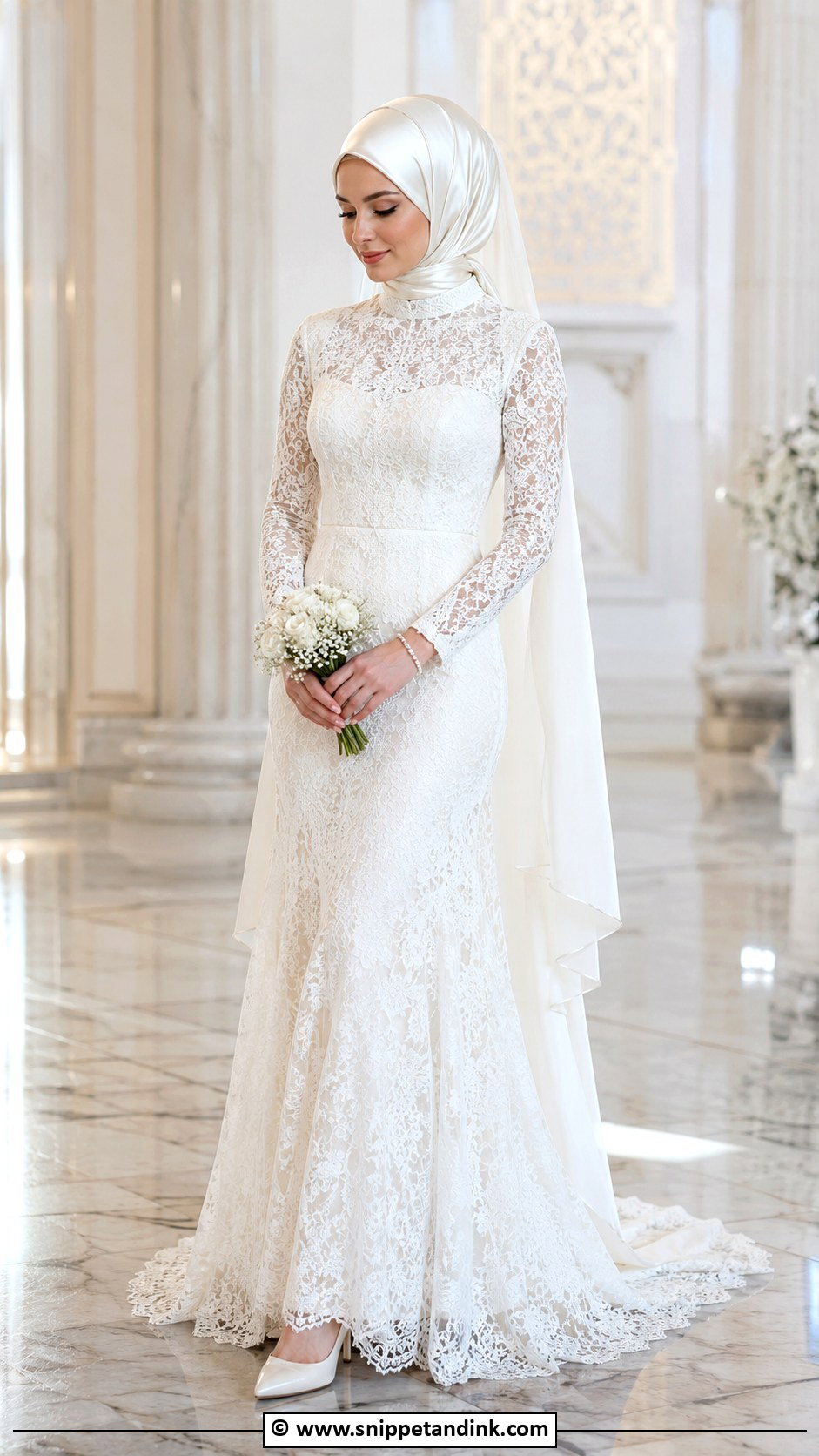
Lace is busy up close, so the hijab next to it needs to be quiet. I reach for a smooth satin or a matte chiffon in ivory or cream, never a lace-on-lace wrap, because two textures fighting at the jawline flatten both in photos. A high-neck lace gown with long fitted sleeves and an A-line skirt keeps coverage even when you sit. Hold the white tones up together in daylight before you buy; a bright white hijab against an ivory lace dress makes the dress look yellowed.
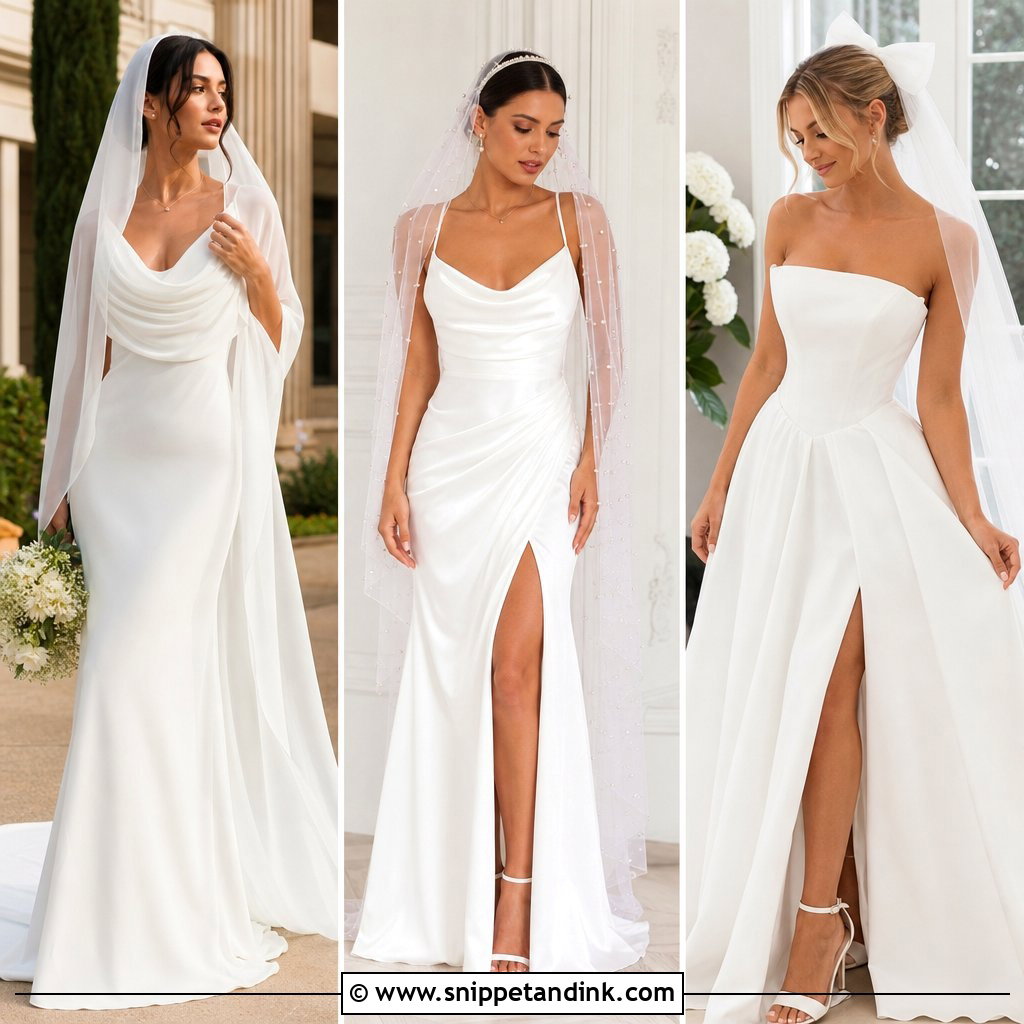
2. Pearl Bridal Hijab With Satin Gown
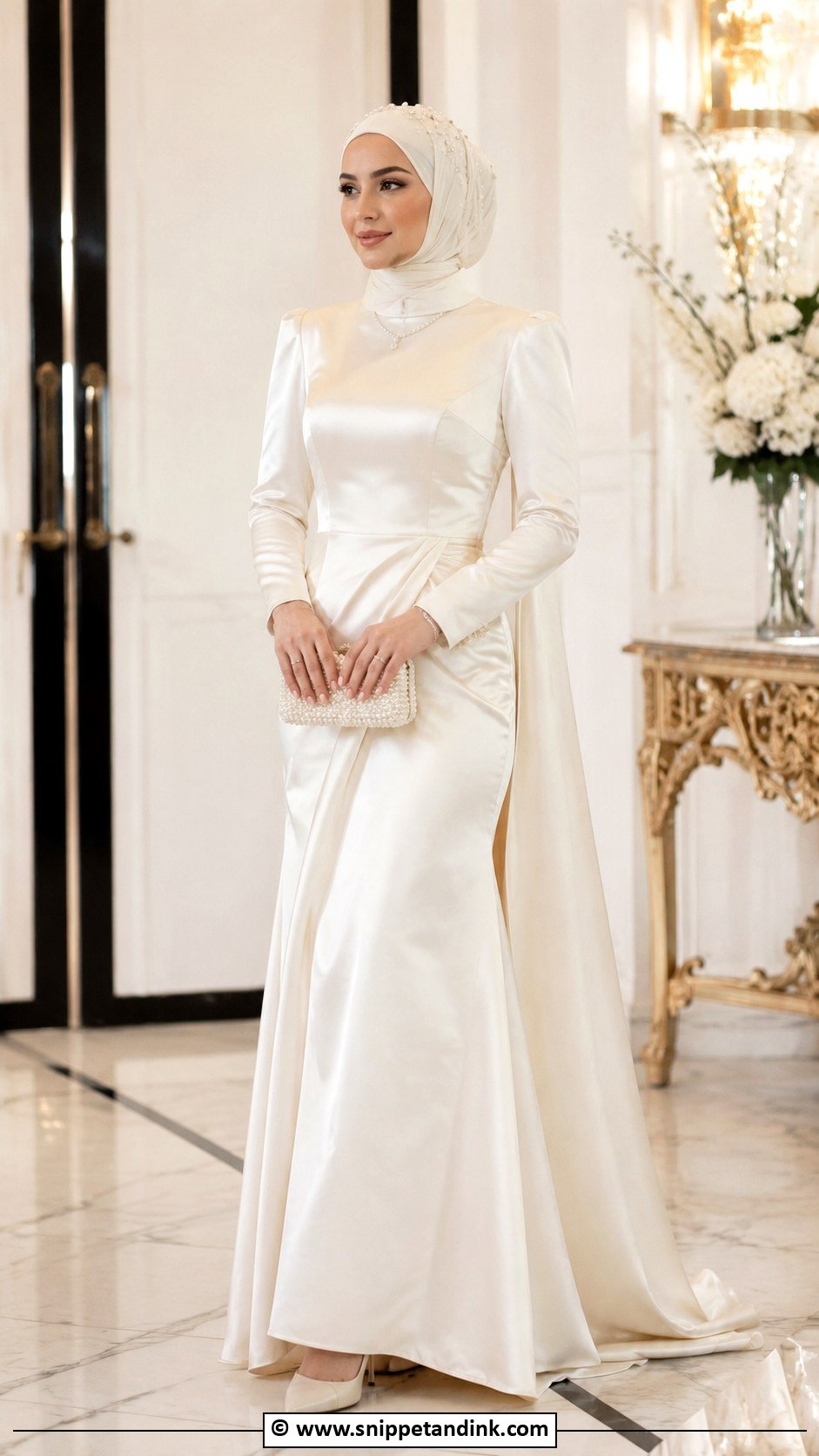
A pearl-trimmed hijab gives a plain satin gown all the detail it needs. The thing I watch is weight: pearls sewn along the front edge pull the fabric forward, so the wrap needs an extra pin at the temple to stop it sliding over the eyebrows by the reception. Keep the gown simple, with a high neckline, long sleeves and a column or A-line shape, and skip the necklace entirely if the hijab is already scattered with pearls. Pearl studs and ivory shoes are plenty.
3. Chiffon Bridal Hijab With Ball Gown
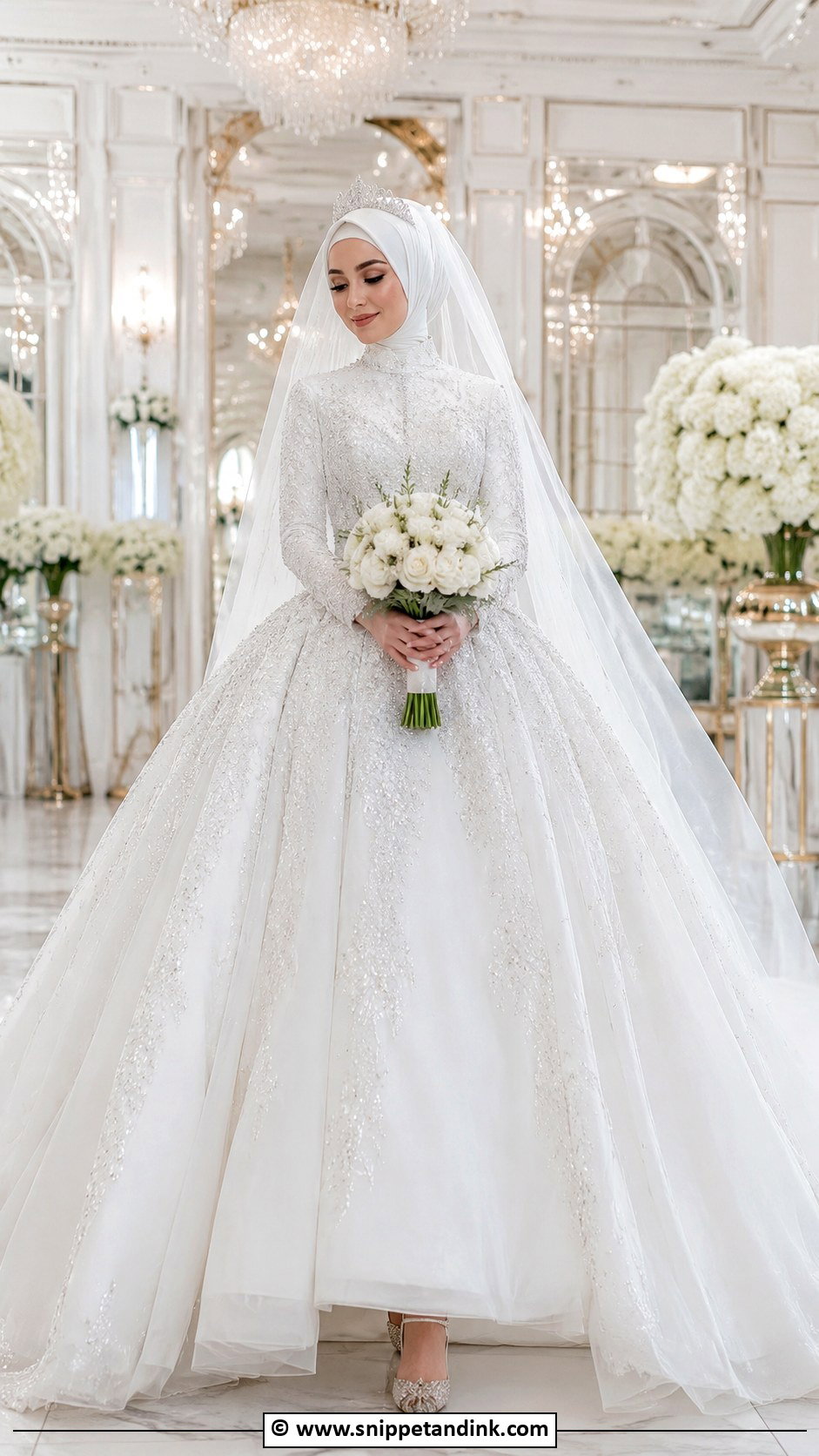
A chiffon bridal hijab is my default under a ball gown because it adds softness without bulk at the neck, which matters when the skirt is already enormous. Chiffon is slippery, though. I always put it over a jersey or cotton undercap so the pins have something to grip. Let a longer tail fall over one shoulder or tuck it under the veil, then add a small tiara and a structured bouquet. Big halls and formal receptions suit the scale of this pairing best.
4. Satin Bridal Hijab With Mermaid Dress
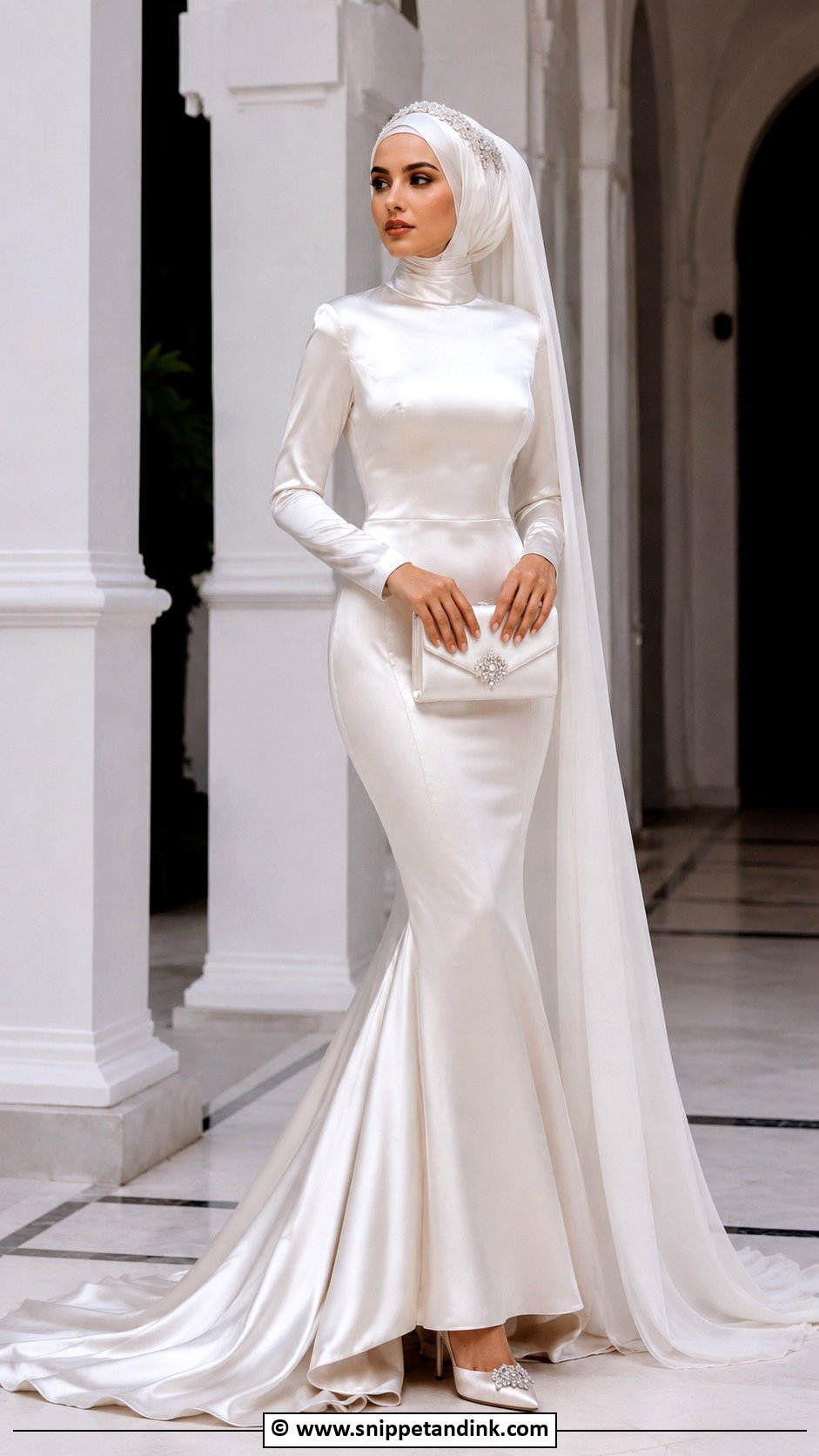
Satin against a mermaid gown is sleek, but it is also the least forgiving combination on this list. Satin shows every pin dent and every crease, so I steam the hijab on the morning and wrap it close to the face with the pins hidden underneath the fold. The gown should have long sleeves, a high neck and enough structure that you can still sit and climb stairs; a mermaid that is too tight at the knee is the most common regret I hear. A crystal hair piece placed over the wrap suits an evening wedding.
5. Layered Bridal Hijab With Tulle Dress
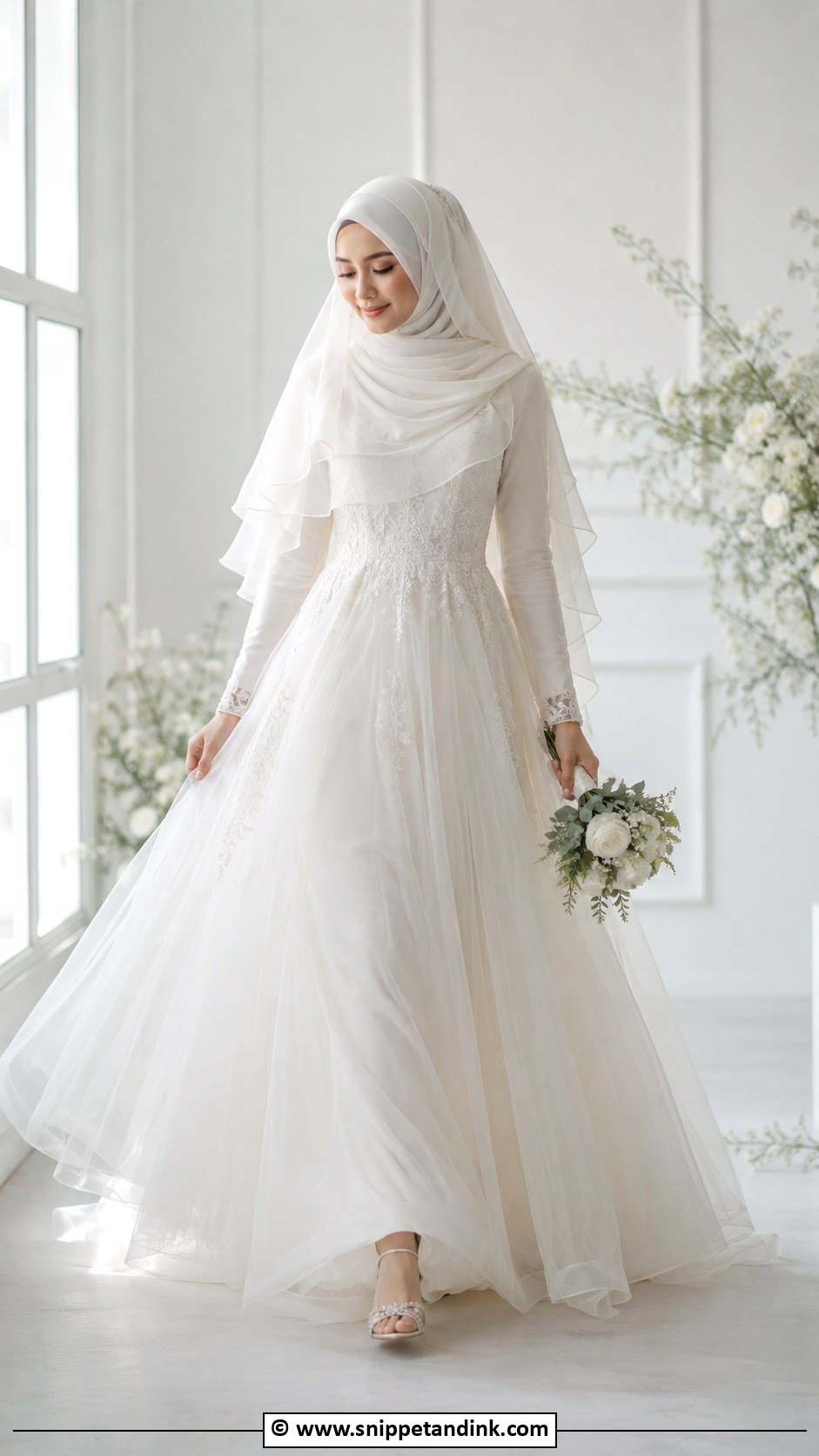
Layered hijabs go wrong when the fabric is too heavy. Two layers of georgette around the face start to look like a scarf bundle, while chiffon or soft net layers stay light. Pair it with a tulle gown that has lined sheer sleeves and a full skirt that moves when you walk. I’d keep the jewelry small here; the layers already frame the face, and anything at the ears just disappears into the folds.
6. Embroidered Bridal Hijab With Modest Gown
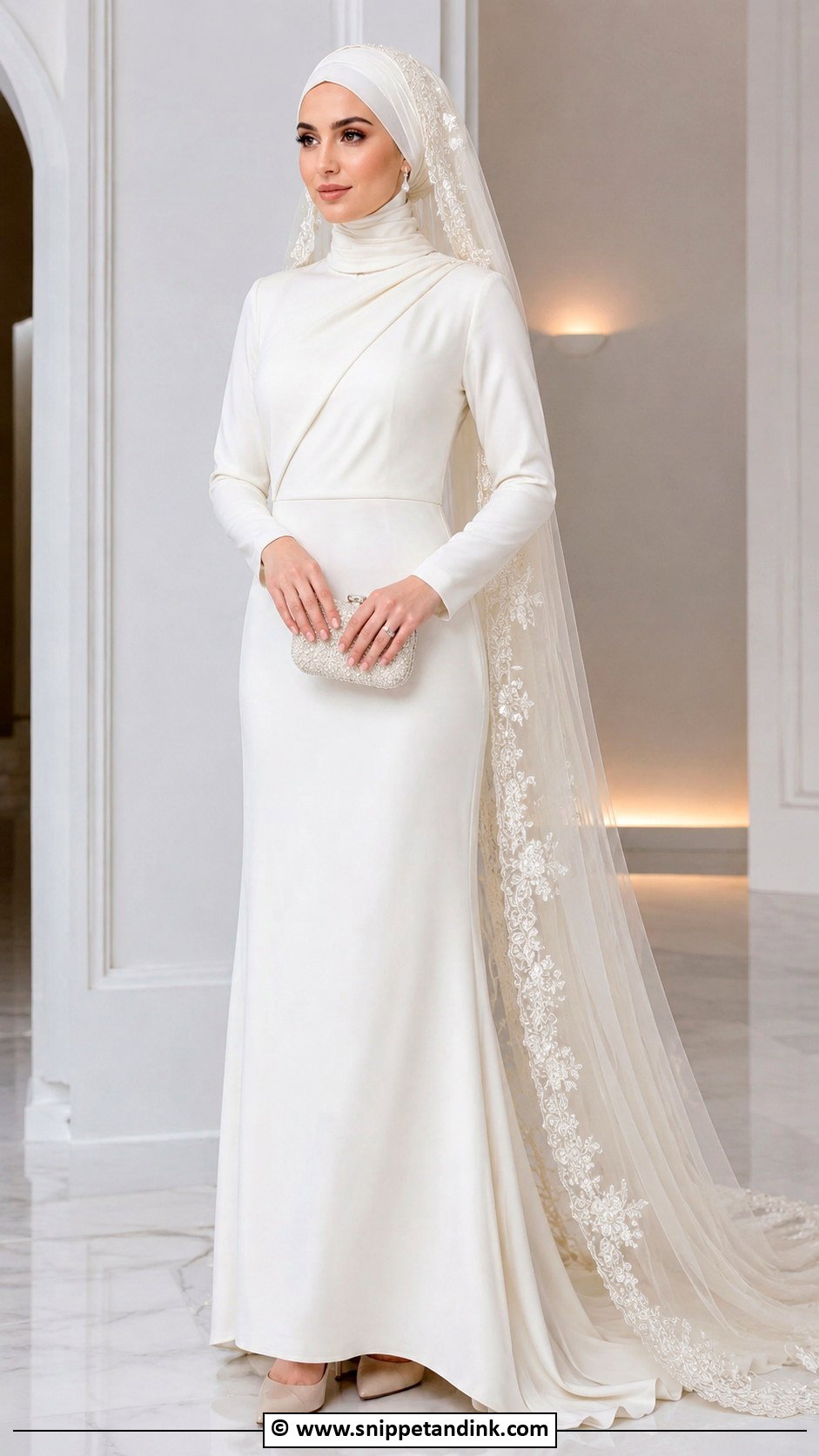
With an embroidered bridal hijab, placement is everything. Embroidery along the front border or crown frames the face; a heavy motif that lands under the chin once wrapped just looks lumpy. I pin the hijab on the bride before we decide on the gown details, because the embroidery only reads correctly once it is folded. Then keep the dress clean, in crepe, satin or mikado, so the two never compete.
7. Lace Bridal Hijab With A-Line Dress
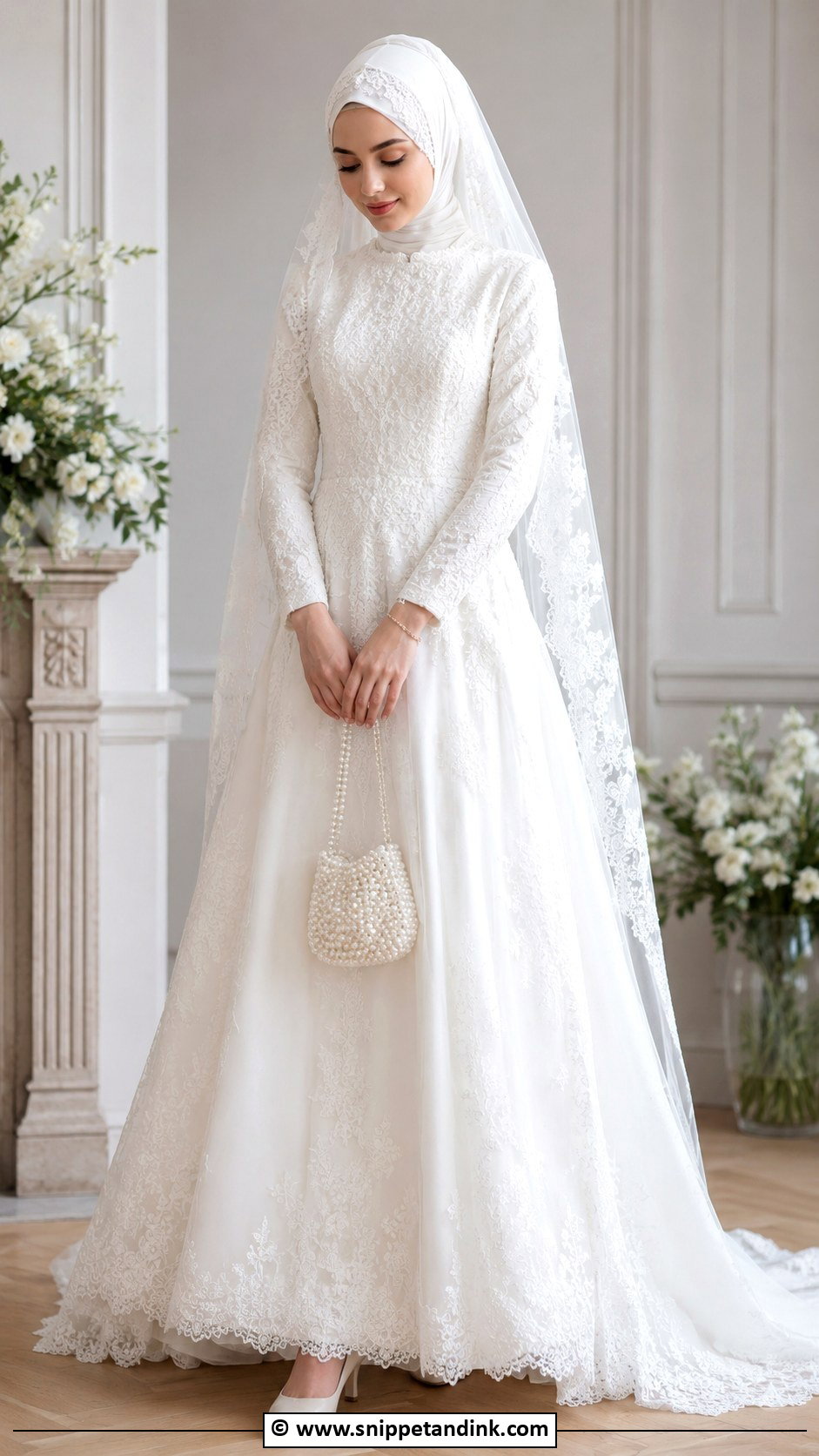
An A-line gown is the shape I suggest most often for a long day, since it skims the waist and lets you sit, walk and kneel without fighting the skirt. For the hijab, a lace trim along the edge gives you the romance without wrapping your whole face in lace. Lace sleeves and a modest back finish the dress. Block heels are worth it here; you will be on your feet for photos far longer than you expect.
8. Minimal Bridal Hijab With Crepe Dress
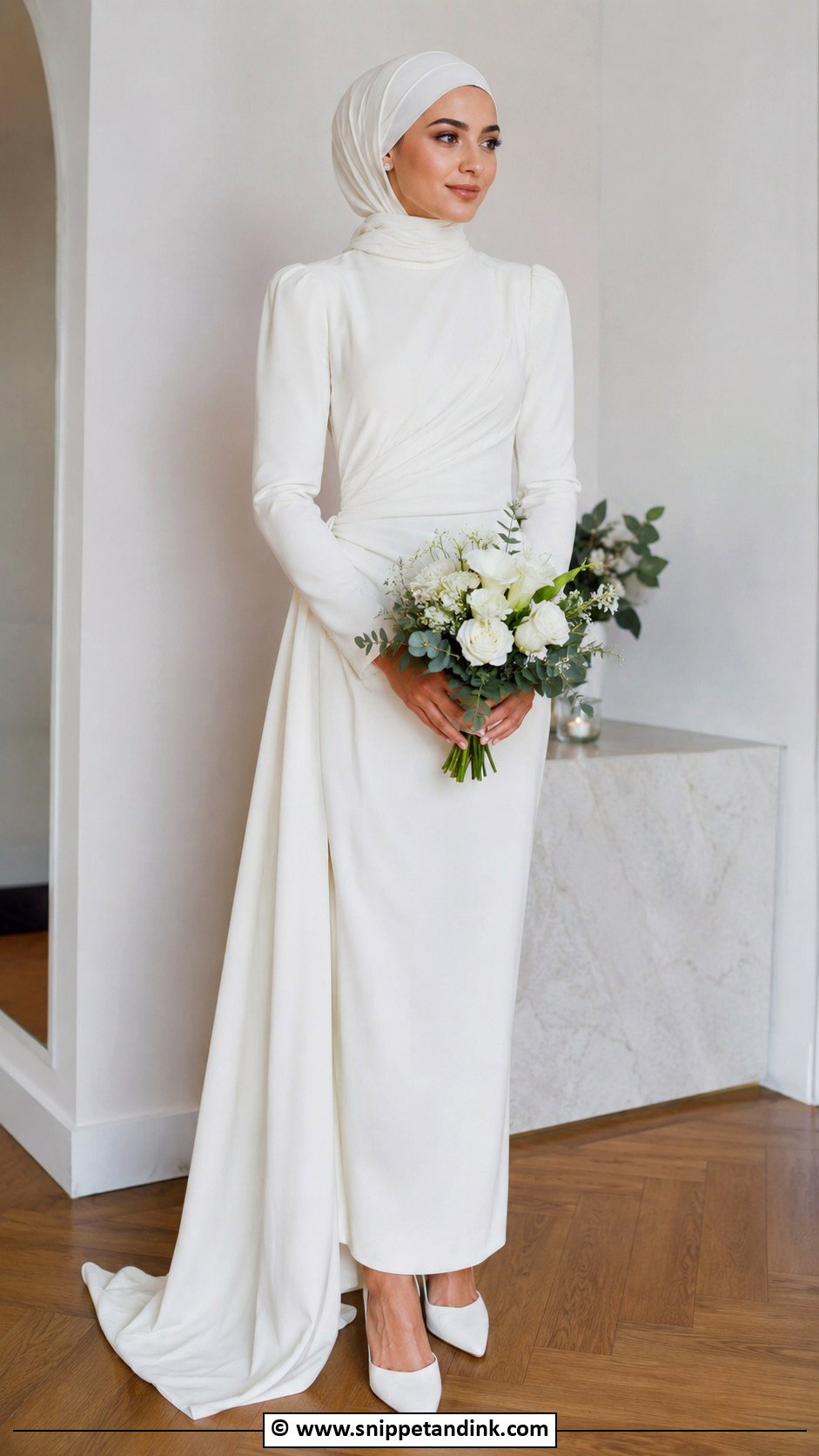
Crepe is honest fabric. It has no shine to hide a poor fit, so a minimal look only works when the gown has been tailored properly at the shoulders and sleeves. A plain ivory hijab tucked into the neckline keeps the line clean, and I’d choose a matte jersey or crepe-backed wrap so the two fabrics match in finish. Small studs, sleek pumps and a modern bouquet. This is the pairing I suggest for courthouse ceremonies and small dinners.
9. Crown Bridal Hijab With Princess Gown
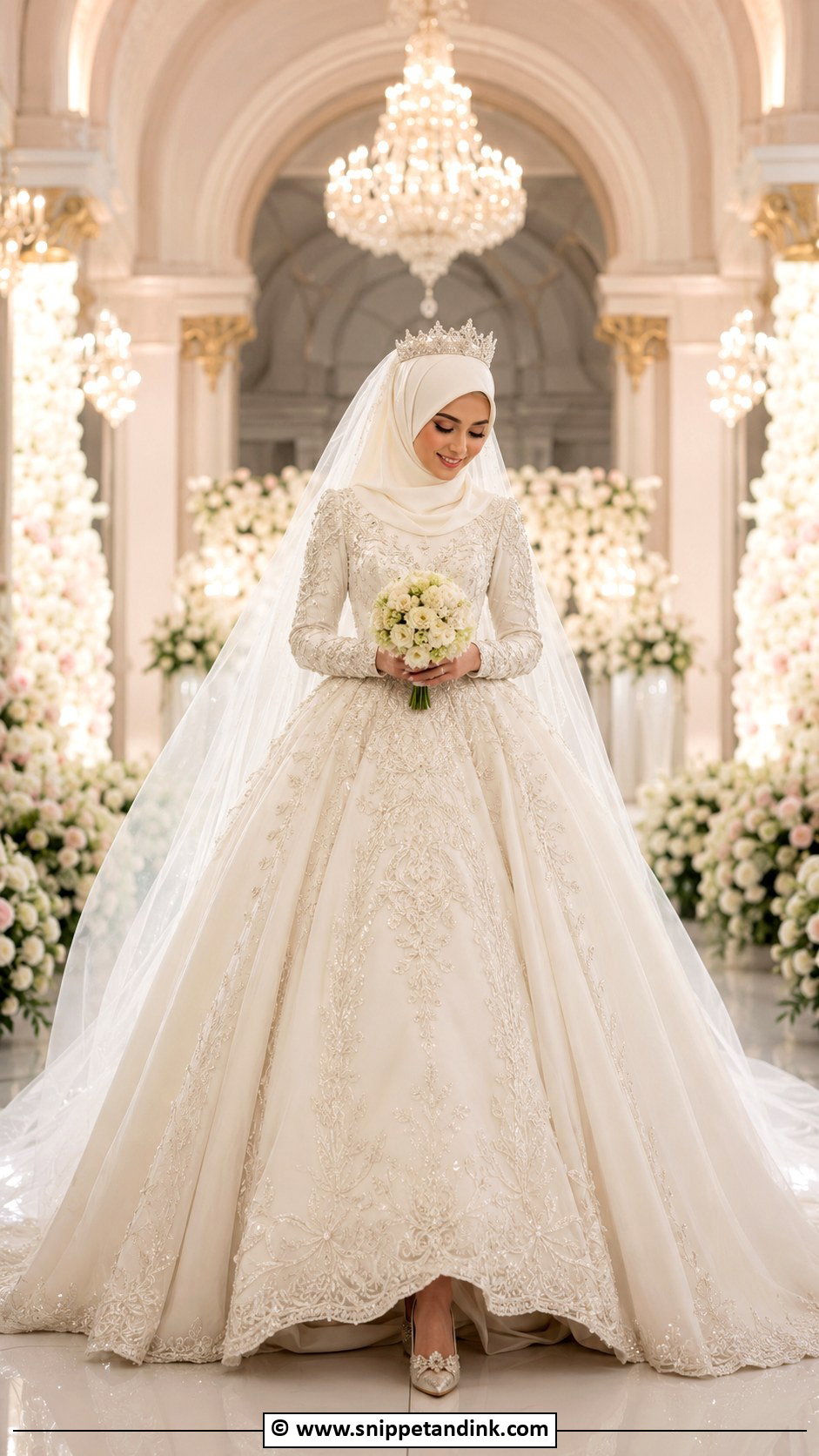
A crown is heavy, and it sits on fabric rather than hair, so the hijab underneath has to be firm. I build this one on a snug undercap, wrap a jersey-lined satin or a chiffon with a grippy base, and anchor the crown with a pair of pins through the undercap on each side. Scale matters: a tall crown on a petite frame with a full princess skirt can tip into costume. Hold a couple of sizes up at the fitting before you commit.
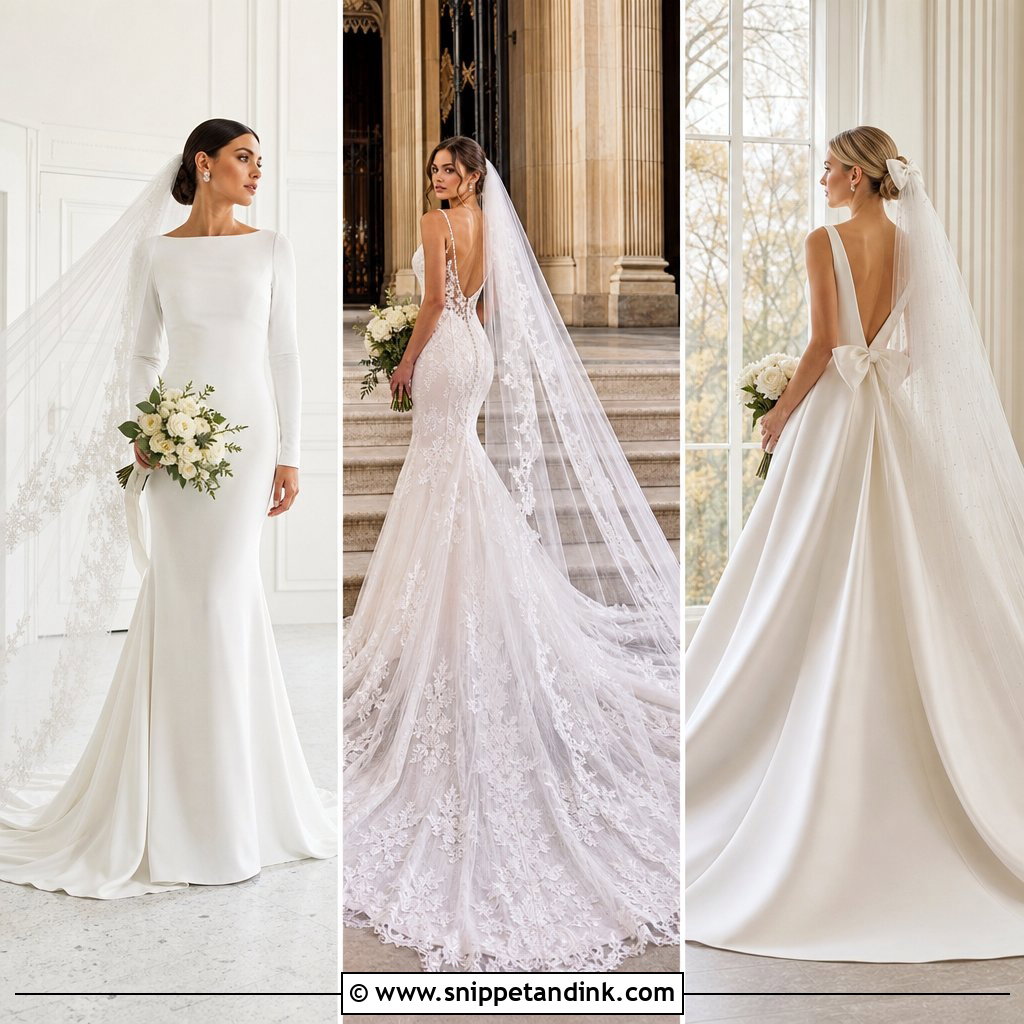
10. Veil Bridal Hijab With Long Sleeve Dress
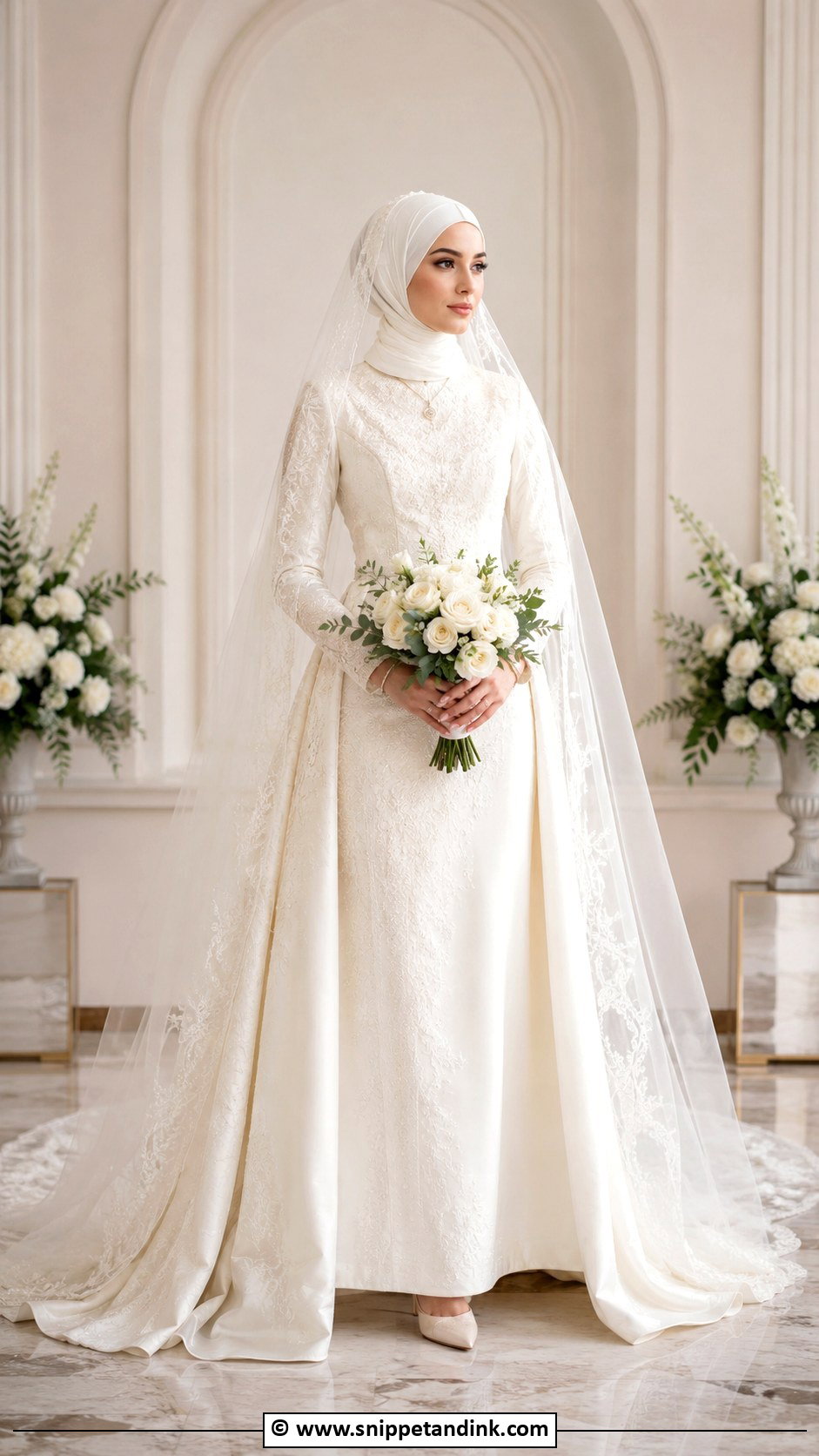
The order matters with a veil: the hijab goes on first and is finished completely, then the veil comb is pinned into the undercap, not into the outer fabric, or it will drag the wrap backwards every time someone steps on the train. A chapel or cathedral veil in sheer tulle gives movement without hiding the hijab. Pair it with a long-sleeve gown, high neckline and a train if you want a longer aisle moment.
11. Turban Bridal Hijab With High Neck Gown
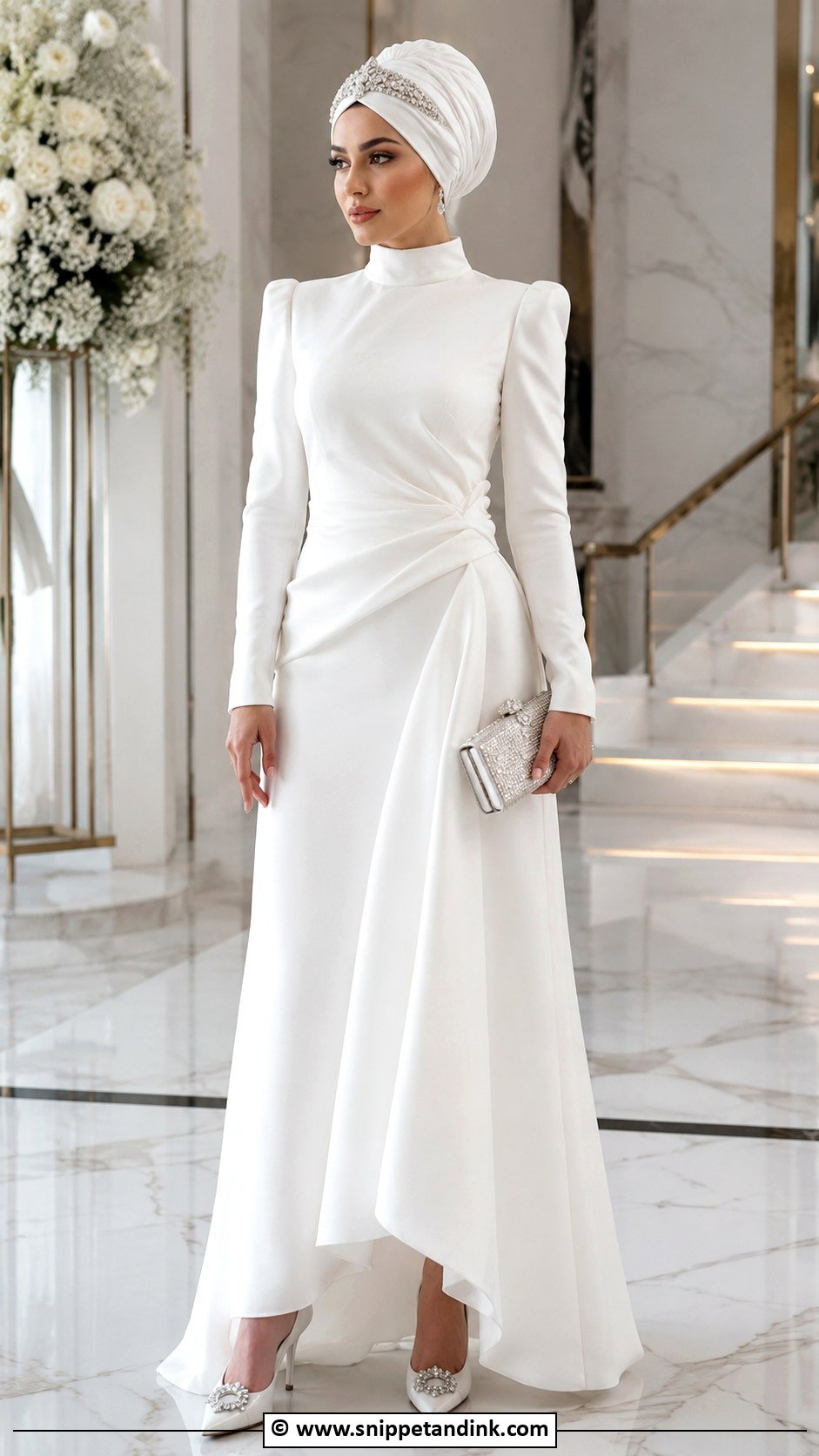
A turban leaves the neck visible, so the gown must do the covering. I’d only put a bride in this style with a true high neck and long sleeves, or with a fitted inner neck layer under the dress. Satin or soft jersey shapes the cleanest turban; silk slides and loosens within a few hours unless it is pinned through. Statement earrings work if they fit your own standard of modesty, otherwise a jeweled band across the front gives the same focus.
12. Draped Bridal Hijab With Beaded Dress
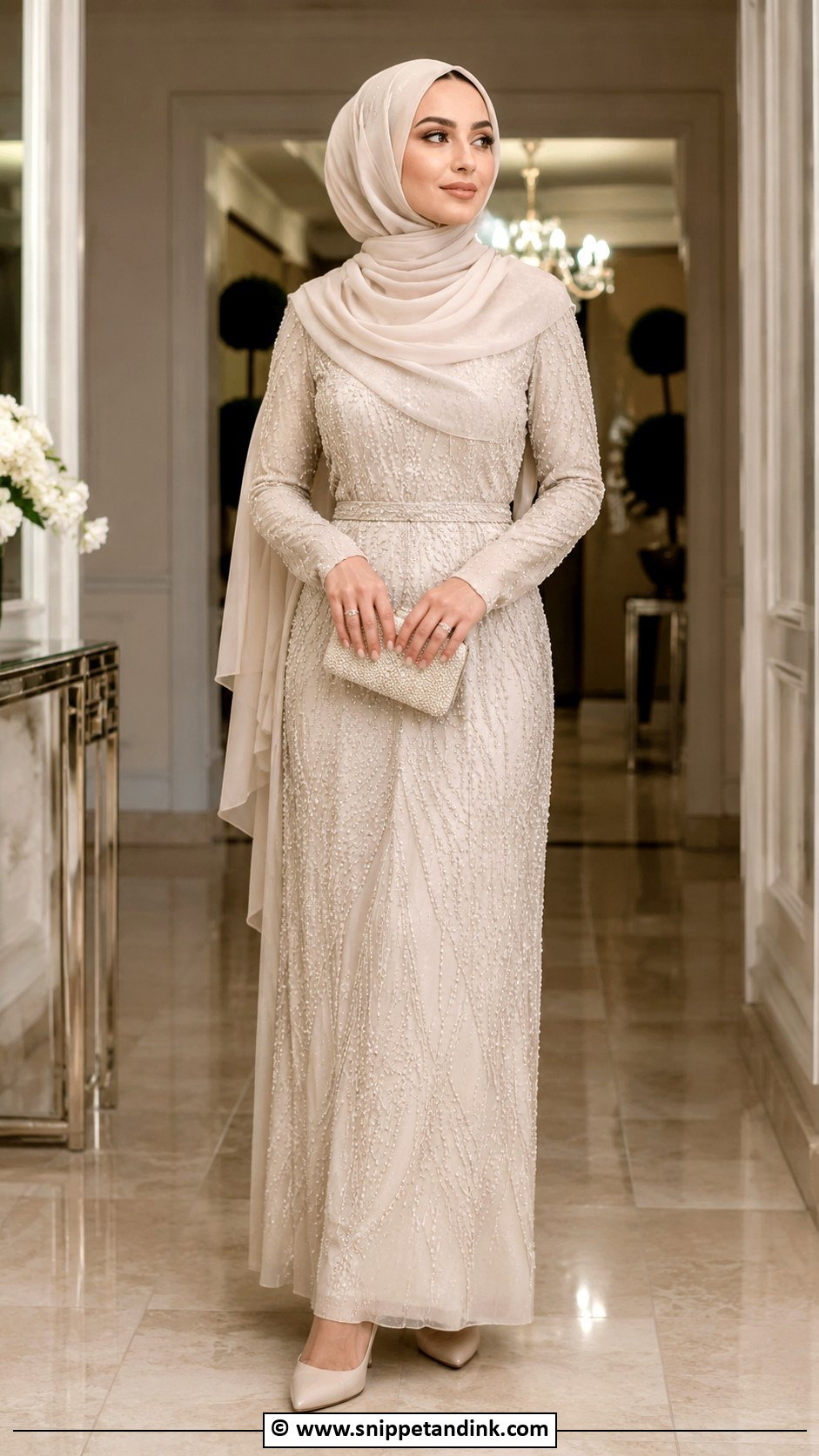
Beaded gowns are heavy at the shoulders, and a heavy hijab on top adds to the strain by evening. Fine georgette or lightweight chiffon draped loosely over the shoulders keeps the face soft and the weight down. Check the beading where the hijab will rest: rough beads snag chiffon, so I sometimes add a thin satin underlayer at the shoulder. Neutral shoes and one ring are enough. The dress is doing the sparkling.
13. Floral Bridal Hijab With Embellished Gown
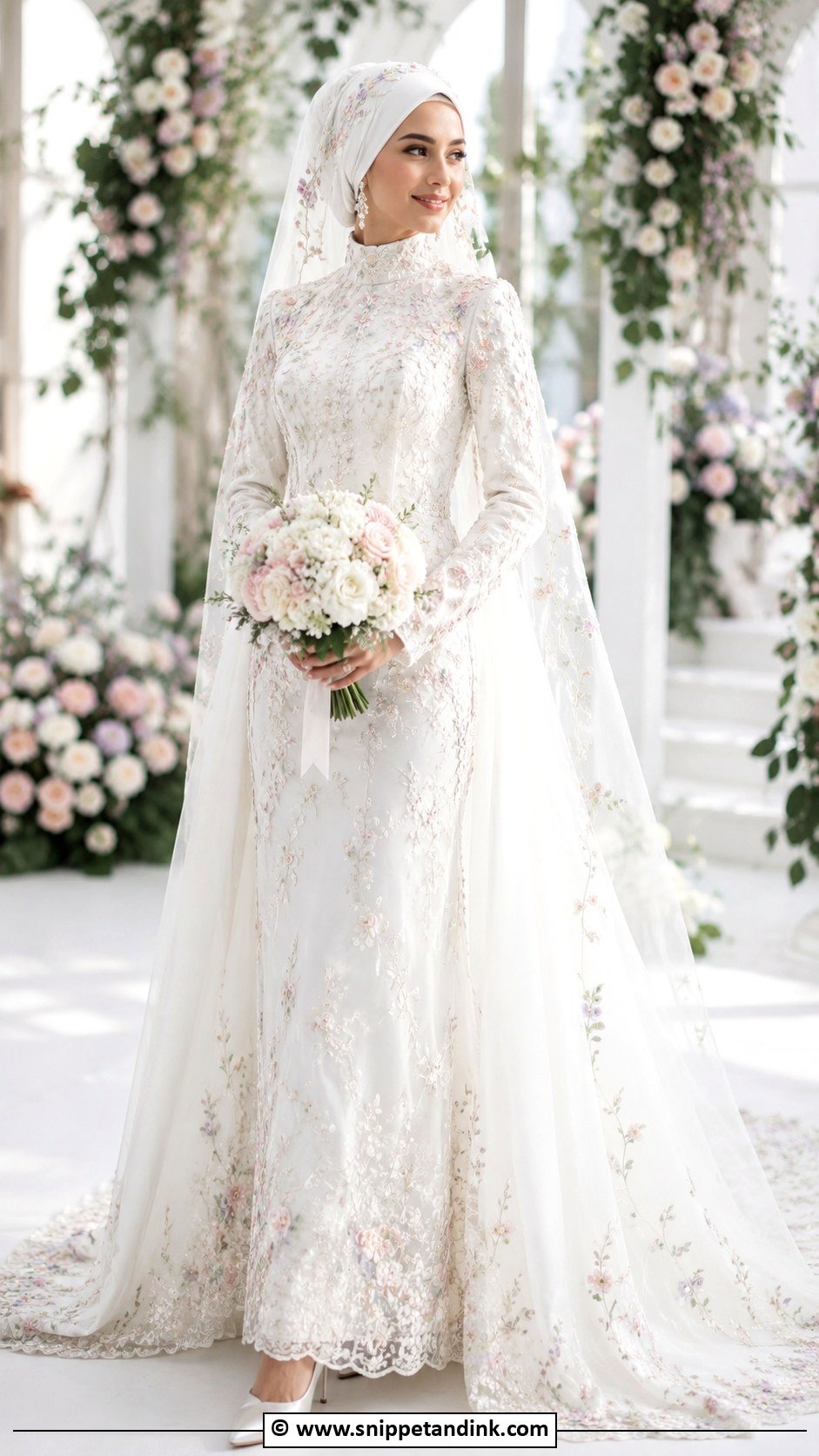
Floral detail on a hijab can come from embroidery, 3D appliqué or a tonal print. Keep everything inside one colour family, ivory with ivory, so the flowers read as texture from a distance rather than pattern. 3D petals near the temple get crushed under a veil comb, so if you plan a veil I’d keep the raised flowers lower on the drape. A gown with light floral lace and a rounded bouquet ties it together, and garden venues in spring suit it naturally.
14. Cape Bridal Hijab With Simple Dress
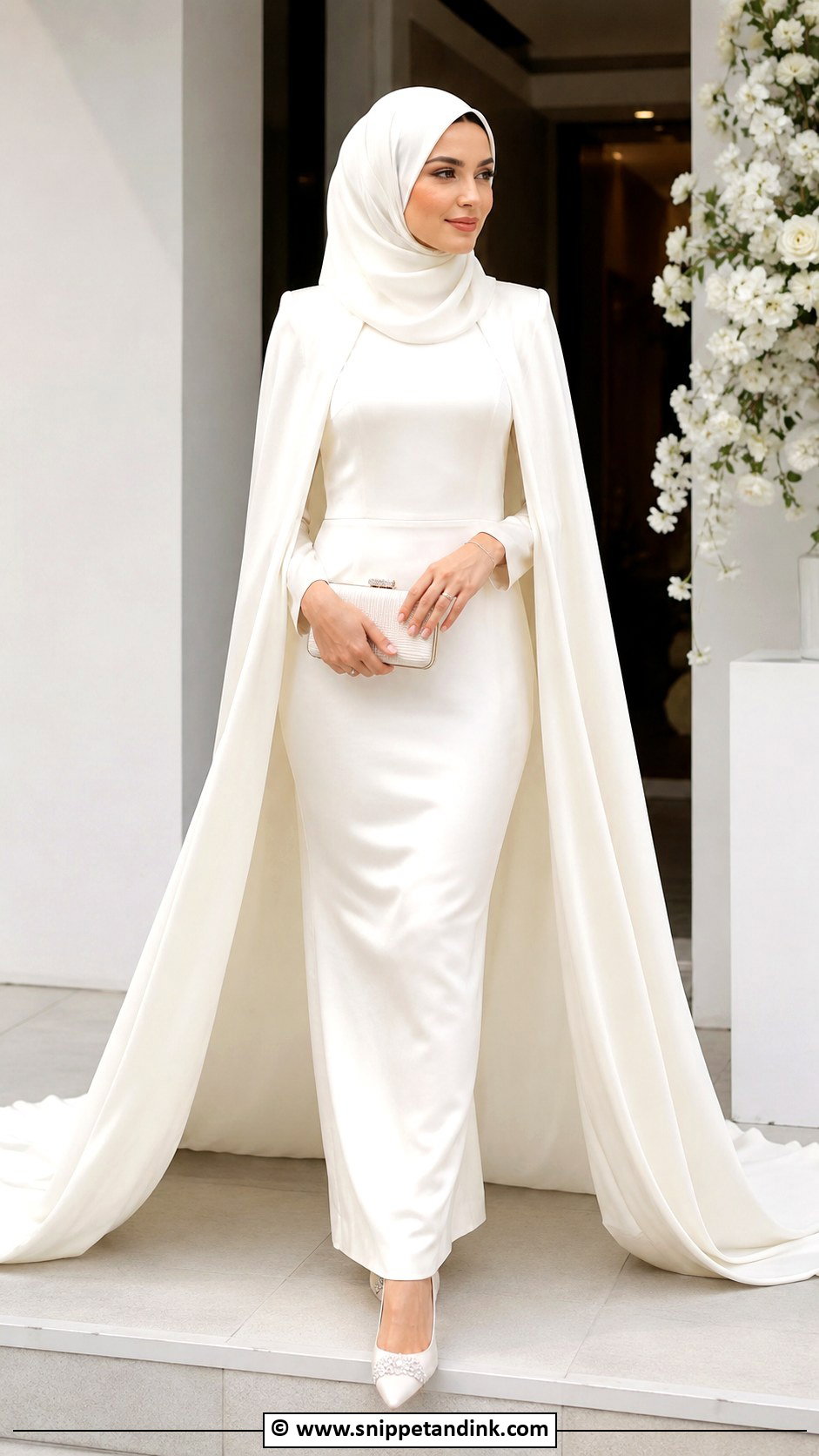
A cape gives you the back view of a veil without anything pulling on the hijab, which is why I like it for brides who find veils heavy. It can attach at the shoulders or fall from the back seam, over a plain crepe or satin dress so the cape stays the feature. Keep the hijab neat and matching in ivory. Do a walking test with the cape at the fitting; long chiffon capes catch on heels on stairs, and a hem cut slightly shorter at the back solves it.
15. Gold Bridal Hijab With Champagne Dress
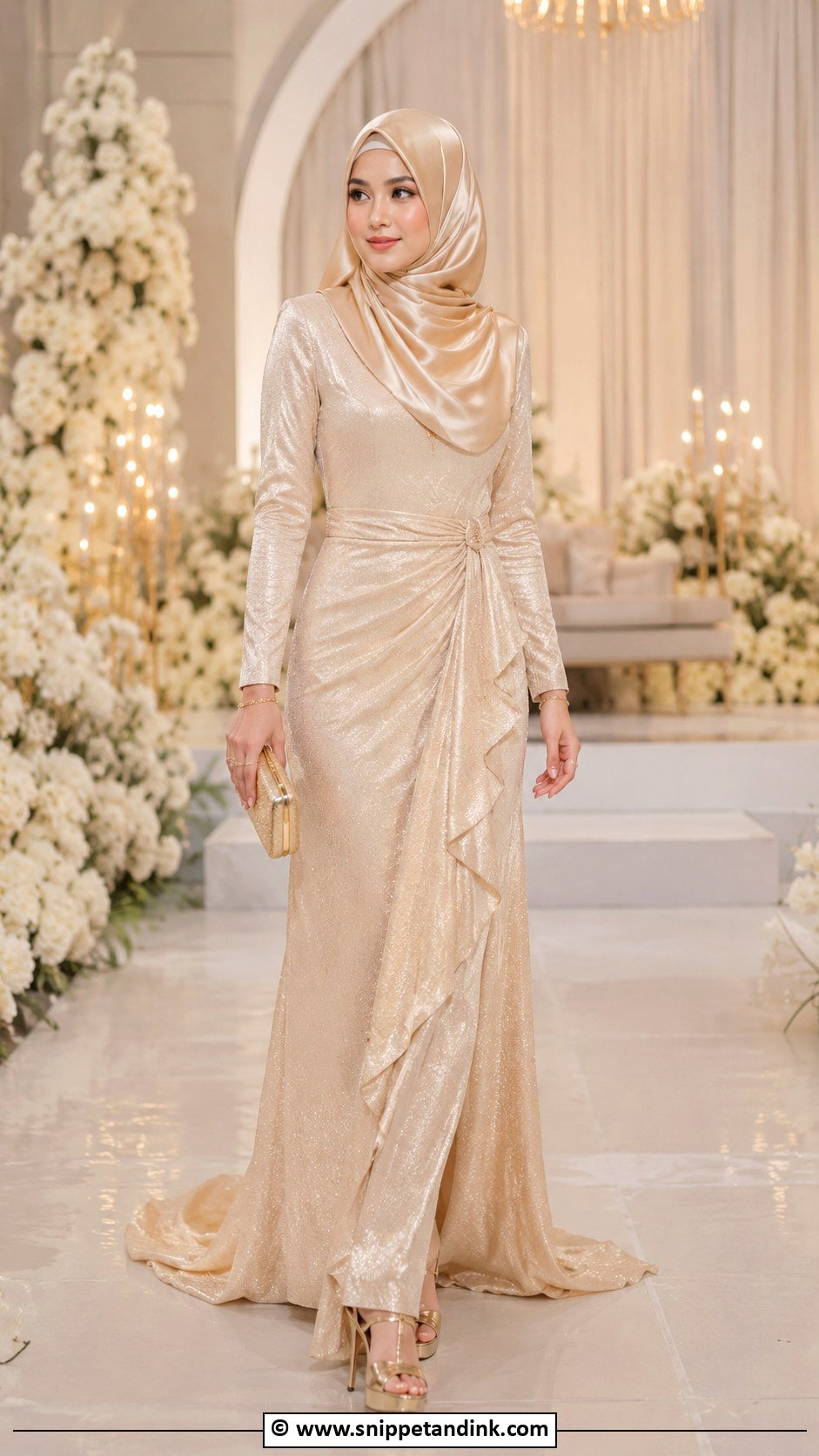
Gold warms the face, which is why it suits a champagne gown better than a stark white one. I’d pick a soft gold satin or chiffon, not metallic lamé, which glares under flash. One rule I hold to: if the dress is heavily embellished, the hijab stays plain, and if the gown is simple, a lightly beaded wrap can carry the detail. Gold shoes and fine gold jewelry keep the tones in one family.
16. Silver Bridal Hijab With Crystal Dress
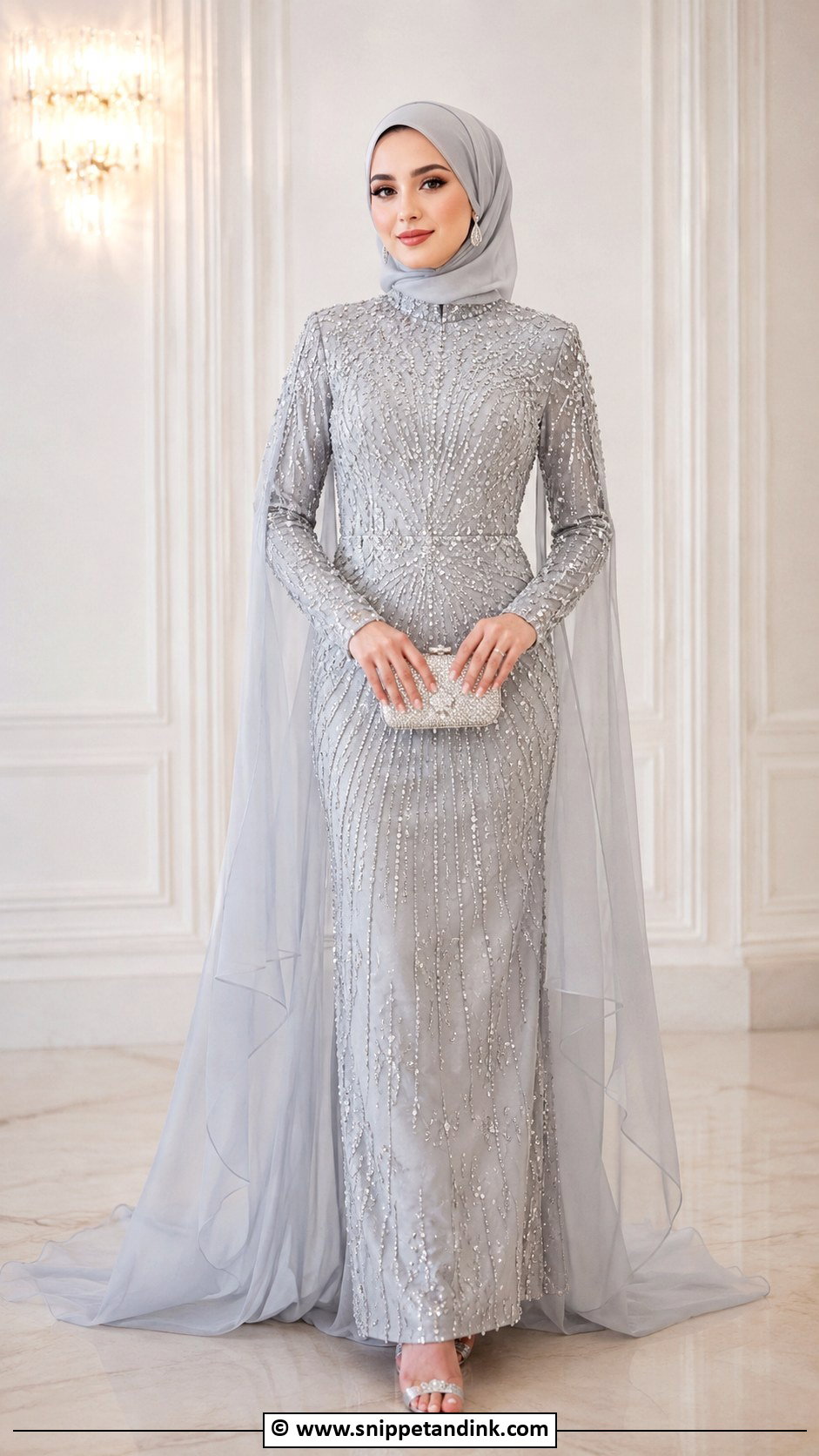
A crystal gown under strong reception lighting can bounce a lot of light back up into the face, so the silver hijab should be soft, not shiny. A matte silver chiffon over a satin undercap gives a cool glow without competing. Silver shoes, a small crystal clutch and drop earrings are enough. If your photographer uses direct flash, ask for a test frame at the fitting; heavy crystal close to the chin can blow out in pictures.
17. Ivory Bridal Hijab With Kaftan Dress
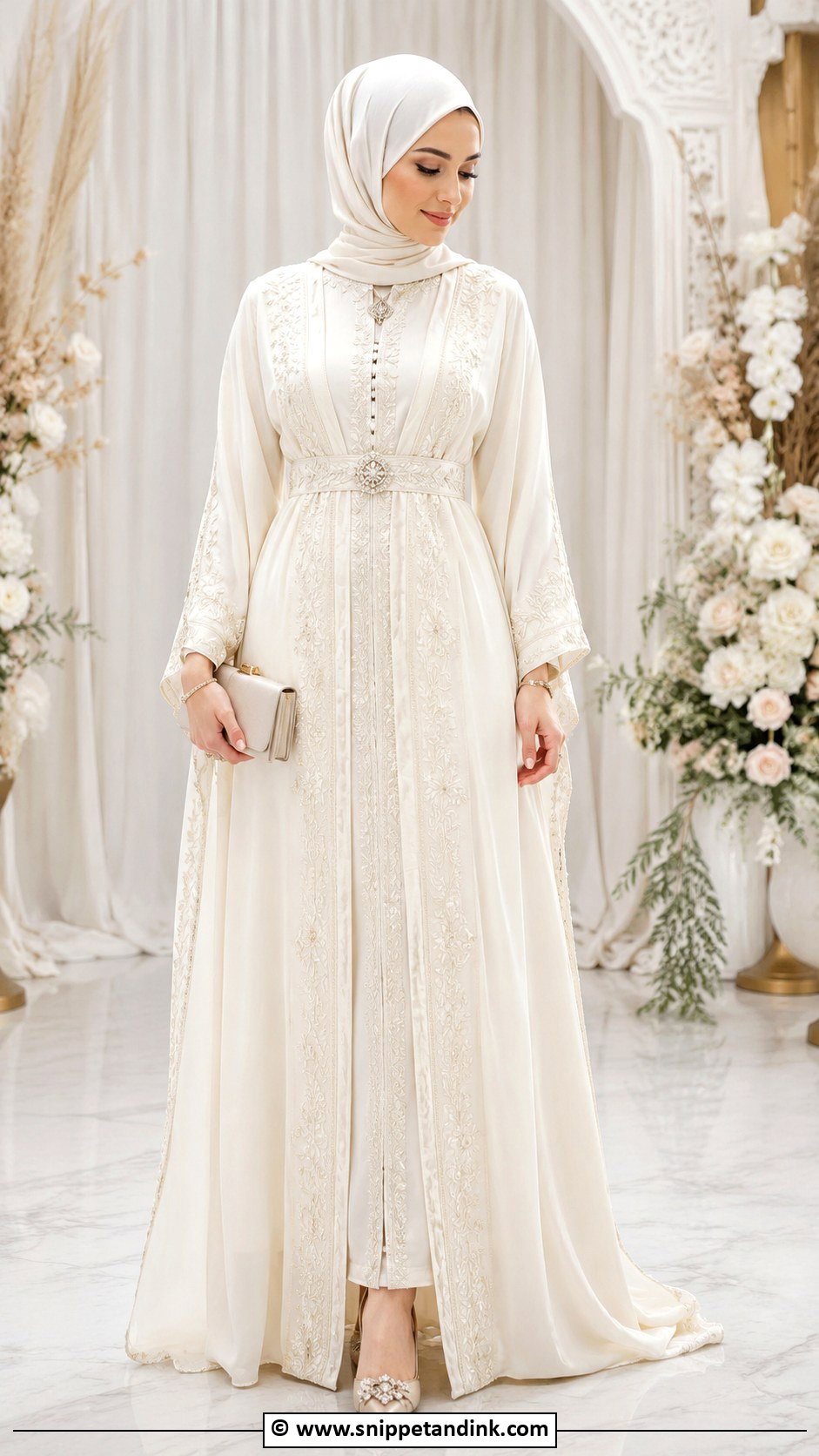
A kaftan gives the easiest movement of anything here, and it suits home ceremonies and long cultural events where you will sit on low seating. The embroidery usually runs down the front panel and sleeves, so a plain ivory hijab lets it show. I’d avoid a long hijab tail with a wide kaftan sleeve; the two flap together and look untidy in photos. Embellished flats are a sensible choice under the long hem.
18. Bridal Hijab With Abaya Wedding Dress
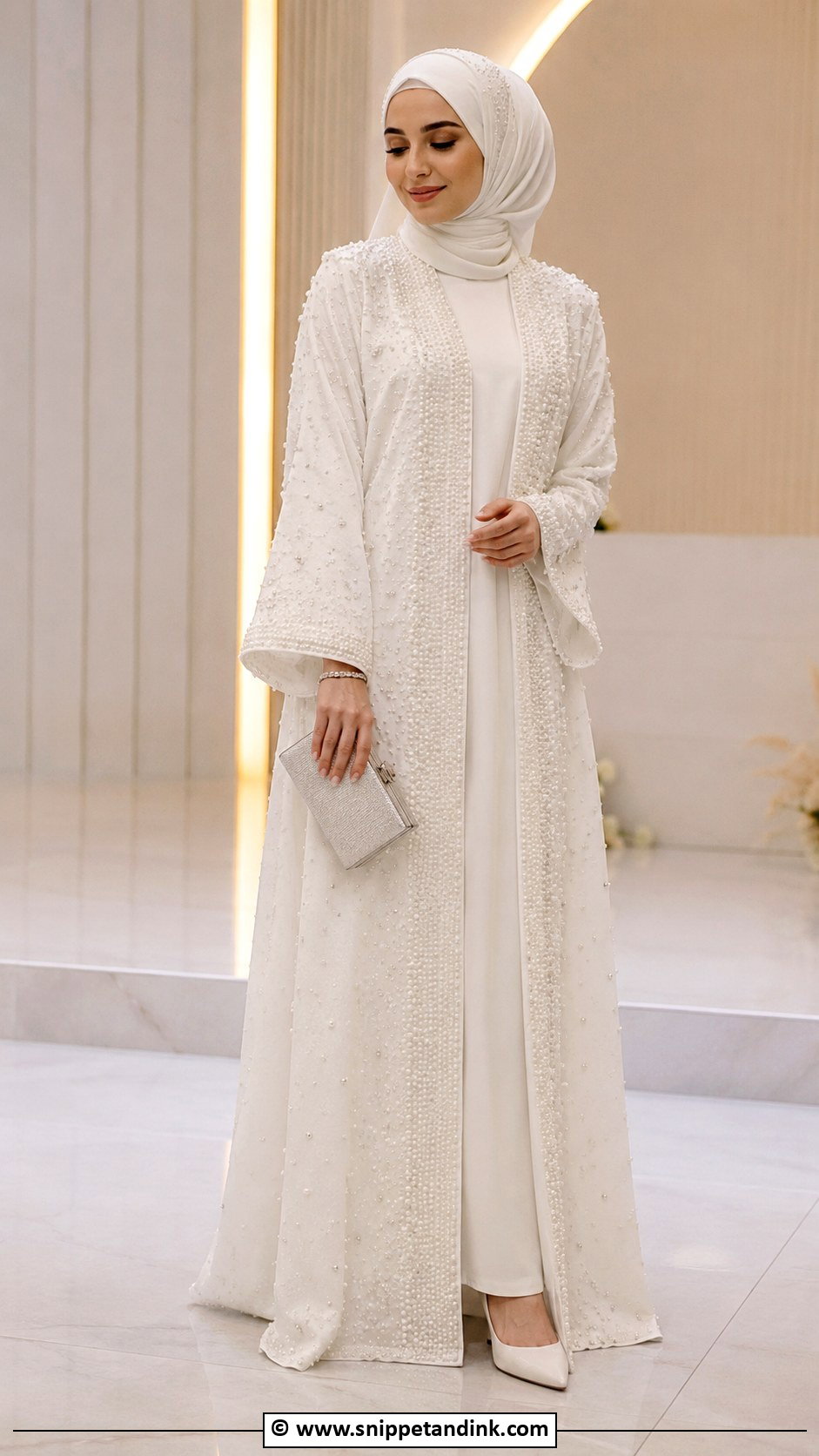
A wedding abaya in white, ivory or soft champagne with pearl work or lace panels gives full coverage with real bridal detail. I match the hijab exactly to the abaya so the line runs unbroken from head to hem, then drape one side over the shoulder. Check the abaya sleeve length while holding a bouquet, since arms bent at the elbow pull sleeves up more than people expect. Pointed pumps and a small metallic clutch finish it.
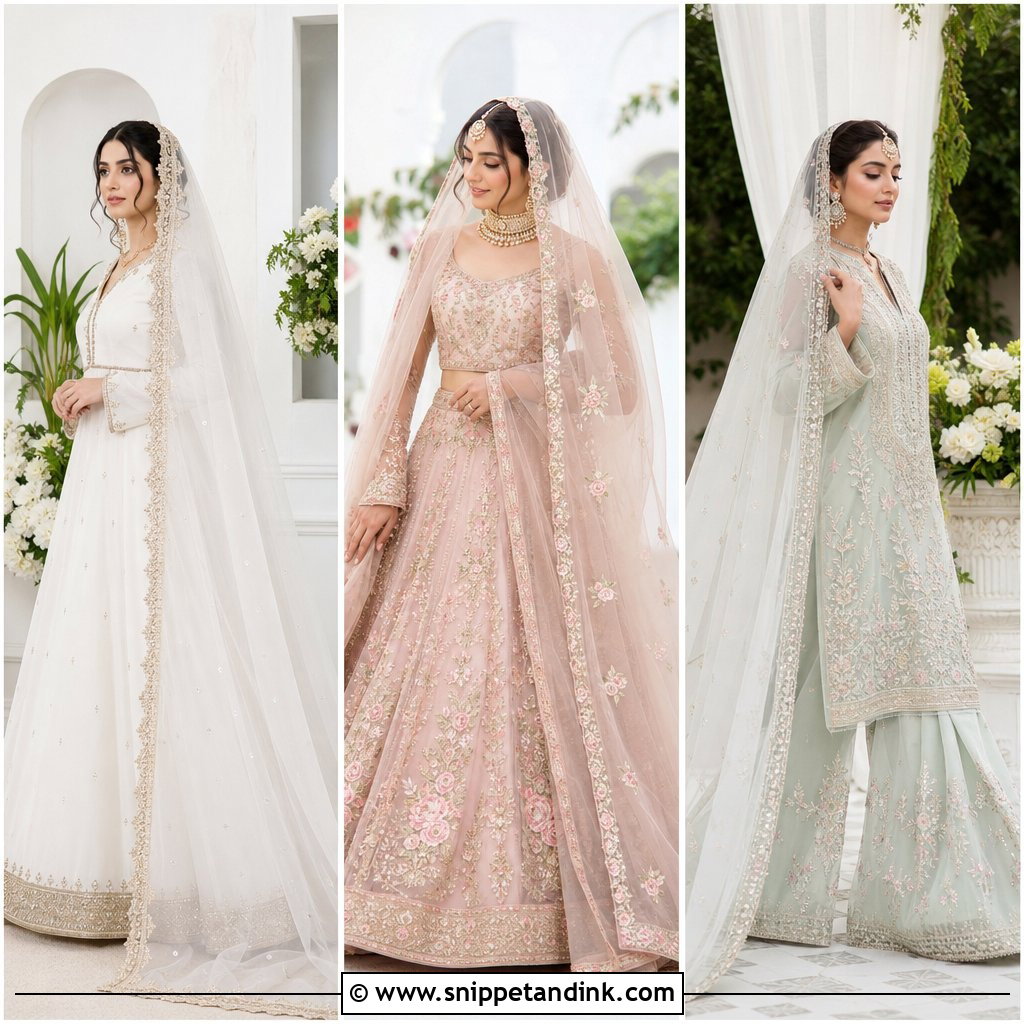
19. Bridal Hijab With Lehenga Outfit
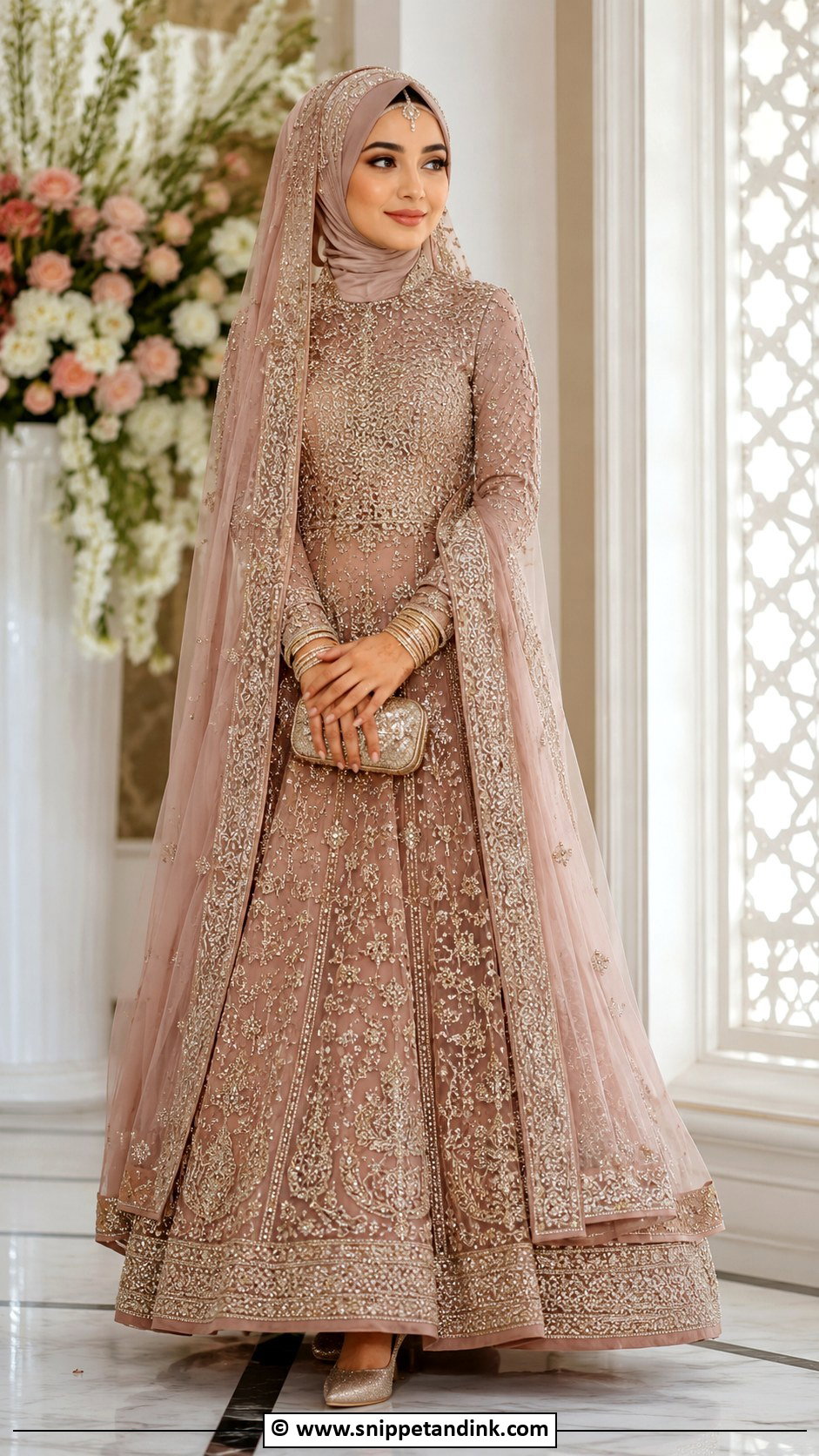
With a lehenga outfit, the hijab and the dupatta have to agree on who leads. When the dupatta is heavily worked, I keep the hijab a soft neutral and pin the dupatta across the body or over one shoulder, never over the head on top of the wrap, which adds weight and hides the face. Choose a blouse with long sleeves and a high neck. Bangles and a clutch that matches the embroidery tie the set together.
20. Bridal Hijab With Sharara Outfit
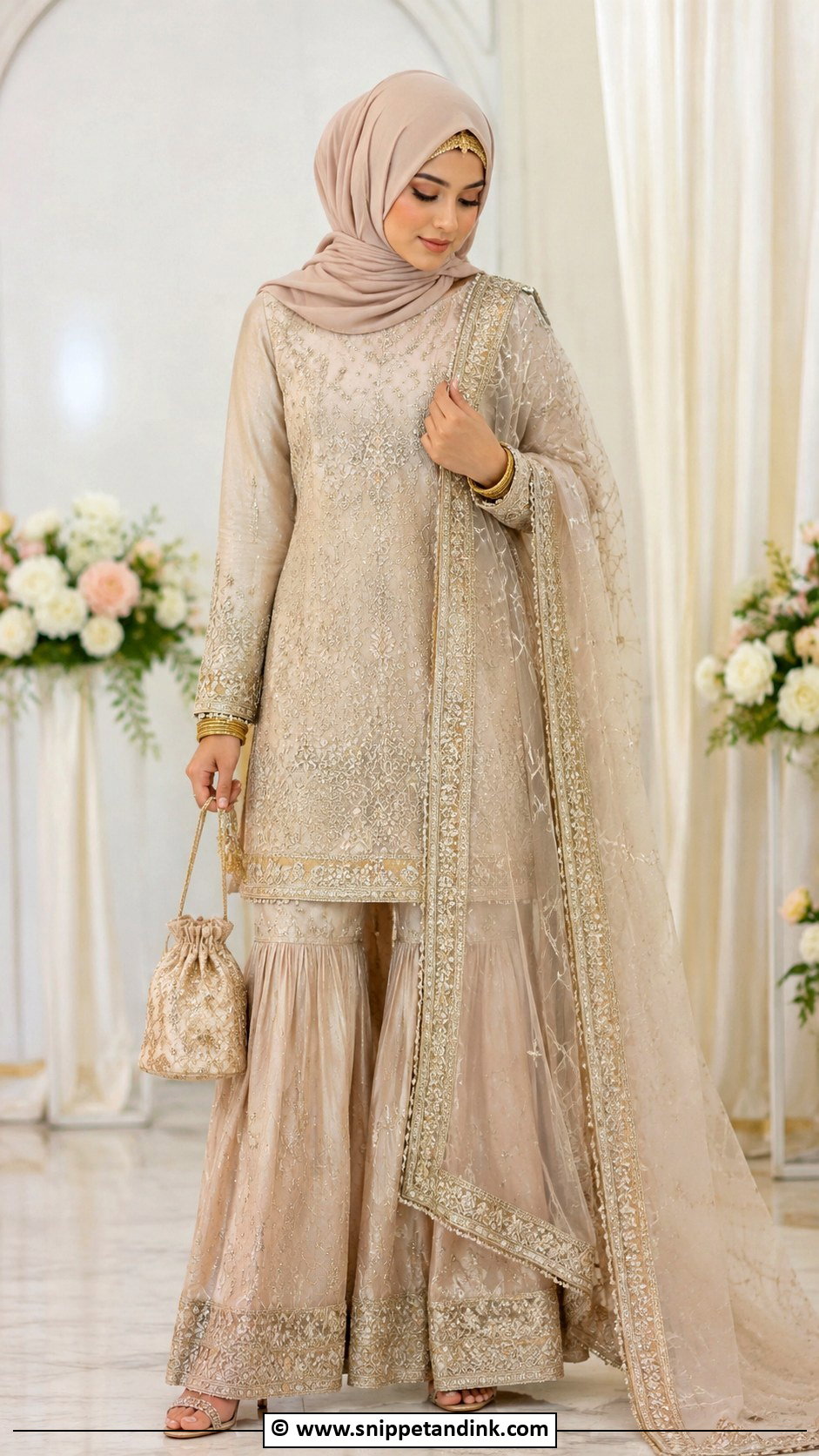
A sharara is the most comfortable traditional option for long events, because the wide-leg sharara pants let you move and sit freely while a long kameez keeps coverage. Silk, brocade, chiffon and organza all work; I check the hem length with your actual shoes, since sharara flares drag and catch when they are an inch too long. A soft hijab in a coordinating shade, a dupatta over one shoulder, and a small potli bag.
21. Bridal Hijab With Gharara Outfit
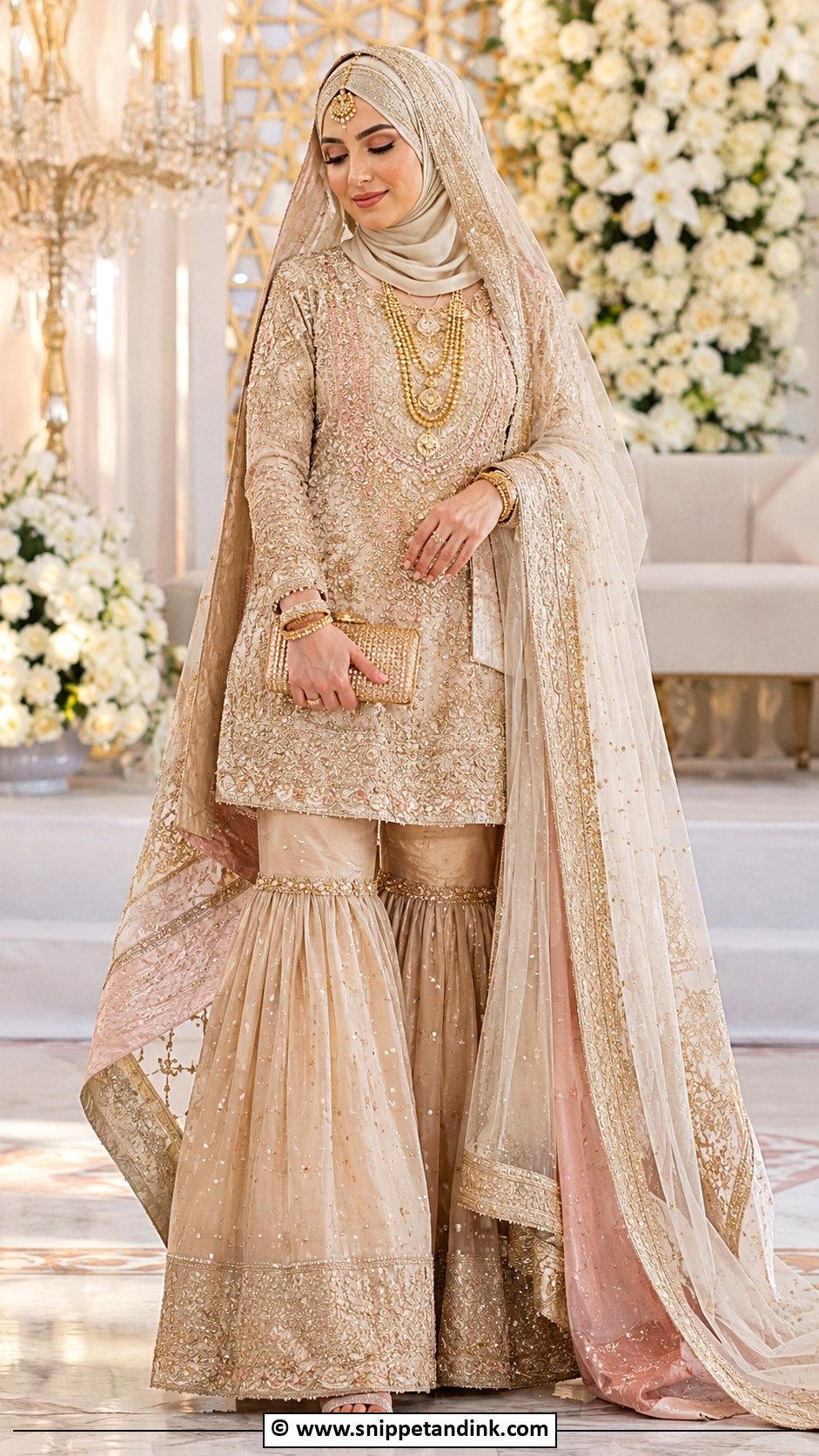
The gharara has its flare at the knee, so the volume sits low and the top is usually shorter. That balance is why I keep the hijab simple here, and add the drama with the dupatta. Ivory, blush, gold, maroon and soft pastels all suit this cut. Match metals to the embroidery, gold for warm thread and silver for cool. Wear shoes you can walk in; the knee flare already needs careful steps.
22. Bridal Hijab With Pakistani Dress
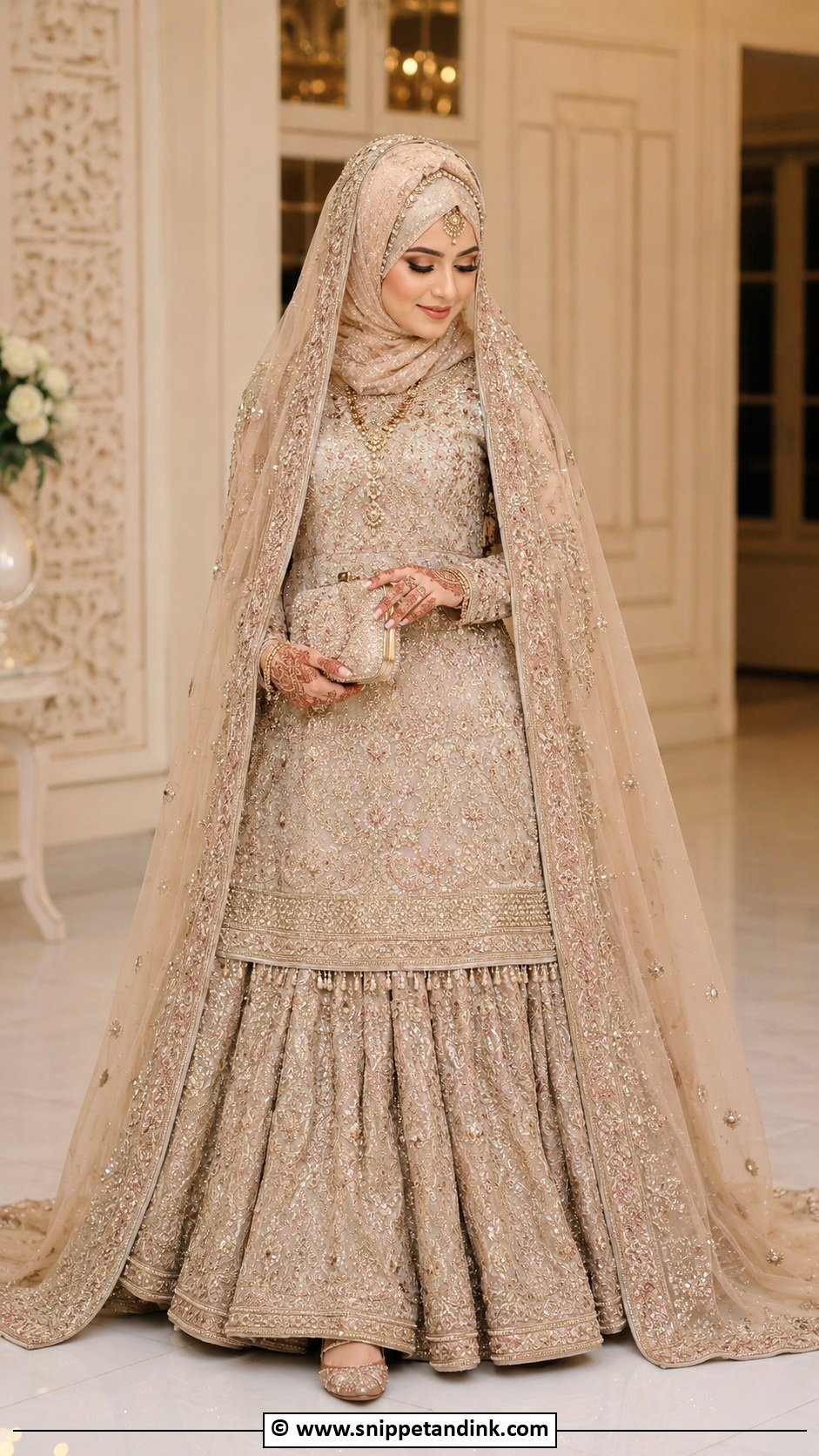
A Pakistani dress often carries heavy zardozi or dabka work, and that is exactly when I tell a bride to keep the hijab plain. Pick up one embroidery thread colour or match the base fabric, then let the dupatta carry the embellishment. A long shirt with lehenga, sharara or gharara and full sleeves gives coverage. If you have several events, a plain hijab in a neutral shade can often be reused across two outfits.
23. Bridal Hijab With Turkish Wedding Dress
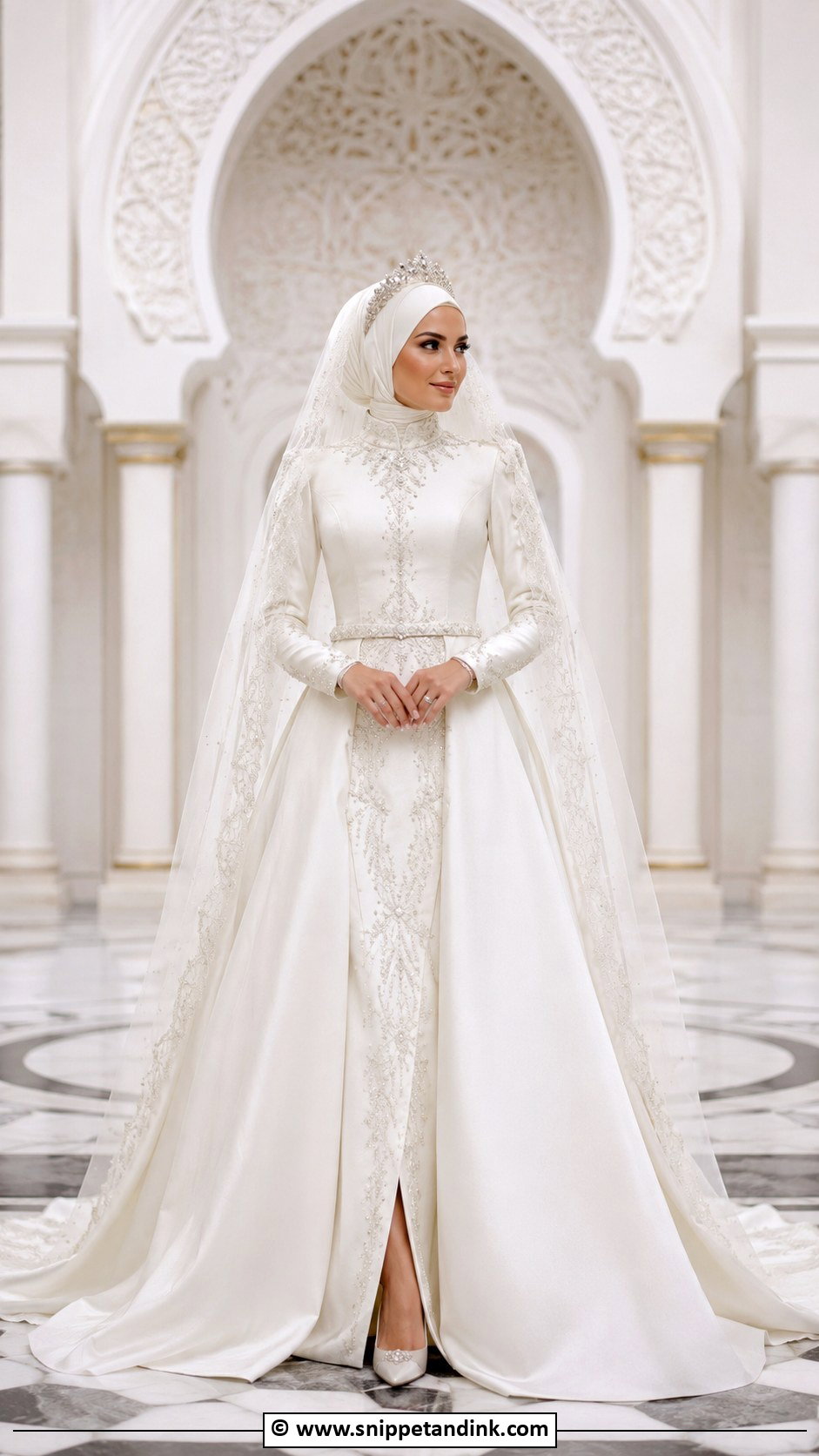
Turkish-style bridal gowns tend to have a defined waist, high neck and long sleeves in heavier fabric, so they suit a smooth satin or chiffon hijab wrapped closely around the face. A long veil, crown or jeweled band adds the formal touch, but I’d pick one, not all three. Ivory shoes and classic jewelry finish it. Halls with grand architecture suit the shape.
24. Bridal Hijab With Moroccan Kaftan
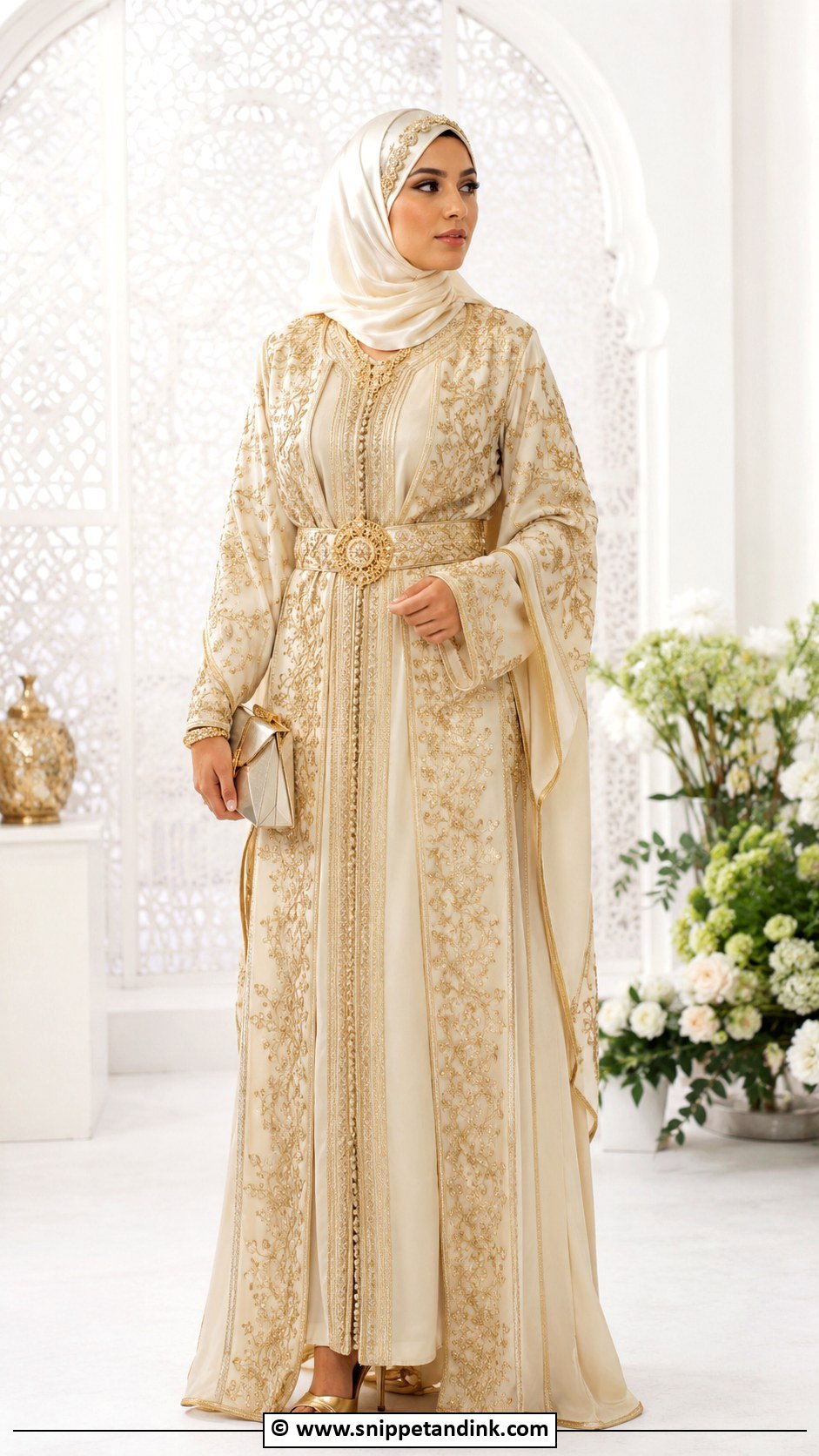
A Moroccan kaftan usually comes with metallic embroidery and a belt, and the belt is what gives the outfit its shape. I take the hijab colour from the embroidery thread, gold or champagne usually, rather than the base fabric, which ties the head to the waist visually. Flowing sleeves move a lot, so keep bracelets minimal. Gold heels and traditional-inspired jewelry suit it.
25. Bridal Hijab With Modern Jumpsuit
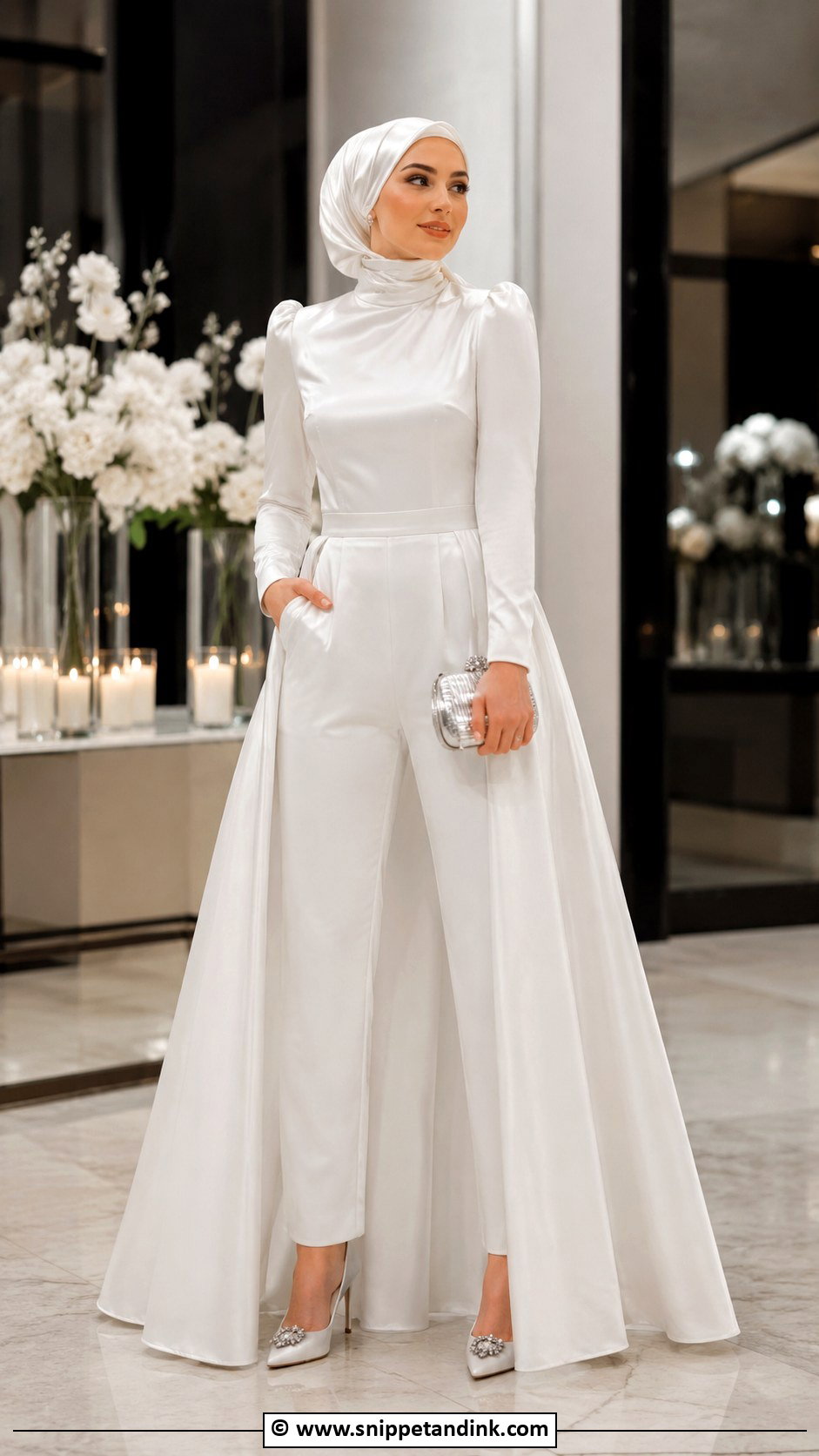
A jumpsuit appeals to brides who want to dance freely, but it needs one formal piece to read as bridal: a detachable overskirt, a cape or a train. Choose wide legs, long sleeves and a high neck. Wide legs also hide the shoe height, so a pointed toe peeking out lengthens the line. I’d pair a smooth satin hijab and keep accessories sleek, crystal studs and a small clutch. City weddings and receptions suit it best.
26. Bridal Hijab With Two Piece Set
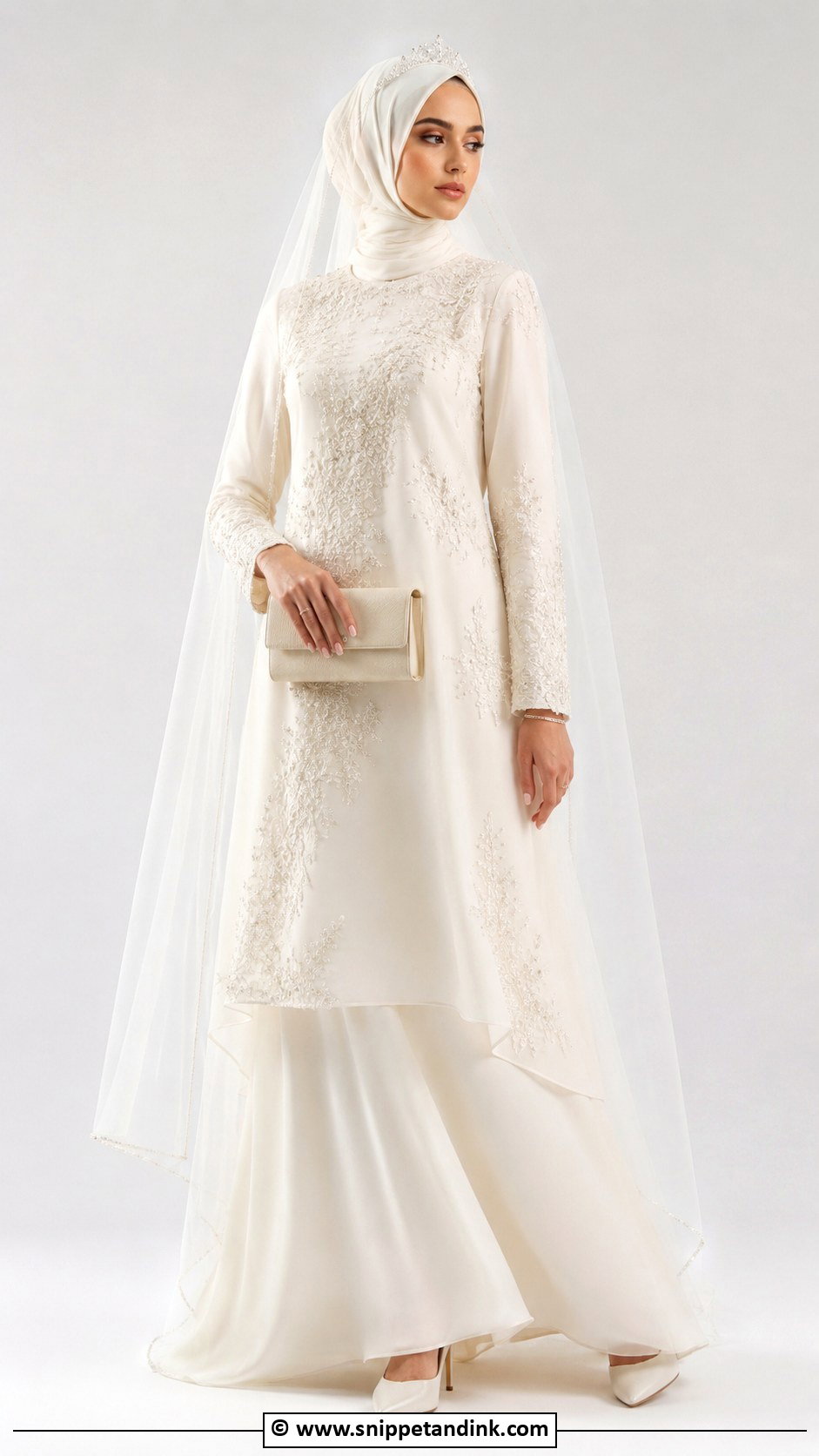
A two-piece set only looks bridal when the proportions are right. The top needs to be long enough to cover past the hip, with full sleeves and a high neck, so the hijab can sit over the shoulder without exposing the waistline when you lift your arms. Satin, crepe, organza or beaded tulle make it feel special. A matching hijab gives a clean line, and a veil or cape adds the ceremony.
27. Bridal Hijab With Blazer Dress
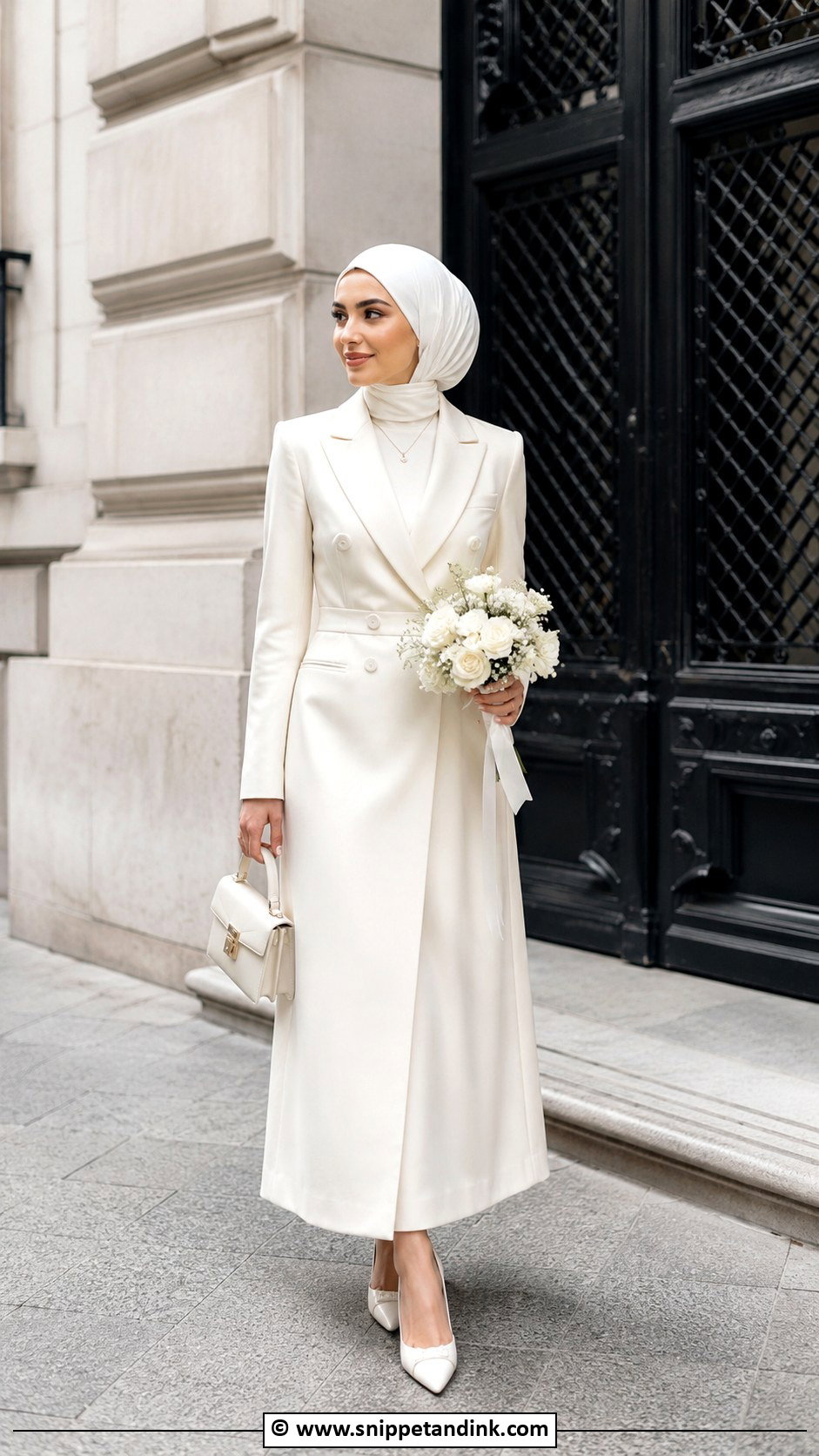
Tailoring and hijab go well together if the collar is handled properly. I tuck the hijab neatly under the blazer lapels so it frames the face and lets the collar sit flat; worn over the lapels, the fabric bunches. A long blazer gown or a blazer over a floor-length skirt or wide trousers, with a high inner layer. Pointed heels and a small top-handle bag. Civil ceremonies are where this one shines.
28. Bridal Hijab With Detachable Train
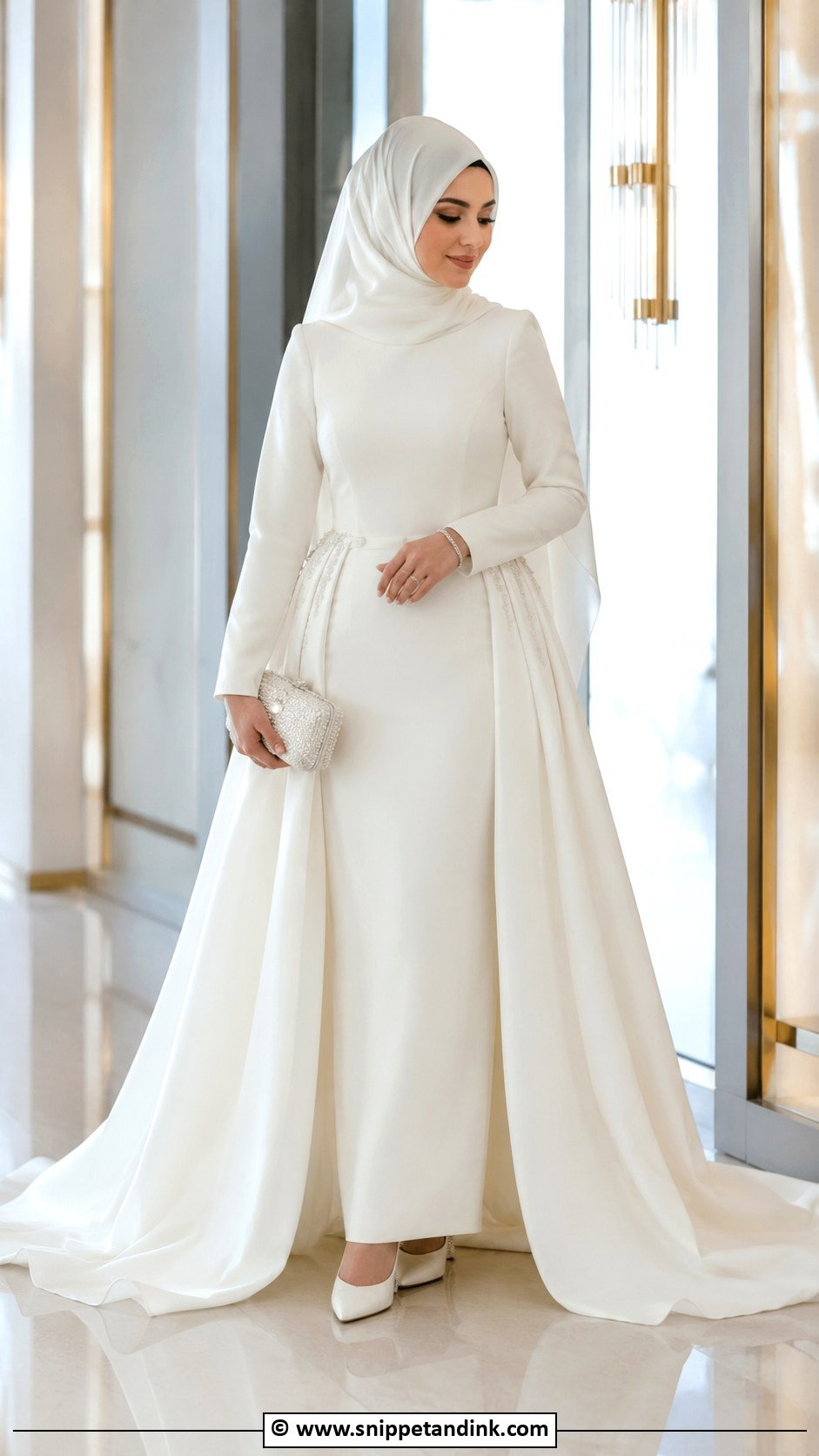
A detachable train gives you the ceremony entrance and then comes off for the reception. Attached at the shoulders, it can drag the hijab backwards, so I check the attachment points sit below the hijab drape, not on top of it. A plain satin or chiffon wrap keeps the focus on the train. Have someone practise unhooking it at the fitting so it takes seconds, not ten minutes in a bathroom.
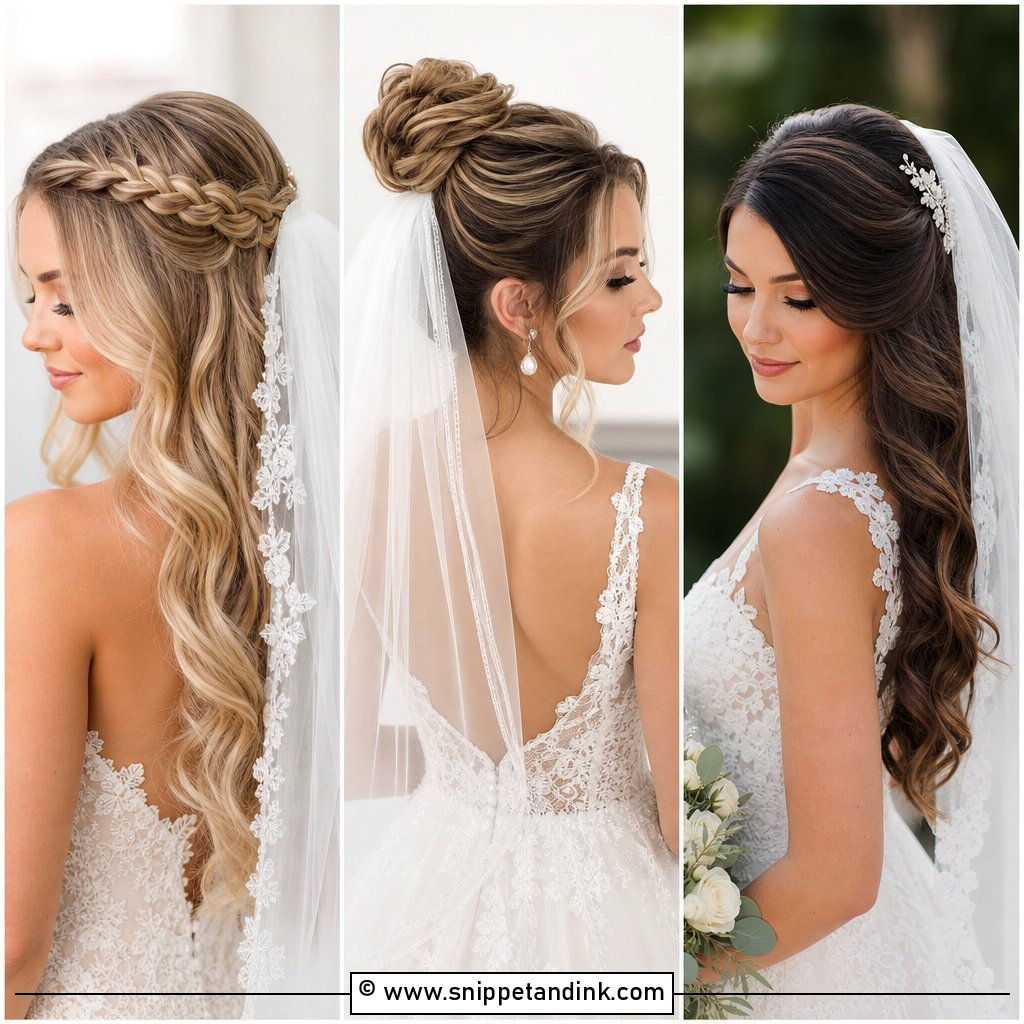
29. Bridal Hijab With Long Veil
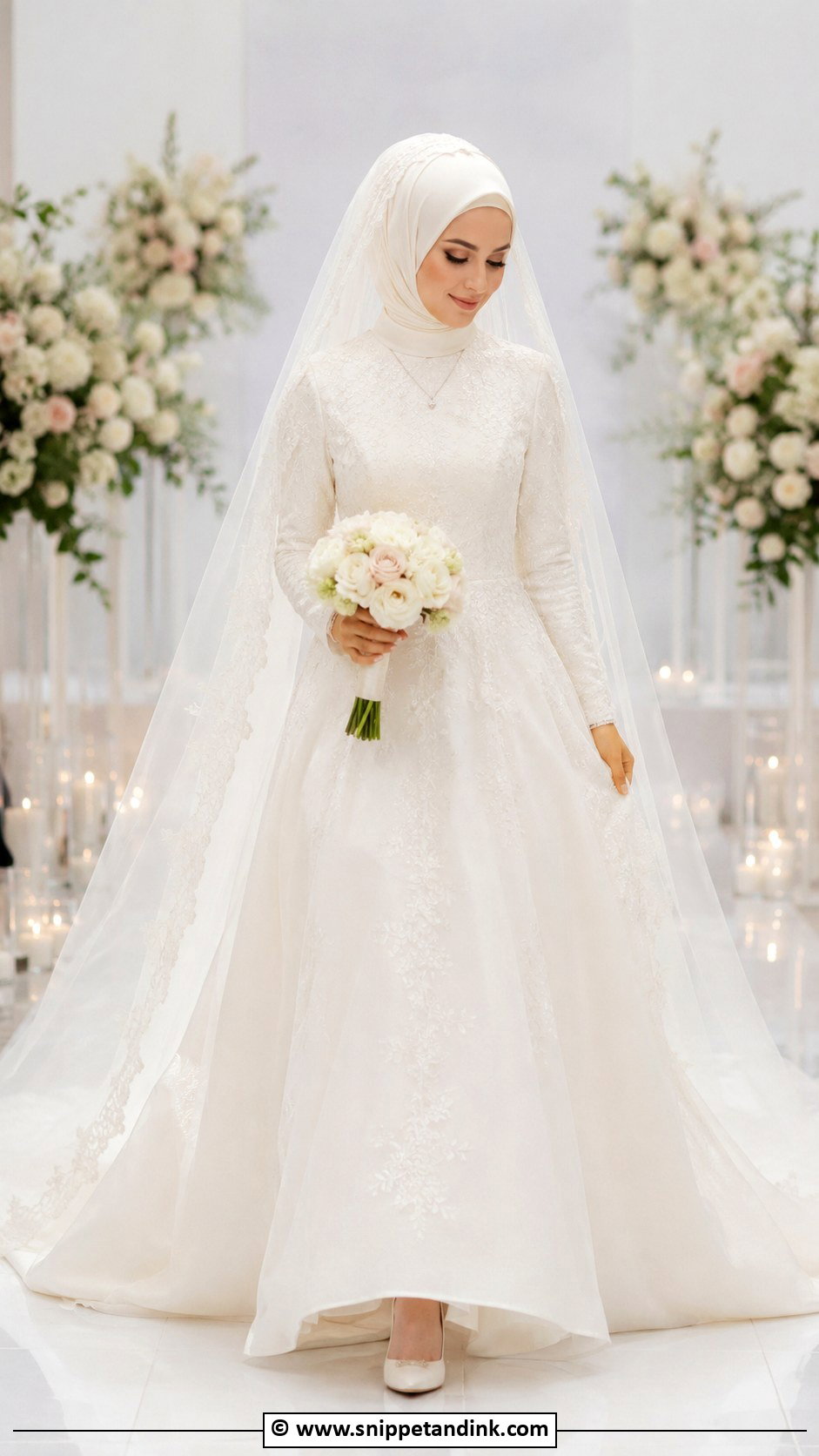
A long veil gives you movement in every walking shot, chapel or cathedral length depending on your venue. The base has to be secure first; I pin the veil comb through the undercap at the crown so it falls behind the shoulders without pulling the wrap out of shape. A modest gown with long sleeves and a high neckline, simple heels and a bouquet small enough not to crush the veil when you hold it.
30. Bridal Hijab With Colored Wedding Dress
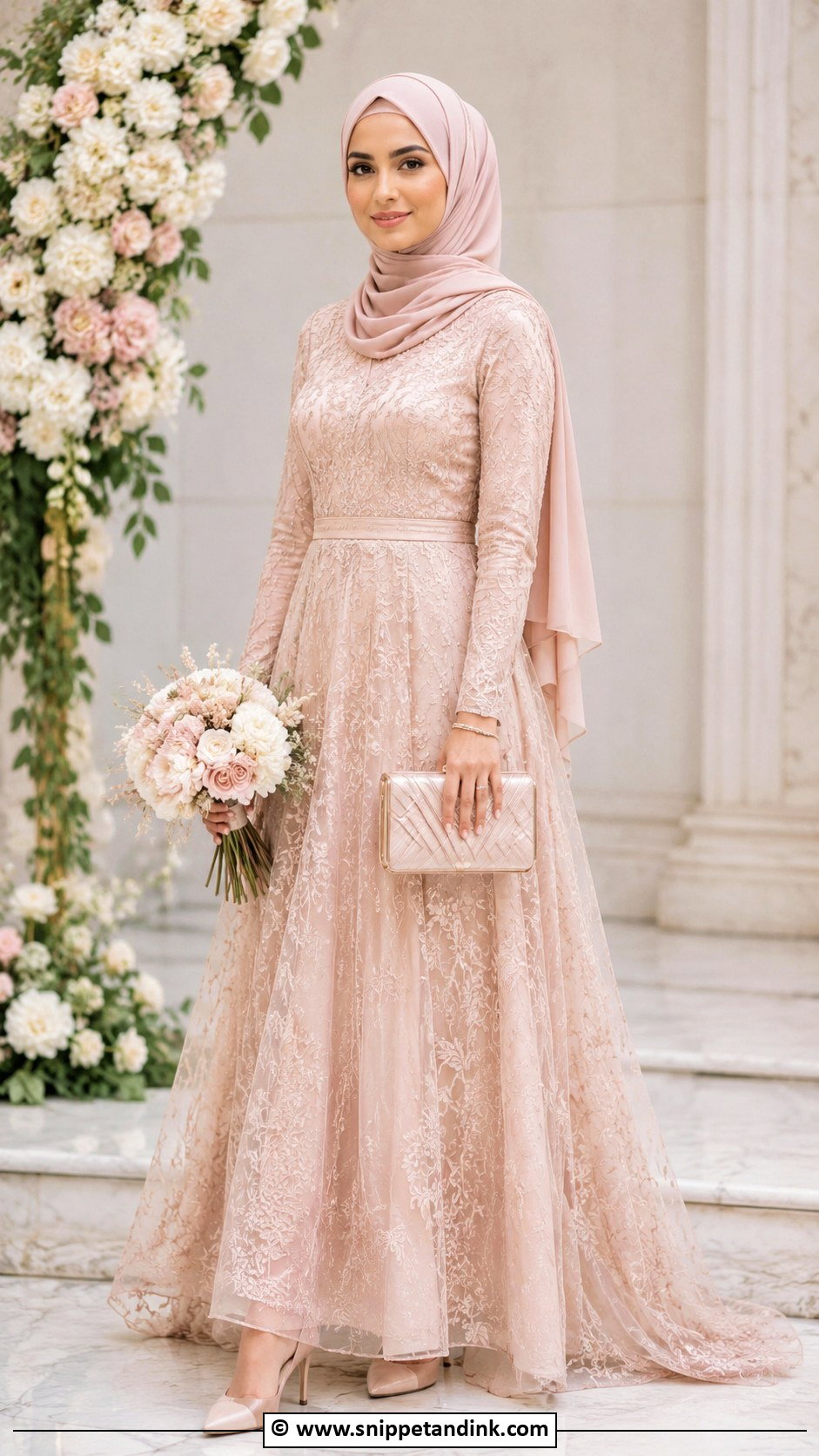
Colour is a confident choice for a nikah, a second outfit or a cultural ceremony. Blush, champagne, sage, dusty blue, gold and deep jewel tones all read as bridal in the right fabric. I either match the hijab exactly or go one shade lighter, which brightens the face. Keep shoes, jewelry and bag inside the same colour story; three unrelated colours is where these outfits start to look busy.
Heat, Prayer Breaks and a Slipping Wrap on the Day
A bridal hijab has to last through more than the ceremony. These are the situations I plan for in advance, because they come up at almost every wedding I dress.
Warm venues and summer dates
Satin and heavy embroidered wraps hold heat around the neck. For an outdoor or summer wedding I’d choose chiffon over a breathable cotton undercap, keep the drape loose at the throat, and plan a cooler indoor spot for the long portrait session. Blotting powder and a small fan help more than you’d think.
Taking the outer layer down
If you will need to redo your wrap for wudu or to change between a nikah outfit and a reception outfit, tell your stylist early. I’ll choose a style that can be lifted and repinned in a few minutes, keep the undercap in place, and teach a sister or friend the two or three key pins so you are not waiting for me to come back.
A small repair pouch
- Spare pins matching the ones used, plus four safety pins.
- A travel steamer or small damp cloth for creases after the car ride.
- Clear double-sided fabric tape for a drape that keeps sliding off the shoulder.
- A spare undercap in case of makeup or sweat marks.
Hand the pouch to one person, not your bag. When the wrap slips at the reception, you want someone who can fix it in two minutes behind a door rather than a search through the car.
The Dress Comes First, the Pins Do the Rest
Every pairing above starts with the dress. Once you know its shape and fabric, the hijab choice narrows quickly: chiffon for softness, satin for polish, lace trim for romance, pearls or crystals for shine. After that it is about construction. A firm undercap, pins placed where the weight sits, and a full trial wearing the real veil or crown will decide whether the wrap still looks right at the last dance. Do that trial, take photos of the pin placement, and the morning will be calm.
You'll Like These Ideas:


Leave a Reply