
Wedding dress codes are still mostly written in binary terms, suit or gown, but formalwear itself has far more room than the invitation suggests. Suits, jumpsuits, long skirts with jackets, tunics and matching sets can all read as wedding-ready without pointing to one gender expression. Most of my work on these outfits is tailoring: getting a jacket to fit shoulders it wasn’t drafted for, setting a trouser rise that sits comfortably, choosing fabric that holds a line through a long day. Satin, crepe, linen, velvet and silk all carry formality, and loafers, boots, brooches, ties and scarves finish the job. Here are 25 outfits for guests, wedding parties and nearly-weds, with the fit notes I’d give at a fitting.
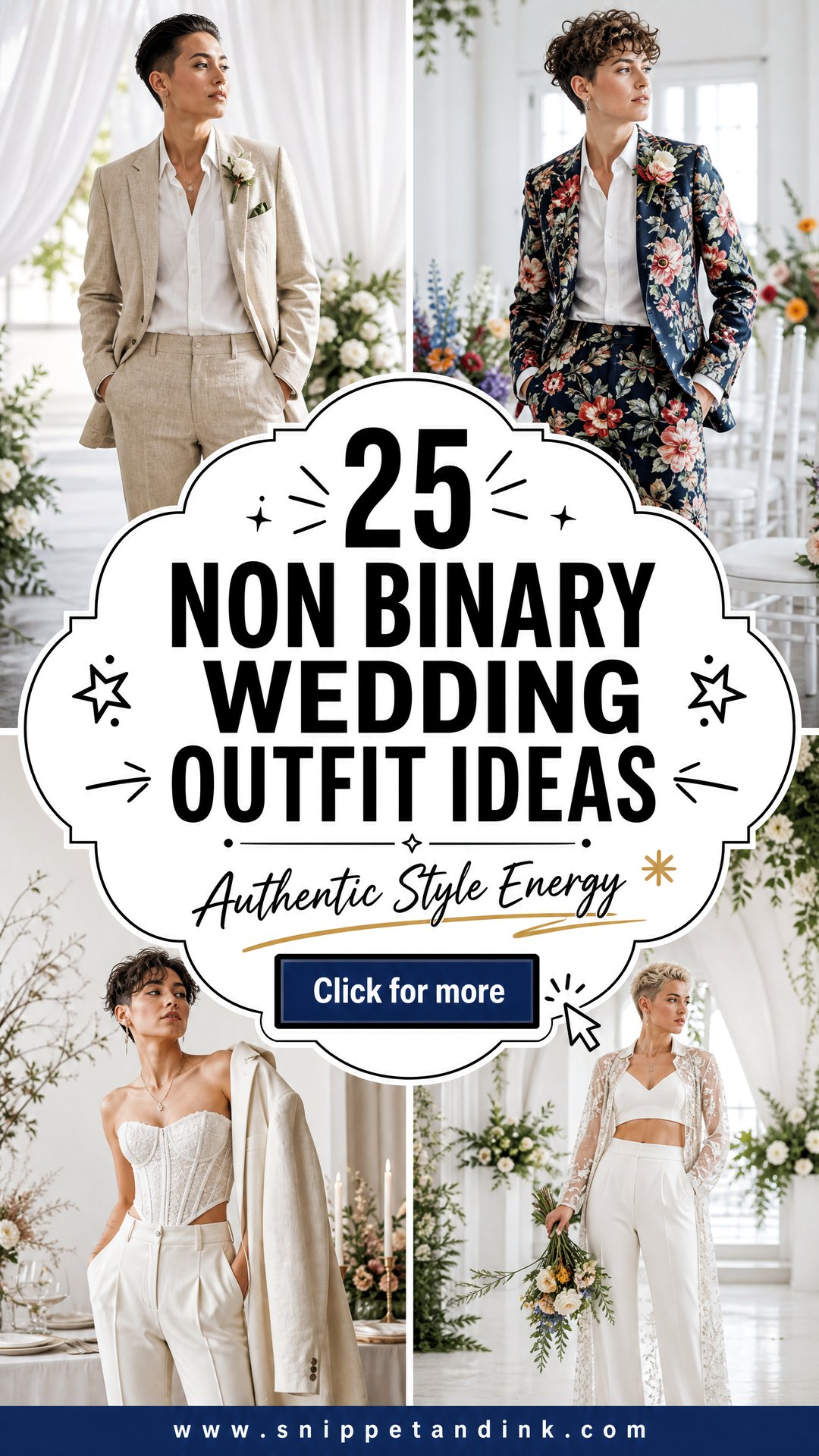
Off-the-Rack Suits Are Drafted for Two Body Shapes
Most ready-made formalwear is cut from one of two patterns. Menswear assumes straight hips, broad shoulders and no bust; womenswear assumes a bust, a nipped waist and narrow shoulders. Plenty of people fit neither. That’s why I tell clients to shop both sections freely and buy for the part that’s hardest to alter.
What a tailor can and can’t change
- Easy: sleeve length, trouser hem, taking in a waist, tapering a leg, moving a button.
- Possible but fiddly: letting out a seat or waist, as long as there’s seam allowance inside.
- Very hard: shoulder width, jacket length and adding room through the chest. Buy these right.
If neither section fits your shoulders and chest, made-to-measure is worth pricing. Many tailors now offer gender-neutral fittings, and it’s fine to ask for one when you book. If you wear a binder, bring it to every fitting, choose a breathable jacket lining and plan a quiet spot to take a break. Binders aren’t meant for very long wear, and a wedding day can easily run past ten hours.
1. Non Binary Wedding Suit Outfit
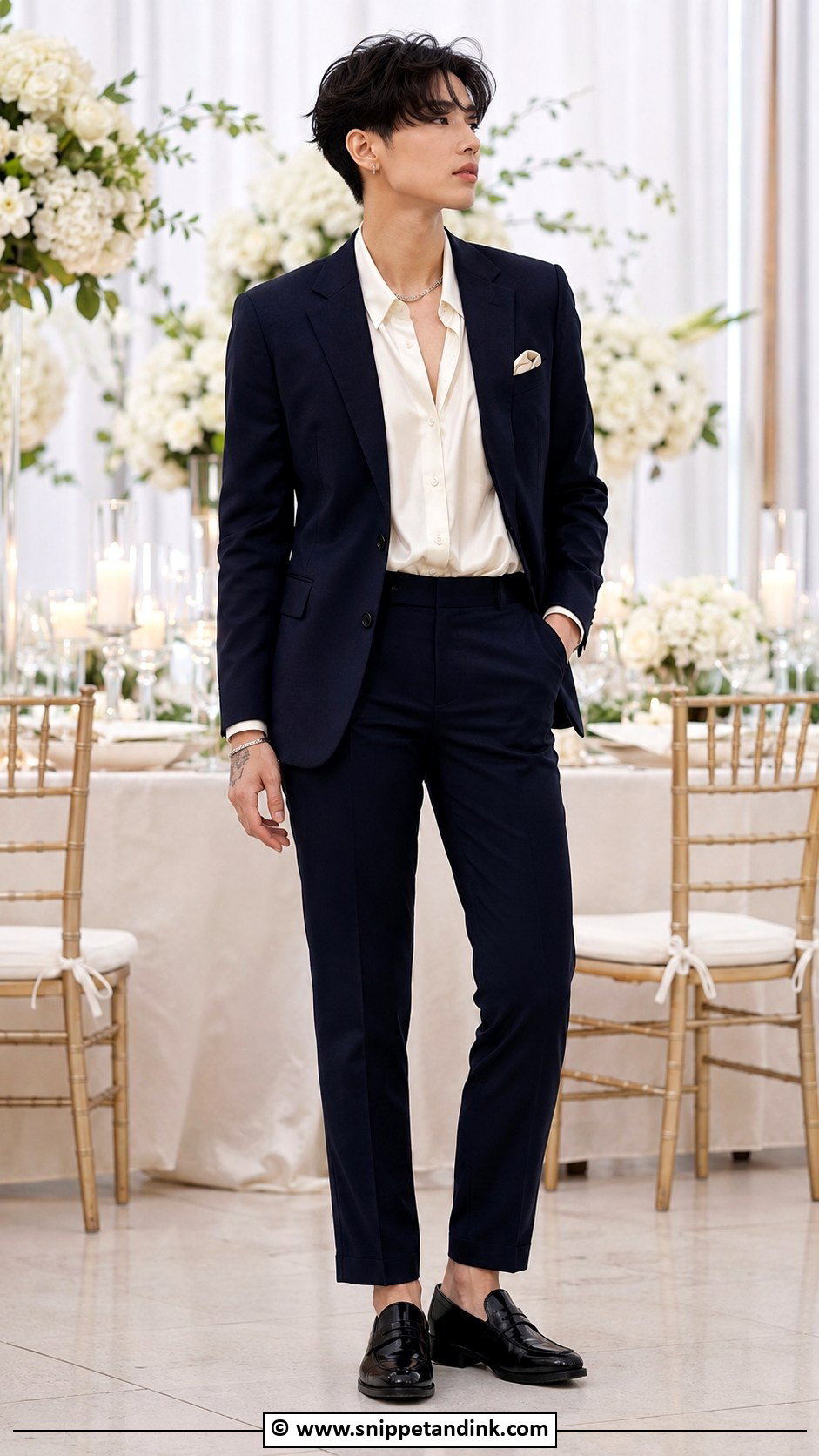
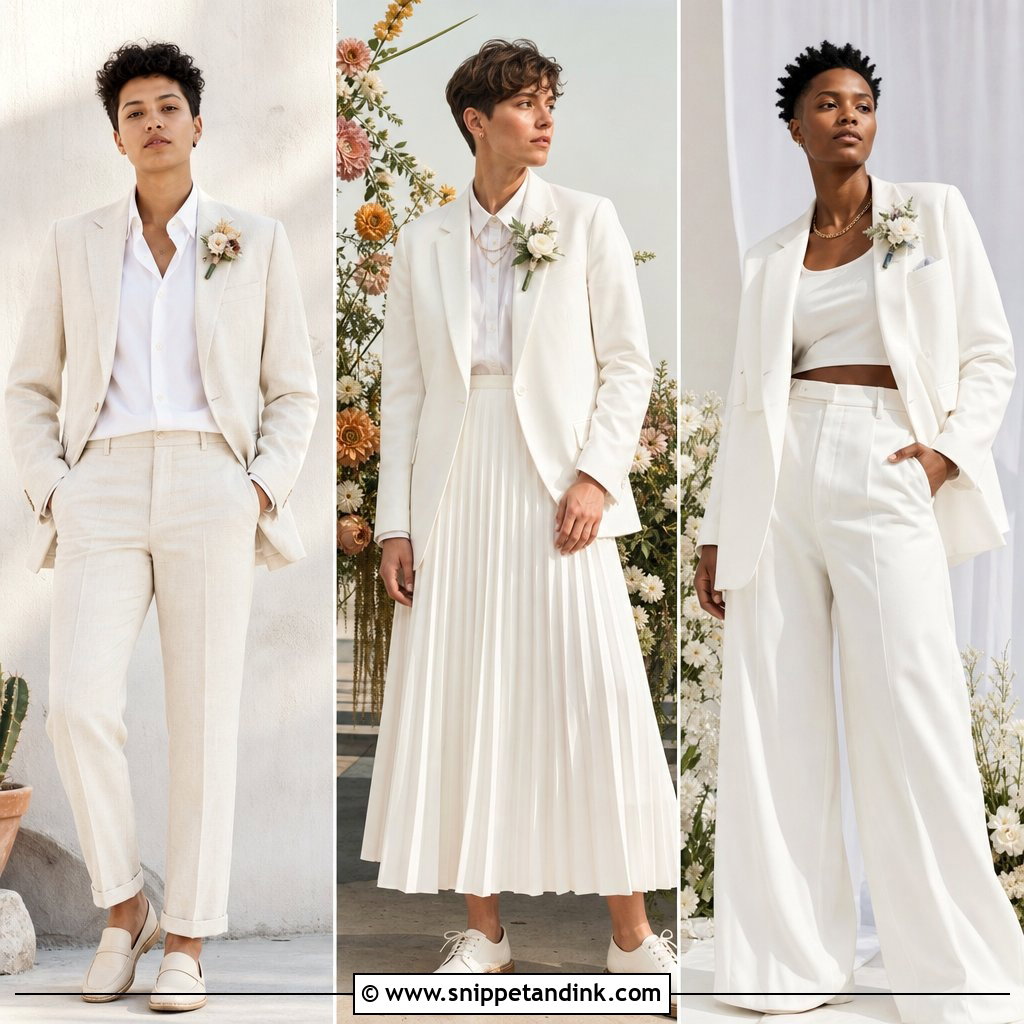
A tailored suit is the most versatile starting point, as long as the cut suits your body rather than the size label. Boxy, cropped, slim, wide-leg or relaxed all work. Buy for the shoulders first, because that’s the one area a tailor can barely change; sleeves, waist and hem are simple adjustments. Black, navy, charcoal, ivory and deep green look sharp at formal weddings; soft blue, sage, beige or dusty pink suit spring and summer. Wear a silk shirt, fine knit or crisp button-up underneath, with loafers, dress boots or lace-ups. A pocket square, brooch, chain or tie personalises it.
2. Non Binary Wedding Jumpsuit Outfit
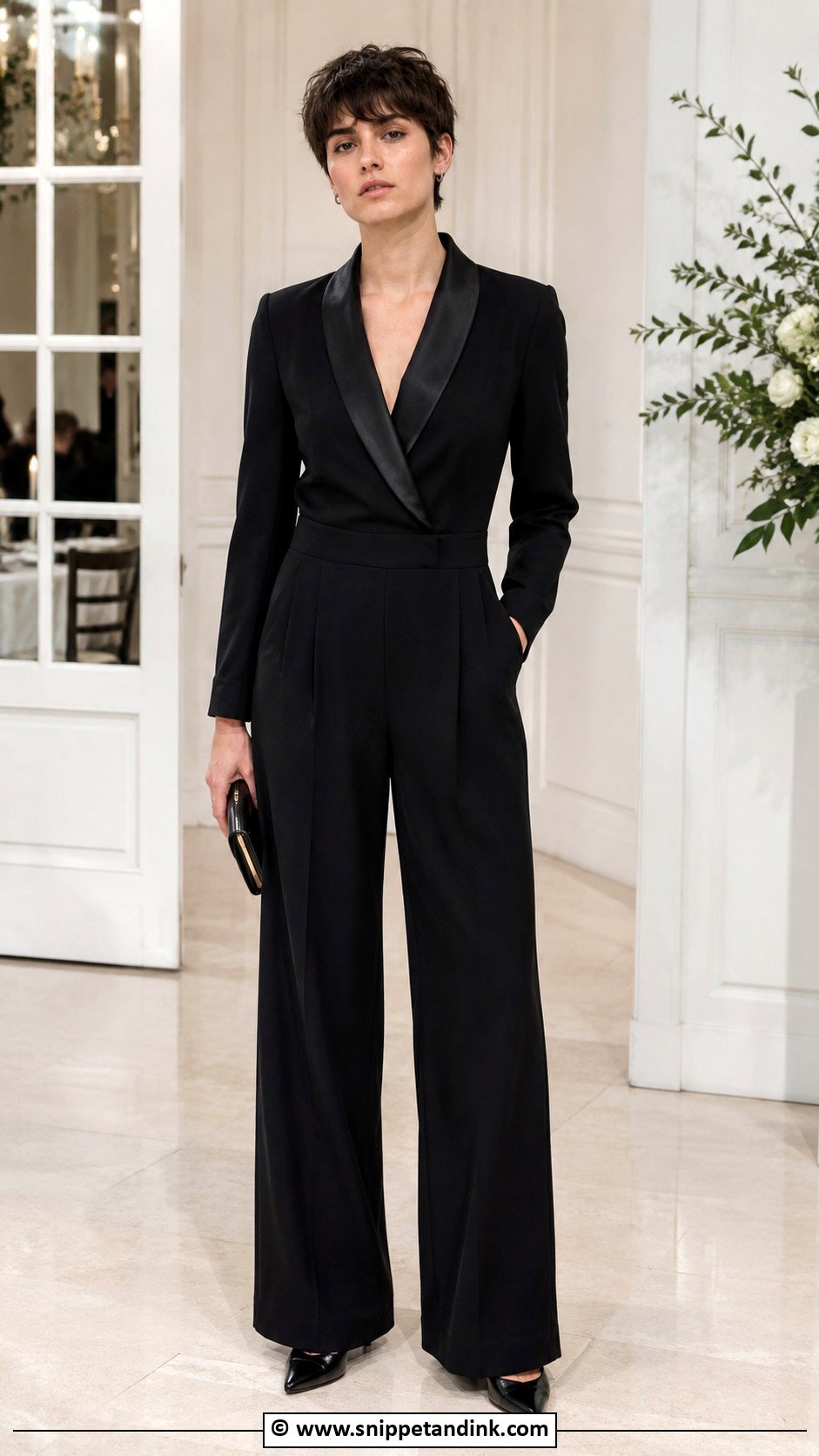
One piece, done. A jumpsuit gives structure and movement together, and it’s my usual answer for anyone who wants formal without a suit or a dress. Crepe, satin, silk blends and tailored ponte hold up best at a wedding. Wide legs feel elegant; a tuxedo-style version with satin lapels looks sharper. The fit point I check is the torso length, since a jumpsuit that’s too short from shoulder to crotch pulls every time you sit or raise your arms. Style it with block heels, loafers, pointed flats or ankle boots, and add a blazer for extra formality.
3. Non Binary Wedding Tuxedo Outfit
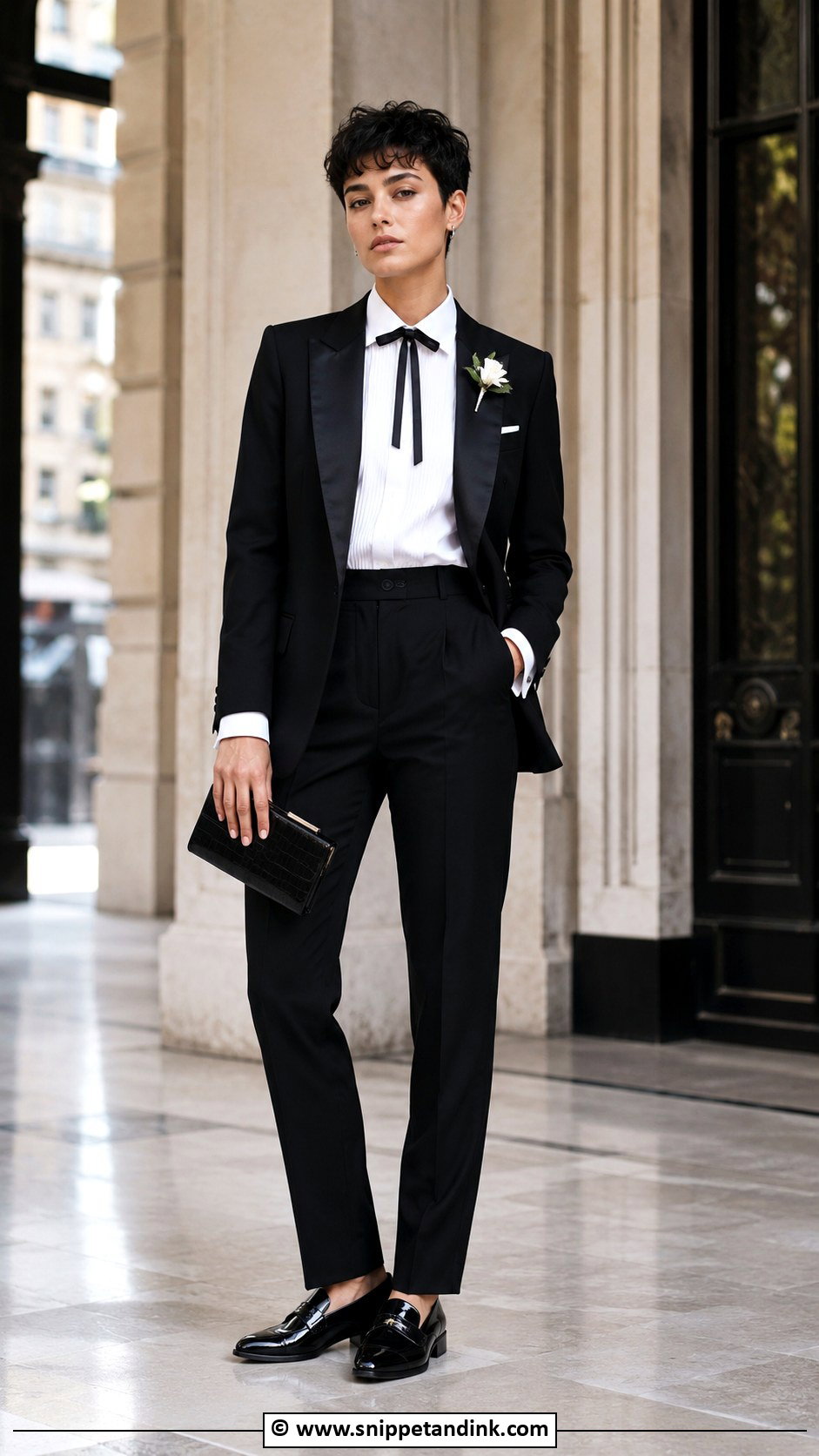
For black-tie weddings and evening receptions, a tuxedo outfit is the most correct choice there is, and it can still be personal. Black with satin lapels is classic; ivory, burgundy, midnight blue or forest green feel more individual. Underneath, a pleated shirt, silk blouse, sheer high-neck top or simple tank all work, with a bow tie, skinny tie, ribbon or no tie. Patent shoes are traditional, but polished loafers or sleek boots are fine. What separates a tux from officewear is crispness, so I keep the trouser break minimal and the jacket close at the waist.
4. Non Binary Wedding Blazer And Wide Leg Pants Outfit
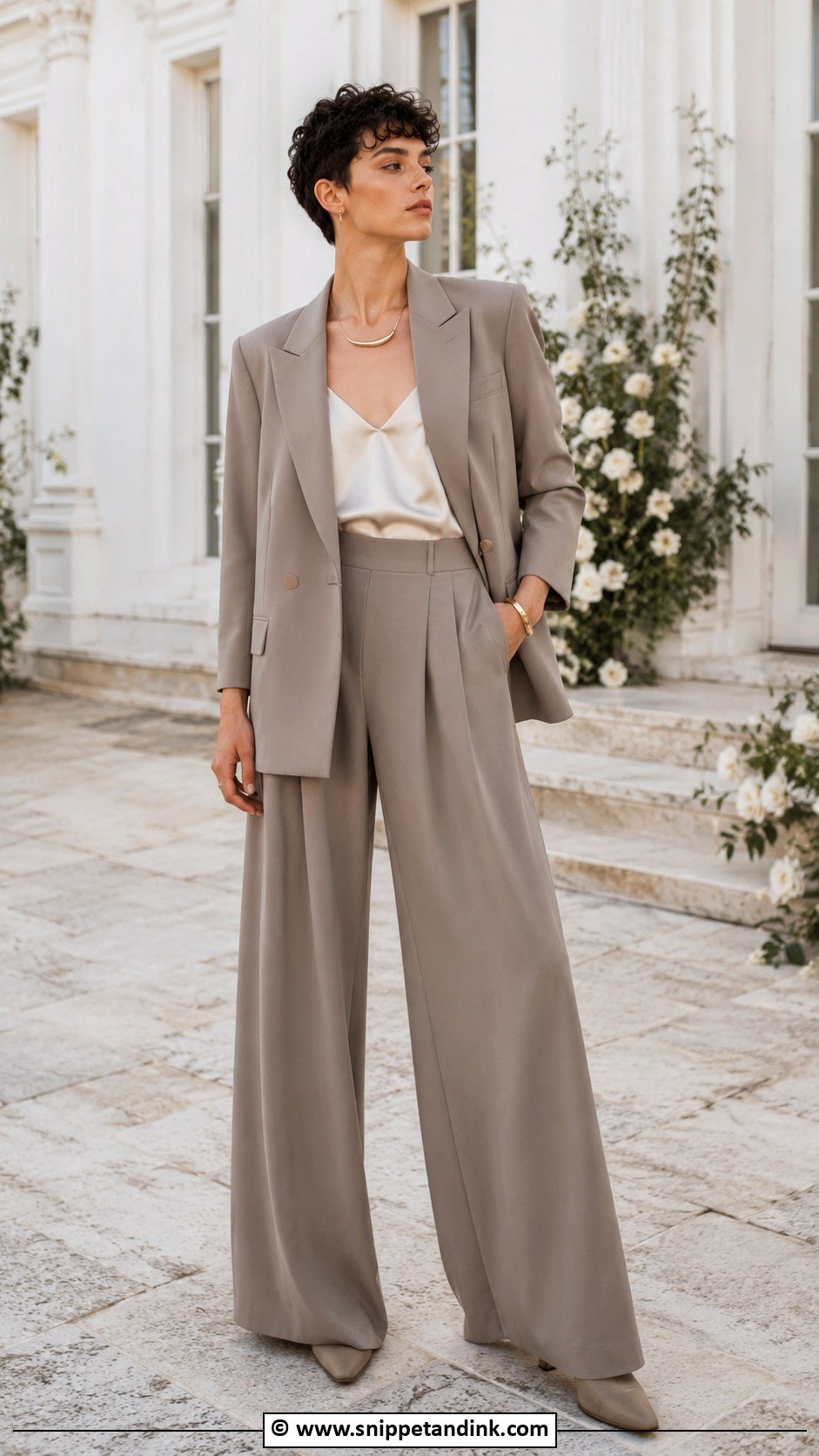
Wide-leg trousers soften tailoring without losing formality. Choose fluid satin, crepe or lightweight wool, with a structured blazer in the same colour family; tonal outfits look especially polished. Ivory, taupe, black, chocolate, slate blue and soft grey all work. Underneath, wear a silk camisole, fitted tee, mock-neck or dress shirt. Wide legs need hemming with the exact shoes you’ll wear, ideally just skimming the top of the shoe at the front; a centimetre too long and they’ll catch under your heel all evening. Platform loafers, heeled boots or pointed flats finish it.
5. Non Binary Wedding Vest And Trousers Outfit
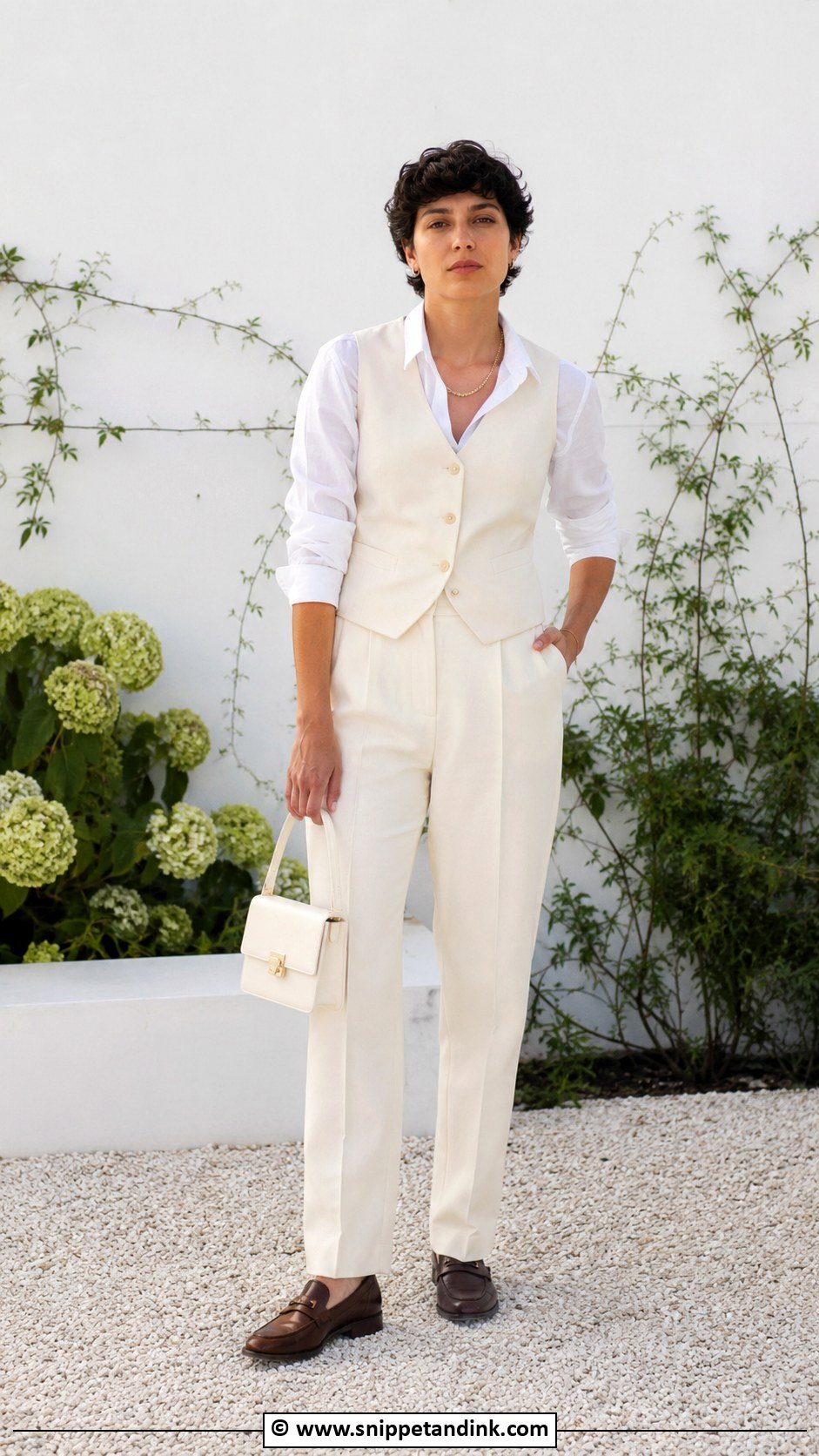
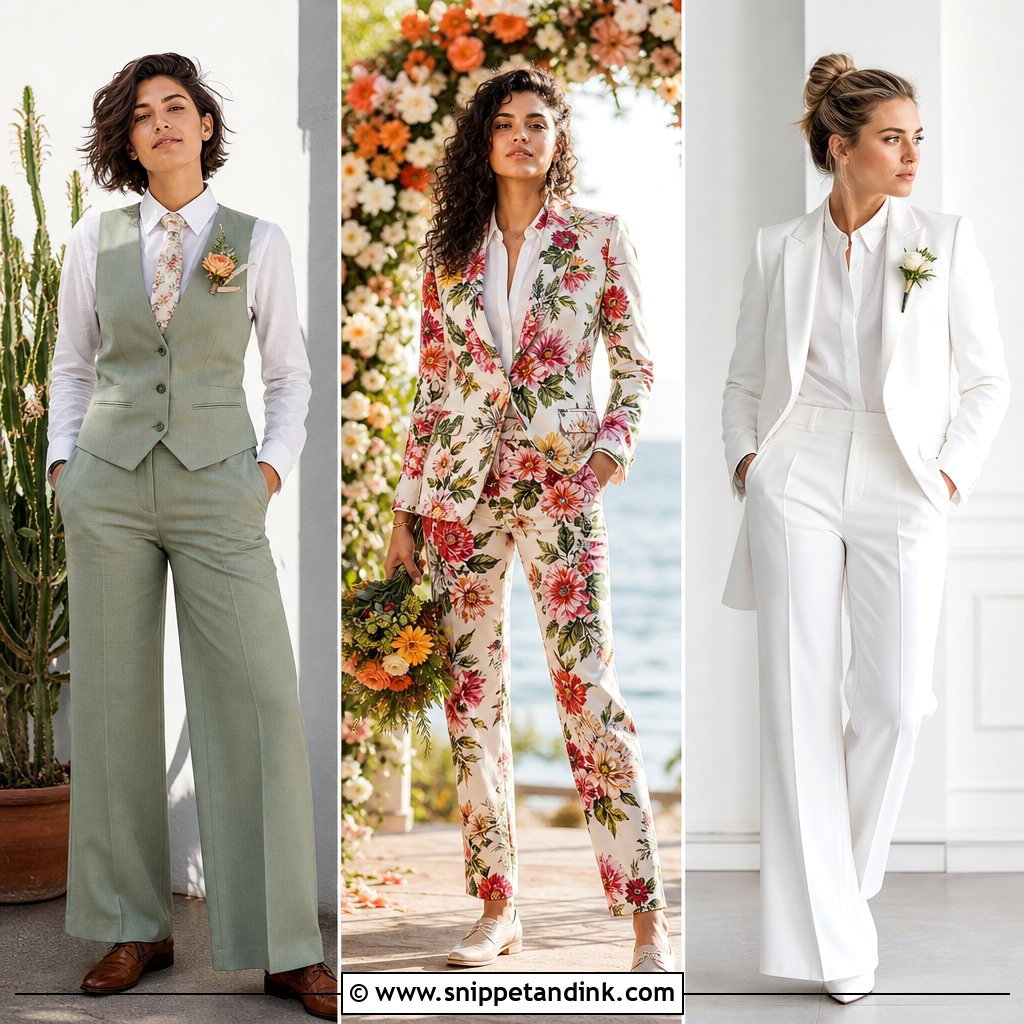
A vest and trousers outfit gives you tailoring without a jacket, which makes it my first suggestion for hot-weather weddings. A matching waistcoat and trousers in linen, wool, satin or suiting fabric looks refined, worn alone and buttoned or over a crisp shirt. Wide legs read softer; tapered legs read classic. A waistcoat must end where the trouser waistband begins. If shirt or skin shows between them, the trousers sit too low or the vest is too short. Loafers, dress sandals or boots finish it, with a chain, pocket square or lapel pin.
6. Non Binary Wedding Skirt Suit Outfit
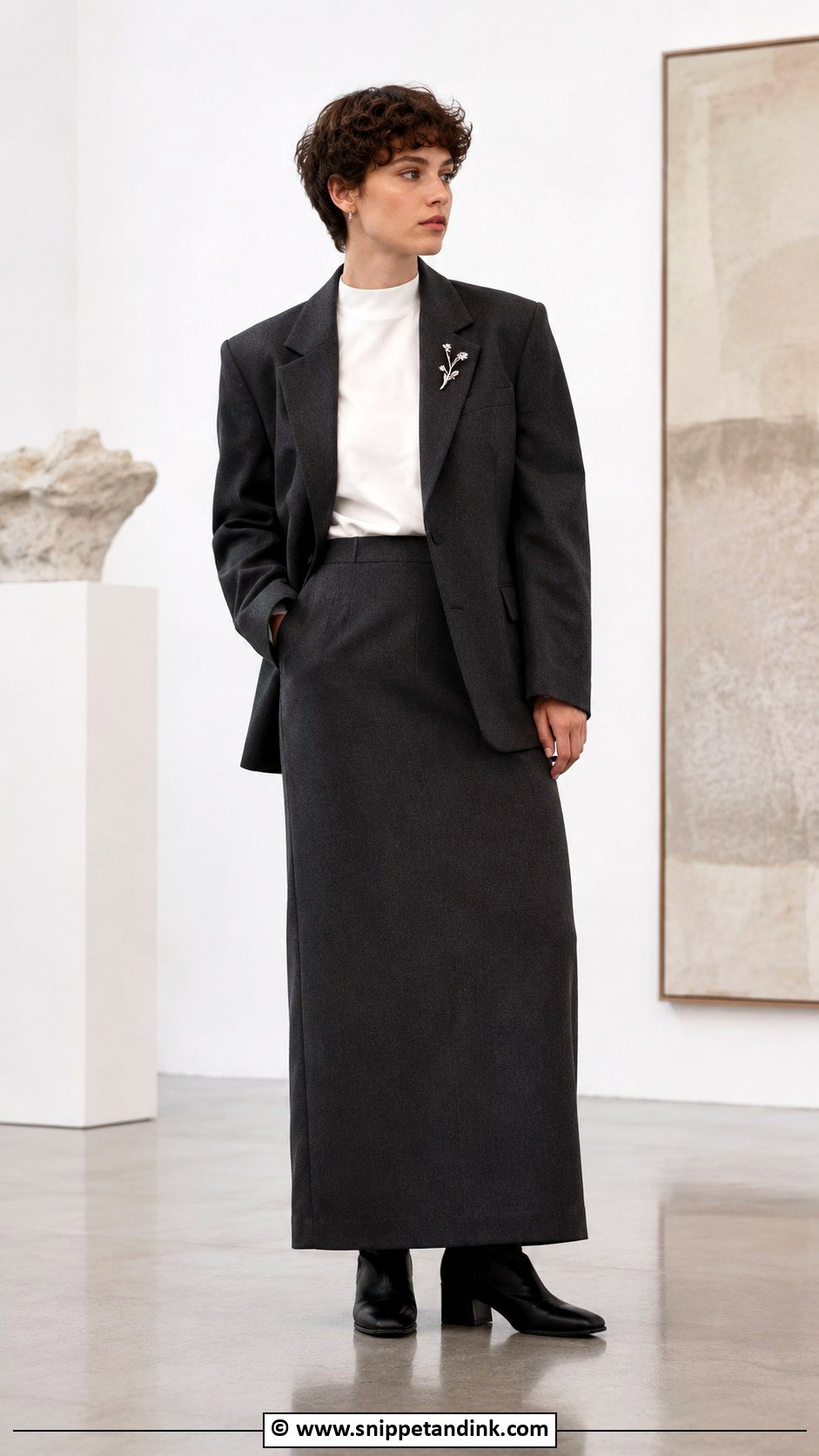
A skirt suit sits between traditional suiting and softer formalwear, with tailoring and fluidity in one outfit. Try a boxy blazer with a midi skirt, a cropped jacket with a column skirt, or a long pleated skirt under a sharp tuxedo jacket. Satin, wool crepe, jacquard and matte suiting all hold their shape. Neutrals feel refined; jewel tones feel expressive. I match the jacket length to the skirt: a long skirt wants a shorter or cropped jacket, or the proportions look heavy. Boots, loafers or low heels finish it, with a simple shirt, shell or turtleneck.
7. Non Binary Wedding Cape Suit Outfit
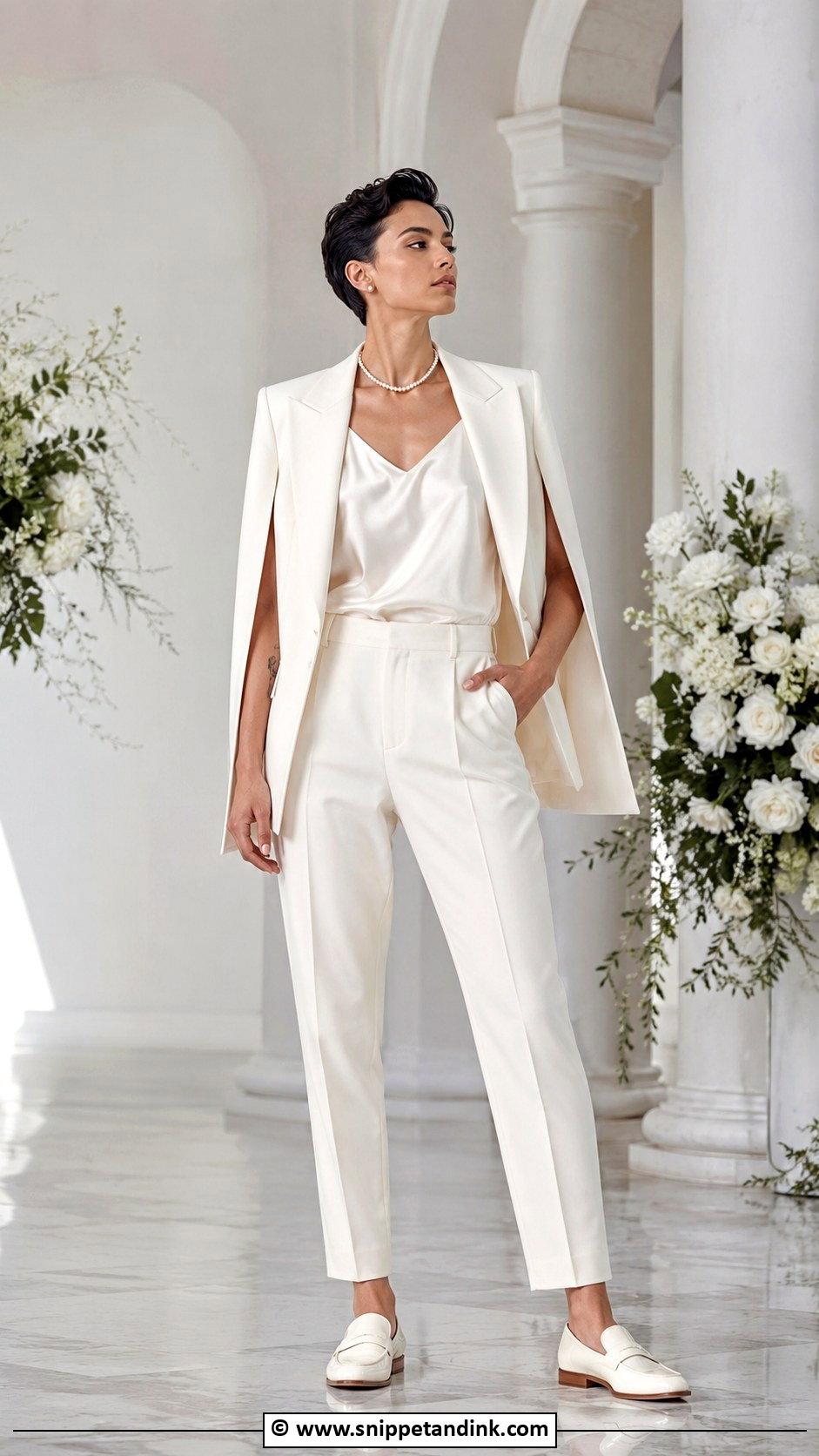
Capes bring drama without fuss, and they suit a marrier, a wedding party member or an evening guest. The cape can attach to a blazer, layer over a jumpsuit or sit over tailored trousers and a sleek top. Ivory, black, navy, champagne and deep plum all suit the shape. Keep the base simple. A cape that’s only anchored at the neck tends to drag backward on the throat, so I ask for it to be tacked at the shoulder seams as well. Straight-leg trousers, polished shoes and minimal jewelry balance it, and the movement shows well in photos.
8. Non Binary Wedding Linen Suit Outfit
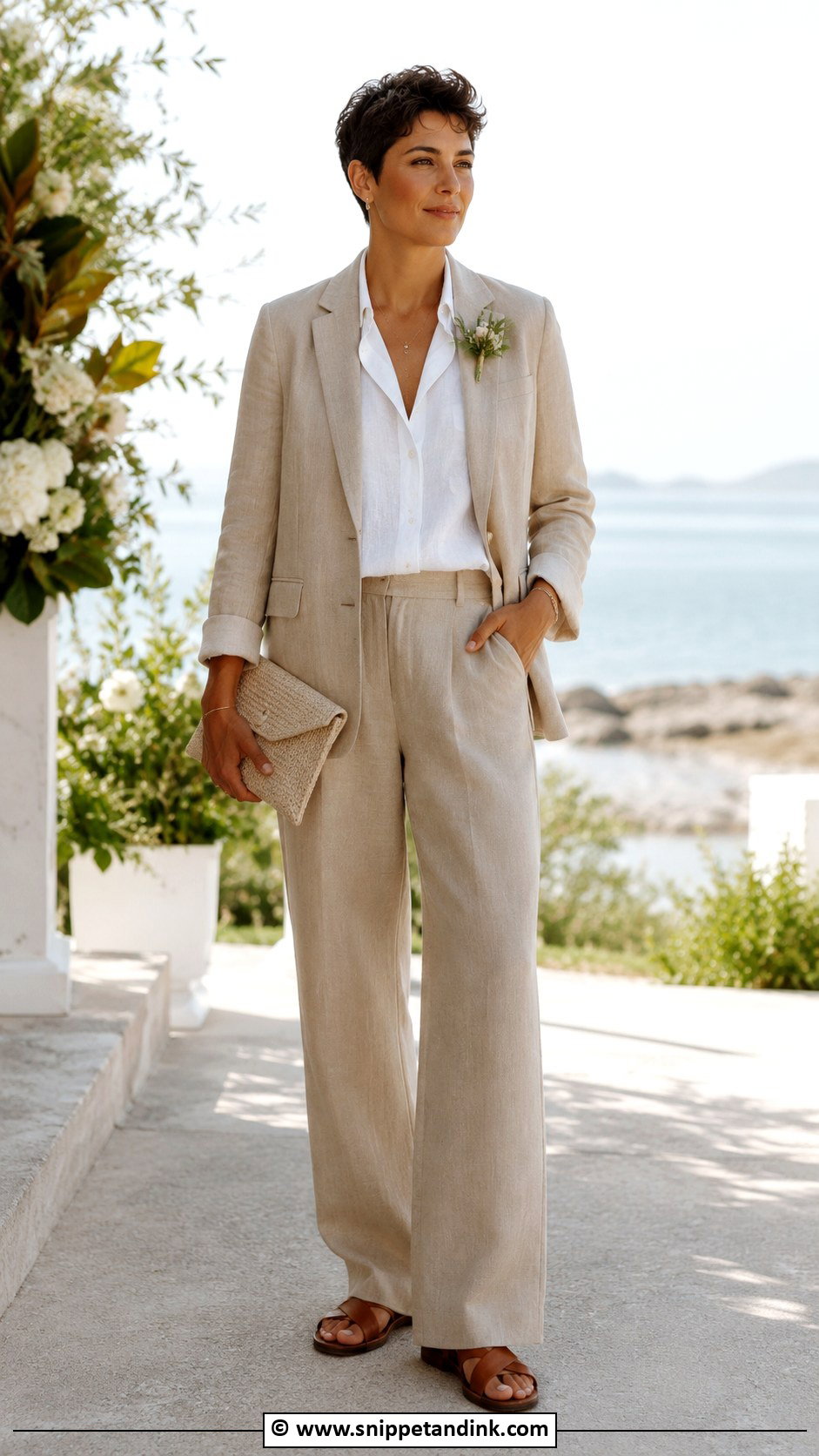
Linen breathes like nothing else at beach weddings, garden ceremonies and summer celebrations. It also creases, and that’s part of its character, so don’t expect it to stay pressed past the ceremony. I suggest a linen blend with a little wool or silk for anyone who wants it to look sharper for longer. Sand, stone, ivory, sage, soft blue and warm grey are the natural shades. A relaxed blazer with straight trousers, maybe a vest underneath, goes with leather sandals, loafers, espadrilles or dress flats. Keep accessories light: a woven clutch, a simple watch, small gold or silver jewelry.
9. Non Binary Wedding Velvet Suit Outfit
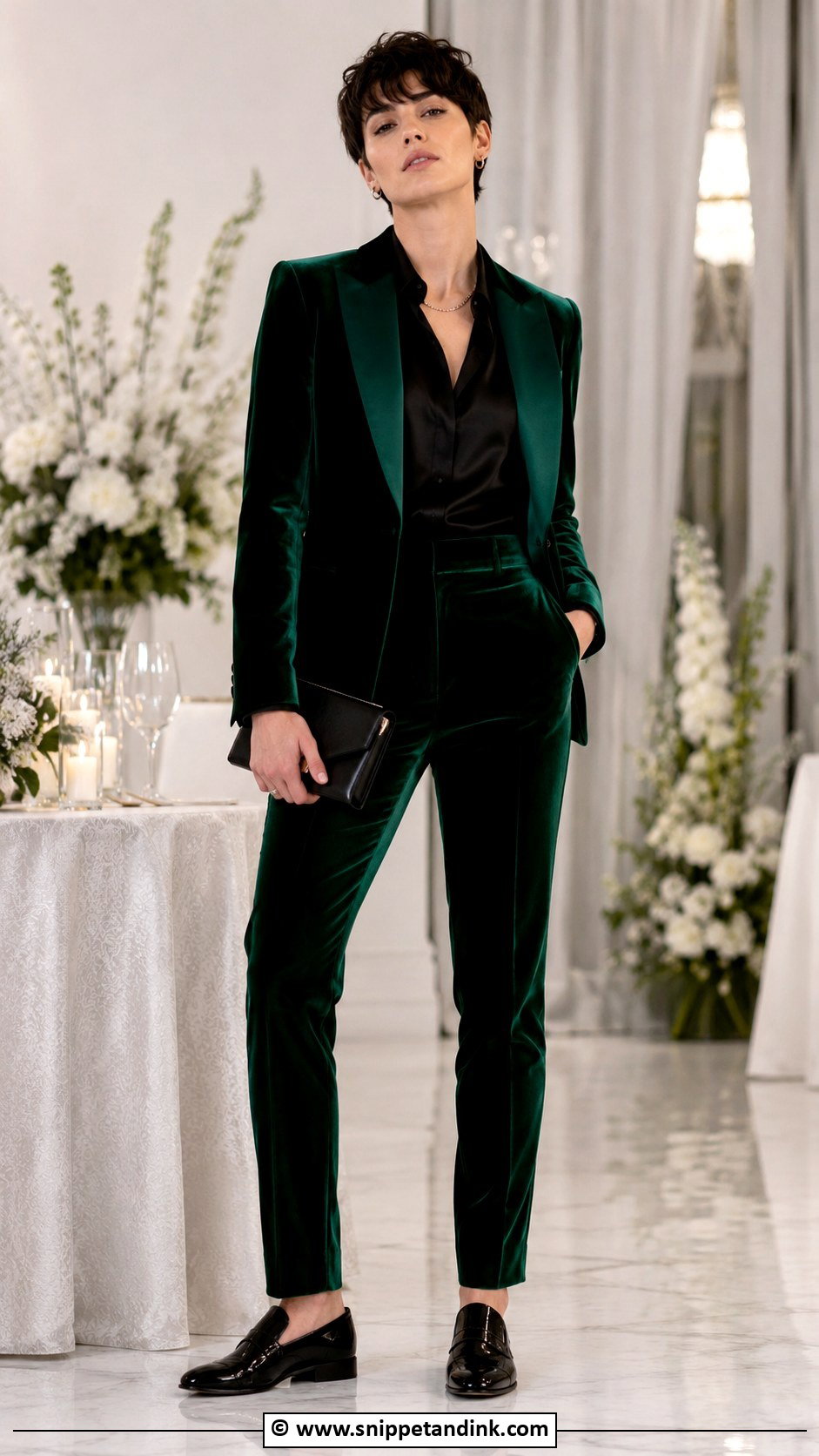
Velvet makes an outfit feel rich and evening-ready, and it’s at its best at autumn and winter weddings, dark venues and cocktail dress codes. A matching velvet suit is formal; a velvet jacket over black wide-leg trousers is more relaxed. Burgundy, emerald, navy, chocolate, plum and black are the strongest colours. Keep the layer underneath smooth: a satin shirt, mesh top or white button-up. Velvet pile shows pressure marks, so hang the jacket on a broad hanger and never fold it in a suitcase. Patent loafers, heeled boots or polished flats suit it.
10. Non Binary Wedding Satin Shirt And Trousers Outfit
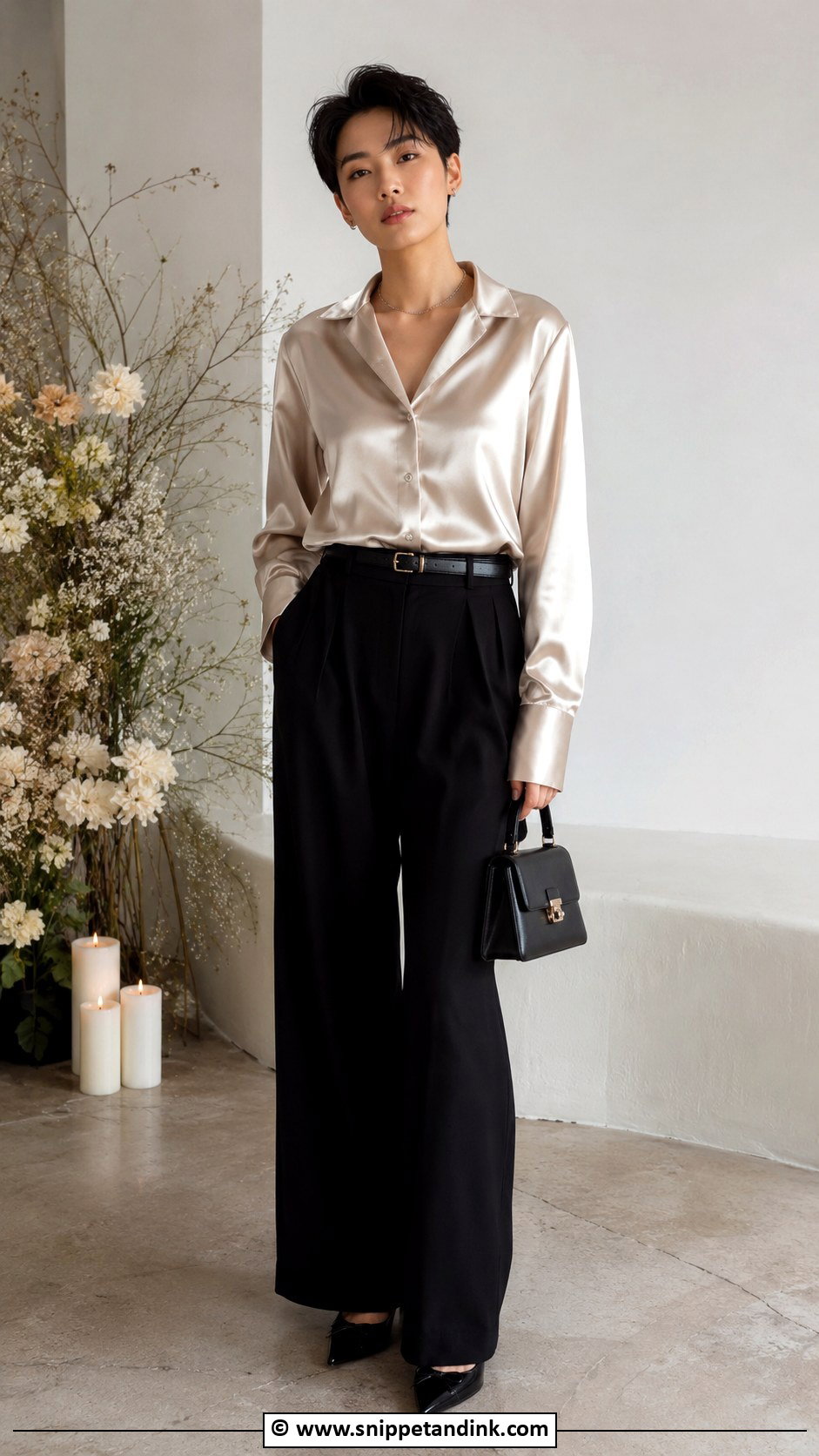
A satin shirt over tailored trousers is formal without being stiff. Champagne, ivory, black, bronze, blue and jewel green all work, paired with high-waisted, wide-leg or cigarette trousers. Tuck it fully, wear it open over a tank, or button it high for a cleaner line. Satin shows every crease and sweat mark, so I suggest a satin-backed crepe or a heavier silk if you’ll be dancing in a warm room. A belt adds structure. Loafers, slingbacks, boots or dress sandals, plus a sleek clutch and small earrings, keep it minimal.
11. Non Binary Wedding Two Piece Set Outfit
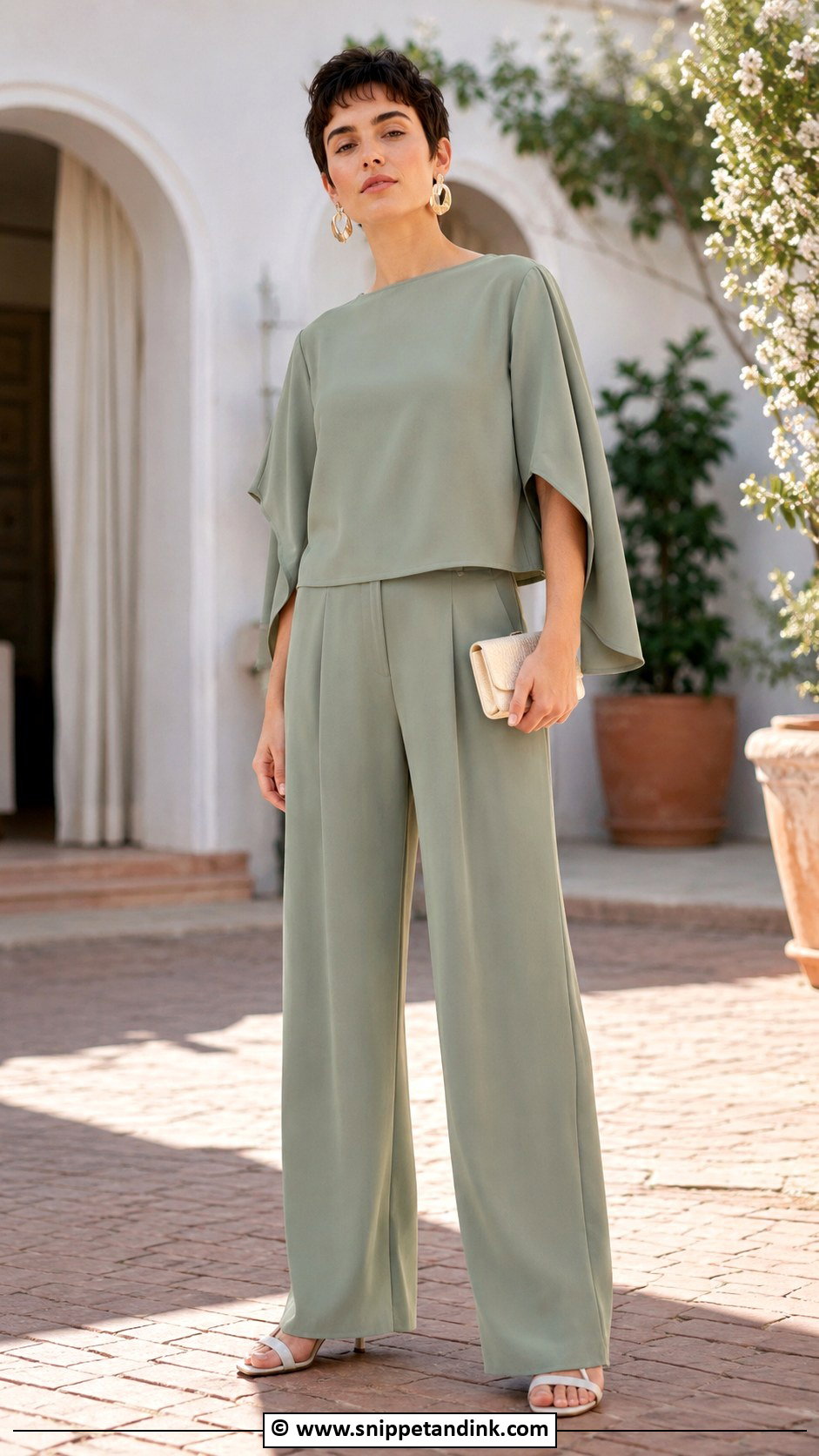
A two-piece set looks coordinated with almost no effort and is one of the most comfortable things to wear for a long celebration. It could be a matching top and trousers, a cropped jacket with a skirt, or a tunic with wide-leg pants. Satin, crepe, jacquard, silk blends or pleated fabric keep it from looking casual. One colour throughout creates a clean column that suits a lot of body shapes. Buy both pieces at the same time from the same dye batch where you can; separates bought months apart rarely match perfectly. Dress shoes and structured accessories make it wedding-ready.
12. Non Binary Wedding Long Coat Outfit
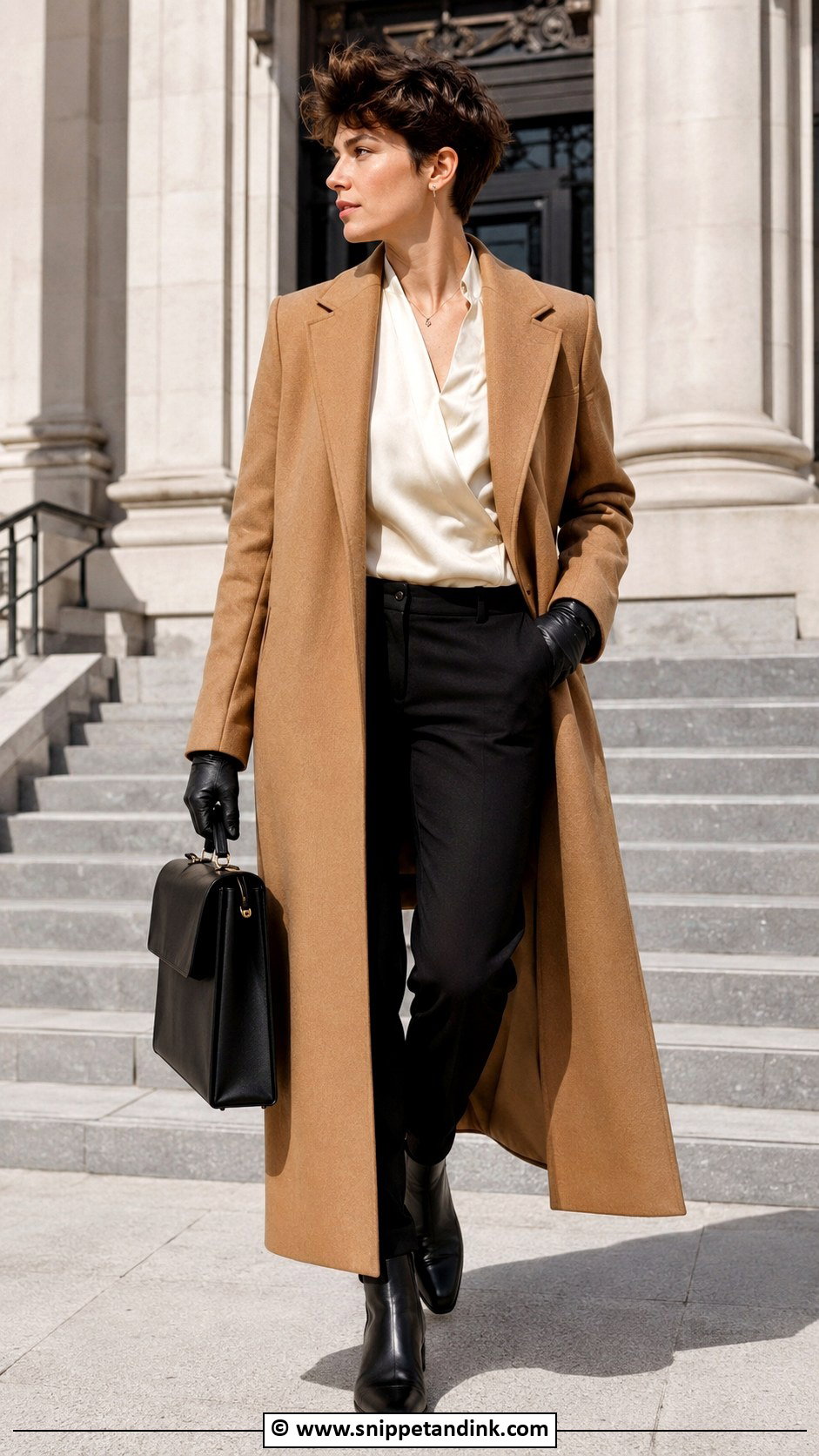
Fit at the shoulder decides whether a long coat looks deliberate or borrowed. Over tailored trousers and a fine top, a long wool coat, tuxedo coat or structured duster turns simple separates into a full outfit for cooler seasons, courthouse weddings and city venues. Black, camel, ivory, charcoal and deep navy all look sophisticated. The hem should clear your shoes when you walk. Boots, loafers or sleek dress shoes suit it, and a scarf, gloves or brooch can follow the weather.
13. Non Binary Wedding Pleated Skirt And Blazer Outfit
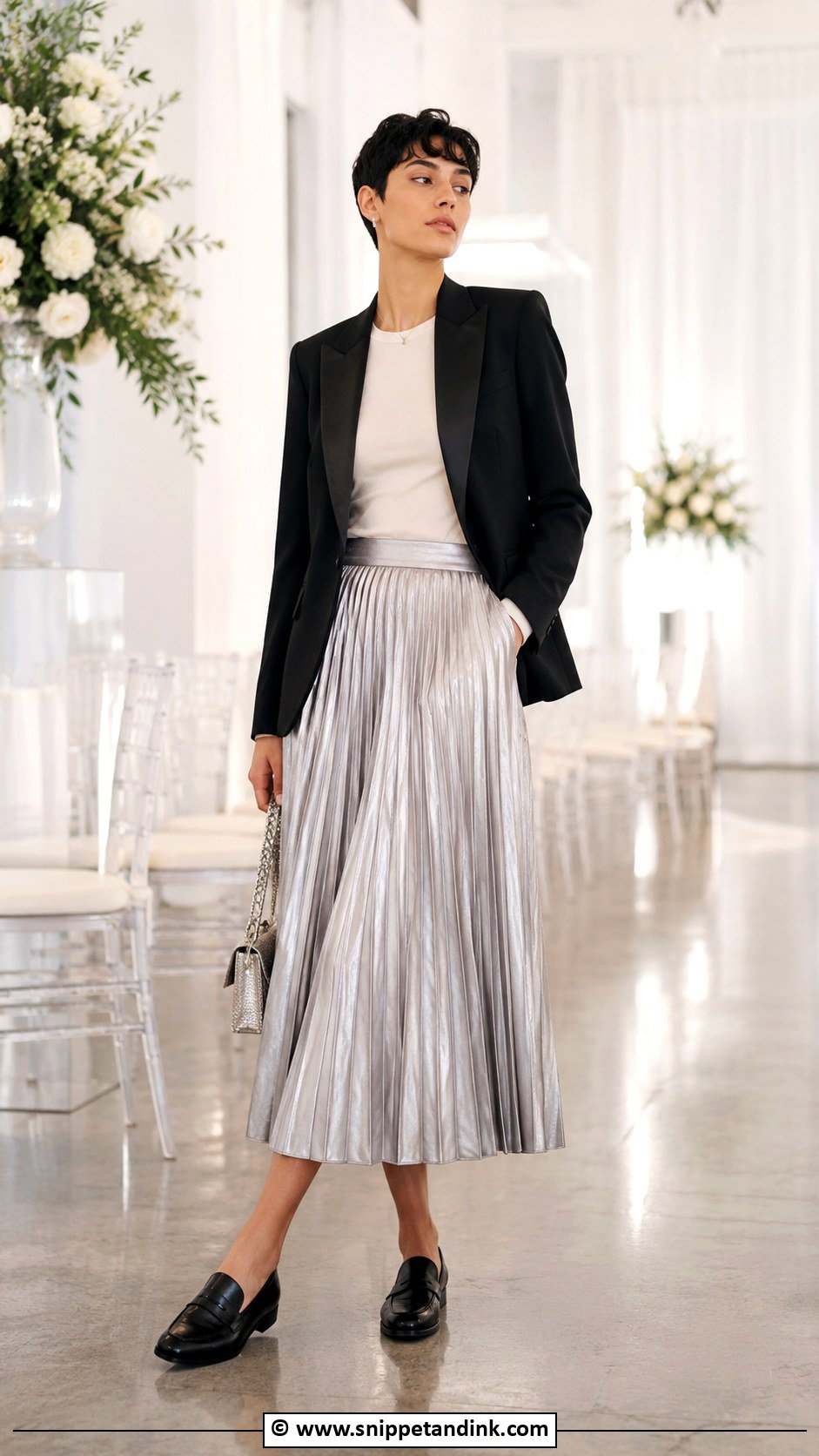
Pleats bring movement and a blazer brings structure. A midi or ankle-length pleated skirt pairs with a cropped blazer, oversized blazer or tuxedo jacket. One colour looks sleek; a neutral blazer with a metallic or pastel skirt is softer. A fitted knit, silk shirt or shell sits underneath. Boots give edge, loafers feel grounded. Satin and chiffon pleats suit formal weddings; matte crepe or lightweight wool suit daytime. Permanent pleats in synthetic fabrics hold through a long day far better than pressed pleats in natural fibres, which can drop by evening.
14. Non Binary Wedding Romper With Overskirt Outfit
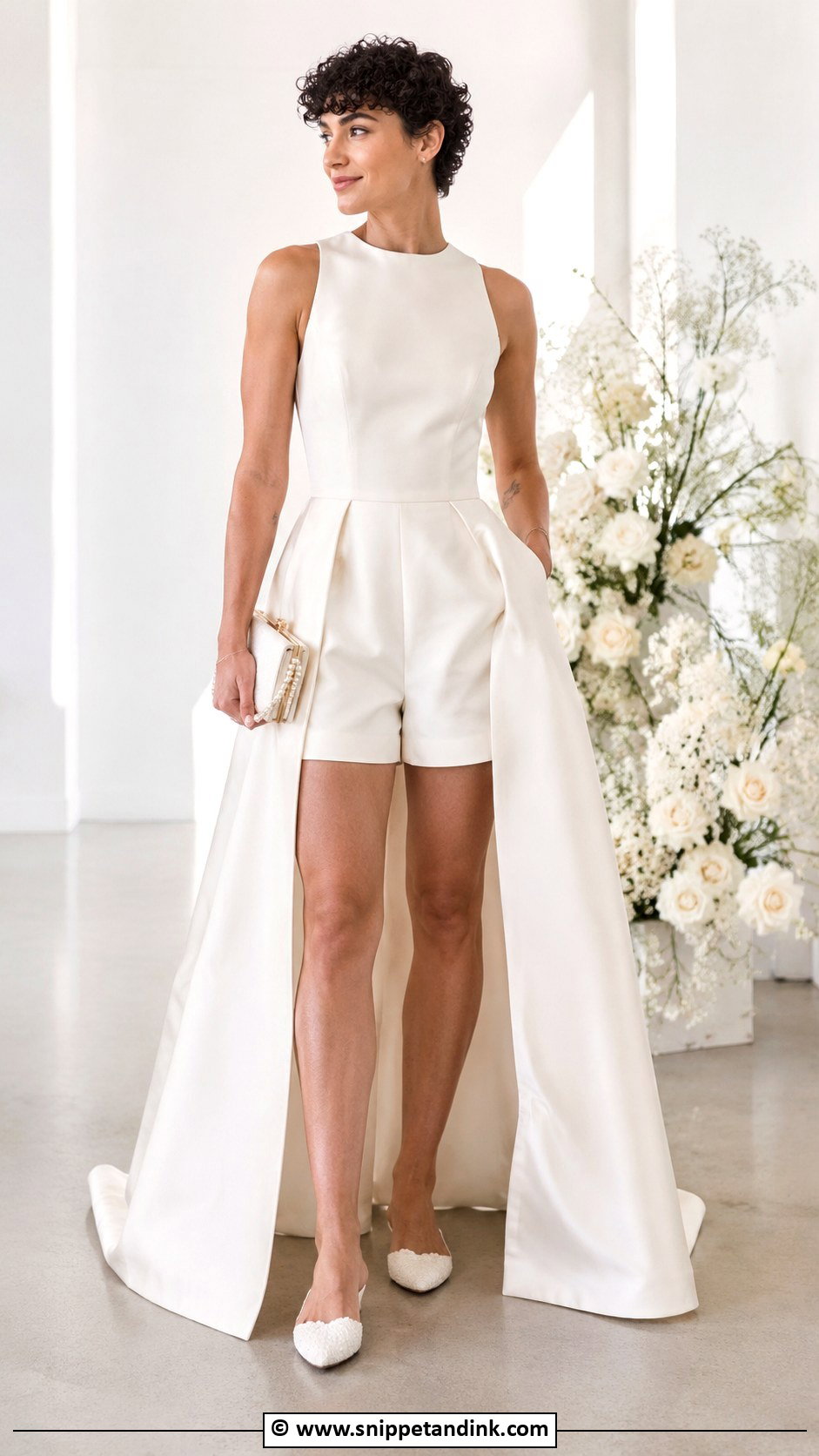
A romper with a removable overskirt gives a dramatic ceremony look and shorts underneath for the dance floor. It suits nearly-weds, after-parties and creative dress codes. Choose a tailored romper in ivory, black, champagne or a soft pastel, then add an overskirt in tulle, satin, organza or crepe. A structured top, high neck or clean straps keep it formal. I ask for the overskirt to fasten with hooks and a hidden placket, not a visible zip, so it can come off quickly between ceremony and reception. Polished shoes and a minimal clutch finish it.
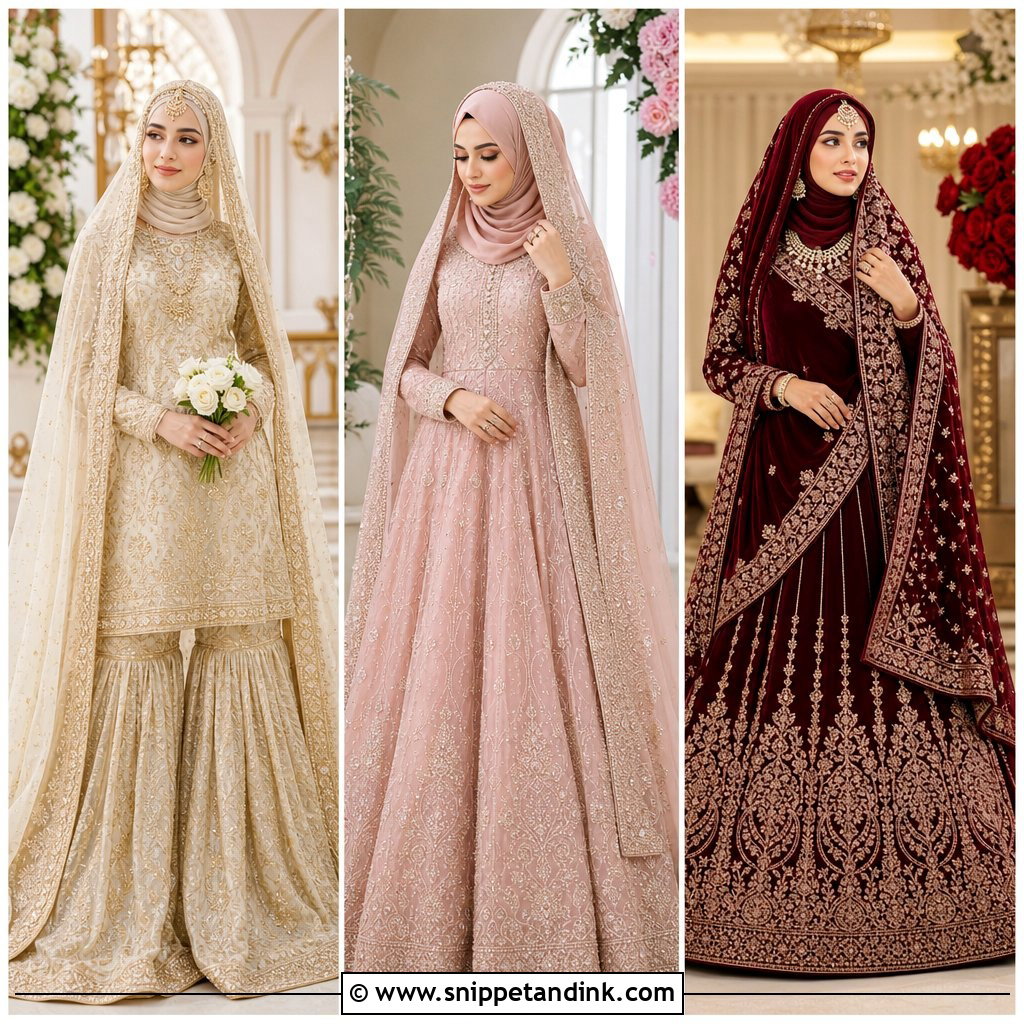
15. Non Binary Wedding Kurta And Trouser Outfit
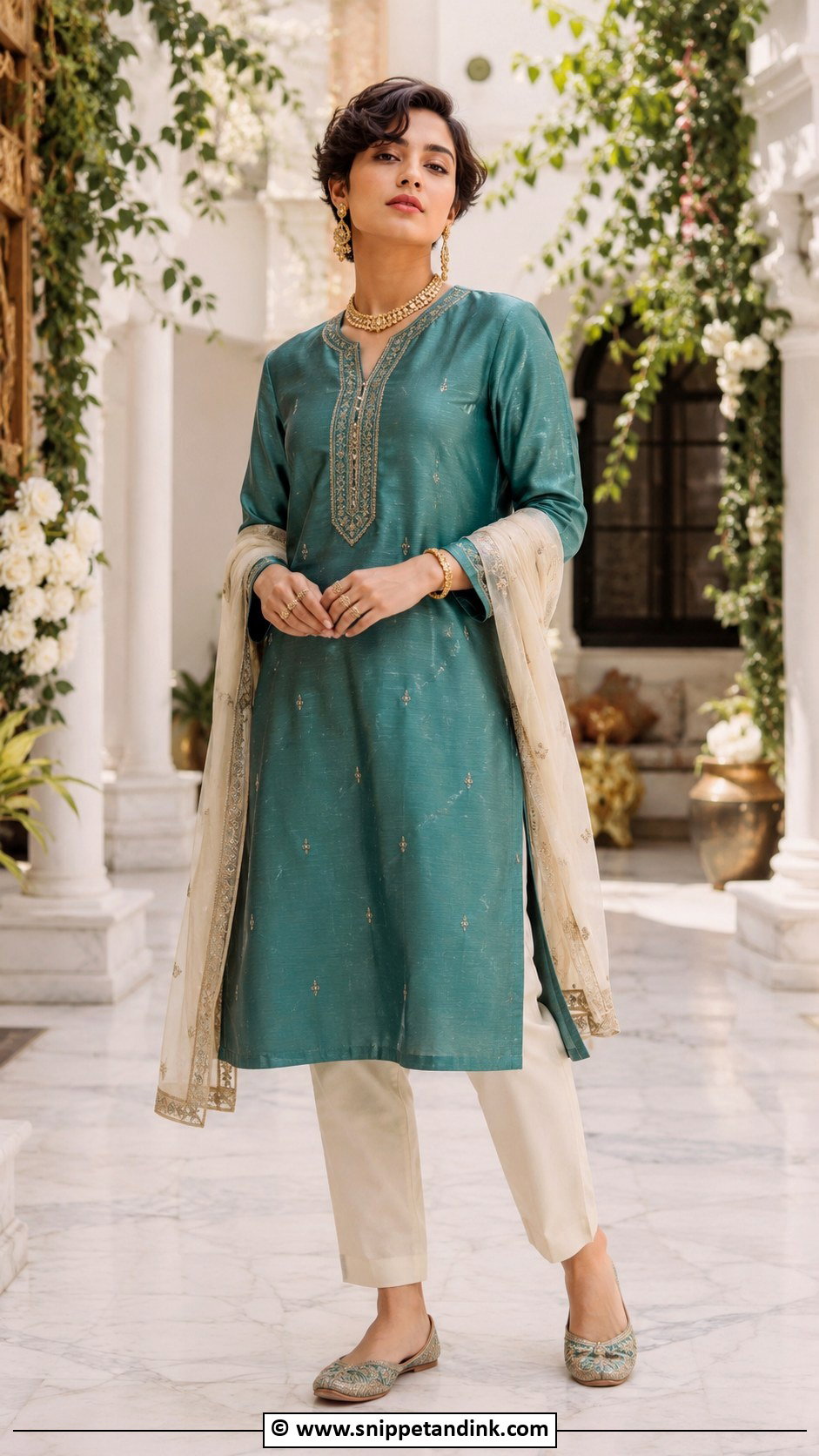
A kurta and trouser outfit is comfortable, formal and, at South Asian or multicultural weddings, often the most fitting choice. Long or mid-length kurtas in silk, jacquard, brocade or embroidered cotton blends pair with straight, wide-leg or tapered trousers. Ivory, gold, teal, maroon, navy and blush all work. If you’re a guest at a South Asian wedding, it’s worth asking the couple whether certain colours, especially red or white, are expected or avoided. Dress sandals, loafers or embroidered flats and a light stole complete it, with jewelry as personal as you like.
16. Non Binary Wedding Kimono Jacket Outfit
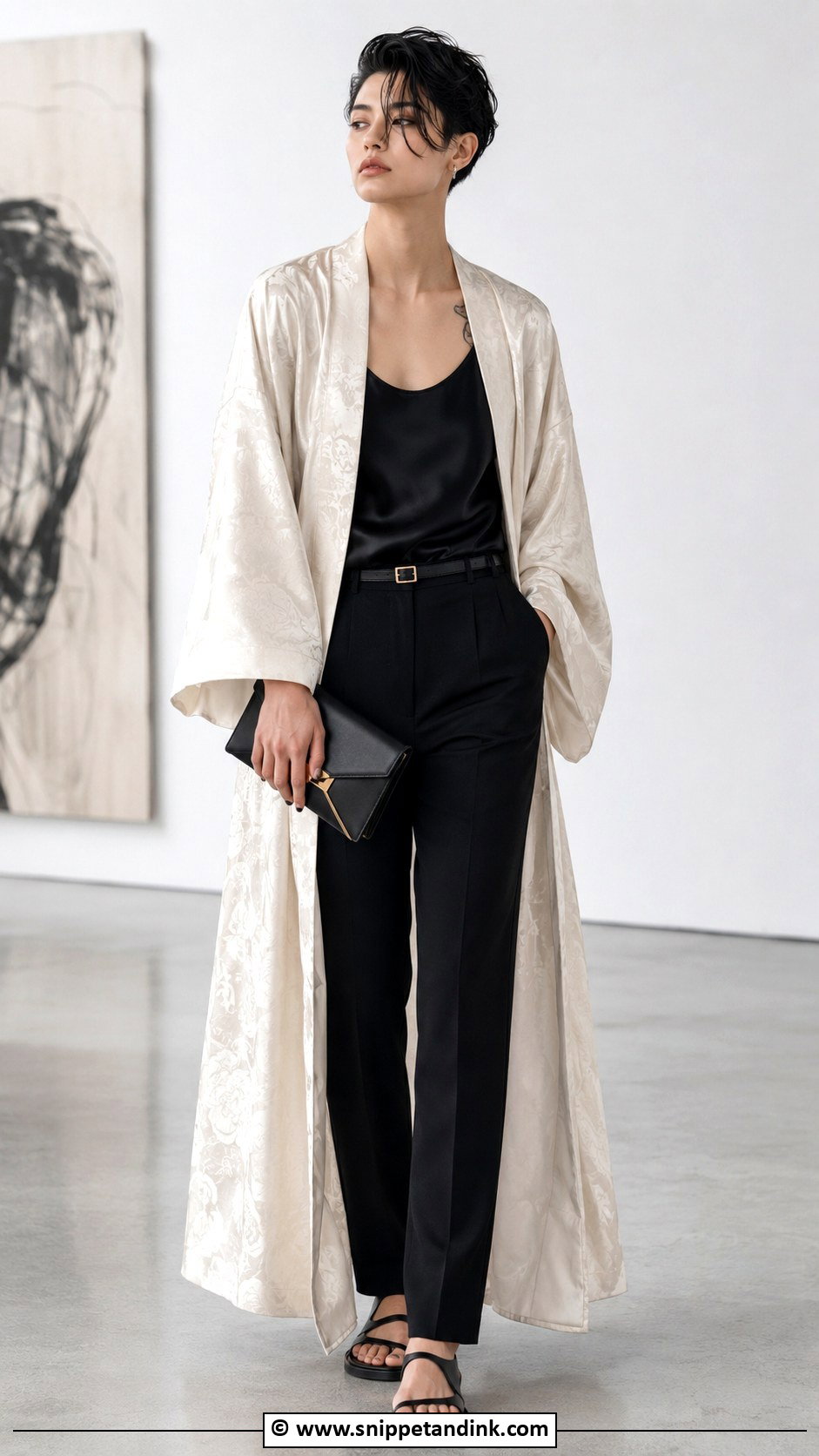
A kimono-style jacket over formal separates gives a soft, fluid line that still looks polished, especially at outdoor weddings and creative venues. Choose silk, satin, jacquard or a subtle print over tailored trousers or a plain jumpsuit. Black trousers under an ivory or patterned jacket look elegant; a fully tonal outfit feels more modern. Long unstructured jackets slip off the shoulders, so I add a small hidden snap at the front or a slim belt. Loafers, sleek sandals or ankle boots work.
17. Non Binary Wedding Monochrome Outfit
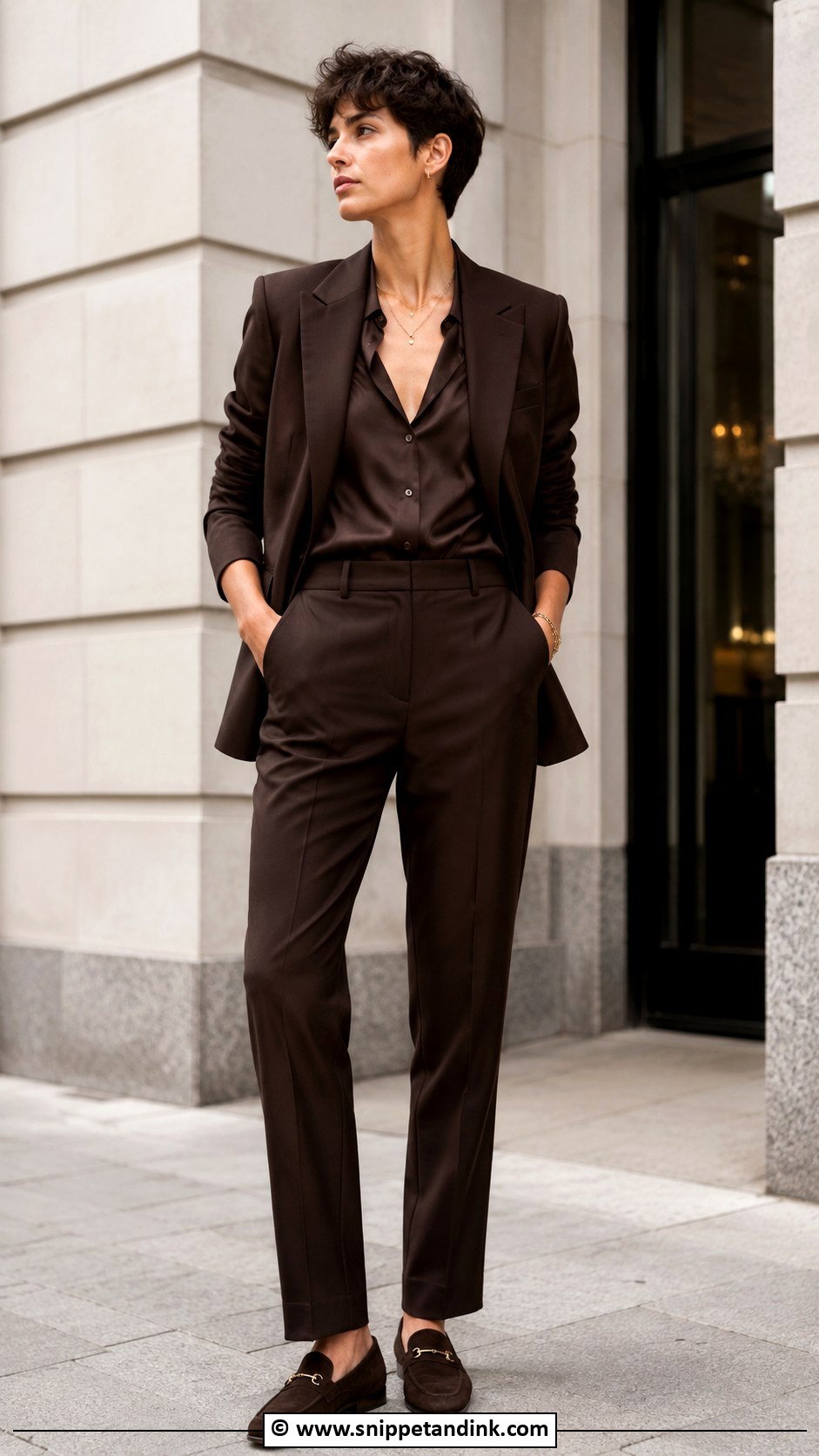
One colour head to toe makes separates look more expensive and creates a long, unbroken line. All black, ivory, navy, chocolate, sage or burgundy all work. The secret is texture: a satin shirt with wool trousers, a crepe blazer with silk pants, or velvet over matte suiting. I keep shoes in the same colour family and choose just one metal for jewelry and bag hardware. It adapts to almost any dress code.
18. Non Binary Wedding Patterned Suit Outfit
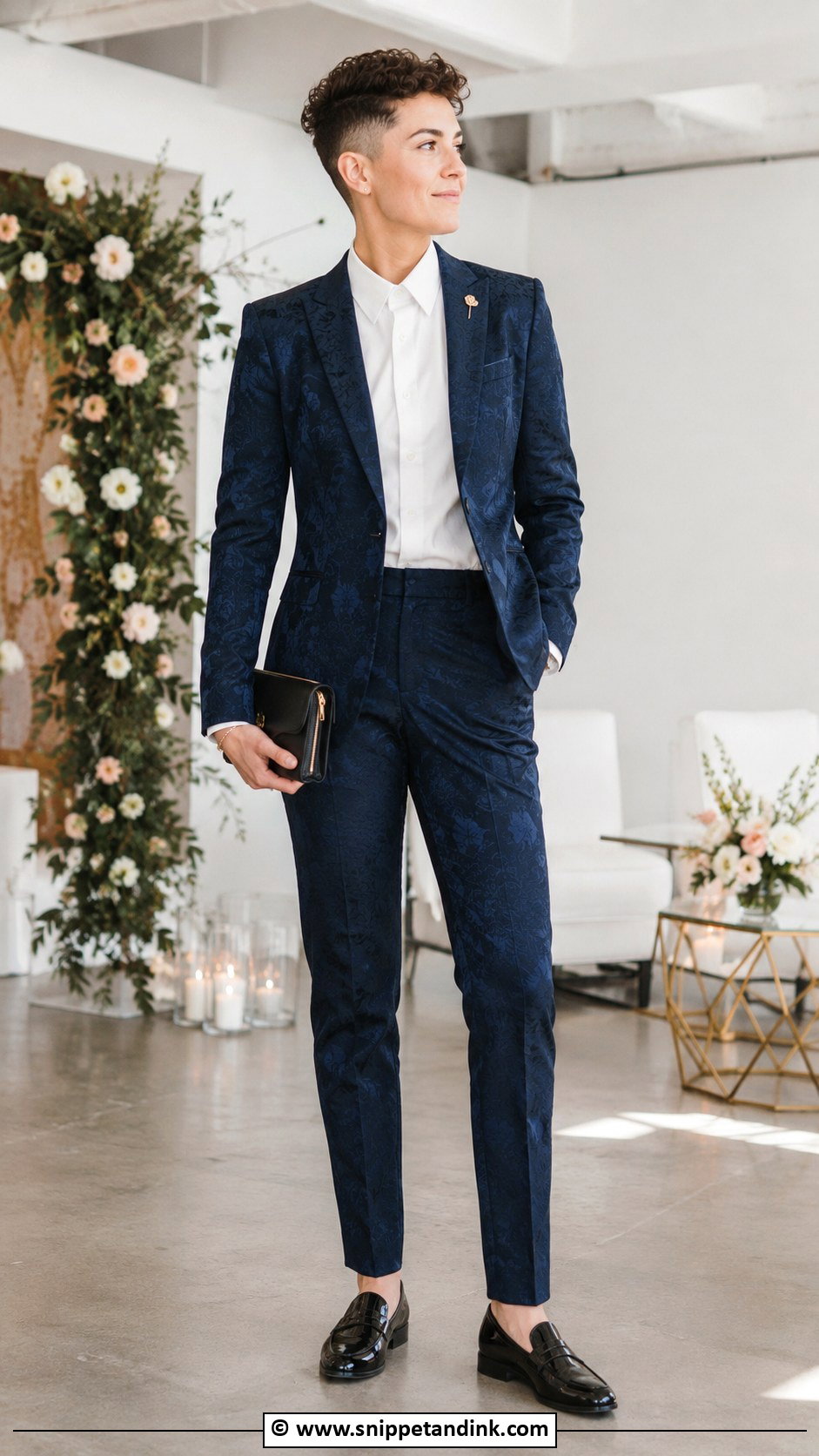
A patterned suit brings personality and colour on its own. Subtle checks, floral jacquard, pinstripes, brocade, abstract prints or tonal patterns all work; keep everything else plain so the suit stays refined. Pull your shoe colour from a shade already in the pattern. Darker patterns and richer fabrics suit formal evenings, lighter prints suit daytime and garden weddings. When I fit a patterned suit, I check that the pattern lines up at the front closure and the back seam; a good maker matches them, and misalignment is very visible in photos.
19. Non Binary Wedding Button Up And Maxi Skirt Outfit
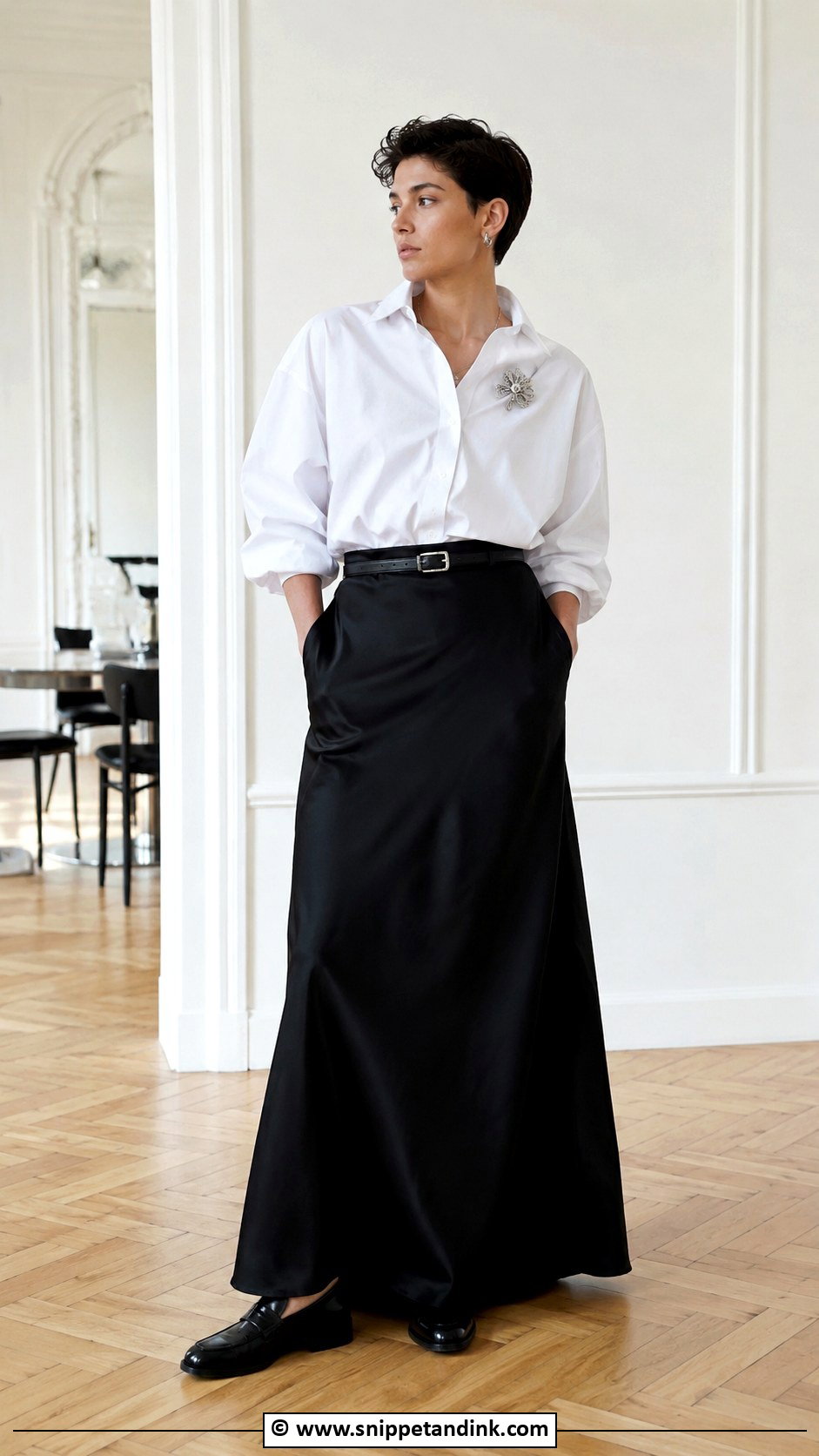
Proportion makes or breaks this one. A button-up with a maxi skirt mixes crisp tailoring with soft movement, and it only works when the shirt and skirt meet at the right point. Choose cotton poplin, silk or satin, over a column, pleated or A-line maxi. Tuck it for a sharper waist, or wear it slightly oversized and half-tucked for ease. Boots, loafers or polished flats all work. A belt, tie or brooch adds a formal detail.
20. Non Binary Wedding Cropped Blazer Outfit
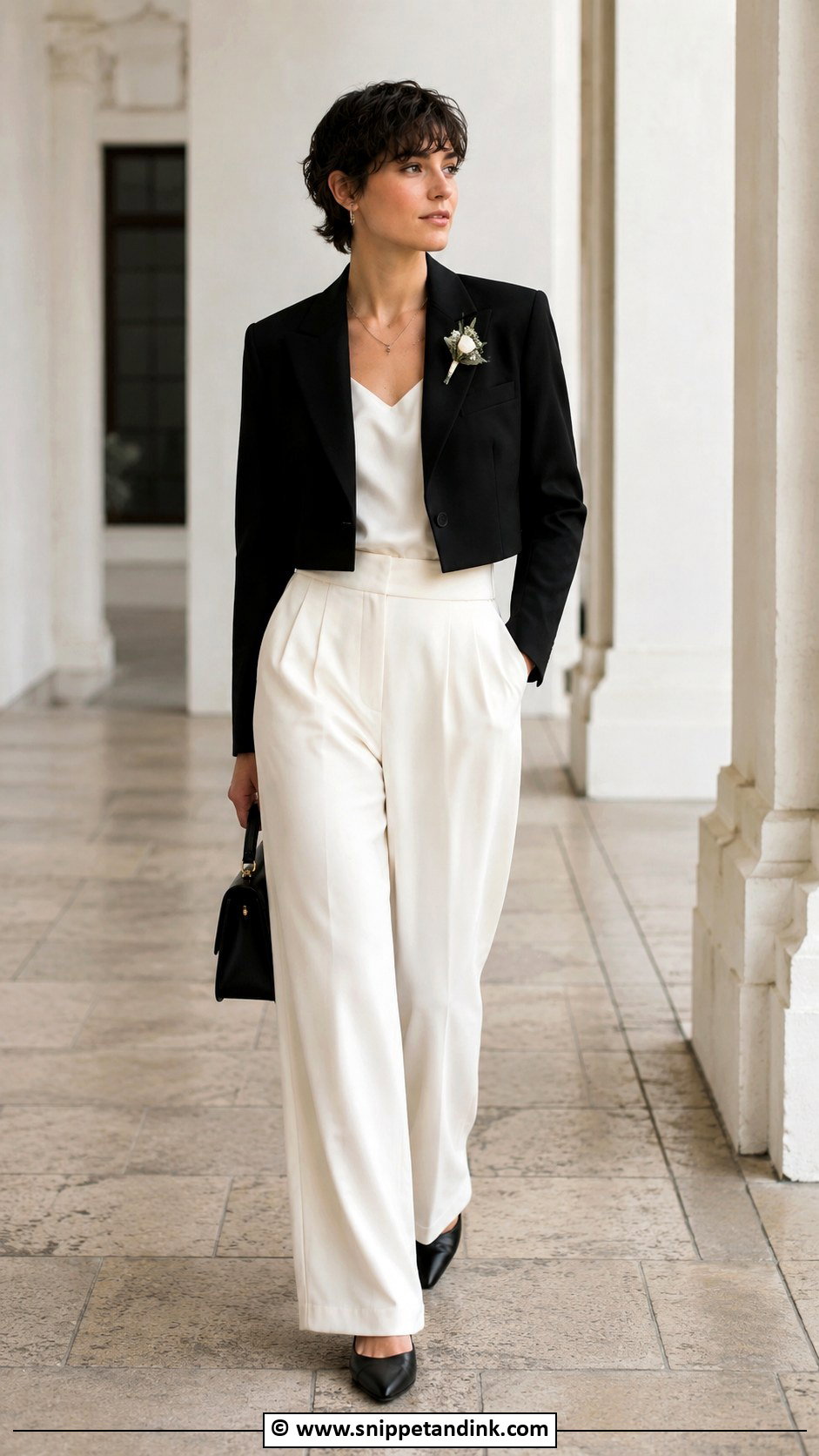
A cropped blazer gives structure without covering the body, so it suits high-waisted trousers, long skirts and wide-leg pants. Choose a fabric with weight, such as satin-backed crepe, wool suiting, jacquard or velvet. Black cropped over ivory trousers is classic; a matching set in blush, sage or slate is softer. Cropped jackets only look right when the hem lands at or just above the natural waist of the trousers, so try them together. A fitted shell, silk tank or crisp shirt underneath, with loafers, boots or sleek heels.
21. Non Binary Wedding Tunic And Wide Leg Pants Outfit
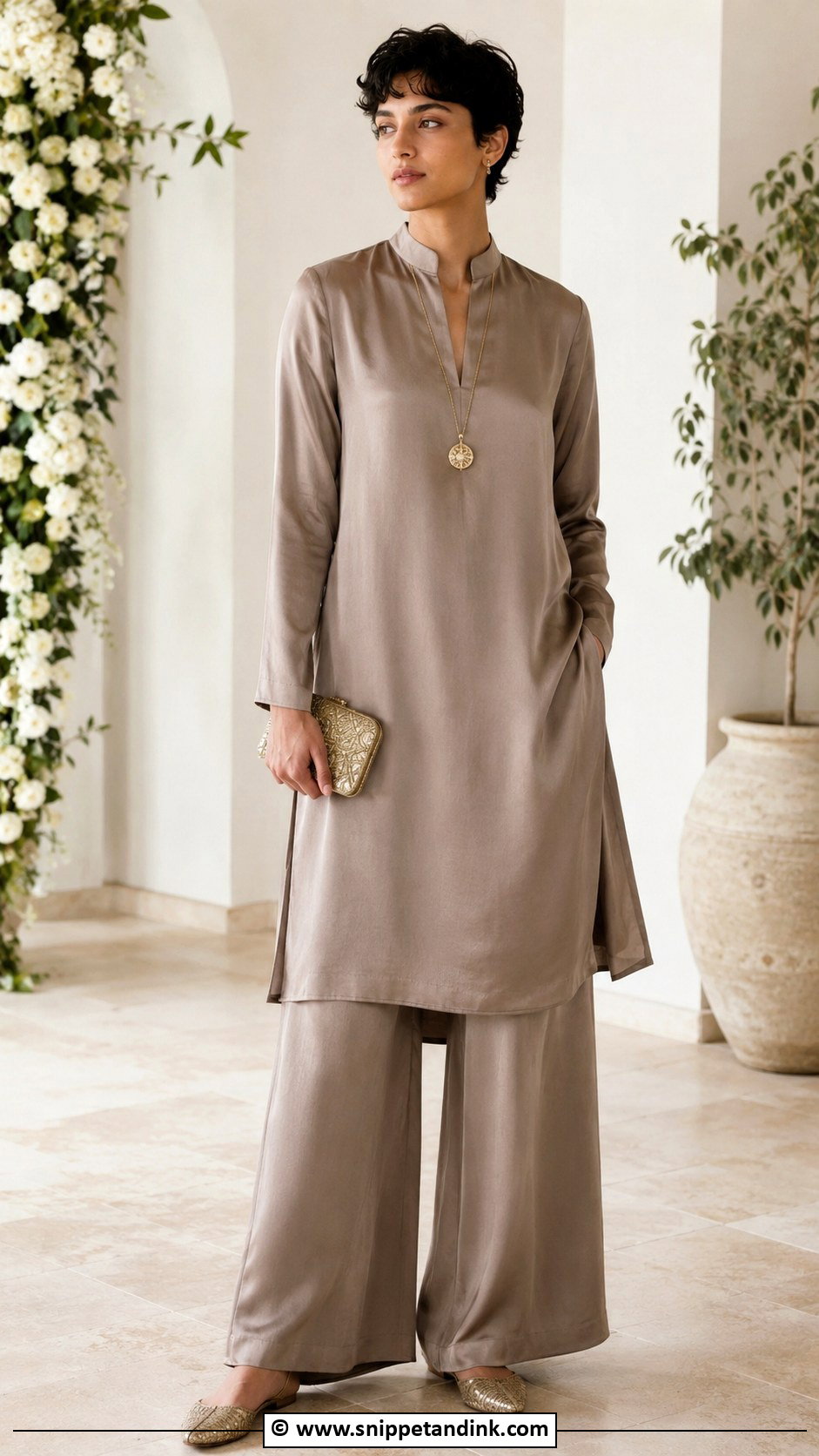
Coverage without heaviness is what a tunic over wide-leg pants delivers. Silk, satin, crepe or a textured weave all work. A side-slit tunic moves more; a straight one looks minimal and architectural. Matching or tonal trousers make a long, clean column. Ivory, taupe, black, navy, rust and soft green all look polished. I set the tunic length relative to height: on shorter frames, a hem just above the knee keeps the legs from looking cut off. Metallic flats, loafers, dress sandals or low boots finish it.
22. Non Binary Wedding Corset And Trouser Outfit
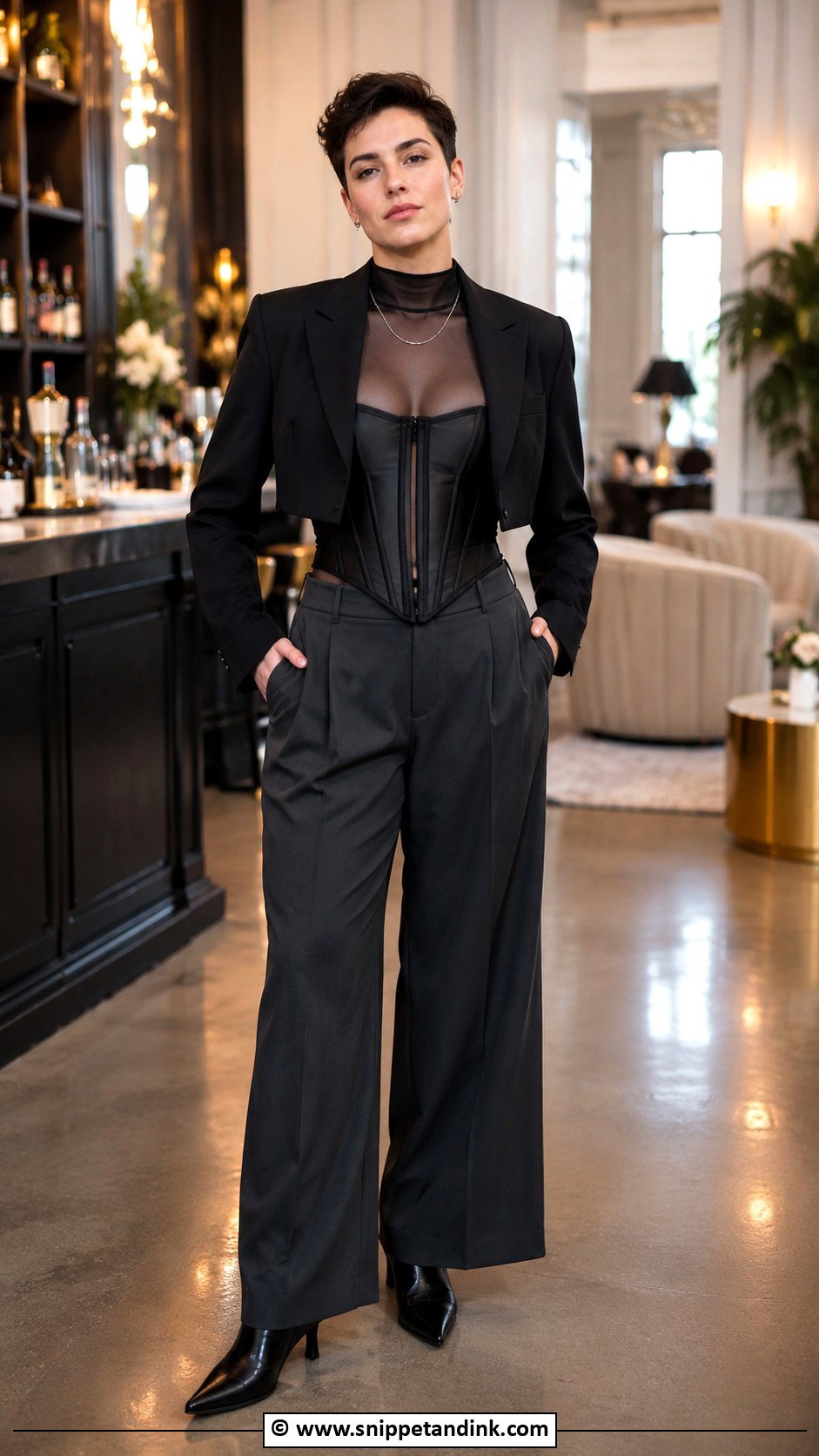
The difference between a corset that looks tailored and one that looks like costume is structure and fit. A properly boned top, fitted to your measurements, sits flat against the body without gaping or digging. Pair it with wide-leg trousers, a sharp blazer or a long coat for balance. Black, ivory, champagne, deep red or slate blue all look elegant. For more coverage, layer it over a sheer high-neck top or a crisp shirt. Pointed flats, boots, loafers or heels all work. Save it for cocktail weddings, creative receptions and evening celebrations.
23. Non Binary Wedding Sheer Top And Suit Outfit
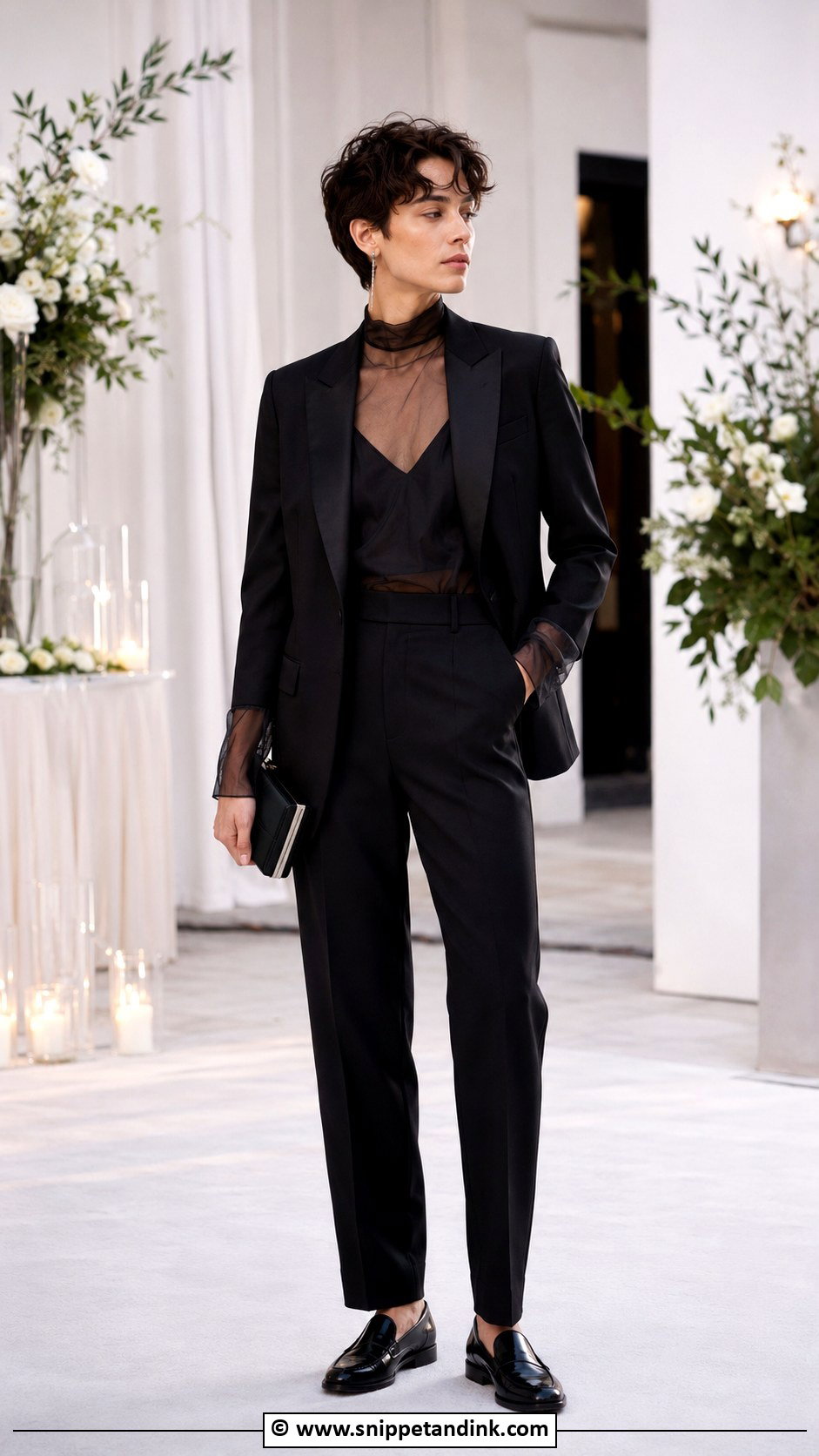
Softness and texture under a structured jacket are what a sheer top brings. Mesh, organza or chiffon in black, ivory, navy or close to your skin tone all work. A bralette, tank or camisole underneath gives whatever coverage you want. Check it under a camera flash before the day, as some sheer fabrics become almost transparent in flash photos even when they look opaque in the mirror. Keep the suit structured so the sheer layer reads elegant rather than casual. Polished shoes and minimal jewelry complete it.
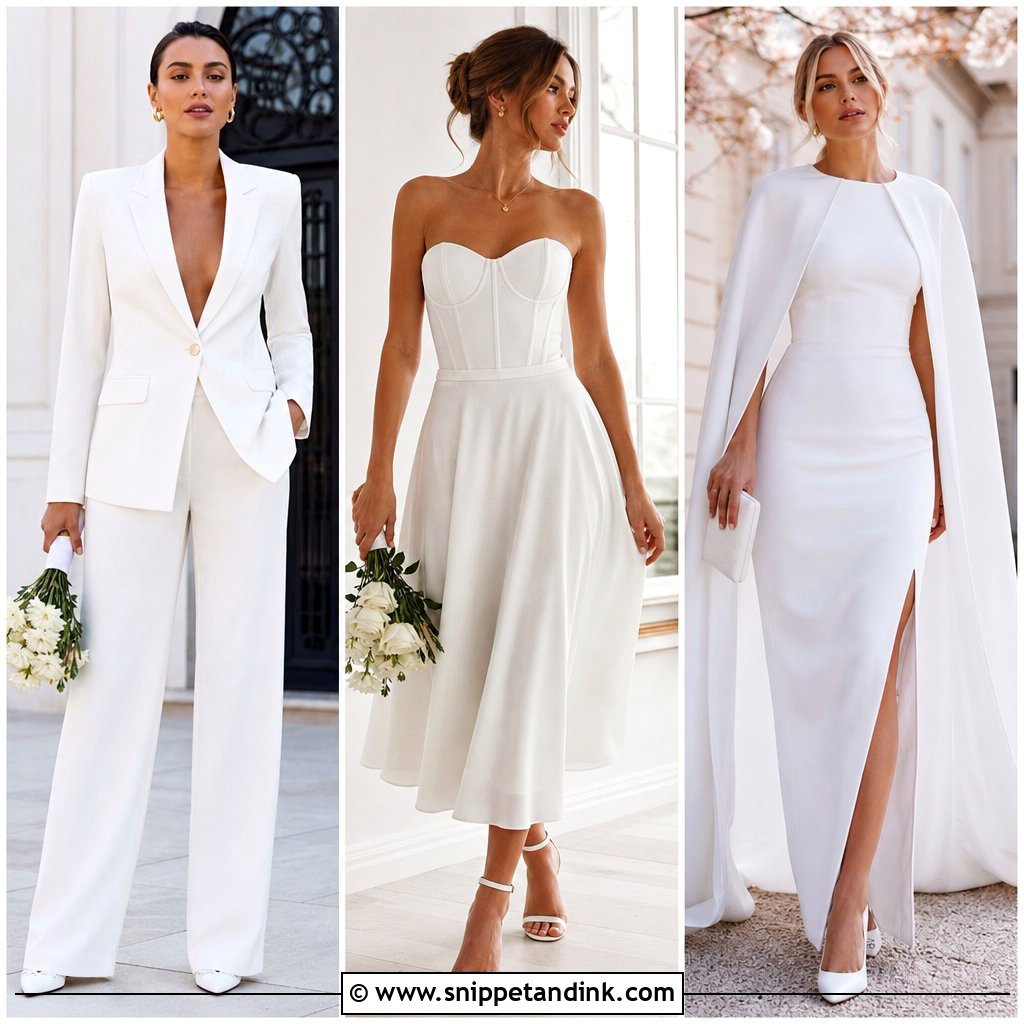
24. Non Binary Wedding Bridal Separates Outfit
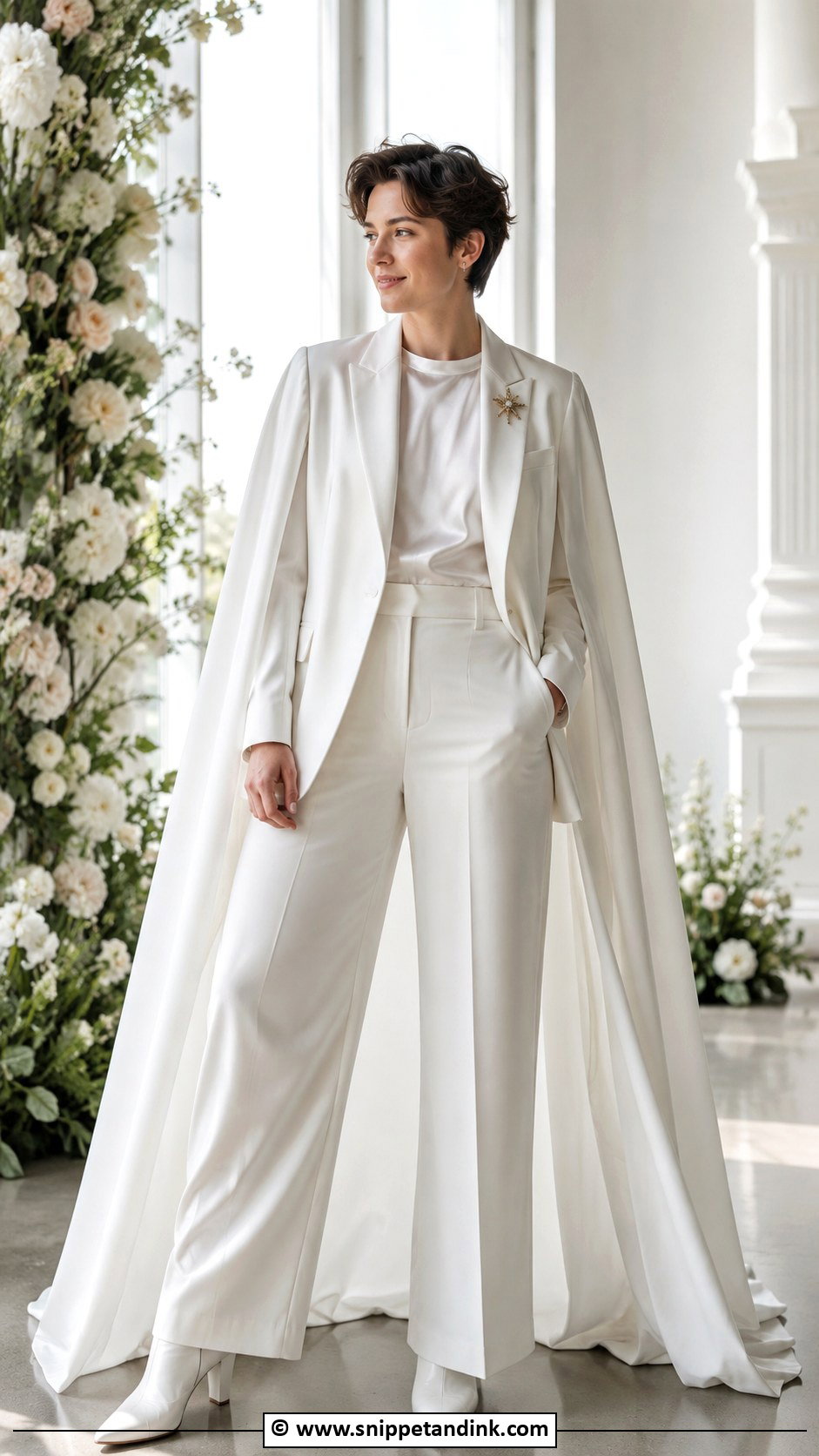
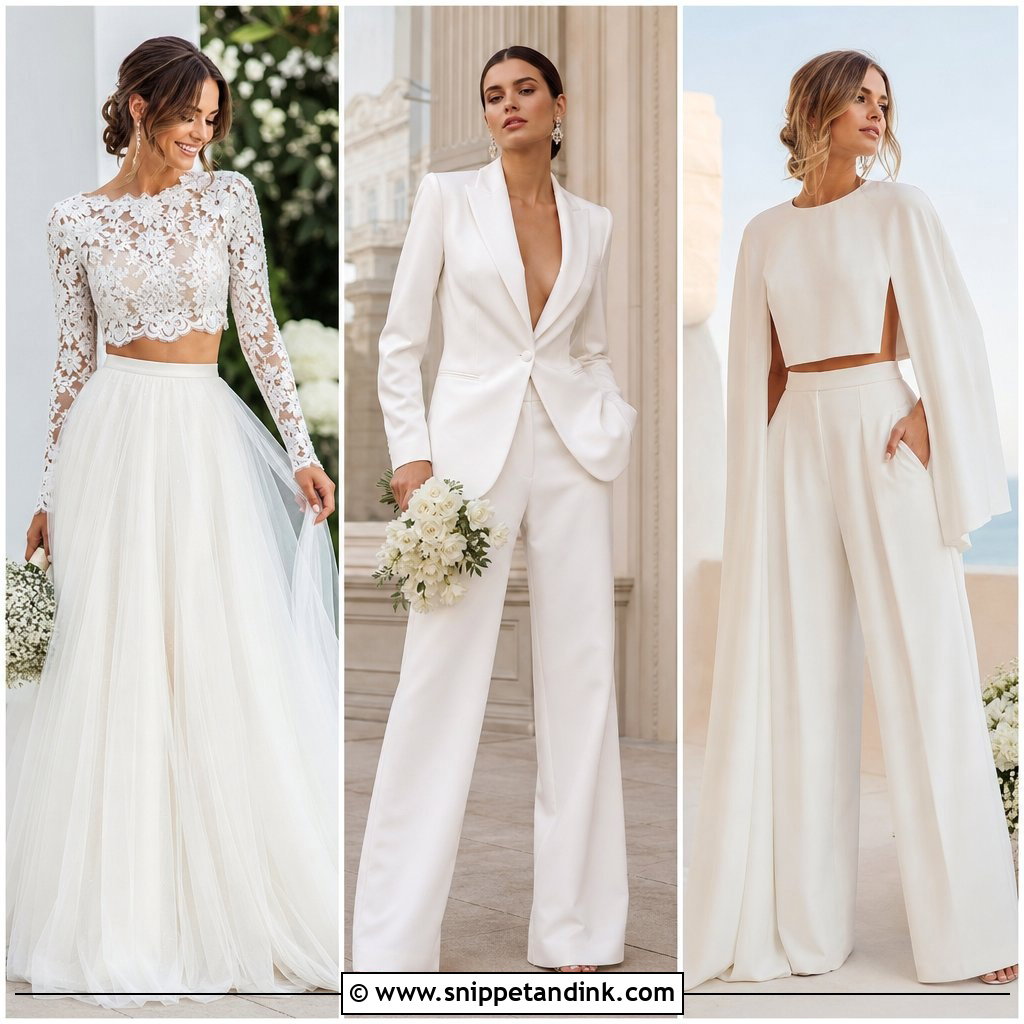
Separates let a marrier build a look piece by piece around comfort and expression. A structured white blazer with wide-leg trousers, a satin top with a long skirt, or a waistcoat with flowing pants all work. Ivory, cream, champagne and soft grey feel wedding-ready without leaning traditional. A cape, overskirt, veil, scarf or brooch adds a ceremonial detail. With separates, I always fit every piece together at the final appointment, because white fabrics from different makers can differ in shade more than you’d expect. Boots, loafers, flats or formal sandals finish it.
25. Non Binary Wedding Black Tie Outfit
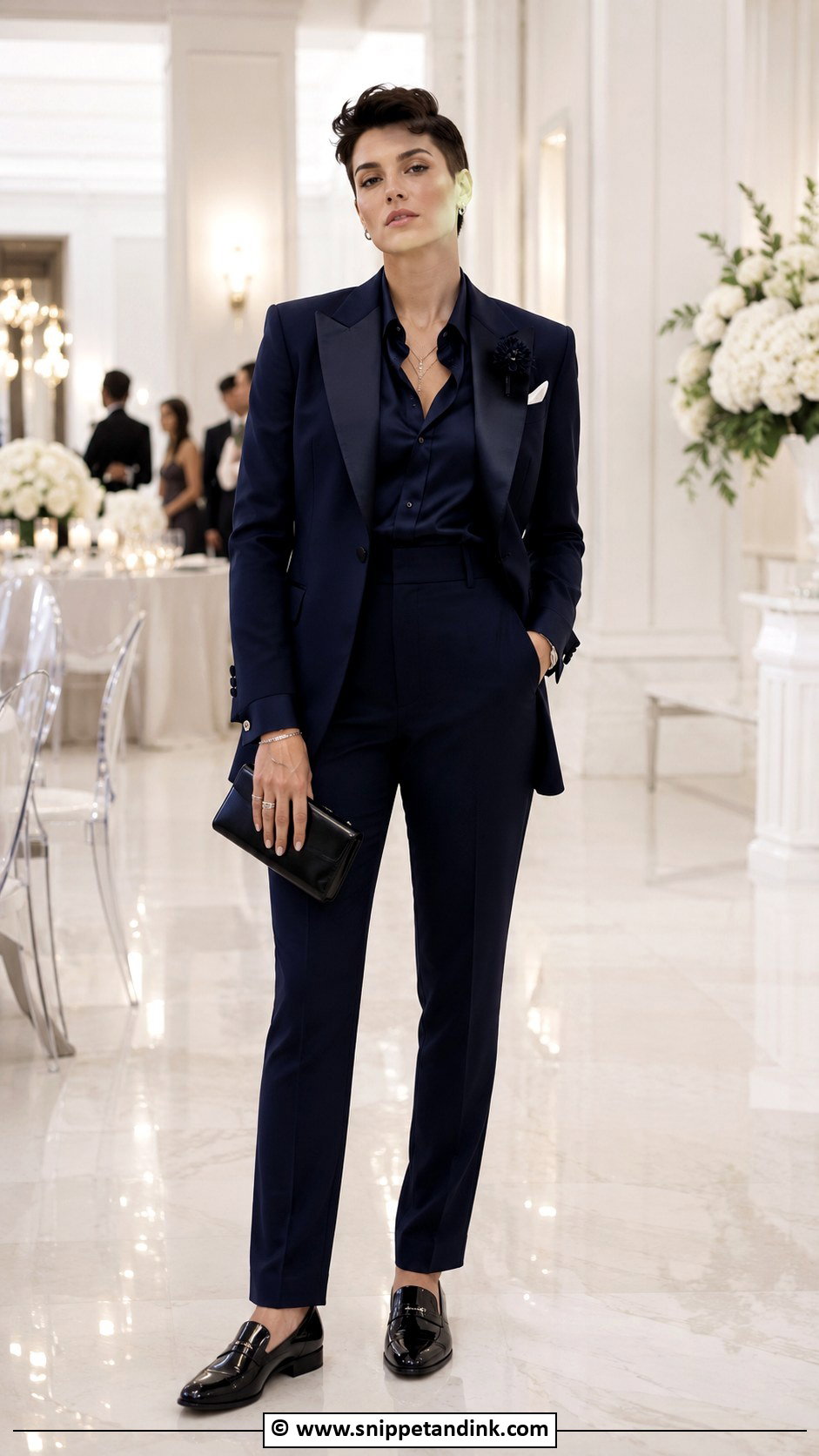
Black tie asks for full formality, and you can meet it with a tuxedo, formal jumpsuit, long skirt suit, velvet suit or floor-length trouser set. Dark colours are the safe route, but ivory, metallics, jewel tones and deep navy fit too when the fabric is formal. Satin lapels, silk shirts, structured shoulders and long lines all signal black tie. Choose clean, dressy shoes, whether patent loafers, sleek boots, polished flats or heels, and refined accessories like cufflinks, a bow tie or a brooch. I’d rather see someone in a well-fitted outfit they can breathe in than a stiff one they keep adjusting.
Translating a Dress Code That Says Gown or Tux
Invitations often describe dress codes in gendered terms, but each one is really about formality, length and fabric. Here’s how I translate them for anyone who doesn’t want either default.
- Black tie: a tuxedo, or any dark or rich outfit that reaches the floor or the shoe, in satin, velvet or fine wool, with a formal shoe.
- Formal or black tie optional: a dark suit, a long skirt suit or a jumpsuit in a structured fabric.
- Cocktail: a suit in any colour, a two-piece set or a midi skirt with a jacket. Ties are optional.
- Garden or daytime: linen, light crepe and pale colours, with shoes that won’t sink into a lawn.
If you’re in the wedding party, ask the couple what should match across everyone: colour, fabric, length or just one accessory. A shared palette lets each person choose a suit, skirt or jumpsuit and still look like part of the group in photos. And if the couple plans gendered roles like groomsmen and bridesmaids, it’s fair to ask which side you’d like to stand on, or whether you can simply stand with the people you’re closest to.
Fit First, Then Everything Else Follows
There’s no single rule for dressing outside the binary at a wedding, only formalwear that feels honest, comfortable and right for the occasion. Get the fit right first, then choose fabric, colour, shoes and accessories that match the dress code and your expression. If you’re in the wedding party, coordinate with the couple while staying true to yourself. As a guest, aim for polished and respectful. The best outfit is the one you stop thinking about once you’ve put it on.
You'll Like These Ideas:




Leave a Reply