
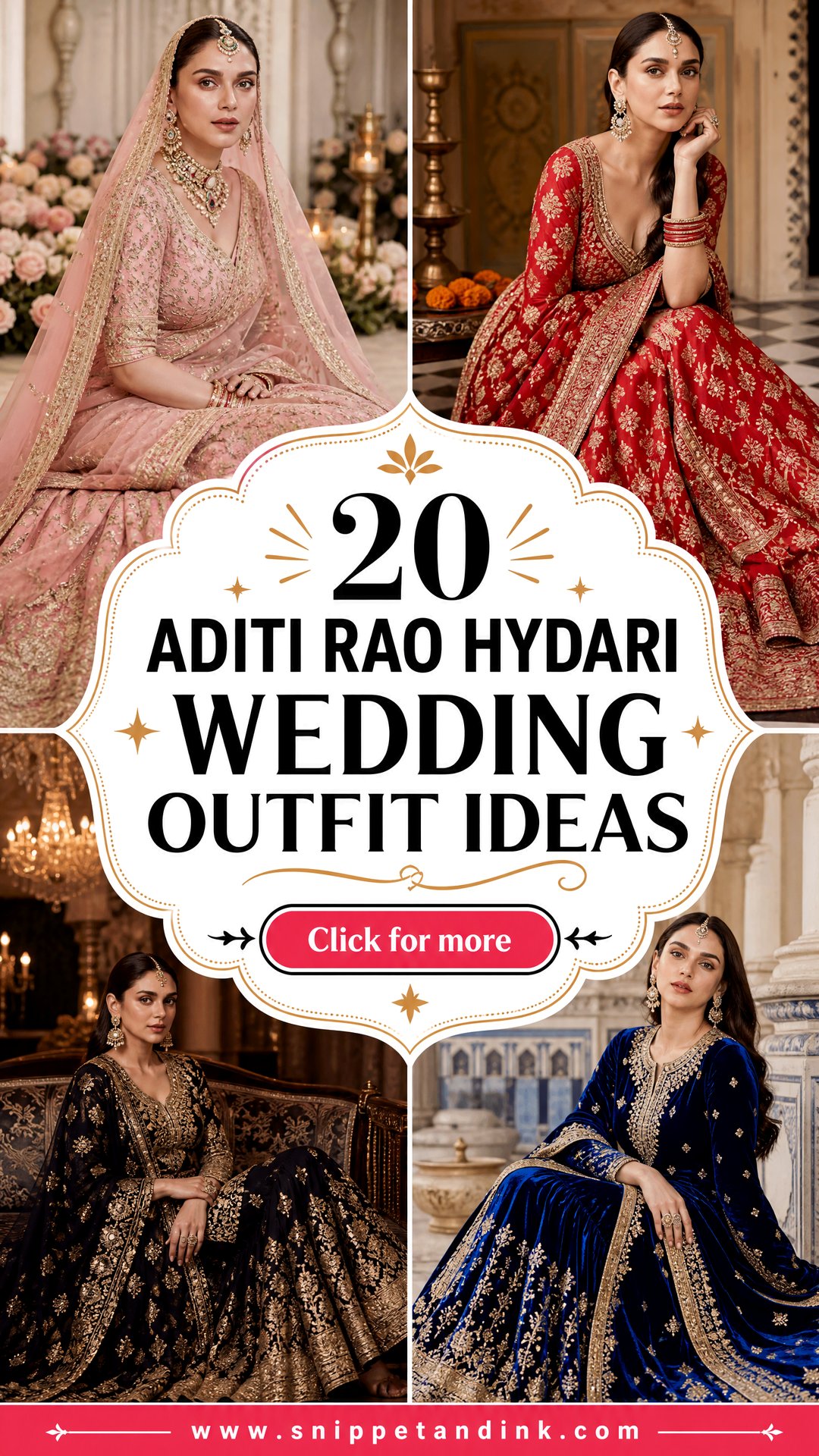
Aditi Rao Hydari’s wedding dressing is a useful reference for brides who would rather wear one exceptional textile than a lot of sparkle. Her looks lean on handwoven silks, clean silhouettes, deep colour and jewelry chosen with restraint. When I build an outfit in that spirit, I start from the fabric and let everything else follow it. Below are twenty complete looks across the functions, from an intimate engagement to the main ceremony and reception: red lehengas, handwoven sarees, flowing anarkalis, brocade shararas and softer floral sets. Each one includes the footwear, dupatta, hair, makeup and accessories, plus notes on adapting it for your budget and body. Restraint and good craft, done carefully, look regal on their own.
Matching Fabric to Each Function’s Hour and Heat
A multi-day wedding moves from morning rituals to late receptions, and the fabric that feels regal at midnight can be miserable at noon. I plan the wardrobe by time of day and season first, then pick colours.
- Haldi and morning puja: soft cotton silk, chanderi or light handloom. They breathe, and you won’t mind if they get stained.
- Mehndi and daytime lunches: printed or lightly embroidered georgette and chiffon, which survive sitting cross-legged for hours.
- Main ceremony: silk, Banarasi or raw silk, chosen for how it handles long periods of sitting and standing by the fire.
- Winter evenings and receptions: velvet and heavy brocade. Avoid them for summer outdoor events entirely.
Try every heavy outfit with its full jewelry and dupatta at least once before the wedding, and stay in it for an hour. Weight you barely notice in a trial room becomes obvious by the second ritual.
1. Aditi Rao Hydari Red Bridal Lehenga
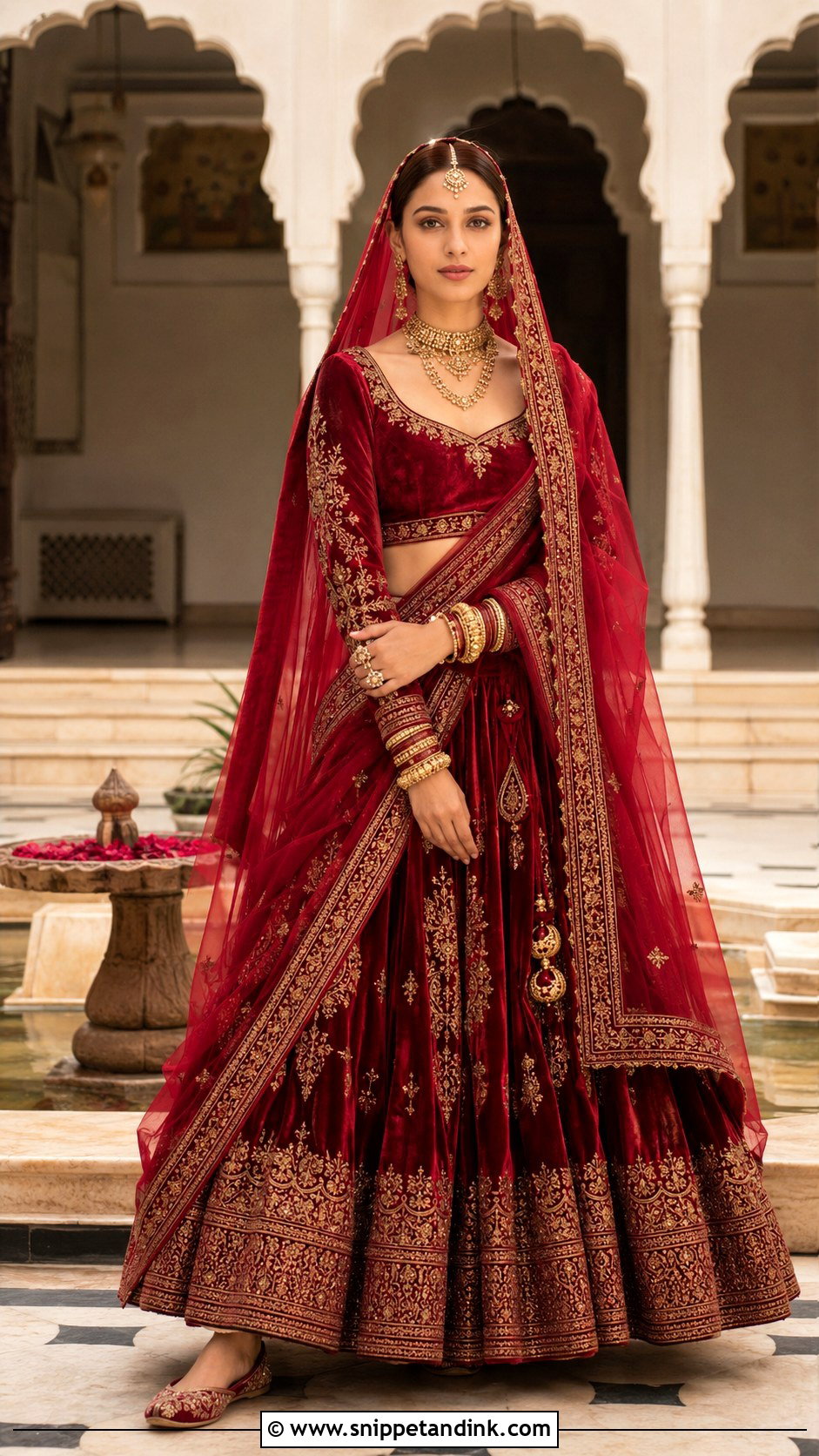
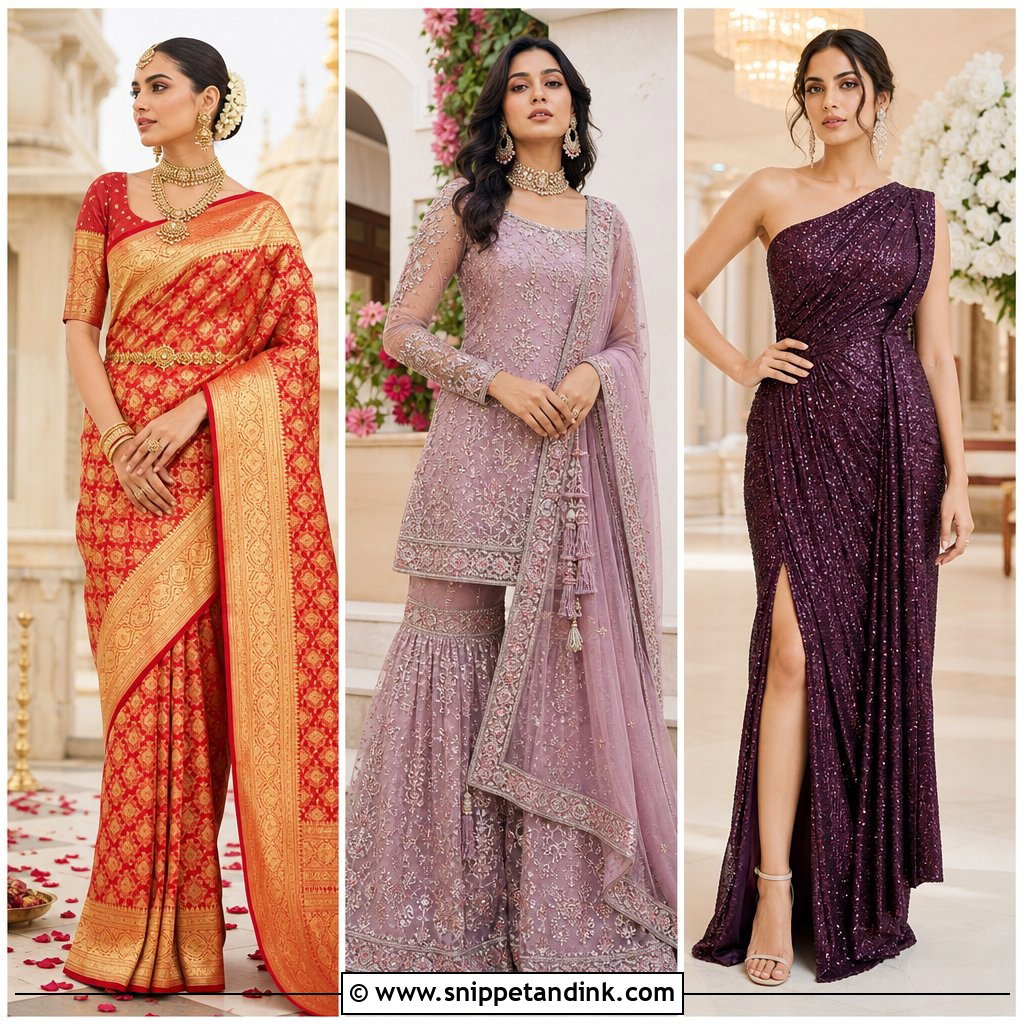
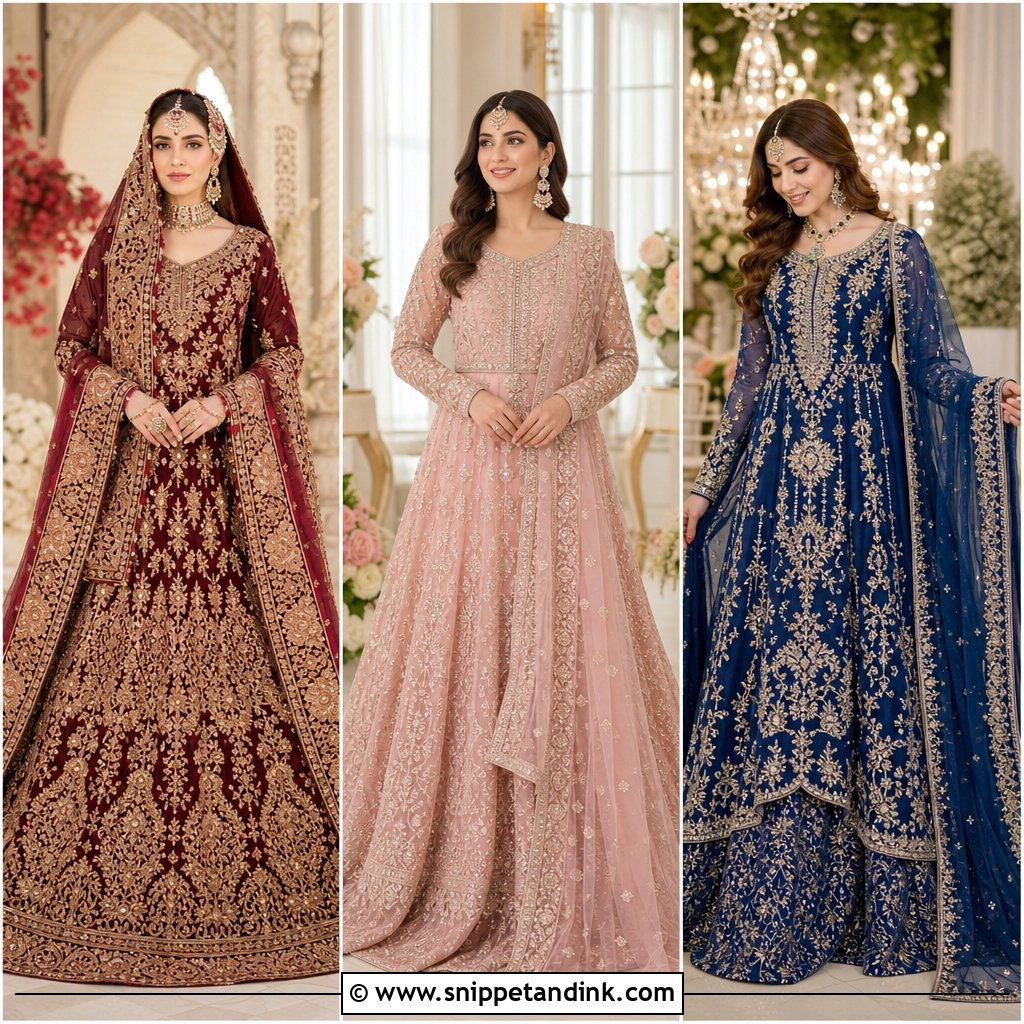
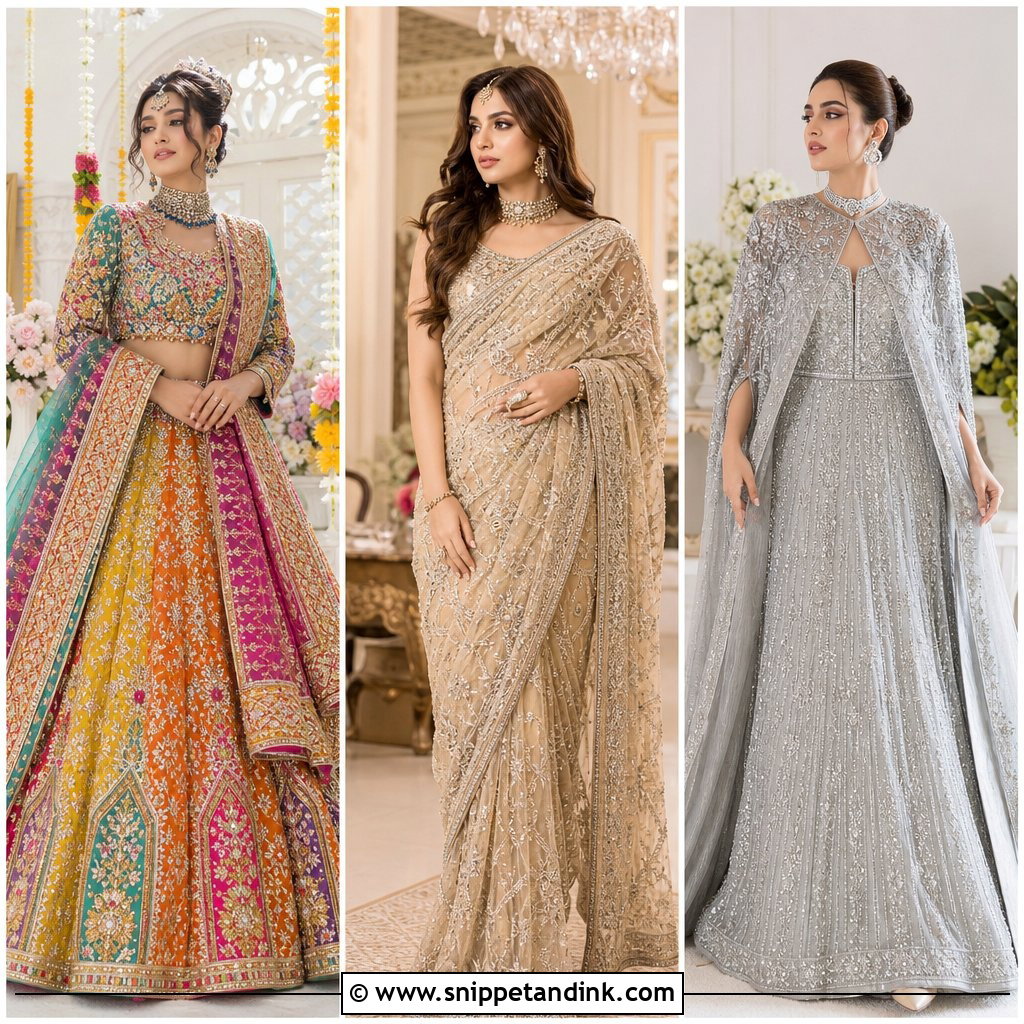
Deep red is still the colour most families picture for the main ceremony, and the heritage way to wear it is with the weight in the border rather than all over the skirt. Velvet, raw silk or matka silk with a broad antique-gold border reads richer than dense embroidery everywhere. A fitted full-sleeve blouse, a light red veil pinned neatly over the head and a second dupatta across one shoulder give the layered look. A gold choker, matching earrings, maang tikka, bangles and embroidered juttis complete it. Luminous skin, defined eyes, a muted red lip and a sleek centre-parted bun keep the jewelry in focus. The head veil is what I pin first and most firmly, at the crown and both temples, because it gets lifted and adjusted through every ritual.
2. Aditi Rao Hydari Ivory Wedding Saree
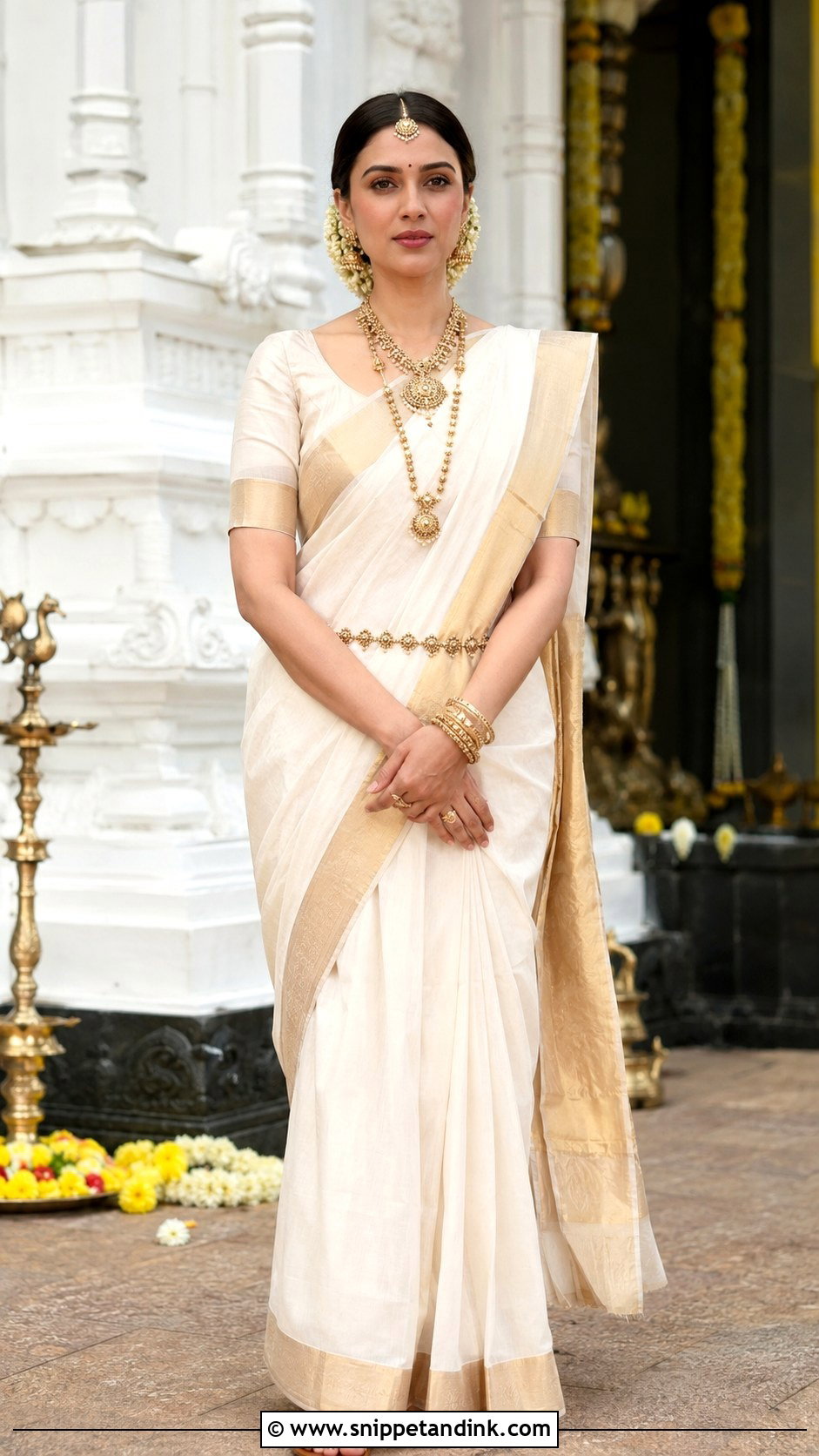
An ivory saree suits a temple or a small morning ceremony, where heavy colour can feel like too much. Choose handwoven silk with a slim gold border and a matching elbow-sleeve blouse. The silk needs enough body to hold crisp pleats but not so much that it stands away from the legs; I test this by gathering a few pleats in my hand and seeing whether they fall back flat. Gold necklace, jhumkas, bangles and jasmine around a low bun are all it needs. Flat gold sandals or juttis keep you steady through long rituals, and a small bindi with soft eyes completes it. Ivory shows turmeric and kumkum instantly, so ask the family to keep the thaali away from your pallu.
3. Aditi Rao Hydari Gold Silk Saree
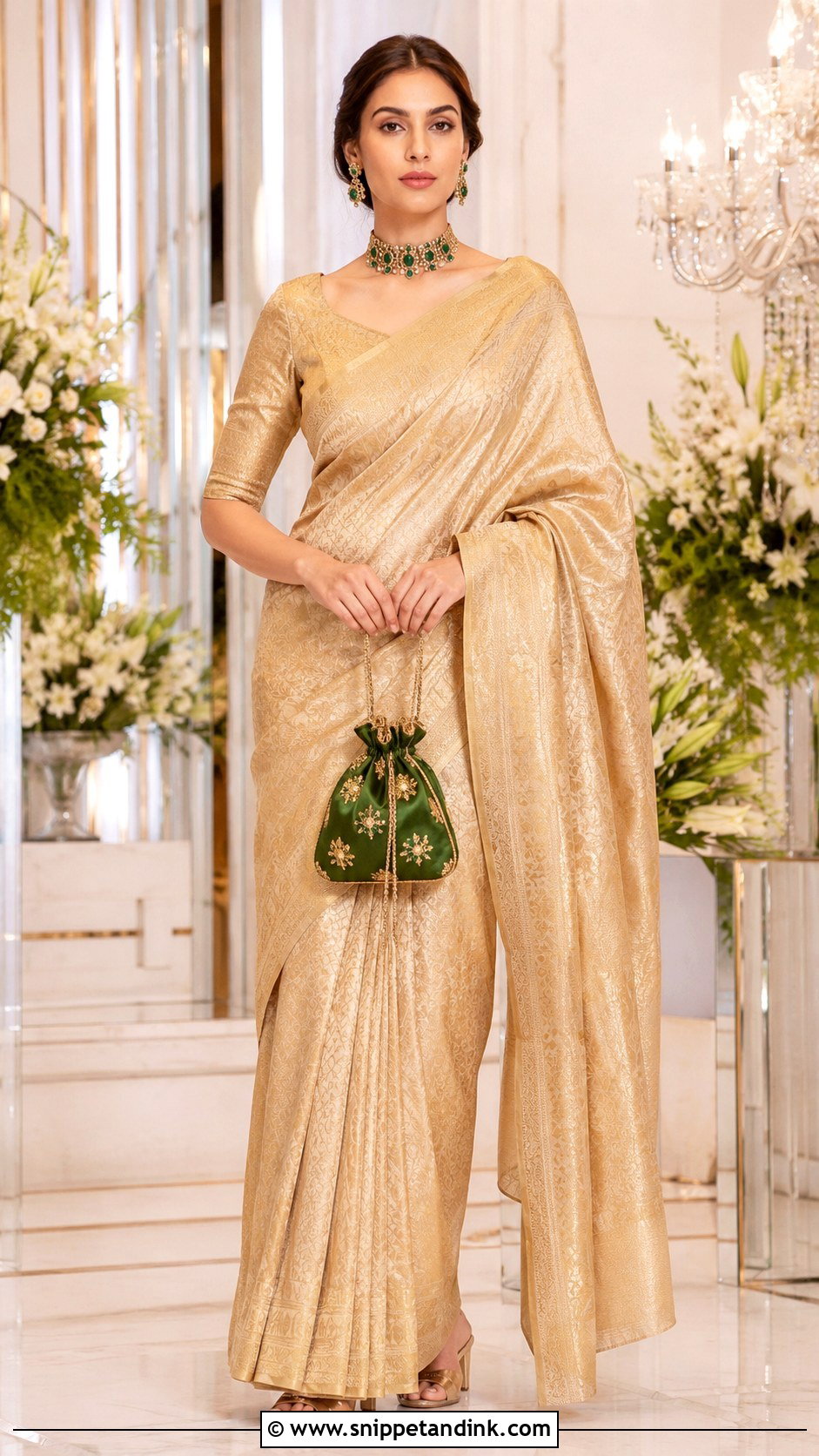
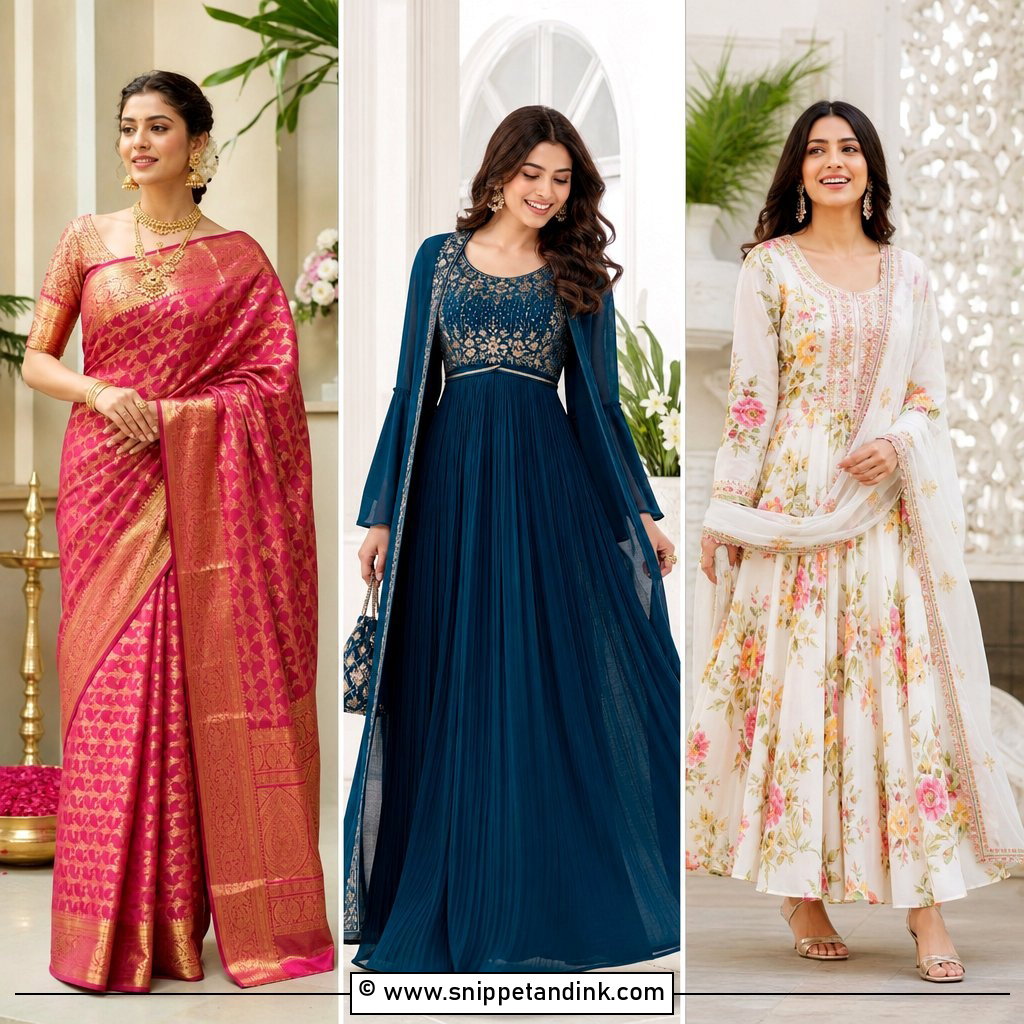
Gold silk catches daylight and lamplight equally well, which is why a Banarasi in gold or champagne carries across a day ceremony and an evening reception. Look for subtle woven motifs and a fitted blouse in the same colour family; a modest boat neckline and elbow-length sleeves keep the mood refined. Bring contrast through emerald earrings, a green-stone choker or a deep red potli. Gold block heels give height and are far easier on saree pleats than stilettos. A polished bun, a small bindi and rose-toned makeup finish it. On petite brides I pick smaller buttas, since large motifs swamp a short frame, and on curvier brides a softer, more fluid silk drapes better over the hips than a stiff brocade.
4. Aditi Rao Hydari Pink Bridal Lehenga
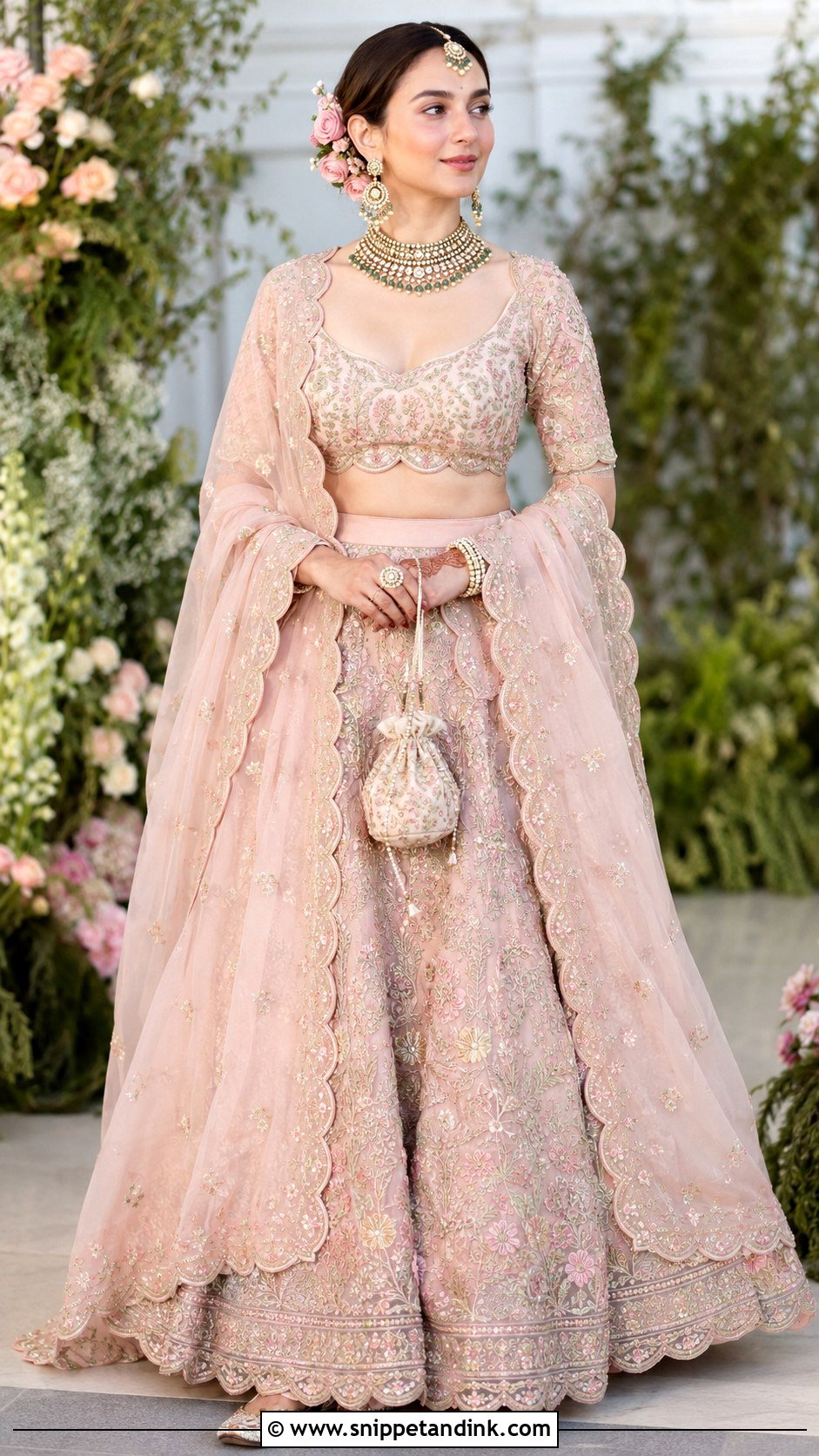
Pink keeps the stateliness of a bridal lehenga and softens it. Blush, rose or dusty pink with fine crystal work, tonal embroidery or small mirror accents feels light, especially with a structured blouse and a sheer dupatta edged in a narrow border. Watch the volume. Several layers of can-can under a pastel skirt make it look heavy, and you’ll carry that weight for hours. Kundan jewelry, pearl drops, a small potli and metallic juttis suit it. A low floral bun works for the ceremony and loose waves for the reception. Fresh pink makeup, highlighted skin and a berry lip finish it. Daytime and outdoor venues show this colour best, because pastels can go flat under yellow evening lighting.
5. Aditi Rao Hydari White Mirror Work Lehenga
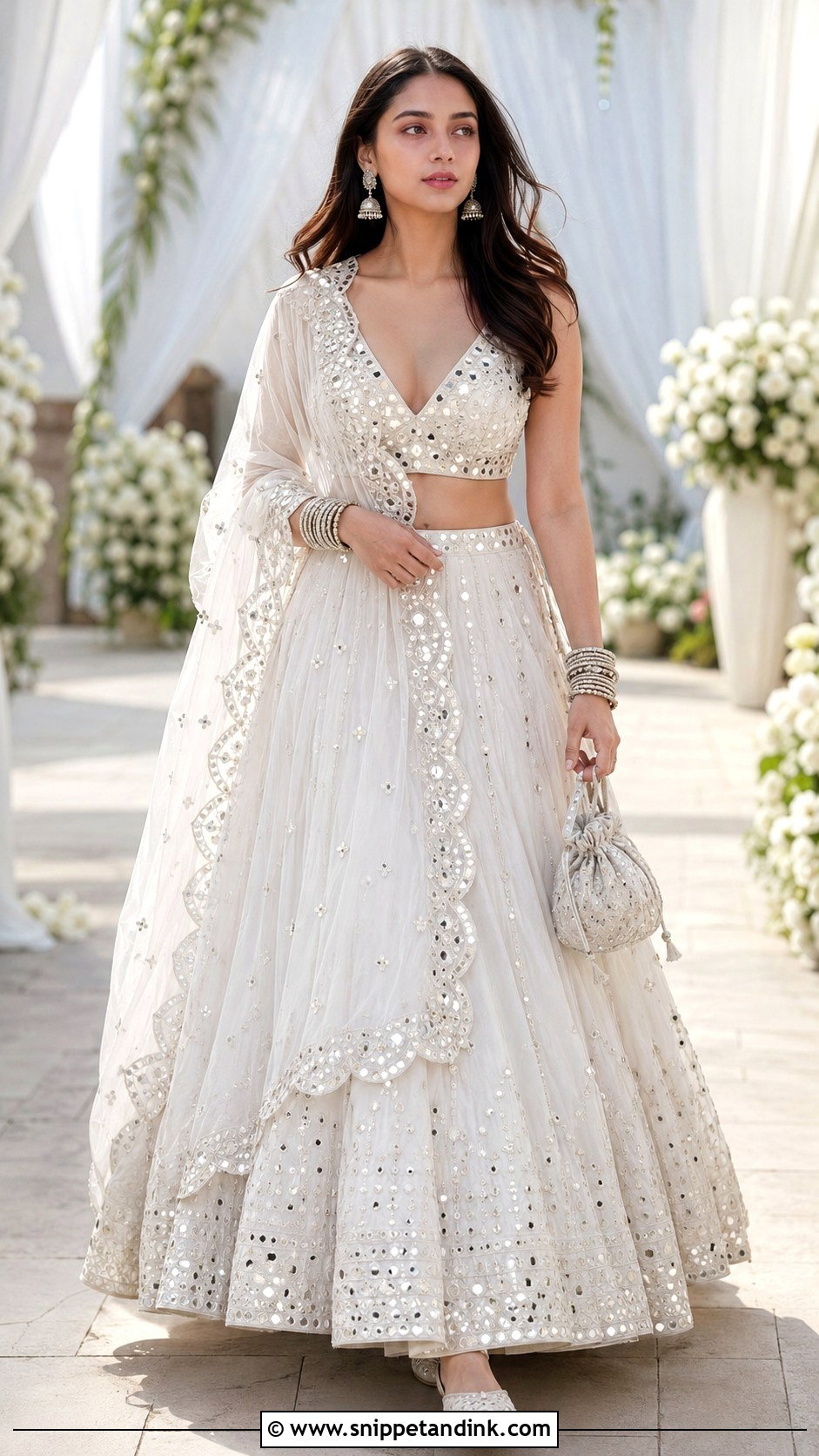
White with mirror work feels bright for a daytime celebration. Small mirrors scattered across a white or soft ivory skirt look fresher than heavy clusters, which also add weight at the hem. Pair a fitted blouse with a balanced neckline and a light dupatta with a scalloped edge. Silver jhumkas, stacked bangles and an embroidered potli suit it, and pale pink flowers or coloured stones soften the contrast. A relaxed braid, textured bun or soft waves can follow the event’s formality, with silver juttis below. Before choosing white, check with the elders; some families avoid it for auspicious events, and it’s an easier conversation now than at the venue.
6. Aditi Rao Hydari Burgundy Velvet Lehenga
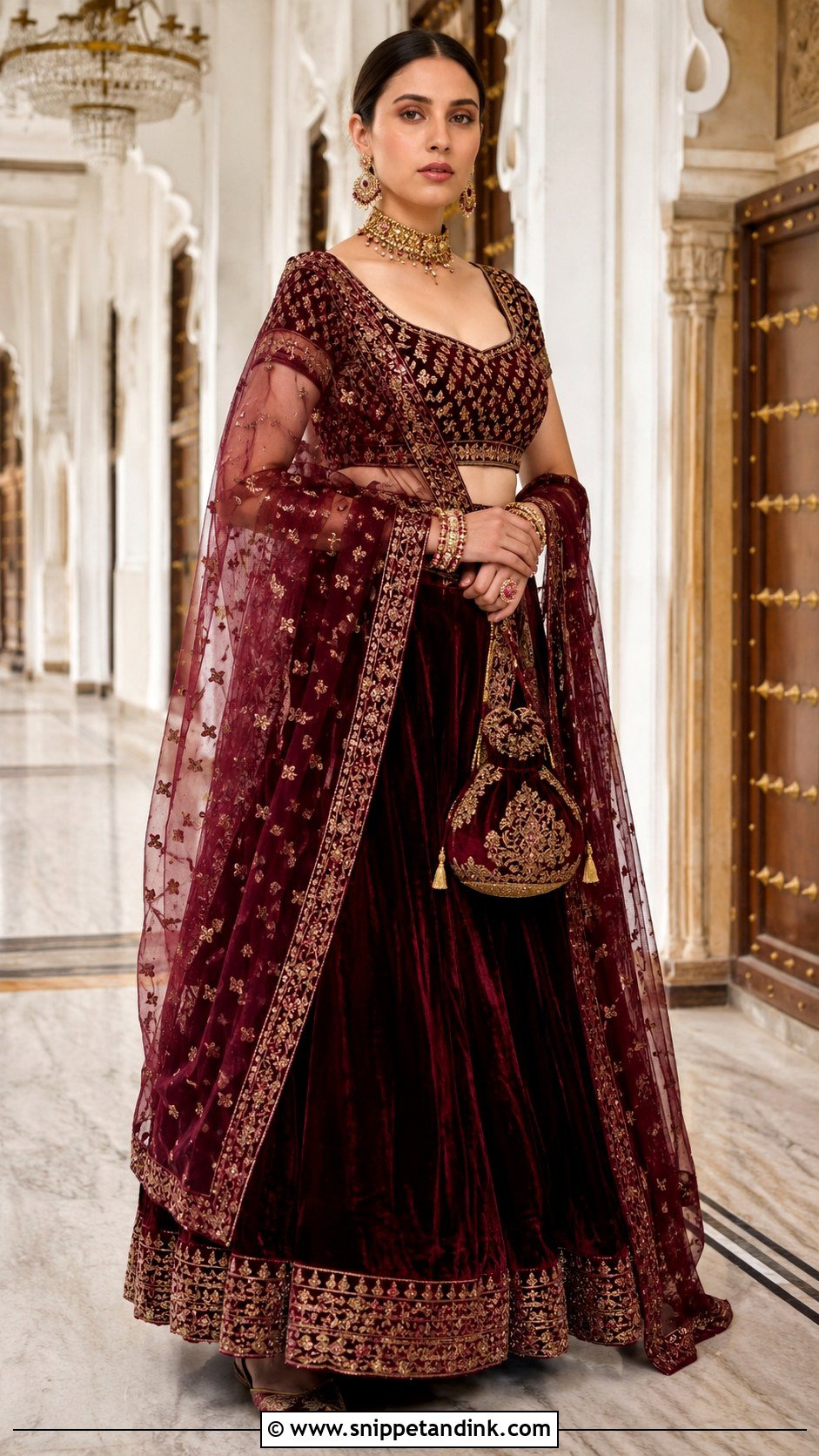
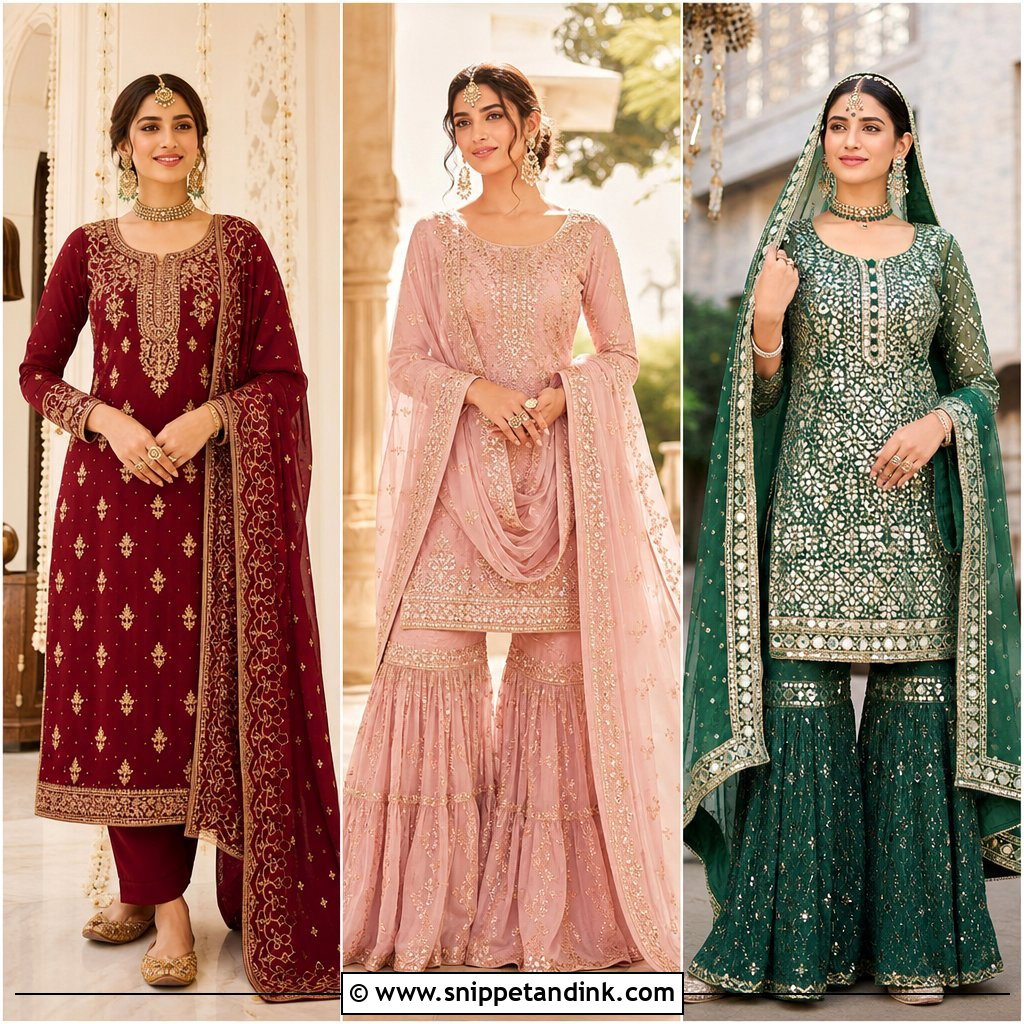
Burgundy velvet with antique-gold embroidery is made for a formal winter evening. A full skirt with a restrained border, a brocade blouse and a sheer matching dupatta give enough contrast in texture that more embellishment would crowd it. Add an antique-gold choker, chandbalis, bangles and a small maang tikka, then a structured potli and velvet juttis to carry the colour down. Smooth hair in a low bun or centre-parted waves suits it, with defined eyes and a soft plum lip. Velvet is warm, which is an advantage in December and a real problem in a heated hall. Velvet also crushes where you sit, so I have brides stand for photos before the meal rather than after.
7. Aditi Rao Hydari Banarasi Lehenga
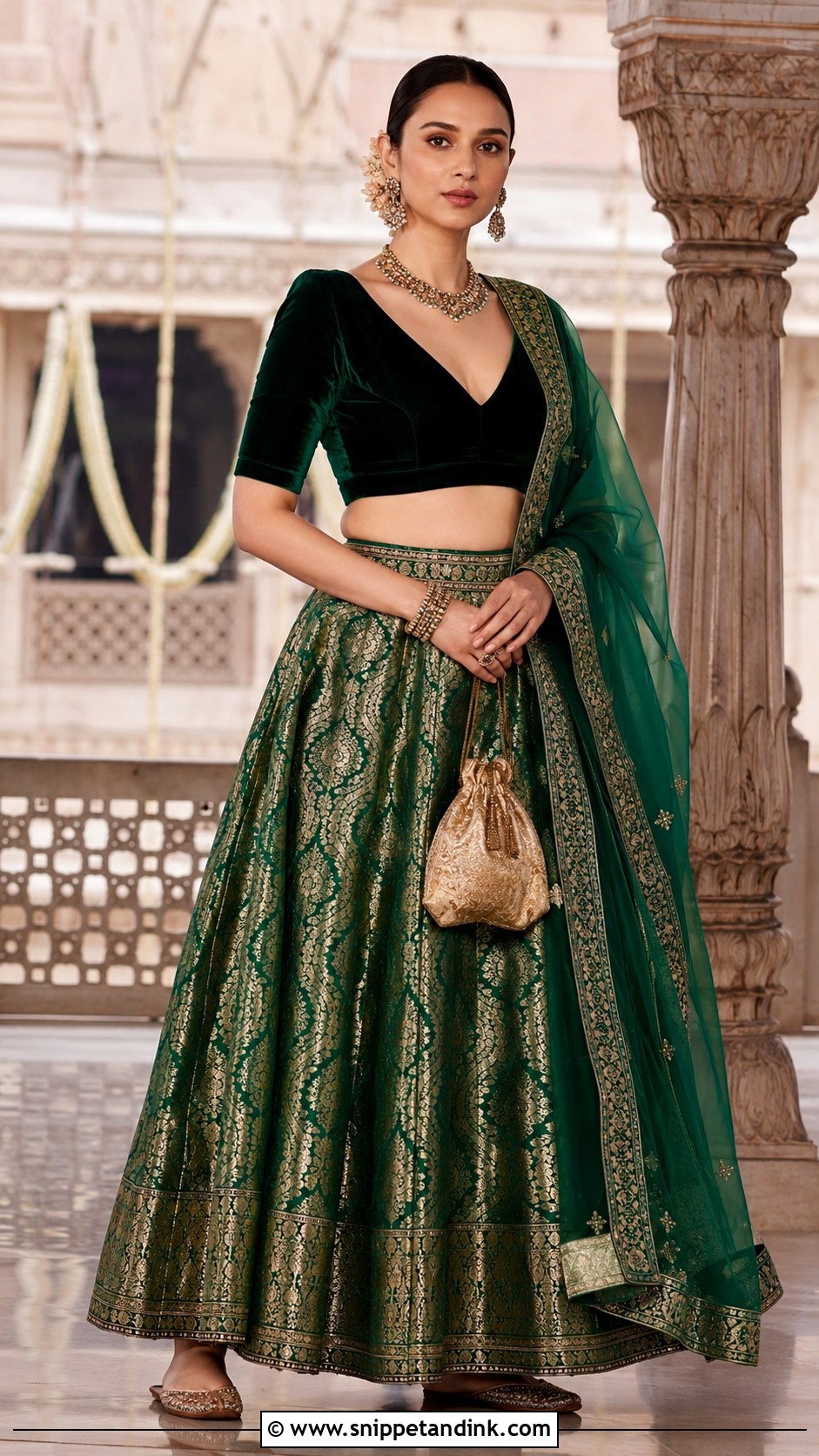
A Banarasi lehenga gives you the richness of a saree with the ease of a skirt. Choose jewel-toned brocade in emerald, royal blue, magenta or deep purple, and balance the busy weave with a solid velvet blouse. A plain organza dupatta with a Banarasi border connects the pieces without adding more pattern. Temple jewelry, embroidered juttis and a structured silk potli suit it, with a centre-parted bun and a small bindi. Brocade holds its own shape, so skip the extra can-can; it only adds heat and weight. This works for the reception, sangeet or main ceremony.
8. Aditi Rao Hydari Ivory And Magenta Lehenga
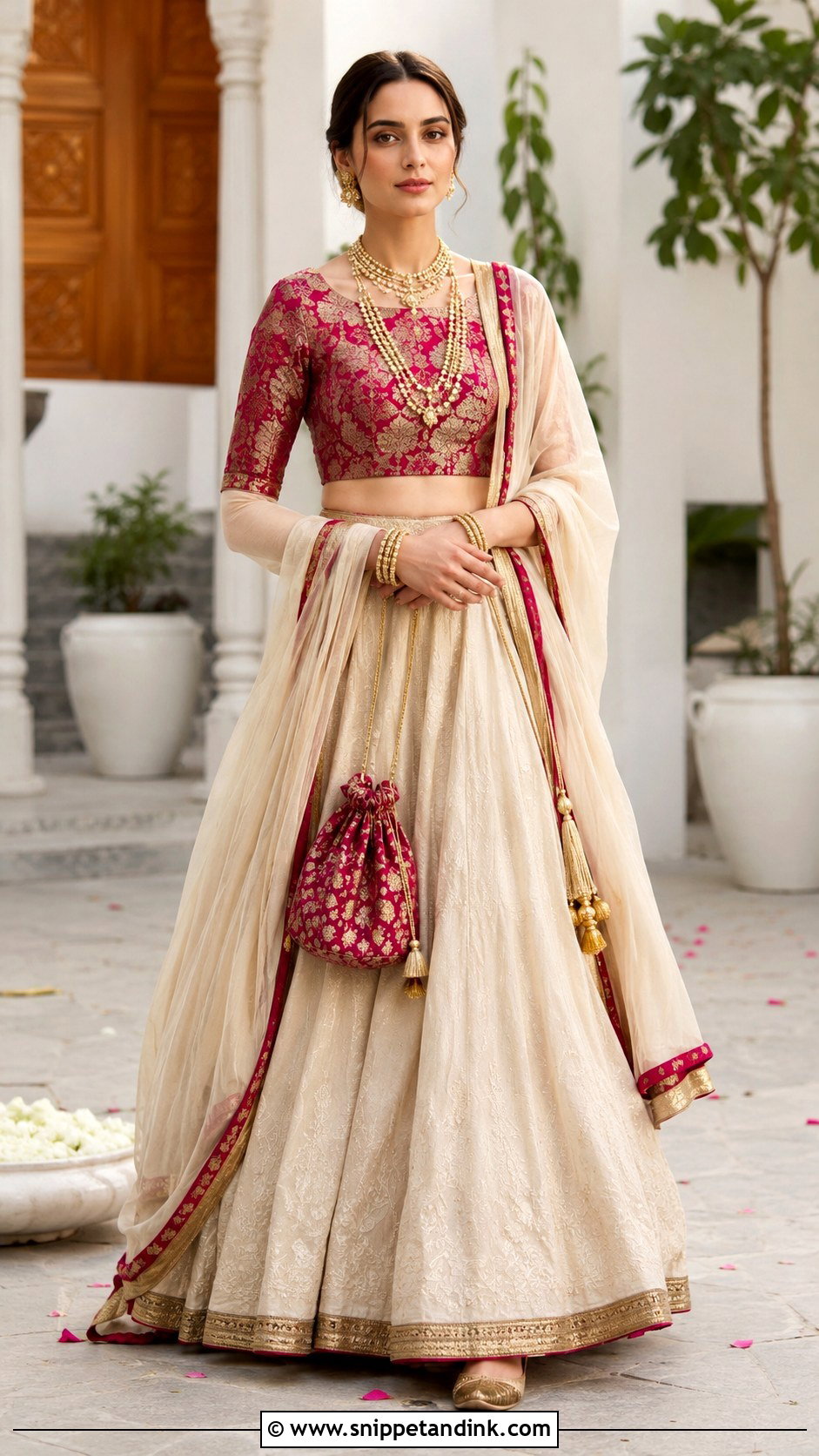
Ivory and magenta together feel festive without leaning on all-over red. Start with a full ivory skirt finished in a narrow gold border or tonal embroidery, add a magenta brocade blouse, and use a crinkled dupatta that carries both colours to join them. Gold suits this palette naturally: layered necklaces, traditional earrings and slim bangles. A magenta potli and neutral gold juttis keep the contrast as the feature. Soft waves feel romantic, a low bun more ceremonial, and a small bindi with a rose or berry lip ties it together. Crinkled dupattas hold their texture only if they’re stored twisted, so ask the boutique how it was packed and keep it the same way.
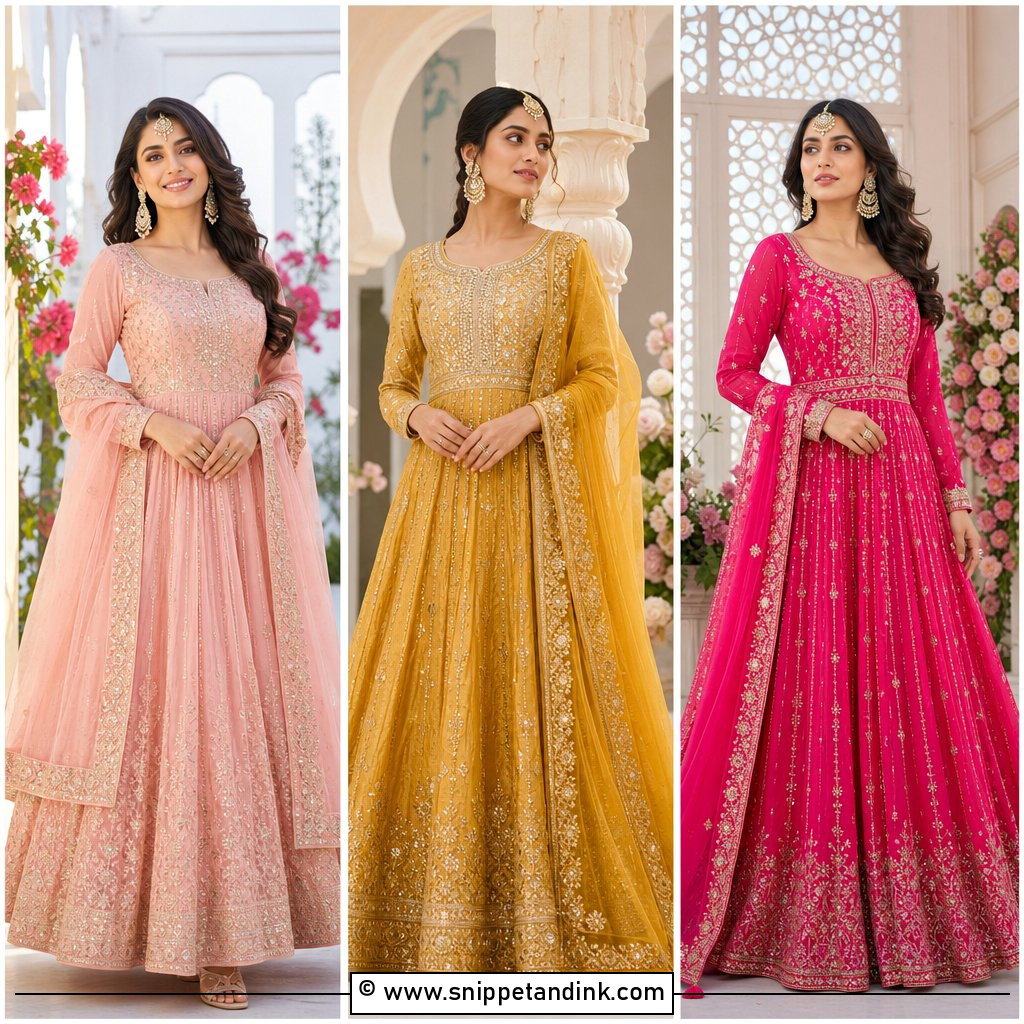
9. Aditi Rao Hydari Floral Anarkali
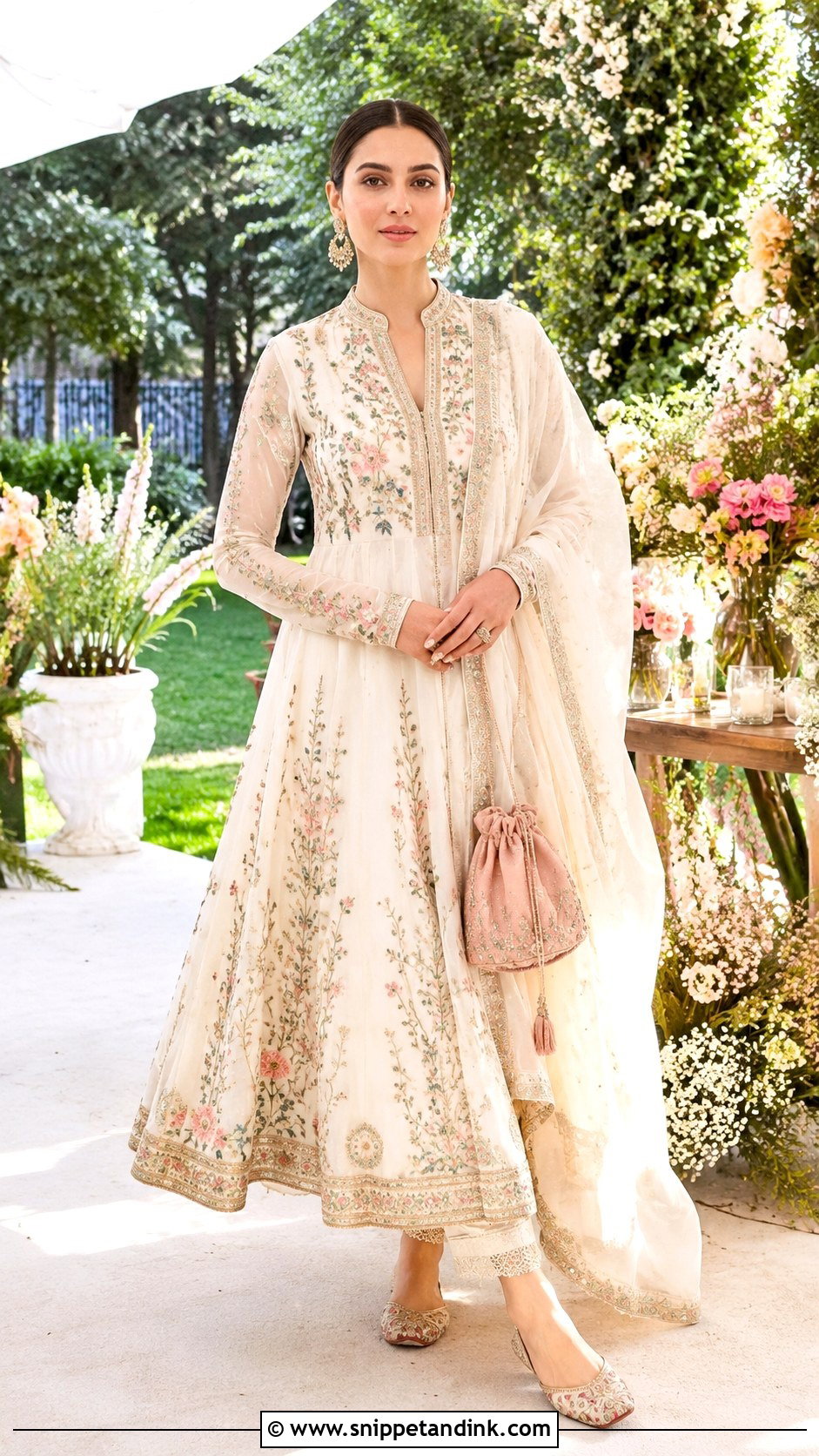
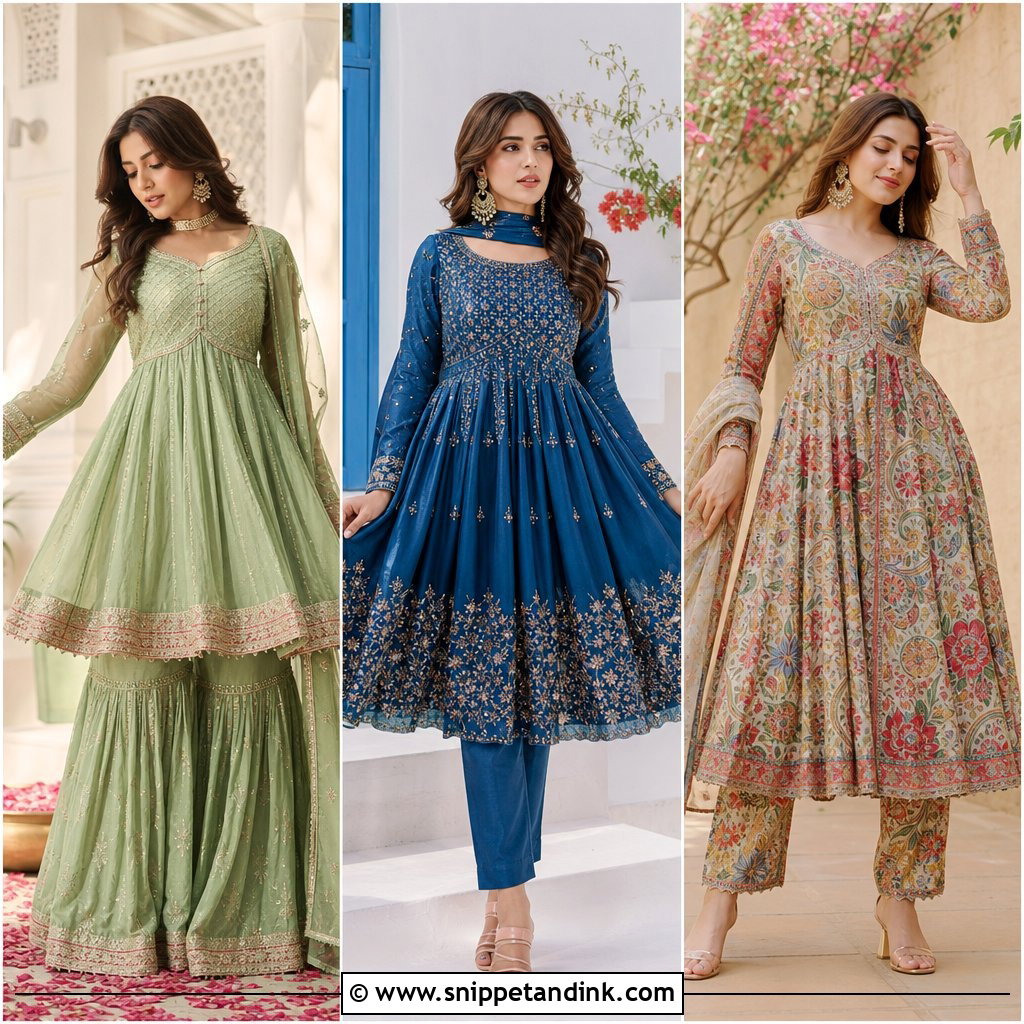
A floral anarkali is an easy choice for a garden wedding, a welcome lunch or any pre-wedding gathering. Ivory, sage, powder blue or soft pink with scattered botanical embroidery keeps it light, and a fitted bodice with a controlled flare gives shape without trapping your legs. Pair it with slim pants, a sheer dupatta and low embroidered heels or juttis. Statement earrings can stand in for a necklace, leaving the neckline clean. A potli in one of the flower colours, loose waves, fresh skin and a pink lip complete it. When I fit anarkalis, I check the flare from the side as much as the front, since too much fabric behind can make the hem dip at the back.
10. Aditi Rao Hydari Black Anarkali
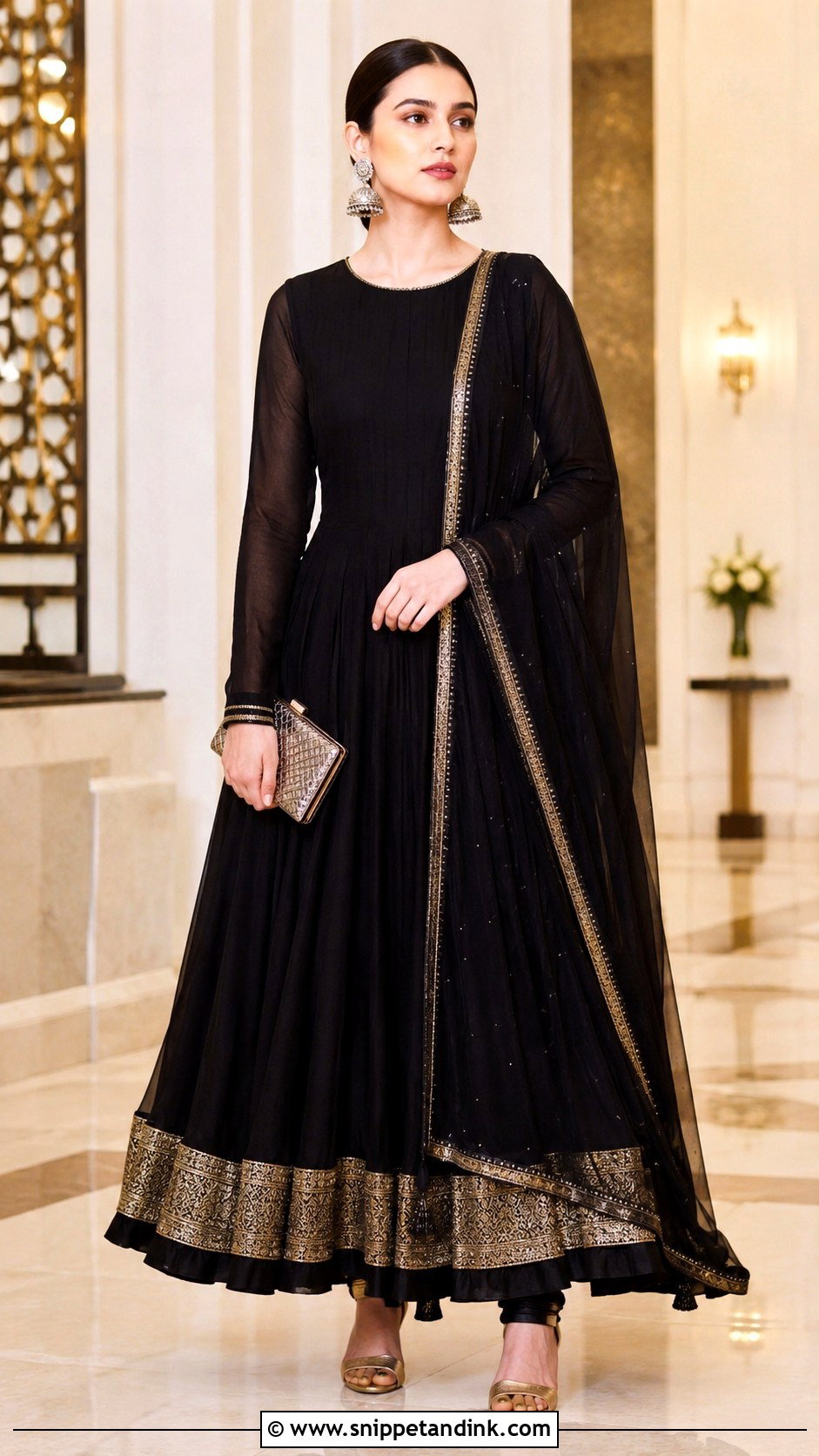
Black can look sophisticated at an evening reception or wedding dinner. A floor-length anarkali with a broad gold border, delicate embroidery or tonal sequins, worn with churidar and a sheer black dupatta edged in gold, gives it a festive edge. Oversized jhumkas, an antique bracelet and a small metallic clutch add the celebration. Black or gold block heels stay discreet. A centre-parted bun looks regal and soft waves more modern; add kohl, luminous skin and a neutral lip. Be honest with yourself about the family, though. Some households consider black inauspicious at weddings, so it’s best saved for a supporting event where darker colours are welcome.
11. Aditi Rao Hydari Sky Blue Sharara
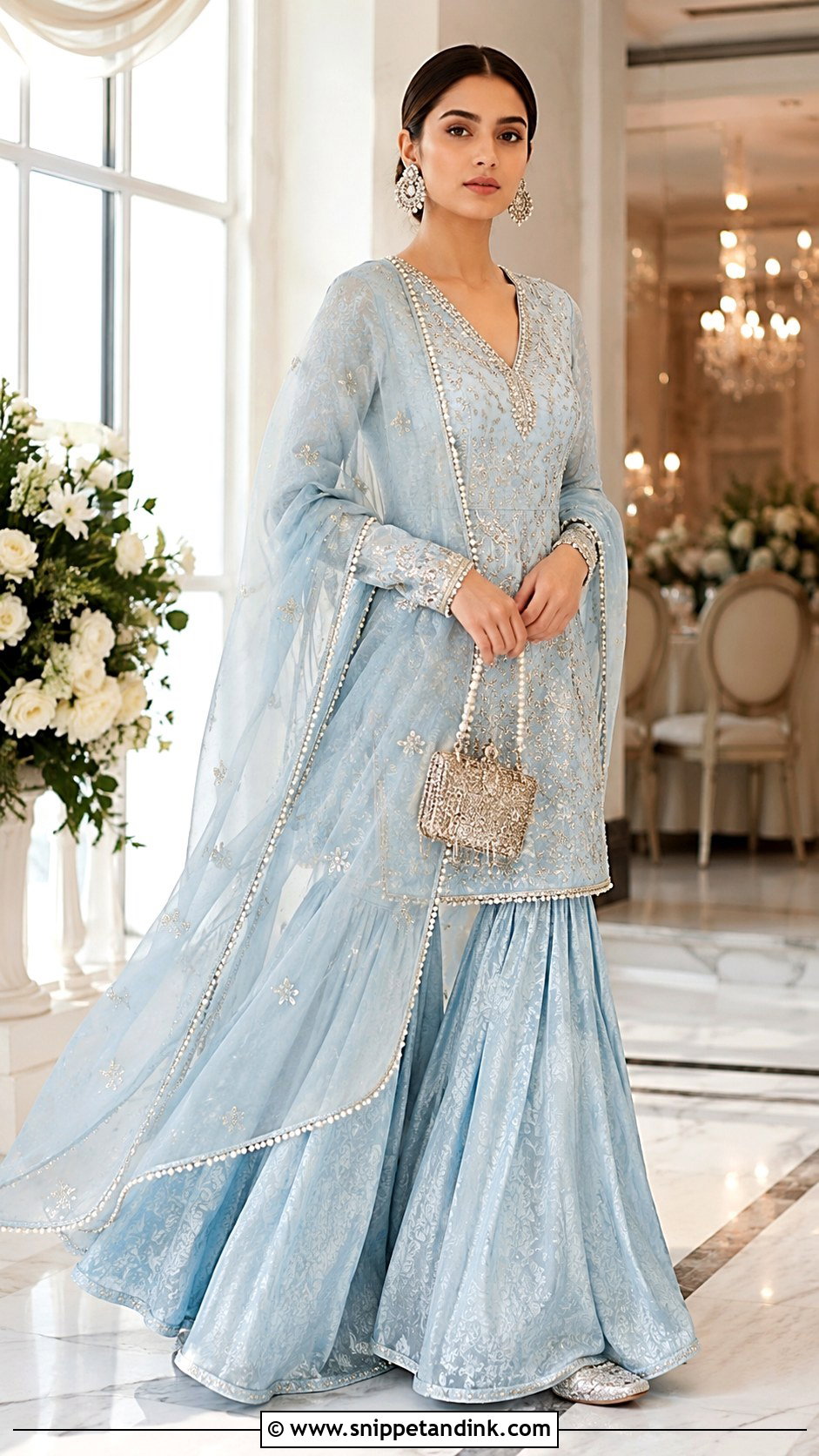
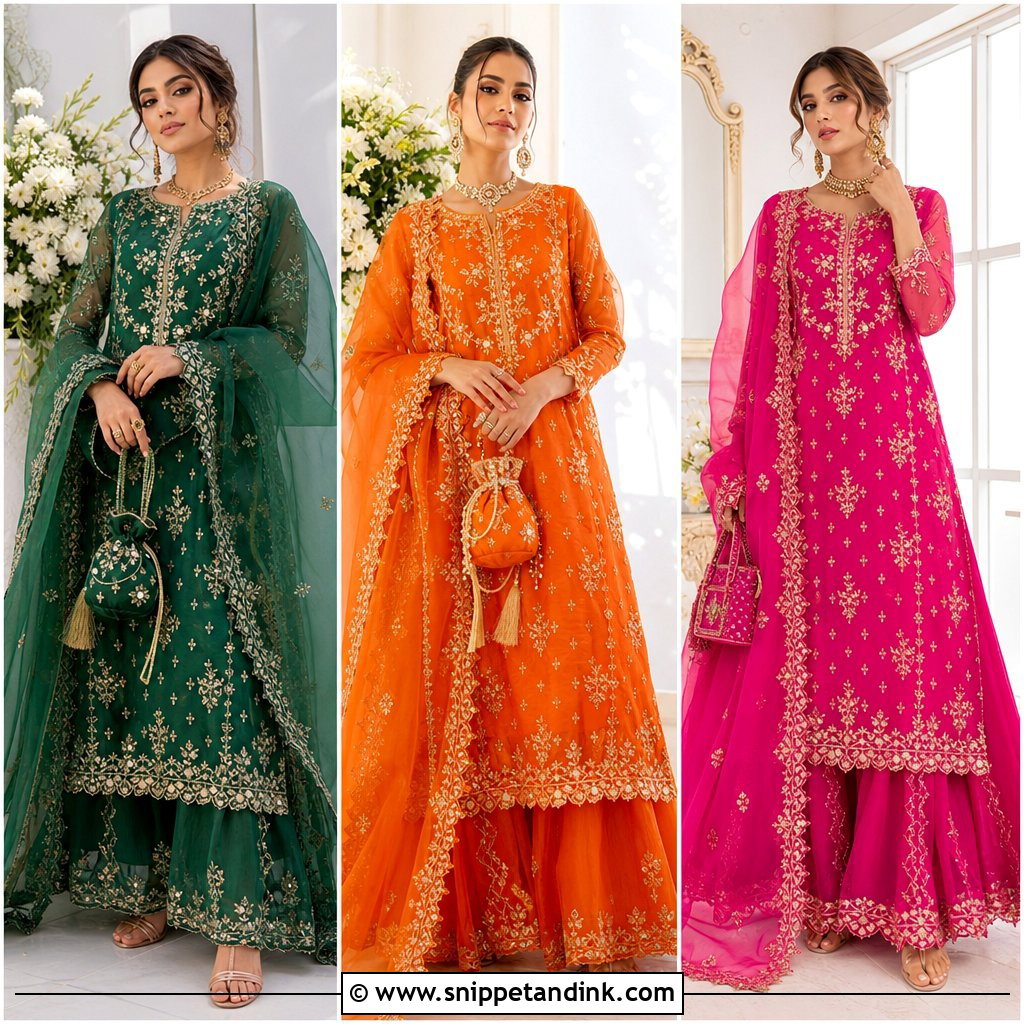
Powder blue softens the swing of a sharara. A silk brocade kurta with fine pearl work over generously flared sharara pants, finished with a coordinated organza dupatta, keeps the look light. The kurta should be short or mid-length and structured, or the proportions start to look bottom-heavy. Diamond or polki drops, silver-toned juttis and a small embellished bag suit it, and a bright pink lip sits well against the pastel. Side-swept waves or a low bun with a clean centre part both work. This is a comfortable pick for an engagement, family dinner or evening sangeet, and it shows how a good fabric can replace heavy ornament. Pale blue silk shows sweat marks, so I suggest dress shields for a dancing night.
12. Aditi Rao Hydari Red Printed Sharara
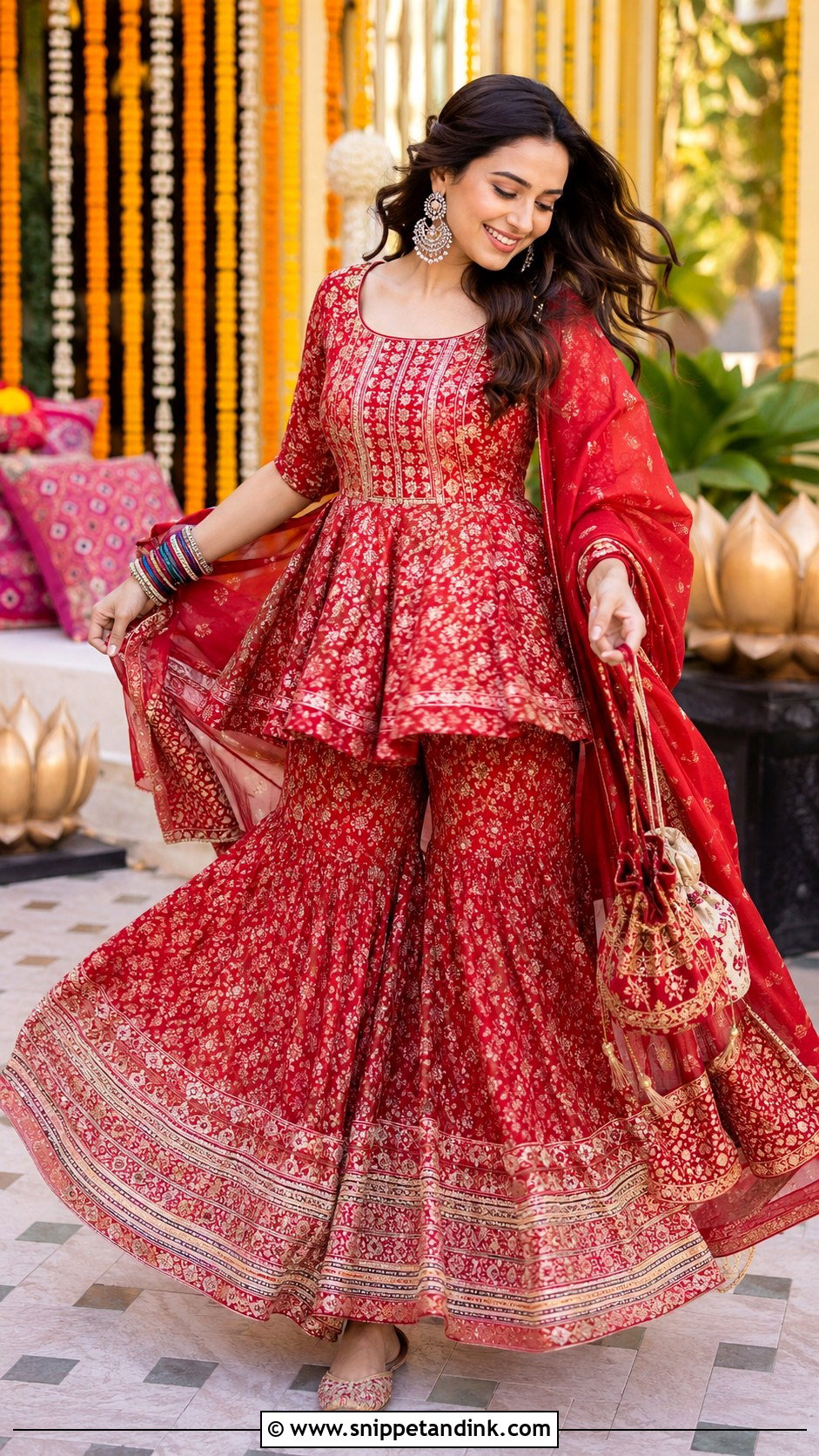
Mehndi day needs an outfit you can sit cross-legged and dance in. A red printed sharara does both: wide flared pants with a peplum or short kurta and small beads at the neckline. Choose a lighter dupatta so you’re not managing heavy fabric while your hands are drying. Oxidised-silver earrings, stacked bangles and an embroidered potli give a relaxed feel, and flat juttis beat heels for dancing and outdoor floors. A braid with fresh flowers keeps hair off the wet henna. Pick a print that hides a stray smudge, because fresh mehndi paste does transfer onto cuffs and kurta hems.
13. Aditi Rao Hydari Black Brocade Sharara
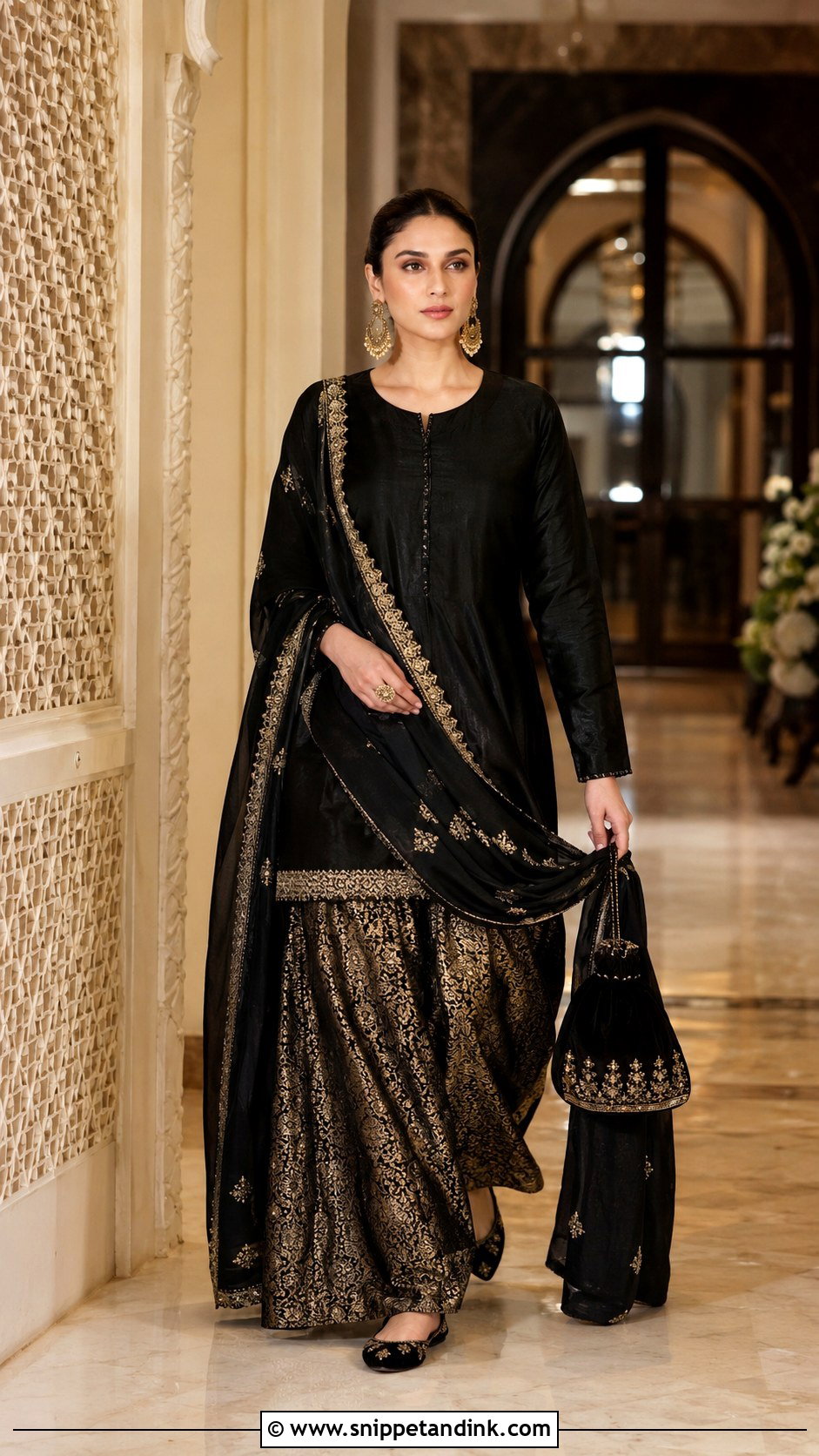
A black brocade sharara is an elegant swap for a lehenga at an evening event. Flared Banarasi bottoms with subtle gold weaving go with a straight black kurta, and a matching dupatta with a woven border keeps the colour unbroken. Antique-gold earrings, a statement ring and a black velvet potli are enough. Closed juttis are the right shoe here because wide sharara hems catch on open sandal straps. A sleek low bun and balanced makeup, with kohl, softly sculpted cheeks and a neutral lip, keep it composed. The weave already carries the look, so I’d resist adding a necklace at all.
14. Aditi Rao Hydari Rust Gharara
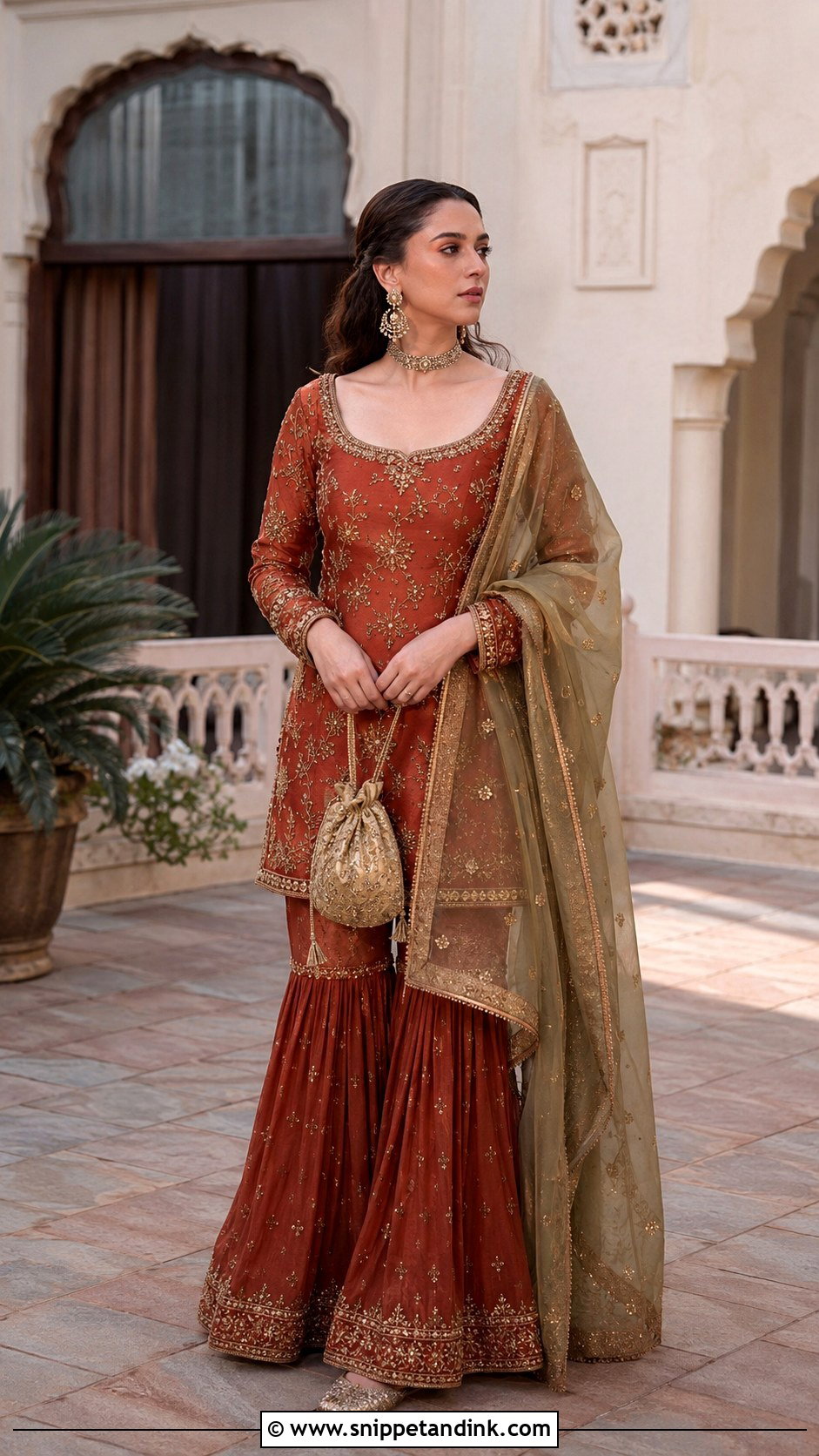
Rust with antique gold looks right at autumn celebrations and traditional evening events. A short embroidered kurta with a defined waist and a gharara that flares dramatically below the knee make the shape; a light dupatta in rust, maroon or muted gold completes the set. Kundan chandbalis, a slim choker, metallic juttis and a small silk potli go with it. The lower half already has a lot of volume, so keep the kurta and accessories streamlined. A braided bun or centre-parted waves suit the silhouette, with bronze eyes and a brick lip. Gharara hems are heavy at the knee joint, which is where I check the stitching first; that seam takes the strain every time you climb a step.
15. Aditi Rao Hydari Green Gharara
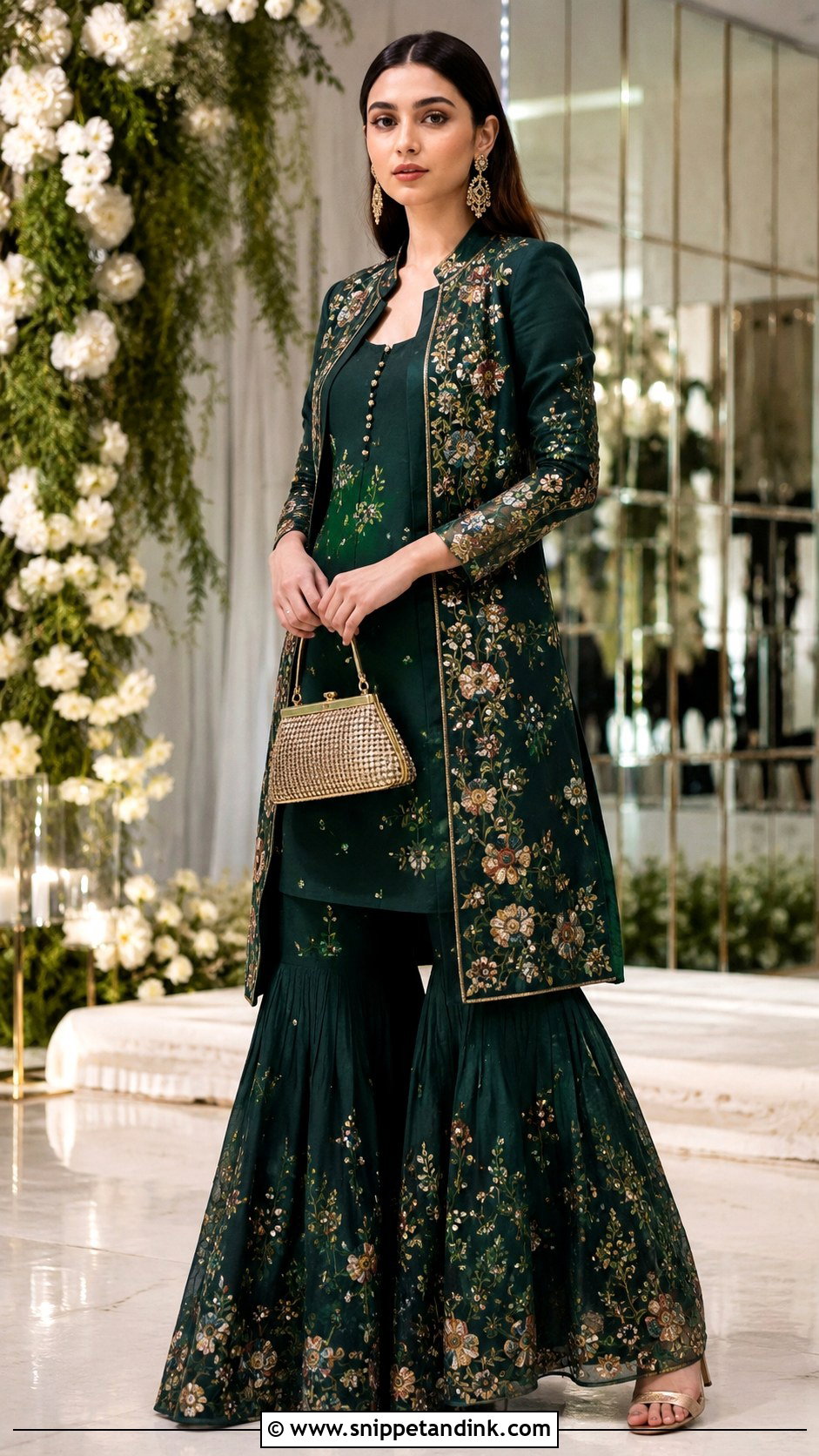
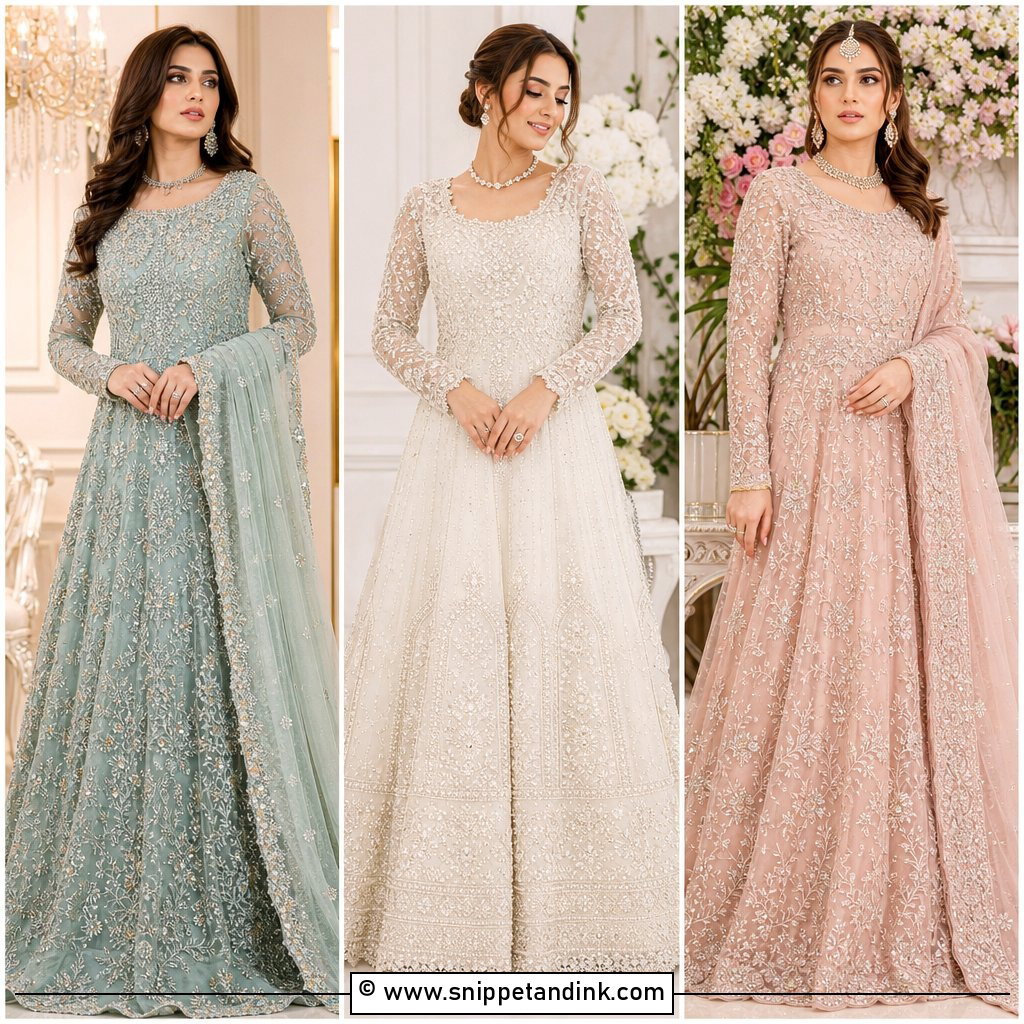
Deep green is the guest look I’d rewear most after the wedding. A floral or brocade gharara with a short matching kurta is the base. Swap the usual dupatta for a fitted long jacket or blazer-style layer in the same palette to make it feel modern, then add gold drop earrings, a statement ring, a small structured bag and comfortable block heels. A neat ponytail or low bun balances the full trousers, and defined lashes with a soft coral lip keep the face fresh. It suits a reception, cocktail evening or formal dinner. Make sure the jacket’s sleeves let you raise your arms, as tight tailoring over a full gharara pulls the whole outfit upward.
16. Aditi Rao Hydari Yellow Silk Saree
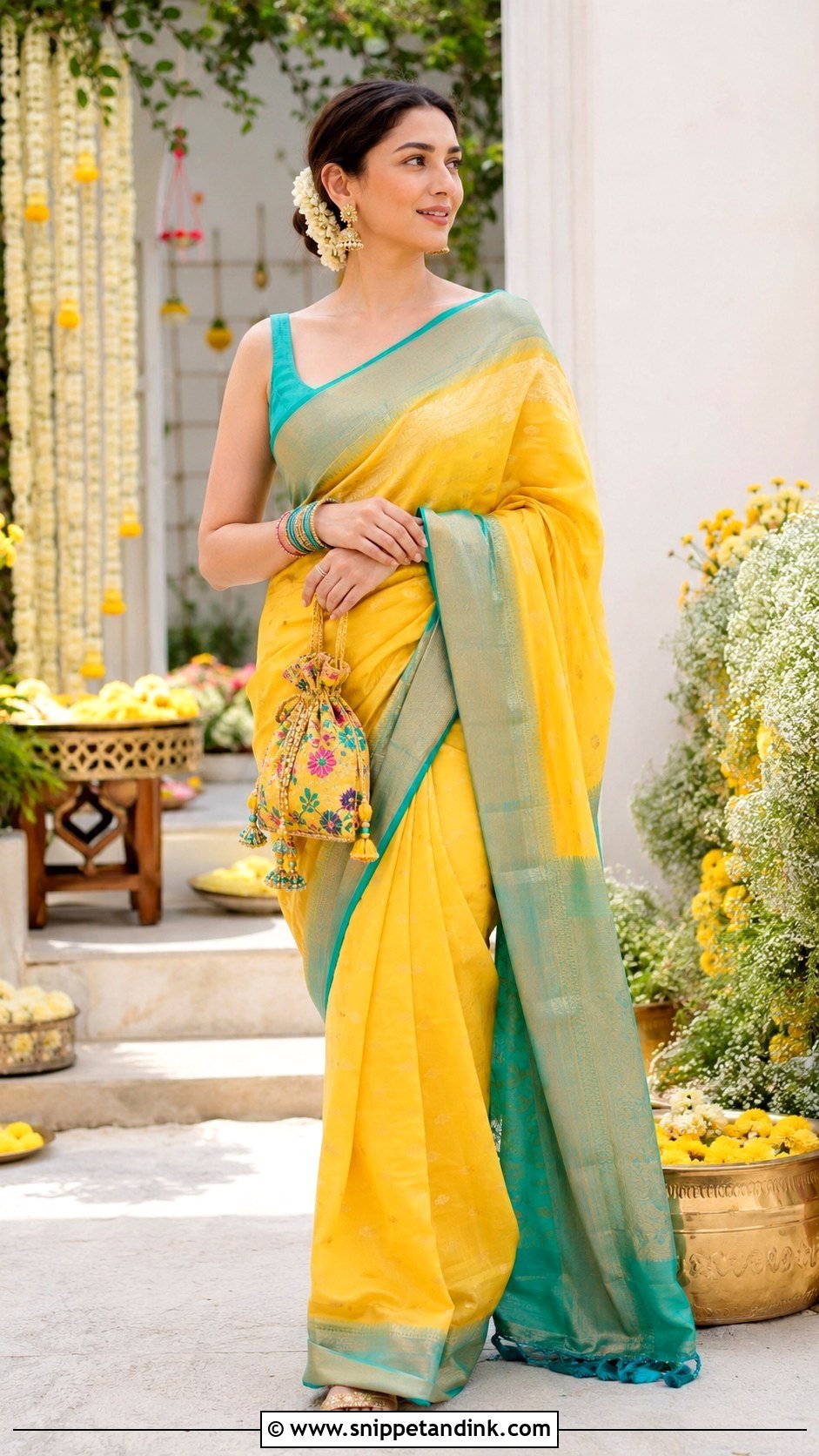
Yellow silk is the natural haldi choice and lovely for any daytime function. A handwoven saree with a teal, green or antique-gold border gives quiet contrast; pair it with a blouse in the border colour and a modest neckline you can move in. Gold jhumkas, coloured bangles, flat sandals and a woven potli suit it. Fresh jasmine, small yellow flowers or a gajra can decorate a low bun. Keep makeup light and heat-proof. Saturated yellow paired with teal brocade is a classic Indian textile pairing worth borrowing. One practical warning: haldi paste stains silk permanently, so wear a saree you’re happy to retire or keep the good one for after the ceremony.
17. Aditi Rao Hydari Purple Embroidered Lehenga
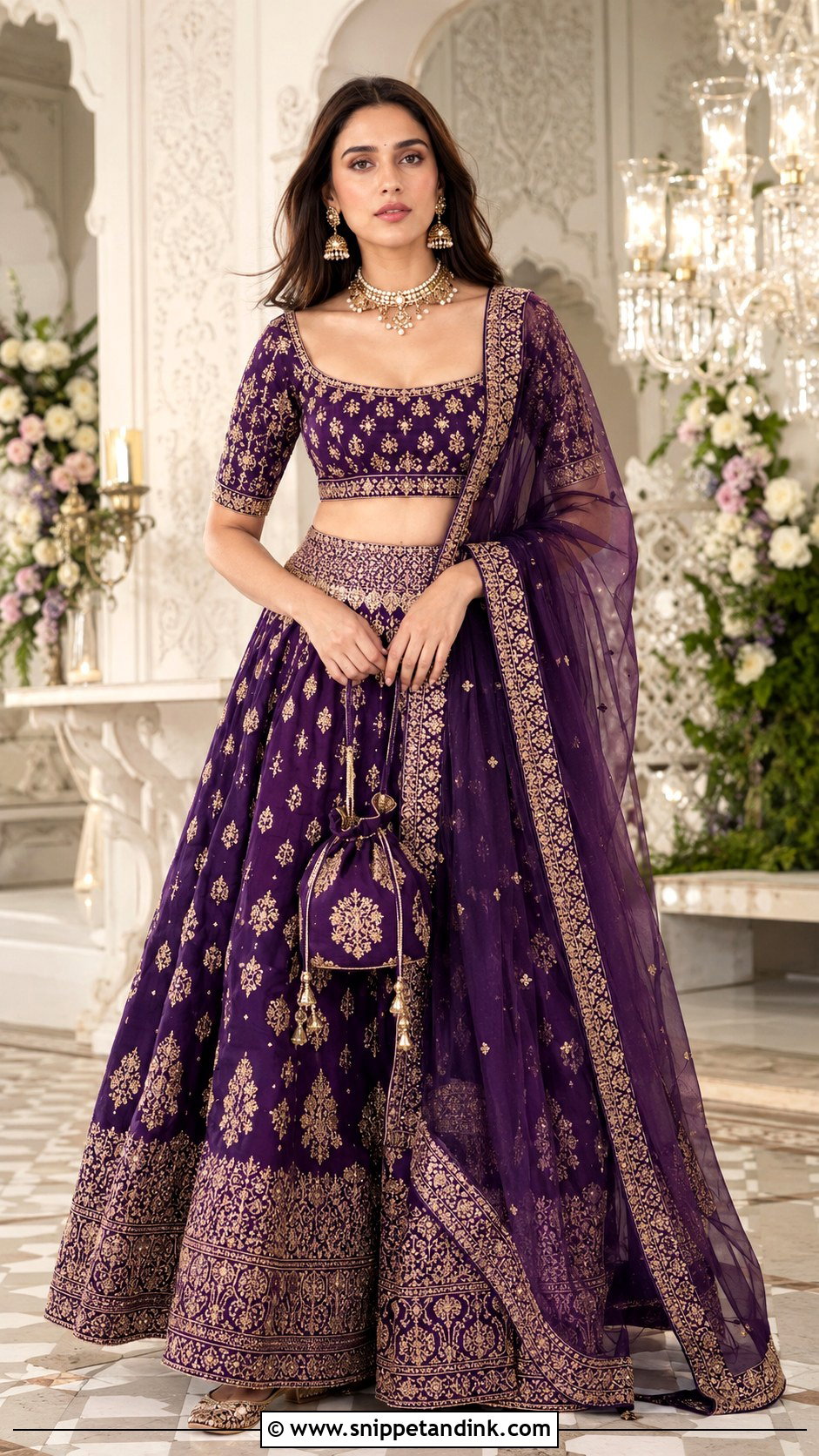
Purple gives the punch of a jewel tone and feels less expected than red or pink. An aubergine, plum or royal-purple lehenga with evenly spaced embroidered motifs, a matching blouse and a sheer dupatta with a narrow embellished edge is plenty. Small jhumkas and a fine necklace are enough when the skirt is detailed, with a purple potli and metallic juttis to finish. Soft waves suit a reception and a low bun a ceremony; berry lipstick and softly defined eyes deepen the palette. Purple shifts more than most colours between shop lighting and daylight, sometimes turning blue or brown, so check the exact shade outside before you buy.
18. Aditi Rao Hydari Gold Crushed Silk Lehenga
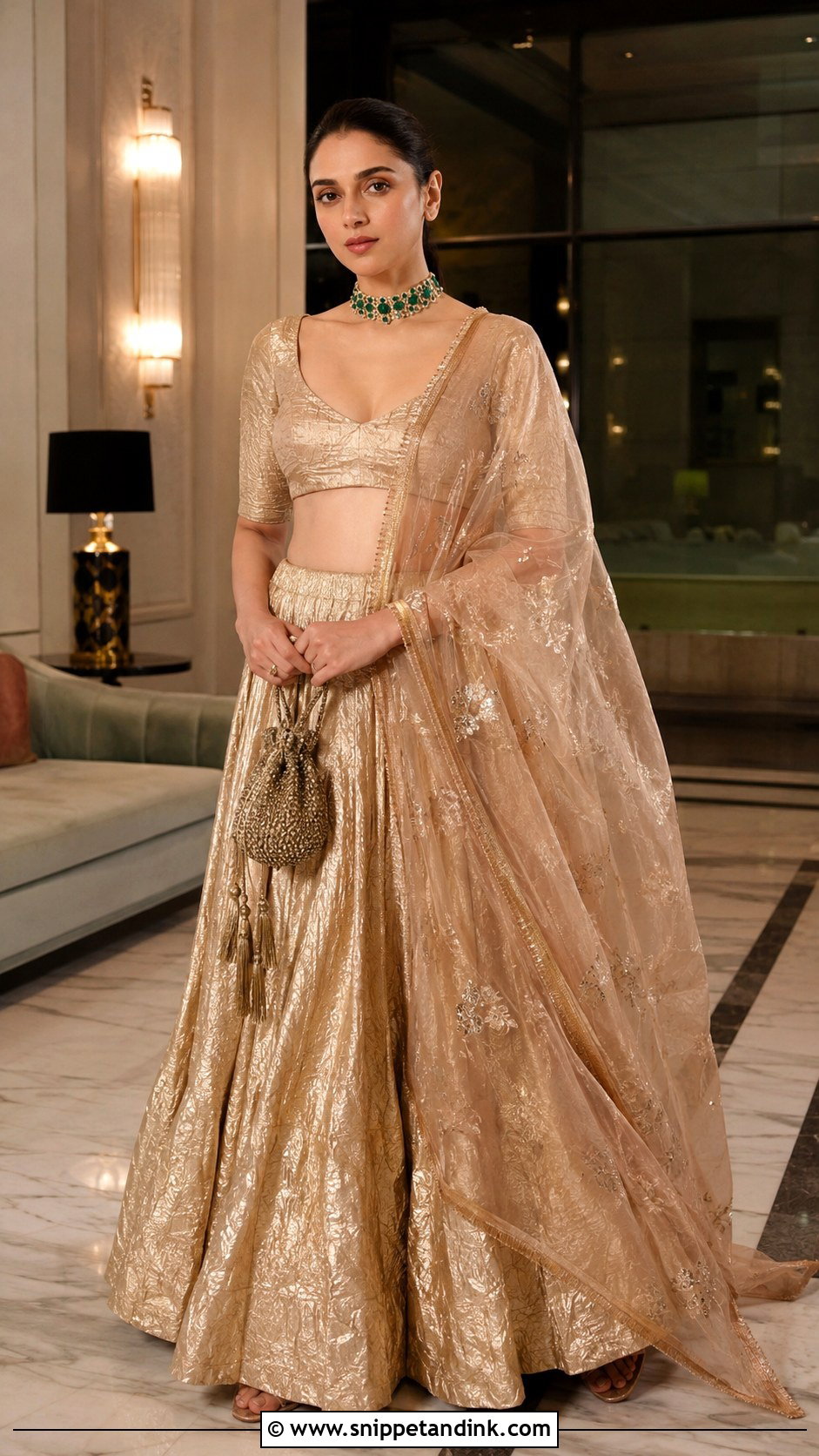
Crushed silk moves and catches light without the weight of beadwork. A softly textured gold skirt with a matching champagne or antique-gold blouse, plus a sheer dupatta with a narrow embroidered edge, lets the texture lead. Emerald earrings or a green-stone choker break up the single colour. Gold block heels and a small metallic potli suit it, a sleek bun keeps it formal and brushed-out waves soften it for later. Choose fresh, luminous makeup without much glitter. This is a strong engagement or reception outfit when quiet luxury suits the mood better than a heavy bridal lehenga. Never iron crushed silk flat; steam it lightly, or the crinkle is gone for good.
19. Aditi Rao Hydari Blue Velvet Sharara
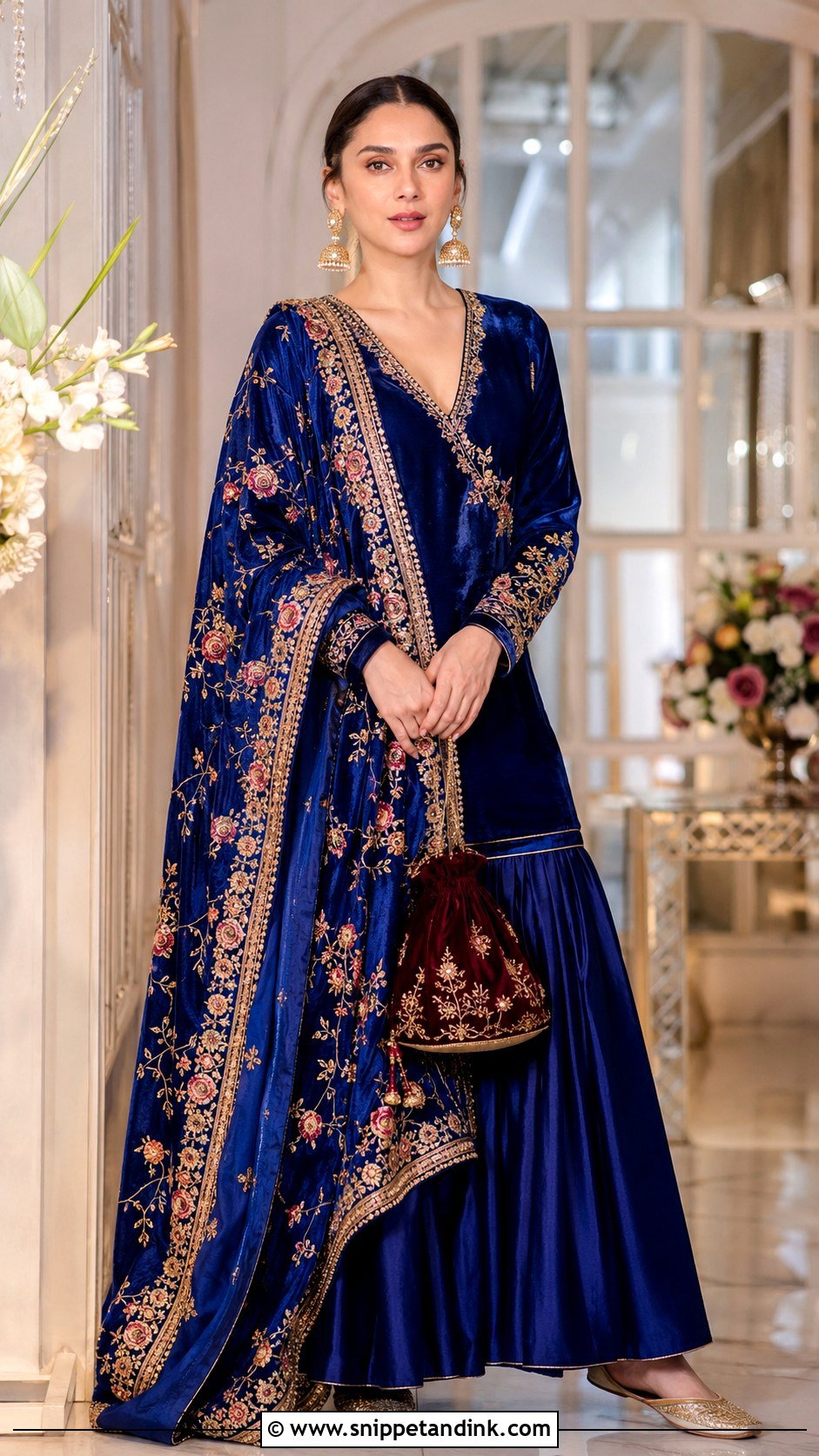
Royal-blue velvet is deep and warm, made for winter. A short velvet kurta with restrained floral embroidery over velvet or silk sharara pants, plus a printed or embroidered dupatta bringing in burgundy, green or gold, gives it layers. Add traditional jhumkas, a cocktail ring and a structured potli in one of those secondary colours. Velvet juttis or stable gold heels protect the long hem, and a polished bun or side-parted waves keep it neat. Soft bronze eyes and a rosy lip stop dark velvet from looking severe. Velvet hems drag lint and dust off venue floors, so pack a lint roller with your touch-up kit.



20. Aditi Rao Hydari Champagne Reception Gown
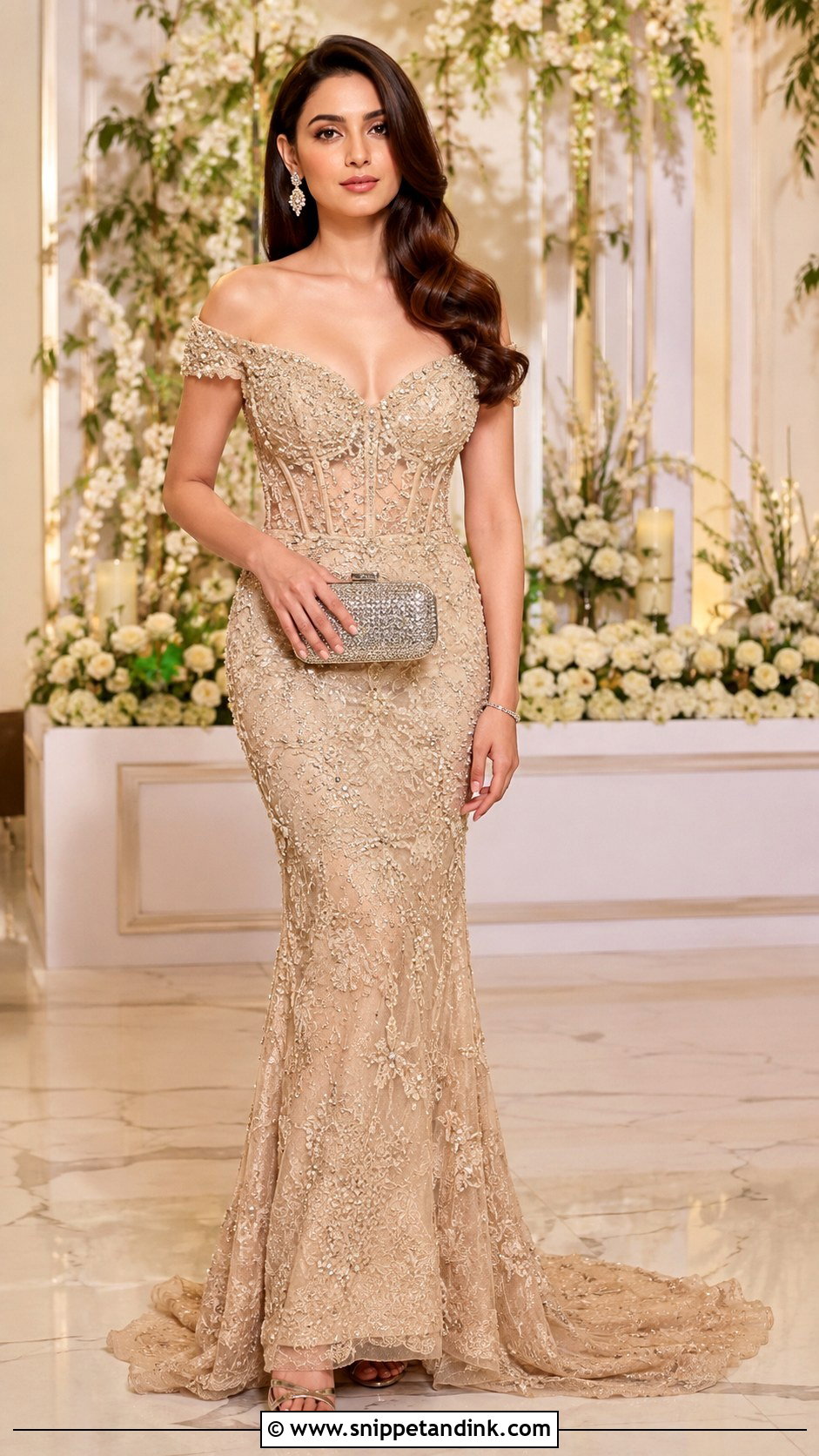
Some receptions call for contemporary formalwear, and a champagne gown with a body-skimming line answers it. A structured bodice, off-shoulder neckline and softly flared or fishtail skirt give drama without heavy decoration. Satin, silk or lightly embroidered fabric holds up well under bright venue lights. Diamond earrings, a fine bracelet, metallic heels and a small crystal clutch are enough, and the neckline should stay bare if the bodice is already detailed. Side-parted waves feel romantic and a sleek bun more editorial; luminous skin, defined lashes and a rose-neutral lip finish it. Fishtail skirts limit your stride, so practise walking and sitting in the gown well before the night.
Real Zari or Tested Zari? Knowing What You’re Paying For
Heritage textiles get their glow from zari, the metallic thread woven into borders and motifs, and the type of zari changes both price and care.
- Pure zari is silver thread coated in gold. It’s rare and expensive, softly lustrous, and it can tarnish slowly with age.
- Tested zari is a copper base plated with silver or gold. It’s what most good sarees and lehengas use today, and it looks rich at a fraction of the cost.
- Imitation or metallic polyester zari is the cheapest. It shines brightly but feels stiffer and can look harsh in flash photos.
Ask the seller directly which type you’re buying and look for a silk authenticity tag on handwoven pieces. For a one-function outfit, tested zari is the sensible choice; pure zari makes sense only for a piece you intend to keep and hand down.
Folding Silk and Velvet So the Borders Last
Zari borders crack along fold lines if they stay creased in the same place for months. Wrap sarees and lehengas in soft muslin or cotton, never plastic, and refold them along different lines every few months. Keep naphthalene balls and perfume away from the metallic thread, as both can discolour it. Velvet should be stored flat or rolled, never folded tightly, and steamed rather than ironed. Send anything stained to a dry cleaner who handles bridal silk, and tell them exactly what the mark is.
One Fine Textile, Then Everything Else Steps Back
Dressing in this spirit means balancing tradition, comfort and restraint. Whether you choose a red velvet lehenga, an ivory silk saree, a floral anarkali, a brocade sharara or a champagne gown, let one strong textile or design feature lead and make everything else support it. Jewelry, shoes, makeup and hair are the supporting cast. Handloom fabrics, rented statement jewelry and a blouse worn again with another saree all bring this style within a normal budget. Above all, pick shapes you can move and sit in through long functions. Comfort is what lets the calm, regal look come through.
You'll Like These Ideas:





Leave a Reply