
“Asian bridal” is a huge category. Asian bridal fashion covers red lehengas and silk sarees from South Asia, qipao, hanbok and kimono from East Asia, and áo dài, kebaya and Thai silk from Southeast Asia, plus a growing number of fusion pieces that mix them. Each of these garments is built differently, and that changes how you get dressed, how long you can wear it and who needs to help you. A kimono needs a trained dresser; a saree gown needs nobody. Below are 30 outfits across those traditions, with the practical details I’d want a bride to know about fabric, fit and the ceremony each one is made for.
Wearing Two or Three Outfits in One Wedding Day
Many Asian weddings involve more than one ceremony: a tea ceremony and a banquet, a paebaek after a Western service, a nikah and a reception. Brides often change two or three times. I plan those changes before I plan any single outfit, because each garment dresses differently.
- Dressing time varies a lot. A saree gown or qipao takes minutes. A draped saree with pinned pleats takes longer, and a full kimono with a trained dresser takes longer again. Ask your dresser how much time to block.
- Hair has to work for every outfit. A kimono headpiece, a hanbok jokduri and a lehenga dupatta all sit differently. Choose a base hairstyle that can be adjusted, not rebuilt.
- Underlayers need planning. A fitted qipao, a sheer kebaya and a heavy lehenga each need different underwear. Pack each set with its outfit.
- Bring a helper who has practised. Someone should know every hook, pin and tie before the day.
If time is short, I’d make the second outfit the simpler one. Changing out of a heavy outfit into a light one is quick; the reverse eats into your reception.
1. Red Bridal Lehenga
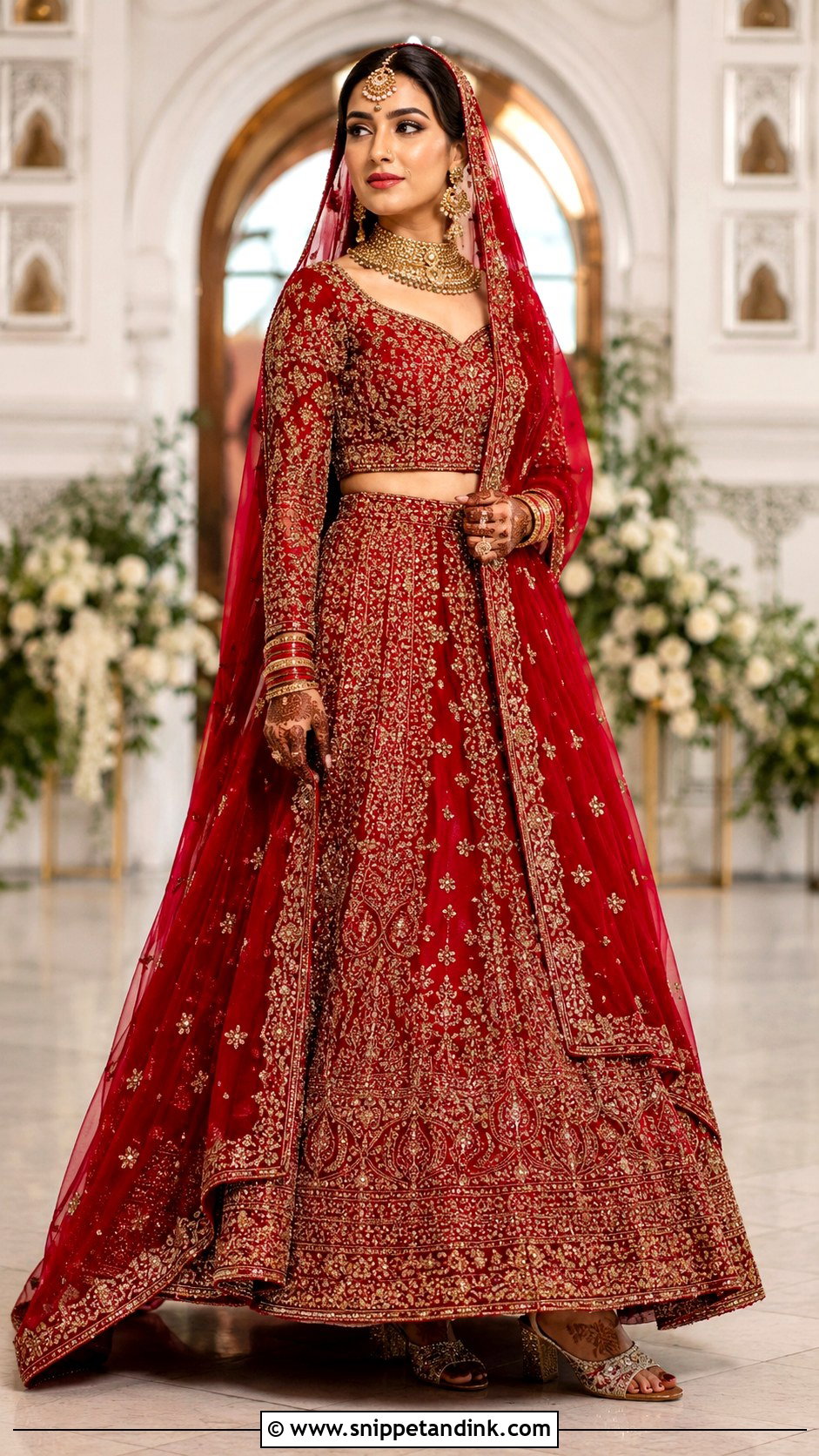
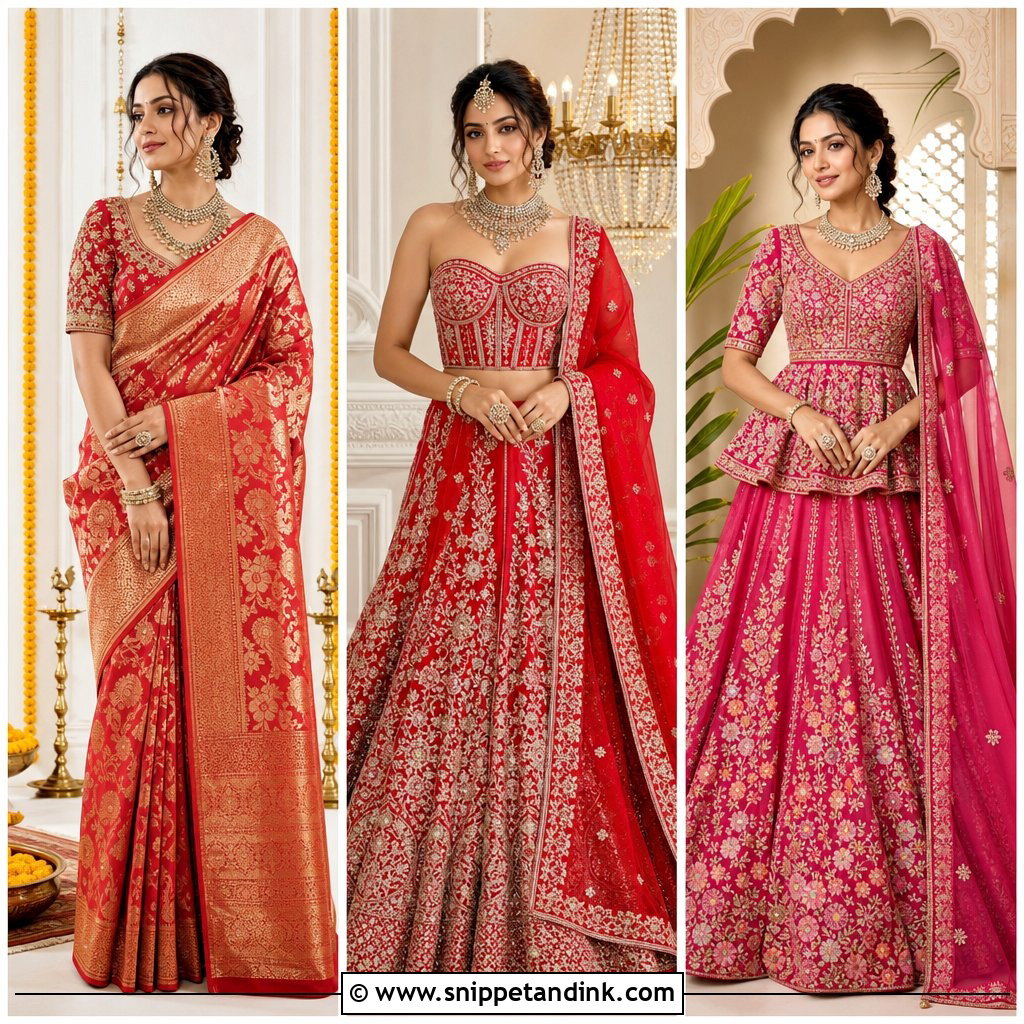
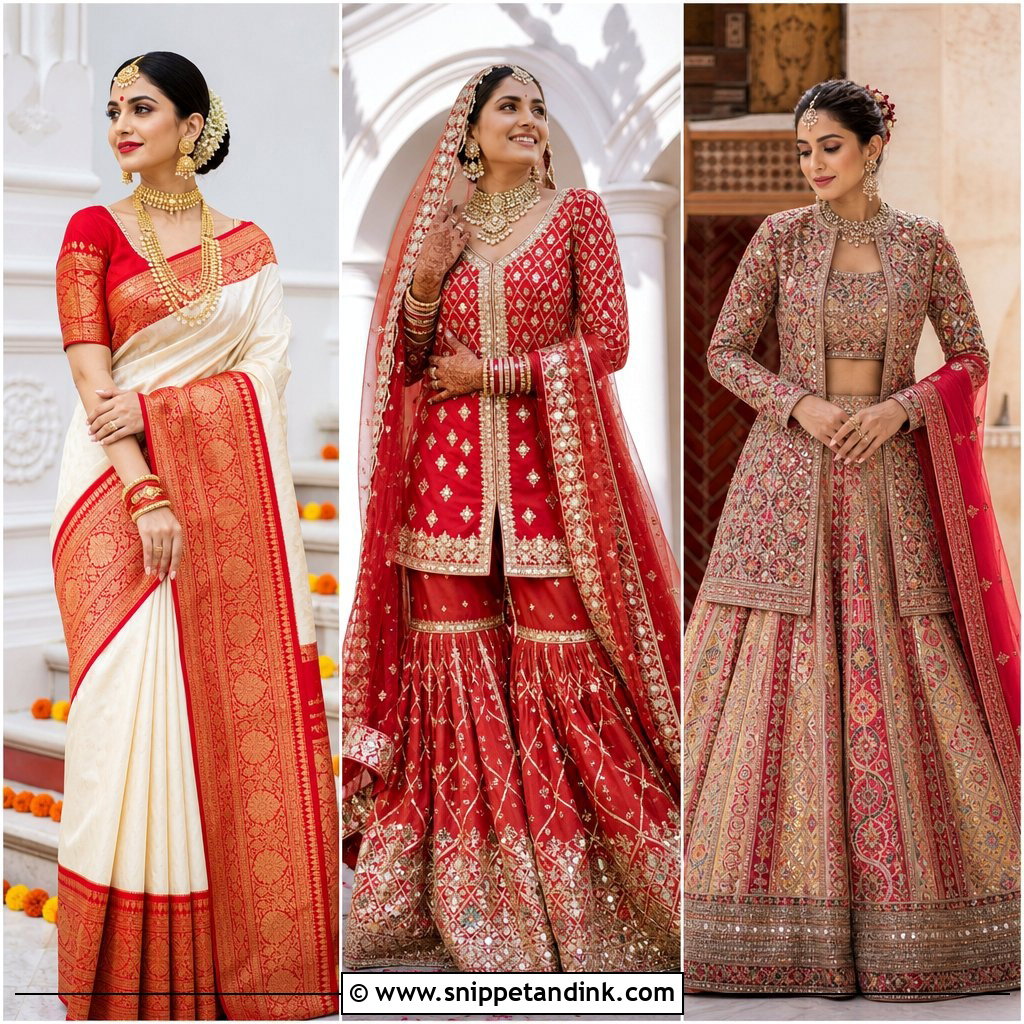
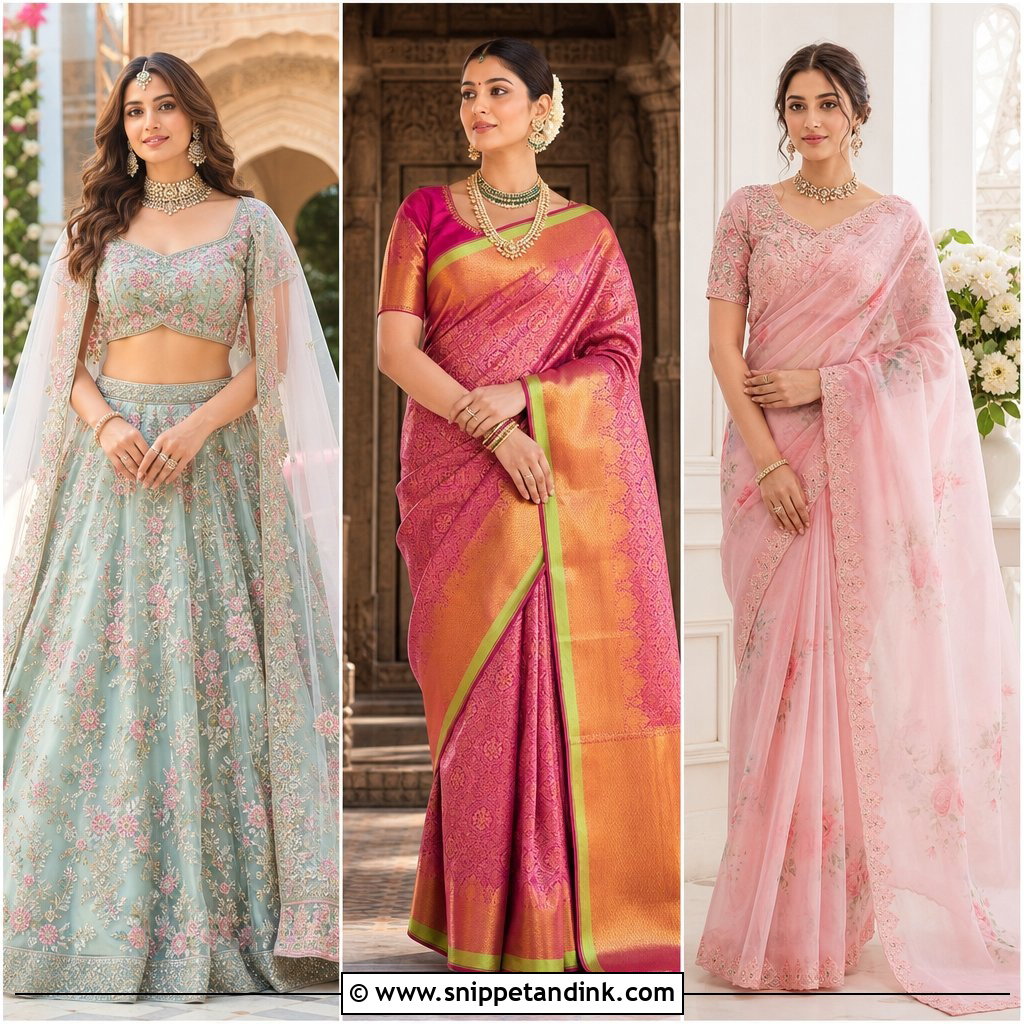
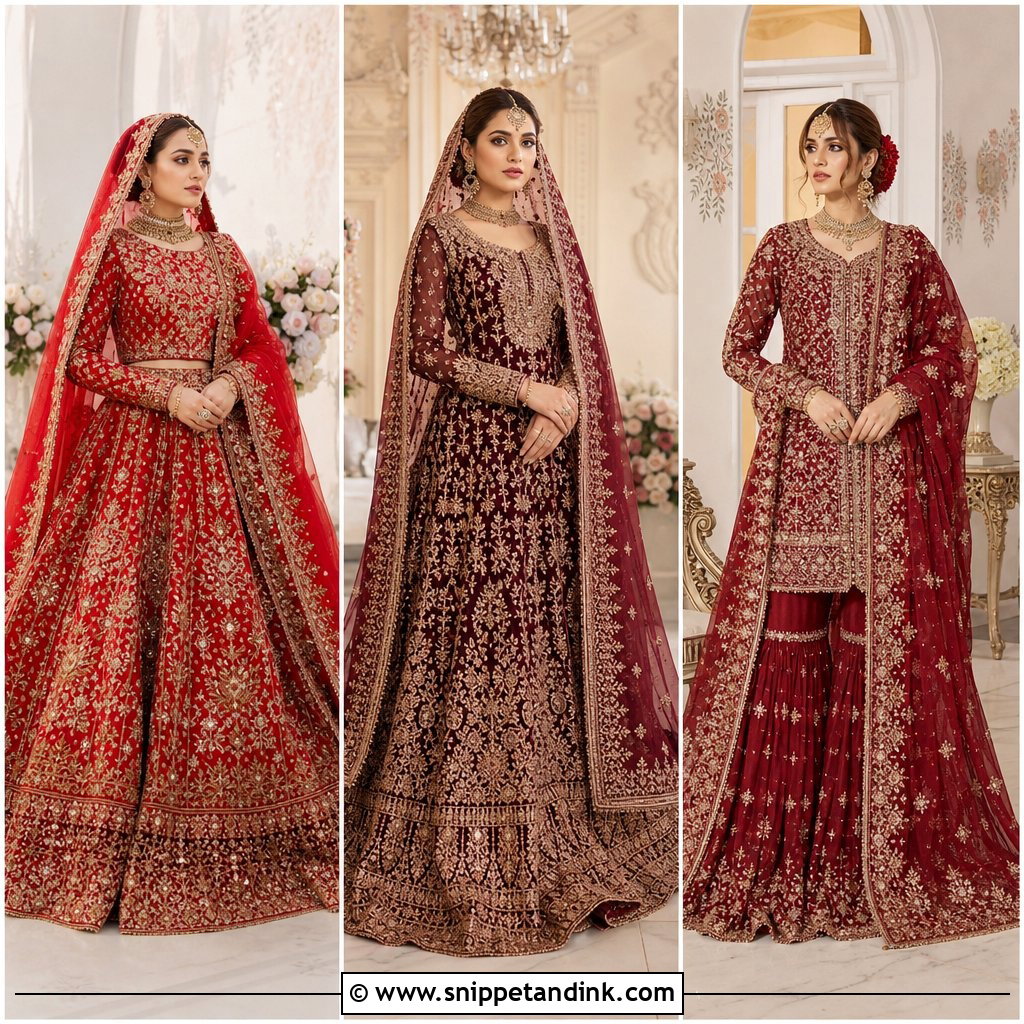
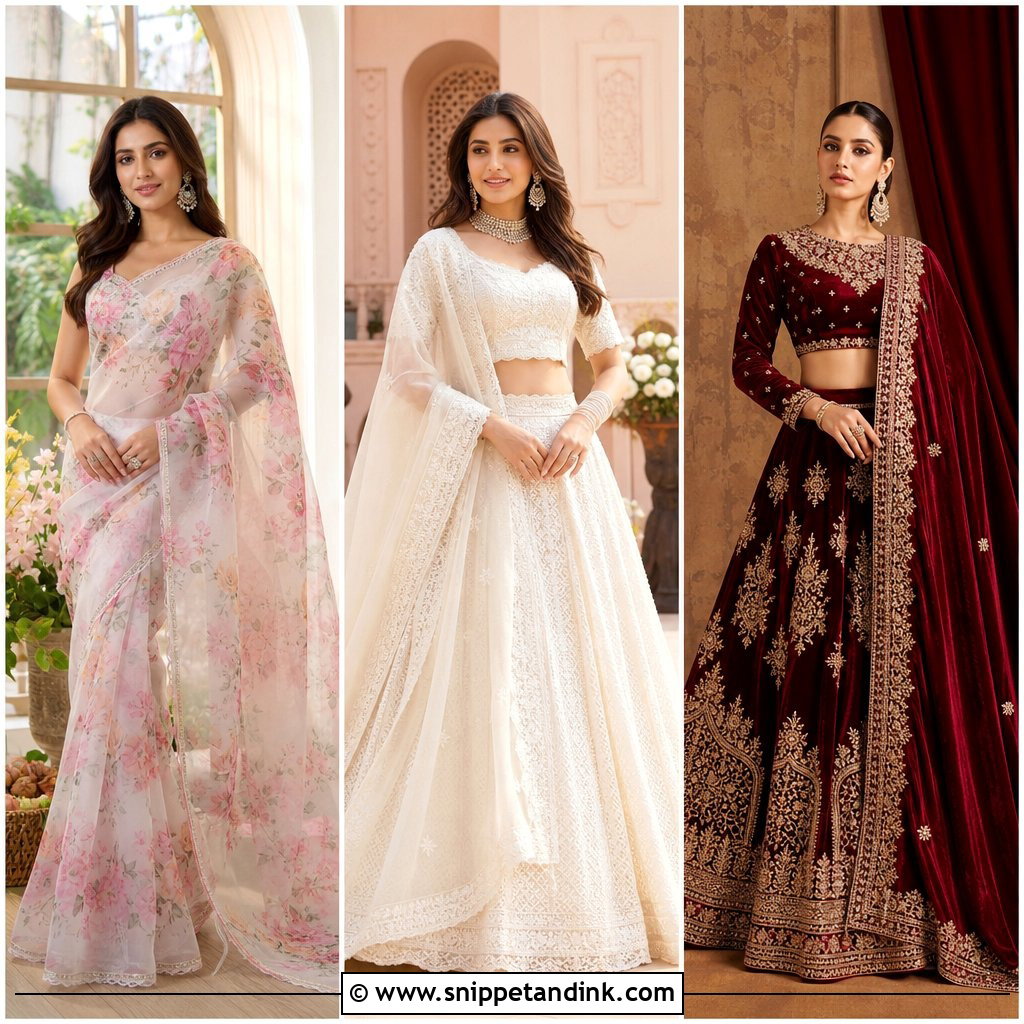
A red bridal lehenga is the classic for many Indian, Pakistani and Bangladeshi brides: an embroidered skirt, a fitted blouse and a dupatta over the head or shoulder. Gold zari, zardozi and sequins give it richness. They also give it weight. A heavily worked lehenga can be very heavy, so I ask for a cancan layer that holds the skirt out without adding more embroidery, and a broad waistband with hooks so the load sits on the hips. A choker, maang tikka and bangles finish it, with block heels or wedges for a long ceremony.
2. Ivory Bridal Lehenga
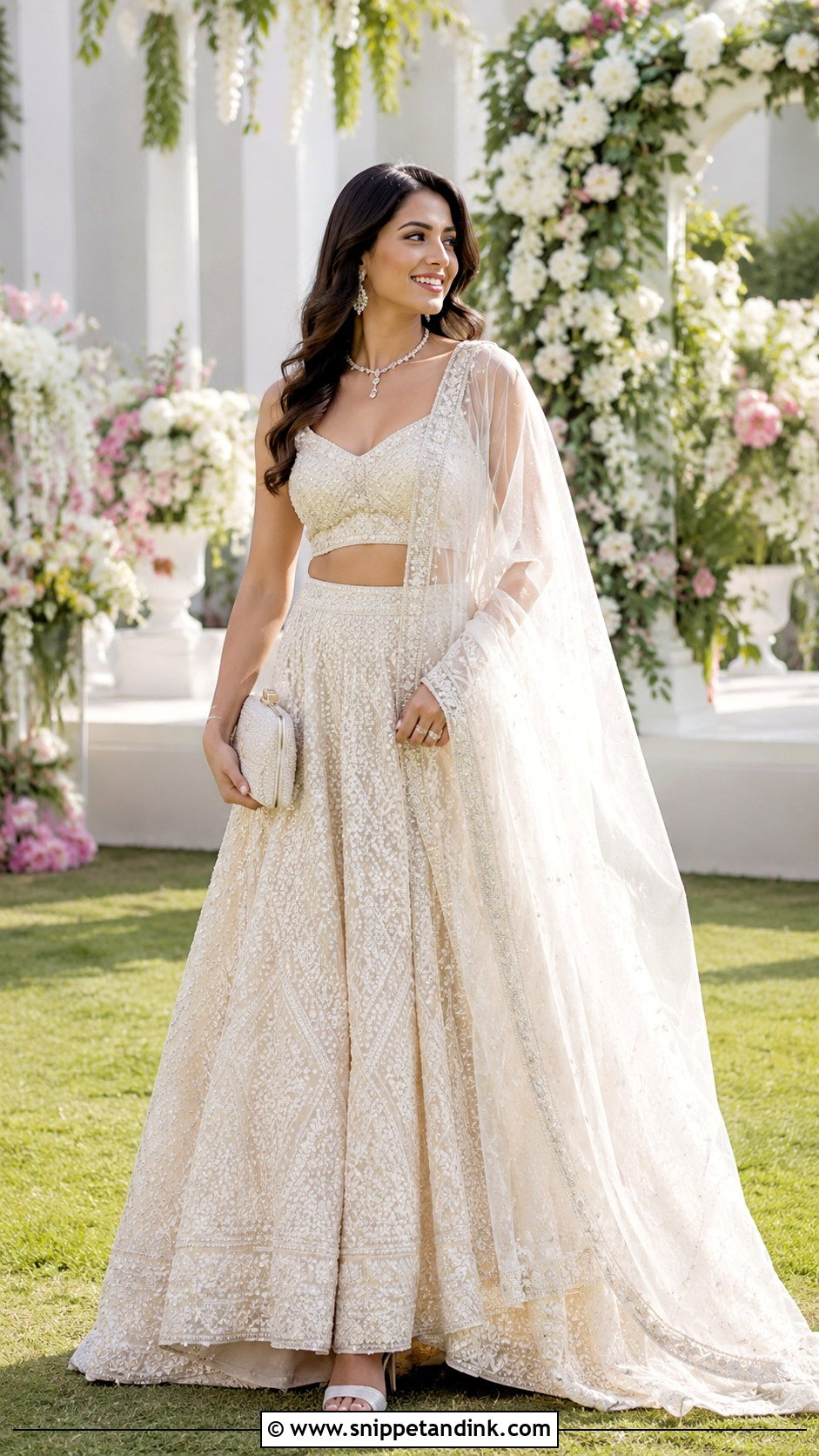
Ivory lehengas rely on texture rather than color, so pearl embroidery, champagne sequins or tone-on-tone florals have to carry them. I check ivory against the bride’s skin in daylight, since some ivories lean yellow and some lean pink, and the wrong one can make you look tired. A sheer dupatta adds movement. Diamond-style or kundan jewelry suits it, with nude or ivory sandals so the line runs unbroken. It’s a natural choice for a daytime, garden or beach ceremony.
3. Pastel Pink Lehenga
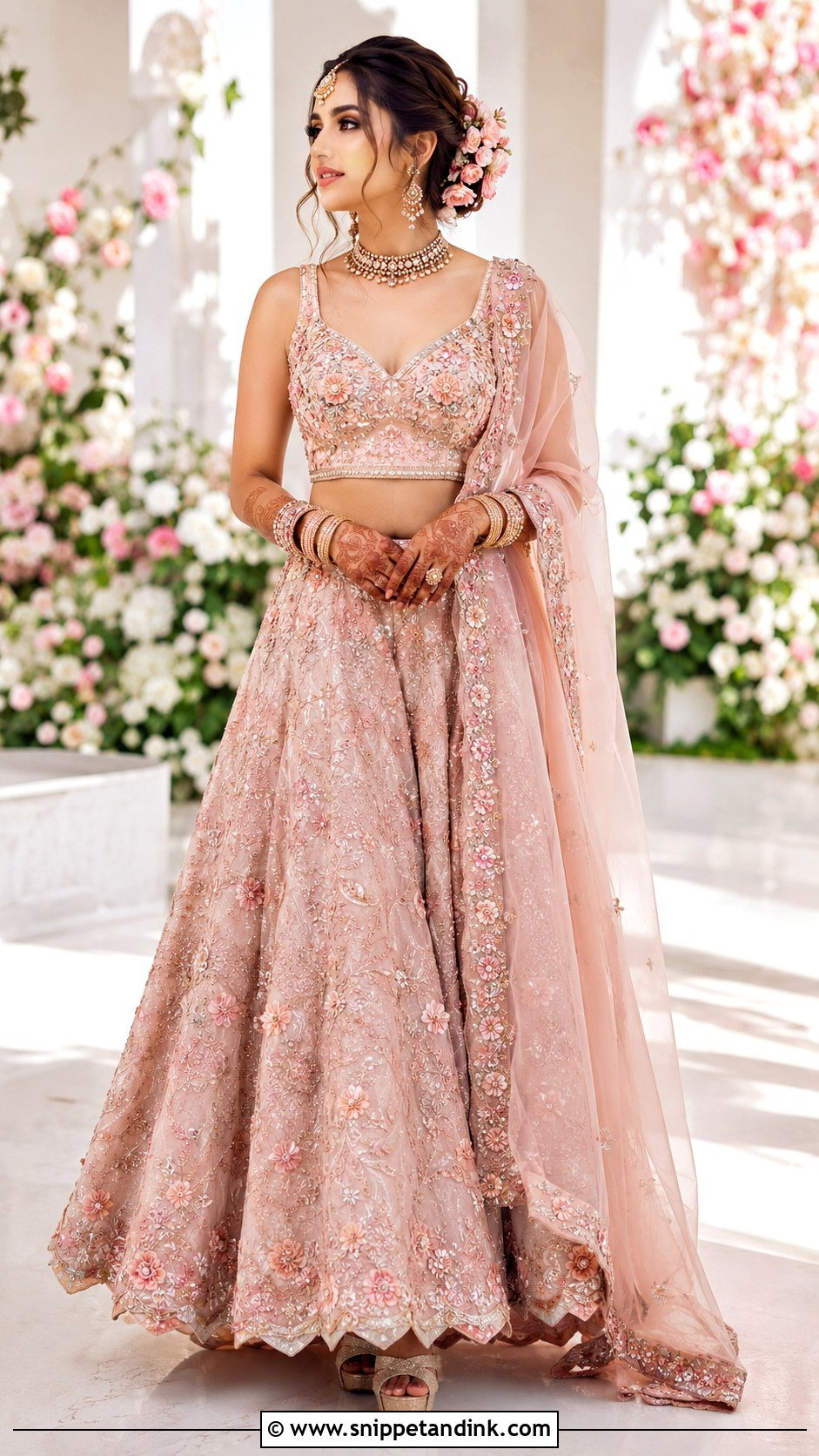
Pastel pink suits spring and summer because the fabrics are light: organza, net, georgette or soft silk. Floral embroidery, tiny mirrors or pearl beading keep it bridal. Organza is the one to watch, since it creases sharply and shows every fold after a car ride; net and georgette recover better. Blouse cut depends on your comfort, from sweetheart to sheer long sleeves. Rose gold jewelry, polki earrings and champagne heels.
4. Maroon Velvet Lehenga
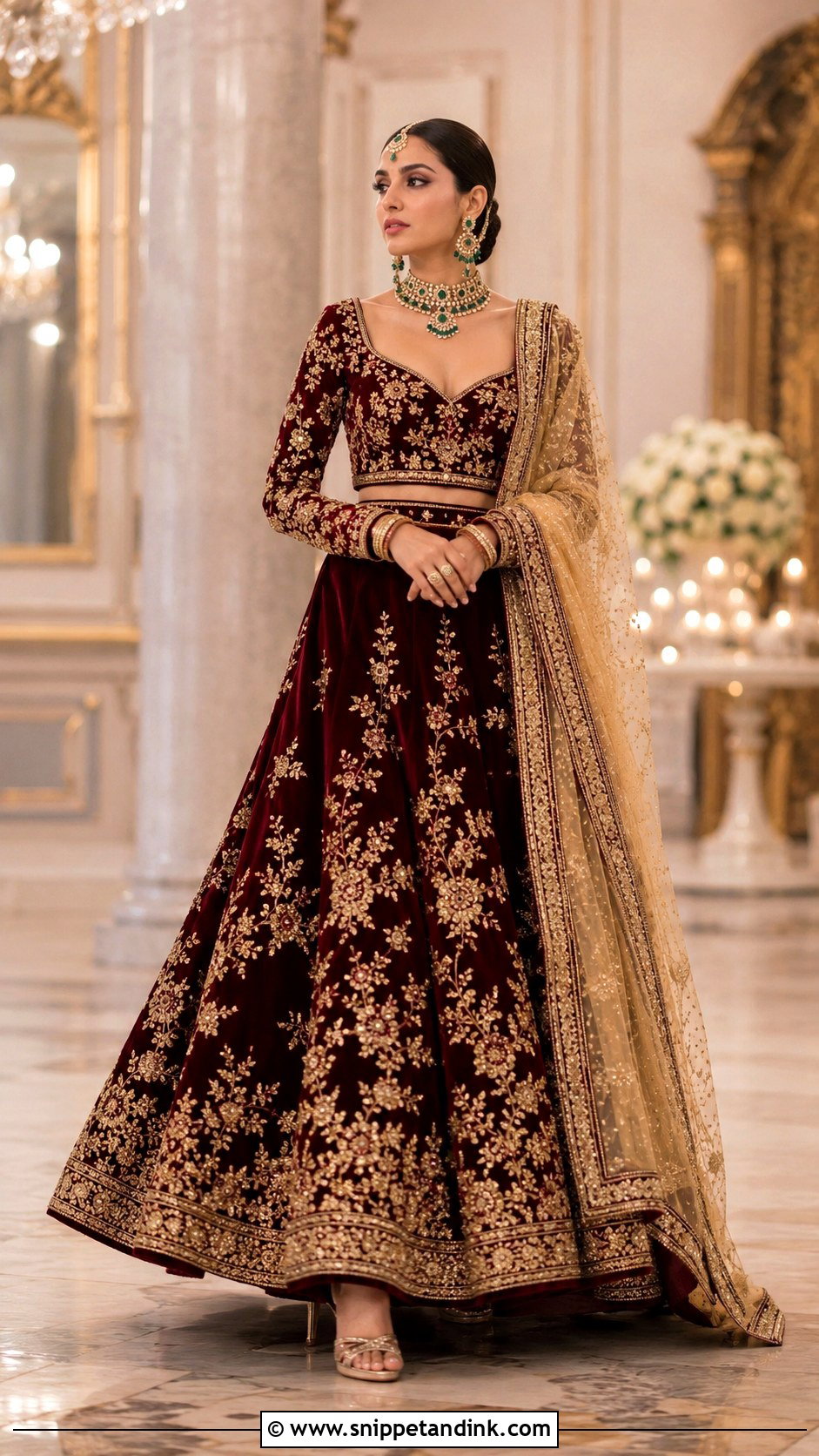
Velvet is the richest fabric in this list and also the warmest. A maroon velvet lehenga belongs in winter or an air-conditioned evening venue; at a summer daytime event it becomes uncomfortable within an hour. Since velvet already looks luxurious, I keep embroidery to the border, blouse and dupatta. Velvet also crushes where you sit, so steaming it on site helps. A long-sleeve blouse adds drama, a corset blouse a modern shape. Antique gold or emerald jewelry suits the depth.
5. Gold Bridal Saree
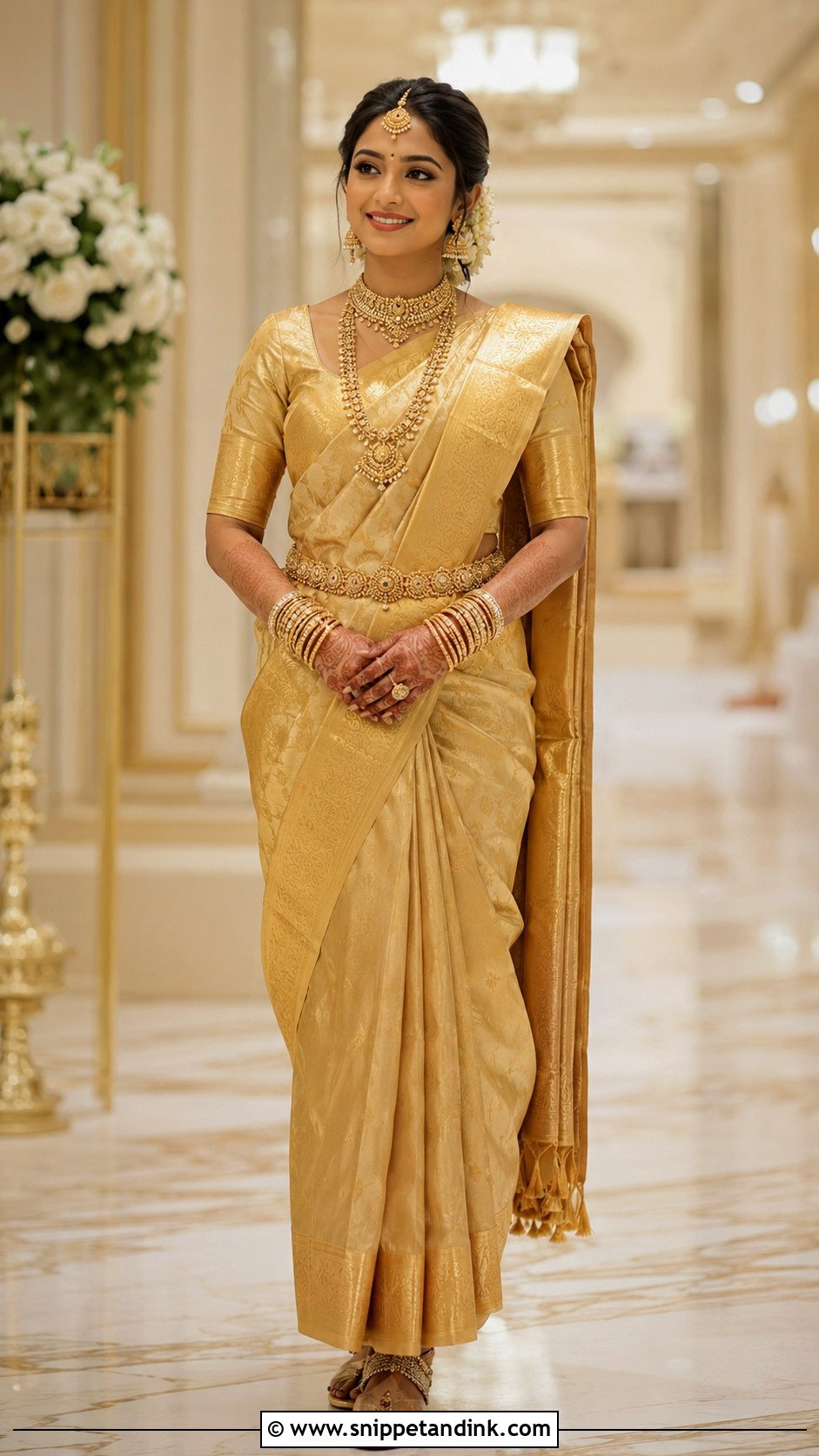
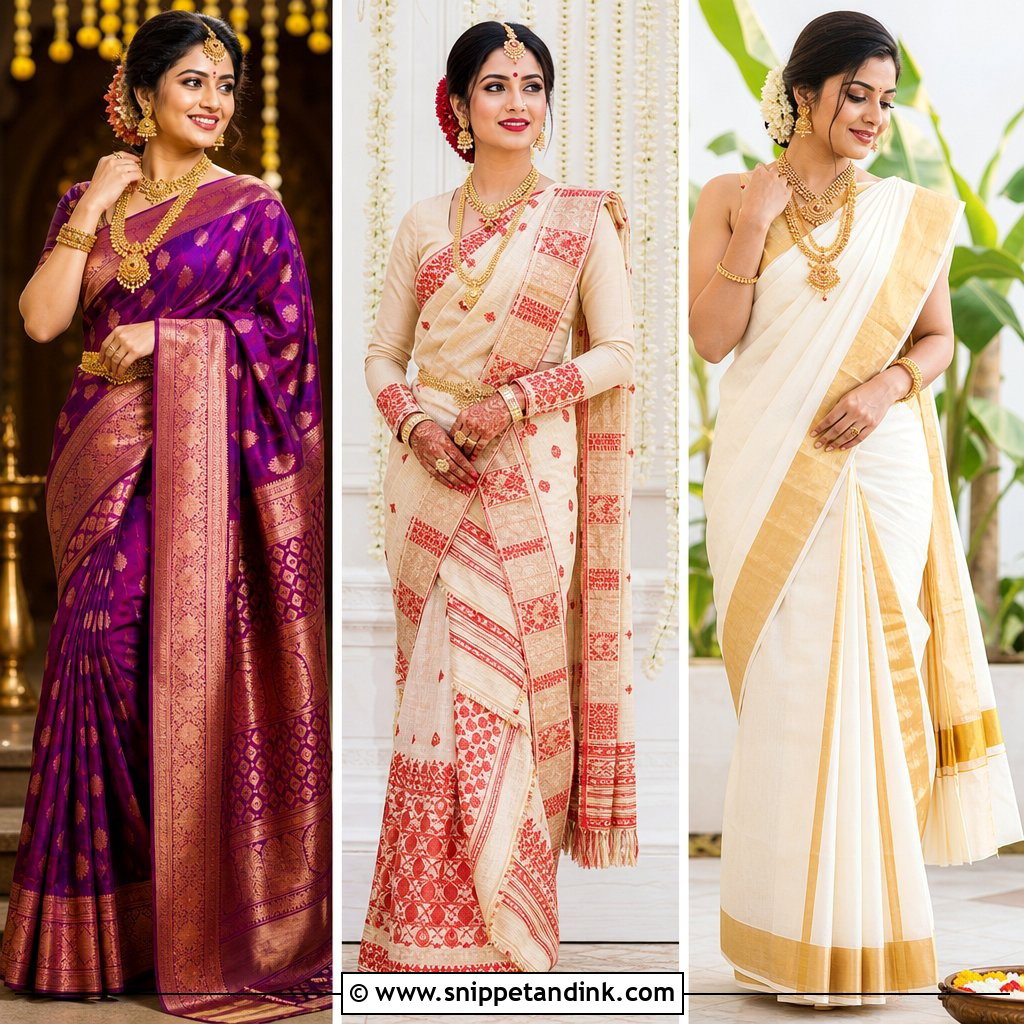
A gold silk saree has been a South Indian bridal favorite for generations, and it suits receptions and formal ceremonies elsewhere too. Zari borders and brocade or temple motifs keep it classic. Pure zari is heavy and stiff, so I have the pleats pre-set and pinned before the ceremony rather than draped on the spot. An elbow-sleeve or high-neck blouse, layered gold jewelry, jhumkas, bangles and anklets. A bun with flowers or jeweled pins finishes the look.
6. Kanjivaram Silk Saree
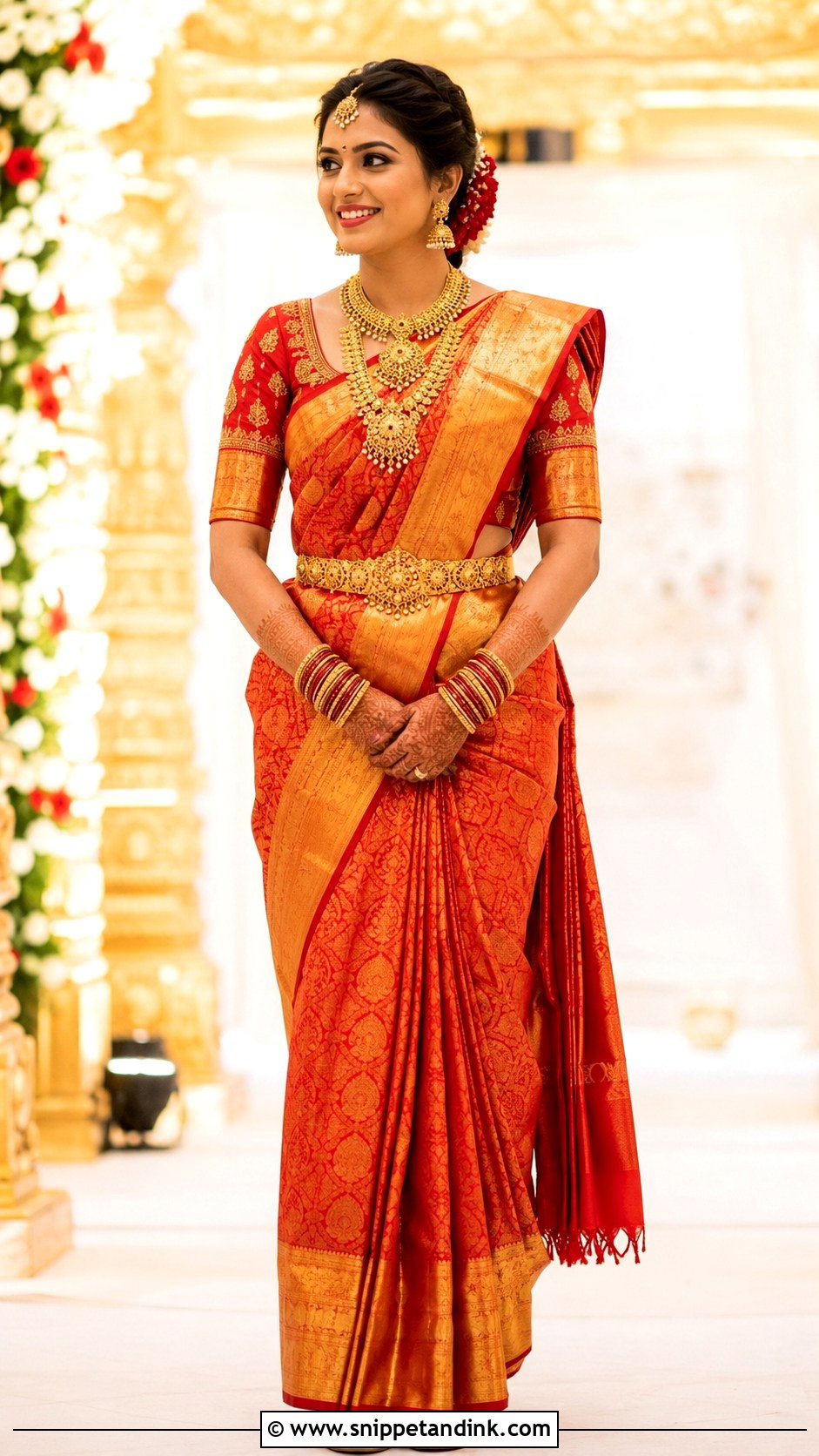
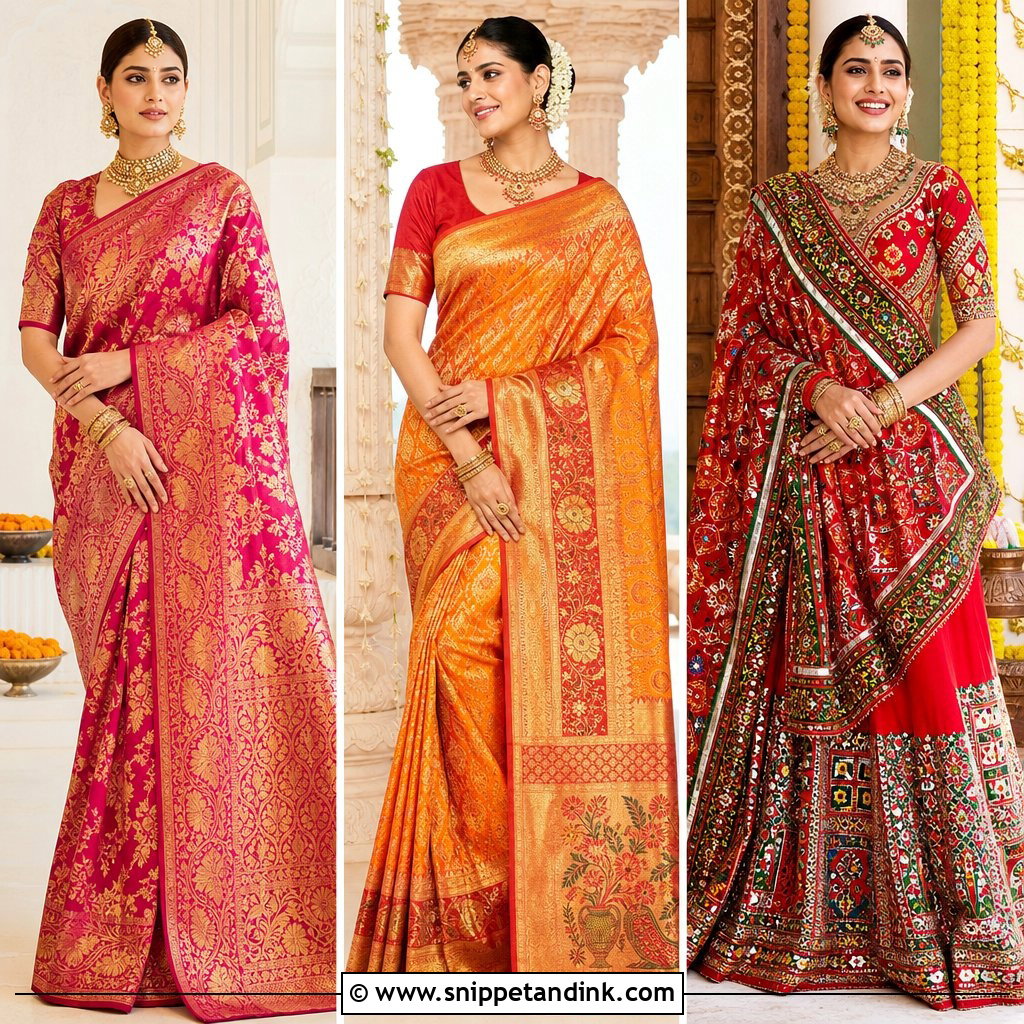
Kanjivaram sarees are woven in heavy mulberry silk with thick contrasting borders, often red and gold, green and pink or mustard and maroon. The weight is what gives them their structure and also what makes them hard to keep in place. A waist belt (oddiyanam) helps hold the drape and adds definition, and I’d add a few safety pins under the pleats. A well-fitted blouse, traditional gold jewelry and comfortable sandals. Hair goes in a bun with fresh flowers or a long jeweled braid.
7. Banarasi Saree
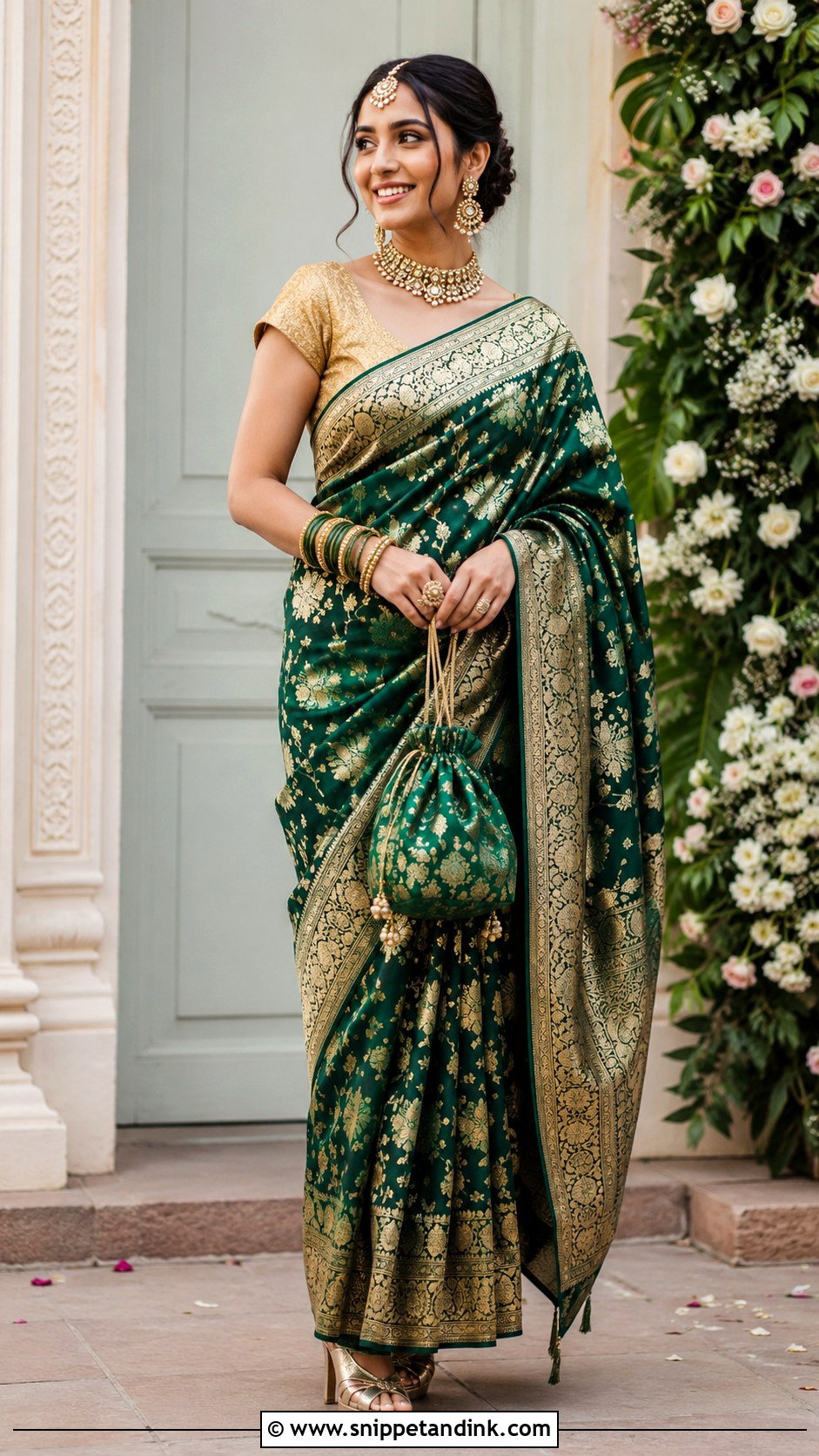
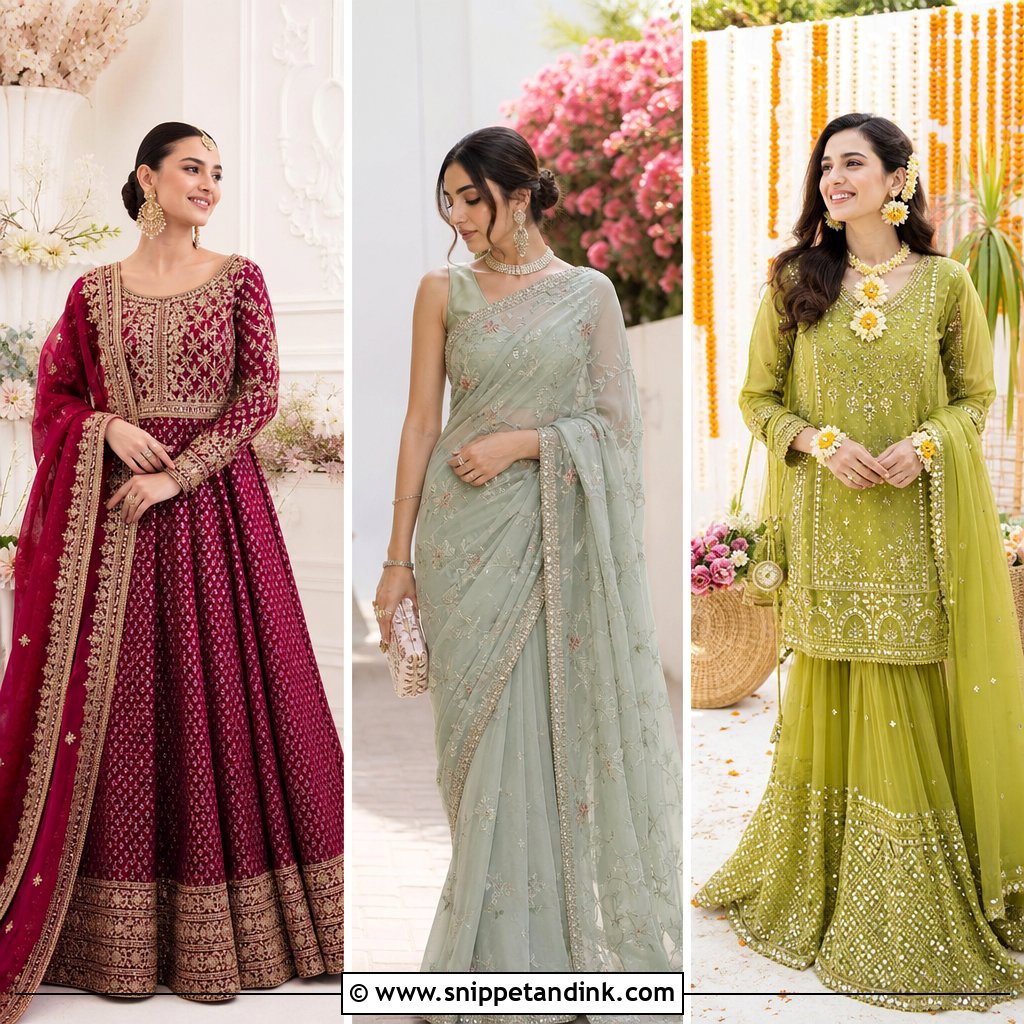
Banarasi sarees have woven metallic motifs rather than surface embroidery, so the pattern is part of the fabric itself. Deep red, rani pink, emerald, royal blue and ivory all show the weave well. A contrasting blouse gives a styled finish; a matching one looks classic. Banarasi silk can be slippery, so I have the pleats pinned firmly and the pallu secured at the shoulder. Kundan jewelry, gold bangles and a small potli bag.
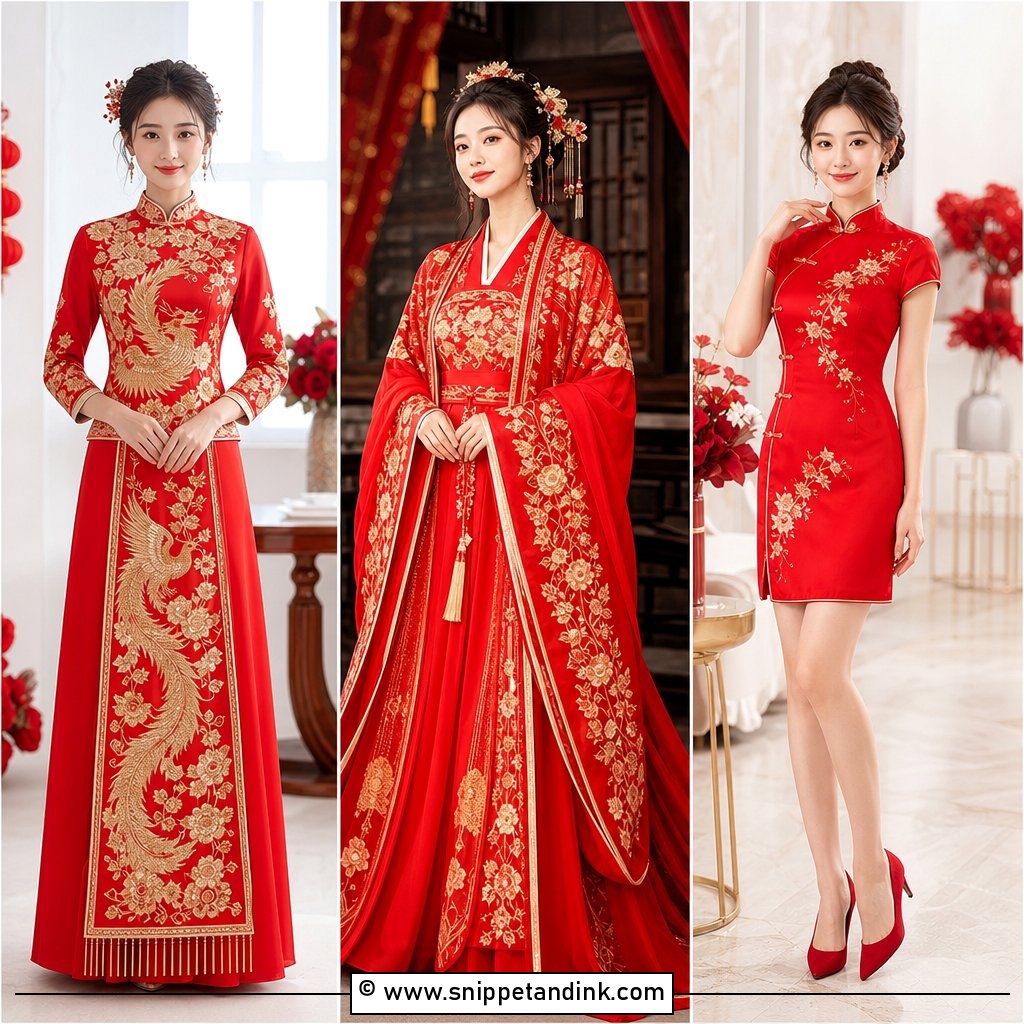
8. Qipao Wedding Dress
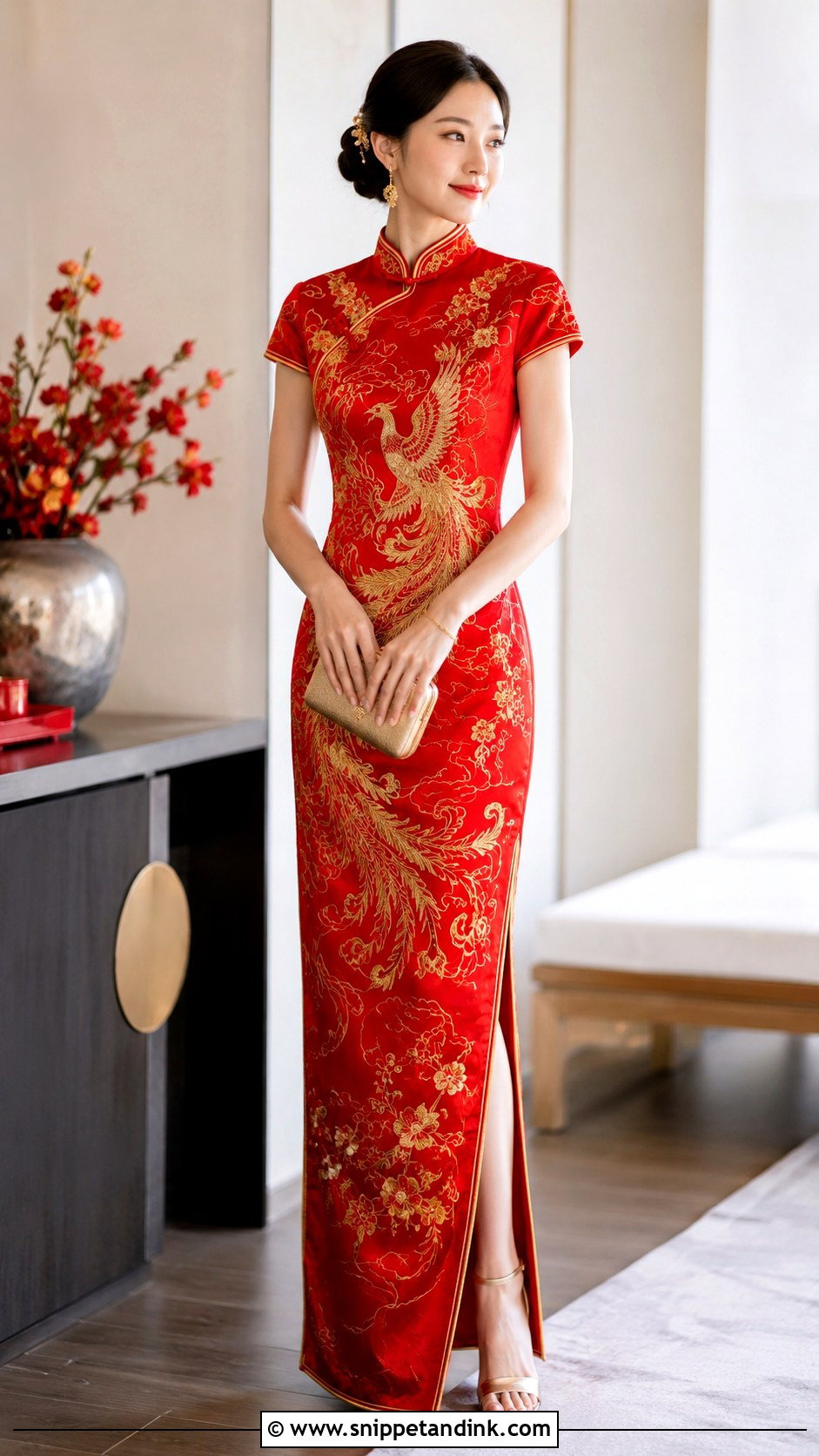
A qipao wedding dress is fitted, with a mandarin collar, side slits and embroidery such as phoenixes, dragons, peonies or clouds. Red is traditional; champagne, blush or ivory with red embroidery is a softer option. The fit is close, so I check the collar first. If it’s too tight, you’ll feel it every time you bow during the tea ceremony. Floor length is formal, tea length works for a later outfit. Gold heels, drop earrings and a hair comb.
9. Red Cheongsam Dress
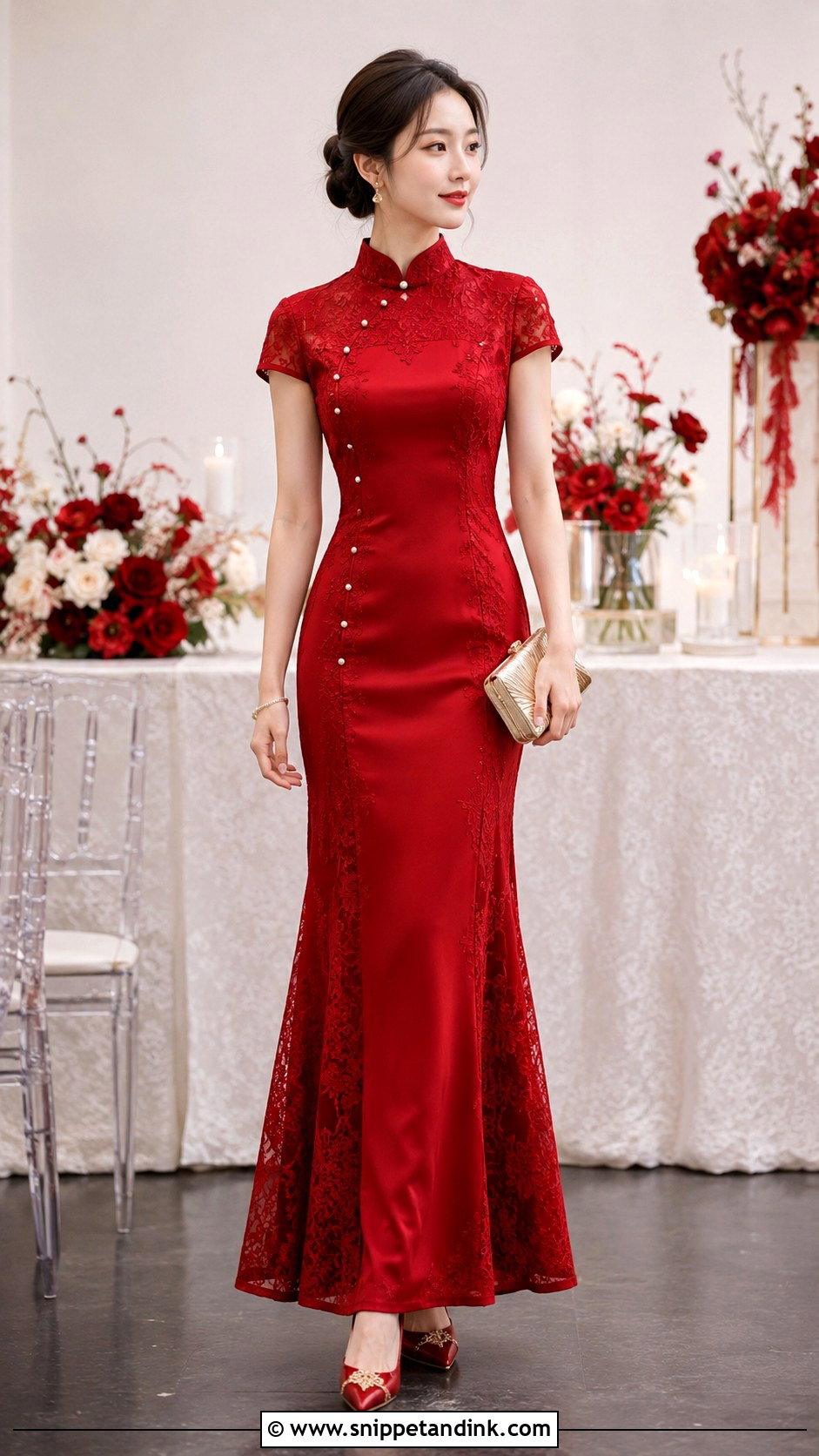
The cheongsam is the Cantonese name for the same fitted dress, and many modern bridal versions add lace overlays, satin, pearl buttons or a slight flare at the hem. That flare is worth having. A straight cheongsam limits your stride, and a tea ceremony involves a lot of kneeling, bowing and standing. Gold jewelry, pointed heels, a sleek updo and soft makeup let the dress lead. It also makes a practical second outfit after a white gown or lehenga.
10. Modern Hanbok Wedding Dress
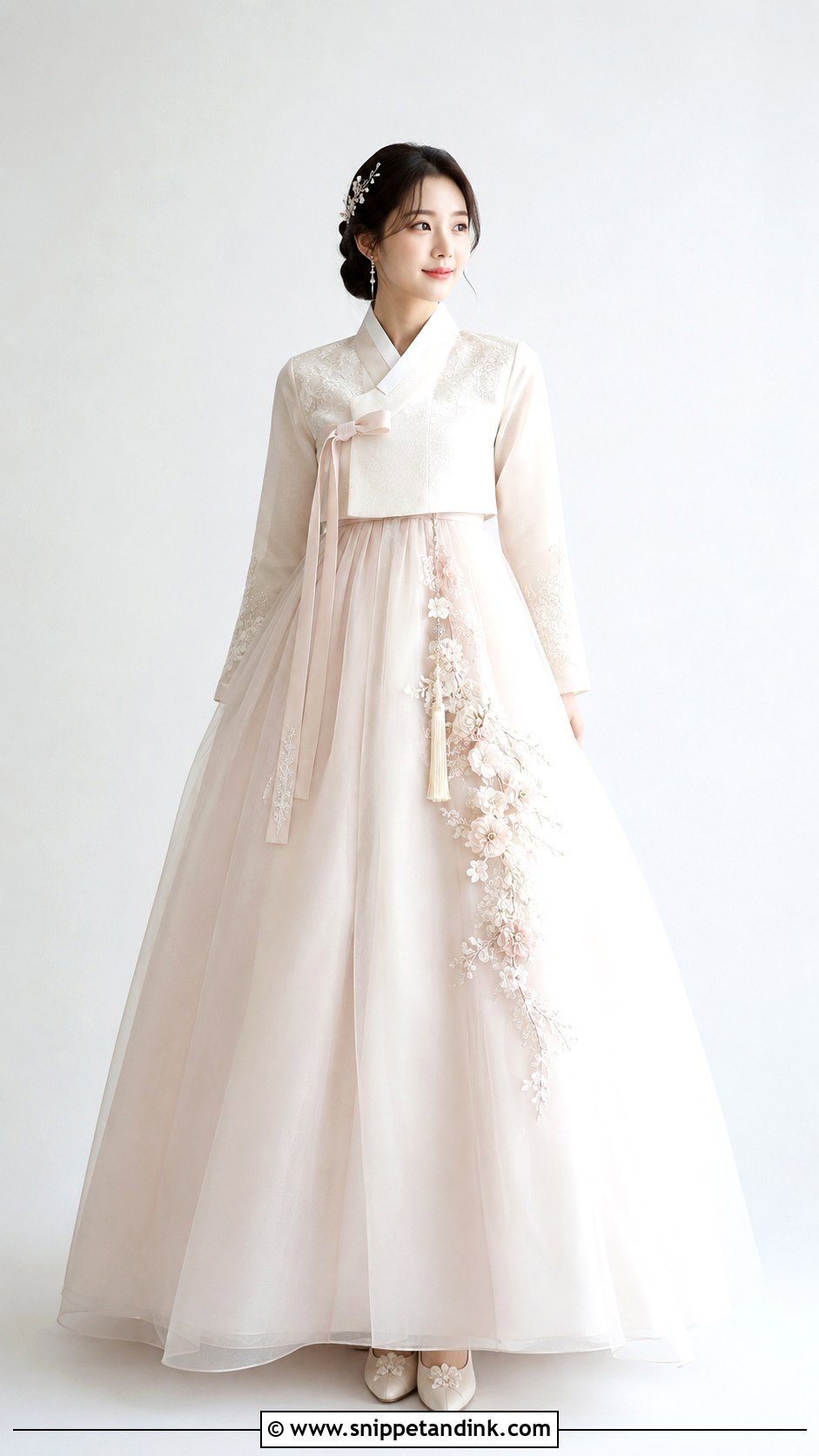
Modern hanbok keep the high-waisted full skirt and short jacket of the traditional form but use softer colors and lighter fabrics: ivory, blush, pale blue or lavender with red accents. The skirt ties high on the chest, so there’s no pressure on the waist, which is a real comfort over a long day. A jokduri-inspired headpiece, simple earrings and soft shoes finish it. I’d choose a lighter silk for summer, since layered hanbok fabric is warm.
11. Traditional Korean Hanbok
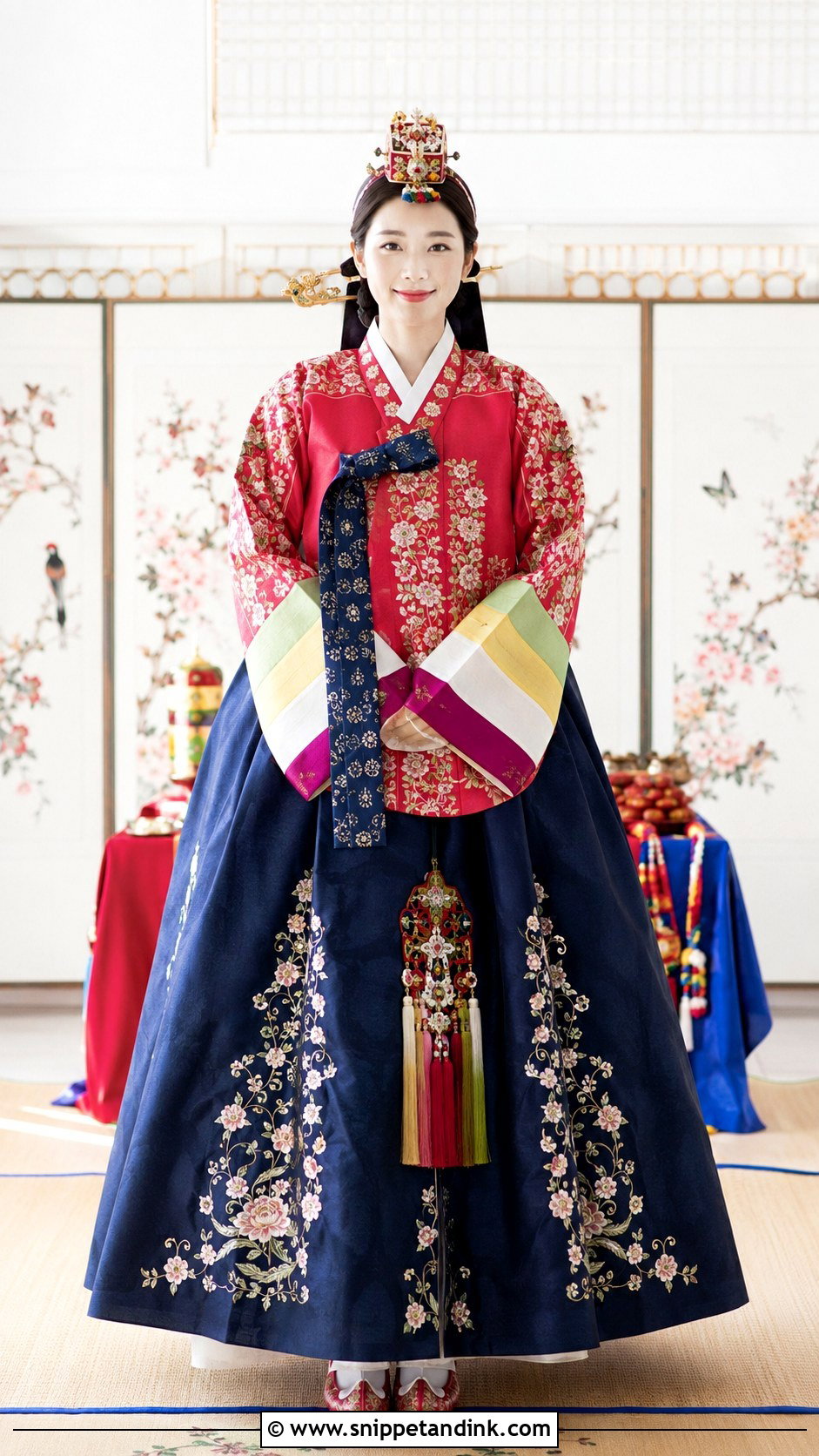
A traditional Korean hanbok is built around color and proportion: a jeogori top, a full chima skirt and decorative ribbons. Bridal versions often combine red, blue, pink, green and gold. The skirt is wide and long, so I show brides how to gather it in one hand when walking up steps or bowing during the paebaek. A traditional headpiece and minimal jewelry keep it balanced. It gives modest coverage and plenty of room to move.
12. Vietnamese Ao Dai Wedding Dress
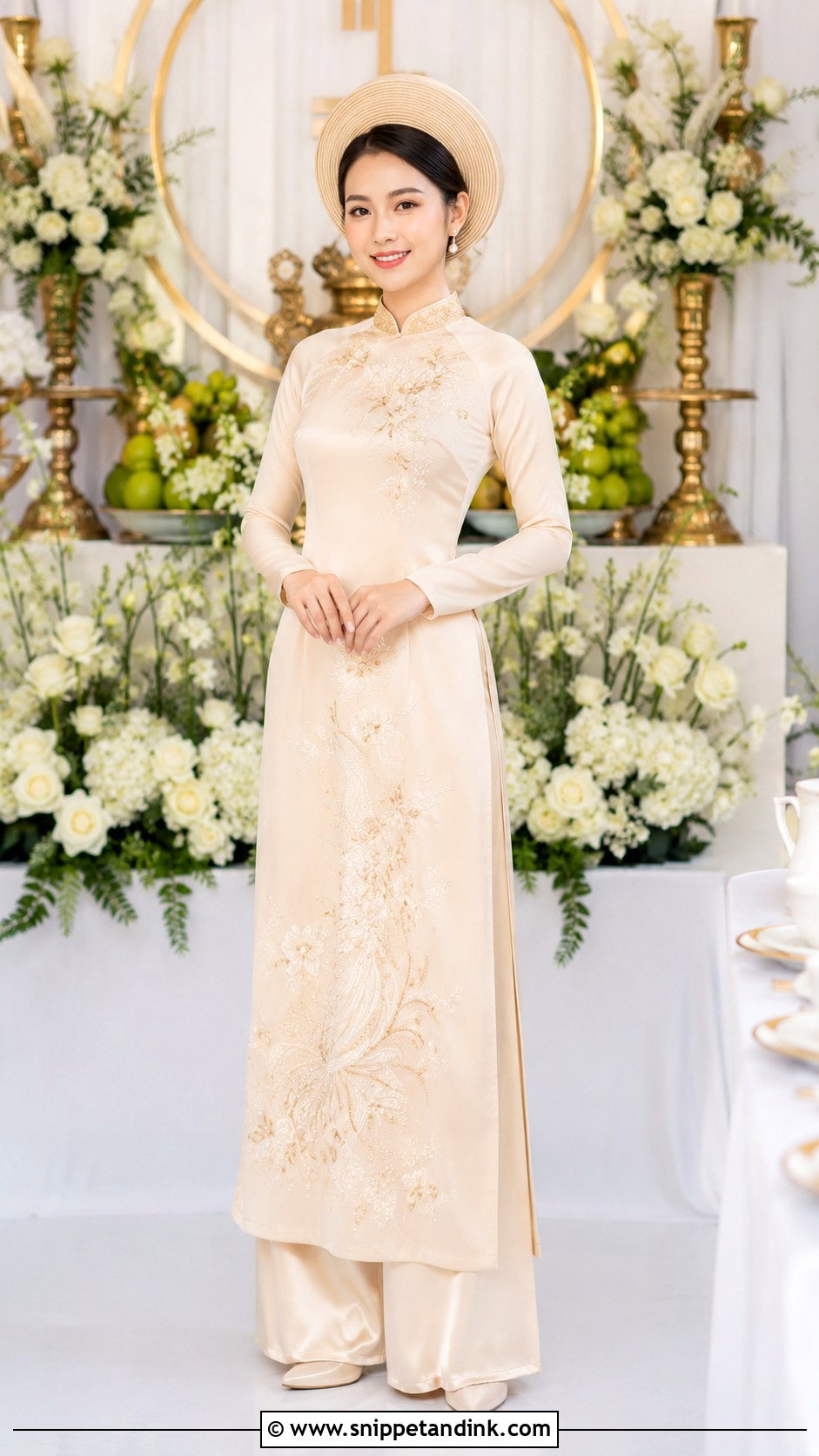
The áo dài is a long tunic with side slits worn over flowing pants. Red and gold are classic; white, blush or pastel blue feel softer. Embroidery, beading or brocade makes it formal. The tunic is cut close to the body, so it’s usually tailored to measurements rather than bought off the rack, and I’d allow time for at least one fitting. A khăn đóng headpiece, delicate earrings and low heels. It suits tea ceremonies and engagement ceremonies especially.
13. Red Ao Dai Wedding Dress
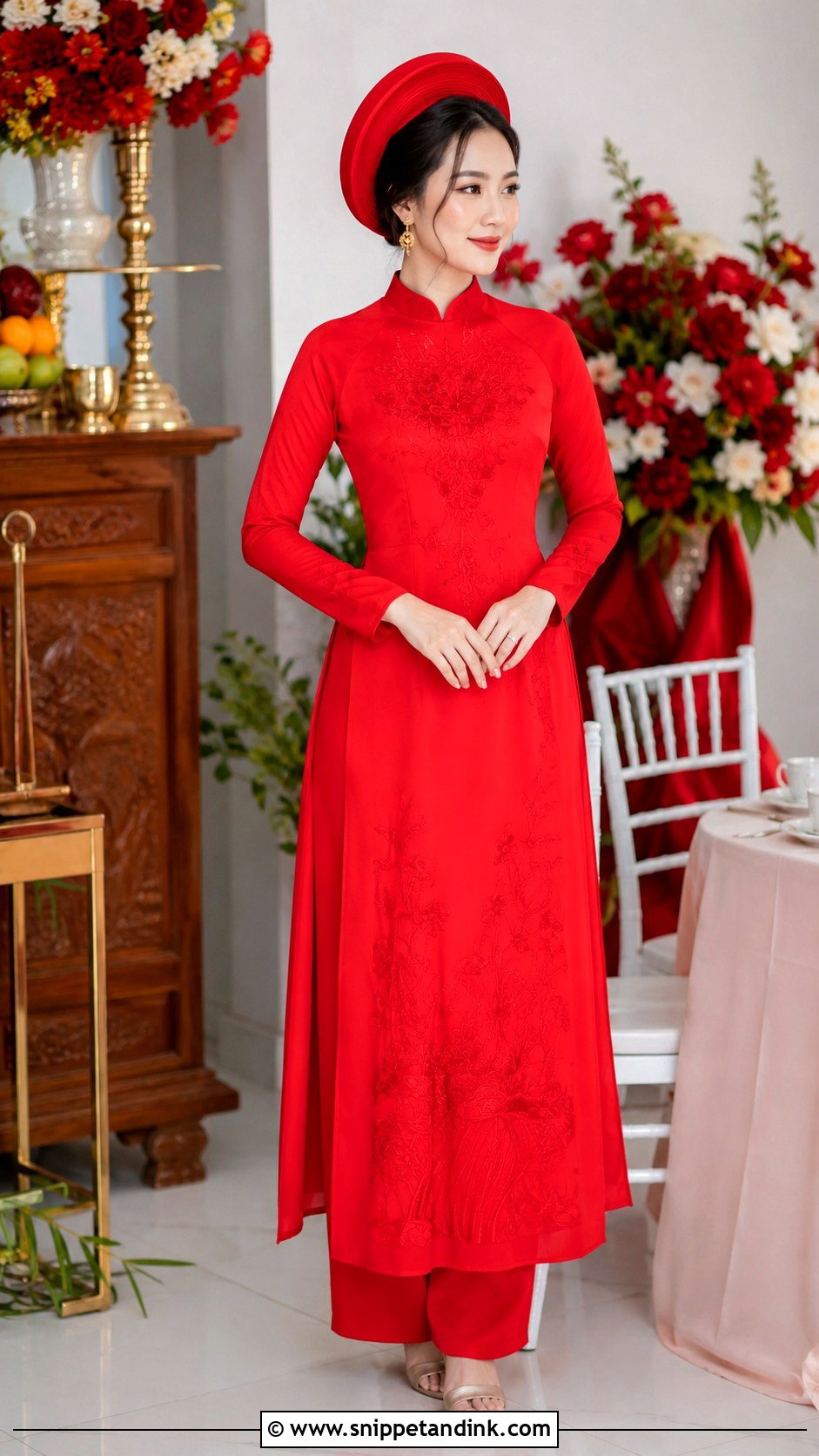
A red áo dài draws a long vertical line, and gold embroidery on the bodice, sleeves and hem gives it a festive finish. The pants are long and loose at the hem, so I fit them to the exact heel height you’ll wear; too long, and they catch under your shoes on stairs. A matching red khăn đóng and gold earrings complete it. It suits Vietnamese tea ceremonies and family events well.
14. White Ao Dai Wedding Dress
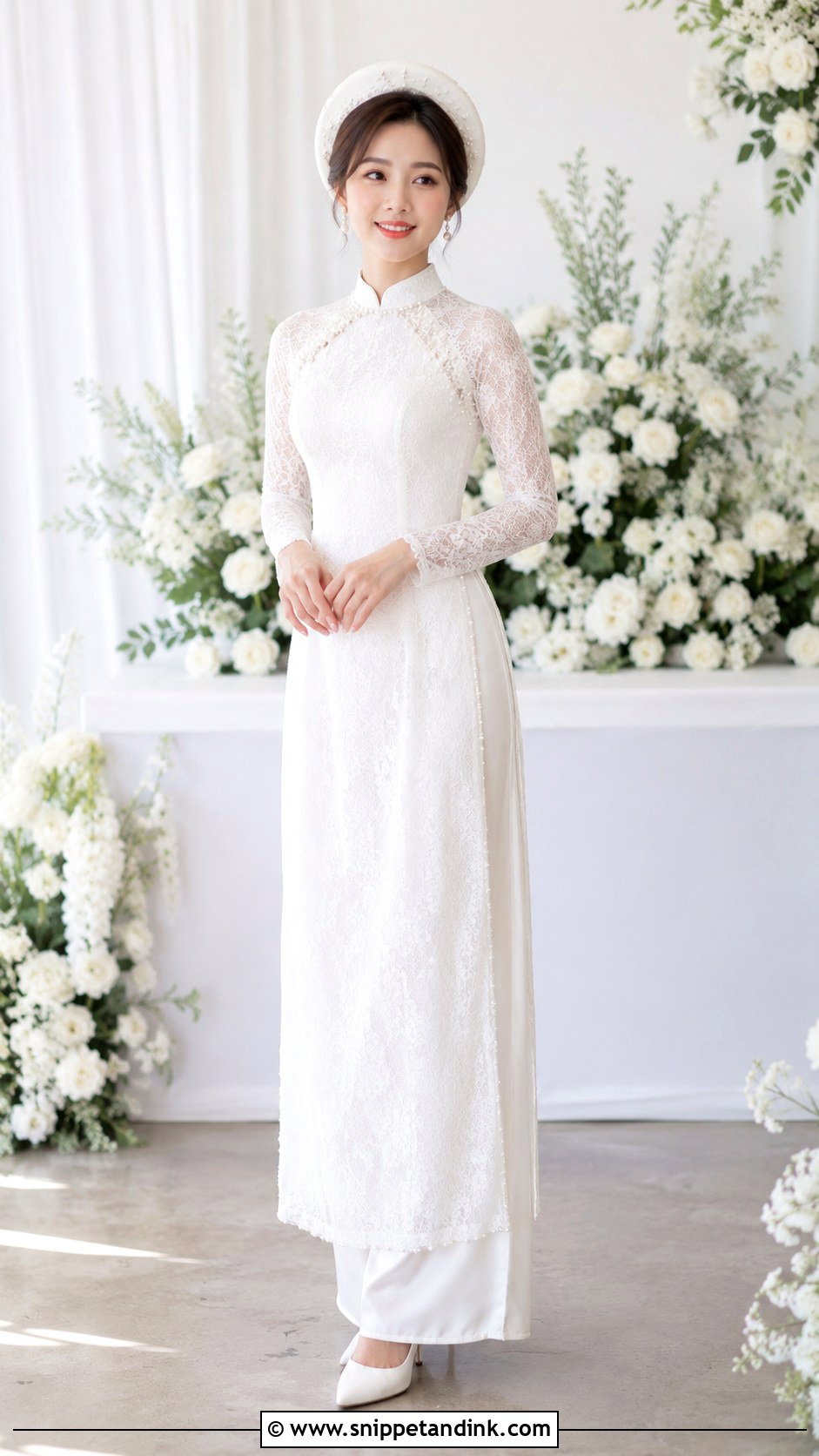
White áo dài look clean and bridal, and lace, pearls, floral embroidery or subtle silver beading make them special without hiding the silhouette. White silk is often sheer, so check it in daylight with the underlayer you’ll wear. Pair with white or ivory pants, a matching khăn đóng and pearl earrings. It fits civil weddings, engagement photos and multicultural celebrations equally well.
15. Bridal Kimono Outfit
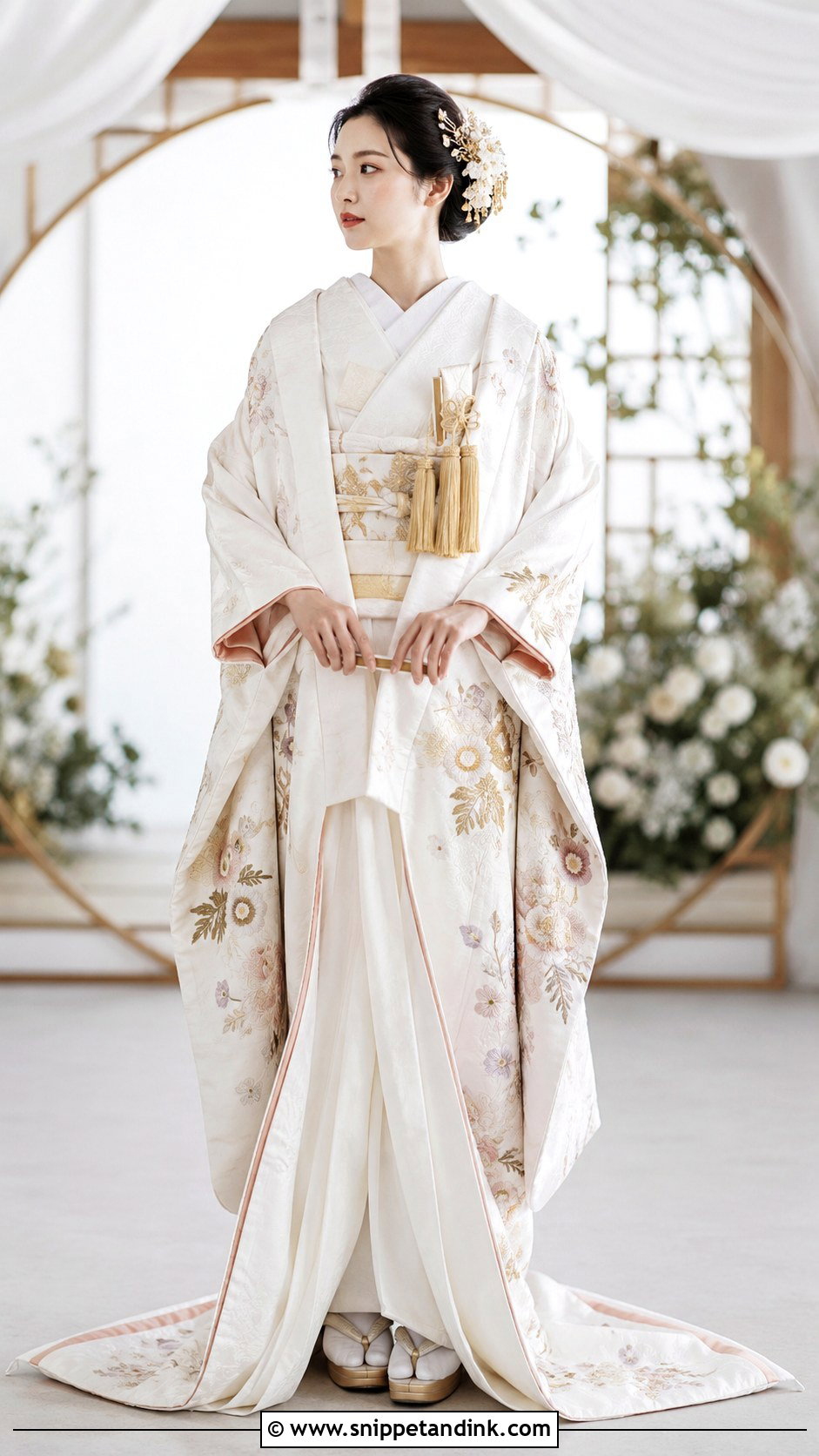
A bridal kimono outfit is a layered ensemble: inner kimono, obi, outer robe, traditional sandals and styled hair. These pieces aren’t something you dress yourself in. A trained kimono dresser wraps and ties each layer, and that alone takes a good while, so I build it into the morning schedule. In Japan many brides rent rather than buy. For a modern take, a kimono-inspired robe over a simple gown keeps the look while making it far easier to move.
16. White Shiromuku Bridal Kimono
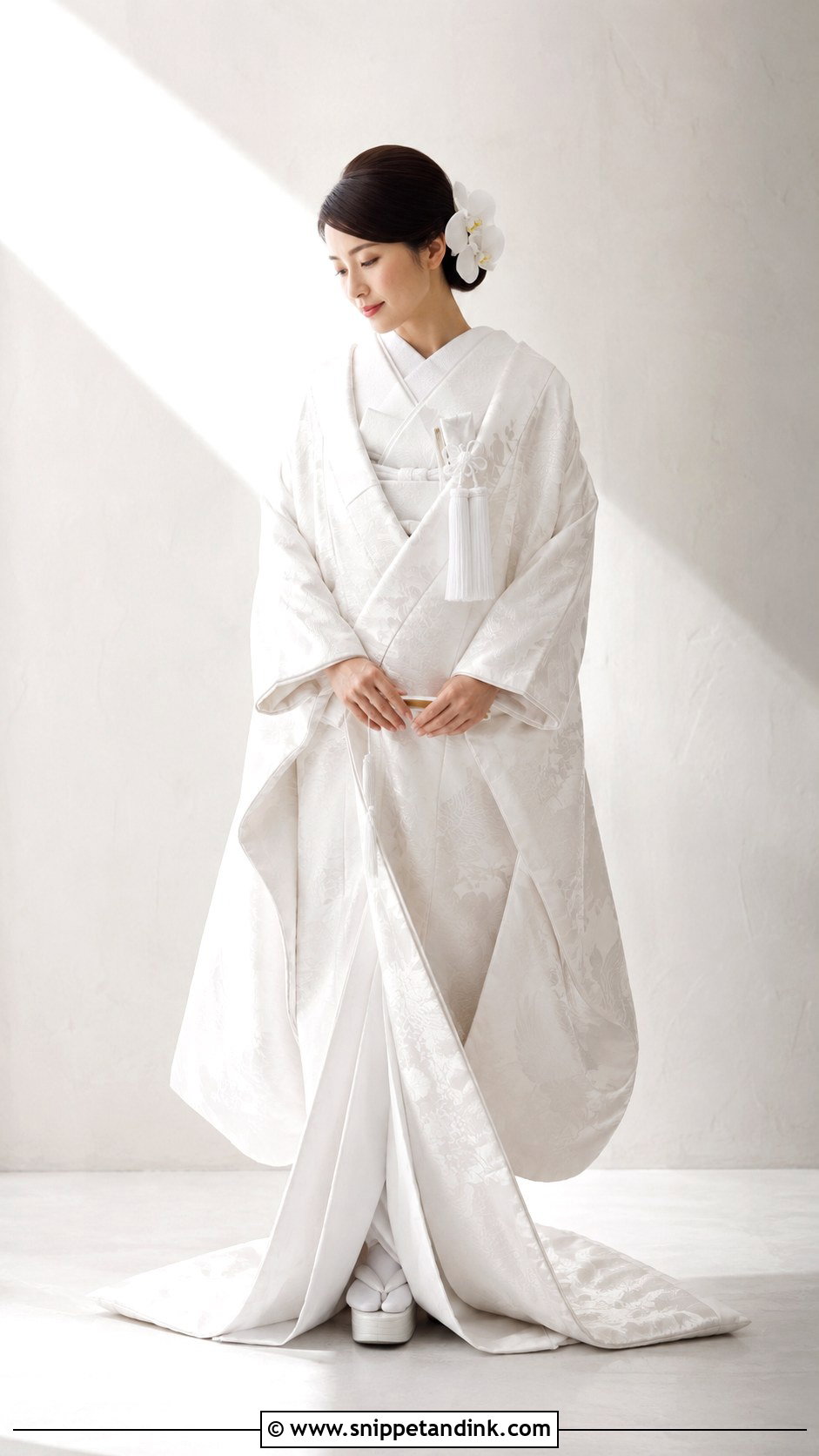
Shiromuku is the all-white bridal kimono worn traditionally for Shinto ceremonies, and white symbolizes purity and a new beginning. The look is quiet and very formal: layered white kimono, obi, footwear and bridal hair, sometimes with a white hood. Minimal jewelry is right, since the fabric and silhouette are the focus. These layers are heavy and warm, so plan for a cool room and short photo sessions. A modern version might be a white kimono-style robe over a structured white dress.
17. Colorful Uchikake Wedding Kimono
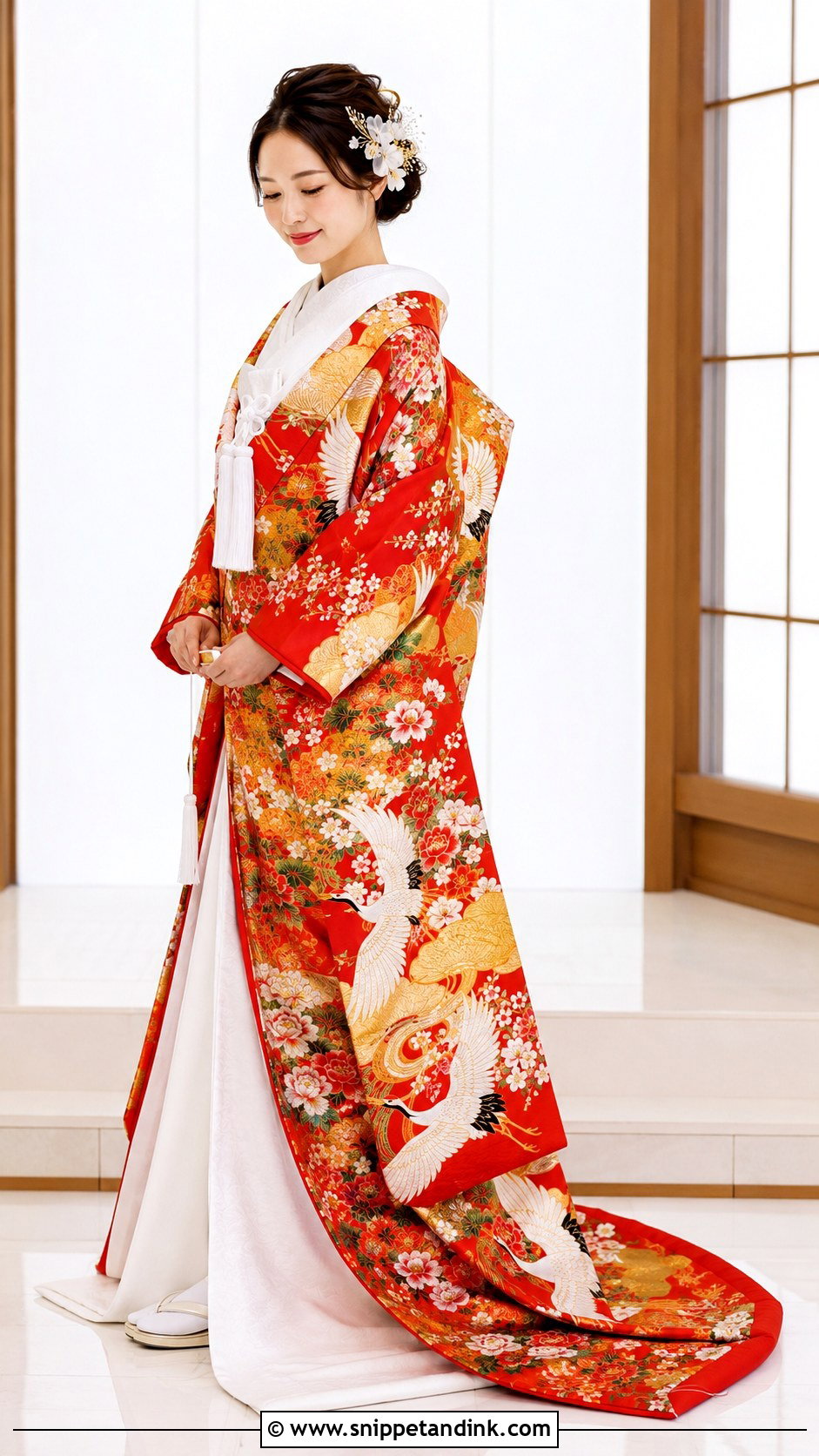
The uchikake is the colorful outer robe worn over the kimono, often padded at the hem so it trails out behind you. Cranes, flowers, waves and seasonal motifs in red, gold, black or ivory make it the most dramatic garment here. Because the robe is so heavy, I keep everything underneath simple: a plain inner kimono, traditional footwear and a polished hairstyle. Many brides change into it for the reception entrance or portraits after a simpler ceremony outfit.
18. Filipino Terno Wedding Dress
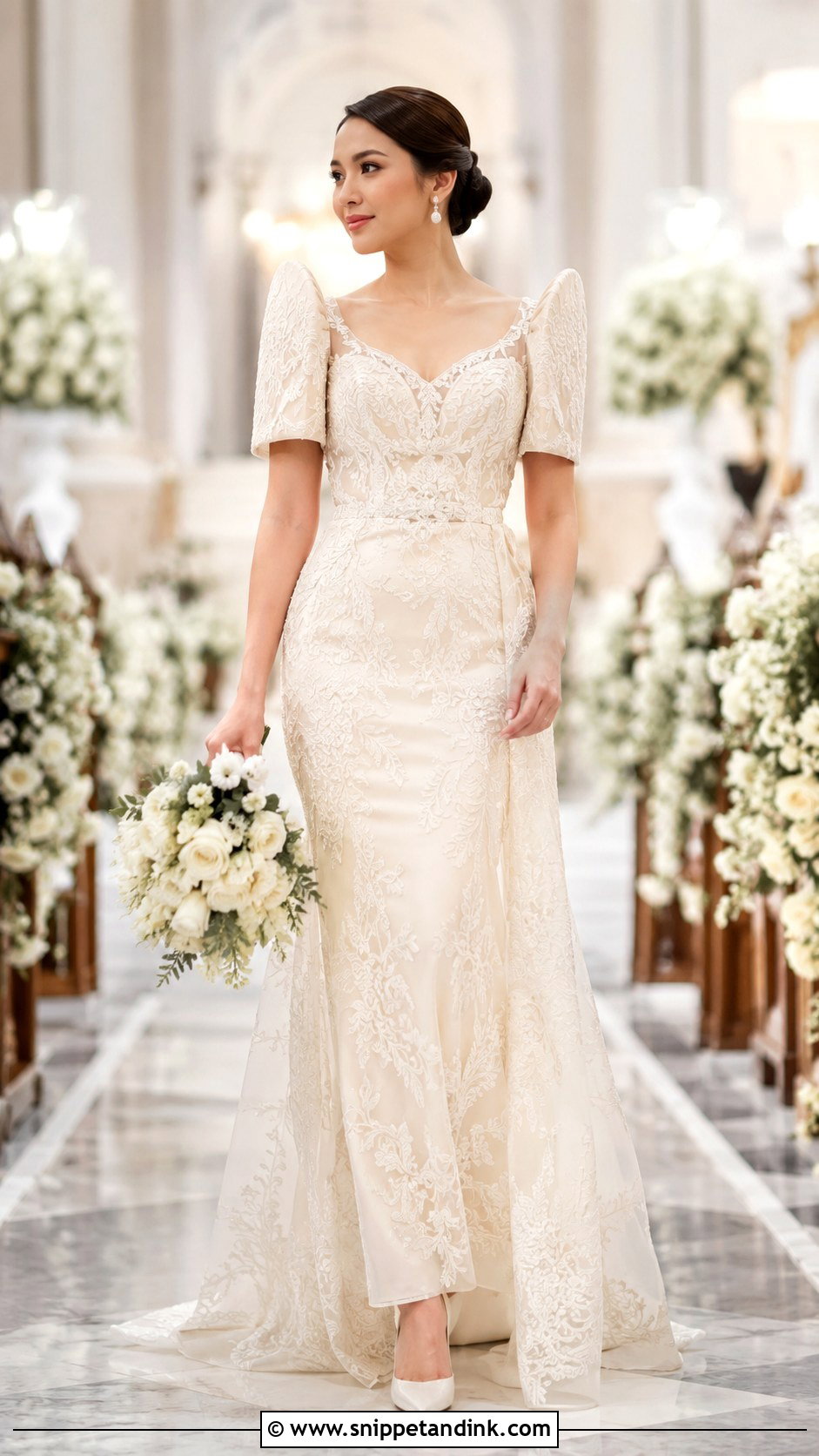
The terno is the Filipino gown with stiff butterfly sleeves that stand up from the shoulder. For a bride, ivory, champagne, blush or soft gold with lace, piña-like texture or beadwork works well. The sleeves are the feature and the fit challenge: they need internal support so they don’t collapse during the day, and they limit how far you can raise your arms. A column skirt reads modern, a full skirt more ceremonial. Pearl earrings, a sleek bun and pointed heels.
19. Barong Inspired Bridal Dress
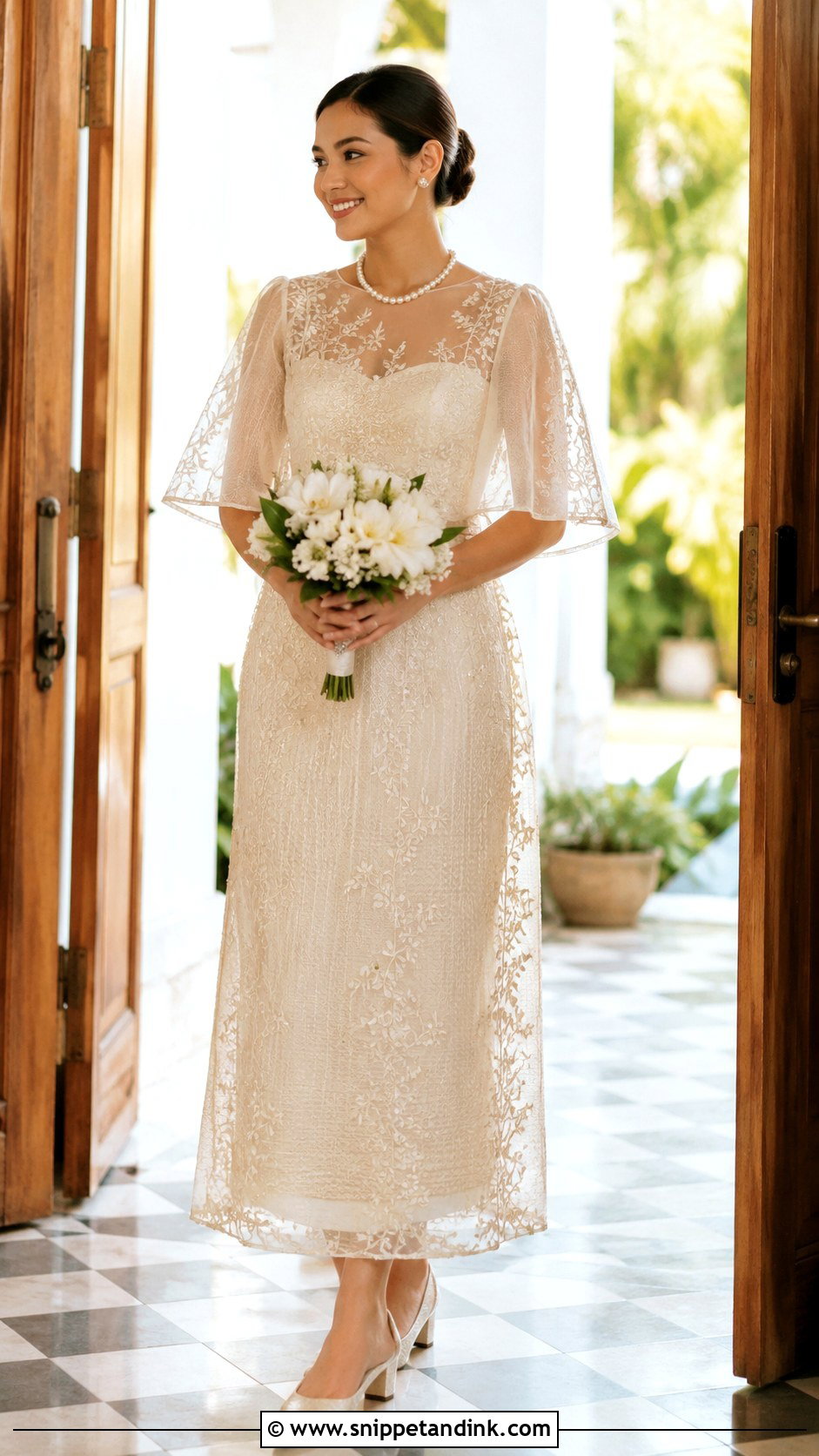
Borrowing from the barong, the national formal shirt, a barong-inspired bridal dress uses sheer embroidered layers and piña-style fabric in ivory or cream. Real piña is woven from pineapple leaf fiber and is fragile and costly, so many dresses use a similar-looking blend. Because the outer layer is sheer, the slip or underlayer matters as much as the dress. Pearl jewelry, low heels and a neat updo. It’s light enough for a warm-weather or intimate ceremony.


20. Kebaya Wedding Outfit
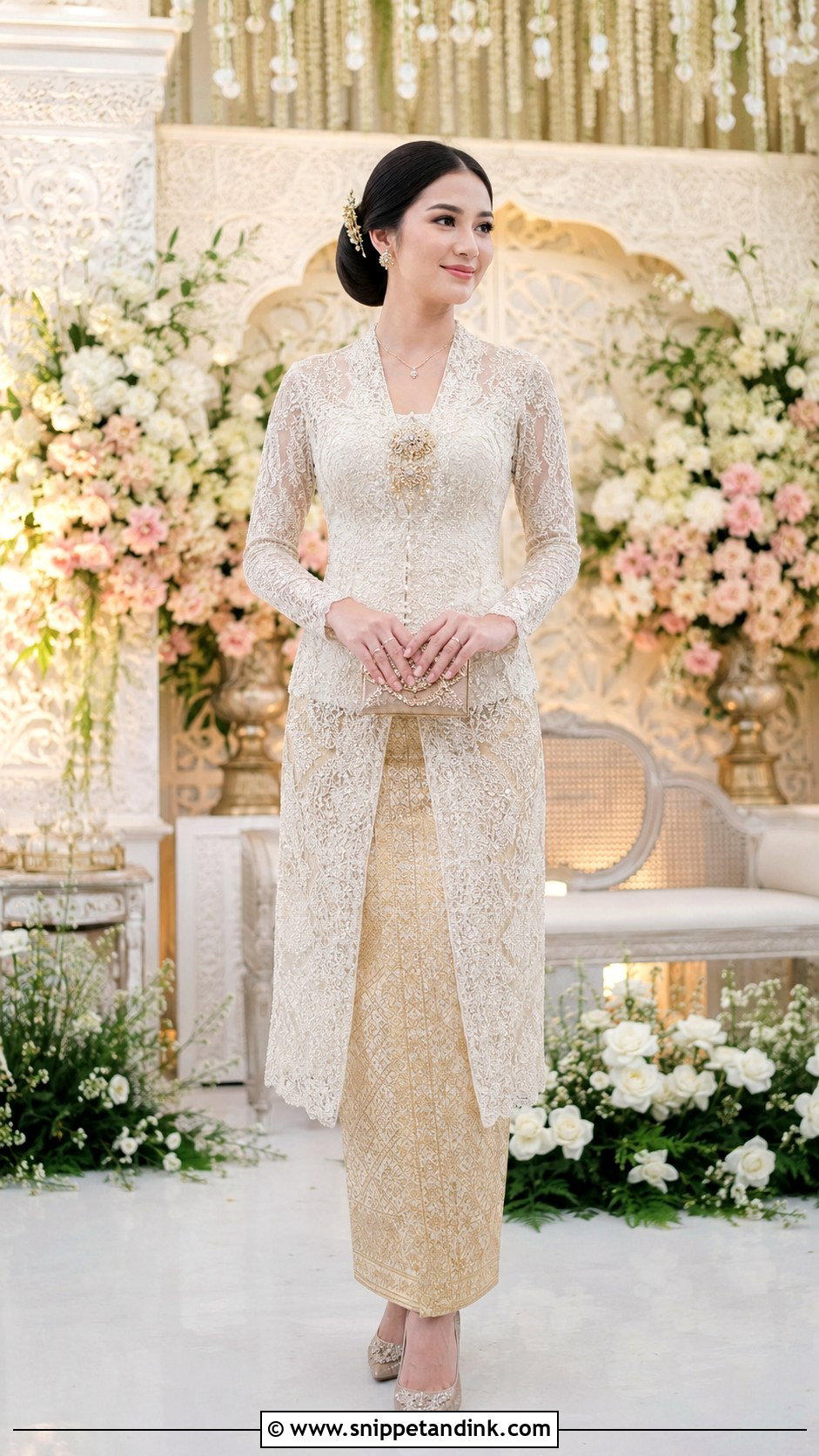
A kebaya is a fitted, embroidered blouse worn with a batik or songket skirt, and it’s a bridal staple across Indonesia, Malaysia and Singapore. White, ivory, gold, blush and jewel tones all suit it. Songket, woven with metallic thread, is stiff and heavy, so the skirt needs to be tailored with enough room to walk; batik is softer and lighter. A sleek bun, hair ornaments and a small clutch finish it.
21. Peranakan Kebaya Wedding Outfit
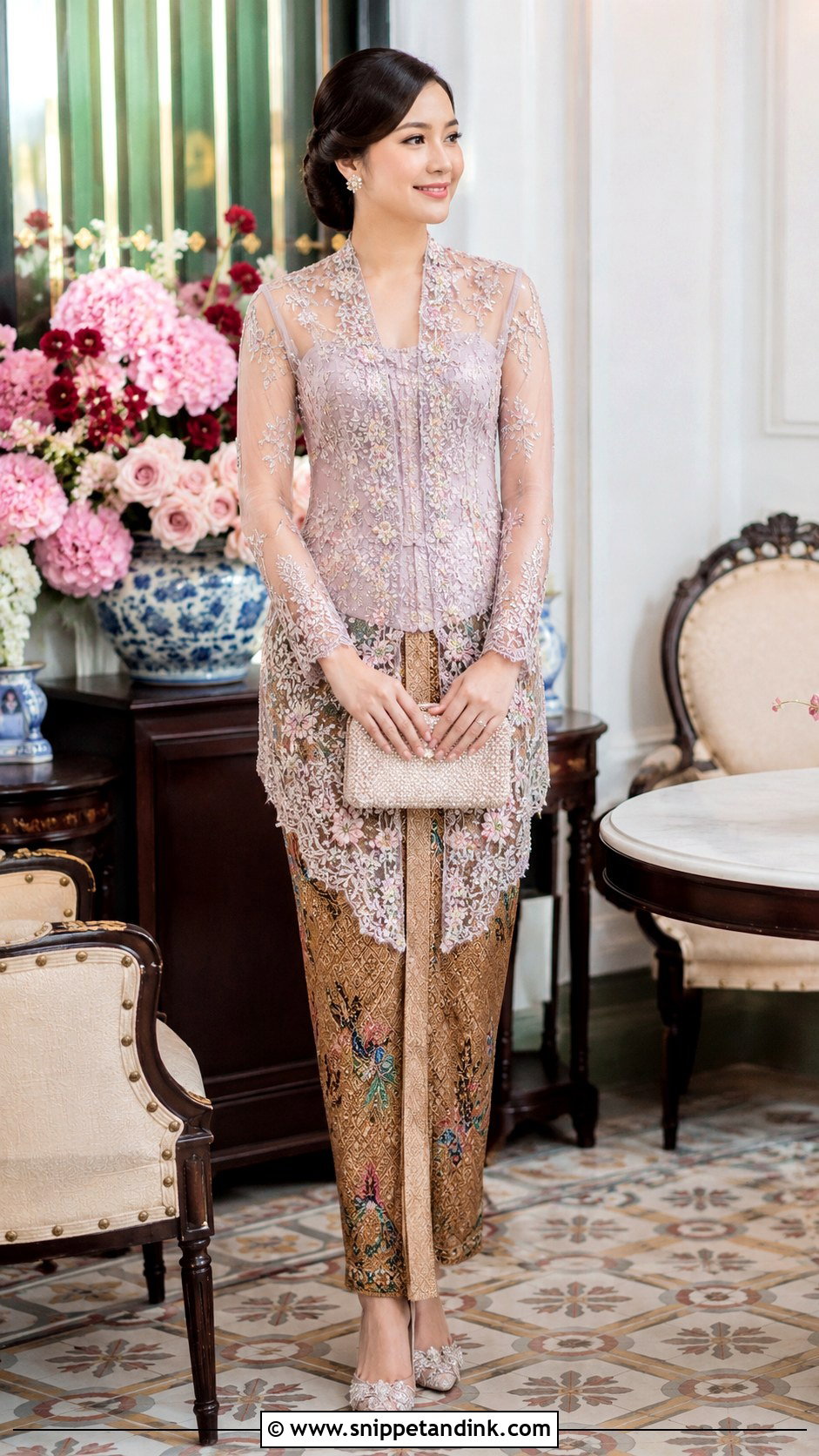
The Peranakan kebaya has finer, more colorful embroidery on sheer fabric, often in floral or bird motifs, and is traditionally fastened with brooches (kerongsang) instead of buttons. It’s worn over a camisole and paired with a batik sarong. I’d check that the brooches sit flat and are pinned through the fabric securely, since they’re often heirloom pieces. Beaded shoes, a clutch and earrings complete it. Soft pastels or ivory with floral work suit a bride.
22. Thai Silk Wedding Dress
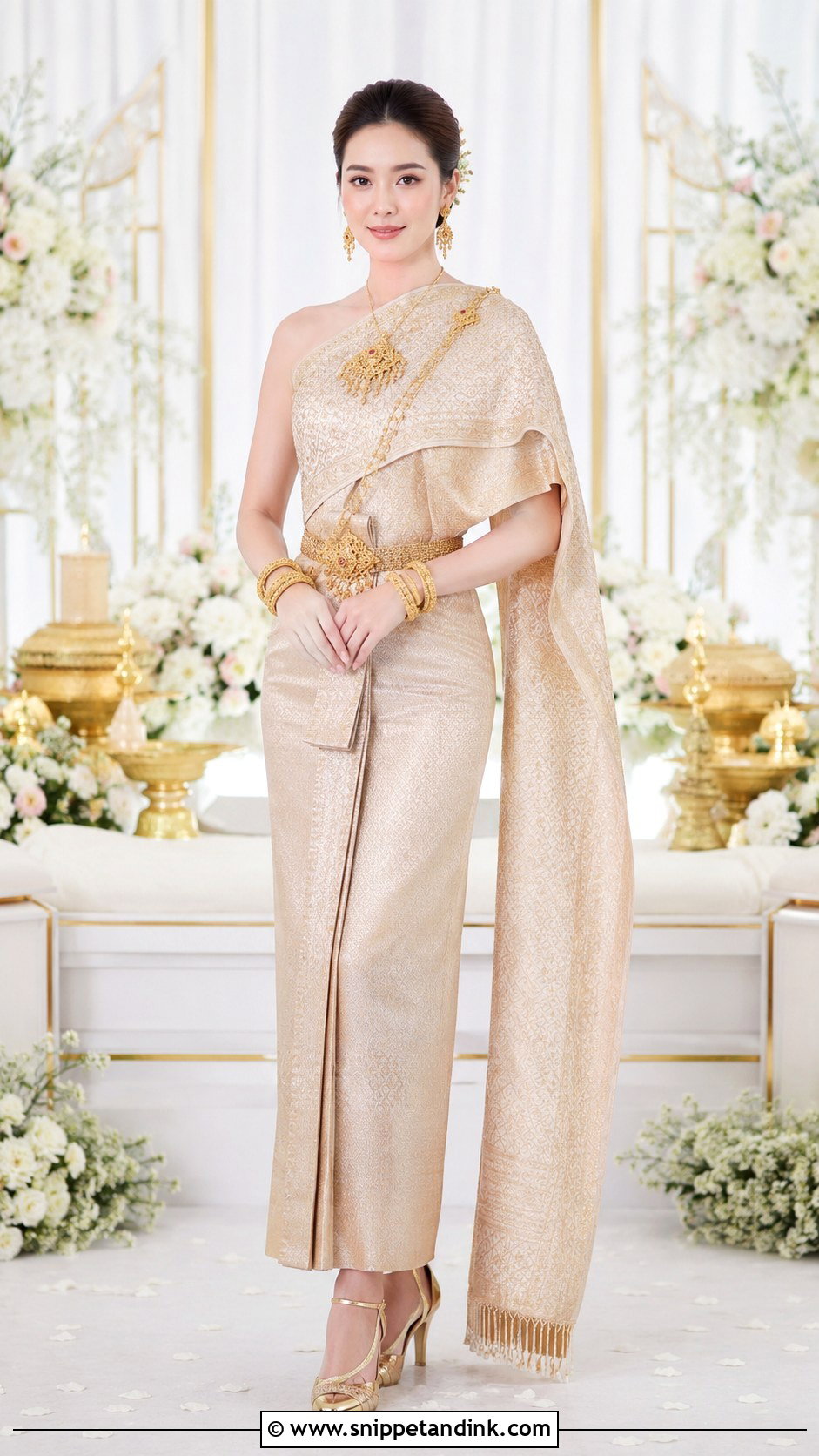
Thai silk has a natural sheen that catches light without beadwork, which is why traditional Thai bridal outfits rely on it: wrapped skirts, fitted tops, sashes and gold jewelry. Modern versions add one-shoulder draping or a structured bodice. Thai silk is crisp and creases easily, so I have it steamed close to the ceremony. Soft gold, ivory, blush or pale blue all suit it, with gold heels, drop earrings, bangles and a neat bun.
23. Thai Sabai Wedding Outfit
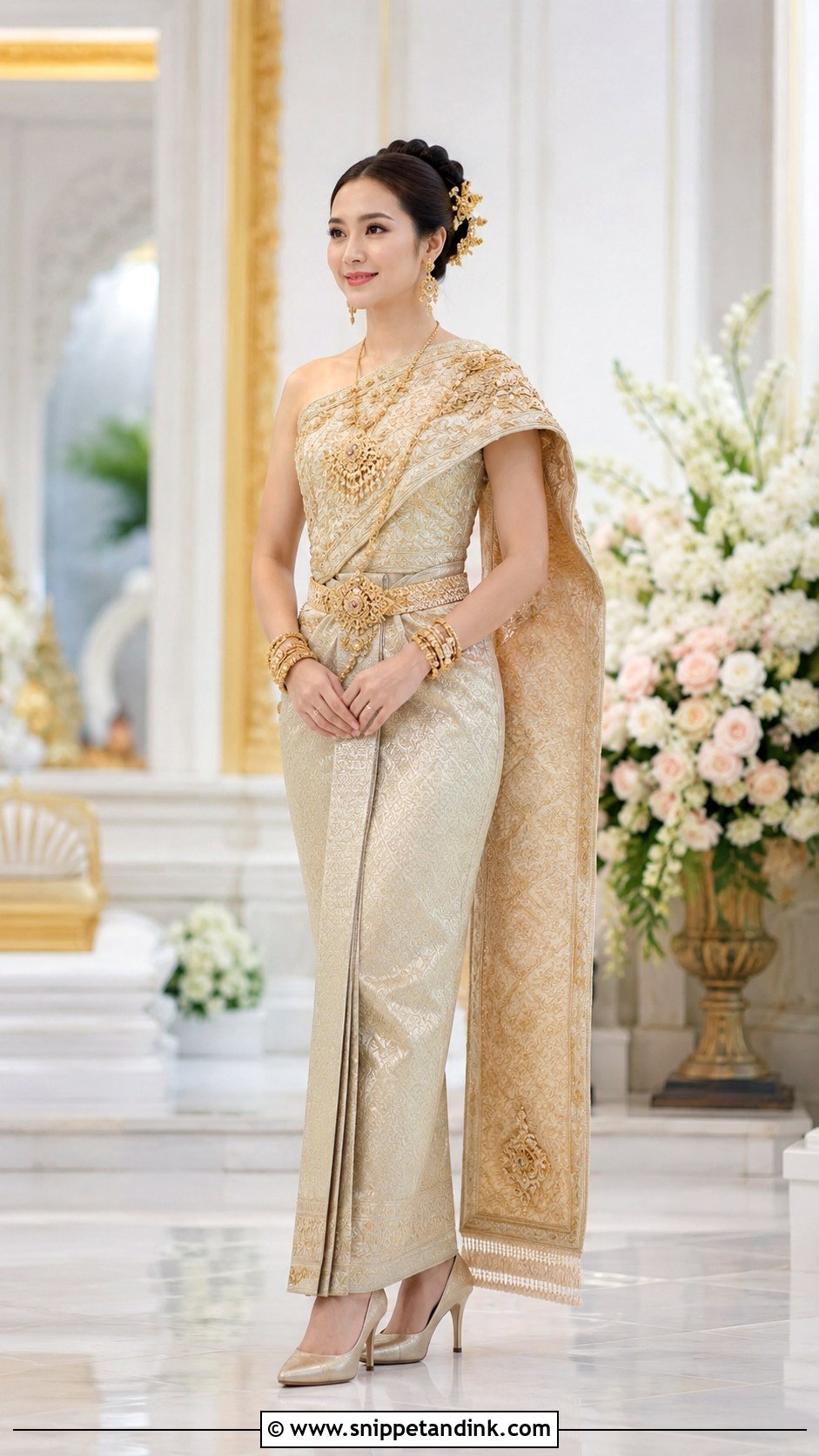
The sabai is the draped sash that crosses one shoulder in Thai formal dress, worn with a fitted or wrapped skirt and a coordinated top. It has to be draped and pinned by someone who knows how, and tailored so it doesn’t slide off the shoulder when you raise your arms. Ivory, gold, blush, pale green or lavender keep it bridal. Gold necklaces, bracelets and hair ornaments complete it. It suits Thai ceremonies and formal portraits.
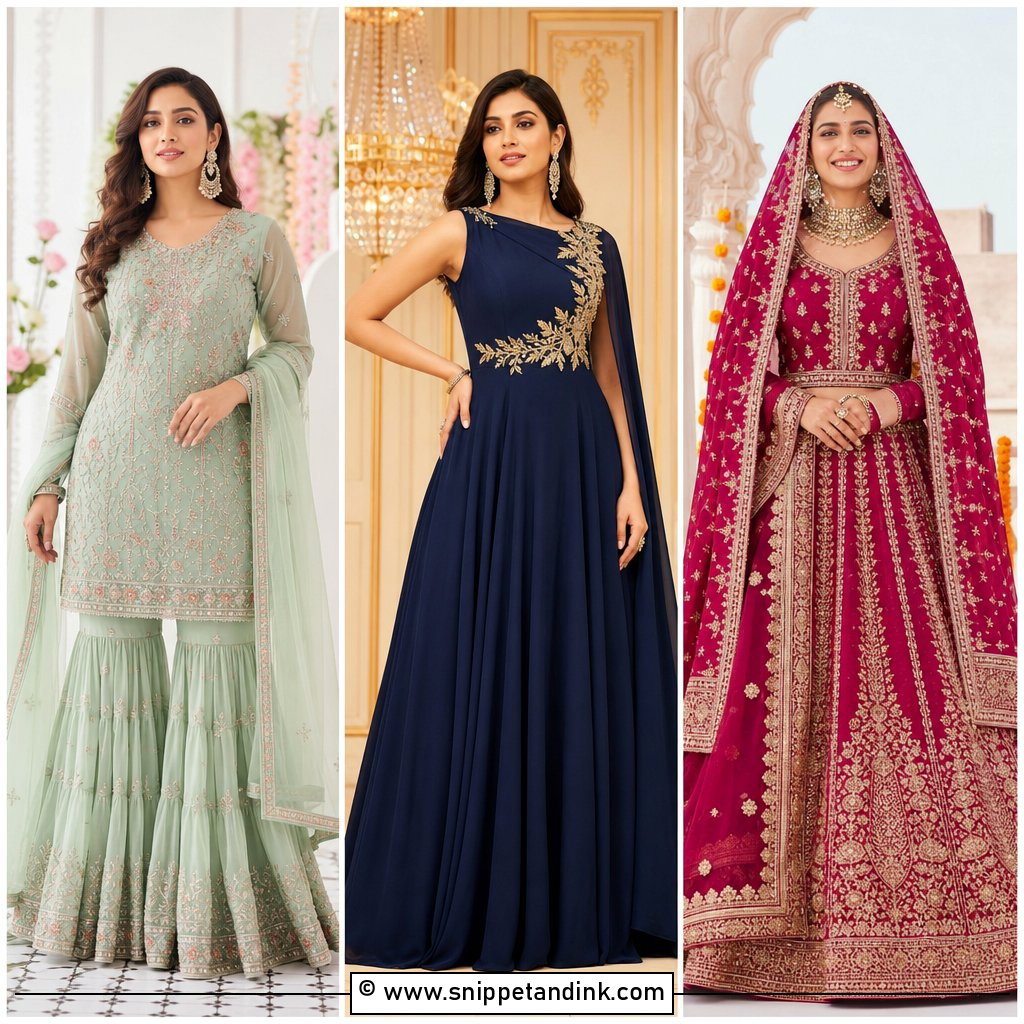
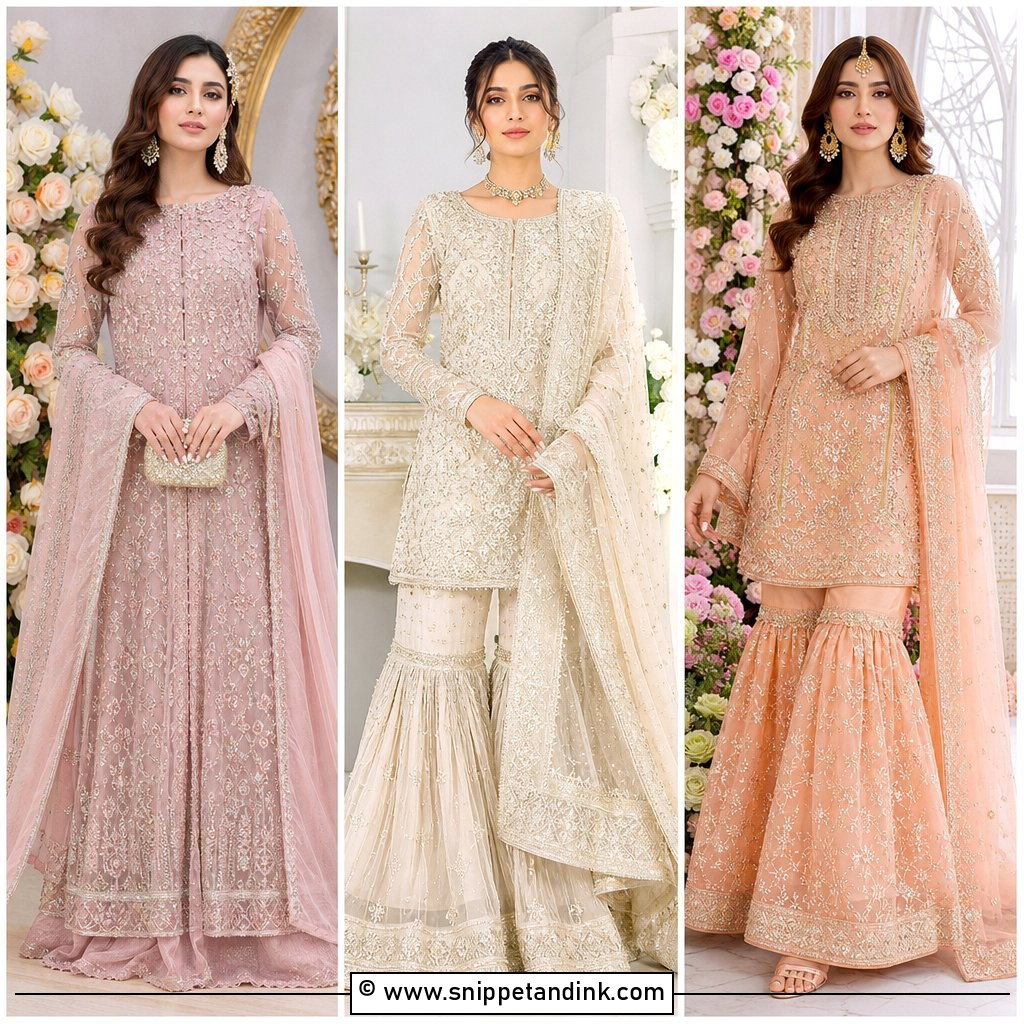
24. Pakistani Bridal Sharara
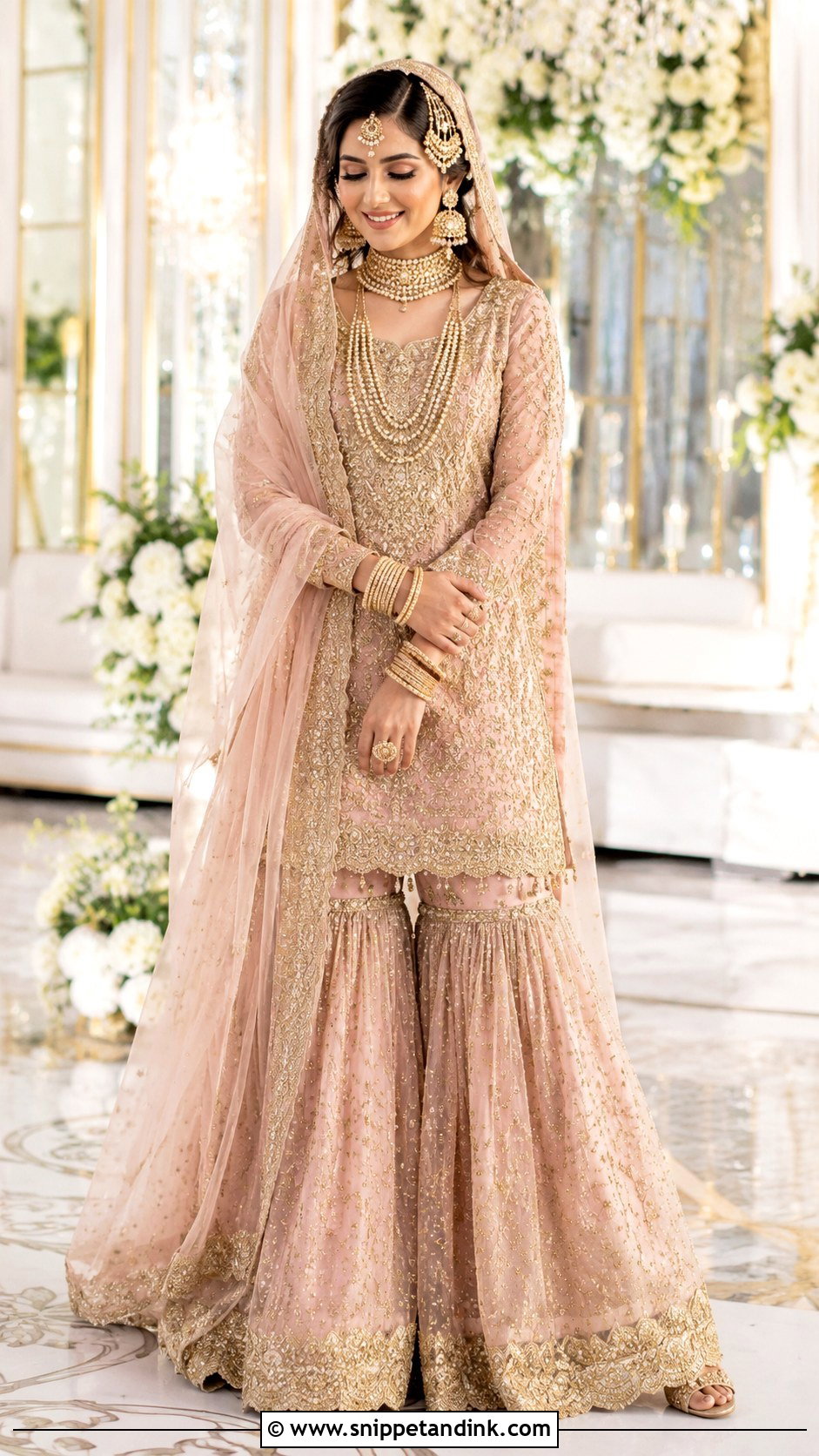
A Pakistani bridal sharara pairs a short or mid-length kameez with wide flared pants and a dupatta, heavily worked with gota, zari, pearls or sequins. Red, maroon, gold, blush, emerald and champagne are classic. Because the pants split the weight between both legs, it’s easier to walk in than a heavy lehenga skirt. I’d check that the sharara flare isn’t so long you step on it on stairs. Jhumkas, a passa, layered necklaces and embellished heels.

25. Pakistani Bridal Gharara
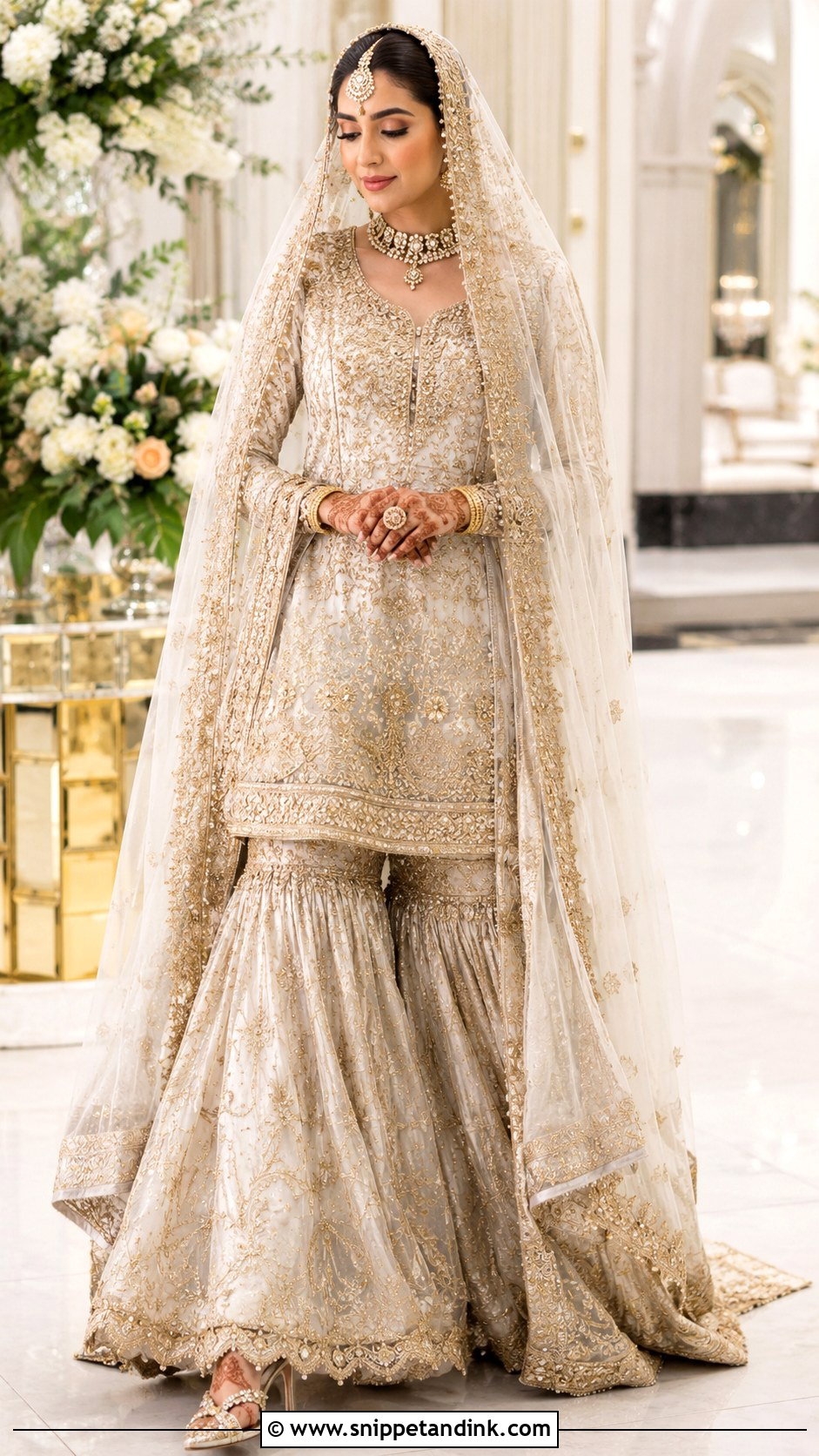
The gharara is fitted to the knee and then flares, joined at the knee by a band of embroidery or gota. Jamawar, silk, tissue and organza make it formal. That knee joint is where comfort lives or dies. If it’s tight, sitting through a nikah becomes uncomfortable, so I test it seated. Kundan jewelry, a tikka or passa, bangles and a dupatta over the head. Red, gold, ivory, peach, pistachio and jewel tones all suit it.
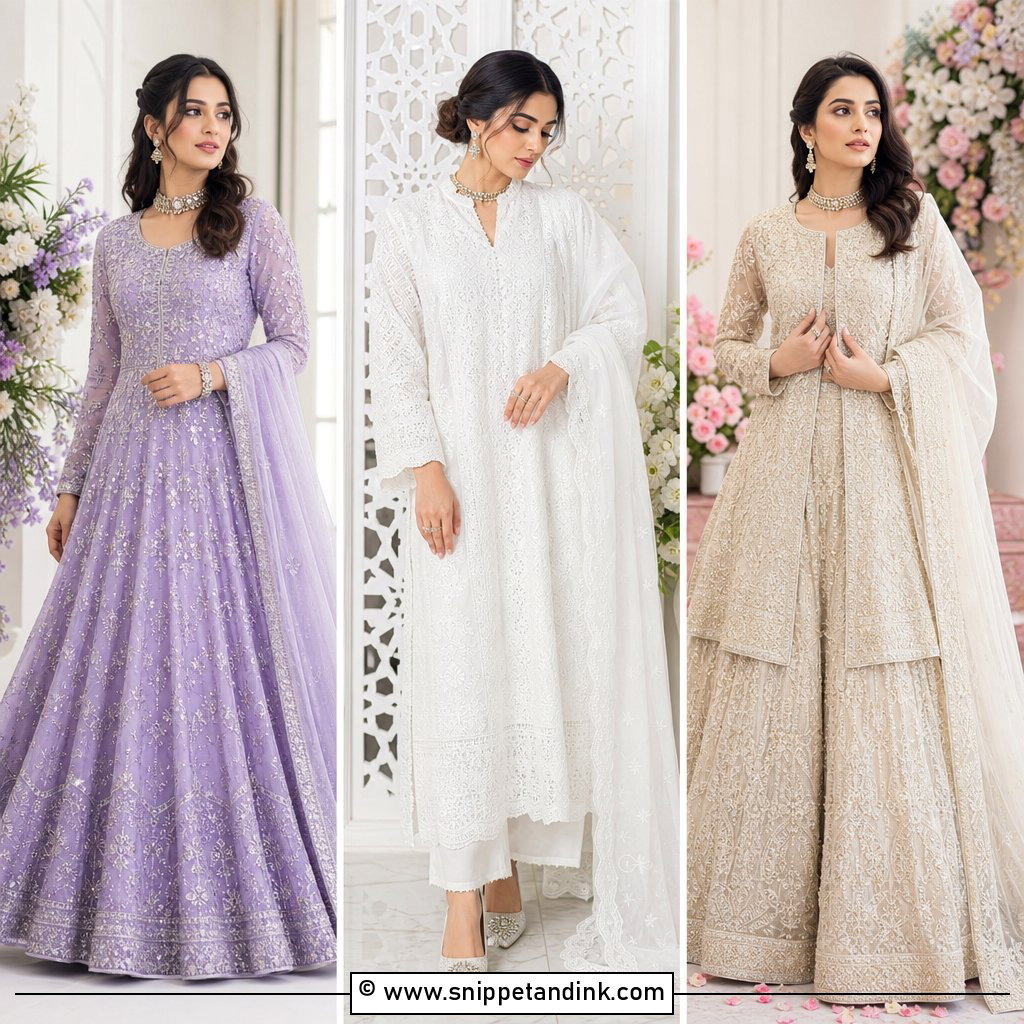
26. Anarkali Wedding Dress
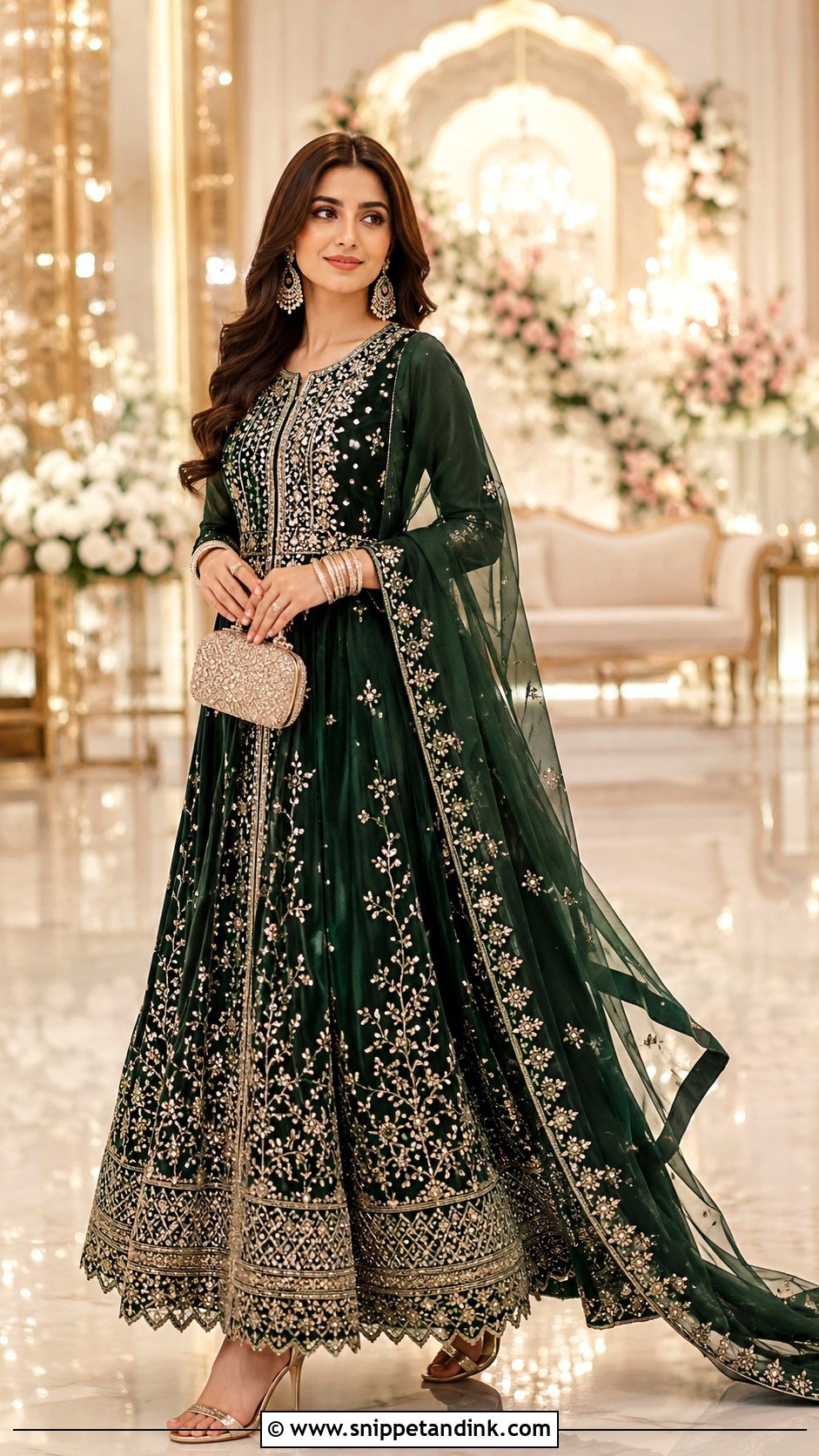
An Anarkali flares from a high waist into a long skirt, giving flow and coverage without the weight of a lehenga. For a bridal version, choose rich fabric with embroidery on the bodice, sleeves, hem and dupatta. Red, ivory, champagne, emerald, mauve or dusty rose all work. The hem is the thing to fit carefully: I set it with the exact heels on, since an Anarkali that’s too long gets stepped on. Chandelier earrings, bangles and a sheer dupatta over the shoulders or head.
27. Indo Western Bridal Gown
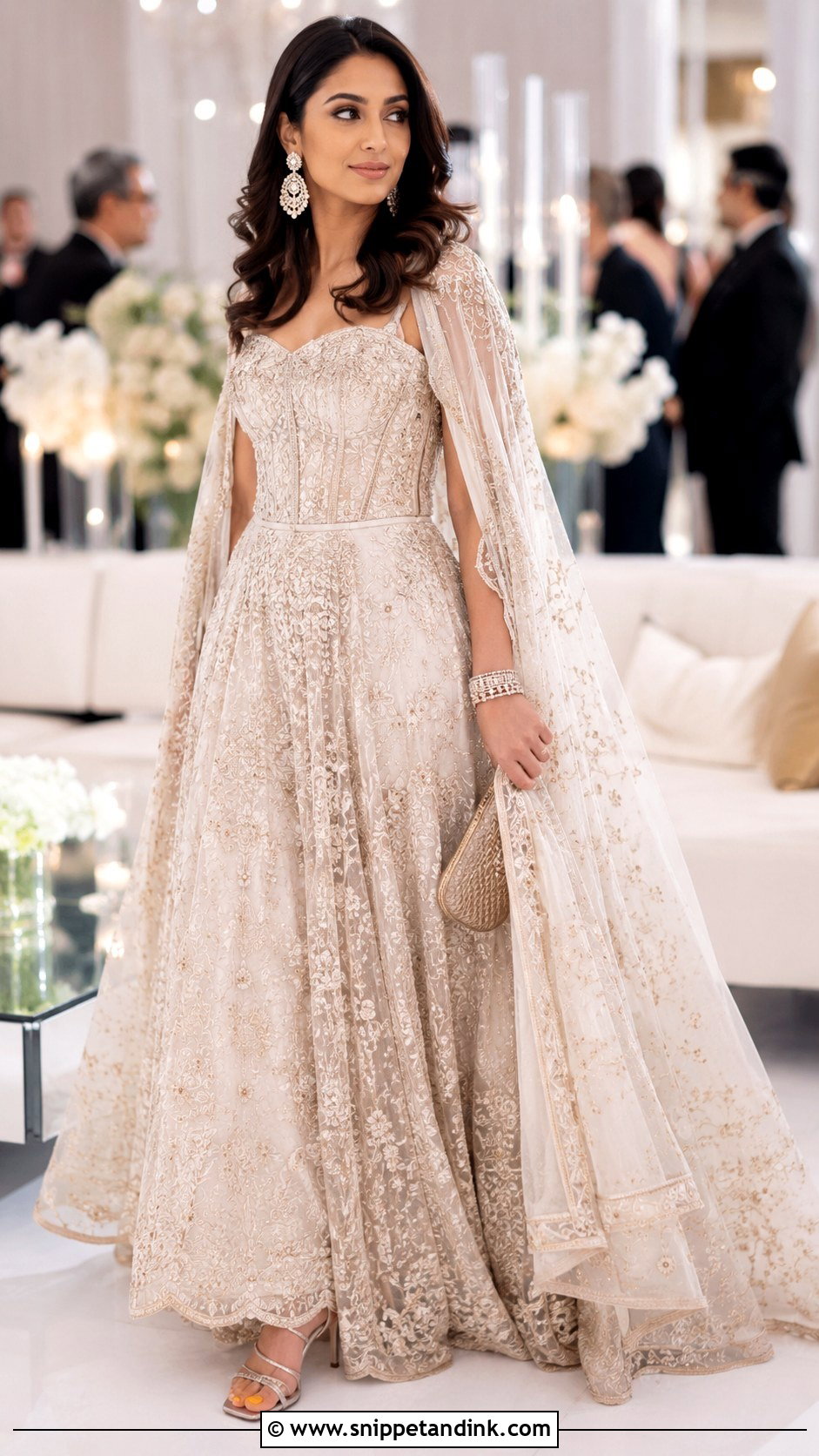
Indo-Western gowns take Indian handwork such as zardozi, mirror work or thread embroidery and put it on a gown shape: a full skirt, fitted bodice, cape dupatta or saree-like draping. They suit receptions, destination weddings and multicultural ceremonies where a bride wants one outfit that feels familiar to both families. My rule is that one side leads. A Western silhouette with Indian embroidery, or an Indian silhouette with a Western detail, not both at full strength. Statement earrings, a bracelet stack and metallic heels.
28. Saree Gown Wedding Dress
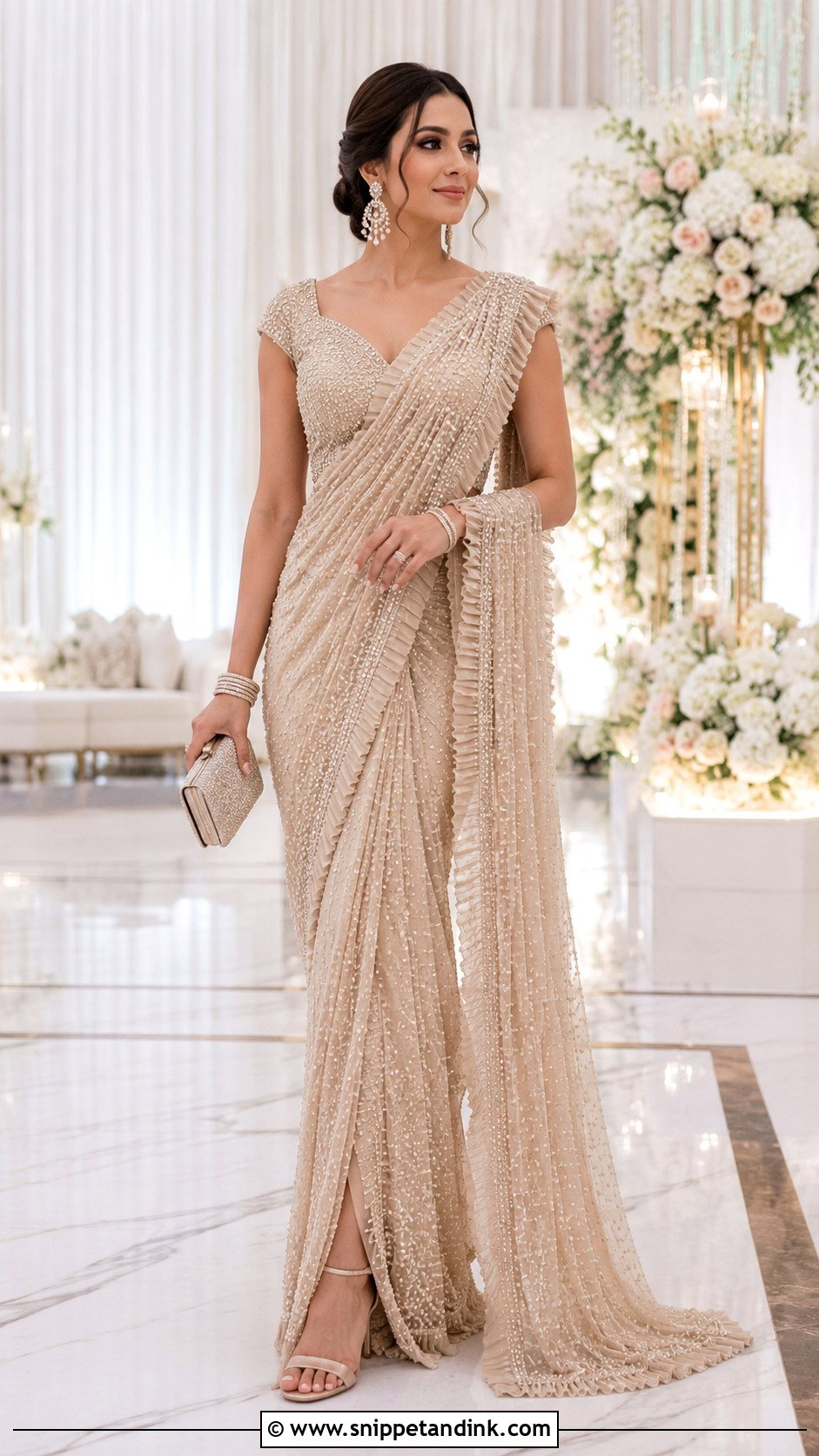
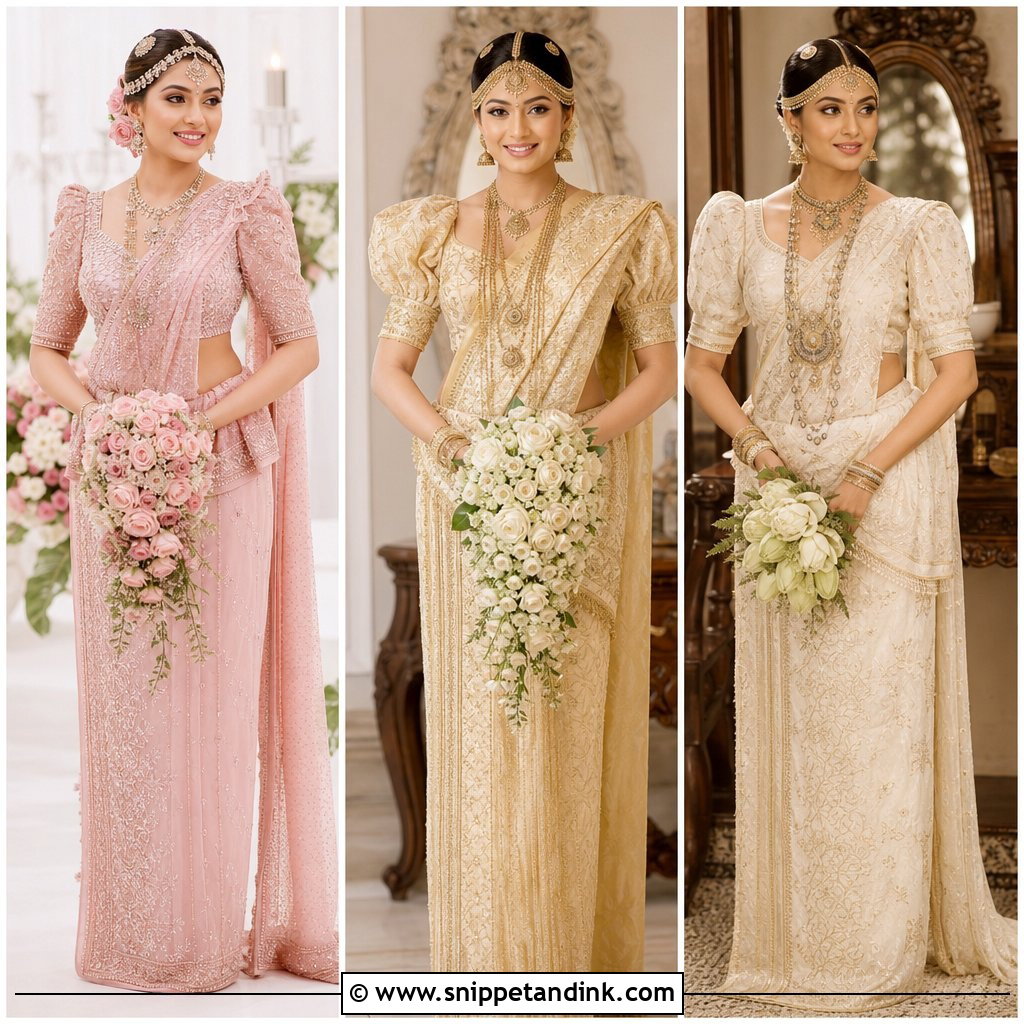
The pleats and pallu in a saree gown are already stitched, so you get the drape without the risk of it coming undone. That makes it easy to walk, dance and pose. Beadwork, sequins, pearls or embroidered borders keep it bridal. It’s my usual suggestion for a bride who loves a saree but has never worn one for a whole day. Ivory, gold, champagne, red, emerald or blush, with earrings, bangles, heels and a small clutch.
29. Cape Lehenga Wedding Dress
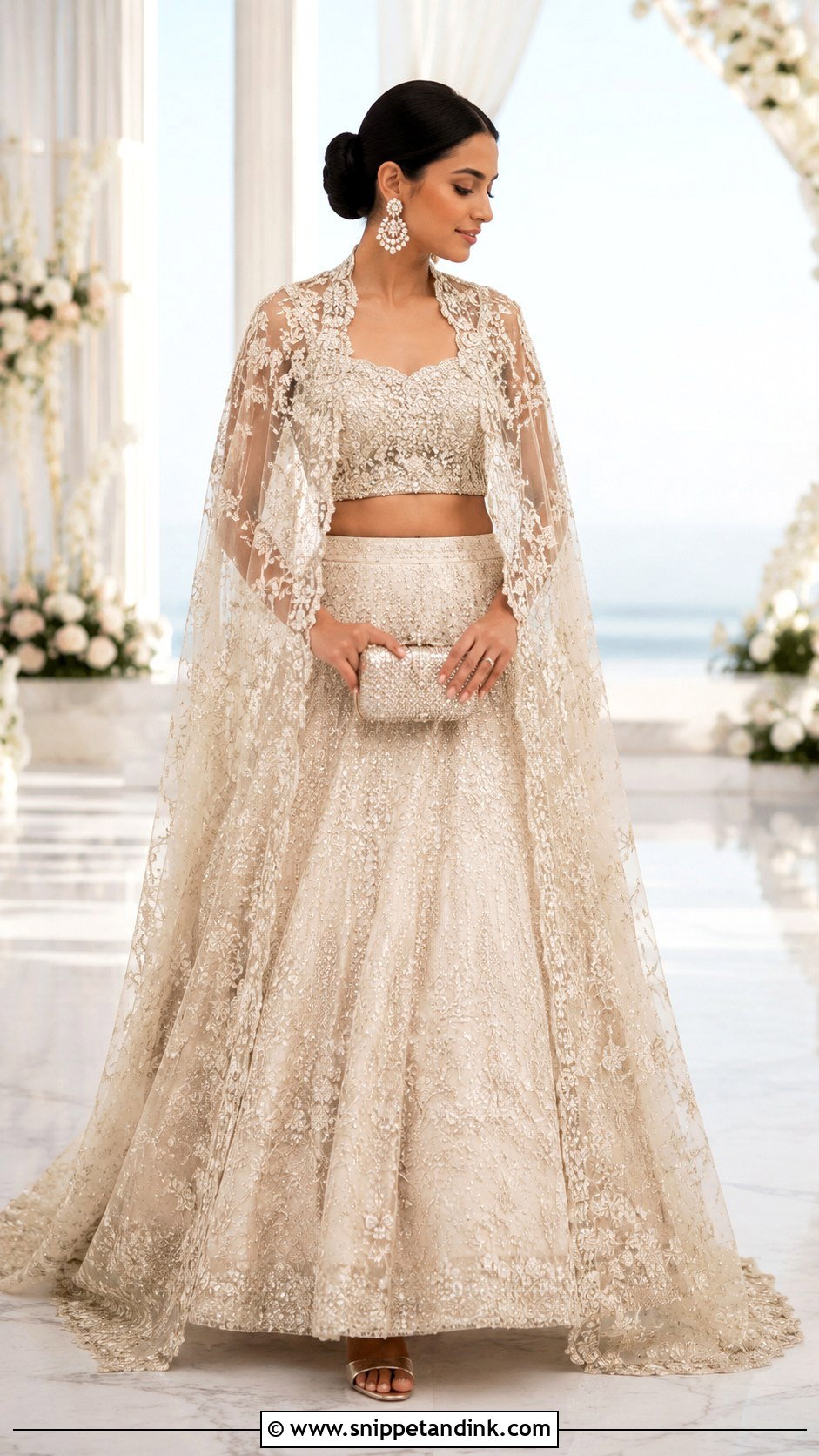
A cape lehenga replaces the dupatta with a sheer or embroidered cape that falls from the shoulders, so your hands stay free and nothing slips. Pearl work, sequins or florals give a soft finish. The cape’s length matters: a short cape is easy, a floor-length or trailing cape needs room and someone to arrange it for photos. A sleek bun, statement earrings, metallic heels and a structured clutch. It suits receptions and destination weddings.
30. Fusion Asian Wedding Dress
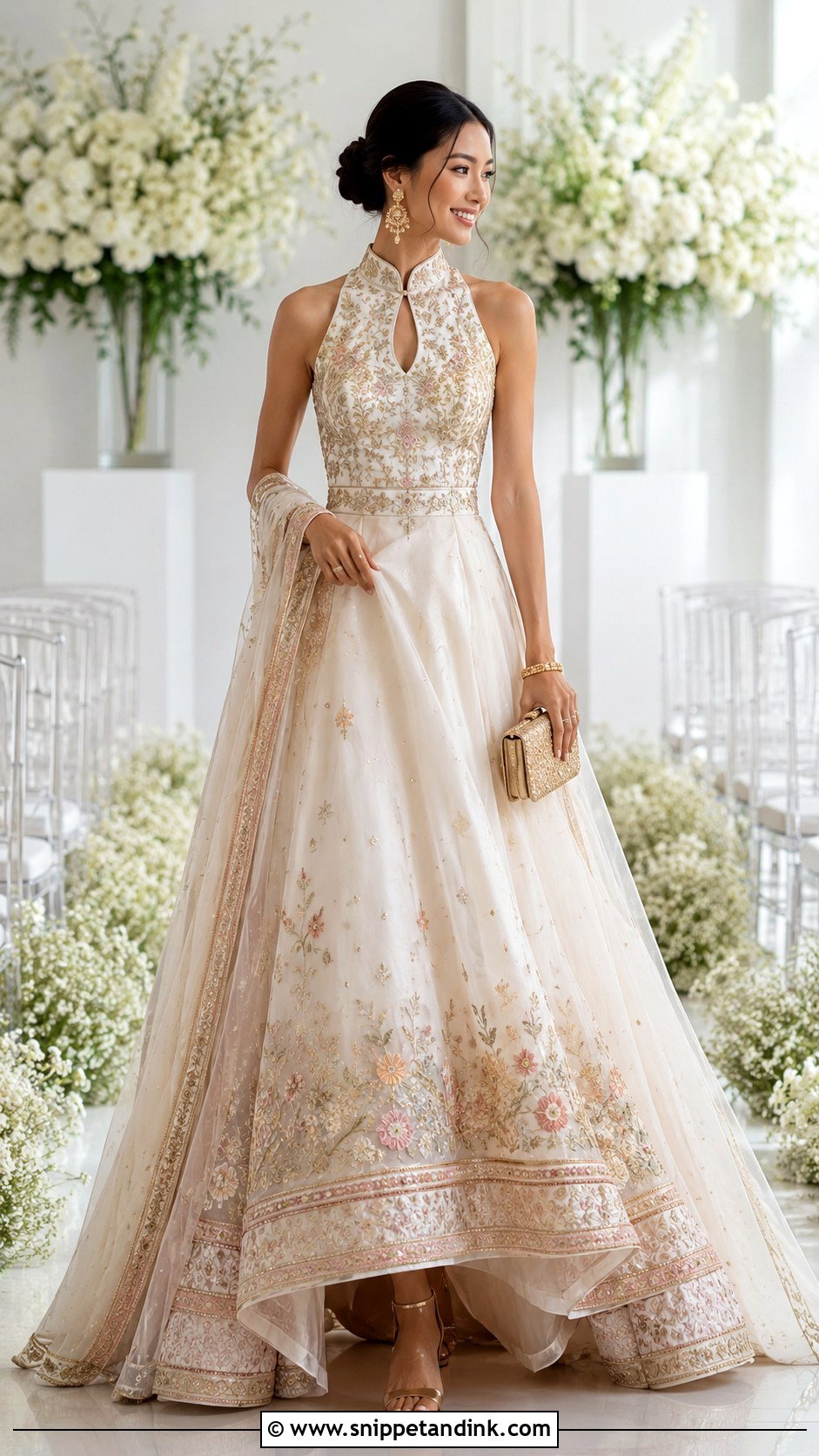
Fusion dresses combine cultures in one outfit: a qipao collar on a gown skirt, a lehenga with a cape, an áo dài silhouette in lace or a hanbok-inspired skirt in bridal fabric. They work best with one main cultural reference supported by clean styling, rather than three references competing. I’d also talk to both families early, because some details carry meaning that matters to them. Match jewelry, shoes and hair accessories to the outfit’s strongest detail.
Silk, Zari and Velvet After the Wedding
Many of these outfits are heirlooms, or will become them. The fabrics need different care from a Western gown, and the damage usually happens in storage, not on the day.
Storing Heavy Silk and Metallic Work
- Wrap silk sarees and lehengas in clean, undyed cotton or muslin. Plastic traps moisture and can yellow the fabric.
- Refold zari sarees along different lines every few months. Metallic threads crack and break along a permanent fold.
- Store velvet flat or on a padded hanger. Folded velvet keeps its creases, and pressure crushes the pile.
- Keep embroidered pieces away from direct light, which fades dyes on the folds first.
Cleaning
Have heavily embellished outfits dry cleaned by someone who works with silk and handwork, and point out any stains when you drop them off, especially food, makeup and henna. Don’t try to spot clean zari or brocade at home, because water can leave rings and tarnish metallic thread.
Your Ceremony Decides the Silhouette
Traditional pieces like the Kanjivaram saree, hanbok, qipao, áo dài or kimono carry centuries of meaning; fusion looks blend that heritage with a gown, a cape or a lighter silhouette. Start with the ceremony, the season, the venue and the family customs, then think about how many hours you’ll wear it and who needs to help you dress. Fabric, jewelry, shoes and accessories follow from there. Bold red, soft ivory, gold silk or pastel embroidery: the right outfit is the one that fits the day you’re actually having.
You'll Like These Ideas:




Leave a Reply