
A convertible bridal gown gives you a big aisle entrance and a lighter dress for dancing without paying for two separate gowns. Most removable overskirts sit at the waist and hide a slimmer or shorter base dress underneath, so what you are really choosing is two outfits that share one bodice. The ideas below run from satin mermaids to tulle over a mini, and in each one I point out where the join sits, what the fabric does over a long day, and what I would test at a fitting. My rule before anyone falls for a picture: the base dress has to stand on its own, because that is the version you will wear for most of the night.

How an Overskirt Actually Fastens, and Which Closure I Trust
Before you fall for a particular skirt, look at how it attaches. That join decides how quickly you can change, how flat the waist sits afterward and how much the base dress gets marked.
- Hooks and bars along a waistband are the most secure option and lie flat. They take a minute or two to undo, so your helper needs to know where they start.
- Snaps are faster, but heavy satin or a long train can pull them open when someone steps on the hem. I keep them for light tulle skirts.
- Buttons and loops look pretty if they show, though they are slow and a fiddly job under pressure.
- A separate skirt on its own waistband that simply wraps over the dress and closes at the back is the easiest to remove and leaves nothing sewn into the base gown.
Whatever the method, the hardware should be stitched into the overskirt or a waist stay, not straight into delicate fabric. Ask to see the base dress with the skirt off at every fitting, so you catch any puckering while there is still time to fix it.
1. Satin Mermaid Wedding Dress With Detachable Ball Gown Skirt
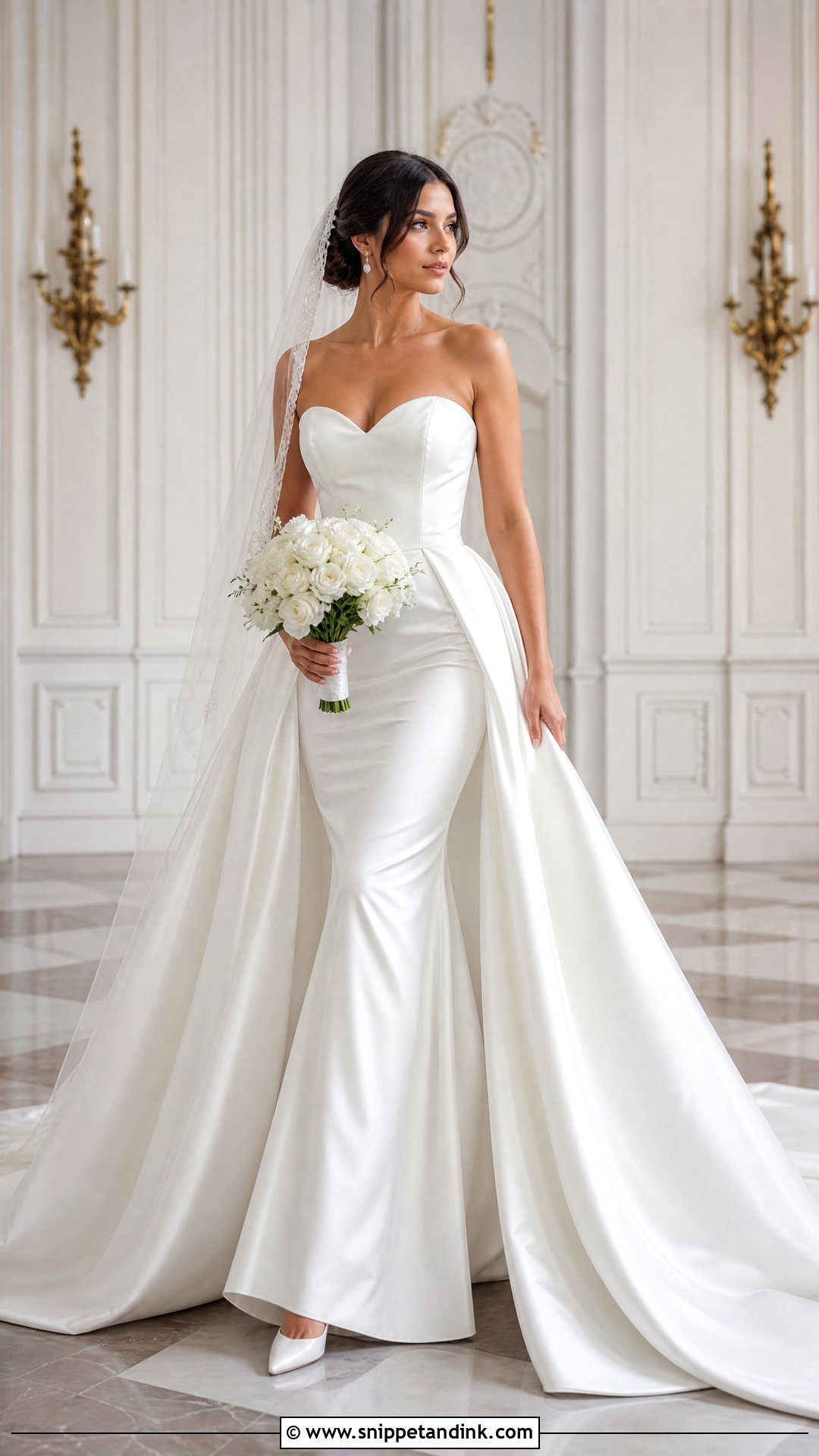
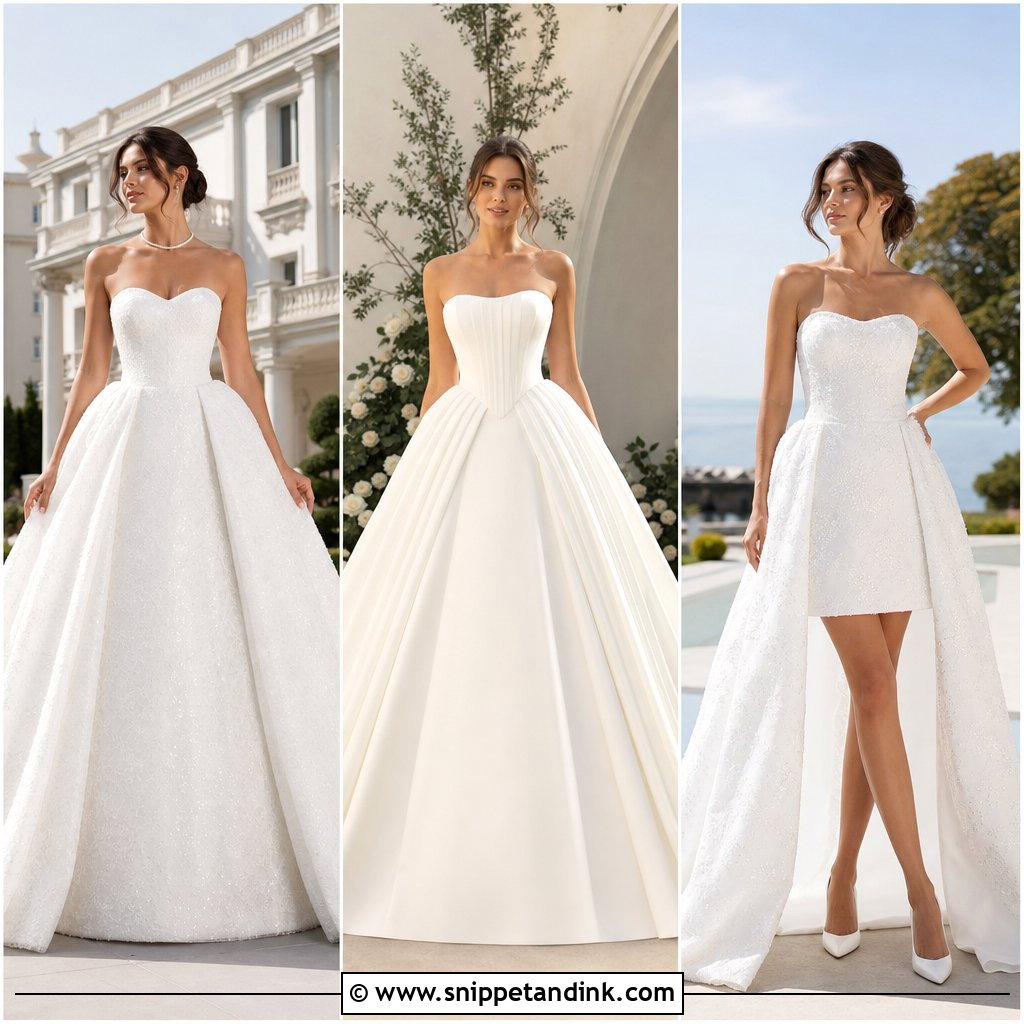
This pairing gives you the biggest change of shape on the list. A pleated satin overskirt with a long train reads as a classic ball gown in the ceremony, then comes off to show a mermaid that hugs the hips and knees. The catch is the knee: a true mermaid flares low, so the overskirt has to be cut wide enough at the hip that it does not drag on that flare and leave a ridge. Keep the base gown plain, since beading under heavy satin rubs and snags. I also have the fastenings set behind a narrow waistband so the reveal shows no hooks, just smooth satin.
2. Lace Fit And Flare Wedding Dress With Tulle Overskirt
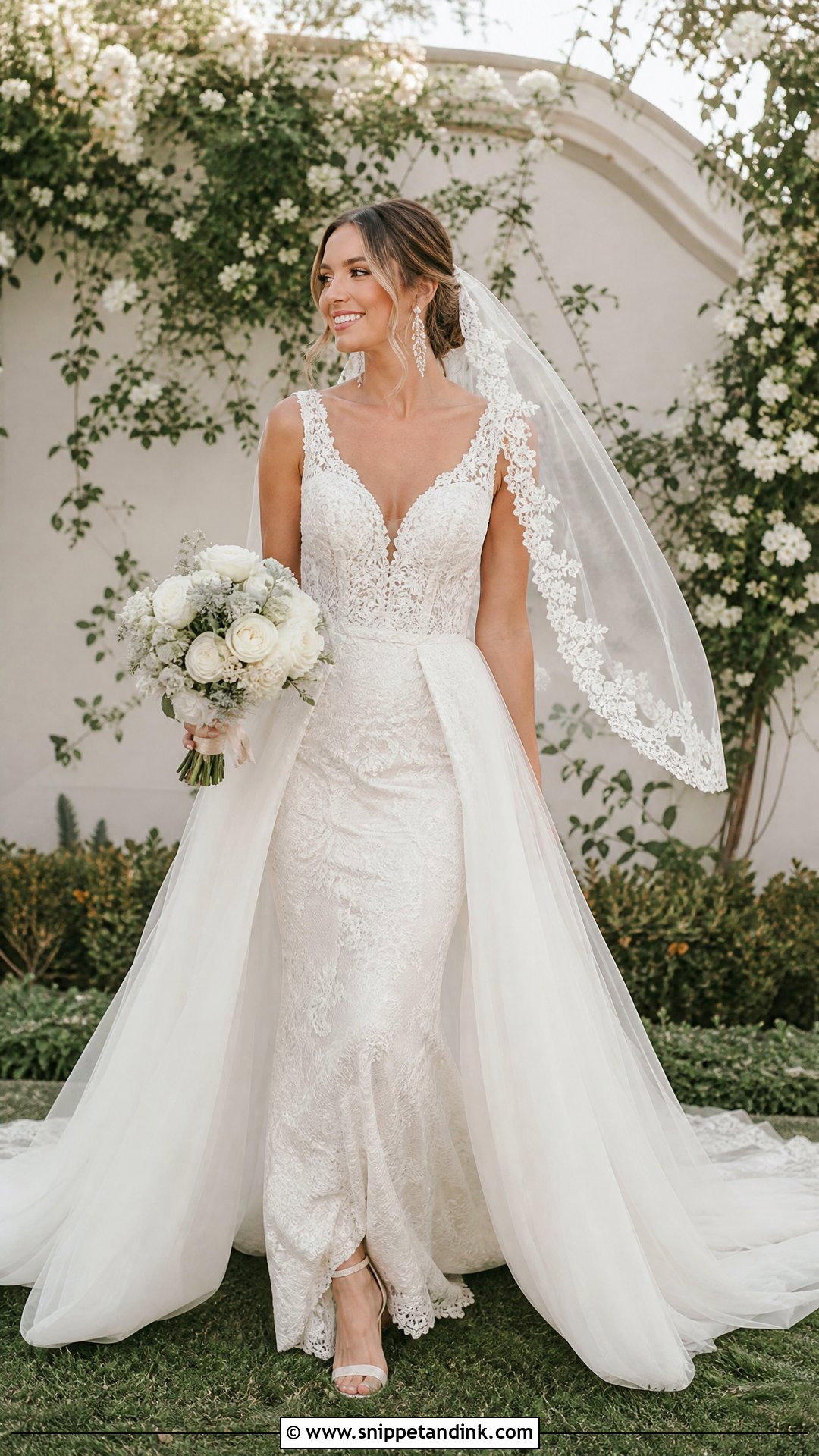
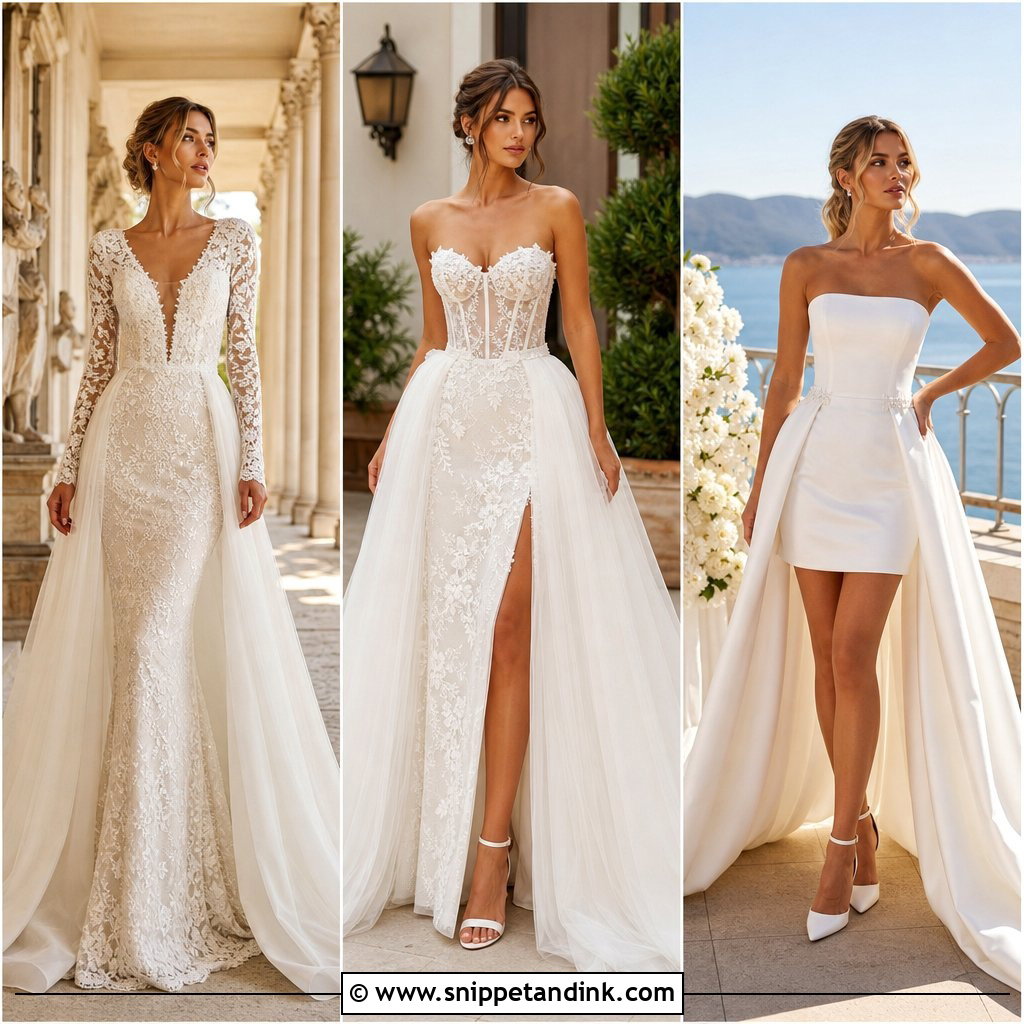
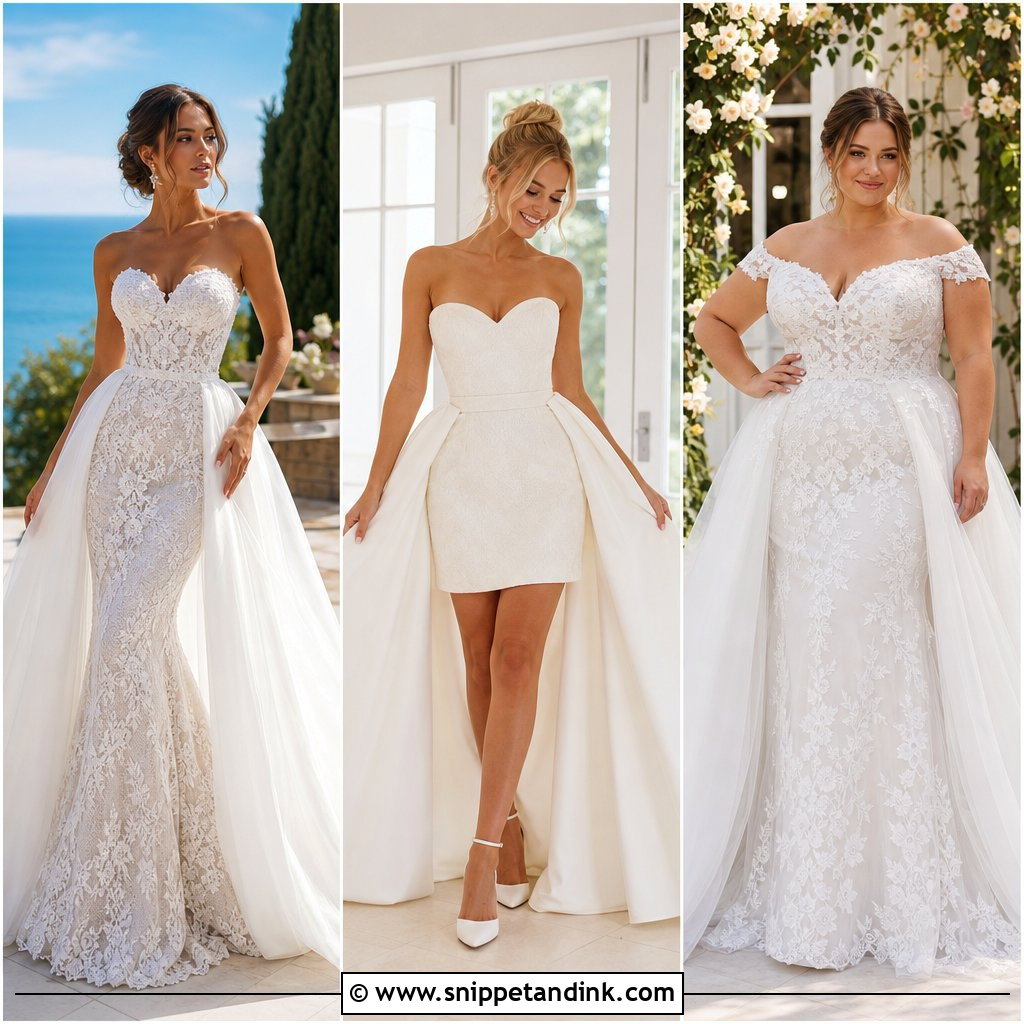
Tulle over lace is the gentlest combination here, because tulle is sheer enough that the lace never fully disappears. I like the skirt to start at the natural waist and part slightly at the front, so the lace pattern shows with every step. A chapel-length train is long enough to look formal and short enough that you can still turn at the altar without a helper. Once the tulle comes off, the fit-and-flare is easy to dance in. Ask for one lace motif to be repeated on the overskirt waistband, scalloped edge or a few scattered appliqués, so the two pieces look like they were made together.
3. Strapless Column Wedding Dress With Satin Overskirt
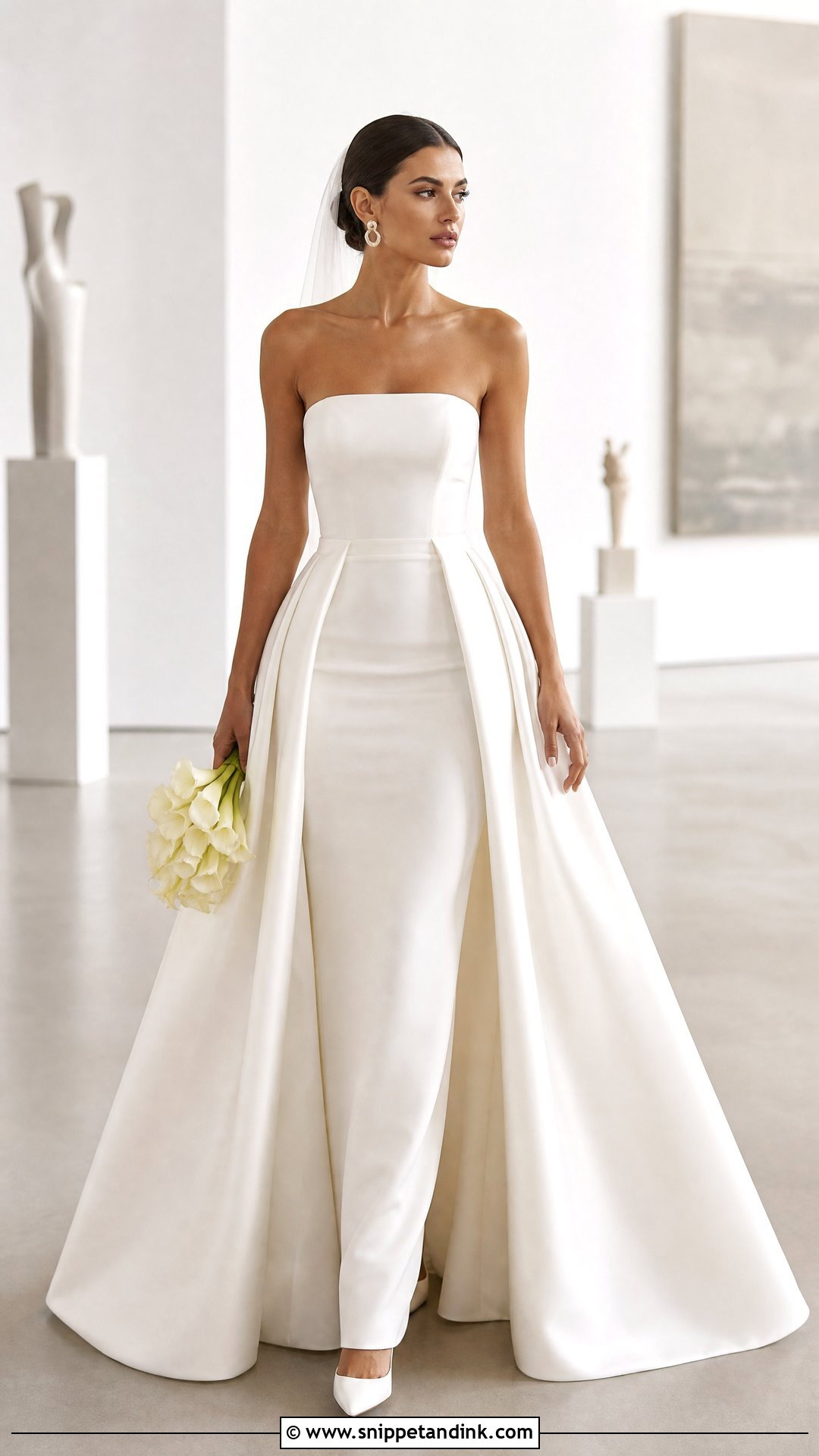
A strapless column under a wide satin overskirt is the cleanest, most modern version of the idea. An open front works well here, since a slice of the narrow column shows as you walk. Choose a medium-weight satin: heavy duchess satin looks rich but adds real weight at the waist, and on a strapless bodice that weight pulls down. That is the part I watch most closely. The bodice needs strong internal boning and ideally a grosgrain waist stay, or you will spend the ceremony tugging the neckline up. For the reception, a slim beaded belt can cover the attachment line if you want one.
4. Square Neck Crepe Wedding Dress With Detachable Train
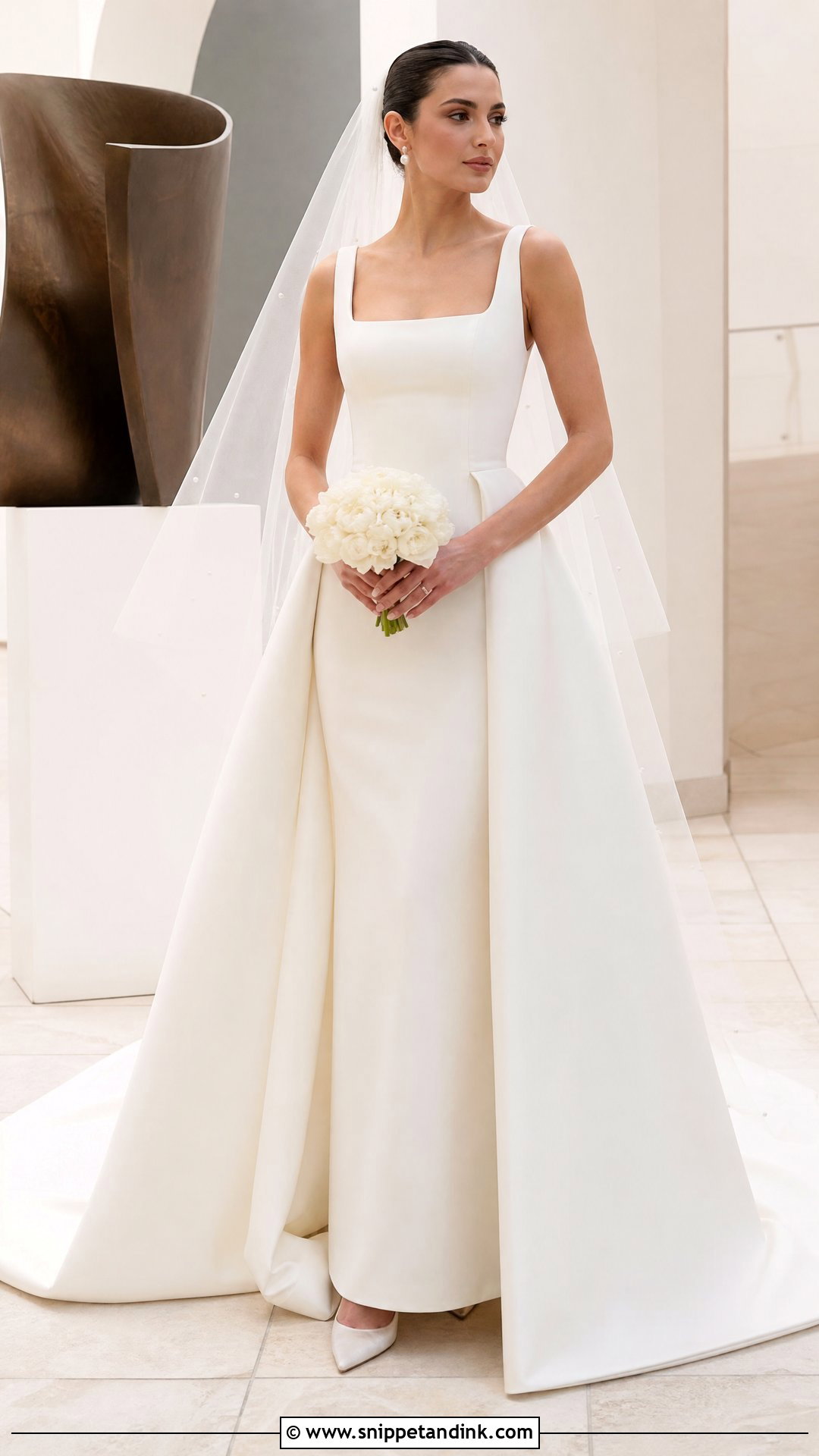
Crepe is honest fabric: it shows every lump, so the detachable piece here works best as a train-style skirt that wraps only the back and sides. The front of the square-neck gown stays visible, which suits a city hall, a gallery or a formal indoor room. Pearl studs and a long sheer veil are enough with it. The thing I check at every fitting is the back view after removal. Snaps and hooks sewn into crepe can pucker it, so ask for the fastenings to be backed with a strip of interfacing, and look at the waist in a mirror behind you once the train is off.
5. Sweetheart Corset Wedding Dress With Layered Overskirt
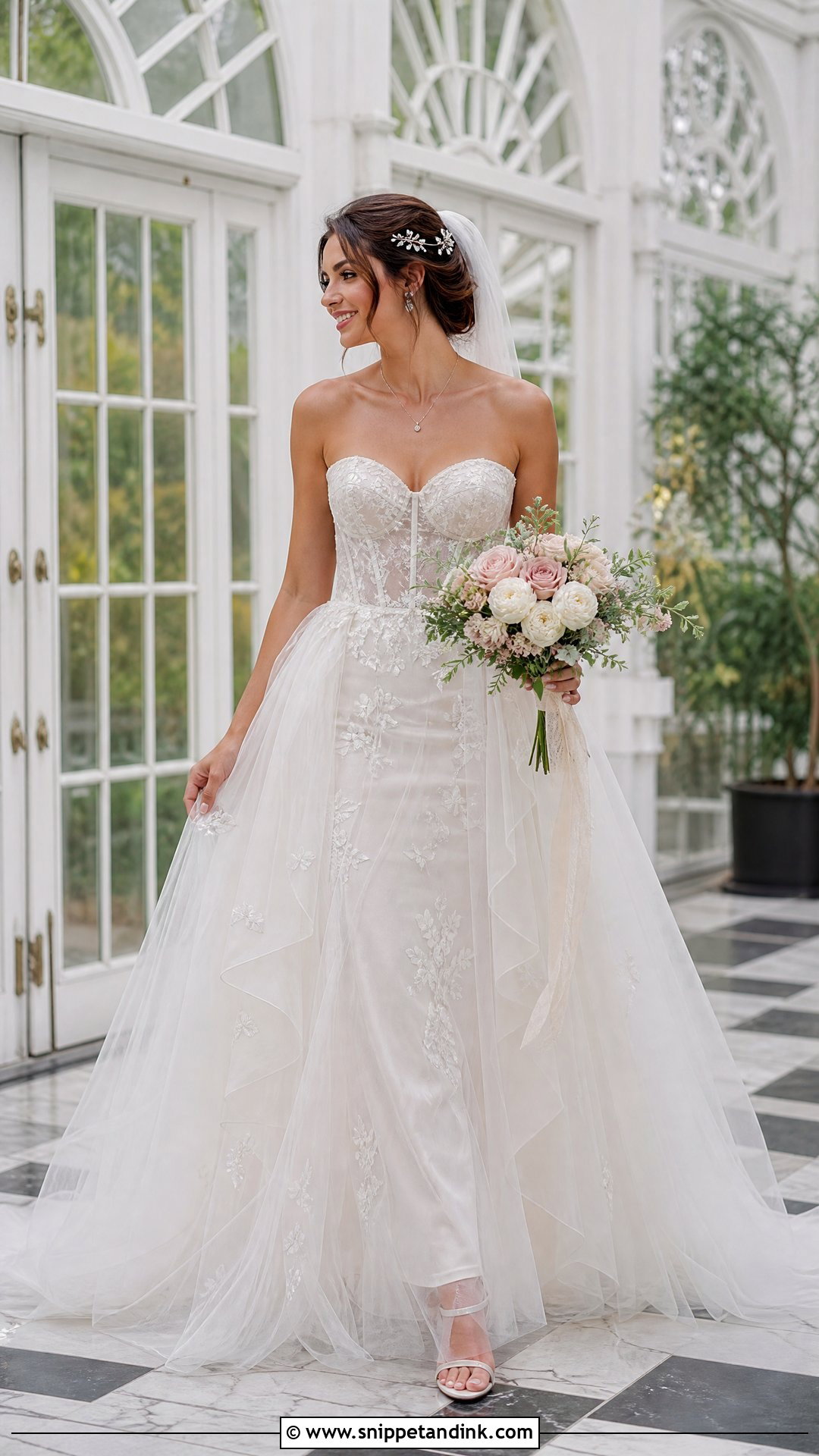
Layered tulle over a sweetheart corset makes a soft, full ceremony skirt, and the corset gives you somewhere solid to hang it. Start with a base dress that has real supportive boning, then keep the gathers flat at the waist. Five or six layers of tulle bunched at one seam adds bulk exactly where a corset is trying to nip you in. A gradual A-line shape spreads that volume lower down. Lace appliqués that travel from the bodice onto the top of the skirt tie the pieces together. One practical note: have the skirt hemmed while you wear the shoes you will actually walk in, or the front edge catches your toe.
6. Long Sleeve Lace Wedding Dress With Detachable Skirt
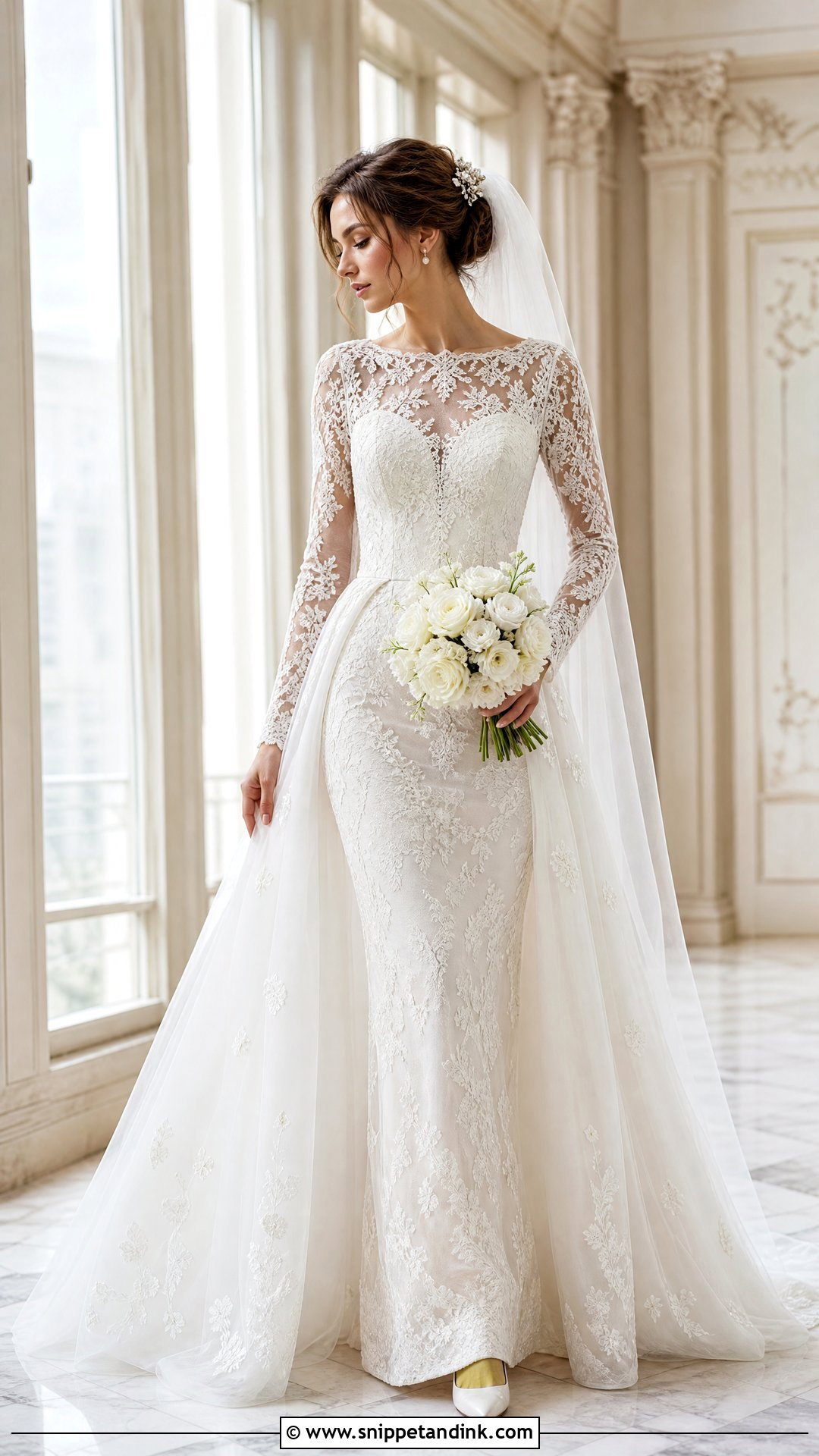
Long lace sleeves already carry a lot of detail, so the overskirt should do less. I prefer a soft tulle skirt with a few motifs near the waist and the heavier appliqués saved for the hem; that way the middle of the body does not look crowded. With a traditional sleeve, a plain veil sits better than a lace-edged one. Watch the colour more than anything else. Lace from two different mills rarely matches exactly, and a shade that looks identical under shop lighting can show as two ivories outdoors, so compare both pieces by a window before you approve the order.
7. Off The Shoulder Wedding Dress With Satin Overskirt
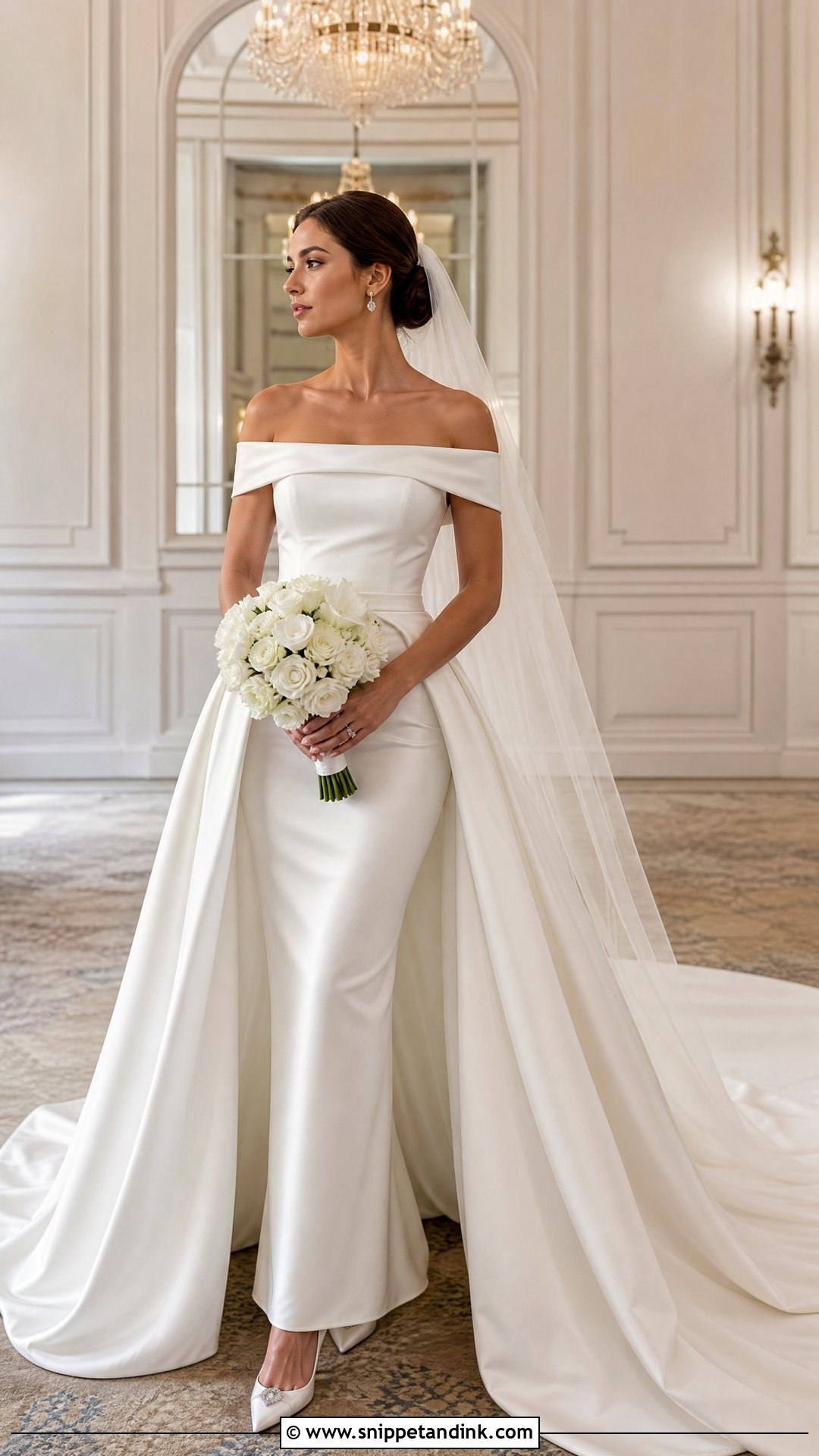
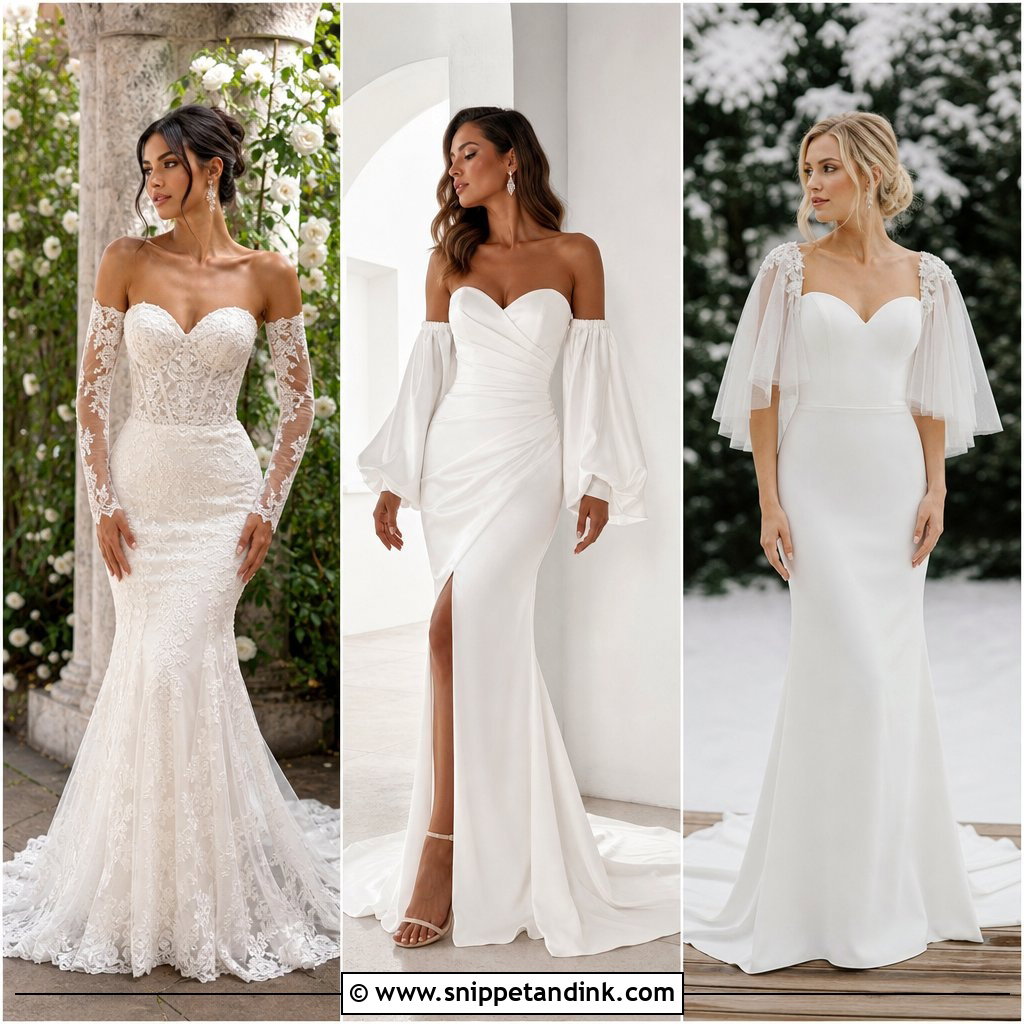
Off-the-shoulder necklines need the most support of any style on this list, because nothing sits over the shoulder to hold them up. Before I think about the overskirt, I want an internal corset or a firm bodice that keeps the neckline in place when you lift your arms. The satin skirt can then attach at the natural waist and run into a chapel or cathedral train. Match sheen as carefully as colour: a duller satin next to a shiny one looks like a mistake in flash photos. Keep jewellery to drop earrings. At the last fitting, raise your arms as if hugging someone and sit down, and watch both the neckline and the waist join.
8. Halter Neck Wedding Dress With Sheer Organza Overskirt
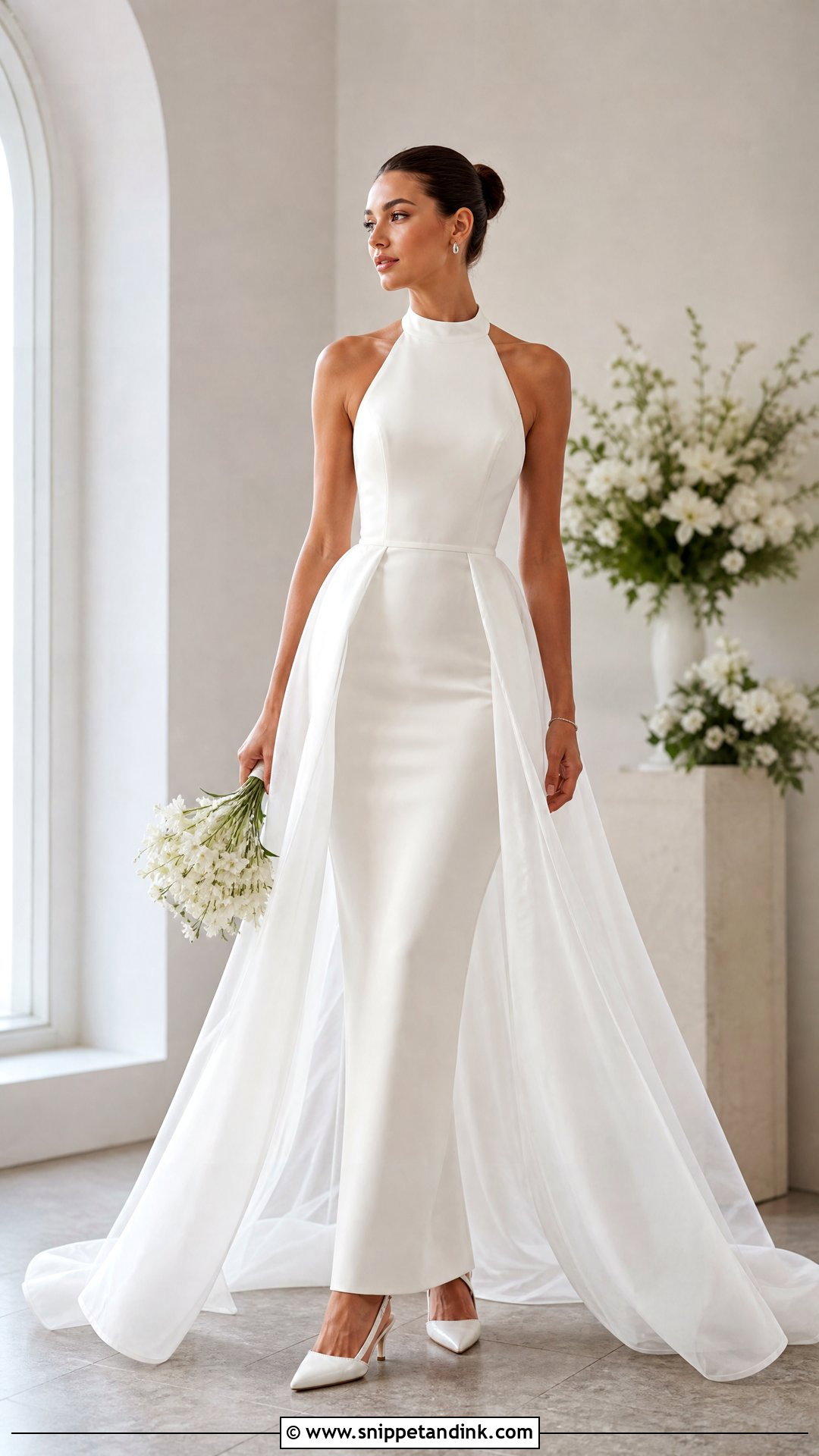
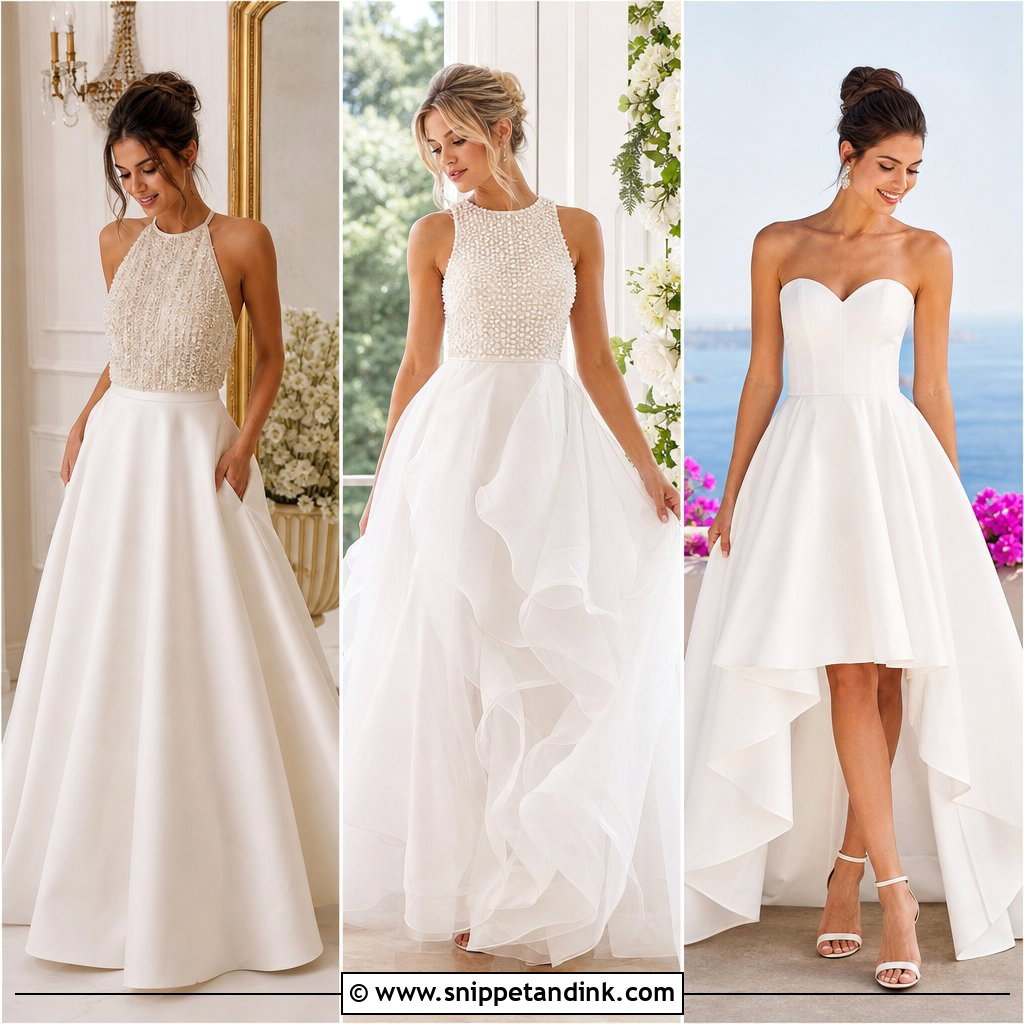
Organza holds a shape that tulle cannot, so a sheer organza overskirt gives a halter-neck wedding dress volume without hiding it. An open front with soft pleats and a short train keeps the fitted base in view. Skip the necklace, because the halter straps are doing that job already, and pull hair into a smooth bun so the neckline is clear. The weakness is creasing. Organza marks easily, and a skirt left folded in a bag for an hour comes out lined, so plan where it hangs on the day and who carries it once it comes off.
9. One Shoulder Wedding Dress With Asymmetric Overskirt
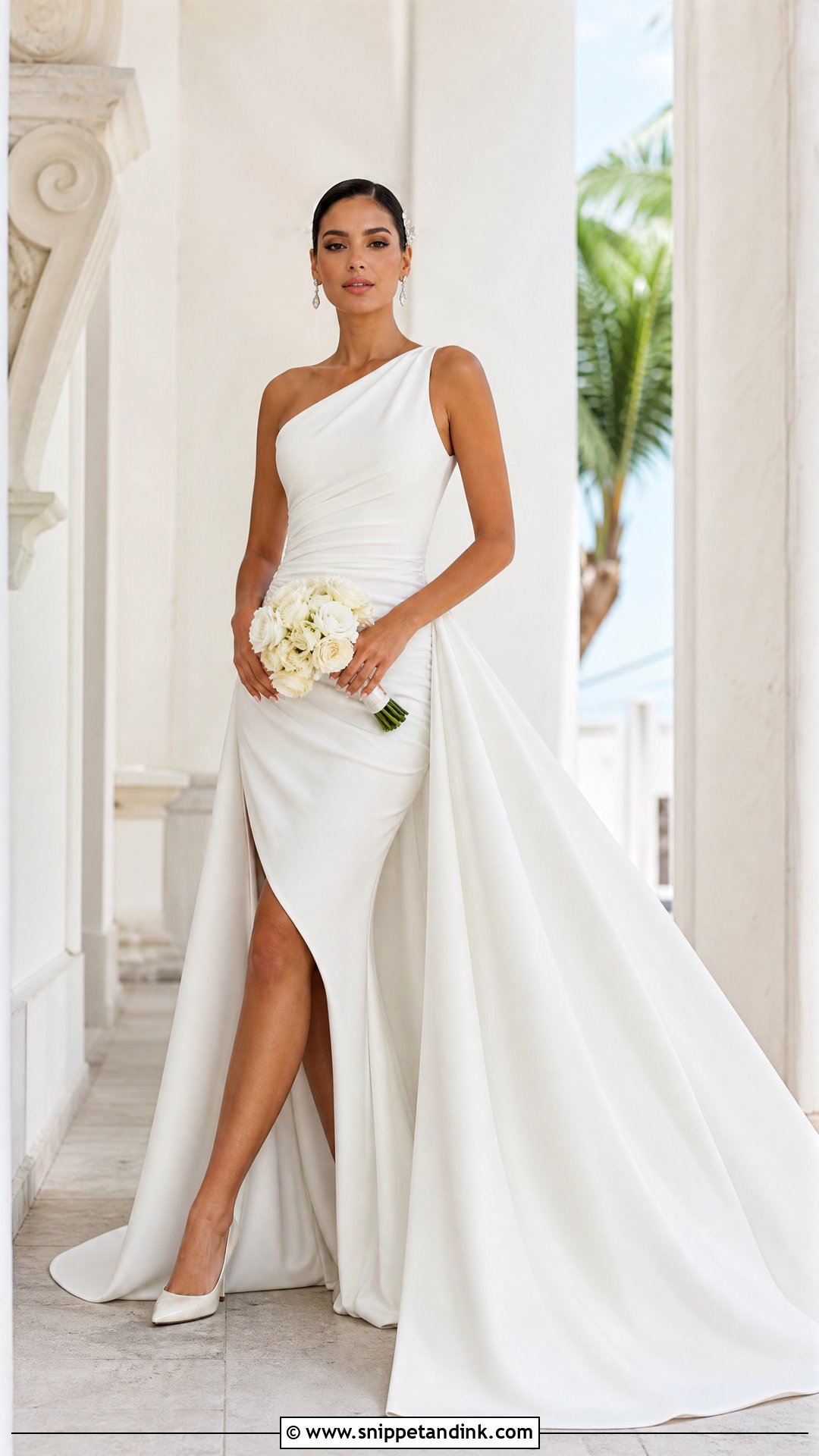
Why not carry an asymmetric neckline all the way down? A one-shoulder gown pairs well with a skirt gathered slightly to one side that falls into a sweeping train, which gives the outfit movement without any beading. Crepe or mikado keeps it architectural. The detail I fuss over is the attachment line, which should follow the waist evenly; on an asymmetric dress a join that dips even a little looks crooked. Wear sleek hair and either one statement earring or a matching pair. If the veil competes with the diagonal neckline, swap it for a small comb.
10. Mini Wedding Dress With Detachable Tulle Skirt
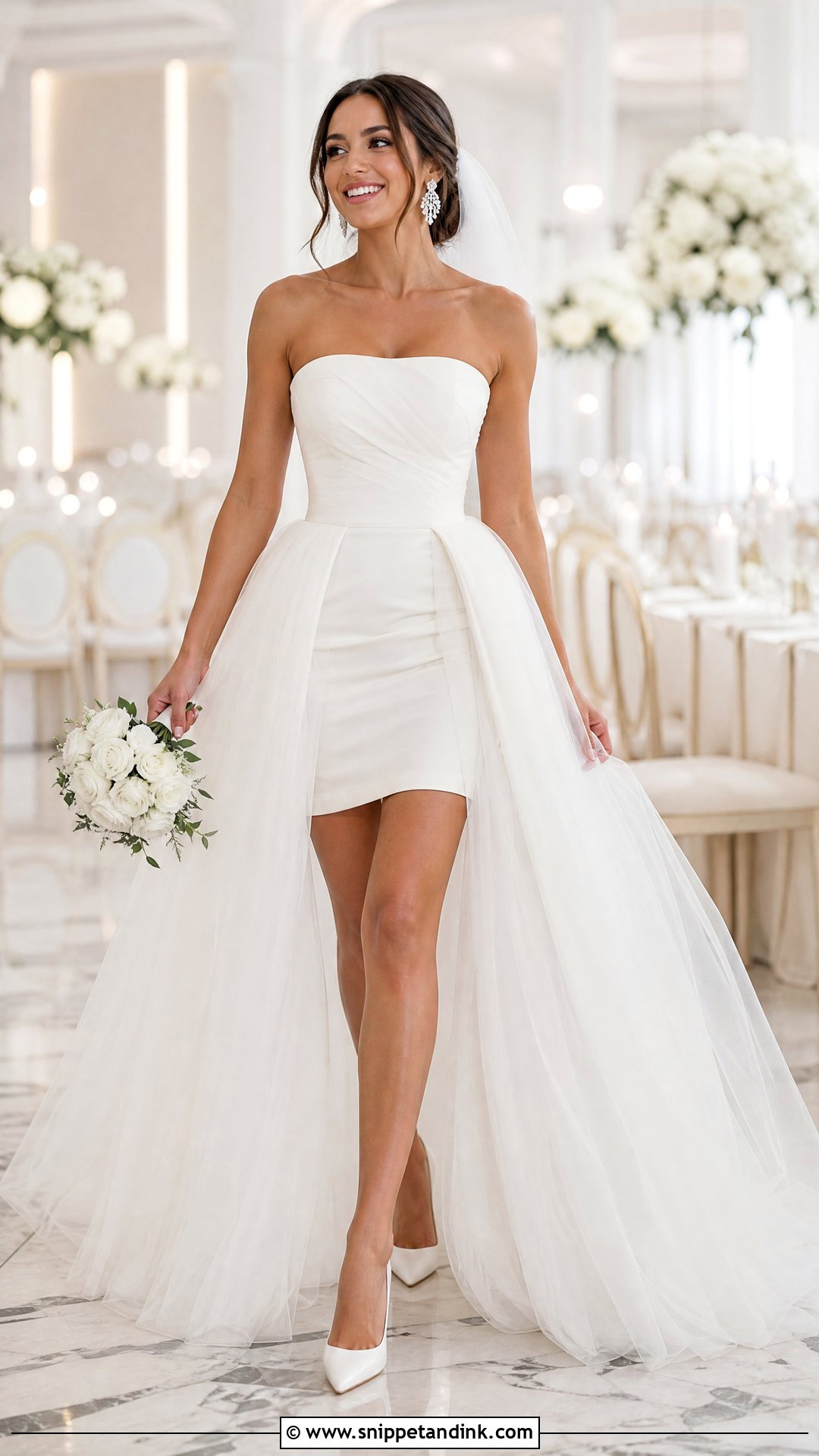
Nothing on this list changes as much as a mini under a long tulle skirt. For the aisle, a full-length overskirt covers the short hem completely and reads as a ball gown; an open front can hint at the shoes. For the party you have a short dress with room to dance. The mini needs a little structure, a lining with some body or a fitted bodice, or the tulle waistband presses a visible line into it. Wear the overskirt for an hour at your final fitting, then take it off and look for marks. Shoes need to work for both lengths, so choose ones you would be happy to show.
11. Pearl Beaded Wedding Dress With Plain Satin Overskirt
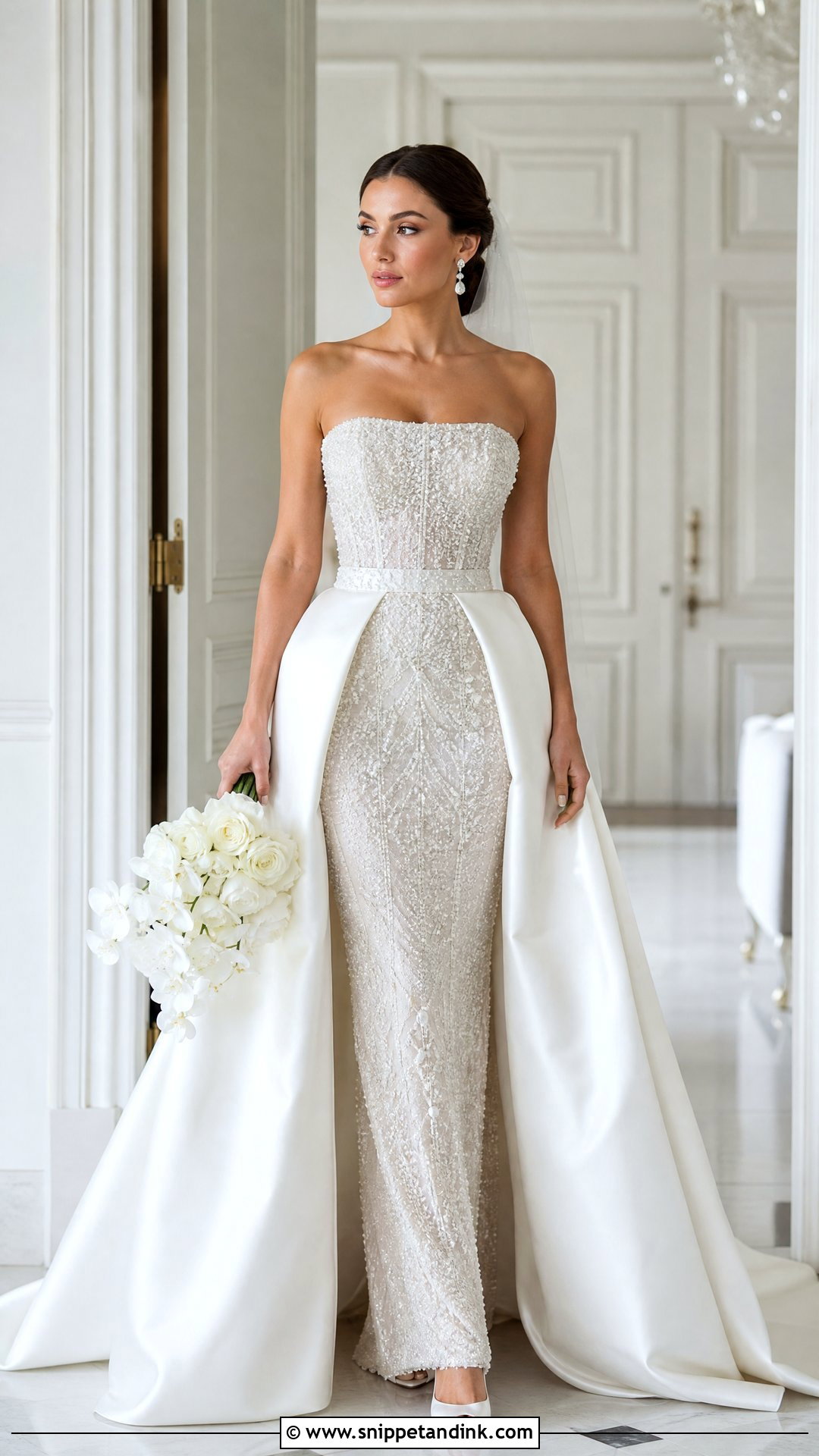
Putting plain satin over pearl beading is a smart way to hold back the sparkle until the reception. In the ceremony the satin keeps things calm; once it comes off, all that texture appears at once. The risk is mechanical. Pearls and bugle beads catch on hooks and on the inside of a waistband, and a single snag can pull a thread of hand-sewn beads loose. I ask for the overskirt waistband to be lined in something smooth, with the attachment points set where the beading stops. Leave out an extra embellished belt; the dress already has enough going on.
12. Floral Appliqué Wedding Dress With Matching Overskirt
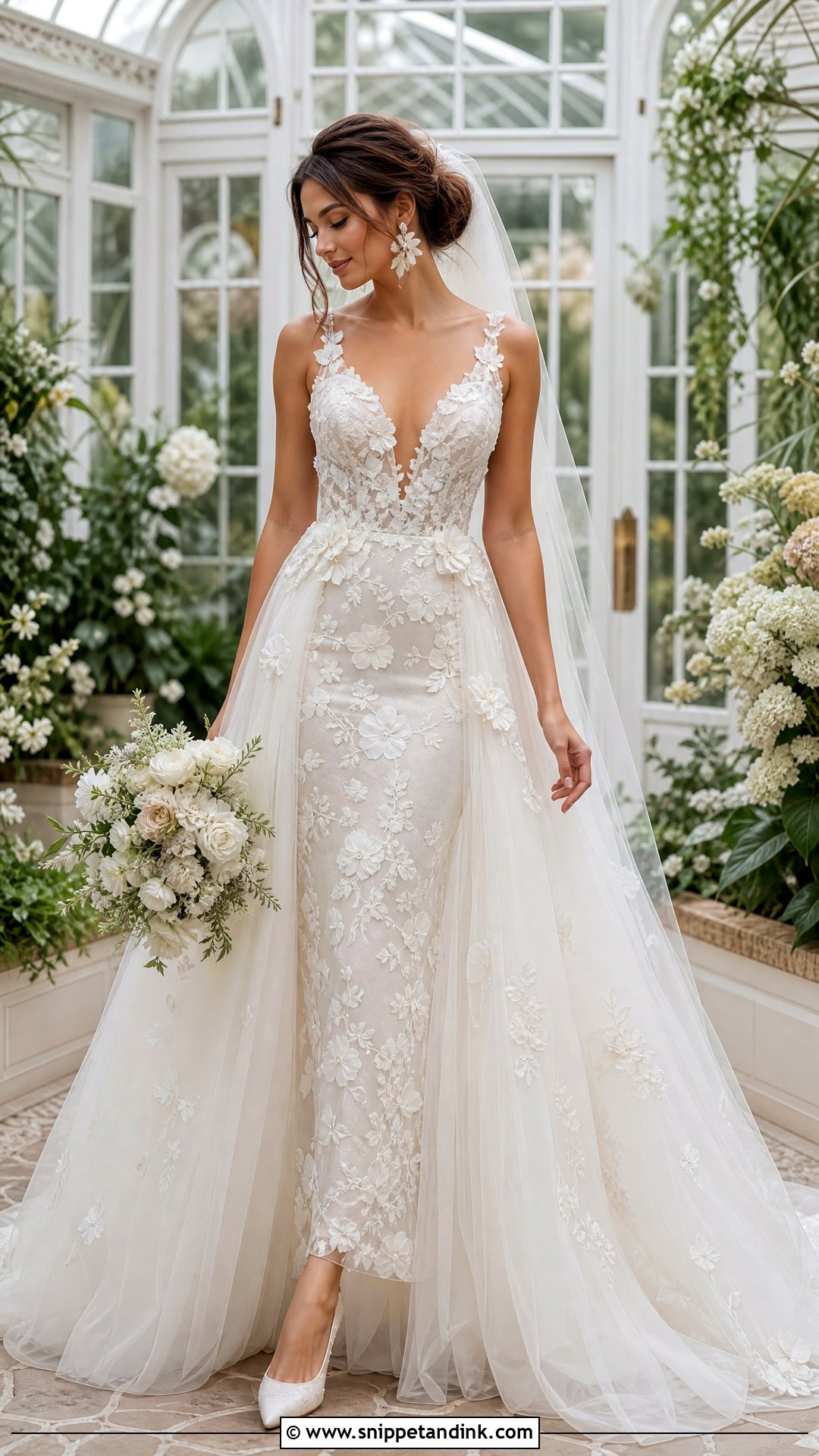
Three-dimensional flowers can make a detachable skirt look like it grew out of the dress. Start with a fitted gown with appliqués across the bodice and hips, then scatter a few matching flowers around the overskirt waist and let them thin out down the tulle. A soft A-line with a chapel train suits a garden or conservatory. Ask for the same lace motif on both pieces. A different floral, even a close one, makes the overskirt look like a separate accessory bought later. Raised petals also flatten when packed, so the skirt should travel hung rather than folded.
13. Blush Wedding Dress With Ivory Detachable Skirt
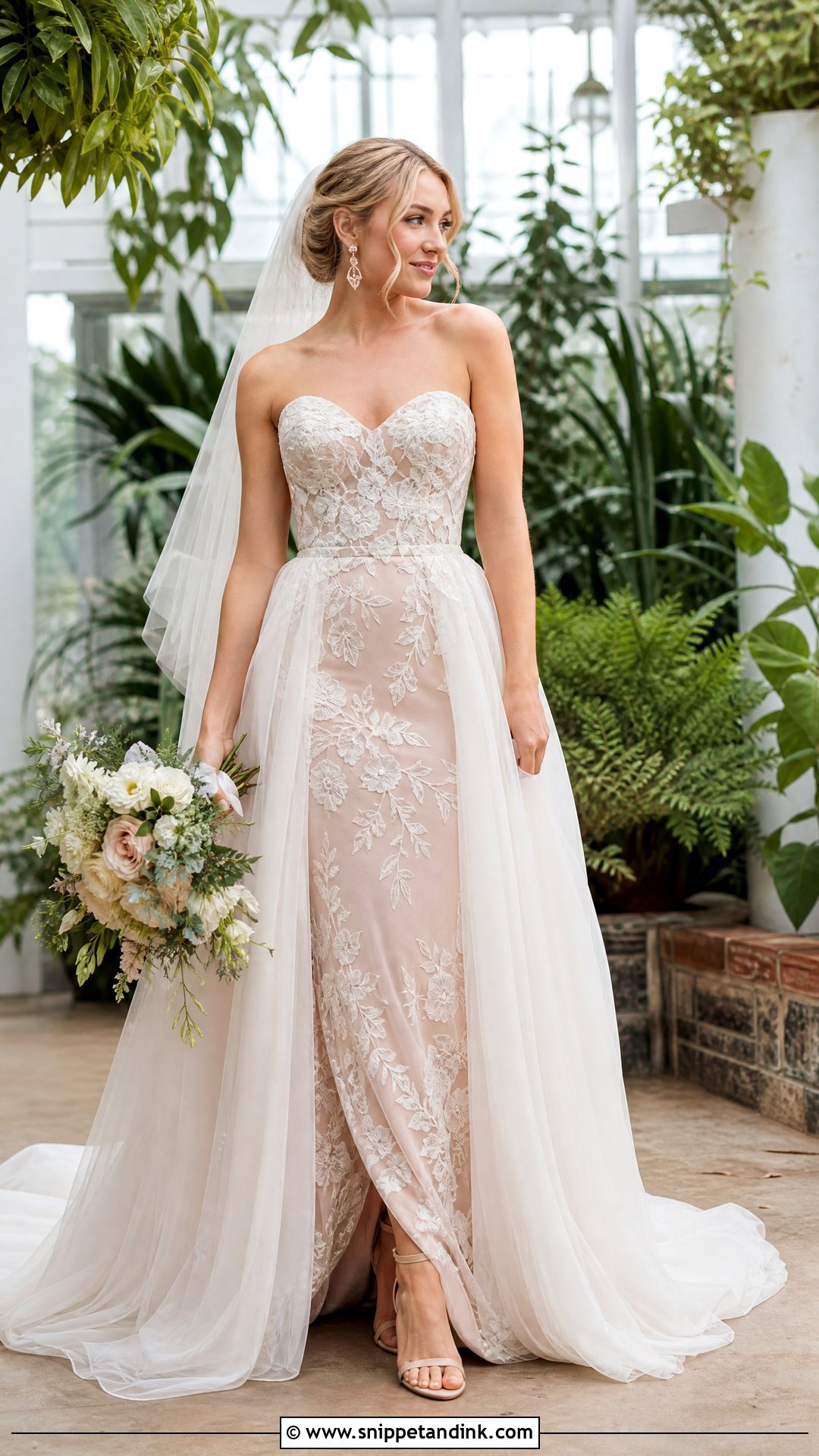
A blush dress under ivory tulle gives a faint warm glow that only shows up when the light hits it, and the full colour waits for the reception. Sheer tulle is the right outer layer here; satin or organza would hide the blush completely. Repeat the ivory appliqués from the base gown along the overskirt waistband and hem. Rose-gold earrings and neutral shoes keep the palette quiet. My one firm instruction is to compare every fabric in daylight. Blush shades lean peach, pink or beige, and the wrong ivory on top can turn a pretty pink into something muddy.
14. Pleated Organza Wedding Dress With Detachable Overskirt
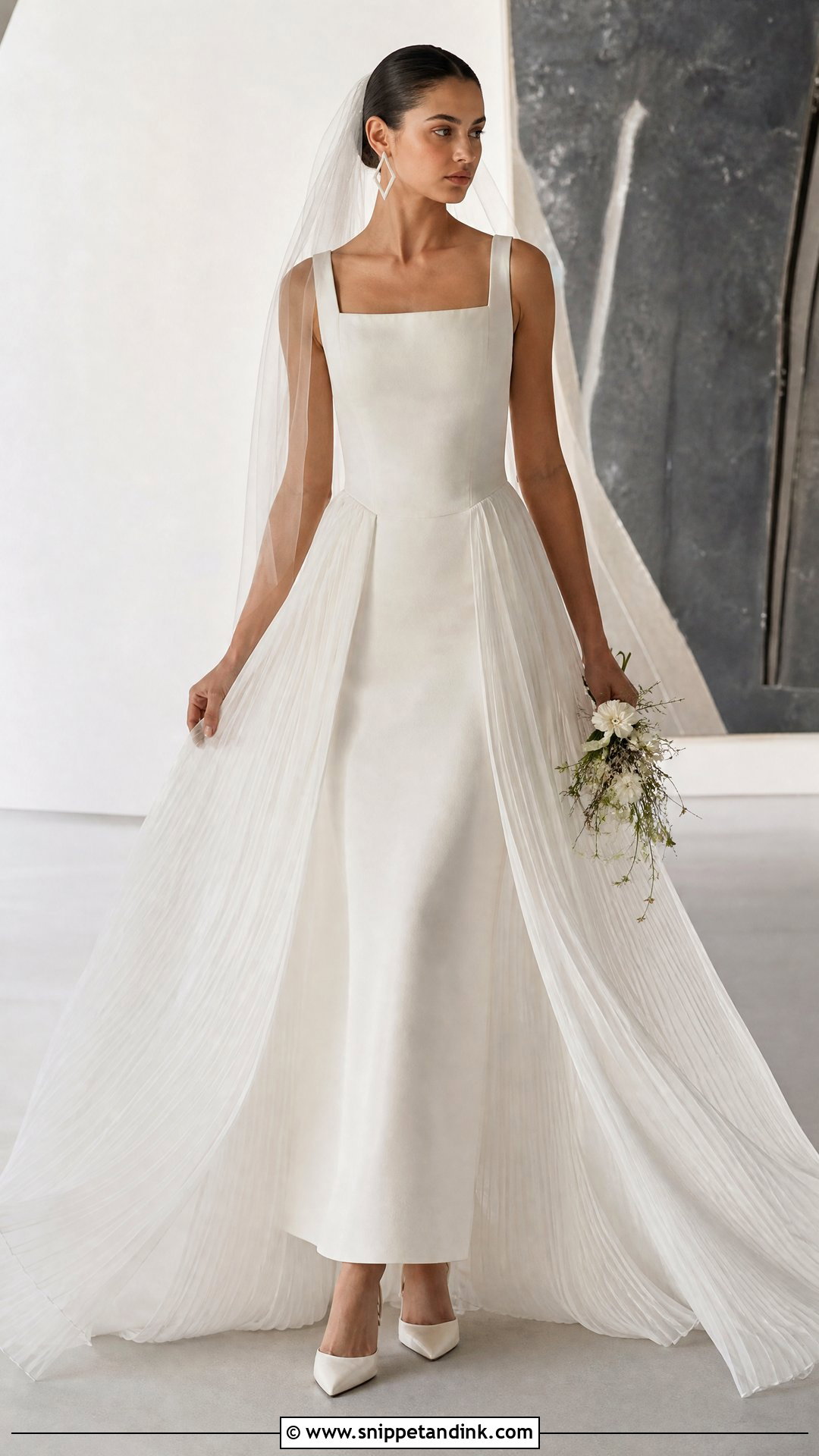
Light catches every fold of a pleated organza overskirt, which is why it works best over something very plain: a strapless or square-neck column gives the strongest contrast. Wide pleats look architectural, narrow ones softer. Because organza holds volume on its own, you need fewer layers than with tulle, which keeps the waist flat. I like concealed hooks with minimal gathering there. Walk the length of the fitting room twice and watch the pleats; on a well-pressed skirt they fall back into line, and on a badly set one they twist toward the side seams.
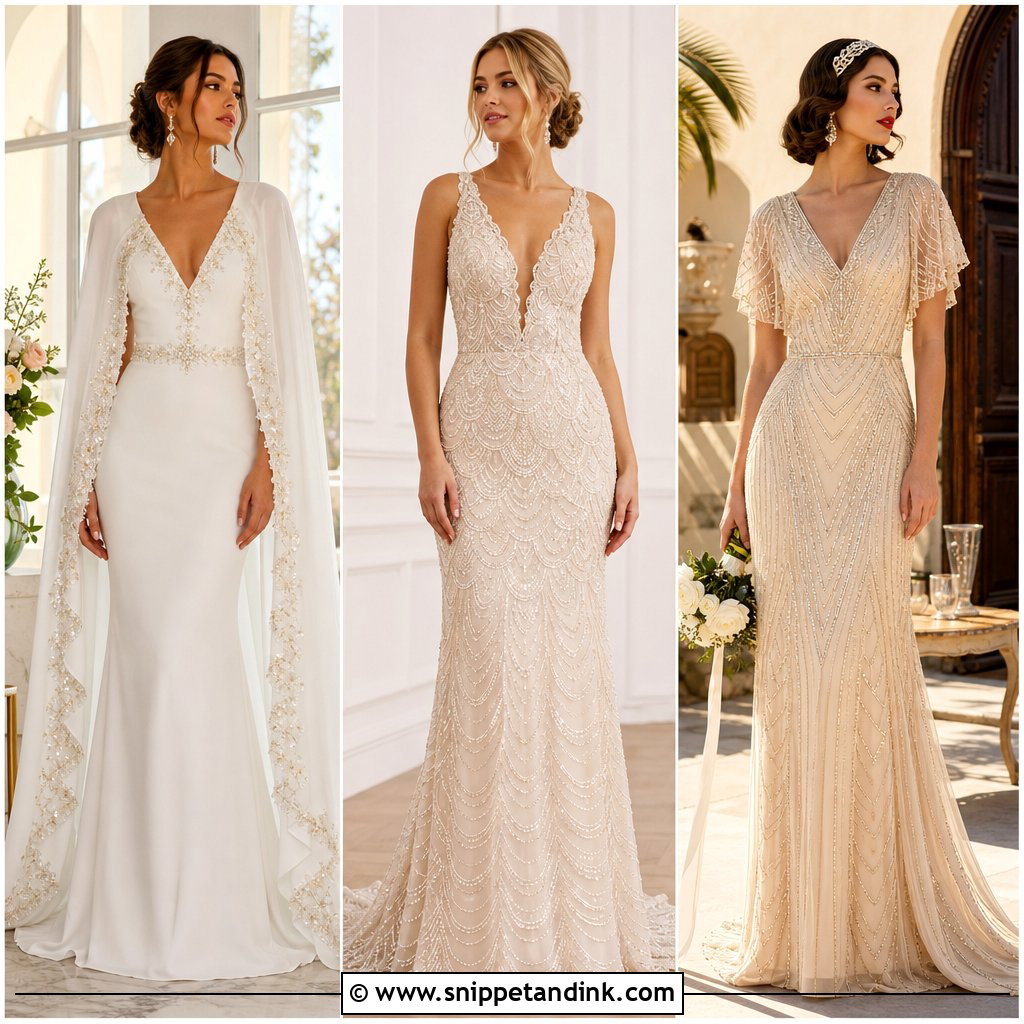
15. High Low Wedding Dress With Detachable Full Skirt
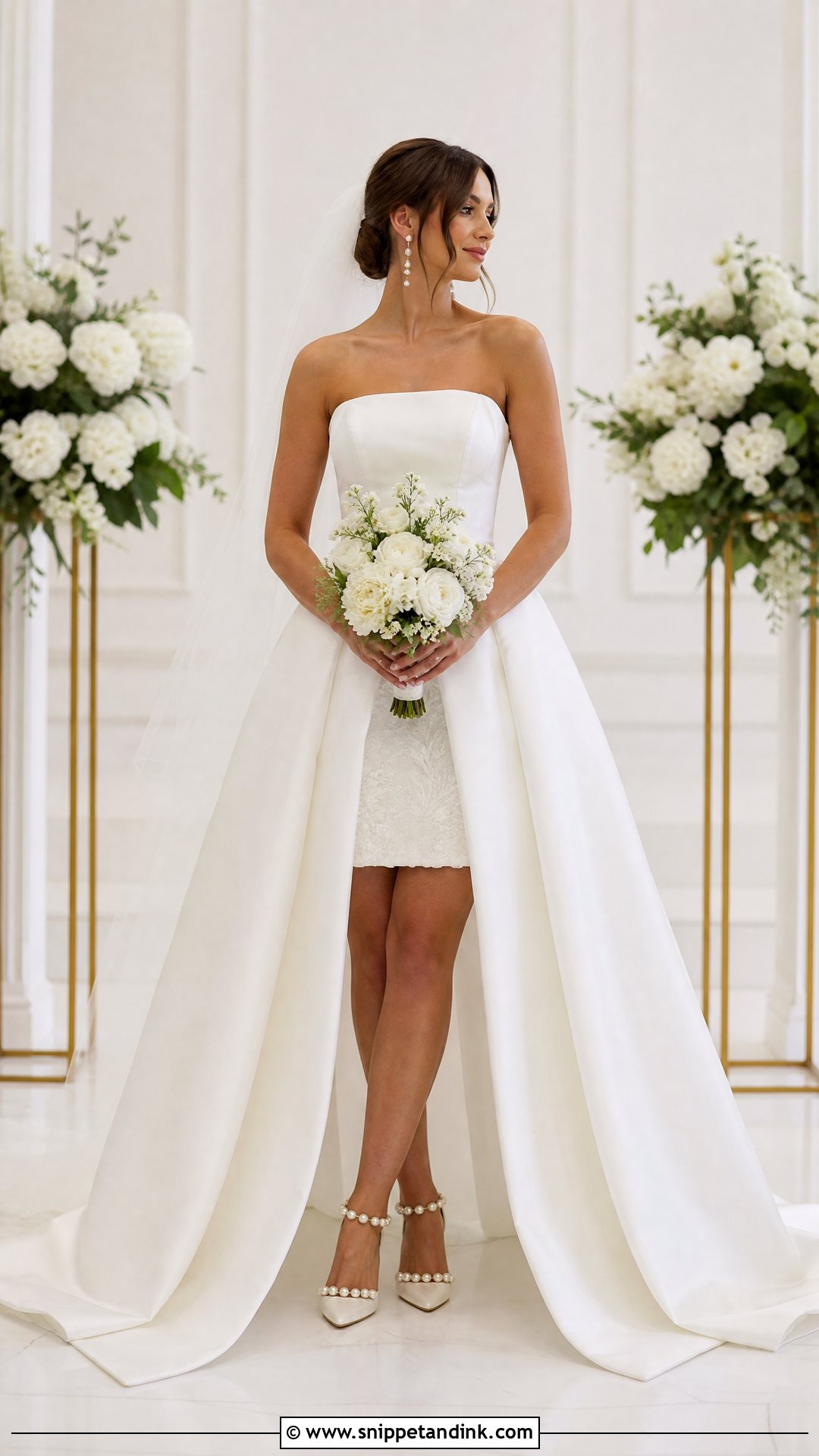
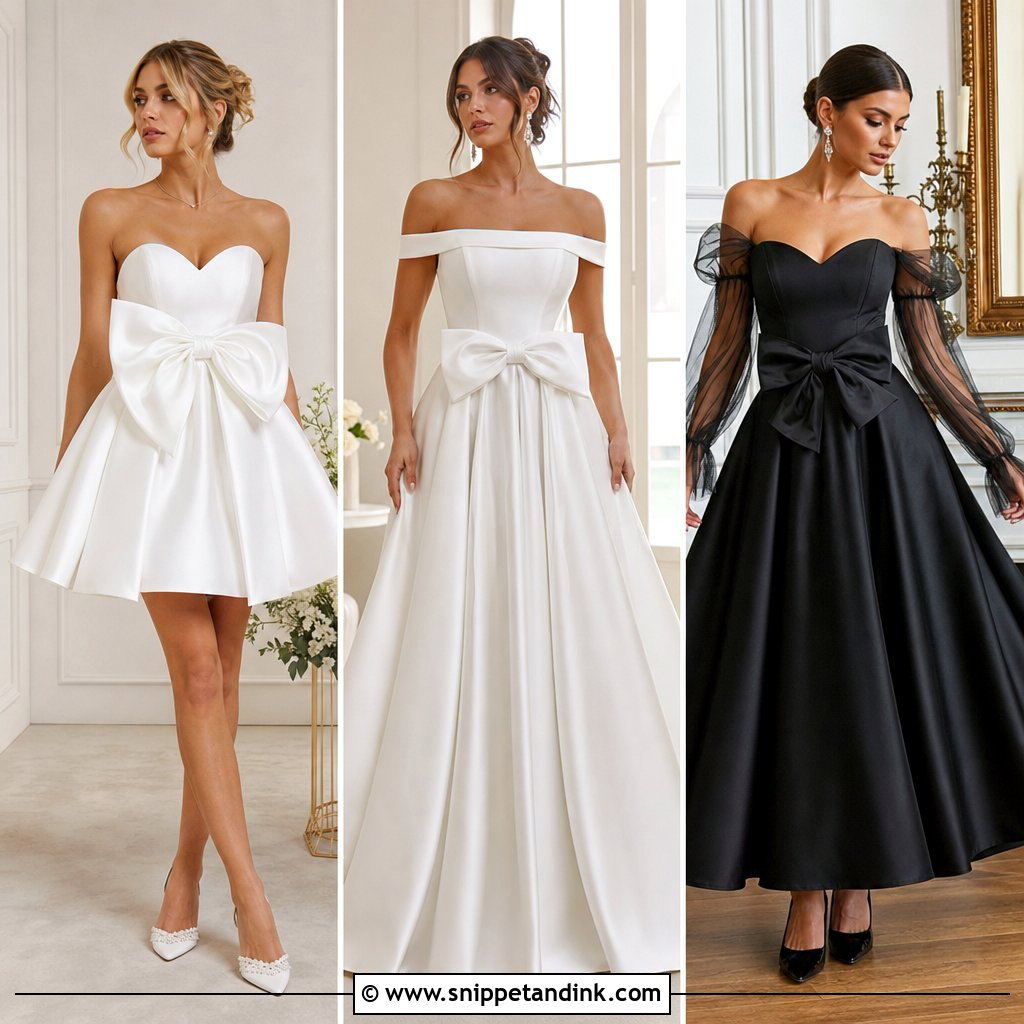
Hiding a high-low dress under a floor-length skirt gives you a traditional ceremony and a surprise hem for the party. The tricky part is the step in the hem underneath. A soft overskirt can show a ridge where the short front meets the long back, so it needs a bit of structure, a lined satin or mikado, to lie smoothly. The high-low shape puts your shoes on show afterward, so this is the dress where a pearl or bow heel earns its place. Have your seamstress hem both pieces in one session, with you standing in the actual shoes.
16. Cathedral Train Wedding Dress With Detachable Overskirt
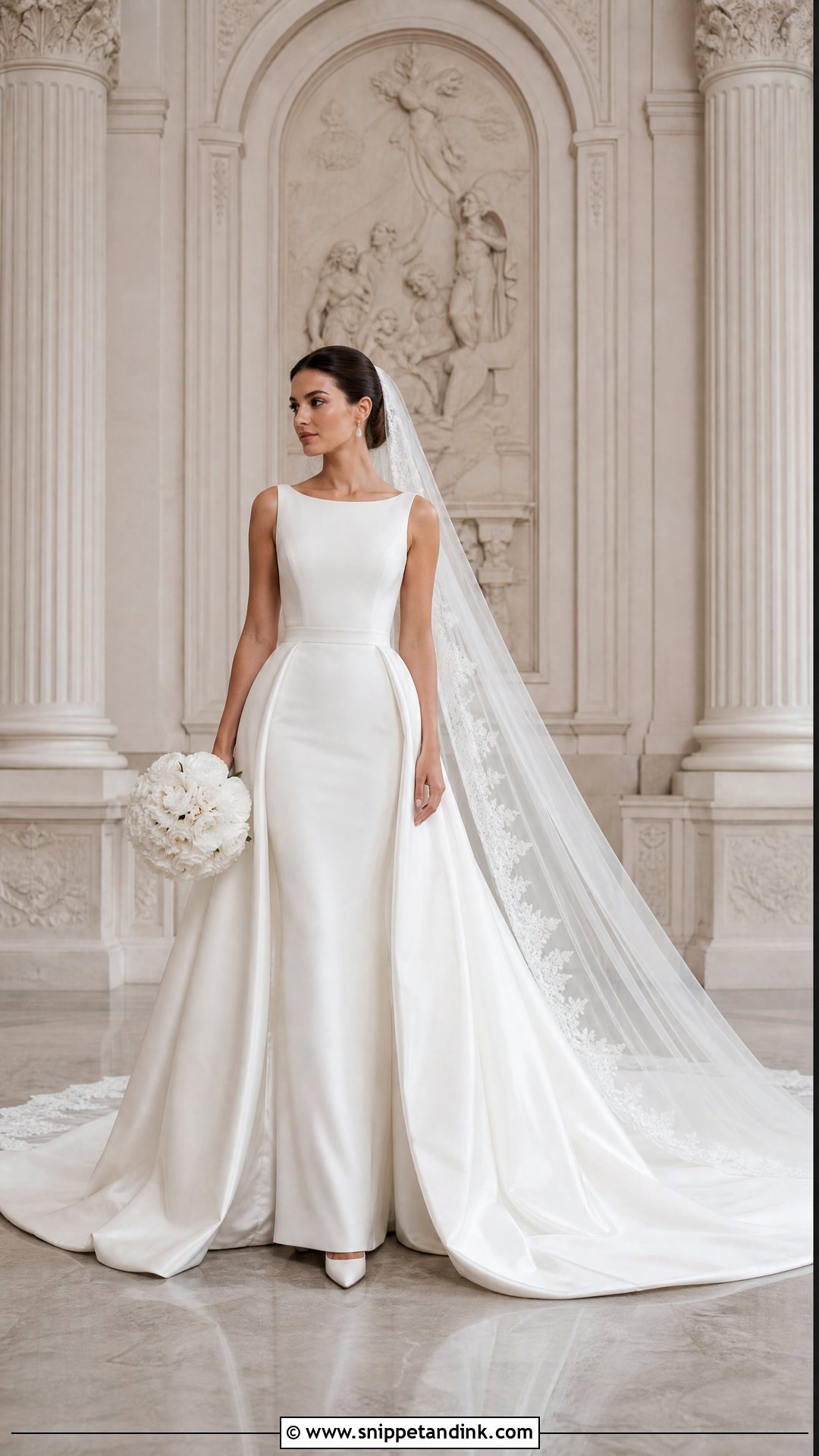
A cathedral train makes the most impact in an aisle, and it is also the hardest to manage. Pair it with a fitted crepe, satin or lace gown that looks finished on its own, because that is what most of your guests will remember from the evening. The overskirt can be closed for a ball gown or open at the front. Keep the waistband narrow but firm, since a long train pulls backward with every step. Take the veil and skirt off together before the reception. Give yourself a room big enough at the fitting to practise turning, because a cathedral train has to be swept round, not dragged.
17. Open Front Wedding Dress With Detachable Overskirt
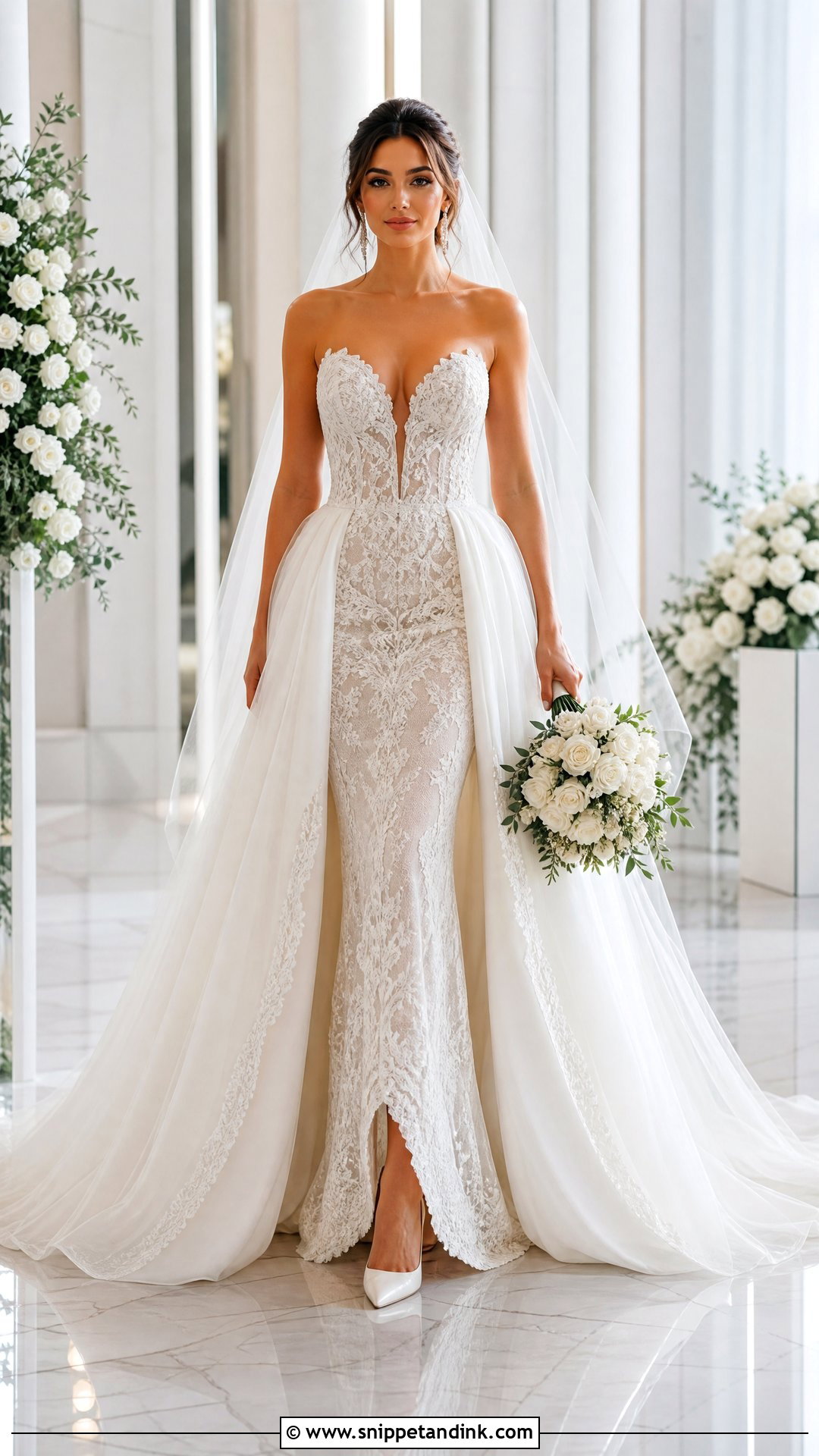
An open-front overskirt is the answer when you want volume without hiding the dress. The opening frames a mermaid, trumpet or column and keeps lace or tailoring on view. I look for a gentle curve away from centre front; a split that opens too wide at the waist looks like a coat left unbuttoned. Tulle gives a softer outline, satin or mikado a sharper one. Since the base dress shows all day, it still feels familiar when the skirt comes off. Check the opening from the front, the side and the back as you walk, because an uneven split tends to drift toward one hip.
18. Basque Waist Wedding Dress With Detachable Skirt
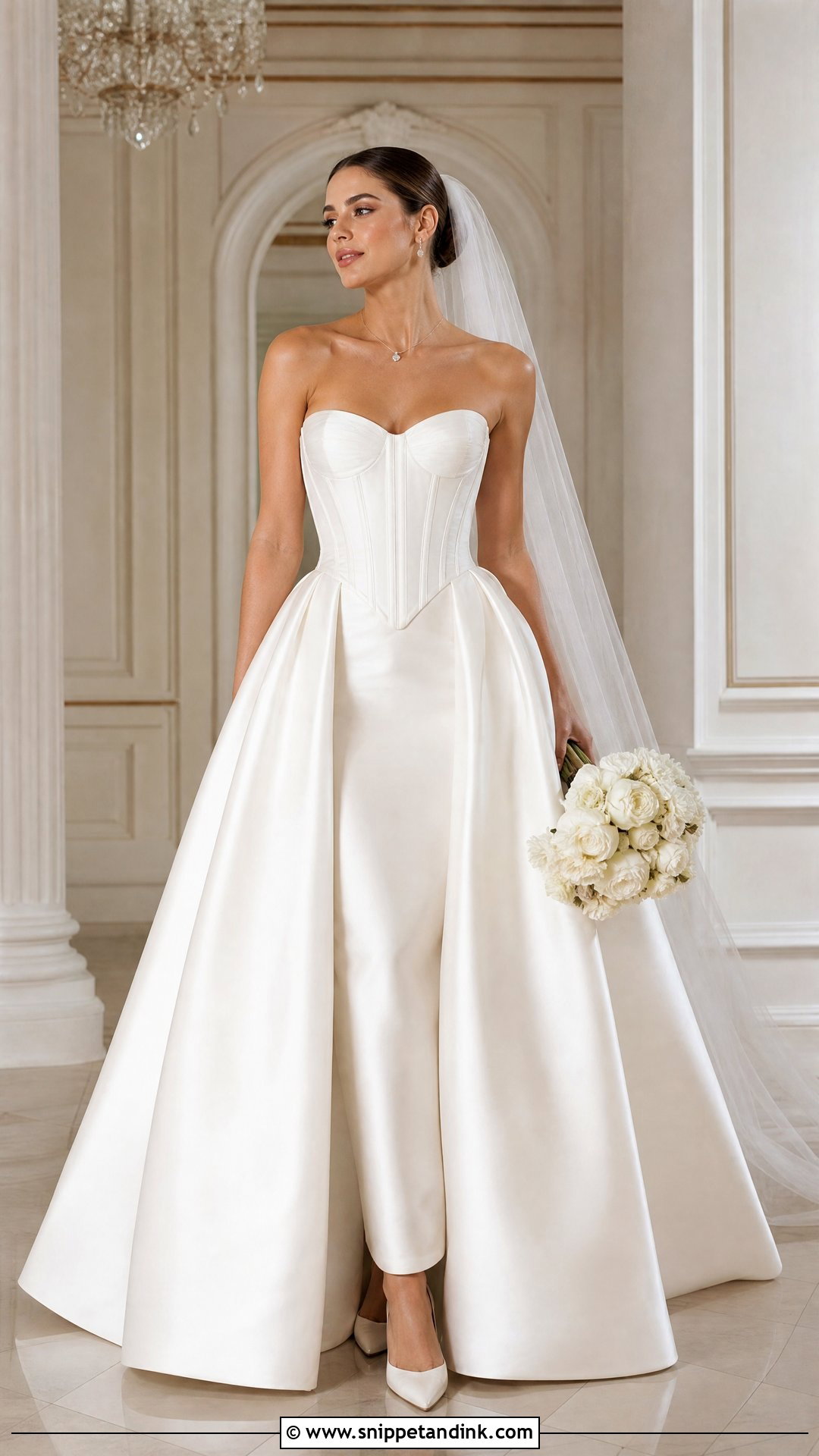
A basque-waist gown has a dipped point at the front that lengthens the torso, and that point is the reason to wear it. Most off-the-rack overskirts have a straight waistband that cuts across it, so I always recommend shaping the skirt to follow the V. Full satin, mikado or layered tulle can all sit over it for the ceremony. After removal, the dress looks sleeker and more sculpted. Expect this to be a custom job or a careful alteration, and allow extra fitting time for it.
19. Plus Size A Line Wedding Dress With Detachable Overskirt
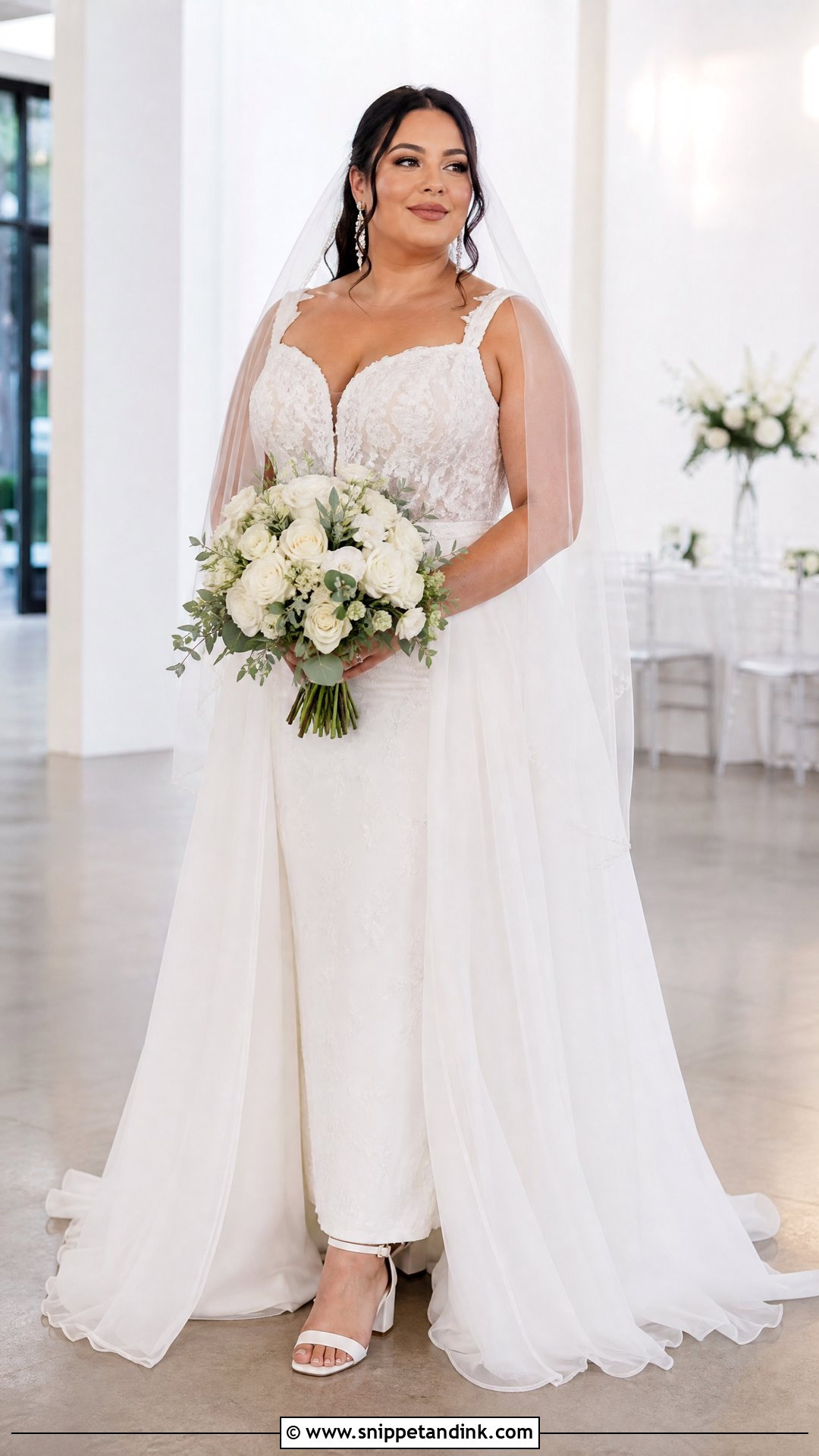
For a plus-size bride, the base dress is where the comfort is decided, so I start there: a well-built A-line that fits smoothly through the bodice and releases over the hips. Then add a lightweight overskirt at the natural waist. Stiff layers stacked on top add width without adding shape. An open-front tulle or organza skirt lets the gown underneath show and moves well. The waistband should feel secure but never dig in, and you should be able to breathe deeply and sit at a table in it. Ask for a sitting test at each fitting, not just the last one.
20. Simple Sheath Wedding Dress With Detachable Lace Skirt
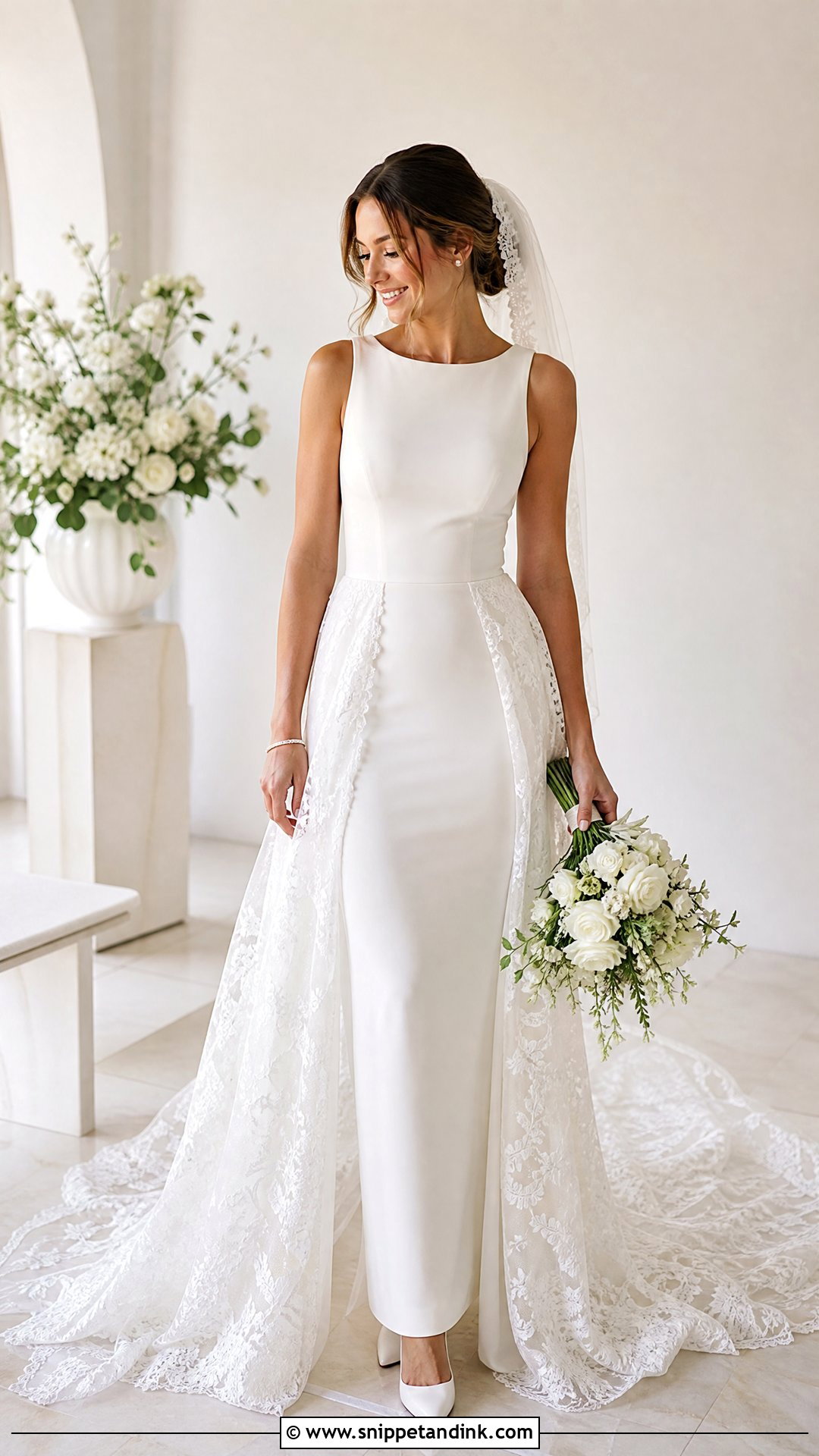
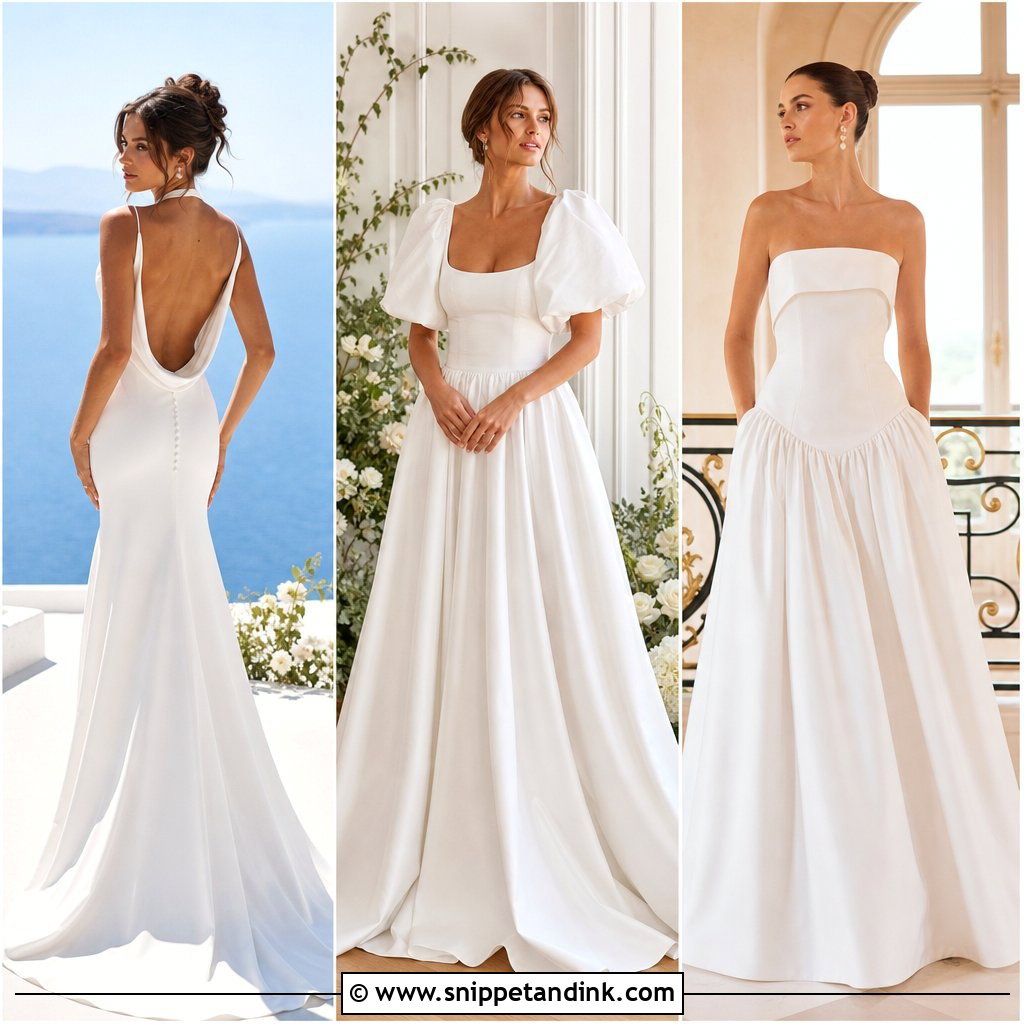
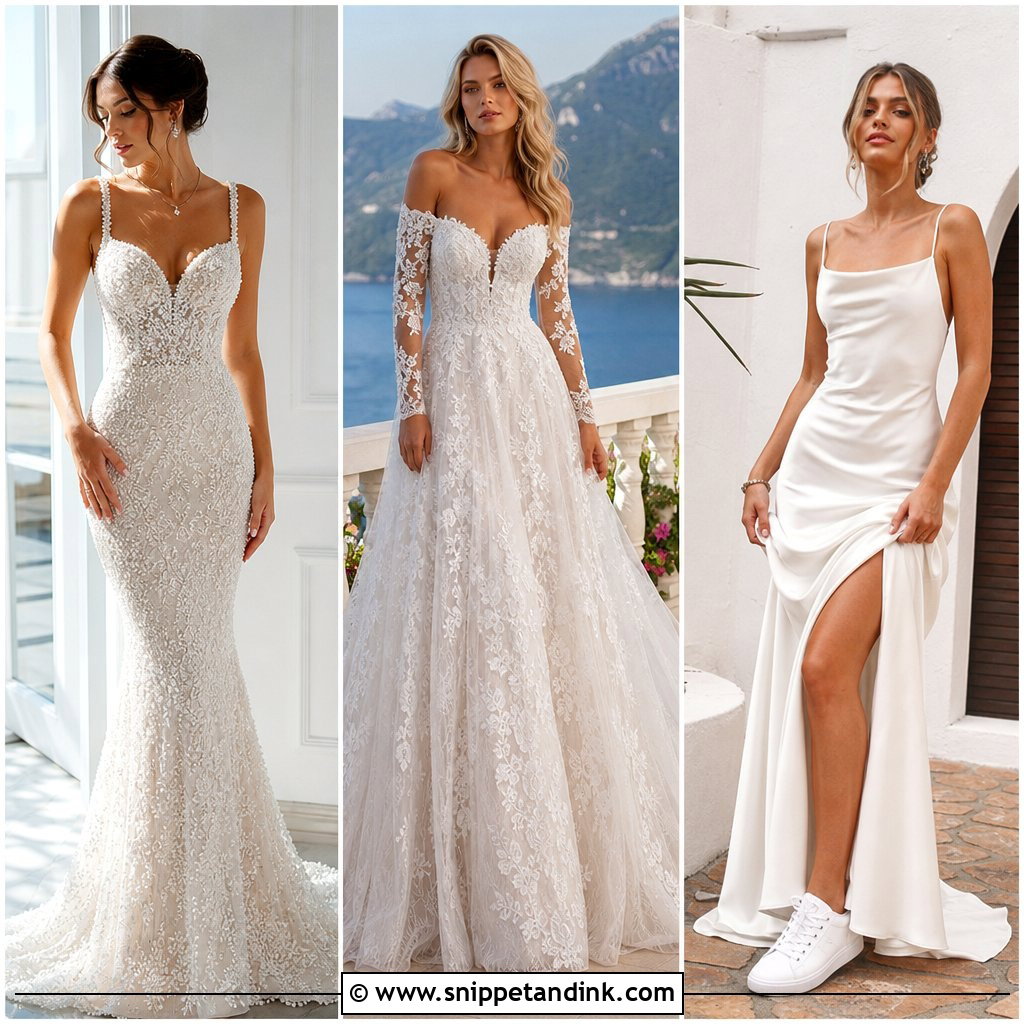
A plain sheath under a detachable lace skirt suits a bride who dresses simply most of the time but wants texture for the ceremony. Choose a skirt with a clean waistband, soft A-line volume and lace placed with some thought, with an open front so the sheath shows through. Pearl studs and a veil that borrows a small piece of the lace pattern are enough. For the reception you are back to a clean, modern dress. Match the undertones carefully: bright white lace over a warm ivory sheath can look like two different outfits. Make sure the overskirt hem sits right with the sheath’s own length and train.
Planning the Ten Minutes When the Skirt Comes Off
The change itself is where convertible dresses go wrong, and usually because nobody planned it. Pick the moment: after the formal photographs and before the first dance is the most common gap, and it means the photographer has the full gown in every portrait. Then pick the place, a private room with a mirror and a hook high enough to hang a long skirt without it touching the floor.
Bring one person to your final fitting who will help on the day, a bridesmaid or your mother, and have the seamstress show her the fastenings. Pack a small bag with a lint roller, a few safety pins, a needle threaded in ivory and a padded hanger. If the waistband has left a crease in the base dress, a handheld steamer held a little away from the fabric takes it out in a couple of minutes; never press satin or crepe with a hot iron at the venue.
Cleaning and Storing Two Pieces After the Wedding
Send both pieces to the cleaner together, even if the overskirt looks spotless. Sugary drinks and perspiration dry clear and then turn yellow months later, and if only one piece is treated the two will age to slightly different shades. Point out any marks on the base dress, especially around the waist where hands and hooks have touched it.
For storage, use acid-free tissue and a breathable cotton bag or an acid-free box, and keep the skirt and dress in a cool, dark cupboard rather than an attic or a basement. Long tulle skirts are better folded loosely with tissue between the layers than hung for years, because their own weight stretches them at the waistband. Take them out once a year and refold along new lines so no crease sets in permanently.
Will the Base Dress Hold Up Without Its Skirt?
A good convertible gown is really two decisions. The overskirt should add drama without hiding the best feature of the dress beneath it, and the base gown should look complete the moment the skirt comes off. Satin brings structure, tulle softness, organza airy volume and lace texture, but the fabric matters less than the join. Test every fastening during alterations and walk, sit and turn in both versions. If the dress you see once the skirt is gone is one you would happily wear all evening, you have made the right call.
You'll Like These Ideas:



Leave a Reply