
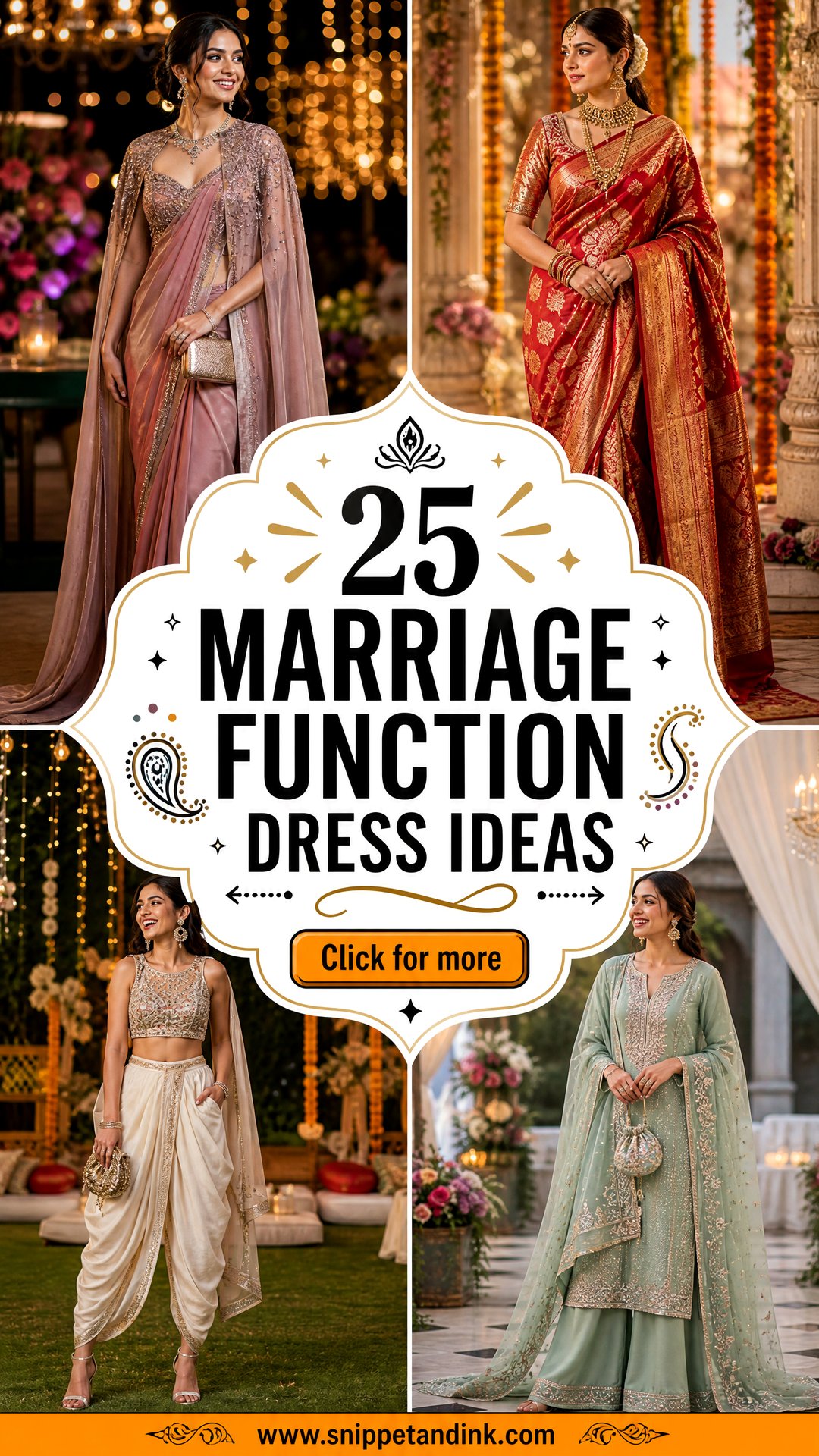
A family wedding can mean five or six outfits in a single week: haldi, mehendi, sangeet, engagement, the ceremony and the reception, each with its own mood and its own practical hazards. Turmeric paste, wet henna, a packed dance floor, a long seated ritual. The looks below run from sarees and lehengas to sharara sets, gowns, anarkalis and Indo-Western pieces, and for each I’ve put down the shoes, jewelry, hair and dupatta placement I’d pair with it. I’ve also flagged where an outfit suits a guest better than a sister of the bride, because your role in the family changes what’s right.
Reading the Dress Code From Your Place in the Family
The same lehenga can be right for a cousin and wrong for a colleague. When I dress someone for a family wedding, the first question I ask isn’t the function, it’s who they are to the couple.
- Sisters and close cousins of the bride or groom are often given a color plan by the family. Heavier outfits are fine, as long as they stay a clear step below the bride. Find out her colors before you shop.
- Friends and colleagues do best in medium-weight outfits: a georgette saree, a palazzo suit, an anarkali. Steer away from a red bridal-style lehenga, and from heavy embroidery in the bride’s own color.
- Mothers, aunts and grandmothers usually carry silk sarees and heavier weaves well, and their outfits often match family tradition more than trend.
Color etiquette also varies from family to family. Some avoid black or white at auspicious ceremonies, many ask for yellow at the haldi and green at the mehendi, and plenty don’t mind at all. If you’re unsure, ask the person who invited you. It’s a normal question, and far easier than standing out for the wrong reason.
1. Yellow Sharara Set For Haldi Function
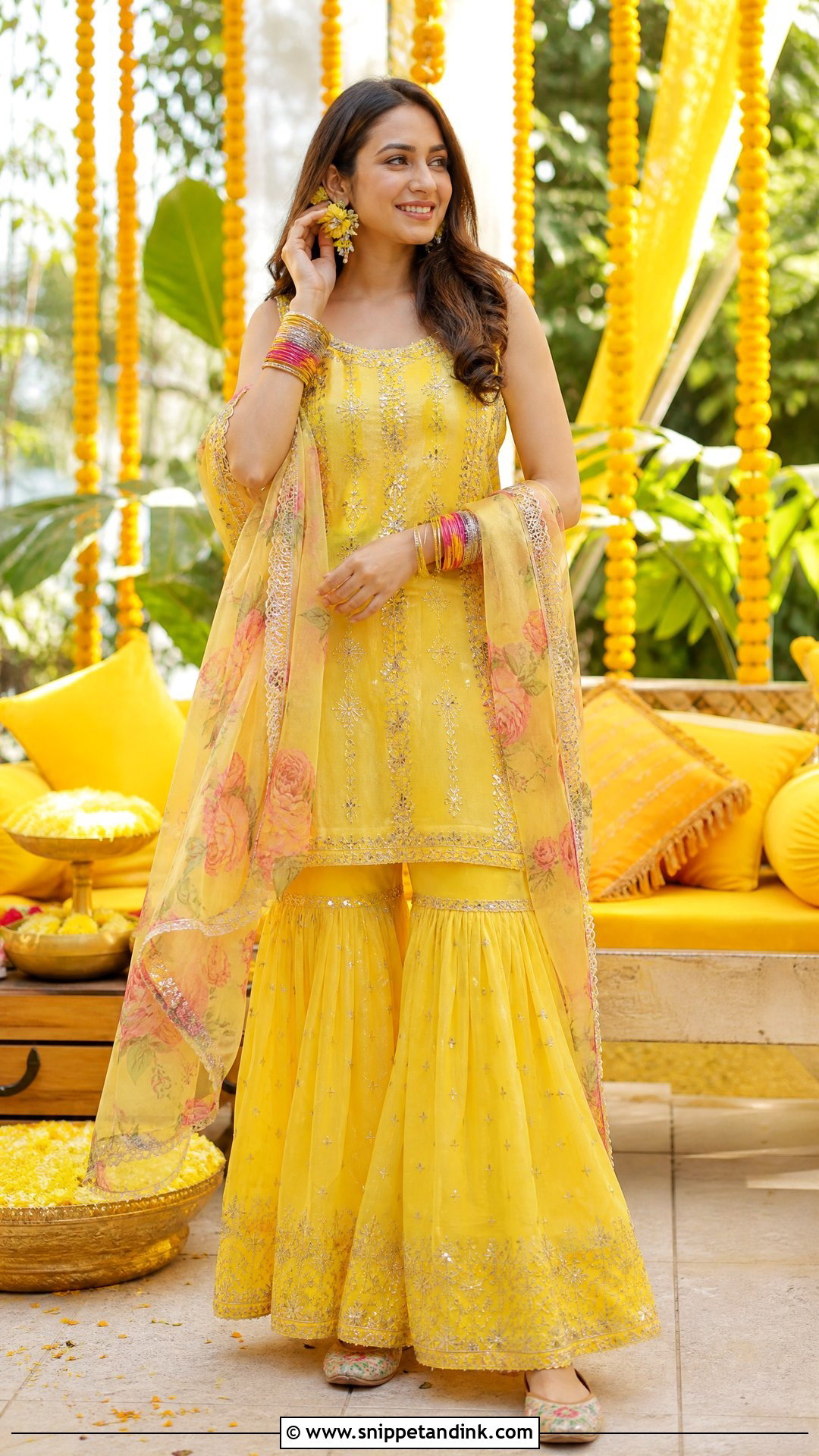
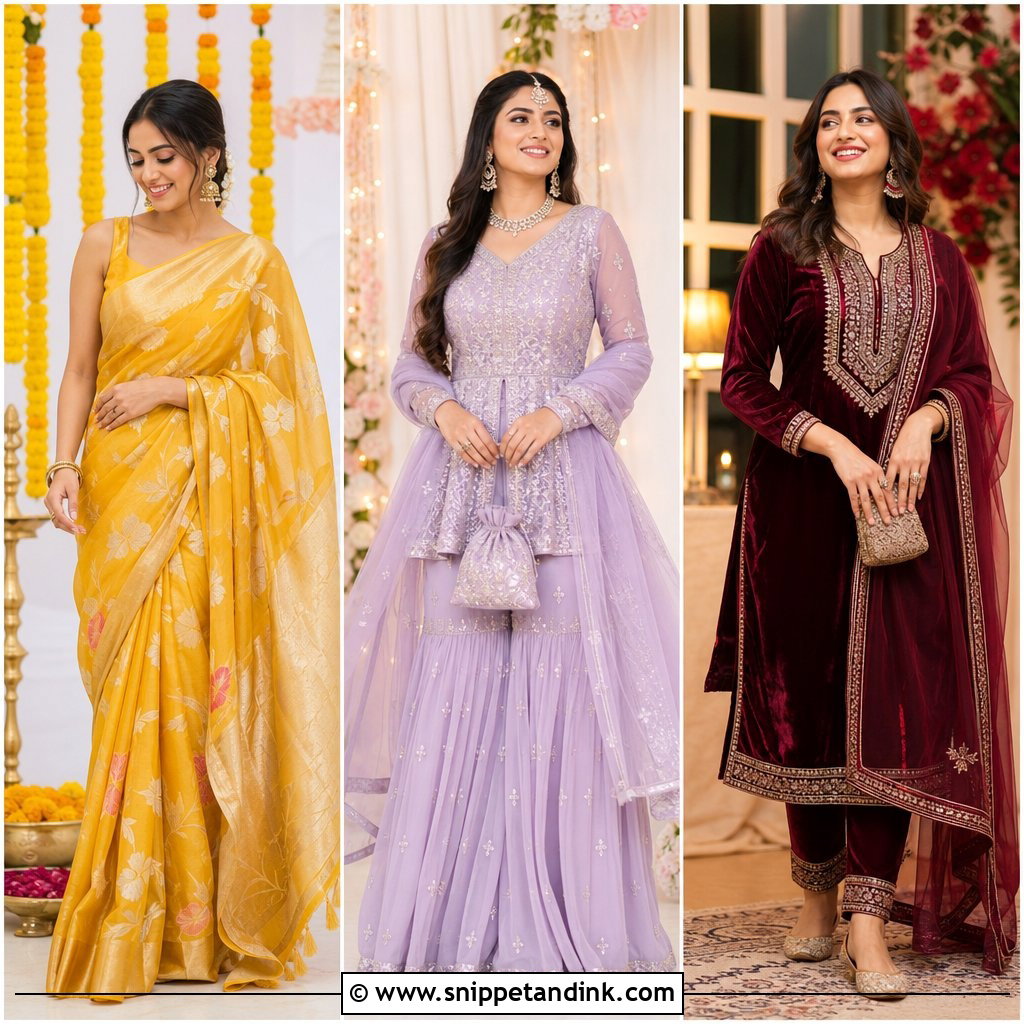
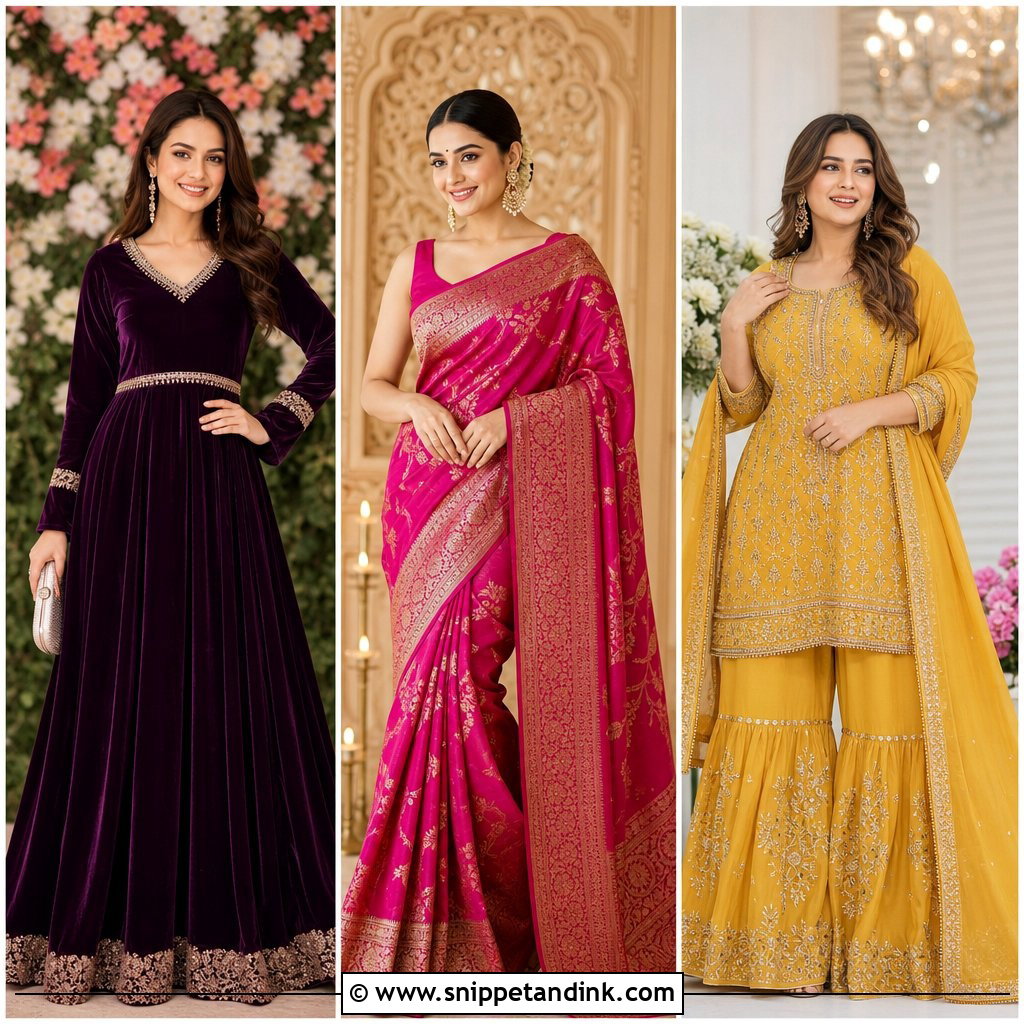
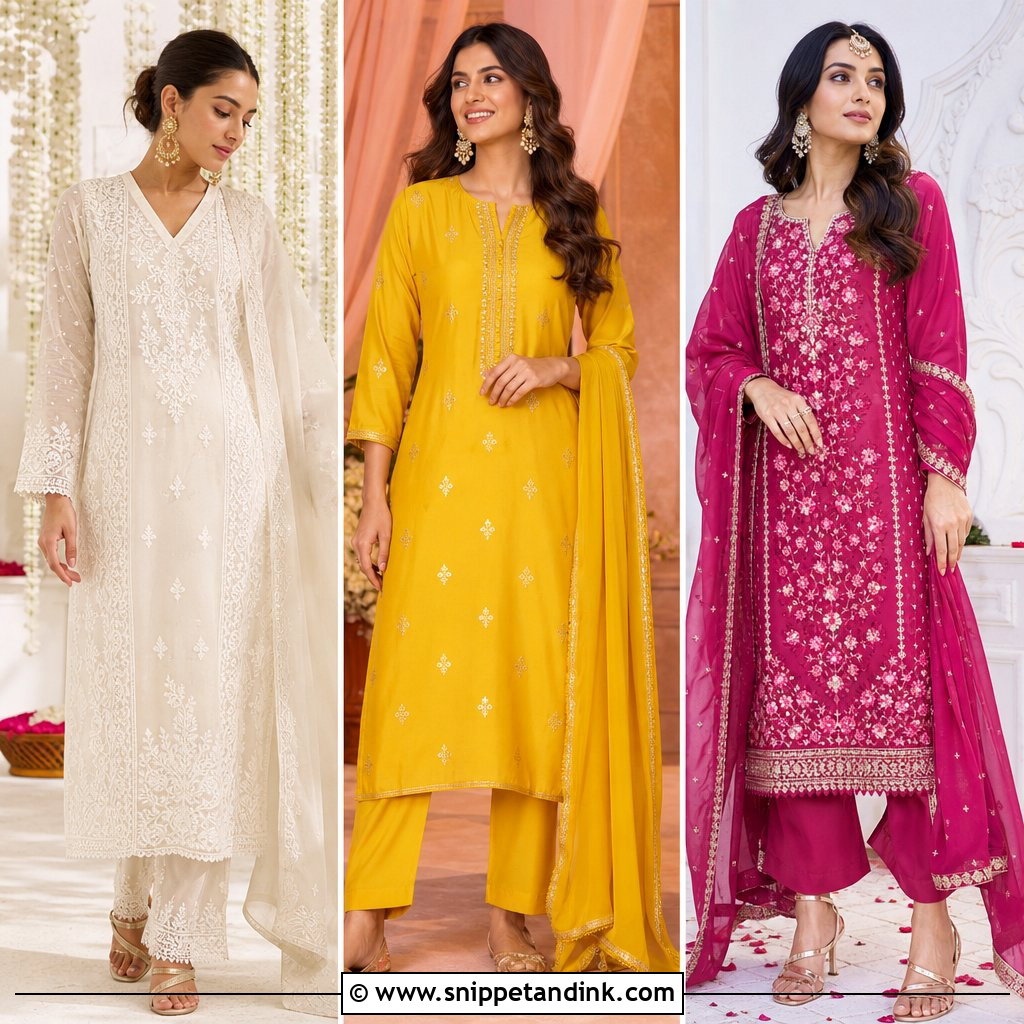
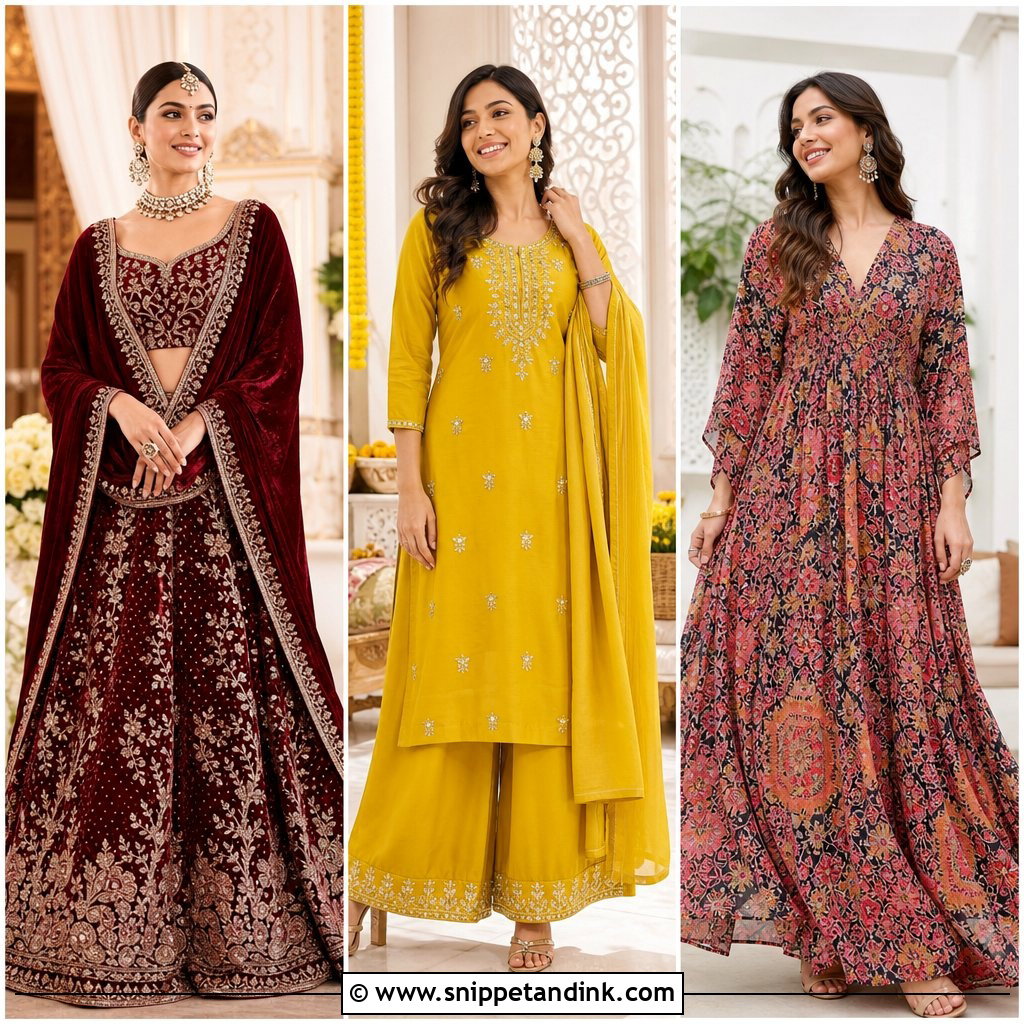
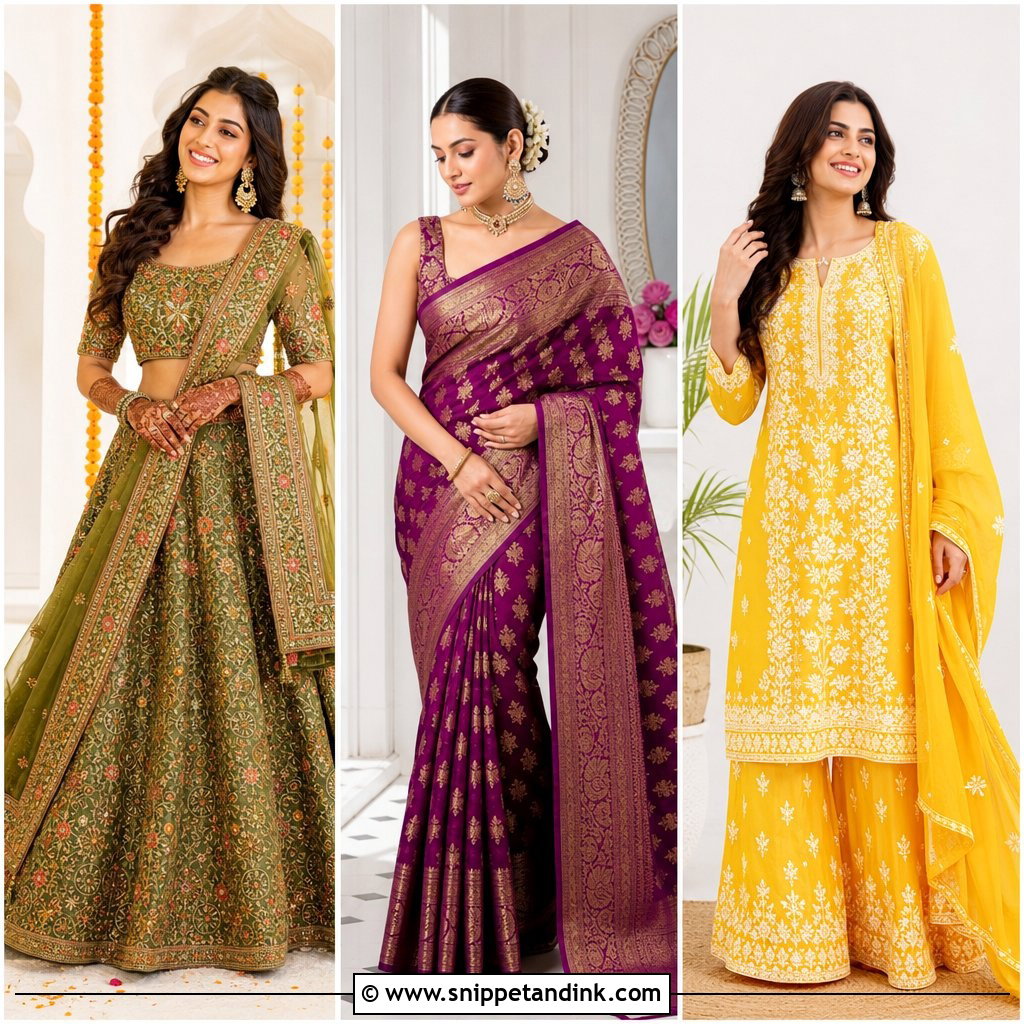
A bright yellow sharara set is the haldi outfit I suggest most, because it’s cheerful and doesn’t mind getting messy. Lightweight cotton, georgette or cotton-silk for the kurti, a flared sharara and a soft dupatta, with gota trim or small mirror details rather than fragile beadwork. Floral earrings, colorful bangles and juttis or flat sandals, with a braid dressed in flowers. Turmeric stains are very hard to shift, especially from silk and pale synthetics, so treat this as an outfit you may not wear again, and keep the hem well off the floor where the paste lands. Guests can go mustard or lemon; close family might choose a richer set with a pink or green dupatta.
2. Floral Anarkali Dress For Mehendi Function
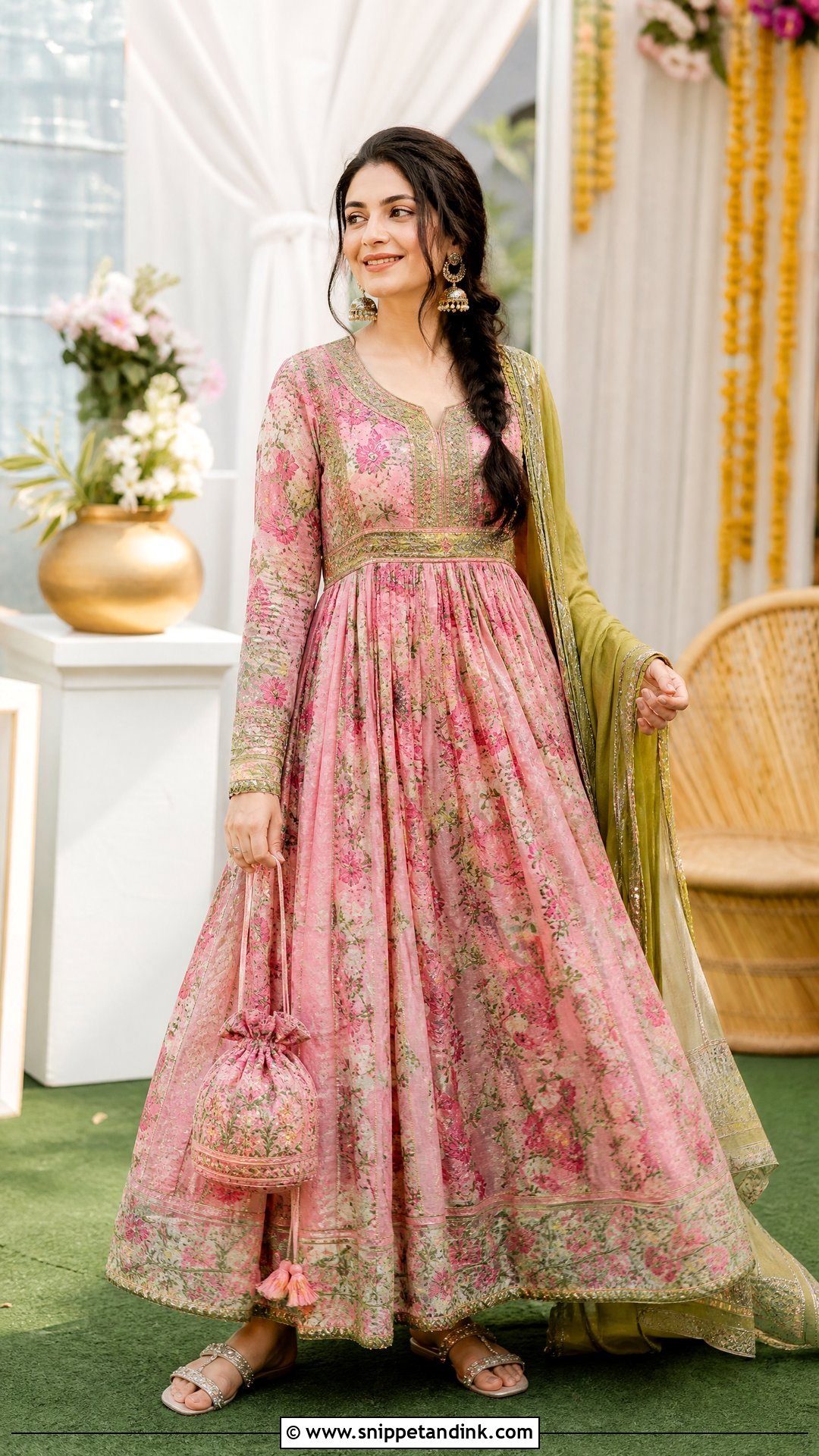
Mehendi afternoons involve a lot of sitting on low cushions, so a calf- or ankle-length anarkali is easier than a floor-sweeping lehenga. Cotton silk, chiffon or georgette in pink, green, peach or turquoise, with metallic flats, jhumkas and a small potli. Sleeve length matters more here than at any other function. If you’re having henna done, three-quarter or elbow sleeves stay clear of wet paste on the forearms, while full sleeves will smudge it. Pin a light dupatta to one shoulder or skip it, and keep hair in a low ponytail or loose braid, well away from the cones.
3. Green Lehenga Outfit For Mehendi Function
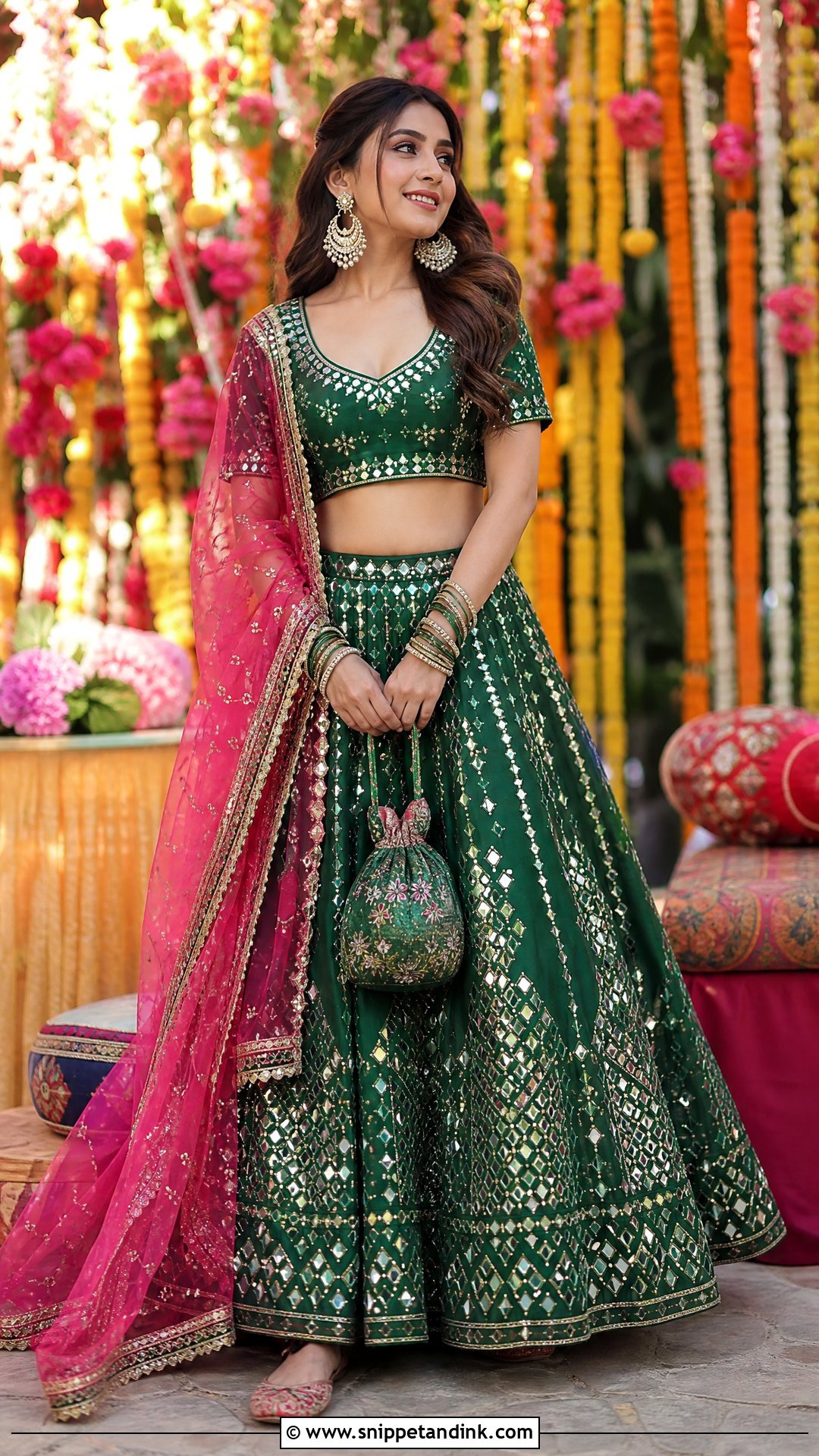
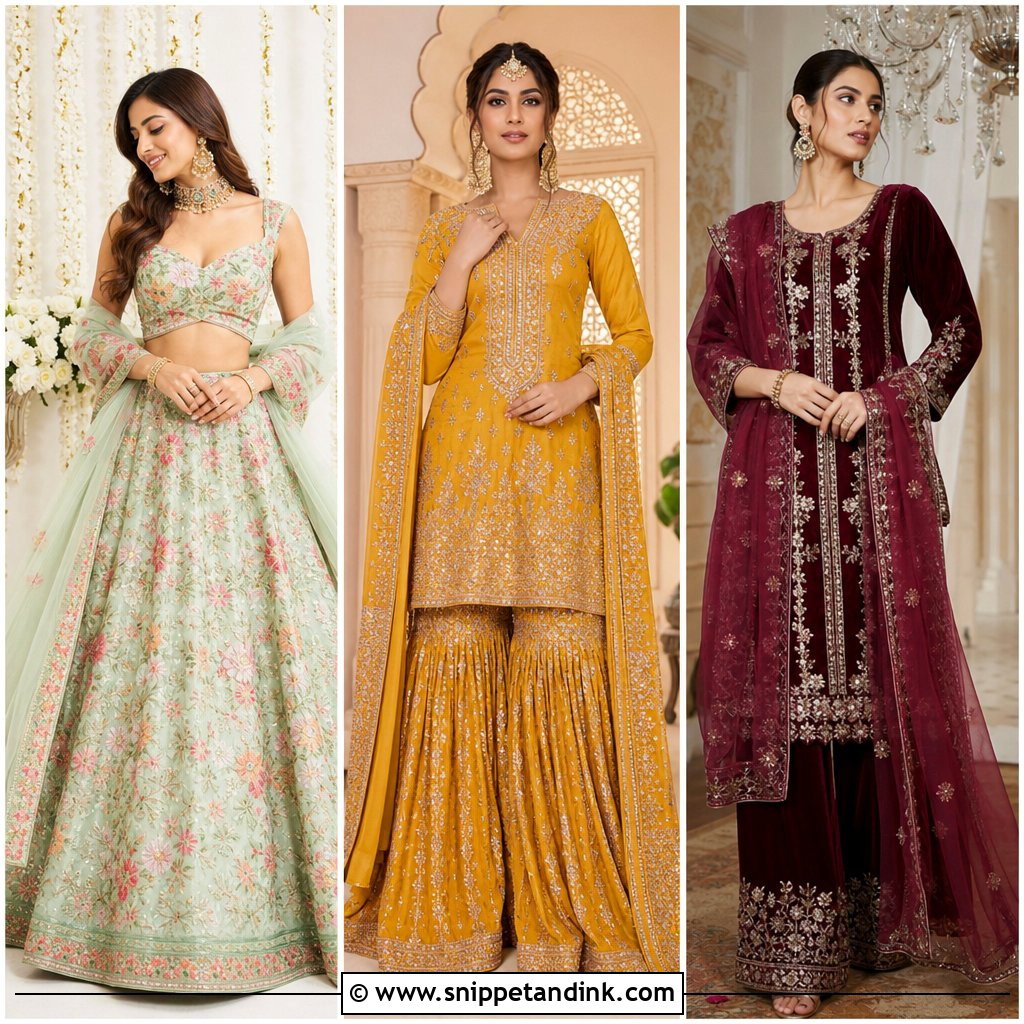
Green is the traditional mehendi color, and a lightweight lehenga lets you lean right into it. Choose an emerald, mint or parrot-green skirt with floral embroidery, mirror work or print, and a blouse with comfortable straps or short sleeves. A contrasting pink, yellow or ivory dupatta stops it looking over-matched. Chandbalis, stacked bangles, a potli and embroidered juttis. I hem this skirt a little above the floor, since you’ll be stepping over cushions and around people seated on the ground. Breathable lining makes a real difference in an afternoon tent.
4. Mirror Work Gharara Set For Sangeet Function
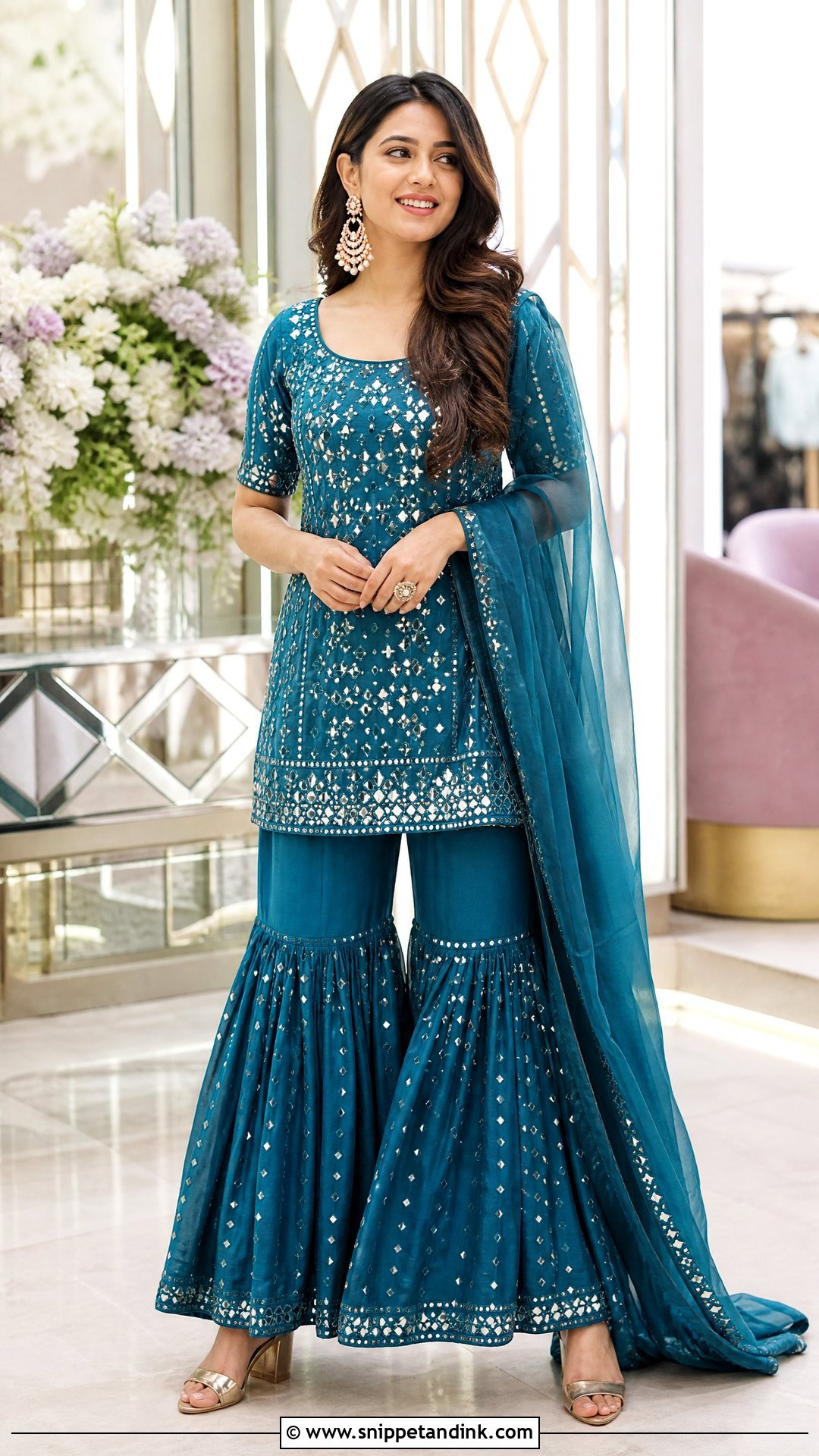
When the music starts, you want an outfit that moves with you, and a mirror work gharara gives sparkle with more freedom than a heavy lehenga. A short kurti with a defined waist, dramatically flared gharara pants and a light dupatta pinned across one shoulder. Deep blue, hot pink or teal glow under evening lights. Keep the rest simple: metallic heels or cushioned juttis, statement earrings and one cocktail ring. The check I always make on mirror work is the inside. Run a hand over the lining at the waist and under the arms, because poorly backed mirror pieces press and scratch exactly where the kurti is fitted.
5. Sequin Lehenga Outfit For Sangeet Function
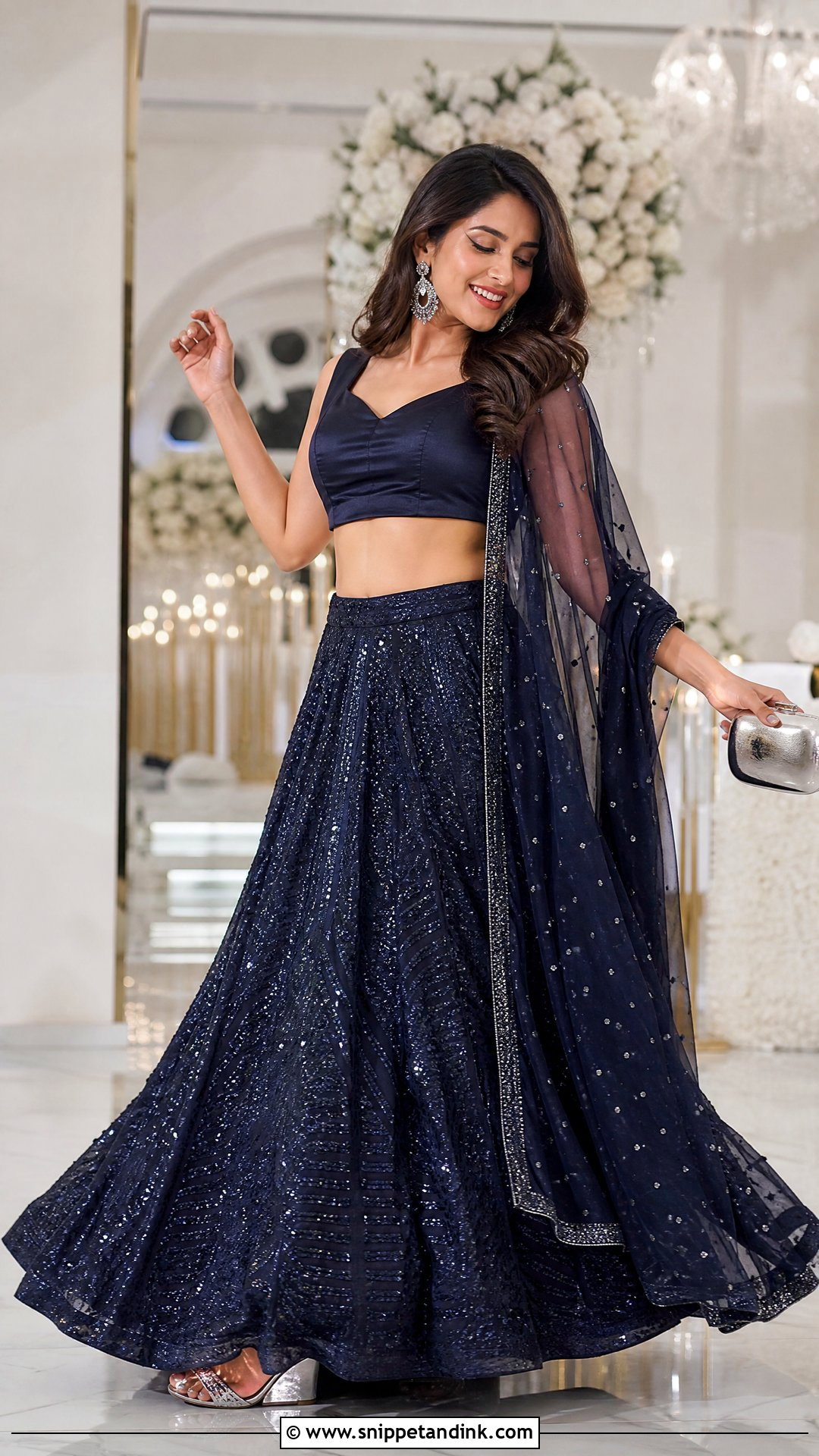
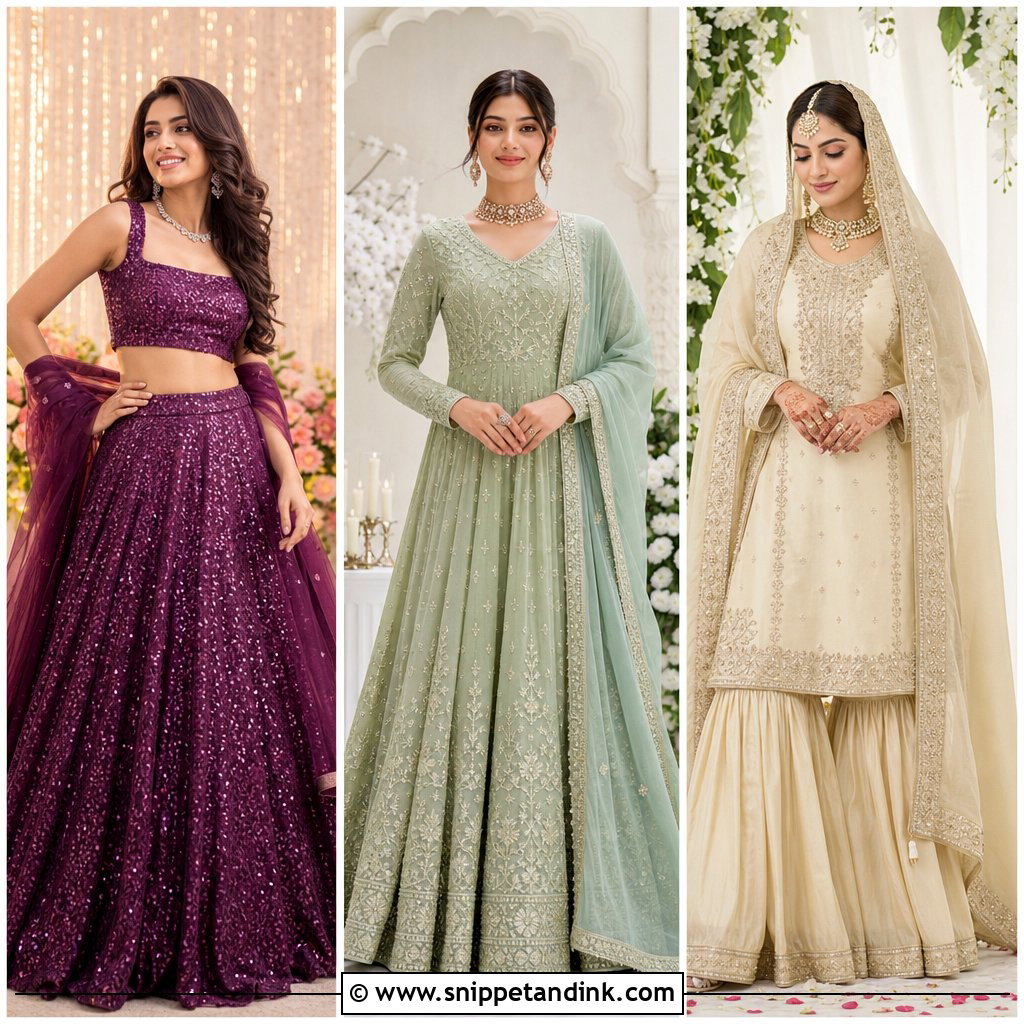
Sangeet glamour works best when the sparkle is concentrated, so pair a shimmering sequin skirt with a quieter blouse, or reverse it. Navy, plum or deep green look refined rather than loud. Wear the dupatta over one shoulder or loosely around the arms, with block heels, a compact clutch and crystal earrings. Sequins add weight quickly, and I lift every sequin skirt in the shop; a heavy one on a thin waistband will drag down while you dance. Go for luminous makeup with strong eyes or a strong lip, not both, and soft waves or a polished ponytail.
6. Cape Saree Outfit For Cocktail Function
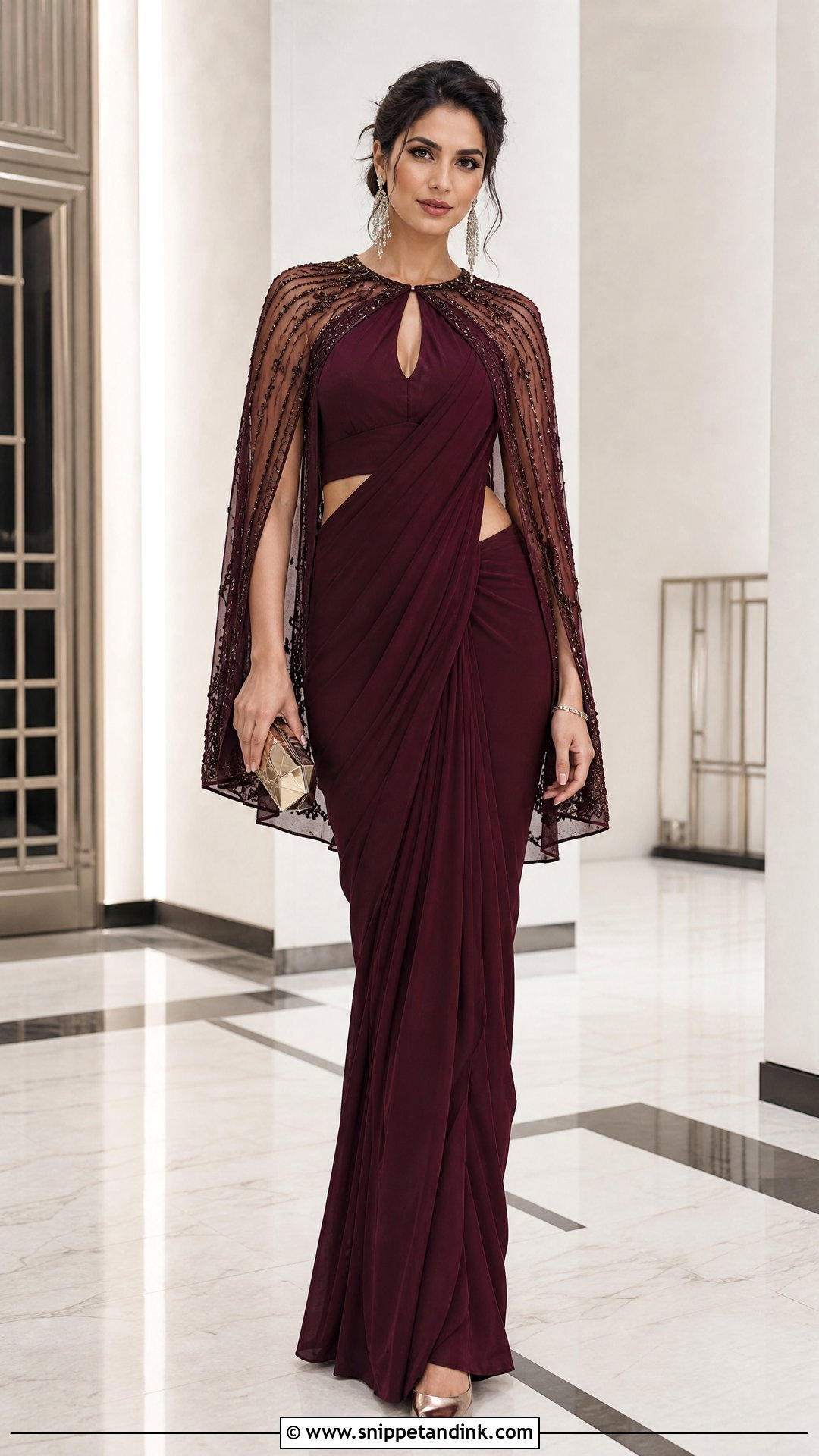
Do you want a saree’s elegance without managing a pallu all evening? A cape saree solves it for a cocktail night. Start with a pre-draped saree in crepe, satin or georgette and add a sheer embroidered cape over the shoulders, in black, burgundy or midnight blue. Pointed heels, a structured clutch and long drop earrings, with the neckline left clean so the cape leads. I prefer a cape that ends at the hip or a little past it. A floor-length cape hides the drape completely, and then you’ve lost the reason for wearing a saree. A low bun or sleek side-parted hair finishes it.
7. Satin Saree Outfit For Engagement Function
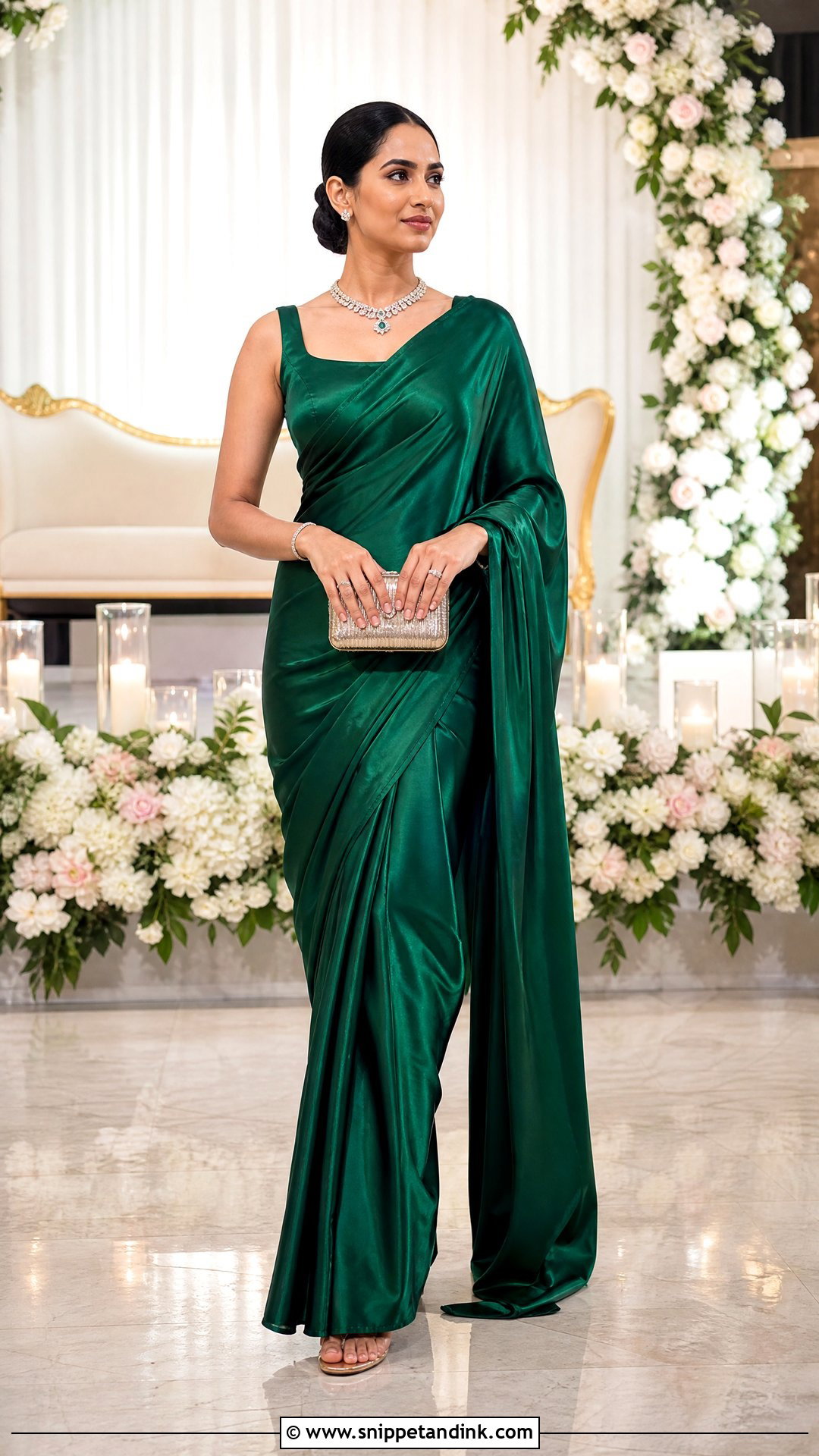
Satin catches light beautifully at an evening engagement, and it is also the most slippery saree fabric you can choose. Go for a jewel tone like emerald, sapphire or berry, with a fitted blouse in a square, boat or softly draped neck. I hide small safety pins in the folds at the pleats and shoulder, and I’d suggest a saree shapewear petticoat, which stops satin clinging between the legs as you walk. A statement necklace, small earrings, a metallic clutch and slim heels. If the saree has a strong sheen, keep the blouse plain.
8. Pastel Organza Saree For Day Marriage Function
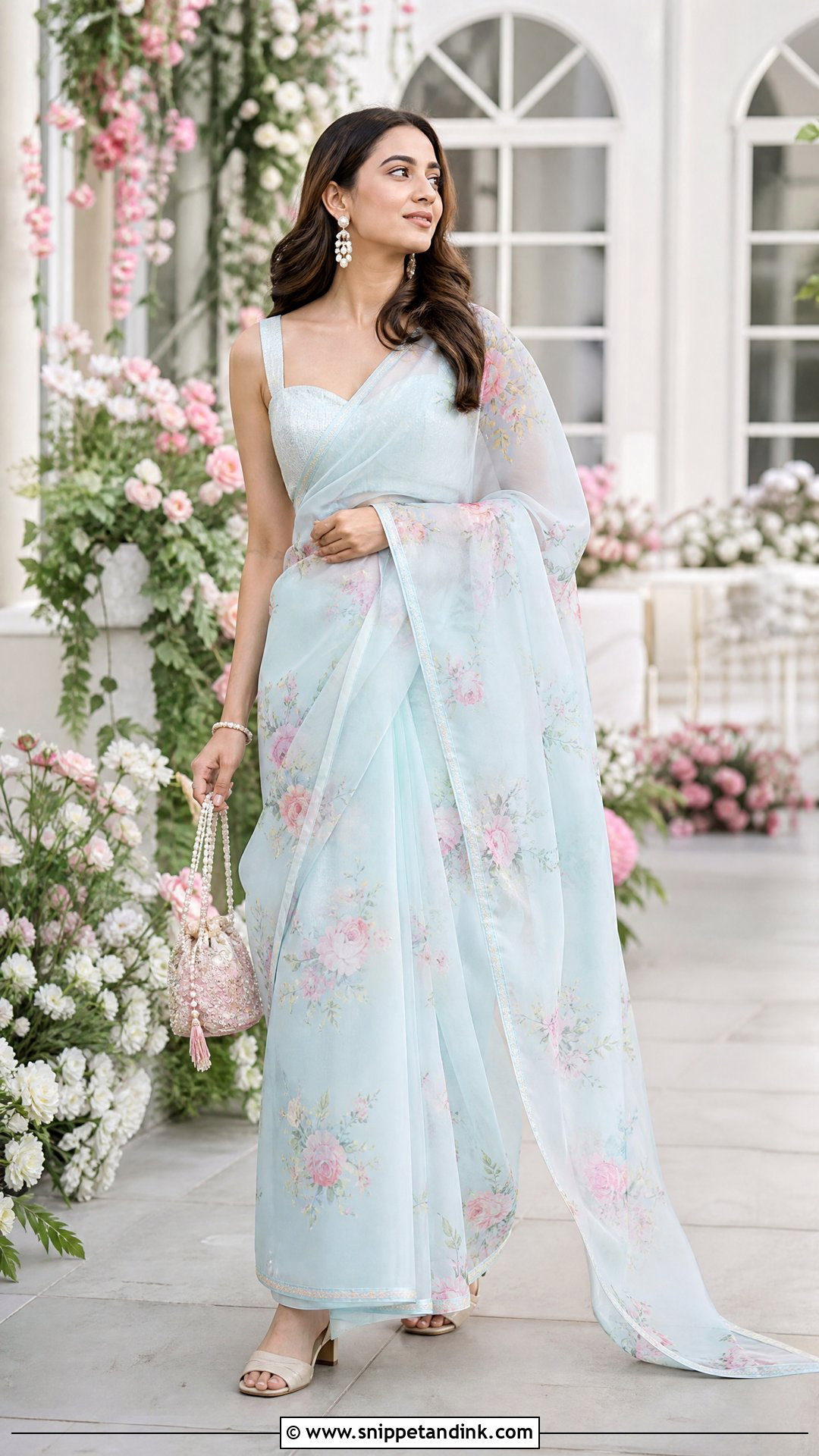
Daylight is kind to the texture of an organza saree. For a daytime ceremony, blush, powder blue, mint or pale yellow with floral embroidery or a narrow embellished border, over a structured blouse that gives the crisp fabric a foundation. Pearl earrings, a small pendant, a pastel potli and low block heels. Organza stands away from the body, so I make fewer, wider pleats and press them firmly at the waist; too many and the saree balloons at the hip. Petite frames suit a narrow border, while taller women can carry broad florals. A neat bun, fresh makeup and a rosy lip.
9. Banarasi Silk Saree For Wedding Ceremony
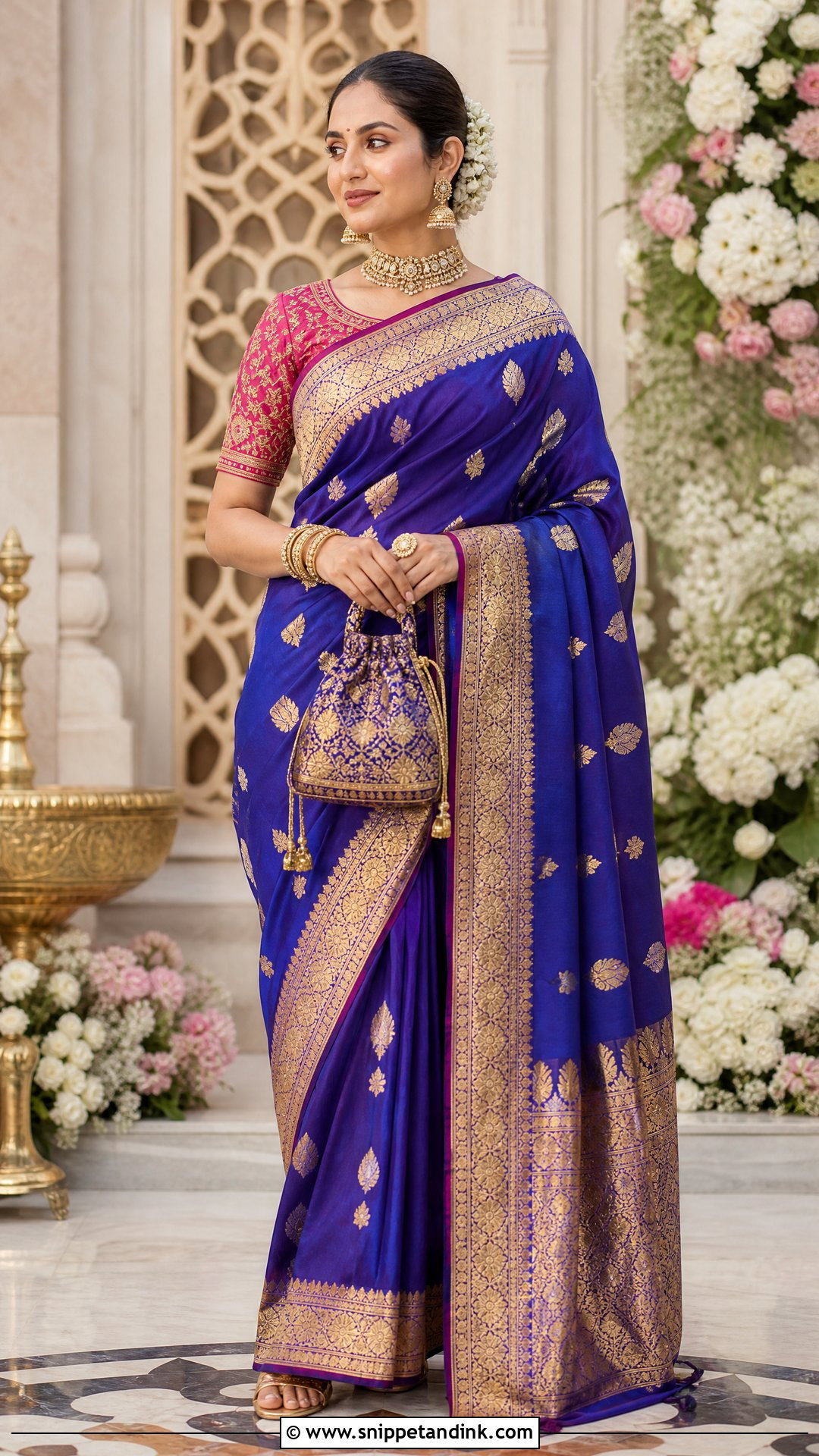
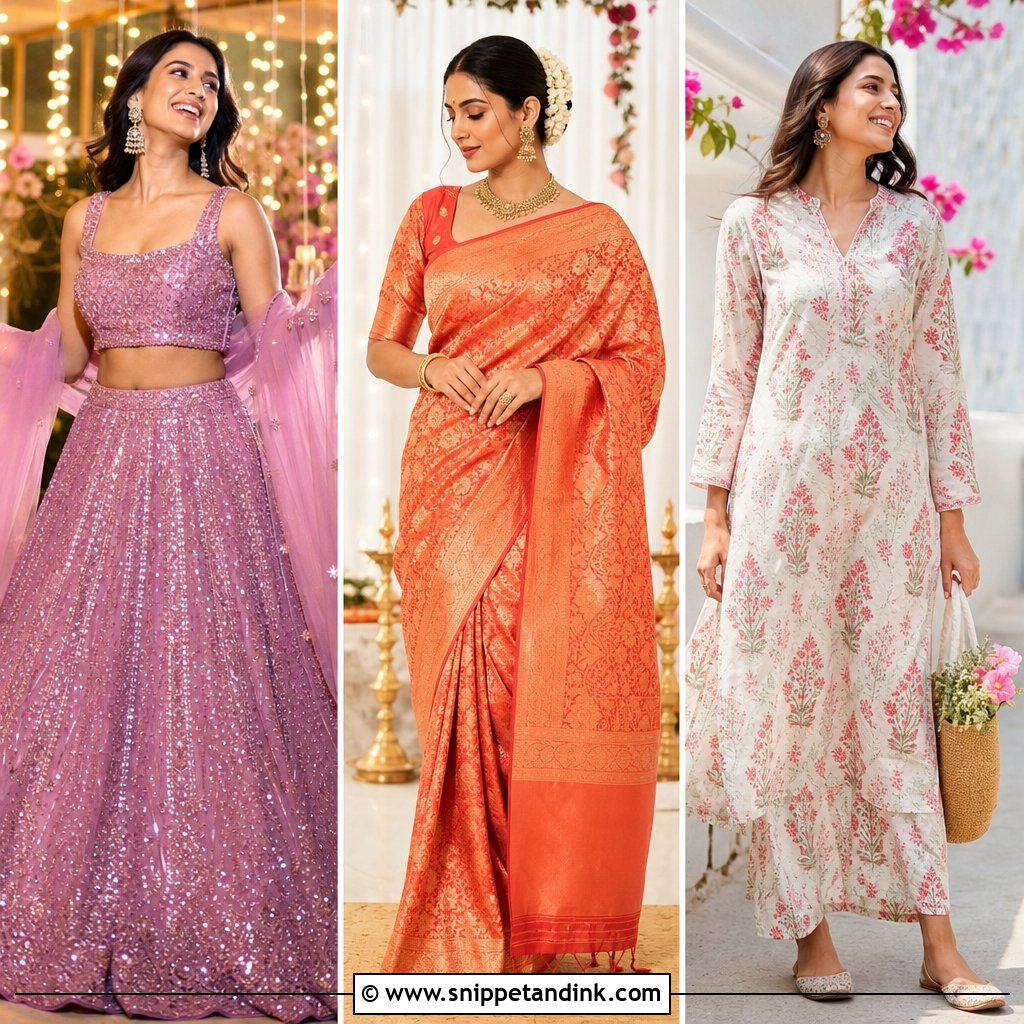
At a traditional wedding ceremony, few outfits feel as rooted as a Banarasi silk saree. Red, magenta, royal blue or emerald show off the woven gold. A well-tailored silk blouse in a matching or contrasting shade, then a choker, jhumkas, bangles and an embroidered potli, with gold sandals or low heels. Pleat the front neatly and arrange the pallu so the woven border shows. Real zari Banarasi is warm and heavy, so I keep what’s underneath to a cotton petticoat and a breathable blouse lining. A center-parted bun with flowers is classic; soft waves make it feel current.
10. Kanjeevaram Saree For Traditional Marriage Function
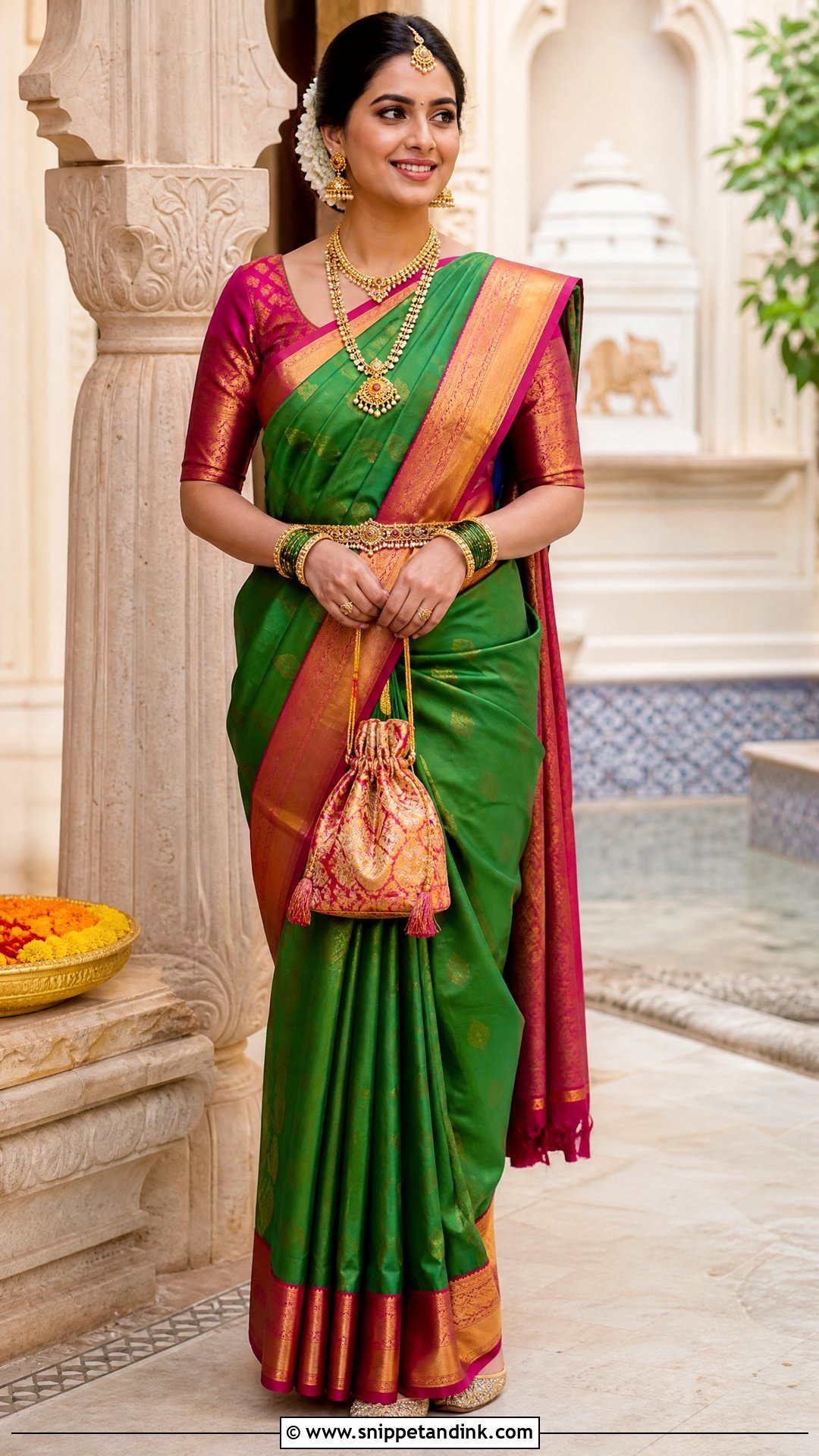
Kanjeevaram silk is thick and tightly woven, and that body is what gives it such a sculptural drape. Look for contrasting borders, green with pink or maroon with mustard. An elbow-sleeve blouse supports the weight of temple jewelry, then coordinated earrings, bangles and a compact potli, with low block heels or embellished flats under all that fabric. Because the silk is stiff, I pleat slowly and pin each layer, setting the pallu so its border stays visible. A smooth bun with jasmine finishes it. With a heavily woven saree, keep the blouse simpler.
11. Chanderi Suit For Morning Marriage Function
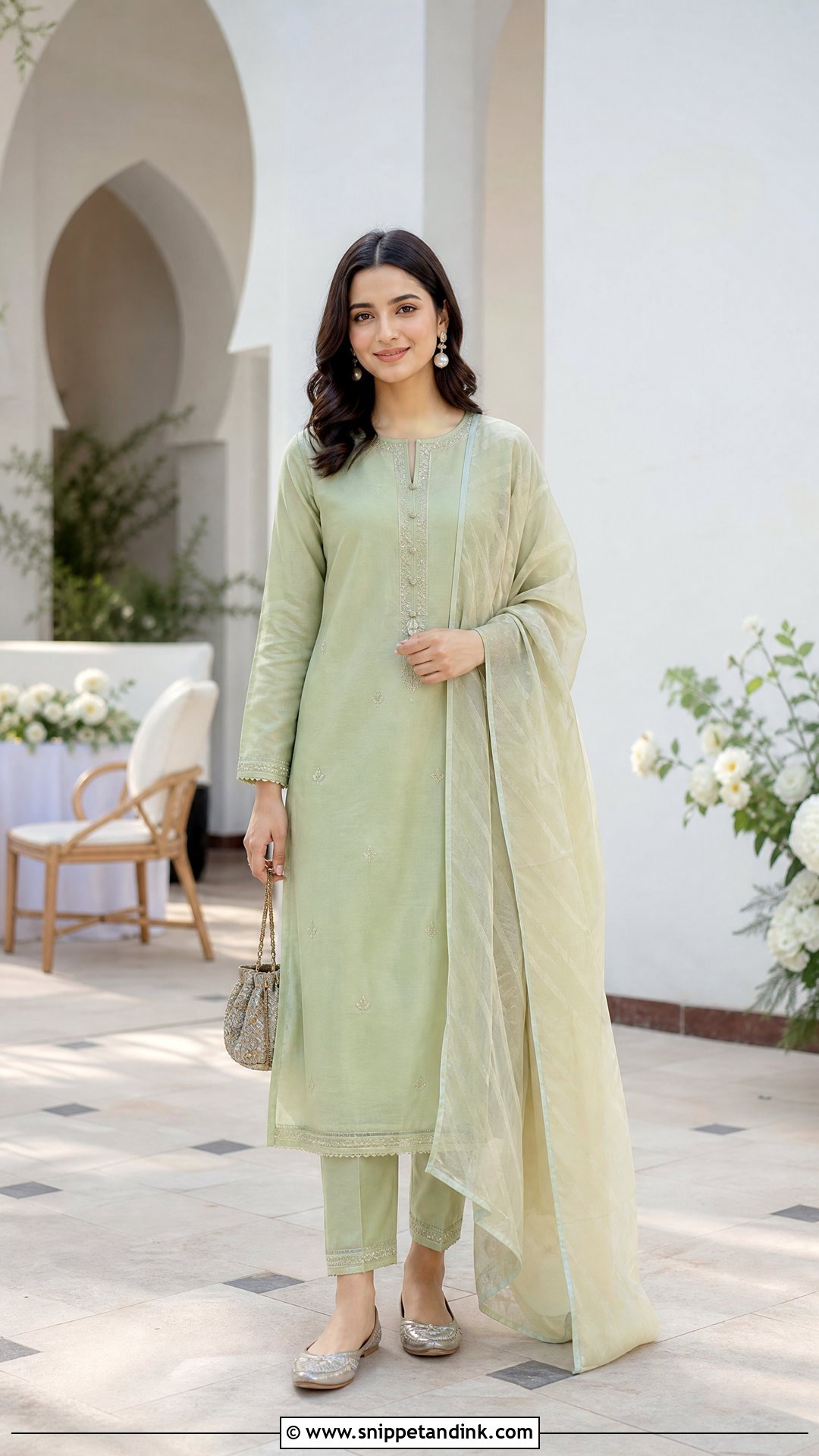
Morning ceremonies call for something polished but light, and Chanderi’s soft sheen fits. Ivory, peach, pistachio or soft gold in a straight kurta with cigarette pants and a light dupatta with a woven border. Pearl or kundan earrings, metallic juttis and a small handbag. Chanderi is slightly sheer, so the lining has to be smooth and breathable; I check by holding the kurta up to a window. Keep any embroidery to the neckline, cuffs or hem. A relaxed low bun suits a puja or an intimate family gathering.
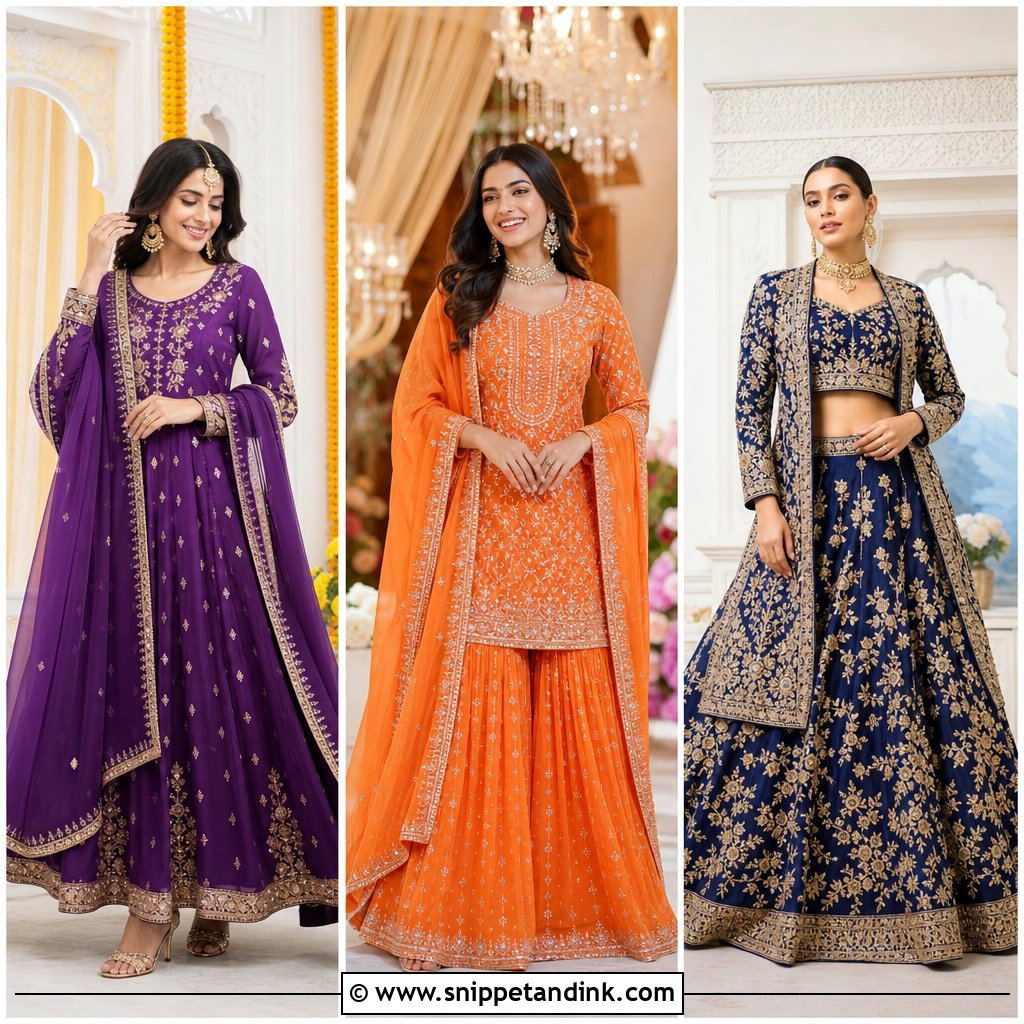
12. Embroidered Anarkali For Evening Marriage Function
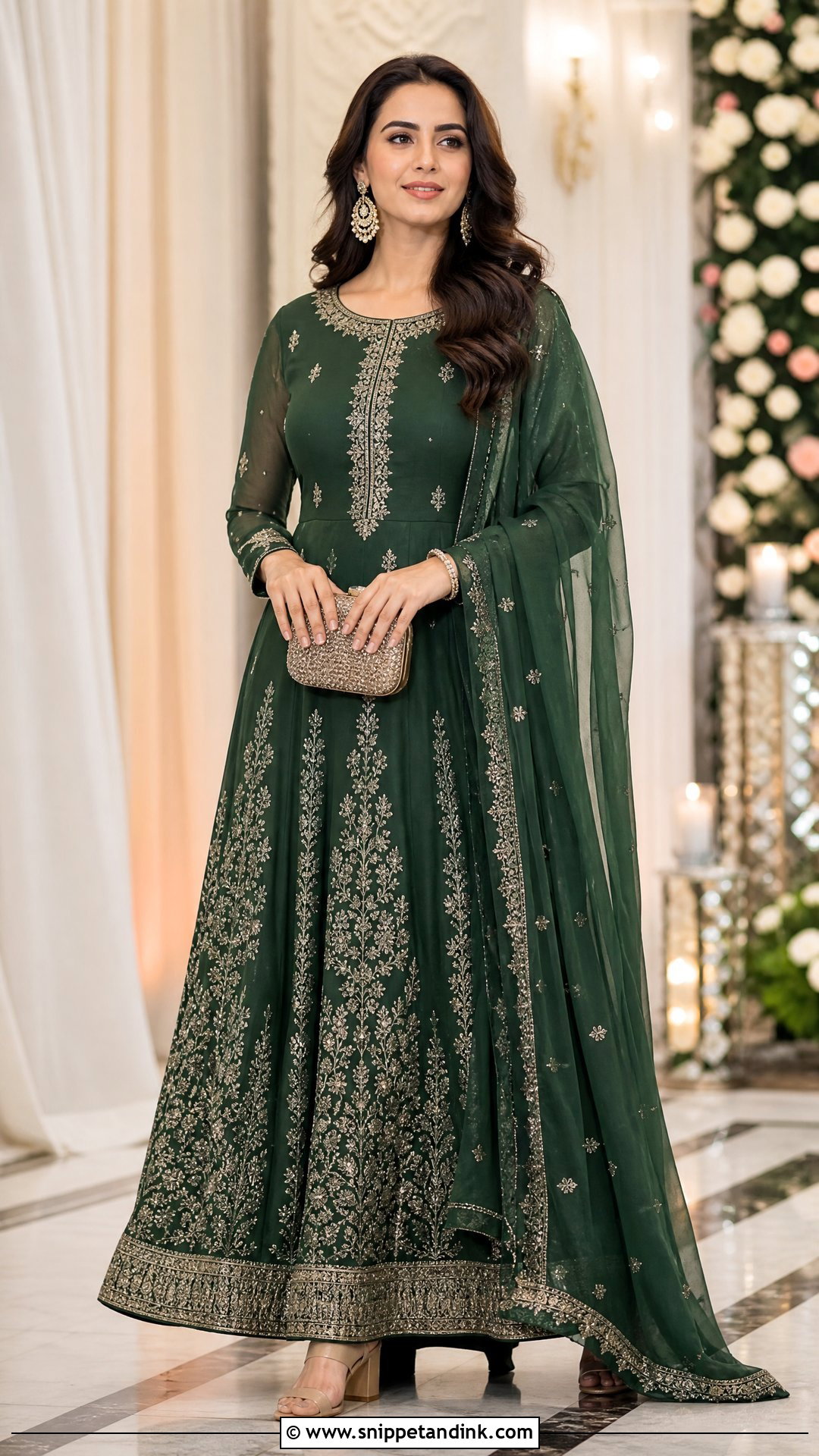
An embroidered anarkali gives movement, coverage and an instantly formal shape for an evening function. Floor or ankle length in berry, navy, forest green, or black if the family is comfortable with it, with threadwork, sequins or fine zari around the bodice and hem. Chandelier earrings, a slim bracelet and a structured clutch. Pointed flats or block heels manage a full skirt more easily than stilettos, which catch in the hem. The two fit points I check are the shoulder seam and the waist. Get those right and even a very full anarkali looks slim; get them wrong and it looks like a tent.
13. Velvet Lehenga For Winter Marriage Function
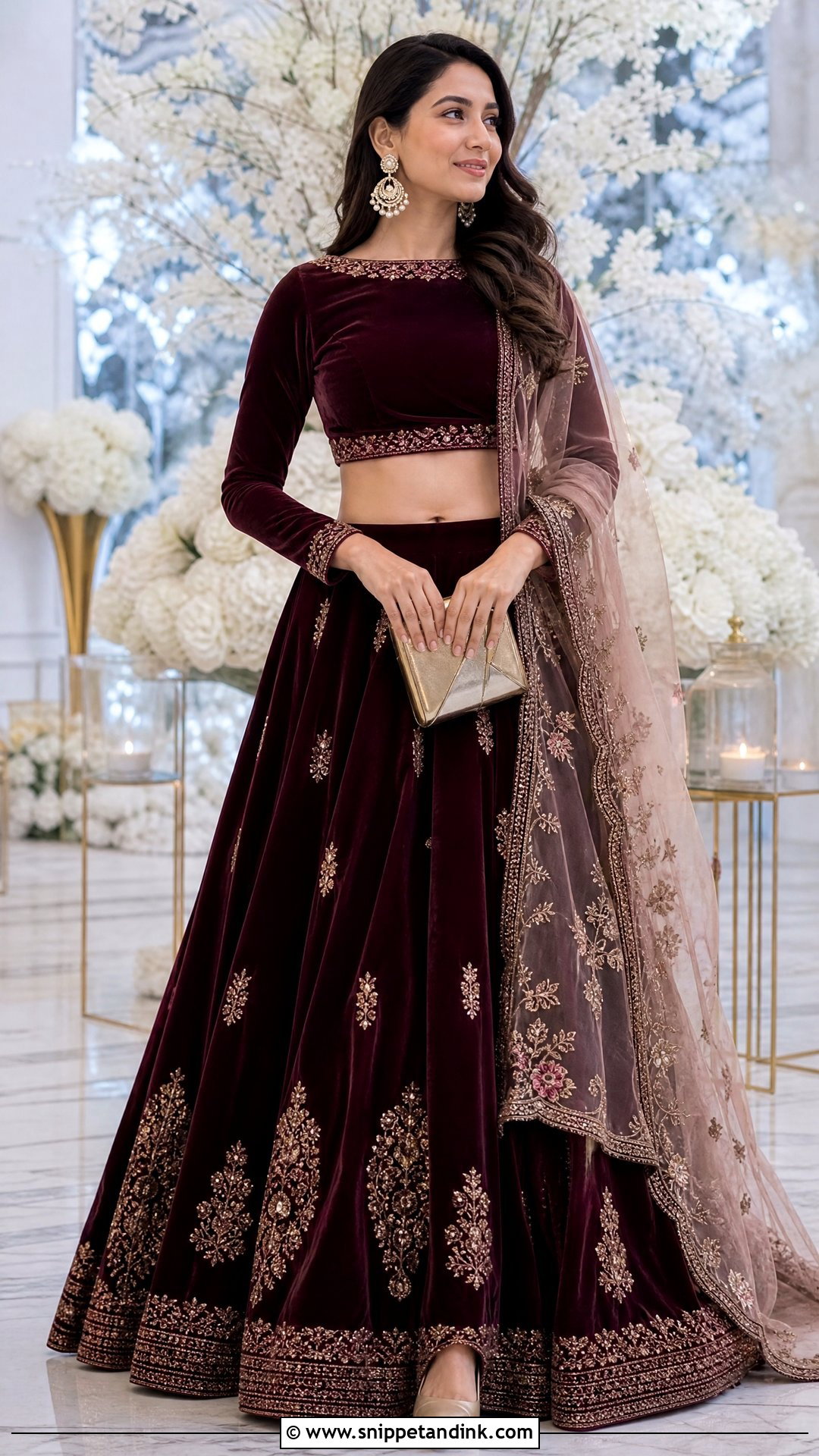
Cold-weather weddings are when velvet earns its place. Deep emerald, navy or plum show off the pile. A moderately embroidered velvet skirt with a fitted blouse and a lighter net or organza dupatta keeps the outfit from getting heavy. Closed-toe block heels, statement earrings and a small metallic clutch, with full or elbow sleeves for warmth. Indoor halls are often well heated, and full velvet sleeves get uncomfortable once a hall fills up, so ask about the venue before you choose them. A sleek bun or polished waves and defined eyes.
14. Floral Printed Lehenga For Day Marriage Function
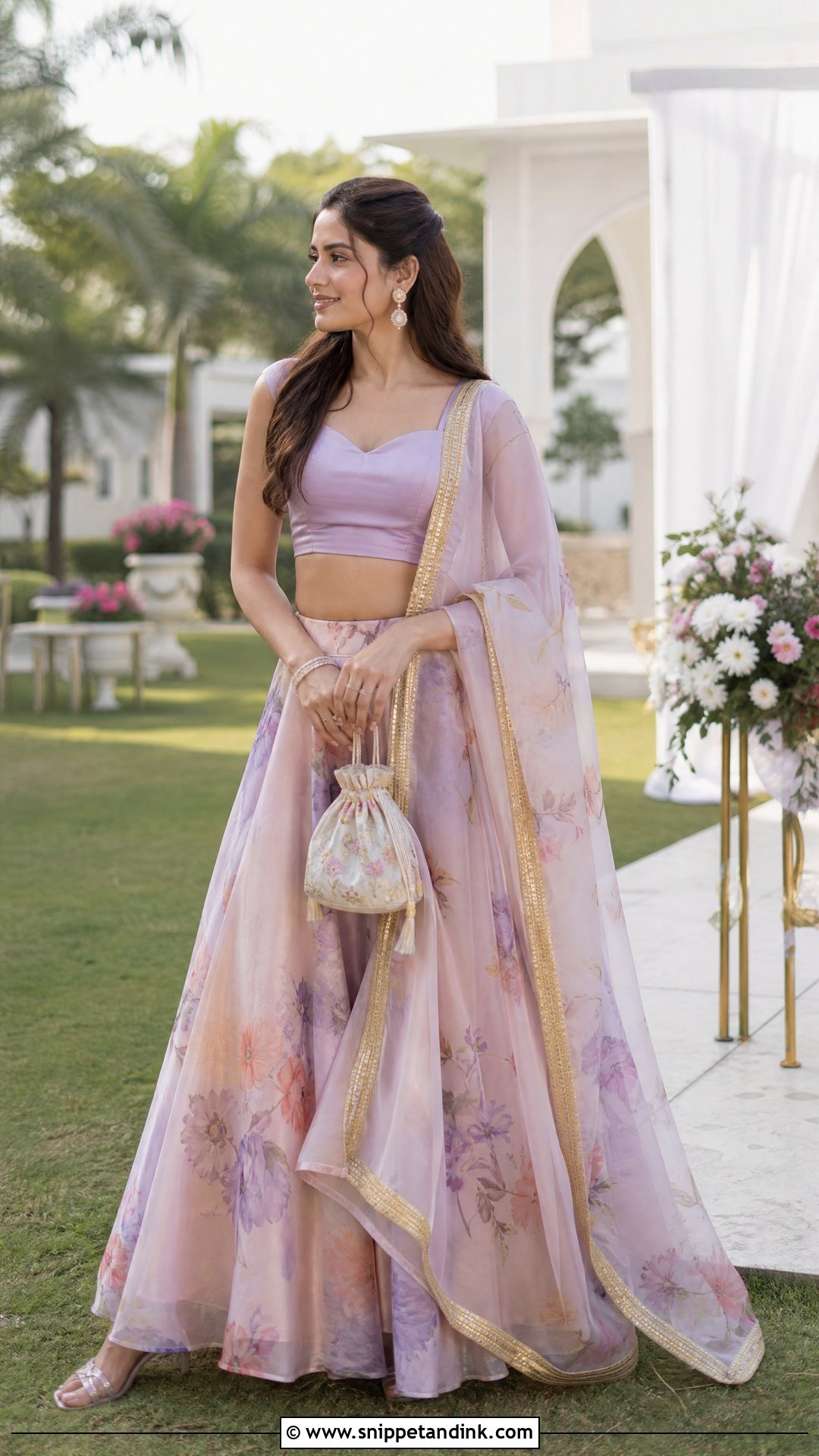
A floral printed lehenga suits an outdoor day function. Lightweight organza, chiffon or cotton-silk in peach, lavender or mint, with a solid blouse that picks up one color from the pattern and a sheer dupatta with a simple border rather than a second print. Pearl earrings, a potli and low block heels. When I match a blouse to a print, I take the skirt to the shop and choose the least obvious color in it rather than the dominant one; the result looks considered rather than matched. Half-up hair or a loose braid, soft blush and a fresh lip.
15. Peplum Sharara Set For Marriage Function
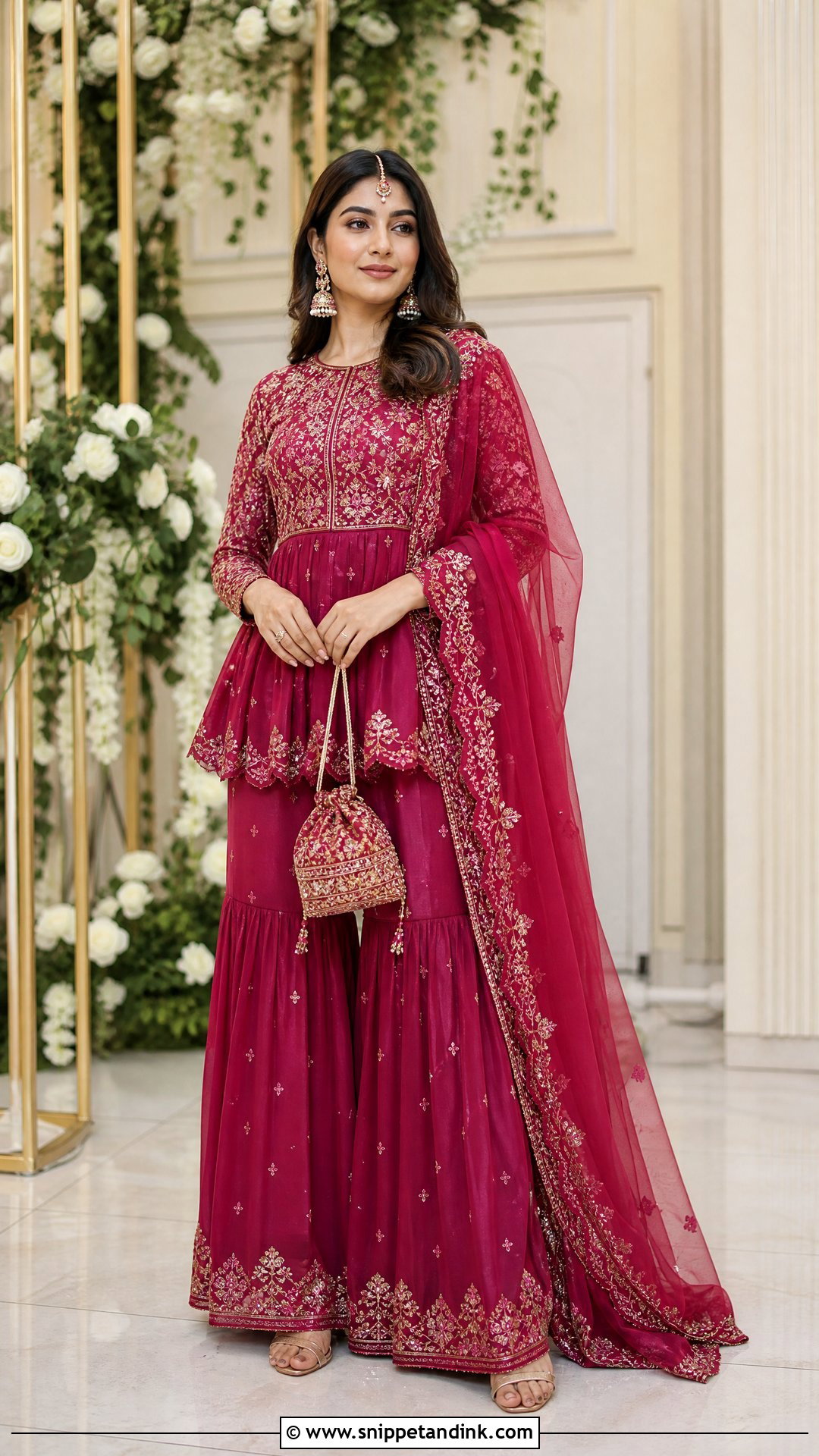
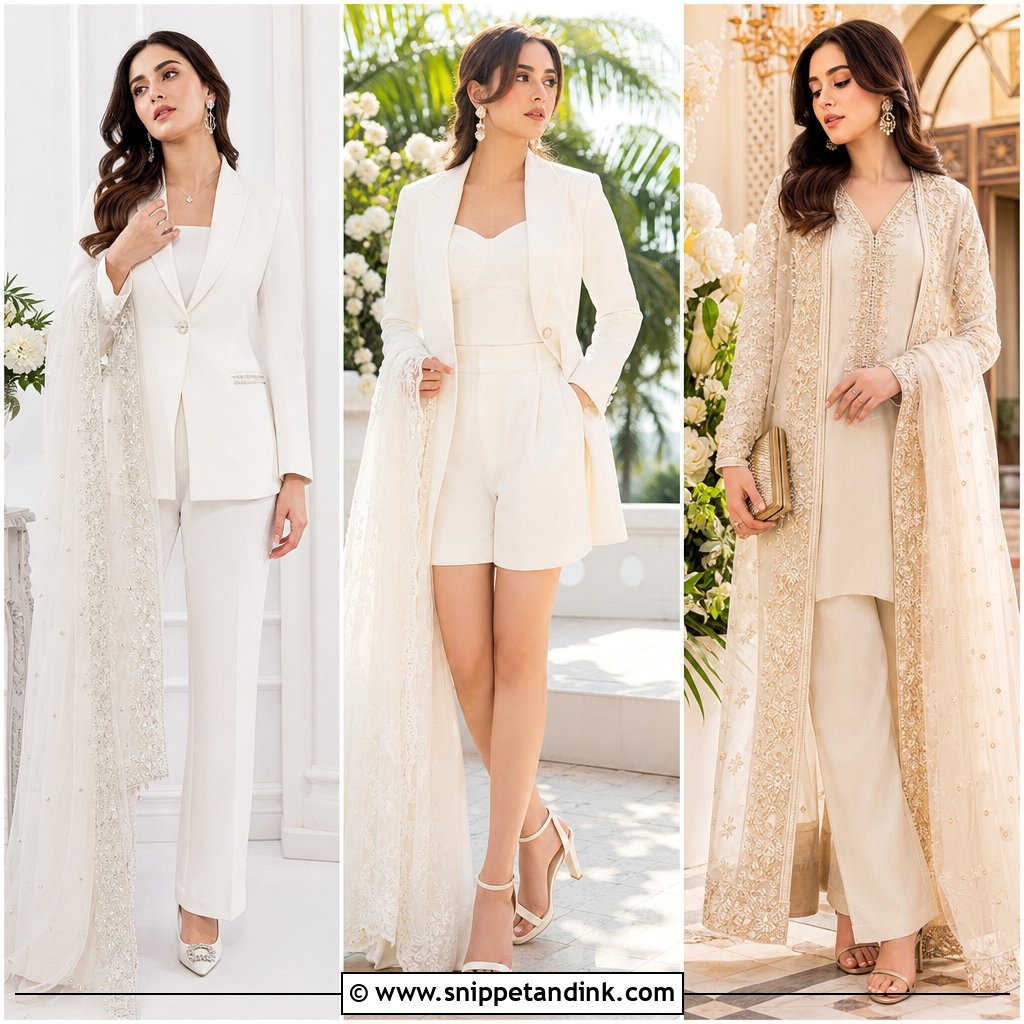
A peplum top gives a defined upper body over flowing sharara pants, so it reads festive without being a lehenga. A structured peplum with an embroidered waist, flared pants and a sheer dupatta pinned to one shoulder so the peplum shape stays visible. Raspberry, teal or cobalt work day or night. Jhumkas, a slim maang tikka if it suits your role, and block heels or embroidered flats. The peplum should end at the high hip. If it stops at your widest point, it adds width exactly where you don’t want it. Finish with a ponytail, soft curls or a side braid.
16. Jacket Lehenga Outfit For Marriage Function
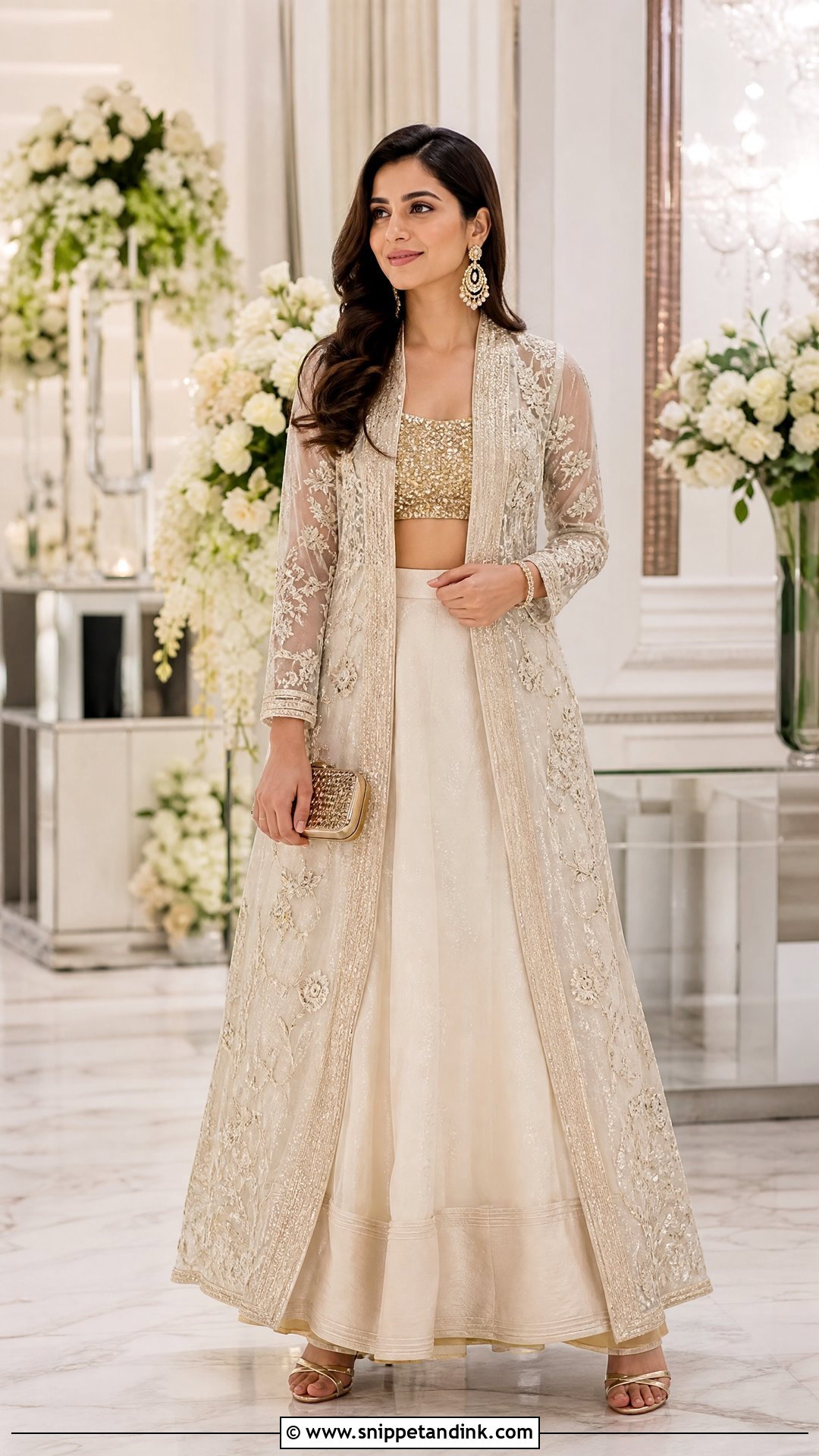
A long jacket changes a simple lehenga and blouse entirely. A lightweight skirt and crop top, then an embroidered open-front jacket, sheer and ankle-length or structured and knee-length depending on how formal the function is. Ivory with gold and navy with silver are reliable pairings. Drop earrings, a bracelet, a box clutch and low heels. The jacket replaces the dupatta, which makes it far easier in a crowd. Raise your arms in it before buying, since structured jackets often have high, tight armholes that pull every time you eat or dance.
17. Dhoti Pants And Crop Top For Marriage Function
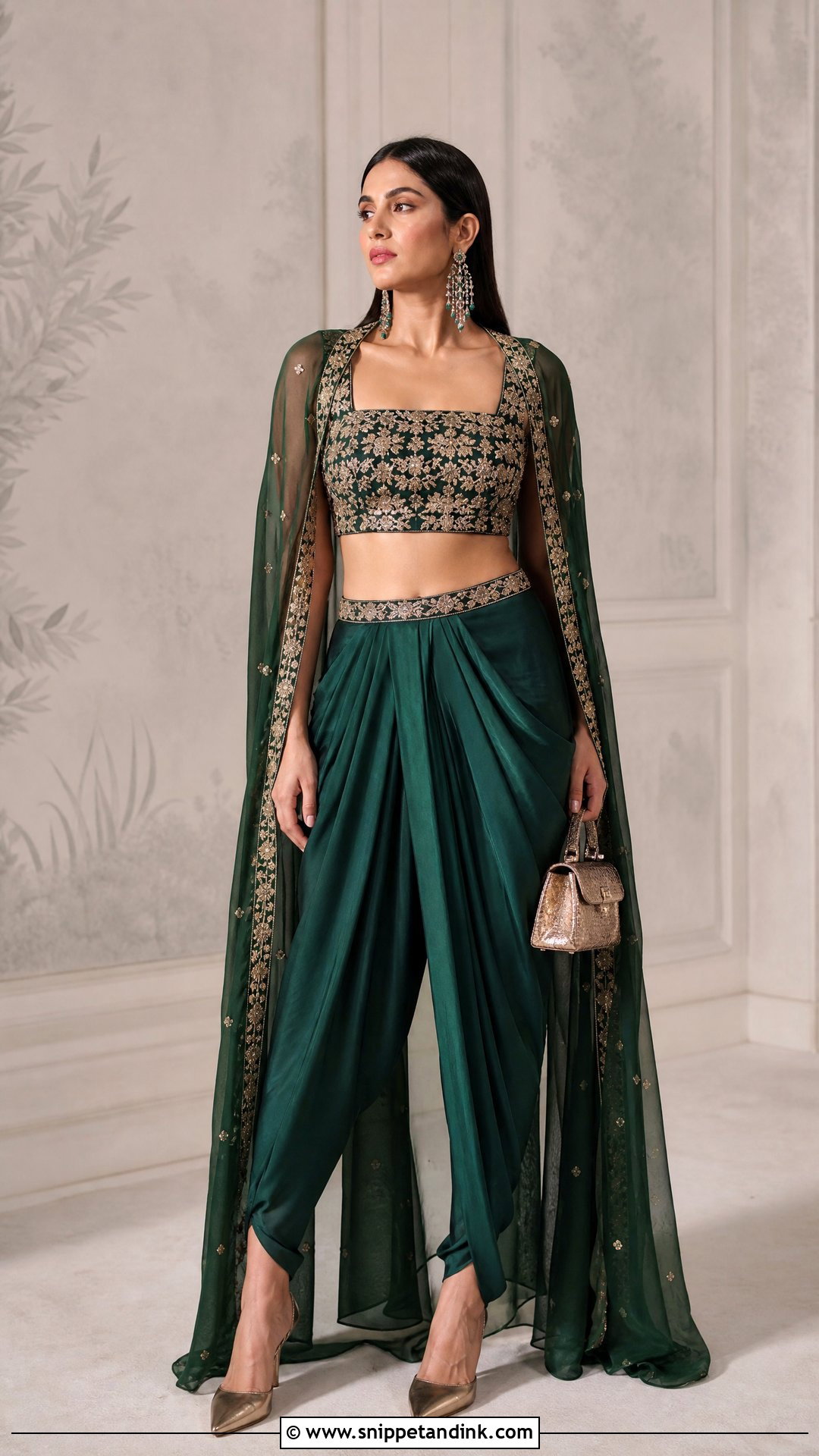
For a modern function, dhoti pants with a coordinated crop top make a distinctive Indo-Western outfit. Draped silk-blend or crepe pants and an embroidered blouse that sits securely at the waist, tied together with a long cape, short jacket or one-shoulder drape. Jewel tones or a single color head to toe. Pointed heels, statement earrings and a structured mini bag; long tassels tangle in draped fabric, so I keep accessories compact. The low drop of dhoti pants takes getting used to on stairs, so walk in them at home first. Save this for a cocktail, sangeet or reception where the family welcomes modern clothes.
18. Palazzo Suit For Marriage Function
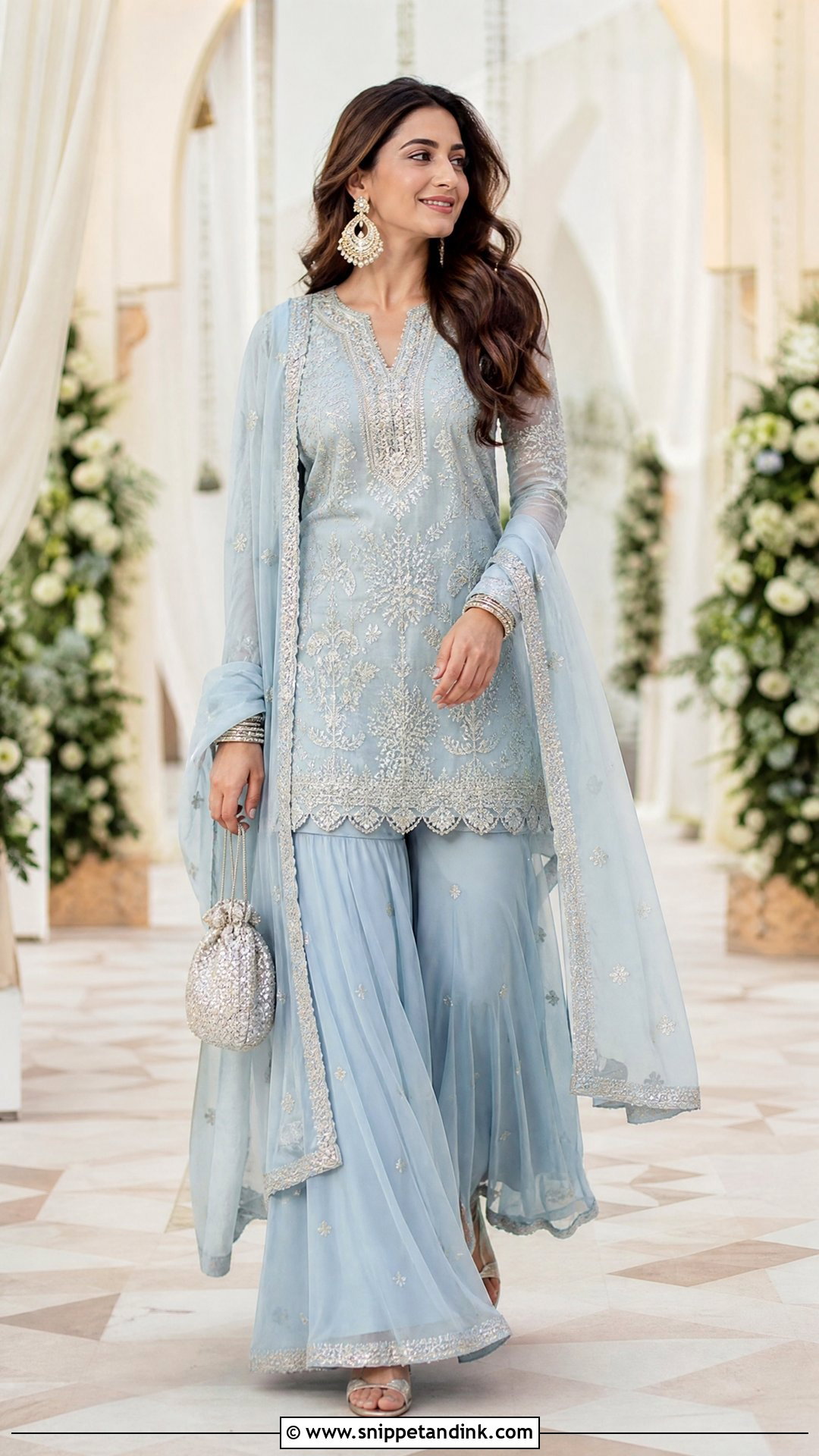
A palazzo suit gives a guest a dressy outfit with none of the skirt weight. A straight or slightly flared kurta, wide-leg palazzos and an embroidered dupatta in georgette, crepe or a silk blend; powder blue or rust by day, magenta or emerald at night. Chandbalis, coordinating bangles and a potli. Wide pants and stilettos fight each other, so choose block heels or embellished flats. I’d end the kurta above or below the widest part of the hip, never right on it. A low ponytail or side-swept curls keep it approachable.
19. Kurta And Skirt Outfit For Marriage Function
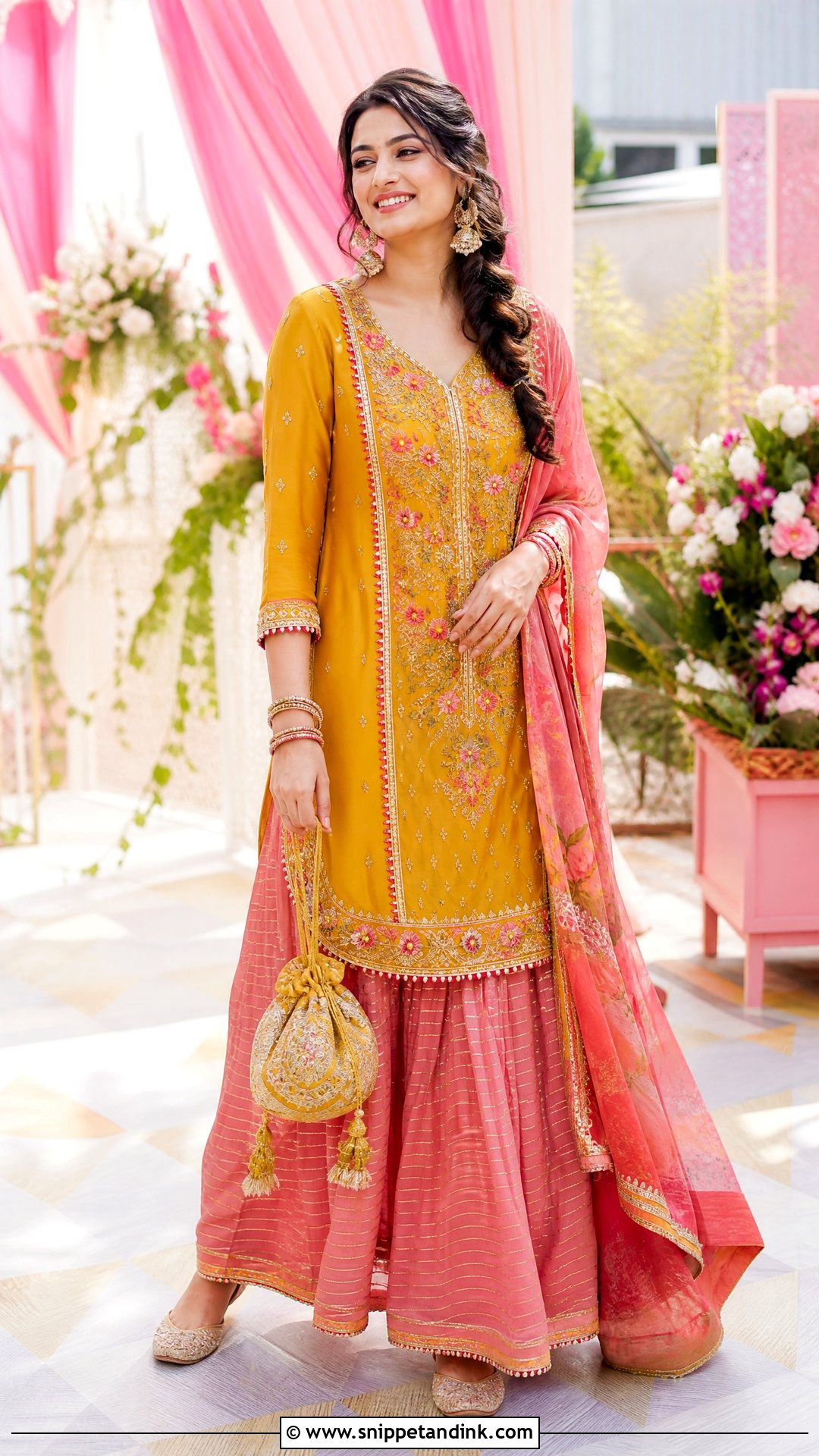
A kurta over a flared skirt gives traditional coverage with the movement of a lehenga. A shorter kurta shows the waist; a knee-length one looks longer and more modest. Contrasts like mustard with pink or navy with ivory work well. Jhumkas, stacked bangles, a potli and cushioned juttis, with the dupatta pinned at one shoulder or draped across the front. Two layers sit at the hip here, so I pair a heavier kurta with a light skirt and never two heavy pieces together. Keep the hem just off the floor, and wear a side braid or soft bun.
20. Indo-Western Jumpsuit For Marriage Function
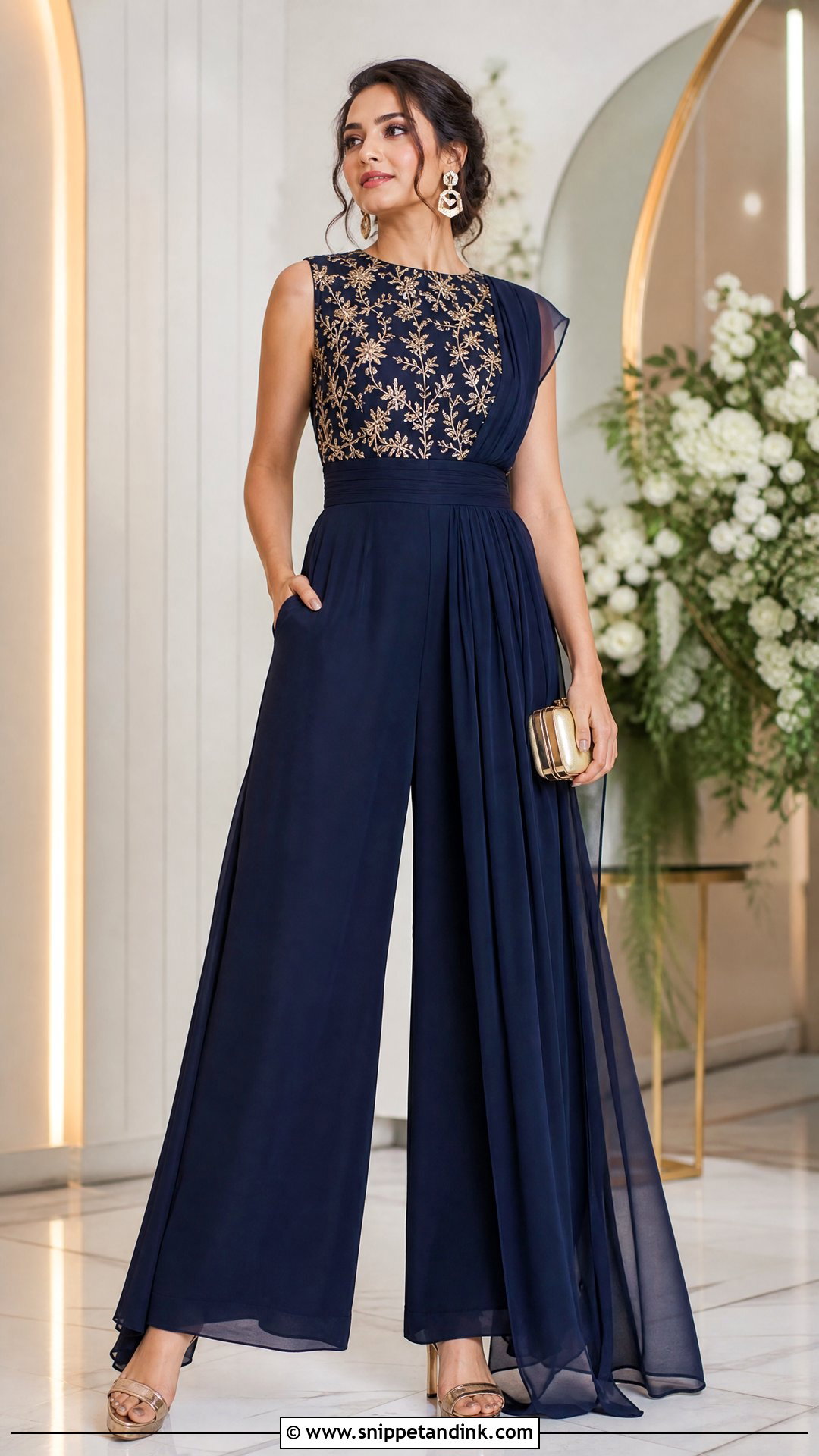
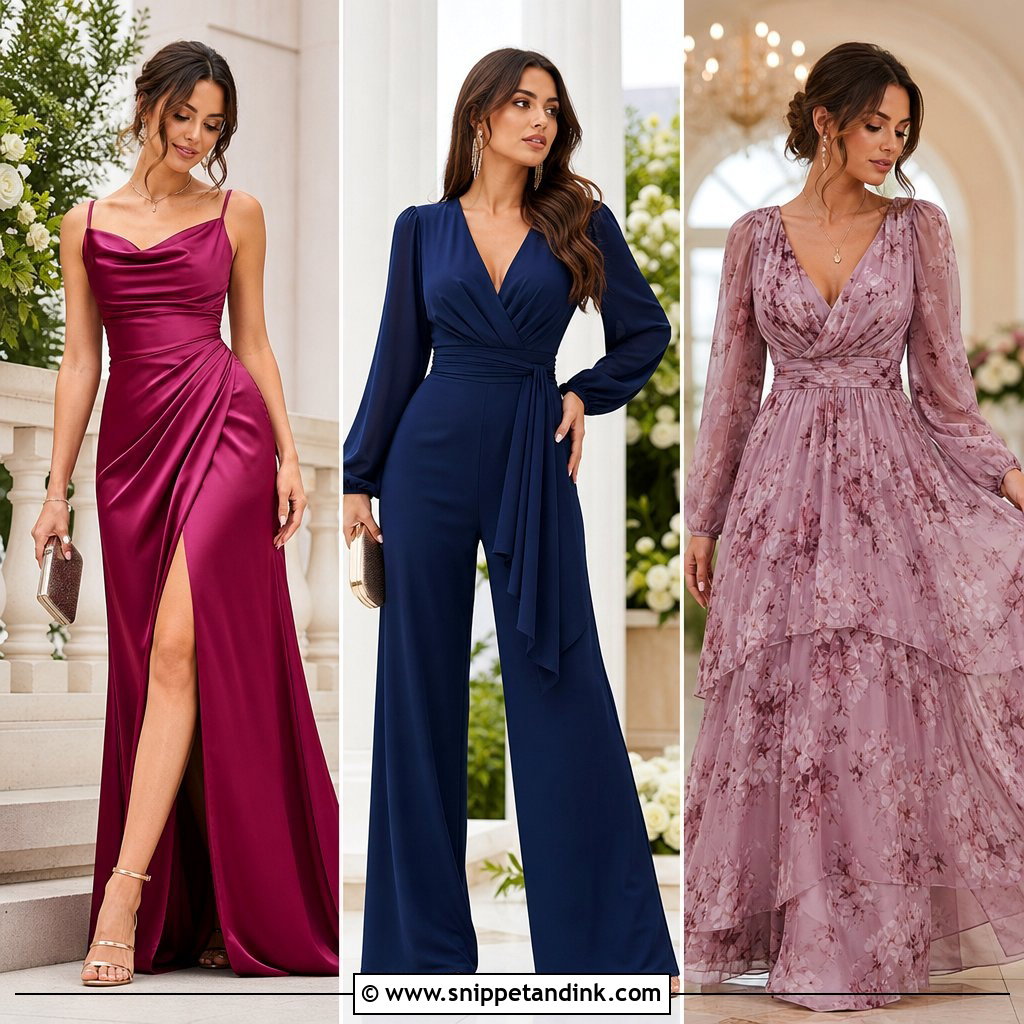
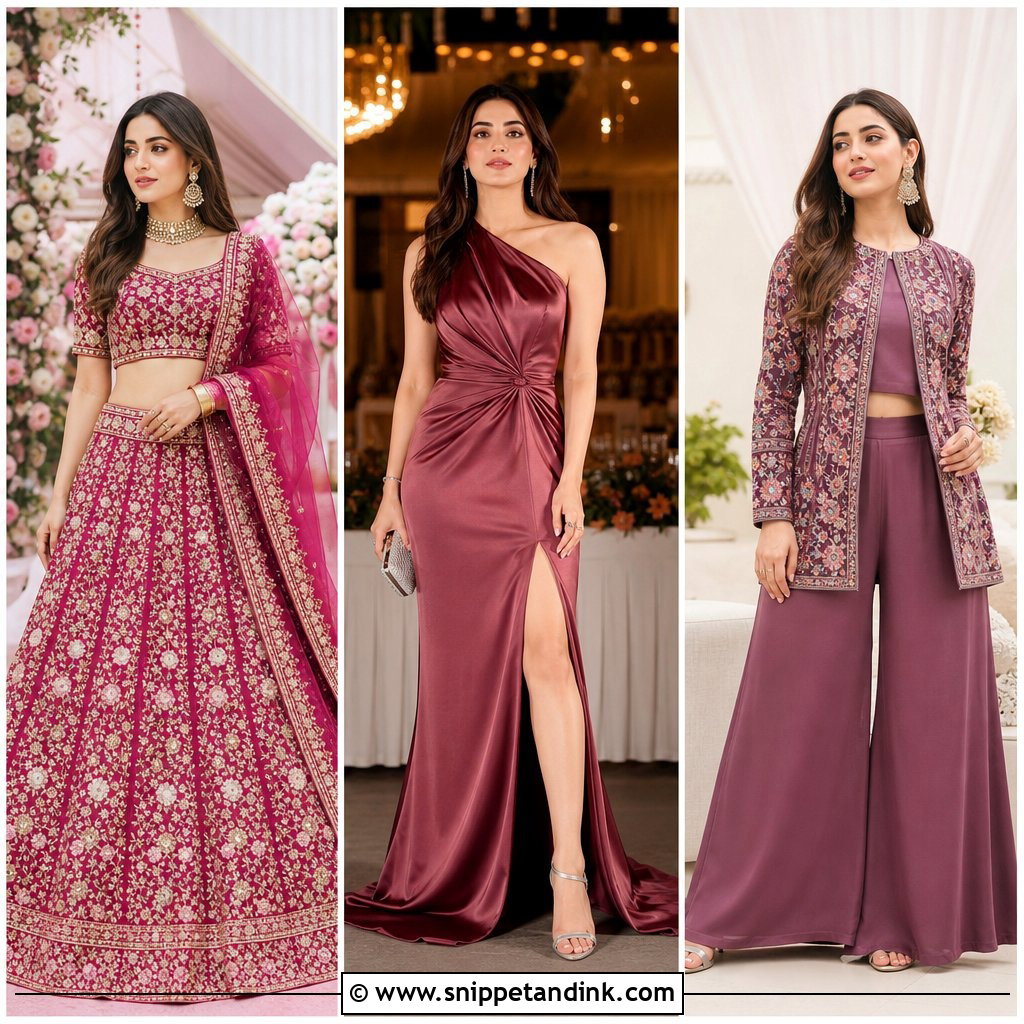
If traditional layers feel like hard work, an Indo-Western jumpsuit is the one-piece answer. A wide leg, an embroidered bodice, a defined waist and an attached drape or detachable cape, in emerald, navy or champagne. Metallic block heels, sculptural earrings and a small clutch, with a belt only if it matches the embroidery. Choose a neckline that works with the underwear you’ll actually wear, and hem for your shoes. I always check whether the drape is stitched down or just hooked on; a hooked drape tends to slip once the dancing starts.
21. Pant Saree Outfit For Marriage Function
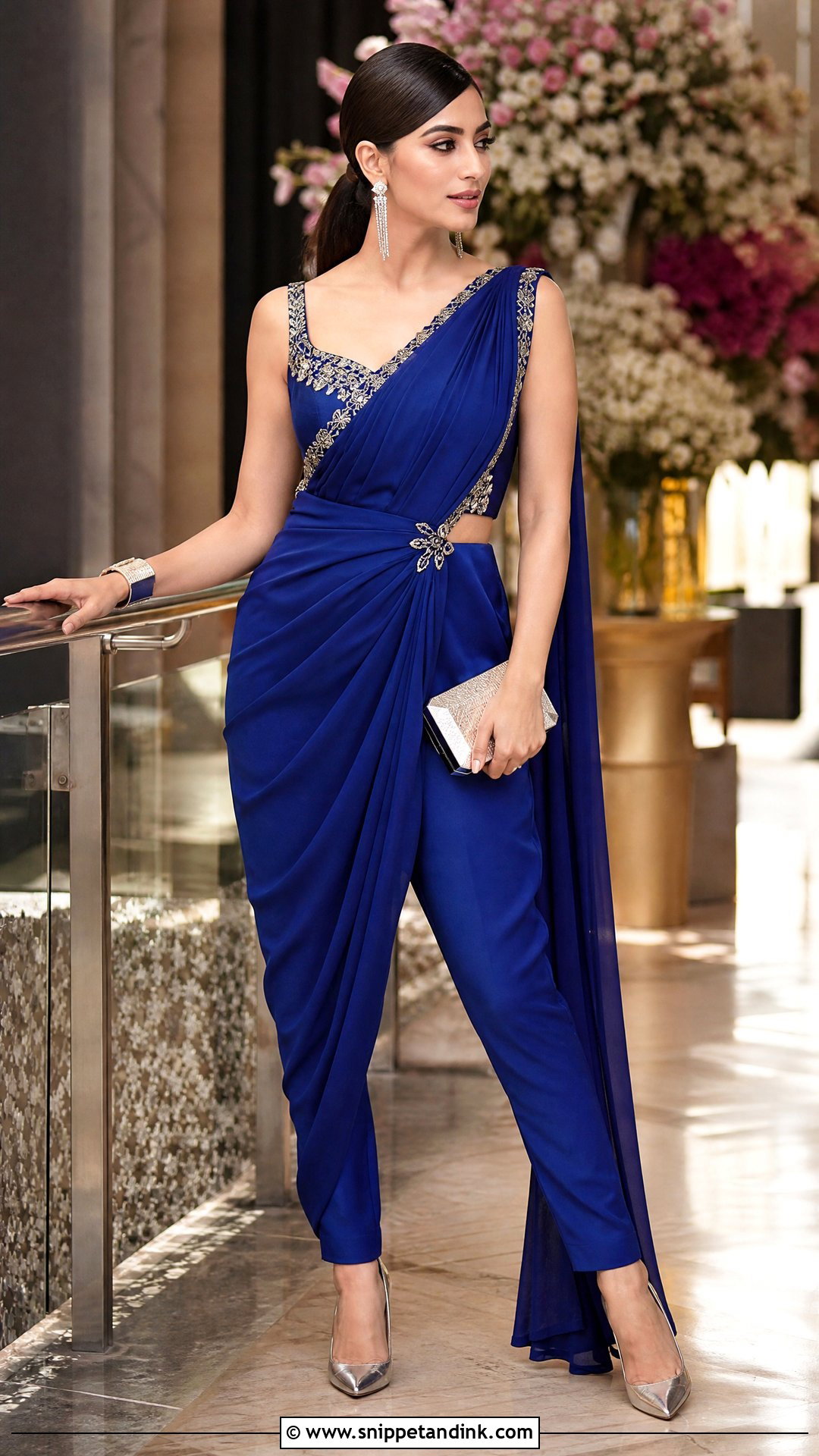
A pant saree combines a saree’s drape with the security of trousers. Tapered pants, a coordinated blouse and a pre-stitched pallu across the body in crepe or georgette, which fold cleanly without bulk. Monochrome black, cobalt or metallic beige looks streamlined. Cuff bracelets, drop earrings, a structured clutch and pointed heels. Trouser length makes or breaks it: the hem should just meet the top of your shoe, because a cropped pant makes the drape look accidental. A sleek bun or side-parted ponytail, and you’re set for dancing and moving between venues.
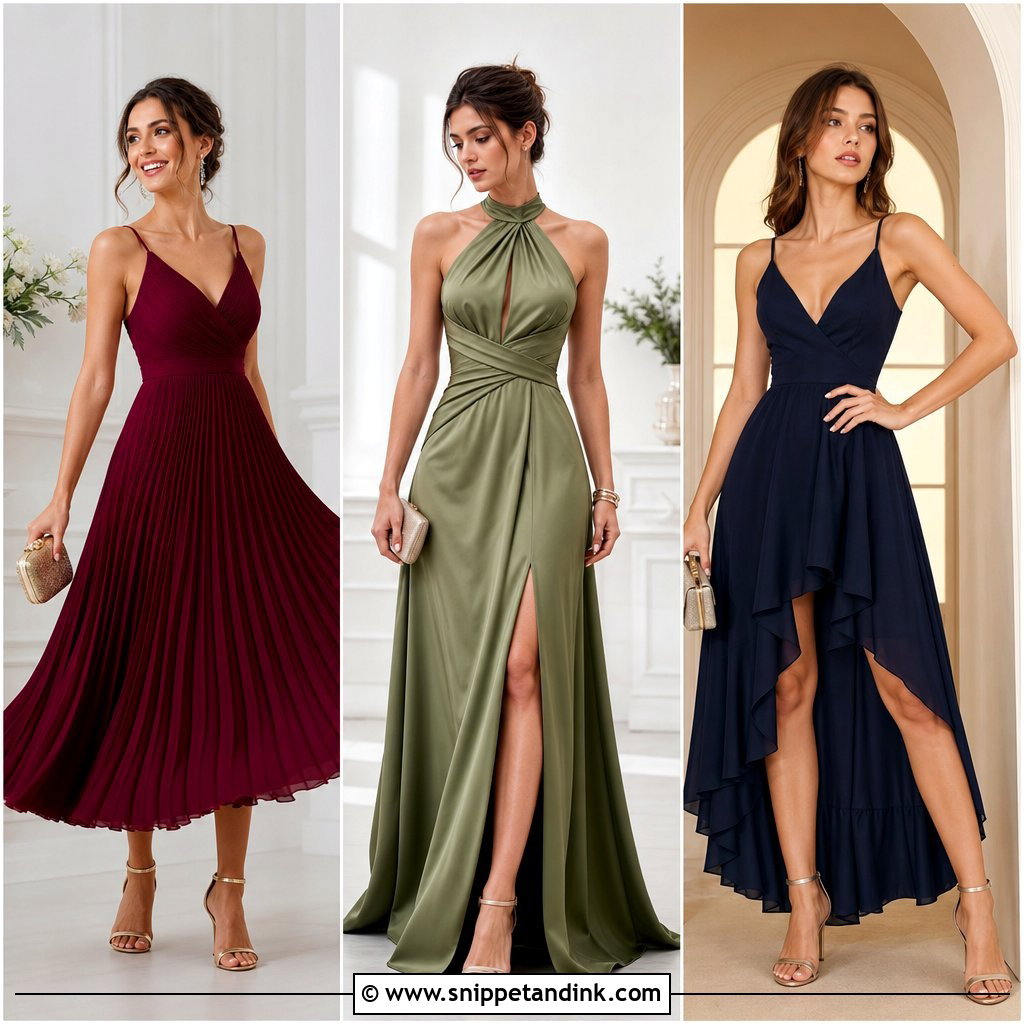
22. Floor-Length Gown For Reception Function
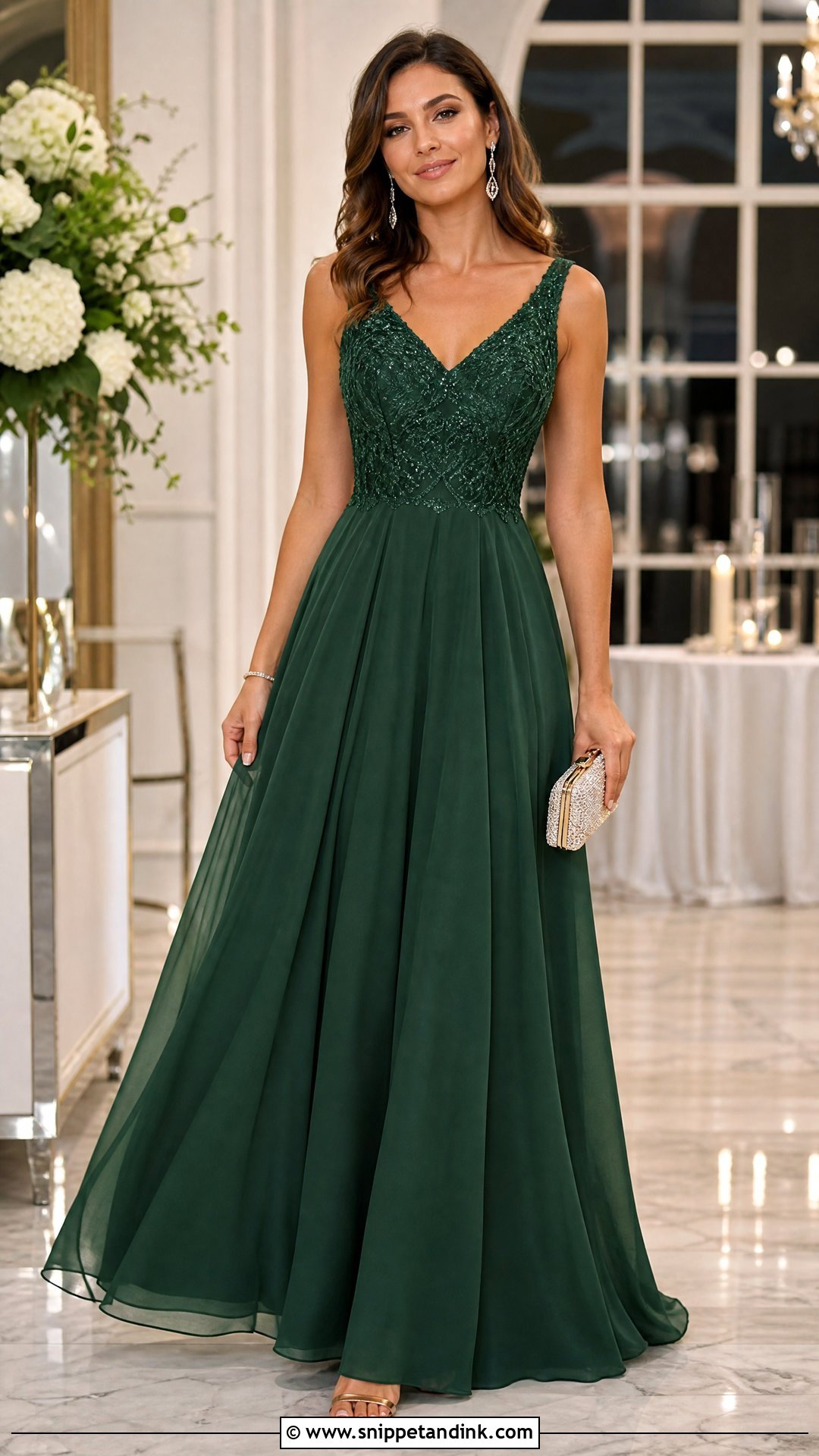
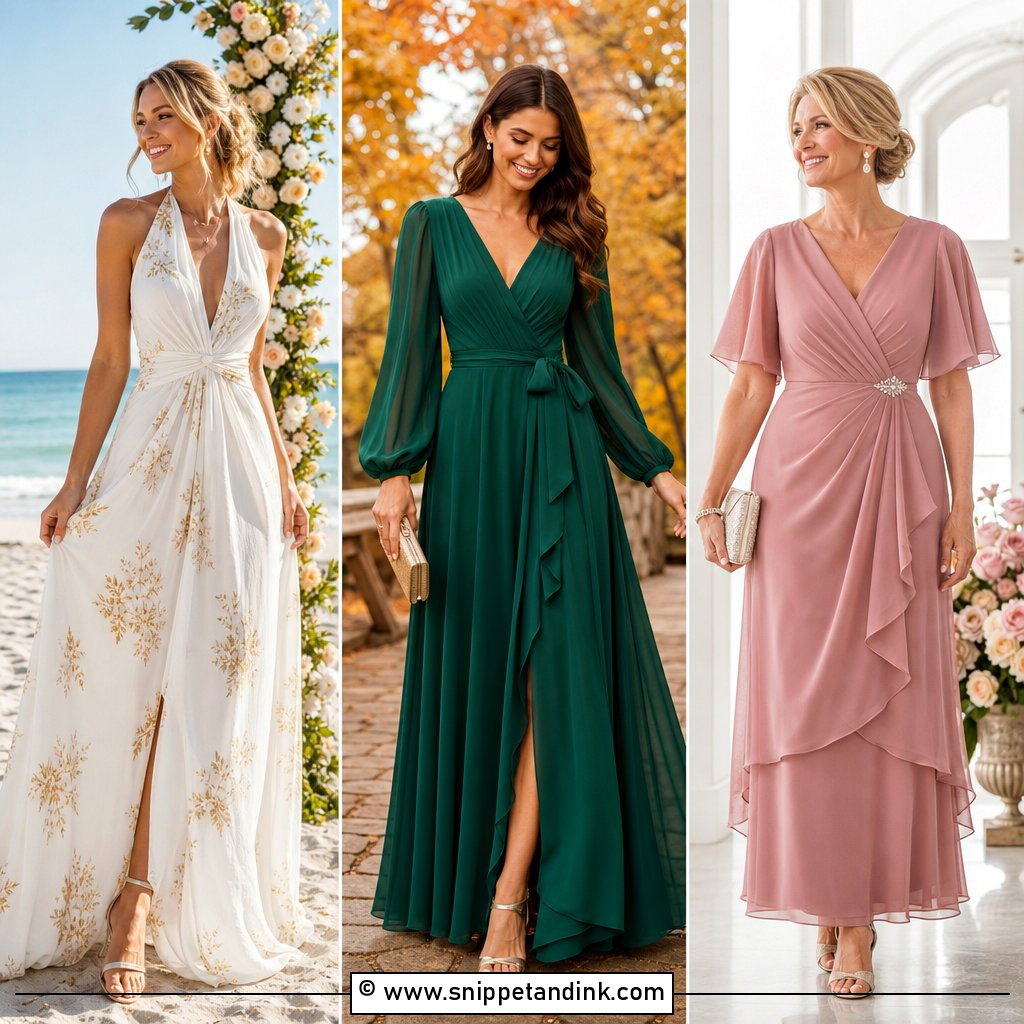
A floor-length gown suits a reception where the dress code leans modern or Indo-Western. A-line, empire waist or gently fitted, in satin, crepe, tulle or embroidered net; deep blue, forest green or dusty rose photograph well under evening light. Drop earrings, a fine bracelet, a structured clutch and comfortable heels, and no necklace if the bodice is beaded. I hem gowns to sit just off the floor in the exact heels being worn, so the front never catches as you walk. A low bun, glossy waves or side-swept hair.
23. Silk Skirt And Blouse For Marriage Function
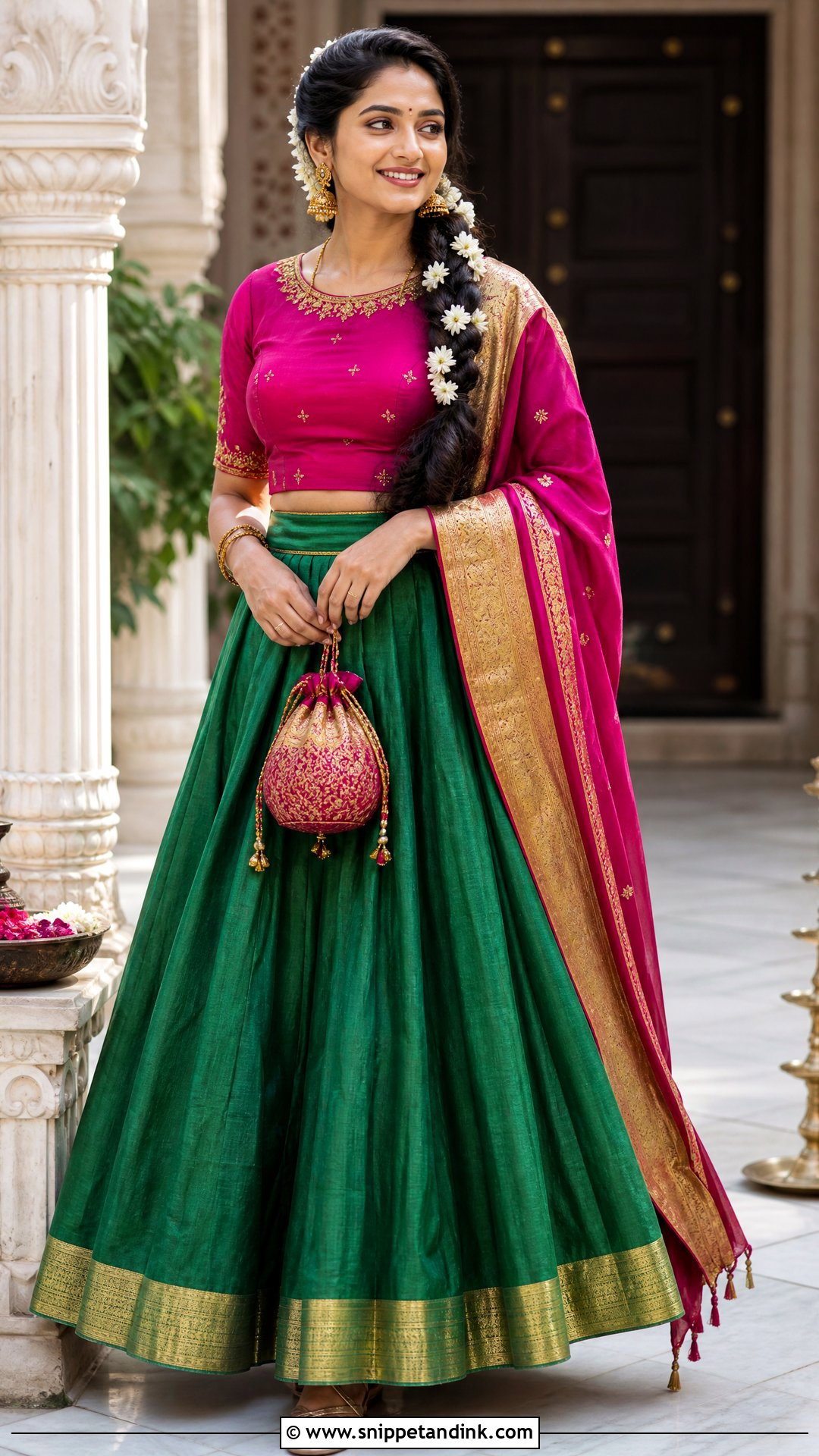
A silk skirt and blouse draws on South Indian occasion wear, in the spirit of the pattu pavadai and half-saree. A richly colored flared skirt, a contrasting fitted blouse and a dupatta over one shoulder: emerald with magenta, royal blue with pink, mustard with maroon. The gold borders do the decorating. Temple earrings, bangles, a small potli and comfortable sandals, with a braid dressed in flowers. A heavy woven border weighs the hem down, so the waist needs a sturdy drawstring or hook that won’t slip during a long ritual. Keep the blouse fitted through the shoulders to balance the skirt.
24. Empire Waist Anarkali For Marriage Function
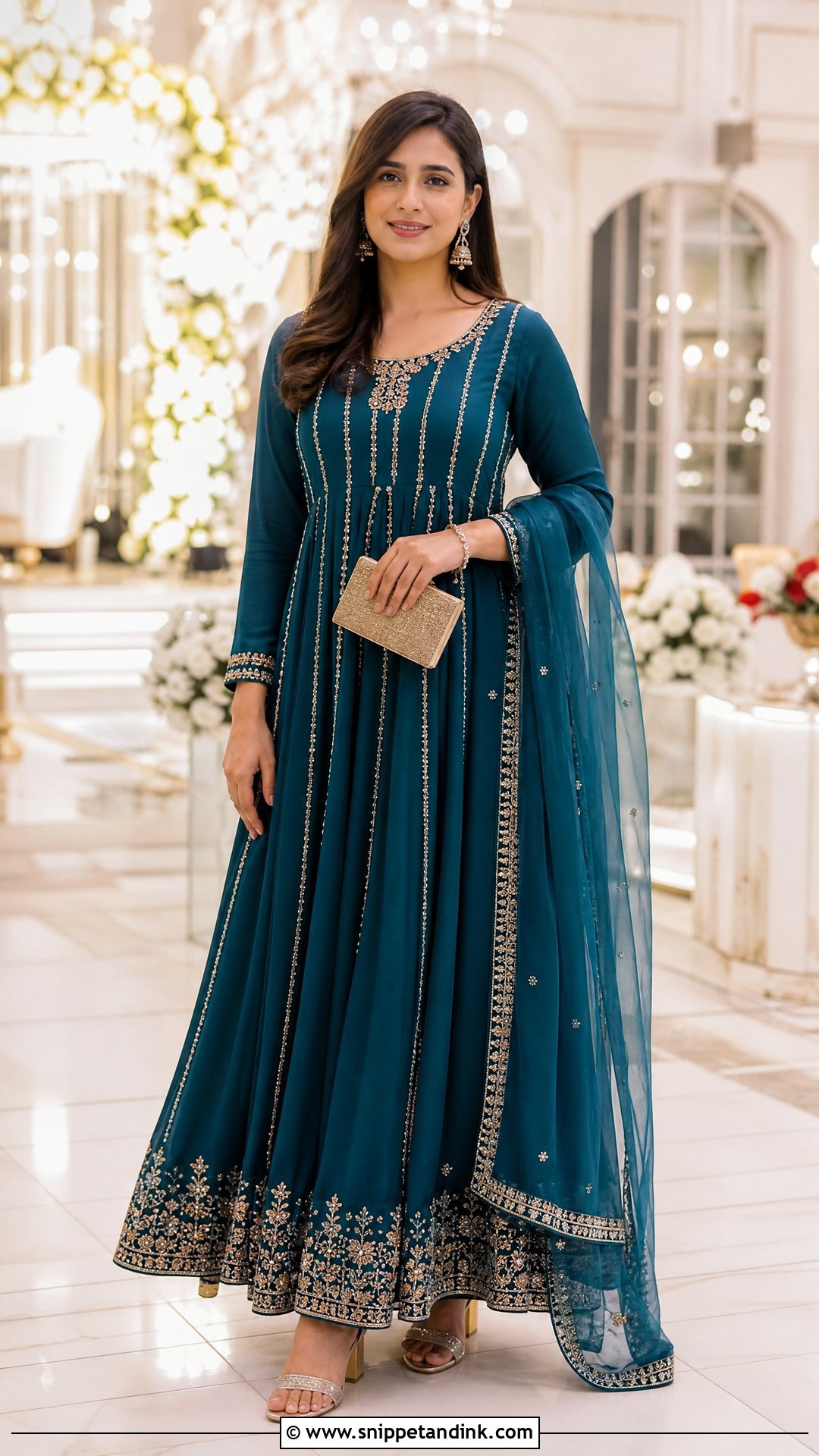
An empire-waist anarkali is fitted just beneath the bust, so the skirt falls without clinging at the waist or hips, and it stays comfortable across a long function. Georgette, chiffon or light silk with vertical embroidery and a softly bordered dupatta; deep teal, ruby pink or navy for formal events. Medium earrings, a slim bracelet, block heels and a compact clutch. That underbust seam has to sit right under the bust, not a finger lower, or the whole line drops. Keep large motifs off the fullest areas, and a V or scoop neck will lengthen the upper body.
25. Georgette Saree For Reception Function
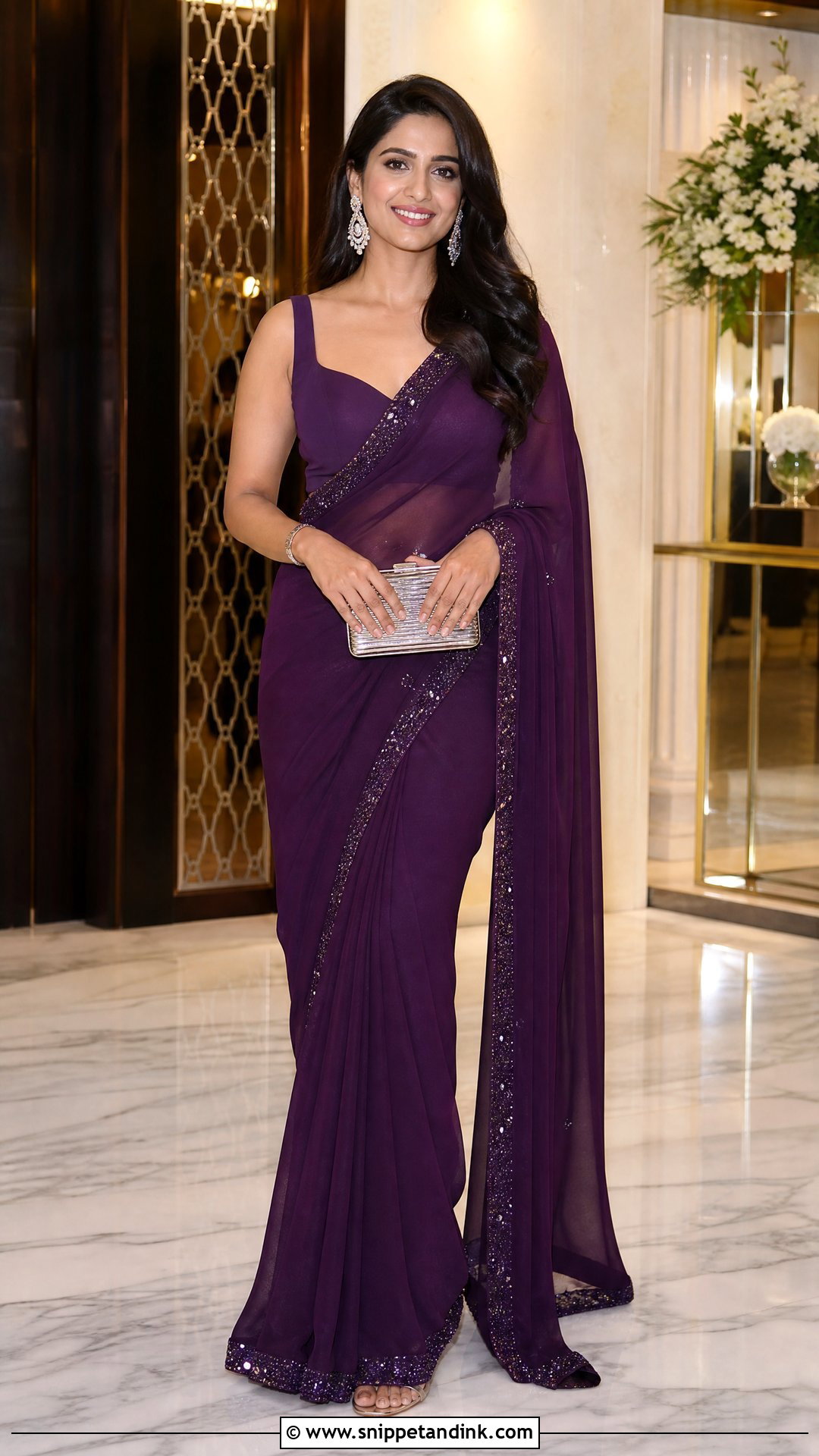
Georgette gives a reception saree movement without the weight of heavy silk. A solid jewel tone, muted pastel or metallic with a sequined or embroidered border, and a fitted blouse in matching fabric, velvet or lightly embellished net. Statement earrings, a slim bracelet, a structured clutch and comfortable heels. Georgette falls close to the body, so every bump of the petticoat shows; a fitted, flared petticoat in a matching color keeps the line clean. Pin at the waist and shoulder, and let one feature lead, the neckline, the earrings or the border.
Getting Blouses Stitched Before the Wedding-Season Rush
Many of these sarees and lehengas arrive with unstitched blouse fabric, and in peak wedding season good tailors get booked weeks out. Here’s the order I follow so nothing arrives the night before.
- Hand over the fabric early, a few weeks ahead at least, and longer if your dates fall in the busiest months.
- Bring a blouse that already fits you well as a reference. It saves a measuring round and gets the armholes right.
- Decide on padding, and on hooks or a zip. A side zip is much easier if you’ll be dressing yourself.
- Ask for extra seam allowance so the blouse can be let out for a later wedding.
- Book a trial and wear the blouse with the actual saree or skirt and the jewelry. Raise your arms, sit down and reach across a table before you sign off.
While you’re at the tailor, hand over any new sarees for fall and pico. The fall is the strip stitched inside the hem that helps the saree hang and protects the border, and pico finishes the raw edges. It’s a quick job but it gets queued behind blouses in busy months, so I always bring the sarees along on the first visit.
From Haldi Yellow to Reception Silk
Good function dressing comes down to tailoring, footwear and accessories that support the outfit instead of competing with it. Think about the function, the venue, the weather, the family’s expectations and how many hours you’ll spend in it. Light shararas and floral lehengas belong to daytime; silk sarees, embellished anarkalis, gowns and velvet to formal evenings. Secure draping, breathable lining and shoes you can stand in all night matter more than embellishment. A balanced palette and a proper fit make even a simple outfit look ready for any of these events.
You'll Like These Ideas:



Leave a Reply