
Ask brides what they like about a sweetheart neckline and most point to the same thing: it frames the collarbone and shoulders without exposing much. That’s why it travels so well across silhouettes, from sleek satin to floral lace ball gowns, modern corsets and long-sleeve designs. Accessories change its mood more than people expect. Pearls lean classic, sparkling earrings push toward glamour, and a plain veil keeps it fresh. I’ve started with jewelry below, since it’s the decision most brides leave until far too late.
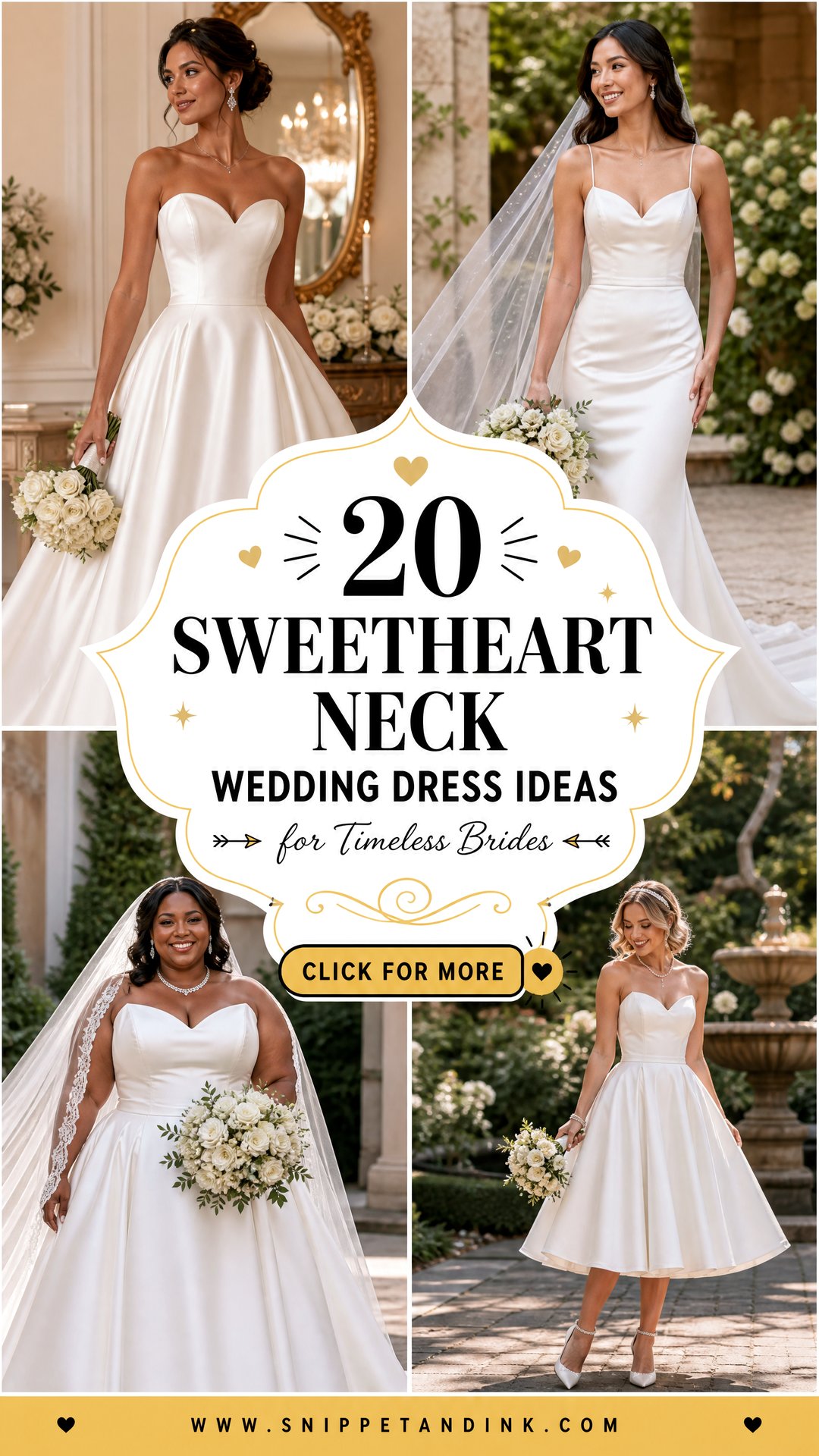
Necklace or Bare Collarbone With a Heart-Shaped Neckline
A sweetheart leaves an open, curved space between the bodice edge and the jaw, and jewelry either sits well in that space or crowds it. This is how I decide with a bride.
When a necklace earns its place
A short pendant or fine chain resting at the collarbone, well above the dip, follows the curve and works with plain satin, crepe or Mikado. Ideally the pendant echoes the point of the dip rather than hanging down into it. Anything that lands right at the bodice edge competes with the neckline and swings into the fabric every time you move.
When to leave the neck bare
If the bodice is beaded, appliquéd or edged in lace, or you’re wearing off-shoulder bands, the neckline is already decorated. Let earrings carry it instead: drops with an updo, studs with hair worn down, since long earrings tangle in loose waves within the first hour.
Bring the actual pieces to your second fitting. Seeing them against the real fabric, rather than in a photo, usually settles the question in minutes.
1. Strapless Satin Sweetheart Wedding Dress
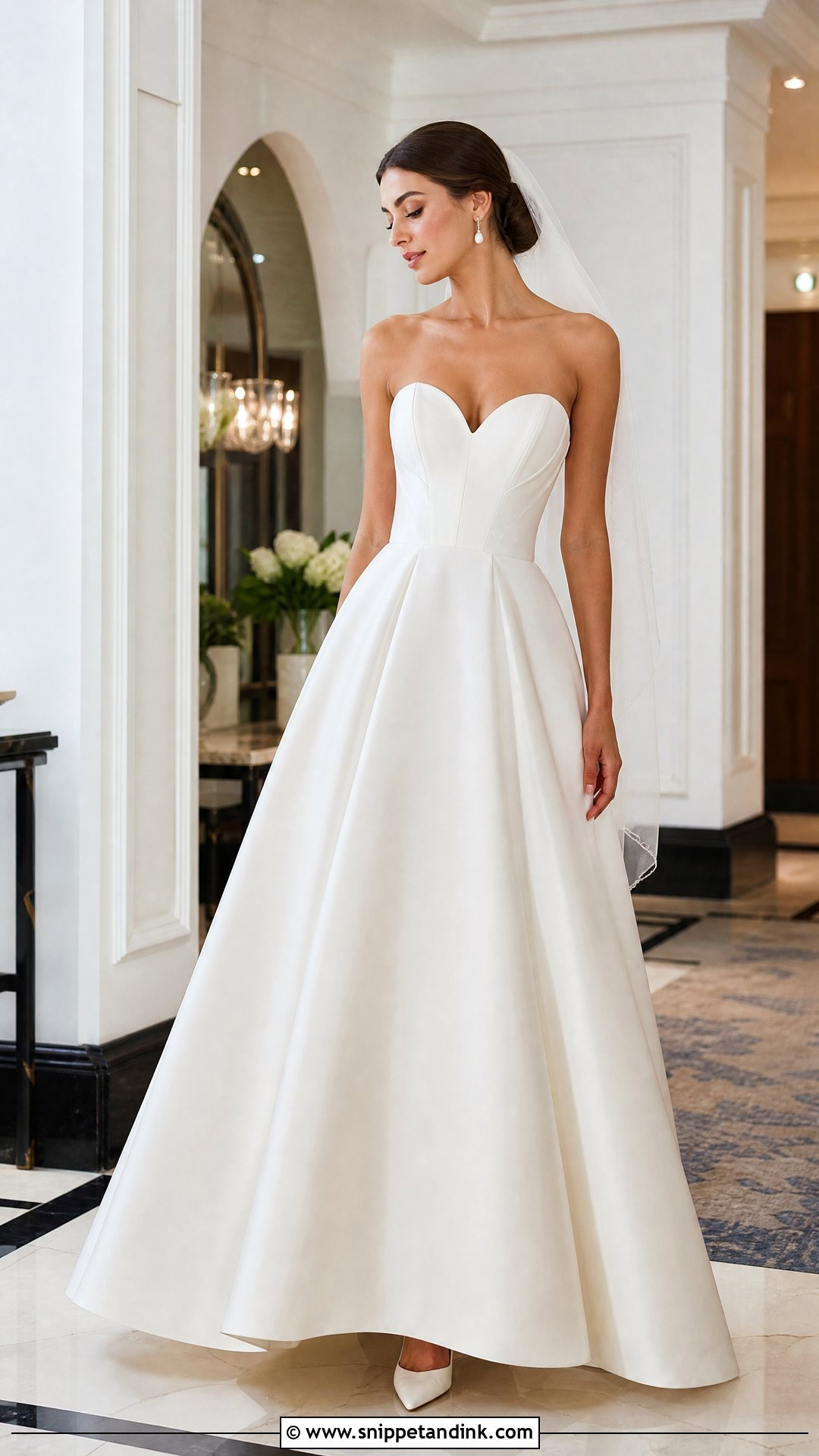
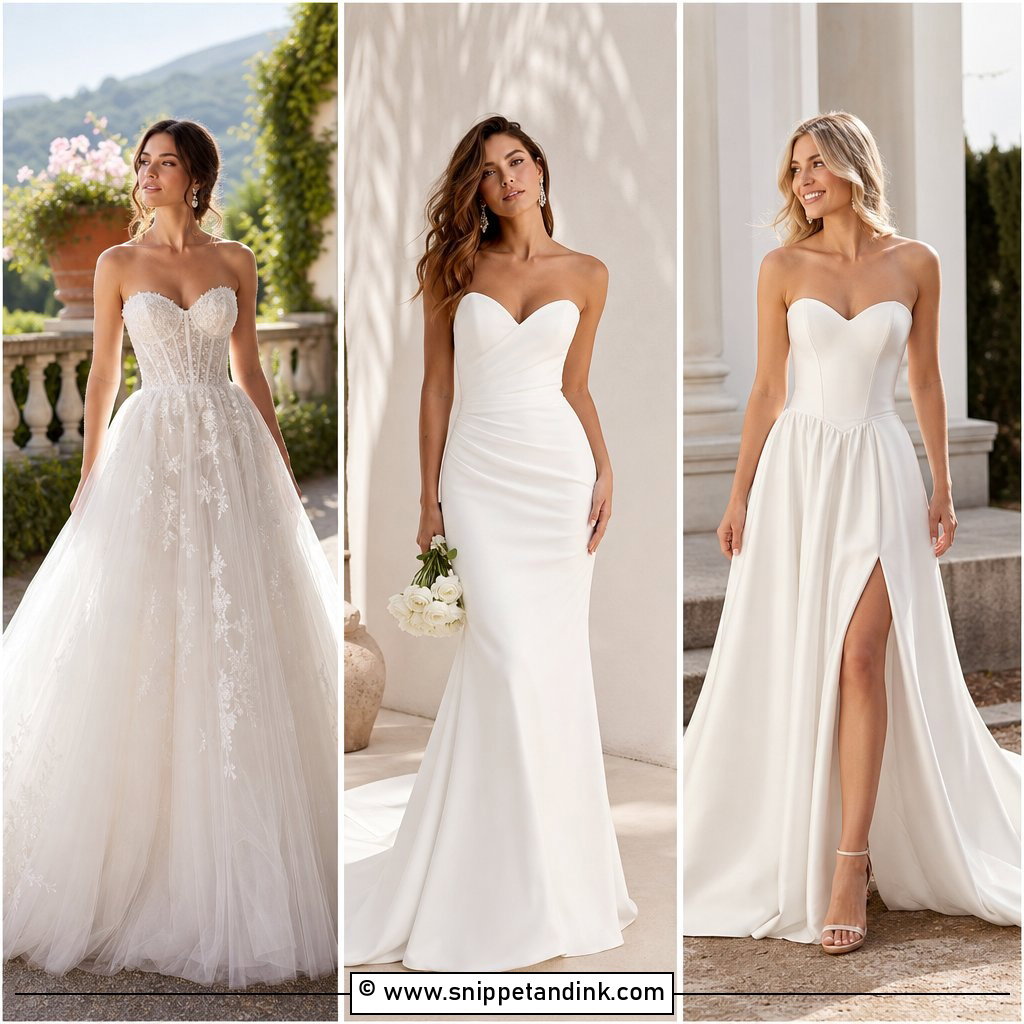
Smooth satin gives a strapless sweetheart wedding dress a polished finish, provided the bodice has real internal support. A gently fitted waist flowing into an A-line skirt keeps the proportions balanced. I’d add pearl drops, a delicate bracelet, pointed ivory heels, a fingertip veil and a low bun that leaves the shoulders clear, with covered back buttons or subtle bodice pleating for definition. One satin habit worth knowing: it marks from damp hands, so keep tissues close and hold your bouquet, not your skirt, when nerves kick in.
2. Lace A-Line Sweetheart Wedding Dress
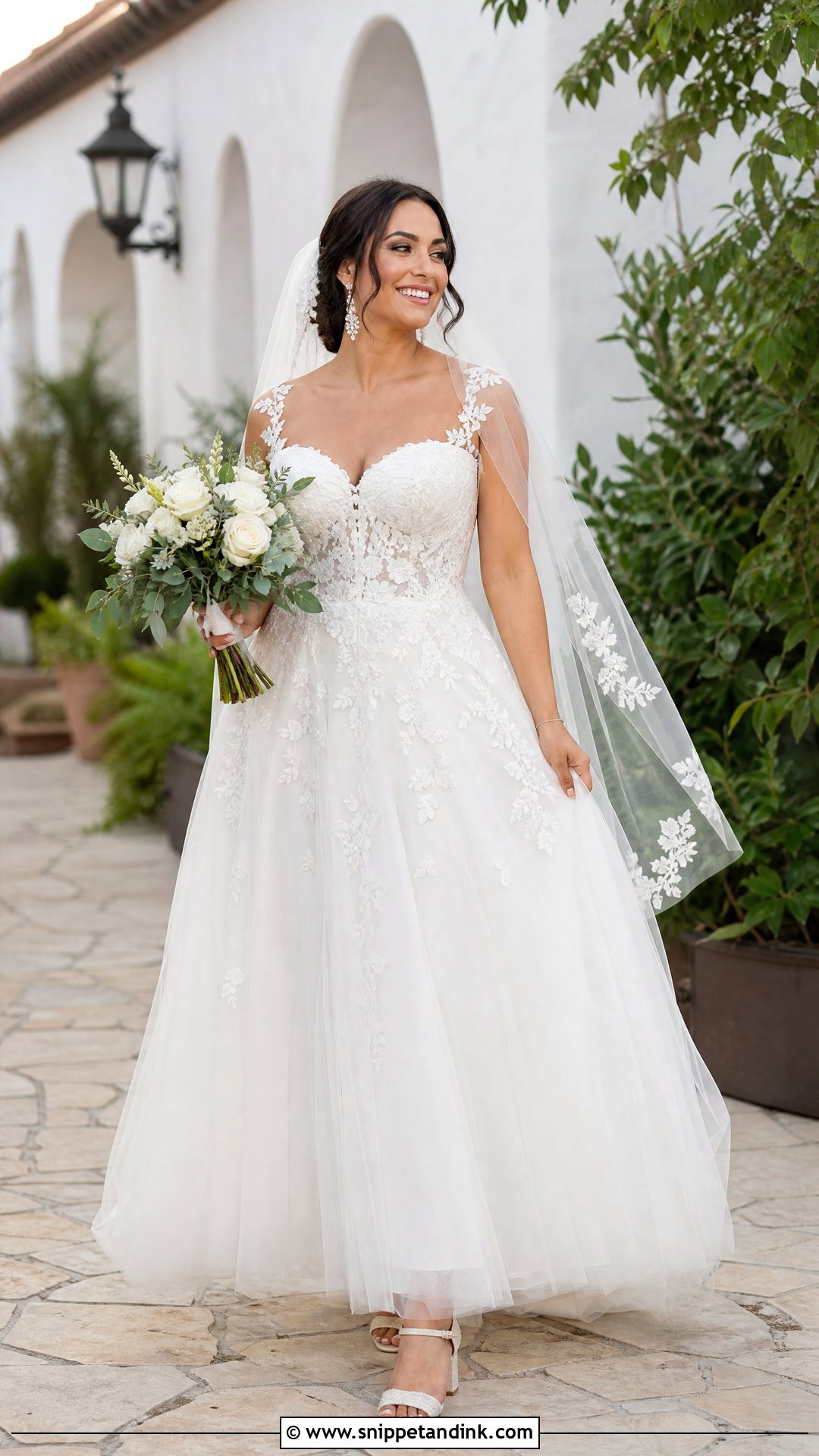
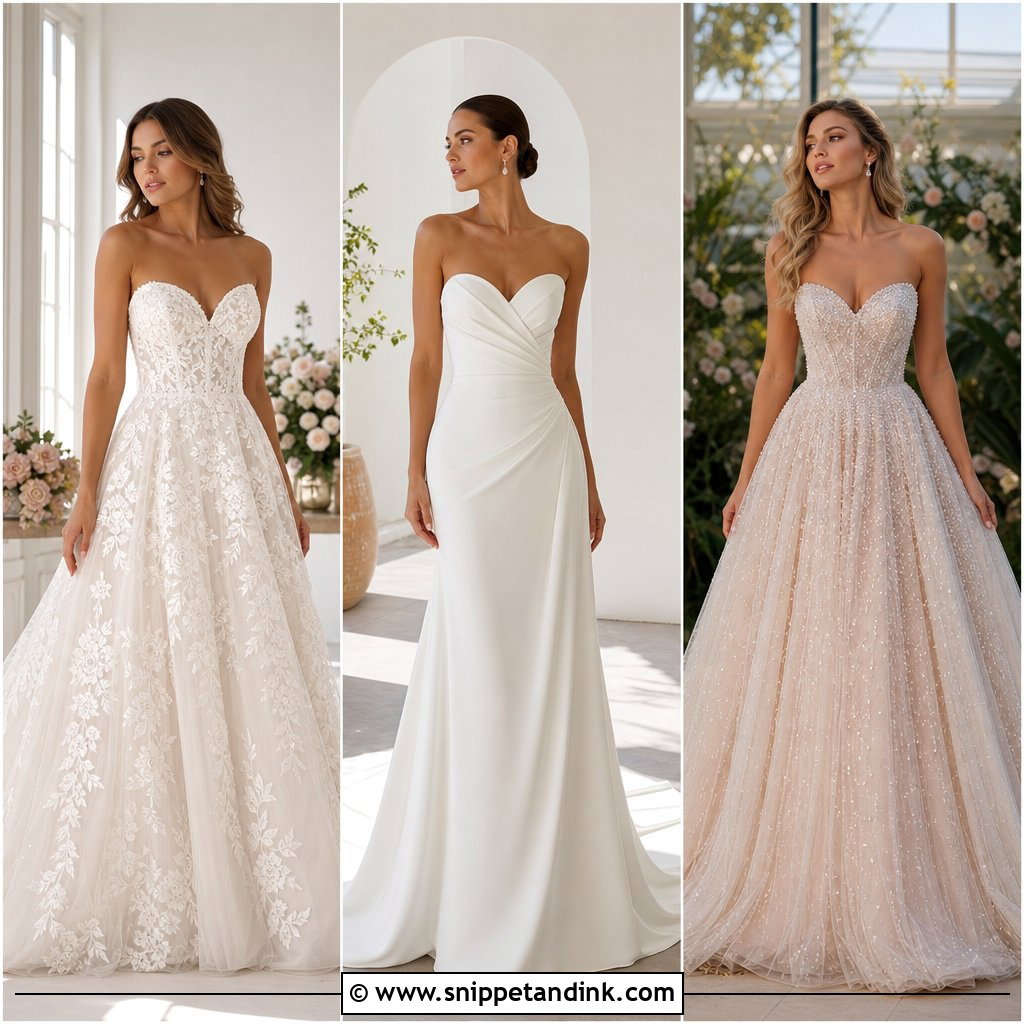
Lace and an A-line silhouette feel romantic without tipping into formal. I look for floral lace that runs from the fitted bodice onto the skirt, with a soft tulle layer underneath for movement. Small crystal earrings, a light lace-edged veil and block-heel sandals keep it easy, and a loose chignon or half-up style suits the texture. Removable lace straps add coverage while keeping the heart-shaped neckline intact, and they’re a simple addition for a seamstress to make. Gardens and estates, with white flowers and greenery, suit it.
3. Sweetheart Ball Gown Wedding Dress
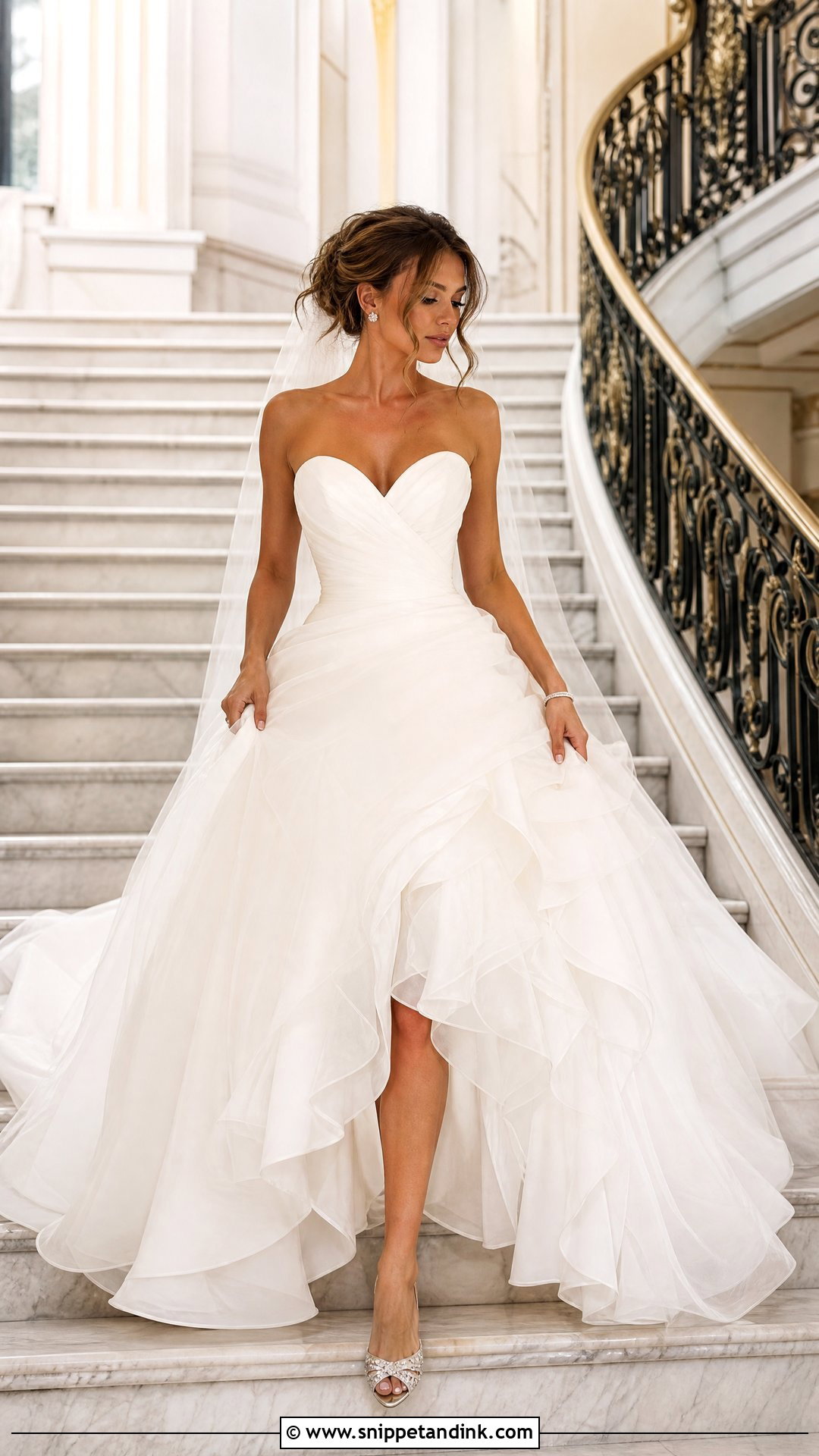
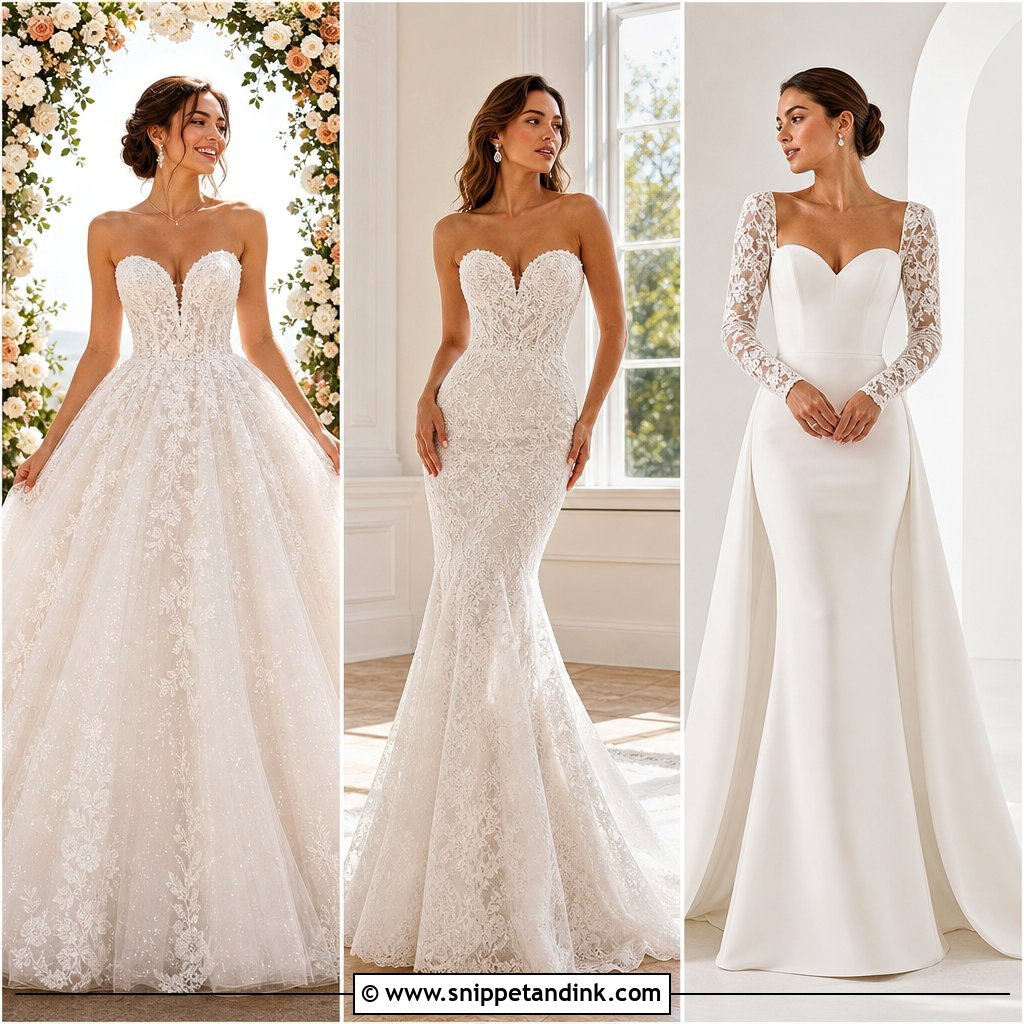
A ball gown keeps the upper body defined and puts all the drama into the skirt, with tulle or organza floating out from a fitted waist. The depth of the sweetheart dip shifts the mood: a moderate one reads classic, a deeper curve more current. Sparkling studs, a slim tennis bracelet and a long veil under a neat updo are plenty, because the skirt is already doing a lot. Satin pumps or embellished low heels vanish under the hem, so choose them for comfort first. Grand ballrooms and evening receptions are its territory.
4. Mermaid Sweetheart Wedding Dress
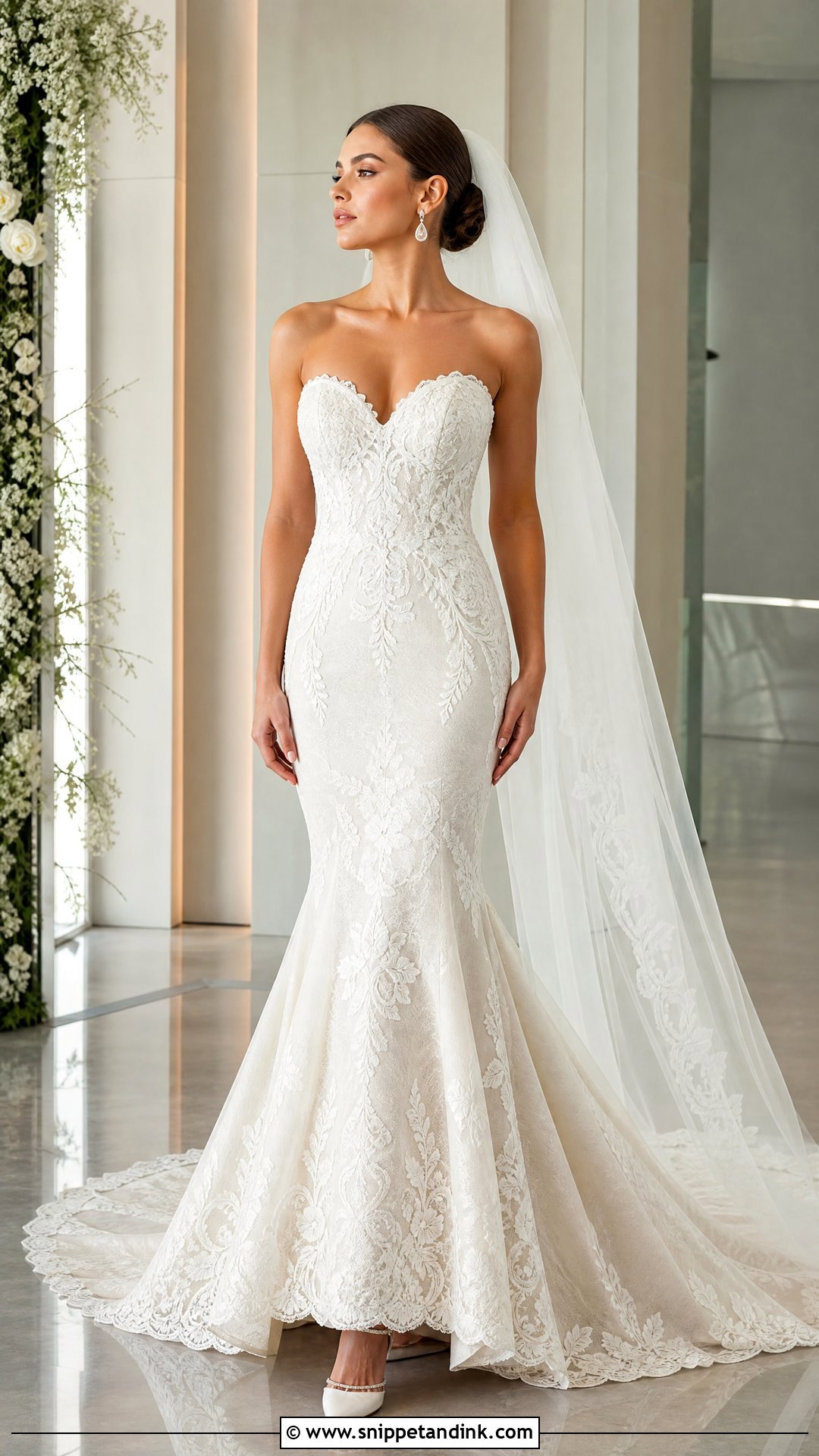
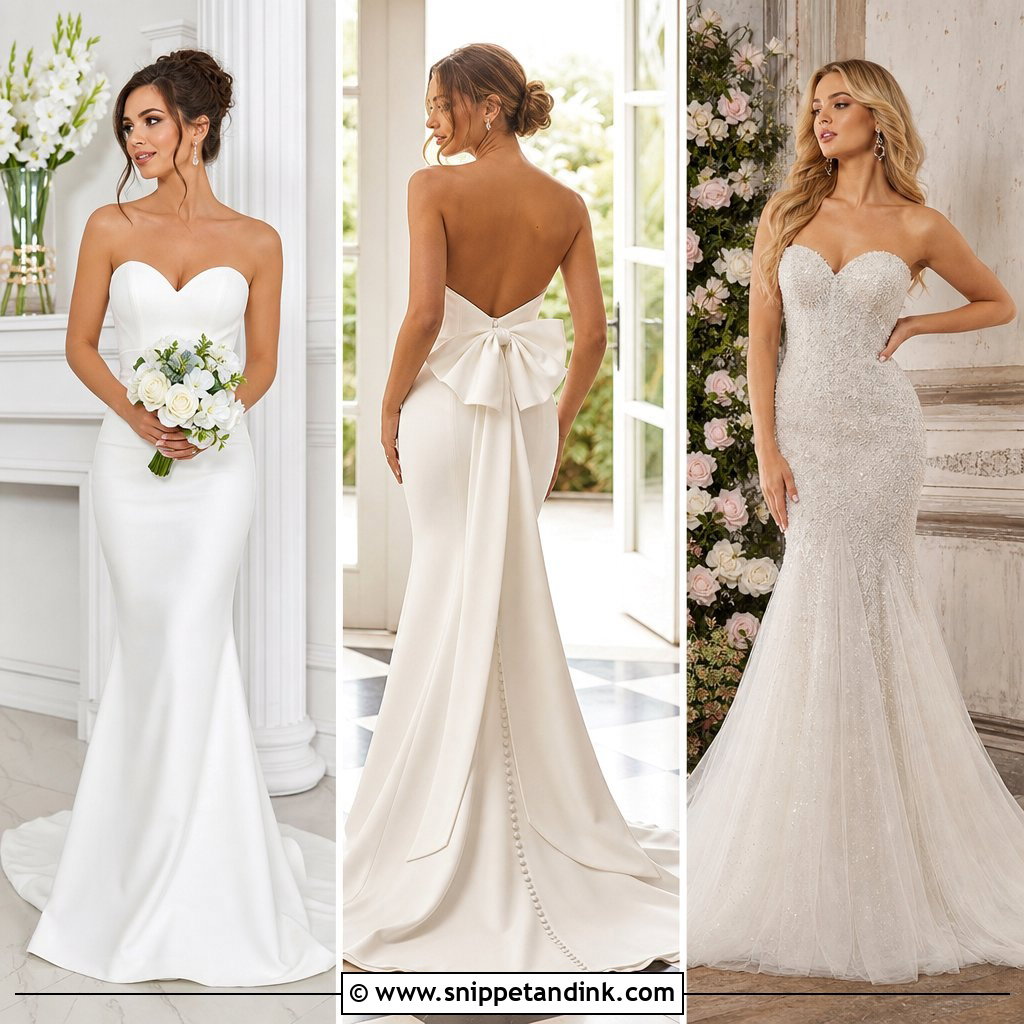
A mermaid follows the torso and hips before flaring near the knee, so the fabric decides a great deal. Stretch crepe gives a clean modern result and is kinder to walk in; lace softens the line and hides small fitting irregularities. Teardrop earrings, a simple cathedral veil and pointed heels extend the shape, with a sleek bun or side-parted waves. Some brides add a detachable overskirt for a fuller ceremony look. Sit and walk in it properly, for several minutes, before you commit.
5. Off-Shoulder Sweetheart Wedding Dress
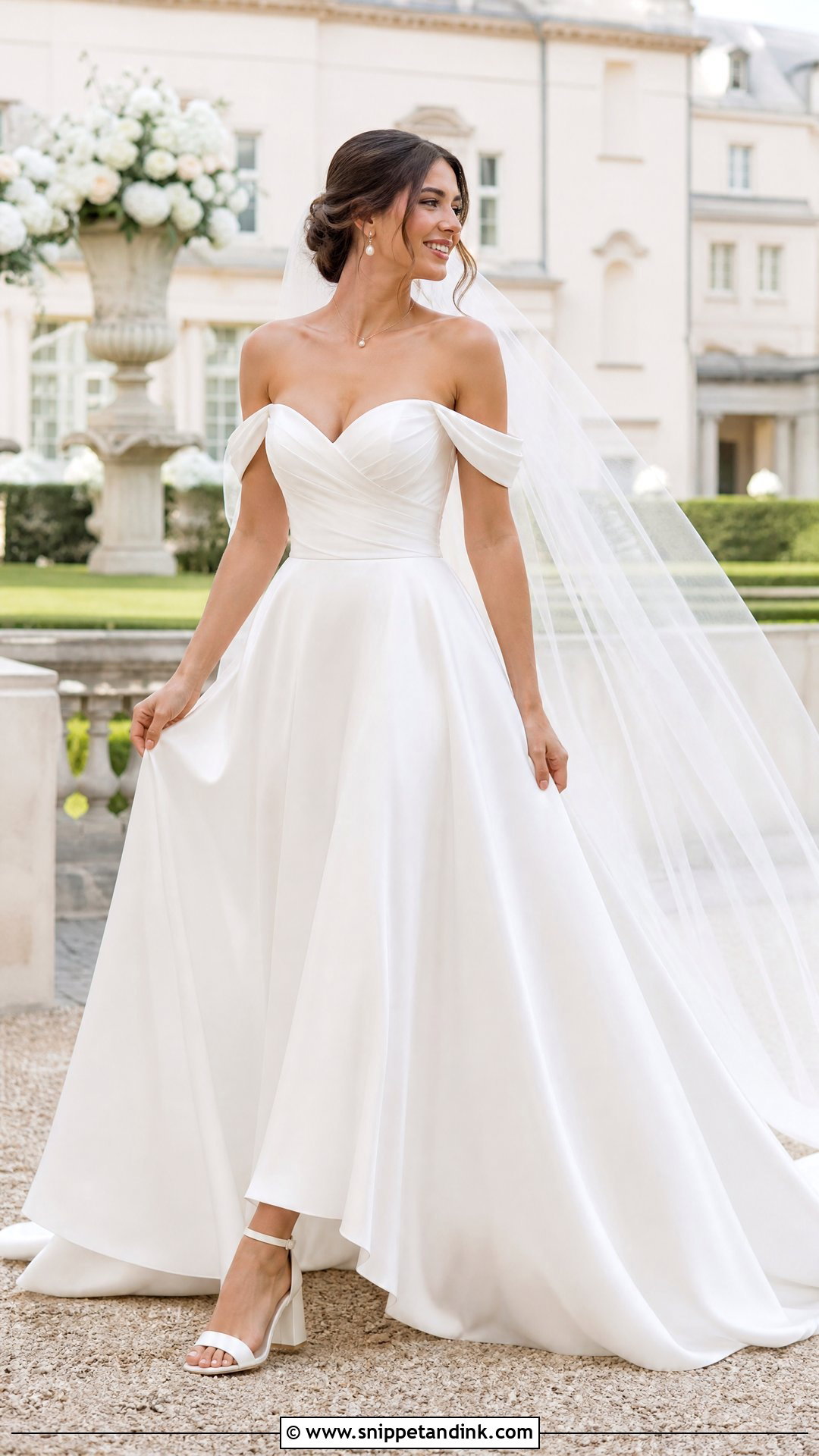
Off-shoulder straps emphasize the sweetheart curve and cover the upper arm a little, and they suit fitted, A-line and ball gown shapes alike. Draped satin bands look modern; lace sleeves look traditional. Because the shoulder line is the design here, I keep any necklace short, at collarbone length, and pair it with pearl earrings and an airy veil behind a low bun. Low block heels keep you steady. Have the bands fitted with your arms moving, since they tend to ride down when you reach forward for a toast.
6. Long-Sleeve Sweetheart Wedding Dress
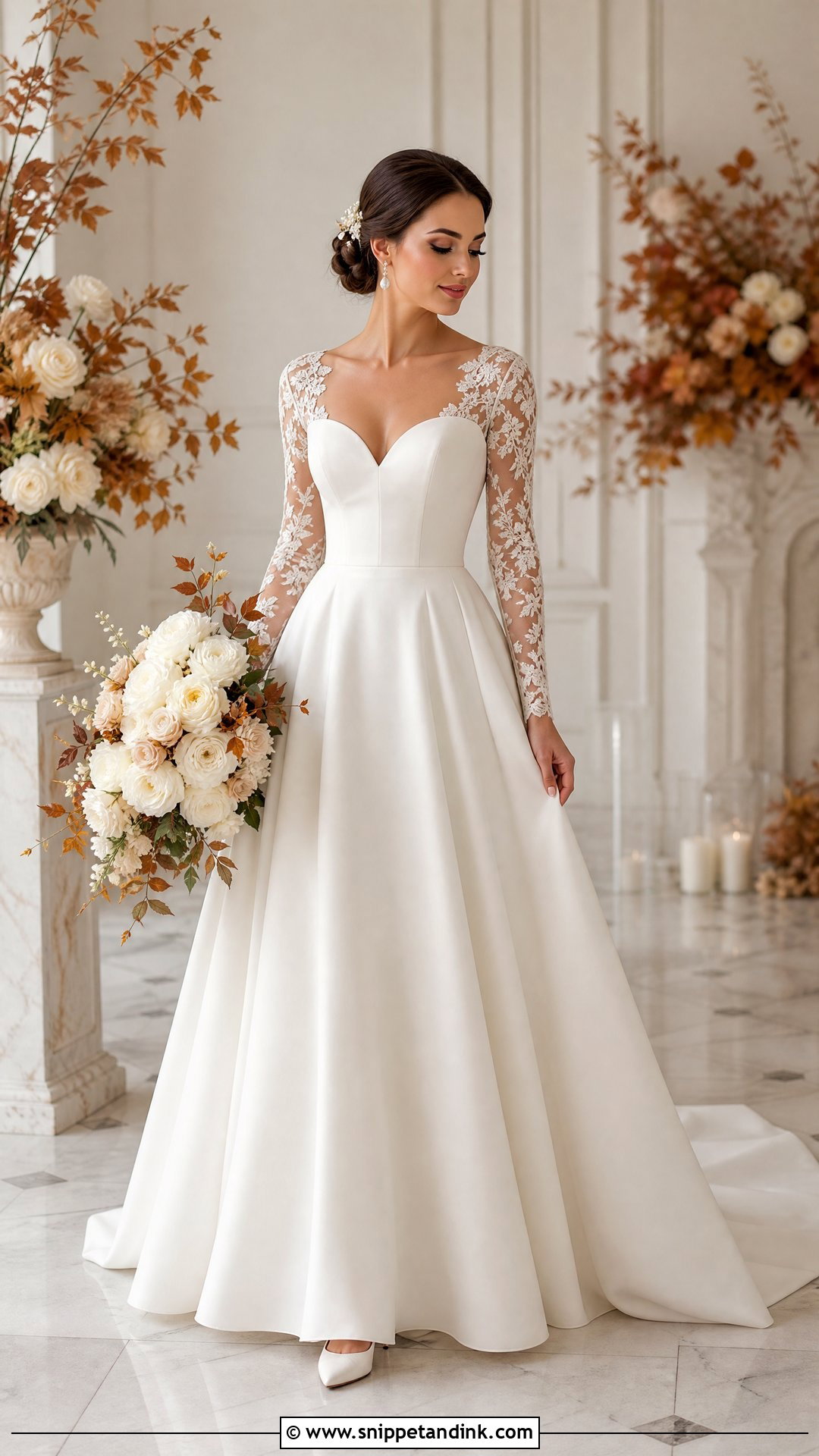
A long-sleeve sweetheart wedding dress gives you a defined neckline and real coverage. Sheer lace sleeves feel light; fitted crepe sleeves feel sharper. What matters is that the sleeves join the bodice smoothly instead of competing with it. Small pearl earrings, a simple comb, closed-toe pumps and a gathered chignon keep the top from looking busy. Fall and winter suit it best, and illusion sleeves stretch it into spring. Covered buttons at the cuffs and back finish it without any sparkle.
7. Corset Sweetheart Wedding Dress
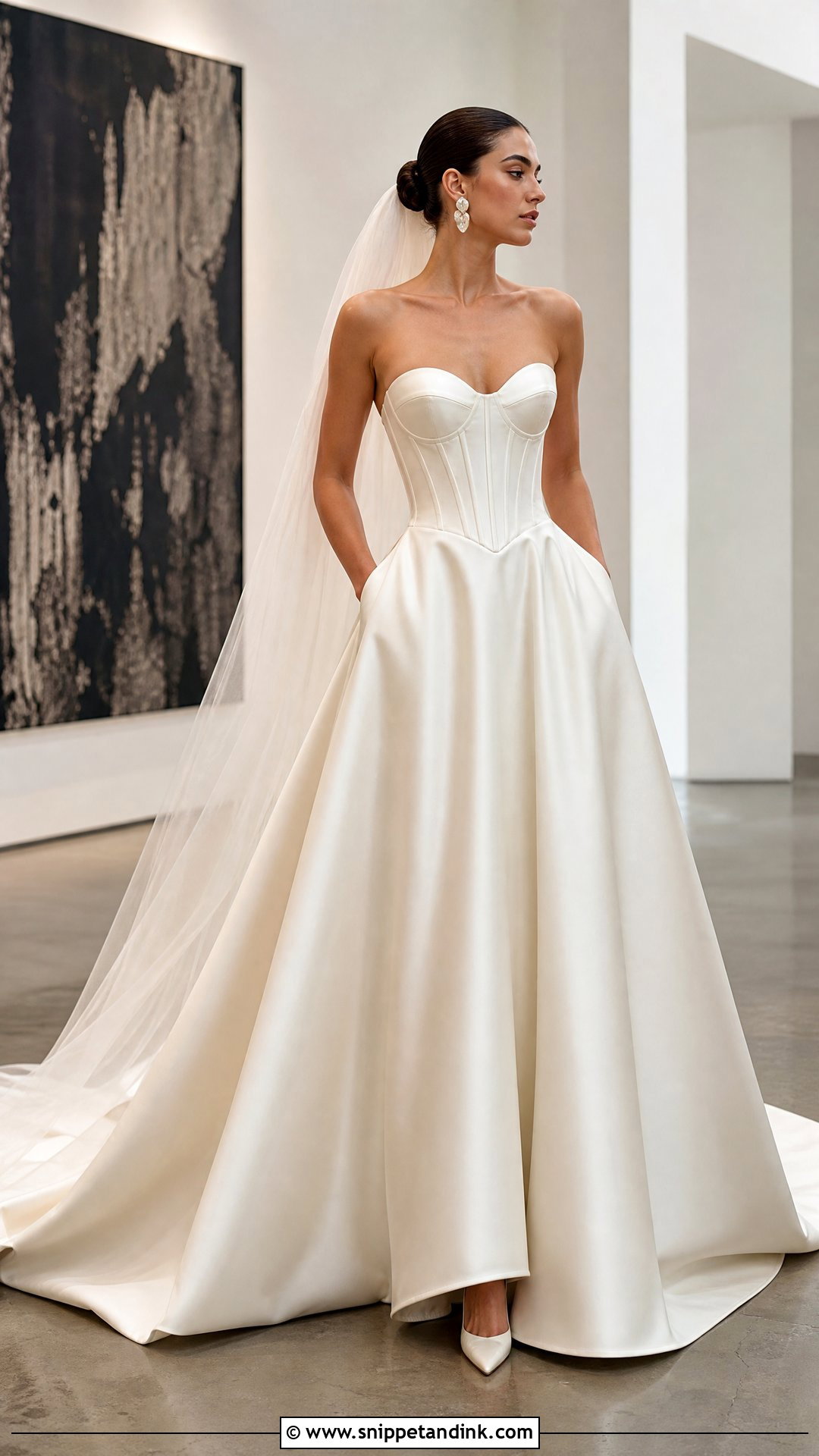
Visible corsetry turns the sweetheart into a structural feature. Boning defines the bodice and helps hold it up, while well-placed cups keep the curve. A flowing A-line skirt gives romantic contrast; a fitted skirt reads more fashion-led. Sculptural earrings, a plain veil, minimalist pumps and a smooth low bun keep attention on the construction. Sheer corset panels look different on every skin tone, so if you want more coverage, ask about lining at the first appointment. Adding it late can mean reworking the whole bodice.
8. Mikado Sweetheart Wedding Dress
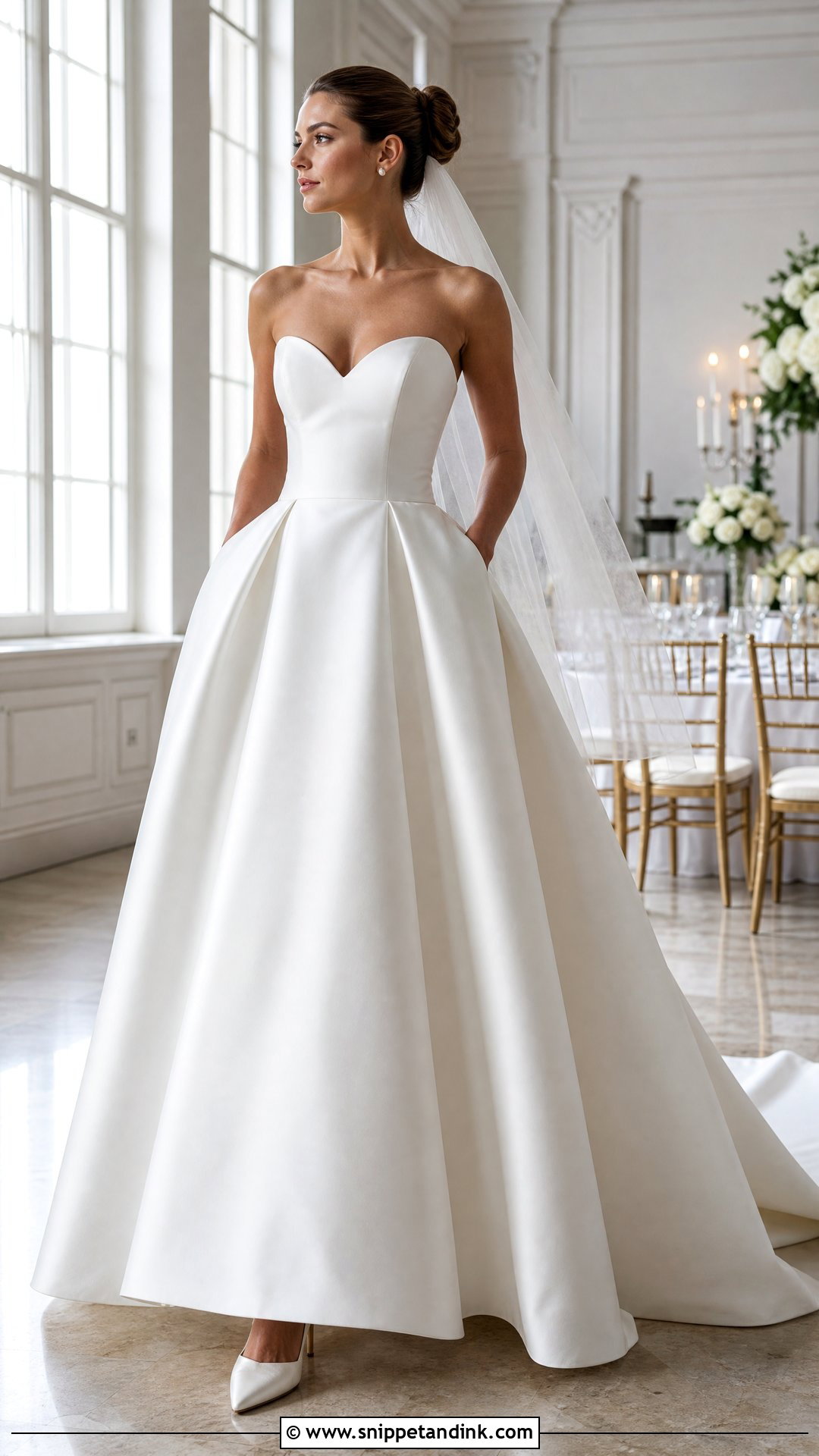
Mikado holds volume without layers of petticoat underneath, which is why it suits A-line and ball gown shapes so well. It has a subtle sheen and very clean lines. Look for a pleated bodice, a sculpted waist, covered buttons or discreet pockets. Pearl studs, satin pumps, a medium raw-edge veil and a polished bun or curled ponytail are all the styling it needs. Mikado is warm to wear, though, so I’d think twice about it for a summer garden in midday sun. Formal daytime weddings and minimalist spaces show its shape.
9. Tulle Sweetheart Wedding Dress
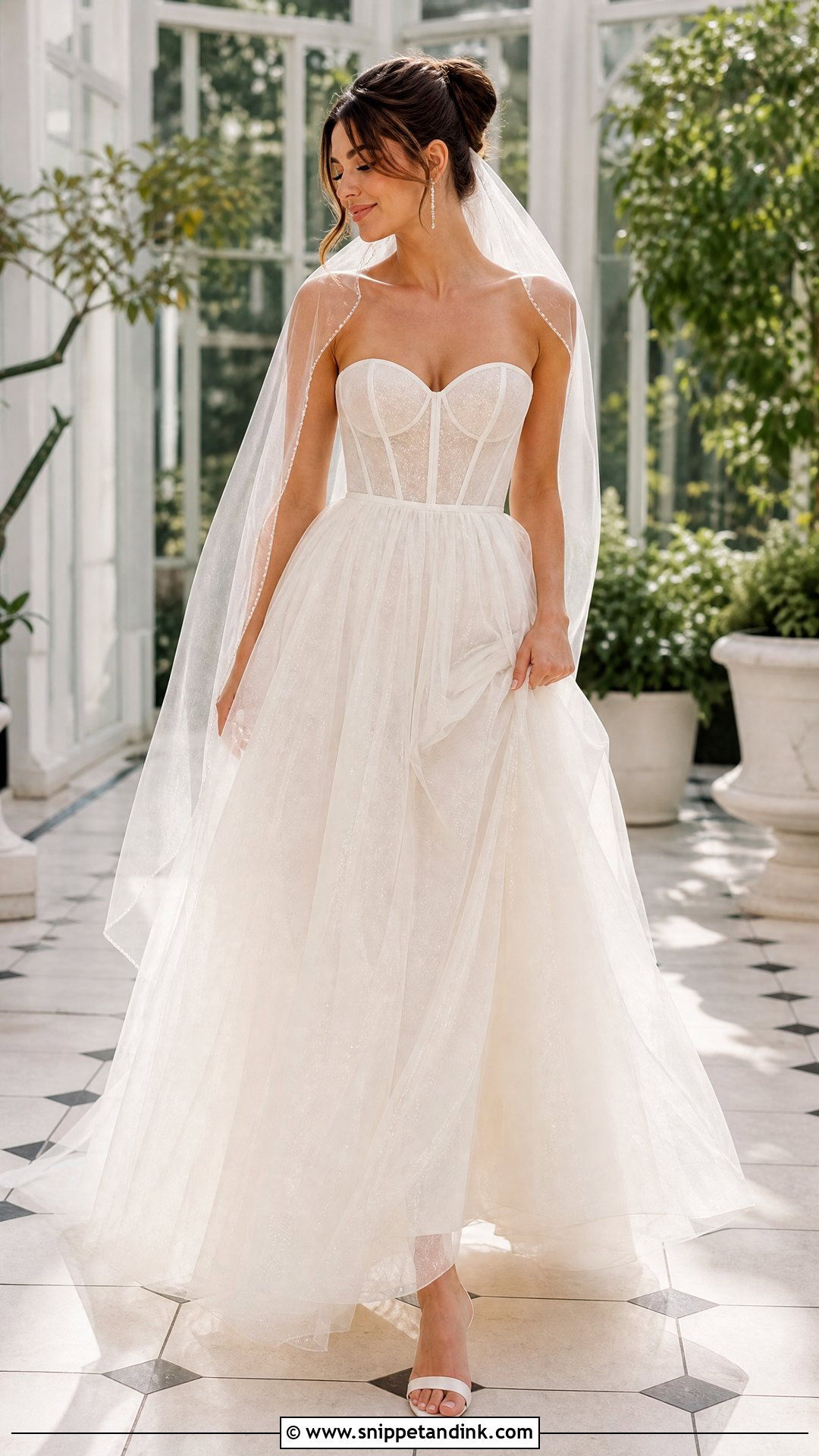
Tulle needs a structured bodice, or the whole gown starts to look shapeless. Plain tulle stays understated; shimmer tulle picks up ceremony lighting. Delicate crystal earrings, barely visible ivory sandals, a sheer fingertip veil and soft waves or a relaxed updo let the skirt move, and a narrow satin waistband adds definition if you want it. Tulle compresses in transport and needs a good steam on the morning to fluff back out, so check that the venue has a steamer or bring your own. Outdoor ceremonies and conservatories show it in motion.
10. Crepe Sweetheart Wedding Dress
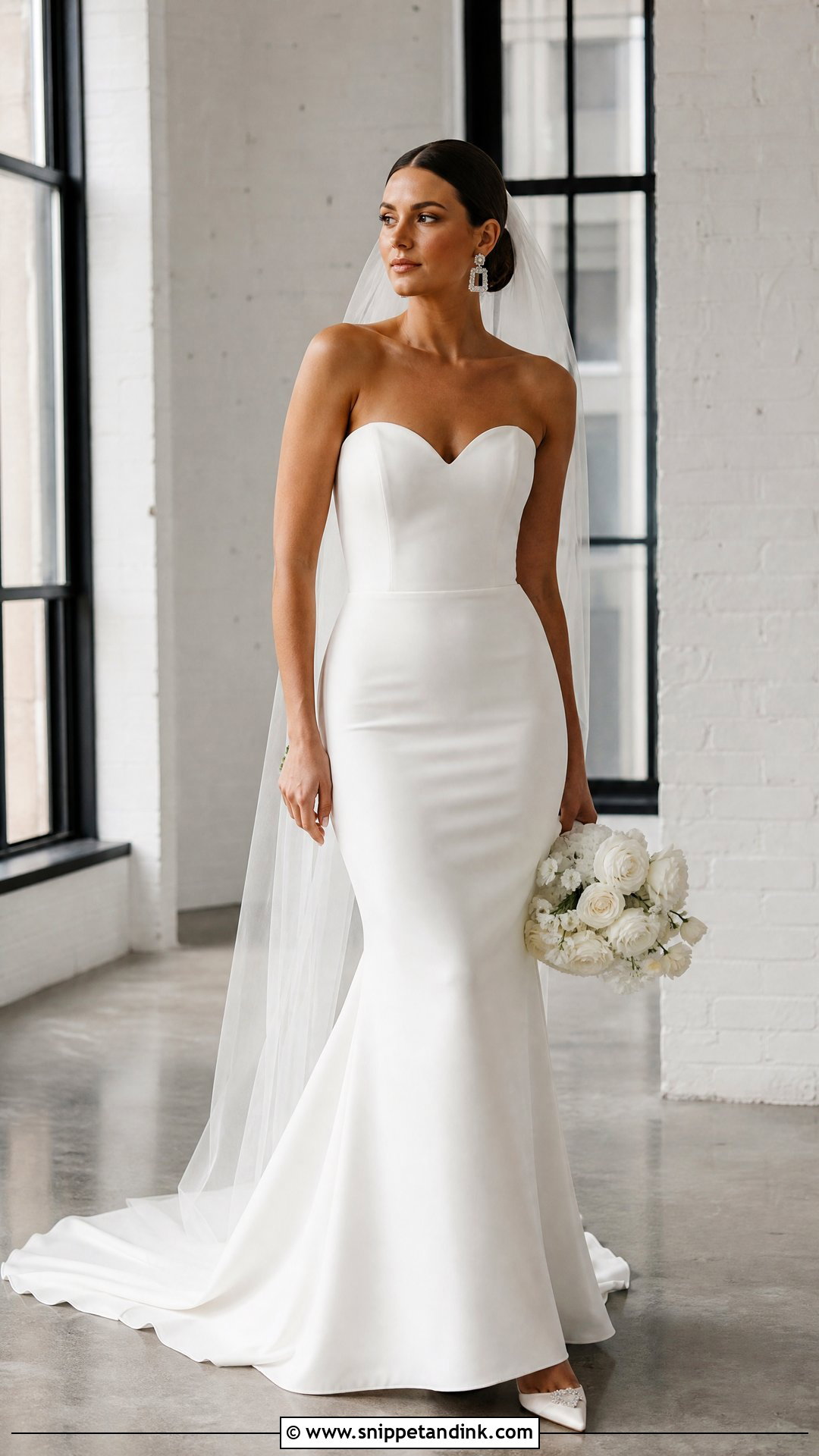
Crepe suits a bride who’d rather have clean lines than embellishment. It works in column, fit-and-flare and soft mermaid cuts, and the bodice needs supportive seaming so the neckline holds without bulk. Geometric earrings, pointed ivory heels, a plain veil, a center-parted bun and a small bouquet keep it controlled. Because crepe follows the body closely, the alterations have to be precise through the waist and hips; even a small ripple there shows. Lofts, rooftops and coastal venues suit its modern feel.
11. Floral Appliqué Sweetheart Wedding Dress
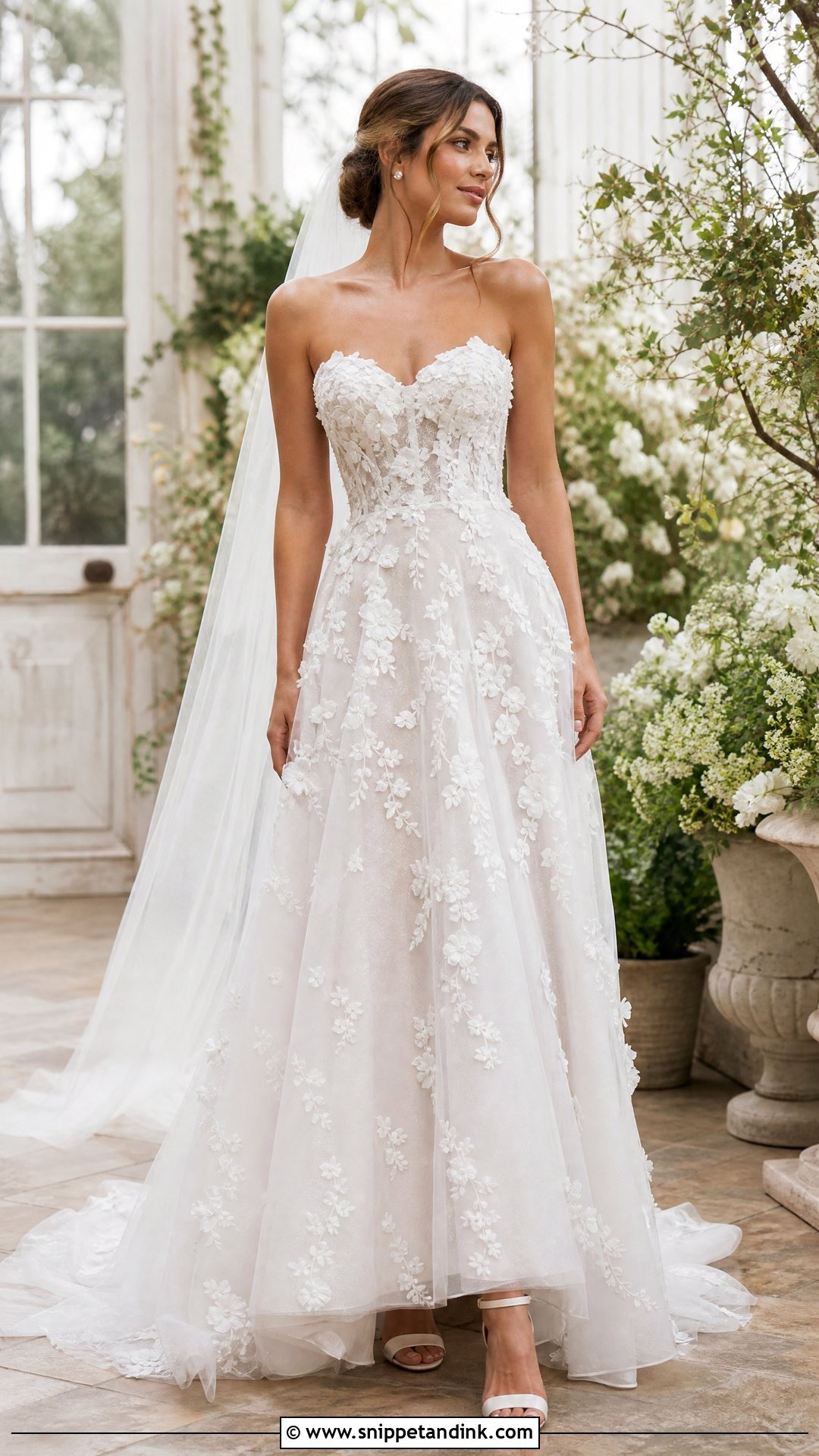
Raised floral appliqué brings romance without depending on sparkle. Flowers that start around the bodice and scatter toward the skirt look grown rather than placed, and an A-line or fit-and-flare keeps them visible from every side. Pearl studs, a plain tulle veil, satin ankle-strap heels and a loose low bun with soft pieces at the face suit it. Skip a heavy necklace. The appliqués near the neckline already fill that space. Greenhouses and spring or summer gardens are its natural home.
12. Beaded Sweetheart Wedding Dress
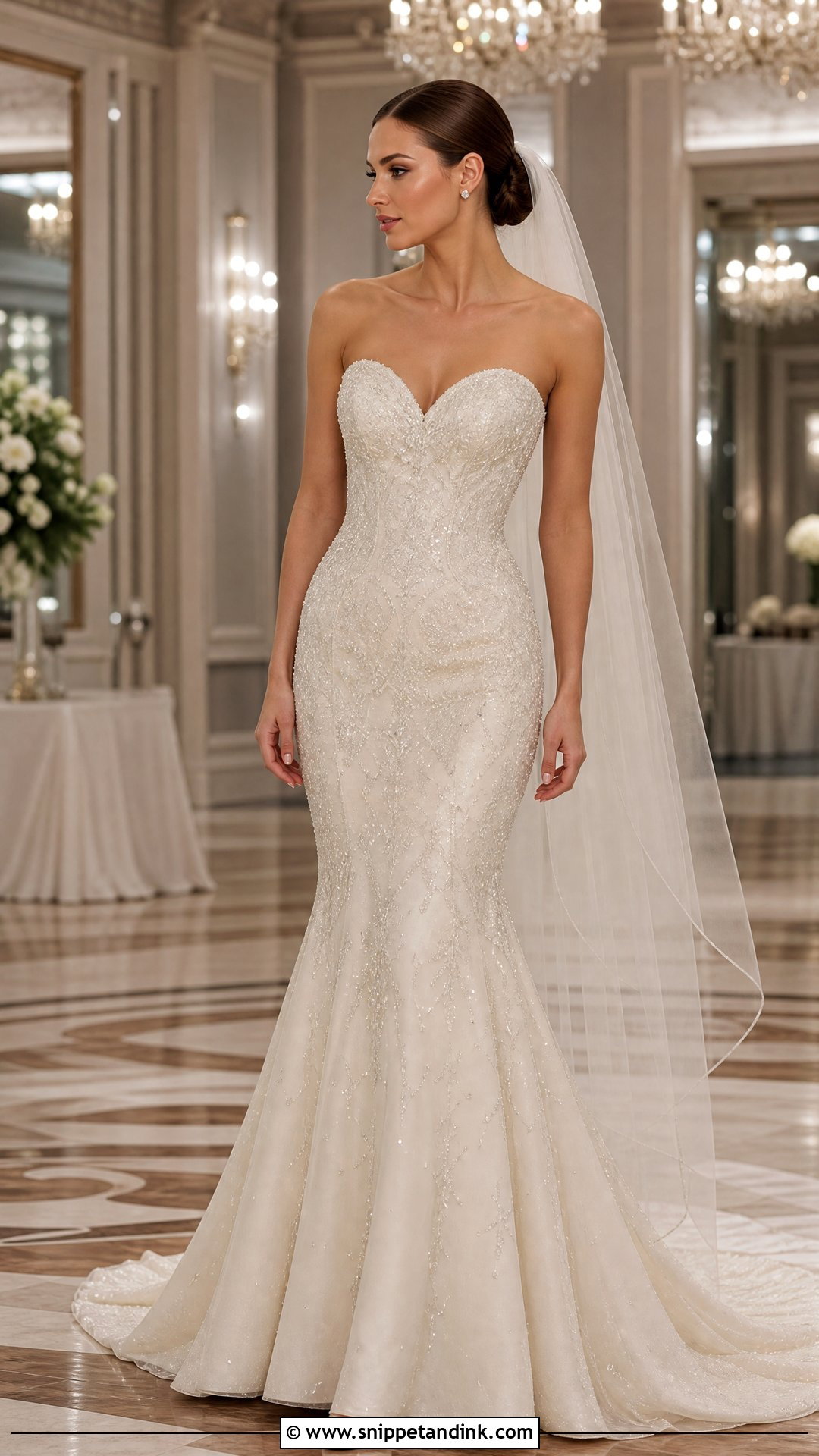
Beading catches light, and where it’s concentrated decides how it reads. Heavy on the bodice and lighter on the skirt draws the eye upward; a fitted shape makes it glamorous, a flowing A-line more romantic. Small crystal earrings, metallic ivory heels and a plain veil leave the beadwork alone, and a sleek bun or smooth side waves keep the neckline clear. Run your inner arm along the bodice side seams at your fittings, because raised beads there feel rough after a few hours of hugging. Formal evening weddings suit it.
13. Pearl Sweetheart Wedding Dress
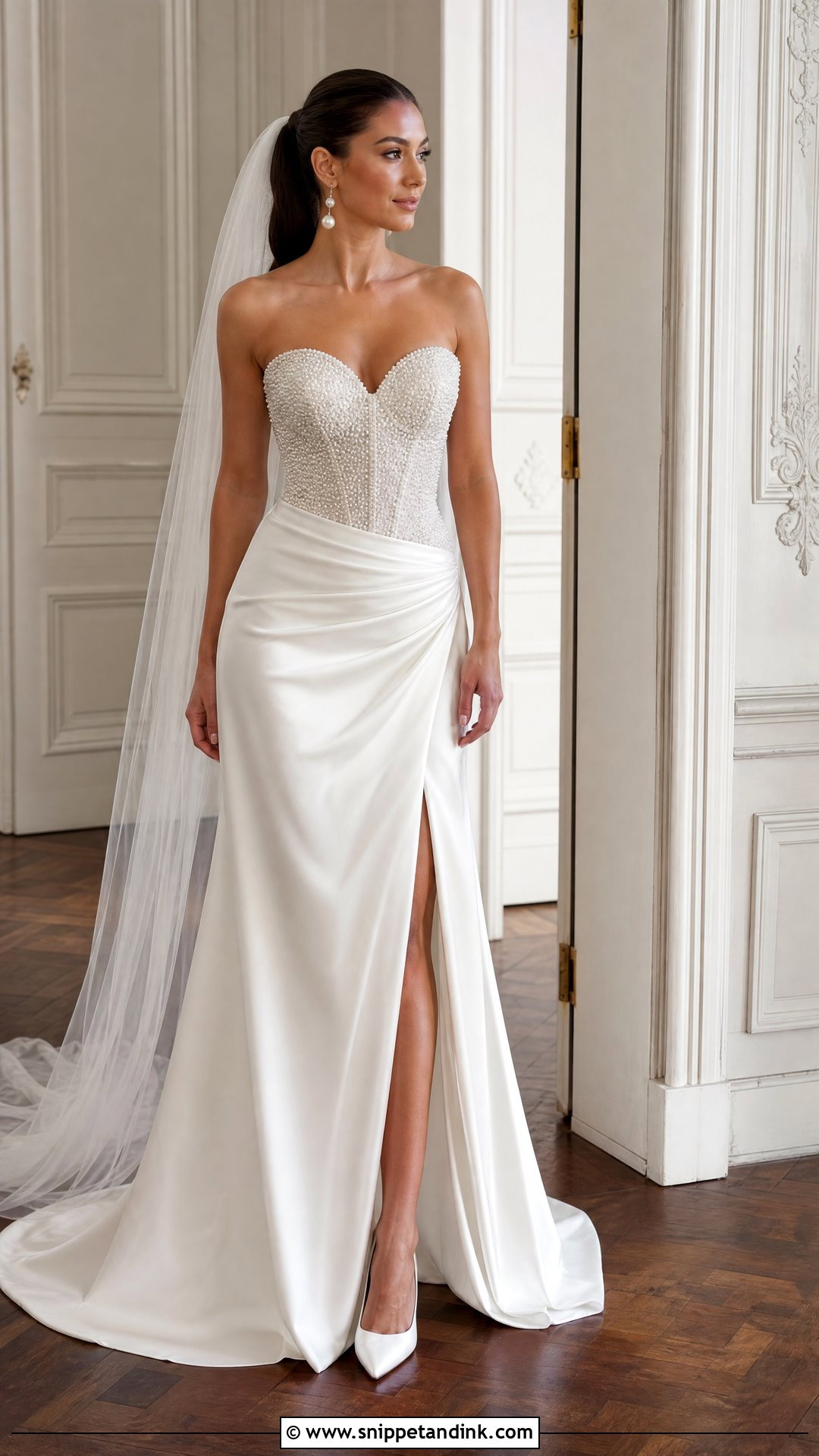
Tiny pearls can cover the whole bodice, outline the neckline or scatter over tulle. A pearl corset above a plain flowing skirt balances detail and restraint. Style it with pearl drop earrings, a plain veil, unfussy satin pumps and a smooth chignon or ponytail, and resist stacking a pearl necklace, bracelet and hairpins on top. Hand-sewn pearls occasionally come loose, so I always ask the shop for a few spares and pack them with a threaded needle. Bright indoor venues with clean backgrounds show the texture best.
14. Spaghetti-Strap Sweetheart Wedding Dress
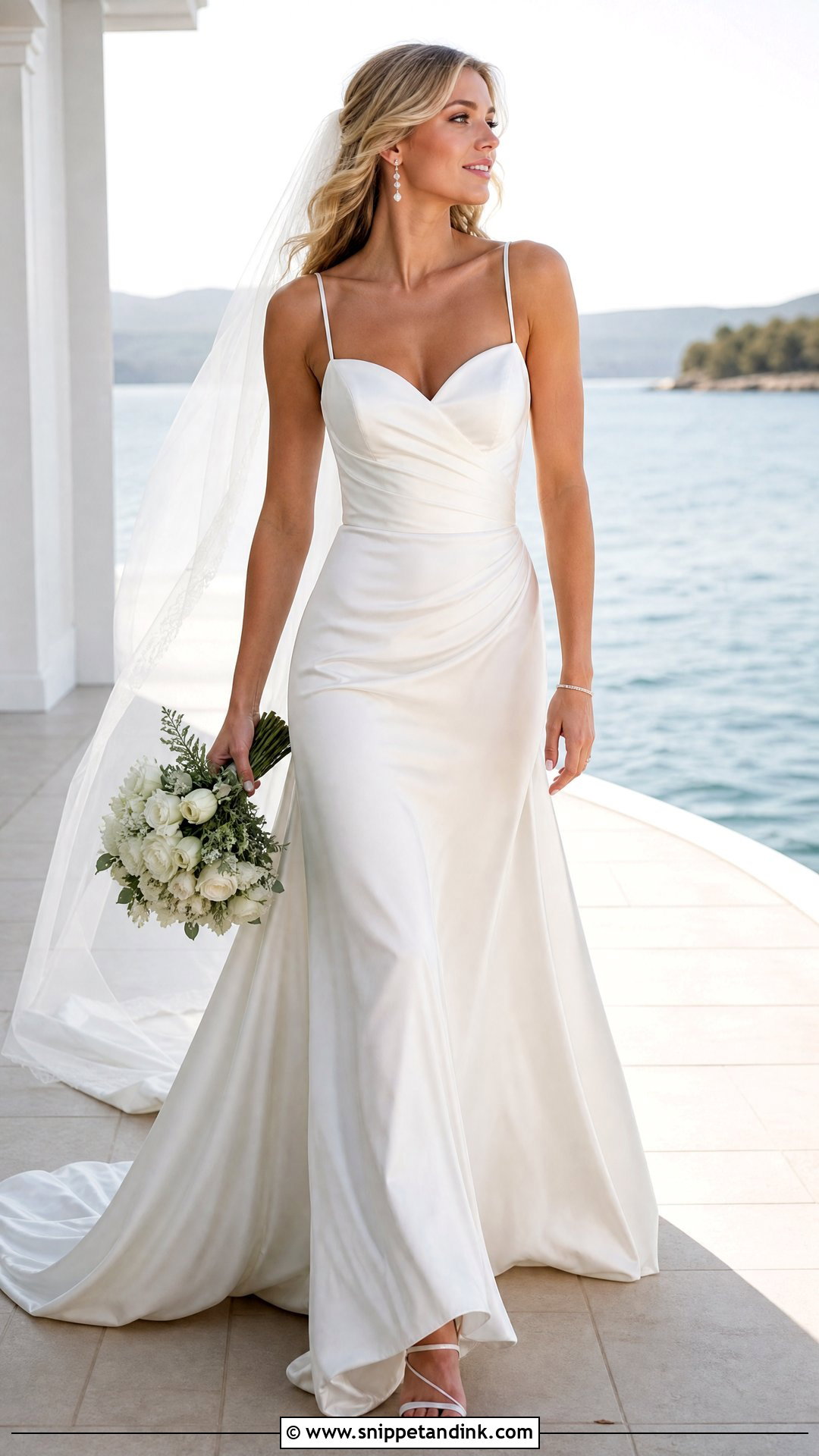
Thin straps give a little extra support while keeping the open sweetheart effect. They suit satin slip gowns, lace fit-and-flares and light A-lines. Ask for adjustable straps if you can, because they let the bodice be fine-tuned at the shoulder and bust instead of only at the side seams. Delicate drop earrings, strappy ivory sandals, a sheer veil, soft waves or a low bun and a thin bracelet keep the neckline uncrowded. If the straps are beaded, keep the jewelry quieter still. Warm-weather and waterfront weddings suit it.

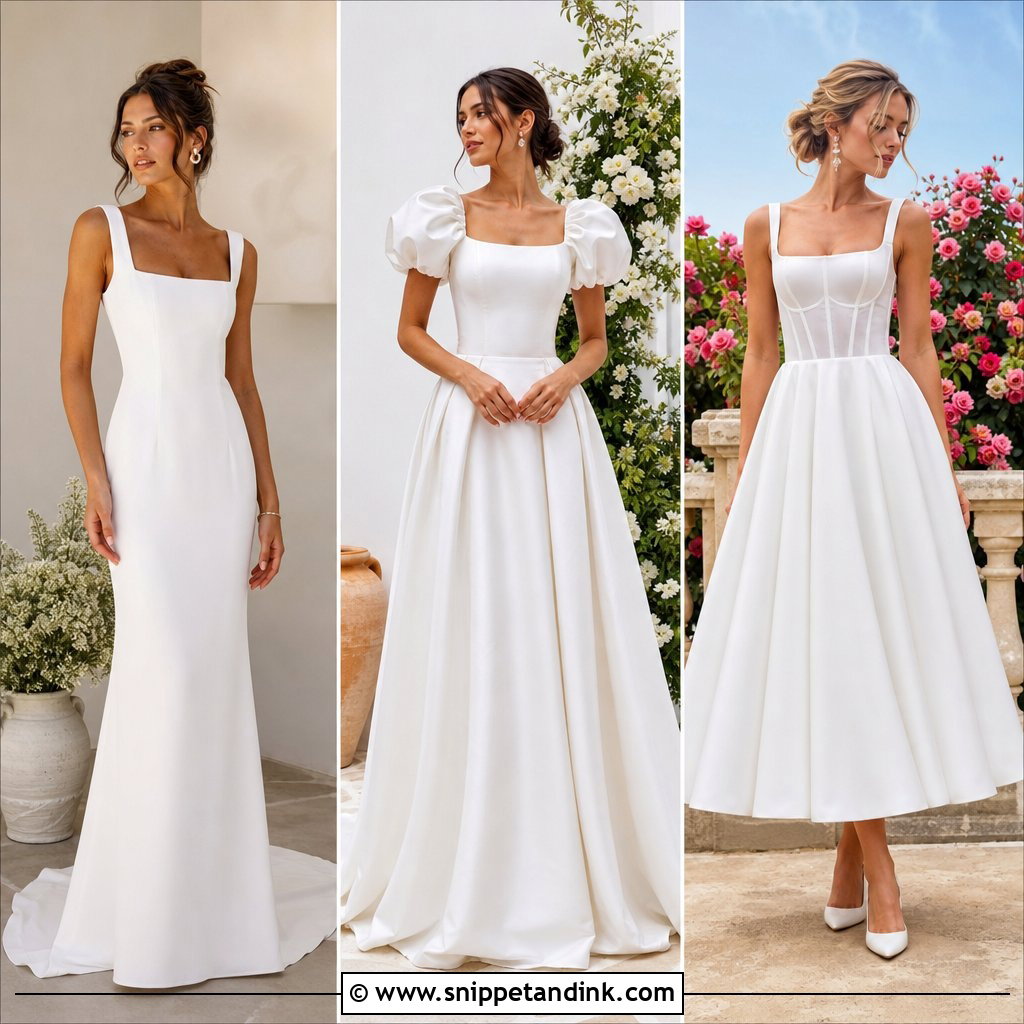
15. Detachable-Sleeve Sweetheart Wedding Dress
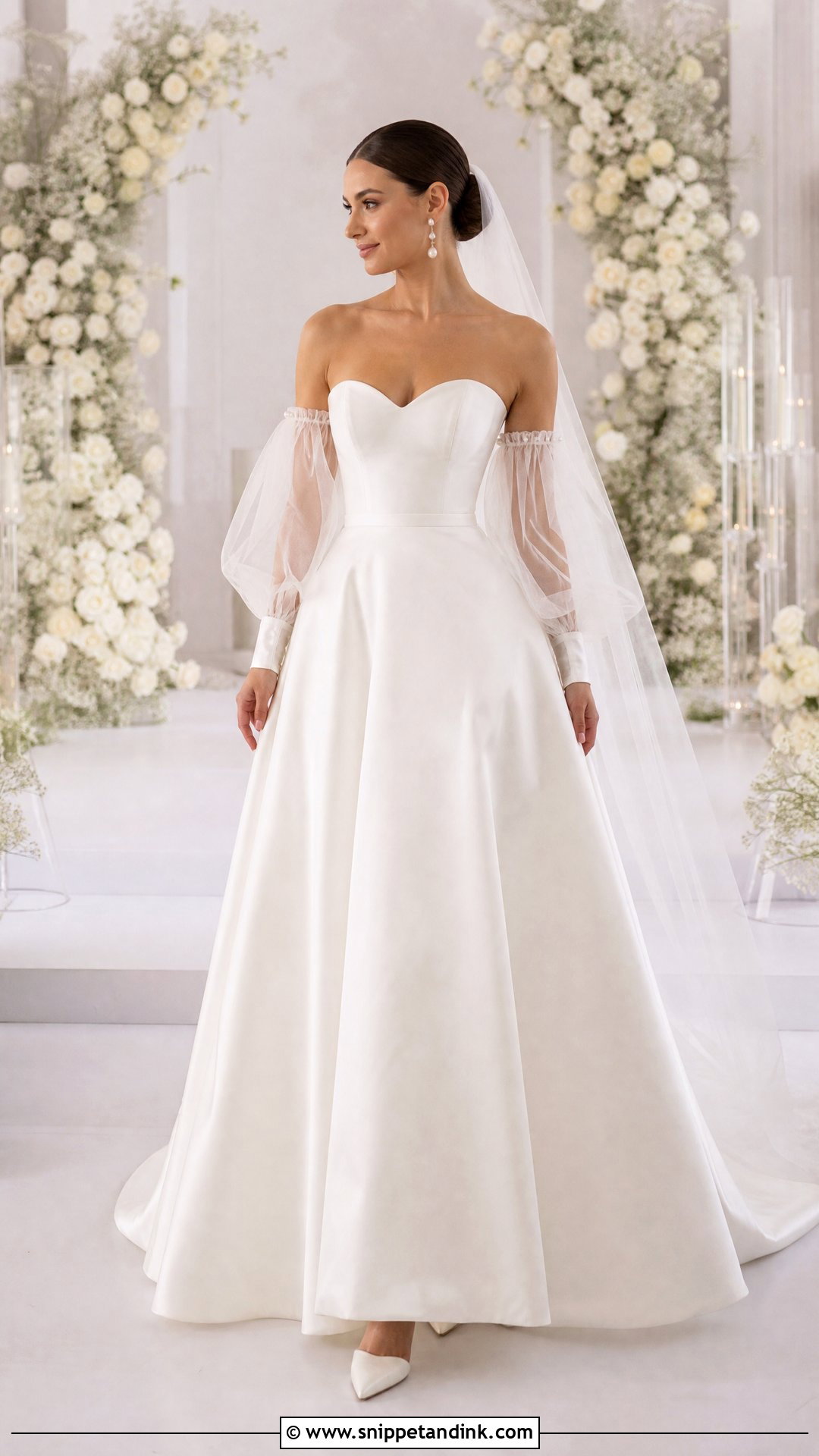
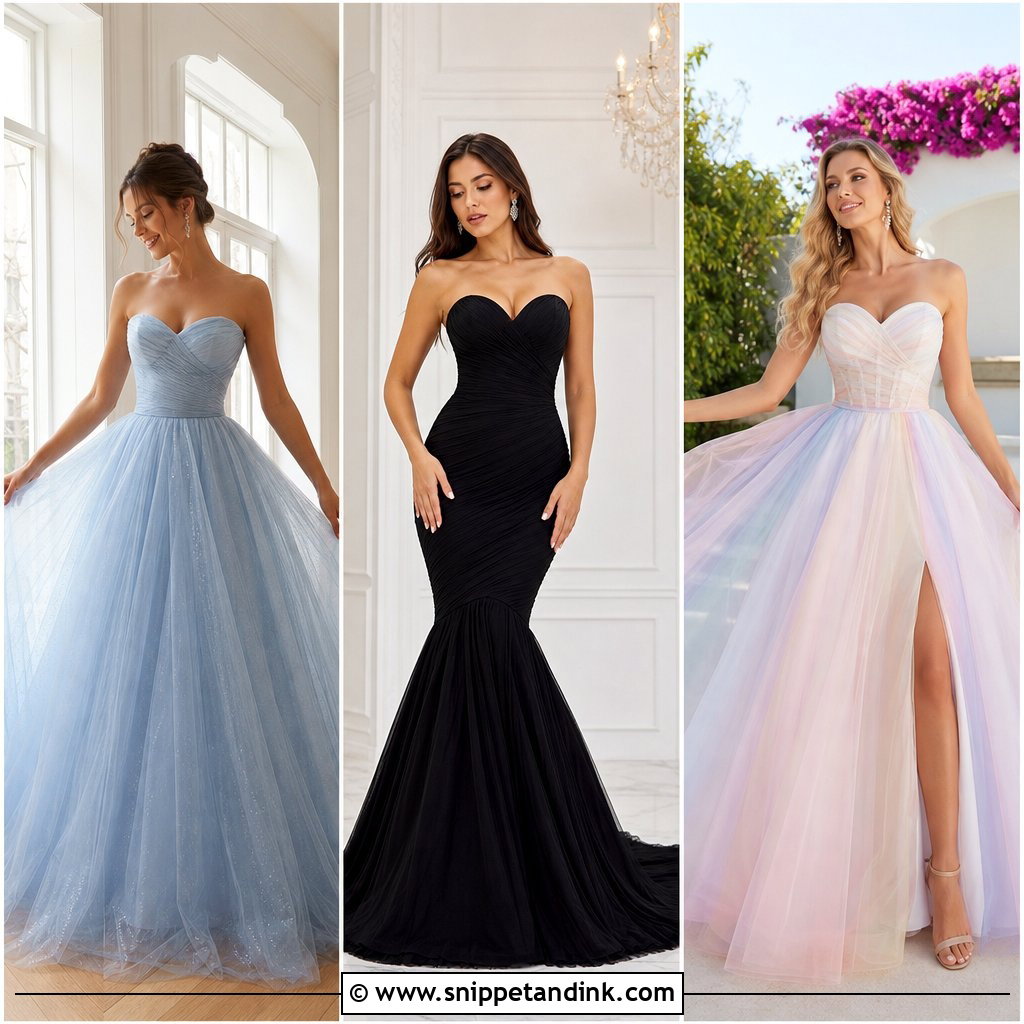
Detachable sleeves let one gown cover two moods: lace, puff or draped sleeves for the ceremony, then a simpler bodice for the reception. Check that the attachments sit securely and blend into the bodice. For the ceremony, pearl earrings, a long veil and pointed pumps; afterward, statement earrings or a jeweled hairpiece. A low bun stays tidy through both versions. I suggest it most for a modest ceremony followed by a hot, crowded dance floor.
16. Illusion Sweetheart Wedding Dress
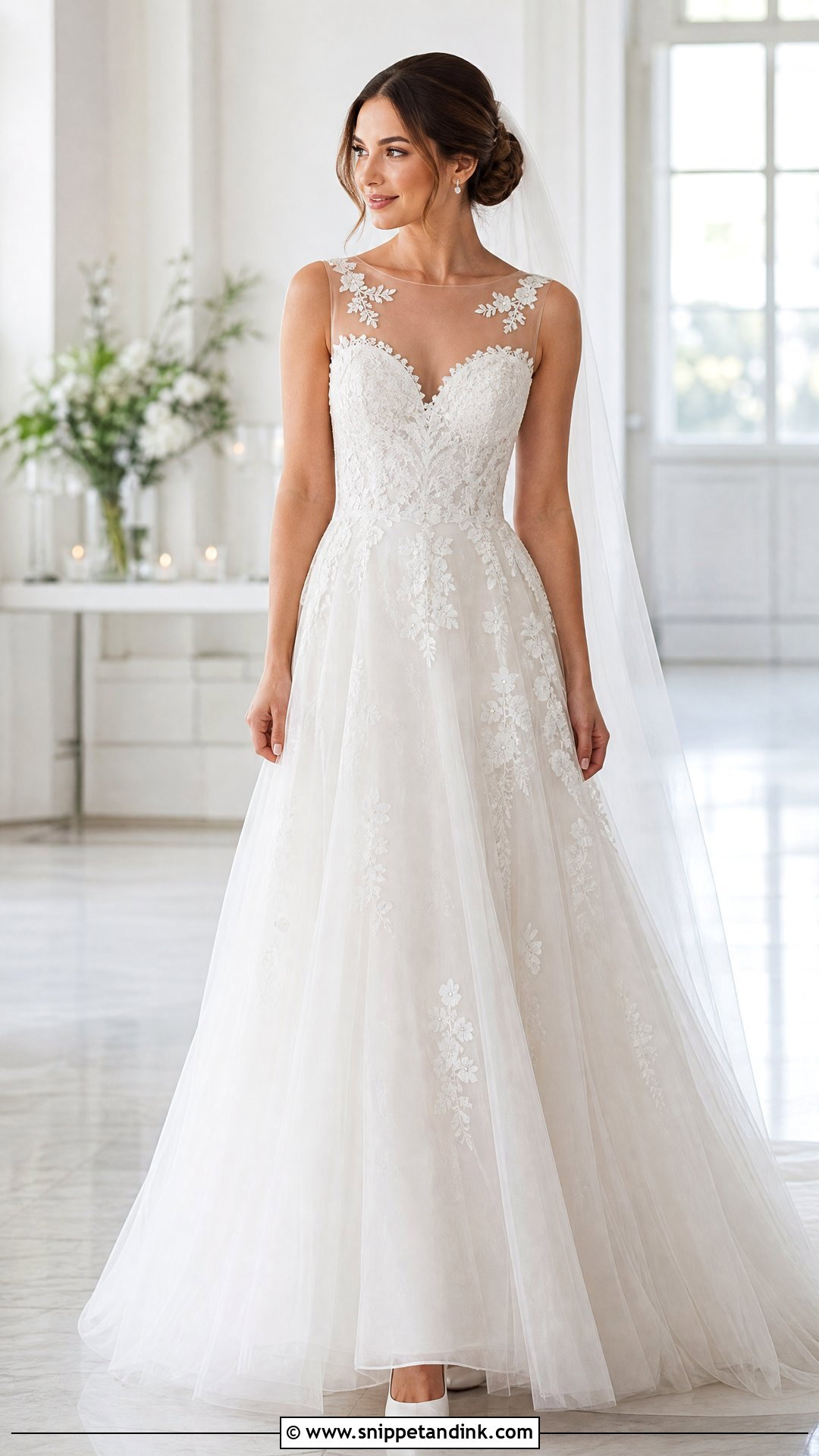
An illusion neckline floats sheer tulle or lace above the sweetheart bodice, so you keep the shape and gain coverage. The mesh has to be close to your skin tone, and I hold a swatch against the chest in daylight before ordering. Appliqué, delicate beading or narrow straps over the illusion add support and detail. Small earrings, closed-toe heels and a lightly edged veil suit it, and an updo stops hair catching on the embellishment. It answers the bride who loves the strapless look but doesn’t trust it for a long ceremony.
17. Plus-Size Sweetheart Wedding Dress
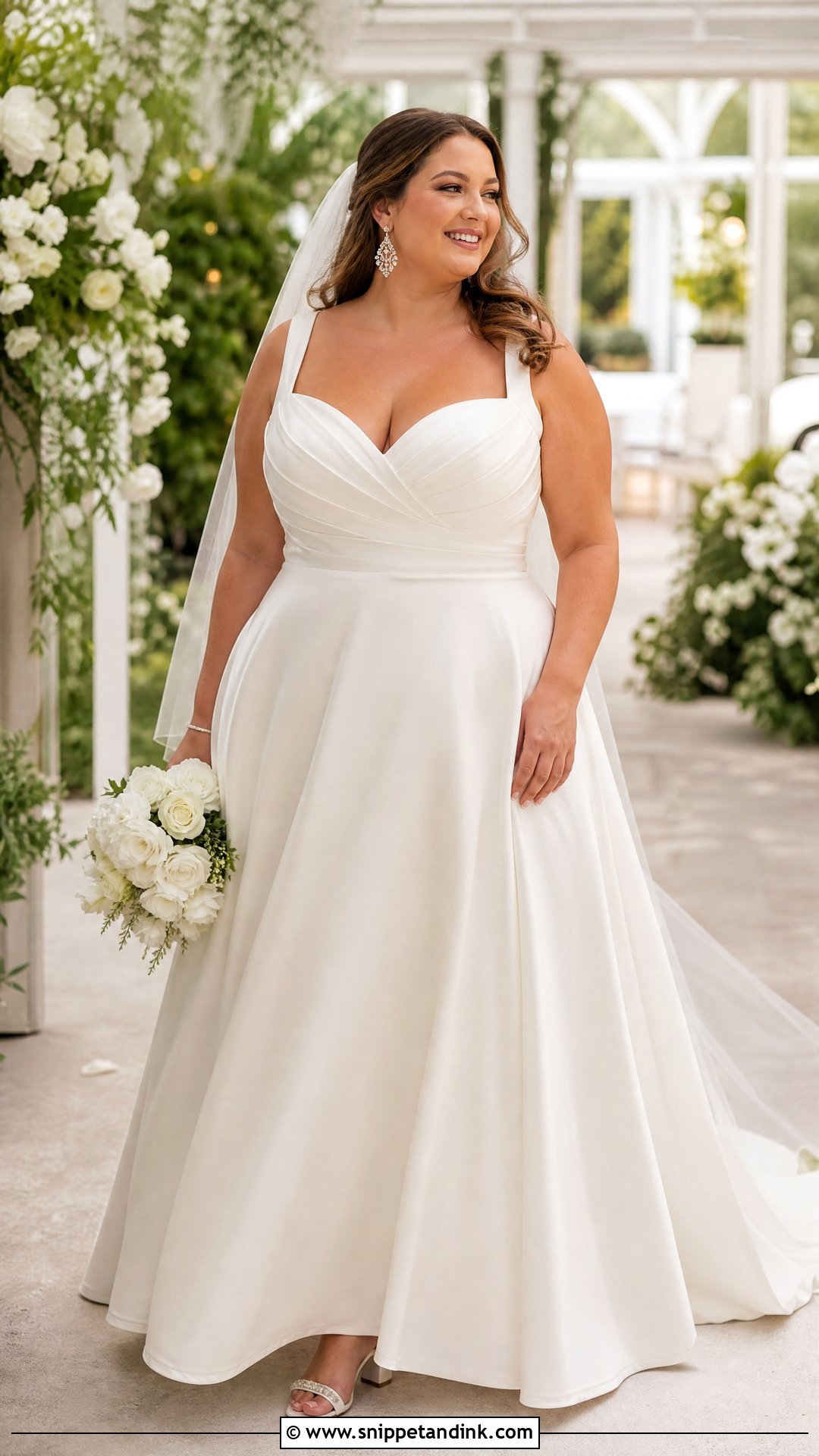
Support and a personal fit are what make a plus-size sweetheart gown work. Internal boning, secure cups, wider straps or an adjustable corset back can all be part of it, depending on what feels right to you. A-line and ball gown skirts flow; fit-and-flare shapes show curves. Supportive block heels, sparkling earrings and a light veil without bulk finish it. At fittings, move your arms, sit and walk around. A bodice that needs constant hitching up is not finished. Wear the silhouette you feel good in, and ignore anyone’s rules about size.
18. Minimalist Sweetheart Wedding Dress
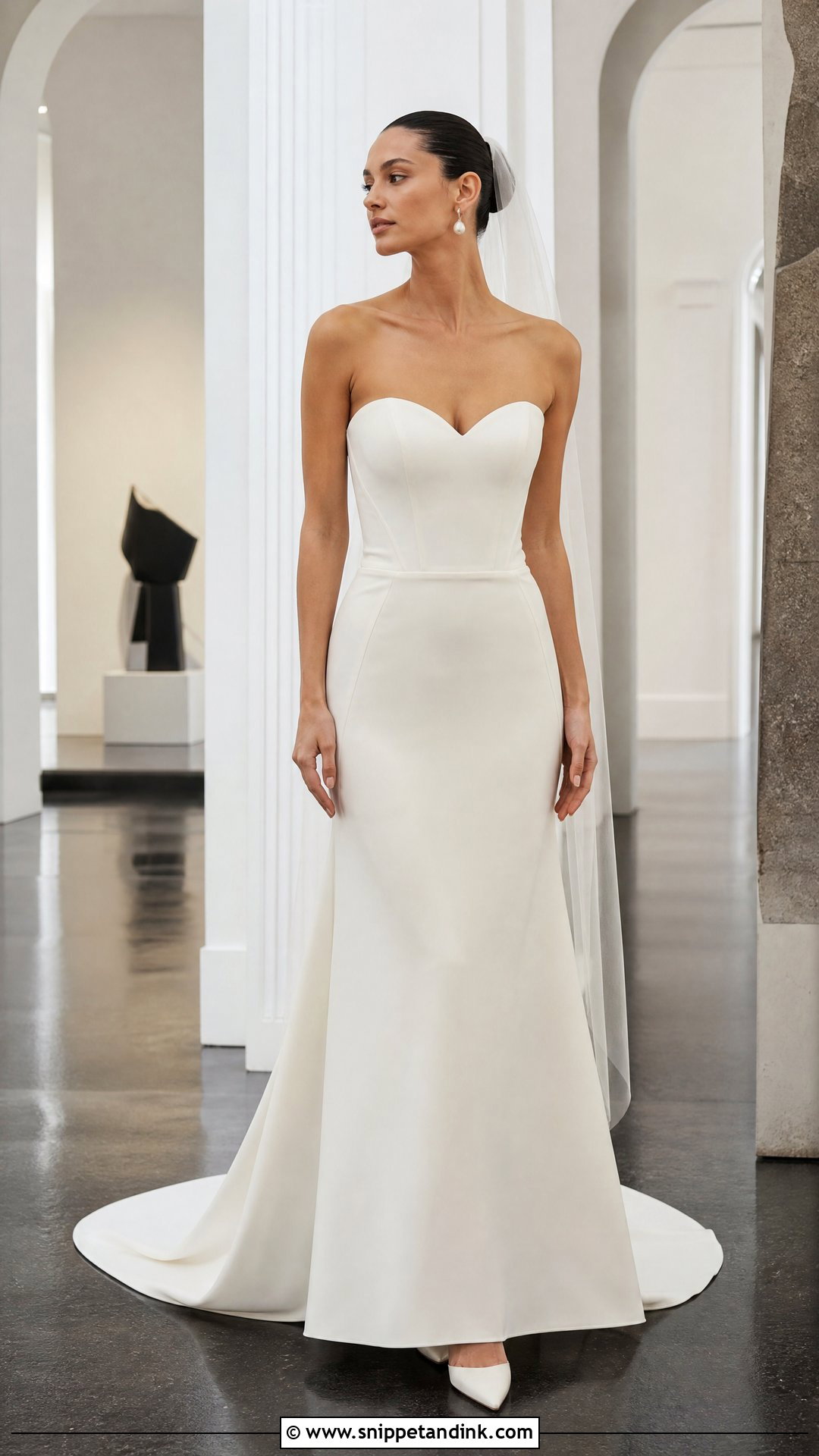
Minimal gowns depend on fabric, tailoring and proportion. Choose smooth satin, crepe, or Mikado with little or no embellishment, and let sculpted seams, a defined waist and a train carry the interest. Modern pearl earrings, pointed pumps, a single-layer veil and a sleek bun or polished shoulder-length style suit it. Then add one deliberate accessory, a structured bouquet or a slim bracelet, rather than three small ones that cancel each other out. Galleries, hotels and small civil ceremonies suit it.
19. Tea-Length Sweetheart Wedding Dress
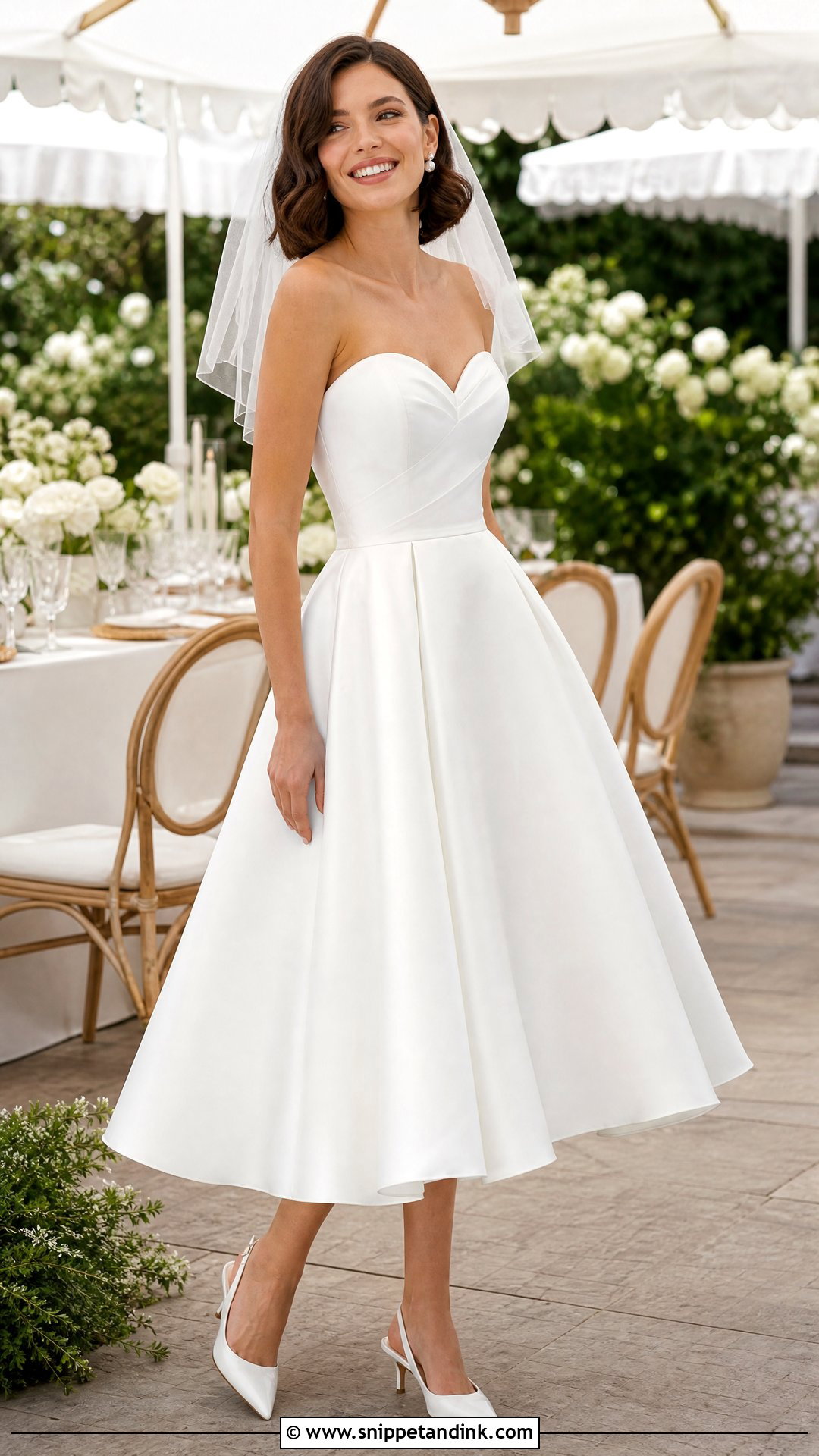
Tea length falls between knee and ankle, so the shoes move to center stage. Structured satin leans vintage; layered tulle moves softly. Pointed slingbacks, pearl earrings, a short veil or small hair bow, and a neat bun, curled bob or half-up style suit the shorter line. At this length an uneven hem is obvious, so the alteration has to be accurate. It’s easy to walk and dance in, which is why I suggest it for courthouse ceremonies, brunch receptions and second looks.



20. Sweetheart Wedding Dress With Slit
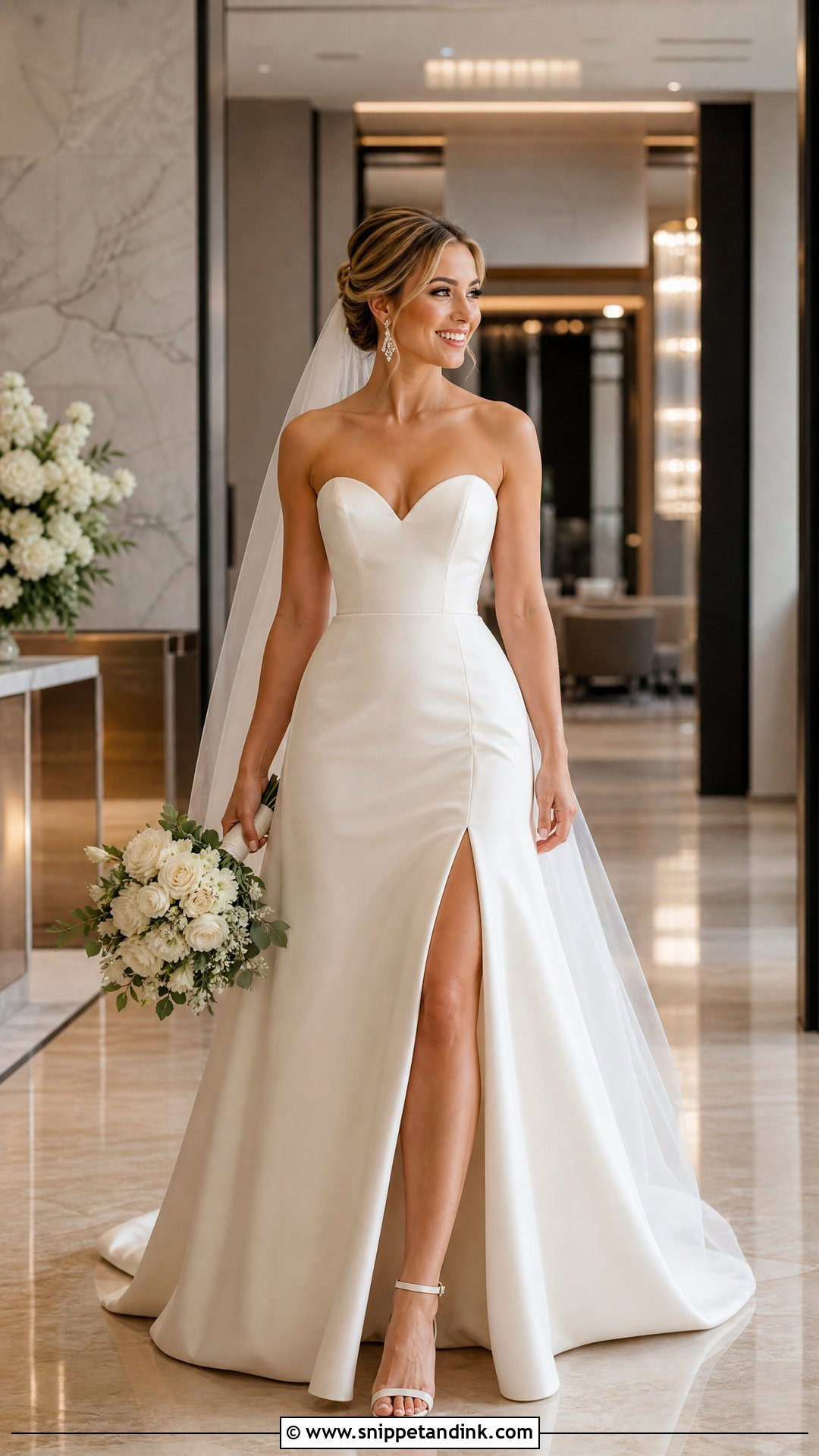
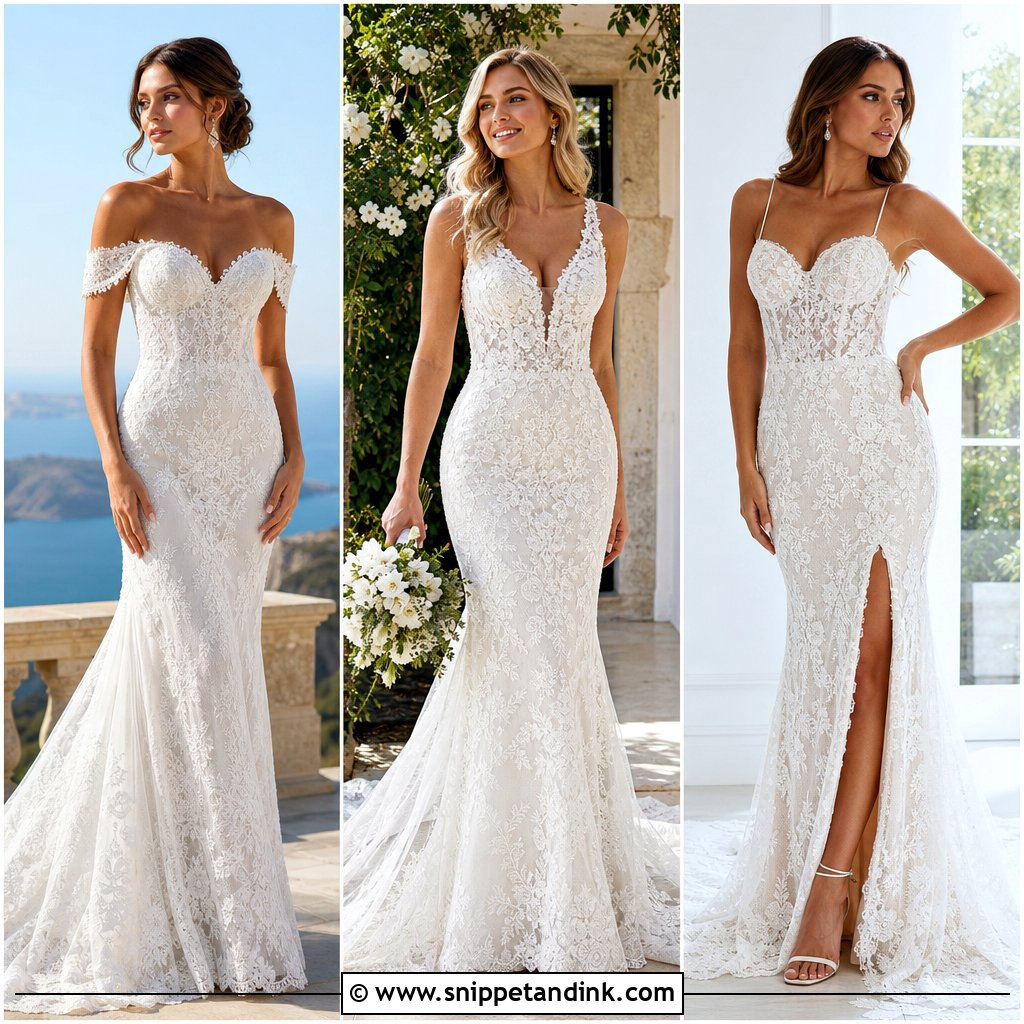
A slit adds movement under a romantic neckline. An A-line satin gown with a side slit looks polished, and a fitted crepe version is sleeker. Set the slit height while you’re sitting and walking, not just standing in front of a mirror. Your shoes will show, so pick pointed pumps or secure ankle straps, then drop earrings, a simple veil and a smooth updo. The neckline and slit already give two focal points, so leave everything else quiet. Contemporary venues and destination weddings with room to dance suit it.
How Many Months a Made-to-Order Gown Really Takes
Most bridal gowns are made after you order them, not pulled from a stockroom, and that is what catches couples out. Timelines vary by designer and season, but a typical order runs something like this.
- Roughly nine to twelve months out, shop and place the order. Many designers need around four to six months to make the gown, and custom changes can add more.
- About two to three months out, the gown arrives and the first fitting takes place.
- In the final weeks, the last fitting, pressing and pickup.
Shorter timelines are possible. Buying off the rack, taking a sample gown or paying a rush fee can all compress the wait. What doesn’t compress well is the alteration work on a structured sweetheart bodice, which is built in layers and checked in stages. Give your seamstress that time, even if the dress itself arrives quickly.
If you’re shopping late, tell the consultant your date at the start of the appointment. It saves you falling for a gown that simply can’t be made in time.
The Gown Has to Pass the Arms-Up Test
A good sweetheart gown flatters the neckline while holding you securely and letting you move. Satin looks sleek, lace soft and structured fabrics formal, and sleeves, straps, illusion panels or corsetry each change how much coverage you get. At every fitting, walk, sit and raise your arms in your planned shoes; those small tests tell you more than the mirror does. From minimal crepe to an embellished ball gown, the shape adapts to most bodies, seasons and settings, so pick the version you’d still want to be wearing at the last dance.
You'll Like These Ideas:


Leave a Reply