
Tulle is the fabric I reach for when a bride says she wants to feel like she’s floating. It’s a fine net, so it can build volume without much weight, sit sheer over skin, carry sparkle or appliqué, or simply fall as a clean, airy skirt. That range is why it turns up on ball gowns, corset dresses, soft A-lines and short reception looks alike, often layered with lace, pearls, embroidery or a long veil. It also has habits you should know about before you buy: it snags, it can flatten in humidity, and different grades feel very different in the hand. The thirty styles below come with the practical notes I’d give in a fitting room.
Silk Tulle, Soft Net or Stiff Netting? Feel It First
Not all tulle is the same, and photos hide the difference. The first thing I do with a bride is put three or four tulle swatches in her hands. The feel tells you how the skirt will drape, how it will photograph and how much it will snag.
- Silk tulle: the softest and most fluid, with a gentle drape. It is delicate, costly and creases, so it suits veils and fine overlays more than full skirts.
- Nylon bridal tulle: soft and light with good drape, and the most common on gowns. It holds volume when layered.
- Polyester tulle: a little crisper, cheaper and more resistant to moisture, often used for underlayers.
- Stiff netting or crinoline: not meant to be seen. It sits under the skirt to hold the shape.
- Glitter or sparkle tulle: fine glitter on the net. Pretty, though it can feel scratchier against skin.
If a skirt feels rough or crackles when you scrunch it, it’ll look stiff in motion too. Softer nets drape; crisper ones stand out. Most good gowns use both: crisp layers hidden underneath, soft layers on top.
1. Tulle Ball Gown Wedding Dress
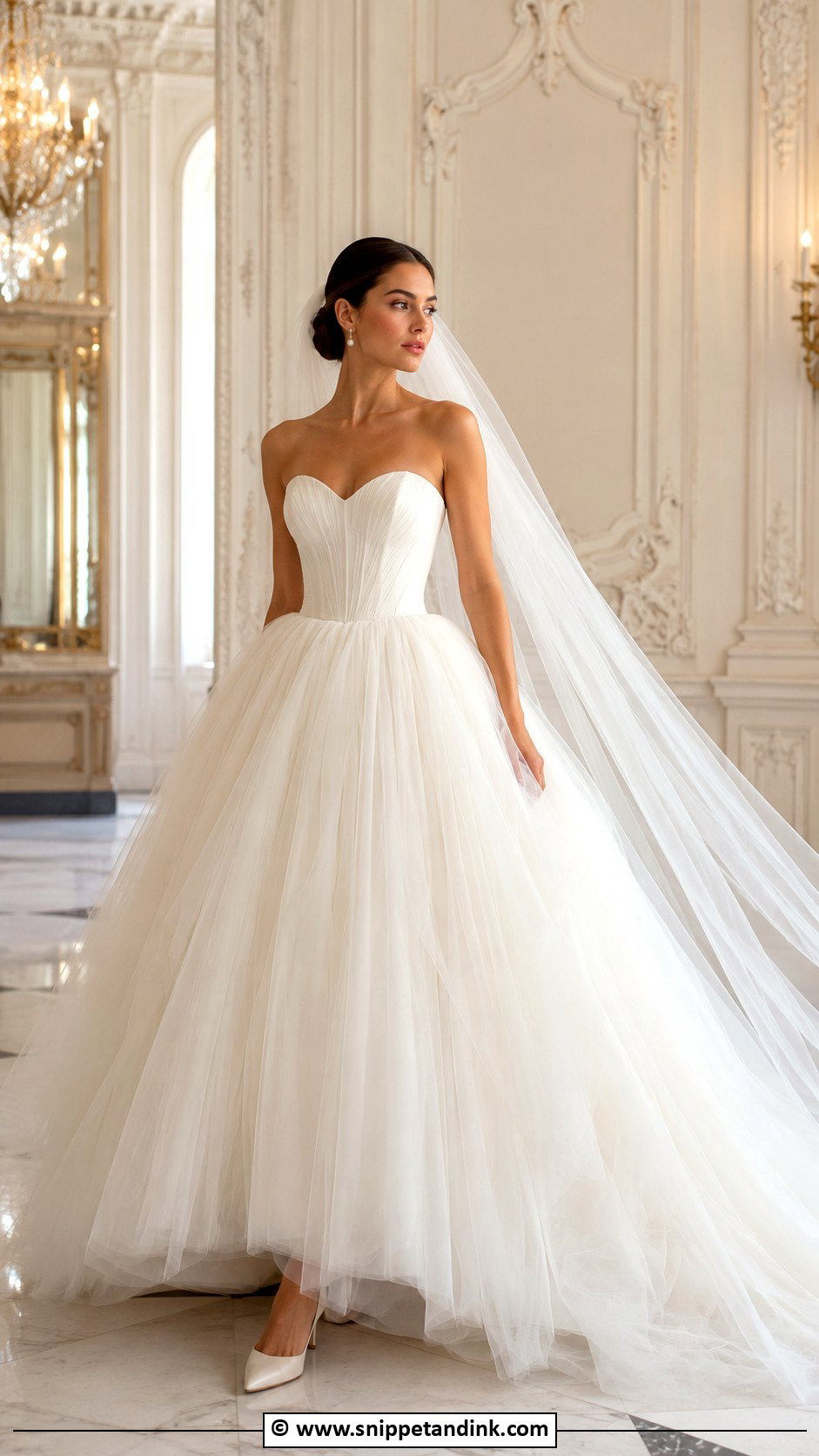
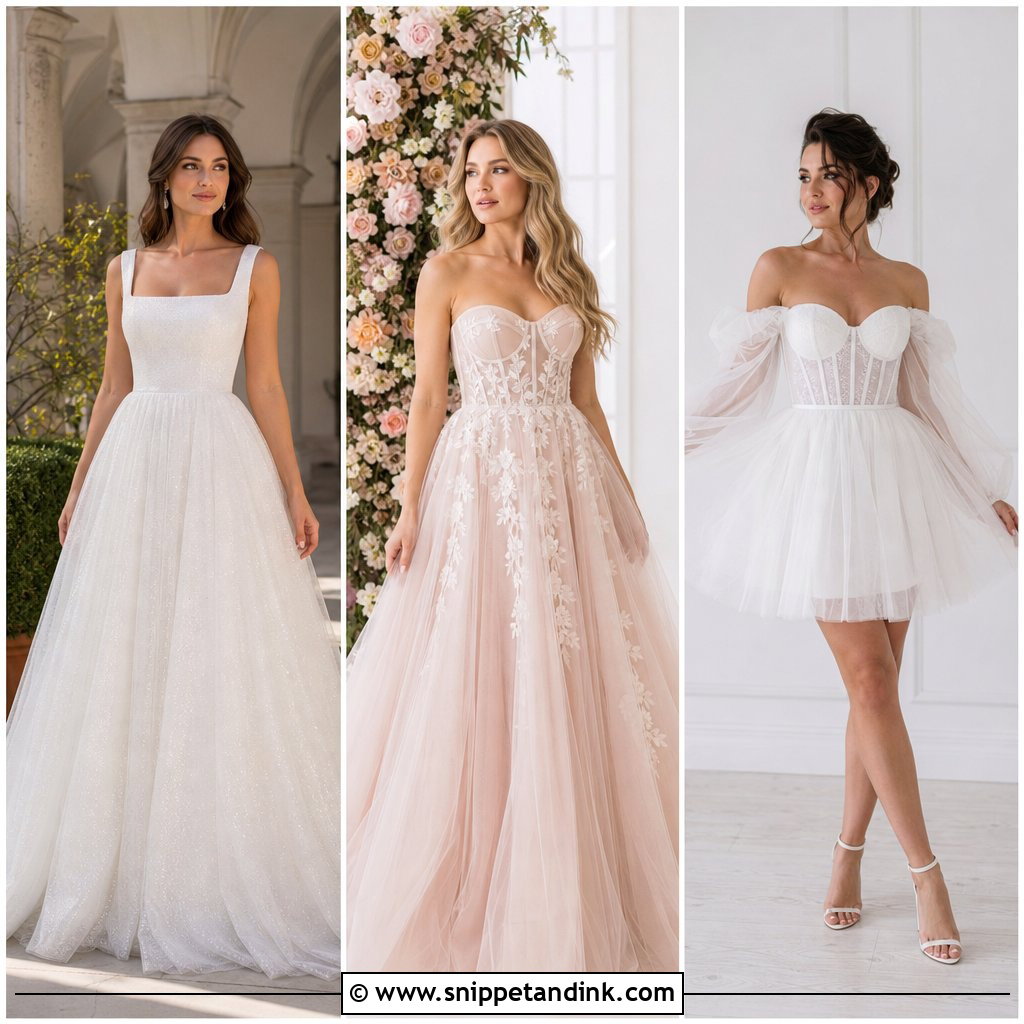
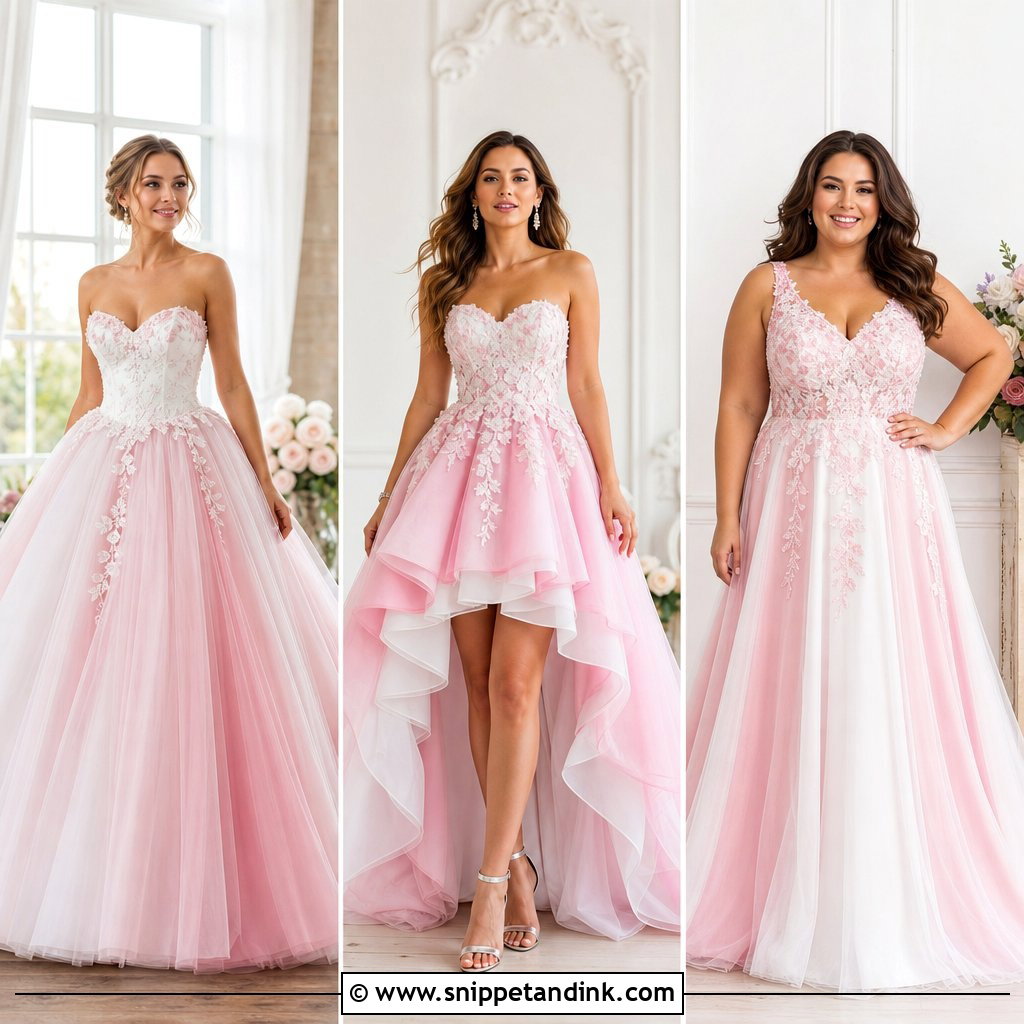
The full tulle ball gown is the classic fairytale outline, with a fitted bodice holding up a wide, layered skirt. Soft tulle keeps the volume from looking stiff, while a hoop or a crinoline underneath decides how wide it stands. I’d ask early which support the dress uses, because a hoop changes how you sit, climb stairs and get in a car. A sweetheart neckline, delicate earrings, a clean updo and a long veil that melts into the skirt are the traditional pairing. For more support, look for a corset bodice or structured lining. Choose shoes you can stand in, since nobody will see them.
2. A Line Tulle Wedding Dress
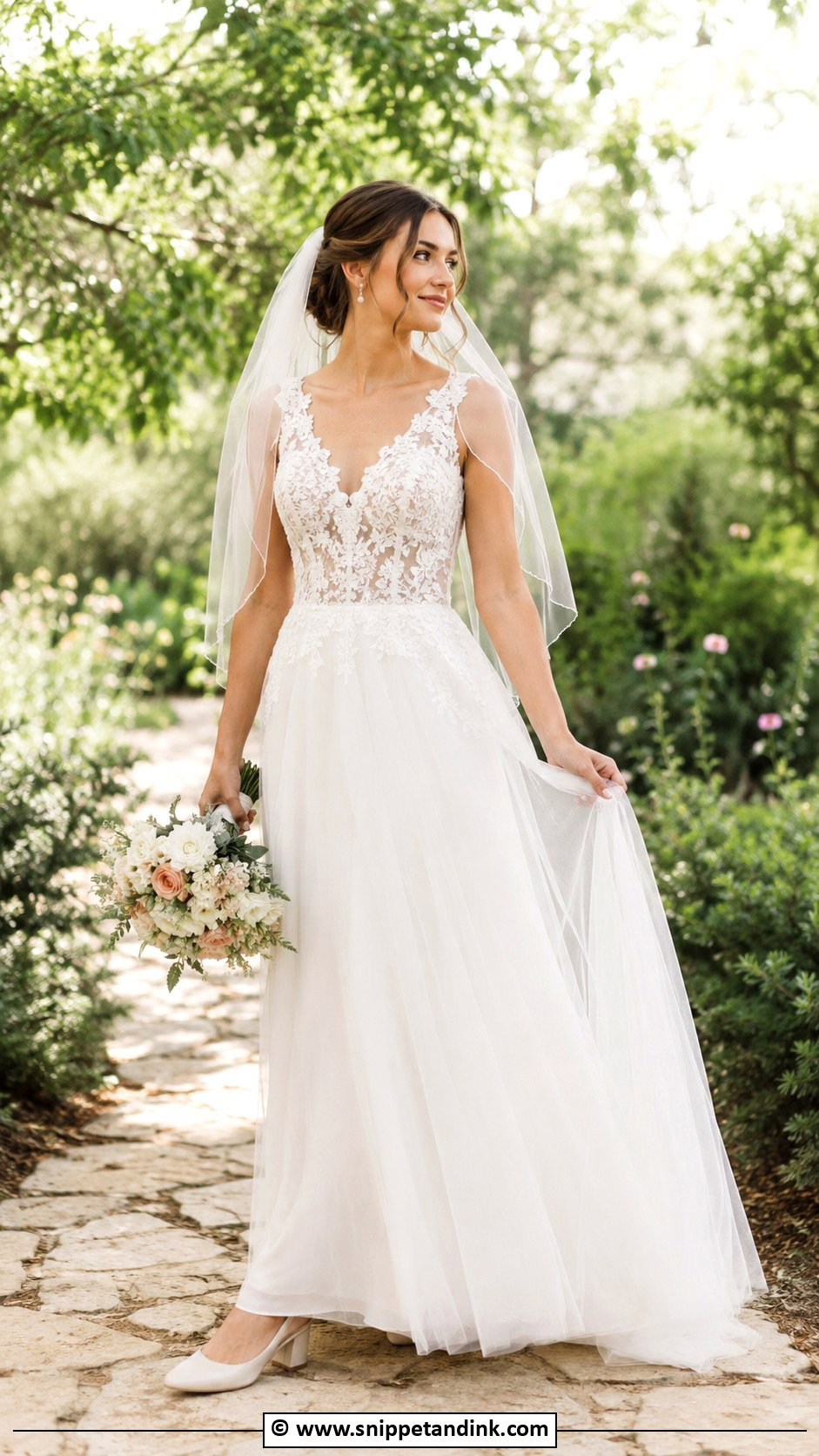
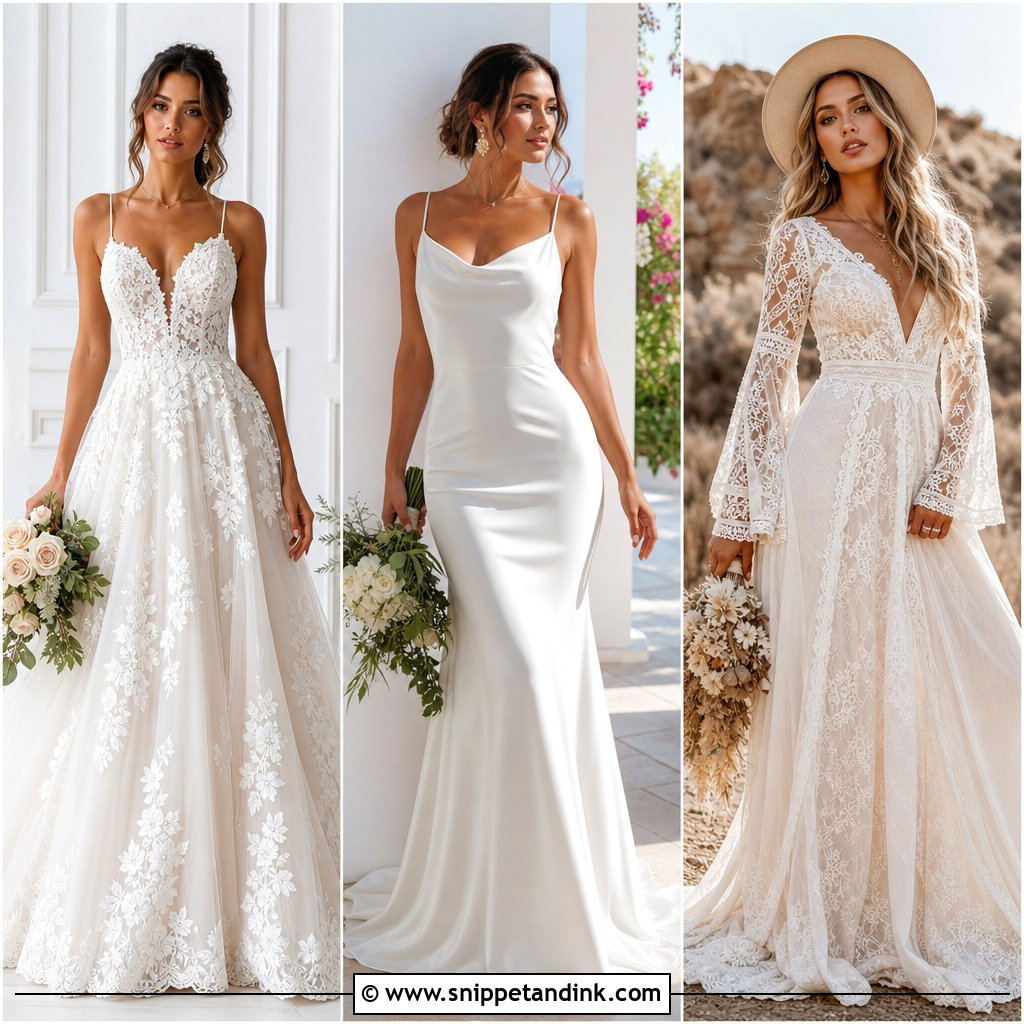
If a bride tells me she wants movement without a heavy skirt, I hand her an A-line in tulle first. It skims the waist and flows away from the hips, so it suits a wide range of figures and settings. A plain bodice keeps it clean; lace appliqué softens it. Two or three layers of tulle over a lining are usually enough; more than that and you start to lose the drape. Pearl earrings, a fingertip veil and low block heels finish it.
3. Strapless Tulle Wedding Dress
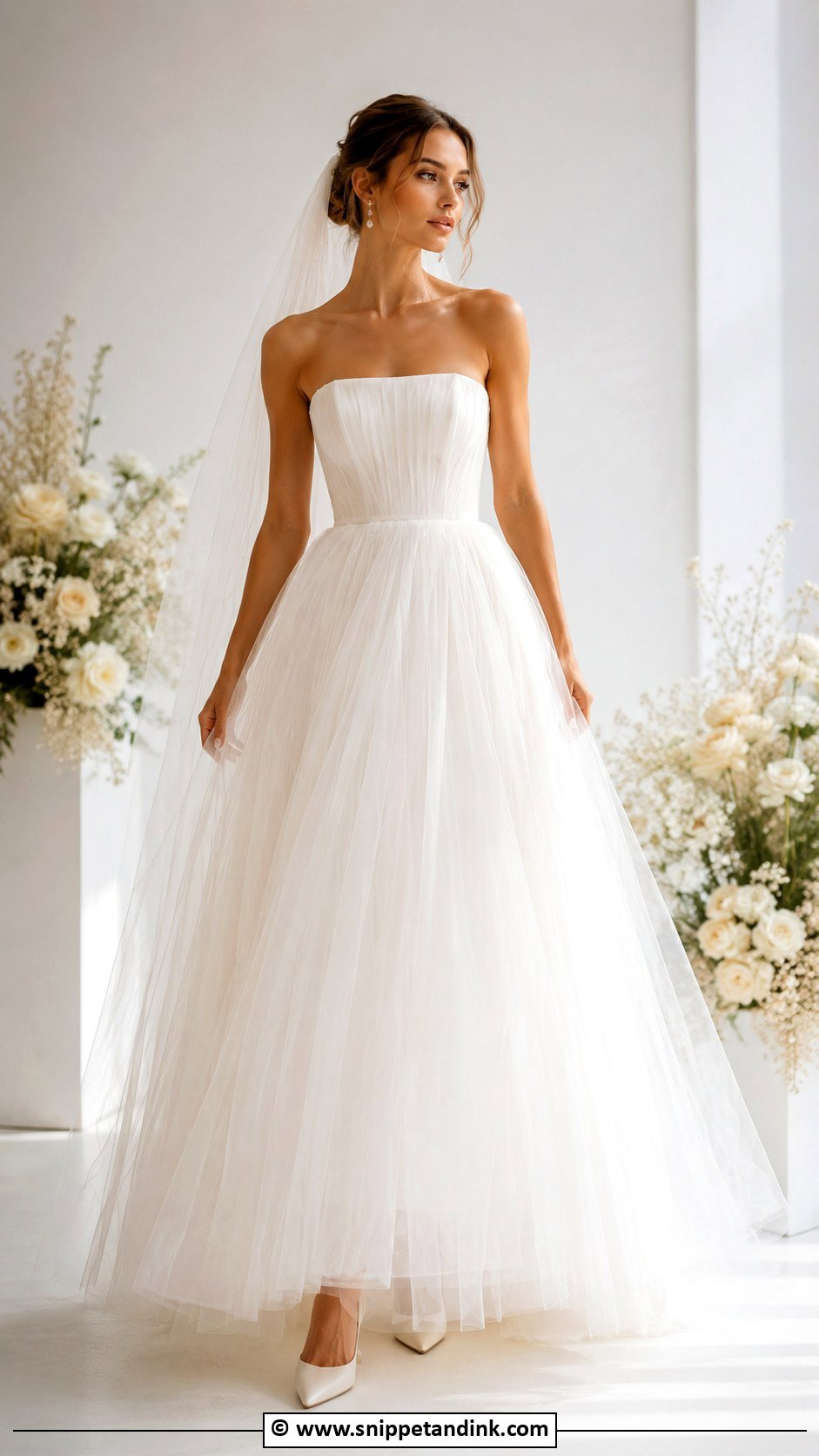
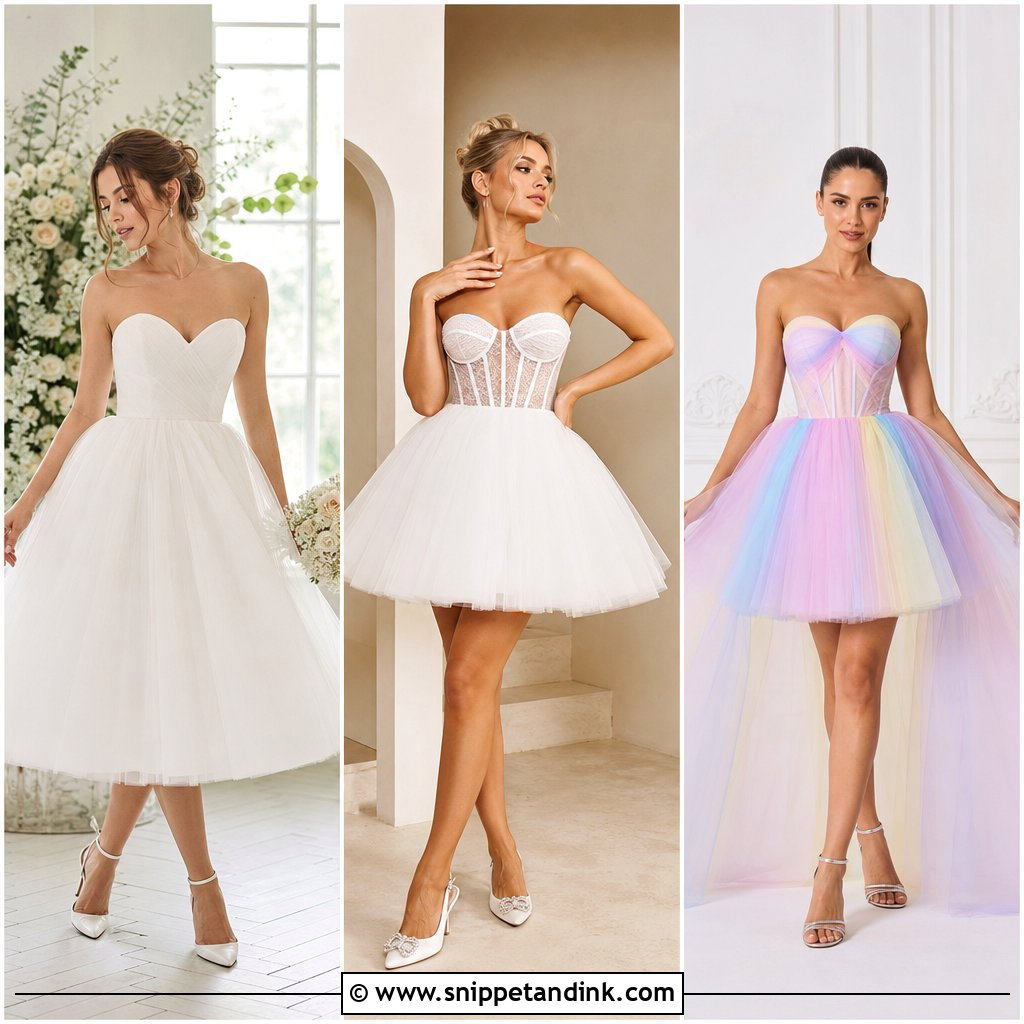
Several layers of tulle add up to real weight, and all of it hangs from a strapless bodice, so the internal structure matters more than the neckline shape. I look for boning, a waist stay and grip tape along the top edge. Straight-across looks modern; sweetheart with a little lace or beading is softer. Statement earrings or soft waves fill the open neckline. A detachable tulle wrap or sheer gloves give extra coverage later in the evening.
4. Off Shoulder Tulle Wedding Dress
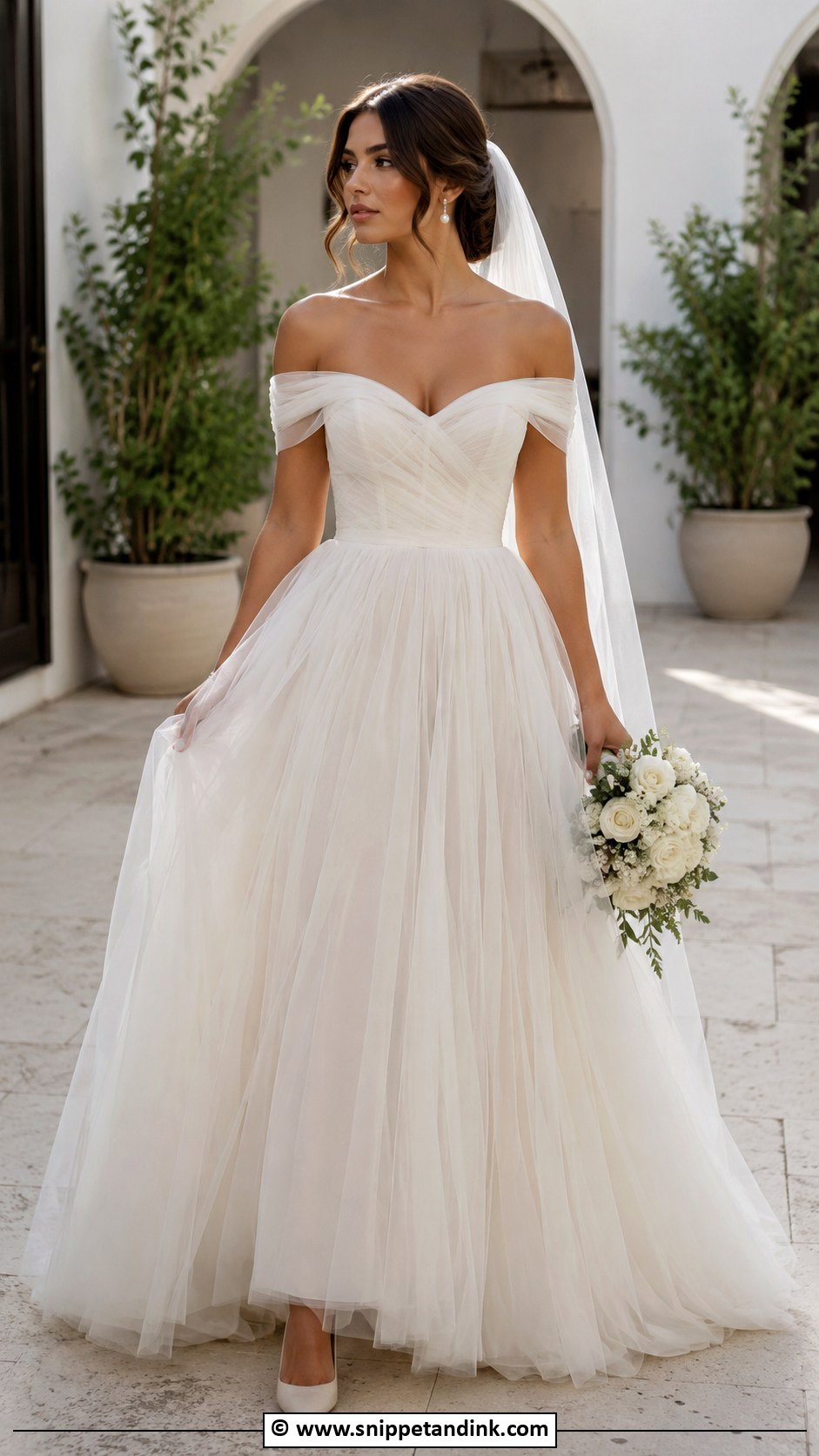
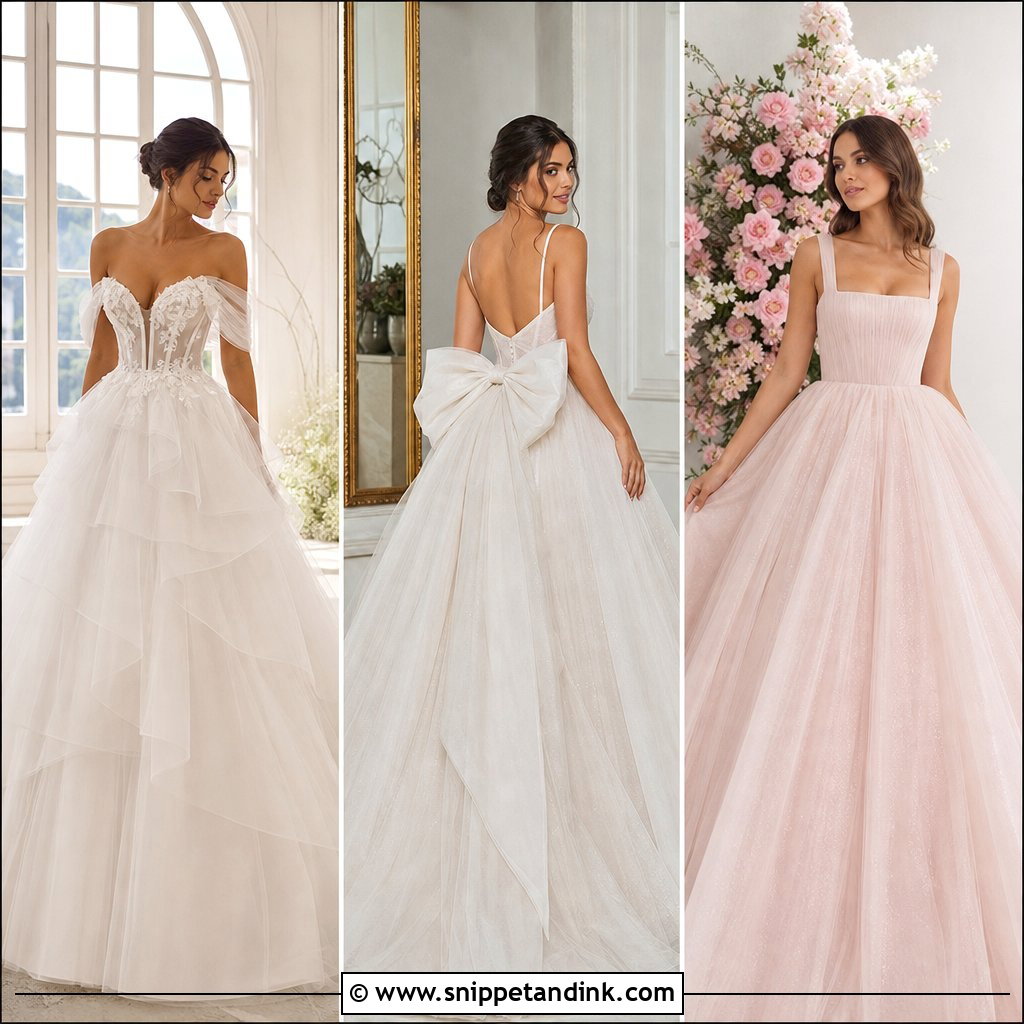
Off-shoulder sleeves balance a big skirt nicely: the bare shoulders lighten the volume below. Full A-line and ball gown skirts suit it best. For an outdoor wedding where you’ll be hugging and waving, ask for sleeves with a little stretch or elastic in the band, because rigid sleeves stop you raising your arms. Soft curls, pearl drops, a simple veil, satin heels and a clean bouquet.
5. Long Sleeve Tulle Wedding Dress
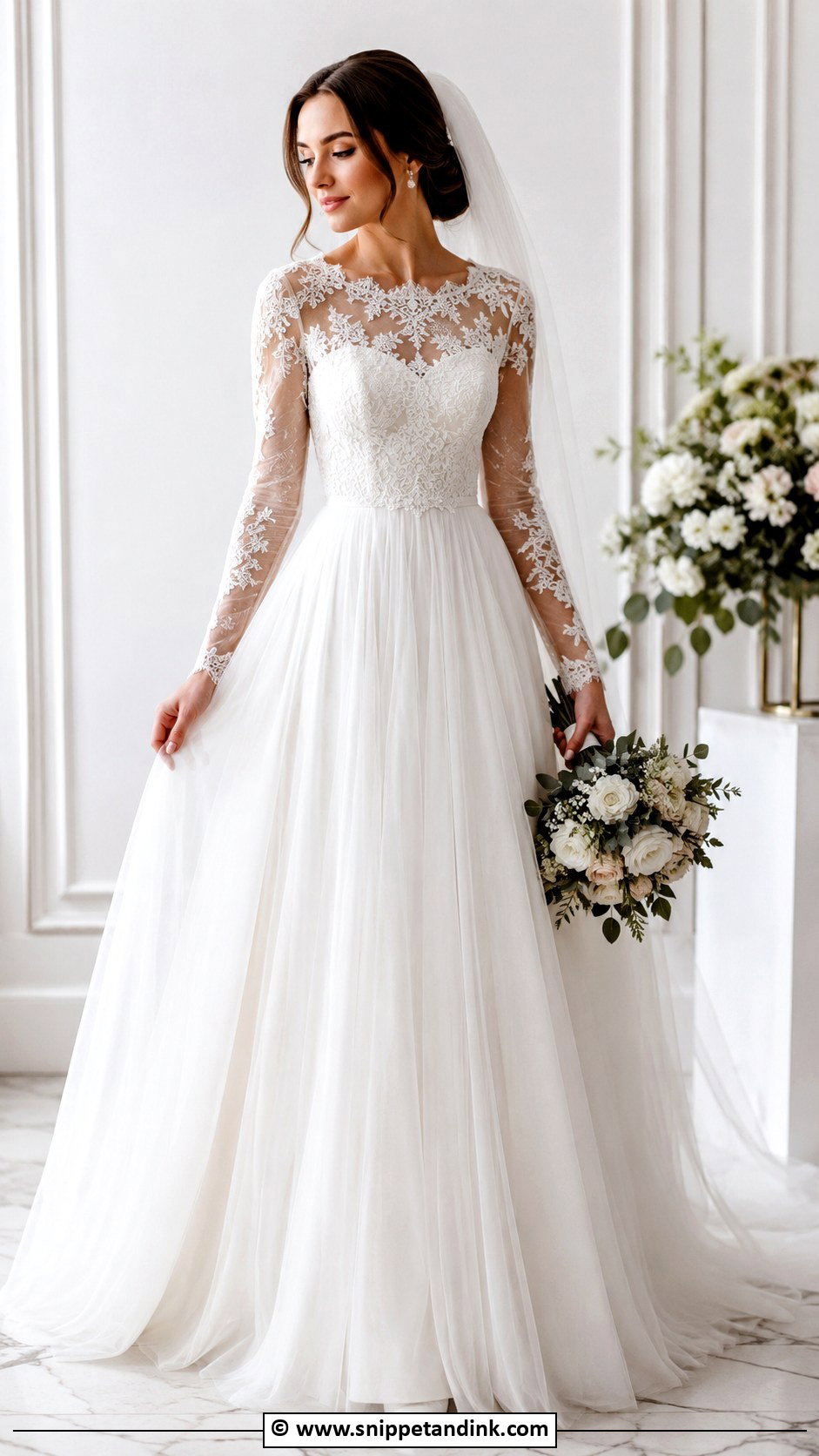
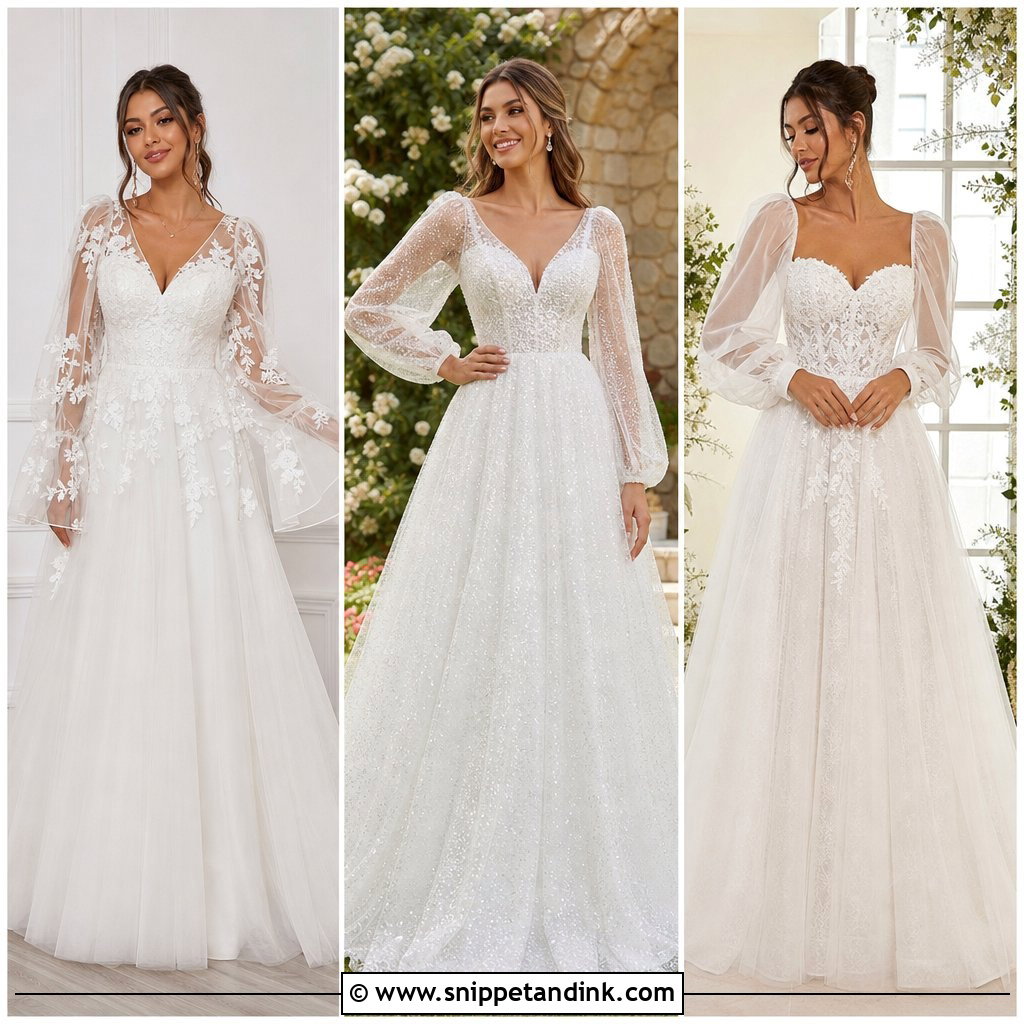
Sheer tulle sleeves give coverage that still feels light. They can be plain, embroidered, beaded or covered in lace appliqué, adding texture without bulk. One detail I always check: the tulle should match your skin tone, or the sleeves will look grey or pink against your arm in photos. A high bun or low chignon keeps them visible. Small earrings instead of a necklace, closed-toe heels and a soft veil suit cooler seasons and formal rooms.
6. Lace Tulle Wedding Dress
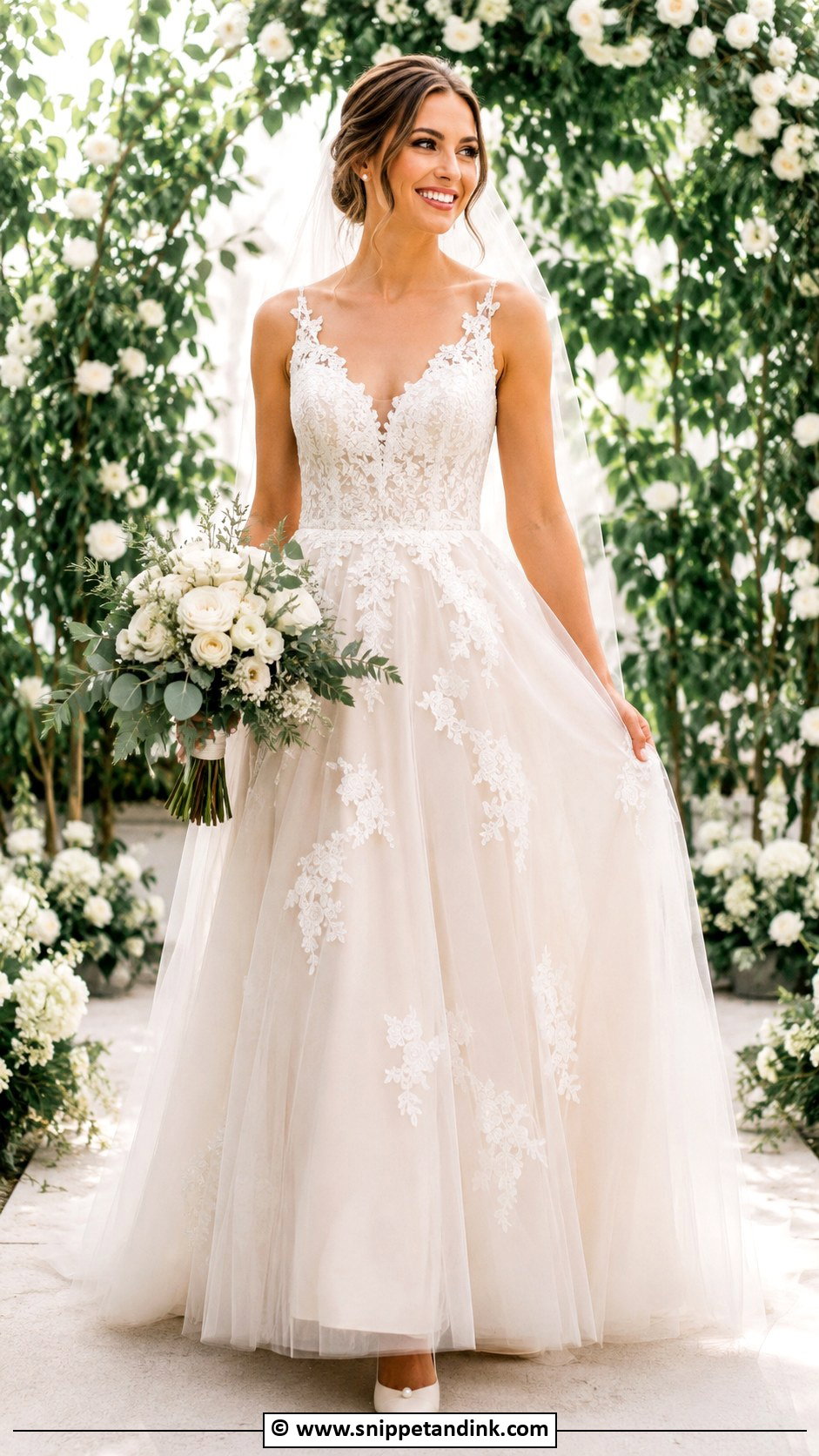
Tulle and lace are a natural pairing: the net gives softness, the lace adds pattern. Scattered appliqués over a sheer skirt look light; lace trailing from bodice into skirt reads more dramatic. Ask how the lace is attached. Hand-sewn appliqués sit flatter and survive a day of hugging better than glued ones. Pearl studs, a sheer veil and soft ivory heels are plenty if you’d rather have detail than sparkle.
7. Corset Tulle Wedding Dress
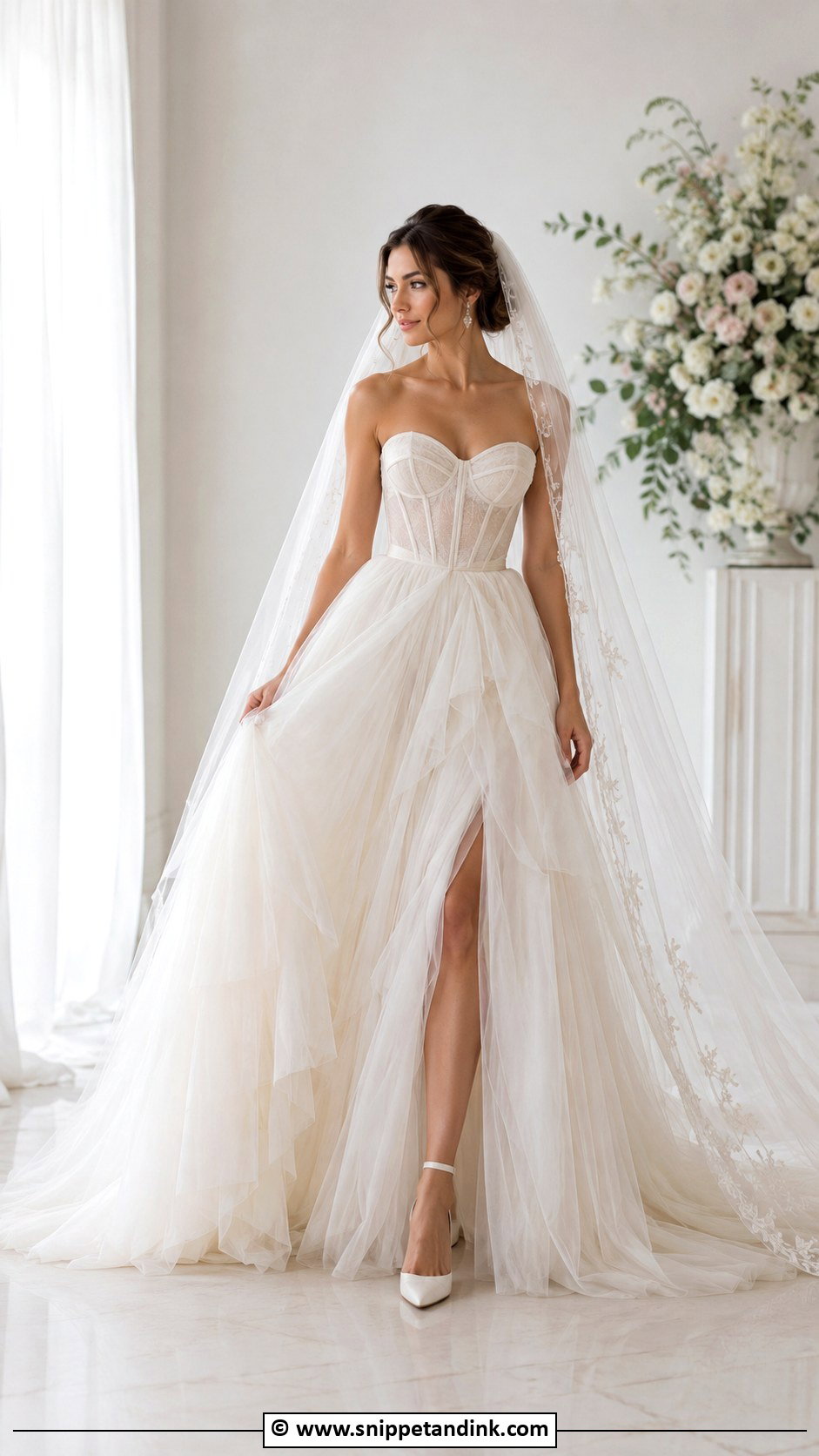
A corset gives structure on top while layered tulle keeps the skirt soft, so the overall effect stays romantic rather than severe. Visible boning reads fashion-led; a fully lined corset reads classic. Fit the corset with the full skirt attached, since the skirt’s weight pulls the waist down. A cathedral veil, sleek hair and delicate earrings, with no necklace, and heels at the height the hem was set for.
8. Sparkle Tulle Wedding Dress
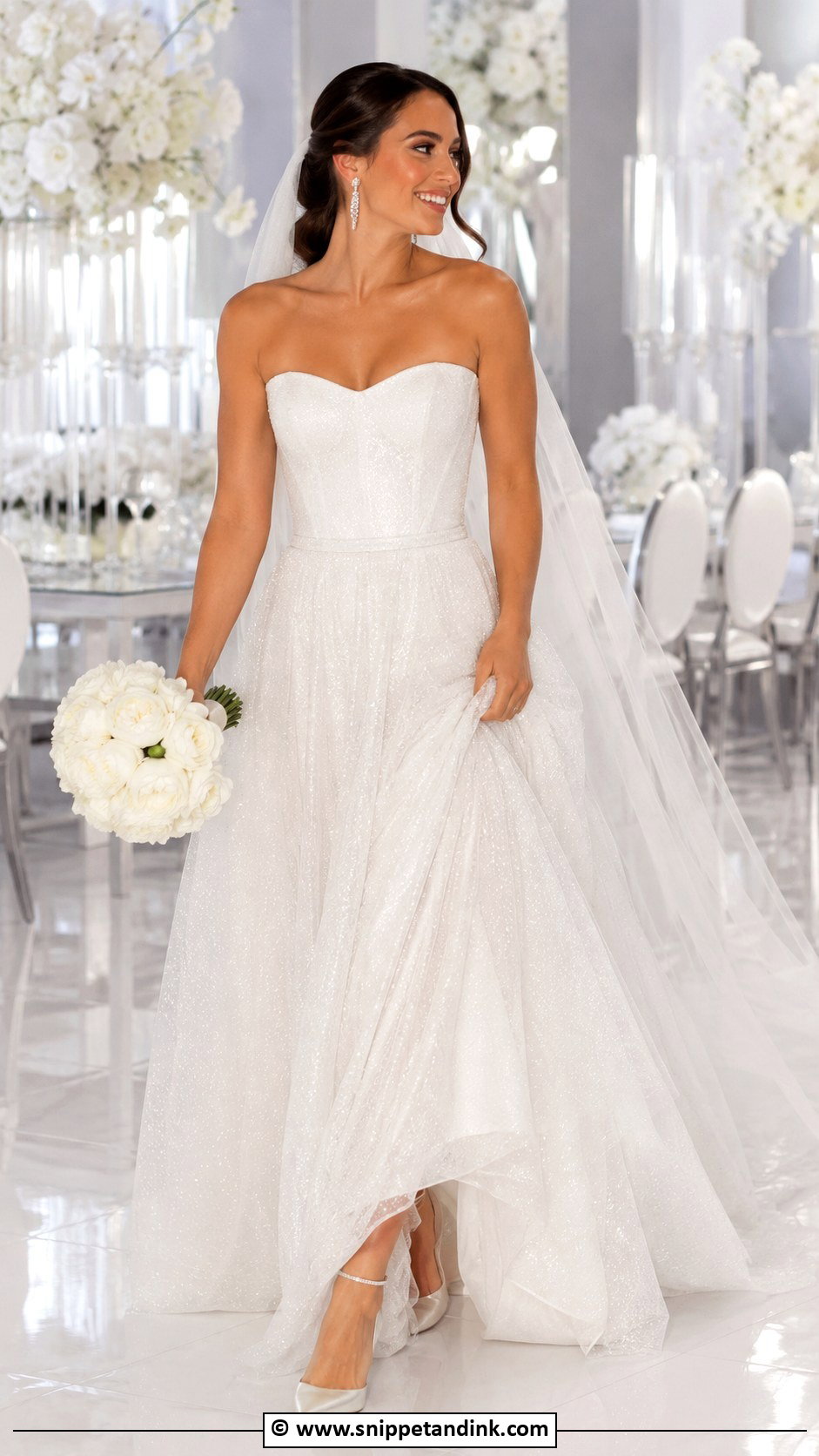
Sparkle tulle has fine glitter or metallic thread woven or bonded into the net, so the skirt glints as you move without the weight of beading. It glows under candlelight and evening lighting. Pair a sparkling skirt with a plain bodice, or wear a fully shimmering gown with very quiet accessories. Glitter tulle can shed a little and feel scratchier against bare skin, so check the lining. Crystal earrings, a smooth veil and metallic or ivory heels.
9. Floral Tulle Wedding Dress
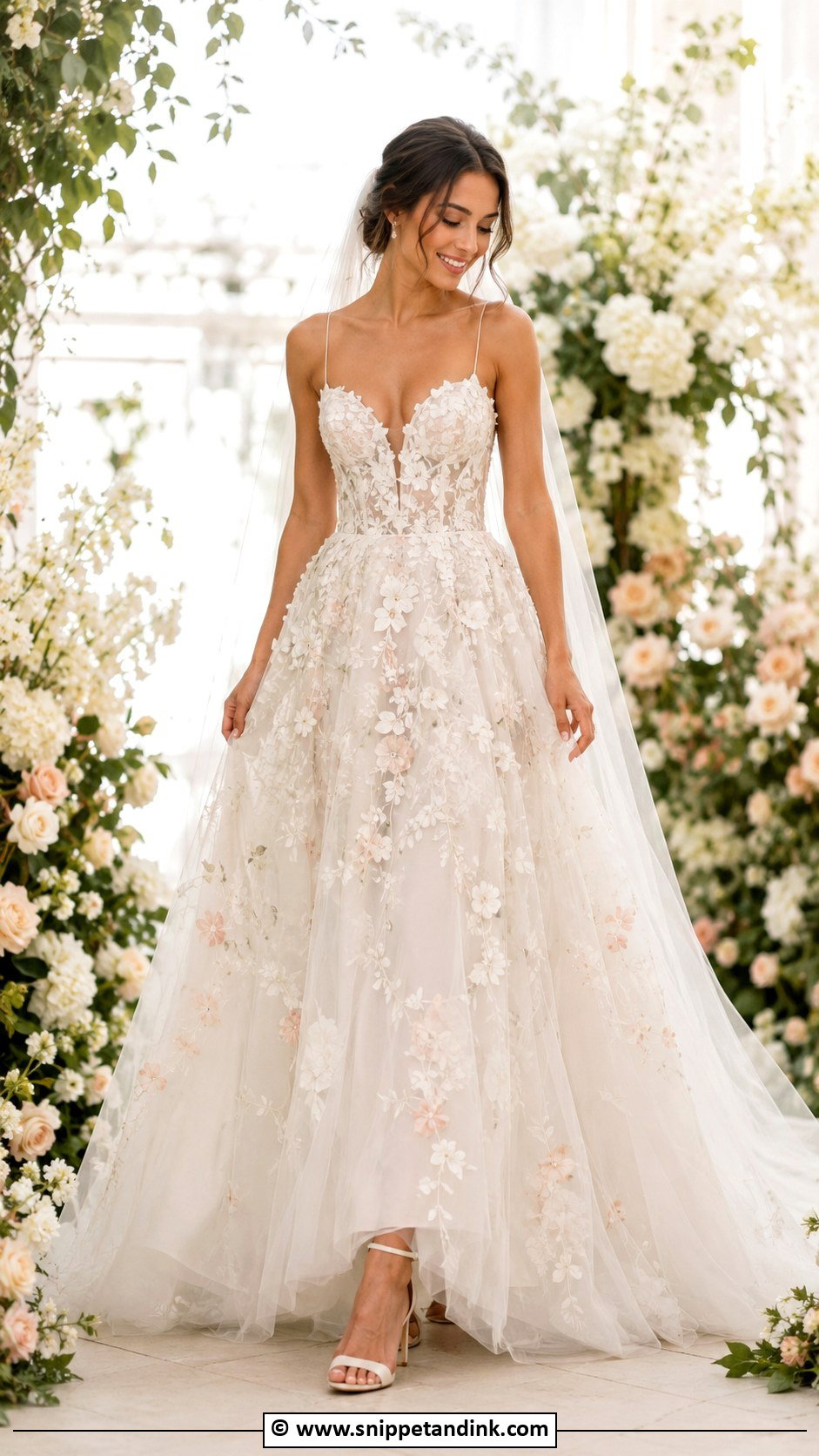
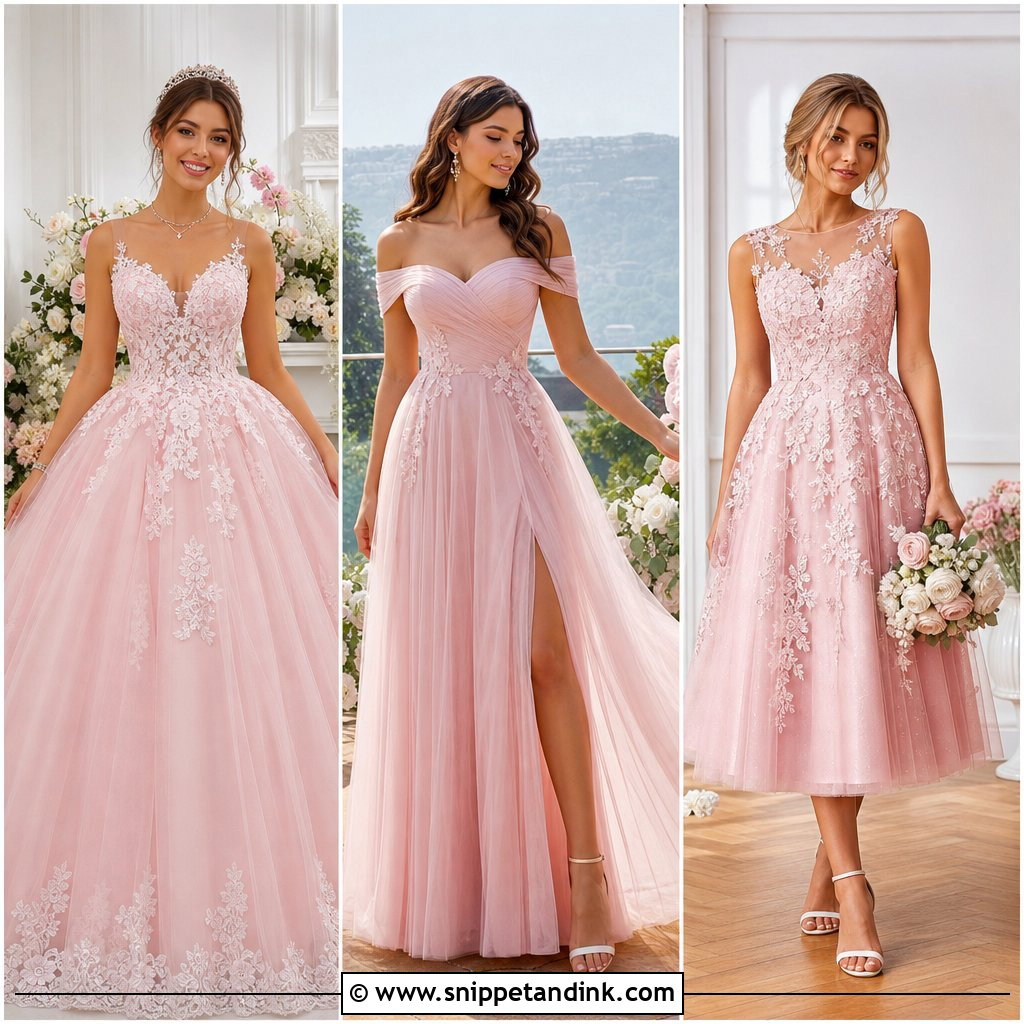
Floral appliqué on tulle looks almost like flowers floating over the gown. Tonal white-on-ivory is the subtle version; blush, pastel or green flowers make a garden statement. Colored flowers need a bouquet that agrees with them, so I’d bring a swatch to your florist. Loose waves, a natural bouquet and delicate sandals or heels; keep the veil simple.
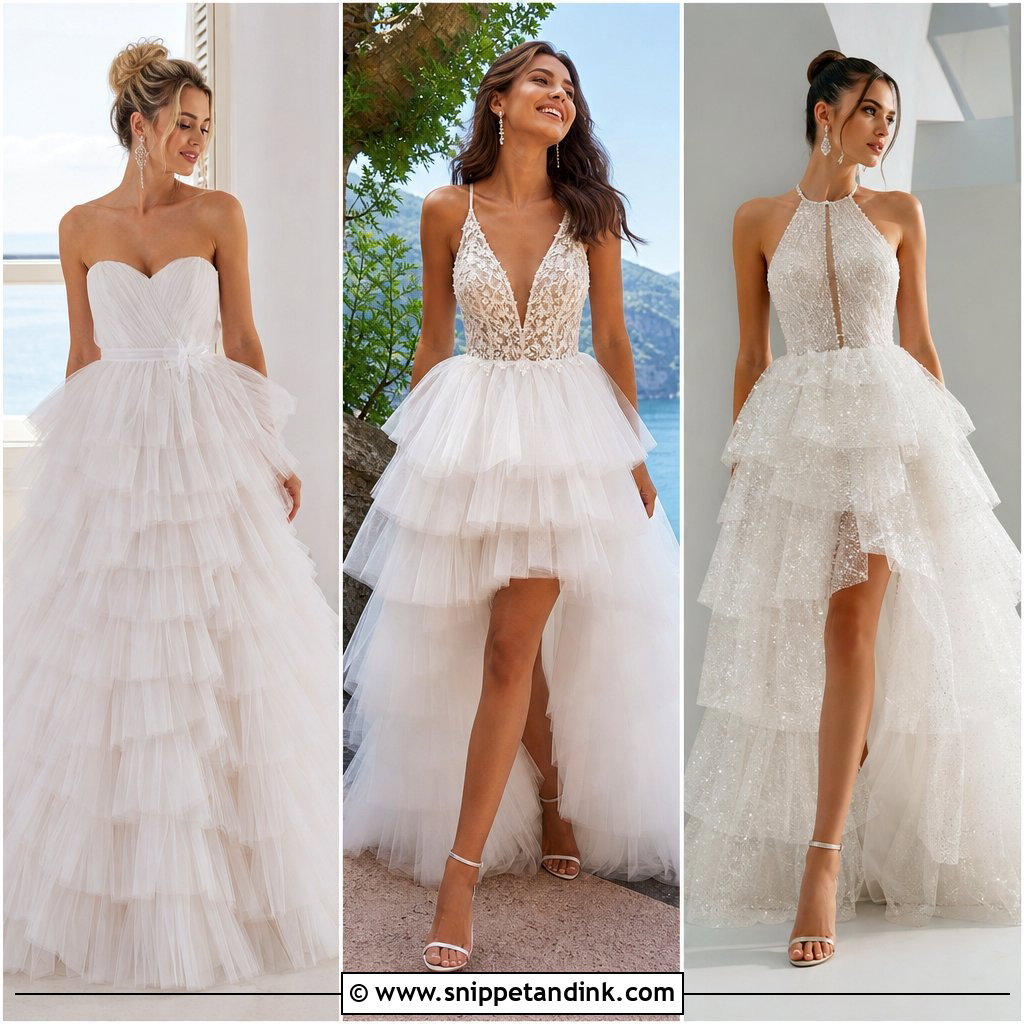
10. Tiered Tulle Wedding Dress
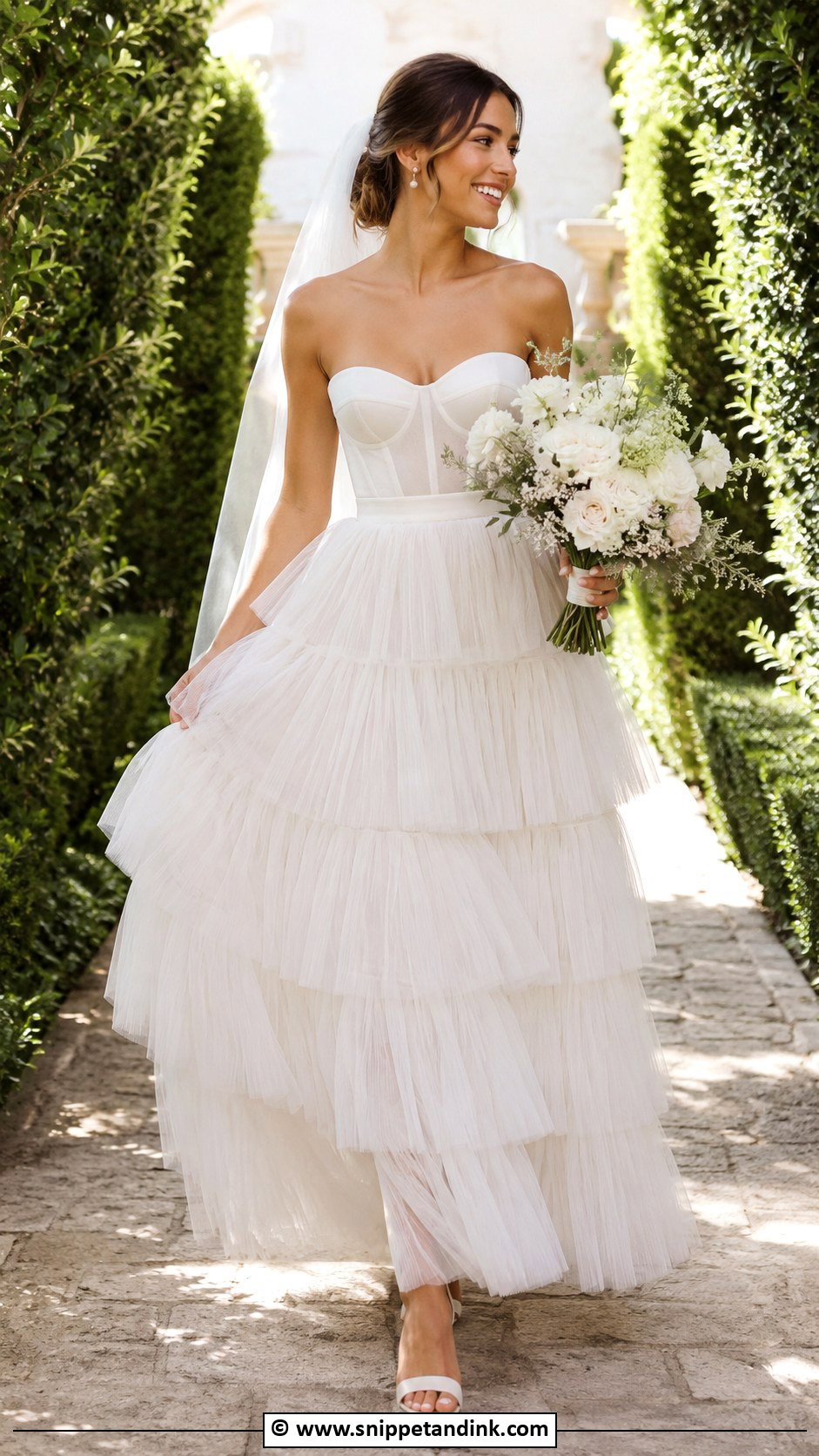
Tiers stack the skirt in soft horizontal layers that sway as you walk. Depending on the shape, they can look playful or high-fashion. A fitted bodice anchors all that volume. Tiers add width at each level, so on shorter brides I prefer narrower tiers that keep the eye moving downward. Simple heels, small earrings and clean hair let the skirt lead, and each layer catches air in outdoor photos.
11. Ruffle Tulle Wedding Dress
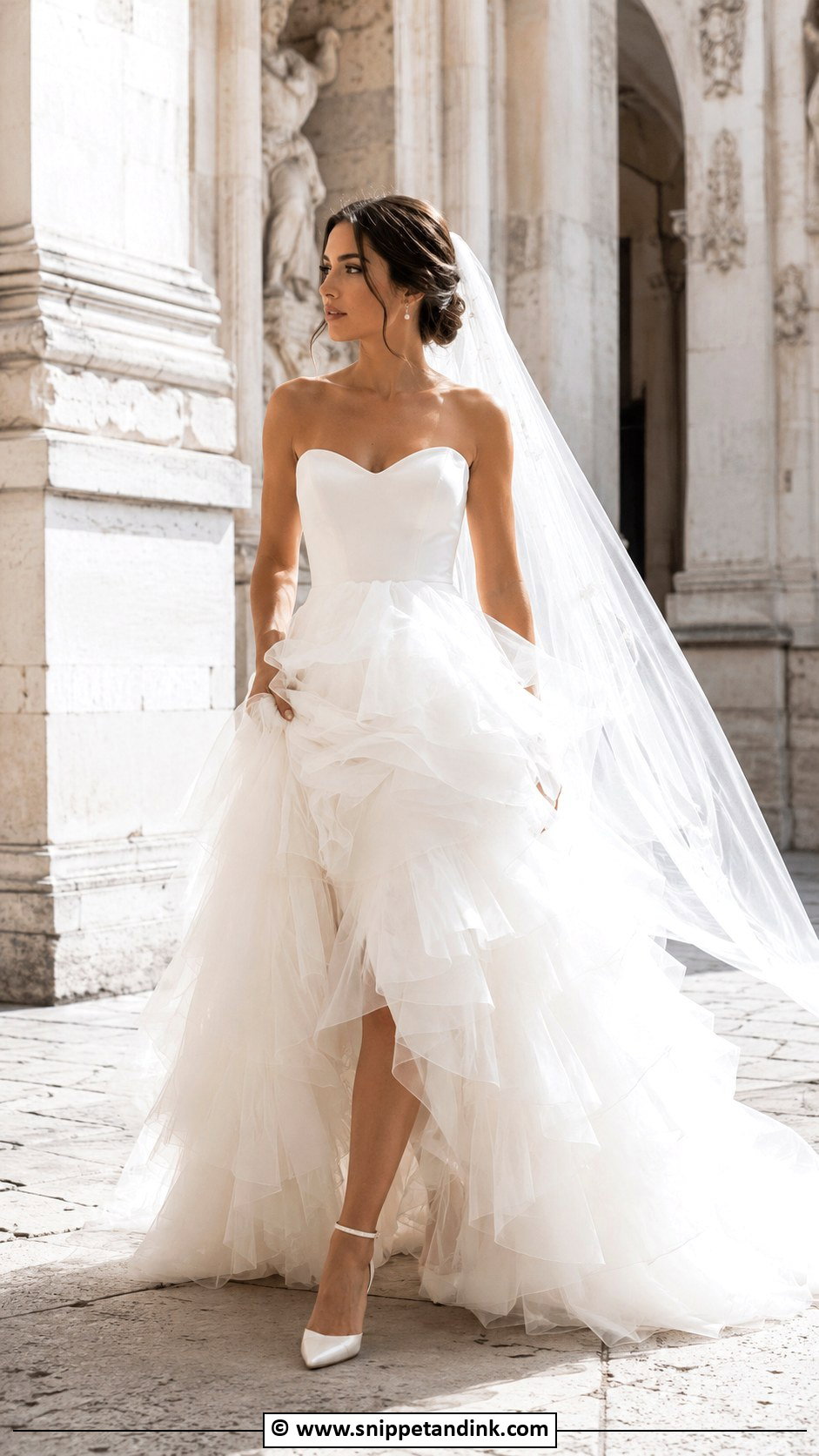
Ruffles bring drama to a full skirt or cascading train without heavy embellishment. To keep it wearable, anchor the volume with a clean neckline and fitted bodice. Ruffles crush in a car and in storage, so plan time with a steamer before the ceremony. Choose a simple veil or none at all, depending on how busy the skirt is. Elegant heels and minimal jewelry; the side view in photos is where ruffles really show.
12. Simple Tulle Wedding Dress
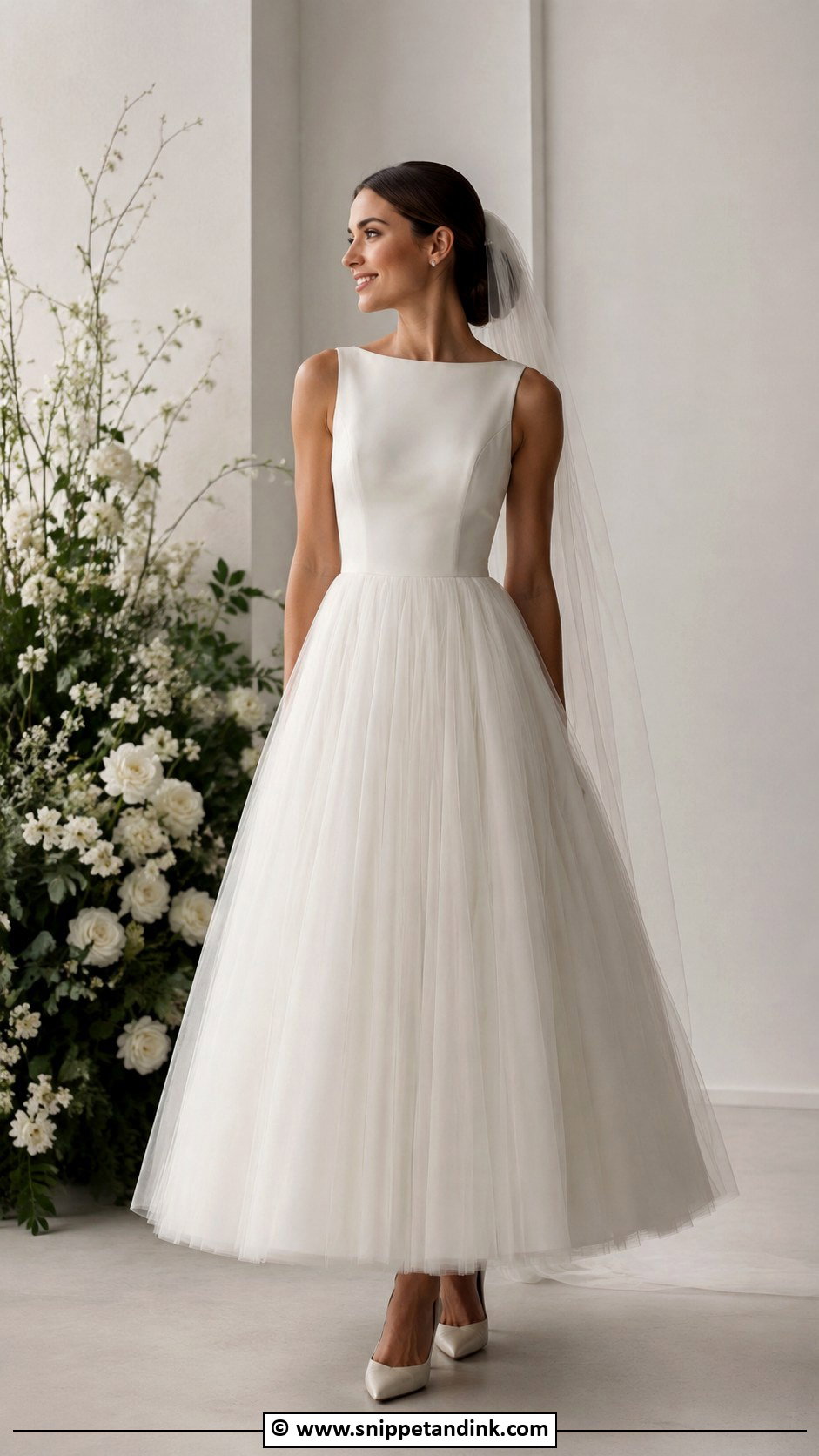
Plain tulle depends on fit and fabric quality. Clean bodice, smooth waist, airy skirt with just enough volume. The quality is easy to feel: good bridal tulle is soft and drapes, while cheap tulle is stiff and crackles. Pearl earrings, a sheer veil and classic ivory pumps. If there’s no lace or beading, a bow, satin belt or textured bouquet adds a point of interest.
13. Blush Tulle Wedding Dress
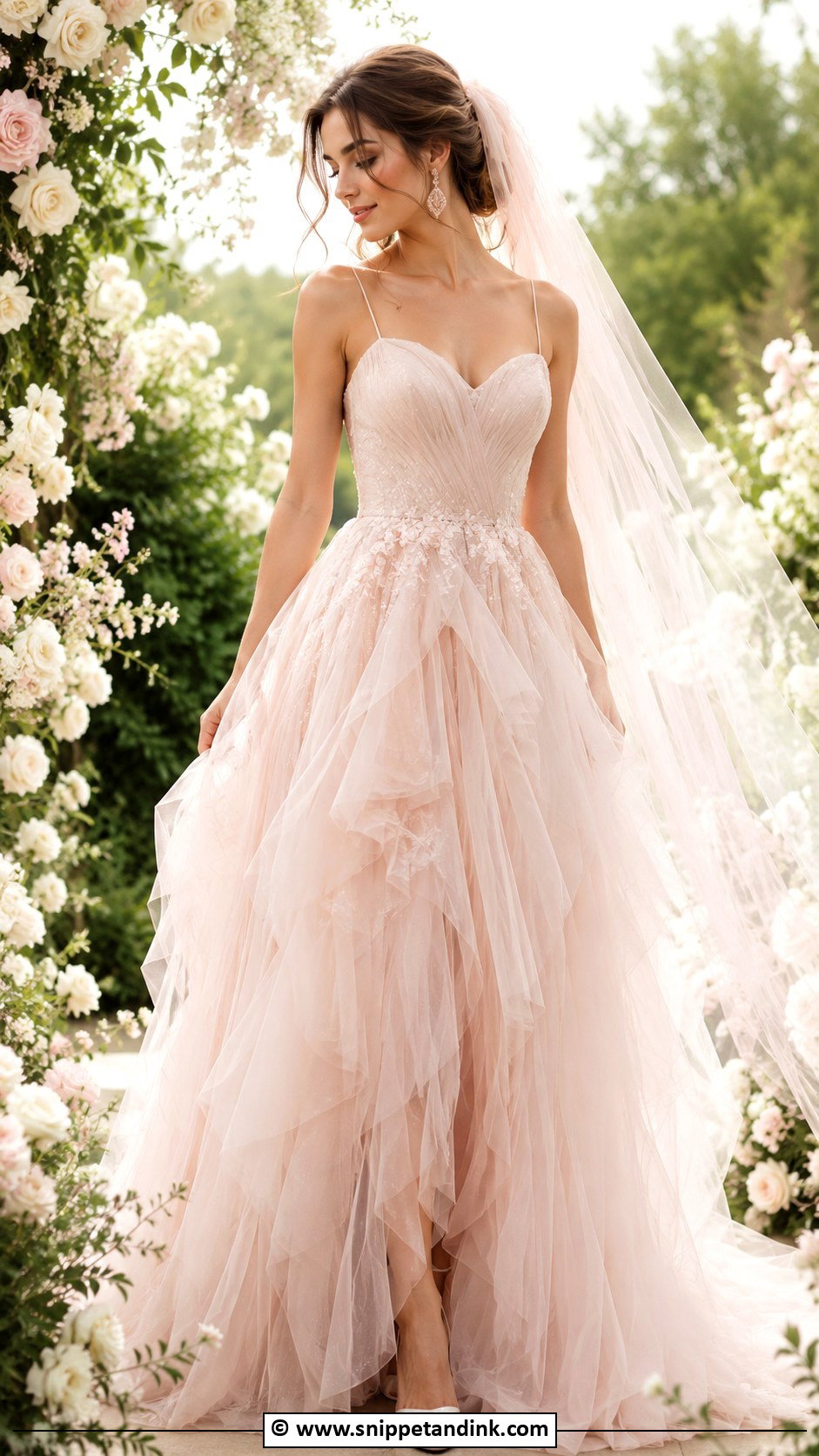
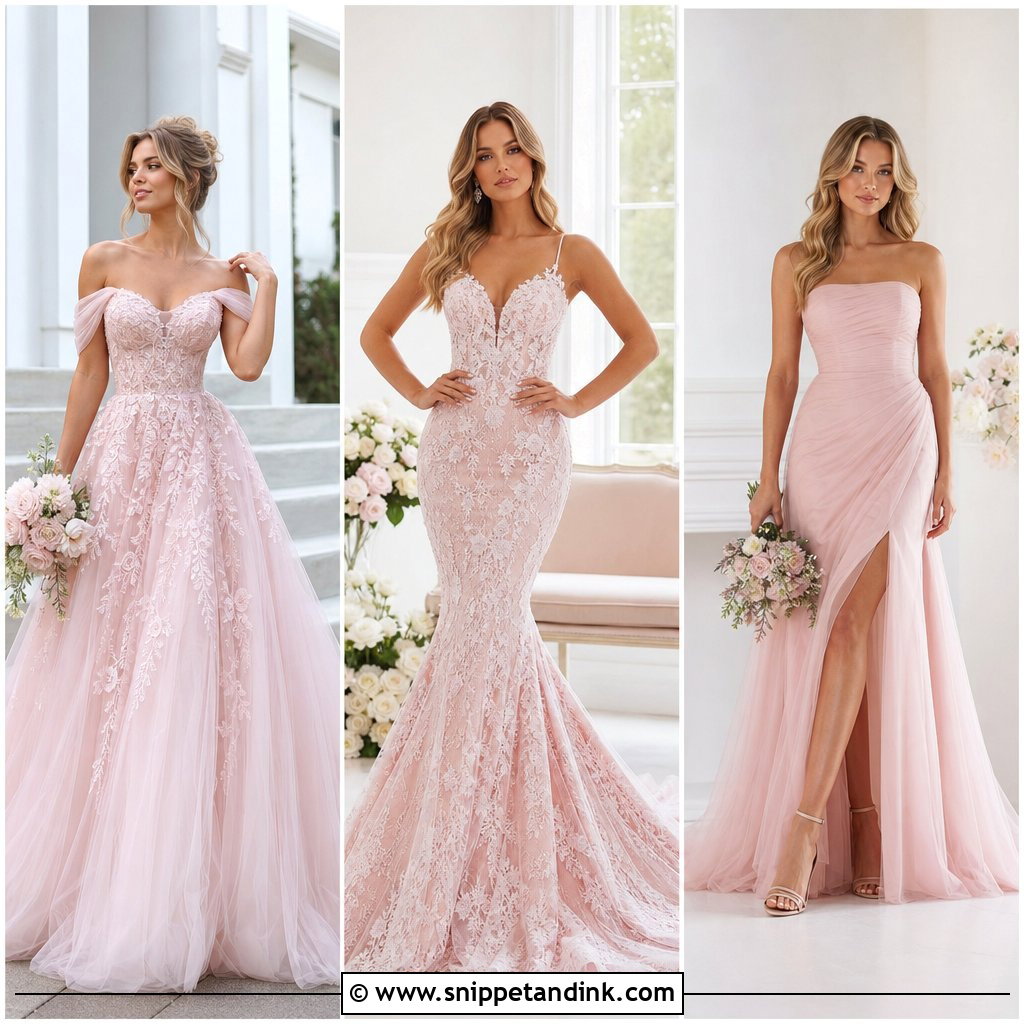
Blush tulle gives a soft alternative to white. Because the net is sheer and layered, color reads gentle rather than bright, and a nude or champagne lining makes it softer still. Check the shade against your skin in daylight; some blushes turn beige on olive skin. Rose gold earrings, ivory heels and a bouquet in cream and pale pink, with a veil in matching blush or soft ivory.
14. Ivory Tulle Wedding Dress
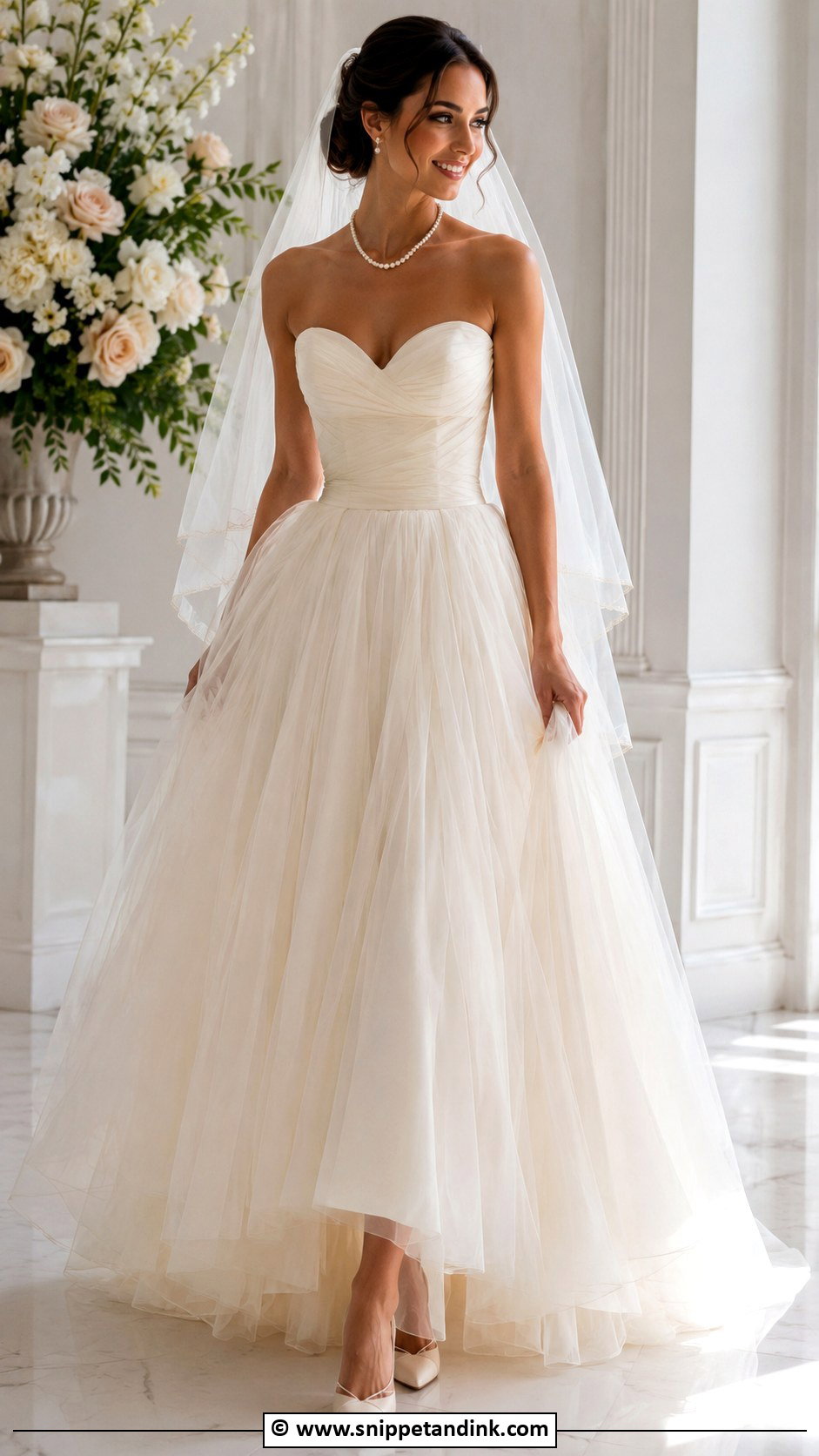
Ivory flatters more skin tones than bright white, and layered tulle gives it a warm glow in natural light. It works with nearly every silhouette from ball gown to sheath. The catch: ivory varies between makers, so if you buy the veil elsewhere, match it against the dress itself rather than a photo. Pearl jewelry and ivory satin heels; add texture with a lace bodice or embroidered veil if the skirt is plain.
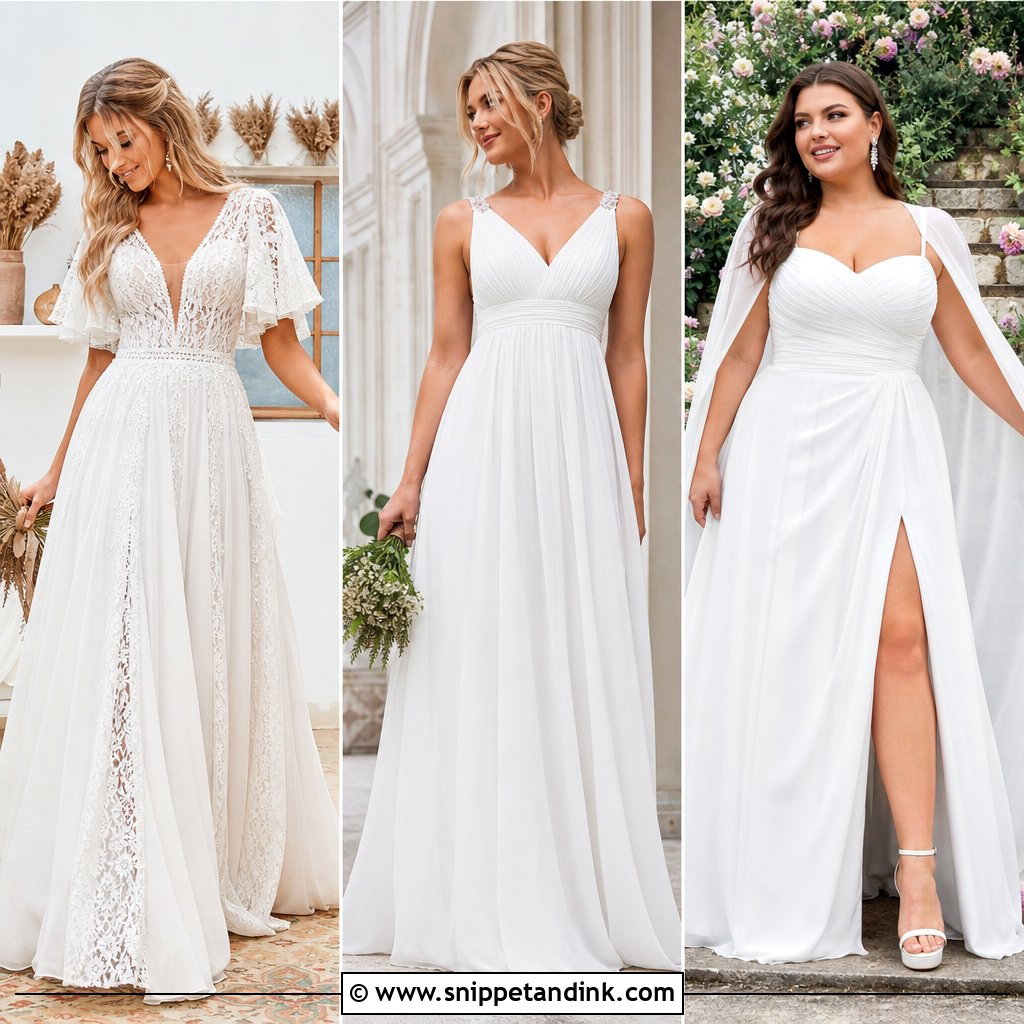
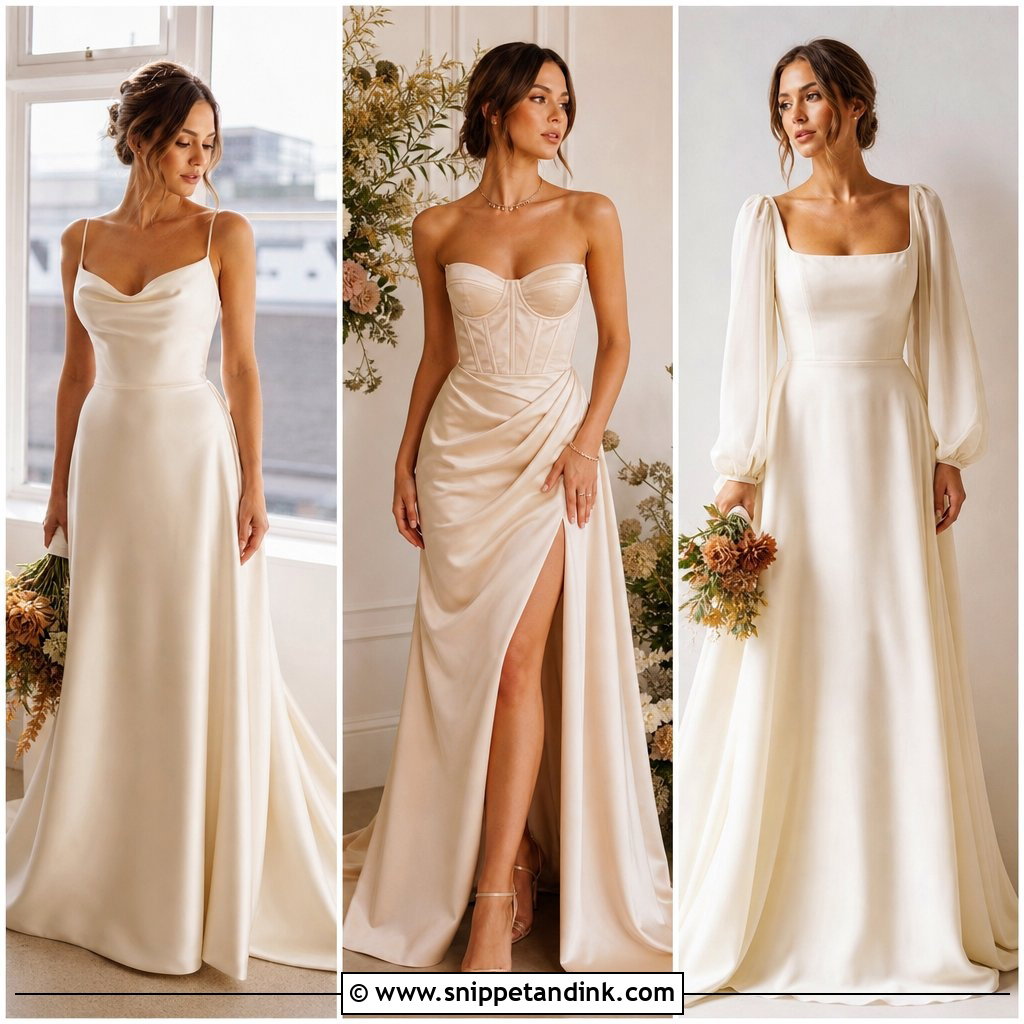
15. Beaded Tulle Wedding Dress
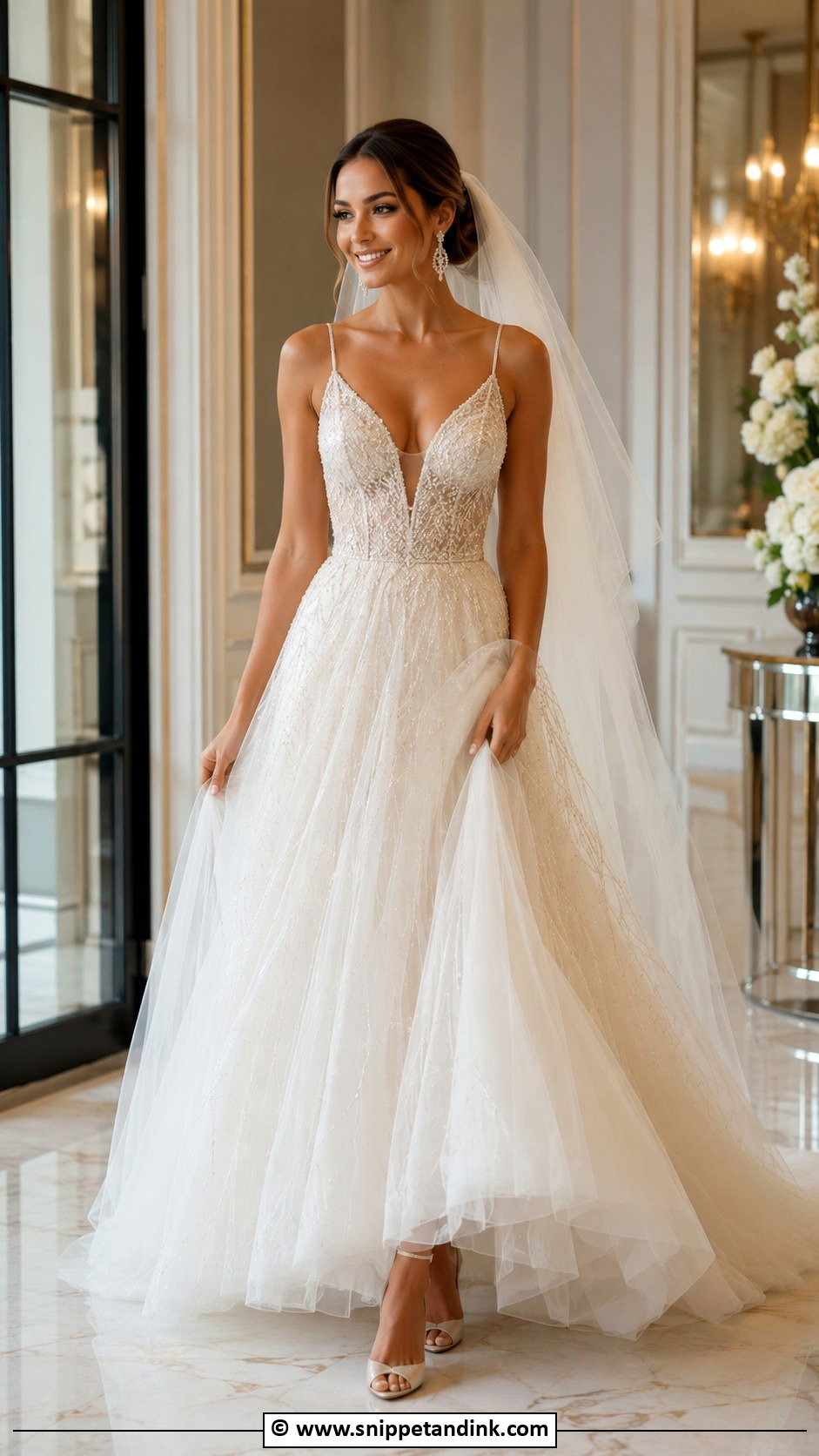
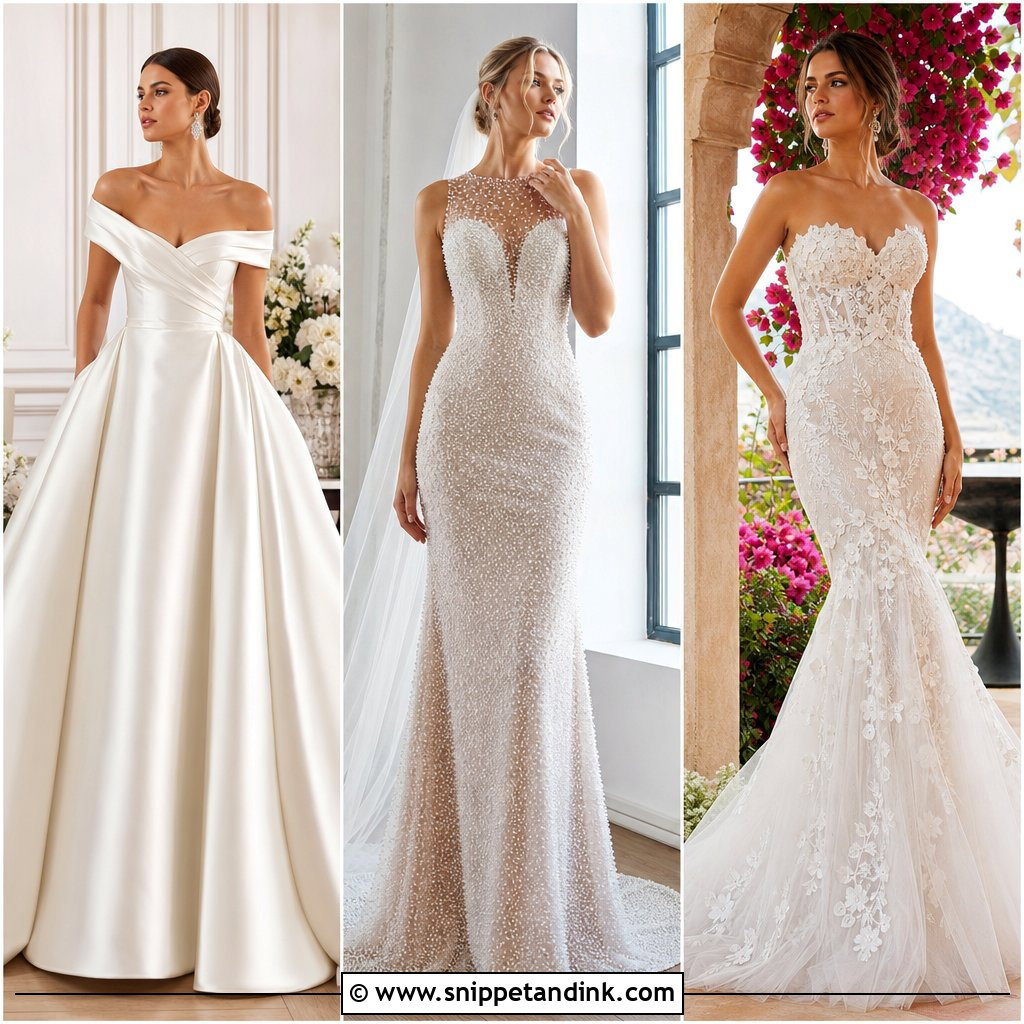
Beading can sit across the bodice, trail into the skirt or cover the whole gown, and the sheer tulle keeps it from looking too heavy. Heavy beading on fine tulle can pull and distort the net, so a good dress backs beaded areas with a sturdier layer. It suits formal and evening weddings. Simple hair, clean makeup, small crystal or pearl earrings and no necklace if the beading reaches the neckline.
16. Embroidered Tulle Wedding Dress
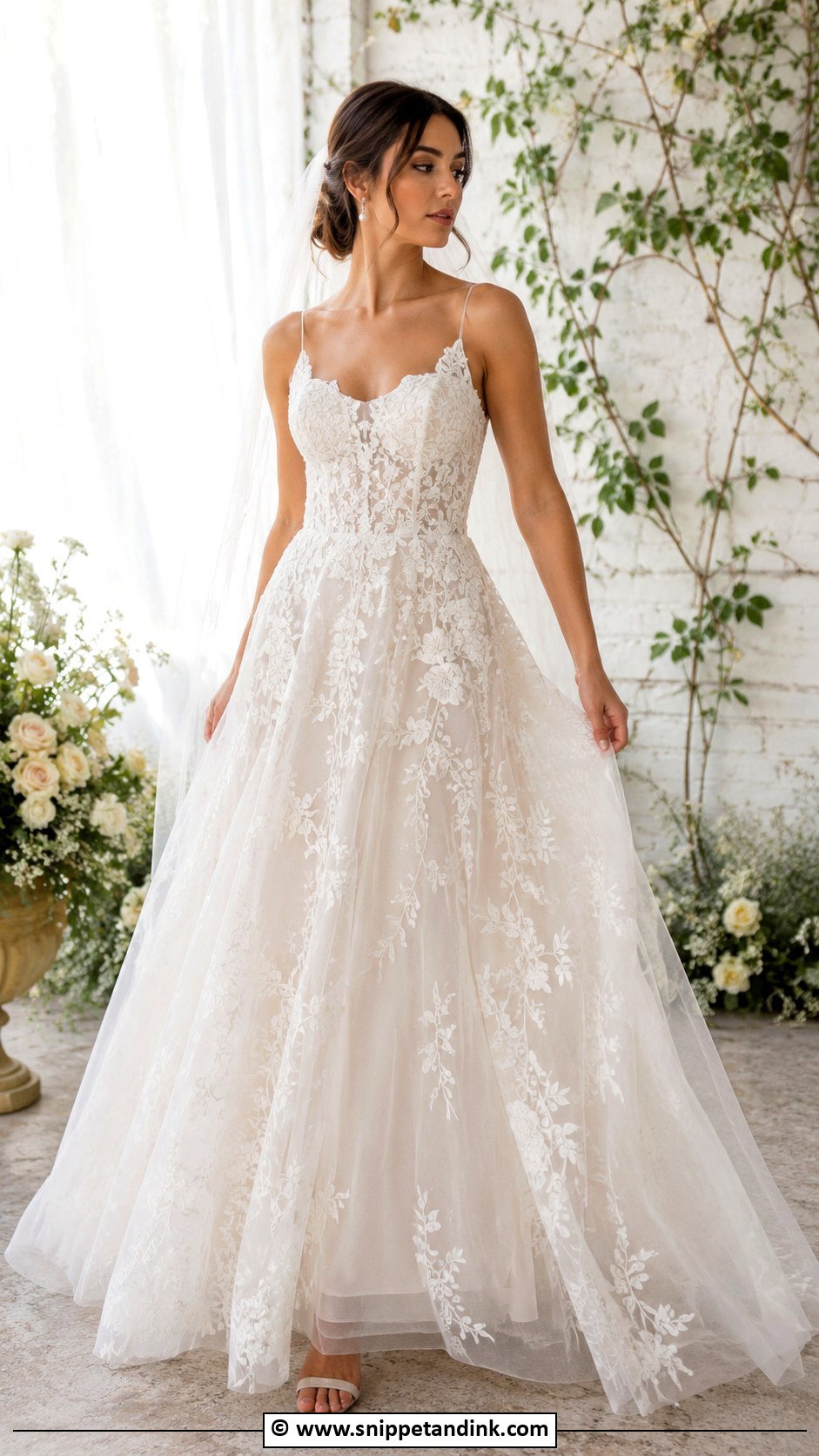
Embroidery on tulle draws flowers, vines, stars, leaves or abstract shapes, and the sheer base makes the stitching look three-dimensional. It reads up close and from across the room. Match jewelry to the thread tone: neutral accessories for colorful embroidery, pearls for white or ivory. Ask whether the reverse is covered on the bodice, because embroidery backs can scratch. Simple heels and a soft veil.
17. Illusion Neckline Tulle Wedding Dress
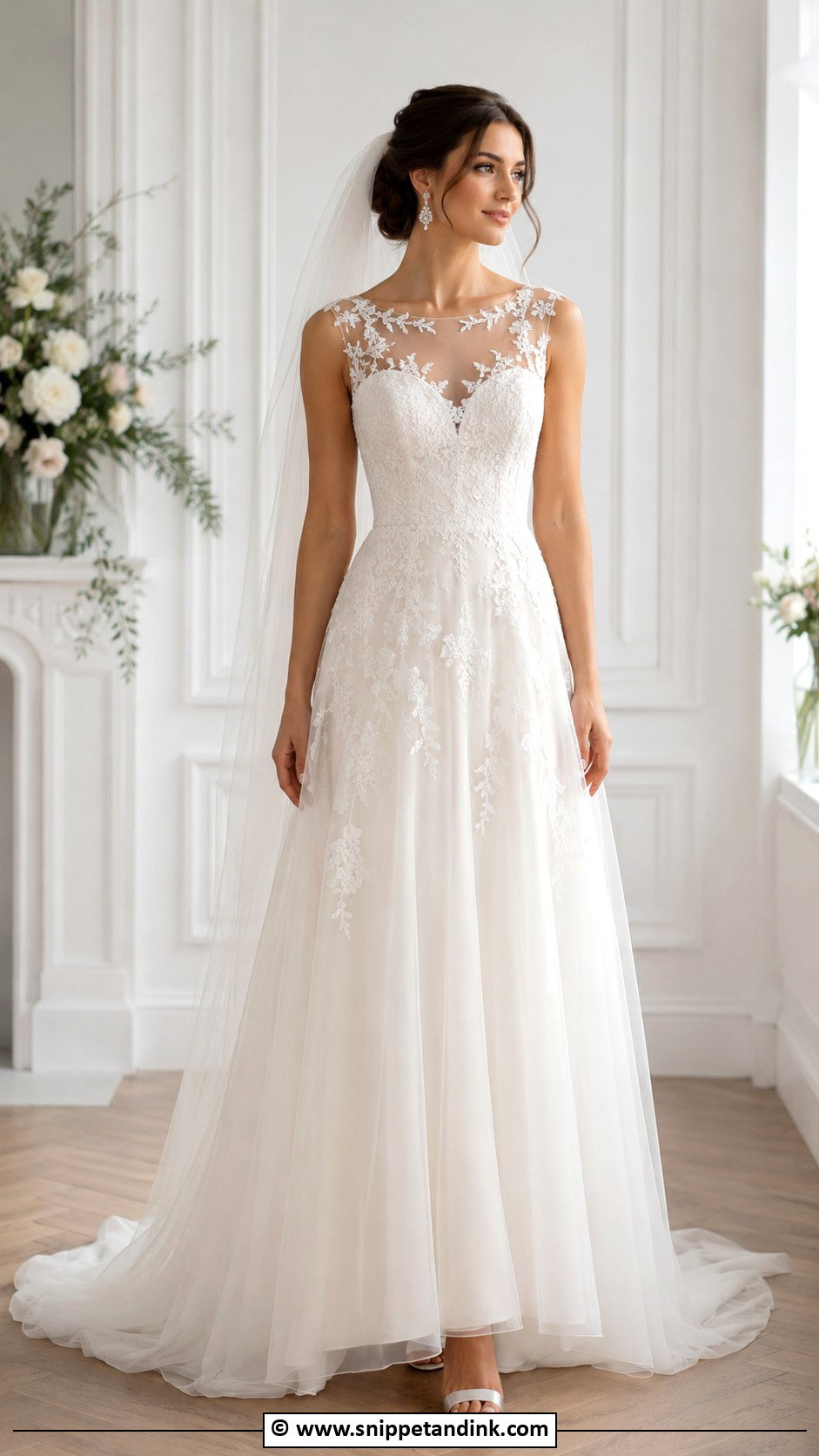
An illusion neckline uses sheer tulle so that lace, beads or appliqués appear to float on the skin. It adds support at the neckline without a heavy bodice and works with cap sleeves, long sleeves, high necks or scoops. Skip the necklace and wear earrings. A smooth updo shows the illusion work clearly. Pair with a flowing skirt, comfortable heels and a simple veil.
18. High Neck Tulle Wedding Dress
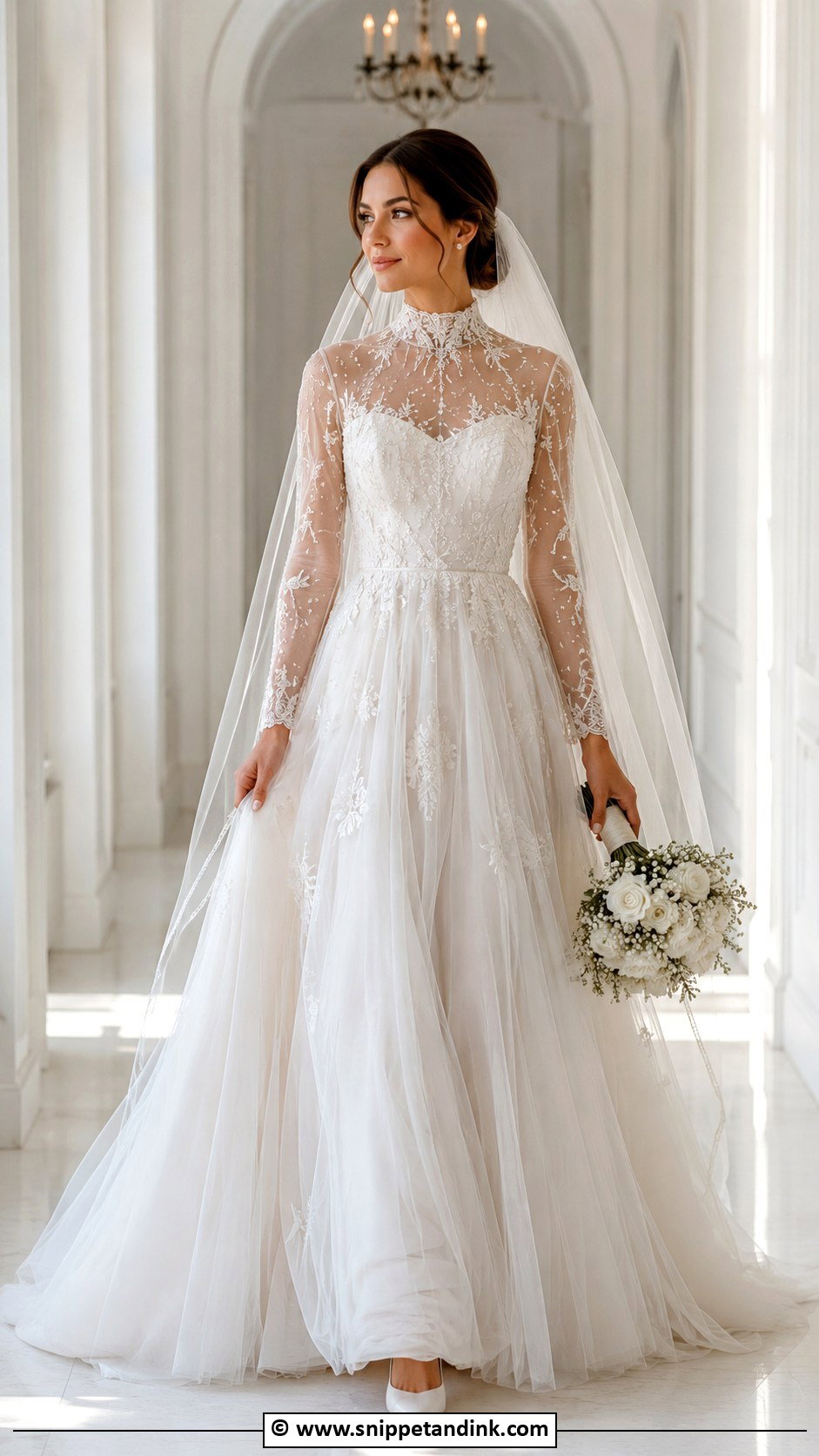
Sheer tulle at a high neckline keeps the coverage from feeling heavy, particularly with lace or embroidery over it. A clean waist and soft A-line or fitted skirt suit it. Wear hair up or tucked back so the neckline stays visible. Small studs, a bracelet and classic heels finish it, and a long veil adds drama without interrupting the front.
19. V Neck Tulle Wedding Dress
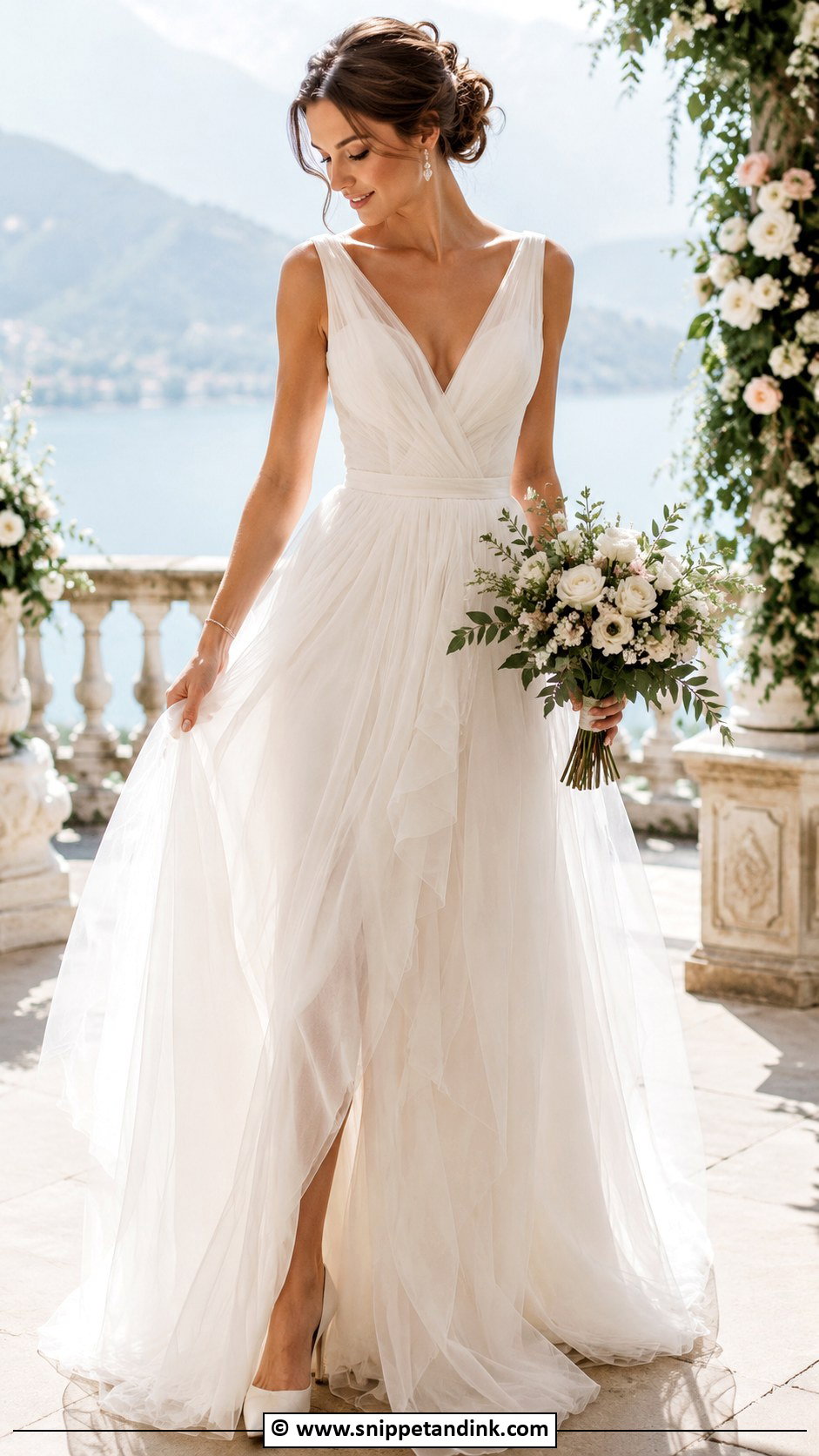
A V neck lengthens the torso and lightens the volume of a tulle skirt below. Deep is modern; higher is classic. Sheer panels in a V should stay flat when you sit and walk, which is something I always test before the hem is set. Delicate earrings, a slim bracelet and a veil placed low on the head. Pointed heels and a gathered bouquet complete it.
20. Tulle Wedding Dress With Slit
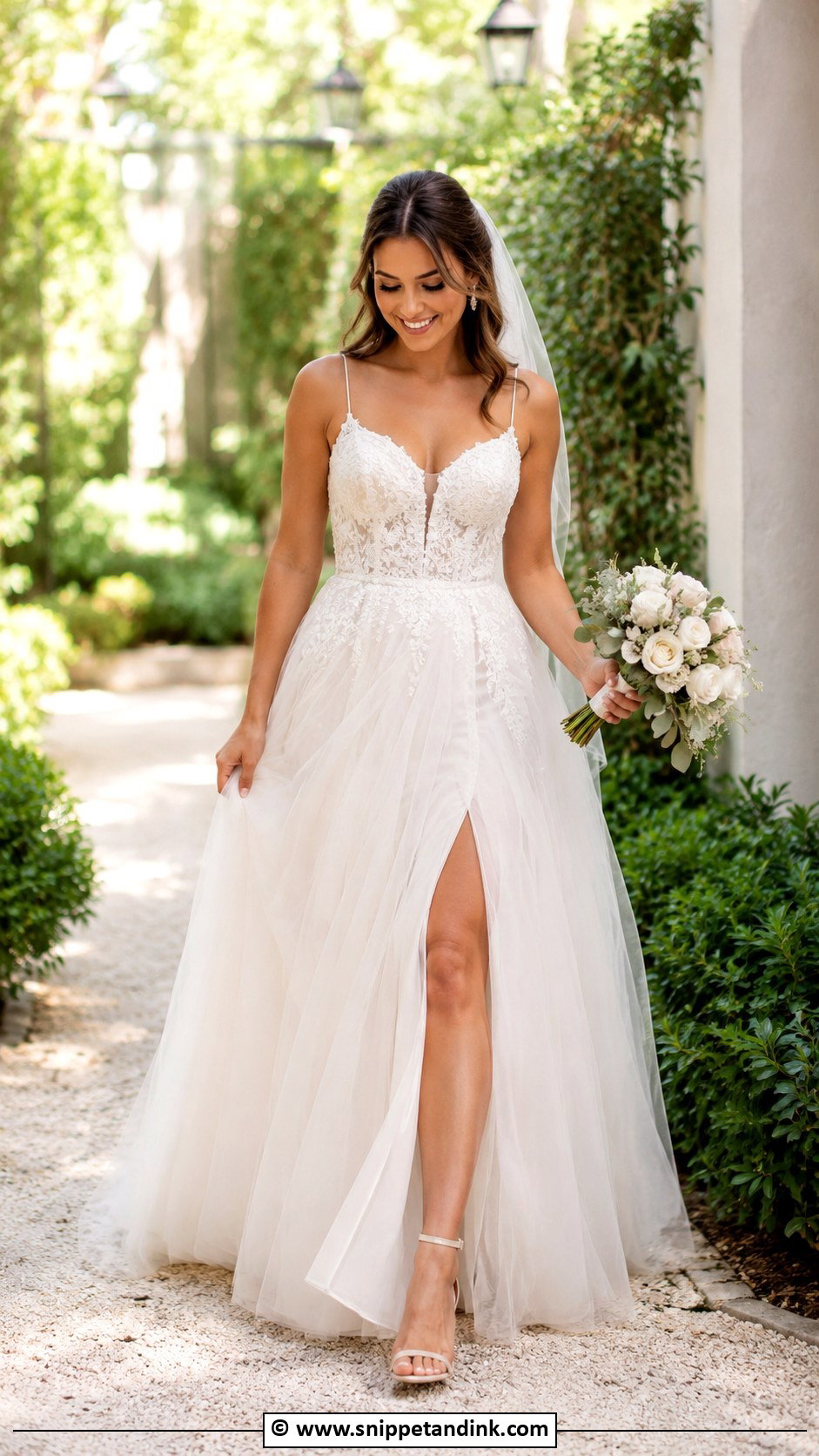
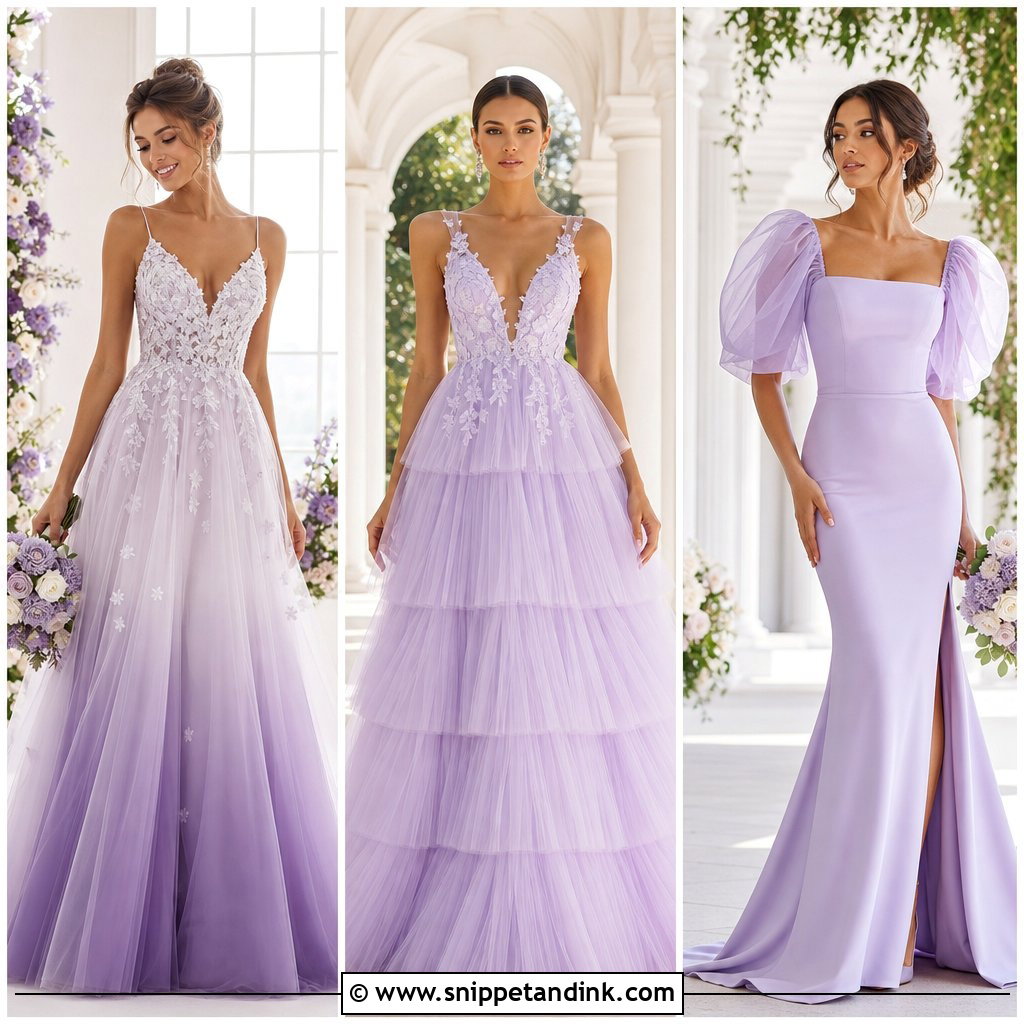
A slit gives a flowing tulle gown an easier stride. Under soft layers it can be subtle, only showing when you walk; on an A-line it keeps the romance while adding movement. Your shoes will be seen more often, so choose strappy heels, pearl sandals or embellished pumps you love. Keep the bodice secure and simple. Mark the slit height while sitting, not standing. A light veil and soft waves.
21. Tulle Wedding Dress With Train
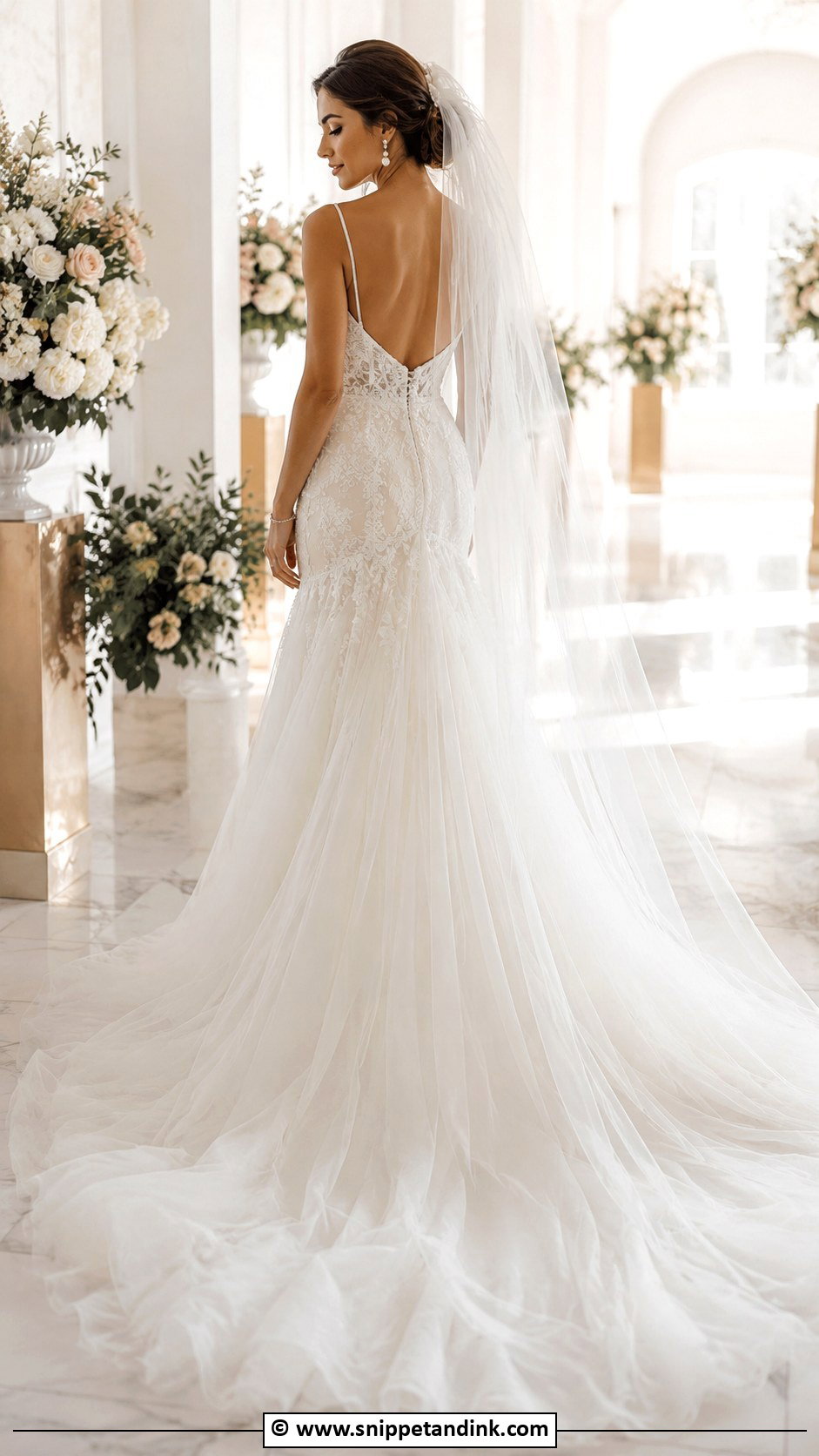
Tulle trains are lighter than most fabrics, so you get drama that still moves softly. A chapel train is manageable; a cathedral train is formal and grand. Tulle trains pick up grass, leaves and confetti, so I’d plan the bustle for as soon as the photos are done. Plain veil over a detailed skirt, embroidered veil over a simple one. Classic heels and simple jewelry.
22. Tulle Wedding Dress With Detachable Sleeves
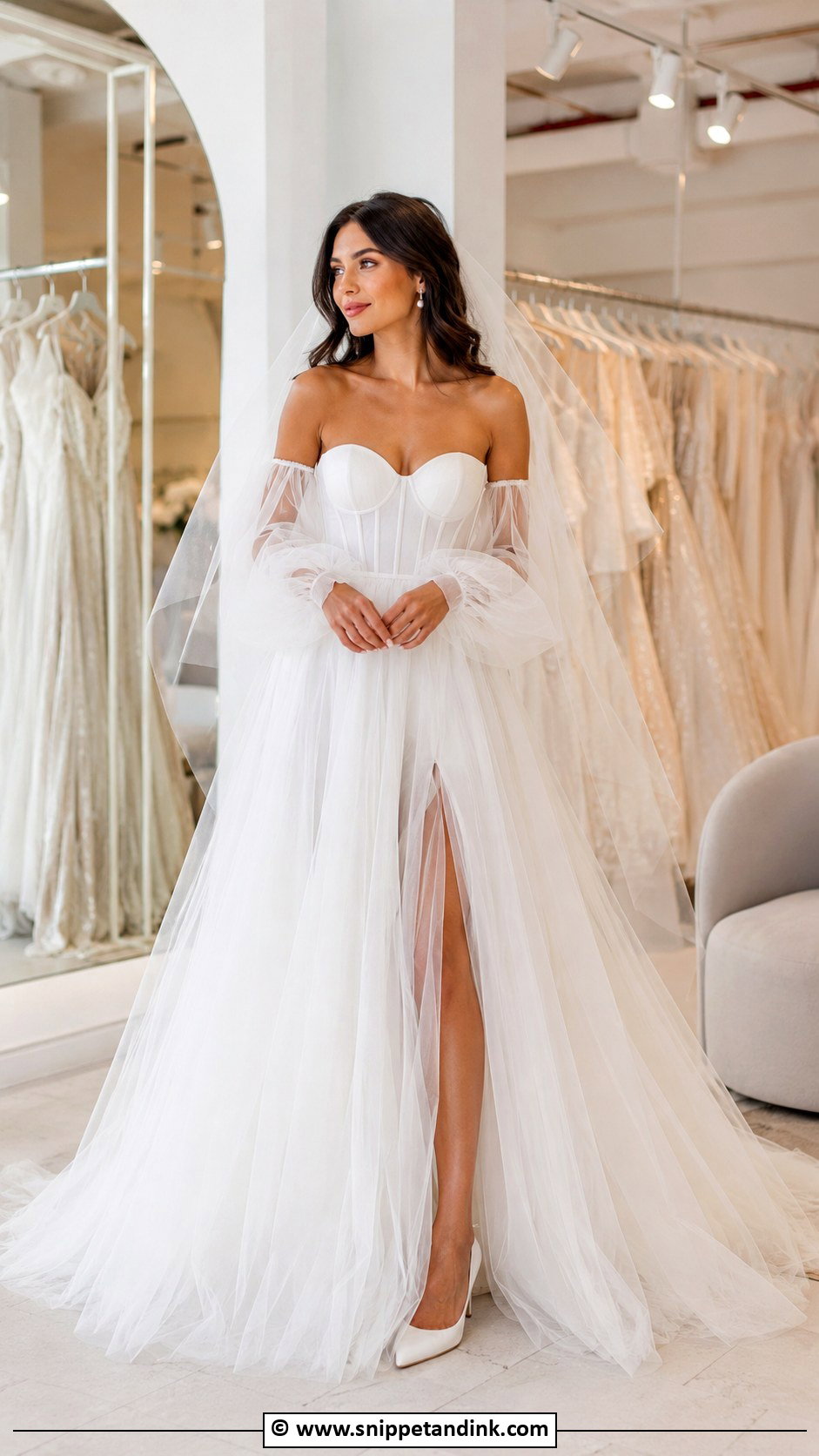
Detachable sleeves let you be covered for the ceremony and formal photos, then lighter for dancing. Sheer puff sleeves, fitted illusion sleeves and off-shoulder sleeves all suit tulle skirts. The base dress must look complete alone, so try it on without the sleeves before committing. Ask how they attach; small snaps or ties should survive a hug. Earrings, a soft veil and comfortable heels.
23. Tulle Wedding Dress With Overskirt
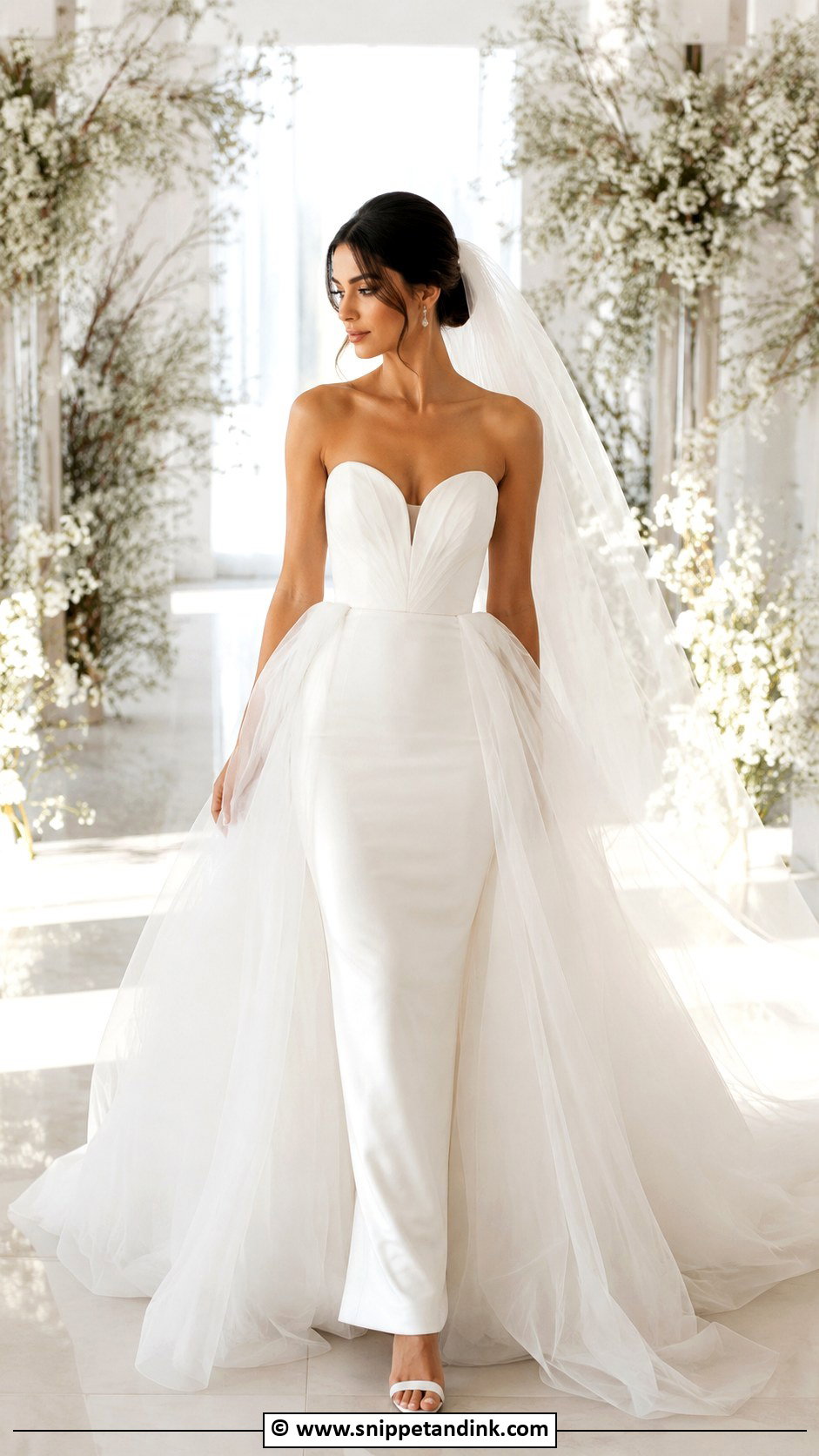
A tulle wedding dress with overskirt gives you ceremony volume and reception ease. The overskirt adds softness and a grand entrance; the dress underneath can be fitted or simply easier to move in. A secure waist attachment keeps it lying smoothly in photos, so check the closure and practise removing it. Clean bodice, elegant heels and a long veil for the ceremony; afterwards, statement earrings or a change of shoes.
24. Mermaid Tulle Wedding Dress
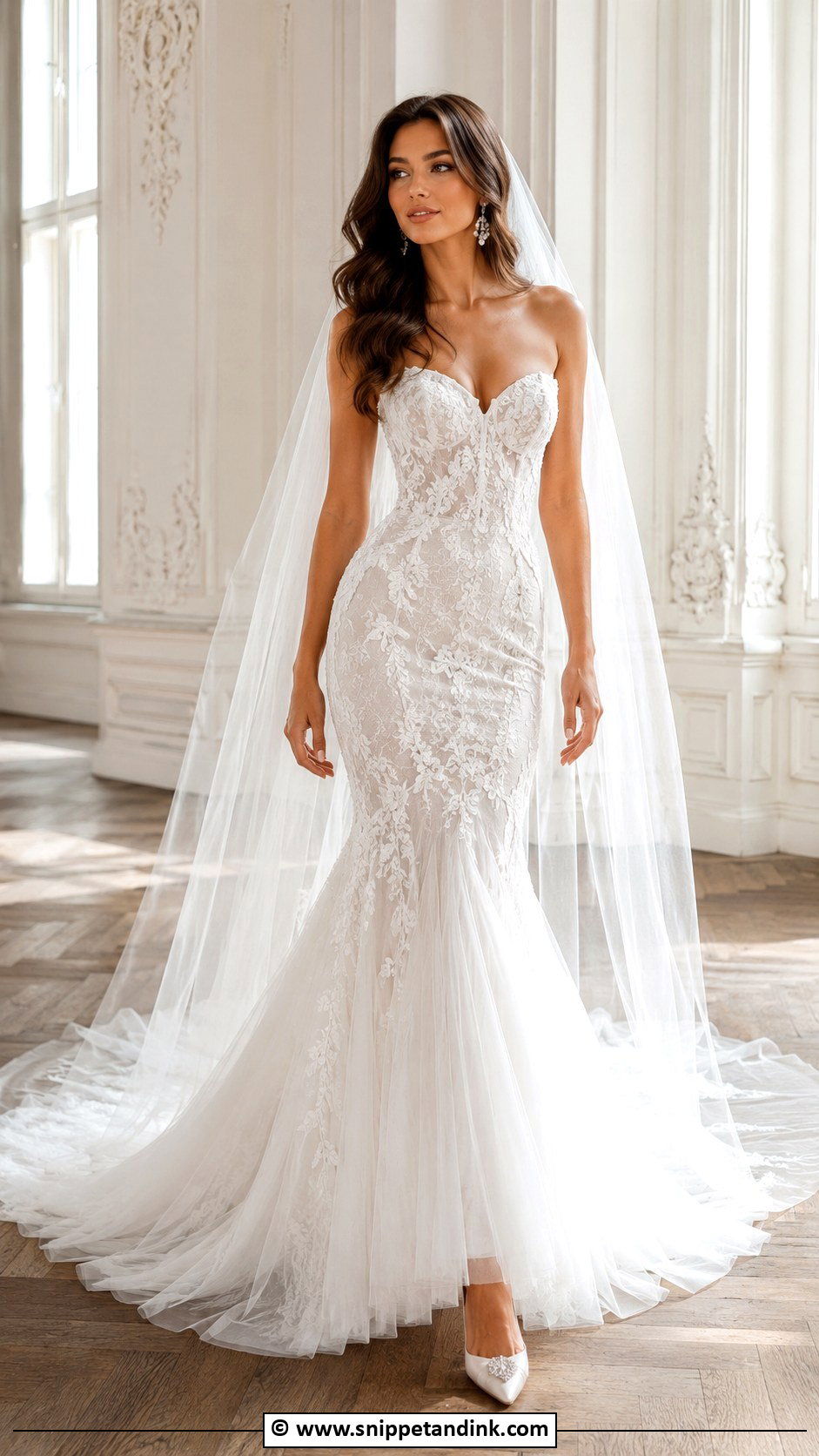
A mermaid in tulle keeps the bodice and hips close, then flares at the knee or lower thigh in soft net. Tulle makes the flare lighter and more romantic than satin or crepe would. Stretch lining makes walking and sitting much easier, and I’d always test a few steps and a chair. Sleek hair, drop earrings, pointed heels and a long veil to soften the fitted shape.

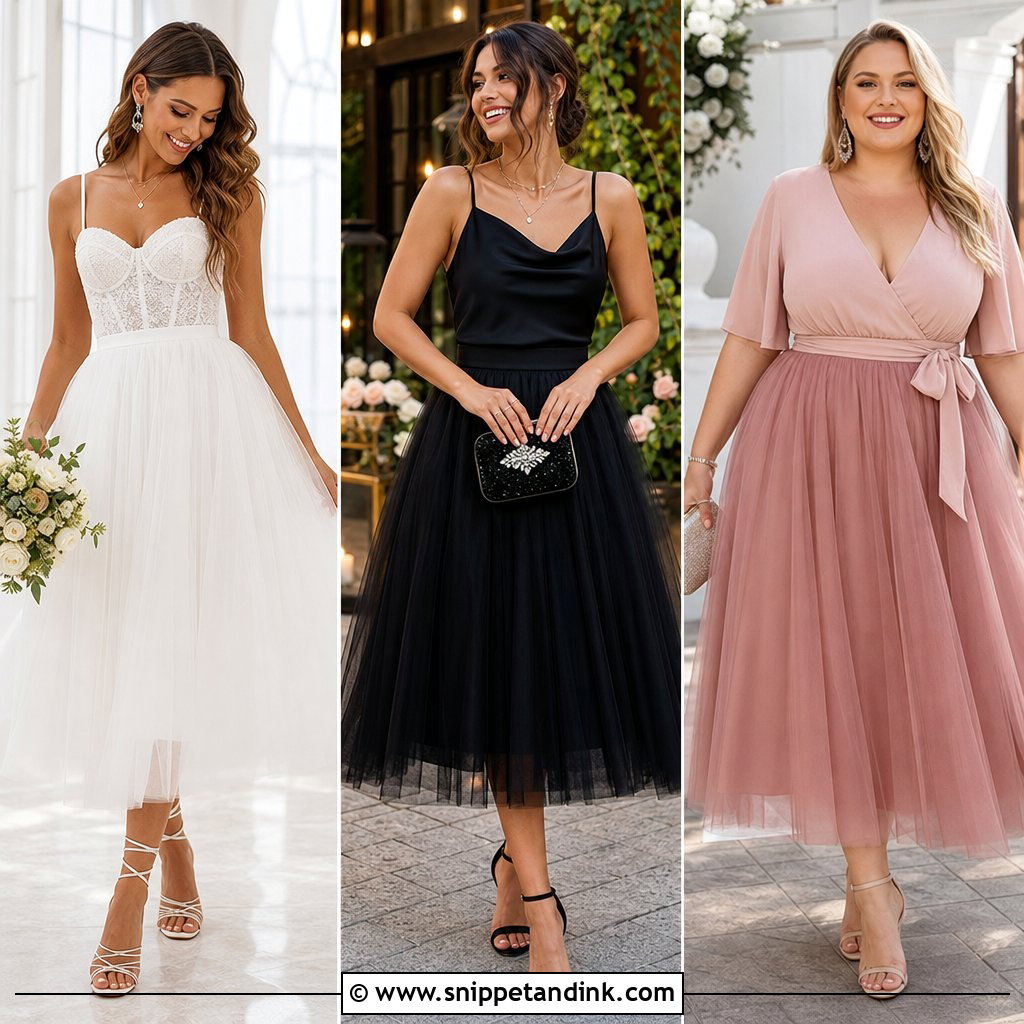
25. Sheath Tulle Wedding Dress
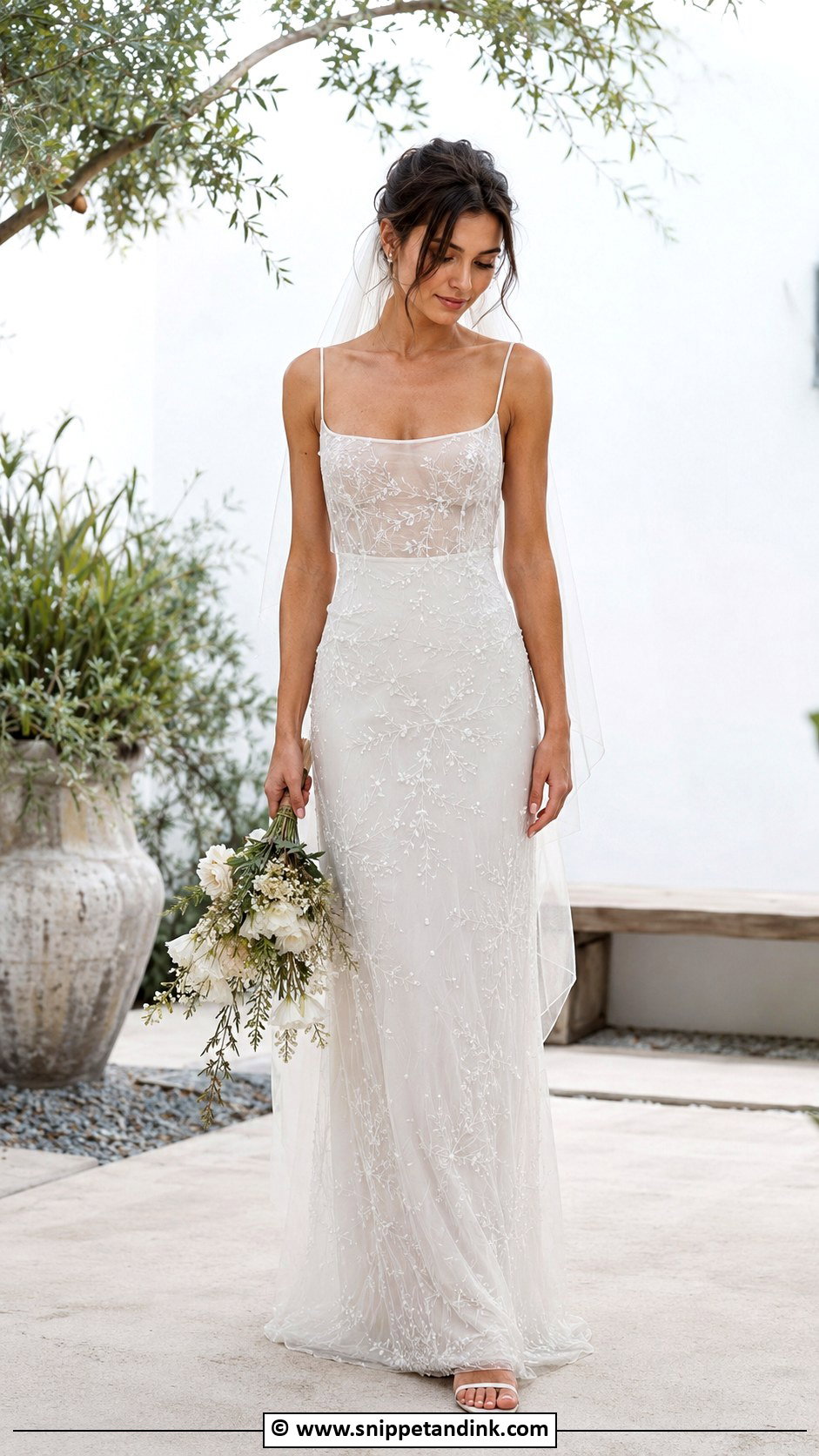
A tulle sheath follows the body loosely with soft overlays for movement and texture, without much volume. It suits small venues, outdoor settings and anyone who prefers a light gown. Delicate embroidery, a little sparkle or a plain overlay all work. A sheath has no skirt structure to hide snags, so be careful with bracelets and bouquet wires. Low heels, sandals or pumps, pearl studs and a light veil.
26. Short Tulle Wedding Dress
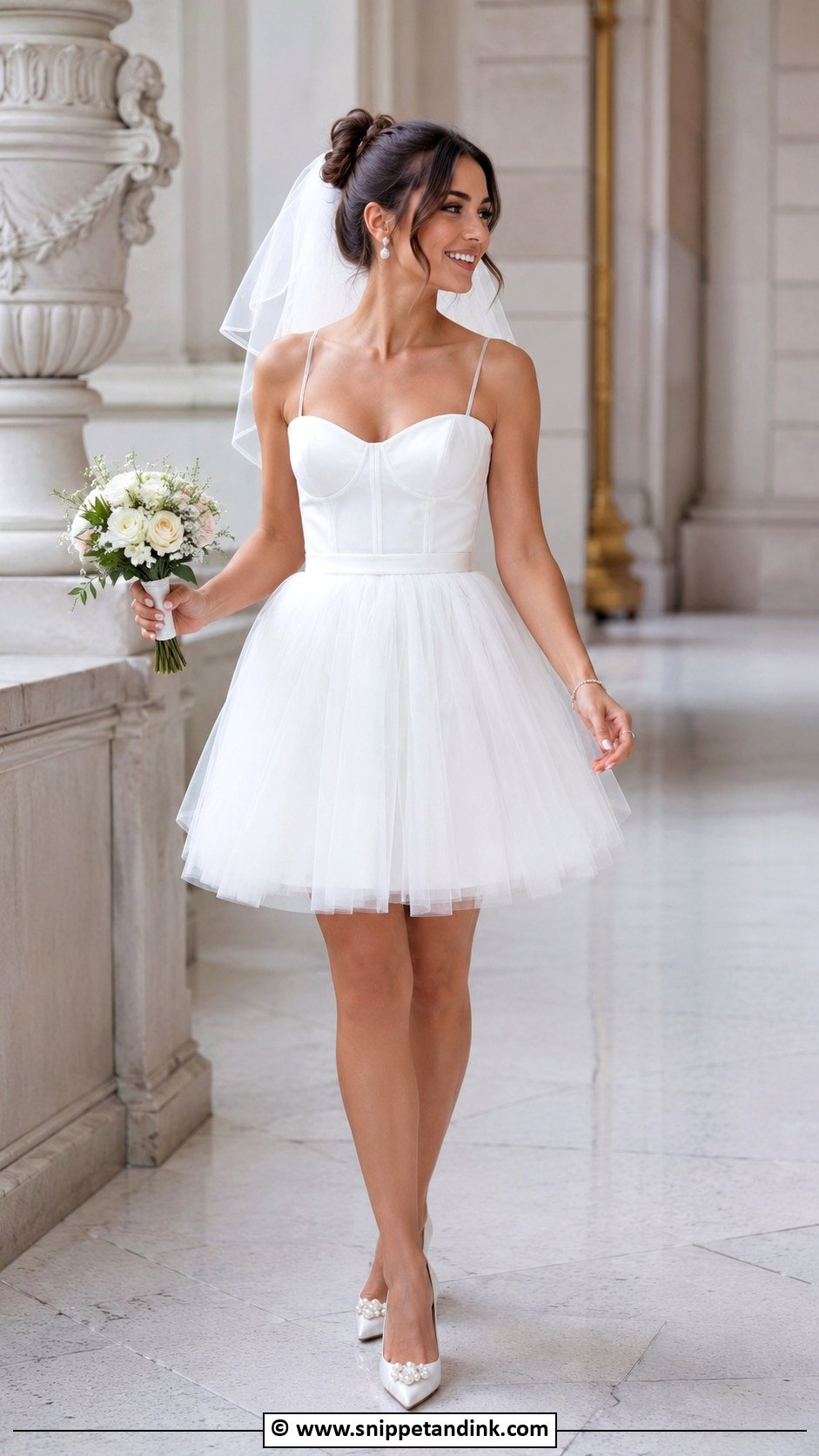
A short tulle wedding dress suits a reception, courthouse ceremony, shower or second look. With the hem above the knee, the shoes are on show, so choose pearl heels, satin pumps or bow sandals. A fitted bodice with a flared tulle skirt looks playful without being casual. Short skirts can stand out too much if they have many layers, so I’d keep it to a few. A short veil, hair bow or pearl headband; small bouquet and simple jewelry.
27. Tea Length Tulle Wedding Dress
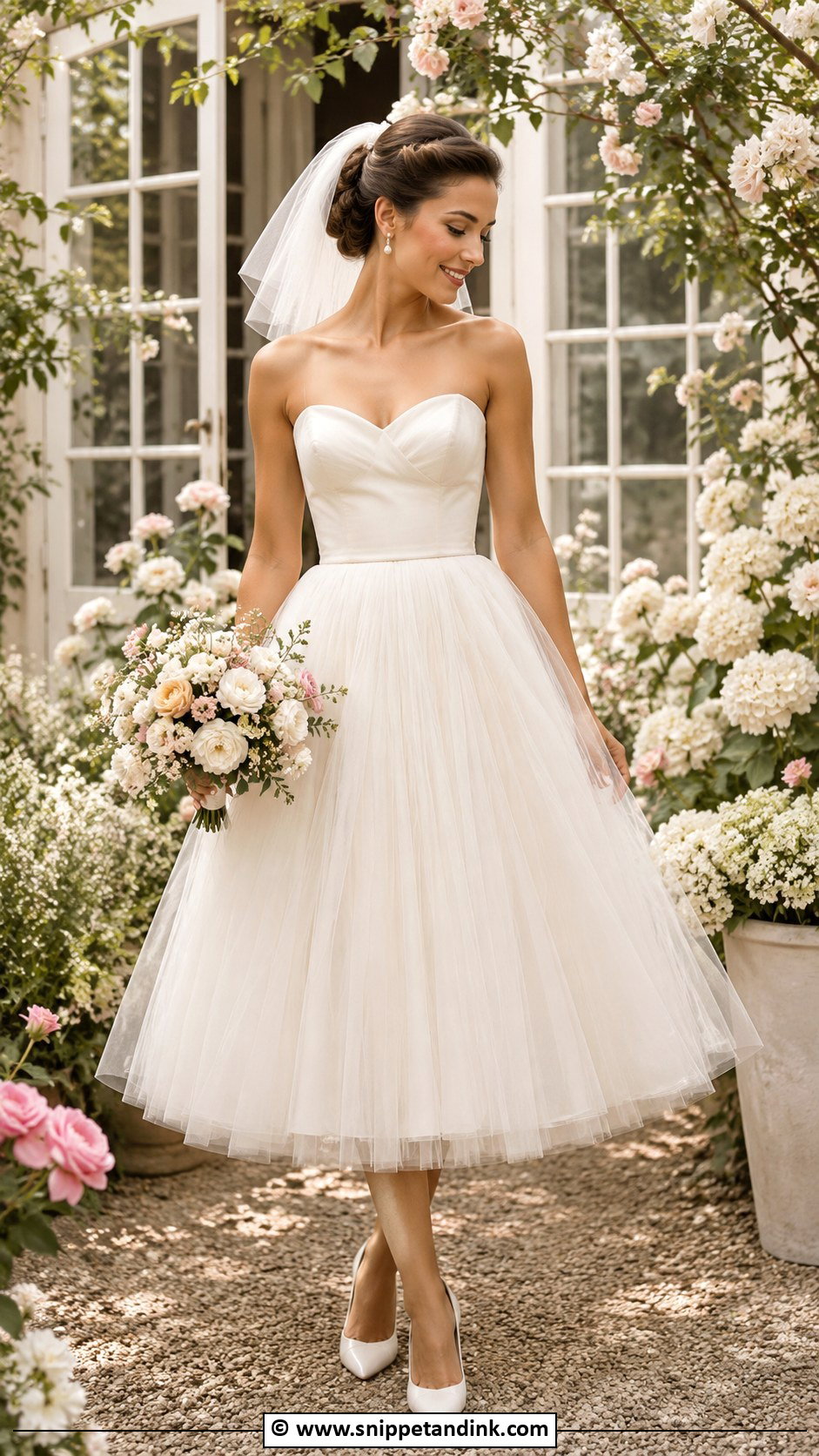
Tea length brings a vintage outline that still looks modern when styled carefully. The hem falls between knee and ankle, so the shoes matter. A fitted bodice over layered tulle gives movement without a full-length gown. Fit with your exact shoes and any petticoat, since both change where the hem lands. Pointed pumps, pearl earrings and a short veil or structured hair piece, for gardens, city ceremonies and relaxed receptions.
28. Two Piece Tulle Wedding Dress
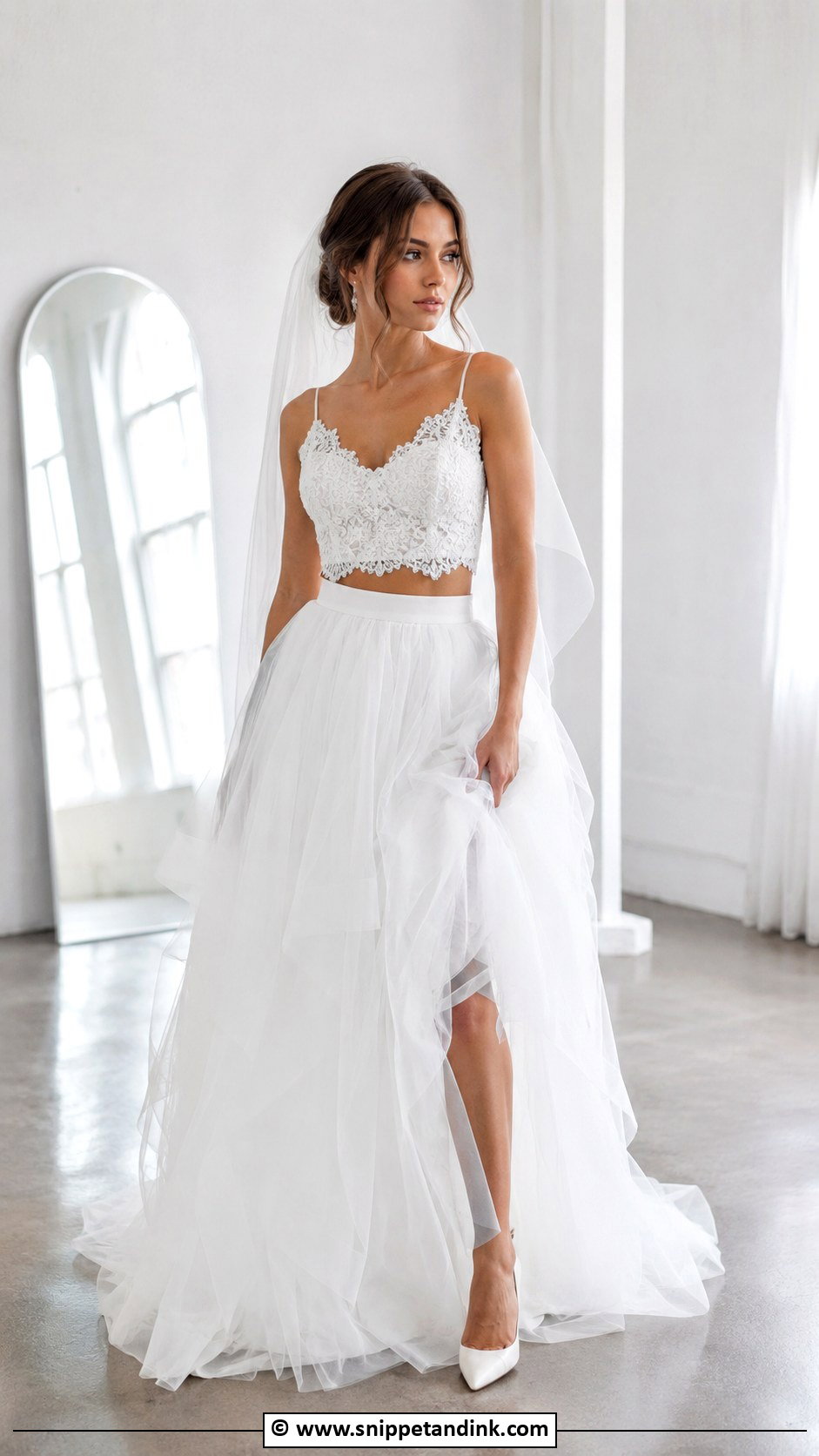
A two piece tulle wedding dress pairs a fitted top with a separate skirt, which gives a clear waistline and more styling freedom. Lace crop tops, satin corsets, beaded bodices and simple structured tops all work, over a full, A-line or gathered skirt. Sit down in it at the fitting: the gap between top and skirt should stay closed, or you’ll want a higher skirt waistband. Sleek heels, simple earrings and a clean veil.
29. Boho Tulle Wedding Dress
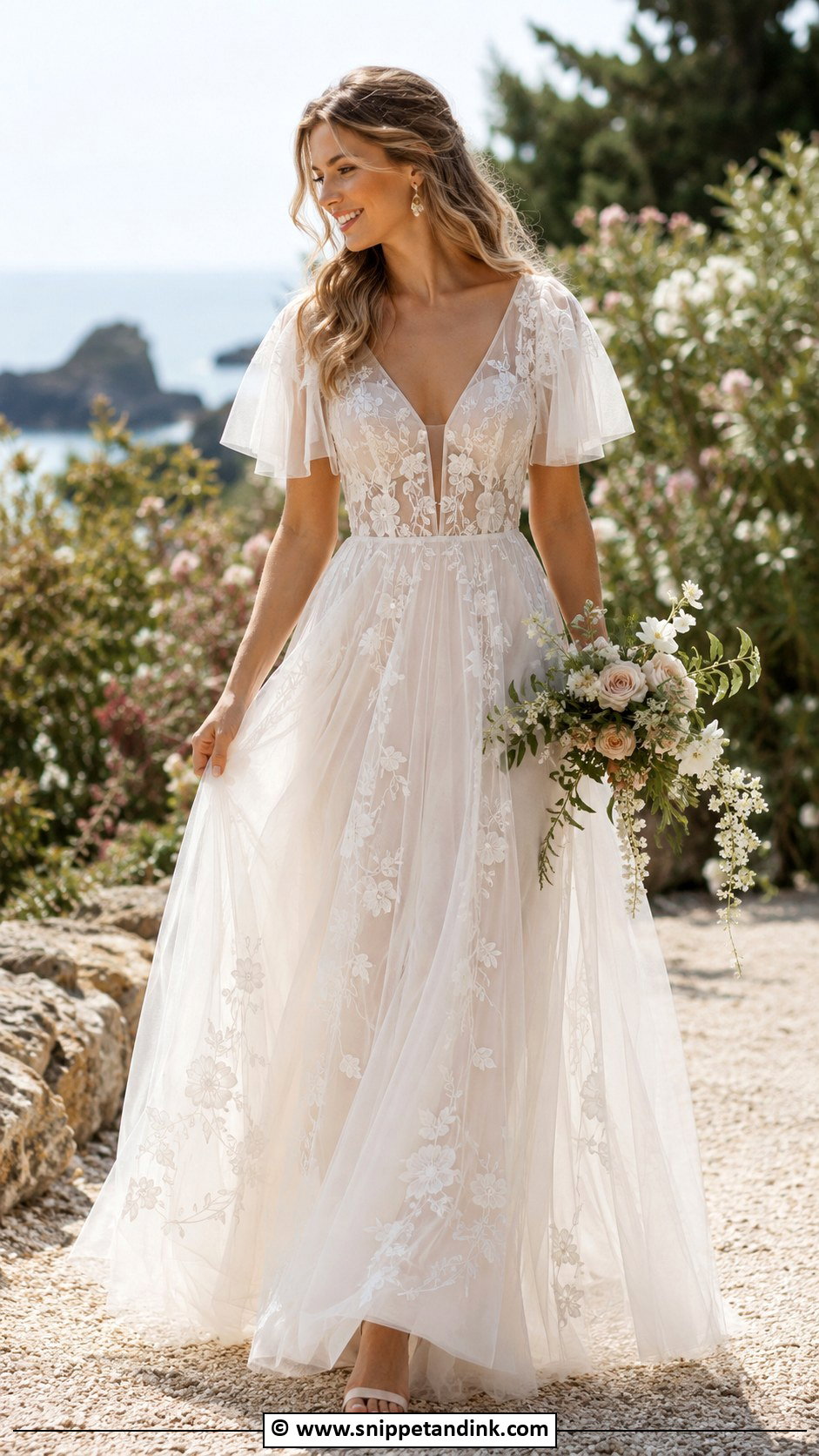
Boho tulle relies on movement: soft layers, floral embroidery, flutter sleeves, open backs, light lace. Stiff underskirts work against it, so I keep the layers few and the lining light. It suits outdoor, beach and garden venues. Loose waves, delicate earrings, comfortable sandals and a wildflower bouquet. Skip heavy sparkle. A soft veil or floral hairpiece is enough.
30. Black Tulle Wedding Dress
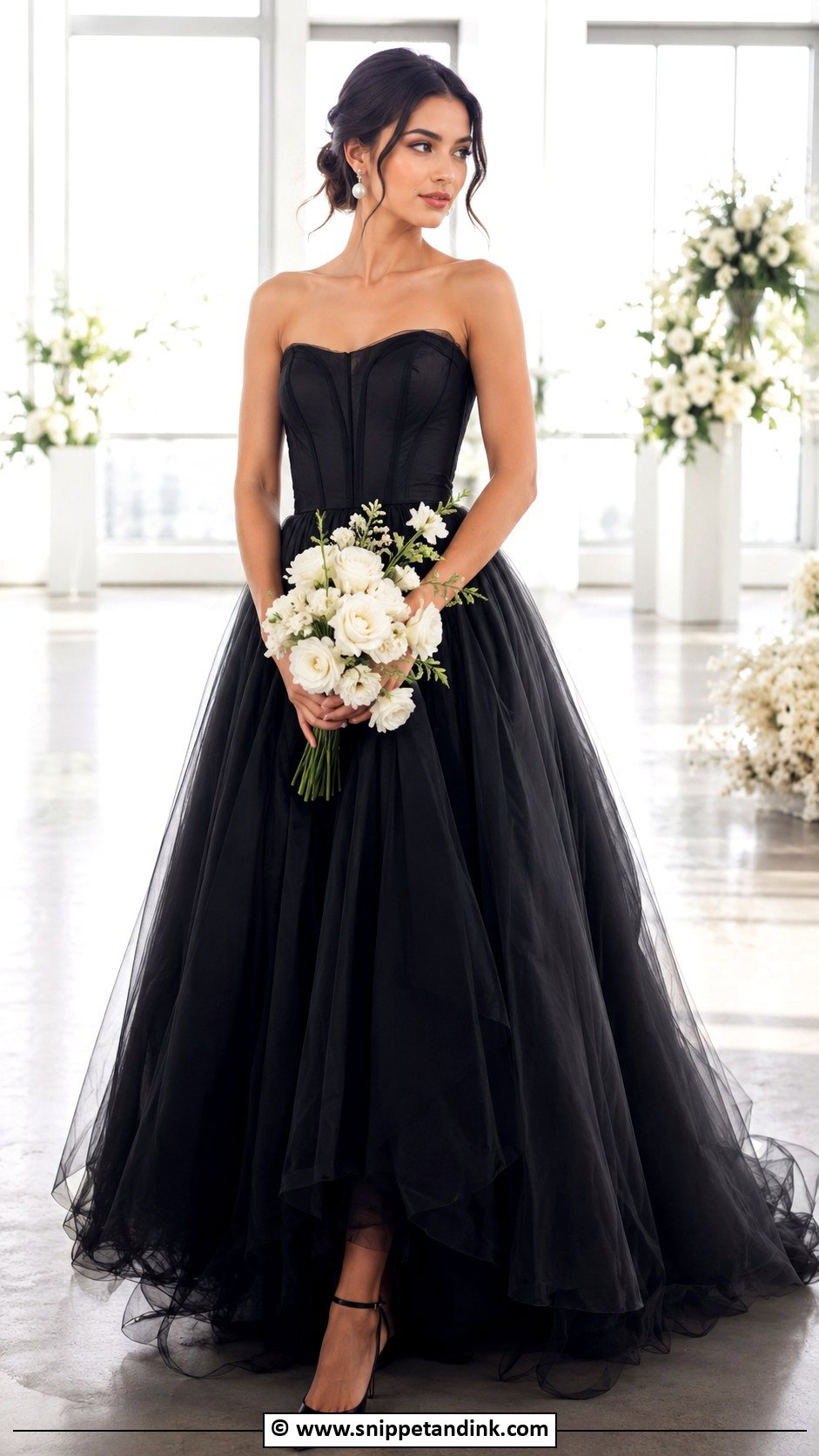
Black tulle softens a dark color, giving the gown depth and movement instead of looking flat. A black ball gown is a strong statement; a black A-line feels romantic and wearable. Plan the photos with your photographer, since black tulle needs good light to show texture rather than reading as a solid shape. Sleek heels, silver or pearl jewelry and a bouquet with white or deep-toned flowers. Polished makeup and clean hair keep the dress the focus.
Snags, Static and Flat Skirts on the Day
Tulle is forgiving to look at but fussy to wear. Most problems I see on wedding days fall into a few groups, and almost all of them are fixable in minutes if someone has the right small kit.
A snag or small tear
Don’t pull the thread. A tiny dab of clear nail polish on the edge stops a run spreading in the net, and in a layered skirt nobody will see it. Larger tears can be pinned from the inside.
Static cling
In dry air or heated rooms, tulle clings to tights and lining. Lightly misting anti-static spray inside the skirt, away from any stains, usually solves it.
A skirt that has gone flat
Humidity and sitting both deflate tulle. A few minutes with a handheld steamer, held well away from the fabric, puffs it back up. Never iron tulle; most nets melt under direct heat.
Packing Tulle for a Destination Wedding
Full tulle skirts travel better than you’d expect, because the net springs back. I’d still carry the dress on board rather than check it, in a breathable garment bag with the skirt loosely folded and plenty of acid-free tissue between layers. Steam it at the hotel the day before, then hang it from the inner loops well away from the bathroom, so steam from the shower doesn’t flatten it.
Layers That Float Instead of Wilting
Tulle can be classic, modern, soft or dramatic depending on the silhouette and how you style it. Ball gowns, A-lines, short reception looks, detachable sleeves, embroidery and color all have a place. Match the dress to your venue and how much you want to move, then look hard at fit, lining and the quality of the net itself. Use the list above as a starting point, and touch as much tulle as you can before deciding.
You'll Like These Ideas:




Leave a Reply