
A French braid is one of the hardest-working shapes I use on wedding days. It looks soft in a garden, sleek in a ballroom and calm on a windy beach, and underneath the prettiness it’s structural: every crossover grips the hair next to it, so the style needs fewer pins than most updos. It can live in an updo, a half-up look, a side braid, a bun or a crown, and it gives a veil comb or pearl pins something solid to hold. Below are fifteen ways to wear it, with my notes on tension, length and the small things that keep a braid neat until the last dance.
French or Dutch Changes How a Braid Reads
People use the two names loosely, and it’s worth knowing the difference before a trial. In a French braid, each section crosses over the middle, so the braid lies flat and blends into the hair. In a Dutch braid the sections cross under, so the plait sits raised on top, almost like a rope.
- On dark hair a flat French braid can almost disappear in photos taken across a room. Dutch stands out more.
- If you want the braid to feel like texture rather than a feature, stay with French.
- Crown braids and pancaked braids usually look fuller as Dutch, because the raised loops are easier to pull wider.
- If your saved photos mix both, bring them and point at the one you mean. I’d rather know than guess.
1. French Braid Bridal Updo
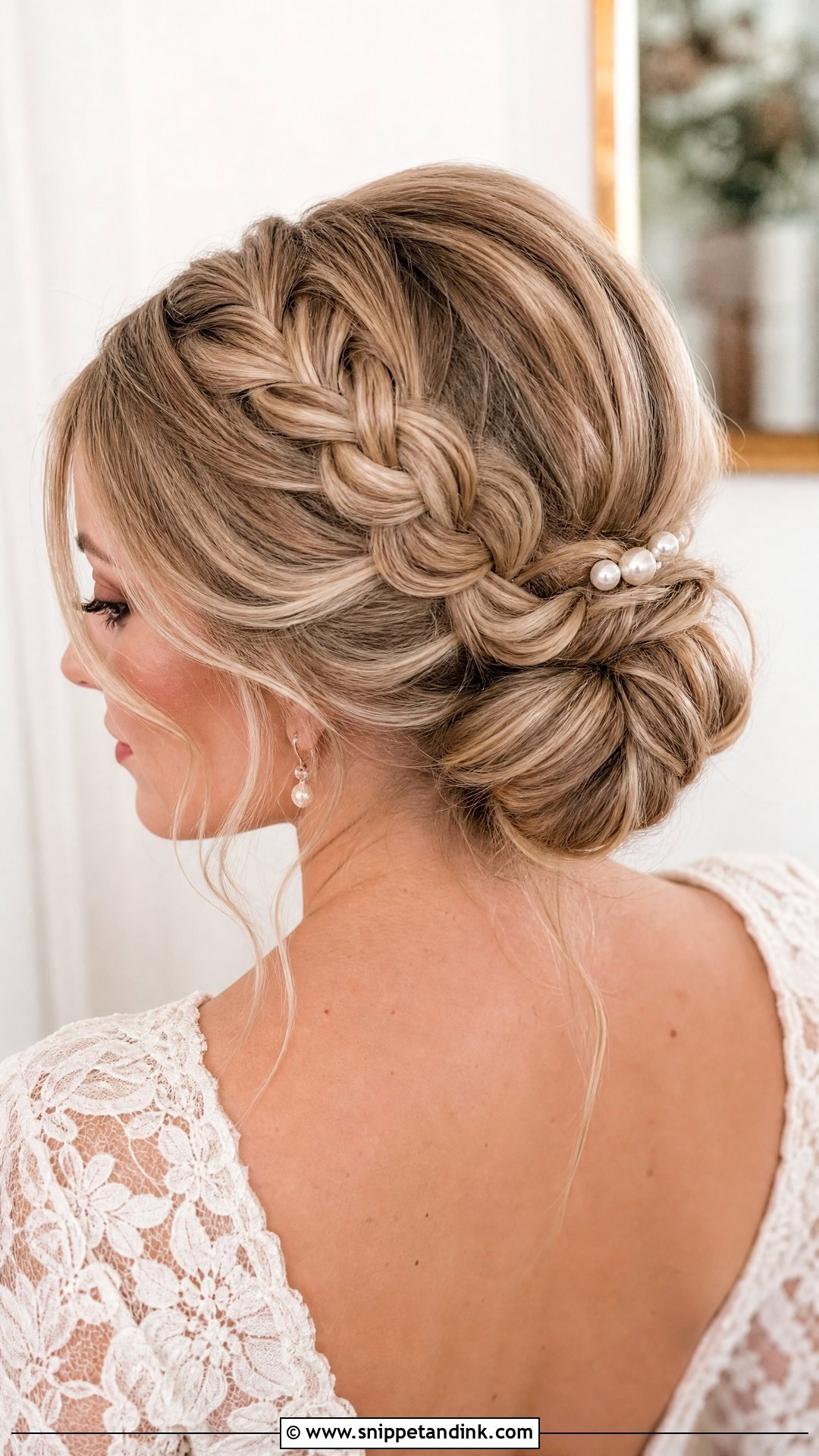
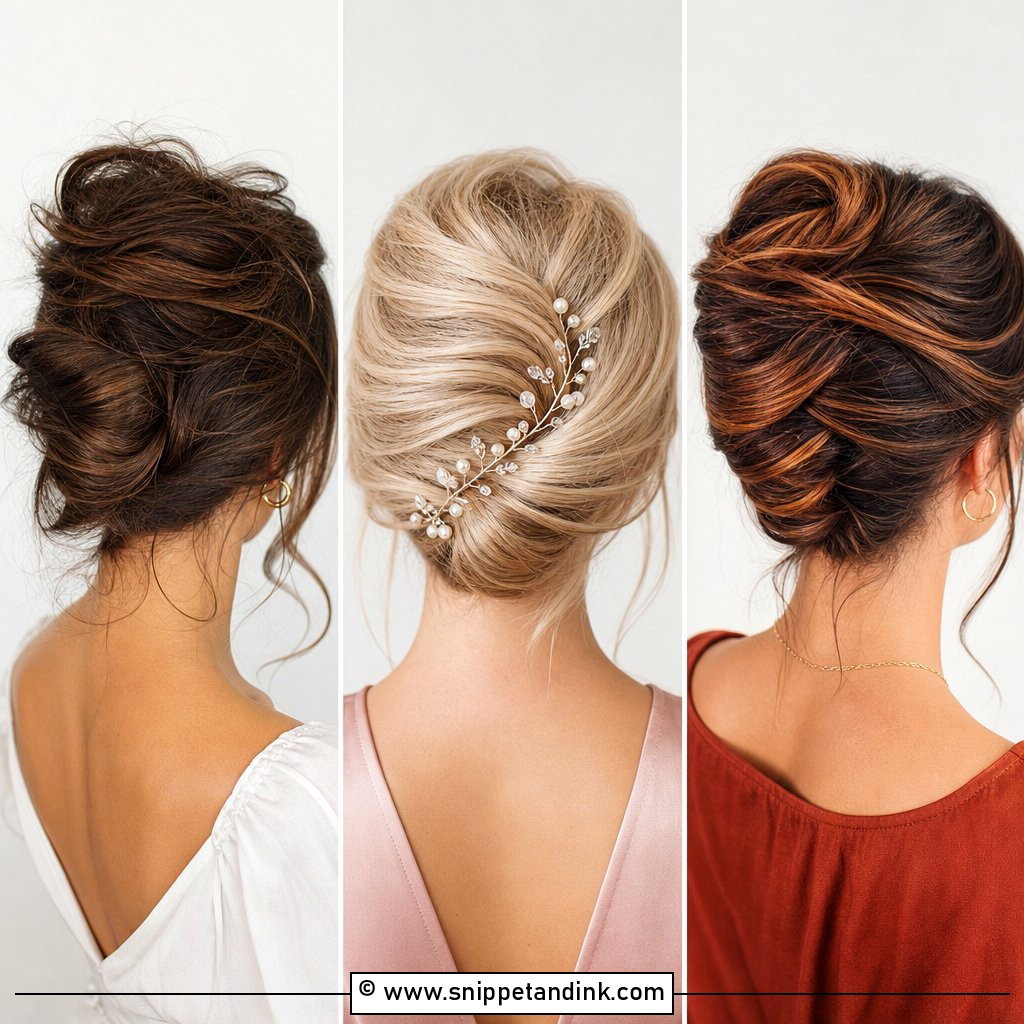
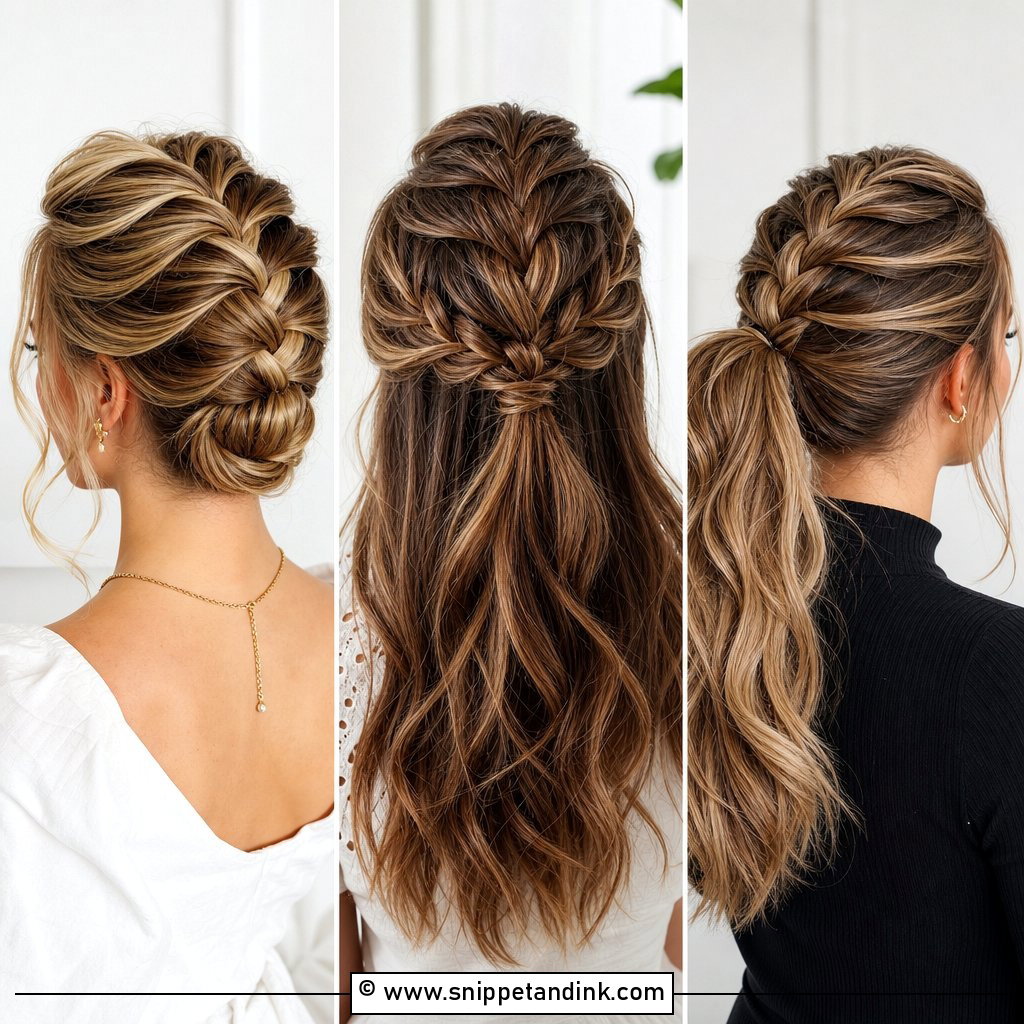
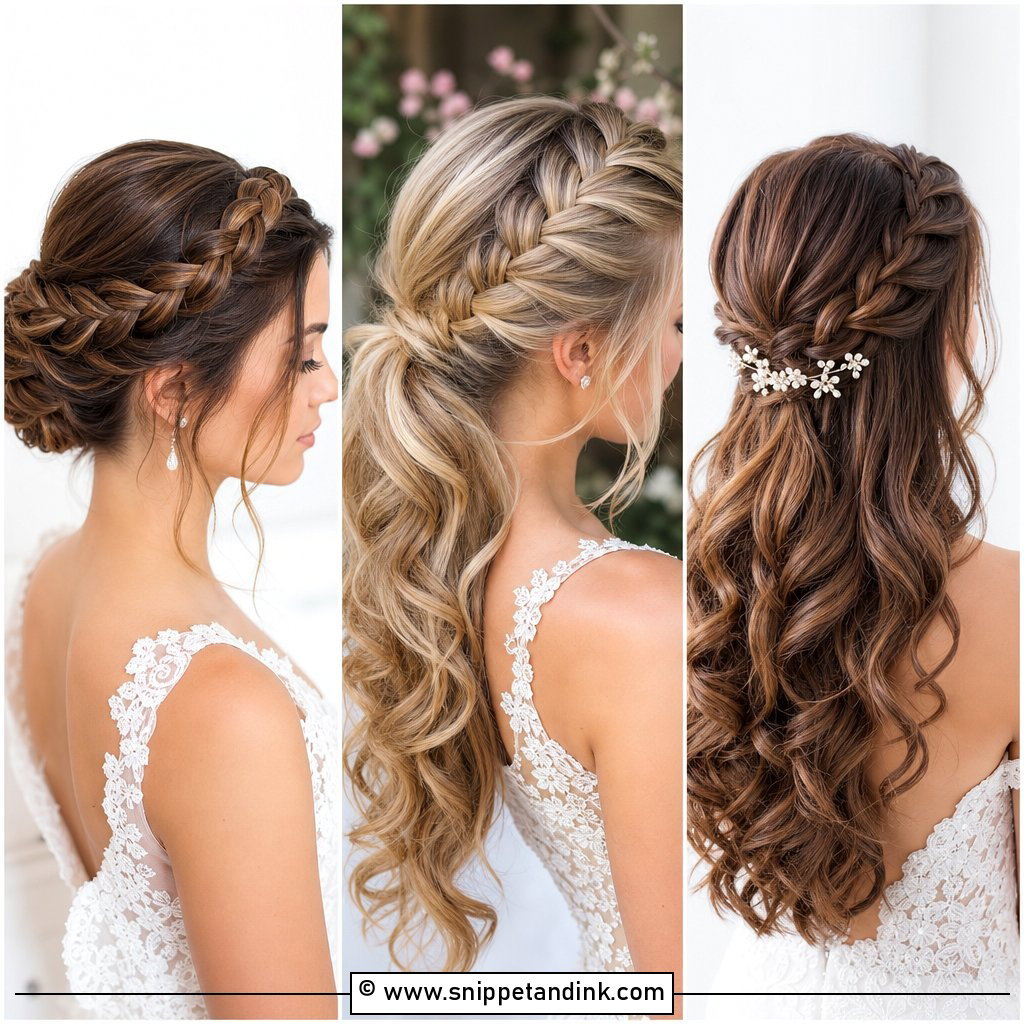
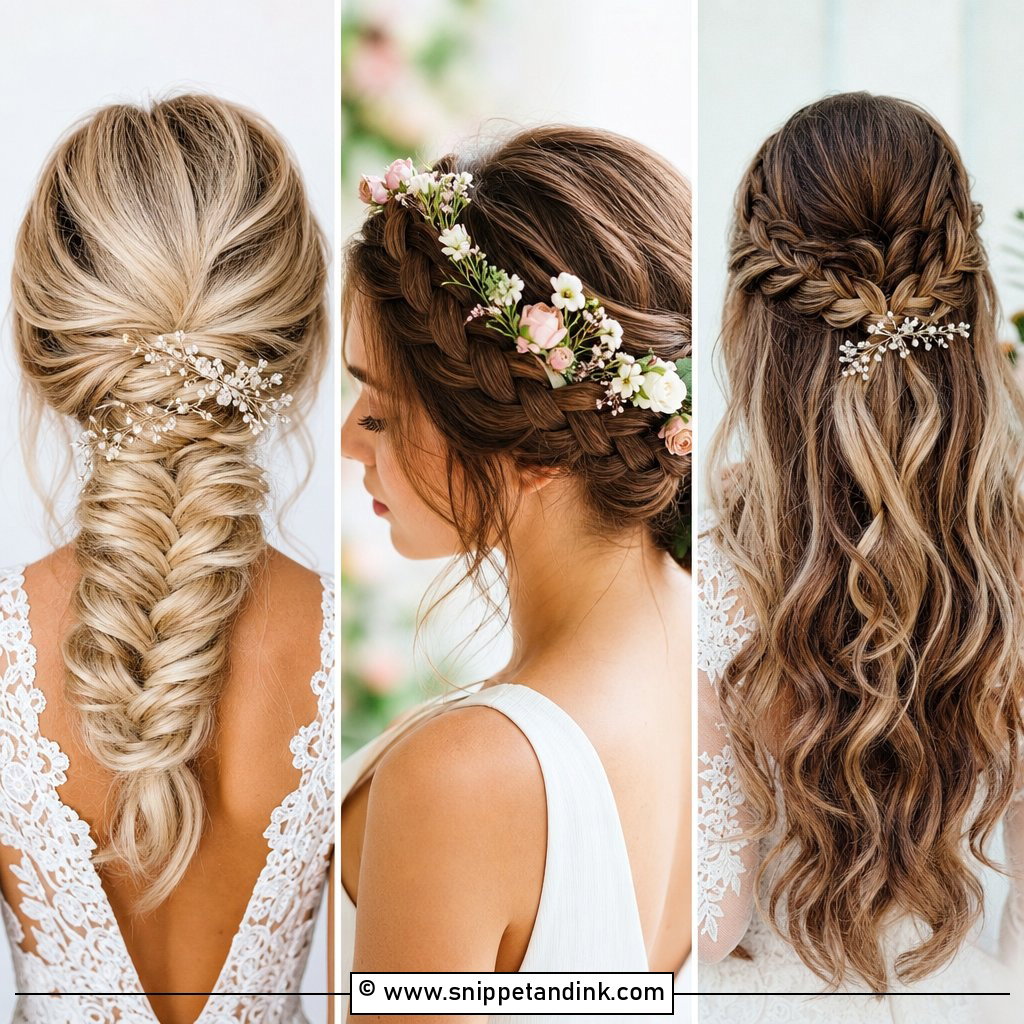
Starting the braid at the crown or along one side and finishing it into a low bun gives a lifted, secure updo with texture built in. Because the braid holds most of the hair, the bun needs only a handful of pins, which makes it comfortable under a long veil. I keep the braid tension even and only slightly firm; a tight braid pulls at the hairline after a few hours. High necklines and open backs both suit it, since the neck stays clear.
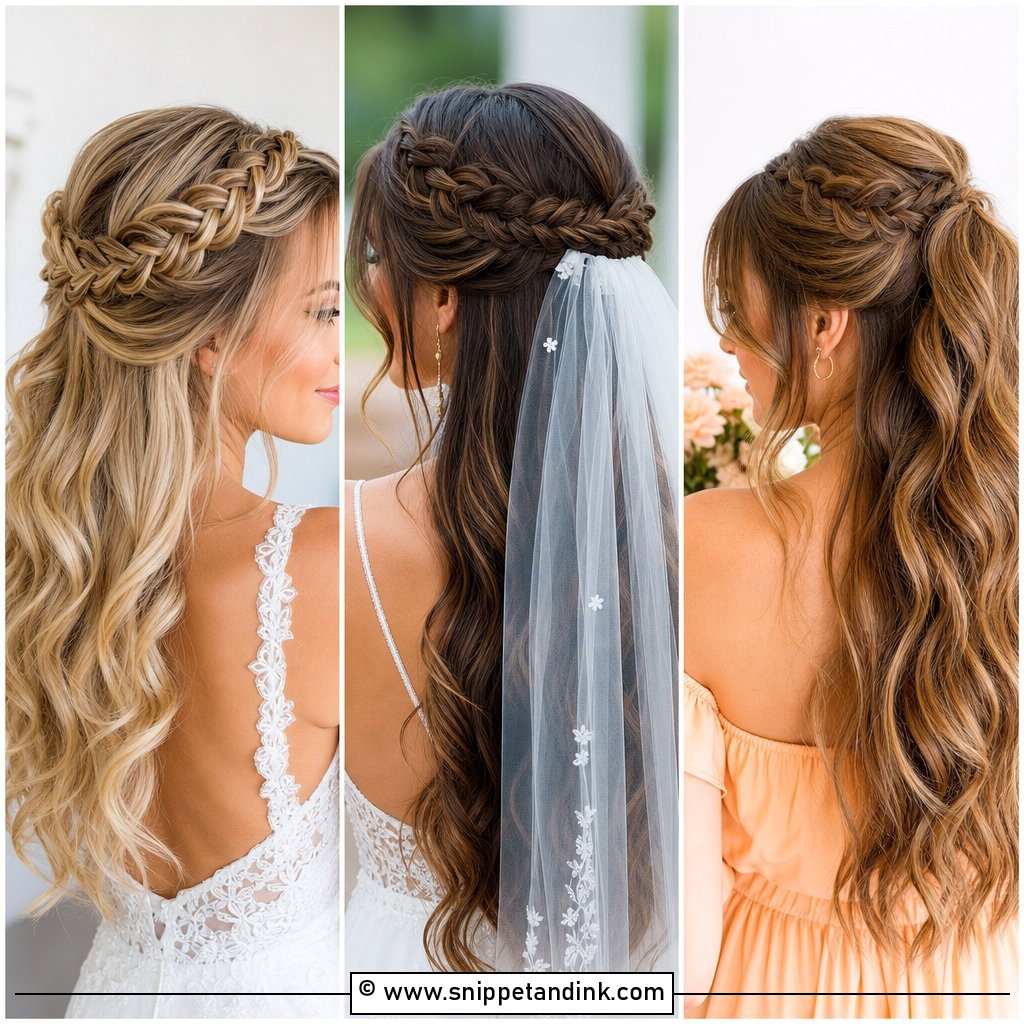
2. French Braid Half Up Bridal Hair
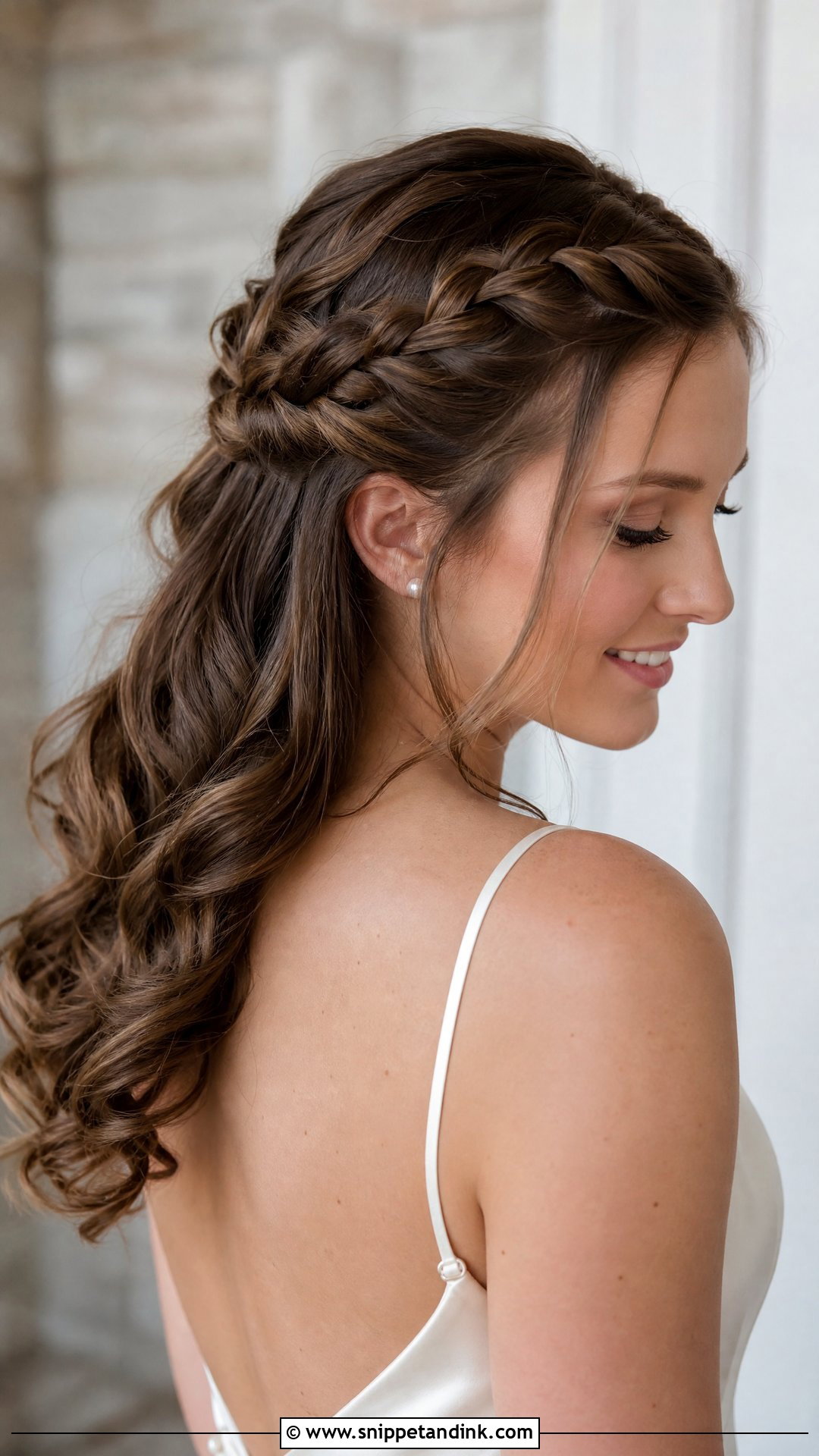
Half up is where I send brides who want their length on show but don’t trust loose hair to behave all day. The braids start at each temple, travel back, and meet in a small pinned section at the crown, with waves underneath. That meeting point is also the strongest spot on the head for a veil comb. I braid it slightly loose and then ease the loops wider, because a tight braid on top of soft waves looks like two different hairstyles.
3. Side French Braid Bridal Hair
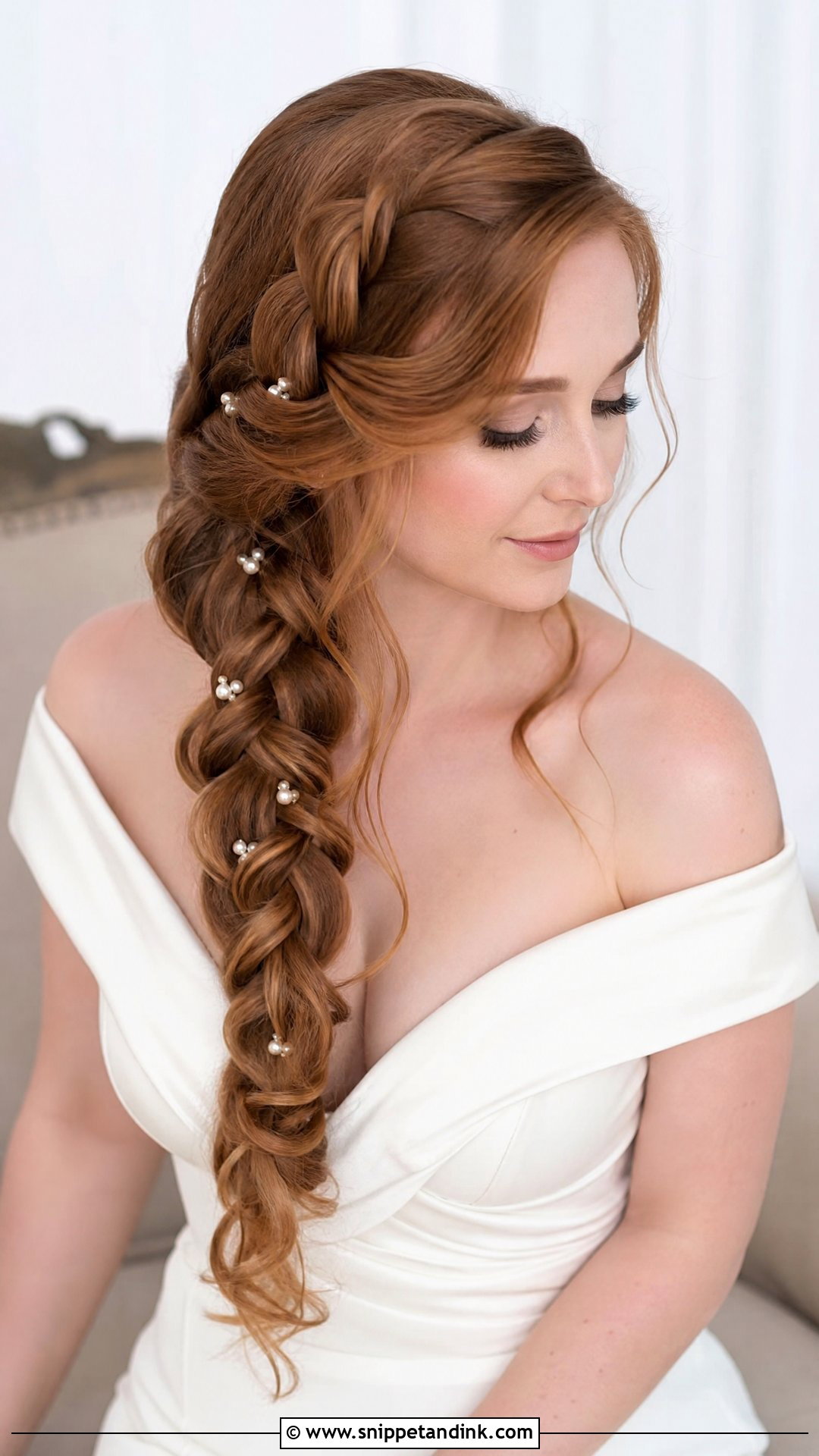
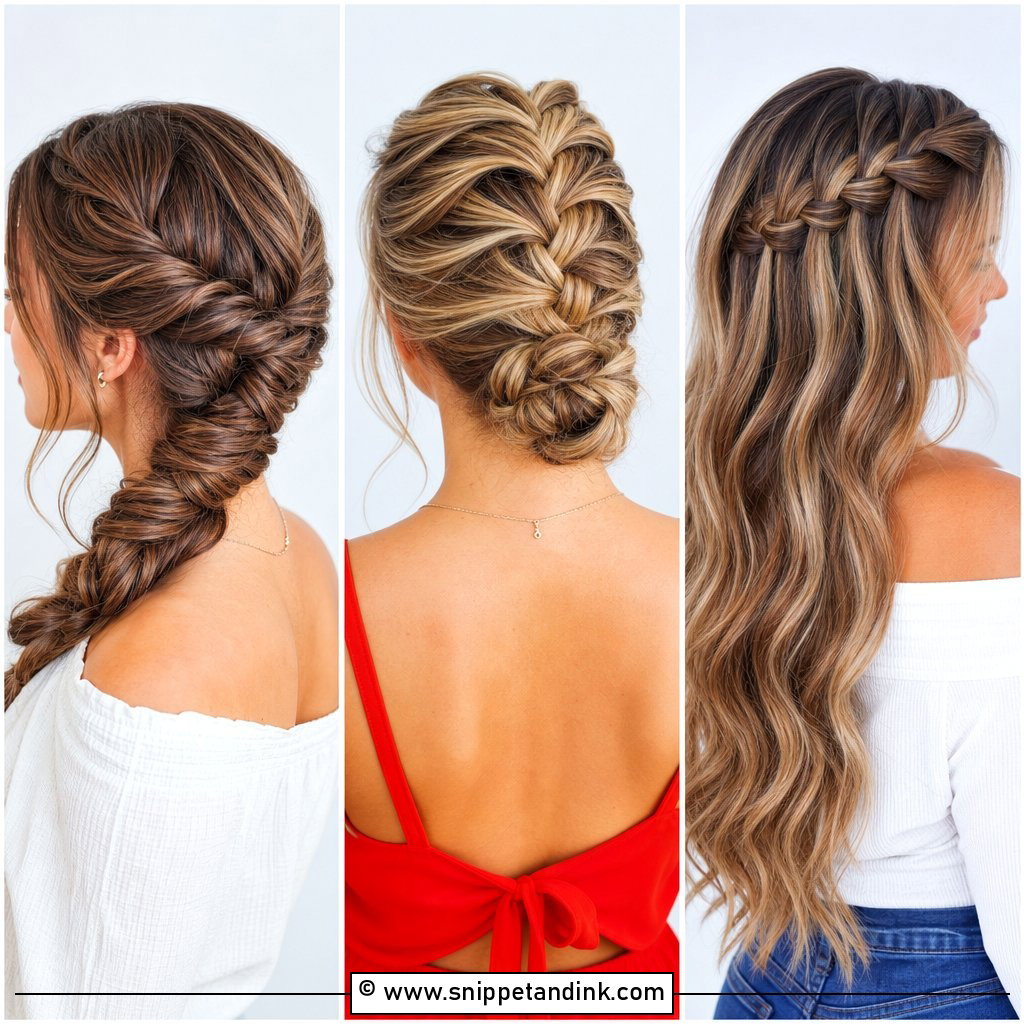
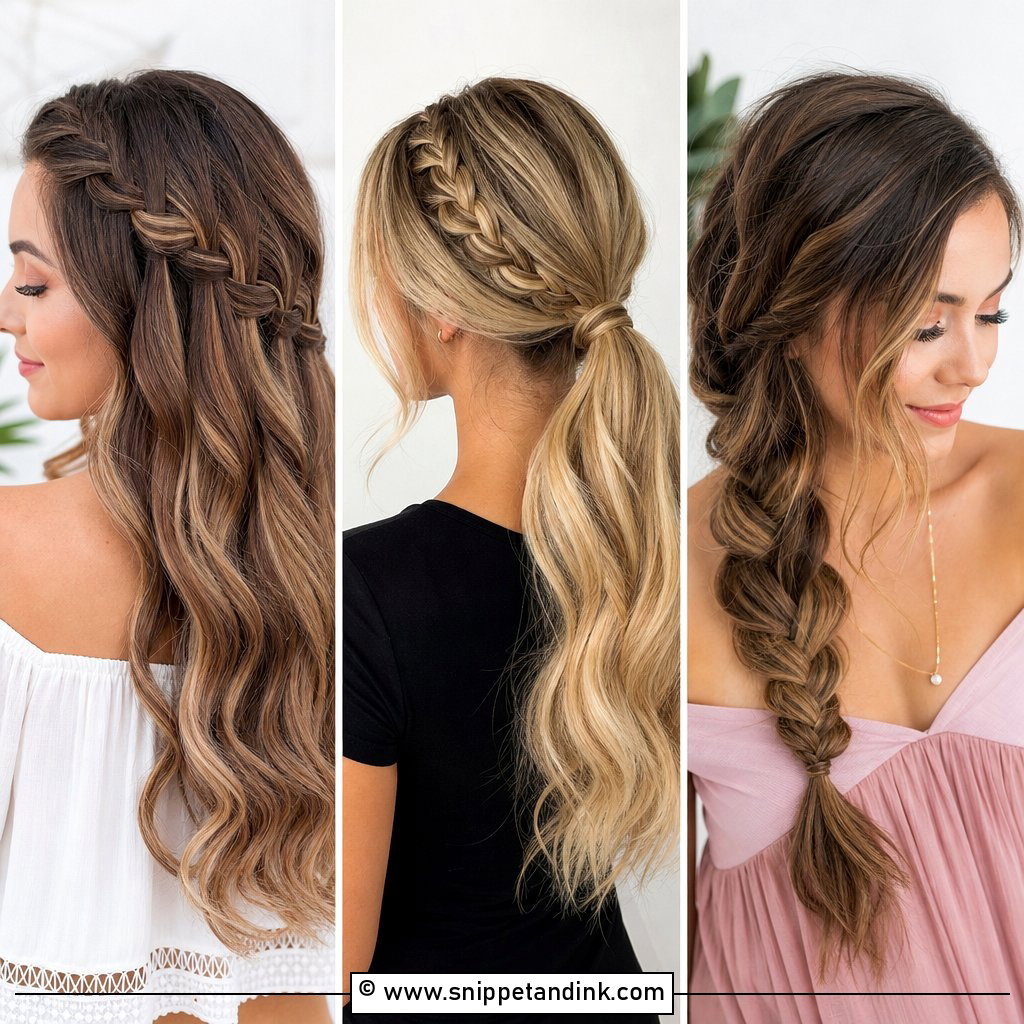
Running diagonally from one temple and finishing over the shoulder or into a low bun, the side braid shows detail from the front and the camera’s favourite three-quarter angle. Outdoors it keeps hair out of your eyes in wind. The weak point is the end: hair resting on the shoulder gets pushed around by straps and hugs, so I secure it with a clear elastic and wrap a strand over it. A deep side part on the braided side keeps it balanced.
4. French Braid Low Bun Bridal Hair
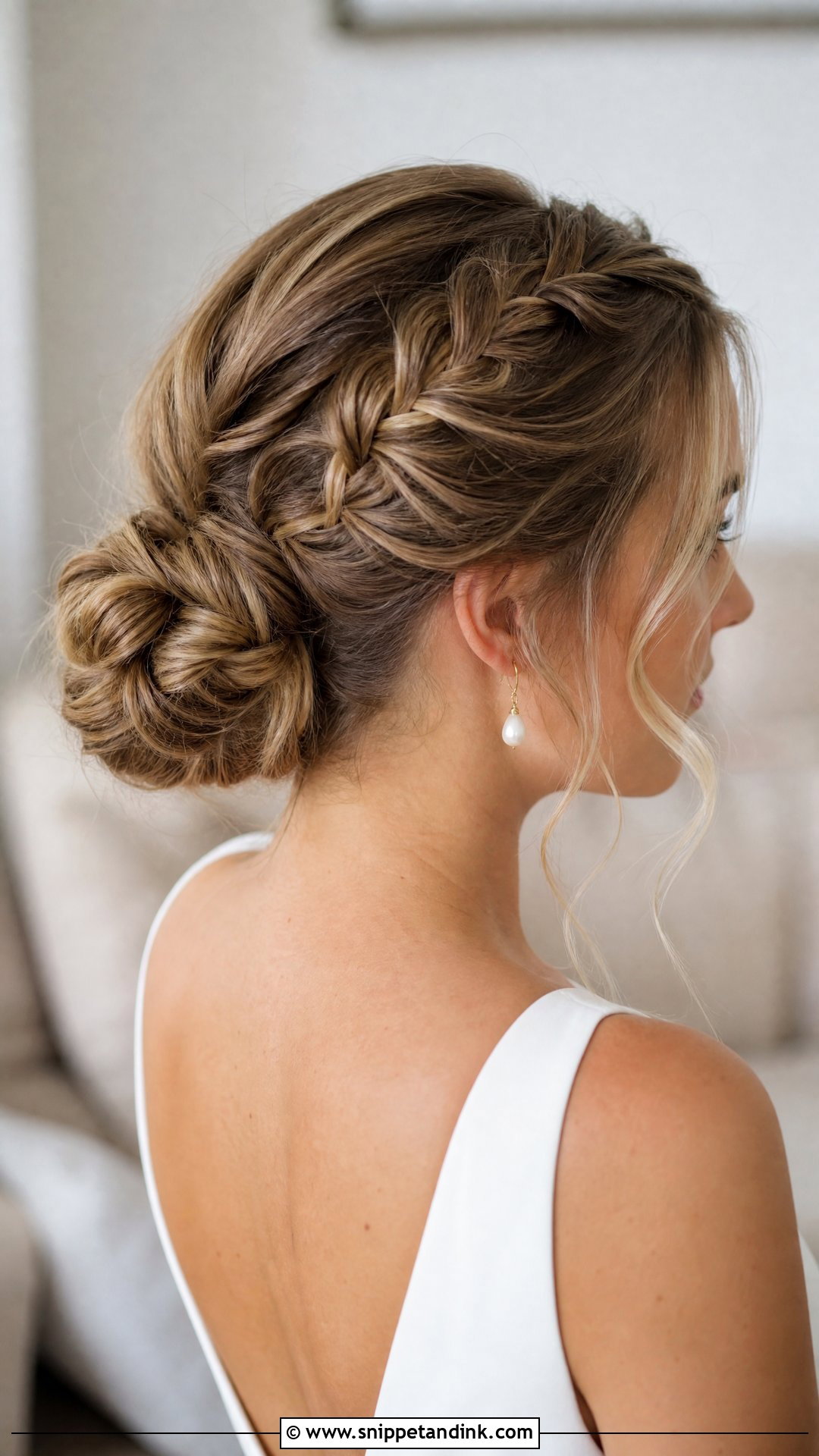
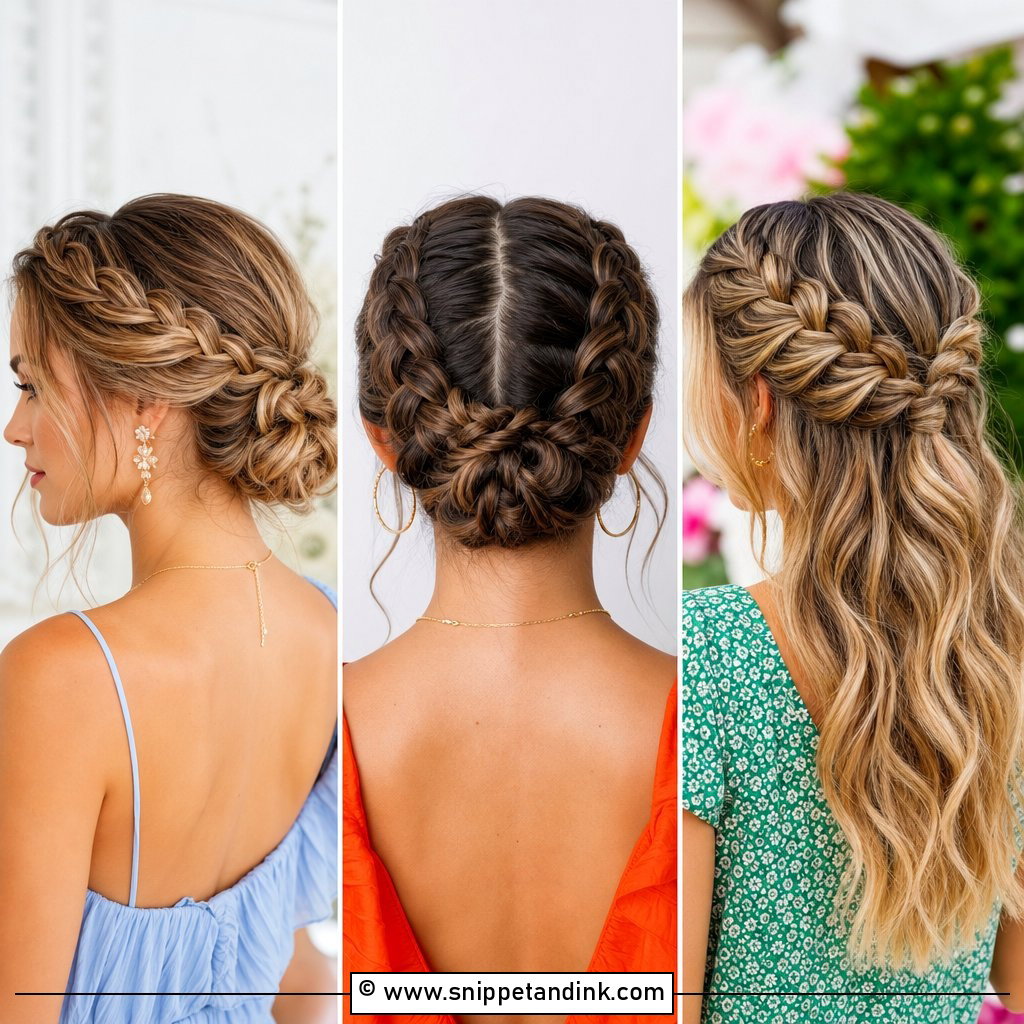
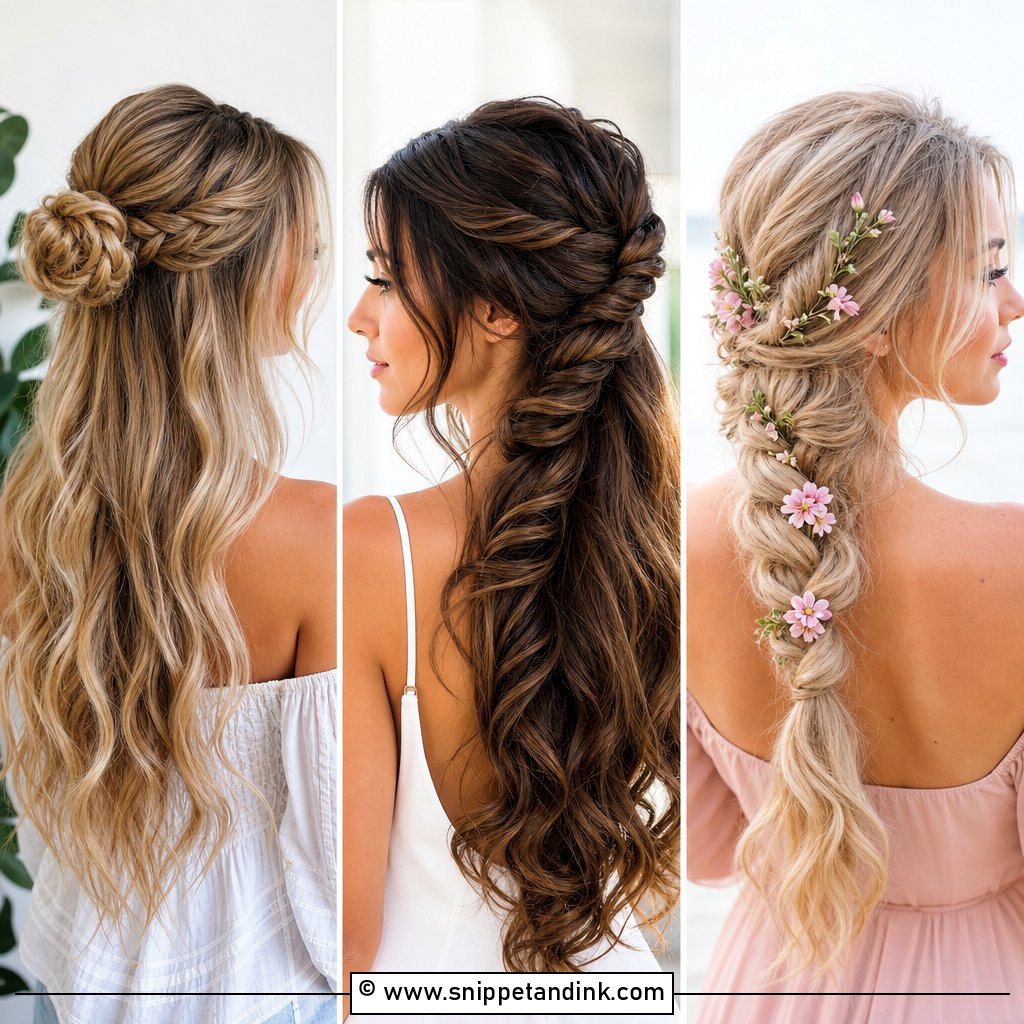
Braid plus low bun is the combination I’d call safest in the whole list. The braid adds texture across the crown or side, then gathers into a soft bun at the nape, which keeps hair off the shoulders and out of a detailed neckline. I can make the bun sleek for a formal ceremony or pull it apart for a softer feel. A veil goes above the bun; a comb or floral clip tucks in beside it without any extra anchoring.
5. French Braid Crown Bridal Hair
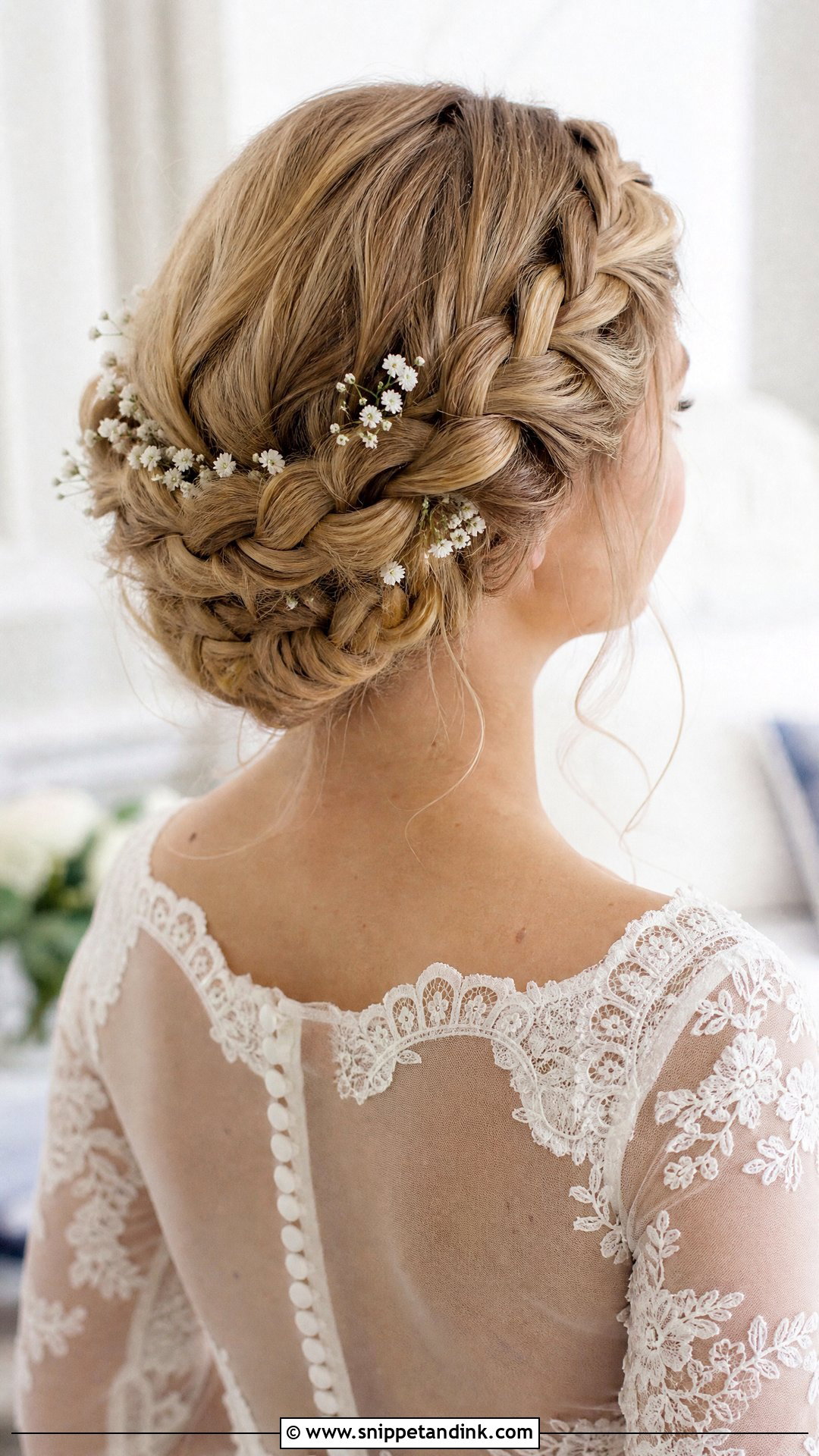
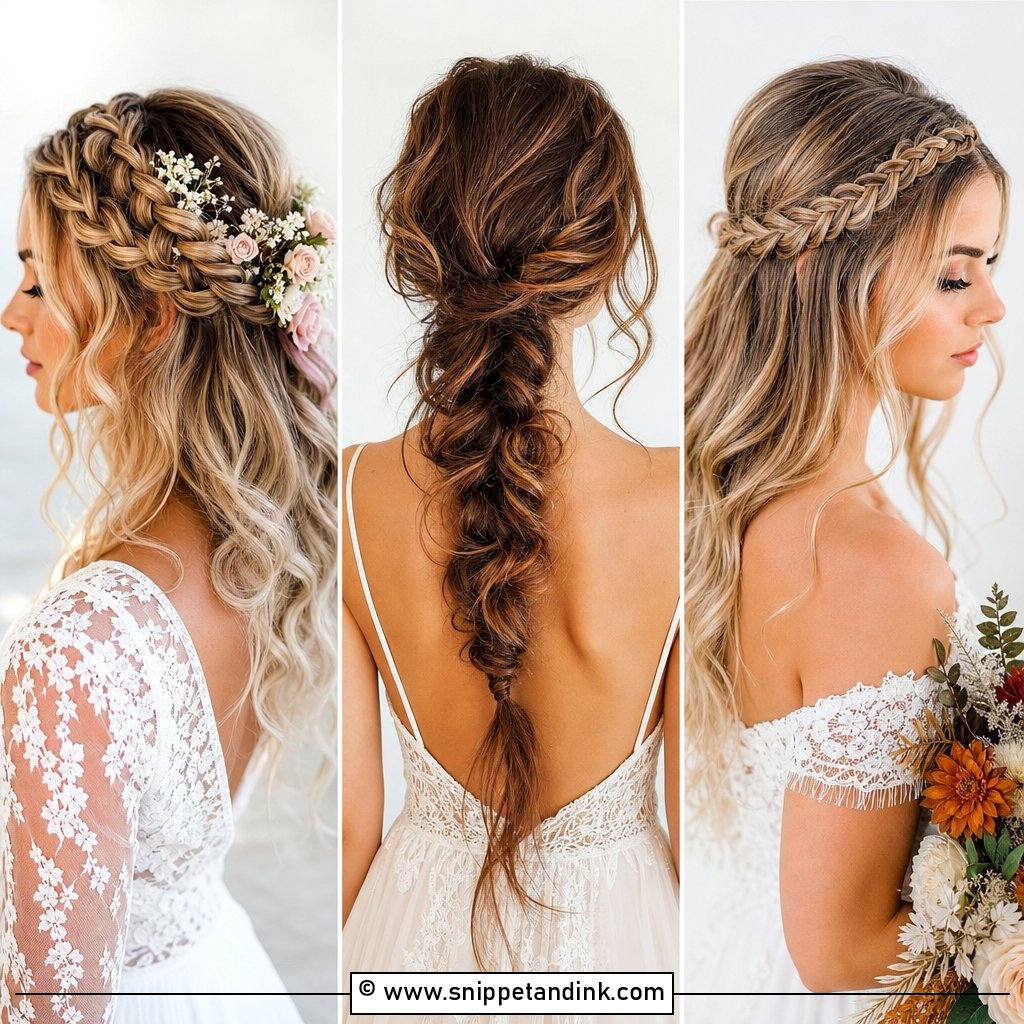
A braid wrapped around the head gives the halo shape, and it reads a little fairy-tale without needing a tiara. It can be a full crown or a half crown with curls left loose underneath. A full crown needs hair past the shoulder blades; on shorter hair I build it from two braids that meet and tuck at the back. Garden and rustic venues suit it, and tiny flowers or gold pins can be woven straight into the loops.
6. Loose French Braid Bridal Hair
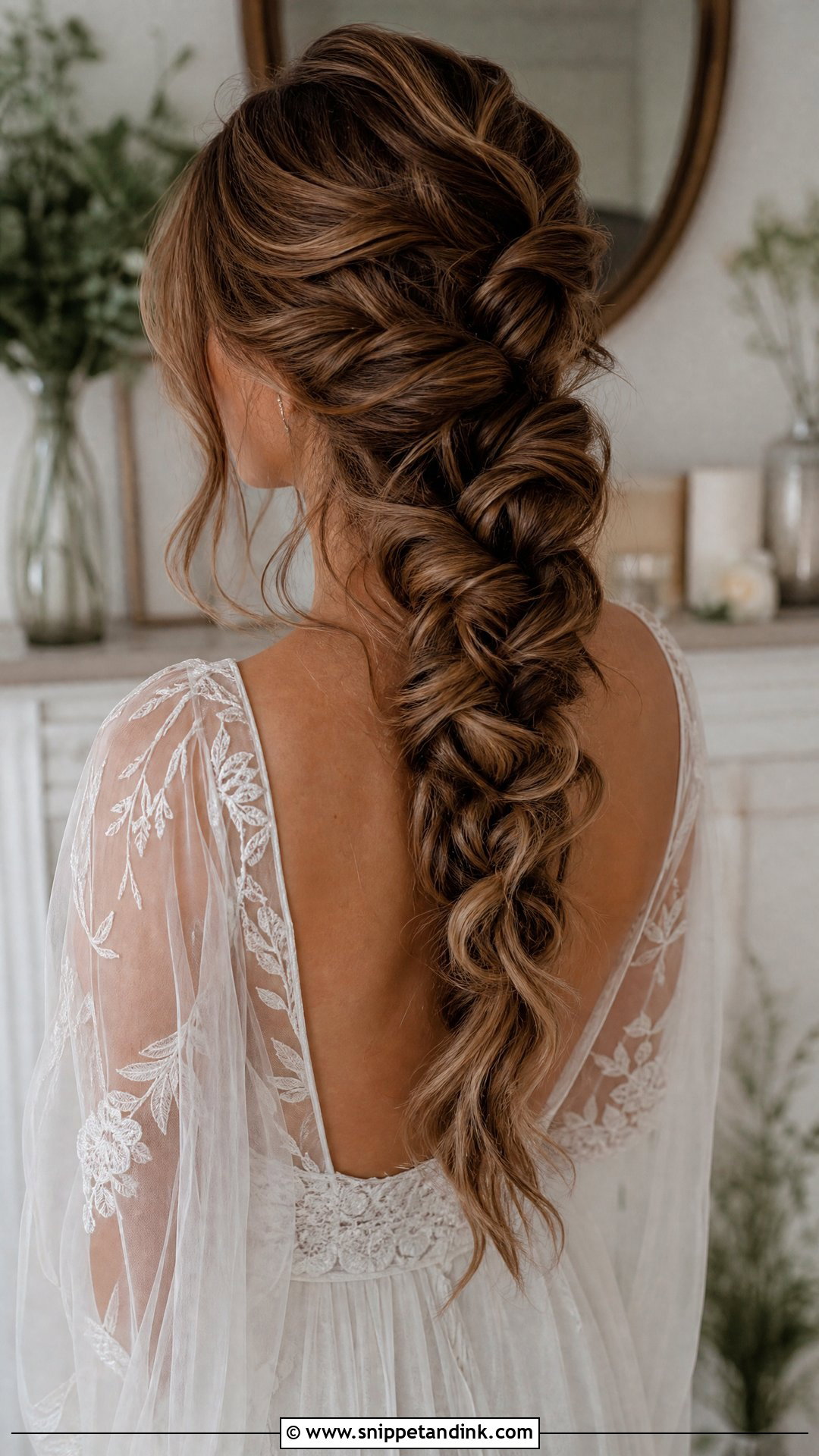
This is the braid people imagine when they say boho, and it’s the one most likely to fall apart if it isn’t built properly. I braid it firmly first, pin the base, and only then pull the loops apart for fullness. Loosening a braid that was loose to begin with leaves nothing holding it. A light texture spray beforehand gives grip without stiffness. It sits well with flowy sleeves and outdoor settings, with a few pieces left out at the face.
7. French Braid Bridal Ponytail
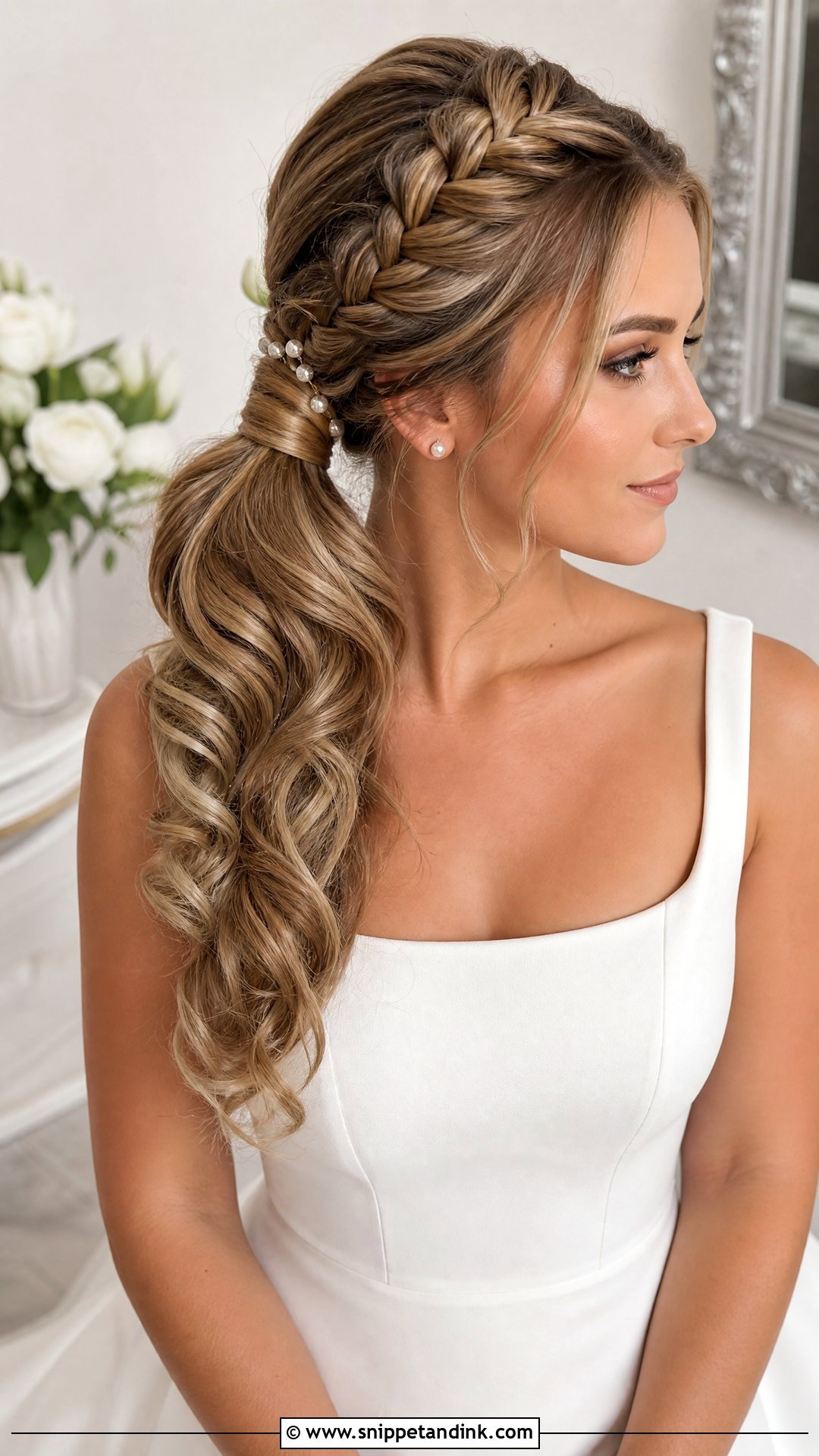
Braided into a ponytail, the look gets lift at the crown and swing at the ends, and it’s one of the most comfortable options for dancing. The braid can run down the center, along a side, or across the crown before meeting the pony. I wrap a section of hair around the elastic and pin it underneath to hide it. Curl the length before braiding so the ends hold their bend. Pearl pins or a small bow can sit at the base if the gown suits it.
8. French Braid Bridal Chignon
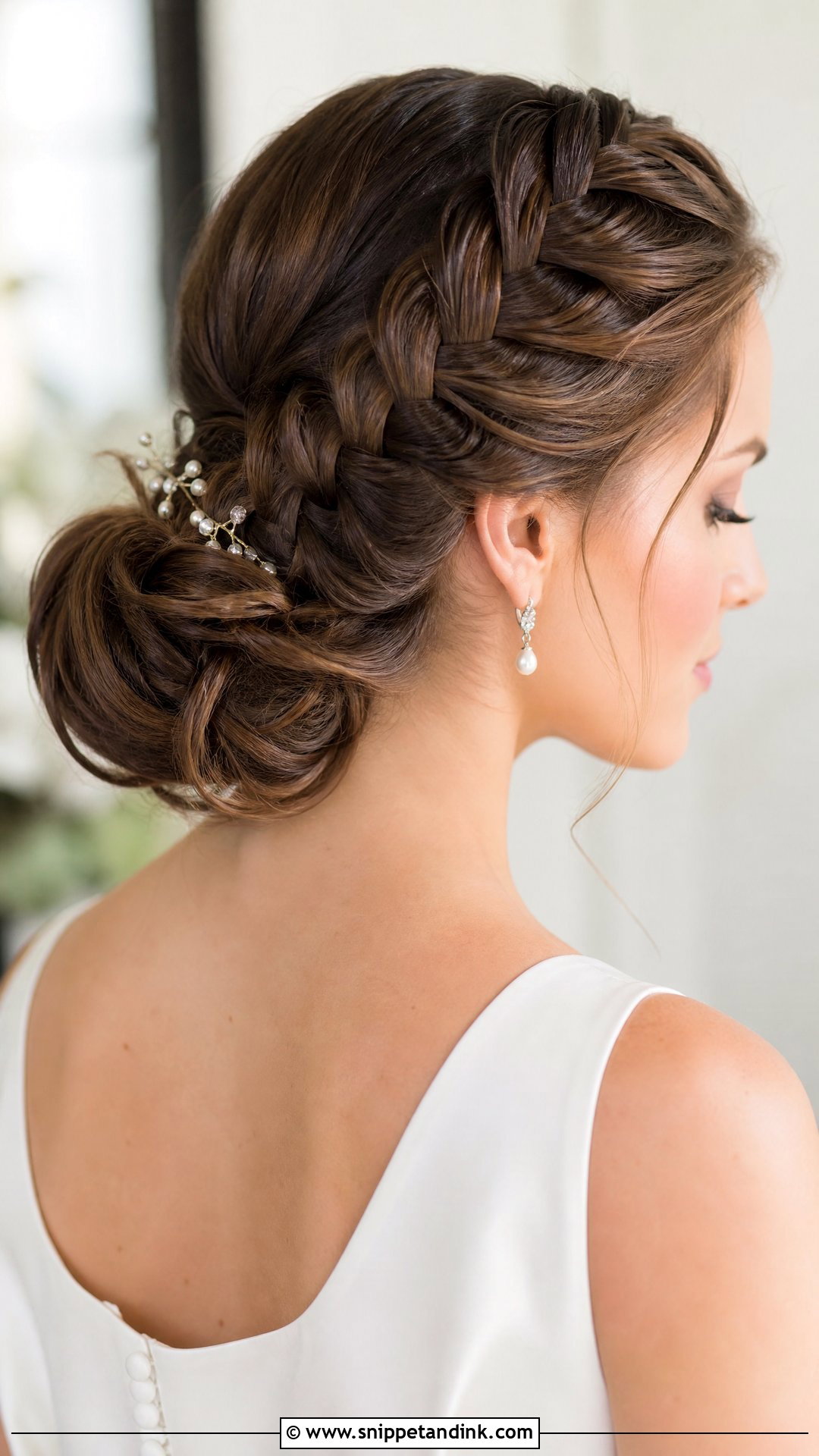
With a chignon, the braid runs from the hairline toward the back and disappears into a smooth or twisted knot, so the head looks tidy from every side. That makes it a formal choice that takes a tiara, comb or veil equally well. Highlighted or balayage hair shows off particularly in braids, because the crossovers expose the different tones. For a softer version, I pull a few airy pieces loose at the temples and nape.
9. French Braid Bridal Hair With Veil
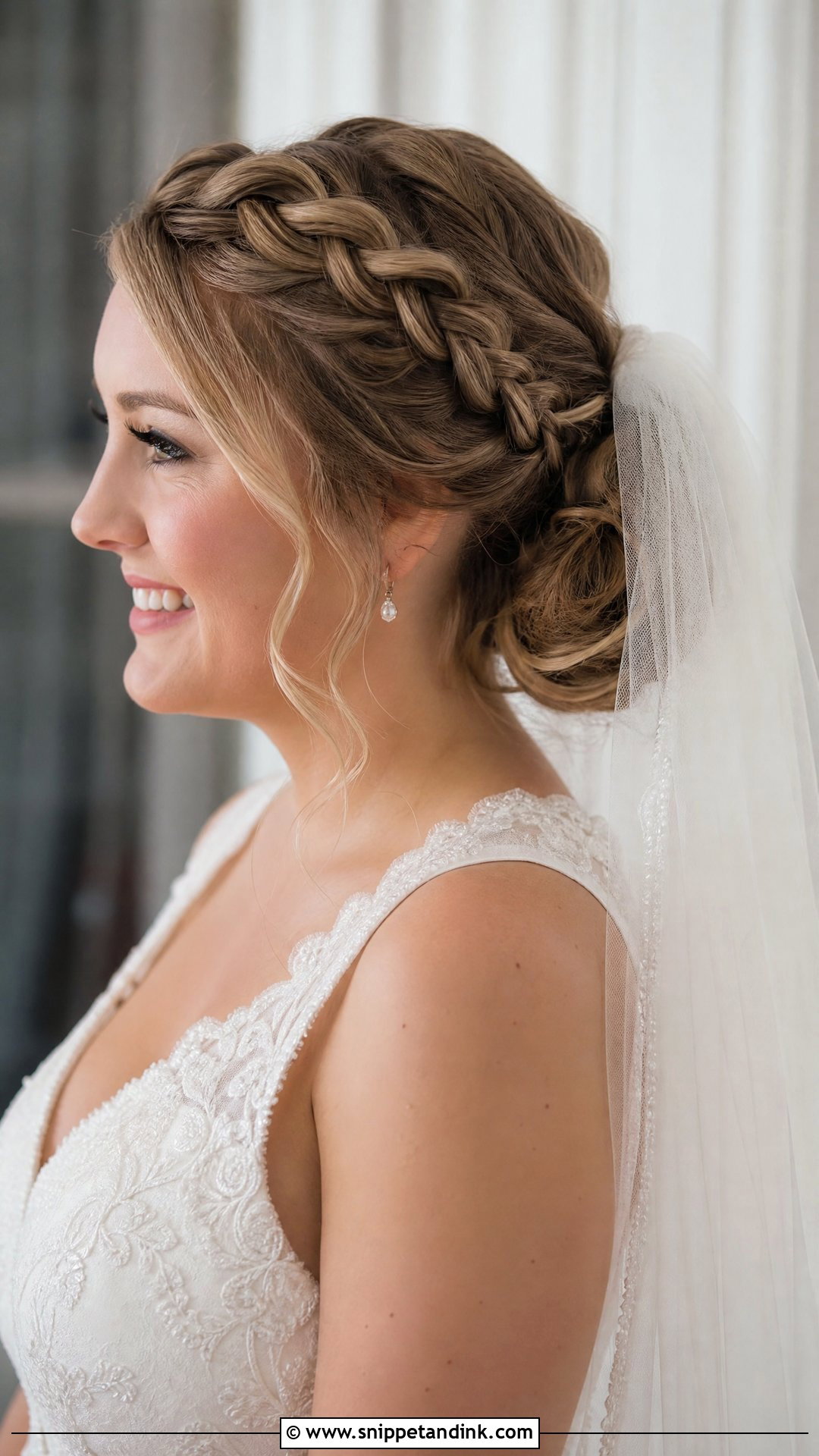
A braid is often the best veil anchor I can give a bride, because the comb slides between the crossovers and locks in. When the style includes a bun, chignon or half-up section, I place the comb just above it. With a heavy veil, I’d choose a structured updo or low bun, since a half-up braid can be pulled backward by the weight. A light veil sits happily on a half-up French braid with waves. Either way, the braid peeks out once the veil comes off for the reception.
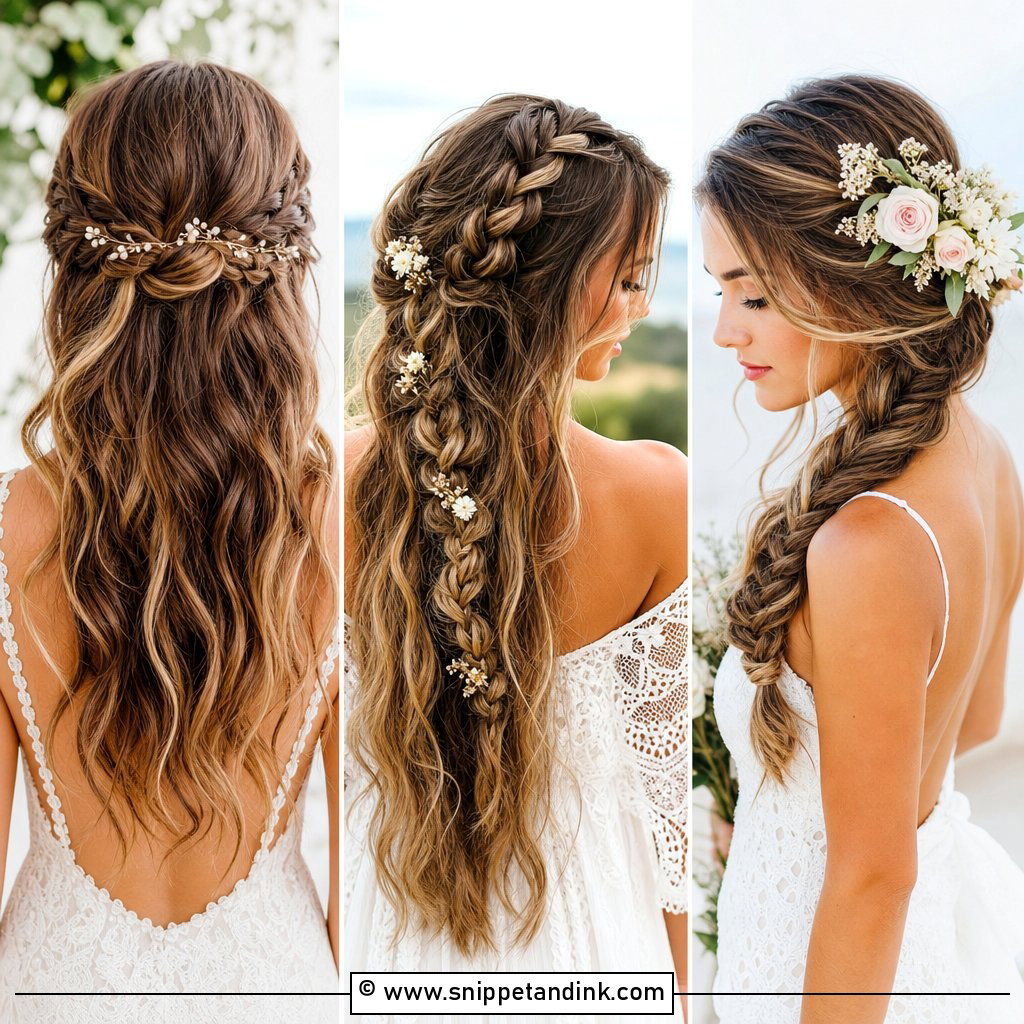
10. French Braid Bridal Hair With Flowers
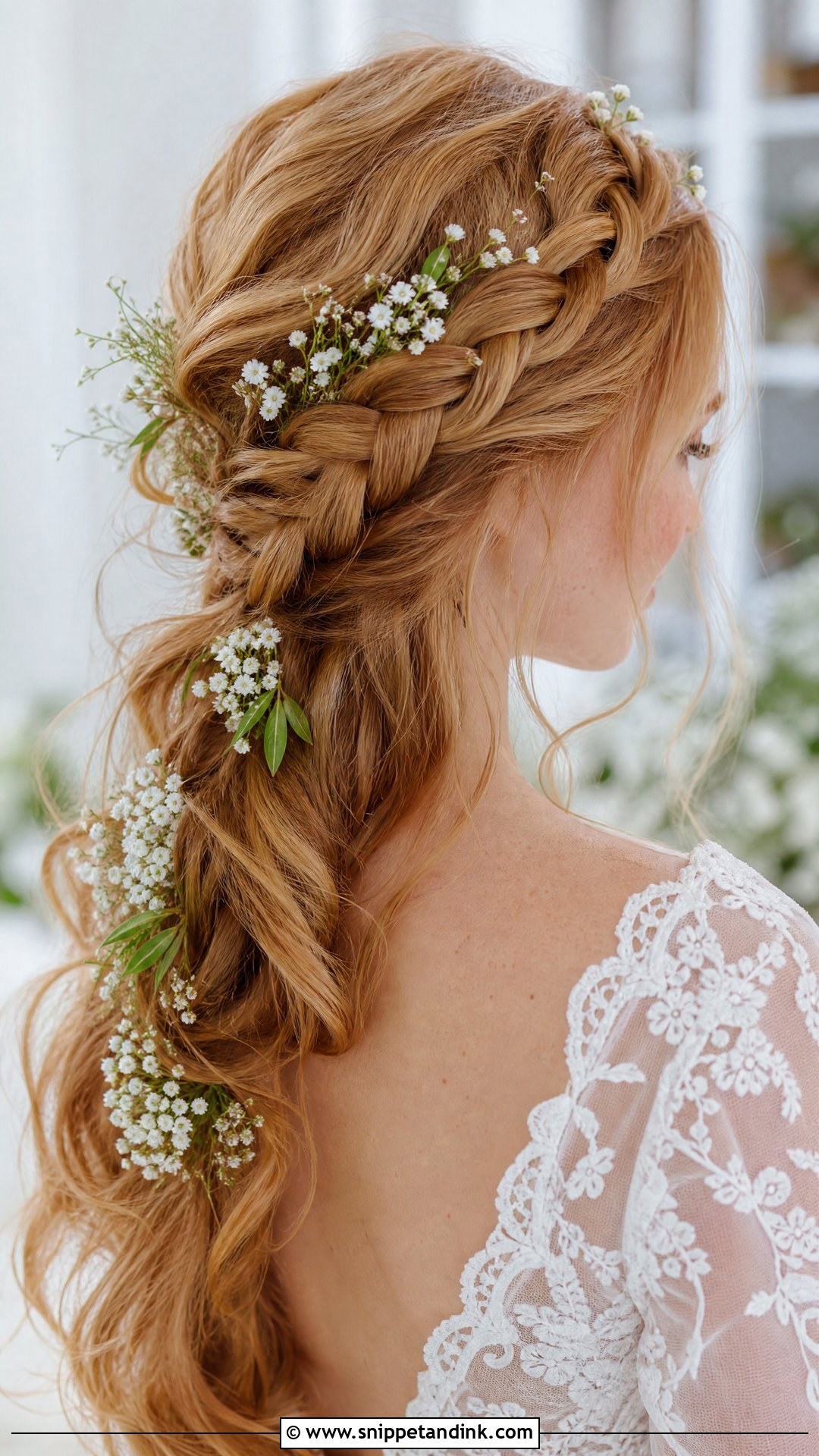
Flowers sit naturally in a braid because each loop is a ready-made pocket. Baby’s breath, small roses, wax flowers or a little greenery can go into a crown braid, side braid or braided bun. Keep the blooms small so the braid still reads. If they’re fresh, ask your florist for tough, long-lasting stems and keep them chilled until the last moment; I secure each one with a hidden pin rather than relying on the braid alone. Matching them to the bouquet ties everything together.
11. Double French Braid Bridal Hair
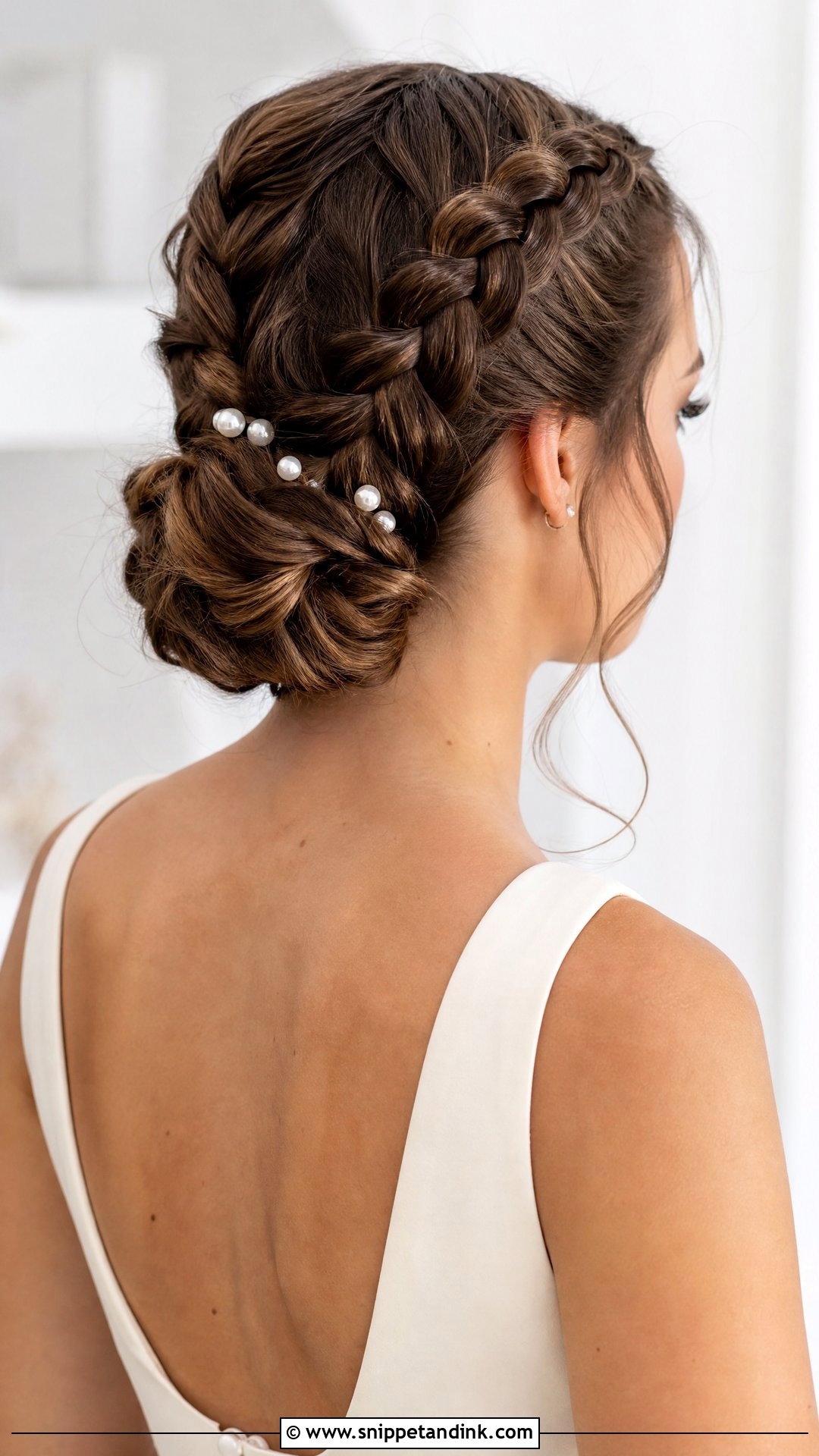
Double French braid bridal hair brings symmetry, and it’s my go-to for thick hair, because splitting the weight into two braids keeps each one manageable and stops the scalp feeling pulled. They start at the front hairline and travel back into a bun, ponytail or loose waves. Tight and smooth reads polished; loosened reads romantic. The part between them has to be straight, so I always check it in a hand mirror from behind before pinning.
12. French Braid Bridal Hair For Long Hair
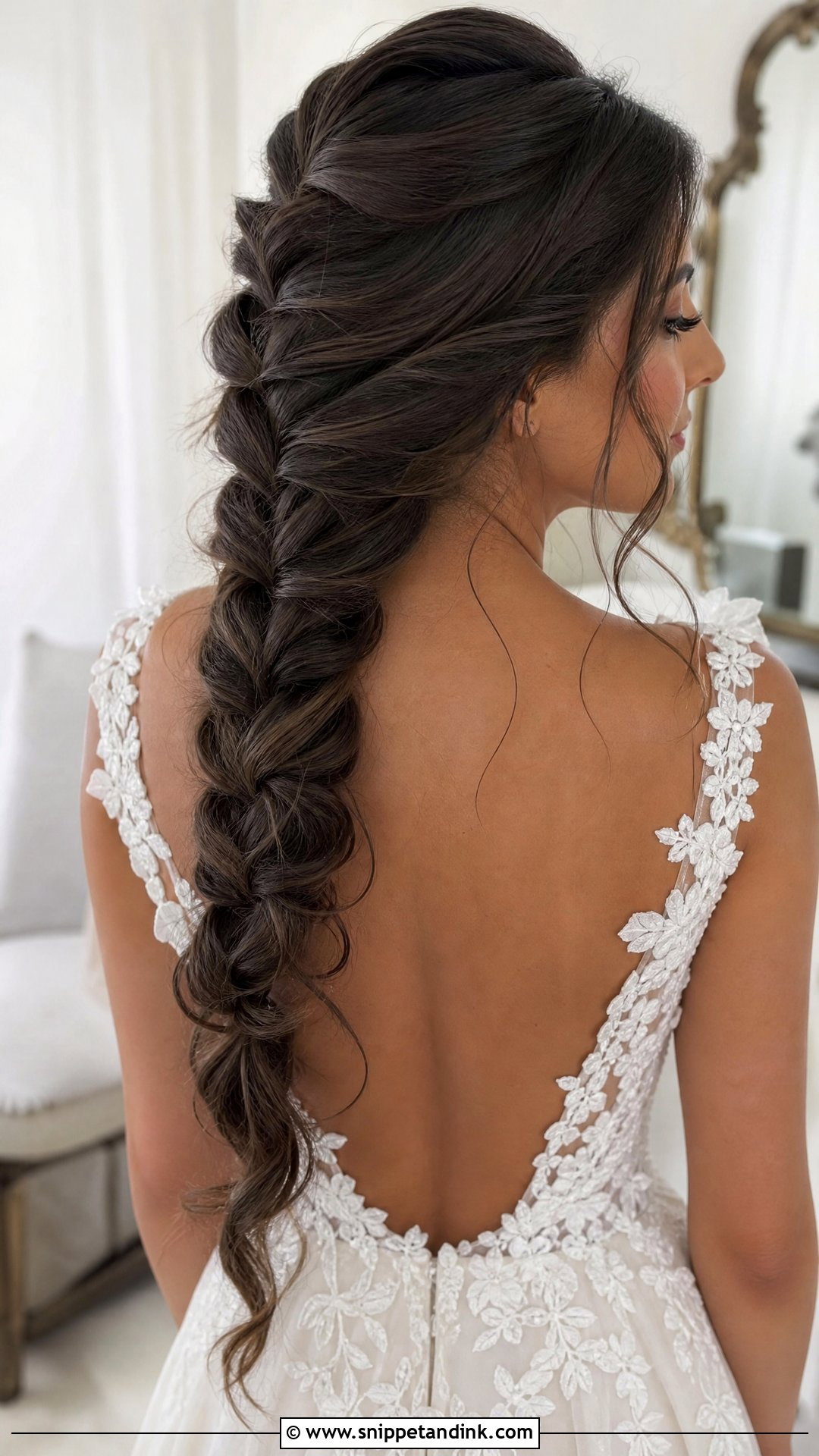
Long hair gives a braid real drama: it can run down the back, sweep over a shoulder or turn into a full braided ponytail. With an open-back gown the braid becomes part of the dress, which is why I check where the end falls against the neckline before finishing. For extra width, I gently pancake the loops once the braid is secured. Long, heavy hair can drag a braid down by evening, so I set the crown with a little texture spray first.
13. French Braid Bridal Hair For Medium Hair
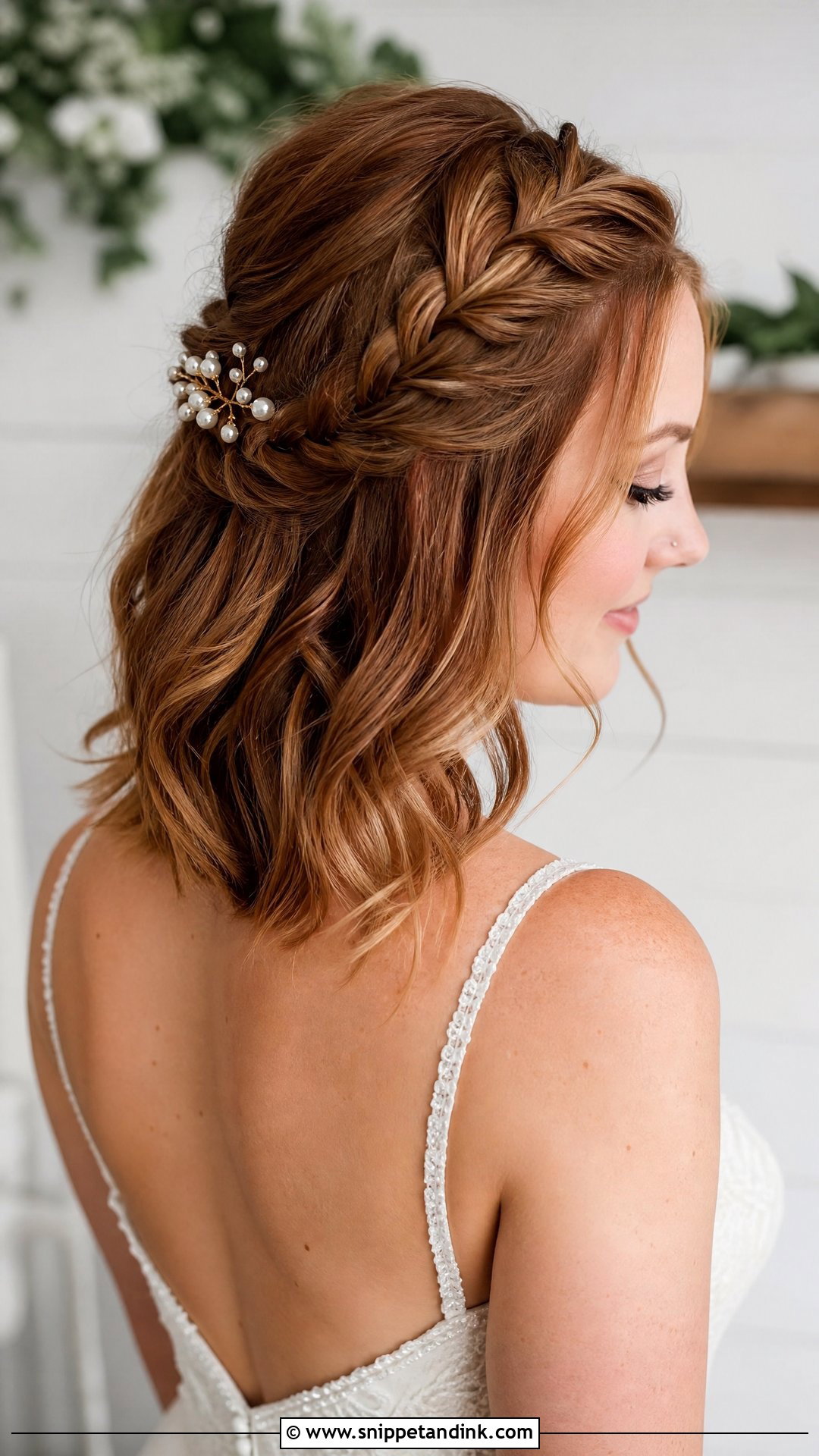
Shoulder or collarbone length braids better than many people expect, and it often holds texture well because it isn’t fighting its own weight. A side braid, half-up braid or low braided bun all work. Shorter pieces near the nape are the challenge, so I braid those in tightly at the start of each section. Waves set before braiding add volume, and gently loosened sections make it look fuller. It balances nicely under a veil or comb.
14. Boho French Braid Bridal Hair
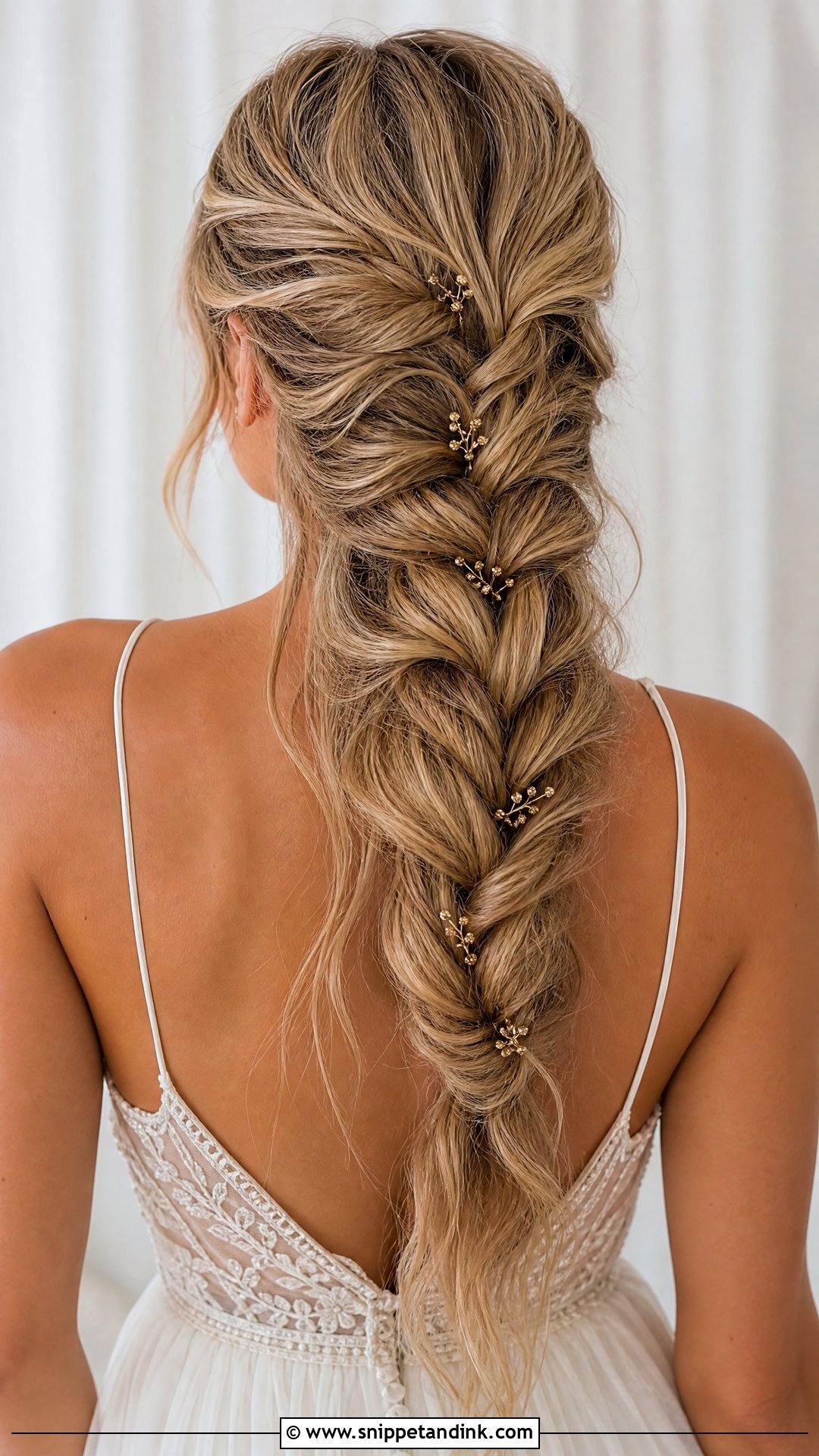
The trick with boho braids is that they should look relaxed without being messy. I ask for volume at the crown, soft pieces around the face, and a braid that’s been built firmly and then gently pulled apart. Small flowers or gold pins add detail. Outdoor ceremonies, flowing dresses and natural makeup suit it, and it pairs naturally with a laid-back romantic finish. If your hair is very silky, I’d prep it with texture spray or the pulled-out loops will slip back flat within an hour.
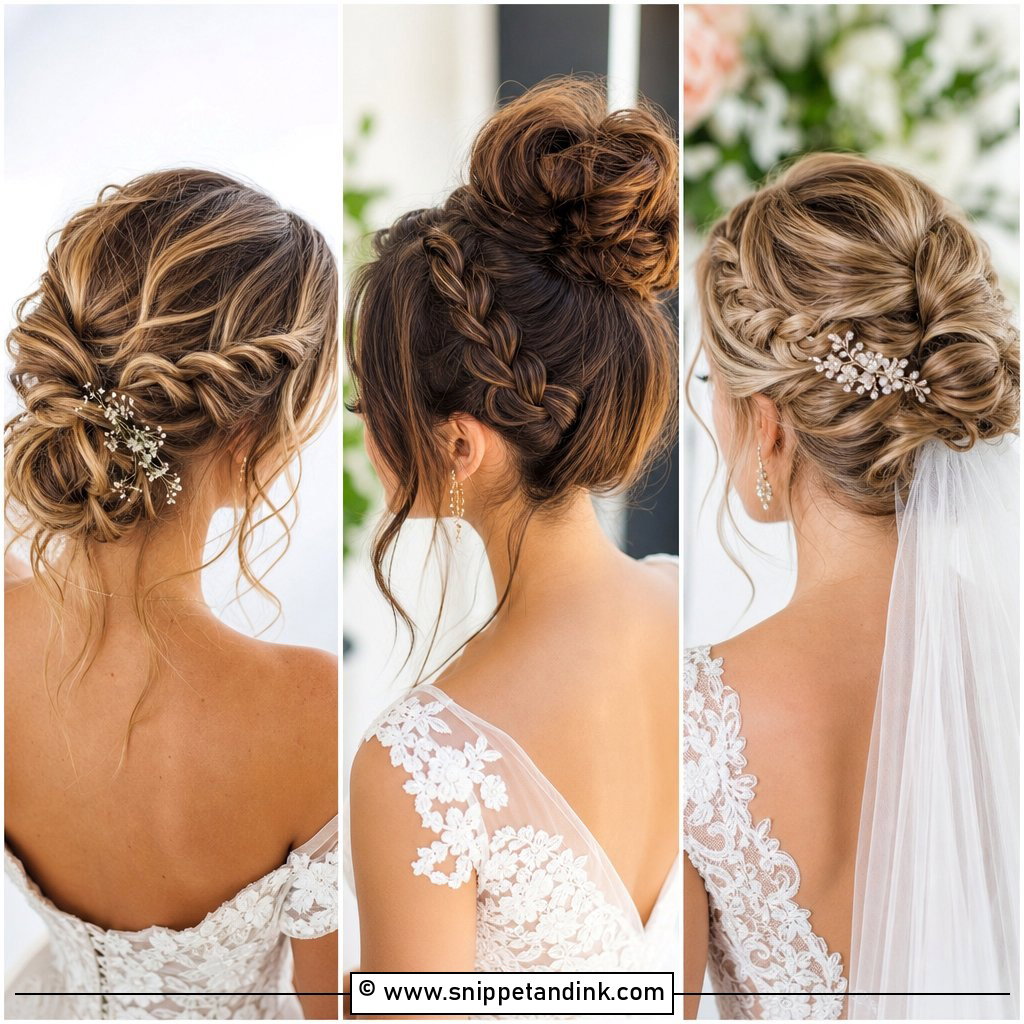
15. Classic French Braid Bridal Hair
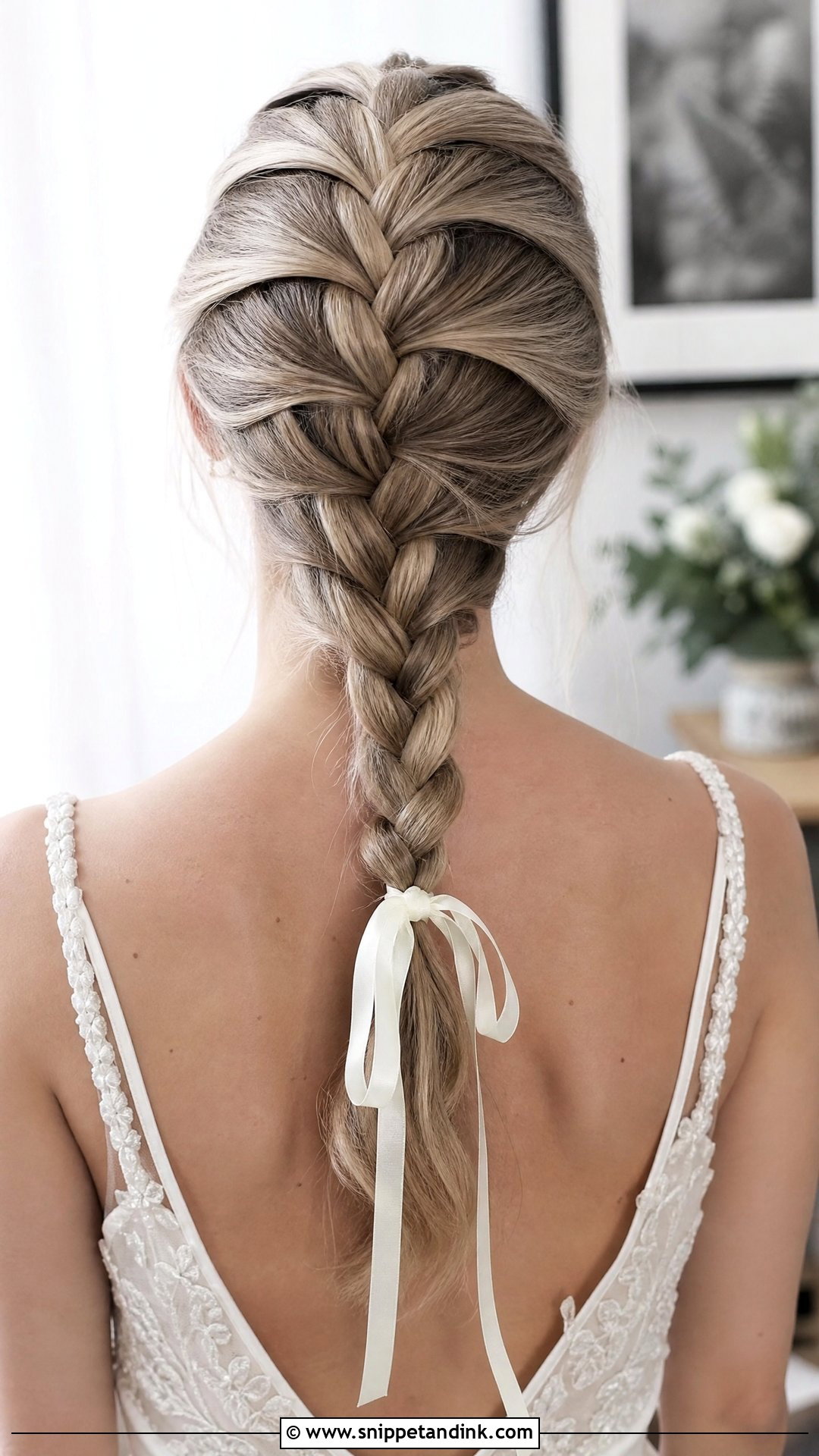
Simplicity is what makes the classic version work. The braid starts near the crown and runs neatly down the back, and it looks polished from every angle with very few pins. Wear it alone, finish the ends with a curl, or tuck it into a low bun for something more formal. It’s my suggestion for elopements, rehearsal dinners and brides who don’t want to feel anything pulling. A delicate ribbon or pearl pin is all the decoration it needs.
Short Layers Are What Poke Out
The complaint I hear most about wedding braids isn’t that they fall out. It’s the little spikes that appear by the reception, usually from face-framing layers or short pieces at the nape. Freshly washed, silky hair makes this worse, because it slides out of every crossover.
- Wash the day before, not the morning of. If you must wash on the day, expect me to add texture spray or dry shampoo before braiding.
- Layered hair braids neater with a little cream or a wax stick smoothed along each section as it goes in.
- Fine hair looks fuller when the loops are loosened at the end; a few clip-in wefts at the crown help if you need more body.
- Clear mini elastics hold the end far better than one pin, and a strand wrapped round hides them.
Can You Braid the Back of Your Own Head?
Side braids, yes, if you already do them. A neat braid down the center of the back is harder: your arms tire, the tension drifts, and you can’t see what the camera sees. If you’re not booking a stylist, recruit a friend who braids well and have her practise on you twice, taking a photo from behind each time so you both know what to fix.
One Braid, Built to Hold From Vows to Last Dance
French braids cover a surprising range, from a formal chignon to a loose boho plait, and each one gives the hair structure while it still moves. A crown, a low bun, a half-up look and a long side braid all start from the same technique. Take photos of the exact braid you mean to your trial, wear your veil and accessories with it, and live in the style for a few hours afterward. If it still feels comfortable and secure by evening, that’s the one.
You'll Like These Ideas:


Leave a Reply