
A portrait doesn’t need a face to feel personal. Some of my favourite frames from any wedding are the ones where the bride is turned away, hidden behind a veil or caught walking off down a corridor, because the dress, the hands and the setting are left to tell the story. Some brides ask for this look because they value privacy, some because they freeze in front of a lens, and some simply prefer pictures that feel less posed. Back views, walking shots and veil portraits do it best. The hidden face has to look intentional, which comes down to posture, hand placement and a clean background. Here are twenty ways to build it into your gallery.
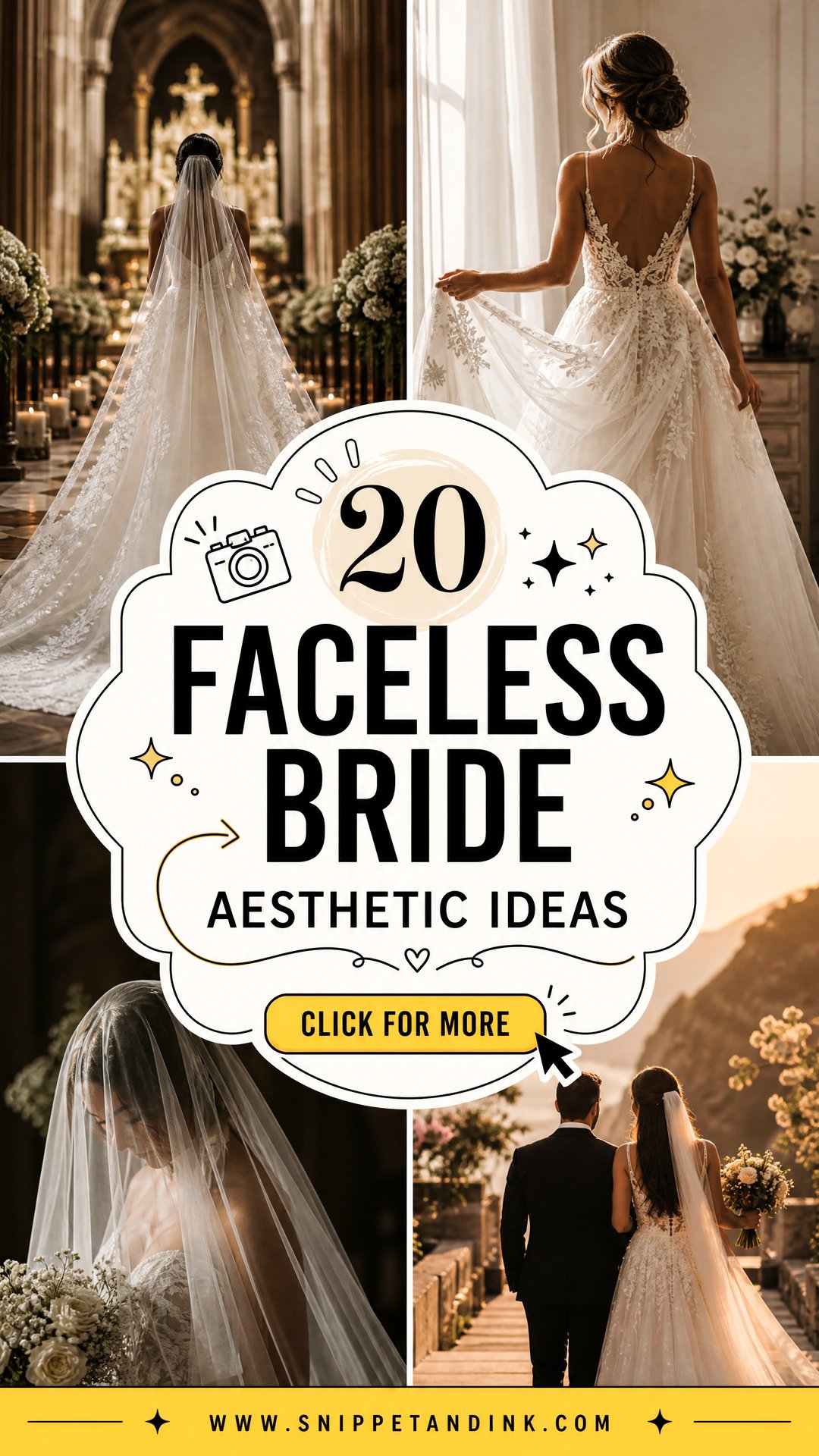
Writing a Faceless Shot List Your Photographer Can Actually Use
When a couple tells me they want faceless portraits, the first thing I ask is how far it should go. Some want a handful of mysterious frames mixed into a normal gallery. Others don’t want a single recognisable image of themselves anywhere. Those are two very different jobs, and I plan the day differently for each.
- Say which it is: a few faceless frames for variety, or a fully faceless gallery including guest and family shots.
- Pick five or six poses from this list and send screenshots. I’d rather know you love the walking-away shot than guess.
- Tell me where the light is. Name the room you’re getting ready in and the time of the ceremony, so I can plan window, silhouette and backlit frames.
- Build in fifteen to twenty minutes just for these. They take longer than they look, because a veil or a skirt usually needs resetting between frames.
- Choose one person to fix the train and veil, so I’m not hunting for help between shots.
If you’re camera shy rather than privacy minded, say so too. I’ll still take faces, just more candidly, and the faceless frames become a relief from posing.
1. Faceless Bride With Bouquet Covering Face
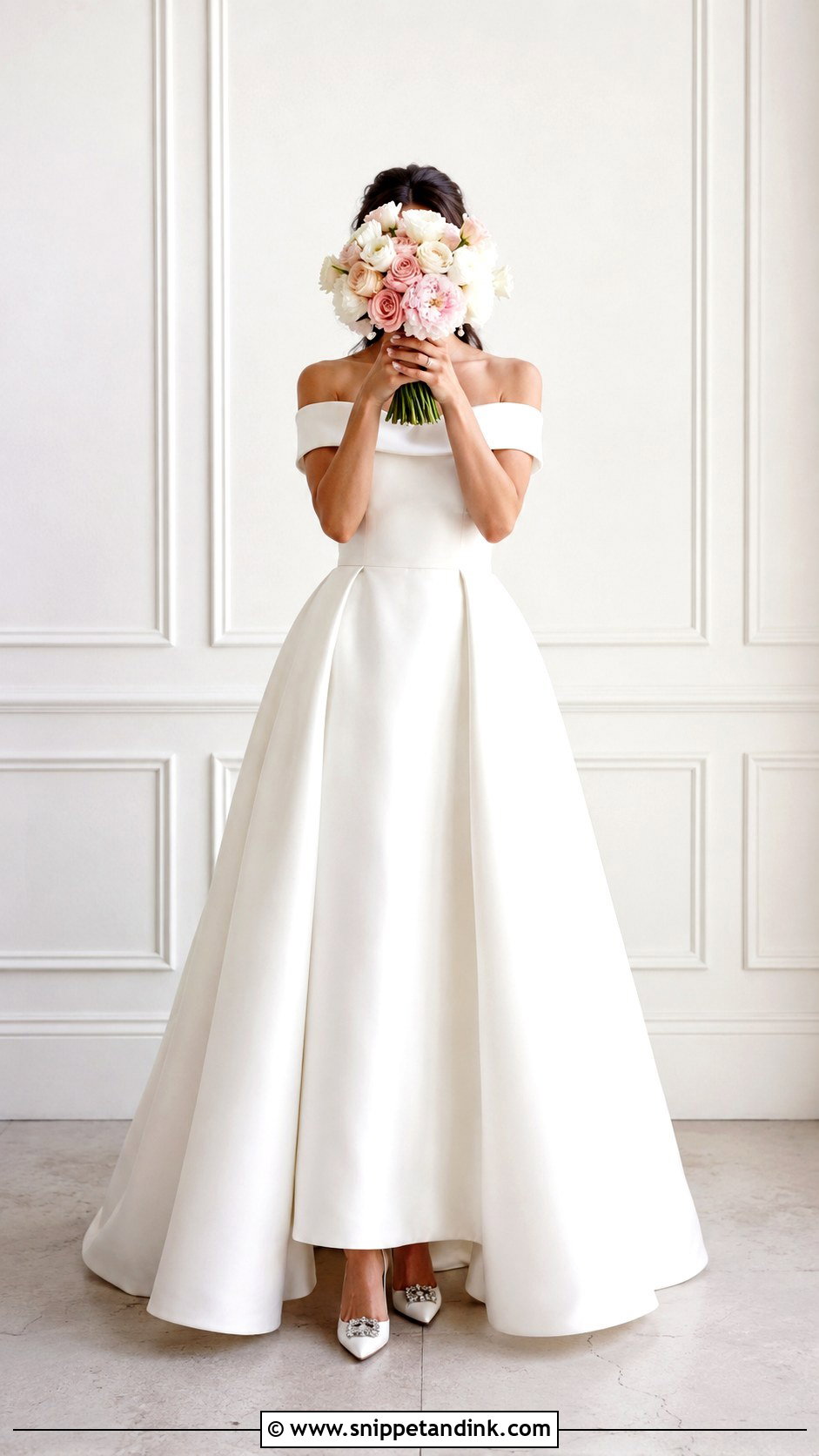
The usual mistake with bouquet shots is pressing the flowers into the face, which crushes the stems and makes the pose look like hiding. I ask brides to hold the bouquet at eye level, a few inches away, so the neckline, hair and upper bodice stay in frame. Airy roses or peonies with some loose greenery read better than a tight dome, because a little face peeks through the gaps. I’ll shoot it full length too, train and all, so it reads as a portrait and not a flower close-up. A plain wall, a garden path or a bright bridal suite keeps the frame clean.
2. Faceless Bride Under Sheer Veil
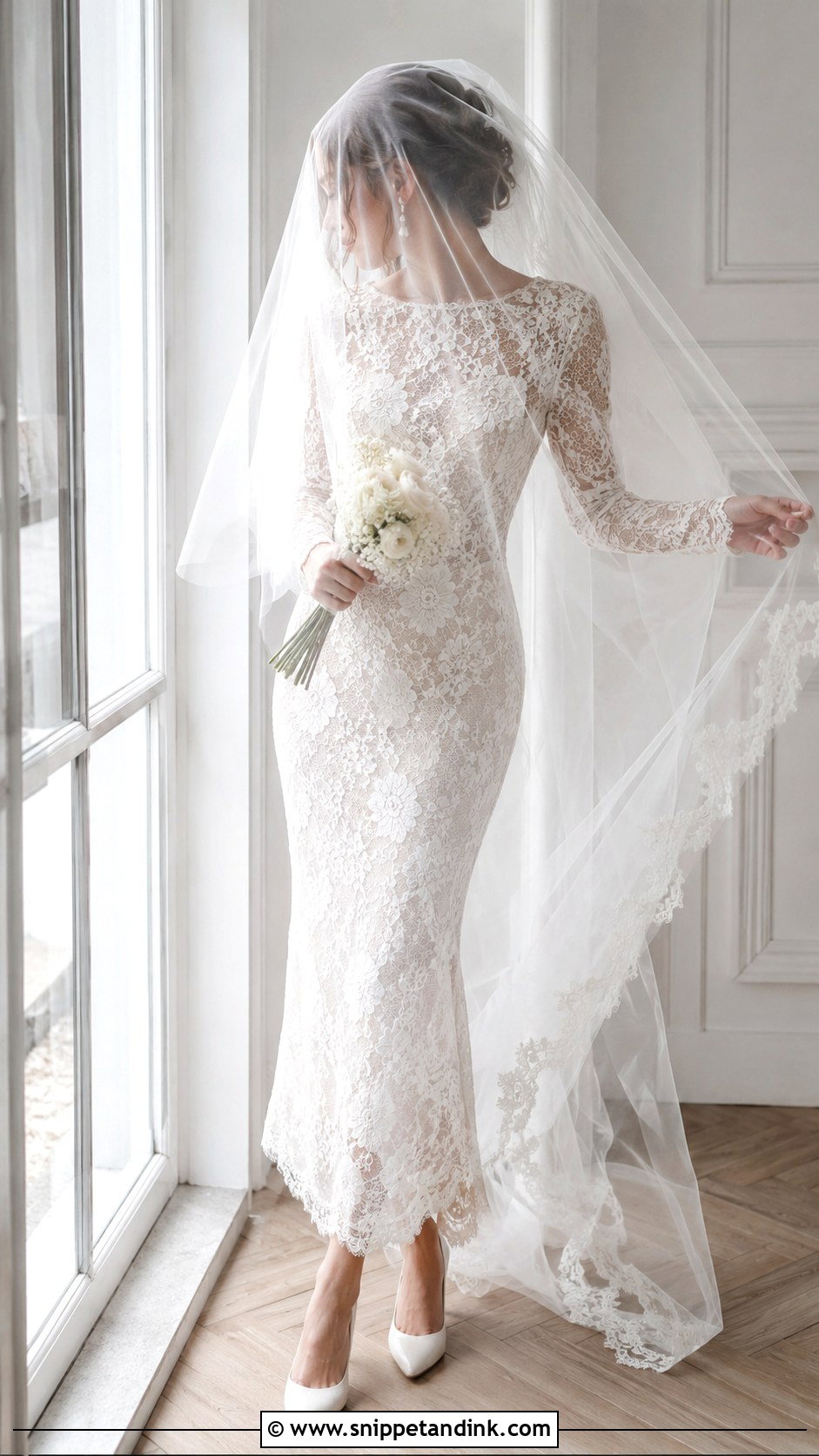
Fine tulle is the veil I want for this. It catches window light and lets the outline of the hair and gown show through, where a heavier net goes flat and grey. Drape it over the head and shoulders, turn slightly from the camera and let it fall loose; pulled tight across the face, it looks like a bag. Lace, pearl or plain satin underneath all show texture through the fabric. I’d place you near a bright window or against a pale sky and expose for the veil, so it glows instead of greying out.
3. Faceless Bride Back View With Cathedral Veil
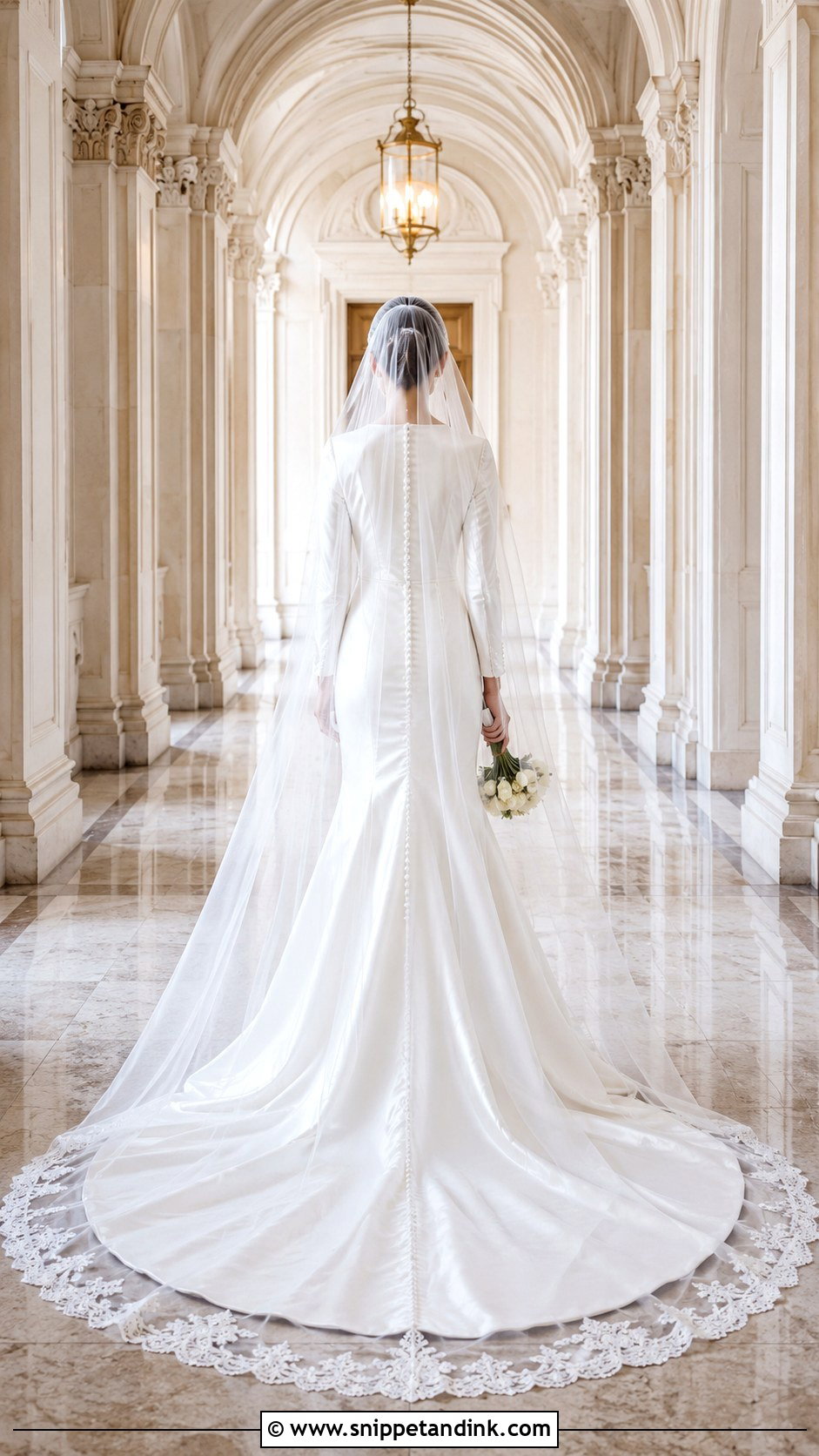
Back-facing with a cathedral veil pooled on the floor is the classic, and it shows everything the front view hides: buttons, train and the back of the bodice. Relax your shoulders and slide one foot slightly behind the other. That small shift puts a curve in the skirt. A low bun lets the veil sit neatly and keeps the neckline readable. I’ll arrange the veil symmetrically for a formal frame, then ask someone to toss it for a looser one. Staircases, long hallways and open doorways add depth without clutter.
4. Faceless Bride Looking Down
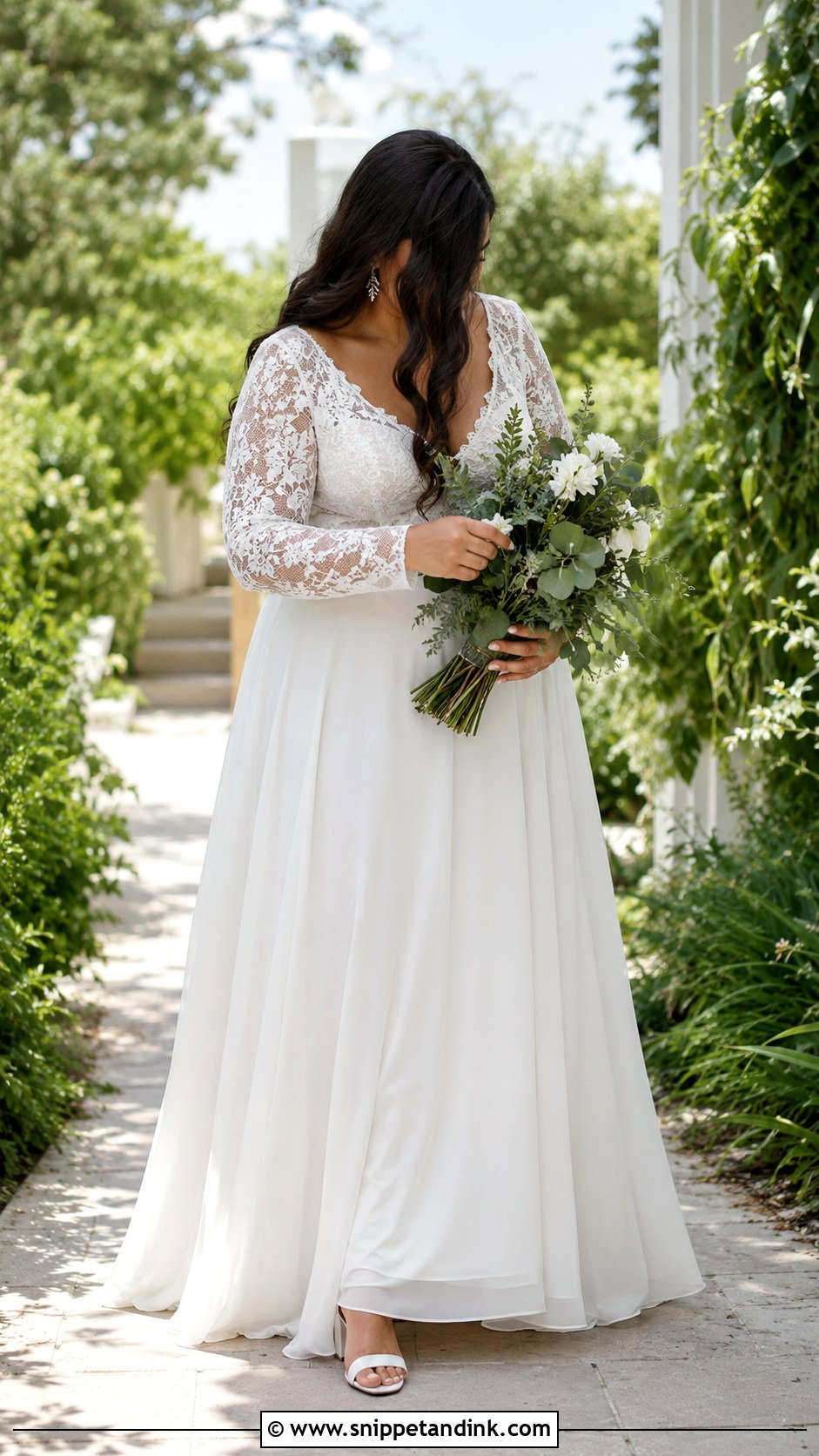
Looking down is the easiest faceless pose for a bride who’s nervous, because it gives her something to do. Adjust the bouquet, touch an earring, smooth the skirt. The chin drops naturally and most of the face disappears. Let a little hair fall forward if you like, but not over the neckline. I watch the hands more than anything here. Tense fingers read as stiff, so I’ll ask you to shake them out and let them separate slightly. It suits fitted gowns, A-lines, suits and modest outfits equally.
5. Faceless Bride Mirror Portrait
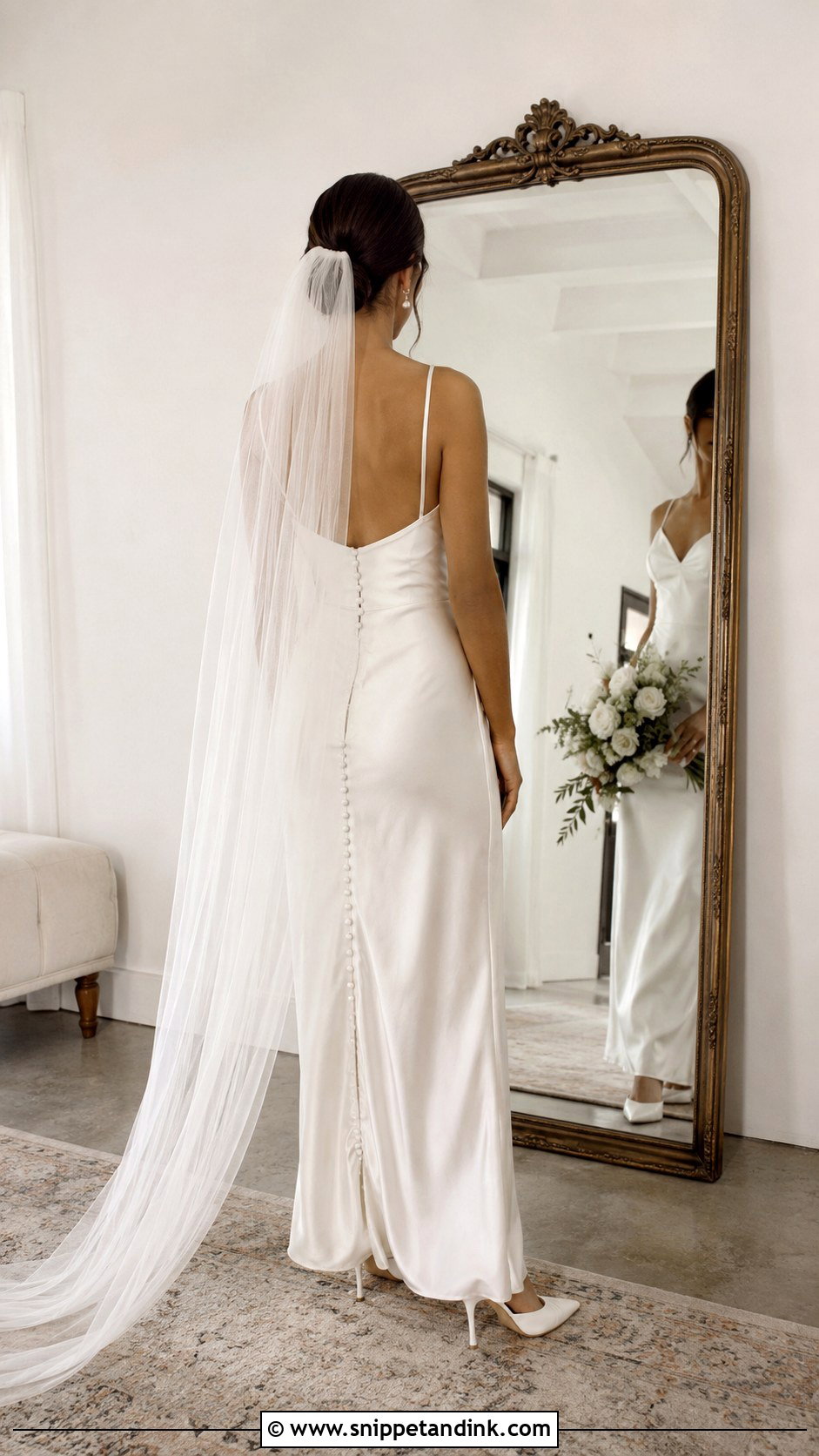
A mirror portrait is mostly about angles. The bride faces away from me, and I move until the mirror holds only a sliver of profile, veil or hands, and nothing of my own reflection. Curtains or a vase of flowers at the mirror’s edge can soften it further. Clear the room behind you of bags, hangers and water bottles, since a mirror shows twice as much mess. Soft window light from the side works best. I usually take this one during getting ready, when the room is still quiet.
6. Faceless Bride Standing By Window
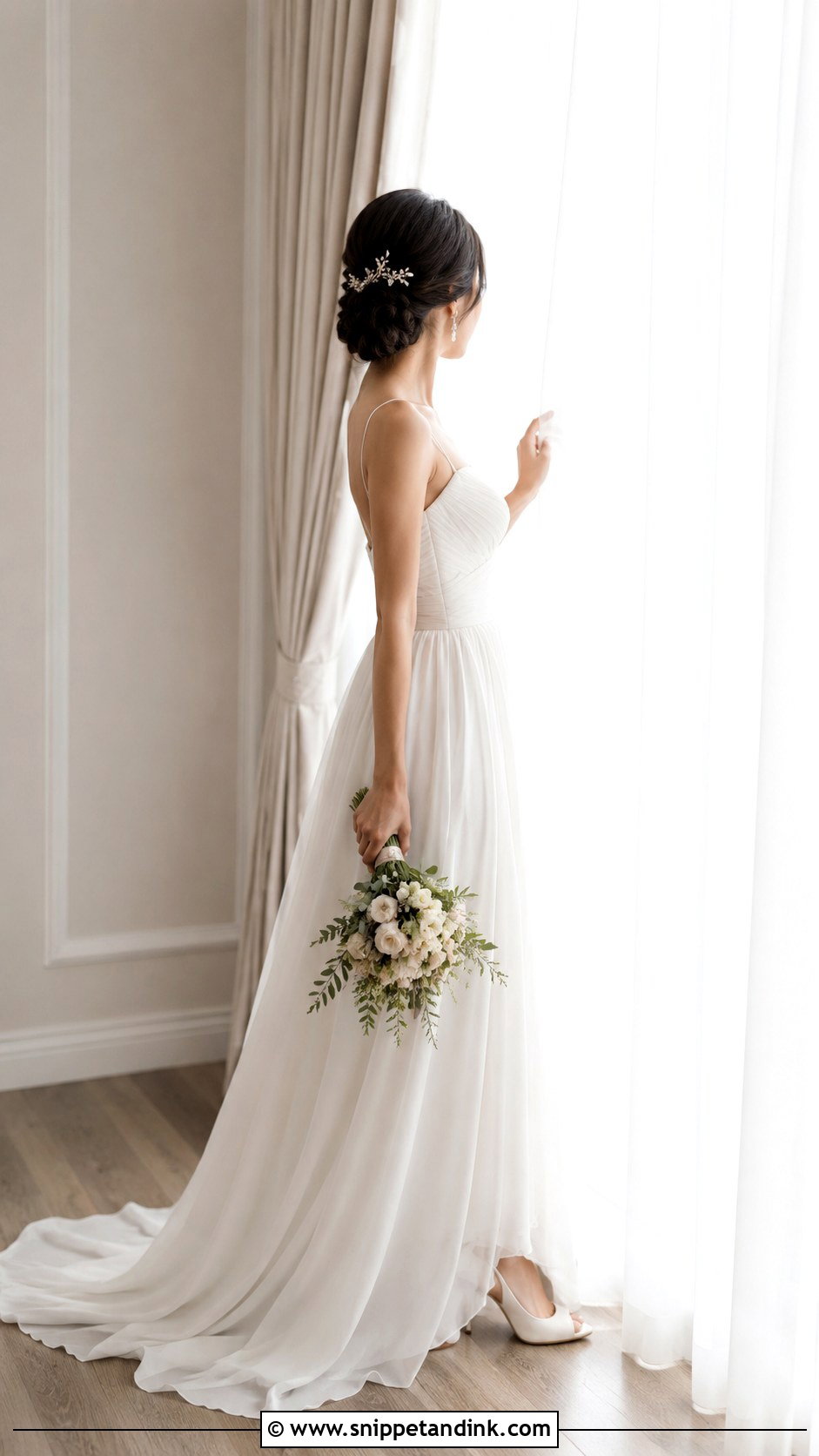
Window portraits are about where you put the light. Angle your body toward the window, turn your face fully away from me, and let one hand rest on the curtain or at your waist. Chiffon, lace sleeves and satin all pick up side light well. I expose for the gown rather than the room, so the background drops into shadow and the dress keeps its texture. Strip the sill and nearby furniture of clutter. It’s one of the quietest frames of the day and needs almost no direction.
7. Faceless Bride Walking Away
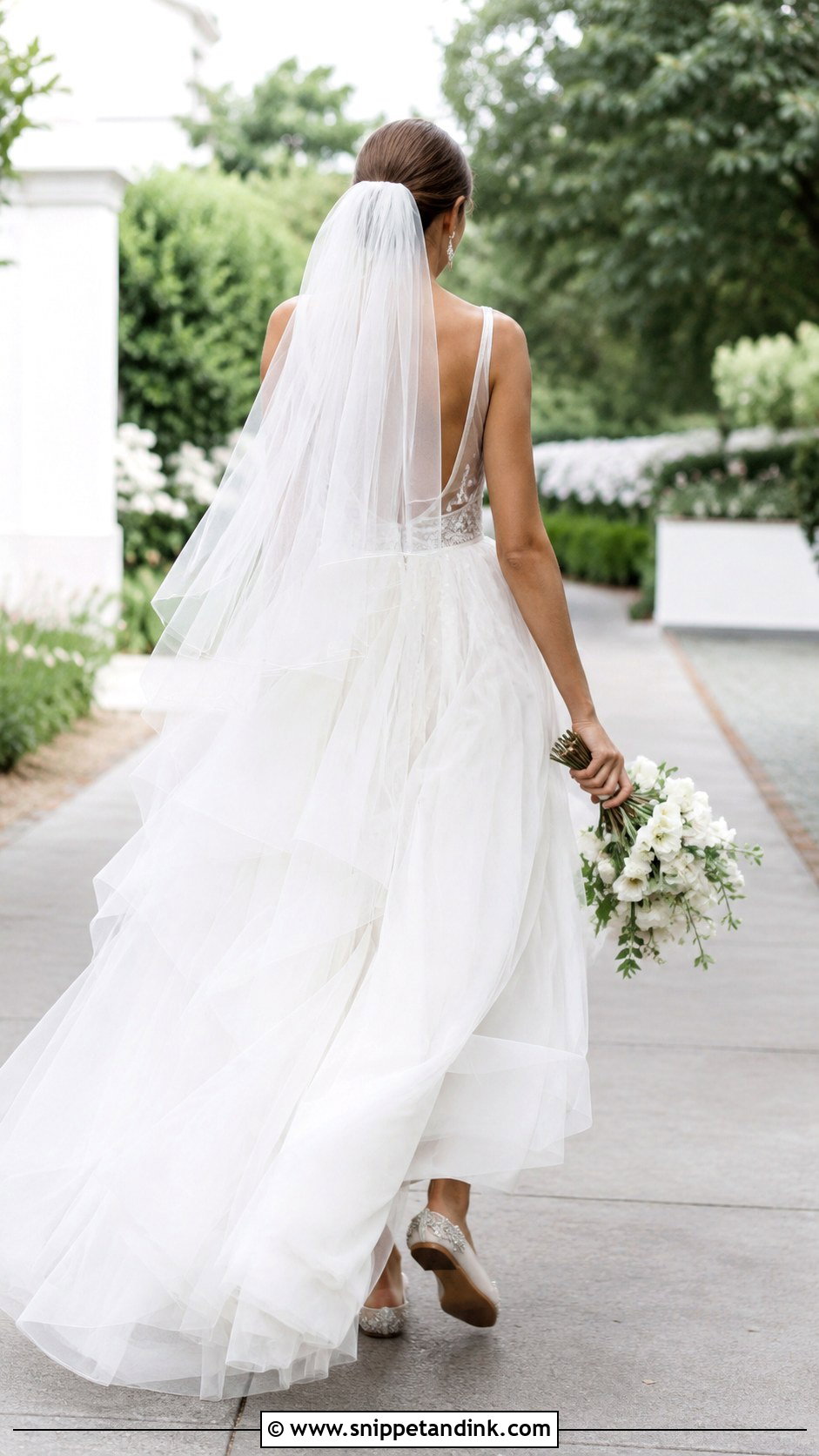
A walking-away portrait works when the walk is slower than feels natural. Start a few steps ahead of me and take small, unhurried steps so the train and veil have time to drift behind you. Hold the bouquet at your side, or lift the skirt slightly on uneven ground. Long trains and layered tulle give the most motion. Wear shoes you can actually walk in on that surface. I’ll usually shoot a couple of passes, because the third walk is almost always more relaxed than the first.
8. Faceless Bride Holding The Dress
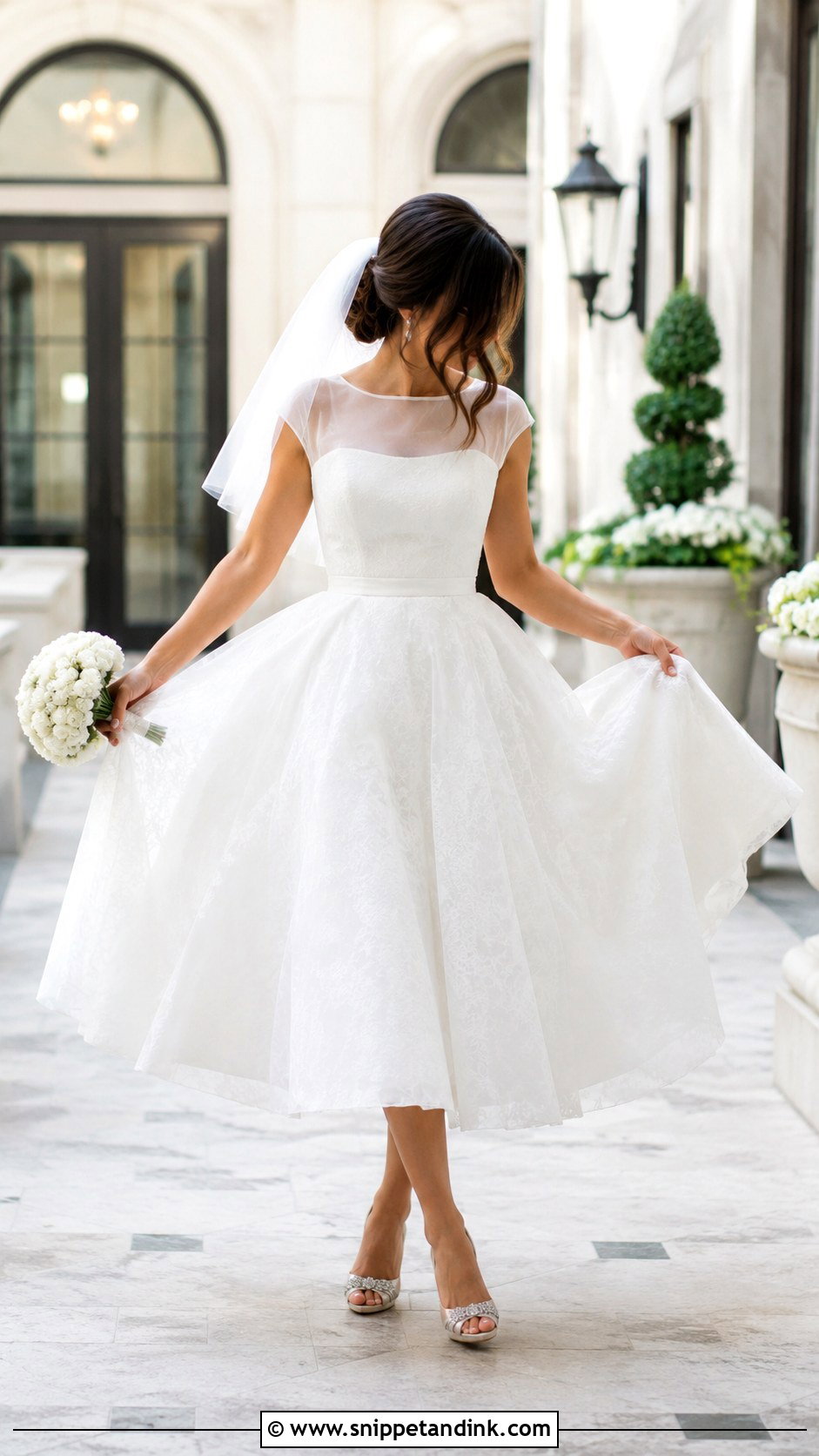
Gathering the skirt in both hands shows the shape of the gown and your shoes at the same time, so choose shoes you want in the picture. Keep the elbows soft and lift only a little; hauling the skirt to the knee looks like wading. The head turns away or drops toward the fabric. I catch this one mid-step, because a stationary lift looks staged. Ball gowns, tiered skirts and soft A-lines suit it best.
9. Faceless Bride On Staircase
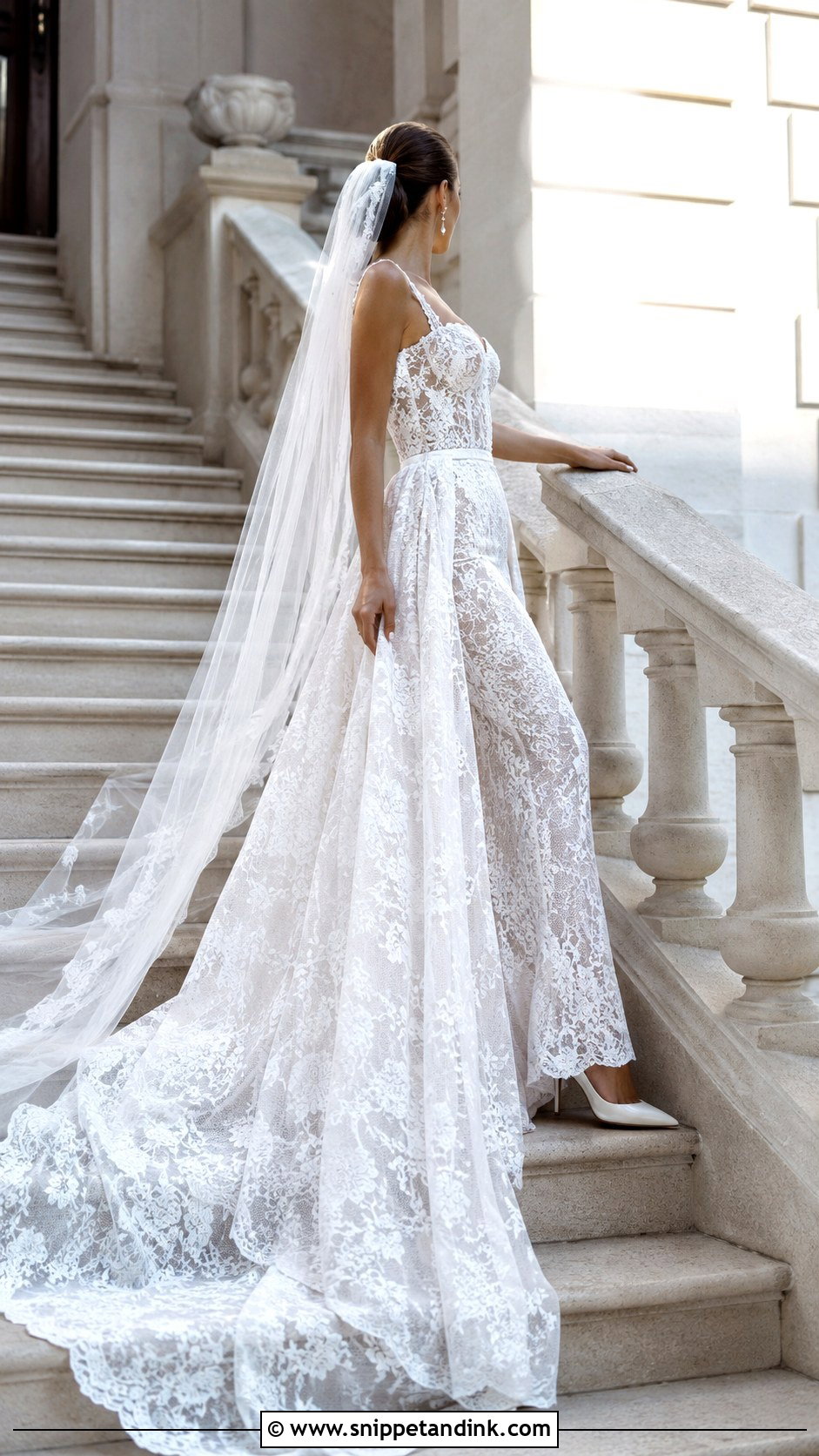
Stairs give height and a long diagonal for the train to run down. Turn sideways or face up the staircase so your face is away from the lens, rest one hand on the rail and hold the bouquet at your hip. Before I shoot, I make sure the bride is steady on the step and that the train isn’t hooked under a heel. Ball gowns, detachable overskirts and long-sleeved lace all work. The trickiest part is light: stairwells are often dim, so I’ll position you where the window light falls rather than where the stairs look grandest.
10. Faceless Bride With Veil Over Face
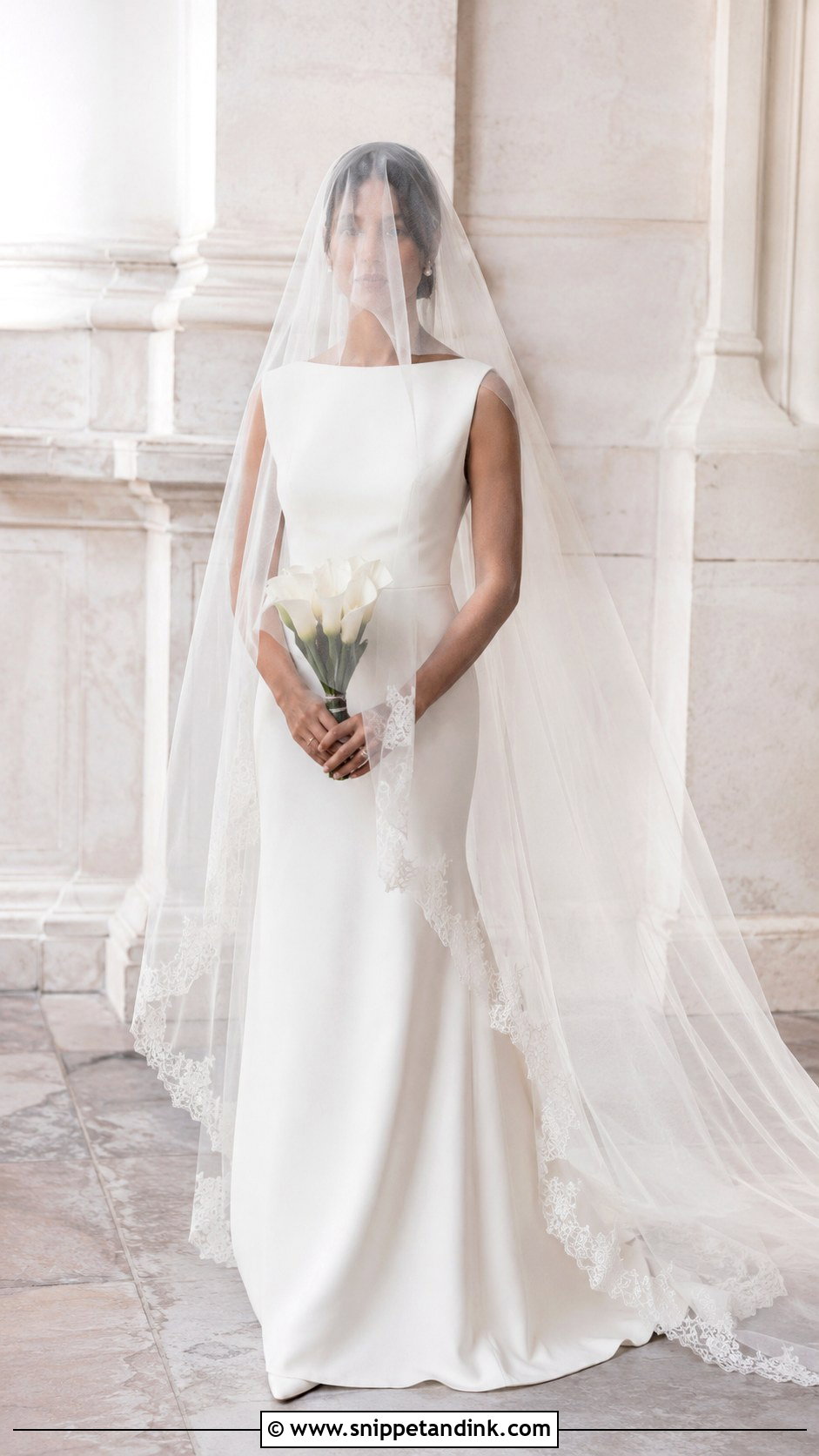
Bringing the veil forward over the face is different from a close veil portrait, because here the full outfit stays in frame. Stand in a full-length pose and let the veil fall across the face, shoulders and upper body. A minimal crepe or satin gown leaves the veil as the main detail. A small white bouquet keeps the colours quiet. Translucent fabric disappears against busy backgrounds, so I look for a pale wall, an open field or a plain doorway.
11. Faceless Bride Under Flower Arch
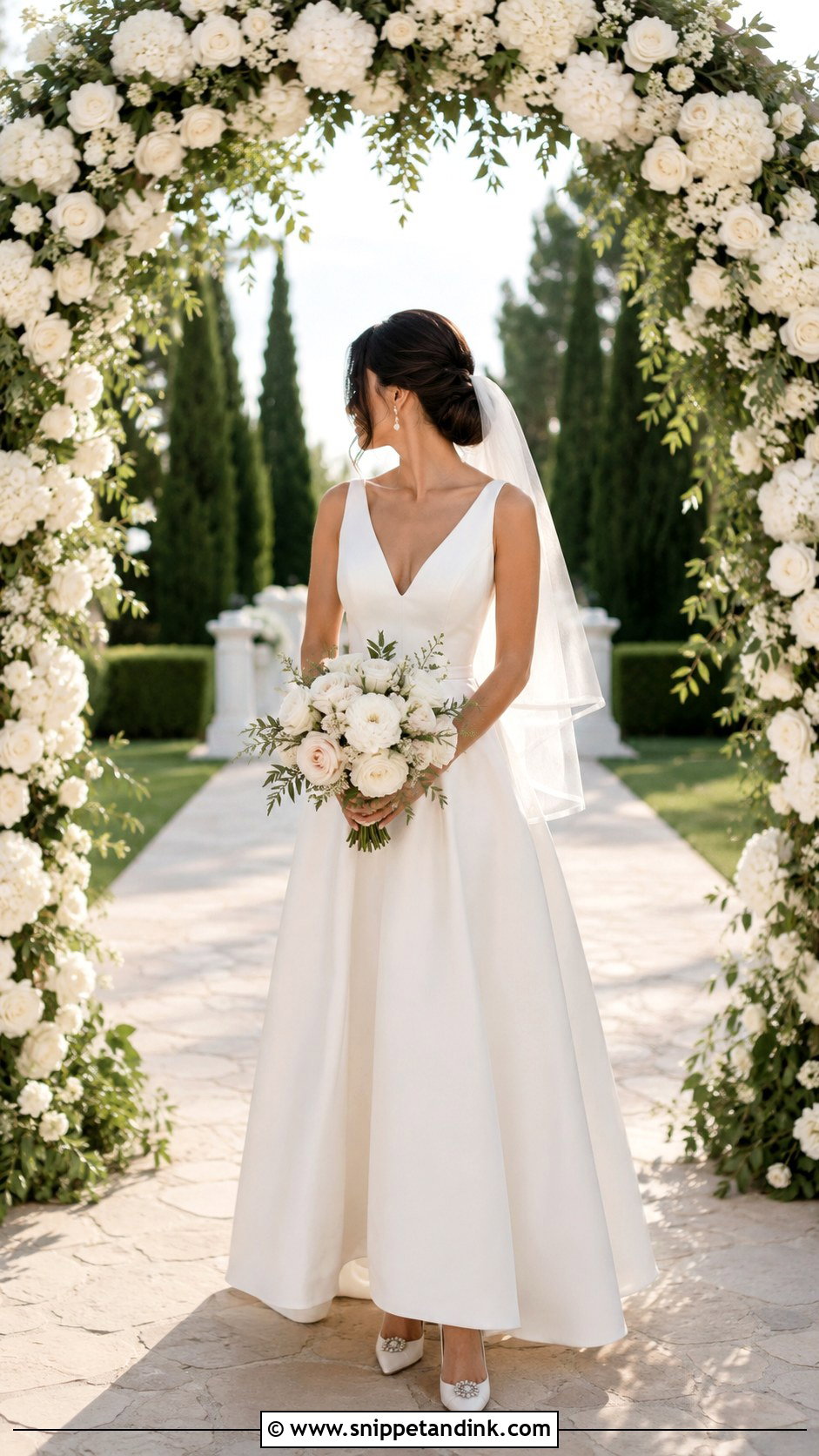
A flower arch frames you before I even lift the camera. Stand under it, body facing forward, head turned fully to one side, or look down at the bouquet at your waist. Match the dress to the arch: a plain satin or crepe gown under a heavily decorated arch, lace under a simpler green one. I need to step back far enough to fit the whole arch and the whole dress, so check there’s room behind the camera position when you plan the ceremony layout.
12. Faceless Bride Silhouette Portrait
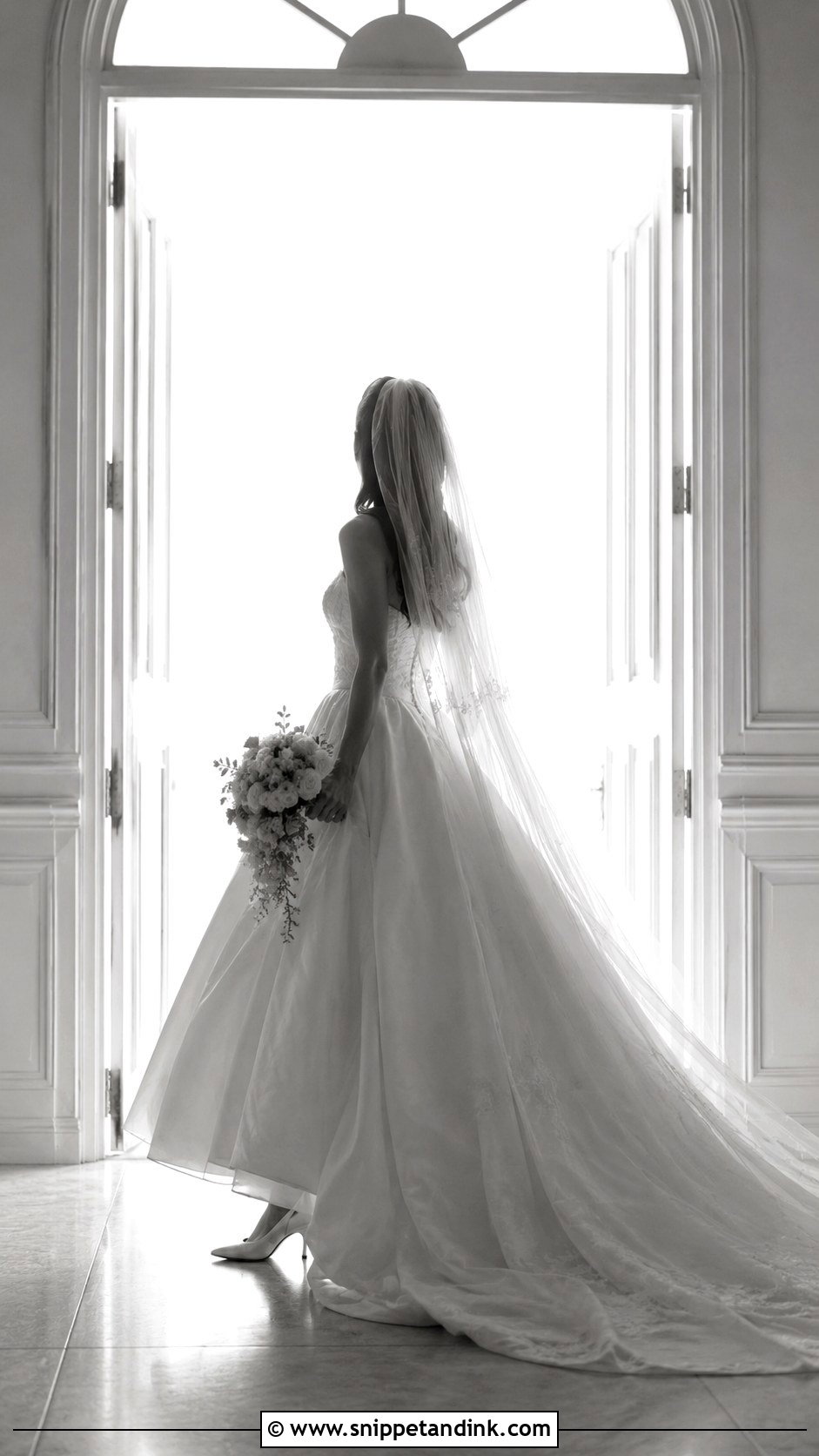
A silhouette needs a much brighter background than the subject. I put the bride in front of a bright doorway, a big window or open sky and expose for the light behind her, so she drops to a clean dark outline. Shape is everything, which is why ball gowns, mermaids and sharp jumpsuits work and loose shapes turn into blobs. Hold the bouquet low so the waist reads, and turn side-on so the profile of the dress shows. A long veil gives movement. Late afternoon or a sunset sky makes this easy.
13. Faceless Bride Black And White Portrait
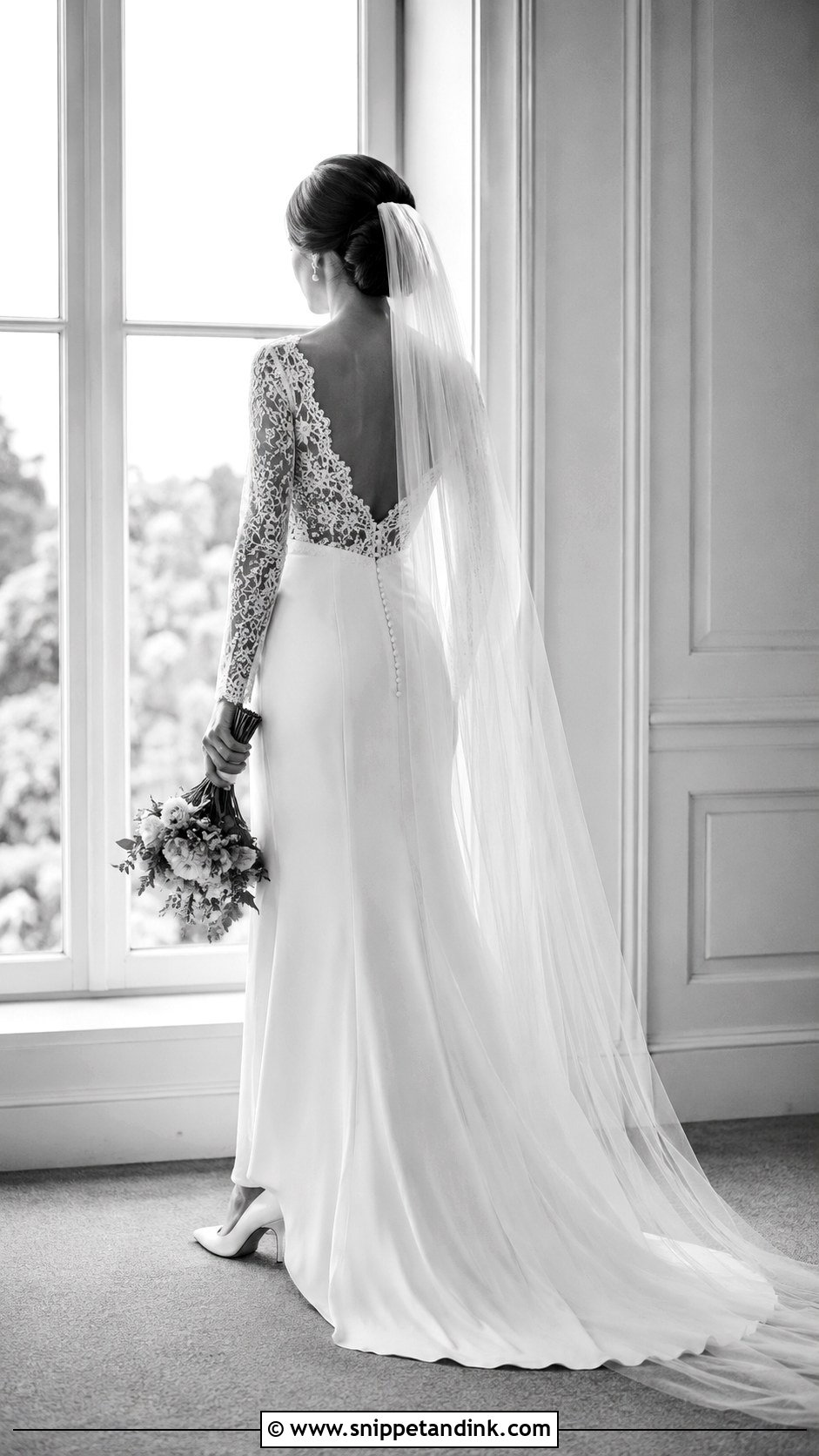
Black and white strips the frame down to light and texture, so contrasting fabrics matter. Lace, silk and tulle stay distinct without colour; a plain matte gown can look flat. Pick a pose with one strong detail, whether that’s a veil in motion, a satin train or a structured bouquet, and face away, look down or stand half hidden behind a doorway. Strong but even window light gives a clear outline. I’ll shoot a full-length version and a wider one that shows the room.
14. Faceless Bride With Ring Hand Over Face
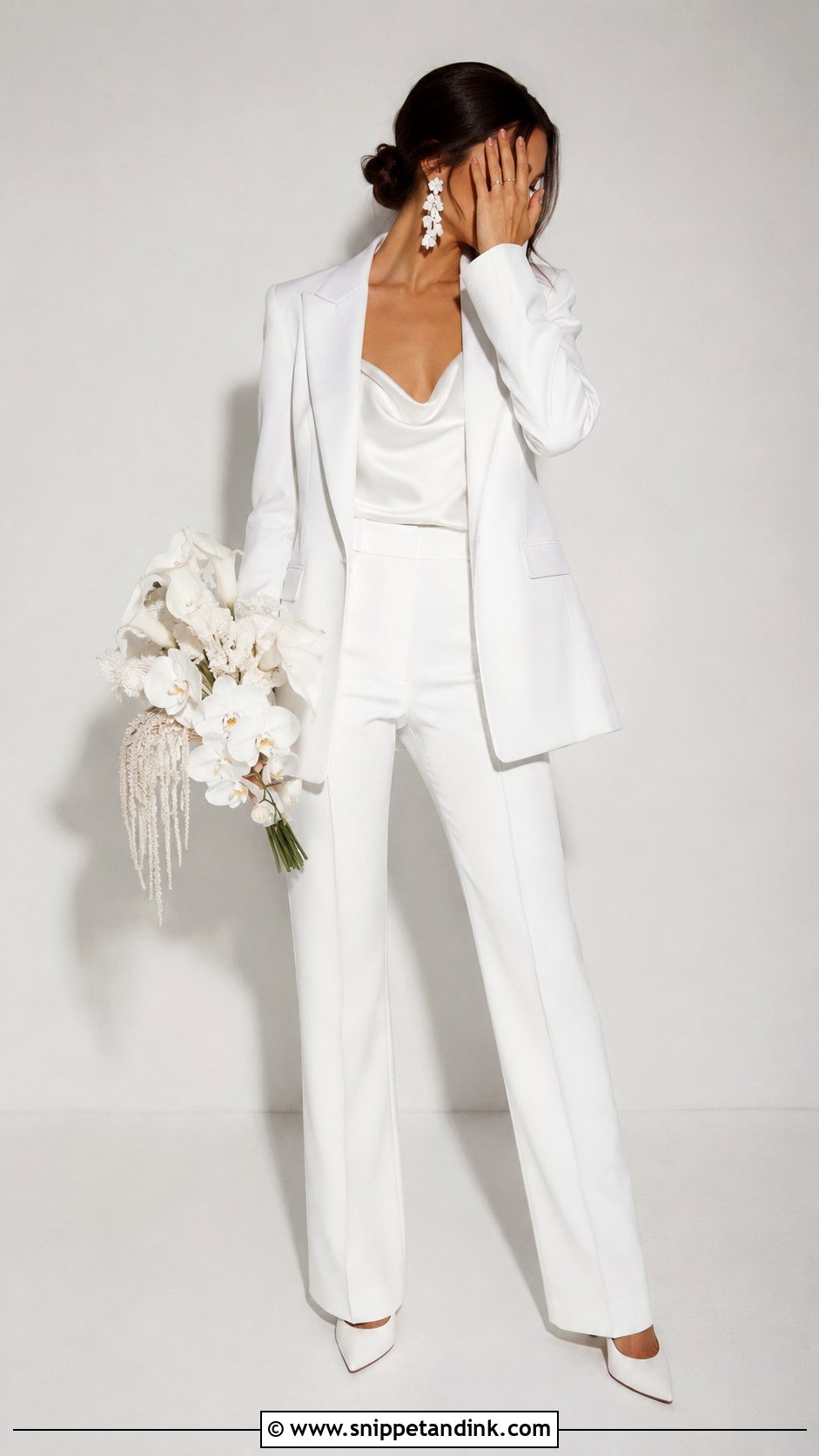
With the ring hand over the face, finger shape is everything. Rest the hand loosely across the eyes or forehead, fingers slightly apart, and turn a little to one side. Flat, pressed fingers look like a headache. Hold a structured bouquet in the other hand. I’ll check the ring is facing the camera before I fire, since stones easily rotate toward the palm. A neutral wall, a bright hotel suite or a minimal doorway works best, and the frame should still include the full outfit.
15. Faceless Bride Seated With Gown Spread
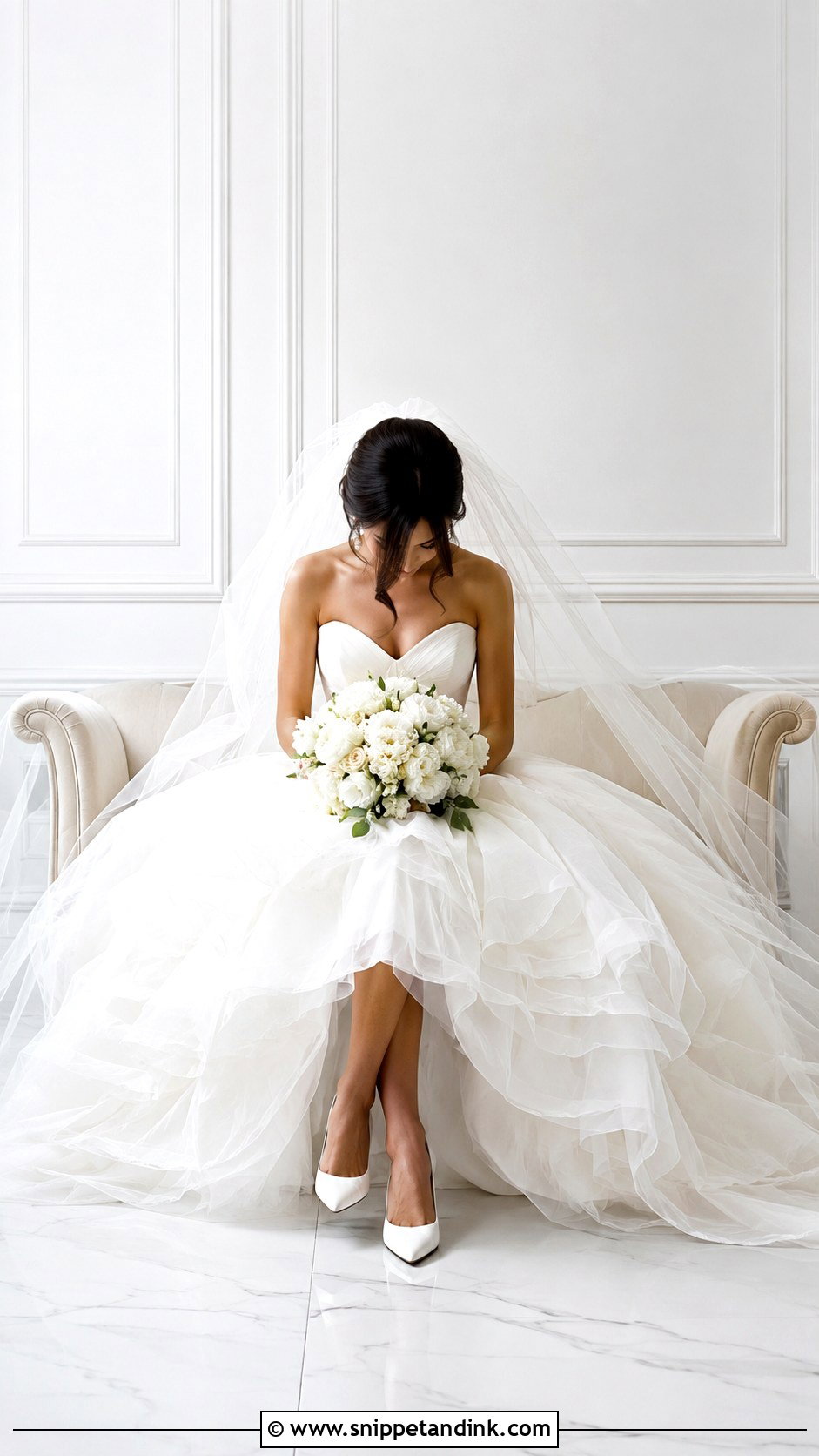
A seated bridal portrait shows off volume, but the spread is fiddly. Sit on a bench, chair or wide step and let someone arrange the skirt around you in a soft half circle, then step out of frame before I start. Turn your head away or look down at the bouquet in your lap. Sit tall without leaning back. Ball gowns and layered tulle are ideal; a fitted gown works if you sit at an angle with the train fanned to one side. I’ll shoot from slightly above so the whole skirt is in frame.
16. Faceless Bride With Groom Facing Away
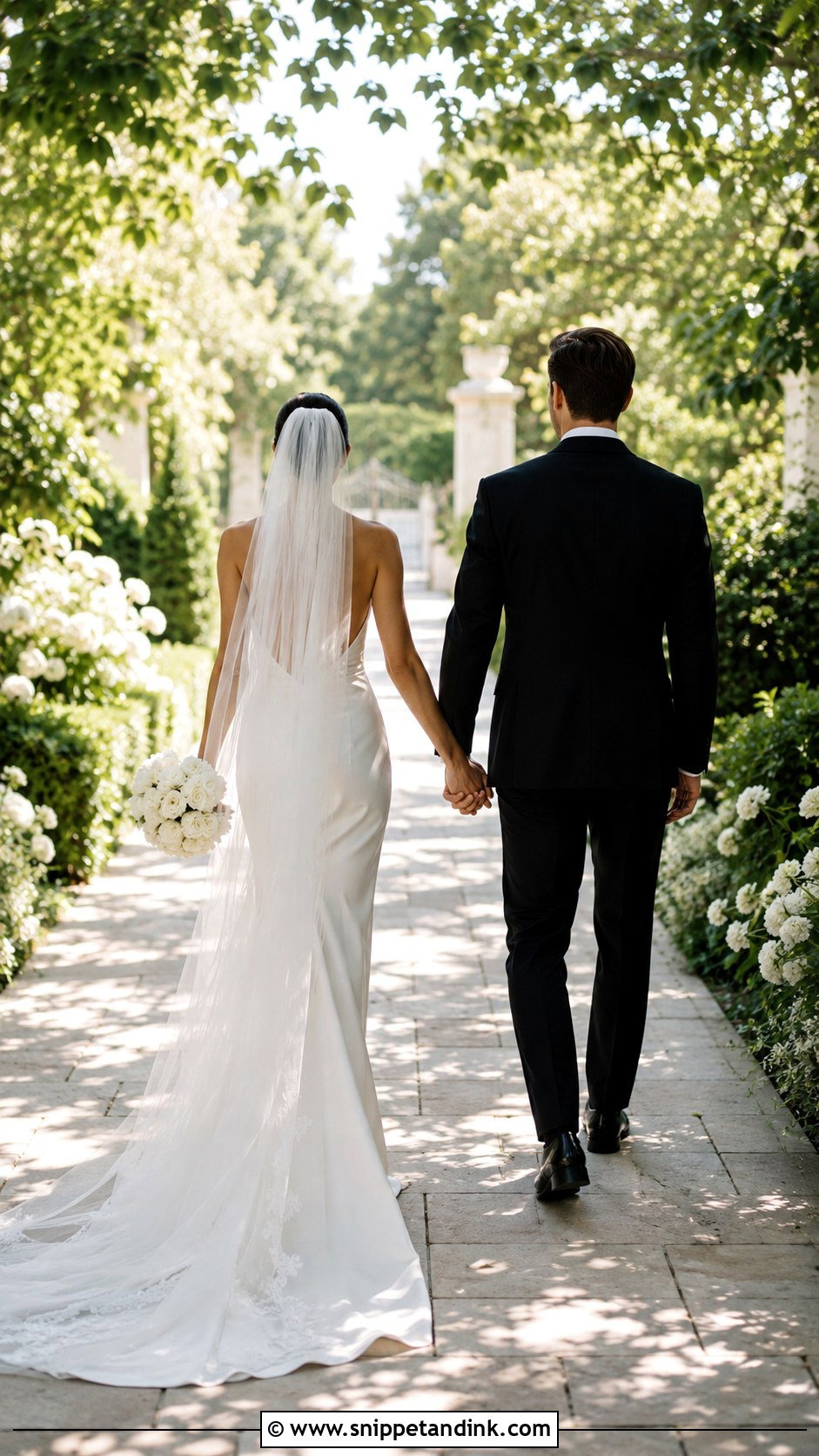
Couples who want privacy usually love this one. The bride and groom stand side by side with their backs to the camera, holding hands or walking away together, and lean in a little without turning round. The groom’s suit should match the formality of the dress; a black tuxedo gives the strongest contrast against white, while a beige or grey suit is softer. I give couples something to talk about as they walk, which gets rid of the stiff shoulders. Open aisles, garden paths and plain architecture keep the focus on the two of you.
17. Faceless Bride Under Clear Umbrella
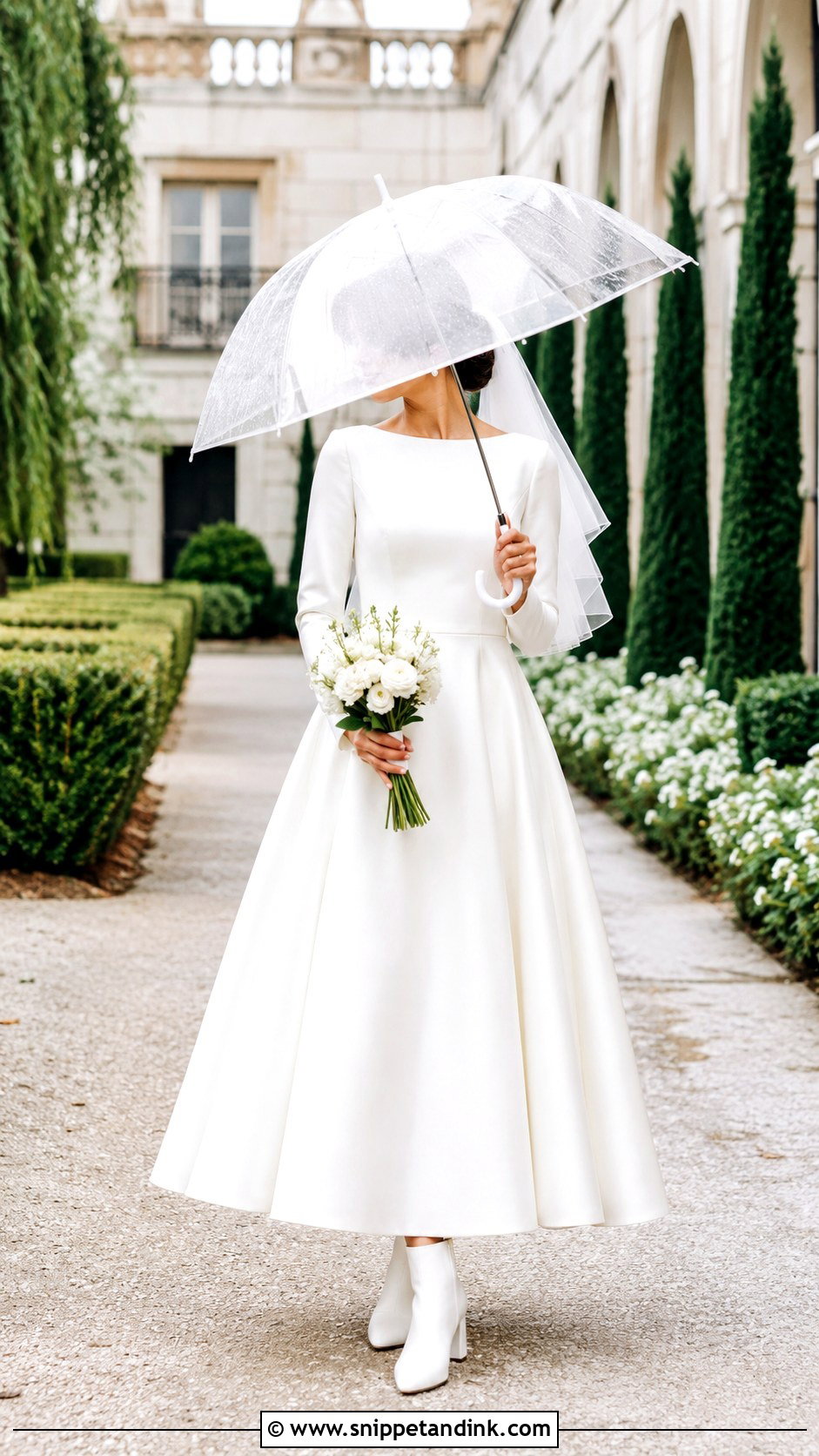
A clear umbrella is the best rain plan I know, and the reflections on its curve do the hiding for you. Hold it slightly behind your head, tilted until the edge and the reflection cover your face. A short veil is easier to manage in wet weather, and a compact bouquet leaves one hand free. Wear closed shoes or boots for damp ground. Wipe the inside of the umbrella before each shot, because condensation and drops turn a clear canopy cloudy in seconds.
18. Faceless Bride In Minimal Studio
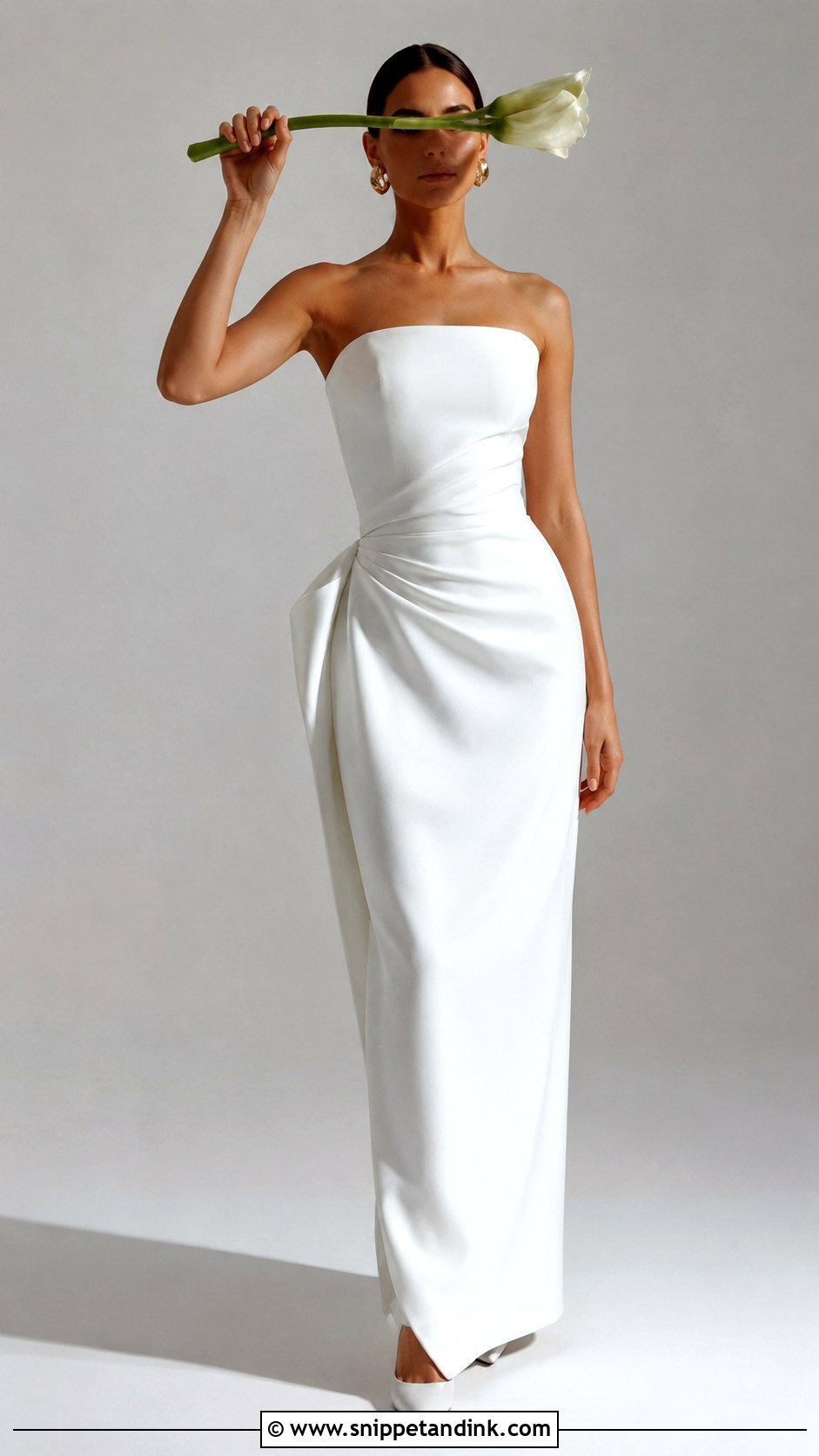
A studio has nothing to hide behind, so posture does all the work. A white, cream or pale grey backdrop with bright even light keeps attention on the outline. Face away, cover your eyes with the bouquet or turn your head as the veil falls across your profile. Lengthen your spine and drop your shoulders; in a bare room, slouching is the first thing anyone notices. Column gowns, structured suits and clean ball gowns suit it. One or two deliberate accessories, maybe sculptural earrings or a single stem, are plenty.
19. Faceless Bride Beach Portrait
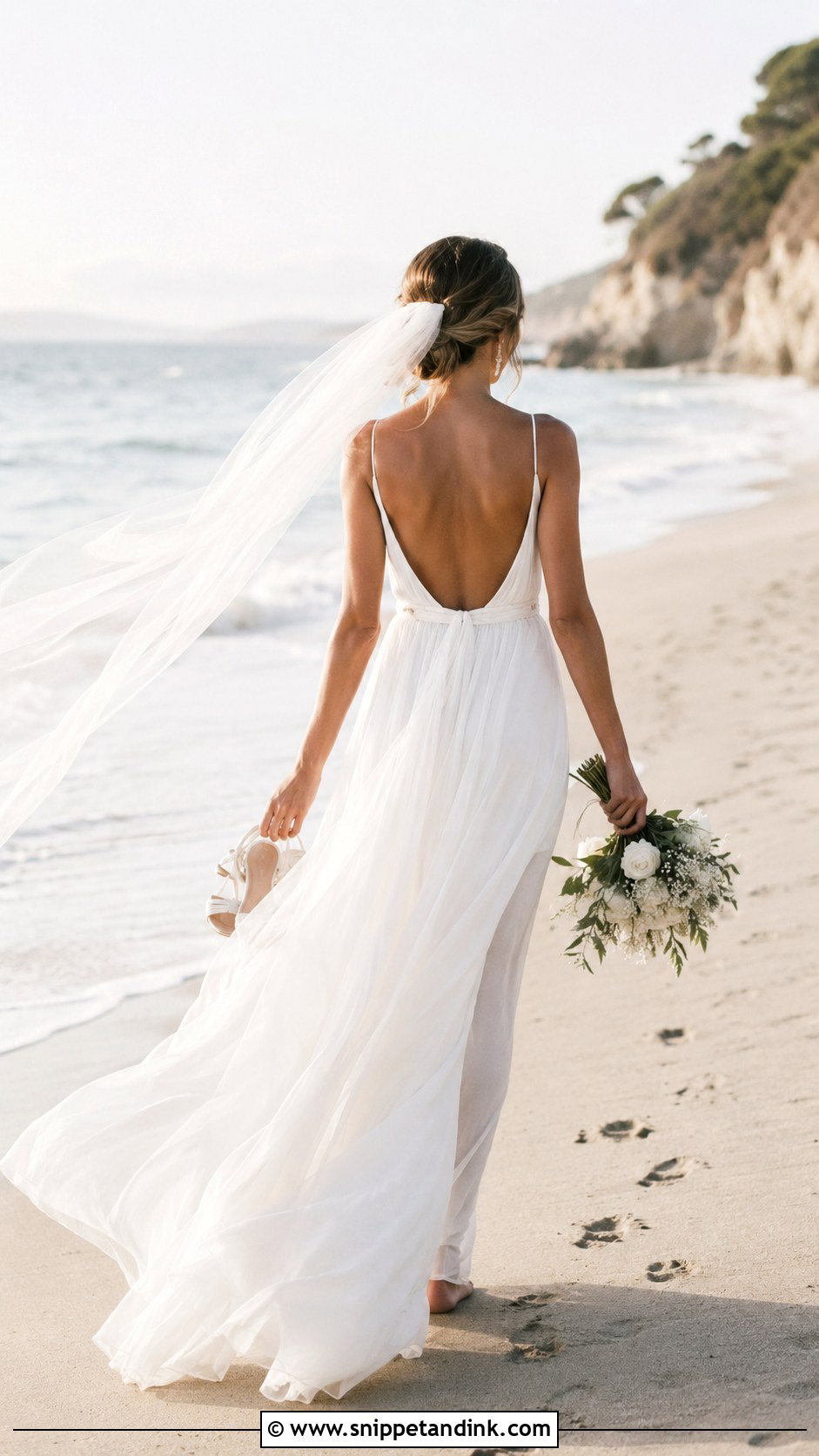
Beaches give you space and wind, which is great for movement and hard on veils. Pin the veil firmly with extra grips, or plan to take it off if the breeze is strong. Walk along the shoreline facing away and lift the skirt just enough to clear the wet sand; salt water leaves tide marks on silk. Chiffon, organza and slip gowns move far better than structured ones. I’ll shoot from behind or from a distance at the side. Midday sun is harsh on white fabric, so the softer light of late afternoon gives a cleaner result.
20. Faceless Bride Garden Portrait
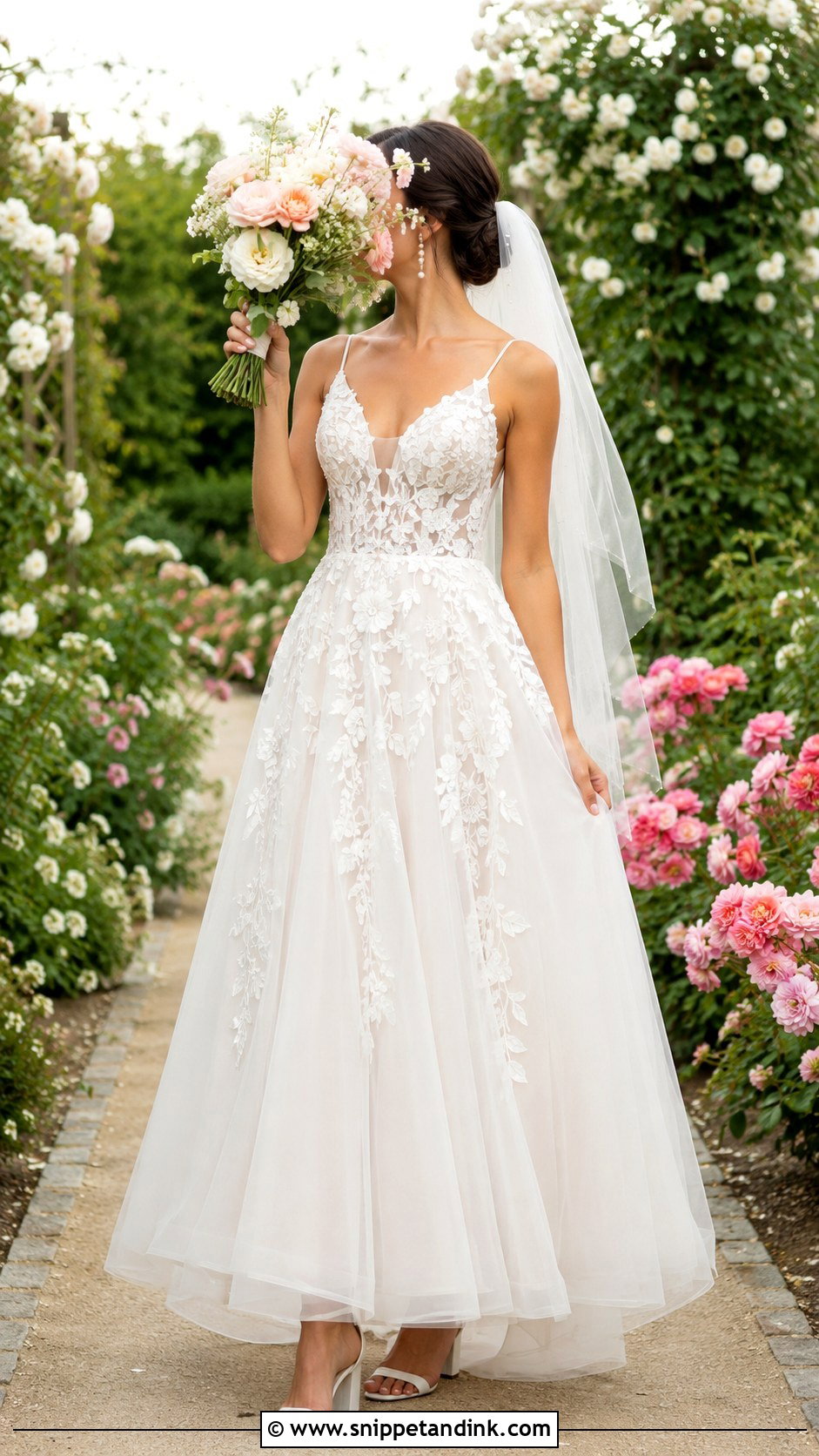
Gardens are busy backgrounds, and that’s their risk. I look for one area with a clear path or a single flower colour rather than a tangle of competing plants. Stand with your back to me, hold the bouquet over your face, or turn your head toward the view. Lace A-lines, floral appliqué and soft tulle sit naturally in the setting. Comfortable block heels help on grass. I’ll leave plenty of space around you so the garden looks chosen, not accidental, and it makes a gentle closing image for the set.
Guest Phones, Contracts and the Privacy Side of Going Faceless
A faceless gallery from me means little if forty guests post your face online the same evening. If privacy is the real reason behind this style, plan for it beyond the portraits.
Ask guests to keep phones away
An unplugged ceremony, announced on the invitation and again by the officiant, cuts down on phone photos more than any sign. A line on the website or a small card at each place asking people not to share pictures of the couple online covers the reception.
Put it in writing with your photographer
Many photographers, me included, share wedding work on a portfolio or social media. If you’d rather we didn’t, ask for a clause in the contract that limits sharing to faceless images only, or to nothing at all. It’s a normal request and much easier to agree before the day than after.
Think about the online gallery
Ask for a password on the delivered gallery and turn off public downloads if the platform allows it, so a forwarded link doesn’t travel further than you intended.
Your Face Stays Private, Your Wedding Story Doesn’t
The strongest faceless frames treat the hidden face as just one part of the picture. The outfit, your posture, where your hands go and the setting all carry the mood. Bouquets and veils are the simplest cover; back views, reflections, silhouettes and walking shots feel more editorial. All of these adapt to traditional gowns, suits, modest dressing, plus-size bridal and relaxed destination outfits. Send your photographer the poses you like before the wedding, and still leave room for things to happen naturally. I’d always rather catch a real moment than restage a perfect one.
You'll Like These Ideas:


Leave a Reply