
The Grahshanti outfit is the first bridal look most of your family will see, usually a day or two before the wedding, and it has to work for a morning of prayers on the floor. I treat it as a preview rather than a rehearsal: clearly bridal, never a smaller copy of the wedding outfit. Family custom often settles the colour, and within that, sarees, light lehengas, Anarkalis and sharara sets all suit the puja. The range below runs from a white saree with a red blouse to a cheerful yellow suit and heritage woven drapes, with quieter and richer options for different seasons and builds. Each one comes with notes on jewellery, shoes, hair and how to wear the dupatta, so the whole outfit comes together without you looking overdressed before the main day.
Planning This Outfit Around the Wedding Lehenga
I always start with the wedding outfit and work backwards. The Grahshanti look appears in the same family albums, often only a day or two earlier, and if the two are too alike, the photos blur together.
- Change at least one of colour, fabric or silhouette. If the wedding lehenga is red, a yellow saree or a green sharara keeps the puja distinct.
- Hold back on jewellery. I keep the heaviest set, the full matha patti and the bridal chooda for the wedding, and use lighter gold or kundan here.
- Think about rewear. A silk saree or Chanderi suit will come out again at Diwali and family weddings; a heavily themed outfit usually won’t.
- Let the elders weigh in early. Some families expect a gifted saree to be worn at this puja, and it’s easier to build around it than to change course a week before.
Book the final fitting at least ten days before the ceremony. Blouses for this puja often need a last alteration, and the tailor is never busier than in the week before your wedding.
1. White Saree With Red Blouse Grahshanti Outfit
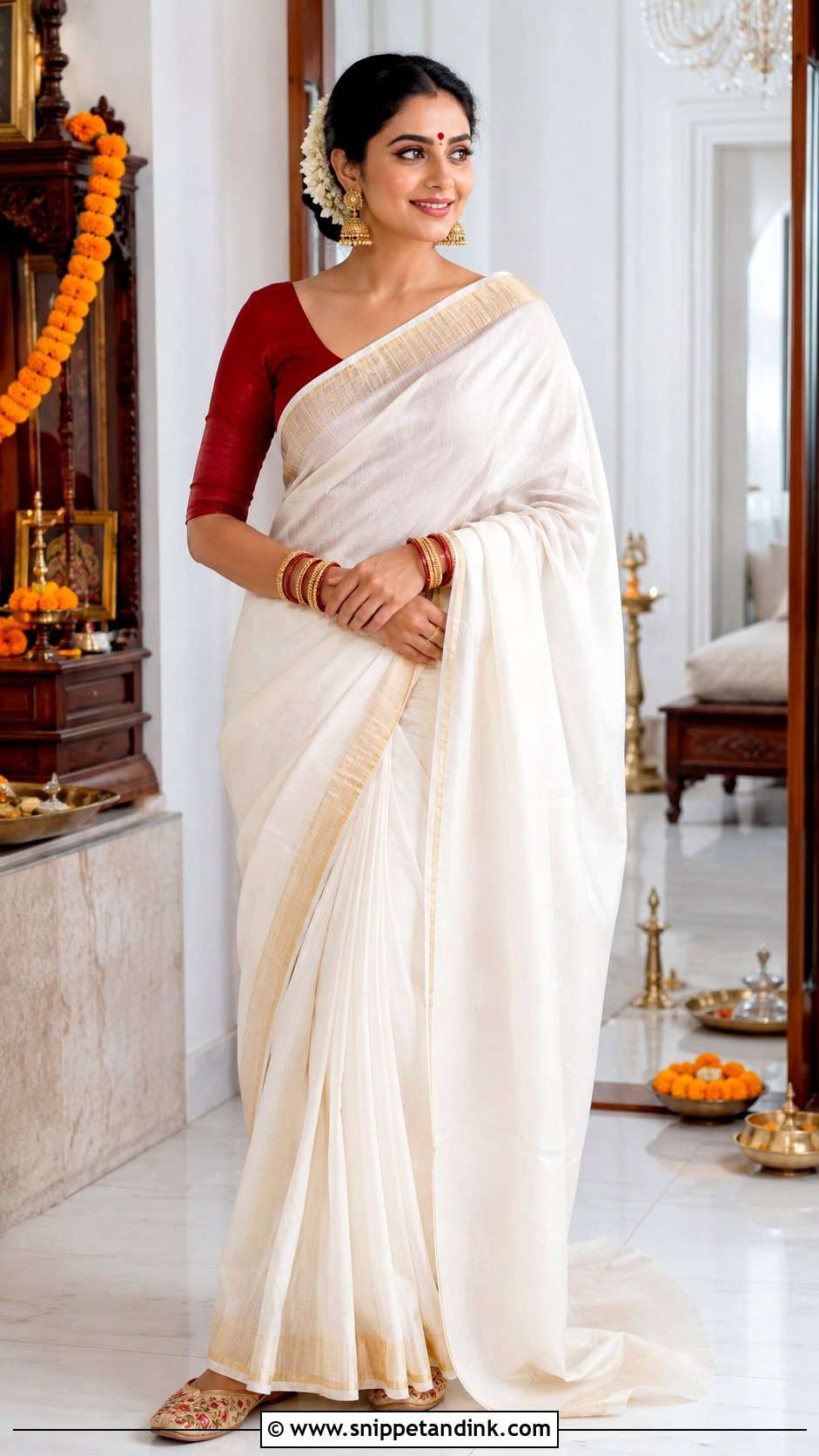
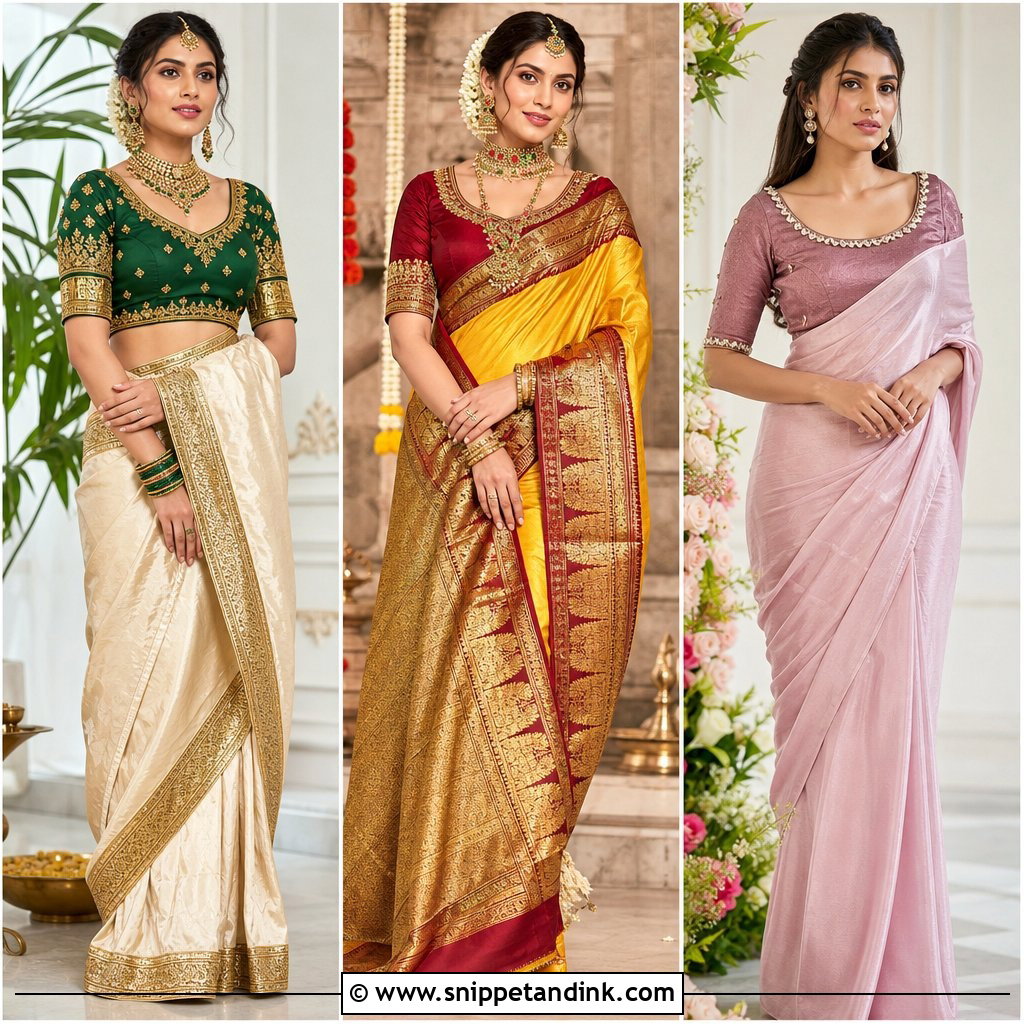
White with a red blouse is the most graphic pairing on this list, and the red is what keeps it reading as bridal rather than plain. Silk, tissue, organza or a light handwoven cotton with a narrow gold border all hold the look. I’d have the blouse fitted with elbow sleeves, set the pleats narrow, and pin the pallu so it stays put through the prayers. A small red bindi, gold jhumkas, stacked bangles and embroidered juttis, with a low bun and fresh white flowers. Prefer more coverage? Ask for a boat neck. The pairing has become a favourite in contemporary Grah Shanti bridal fashion, but check with the elders first, as some families avoid white at auspicious ceremonies.
2. Yellow Silk Saree Grahshanti Outfit
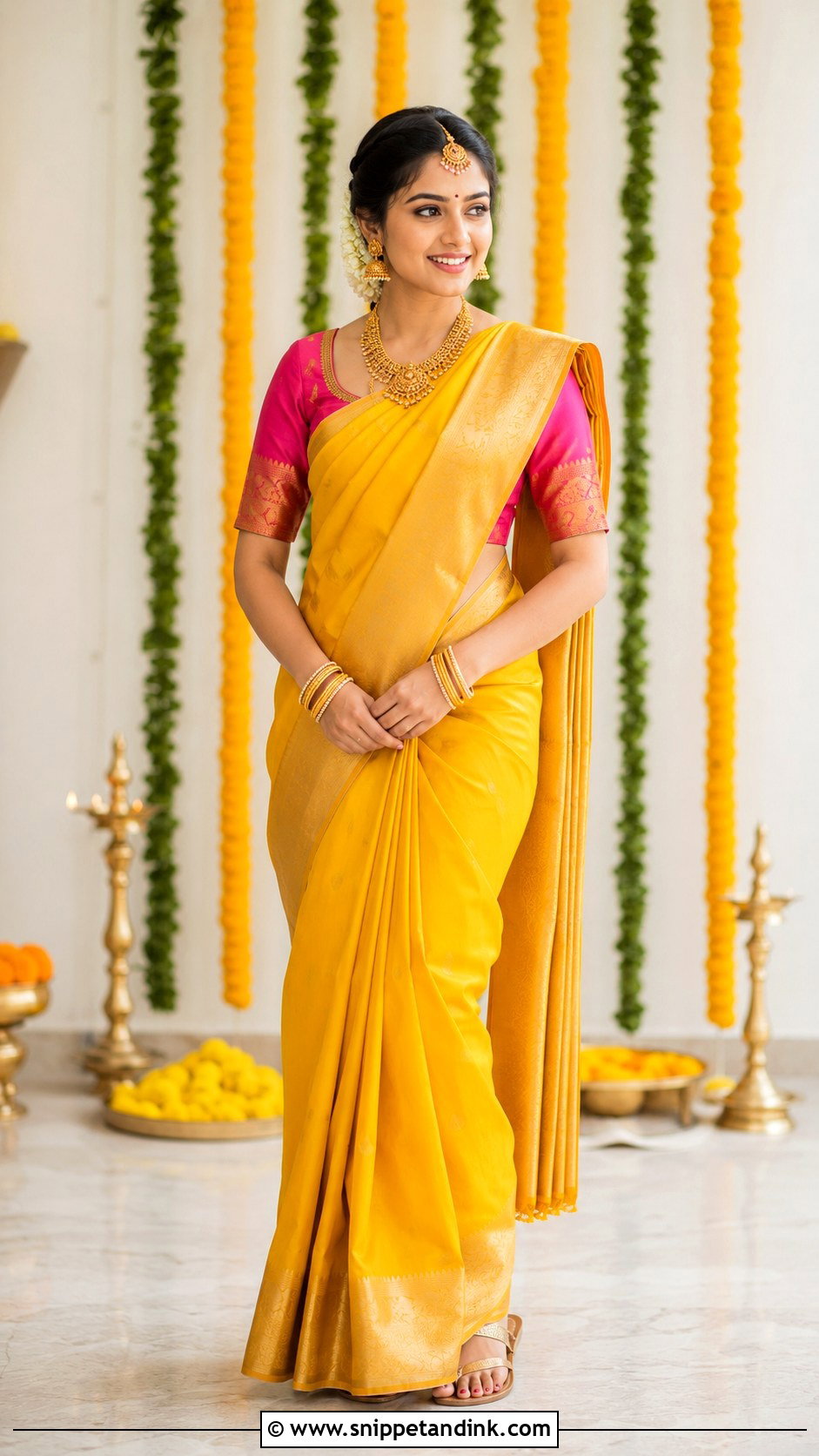
Yellow silk is the shade I’m asked for most for this ceremony, and in daylight it’s hard to beat. The trap is weight: a true Kanjeevaram or heavy Banarasi is glorious standing and stiff as cardboard on the floor. A lighter Banarasi, Chanderi, Paithani or a Kanjeevaram-inspired weave with a modest zari border sits far better. Match the blouse for a monochrome look, or bring in pink or green. Temple jewellery, a delicate choker and small gold bangles are enough, with a braided bun and low gold sandals. Ask your draper to leave a little ease around the knees; a pre-pleated saree makes that easier still.
3. Ivory And Gold Lehenga Grahshanti Outfit
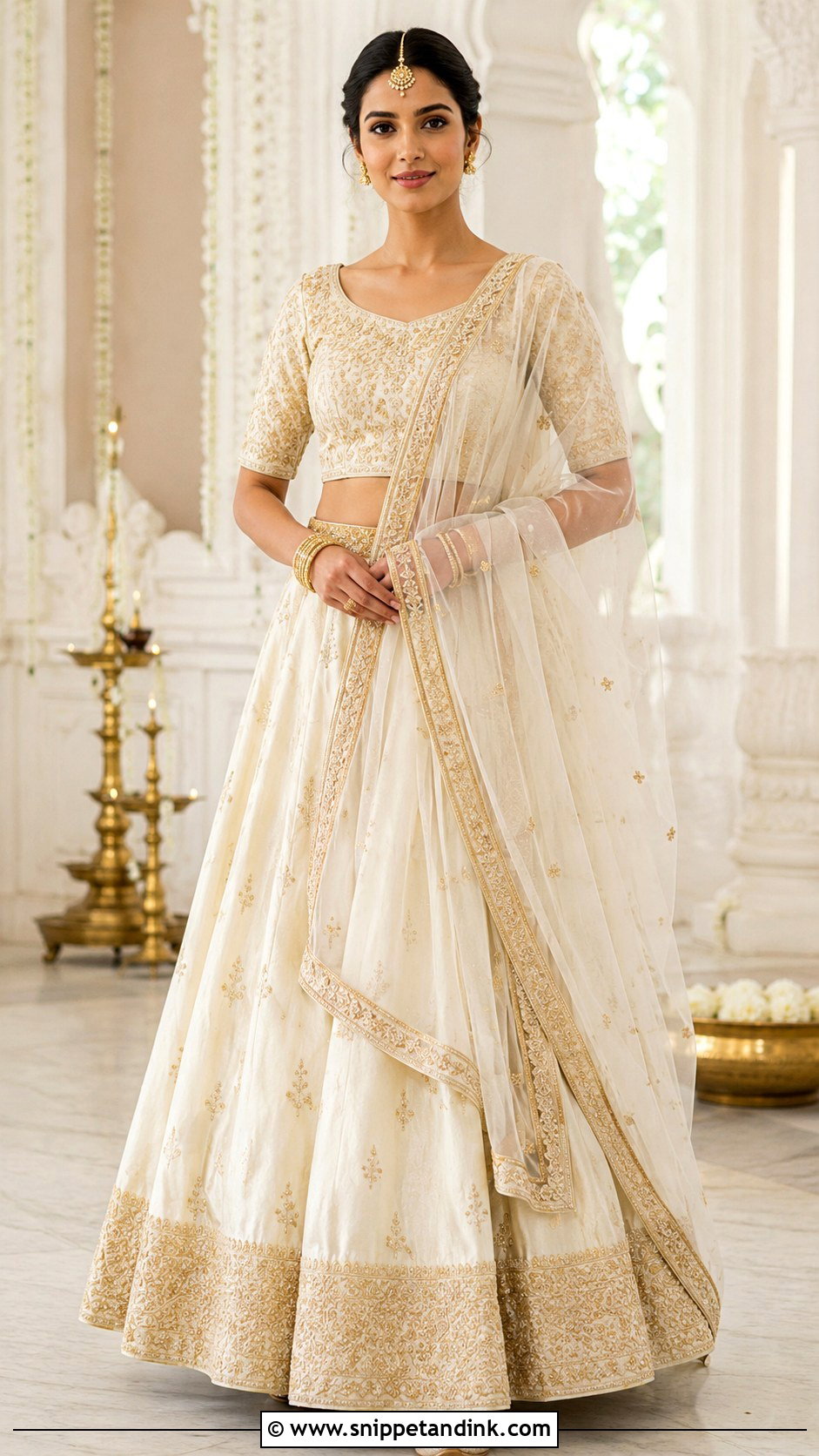
Ivory and muted gold give you a lehenga without the full wedding weight. A gently flared skirt in raw silk, Chanderi or georgette with fine zari, a modest blouse with short or elbow sleeves, and an organza dupatta are the pieces. Over one shoulder and across the front is the drape I use for the puja, since it covers you and leaves both hands free. Kundan studs, a slim maang tikka, gold bangles and ivory juttis, with a centre-parted low bun. Pale outfits flatten on camera in bright morning light, so add definition: rosy makeup, a red bindi or a dupatta with a narrow maroon border.
4. Red Bandhani Saree Grahshanti Outfit
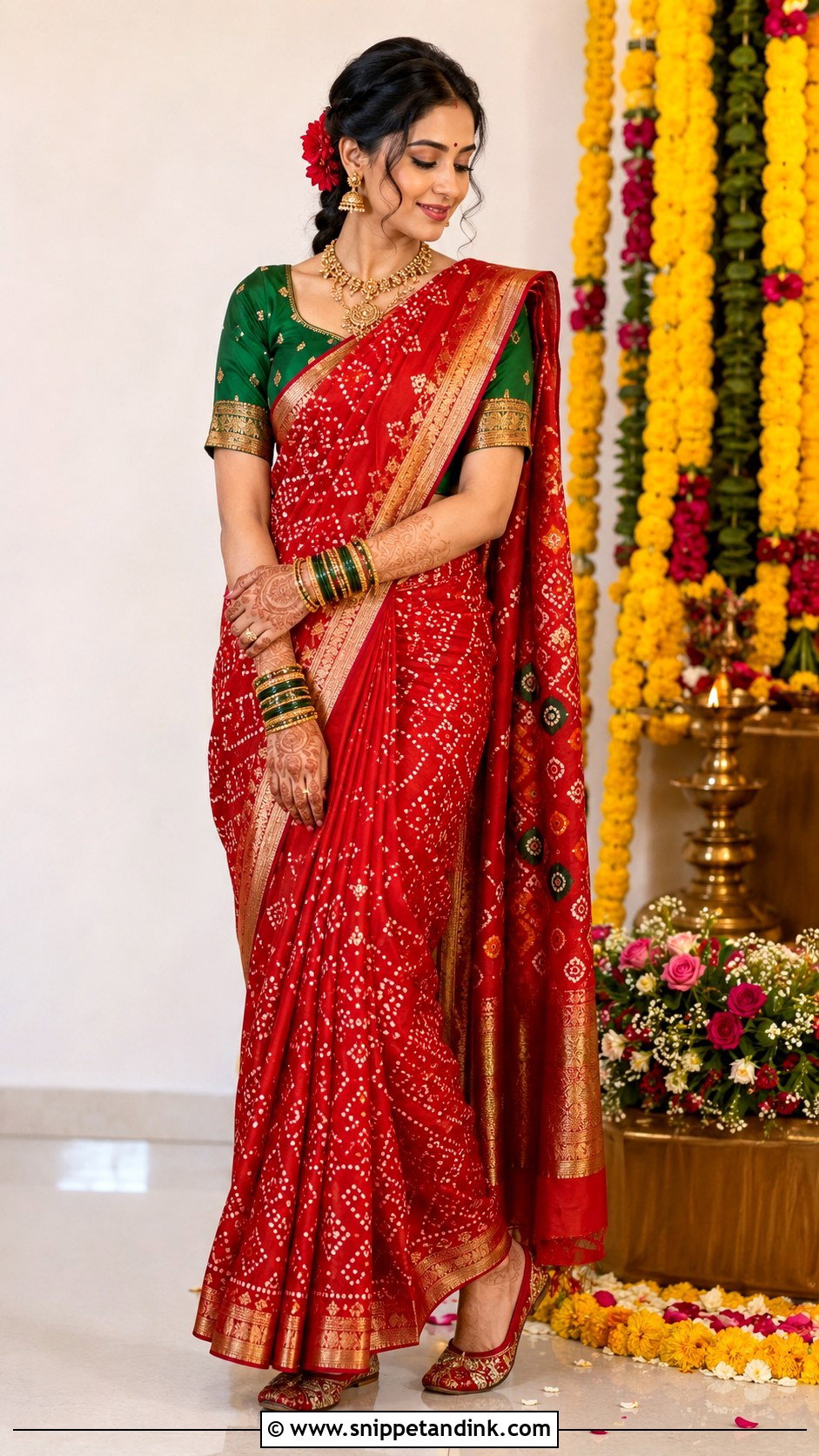
Red Bandhani gives you the most traditional bridal look here for the least embroidery. Look for a light drape with white, yellow or green dots and a fine gold border, and balance it with a plain red or contrasting green silk blouse. Tie-dyed cloth has a crinkled surface that slides off a silk blouse easily, which is why I pin the pallu at the shoulder and again at the waist. A gold necklace, jhumkas, traditional bangles and a small maang tikka if you like. A neat braid or flower-wrapped bun suits the regional feel, with cushioned juttis and a potli in the blouse or border colour.
5. Pink Anarkali Grahshanti Outfit
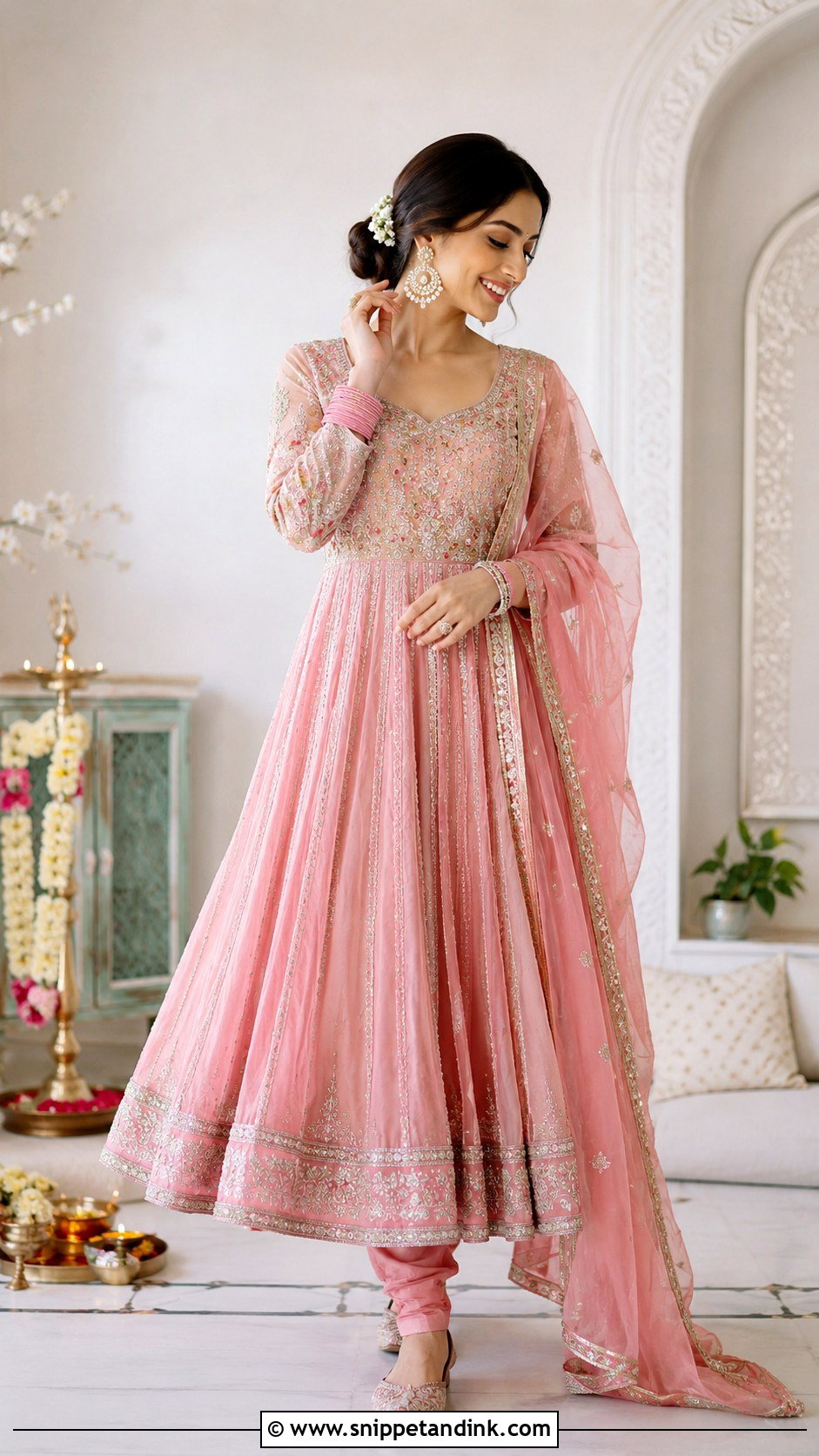
Pink Anarkalis move well, and that’s their main appeal for a bride who’ll be up and down all morning. Rose, blush, lotus or rani pink, depending on how strongly bridal you want to look. Choose a calf- or floor-length kurta with restrained gota, zari or thread embroidery, fitted churidar and a light dupatta pinned over both shoulders. The waist seam is what I check: it should sit at your natural waist, because a dropped seam makes the flare start too low and you end up sitting on folds of fabric. Pearl-and-kundan earrings, pink bangles and embellished juttis, a low bun or loose braid, and a long-wear lip colour.
6. Green Sharara Grahshanti Outfit
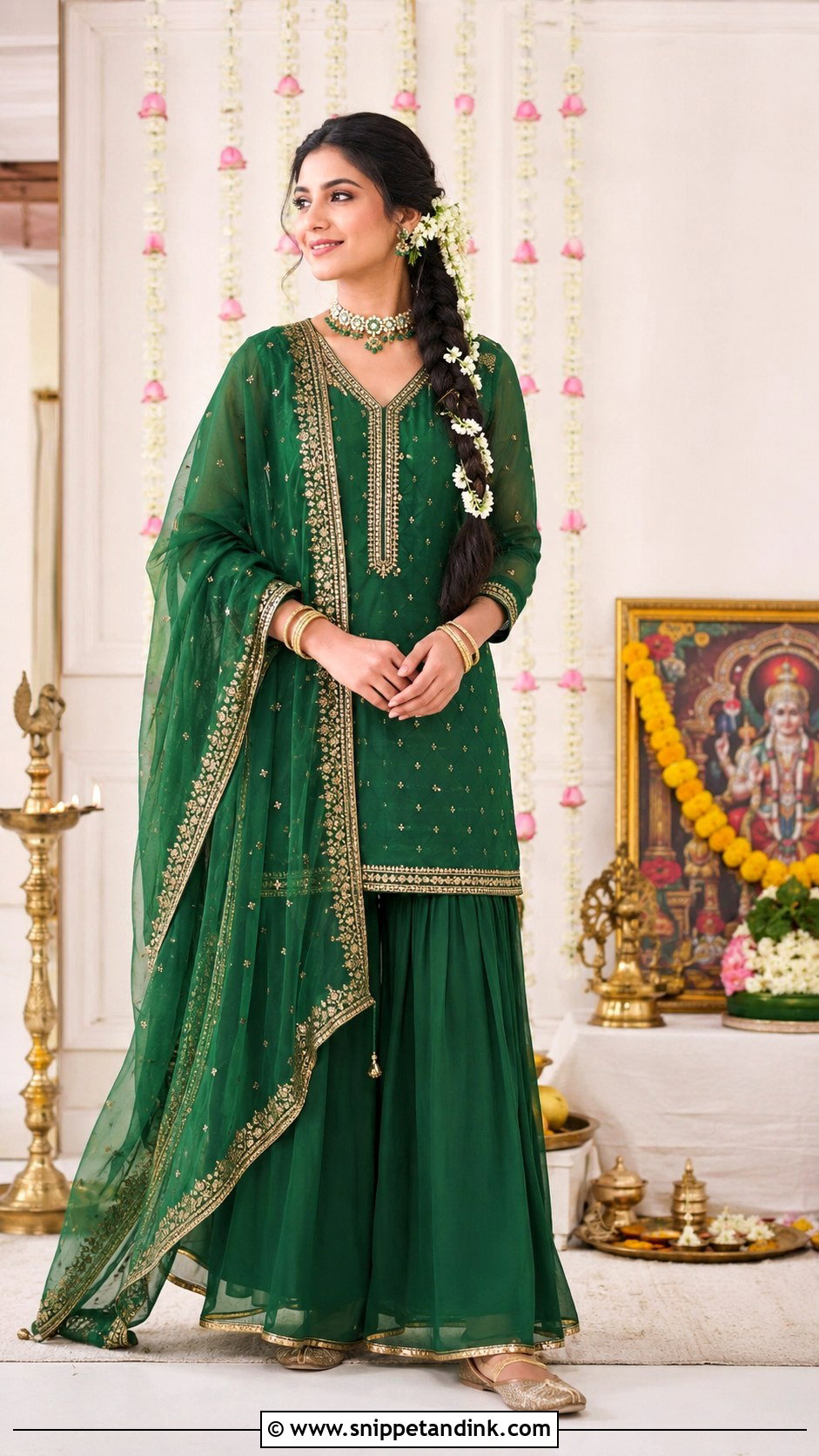
A green sharara set is the answer for the bride who doesn’t want to manage a saree. Emerald is the richest, pistachio the softest, parrot the brightest in daylight. A knee-length kurta with gota borders, a wide sharara and a sheer dupatta pinned across the neckline give you festive volume and real freedom to sit. Add a kundan choker, matching earrings, slim bangles and gold juttis. Shorter brides look taller with the sharara cut high-waisted and the kurta ending just above the knee, which shows more of the flare. Finish with a sleek braid and small flowers.
7. Peach Chanderi Suit Grahshanti Outfit
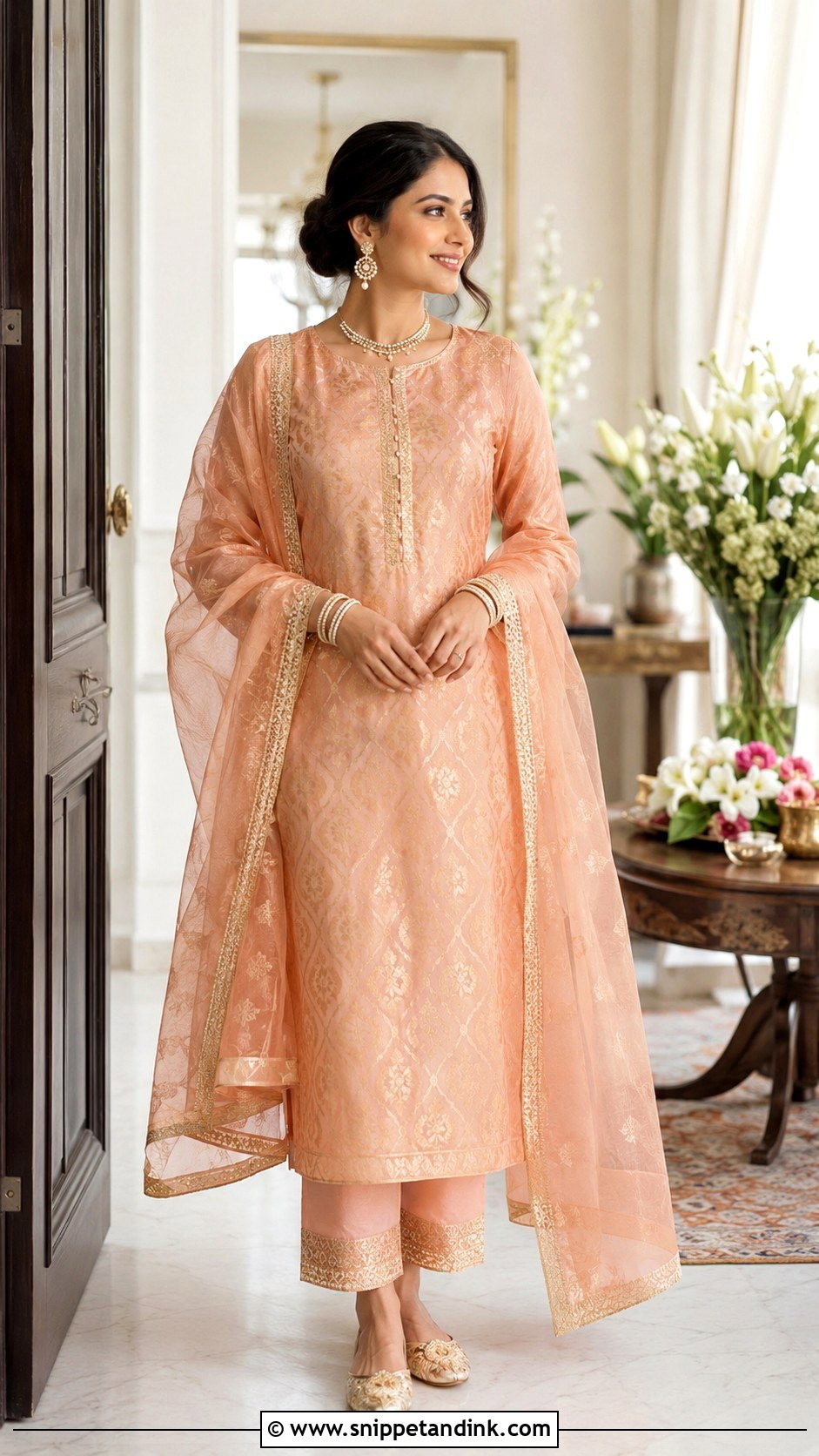
For a small ceremony at home, a peach Chanderi suit lets the bride stand out without a grand outfit. A straight or gently flared kurta with small woven motifs and a narrow zari border, ankle-length pants, and a sheer organza or Chanderi dupatta over both shoulders. Pearl earrings, a fine necklace, glass bangles and embroidered mules. Peach sits very close to many skin tones and can disappear in photos, so I always add one point of contrast: a coral lip, green stones or a deeper peach border. A side-parted bun or loose braid, and you’ll wear this again at every festival.
8. Red And Ivory Gharchola Saree Grahshanti Outfit
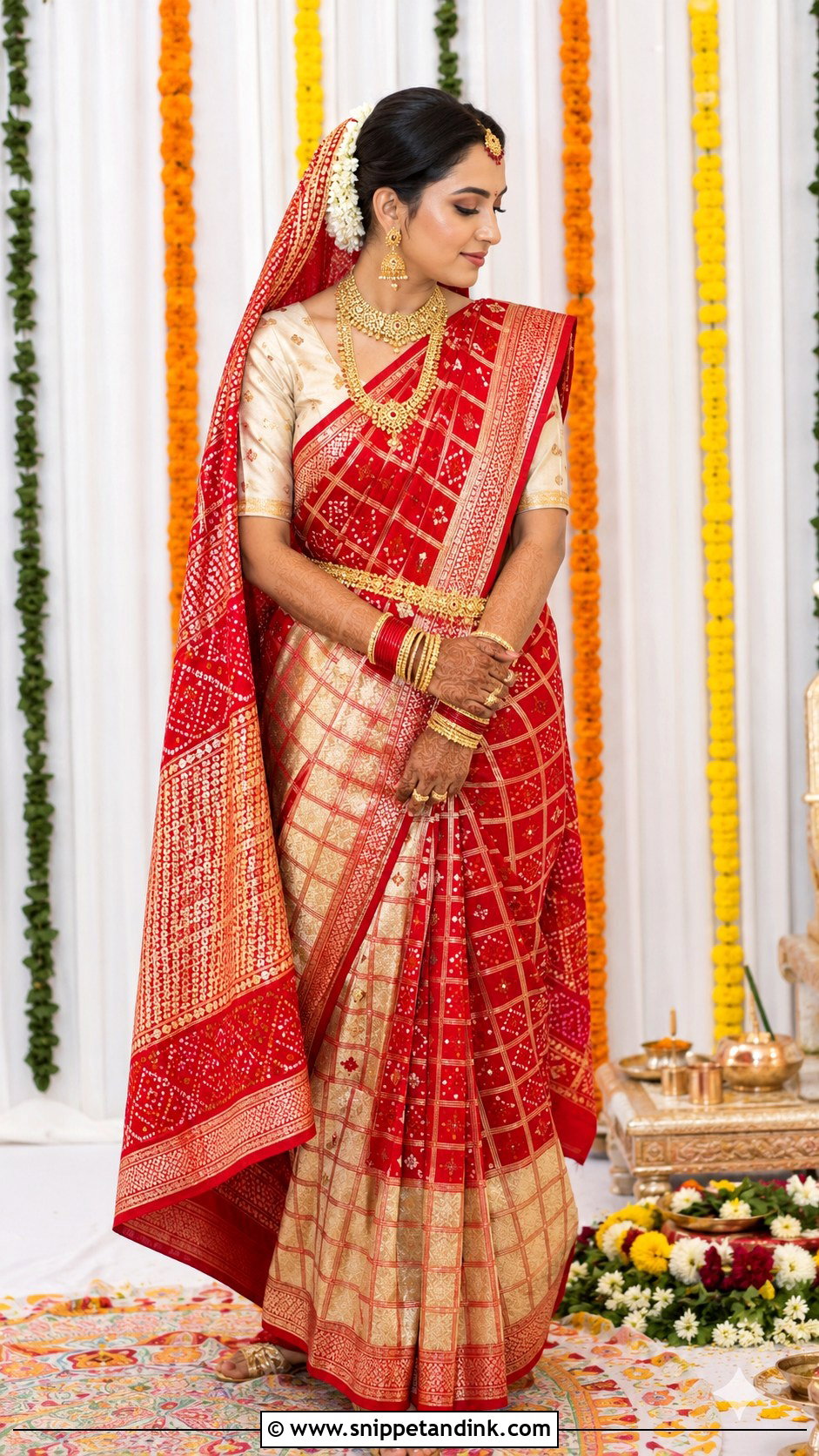
The Gharchola is a bridal textile in its own right in many Gujarati wedding traditions, often gifted by the groom’s family, so ask whether yours expects to see it now or at the wedding itself. The grid of zari, Bandhani dots and checks carries the look, so keep the blouse and accessories simple: ivory silk with gold piping, or red that blends into the pallu. A traditional necklace, gold jhumkas, red bangles and a fine nose pin. If custom asks for the pallu over the head, avoid stiff versions that keep sliding back. A centre-parted bun, fresh flowers and low gold sandals.
9. Mustard Gharara Grahshanti Outfit
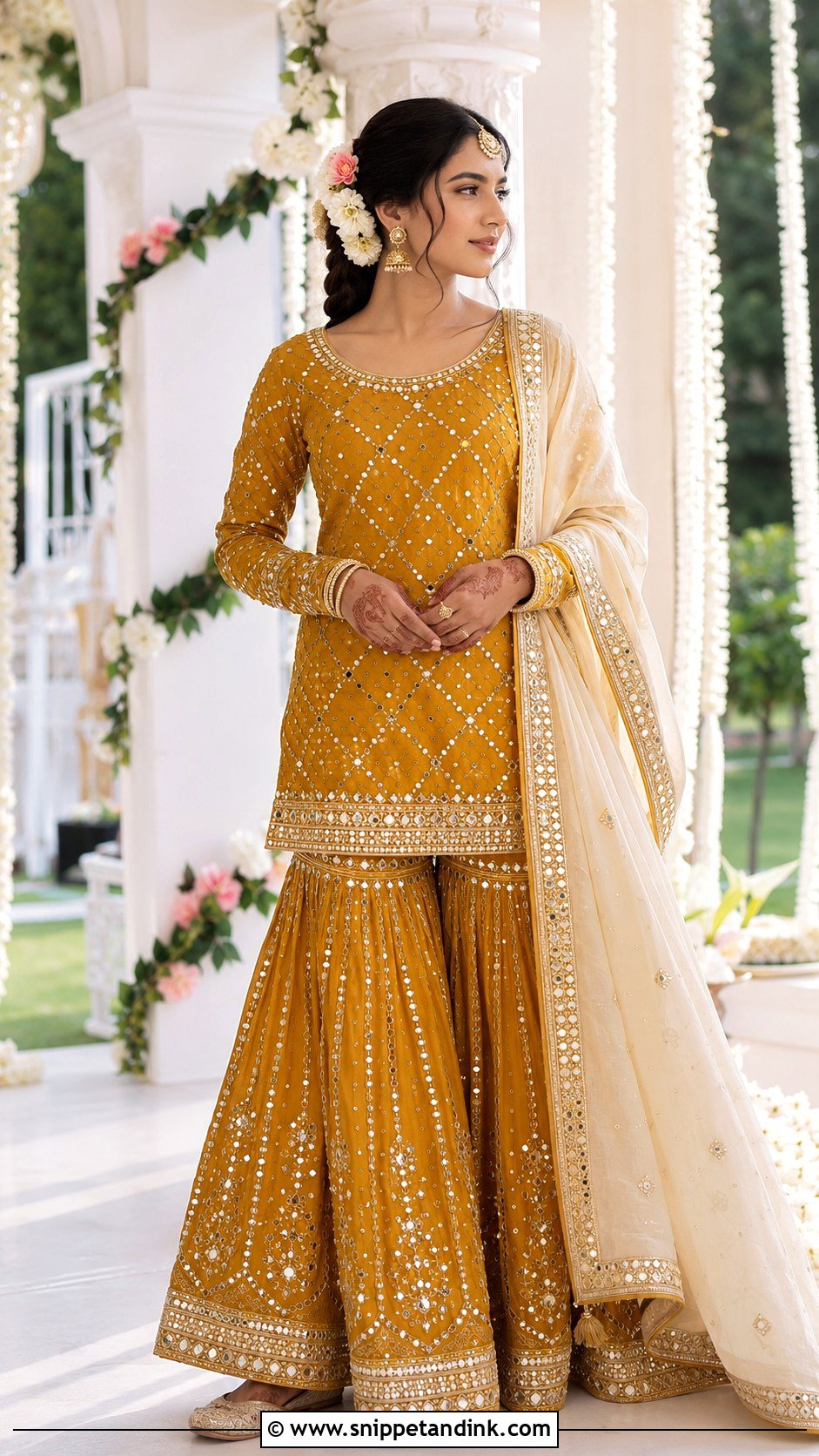
Mustard glows in natural light. Build the outfit around a short kurta with fine mirror work or gota and a gharara that flares from the knee, then break up the colour with an ivory, pink or green dupatta. A passa or small maang tikka is classic, with jhumkas and stacked bangles. A gharara already carries a lot of fabric, so the kurta should be fairly fitted and the dupatta light; a heavy one on top simply makes you look wider when seated. Pointed juttis, a low braid with floral pins and soft makeup.
10. Lavender Organza Saree Grahshanti Outfit
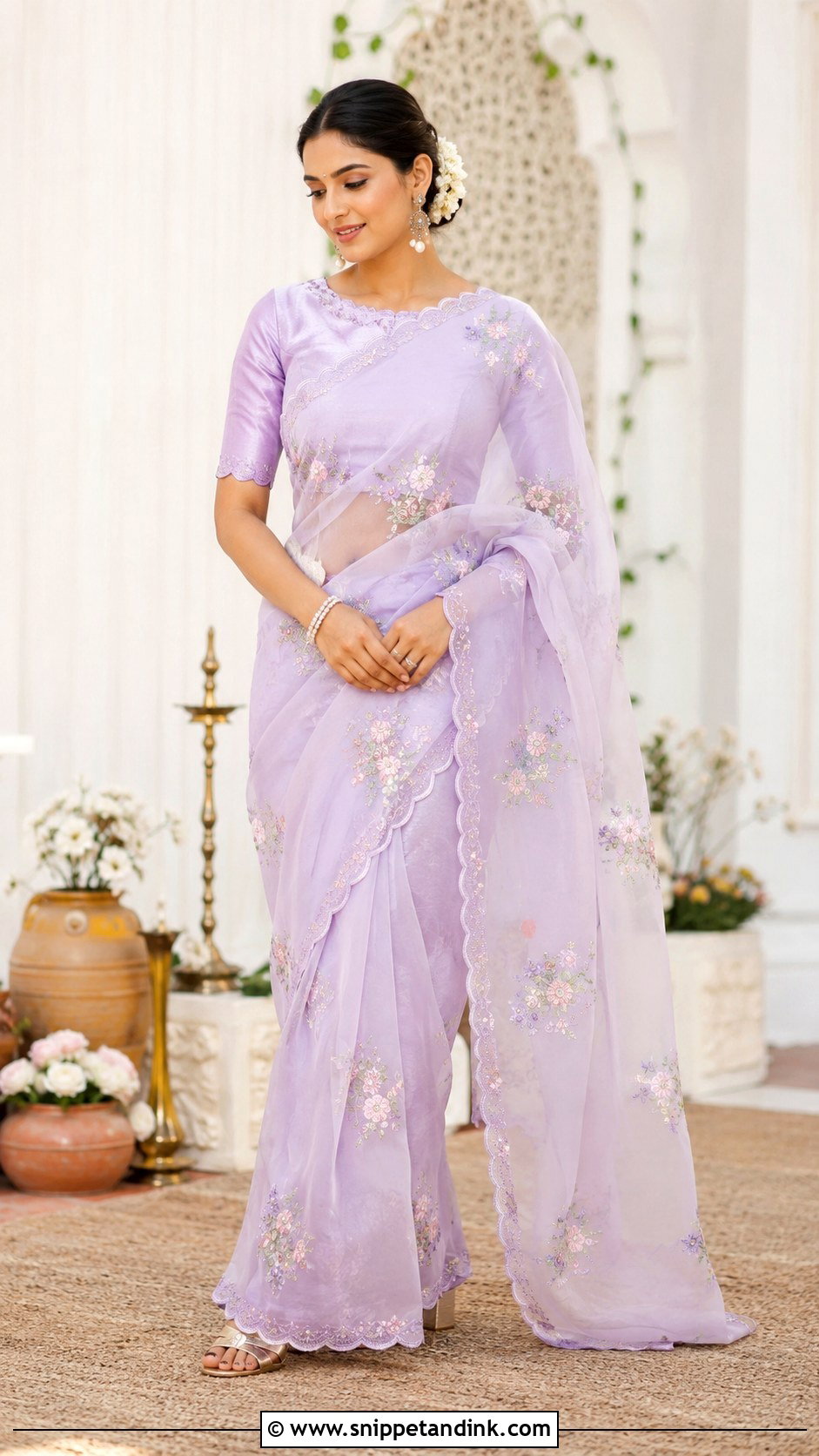
Lavender is the most modern colour on this list, and also the one I’d clear with the family before buying, because many households expect red, yellow or another auspicious shade for the puja. If it’s fine, an organza saree with scattered floral embroidery, a scalloped border or quiet zari is the way to wear it. A tonal silk blouse gives the sheer fabric some structure. Silver-toned kundan, pearl drops or diamond-style pieces suit the cool palette. Organza puffs up at the shoulder, so keep the pallu narrow and pinned. A smooth low bun, a few fresh flowers, and metallic block heels or embellished flats.
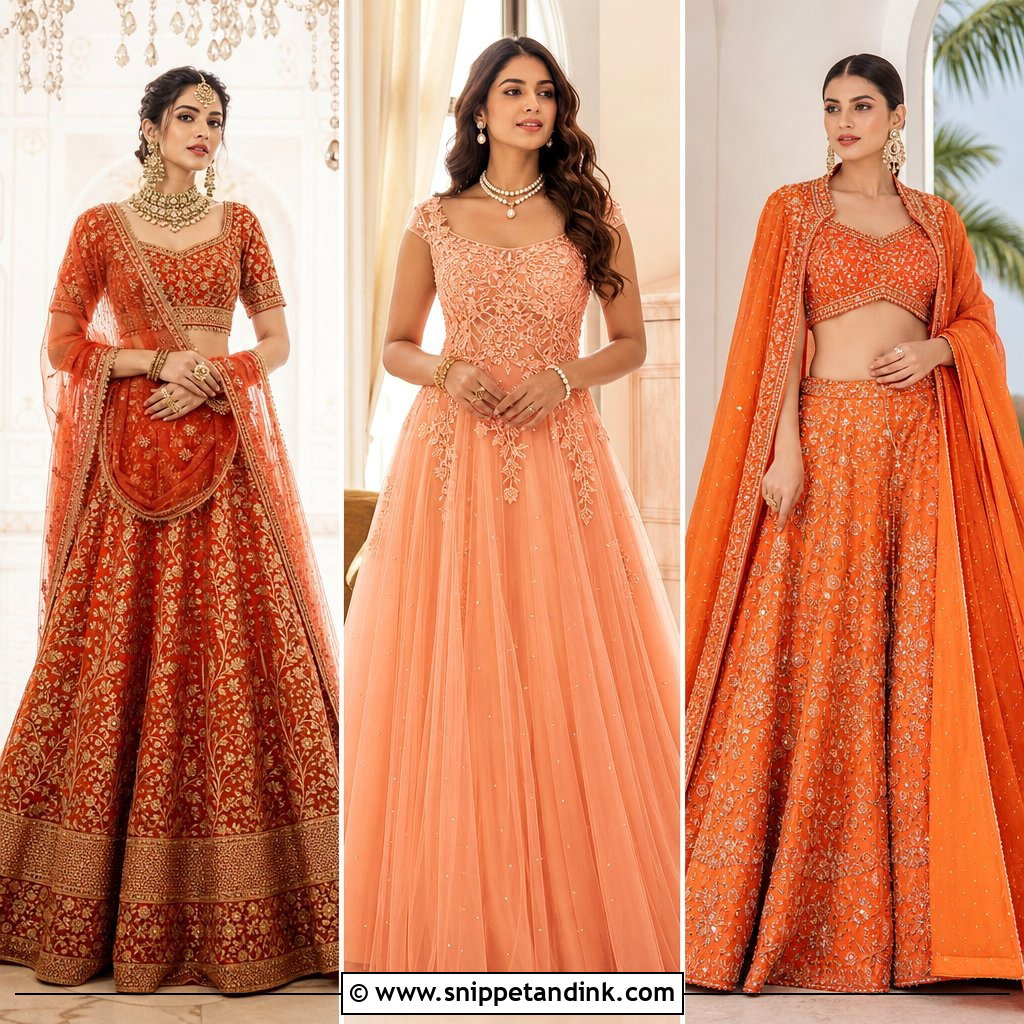
11. Orange Lehenga Grahshanti Outfit
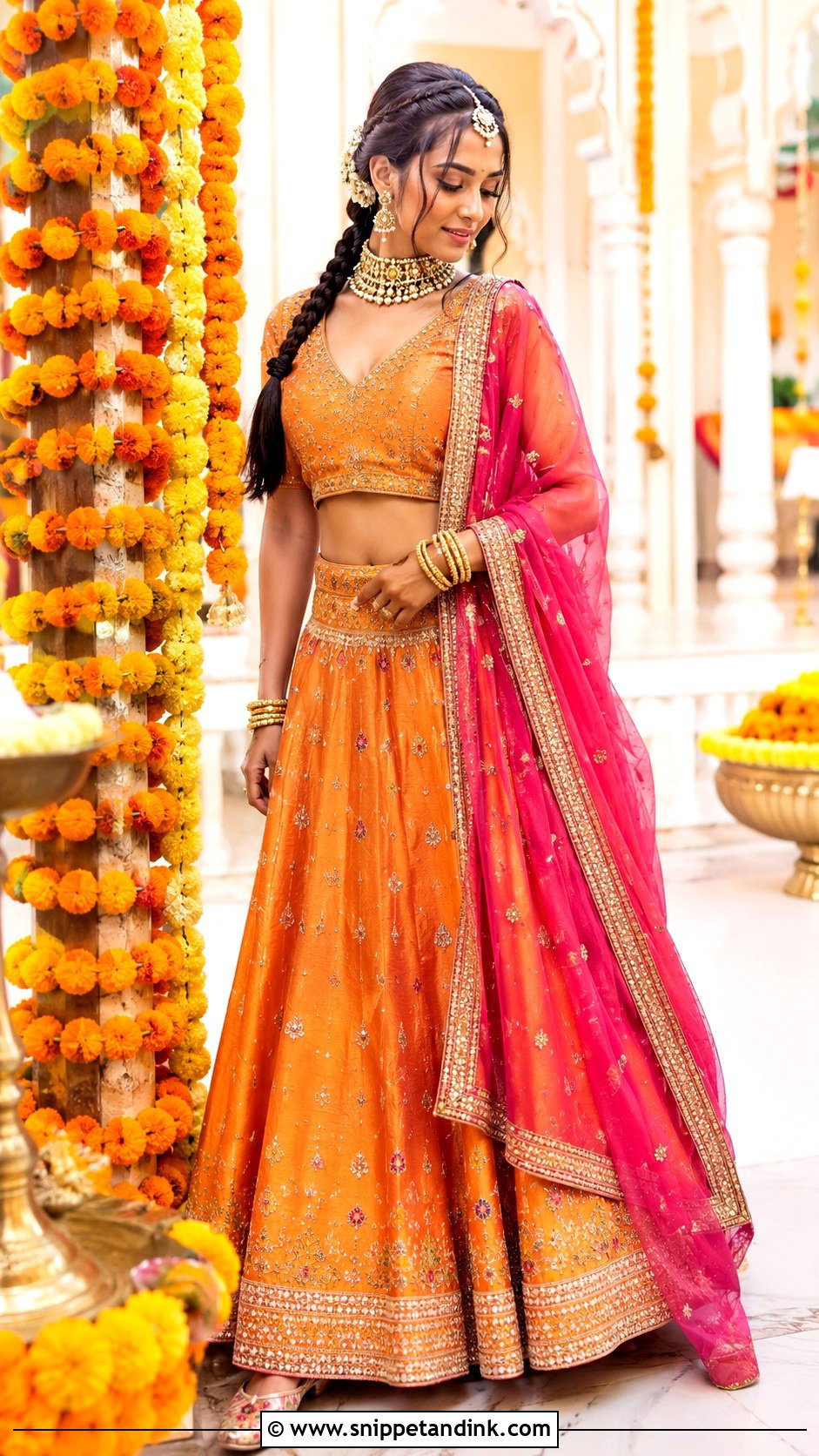
Orange looks wonderful against marigolds and traditional home decoration, which is why I like it for a bright daytime Grahshanti. Pick a light silk or georgette lehenga with small gold motifs rather than wedding-level embroidery, a fitted blouse, and a contrasting pink, green or yellow dupatta. A choker with matching earrings, gold bangles and embroidered juttis are plenty. To look taller, keep blouse and skirt the same orange and save the contrast for the dupatta, so the eye reads one long column. Braid or bun the hair so it stays controlled while you lean over the offerings.
12. Mint Green Kurta Palazzo Grahshanti Outfit
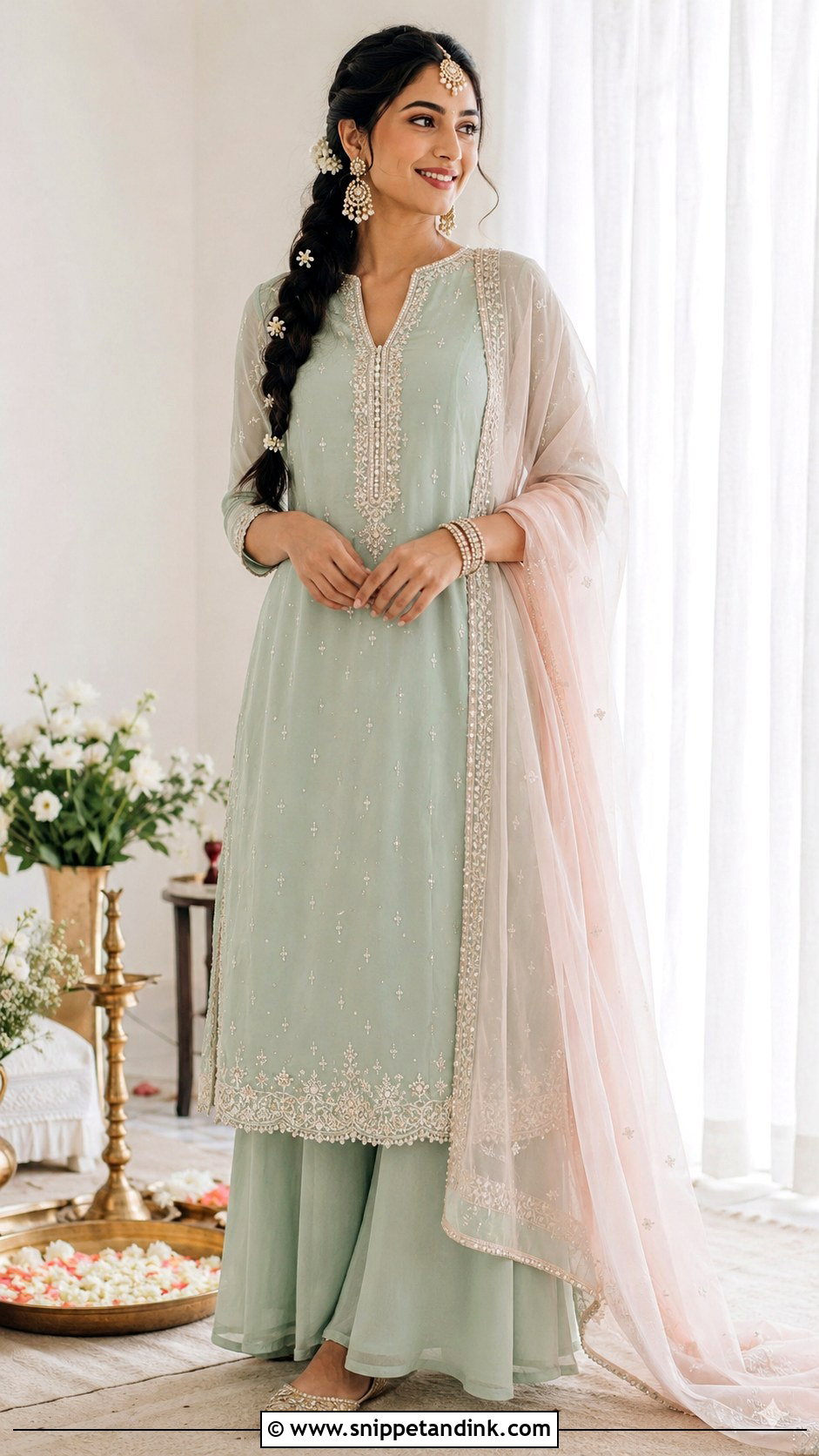
Mint palazzos are the most comfortable bridal option here, and the risk is that they look like a holiday outfit. Prevent that with the details: a long straight kurta with pearl work, fine thread embroidery or a narrow gold border, a dupatta in mint, ivory or pale pink, and pearl-and-kundan earrings. Pin the dupatta at both shoulders if you’ll be moving around the lamps. A kurta with side slits and a lightly defined waist gives shape. A soft braid and pink-toned makeup keep the pastel bridal, and the set is easy to wear on a hot day at home.
13. Rani Pink Banarasi Saree Grahshanti Outfit
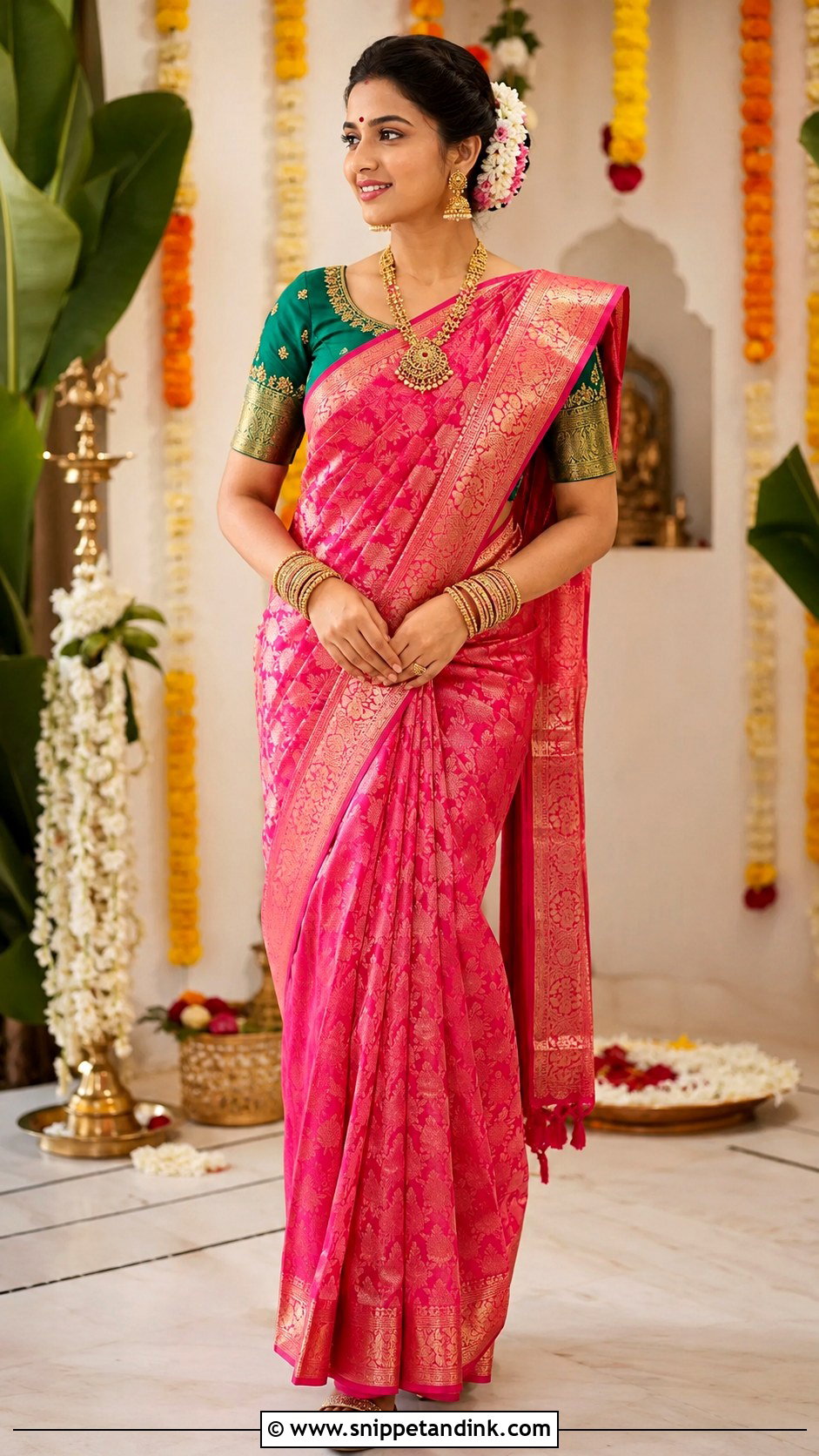
Rani pink looks bridal before you add a single piece of jewellery. A Banarasi in this shade gets its richness from the weave, not surface work. Wear a matching blouse for an unbroken block of colour or a green one for the classic contrast. Gold jhumkas, a short temple necklace, traditional bangles and a small red bindi finish it. Banarasi straight off the shelf can be stiff; I have it steamed and the pleats pressed in before the morning, and narrow, even pleats sit much flatter when you’re cross-legged. A flower bun and cushioned gold sandals for the standing parts.
14. Cream Jacket Lehenga Grahshanti Outfit
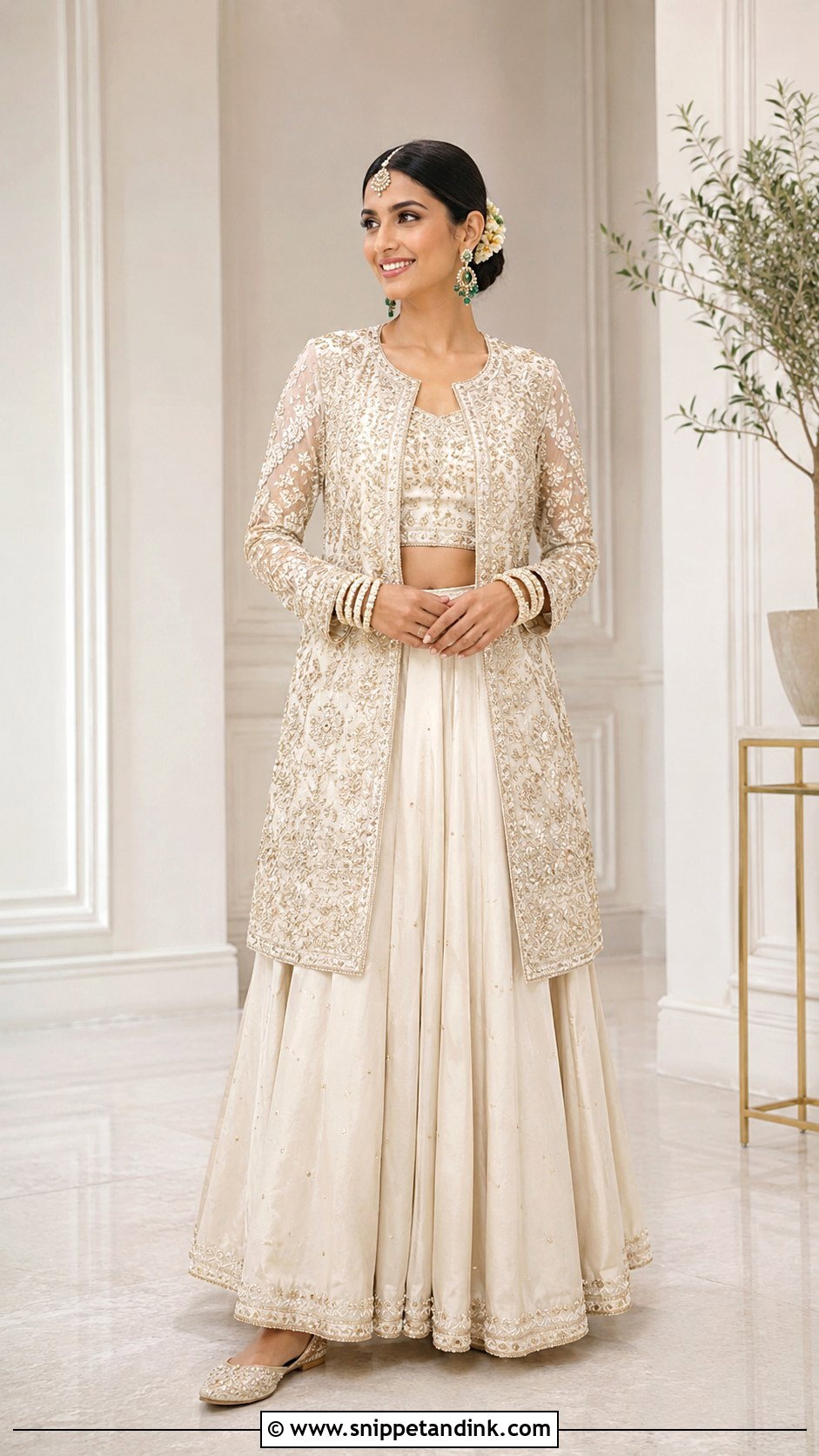
A cream jacket lehenga brings modern tailoring to the ceremony. A lightly flared cream or ivory skirt, a fitted blouse, and a hip- or calf-length embroidered jacket in threadwork, mirror or subtle gold rather than sequins. The jacket replaces the dupatta, which means nothing to pin and nothing to drift toward the fire. That alone makes it practical. Statement earrings, a simple maang tikka, ivory bangles and pointed juttis, with a sleek centre-parted bun. Bring in colour through green stones, pink piping or a bright potli. Just check the jacket’s armholes let you lift your arms freely for the offerings.


15. White Floral Sharara Grahshanti Outfit
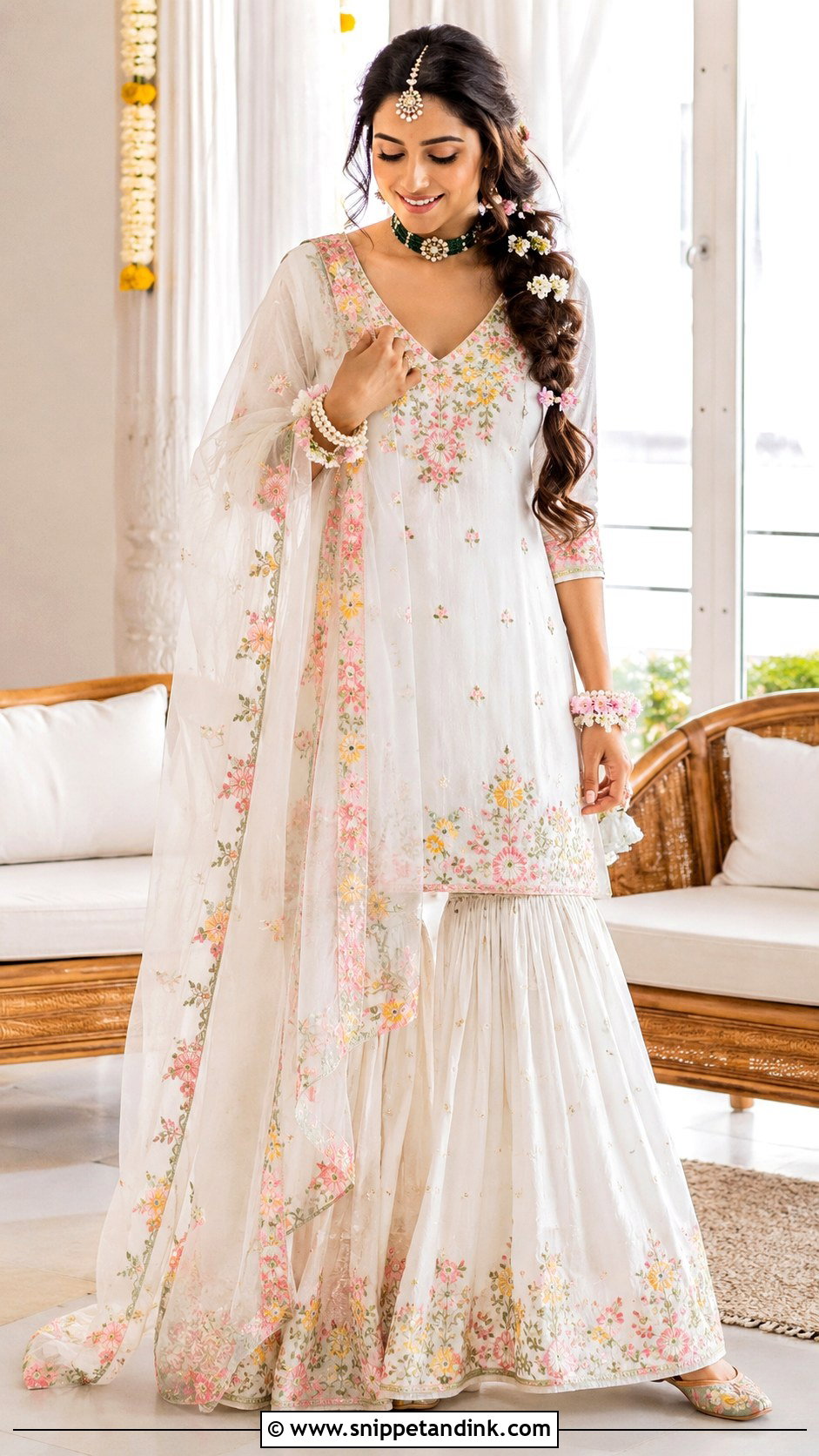
Floral threadwork stops a white sharara set from looking plain. A white or soft ivory kurta embroidered in pink, yellow and green, a flowing sharara and a sheer dupatta with a floral edge are the base. Colourful jewellery, such as a green choker or pink stone earrings, gives the camera something to focus on. Repeat one thread colour in the bangles and juttis. A loose braid with small white blooms keeps it soft, and a longer kurta with three-quarter sleeves gives more coverage. White shows every turmeric or kumkum mark, though, so keep a tissue handy during the tilak.
16. Maroon Silk Salwar Suit Grahshanti Outfit
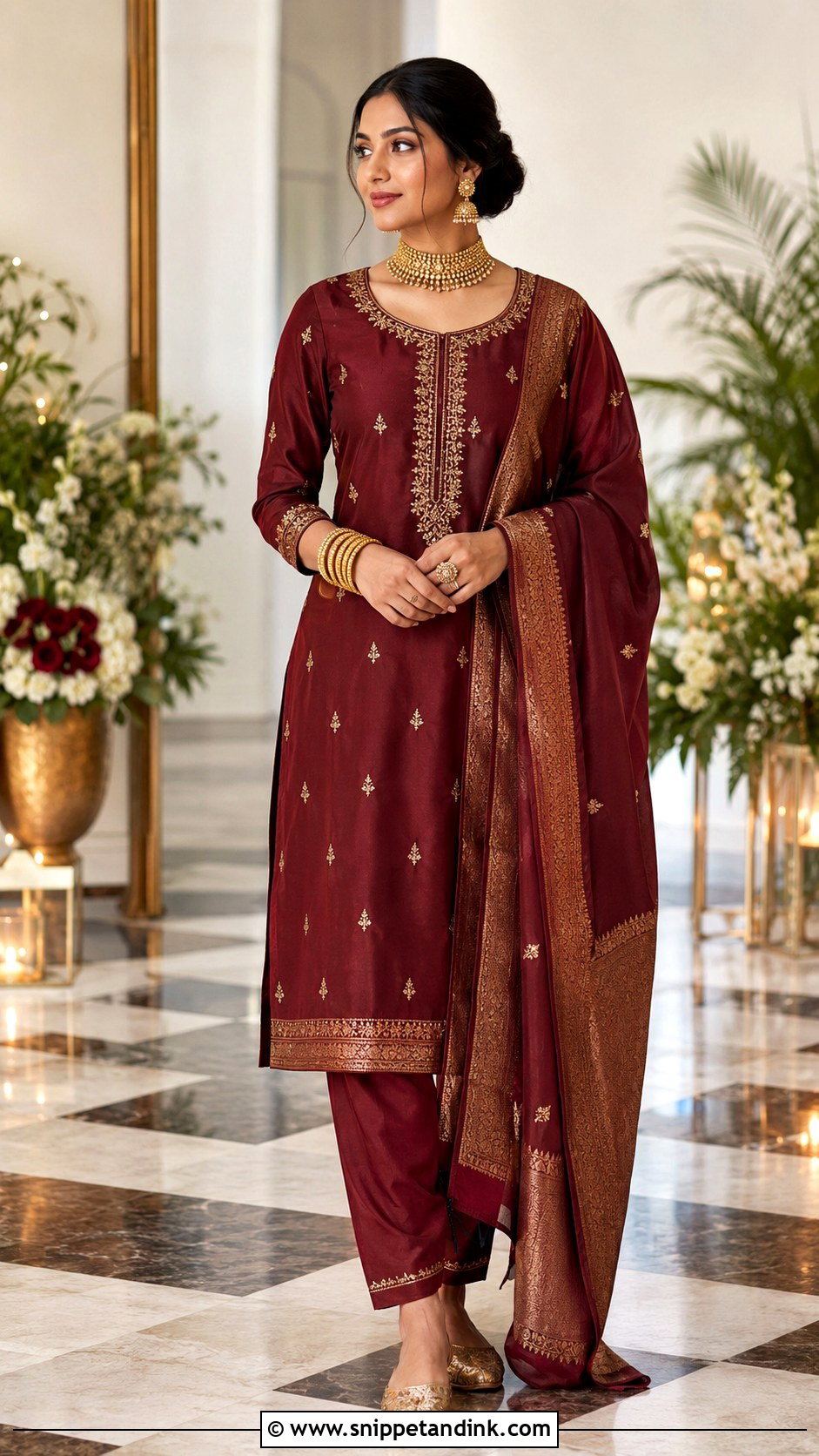
In cooler weather, a maroon silk salwar suit is warm without the weight of a lehenga. A straight kurta with antique-gold embroidery, tapered salwar and a dupatta with a woven border. Maroon is strong on its own, so I stop at a gold choker, jhumkas and a few bangles, with antique-gold juttis. Drape the dupatta over one shoulder and across the opposite arm, or over the head if custom asks for it. Vertical embroidery down the kurta front lengthens the body and lifts the dark shade; a low bun and warm neutral makeup finish it.
17. Blue Paithani Saree Grahshanti Outfit
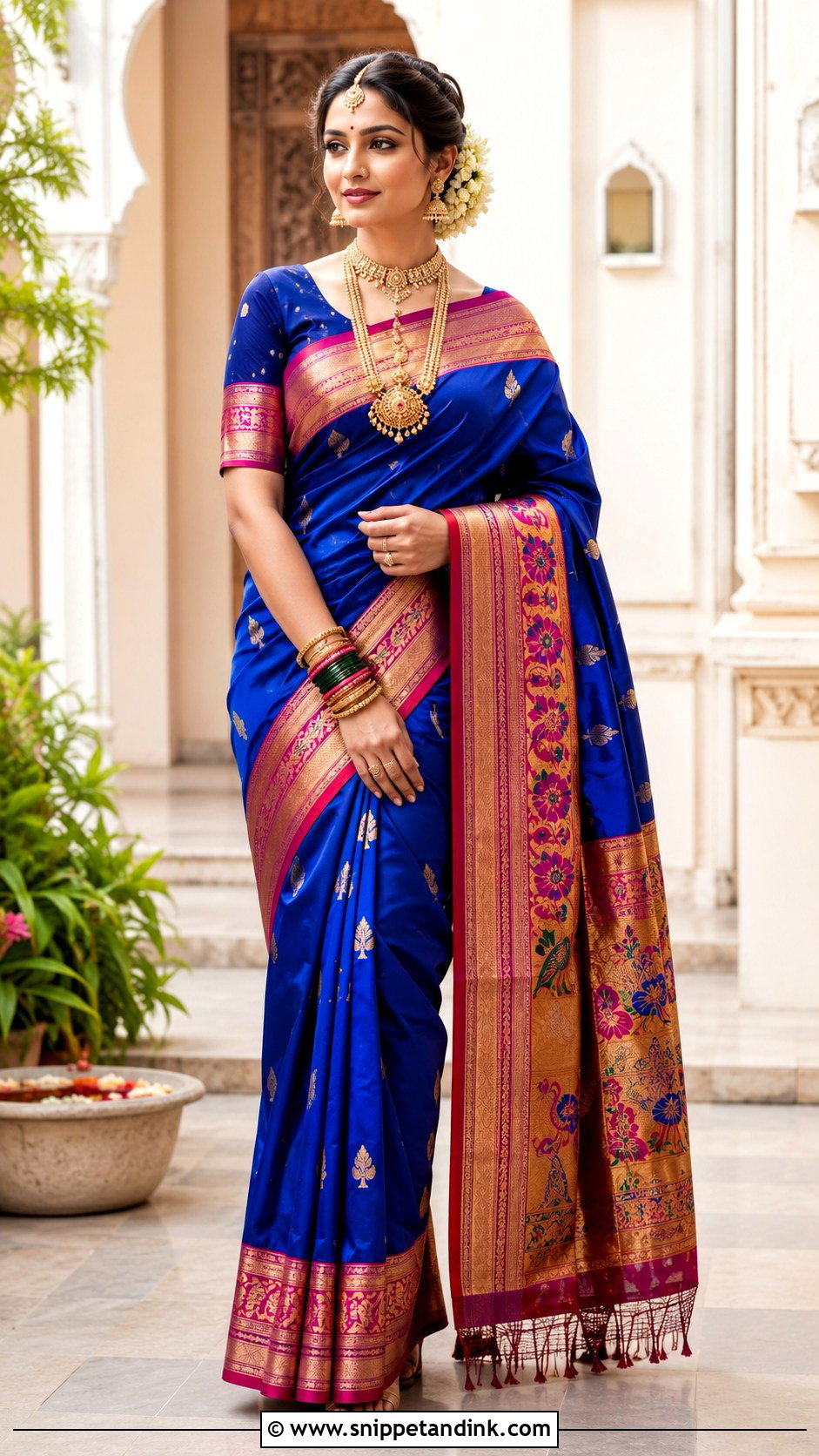
Royal blue with a jewel-toned Paithani border is for the bride who loves traditional textiles. Look for a magenta, green or purple pallu with detailed zari motifs, and decide whether a matching blouse or a contrasting one shows the border best. A gold necklace, traditional earrings, green or pink bangles and metallic sandals. A classic bun with a white flower garland suits the heritage weave. Paithani silk holds its shape firmly, so the pleating has to be precise; loose pleats turn into a stiff fan across your lap. Don’t wear every bridal piece at once.
18. Yellow And Pink Half Saree Grahshanti Outfit
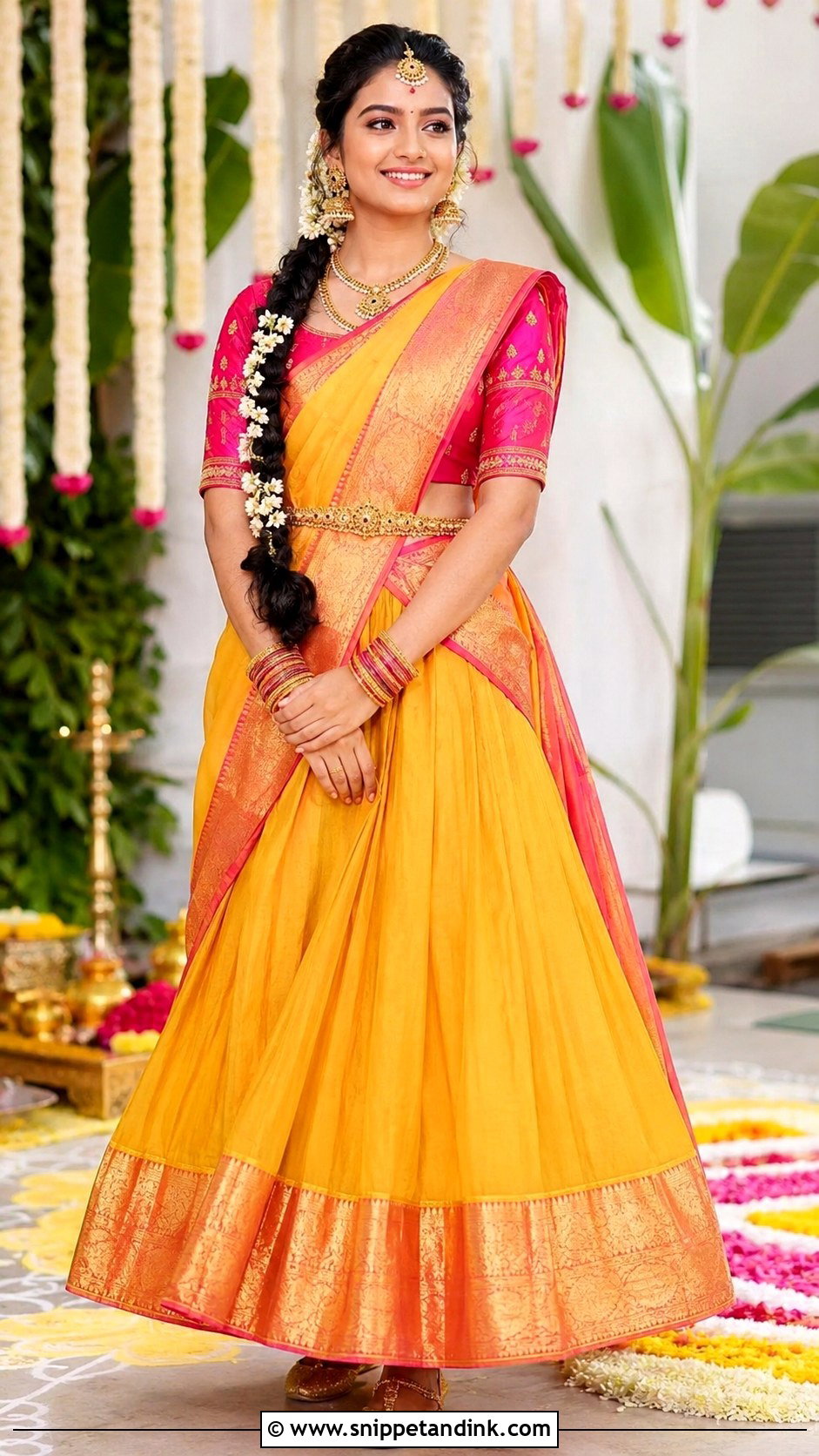
A half saree in yellow and pink looks young and festive, and it’s easier to sit in than a full drape. A yellow flared skirt, a fitted pink blouse and a light dupatta draped diagonally across the body, ideally with a gold border running through all three to tie them together. A waist belt holds the drape firmly through the rituals, if your customs allow one. Temple earrings, slim necklaces, stacked bangles and gold juttis, with a long braid of flowers or gold accessories. Keep the skirt’s flare moderate so you can tuck it around you on the floor.
19. Ivory Chikankari Anarkali Grahshanti Outfit
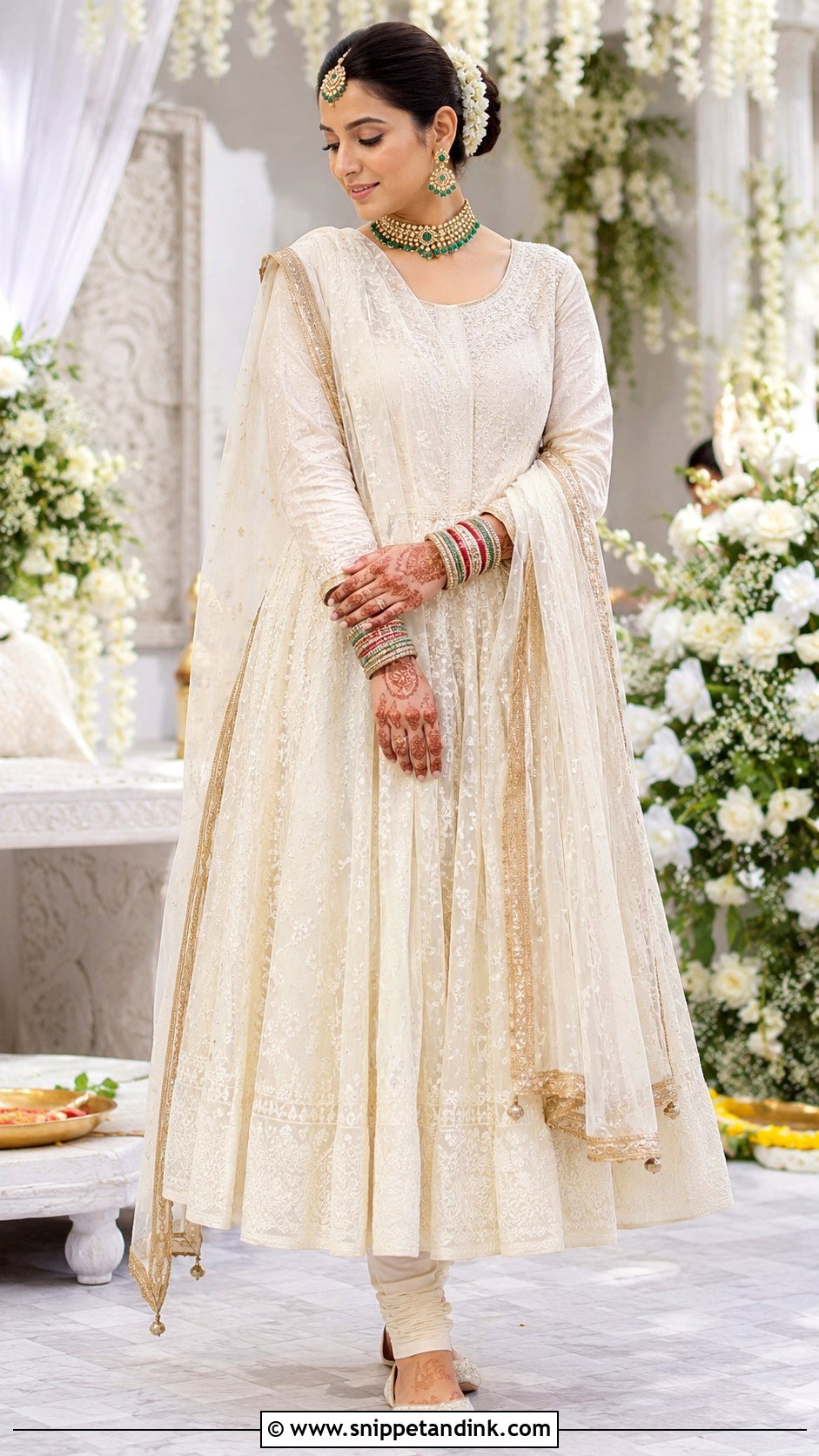
Chikankari is hand embroidery on fine cotton or georgette, and its shadow work only shows properly with a lining behind it. That’s the first thing I check on an ivory Anarkali: unlined, it turns see-through in morning sun, especially outdoors. Choose a comfortable neckline, three-quarter sleeves and a flare that doesn’t swamp your frame, with churidar and an organza dupatta edged in gold or pastel. Green kundan, a pink potli or coloured bangles keep the neutral palette from looking too simple. Ivory juttis, a softly structured bun, and a thin gold belt over the dupatta if you want it to stay put.
20. Coral Pre-Draped Saree Grahshanti Outfit
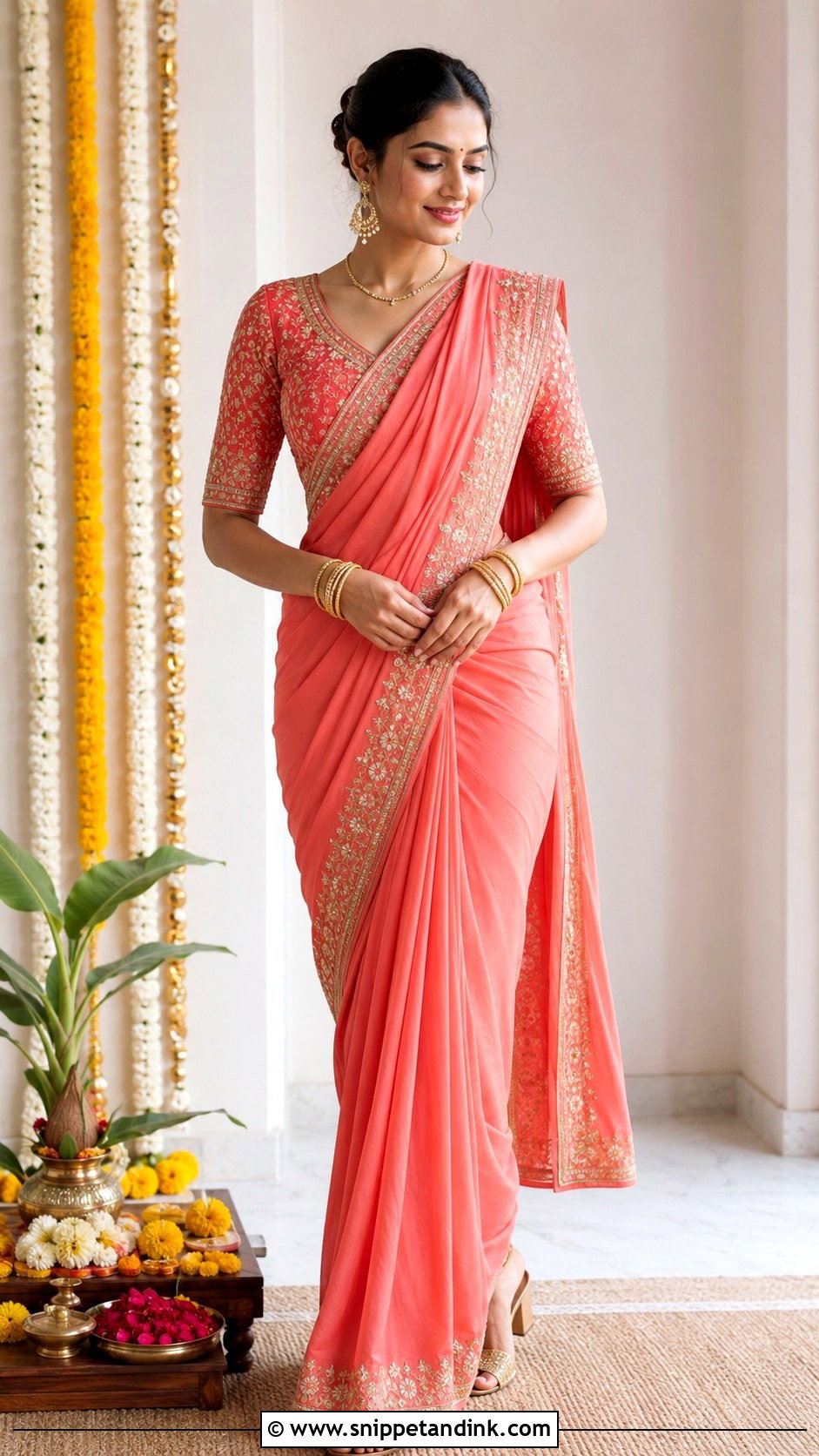
A coral pre-draped saree gives you the look of a traditional drape in a fraction of the time, which counts on an early morning. Choose modest pleats, a comfortable waistband and a pallu that fastens at the shoulder. An elbow-sleeve blouse with some structure balances the fluid skirt. Kundan earrings, a slim necklace, gold bangles, low block heels, a small bindi and a sleek bun. Skip dramatic ruffles and long trailing pallus, which catch on the ceremonial setup. I’d recommend it to any bride who’s never draped a saree herself, and I’d have her sit in it at the trial too.
Haldi, Fresh Mehndi and a Pale Outfit in the Same Week
In many families the Grahshanti falls close to the haldi and mehndi, and that changes what’s sensible to wear. Turmeric paste dyes fabric yellow almost instantly, and a fresh mehndi stain, still oiled to deepen the colour, can leave orange-brown marks on ivory silk or on a white Chikankari cuff.
If the mehndi comes first
Wipe off any oil or balm before you dress, choose sleeves that end at the elbow rather than the wrist, and let the blouse be the darker piece. Keep pale outfits for a ceremony that happens before the mehndi.
If haldi is the same morning
Never wear the Grahshanti outfit to the haldi. Change completely, shower, and check your neck and hairline for turmeric before the saree goes on. A yellow mark on a yellow saree is forgiving; on white, it’s permanent. If something does catch, blot it, don’t rub, and tell the dry cleaner exactly what it is, because turmeric needs different treatment from an ordinary food stain.
A Bridal Look the Elders Will Recognise Too
The right Grahshanti look respects your family’s traditions and still makes it obvious who the bride is. Sarees are the classic choice, while Anarkalis, shararas, lehengas and coordinated suits are practical alternatives. Think about the setting, the weather, how long you’ll be seated and what the elders expect before you commit. Light fabric, secure draping, comfortable shoes and balanced jewellery make the morning easier. A bindi, fresh flowers, bangles or the right dupatta add bridal character. Start from the look on this list that suits your ceremony, then make it yours with colours and textiles that mean something to you and your family.
You'll Like These Ideas:



Leave a Reply