
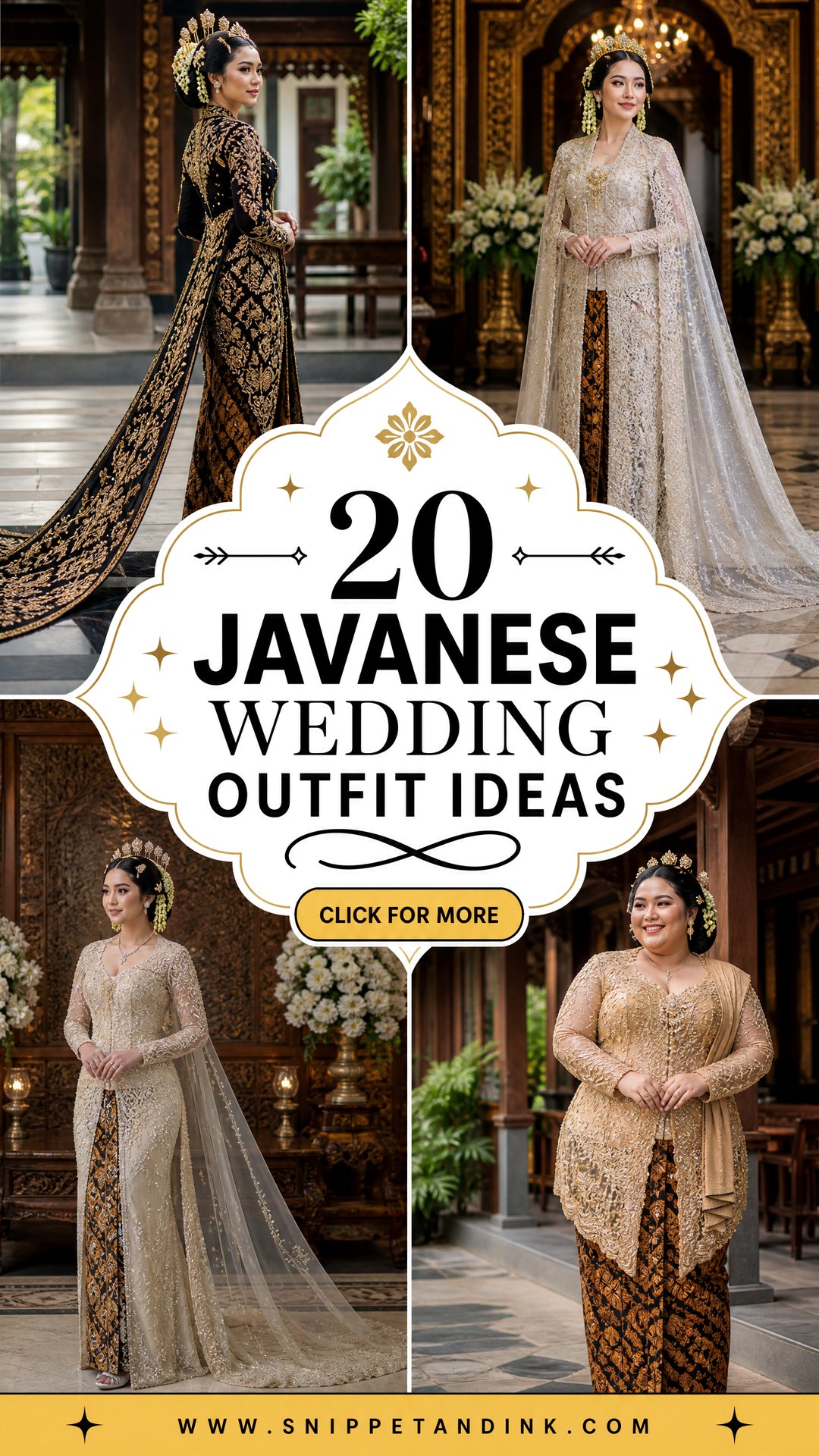
A Javanese bridal outfit is really two decisions: what goes on top, a fitted kebaya or a wrapped dodot, and which batik goes below it. Everything else, from the hair ornaments to the jasmine and gold, follows from those two. Below are twenty complete looks, from palace-style ceremonial ensembles to modern bridal kebayas, modest outfits and lighter reception options. Batik carries meaning of its own, and certain patterns are kept for marriage, so I’ll point out where the cloth matters as much as the cut. The right choice also depends on your family’s regional roots, the venue, how many outfit changes your program allows, and how much heat and walking the day involves.
Which Outfit Belongs to Which Part of a Javanese Wedding
A traditional Javanese wedding is a sequence of rites, and many brides wear more than one outfit across them. Planning the wardrobe around that sequence saves money and stops you buying a look that has no moment to be worn.
- Siraman and midodareni. The bathing rite and the eve-of-wedding gathering call for simple, comfortable dress. I keep these outfits light and easy to change out of.
- Akad or ijab. For Muslim couples this is the marriage contract itself, and many brides choose white or ivory, often with hijab, because it is a religious rite before it is a party.
- Panggih. The meeting rites are where the full ceremonial looks, paes and wrapped cloth belong.
- Resepsi. The reception is the place for color, trains and the modern kebaya ideas below.
Count your changes realistically. Each switch between a wrapped traditional outfit and a kebaya can mean redoing the hair, the ornaments and sometimes the paes, so I always ask the dresser how long each change takes before the running order is set. Fresh jasmine also browns within hours, so plan for new strands if the gap between ceremony and reception is long.
1. Yogyakarta Paes Ageng Wedding Outfit
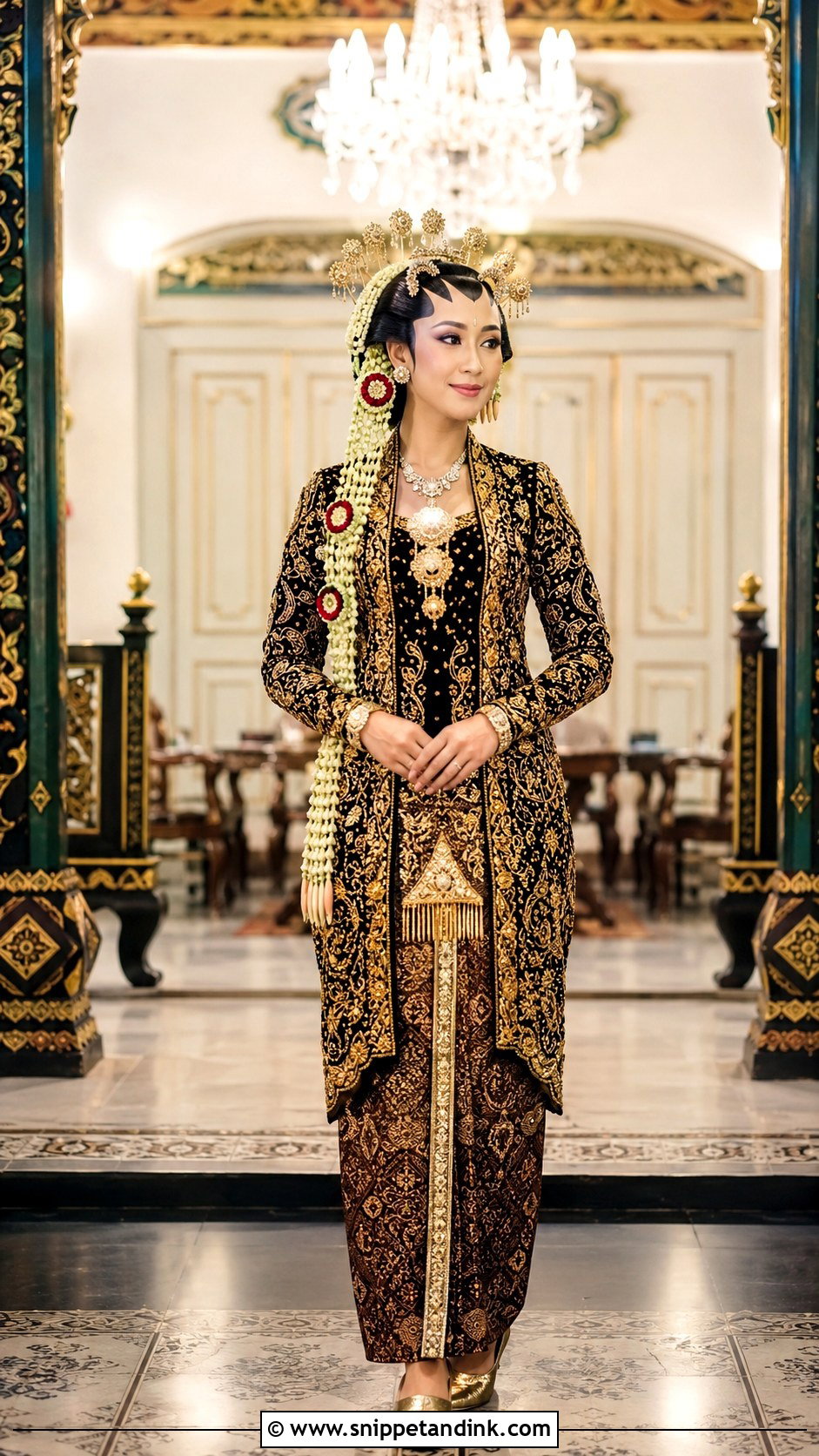
Paes Ageng is the grandest of the Yogyakarta bridal styles and comes from palace weddings. The bride is wrapped in a long dodot, also called kampuh, which leaves the shoulders bare, and her forehead is painted with gold-edged paes shapes. Deep black, brown or green cloth with controlled gold patterning lets each piece of the ensemble read. The hair is built into a traditional arrangement set with cunduk mentul, whose little flowers tremble on fine springs as she moves, plus neatly placed jasmine. Gold bracelets, earrings and a statement necklace complete it. Please don’t attempt this with a general makeup artist; the wrapping, the paes and the ornament placement are specialist work, and an experienced Javanese bridal dresser is essential. Keep the shoes plain.
2. Solo Basahan Wedding Outfit
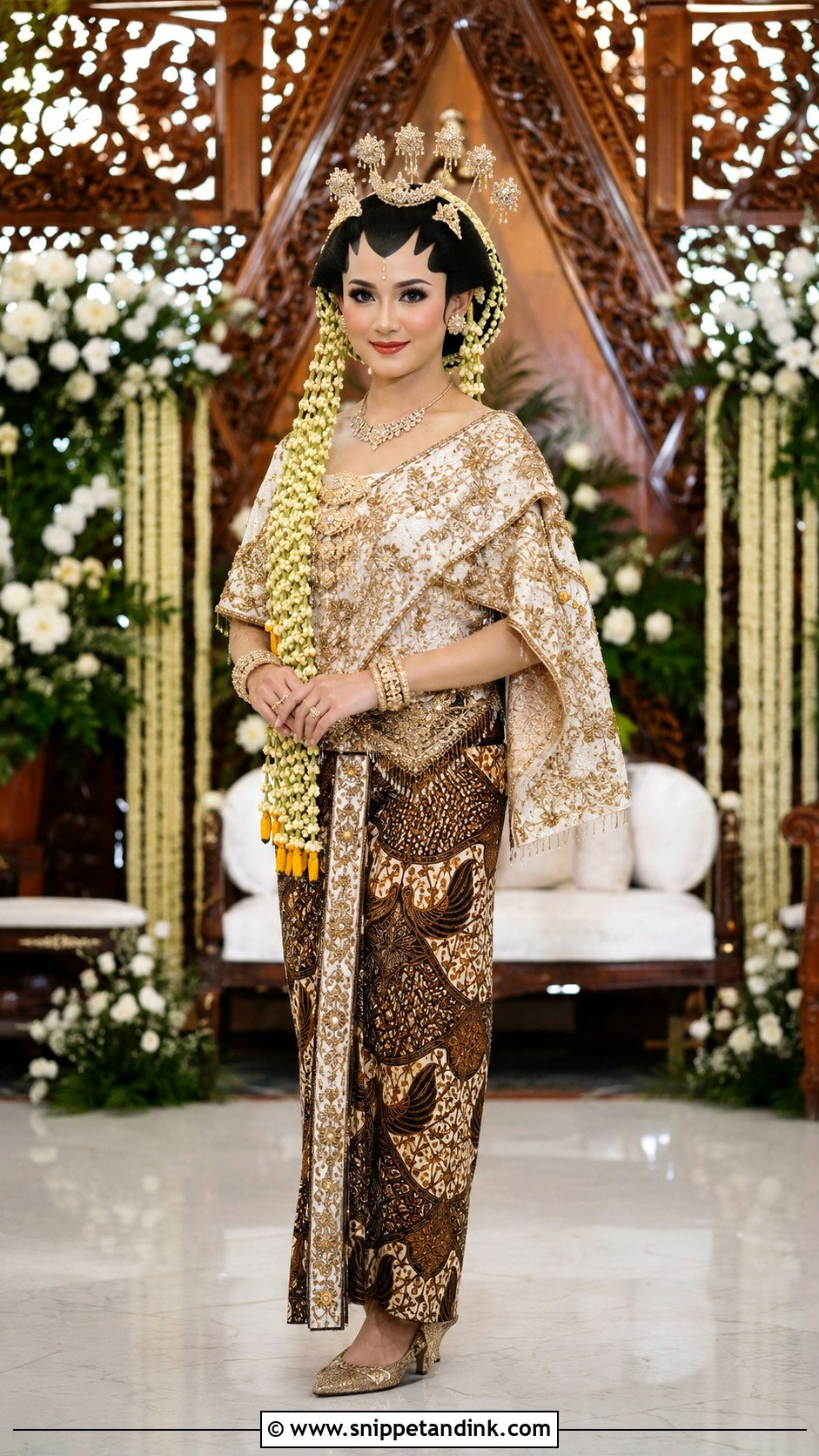
Solo Basahan is the Surakarta counterpart: equally traditional, with its own paes shape and its own way of wrapping the dodot. The cloth is wrapped tightly, often in rich batik or forest-motif patterns, and it leaves the shoulders bare, which gives the outfit its recognizable ceremonial line. Brides who want more coverage can wear a fitted inner layer underneath, and a good dresser will make that look intentional rather than added. Classic Solo paes, gold jewelry and structured hair ornaments balance the cloth, and a long jasmine strand at the back adds movement. I always book a full rehearsal fitting for basahan, because walking, kneeling for the sungkem and sitting on the bridal throne all feel very different once you’re wrapped.
3. White Javanese Wedding Kebaya
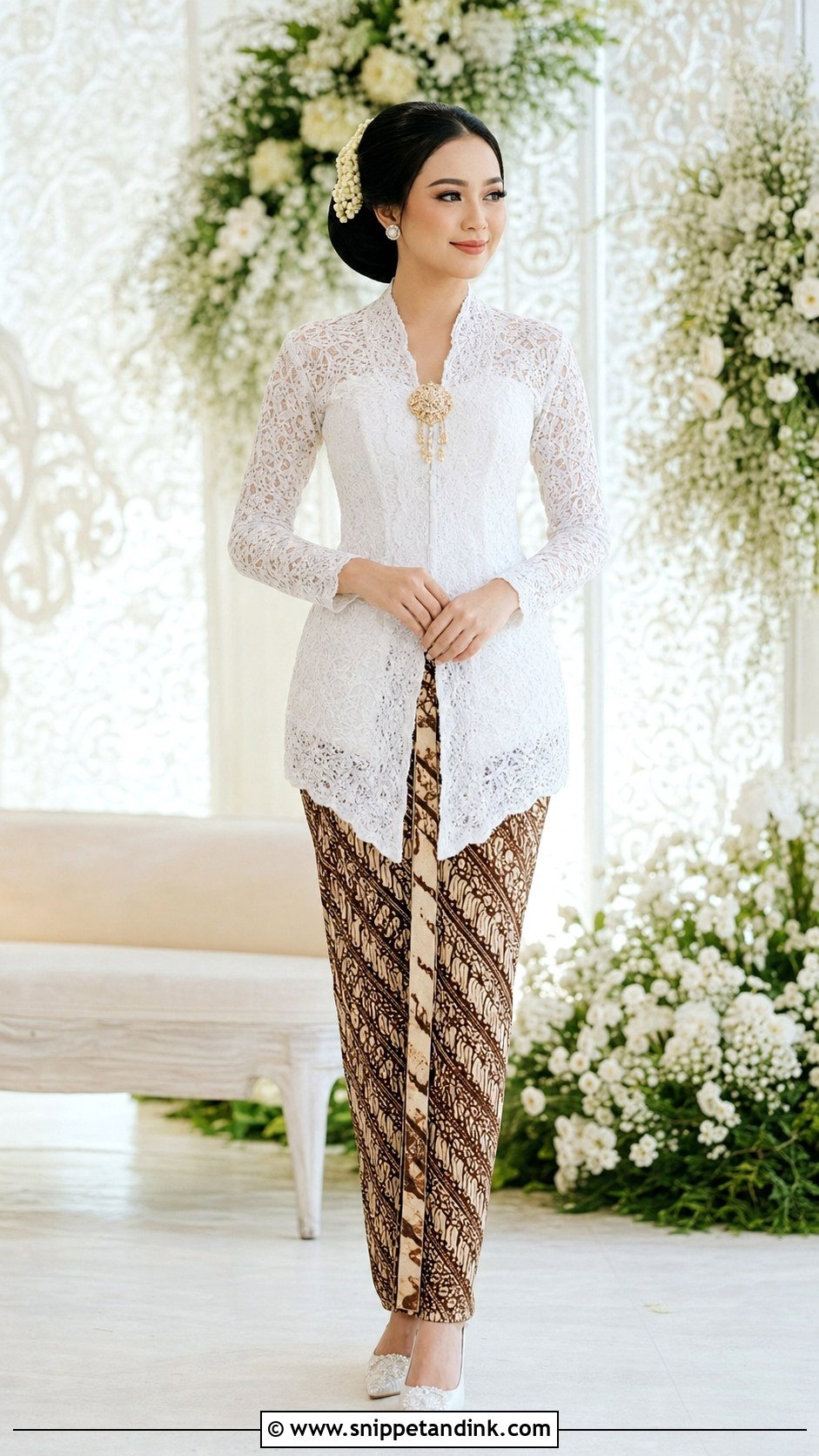
White is the obvious choice for the akad or ijab, and a white kebaya is endlessly adaptable. Use fitted lace or embroidered tulle with a secure lining through the bodice and sleeves. Below it, a brown, black and ivory batik jarik gives contrast while keeping the soft bridal feel. A brooch at the center of a kutubaru-style front, pearl or gold earrings, a sleek bun with fresh jasmine and white closed-toe heels finish it. Brides in hijab can tuck an ivory satin style smoothly under the neckline. I’d hold back on crystals: under a camera flash, a lot of stones turn into white glare, while fine beading and sharp tailoring look better close up.
4. Black Velvet Javanese Wedding Kebaya
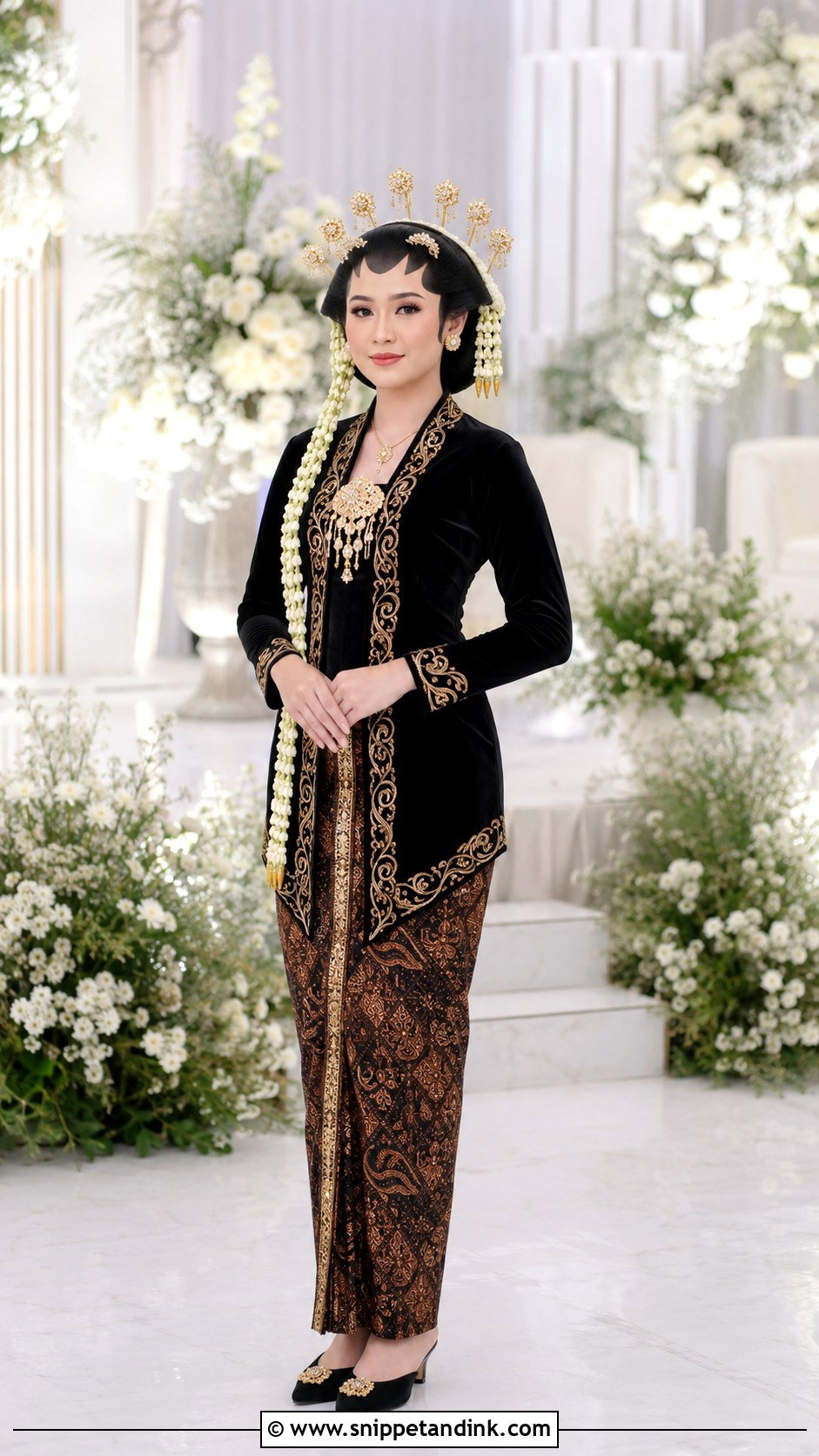
Black velvet with gold embroidery is a classic Javanese evening look, and it’s heavy in every sense. Choose a fitted long-sleeve kebaya with borders around the neckline, cuffs and front opening, over a dark brown jarik with gold or cream motifs. A sculpted bun, cunduk mentul, jasmine strands and traditional gold jewelry complete it, with black pumps or low block heels hidden under the skirt. Velvet traps heat. In a humid climate I’d ask for a breathable cotton lining and keep the ceremony indoors with good air conditioning. It looks richest against pale flowers, with defined eyes, polished skin and a muted rose or classic red lip.
5. Ivory Kutubaru Javanese Wedding Kebaya
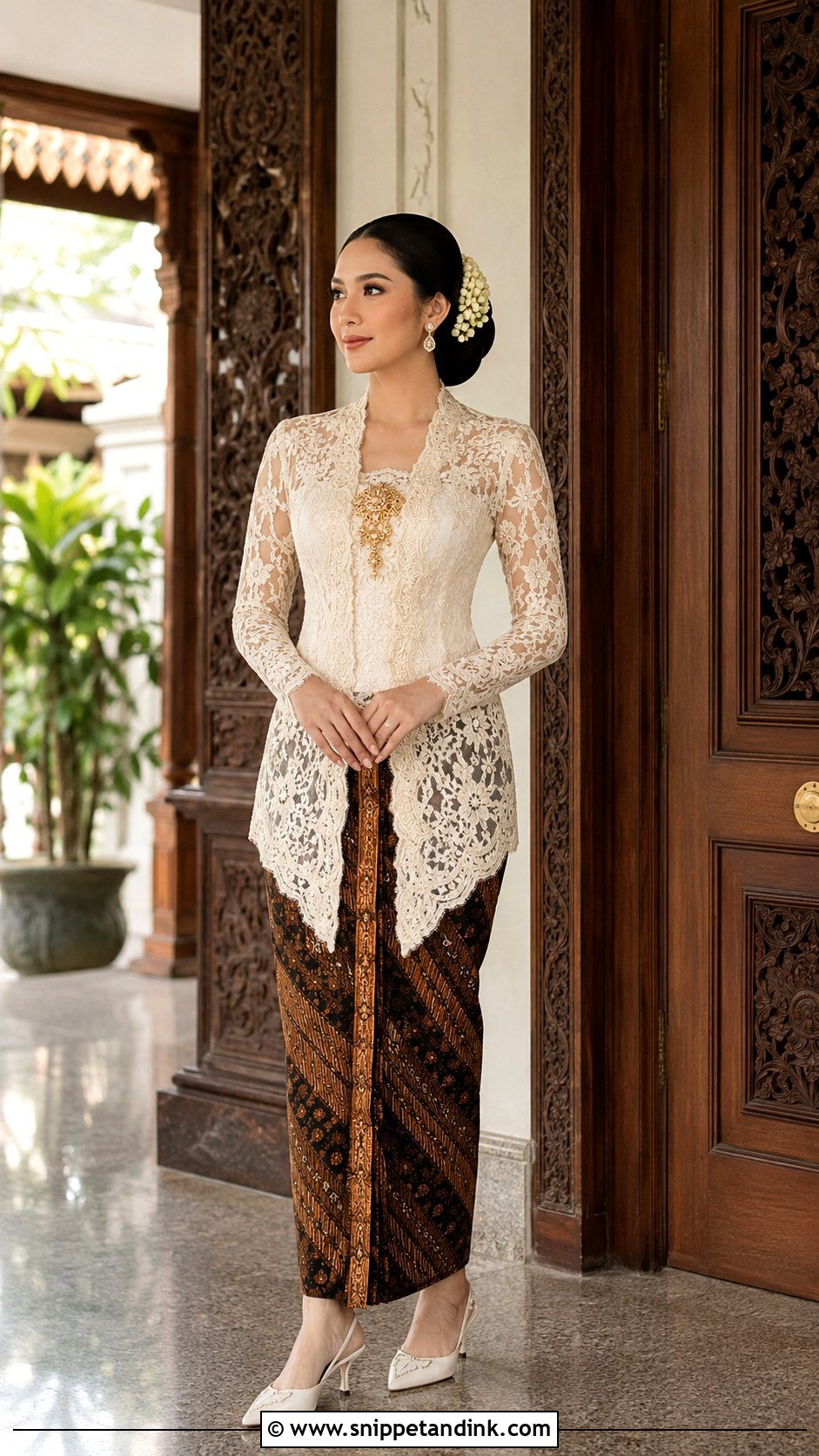
Kutubaru is the kebaya with a fabric panel bridging the two front edges, which gives a clean vertical line down the chest. An ivory embroidered kutubaru over a chocolate-brown jarik with an orderly batik pattern is one of my favorite daytime pairings, because the warm brown stops the ivory from looking flat. Add a gold brooch on the panel, small drops and one narrow bracelet rather than a stack. A smooth low bun with jasmine leaves the neckline clear, and pointed ivory heels or low slingbacks are comfortable for a long reception. If the kebaya is sheer, get an inner layer matched exactly to it so no underwear lines show.
6. Champagne Javanese Wedding Kebaya
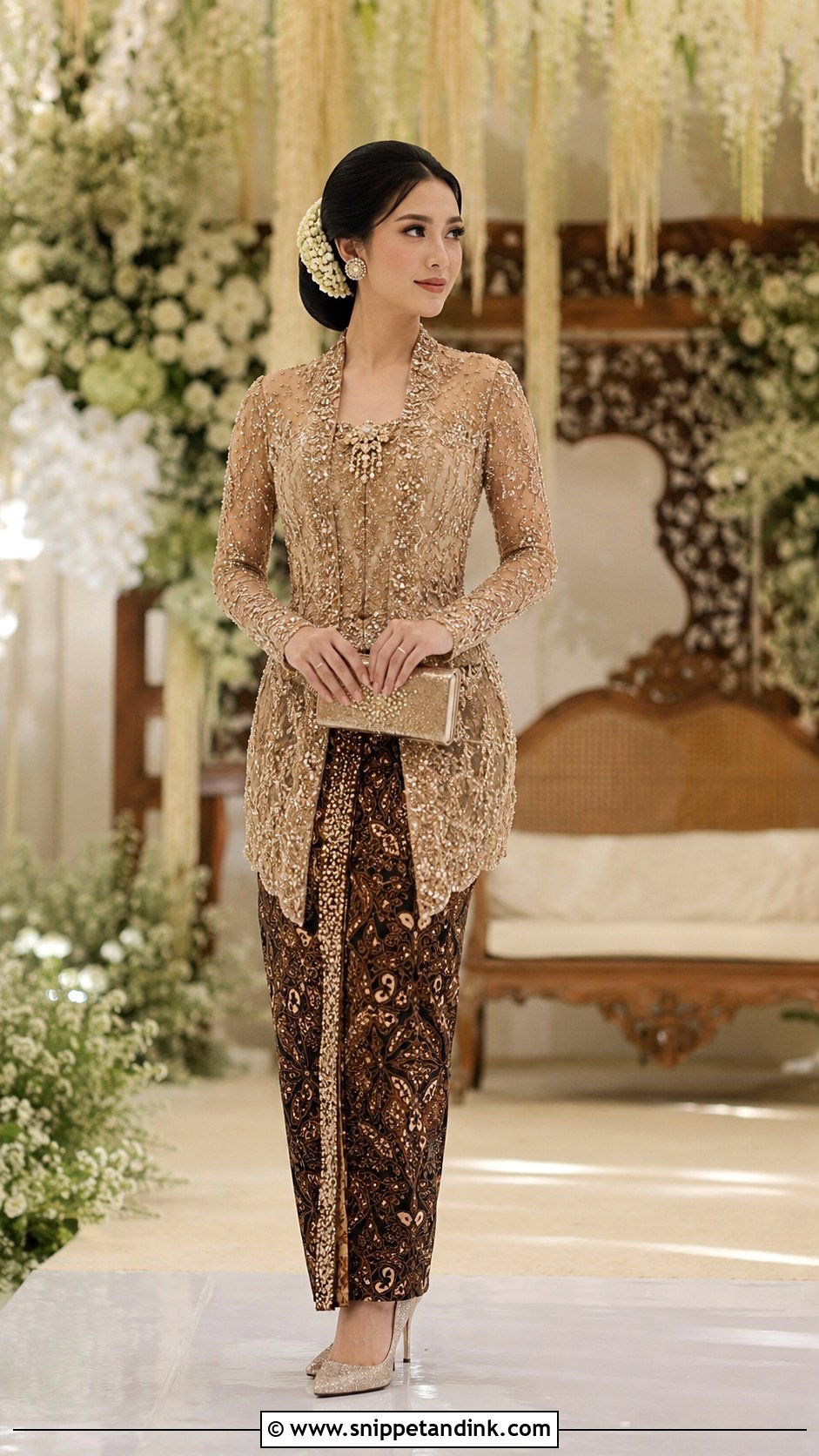
Champagne is warmer and less bright than white, which suits deeper skin tones particularly well. A long-sleeve brocade kebaya with fine gold beading pairs well with a deep brown jarik. Truntum is traditionally the motif worn by the bride’s parents, so I usually steer brides toward sido mukti or sido asih for their own cloth and let truntum appear on mother and father. Metallic heels, a structured gold clutch and earrings echoing the beading finish it, with a restrained jasmine arrangement on a classic bun. A kebaya extended just below the hip with a soft point at the hem modernizes it. Ask the tailor to spread the embellishment evenly so the bodice doesn’t pull forward.
7. Red Javanese Wedding Kebaya
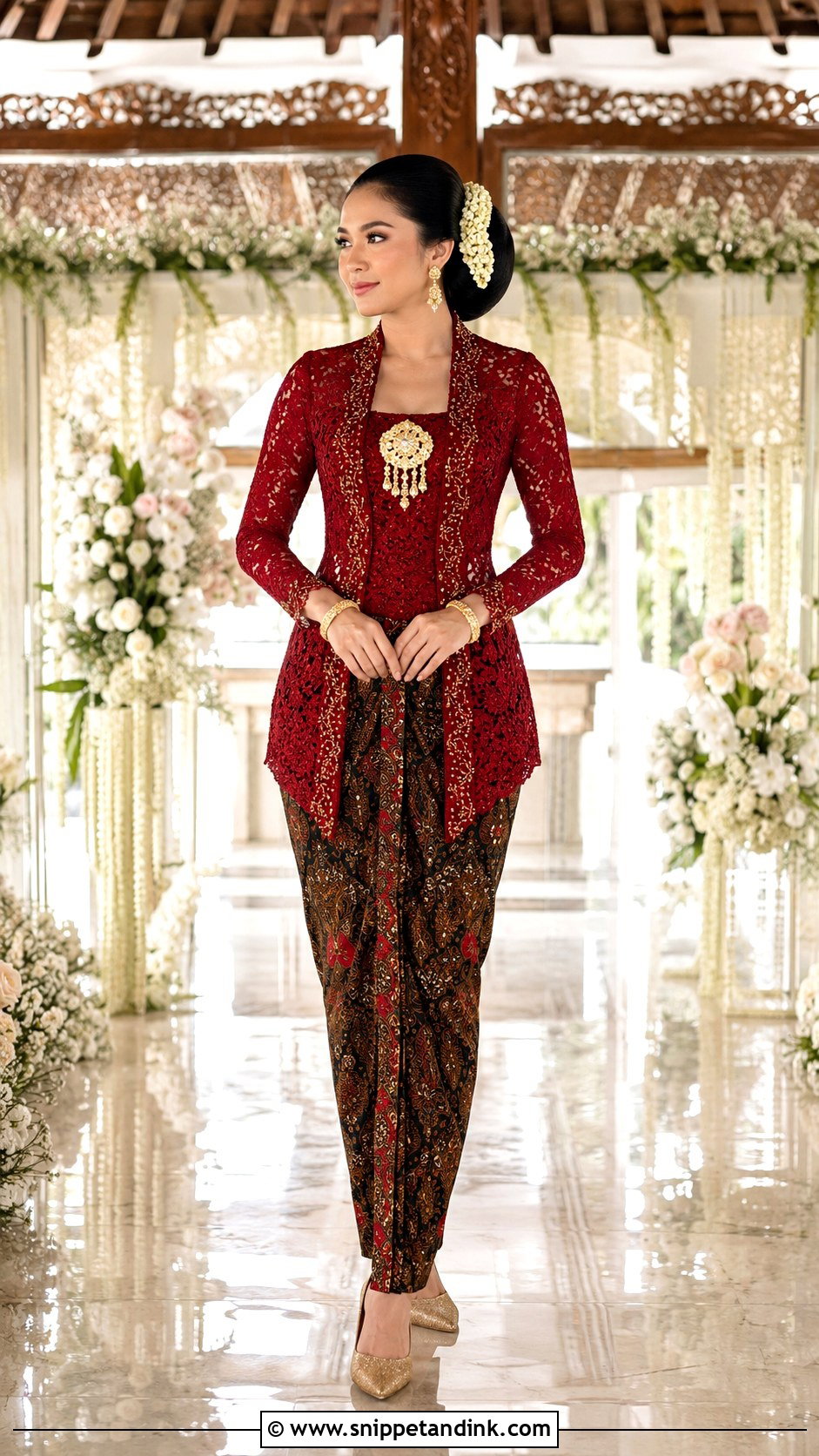
Choose a blue-based crimson or deep ruby with gold embroidery, not an orange-red, which can make skin look sallow under warm lights. A dark batik jarik with small touches of gold, cream or matching red keeps the outfit coordinated without becoming busy. Gold drops, a traditional brooch and a slim bracelet are enough, and jasmine in a smooth bun softens the color. Black or muted gold heels anchor it. A fitted jarik limits your stride more than you’d expect, so I’d ask for a hidden back slit or a concealed pleat that keeps the wrapped look while letting you climb onto the stage.
8. Blush Pink Javanese Wedding Kebaya
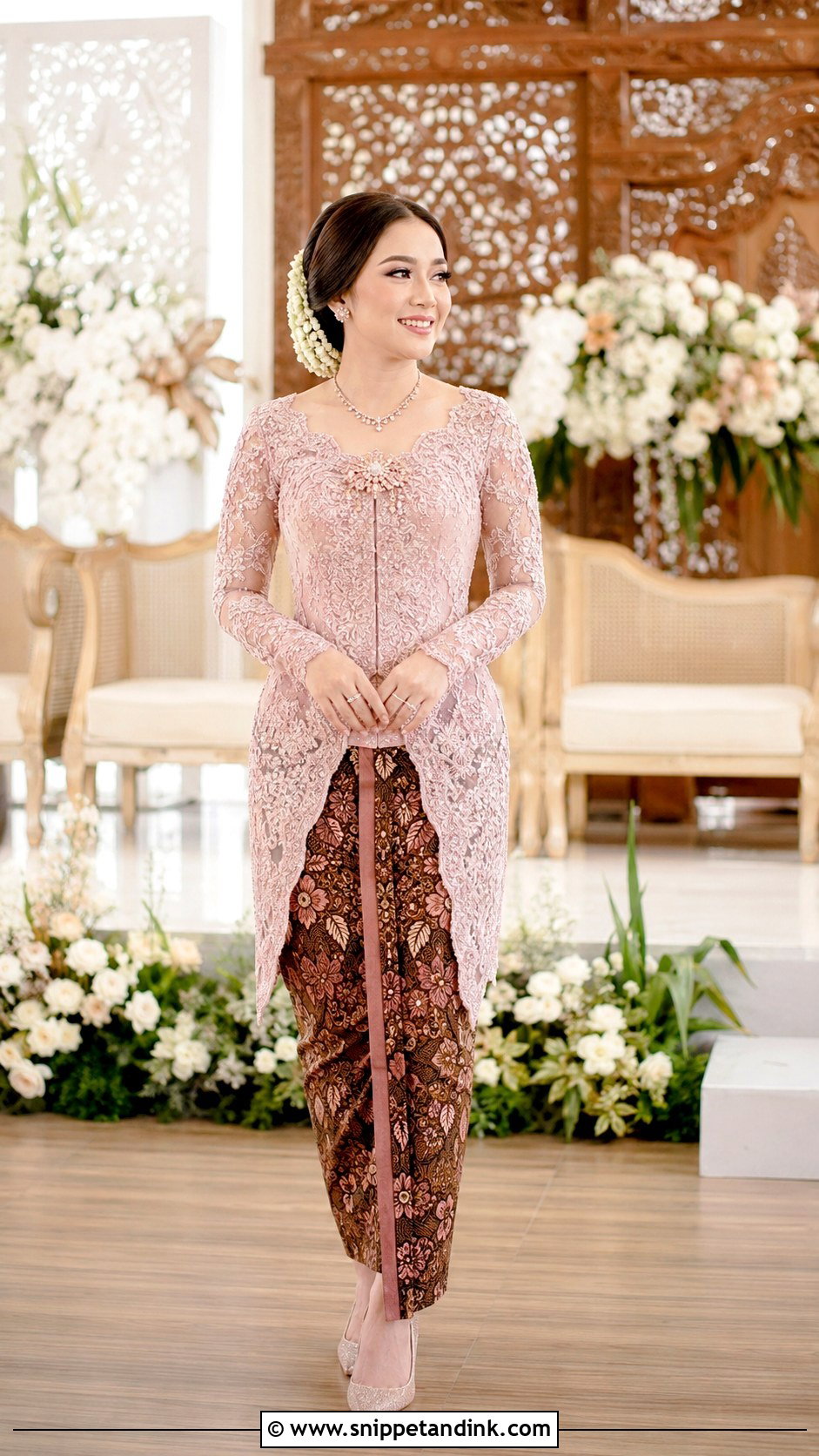
Blush works best in daylight; under yellow evening bulbs it can look beige. Choose dusty pink lace with tonal embroidery and very little crystal, and a brown, beige and muted pink batik jarik so the colors blend from top to bottom. Rose-gold earrings, a small brooch and nude pointed heels complete it. A neat bun with jasmine or a softly draped blush hijab over a secure inner cap both suit it. Keep the waist fitted but the jarik easy enough to walk in. Carved wood and white flowers are a good backdrop, and soft rose makeup ties the palette together.
9. Sage Green Javanese Wedding Hijab Outfit
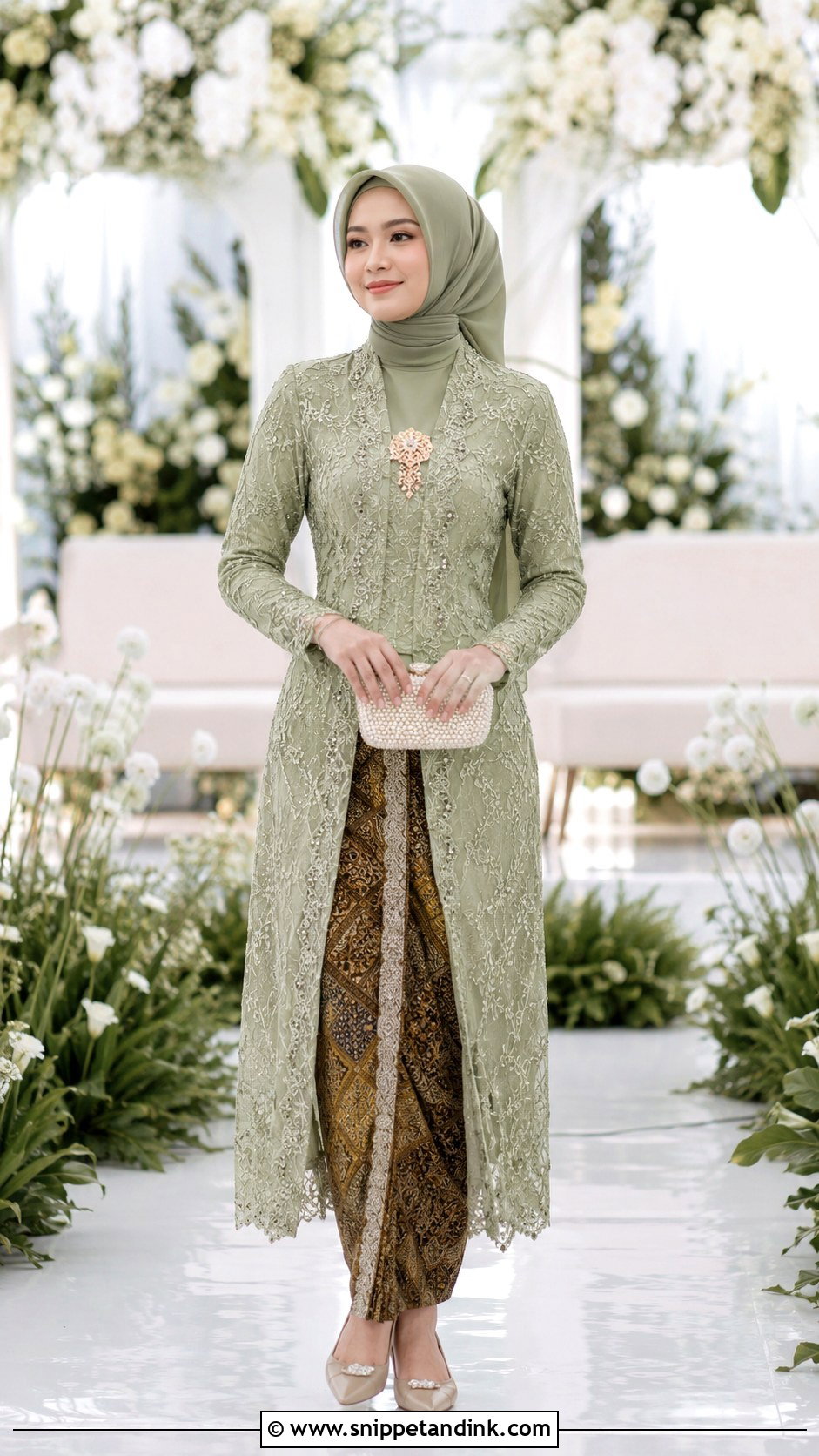
Sage is calm and reads modern, which makes it a natural fit for a modest Javanese bridal outfit. Start with a long kebaya with covered buttons, lined sleeves and embroidery around the neckline and cuffs, over a brown or olive batik skirt in a comfortable tailored cut. A matching matte hijab wrapped smoothly and tucked into the neckline frames the face, and a small brooch replaces earrings. Champagne closed-toe heels and a compact beaded clutch finish it. Pale gold suits sage better than bright yellow gold. I’ve found a detachable floor-length panel useful here: it adds ceremony drama and comes off for the reception.
10. Navy Javanese Wedding Kebaya
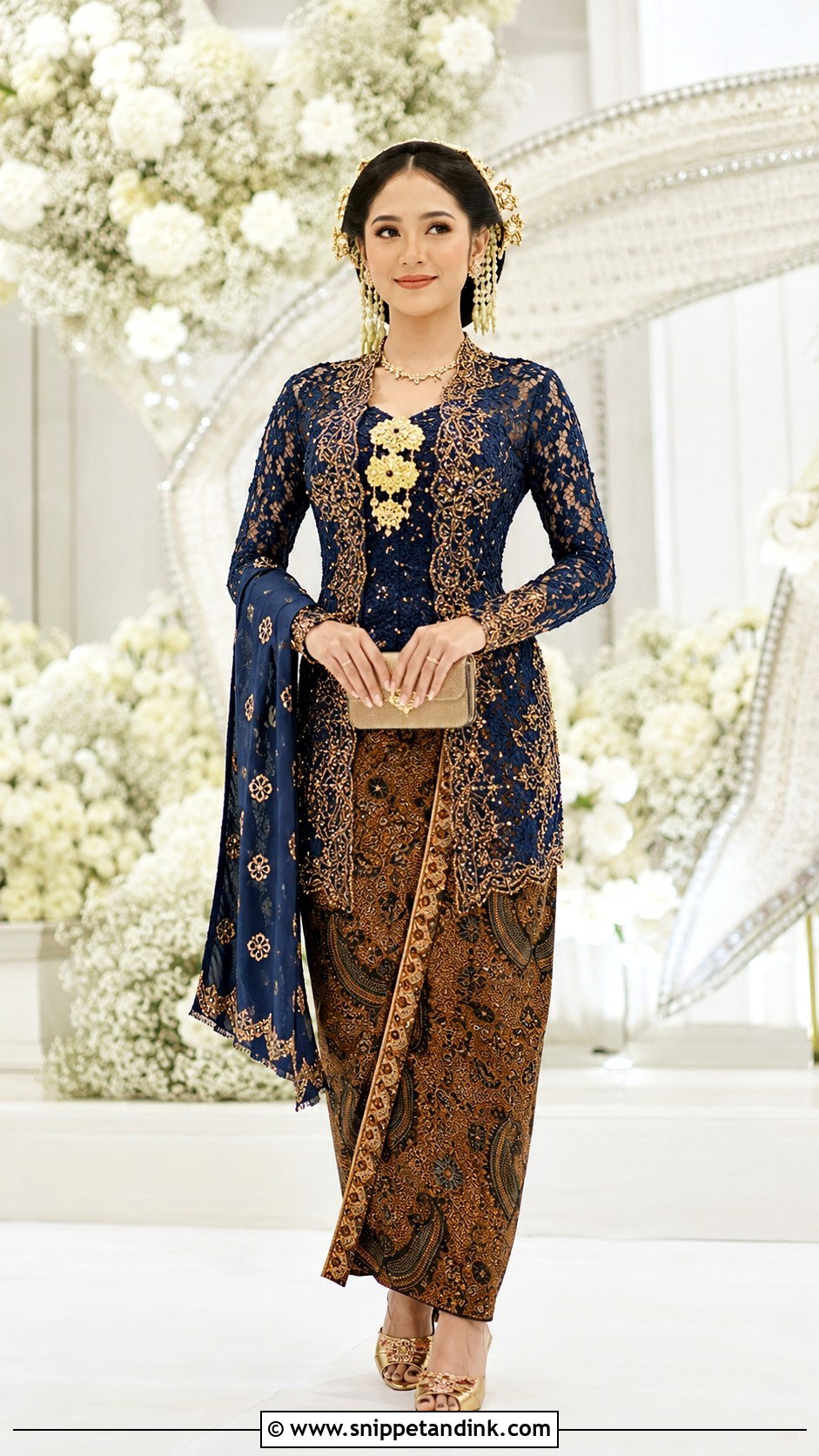
Navy gives you the depth of black with a softer edge. A structured kebaya with gold threadwork along the shoulders, front opening and cuffs, over a brown batik jarik with navy or indigo details, ties the two halves together deliberately. Metallic gold heels, a small clutch, a polished bun with gold ornaments and a little jasmine, or a fitted navy hijab, complete it. Dark cloth swallows embroidery on camera, so pick reflective thread and look at the kebaya under the venue’s actual lights. Warm neutral makeup stops the evening look from turning severe.
11. Emerald Javanese Wedding Kebaya
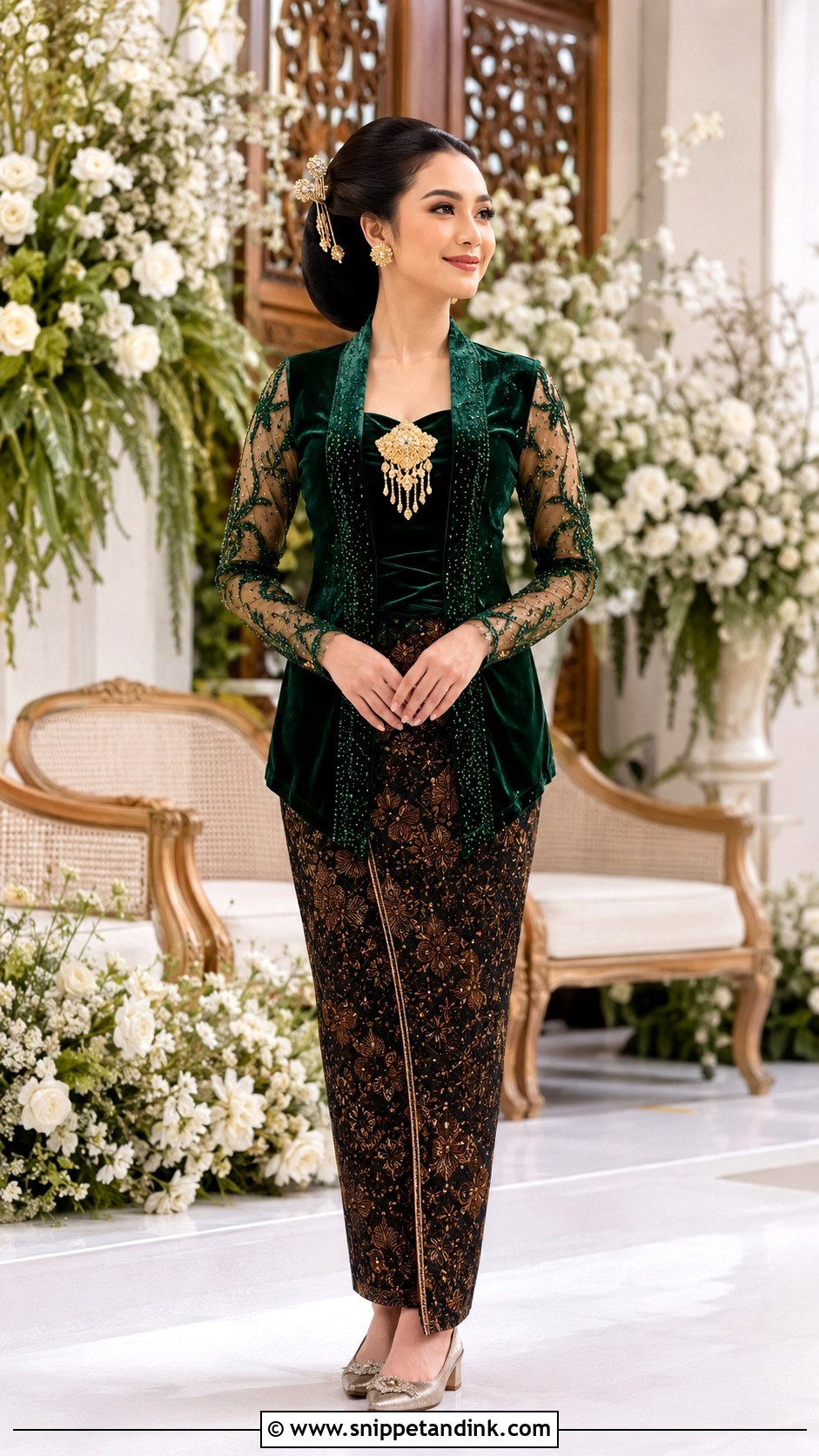
Emerald velvet or embroidered lace makes a rich reception kebaya. Cut it to just below the hip and pair it with a black and brown batik jarik with restrained gold, so the green stands out above a dark base. Gold earrings, a statement brooch and low metallic heels are enough; a sleek bun with a few structured ornaments balances better than a huge headpiece. If you choose velvet, I’d keep it to the bodice and use lighter sleeves, because velvet sleeves get hot and stiff at the elbow. White flowers, greenery and carved wood suit it, with softly defined eyes and a neutral lip.
12. Powder Blue Javanese Wedding Kebaya
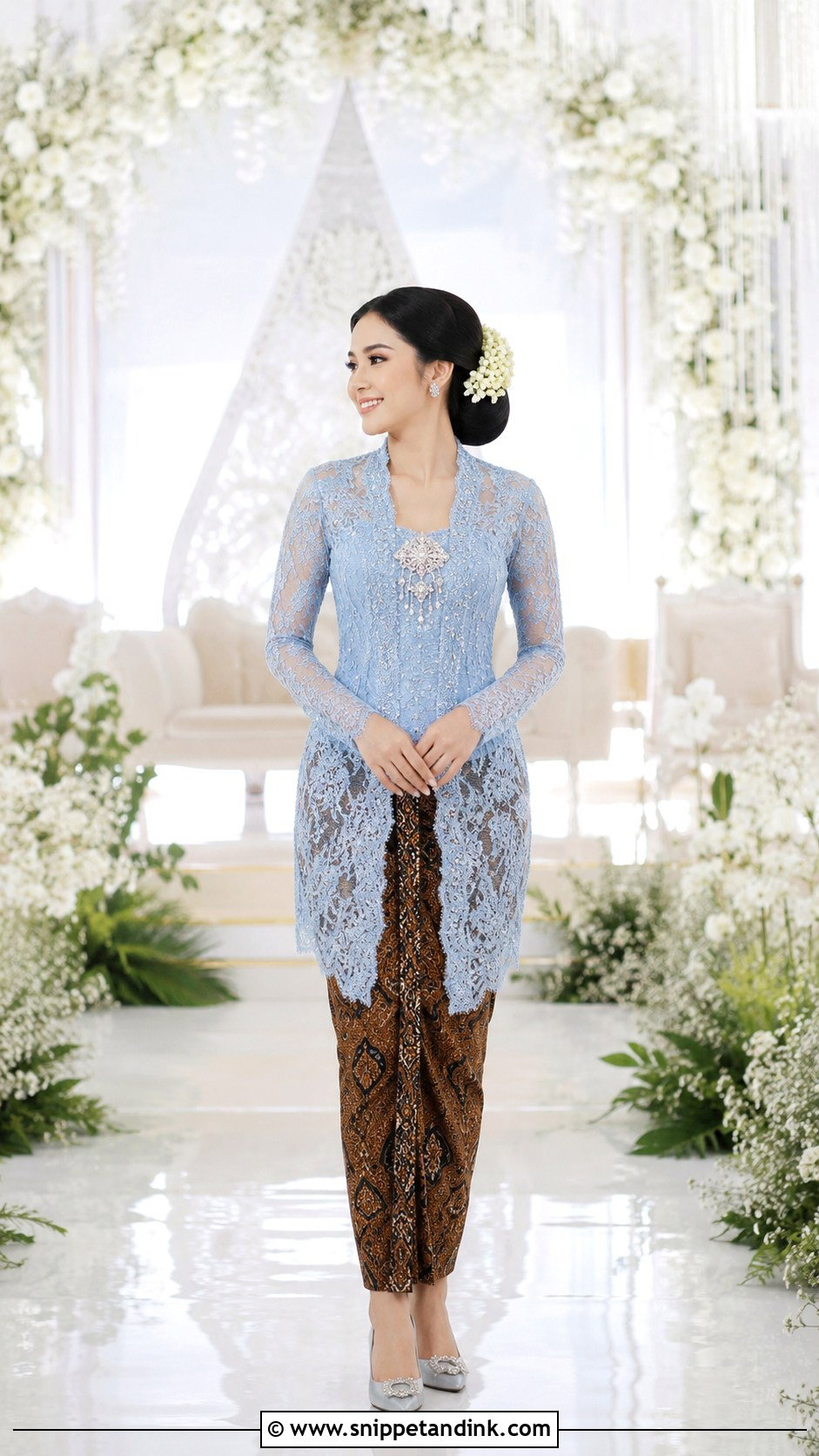
Powder blue is a morning color. Embroidered tulle over an opaque blue lining, with beading at the neckline and waist, looks fresh in daylight and bright reception rooms. A brown batik jarik grounds the pastel and keeps it from looking too delicate. Silver earrings, a crystal brooch and pale gray heels match the cool palette; gold can look slightly off against it. A clean bun with white jasmine or a blue-gray hijab with minimal folds finishes it. Keep the sleeves slim, let the kebaya finish below the hip, and leave enough room in the skirt for proper steps.
13. Long-Tail Javanese Wedding Kebaya
The long-tail kebaya adds a modern train to a fitted traditional top. A structured lace bodice follows the waist and continues into a narrow embroidered tail at the back, while the batik skirt stays visible from front and sides. Pointed heels, a refined bun and gold ornaments complete it. The weight of the tail has to sit at the waist seam, not hang from the shoulders, or the neckline will drag backward through the day; I check this by having the bride walk and turn with the tail fully laid out. Make it detachable or add a hidden wrist loop for the reception, and keep embroidery to the edges so the shape stays clear.
14. Peplum Javanese Wedding Kebaya
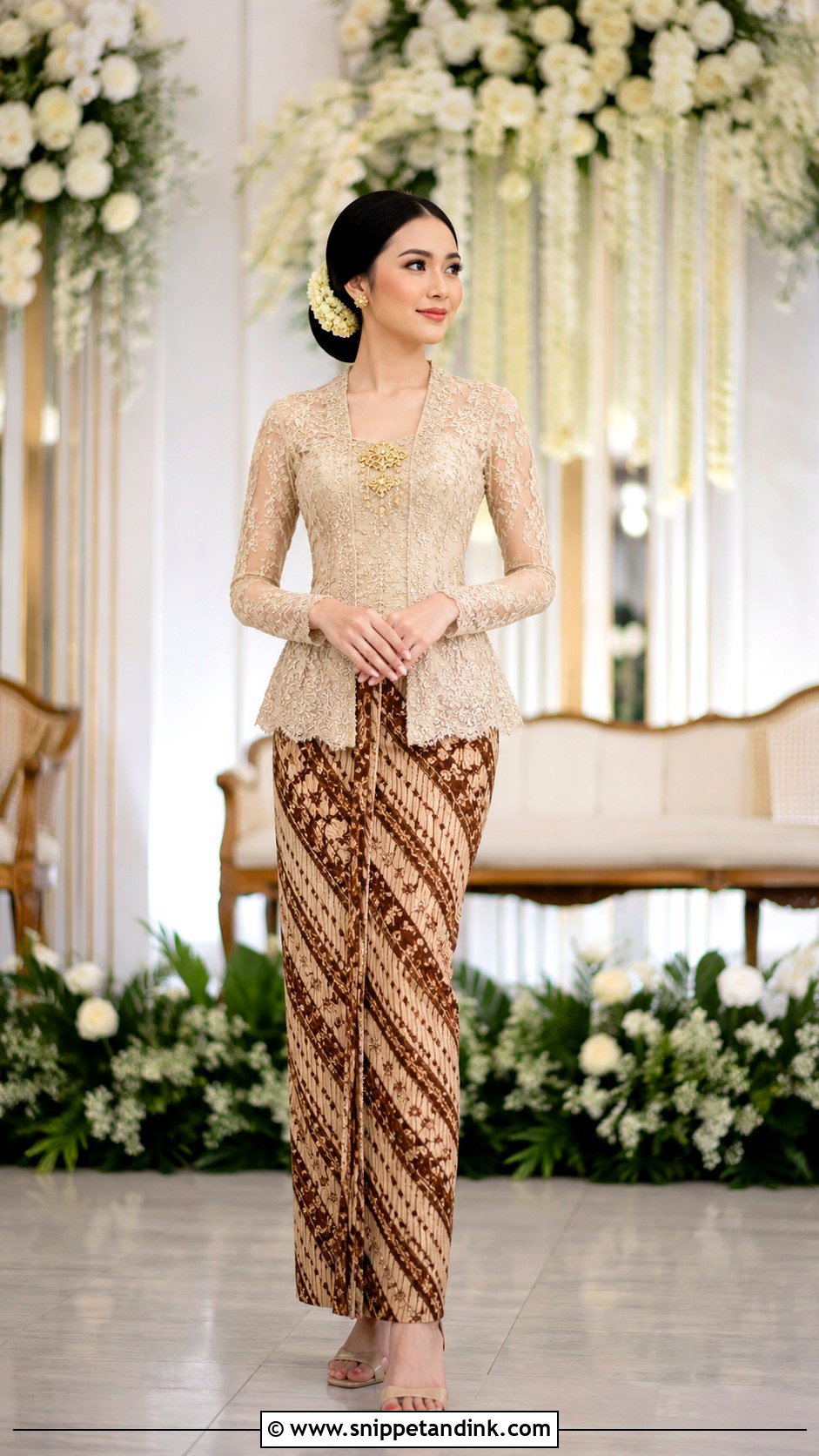
A peplum gives waist definition and a little more cover over the hips. Ask for a controlled peplum, cut and slightly structured, rather than a heavily gathered flare that adds bulk. Pair it with a straight batik jarik or tailored skirt in deep brown, black and cream, so the narrow lower half balances the shape above. Simple gold earrings, a centered brooch, nude or metallic block heels, a sleek bun and jasmine finish it. Brides who don’t want a skin-tight kebaya often feel most at ease in this one. Where the peplum ends matters: just above the widest part of the hip gives the cleanest line.
15. Cape Javanese Wedding Kebaya
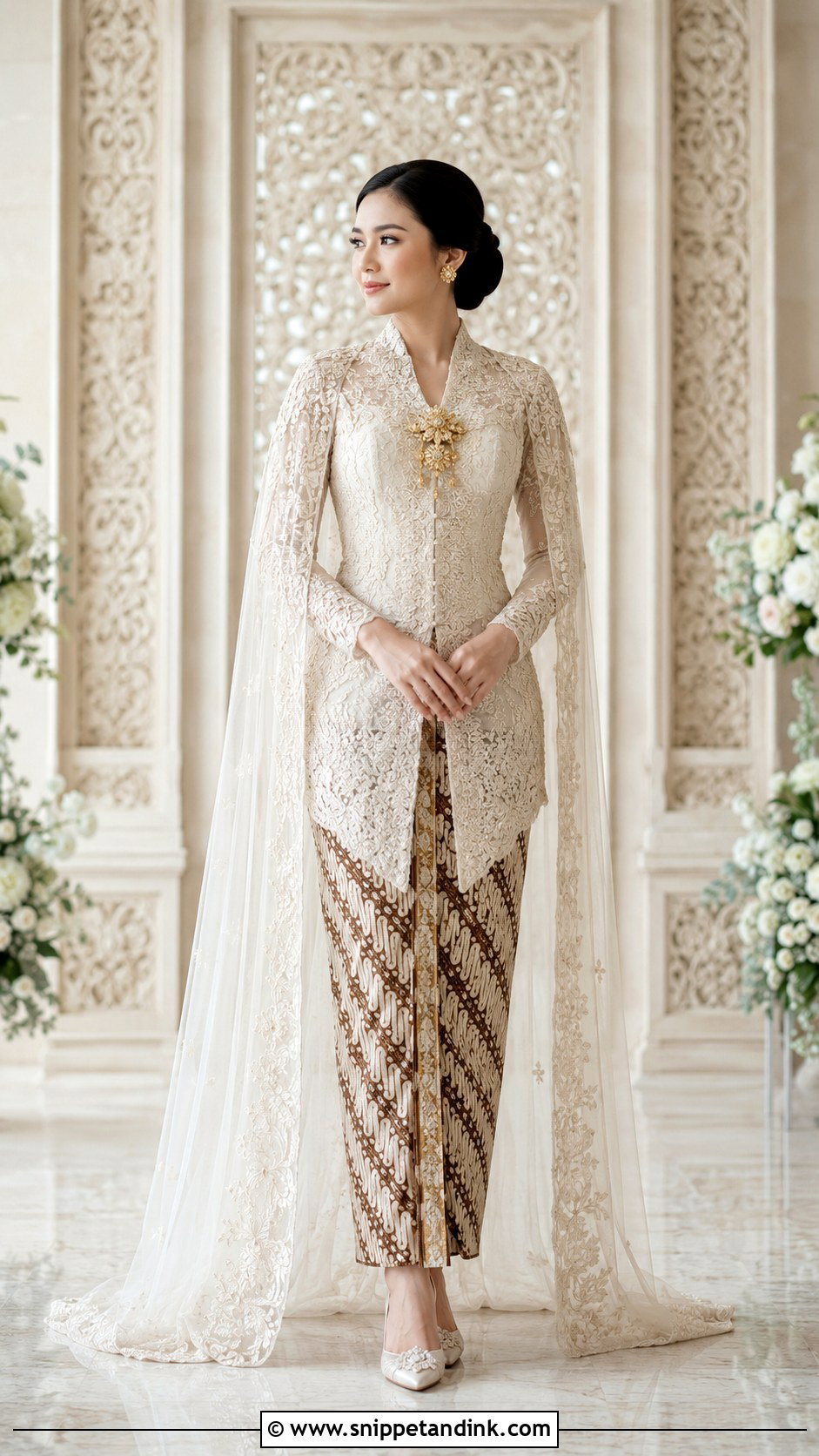
A sheer cape modernizes a fitted kebaya without hiding the batik. Start with an ivory, champagne or muted gold kebaya and matching skirt, then add a light shoulder cape embroidered at the edges with motifs from the blouse. The cape should fall behind the arms, leaving the front tailoring and brooch visible. A smooth bun, compact gold earrings and pointed closed-toe heels finish it. Brides in hijab can attach the cape beneath the neckline for a continuous modest line. Keep beading on the cape sparse; dense work makes it stiff and it stops floating. Removed, it gives you a second look without a full change.
16. Beaded Javanese Wedding Gown With Batik Panel
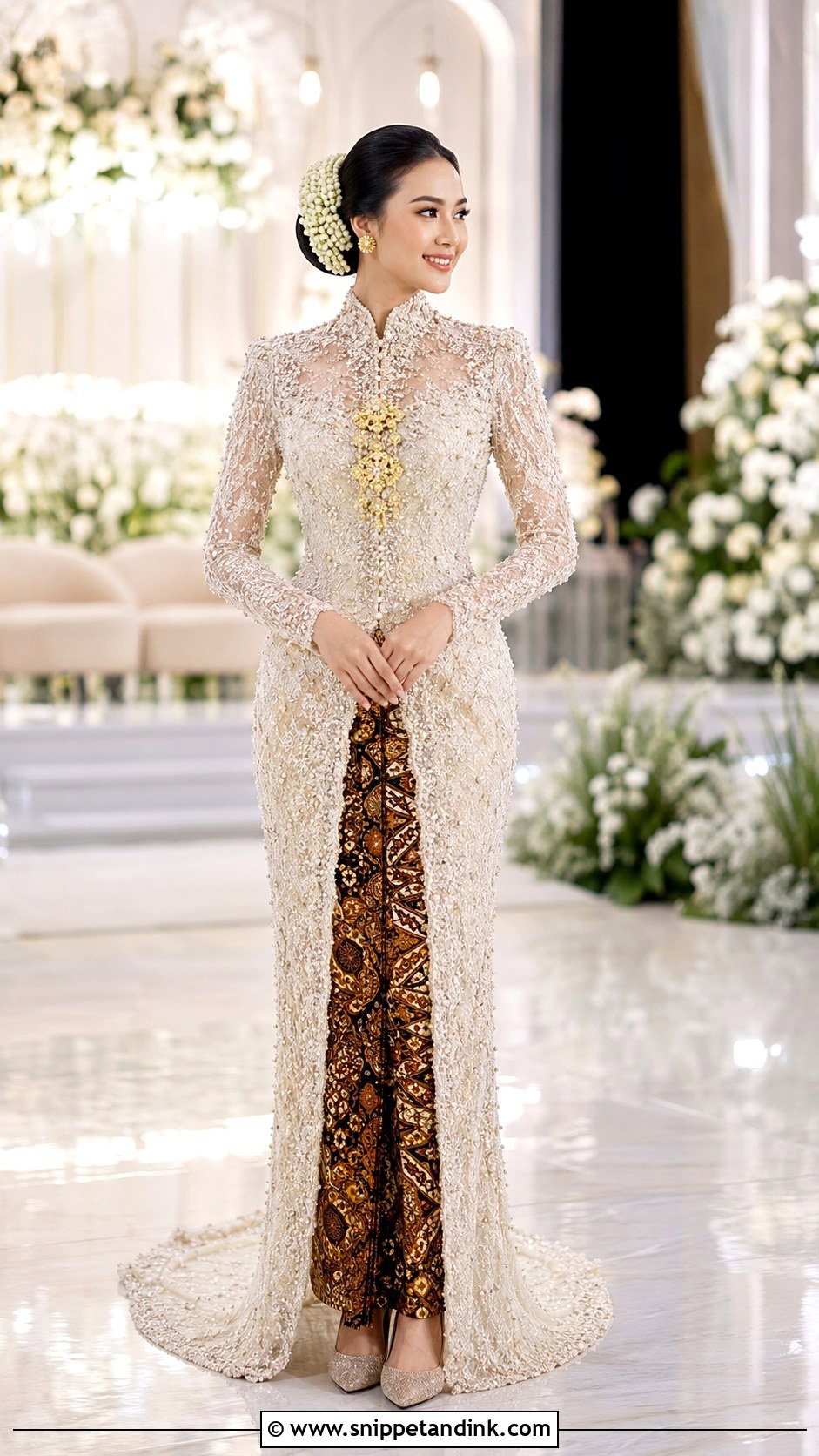
A gown with a batik panel works when the batik is part of the construction, not draped on afterward. Start with a fitted ivory or gold gown with long sleeves, a high neck and hand beading, and set a central or side batik panel from waist to floor in colors that pick up the embroidery. A narrow train adds formality without hiding the cloth. Closed-toe heels, a sleek bun or covered hijab and edited gold jewelry finish it. I ask designers to repeat one color or motif from the batik in the bodice embroidery; that single echo is what makes it look like one garment.
17. Modest Long Javanese Wedding Kebaya
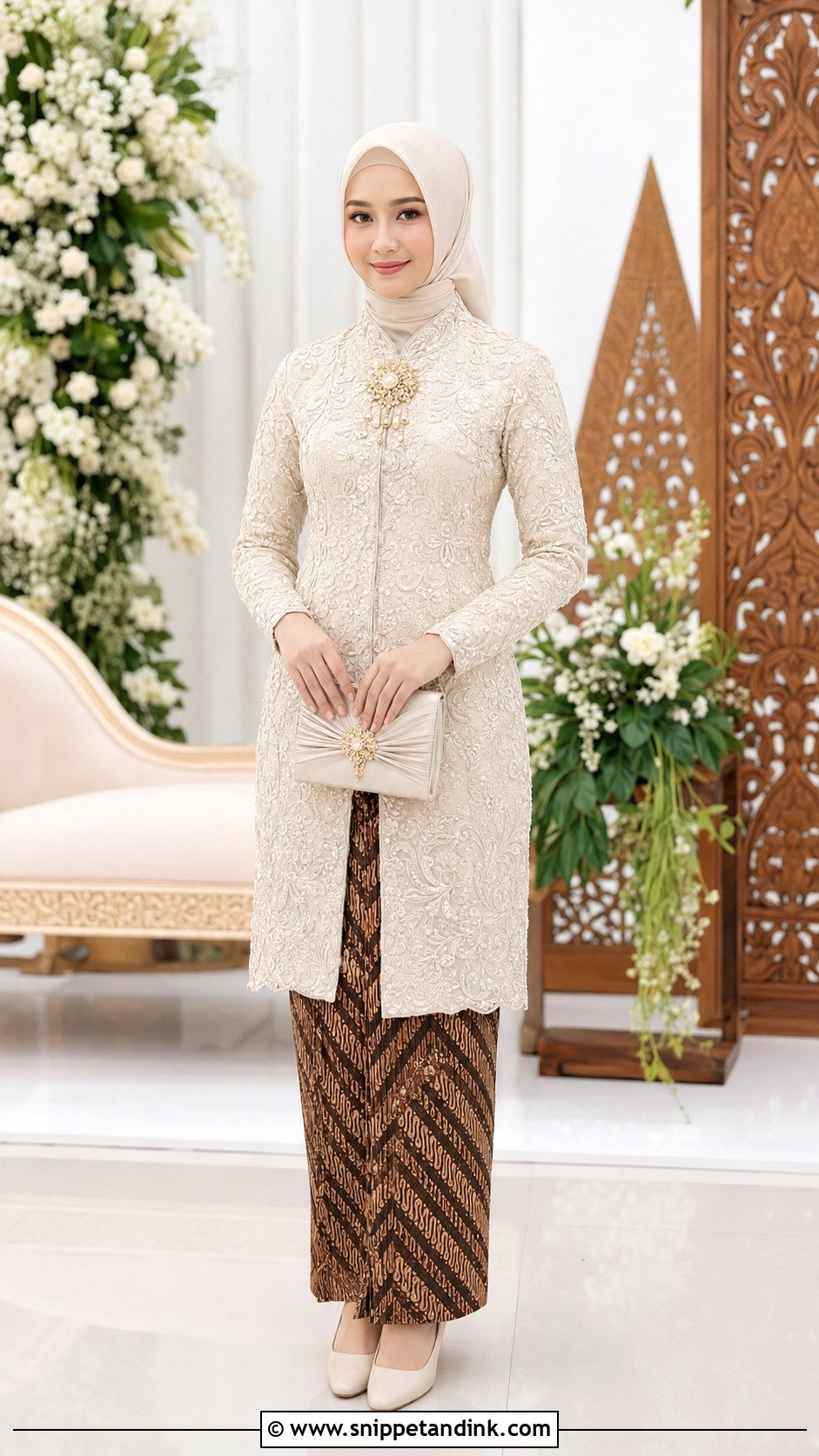
Full coverage and a defined shape can coexist. A knee-length kebaya with a high neck, lined sleeves and a gently shaped waist sits over a straight ankle-length batik skirt with a walking pleat. A satin or chiffon hijab should lie smoothly under the collar without bulk, and small gold accessories along one side of the hijab replace heavy hair ornaments. Low closed-toe heels, a small clutch and one brooch finish it. A detail I like: fully line the bodice but leave the kebaya hem slightly sheer below the hip, so a glimpse of batik shows through.
18. Plus-Size Javanese Wedding Kebaya
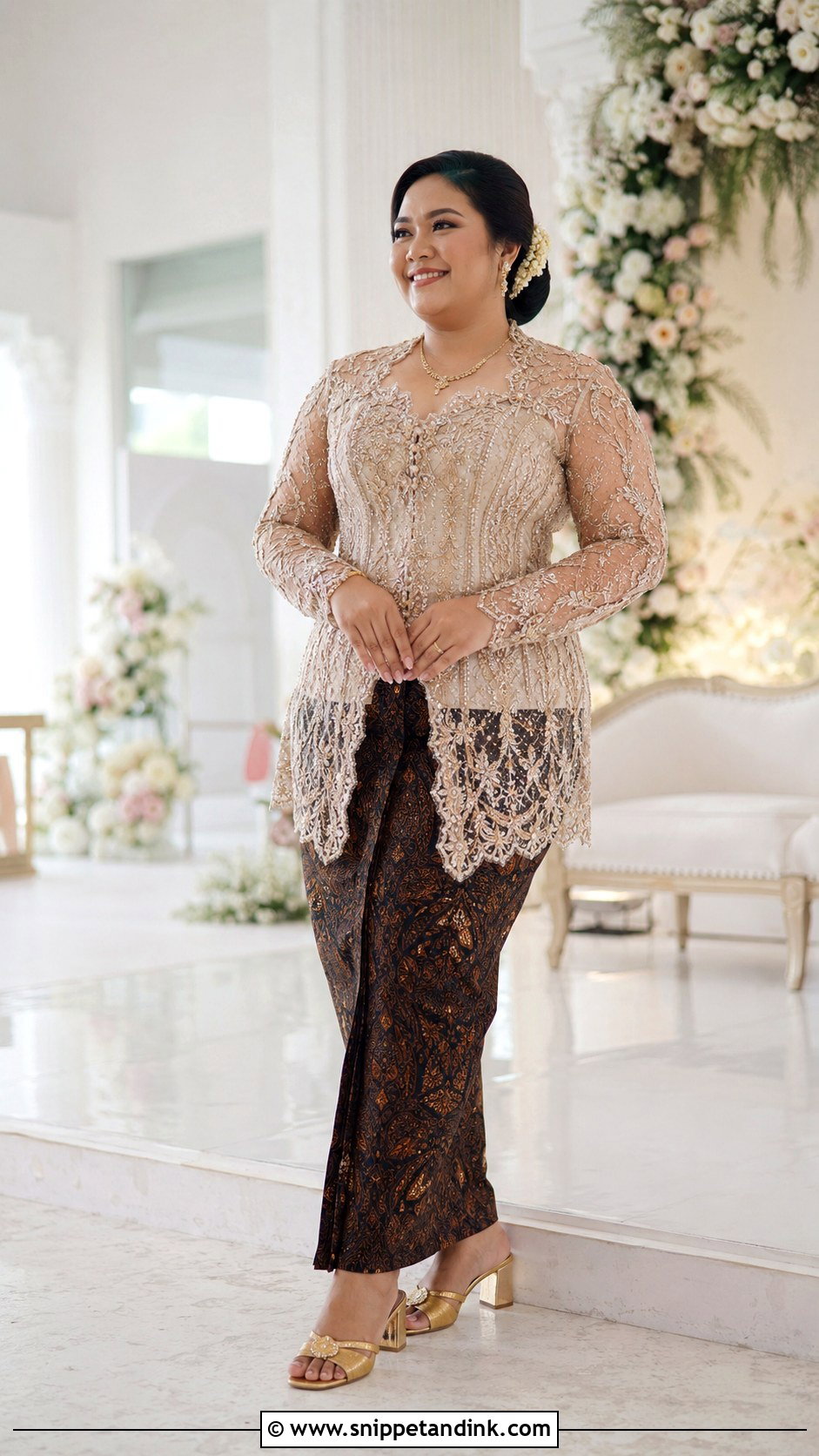
For a plus-size kebaya, the work happens in the pattern, not the decoration. Ask for supportive lining, seams placed to follow your shape, and real room through the arms and shoulders, since a tight armhole is the first thing that becomes painful. A V-shaped or open kutubaru-style front lengthens the line, and embroidery that runs vertically adds definition. Pair it with a smooth batik skirt that follows the body without restricting steps, plus stable block heels, a secure bun and medium-scale gold jewelry. Focus beading at the neckline, cuffs and front border rather than everywhere. At fittings, sit, walk and lift your arms before you sign off.
19. Mature Bride Javanese Wedding Kebaya
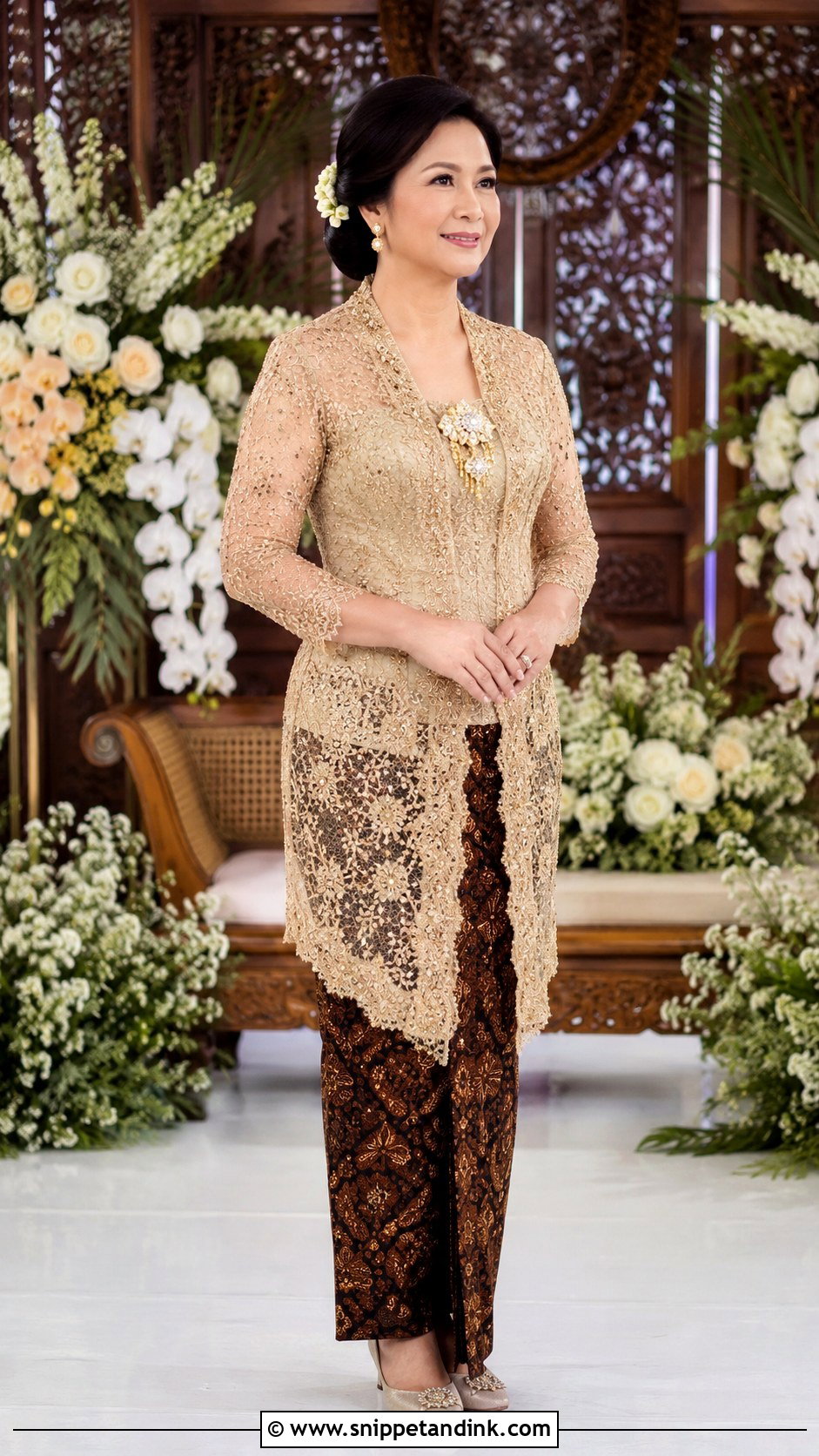
For a mature bride, fabric quality and fit say more than sparkle. Ivory, mocha, navy or soft gold with refined embroidery looks better than dense crystal, and a traditional dark brown batik jarik gives contrast and depth. Three-quarter or full sleeves and a slightly open neckline balance the upper body. Comfortable low heels, pearl-and-gold earrings and one good brooch are enough, with a neat low bun and a little jasmine, or a smoothly draped hijab. I’d insist on a breathable lining and a hidden walking pleat, because comfort shows in posture and posture shows in every photograph.
20. Detachable Train Javanese Wedding Kebaya
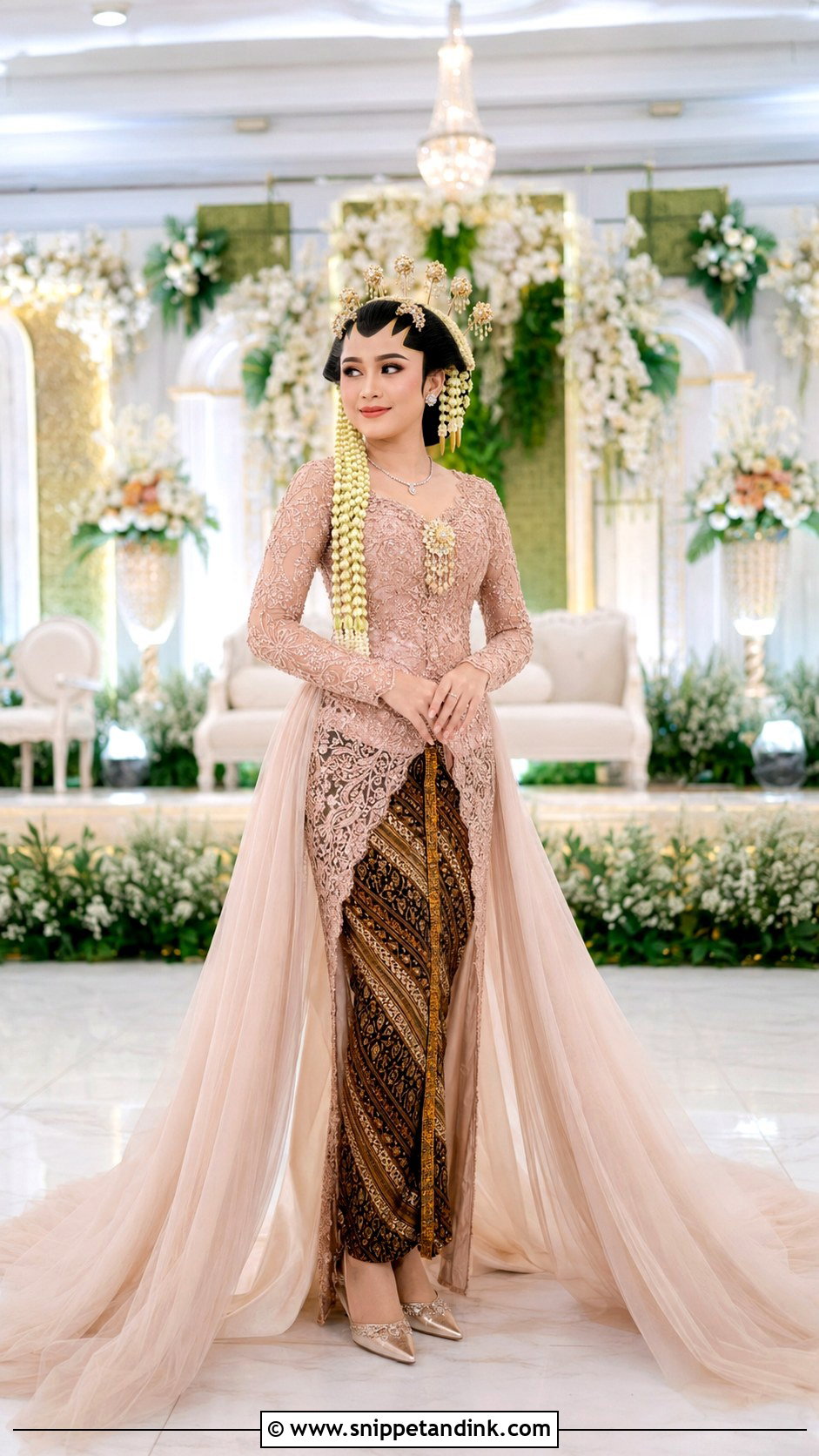
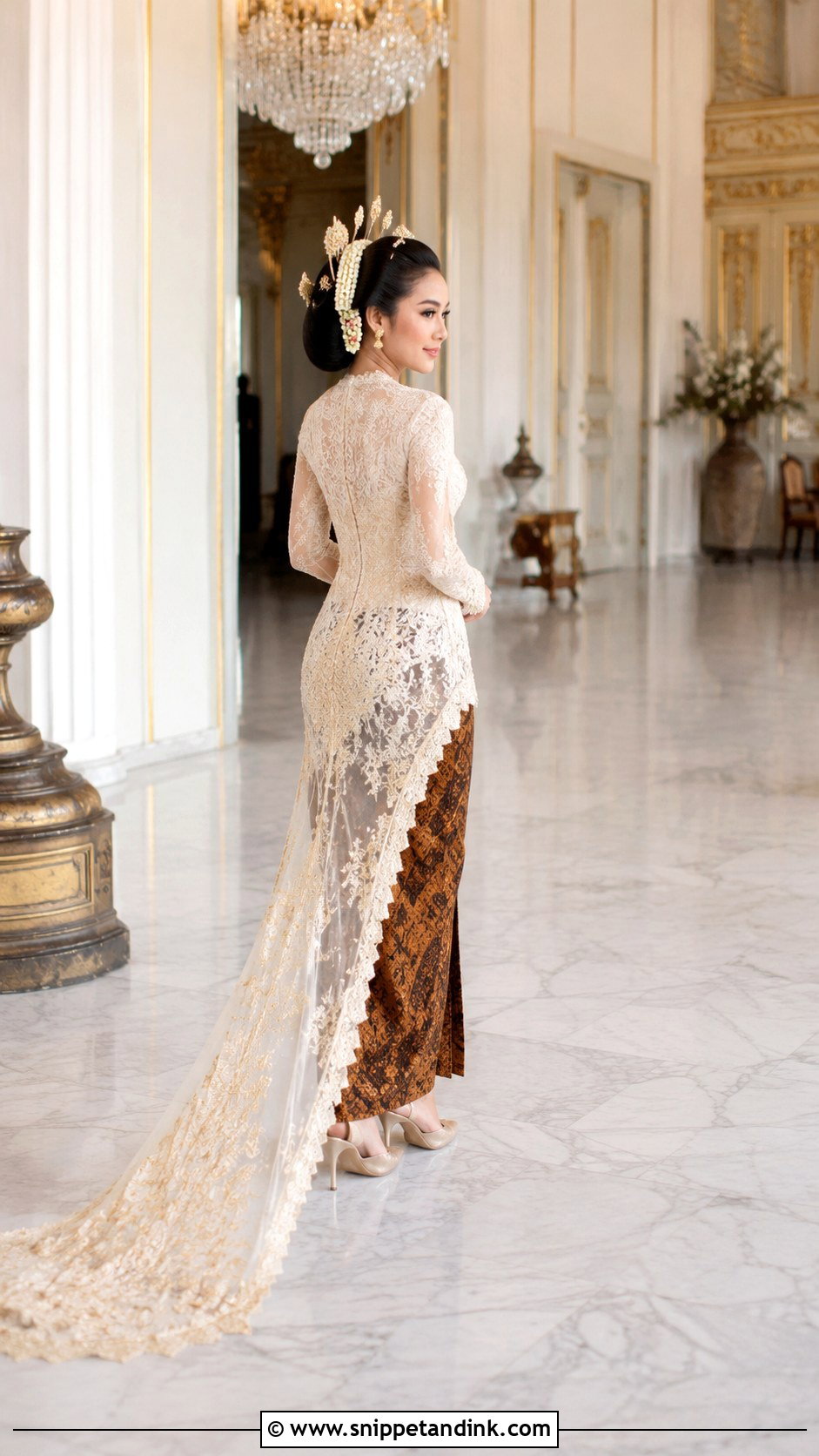
A detachable train covers both a grand entrance and an easy reception. The base is a fitted embroidered kebaya and coordinated batik skirt in ivory, champagne, blush or another chosen color, with the train attached at the waist so it frames the batik instead of hiding it. Matching lace, organza or embroidered tulle keeps the design consistent. A polished bun, gold ornaments, jasmine and formal heels suit the ceremony; after photographs, the train comes off and lower shoes go on. The hooks need to vanish once it’s removed, so check that at the final fitting. It suits days where the akad and reception happen back to back.
Reading a Batik Jarik Before You Wrap It
Not every batik is the same cloth. Batik tulis is drawn by hand with wax, which shows as slight irregularity in the lines and a pattern that goes through to the back almost as clearly as the front. Batik cap is stamped with a copper block, so the repeats are more even. Printed batik-pattern fabric has no wax process at all, and the back is usually much paler. All three can look good in photographs, but a family heirloom or a hand-drawn piece deserves the most careful wrapping.
Motif matters too. Sido mukti and sido asih are long associated with the bride and groom, while truntum is traditionally worn by the parents. If your family has its own customs, they come first; I always ask the mother of the bride before choosing the cloth.
After the wedding
- Air the jarik and kebaya the next day before folding anything away; perspiration and perfume mark silk and batik over time.
- Hand wash batik gently in cool water with a mild soap, and dry it in the shade. Direct sun fades natural brown dyes.
- Store it folded with acid-free tissue and refold it along different lines every few months, so a permanent crease doesn’t form.
- Have beaded or velvet kebayas cleaned by a specialist rather than washing them at home.
Batik, Kebaya and the Hours Between Akad and Reception
Traditional detail and modern tailoring sit comfortably together in a Javanese bridal wardrobe. Paes Ageng and Solo Basahan carry the strongest cultural presence, while ivory kebayas, modest cuts, capes, peplums and detachable trains give you room to adapt. Treat the kebaya, batik, shoes, jewelry, hair and accessories as one outfit rather than separate purchases. For regional wrapping, paes makeup or meaningful family textiles, work with an experienced dresser. And wear every layer at least once before the wedding, walking, sitting and kneeling, so nothing surprises you on the day.
You'll Like These Ideas:




Leave a Reply