
Lace is the fabric I pull most often when a bride says she wants something romantic but can’t yet describe the shape. That’s because lace isn’t one look. A fine Chantilly reads light and soft, a corded Alencon reads structured and formal, and a chunky guipure can feel almost modern. The right gown comes down to your venue, how you like to move, and what you want the camera to pick up. Some brides end up in full lace sleeves under a cathedral veil; others want a single sheer panel or a sleek lace sheath with almost nothing added. Below are 25 lace gowns, each styled from head to toe with the veil, shoes and jewelry I’d put with it, plus notes on how each one actually wears.
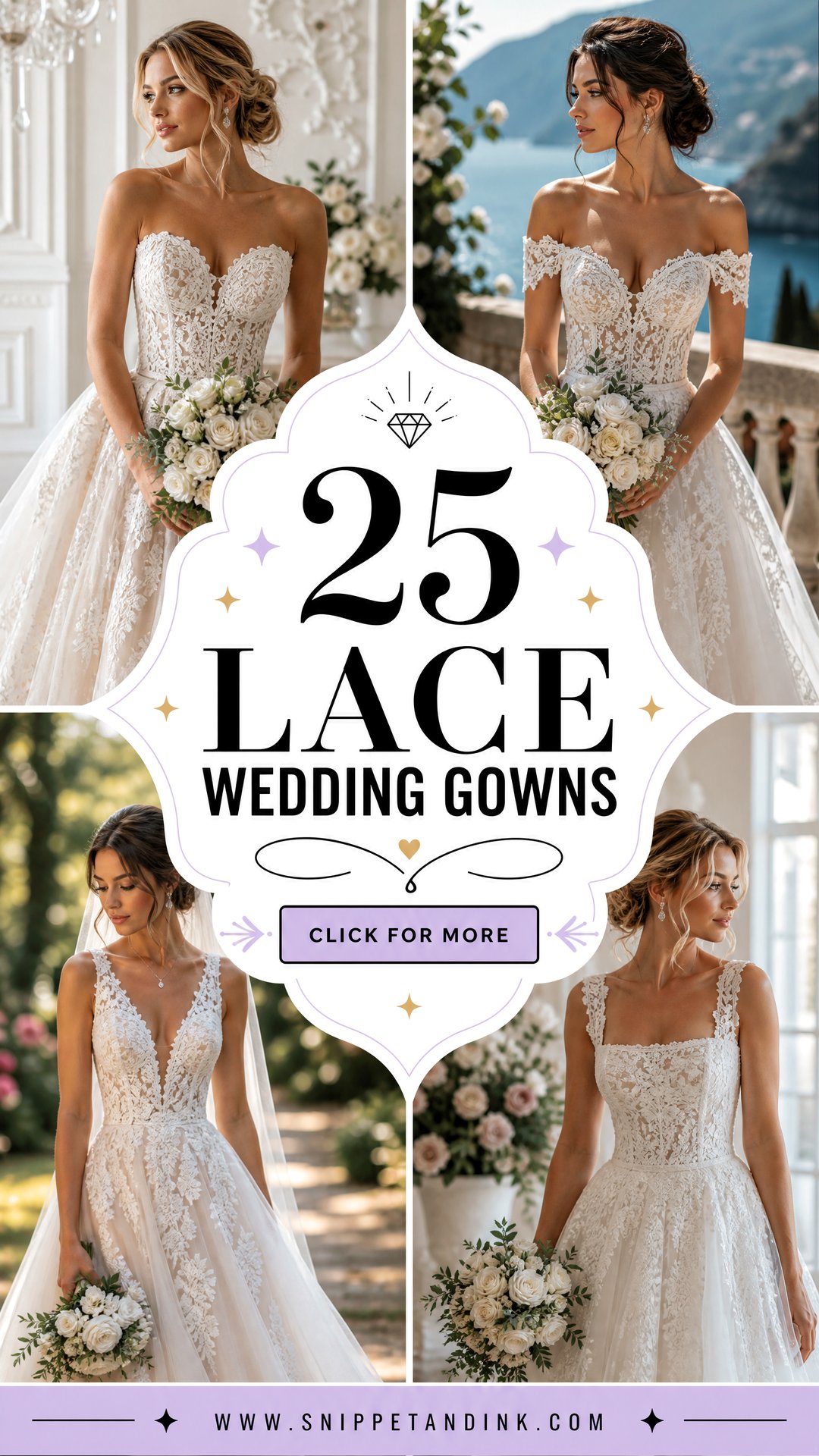
Feel the Lace Before You Fall for a Silhouette
At an appointment, I hand a bride swatches before we pull a single gown. Lace types behave so differently that they rule out shapes on their own. Chantilly is a fine net with a light outlined pattern, so it drapes and moves; it suits sheaths and soft A-lines and snags easily. Alencon has a cord around each motif, which gives it body and lets it sit flat on a structured bodice. Guipure has no net at all; the motifs connect directly, so it’s heavier, holds its own shape and reads more modern.
Then I look at what’s underneath. Most lace sits over a lining, and the lining color changes the lace. Nude lining makes the pattern look like it’s on skin; ivory lining softens it. Ask to see the gown in daylight near a window, because shop lighting flatters everything.
Why lace alterations take longer
A seamstress can’t simply cut a lace hem. She usually removes the lace edge, shortens the base, and re-appliqués the scallop by hand so the border still runs unbroken. The same goes for taking in a lace side seam. I tell brides to allow for at least two or three fittings and to start them roughly two to three months before the wedding, and to expect lace work to cost more than a plain hem. Bring your actual shoes and undergarments to every fitting.
1. Long Sleeve Lace Wedding Gown
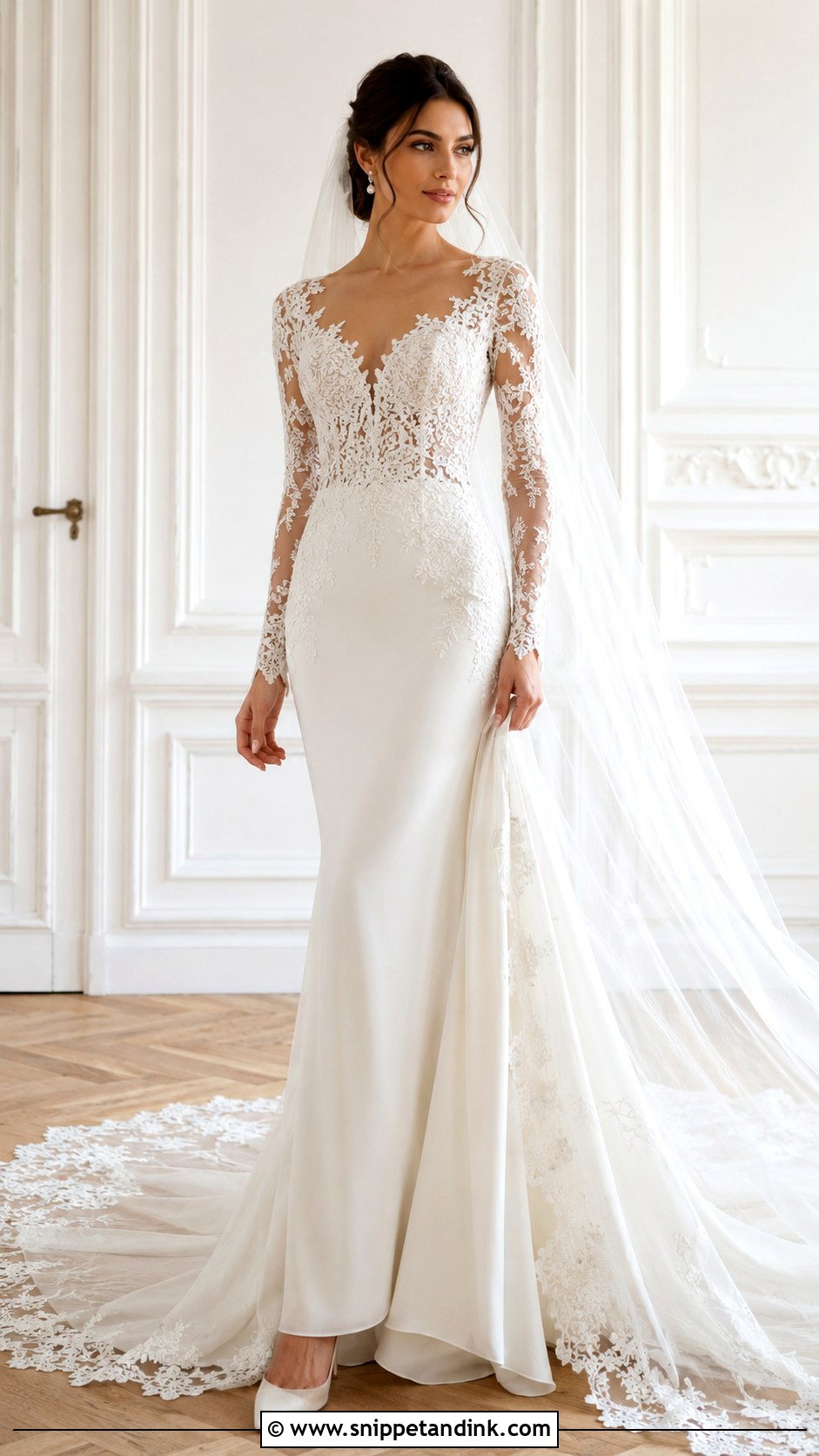
Long lace sleeves are where I spend the most time at fittings, because a sleeve that’s a touch too tight at the bicep shows the moment you lift a bouquet or hug someone. I always have a bride raise both arms and reach forward before we sign off. Sheer sleeves with scalloped wrists look the most delicate; fully lined ones are warmer and hide more. Under the sleeves, an A-line, fitted or soft ball skirt all work. I’d style it with pearl drops, a cathedral veil and pointed ivory heels, and keep the bouquet to white roses, ranunculus or baby’s breath so the lace still leads. Heavier lace suits fall and winter; a light lace sleeve is fine in spring.
2. Mermaid Lace Wedding Gown
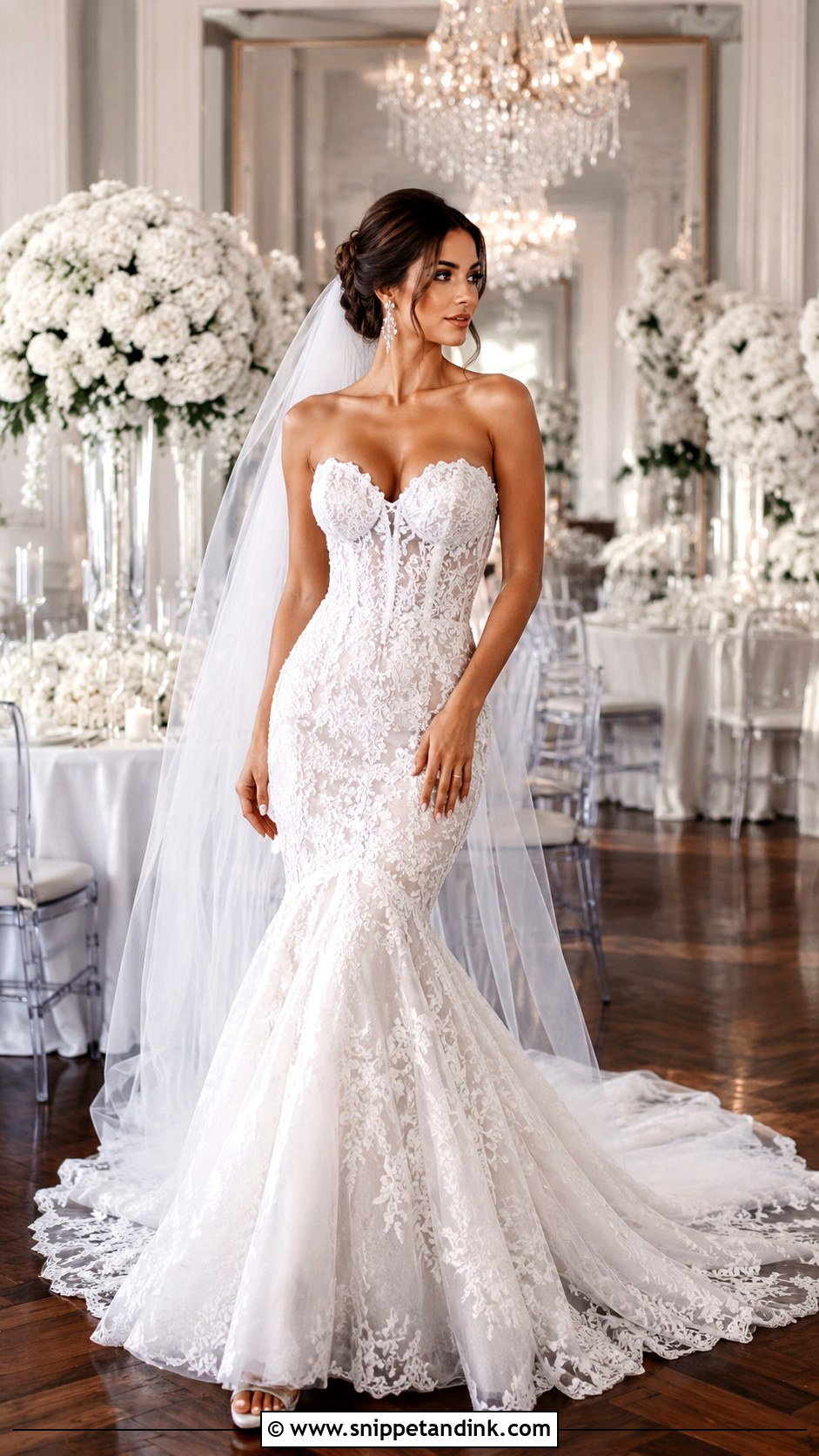
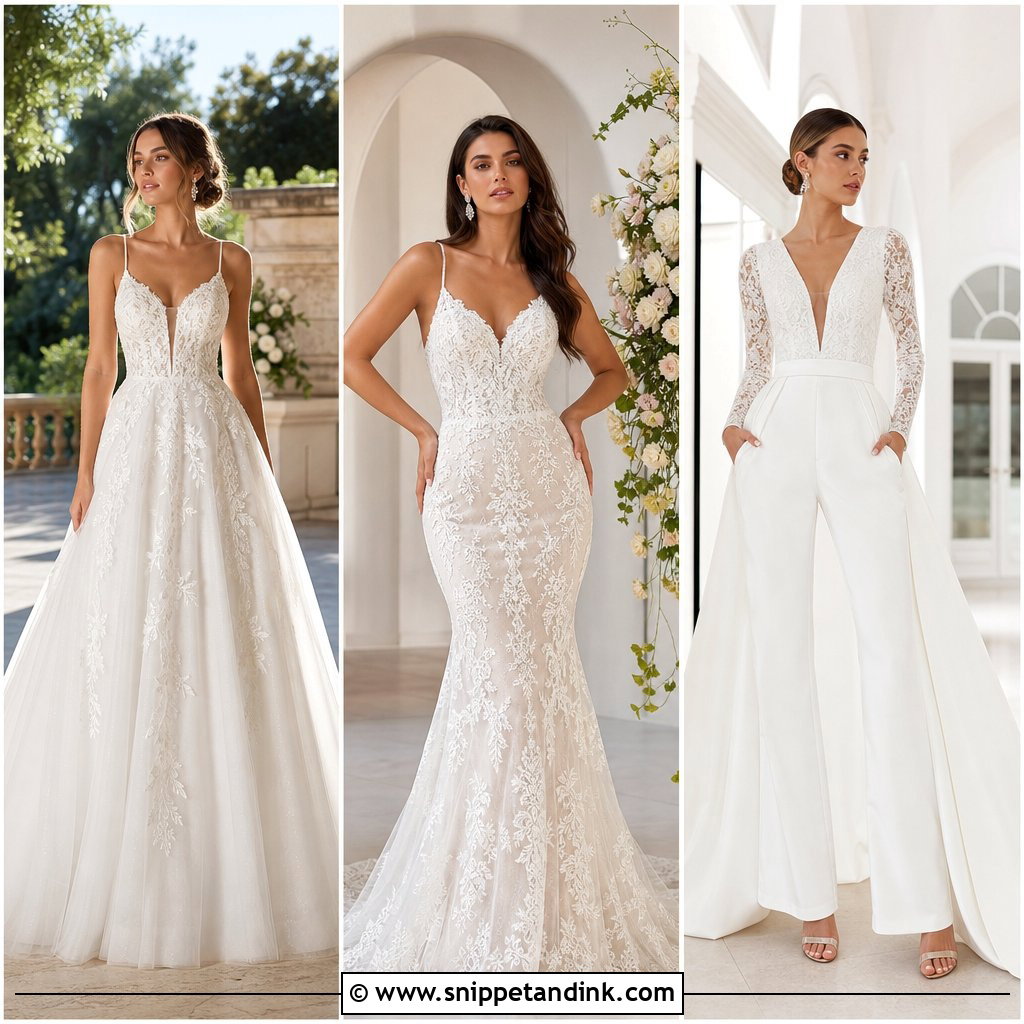
A mermaid lace wedding gown fits close through the waist and hips and only releases near the knee, so the first thing I test is the walk and the sit. If the flare starts too low, you’ll shuffle down the aisle. Floral appliqués, illusion straps or a sweetheart neckline soften all that structure. I keep the styling sleek: glossy waves, crystal earrings, slim ivory heels, and a long veil to balance the strong line of the skirt. Ballrooms and hotel evenings suit it best. Plan on a bustle and a quick practice of sitting at the reception table before the day.
3. A Line Lace Wedding Gown
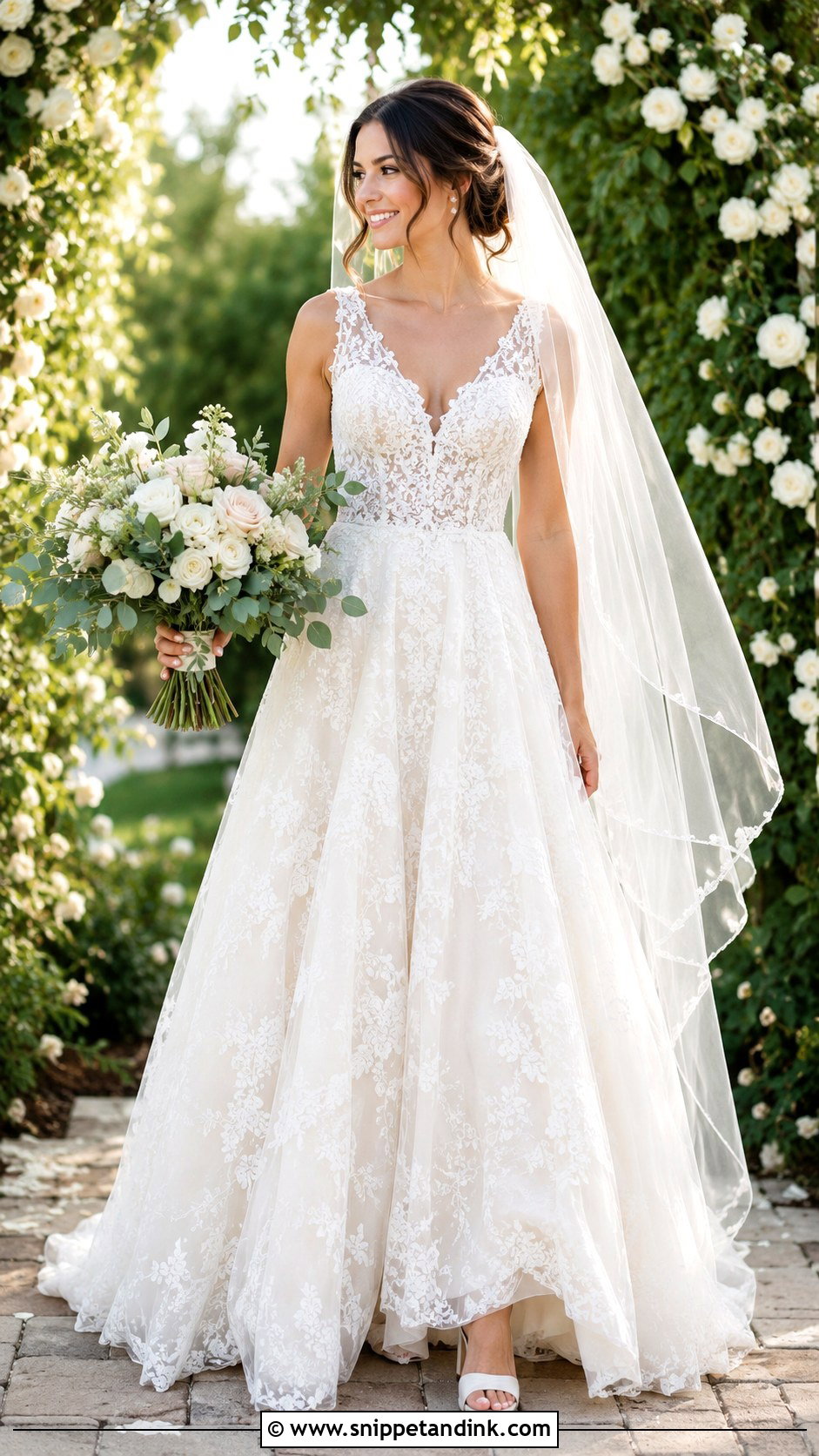
The A-line is the shape I suggest when a bride is unsure, because it forgives a lot and doesn’t fight you when you walk. The bodice holds the waist and the skirt opens gradually, so there’s structure without anything gripping your thighs. Soft floral lace leans garden; geometric lace looks cleaner and more current. For grass or stone paths I’d swap stilettos for block heels, add a fingertip veil and pearl studs, and call it done. It’s the gown I see brides relax in fastest at an outdoor or estate ceremony.
4. Ball Gown Lace Wedding Gown
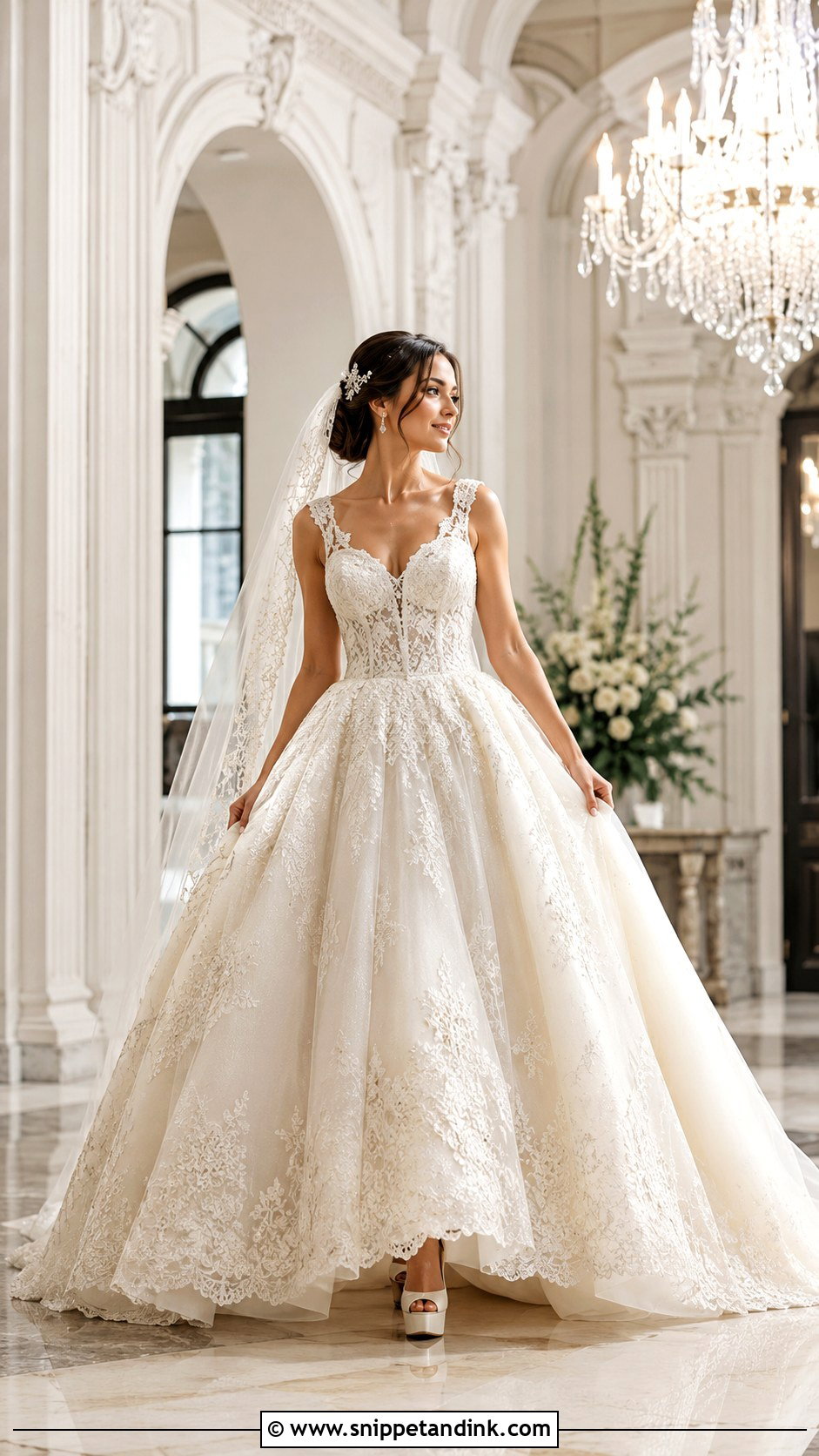
A lace ball gown is a commitment, mostly in weight. Layers of tulle and lace under a full skirt can be heavy by the reception, so I ask brides to stand in the sample for a good twenty minutes, not two. Lace can cover the whole gown or sit only on the bodice and hem, which lightens it noticeably. A structured veil, a sparkling comb and satin platforms finish it, and I’d keep jewelry minimal. It needs the room to match: high ceilings, a wide aisle, a large guest list. In a small space it can swallow you.
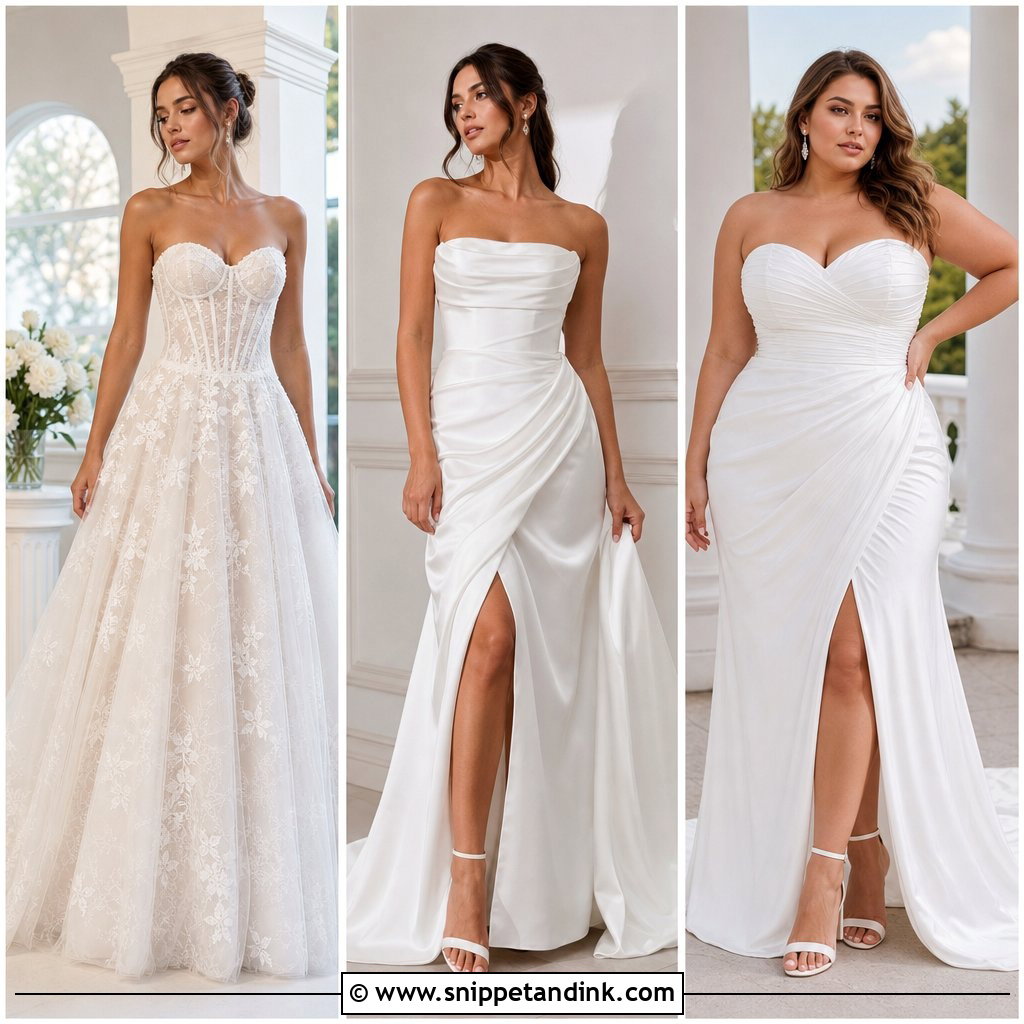
5. Strapless Lace Wedding Gown
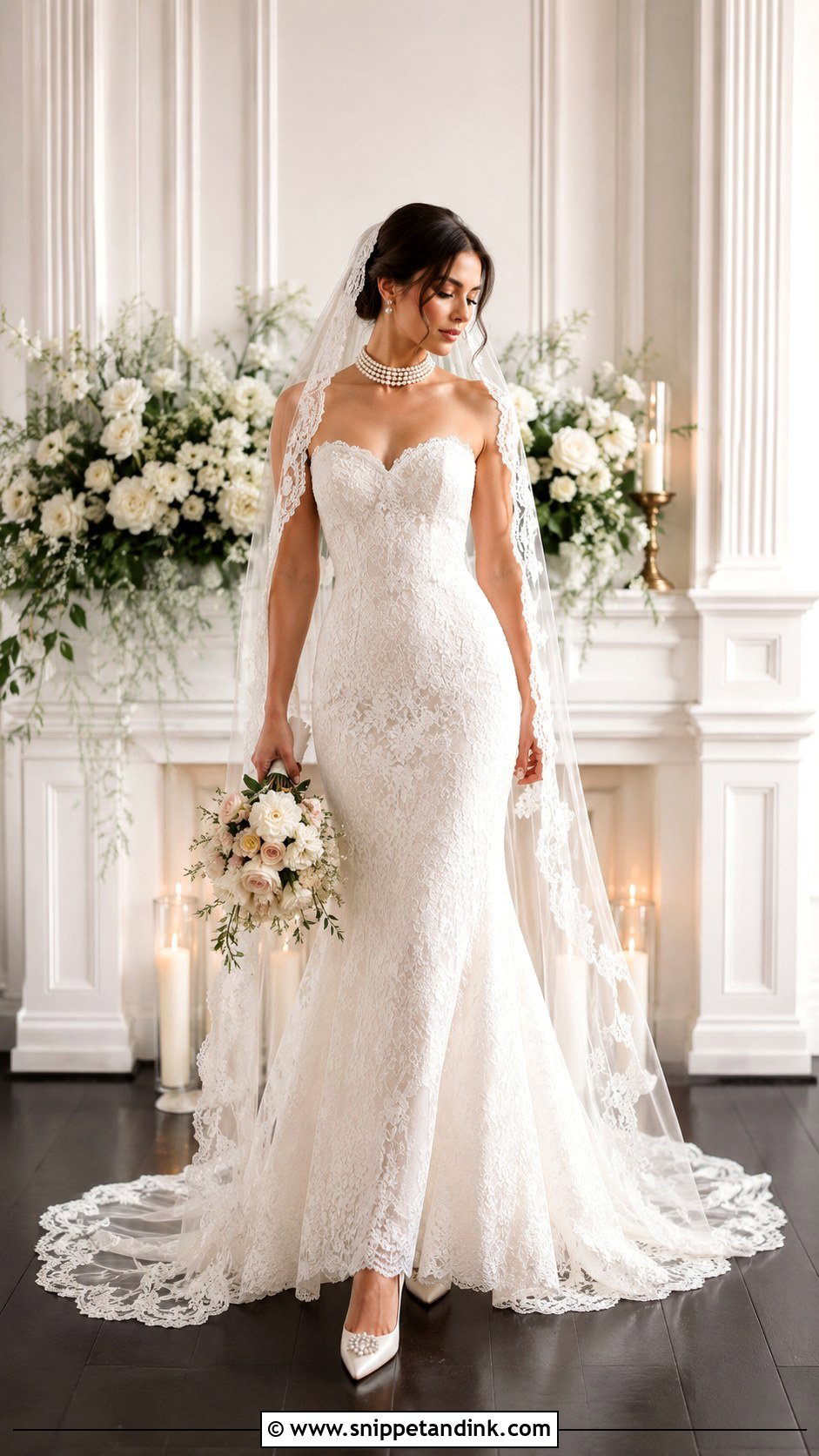
Strapless lace is easy to accessorize because the neckline leaves your shoulders and collarbone open. What I check first is the grip of the bodice. If you’re tugging it up during the trial, you’ll tug it up all night, so we add boning or a silicone band at the top edge. A sweetheart neckline feels classic; a straight-across one looks more modern. I’d add a lace-trim veil, a pearl choker or small diamond studs, and pointed pumps or delicate ankle straps. Loose waves, a polished bun or a half-up style all sit well above it.
6. Off Shoulder Lace Wedding Gown
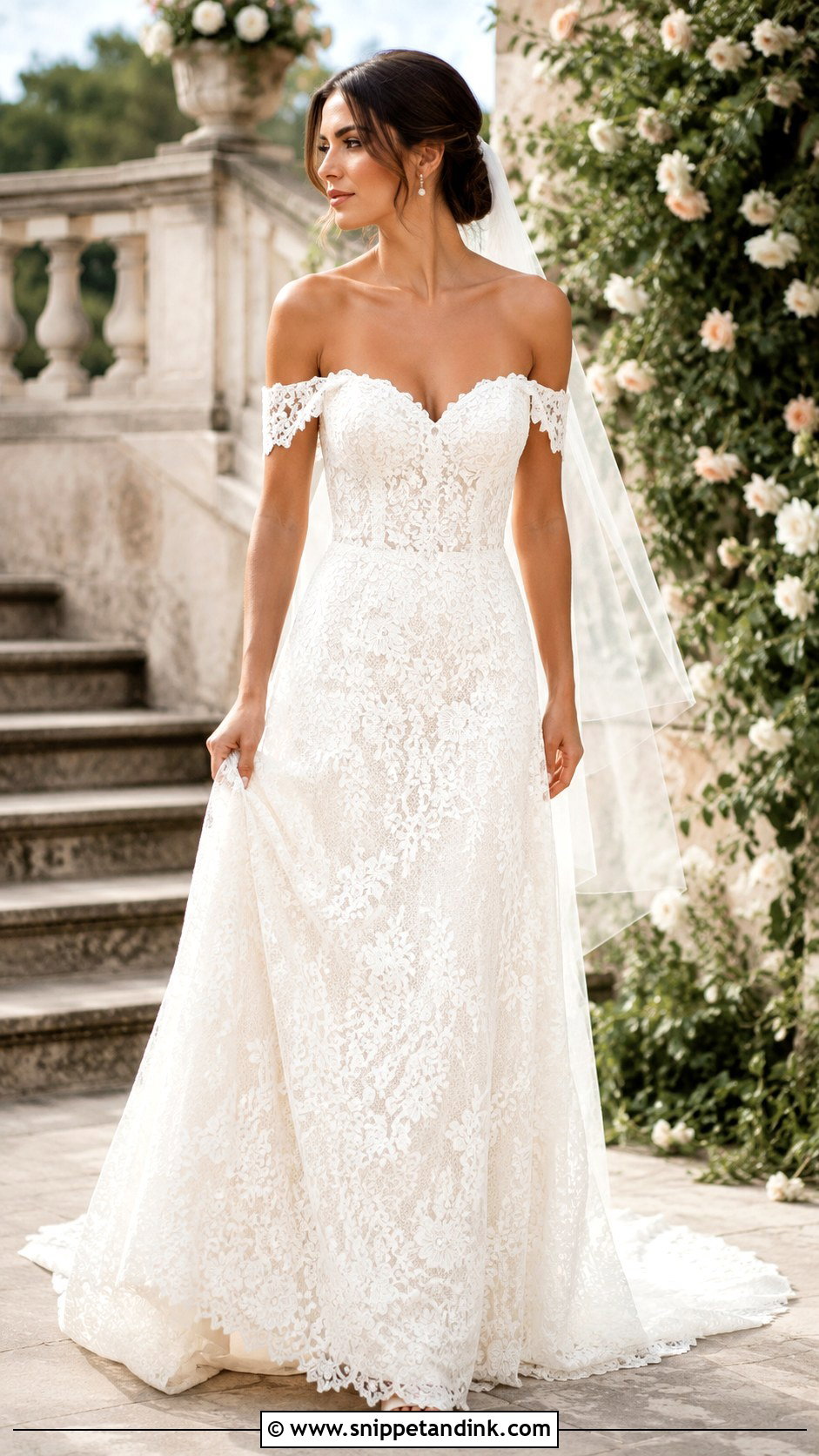
Off-shoulder lace frames the collarbone, which is why it pairs so naturally with an updo or swept-back waves. The catch: an off-shoulder band can pin your arms if it’s cut too snug, and you’ll feel it the first time you try to wave. I have brides lift their arms to shoulder height in the fitting. Sleeves can sit lightly on the upper arm or continue into a fitted long sleeve. Pearl earrings, a low veil and ivory heels are all it needs, with a bouquet of soft greenery and white blooms that stays below the neckline. Garden and estate ceremonies suit it well.
7. High Neck Lace Wedding Gown
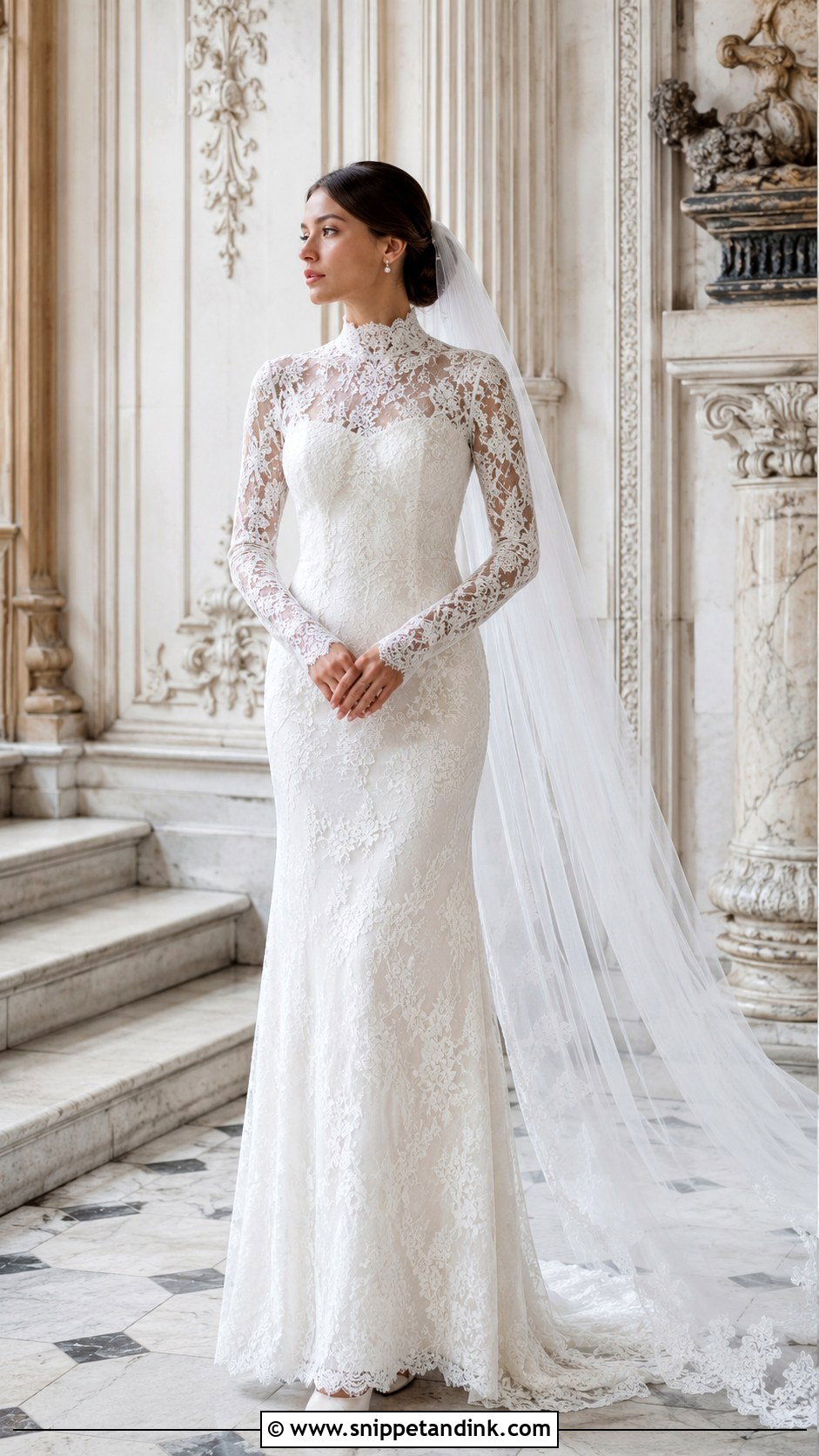
A high neckline puts all the detail right under your face, so I strip the accessories back almost to nothing. Small earrings, a sleek bun or low chignon, and the lace does the rest. Sheer lace, tiny covered buttons or a fitted bodice all work in this shape. I’d advise against it for anyone who runs warm in a summer venue without air conditioning, because a lined high neck traps heat. For a historic venue or a formal ceremony, with closed-toe heels and a long veil, it looks considered without any sparkle.
8. V Neck Lace Wedding Gown
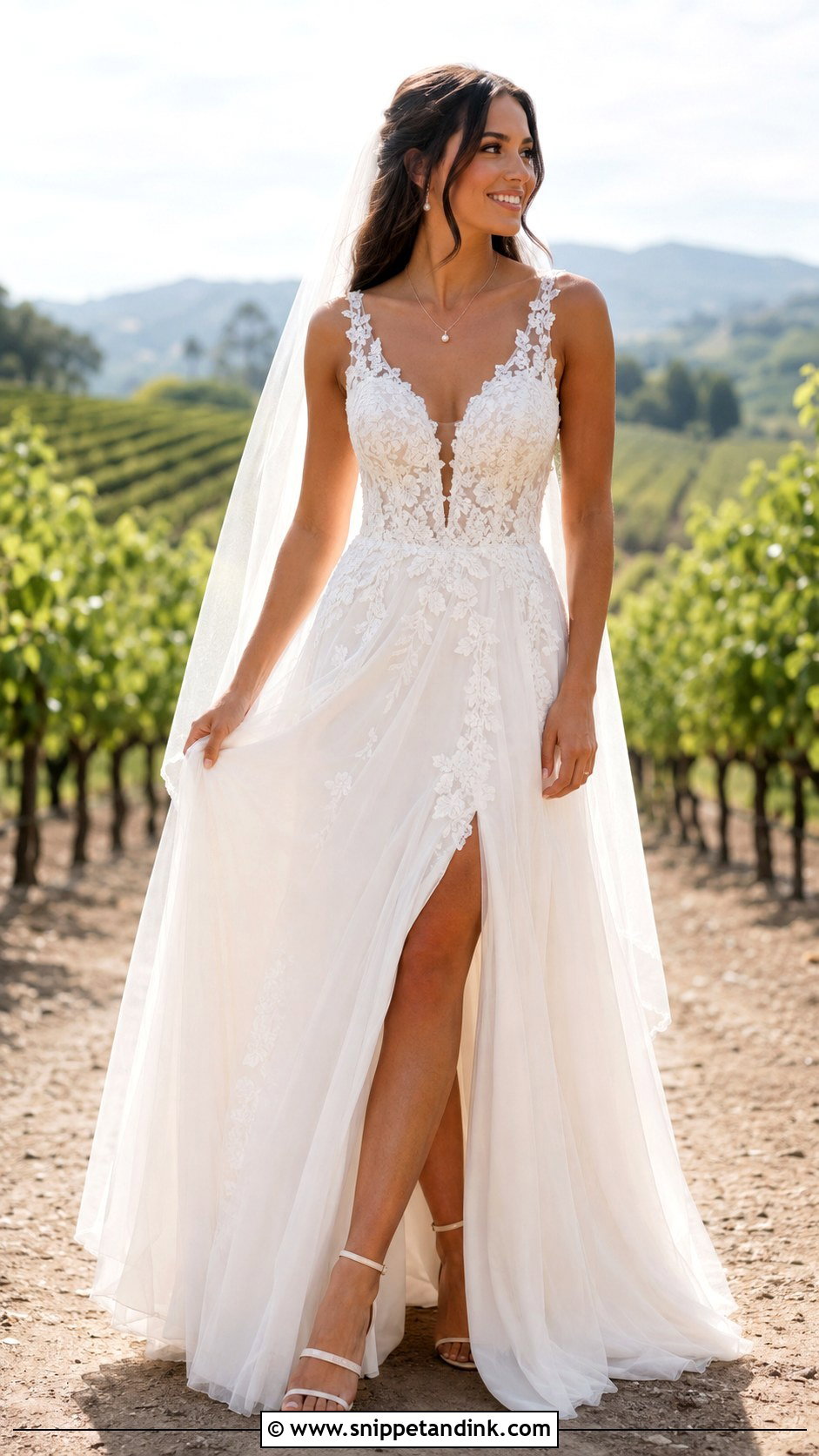
A V-neck draws the eye down the torso, which lengthens you in photos. How deep you go is personal; I’d test it by bending forward and sitting, since a plunge that’s fine standing can gape when you lean in for a toast. Lace straps or illusion mesh give support without breaking the line. I’d pair a delicate pendant with soft curls and thin-strap heels, and choose a chapel veil so the neckline isn’t hidden. It travels well from beach to vineyard to an indoor reception.
9. Square Neck Lace Wedding Gown
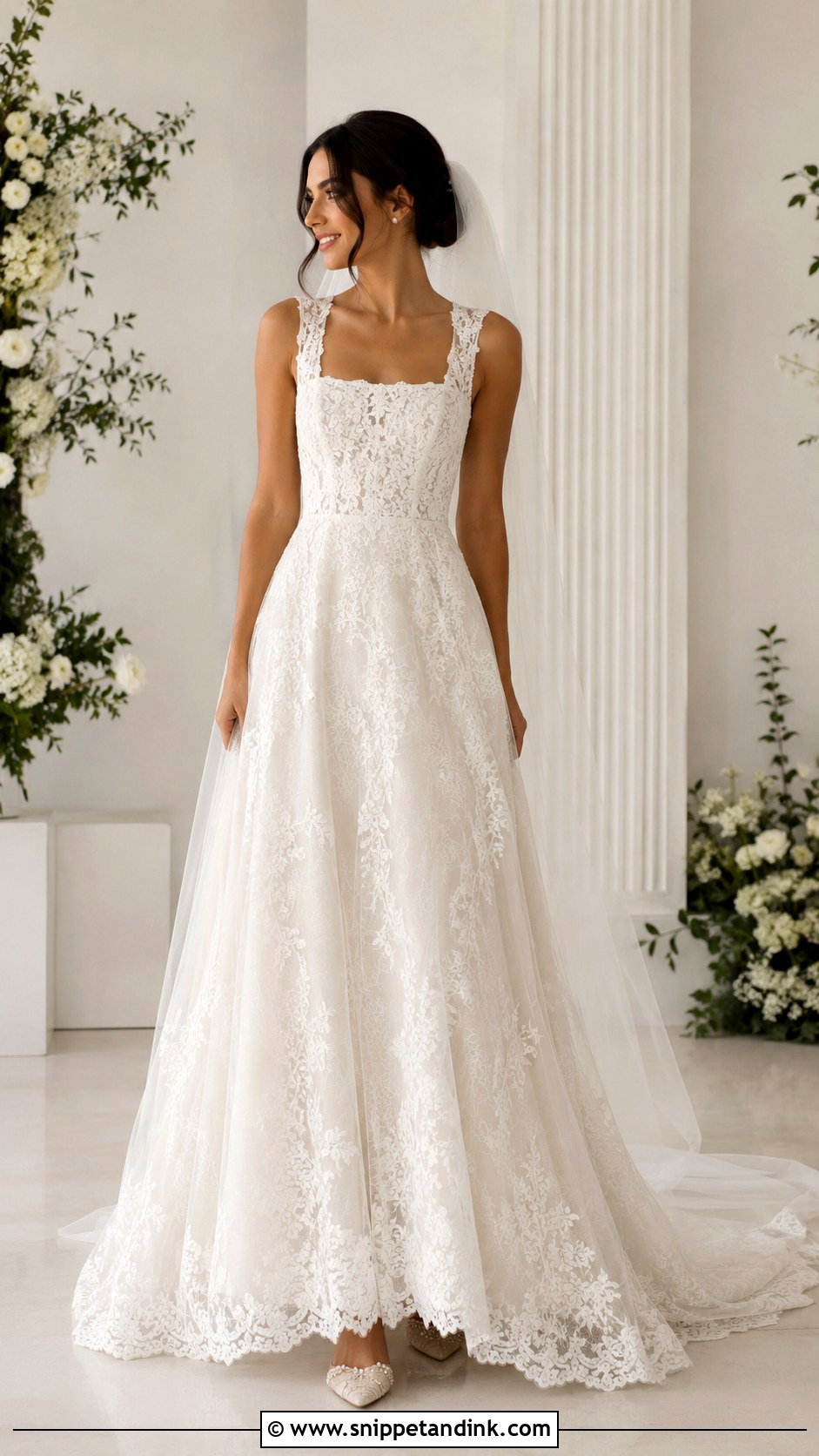
Square necklines are structured in a way lace usually isn’t, and that contrast is the appeal. Wide straps help it stay put; thin ones on a square neck tend to slip outward on narrow shoulders, which I watch for. A fitted waist and flowing skirt keep it balanced. I’d keep the extras simple: pearl studs, one bracelet, and a smooth veil tucked low at the back of the head. Sleek heels or embellished flats both work. In close portraits, the straight line frames the face cleanly, which brides tend to notice when the proofs come back.
10. Sheer Sleeve Lace Wedding Gown
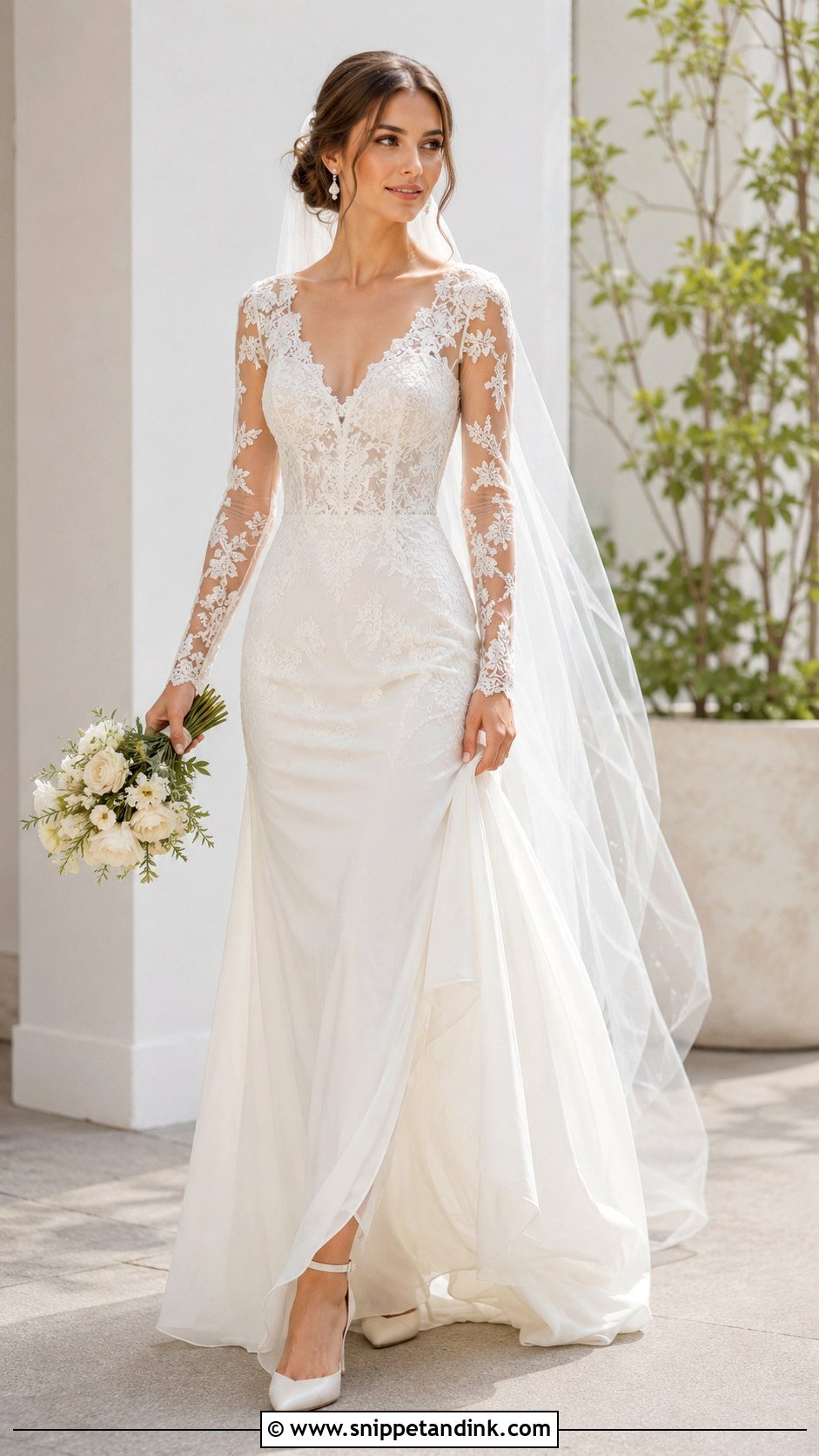
Sheer sleeves give coverage without the warmth of a lined sleeve, so I suggest them to brides who want sleeves but dread being hot. Scattered appliqués, fine Chantilly or tiny pearls on the mesh all add texture. One thing to know: tulle sleeves show every pull, so I’d keep chunky bracelets and rough-edged rings off until after photos. Soft makeup, a low bun and a veil that doesn’t compete with the sleeves keep it light. It works across spring, fall and winter.
11. Vintage Lace Wedding Gown
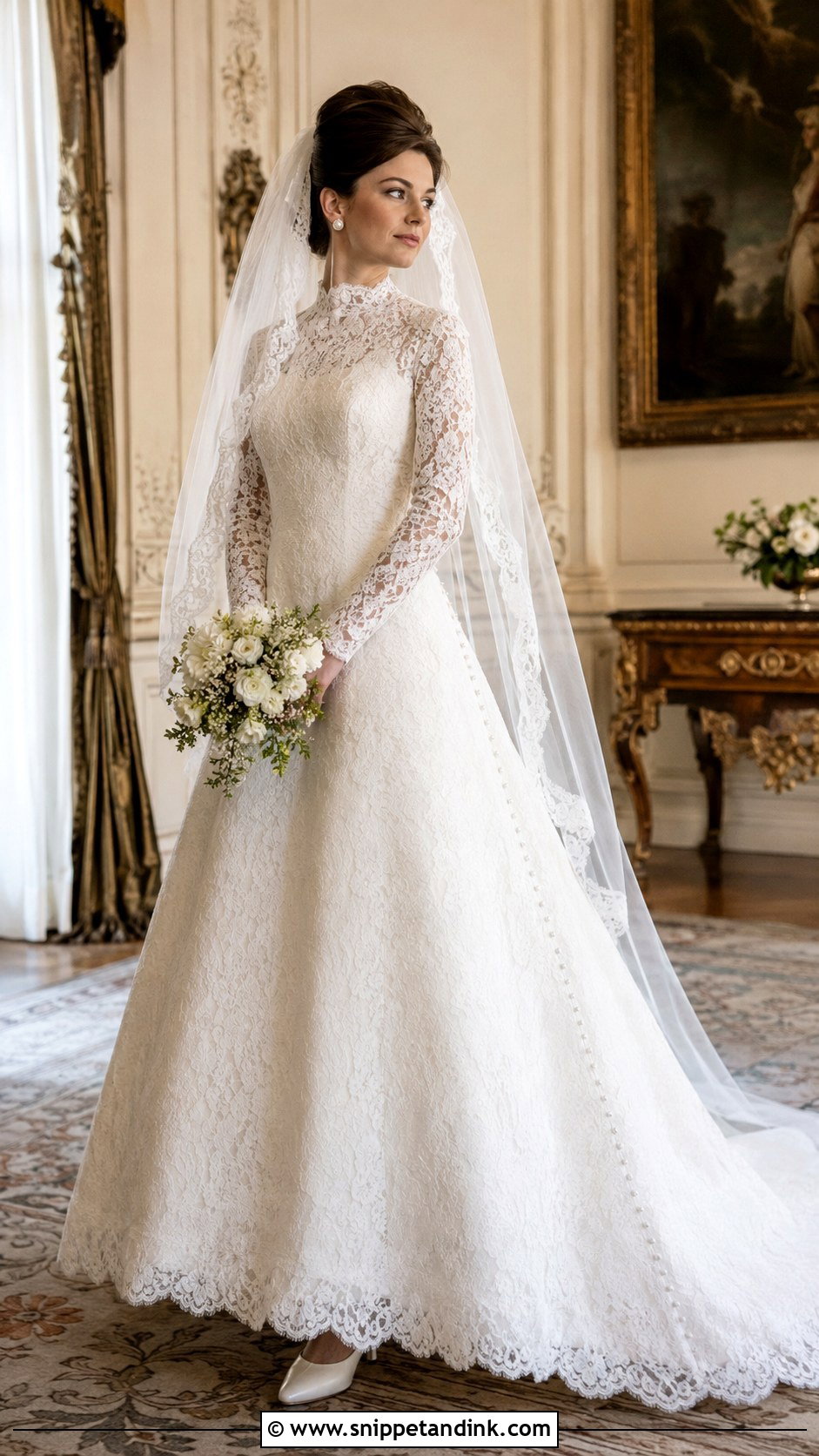
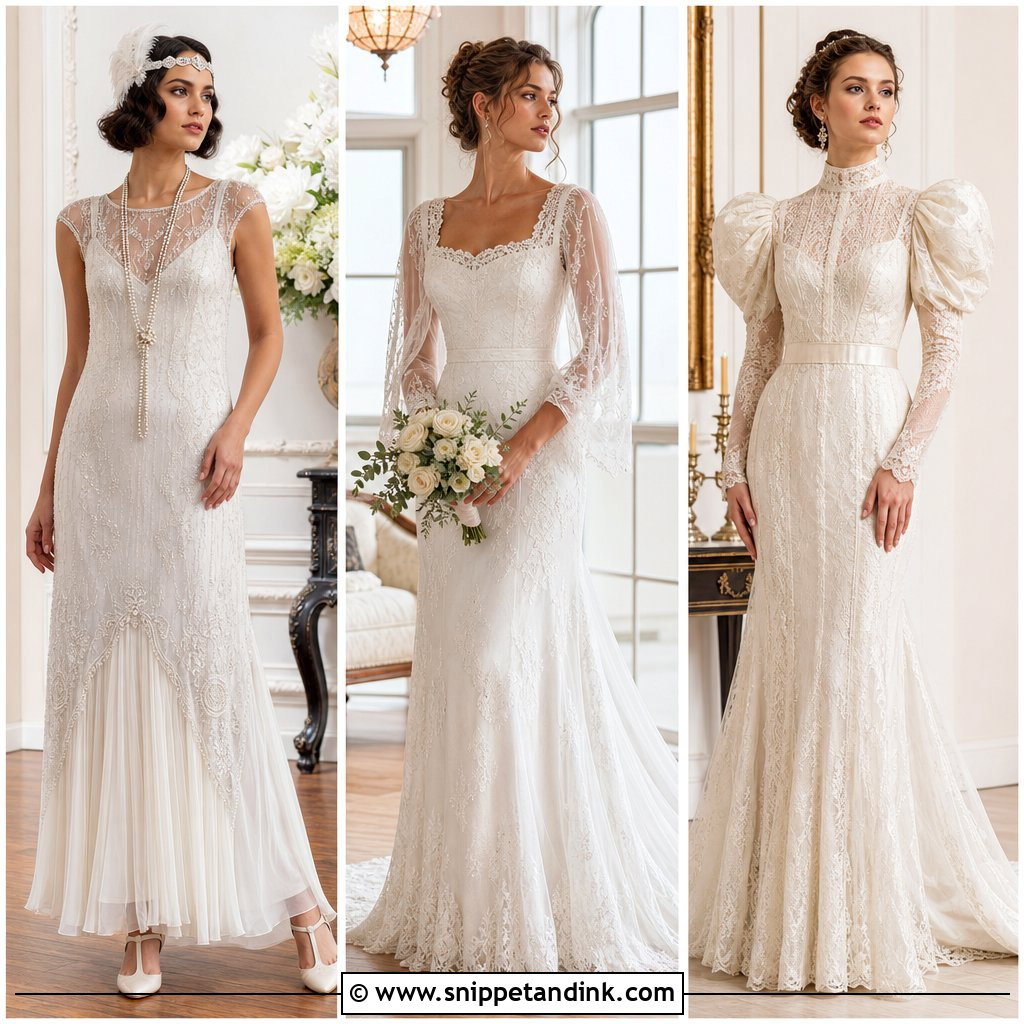
A vintage-style lace gown lives on its details: a high neck, a row of covered buttons, scalloped hems, cap sleeves. The risk I watch for is tipping into costume. I’d balance it with fresh, modern makeup, sharp tailoring and very few accessories: pearl earrings, a lace-edged veil, and satin shoes with a low or mid heel. Pin the hair softly rather than in a strict period set. Historic mansions, libraries and small venues with character suit it far better than a blank ballroom. If you’re wearing actual vintage lace, have it checked for weak spots before alterations begin.
12. Boho Lace Wedding Gown
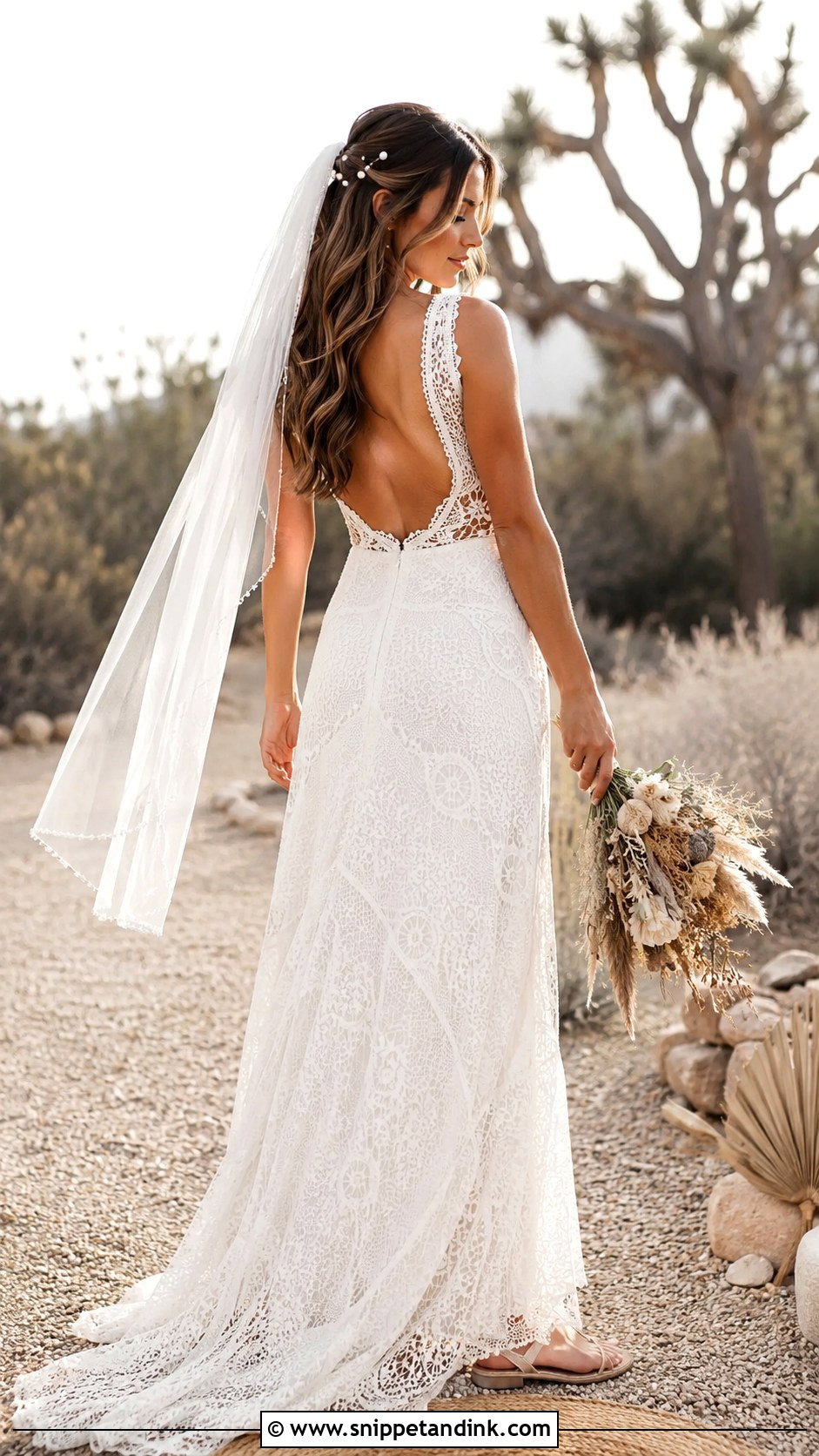
Boho lace relies on movement: soft sleeves, crochet-style lace, an open back, a skirt that swings. I tell brides to sit, spin and walk on uneven ground in it, because the whole point is ease. It belongs outdoors, in desert, beach and garden ceremonies. Loose waves, small pearl or floral pins, and sandals or block heels finish it. A simple veil or a lace cape adds drift without turning formal. Keep the bouquet loose and green. Heavier crochet lace can drag when wet, so I’d hem it a little shorter for a beach.
13. Floral Lace Wedding Gown
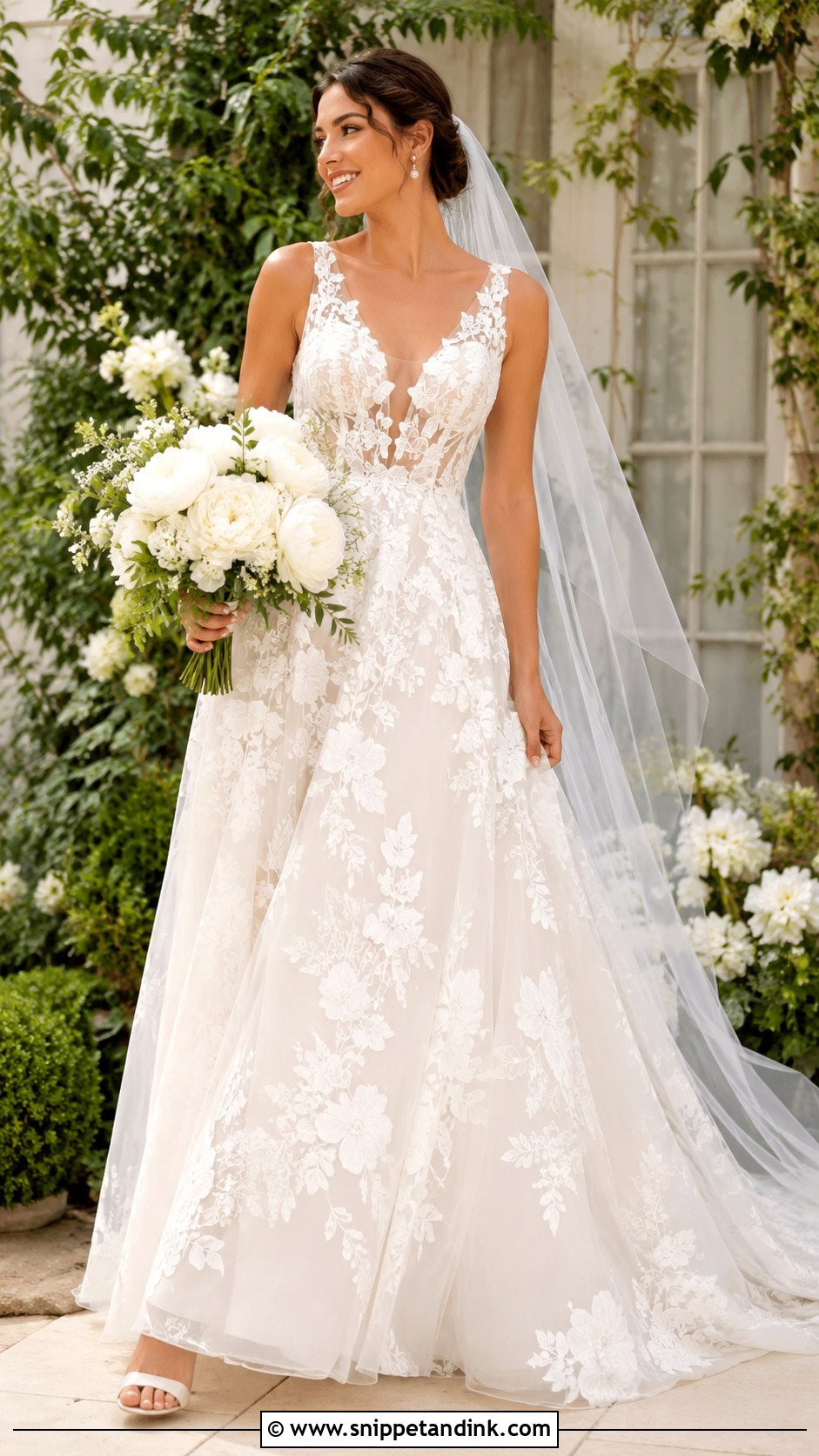
With floral lace, motif scale changes everything. Large appliqués look bold and current; tiny all-over florals look traditional. I hold a bride’s bouquet flowers next to the lace at the fitting, since peonies against peony-shaped appliqués can look too matched. The gown can be fitted, A-line or layered. A sheer veil, pearl earrings and ivory heels keep it polished, and white peonies, roses or sweet peas suit spring and summer gardens and light-filled courtyards.
14. Chantilly Lace Wedding Gown
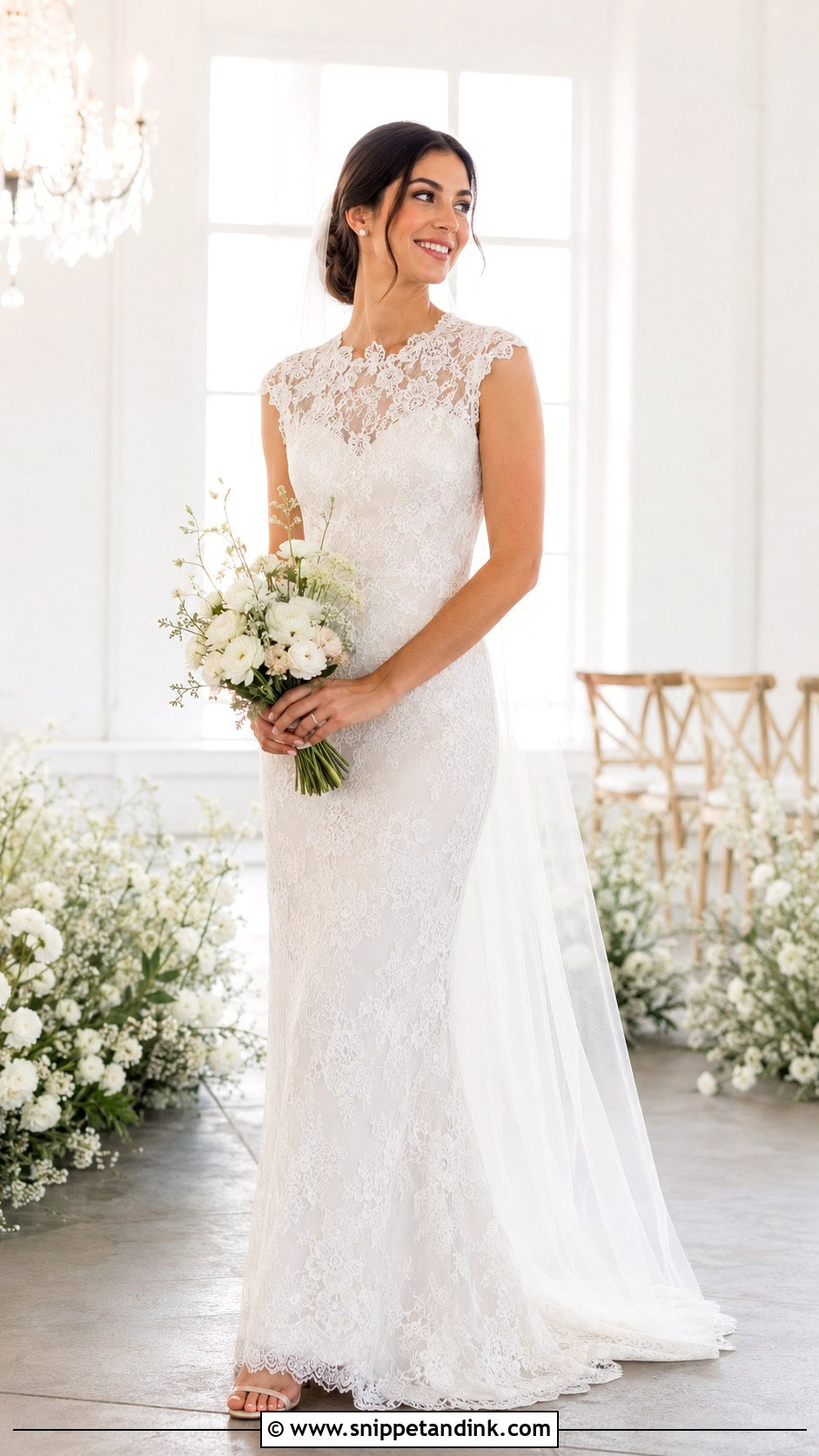
A Chantilly lace wedding gown uses a very fine net with a delicate outlined pattern, so it’s one of the lightest laces to wear. That lightness is also its weak point: it snags on bouquet wire and sharp jewelry settings. I’d keep accessories smooth and small, with barely-there heels, pearl studs and a plain tulle veil. It suits a sheath, fit-and-flare or soft A-line. On camera it gives a soft-focus look, and it stays comfortable well into the reception.
15. Alencon Lace Wedding Gown
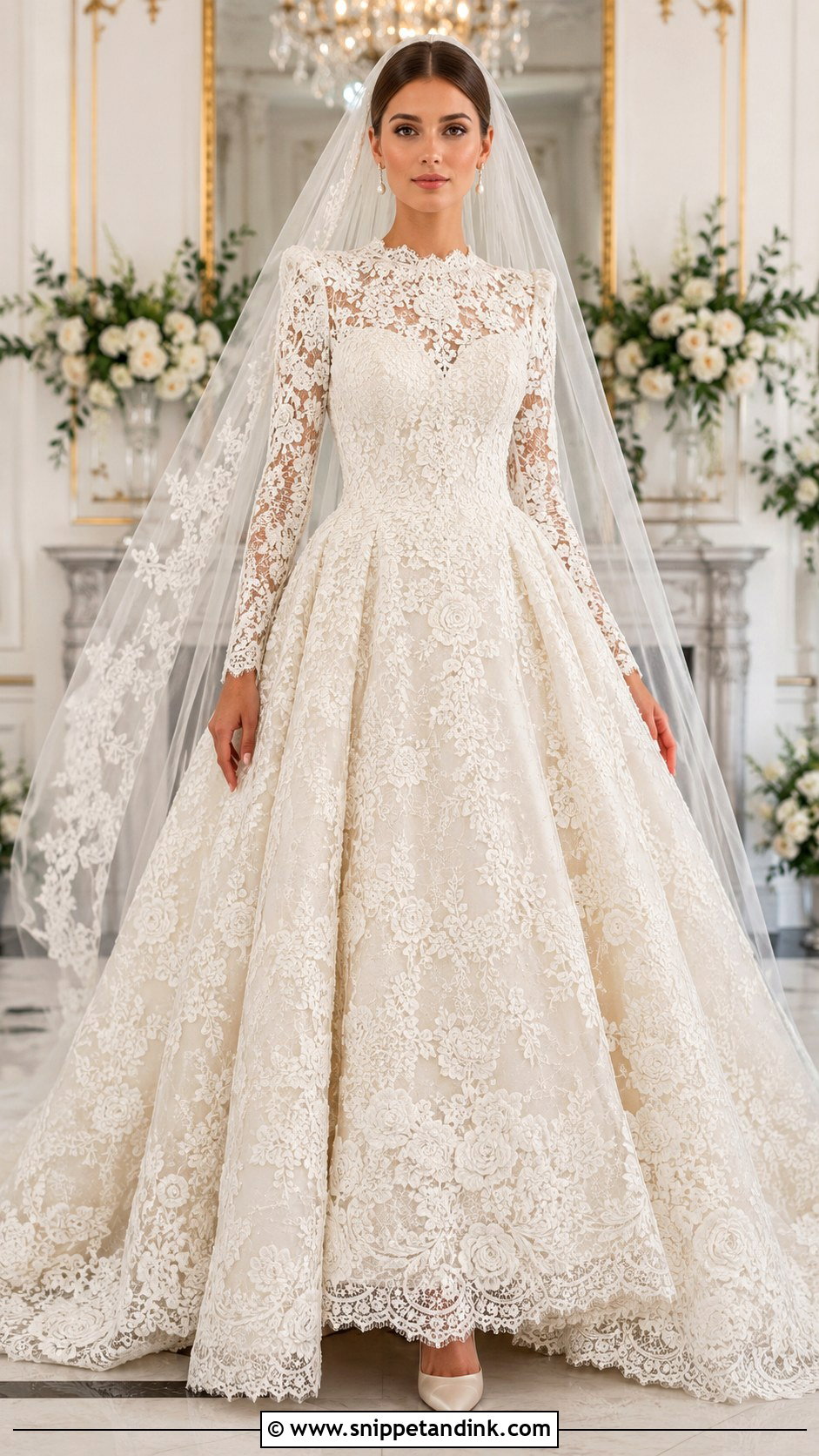
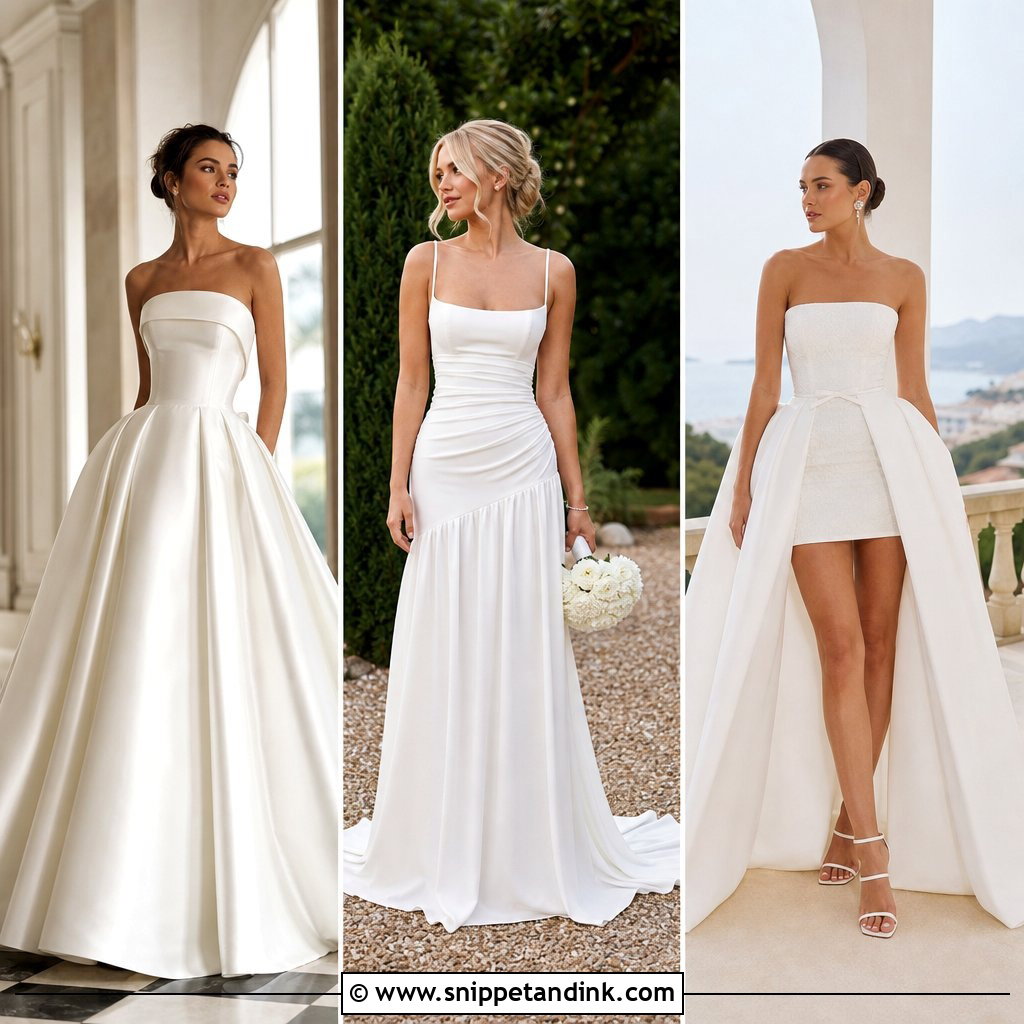
Alencon lace has a cord outlining each motif, which gives it raised texture and a little body. That’s why it sits well on structured bodices, long sleeves and ball skirts, and why it shows up clearly in photos even in dim formal rooms. For a traditional finish I’d add pearl earrings, satin pumps and a cathedral veil. To keep it current, look for clean lines and a plain skirt under the lace. It’s stiffer than Chantilly, so I check underarm and waist seams for scratching during the fitting.
16. 3D Floral Lace Wedding Gown
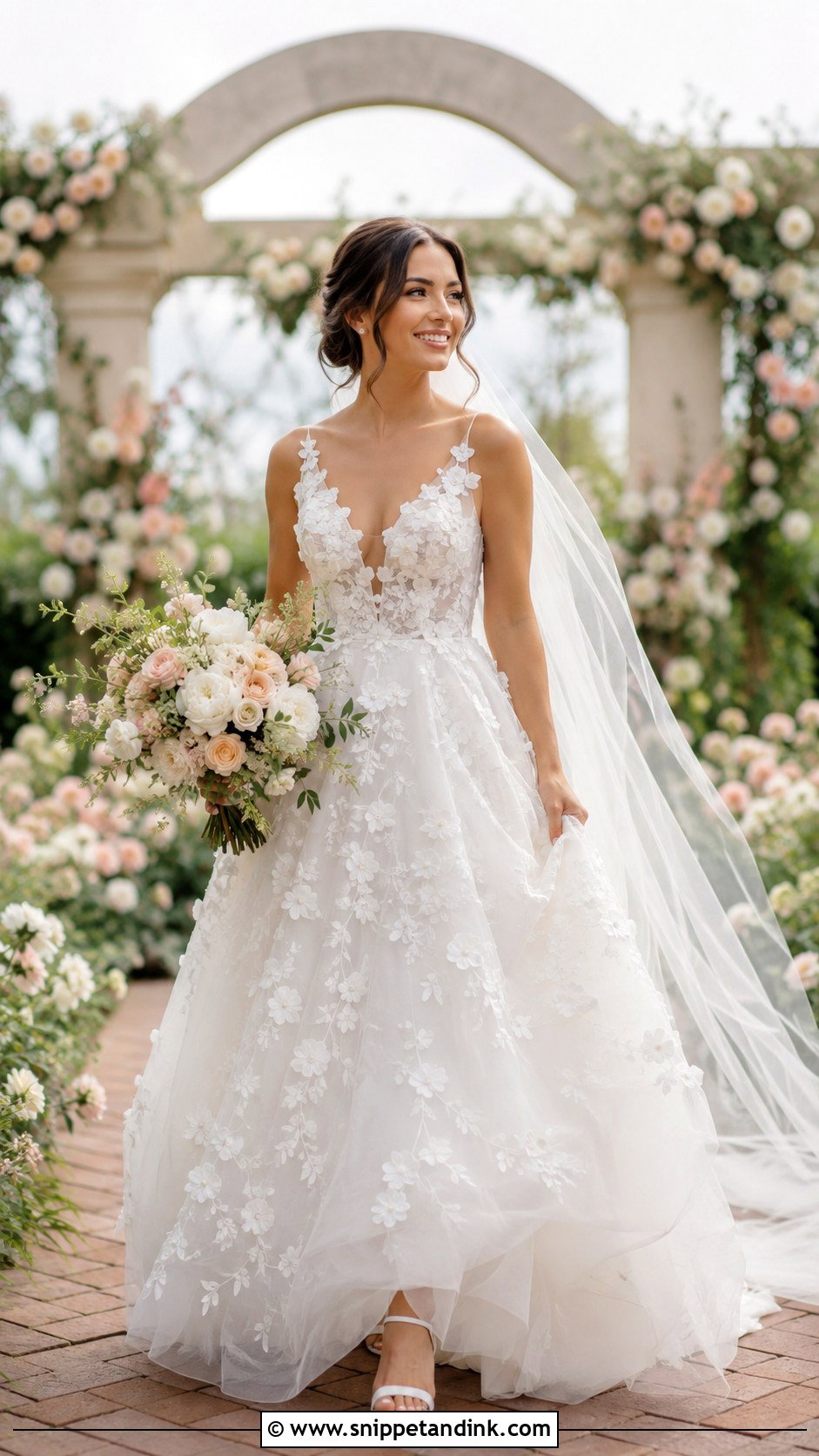
3D floral appliqués stand off the fabric, so the gown has real depth when light hits it from the side. The practical note: raised petals crush if you’re packed into a car or hugged hard, so I lay a sheet over the skirt for transport and fluff the flowers after. A-line, fitted and layered skirts all suit it. Keep accessories quiet, with small pearls, a sheer veil and simple heels, and let the flowers carry it. A sleek bun or soft waves both work, depending on the neckline.
17. Lace Wedding Gown With Train
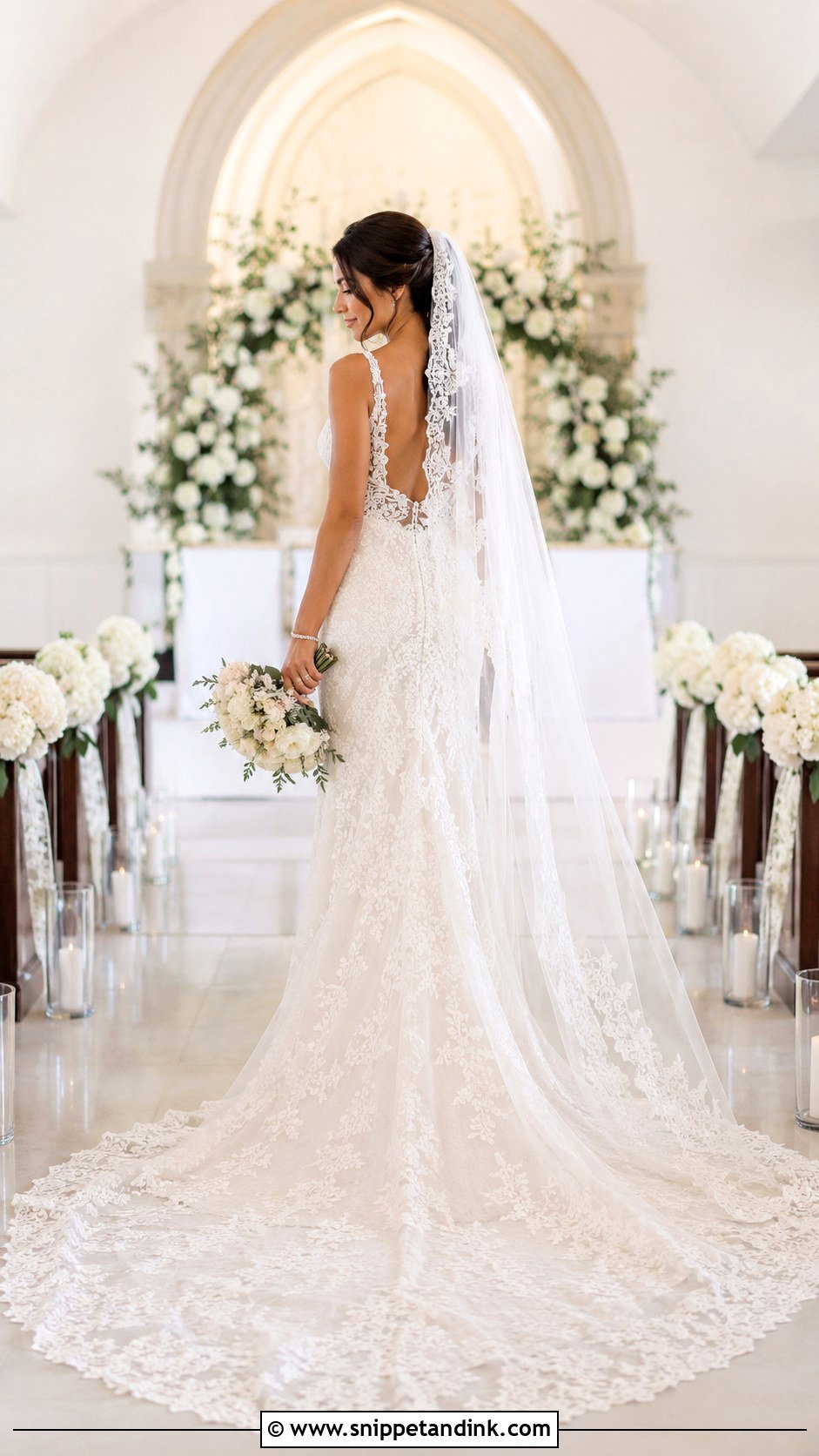
A lace train is the part guests see during the vows, so I choose the veil around it. A plain tulle veil laid over the train lets the lace show through; a heavy lace veil on top of a lace train turns muddy. Chapel length suits most aisles; cathedral needs a long one and someone to straighten it. Classic heels, a fine bracelet and earrings matched to the neckline complete it. Ask your seamstress about the bustle early. Lace trains often need an overbustle with several hooks, and someone in your party should practice it before the day.
18. Lace Wedding Gown With Open Back
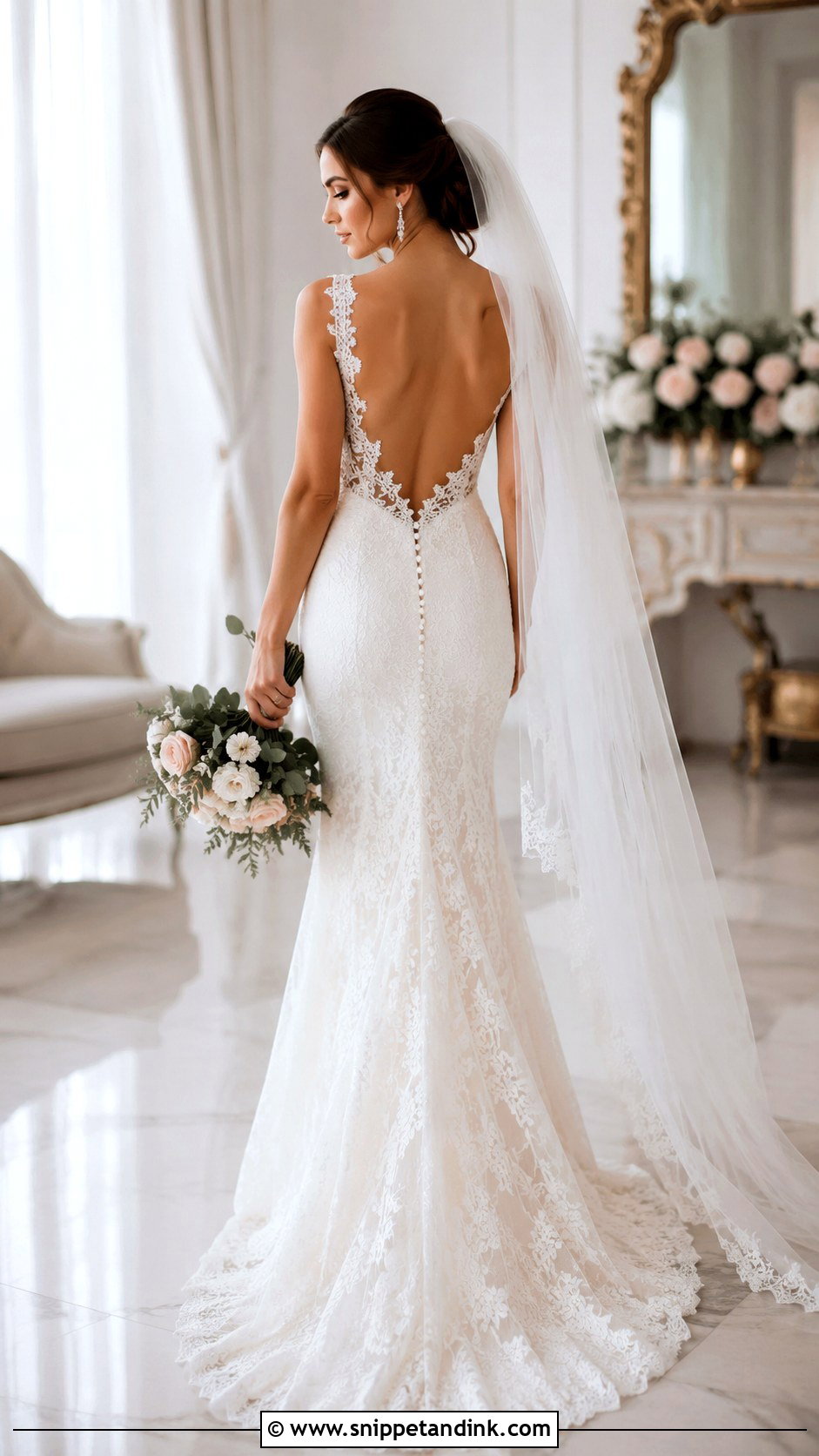
An open back is mostly a fit question. I check that the side edges lie flat when you raise your arms, since a gap there shows in every aisle photo from behind. Lace straps, illusion mesh, buttons or appliqués can frame it. Wear your hair up or swept to one side so the back stays visible, with drop earrings, a narrow veil and simple heels. A fitted or A-line skirt both work. It’s the gown people comment on during the exit and the first look, so plan a few portraits from behind.
19. Lace Wedding Gown With Corset Bodice
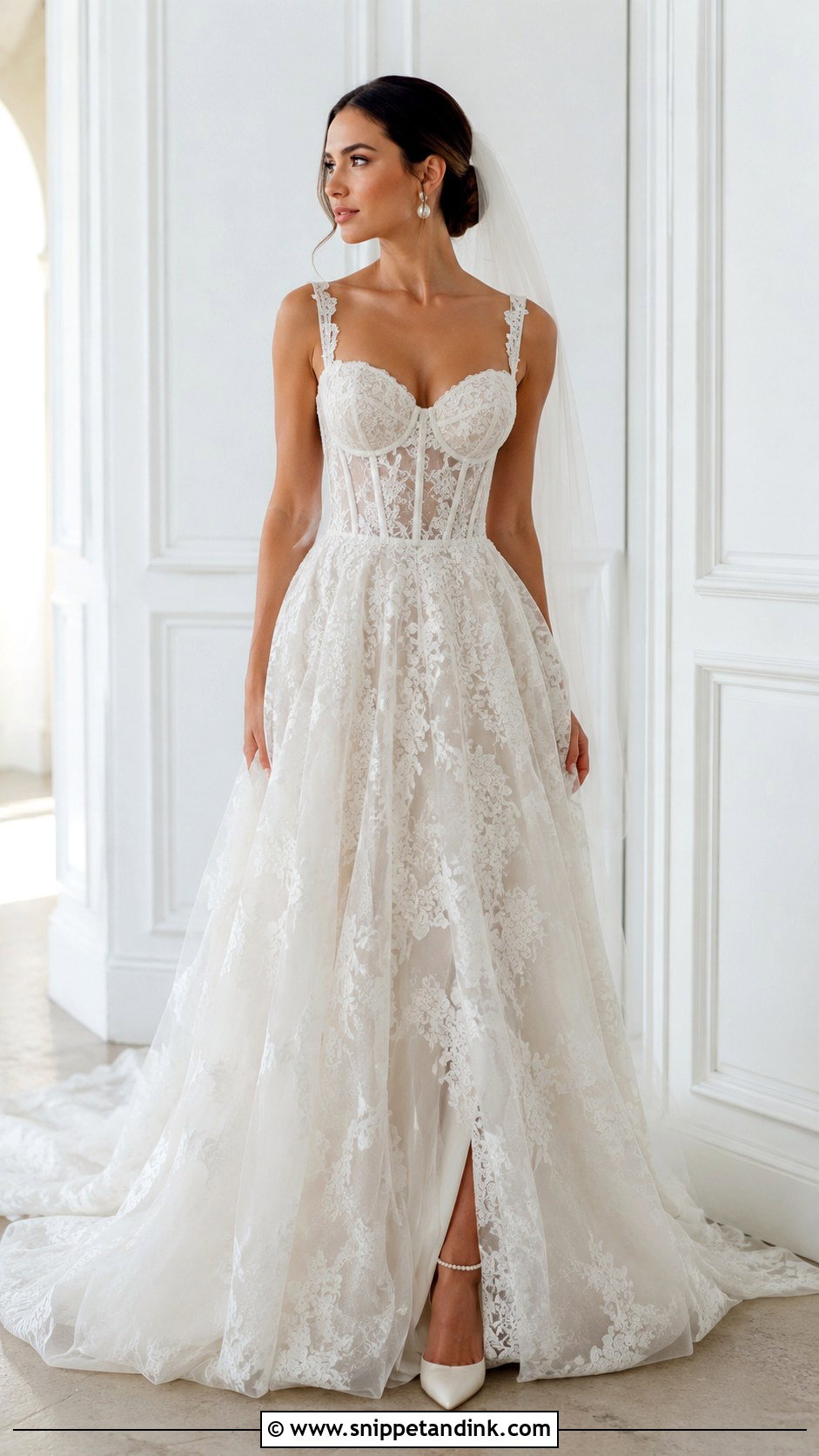
A corset bodice does real work: it shapes the waist and supports the bust, which means you often skip a separate bra. Some show the boning through sheer fabric; others hide it under lace. I lace a corset at the fitting, then have the bride sit and eat something small, because a back laced too tightly at 10 a.m. is miserable by dinner. A soft veil, pearl earrings and classic heels balance the stronger bodice. A smooth updo or brushed-out waves both sit well above it.
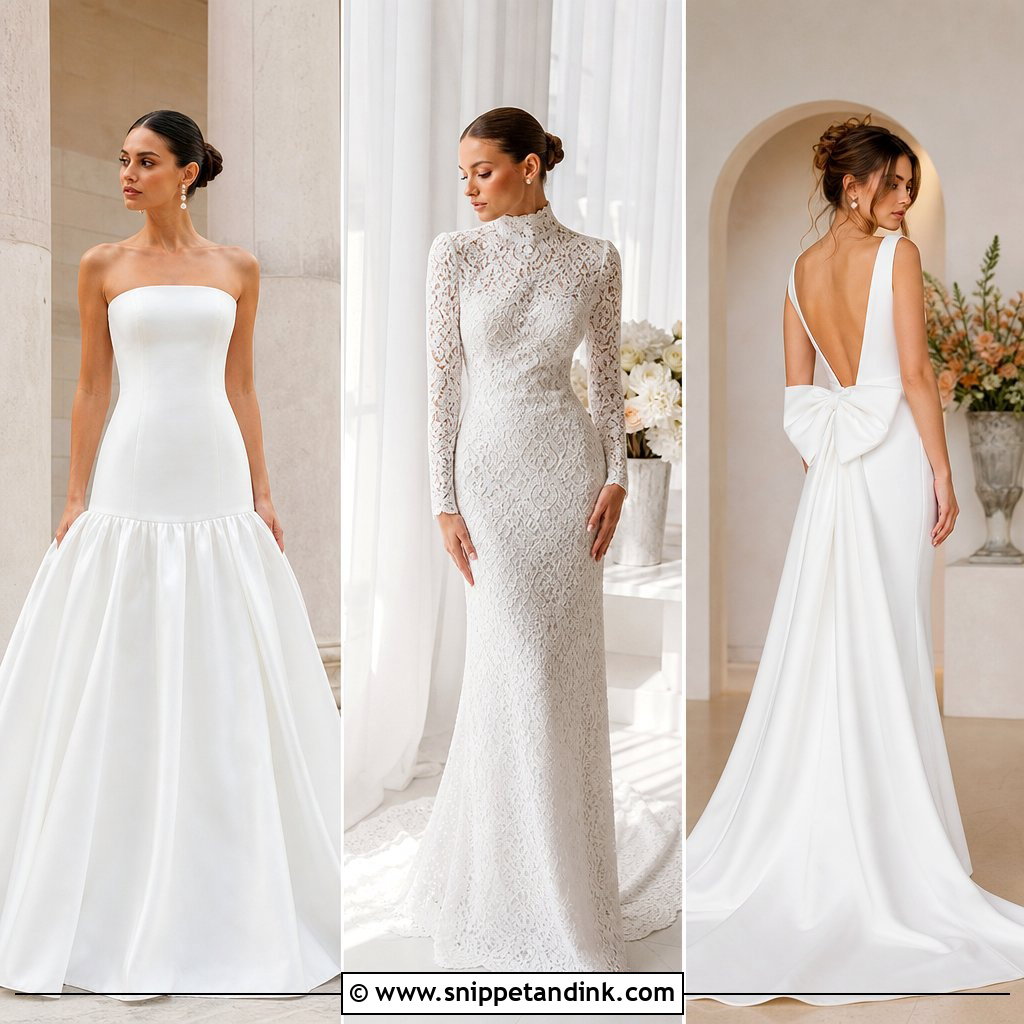
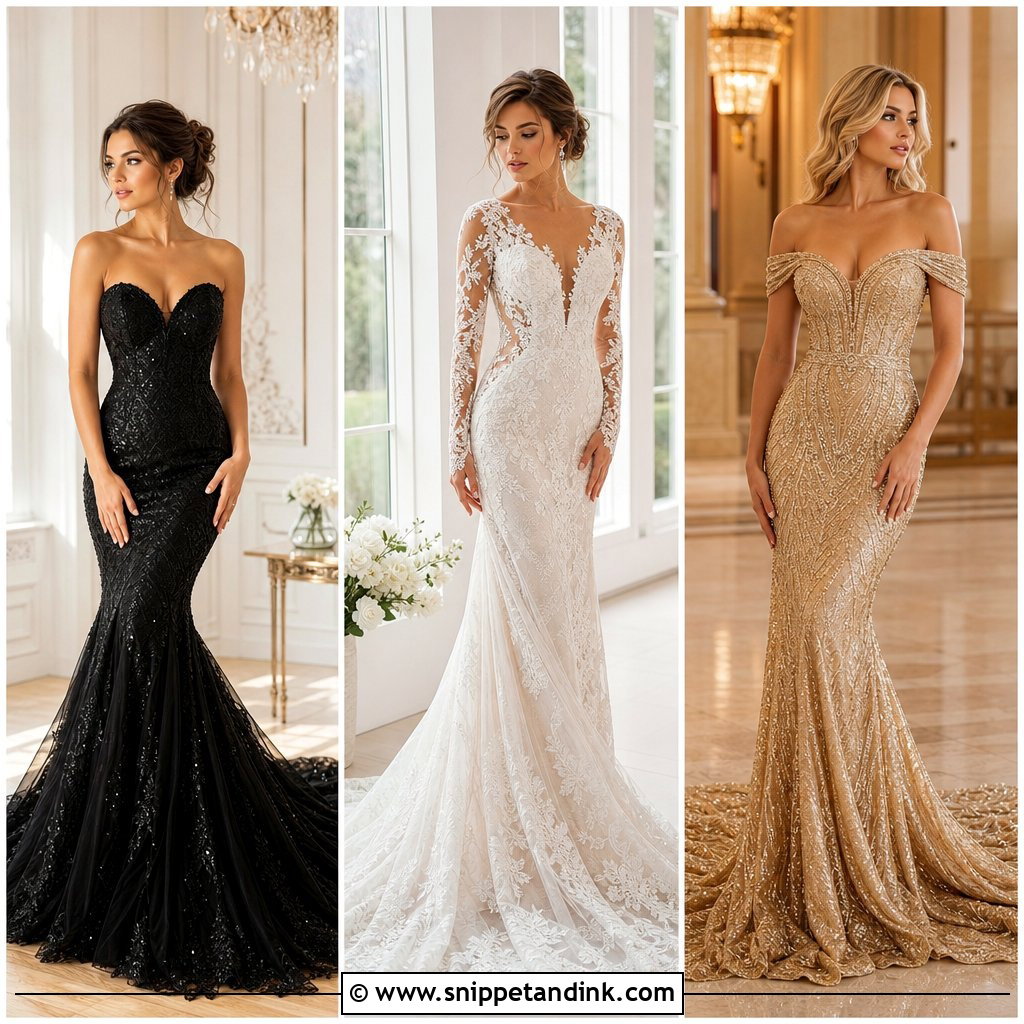
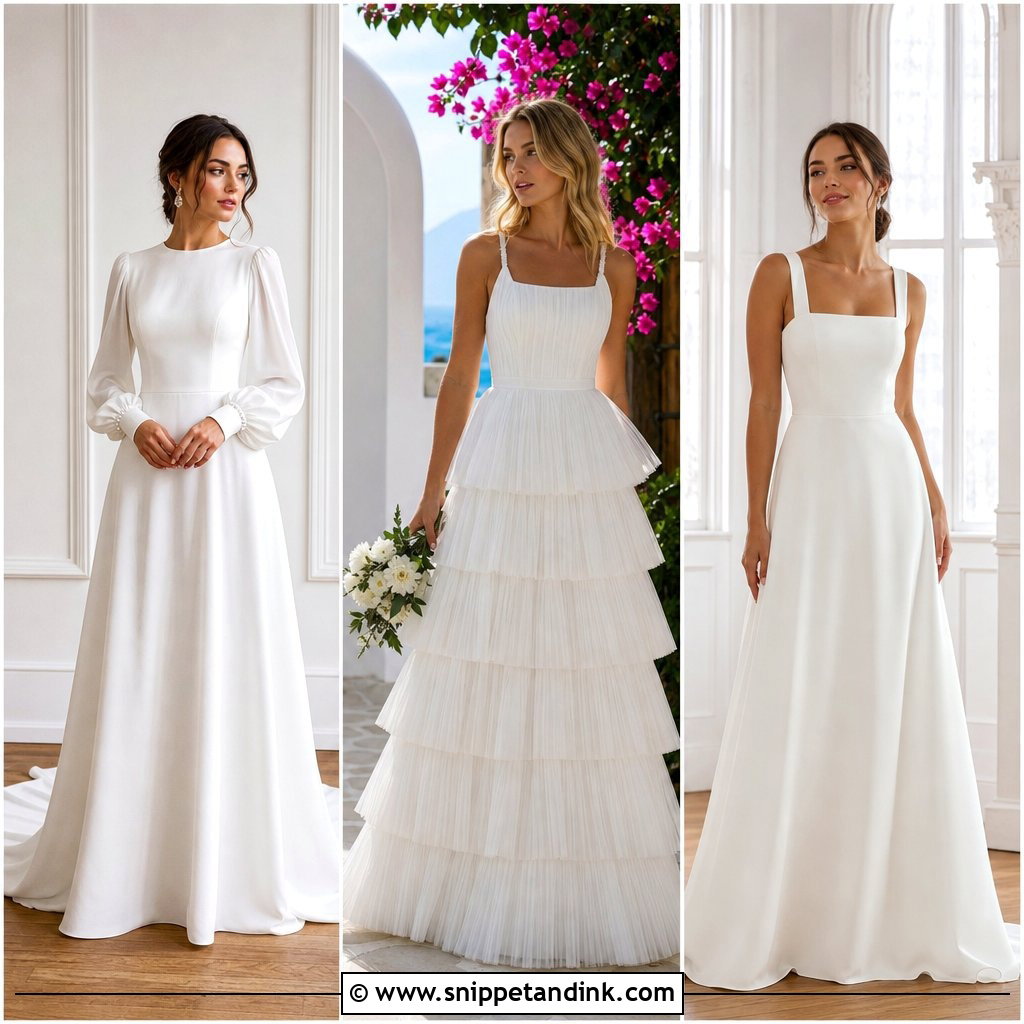
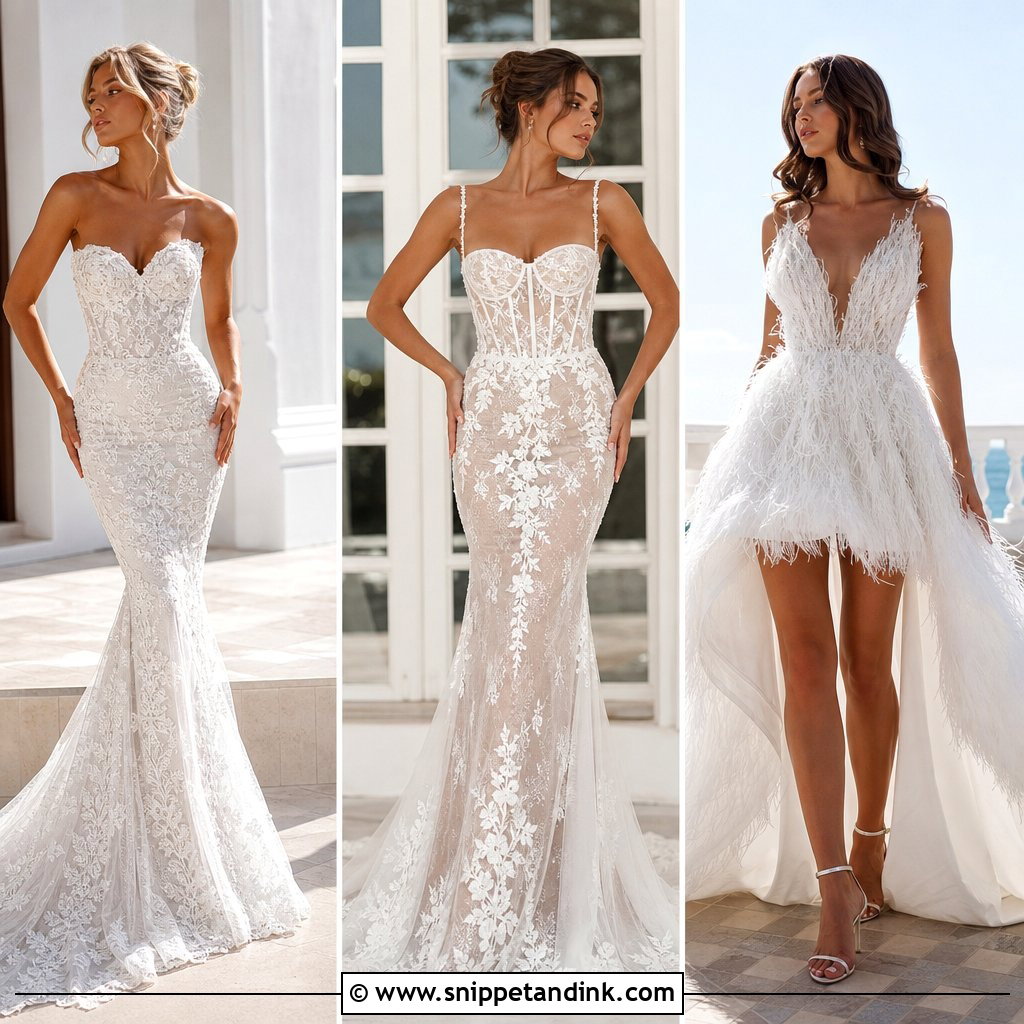
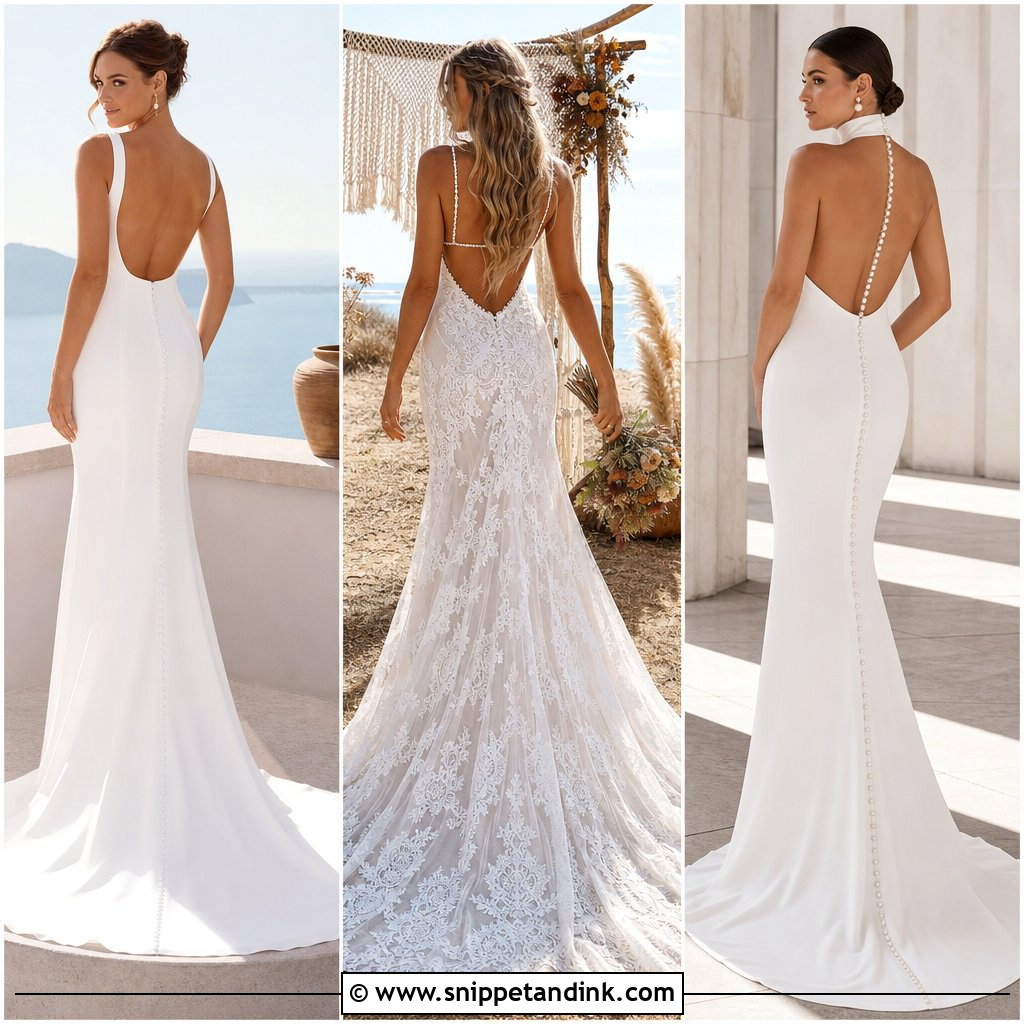
20. Lace Wedding Gown With Detachable Sleeves
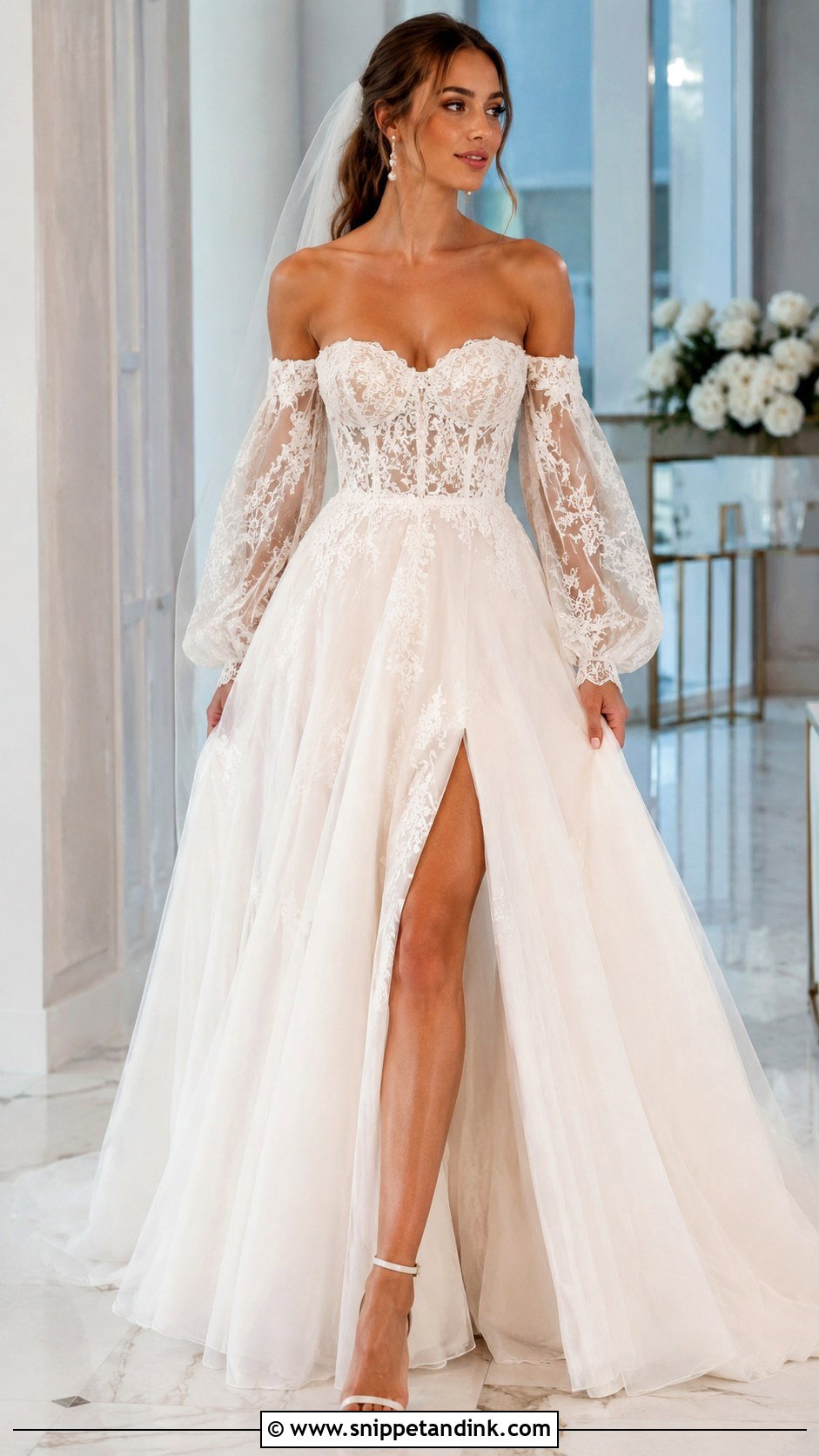
Detachable sleeves give you a covered ceremony look and a lighter reception look without a second dress. I always check how they attach. Snaps hidden under lace work best; ribbon ties come loose. Sheer, puffed, fitted or off-shoulder versions are all available. Choose a veil that looks right with and without them, plus pearl earrings and ivory heels. It’s especially useful for a religious ceremony with a dress code followed by a warm reception. Have someone practice removing them so you’re not fumbling in a bathroom.
21. Lace Wedding Gown With Cape
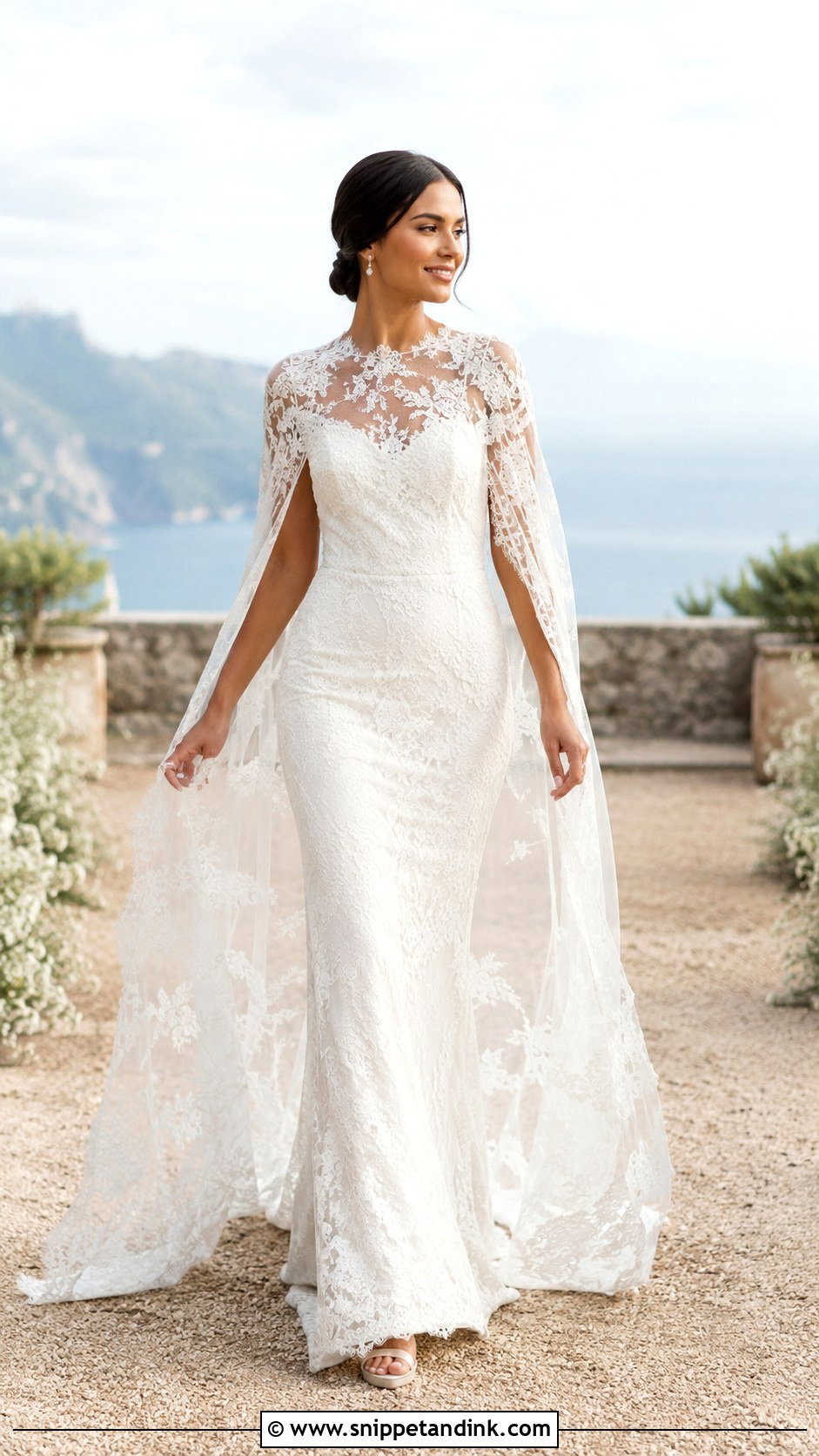
A lace cape can stand in for a veil or layer over a simple gown for movement. Some attach at the shoulder, others drape from the neckline or back. I test how it behaves when you lift your arms, since a cape fixed too low at the back can restrict reaching. Delicate edging, floral appliqués or sheer tulle all soften it. Sleek hair, simple earrings and clean ivory heels finish the look. Outdoors, it catches the wind and gives you natural motion in photos, and it’s a way to get coverage without sleeves.
22. Lace Wedding Gown With Pearl Details
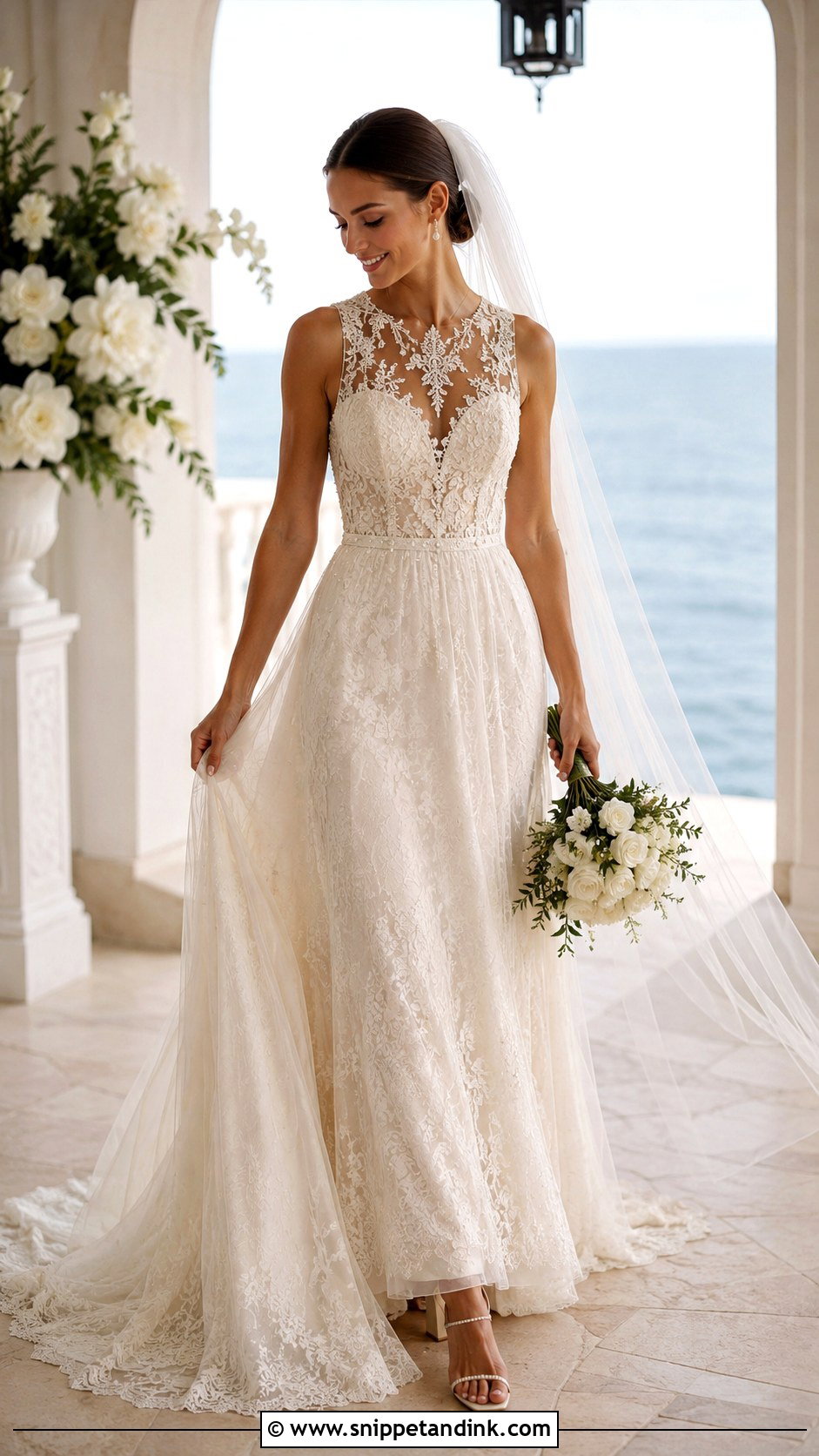
Pearls on lace give a soft sheen rather than sparkle, and they can sit on the bodice, sleeves, veil or straps. My rule is not to mix in a lot of crystal once the gown carries pearls, or the two finishes fight. Pearl earrings, satin heels and a smooth veil keep it consistent. Hand-sewn pearls can loosen at stress points like the waist and underarm, so I’d ask the seamstress to secure any loose ones at the final fitting. Classic venues, coastal settings and indoor ceremonies suit it.
23. Minimal Lace Wedding Gown
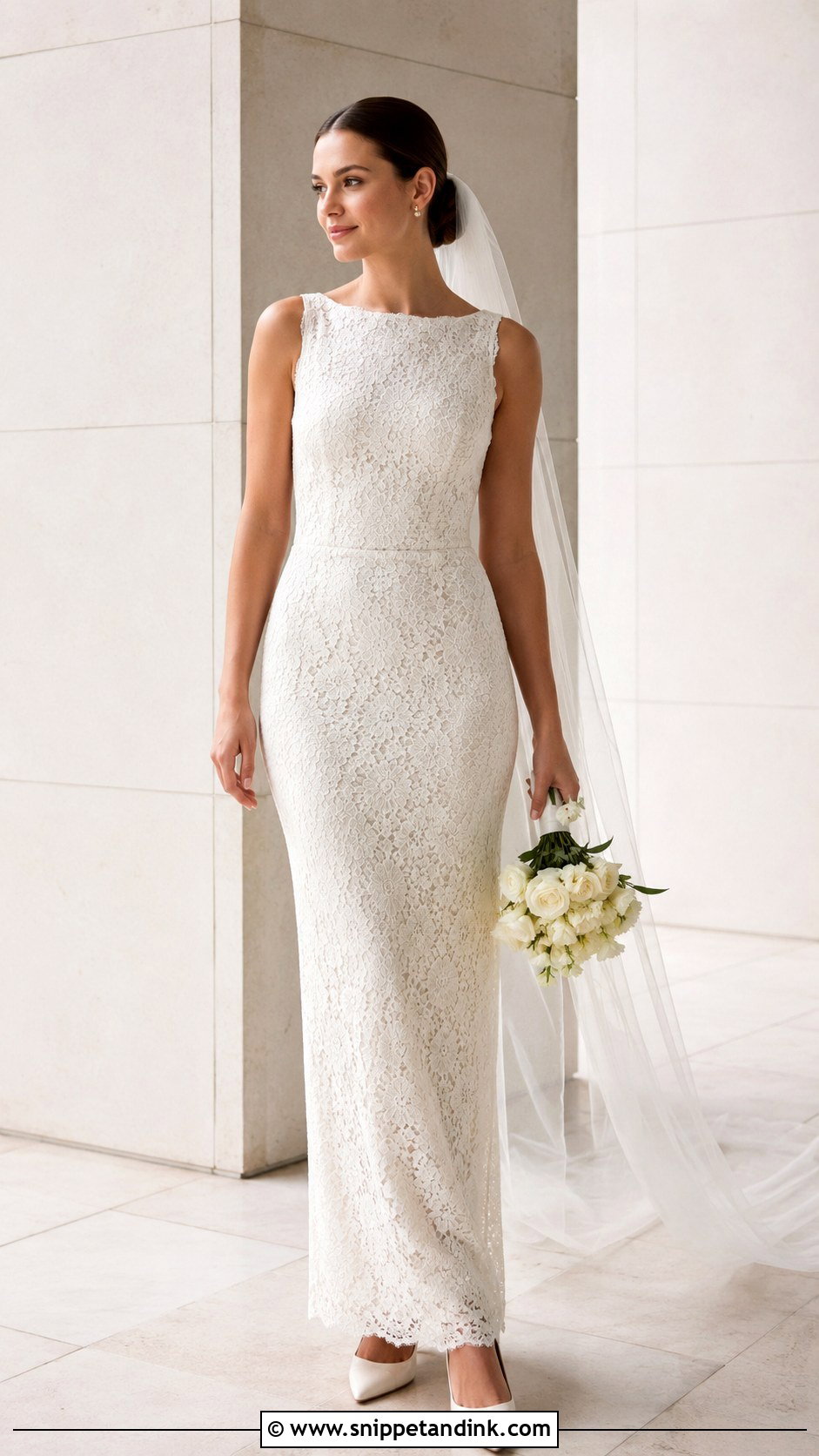
A minimal lace gown keeps the shape simple, often a sheath, slip or clean A-line, and lets the lace supply the texture. Because there’s so little to hide behind, fit matters more here than anywhere else in this list; a small pucker at a seam is obvious. Sleek hair, small earrings and modern ivory heels suit it, and a plain veil or no veil both work. It belongs in city venues, galleries and modern spaces. It reads polished and calm, not plain, if the tailoring is right.
24. Tea Length Lace Wedding Gown
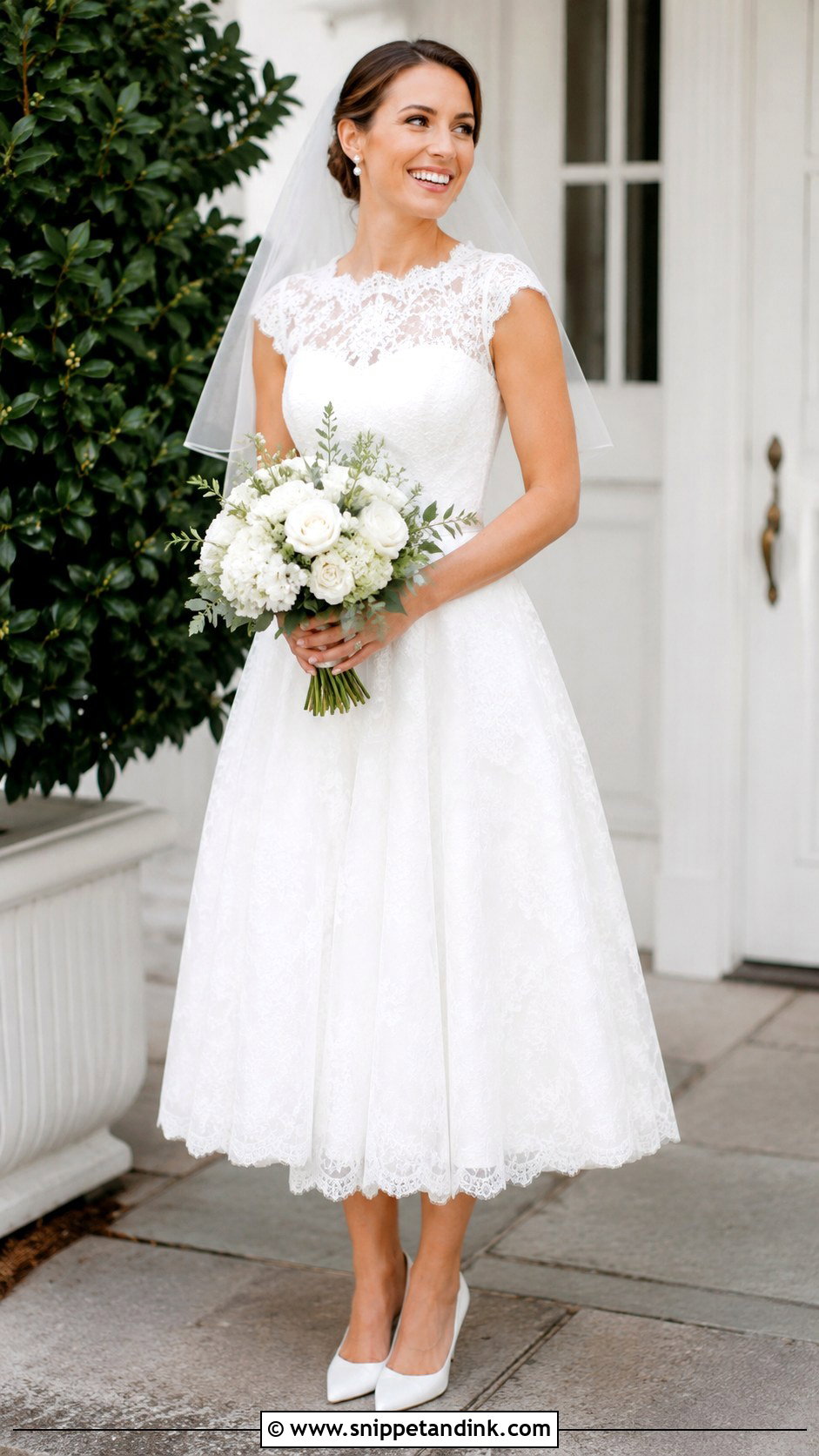
Tea length falls between knee and ankle, so you can walk, dance and actually show your shoes. I’d pick shoes before the hem is set, because a pump and a flat change where the hem should land. A short veil, pearl studs and a structured bouquet lean into its vintage feel. It suits courthouse ceremonies, garden weddings, brunch receptions and small celebrations, and it makes a good second look after a longer ceremony gown. The lace keeps it bridal while the length keeps it light.


25. Lace Wedding Gown With Veil
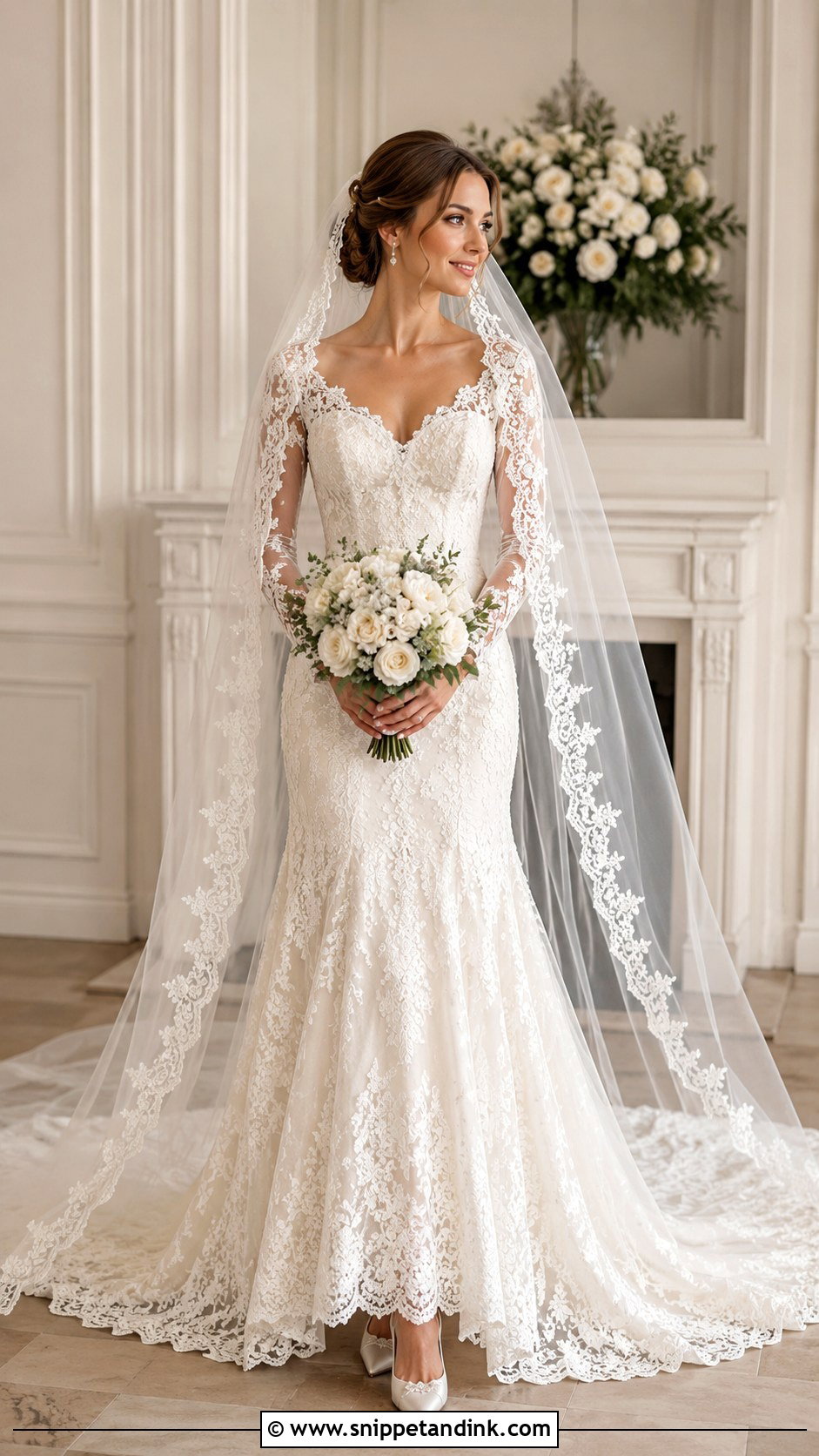
Pairing a veil with a lace gown is mostly about contrast. Heavy lace on the dress wants a plain tulle veil with a clean edge; a minimal gown can take a lace-trimmed veil. I bring both to the fitting and look from the back and side, since that’s where they overlap in ceremony photos. Ask whether the veil’s lace matches the dress lace in color, because ivory lace next to diamond-white tulle can look dirty. Soft earrings, ivory heels and a bouquet matched to the gown’s formality complete it. It works anywhere from a garden to a ballroom.
Pulled Threads, Spilled Wine and Where Lace Lives Afterward
Lace rarely tears on the day. It snags. The usual culprits are a bracelet clasp, a ring with raised prongs, bouquet wire poking through the ribbon, and Velcro on a groomsman’s boutonniere box. I wrap bouquet stems fully and keep a small emergency bag with clear nail polish and a fine needle.
- If a thread pulls, don’t cut it. Ease it back to the wrong side with a needle, or leave it for your cleaner.
- For a spill, blot with plain water on a white cloth and stop there. Rubbing lace felts the net and spreads the stain.
- Steam lace from the inside on a low setting; never put an iron directly on appliqués.
- Send the gown to a cleaner who handles bridal work within a few weeks, before sugar stains from cake or champagne turn yellow.
For storage, I’d fold the gown loosely with acid-free tissue in the folds, in a breathable box or a cotton garment bag, away from light and damp. Plastic traps moisture. A heavy lace gown hung by its straps for months can stretch at the shoulders, so if you hang it, use the inner hanging loops sewn at the waist.
Let the Room and the Lace Agree
Most of these gowns are settled by things that have nothing to do with a hanger: the floor you’ll walk on, how warm the room will be, how much you want to move, and how much you’ll be photographed from behind. A structured lace ball gown and a relaxed boho dress share a fabric and almost nothing else. Try on two lace types, not just two shapes, and sit down in each. Long sleeves, appliqués, pearls or a train can all be right; the one that lets you forget you’re wearing it is usually your dream bridal outfit.
You'll Like These Ideas:



Leave a Reply