
Silver is the colour I suggest to brides who want to stand apart from white without leaving bridal behind. It works with lace, corsetry, three-dimensional flowers, soft draping and sculpted shapes, and designers have been showing more metallic gowns lately. The trick is matching the shade and the fabric to your venue, season and taste. Platinum satin looks clean and modern; pewter lace feels softer and more vintage. Sparkling beading belongs to evening, while pale silver tulle looks dreamy in daylight. Because the fabric reflects light, accessories should stay restrained. Below are twenty silver gowns, from ball gowns to sleek reception dresses, with what I’d watch for in each.
Platinum, Pewter or Gunmetal Against Your Skin
Silver is not one colour. Bridal silver ranges from almost-white platinum through soft dove grey and pewter to a dark gunmetal, and the shade that suits you depends on your skin far more than on the dress. I always start a silver appointment by holding swatches under the bride’s chin, in daylight, with no makeup.
- Platinum and pale silver suit most skin tones and read as close to white in photos. It is the safest choice if your family expects something traditional.
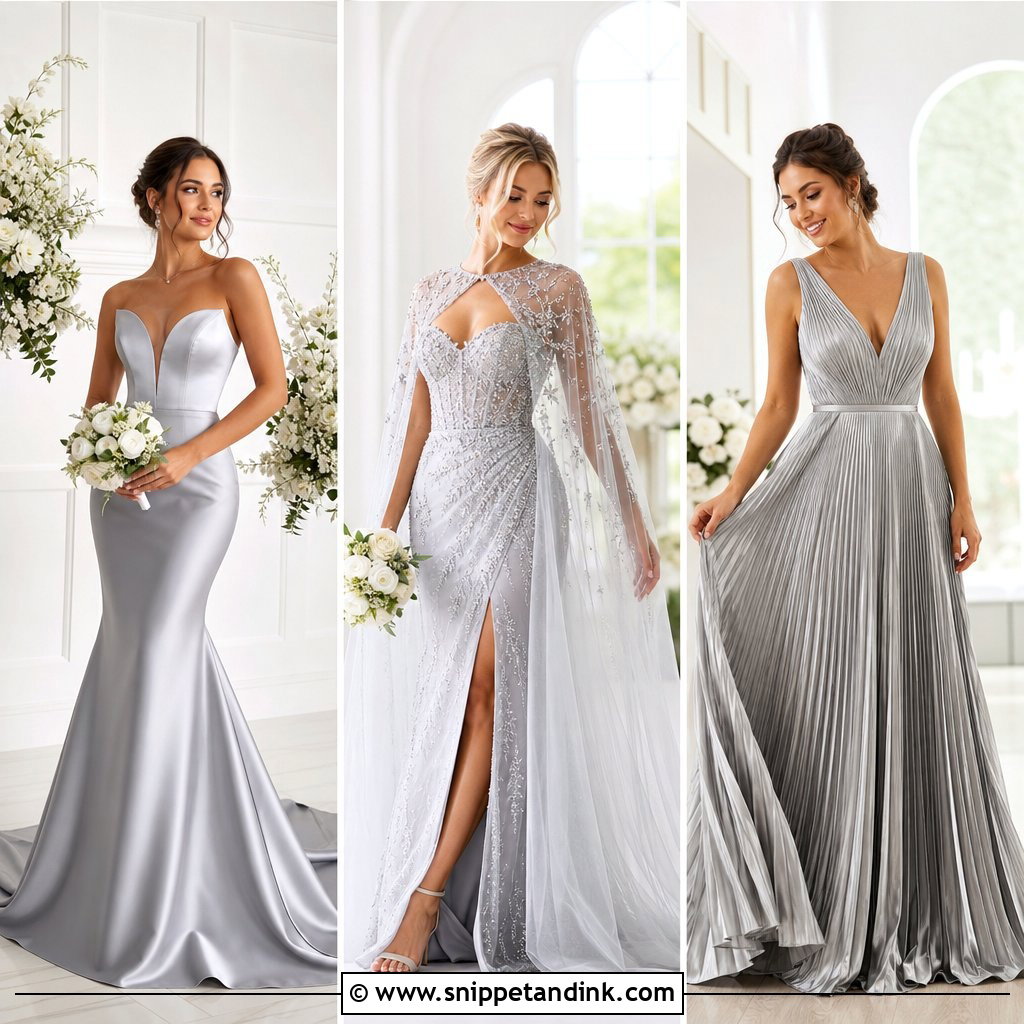
- Dove grey and soft silver are gentle on fair and cool skin, but can make warm or olive skin look tired unless the makeup adds warmth.
- Pewter and gunmetal look striking on deep skin tones and on brides with dark hair; on very fair skin they can feel heavy.
- Silver with a slight champagne or rose cast is often the answer for warm undertones that want metal without the chill.
Finish matters as much as shade. A matte crepe in silver looks grey and calm; the same tone in satin reflects light and looks brighter; sequins and beading flash white under a camera. If you’re unsure, order fabric swatches and wear them for an hour around the house. You’ll know quickly whether a colour feels like you.
Then match everything else to the dress, not the other way round. Silver jewellery and shoes should share the same tone; mixing a warm champagne shoe with a cold platinum gown looks accidental. Your veil can be ivory, white or silver tulle, but hold it next to the gown before ordering.
1. Silver Ball Gown Wedding Dress
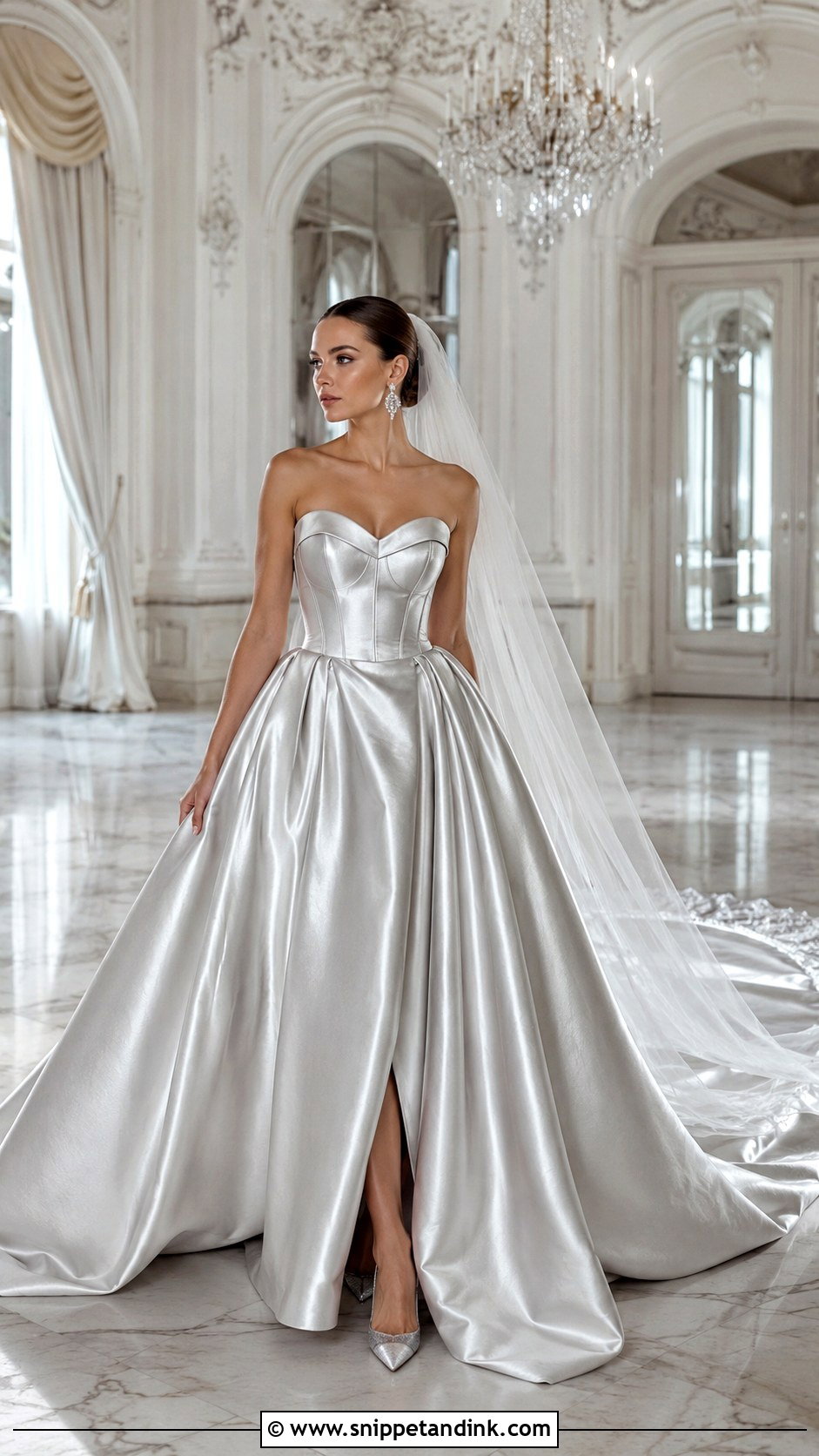
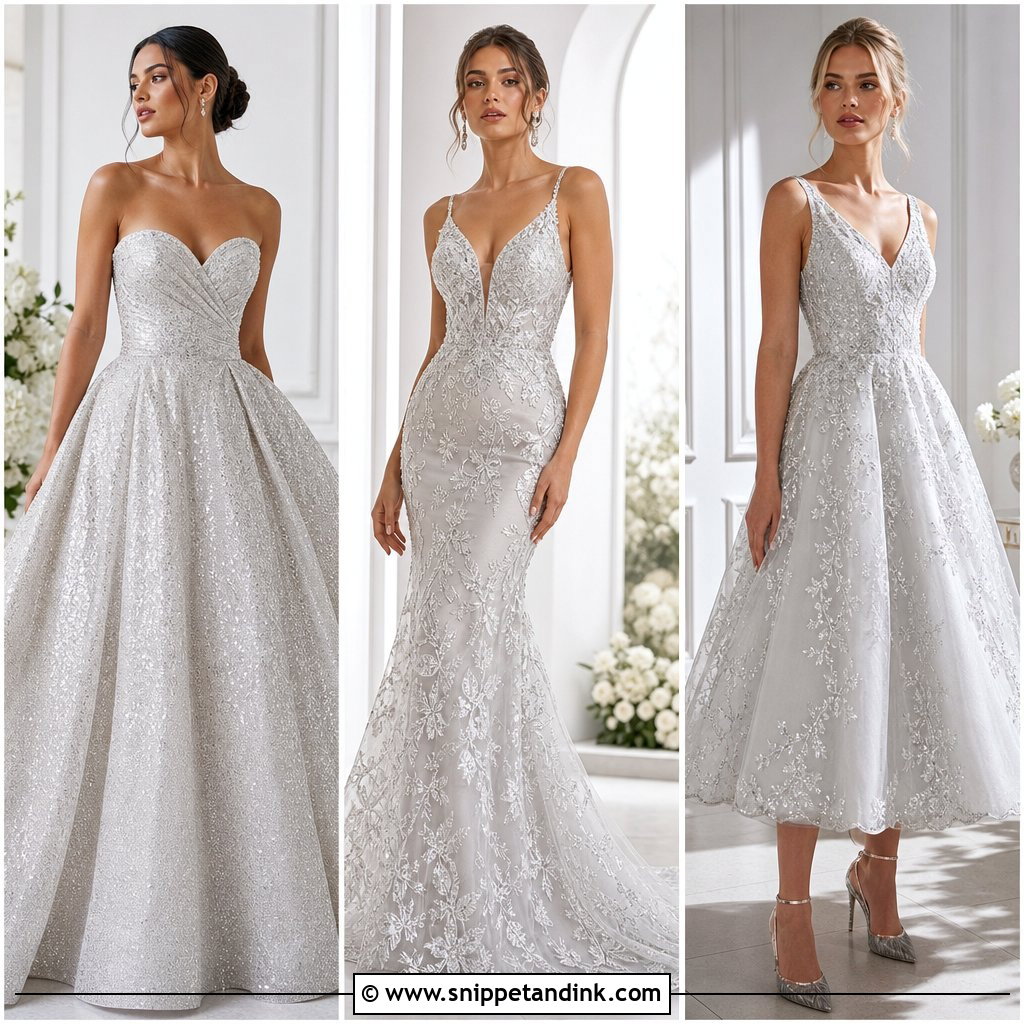
A ball gown in silver makes the biggest entrance on this list. Structured satin or metallic jacquard keeps the skirt full all day without collapsing; silver-grey tulle in layers moves more softly and suits a ballroom or an estate. Pointed metallic pumps, crystal drops and a cathedral veil with a thin silver edge are enough, and a smooth low bun balances the volume. Skip the necklace if the bodice is beaded. Proportion matters with this much fabric. On petite brides I raise the waist slightly and reduce the skirt so the dress doesn’t wear them; tall brides can carry a much fuller skirt and a longer train.
2. Silver A-Line Wedding Gown
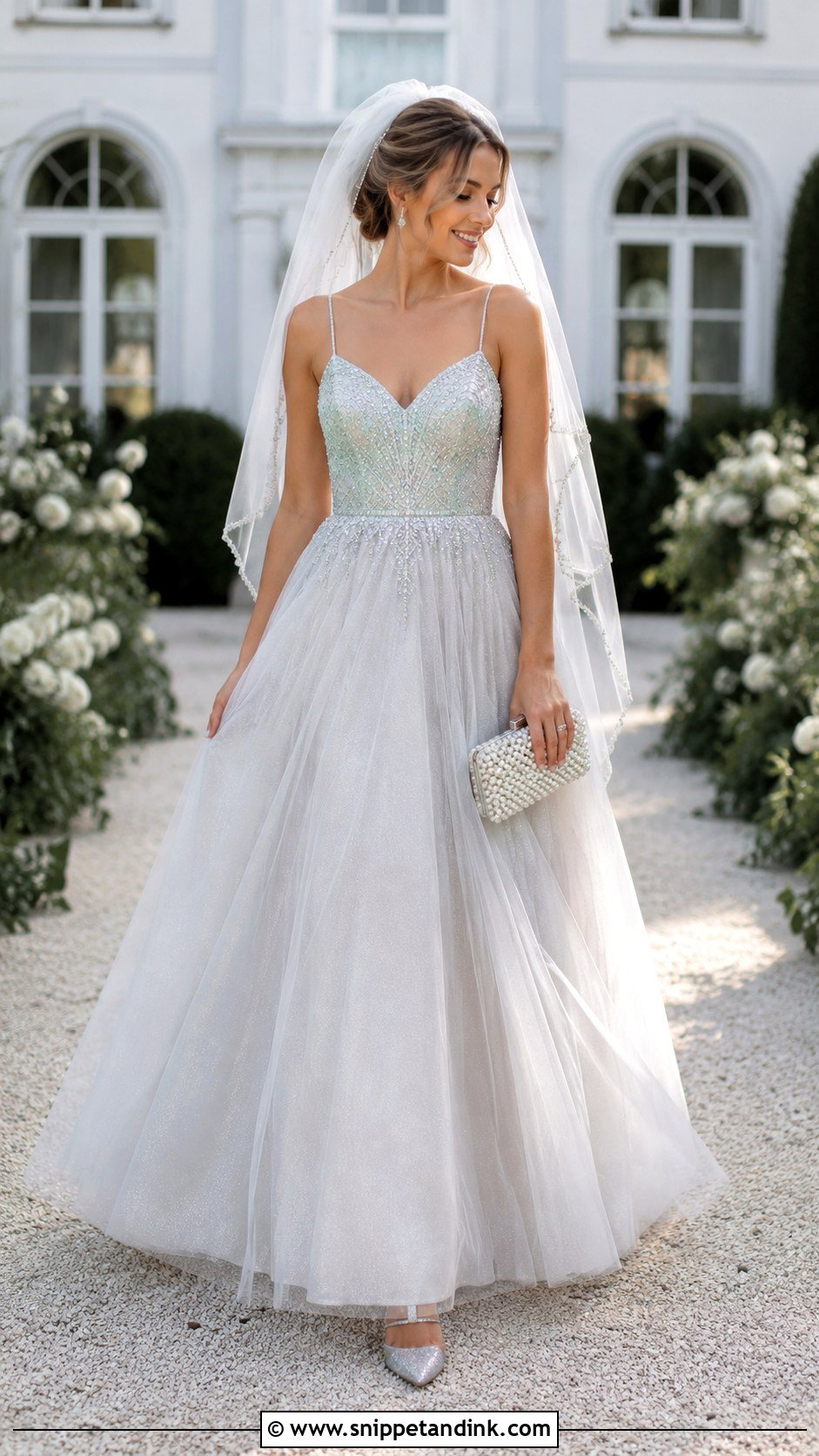
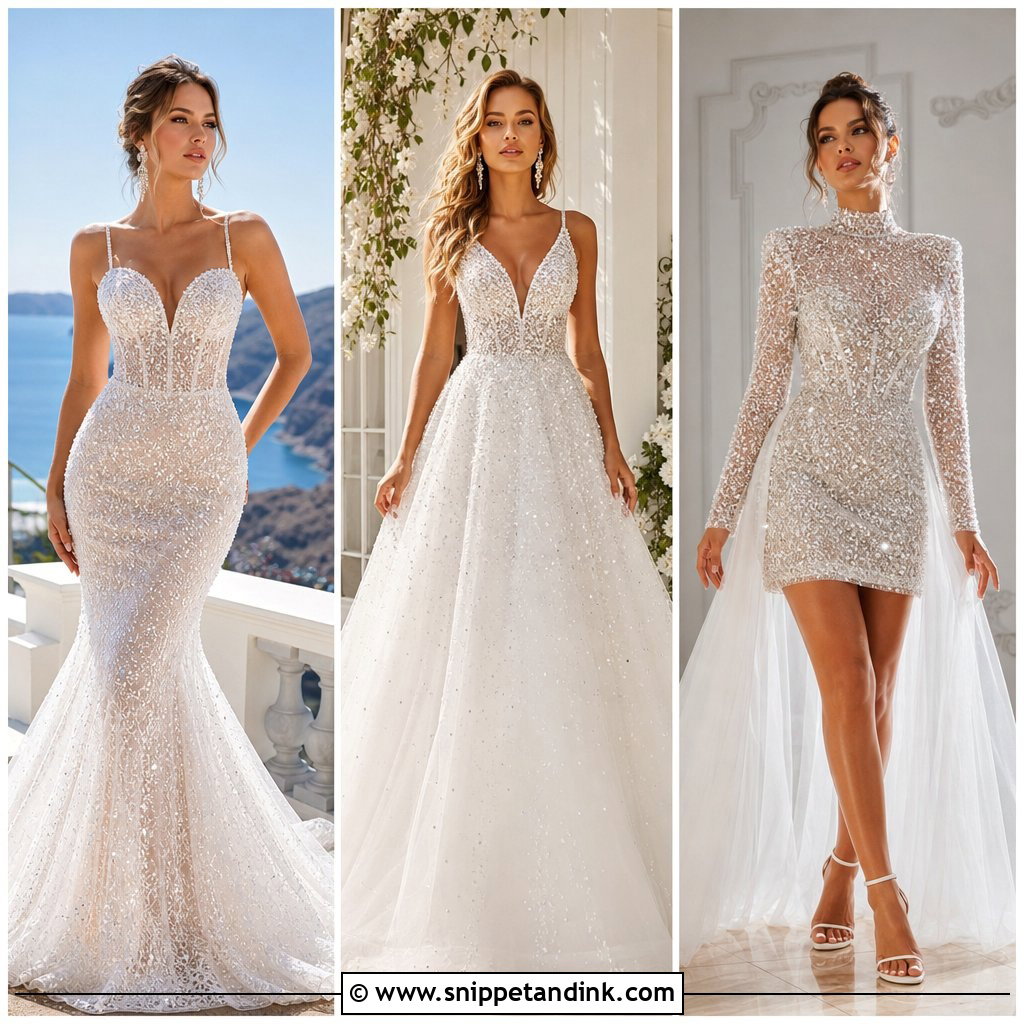
Silver on an A-line is the easiest way into the colour. The fitted top and gradually widening skirt define the waist and move comfortably, and the shape suits most figures. Platinum satin looks modern; layered tulle with a scatter of crystals gives a gentler shimmer. Silver slingbacks, a small pearl clutch and earrings that echo the embellishment pull it together, with a fingertip veil and loose waves or a half-up style. For outdoor ceremonies, keep the train short and wear block heels; stilettos sink into lawns. One thing I always check is whether the silver tulle is the same tone as the bodice, since mixed dye lots can look patchy in daylight.
3. Silver Mermaid Wedding Gown
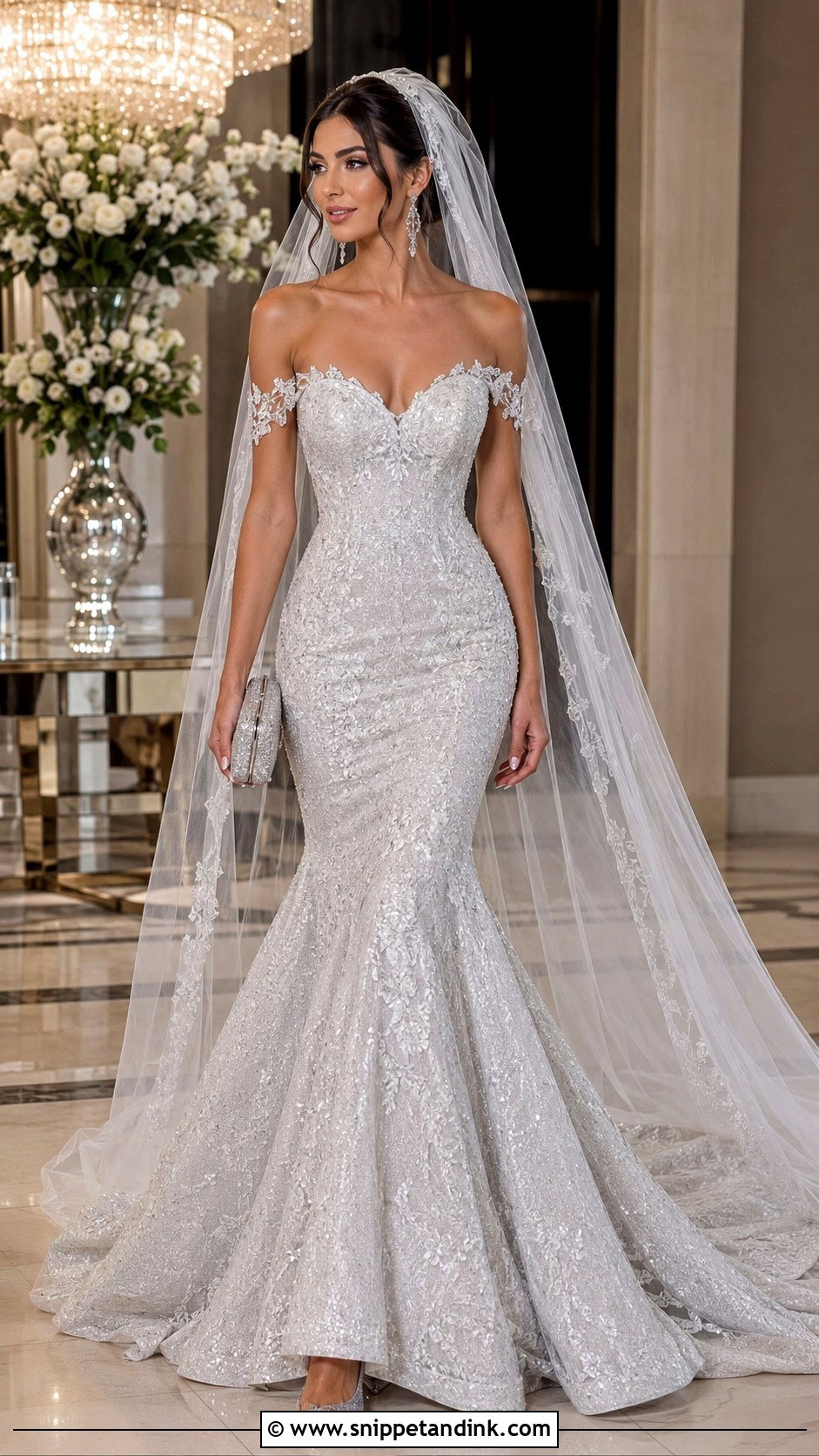
A silver mermaid follows the body closely and flares near the knee, which suits an evening celebration with plenty of light to catch. Stretch crepe gives a smooth surface; beaded lace adds texture that sparkles under candles. The flare position decides how well you walk. I want room around the knee so you can take a normal step and manage stairs, plus flexible lining and supportive boning. Crystal-embellished pumps, slim chandelier earrings and a small structured clutch are enough, with a long sheer veil to soften the outline. A side-swept wave or sleek low bun shows off the neckline.
4. Silver Satin Wedding Gown
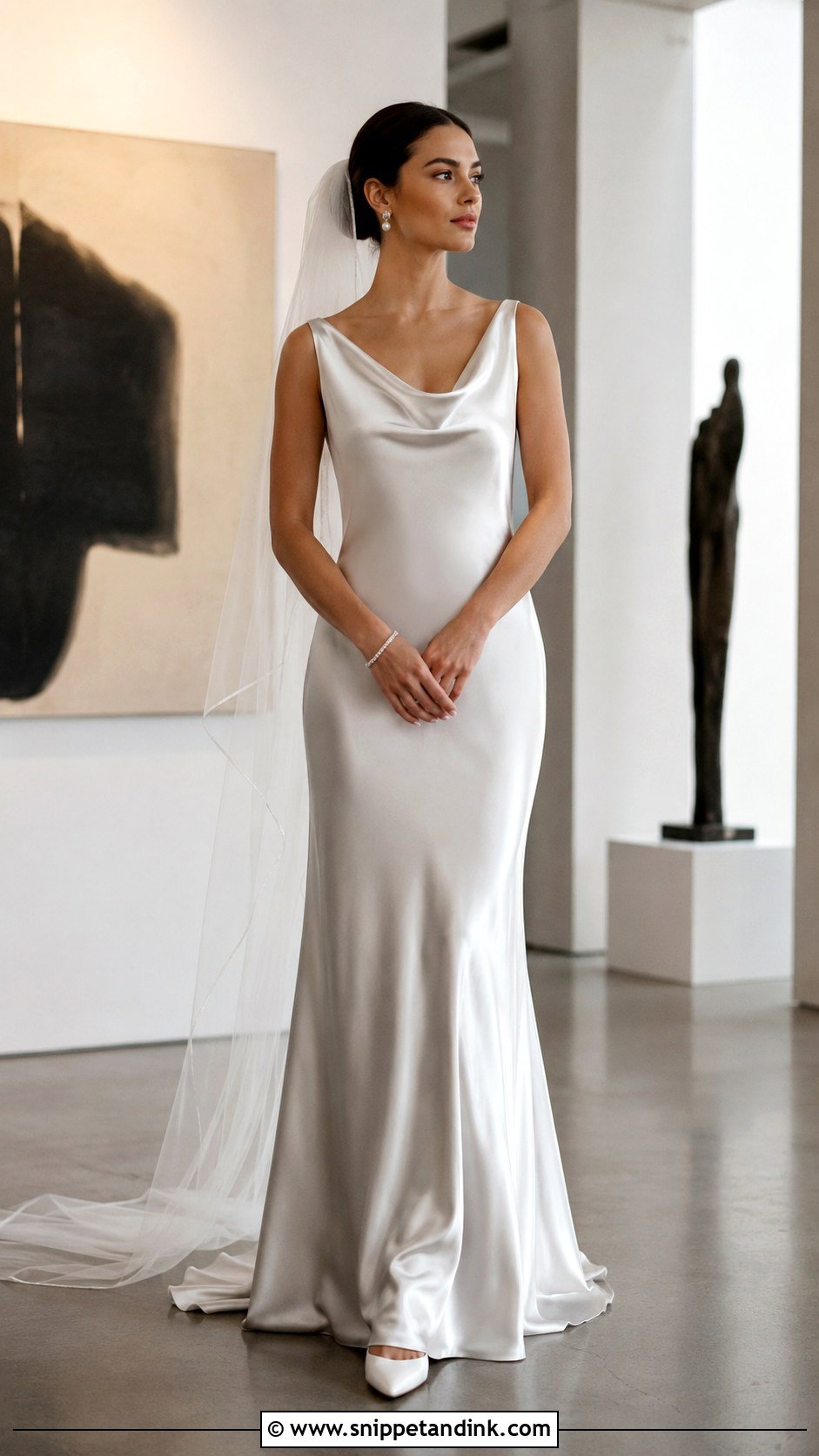
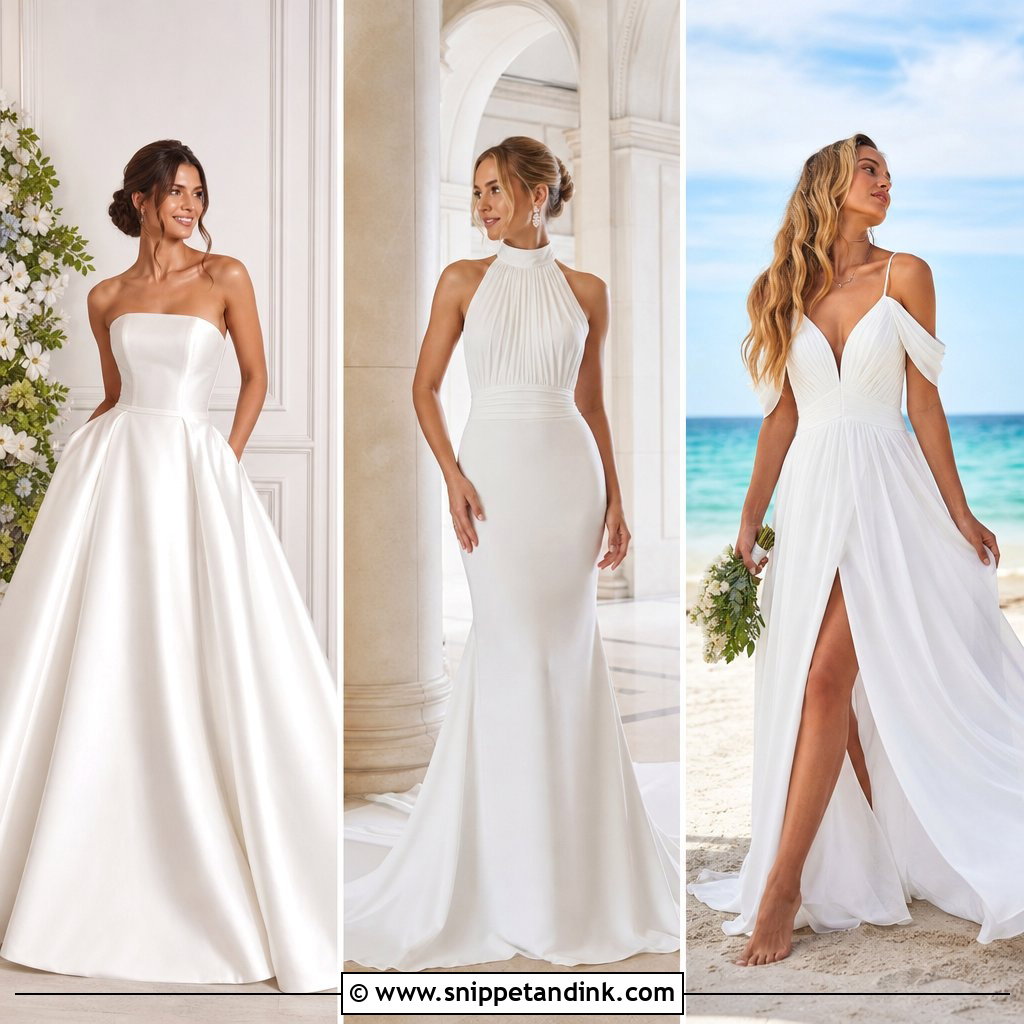
Silver satin has a quiet glow rather than glitter, and it suits clean, modern rooms. A bias-cut or softly draped silhouette follows the body without needing beading, but it does need a fabric heavy enough to fall straight. Thin satin ripples over every seam. A defined waist and a good internal structure help. Closed-toe satin pumps, pearl-and-silver earrings, a slim bracelet and a sheer chapel veil complete it, with a neat chignon. Metallic satin creases sharply and the folds catch the light, so I’d steam it on site and book a car big enough for the skirt to lie flat.
5. Silver Beaded Wedding Gown
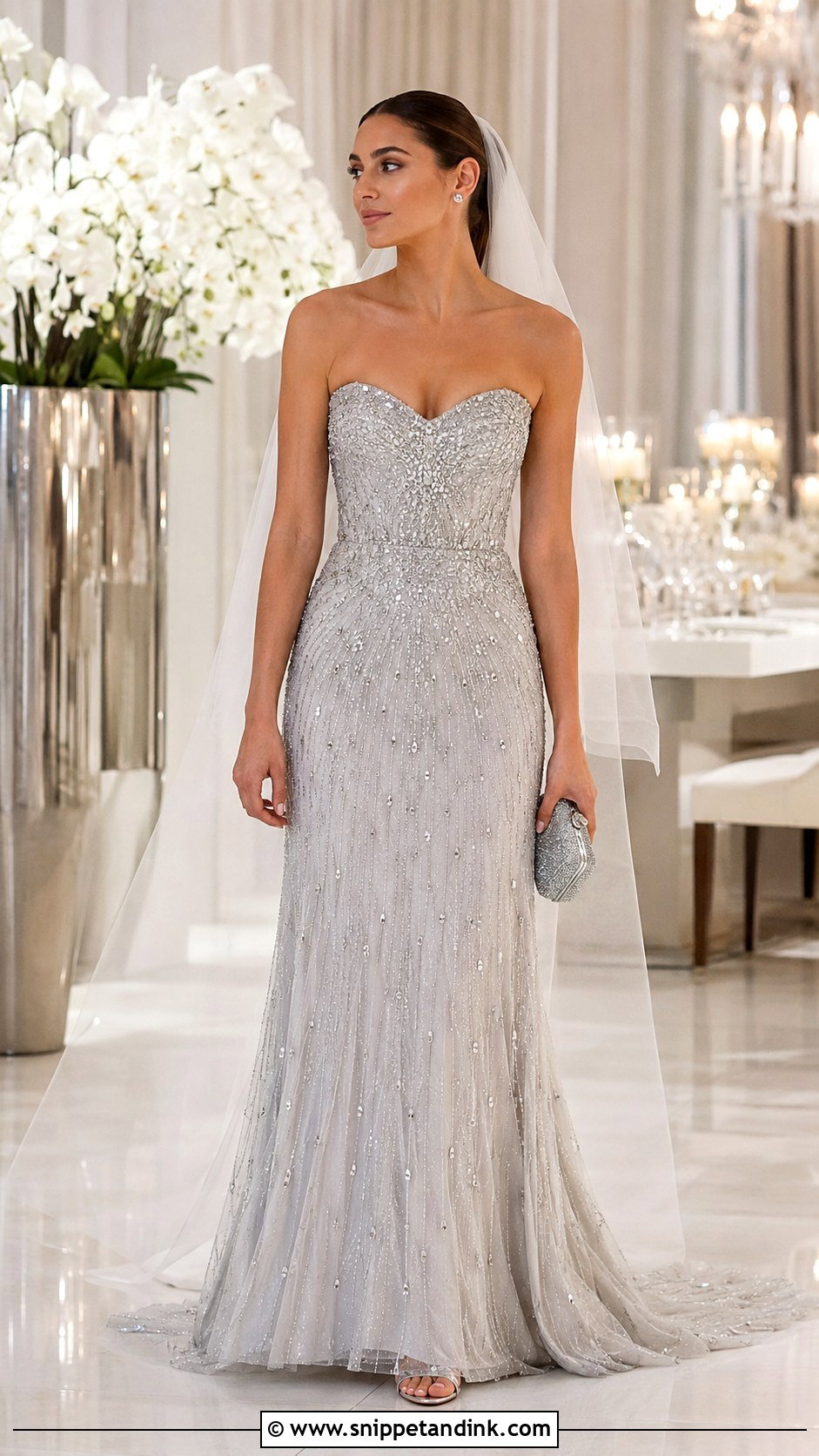
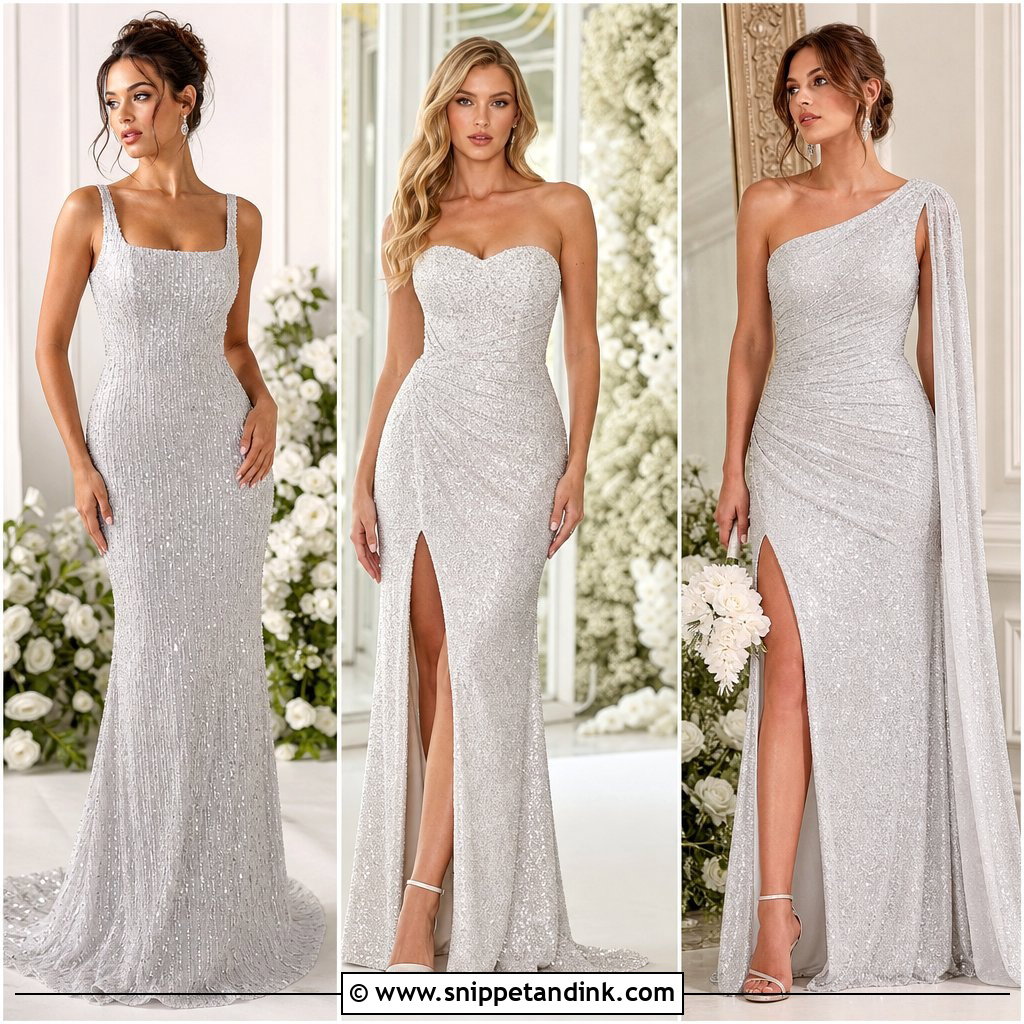
Tiny silver beads all over a gown catch candlelight with every step, so the dress needs very little help from accessories. Graduated beading works best: heavy on the bodice, lighter down the skirt, which keeps the weight up top and the skirt free to move. Metallic sandals, small studs, a plain tulle veil, a sleek bun and a small silver clutch are plenty. Ask how much the dress weighs. A fully beaded gown can be surprisingly heavy, and the straps carry it all, so I have brides wear it for a good twenty minutes at a fitting. Beadwork under the arms should be lined, since rough edges rub skin raw.
6. Silver Sequin Wedding Gown
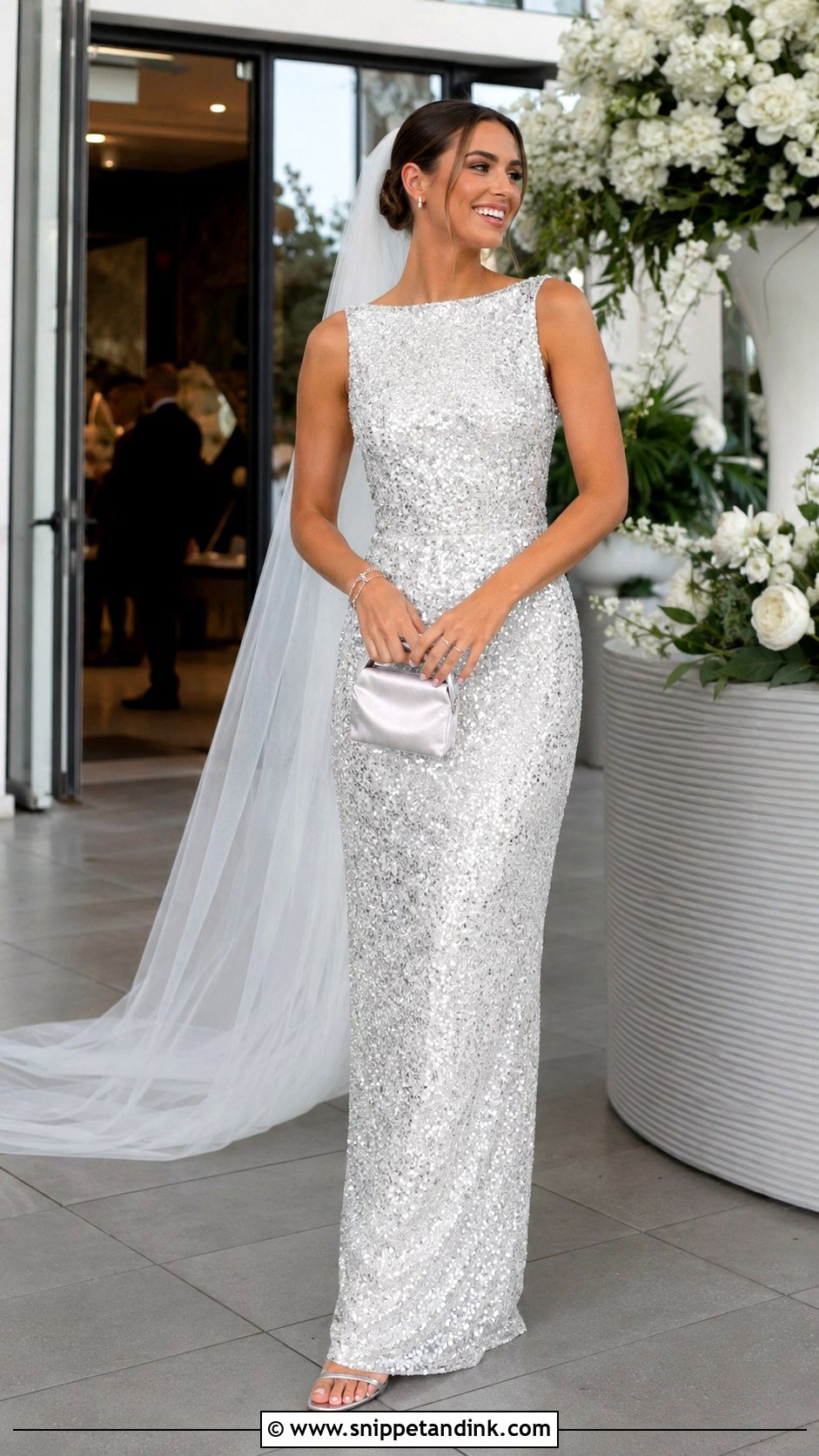
Sequins move and flash, which makes them ideal for a city wedding or an evening reception. Fine sequins in one tone look elegant; large, high-contrast ones can tip into costume. A column, sheath or slightly flared shape keeps the surface from looking busy. Plain silver heels, smooth studs and a veil with no crystals let the dress lead, and a satin clutch in the same tone adds a contrasting texture. Sequins are scratchy on the inside unless the lining is soft and full, so check the inner arms and the underarm seams. Fresh, luminous skin and loose waves are enough with this much sparkle.
7. Silver Lace Wedding Gown
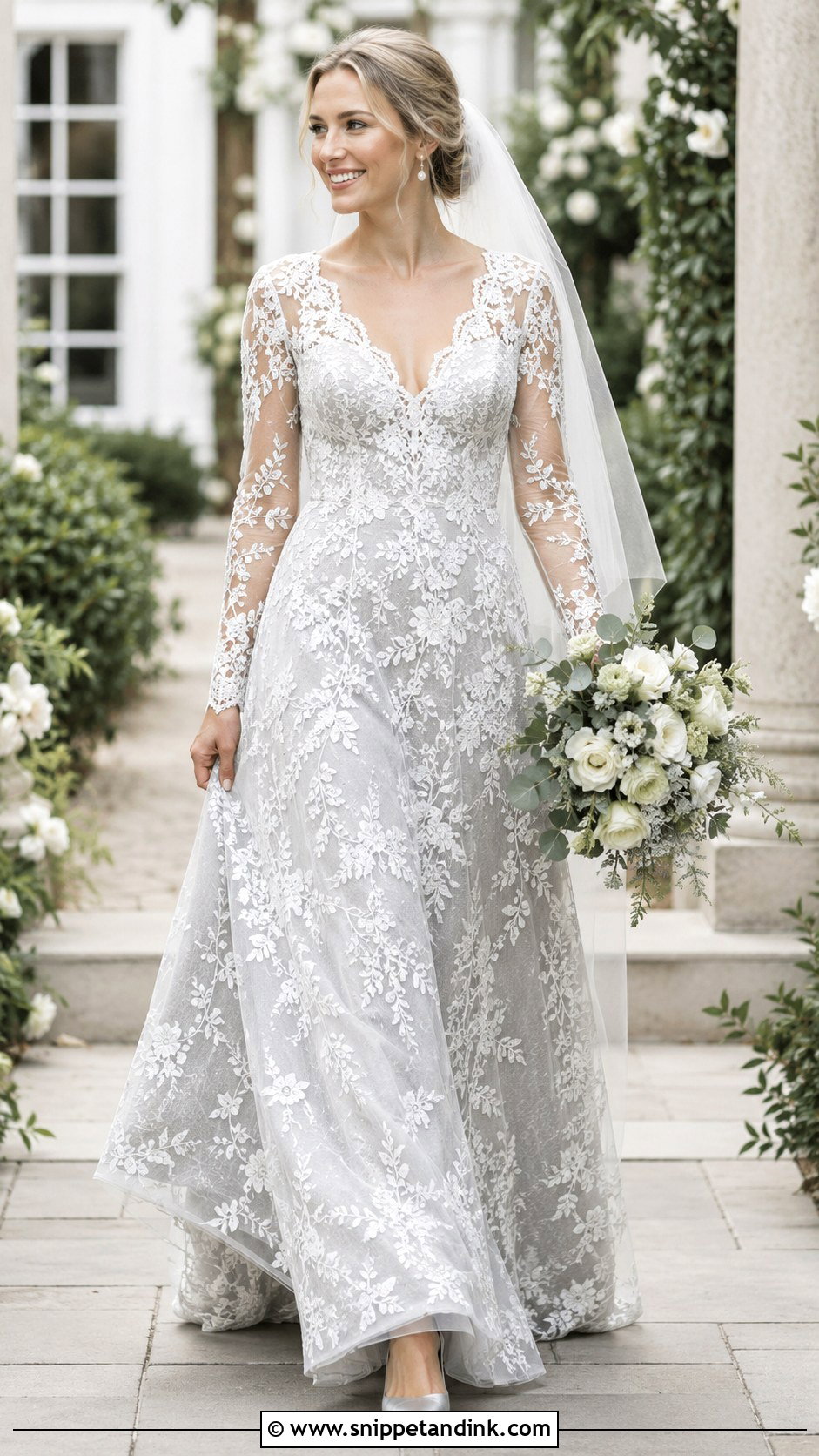
Lace softens the metal. What sits underneath matters most: a cool grey lining makes platinum lace show its pattern clearly, while an ivory lining looks lighter and more traditional. An A-line or fit-and-flare works, depending on how much structure you want. Pearl drops, silver pointed pumps and a sheer veil with a simple edge suit it; an embroidered veil would fight the lace. A bouquet of white, pale lavender or cool greenery complements the grey. I hold lining swatches against the bride’s skin before ordering. Grey can drain warm complexions, and in that case the ivory lining often looks better behind silver lace.
8. Silver Long Sleeve Wedding Gown
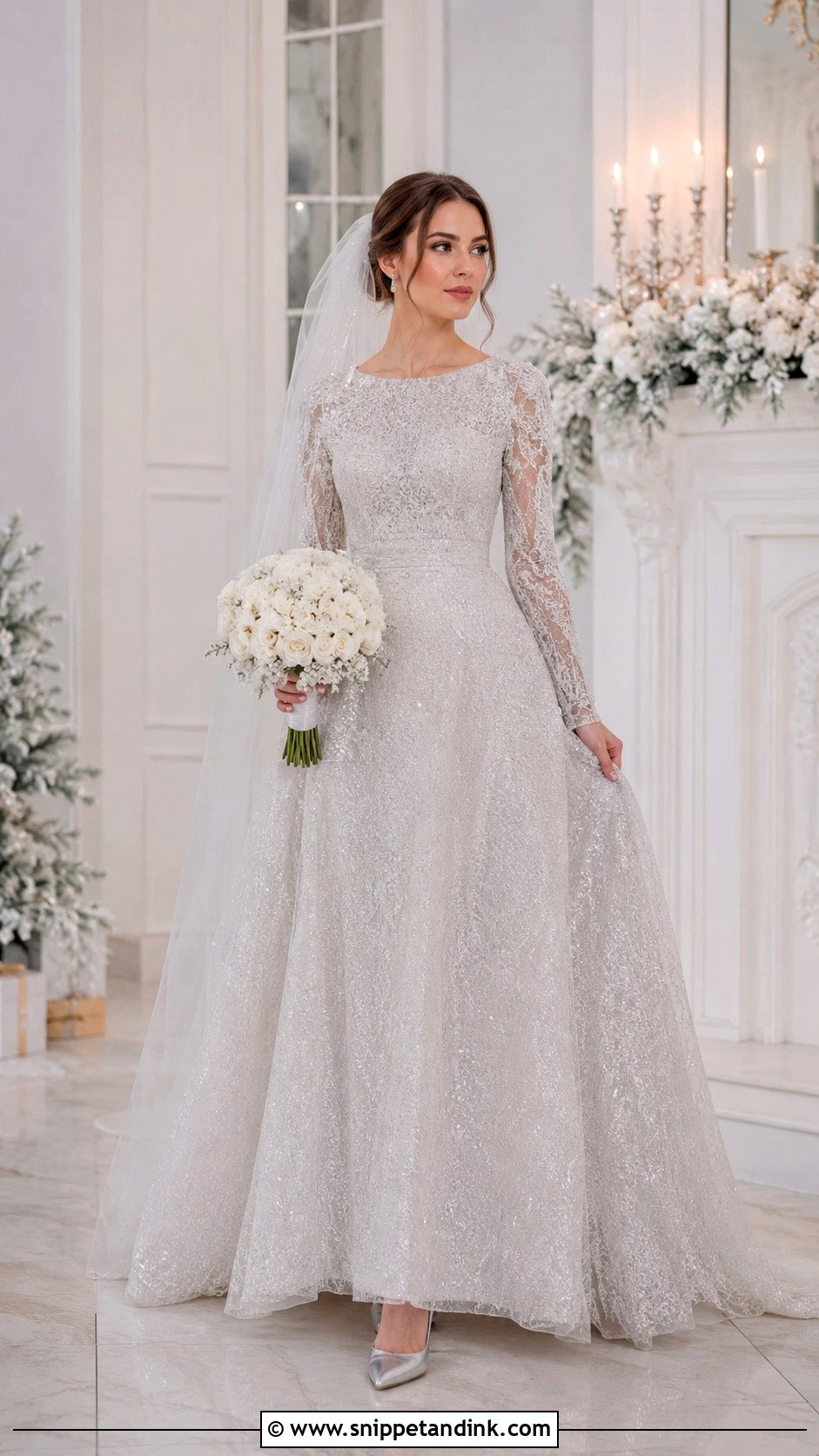
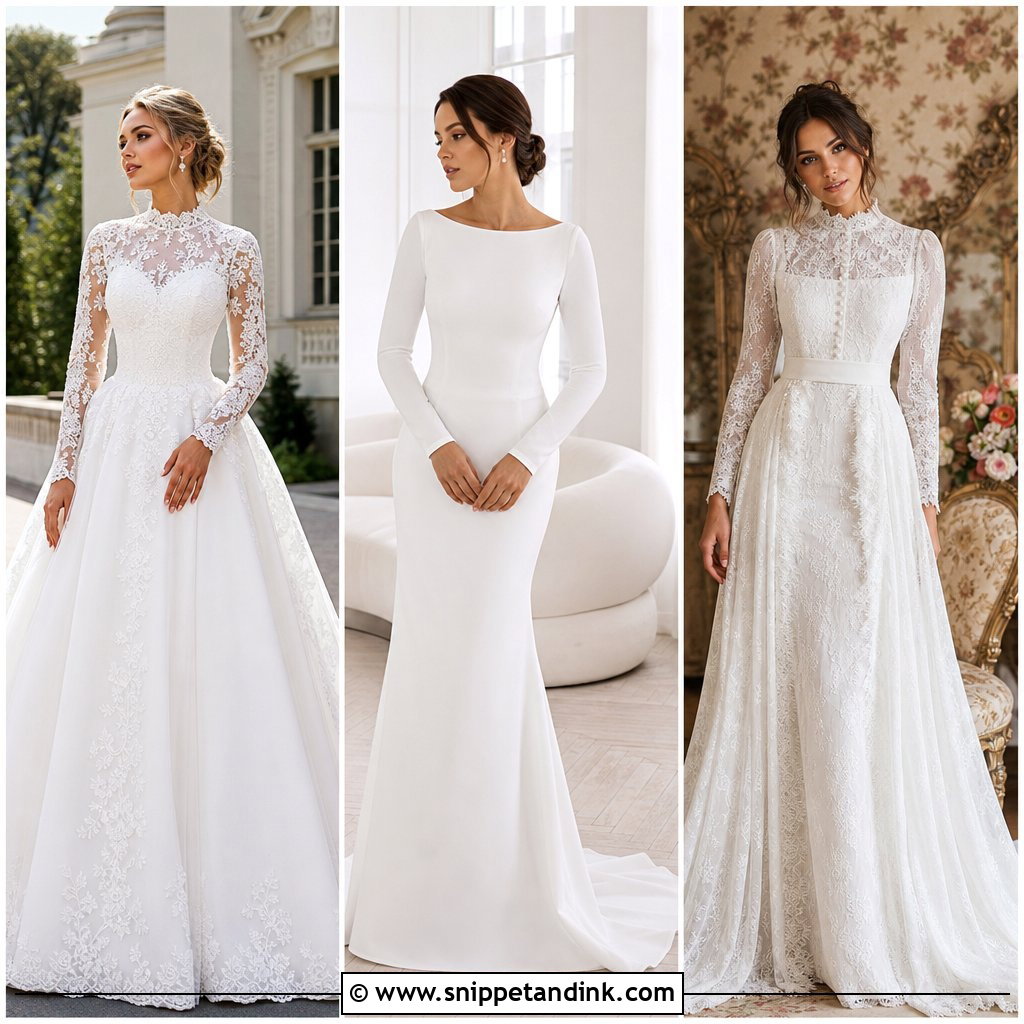
Long sleeves and silver suit autumn and winter weddings especially. Sheer lace sleeves give light coverage, while fitted crepe sleeves look smooth and modern. A defined waist and soft skirt keep it balanced. Closed-toe metallic pumps, crystal studs and a chapel veil fixed under a low bun finish it, and a removable silver-grey cape or faux-fur wrap adds warmth. White flowers and silvery foliage carry the colour. Cool metallics can make skin look grey in winter light, so I suggest soft rose tones in makeup. Raise your arms at the fitting, too. Crepe sleeves without stretch tighten across the back when you reach.
9. Silver Off Shoulder Wedding Gown
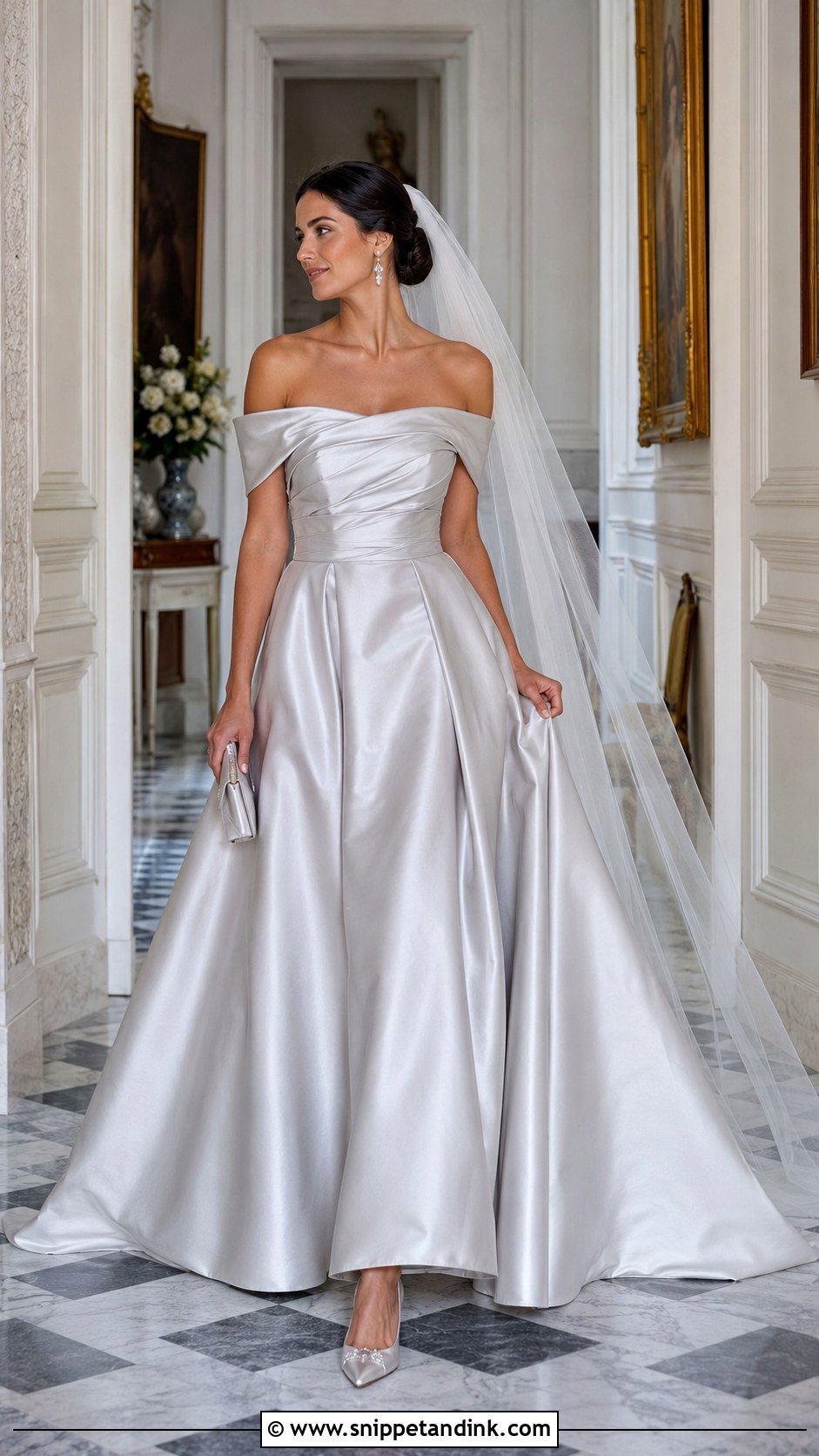
Off-the-shoulder silver frames the collarbones and adds a little structure around the upper body. Draped satin bands look regal; lace or beaded sleeves are more detailed. The internal boning should carry the dress, with the arm bands fitted so they don’t slide down while you hug guests. Wear a short crystal necklace or bold drop earrings, never both as statements. Pointed silver pumps, a structured satin clutch and a low updo keep the shoulders clear, with a cathedral veil fixed under the hair. I always check that the band doesn’t press a red line into the upper arms after twenty minutes.
10. Silver Strapless Wedding Gown
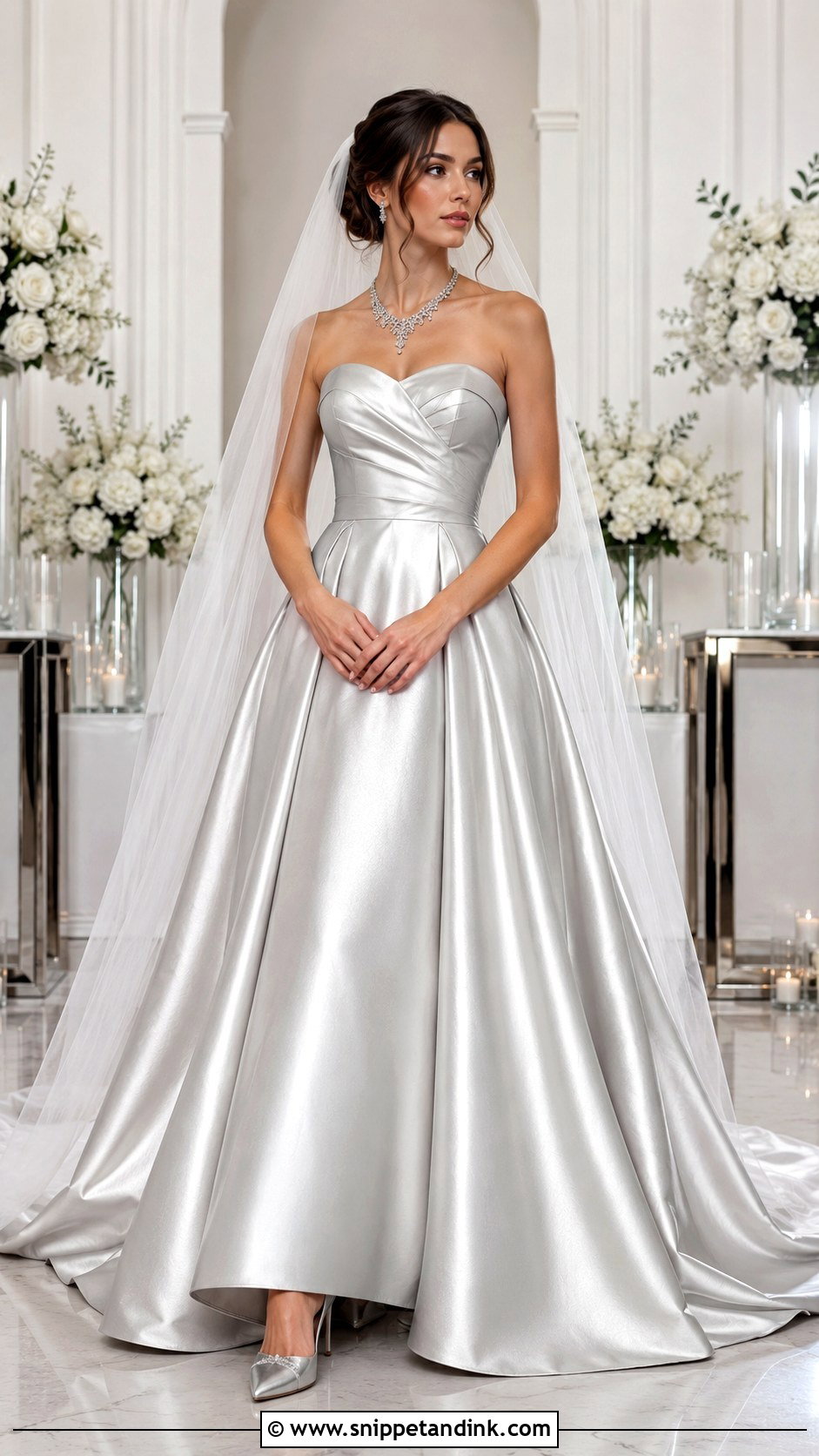
Fabric decides what a strapless silver gown says. Structured mikado is crisp, liquid satin minimal, and beaded tulle formal. In every case the bodice should grip at the waist rather than at the top edge. If it only stays up because the neckline is tight, it will dig in and slip as the day goes on. Raise your arms, sit and walk at every fitting. A slim crystal necklace, small earrings and silver pumps at a comfortable height suit it, and a long veil balances bare shoulders. For the reception, swap the veil for a sleek ponytail or a jewelled comb.
11. Silver Corset Wedding Gown
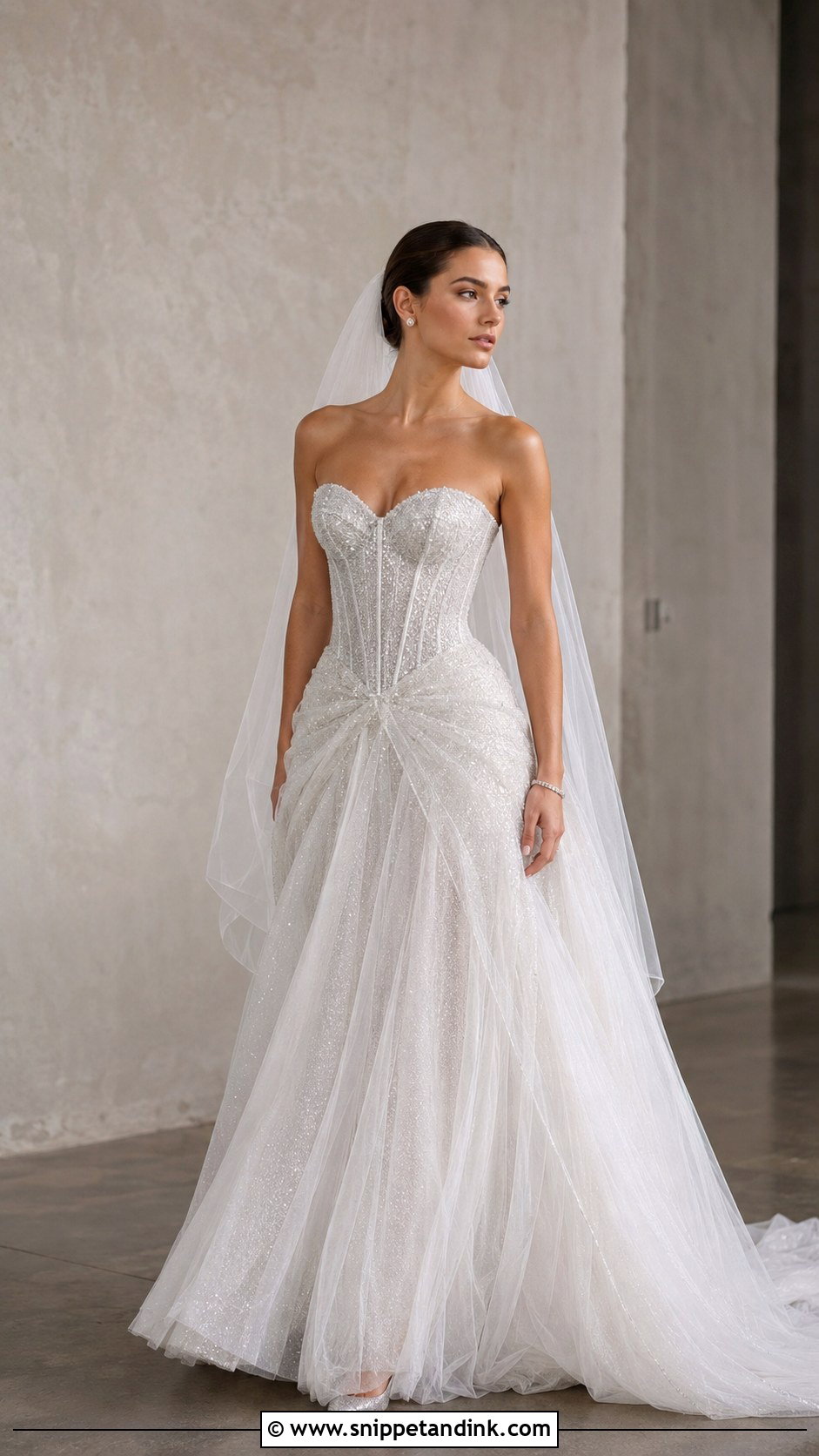
Visible corsetry gives a silver gown a fashionable, structured base, and corset bodices with sharp waistlines are still everywhere in bridal. Lined boning looks softer; sheer panels look bolder and more couture. A flowing tulle skirt balances the fitted top, while satin builds a more architectural shape. Closed-toe heels, a fine tennis bracelet, small crystal earrings and a plain veil keep it uncluttered, and a sleek updo shows the neckline. With sheer panels, the lining tone matters. Silver tulle over pale skin can look grey, so I ask for nude mesh matched to the bride. The corset should support you without stopping a deep breath.
12. Silver High Neck Wedding Gown
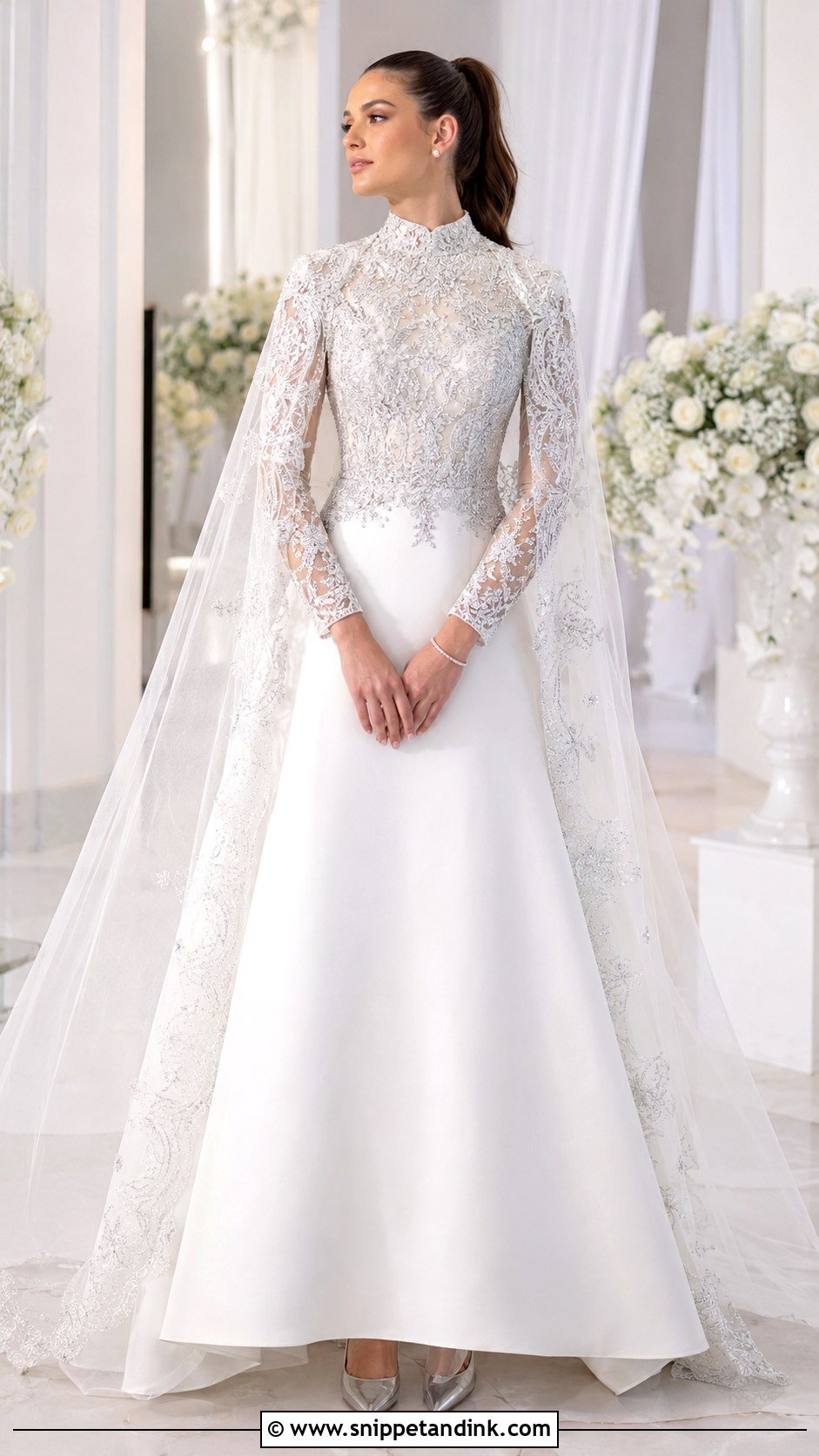
A high neck in silver draws a long line up through the body and gives coverage without fuss. Sheer lace looks romantic; smooth crepe or satin looks modern. If the neckline carries embroidery, pearls or crystals, keep the skirt plain. No necklace is needed, so wear refined studs, a narrow bracelet and metallic pumps. A low bun or high ponytail keeps the collar clear, and a veil fixed under the hair or a light cape veil from the shoulders works. I’d check the collar while you turn your head and swallow; a high metallic collar with no give is the first thing brides want off by evening.
13. Silver Cape Wedding Gown
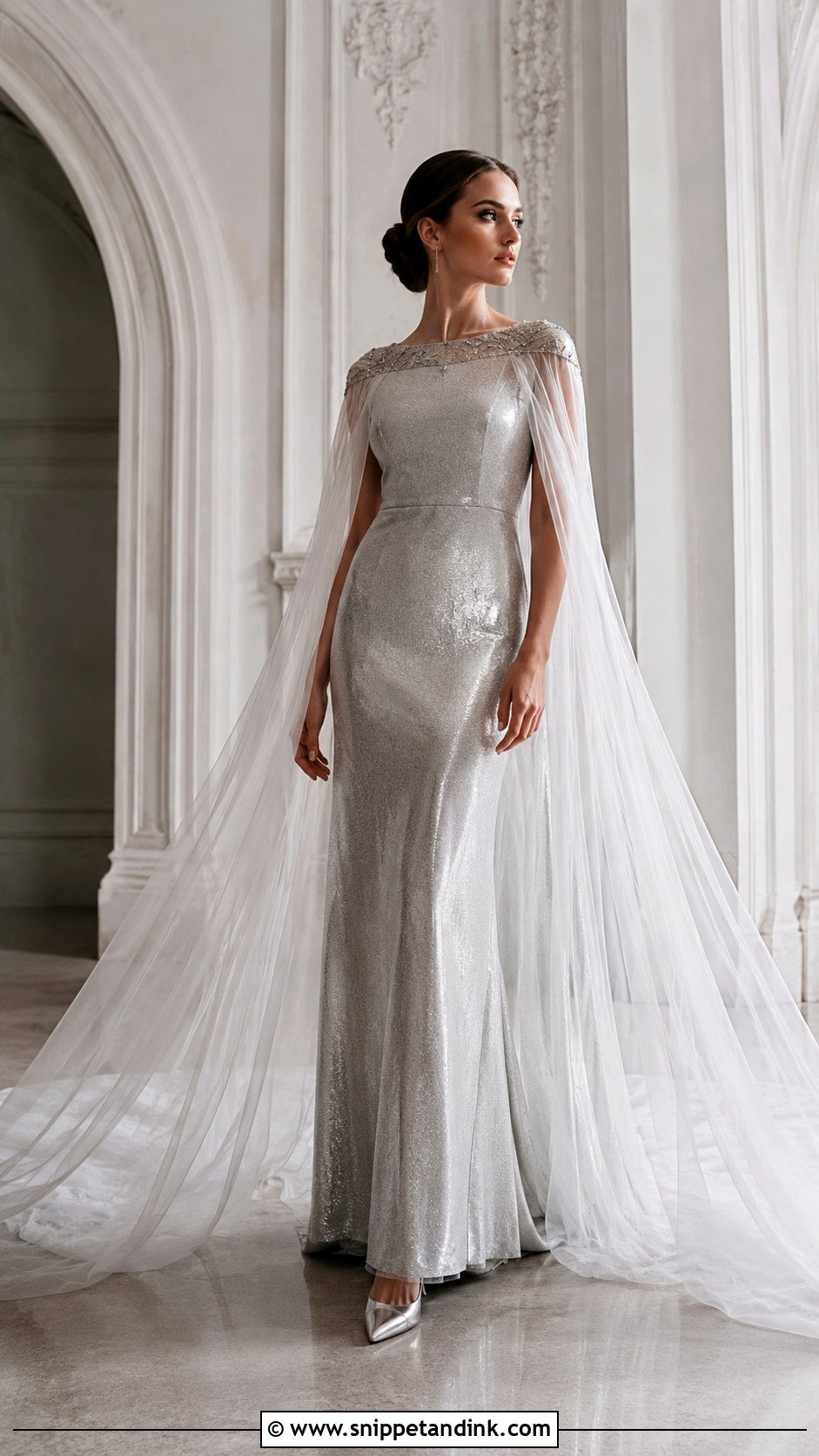
A cape adds drama and covers the shoulders and arms. Sheer tulle looks ethereal; smooth satin looks regal and more structured. The gown underneath should be a clean column, A-line or fit-and-flare so the layers don’t bulk up. Pointed silver pumps, simple earrings and a low bun suit it. If the cape has its own long train, I’d drop the veil, because two long layers tangle and compete. Removable capes are the most practical, worn for the ceremony and unhooked for dancing. Secure fastenings keep it straight in photos; ask for snaps hidden under the shoulder seam rather than hooks at the neck.
14. Silver Floral Wedding Gown
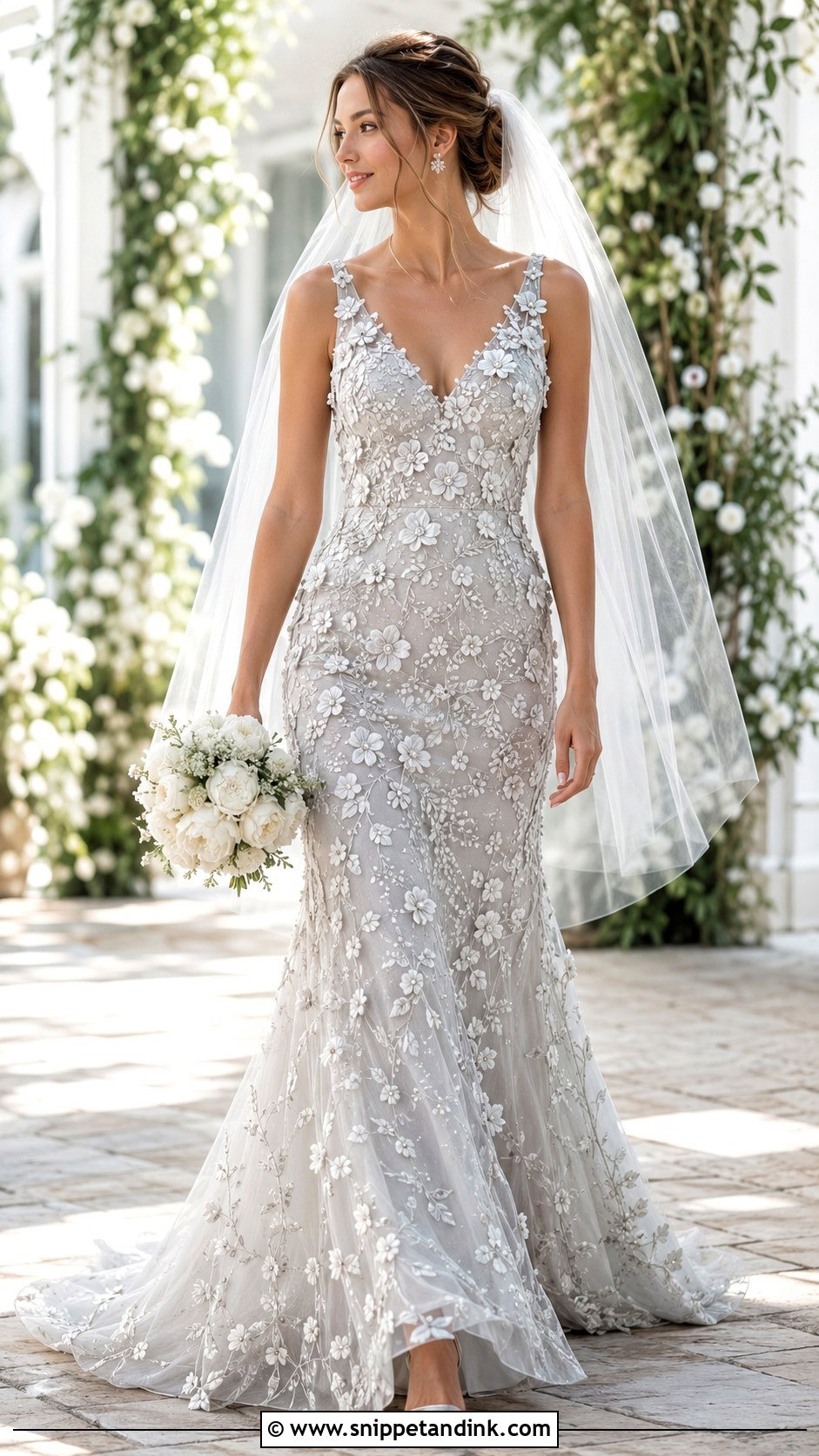
Three-dimensional flowers warm up a cool metallic gown. I like tonal appliqués around the bodice, waist and upper skirt with some bare space left, so the design breathes. Tiny pearls or crystals at the flower centres give a controlled sparkle. Silver sandals, floral studs, a plain fingertip veil and a soft updo or loose waves suit it. Keep the bouquet simple, white blooms and cool green leaves, or the flowers start competing. Raised appliqués crush in a garment bag and in the car, so I pack the bodice with tissue and fluff the petals by hand before the bride steps in.
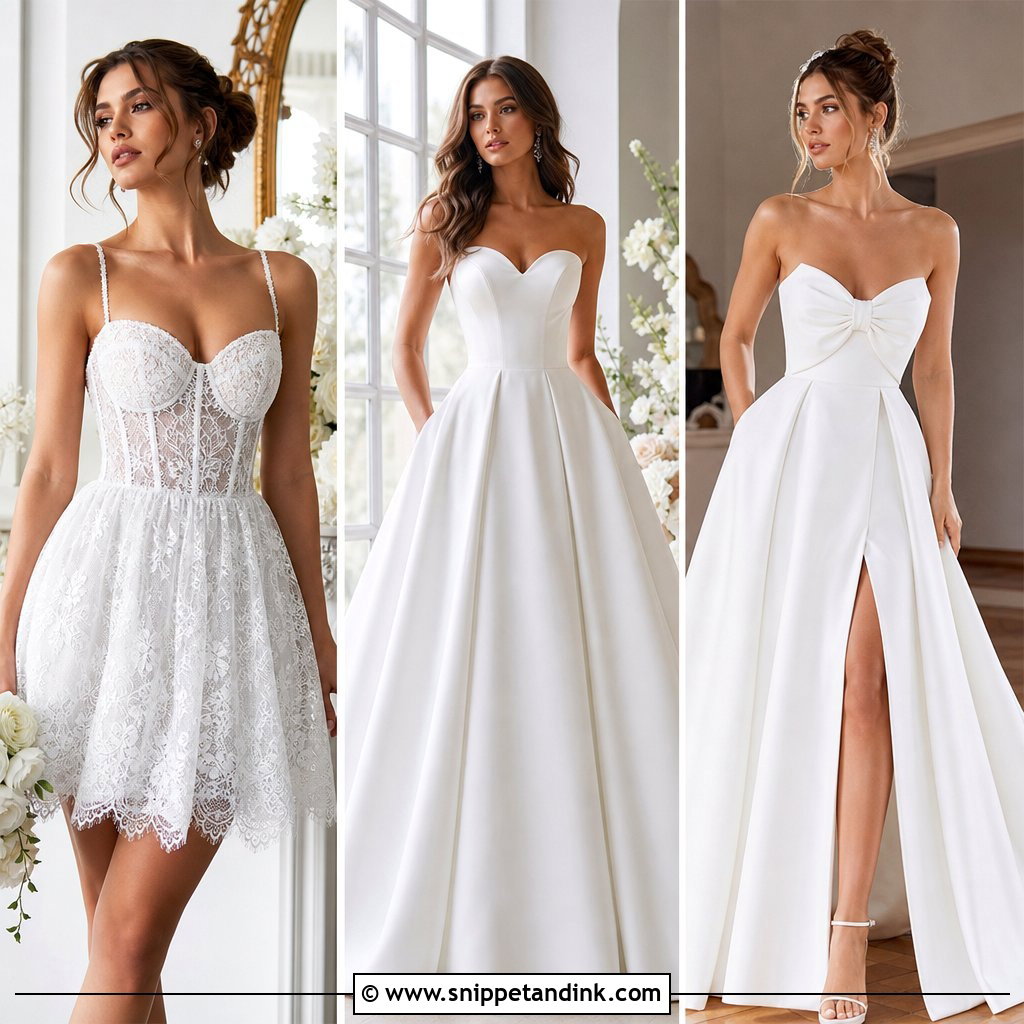
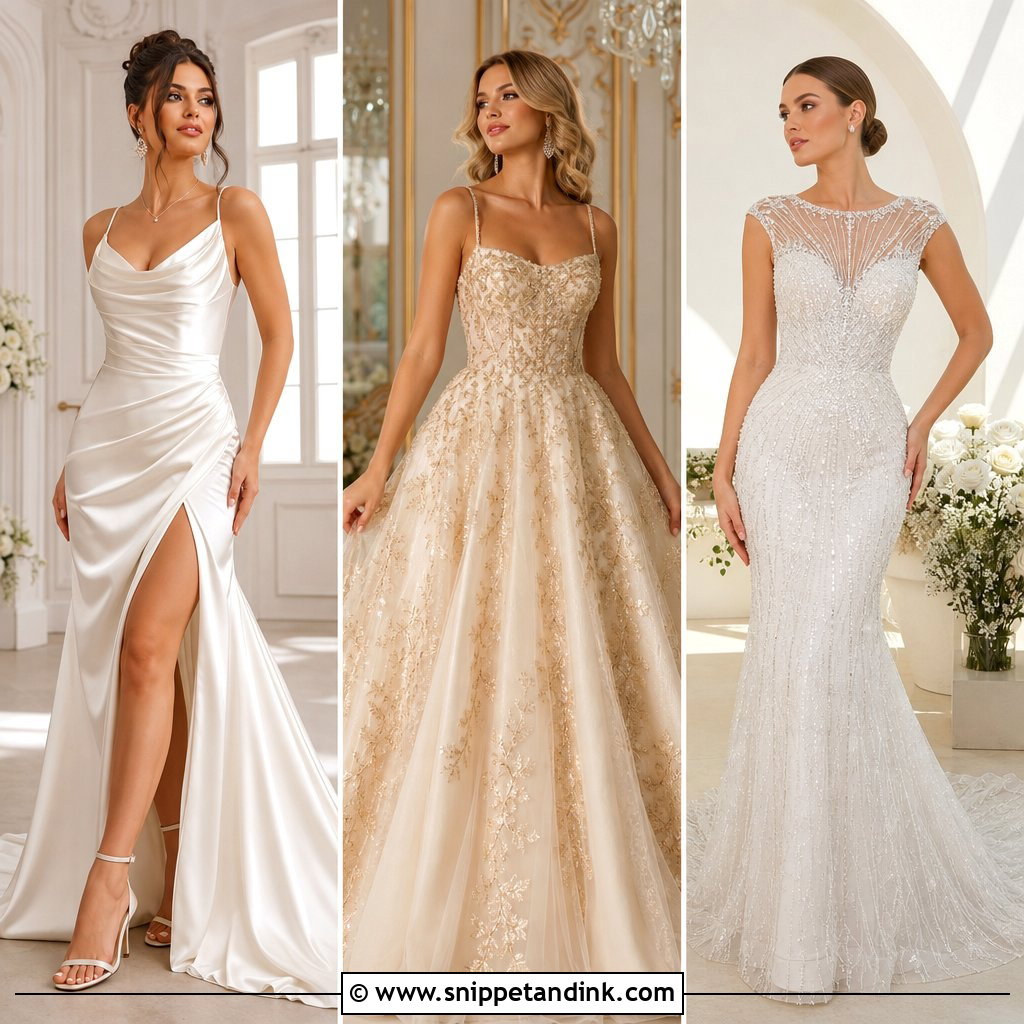
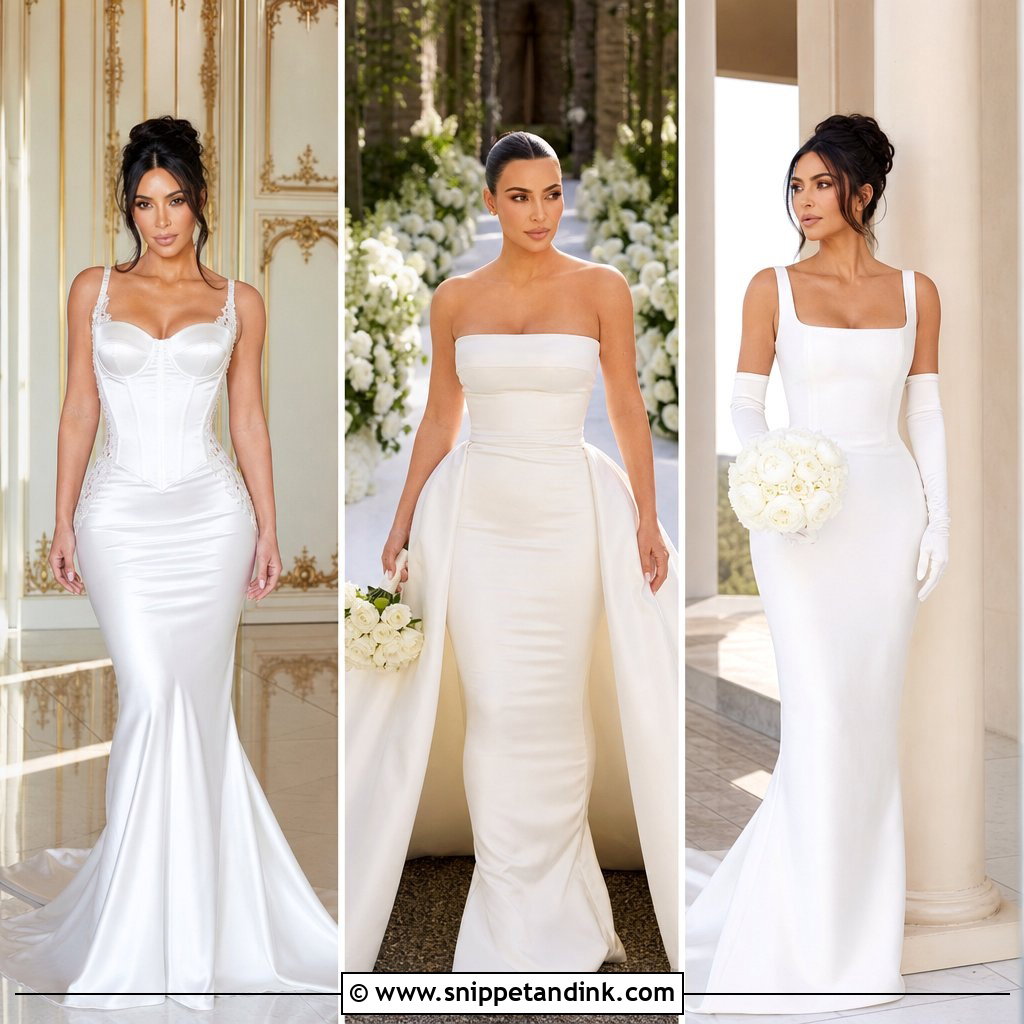
15. Silver Tulle Wedding Gown
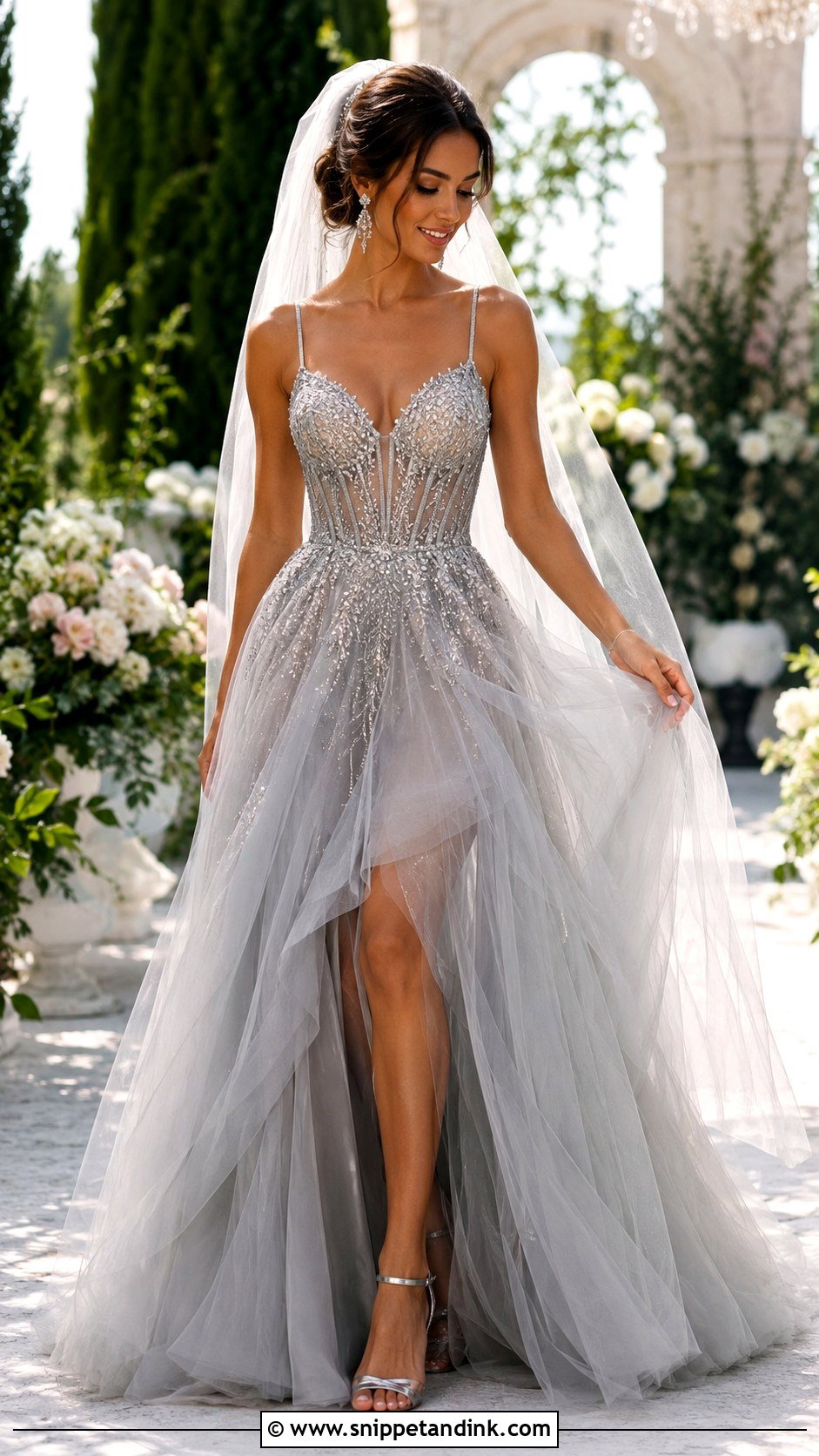
Silver tulle gives volume with none of the weight of satin. A smoky grey underlayer under pale silver tulle adds depth, and scattered crystals throw small flashes as the skirt moves. A fitted bodice balances the floating skirt. Slim metallic heels, crystal drop earrings, a soft sheer veil and a delicate bracelet are plenty. For outdoor weddings, keep the train moderate; tulle snags on stone, bark and gravel. Loose waves or a relaxed bun and a cool rose lip suit the look. Layered grey tulle can look darker in photos than in person, so view it in daylight before ordering.
16. Silver Plus Size Wedding Gown
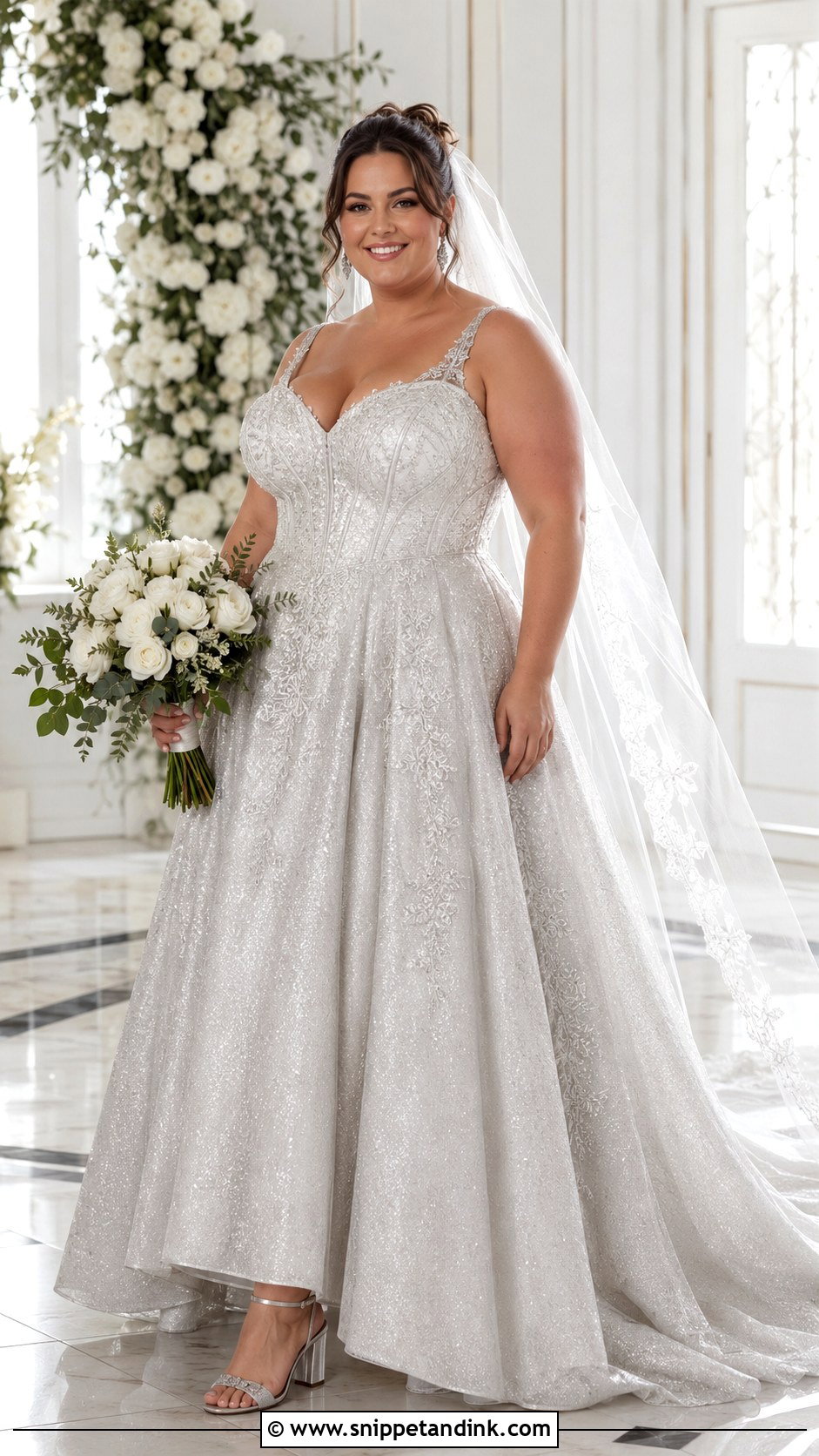
For a plus size bride, a silver gown needs the same thing any gown needs: proper support and a shape she loves. An A-line with a structured bodice is the classic choice; fitted stretch crepe looks smooth and modern. I look for wide internal waist support, adjustable corsetry and secure straps or sleeves. Comfortable block heels, medium-scale earrings and a veil sized to the skirt finish it. Beading at the neckline or waist draws the eye wherever you choose. Bring your wedding-day underwear and shoes to every fitting, and pick a boutique that carries samples near your size; metallic fabric behaves very differently on a clipped sample.
17. Silver Modest Wedding Gown
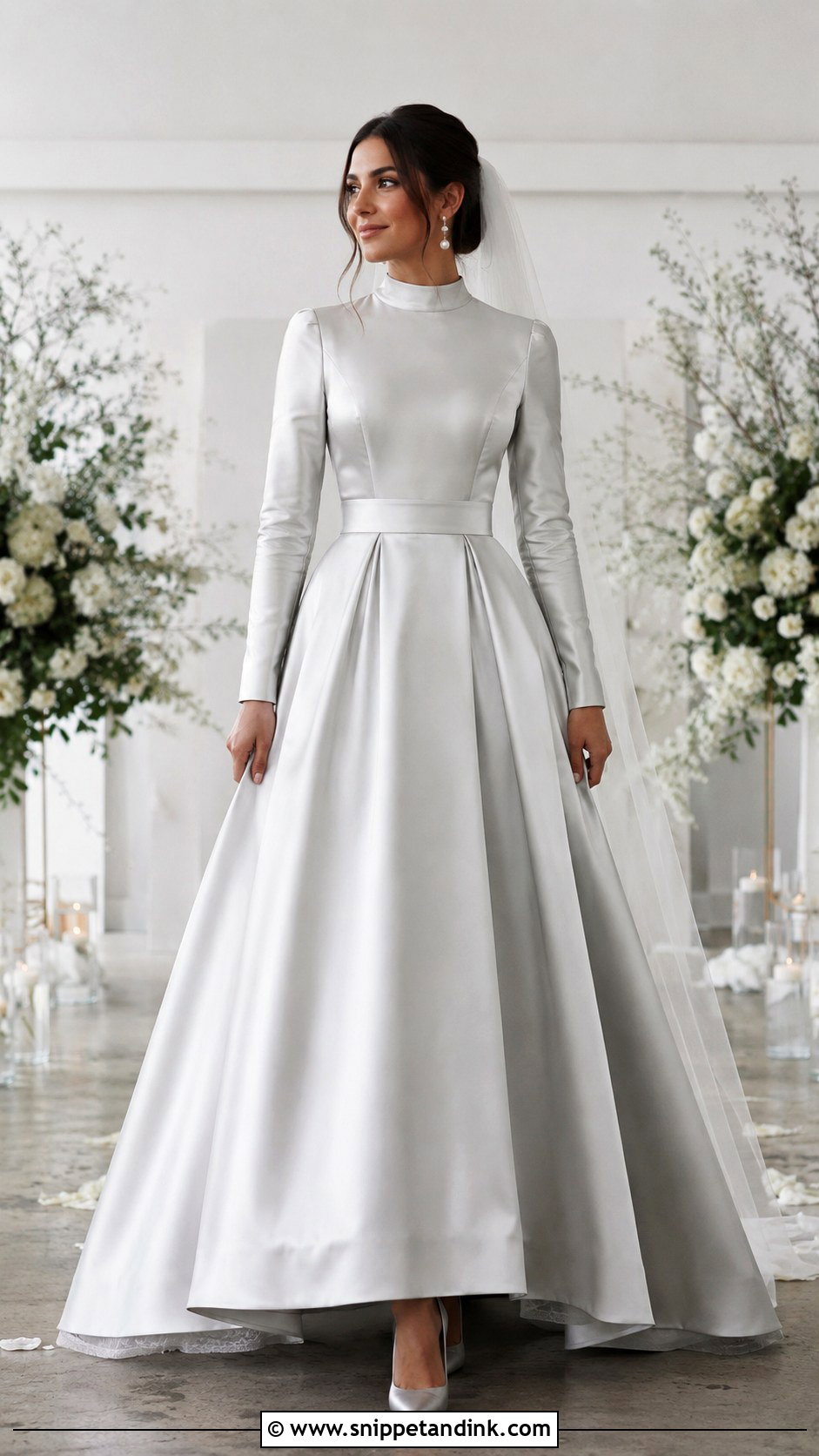
Full coverage and silver can feel festive and modern together. A high neckline, lined long sleeves and an A-line or softly pleated skirt are the basics. Matte satin is quiet; lace overlays and fine metallic embroidery add texture. Closed-toe silver pumps, pearl earrings and a long veil with minimal edging suit it. For a head covering, choose smooth silver-grey or soft ivory fabric so there is no bulk around the neck. Breathable lining is something I insist on here. Metallic fabrics can trap heat, and a covered gown worn for a long ceremony needs to let air through.
18. Silver Vintage Wedding Gown
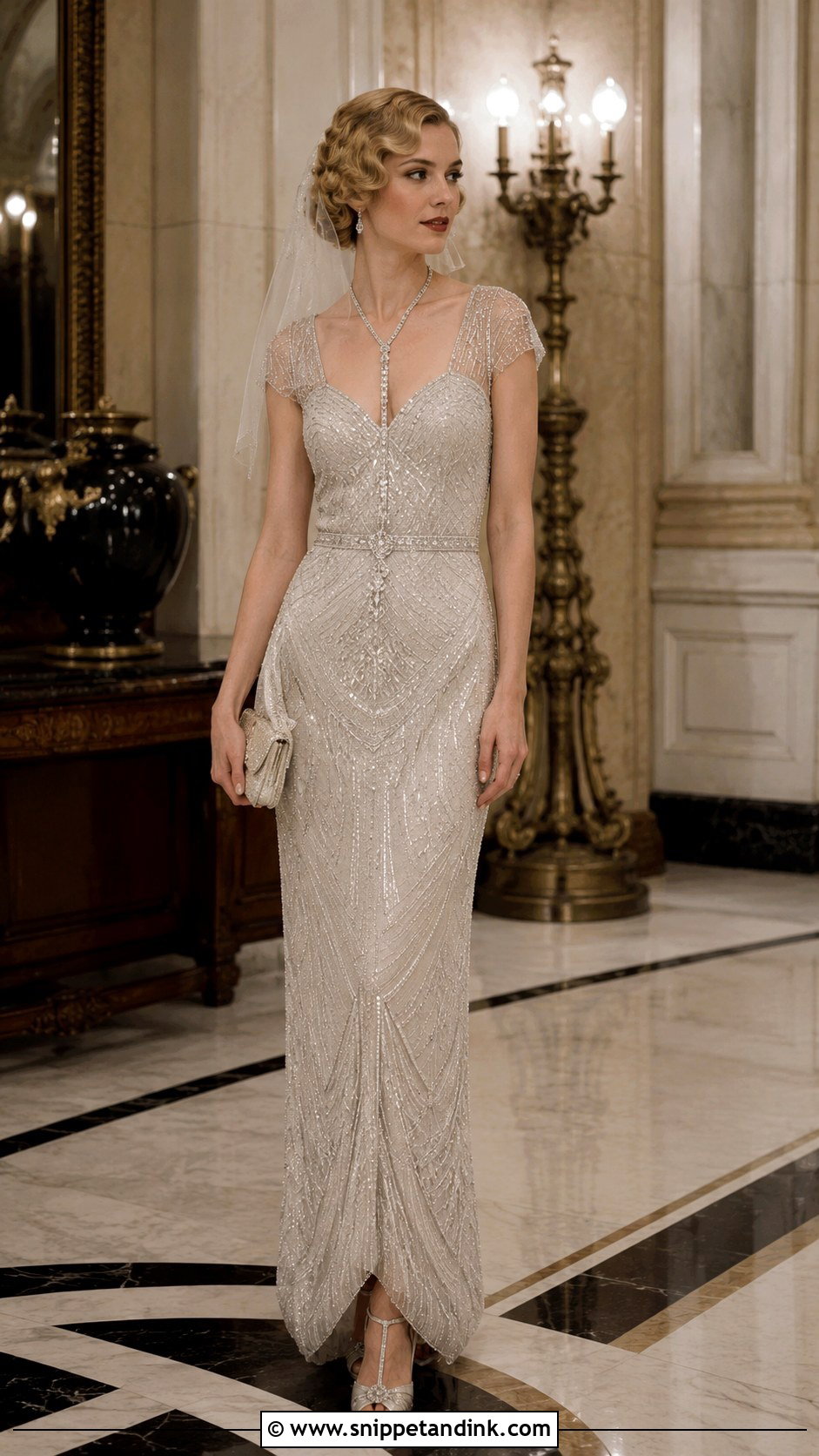
Vintage silver can reference a decade without becoming a costume. A softly beaded column recalls 1920s glamour, while a defined waist and full tea-length skirt suggest the 1950s. For a formal look, I’d choose floor length with Art Deco beading and a light train. T-strap heels, pearl or crystal earrings and a small structured clutch suit it; a birdcage veil goes with shorter dresses, a plain fingertip veil with long ones. Soft finger waves or a low roll finish it. My rule is two or three vintage references at most. Any more and guests think theme party.
19. Silver Minimalist Wedding Gown
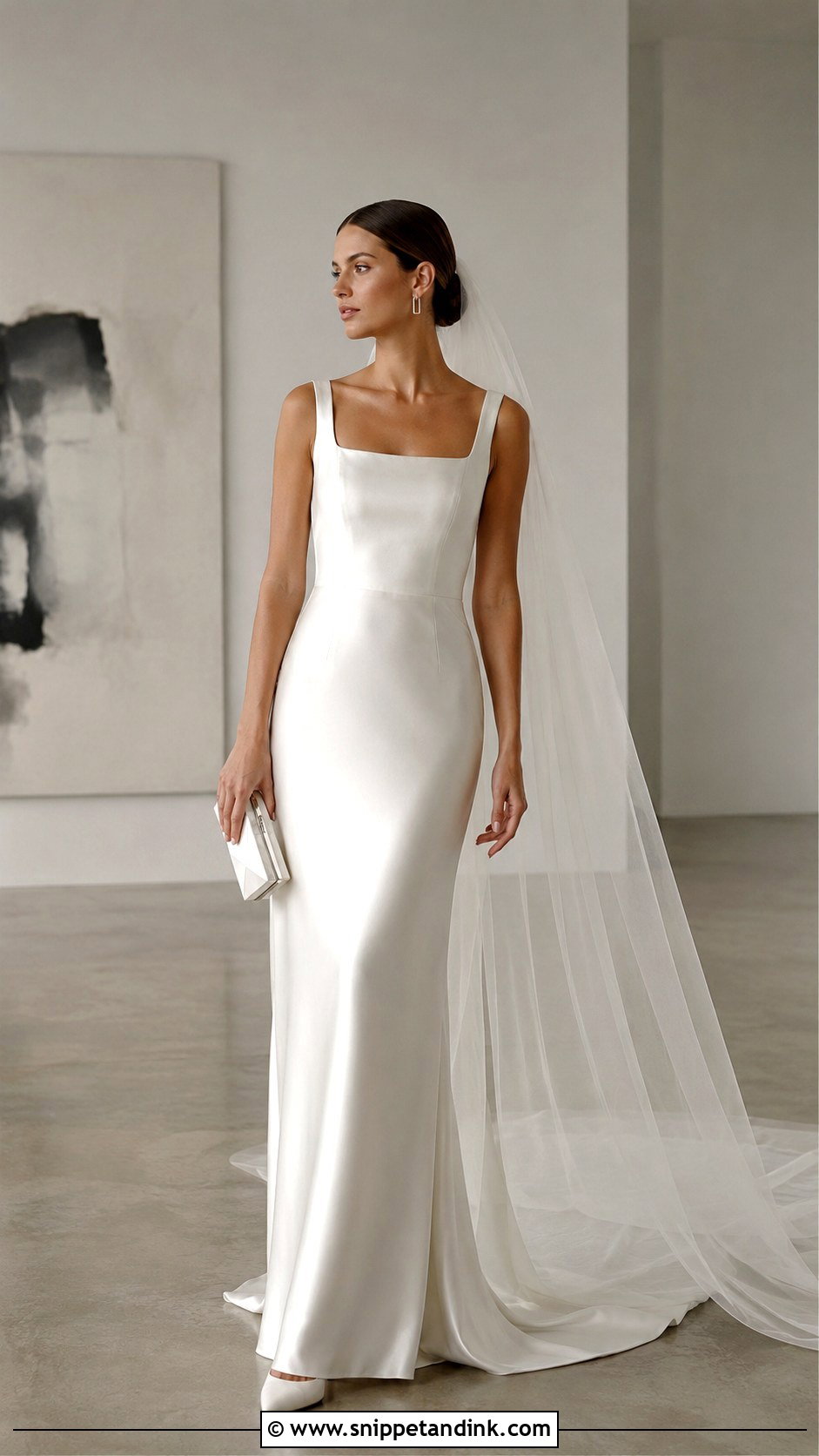
With no decoration, the colour and the fabric are the whole story. A column, sheath or understated A-line in silk satin, crepe or smooth mikado works, and a square neck, low back or architectural seam adds interest. Sleek pointed pumps, geometric earrings, a structured mini bag and a long plain veil complete it, with a middle-parted low bun or smooth shoulder-length hair. Keep makeup defined but not glittery, since the fabric already reflects light. Tailoring is everything on a plain metallic gown; any pull or ripple catches the light and shows up in every photo.
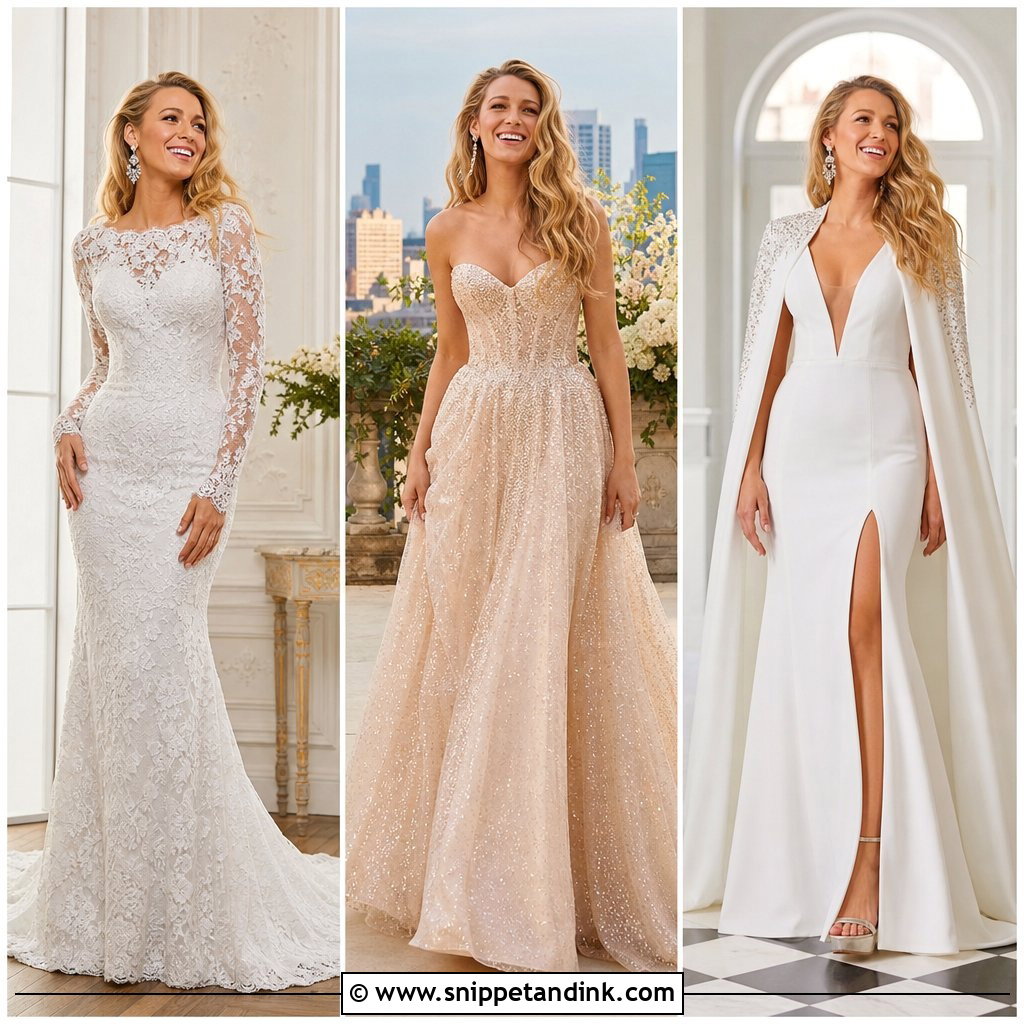
20. Silver Reception Wedding Gown
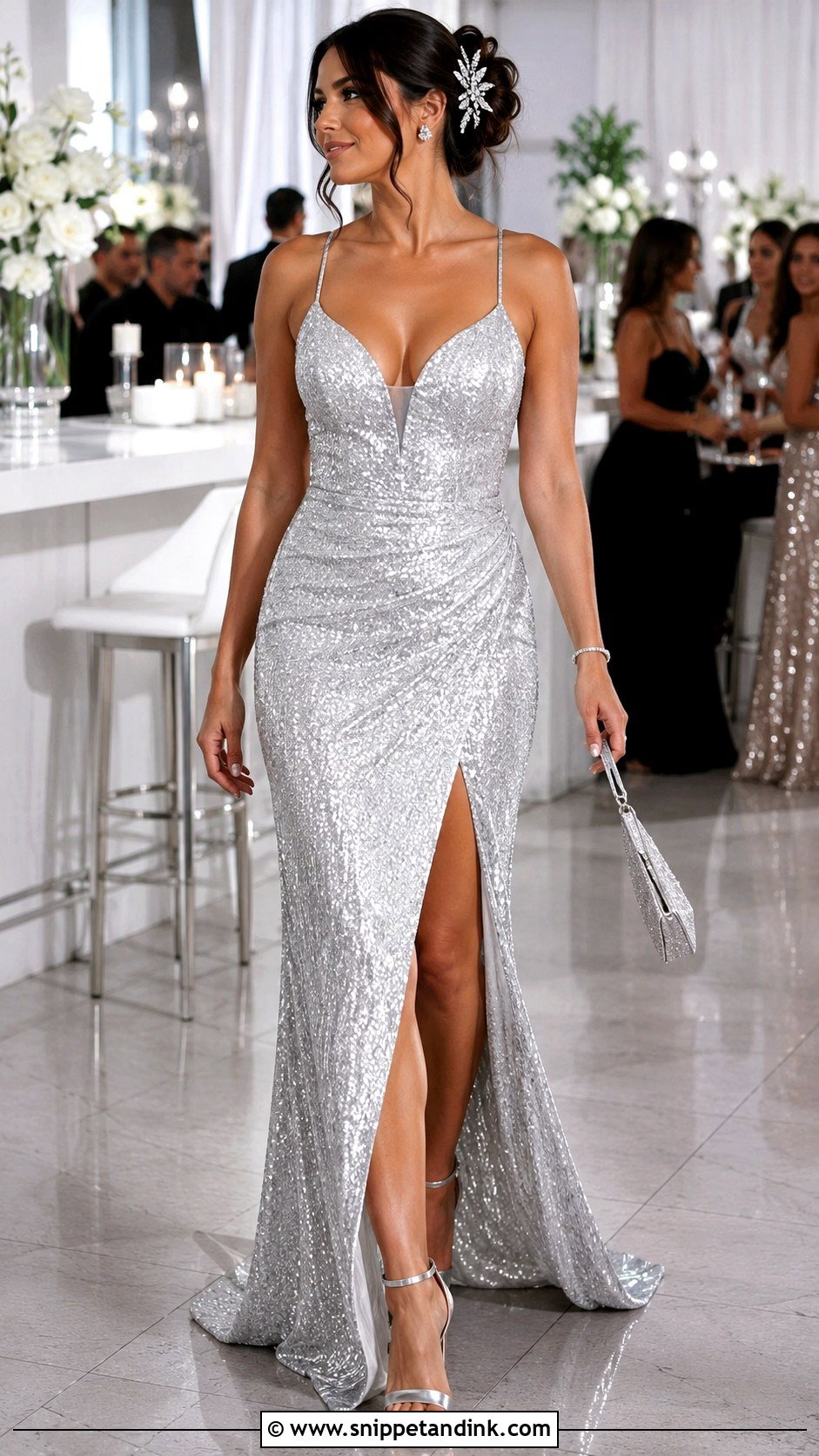
A reception gown has to sparkle and let you dance. A light sequin column, a fluid satin slip or a fitted dress with a removable overskirt all work. Floor length keeps it bridal, while a leg slit or open back adds movement and sets it apart from the ceremony look. Supportive metallic sandals, sparkling studs and a small clutch or wristlet suit it; swap the veil for a crystal comb, ponytail or soft waves. Heavy beading on the sleeves or sides can scratch your arms as you dance, so swing your arms in it at the fitting. If you can’t move freely, it isn’t a reception dress.
Metallic Fabric Under a Camera Flash and in Storage
Silver gowns behave differently in photos than white ones, and it helps to tell your photographer early. Metallic fabric reflects whatever colour the light is, so it turns golden by candlelight, blue in shade and almost white under direct flash. Sequins and beads can flare into bright spots.
- Mention the fabric and shade when you send the photographer your timeline, so they can plan exposure and white balance.
- Golden-hour portraits warm silver up and suit most skin tones; harsh noon sun on satin is the least kind light.
- Ask for a few close shots of the texture, since lace and beading on metallic fabric show detail beautifully up close.
Care after the wedding needs a little extra thought too. Some metallic threads, especially older or real metal ones, can tarnish when exposed to moisture and air, and sequins can scratch neighbouring fabric. I’d send the gown to a specialist cleaner who handles beaded and metallic bridalwear, and tell them about any spills, since sugar marks don’t show on silver until they brown.
For storage, fold the gown with acid-free tissue between every layer so sequins and beads don’t press into the fabric, and keep it in a breathable box in a cool, dry cupboard rather than a plastic bag. Check on it once a year and refold along different lines to prevent permanent creases.
Silver Works Best When Everything Else Steps Back
A silver gown should feel bold and comfortable at once. Start with the shade, matched to your skin and your palette, and then pick the silhouette that fits the way your day moves. Satin and crepe give clean finishes; lace, sequins, tulle and beading add texture and sparkle. Coordinate shoes, jewellery, veil and hair accessories, but keep them quiet so the gown leads. The right underwear and a good seamstress will improve almost any shape. From a regal ball gown to a minimalist column, silver rewards brides who let it be the one strong decision in the outfit.
You'll Like These Ideas:




Leave a Reply