
A close-fitting gown is the most honest dress in a bridal shop. It shows the body, and it shows the tailoring, so a good one looks expensive and a badly fitted one looks wrong from across the room. Corset bodices, clean satin, modern lace, strapless and long-sleeved necklines, basque waists, sculpted draping and detachable layers are all popular right now. None of that matters if you cannot sit at dinner. When I fit a sleek gown, I want it to support you and skim, not squeeze, and I make every bride walk, sit, hug and lift her arms before we sign off. The 25 ideas below cover the range, from classic to minimal to dramatic, with the fit notes I’d give you for each.
Underneath a Close-Fitting Gown
With a fitted dress, what you wear underneath is part of the dress. Crepe and satin show every edge, so I talk about underwear at the first appointment, not the last.
- Bring the exact underwear and shoes to every fitting. Changing either after the hem is cut changes how the gown sits.
- Laser-cut or bonded edges show far less than lace or elastic under crepe.
- Light shaping shorts smooth the line but can roll at the waist when you sit; try sitting for ten minutes in them.
- Ask your seamstress about sewing cups into the bodice. It solves strapless and backless problems more reliably than adhesive.
- Choose a nude closest to your own skin, not white, which shows through ivory fabric.
Fabric decides how much forgiveness you get. Stretch crepe and some lace have a little give, so they move with you when you sit and breathe. Satin, mikado and silk have none, which means every centimetre has to be right at the final fitting. If you expect your body to change in the months before the wedding, or you simply hate feeling held in, I’d lean toward a fabric with a touch of stretch and leave the rigid satins to brides who love structure.
1. Mermaid Wedding Dress With Long Veil
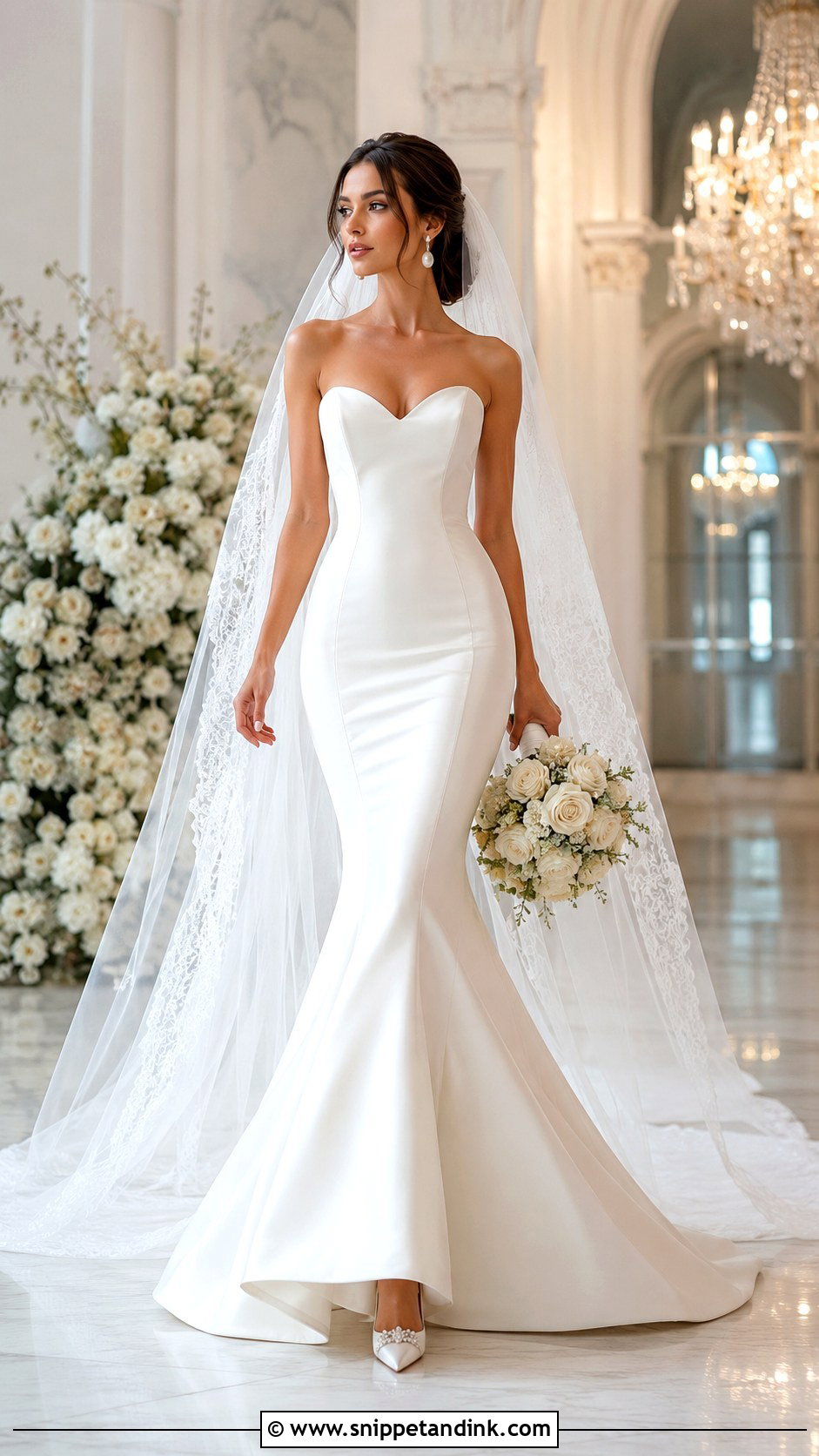
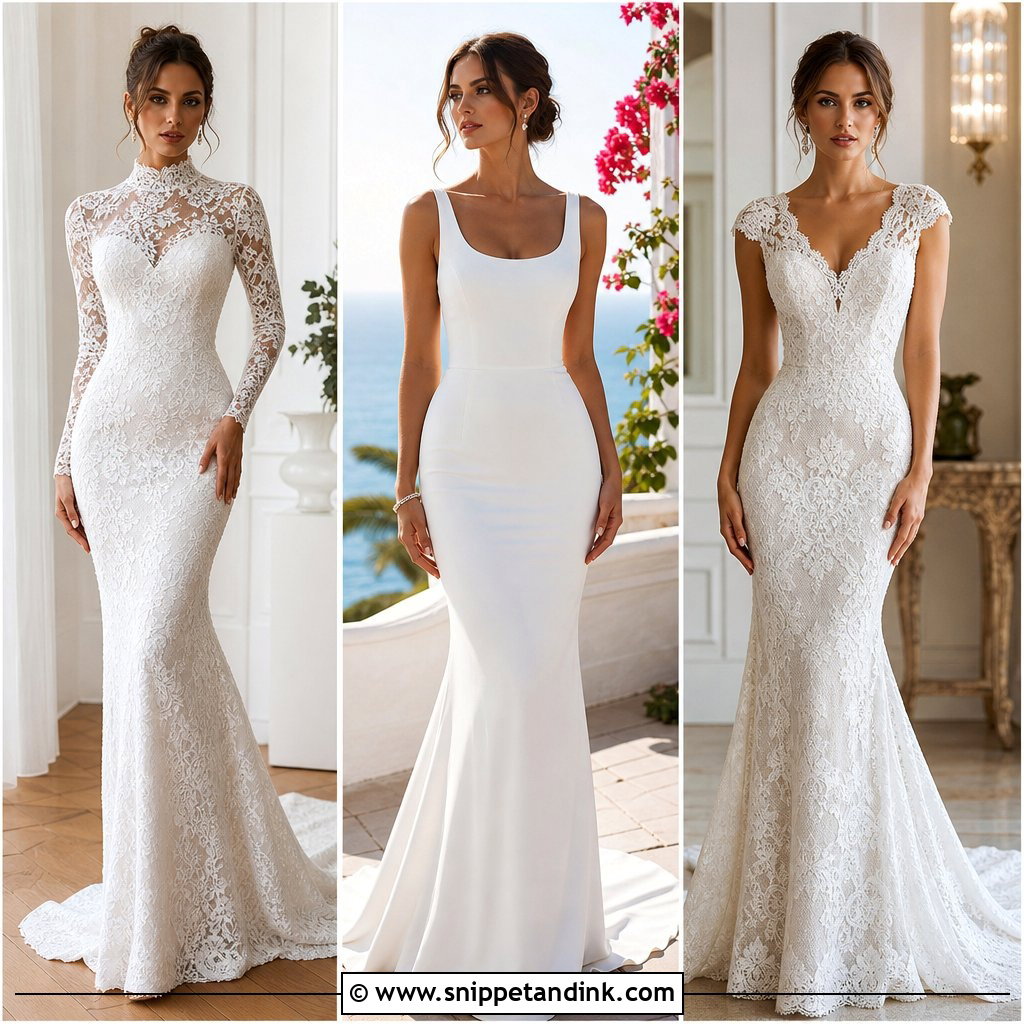
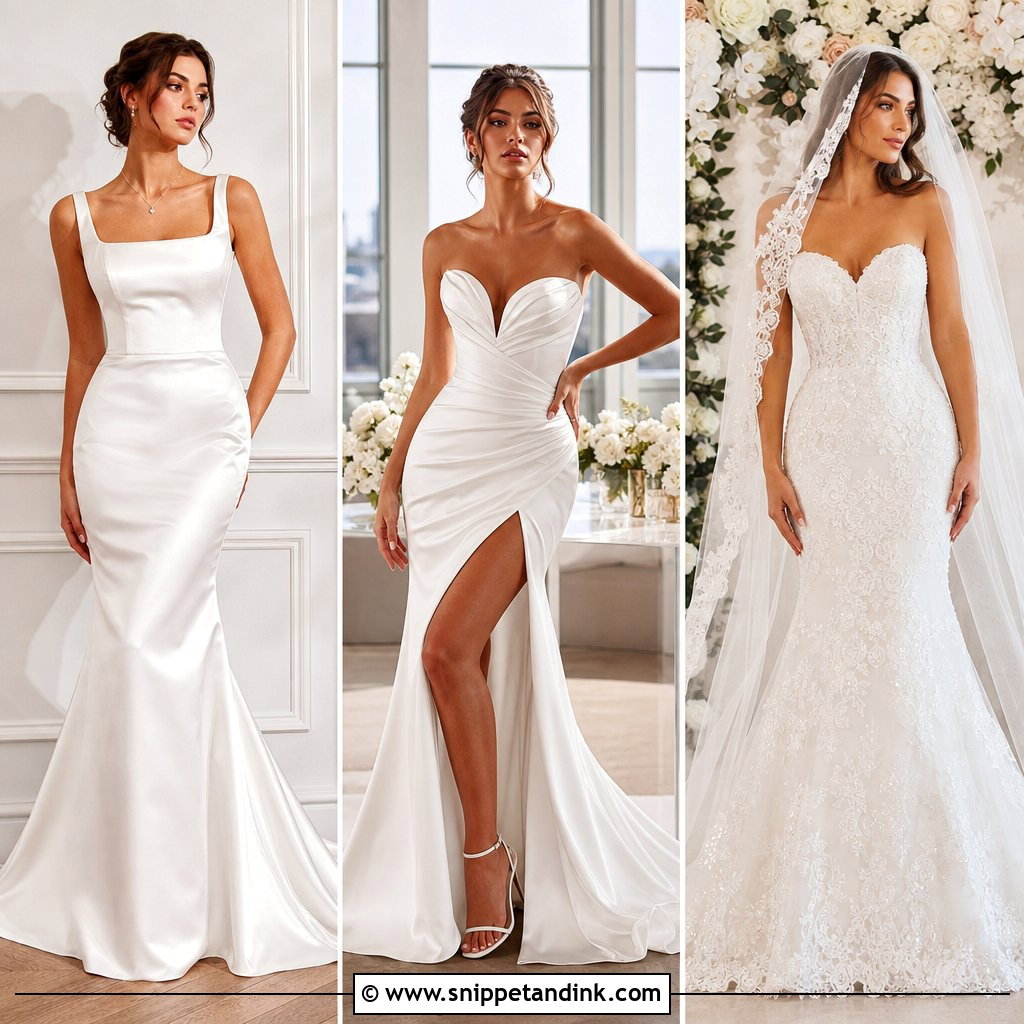
The mermaid is fitted through bust, waist, hips and thighs, then opens below the knee, and paired with a long veil it gives that sculpted aisle look. Fabric changes its character: crepe is clean and modern, lace softer, satin and mikado more formal. What I watch is where the flare starts. If it sits too low, you’ll walk in tiny steps and struggle with stairs. The veil balances all that shape, so jewelry can stay small: pearl earrings, pointed heels and a simple bouquet.
2. Lace Fit And Flare Wedding Dress
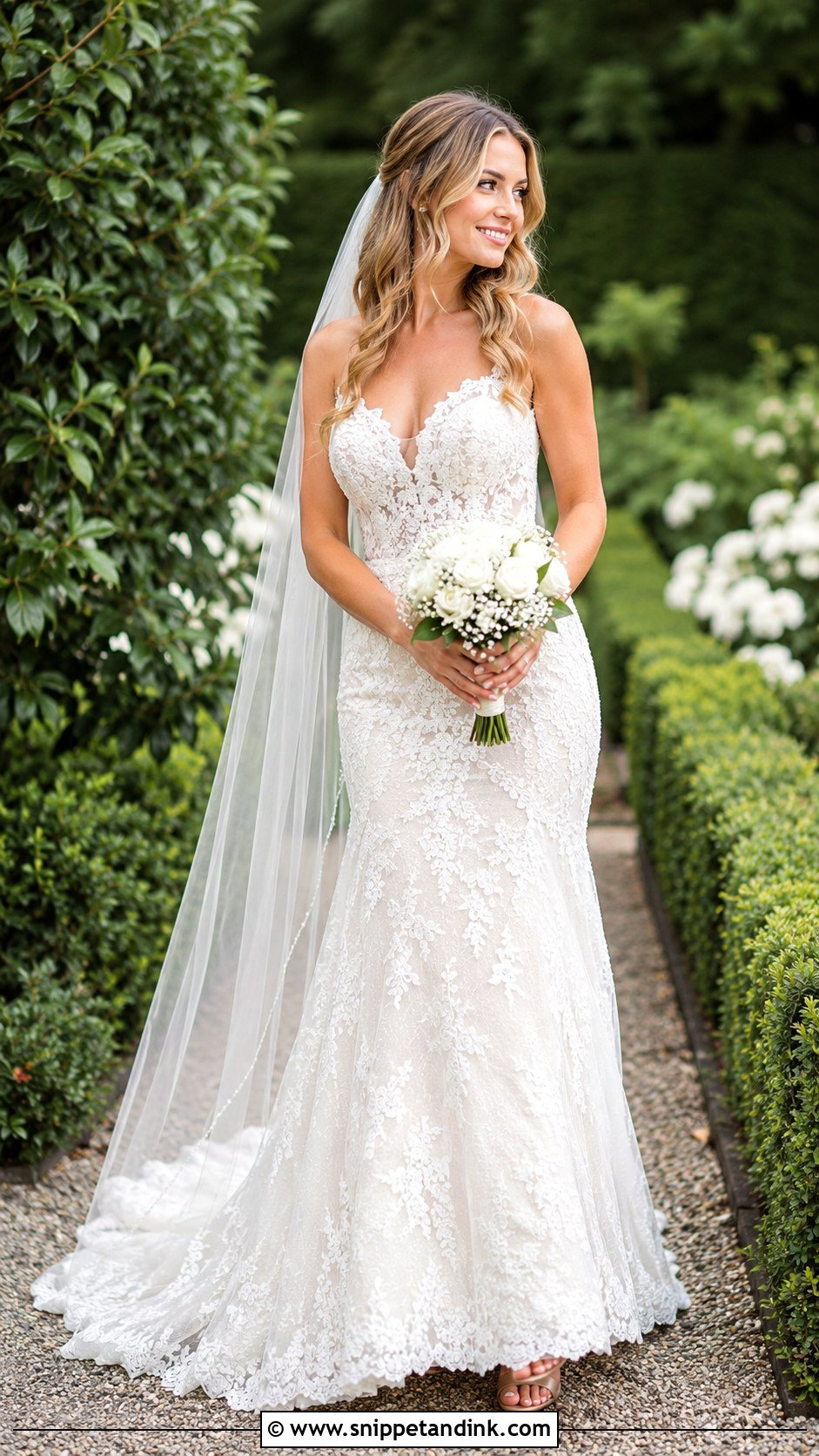
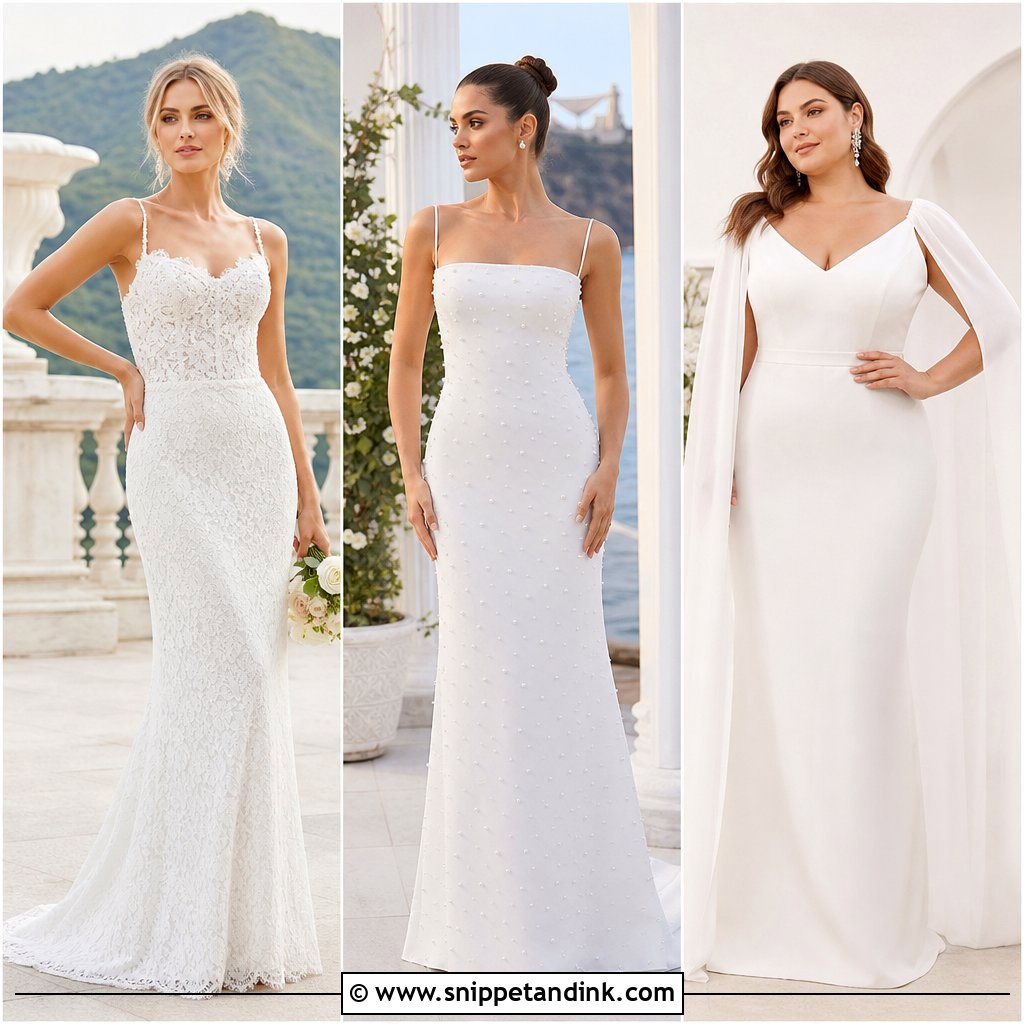
Fit and flare is the gentler cousin of the mermaid. It follows the bodice and hips, then widens at the lower thigh, so you can walk normally. Lace adds texture and hides small fitting wrinkles that crepe would show. Placement is everything: good lace is cut so motifs sit along the waist and neckline, not chopped at a seam. Sheer heels, a delicate veil and soft waves suit it. It is the shape I suggest most often to brides who want curves but are nervous about mobility.
3. Satin Strapless Fitted Wedding Dress
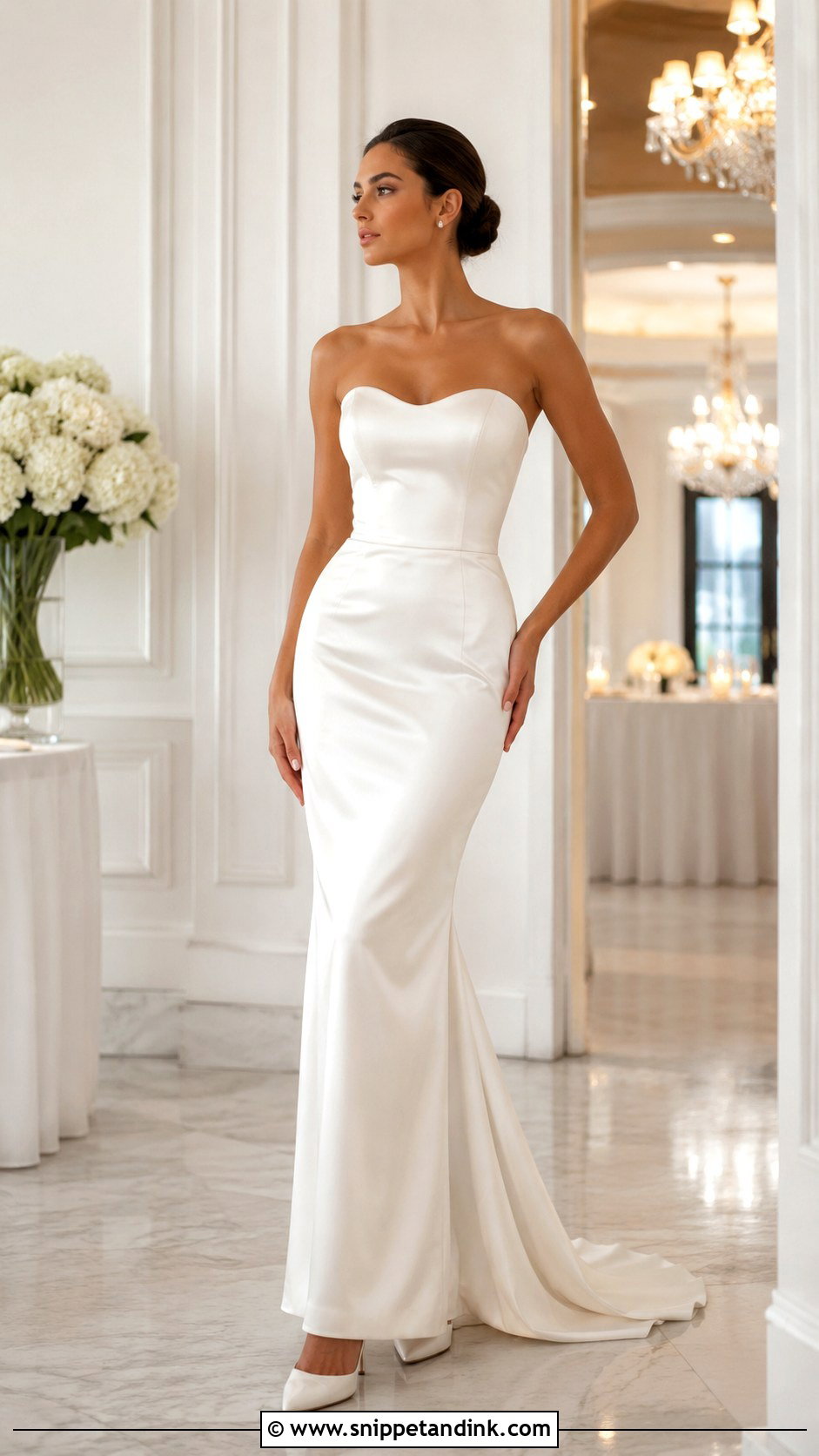
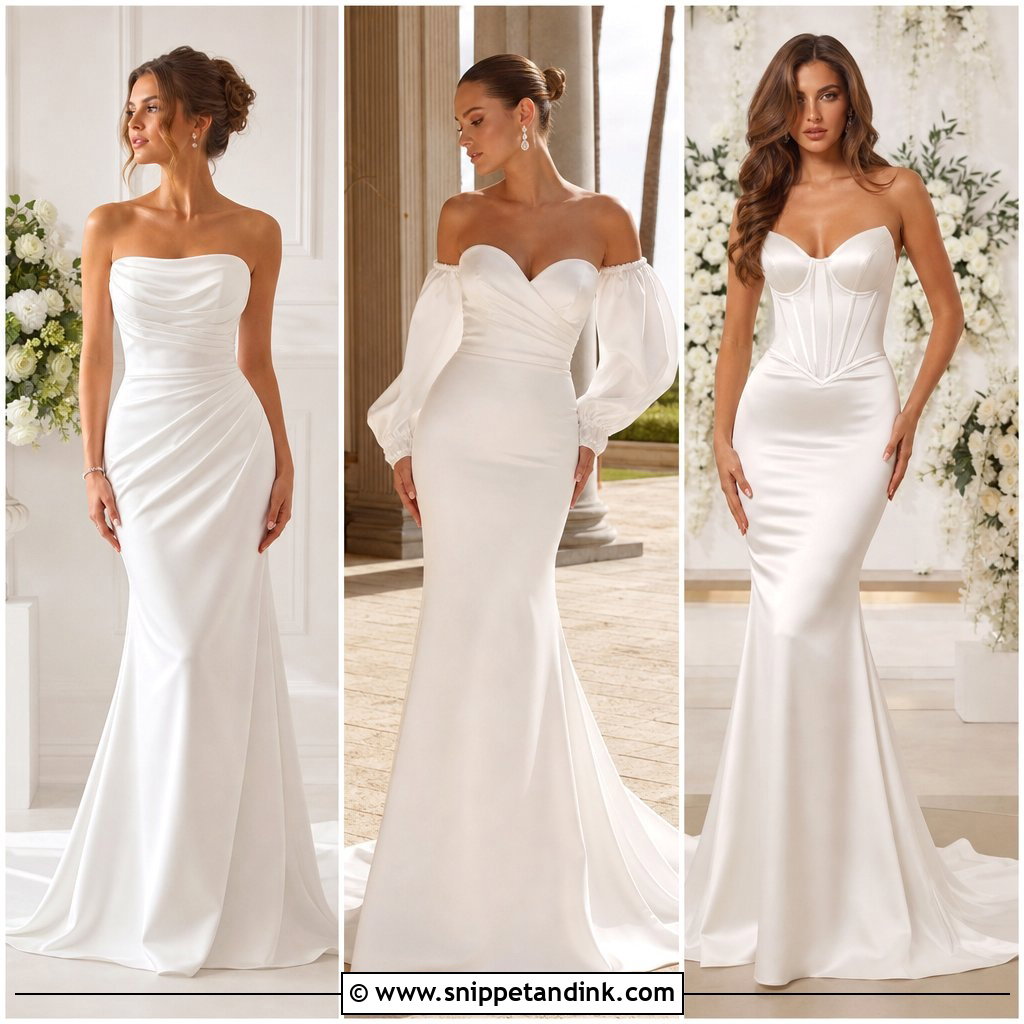
Strapless satin is all about the bodice. Satin shows every pull, so the internal structure, boning and a waist stay, must do the work of holding the neckline up; you should not be tugging at it. Lift both arms at your fitting and check the top edge stays flat against the skin. Satin also creases where you sit, so a heavier duchess or mikado weight wears better than thin charmeuse. A long veil, sparkling studs, satin pumps and a polished bun finish it, and a slit or detachable overskirt adds drama if you want it.
4. Crepe Sheath Wedding Dress
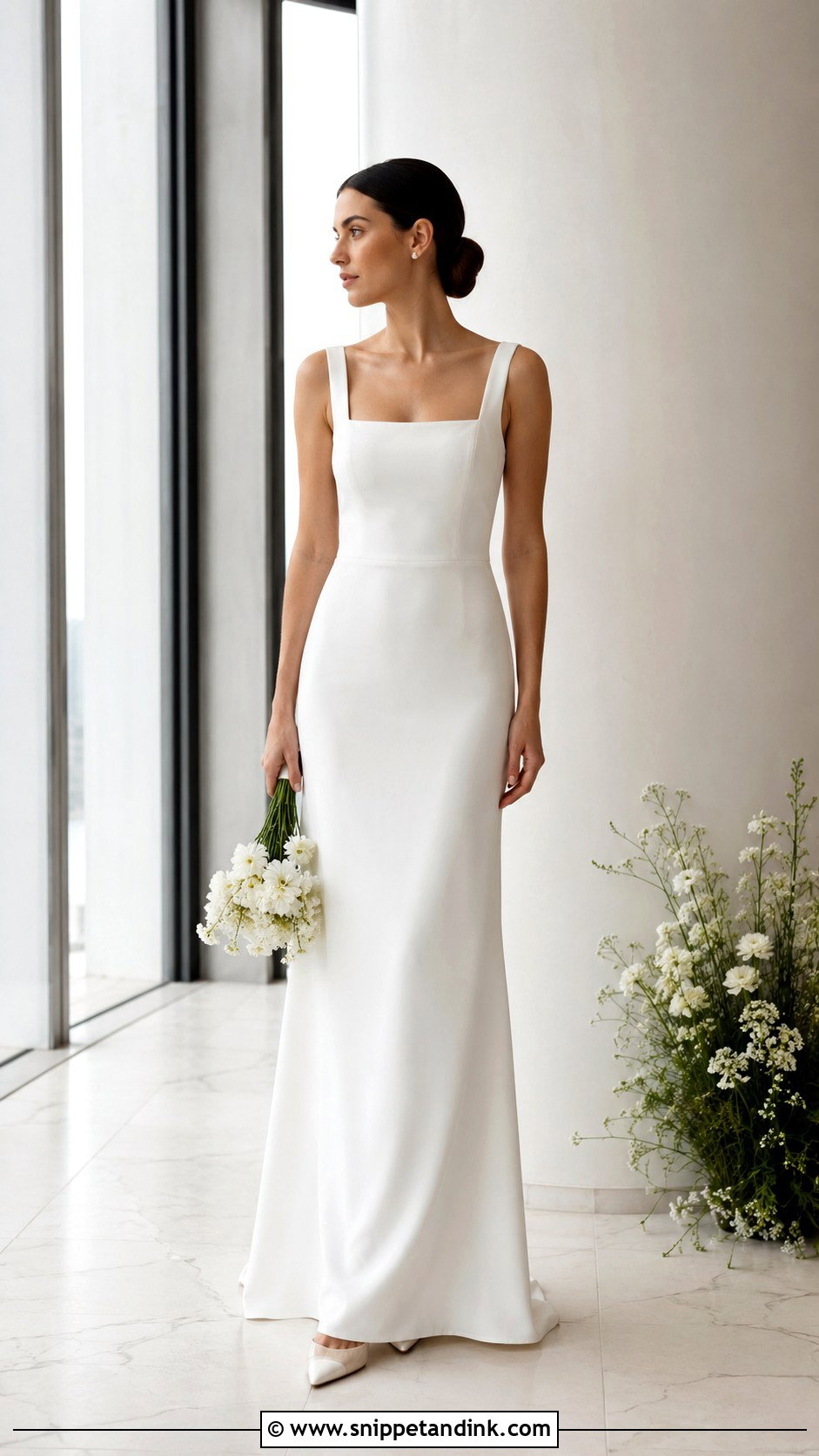
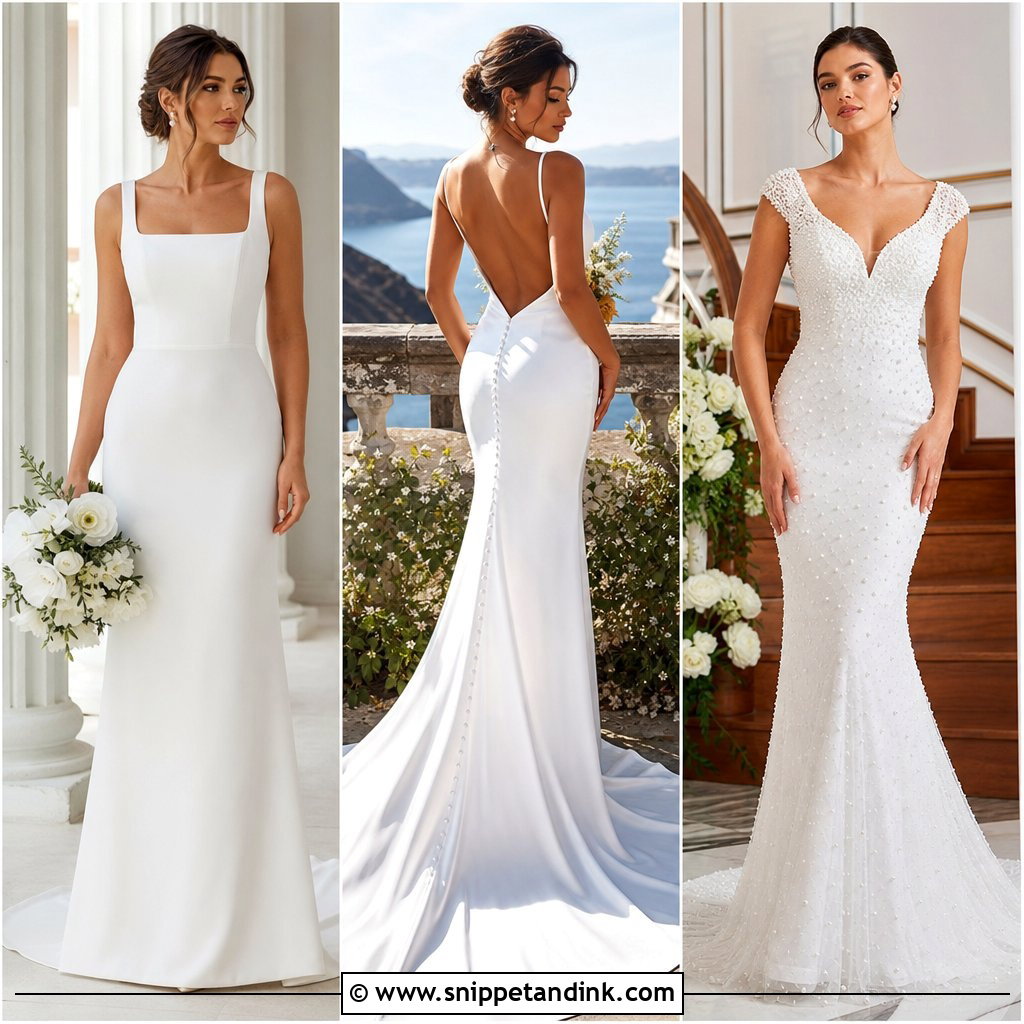
A crepe sheath wedding dress follows the body without a flare, falling straight from the hip. Crepe is matte with some weight, so it smooths and hangs cleanly. With no embellishment to distract, tailoring decides everything, from the hem length to how the side seams sit. Square, bateau and deep V necklines all suit it. Block heels, a low bun and a plain veil keep it understated. Underwear matters more here than anywhere else, as crepe shows every line.
5. Corset Bodice Fitted Wedding Dress
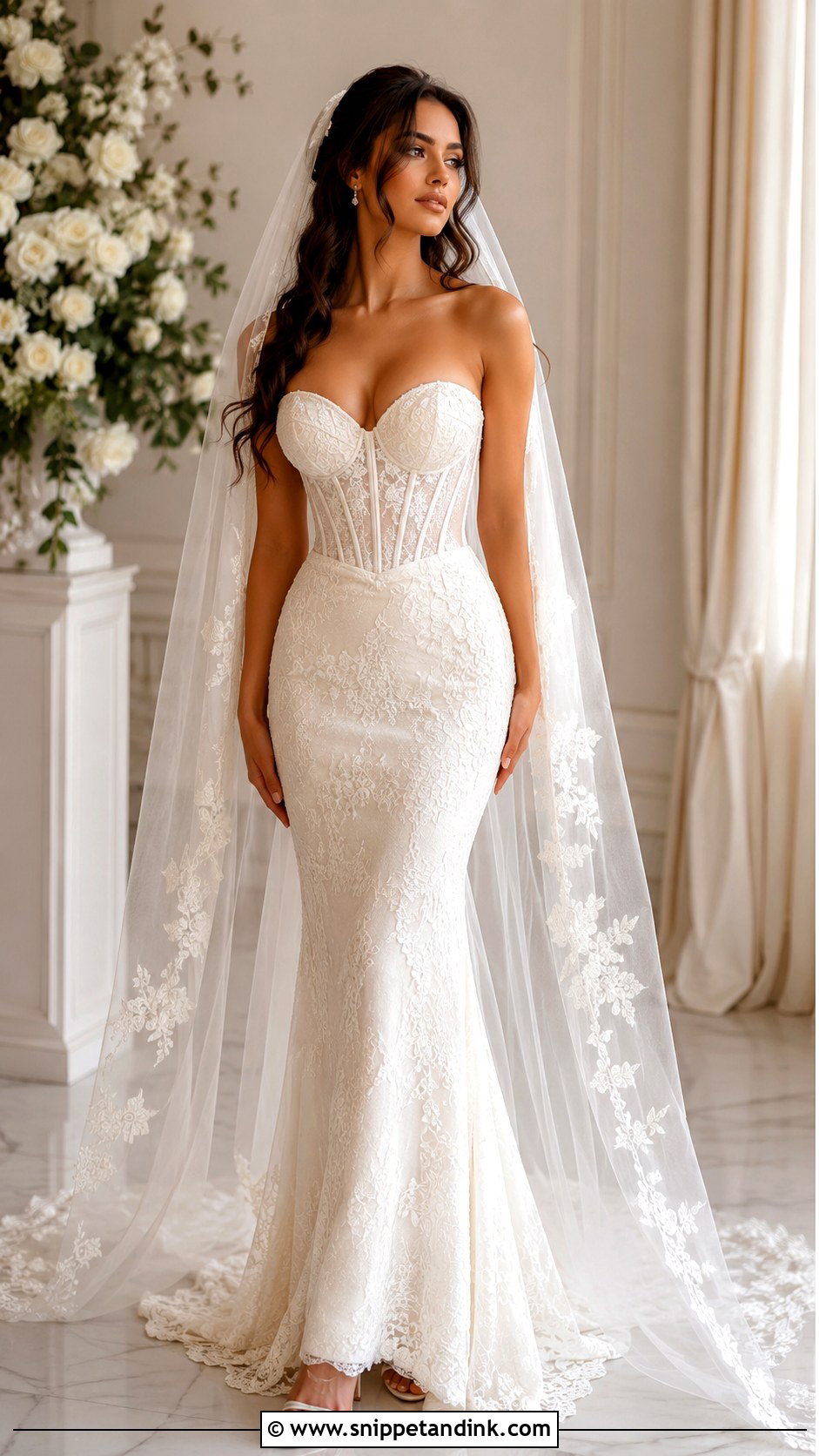
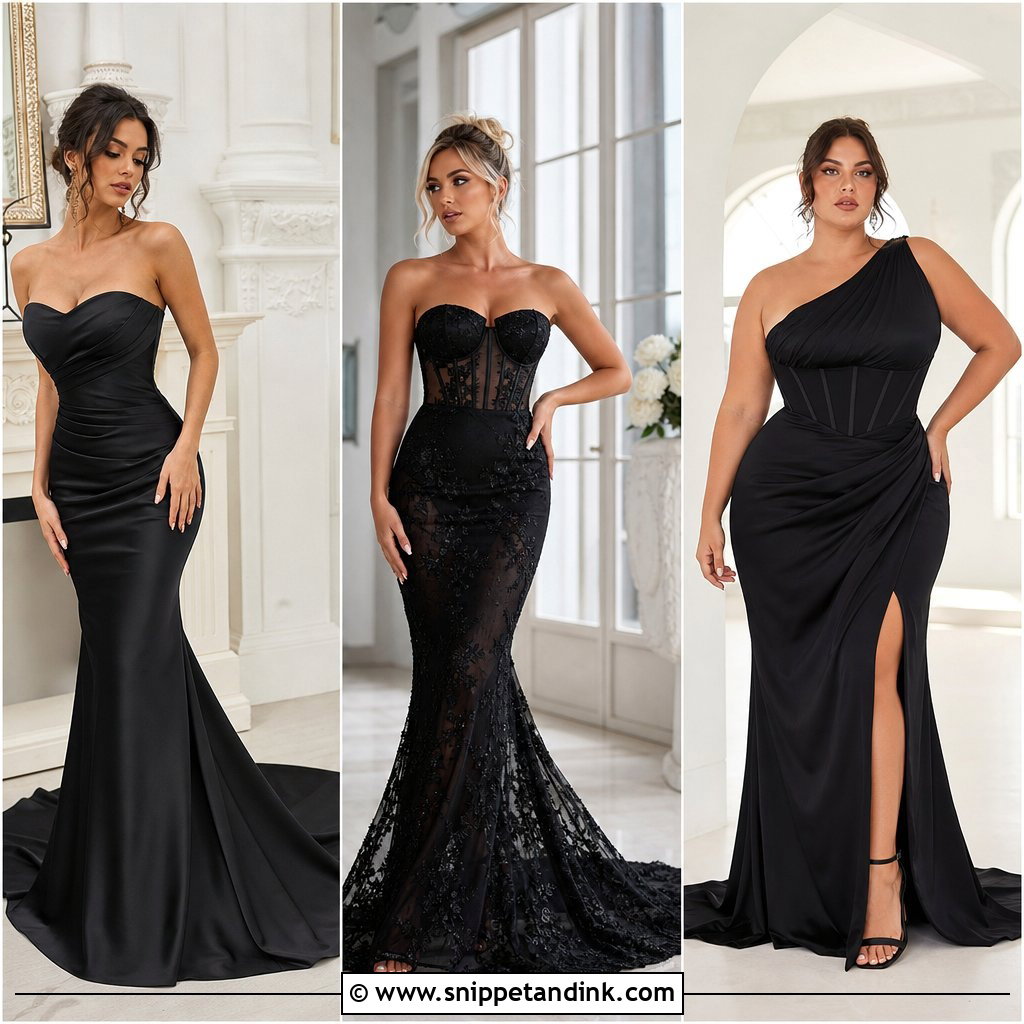
A corset bodice gives structure, waist definition and real support, which makes strapless or off-the-shoulder gowns far more secure. The boning can show as a design detail or sit hidden inside. The fitted wedding dress below it can be satin, lace, tulle or crepe. My one rule: sit down and take a deep breath at the fitting. If you cannot, it’s too tight, and you will feel it badly by the speeches. Soft curls, a chapel veil and refined earrings finish it.
6. Off The Shoulder Fitted Wedding Dress
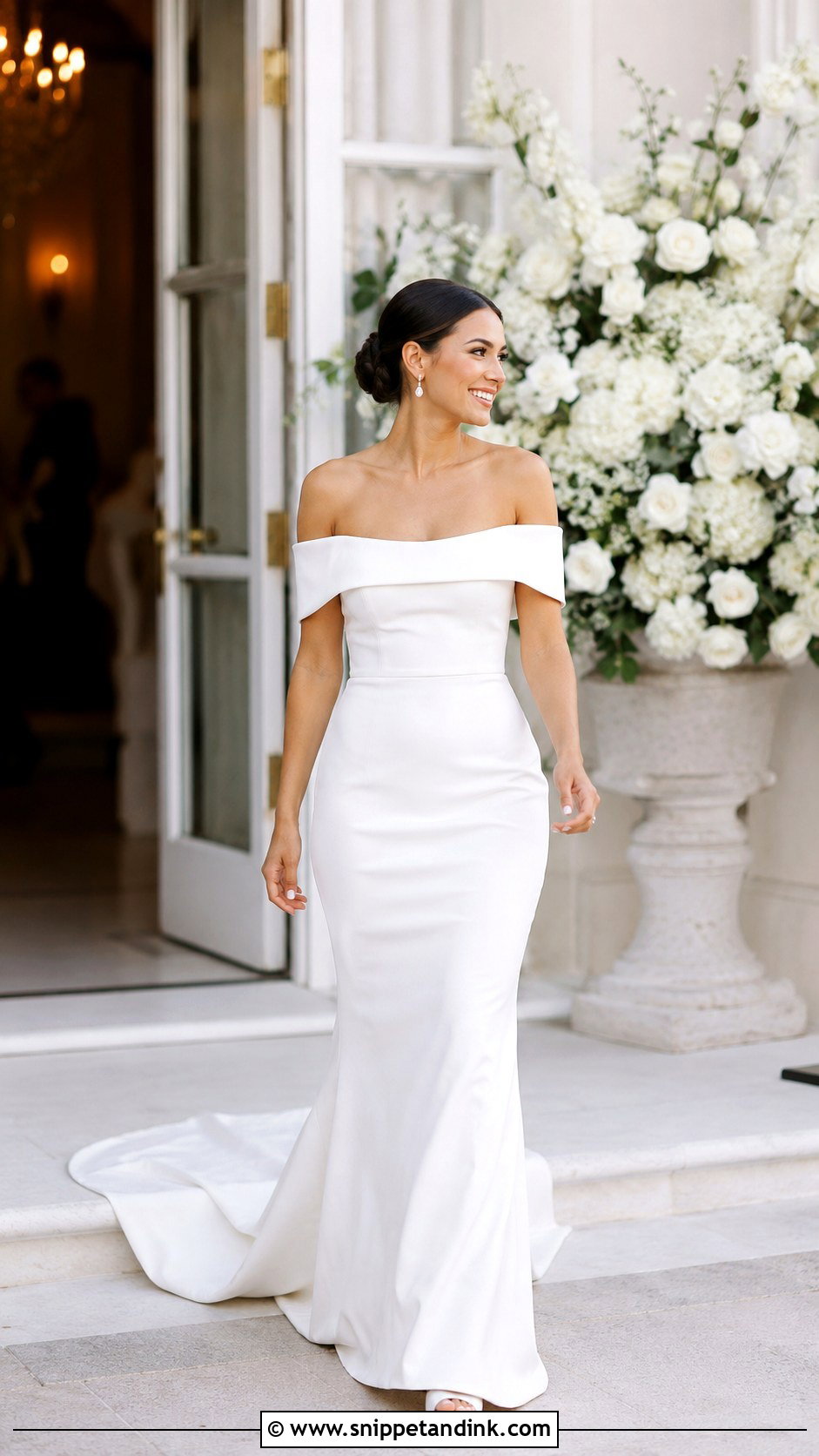
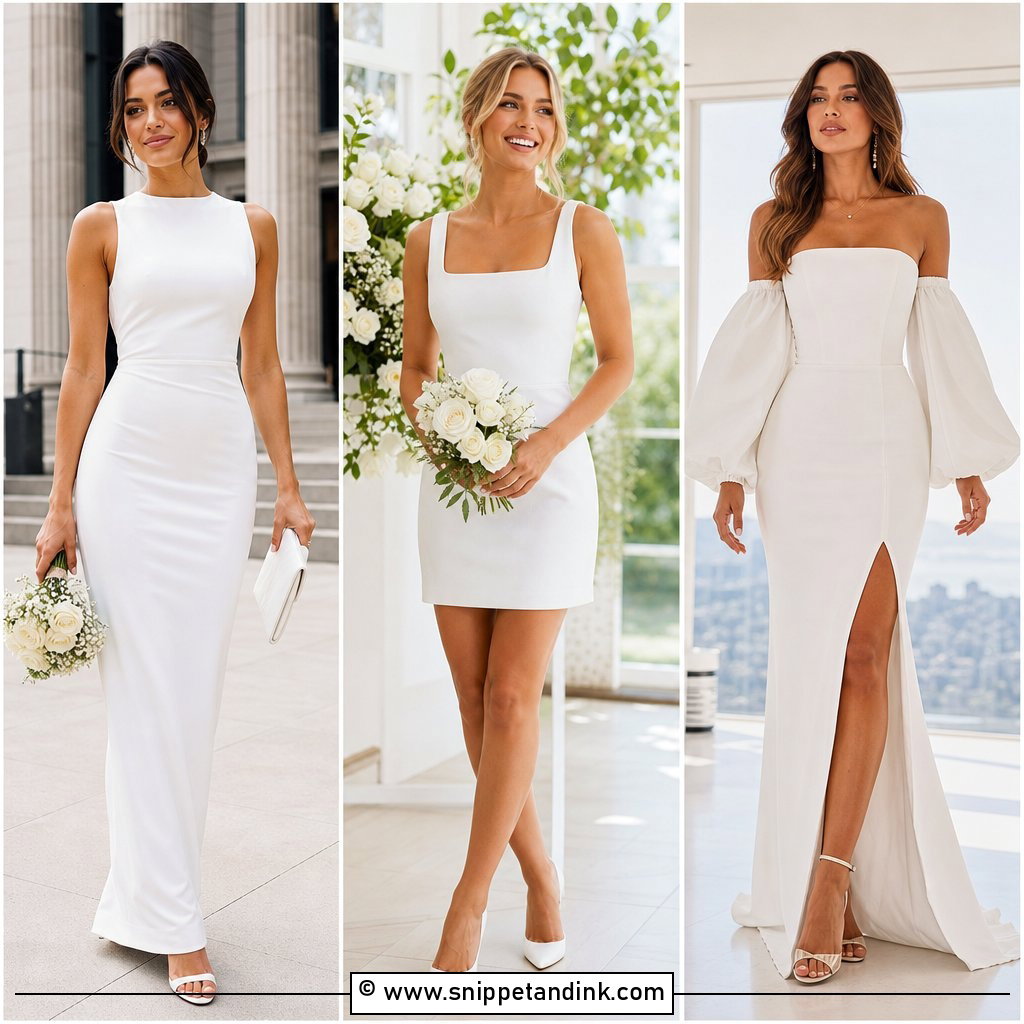
Off-the-shoulder necklines frame the collarbone with a soft horizontal line. They balance a slim skirt well and give some arm coverage without full sleeves. The trade-off is movement: a band sitting on the upper arm limits how high you can lift. Test a hug and a reach for the bouquet. The bodice must be tailored closely so the neckline does not slide down. Drop earrings, a smooth updo and a medium veil suit it, indoors or out.
7. Long Sleeve Fitted Wedding Dress
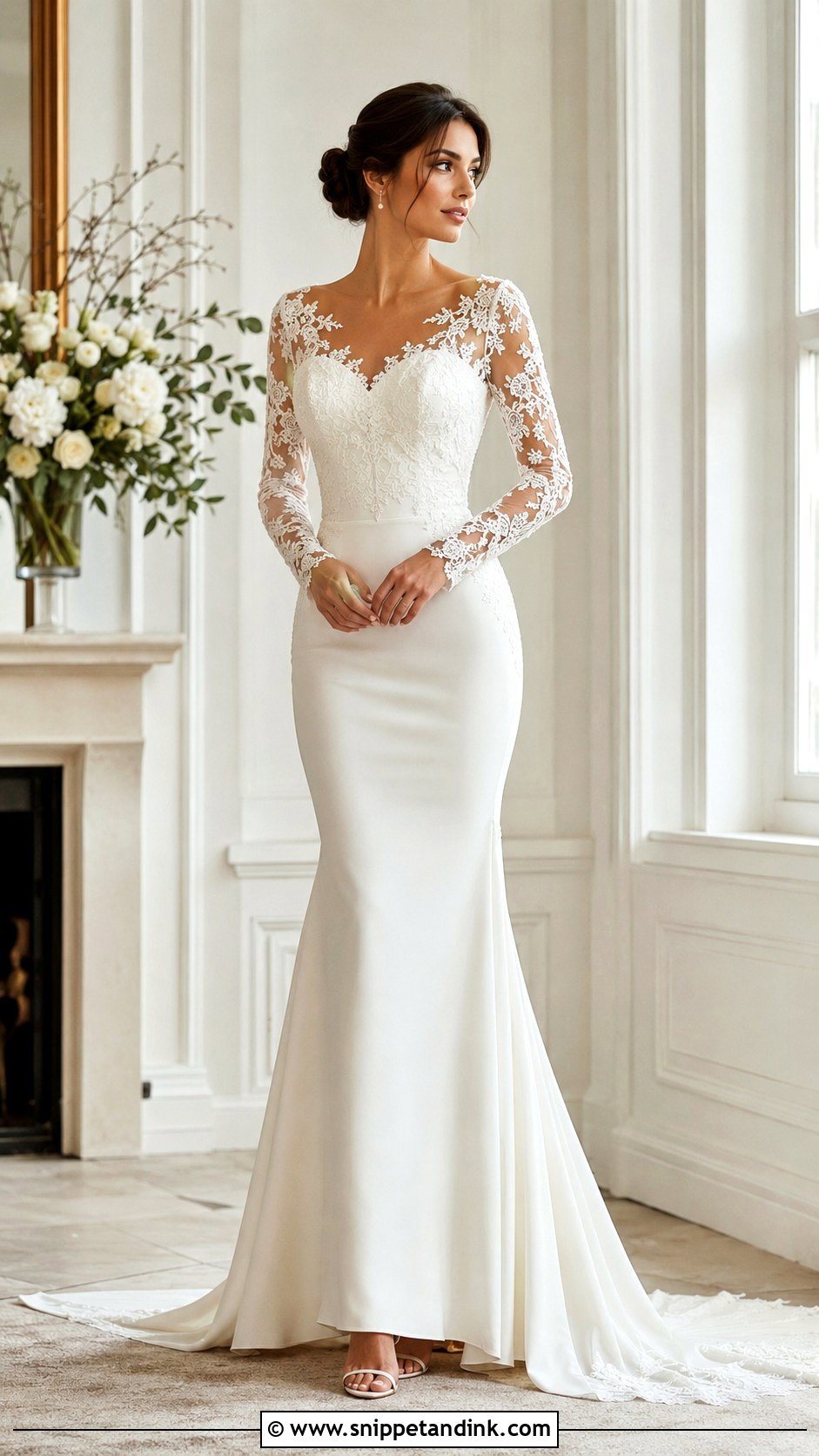
Long sleeves bring coverage and a refined line. Sheer lace or illusion feels delicate; crepe or satin reads modern. In a fitted gown, the armhole and sleeve need enough room for movement, so check the dance hold and a bouquet lift. A low back or soft train keeps the dress from looking overly covered. A sleek bun, small earrings and elegant heels complete it for an autumn, winter or evening wedding.
8. High Neck Fitted Wedding Dress
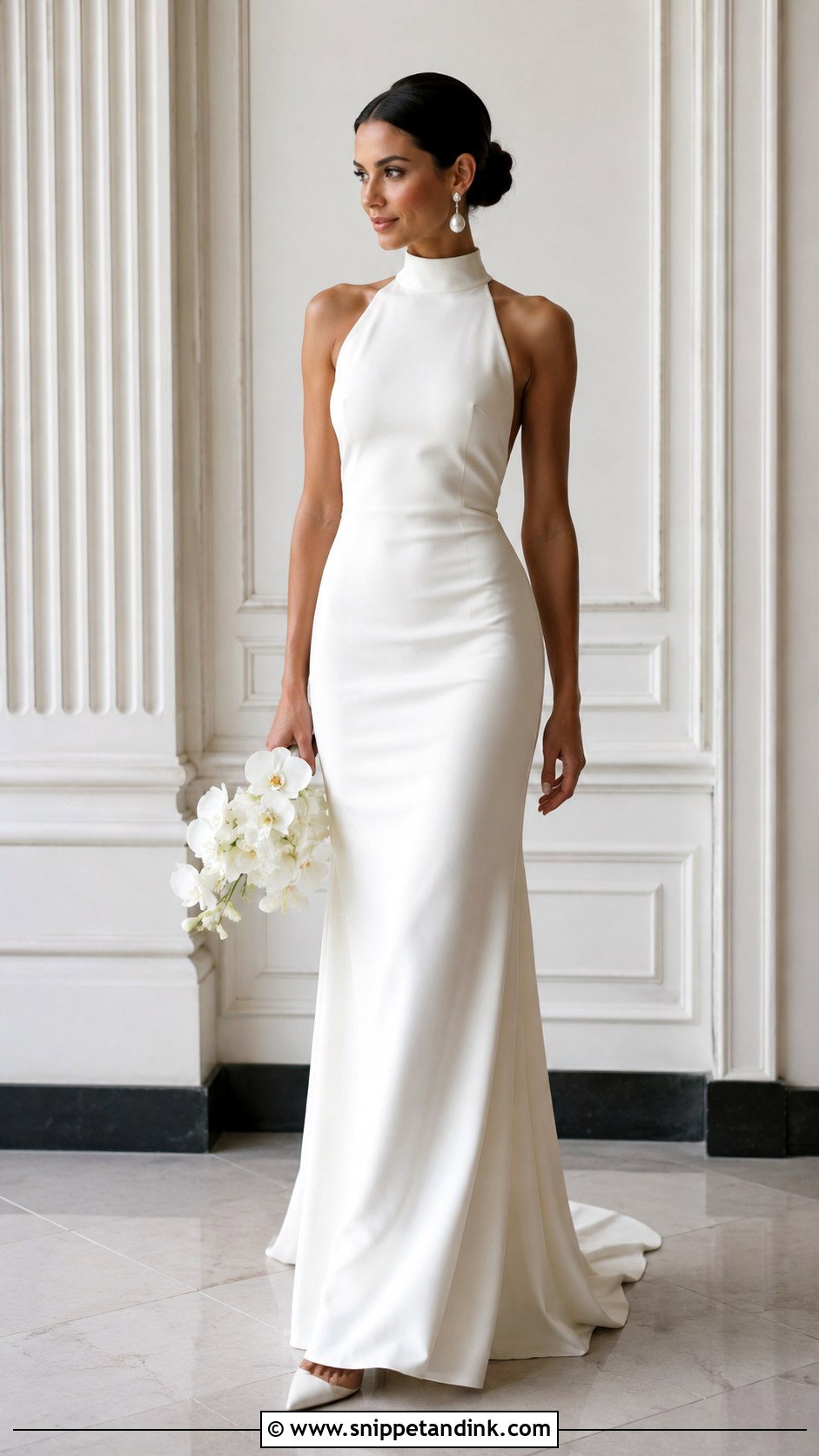
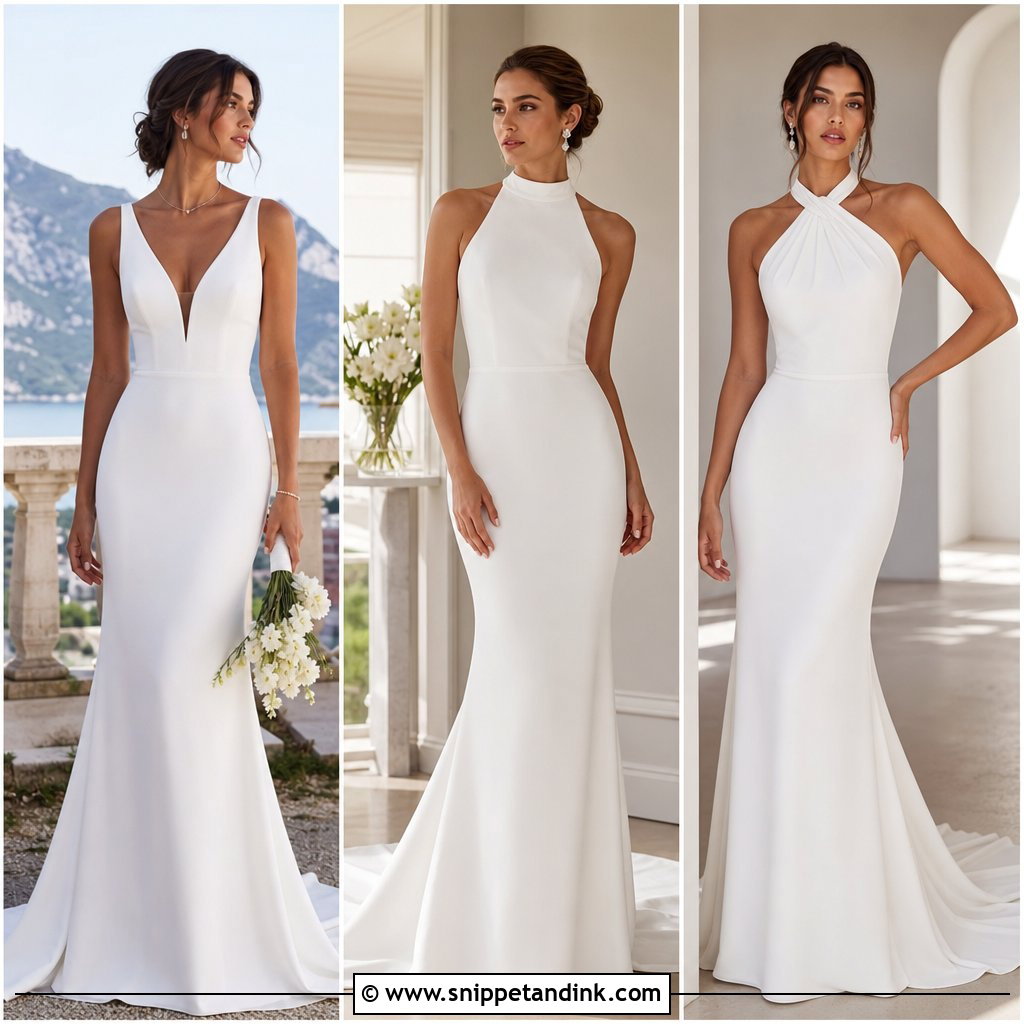
High necks lengthen the line from chin to hem and feel quietly regal. Crepe, lace or satin with minimal seams suit this neckline. Skip the necklace and wear statement earrings. An open back, fitted sleeves or a small train balance the coverage. I always check the neckband: if it’s too snug, you’ll feel it every time you swallow or turn your head, so ask for a finger of space. It suits city weddings, museums and formal receptions.
9. Square Neck Fitted Wedding Dress
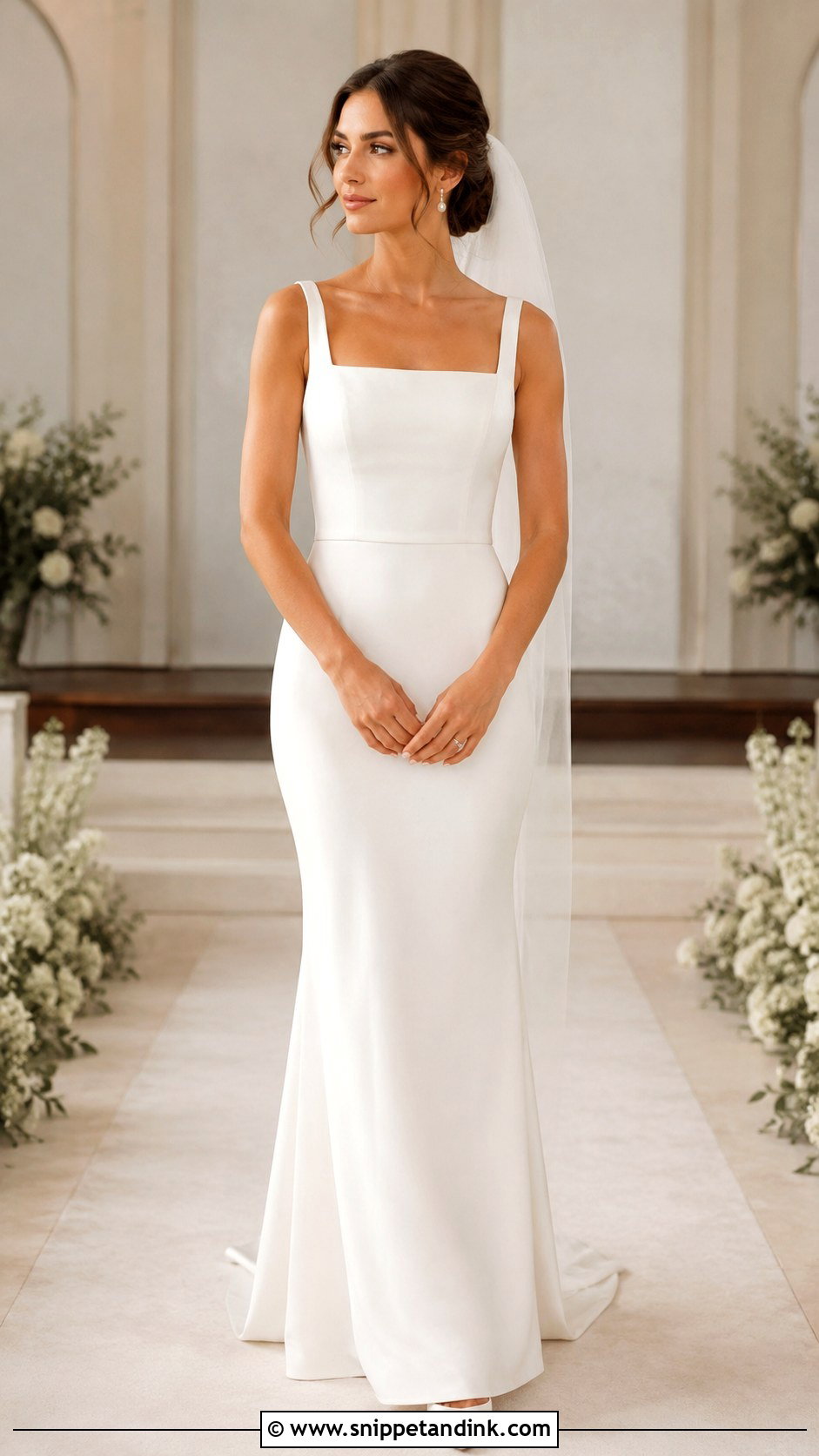
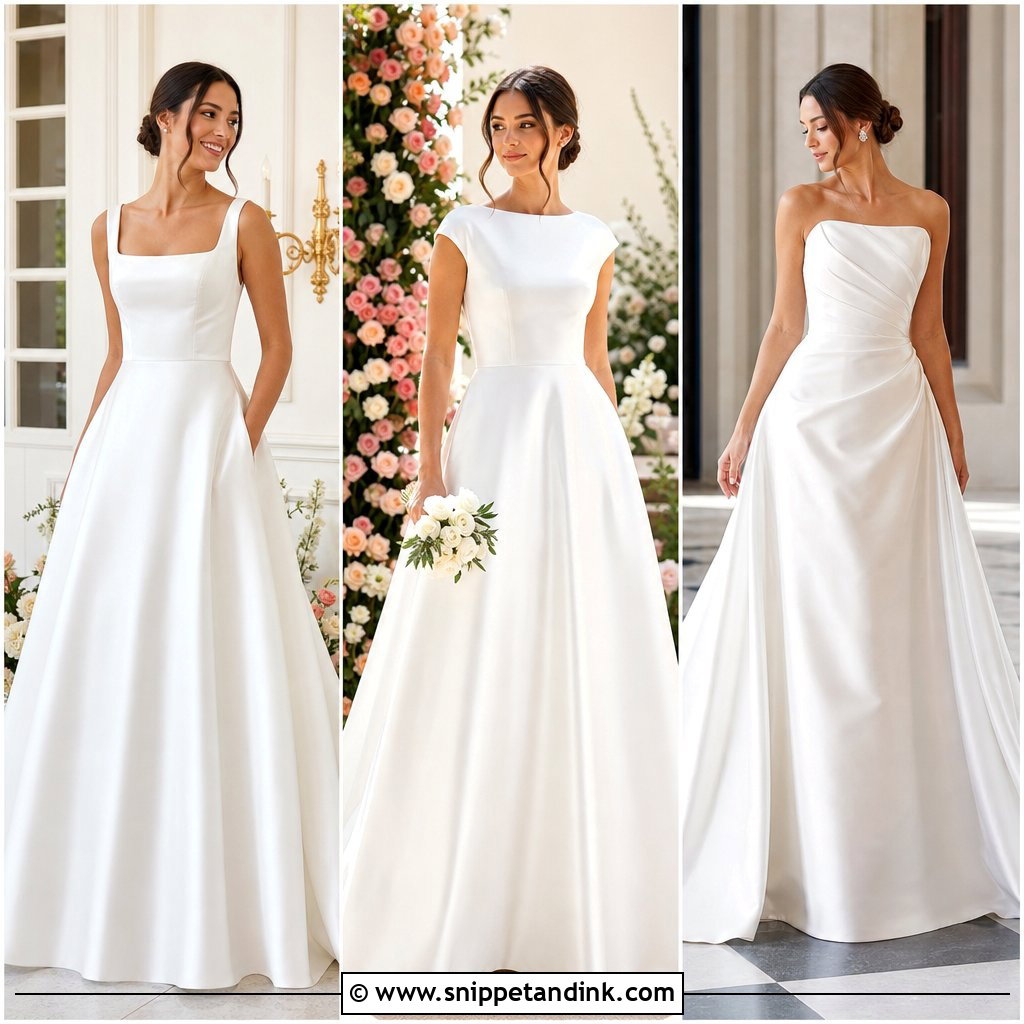
The square neckline is easy to wear. It draws clean lines across the chest and shoulders without being revealing. It suits wide straps, thin straps or long sleeves, and works in crepe, satin or lace. A low chignon, pearl studs and pointed heels complete it. Check that the corners sit flat; square necks gape at the corners on smaller busts unless they are tailored in.
10. Sweetheart Neckline Fitted Wedding Dress
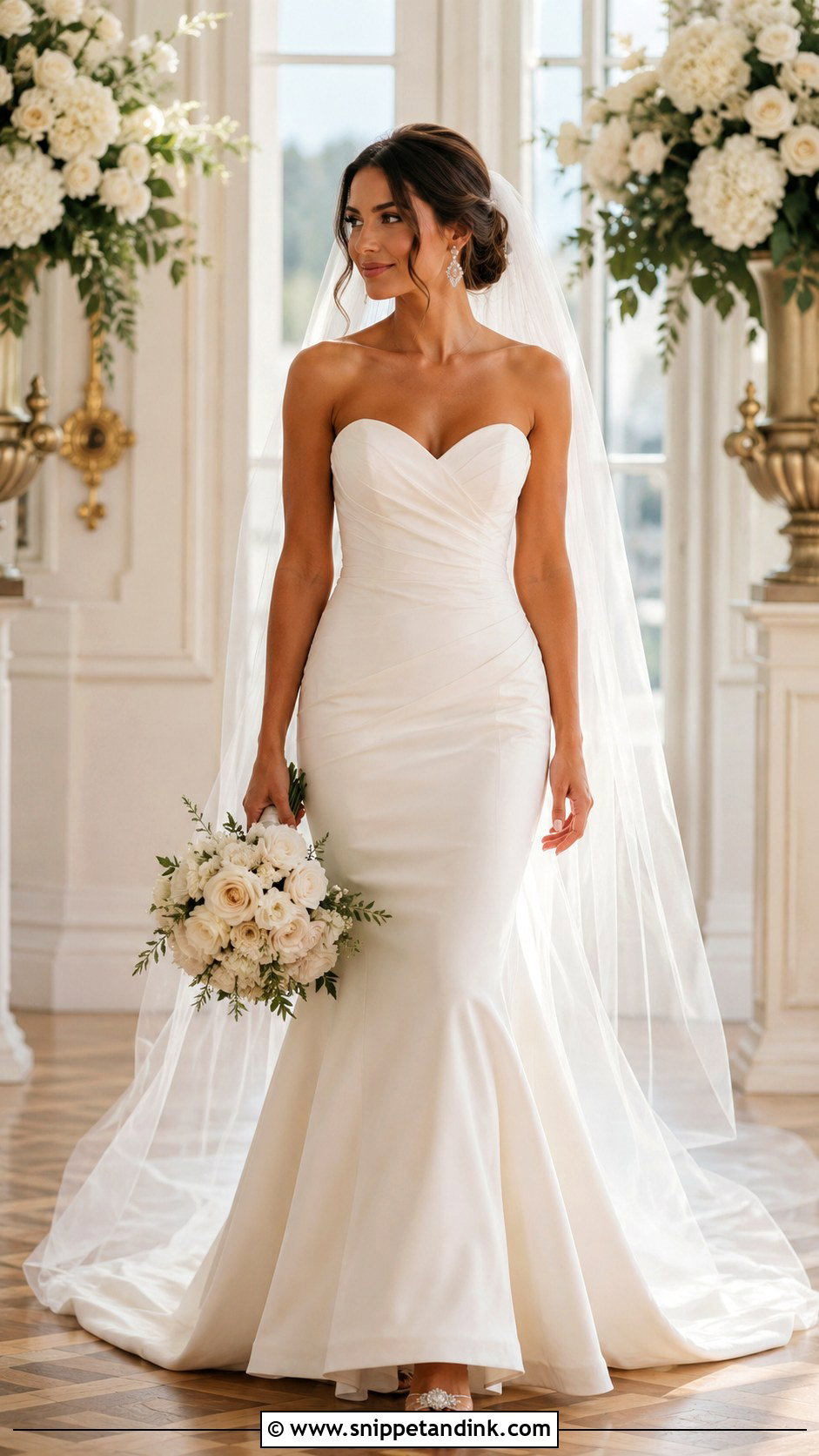
A sweetheart neckline fitted wedding dress follows the top of the bust in a soft curve. It pairs naturally with mermaid, fit and flare and sheath shapes, strapless or with thin straps, detachable sleeves or lace overlay. Support is not optional: look for built-in cups, structure or corsetry, since the dip in the centre can pull open otherwise. A tulle veil, crystal earrings and elegant heels complete it.
11. Deep V Fitted Wedding Dress
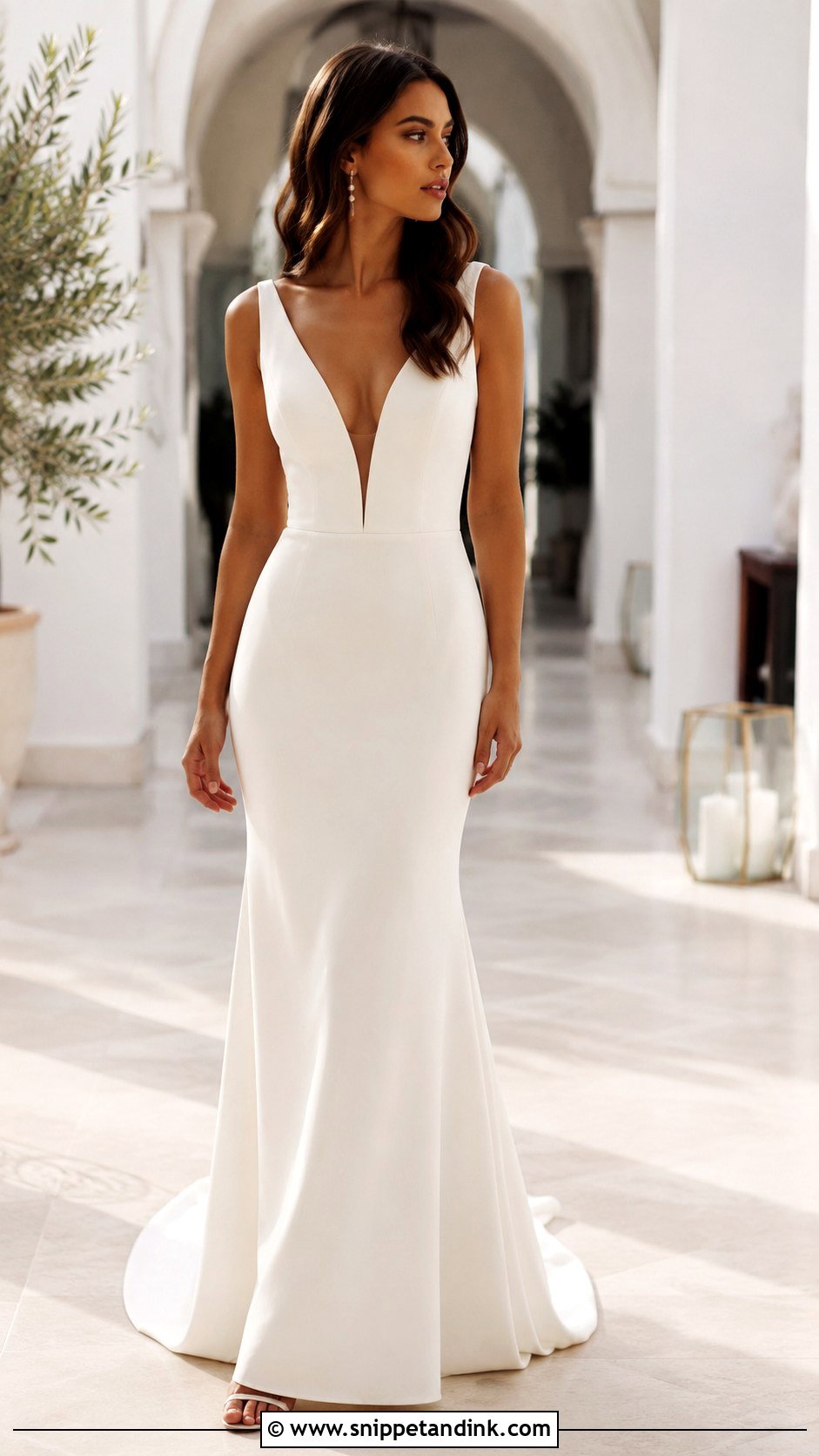
A deep V lengthens the torso. Illusion mesh, well-placed tailoring and supportive side panels keep it secure; fashion tape is a backup, not a plan. Crepe, satin or lace all work, especially with a small train. Keep the bouquet compact so it doesn’t hide the neckline. Delicate earrings, soft waves and strappy heels finish it. I’d steer a very full-busted bride toward a slightly narrower V with mesh, as a wide plunge needs a lot of support.
12. Backless Fitted Wedding Dress
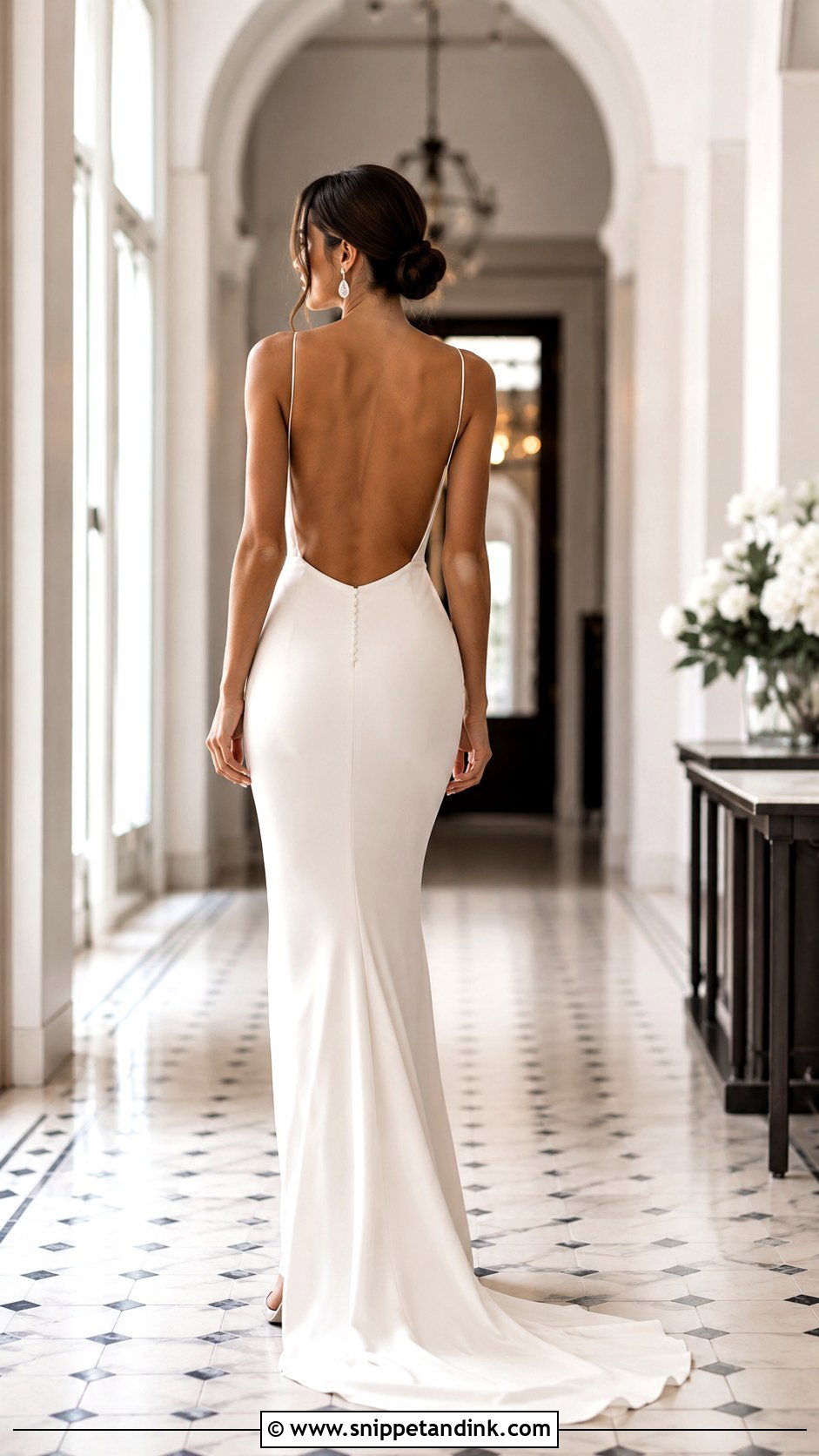
Backless gowns surprise from behind while staying simple from the front, which can be high neck, square or long-sleeved. In a close-fitting gown the lower back is where fitting is hardest, because there is nothing above it to anchor the dress. Plan undergarments at the first fitting: most backless gowns need built-in cups or a low-back solution. A long veil during the ceremony, removed for the reception, makes the reveal. Simple earrings and a sleek hairstyle keep it clean.
13. Fitted Wedding Dress With Detachable Overskirt
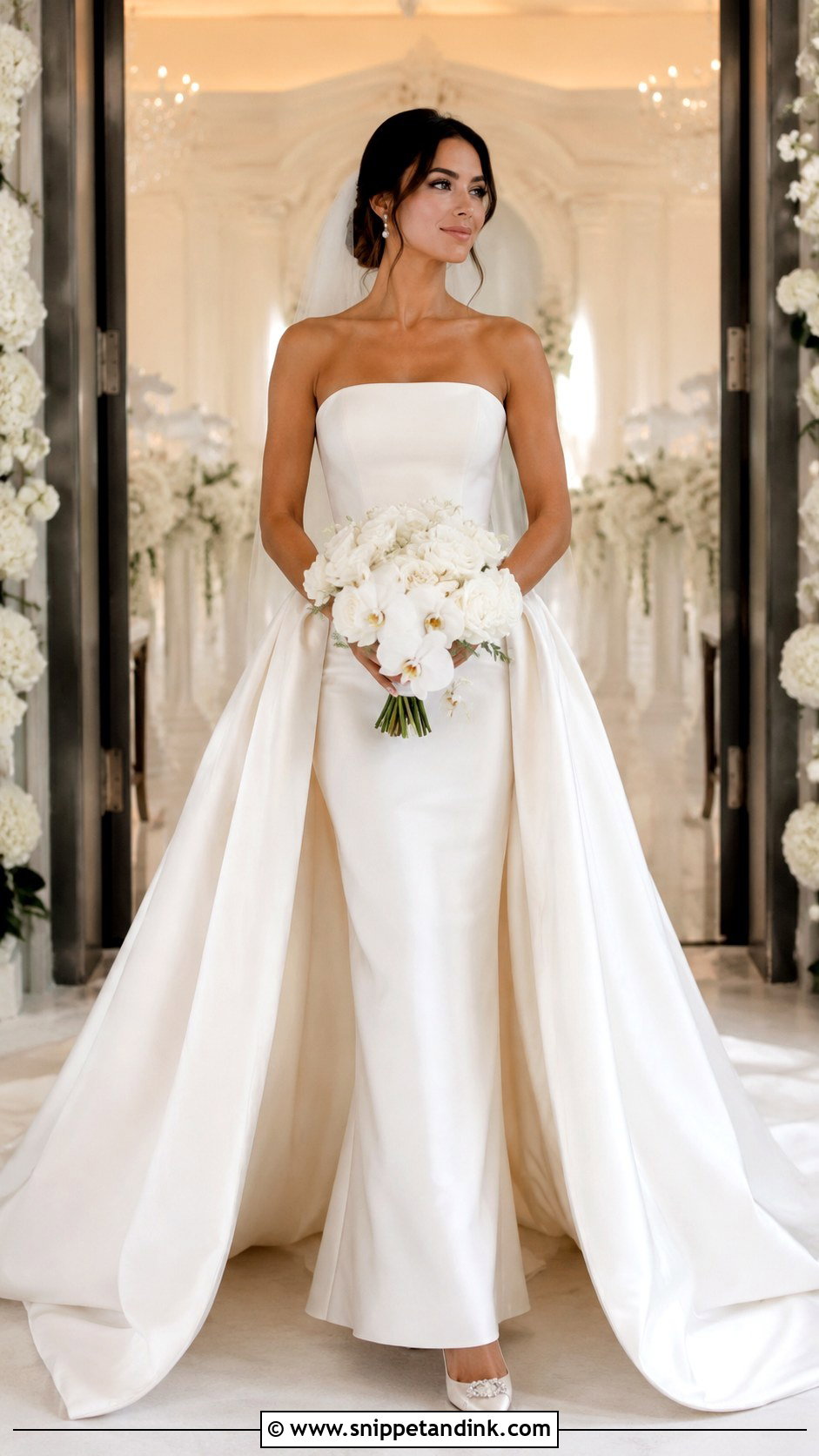
A detachable overskirt turns a fitted gown into a full ceremony gown and back. The overskirt adds volume for the aisle; take it off and you have a sleek dress to dance in. It should attach cleanly at the waist without bulk. Practise taking it off with whoever will help you, because hooks and snaps behind your back are tricky in a hurry. A cathedral veil for the ceremony and a hair accessory afterwards round it out.
14. Fitted Wedding Dress With Slit
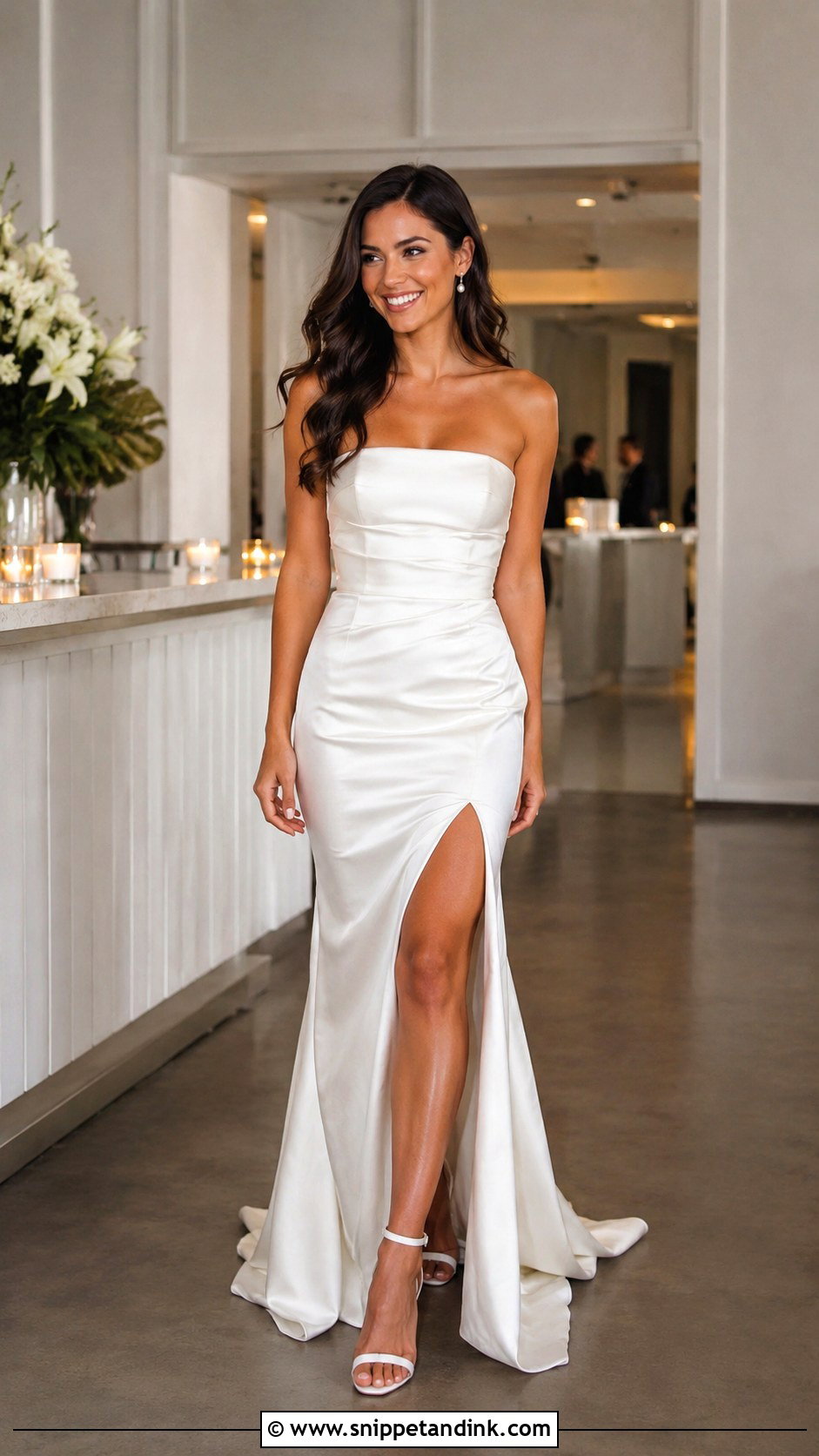
A slit adds movement to a close-fitting skirt and makes walking easier. Satin, crepe and minimal gowns show it best. Choose the height while sitting and climbing steps, not just standing, since slits open further when you sit. Your shoes will be on show, so choose them with care. Strapless, square or one-shoulder bodices suit it, and accessories should stay polished and light.
15. One Shoulder Fitted Wedding Dress
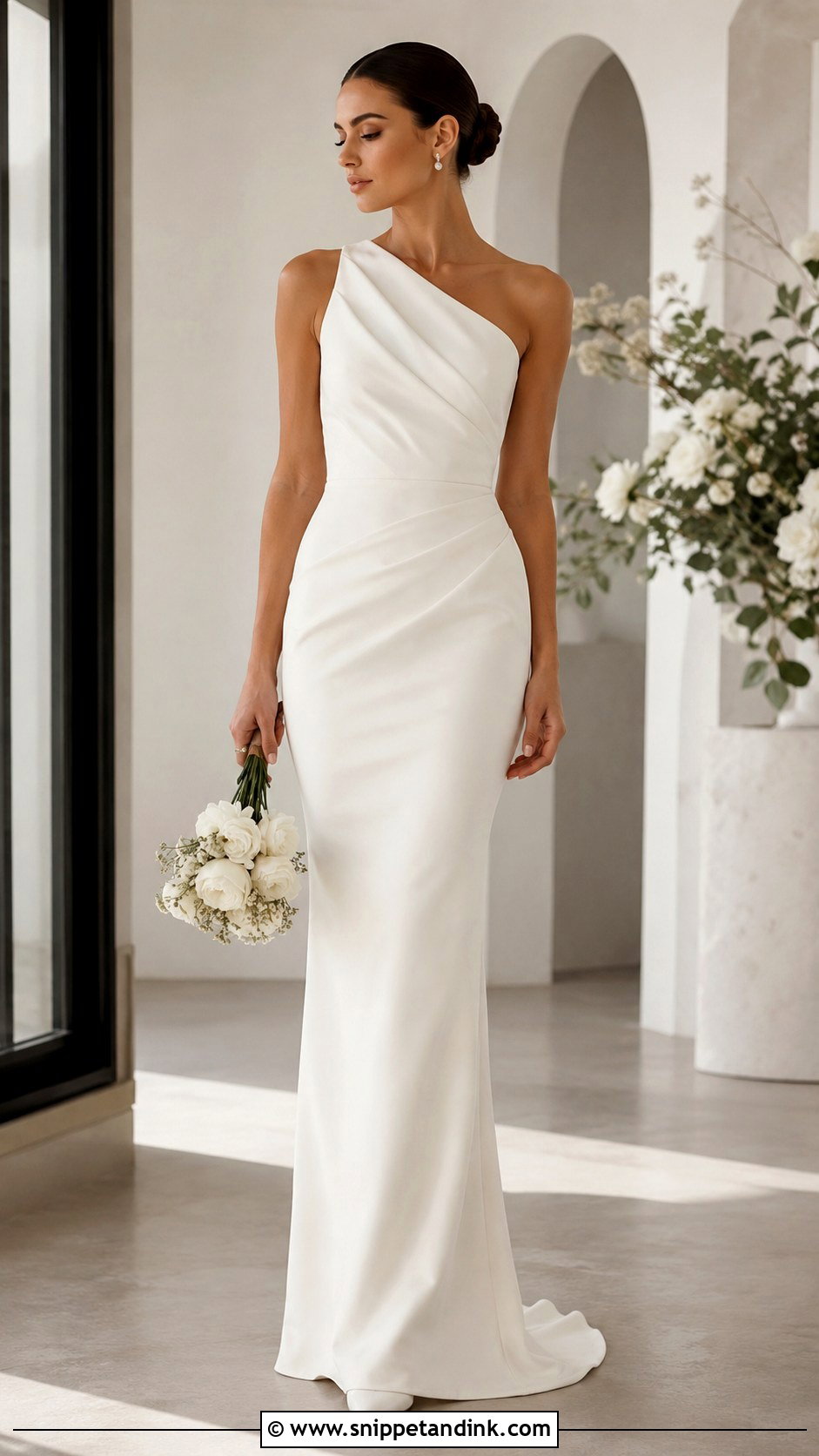
One shoulder draws the eye upward and needs very little else. Crepe, satin or mikado keep it sculptural; draping makes it softer. Skip the necklace. The skirt can be straight, flared or draped at the hip. A sleek bun or side-parted waves on the bare side show the neckline. The single strap carries all the weight, so make sure it is anchored well and does not slide toward the neck as you move.
16. Minimalist Column Wedding Dress
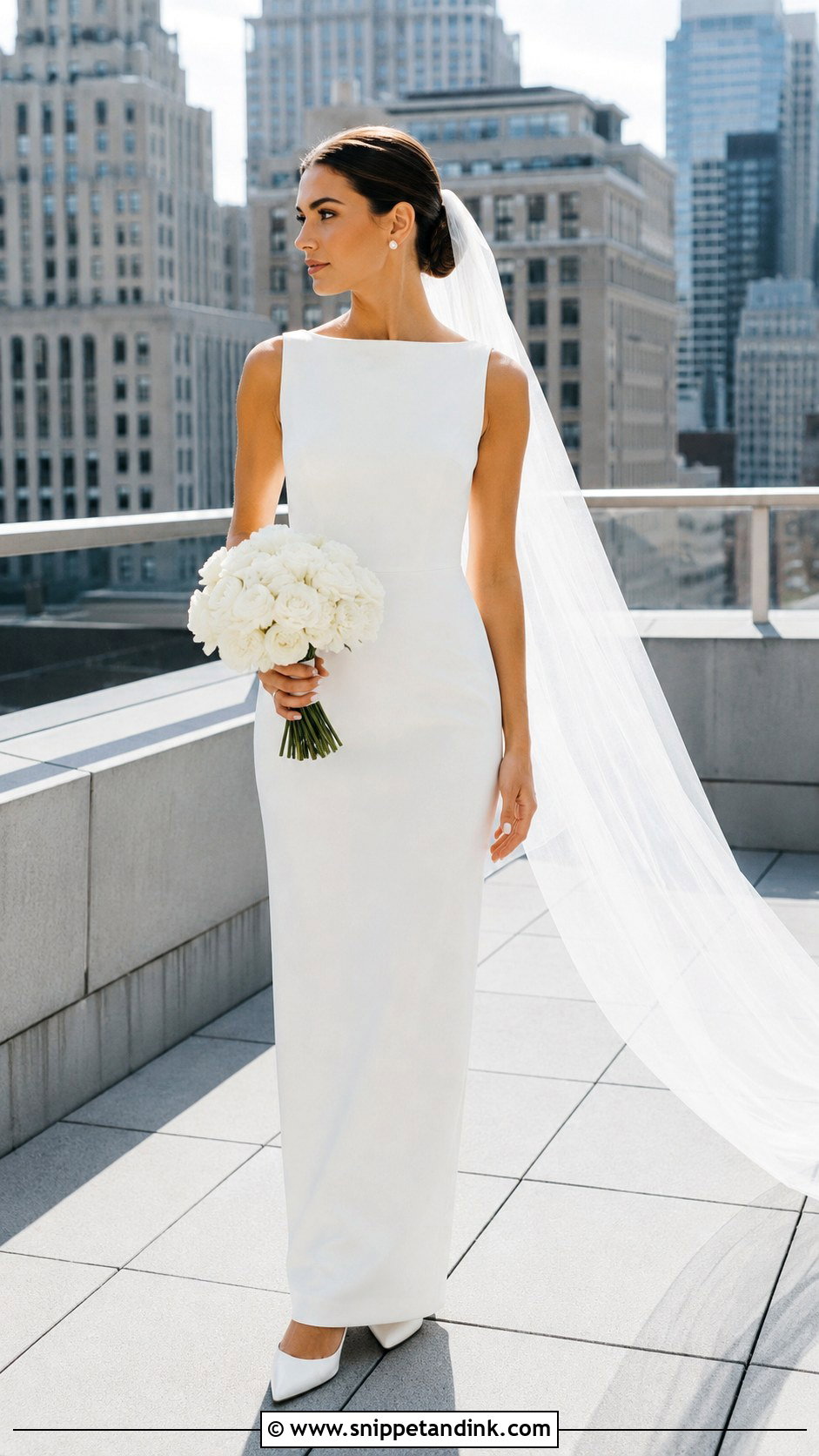
Column gowns follow the body without any flare, so precision is everything: neckline, seams, hem and fit must all be exact. Silk, satin or matte crepe with almost no embellishment suit it. Pointed pumps, pearl studs, a smooth veil and a structured bouquet keep it modern, and gloves, a cape or one statement earring personalize it. It suits courthouses, rooftops and modern indoor ceremonies, and it is easy to dance in.
17. Beaded Fitted Wedding Dress
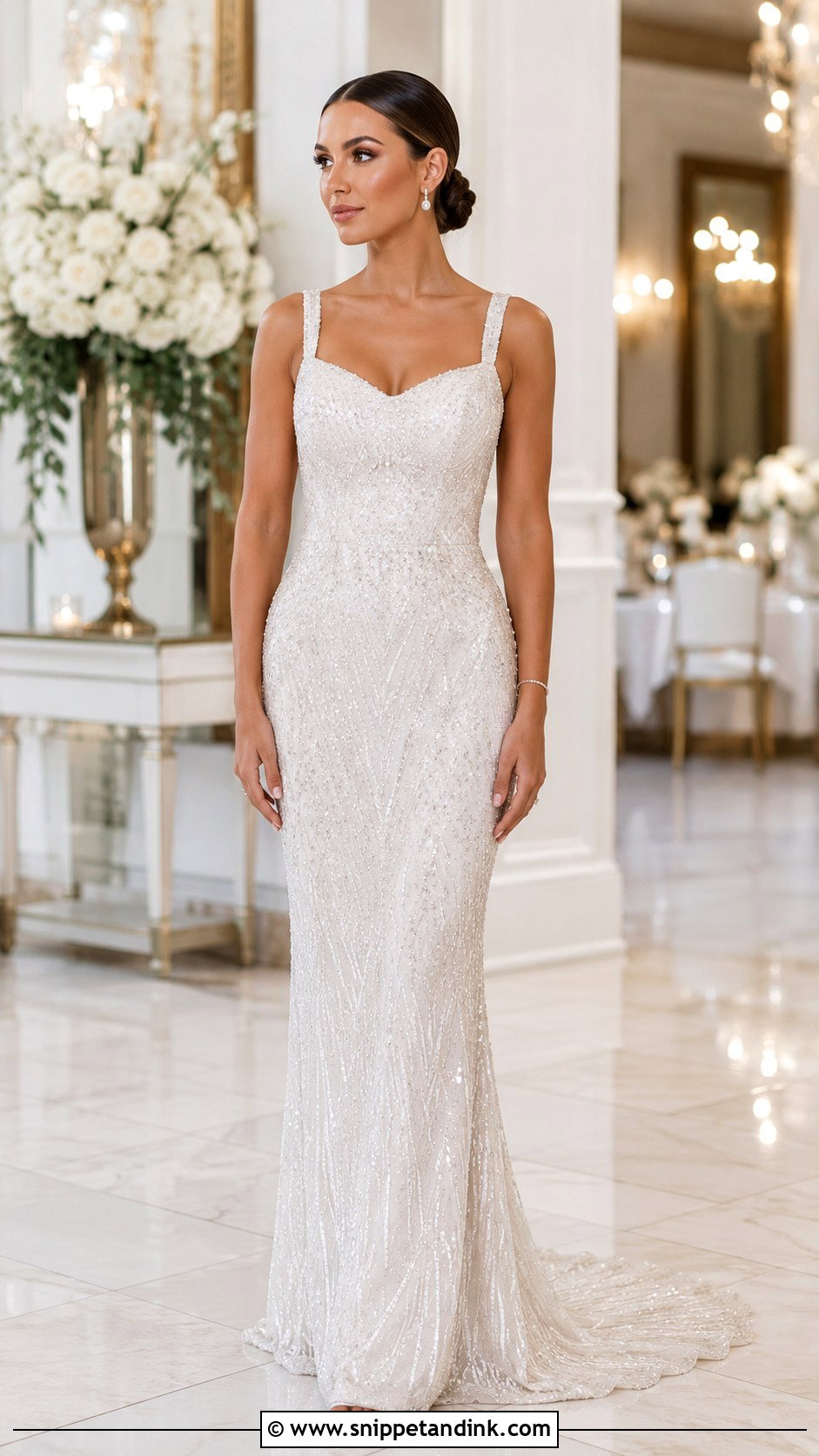
Beading adds sparkle and evening glamour. It can cover the gown or concentrate on the bodice, sleeves or train. On a fitted dress, vertical beadwork or patterns that follow the body’s lines flatter more than horizontal bands. Beading adds weight, and heavily beaded skirts pull downward on the hips, so ask about it at fittings. Simple heels, a sleek hairstyle and minimal jewelry let the dress shine under reception lighting.
18. Pearl Fitted Wedding Dress
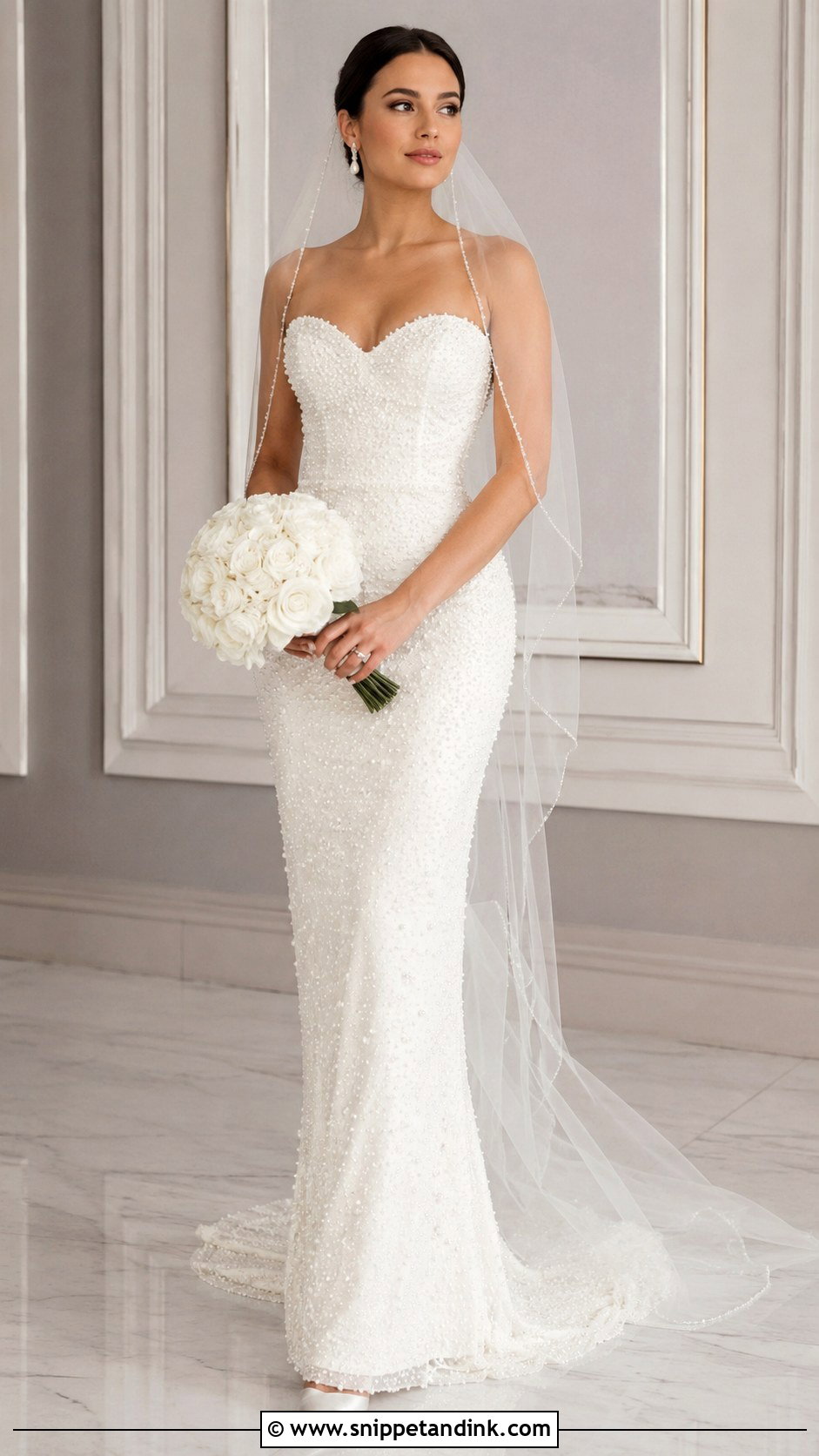
Pearls are quieter than crystals. They can be scattered over tulle, sewn into lace or used along straps and bodice. A fitted base keeps the look modern, while pearls add a softer bridal touch. Pearl earrings, satin shoes and a clean veil make the outfit cohesive. Avoid competing accessories, and check how pearls press against skin when you sit, since raised pearls at the back of a bodice can be uncomfortable against a chair.
19. Fitted Wedding Dress With Bow Back
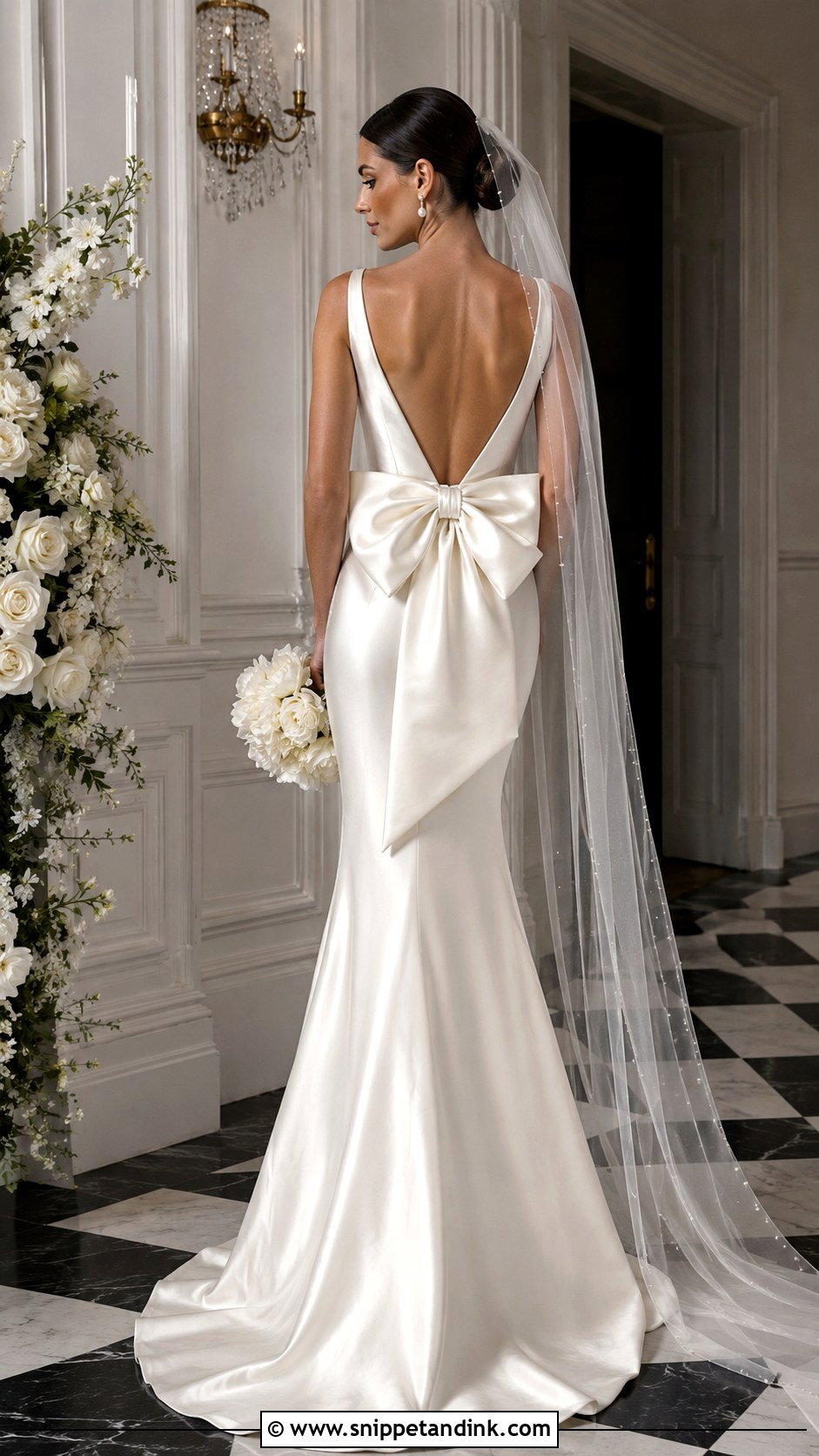
A bow at the back gives the gown a photo moment as you walk away. It works at the waist, shoulder or train, in satin, mikado or crepe. With a big bow, keep the veil light so it shows. The sleek skirt balances the sweetness of the bow. Pearl studs, pointed heels and a low bun finish it. Large bows crush when you sit, so a stiffened or interfaced bow survives the day better.
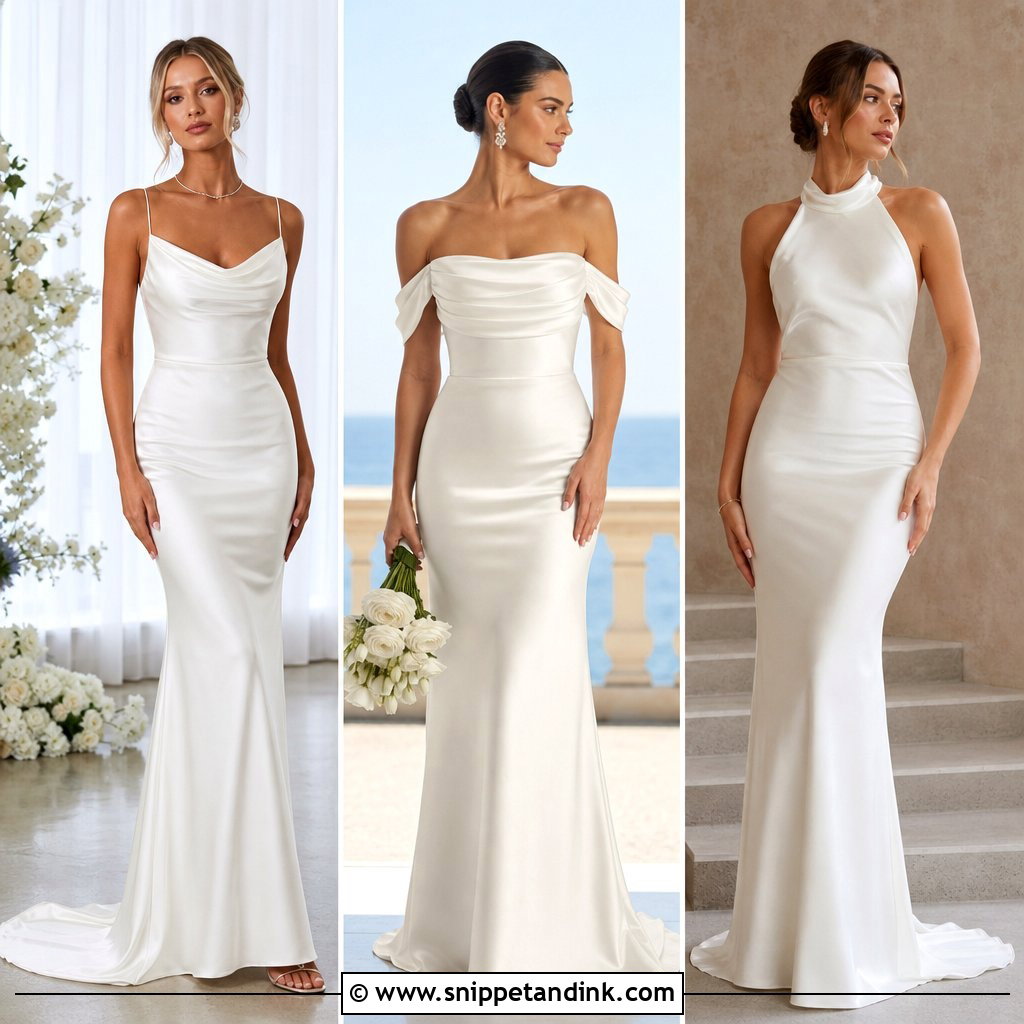
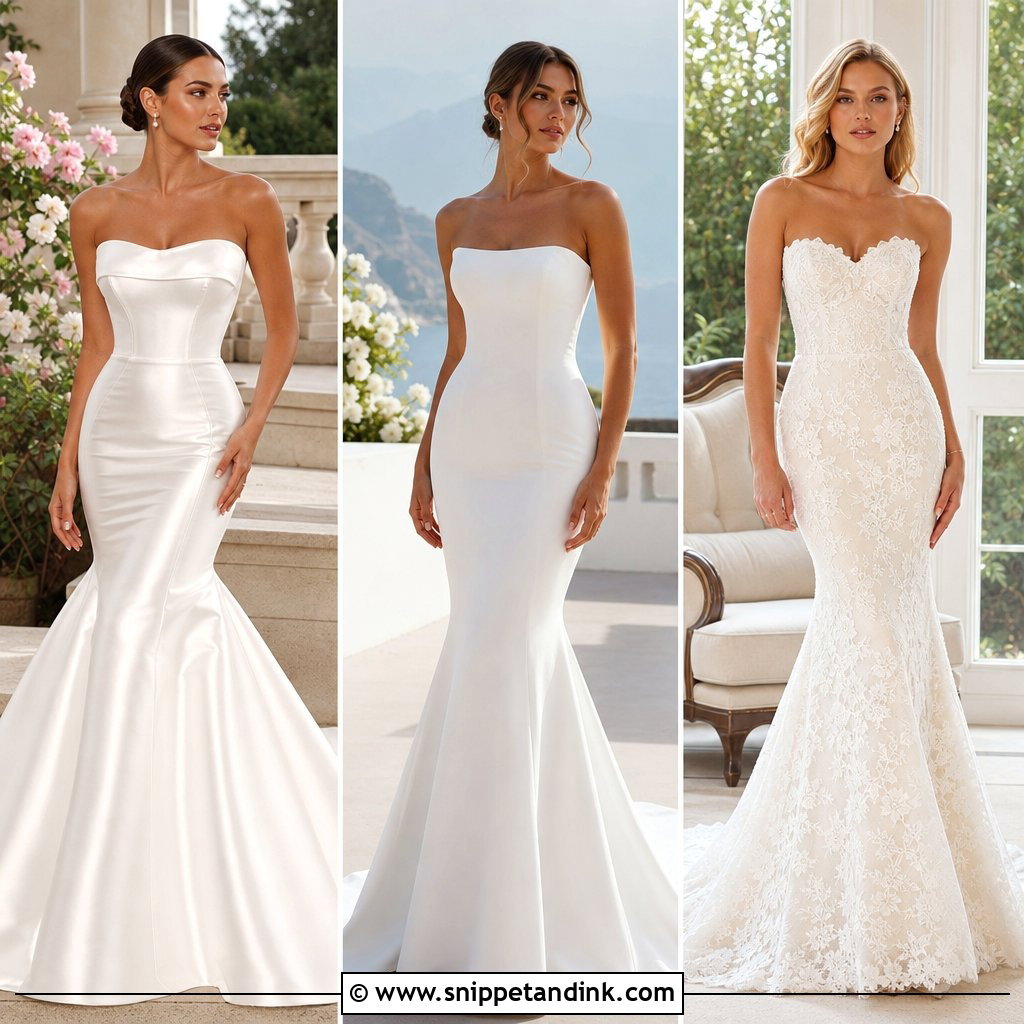
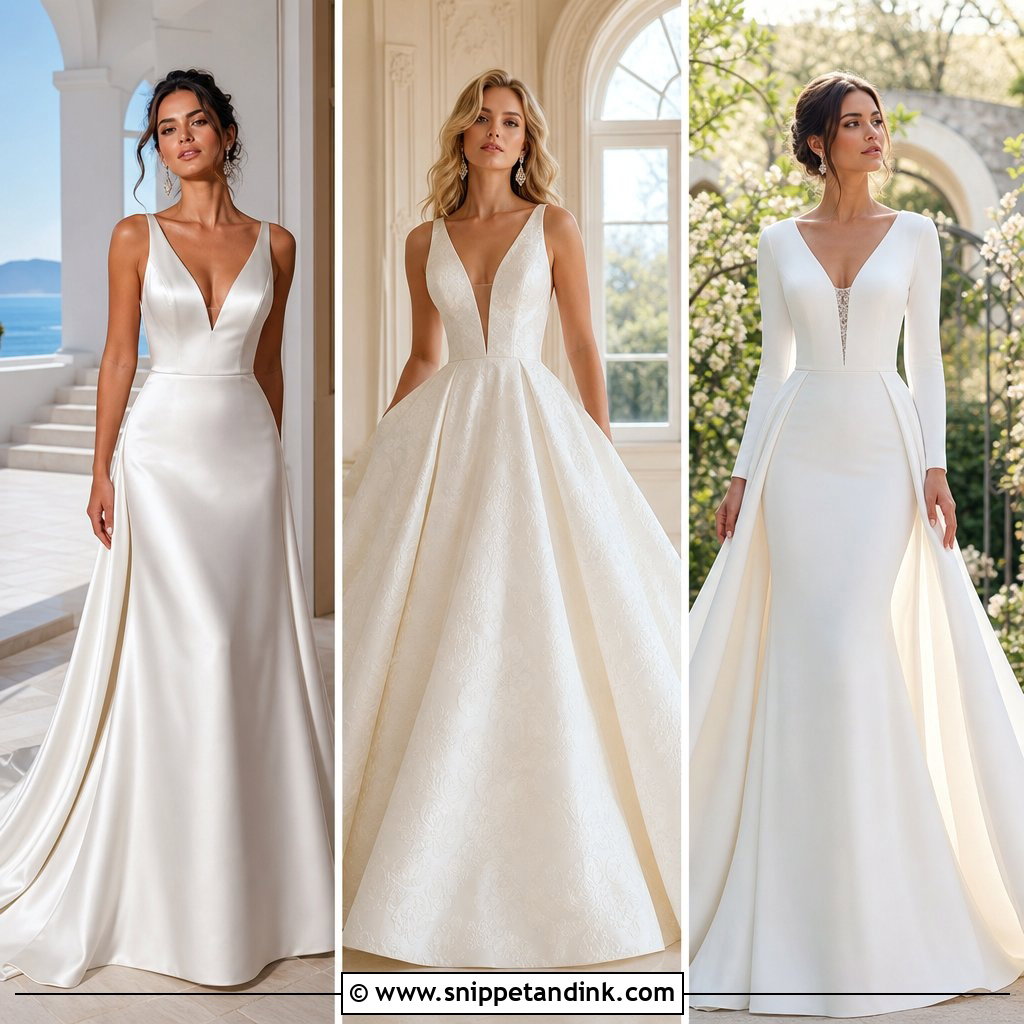
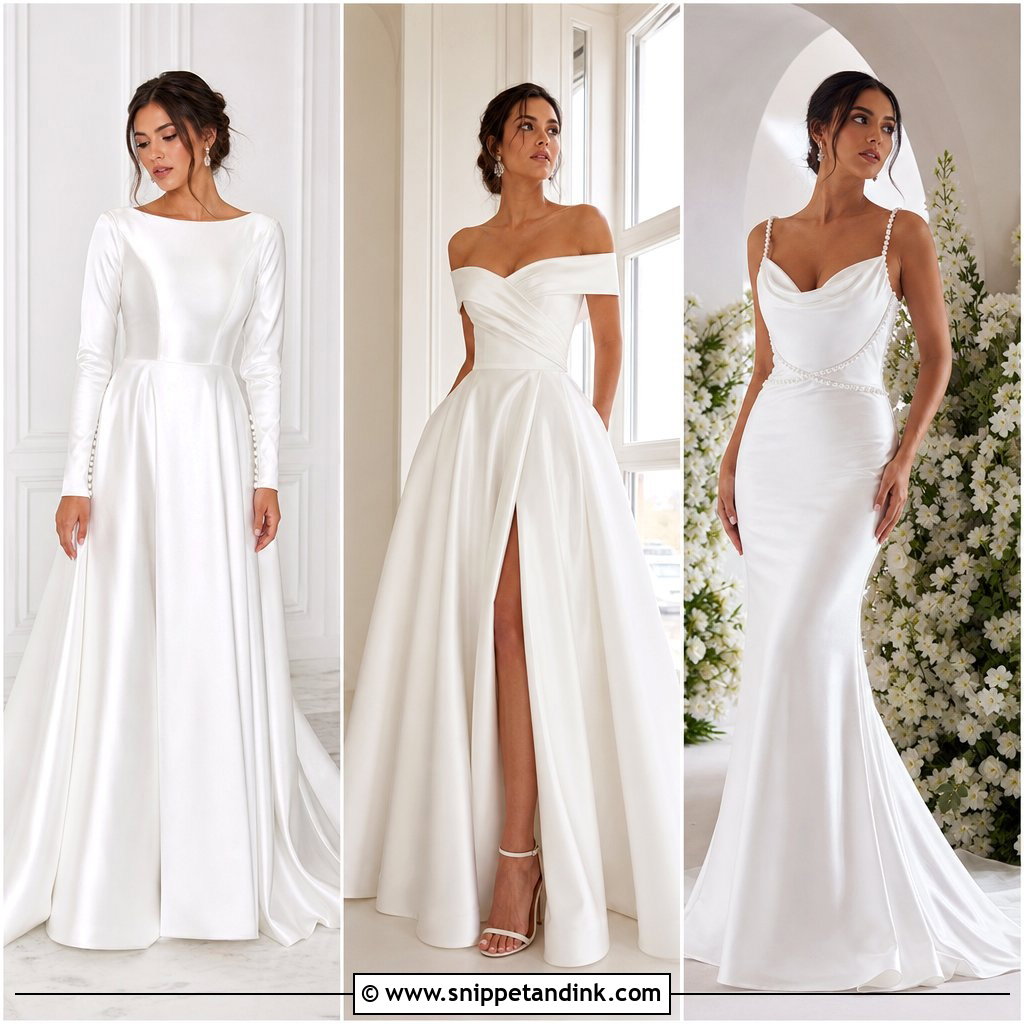
20. Fitted Wedding Dress With Cape
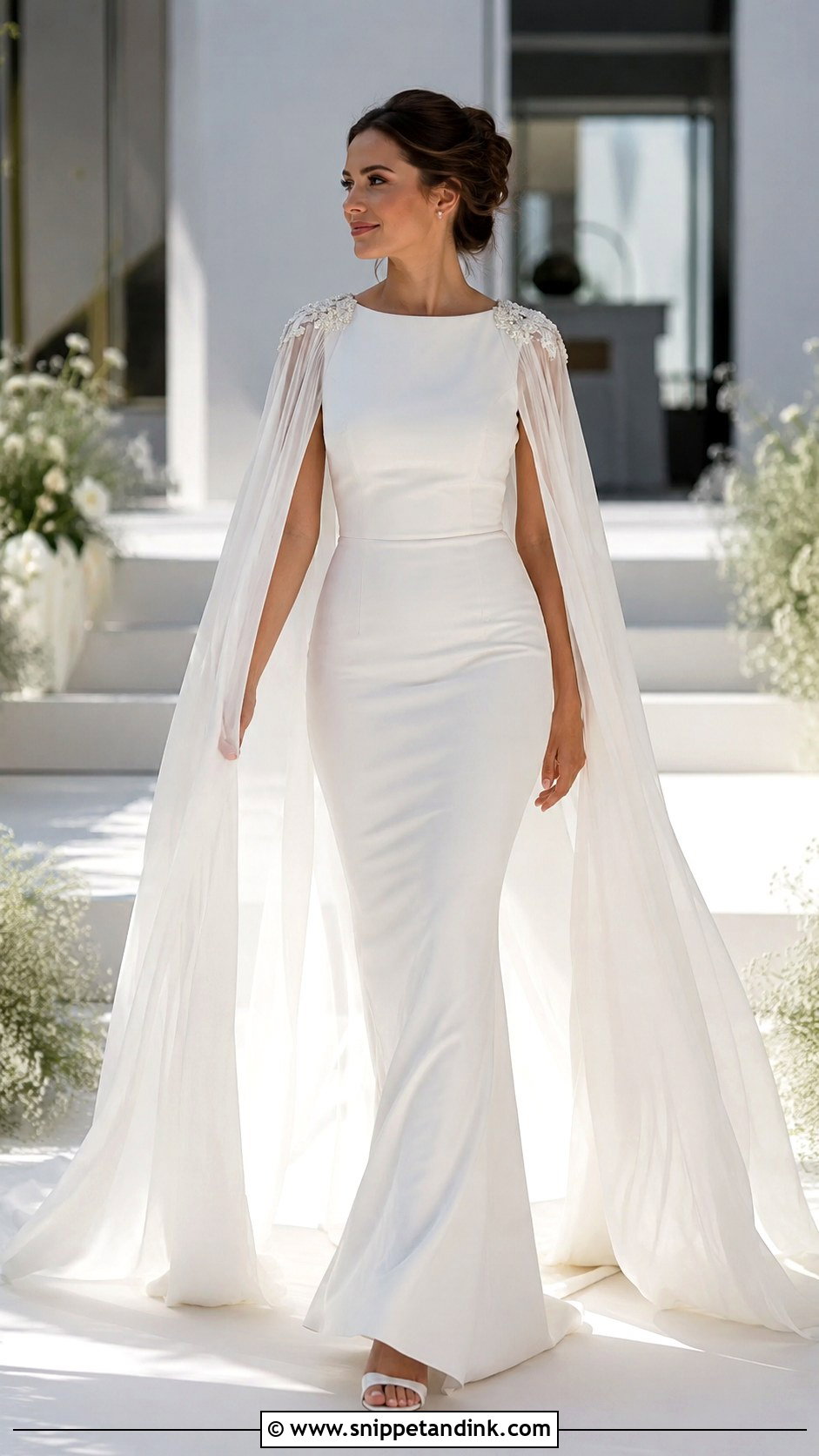
A cape can replace the veil or layer over it. It adds movement behind you while the gown underneath stays sleek. Sheer tulle, lace, satin and chiffon each behave differently; chiffon floats, satin holds a shape. Make sure it attaches securely at the shoulders, neckline or back, and that it doesn’t pull the gown backward. Neat hair and minimal jewelry keep the focus on the cape. I reach for a cape when a bride wants coverage and a dramatic entrance but dislikes the feel of tulle around her face.
21. Fitted Wedding Dress With Gloves
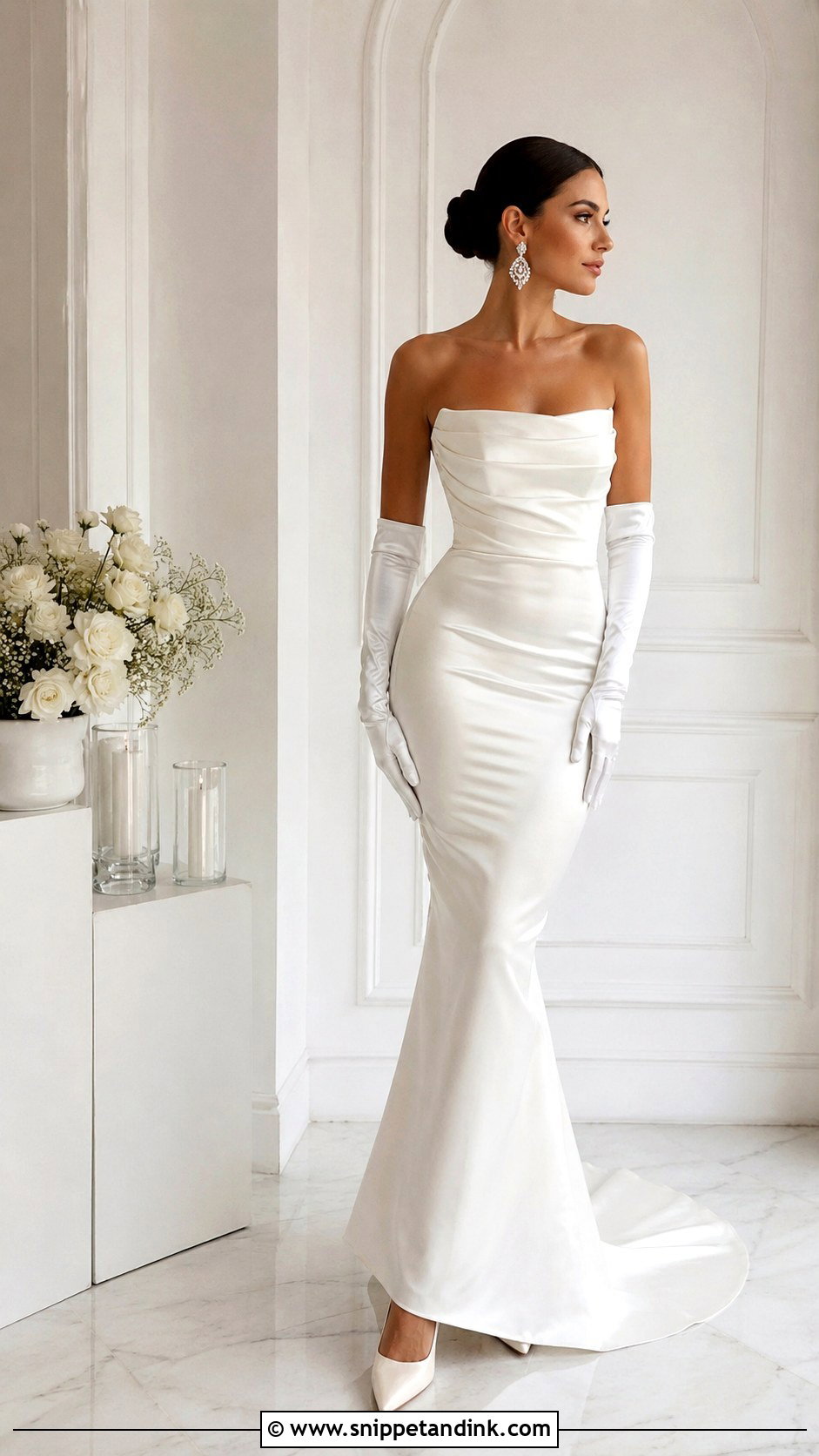
Gloves give a fitted gown a fashion edge. Sheer, satin, lace, short or opera length all work, depending on the neckline. Strapless and off-the-shoulder gowns balance well with long gloves. Match the colour and mood of the dress: satin is classic, sheer is softer. Plan when they come off, since you’ll need a bare hand for the ring exchange; many brides slip off the left glove or choose fingerless styles. Simple earrings, a smooth updo and clean heels complete it.
22. Fitted Wedding Dress With Drop Waist
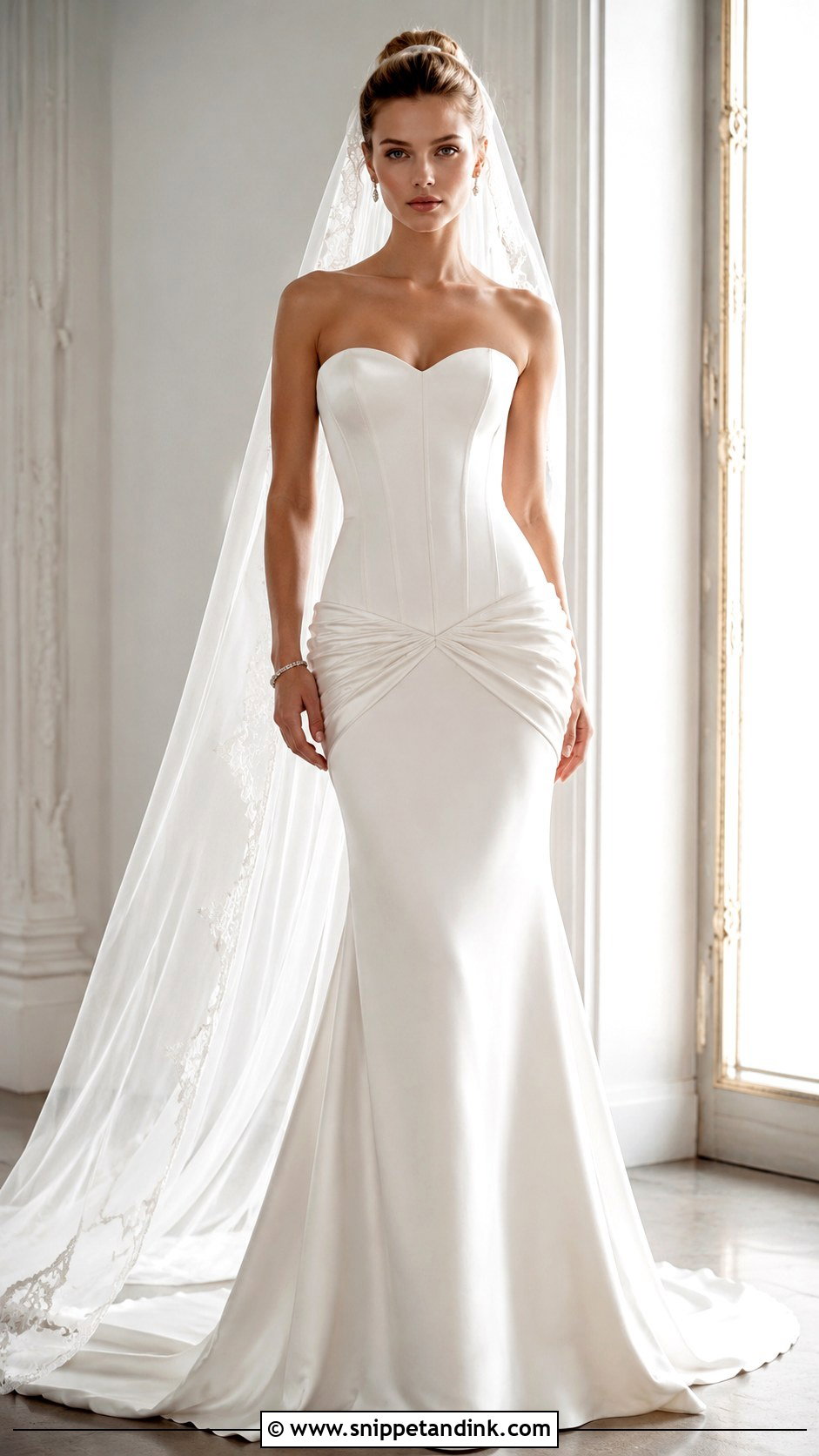
A drop waist sits lower than the natural waist, usually around the upper hip, and elongates the torso. Satin and mikado hold it structured; lace and tulle soften it. Placement is personal, and an inch too low can shorten the legs, so judge it in the shoes you’ll wear. A long veil, simple heels and refined jewelry keep it balanced.
23. Fitted Wedding Dress With Basque Waist
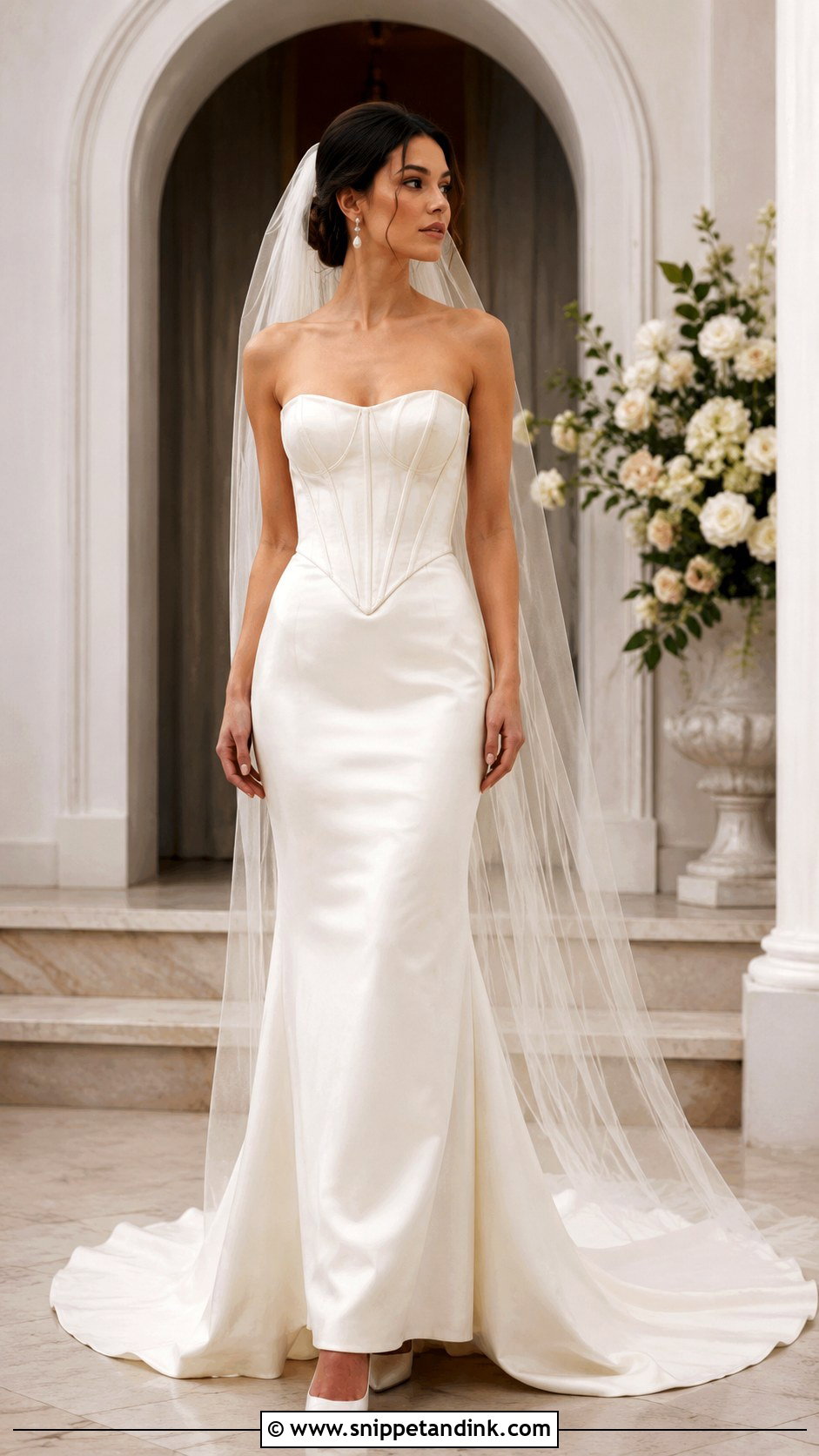
A basque waist dips into a point at the front, which narrows the waist visually and gives the bodice structure. It suits corset gowns, satin dresses and lace designs. The skirt can flare gently or stay sleek. Keep the neckline clean, strapless, off-the-shoulder or square. Because the point sits below the natural waist, it can press when you sit, so check comfort. A soft veil and delicate earrings complete it.
24. Fitted Wedding Dress With Sheer Sleeves
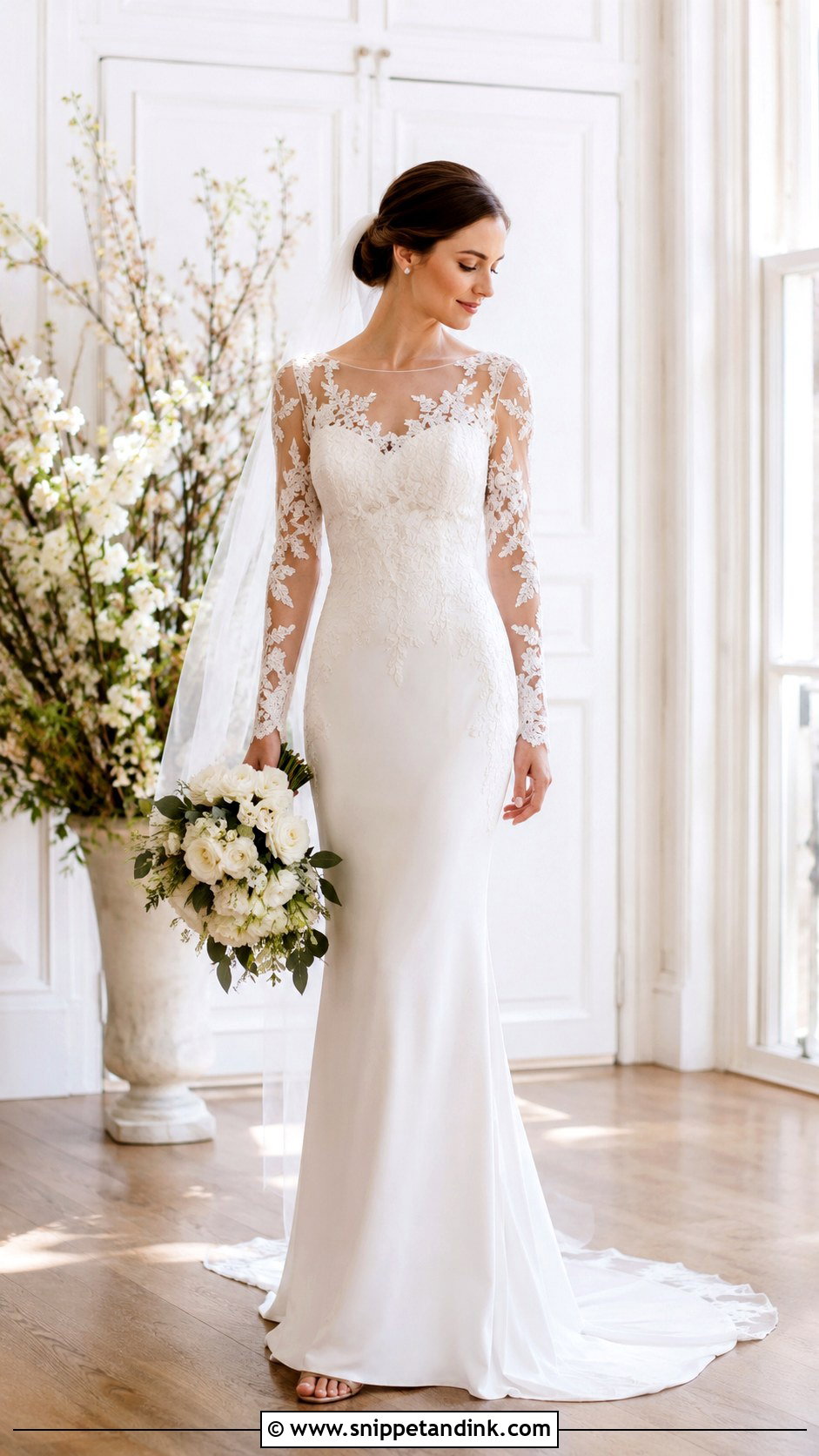
Sheer sleeves give coverage without weight. Lace appliqué, small buttons, pearls or plain illusion fabric all work. In a fitted dress, illusion mesh with a little stretch moves best; rigid tulle can tear at the elbow when you hug. A low bun, small earrings and a veil that doesn’t compete with the sleeve detail suit it, and it fits spring, autumn or winter weddings.

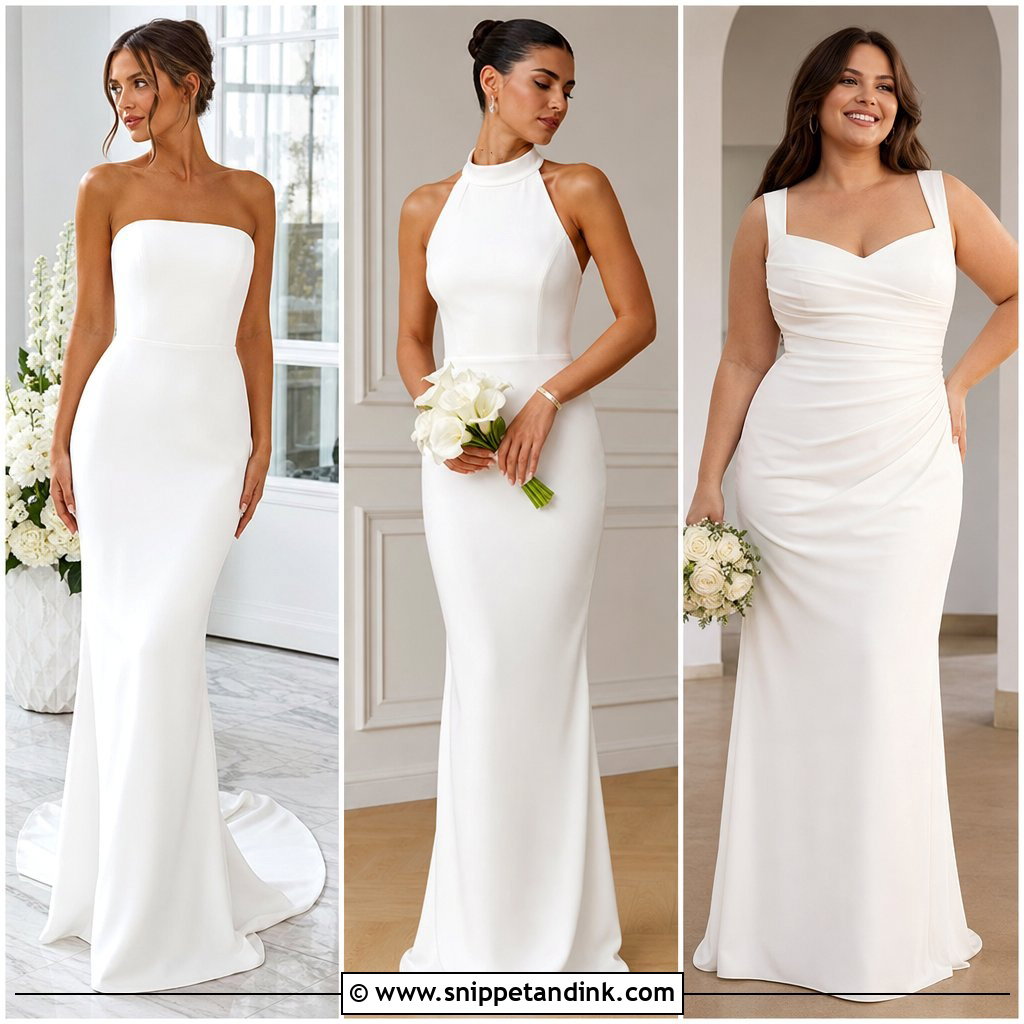


25. Fitted Reception Wedding Dress
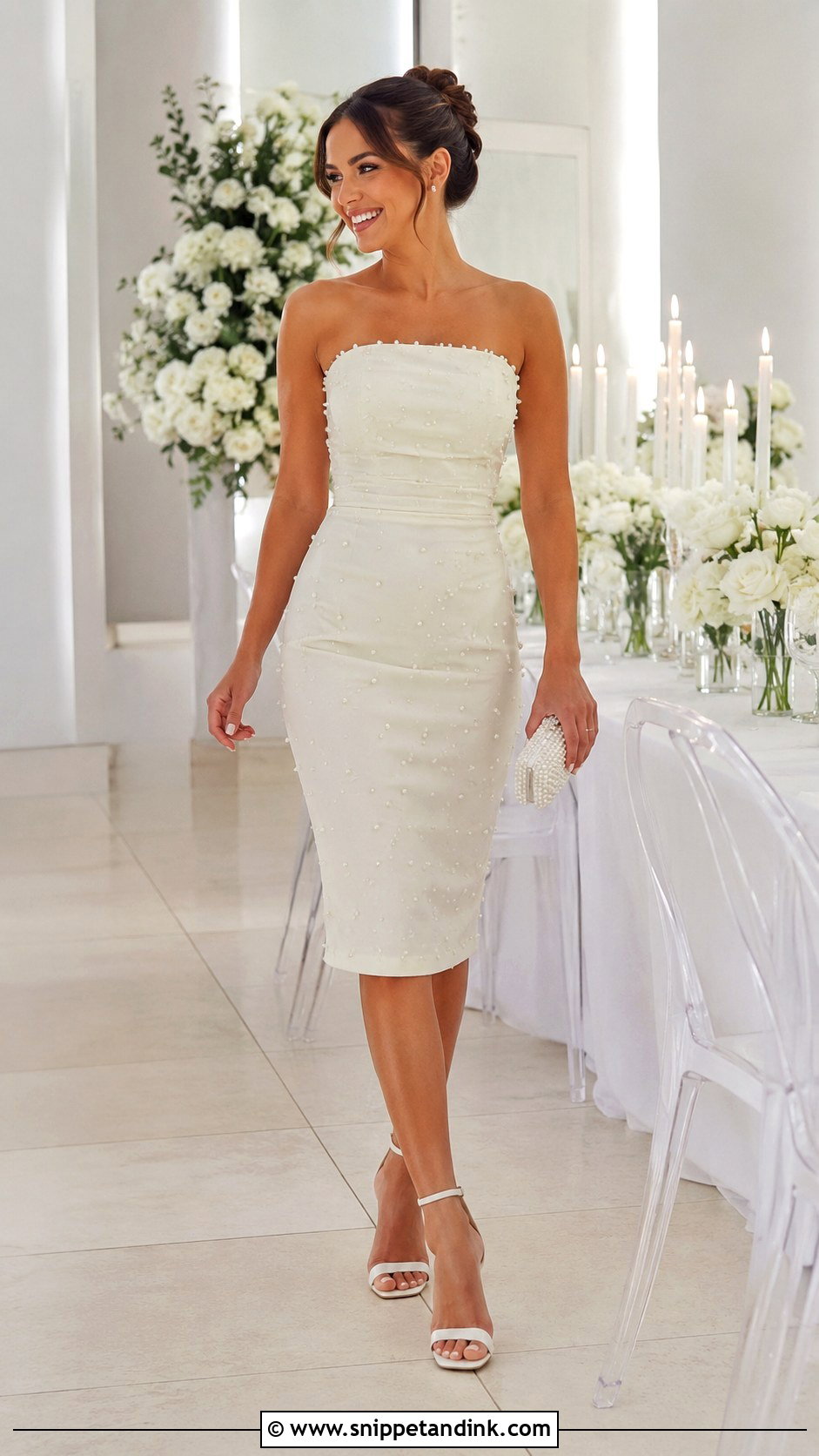
A fitted reception dress lets you move after a heavier ceremony gown. A slim midi, a sleek mini, a fitted satin gown or a simple sheath all work. Keep it bridal with white or ivory fabric, polished hair and refined accessories; sparkle, feathers or pearls add fun. Choose a length and fabric that let you dance freely, and plan the change with your coordinator so it doesn’t eat into the party.
Bustles, Bathrooms and Dinner in a Fitted Dress
Fitted skirts often have a train, and a train has to be bustled for the reception. A French bustle tucks the train under with ribbons; an American bustle lifts it with hooks. Ask your seamstress to show your maid of honour how it works at the final fitting, and take a photo of the steps.
The bathroom is the other practical problem. In a mermaid or column gown, you will need one person to help hold the skirt. Some brides step out of the dress entirely, which is easier with a zip than with a row of buttons.
Expect three fittings, starting about two to three months before the wedding, with the last one a week or two before. Try not to change your weight or training routine dramatically after the second fitting, as fitted gowns have little room to adjust.
A Sleek Gown Should Still Let You Sit Down
A close-fitting gown should support you from the first photo to the final dance. These silhouettes can be sleek, romantic, dramatic or minimal, so there is no single right one. Look at neckline, fabric, train, waistline and alterations together. Small tailoring changes make a huge difference on a fitted dress. Walk, sit, turn and lift your arms at every fitting, and pick the gown that still feels good after you do.
You'll Like These Ideas:






Leave a Reply