
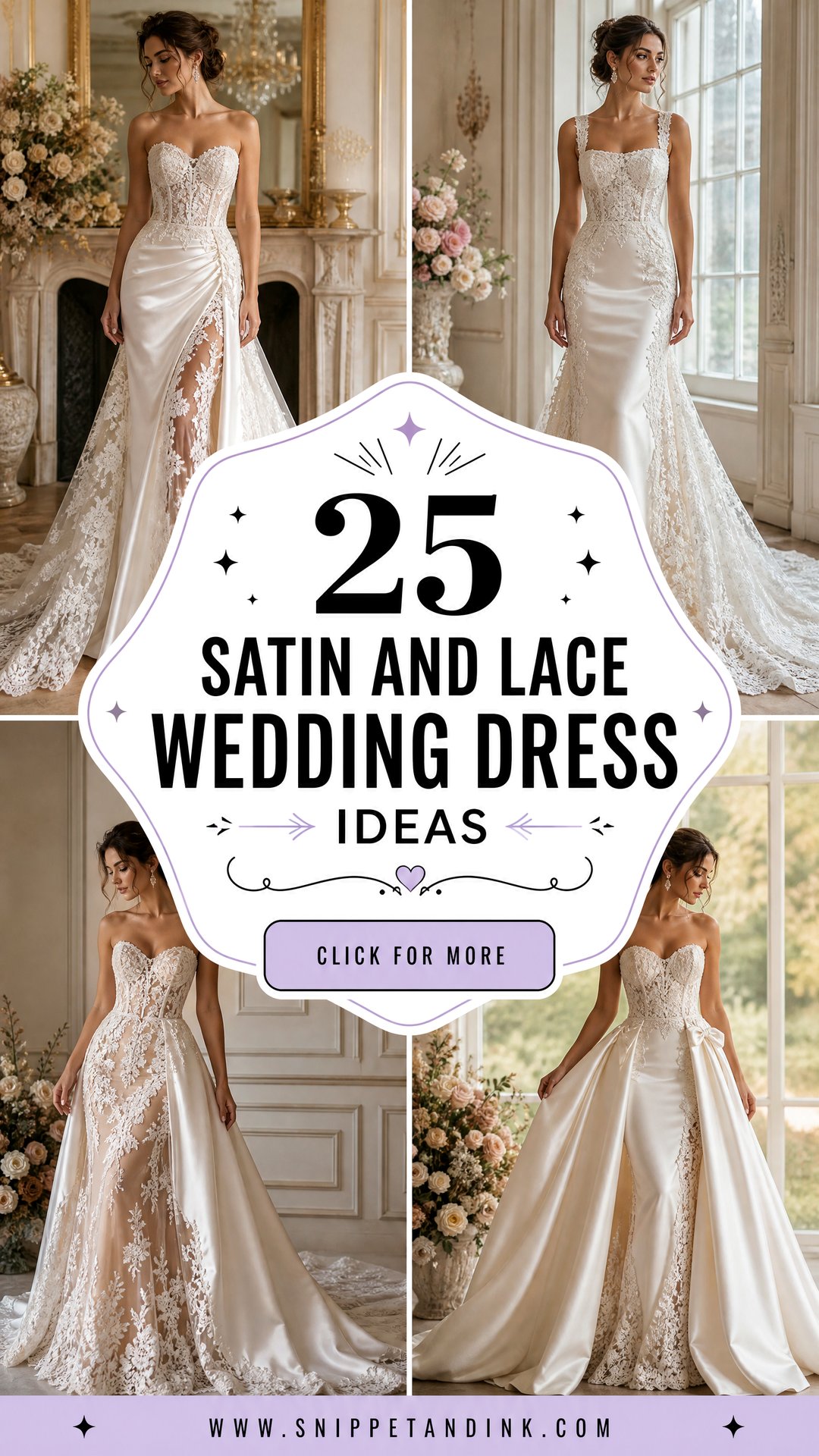
Satin and lace is the pairing I reach for most when a bride can’t decide between clean and romantic, because each fabric covers the other’s weak spot. Satin gives a gown weight, a soft sheen and a surface that holds its shape; lace brings pattern and something to look at up close. The trouble starts when both compete for attention. In fittings I usually let one fabric lead and the other frame it: a satin skirt under a lace bodice, a lace train over a plain satin body, lace sleeves on an otherwise bare gown. The gowns below run from ball gowns and sheaths to minis and modest cuts, with notes on how each one behaves once you’re actually wearing it.
Satin Weights and Lace Types, Felt at the Rail
Two gowns can both be sold as satin and lace and behave nothing alike. Before you fall for a photo, it helps to know what you’re touching at the appointment, because the fabric decides how the dress moves, how warm it is and how it looks at ten at night.
The satins you’ll meet
- Duchess satin: heavy, stiff and low in sheen. It holds a ball gown or A-line shape on its own and resists creasing better than most, but it’s warm and weighty.
- Charmeuse: light and fluid with a bright face. It’s the slip-dress fabric, and it drapes well while creasing and water-marking easily.
- Crepe-back satin: shiny on one side, matte crepe on the other. A dependable middle weight for sheaths and minis.
- Mikado: technically a different weave, but sold alongside satin. Crisp, with a faint texture that hides creases.
The laces, and where each belongs
Chantilly is fine and flat with soft eyelash edges, so I use it for sleeves and illusion backs. Alencon is outlined with a raised cord, which gives it definition in photos but makes it stiffer against skin. Guipure has no net behind it and reads bold and heavy; I’d keep it to one area, such as a bodice or hem band, rather than a whole gown.
My quick test: scrunch a corner of the satin in your hand for ten seconds and let go. If it’s still creased a minute later, that’s how your skirt will look after the ceremony and dinner.
1. Satin And Lace A Line Wedding Dress
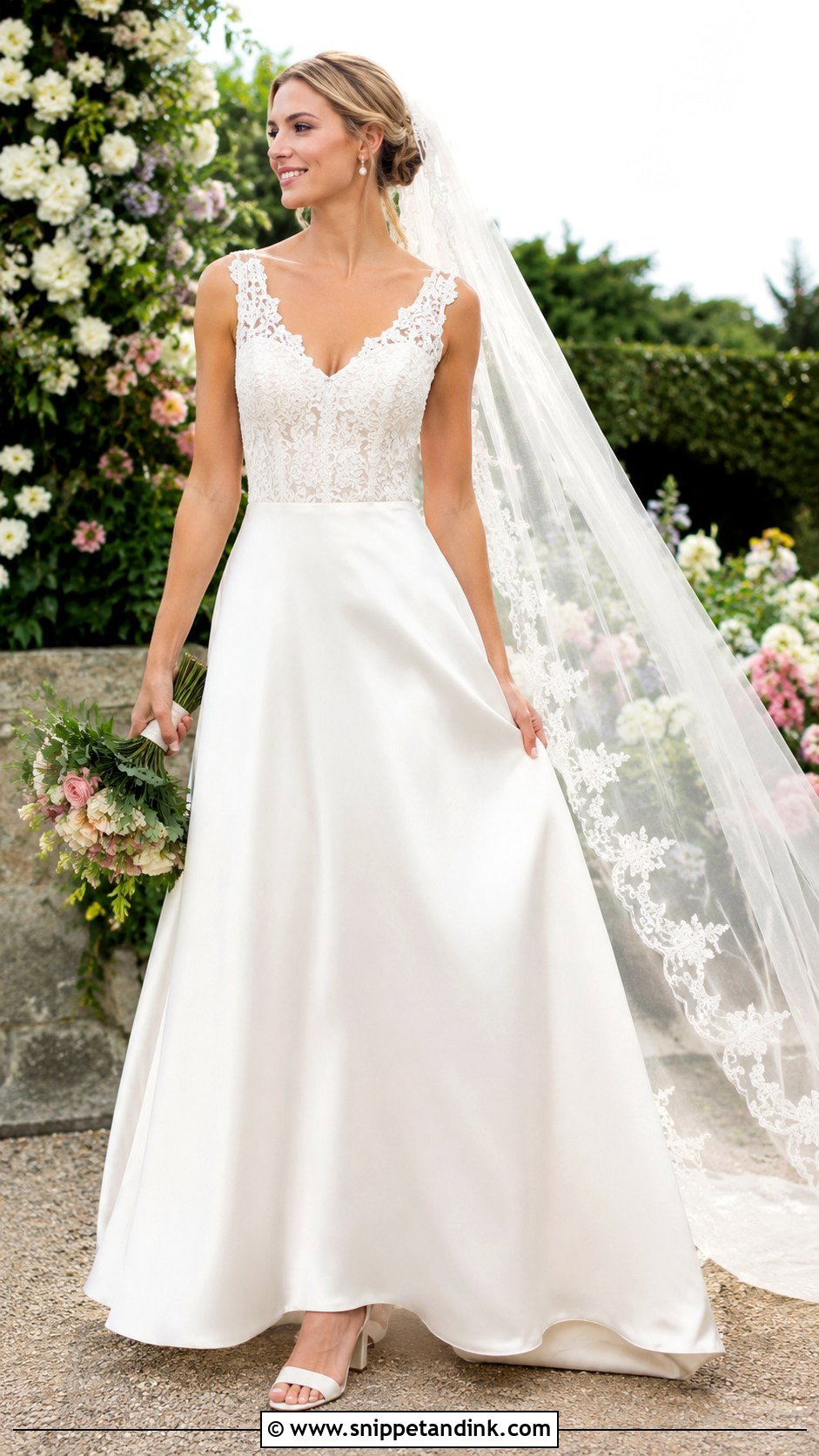
The A-line is where I start most first appointments, because the shape forgives so much. The lace bodice holds the waist and the satin skirt falls away from the hips instead of clinging. What I watch is the point where lace meets satin. If the lace is appliqued over the waist seam rather than stopping hard at it, the join looks intentional in photos. A fingertip lace veil, pearl drops and ivory block heels suit it. Ask for a soft lining behind the bodice lace, since scratchy lace against bare skin is the complaint I hear most by the reception.
2. Satin And Lace Ball Gown Wedding Dress
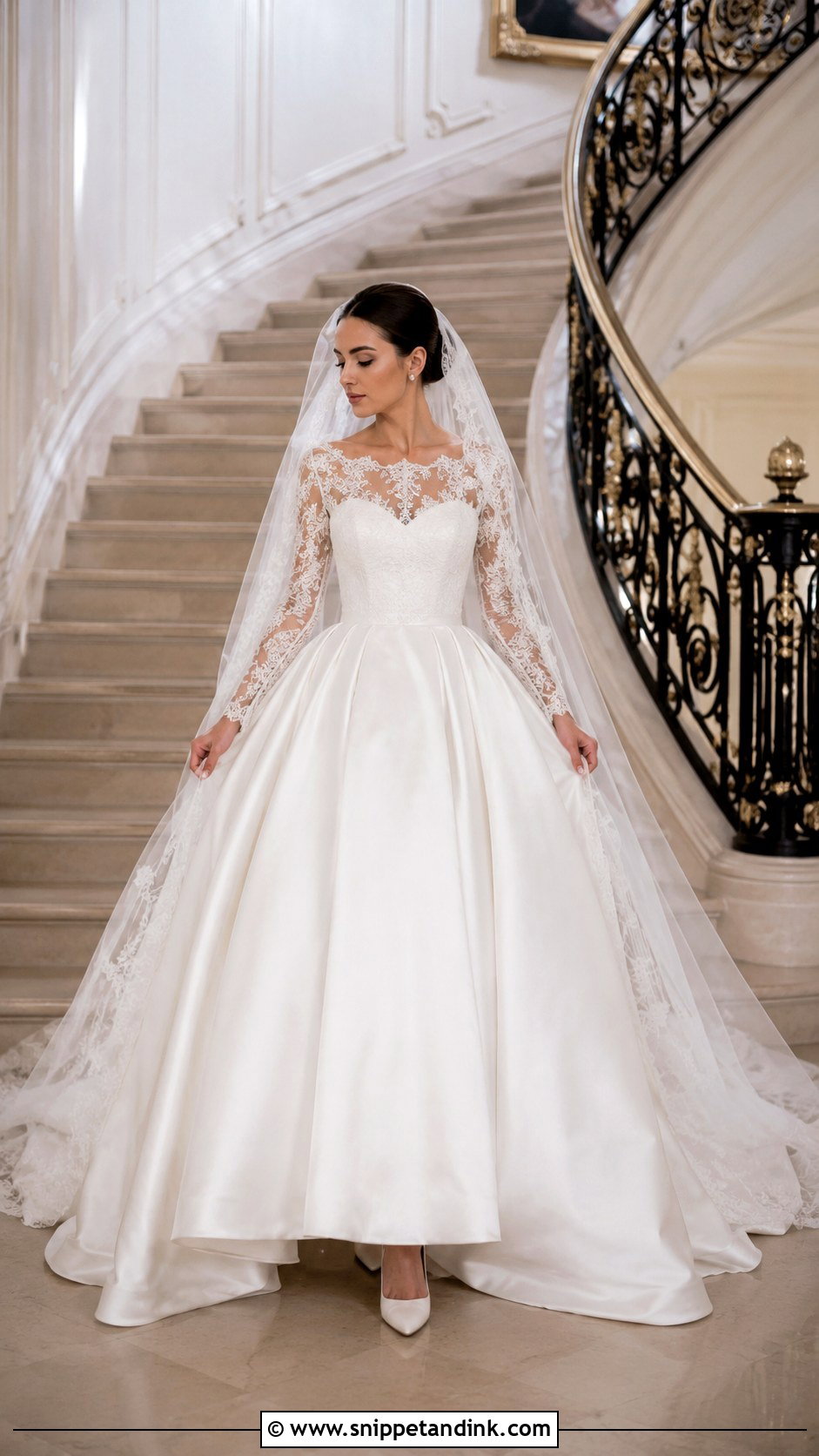
A full satin skirt does the dramatic work here, so there’s no need for heavy sparkle. Lace on the bodice, sleeves or hem keeps all that volume from looking stiff. Duchess satin holds a ball gown shape best, but it’s heavy, and I always warn brides they’ll feel that weight at the hips by the sixth hour. A basque or natural waist gives the torso definition. With a skirt this full I keep jewelry small: pearl studs, a fine bracelet, a sleek low bun, and a cathedral veil with lace trim if the aisle is long enough to show it.
3. Satin And Lace Mermaid Wedding Dress
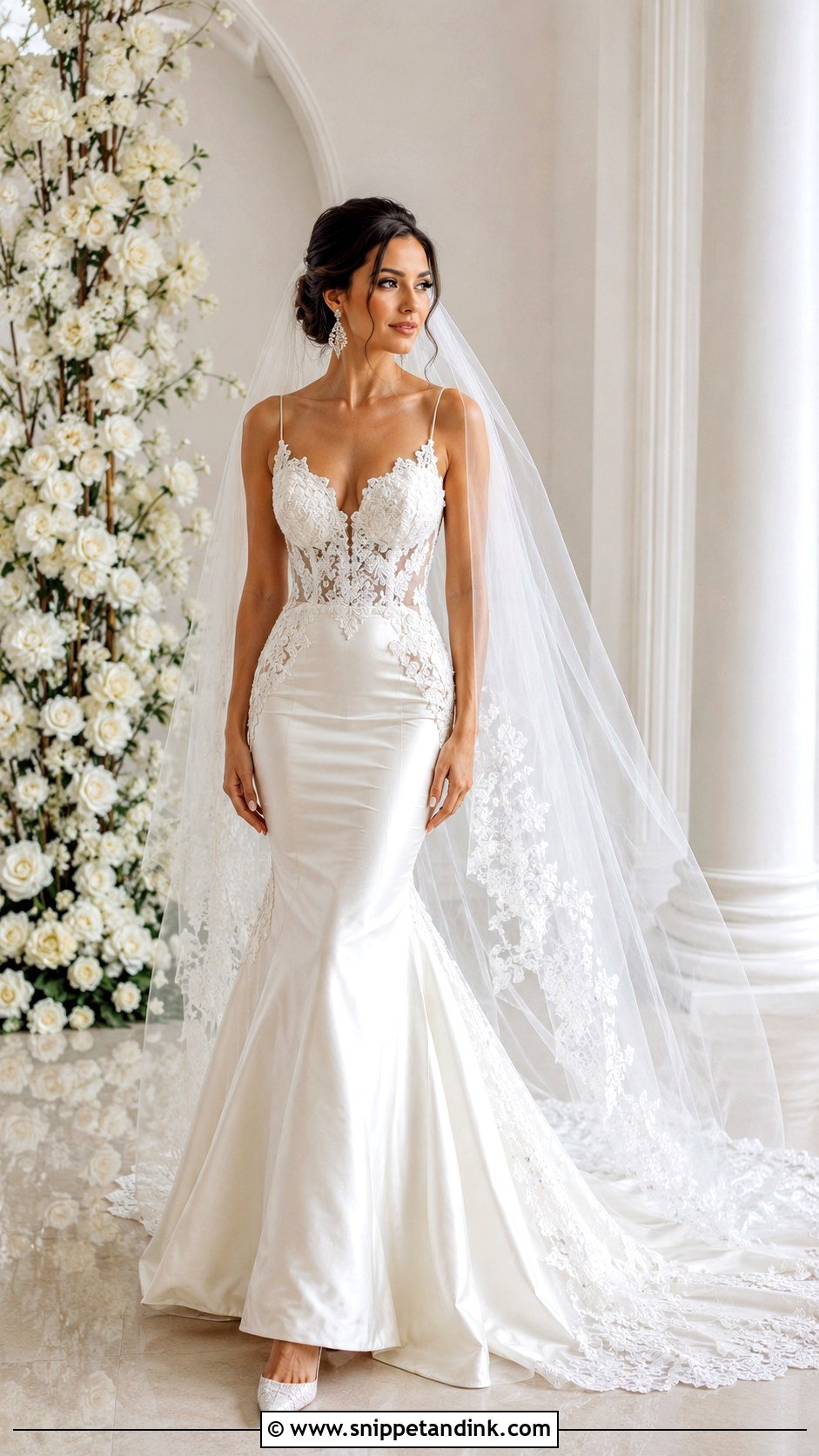
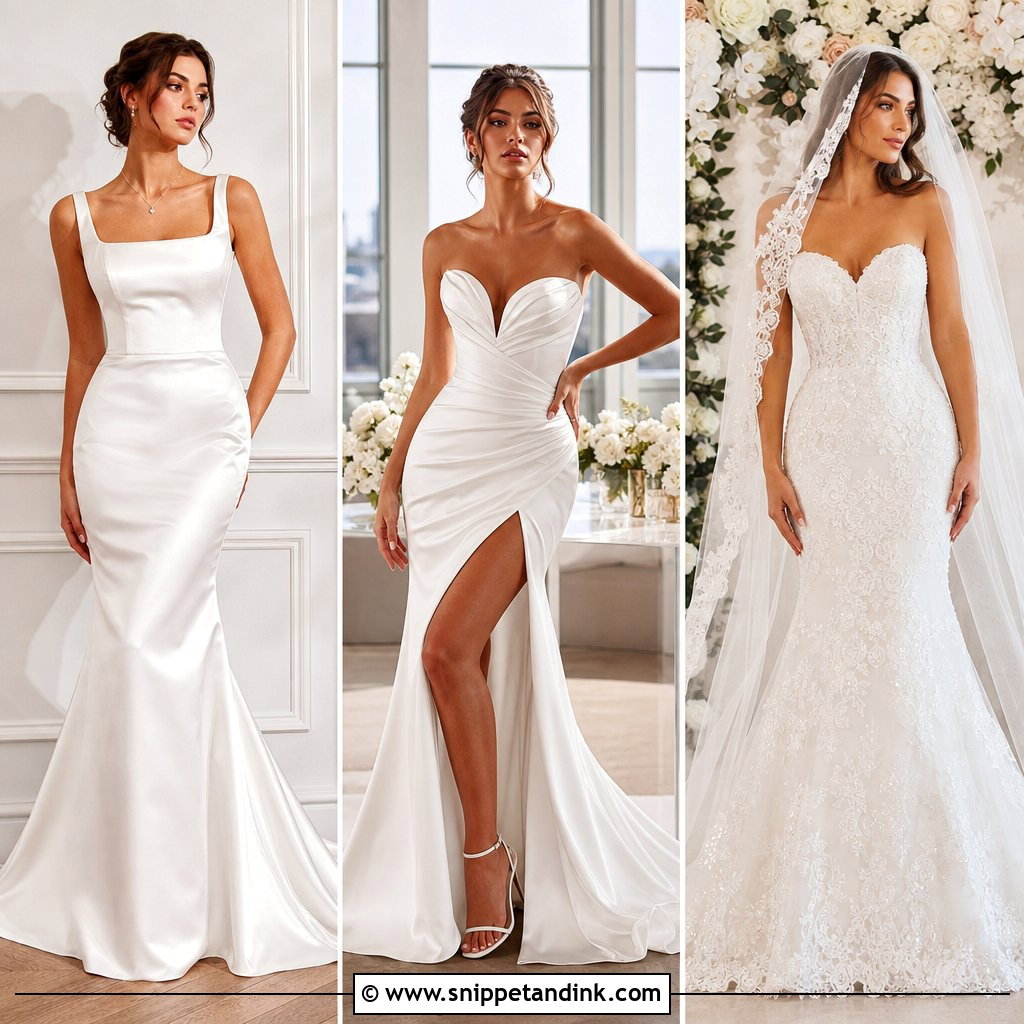
Mermaid gowns live or die on tailoring. The shape hugs the waist and thighs before flaring near the knee, so a flare point set a little too high or low changes how you walk. Satin smooths the body; lace along the bodice, hips or train softens it. Stretch satin or hidden structure matters if you’ll wear it all day, and I make every bride do a stair test and a chair test at the second fitting. Pointed heels, a long veil and statement earrings finish it, and a detachable lace overskirt adds ceremony drama that comes off for the party.
4. Satin And Lace Fit And Flare Wedding Dress
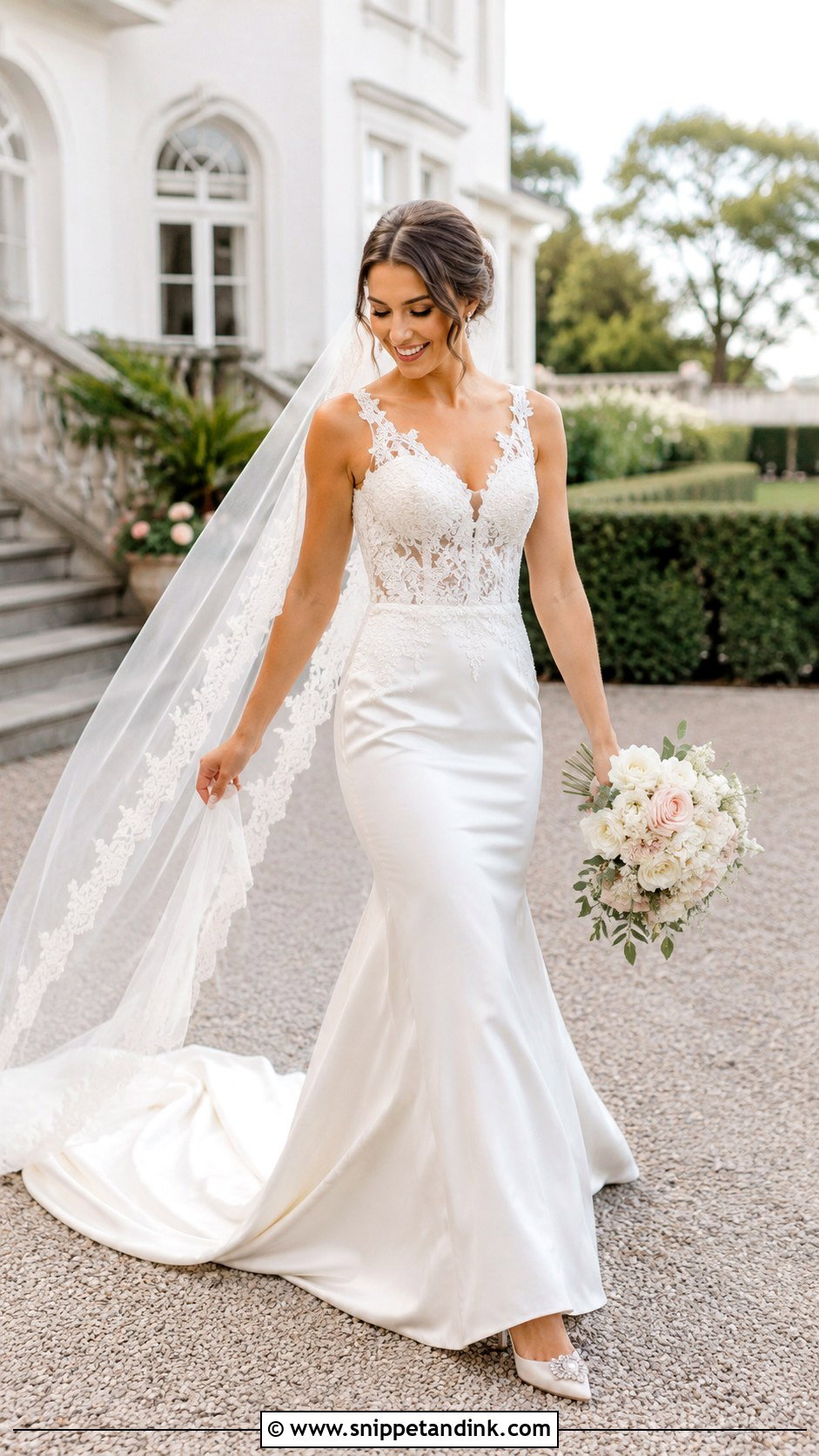
If a mermaid feels too restrictive at the fitting, this is the cut I pull next. It follows the waist and hips, then opens higher, below the thigh, so you can take a full stride and sit without hitching the skirt. A lace bodice over a satin skirt is the classic split. A narrow belt helps when the waist seam sits a touch low on you. Satin picks up light across the flare while the lace reads in close-ups, which is why this cut holds up in both wide shots and detail photos. Keep the rest calm: a lace-edged veil, soft waves, ivory heels and a greenery bouquet.
5. Satin And Lace Sheath Wedding Dress
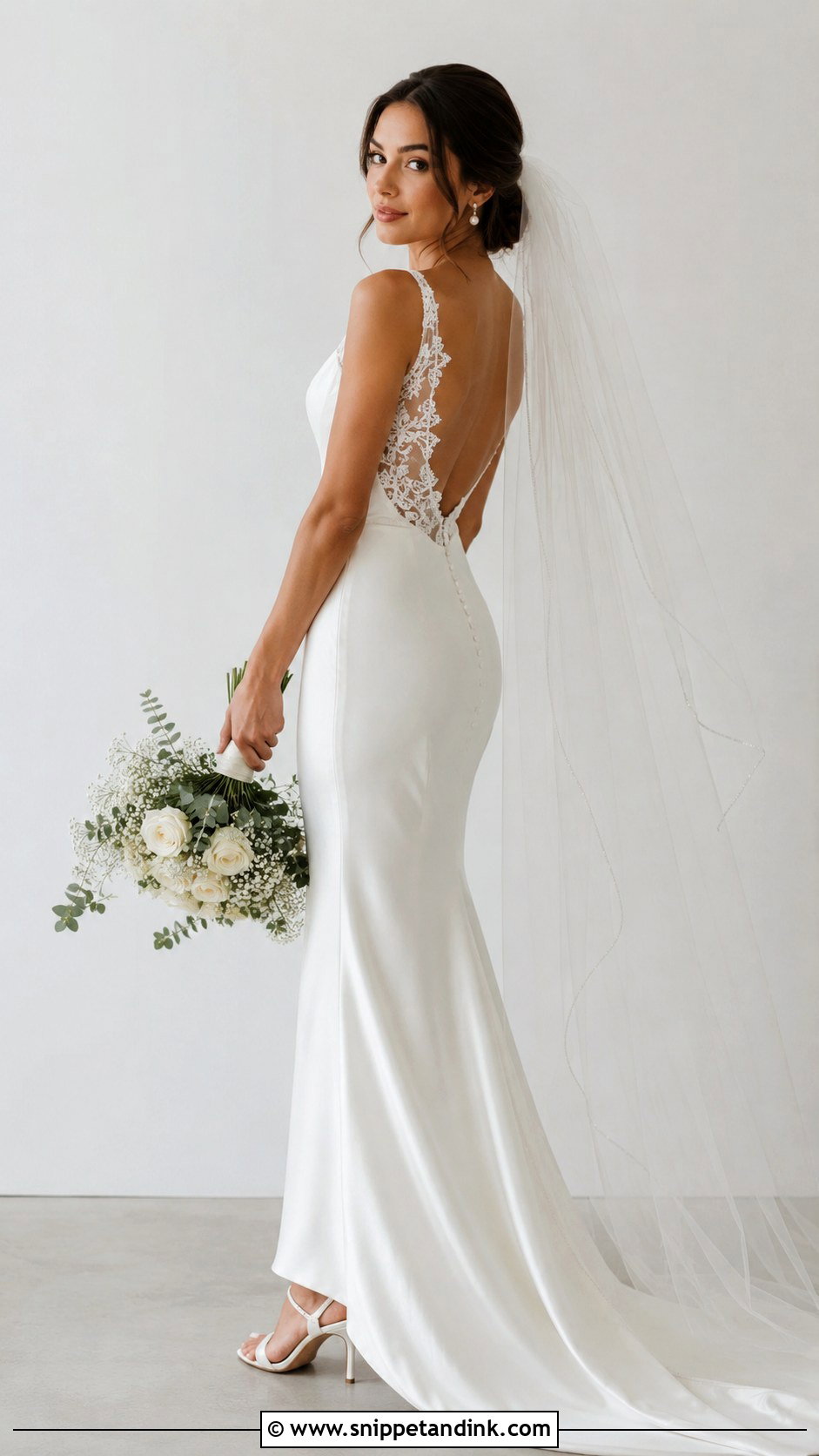
I love a sheath, but it’s the least forgiving gown on this list. With no flare or volume, satin shows every line underneath, so the lining and your underwear matter more than the lace. Lace straps, side panels or a lace back add enough detail to keep it bridal. It suits intimate weddings and destination ceremonies where you want to move freely. Keep the styling spare: strappy ivory heels, a sheer lace veil, pearl earrings. For more coverage, look at long lace sleeves or an illusion neckline rather than adding a jacket over it.
6. Satin And Lace Slip Wedding Dress
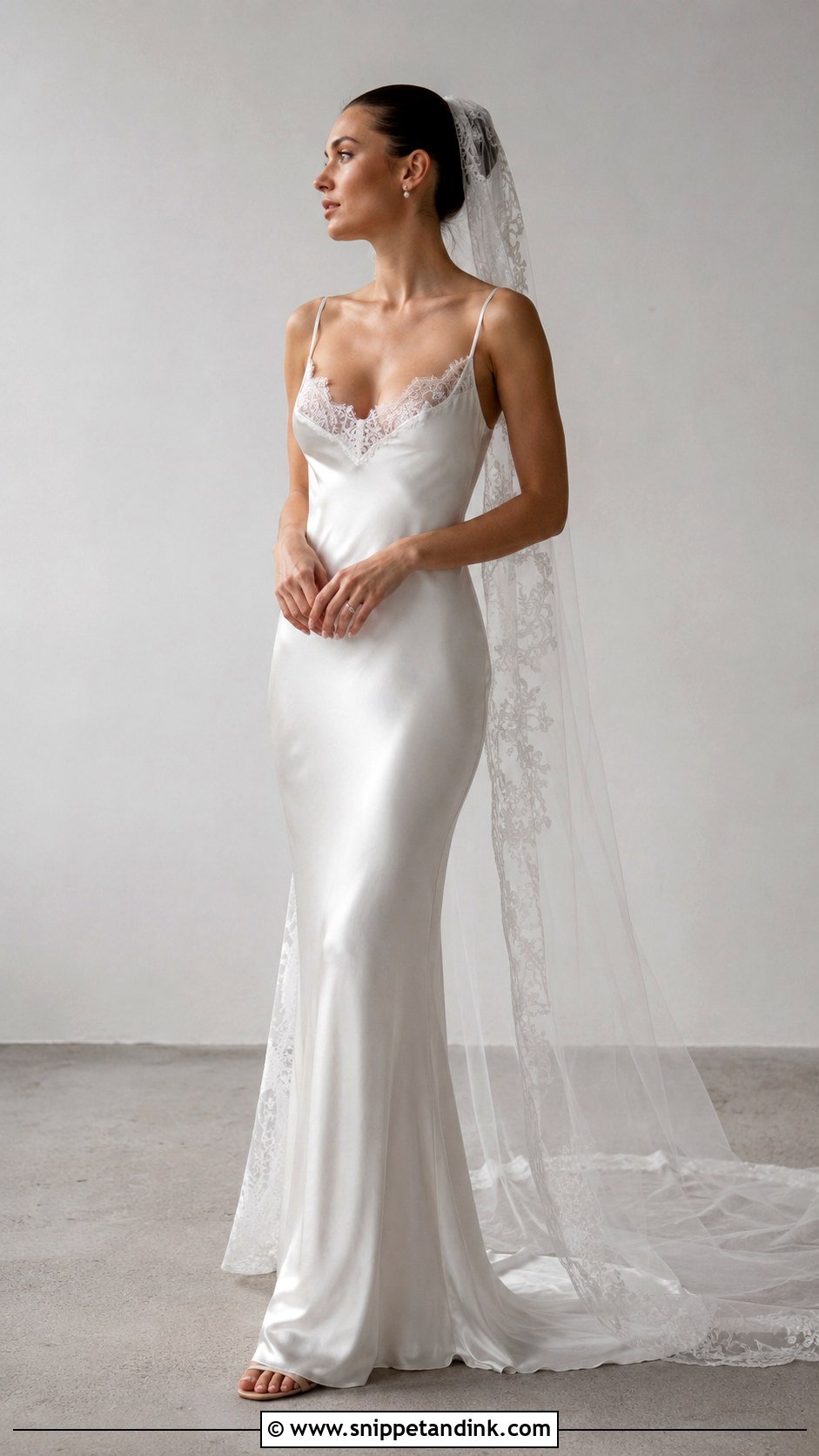
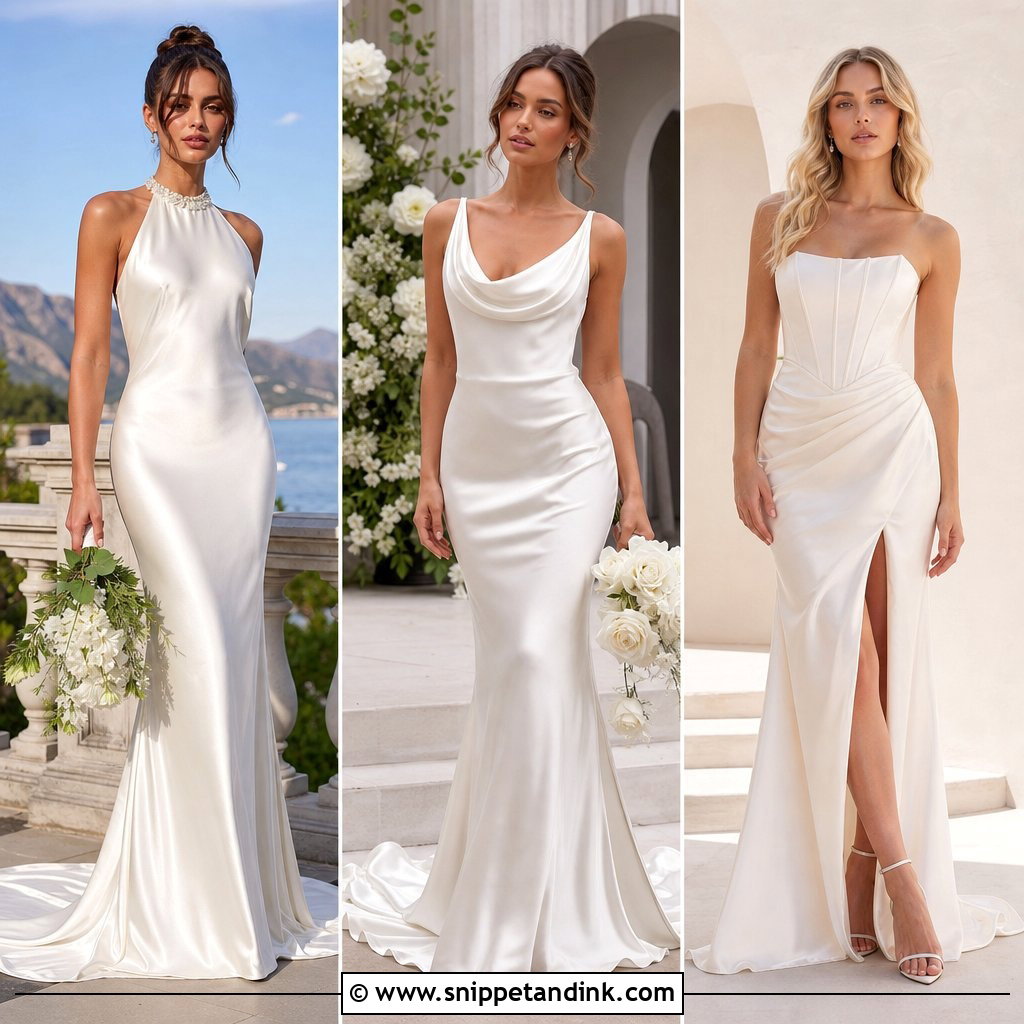
A slip dress is usually cut on the bias, which is what lets satin skim the body instead of hanging straight. That same cut shows everything, and lightweight charmeuse will show a creased lap after the first sit-down dinner. Lace trim at the neckline, straps or hem keeps it from reading like nightwear. The fit should be close but never tight; if the fabric pulls across the hips in the sample, size up and take it in. Barely-there heels, a long lace veil and a smooth updo suit it, and for cooler weather a lace capelet or sheer jacket adds warmth without hiding the line.
7. Satin And Lace Corset Wedding Dress
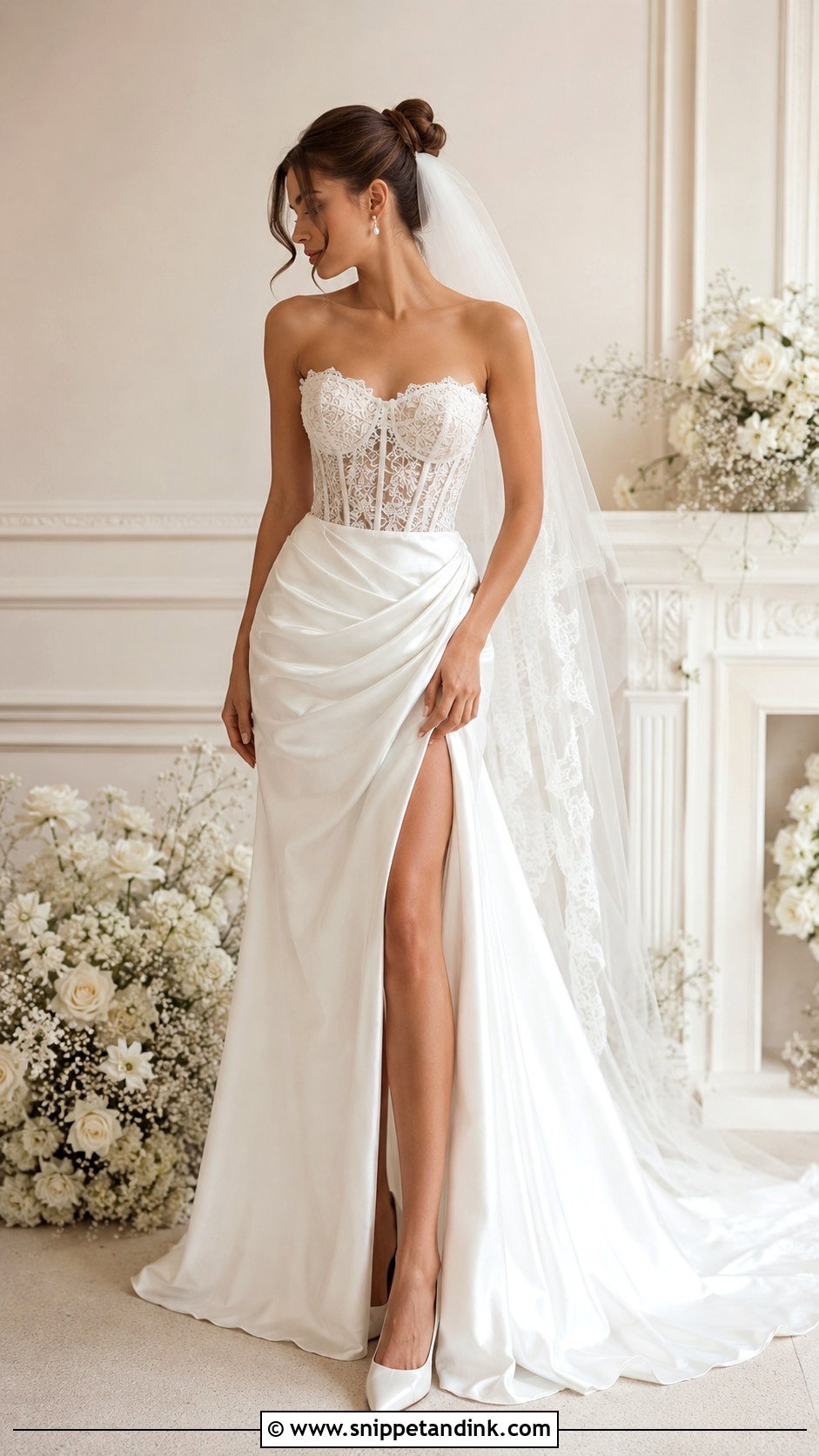
A corset bodice gives the most support of anything here, which is why brides who distrust strapless gowns often end up in one. It can carry lace applique, exposed boning or illusion panels, while a satin skirt keeps everything below the waist smooth. The thing I check is boning length: if it digs into your hip when you sit, it needs shortening at a fitting, not on the morning. Match the veil to the lace rather than the satin, since ivory lace and ivory satin are rarely the same shade. With bold lace on the corset, I’d skip a necklace entirely.
8. Satin And Lace Strapless Wedding Dress
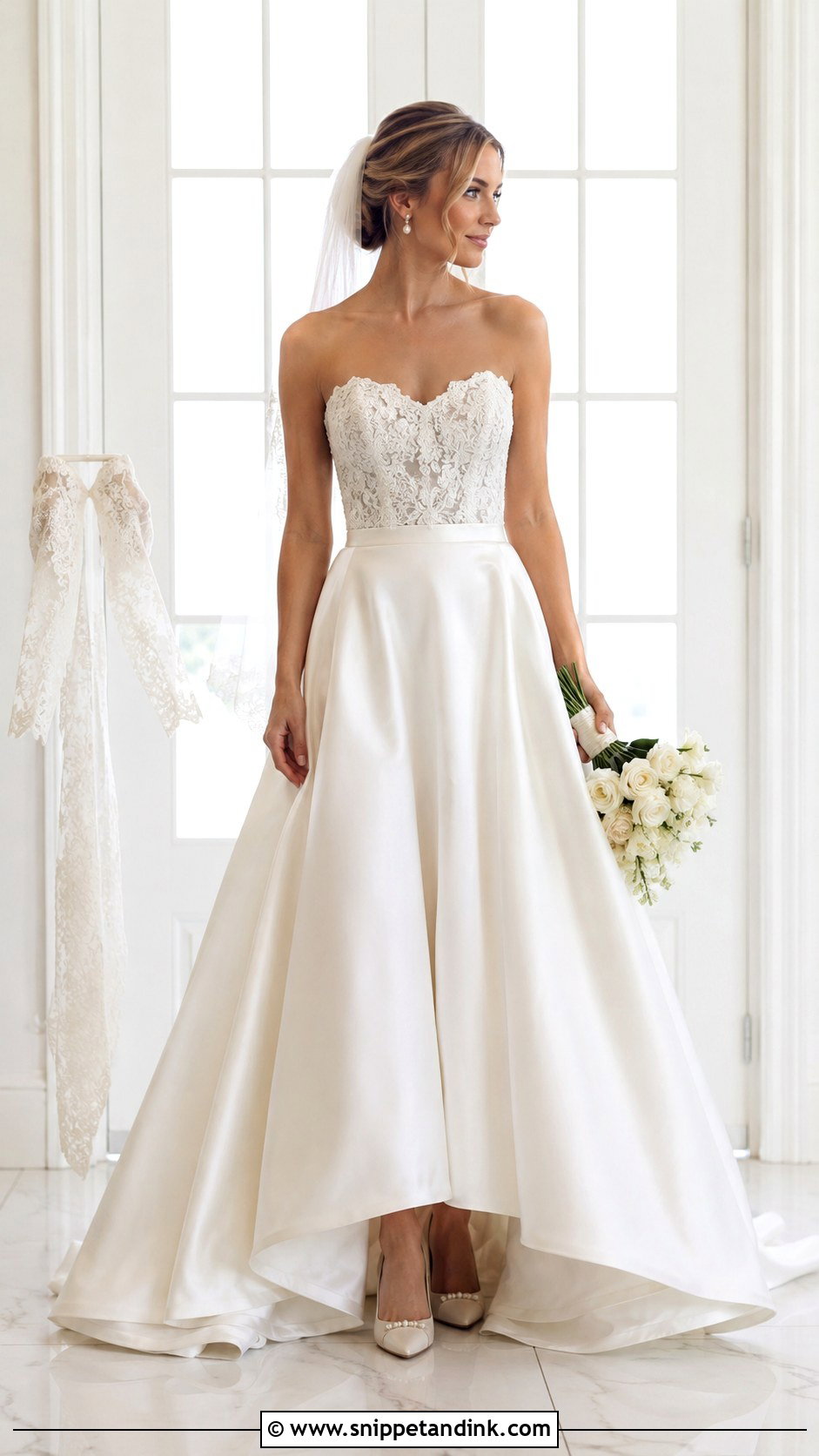
Strapless changes more with accessories than any other neckline, which is why I suggest it to anyone who likes having options. Lace on the bodice or train softens the clean satin lines. Fit has to come from the bodice itself. If you’re hitching it up during the try-on, it needs tightening at the side seams or a grip strip inside the top edge. A short blusher and a cathedral veil both sit well with it. If your ceremony needs covered shoulders, detachable lace sleeves or a lace bolero handle that and come off for the reception without making the dress look unfinished.
9. Satin And Lace Off Shoulder Wedding Dress
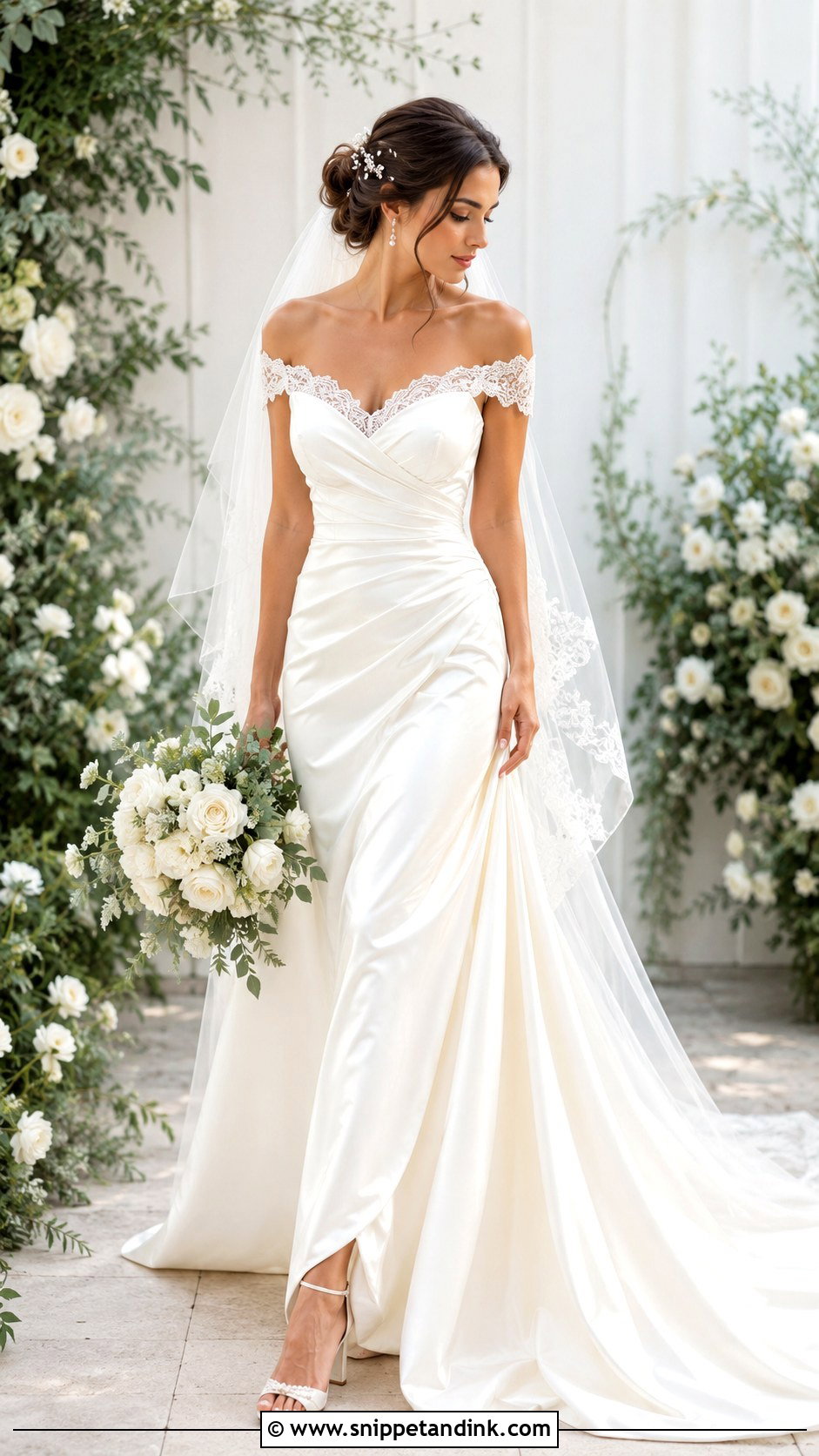
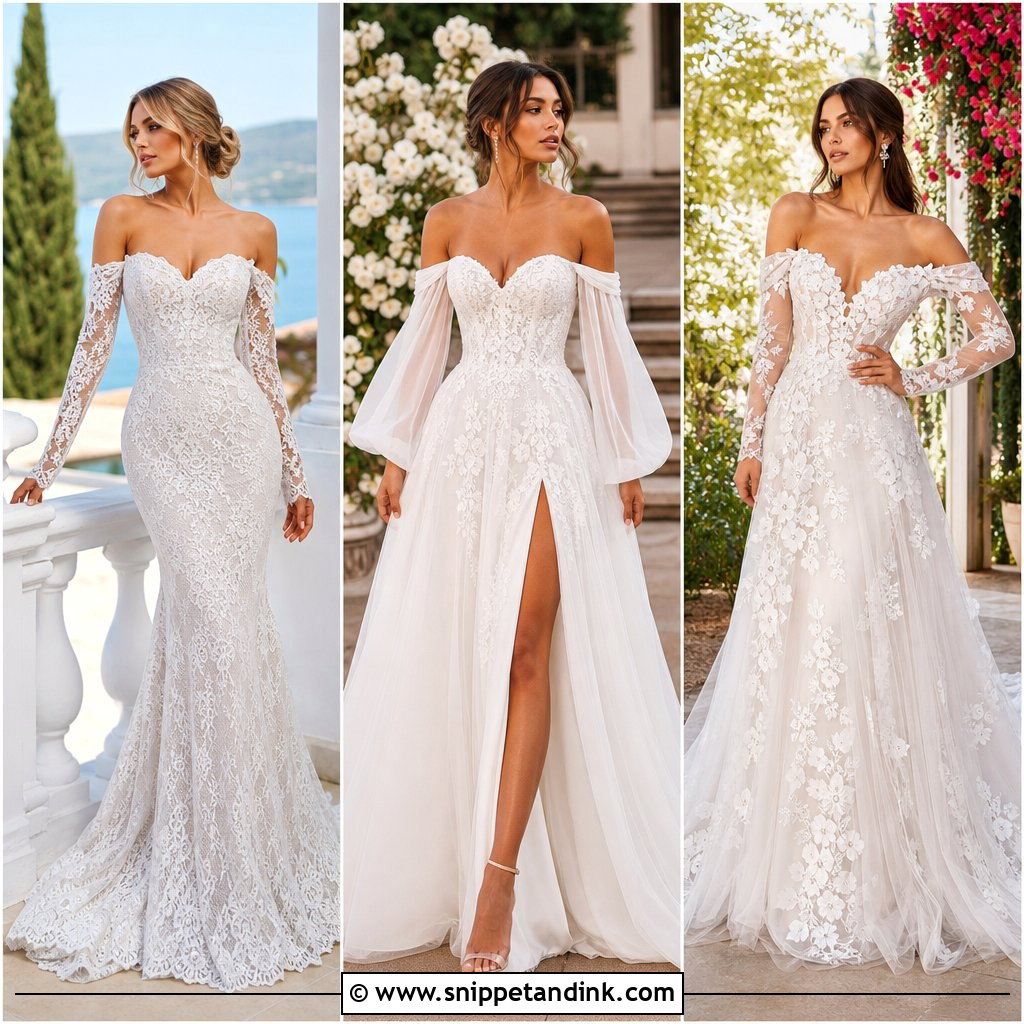
Off-shoulder gowns frame the collarbone, but the lace band across the arms limits how high you can lift them. I have every bride raise her arms as if hugging someone tall during the fitting; if the band rides up, it’s too tight or sitting too high. Satin through the bodice and skirt keeps the rest polished, and a lace train or covered satin buttons give the back something to show. A low chignon with pearl pins follows the line. With detailed lace at the neckline, skip the necklace and put the budget into earrings.
10. Satin And Lace Long Sleeve Wedding Dress
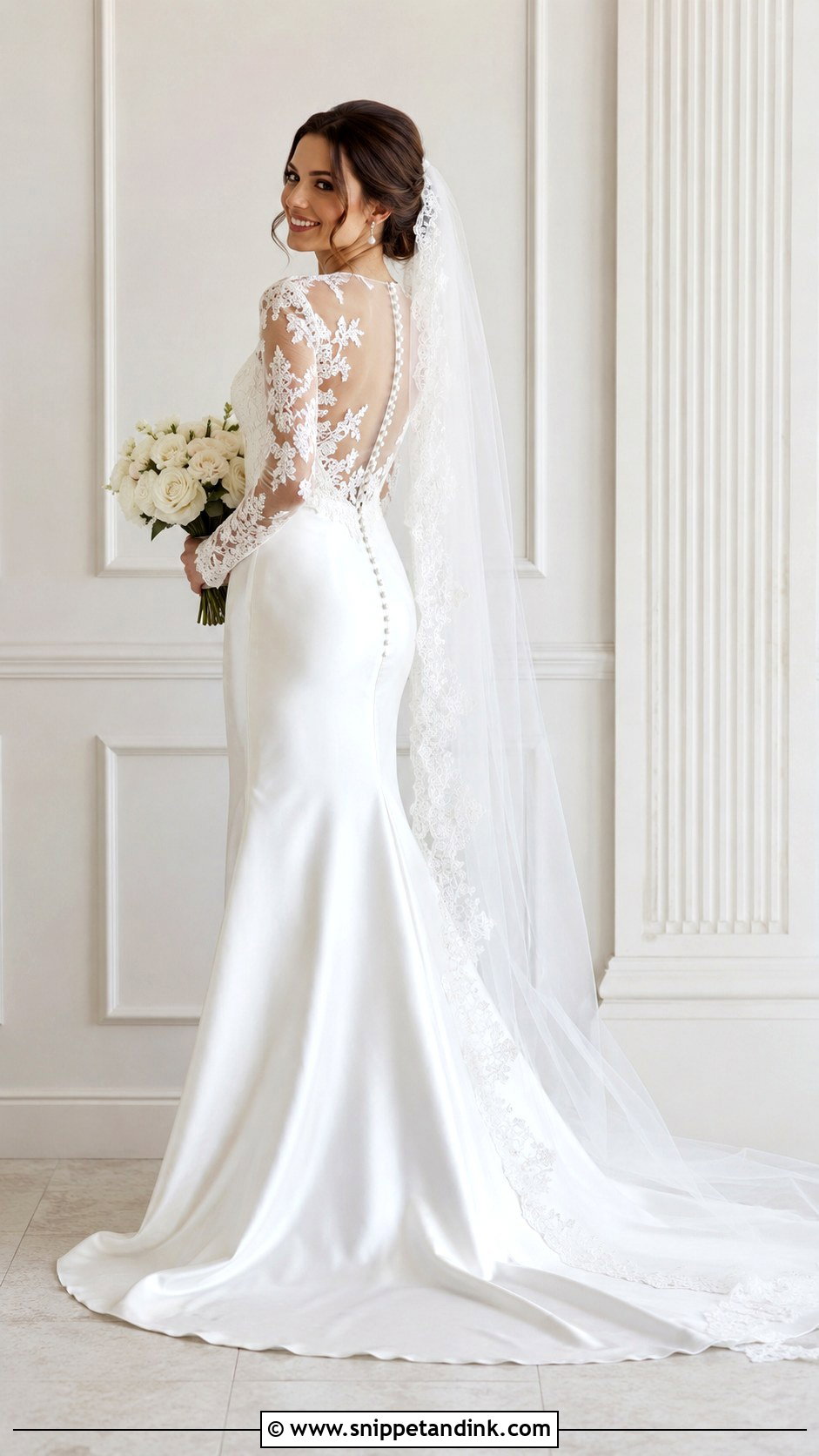
Long lace sleeves are the most comfortable part of a gown when the lace has some stretch, and the least comfortable when it doesn’t. Rigid corded lace at the inner elbow will be rubbing by the time you cut the cake. The satin base carries the structure, so the sleeves can stay sheer and light, which is why this cut works in summer as well as winter. Covered buttons, a smooth satin skirt and a lace-edged veil hold it together. Closed-toe satin heels and small earrings are enough; ornate sleeves call for a plain bouquet.
11. Satin And Lace High Neck Wedding Dress
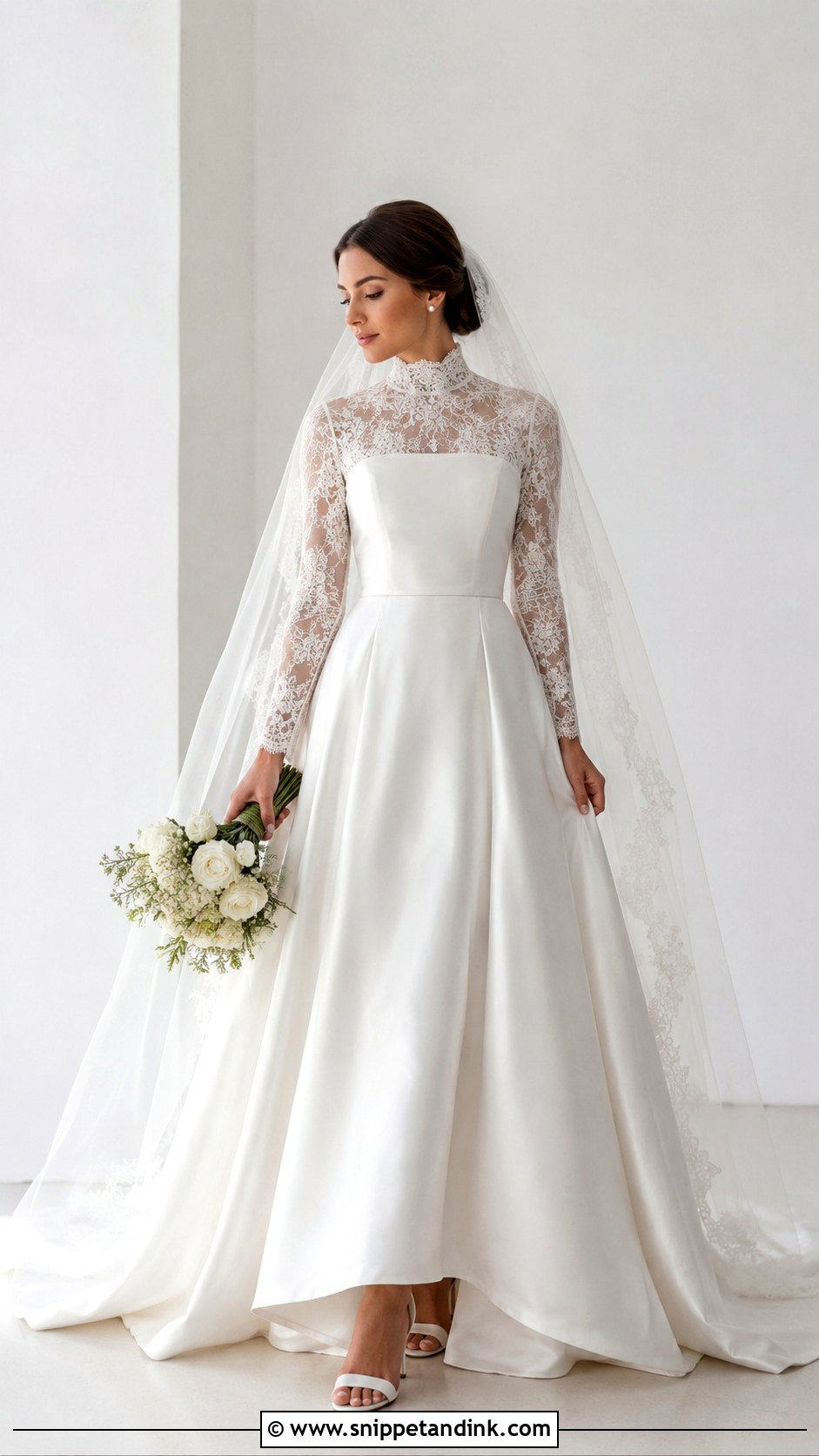
A high lace neck looks regal, but with the hair down it crowds the face. I almost always pair it with an updo so the neckline and the earrings each get their own space. The neck itself might be sheer lace, floral applique or embroidery on illusion tulle. Illusion tulle has a tint, so match it to your skin in daylight, never under shop bulbs. Satin through the bodice and skirt keeps all that detail from overwhelming the gown, and covered buttons down the back give it a vintage note.
12. Satin And Lace V Neck Wedding Dress
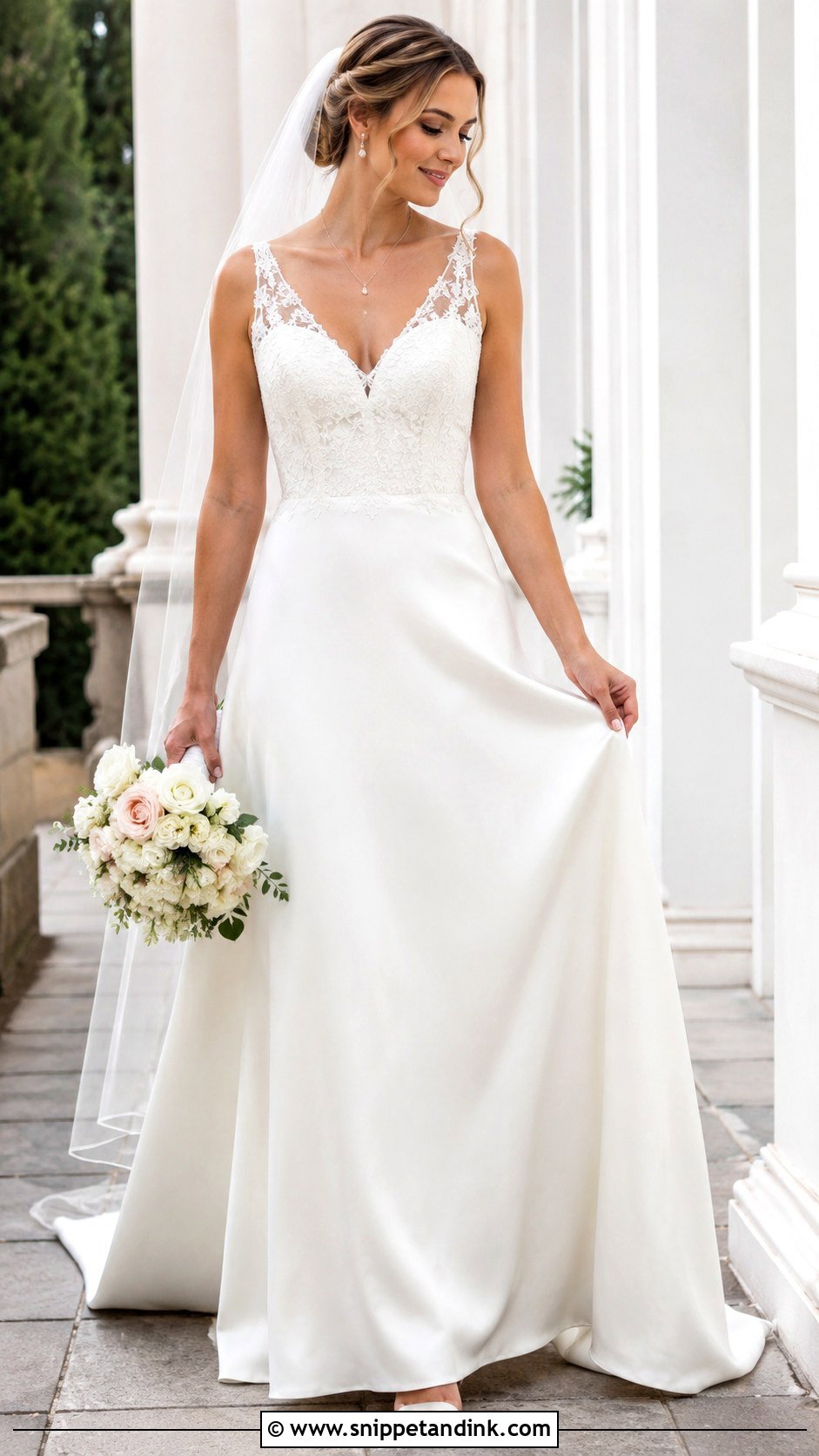
The V lengthens the neck and torso, and its depth is something you can set with your seamstress rather than accept off the rail. A deeper V needs illusion mesh or a lining that grips to stay put when you bend; I check by having brides lean forward as if signing the register. Lace on the bodice or straps adds texture while satin keeps the skirt sleek, on an A-line, sheath or fit-and-flare cut. A fine pendant, small drops and ivory heels suit it. If the back has lace too, choose a plain veil so the design stays visible.
13. Satin And Lace Square Neck Wedding Dress
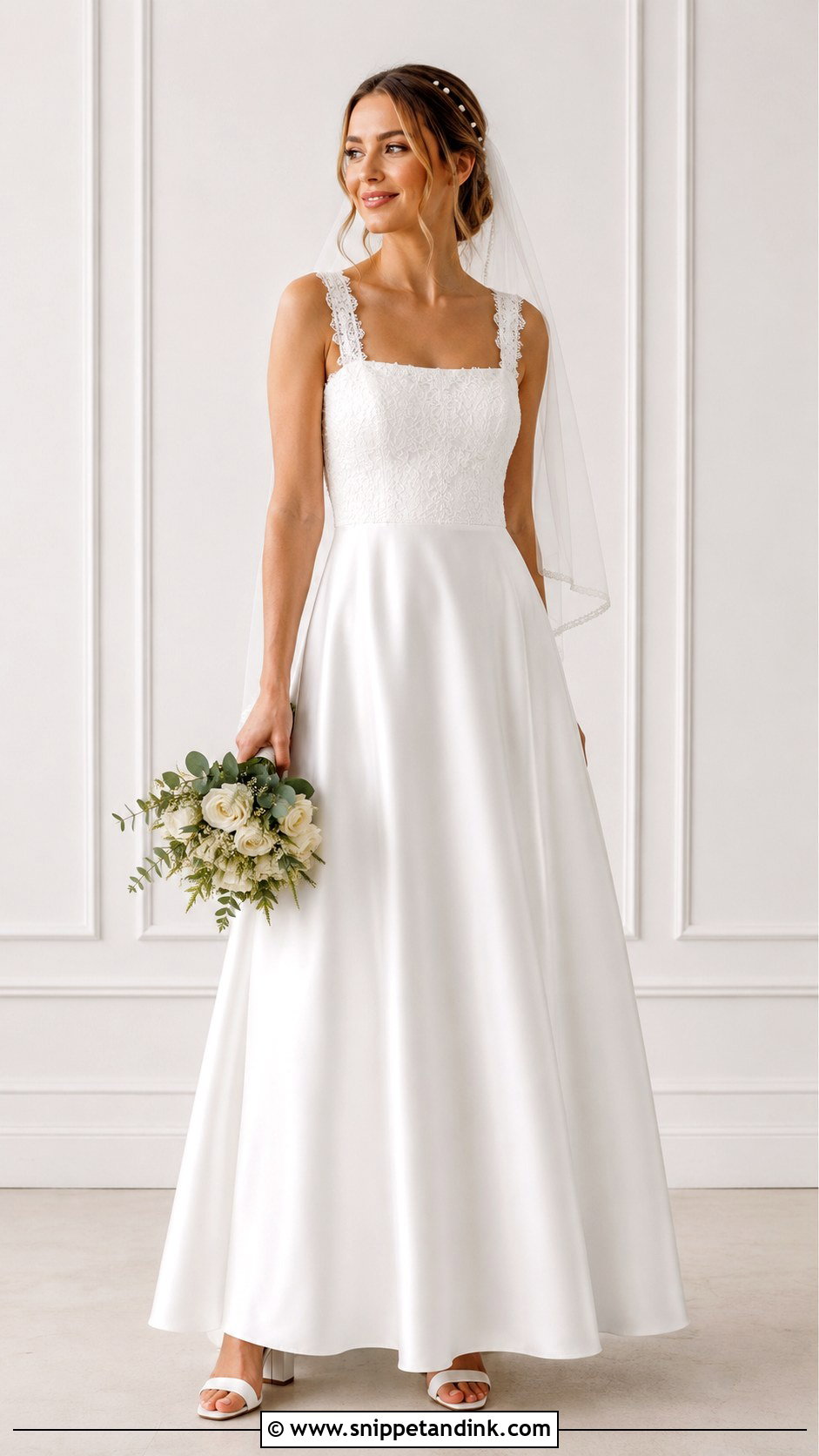
A square neckline gives the upper body straight, architectural lines and frames the collarbone with a slightly vintage feel. Lace straps or a lace bodice soften the corners, and a satin skirt moves underneath. Those corners need to lie flat. If they gape when you breathe in, the neckline is cut a little wide for you and should be taken in at the strap. A medium-length veil, pearl hair pins, block heels and a compact bouquet work indoors or out, and lace that carries round onto the back gives guests something to look at during the vows.
14. Satin And Lace Sweetheart Wedding Dress
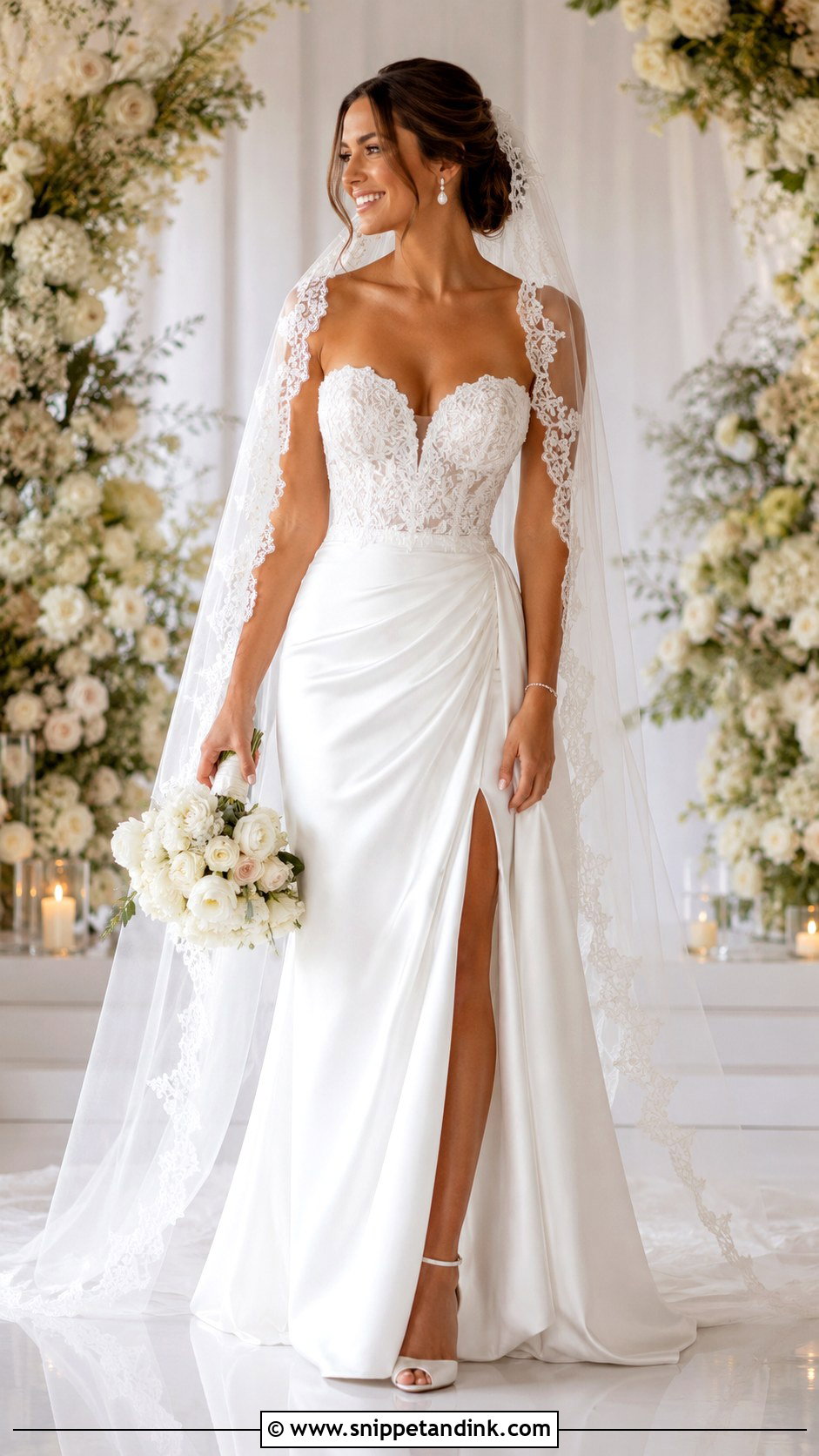
The curved top edge of a sweetheart shapes the bust, and it’s one of the necklines requested most often at bridal appointments. Lace applique, corset detailing or fine straps all sit well on it. Support is where I’d focus your attention. Built-in cups and boning mean you won’t be adjusting the bodice between photos. The satin skirt can be a ball gown, A-line or fit-and-flare. A lace veil, pearl earrings, satin heels and one bracelet are plenty, since the neckline already supplies the romance.
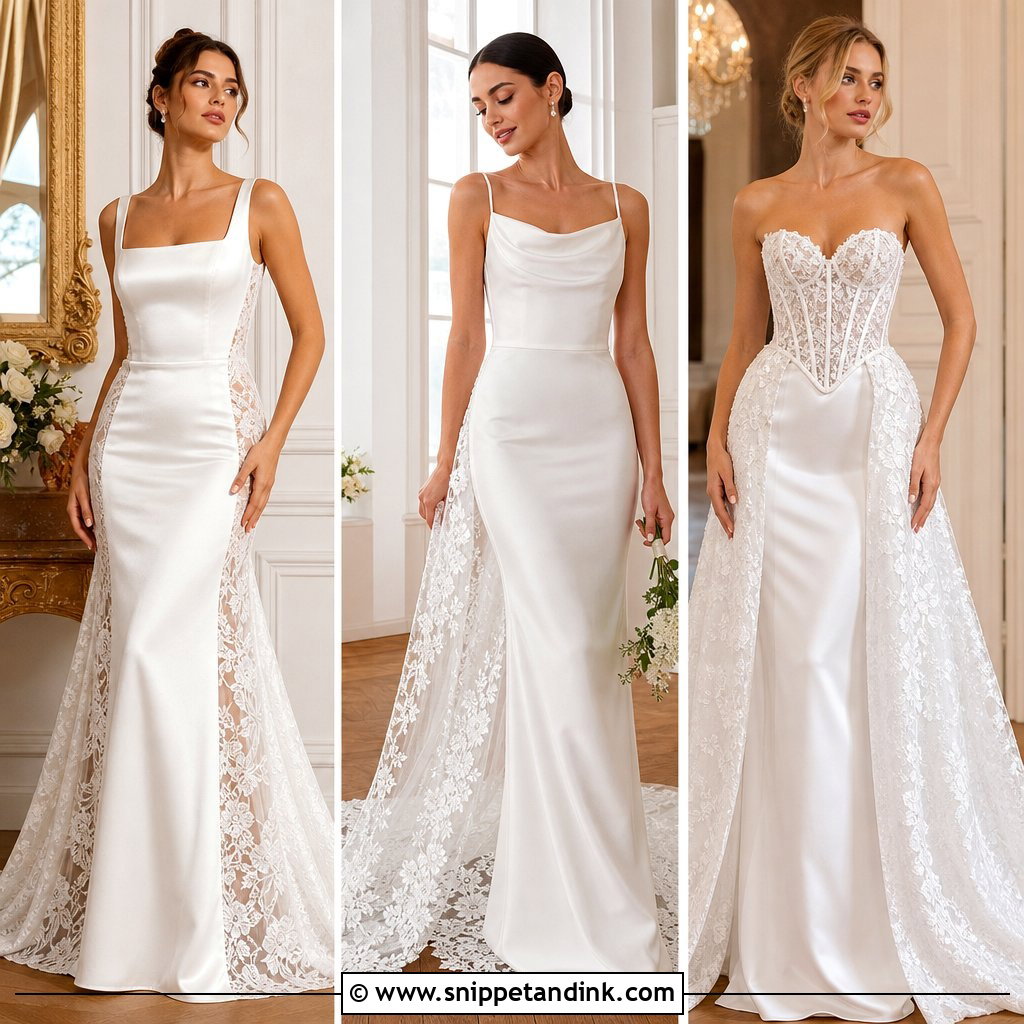

15. Satin And Lace Basque Waist Wedding Dress
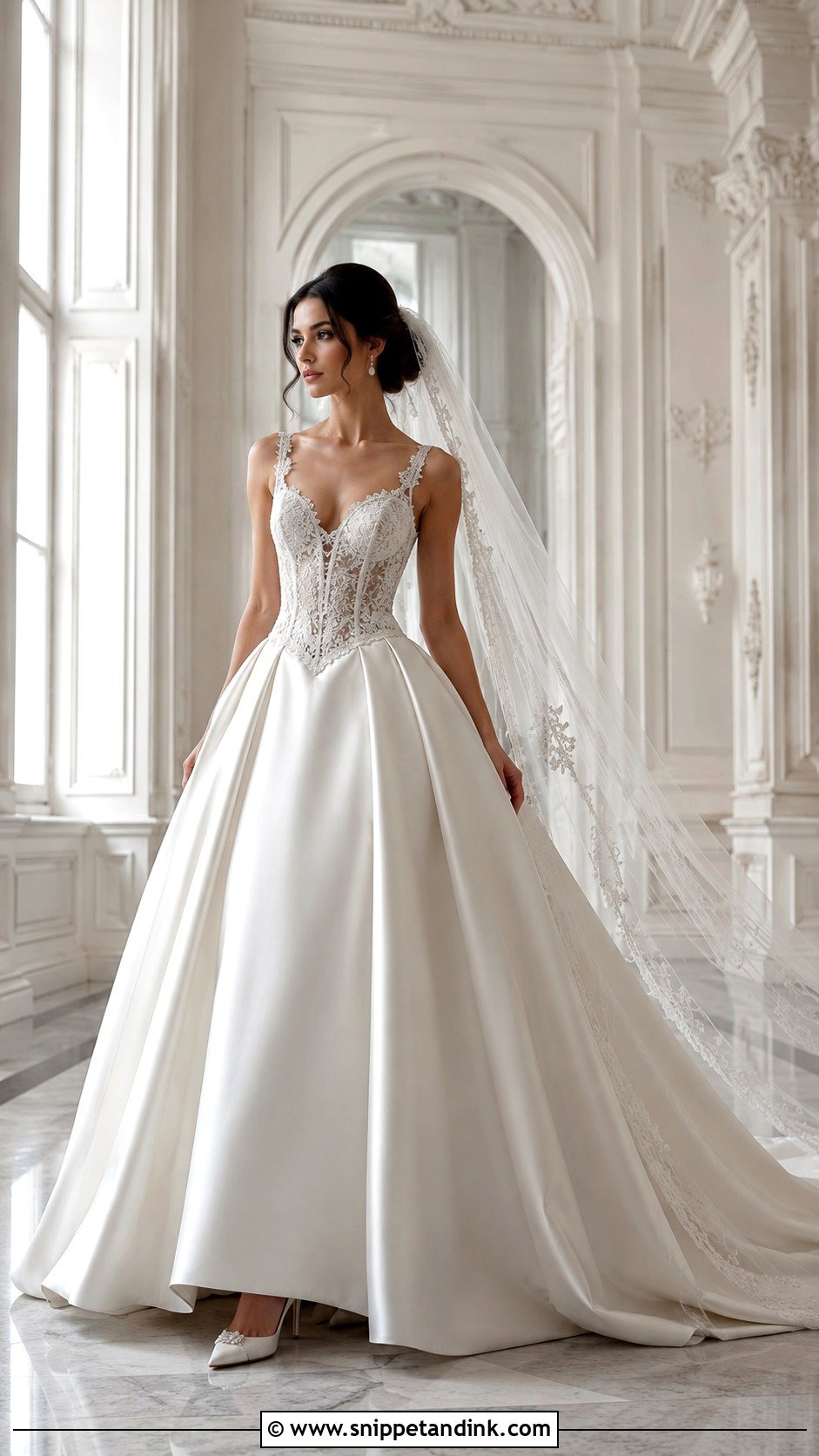
A basque waist dips into a V below the natural waistline, lengthening the torso and giving a full skirt that fairytale feeling. Lace on the bodice softens the shape; satin gives the skirt body. Because the point of the V is the focal line, I don’t put a belt on a basque gown unless it follows the dip exactly. One fit note: on a shorter torso the point can press into your thighs when seated, so sit down in it before agreeing to the length. It’s at its strongest with a full skirt and a cathedral veil.
16. Satin And Lace Drop Waist Wedding Dress
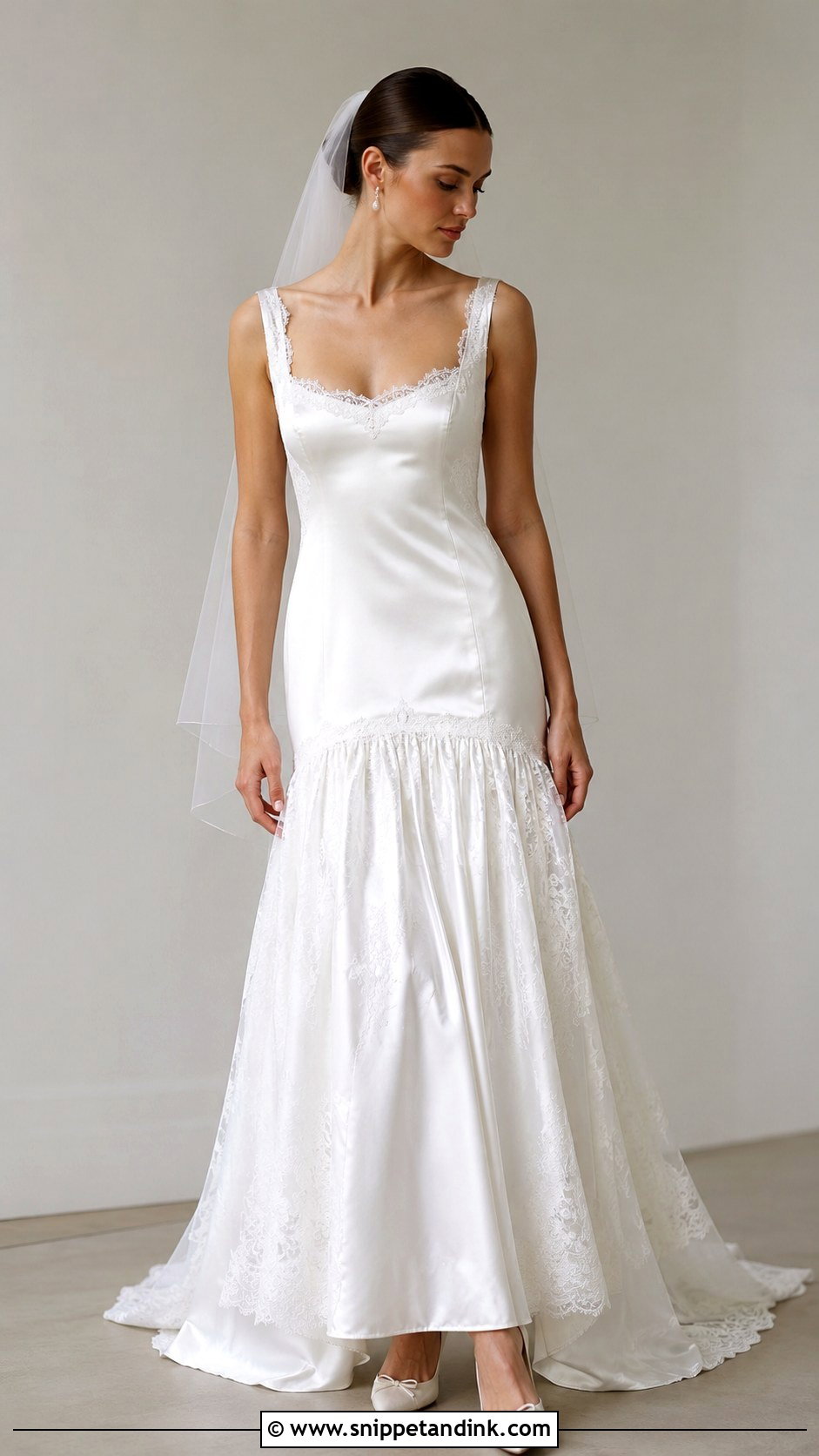
Here the bodice runs past the natural waist before the skirt begins, giving a long, smooth line with a faint twenties feel. Satin keeps that long bodice sleek, while lace can soften the bodice, straps or train. I’ll be honest: it isn’t for everyone. On a short torso with long legs, the lowered seam can make the legs look shorter, so try one on before you commit. Keep accessories deliberate, with slim heels, a simple veil and earrings that echo the lace pattern.
17. Satin And Lace Tea Length Wedding Dress
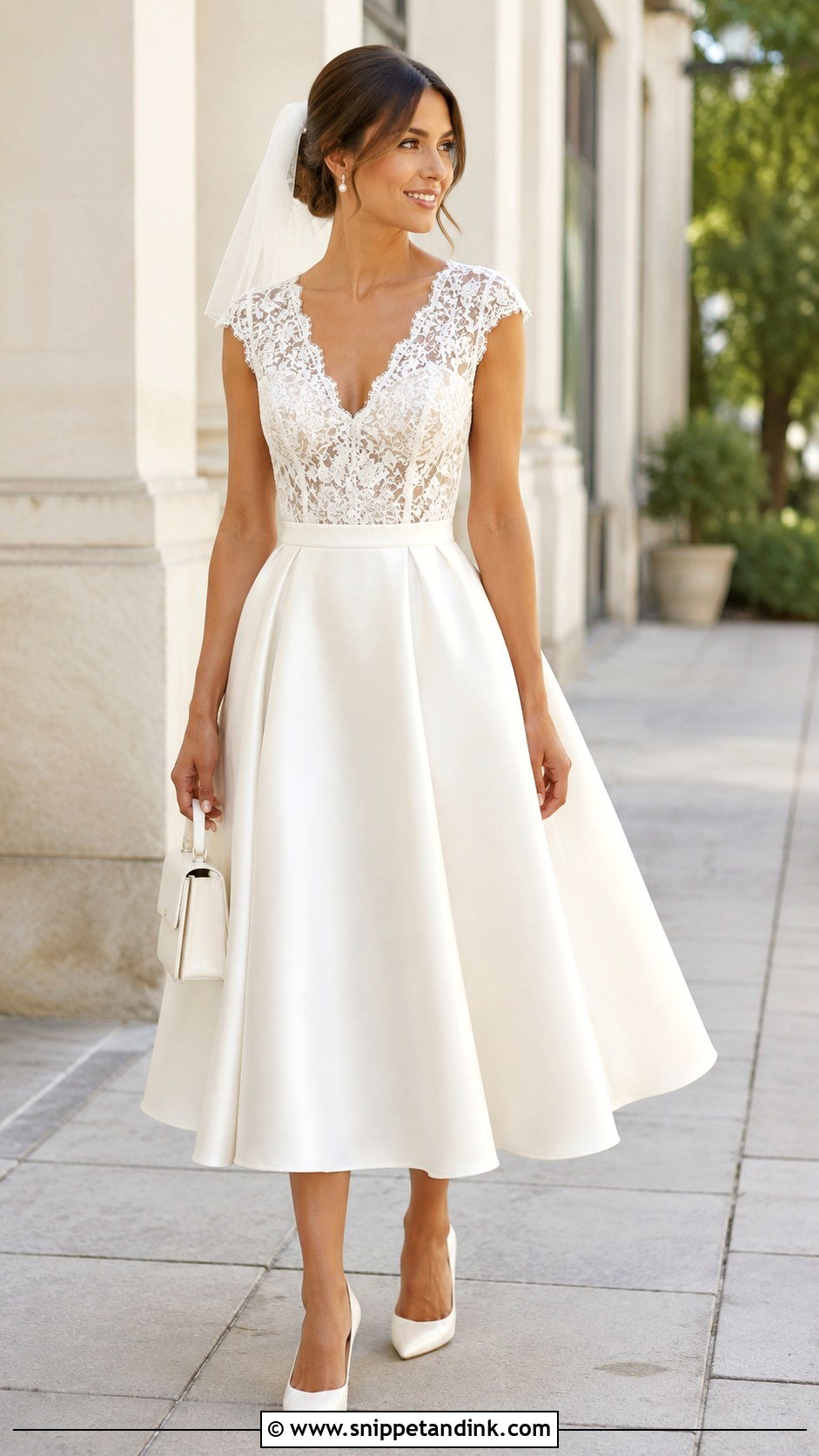
Tea length falls between knee and ankle, so walking, dancing and climbing town hall steps are easy. It suits courthouse weddings, garden ceremonies and reception changes. Satin gives the skirt body; lace on the bodice or sleeves keeps it bridal. The shoes become part of the outfit at this length, so treat them as seriously as the dress, whether that’s pointed pumps, ankle-strap heels or polished ballet flats. Have it hemmed with those exact shoes on. Pearl earrings, a short veil and a small structured bag finish it.
18. Satin And Lace Mini Wedding Dress
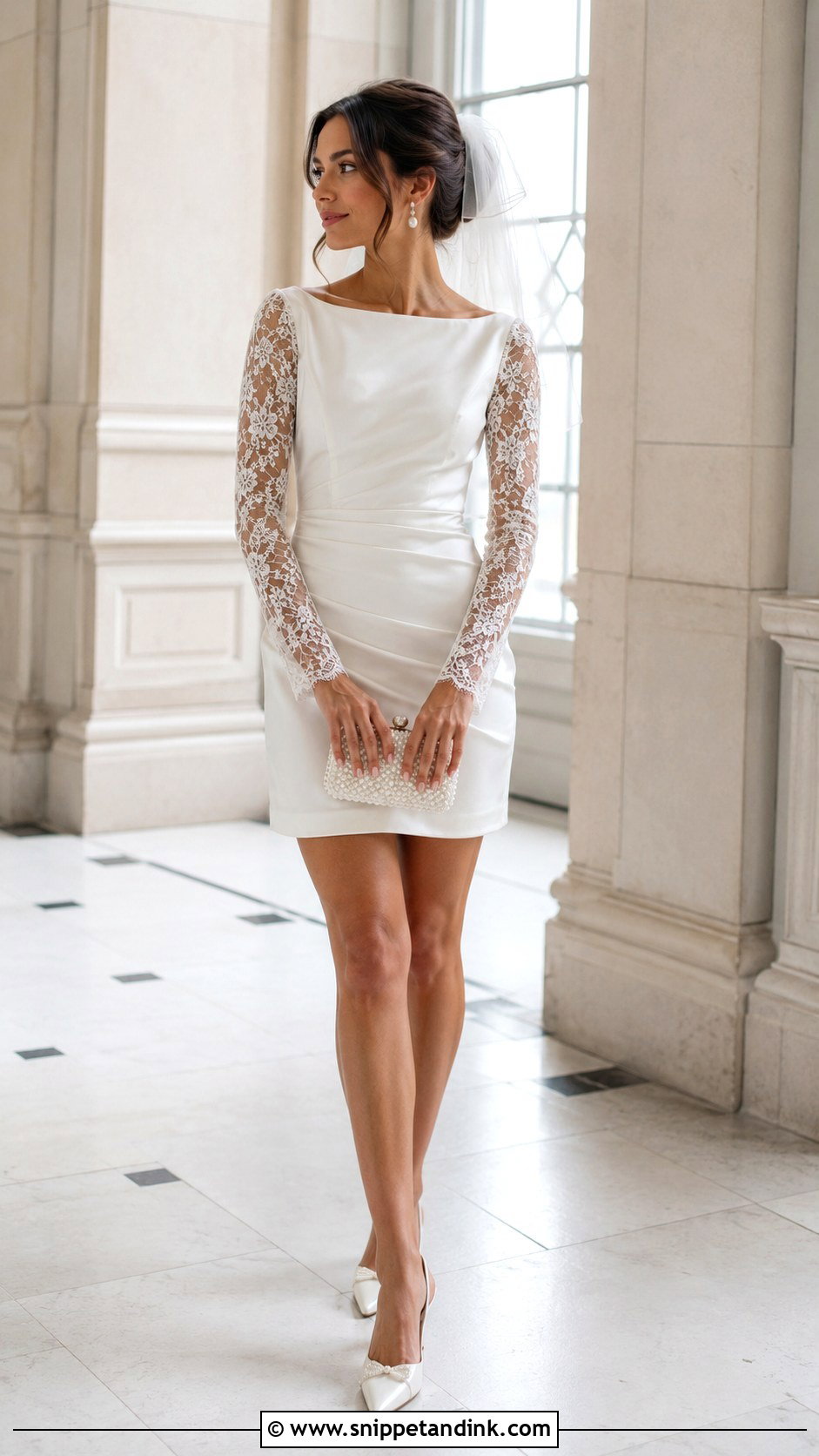
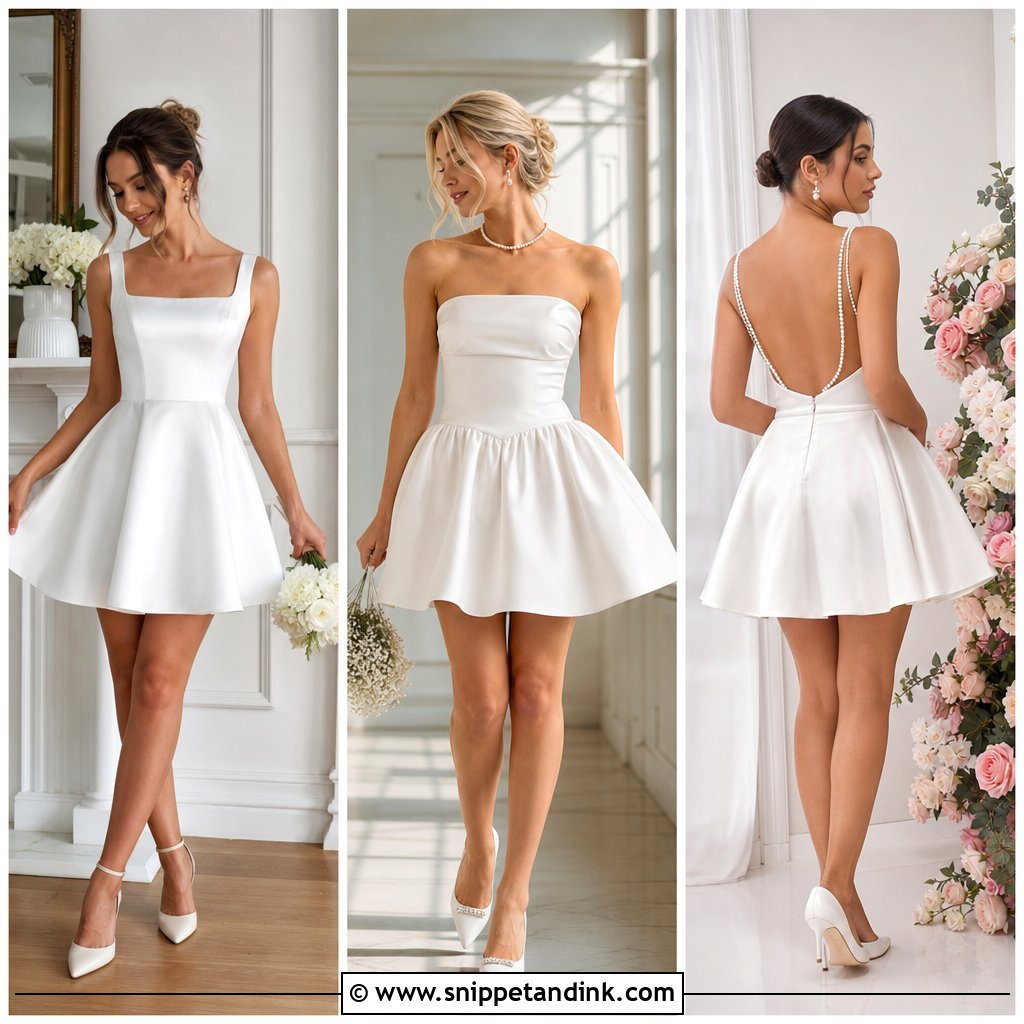
Short satin shows sitting creases more than any other length, because they land right across the top of the thighs. That’s why, for a mini, I steer brides toward a heavier satin or a satin-back crepe rather than a thin charmeuse. With lace sleeves, a lace overlay or lace trim at the neck, it’s my usual suggestion for civil ceremonies and as a reception change. Slingback heels, sheer gloves, pearl earrings and a short veil or bow keep it bridal. Long lace sleeves or a high neckline balance the short hem if you want more coverage. And you can genuinely dance in it.
19. Satin And Lace Wedding Dress With Detachable Sleeves
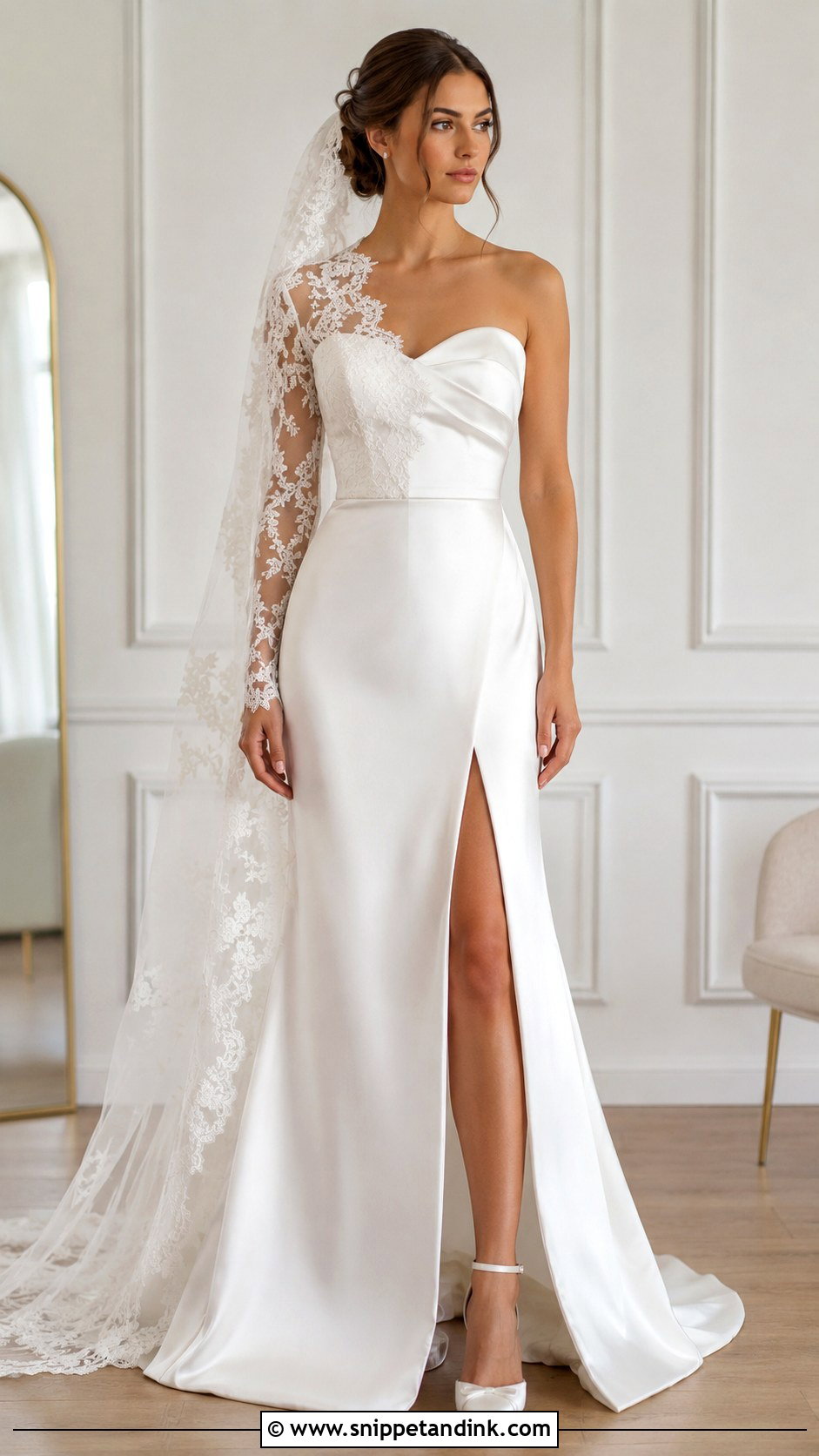
Detachable sleeves give you a covered ceremony look and a bare satin gown for the reception without buying a second dress. They can be fitted, puffed, off-shoulder or sheer. What I check first is how they attach. Snaps hidden under the lace are the most secure; ties look sweet but loosen through the evening. Practise taking them off and on at your last fitting, and decide who will help you do it on the day. A lace veil, satin heels and simple earrings go with the full look.


20. Satin And Lace Wedding Dress With Lace Train
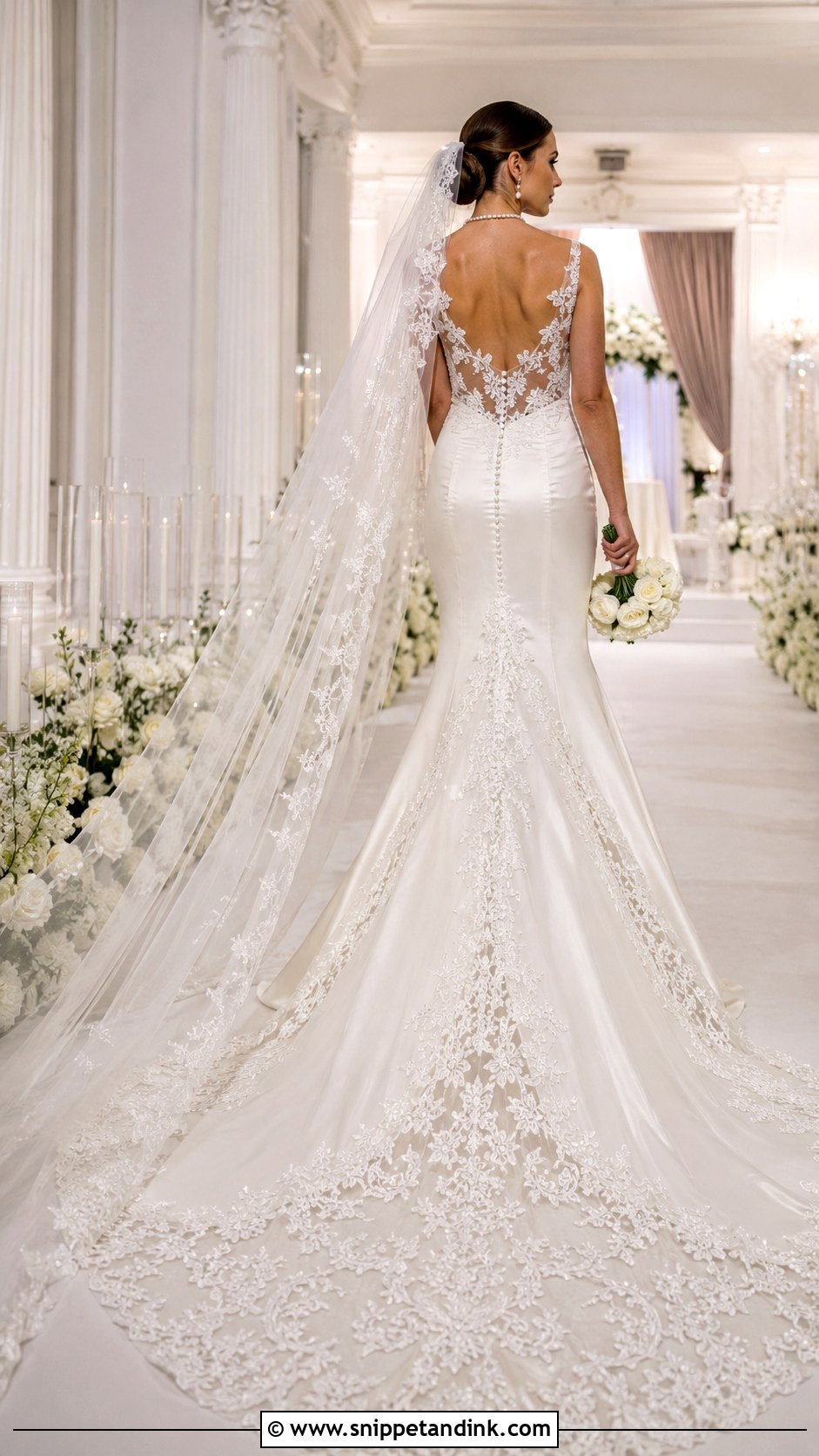
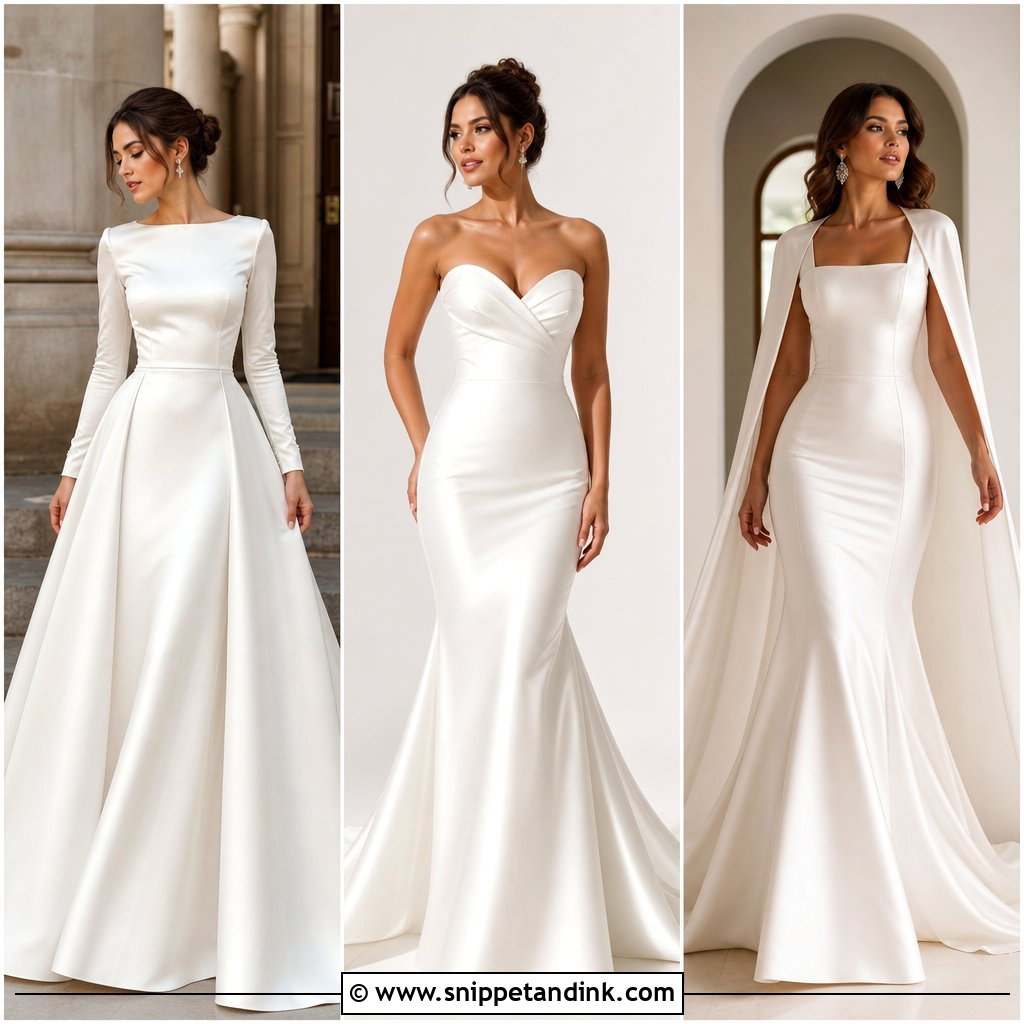
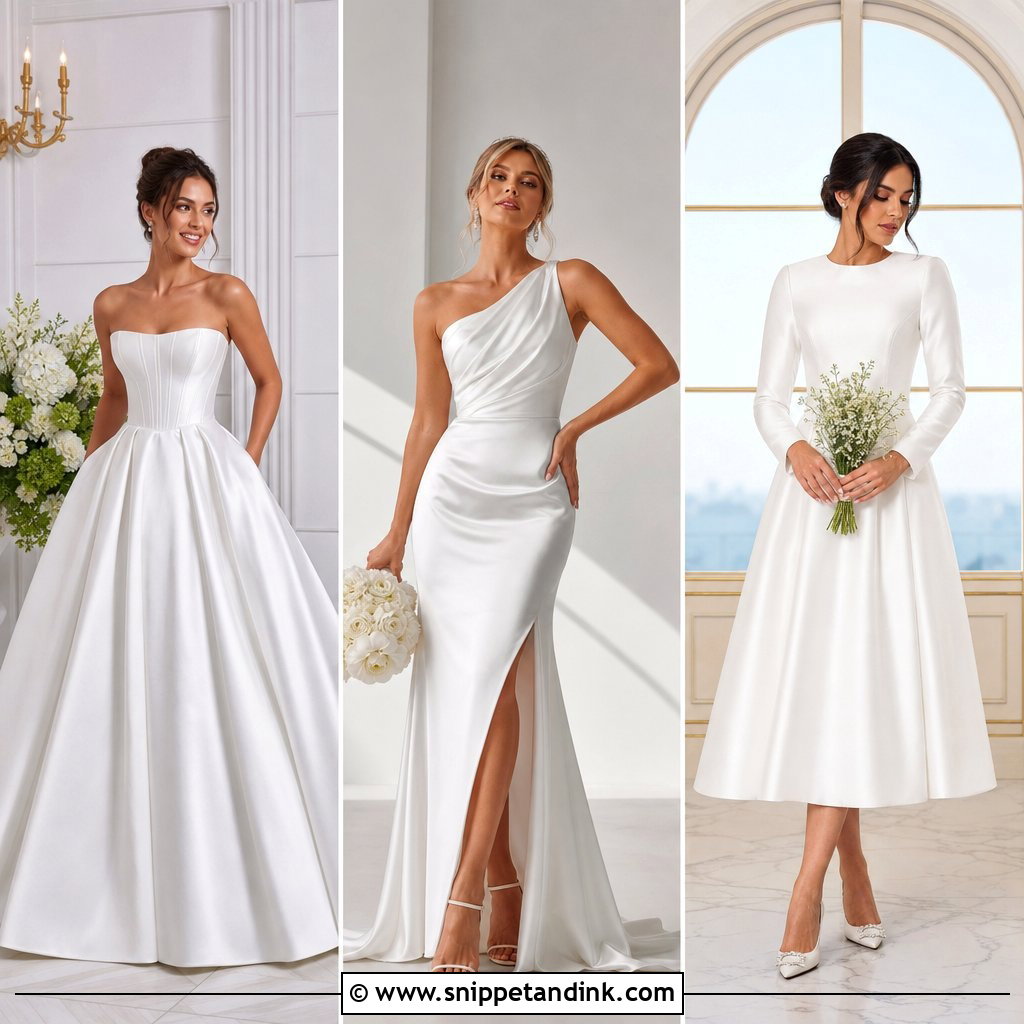
A lace train puts the drama behind you and leaves the front clean, so the satin body can stay plain. Look for lace appliqued into the satin with feathered edges rather than ending on a straight seam. Long lace trains need a bustle plan, too. Lace snags on heels and chair legs in a way satin doesn’t, so ask your seamstress to bustle it with hooks hidden behind the lace motifs. If you add a long veil, keep it plain tulle so the two don’t compete. Classic heels, pearl jewelry and a neat hairstyle complete it.
21. Satin And Lace Wedding Dress With Open Back
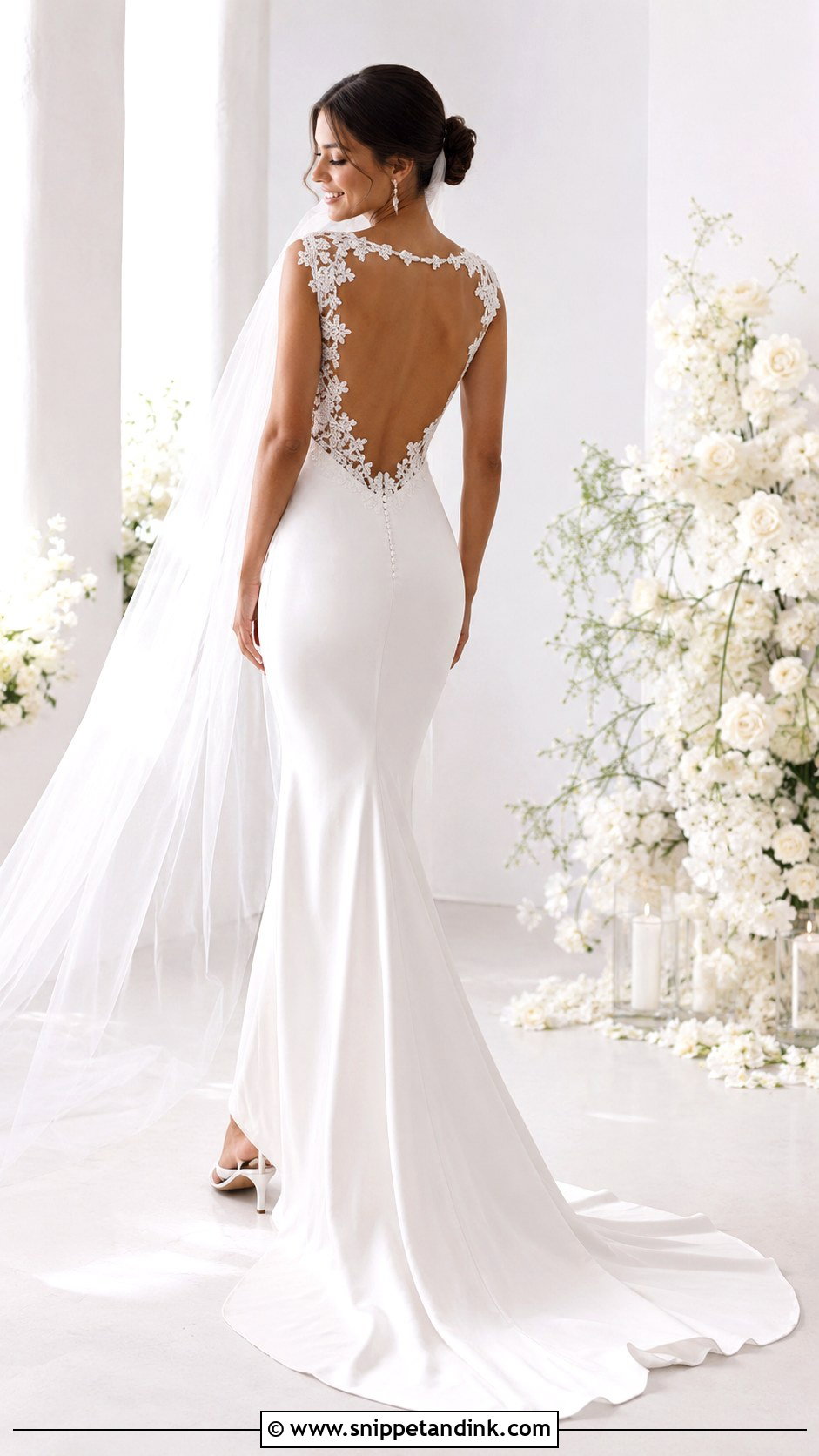
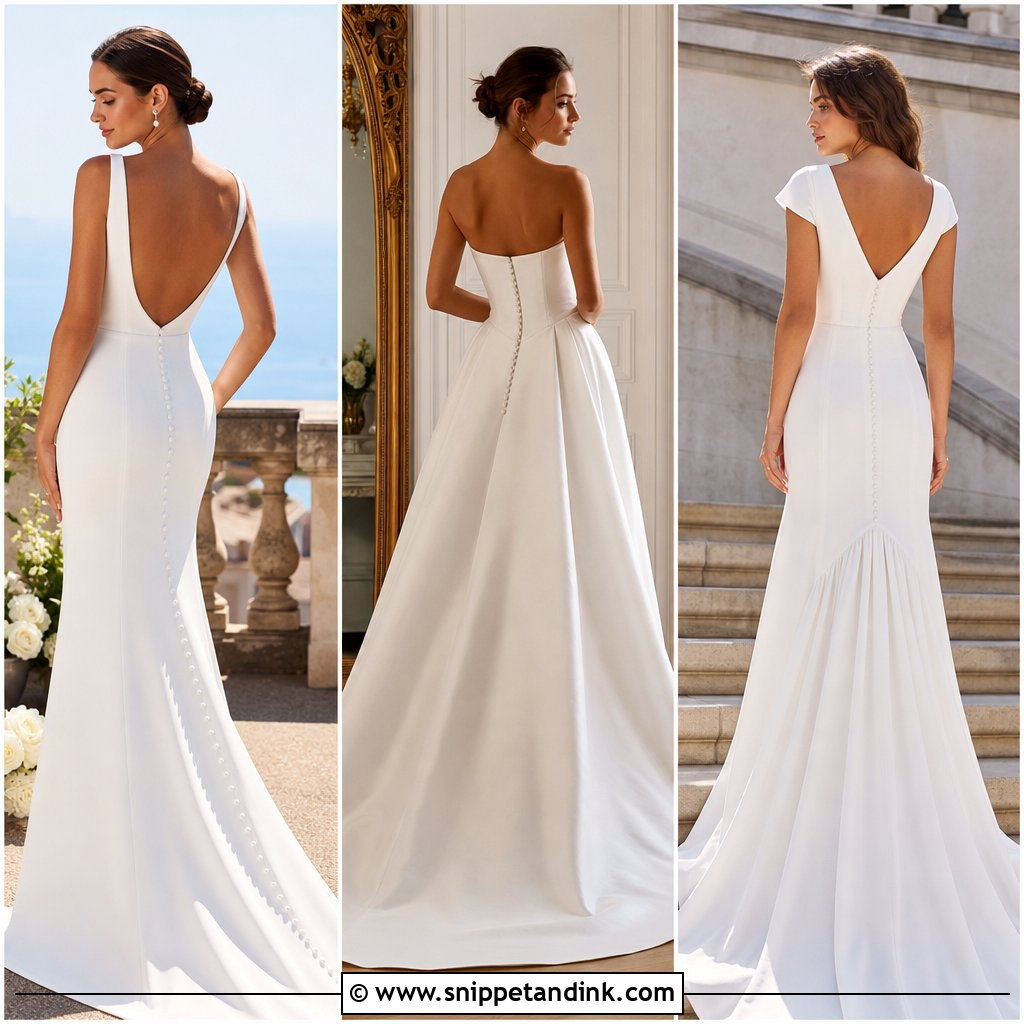
Guests spend most of the ceremony looking at your back, so with an open back I treat it as the front of the dress during fittings. Satin keeps the front polished while lace frames the back, straps or train. Support is the real question. Illusion lace across the back, side boning or carefully placed straps do the work a closed back would. A low bun or swept-up style keeps the back visible, and so does a sheer veil. Test any stick-on bra in warm conditions well ahead, because adhesive lets go when you sweat.
22. Satin And Lace Wedding Dress With Pearl Details
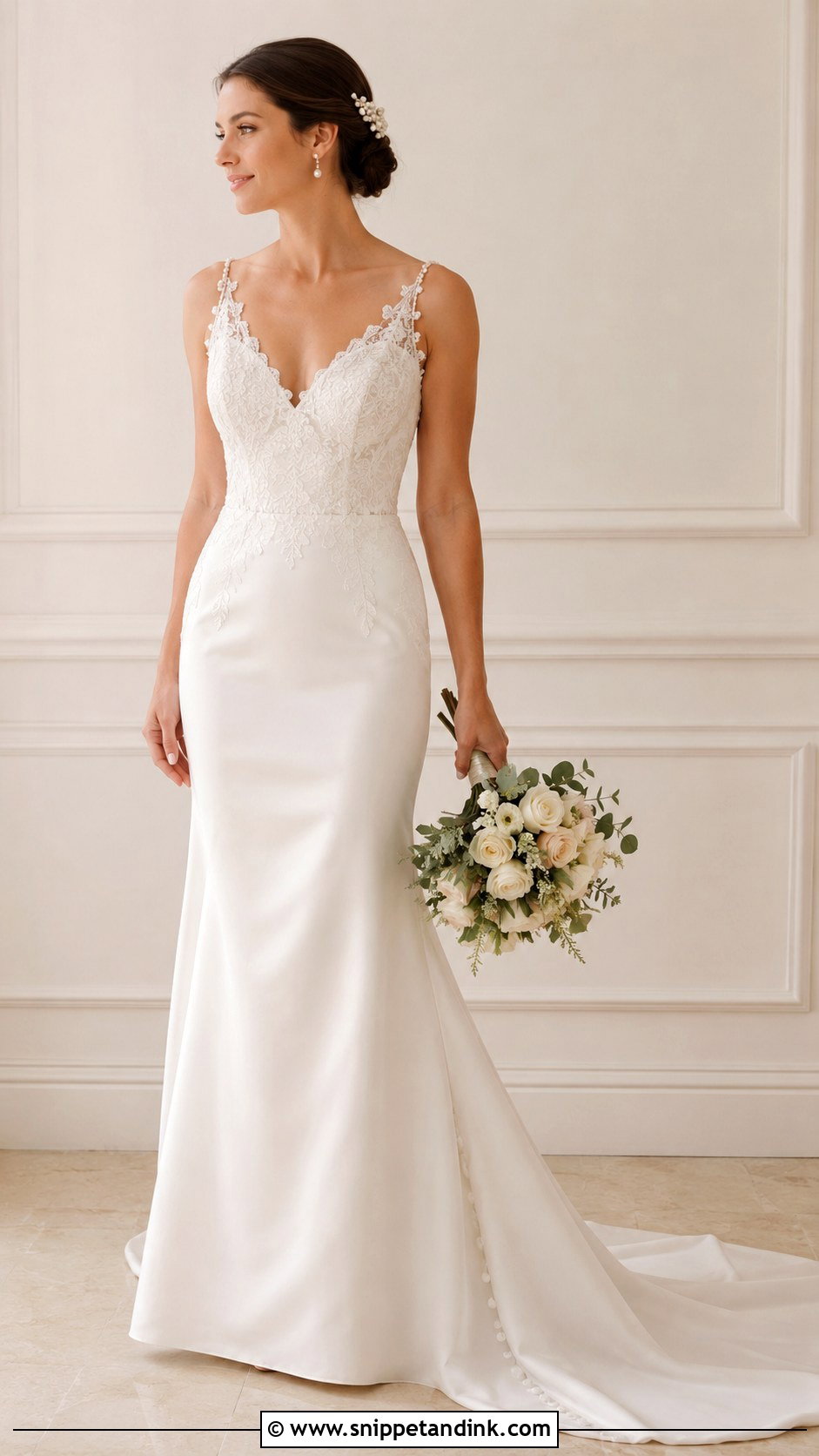
Pearls sit well on lace because the satin behind them is a flat, soft background, so they read as texture rather than glitter. They can go on the bodice, straps, sleeves, buttons or veil. Sewn pearls are heavier than they look; on a sheer sleeve they can drag the lace down, so check that the sleeve still hangs straight at the fitting. Keep accessories in the same family with pearl earrings, a pearl comb and satin shoes. I wouldn’t stack more pearls onto a gown that’s already beaded.
23. Satin And Lace Wedding Dress With Floral Lace
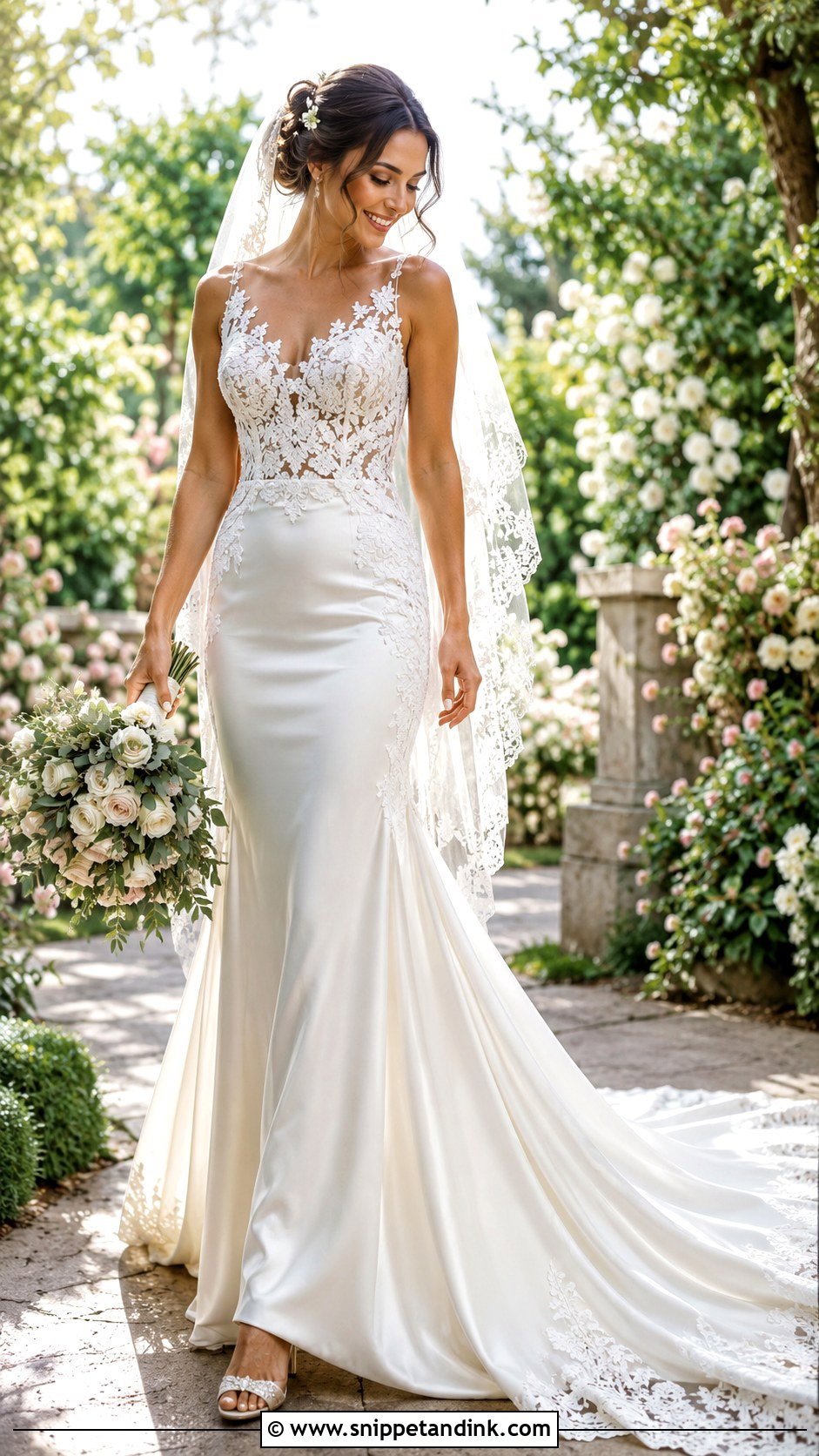
Floral lace can cover the bodice, trail down the skirt or frame the hem and train, and the satin underneath gives the motifs depth so they don’t look flat or see-through. It suits outdoor ceremonies, estate venues and spring or summer dates. The scale of the flowers matters more than their style. Large motifs need a simple neckline and almost no jewelry, while small, scattered motifs can take a little more. Soft curls, a lace veil, ivory heels and a few floral pins suit it.
24. Satin And Lace Wedding Dress With Champagne Lining
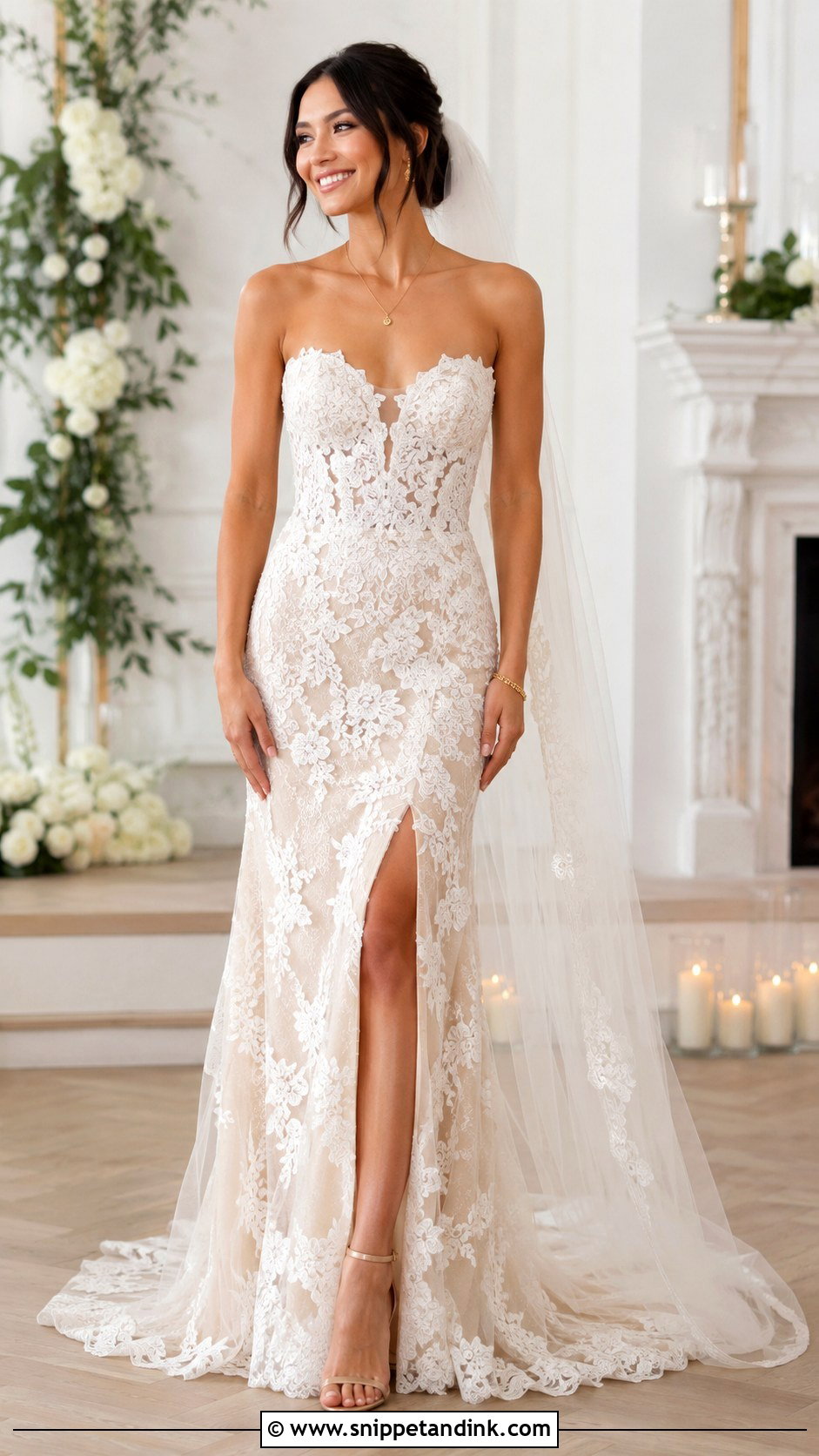
Put a champagne lining under ivory or white lace and the pattern jumps forward, because the warm layer shows through every gap. Satin can be the base, the skirt or the lining itself. I always look at the swatch in daylight; champagne can turn pinkish or grey depending on the light and your skin tone, and that’s very hard to judge under bridal shop bulbs. Nude or ivory heels, gold-toned jewelry and a sheer veil go with it. If you want a subtle non-white dress, this is the gentlest way in.
25. Satin And Lace Wedding Dress With Overskirt
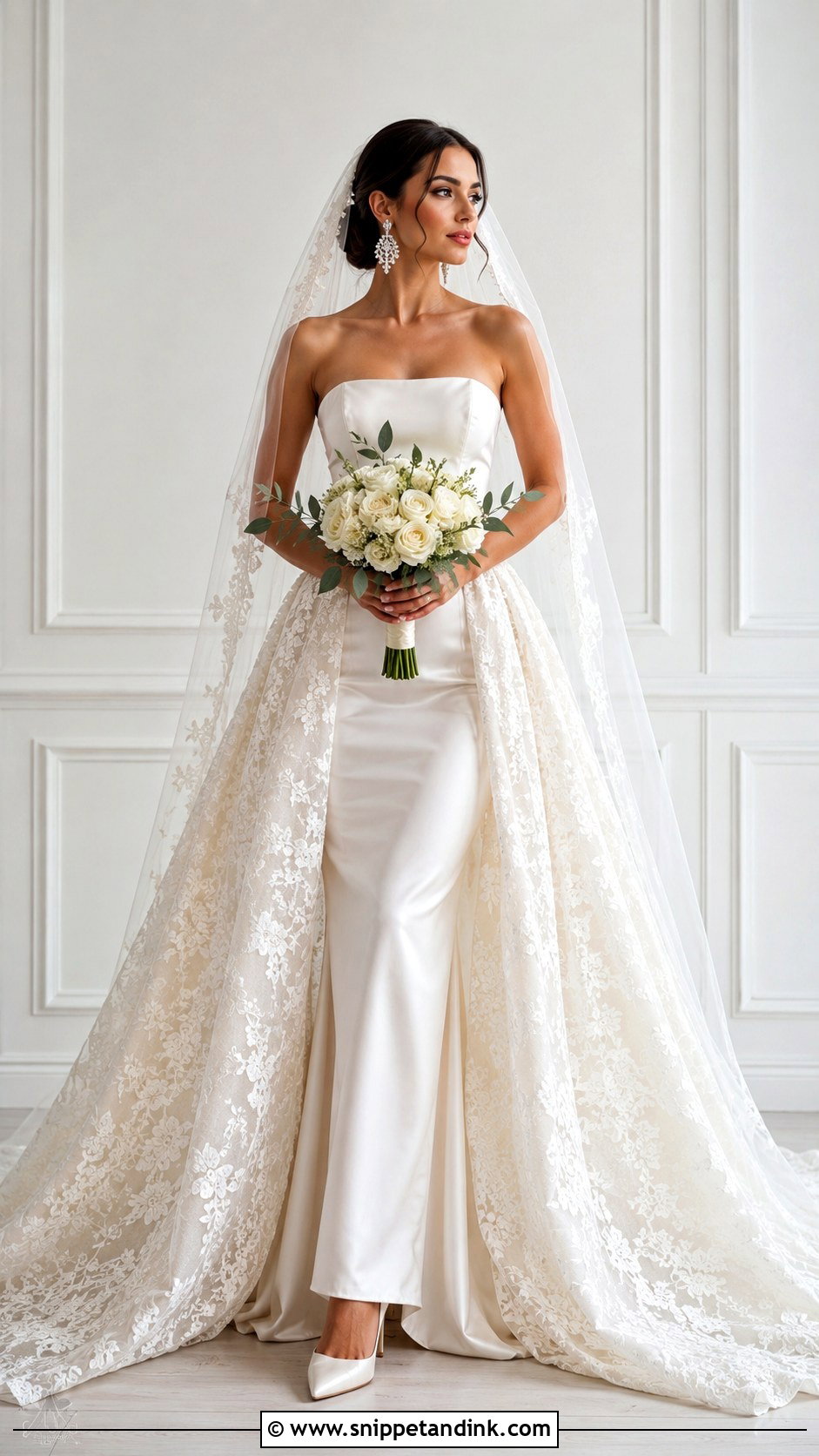
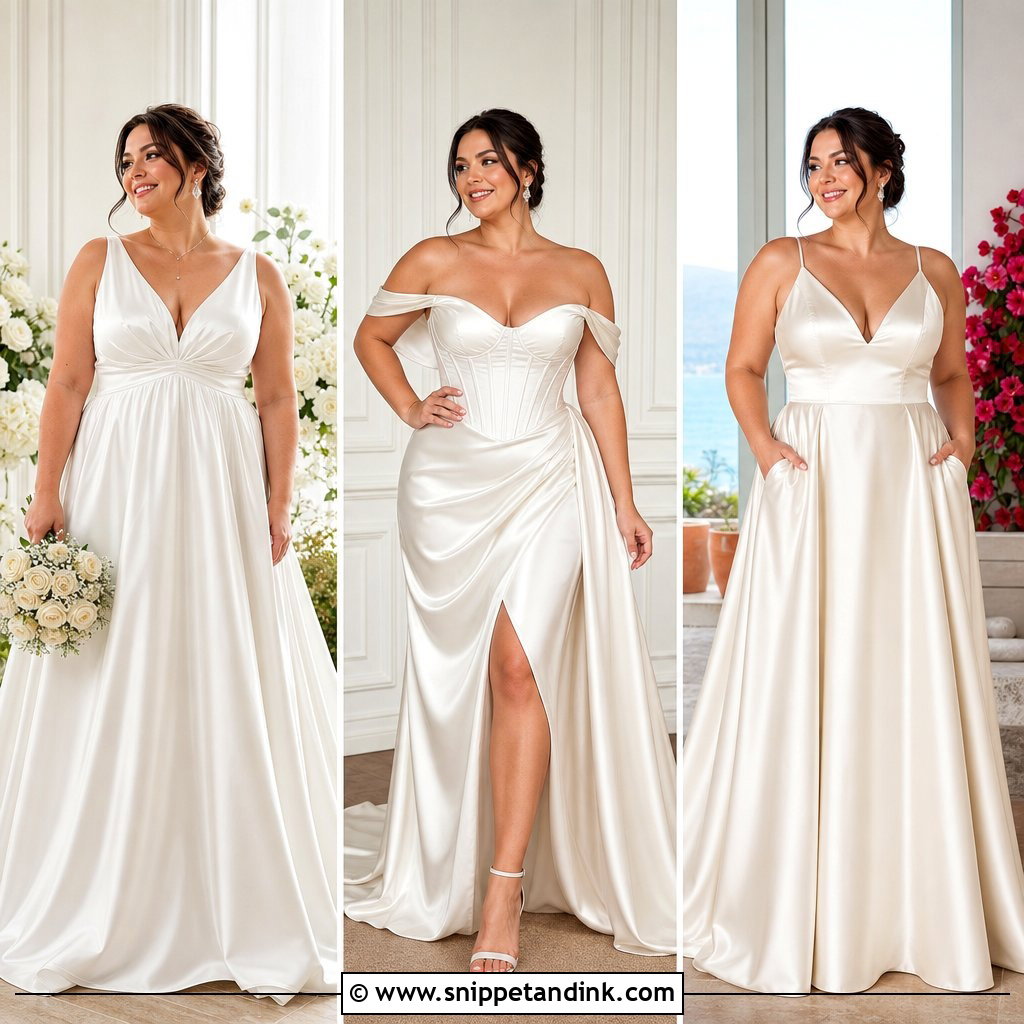
Adding a dress with an overskirt to your shortlist gets you ceremony volume and a lighter reception outfit in one gown. The base is often a satin sheath, mermaid or fit-and-flare, with an overskirt in lace, satin or both. It should fasten at the waist with hooks or a hidden button band and match the gown’s shade exactly, which is harder than it sounds when the pieces come from different mills. Decide in advance who removes it after the ceremony and where it goes. Wear a long veil for the vows, then switch to statement earrings for the party.
Where Lace Meets Satin at the Alterations Table
Mixed-fabric gowns take longer to alter than plain ones. I plan the first fitting roughly two to three months before the wedding and expect two or three more after it. Here’s where that time goes.
- A hem with a lace border can’t simply be cut and turned up. The lace edge is unpicked, the satin shortened, and the lace stitched back on by hand, which costs more and takes longer.
- Satin keeps needle holes. Taking a gown in is easy, but letting it out after sewing often leaves a visible line, so go to fittings at your realistic wedding-day size.
- Applique that crosses a seam has to be lifted and re-stitched whenever that seam moves.
- Bring your exact shoes and underwear to every fitting, or the hem and bodice get set for a different body.
Spills, Steam and Storage Once the Party Ends
If something spills on the day, blot with a clean white cloth and stop there. Rubbing satin roughs up the surface and leaves a dull patch that’s harder to fix than the stain. Book a specialist cleaner within a few weeks rather than months, because champagne and sugary drinks dry invisible and then turn brown as they oxidise.
Never iron satin directly; steam it from the inside on low, or let the cleaner press it. Skip plastic garment bags, which trap moisture. A breathable box with acid-free tissue folded into every crease stops the satin yellowing along fold lines and keeps the lace from catching on itself. Store it somewhere dark and steady in temperature, not a loft or a damp basement.
One Fabric Leads, the Other Frames It
Satin and lace work because one is quiet and the other is busy, and every gown above follows that same arrangement, from the full ball gown to the reception mini. When you shortlist, decide which fabric is the star, then let the veil, shoes, jewelry and hair take their cue from it. And sit down in every sample you try. How satin creases across your lap and how lace feels under your arms after twenty minutes will tell you more than any mirror.
You'll Like These Ideas:








Leave a Reply