
Haldi is the messiest morning of an Indian wedding week, and I mean that kindly. Turmeric paste, marigold petals, sometimes a bucket of water, and a lot of hugging. Yellow is the tradition, but mustard, marigold, peach, mint, lime and floral prints all belong here too. What I look for in any haldi outfit is a daytime fabric, such as cotton silk, mulmul, georgette or a light organza, and a cut that lets you sit on the floor and dance without rearranging yourself. Below are outfits for the bride, her family and her guests, each with the styling detail I’d check first.
When the Bride Disappears Into the Marigold Wall
One problem I see in haldi photos again and again: a bride in bright yellow, seated in front of a backdrop of yellow marigolds, on a yellow cushion, surrounded by relatives in yellow. In the pictures she melts into the set. Before choosing an outfit, I ask the decor team or family what the backdrop will look like.
- If the backdrop is solid marigold, consider a bride’s outfit with contrast: ivory, a pink or green dupatta, or a bold border that separates her from the flowers.
- If the setup is white or pastel, saturated yellow or orange will stand out well.
- Mirror work and gota help in either case, since they catch light and give the outfit an edge against busy decor.
- Ask relatives to vary their shades slightly, so the bride is the brightest or most distinctive person in the frame.
It takes one conversation and makes a real difference to the photographs you’ll keep.
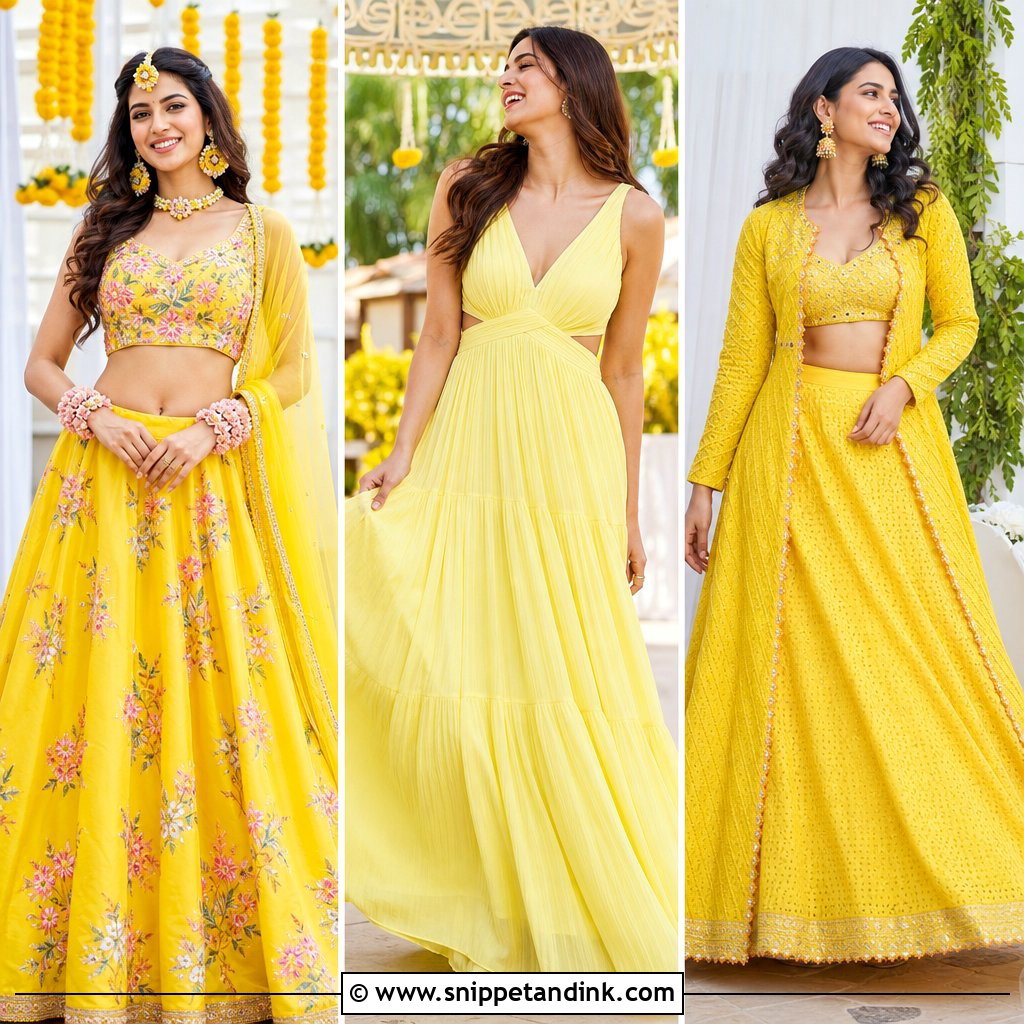
1. Yellow Lehenga For Haldi
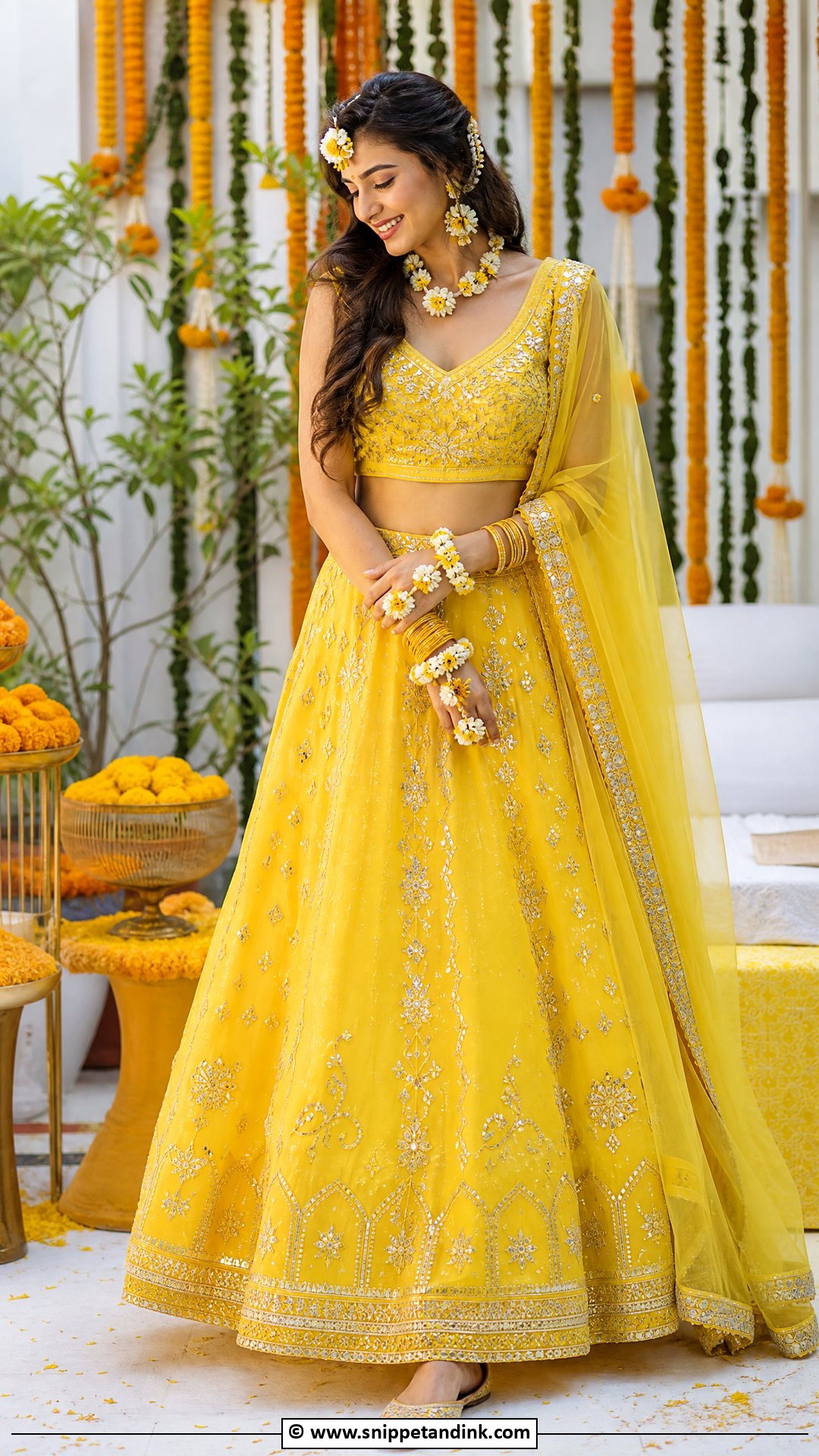
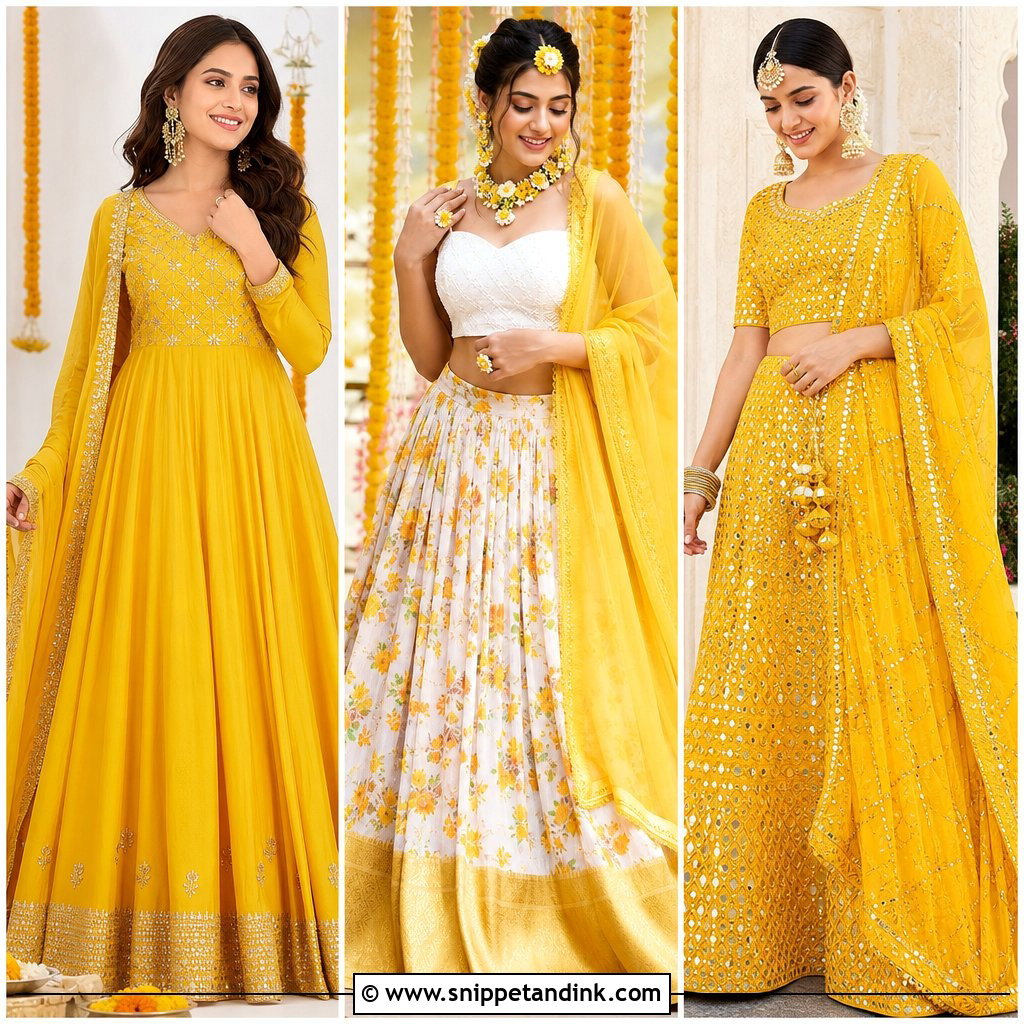
A yellow lehenga for Haldi is the traditional bridal answer, and it still works best kept light. Georgette or cotton silk with gota or thread embroidery feels festive without being formal. Lemon yellow looks fresher than deep gold in morning sun. I pin the dupatta on one shoulder so the bride’s arms are free for the paste, then add flower jewellery and juttis. Makeup can stay dewy and minimal; the colour of the outfit already does the work.
2. Mustard Saree For Haldi
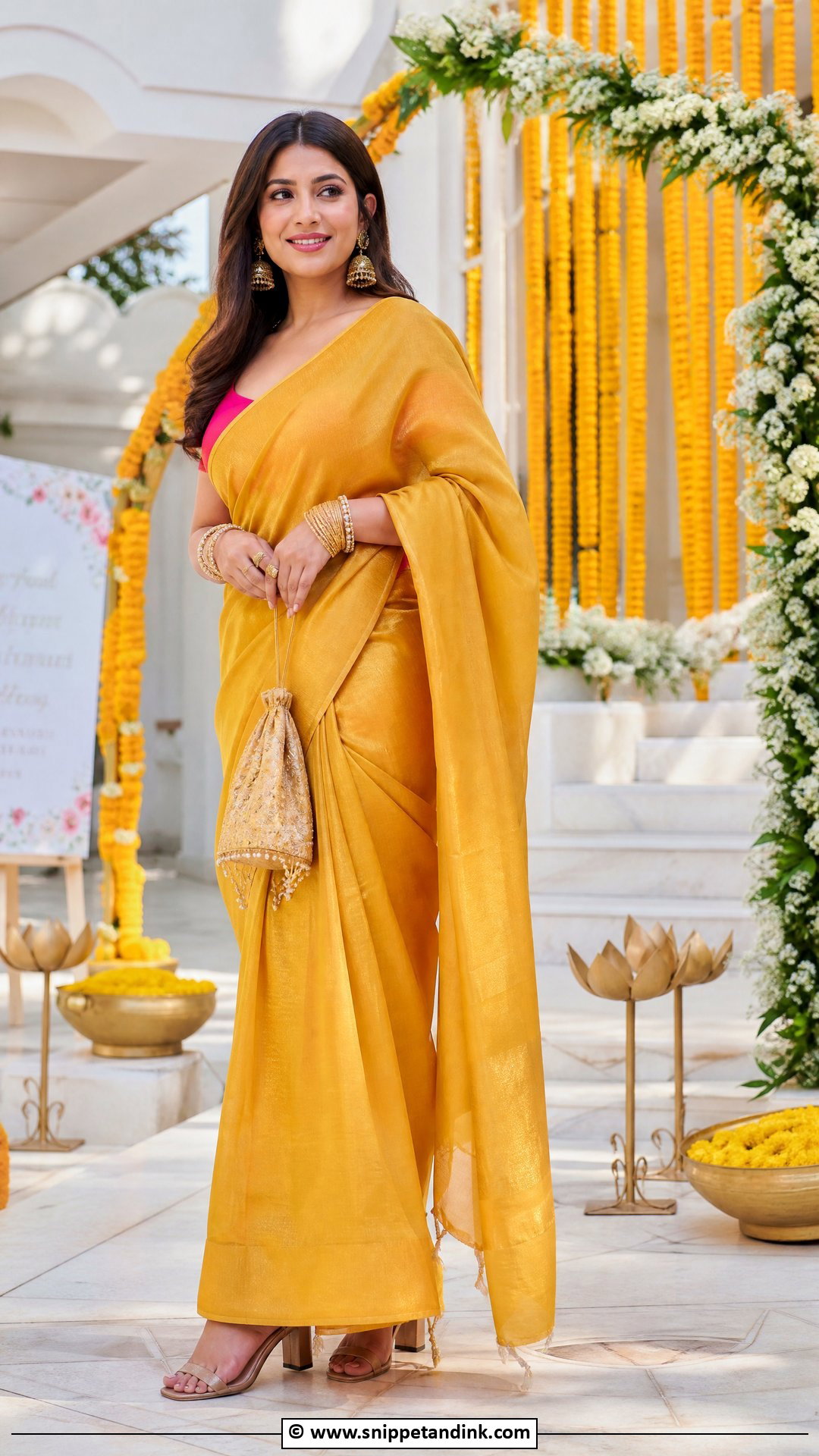
Mustard is the smart colour for anyone who’ll be in the thick of the ritual. Its darker tone hides small turmeric marks that would glare on a pale saree. Soft silk, linen or chiffon drape easily. A contrast blouse in ivory, green or pink adds depth. I’d add a potli, statement earrings and a sleek bun with fresh flowers, then embellished flats rather than heels.
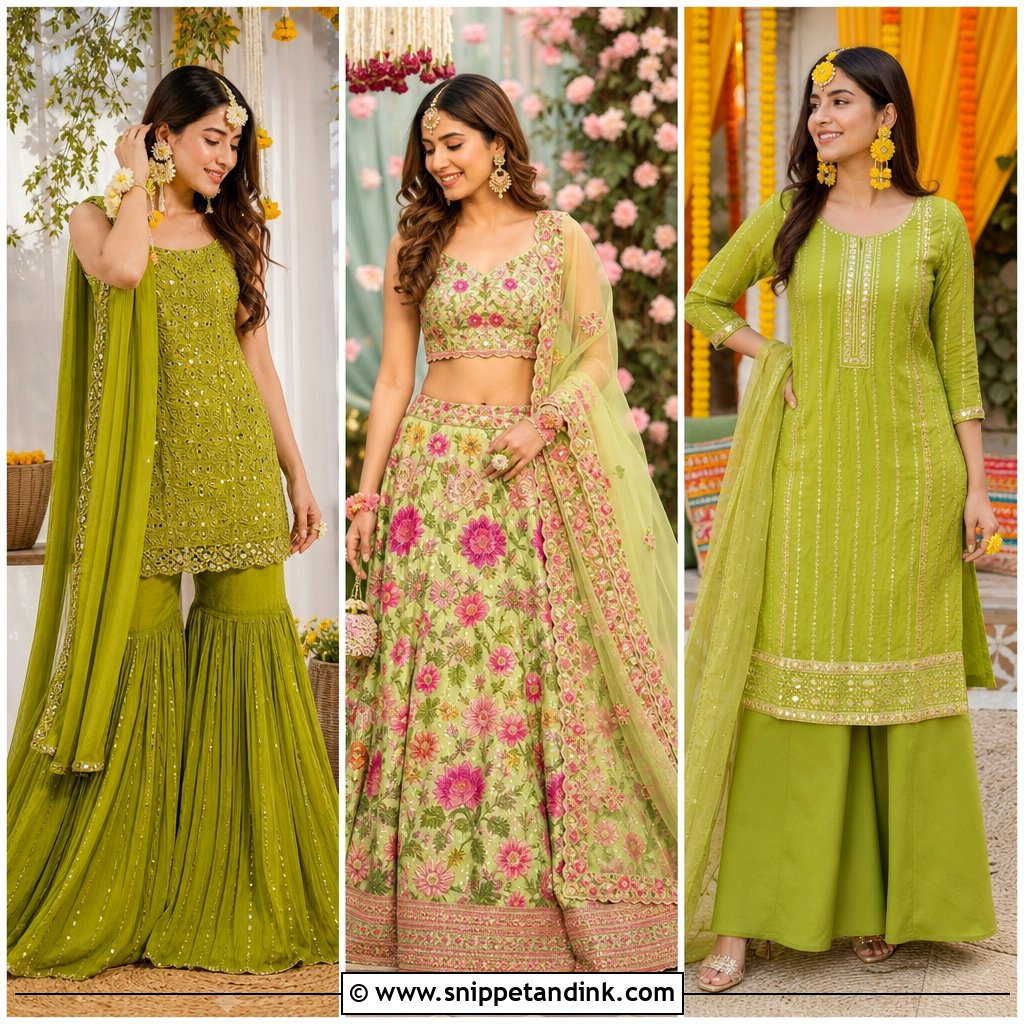
3. Yellow Sharara Set For Haldi
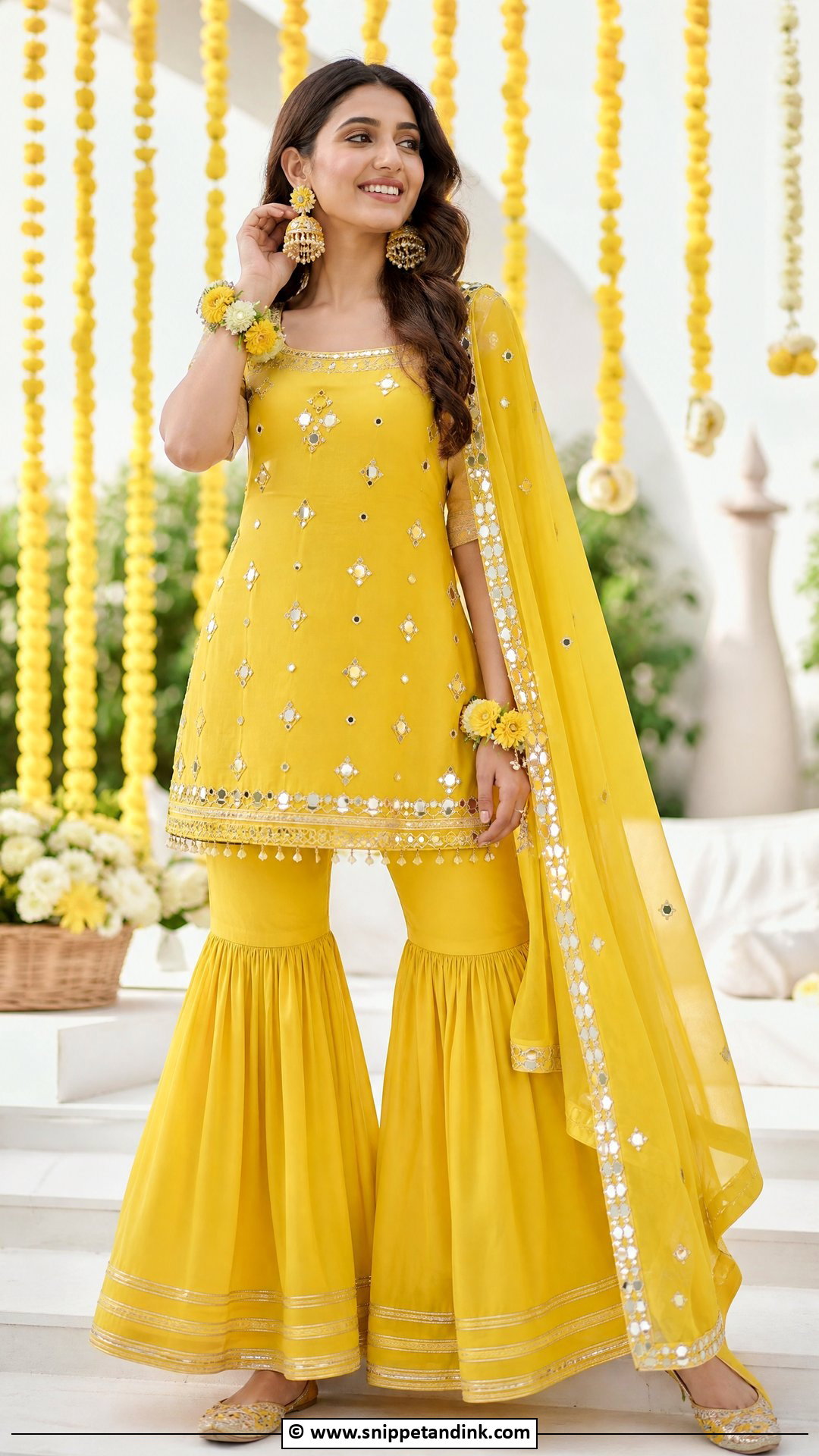
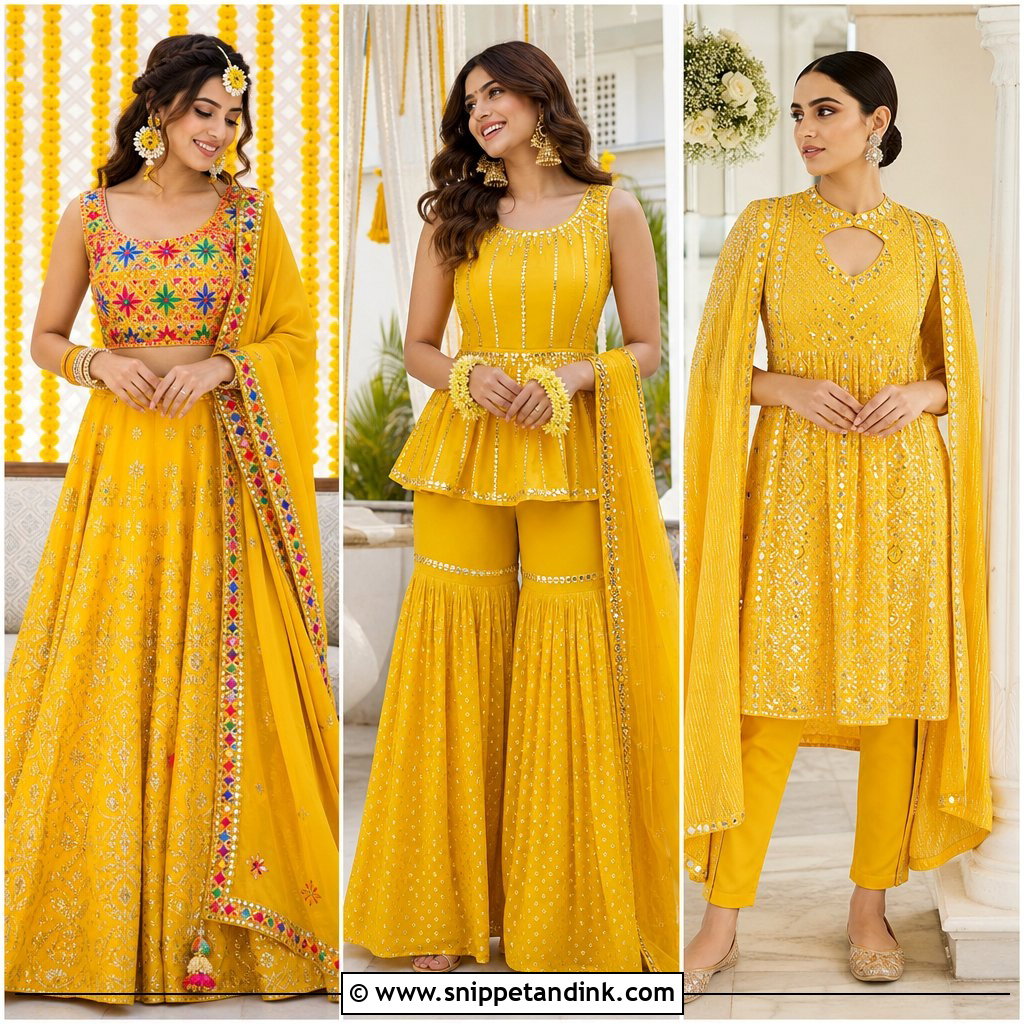
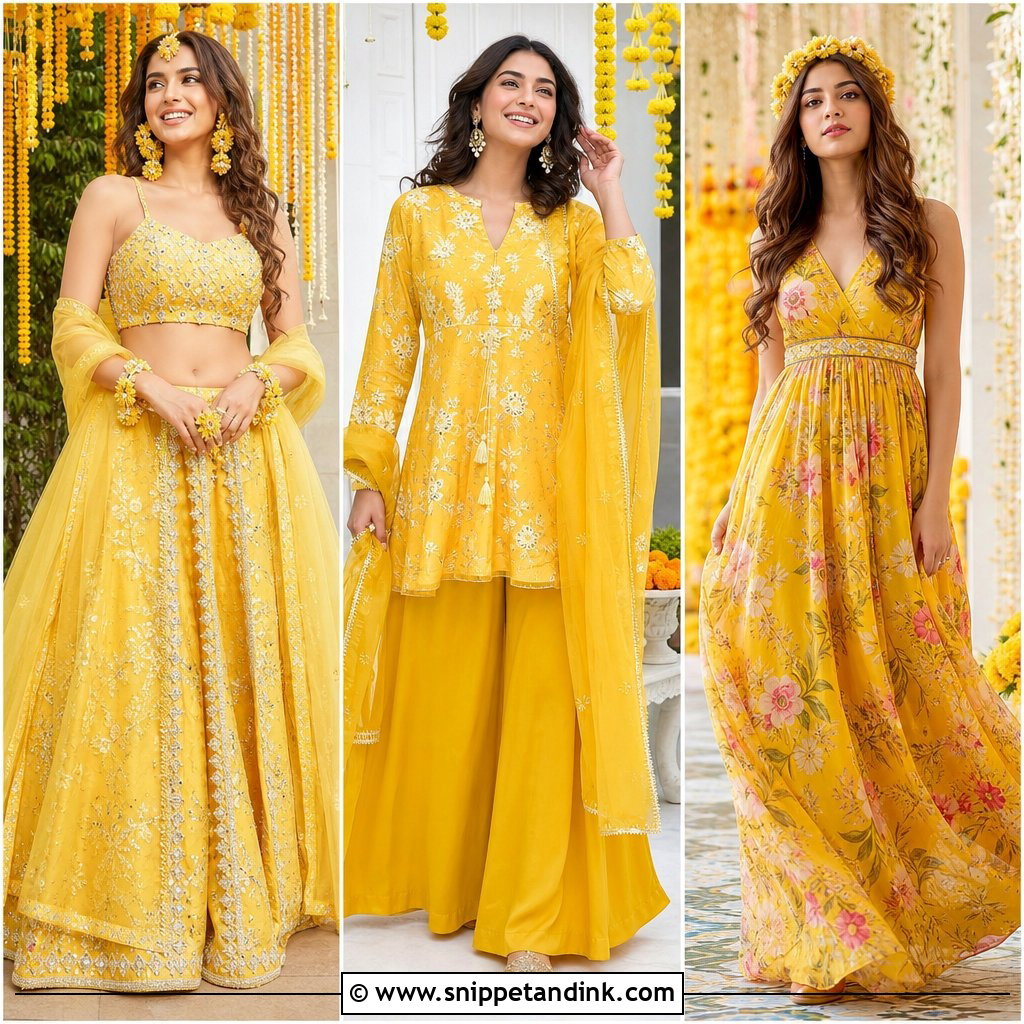
The flared trousers of a sharara mean you can sit, walk and dance without managing a skirt, which is why I put so many sisters and bridesmaids in one. A short kurti looks playful; a longer one is more graceful but can bunch when you sit, so try sitting in it before you buy. Light embroidery or scalloped borders suit daytime. Jhumkas, floral bangles and embroidered juttis are all it needs.
4. White And Yellow Haldi Outfit
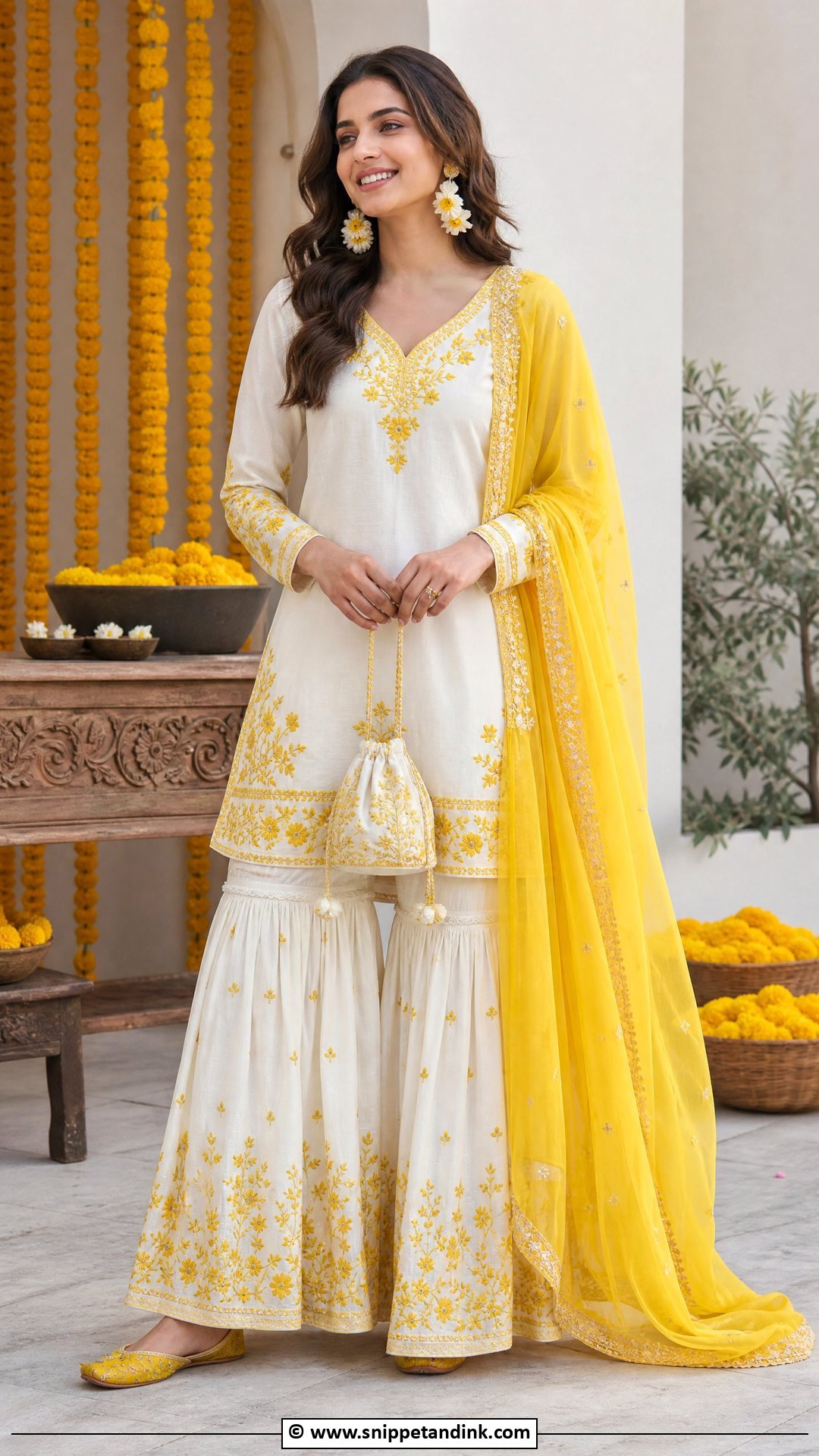
White and yellow together look clean, and there are several ways to wear the pairing: an ivory kurta with yellow palazzos, a white lehenga with a yellow dupatta, or a white sharara with marigold embroidery. My advice is straightforward. If you’re the one receiving the haldi, don’t wear white unless you plan to change. For a guest standing a little back from the paste, it’s a fresh, bright option with yellow juttis and a matching potli.
5. Floral Lehenga For Haldi
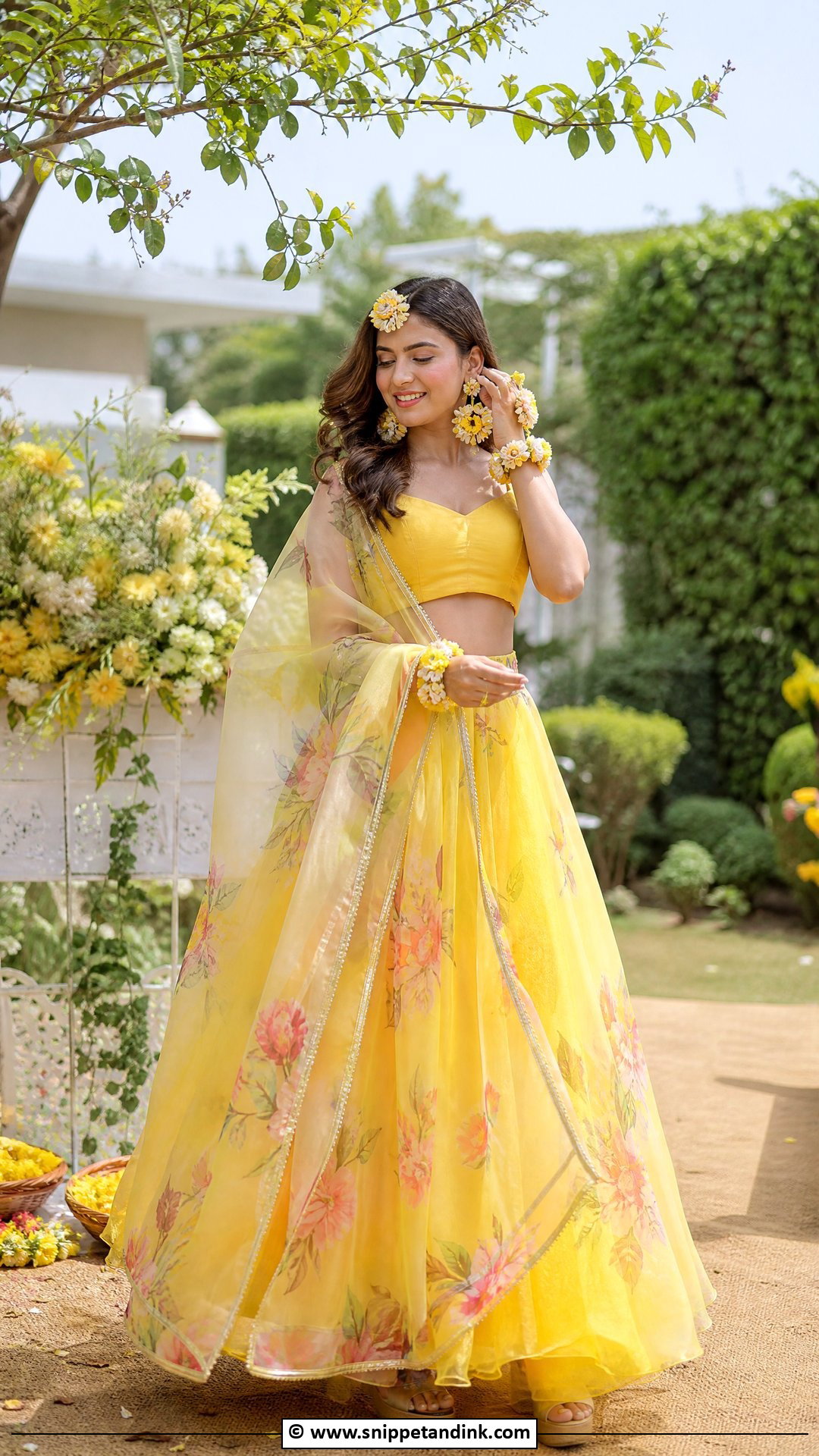
A floral print gives a lehenga a younger mood than solid embroidery. Look for yellow, peach or green florals on organza or chiffon; both move nicely as you walk. Keep the blouse plain so the print isn’t fighting anything. Pearl earrings, flower jewellery and soft waves suit it. For bridesmaids, a floral lehenga sits well beside a bride in heavier solid yellow, and it hides turmeric smudges better than a plain fabric does.
6. Yellow Anarkali For Haldi
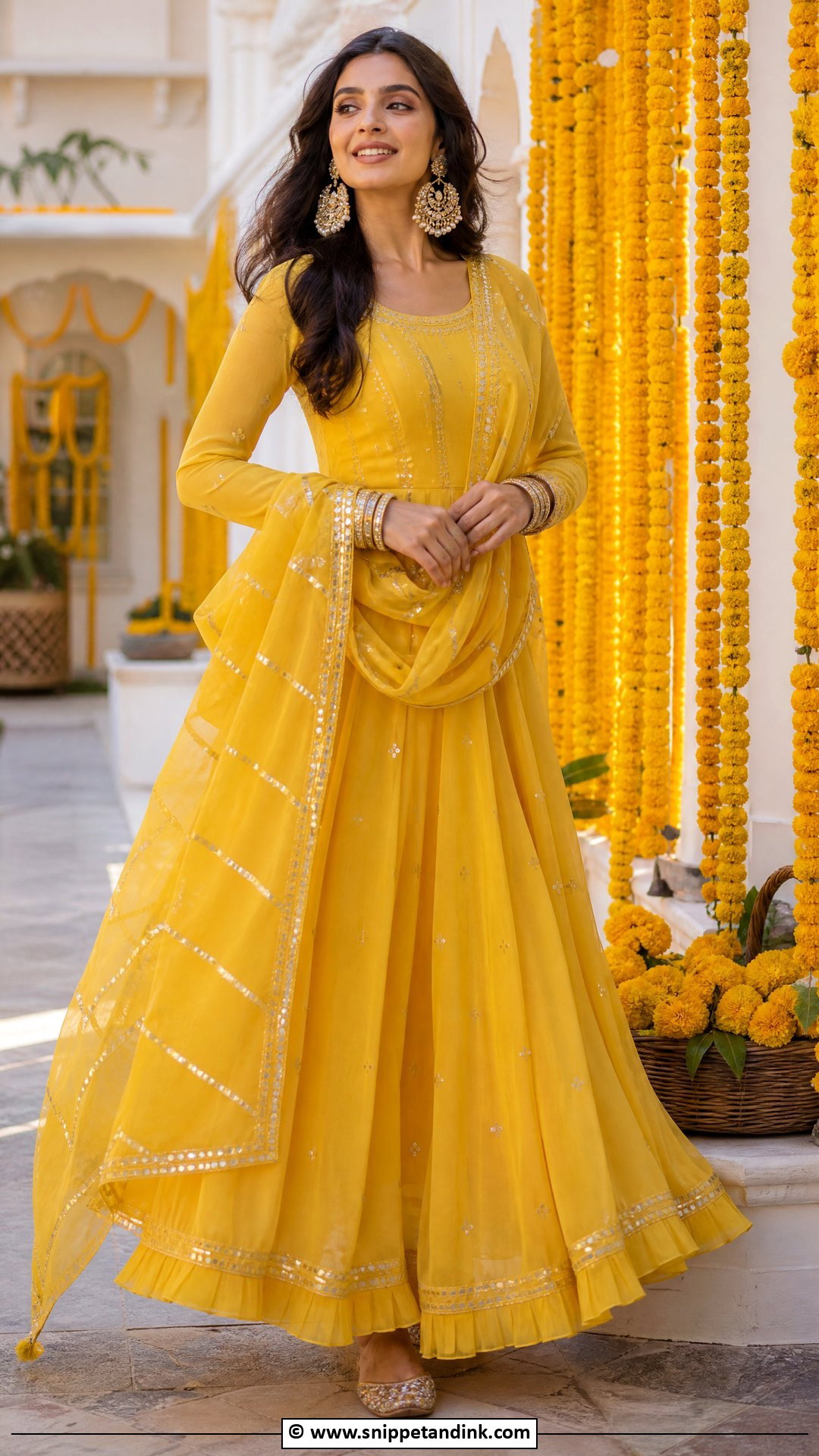
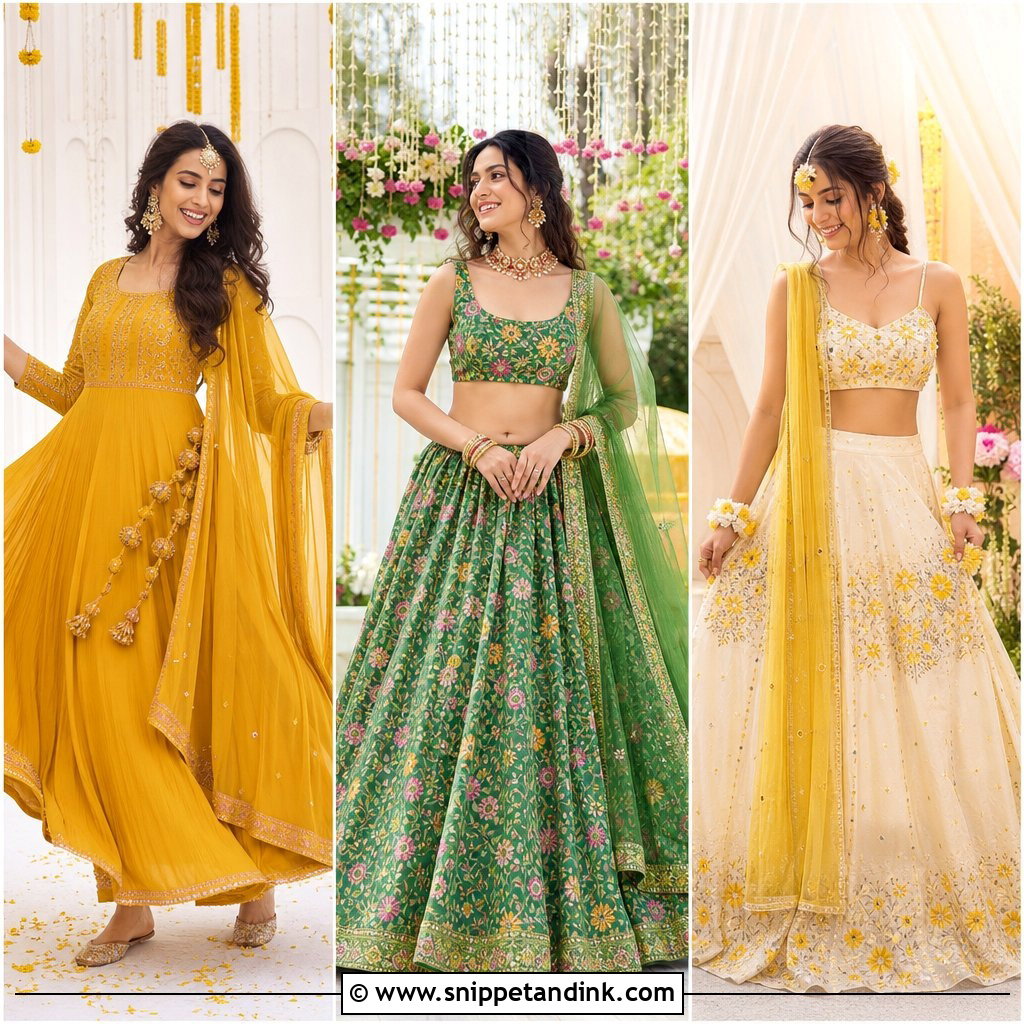
An anarkali is fitted through the bodice and flares from just under the bust, which skims most figures without clinging. Cotton silk looks traditional; georgette flows more softly. A dupatta with gota borders adds festivity without weight. Chandbali earrings and juttis finish it. A loose braid down the back shows off the neckline. It’s a sensible outfit for mothers and guests who want coverage.
7. Orange Lehenga For Haldi
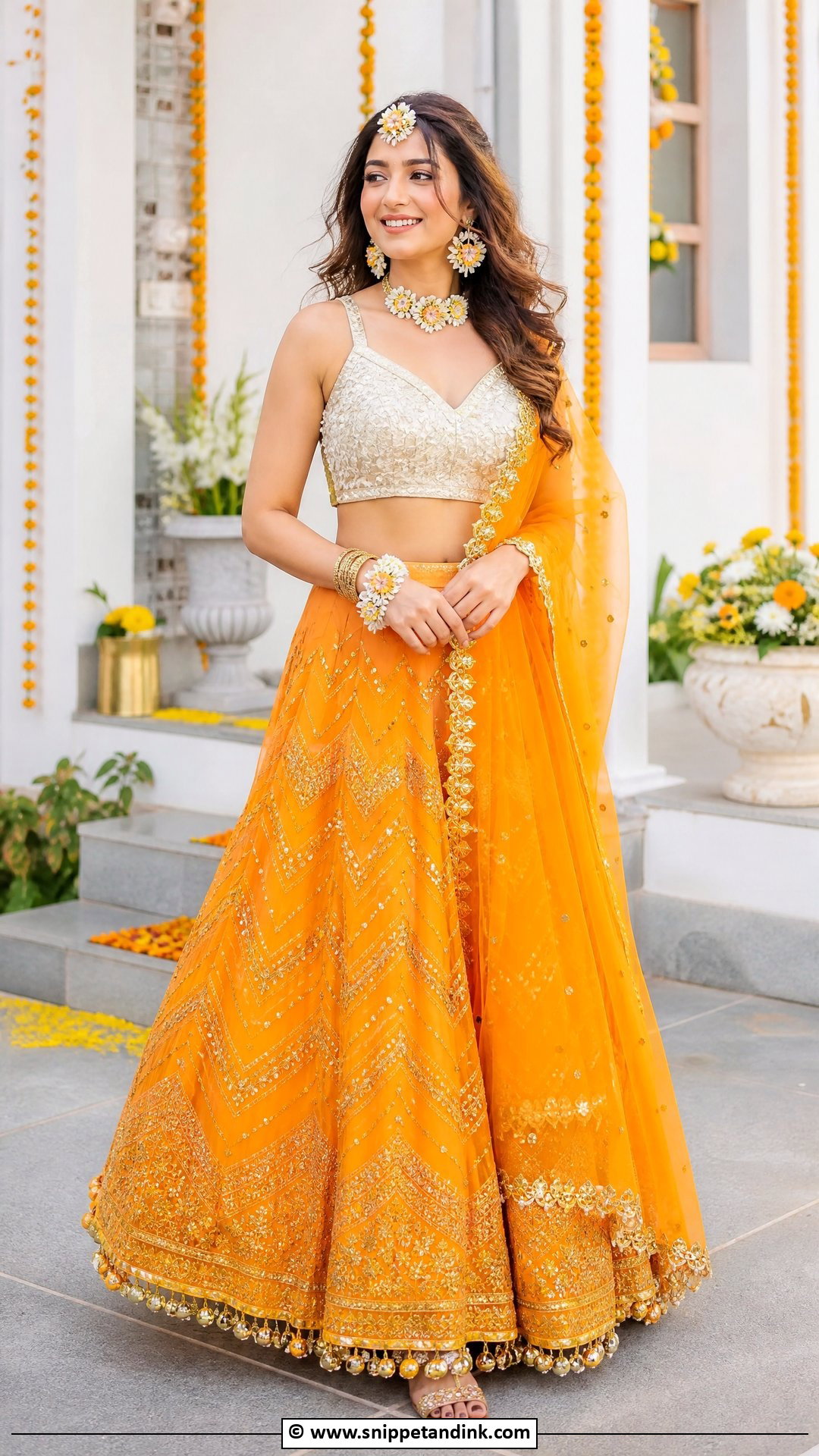
Orange covers a wide range, from mango and tangerine to burnt orange, and each suits a different skin tone. Deeper burnt shades flatter warm and darker complexions; brighter tangerine suits fair skin best in shade. Pair the lehenga with a matching blouse or an ivory or pink contrast. Keep the embroidery light, since a haldi is more relaxed than the wedding itself. Gold jewellery and flowers balance it.
8. Yellow Kurta Palazzo Set For Haldi
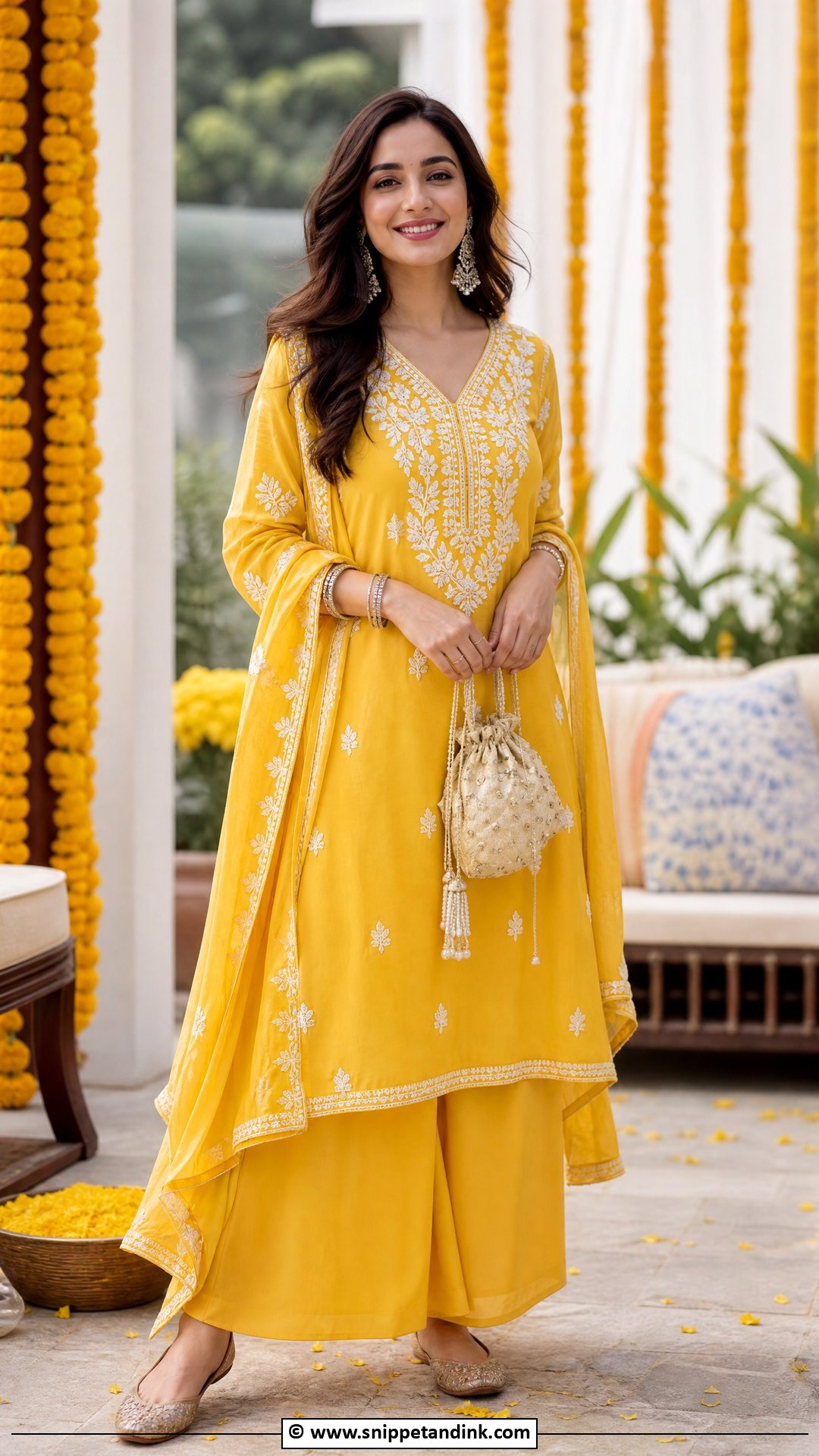
For guests, cousins and anyone helping out, a kurta palazzo set is the most practical thing to wear. It’s quick to put on, easy to move in, and still looks festive. Chanderi and muslin stay cool in daytime heat. Oxidised earrings keep it casual; pearls and gold dress it up. On grass or an uneven courtyard, flat sandals are far safer than heels.
9. Lime Green Sharara For Haldi
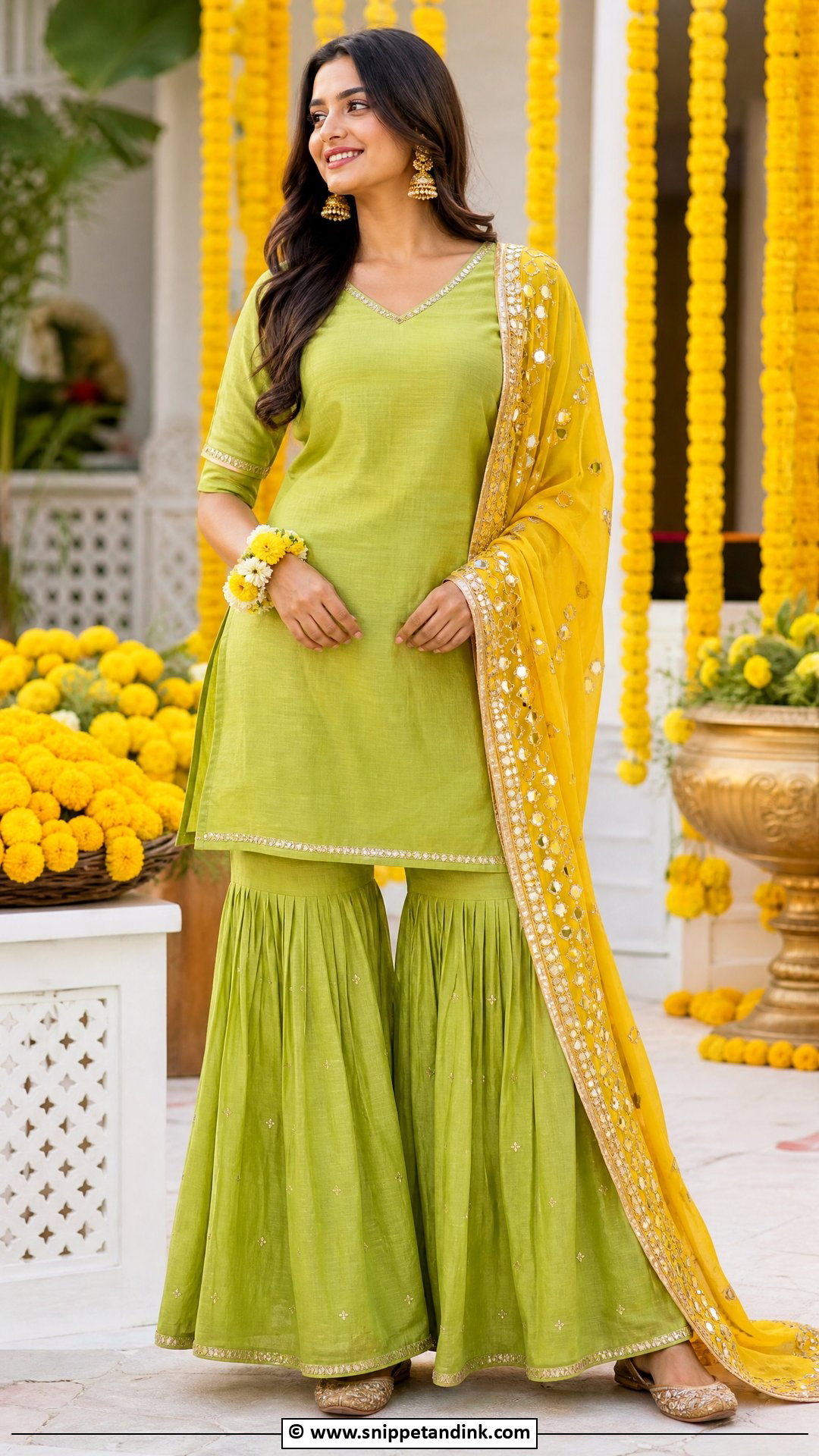
A lime green sharara for Haldi gives bridesmaids a break from yellow while keeping the bright mood. Pistachio is softer, parrot green bolder; pick by skin tone. Yellow embroidery or mirror work on the kurti links it back to the theme. It’s my go-to when a bride wants her friends coordinated but not matching her. Keep accessories gold and simple so the colour looks modern.
10. Yellow Saree With Pink Blouse For Haldi
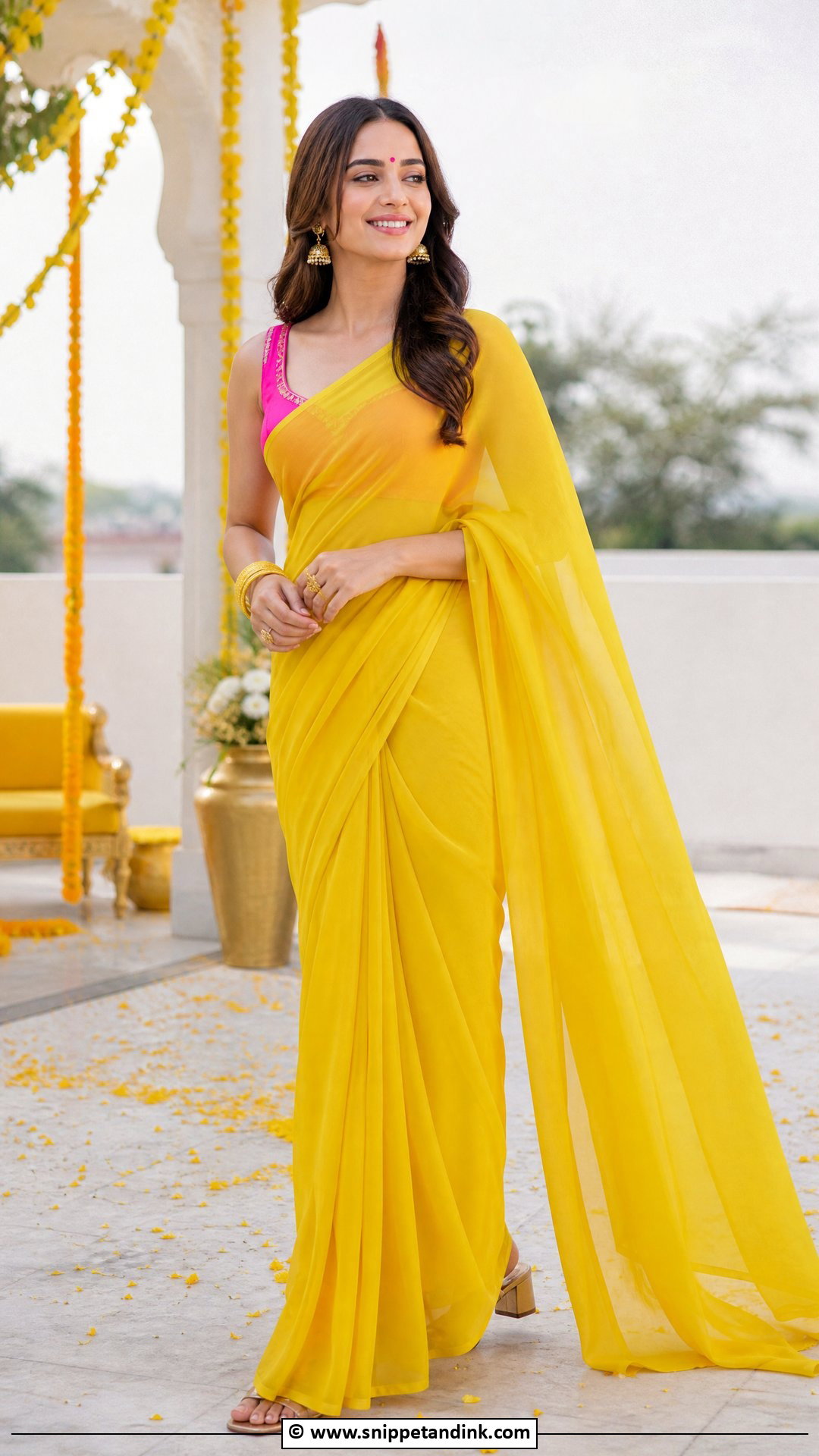
Hot pink against yellow is one of the most cheerful pairings you can wear to a haldi. Choose a lightweight saree in organza or silk cotton and a rose or fuchsia blouse. A pink bindi and flowers in the hair pull the palette together. If draping isn’t your strength, a pre-stitched saree gives you the look without any pleating. Block heels or flats, depending on how much walking is involved.
11. Ivory Lehenga With Yellow Dupatta For Haldi
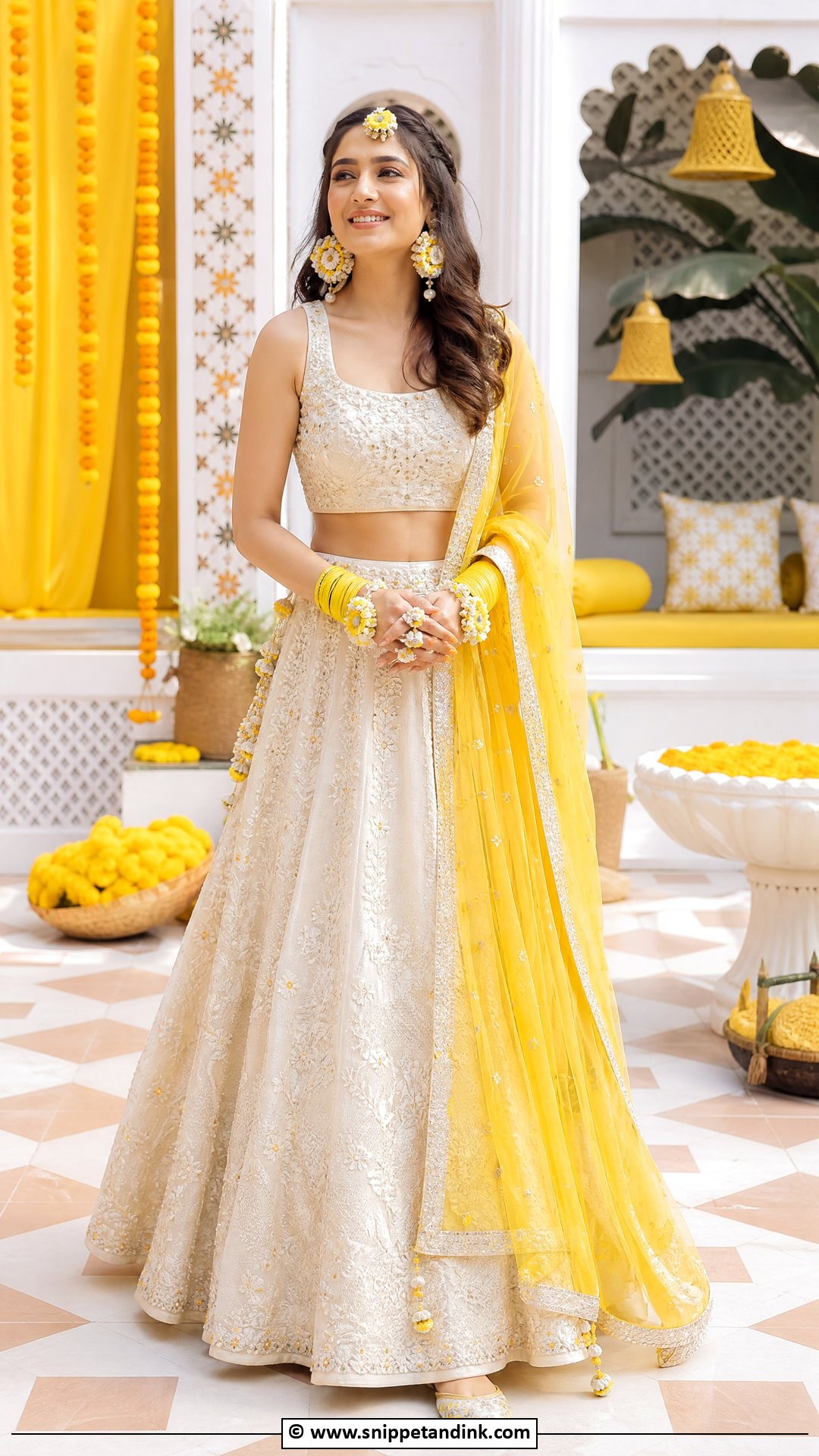
Putting the yellow only in the dupatta keeps an ivory lehenga soft while still marking it as a haldi outfit. Subtle embroidery or mirror borders on the skirt are enough. A short-sleeve blouse suits a warm morning. Floral jewellery and yellow bangles tie it together. Ivory stains, so I schedule bridal portraits before the paste; once the ritual starts, the dupatta can come off and be saved.
12. Yellow Gharara Set For Haldi
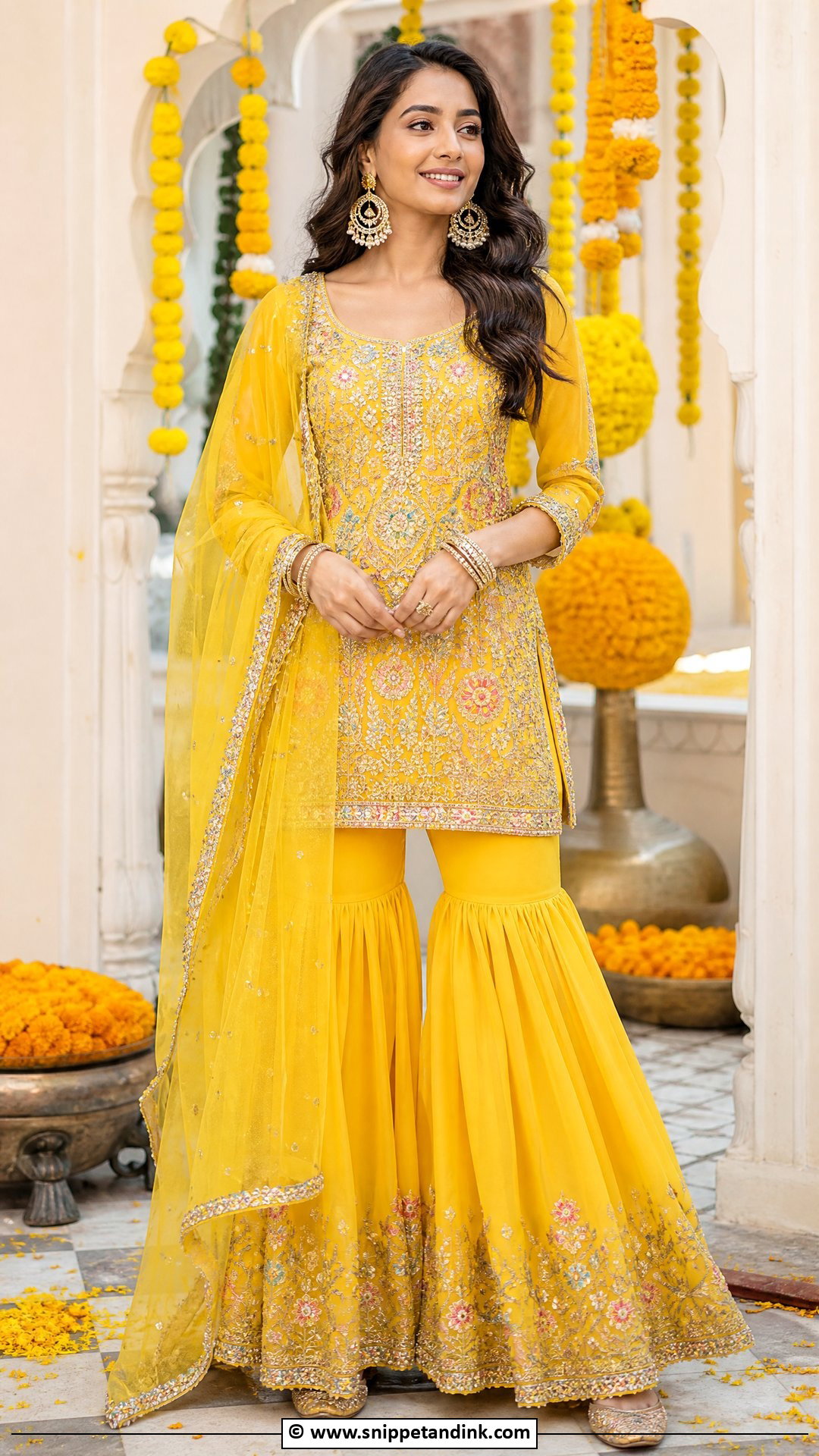
A gharara is fitted down to the knee and then bursts into a gathered flare, which gives it a slightly vintage, dressier feel than palazzos. Pair it with a short kurti and a light dupatta. Gota or small sequin details give daytime sparkle. The hem should just touch the top of your foot, so wear the shoes you’ll actually use at the fitting. A centre-parted bun suits the traditional cut.
13. Yellow Co Ord Set For Haldi
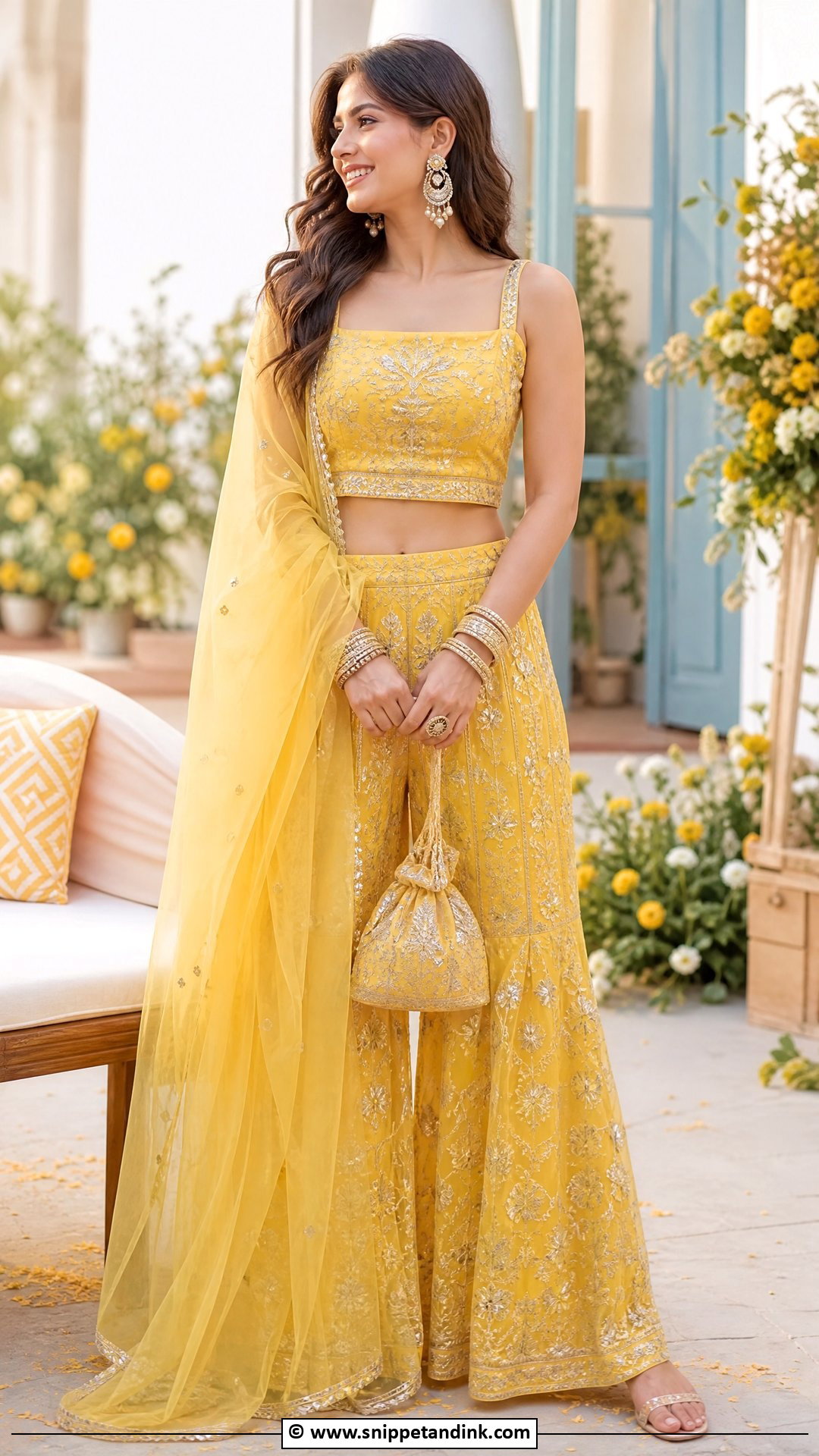
A yellow co ord set for Haldi suits a relaxed, modern family. A crop top with a skirt, a short kurta with pants, or a peplum with flared trousers all count. Block prints or mirror details keep it festive rather than casual. Statement earrings and a small potli add the traditional touch. You’ll get real use from it afterwards, which matters to guests buying something new.
14. Peach Anarkali For Haldi
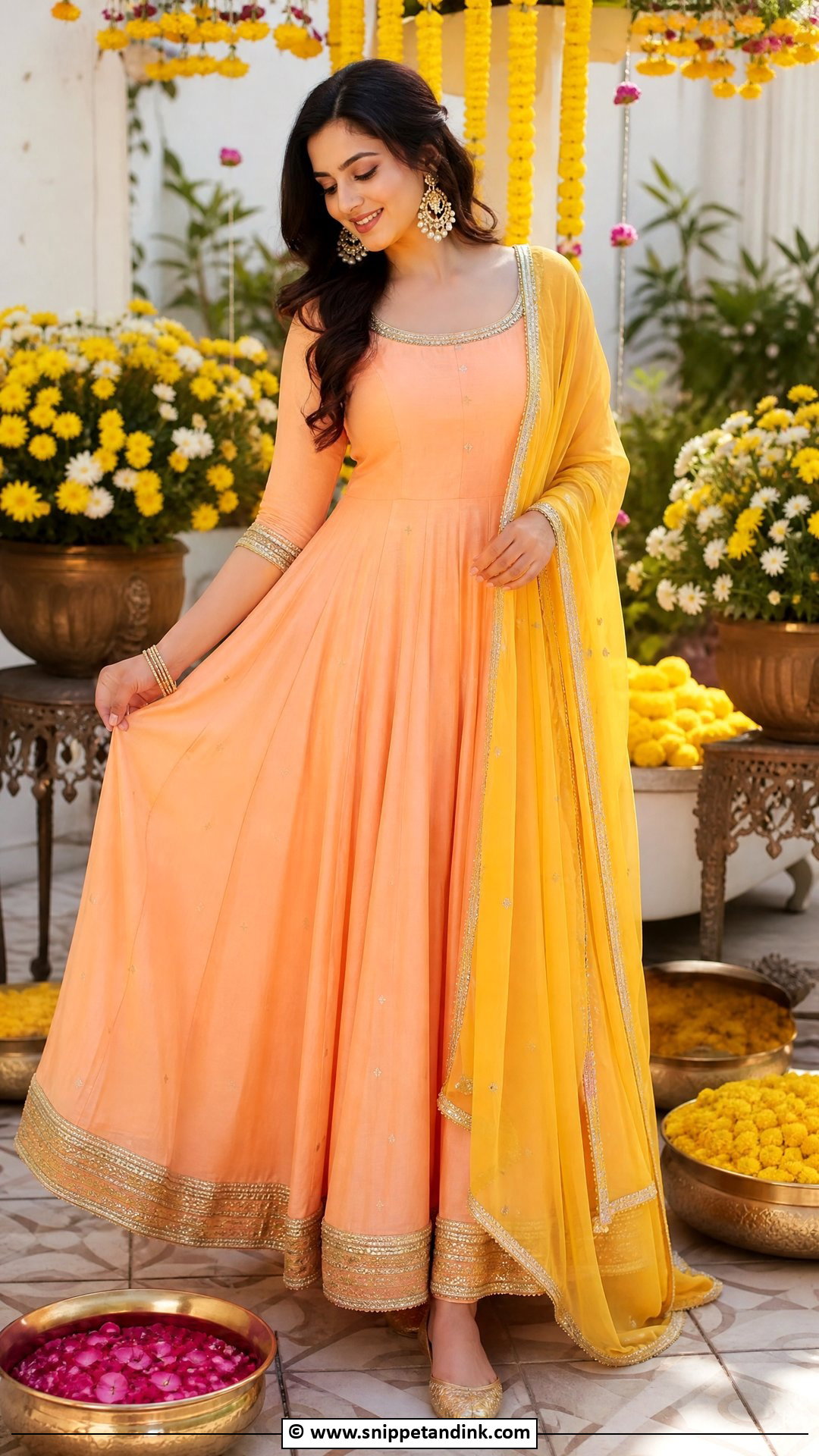
Peach is a gentle choice beside yellow decor, and it flatters most skin tones in daylight. An anarkali in peach with gold borders or floral embroidery looks graceful, and a yellow or ivory dupatta brings in the haldi theme. Pearl earrings and gold flats keep it soft. Warm peach blush keeps the makeup in the same family. It’s an easy outfit for mothers and guests through a long ceremony.
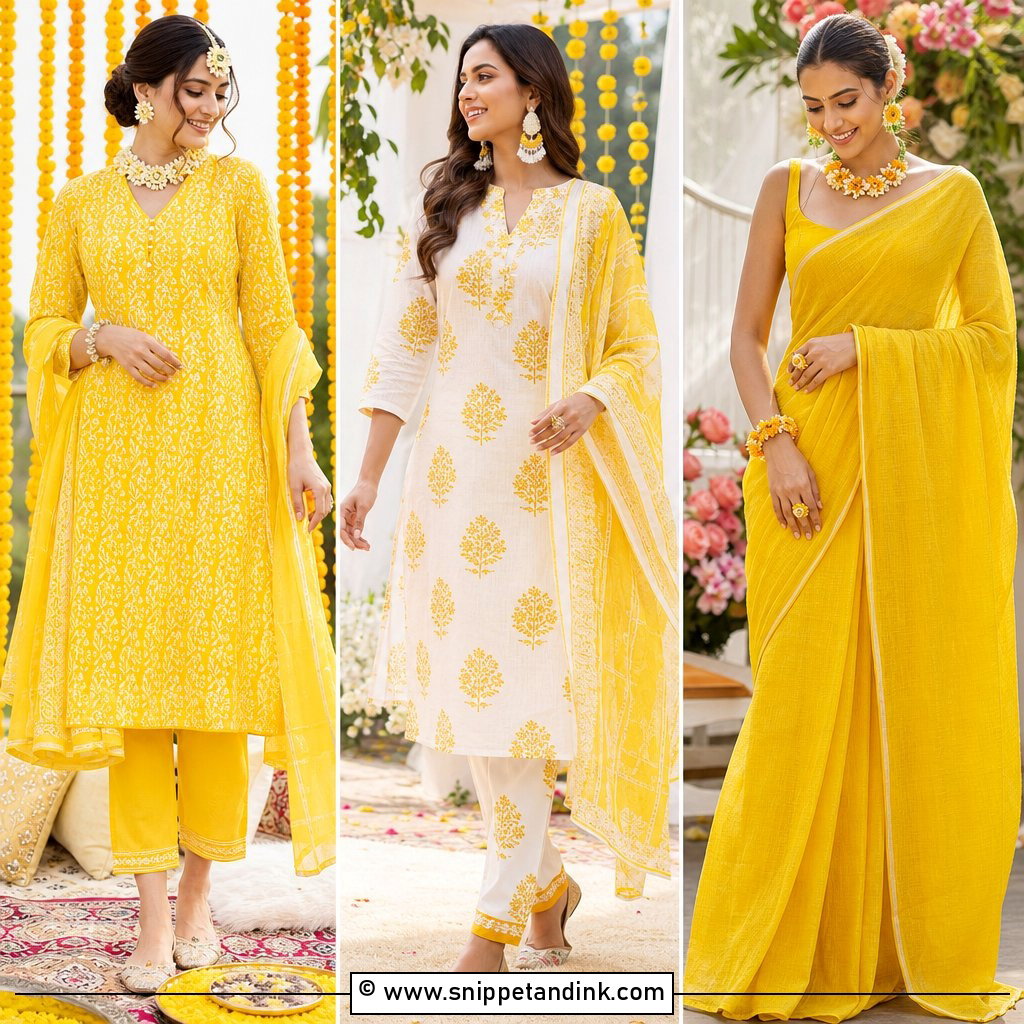
15. Yellow Mirror Work Lehenga For Haldi
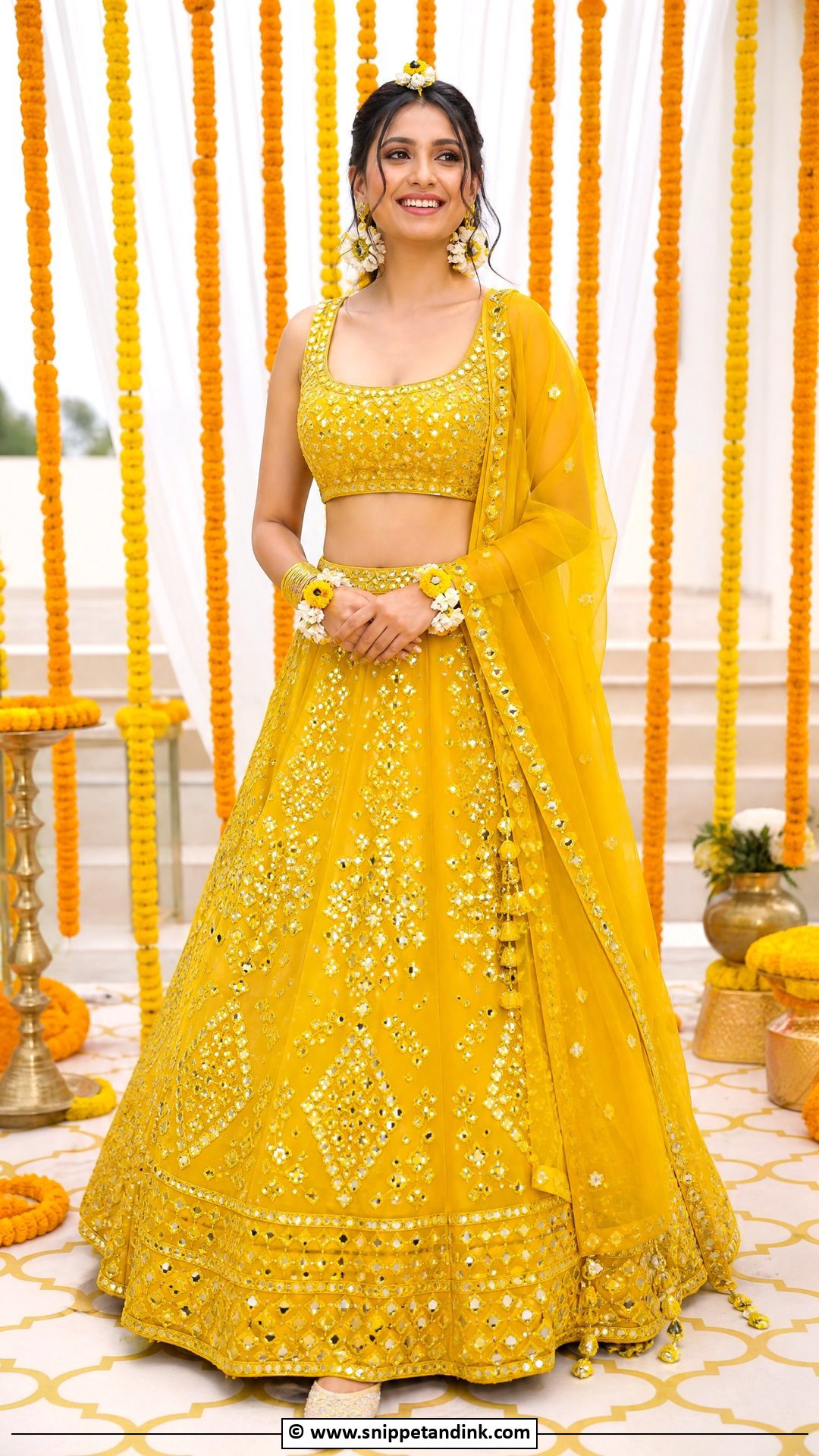
Mirror work earns its place at a daytime function because the small mirrors reflect sunlight rather than needing evening lights. Choose a lightweight georgette or cotton silk base, since mirrors on a heavy fabric get tiring by noon. A blouse with mirror borders and a soft dupatta keeps it balanced. If the skirt is heavily embellished, skip the necklace. For close family, a lighter version works just as well.
16. Yellow Dhoti Kurta For Haldi
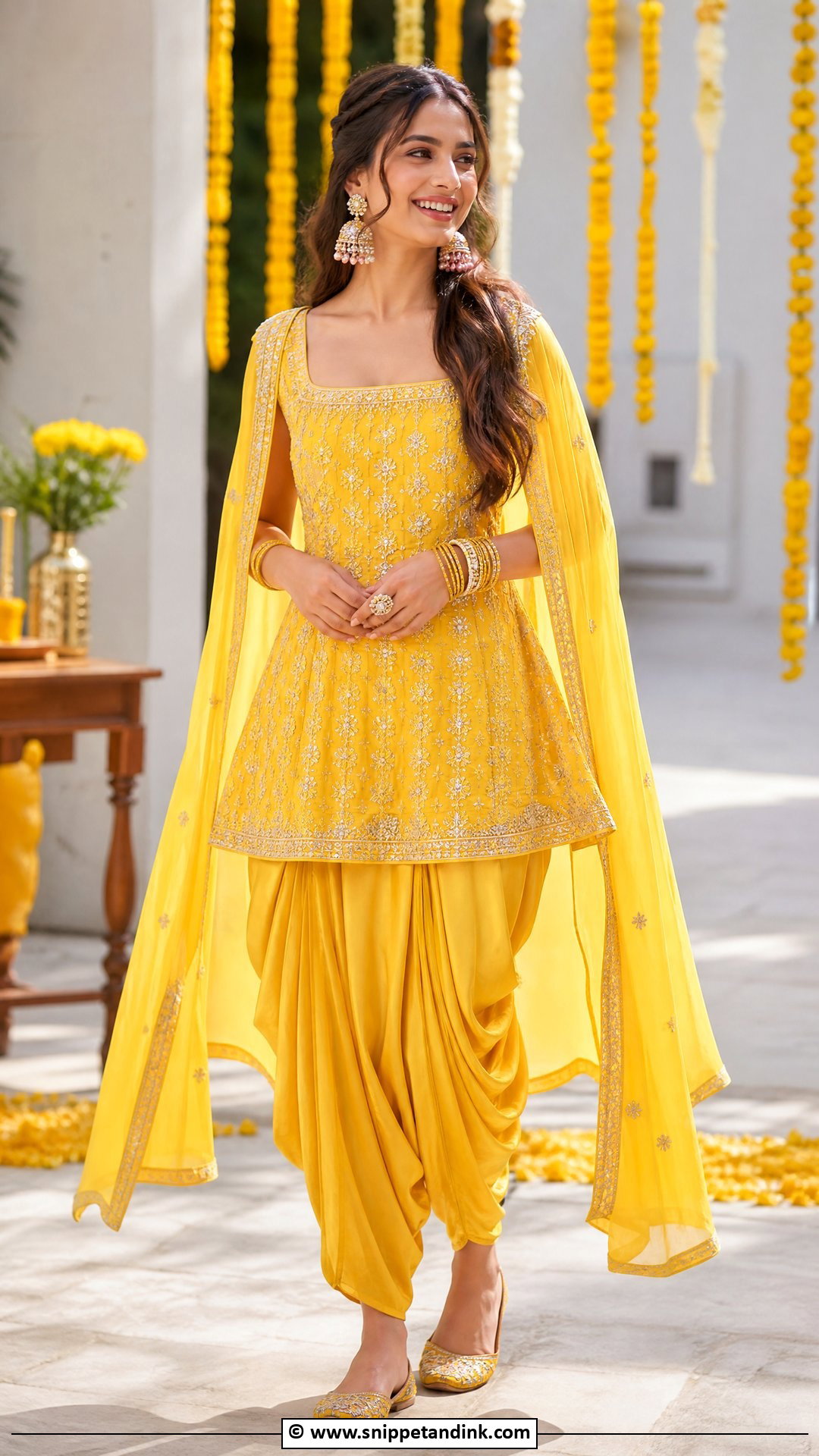
A yellow dhoti kurta for Haldi is the outfit for floor cushions and dancing. The draped bottom gives you room to fold your legs without strain. A short or asymmetric kurta, or a peplum top, gives the outfit its shape. Add a light cape if you want coverage. The fabric has to be light, as heavy dhoti pants balloon out instead of falling into soft folds.
17. Mint Green Lehenga For Haldi
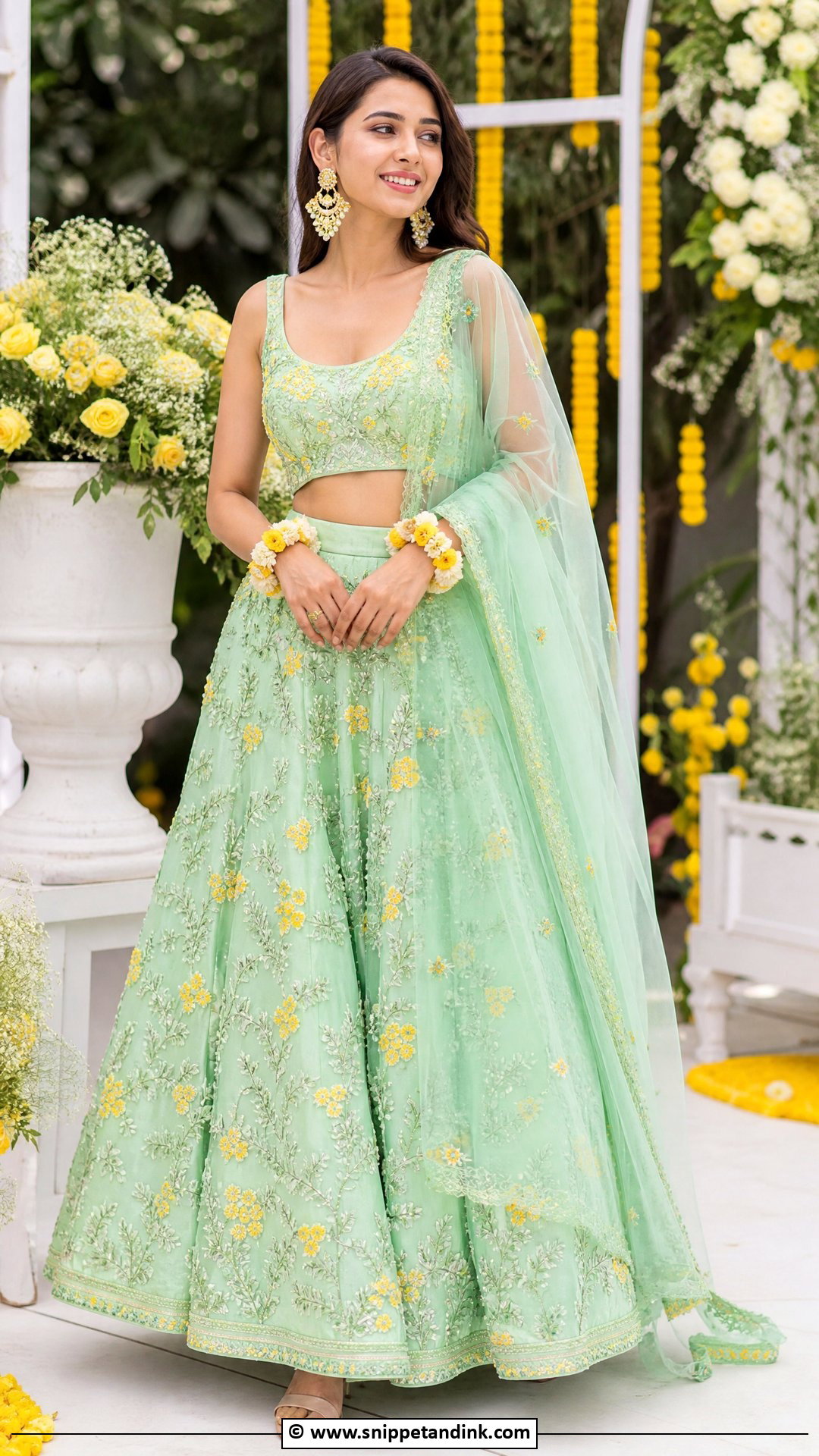
Mint is the colour I suggest when the bride is in bright yellow and her friends want to frame her rather than match her. In group photos the cool green makes the yellow look even warmer. A mint lehenga with yellow floral prints or light gota works well. Gold earrings and floral bracelets add festivity, and neutral makeup keeps the shade soft. It suits garden and terrace haldis especially.
18. Yellow Chikankari Kurta Set For Haldi
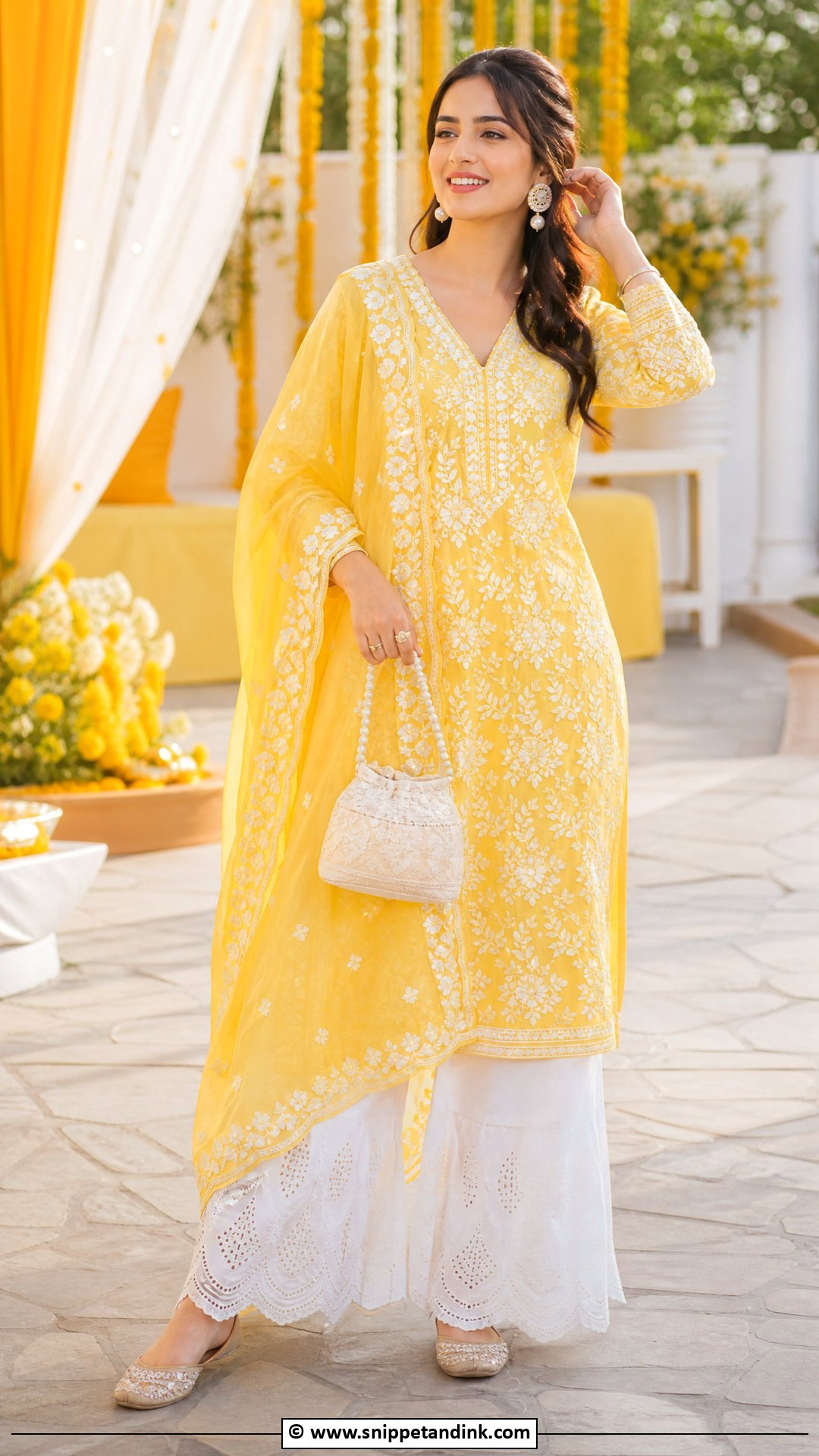
Chikankari is hand embroidery, traditionally white thread on fine cotton, and it’s one of the most breathable options for a hot morning. A straight kurta with palazzos or cigarette pants is understated and respectful. Add a white or yellow dupatta and pearl studs or jhumkas. Smooth accessories matter, since the fine threads snag on rough metal. It’s the right level of dressy for a guest unsure about the formality.
19. Yellow Organza Saree For Haldi
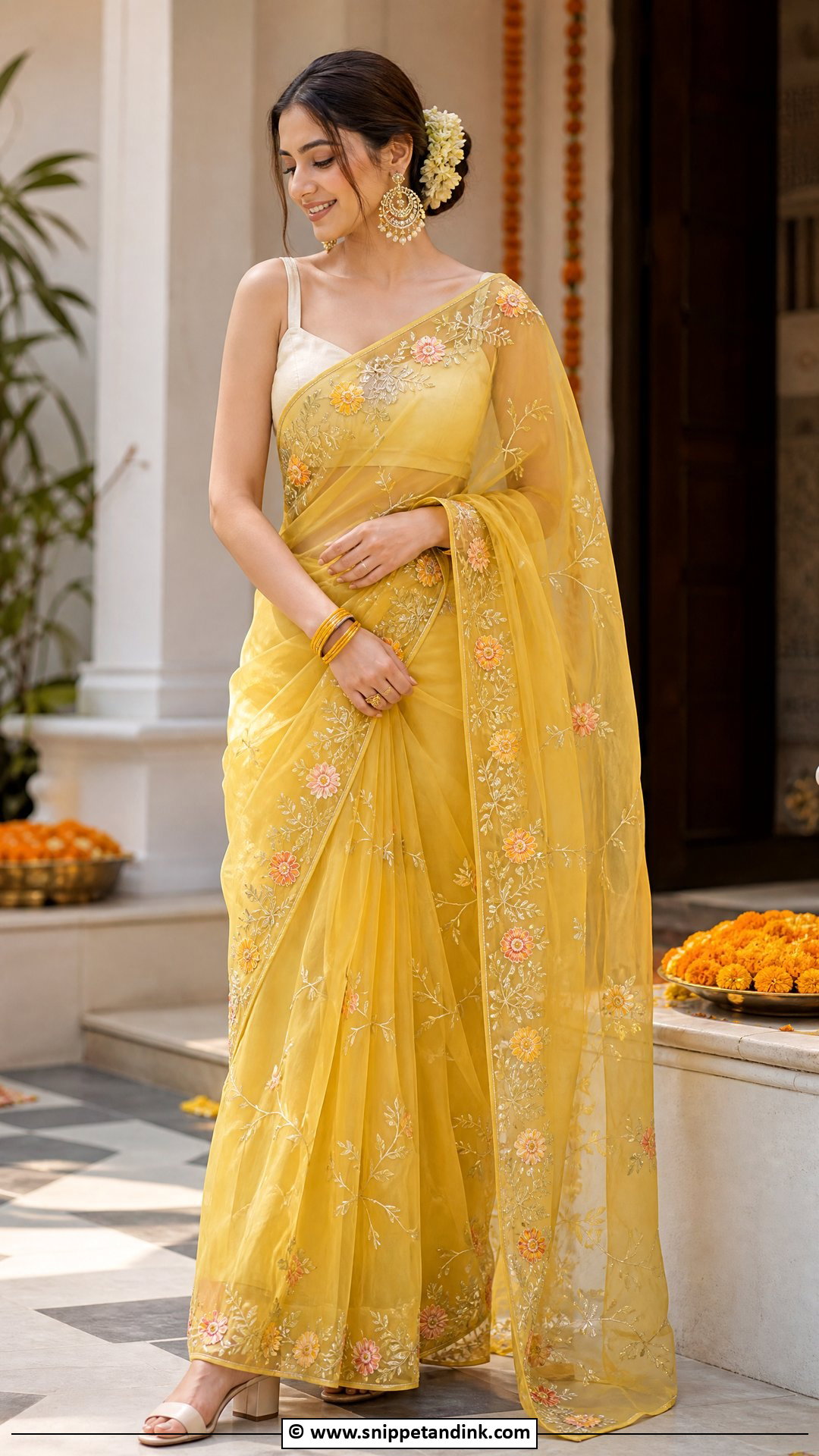
An organza saree feels special without the weight of silk. Choose floral embroidery or scalloped edges and a fitted blouse in yellow, ivory or pink. Organza is crisp, so the pleats want to spread; I pin them at the waist and again lower down so you can move with confidence. A neat bun with fresh flowers finishes it. Keep other styling simple so the sheer texture shows.


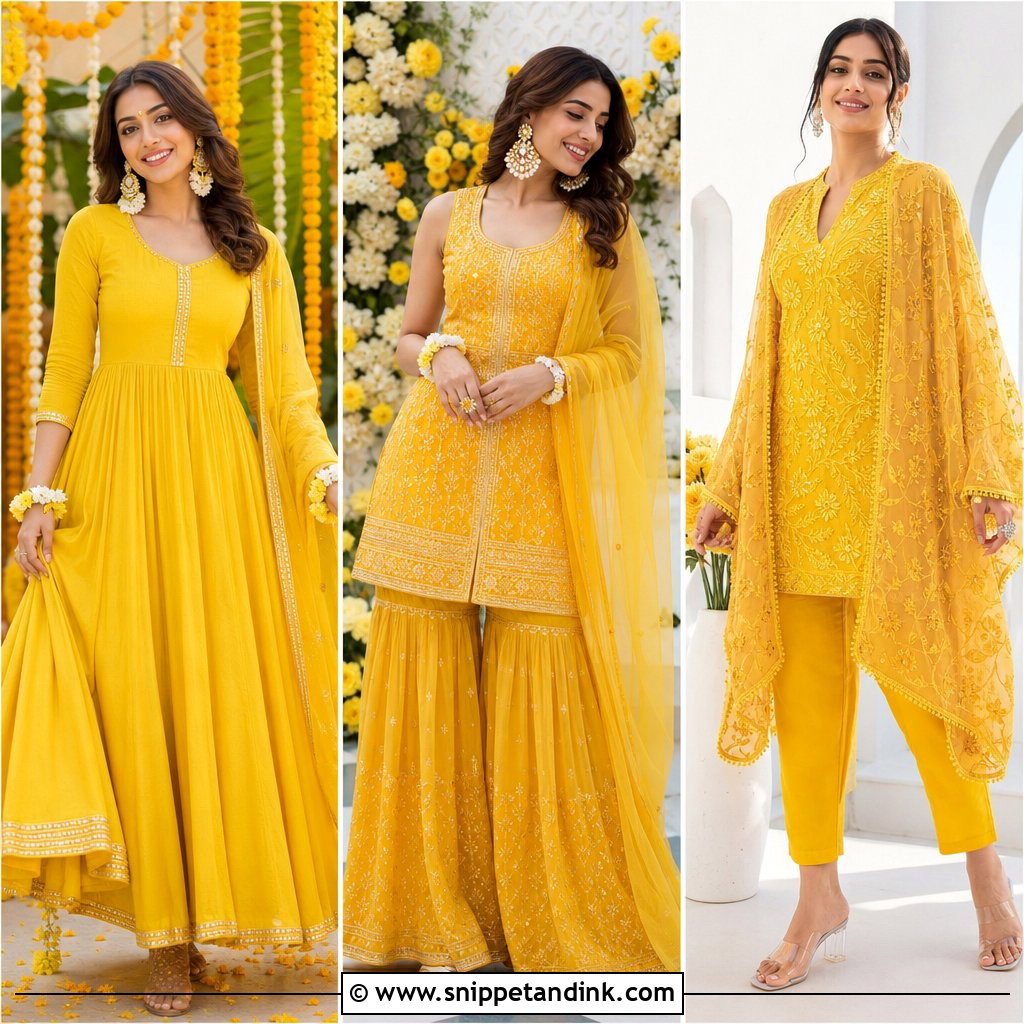
20. Yellow Skirt And Crop Top For Haldi
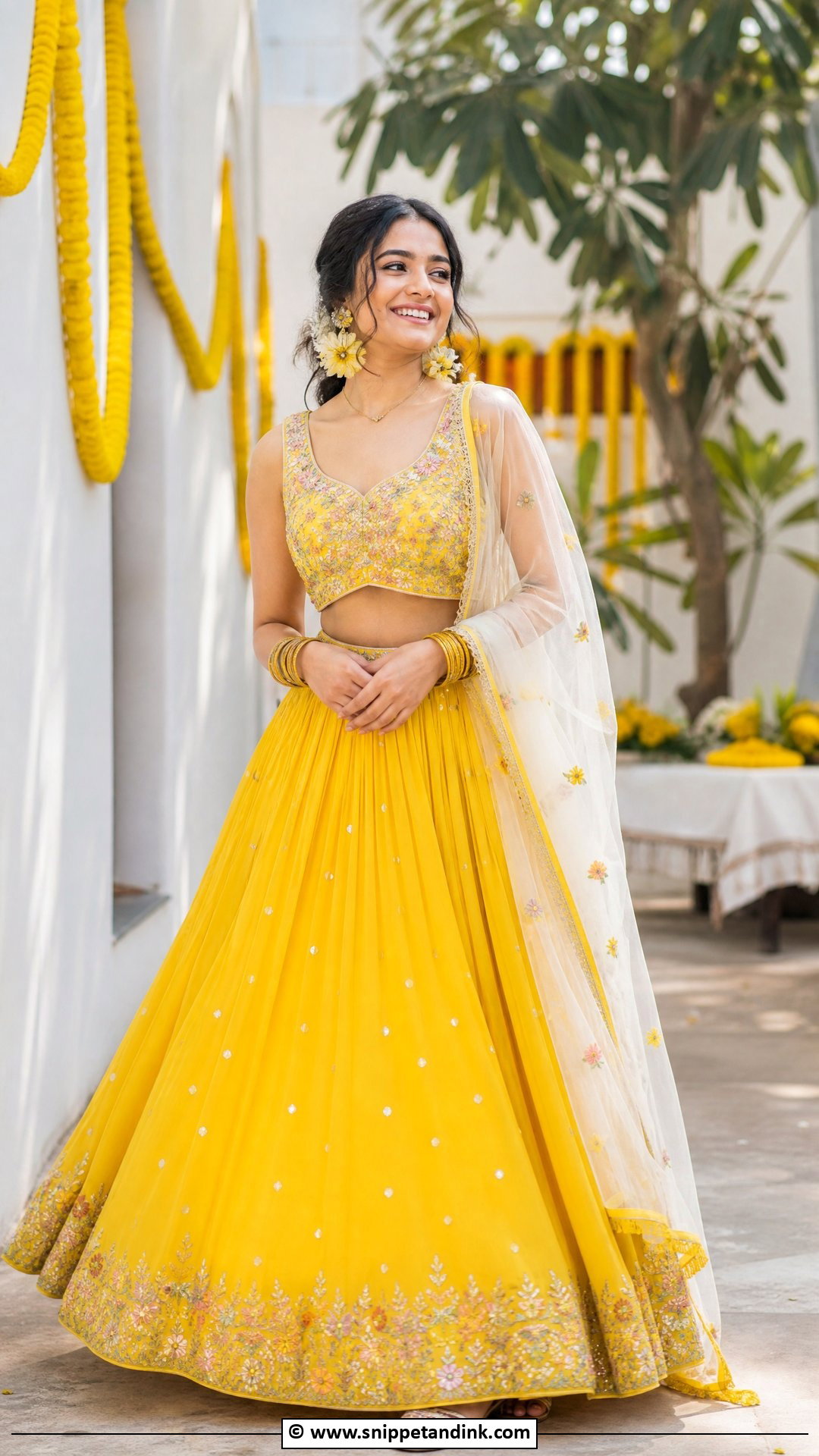
A skirt and crop top gives you the lehenga effect with less fabric and more reuse. The rule I follow for balance: if the skirt has a bold print, keep the top plain, and if the top is heavily worked, choose a cleaner skirt. Add a dupatta for a traditional touch. Floral earrings, bangles and a braid suit younger guests and bridesmaids.
21. Marigold Silk Saree For Haldi
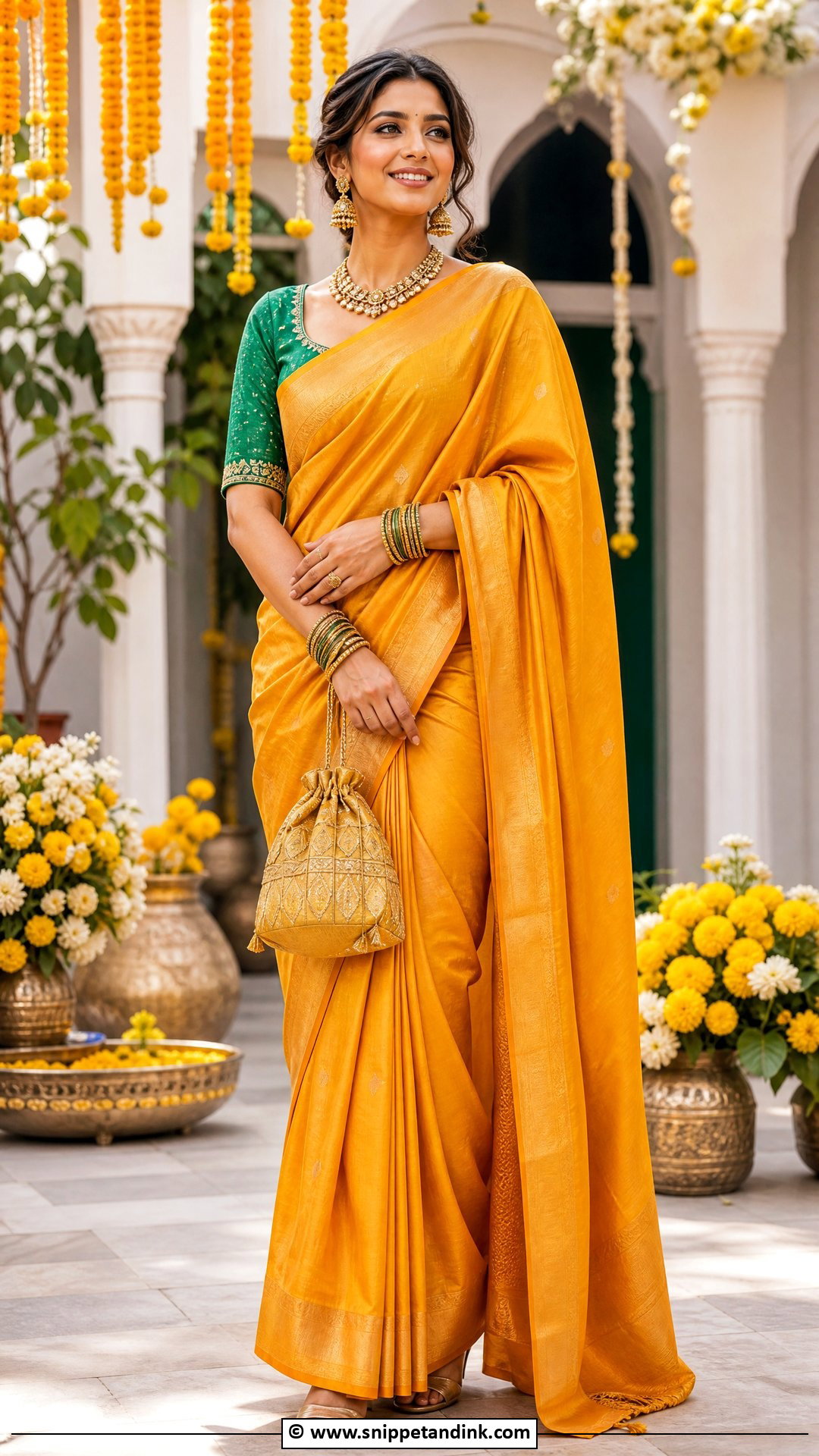
Marigold sits between yellow and orange, and in a silk saree it glows in sunlight with gold jewellery. Choose soft silk, silk cotton or a lightweight Banarasi-style weave. A contrast blouse in green or pink adds charm. This is the saree I’d suggest for the bride’s or groom’s mother, or for a bride who prefers a saree. Silk spots with water and holds turmeric, so stand back from the splashing.
22. Yellow Palazzo Suit For Haldi
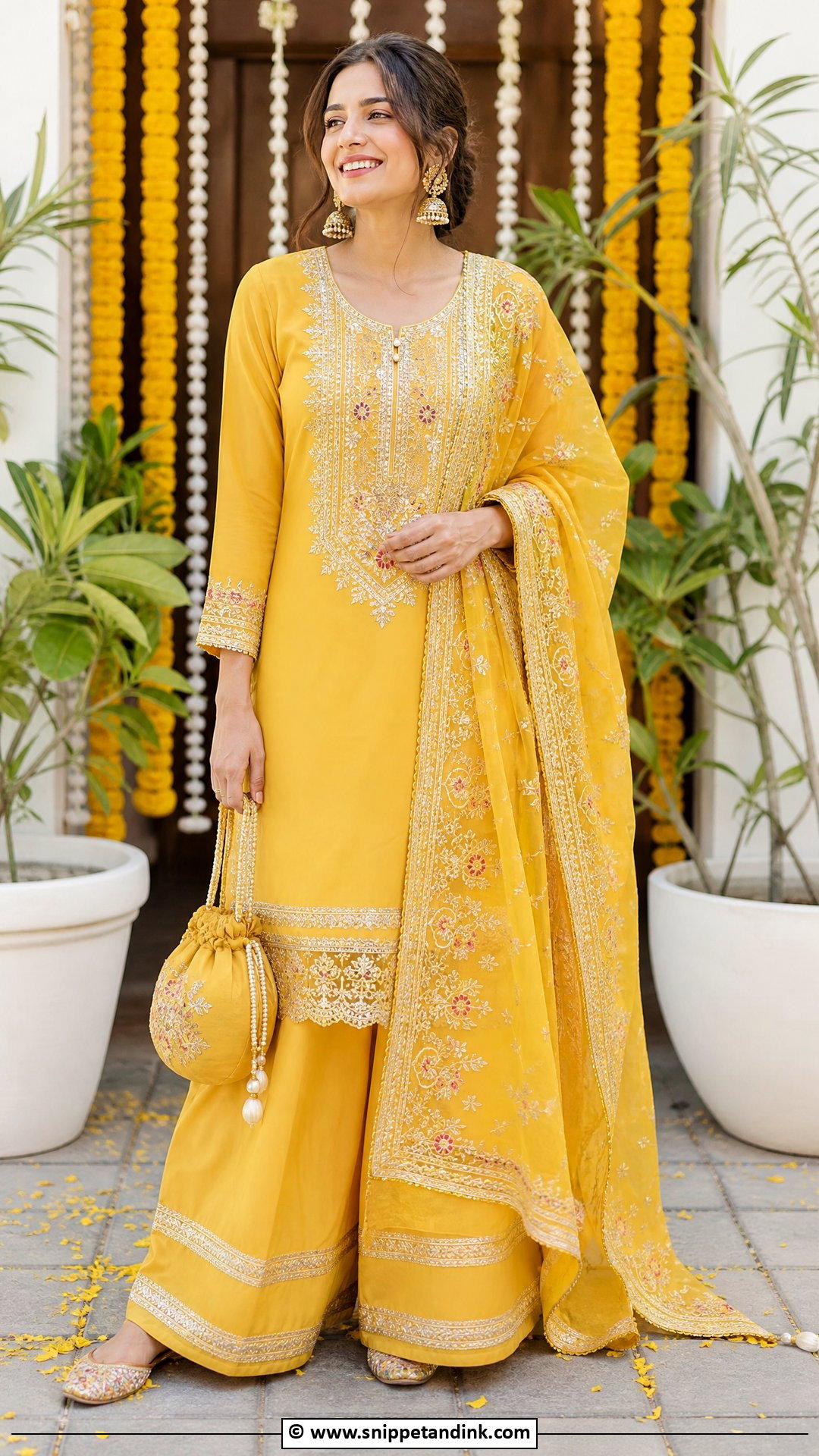
Unsure how formal the haldi will be? A palazzo suit is never wrong. Block print or gota borders on the kurta keep it festive. Cotton, muslin and rayon are comfortable in heat, and a monochrome yellow set with a detailed dupatta looks the most polished. Jhumkas, a potli and embellished flats finish it.
23. Yellow Cape Lehenga For Haldi
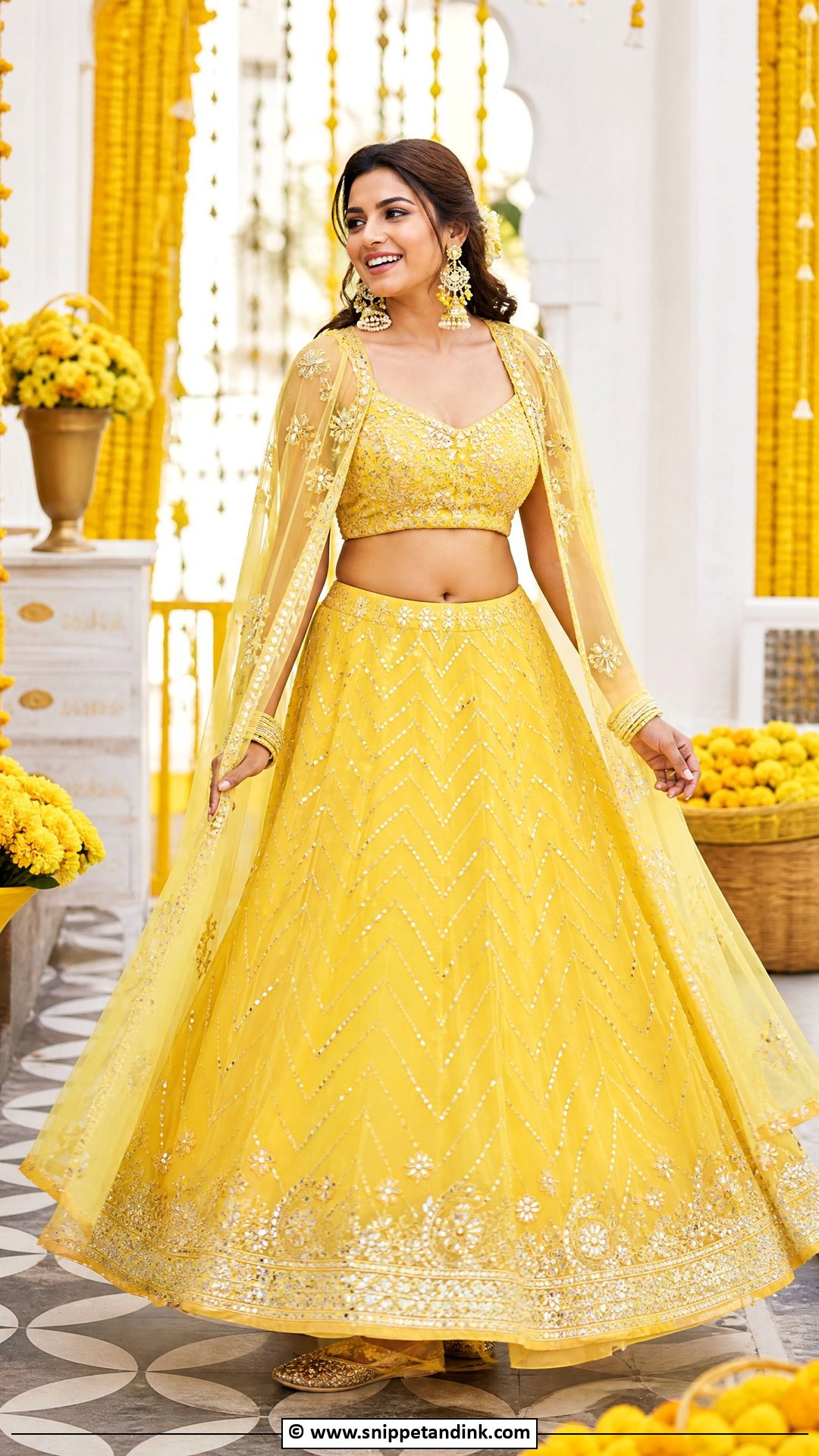
A cape gives a lehenga movement and coverage while leaving both hands free, which is exactly what you want when relatives are applying paste. A sheer cape with tassels or mirror work over a matching blouse looks modern. Wear earrings instead of a necklace so the cape’s neckline stays clean. For bridesmaids, choose a simpler design so the bride’s outfit leads.
24. Yellow Printed Saree For Haldi
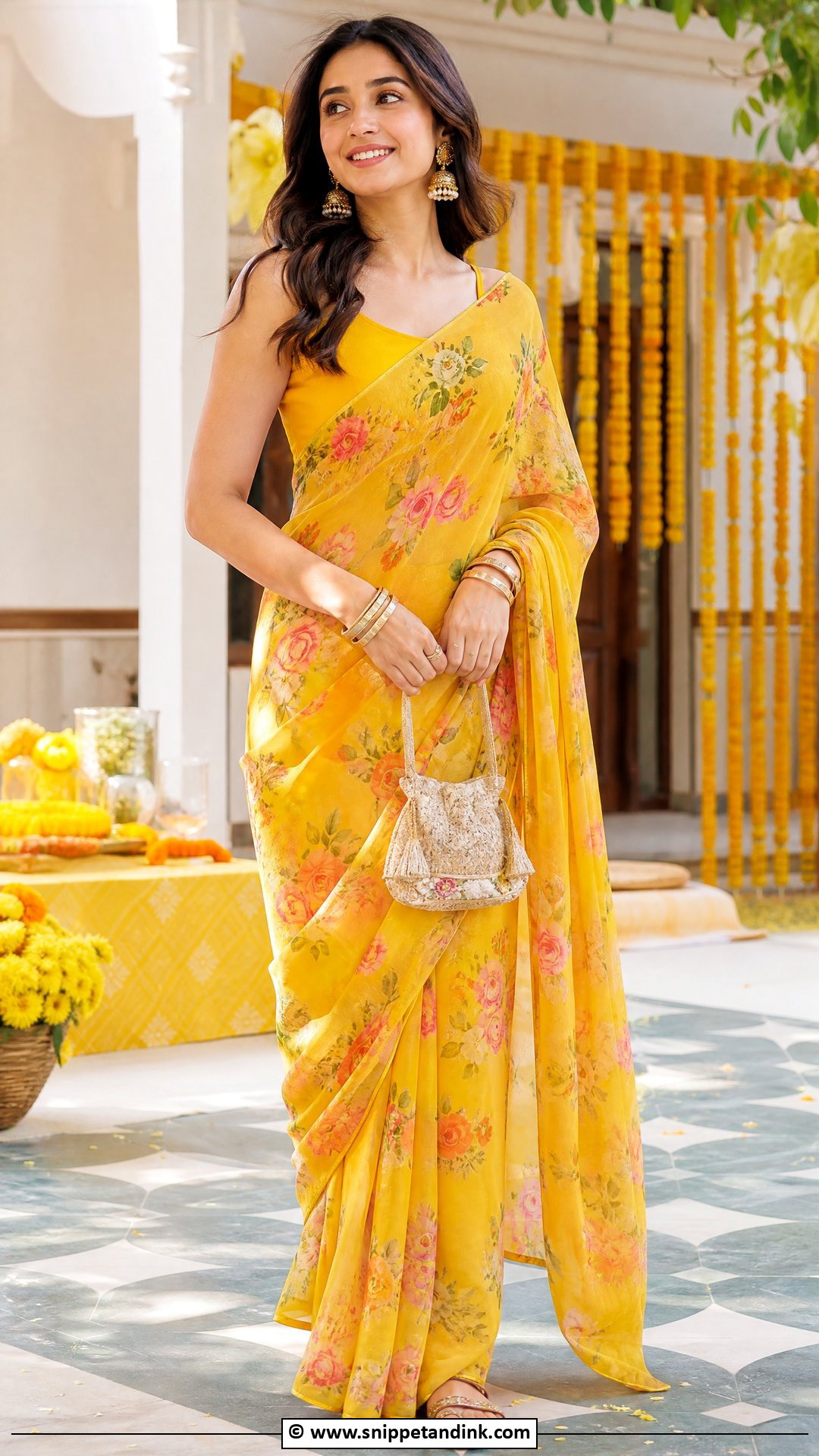
A yellow printed saree for Haldi suits guests and family who want to look festive without looking like they’re competing with the bride. Floral, block print, leheriya or bandhani patterns all work. A simple blouse, jhumkas and bangles are enough jewellery. Prints are also forgiving when turmeric ends up on your sleeve. A pre-draped version saves time if you’re getting ready quickly.
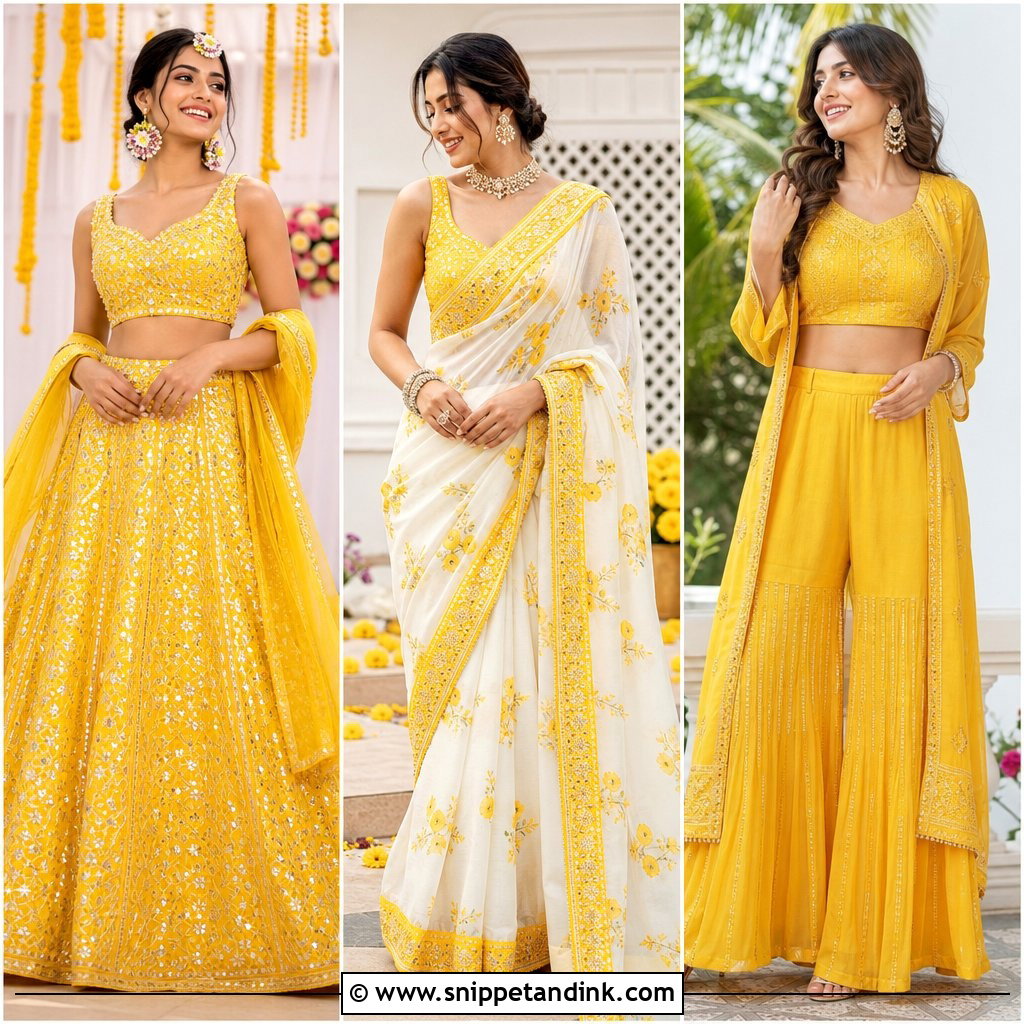


25. Yellow Peplum Sharara For Haldi
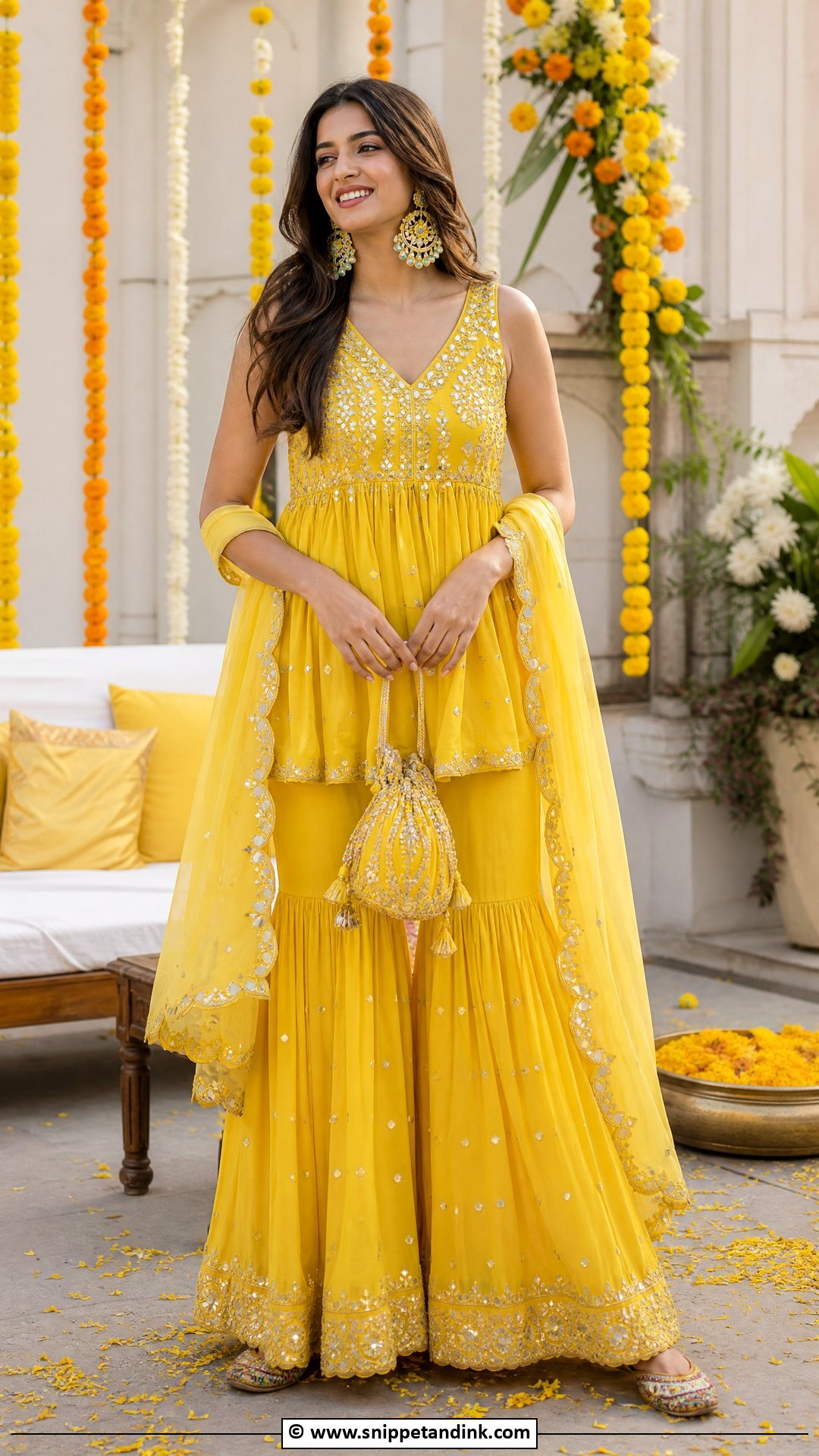
A peplum top sits in place when you sit and dance, which is more than most kurtas manage. It defines the waist, and the sharara adds volume below. Light embroidery or printed fabric keeps it festive. If the neckline is detailed, skip the necklace and wear statement earrings. A small potli and decorated juttis complete it.
26. Pastel Yellow Lehenga For Haldi
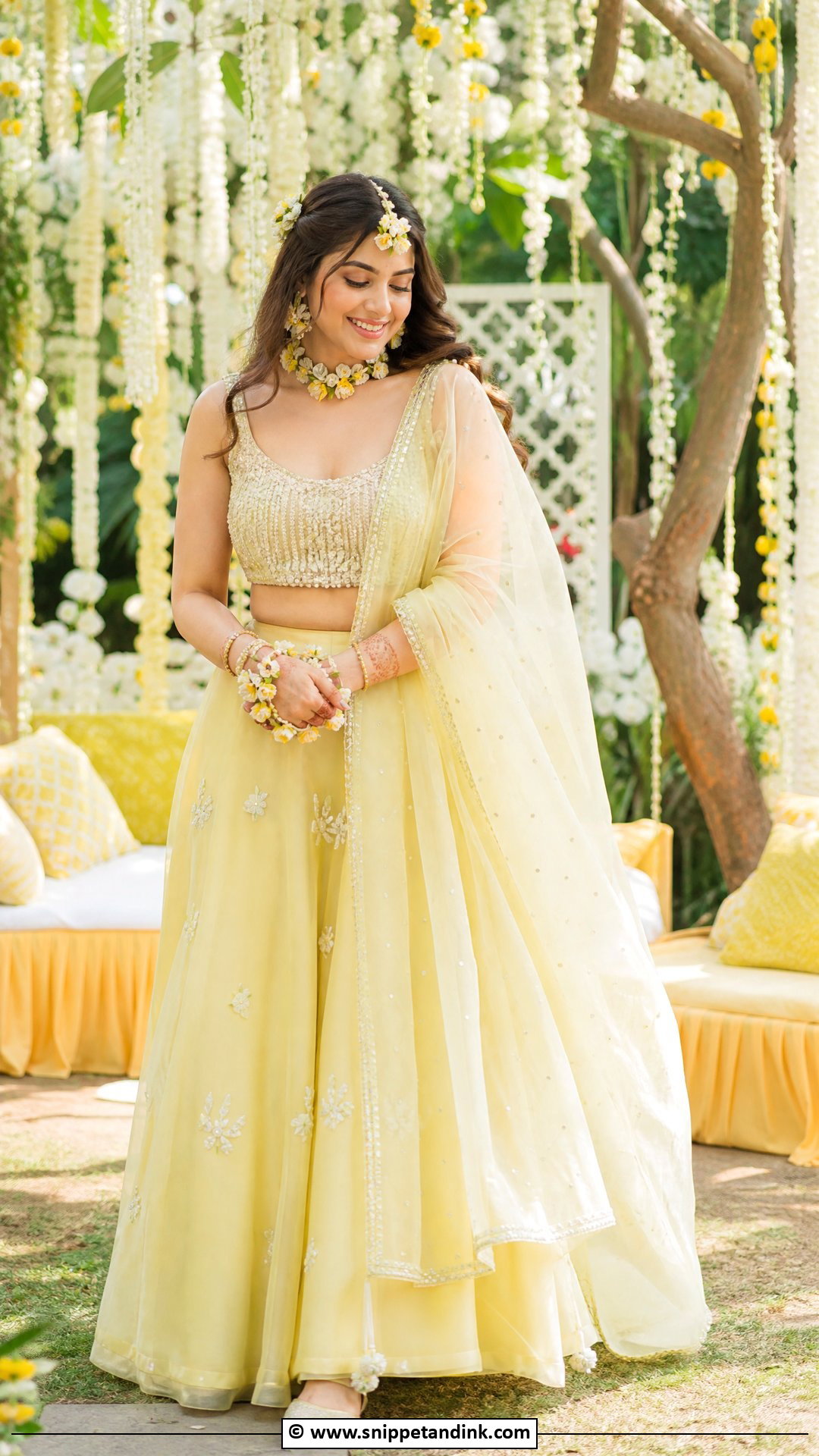
A pale yellow lehenga suits brides who find marigold too loud. Organza, net and chiffon keep it airy, and ivory or pearl embroidery stays delicate. A sheer dupatta and simple bangles finish it. The one thing I warn about: pale colours can wash out in harsh noon sun, so time the bridal portraits for softer light or move them into shade.
27. Yellow Salwar Suit For Haldi
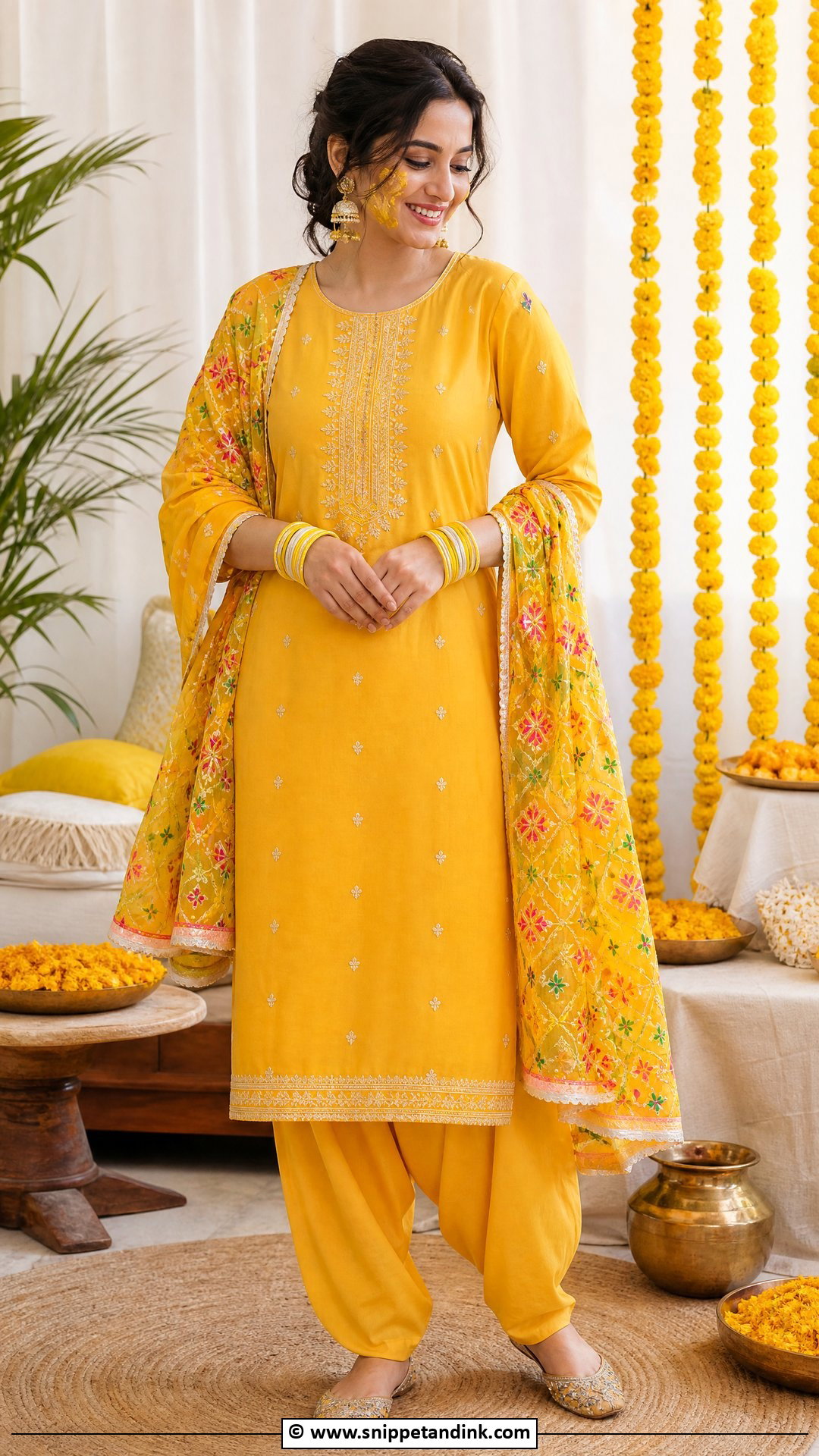
A salwar suit is the comfortable, traditional choice for elders and guests. A straight kurta with a salwar works well, or a Patiala bottom if you want volume. Phulkari touches or gota borders add festivity. It’s easy to sit in and won’t be precious if turmeric lands on it, which makes it ideal for home ceremonies.
28. Yellow Ruffle Saree For Haldi
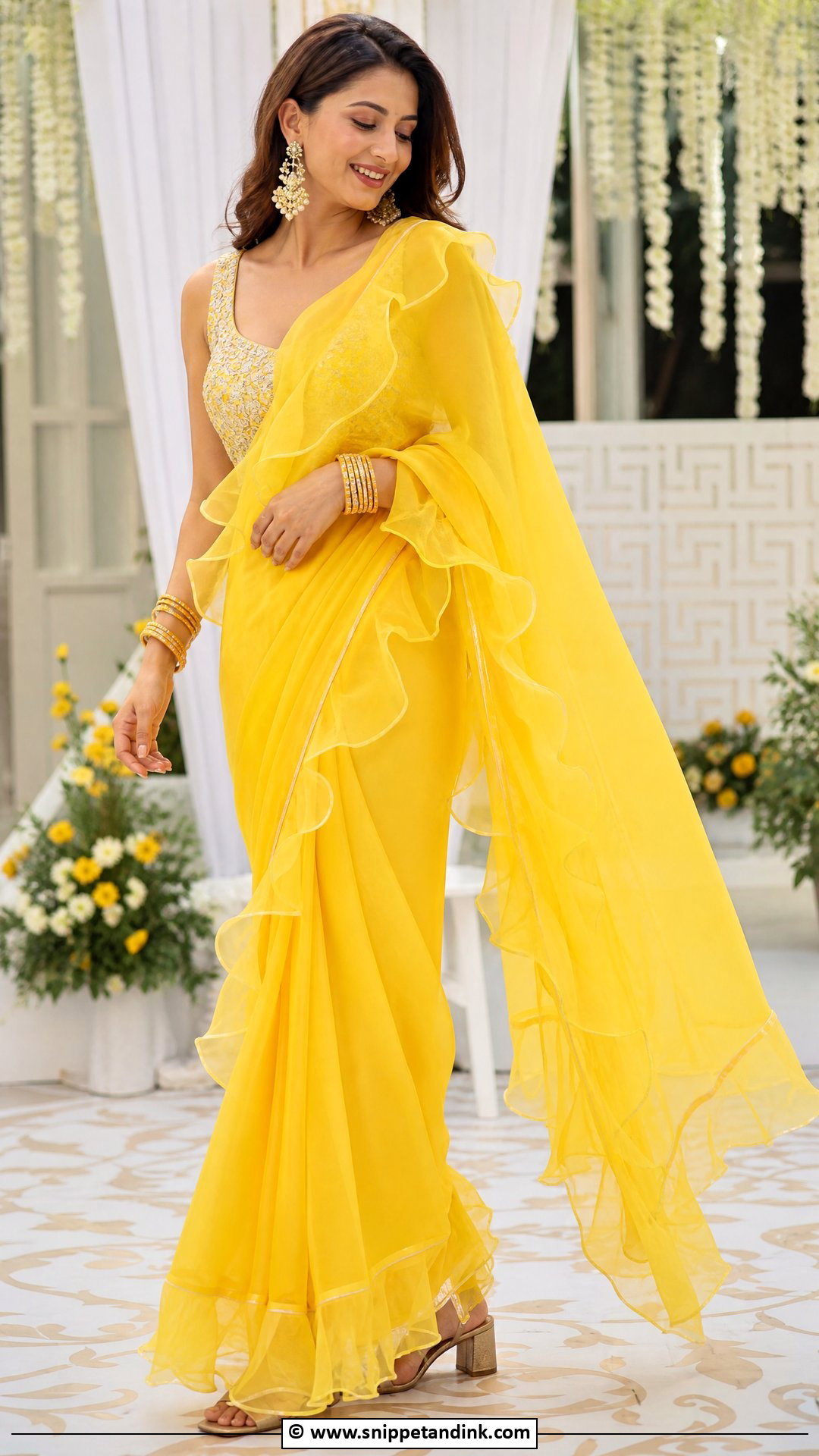
Ruffles add movement to a saree without any embroidery. Chiffon, georgette or a pre-stitched version are the easiest to drape. A halter or sleeveless blouse with a bare neck keeps the look clean, and statement earrings are all the jewellery needed. Block heels help the ruffled hem fall evenly, but on grass I’d still choose flats.
29. Yellow Kaftan Set For Haldi
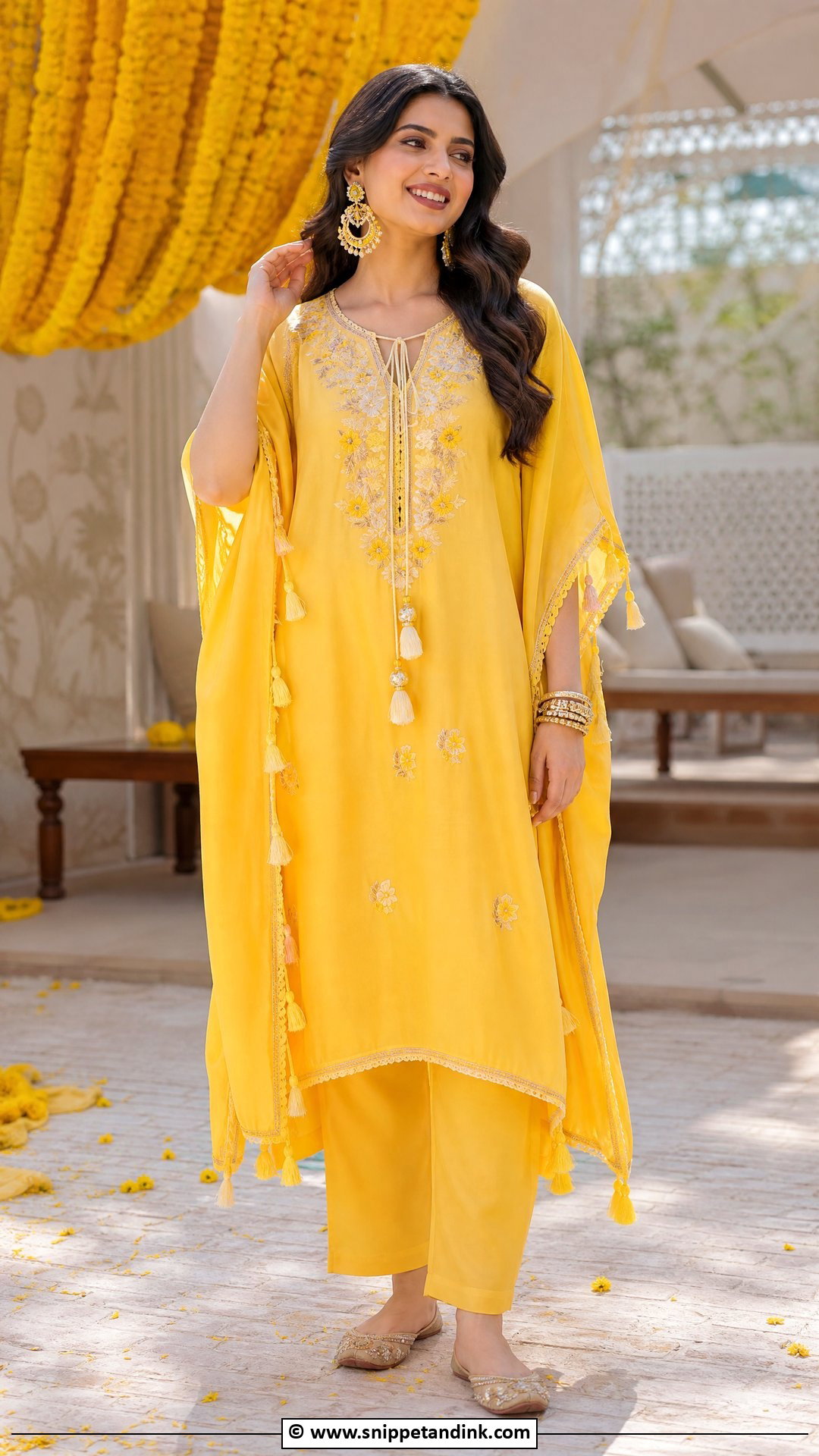
A kaftan set doesn’t cling, which makes it comfortable for all ages and body types at a low-key or outdoor haldi. Choose one with mirror work, tassels or printed borders and wear it with straight pants or palazzos. Earrings, bangles and embellished flats make it feel festive. It’s a good fit for destination weddings and easy to wear again.
30. Yellow Jacket Lehenga For Haldi
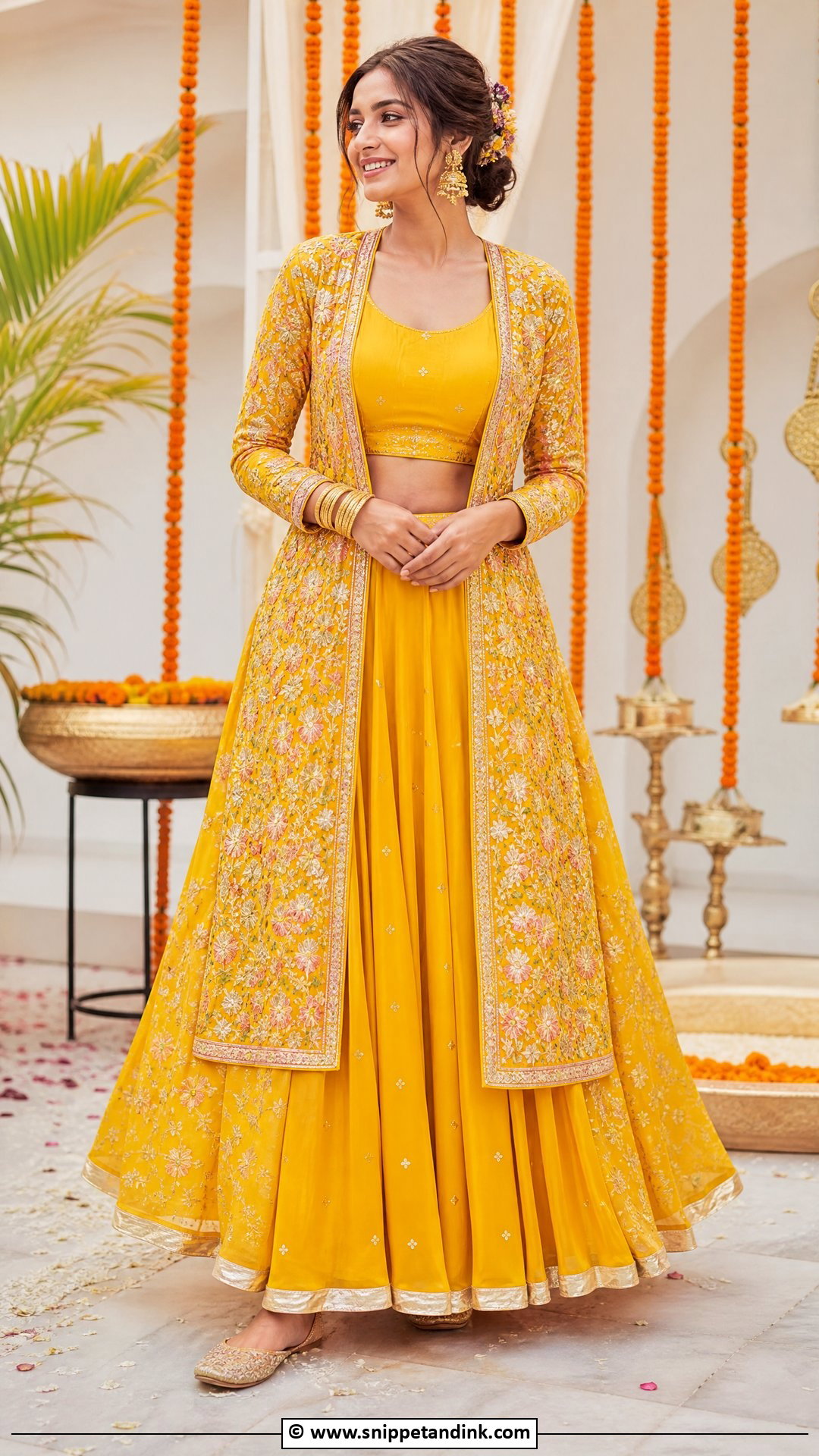
A jacket can replace the dupatta, and it doesn’t slide off when someone hugs you. Short, long, sheer or embroidered, choose by the weather. Pair it with a simple blouse and flared skirt so the jacket is the focus, and put the mirror work or gota borders there. Keep everything else clean: earrings, a few bangles, juttis.
31. Yellow Bandhani Outfit For Haldi
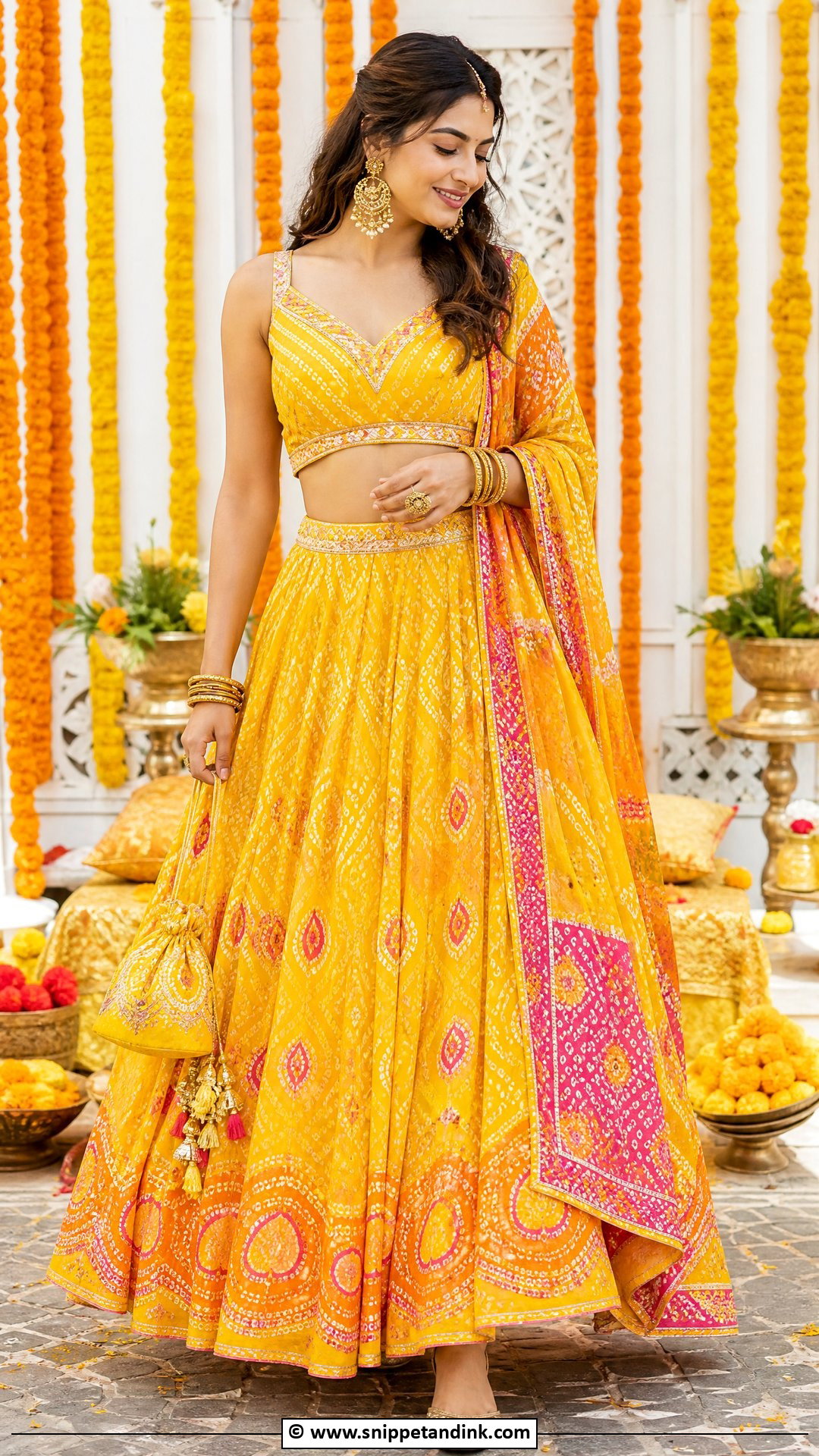
A yellow bandhani outfit for Haldi brings handcraft into the celebration. Bandhani dots are made by binding tiny points of cloth before dyeing, so every piece is a little irregular. A saree, lehenga, sharara or kurta set all work, with red, orange or green accents. For a bride, a bandhani lehenga with a statement dupatta has the most impact. Because the print is busy, keep hair and makeup simple. Wash it alone the first time, as the dye can run.
32. Yellow Embroidered Jumpsuit For Haldi
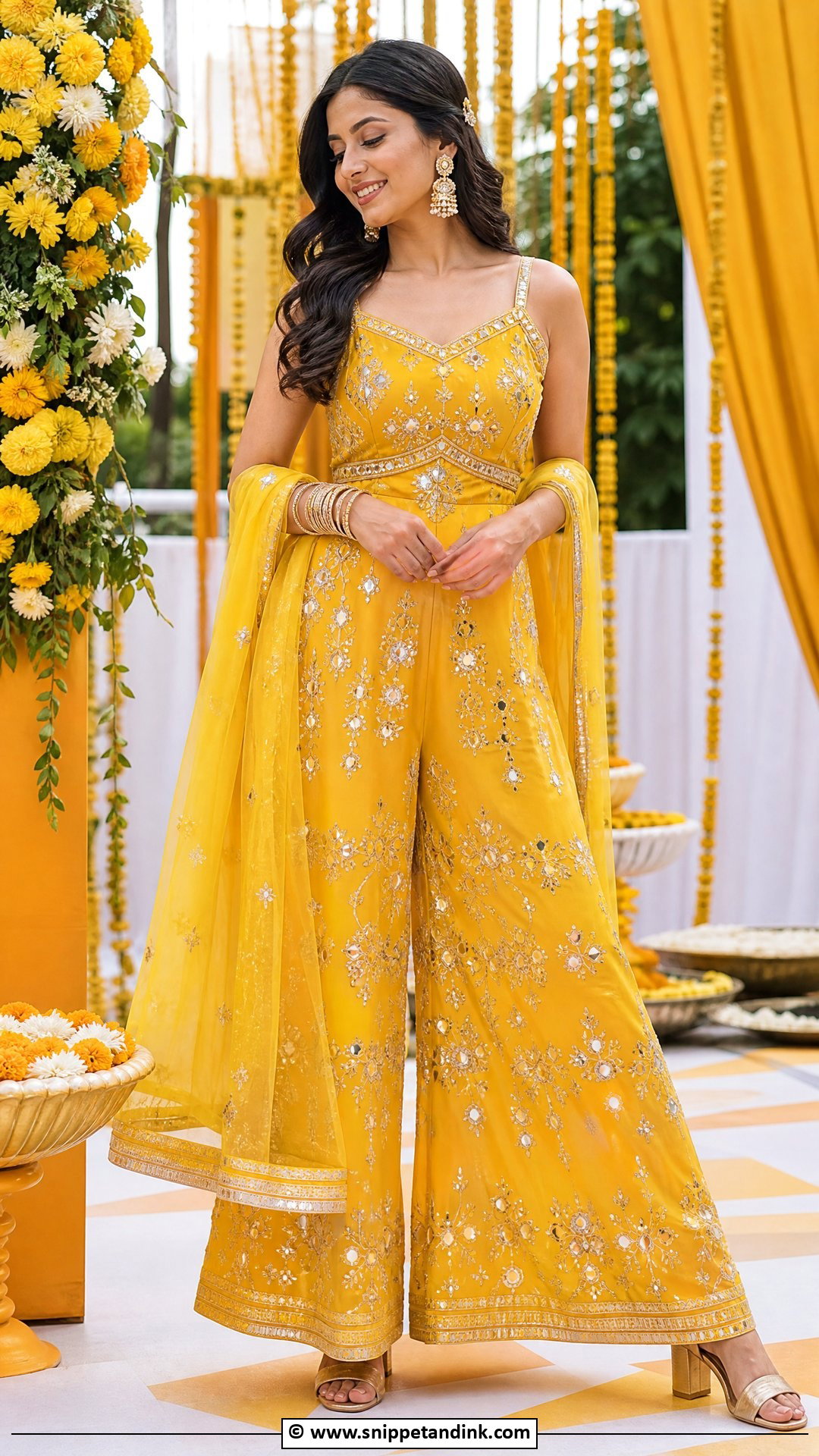
A wide-leg embroidered jumpsuit is a clean, modern option for a fusion haldi. Mirror work or a detachable dupatta makes it suitable for the ceremony. Before buying, sit down in it: if the seat pulls tight, it’ll be uncomfortable on a floor cushion. Statement earrings and a sleek ponytail suit the silhouette.
33. Yellow Short Kurti And Skirt For Haldi
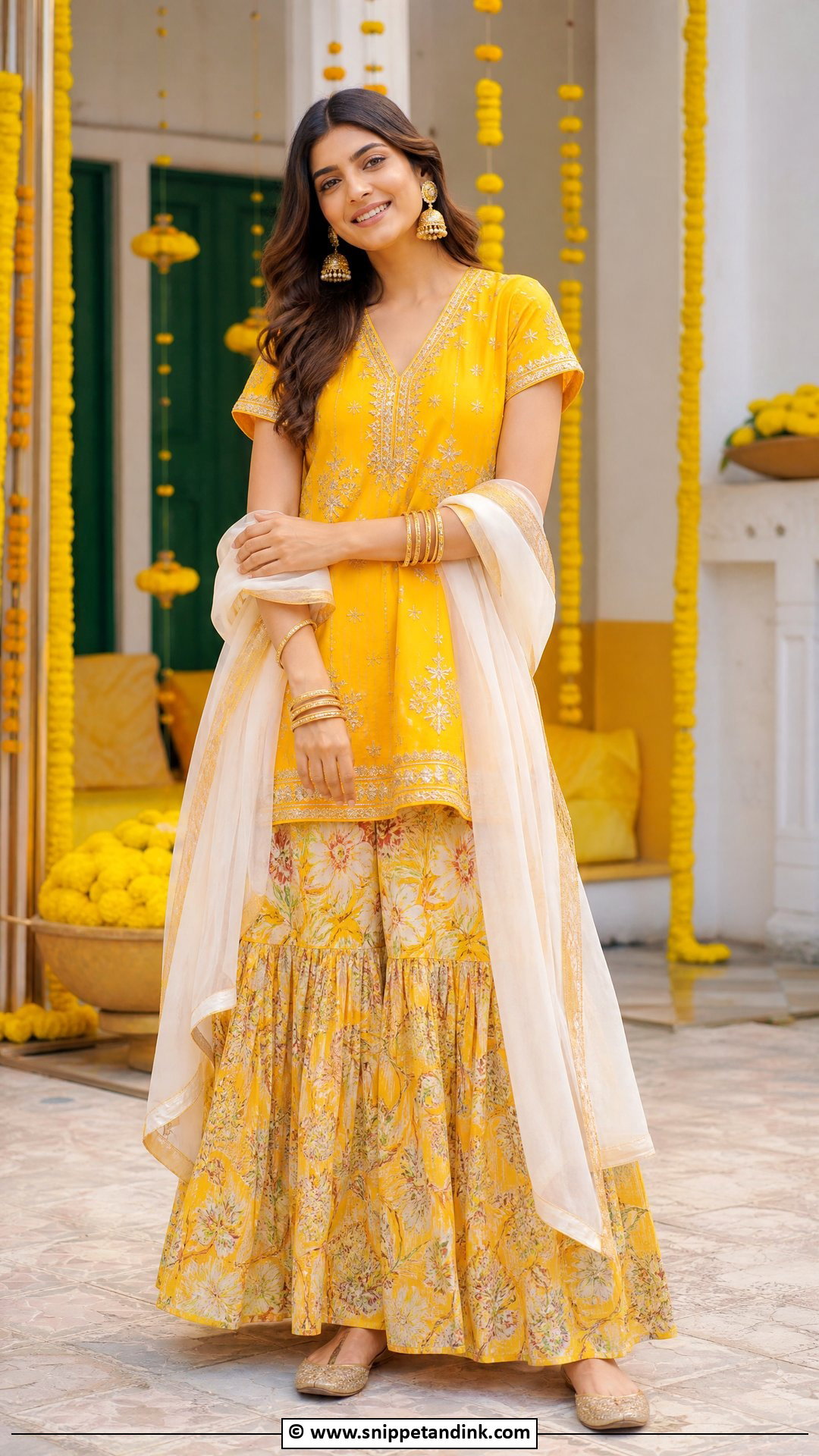
A short kurti with a flared skirt gives an ethnic look that’s lighter than a full lehenga. The same balance rule applies: a heavily printed skirt wants a plain kurti, and a mirror-work kurti wants a calmer skirt. A dupatta makes it more traditional. Juttis, jhumkas and a half-up braid suit younger family members especially.
34. Yellow Net Dupatta Suit For Haldi
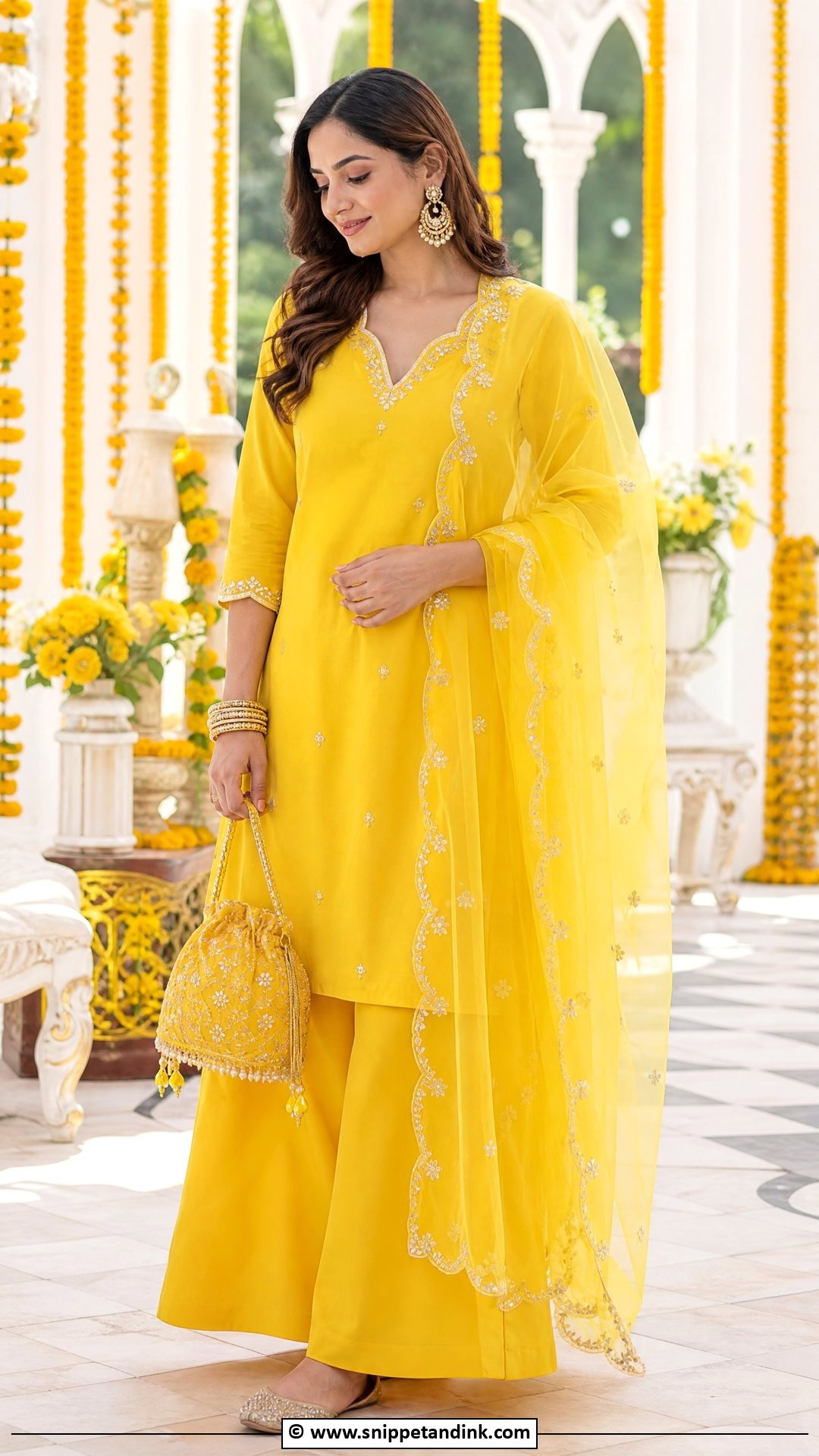
A net dupatta can lift a plain kurta set, anarkali or sharara into ceremony wear on its own. Look for gota, sequins or scalloped edges. Net is light, but it’s also slippery, so pin it securely at the shoulder and the back before the ritual. It catches the light nicely in daytime photos.
35. Yellow And Green Haldi Outfit
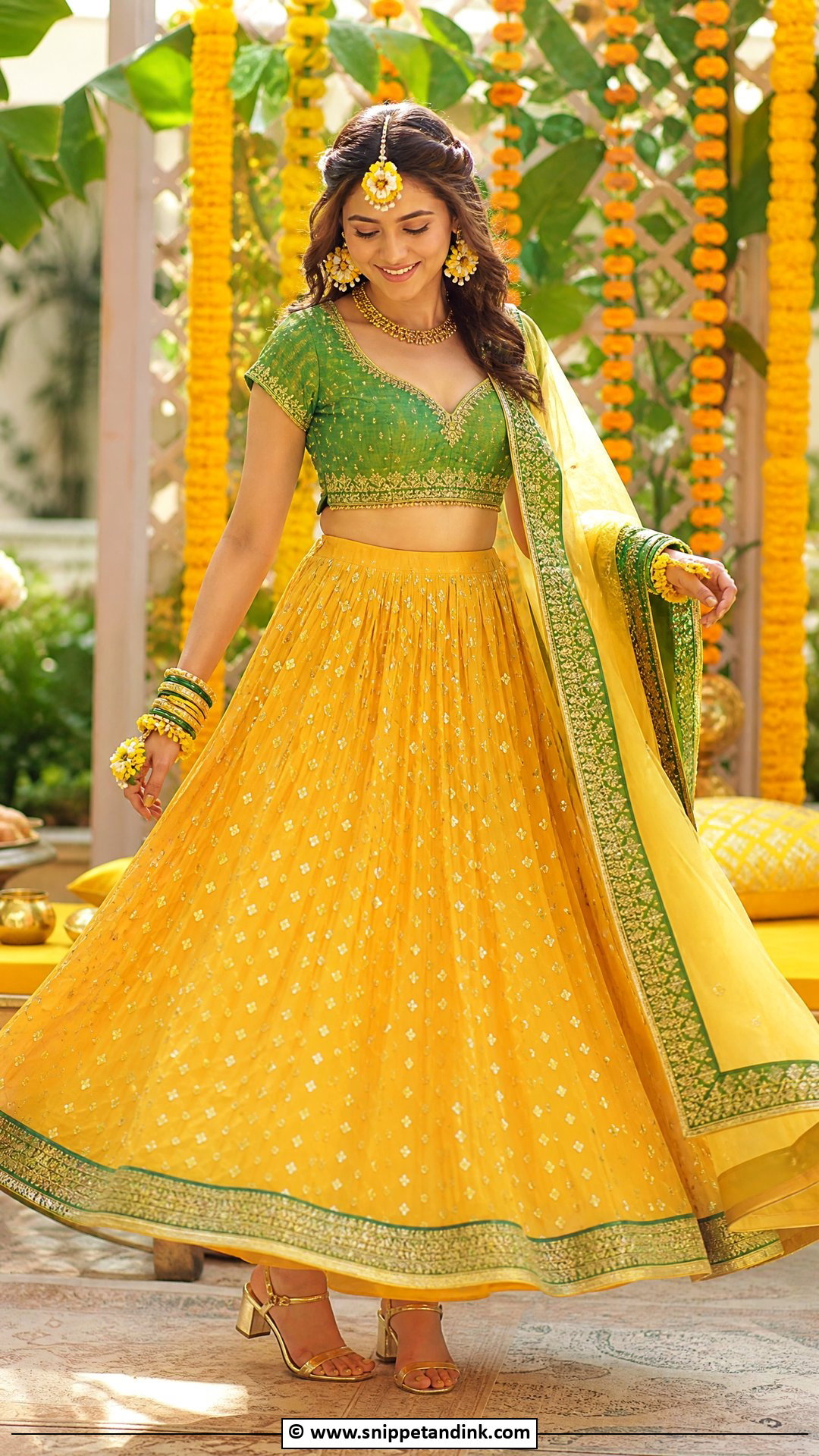
Yellow and green mirror the haldi setup itself: marigolds against their leaves. A yellow lehenga with a green blouse, a green sharara with a yellow dupatta, or a yellow saree with a green border all work. I let one colour lead so the outfit doesn’t split visually. Gold jewellery and flower accessories suit it, and juttis keep it comfortable.
Who Wears What on the Morning
Different people have very different jobs at a haldi, and I dress them accordingly.
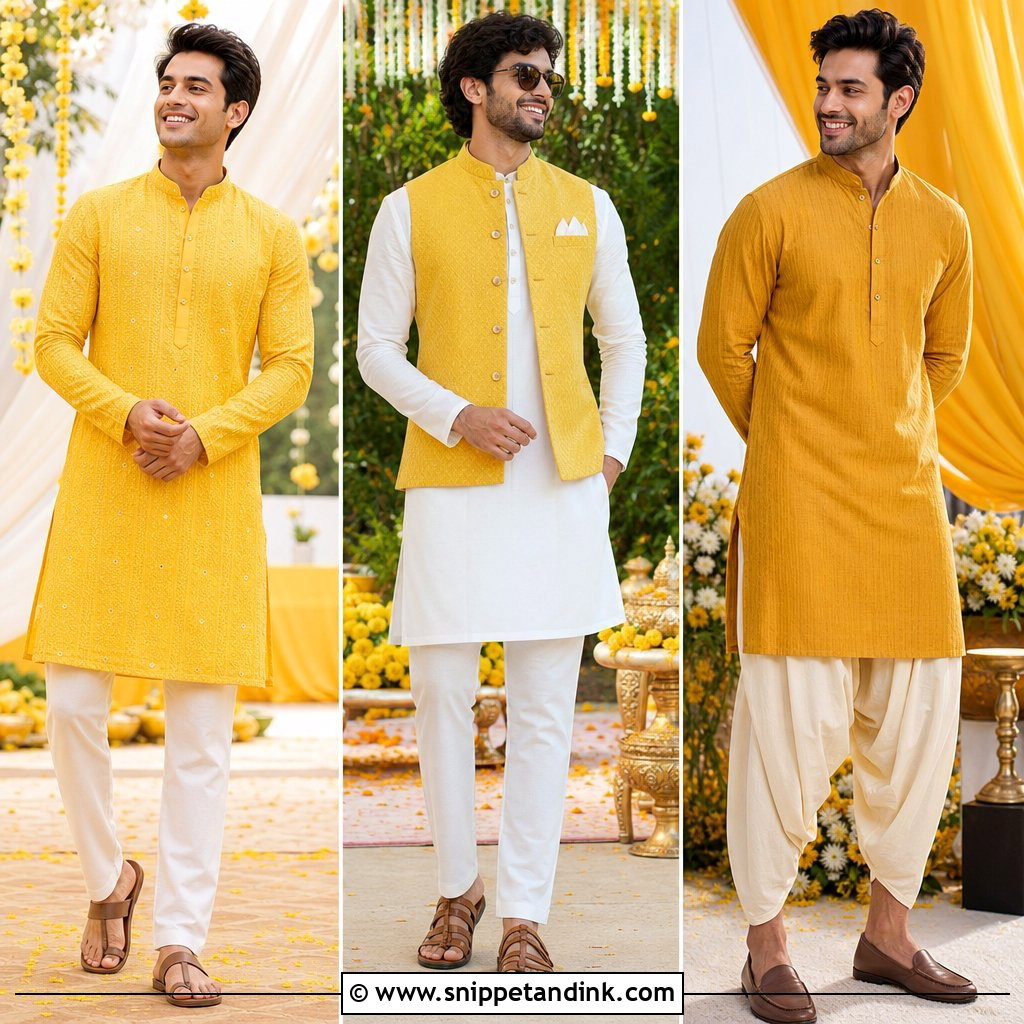
- The bride or groom: lightest fabric, best-pinned drape, nothing they’d mind staining. Two looks if they want clean portraits.
- Mothers and elders: covered, comfortable silhouettes like salwar suits, anarkalis or light silk sarees. They often sit longest, so soft waistbands matter.
- Sisters and bridesmaids: something they can carry trays and dance in, such as shararas, dhoti sets or co-ords.
- Guests: anything festive and day-appropriate. Avoid heavy reception wear, and assume a little paste might come your way.
Giving a Haldi Outfit a Second Life
Many people buy a haldi outfit, wear it once, and leave it at the back of a wardrobe with a turmeric stain. I’d rather plan for reuse from the start. Separates like a kurta with palazzos, a skirt with a crop top, or a co-ord split up easily and pair with clothes you already own. A yellow dupatta goes with half your festive wardrobe. Light cotton and chanderi pieces get worn again at Holi, Diwali gatherings and summer family events.
If a light-coloured piece has a mark that won’t shift, a tailor can sometimes add a border or appliqué over it, and a pale cotton can be over-dyed in a deeper shade. Neither is guaranteed, but both are better than throwing it away.
Comfort You Stop Noticing Is the Real Goal
The best haldi outfit is the one you forget you’re wearing once the paste and music start. Yellow is the classic, but mustard, peach, mint, lime, ivory, orange and green can all feel more personal. Brides tend to suit lehengas, sarees, shararas and cape sets; families and guests often do best in kurta sets, palazzo suits and printed sarees. Whatever you pick, choose breathable fabric, flat shoes, a pinned drape and light jewellery, and you’ll enjoy the morning instead of guarding your clothes.
You'll Like These Ideas:









Leave a Reply