
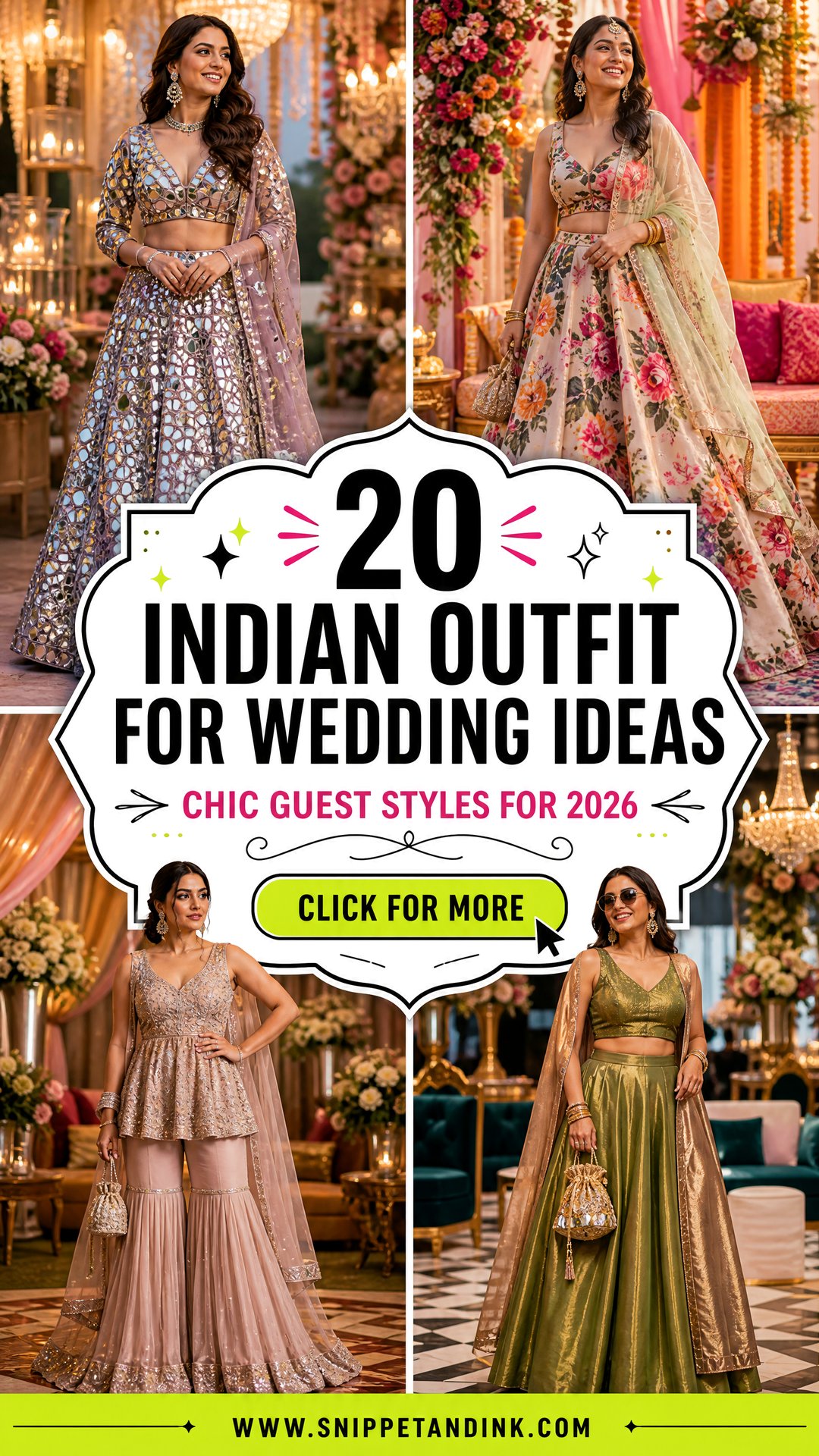
Guests ask me the same thing before an Indian wedding: how dressed up is too dressed up? Honestly, it’s hard to overdo it. What you can get wrong is the practical side, like a skirt you can’t sit in for a two-hour ceremony or a silk that’s unbearable at an outdoor lunch. The classic guest choices are sarees, lehenga cholis, and Anarkali suits, with shararas, jacket sets, regional weaves and fusion separates all welcome too. Below are twenty guest outfits, with my notes on which event each suits and what to check before you commit.
Colours a Guest Should Think Twice About
Indian weddings are colourful, and guests are expected to dress brightly. There are still a few shades I’d check before wearing.
Red is the traditional bridal colour in many communities, so most guests avoid head-to-toe red, especially a red lehenga. Maroon or a red saree with a contrasting border is usually fine, but ask if you’re unsure.
White and black are associated with mourning or considered unlucky in some families. Many modern weddings don’t mind, but older relatives might. If the couple hasn’t said otherwise, choose another colour for the ceremony itself.
Themed events sometimes have a requested palette, like yellow for haldi or green for mehndi. If the invitation or wedding website mentions one, follow it. It shows up clearly in group photos when one guest is the exception.
1. Embroidered Lehenga Choli for Wedding
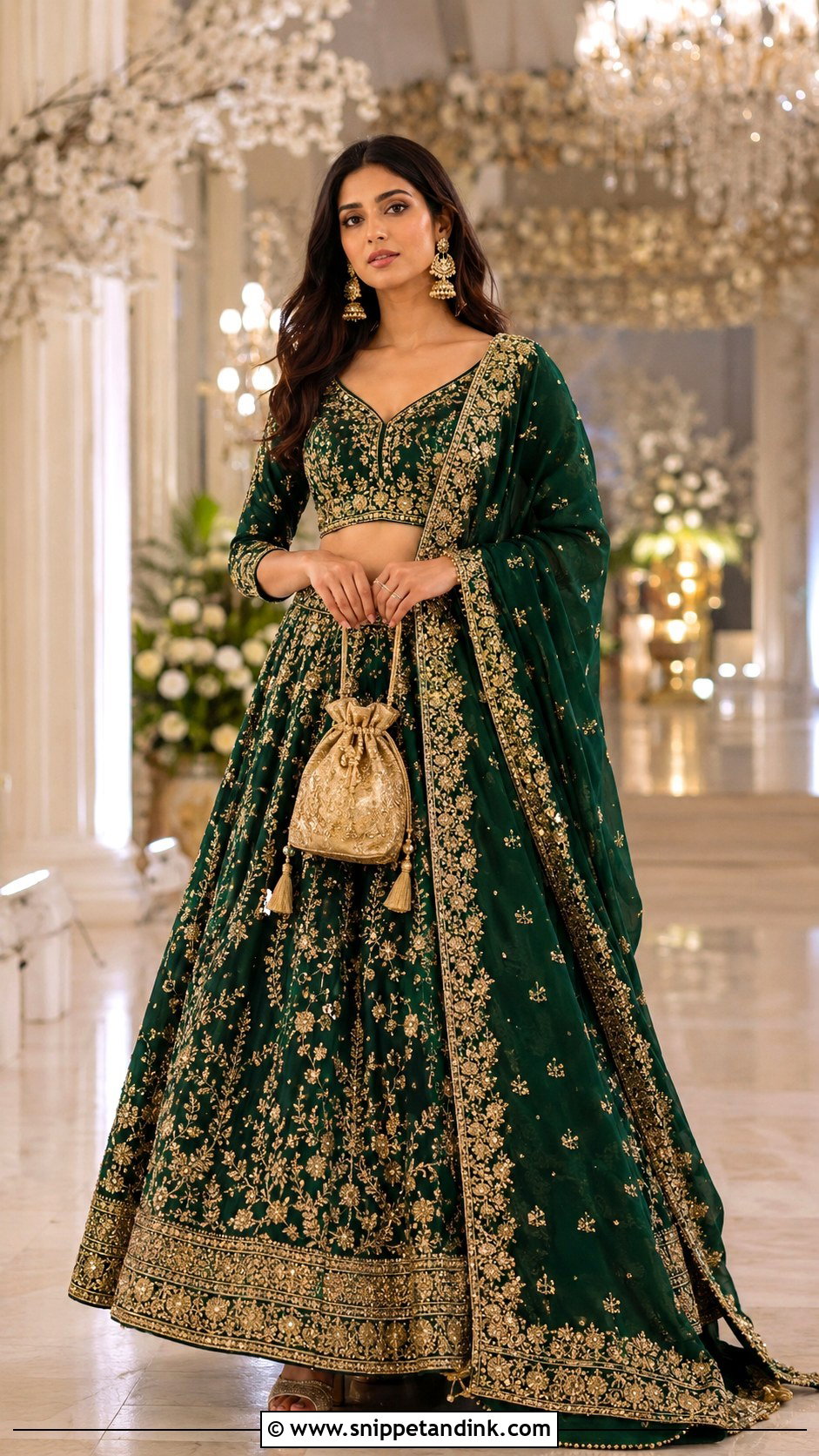
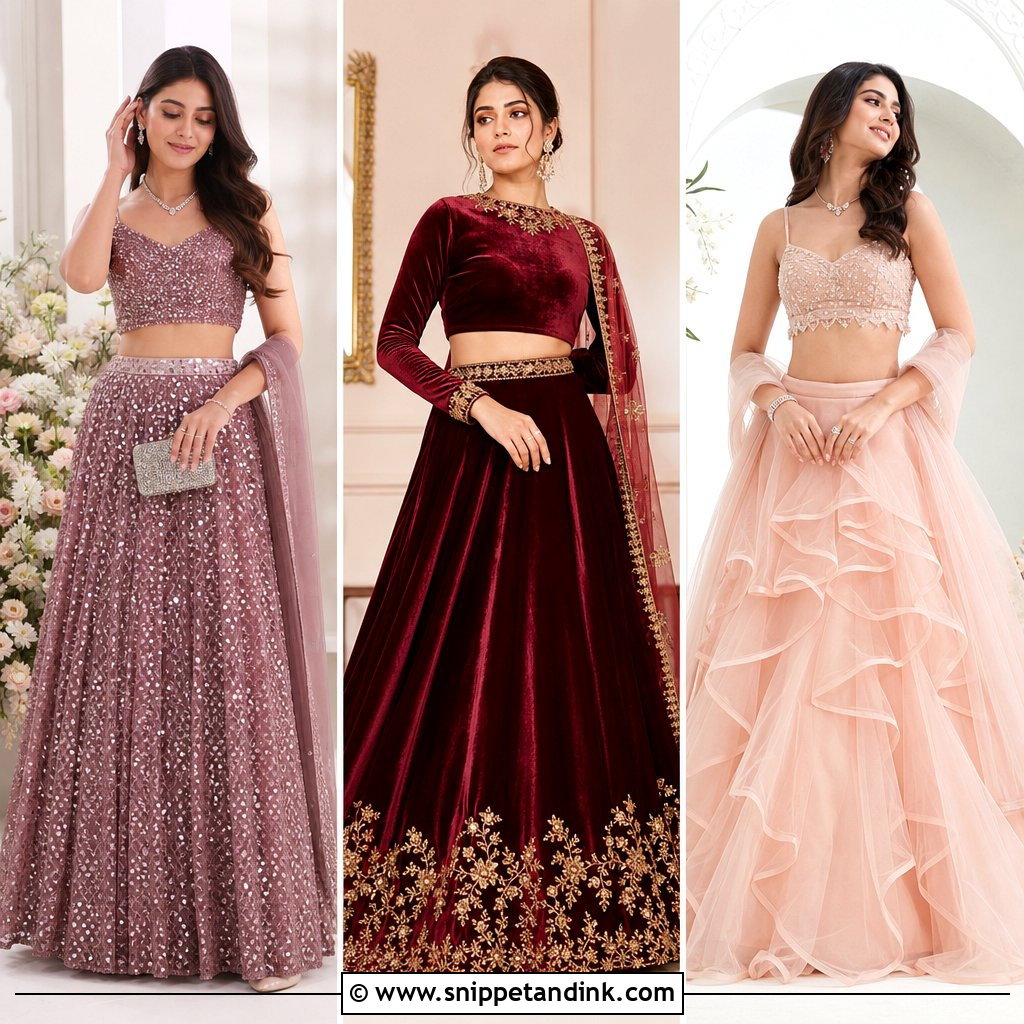
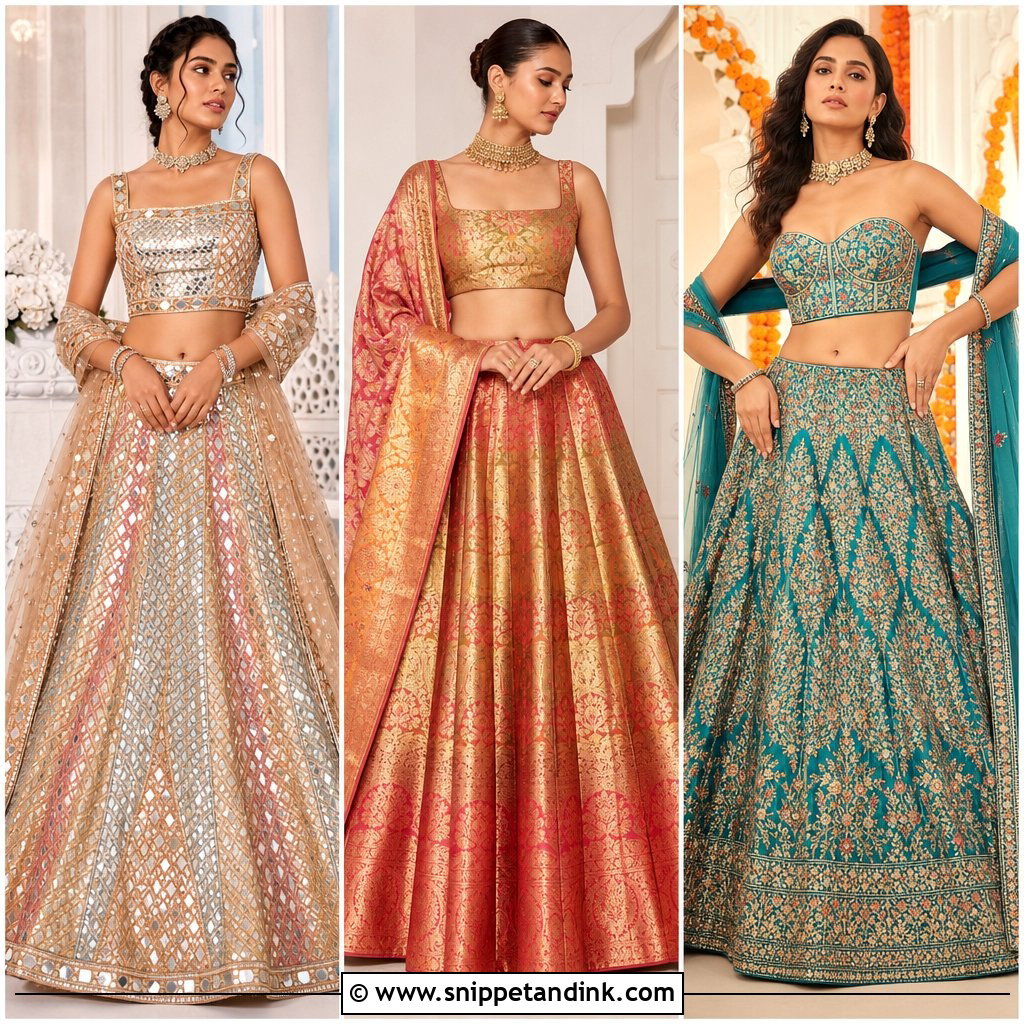
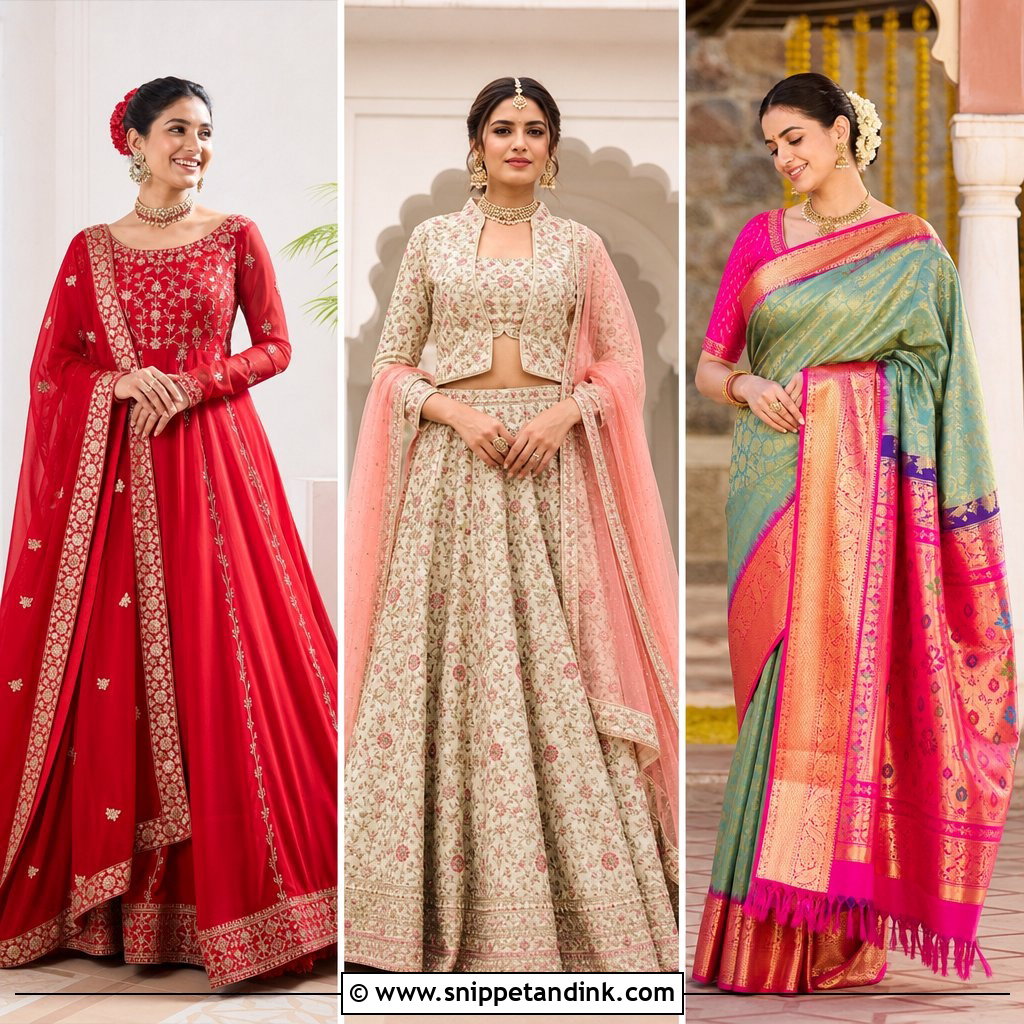
If you only buy one outfit for a big Indian wedding, make it an embroidered lehenga choli in a jewel tone. Emerald, navy, wine and deep purple carry well after dark. Before the day, raise your arms and sit down in the blouse; tight armholes are the most common complaint I hear from guests by dinner. Keep the necklace short so it doesn’t fight the embroidery. Pin the dupatta at the shoulder and again near the waist, and you’ll be able to eat and dance without holding it.
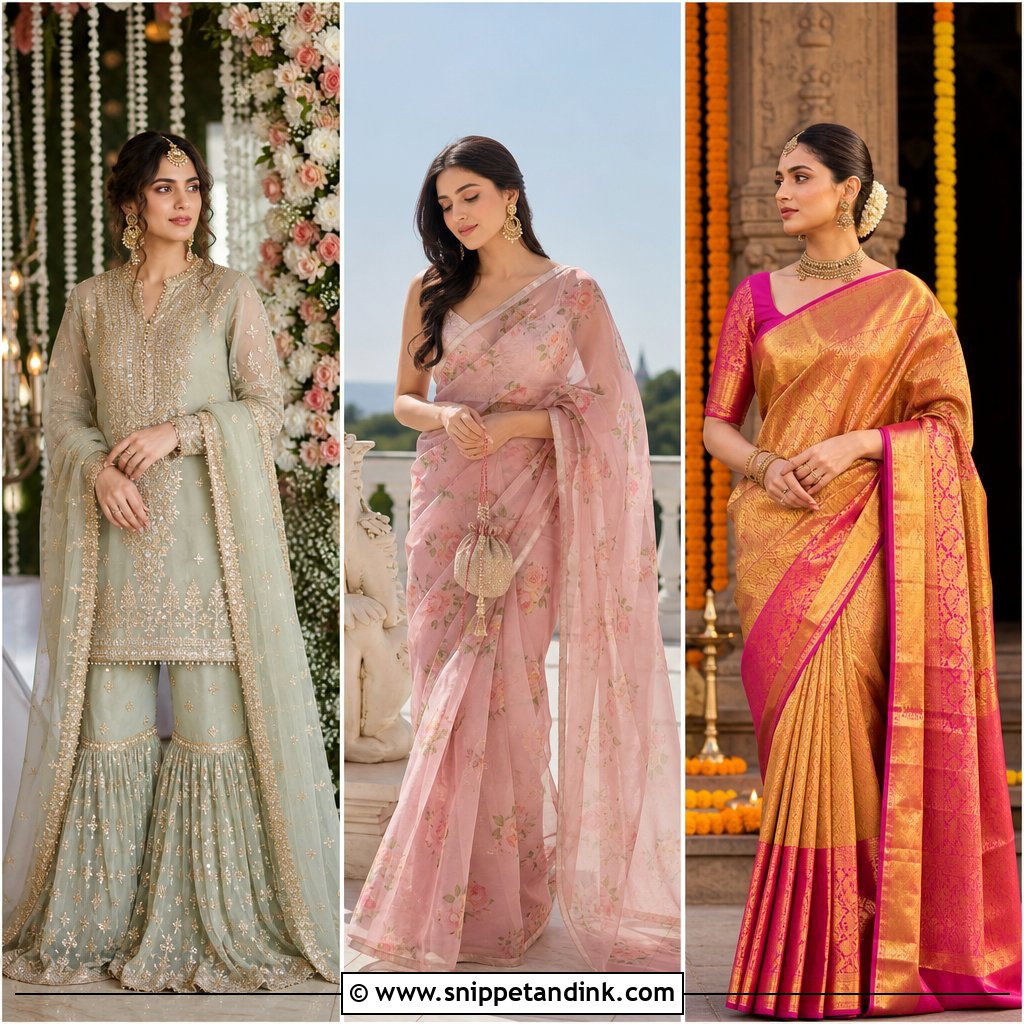
2. Banarasi Silk Saree for Wedding
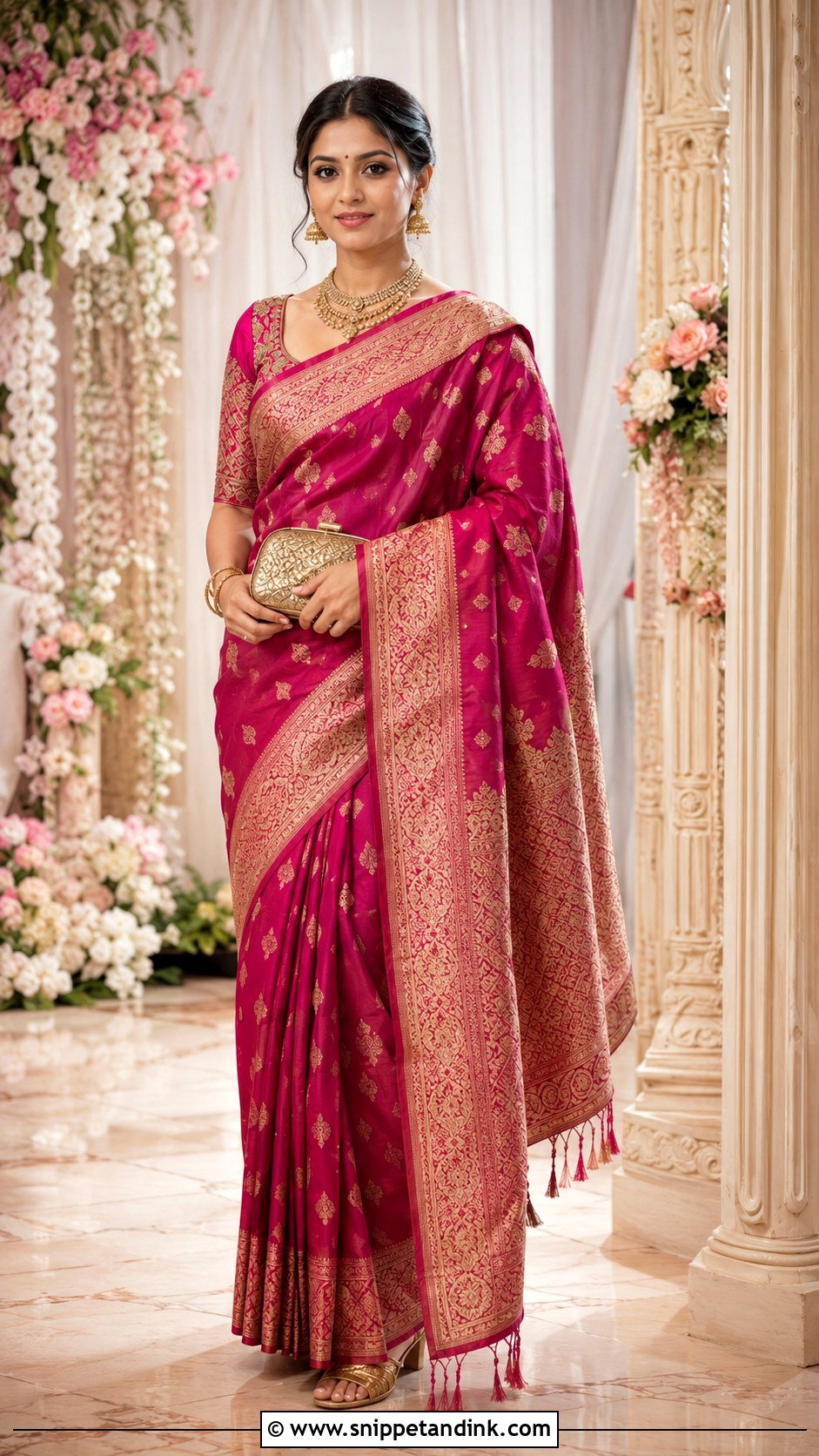
A Banarasi silk saree is the safest choice for a traditional ceremony, a temple wedding or a family function where older relatives set the tone. The woven border reads as formal without any embellishment. Emerald, royal blue, magenta, mustard and plum all work. Pair it with a brocade or raw silk blouse. Petite women carry smaller motifs better; a wide border can swallow a short frame. If the saree is visually heavy, I’d keep the makeup restrained and the hair in a smooth bun.
3. Pastel Organza Saree for Wedding
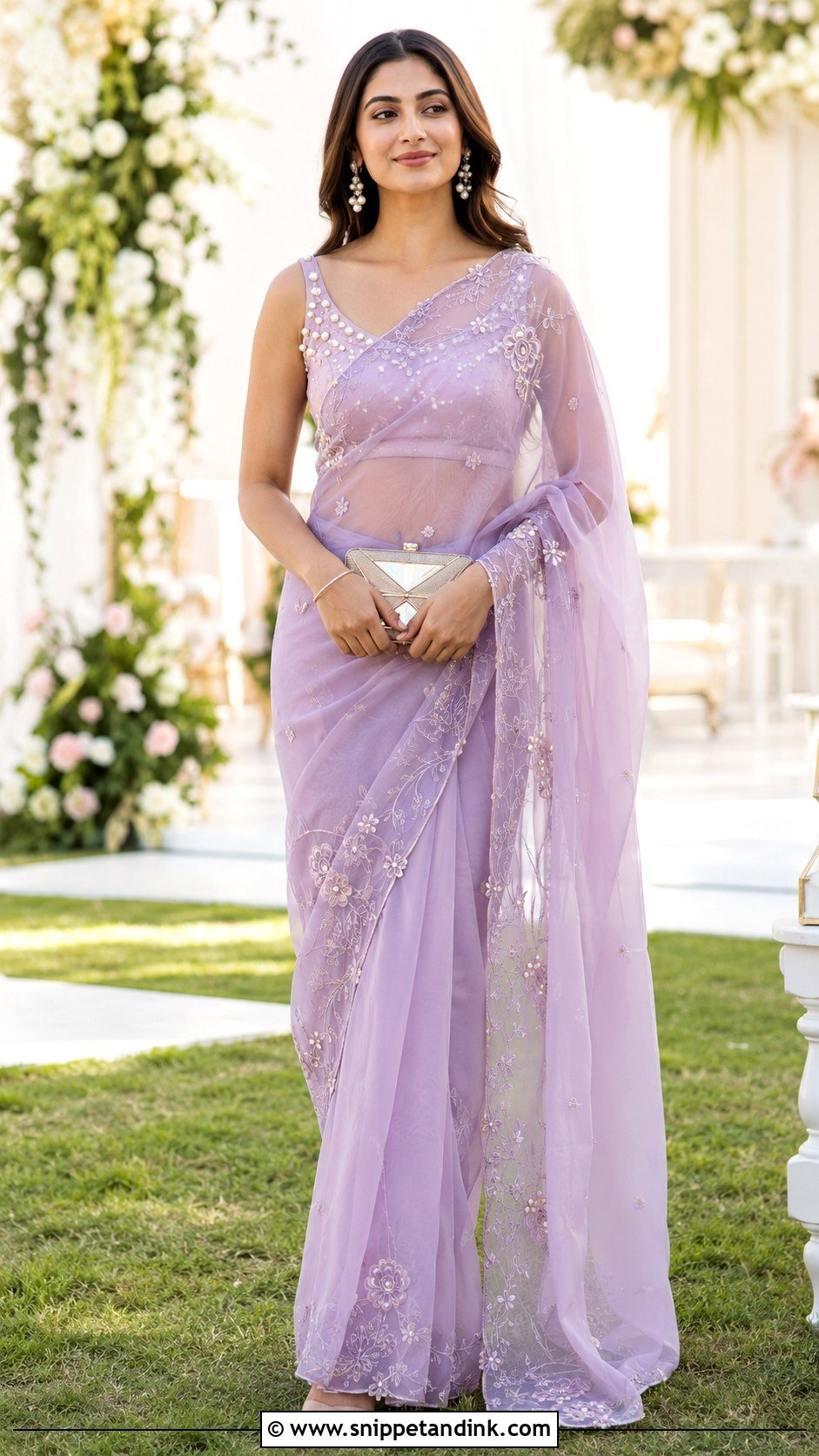
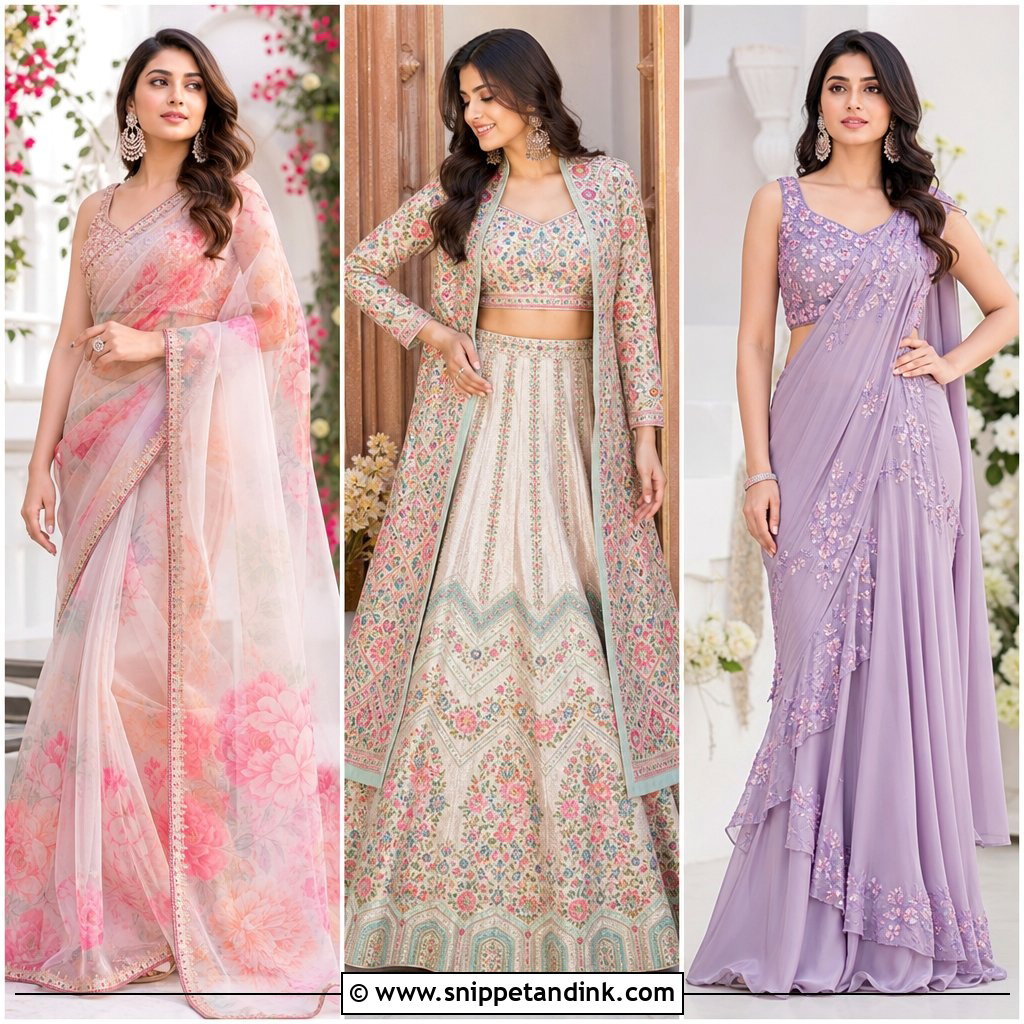
Organza is my pick for a summer garden wedding. It’s light and holds its shape, though it also stands away from the body, so fewer, flatter pleats look neater than a full stack. Pastels like lavender, powder blue, mint and peach suit daylight. Look for delicate floral embroidery or a slim border, and pair it with a structured blouse in the same colour family or a pearl-embroidered contrast. Pin the shoulder drape; organza is slippery and slides off within the first hour if you don’t.
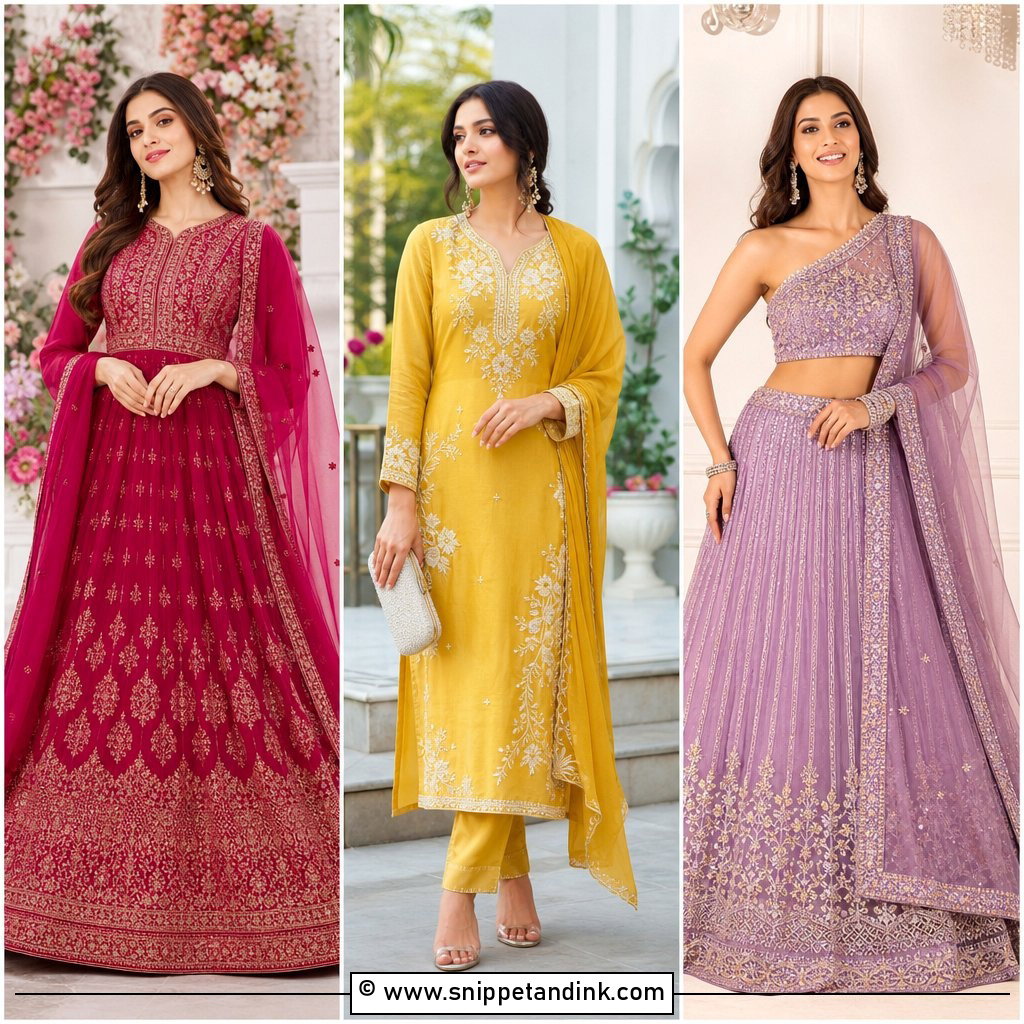
4. Floor-Length Anarkali Suit for Wedding
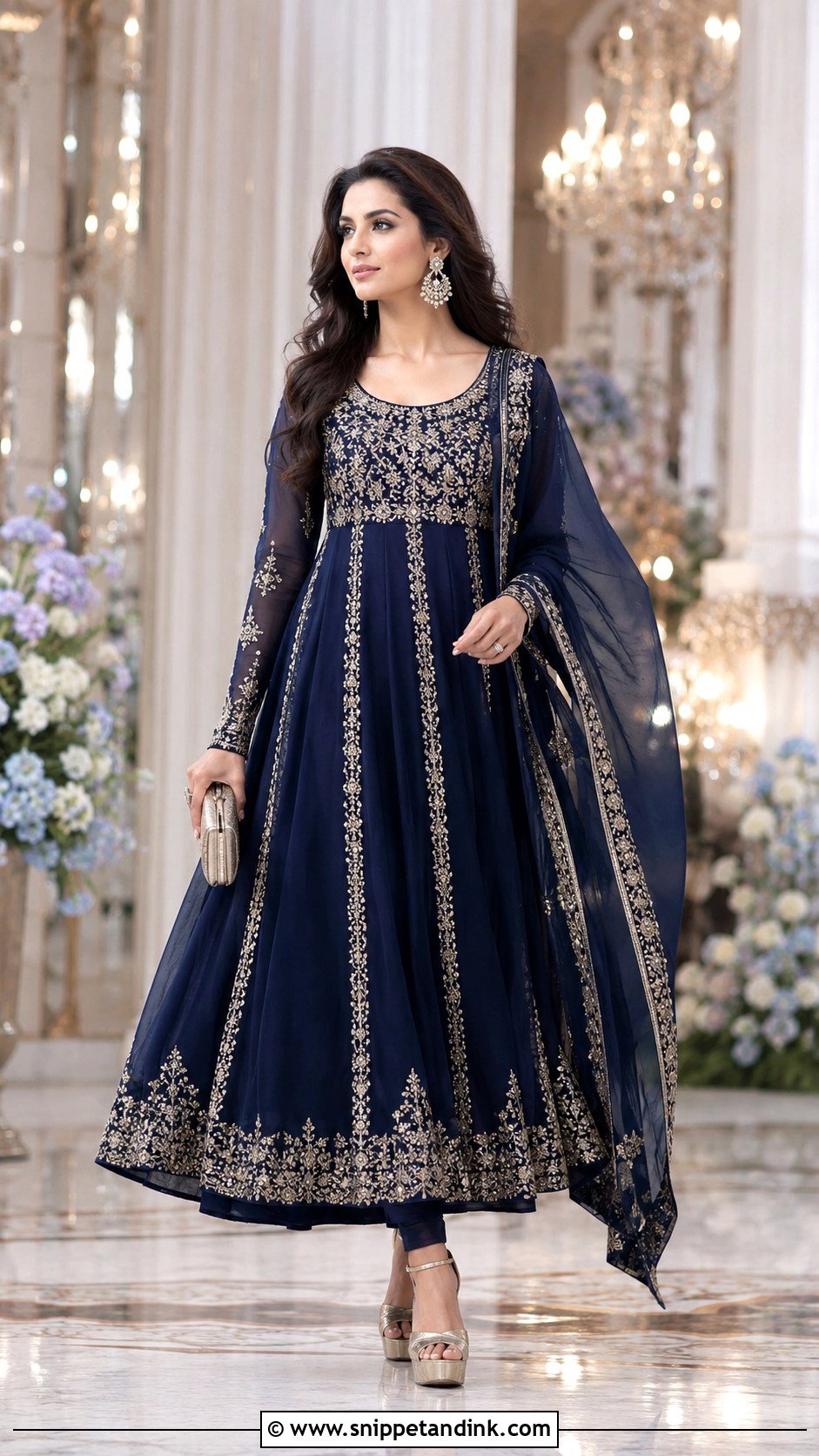
The Anarkali is the outfit I suggest to guests who’ve never worn Indian clothes before. It goes on like a dress, the churidar keeps your legs covered, and the flare forgives a lot. Georgette, silk and chiffon all work. For a reception, midnight blue, burgundy or forest green with metallic detail; for daytime, pastels and florals. Hem length is the one thing to get right. It should clear the floor in the shoes you’ll actually wear, or you’ll trip on stairs.
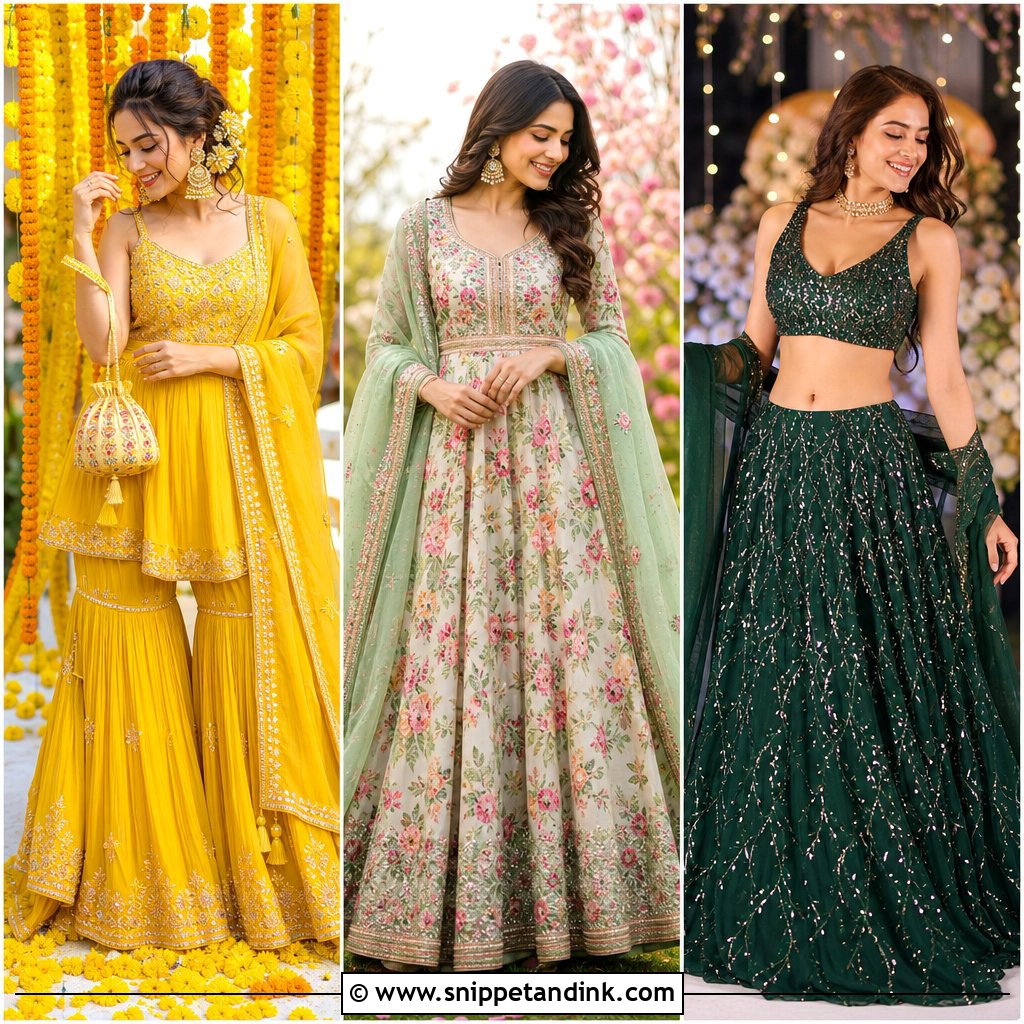
5. Sharara Suit With Short Kurti for Wedding
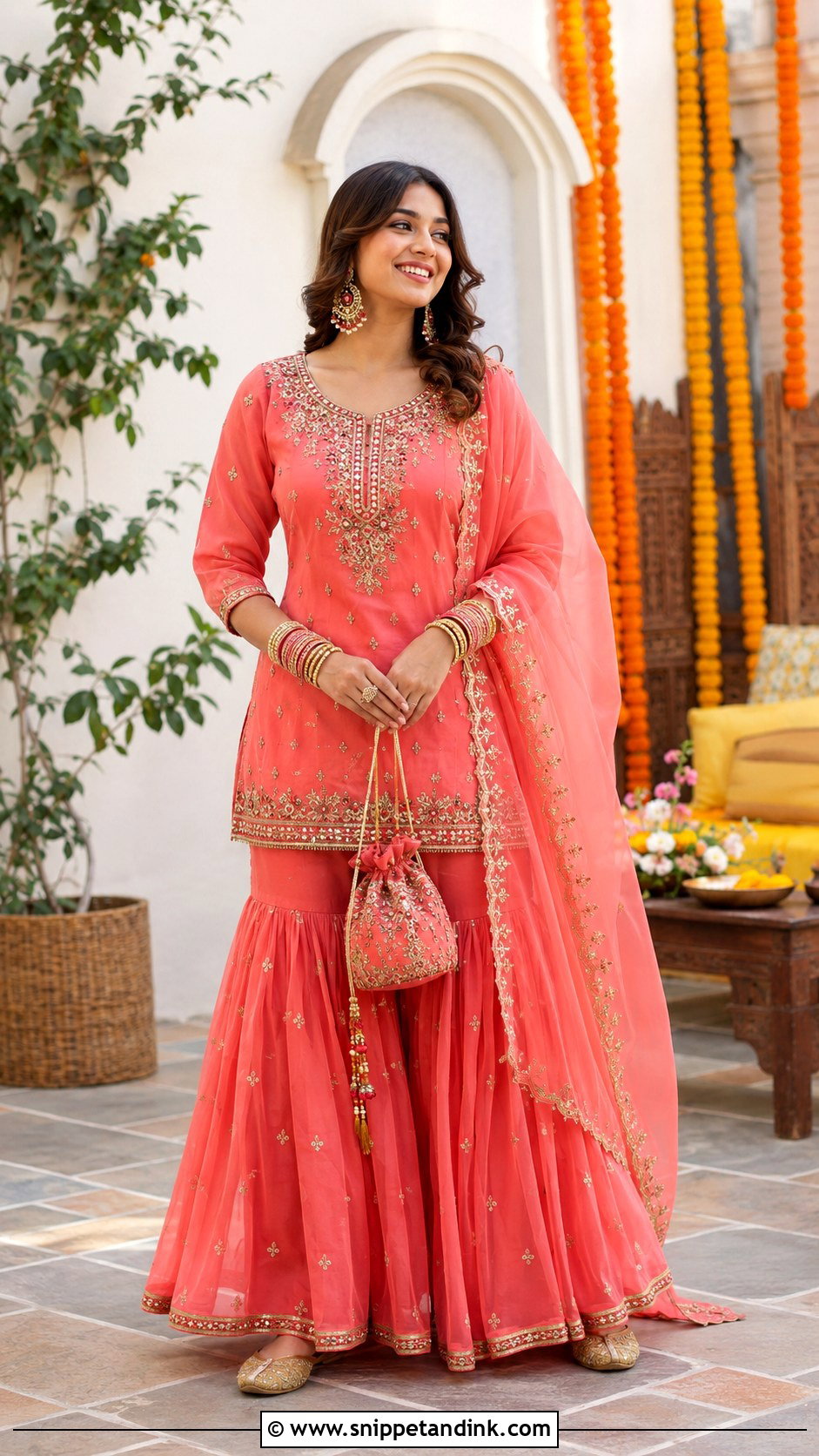
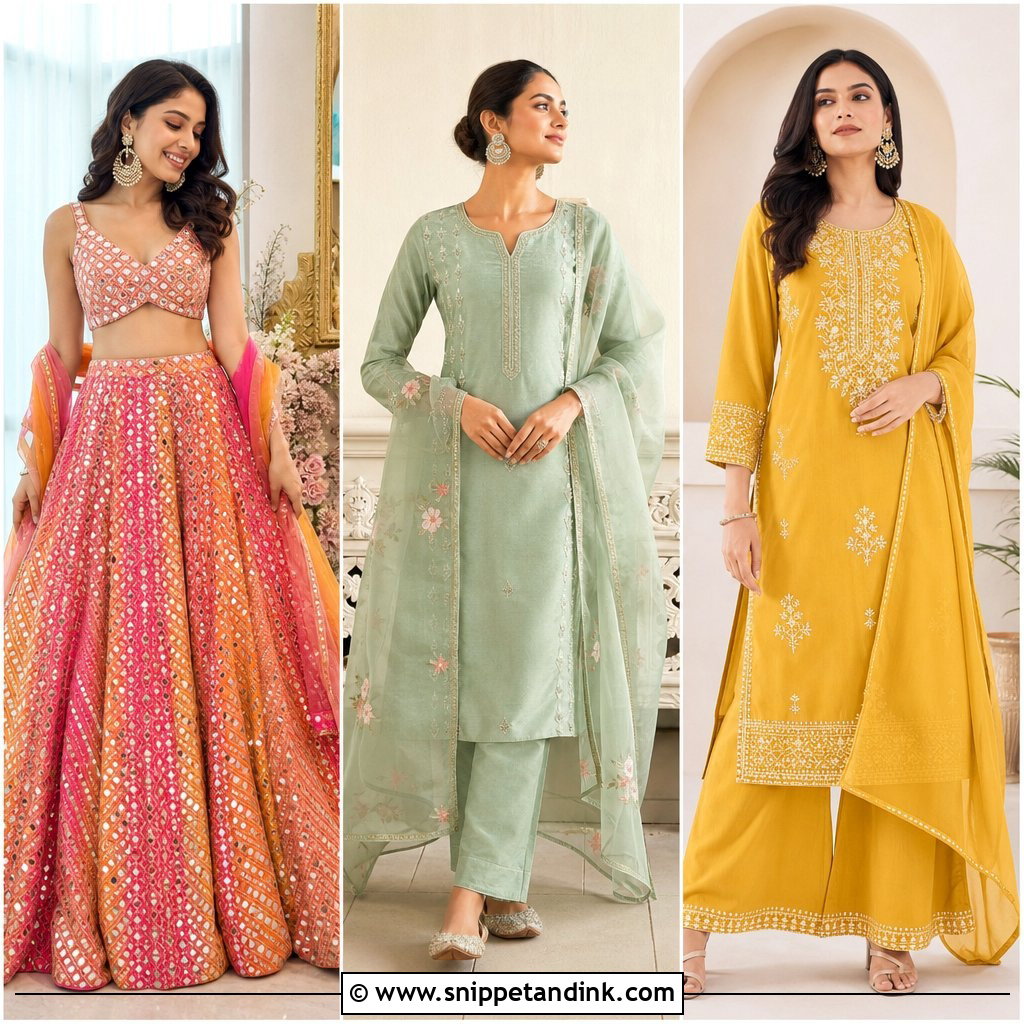
For a mehndi or sangeet where you plan to dance, a sharara suit is hard to beat. A short kurti over wide flared pants gives you full movement. Georgette or crepe is lighter for dancing; silk with gota work dresses it up. The kurti should end around the upper thigh so the sharara still shows. Pin the dupatta at one shoulder or drape it loosely around the arms. Juttis or low block heels beat stilettos here every time.
6. Gharara Suit With Dupatta for Wedding
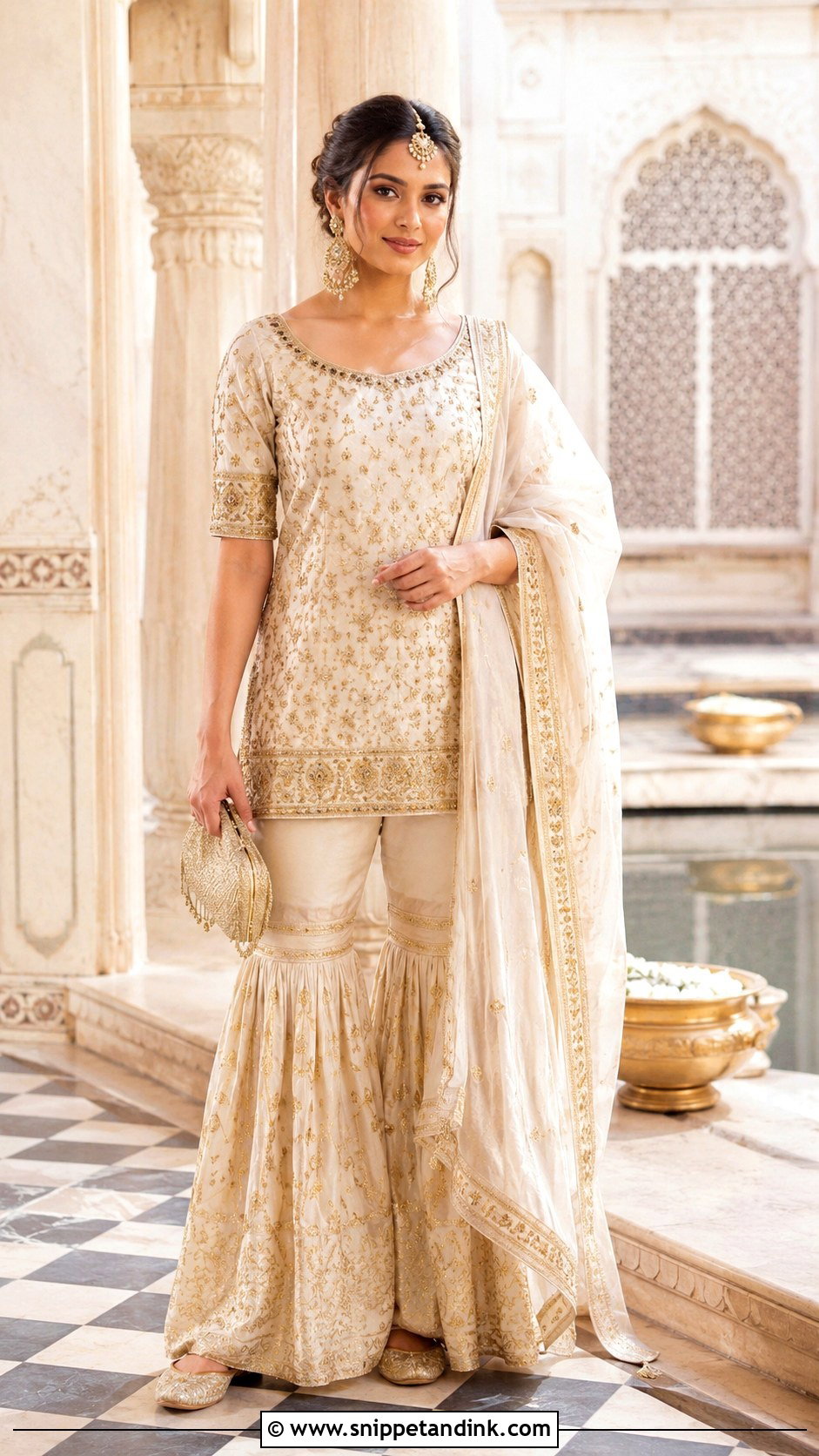
A gharara looks similar to a sharara from a distance but is cut differently: fitted to the knee, then a sharp flare, often with a decorative band at the joint. That joint is the detail, so the kurti has to be short enough to show it. It suits a nikah, mehndi or formal daytime ceremony. Ivory with gold, sage, dusty rose and deep teal are refined choices. Flats are easier than narrow heels, since the wide legs hide your shoes anyway. Have the length tailored so the flares don’t drag.
7. Pre-Draped Saree With Belt for Wedding
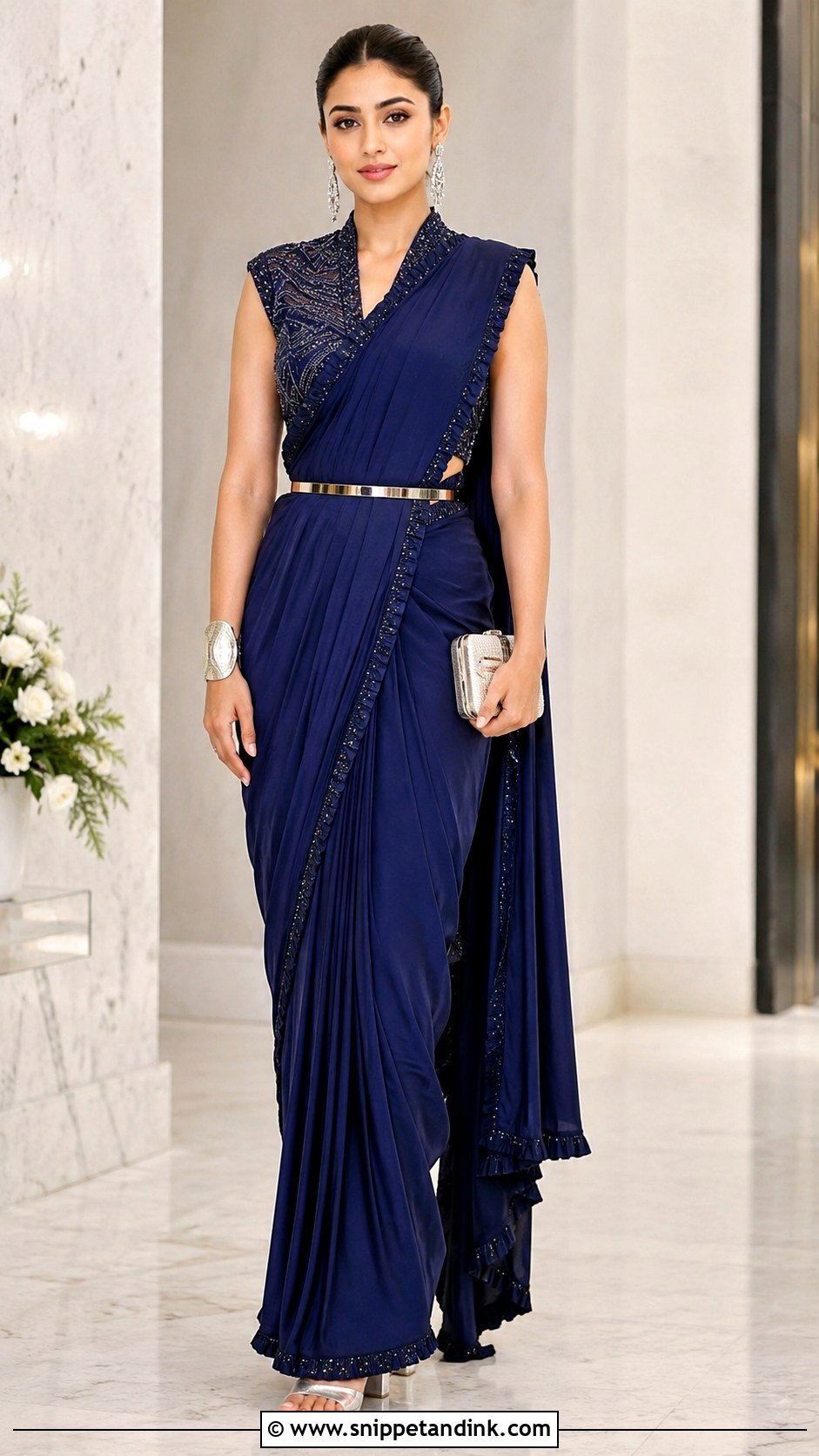
First saree? Start with a pre-draped one. The pleats are stitched in, so you get the shape without having to fix anything all night. Satin, crepe or lightweight georgette with a structured blouse and a slim belt make a sharp evening look. Sapphire, fuchsia, bronze and charcoal all suit receptions. Do one dress rehearsal at home: sit, walk and climb a step, because pre-draped hems are set at a fixed length and can’t be adjusted the way a regular saree can.
8. Dhoti Pant Set for Indian Wedding
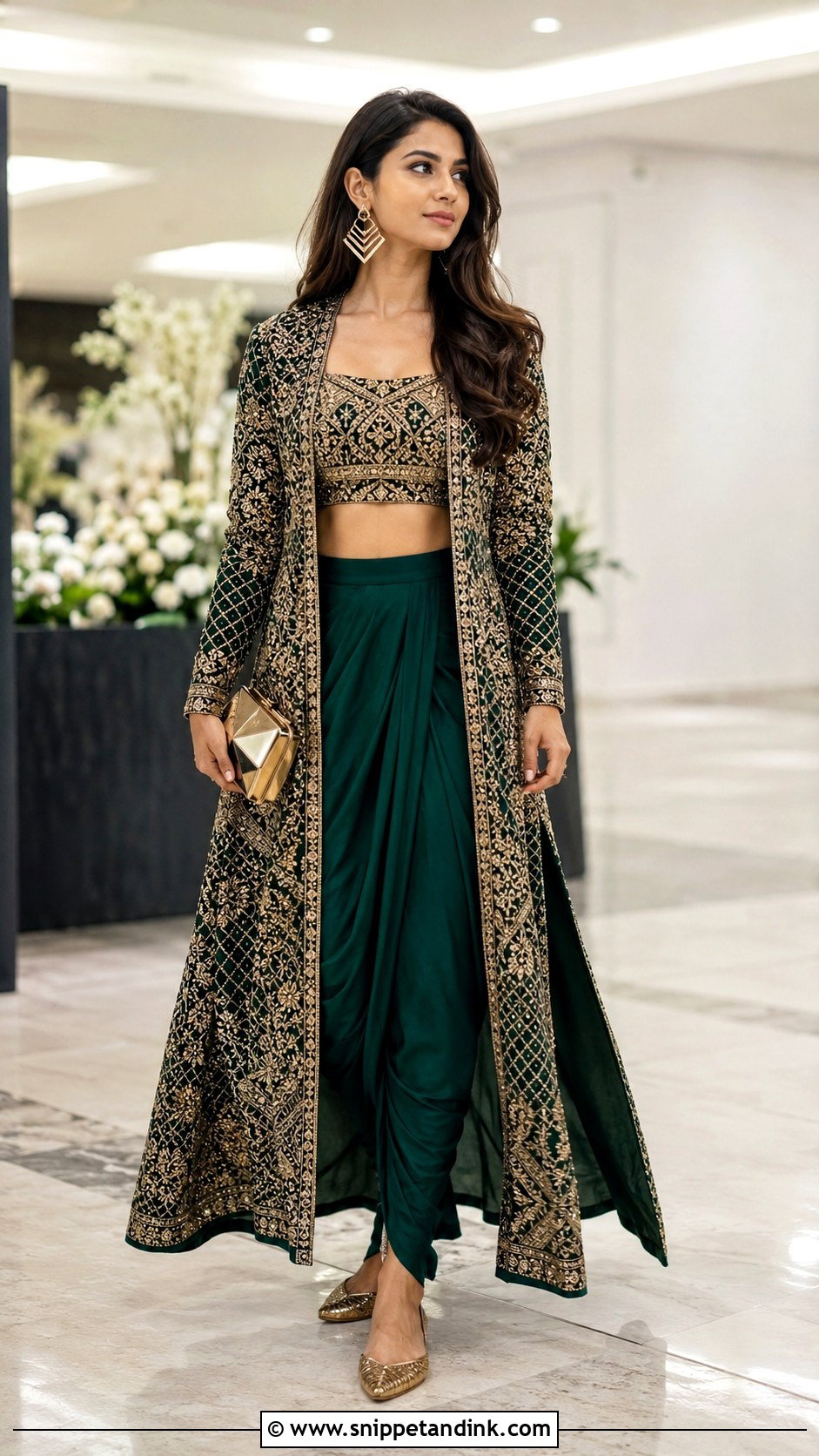
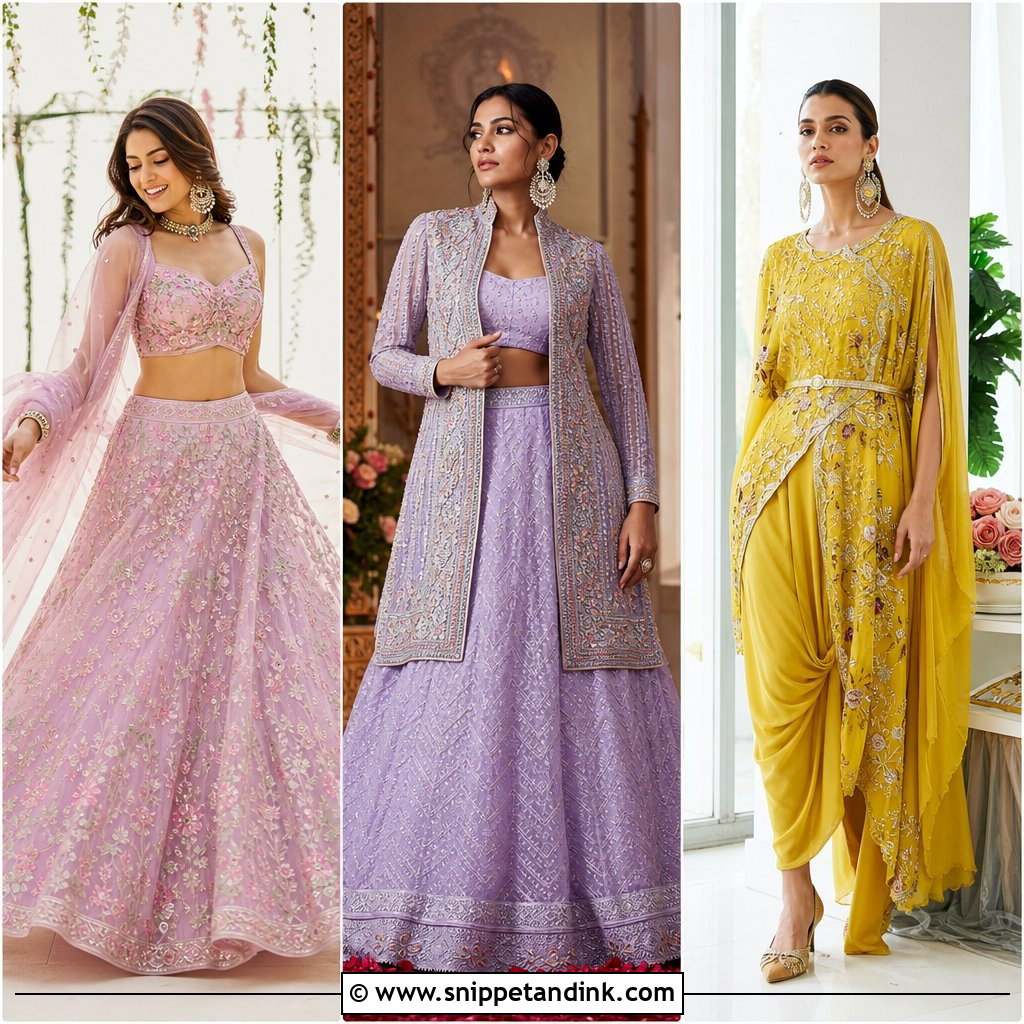
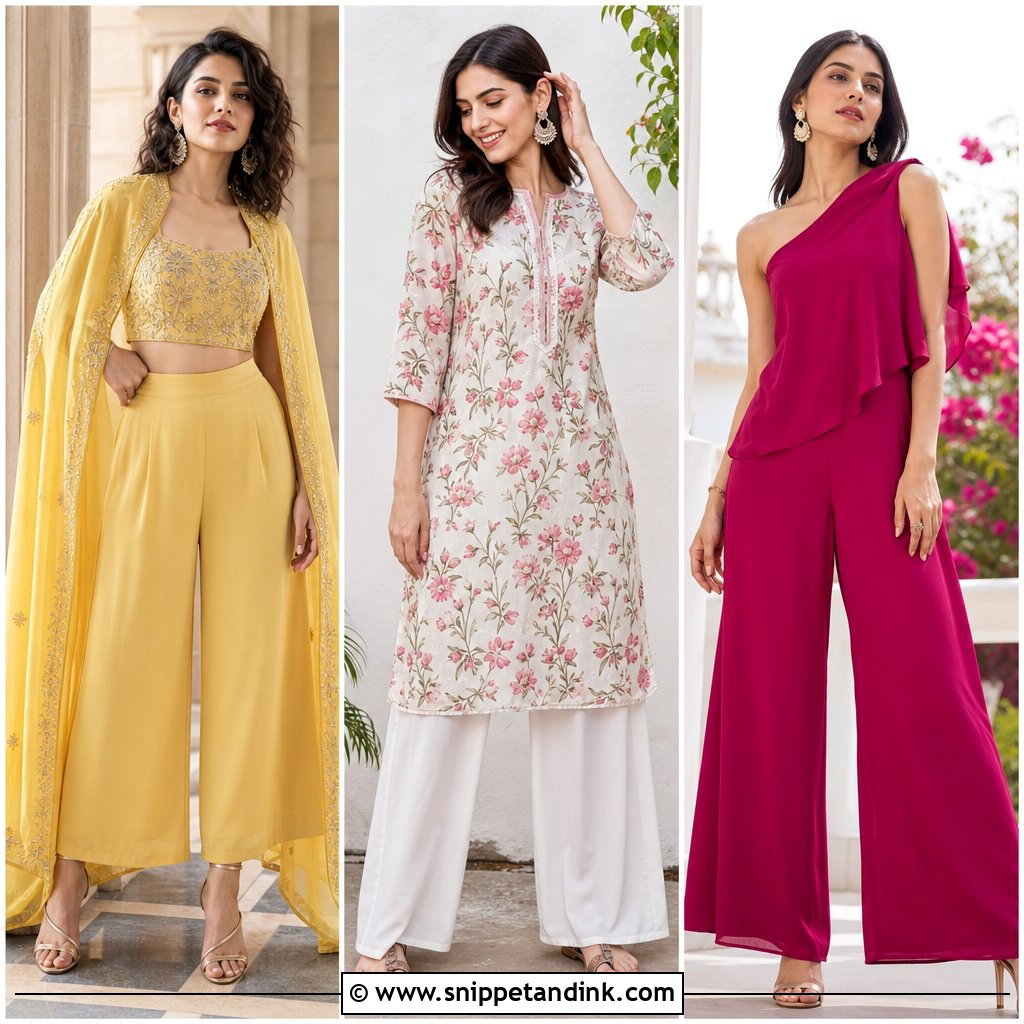
For a modern fusion outfit, draped dhoti pants with a fitted crop top, embroidered jacket or asymmetric kurta work for cocktail nights and contemporary receptions. The balance rule is simple. Dhoti pants carry extra fabric at the hips, so the top has to be close-fitting or structured, otherwise the whole outfit looks shapeless. Emerald, rust, plum and champagne are good colours. Leave the jacket open for a longer line.
9. Cape Lehenga for Wedding
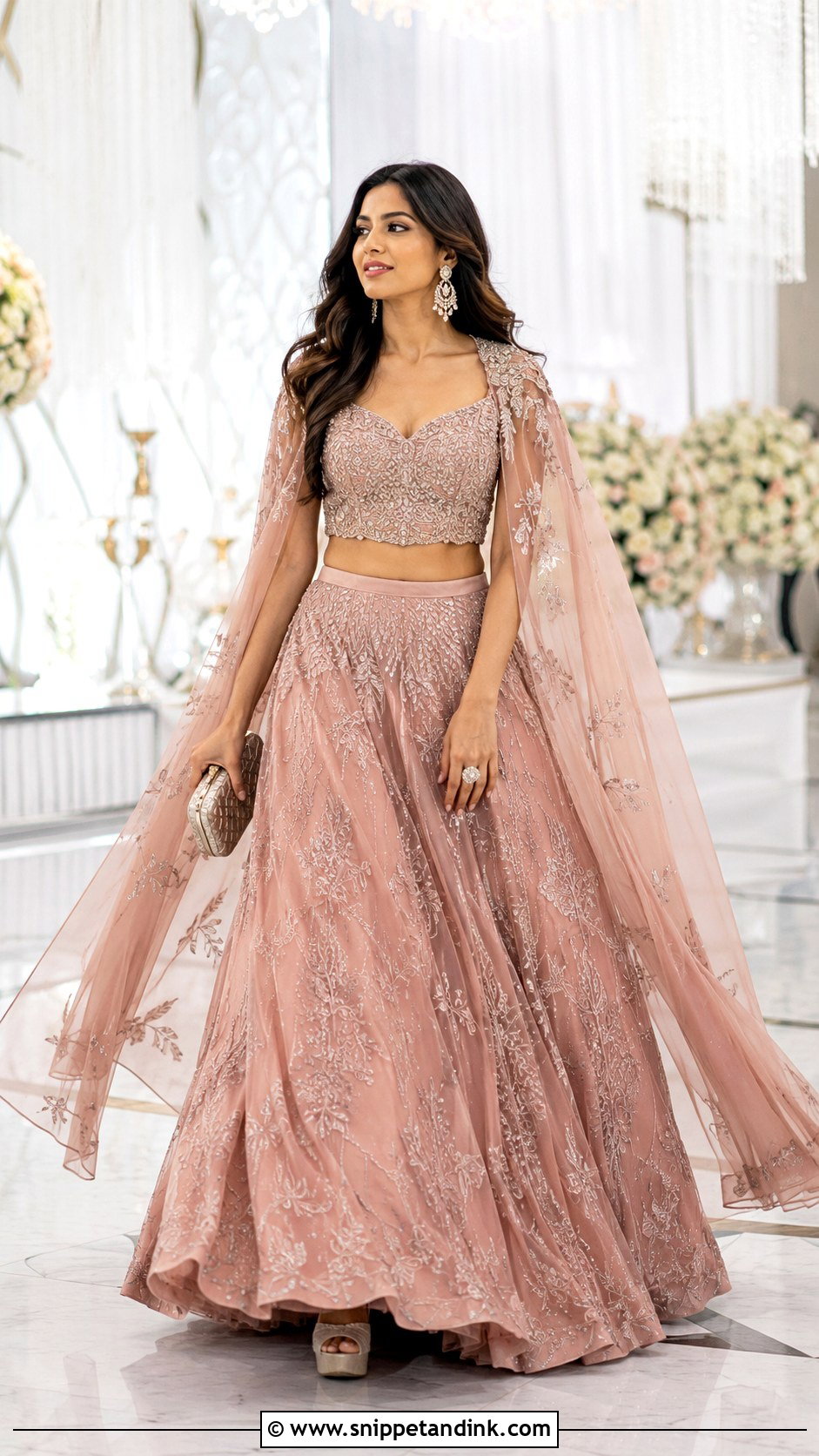
A cape lehenga solves the dupatta problem. The sheer cape sits on your shoulders and moves with you, so there’s nothing to keep rearranging. Waist-length capes define the shape; longer ones give more coverage over the arms and back. If the cape has heavy beadwork, keep the skirt simpler. A smooth updo matters more than you’d think, because loose hair tangles in net capes. It suits receptions, sangeets and indoor evening events.
10. Jacket Lehenga for Wedding
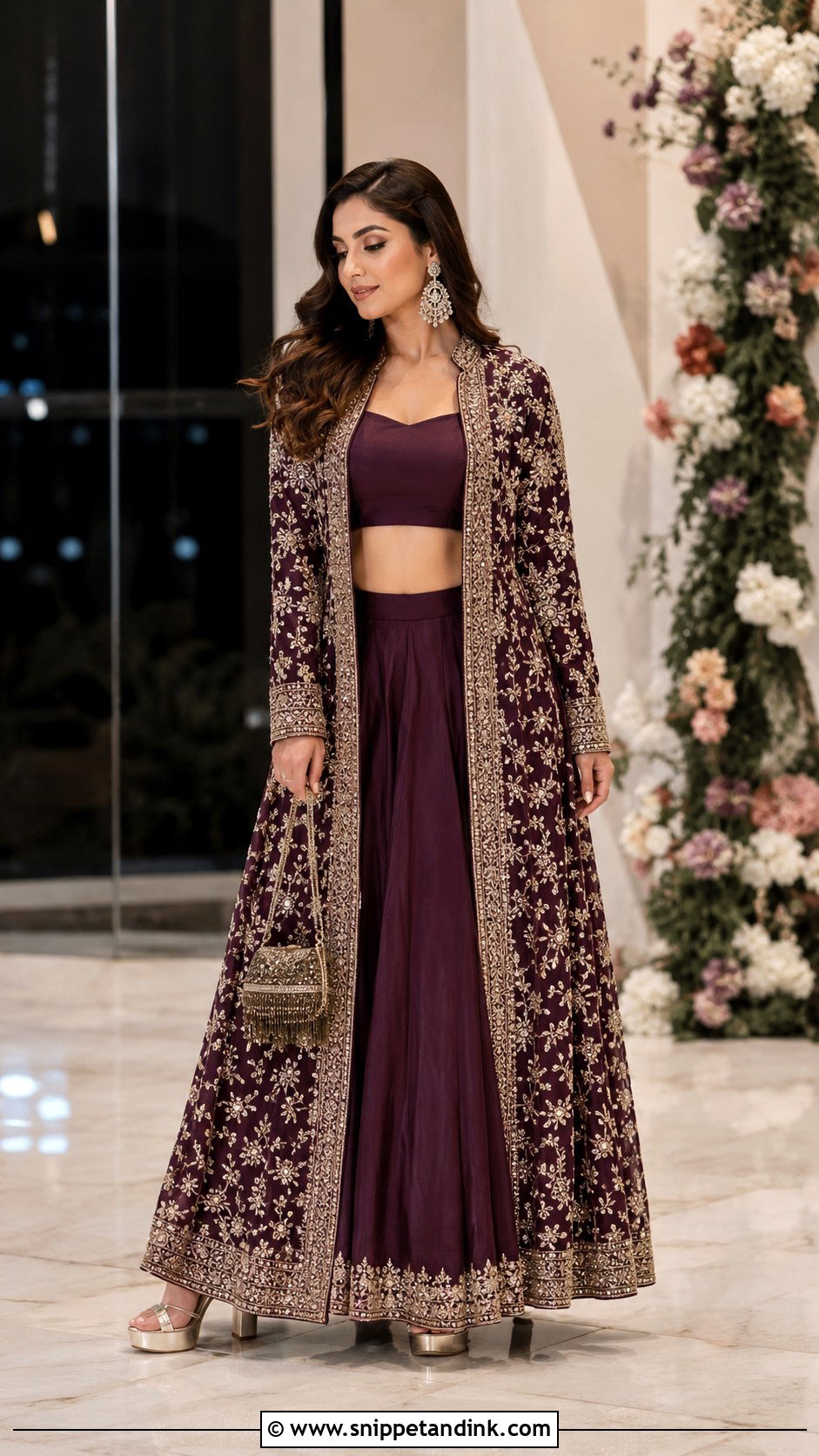
A long embroidered jacket over a lehenga gives coverage and structure, and from some angles it reads almost like an Anarkali. Wear a simple fitted blouse underneath and a skirt with controlled flare. Velvet or raw silk for winter, georgette for warmer weather. You can usually skip the dupatta, since the jacket is already a strong top layer. The shoulders are where I’d spend the tailoring money: a jacket that’s too wide at the shoulder looks borrowed.
11. Palazzo Suit With Long Kurta for Wedding
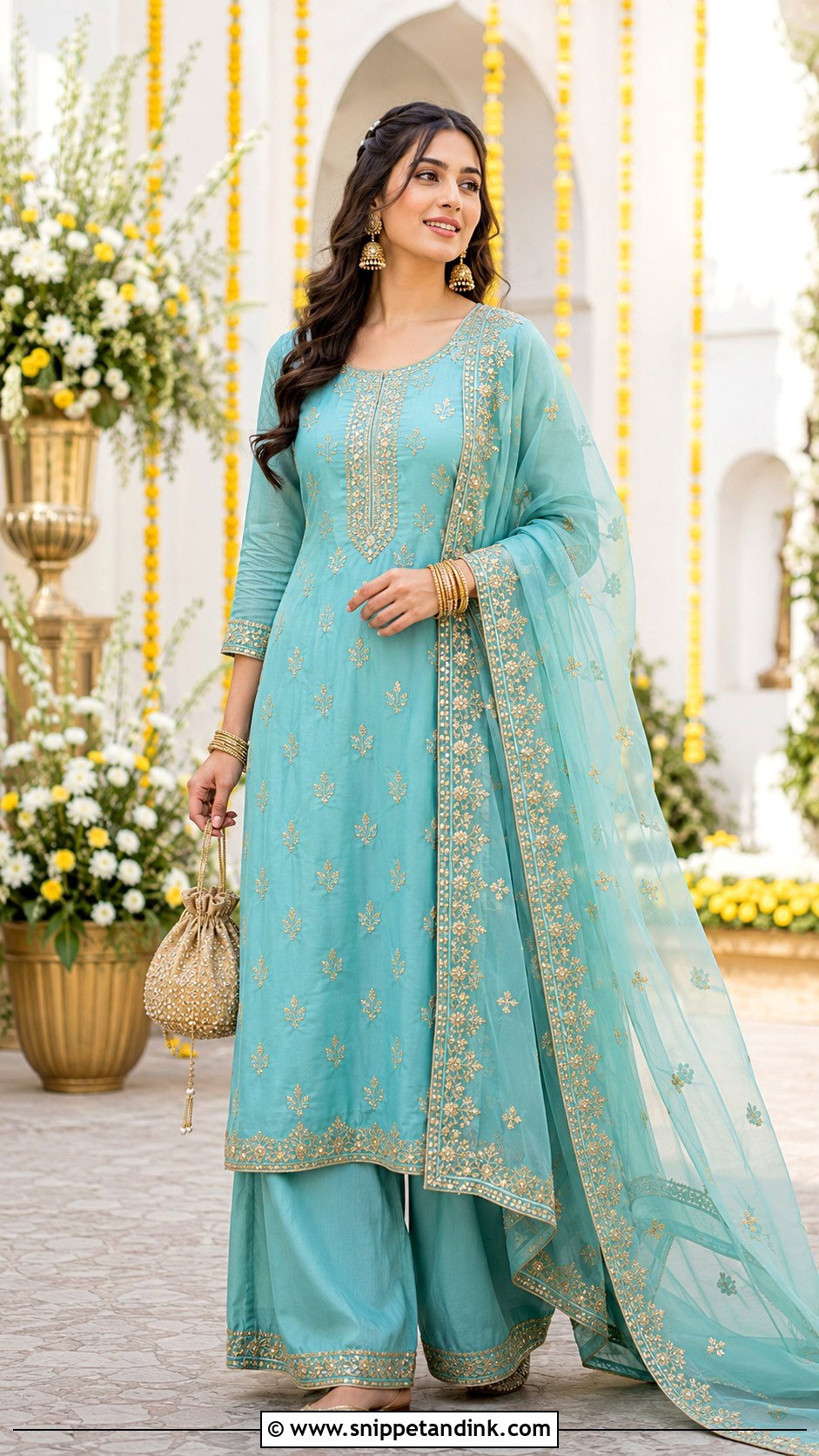
Long kurta and palazzo sets are what I recommend for older guests, modest dressers and anyone travelling between venues. Side slits, wide-leg pants and embroidery at the neck, cuffs and hem make it festive without weight. Coral, turquoise and soft green suit daytime; navy, aubergine and maroon carry into evening. A slight waist seam stops a long kurta from hanging like a sack. Hem the palazzos so they just skim the floor without covering your shoes.
12. Chanderi Kurta Set for Wedding
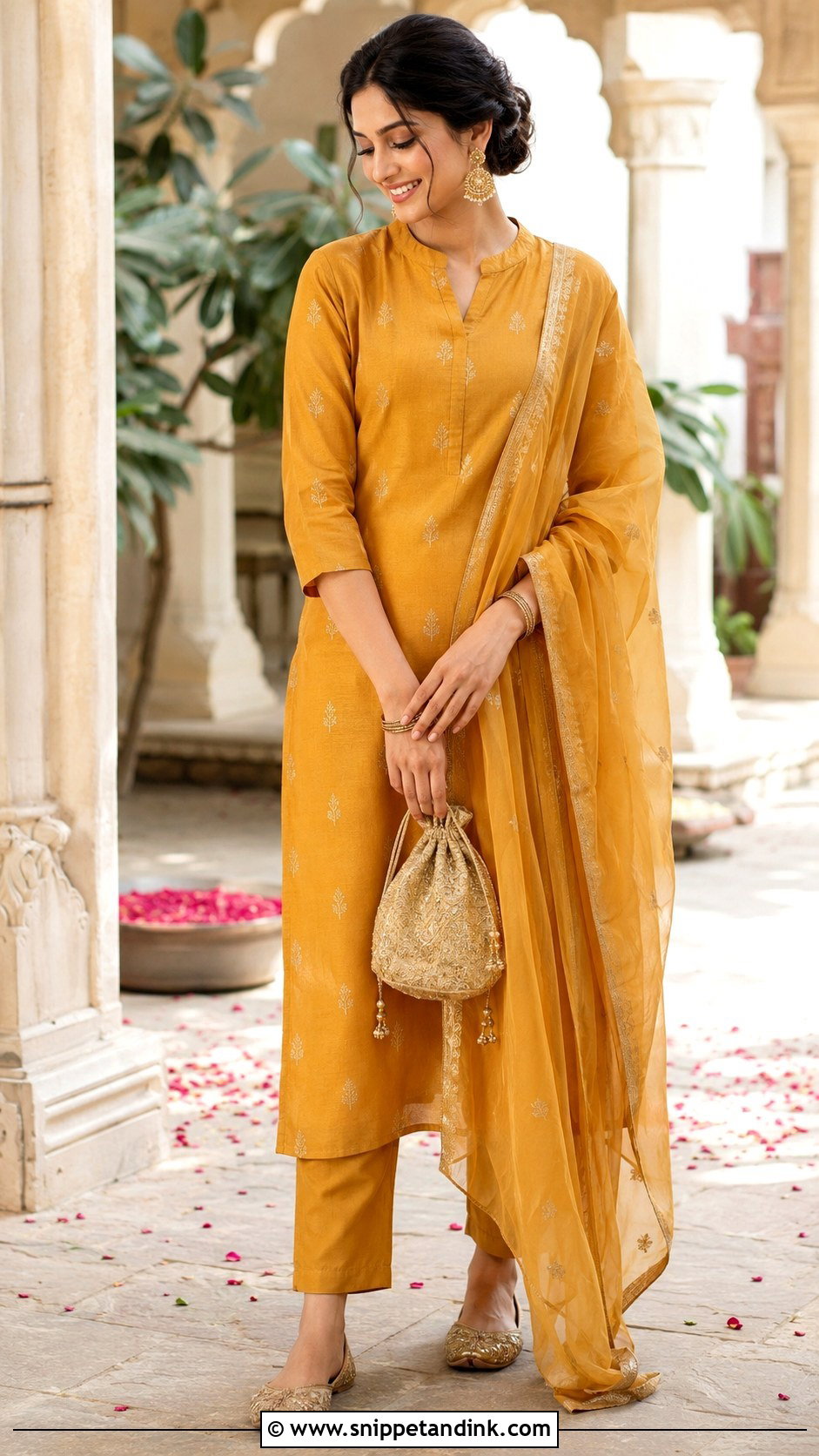
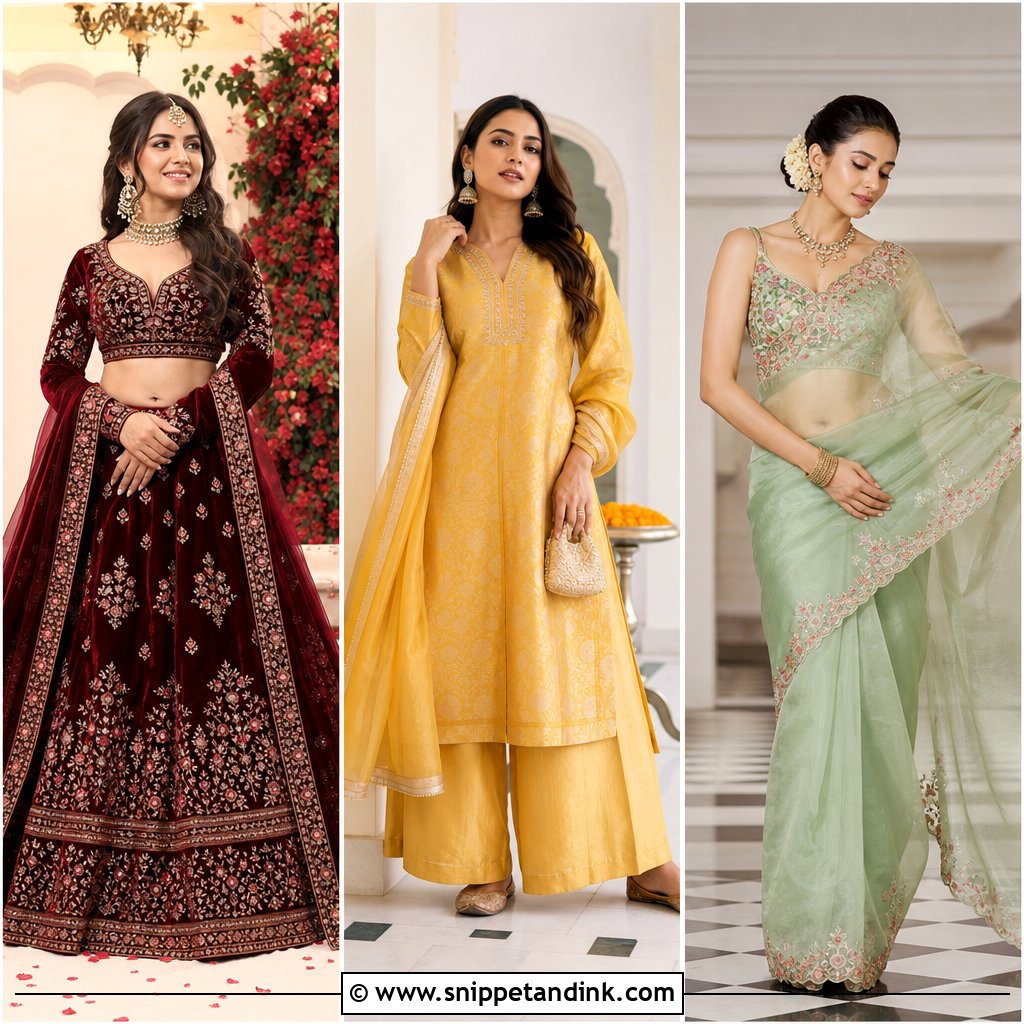
A Chanderi kurta set is the understated option for haldi, a daytime family function or an intimate gathering. Chanderi has a soft sheen but is often semi-sheer, so check that the kurta is lined before you buy. Cigarette pants and an organza or Chanderi dupatta finish it. Marigold, rose pink, pistachio and sky blue feel cheerful. Jhumkas and a few bangles add personality. Choose a potli that complements the border rather than matching every colour.
13. Kanjeevaram Silk Saree for Wedding
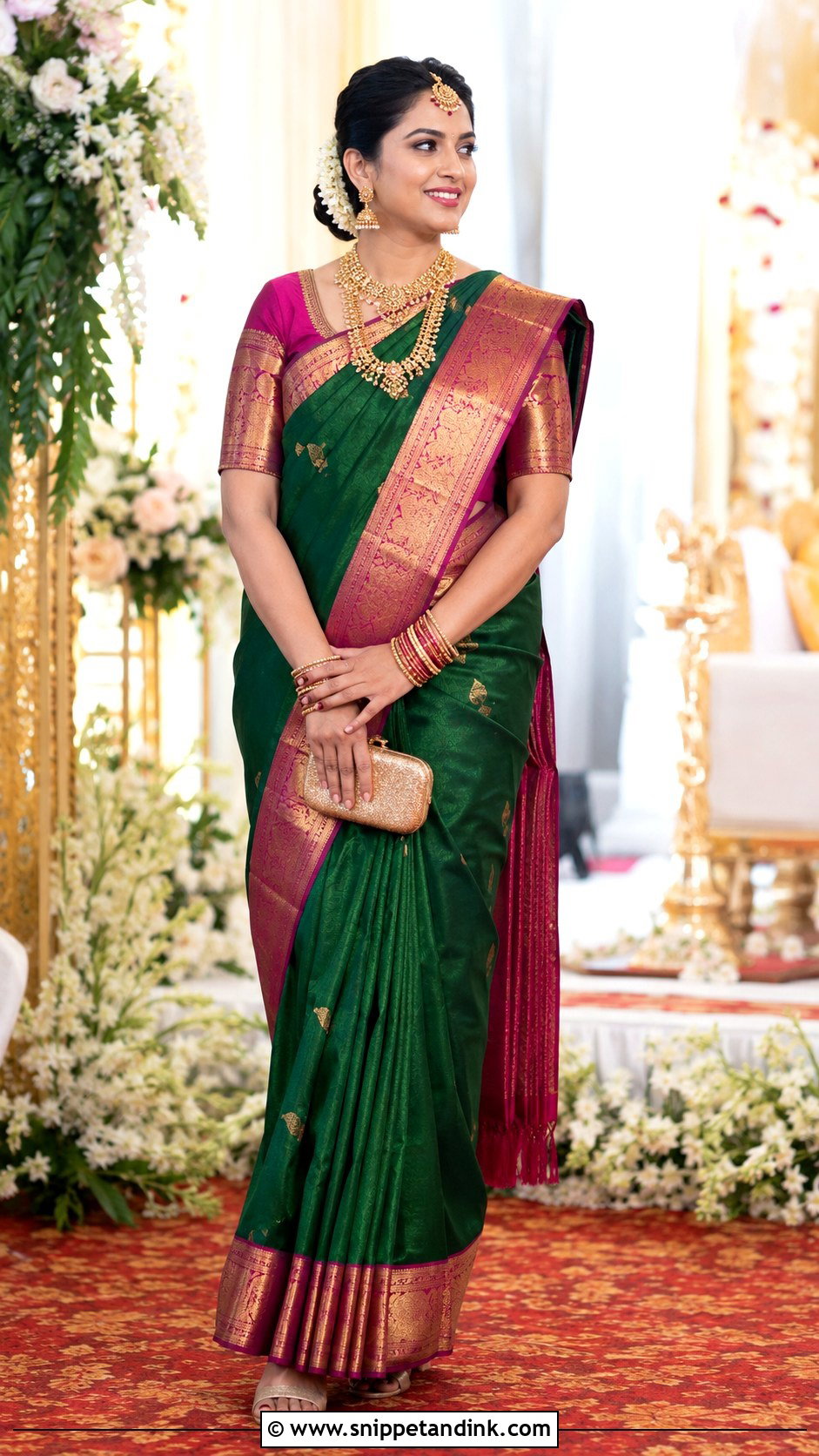
Kanjeevaram silk is heavy, structured and very formal, which makes it right for a South Indian ceremony or any wedding where classic dress is encouraged. Pick a blouse that echoes one colour from the border, which is how these sarees are traditionally styled. Red, green, purple, orange and deep pink are classic shades. Flowers around a low bun complete the look. Because the silk is thick, the pleats get bulky; if you can, have someone experienced pleat it for you so it stays crisp for hours.
14. Bandhani Lehenga Choli for Wedding
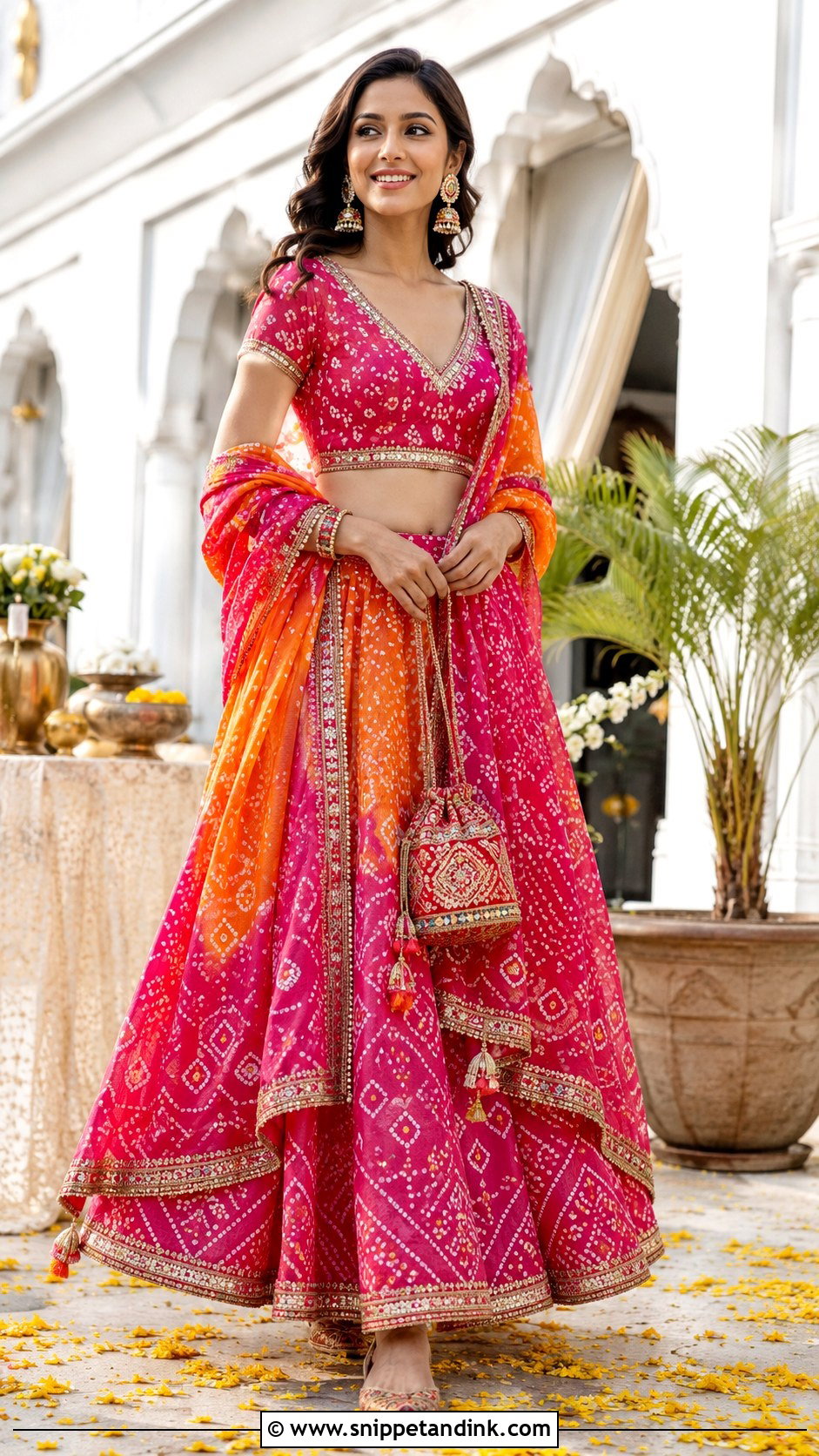
Bandhani is a tie-dye technique, and the tiny dotted patterns are made by pinching and binding the fabric before dyeing. A Bandhani lehenga choli suits mehndi, daytime weddings and festive outdoor events. Pair a patterned skirt with a simpler blouse, or the reverse. A gota border on the dupatta adds shine. Red, pink, yellow, orange and green are traditional, with indigo for something quieter. With this many colours, stick to one metal finish in your jewellery.

15. Mirror Work Lehenga for Wedding
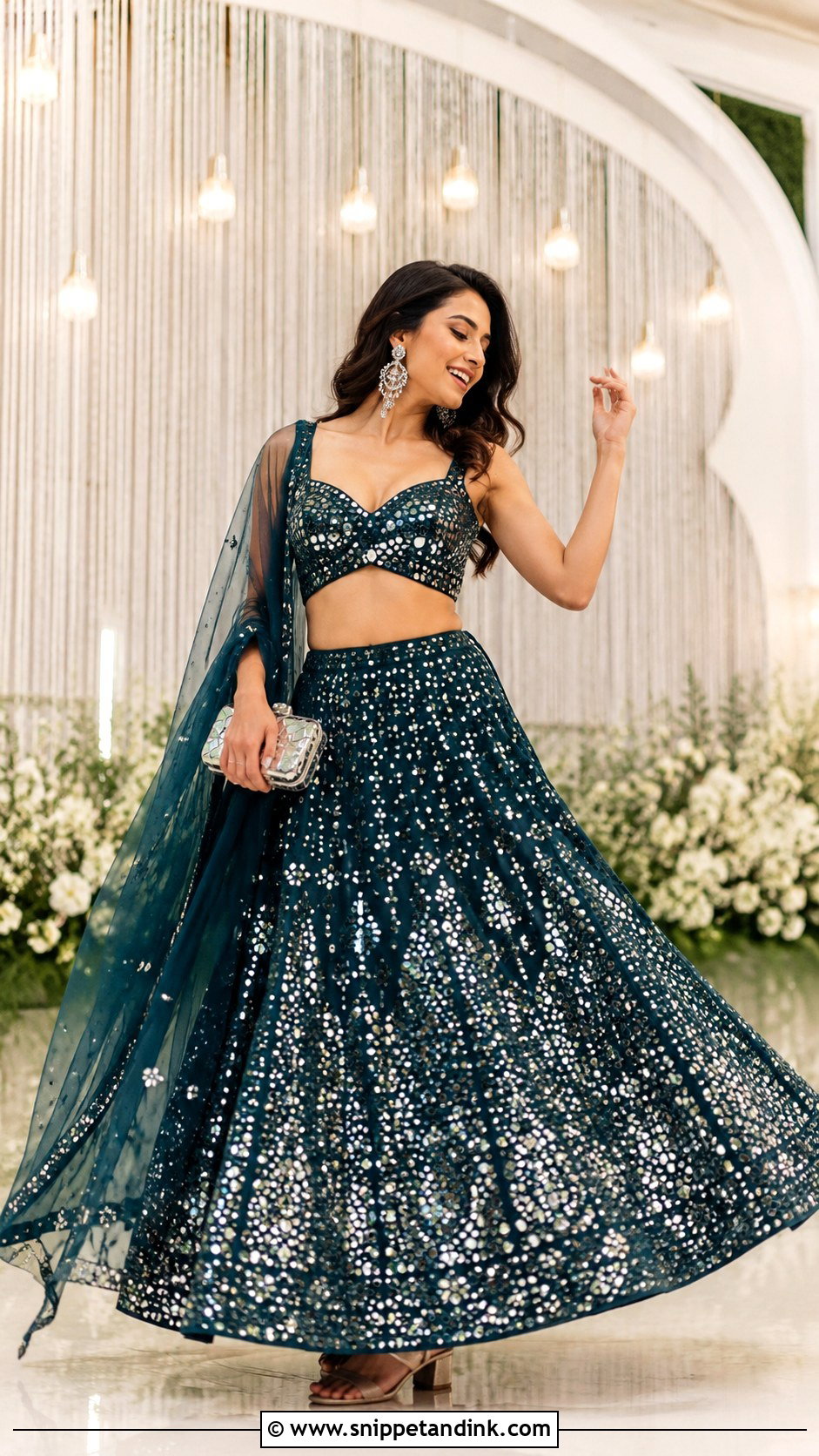
Mirror work belongs at a sangeet, where the lights catch it. Teal, coral, violet, navy and deep green show the mirrors off best. The outfit already sparkles, so choose one jewellery feature, either big earrings or a maang tikka, not both. Check the inside of the blouse near the underarms and waist before you buy. Badly finished mirror edges rub the skin raw after a few hours of dancing. Keep the hair sleek.
16. Velvet Salwar Suit for Winter Wedding
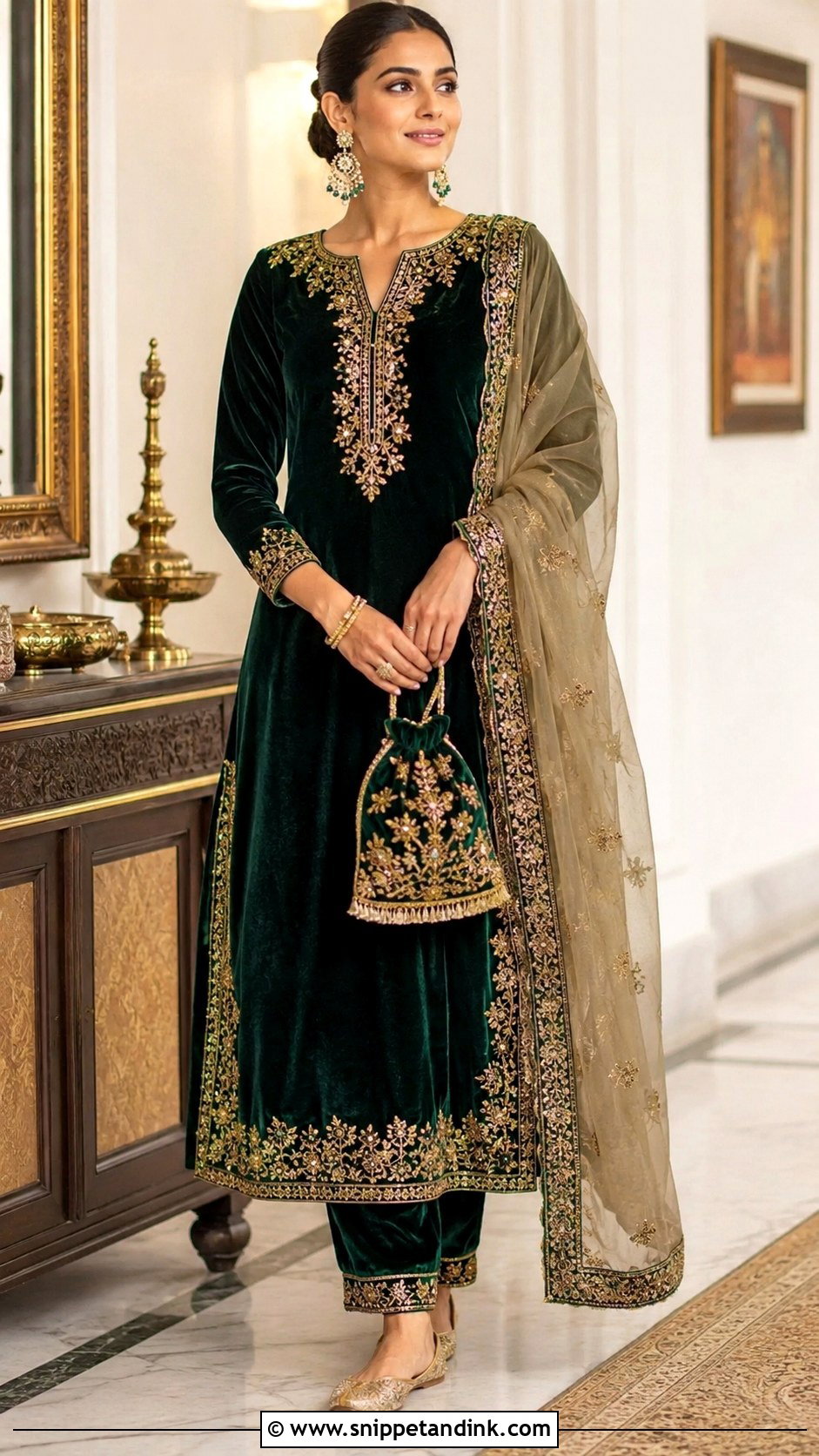
Velvet is the winter fabric. A straight embroidered velvet kurta with tapered pants and a tissue or organza dupatta keeps you warm at an outdoor evening ceremony. Bottle green, burgundy, navy, plum and chocolate brown suit the season. Gold or antique embroidery adds definition. My caveat: velvet traps heat, and indoor halls are often warm, so a breathable lining helps. Bring a coordinated shawl for outdoors rather than adding bulky layers underneath.
17. Floral Printed Lehenga for Wedding
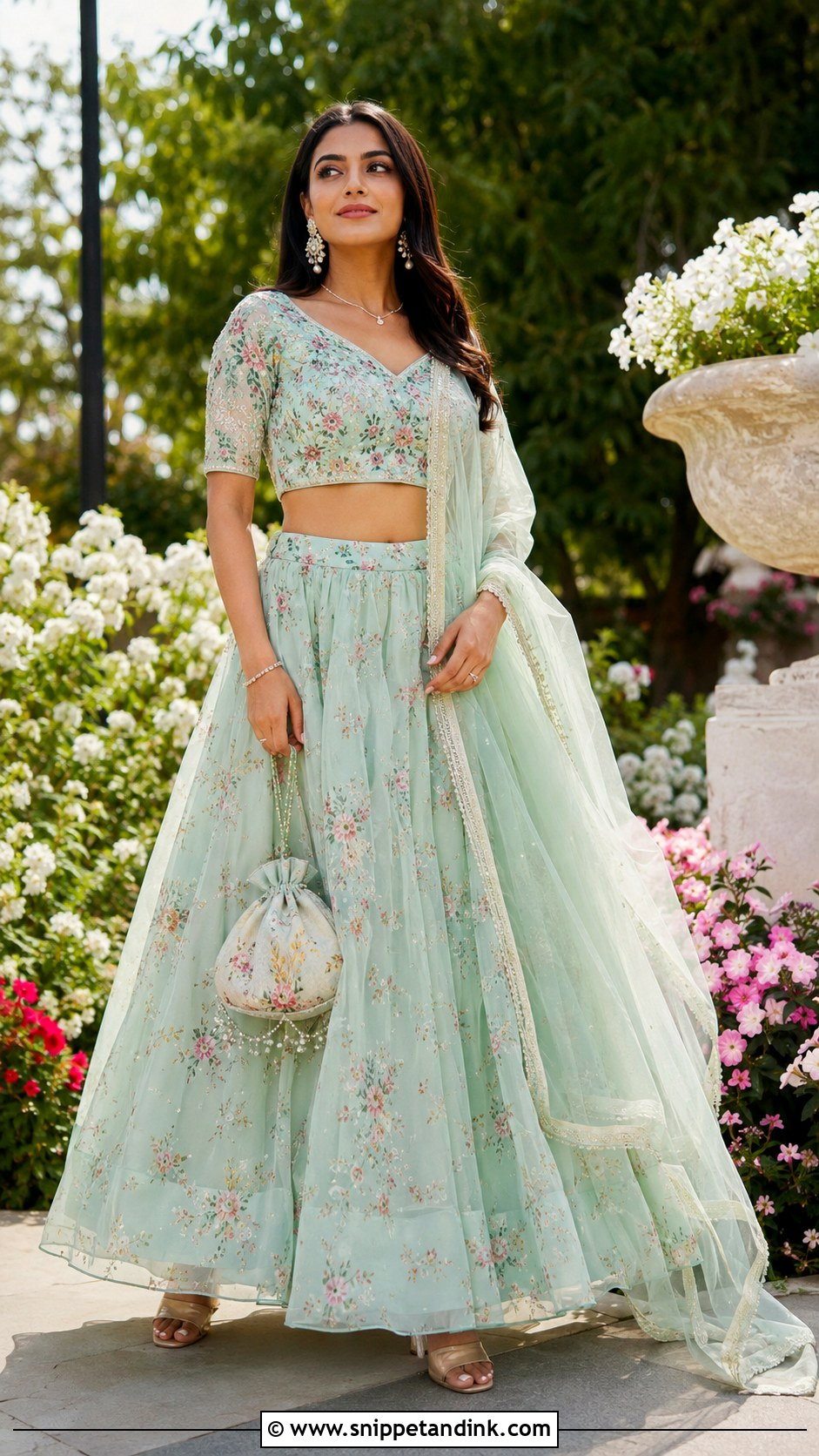
Floral printed lehengas suit sunlit gardens and daytime ceremonies. Organza, chiffon or lightweight silk keep it light enough for walking on lawns. Small prints read delicate; large watercolour blooms are more dramatic and suit taller frames. Mint, peach, lavender and powder blue are warm-weather colours. Let the print carry the colour and keep makeup fresh. An elbow-sleeve blouse with a square or boat neck gives more coverage.
18. Peplum Top With Sharara for Wedding
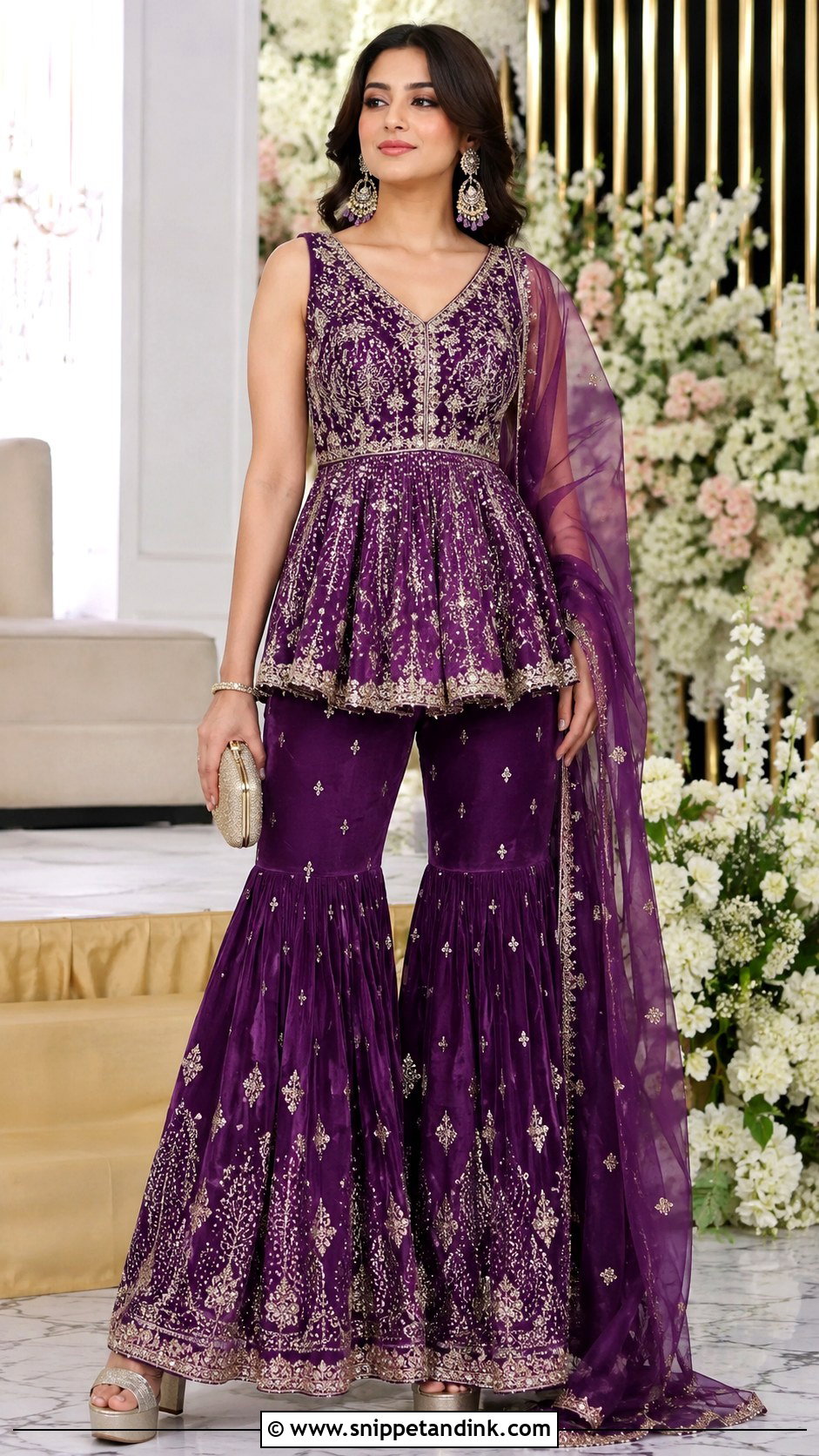
A peplum top over a sharara defines the waist before the flare, which is flattering on most figures. Match the fabrics for a streamlined look, or pair a heavily embroidered peplum with simpler pants. It works for a mehndi, sangeet or reception. Jewel tones for evening; coral, lilac or aqua for day. Where the peplum starts is what makes it work. If the seam sits too low, it bunches over the hips when you sit.
19. Silk Skirt and Crop Top for Wedding
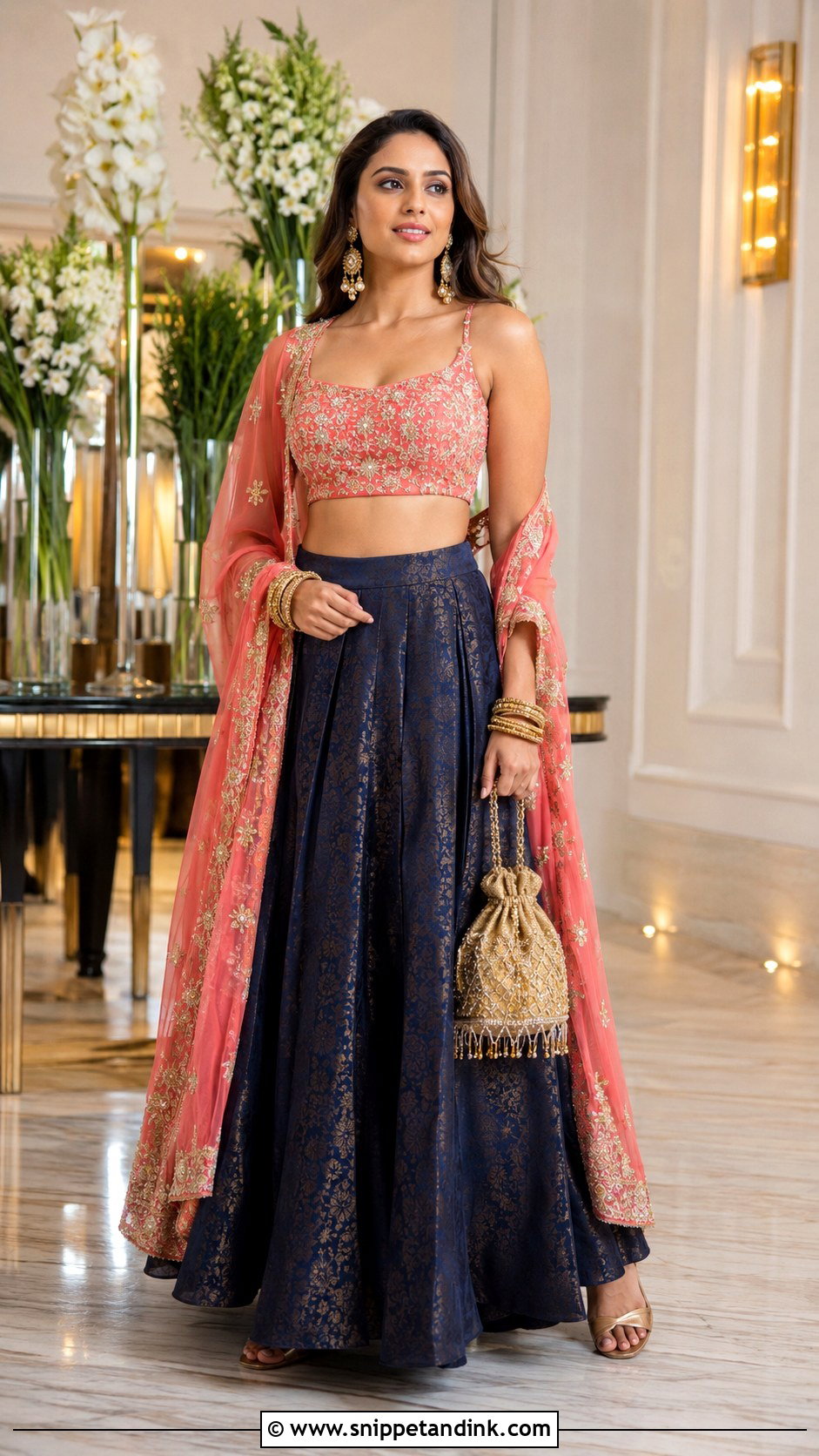
A silk skirt and crop top is the most rewearable outfit on this list, since the pieces split up after the wedding. A full brocade or raw silk skirt with a fitted embroidered top, then a dupatta, long jacket or cape depending on formality. Contrasts like navy with coral or emerald with blush look modern. Check the top length by raising your arms; crop tops ride up more than you expect when you dance.
20. Embellished Saree Gown for Wedding
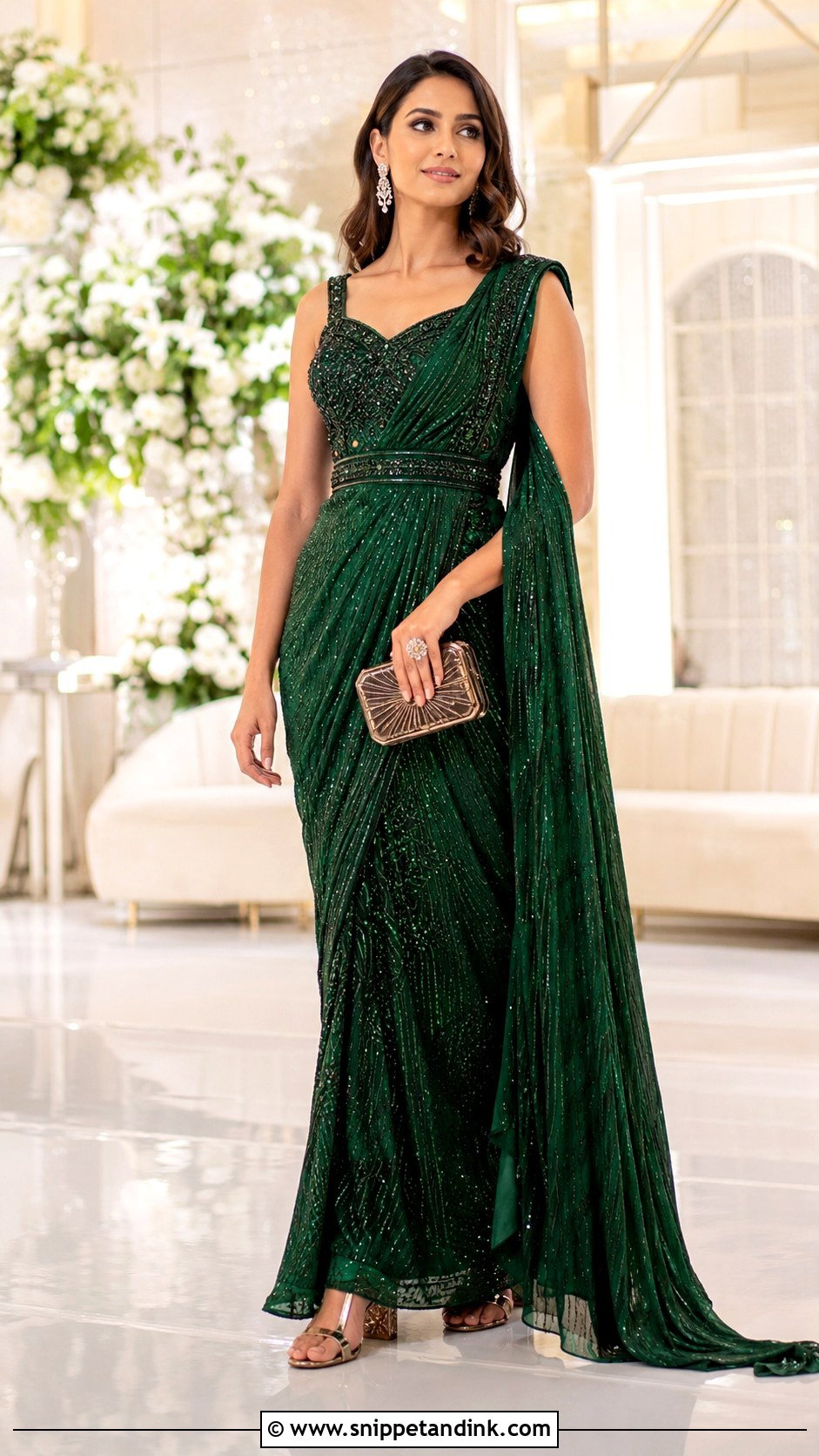
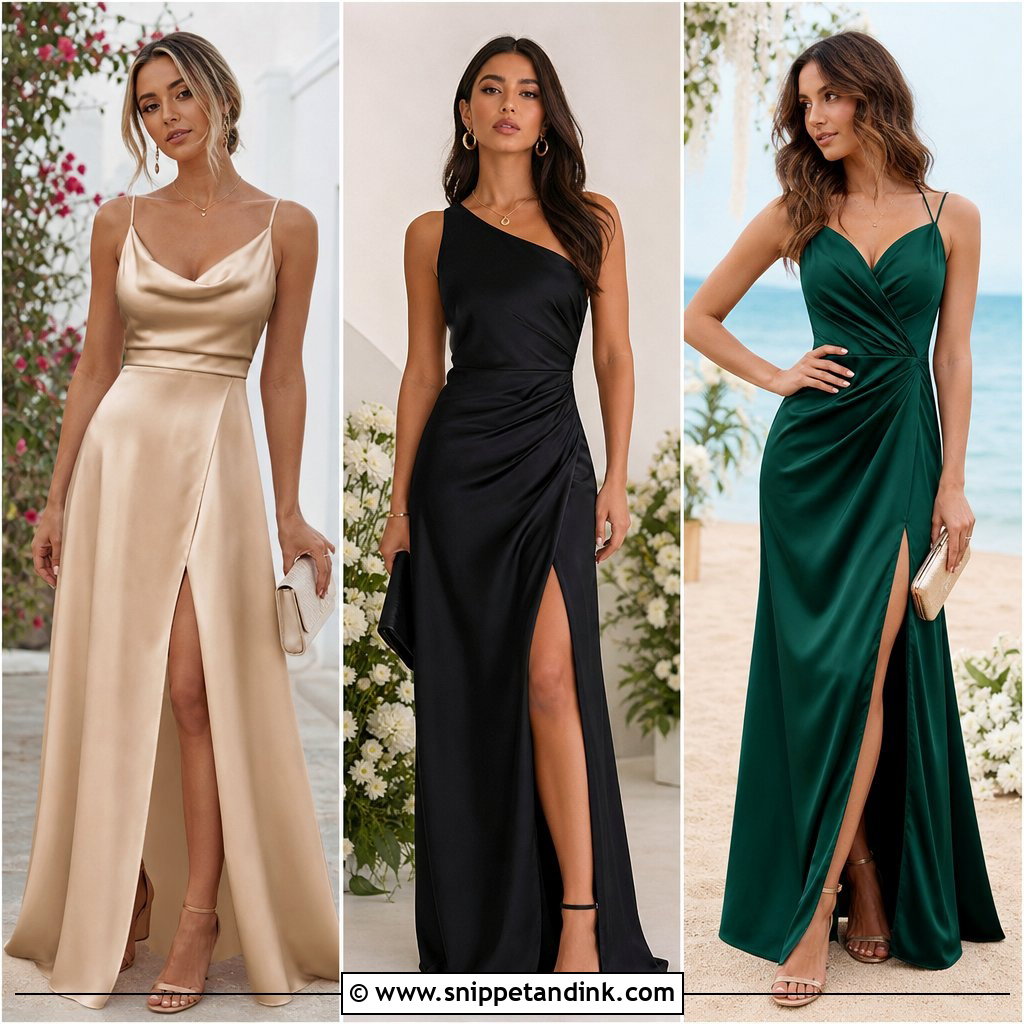
A saree gown zips on like a dress, with the drape already attached. It’s a sensible reception choice for guests who don’t want to manage pleats and a pallu. Look for a defined waist and draping that falls smoothly over the hips. Sequins, beadwork or metallic embroidery dress it up for evening. Navy, emerald, plum, bronze and muted rose all work. Skip the necklace if the bodice is decorated. Have the shoulder, waist and hem altered properly; the attached drape only hangs right when all three sit where they should.
Shoes Off, Head Covered: Dressing for a Religious Venue
Many Indian wedding ceremonies take place in a gurdwara, temple or mosque, or follow religious customs even at a hotel. That changes what works.
- Shoes usually come off before entering, so choose footwear you can slip out of quickly. Strappy sandals with buckles are a pain in a queue.
- At a gurdwara, everyone covers their head. A dupatta does this naturally, which is one more reason to bring one even with a fusion outfit.
- Ceremonies often involve sitting on the floor. Lehengas, sarees and Anarkalis manage this easily; fitted gowns and short kurtis with slim pants are harder.
- Shoulders and midriff are often covered at religious venues. A crop top or sleeveless blouse can be paired with a dupatta or jacket for the ceremony and revealed again at the reception.
If you don’t know the customs, ask a family member of the couple. Nobody minds the question, and it saves you from feeling out of place on arrival.
Small Fixes Worth Carrying in Your Potli
Most wardrobe trouble at Indian weddings is small: a pleat that slips, a dupatta that won’t stay, a jutti that rubs. A tiny kit fixes nearly all of it, and it fits in the potli you’re already carrying.
- Six or eight safety pins in two sizes, for pleats, pallus and dupattas.
- A strip of double-sided fashion tape for necklines and blouse straps.
- Blister plasters. New juttis are stiff at the heel and rub for the first few wears.
- A few bobby pins and a spare bindi.
- Blotting papers, since silk and velvet get warm under lights.
If your outfit has a heavy dupatta, pin it before you leave home rather than at the venue. It’s much easier with a mirror and a second pair of hands.
Start With the Invitation, Then the Weather
The invitation tells you more than you think: the ceremony type, the venue, sometimes even the colours. Check it first, then think about temperature, how long you’ll be there and how much walking or dancing is involved. Sarees and silk weaves suit the most formal moments. Lehengas, Anarkalis, shararas and fusion sets each offer a different balance of movement and coverage. Choose jewellery that supports your outfit, wear shoes you’ve already broken in, and leave time for tailoring.
You'll Like These Ideas:



Leave a Reply