
Most gown mistakes I’m asked to fix happen at the edges of the dress: shoes that change the hem, a necklace fighting a neckline, a wrap that hides the one detail that made the gown worth buying. These 25 Trending Gowns are about more than silhouettes for that reason. Each look comes with the shoes, jewelry, bag and layers I’d put with it, plus the fitting point I’d check first. You’ll find ball gowns, satin columns, floral appliqué, minimalist cuts and a few statement shapes, with notes for different seasons, ages and body types.
Dress Codes Decide the Gown More Than Trends Do
Before I look at silhouettes with a client, I ask what the invitation says and where the event is. Black tie usually means a floor-length gown; formal or black-tie optional allows a floor-length gown or an elegant cocktail-length dress; cocktail is where most of these long shapes start to feel overdressed. A gown that suits a ballroom can be wrong on a beach, and a satin column looks very different at noon than at nine at night.
Guest rules I’d never skip
- Avoid white, ivory and pale champagne at weddings unless the couple has asked for it.
- Check the ground. Stilettos sink into lawn and sand; block heels, wedges or jeweled flats save the evening.
- Ask whether the ceremony is in a place of worship. Some require covered shoulders, which makes a cape or a long-sleeve gown easier than a strapless one with a wrap.
- Think about the weather at the end of the night, not the start. Evening temperatures drop fast outdoors.
1. Satin Column Gown With Metallic Heels
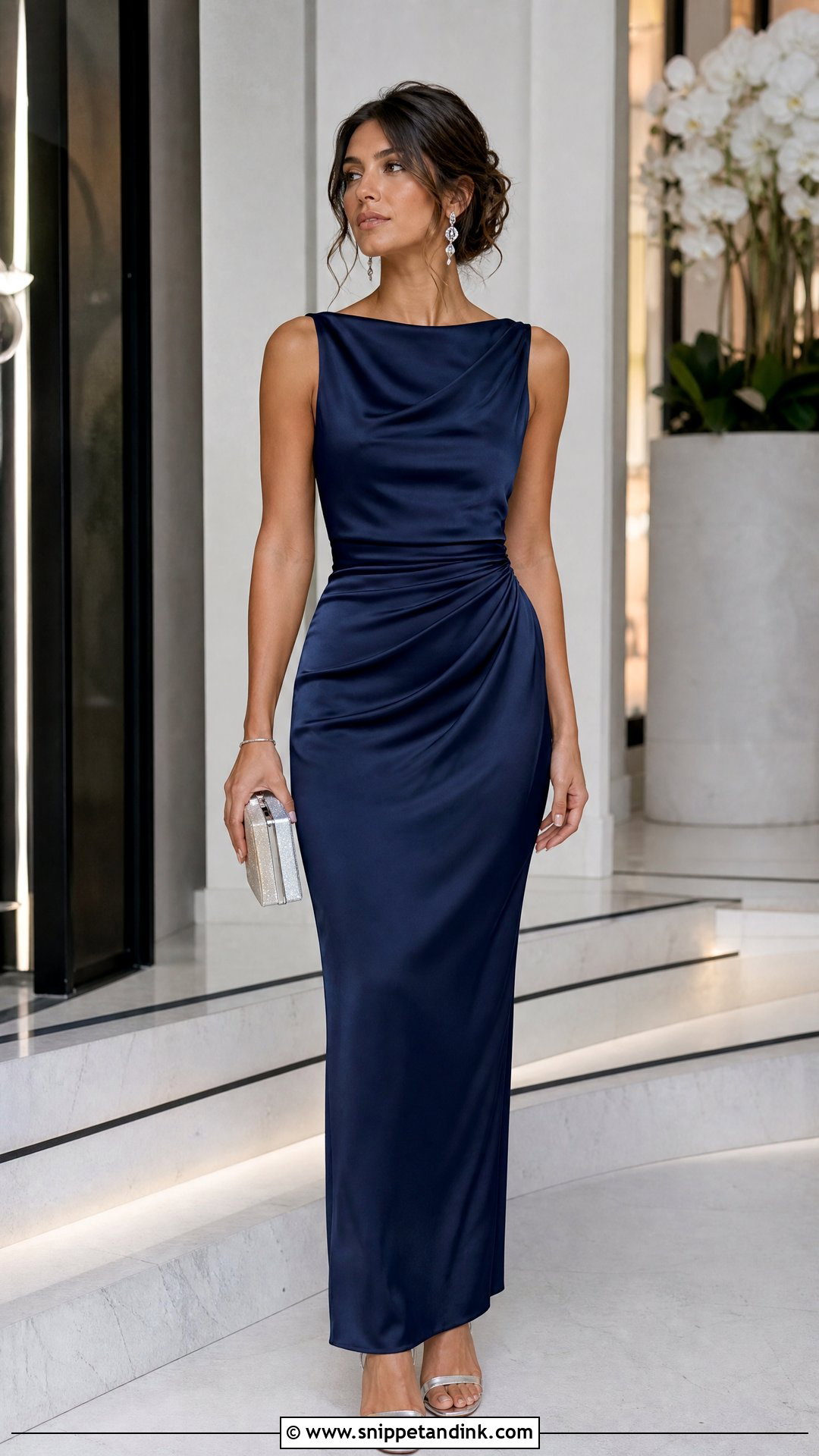
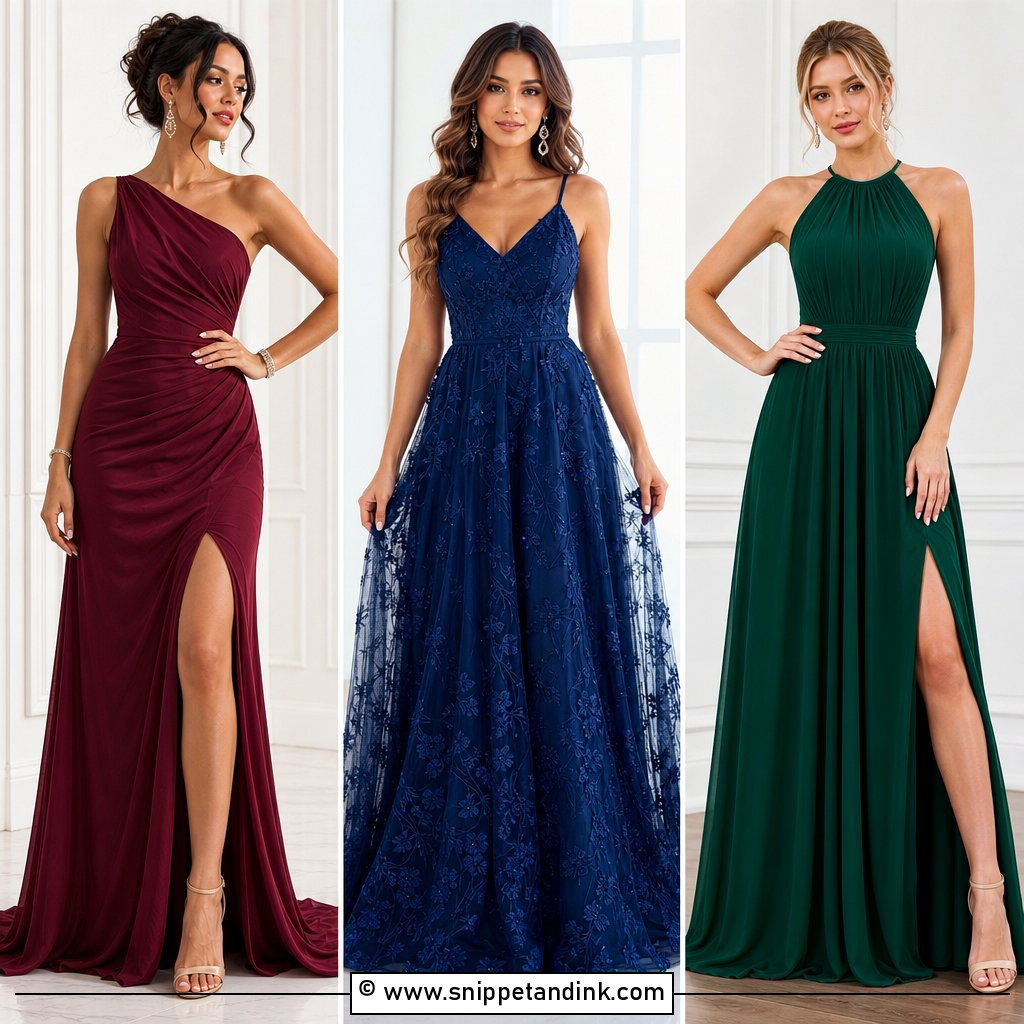
Satin shows everything, and that’s the first thing I tell anyone buying a column gown. A crooked hem, a seam pulling across the hip or a strap set a few millimeters off all catch the light. Midnight blue, emerald, burgundy, chocolate and black suit evening events. A softly draped neckline adds movement over a structured bodice. Keep the metallic heels slim and matched to your jewelry, then add a box clutch, drop earrings and one bracelet. Petite women can look for a slightly higher waistline to lengthen the legs; taller women can wear an ankle-skimming cut. Smooth hair or a low bun lets the shape lead.
2. Corset Ball Gown With Pointed-Toe Pumps
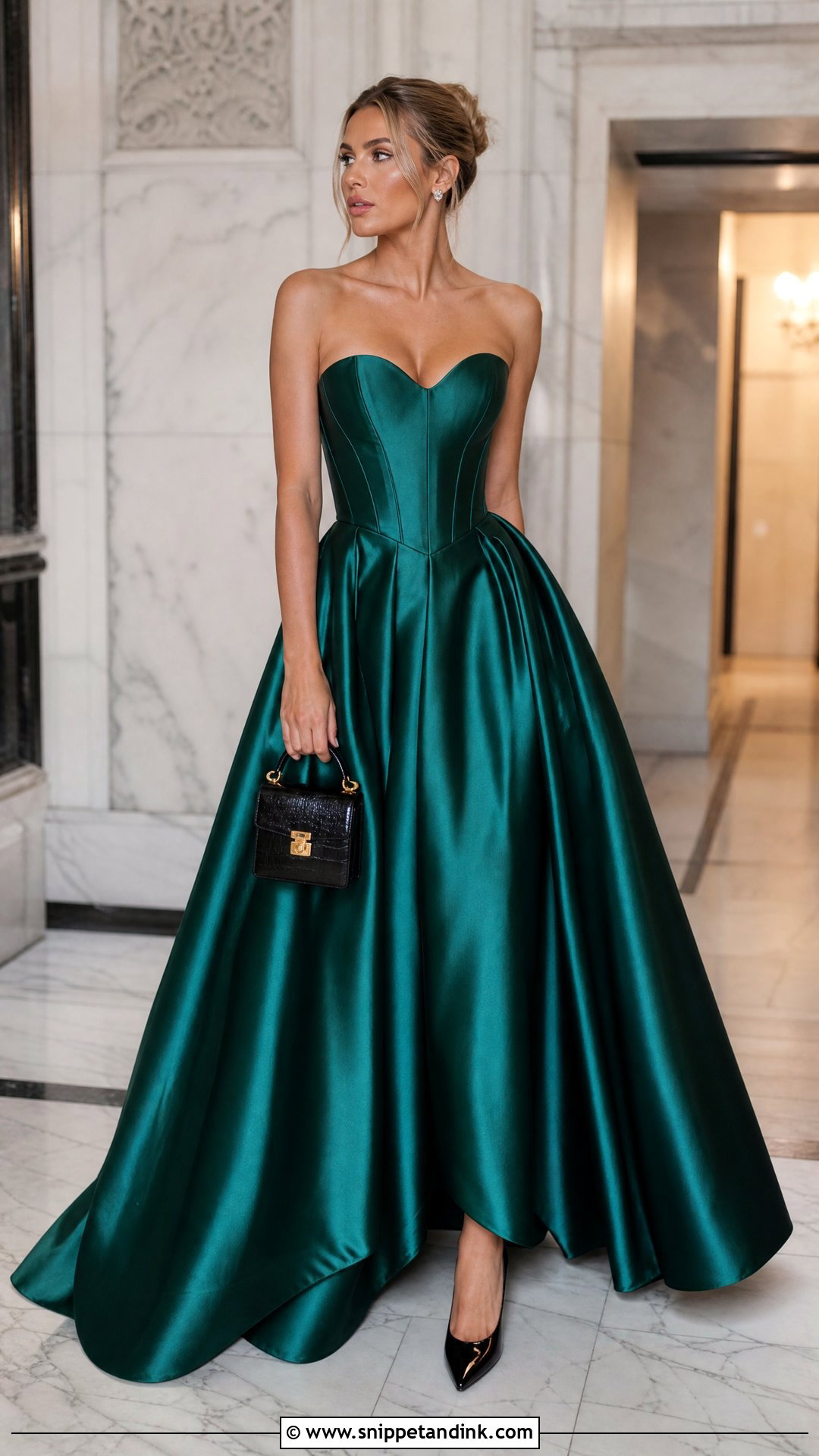
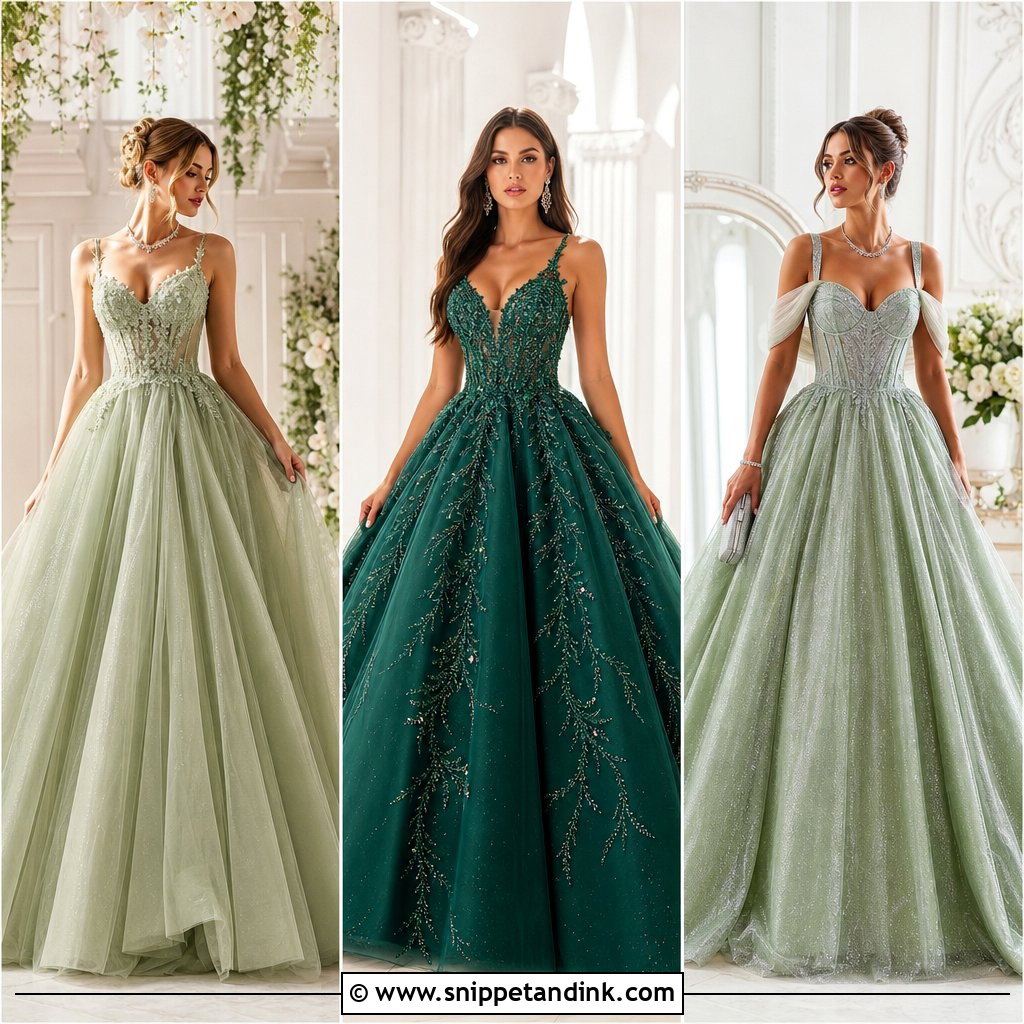
A corset ball gown is celebratory in a way few shapes match. The fitted bodice defines the waist, and good internal boning supports a range of bust sizes without straps. I’d steer you toward matte satin, taffeta or layered organza over very stiff fabric, which can crease into hard lines when you sit. Pointed-toe pumps give a clean line under the skirt and walk more easily than tall platforms. Add a small top-handle bag, studs and a slim necklace if the neckline is open. A gently curved corset seam suits curvy figures; straighter frames can let the full skirt create shape. Sit down in it at the fitting and check the top edge doesn’t dig into your ribs.
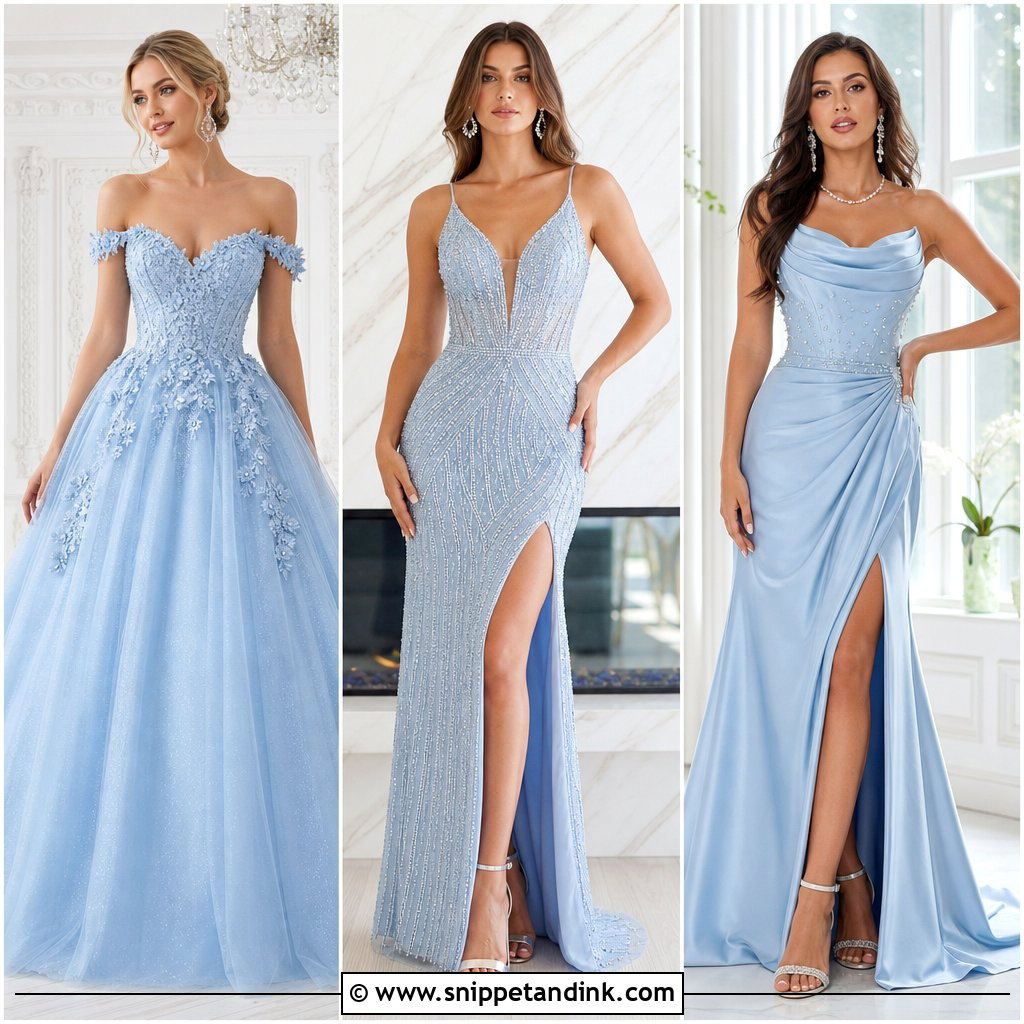
3. Off-Shoulder Gown With Crystal Earrings
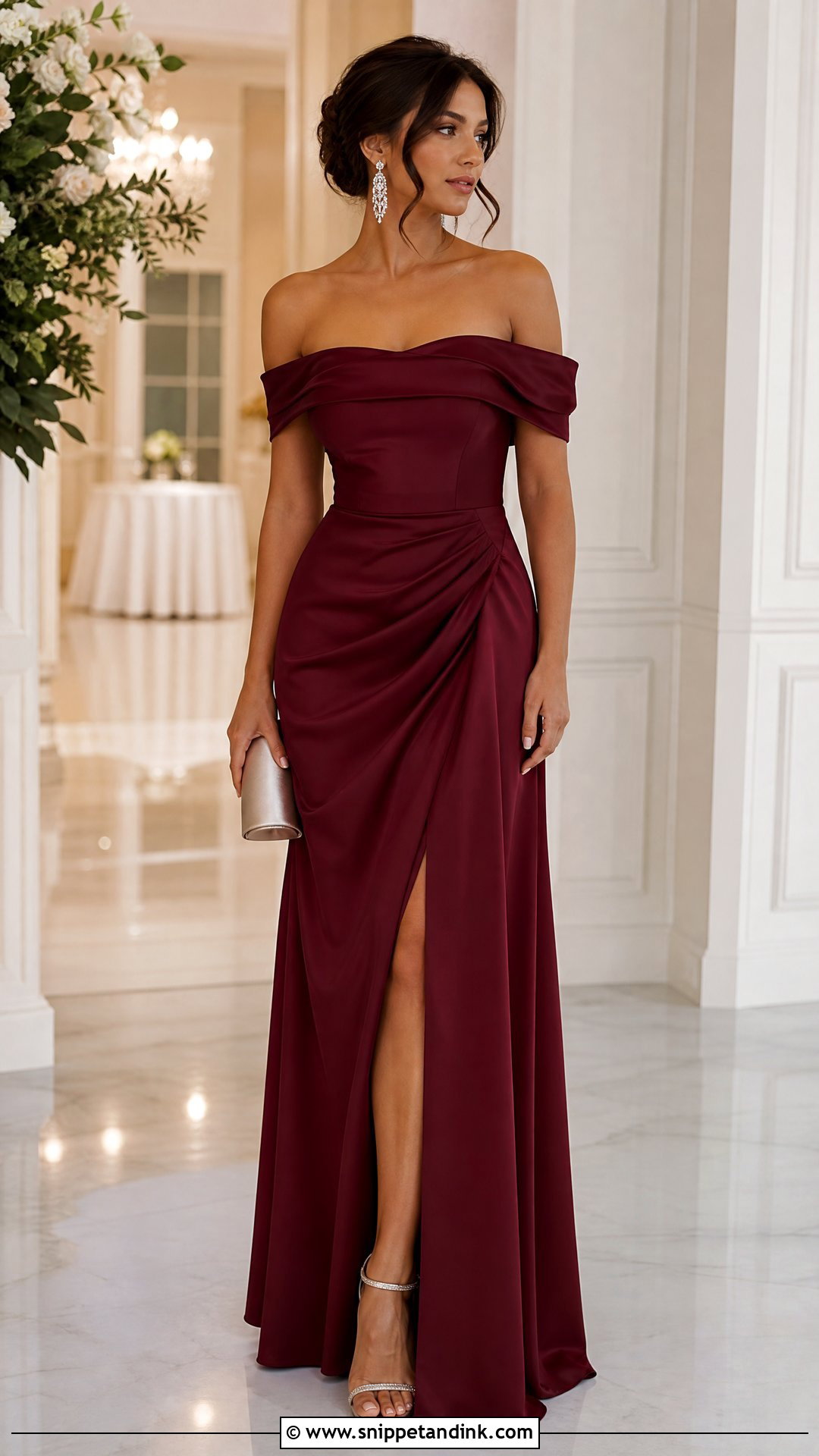
Off-shoulder necklines frame the collarbones, but they only work if the gown stays put. A folded neckline looks clean and architectural; gathered tulle or chiffon looks softer. I look inside first for silicone grip tape, internal support or wide hidden straps, because without them you’ll spend the evening tugging it up. Crystal earrings draw the eye to the face without crossing the neckline. Add a smooth clutch and low sandals in silver, nude or a matching color, plus a light wrap for cooler arrivals. Broader shoulders balance nicely with a flowing A-line skirt. Wear hair swept back so the shoulders stay visible.
4. Cape Gown With Minimal Accessories
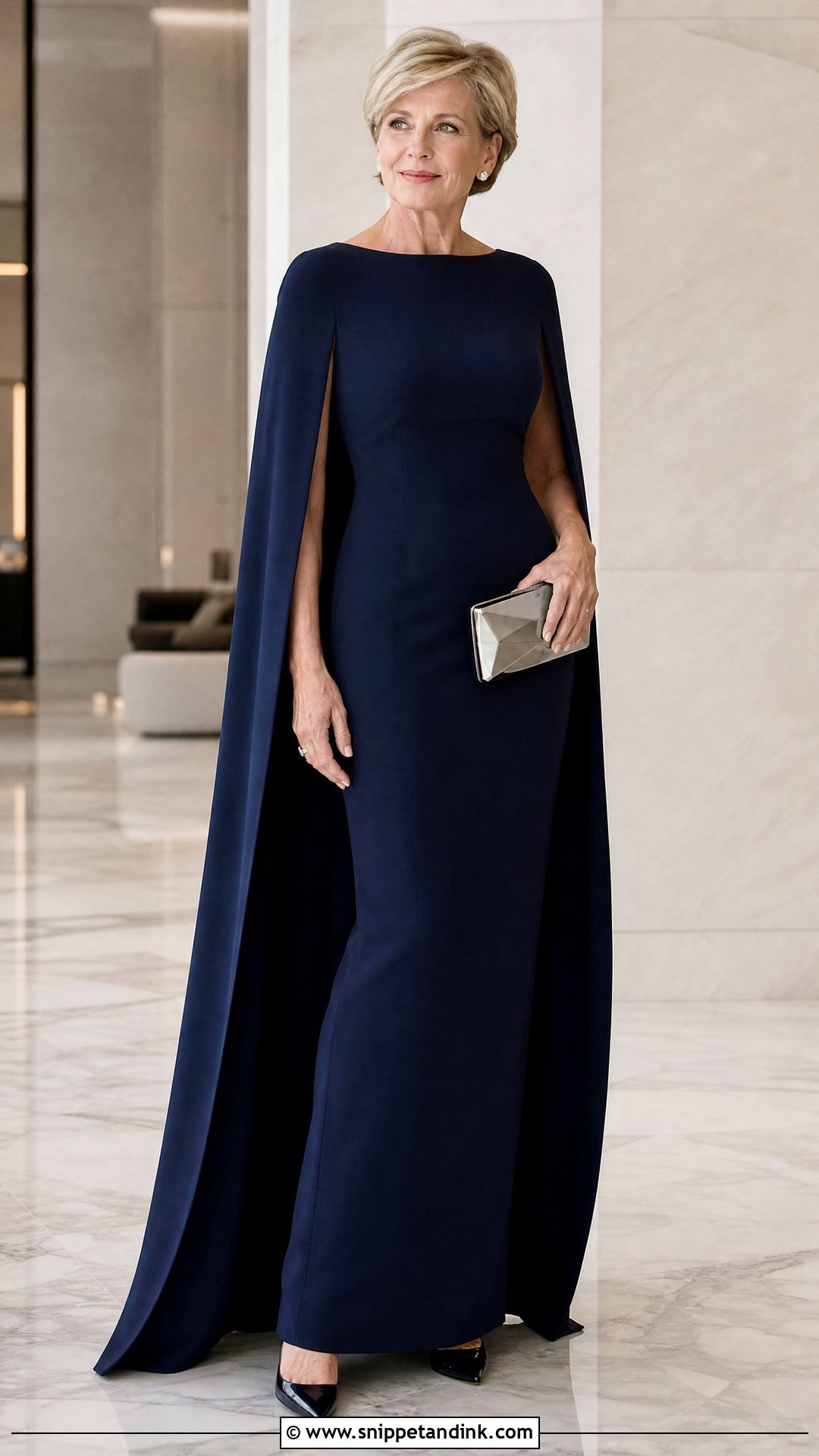
Capes give coverage and movement in one piece, so you don’t need a separate jacket or wrap. A floor-length cape makes the biggest impact; a shorter one shows the waist and skirt. Crepe and fluid satin look sleek, chiffon moves more softly. Since the cape is already the statement, I’d stop at studs, a thin ring and a structured clutch without big hardware. Pointed pumps or slim sandals keep it streamlined. A center-parted bun suits a high neck; soft waves suit an open front. Sit down and reach forward at the fitting, because some capes are attached so tightly at the shoulder that they pull when you lift your arms.
5. Draped Gown With Sculptural Jewelry
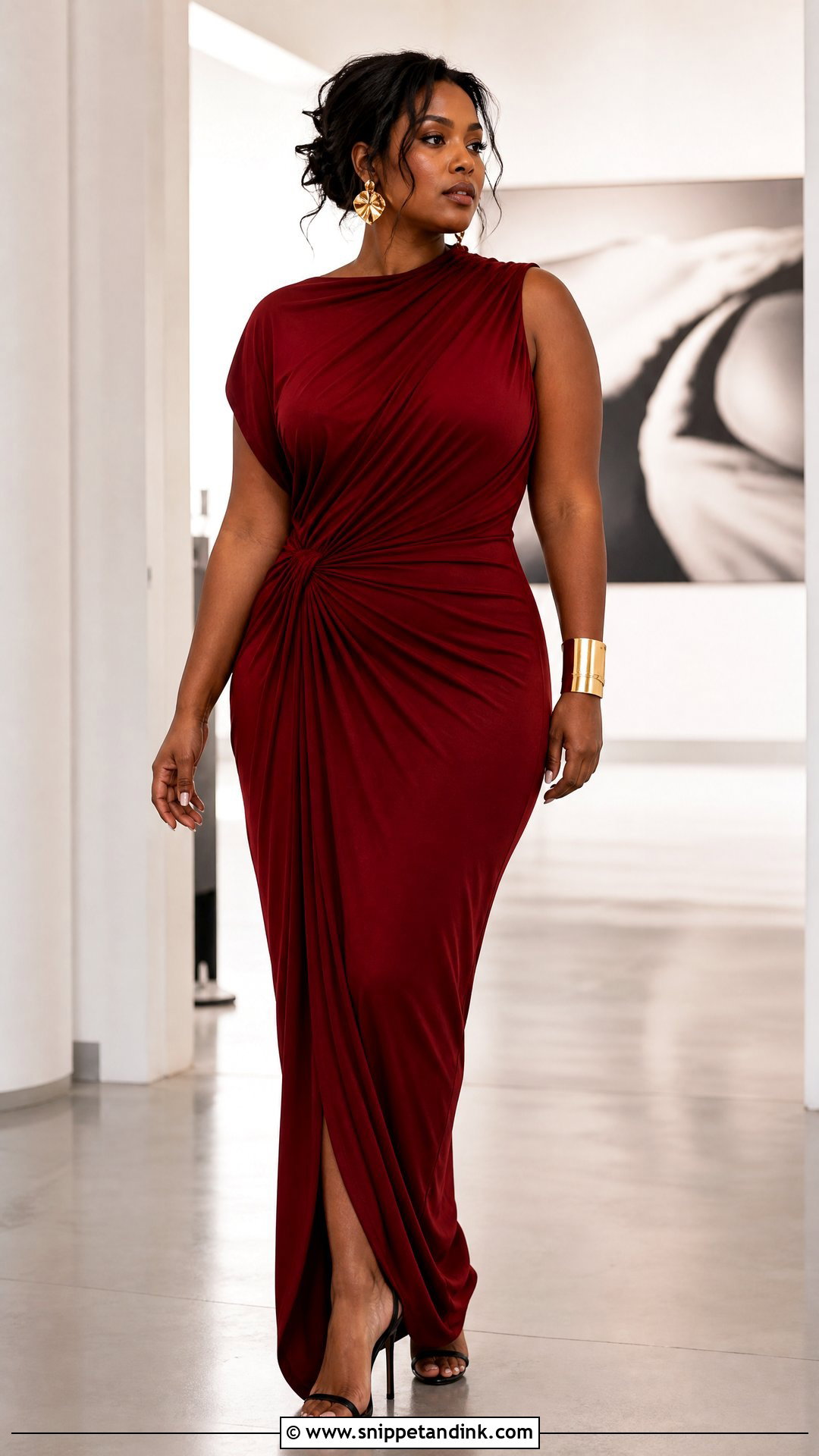
Draping shapes the body through gathers, folds and twists, and where those folds sit decides what they flatter. Placed at the waist, they define it; across the hip, they soften it; over the bodice, they add shape. Jersey, satin and lightweight crepe fall naturally rather than bunching. I’d pair it with one sculptural piece, such as curved earrings or a bold cuff, and nothing else that competes. A hard-shell clutch and simple heeled sandals balance the fluid fabric. For coverage, look for draping across the upper arms or a gathered cape sleeve. Check it from every angle in a three-way mirror, because draping that twists at the back is hard to alter.
6. One-Shoulder Gown With Sleek Sandals
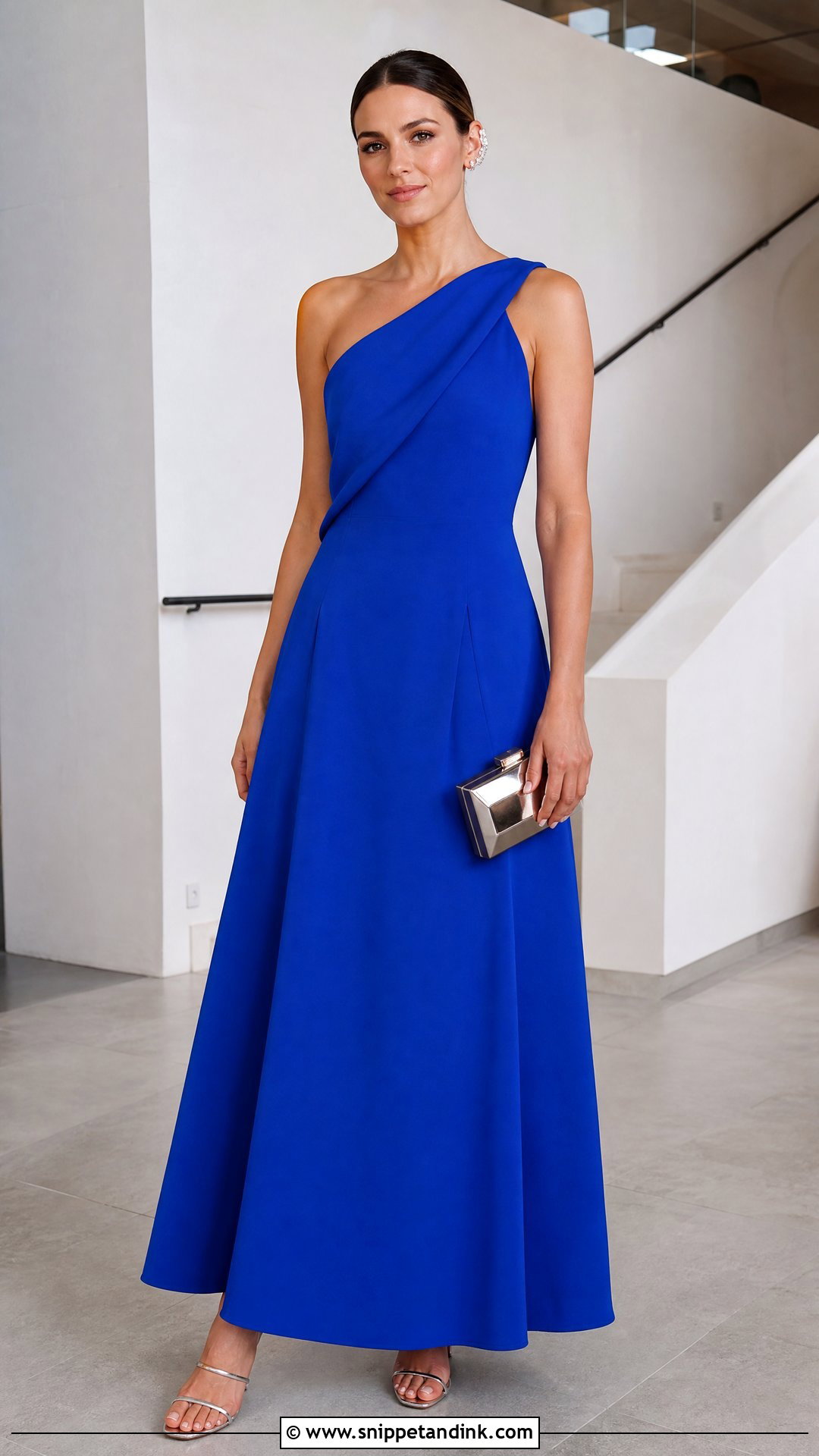
One-shoulder necklines give a classic shape a single focal point, which is why they suit solid colors best. A fitted column skirt reads streamlined; an A-line moves more easily. Thin-strapped sandals and a small clutch keep it light. Wear earrings, not a necklace, so the line stays uninterrupted; an ear cuff or mismatched earrings can echo the asymmetry. If there’s a long sleeve on one side, leave that arm bare of bracelets. The fitting test I use is simple: raise both arms and hug someone. If the shoulder slides, ask for a grip strip or a tighter strap.
7. Halter Gown With Statement Cuff
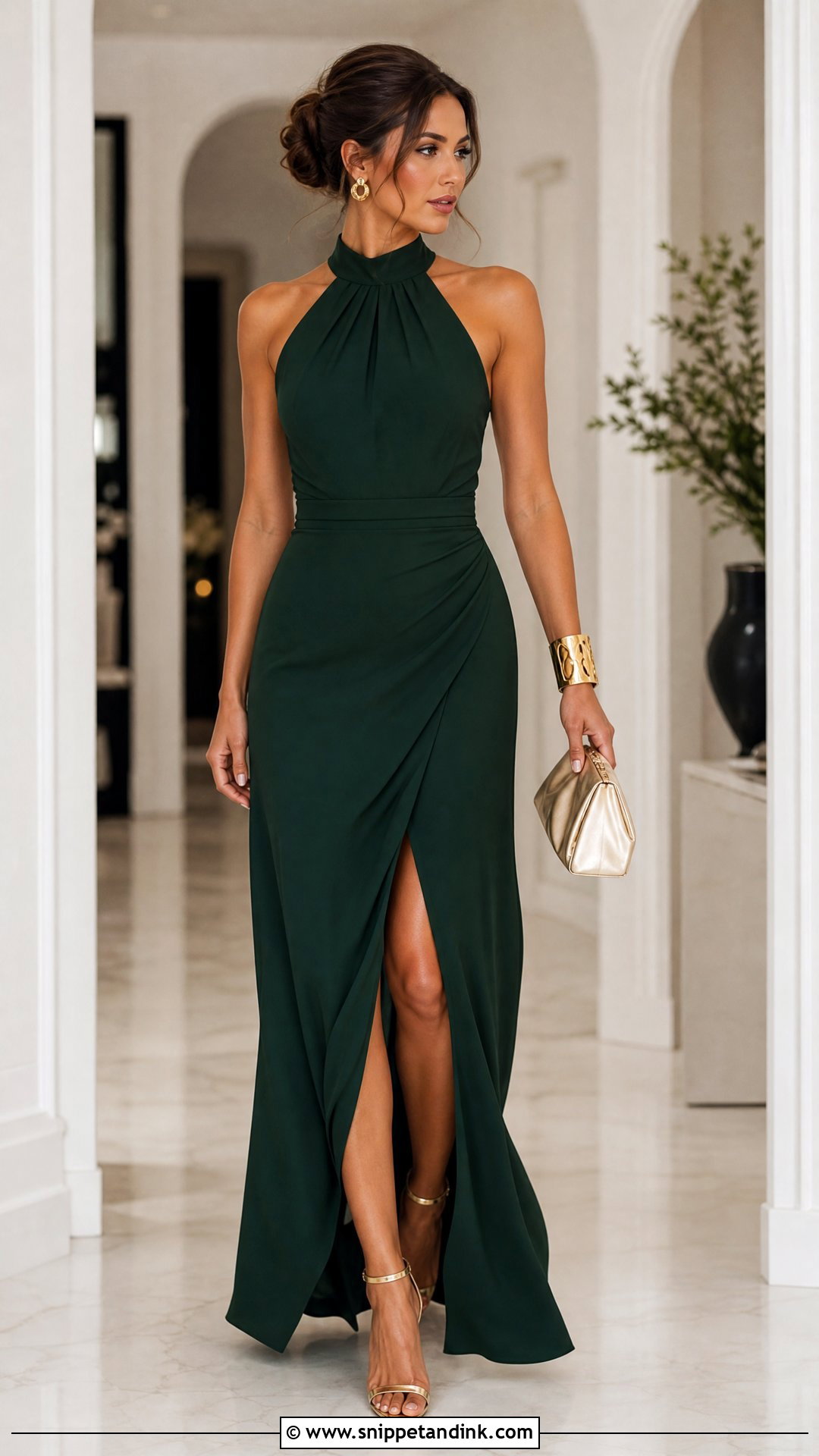
A halter gown draws the eye to the shoulders and gives a strong vertical line through the upper body. Satin looks sleek, chiffon graceful, matte crepe most polished. High-neck halters give more coverage; gathered ones feel lighter. Skip the necklace and add a statement cuff, compact earrings and a refined clutch, with metallic sandals or pointed pumps. If you have a fuller bust, look for substantial straps and a long enough bodice; halters that tie at the neck carry the bust’s weight there, and that gets uncomfortable over a long evening. A clasp or hook closure spreads the load better than a tie.
8. Backless Gown With Drop Earrings
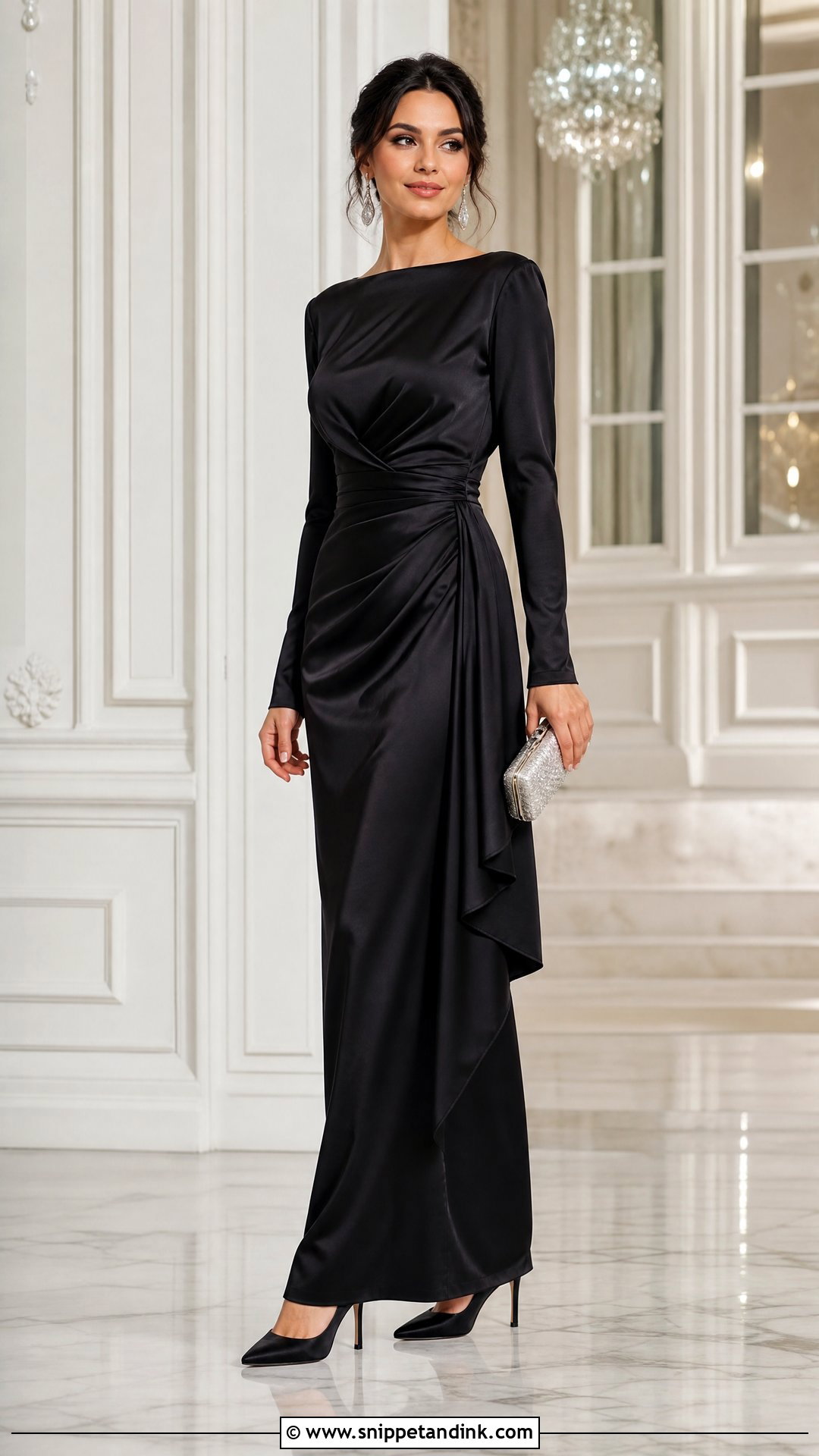
A backless gown keeps the front simple and puts the drama behind. Secure shoulder construction, side support or adjustable ties make it feel reliable. Satin and crepe give a smooth line; draped chiffon looks softer. Drop earrings and no necklace keep the focus on the back, with a small clutch and understated heels in a neutral or metallic. For support, fashion tape works for small adjustments, while a fitted backless bra or bust cups sewn into the bodice suit fuller figures better. Put your hair up or over one shoulder. Before leaving, I’d sit, walk and reach for something on a high shelf to make sure nothing shifts.
9. Mermaid Gown With Platform Heels
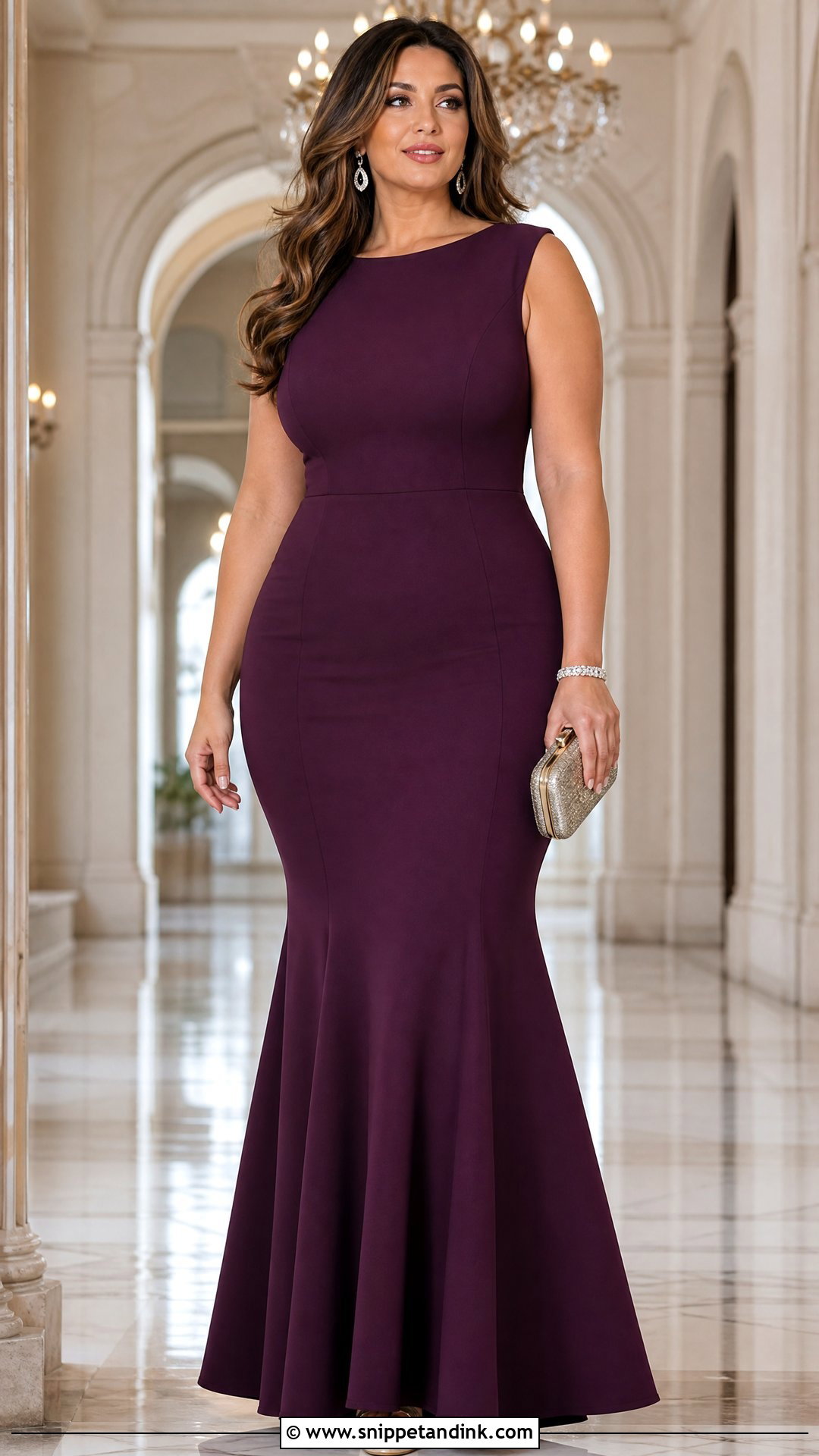
Mermaid gowns follow the body and flare near the knee, and the height of that flare decides whether you can walk. Too low and you’ll shuffle; stretch fabric, thoughtful seaming and a flare at or slightly above the knee give a natural stride. Clean crepe looks modern; subtle embellishment looks more glamorous. Platform heels add height and balance the long proportions, but the hem must still clear the floor. Add medium earrings, a compact clutch and a bracelet if the neckline is plain. I ask clients to climb a few stairs and sit in a low chair before buying; a mermaid that fails either test will fail on the night.
10. A-Line Gown With Classic Pumps
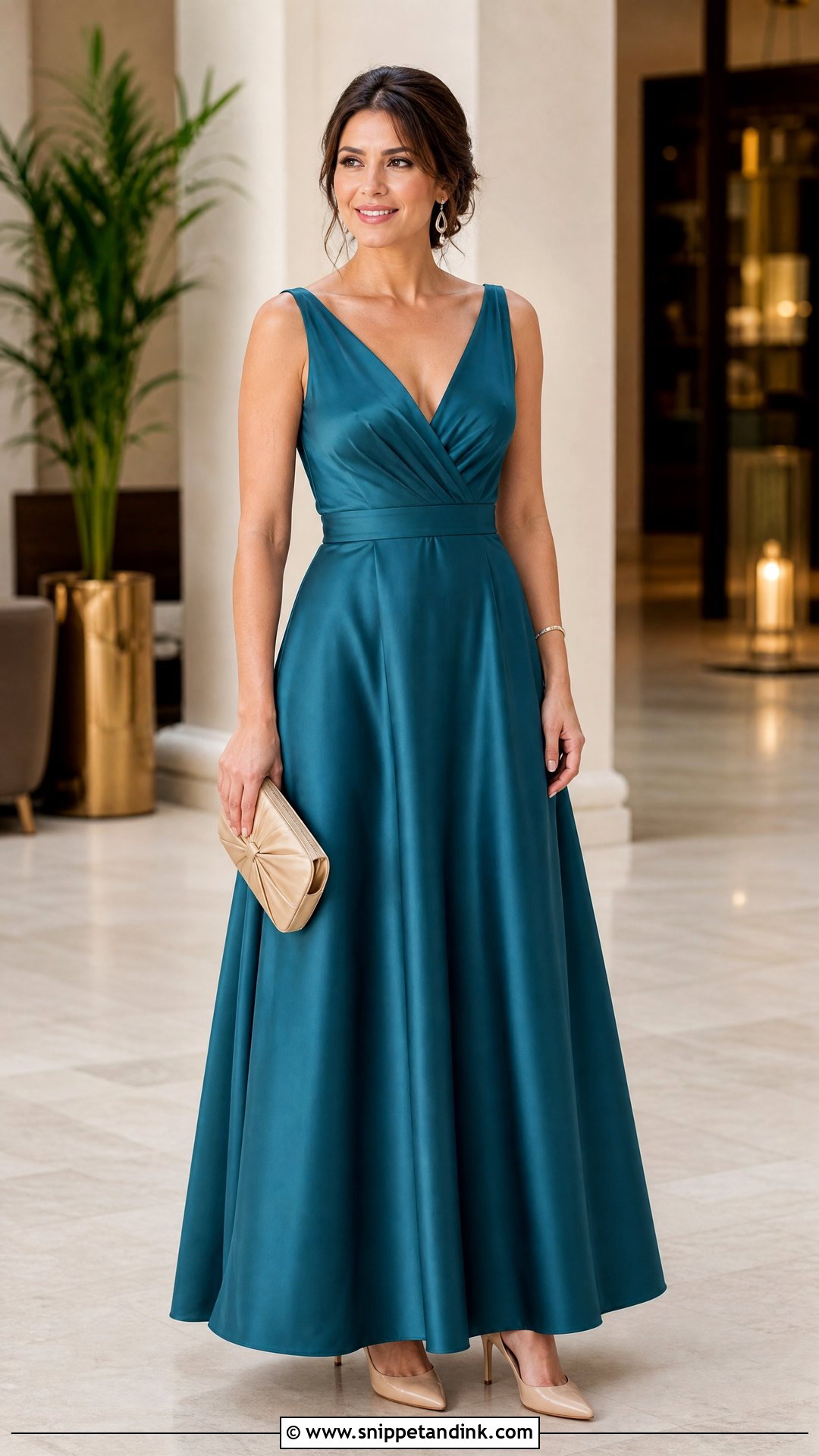
A-line gowns suit almost every height and proportion, which is why I keep recommending them. The shape defines the upper body, then widens gradually to the hem. Satin gives structure, chiffon movement, crepe a smooth minimal finish. Classic pumps are comfortable and mostly hidden. Add a slim clutch, small drop earrings and a delicate bracelet. A V-neck lengthens the upper body; a square or bateau neckline covers more. Petite women should avoid too much skirt volume, while taller women can carry wider hems. Get the shoulders, bust and natural waist tailored; when those fit, everything below falls smoothly.
11. Sequin Gown With Neutral Accessories
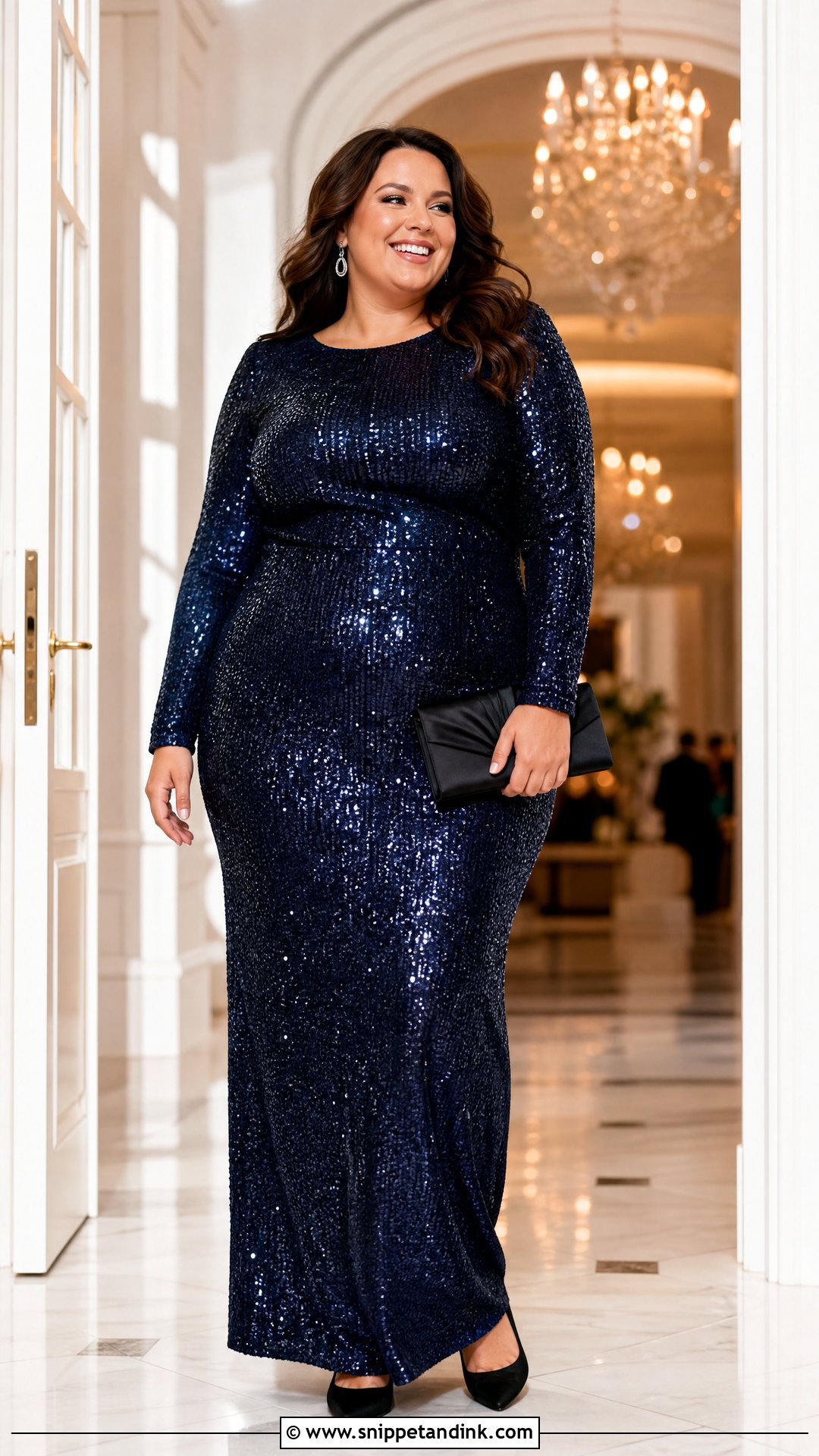
Sequins give you sparkle without extra styling, but they come with practical catches. Small sequins look smooth and refined; larger paillettes move and flash more. A simple column, wrap or long-sleeve cut keeps embellishment from overwhelming you. Balance it with neutral accessories: black pumps, a satin clutch and plain metal earrings. Glittered shoes and jeweled bags compete. Dark green, navy, bronze and deep red are good alternatives to silver or gold. Check under the arms before buying; unlined sequins scratch the inner arm raw over a few hours. A full lining fixes this and helps the gown hang better.
12. Metallic Gown With Monochrome Accessories
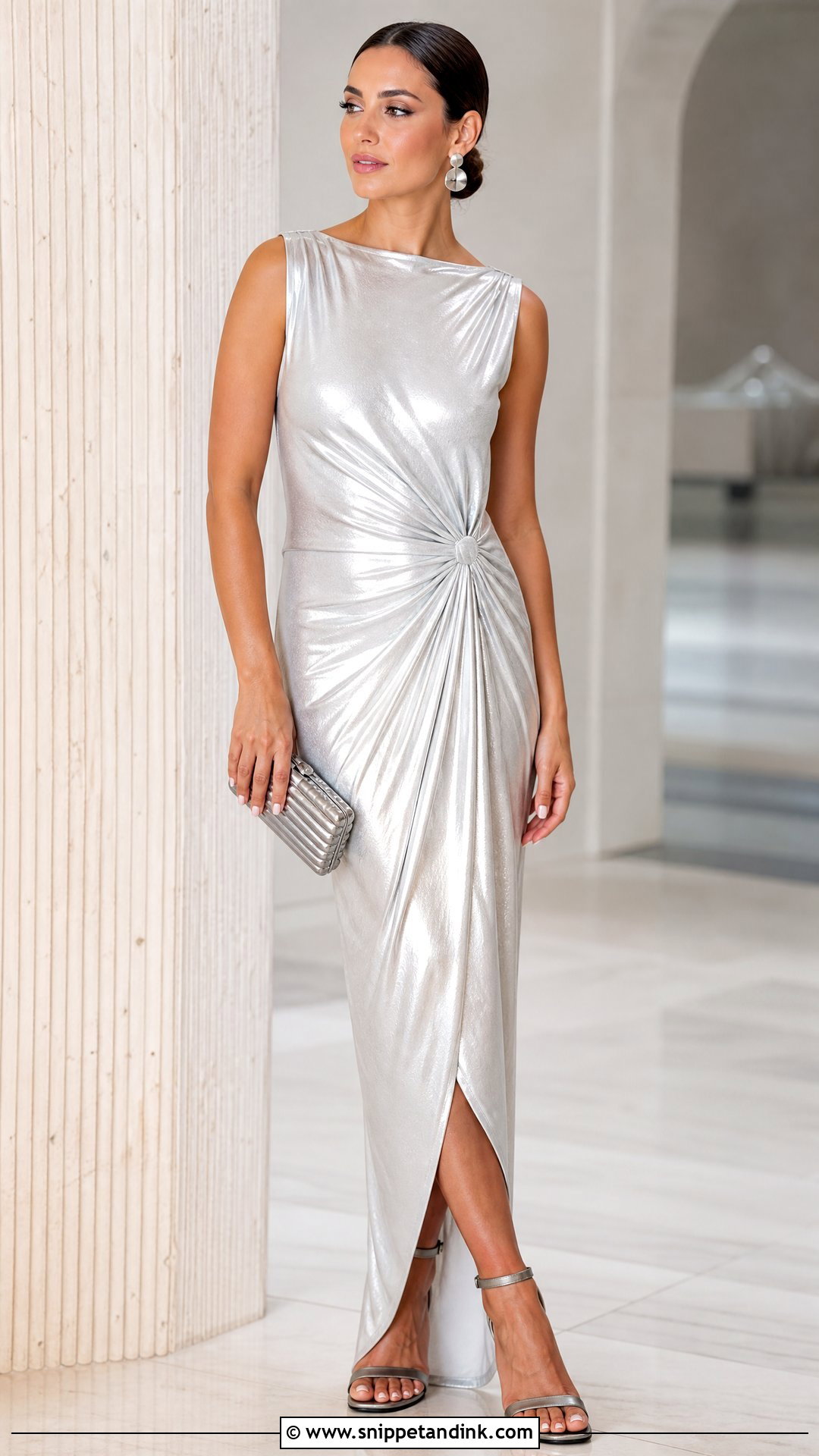
Metallic gowns look most sophisticated in one color family from head to toe. Silver goes with pewter shoes and cool jewelry; gold with champagne accessories. Bronze and rose gold are warmer alternatives. A sleek cut with controlled draping or clean pleats lets the fabric carry the drama. A monochrome clutch and minimal earrings complete it. If the gown is very shiny, matte or satin shoes stop it tipping into costume. I’d keep makeup balanced, with either defined eyes or a strong lip, not both. Metallic fabrics show sweat marks, so wear dress shields if the venue will be warm.
13. Velvet Gown With Closed-Toe Heels
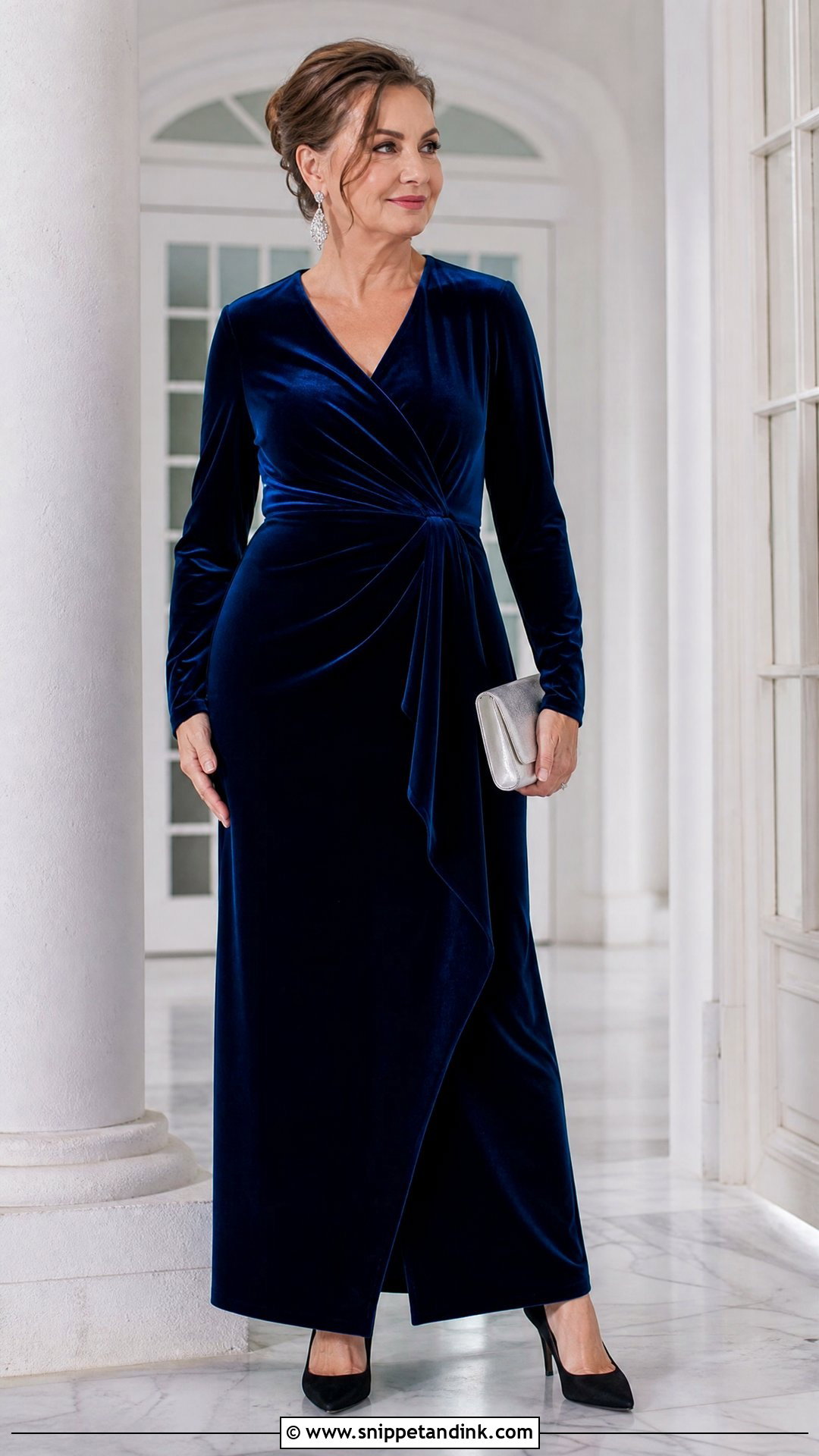
Velvet belongs to cool-weather galas, formal dinners and winter weddings. Sapphire, garnet, plum and forest green deepen the pile; black velvet is classic. A wrap, column or gently draped shape moves without bulk. Closed-toe heels suit the season and sit well under the heavier fabric. Add a satin clutch and fine metal jewelry. A sleeveless velvet gown pairs with a tailored coat for arrival. Velvet changes color with light and angle, so look at it in daylight and indoor light before you decide. Steam from the reverse side, never press the pile directly, and hang it with space around it.
14. Chiffon Gown With Delicate Sandals
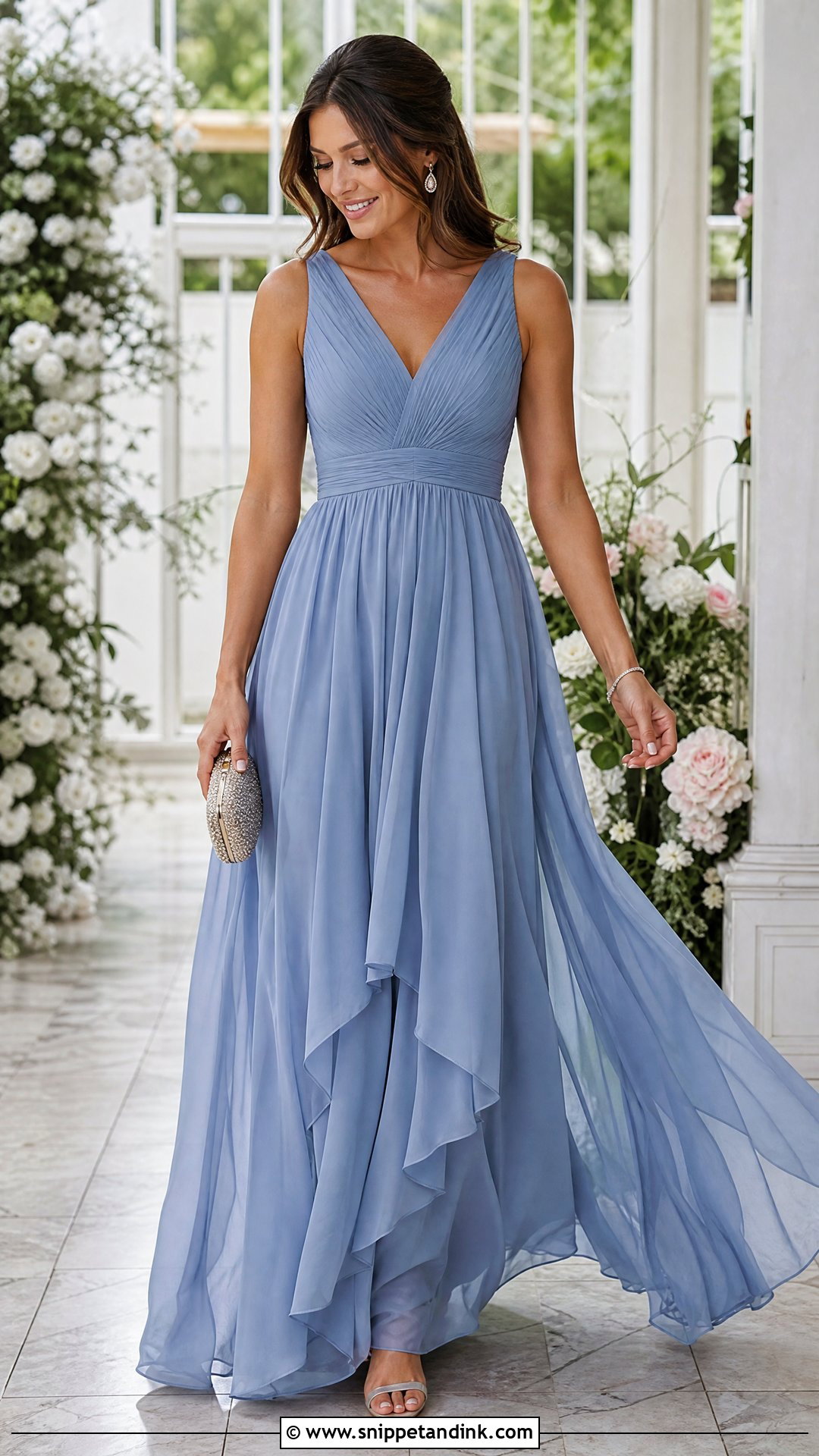
Chiffon floats, which makes it a natural choice for spring and summer. An empire waist, pleated bodice or gathered A-line skirt lets it move without hiding your shape. Choose a fully lined gown in a color that photographs clearly, such as dusty blue, raspberry, teal, lavender or deep navy, because very pale chiffon can turn see-through in flash photography. Delicate sandals and a small beaded or satin clutch suit it, with fine drop earrings and one thin bracelet. For arm coverage, flutter sleeves or a chiffon cape work better than a heavy jacket. Hem it so it doesn’t drag; chiffon picks up dirt and snags on rough floors.

15. Floral Appliqué Gown With Simple Heels
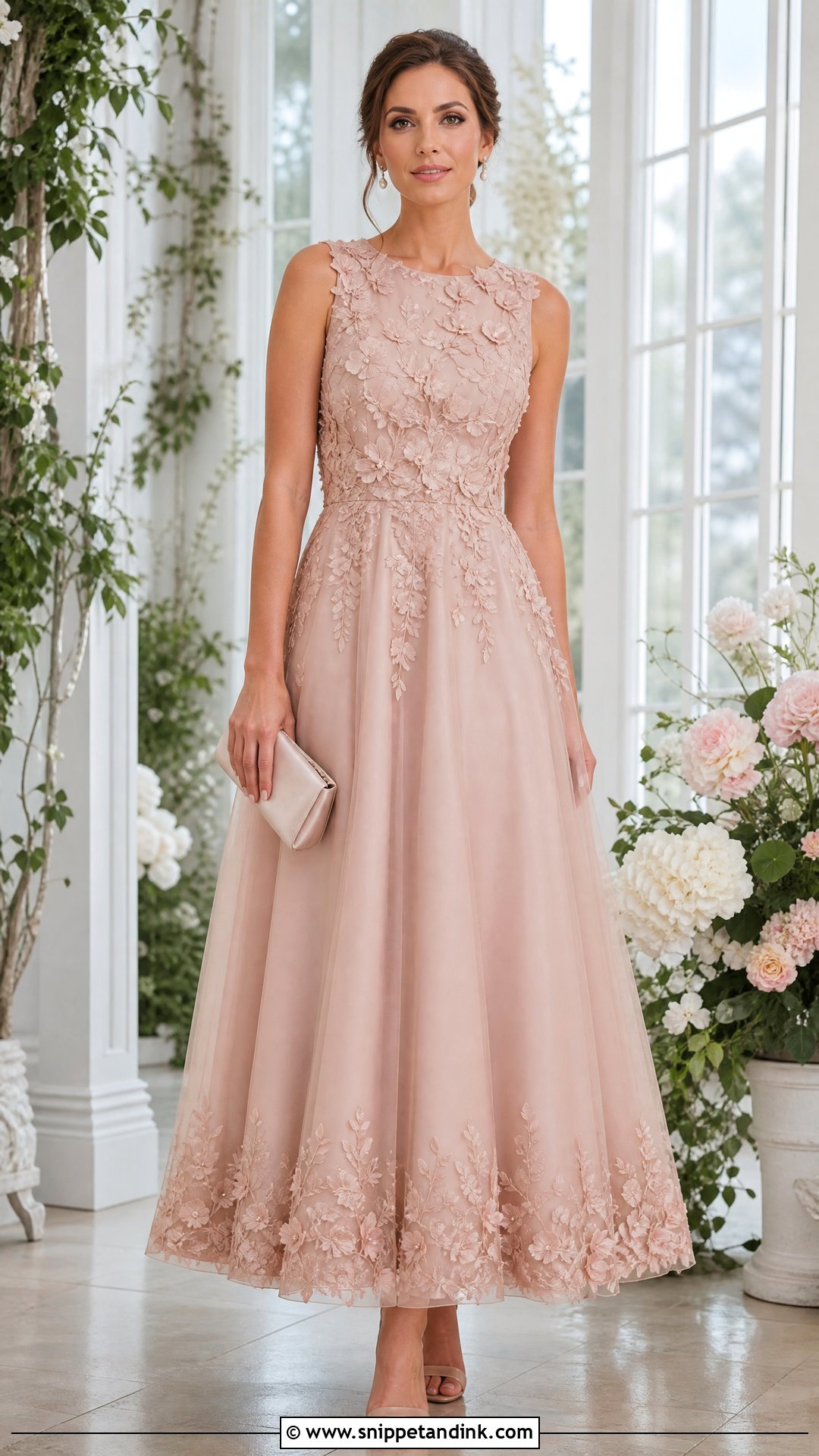
Floral appliqué adds raised petals, embroidered leaves and botanical detail. The more modern versions place them around the bodice, shoulder, waist or hem rather than everywhere. Tonal flowers look subtle; contrasting ones make a stronger statement. Simple heels in nude, black, metallic or one color from the gown keep attention on the work. Carry a plain clutch and avoid floral earrings, which tip the theme into too much. A fitted bodice with an A-line skirt suits many figures. Before wearing, I check every appliqué for loose stitches and tack down any that lift. Store it flat or in a roomy garment bag so the petals don’t crush.
16. Sheer Overlay Gown With Tonal Accessories
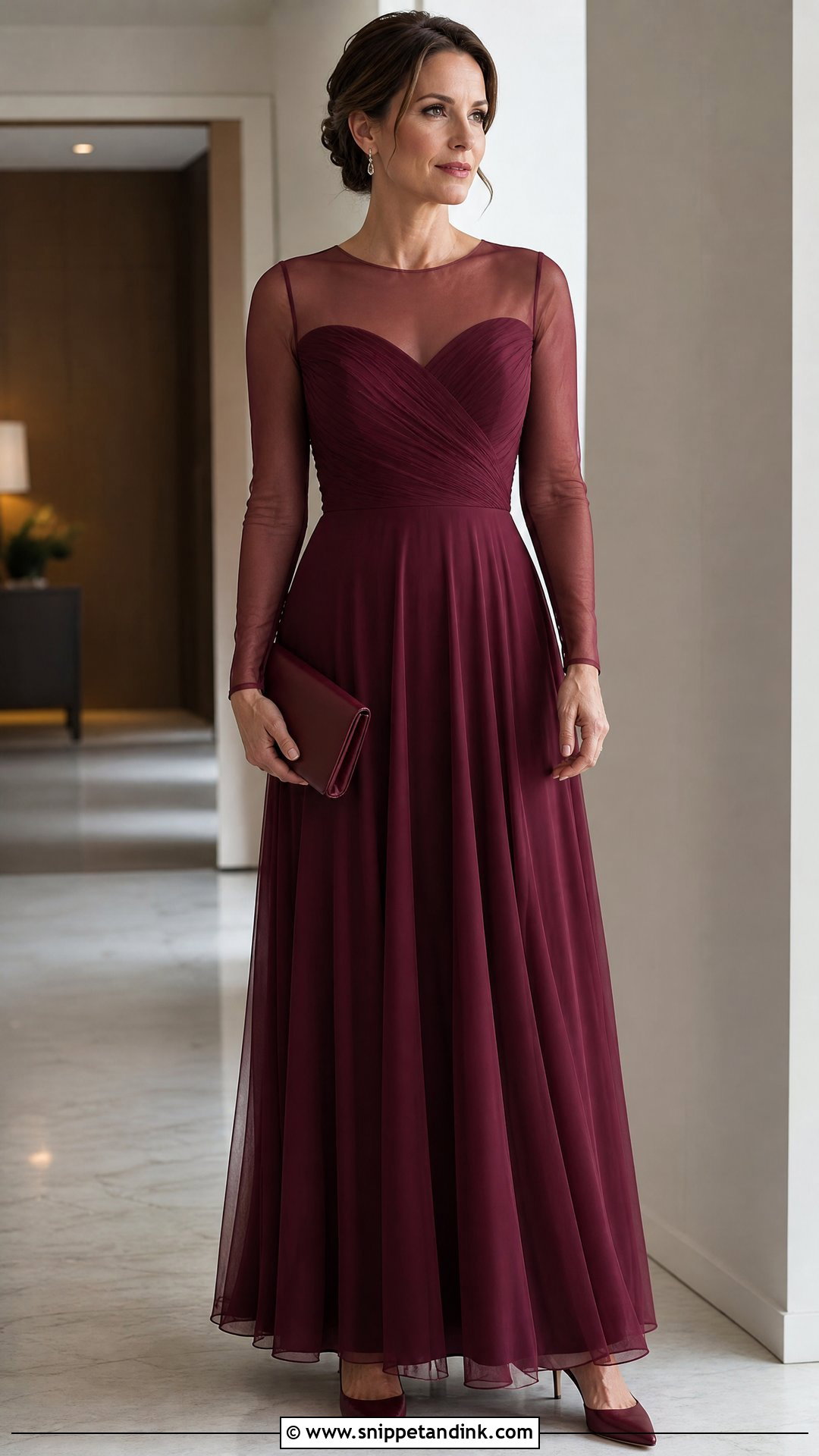
Sheer overlays layer tulle, mesh or chiffon over an opaque lining, adding sleeves, a higher neckline or movement while keeping the gown light. I prefer a lining close in color to the overlay; strong contrast looks dated. Tonal shoes and a same-color clutch extend the line. Add understated earrings and a smooth bracelet if the sleeves are plain. Look closely at where the lining stops, especially at the bodice and upper legs, and check it under bright light and with a camera flash. Soft pinned hair suits romantic overlays; a sleek bun balances heavy embroidery. Sharp jewelry snags mesh easily.
17. Bow Gown With Pointed Heels
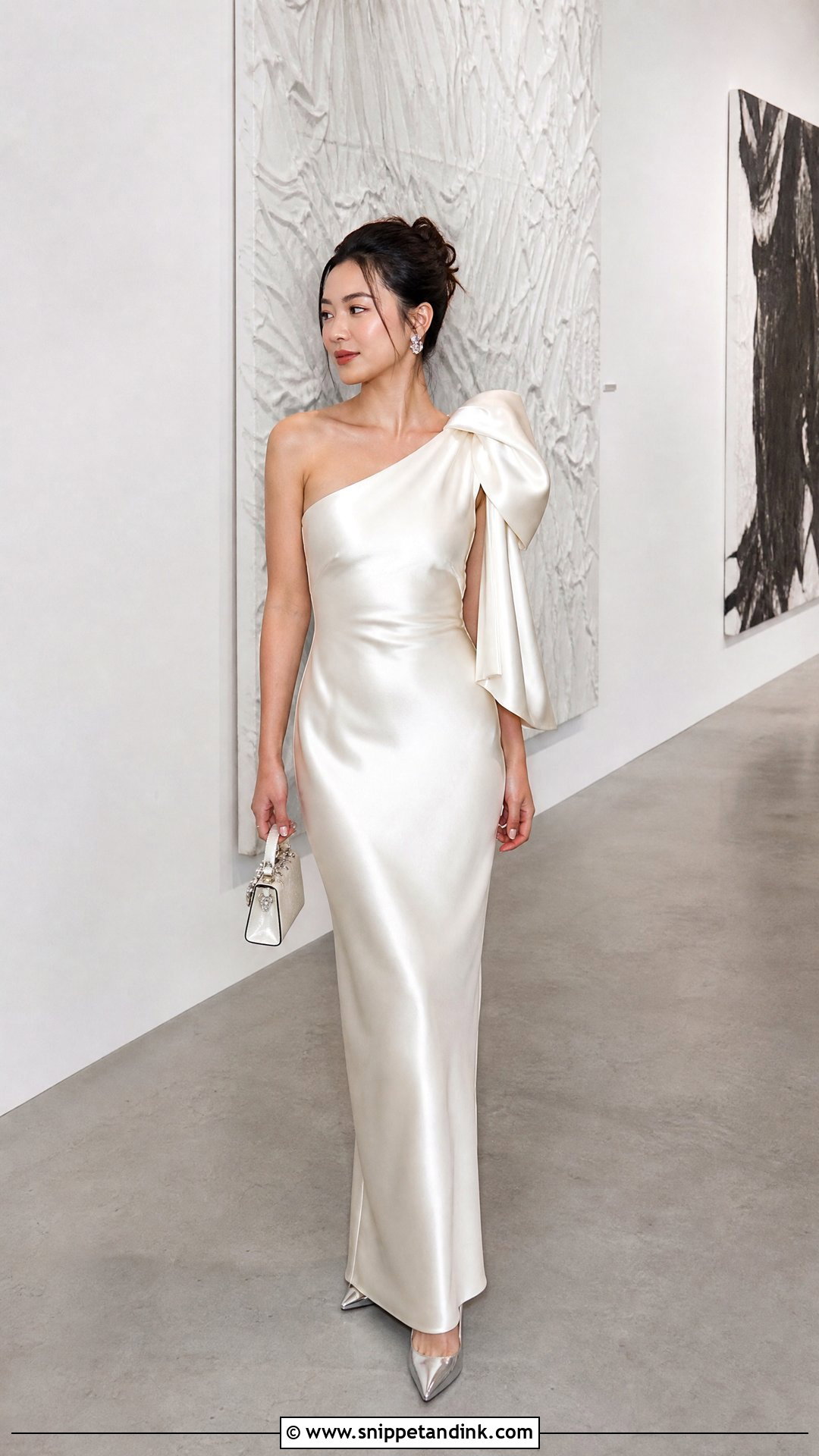
A bow works when it’s part of the gown’s structure rather than stuck on. A shoulder bow frames the face, a waist bow defines it, and a back bow adds drama as you walk away. Choose one and keep everything else simple. Pointed heels and a structured mini bag suit the clean direction. Wear small earrings if the bow sits near the shoulders; longer ones if it’s at the waist or back. Crisp satin, faille and taffeta hold their shape; chiffon softens it. Sit down at the fitting: a large back bow can be uncomfortable against a chair, and a big bow can swamp a petite frame.
18. Ruffle Gown With Slim Accessories
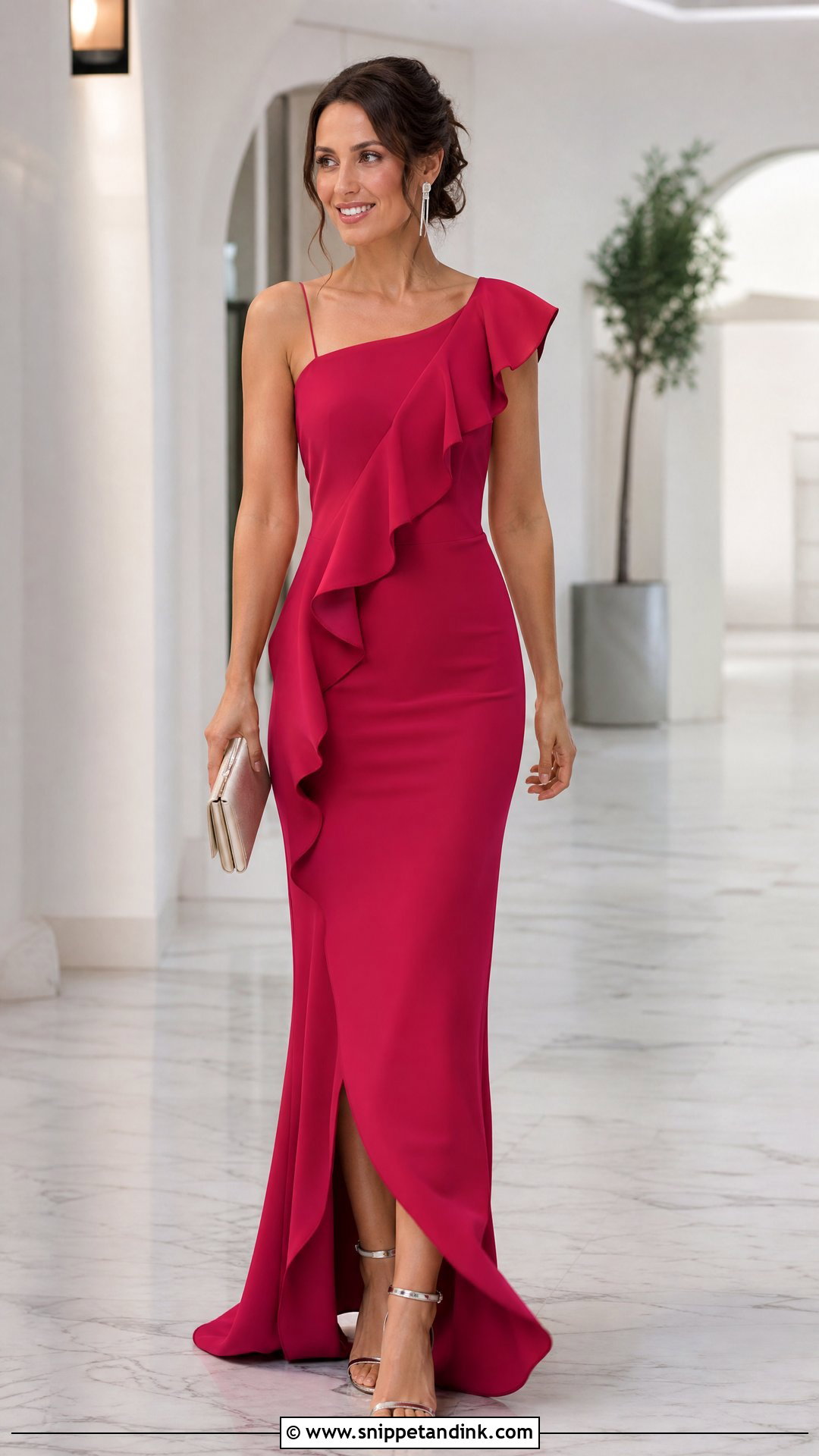
A ruffle gown adds movement, and where the ruffles sit changes everything. A diagonal ruffle lengthens, a shoulder ruffle draws the eye upward, and a tiered hem adds volume near the floor. Pick one ruffled area rather than sleeves, neckline and skirt together. Slim accessories give contrast: narrow-strap sandals, linear earrings and an envelope clutch. Solid colors show the construction better than prints. Petite frames suit smaller, softer ruffles; taller women can carry broader tiers. Walk around the fitting room and watch the ruffles in the mirror; good ones bounce, while cheap ones twist and collapse.
19. Feather-Trim Gown With Satin Pumps
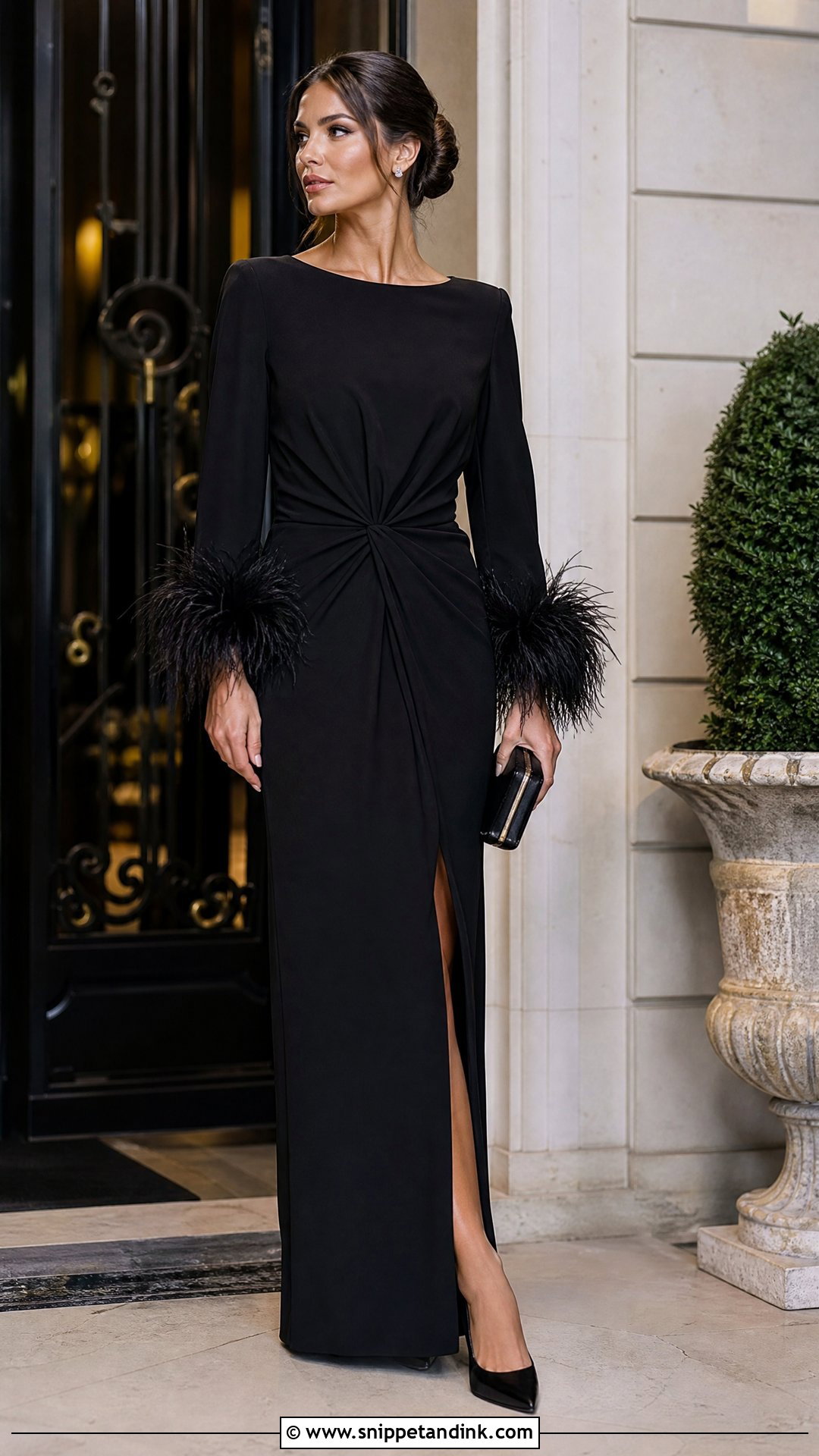
Feathers look refined when they’re kept to one area, so I look for feather accents at the cuffs, neckline or hem on a clean column or slip silhouette. Satin pumps echo the gown without adding another texture; add a hard clutch and stud earrings. Black on black looks subtle; tonal pastel or jewel-colored trim looks playful. Shake the gown gently before buying, because some trims shed heavily, and avoid long necklaces that catch in neckline feathers. A sleek ponytail or bun keeps it modern. Feathers flatten in a crowded garment bag, so hang it with space and fluff the trim with cool steam.
20. Long-Sleeve Gown With Embellished Clutch
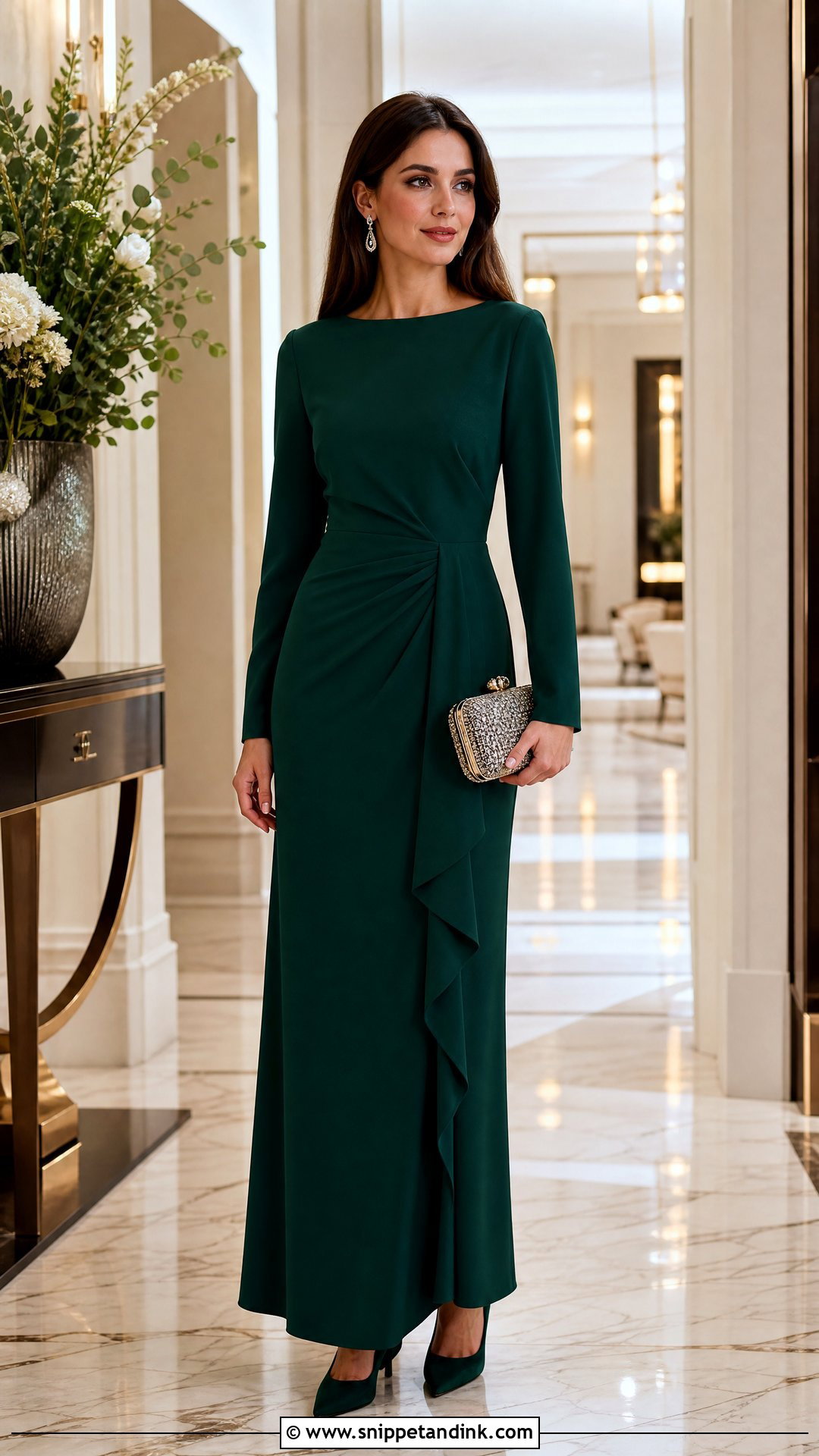
Long sleeves give coverage and can look just as striking as a strapless gown. Stretch crepe creates a smooth tailored shape; chiffon or mesh sleeves feel lighter. If the gown is plain, add sparkle with an embellished clutch rather than a pile of jewelry. Refined earrings and closed-toe heels finish it. A defined waist keeps sleeves and a full-length skirt from looking shapeless. V-neck, square and wrap bodices open the upper body. Bishop or blouson sleeves with fitted cuffs suit those who prefer looser arms. Lift your arms and bend your elbows at the fitting; tight sleeves pull across the back when you hug or dance.
21. High-Neck Gown With Oversized Earrings
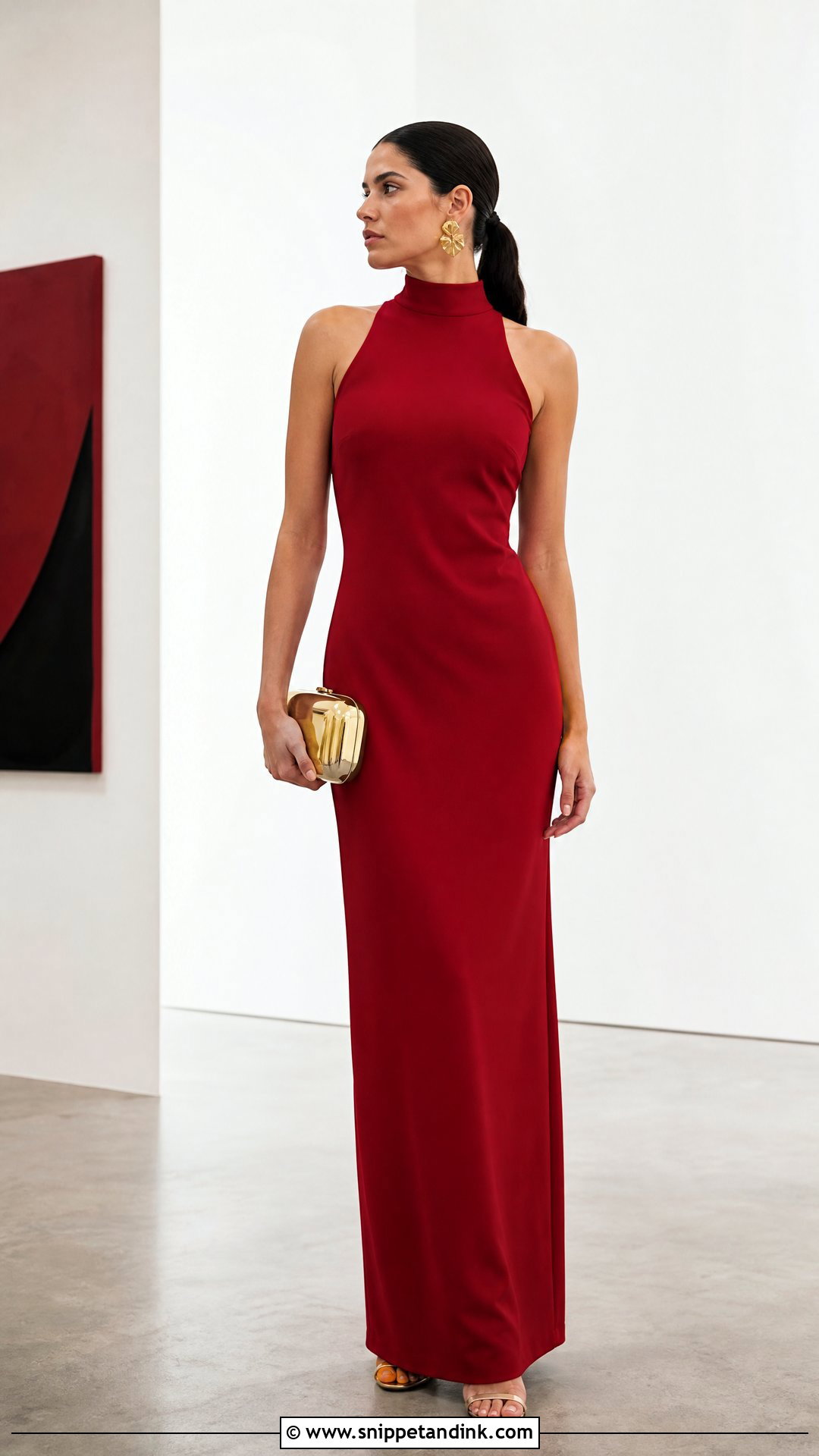
A high neck creates a long, statuesque line, especially in plain fabric. Halter-style, mock-neck and gathered necklines each offer different structure. A necklace would crowd it, so I go with oversized earrings: sculptural metal, long crystals or bold colored stones. A sleek clutch and streamlined heels keep the vertical effect. Sleeveless versions show the shoulders; long-sleeved versions cover more. Shorter necks suit a lower mock neck or draped collar. Put hair up or behind the ears. Check that you can turn your head and breathe easily, especially in fabric with no stretch.
22. Drop-Waist Gown With Kitten Heels
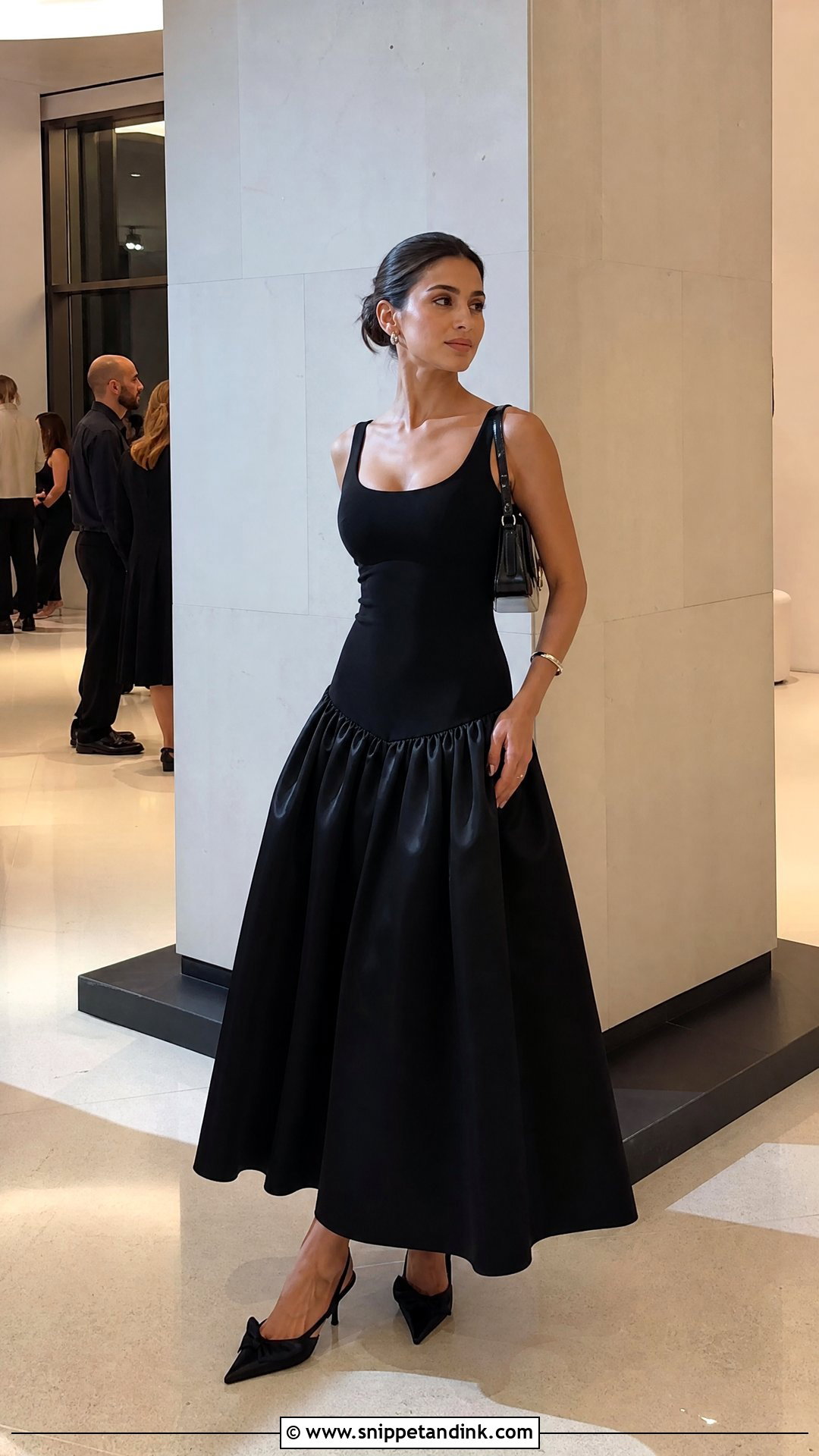
Drop-waist gowns set the seam below the natural waist, lengthening the torso and creating an unusual proportion. A flared, pleated or full skirt starting around the upper hip suits the shape best. The bodice needs to lie smooth across the stomach without pulling. Kitten heels suit the shape and are more comfortable than tall heels. Add a compact bag, small earrings and one sleek bracelet. Longer torsos can wear a lower seam; petite figures suit a slightly raised version. Drop-waist gowns are hard to alter because moving the seam changes the whole skirt, so buy the one that fits best through the bodice and hips.
23. Asymmetrical Gown With Strappy Heels
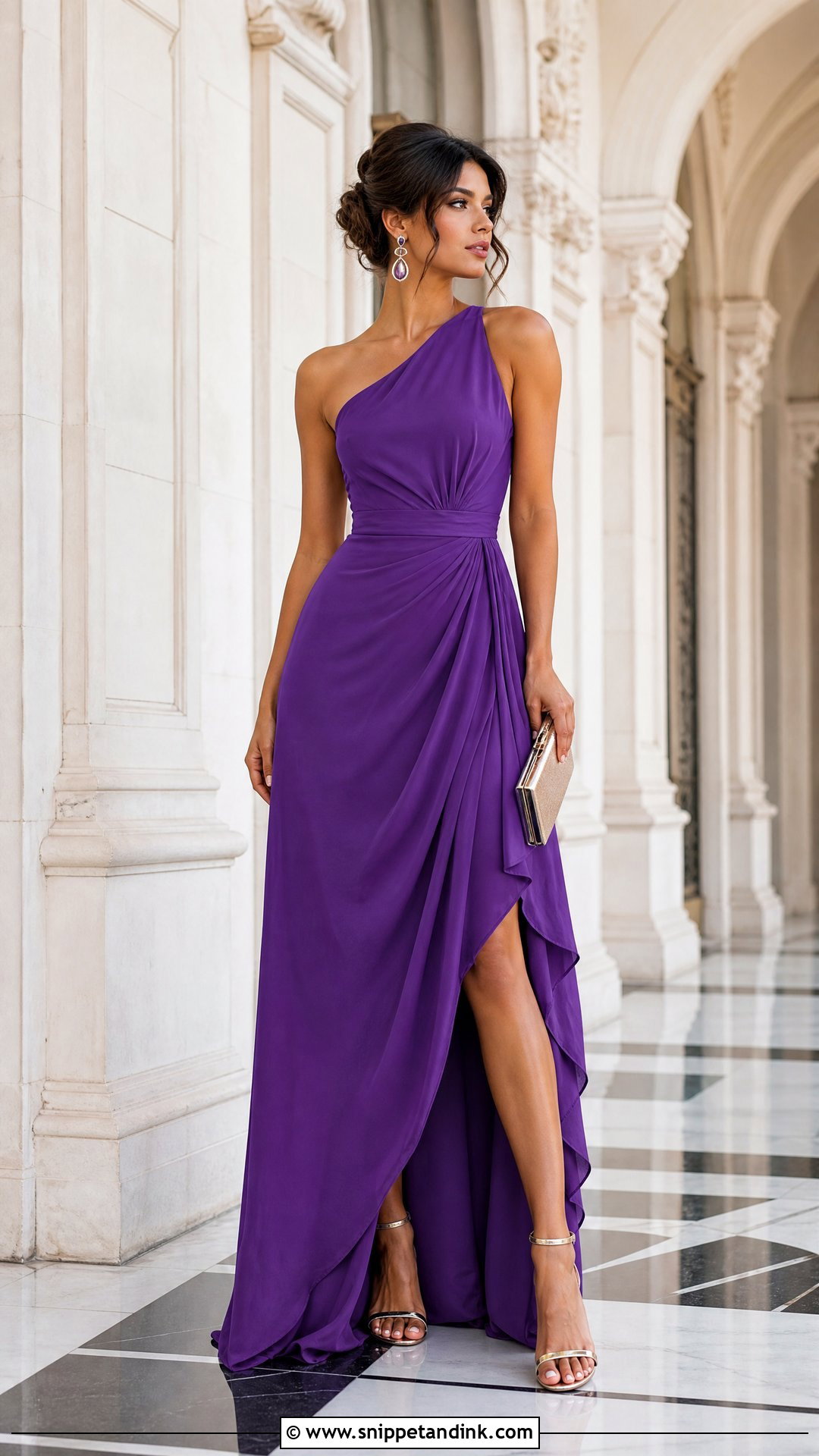
Asymmetry adds movement through an angled neckline, draped skirt, single sleeve or layered hem. I’d highlight one asymmetrical feature and keep the rest controlled. A diagonally draped skirt flatters the waist and hips; an uneven neckline draws attention to the shoulders. Strappy heels suit a gown that shows the ankle or has a side opening. Carry a streamlined clutch and choose earrings that suit the neckline. Solid colors make the cut easier to read. Tell your tailor about the intended angles before any alteration; a hem taken up straight on an asymmetrical gown loses the line completely.
24. Empire-Waist Gown With Jeweled Flats
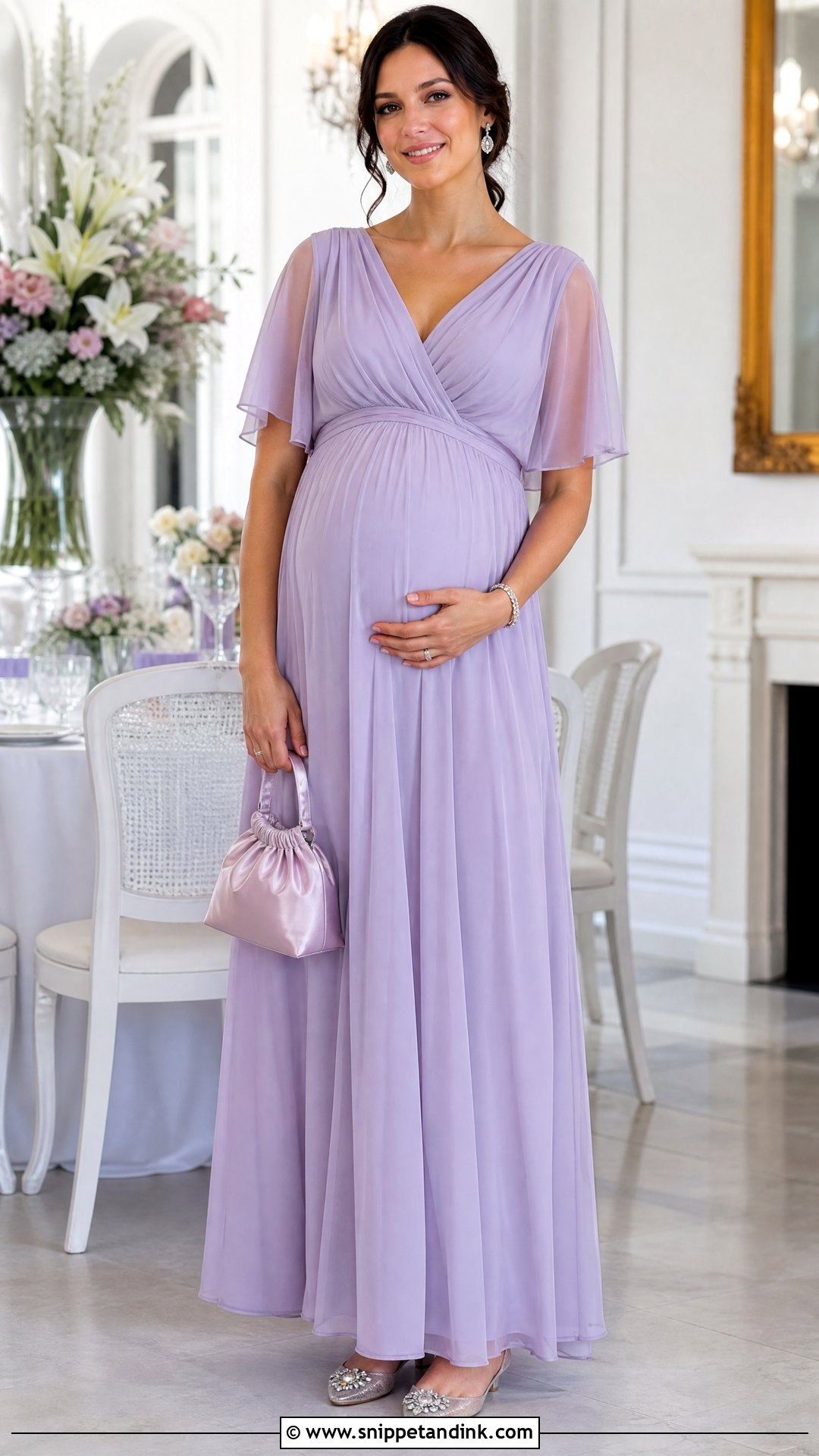
Empire waists sit just under the bust and fall softly over the torso and hips, which makes them comfortable for anyone who dislikes structure at the natural waist. Chiffon and lightweight crepe move fluidly; satin looks more formal. Jeweled flats can replace heels without looking casual when the hem is precise. Add a small satin bag, delicate earrings and a bracelet that echoes the shoes. The raised waist lengthens petite frames, and pregnant guests appreciate the extra room. Make sure the seam sits securely under the bust; if it rides up, the loose skirt below makes the whole gown look too big.
25. Tuxedo Gown With Patent Pumps
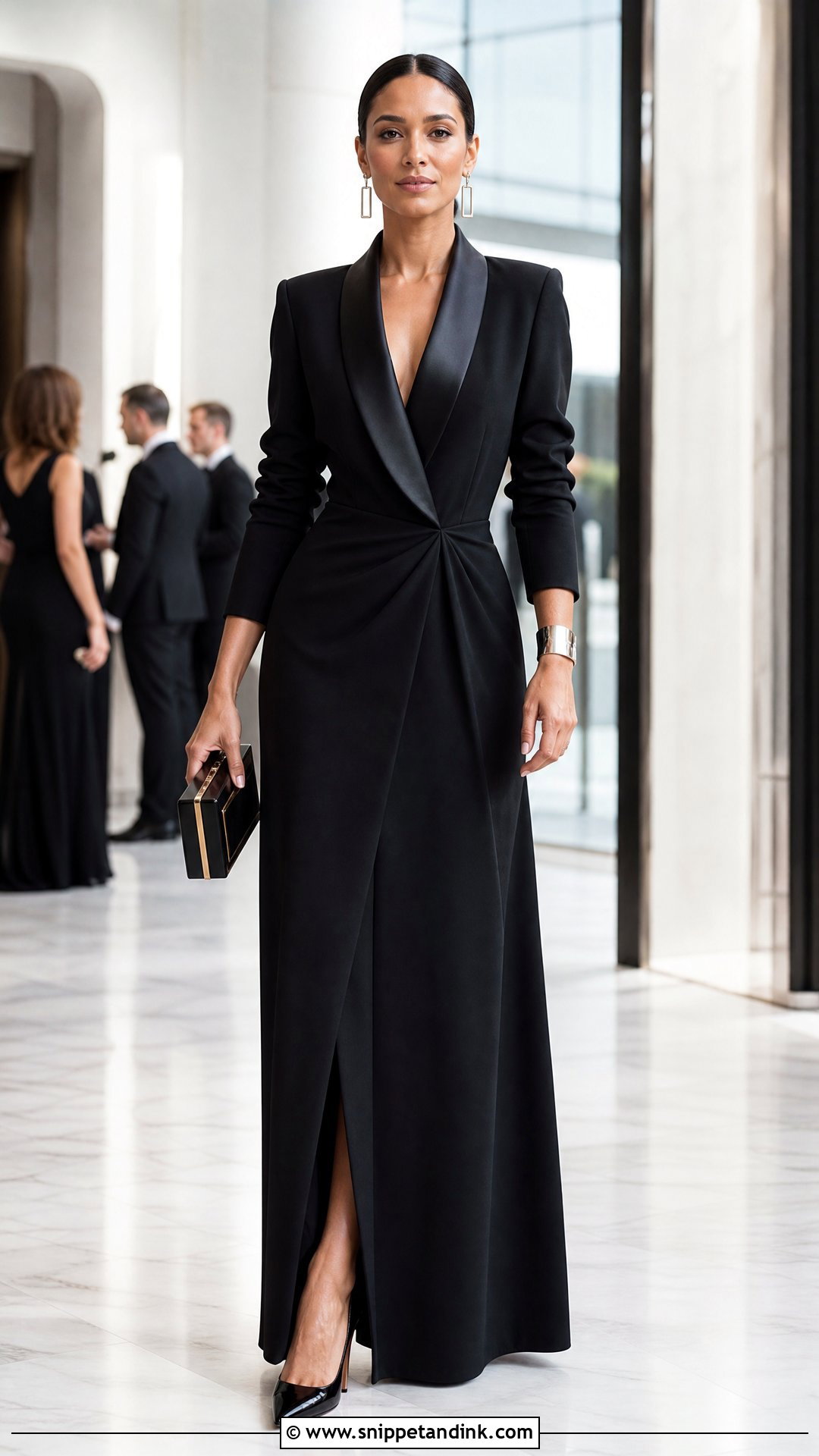
Tuxedo gowns bring tailoring to evening length. Satin lapels, covered buttons, a wrapped front or a shirt-style collar define them. Black and ivory are classic; navy, red or deep plum less expected. Patent pumps add a subtle shine, with geometric earrings, a structured clutch and a sleek watch or cuff. Skip the necklace when lapels frame the neckline. A defined waist keeps it elegant, and a front or side slit gives you room to walk. I check the lapels and buttons while seated, because that’s when a tailored front pulls and gapes. Smooth hair and precise makeup suit it best.
The Alteration Calendar Most Guests Leave Too Late
Almost every gown in this list needs some tailoring, and good tailors get booked up before wedding season. I’d buy the gown at least six to eight weeks ahead, and earlier if it’s ordered online and might need returning. Book the first fitting soon after it arrives, then a final one about a week or two before the event.
Bring the exact shoes and underwear you’ll wear to every fitting. The hem is set to the heel height, and a different bra changes how a bodice sits. If you plan to swap heels for flats later in the night, ask for the hem to suit the heels and add a discreet bustle or loop so the skirt doesn’t drag once you change.
Which alterations are easy, and which aren’t
Taking in side seams, shortening straps and hemming plain fabric are routine. Hemming beaded, sequined or lace-edged skirts takes much longer because the trim has to be removed and reattached. Letting a gown out depends on how much seam allowance exists, which many ready-to-wear gowns barely have. If the gown doesn’t fit your largest measurement, buy that size and take it in rather than hoping it can be let out.
Fit Before Fashion, and Shoes Before the Hem
With this many shapes to compare, plan the complete outfit rather than the dress alone. Start with the event’s formality, the season and the venue, then find the silhouette that supports you. Satin columns, ball gowns, A-lines and empire waists give different proportions; capes, bows, feathers and appliqués add personality. Buy shoes before the hem is set, keep accessories in support of the gown, and leave time for tailoring. A gown that fits securely and lets you sit, walk and dance will serve you better than any trend.
You'll Like These Ideas:


Leave a Reply