
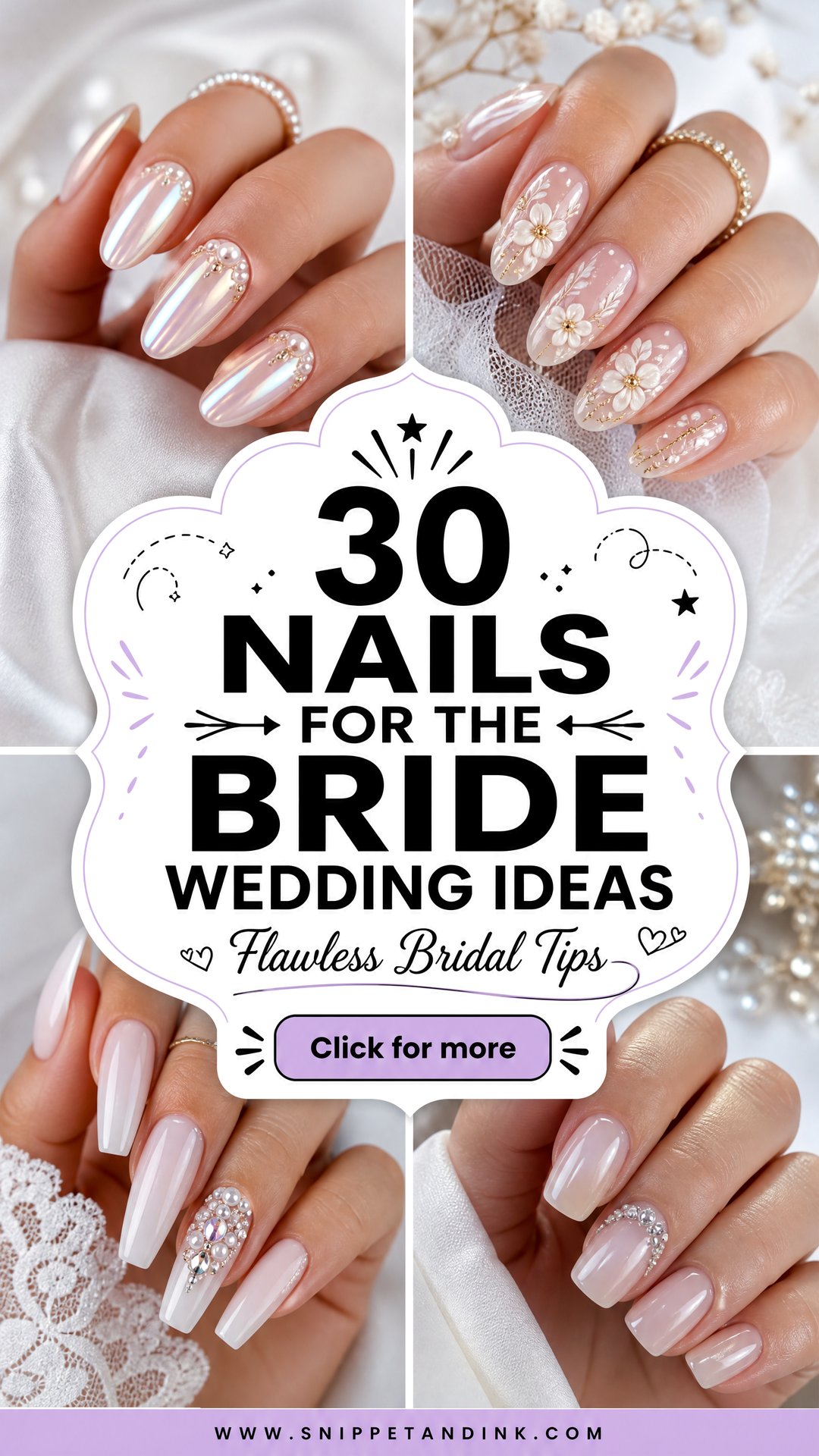
A bridal manicure gets photographed holding a bouquet, sliding on a ring, cutting a cake and resting on a partner’s shoulder, usually from closer than any other part of the day. It also has to last through hours of hugging, hand-washing and opening cards. Most of the brides I work with now ask for milky finishes, pearl chrome, micro French tips, sheer pinks or small florals rather than heavy art, and those finishes sit easily next to lace, satin or a plain modern gown. Below are 30 bridal sets, from short squares to long coffins, each with my notes on how it’s made and when I’d talk you out of it.
A Practice Set Six Weeks Out Saves the Real One
I always suggest a trial manicure about six weeks before the wedding. It’s the only way to know how a shade looks against your skin in daylight, how a shape feels when you’re doing up buttons, and whether a particular gel lifts on your nails after a week.
Bring the things the nails will sit next to:
- your engagement ring, and the wedding band if you have it
- a fabric swatch or close photo of the dress, since ivory, white and champagne change which nude or white works
- a photo of the bouquet, if flowers or colours might carry into the art
- a note of anything you do with your hands that week, like gardening, typing or lifting boxes
Then wear the trial for a full week. Watch for lifting at the cuticle, chips at the corners and whether the colour still looks right after a few days. Tell your nail artist what happened, so the real set can be adjusted, whether that’s a shorter length, a different base or a softer shape.
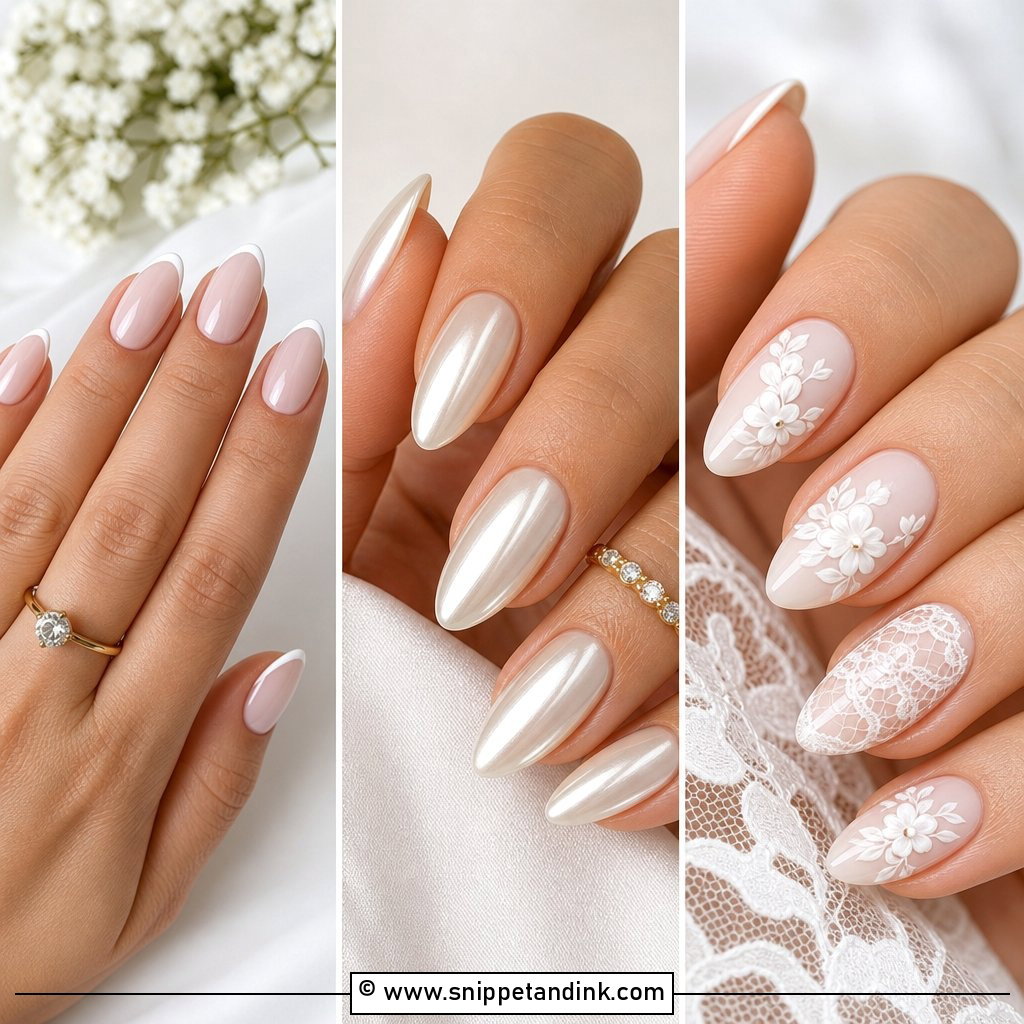
1. Classic French Tip Bride Nails
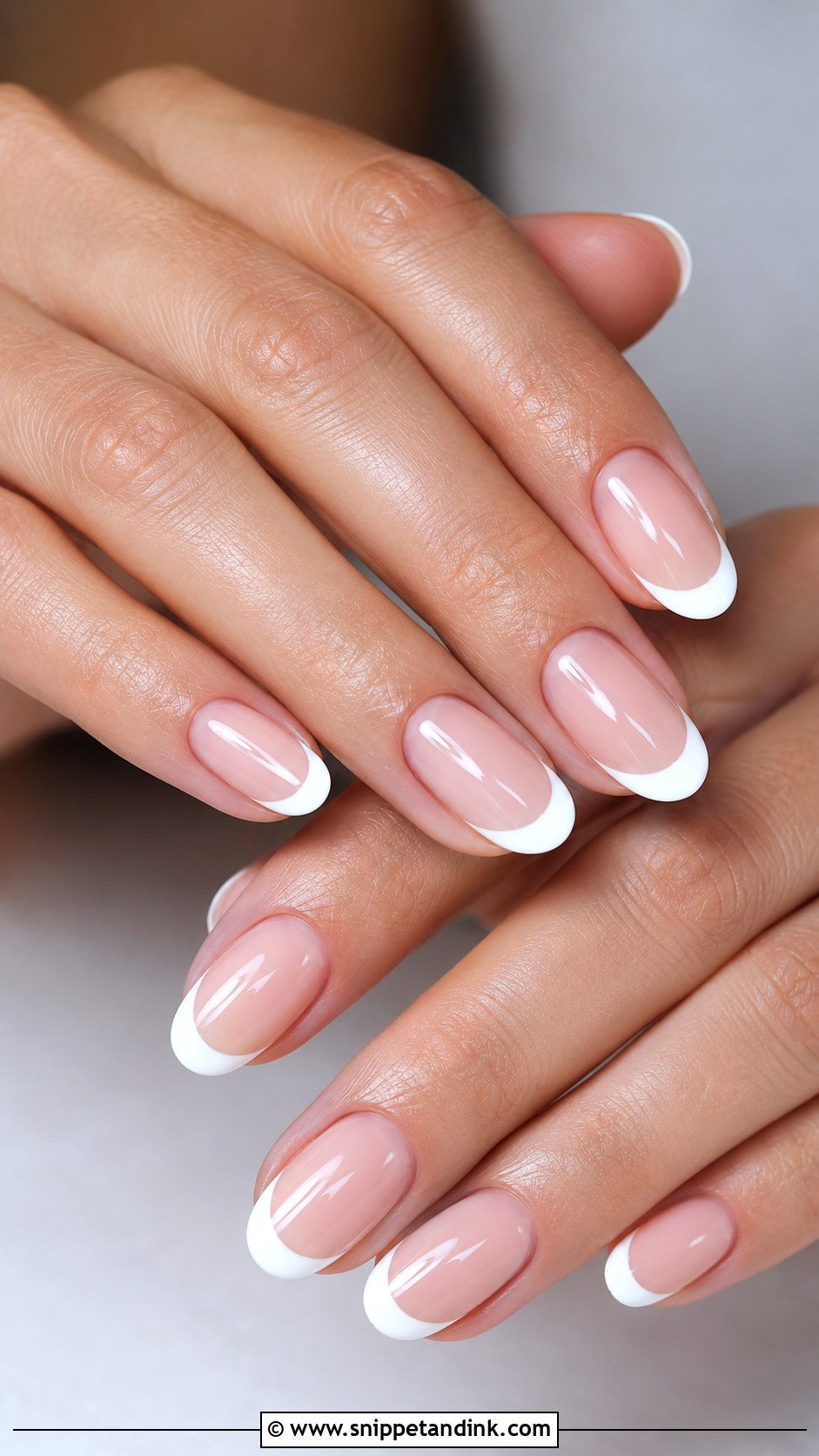
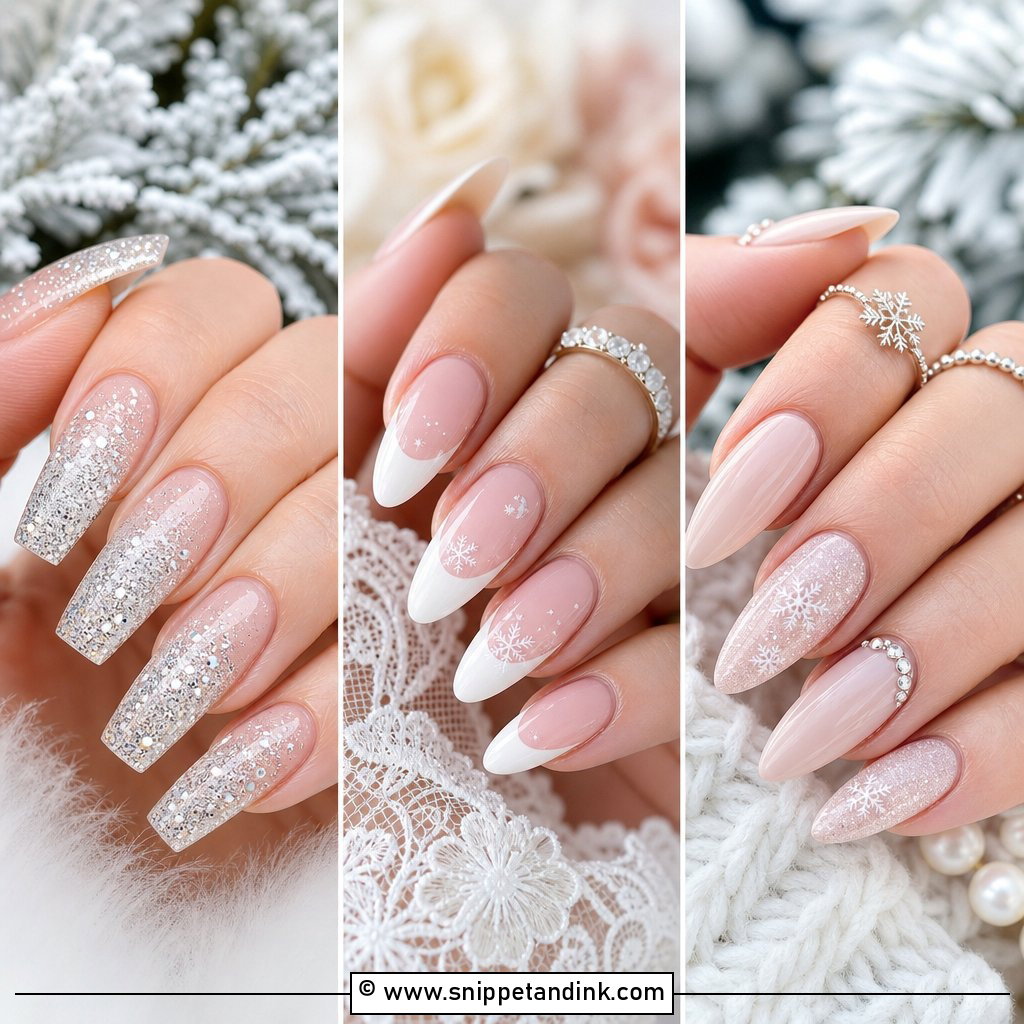
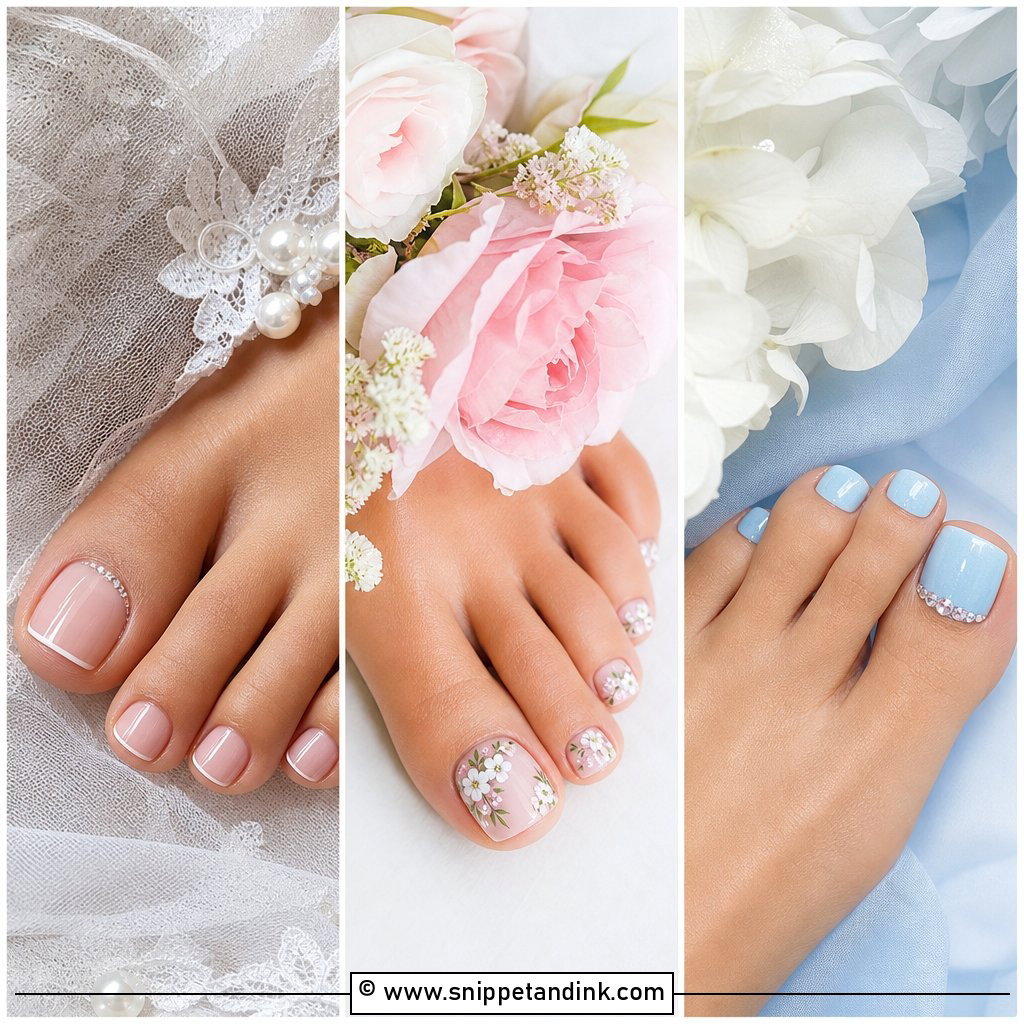
Ask nail artists which wedding set they paint most and nearly all of us will say the classic French. The trick is the base. A sheer nude or soft pink that evens out your nail bed makes the white tip look crisp; a base that’s too opaque makes the whole nail look fake. These days I paint a thinner smile line than the old thick white band, and I match the curve to the shape, which works on almond, oval, square or squoval. It suits lace, satin and pearl-trimmed dresses in particular.
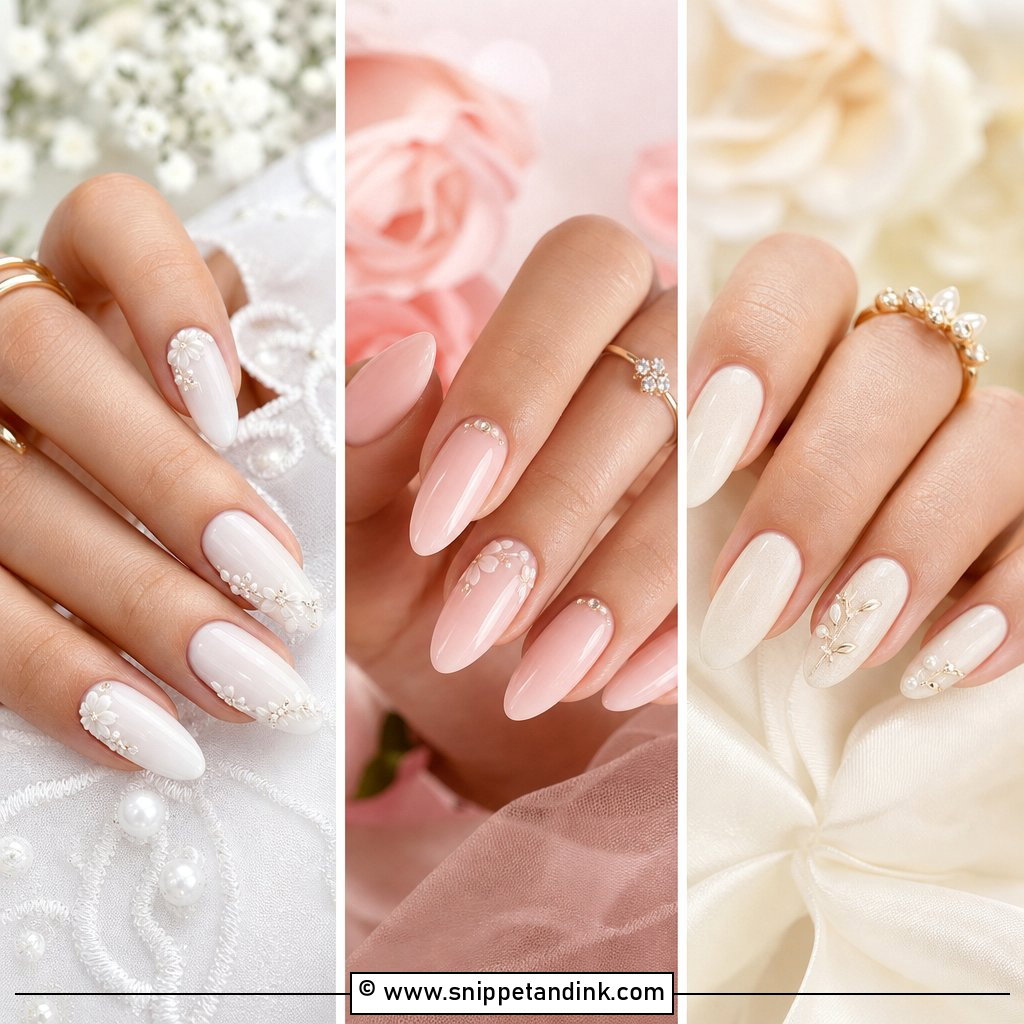
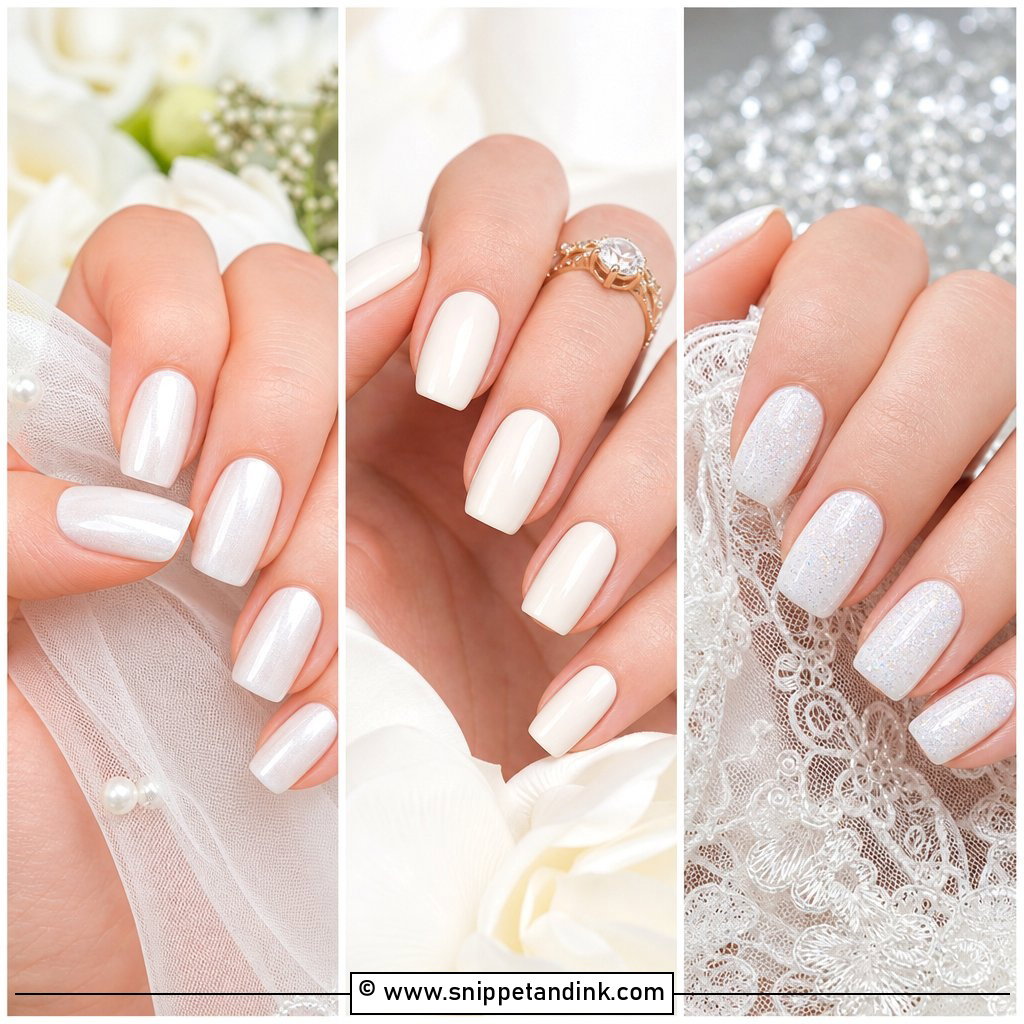
2. Milky White Bride Nails
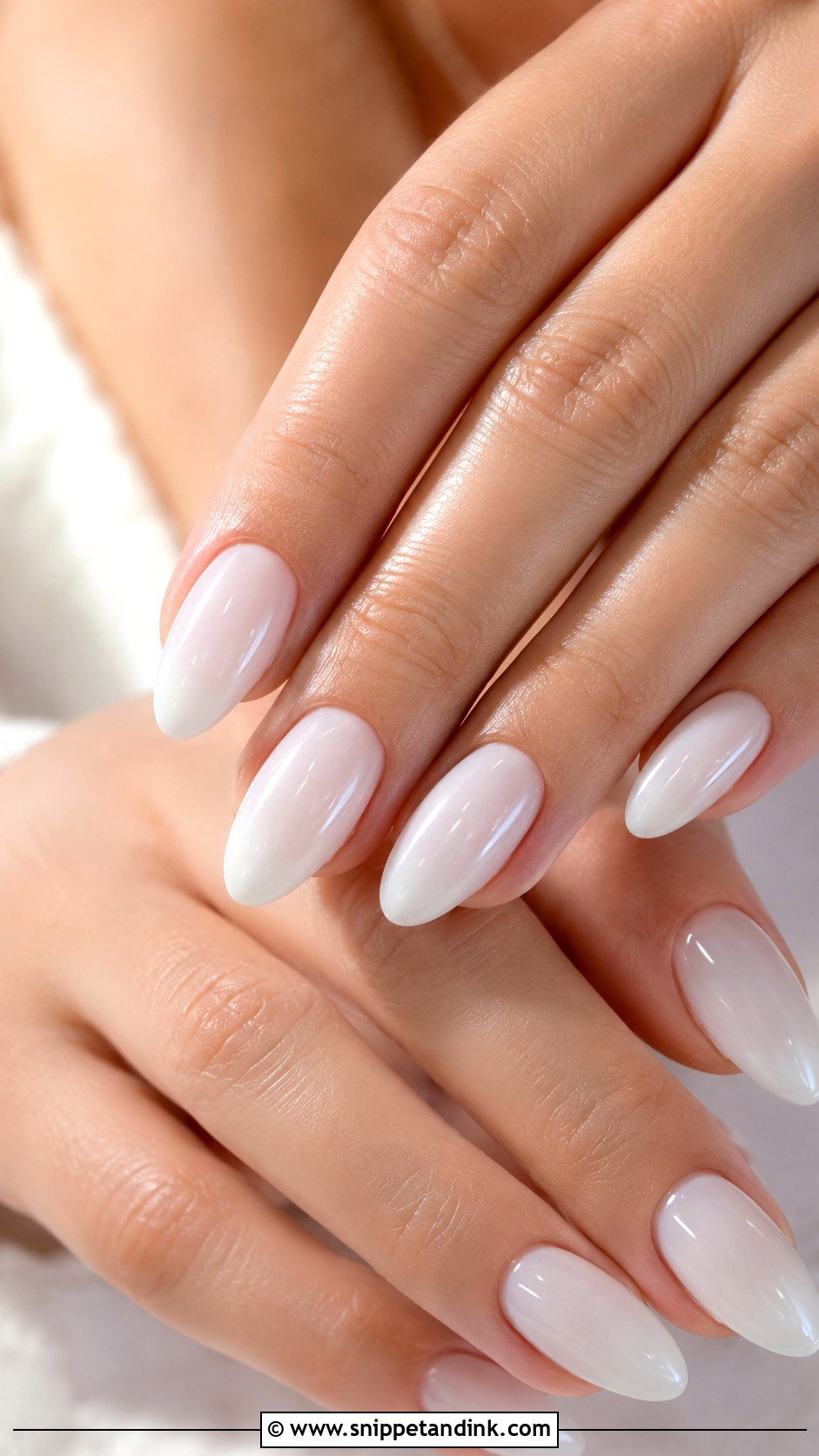
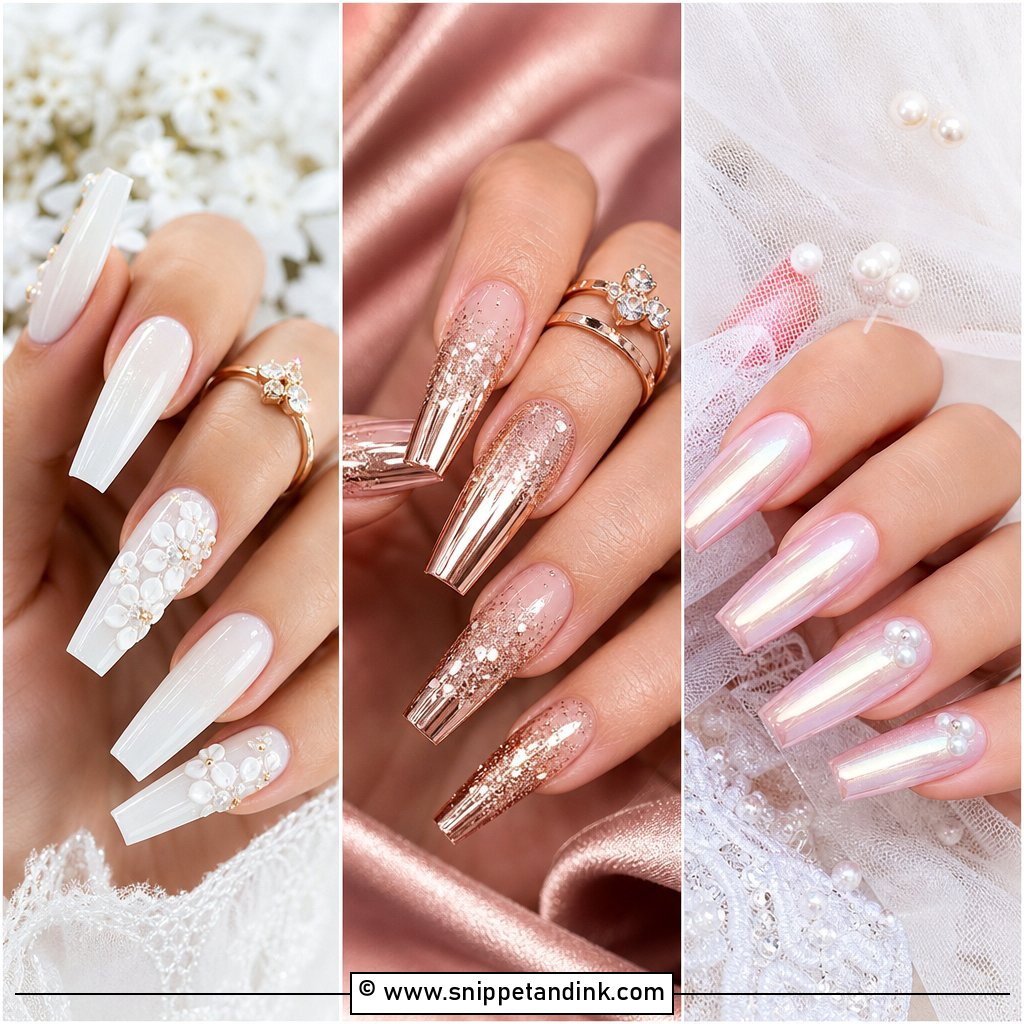
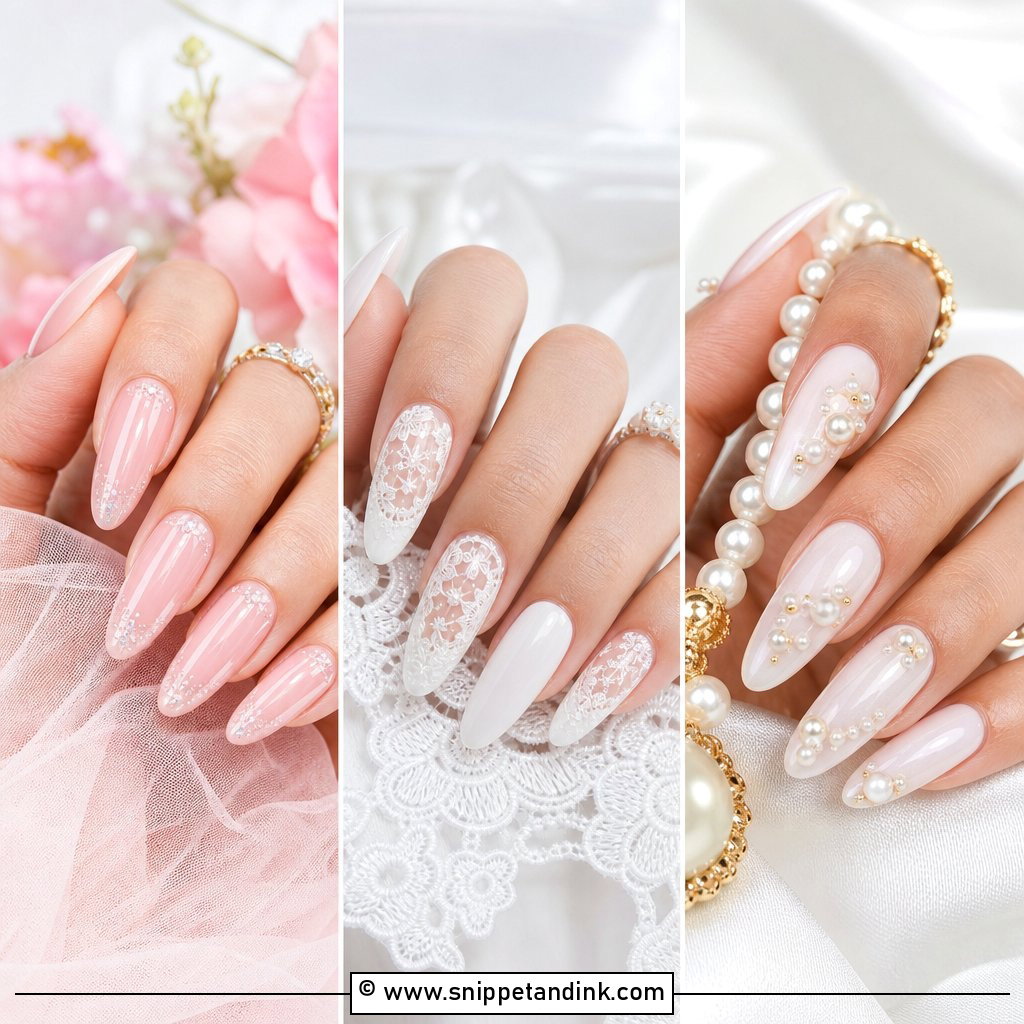
Milky white sits between sheer white and ivory, which is why it flatters more skin tones than a solid white. It looks right next to white, off-white, champagne and blush dresses. I layer it thinly so it stays translucent, two coats at most for a softer look, three if you want more coverage. Short ovals feel delicate in it and long almonds dramatic. A light pass of pearl chrome over the top gives extra depth if plain milky feels too quiet.
3. Pearl Chrome Bride Nails
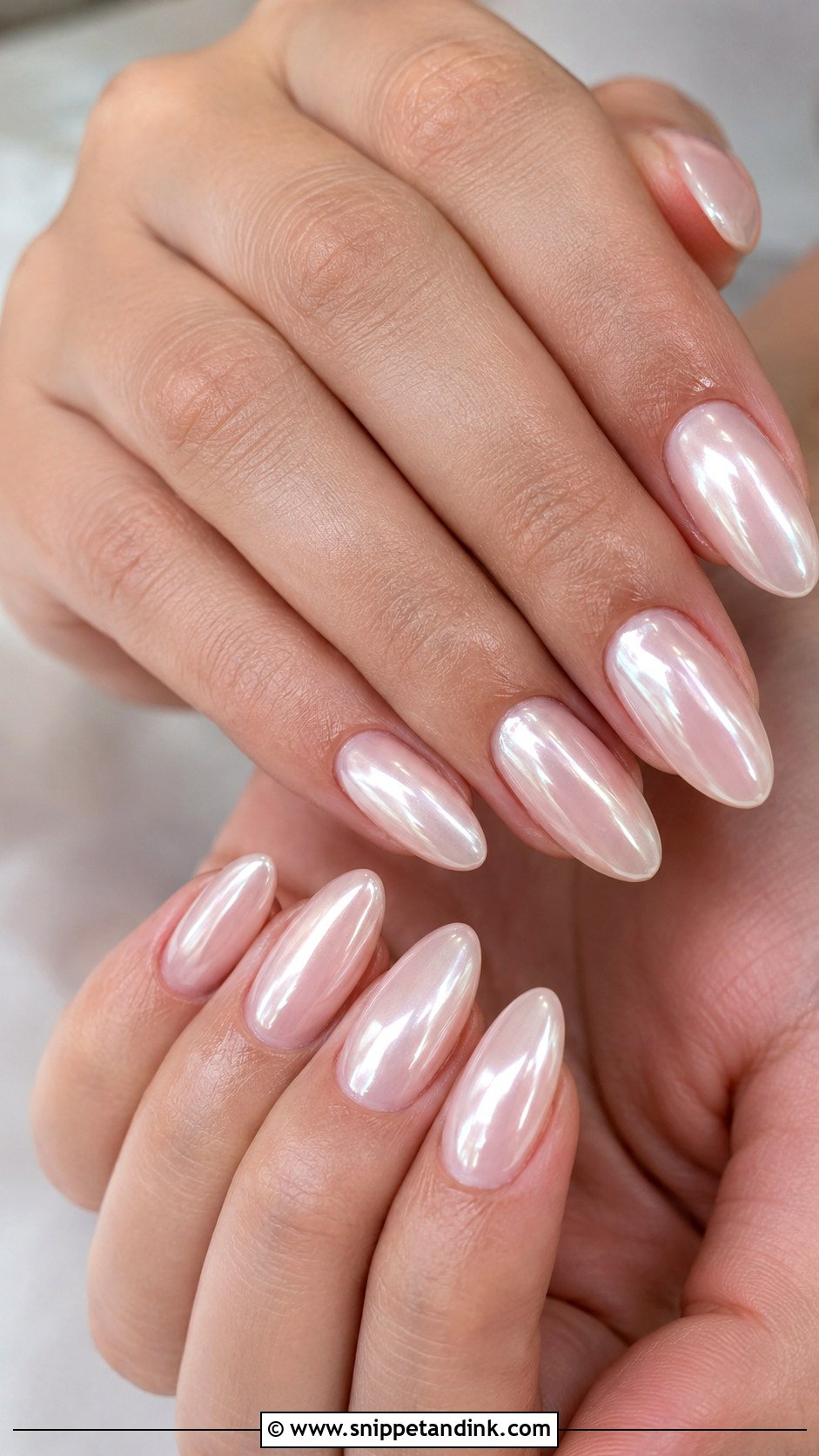
If you want shine without a single fleck of glitter, pearl chrome is the answer. It’s a fine powder buffed onto a cured top coat over a sheer white, pale pink or milky nude base. The more it’s buffed, the more reflective it gets, so tell your nail artist you want a glow rather than a mirror. It’s at its best beside pearl earrings, a pearl-edged veil or a satin gown. Almonds and ovals look refined in it, and short squares look sharp.
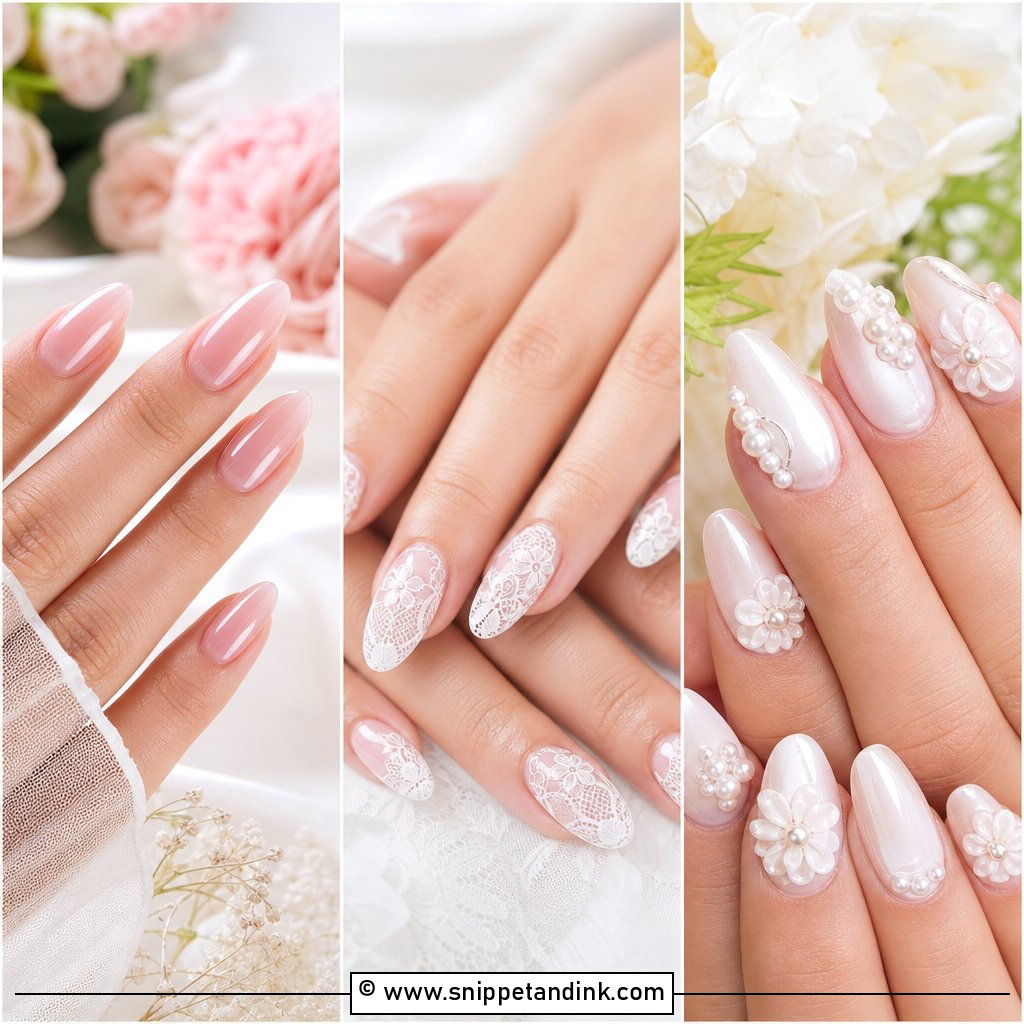
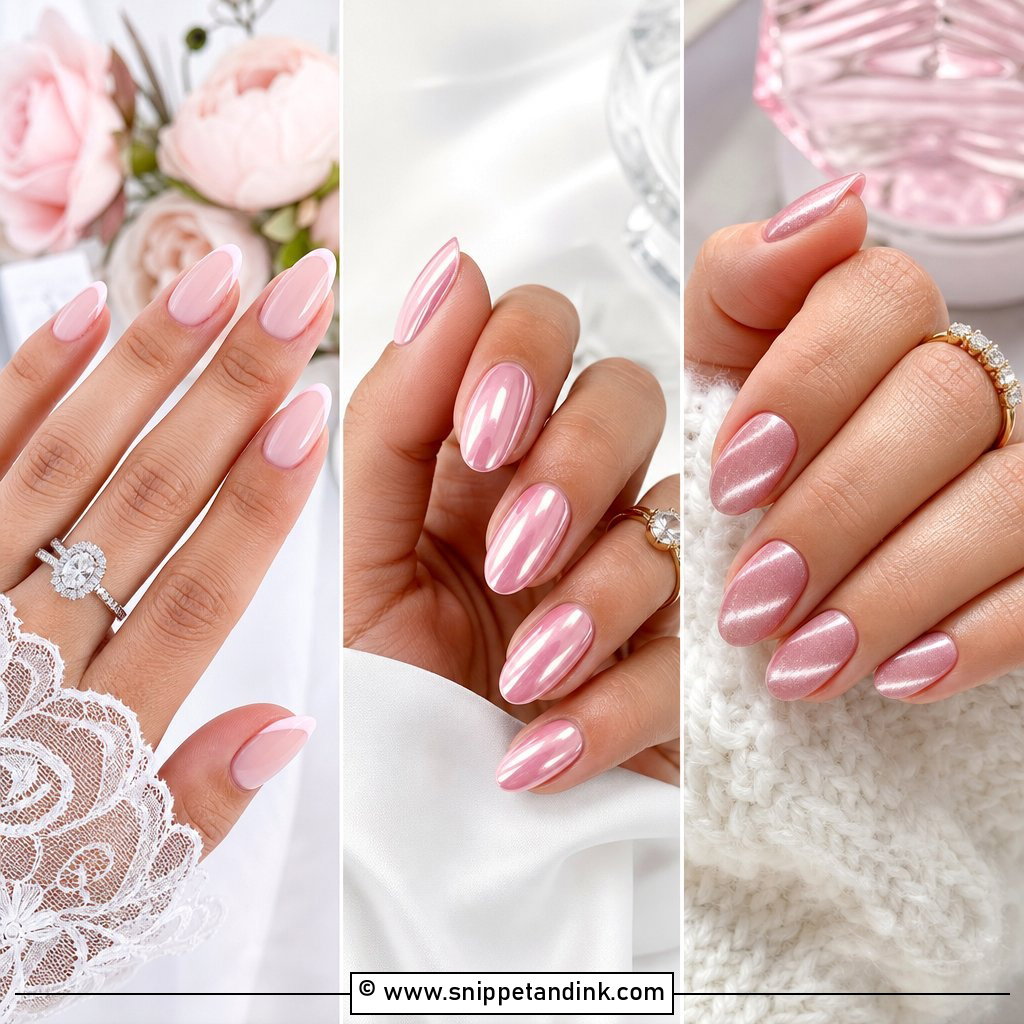
4. Sheer Pink Bride Nails
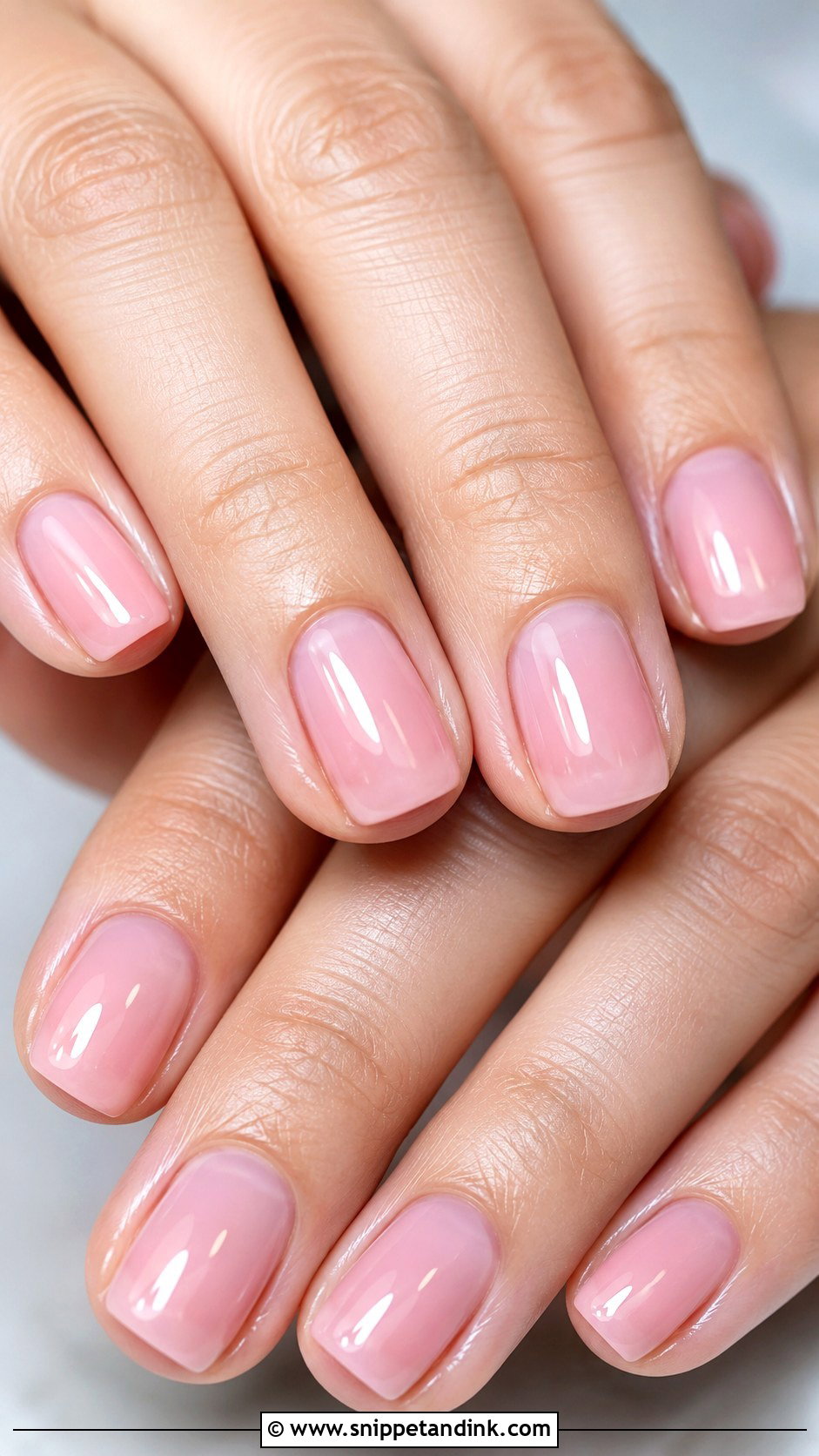
I match sheer pink to undertone before anything else. Cool pinks lean slightly blue and suit cool or fair skin; warmer pinks lean peach and flatter olive and warm skin. Get that right and the nails look naturally healthy, which is the whole goal of this set. It never competes with the ring, the flowers or the dress. A glossy finish and softly rounded shape keep it as natural as possible.
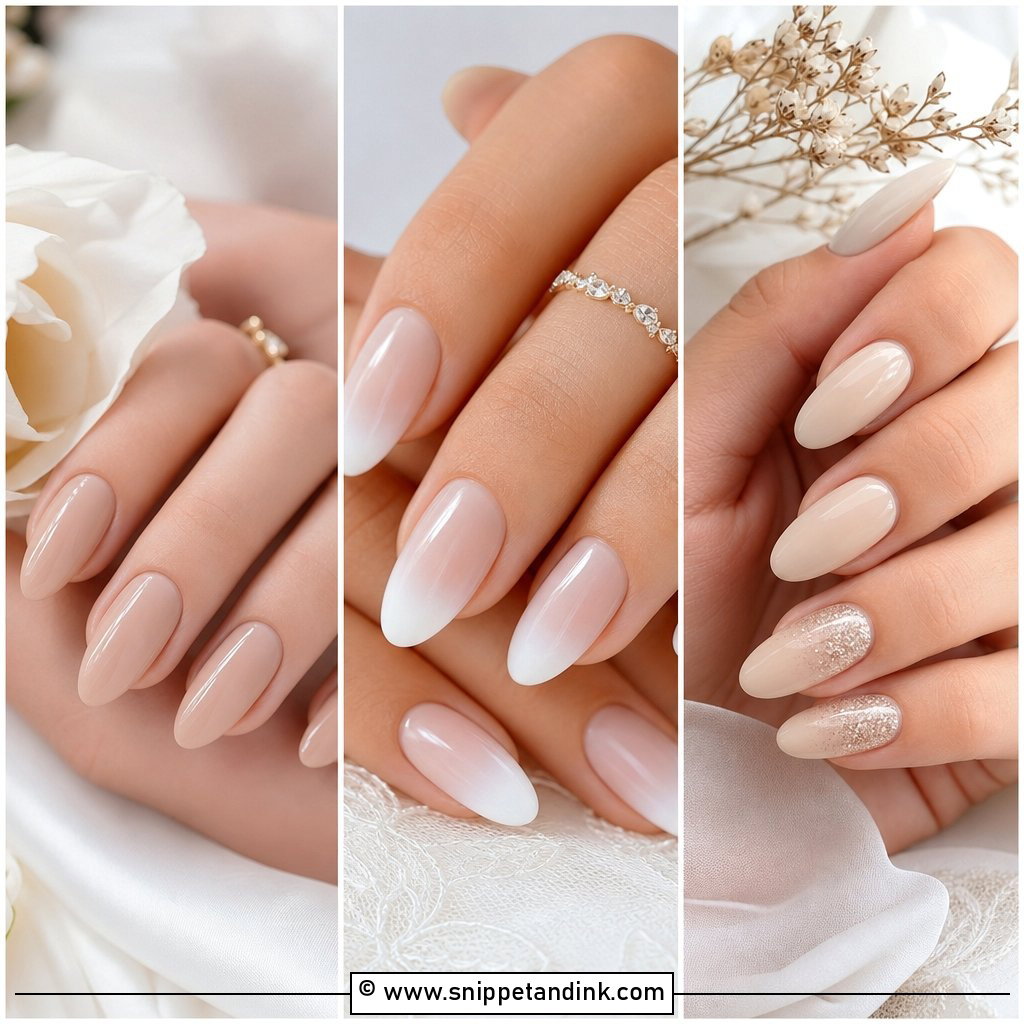
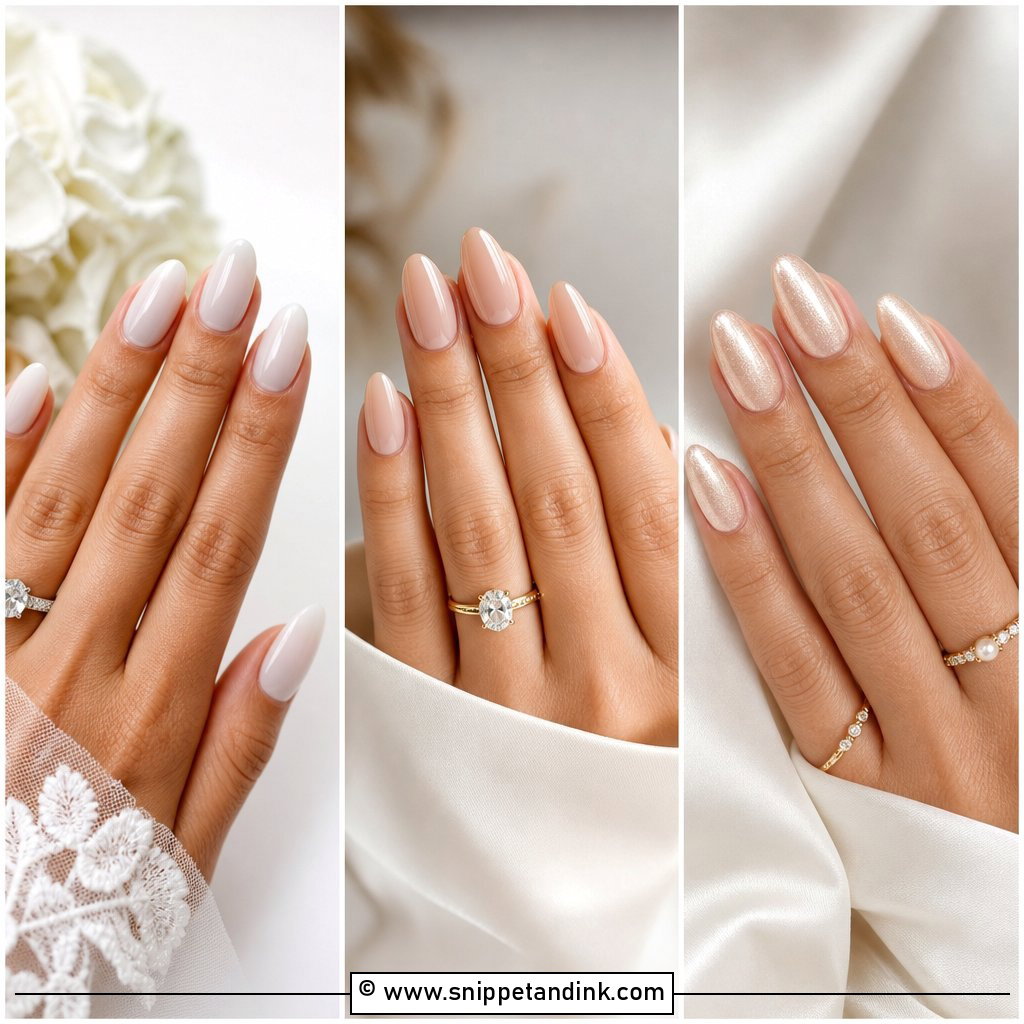
5. Nude Almond Bride Nails
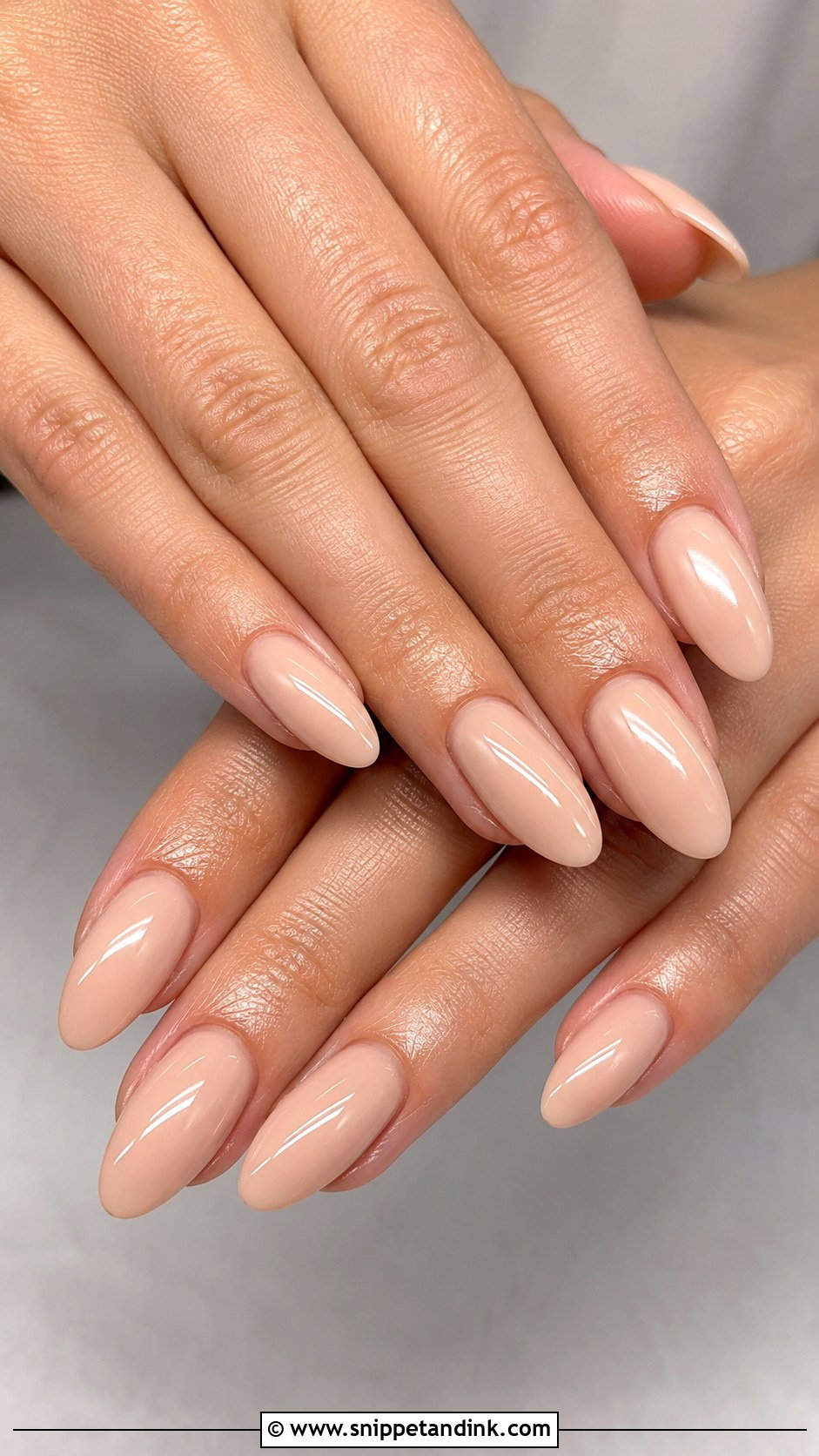
The almond shape tapers the fingers and the nude keeps everything understated, so this set is mostly about getting the shade right. A nude that washes out the skin makes hands look tired in photos. As a rough guide, pinky beige for fair skin, warm caramel for medium, mocha or cocoa for deep, but swatch on your own nails. A high-gloss finish makes them look smooth and expensive. It’s the set I’d suggest if you want polished nails with no visible art at all.
6. Soft Pink French Bride Nails
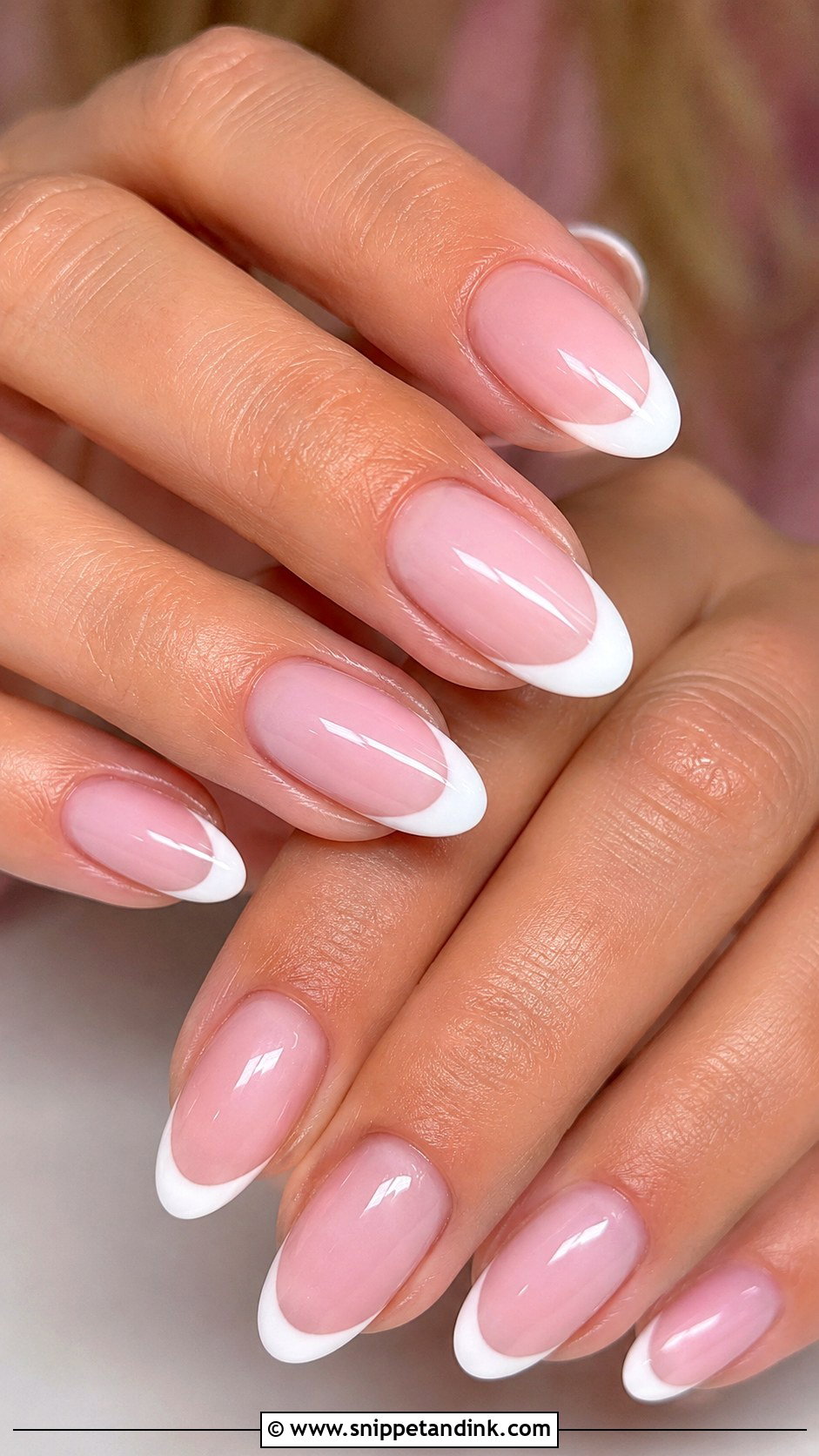
Swapping the neutral base of a French for a rosy sheer pink gives the whole nail a warm glow. I keep the white tip thin for a modern look or curve it more deeply for a traditional one. Almond, oval and squoval shapes keep it gentle. It feels classic without being formal, which suits brides who find a stark French too stiff. A glossy top coat gives the salon-fresh shine.
7. Micro French Bride Nails
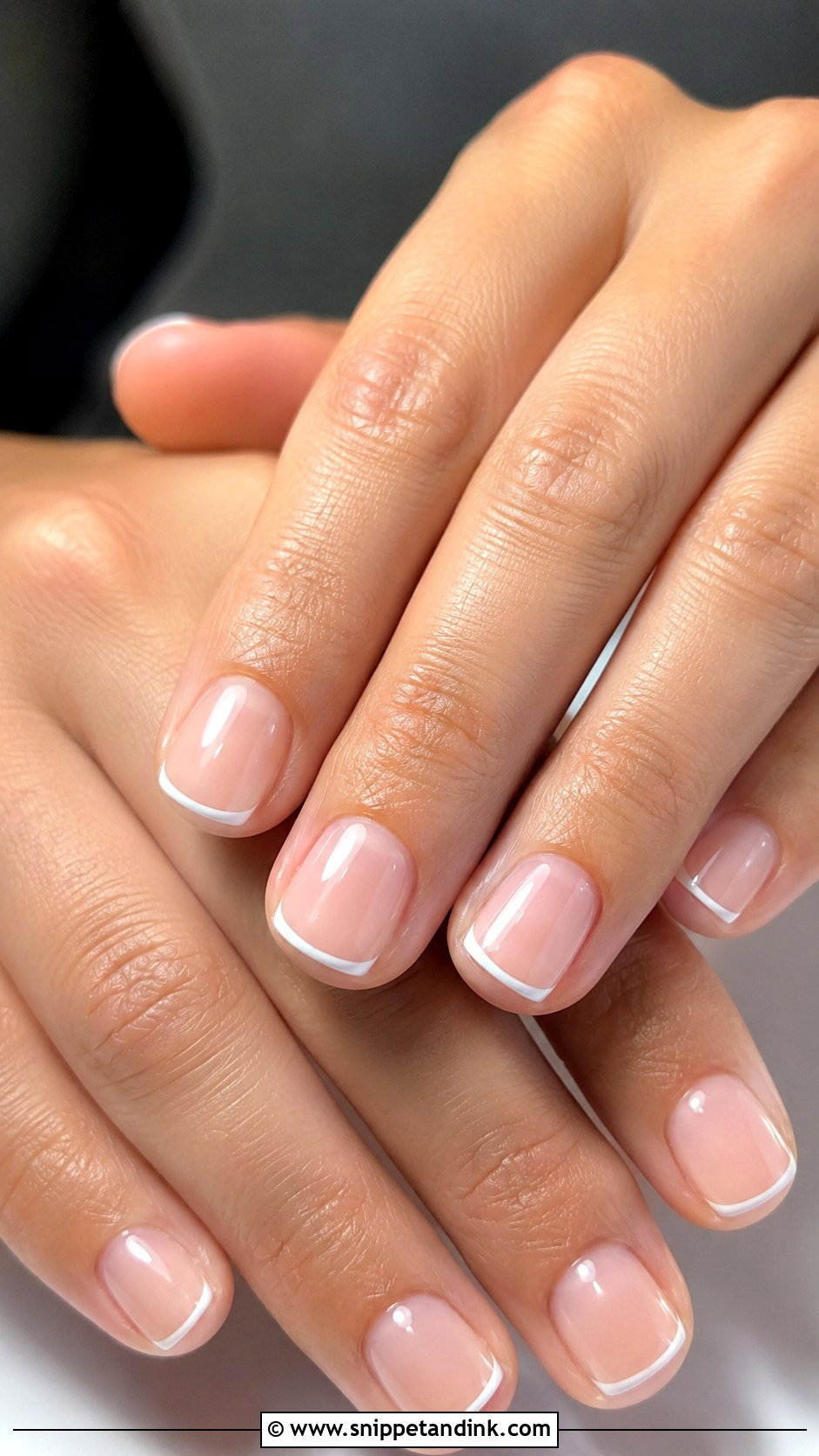
With a micro French the line is hairline thin, drawn with a long striping brush in a single movement. It’s the most flattering French for short nails because it defines the edge without shrinking the nail bed. White tips are classic, ivory tips softer and pale pink tips the most delicate. A sheer nude base keeps it natural. It suits a dress with clean lines and a minimal, city-wedding feel.
8. Glazed Donut Bride Nails
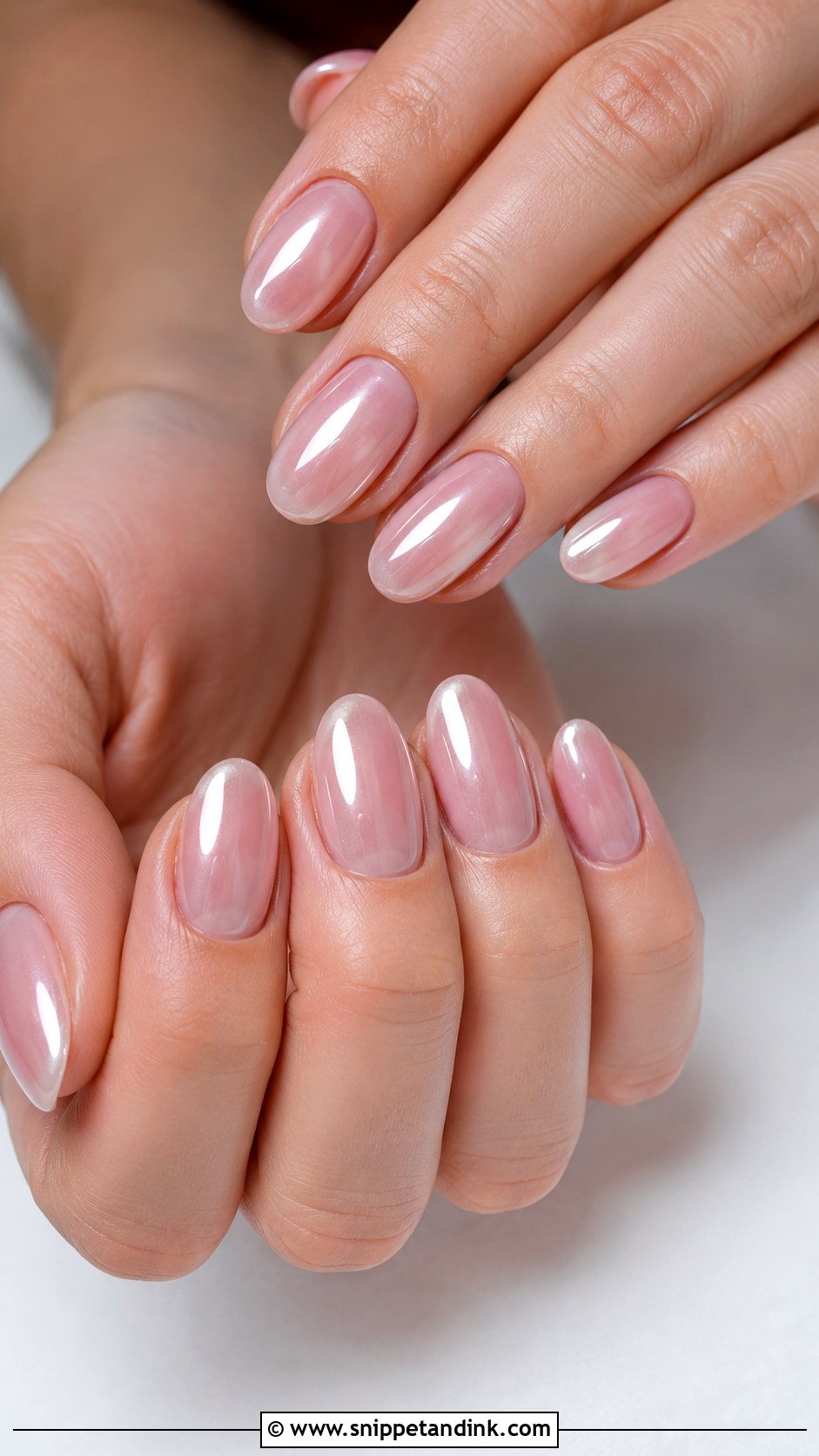
The glazed finish comes from a fine chrome powder over a sheer nude, pale pink or milky base, which gives a soft sheen rather than a metallic one. Brides like it because it looks current without dating badly in photos. Almond and oval shapes show the reflection best, since the curve catches the light. Keep the base colour subtle. It’s easy to pair with any jewellery.
9. Ivory Bride Nails
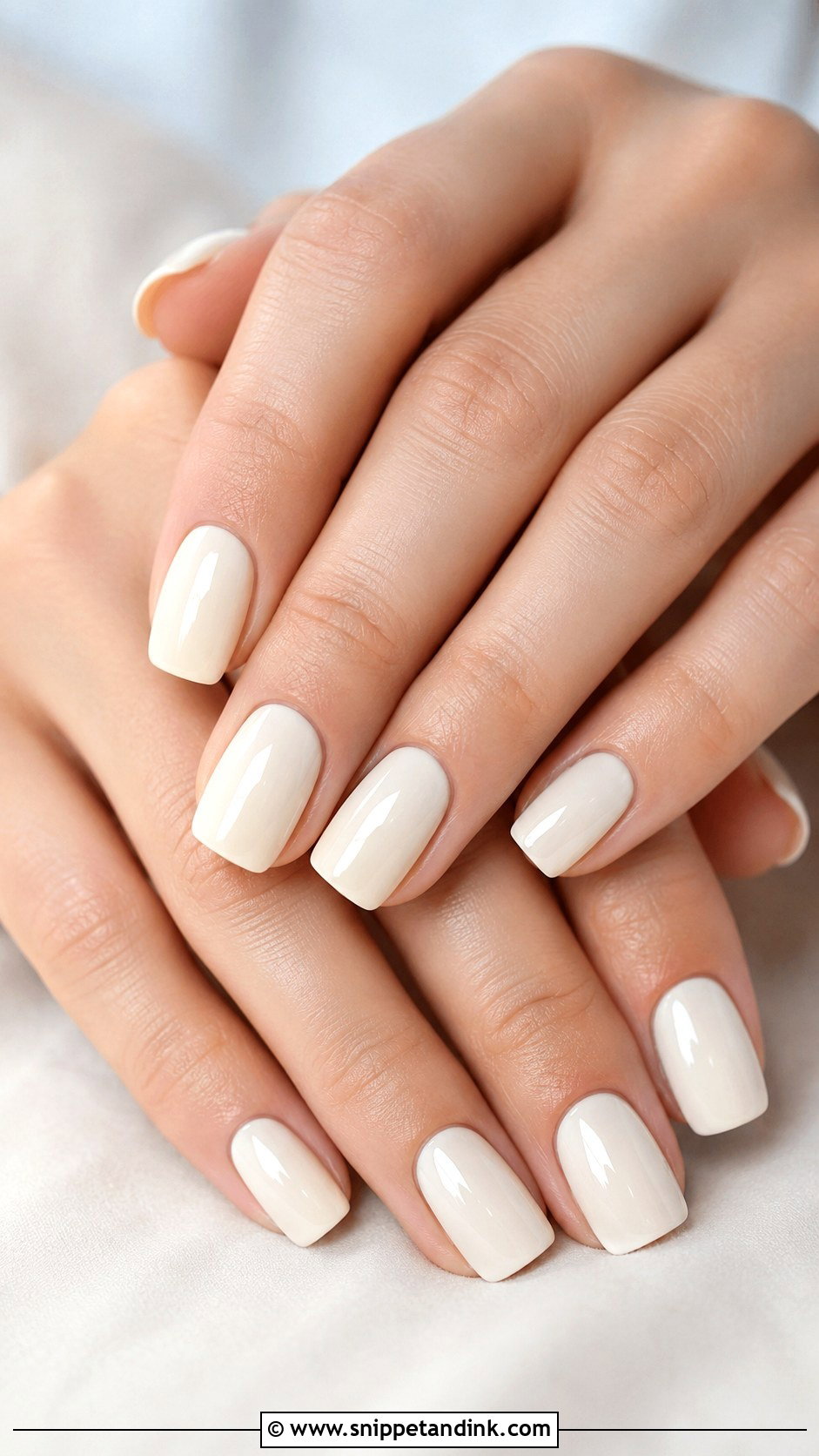
Bright white can look almost blue next to a warm gown, which is why I suggest ivory for champagne dresses, cream lace and vintage-style details. Ivory has a gentle warmth that looks kinder on most skin. Wear it solid, as a French tip or as a milky layered finish. Warm undertones usually look better in ivory than in cool white. Short squovals keep it practical; medium almonds look more romantic.
10. Blush Pink Bride Nails
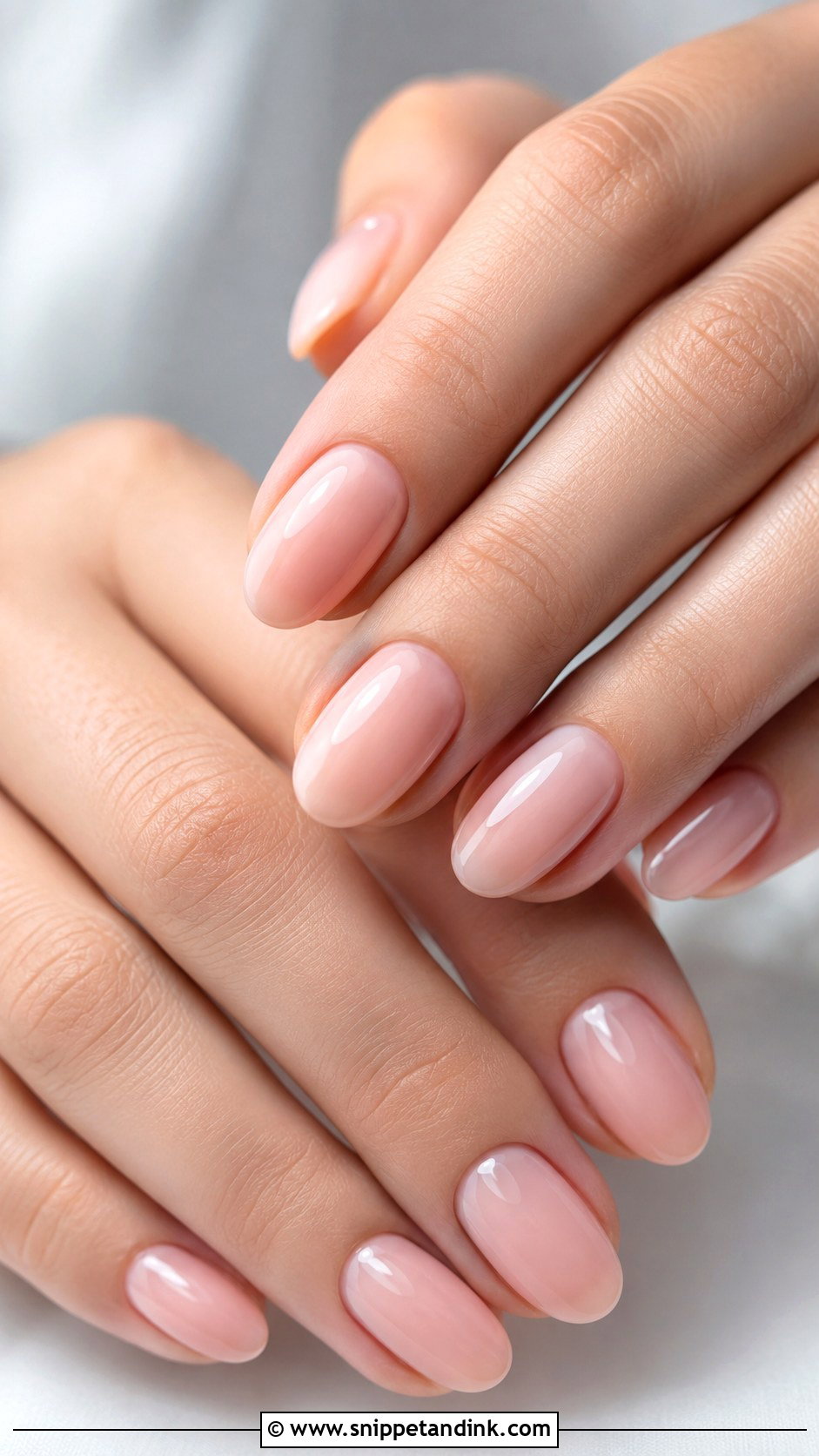
Blush is a gentle wash of colour that stays wedding-appropriate. For depth, I use two thin coats of a sheer blush rather than one opaque layer, which keeps it airy. It suits floral gowns, tulle skirts, garden weddings and soft glam makeup, and flatters lengths from short natural to long almond. Gloss is classic. A satin top coat looks more modern but shows marks sooner, so I’d only choose it for a short wedding week.
11. Lace Bride Nails
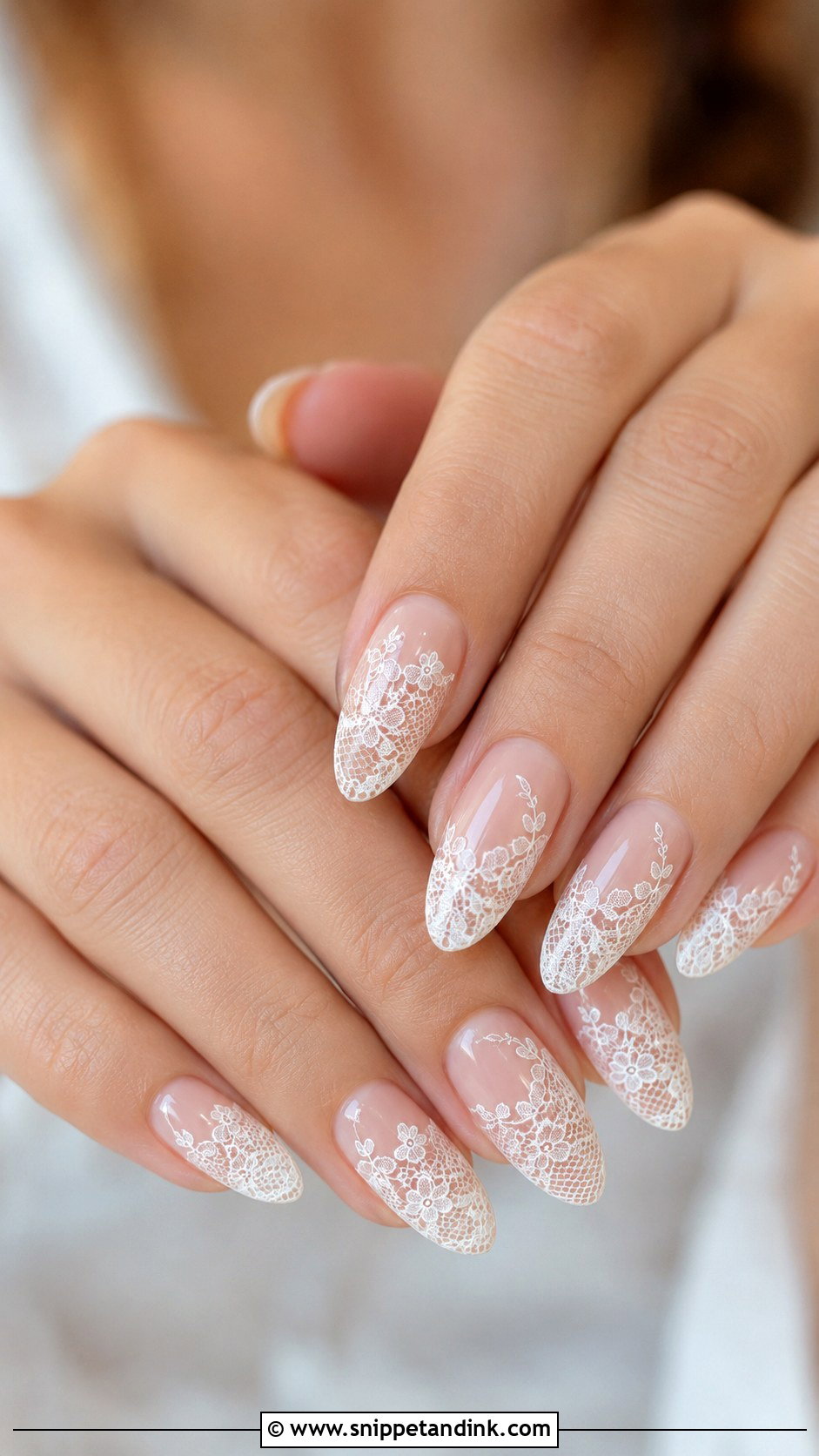
If your gown or veil has lace, the nails can echo it. Lace bride nails usually have fine white lace patterns over sheer nude, pink or milky bases, either stamped for speed or hand-painted for a finer, less repetitive line. Bring a close-up photo of your dress lace so the motif matches. Lace on every nail is detailed; on a few accents it’s softer. Almond, oval and coffin give the pattern room, and the lines must stay delicate or the set looks busy.
12. Floral Bride Nails
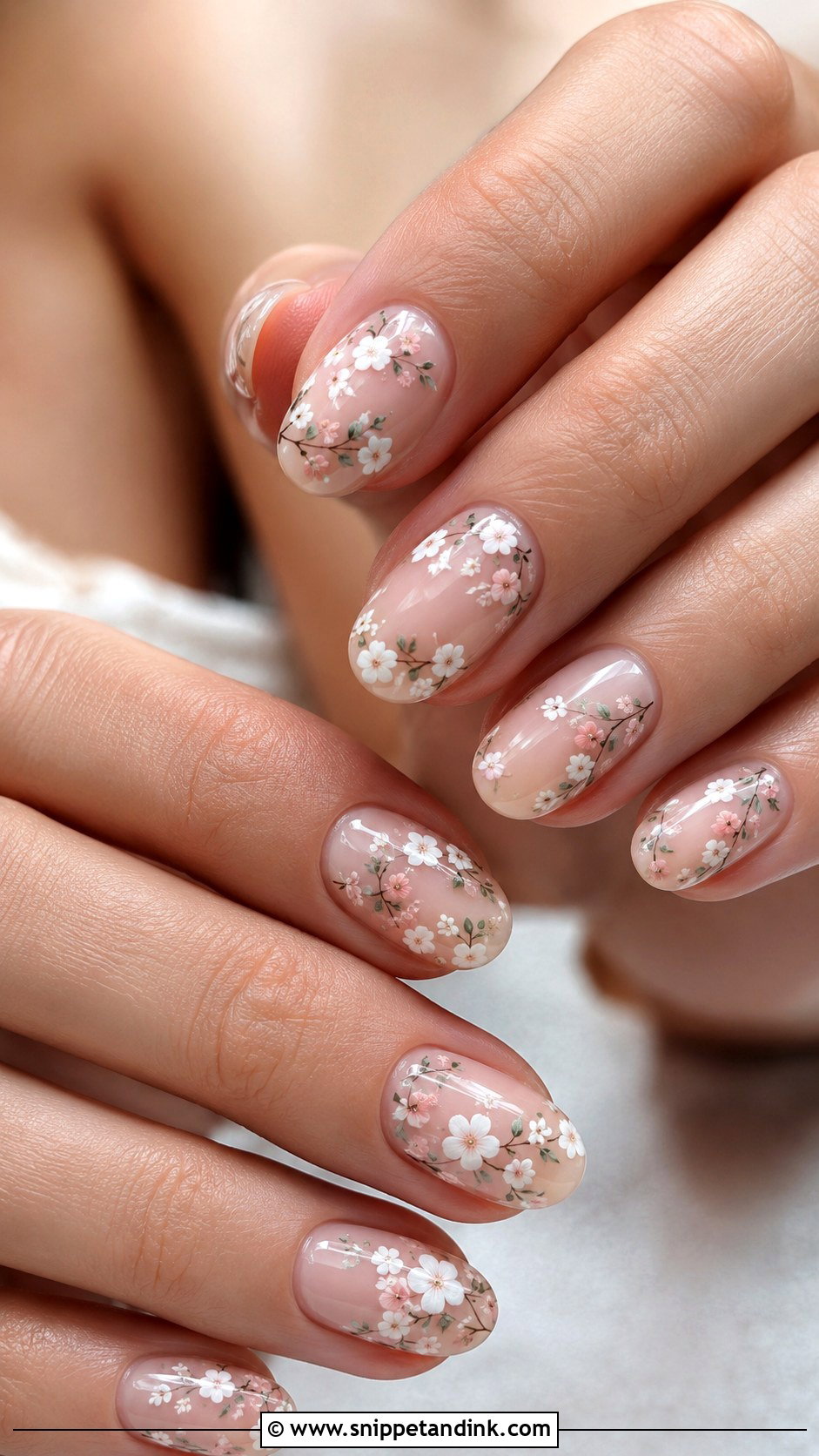
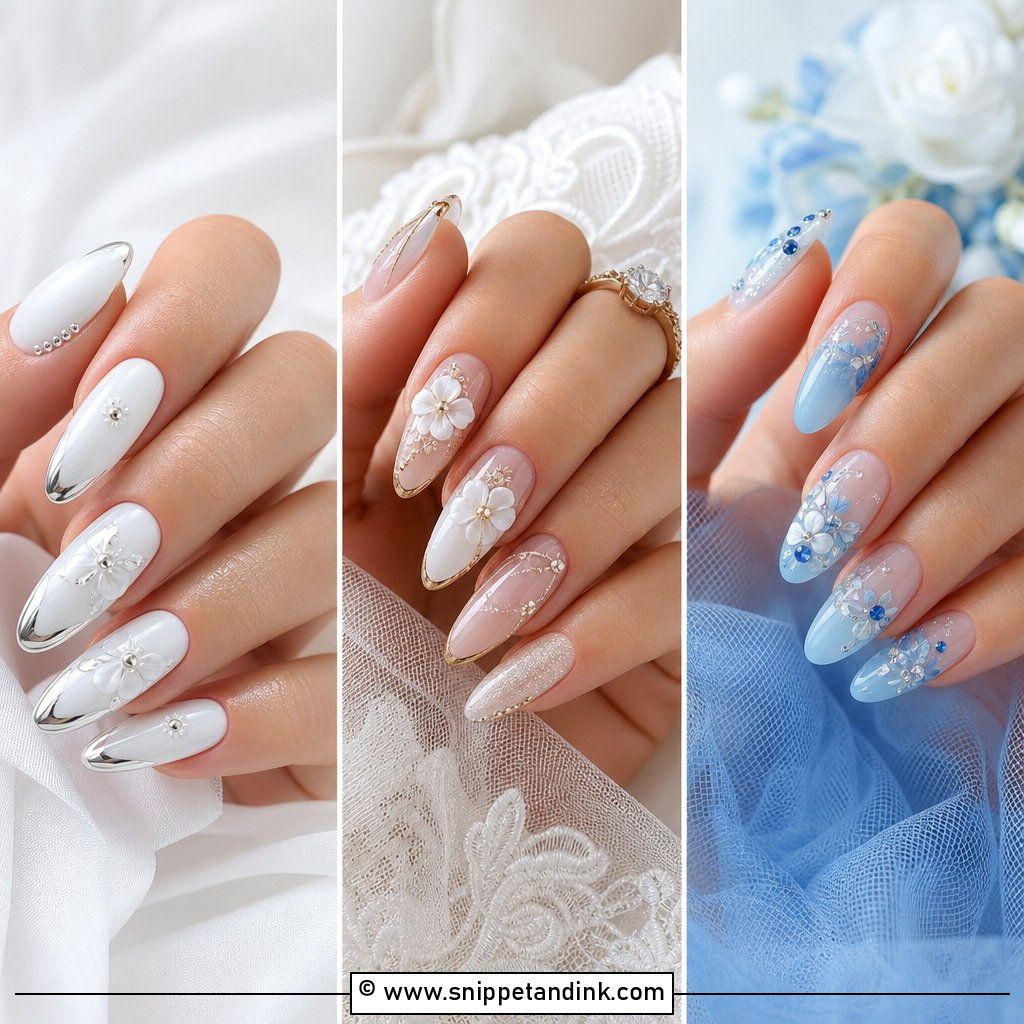
Flowers painted small and spaced out look refined; flowers painted large look like summer nails. I use a fine detail brush for tiny white, blush or pastel petals over a sheer base. It’s pretty for spring weddings, outdoor ceremonies and soft-coloured bouquets, and you can pick the flower colour from your bouquet. Almonds and ovals make it graceful, short rounds sweet. A glossy top coat seals the art.
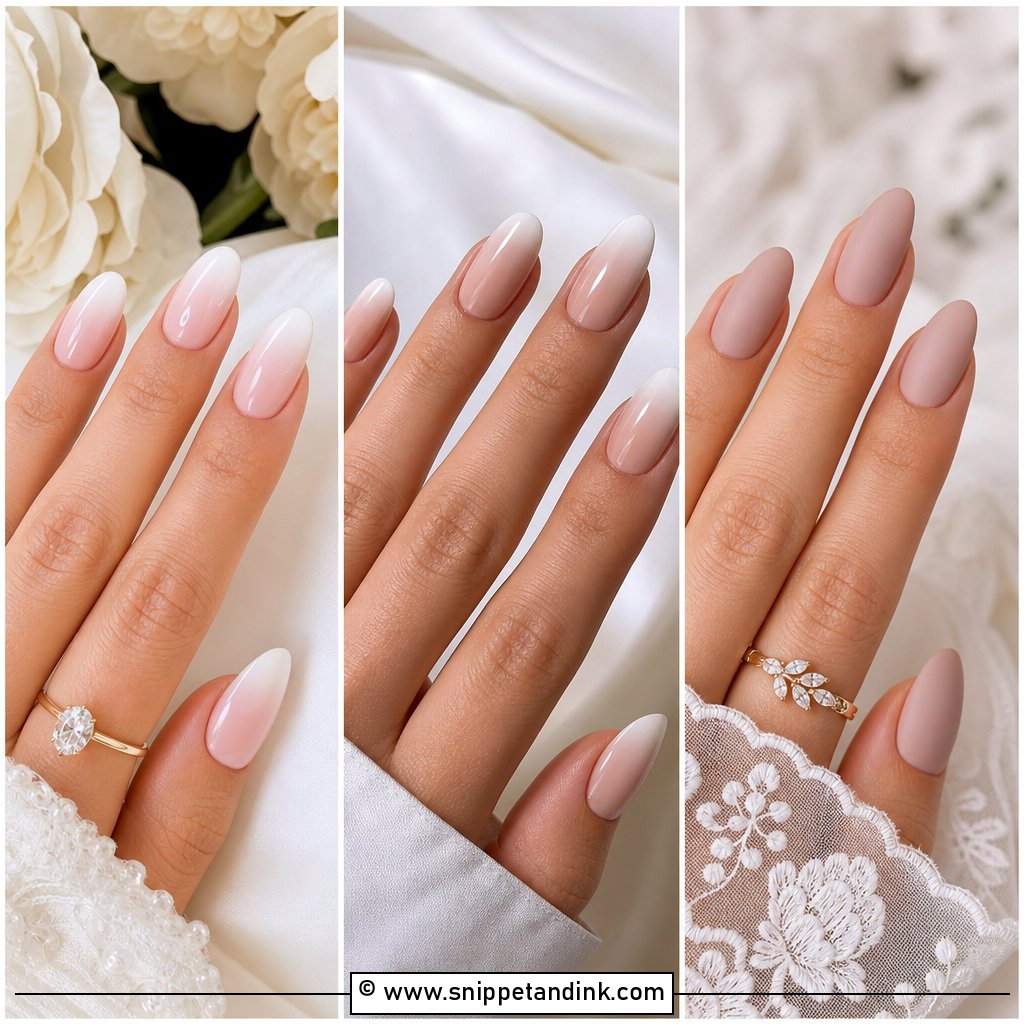
13. White Ombre Bride Nails
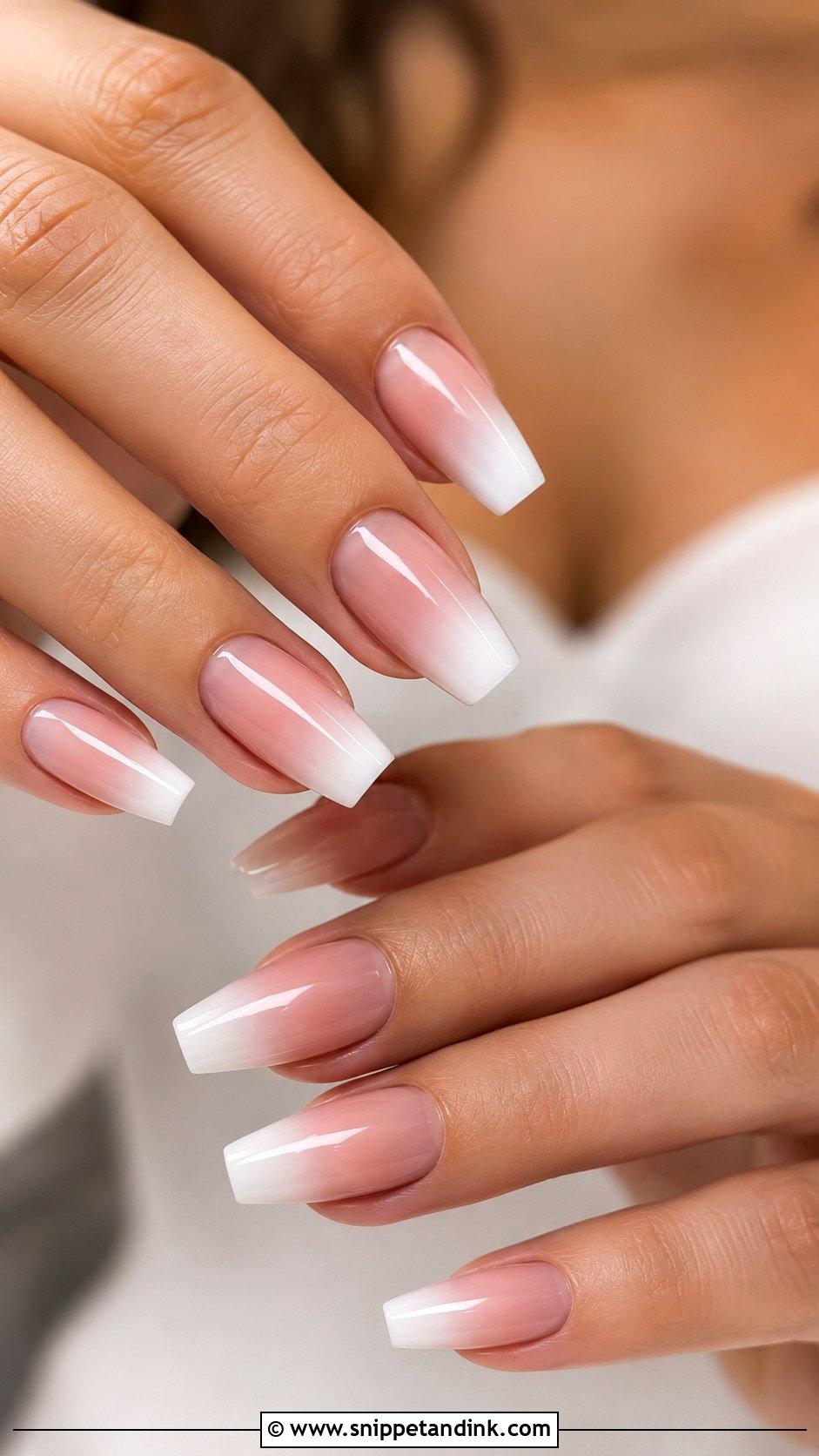
White ombre, often called baby boomer, fades a nude or pink base into soft white tips, usually with a sponge or airbrush. Without a sharp line, it lengthens the nail and grows out more gracefully than a French, which matters if you’d like the set to last through the honeymoon. It suits almond, coffin, oval and square shapes at medium length. Choose a soft white instead of bright. The finish should be glossy with no visible band.
14. Nude Ombre Bride Nails
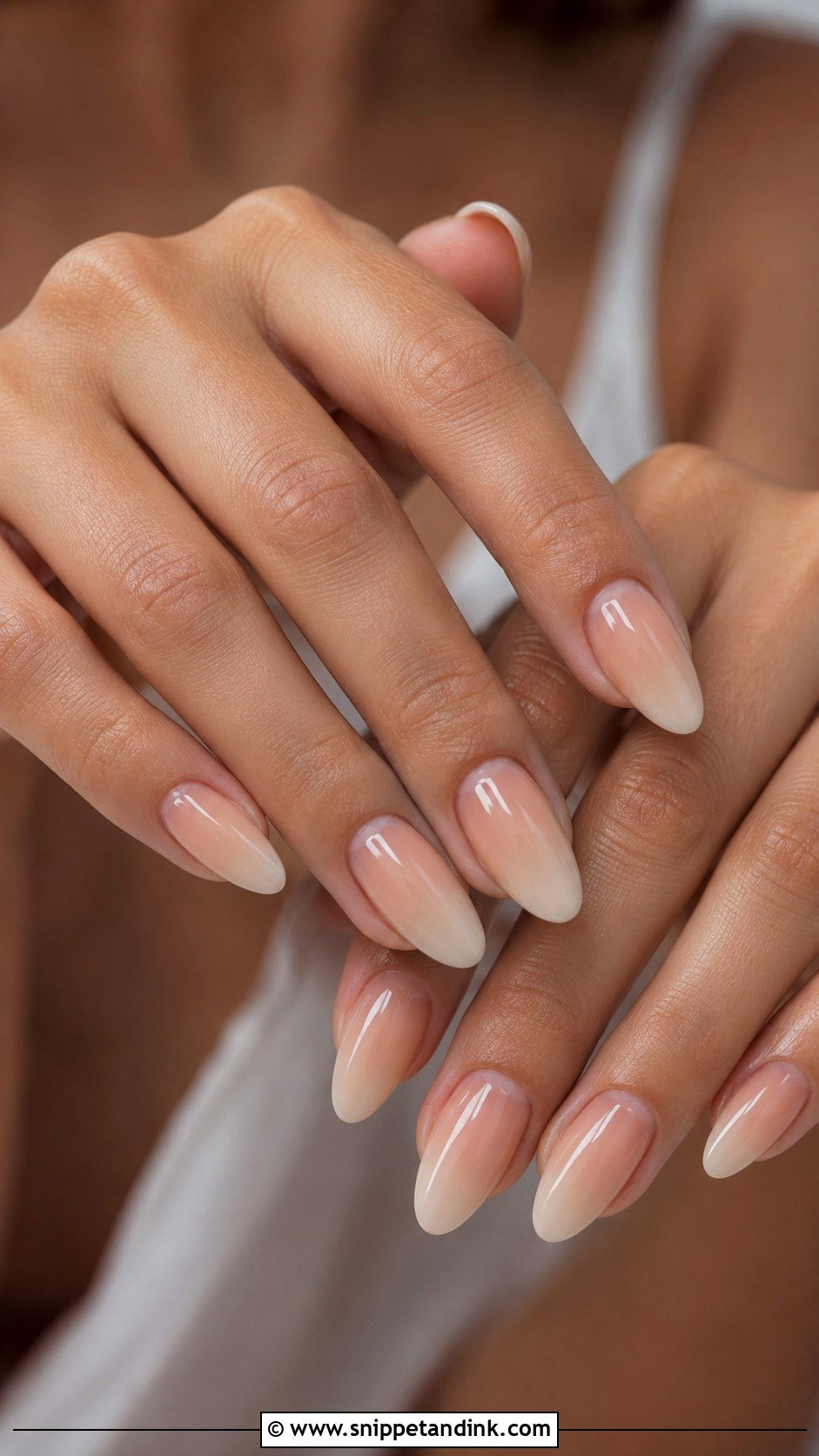
Nude ombre is the quieter sister of white ombre: the fade goes from sheer pink or nude into a lighter tip, with no white at all. It suits minimalist brides, simple gowns and understated jewellery. Medium almond looks graceful, short squoval practical. Ask for a smooth blend with no harsh colour break; a visible stripe across the middle of the nail is the most common mistake with this set.
15. Short Square Bride Nails
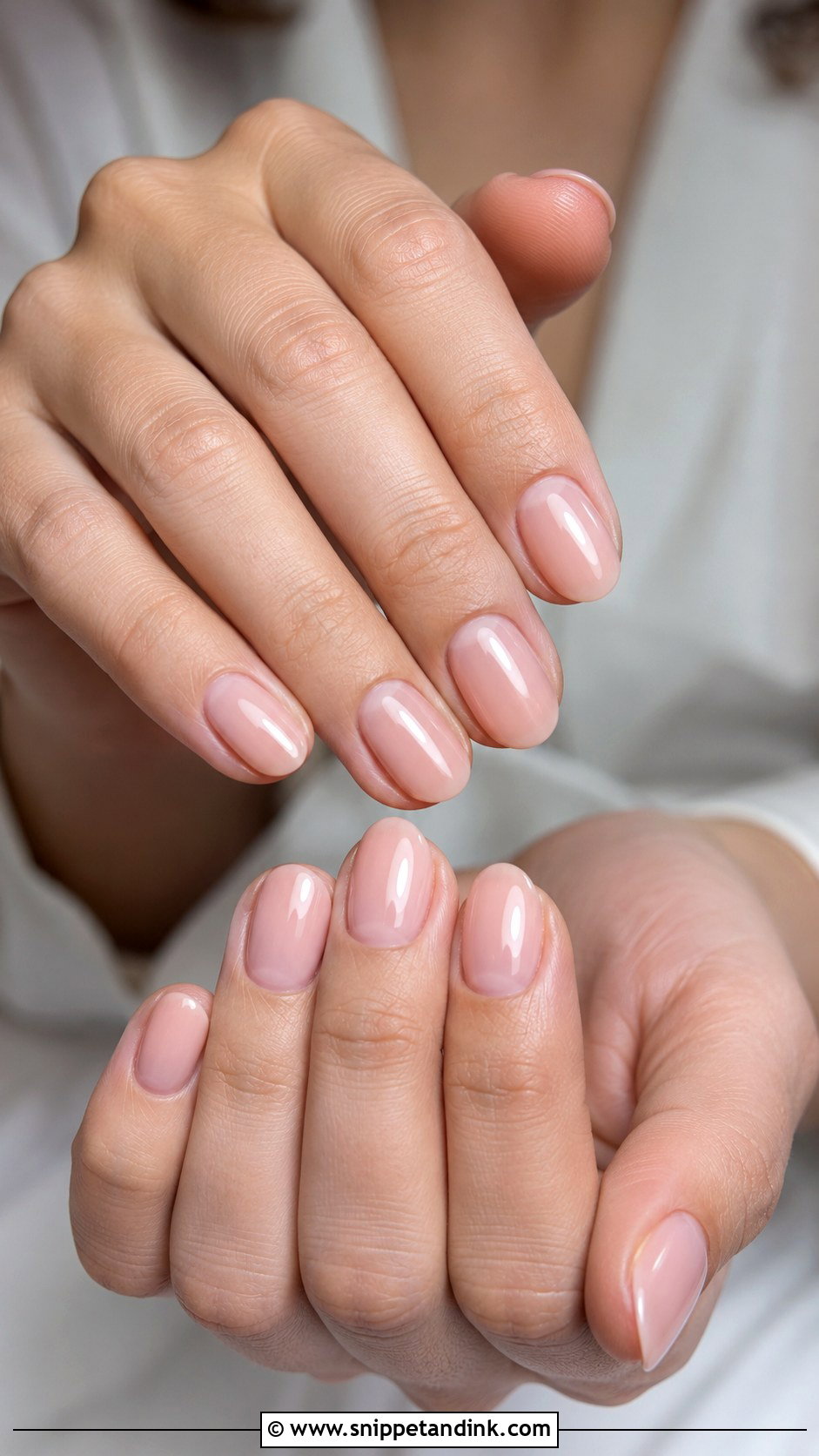
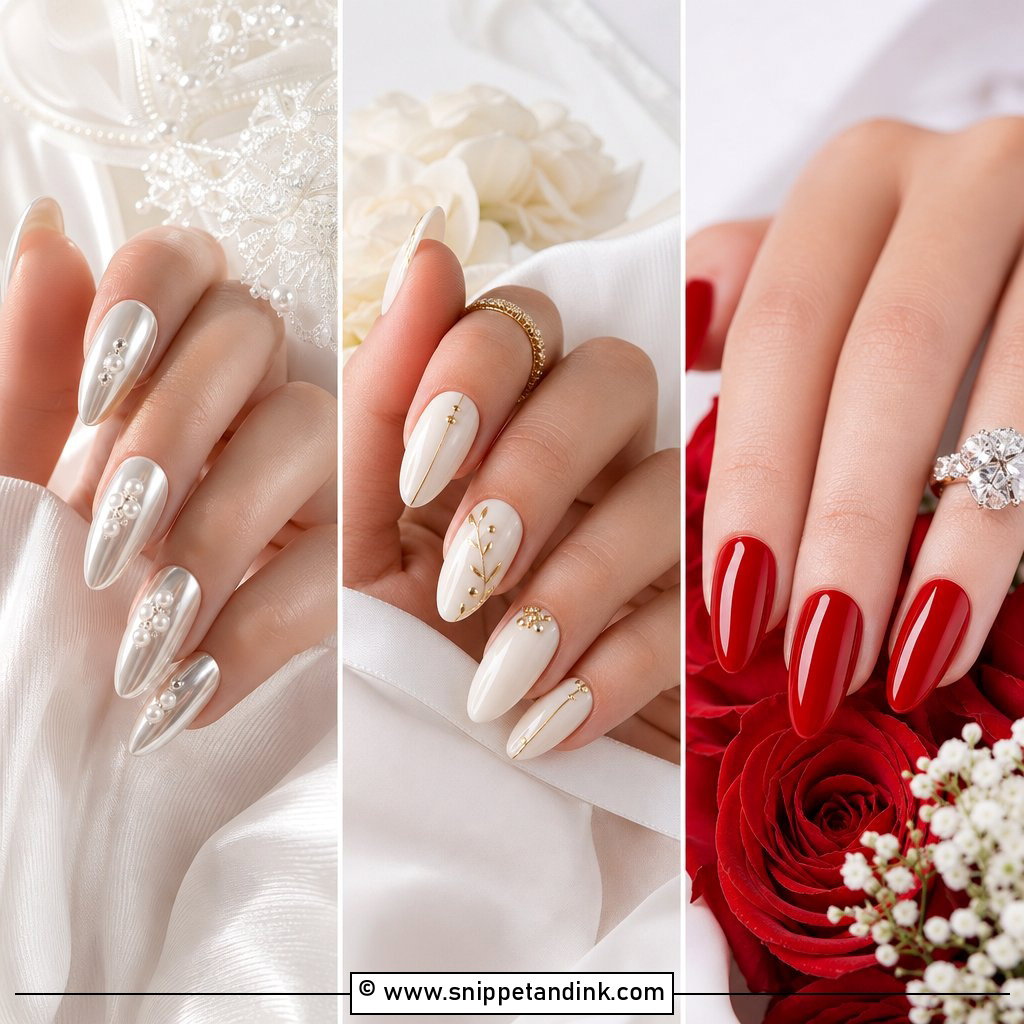
Short squares are what I’d suggest for any bride not used to length. Long nails can make fiddly things like a bustle hook, an earring back or a phone screen surprisingly hard on the morning. Sheer pink, nude, milky white and micro French keep short squares balanced, and slightly rounded corners make them softer and less likely to chip. With tidy cuticles and a glossy top coat, short nails look every bit as finished in photos.
16. Almond Bride Nails
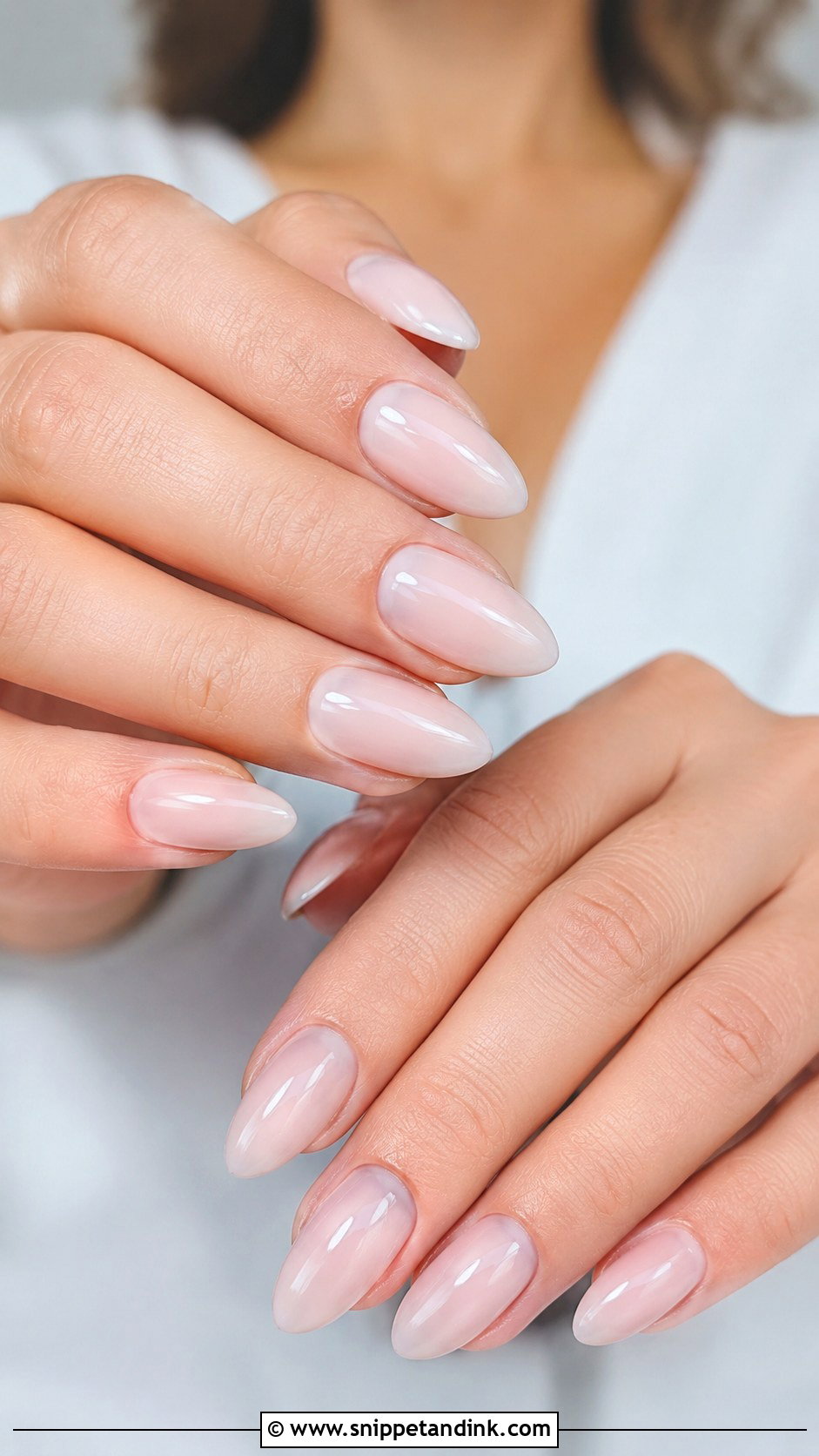
Almond tapers to a soft point that lengthens the fingers, which is why it shows up in so many bouquet and ring shots. It pairs with French tips, pearl chrome, milky white, blush and florals. Medium almond nails are usually the most practical bridal length, long enough to look elegant and short enough not to snap when you’re doing up a dress. Very long almonds are fragile at the tip, so I’d avoid going past medium unless you already wear them.
17. Coffin Bride Nails
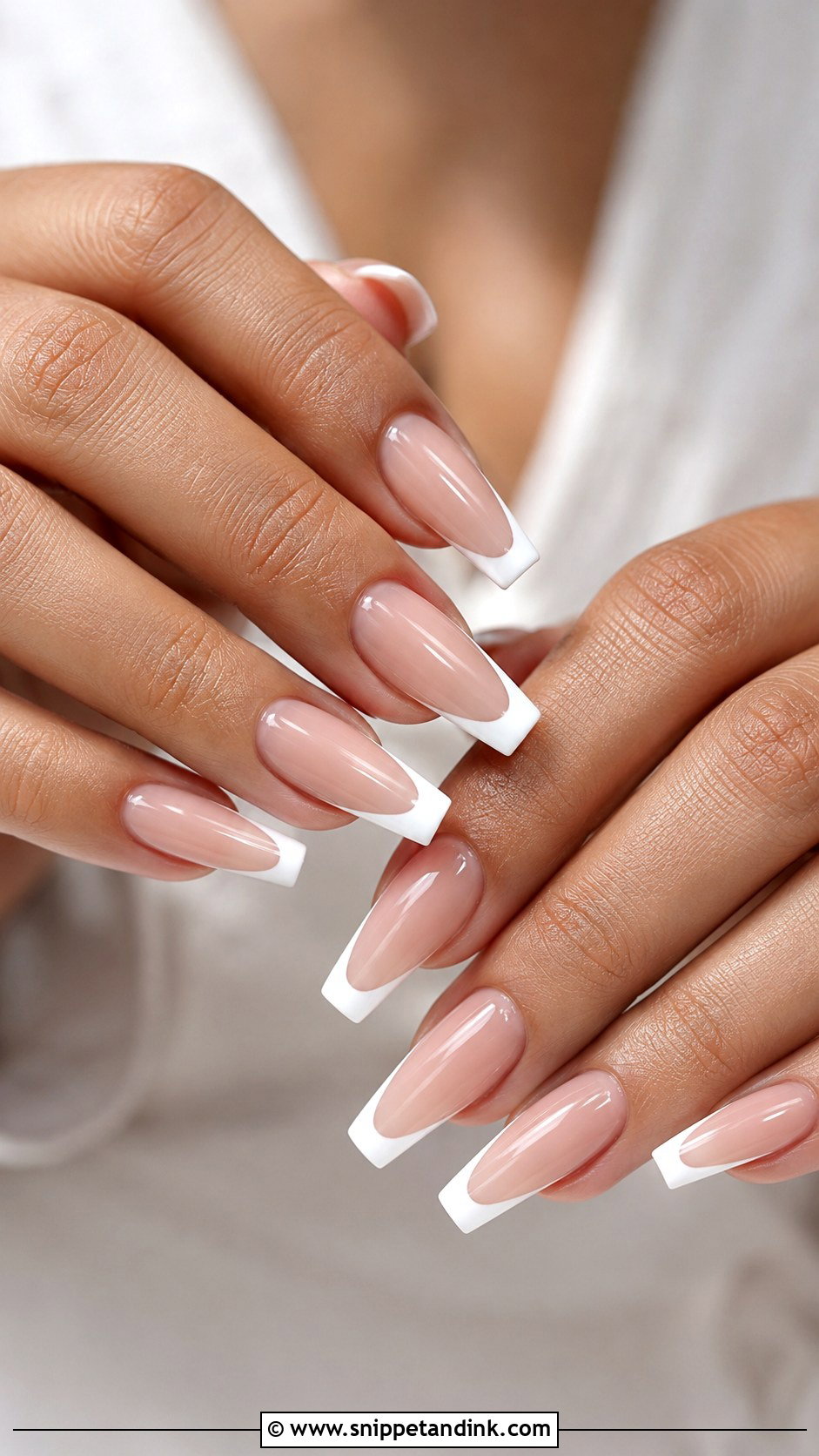
Coffin shapes taper at the sides and end in a flat tip, which gives a more modern, defined outline. To keep them bridal, I stick to soft colours: nude, milky white, blush, ivory or pearl chrome, with white ombre, a fine French or tiny crystals near the cuticle if you want more. A medium coffin is far easier to live with than an extra-long one, which catches on everything. It suits sleek gowns and structured dresses.
18. Oval Bride Nails
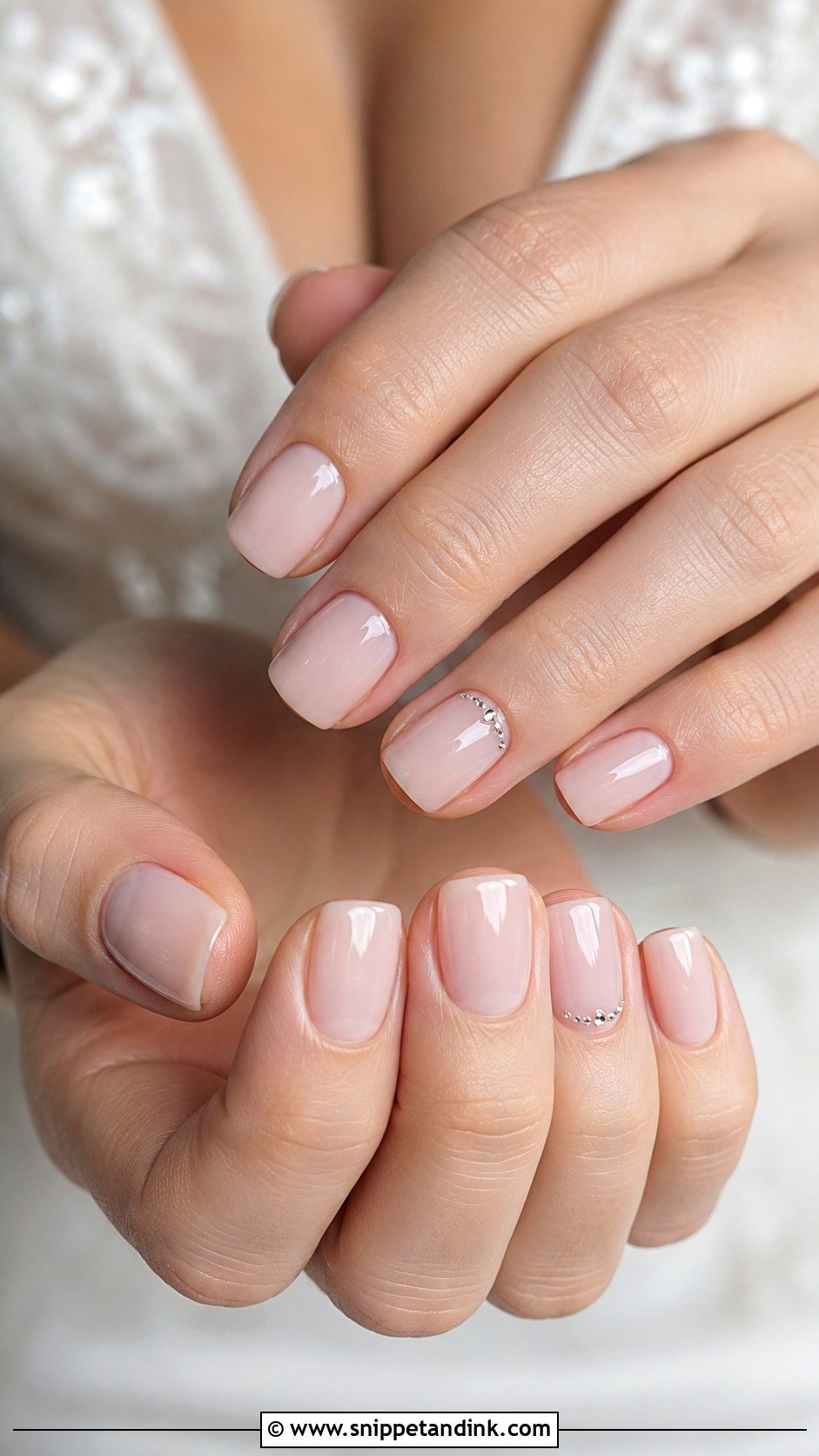
Oval follows the curve of the fingertip, so it’s comfortable and natural at short and medium lengths. It’s what I’d suggest if almond or coffin feels too dramatic. Sheer pink, milky white, nude and classic French all look graceful on an oval, and the rounded edge softens lace or floral art. It fits traditional weddings and romantic dresses.
19. Squoval Bride Nails
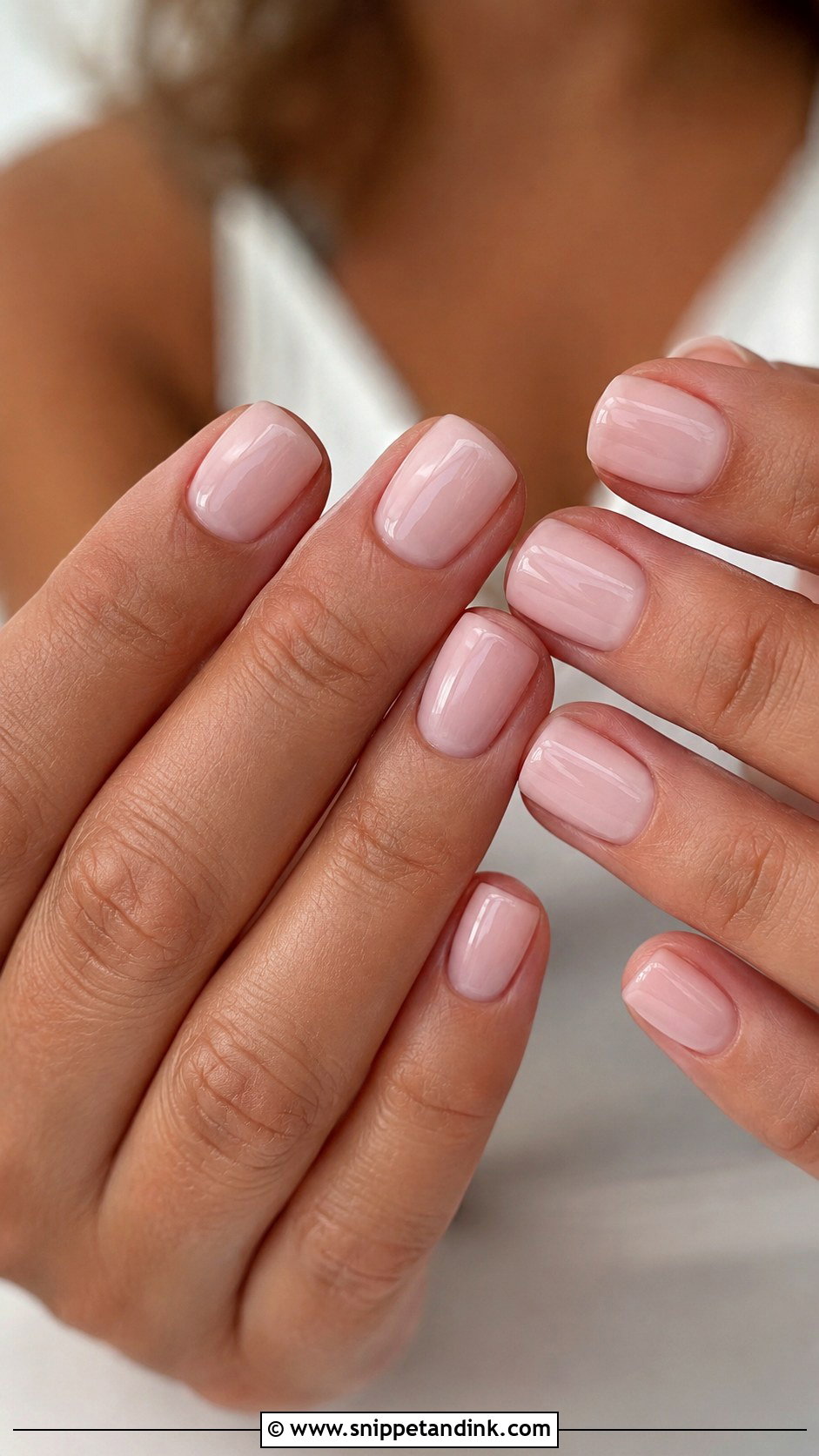
Squoval is a square with the corners rounded off, and it’s the shape I file most often for brides who use their hands a lot: no sharp edges to catch on tights, lace or a veil. It works at short to medium lengths with sheer pink, nude, micro French and milky white. It’s modern without being trendy, so it won’t date your photos. Careful cuticle work and a glossy top coat finish it.
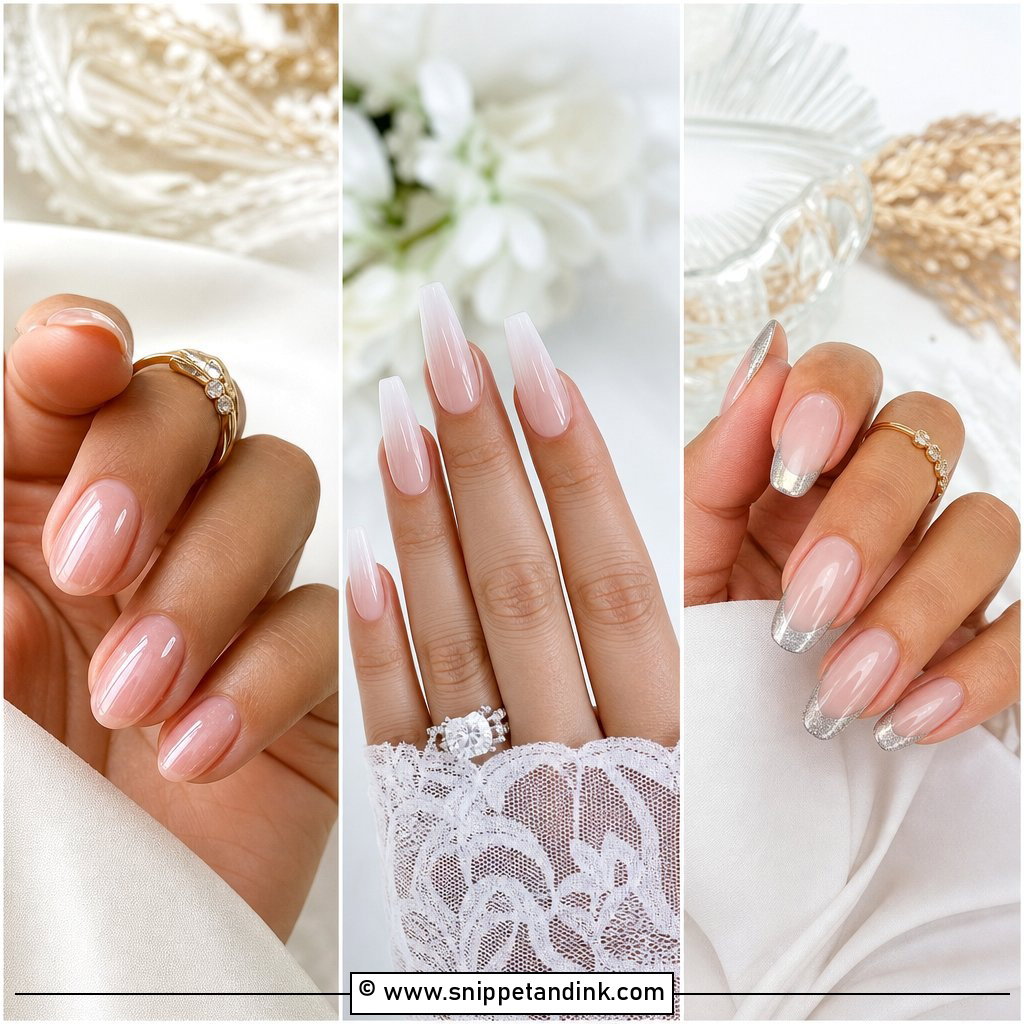
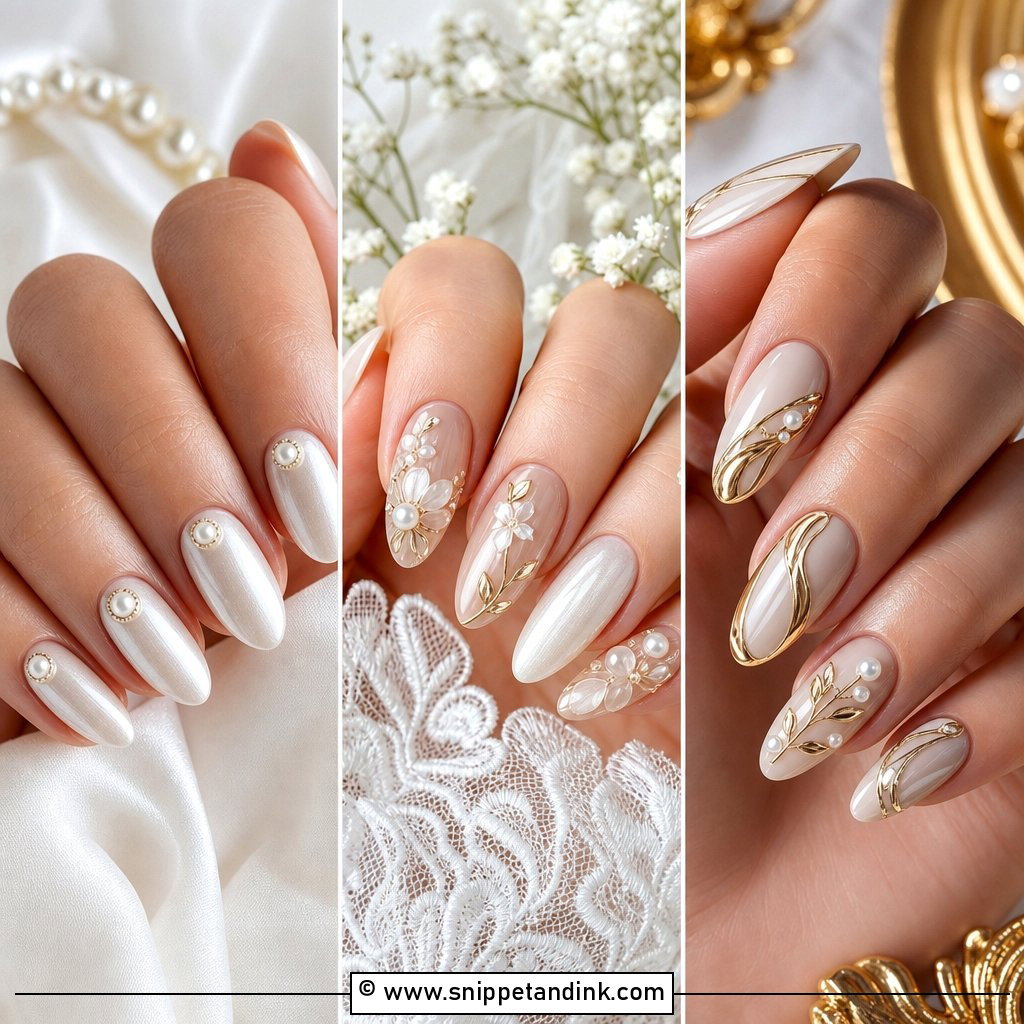
20. Pearl Accent Bride Nails
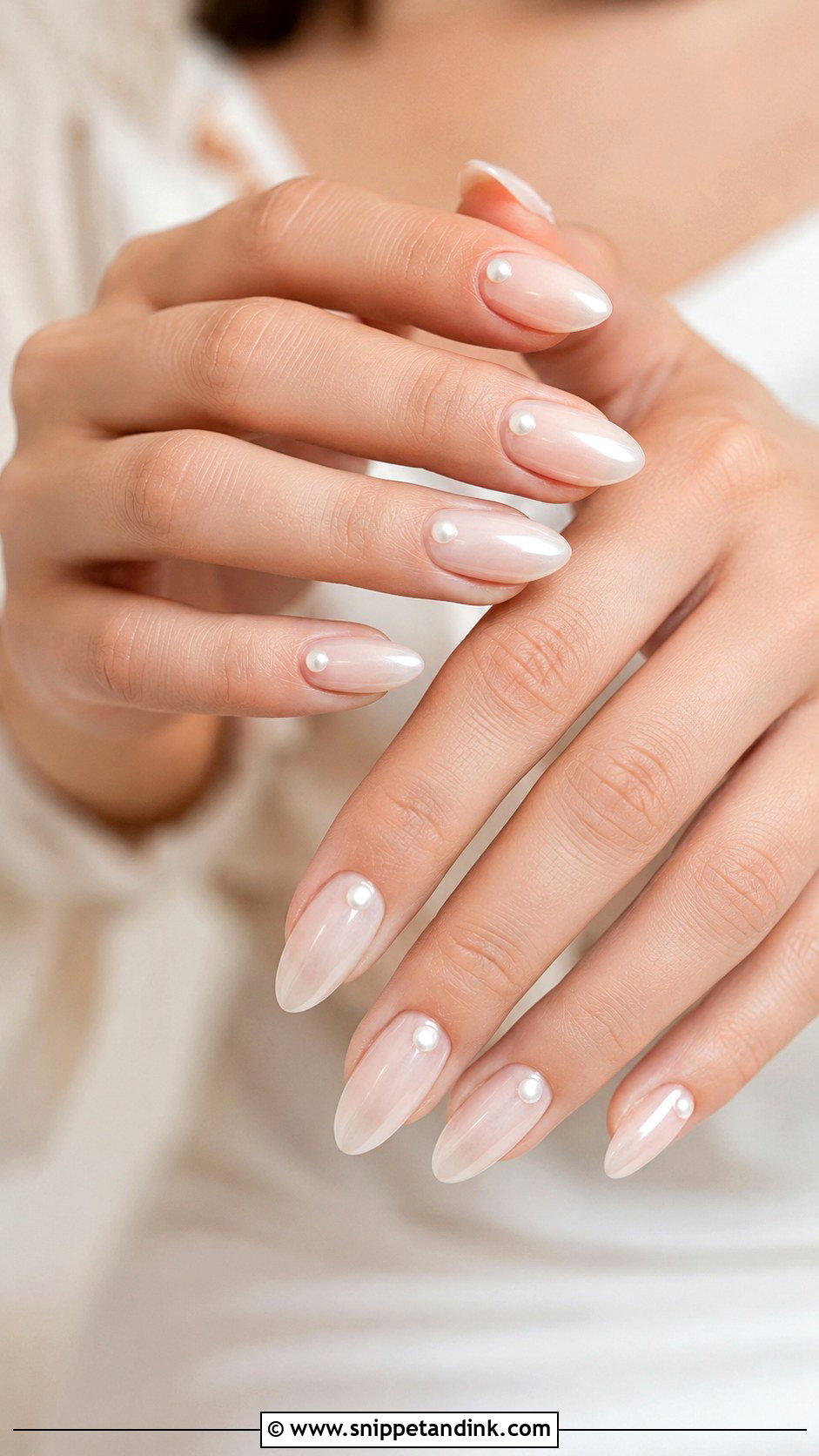
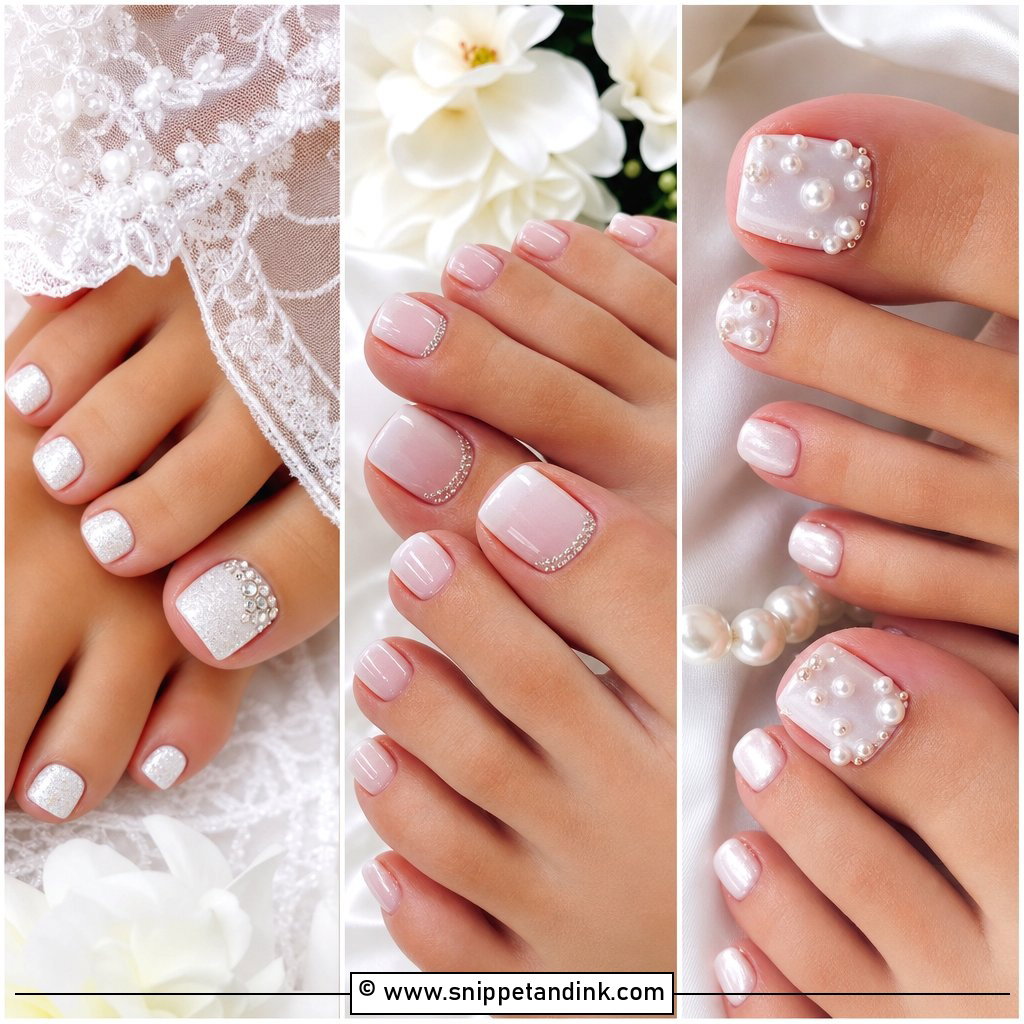
Pearl accents add texture without any colour. I place tiny flat-back pearls near the cuticle, along a French tip, or on one or two nails, and secure them with a thick gel around the edges. Round pearls stick up and pop off; flat backs stay. The base should be simple: sheer nude, milky white, blush or ivory. It pairs with pearl jewellery, beaded gowns and classic accessories.
21. Rhinestone Bride Nails
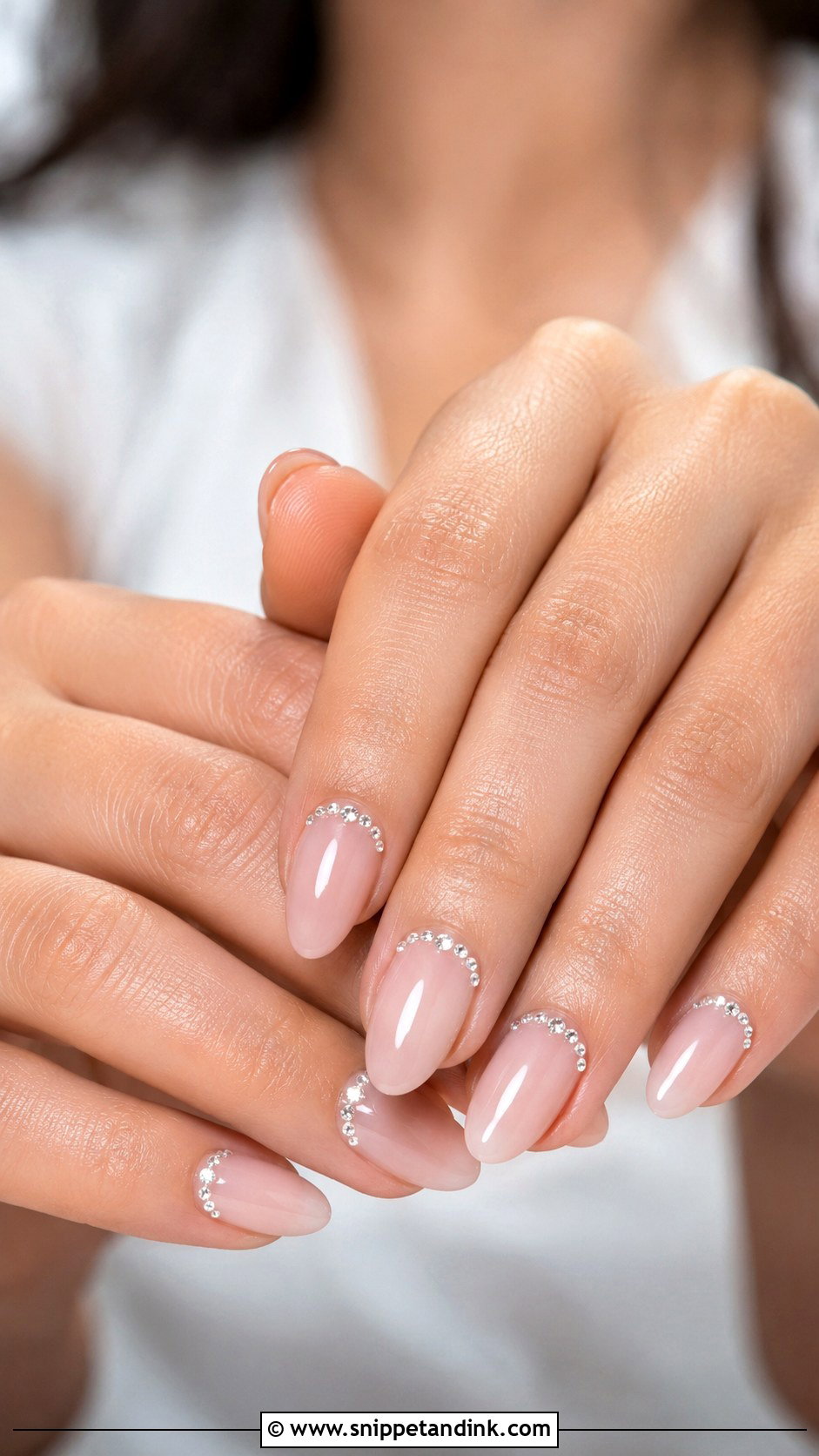
Rhinestone bride nails work best with tiny clear stones, placed lightly near the cuticle, along a French tip or on accent nails only. A sheer nude, pale pink or milky base keeps it soft. Almond, coffin and oval shapes give enough space for the stones. My warning is practical: rhinestones snag tulle veils and fine lace, so I keep them low on the nail and seal them well. Small, balanced stones catch light without overpowering the dress or ring.
22. Glitter Ombre Bride Nails
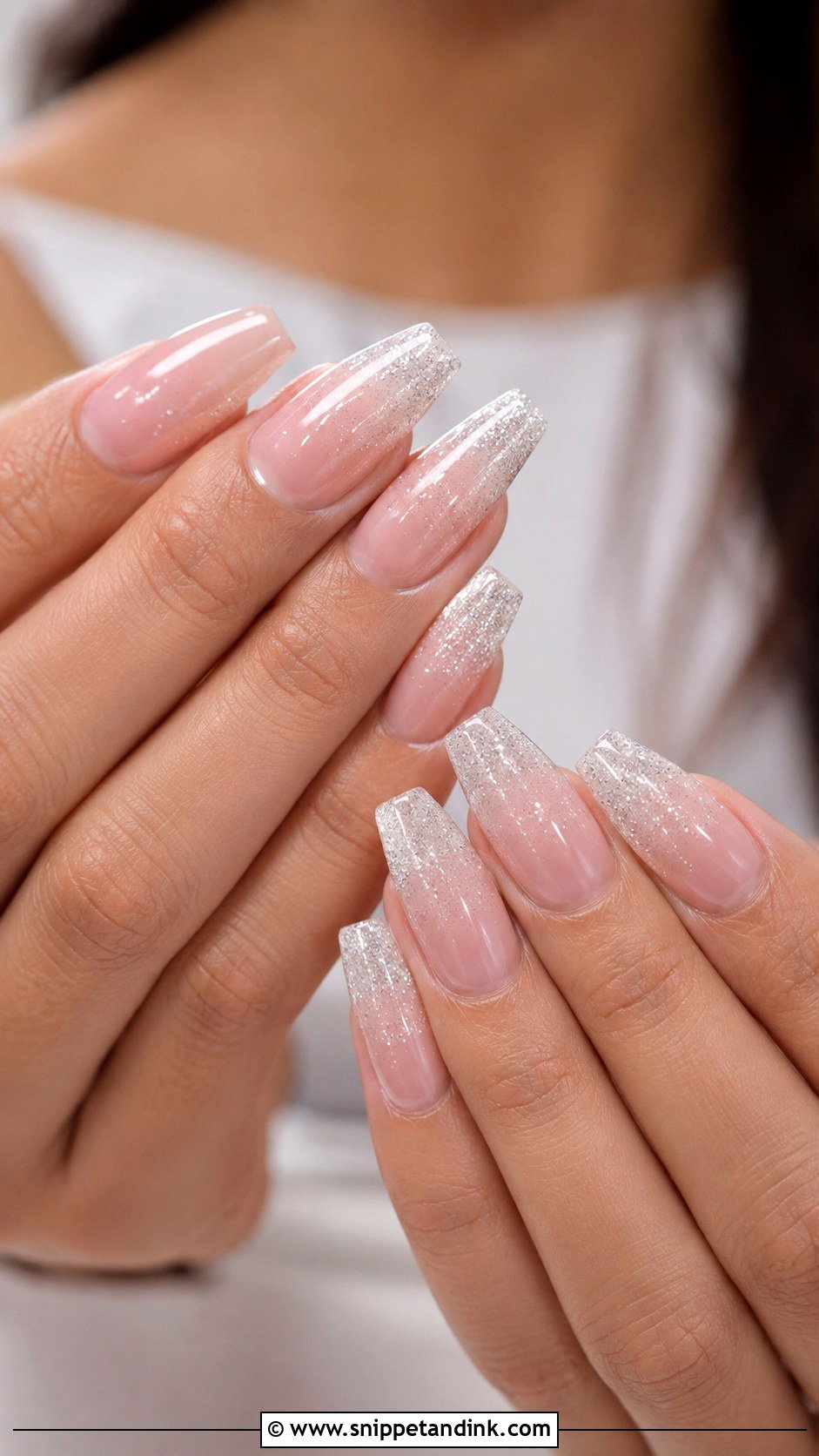
For sparkle that stays soft, this is the one I’d book. Glitter ombre bride nails fade from the tip toward the centre, or from the cuticle upward for a lighter shimmer. Silver, champagne, pearl or rose gold glitter over sheer nude or pink all look bridal. It suits evening receptions, ballrooms and beaded gowns. Fine glitter looks refined; chunky glitter looks like a festival. A thick glossy top coat smooths the texture so it doesn’t catch on fabric.
23. Champagne Bride Nails
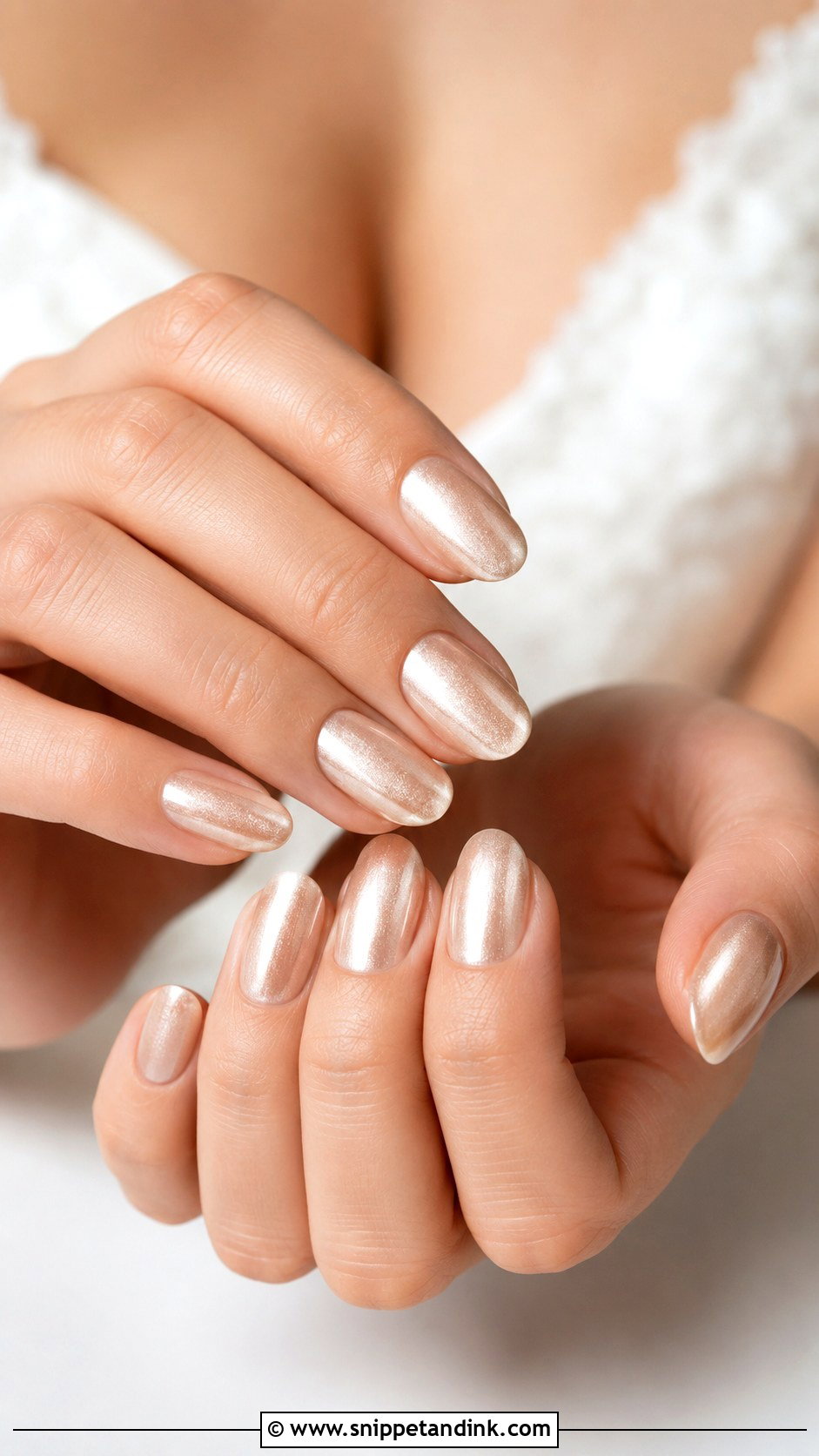
Champagne sits between nude, gold and beige, a quietly warm colour that suits ivory gowns, satin and warm accessories. Wear it as a sheer shimmer, a pearl finish or a soft metallic glaze. It flatters warm and neutral undertones especially well, and it reads less expected than white or pink. Almond, oval and short square shapes all suit it. Keep the shine subtle.
24. Rose Gold Bride Nails
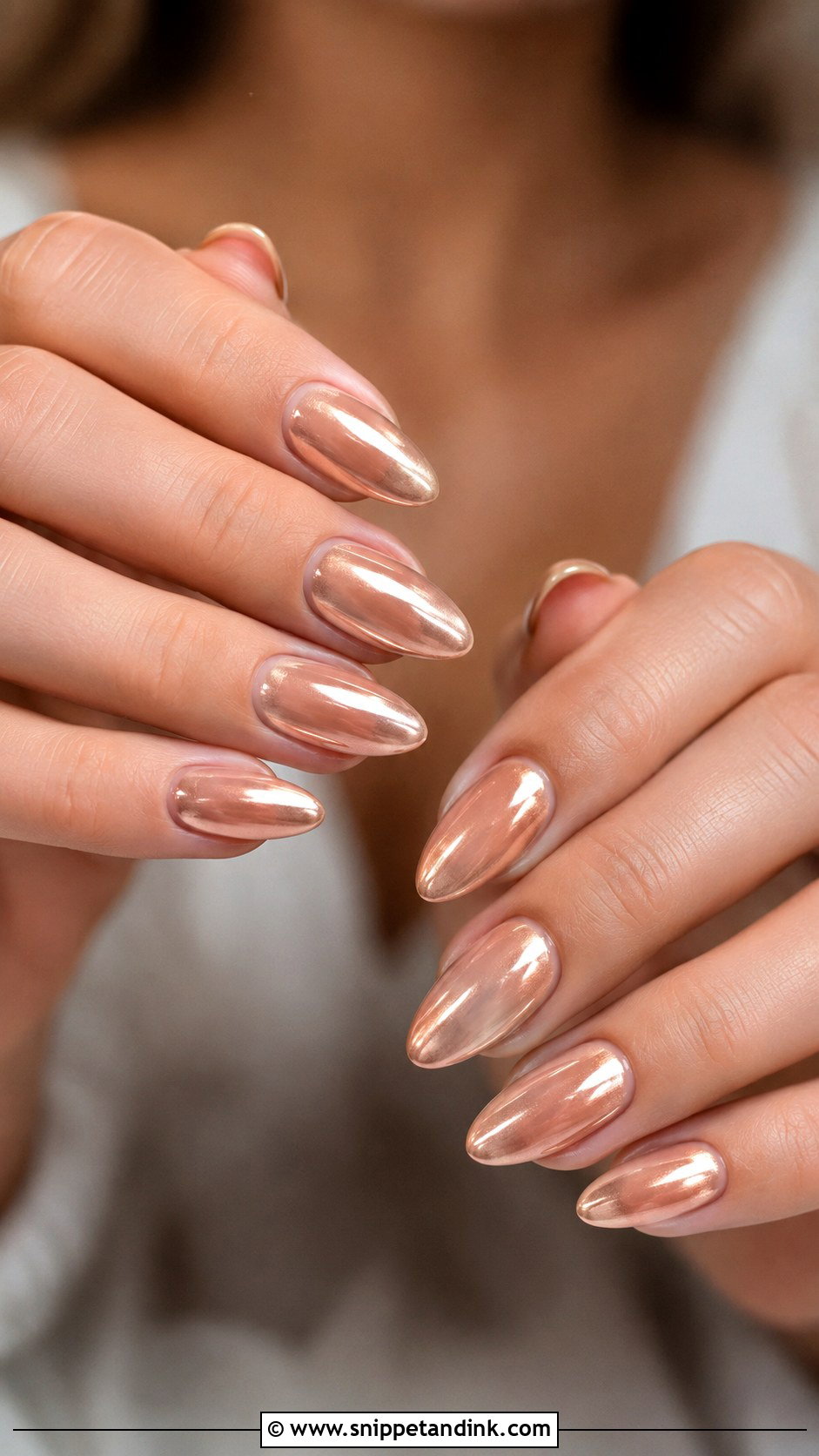
Rose gold blends pink and metallic, softer than yellow gold and warmer than silver. For a bridal version, I’d use rose gold shimmer, thin foil details or a light chrome over nude rather than a full metallic set, which can look heavy. It pairs with rose gold jewellery, blush flowers and warm makeup. Almonds and coffins look glamorous in it, short ovals soft.
25. Something Blue Bride Nails
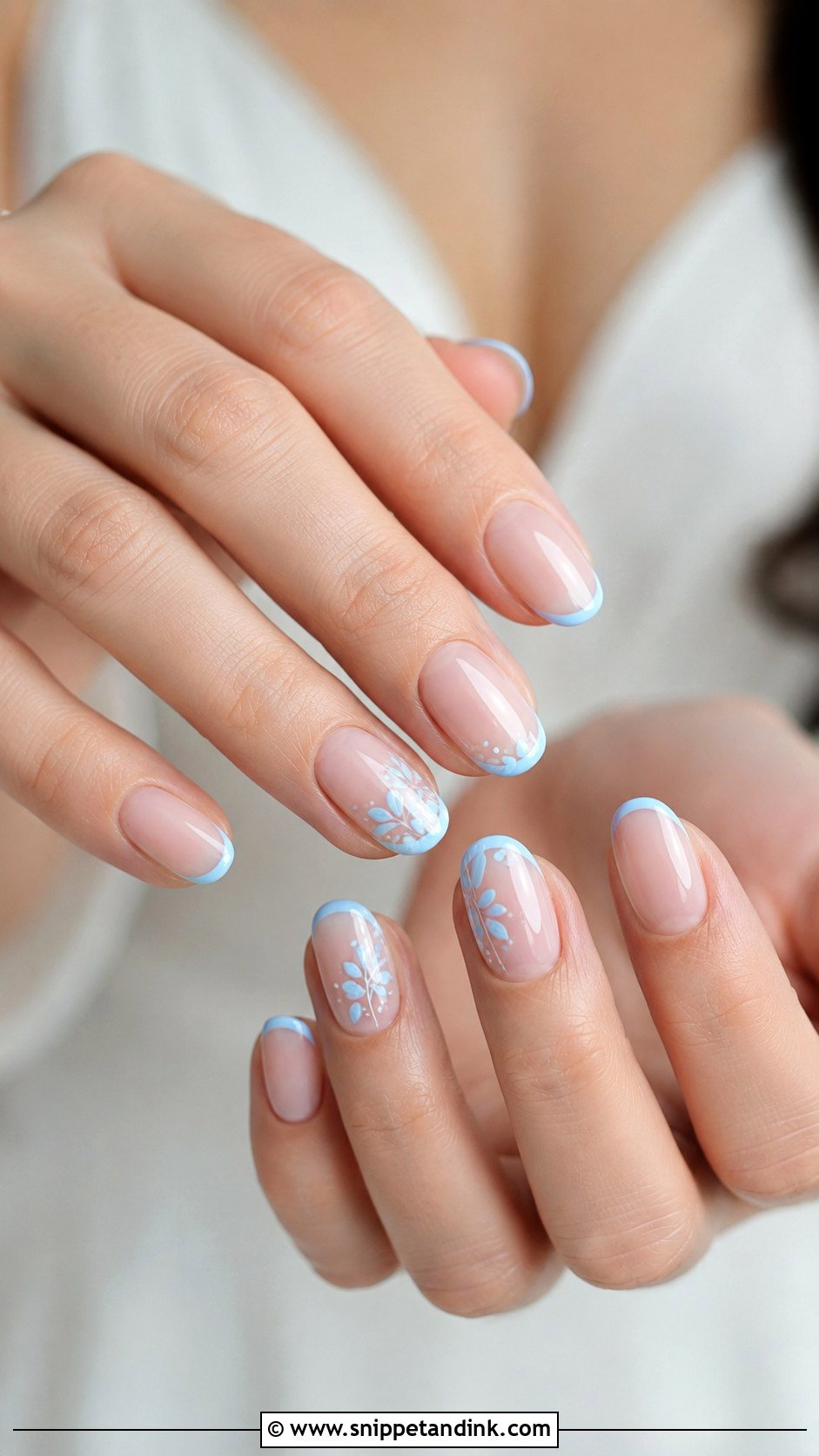
Hiding something blue in the manicure is a small, personal touch. A pale blue French tip, a tiny blue flower, a soft blue accent nail or a sheer blue glaze all work when kept delicate. Choose powder blue, baby blue or icy blue rather than bright shades, over a sheer nude, milky white or pale pink base. Some brides put it only on the ring finger, so it’s a detail only they know is there. Short ovals, almonds or squovals suit it.
26. Minimal Line Art Bride Nails
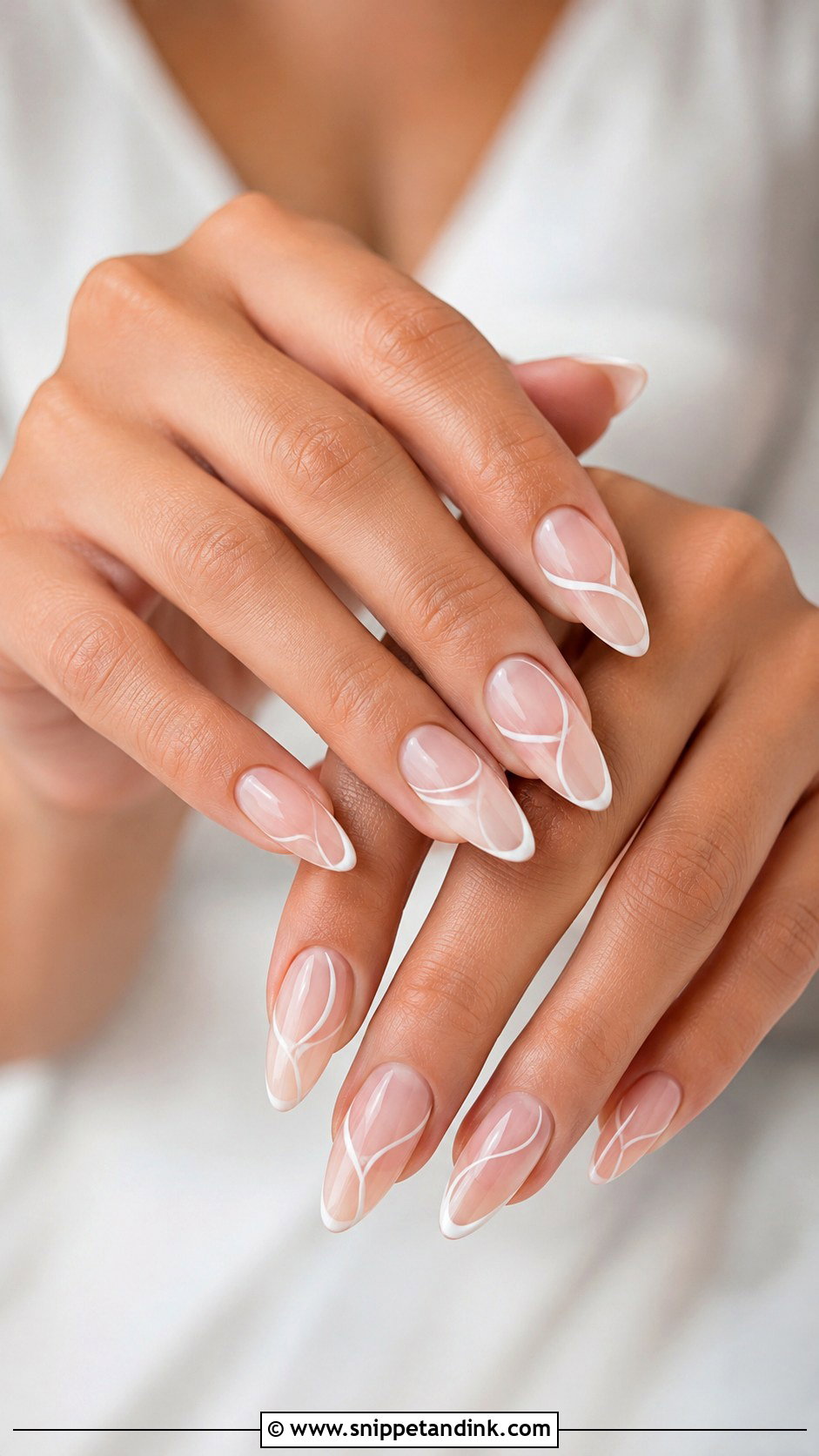
Line art suits brides who want quiet detail. Fine white or ivory lines make soft curves, abstract shapes or small accents over a sheer nude base. Keep the lines thin and airy; it takes a steady liner brush and patience. Sleek gowns, modern venues and minimalist jewellery suit it. Almond and oval shapes let the lines follow the curve. A glossy finish keeps the surface smooth.
27. Velvet Cat Eye Bride Nails
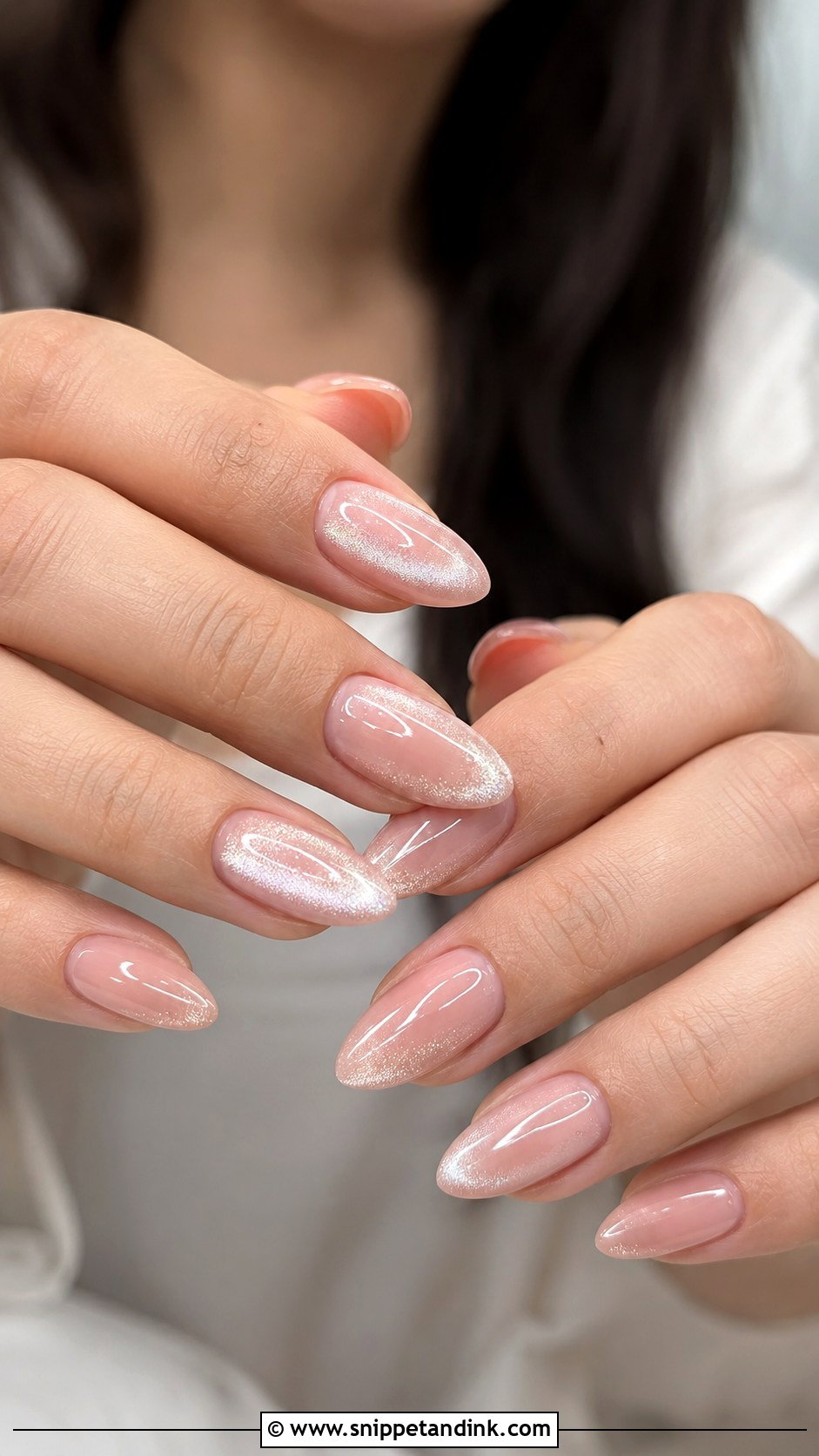
Velvet cat eye bride nails use magnetic polish, pulled into a soft, wide glow with a magnet before curing rather than a sharp stripe. The wedding version uses sheer nude, pearl, champagne or pale pink. The shimmer shifts as your hands move, which is why it shows up well in video as well as photos. Keep the colour light. Almond and oval nails help the glow look smooth.
28. Matte Nude Bride Nails
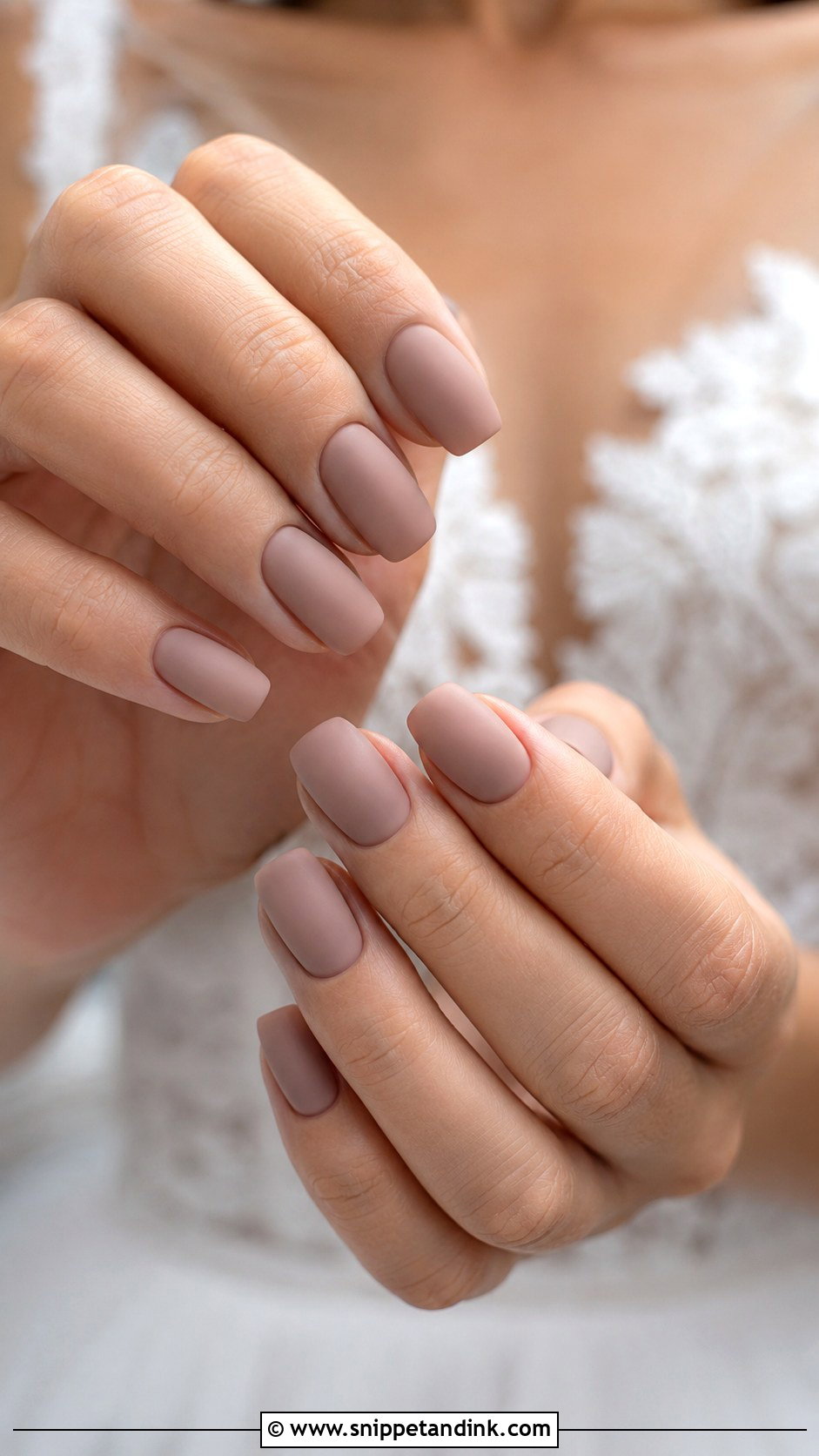
Matte nude has a velvety finish that feels different from the usual glossy manicure, and it suits minimalist gowns, clean makeup and simple jewellery. Choose a nude that matches your undertone. Short squares, squovals and almonds all look good. Matte top coat picks up oil from hand cream and food and can go patchy within a few days, so book it no earlier than two days before. A glossy French tip over matte adds a subtle contrast.
29. Gold Foil Bride Nails
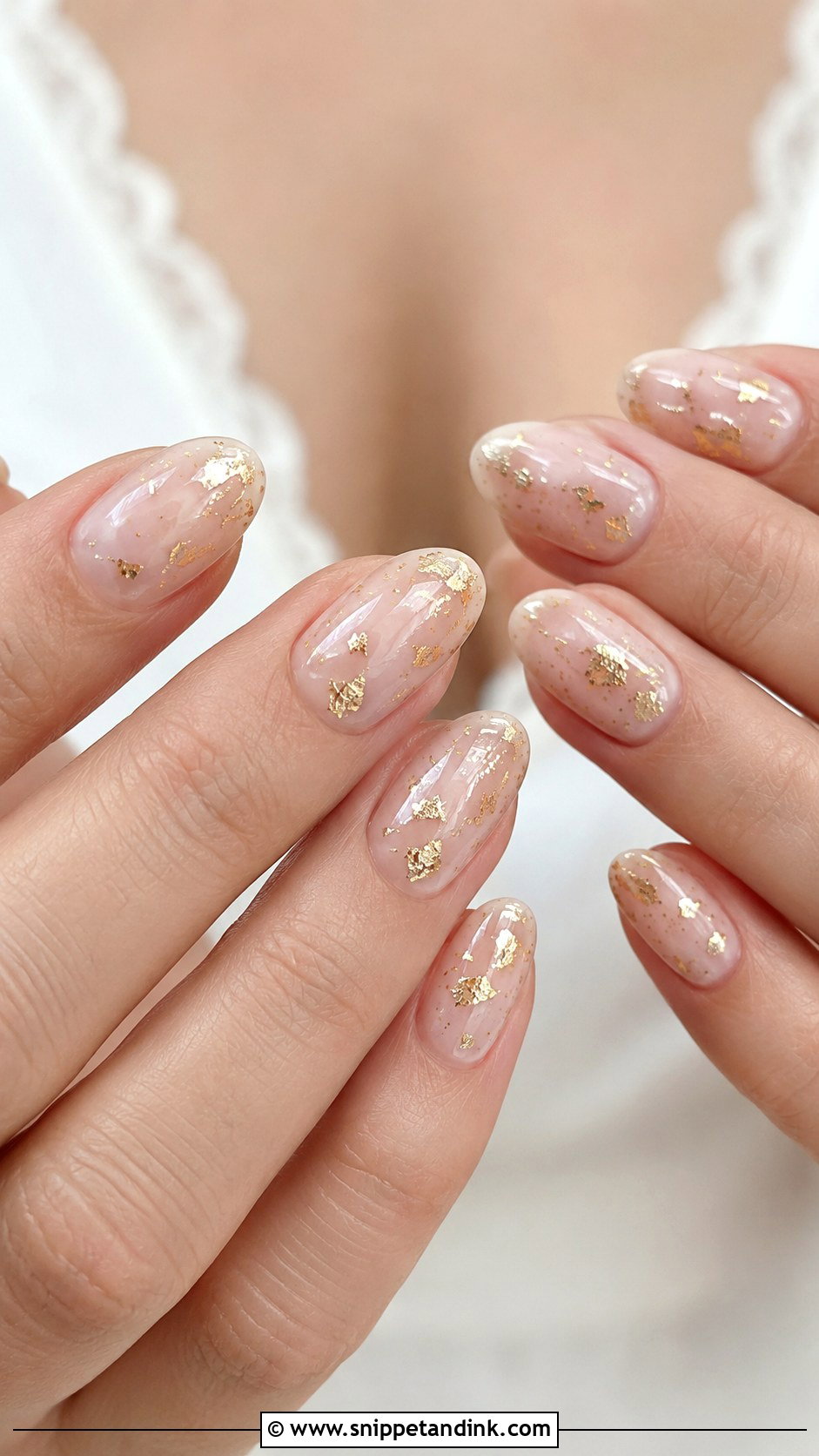
Gold foil goes on in tiny scattered pieces over a sheer nude, blush, milky or ivory base, pressed onto tacky gel and sealed under top coat. Leave plenty of bare nail around it; heavy foil looks like party nails. It suits warm jewellery, champagne dresses, gold hair accessories and autumn palettes. Almond and oval shapes make it romantic, short squares modern. Raised foil edges peel, so the sealing is what makes it last.
30. White Chrome Bride Nails
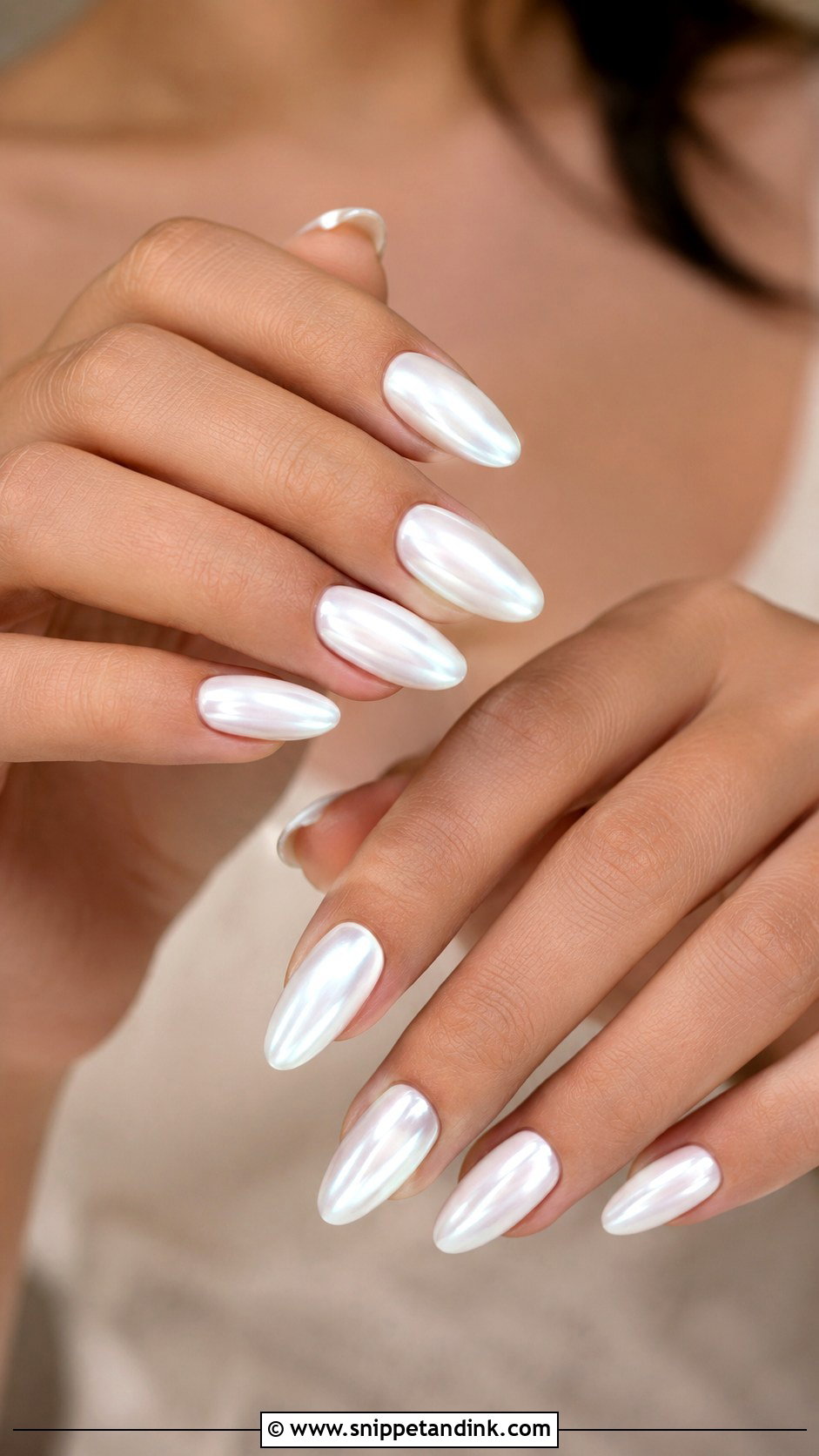
White chrome is stronger than pearl chrome but softer than silver: a white or milky base topped with chrome powder for a smooth reflective glow. It suits structured gowns, simple satin and modern accessories. Almond, coffin and oval shapes carry it, because the shine follows the curve. Ridges show under chrome, so ask for a smoothing base layer if your natural nails are uneven.
What the Day Does to a Fresh Manicure
Wedding days are surprisingly hard on nails. Hand sanitizer and repeated hand-washing dry the cuticles. Bouquet stems are often wrapped in wire and ribbon that scratch top coat. Hairspray drifts onto the nails during hair styling and leaves a film that dulls the gloss, so I tell brides to wipe the nails with a damp cloth before photos.
Pack a small cuticle oil pen and a nail file in your bag, and ask someone else to open the gifts and cards. Sticky tape and envelope edges are what chip a fresh corner most often.
If a nail does chip before the photos, don’t try to paint over gel with regular polish; it rarely matches and peels off the gel within hours. A clear top coat over the chip, or a quick file to smooth the edge, hides it far better at camera distance.
Taking it off after the honeymoon
Gel and builder sets should be soaked or filed off, never peeled. Peeling pulls off layers of the natural nail and leaves them thin and bendy for weeks. Book a removal appointment two to three weeks after the wedding, or soak with acetone and gently push the softened gel away if you do it at home.
Try It on Your Own Hands First
Classic French tips, milky whites, sheer pinks and pearl chrome are the safe picks; lace, florals, glitter ombre and small embellishments add character. Whichever you’re drawn to, try it on your own hands before the wedding to see it with your ring, dress colour and skin tone. Keep the final set comfortable and well sealed, at a length you can live with. Short squares or detailed almonds both work, as long as the nails feel like yours.
You'll Like These Ideas:


Leave a Reply