
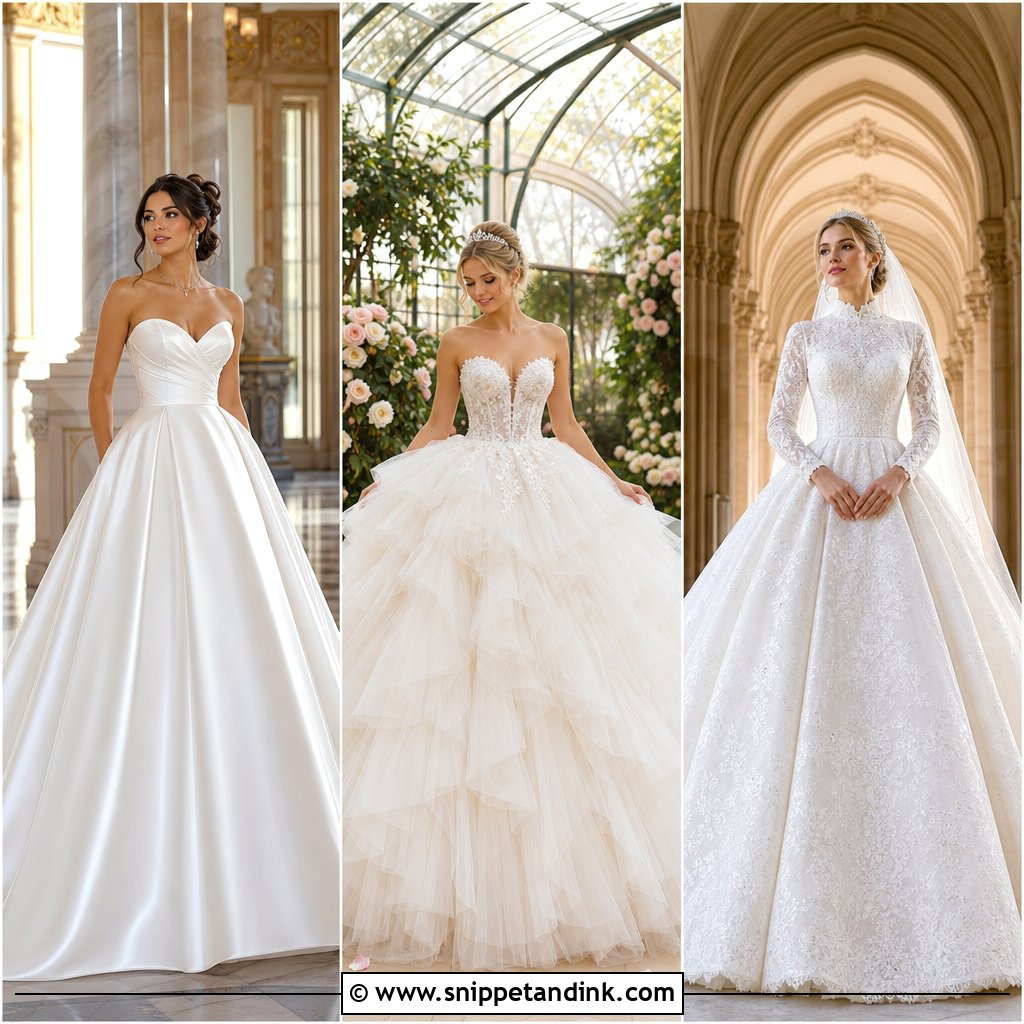
Big, dramatic bridal gowns are the dresses I see brides grin at in the mirror before they’ve even been zipped in. A fitted bodice, a skirt that fills the doorway, layers of satin or tulle moving behind you: that is the princess silhouette, and it is far more adaptable than people expect. These gowns now come with sleeves or without, with corsetry or soft cups, in ivory, champagne and blush, and in a proper range of sizes. The twenty below are the versions I’d actually pull for a fitting, with notes on how each one behaves once you’re wearing it for a full day. I’ve kept the accessory advice short, because with this much skirt, the dress does most of the talking.
Measuring Your Day Against a Very Wide Skirt
Before I let a bride fall for a ball gown, I ask her to walk me through the day, because a big skirt has to fit through every part of it. Some full ball gowns measure well over a metre across at the hem once the petticoat is in. That’s lovely in a ballroom and very awkward in a narrow chapel aisle, a tight spiral staircase or a vintage car.
- Measure the aisle and any doorways you’ll walk through, and compare them with the sample’s hem width. Shops will measure it for you if you ask.
- Check the transport. A larger car or a van with a wide sliding door saves you from crushing the skirt; you sit first, then someone feeds the skirt in around you.
- Think about the loo. Most brides need help, and a bustle or a slip of a petticoat that unhooks makes that far easier.
- Look at your seating. Bench seats or narrow banquet chairs will push a hooped skirt up in front of you.
None of this means talking yourself out of volume. It means picking the right amount of it, or planning a detachable layer, so the dress works for the venue you actually booked.
1. Strapless Satin Princess Wedding Dress
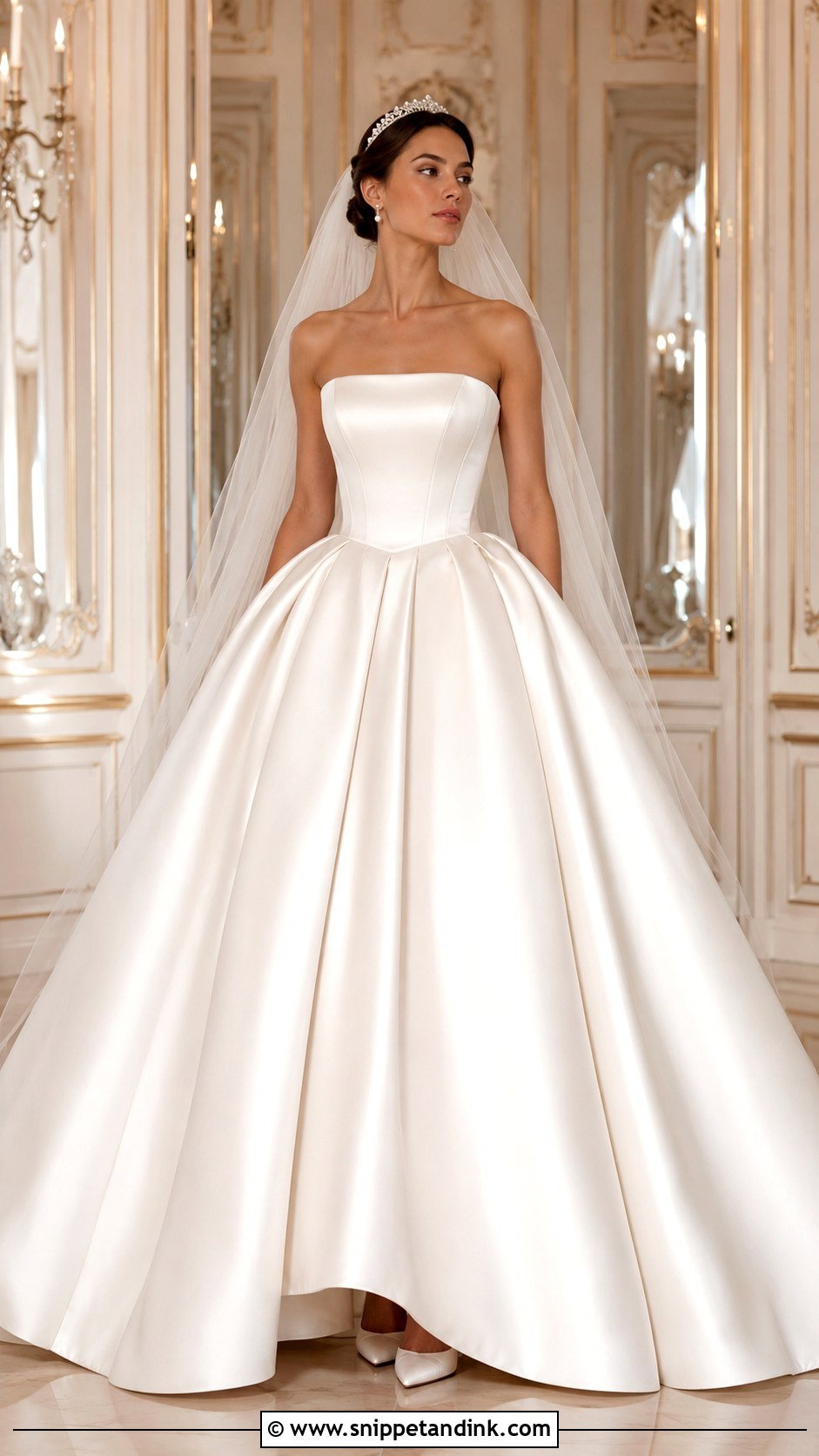
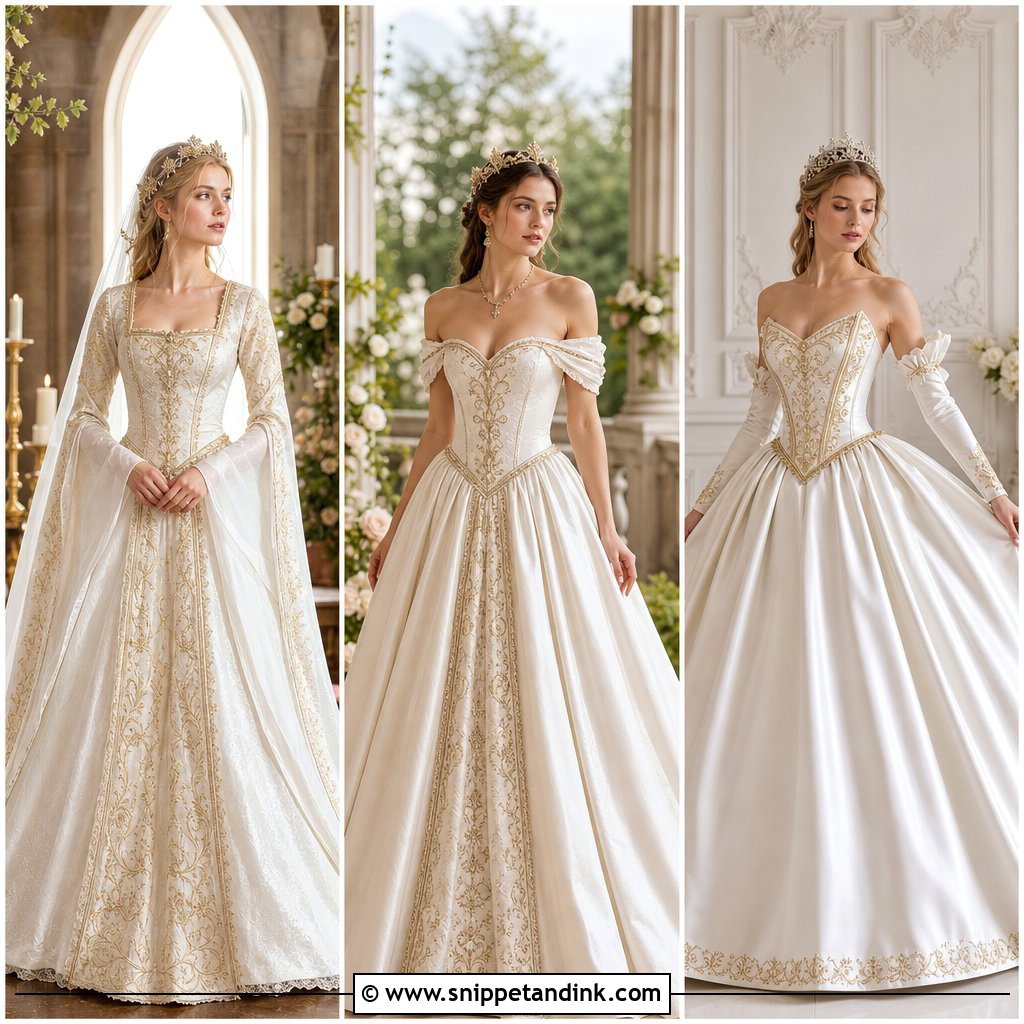
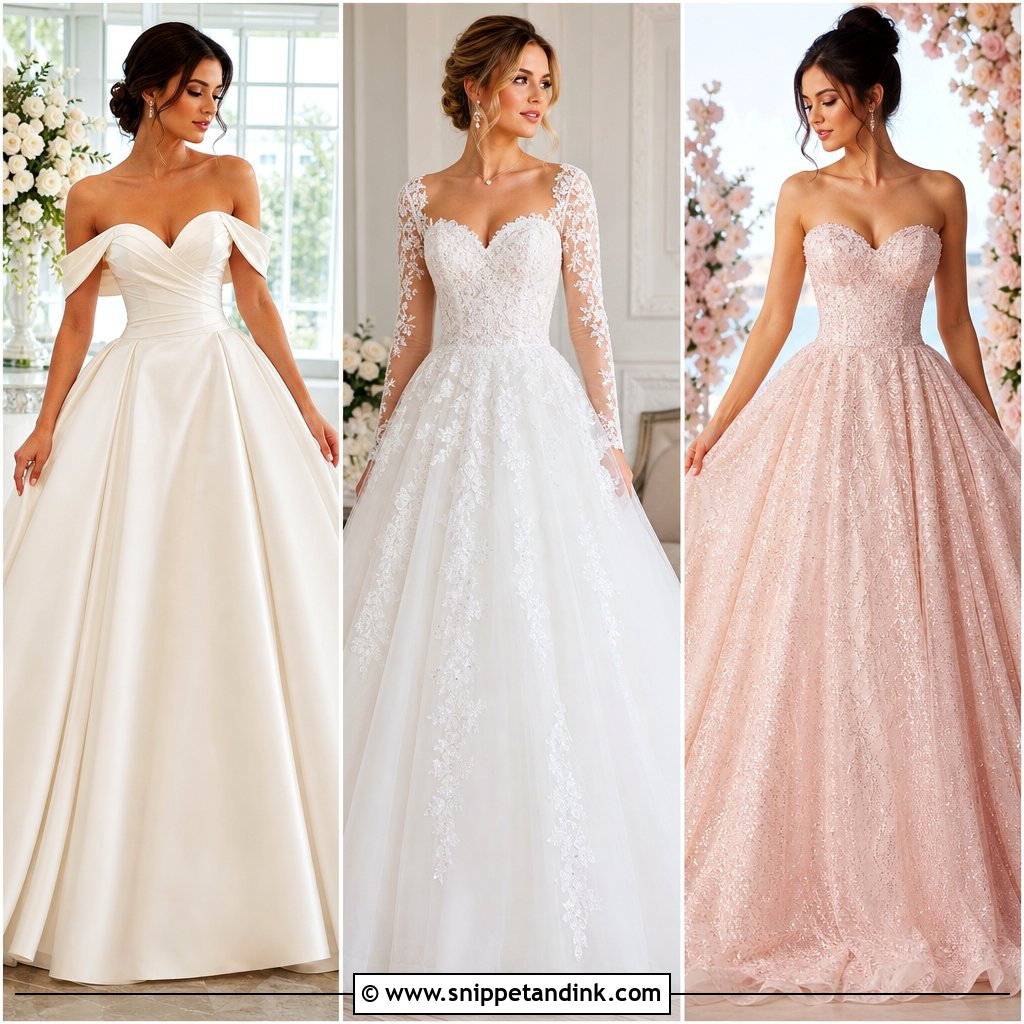
Strapless satin is the shape most brides describe to me before they’ve seen a single sample. What makes it work is the inside: spiral steel boning and a waist stay keep the bodice anchored, so you aren’t hitching it up between photos. I always have a bride lift her arms and hug someone at the fitting, because a strapless top that slips during a hug will slip all evening. Satin shows every pull line, so the tailoring has to be exact. Keep the rest quiet: pearl drops, a slim bracelet, a small comb, pointed satin pumps and a fingertip veil that lets the back stay visible. Ballrooms and hotel venues suit it best.
2. Off The Shoulder Lace Princess Wedding Dress
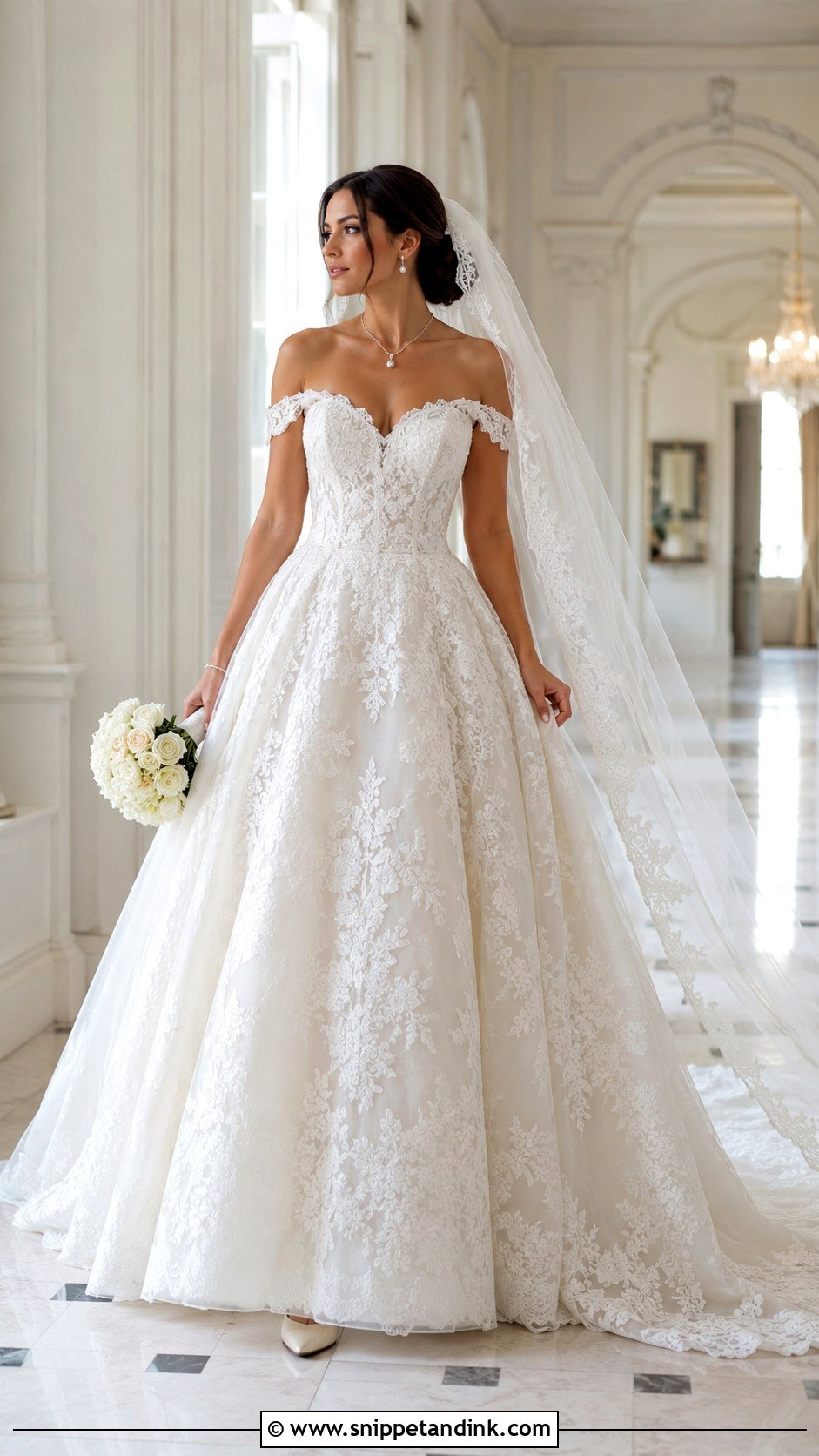
Off-the-shoulder lace looks soft, but it is one of the trickier necklines to fit. The band across the upper arms has to grip just enough; too loose and you’ll be tugging it up all night, too tight and it bites when you raise your hands for the first dance. I look for appliqués that run from the bodice down into the skirt so the gown reads as one piece. A low chignon with pearl pins shows off the shoulders. If you want a necklace, make it a fine chain. A lace-edged cathedral veil adds length behind you without crowding the neckline.
3. Long Sleeve Tulle Princess Wedding Dress
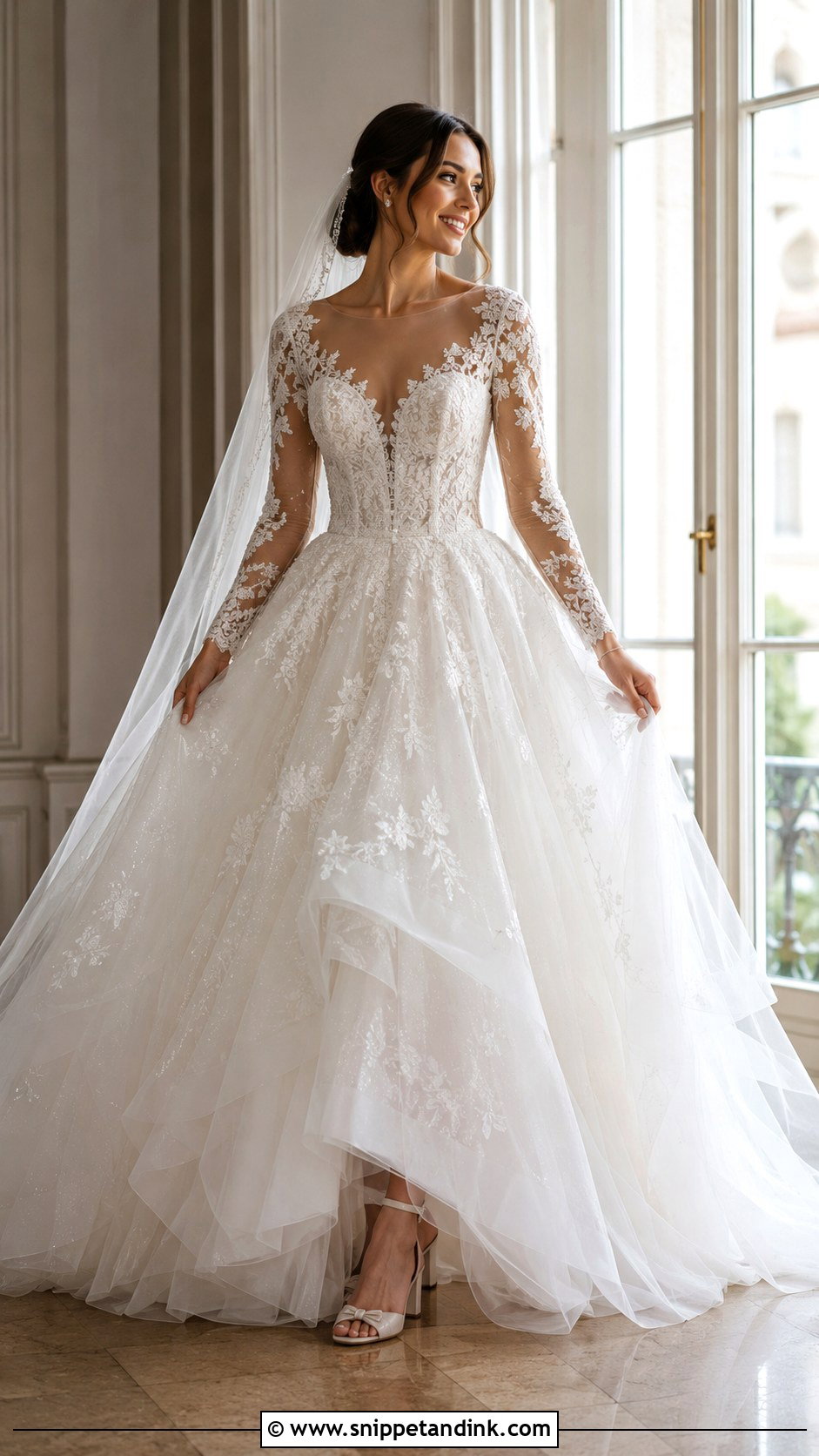
Tulle over sheer sleeves gives you a cloud of skirt with real arm coverage. A long sleeve princess wedding dress in this style lives or dies on the sleeve fabric: a fine stretch mesh with scattered lace moves with you, while a stiff, non-stretch lace sleeve can stop you lifting your arm to hold a bouquet. Ask the shop to let you raise both arms over your head in the sample. Pair the illusion bodice with a light petticoat rather than a heavy hoop, keep the hair in a relaxed updo so the cuffs and neckline show, and choose ivory block heels. It’s my usual suggestion for autumn and winter ceremonies indoors.
4. Sweetheart Crystal Princess Wedding Dress
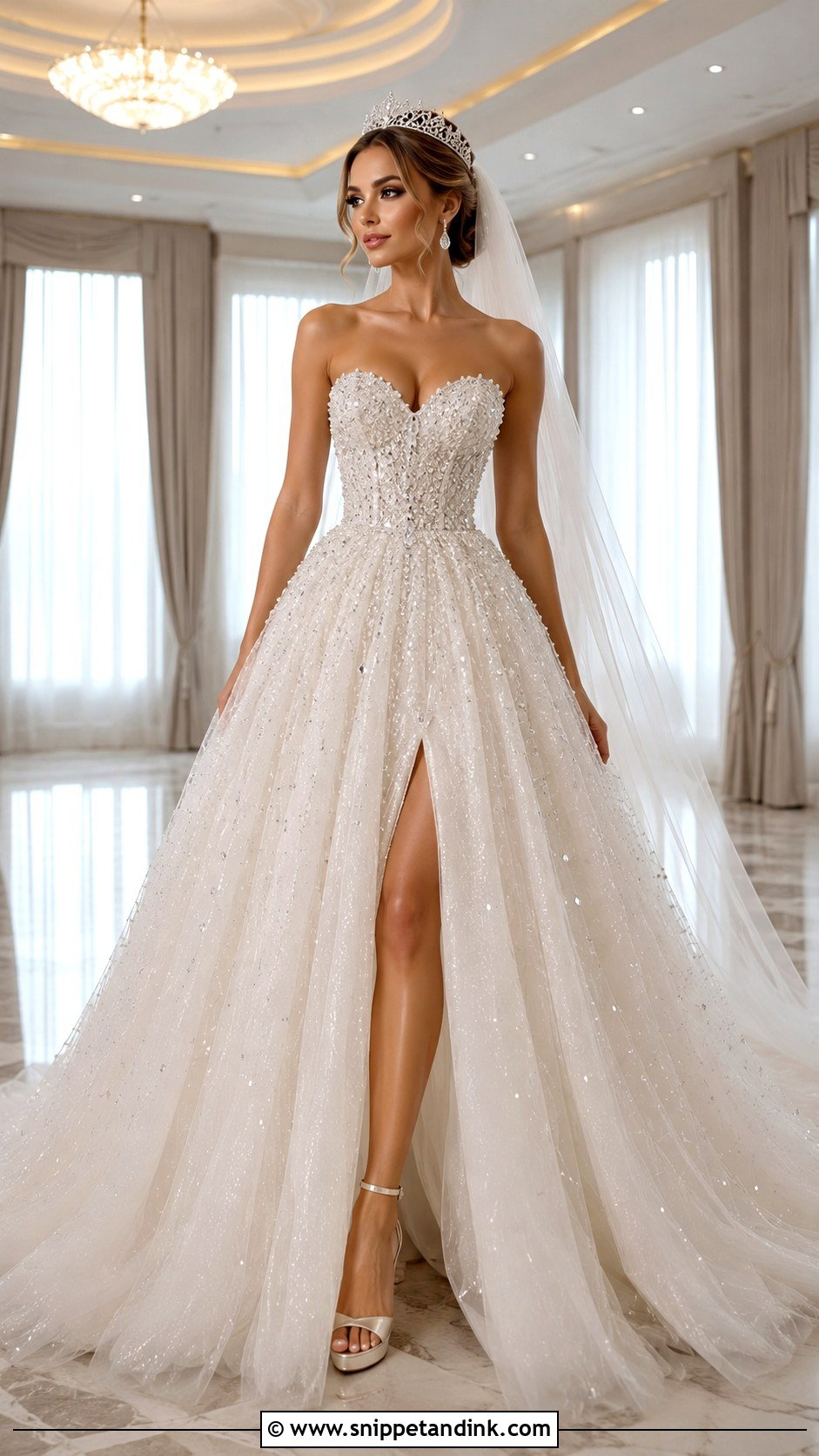
Crystal on a sweetheart bodice catches every bit of ceremony lighting, which is exactly why I tell brides to look at the weight before falling for it. Heavily stoned bodices can pull forward when you bend, so the boning needs to be firm. The best versions thin the crystals out as they travel toward the hem. A high bun clears the neckline and leaves room for a small tiara. Because the bodice is already busy, the veil should be plain tulle; a beaded edge right behind beaded shoulders just turns into glitter noise in close-up photos.
5. Square Neck Mikado Princess Wedding Dress
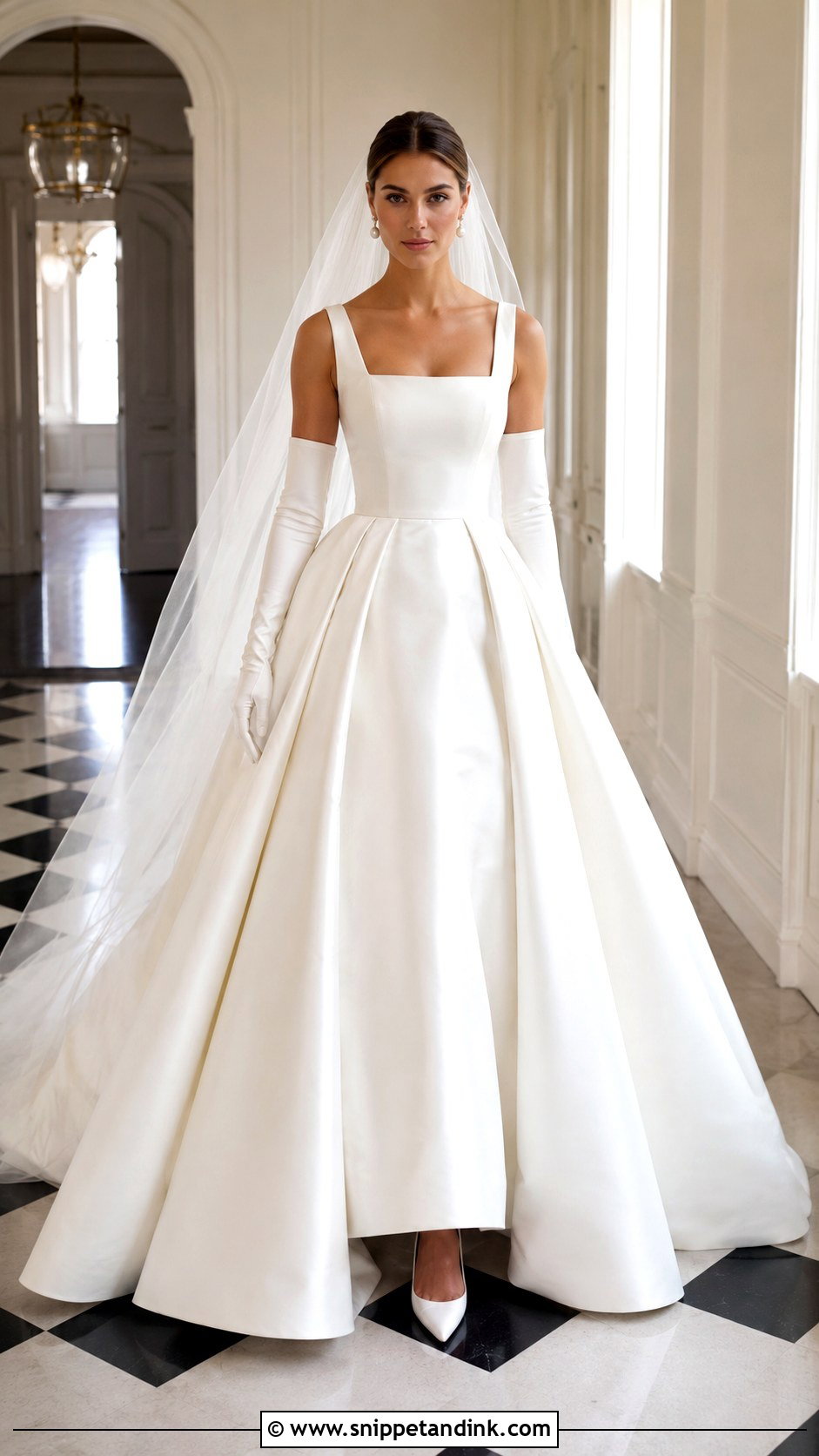
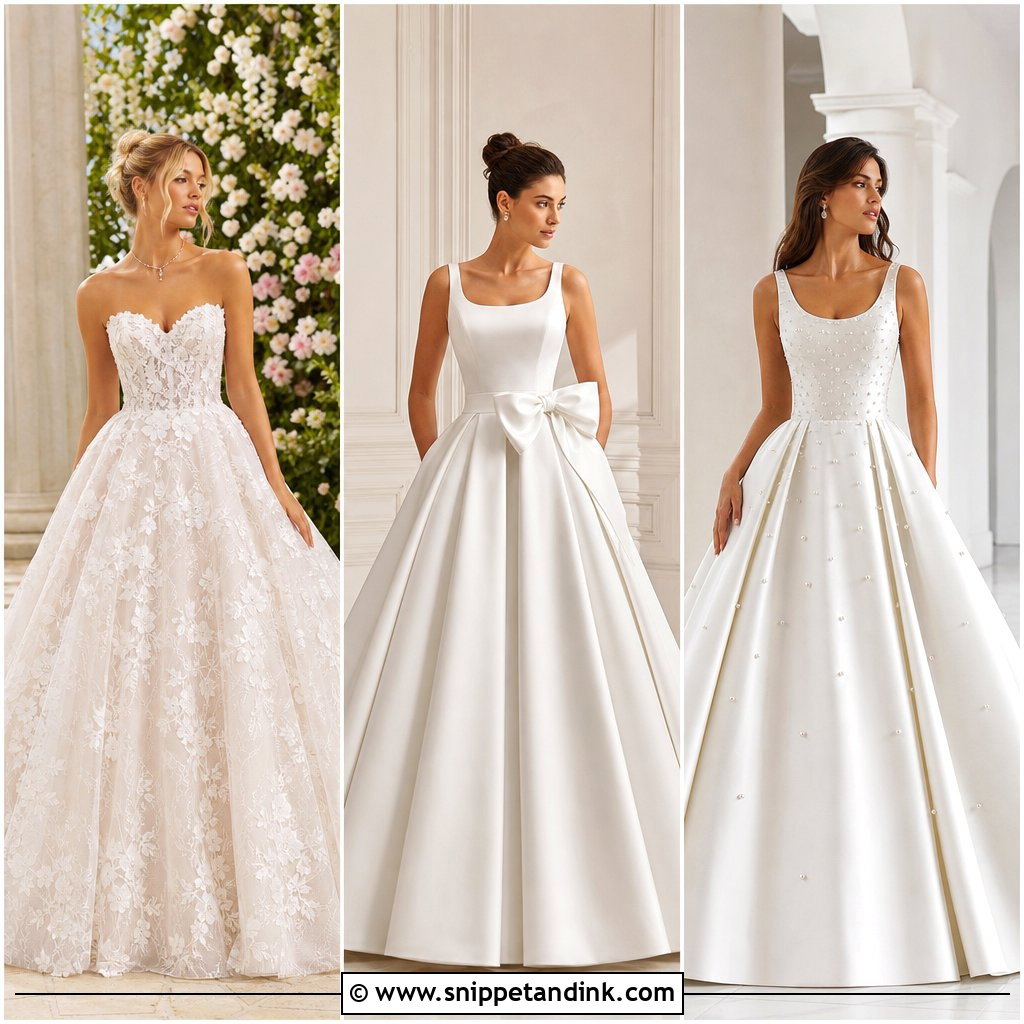
Mikado is the fabric I reach for when a bride wants volume without frills. It’s a heavy silk or poly blend with a slight sheen, and it holds wide, architectural folds where tulle would collapse. The square neckline sharpens the whole look, and wide straps make the bodice far more comfortable than a strapless cut over a long day. One warning: Mikado creases at the hip when you sit, so plan a quick steam before portraits. Sleek bun, pearl buttons, a narrow cathedral veil and detachable gloves for the ceremony only. It proves a princess wedding dress can command a room with almost no decoration.
6. Corset Bodice Princess Wedding Dress
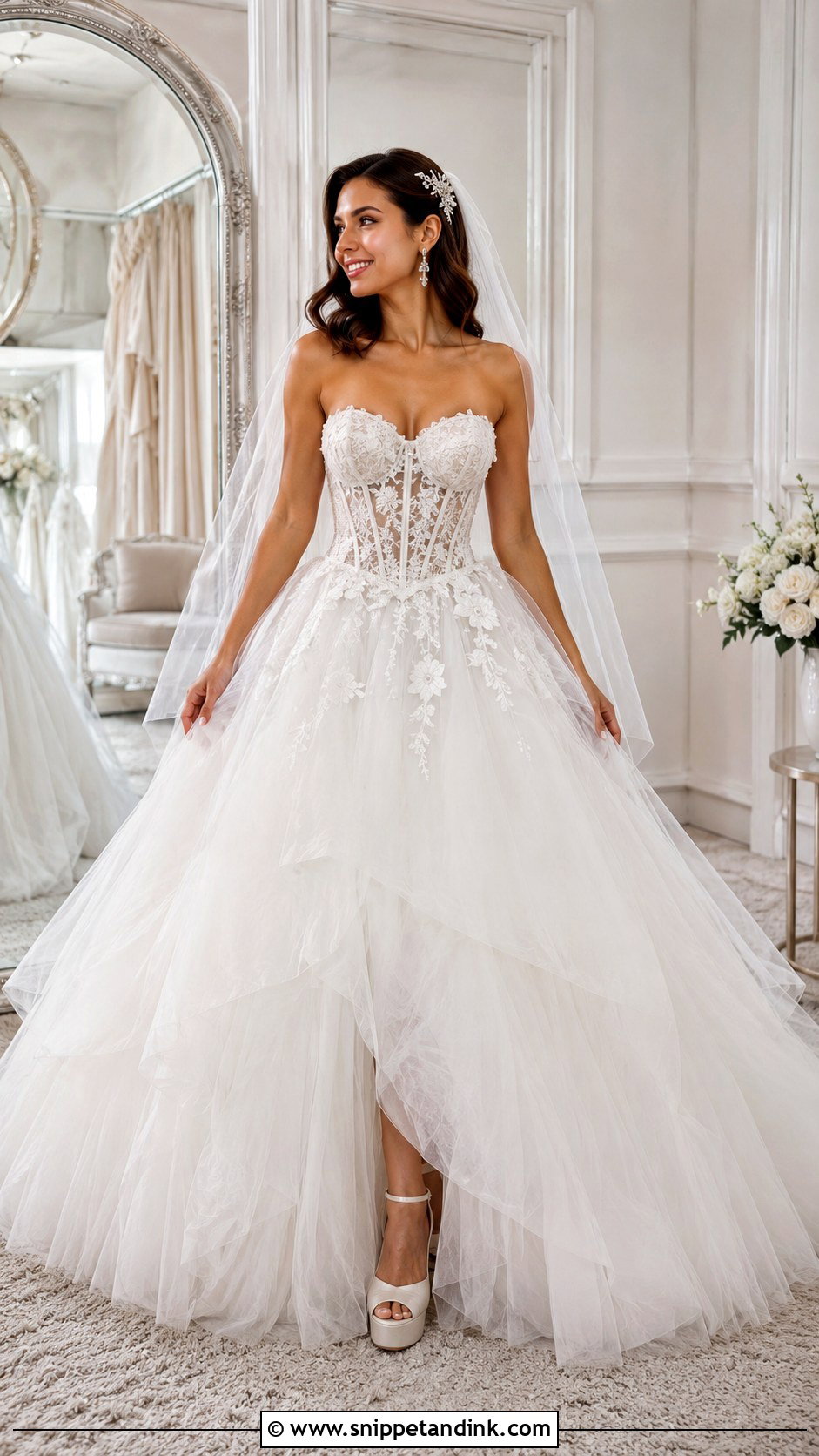
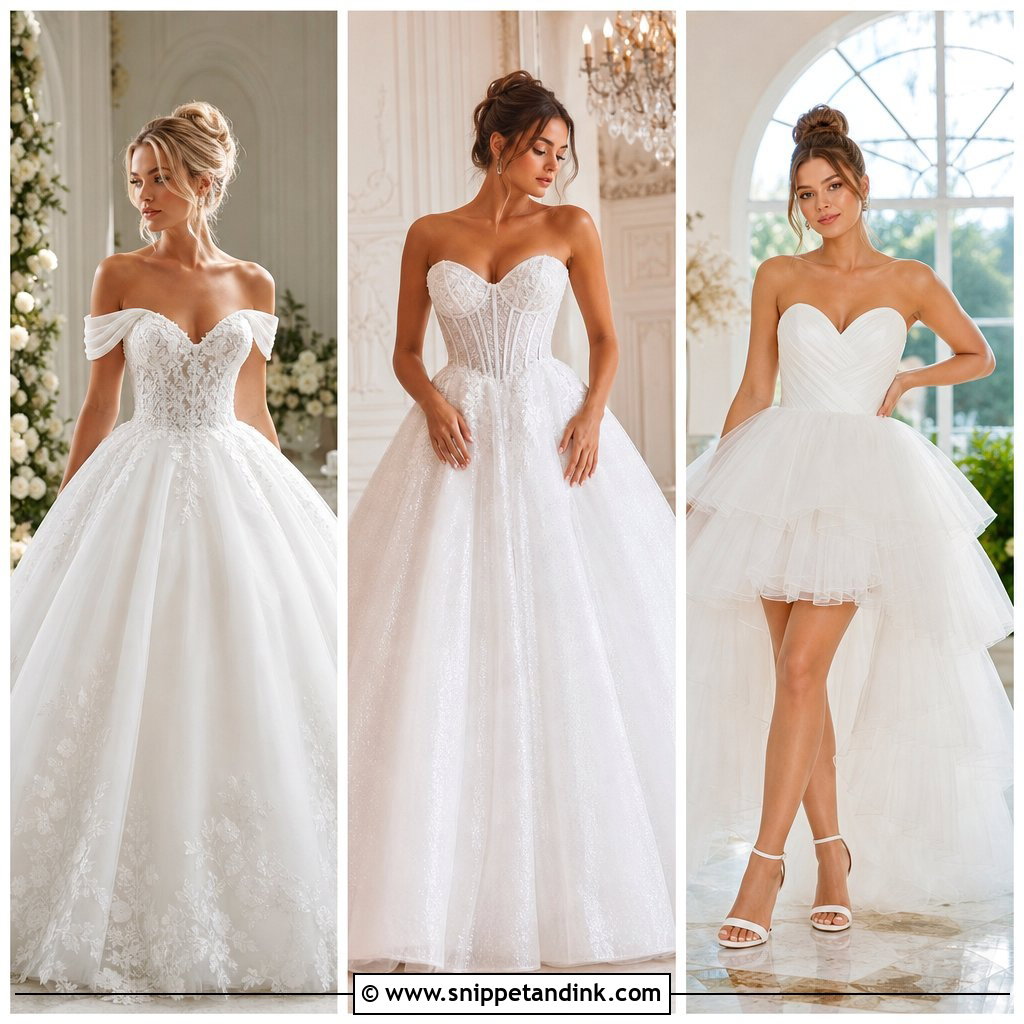
A true corset bodice shapes the waist before the skirt opens out, and modern ones come with visible boning, lace panels or a slight point at the centre front. At fittings I make brides sit down in it, properly, for five minutes. A laced corset that feels fine standing can press into the ribs once seated for dinner, and that’s when the regret starts. Lacing up the back helps because it can be loosened a touch after the meal. Layered tulle softens all that structure. A shoulder-length veil keeps the lacing visible, and loose waves with one small comb stop the overall effect drifting into costume.
7. Puff Sleeve Princess Wedding Dress
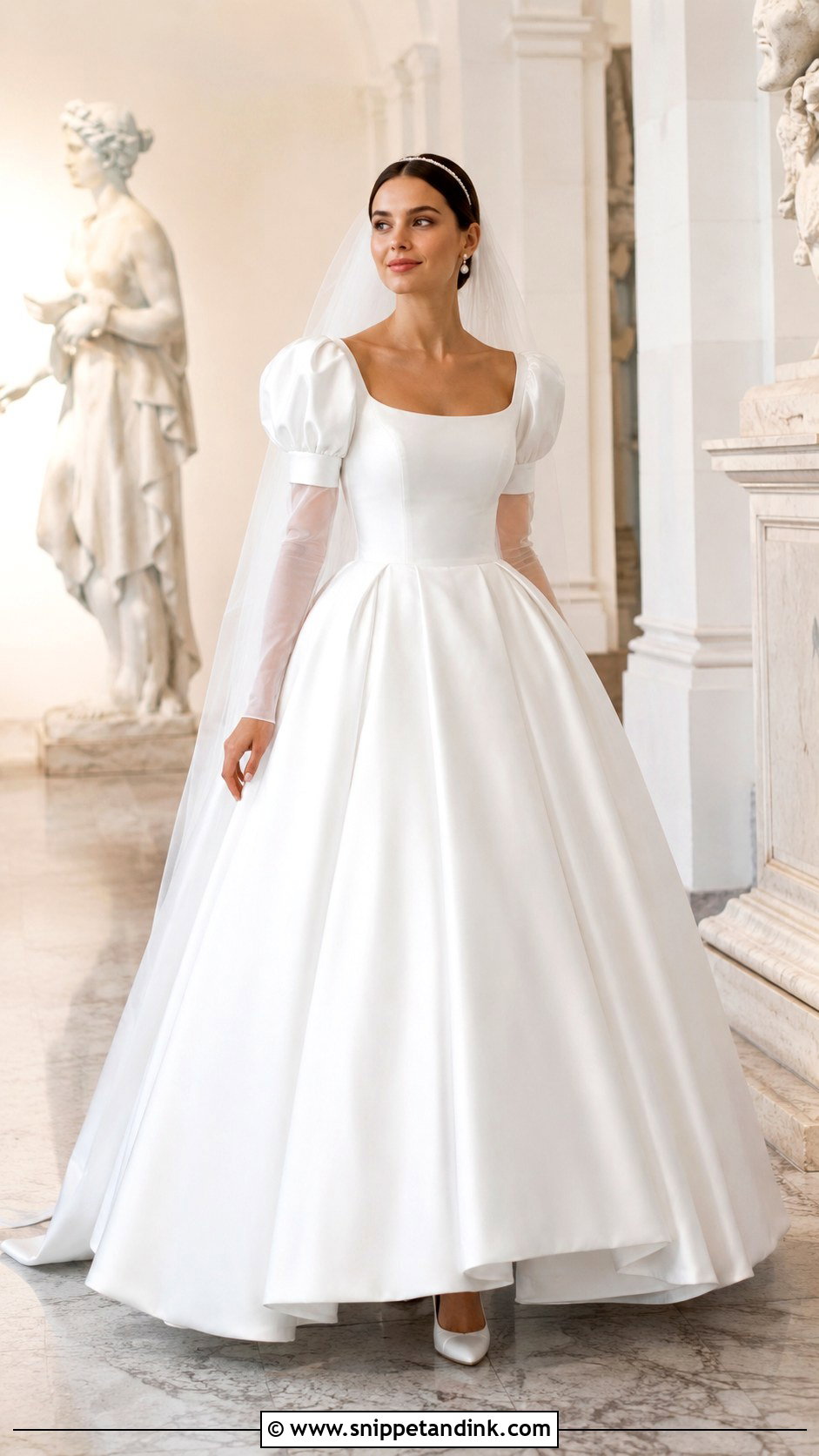
Puff sleeves are all about proportion. Thick, lined sleeves on top of a ball gown skirt can make the shoulders look boxy, so I steer brides toward gathered organza or sheer detachable sleeves that let light through. Wear your hair up or swept back; anything resting on the shoulders flattens the puff. Small pearls, a narrow headband and rounded pumps suit the vintage mood, and I’d skip a necklace entirely. Detachable sleeves earn their keep at the reception, when you want your arms free for dancing.
8. Floral Appliqué Princess Wedding Dress
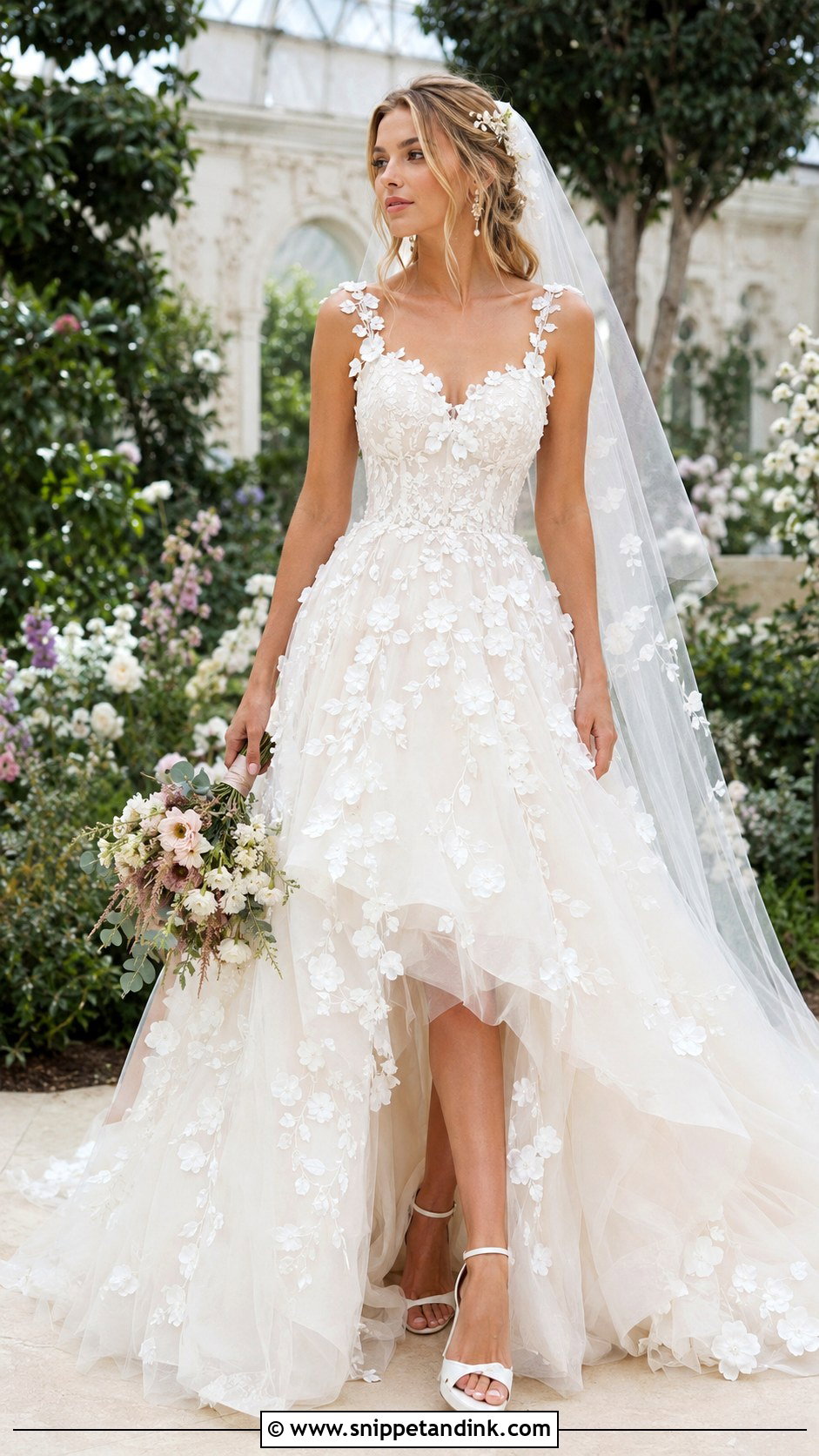
Three-dimensional flowers need room to breathe. I prefer appliqués clustered at the bodice and scattered more loosely down the skirt, because full coverage hides the very volume you chose this dress for. An ivory base gives petals more shadow and depth than bright white, which can flatten them in flash photos. Check the backs of the appliqués too: hand-stitched flowers sit flat and stay put, while glued ones can lift at the edges after a few hours of brushing past guests. Floral pins, tiny drops, ankle-strap heels and a loose bouquet that echoes a couple of the gown’s flower shapes finish it. Garden and conservatory venues suit this one.
9. Ruffled Organza Princess Wedding Dress
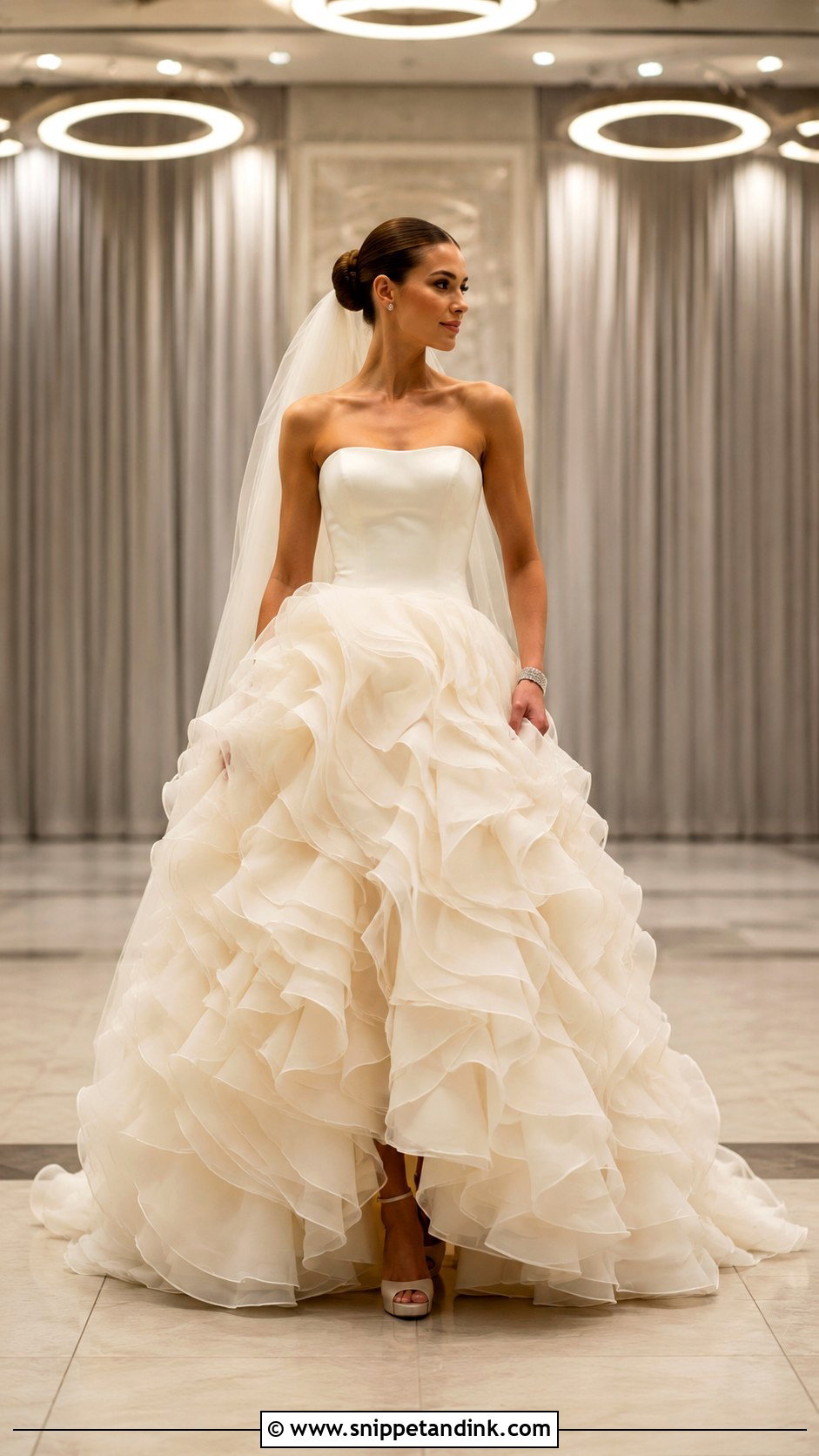
Organza ruffles give a skirt movement and spring without a single crystal. Placement matters: graduated tiers or diagonal cascades look intentional, while random layers can swallow a petite frame. A plain strapless or one-shoulder bodice provides the contrast. Organza is crisp and holds air, but it also crushes when you’re packed into a car, so I always pack a hand steamer for this style. Crystal studs, one bracelet, a smooth bun and a fingertip veil. Wear sturdy block heels; a tiered hem catches toes more easily than a smooth one, and you’ll want room to kick it forward as you walk.
10. Cathedral Train Princess Wedding Dress
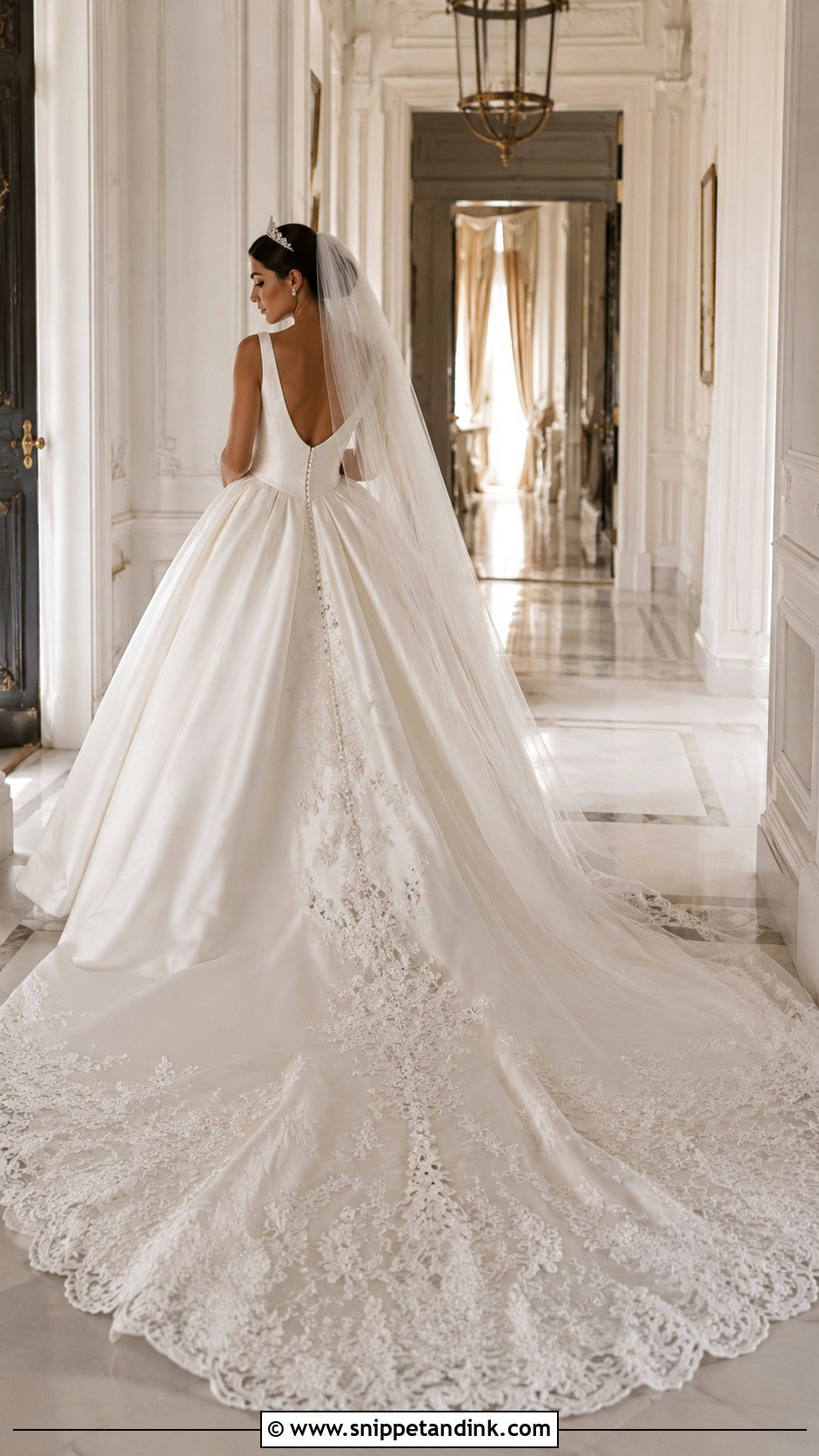
A cathedral train turns the aisle into the main event. The finish is up to you, from scalloped lace to plain satin folds, but the practical work happens before the day: book a bustle at your final fitting and have your maid of honour practise it there. A bustle nobody has rehearsed takes twenty minutes and a lot of pins. A long sheer veil extends the line without covering the train’s detail. Keep the shoes low and comfortable since nobody will see them. A small tiara gives a royal finishing touch. Practise turning at home too: step, pause, let the train settle, then pivot.
11. Detachable Overskirt Princess Wedding Dress
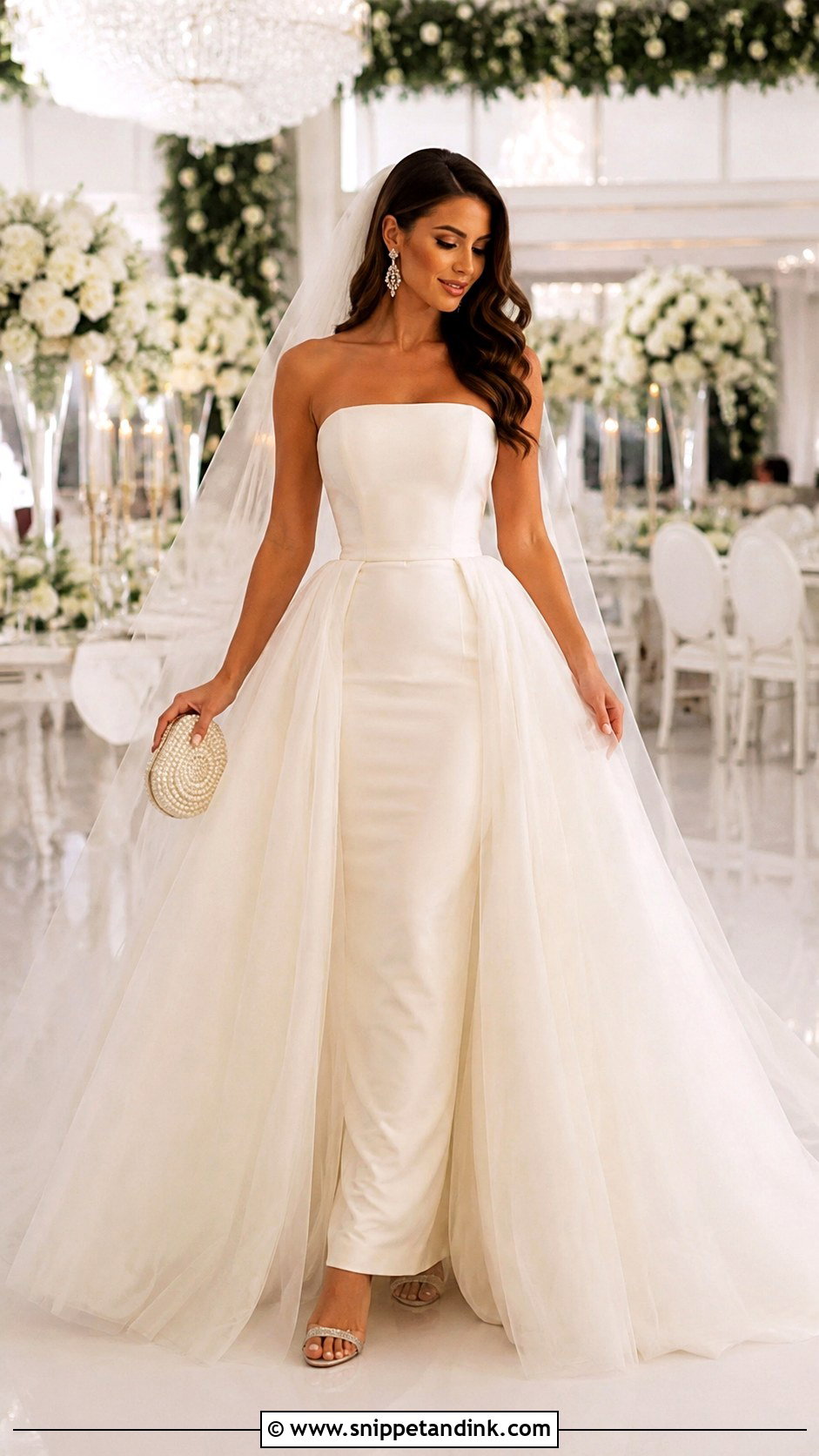
Of every option here, the detachable overskirt is the one I recommend most often to brides nervous about volume. You wear a fitted column or soft A-line base, clip or button a full tulle, satin or organza skirt over it for the ceremony, and take it off for dancing. The detail I check is the closure: hooks and a hidden placket sit flatter than a long zip, and the overskirt waistband should match the base dress exactly so there’s no visible ridge. Have someone practise removing it before the wedding. Statement earrings, sleek waves and a chapel veil carry the formal half; metallic sandals carry you through the party.
12. Basque Waist Princess Wedding Dress
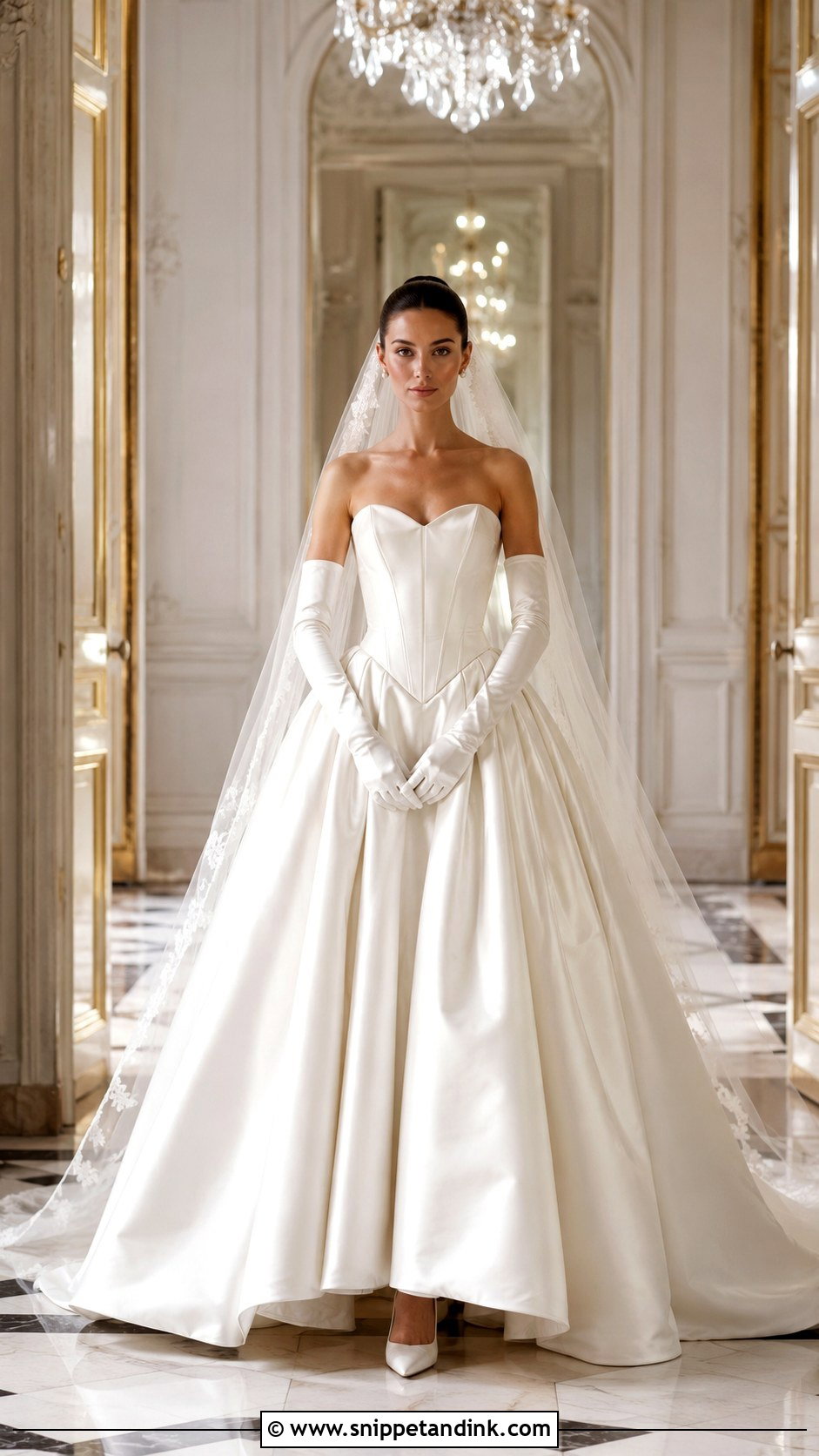
The basque waist drops into a shallow V below the natural waistline, which lengthens the torso before the skirt flares. It gives a poofy princess wedding dress a very regal outline. It is also unforgiving if the tailoring is off: the point should sit flat against the lower abdomen, not lift or crease when you sit. I’d keep the bodice plain or lightly draped so that V is the feature. Satin gives a crisper line than tulle here. Elbow gloves, pearl studs, a ballet bun and a plain cathedral veil pinned beneath the bun keep it all very clean.
13. Pearl Beaded Princess Wedding Dress
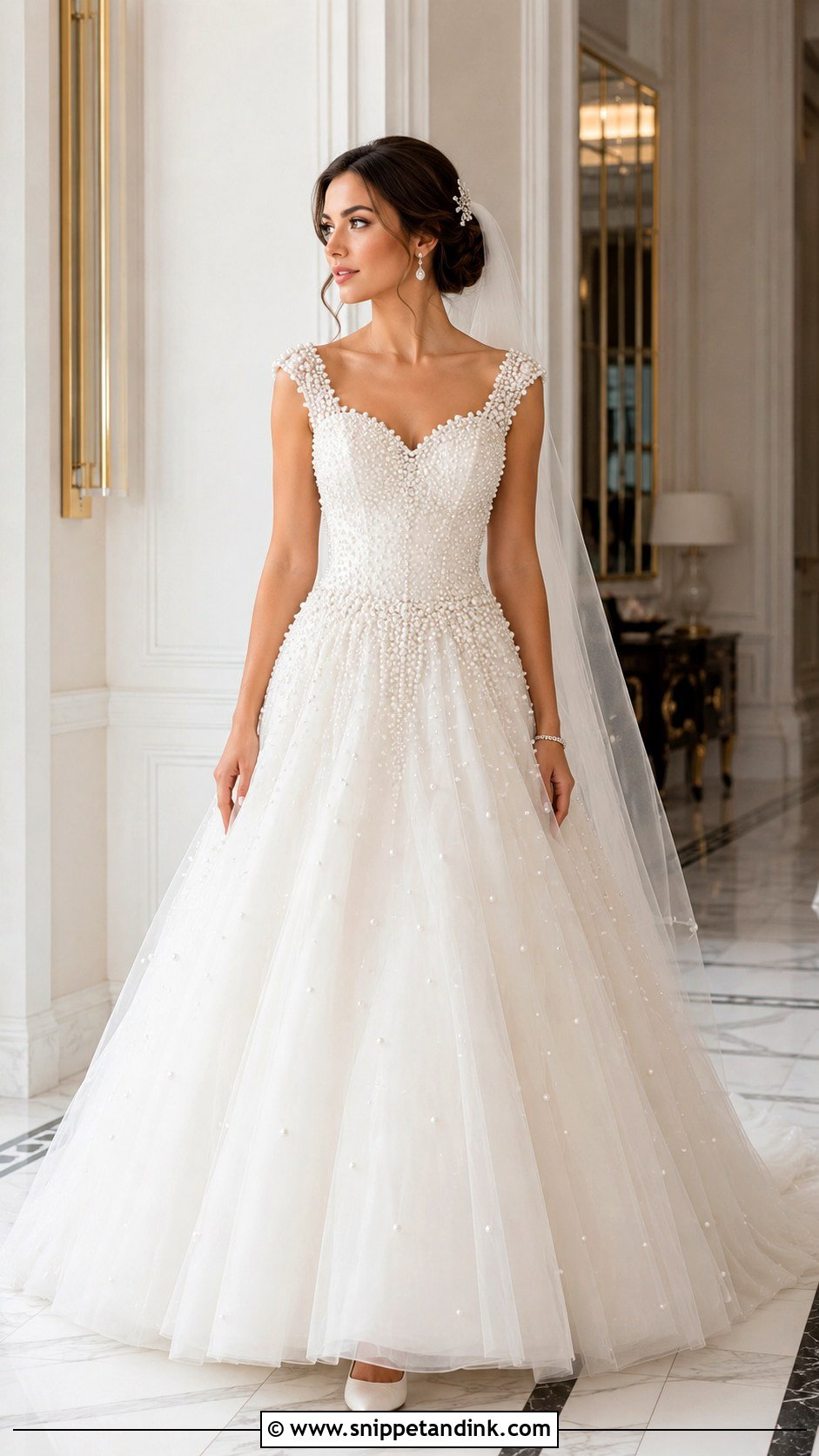
Pearls give texture without glare. They sit softer than crystals under flash, which makes them a good choice for brides who don’t like sparkle in close-ups. I look for pearls stitched densely at the waist and thinning toward the skirt, so the eye goes to your middle and the volume does the rest. Heavily beaded bodices can get warm and weigh a little more than you’d expect, so try it on for a decent stretch of time. Pearl studs and a single comb are enough. A plain fingertip or chapel veil lets the beadwork show clearly from across the room.
14. Blush Pink Princess Wedding Dress
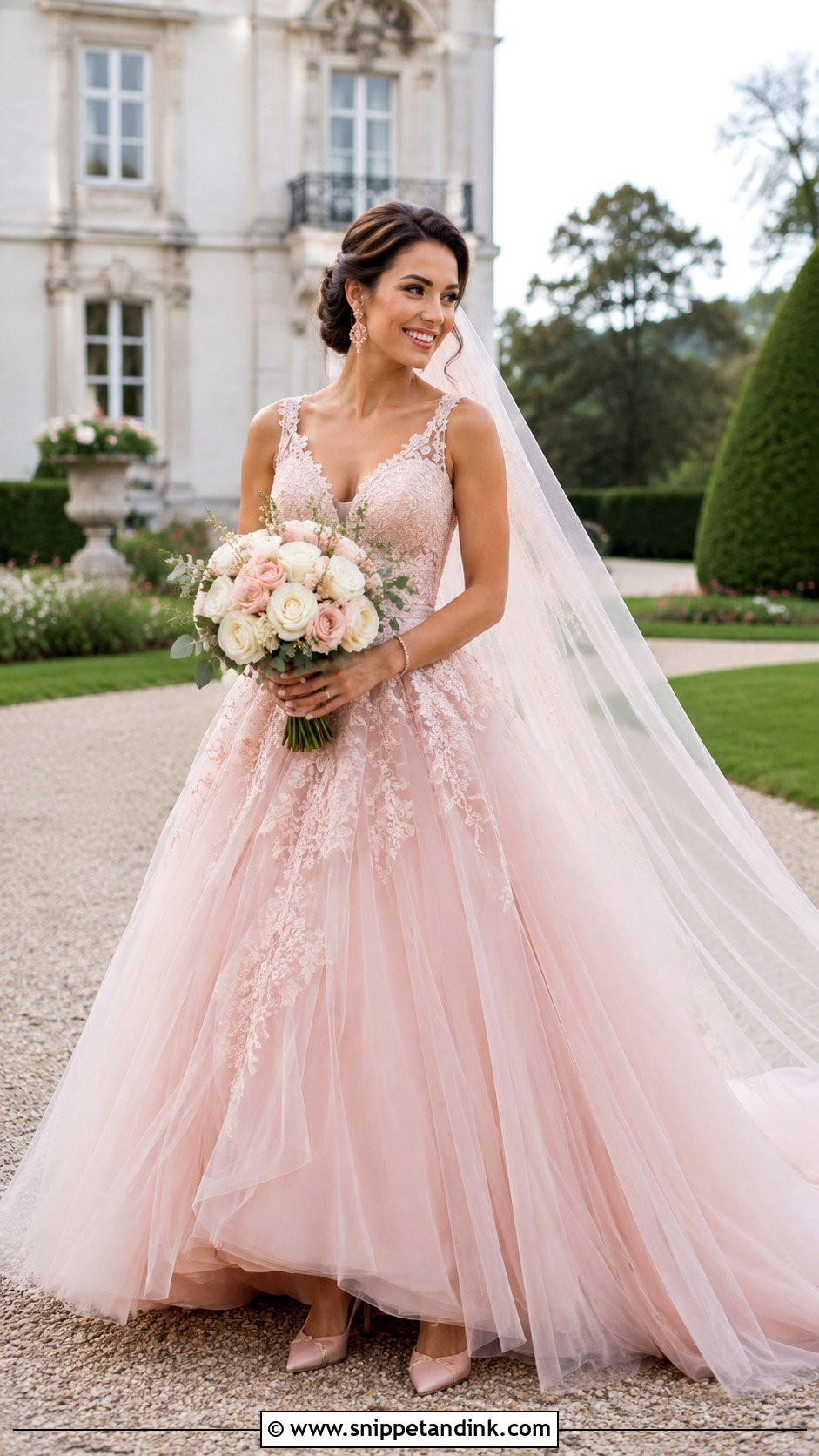
Blush works best when it is built from layers: pale pink tulle over a nude or ivory lining gives depth instead of a flat candy colour. Always look at a blush sample by a window as well as under the shop’s lights, because some pinks turn almost peach in daylight and nearly white under warm bulbs. Keep the bodice tonal, with matching lace or a faint shimmer. Rose-gold earrings flatter the colour without looking matched-up. Ask the shop for a veil dyed to the same shade; a stark white veil next to blush tulle makes the dress look faded.
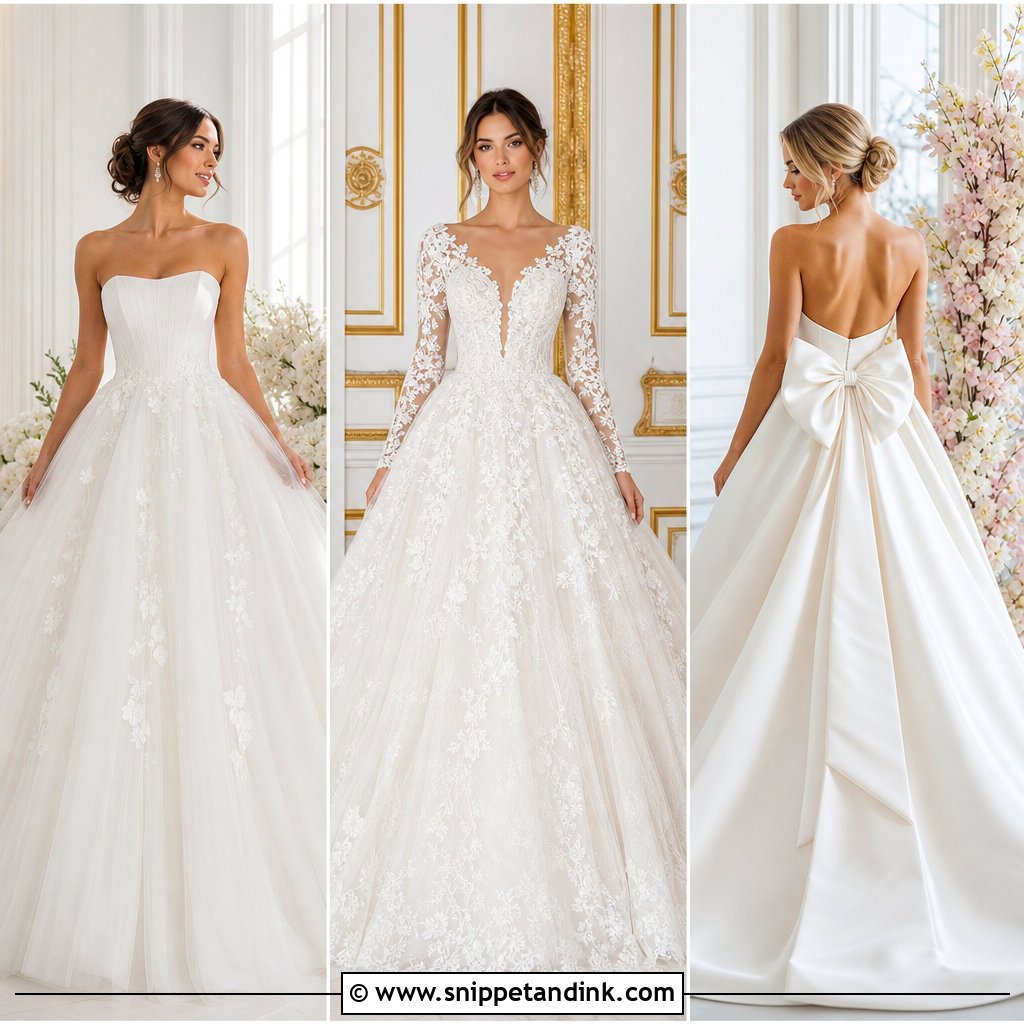
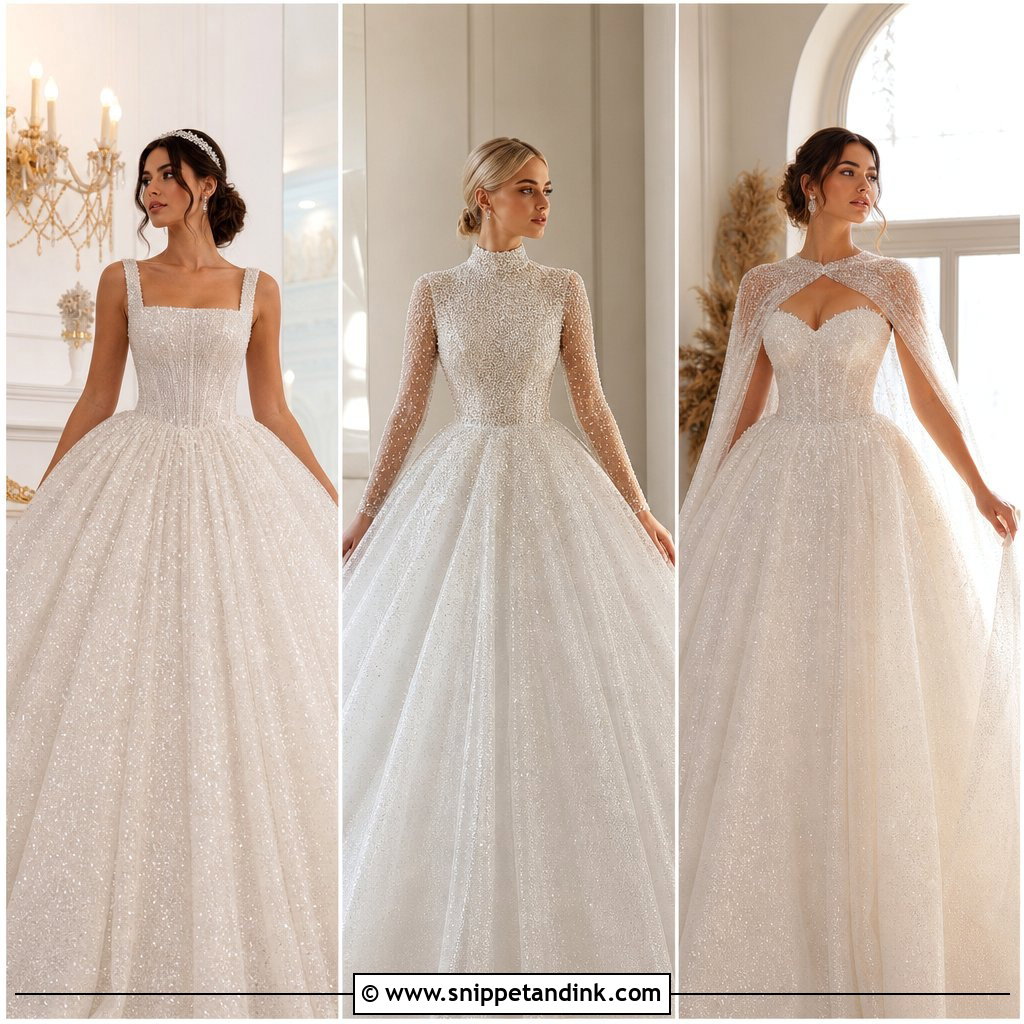
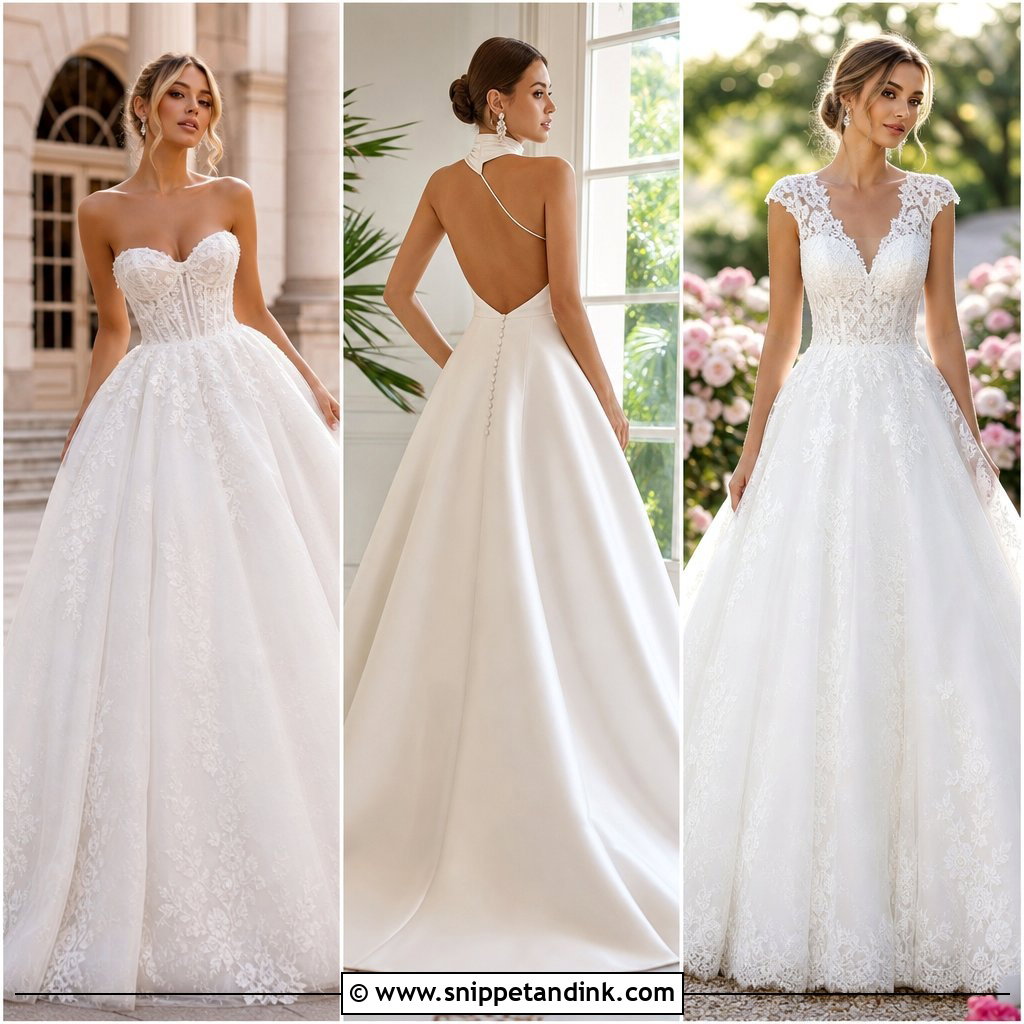
15. Champagne Sparkle Princess Wedding Dress
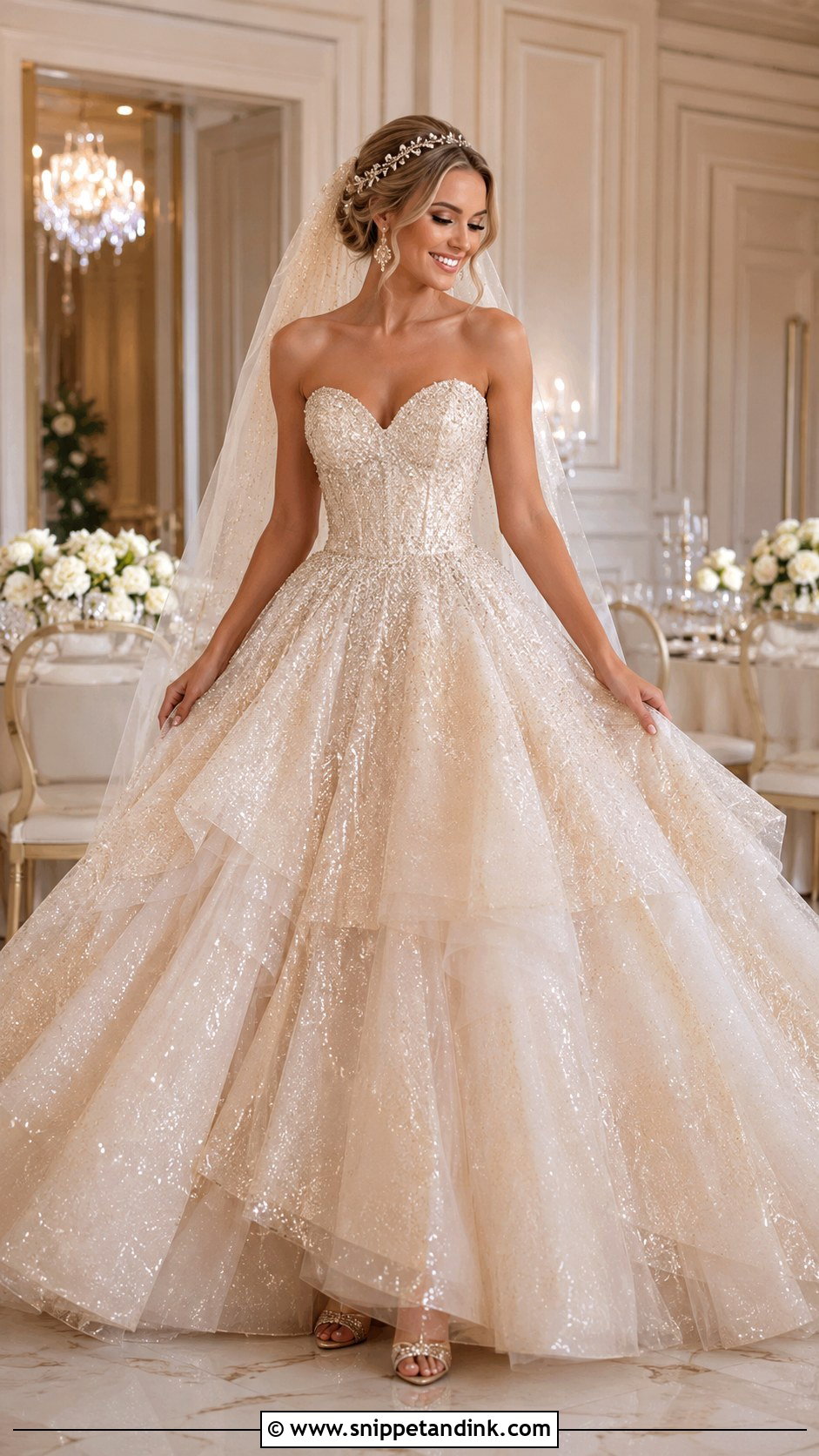
Champagne underneath glitter tulle warms the whole skirt, and on a ball gown it shimmers every time you move. I suggest fine shimmer or scattered sequins over dense glitter, which can shed onto your groom’s suit and everyone you hug. A sweetheart or V-neck keeps the upper body open against all that volume. Gold-toned earrings and a crystal hair vine sit well with the warmer tone. An ivory veil will do, but a champagne one keeps the colour continuous from head to hem. Brides who look washed out in bright white usually look healthier in this.
16. Bow Back Princess Wedding Dress
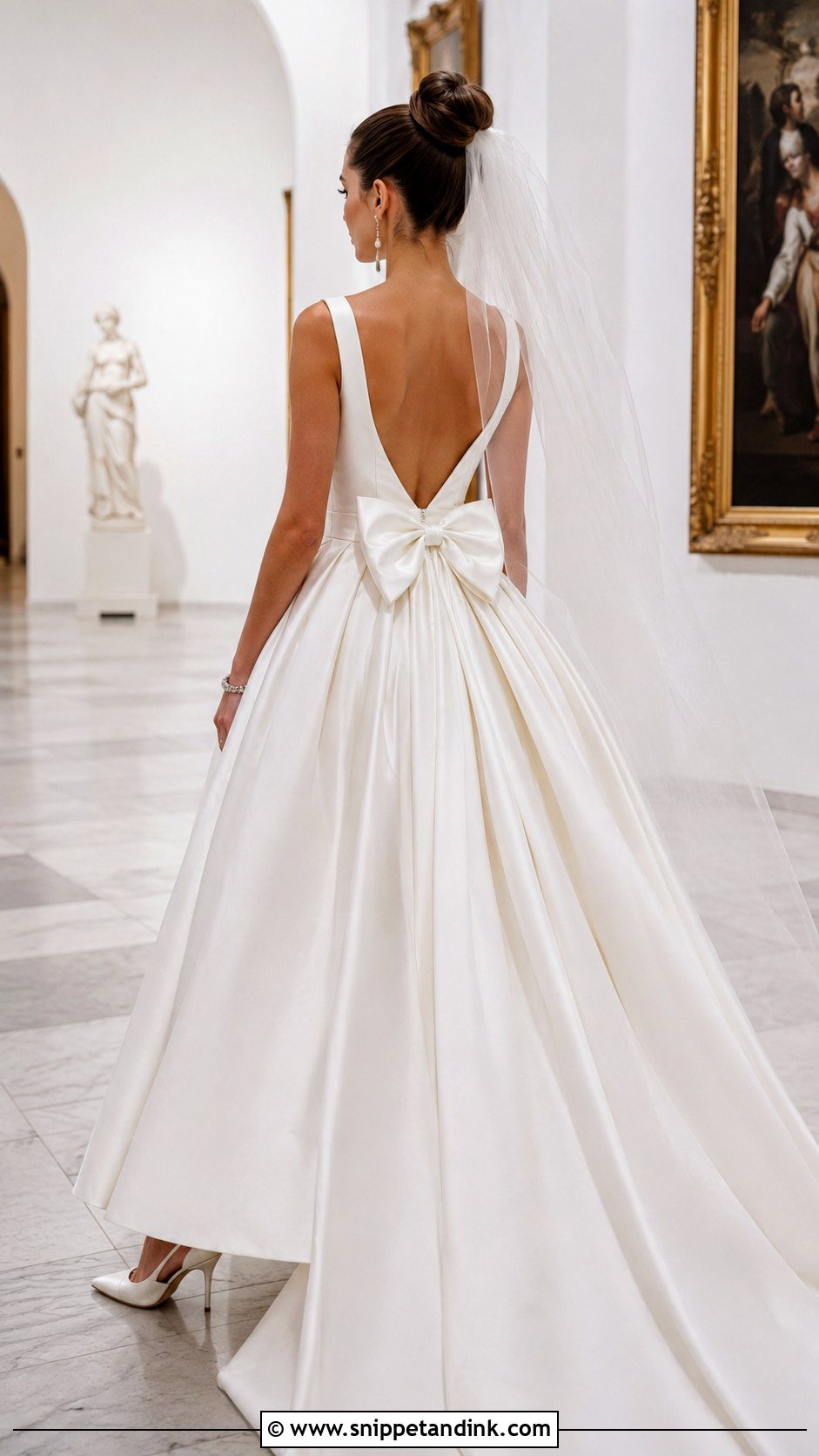
A big bow turns the back of a plain gown into the shot everyone remembers. A structured satin bow at the waist reads crisp; an organza bow with long tails flows into the train. Keep the front simple so the dress doesn’t look busy from both sides. The two problems I watch for are the veil and the bustle. A veil pinned too low will squash the bow flat, so set it high on the crown. And the bustle points must work around the bow, not through it, which your seamstress should plan from the start. A high bun keeps the back on show.
17. High Neck Lace Princess Wedding Dress
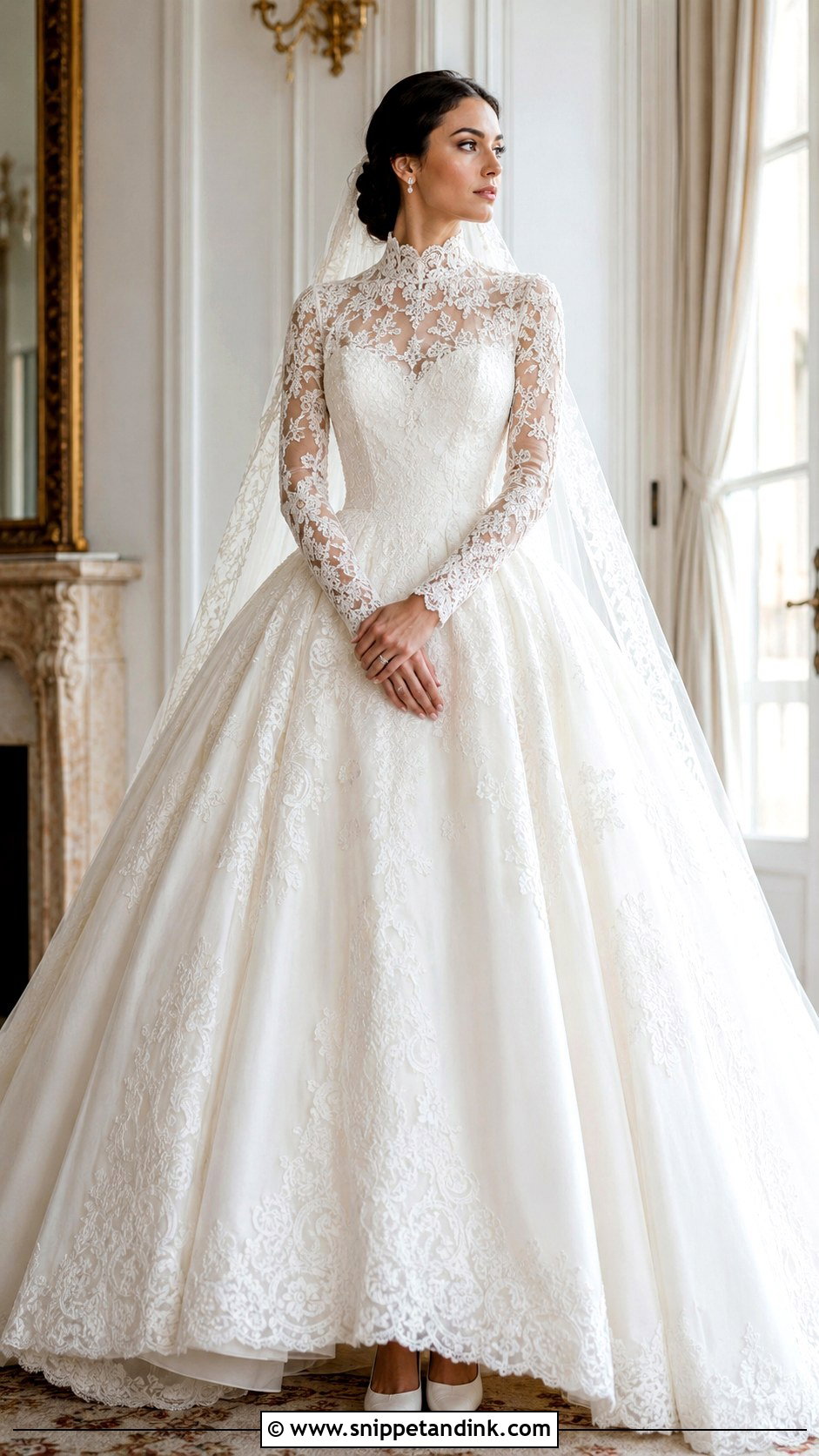
A high lace neckline against an enormous skirt is a quietly dramatic contrast. The construction I look for is sheer lace over the collarbone and shoulders with an opaque, supported bodice underneath, so you get coverage without feeling bound. Lace at the throat can scratch if it’s a stiff guipure, so run your fingers along the inside edge before buying. Long fitted sleeves continue the line; short ones feel lighter. No necklace. Small pearl or gemstone earrings, a low bun with a narrow comb, and a veil with a simple edge that doesn’t fight the gown’s pattern.
18. Plus Size Princess Wedding Dress
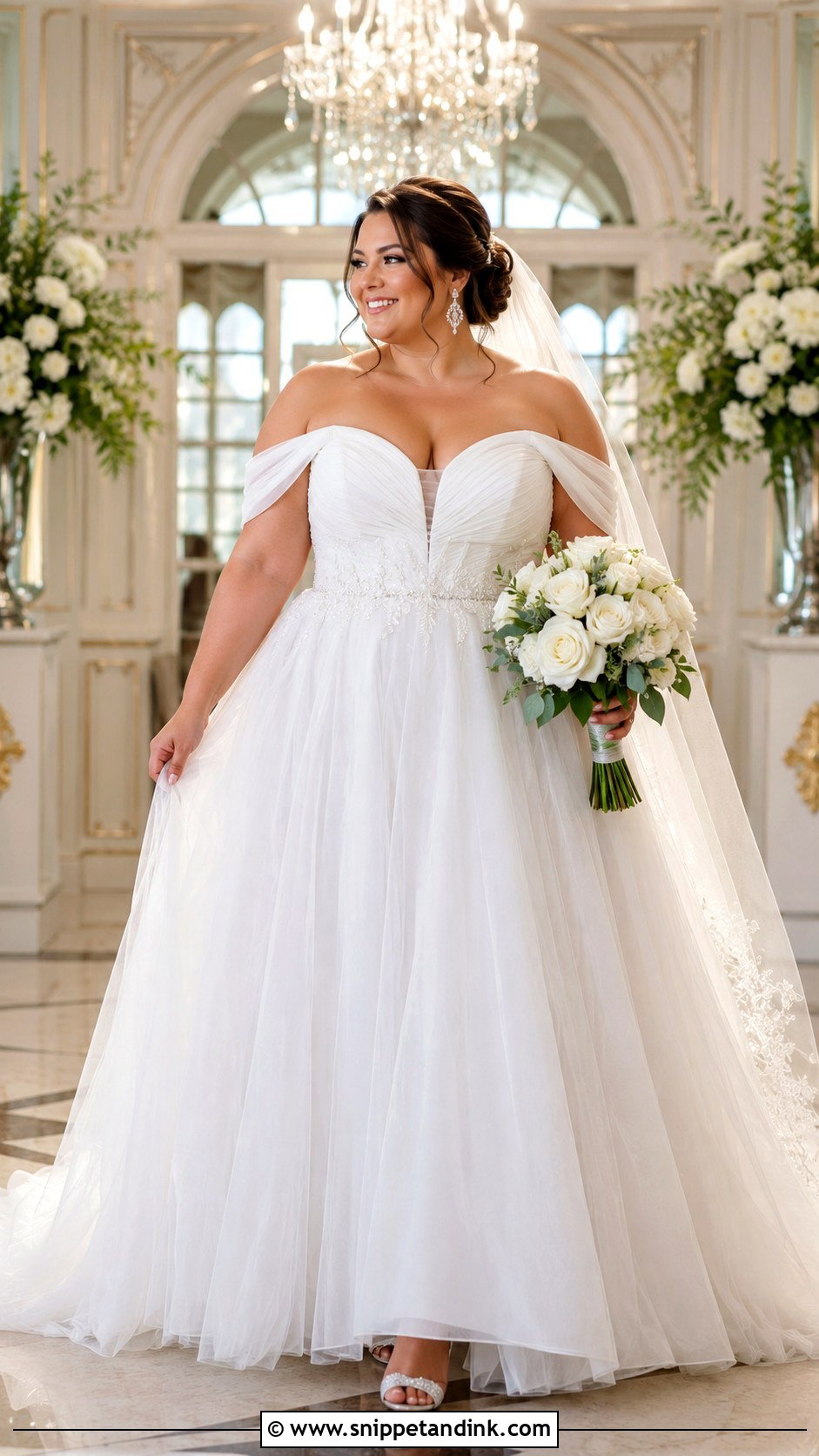
Support comes first in a plus size princess gown, and the good ones are engineered for it: wide-set straps, internal boning, built-in cups and a waist seam placed where you actually want definition. Lightweight tulle gives softness without bulk; structured satin gives a more sculpted outline. Pick the neckline you feel good in, not one a rulebook assigns you. The step I never skip is fitting in the exact bra, shapewear and shoes you’ll wear on the day, since all three change where the bodice sits. Cushioned block heels, statement earrings and a well-anchored updo for the veil complete it.
19. Modest Princess Wedding Dress
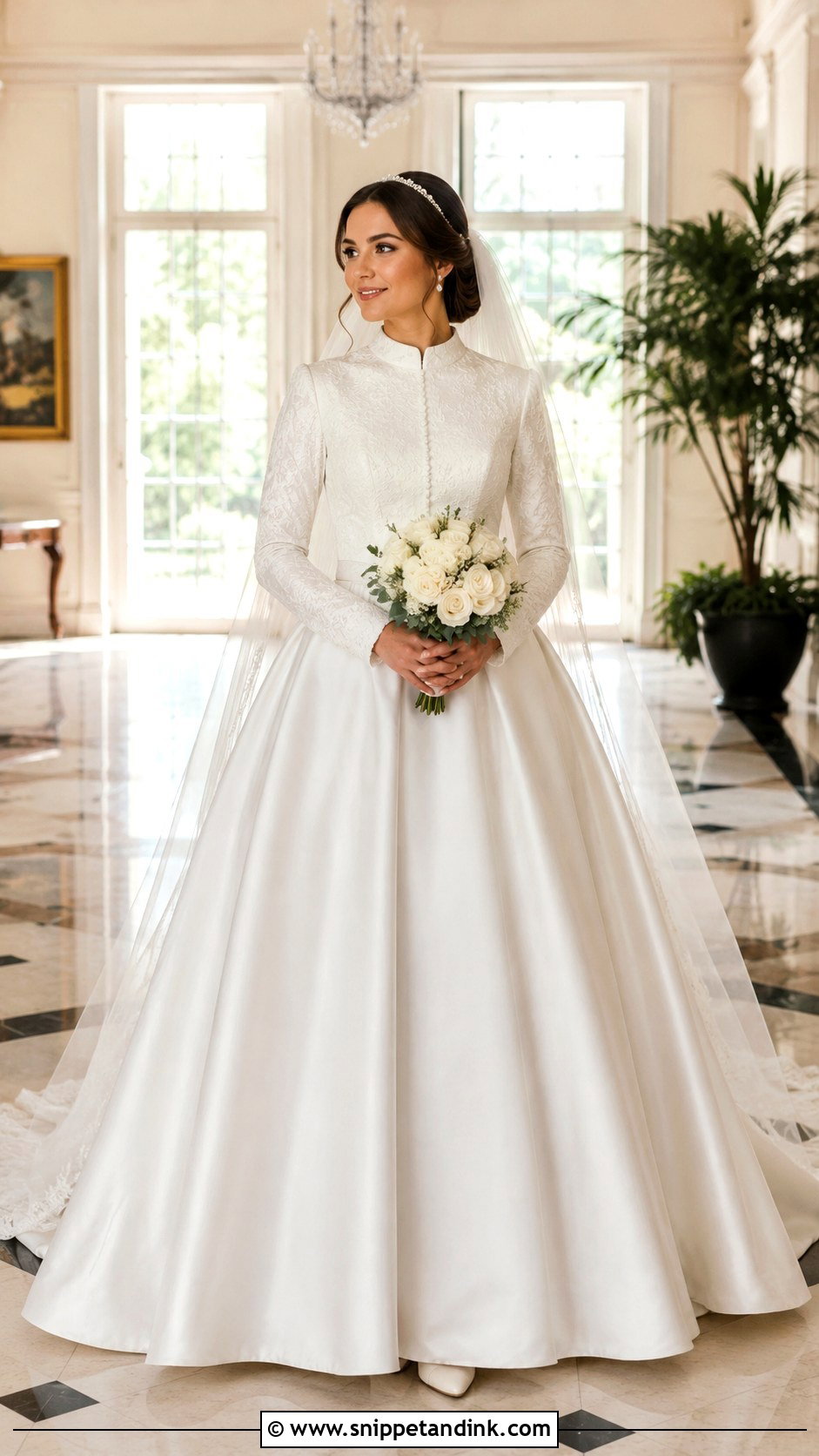
Modest princess gowns are where I see the most tailoring trouble, because opaque sleeves and a higher back give less stretch. Lined sleeves need enough ease across the upper back to let you lift your arms and hug people. Ask your seamstress to check you reaching forward, not just standing still. Delicate lace, covered buttons or subtle embroidery give interest without sheer panels. A wide tulle or satin skirt keeps the fairy-tale outline. A wrapped bun, pearl earrings and a veil set below the crown give a smooth, streamlined head shape.



20. Minimalist Princess Wedding Dress
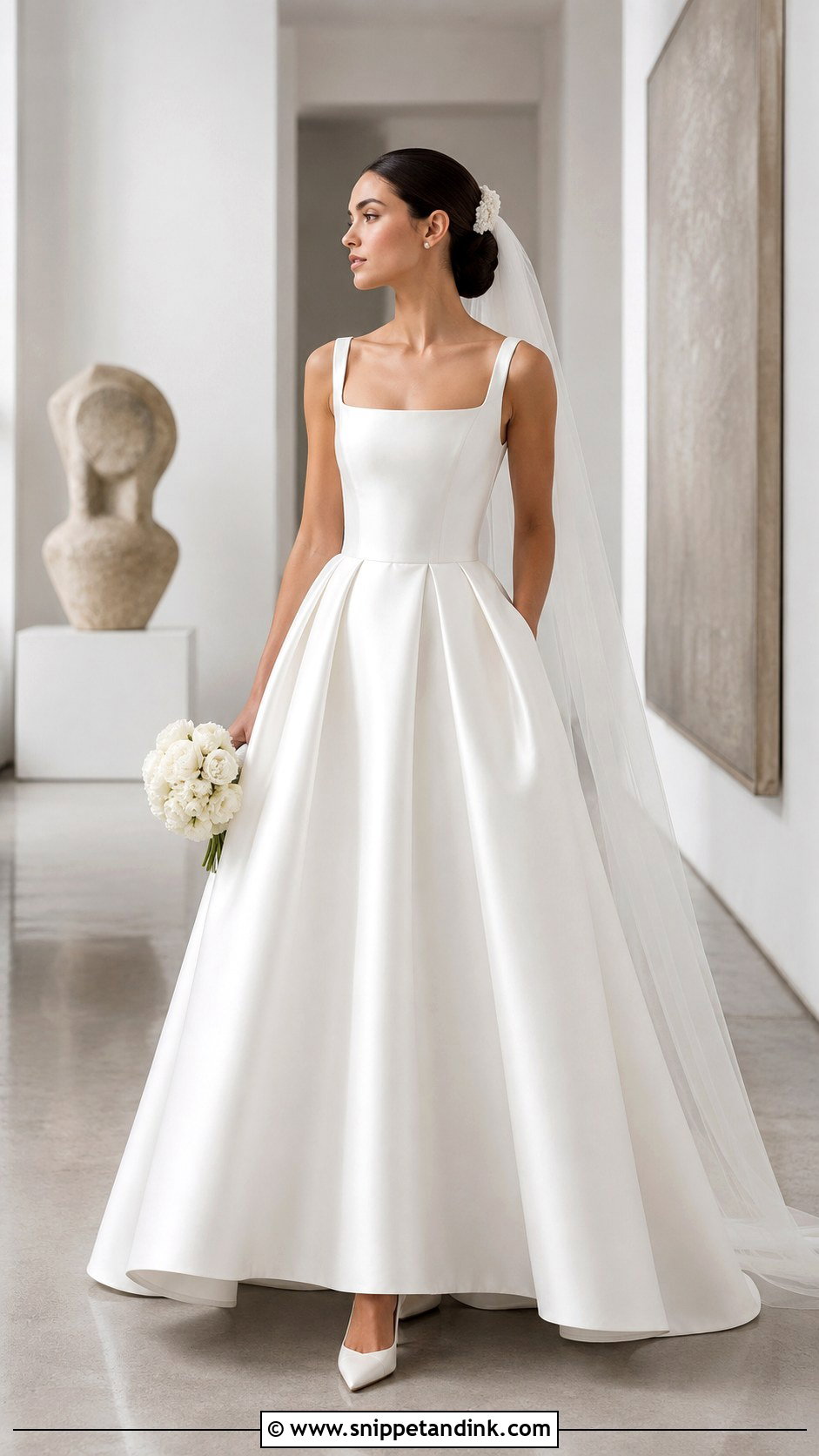
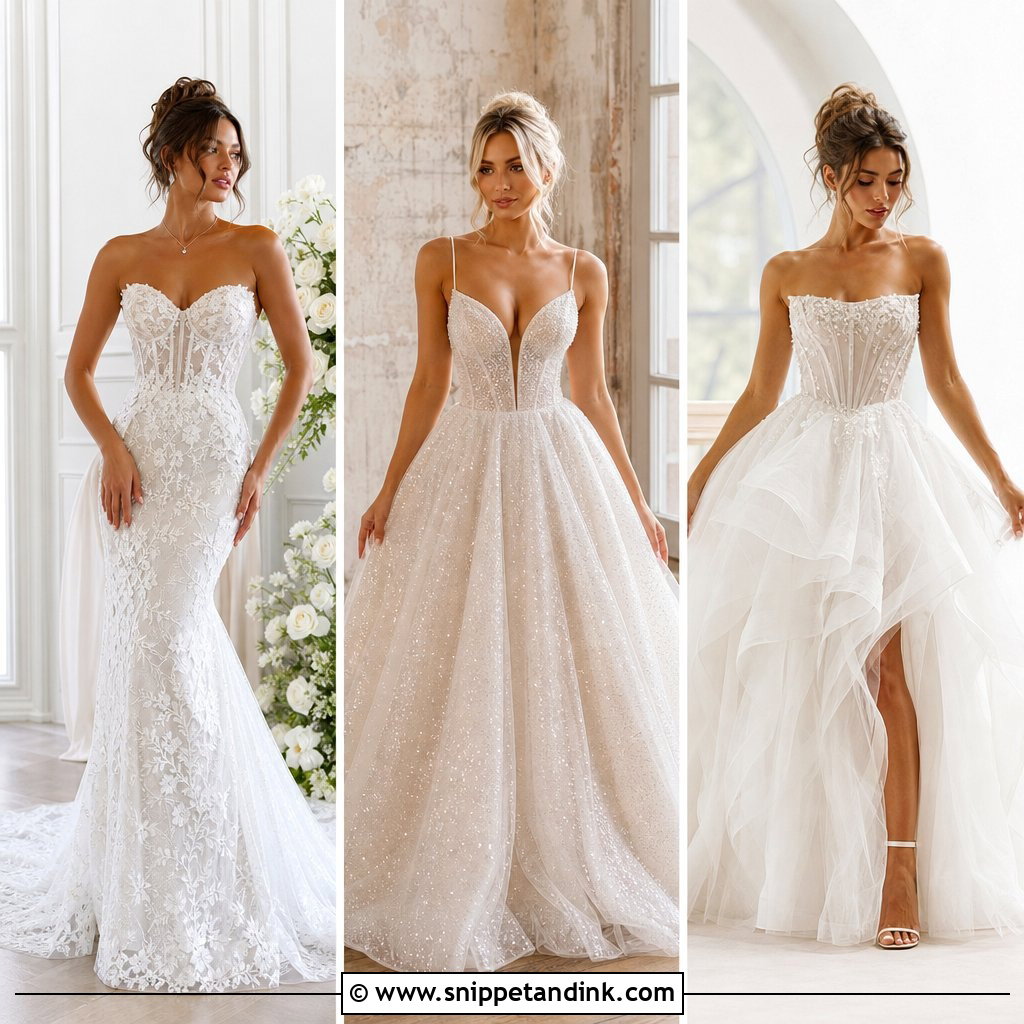
Can a plain gown still feel like a fairy tale? Yes, and often more than a busy one, because every flaw and every success is visible. A minimalist princess dress relies on heavy satin or Mikado, a precisely boned bodice and an uninterrupted skirt, so fabric quality is everything. Hold the skirt up to the light: cheap satin looks thin and shows the petticoat’s outline. Small details like deep pleats, hidden pockets or a column of covered buttons are enough. Pearl studs, one sculptural hair piece, pointed heels, a long plain veil and a compact bouquet with a single colour.
The Petticoat Decides How Big the Dress Really Is
Most of the volume you admire in a princess gown is not the dress. It’s what sits under it. The same skirt can look gently full or enormous depending on the petticoat, and this is the part brides rarely ask about until the final fitting.
- Hoop crinoline: steel or plastic rings give the widest, most bell-like shape. It’s dramatic, but it swings when you walk and it makes sitting awkward, so I keep it for brides who mostly stand.
- Layered tulle or net petticoat: softer, quieter and much easier to sit in. It gives a rounded, cloud-like fullness and is my usual pick.
- Built-in layers only: many gowns already have a net layer sewn in. Try the dress without an extra petticoat first; you may not need one.
Bring the petticoat to every fitting. The hem is measured with it on, and swapping it later changes the length.
Steaming and Packing Away All That Fabric
A gown this size travels badly. I always hang it with the skirt free rather than folded in a short garment bag, and I steam it at the venue, never at home the night before. Tulle drops its creases quickly with gentle steam held at a distance; satin and Mikado need the steamer kept moving so they don’t water-spot. Never iron tulle directly.
After the wedding, get the dress to a specialist cleaner within a few weeks. Sugar from champagne or cake dries clear and then yellows over months, so a hem that looks clean can still stain. Store it boxed in acid-free tissue in a cool, dry cupboard, not in plastic, and take the petticoat out so it doesn’t crush the skirt’s layers.
Which Princess Gown Will You Still Enjoy at Midnight?
Start with how much skirt you can comfortably carry for twelve hours, then decide on fabric: satin for structure, tulle for float, lace for softness. Sleeves, corsetry, basque waists, bows, overskirts and trains are all ways of making the same silhouette your own. Try every shortlisted dress with your real shoes and underwear, then sit, walk and turn in it before you commit. Let accessories support the gown rather than compete with it. The dress you end up loving will be the one you forget you’re wearing by the second hour.
You'll Like These Ideas:






Leave a Reply