
Some brides walk into my fitting room already knowing they want the skirt to fill the aisle. Truly voluminous bridal gowns give you that entrance, and they come in far more variations than the classic strapless ball gown: corset bodices, Basque waists, ruffled organza, pearl-scattered tulle, detachable layers. Below are twenty full-skirted styles with notes from the fitting room on what each one asks of you, how it moves, and what to wear with it. I’ve kept the accessories brief and practical. With this much dress, restraint everywhere else is usually what makes the outfit look expensive.
Reading a Ball Gown Sample in the Shop
Bridal samples are usually one size, clipped at the back to fit whoever’s trying them on. That means a big skirt often looks fuller or flatter in the shop than it will once made to your measurements. Here’s what I have every bride do before she gets attached to a sample.
- Ask the consultant to take a photo of you from the back and the side, not just the front. Volume looks very different in profile.
- Sit on a normal chair for a couple of minutes. Notice where the bodice presses and whether the skirt pushes up in front of your face.
- Walk forward, then turn and walk back. A big skirt needs a kick-step to move cleanly, and some feel easier than others.
- Ask what petticoat is under the sample, and whether it comes with the dress or costs extra.
- Lift your arms as if hugging someone taller than you. Strapless bodices that slip here will slip on the day.
If a dress only looks right standing still, it isn’t the one. You’ll spend most of the day moving.
1. Strapless Tulle Ball Gown Wedding Dress
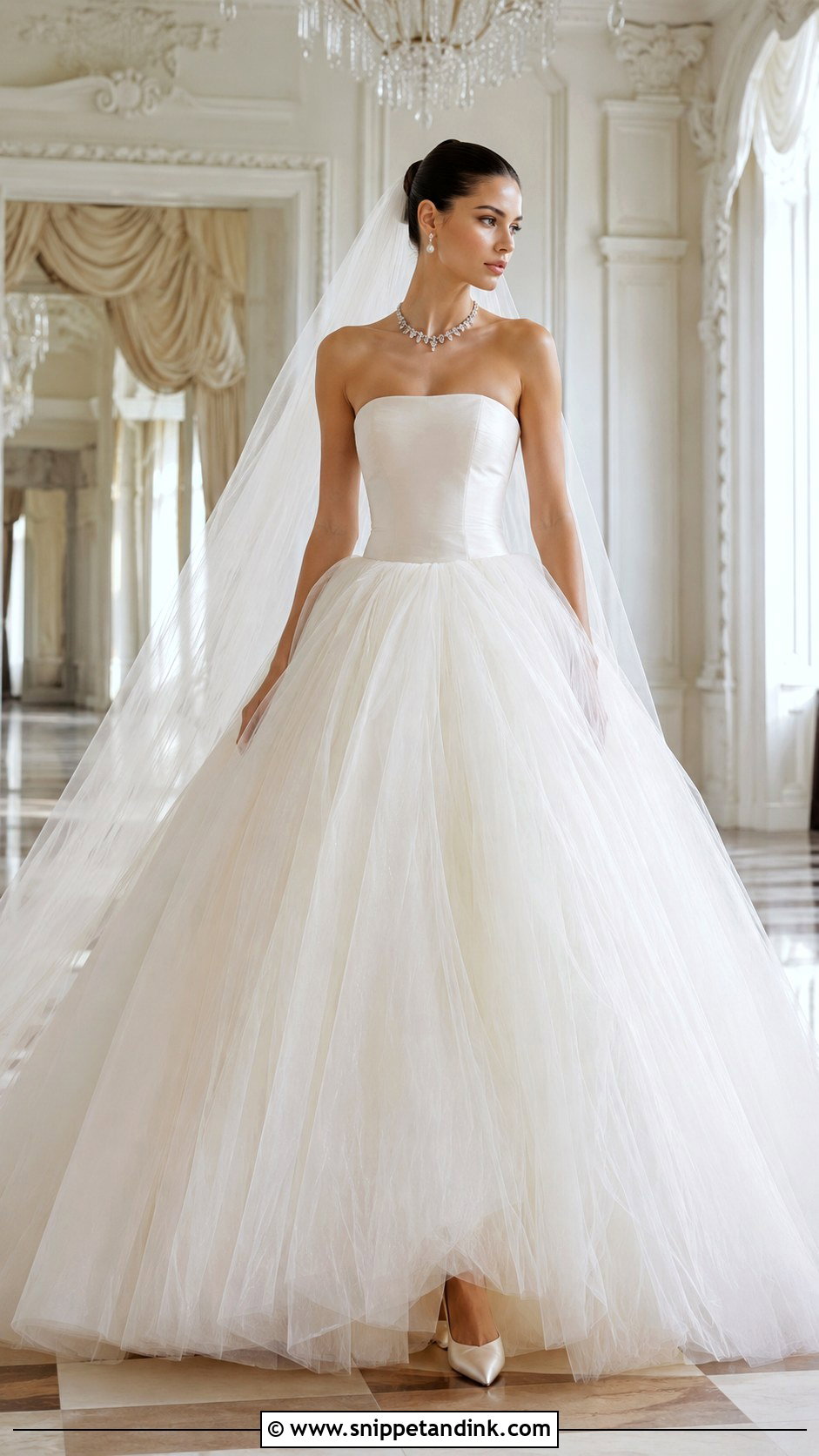
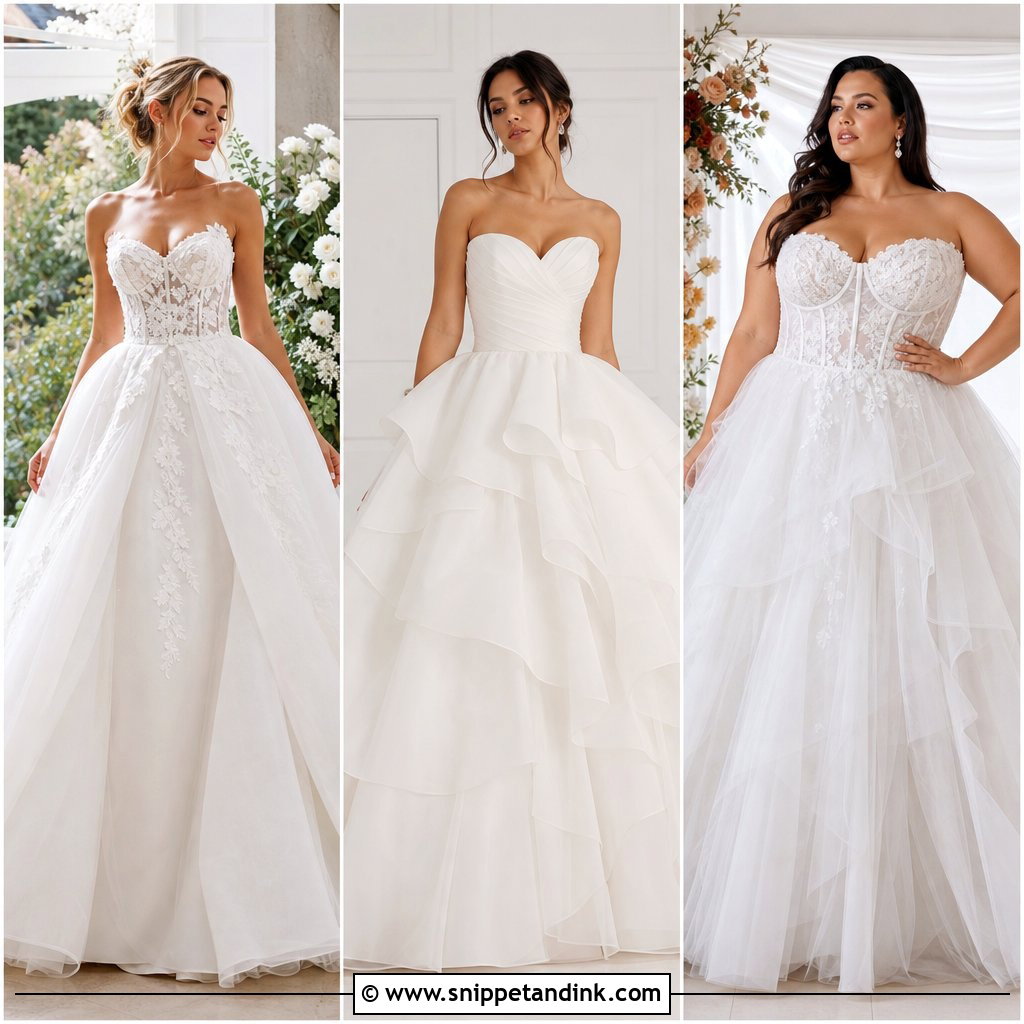
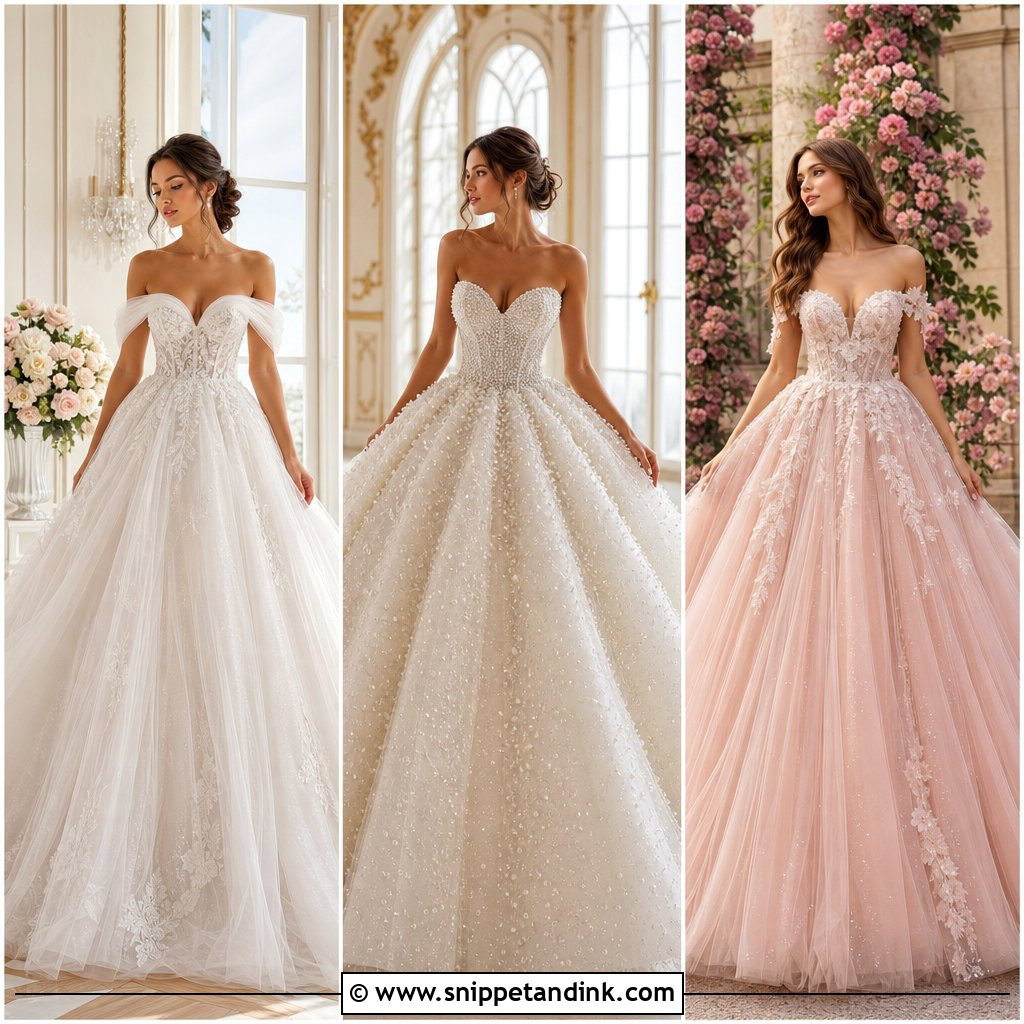
My first question with strapless tulle is always about the bodice, not the skirt. The tulle will look full on almost anyone; it’s the internal boning and a grippy waist stay that decide whether you spend the day hitching the top up. Soft ivory layers keep the skirt light enough to sit in. A straight or gently curved neckline takes either a crystal necklace or statement drops, not both. Pointed satin pumps, a low bun and a rounded bouquet keep it classic. If there’s beading, keep it at the bodice so the skirt stays the hero.
2. Lace Long Sleeve Ball Gown Wedding Dress
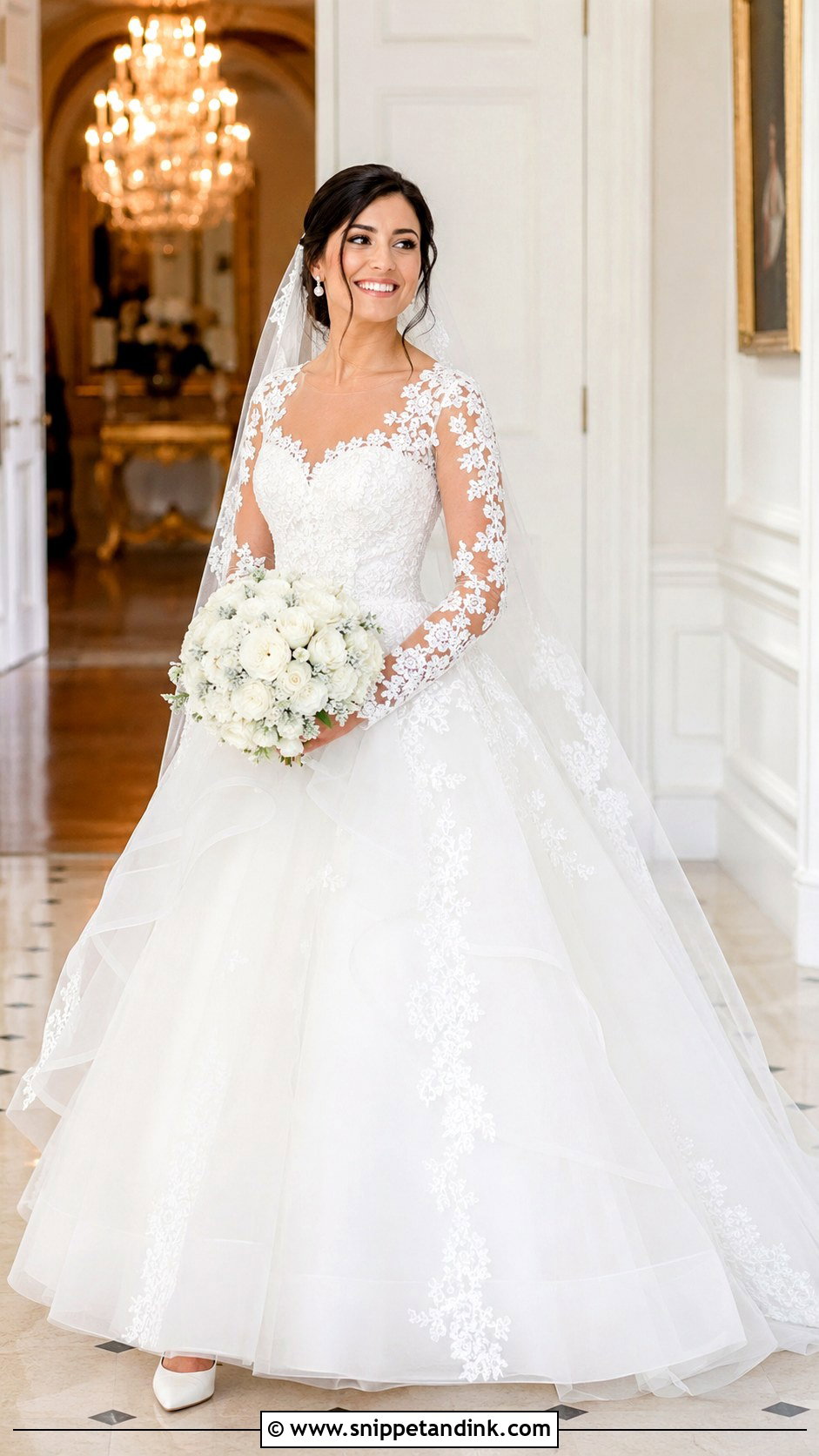
Lace sleeves add coverage without weight when the lace is placed as appliqué on sheer mesh rather than as a solid lace sleeve. Solid lace tends to grab at the elbow when you bend your arm. I like this style with the skirt starting at the natural waist, because the drop into a full tulle circle looks most graceful from there. Small pearls, a fine bracelet, closed-toe heels and a tulle veil with just a narrow lace edge. A loose chignon finishes it without covering the shoulder detail.
3. Off Shoulder Satin Ball Gown Wedding Dress
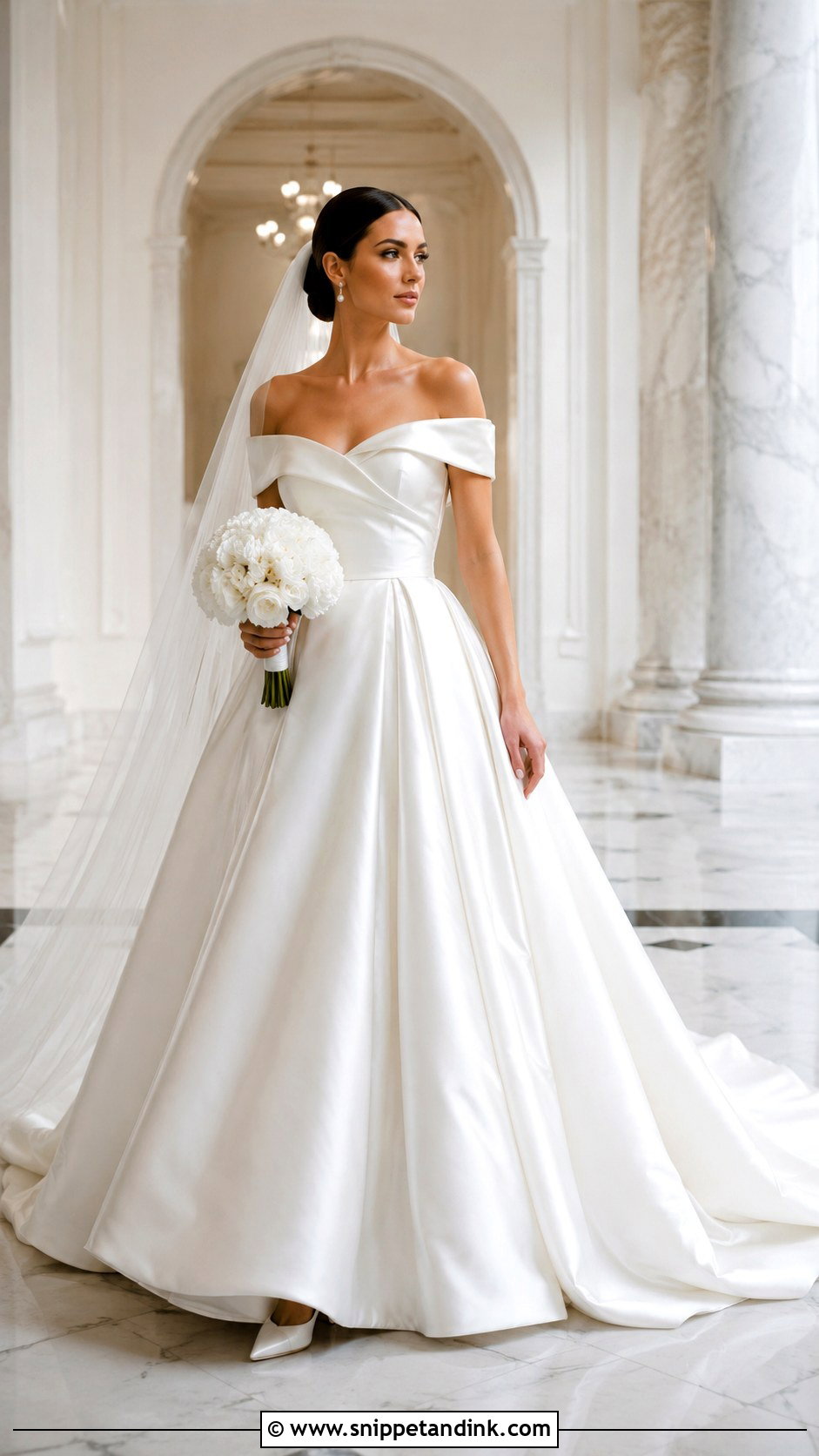
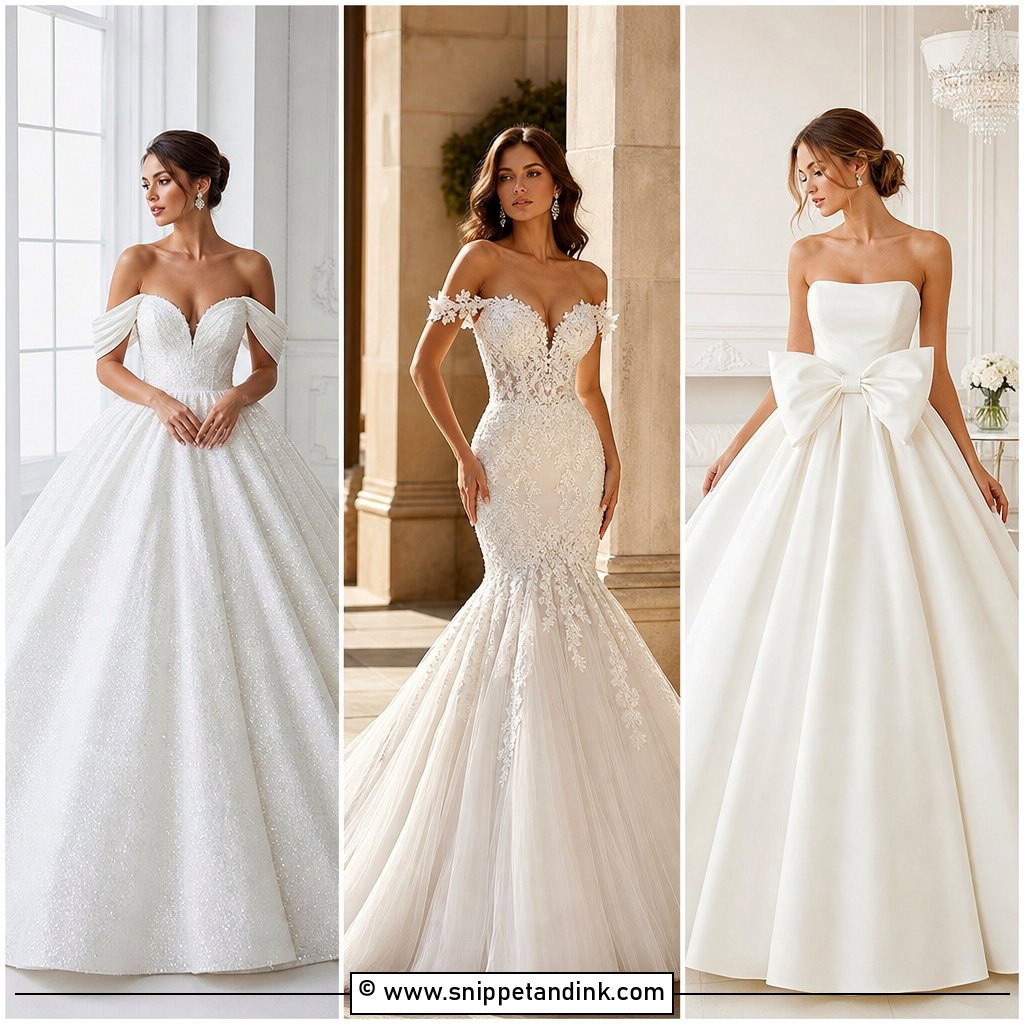
Satin gives a ball gown sculpted folds instead of floaty layers, so the skirt reads clean and strong. The off-the-shoulder neckline softens that. A folded satin band at the neckline is the detail to look for, since it sits flatter and holds better than a single layer. Box pleats or deep knife pleats at the waist give you volume without extra petticoat bulk. Satin already has sheen, so pearl drops or small crystals are plenty. A centre-parted low bun keeps the shoulders clear. Be ready for satin to show creases at the lap after the drive; a quick steam fixes it.
4. Corset Bodice Tulle Ball Gown Wedding Dress
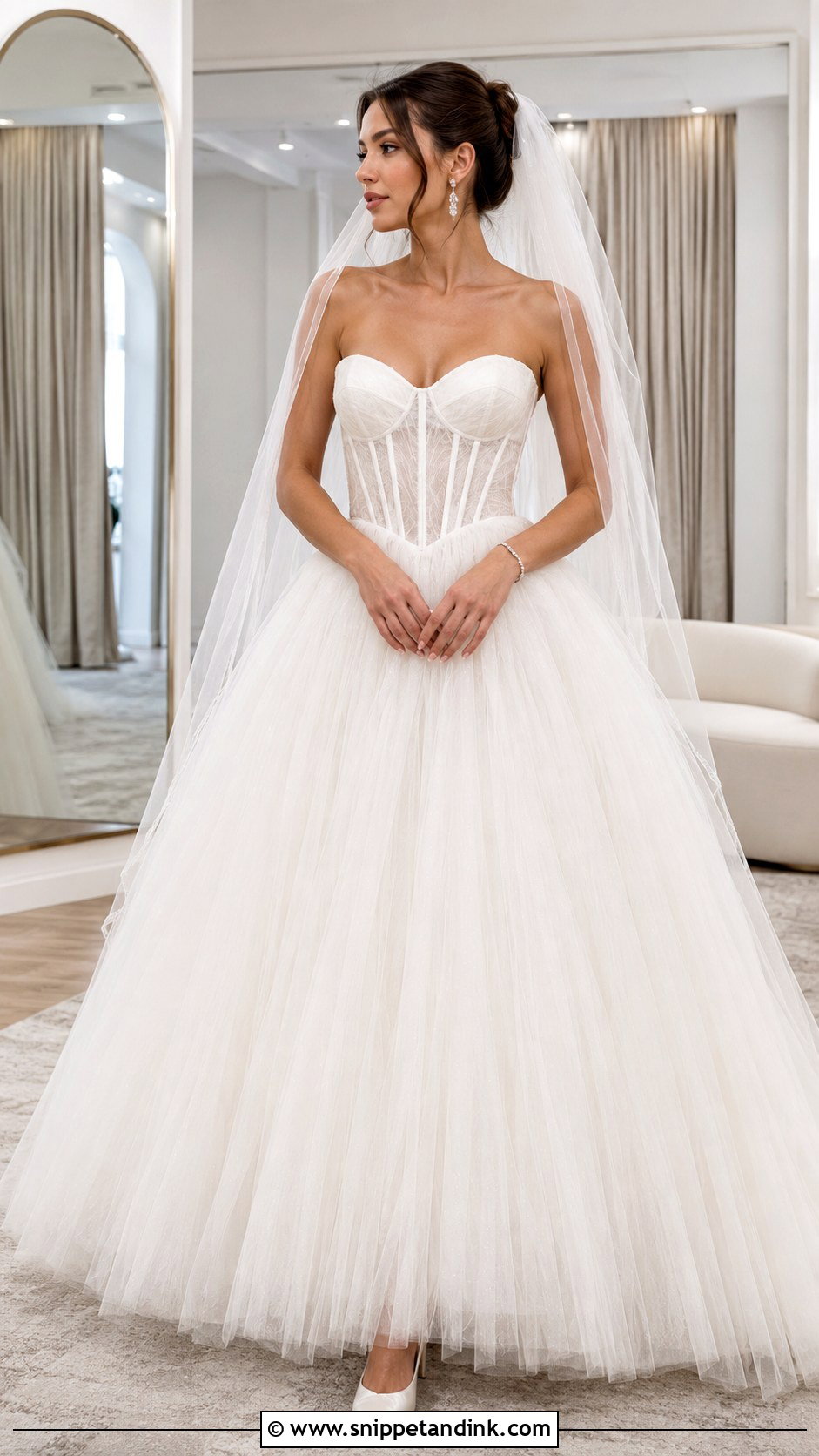
Visible boning reads modern, covered boning reads traditional, and both give the waist real definition under a wide tulle skirt. What I check at every fitting is the cups. A corset that relies on tightness alone will dig in; one with proper moulded cups holds you without needing to be laced hard. Have the seamstress fit it with you breathing normally, not holding your breath. Delicate drops and a fingertip veil keep the lacing visible from behind. Carry a small bouquet. A large one hides the waistline you paid to have fitted.
5. Princess Wedding Dress With Cathedral Train
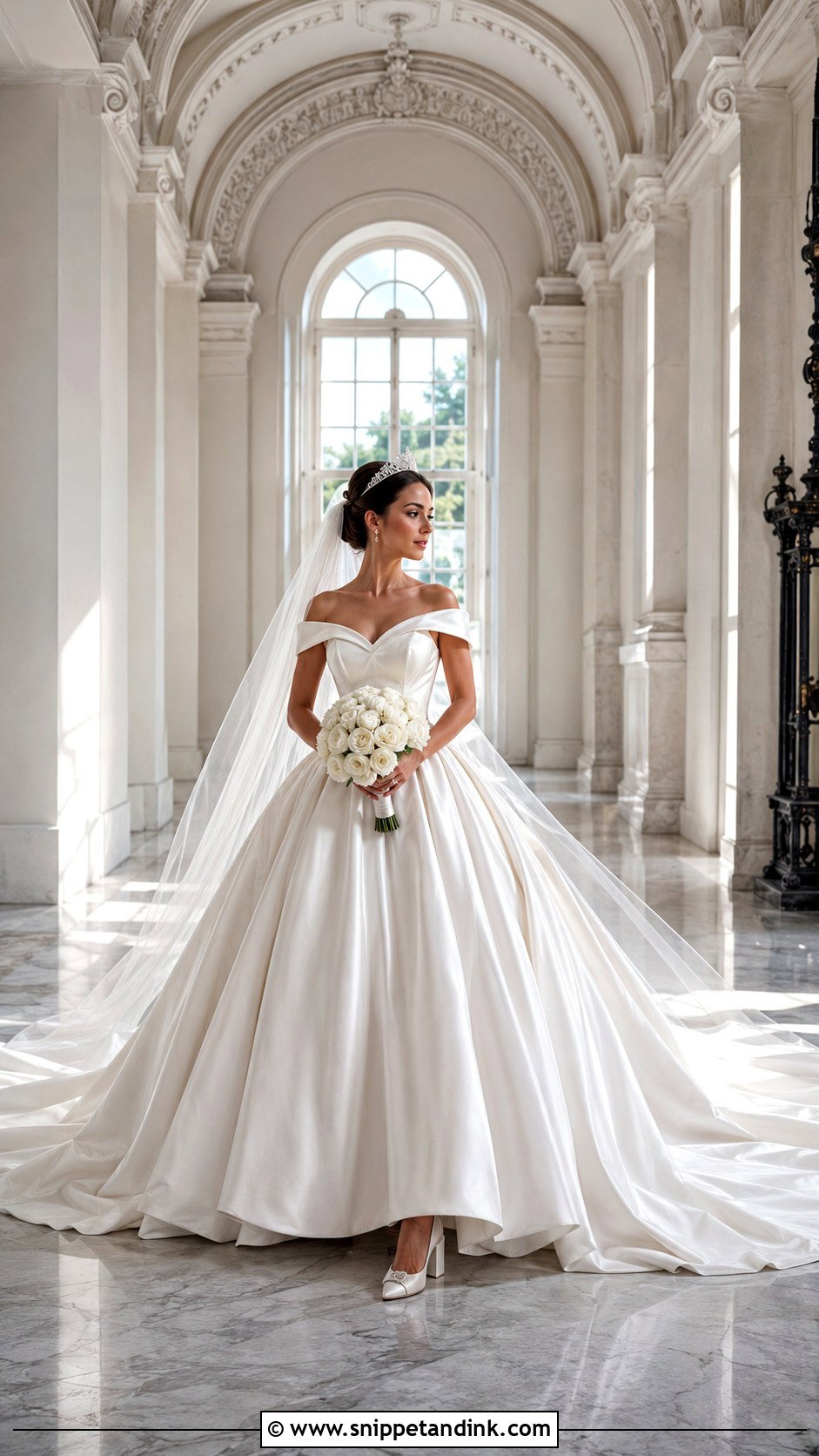
A cathedral train turns a princess wedding dress into a procession. The skirt should hold its round shape from the side and back too, which is where satin or Mikado over hidden tulle layers outperforms all-tulle. Plan the bustle at your last fitting, not on the morning: there are several styles, from a simple over-bustle with hooks to a French bustle tied with ribbons underneath, and the one that suits your train depends on its fabric and weight. A long plain veil can float over the train. Block-heel pumps are fine; nobody sees them.
6. Ruffle Organza Ball Gown Wedding Dress
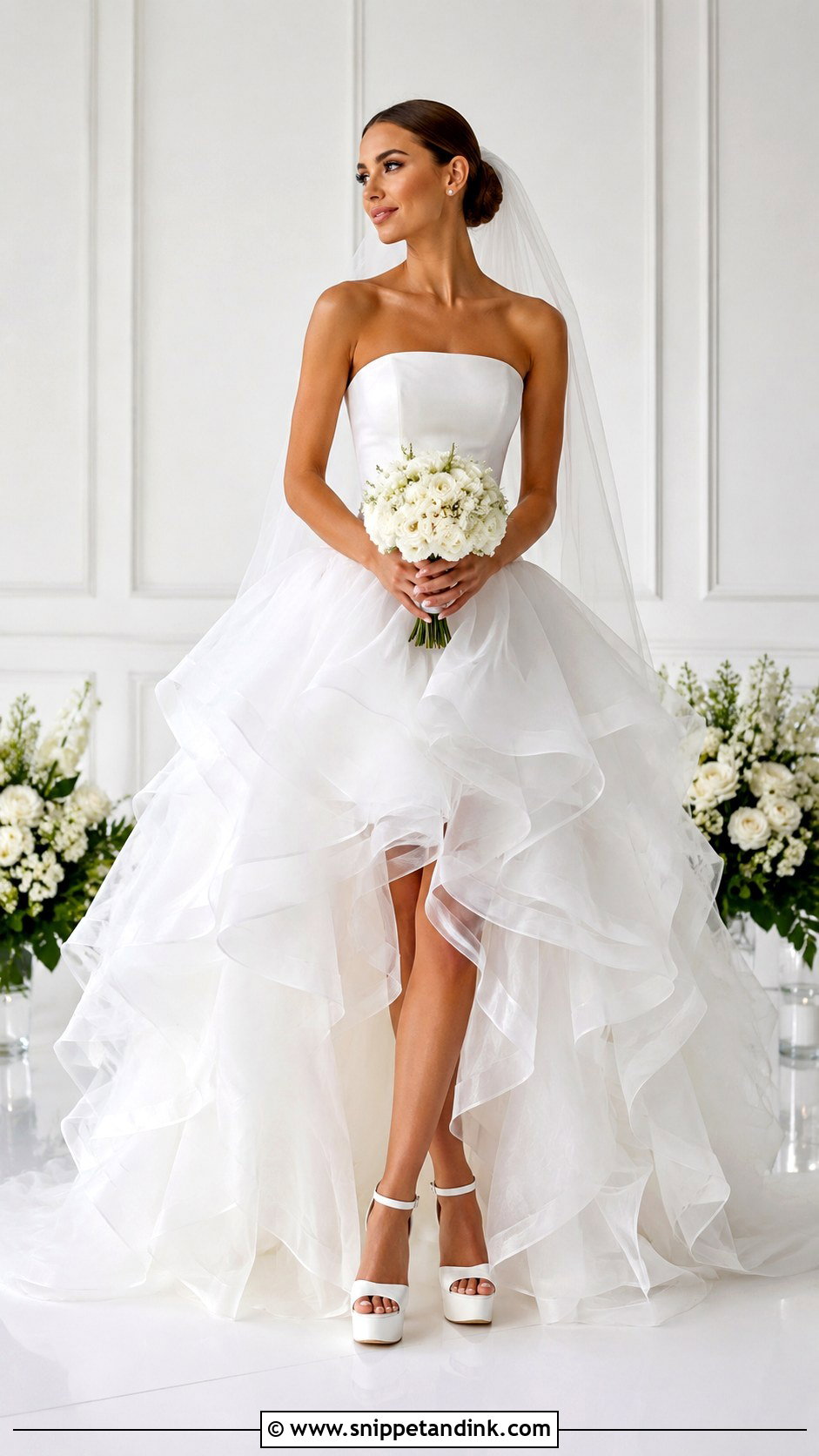
Organza holds air, which is why ruffled tiers puff up without looking dense. That same crispness makes it noisy and slightly scratchy, so try sitting and walking in it before deciding. Keep the bodice plain; the ruffles are doing a lot. Platform sandals or a stable block heel give you footing under all those tiers. A high ponytail or polished bun suits the freshness of the shape. Choose a plain fingertip veil and a compact bouquet. Anything frilly on top of a frilly skirt turns into clutter.
7. Sparkly Beaded Ball Gown Wedding Dress
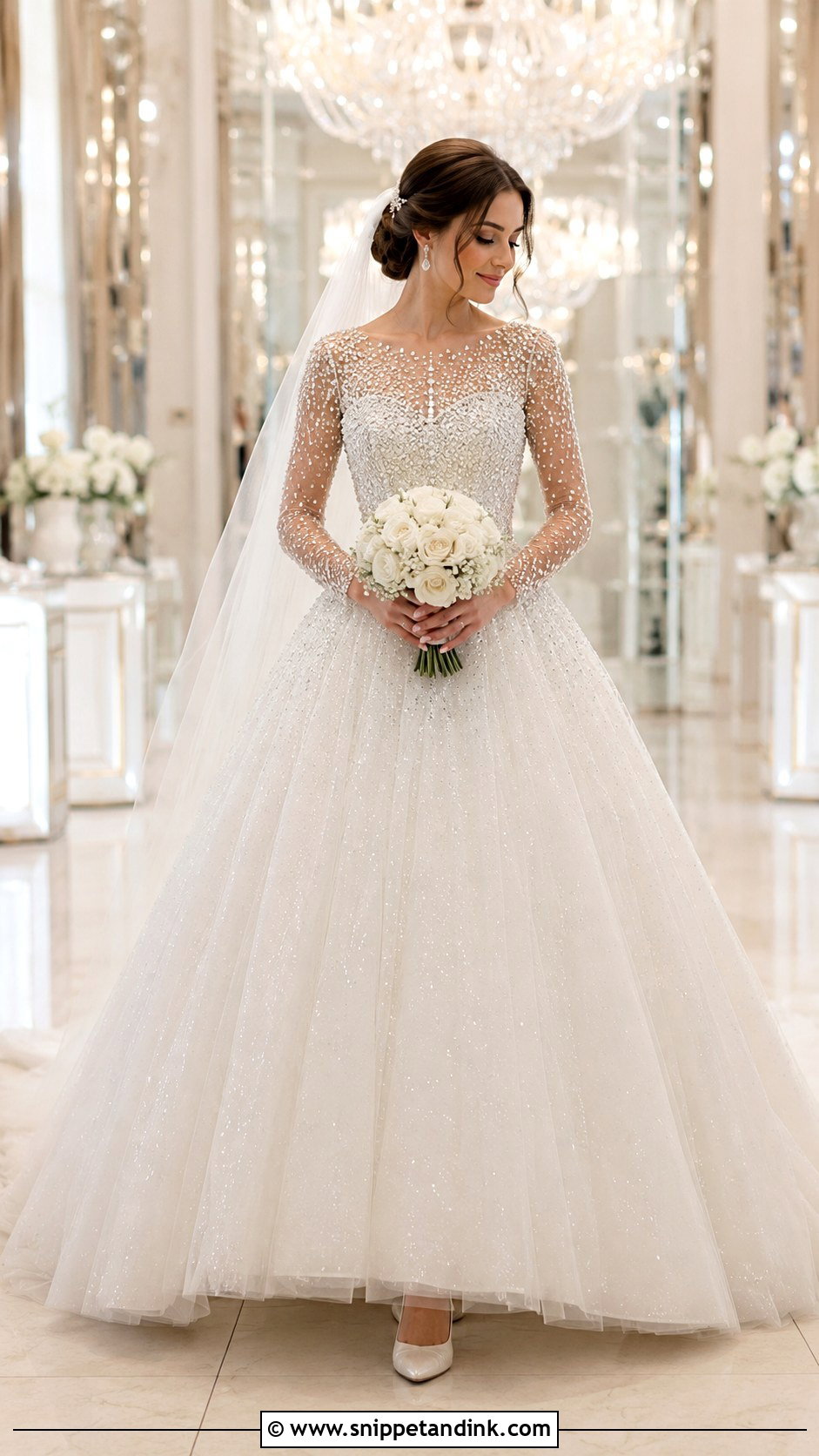
Not all sparkle is equal. A sparkly beaded ball gown with fine shimmer or scattered crystals glows under evening light, while large stones can look heavy and glare in flash photos. I like the beading densest at the bodice and fading into glitter tulle. Heavily beaded skirts add real weight, so a stable closed-toe heel matters more here than in a plain gown. If the neckline is beaded, skip the necklace. A plain tulle veil and a restrained white bouquet stop the outfit tipping into too much.
8. Floral Applique Ball Gown Wedding Dress
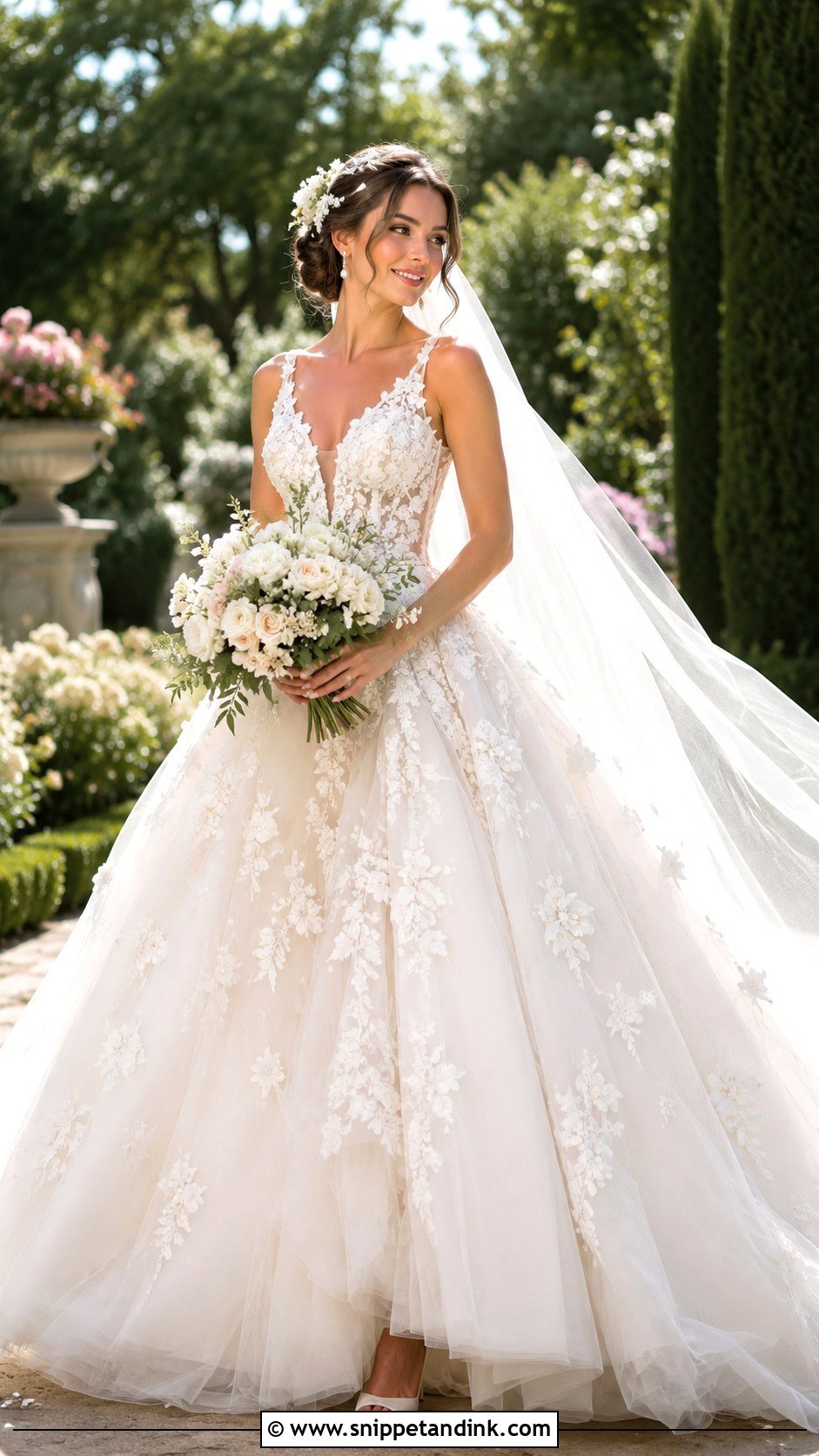
Raised flowers on a ball gown add depth you can see from the back of the room. I prefer them clustered at the bodice and thinning out down the skirt. Tone-on-tone ivory is subtle; blush petals stand out in photos. The thing nobody tells brides is that 3D appliqués catch on things: bouquet wire, lace on a bridesmaid’s dress, a groom’s cufflink. Ask the shop how firmly they’re stitched. Pearl earrings and floral pins tie it together. A plain cathedral veil lets the petals show through, and a compact bouquet keeps them uncovered at the waist.
9. Basque Waist Ball Gown Wedding Dress
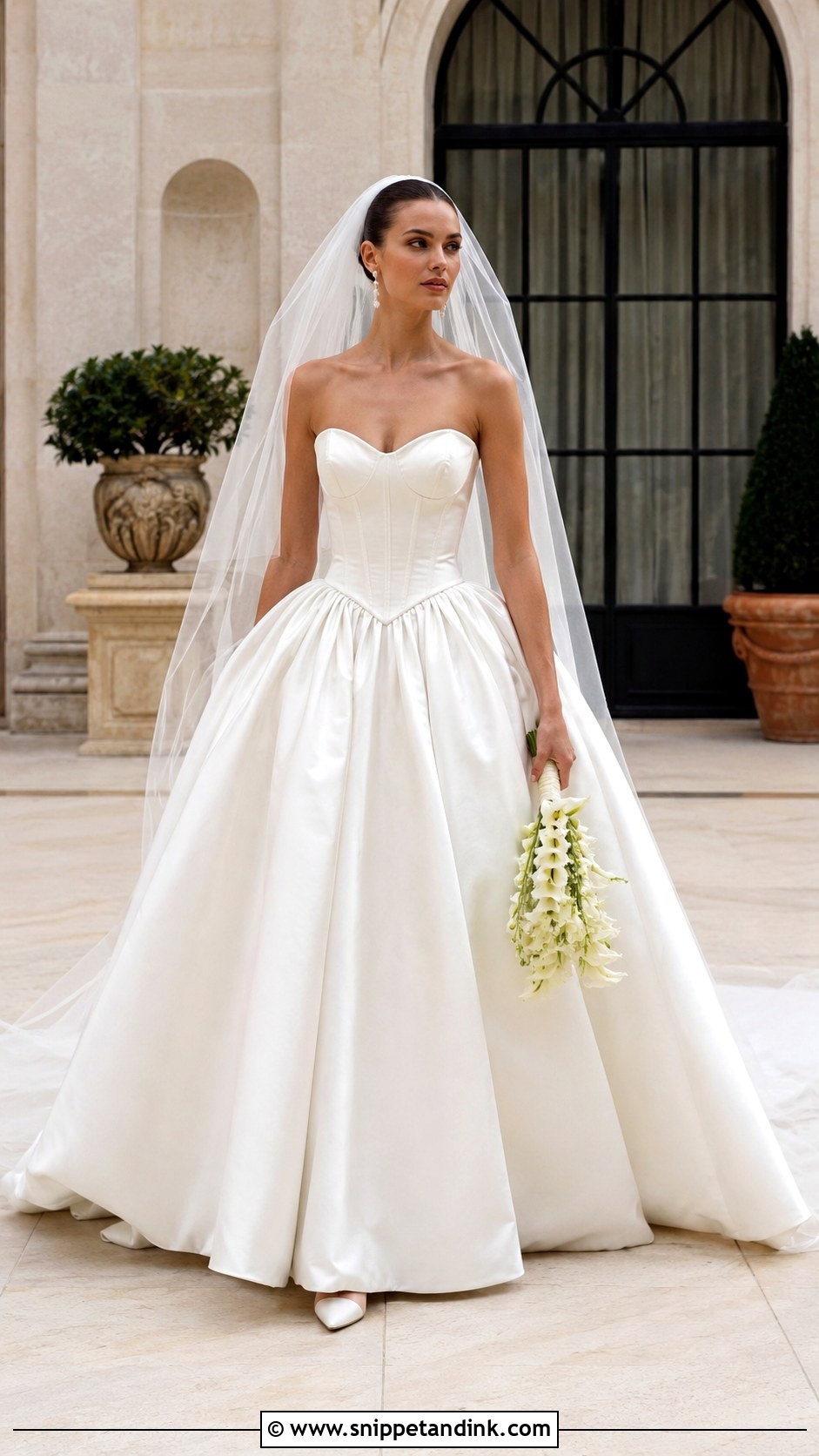
The Basque waist dips into a V below the natural waistline, so the torso looks longer before the skirt opens. It pairs naturally with a corset bodice. Alterations make or break it. If the point is even slightly too long, it folds when you sit; too short and it loses the shape entirely. Never belt this dress; a belt cuts across the very line that defines it. Long pearl earrings and pointed pumps extend the vertical line. A cathedral veil set beneath a polished bun keeps the back of the bodice visible.
10. Drop Waist Satin Ball Gown Wedding Dress
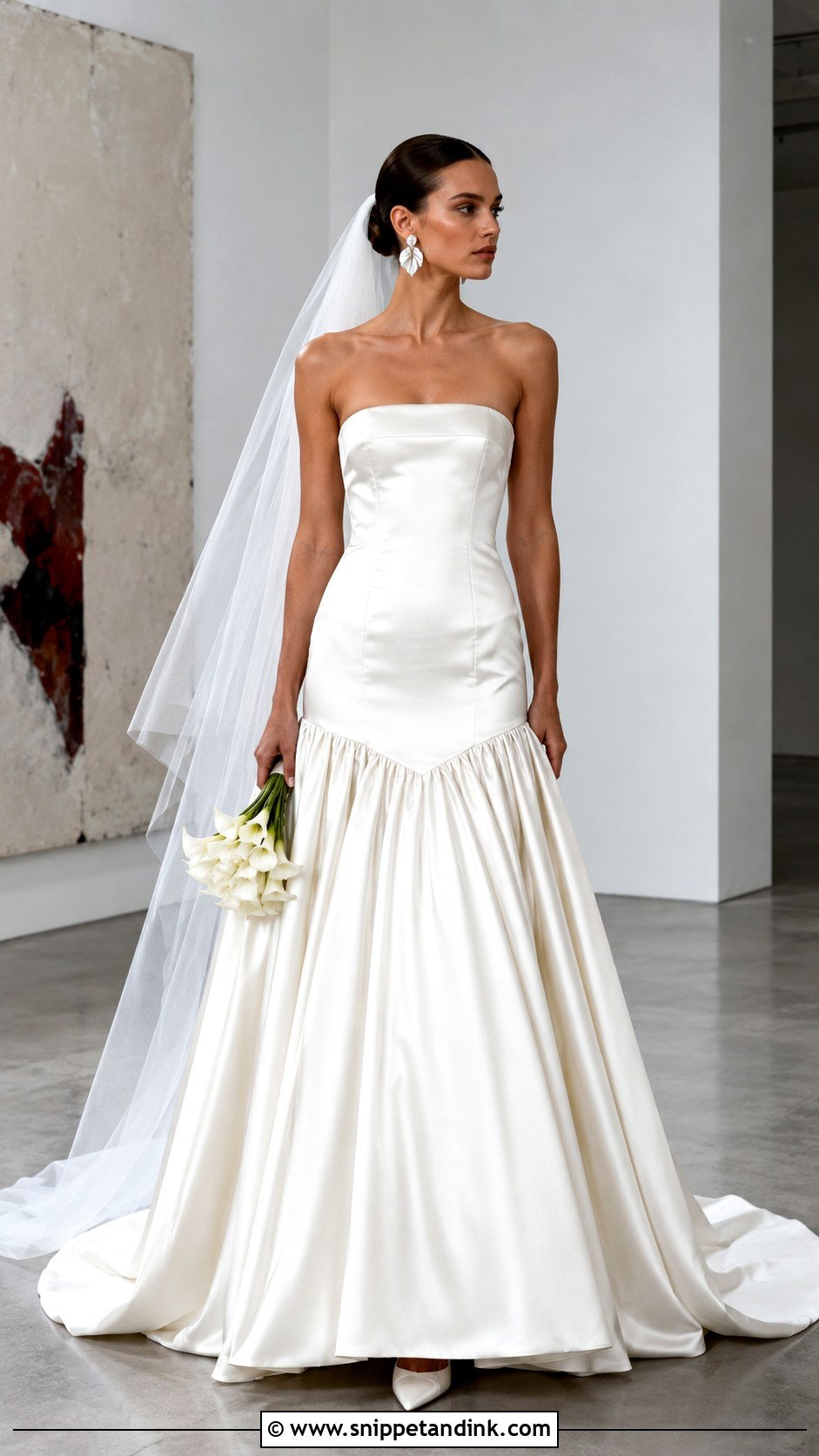
Drop waists are less common, and I’ll be honest: they suit some bodies far more than others. The long fitted bodice ends at the hip before the skirt flares, so it flatters a longer torso and can make a shorter torso look cut in half. Try it before ruling it in or out. Look for smooth seaming and even pleats so the skirt expands evenly all round. Sculptural earrings, a simple ring and pointed satin heels suit its modern geometry. A sleek bun with either a long plain veil or just a comb, and a streamlined bouquet.
11. Sweetheart Neckline Ball Gown Wedding Dress
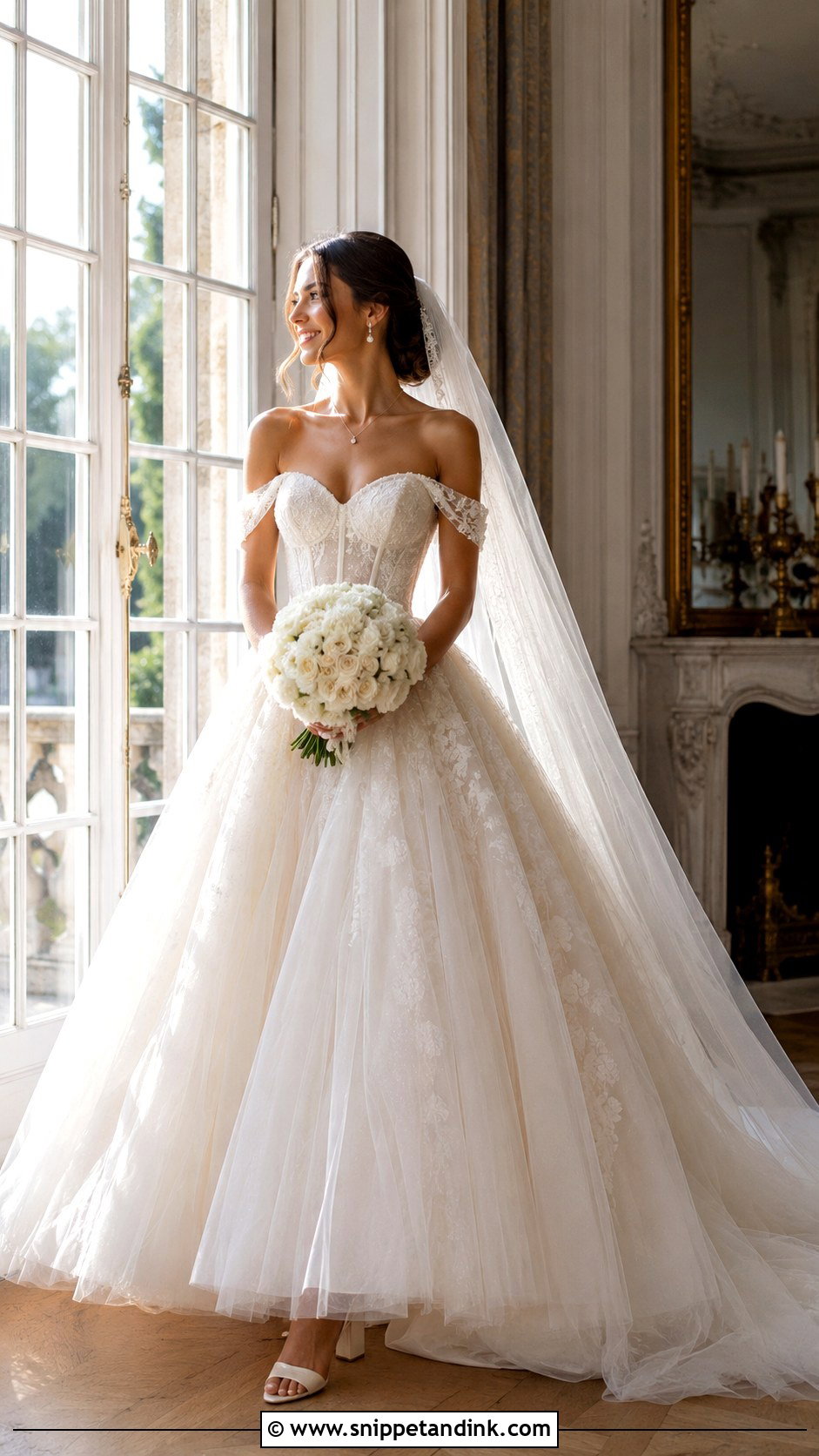
A sweetheart neckline softens a structured ball gown and points the eye up toward the face. If you need more support than a strapless top gives, ask about detachable off-the-shoulder straps or a fine illusion mesh panel, which most seamstresses can add without spoiling the curve. A short pendant fits neatly in the dip of the neckline. Ivory block heels for stability, soft curls and a rounded bouquet. When posing, hold the bouquet at hip height. Holding it at chest level hides the neckline in nearly every photo.
12. Square Neck Ball Gown Wedding Dress
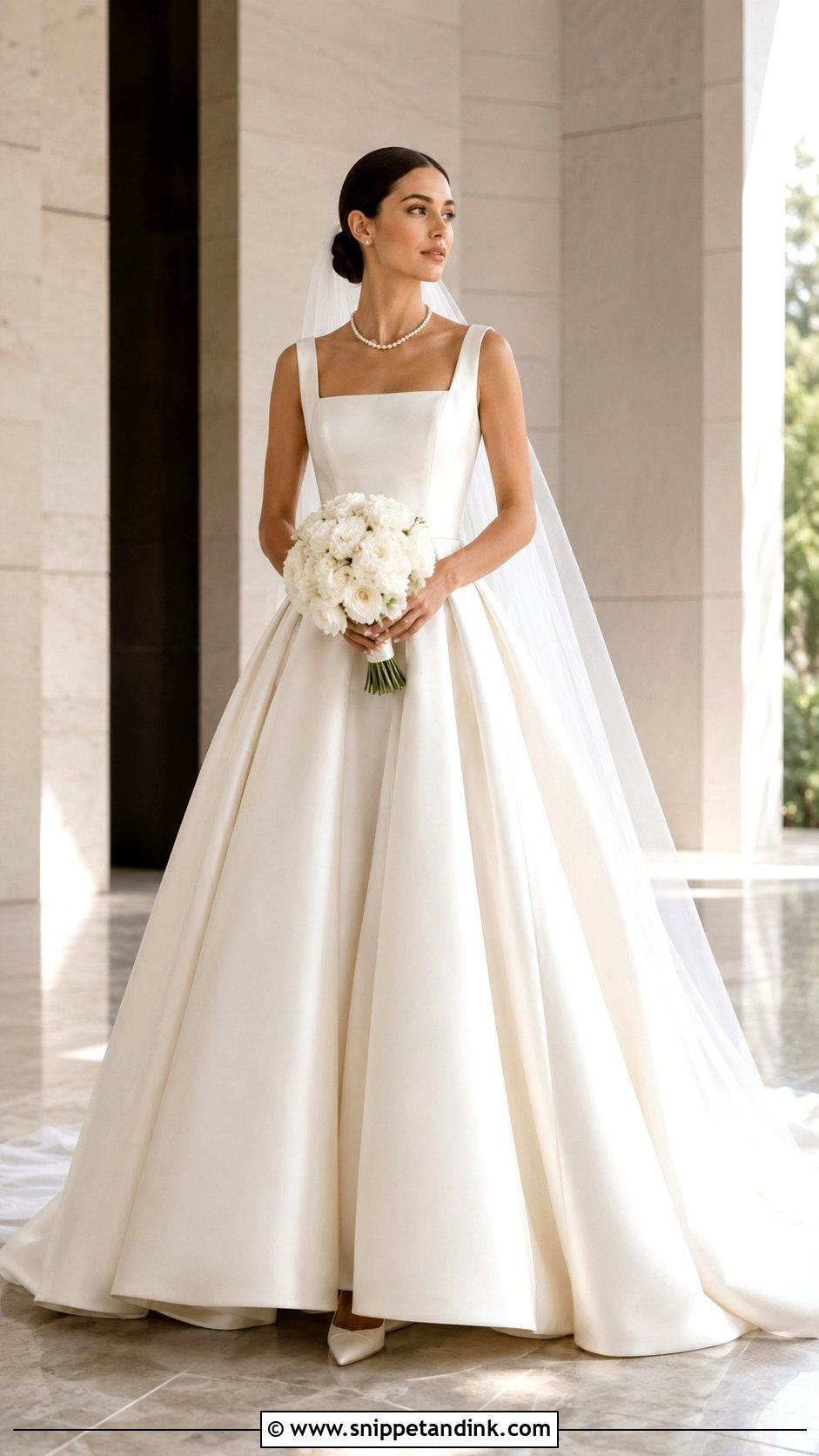
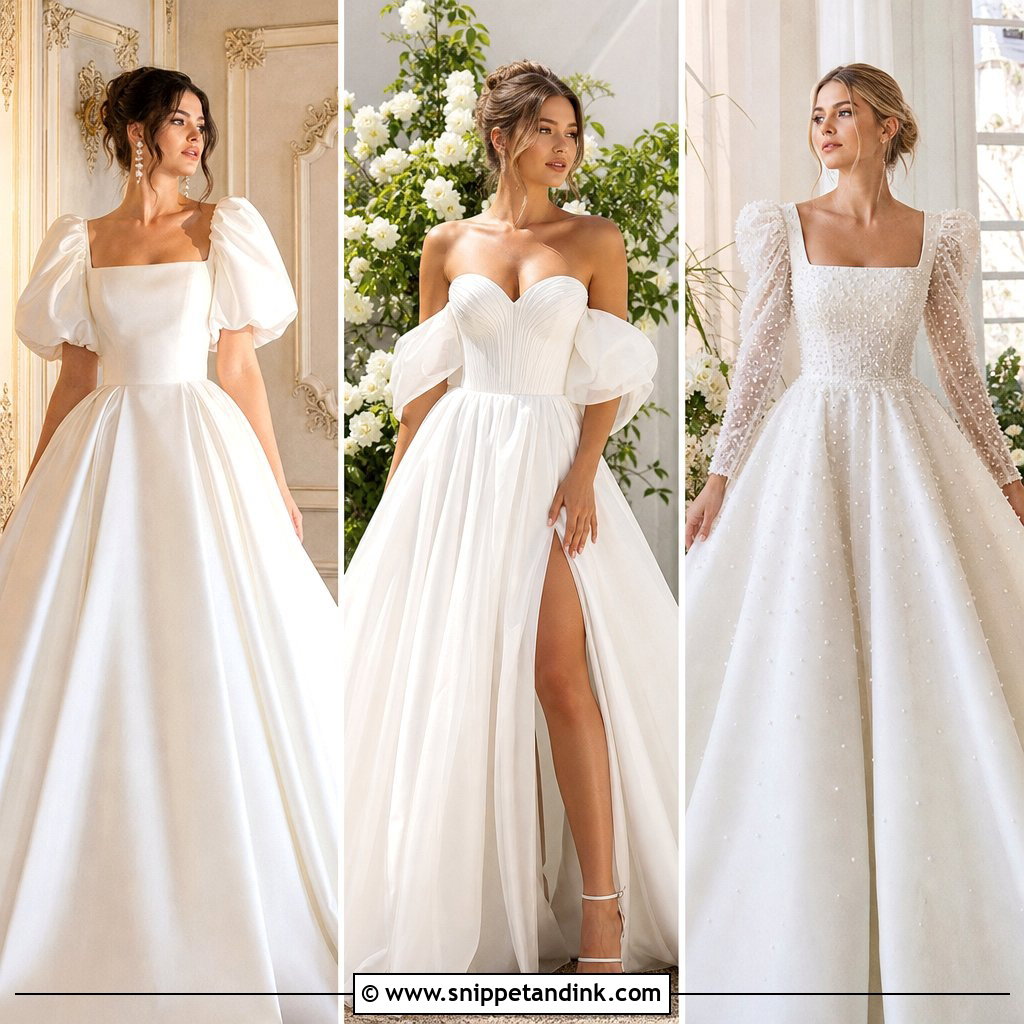
Square necks frame the collarbones with clean lines, and wide straps or short fitted sleeves give much better support than a strapless cut. I love it with a structured satin bodice and a deeply pleated skirt: big volume, almost no decoration. A short pearl strand follows the neckline naturally; statement earrings on their own are more modern. A sleek low bun and a long plain veil keep the geometry crisp. Choose a bouquet with a tidy rounded shape rather than a loose, trailing one.
13. High Neck Lace Ball Gown Wedding Dress
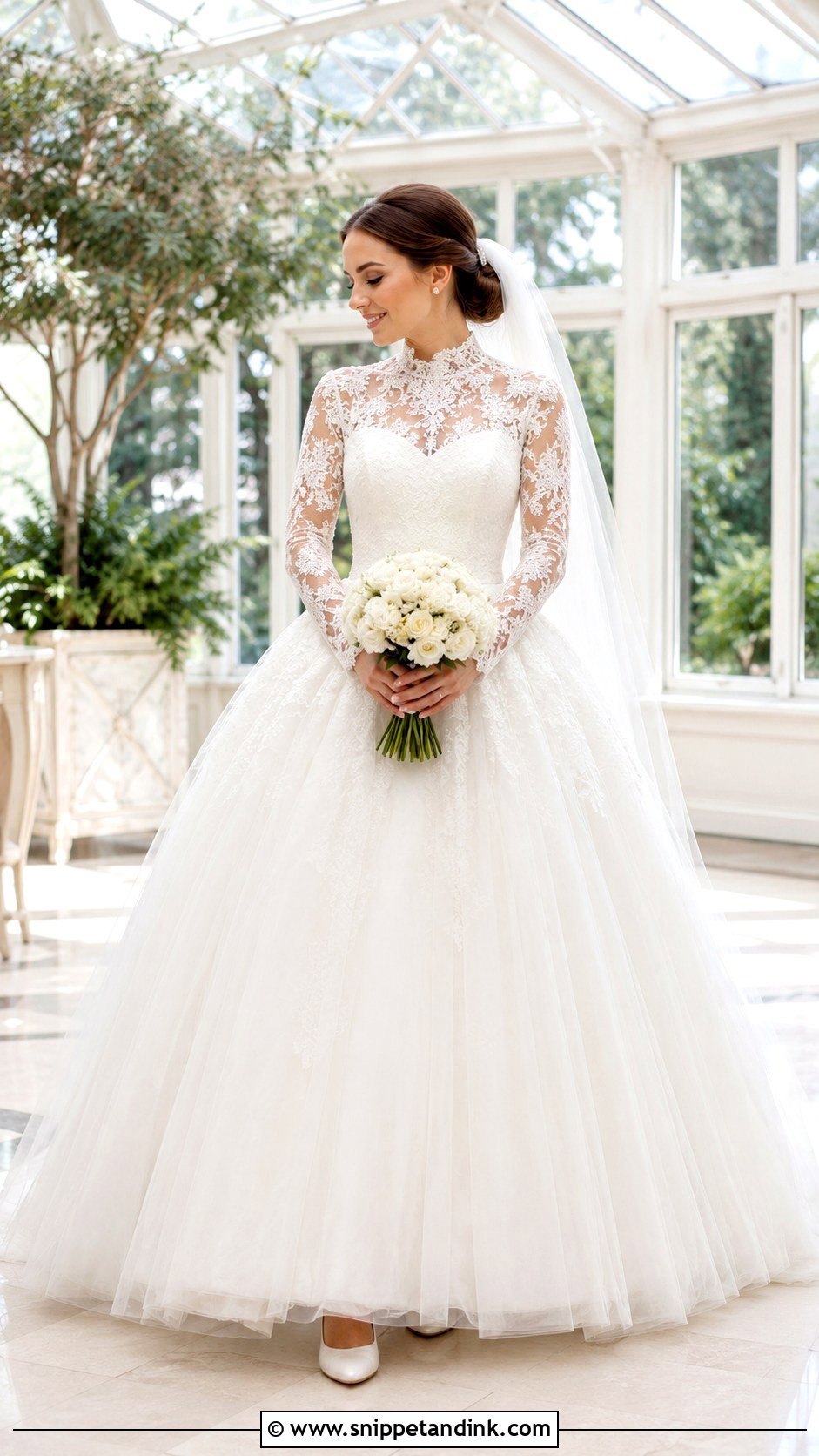
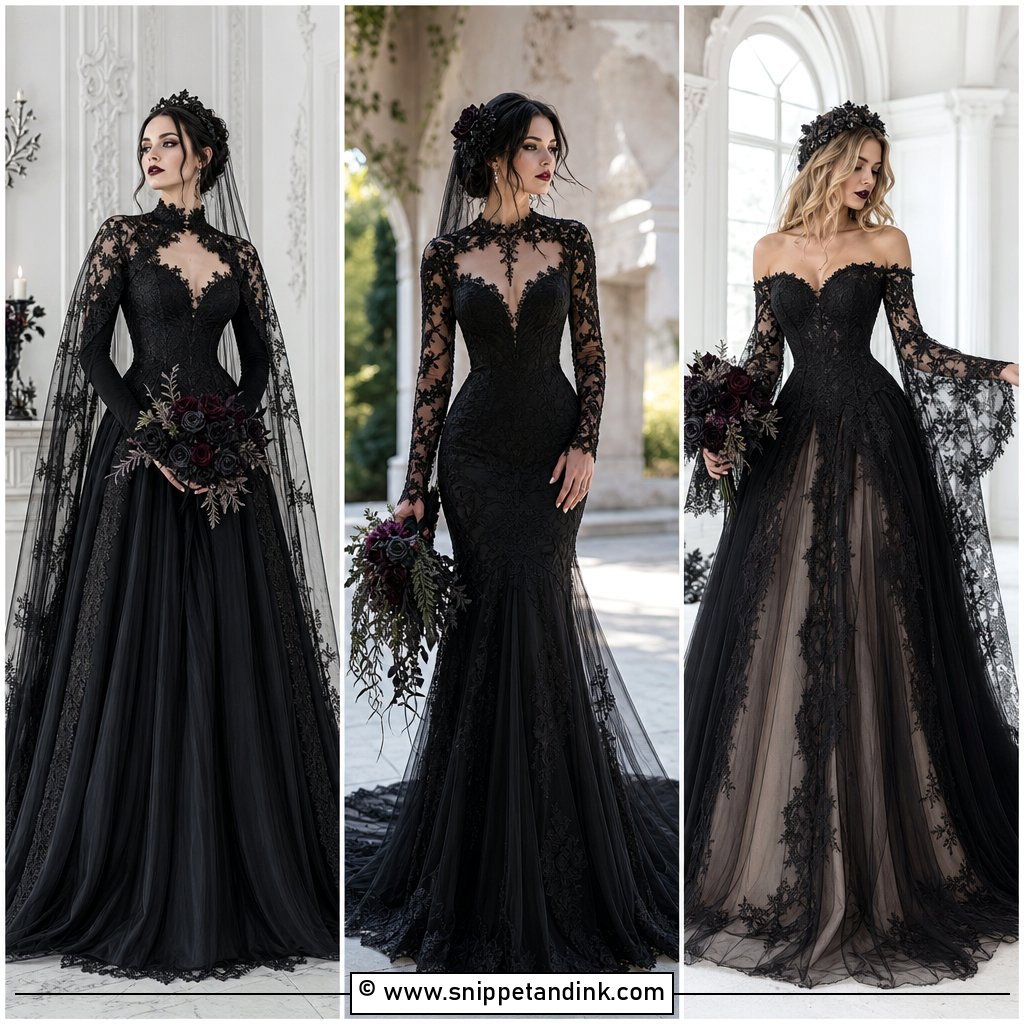
The high neck already frames your face, so the rest of the styling should step back. Sheer lace over a lined bodice keeps the top half light, and fitted long sleeves can carry the lace pattern down the arms. I always check the inside of the collar on a high-neck sample. Some lace edges are scratchy, and you’ll feel that more by evening. Small studs, closed-toe pumps, a narrow bracelet. Pin the veil under a low bun so it hangs clear of the neck lace instead of bunching against it.
14. Pearl Embellished Ball Gown Wedding Dress
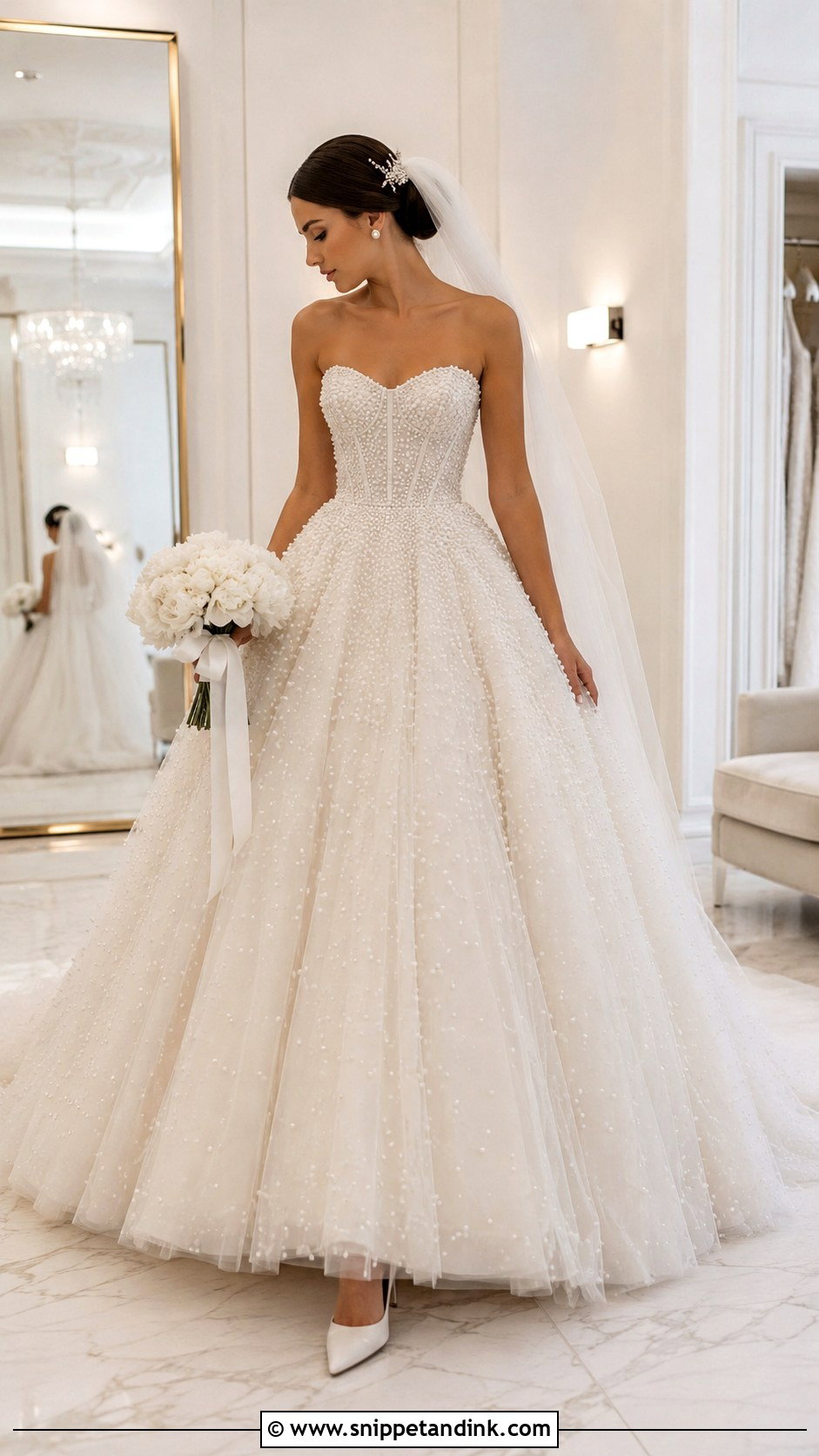
Pearls catch light softly, so a pearl-scattered gown glows rather than glitters. Spread them across the bodice, sleeves or upper skirt instead of covering everything evenly. A strapless corset bodice with pearl-dotted tulle feels romantic; a satin bodice with pearl detailing looks more structured. Here’s my rule: one pearl accessory beyond the dress, two at most. Pearl studs and a small comb, then stop. A plain veil, a smooth low bun and a compact bouquet tied with satin ribbon.



15. Bow Back Ball Gown Wedding Dress
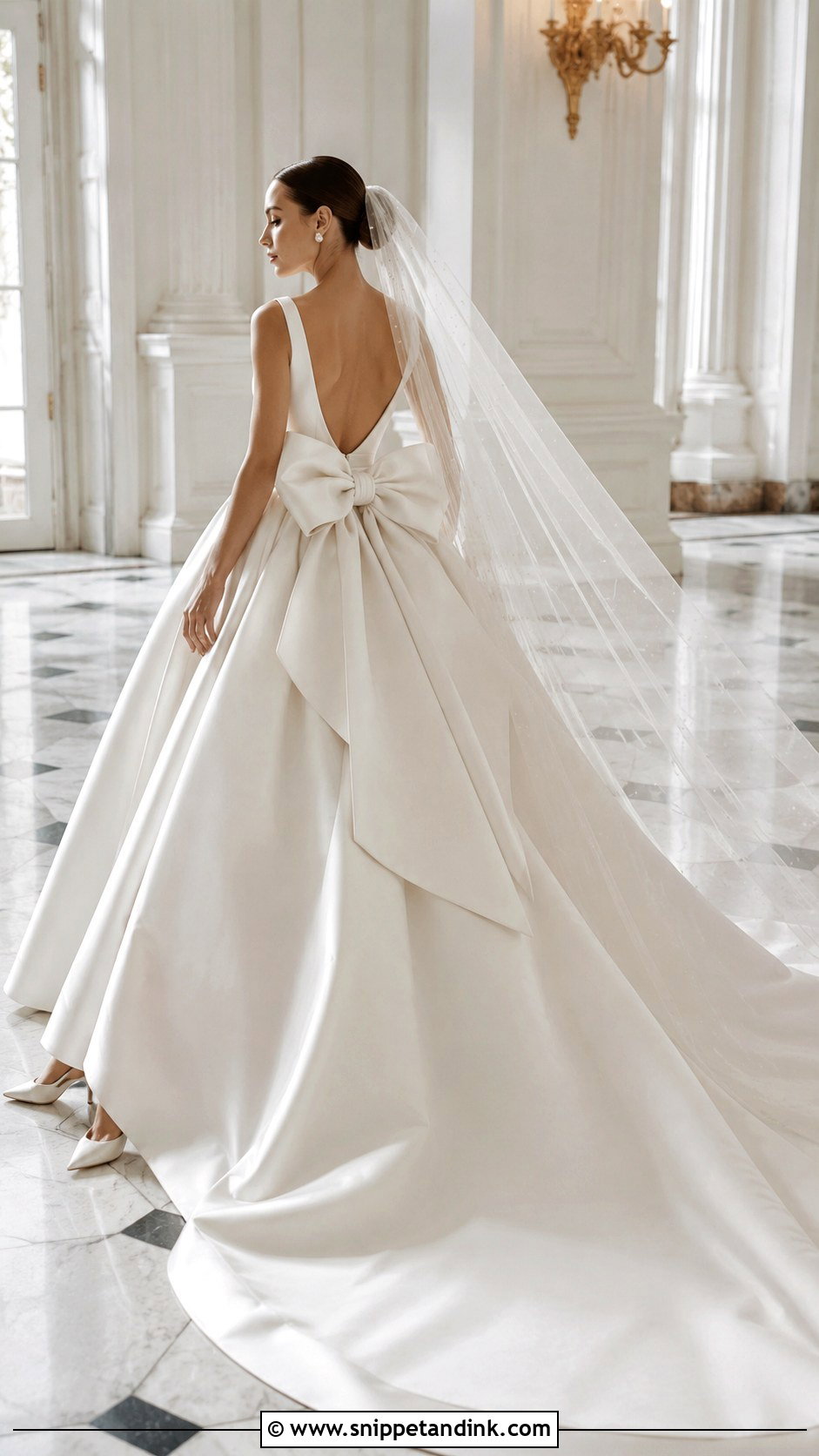
With a bow back, the front of the dress should stay almost bare and the back does the talking. Look for a structured satin ball gown with a sculptural bow above the train, or a detachable one you can remove for dancing. The veil is where this goes wrong: either it ends above the bow, or it attaches beneath it so both are visible. A veil draped straight over a bow flattens it. Test the bustle with the bow in place before your final fitting, since some bustle points sit right where the bow wants to be.
16. Detachable Overskirt Ball Gown Wedding Dress
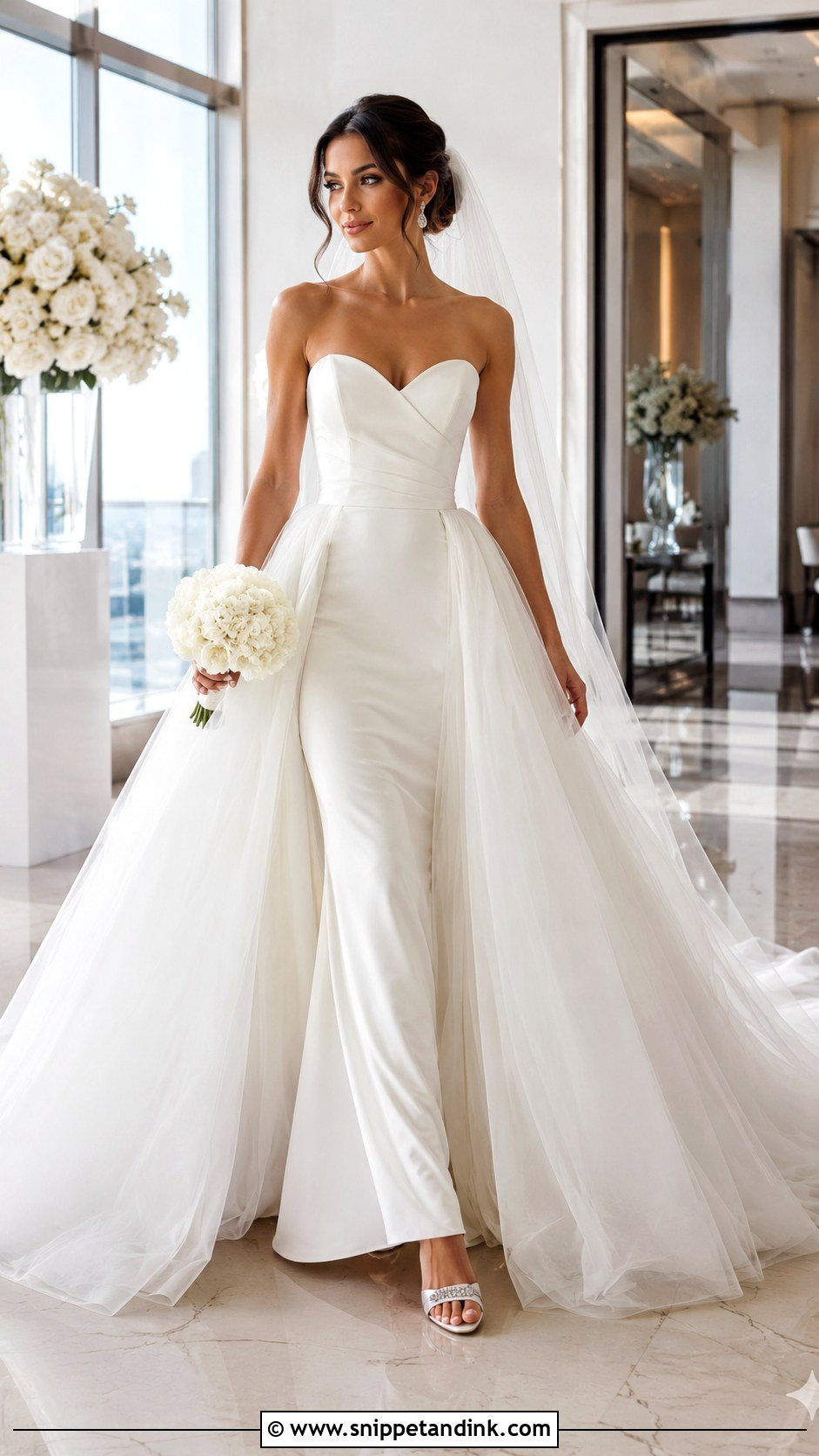
A detachable overskirt gives you two dresses for one budget. For the ceremony, a full tulle or satin overskirt fastens around a fitted gown and gives you the shape of a traditional poofy ball gown, sometimes with a longer train too. After portraits it comes off and you can move freely. The fastening is everything. Hidden hooks or snaps along a flat waistband are best; a visible zip at the waist spoils the base dress. Choose a veil that suits both versions, and walk your helper through removing it before the day.
17. Blush Ball Gown Wedding Dress
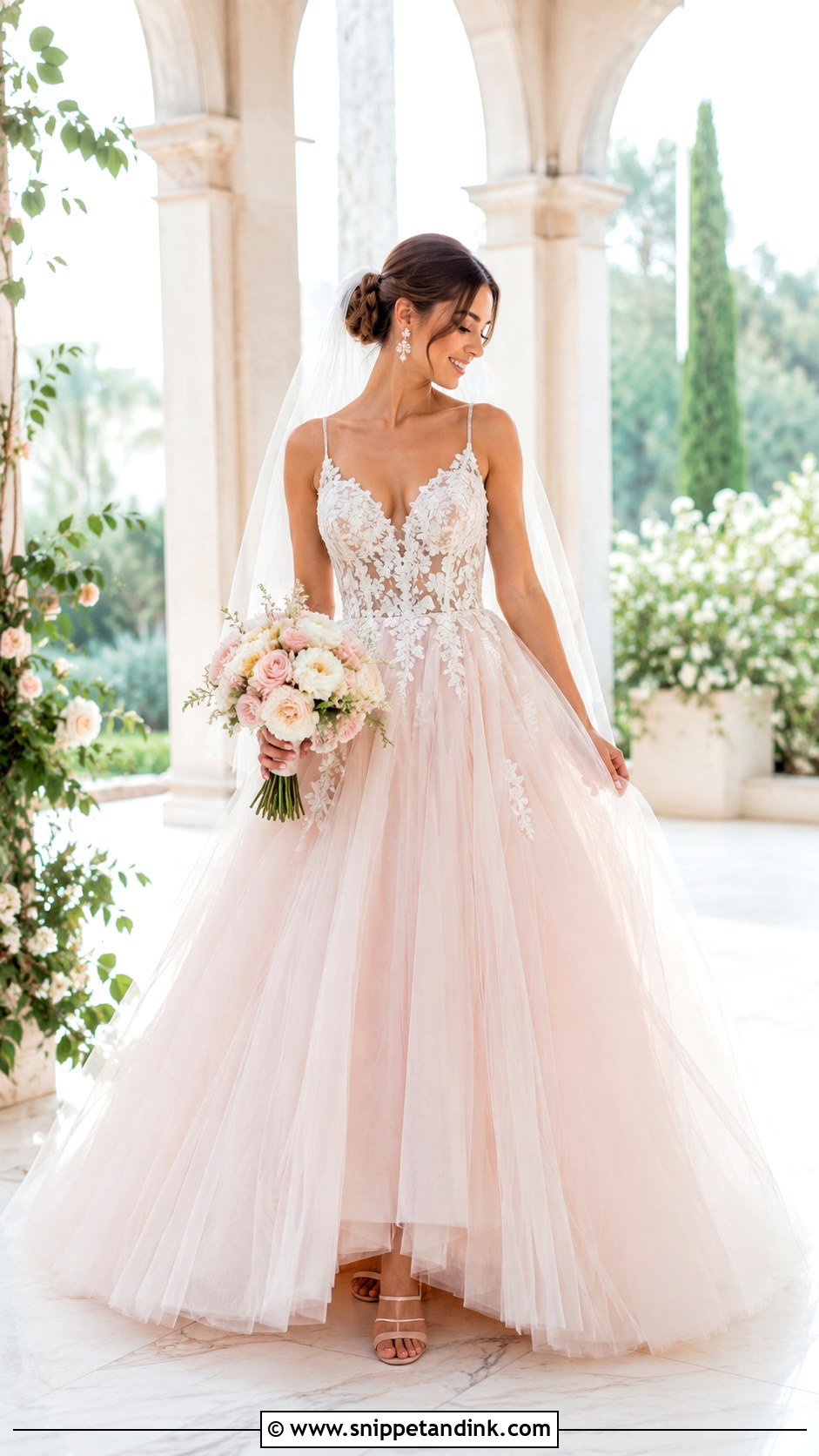
Colour in a blush ball gown usually comes from layering: pale pink, champagne or nude tulle under ivory lace. That layering is what keeps it soft rather than sugary. Check the shade against your skin in daylight, not just under the boutique bulbs, since blush can read peach or grey depending on the light. Rose-gold earrings and nude heels sit well with it. Keep makeup in soft pinks that don’t match the dress exactly. White and pale pink flowers finish it; avoid strong colour accessories that fight the shade.
18. Plus Size Ball Gown Wedding Dress
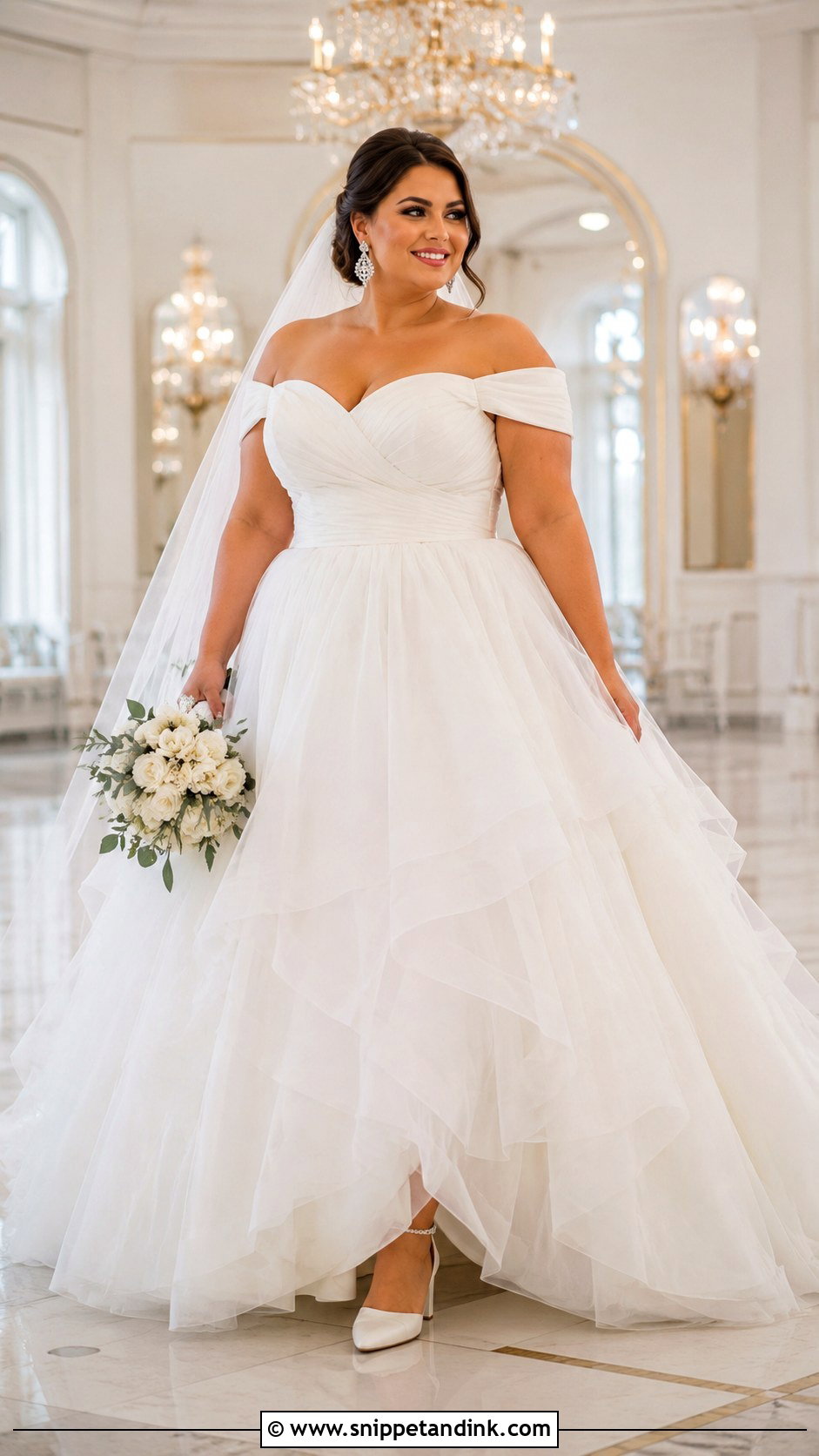
With a plus size ball gown I fit the bodice before anything else. Secure cups, well-placed boning and seams that sit where your body actually curves matter far more than the number on the tag. Bridal sizing runs small, so expect it to differ from your everyday size and don’t let that bother you. Choose the skirt start point that feels best; some brides love a natural waist, others prefer the line from just under the bust. Supportive block heels, statement earrings and a veil sized to the train. Pick the neckline you feel good in, whatever the old rules say.
19. Modest Ball Gown Wedding Dress With Sleeves
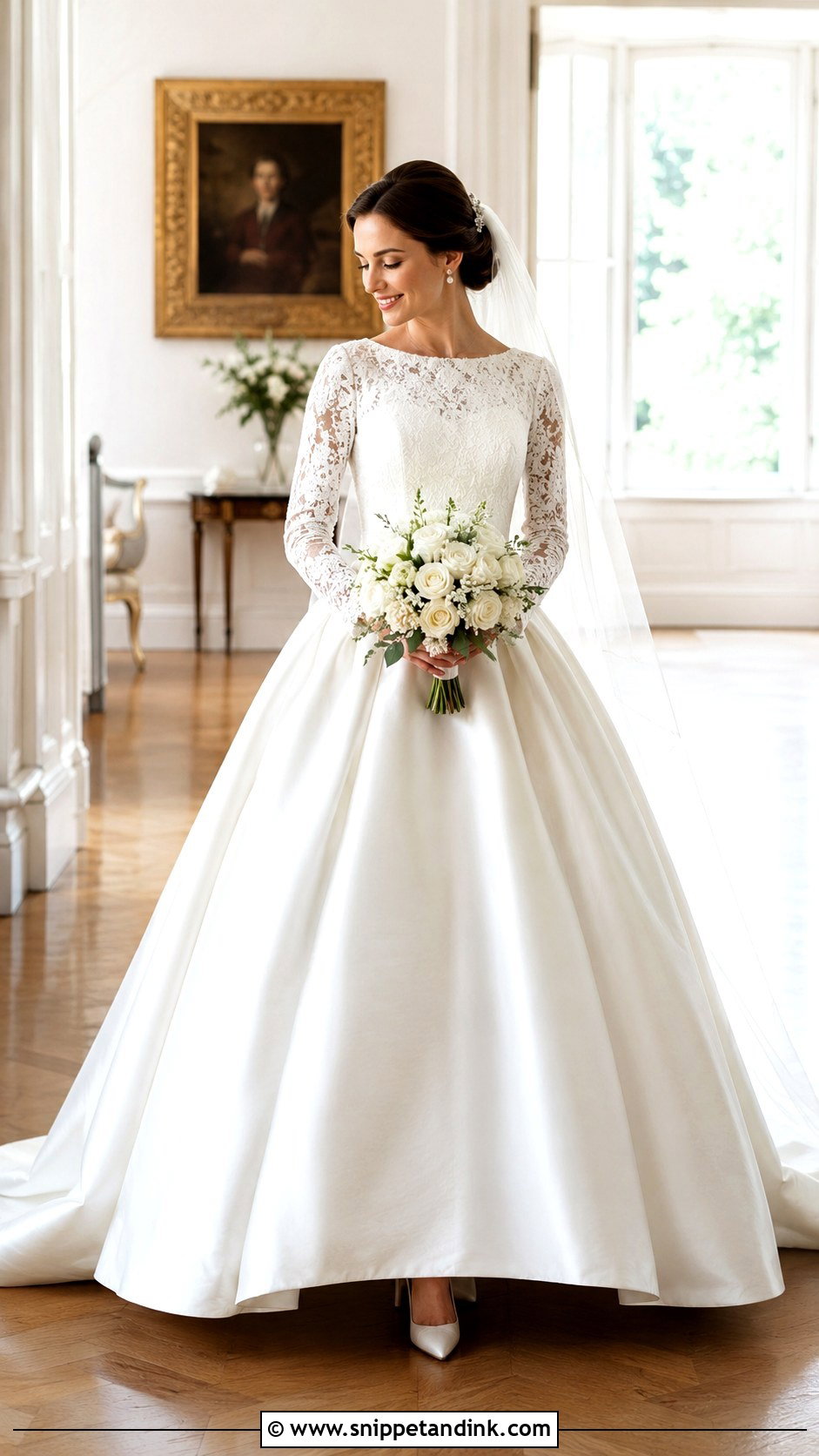
A bateau or high neckline, long fitted sleeves and a broad satin or tulle skirt make a modest gown feel celebratory rather than covered up. Sheer overlays work when lace is lined beneath them, giving detail without exposure. The fit across the shoulders is the hard part. Too tight and the sleeves pull when you lift your arms; too loose and fabric gathers at the back. Pearl studs, a refined comb and closed-toe pumps. A long plain veil, a low bun or smooth half-up style and a neat white bouquet with a little greenery.




20. Vintage Inspired Ball Gown Wedding Dress
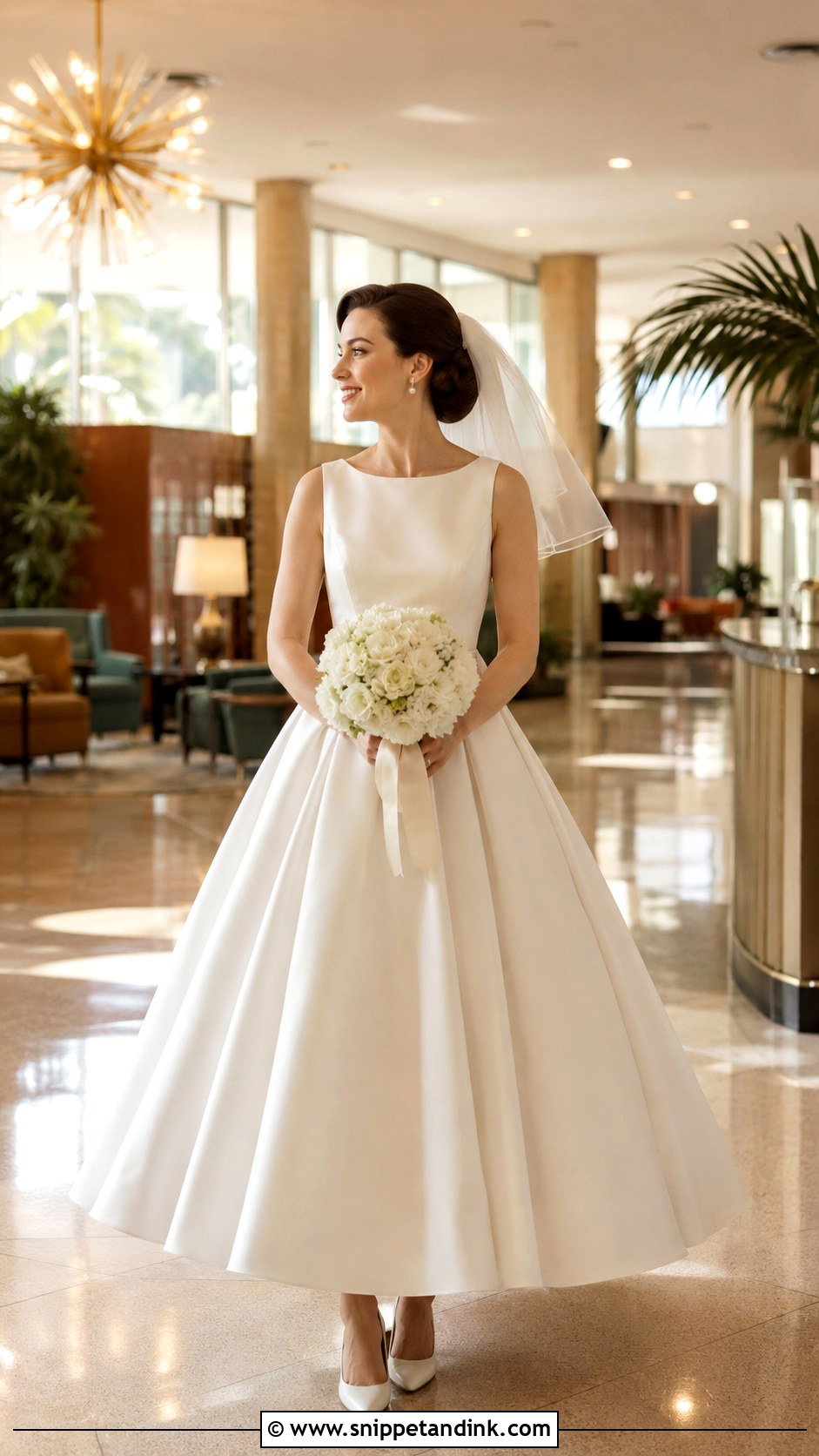
Pick one era and commit to it. A 1950s gown means a portrait neckline, cinched waist, satin skirt and covered buttons; an earlier romantic look leans on lace sleeves and fine embroidery. Mixing both makes the dress look like fancy dress. A short tulle veil, pearl earrings and classic pumps suit almost any vintage direction. A polished chignon or set waves finish the hair. Gloves only if they suit the neckline and season. Modern underlayers and tailoring are what make it comfortable; original vintage petticoats tend to be stiff and scratchy.
The Ordering and Fitting Calendar for a Ball Gown
Full-skirted gowns take time. Most made-to-order bridal dresses need several months to arrive, and big ball gowns are rarely available off the rack in your size. As a rough guide, and it varies by designer and shop:
- Order around eight to ten months ahead if you can. Rush orders exist but usually cost more and limit your choices.
- Book the first fitting roughly two to three months before the wedding, with your shoes and underwear.
- Expect two or three fittings. Ball gowns with boned bodices and layered hems tend to need the full set.
- Leave the final fitting for the last few weeks, and bring whoever will do your bustle.
A Full Skirt in Heat, Rain and on Grass
Several layers of tulle trap heat around your legs, so for a summer outdoor wedding I steer brides toward a lighter petticoat, or a skirt where the volume comes from fewer, stiffer layers. Satin is warmer than tulle and shows damp marks, so keep a large umbrella and a towel in the car.
On grass, a long hem soaks up dew and picks up green stains surprisingly fast. Bustle up for any lawn photos, and ask your photographer to keep walking shots on paths where possible. Wind lifts big tulle skirts like a sail, which can look magical or chaotic. A slightly heavier veil and a pinned-down petticoat help on exposed venues.
Where Should the Volume Start for You?
The best voluminous gown is the one that gives you drama and still lets you breathe, sit and dance. Across these twenty styles, the real differences are where the volume starts, what holds it up, and what the bodice asks of you. Decide that first, then compare necklines, waistlines, fabrics and trains. Bring your wedding shoes and underwear to every fitting. Keep the accessories quieter than the dress. And trust the gown that makes you feel like yourself from every angle, not the one that ticks a trend.
You'll Like These Ideas:





Leave a Reply